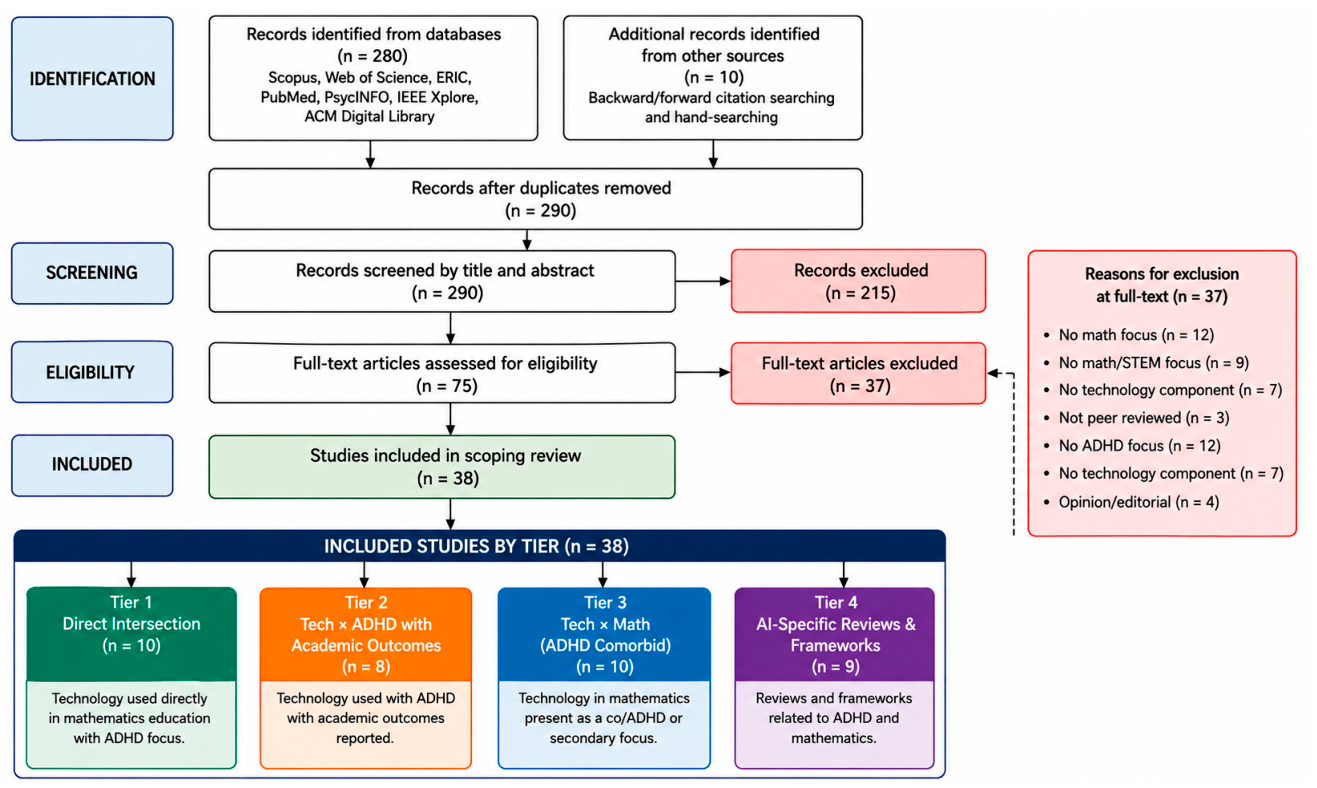
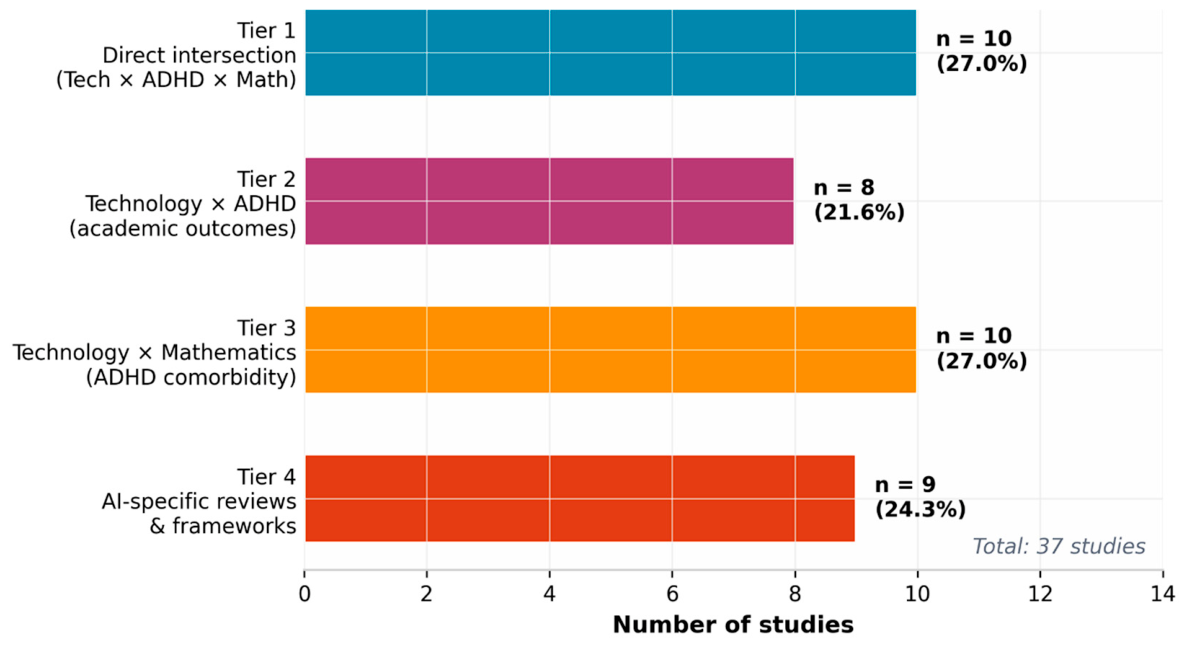
The main analysis below synthesizes evidence from 37 peer-reviewed studies spanning 2010–2026, categorized across four inclusion tiers: Tier 1 (direct intersection: technology × ADHD × mathematics; n = 10), Tier 2 (technology × ADHD with academic/math outcomes; n = 8), Tier 3 (technology × mathematics with ADHD as documented comorbidity; n = 10), and Tier 4 (AI-specific reviews and frameworks; n = 9). The four tiers were defined to operationalize the degree of alignment between the included sources and the review’s PCC-defined scope; they do not represent levels of evidence quality.
Two complementary analytic lenses were used: first, a cross-tabulation of technology type by publication year, sized by citation count, to characterize the maturity and trajectory of each technology category over time; and second, a tier-based synthesis distinguishing sources that directly studied technology-based mathematics interventions for students with ADHD (Tier 1) from those addressing the topic through ADHD-technology, mathematics-technology-comorbidity, or AI-specific proximities (Tiers 2–4). The tier structure was used as an analytical mapping device to distinguish direct evidence from adjacent evidence and should not be interpreted as a hierarchy of methodological quality or certainty. This dual approach allows the review to characterize not only what has been studied, but how directly the existing evidence base speaks to the review’s central question. It is a distinction that is itself one of the review’s findings, given the comparative scarcity of Tier 1 sources relative to the adjacent literatures mapped in Tiers 2 through 4. Across the results, findings are therefore presented primarily as descriptive characteristics of the evidence base rather than as estimates of intervention effectiveness. This section also presents the findings of the scoping review organized around four research questions.
3.1. TBI Categories and Evaluation Tools (RQ1)
Across the PCC framework, the Concept domain was represented primarily by technology-supported mathematics instruction, cognitive training, adaptive learning, gamification, pedagogical agents, and emerging AI-enabled tools. The Population domain varied substantially across sources, ranging from students with a documented ADHD diagnosis to broader groups of students with learning difficulties, disabilities, or ADHD-related characteristics. The Context domain included school-based, online, clinical/educational support, and other learning environments across multiple geographical settings. This variation in population and context was particularly important when interpreting the degree of direct alignment with the review question.
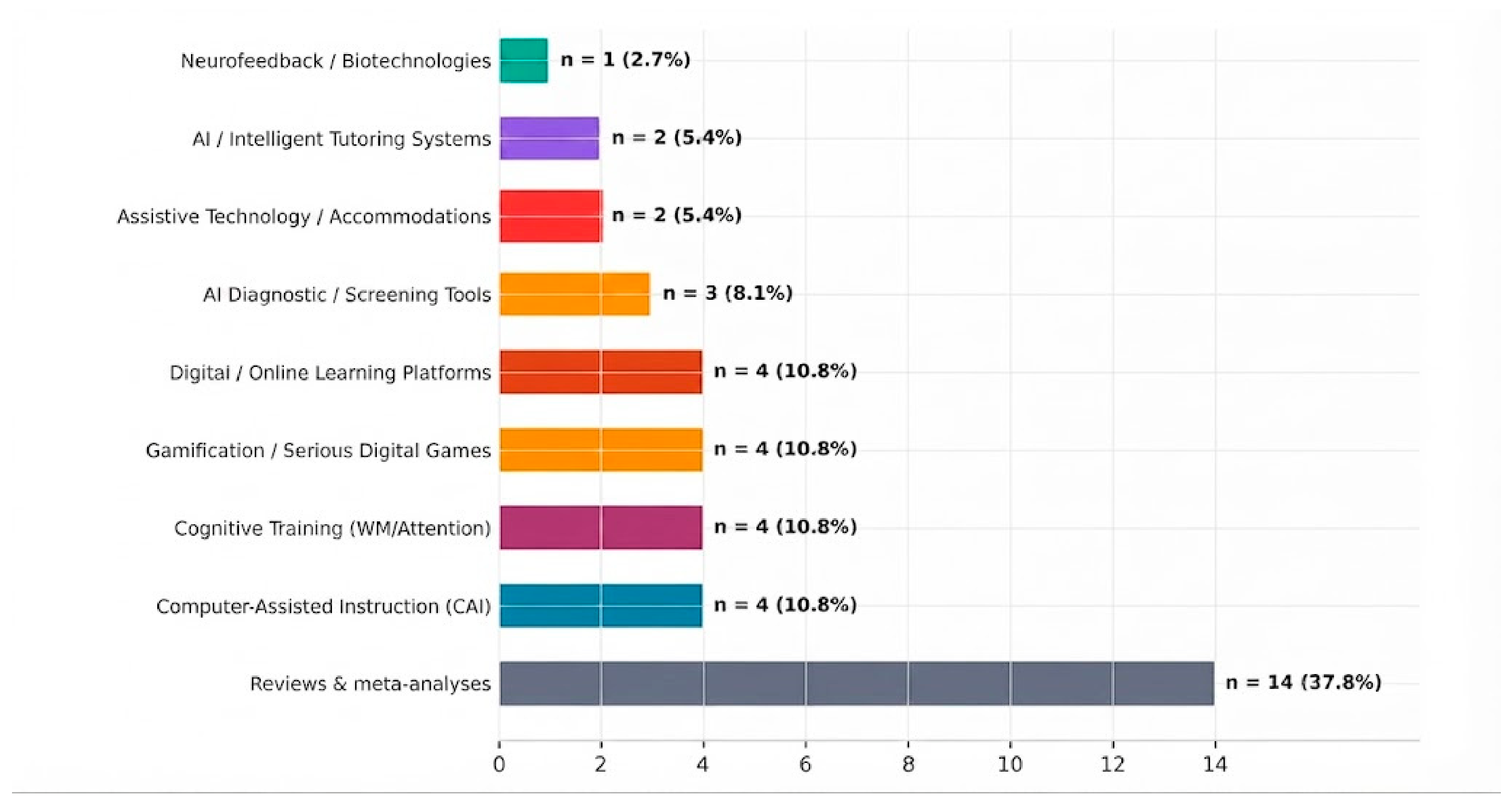
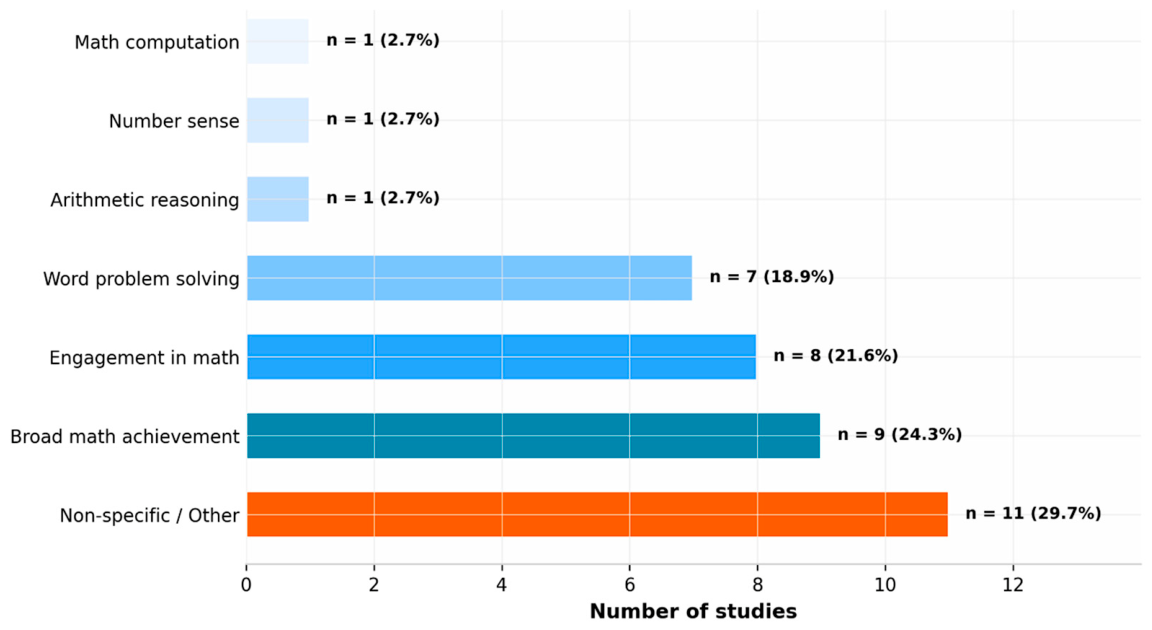
The literature reveals a wider technological field with ten distinct categories of digital tools applied to mathematics education for students with ADHD or related learning difficulties (see
Figure 4). Because some sources described more than one technological modality, technology-category frequencies were not mutually exclusive and therefore do not sum to the total number of included sources. This distribution is as follows:
Review articles and meta-analyses constitute the largest strand of literature, collectively representing 14 studies (37.8%). These span mixed-technology reviews (n = 6), digital/CAI/executive-function reviews (n = 4), and AI-focused reviews (n = 4). This predominance of synthesis and conceptual work over primary empirical intervention studies is itself a key characteristic of the evidence base.
Among empirical intervention categories, four technology types each accounted for four studies (10.8% each): Computer-Assisted Instruction (CAI) platforms, Cognitive Training (WM/Attention) programs, Gamification/Serious Digital Games, and Digital/Online Learning Platforms. CAI platforms typically deploy drill-and-practice software or structured computer-based instruction delivered via desktop computers in school lab settings. Representative studies include Herzog and Casale’s [
39] computer-based mathematics intervention for primary students with ADHD/EBD, and Sánchez-Pérez et al.’s [
40] school-based computer training combining mathematics and working memory exercises. CAI platforms are characterized by structured protocols, repetitive exercises, and incremental difficulty scaling. However, they generally lack true adaptive intelligence; difficulty adjustments are typically pre-programmed rather than dynamically responsive to real-time learner performance.
Cognitive Training (WM/Attention) programs (n = 4) represent an established strand of research targeting domain-general executive functions. Sperafico et al. [
9] combined working memory training with arithmetic reasoning practice, while Wiest et al. [
10] and Chacko et al. [
38] employed adaptive computerized exercises targeting working memory and attention. These interventions are grounded in the hypothesis that strengthening domain-general cognitive resources will free capacity for mathematical processing. However, as discussed in
Section 3.3, near-transfer cognitive gains have not consistently translated to mathematics achievement.
Gamified digital platforms and serious games (n = 4; 10.8%) leverage game mechanics (e.g., points, levels, narrative immersion, and immediate reward schedules) to sustain attention during mathematical tasks. Dai et al. [
8] conducted an 8-week randomized controlled trial (RCT) of a gamified app for Chinese children with ADHD, finding significant improvements in both attention and academic performance. Kusmawati et al. [
7] reported increased concentration and math achievement through gamified learning media in an inclusive Indonesian classroom. The theoretical rationale for gamification aligns with ADHD symptomatology: variable reward schedules and high-frequency feedback loops are hypothesized to compensate for dopaminergic dysregulation associated with inattention and motivation deficits.
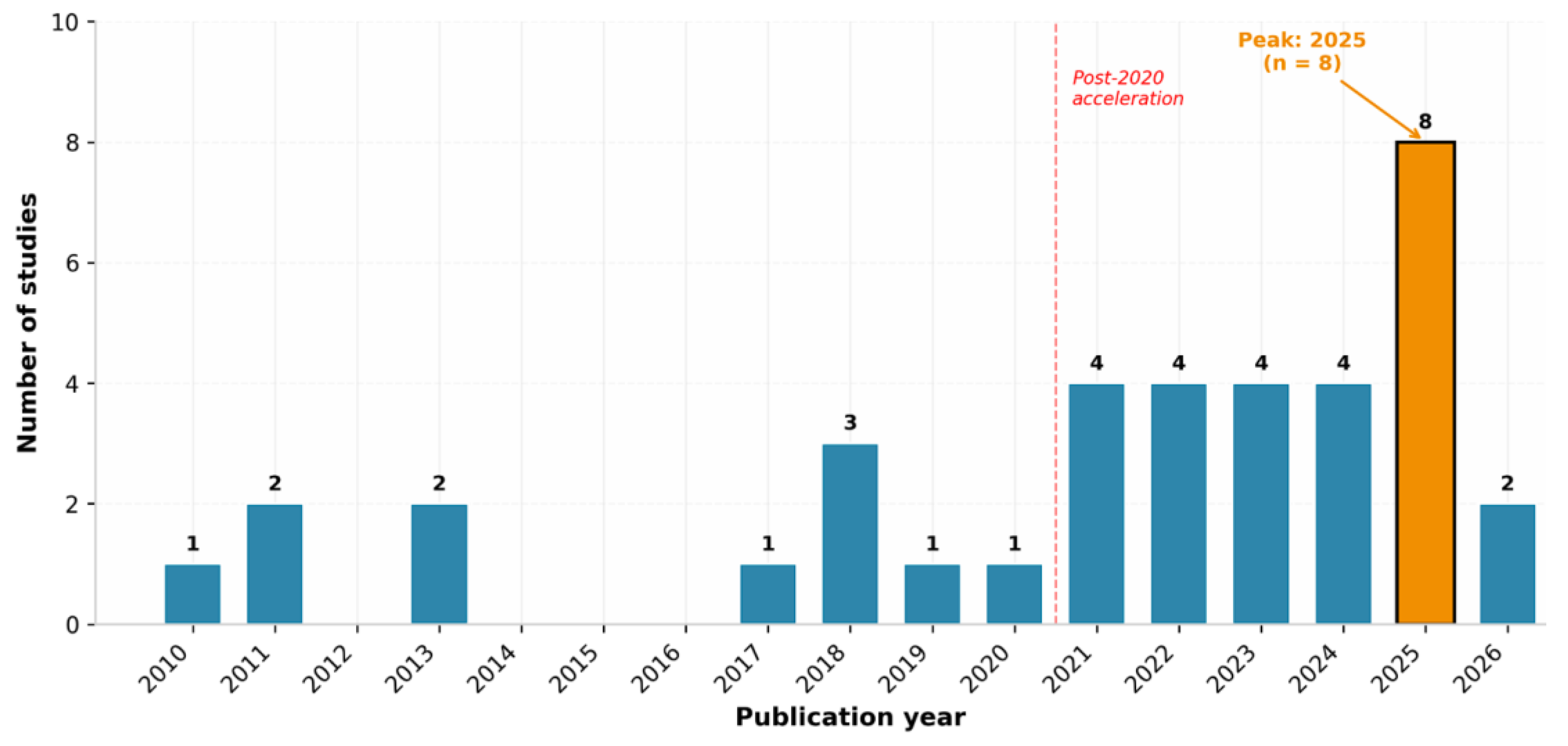
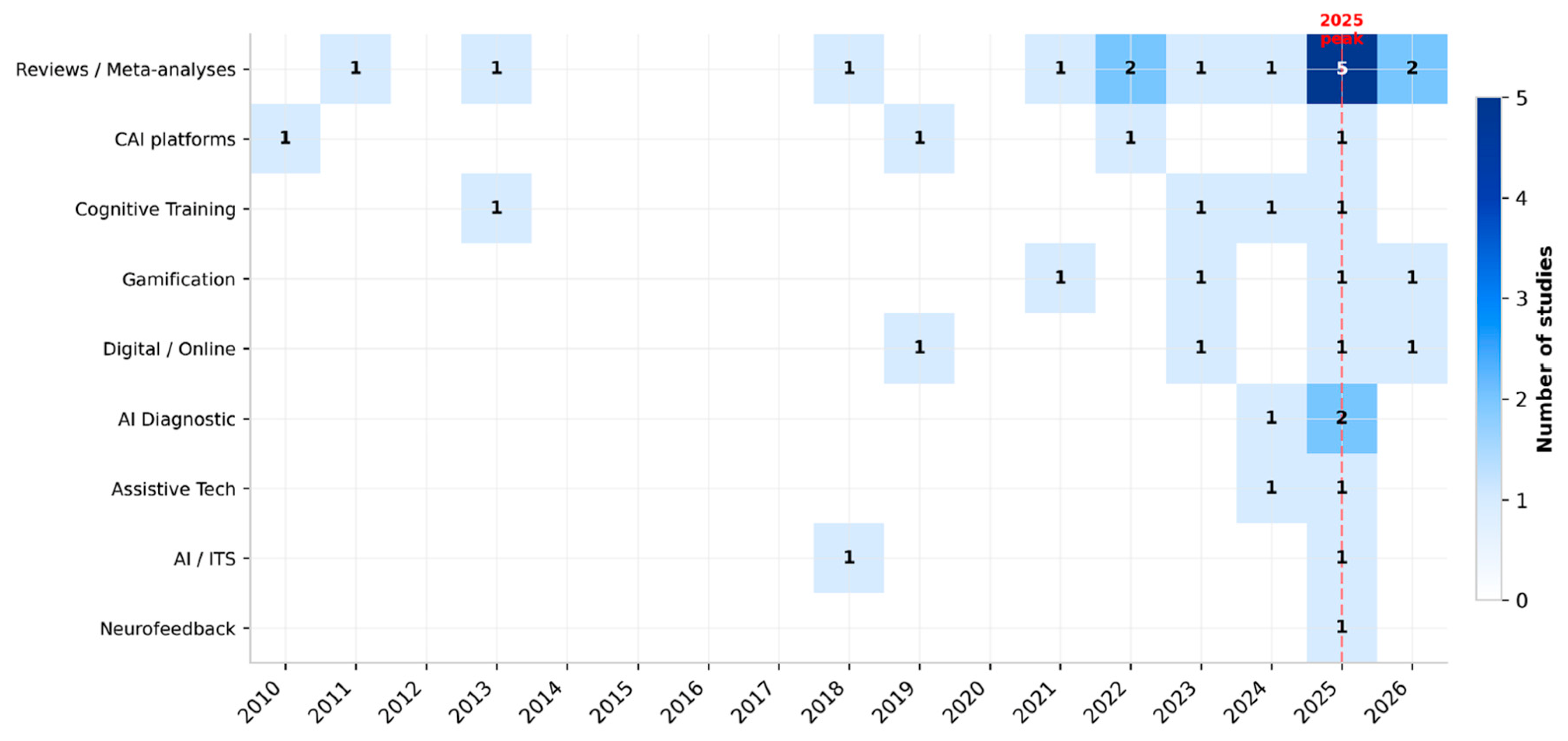
AI and Machine Learning-driven tools represent the fastest-growing category, as
Figure 3 depicts. This category subsumes: (a) intelligent tutoring systems (ITS) with embedded pedagogical agents (n = 2), (b) AI-focused reviews and frameworks (n = 4), (c) AI-enhanced diagnostic and screening tools (n = 3), and (d) generative AI applications (reviewed conceptually). Mohammadhasani et al. [
13] provide the clearest empirical example of an ITS directly targeting ADHD learners, deploying a pedagogical agent named “Koosha” that delivered scaffolded arithmetic instruction to 5th-grade Iranian students. The agent reduced cognitive load through attention-guiding cues and immediate feedback, yielding a large effect size (d = 0.82) on math achievement. More recently, Ronksley-Pavia et al. [
16] proposed generative AI-enhanced adaptive interfaces for neurodivergent learners, though this remains at the design stage without empirical validation. The AI category is heavily weighted toward reviews, frameworks, and diagnostic applications rather than primary intervention studies e.g., [
15,
16,
30] collectively synthesize AI applications for neurodivergent learners but note a paucity of ADHD-specific mathematics interventions.
Online and digital learning environments (n = 4; 10.8%) encompass web-based instruction, Learning Management Systems (LMS), and virtual classroom tools. Botsas and Grouios [
4] compared online versus traditional instruction of mathematical operations for Greek students with ADHD, finding moderate effects (d = 0.55) favoring the digital condition. Lomibao and Tabor [
32] described an online intervention for a Filipino learner with comorbid ADHD and math-specific learning disability, delivered through an educational therapy center’s digital platform. The COVID-19 pandemic appears to have accelerated research in this domain, with Bouck et al. [
33] examining online math instruction for secondary students with learning disabilities (including ADHD as a major subgroup) in the post-pandemic context.
Assistive Technology and Accommodations (n = 3; 8.1%) include color-supported instructional designs, accessibility tools, and reduced-distraction interfaces. Shafirarossa et al. [
34] conducted a single-subject study of theory-informed color-supported early numeracy instruction for a 6-year-old child with ADHD, demonstrating improved number sense through visual scaffolding. Scalise et al. [
41] reviewed accommodations in digital interactive STEM assessment tasks, finding that reduced-distraction interfaces were particularly beneficial for students with ADHD.
Neurofeedback and biotechnologies (n = 1; 2.6%) represent an emerging frontier. Patil et al. [
36] reviewed EEG-neurofeedback applications for children with ADHD and specific learning disorders, noting that such technologies can target the attentional substrates underlying mathematical learning, though direct math outcome measurement remains rare.
As shown in
Figure 4, review articles and meta-analyses collectively constituted the largest category (n = 14, 37.8%), followed by four empirical categories each accounting for four studies (CAI, cognitive training, gamification, and digital/online learning; 10.8% each). AI diagnostic tools (n = 3, 8.1%), assistive technology/accommodations (n = 3, 8.1%), and AI/intelligent tutoring systems (n = 2, 5.4%) were less represented.
A granular analysis of Tier 4 (AI-specific) sources indicates that the AI evidence base relevant to the PCC framework remains predominantly indirect with respect to the core Concept of AI-supported mathematics instruction for the Population of students with ADHD. Of the 9 AI-focused papers, 7 are reviews or frameworks; only 2 report primary data, and these primarily address diagnostic or identification applications rather than AI-mediated mathematics instruction. The AI tools described include:
Machine learning classifiers for ADHD identification [
17,
18], which use eye-tracking, fMRI, or behavioral data to detect ADHD but do not deliver mathematics instruction.
Deep learning diagnostic frameworks for dyscalculia screening [
19], which acknowledge ADHD comorbidity but do not target instruction.
Generative AI and LLM-based tutoring systems [
16], proposed as future directions but with limited or no directly identified empirical evidence involving students with ADHD in mathematics learning contexts within the present review scope. This reveals a critical evidence-mapping gap: while the AI-in-education literature for neurodivergent learners is expanding rapidly, the present evidence map contains very limited direct evidence at the intersection of AI, ADHD, and mathematics education. This field, therefore, appears to be characterized by a substantial body of conceptual, review, diagnostic, and adjacent evidence, alongside a much smaller body of directly aligned instructional evidence.
As shown in the heatmap in
Figure 5, AI-focused review papers cluster heavily in 2025 (n = 5), while empirical CAI and cognitive training studies are distributed more evenly across the decade, indicating a recent shift in the composition of literature toward AI-related approaches rather than demonstrating a corresponding increase in empirically validated AI-based mathematics interventions for students with ADHD.
3.2. ADHD-Related Learning and Cognitive Difficulties Targeted by the Interventions (RQ2)
Within the Concept domain, the included sources described several ADHD-related cognitive and behavioral characteristics as relevant to technology-supported mathematics learning. These included inattention, working-memory demands, inhibitory-control difficulties, self-regulation, and motivational/engagement difficulties. The analysis for RQ2 focused specifically on the difficulties that interventions explicitly targeted or accommodated, rather than on the technological mechanisms through which these aims were implemented. The evidence map therefore captures the range of ADHD-related learner characteristics that the included sources explicitly identified as targets of technology-supported mathematics interventions; the technological features used to address each barrier are described below as illustrations of how that barrier was targeted, not as an independent analytic dimension.
The interventions identified addressed or explicitly considered three core ADHD-related cognitive barriers, though with differential emphasis. Inattention and difficulties sustaining attention were the most frequently reported barriers (n = 28 papers; 75.7%). Across these sources, attention was primarily treated as a learning-related characteristic relevant to intervention design rather than as an outcome that could be assumed to improve as a consequence of technology use. Interventions addressing inattention employed diverse technological mechanisms:
Attention-directing cues: Mohammadhasani et al.’s [
13] pedagogical agent “Koosha” used gaze-guiding animations and highlighted salient problem features to direct visual attention away from distractions.
Gamified reward schedules: Kusmawati et al. [
7] and Dai et al. [
8] embedded variable-ratio reinforcement within math tasks to maintain attentional engagement through intrinsic motivation.
Reduced environmental distraction: Computer-based training platforms [
5,
6] remove the social and sensory distractions of the typical classroom, creating a controlled stimulus environment.
Chunking and micro-learning: Gunnars [
37] noted that digital math interventions for students with ADHD typically break tasks into shorter sequences, accommodating limited sustained attention spans.
Working memory (WM) demands were explicitly considered in 14 papers (37.8%). The included sources commonly linked working-memory demands to multi-step mathematical tasks and described technology as either a training mechanism or a means of externalizing task information. WM impairment is a well-documented cognitive correlate of ADHD that can disrupt mathematical reasoning, particularly during multi-step problem-solving and mental arithmetic. The design mechanisms include:
Dual-task training protocols: Sperafico et al. [
9] combined WM training (n-back tasks, digit span exercises) with arithmetic reasoning practice, positing that strengthening WM capacity would free cognitive resources for mathematical processing.
Adaptive difficulty algorithms: Wiest et al. [
10] and Chacko et al. [
38] employed computer programs that adjusted task demands in real time based on WM performance, preventing overload while maintaining the zone of proximal development.
Externalization of working memory: Digital platforms that display intermediate steps, provide virtual manipulatives, or maintain a visible problem state reduce the WM load during calculation [
11].
Impulsivity and inhibitory-control difficulties were reported in 9 papers (24.3%), although less frequent than inattention or WM. The corresponding technologies incorporated structured response procedures, immediate feedback, and self-monitoring features. Design mechanisms include:
3.3. Reported Intervention Outcomes (RQ3)
The included sources reported a wide range of outcomes spanning mathematics achievement, cognitive functioning, ADHD-related behavior, engagement and motivation, and socio-emotional domains. Consistent with the scoping-review objective, these outcomes were mapped descriptively to characterize what has been measured across the evidence base rather than to estimate an overall intervention effect. In accordance with RQ3, the analysis mapped the types of outcomes assessed, the constructs measured, and the instruments used across the included evidence. It did not seek to determine whether the interventions were effective or to estimate comparative intervention effects.
3.3.1. Outcome Measurement Landscape
The reviewed studies operationalized intervention-related findings across five broad outcome domains, although substantial heterogeneity was evident in construct definitions, instruments, timing, and analytic approaches. Mathematics achievement constituted the primary outcome domain, measured in 28 studies (75.7%).
Within this domain, researchers employed a tripartite measurement strategy: (a) standardized norm-referenced achievement tests, including the Woodcock-Johnson III Tests of Achievement [
5,
38], the Wechsler Individual Achievement Test [
10], and curriculum-based measurement probes [
39]; (b) researcher-developed mathematics assessments tailored to specific intervention content, as deployed by Mohammadhasani et al. [
13] in their pedagogical agent study and by Sperafico et al. [
9] in their combined working memory and arithmetic reasoning trial; and (c) teacher-rated academic performance scales, which—while ecologically valid—introduce rater bias and lack the psychometric precision of standardized instruments [
3]. Only 12 studies (32.4%) employed standardized, validated mathematics achievement measures, while the remaining studies relied primarily on researcher-developed assessments, curriculum-based measures, or rating-based indicators. This variation illustrates substantial heterogeneity in how mathematics achievement was operationalized across the evidence base.
Cognitive outcomes were measured in 19 studies (51.4%), reflecting the field’s theoretical grounding in cognitive processing models of ADHD-related mathematical underachievement. Working memory was the most frequently assessed cognitive construct, operationalized through digit span tasks (forward and backward), n-back paradigms, and complex span measures [
40,
43]. Sustained attention was assessed via continuous performance tests, including the Test of Variables of Attention [
6] and the Conners’ Continuous Performance Test [
8]. Processing speed, though implicated in ADHD-mathematics comorbidity models [
1], was measured in only 4 studies, representing significant assessment gaps given emerging evidence that processing speed mediates the ADHD-mathematics achievement relationship.
Behavioral outcomes, including ADHD symptom severity, on-task behavior, and classroom conduct, were measured in 16 studies (43.2%). The Conners-3 Rating Scales (parent and teacher versions) and the SNAP-IV constituted the dominant instruments [
20,
38]. Direct behavioral observation coding systems, while offering superior ecological validity, were employed in only 3 studies, with the majority relying on adult-informant rating scales that may conflate attentional improvement with halo effects from academic gains.
Engagement and motivation outcomes, measured in 11 studies (29.7%), remain theoretically underdeveloped in this literature. Most studies operationalized engagement through proxy indicators—time-on-task, task completion rates, or teacher-reported persistence—rather than validated self-report instruments such as the Math Anxiety Rating Scale or the Situational Motivation Scale [
44]. This is particularly problematic for ADHD populations, where behavioral engagement (observable task-focused behavior) and emotional engagement (interest, belonging, intrinsic motivation) may dissociate; a student may appear behaviorally engaged due to gamified reward structures while experiencing low intrinsic motivation for mathematics. These findings indicate that engagement and motivation were assessed inconsistently across the literature, with standardized measures used relatively infrequently.
Social and socio-emotional outcomes were the least measured domain (n = 3; 8.1%), reflecting the individual-task orientation of most digital mathematics interventions. This omission is noteworthy given that peer-mediated learning and collaborative problem-solving have demonstrated efficacy for students with ADHD in non-digital contexts [
3], yet remain largely unexplored in technology-based mathematics instruction. The limited assessment of these outcomes represents an important gap in the coverage of measured outcomes across the evidence base. The diversity of instruments and outcome definitions limits direct comparison across sources and indicates an important characteristic of the current evidence landscape. This heterogeneity should not be interpreted as evidence for or against intervention effectiveness; rather, it limits the comparability and standardization of outcome measurement across the available evidence.
3.3.2. Outcome Reporting Across Evidence Tiers
The reported findings were examined across the four-tier evidence map to determine how directly the available sources addressed the review’s PCC-defined intersection. Effect sizes and statistical findings reported by individual studies are presented descriptively where available; they are not pooled or interpreted as estimates of overall effectiveness across the evidence base. The distribution of assessed outcomes varied across the four evidence tiers. Tier 1 studies most frequently assessed mathematics achievement together with selected ADHD-related or cognitive outcomes, whereas Tier 2 studies more commonly combined academic outcomes with measures of attention, working memory, or behavior. Tier 3 sources primarily assessed mathematics achievement and related academic outcomes, although ADHD-specific outcome reporting was less consistent. Tier 4 sources, which were predominantly reviews, frameworks, and technical studies, more commonly discussed potential educational, cognitive, or personalization-related outcomes than directly measured student outcomes. These differences indicate variation in the scope and type of outcomes represented across the evidence map. They should be understood as characteristics of the available evidence rather than as evidence of comparative intervention effectiveness.
Tier 1—Direct Intersection Studies: Empirical studies that simultaneously addressed ADHD, technology-based learning, and mathematics outcomes reported a range of positive, mixed, or descriptive findings across different technologies and outcome measures. Mohammadhasani et al. [
13] reported a large effect (
d = 0.82) of their pedagogical agent “Koosha” on 5th-grade mathematics achievement. Sperafico et al. [
9] reported a medium-to-large effect (
d = 0.65) for working memory and arithmetic reasoning program delivered via computer. Herzog and Casale [
39] reported a medium effect (
d = 0.45) for a computer-based mathematics intervention among primary school students with emotional and behavioral difficulties, including ADHD. Botsas and Grouios [
4] reported a medium effect (
d = 0.55) favoring online mathematics instruction over traditional methods for Greek students with ADHD.
Rabiner et al. [
5], in their landmark RCT of two computer-based interventions for students with attention difficulties, found that while both programs improved attentional performance, effects on Broad Mathematics scores on Woodcock-Johnson III were small (d = 0.20–0.30) and did not reach statistical significance. Steiner et al. [
6] reported similarly modest academic effects from school-based computer attention training, with math teacher ratings showing improvement but standardized achievement tests remaining unchanged. Dai et al. [
8] reported significant improvements in sustained attention (
p < 0.05) and academic performance through an 8-week gamified educational application. Kusmawati et al. [
7] found significant improvement in concentration and math achievement for ADHD students using gamified learning media. Shafirarossa et al. [
34] demonstrated improved early numeracy skills through color-supported visual scaffolding in a single-subject design, while Lomibao and Tabor [
32] provided descriptive evidence of improved math engagement and reduced anxiety through individualized online instruction for a learner with comorbid ADHD and math SLD.
Across Tier 1 studies (
Table 1), the outcome measures and effect sizes reported varied widely by technology and design. Given the heterogeneity of designs, populations, technologies, comparators, and outcome measures, these values cannot be pooled or read as a generalizable effect for students with ADHD. The small sample sizes across Tier 1 studies (median n = 24; range = 1–80) and the predominance of quasi-experimental designs (n = 5 of 10) further characterize the direct evidence base as relatively small and widespread. Tier 1 comprises primary empirical studies, whereas Tiers 2 and 3 include a mix of primary empirical studies, reviews, meta-analyses, and contextual sources, and Tier 4 comprises reviews, frameworks, and technical studies. Values in the “Reported Result” column (in
Table 1,
Table 2 and
Table 3) are reported by individual studies and are presented descriptively; they are not pooled or interpreted as an estimate of overall effectiveness across studies.
Tier 2—Technology × ADHD with Academic Outcomes: Review evidence from this tier reports a broader range of outcome measures (
Table 2). Wong et al. [
20], in their systematic review and meta-analysis of technology-based interventions for school-age children with ADHD, reported a small-to-medium standardized mean difference for attention outcomes (SMD = 0.42, 95% CI [0.28, 0.56]), but noted that academic transfer effects were inconsistent and typically smaller than near-transfer cognitive effects. Wiest et al. [
10] reported significant improvements in WM, attention, and impulsivity (
p < 0.05) following 20 weeks of cognitive training, with reading and math achievement also improving; however, the absence of a control group limits causal inference. Chacko et al. [
38], in their examination of Cogmed working memory training, found that while near-transfer working memory effects were robust, far-transfer effects to mathematics achievement were negligible and non-durable.
Table 2 below includes primary studies, reviews, and meta-analyses; source type is indicated for each entry.
Tier 3—Technology × Mathematics with ADHD as Comorbidity: Evidence from populations with mathematics learning difficulties, in which ADHD is a documented comorbid condition, provides the largest evidence base but the least ADHD-specific information (
Table 3). Benavides-Varela et al. [
11], in their meta-analysis of digital-based interventions for children with mathematical learning difficulties, reported a small-to-medium overall effect (
g = 0.37, 95% CI [0.24, 0.50]) on mathematics achievement. Critically, they found that effect sizes were significantly larger when digital tools were compared to no-treatment controls (
g = 0.52) than when compared to active teacher-led instruction (
g = 0.18). It is a comparator-dependent pattern reported here descriptively as a characteristic of the evidence base. Kim and Xin [
22], in their meta-analysis of technology-based word-problem interventions for students with disabilities (including ADHD), reported a larger mean effect size (
g = 1.18), though ADHD-specific subgroup analysis was not conducted. Sánchez-Pérez et al. [
40] found that a school-based computer training program combining mathematics and working memory exercises produced significant improvements in both cognitive skills and academic achievement in primary school children, with a medium effect on mathematics (
d = 0.50). Conesa and Duñabeitia [
43] reported comparable effects (
d = 0.35) for game-based computerized training on executive functions and academic achievement. Across Tier 3 studies, mathematics-embedded technologies were represented in several sources and were associated with reported mathematics outcomes, whereas ADHD-specific effects were generally unavailable or insufficiently reported. Tier 3, therefore, provides contextual evidence concerning technology-supported mathematics learning in populations with mathematical learning difficulties or broader special educational needs.
Tier 4—AI-Specific Reviews: The AI literature mapped in Tier 4 was predominantly composed of reviews, frameworks, technical studies, and conceptual work rather than directly evaluating AI-mediated mathematics interventions involving students with ADHD (
Table 4). Tier 4 comprises reviews, frameworks, and technical studies; no primary empirical intervention data are included. Barua et al. [
30], in their highly cited review synthesized AI-enabled assistive tools for neurodevelopmental disorders and identified personalized learning algorithms, intelligent tutoring systems, and adaptive feedback mechanisms as promising directions, but noted that empirical validation with ADHD learners in mathematics was absent. Yang et al. [
15], in their decade review of AI in special education (2013–2023), identified intelligent tutoring systems as the most frequently utilized AI technology in mathematics education for students with special needs, yet acknowledged that ADHD-specific evidence remained sparse. Ronksley-Pavia et al. [
16], in their scoping review of generative AI for neurodivergent students, proposed that large language models could provide personalized mathematical explanations and scaffolded problem-solving support, but reported limited empirical evidence for specific neurodivergent populations and educational outcomes. This tier thus maps a substantial conceptual and technological interest in AI-supported personalization, adaptive feedback, and intelligent tutoring, but comparatively limited direct evidence aligned with all three PCC elements of the present review.
3.3.3. Observed Variation in Reported Effect Sizes
Reported effect sizes varied substantially across studies and were not directly comparable because of differences in study design, population, intervention, comparator, outcome measure, and evidence tier. No cross-study comparisons by developmental level, intervention duration, comorbidity status, or technology type were undertaken. These variables are retained as descriptive characteristics of the evidence base and as potential questions for future confirmatory research.
3.3.4. Durability and Transfer: Evidence Gaps
The durability and generalizability of reported findings were poorly represented in the evidence map. Only 3 out of 37 studies (8.1%) incorporated follow-up assessments beyond the immediate post-intervention period, with the longest follow-up extending to 6 months (Rabiner et al. [
5]). This limited reporting prevents firm conclusions regarding the maintenance or transfer of reported gains beyond the intervention period. Rabiner et al. [
5] explicitly noted that while their computer-based attention training produced immediate cognitive gains, these did not sustain at 6-month follow-up. Chacko et al. [
38] similarly reported robust near-transfer working-memory effects that were not accompanied by durable far-transfer effects on mathematics achievement. The theoretical implications of this transfer pattern for intervention design are addressed in the Discussion.