Article

Evaluation of an Integrated Fractionation Approach for High-Purity Cellulose Fiber Production from Sugarcane Bagasse


by
Ezekiel O. Faluyi
1,
Rosa M. Rodríguez-Jasso
1,*,
Ruth E. Belmares-Cerda
2,
Rodolfo Ramos-González
3,4,
Miguel A. Cerqueira
5 and
Héctor A. Ruiz
1,*
1
Biorefinery Group, Food Research Department, School of Chemistry, Universidad Autónoma de Coahuila, Saltillo 25280, Coahuila, Mexico
2
Functional Foods and Nutrition Group, Food Research Department, School of Chemistry, Universidad Autónoma de Coahuila, Saltillo 25280, Coahuila, Mexico
3
Secretaría de Ciencia, Humanidades, Tecnología e Innovación (SECIHTI), Mexico City 03940, Mexico
4
Nanobioscience Group, Food Research Department, School of Chemistry, Universidad Autónoma de Coahuila, Saltillo 25280, Coahuila, Mexico
5
International Iberian Nanotechnology Laboratory, Avenida Mestre José Veiga, 4715-330 Braga, Portugal
*
Authors to whom correspondence should be addressed.
Appl. Sci. 2026, 16(15), 7495; https://doi.org/10.3390/app16157495
Submission received: 21 May 2026 / Revised: 14 July 2026 / Accepted: 15 July 2026 / Published: 28 July 2026
(This article belongs to the Special Issue Design, Characterization, and Applications of Biodegradable Polymers)

Abstract

The extensive use of synthetic polymers has raised significant environmental concerns due to their non-biodegradable nature and persistence in the environment. Cellulose-based materials have attracted considerable interest owing to their excellent inherent properties which enable their wide range of industrial and biomedical applications. In this study, an integrated approach (hydrothermal process, organosolv delignification and chlorine-free bleaching) was evaluated to obtain high-purity cellulose fiber from sugarcane bagasse (SCB). The untreated SCB was first subjected to hydrothermal process under varying experimental conditions defined by a central composite design (170–190 °C, 30–50 min) using a solid-to-liquid ratio of 1:10 (w/v). The hydrothermally pretreated solid was subsequently delignified using an organosolv process with an aqueous solution of 40% (v/v) ethanol and 0.1% (w/v) NaOH at 180 °C for 20 min. Finally, the organosolv delignified SCB was bleached with 1% (v/v) H2O2 and 1% NaOH (w/v) at 80 °C for 1 h. The bleached cellulose fiber exhibited a composition of 97.79 ± 0.19% cellulose, 1.10 ± 0.14% lignin and 0.23 ± 0.13% hemicellulose. XRD analysis displayed a notable increase in the crystallinity index from 52.2% in untreated SCB to 70.7% in the bleached cellulose fibers (BCF). Furthermore, FTIR revealed the disappearance of characteristic lignin and hemicellulose peaks at 1729, 1602, 1512 and 1240 cm−1 while the intensity of cellulose bands including the crystallinity-associated peaks at 1432 and 1320 cm−1 were preserved. The SEM images further confirmed significant transformation with distorted vascular tissue and exposed cellulose fibrils indicating extensive defibrillation.

1. Introduction

The growing demand for an eco-friendly and sustainable world has led to a significant increase in the global pursuit of renewable and bio-based natural resources. Non-renewable fossil resources, such as crude oil, are not sustainable and have negative environmental impacts due to population growth, global energy demand, climate change, and excessive use [1]. Research is increasingly focusing on using waste from agricultural and industrial activities, which are rich in lignocellulosic content, as sustainable material feedstock [2].
Hence, cellulose being the most abundant polymer on earth has emerged as a promising alternative to petroleum-based materials in packaging, biomedical and other industrial applications due to its desirable properties, including availability, renewability, biocompatibility, biodegradability, low cost and low toxicity [3]. It is a polysaccharide composed of anhydroglucose units connected by β-1,4-glycosidic bonds and three hydroxyl groups for strong hydrogen bonds. It is distributed in fibrils surrounded by hemicellulose and lignin, which enhances rigidity [4]. Structurally, cellulose consists of both highly ordered crystalline domains and disordered amorphous regions which are responsible for the rigidity and flexibility of the fibers respectively [5].
Among numerous lignocellulosic feedstocks available, sugarcane bagasse (SCB) has attracted considerable attention as a sustainable and low-cost raw material. SCB is a non-edible agro-industrial waste with high lignocellulosic content generated after crushing sugarcane to obtain cane juice for sugar production and it is recognized as one of the most abundant agro-industrial by-products generated worldwide [6]. Nearly four tonnes of bagasse are produced from every ten tonnes of sugarcane stalks, accounting for approximately 40–50% of the total weight [7]. In 2023, the global production of sugarcane surged to a record of 1.9 billion metric tonnes, producing an estimated 540–585 million tonnes of sugarcane bagasse [8]. Owing to its high lignocellulosic content and large annual production volume, SCB represents a valuable source of cellulose and other biopolymers for bio-based applications [4].
However, the efficient isolation of high-purity cellulose from sugarcane bagasse remains challenging because of its recalcitrance structure. Therefore, it is important to apply processes for effective fractionation and enhance cellulose yield. The choice of fractionation process is highly important because each method relies on different mechanisms that affect cell wall disruption, the profile of released compounds, and the formation of inhibitory by-products [9].
Among various fractionation biomass processes, the hydrothermal process is widely regarded as an effective approach that does not require chemical additives but uses water at elevated temperatures (150–230 °C) for about 10–60 min depending on the process conditions [10]. It causes water to auto-ionize, promoting acetate release from xylan and glycosidic bond hydrolysis, reducing pH and promoting depolymerization of hemicellulose, with minimal impact on cellulose hydrolysis [11]. Nevertheless, the high consumption of water and energy remains a major concern for its application at the industrial scale [12].
Previously, hydrothermal processes have been conducted in the laboratory to generate experimental data under controlled conditions. However, the implementation of biorefinery processes at the industrial level requires proper scale-up strategies, in which pilot-scale studies are important intermediate steps to actualize the scalability of the process [13]. Harmsen et al. [14] reported that pilot-scale operations are conducted for various purposes, including the generation of reliable stream composition data and the assessment of process performance under realistic operating conditions.
The organosolv process uses organic solvents such as acetone, ethanol, formic acid to dissolve non-cellulosic components like lignin, yielding high-purity cellulose. The biomass is treated with these solvents at 100–250 °C for 30–60 min under specific pressure, depending on the solvent used [15]. It offers several valuable advantages, such as efficient hydrolysis, isolation of high-purity lignin, and the ability to recycle the solvents used in the process [16].
An essential step in obtaining high-purity cellulose fiber is the bleaching stage, which helps in the elimination of residual lignin. In this research, a chlorine-free method (alkaline peroxide) was employed, utilizing hydrogen peroxide (H2O2) due to its strong oxidizing power and environmentally benign nature. In alkaline media, H2O2 dissociates to form the hydroperoxide anion (HOO), which is the active species. This anion reacts with the chromophoric groups present in lignin, facilitating their oxidative degradation. These reactions are irreversible, leading to the effective and permanent removal of the chromophores from the lignin matrix [17].
Beyond cellulose purification, the concept of the integrated biorefinery emphasizes sustainable biomass valorization by avoiding the conventional practices of treating non-cellulosic fractions as waste streams [18]. Within this framework, hemicellulose-derived sugars from hydrothermal process may be further converted into biofuels, biochemicals and functional oligosaccharides [19], while organosolv lignin can be utilized in the production of bio-based chemicals, resins, adhesives, antioxidants and carbon-based materials [20]. Such an approach aligns with circular bioeconomy principles by improving resource efficiency and reducing waste generation.
The above-named processes have individually demonstrated effectiveness in lignocellulosic biomass fractionation; nevertheless, limited studies have systematically evaluated the integration of these processes for the production of high-purity cellulose fibers from sugarcane bagasse within a unified processing framework. Therefore, this study aims to evaluate an integrated fractionation approach comprising hydrothermal treatment, organosolv delignification, and a chlorine-free bleaching process to produce high-purity cellulose fiber from sugarcane bagasse followed by a comprehensive characterization through HPLC, XRD, FTIR and SEM techniques.

2. Materials and Methods

2.1. Materials and Reagents

Sugarcane bagasse (SCB) was provided by San Cristobal Sugar Mill, Veracruz, Mexico. The SCB was milled to a particle size between 0.5 mm and 2.0 mm using a blade mill (Thomas Wiley, Swedesboro, NJ, USA). The chemical reagents, NaOH (97.0 wt%), H2O2 (30% w/w) and ethanol (96% v/v), were obtained from Jalmek (San Nicolás de los Garza, Nuevo León, Mexico). The untreated SCB was subjected to moisture determination at 120 °C, as well as ash analysis, based on the methods outlined by Sluiter et al. [21]. Furthermore, the chemical composition of cellulose, hemicellulose and lignin were measured following the National Renewable Energy Laboratory (NREL) standard analytical procedures (NREL/TP-510-42618) [22]. Monomeric sugars and acetic acid were quantified using HPLC (see Section 2.3.1) and all analyses were performed in triplicates. Lastly, the solid fraction obtained was oven-dried and weighed to determine Klason lignin content using a gravimetric method. The general experimental process is presented in Figure 1.

2.2. Extraction of Cellulose

2.2.1. Hydrothermal Processing of Sugarcane Bagasse

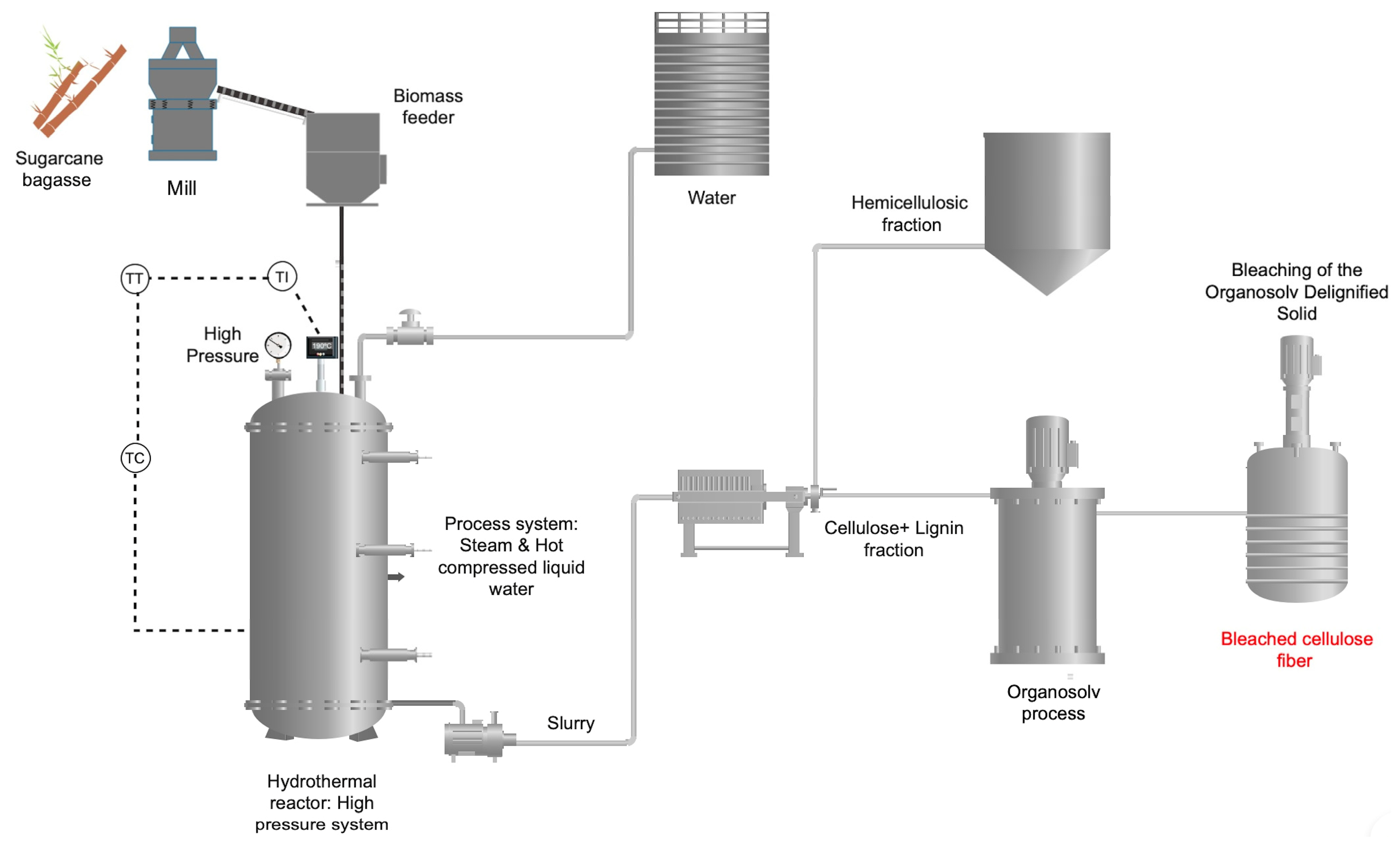
Untreated SCB was mixed with water at a solid-to-liquid ratio of 1:10 (w/v) and subjected to hydrothermal processing. The treatment was conducted under isothermal conditions controlled by a proportional–integral–derivative (PID) temperature system in a 190 mL total volume steel batch pressurized reactor (designed by biorefinery group, Universidad Autónoma de Coahuila, Saltillo, Mexico). Operational parameters were chosen based on typical hydrothermal process conditions [23] (see Figure 2). The reactor was heated to the desired temperature and maintained for the specified residence time. Afterward, the reactor was cooled using a cold-water circulating system, and the resulting slurry was vacuum filtered to separate the solid and liquid phases. The solid phase was washed repeatedly with distilled water until the wash liquor became clear, indicating the removal of hemicellulolytic-desired compounds. The washed solid was then kept for further processing.

2.2.2. Experimental Design for Cellulose Extraction

A central composite design (CCD) at a 95% confidence level was applied to determine the conditions that obtain the highest cellulose content in the solid fraction after hydrothermal processing. The experimental factors investigated are outlined in Table 1 and the resulting data were analyzed using STATISTICA 7.0 software.

2.2.3. Organosolv Delignification of Hydrothermally Pretreated Solid

The solid phase from the hydrothermal process was delignified with an aqueous solution of 40% (v/v) ethanol and 0.1% (w/v) NaOH following the conditions reported by Ruiz et al. [24] with a solid-to-liquid ratio of 1:10 (w/v). These experiments were carried out in the same reactor as mentioned above for hydrothermal process. After the organosolv delignification, the slurry was separated into solid and liquid phase via vacuum filtration. The solid residue was washed repeatedly with distilled water until the solution was neutral to avoid lignin redeposition. It was oven-dried at 60 °C to constant weight for about 24 h and then stored for chemical composition analysis and the bleaching process.

2.2.4. Alkaline Peroxide Bleaching of the Organosolv Delignified Solid

The organosolv delignified SCB was bleached following the procedure described by Li et al. [25] with some modifications. The delignified dried solid phase was further treated with alkaline hydrogen peroxide aqueous solution containing 1% NaOH (w/v) and 1% H2O2 (v/v) with solid-to-liquid ratio of 10 (g/L) at 80 °C for 1 h. After this process, the mixture was cooled and separated by filtration into solid component and alkaline liquid waste. The solid component was then washed with distilled water until the solution turned neutral. Subsequently, the bleached cellulose fibers (BCF) were dried at 70 °C for 24 h, weighed and stored for further characterization. The yield was determined using Equation (1):
Y i e l d   ( % )   = M 2 M 1
where M1 and M2 represent the dry weight of the untreated SCB (g) and bleached cellulose fiber (BCF) (g), respectively.

2.3. Characterization of Untreated and Treated SCB

2.3.1. High-Performance Liquid Chromatography

The chemical compositions of untreated SCB, organosolv delignified SCB and bleached cellulose fibers (BCF) were determined using HPLC. The hydrolysates from the untreated, hydrothermally pretreated, delignified and bleached cellulose fibers were filtered using a 0.45 µm nylon membrane filter and analyzed with HPLC Agilent 1260 Infinity II with refractive index using a MetaCarb 87 H column (300 mm × 7.8 mm, Agilent, Santa Clara, CA, USA); mobile phase: 5 mM H2SO4; column temperature: 60 °C; method run time: 15 min and flow rate: 0.7 mL/min for glucose, xylose, arabinose and acetic acid using calibration curves of these pure compounds to determine their concentrations [26].

2.3.2. X-Ray Diffraction Analysis

The XRD analyses of the untreated SCB and BCF were conducted according to Rizwan et al. [27] by X-ray diffractometer (Malvern Panalytical Empyrean, Almero, The Netherlands) equipped with CuKα radiation (λ = 1.5405 Å) operating at a voltage of 40 kV and a current of 30 mA from 2θ range of 10–50° with a step size of 0.026°/min. The crystallinity index (CrI) was calculated according to the equation proposed by Segal et al. [28].
C r I   % = I 200 I a m I 200 × 100
where:
I 200 is the maximum intensity of the peak (22°);
I a m is the minimum intensity of the peak (18°).

2.3.3. Fourier Transform Infrared Spectroscopy Analysis

The FTIR analysis of untreated SCB and BCF were conducted to reveal changes in the functional groups. The analysis was carried out using a Perkin–Elmer Frontier FTIR spectrometer (American Global Corporation, Jericho, NY, USA) equipped with a universal attenuated total reflectance (ATR) polarization accessory. Spectra were measured over a range of 4000–600 cm−1 at a resolution of 4 cm−1 with 64 scans [27].

2.3.4. Scanning Electron Microscopy

The surface morphology of the untreated SCB and bleached cellulose fibers were evaluated using Environmental Scanning Electron Microscopy (Philips XL30 ESEM, Eindhoven, The Netherlands). Prior to the analysis, the samples were mounted on a polished mirror holder and subsequently coated with a thin layer of electrolytic copper under high vacuum (3 × 10⁻⁴ Pa) and observed at an accelerating voltage of 20 kV [29].

2.4. Statistical Analysis

Statistical analysis (one-way analysis) of the chemical compositional changes in the cellulose, hemicellulose and lignin content from the hydrothermal process, organosolv delignification and bleaching was performed using the statistical software designed by Prof. E. Olivares-Sáenz, School of Agronomy, Universidad Autónoma de Nuevo León (UANL), Mexico. A significance level of p ≤ 0.05 was applied.

3. Results and Discussion

3.1. Biomass Composition and Yield of Bleached Cellulose Fibers (BCF)

The BCF yield achieved in this study was 31.64 ± 0.45% following the sequential hydrothermal, organosolv delignification and bleaching processes. These processes enabled the effective elimination of non-cellulosic constituents, including hemicellulose and lignin and other extractives from SCB which thereby led to a decrease in the mass. The yield reported in this study is in accordance with other reports where hydrogen peroxide was used as the bleaching agent for cellulose extraction. Melikoğlua et al. [30] reported 27.96 ± 0.78% yield, Mussatto et al. [17] reported 30.1%. However, the yield was lower than the 35% and 36.7 to 46.2% reported for bleached cellulose obtained from sugarcane straw [31] and rice straw [32] respectively.
The physicochemical composition of the untreated SCB used in this study is as follows: 36.89 ± 0.73% cellulose (glucan), 14.44 ± 0.35% xylan, 1.87 ± 0.02% arabinan, 1.79 ± 0.00% acetyl groups, 25.10 ± 0.50% lignin and 5.8% ash (% on total dry weight). The combined amounts of xylan, arabinan, and acetyl groups represent the hemicellulose content (18.18 ± 0.37%). Similar physicochemical content was reported by Espirito Santo [9] where 38.3 ± 0.1 cellulose, 20.1 ± 0.1 hemicellulose, 29.0 ± 1.0 lignin and 6.0 ± 0.3 ash was observed. Conversely, higher contents of 42 ± 2.5 cellulose, 34 ± 0.6 hemicellulose, 22 ± 0.3 lignin and 1.9 ± 0.1 ash have been reported by De Aguiar [33].

3.2. Effect of Hydrothermal Process on the Solid Phase Composition

The effect of hydrothermal process on the solid phase composition of the untreated SCB was investigated at different operational conditions such as temperatures and residence times as stipulated in Table 1.
An increase in cellulose content was observed with increasing temperature and time from 58.90 ± 0.06% at 170 °C for 30 min to 67.90 ± 0.27% at 190 °C for 50 min, respectively. This shows the effective removal of the hemicellulosic fraction and that cellulose remains relatively resistant under these conditions [34]. Conversely, hemicellulose content reduced significantly from 12.61 ± 0.47% to 0.70 ± 0.03% within the tested conditions, indicating almost complete solubilization of the hemicellulosic components. This result confirms the high susceptibility of hemicellulose to hydrolysis during the hydrothermal process at 190 °C for 50 min. A similar trend of increased cellulose content and decreased hemicellulose content in the solid fraction was reported by Phojaroen et al. [35] where hydrothermal processes were applied on corncob between 140 and 180 °C for 30 and 60 min. Also, the Klasson lignin content in the solid phase exhibited a slight increase from 25.71 ± 0.20% to 31.26 ± 0.49% with increasing severity factors across all evaluated conditions. This may be attributed to the depolymerization of the hemicellulosic fraction into the liquid phase, leading to a relative concentration of lignin and lignin re-condensation or pseudo-lignin formation [36]. Sánchez et al. [37] reported an increase in the Klason lignin content in the solid phase when cocoa bean shell was subjected to hydrothermal treatment at high temperatures (120 to 200 °C) for 60 min.

3.3. Response Surface Analysis on Cellulose Content

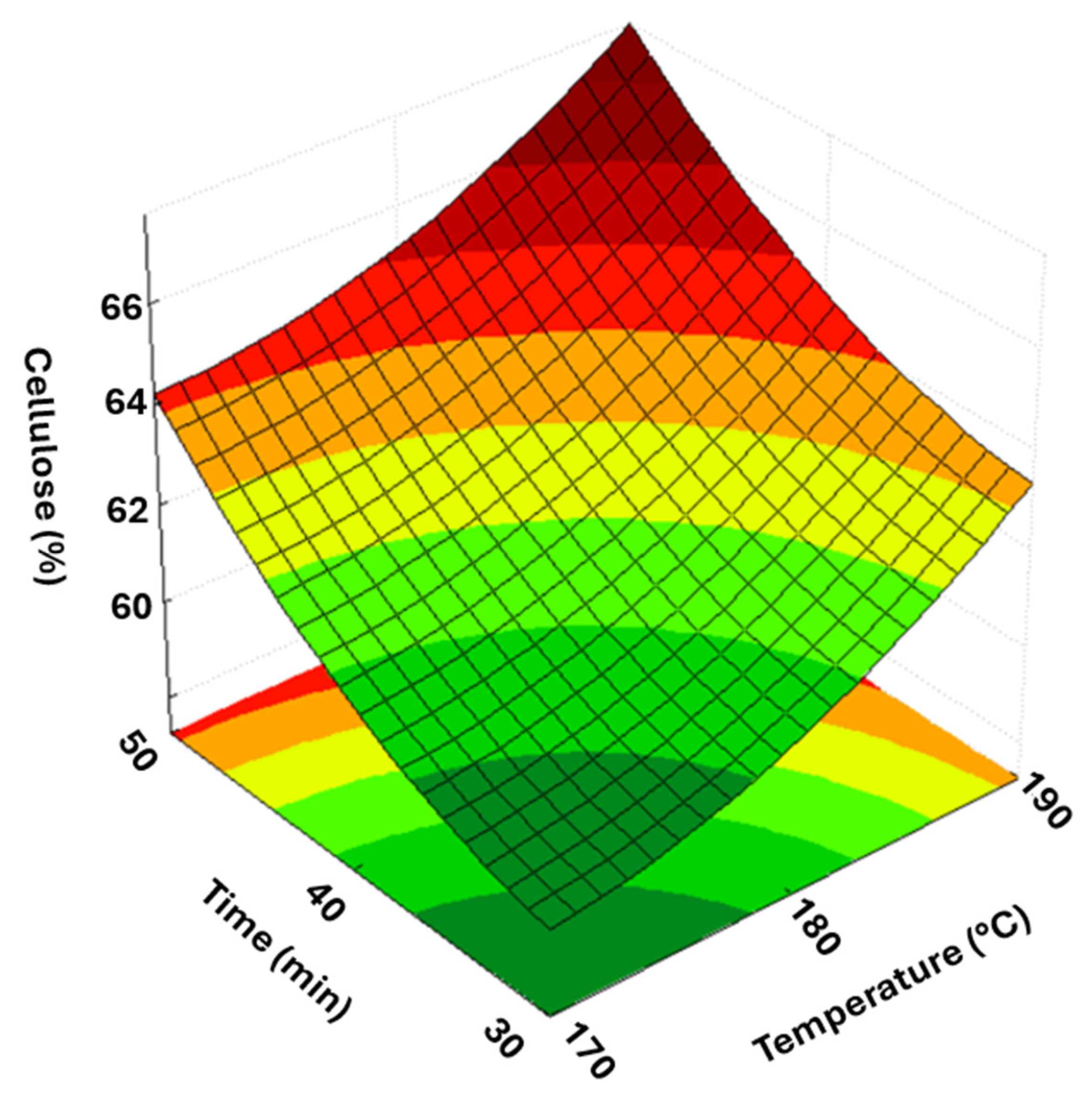
The response surface methodology was used to assess the effect of hydrothermal process temperature and time on cellulose content (Figure 3). The surface plot reveals that cellulose content increased with increasing time and temperature whereby the highest cellulose content (67.90%) was observed at higher temperature (190 °C) and longer reaction time (50 min). This behavior can be associated with the progressive depolymerization of hemicellulose and the cleavage of the lignin–carbohydrate complexes under hydrothermal process. As the temperature increases, the autoionization of the water promotes the release of hydronium ions and acetic acid from acetyl groups which further accelerates the reaction. Zhang et al. [23] applied the hydrothermal process on corn stover at temperatures between 170 and 210 °C for 20 min and reported that at 190 °C, the maximum amount of cellulose was obtained and most of the hemicellulose was degraded.
The statistical significance was confirmed by ANOVA (Table 2) wherein the linear effects of both temperature and time are statistically significant (p < 0.05) on cellulose content. This indicates that increasing these parameters has a strong influence on the cellulose content of the pretreated biomass. However, the quadratic terms of temperature and time were not statistically significant (p > 0.05). More so, the interaction between temperature and time is not significant, implying that the two factors primarily affect cellulose content independently rather than synergistically. This shows that within the parameters studied, the influence of processing variables was primarily linear. The CCD provided a mathematical model (Equation (3)) for predicting cellulose content in the pretreated solid phase. The model exhibited a high regression coefficient (R2 = 0.91). Furthermore, the lack-of-fit test was not statistically significant (p > 0.05) indicating that the model adequately describes the experimental data. In the model, T (°C) represents the processing temperature and t is the reaction time (min).
C e l l u l o s e   ( % ) = 232.53 2.1624 T + 0.006897 T 2 + 0.05135 t + 0.008943 t 2 0.002939 T t  

3.4. Effect of Delignification and Bleaching on the Hydrothermally Pretreated Solid Phase Composition

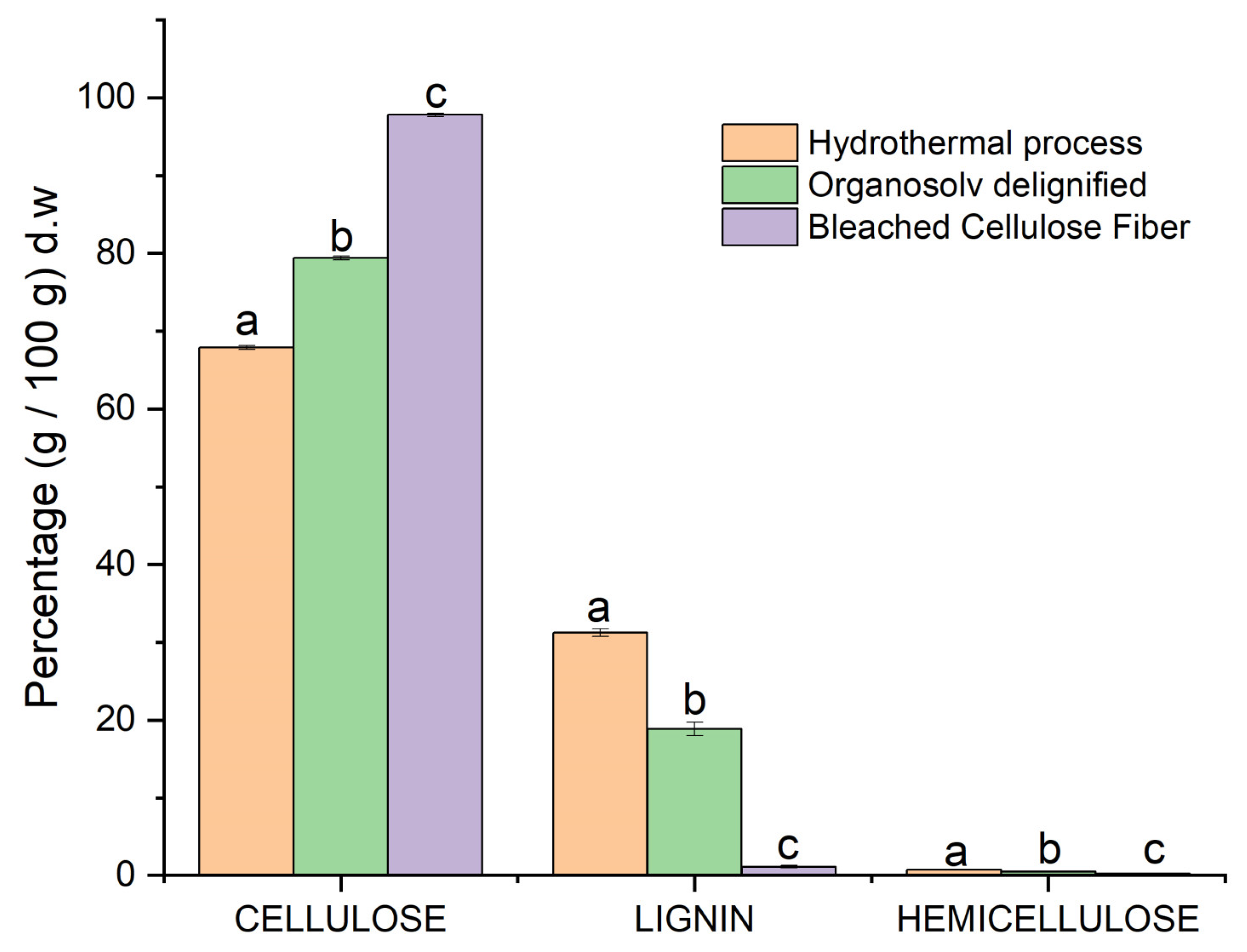
Figure 4 illustrates the chemical compositional changes in cellulose, lignin and hemicellulose across the three sequential processing stages: hydrothermal process at 190 °C/50 min, organosolv and alkaline peroxide bleaching. Different letters above the bars denote statistically significant differences (p < 0.05) among treatments.
A progressive enrichment in cellulose content was observed by substantial reduction in lignin and hemicellulose fractions due to the sequential treatment of SCB. Following the organosolv delignification of the solid phase, the cellulose content increased significantly from 67.56 ± 0.18% to 79.43 ± 0.25% in the hydrothermal processed solid. In contrast, the lignin and hemicellulose contents in the solid phase decreased from 31.26 ± 0.49 to 18.88 ± 0.88% and 0.70 ± 0.03 to 0.44 ± 0.03%, respectively. Organosolv delignification is remarkably effective for lignin solubilization because it disrupts the lignin network and cleaves the β-O-4 aryl ether bonds, resulting in lignin depolymerization and solubilization in the organic solvent phase [38].
A further increase in the cellulose content was noticed after bleaching with alkaline peroxide approaching 97.79 ± 0.19%, while the residual lignin reduced drastically to 1.1 ± 0.14% and hemicellulose almost completely solubilized (0.23 ± 0.13%). The mechanisms of the lignin decomposition by H2O2 in alkaline media have been widely studied. Under alkaline conditions, H2O2 dissociates to produce a great amount of hydroperoxide ions (HOO) which subsequently react with undissociated H2O2 to form highly reactive hydroxyl radicals (•OH). The HOO, a nucleophilic reagent, selectively attacks the chromophoric groups in lignin leading to the disruption of conjugated structures and an increase in brightness of the slurry. However, the OH is an electrophilic species with an extremely high redox potential which enables the effective cleavage of the complex lignin structure. Overall, lignin removal and whiteness of the bleached cellulose fiber result from the combined effect of HOO and •OH [39]. A higher cellulose content was recorded in this study following the sequential treatments applied to SCB compared to 87.4 ± 0.3% [40] and 89.76% [41] previously reported.

3.5. XRD Analysis of Untreated SCB and Bleached Cellulose Fiber (BCF)

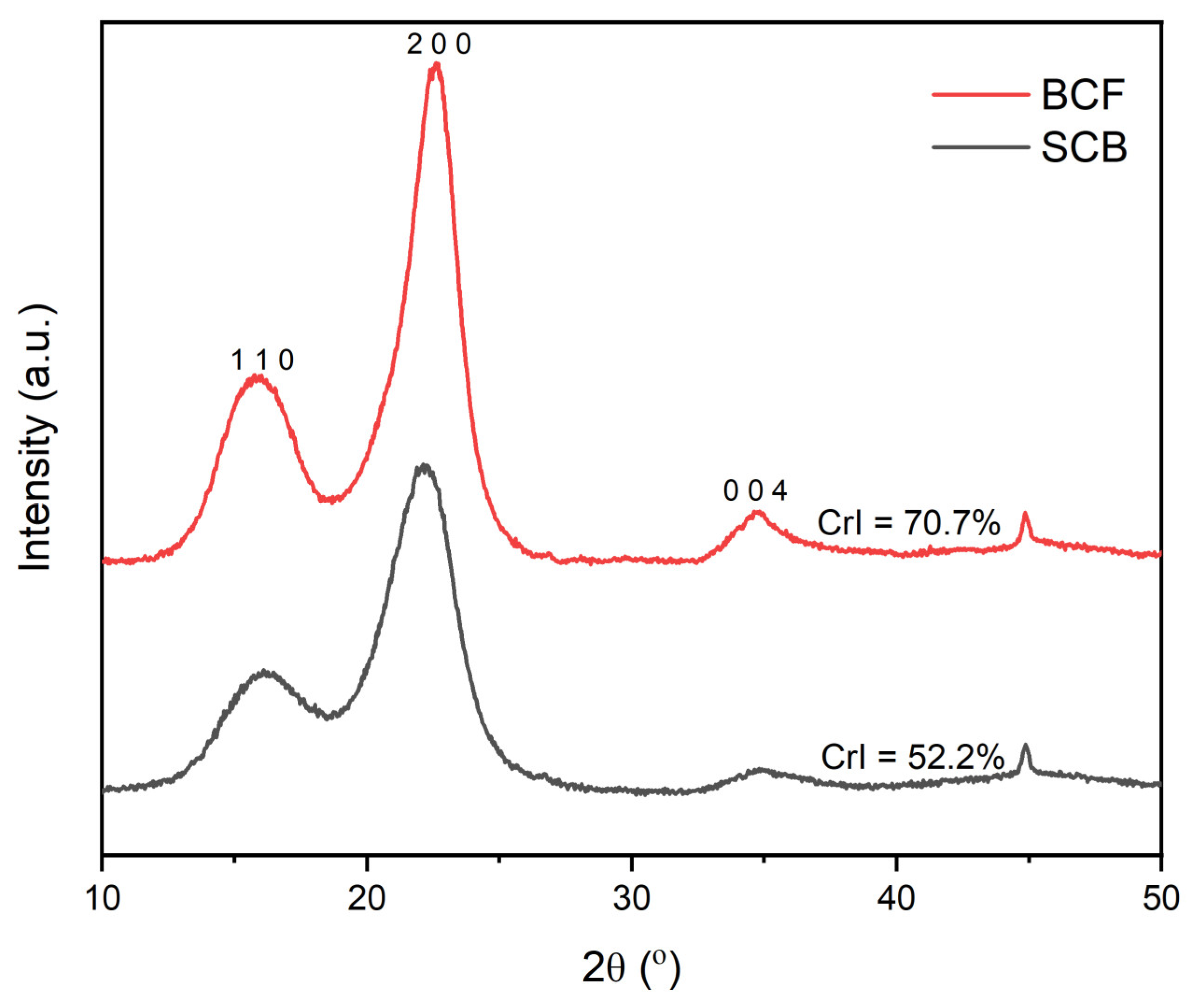
The XRD patterns of the untreated SCB and BCF are shown in Figure 5. Both samples exhibited crystalline peaks at 2θ values of approximately 16.1°, 22.4°, and 34.6°, which correspond to the (1 1 0), (2 0 0), and (0 0 4) diffraction planes, respectively. These results are attributable to the characteristic structure of cellulose Iβ, the most common crystalline form of cellulose in natural sources [42]. A broad and less intense peak for the untreated SCB centered around 2θ approximately 16.1° and 22.4° indicates amorphous lignin and hemicellulose. After hydrothermal process, organosolv delignification and bleaching, the XRD pattern of the BCF showed an increase in the intensity and sharpness of the peaks at 16.1° and 22.4°. These modifications were revealed in the CrI values which increased from 52.2% and 70.7% for the untreated SCB and BCF respectively which is attributed to the alignment of the crystalline domains into a more ordered conformation and removal of amorphous lignin and hemicellulose [43,44]. CrI values of 49.86 ± 1.69% and 61.7% were previously reported by Hongrattanavichit et al. [45] and De Aguiar et al. [33] respectively, indicating that the CrI value recorded in this study is consistent with earlier findings. Furthermore, the CrI of the BCF obtained in this work was slightly higher than the previously reported values of 64–67.26% for bleached cellulose from sugarcane bagasse [46,47].

3.6. FTIR Characterization of Untreated SCB and Bleached Cellulose Fiber (BCF)

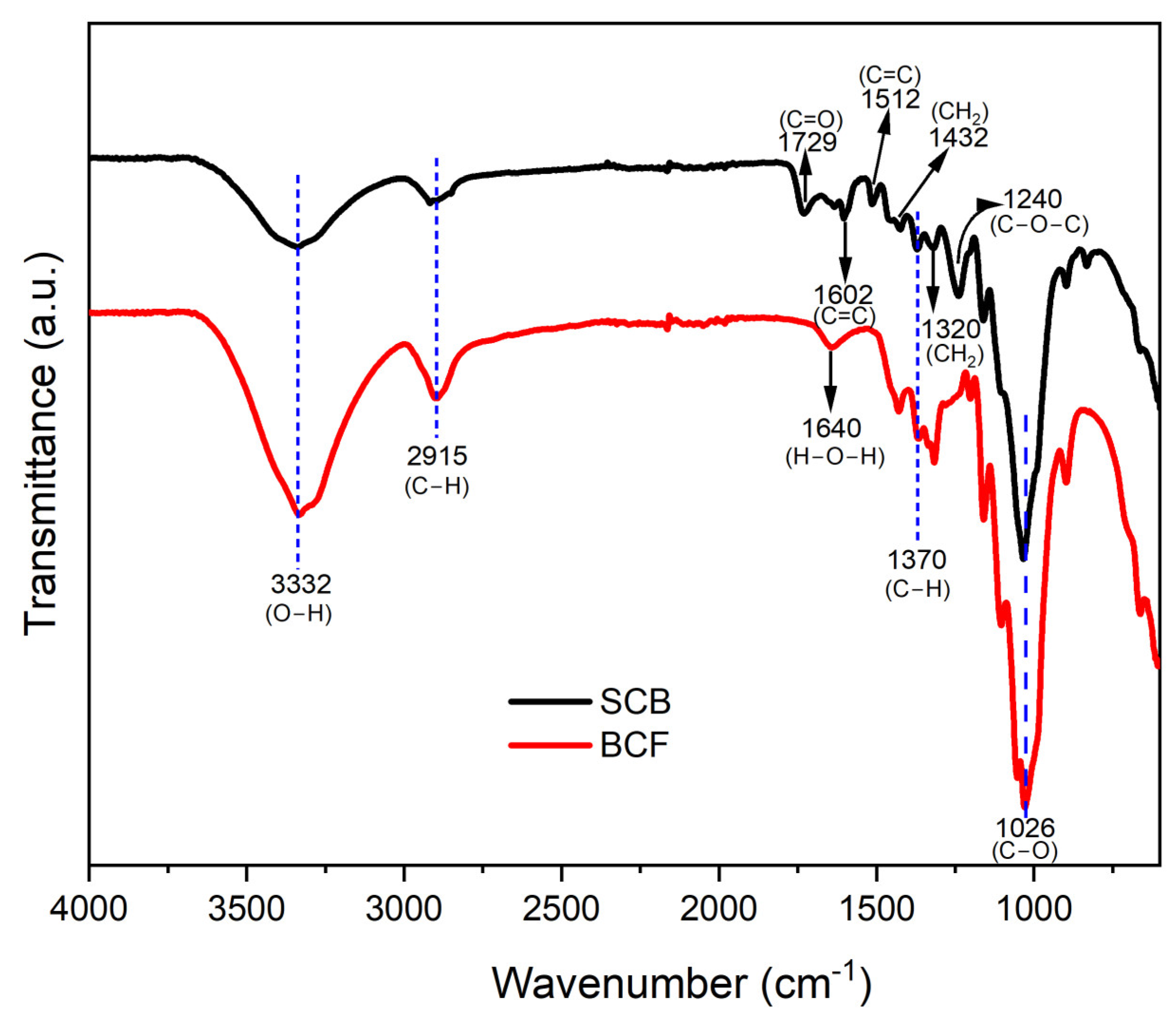
Figure 6 shows the FTIR spectra of untreated SCB and bleached cellulose fibers (BCF). The broad absorption band at 3332 cm−1 in both samples (though more intense in BCF) indicates the free O–H stretching vibration of the hydroxyl groups in cellulose structure. Also, both spectra showed the characteristic aliphatic C–H stretching vibration around 2915 cm−1 [46].
An important observation is the absence of the peak at 1729 cm−1 in BCF which is attributed to the C=O stretching of acetyl and uronic ester groups in hemicellulose or esther linkages of p-coumaric and ferulic acids in lignin [48]. Moreover, the characteristic aromatic skeletal vibrations (C=C in plane symmetrical stretching) at 1512 and 1602 cm−1 are evident in SCB but vanished in BCF, indicating substantial delignification through the organosolv and bleaching processes [49]. The peak observed in the spectrum of bleached cellulose fibers in the region of 1640 cm−1 is attributed to the H–O–H bending of the adsorbed water which indicates moisture content which is typical of a well-dried cellulose [50]. The absorption peaks at 1432 and 1320 cm−1 are attributed to CH2 wagging and CH2 symmetric bending vibrations respectively and are characteristic of cellulose and are associated with its crystalline structure [51]. Furthermore, the vibration peak observed at 1370 cm−1 has been attached to the bending vibration of C–H and C–O bonds in the polysaccharide aromatic rings. The peak at 1240 cm−1 corresponding to C–O–C stretching of aryl–akyl ether linkages in lignin was noticeable in SCB but disappeared completely in the spectra of BCF [52]. The prominent band observed at 1026 cm−1 is attributed to C–O stretching vibrations of primary alcohol groups in cellulose which remains intense in both spectra, indicating the retention of cellulose’s structural integrity after bleaching [7]. In general, the combined hydrothermal processing, organosolv delignification and bleaching led to the elimination of peaks related to hemicellulose and lignin while preserving the cellulose backbone. These findings corroborate the observed increase in the crystallinity index as determined from the XRD analysis.

3.7. Morphological Characterization of Untreated SCB and Bleached Cellulose Fiber Using SEM

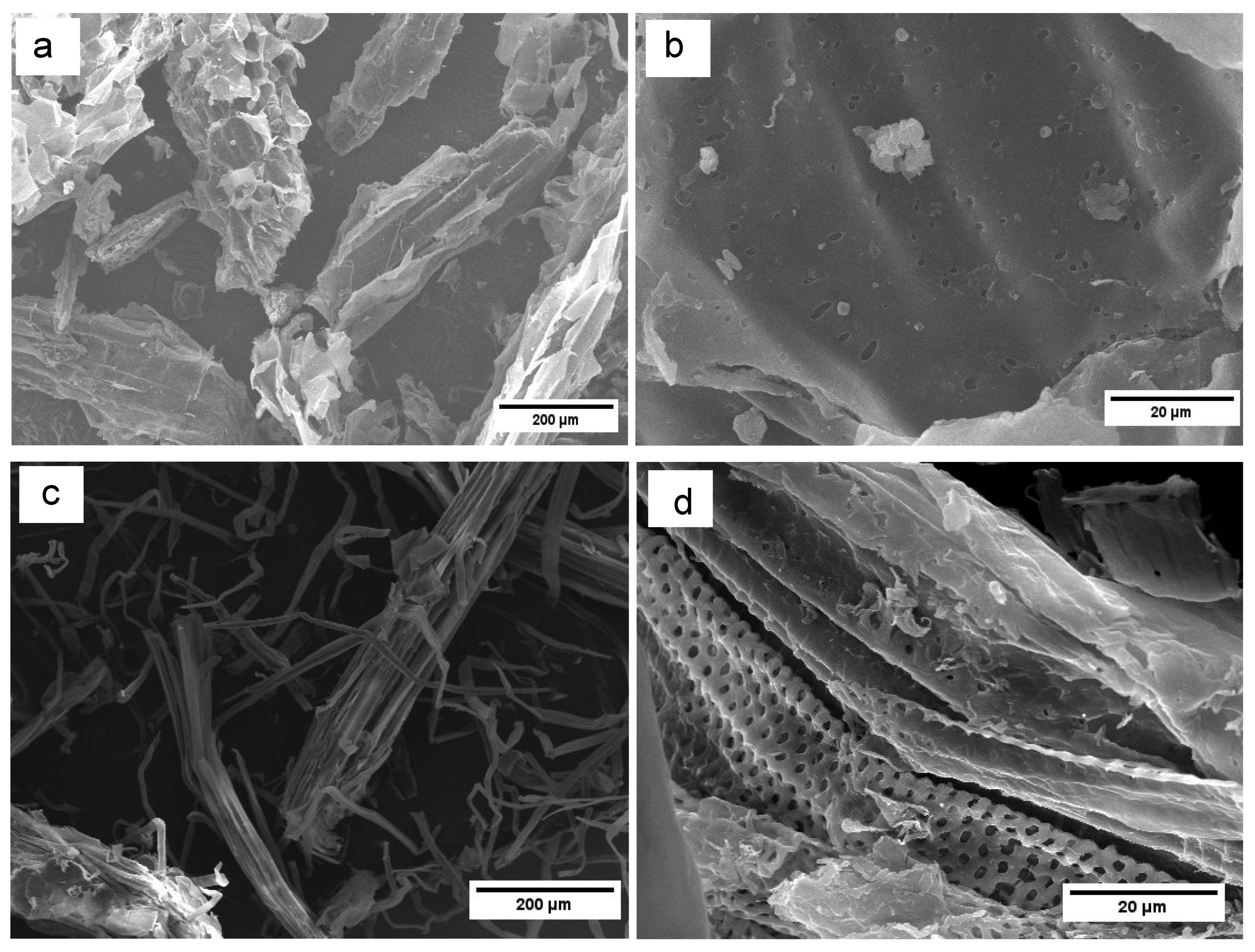
The SEM images of untreated sugarcane bagasse and bleached cellulose fibers are shown in Figure 7a–d. Significant morphological changes were observed in the bleached cellulose fibers compared to the untreated SCB samples, resulting from the removal of hemicellulose and lignin [53].
The micrographs of the untreated SCB (Figure 7a,b) shows a homogenous, compact and rigid morphology with agglomerated fibrous bundles embedded within a matrix-like structure [23]. This rigidity is indicative of the presence of high content of non-fibrous components such as waxes, extractives, hemicellulose and lignin [7]. In contrast, the BCF (Figure 7c,d) exhibits distorted vascular tissue, rough surfaces with exposed cellulose fibrils indicating extensive defibrillation [54]. The removal of the lignin and hemicellulose components during the hydrothermal process, organosolv delignification and alkaline peroxide bleaching leads to the disintegration of the compact structure, thereby enhancing the accessibility of the cellulose fibers [55]. These observations correspond to the structural changes identified in the XRD and FTIR analyses.
Collectively, the integrated processing sequence evaluated in this study provides insights into the progressive fractionation of sugarcane bagasse and highlights the importance of sequential process integration for cellulose enrichment. While previous studies have demonstrated the effectiveness of individual pretreatment approaches, the present work reveals the cumulative contribution of hydrothermal treatment, organosolv delignification and alkaline peroxide bleaching in selectively removing hemicellulose and lignin, resulting in cellulose fibers with high purity and enhanced crystallinity. The combined compositional, structural and morphological analyses further elucidated the contribution of each processing stage, providing a comprehensive understanding of the effectiveness of integrated biomass fractionation strategies for the sustainable valorization of sugarcane bagasse.

4. Conclusions

This study demonstrated the effectiveness of an integrated fractionation approach for producing high-purity cellulose fiber from sugarcane bagasse. High-purity cellulose fiber was effectively isolated from sugarcane bagasse through the sequential processing which led to substantial removal of lignin and hemicellulose as shown by compositional analysis. Also, the structural and chemical characterization confirmed these results: FTIR spectra showed the disappearance of hemicellulose and lignin-related functional groups along with the prominence of cellulose characteristic bands; XRD results indicated the presence of cellulose Iβ and an increase in the crystallinity revealing enhanced structural ordering; and SEM micrographs revealed significant morphological changes with the disruption of the compact rigid matrix and the exposure of the well-defined cellulose fibrils. Overall, these results highlight the potential of sugarcane bagasse as a valuable feedstock for high-purity cellulose fiber production.

Author Contributions

Conceptualization, E.O.F., R.M.R.-J. and H.A.R.; methodology, E.O.F., R.M.R.-J. and H.A.R.; software, E.O.F., R.M.R.-J. and H.A.R.; validation, E.O.F., R.M.R.-J. and H.A.R.; formal analysis, E.O.F., R.M.R.-J. and H.A.R.; investigation, E.O.F., R.M.R.-J. and H.A.R.; resources, R.M.R.-J. and H.A.R.; data curation, E.O.F.; writing—original draft preparation, E.O.F.; writing—review and editing, E.O.F., R.M.R.-J., R.E.B.-C., R.R.-G., M.A.C. and H.A.R.; visualization, R.M.R.-J. and H.A.R.; supervision, E.O.F., R.M.R.-J. and H.A.R.; project administration, R.M.R.-J. and H.A.R.; funding acquisition, R.M.R.-J. and H.A.R. All authors have read and agreed to the published version of the manuscript.

Funding

This research was funded by Secretaría de Ciencia, Humanidades, Tecnología e Innovación (SECIHTI, Mexico), grant number 1321091.

Institutional Review Board Statement

Not applicable.

Informed Consent Statement

Not applicable.

Data Availability Statement

The original contributions presented in the study are included in the article; further inquiries can be directed to the corresponding authors.

Acknowledgments

The author, Ezekiel Oluwatobi Faluyi, gratefully acknowledges the Secretaría de Ciencia, Humanidades, Tecnología e Innovación (SECIHTI, Mexico) for financial support through the PhD Fellowship (1321091). The authors also appreciate the support of Diana Jasso of Plant Breeding Department of the Antonio Narro Autonomous Agricultural University (UAAAN), Saltillo, Coahuila, for assistance with the milling of the sugarcane bagasse. Also, the authors express gratitude to Claudia M. López-Badillo from the Universidad Autónoma de Coahuila for providing access to the X-ray diffractometer for XRD analysis. Appreciation is also extended to Miguel A. Aguilar-González of CINVESTAV, Saltillo, Coahuila for his immense support during the SEM analysis.

Conflicts of Interest

The authors declare no conflicts of interest.

References

  1. Durmaz, E.; Sertkaya, S.; Yilmaz, H.; Olgun, C.; Ozcelik, O.; Tozluoglu, A.; Candan, Z. Lignocellulosic Bionanomaterials for Biosensor Applications. Micromachines 2023, 14, 1450. [Google Scholar] [CrossRef] [Scilit] [PubMed]
  2. Mateo, S.; Peinado, S.; Morillas-Gutiérrez, F.; La Rubia, M.D.; Moya, A.J. Nanocellulose from Agricultural Wastes: Products and Applications—A Review. Processes 2021, 9, 1594. [Google Scholar] [CrossRef] [Scilit]
  3. Tanpichai, S.; Boonmahitthisud, A.; Soykeabkaew, N.; Ongthip, L. Review of the Recent Developments in All-Cellulose Nanocomposites: Properties and Applications. Carbohydr. Polym. 2022, 286, 119192. [Google Scholar] [CrossRef] [Scilit] [PubMed]
  4. Mahmud, M.A.; Anannya, F.R. Sugarcane Bagasse—A Source of Cellulosic Fiber for Diverse Applications. Heliyon 2021, 7, e07771. [Google Scholar] [CrossRef] [Scilit] [PubMed]
  5. Sani, M.A.; Azizi-Lalabadi, M.; Tavassoli, M.; Mohammadi, K.; McClements, D.J. Recent Advances in the Development of Smart and Active Biodegradable Packaging Materials. Nanomaterials 2021, 11, 1331. [Google Scholar] [CrossRef] [Scilit] [PubMed]
  6. Ramesh, S.; Doddipatla, P.; Pamidipati, S. Optimization of Parameters for Biological Pre-Treatment Route for the Production of Nanocellulose from Sugarcane Bagasse. Biomass Convers. Biorefin. 2023, 13, 2293–2303. [Google Scholar] [CrossRef] [Scilit]
  7. Gond, R.K.; Gupta, M.K.; Jawaid, M. Extraction of Nanocellulose from Sugarcane Bagasse and Its Characterization for Potential Applications. Polym. Compos. 2021, 42, 5400–5412. [Google Scholar] [CrossRef] [Scilit]
  8. Ndikumana, S.; Tanane, O.; Aichi, Y.; Latifa, E.F.; Goudali, L. Innovative Applications of Sugarcane Bagasse in the Global Sugarcane Industry. Processes 2025, 13, 3796. [Google Scholar] [CrossRef] [Scilit]
  9. Espirito Santo, M.; Rezende, C.A.; Bernardinelli, O.D.; Pereira, N.; Curvelo, A.A.S.; DeAzevedo, E.R.; Guimarães, F.E.G.; Polikarpov, I. Structural and Compositional Changes in Sugarcane Bagasse Subjected to Hydrothermal and Organosolv Pretreatments and Their Impacts on Enzymatic Hydrolysis. Ind. Crops Prod. 2018, 113, 64–74. [Google Scholar] [CrossRef] [Scilit]
  10. Martín, C.; Dixit, P.; Momayez, F.; Jönsson, L.J. Hydrothermal Pretreatment of Lignocellulosic Feedstocks to Facilitate Biochemical Conversion. Front. Bioeng. Biotechnol. 2022, 10, 846592. [Google Scholar] [CrossRef] [Scilit] [PubMed]
  11. Neto, F.S.P.P.; Roldán, I.U.M.; Galán, J.P.M.; Monti, R.; de Oliveira, S.C.; Masarin, F. Model-Based Optimization of Xylooligosaccharides Production by Hydrothermal Pretreatment of Eucalyptus by-Product. Ind. Crops Prod. 2020, 154, 112707. [Google Scholar] [CrossRef] [Scilit]
  12. Moreno, A.D.; Tomás-Pejó, E.; Ballesteros, M.; Negro, M.J. Pretreatment Technologies for Lignocellulosic Biomass Deconstruction Within a Biorefinery Perspective. In Biofuels: Alternative Feedstocks and Conversion Processes for the Production of Liquid and Gaseous Biofuels, 2nd ed.; Academic Press: Cambridge, MA, USA, 2019; pp. 379–399. [Google Scholar]
  13. Jimenez-Gutierrez, J.M.; Verlinden, R.A.J.; van der Meer, P.C.; van der Wielen, L.A.M.; Straathof, A.J.J. Liquid Hot Water Pretreatment of Lignocellulosic Biomass at Lab and Pilot Scale. Processes 2021, 9, 1518. [Google Scholar] [CrossRef] [Scilit]
  14. Harmsen, J.; de Haan, A.B.; Swinkels, P.L. Driving Innovation. In Product and Process Design; De Gruyter: Berlin, Germany, 2018; pp. V–VI. [Google Scholar]
  15. Vaidya, A.A.; Murton, K.D.; Smith, D.A.; Dedual, G. A Review on Organosolv Pretreatment of Softwood with a Focus on Enzymatic Hydrolysis of Cellulose. Biomass Convers. Biorefin. 2022, 12, 5427–5442. [Google Scholar] [CrossRef] [Scilit]
  16. Mou, H.; Wu, S. Comparison of Hydrothermal, Hydrotropic and Organosolv Pretreatment for Improving the Enzymatic Digestibility of Bamboo. Cellulose 2017, 24, 85–94. [Google Scholar] [CrossRef] [Scilit]
  17. Mussatto, S.I.; Rocha, G.J.M.; Roberto, I.C. Hydrogen Peroxide Bleaching of Cellulose Pulps Obtained from Brewer’s Spent Grain. Cellulose 2008, 15, 641–649. [Google Scholar] [CrossRef] [Scilit]
  18. Khandelwal, N.; Kumari, S.; Poduval, S.; Behera, S.K.; Kumar, A.; Gedam, V.V. Life-Cycle Assessment of Three Biorefinery Pathways across Different Generations. Sci. Rep. 2025, 15, 13135. [Google Scholar] [CrossRef] [Scilit] [PubMed]
  19. Agnihotri, S. Hemicellulose: Structures, Properties, and Its Biorefinery Applications. In Biomass for Bioenergy and Bioproducts; Springer: Cham, Switzerland, 2026; pp. 211–223. [Google Scholar]
  20. Yu, X.; Yang, B.; Zhu, W.; Deng, T.; Pu, Y.; Ragauskas, A.; Wang, H. Towards Functionalized Lignin and Its Derivatives for High-Value Material Applications. Ind. Crops Prod. 2023, 200, 116824. [Google Scholar] [CrossRef] [Scilit]
  21. Sluiter, A.; Hames, B.; Ruiz, R.; Scarlata, C.; Sluiter, J.; Templeton, D.; Wolfe, J. Determination of Total Solids in Biomass and Total Dissolved Solids in Liquid Process Samples: Laboratory Analytical Procedure (LAP); Technical Report NREL/TP-510-42621; National Renewable Energy Laboratory: Golden, CO, USA, 2008.
  22. Sluiter, A.; Hames, B.; Ruiz, R.; Scarlata, C.; Sluiter, J.; Templeton, D.; Crocker, D. Determination of Structural Carbohydrates and Lignin in Biomass: Laboratory Analytical Procedure (LAP); Technical Report NREL/TP-510-42618; National Renewable Energy Laboratory: Golden, CO, USA, 2012.
  23. Zhang, H.; Zhang, S.; Yuan, H.; Lyu, G.; Xie, J. FeCl3-Catalyzed Ethanol Pretreatment of Sugarcane Bagasse Boosts Sugar Yields with Low Enzyme Loadings and Short Hydrolysis Time. Bioresour. Technol. 2018, 249, 395–401. [Google Scholar] [CrossRef] [Scilit] [PubMed]
  24. Ruiz, H.A.; Ruzene, D.S.; Silva, D.P.; da Silva, F.F.M.; Vicente, A.A.; Teixeira, J.A. Development and Characterization of an Environmentally Friendly Process Sequence (Autohydrolysis and Organosolv) for Wheat Straw Delignification. Appl. Biochem. Biotechnol. 2011, 164, 629–641. [Google Scholar] [CrossRef] [Scilit] [PubMed]
  25. Li, M.F.; Yu, P.; Li, S.X.; Wu, X.F.; Xiao, X.; Bian, J. Sequential Two-Step Fractionation of Lignocellulose with Formic Acid Organosolv Followed by Alkaline Hydrogen Peroxide under Mild Conditions to Prepare Easily Saccharified Cellulose and Value-Added Lignin. Energy Convers. Manag. 2017, 148, 1426–1437. [Google Scholar] [CrossRef] [Scilit]
  26. Aguilar, D.L.; Rodríguez-Jasso, R.M.; Zanuso, E.; de Rodríguez, D.J.; Amaya-Delgado, L.; Sanchez, A.; Ruiz, H.A. Scale-up and Evaluation of Hydrothermal Pretreatment in Isothermal and Non-Isothermal Regimen for Bioethanol Production Using Agave Bagasse. Bioresour. Technol. 2018, 263, 112–119. [Google Scholar] [CrossRef] [Scilit] [PubMed]
  27. Rizwan, M.; Gilani, S.R.; Durrani, A.I.; Naseem, S. Cellulose Extraction of Alstonia Scholaris: A Comparative Study on Efficiency of Different Bleaching Reagents for Its Isolation and Characterization. Int. J. Biol. Macromol. 2021, 191, 964–972. [Google Scholar] [CrossRef] [Scilit] [PubMed]
  28. Segal, L.; Creely, J.J.; Martin, A.E.; Conrad, C.M. An Empirical Method for Estimating the Degree of Crystallinity of Native Cellulose Using the X-Ray Diffractometer. Text. Res. J. 1959, 29, 786–794. [Google Scholar] [CrossRef] [Scilit]
  29. Chaudhari, U.S.; Merugu, S.; Ankathi, S.K.; Chipkar, S.; Webber, J.B.W.; Ong, R.G.; Shonnard, D. Combined Effects of Ammonia Fiber Expansion (Afex) Pretreatment Severity and Enzymatic Hydrolysis Time on Microporous Structure of Corn Stover. SSRN Electron. J. 2022. [Google Scholar] [CrossRef] [Scilit]
  30. Melikoğlu, A.Y.; Bilek, S.E.; Cesur, S. Optimum Alkaline Treatment Parameters for the Extraction of Cellulose and Production of Cellulose Nanocrystals from Apple Pomace. Carbohydr. Polym. 2019, 215, 330–337. [Google Scholar] [CrossRef] [Scilit] [PubMed]
  31. García-Alcocer, S.K.; Salgado-García, S.; Córdova-Sánchez, S.; Rincón-Ramírez, J.A.; Bolio-López, G.I.; Castañeda Ceja, R.; Saucedo-Corona, A.R.; Falconi-Calderón, R.; Valerio-Cárdenas, C. Blanqueo de La Fibra de Celulosa de Paja de Caña de Azúcar (Saccharum spp.) Con Peróxido de Hidrógeno. Agro Product. 2019, 12, 11–17. [Google Scholar] [CrossRef] [Scilit]
  32. Freitas, P.A.V.; Santana, L.G.; González-Martínez, C.; Chiralt, A. Combining Subcritical Water Extraction and Bleaching with Hydrogen Peroxide to Obtain Cellulose Fibres from Rice Straw. Carbohydr. Polym. Technol. Appl. 2024, 7, 100491. [Google Scholar] [CrossRef] [Scilit]
  33. De Aguiar, J.; Bondancia, T.J.; Claro, P.I.C.; Mattoso, L.H.C.; Farinas, C.S.; Marconcini, J.M. Enzymatic Deconstruction of Sugarcane Bagasse and Straw to Obtain Cellulose Nanomaterials. ACS Sustain. Chem. Eng. 2020, 8, 2287–2299. [Google Scholar] [CrossRef] [Scilit]
  34. dos Santos-Rocha, M.S.R.; Pratto, B.; Corrêa, L.J.; Badino, A.C.; Almeida, R.M.R.G.; Cruz, A.J.G. Assessment of Different Biomass Feeding Strategies for Improving the Enzymatic Hydrolysis of Sugarcane Straw. Ind. Crops Prod. 2018, 125, 293–302. [Google Scholar] [CrossRef] [Scilit]
  35. Phojaroen, J.; Jiradechakorn, T.; Kirdponpattara, S.; Sriariyanun, M.; Junthip, J.; Chuetor, S. Performance Evaluation of Combined Hydrothermal-Mechanical Pretreatment of Lignocellulosic Biomass for Enzymatic Enhancement. Polymers 2022, 14, 2313. [Google Scholar] [CrossRef] [Scilit] [PubMed]
  36. Wang, Y.; Zhang, Y.; Cui, Q.; Feng, Y.; Xuan, J. Composition of Lignocellulose Hydrolysate in Different Biorefinery Strategies: Nutrients and Inhibitors. Molecules 2024, 29, 2275. [Google Scholar] [CrossRef] [Scilit] [PubMed]
  37. Sánchez, M.; Ferreira-Santos, P.; Gomes-Dias, J.S.; Laca, A.; Rocha, C.M.R. Cascading Recovery of Added-Value Cocoa Bean Shell Fractions Through Autohydrolysis Treatments. Food Bioprocess Technol. 2025, 18, 965–978. [Google Scholar] [CrossRef] [Scilit]
  38. Evstigneyev, E.I.; Shevchenko, S.M. Lignin Valorization and Cleavage of Arylether Bonds in Chemical Processing of Wood: A Mini-Review. Wood Sci. Technol. 2020, 54, 787–820. [Google Scholar] [CrossRef] [Scilit]
  39. Shi, S.-C.; Liu, G.-T. Cellulose Nanocrystal Extraction from Rice Straw Using a Chlorine-Free Bleaching Process. Cellulose 2021, 28, 6147–6158. [Google Scholar] [CrossRef] [Scilit] [PubMed]
  40. Oliveira, F.B.d.; Bras, J.; Pimenta, M.T.B.; Curvelo, A.A.d.S.; Belgacem, M.N. Production of Cellulose Nanocrystals from Sugarcane Bagasse Fibers and Pith. Ind. Crops Prod. 2016, 93, 48–57. [Google Scholar] [CrossRef] [Scilit]
  41. Melesse, G.T.; Hone, F.G.; Mekonnen, M.A. Extraction of Cellulose from Sugarcane Bagasse Optimization and Characterization. Adv. Mater. Sci. Eng. 2022, 2022, 1712207. [Google Scholar] [CrossRef] [Scilit]
  42. Aprilia, N.A.S.; Mulyati, S.; Alam, P.N.; Razali, N.; Zuhra, B.; Fatmawati, G.; Kamaruzaman, S.; Amin, A. Preparation and Characterization of Sugarcane Bagasse Nanocellulose Crystalline Using Acid Hydrolysis with and without Ultrasonication. Rasayan J. Chem. 2021, 14, 601–607. [Google Scholar] [CrossRef] [Scilit]
  43. Rashid, S.; Dutta, H. Characterization of Nanocellulose Extracted from Short, Medium and Long Grain Rice Husks. Ind. Crops Prod. 2020, 154, 112627. [Google Scholar] [CrossRef] [Scilit]
  44. Chen, Y.W.; Lee, H.V.; Abd Hamid, S.B. Facile Production of Nanostructured Cellulose from Elaeis Guineensis Empty Fruit Bunch via One Pot Oxidative-Hydrolysis Isolation Approach. Carbohydr. Polym. 2017, 157, 1511–1524. [Google Scholar] [CrossRef] [Scilit] [PubMed]
  45. Hongrattanavichit, I.; Aht-Ong, D. Nanofibrillation and Characterization of Sugarcane Bagasse Agro-Waste Using Water-Based Steam Explosion and High-Pressure Homogenization. J. Clean. Prod. 2020, 277, 123471. [Google Scholar] [CrossRef] [Scilit]
  46. Evans, S.K.; Wesley, O.N.; Nathan, O.; Moloto, M.J. Chemically Purified Cellulose and Its Nanocrystals from Sugarcane Baggase: Isolation and Characterization. Heliyon 2019, 5, e02635. [Google Scholar] [CrossRef] [Scilit] [PubMed]
  47. Mamo, K.A.; Andualem, T.L.; Reddy-Prasad, D.M.; Narayanan, M.M.; Bitew, N.A.; Debase, E.A. Sustainable Production of Cellulose Nanocrystals from Sugarcane Bagasse via Statistically Optimized Acid Hydrolysis. Sci. Rep. 2026, 16, 10682. [Google Scholar] [CrossRef] [Scilit] [PubMed]
  48. Reshmy, R.; Madhavan, A.; Philip, E.; Paul, S.A.; Sindhu, R.; Binod, P.; Pugazhendhi, A.; Sirohi, R.; Pandey, A. Sugarcane Bagasse Derived Nanocellulose Reinforced with Frankincense (Boswellia serrata): Physicochemical Properties, Biodegradability and Antimicrobial Effect for Controlling Microbial Growth for Food Packaging Application. Environ. Technol. Innov. 2021, 21, 101335. [Google Scholar] [CrossRef] [Scilit]
  49. Sun, F.F.; Wang, L.; Hong, J.; Ren, J.; Du, F.; Hu, J.; Zhang, Z.; Zhou, B. The Impact of Glycerol Organosolv Pretreatment on the Chemistry and Enzymatic Hydrolyzability of Wheat Straw. Bioresour. Technol. 2015, 187, 354–361. [Google Scholar] [CrossRef] [Scilit] [PubMed]
  50. Feng, Y.H.; Cheng, T.Y.; Yang, W.G.; Ma, P.T.; He, H.Z.; Yin, X.C.; Yu, X.X. Characteristics and Environmentally Friendly Extraction of Cellulose Nanofibrils from Sugarcane Bagasse. Ind. Crops Prod. 2018, 111, 285–291. [Google Scholar] [CrossRef] [Scilit]
  51. Maceda, A.; Soto-Hernández, M.; Terrazas, T. Cellulose in Secondary Xylem of Cactaceae: Crystalline Composition and Anatomical Distribution. Polymers 2022, 14, 4840. [Google Scholar] [CrossRef] [Scilit] [PubMed]
  52. Trilokesh, C.; Uppuluri, K.B. Isolation and Characterization of Cellulose Nanocrystals from Jackfruit Peel. Sci. Rep. 2019, 9, 16709. [Google Scholar] [CrossRef] [Scilit] [PubMed]
  53. Ferreira, F.V.; Mariano, M.; Rabelo, S.C.; Gouveia, R.F.; Lona, L.M.F. Isolation and Surface Modification of Cellulose Nanocrystals from Sugarcane Bagasse Waste: From a Micro- to a Nano-Scale View. Appl. Surf. Sci. 2018, 436, 1113–1122. [Google Scholar] [CrossRef] [Scilit]
  54. Raju, V.; Revathiswaran, R.; Subramanian, K.S.; Parthiban, K.T.; Chandrakumar, K.; Anoop, E.V.; Chirayil, C.J. Isolation and Characterization of Nanocellulose from Selected Hardwoods, Viz., Eucalyptus tereticornis Sm. and Casuarina equisetifolia L., by Steam Explosion Method. Sci. Rep. 2023, 13, 1199. [Google Scholar] [CrossRef] [Scilit] [PubMed]
  55. Nurul Atiqah, M.S.; Gopakumar, D.A.; Owolabi, F.A.T.; Pottathara, Y.B.; Rizal, S.; Sri Aprilia, N.A.; Hermawan, D.; Paridah, M.T.; Thomas, S.; Khalil, H.P.S.A. Extraction of Cellulose Nanofibers via Eco-Friendly Supercritical Carbon Dioxide Treatment Followed by Mild Acid Hydrolysis and the Fabrication of Cellulose Nanopapers. Polymers 2019, 11, 1813. [Google Scholar] [CrossRef] [Scilit] [PubMed]
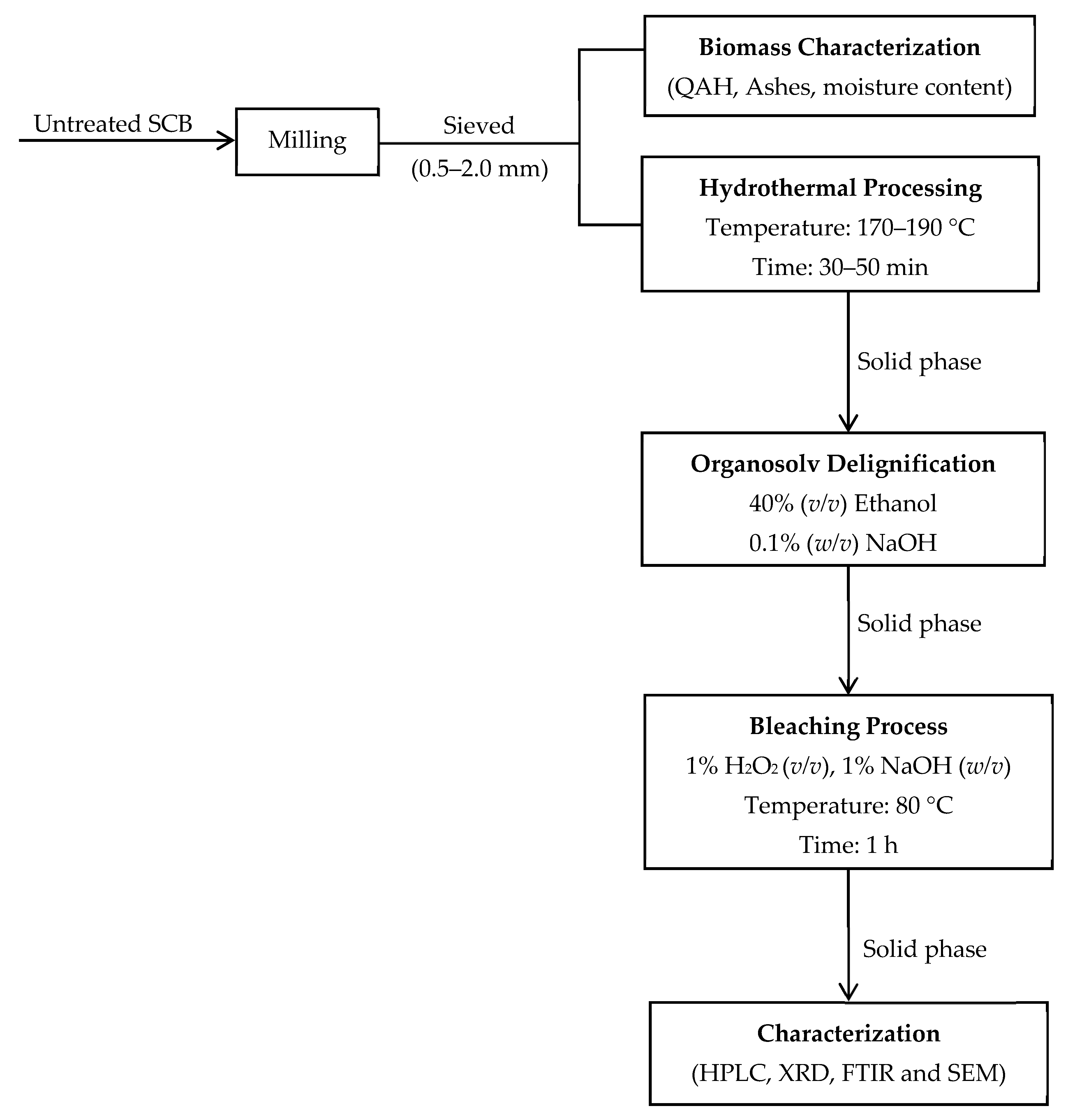
Figure 1. Schematic representation of the methodology. QAH refers to Quantitative Acid Hydrolysis.
Applsci 16 07495 g001
Figure 2. Process for biomass fractionation in the production of cellulose fiber.
Applsci 16 07495 g002
Figure 3. Response surface graph—cellulose content (% on total dry weight) in relation to time and temperature. The color gradient represents the predicted cellulose content, with green indicating lower values and red indicating higher values.
Applsci 16 07495 g003
Figure 4. Chemical composition of sugarcane bagasse after hydrothermal process, organosolv delignification and alkaline peroxide bleaching determined by HPLC. Values are expressed as mean ± standard deviation and statistical analysis was performed using one-way ANOVA and significant differences were considered at p < 0.05.
Applsci 16 07495 g004
Figure 5. X-ray diffraction analysis for untreated SCB and bleached cellulose fibers (BCF).
Applsci 16 07495 g005
Figure 6. FTIR spectra of untreated SCB and bleached cellulose fibers (BCF). The blue dashed lines indicate the positions of the characteristic absorption peaks.
Applsci 16 07495 g006
Figure 7. SEM images of the untreated SCB (a) 100× and (b) 1000× magnifications and bleached cellulose fibers (c) 100× and (d) 1000× magnifications.
Applsci 16 07495 g007
Table 1. Experimental conditions for hydrothermal process and the corresponding chemical composition of SCB determined by HPLC. Values are presented as mean ± standard deviation.
Temperature170 °C180 °C190 °C
Time (min)304050304050304050
Solid fraction composition (% on total dry weight)
Cellulose58.90 ± 0.0660.21 ± 0.7364.60 ± 0.9760.95 ± 1.6561.90 ± 1.0964.98 ± 0.7663.03 ± 0.8365.32 ± 0.0667.56 ± 0.18
Hemicellulose12.61 ± 0.477.12 ± 0.447.06 ± 0.274.47 ± 0.033.22 ± 0.192.59 ± 0.491.29 ± 0.001.04 ± 0.010.70 ± 0.03
Lignin25.71 ± 0.2025.88 ± 1.6026.24 ± 1.0427.22 ± 1.2727.97 ± 0.2528.27 ± 0.7029.16 ± 0.3929.77 ± 0.7931.26 ± 0.49
Table 2. ANOVA table for cellulose content after hydrothermal process.
FactorSSDfMSFp-Value
Temperature (°C) (L)24.78124.7816.960.0146
Temperature (°C) (Q)1.1111.110.760.4325
Time (min) (L)33.87133.8723.180.0086
Time (min) (Q)1.8711.871.280.3216
Time (L) vs. Temp. (L)0.3510.350.240.6521
Lack of fit 0.9538
Error5.8441.46
Total SS68.399
SS: Sum of Squares, Df: Degree of Freedom, MS: Mean Square, F: F-value.
Disclaimer/Publisher’s Note: The statements, opinions and data contained in all publications are solely those of the individual author(s) and contributor(s) and not of MDPI and/or the editor(s). MDPI and/or the editor(s) disclaim responsibility for any injury to people or property resulting from any ideas, methods, instructions or products referred to in the content.