
Article

Processing of Lignocellulosic Waste Biomass via Fine Cr2O3-Catalyzed Pyrolysis in a Sealed Pressure Reactor


Institute of Rock Structure and Mechanics, Czech Academy of Sciences, V Holešovičkách 94/41, 18209 Prague, Czech Republic
*
Author to whom correspondence should be addressed.
Appl. Sci. 2026, 16(14), 7241; https://doi.org/10.3390/app16147241
Submission received: 29 May 2026 / Revised: 15 July 2026 / Accepted: 18 July 2026 / Published: 20 July 2026

Abstract

The aim of the work is to present a technologically feasible method for processing waste biomass into synthesis gas for further use, namely for the synthesis of bio-methanol, which is considered an important renewable fuel. Walnut shells were tested as lignocellulosic waste. Samples with an operating particle size (0.5–3 mm) were pyrolyzed under well-defined conditions in a sealed pressure reactor, using chromium (III) oxide particles and fine particles as a catalyst. The effect of particle size on the yield and composition of resulting synthesis gas and biochar was tested. It was found that slow, catalyzed pressure pyrolysis at a final temperature of 400 °C provides synthesis gas with a H2/CO ratio of up to 0.9 or up to 1.8 and biochar (35–39 wt.%) useful as biofuel. These products were analyzed and their use described. The residual product was greywater (25–35 wt.%). Overall, under energy-saving conditions (slow pyrolysis, final temperature of 400 °C), pressure and catalyzed pyrolysis of biomass provide usable products and acceptable residuum.

1. Introduction

The catalytic pyrolysis process is one of the key technologies for the sustainable production of fuels and chemicals from renewable sources or waste. The pyrolysis process is usually carried out at temperatures between 400–800 °C in an inert atmosphere without air supply and enables the conversion of organic substances into gases, oils, and a solid carbonaceous residue [1]. Compared to non-catalytic pyrolysis, the use of a catalyst provides greater control over product selectivity (especially oils), lower energy consumption, and a reduction in the formation of undesirable byproducts, such as tars or oxygenated compounds [1,2].
In recent years, the focus has been on the use of transition metal oxidation catalysts, among which chromium (III) oxide (Cr2O3) has an important role. Like other transition metal catalysts, chromium (III) oxide is characterized by high thermal stability, strong acid-base properties, and the ability to undergo redox transformations between the oxidation states Cr3+ and Cr6+, which enables the efficient cleavage of chemical bonds in organic molecules [3,4]. It can be used for both hydrocarbon dehydrogenation reactions and as a potential catalyst for pyrolysis processes, where C-C, C-H and C-O bonds are cleaved [5]. Furthermore, thermally modified Cr2O3 in the form of nanoparticles can exhibit increased catalytic activity due to a larger surface area, defect density, and tunable surface chemical properties. Such modified nano-Cr2O3 can be used for the catalytic oxidation of carbon monoxide at lower temperatures without doping with another metal oxide or a support [6].
Zhang et al. [7] investigated the effect of nine transition metal oxides, namely Co, Cr, Cu, Fe, Mn, Ni, Ti, V and Ce, on the pyrolysis of poplar wood. The results suggest that Ce, Cr, Cu and Fe oxides promote the decomposition reactions, leading to higher yields of some organics, with chromium (III) oxide strongly promoting CO2 formation in the temperature range of 350–400 °C.
The morphology and particle size of Cr2O3 are the main factors influencing its catalytic behavior. Compared to the powdered form, nanostructured forms of Cr2O3 exhibit a much higher specific surface area, a higher concentration of defects, and greater availability of active sites, which leads to increased catalytic activity and selectivity [8,9]. It has been demonstrated that nano-Cr2O3 catalysts can reduce the activation temperature in pyrolytic reactions of fluorinated hydrocarbons and increase conversion while maintaining high product selectivity [10]. Similar trends can be expected in the processing of biomass and plastics, where the efficient cleavage of macromolecular structures plays a key role.
During pyrolysis of lignocellulosic biomass, Cr2O3-based catalysts primarily promote deoxygenation reactions, such as decarboxylation and decarbonylation, leading to the suppression of the formation of oxygen-containing liquid products and, consequently, to an improvement in the quality and stability of the resulting bio-oil [11]. Simultaneously, the yield of gaseous products, especially hydrogen and carbon monoxide, increases, which is important for the production of synthesis gas [12]. In the case of plastic waste, such as polyethylene or polypropylene, catalytic pyrolysis using Cr2O3 leads to the effective cracking of polymer chains and increased production of light olefins and aromatic hydrocarbons [13].
Kopač et al. [14] focused on the dehydrogenation of propane and butane using undoped Cr2O3/alumina and doped Cr2O3. Alkali metals and alkaline earth metals were used as dopants, substituting one active chromium atom site. The adsorption of propane and butane on all doped surfaces is similar to that on undoped Cr2O3. These metals act as active sites for all carbon intermediates, while hydrogen is adsorbed on neighboring oxygen atoms. Wegrzyniak et al. [15] achieved a 32 wt.% propene yield at 550 °C when a catalyst containing 20 wt.% Cr2O3/alumina was used.
A significant advantage of Cr2O3 over other catalysts, such as zeolites, is its relatively high resistance to deactivation by coking. This property is related to its redox abilities and stability at high temperatures, which enables a longer catalyst life in the demanding conditions of pyrolytic processes [16,17]. In addition, nanostructured forms have better thermal conductivity and a more homogeneous distribution of active sites, which further contribute to reducing coke formation [18].
Pressure is another important factor influencing the process of catalytic pyrolysis. Most laboratory studies are carried out at atmospheric pressure; however, a higher pressure can significantly affect both product distribution and reaction kinetics. Higher pressure usually promotes the formation of liquid products and increases conversion, but at the same time, can lead to diffusion limitations, especially with bulk catalysts [19].
Although the amount of research on catalytic pyrolysis is rising, the use of Cr2O3 in a fine form remains relatively under-explored compared to traditional catalysts such as zeolites or aluminum oxides. This suggests significant potential for further research, particularly in the areas of catalyst amount optimization, understanding reaction mechanisms at the atomic level, and, maybe, larger-scale applications. Therefore, the aim of this work is to present a technologically feasible method for processing waste walnut shells into synthesis gas and biochar under energy-saving conditions (slow pyrolysis, final temperature of 400 °C). The novelty of this study lies in the combination of three factors—the effect of fine catalyst, CO2 removal, and the prolongation of retention time of volatile products in the reactor—into a single process that produces synthesis gas with a H2/CO ratio approaching 2 and biochar as a high-quality fuel. Such gas is suitable for the synthesis of bio-methanol, which is an important biofuel.

2. Materials and Methods

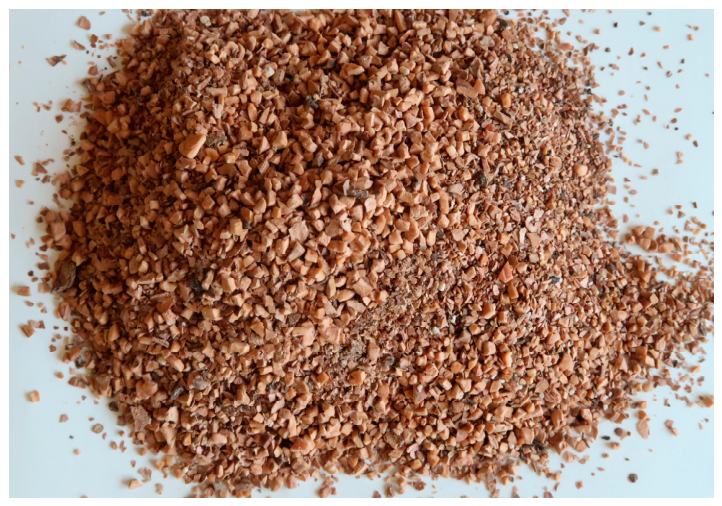
To achieve the research goal, catalytic pyrolysis was carried out in a sealed reactor, which allows a relatively long residence time of obtained volatile products and thus promotes gas formation. Since the obtained gas contained a significant amount of CO2, a carbon sorbent was added at the reactor outlet to remove CO2 from the pyrolysis gas or at least reduce its content. By reducing the CO2 content, a significantly more favorable composition of the pyrolysis gas was achieved with respect to the H2/CO ratio, which is a key criterion for the quality of synthetic gas. In this case, waste walnut shells with a particle size of 0.5–3 mm (operational particle size) were pyrolyzed (see photo, Figure 1). The pyrolyzed operating fraction was obtained from the supplied waste using a screening machine (AS 200 control, Ekotechnika SRO, Prague, Czech Republic).

2.1. Materials

As mentioned above, the experiments were carried out with waste walnut shells (Central Bohemian Bio-waste Comp., Prague, Czech Republic). The detailed analysis and organic elemental analysis are given in Table 1; biochemical analysis of the waste used is summarized in Table 2. The reason for selecting walnut shells is that 4.5 million metric tons of them are produced annually worldwide [20], which is a considerable amount. Another reason was the high lignin content (see below, Section 3.4).
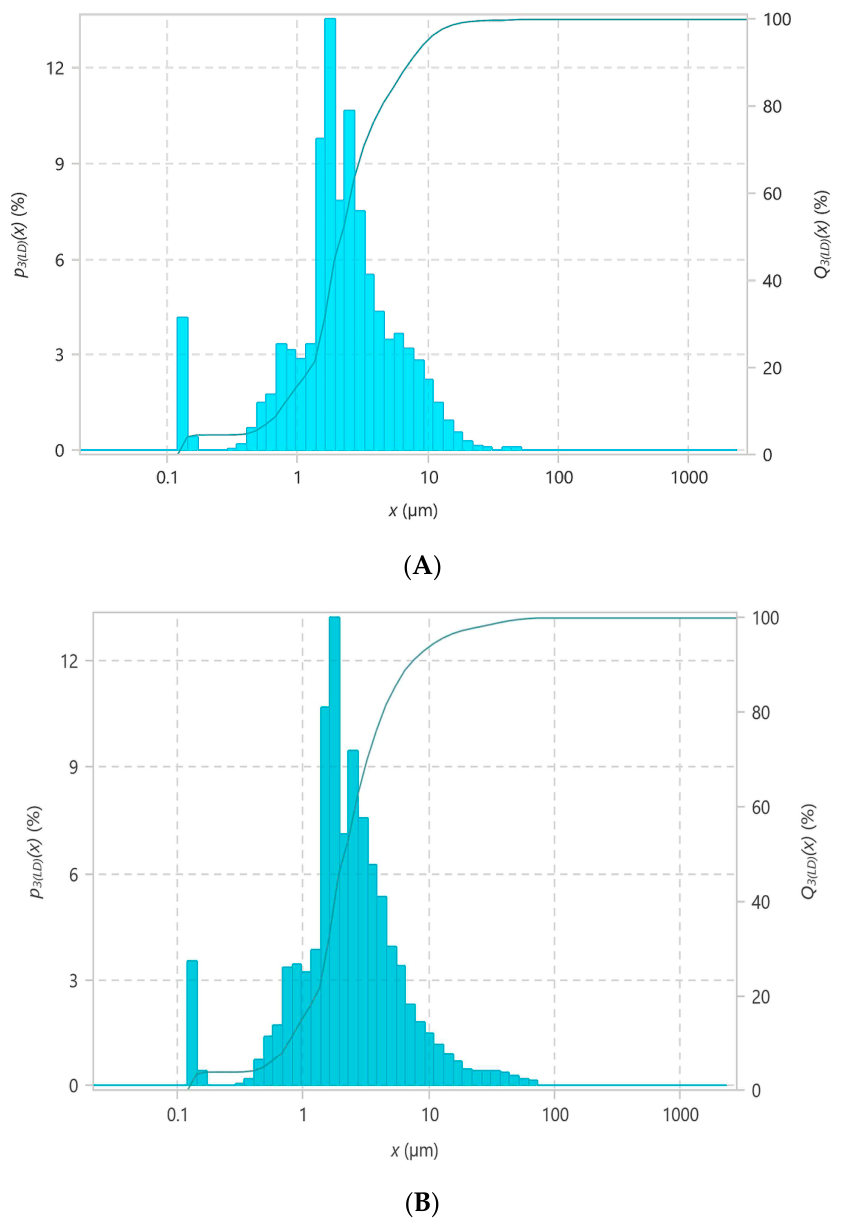
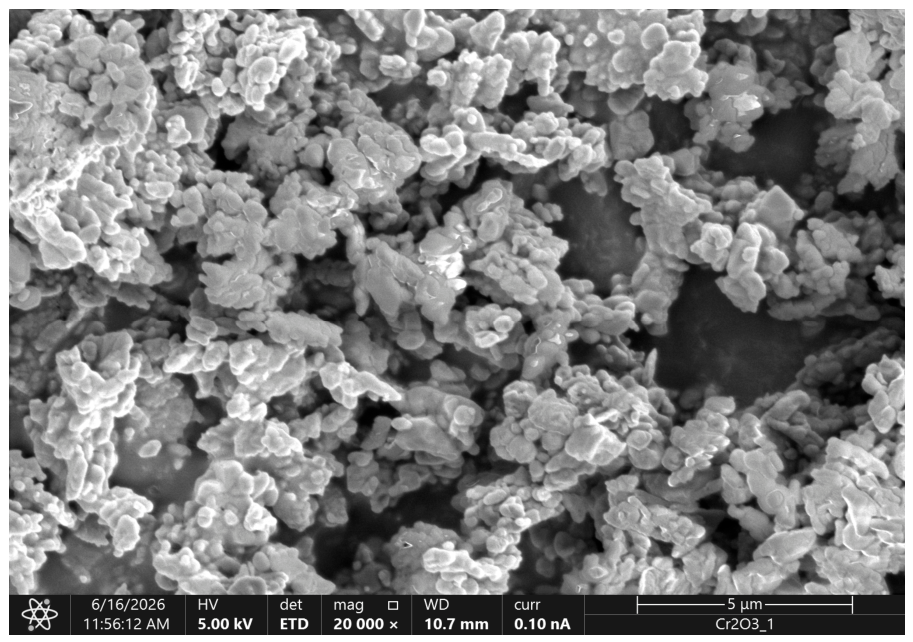
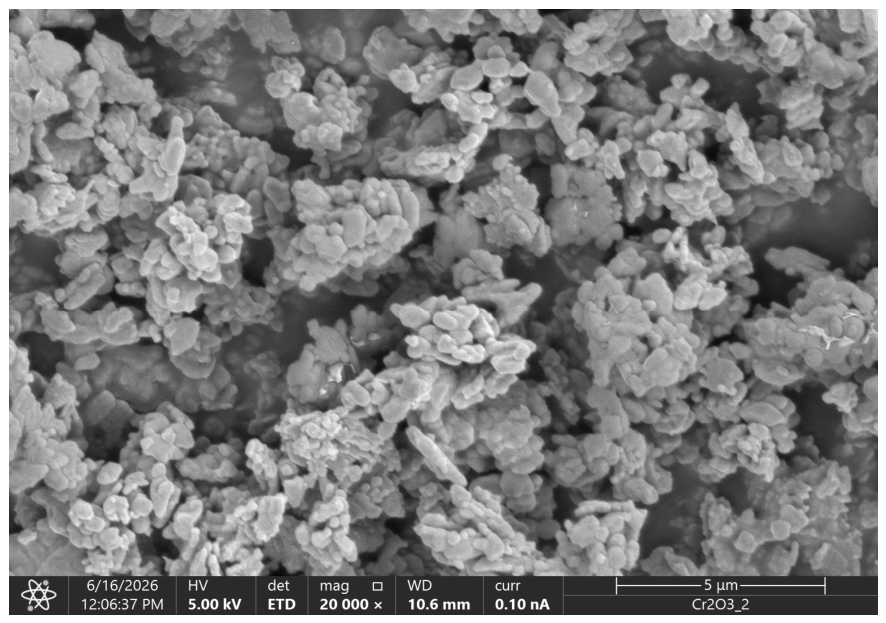
As catalysts, Cr2O3 (Merck Sigma-Aldrich CZ, SRO, Prague, Czech Republic) was used. Starting commercial powdered material was first ground on a Retsch (Verder Scientific, Haan, Germany) ZM 200 ultracentrifugal mill (6000 rpm) to a grain size below 0.35 mm, then the obtained fraction was sieved on a screening machine with the finest sieve of 0.15 mm (150 μm). The obtained fraction with a particle size of 0.74–7.25 µm (wet medium, Figure 2A) or 0.76–7.02 µm (wet medium, Figure 2B) was considered to be a fine Cr2O3 material. The particle morphology of used nano-Cr2O3 is shown in Figure 3 (SEM, magnification 20,000×).
Commercially available activated carbon SC 40 CAS 7440-44-0 (Brenntag CR, SRO, Prague, Czech Republic) was used to capture CO2. This granular carbonaceous sorbent with a grain size of ~4 mm had a specific surface area of approximately 1000 m2/g (BET).

2.2. Methods

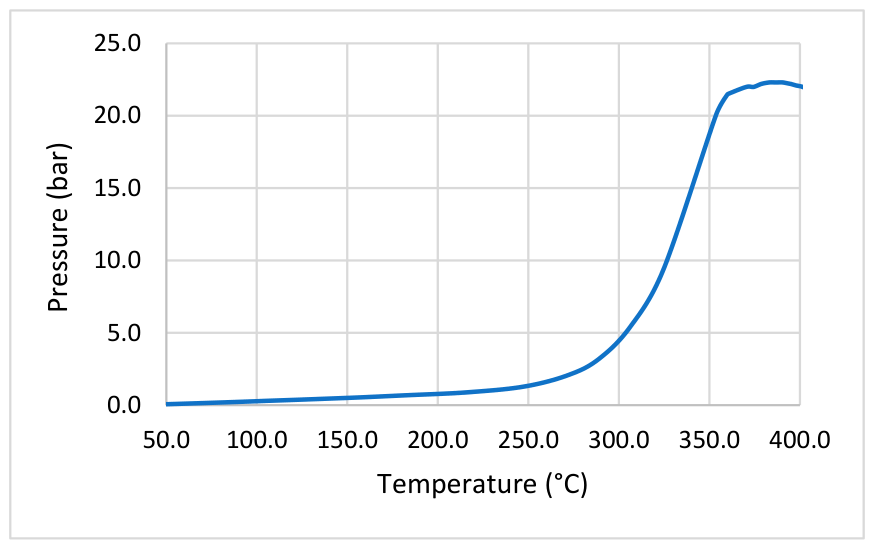
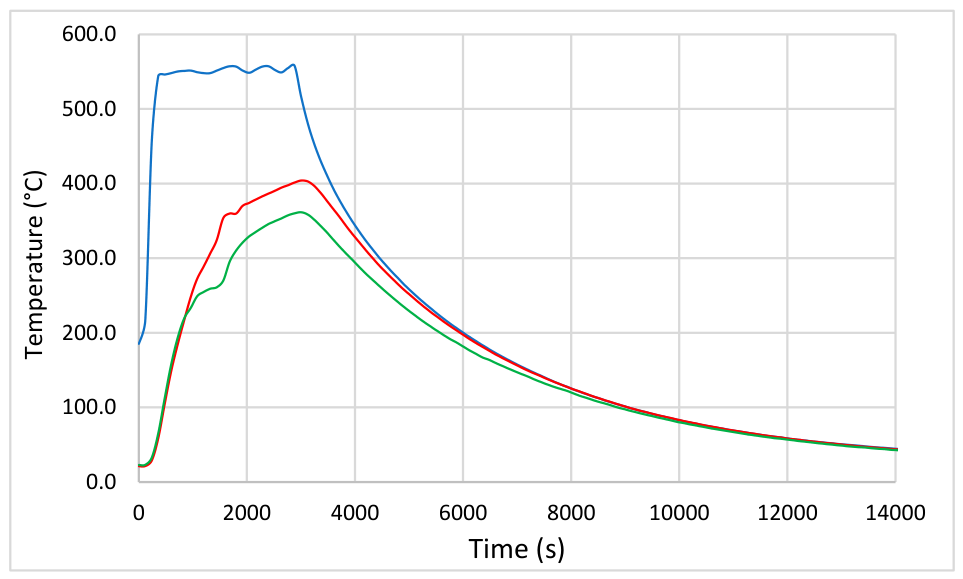
Walnut waste was pyrolyzed in a laboratory unit consisting of a closed stainless-steel reactor, a suspended sample vessel, temperature and pressure sensors, and a gas sampling valve. The internal volume of the reactor was 0.5 L. The waste samples with a grain size of 0.5–3 mm had a mass of 25 g while a layer of 2.5–7.5 g of Cr2O3 or fine Cr2O3 was placed above the sample layer (see below). The reactor was first flushed with a purge gas and then the reactor wall was heated to 550 °C. The sample thus reached a final temperature of 400 °C in approximately 27 min (no dwell time was applied), while the pressure of the released gas and steam reached a maximum of 22 bar. The pressure profile during pyrolysis is shown in Figure 4. The heating rate was approximately 14–19 °C min−1, so that the pyrolysis proceeded slowly. After cooling the reactor to room temperature, the pyrolysis gas was collected and analyzed—after passing through a column with a commercial carbon sorbent used for CO2 sequestration—as the resulting gas. The reactor was then disassembled and the obtained biochar and greywater were weighed and analyzed. The total gas was determined from the difference.
The total gas and the resulting gas were analyzed on Agilent Technologies 6890N gas chromatographs, while oxygen, nitrogen, and CO were analyzed on a 40 °C HP-MOLSIV capillary column using TCD. Carbon dioxide was determined on a 40 °C GS-Gaspro capillary column, again using TCD. CH4 and gaseous hydrocarbons were analyzed on a 60 °C GS-Gaspro capillary column using FID. Hydrogen was analyzed on a 40 °C HP-5 capillary column using TCD. The ammonia content was demonstrated and determined by Nessler’s reagent.
From the composition of gas, its density was calculated. Calculating the density of synthesis gas (syngas) was important because it allowed the determination of the loss due to sorption and removal (or reduction) of CO2 from pyrolysis gas. If the mass of syngas is
msyngas,after = (dsyngas,after/dsyngas,without) × mtotal (wt.%)
where dsyngas,after is the gas density after CO2 sorption (kg/m3), dsyngas,without is the gas density without CO2 sorption (kg/m3) and mtotal is the total gas determined by difference, the
mtotal − msyngas,after = loss (wt.%)
Organic impurities in greywater were determined by GC/MS on an Agilent Technologies 6890 chromatograph with a DB XLB capillary column (30 m × 0.25 mm), equipped with an MSD 5973 mass spectrometer. The carrier gas was He. The temperature program was that the column temperature was initially 50 °C (for the first minute), then the temperature increased to 300 °C with a temperature gradient of 10 °C min−1. The subsequent dwell at 300 °C was 6 min.
The biochar was considered as solid biofuel, therefore it was characterized according to ISO standards: ISO 16948—determination of total carbon, hydrogen and nitrogen, ISO 16994—determination of total sulfur, ISO 18122—determination of ash, and ISO 18134—determination of moisture. Further, ISO 18125 was used for determination of higher calorific value (HHV) and lower caloric value (LHV). Inorganic elemental analysis of biochar obtained was performed by XRF method using a Spectro IQ instrument (SPECTRO Analytical Instruments GmbH, Kleve, Germany). A palladium target with the angle set to 90° relative to the central beam was used. The excitation spot measured an area of 1 × 1 mm, with a maximum anode power of 50 W and forced air cooling at 10 cfm. The device was equipped with a HOPG Barkla crystal. Test samples were prepared by the pressed pellet method: 4.0 g of material (particle size 15–20 µm) was thoroughly mixed with 0.9 g of binder (HWC Hoechst wax, Germany) for 10 min. Pellets were pressed at a force of 80 kN.
Particle size analysis of the catalyst used was performed using a Microtrac Sync 5001 particle size analyzer (Microtrac Inc., Montgomeryville, PA, USA) with a measurement range of 0.02–2800 μm. The measurements were carried out in wet mode using the FlowSync module for sample delivery and dispersion in the measuring cell. Prior to analysis, the samples (50–100 mg) were dispersed in water by ultrasonic treatment for 30 s. Each sample was measured three times, and the reported particle size distributions represent the average values of the obtained measurements.
For elemental concentrations in the catalyst used, Energy-dispersive X-ray spectroscopy (EDS) was used on a Quanta 450 scanning electron microscope (FEI, Hillsboro, OR, USA) equipped with a Si(Li) Apollo XL Silicon Drift Detector with a FET preamplifier (EDAX Inc., Mahwah NJ, USA). Data acquisition was performed on EDAX TSL OIM software, v.7.0, with ZAF corrections.

3. Results and Discussion

3.1. Mass Balance of the Process

First, the mass balance of the process was determined. Since the products with high utility value were biochar and synthesis gas (syngas), they were considered as the key ones. Although the greywater yield was high (up to 35 wt.%), it was further considered only as a residue that needed further treatment. An important step was to determine the loss, which was the CO2 removed by the sorbent. CO2 must be removed from the pyrolysis gas or at least reduced because it negatively affects the H2/CO ratio, which is important for the quality of the synthesis gas and its utilization.
An important item related to reducing the CO2 concentration in pyrolysis gas is loss of the process. In the case of the experiment without using a sorbent, the loss was considered zero; in the experiment using a sorbent, the loss was calculated according to the above Equations (1) and (2). The results are summarized in Table 3. From this table, it follows that the yields of biochar were satisfied (up to 38 wt.%); however, the synthesis gas yields were not very high when using powdered or fine Cr2O3 and sorbent simultaneously (up to 21 wt.%). Moreover, the loss was quite high in this case (up to 16 wt.%). This deficiency is compensated by the high quality of the synthesis gas, given by the relatively high H2/CO ratio (see below).

3.2. Composition and H2/CO Ratio of Pyrolysis Gas

Two approaches were used to investigate the properties of pyrolysis gas from a given biomass. First, the composition of pyrolysis gas from pyrolysis without catalyst and gas obtained with commercial chromium (III) oxide powder was compared with the composition of gas obtained with fine Cr2O3. Second, the composition of the gases was assessed from the perspective of synthesis gas. The results are summarized in Table 4.
Table 4 shows that the synthesis gas composition with fine Cr2O3 catalyst showed a low CH4 concentration, 5–10 vol.%, but the H2 concentration was relatively high, 43–54 vol.%, which is significantly higher than that of powdered Cr2O3. These values resulted in a H2/CO ratio approaching 2. As follows from works [21,22,23], syngas with a ratio near to 2 is very suitable for the synthesis of promising biofuels, particularly bio-methanol [23].
Pyrolysis in a sealed reactor can be used to produce syngas even without a catalyst. The resulting syngas will have a H2/CO ratio of less than 1 (Table 4), but even such syngas is usable. However, this work focuses on syngas approaching 2, suitable for bio-methanol production.
It is true that in only two cases out of four were H2/CO values close to 2 achieved (Table 4). Such favorable values were recorded for synthesis gas with a low methane concentration, around 5 vol.%, and a higher hydrogen concentration, 49 or 54 vol.%. To explain this phenomenon, the properties of fine Cr2O3 need to be considered. In fine Cr2O3, compared to powdered Cr2O3, there can probably be a significant increase in the specific surface area, the number of defects at the edges and corners of crystallites, oxygen vacancies and surface-available Cr3+ ions. This probably can increase the total number of catalytically active sites, including Lewis and Brønsted sites [24,25,26,27]. The increased number of catalytically active sites can probably cause the decomposition of the volatile substances produced by pyrolysis to occur more deeply and to a greater extent, leading to a low concentration of methane and a higher concentration of hydrogen in the resulting gas. In this case, catalyst particles of 0.74–7.25 μm were used. It is likely that the results would be more favorable if smaller particles were used.
A significant advantage is the purity of the obtained syngas. No sulfur compounds or ammonia were detected. Note that H2S, CH3S, COS and CS2, and methylamine were analyzed and in all cases their concentration was 0.00 vol.%. The same applies to ammonia.

3.3. Composition and Properties of Biochar

In this case, biochar as a biofuel was considered. A typical composition, HHV and LHV are summarized in Table 5 and Table 6. These tables show that the obtained biochar had a low or at least acceptable ash content and a very low organic sulfur content (0.05–0.06 wt.%). Furthermore, high HHV and LHV values were found: 27–31 and 26–30 MJ kg−1, respectively (for comparison, hard coal typically has an HHV and LHV of 28–30 MJ kg−1 and 27–29 MJ kg−1, respectively). Considering the results of inorganic analysis (Table 6), the obtained biochar represents a well-usable biofuel. In addition, there are a number of deashing methods derived from coal processing that can be used to improve both HHV and LHV.

3.4. Further Results. Discussion

To investigate the effect of chromium (III) oxide on synthesis gas production, walnut shells were selected mainly due to their high lignin content (48%) and low extractive content. Lignin was assumed to be a significant source of hydrogen during pyrolysis, which is important for the production of synthesis gas. Also, the low content of extractives (lipids, proteins, carbohydrates, etc.), which are common (although not always) in biomass, is a favorable feature. Moreover, walnut shells are high in cellulose and hemicellulose (in sum), as are other types of biomass (Table 7, our determinations). The selected biomass was therefore suitable for catalytic pyrolysis study. Zhang et al. [8] also used walnut shells for this purpose.
As above mentioned, the synthesis gas yield with H2/CO > 1.4 was not very high when using fine Cr2O3 and sorbent simultaneously (14–21 wt.%, Table 3). A current study of biomass pyrolysis [28] reports a synthesis gas yield of 52 wt.%, achieved at a pyrolysis temperature of 550 °C and subsequent catalytic reprocessing of pyrolysis gas at 800 °C. The H2 concentration in the obtained gas was 32.6–35.4 vol.% and CO was 22.0– 22.2 vol%, so the H2/CO ratio was 1.47–1.61. The yield of solid residue (biochar) was 25 wt.%. The process is quite demanding technically and energetically. The process proposed in this study is energy-saving (pyrolysis temperature of 400 °C) and allows obtaining synthesis gas with a H2/CO ratio up to 1.8 (Table 4), but its yield is significantly lower than in the work [28]. On the other hand, the yield of biochar is significantly higher, 36–39 wt.% (Table 3). Usually, biochar has an HHV between 25 and 35 MJ kg−1 and LHV ranging from 24 to 33 MJ kg−1 (dry state) [29]. In this work, the HHV of obtained biochar was 28 MJ kg−1 and LHV 27 MJ kg−1 in dry state (Table 5); moreover, very favorable ash composition was found (Table 6). Therefore, it can be used as a high-quality biofuel, comparable to bituminous coal (HHV 27–33 MJ kg−1, LHV 25–31 MJ kg−1).
An important problem is the production of greywater, which is generated in relatively large quantities (25–35 wt.%) during pyrolysis. The obtained water typically contained around 20 wt.% of organic impurities, which included acetic and propanoic acids, phenol, alkylphenols and methoxyphenols, benzoic acid and higher fatty acids and their esters (Table 8). Such water can be purified by membrane filtration and using biological treatments (e.g., aerobic bacteria or membrane bioreactors). Then, the water is disinfected with UV light or chlorine to remove the remaining bacteria. Standardized procedures can be used for recycling, such as EN 16941-2, BS 8525-1:2010 and ISO 25446.
Another important issue is the application of the proposed method. The pyrolysis was carried out under its own pressure, which means that the pressure was created in a sealed reactor by the volatile products formed. The primary volatile products formed passed through the catalyst bed and underwent secondary reactions, which were supported by a relatively long retention time. Pyrolysis was slow because, as above mentioned, the heating rate was 14–19 °C min−1. The temperature profiles in the reactor are shown in Figure 5. Such temperature profiles and pressure profile (Figure 4) can be achieved relatively easily for further laboratory research in a sealed reactor with a larger volume, e.g., 1.5 L (the reactor used had a volume of 0.5 L, see above), without major technical difficulties. On the other hand, these conditions have only been demonstrated for biomass with a high lignin content (48%). Therefore, other biomass, including those with higher extractable content, need to be investigated.
Chromium (III) oxide is one of the most commonly used heterogeneous catalysts, mainly due to its resistance to higher temperatures and relatively high specific surface area, which, in the case of fine Cr2O3, increases and is probably accompanied by an increase in the number of catalytically active sites. The catalyst used is readily available. It can be reused, which offsets, or at least partially offsets, the cost of the fine material. In this case, the fine material was prepared in-house from a low-cost commercial powder using an ultra-centrifugal mill and a screening machine (see above) and tested for particle size (see above; note: using of findings of [30]). The prepared fine catalyst was completely pure, as evidenced by energy dispersive X-ray spectroscopy (EDS method [31]) (Table 9). Therefore, there is no need to purchase relatively expensive fine material, just the powder and its treatment, which saves the costs. Moreover, Cr2O3 is completely harmless to health, which is why it is used, for example, in cosmetics.
Furthermore, closed pressure reactors are commonly used in chemical research, and are affordable and adaptable to given conditions and circumstances. All the above facts indicate that the proposed method can be feasible even with larger laboratory reactors.
The question arises as to how fine Cr2O3 actually works. It is necessary to investigate the mechanism of catalyzed decomposition, which is a separate task. In our experience, the inner surface area of fine Cr2O3 should be at least 100 m2 g−1 to ensure a sufficient extent of decomposition. At such an extent, the cleavage of biomass structure can probably be manifested by increased hydrogen production at the expense of methane. It seems that in the case of biomass with a low extractives content, the problem of the decomposition mechanism will not be so difficult. However, it will be different for biomass with a high extractives content, e.g., apricot stones.
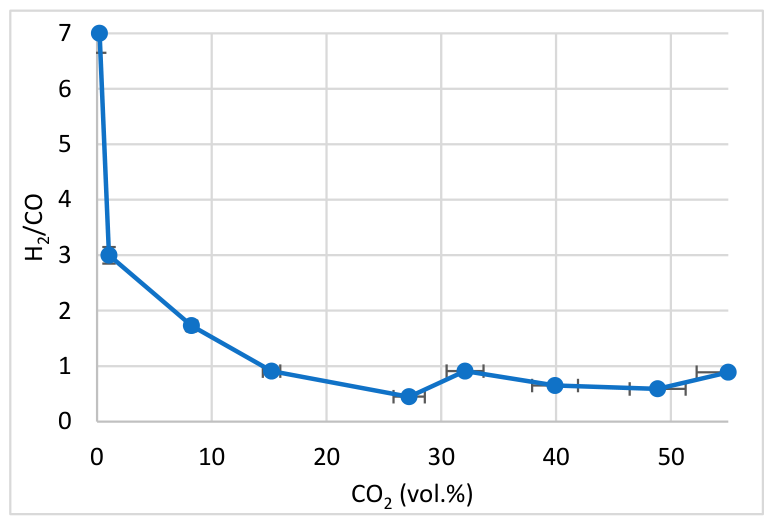
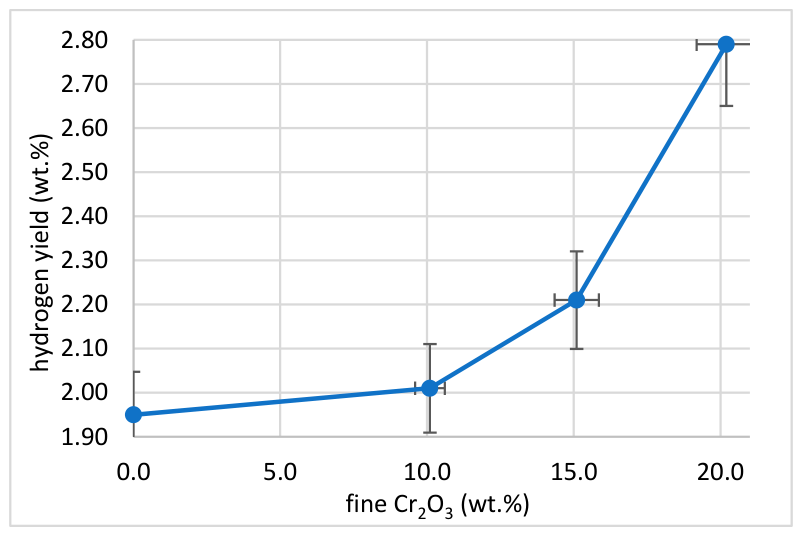
In any case, the production of synthetic gas with a H2/CO ratio approaching 2 is influenced by three factors: the thermal cleavage of biomass, concentration of CO2 and the effect of catalyst. This is illustrated by the trend in Figure 6, which was obtained in the presence of fine Cr2O3 under the conditions described above. The variable was CO2 sorption, which was controlled by varying the amount of carbonaceous sorbent. At higher and high CO2 concentrations (>15–55 vol.%), the resulting synthetic gas had a H2/CO ratio of around 1; at lower CO2 concentrations (15–8 vol.%), it was around 2; and at very low CO2 concentrations (>8–1 vol.%), this ratio increased to as high as 7. Because the effect of thermal cleavage itself (i.e., without catalyst) at a lower CO2 concentration (14 vol.%) led to the H2/CO ratio of around 1 (Table 4, second row), it can be inferred that the effect of the catalyst is significant. The possible contribution of catalyst to the cleavage is also shown in Figure 7. From the trend of the hydrogen yield, depending on the amount of catalyst (related to the mass of feedstock), it is clear that without catalyst, the hydrogen yield is 1.95 wt.%, but with catalyst, it increases up to 2.8 wt.%.
Therefore, although the effect of the catalyst cannot be quantified in this experimental setup, it can be said that the contribution of fine Cr2O3 is significant in achieving a key H2/CO ratio approaching 2.
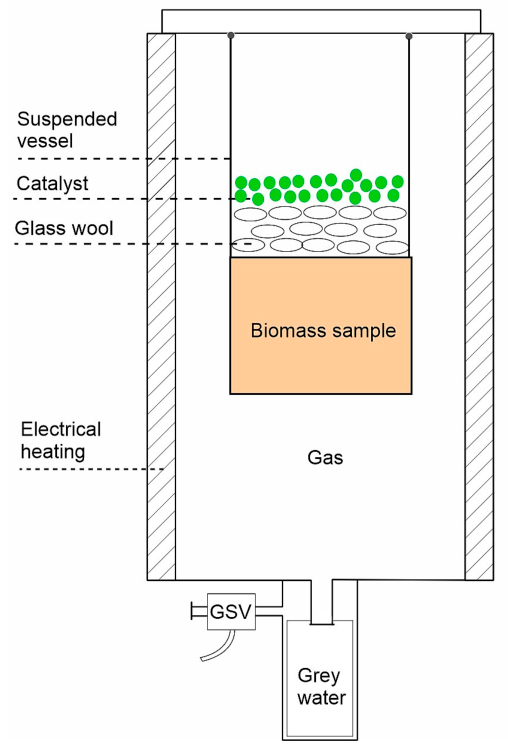
Possibilities of re-use of the fine catalyst used are also important. As mentioned above, the catalyst was placed above the feedstock and was not mixed with it (Figure 8).
Thus, during pyrolysis, the raw gas passed through the catalyst bed. In this configuration, the same catalyst was used eight times and no changes in its composition were observed; practically, its composition was still the same as verified by energy dispersive X-ray spectroscopy. Furthermore, reuse was assessed from the mass balance using the standard deviations of the biochar, greywater and total gas yields (Table 10).
From Figure 8 and Table 10, it can be concluded that reuse of the considered catalyst is possible because the standard deviation is lower than 10% for all three items. As repeatability of pyrolysis experiments is usually 10% and the standard deviation found was lower than 10%, it can be inferred that the reuse of catalyst did not produce different results in product yields, and thus the catalyst still functioned in the same way.
To compare the achieved results with the literature, it is appropriate to focus on the main product—synthesis gas. Synthesis gas is a key intermediate for the production of ammonia, methanol and synthetic fuels, and is produced mainly from natural gas and coal, but also from biomass. The main methods for producing syngas from biomass include (i) pyrolysis and/or steam reforming of volatiles in the presence mainly of a nickel catalyst; (ii) gasification, in which the feedstock is heated and converted to gas in the presence of partial oxygen or steam; (iii) partial oxidation with limited oxygen. The literature on synthetic gas production [32,33,34,35,36,37] agrees that catalysts play a key role, but the problem is their deactivation. Santamaria et al. [38] studied in detail the effect and deactivation of numerous catalysts on the decomposition of volatiles from lignocellulosic biomass and summarized the causes of deactivation as follows: poisoning, coking and fouling, sintering, component volatilization, inactive compound formation, phase transformation, and particle attrition. The following catalysts were considered: Ni/Al2O3 [32]; Ni/SiO2 [33]; Ni/MgO, Ni/TiO2 and Ni/ZrO2 [34,35]; Co/Al2O3, Co/MgO, Co/TiO2 and Co/ZrO2 [36]; and Rh, Pt, Pd and Ru loaded on CeO2-SiO2 [37]. Based on the study of such a number of catalysts, the authors conclude that special attention should therefore be paid to studies addressing the mechanisms of catalyst deactivation and regeneration in order to achieve optimal catalyst discrimination. In this case, no signs of changes were observed in the fine Cr2O3 used (Table 11, Figure 9; compare with Table 9 and Figure 3), even when it was reused. On the other hand, experiments were only performed on a laboratory scale and the behavior of the catalyst may not be as favorable on a pilot scale. However, it is worth conducting further research into the effect of the given catalyst on the decomposition of volatiles from different types of biomass.
Finally, biochar has a wide range of potential applications, including its use as a renewable fuel, adsorbent, soil amendment or catalyst carrier. In this study, special attention was paid to its suitability as a biofuel, and therefore biochar was comprehensively characterized (Table 5 and Table 6). In this context, it should be emphasized that the catalyst used did not affect either the composition or HHV and LHV of the resulting biochar.

4. Conclusions

Walnut shells were tested as a lignocellulosic waste material. Samples with particle sizes ranging from 0.5 to 3 mm were pyrolyzed under well-defined conditions in a sealed pressure reactor using chromium (III) oxide particles or fine particles as a catalyst. As observed results, it was found that slow catalytic pressure pyrolysis at the final temperature of 400 °C leads to the formation of synthesis gas with a H2/CO ratio of 0.9 or 1.8 and biochar, which is usable as a biofuel. The residual product was greywater. Thus, under energy-efficient conditions (slow pyrolysis, final temperature of 400 °C), pressurized catalytic pyrolysis of waste biomass with a high lignin content yields usable products, while the residual product, greywater, can be recycled using standard methods. An effect of the tested fine catalyst on biomass decomposition can qualitatively be characterized as supporting the thermal cleavage of volatile substances released from biomass.
In the near future, the next task will be to determine the mechanism of the decomposition reactions leading to the production of syngas and biochar.
Overall, it can be said that the above declared goal was achieved, as a method of processing waste walnut shells yielding products with high utility value was described. The contribution of the work is the feasible, energy-saving method for processing lignocellulosic waste with a high lignin content using fine Cr2O3-catalyzed pyrolysis in a sealed reactor, which provides synthesis gas with a ratio of H2/CO~2 suitable for bio-methanol production and biochar as a high-quality fuel. A limitation of the proposed method is the way of removing CO2 from pyrolysis gas using a sorbent, which would be applicable even on a large scale. All process parameters used are applicable on a laboratory scale, but the way of sorption needs further attention. The presented work is an entry into the processing of waste biomass using a sealed reactor, which allows for deeper cleavage of chemical structure and thus more efficient conversion of biomass into synthesis gas and biochar.

Author Contributions

P.S.: Investigation, Methodology, Writing—original draft, Writing—review & editing. O.B.: Methodology, Formal analysis, Writing—review & editing. J.C.—Methodology, Formal analysis. All authors have read and agreed to the published version of the manuscript.

Funding

This work was carried out thanks to the support of the Long-Term Project for the Conceptual Development of the Research Organization No. RVO 67985891, and the Strategy AV21 Research Program of the Czech Academy of Sciences: Sustainable Energy (VP27).

Institutional Review Board Statement

Not applicable.

Informed Consent Statement

Not applicable.

Data Availability Statement

Data is contained within the article.

Acknowledgments

Our great thanks go to Ivana Perná (Czech Academy of Sciences) for particle size analysis and Margit Žaloudková (Czech Academy of Sciences) for SEM and energy dispersive X-ray analysis of the investigated materials.

Conflicts of Interest

The authors declare no conflicts of interest.

References

  1. Bridgwater, A.V. Review of fast pyrolysis of biomass and product upgrading. Biomass Bioenergy 2012, 38, 68–94. [Google Scholar] [CrossRef]
  2. Mohan, D.; Pittman, C.U., Jr.; Steele, P.H. Pyrolysis of Wood/Biomass for Bio-oil: A Critical Review. Energy Fuels 2006, 20, 848–889. [Google Scholar] [CrossRef]
  3. Busca, G. Characterization and Catalytic Activity of Cobalt-Chromium Mixed Oxide. Langmuir 1990, 6, 1440–1447. [Google Scholar] [CrossRef]
  4. Mentasty, L.R.; Gorriz, O.F.; Cadus, L.E. Chromium Oxide Supported on Different Al2O3 Supports:  Catalytic Propane Dehydrogenation. Ind. Eng. Chem. Res. 1999, 38, 396–404. [Google Scholar]
  5. Dey, S.; Kumar, V.V.P. Supported and un-supported zinc and chromium oxide catalysts for lower temperature CO oxidation: A Review. Environ. Chall. 2021, 3, 100061. [Google Scholar] [CrossRef]
  6. Bumajdad, A.; Al-Ghareeb, S.; Madkour, M.; Al Sagheer, F. Non-noble, efficient catalyst of unsupported α-Cr2O3 nanoparticles for low temperature CO Oxidation. Sci. Rep. 2017, 7, 14788. [Google Scholar] [CrossRef] [PubMed]
  7. Zhang, C.; Zhang, L.; Li, Q.; Wang, Y.; Liu, Q.; Wei, T.; Dong, D.; Salavati, S.; Gholizadeh, M.; Hu, X. Catalytic pyrolysis of poplar wood over transition metal oxides: Correlation of catalytic behaviors with physicochemical properties of the oxides. Biomass Bioenergy 2019, 124, 125–141. [Google Scholar] [CrossRef]
  8. Zhang, X.; Xu, W.; Peng, H. Metal-Modified Hierarchical Zeolite Catalysts for Catalytic Pyrolysis of Walnut Shells to Produce Light Aromatics. Reactions 2026, 7, 25. [Google Scholar] [CrossRef]
  9. Chen, X.; Chen, X.; Cai, S.; Yu, E.; Chen, J.; Jia, H. MnOx/Cr2O3 composites prepared by pyrolysis of Cr-MOF precursors containing in situ assembly of MnOx as a highly stable catalyst for toluene oxidation. Appl. Surf. Sci. 2019, 475, 312–324. [Google Scholar] [CrossRef]
  10. Wang, H.; Han, W.; Li, X.; Liu, B.; Tang, H.; Li, Y. Solution Combustion Synthesis of Cr2O3 Nanoparticles and the Catalytic Performance for Dehydrofluorination of 1,1,1,3,3-Pentafluoropropane to 1,3,3,3-Tetrafluoropropene. Molecules 2019, 24, 361. [Google Scholar] [CrossRef] [PubMed]
  11. Song, H.; Watermann, C.; Laudenschleger, D.; Yang, F. The effect of thermal pretreatment on the performance of ZnO/Cr2O3 catalysts applied in high-temperature methanol synthesis. Mol. Catal. 2018, 451, 76–86. [Google Scholar] [CrossRef]
  12. Alvarado-Flores, J.J. Thermochemical Production of Hydrogen from Biomass: Pyrolysis and Gasification. Energies 2024, 17, 537. [Google Scholar] [CrossRef]
  13. da Silva Serra, A.C.; Faillace, J.G.; da Costa Marques Calderari, M.R. Fuel Oil Production in Catalytic Pyrolysis of Polyolefins with a Chromium Pillared Clay. Catal. Lett. 2026, 156, 124. [Google Scholar] [CrossRef]
  14. Kopač, D. Metal-doped Cr2O3 as a catalyst for non-oxidative propane and butane dehydrogenation: A multiscale kinetic study. Appl. Surf. Sci. 2022, 575, 151653. [Google Scholar] [CrossRef]
  15. Węgrzyniak, A.; Jarczewski, S.; Węgrzynowicz, A.; Michorczyk, B.; Kuśtrowski, P.; Michorczyk, P. Catalytic Behavior of Chro mium Oxide Supported on Nanocasting-Prepared Mesoporous Alumina in Dehydrogenation of Propane. Nanomaterials 2017, 7, 249. [Google Scholar] [CrossRef] [PubMed]
  16. Trimm, D.L. Coke formation and minimisation during steam reforming reactions. Catal. Today 1997, 37, 233–238. [Google Scholar] [CrossRef]
  17. Bartholomew, C. Catalyst Deactivation/Regeneration. In Encyclopedia of Catalysis; Wiley Online Library: Hoboken, NJ, USA, 2002. [Google Scholar]
  18. Cherian, T.; Eranhottu, S.; Mandal, K.K.; Cherian, B.; Kurien, S. Carbon nanomaterials based catalytic conversion of biomass: An overview. Next Res. 2025, 2, 100268. [Google Scholar] [CrossRef]
  19. Al-Salem, S.M.; Antelava, A.; Constantinou, A.; Manos, G.; Dutta, A. A review on thermal and catalytic pyrolysis of plastic solid waste (PSW). J. Environ. Manag. 2017, 197, 177–198. [Google Scholar] [CrossRef]
  20. Abdullahi, S.A.; Song, H.; Yankui, W.; Hanjian, L.; Sheng, W.Y.S.; Jun, X. Comparative study on one-step pyrolysis activation of walnut shells to biochar at different heating rates. Energy Rep. 2021, 7, 388–396. [Google Scholar] [CrossRef]
  21. Ostadi, M.; Rytter, E.; Hillestad, M. Boosting carbon efficiency of the biomass to liquid process with hydrogen from power: The effect of H2/CO ratio to the Fischer-Tropsch reactors on the production and power consumption. Biomass Bioenergy 2019, 127, 105282. [Google Scholar] [CrossRef]
  22. Yu, Z.; Xie, H.; Wang, L.; Shao, Z.; Huang, C.; Yang, S. Combination with biomass pyrolysis and dry/steam reforming for adjustable H2/CO synthesis gas production. J. Therm. Anal. Calorim. 2024, 149, 3497–3512. [Google Scholar] [CrossRef]
  23. Gautam, P.; Neha; Upadhyay, S.N.; Dubey, S.K. Bio-methanol as a renewable fuel from waste biomass: Current trends and future perspective. Fuel 2020, 273, 117783. [Google Scholar] [CrossRef]
  24. Carriel Schmitt, C.; Zimina, A.; Fam, Y.; Raffelt, K.; Grunwaldt, J.-D.; Dahmen, N. Evaluation of High-Loaded Ni-Based Catalysts for Upgrading Fast Pyrolysis Bio-Oil. Catalysts 2019, 9, 784. [Google Scholar] [CrossRef]
  25. Schraml-Marth, M.; Wokaun, A.; Curry-Hyde, H.E.; Baiker, A. Surface structure of crystalline and amorphous chromia catalysts for the selective catalytic reduction of nitric oxide II. Diffuse reflectance FTIR study of thermal treatment and oxygen adsorption. J. Catal. 1992, 133, 415–430. [Google Scholar] [CrossRef]
  26. Souvi, S.M.O.; Badawi, M.; Virot, F.; Cristol, S.; Cantrel, L.; Paul, J.-F. Influence of water, dihydrogen and dioxygen on the stability of the Cr2O3 surface: A first-principles investigation. Surf. Sci. 2017, 666, 44–52. [Google Scholar] [CrossRef]
  27. Henderson, M.A.; Chambers, S.A. HREELS, TPD and XPS study of the interaction of water with the α-Cr2O3(001) surface. Surf. Sci. 2000, 449, 135–150. [Google Scholar] [CrossRef]
  28. Yang, H.; Wang, Y.; Jin, Y.; Caballero, J.J.B.; Chen, S.; Shi, Z.; Han, T.; Sandström, L.; Jönsson, P.G.; Yang, W. Syngas production from biomass pyrolysis followed by in-line biochar-catalytic reforming: The effect of space velocity, particle size, and morphology. Biomass Bioenergy 2026, 204, 108481. [Google Scholar] [CrossRef]
  29. Afif, R.A.; Kapidžić, M.; Pfeifer, C. Evaluation of biochar and hydrocar energy potential derived from olive mills waste: The case of Montenegro. Energy 2024, 290, 130234. [Google Scholar] [CrossRef]
  30. Zárybnická, L.; Perná, I.; Mácová, P.; Bičáková, O.; Havelcová, M.; Nováková, M.; Pokorný, J.; Slížková, Z.; Ševčík, R. Influence of organosilane additive content and mixing method on the properties of geopolymer composites. Constr. Build. Mater. 2026, 518, 145773. [Google Scholar] [CrossRef]
  31. Tesař, K.; Luňáčková, J.; Jex, M.; Žaloudková, M.; Vrbová, R.; Bartoš, M.; Klein, P.; Vištejnová, L.; Dušková, J.; Filová, E.; et al. In vivo and in vitro study of resorbable magnesium wires for medical implants: Mg purity, surface quality, Zn alloying and polymer coating. J. Magnes. Alloys 2024, 12, 2472–2488. [Google Scholar] [CrossRef]
  32. Akubo, K.; Nahil, M.A.; Williams, P.T. Pyrolysis-catalytic steam reforming of agricultural biomass wastes and biomass components for production of hydrogen/syngas. J. Energy Inst. 2019, 92, 1987−1996. [Google Scholar] [CrossRef]
  33. Efika, C.E.; Wu, C.; Williams, P.T. Syngas production from pyrolysis-catalytic steam reforming of waste biomass in a continuous screw kiln reactor. J. Anal. Appl. Pyrolysis 2012, 95, 87−94. [Google Scholar] [CrossRef]
  34. Miyazawa, T.; Kimura, T.; Nishikawa, J.; Kado, S.; Kunimori, K.; Tomishige, K. Catalytic performance of supported Ni catalysts in partial oxidation and steam reforming of tar derived from the pyrolysis of wood biomass. Catal. Today 2006, 115, 254−262. [Google Scholar] [CrossRef]
  35. Santamaria, L.; Lopez, G.; Arregi, A.; Amutio, M.; Artetxe, M.; Bilbao, J.; Olazar, M. Influence of the support on Ni catalysts perfor mance in the in-line steam reforming of biomass fast pyrolysis derived volatiles. Appl. Catal. B 2018, 229, 105−113. [Google Scholar] [CrossRef]
  36. Li, D.; Ishikawa, C.; Koike, M.; Wang, L.; Nakagawa, Y.; Tomishige, K. Production of renewable hydrogen by steam reforming of tar from biomass pyrolysis over supported Co catalysts. Int. J. Hydrogen Energy 2013, 38, 3572−3581. [Google Scholar] [CrossRef]
  37. Tomishige, K.; Miyazawa, T.; Asadullah, M.; Ito, S.I.; Kunimori, K. Catalyst performance in reforming of tar derived from biomass over noble metal catalysts. Green Chem. 2003, 5, 399−403. [Google Scholar] [CrossRef]
  38. Santamaria, L.; Lopez, G.; Fernandez, E.; Cortazar, M.; Arregi, A.; Olazar, M.; Bilbao, J. Progress on catalyst development for the steam reforming of biomass and waste plastics pyrolysis volatiles: A Review. Energy Fuels 2021, 35, 17051−17084. [Google Scholar] [CrossRef]
Figure 1. Waste walnut shells, particle size of 0.5–3 mm.
Applsci 16 07241 g001
Figure 2. (A) Particle size analysis of Cr2O3 catalyst (0.74–7.25 µm, 60% less than 2.6 µm). (B) Particle size analysis of Cr2O3 catalyst (0.76–7.02 µm, 60% less than 2.6 µm).
Applsci 16 07241 g002
Figure 3. The particle morphology of the used fine Cr2O3.
Applsci 16 07241 g003
Figure 4. Typical pressure profile in a walnut shell pyrolysis with a sealed reactor.
Applsci 16 07241 g004
Figure 5. Temperature profiles in a pyrolysis experiment with a sealed reactor. Lines: blue—wall temperature, red—temperature in a center of reactor, green—gas temperature.
Applsci 16 07241 g005
Figure 6. The effect of CO2 on the H2/CO ratio of synthesis gas (shown as a trend).
Applsci 16 07241 g006
Figure 7. The effect of fine catalyst on the H2 production (shown as a trend).
Applsci 16 07241 g007
Figure 8. Configuration of catalyst, glass wool and biomass sample for fine catalyst reuse testing. GSV—gas-sampling valve.
Applsci 16 07241 g008
Figure 9. The particle morphology after pyrolysis experiment with fine Cr2O3.
Applsci 16 07241 g009
Table 1. Proximate analysis and organic elemental analysis of walnut shells (WS) used (as received, wt.%). VM—volatile matter, FC—fixed carbon.
WasteWaterAshVMFCHCSorgNO
WS7.862.6071.5318.025.8848.500.051.3033.81
Table 2. Biochemical analysis of walnut shells (WS) used (dry, wt.%).
WasteAshLigninCelluloseHemicelluloseExtractives
WS2.8248.0725.7122.072.33
Table 3. Mass balance of slow pyrolysis of walnut shells (WS) with/without fine Cr2O3 catalyst and with/without sorbent in a sealed reactor (wt.%) (WS = 100%).
WSExperimentBiocharGreywaterGasLoss
without catalyst, without sorbent36.1833.5830.240.00
without catalyst, with sorbent38.4431.4719.3210.77
with 20% powdered Cr2O3, without sorbent35.3832.2432.380.00
100%with 20% powdered Cr2O3, with sorbent37.8430.9616.5514.65
with 10% fine Cr2O3, with sorbent36.4434.0113.6815.87
with 15% fine Cr2O3, with sorbent38.2235.0415.4811.26
with 20% fine Cr2O3, with sorbent37.7525.1720.7616.32
with 30% fine Cr2O3, with sorbent38.9429.6016.2615.20
Table 4. Composition of pyrolysis gas or synthesis gas (syngas) from walnut shell (WS) pyrolysis with/without catalysts in a sealed pressure reactor (vol.%). No C4 and C5 hydrocarbons were detected. The amount of added Cr2O3 (wt.%) is related to the mass of biomass sample.
ExperimentCr2O3CH4C2H4C2H6C3H6C3H8N2COCO2H2H2/CO
without catalyst,
without sorbent
(pyrolysis gas)
010.770.201.370.170.400.3417.9354.2314.590.81
without catalyst,
with sorbent
(syngas)
012.370.020.090.020.020.3337.7814.2635.110.93
with powdered Cr2O3,
without sorbent
(pyrolysis gas)
20%14.890.160.460.070.121.5025.2543.9313.620.54
with powdered Cr2O3,
with sorbent
(syngas)
20%12.680.020.030.010.011.0637.4214.1634.610.92
10%5.300.010.040.020.031.2131.228.2453.931.73
with fine Cr2O315%9.020.020.040.020.030.7630.5016.3943.221.42
and with sorbent20%4.460.020.040.010.022.2226.7117.5948.931.83
(syngas)30%9.830.000.020.020.024.7332.208.7844.401.38
Table 5. Water, ash and organic elemental analysis (wt.%), higher heating value (HHV, MJ kg−1) and lower heating value (LHV, MJ kg−1) of biochar obtained.
StateWaterAshHCSorgNOHHVLHV
as received3.498.223.8469.730.050.5414.1327.4126.49
dry-8.523.9872.250.050.5614.6428.4027.53
dry ash free--4.3578.980.060.6116.0031.0530.10
Table 6. Inorganic elemental analysis of biochar obtained (XRF, wt.%).
StateNaMgAlSiPSKCaZrBiTe
dry0.080.030.020.060.050.010.370.320.020.080.02
Table 7. Biochemical analysis of birch wood shavings (BS), apricot stones (AS), peach stones (PS), and walnut shells (WS) (dry, wt.%).
LigninCelluloseHemicelluloseExtractives
BS23.0144.5827.272.54
AS31.3325.3729.4511.44
PS37.1140.1618.504.23
WS48.0725.7122.072.33
Table 8. Organic impurities in greywater (wt.%).
Acetic + Propionic AcidsPhenolMethyl-PhenolsDimethyl-PhenolsEthyl-PhenolMethoxy-PhenolsBenzoic AcidFatty Acids + Their EstersTotal
0.981.413.752.111.014.870.795.6220.54
Table 9. Elemental analysis of fine Cr2O3 used (EDS method, K-line), 3 measurements.
no.1no.2no.3Average
Elementwt.%Atomic %wt.%Atomic %wt.%Atomic %wt.%Atomic %
Cr57.0131.2155.6328.0155.3228.6155.9929.28
O34.4161.2138.3062.6735.3660.9436.0261.61
C2.816.653.868.412.346.533.017.19
Cu0.300.132.210.910.260.220.920.42
Table 10. Statistical evaluation of fine Cr2O3 reuse (wt.%).
BiocharGreywaterTotal Gas
mean (n = 8)37.3831.4731.21
standard deviation1.172.912.57
standard deviation (%)3.139.258.23
Table 11. Elemental analysis of fine Cr2O3 after pyrolysis experiment (EDS method, K-line), 3 measurements.
no.1no.2no.3Average
Elementwt.%Atomic %wt.%Atomic %wt.%Atomic %wt.%Atomic %
Cr56.5328.3958.3529.9455.7028.1056.8628.81
O38.3062.5339.2165.3938.3862.9438.6363.62
C3.868.402.024.493.678.033.186.97
Cu1.310.680.420.182.250.931.330.60
Disclaimer/Publisher’s Note: The statements, opinions and data contained in all publications are solely those of the individual author(s) and contributor(s) and not of MDPI and/or the editor(s). MDPI and/or the editor(s) disclaim responsibility for any injury to people or property resulting from any ideas, methods, instructions or products referred to in the content.