L-DGC: LLM-Based Dance Generative Control



Abstract
1. Introduction
2. Related Work
2.1. E-Dance: Large Language Model-Guided Dance Generation
2.2. FunSearch: Mathematical Algorithm Discovery via an Evolutionary Loop
2.3. MotivDance: Text-Guided Choreography with Intention Awareness and Fine-Grained Descriptions
2.4. Advances in Music-Driven Choreography
3. L-DGC
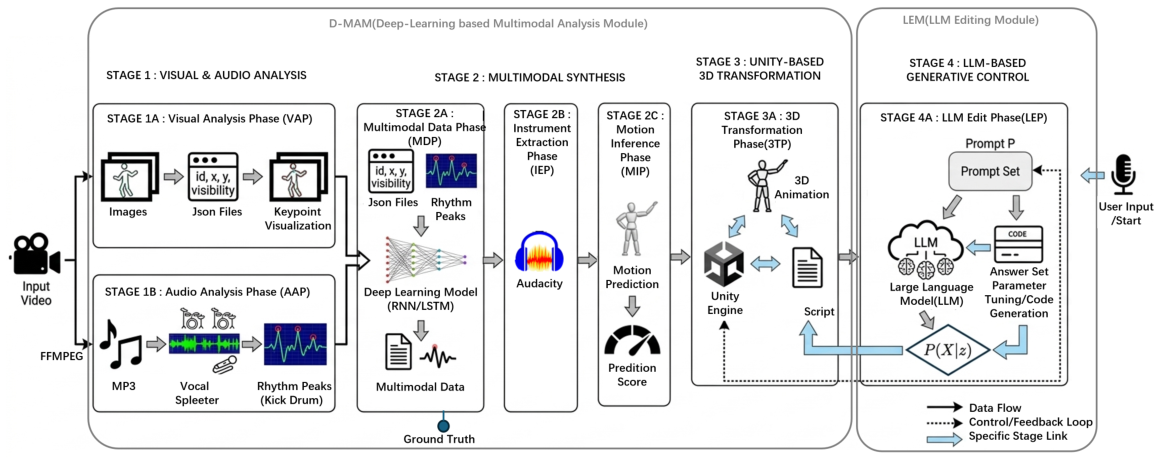
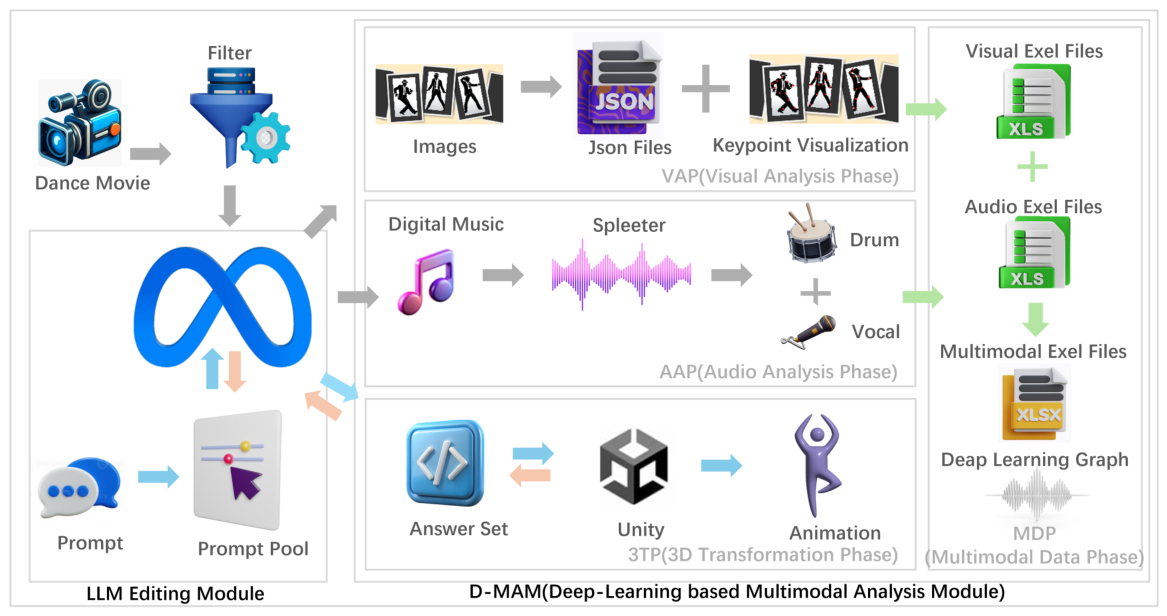
3.1. System Overview
3.2. Stage 1: Visual and Audio Analysis
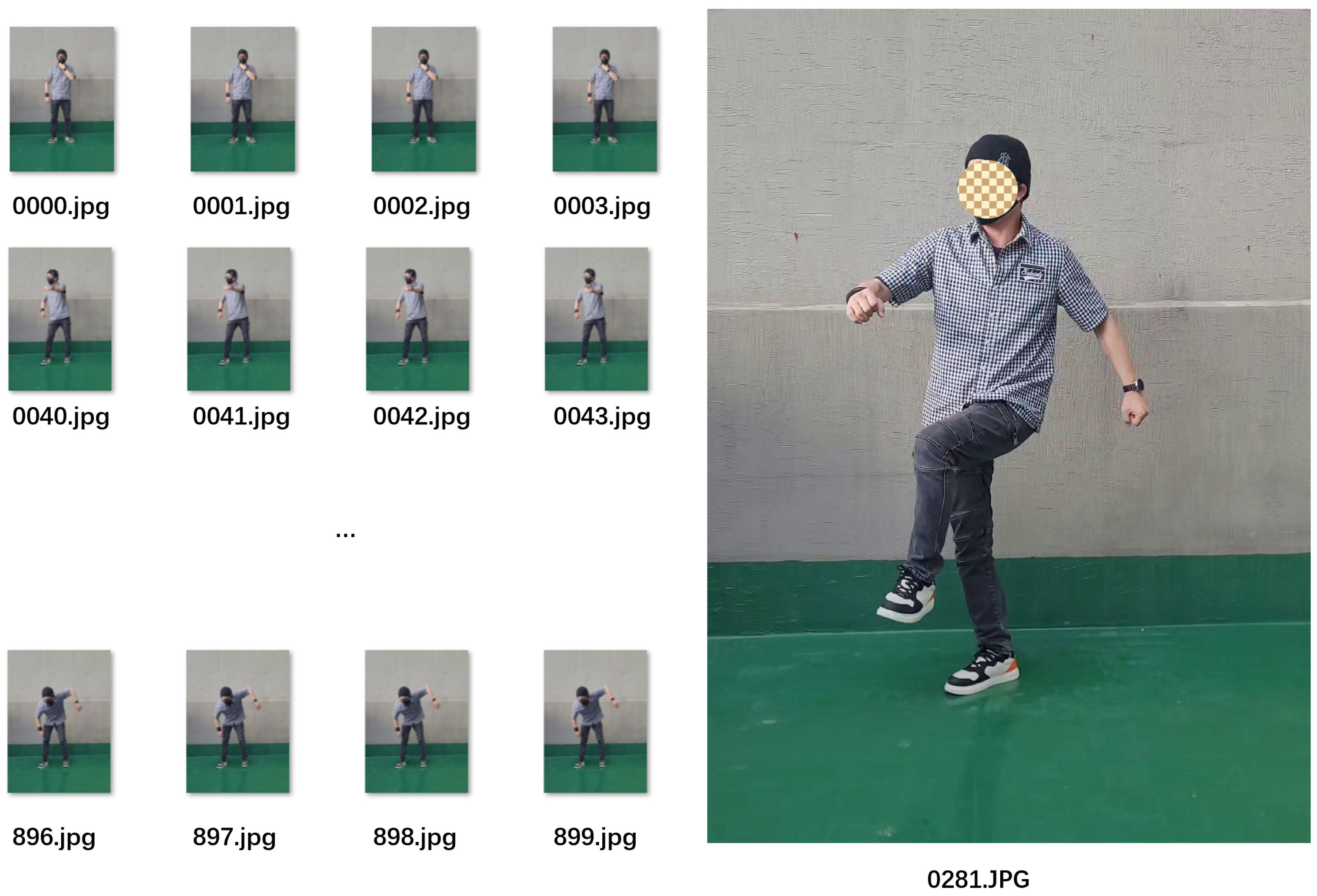
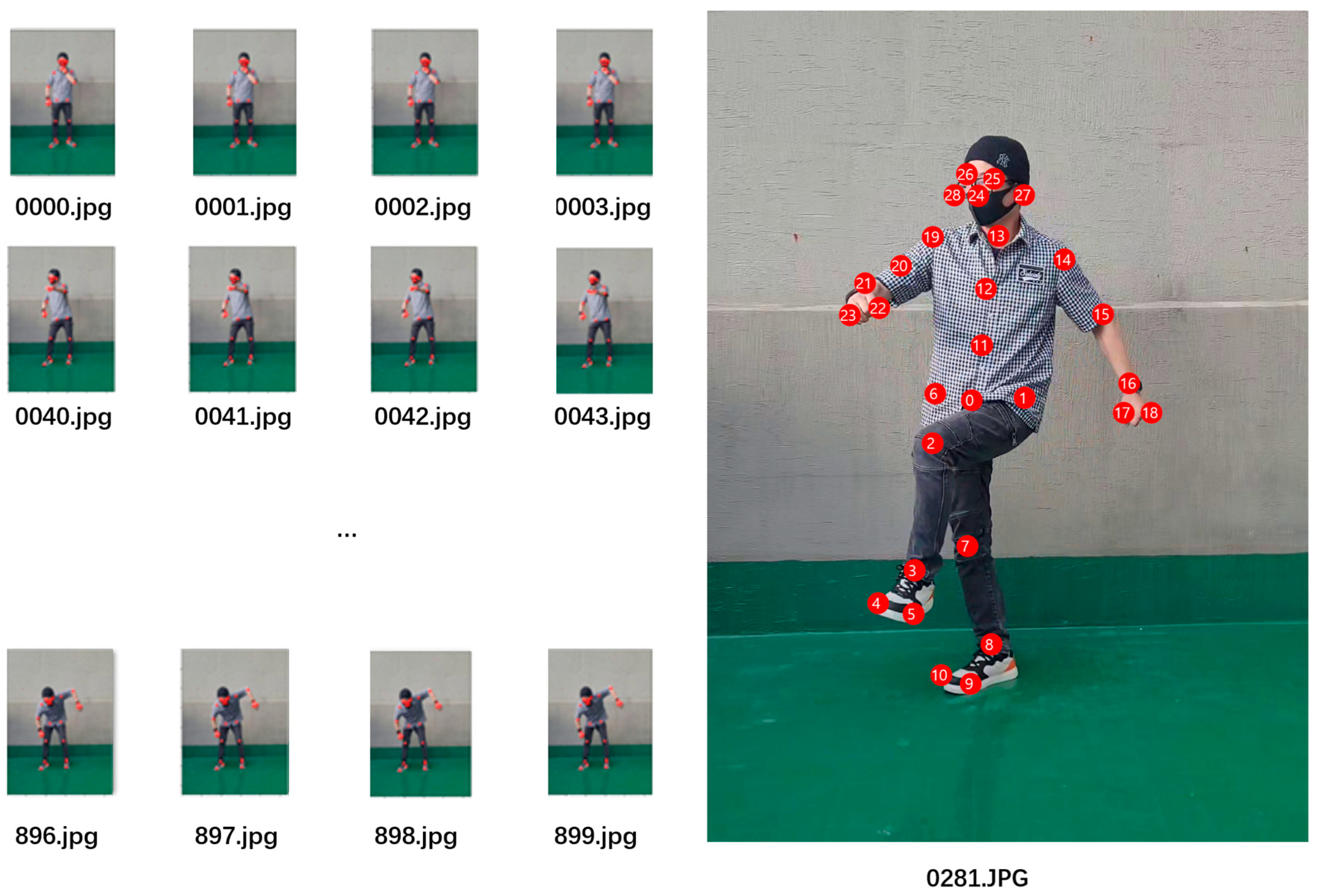
3.2.1. Stage 1A: VAP
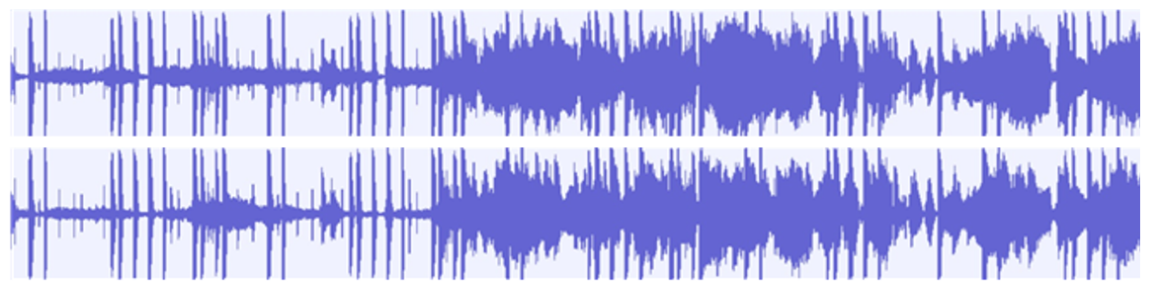
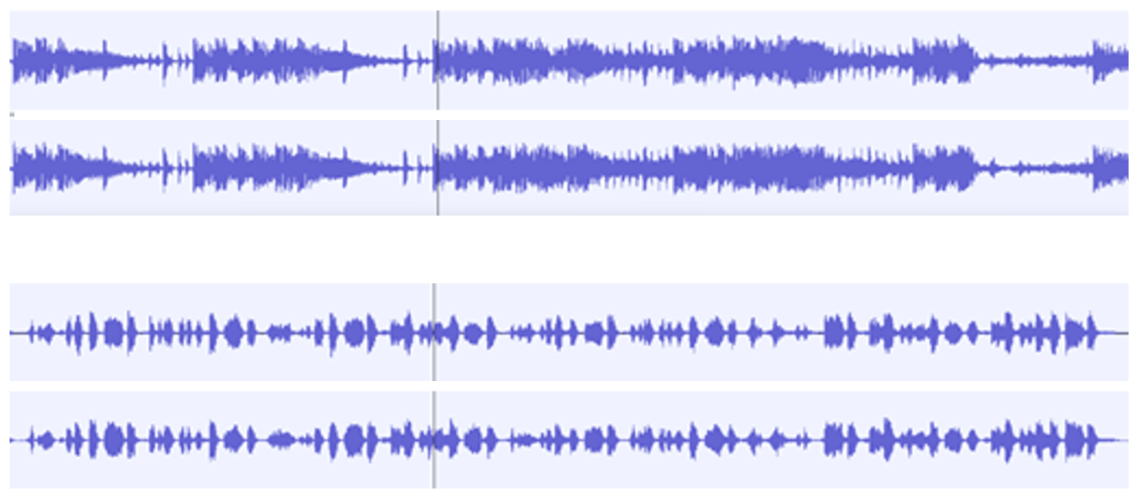
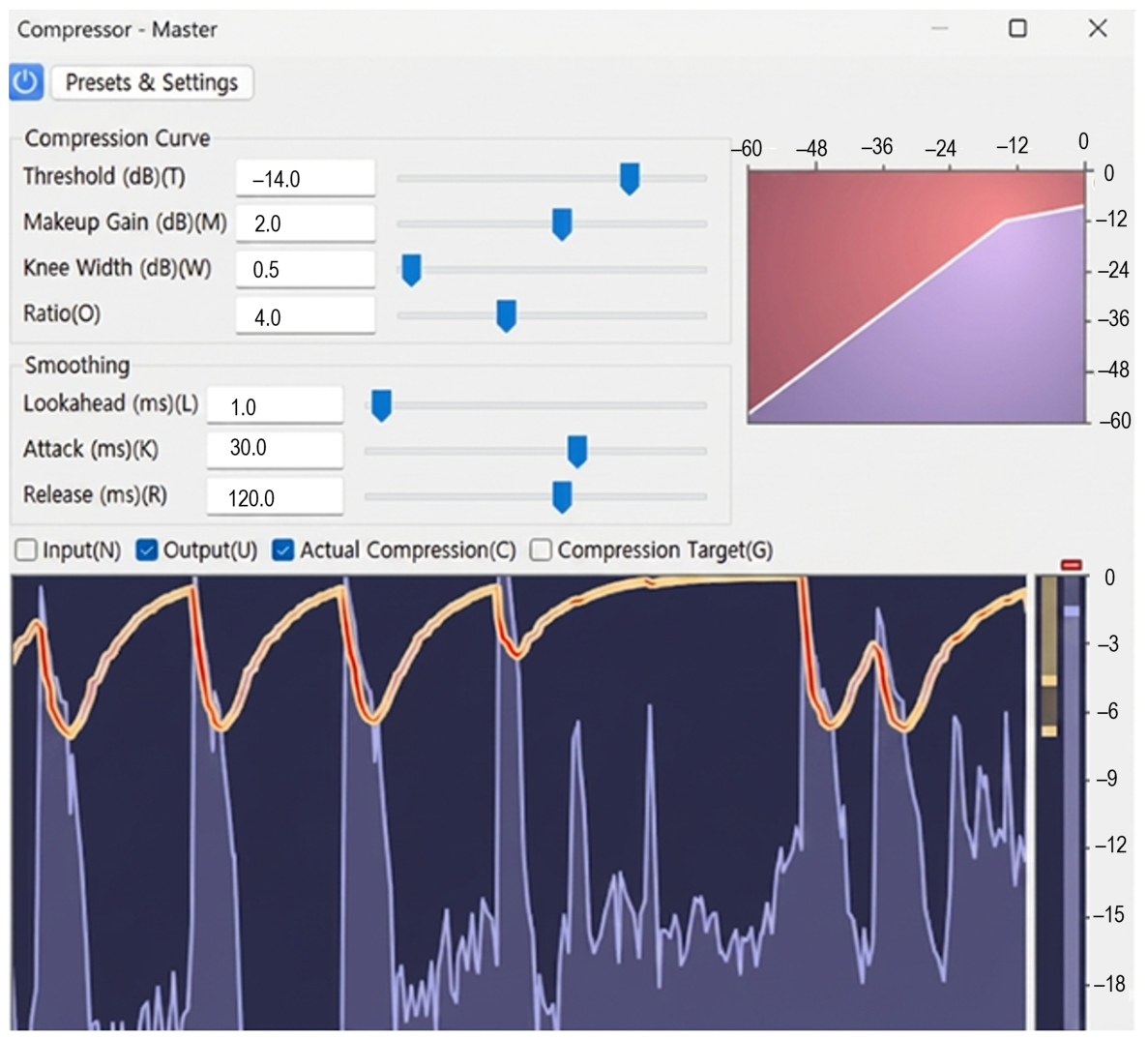
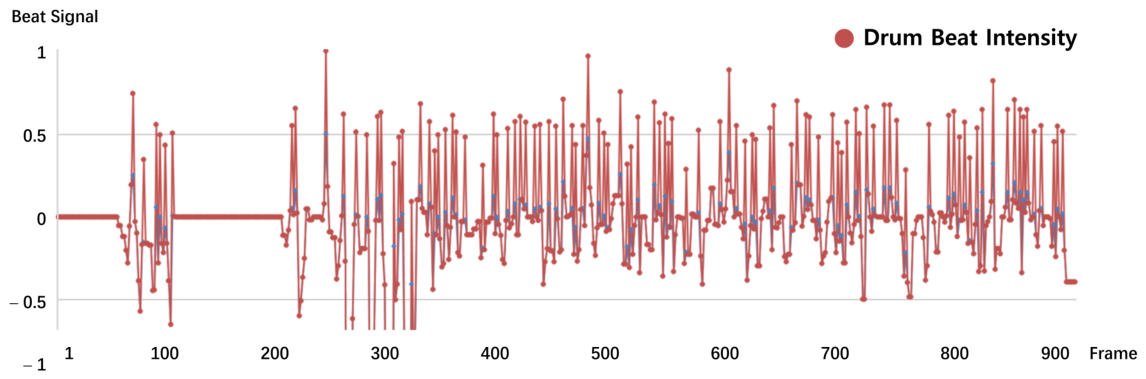
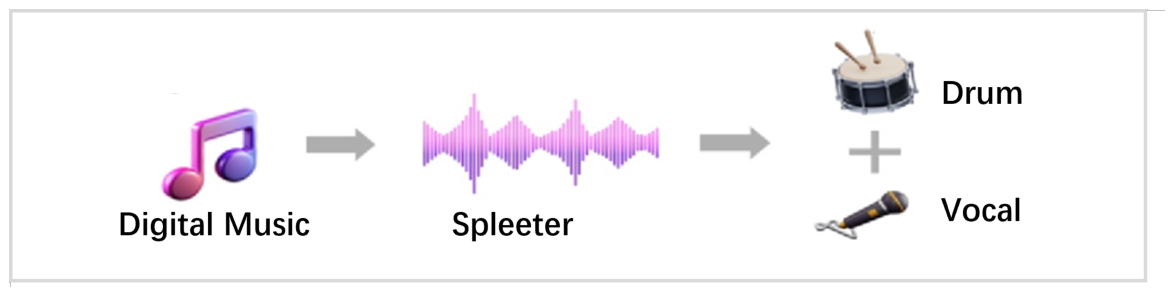
3.2.2. Stage 1B: AAP
3.3. Stage 2: Multimodal Synthesis
3.3.1. Stage 2A: MDP
3.3.2. Stage 2B: IEP
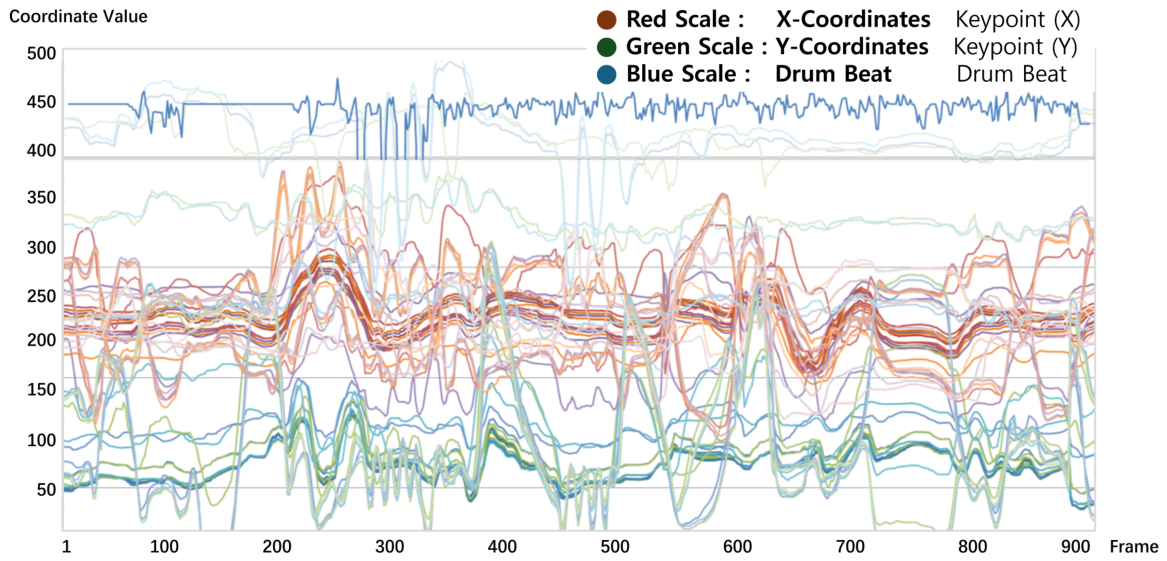
3.3.3. Stage 2C: MIP
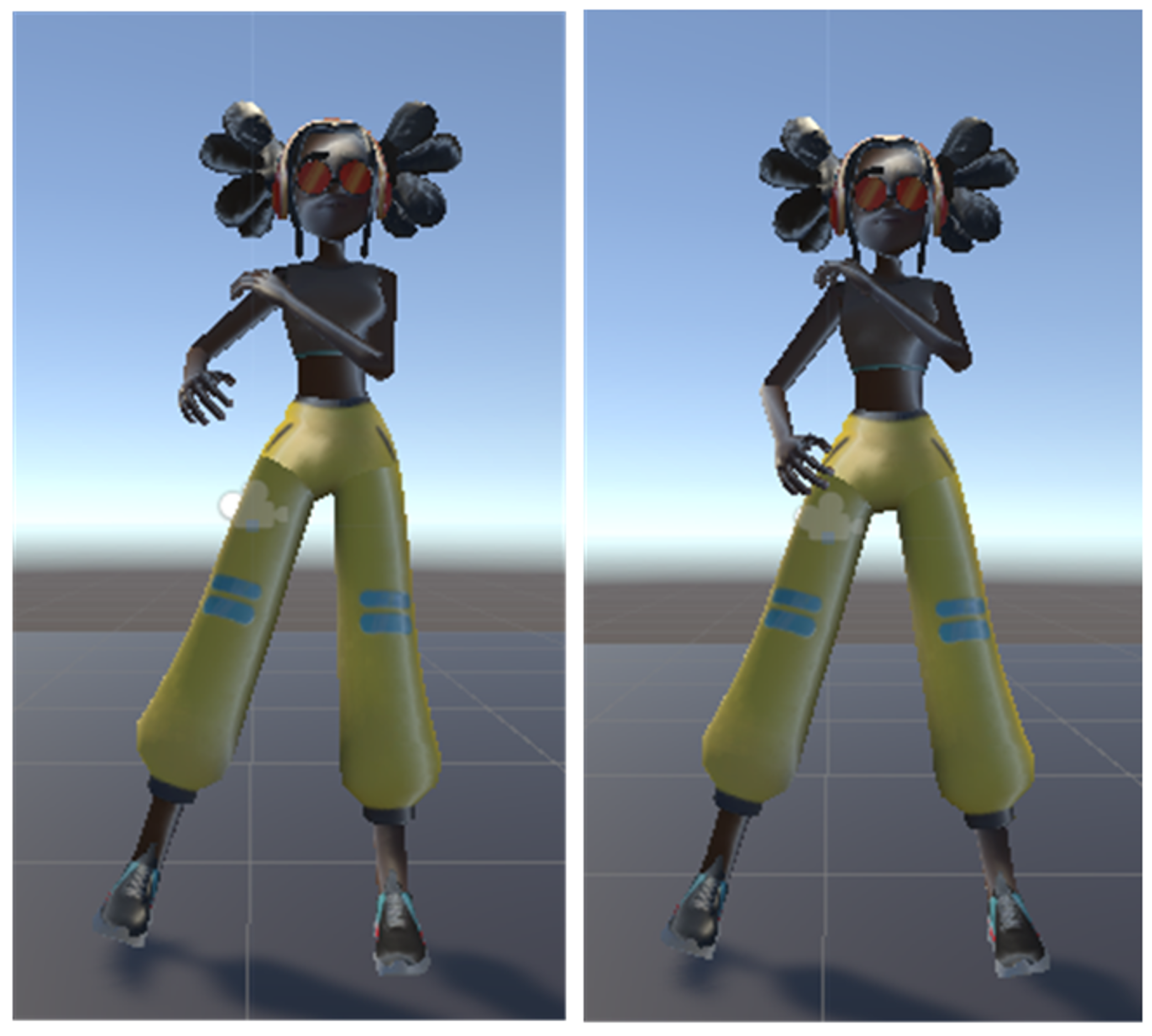
3.4. Stage 3: Unity-Based 3D Transformation
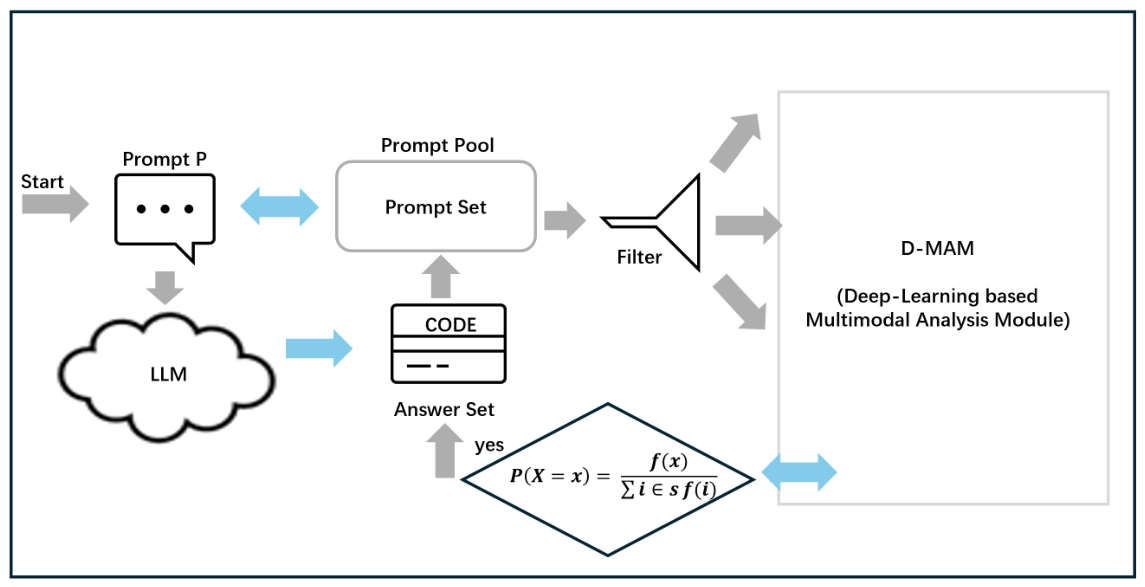
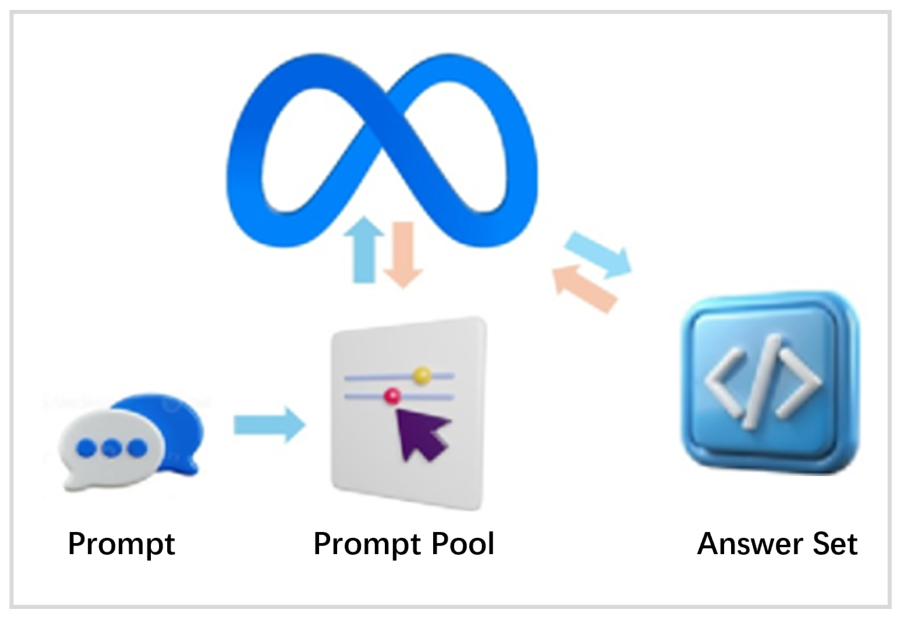
3.5. Stage 4: LLM-Based Generative Control
3.5.1. Overview
3.5.2. Prompt
3.5.3. Answer Set
3.5.4. Prompt Pool
4. Methodology
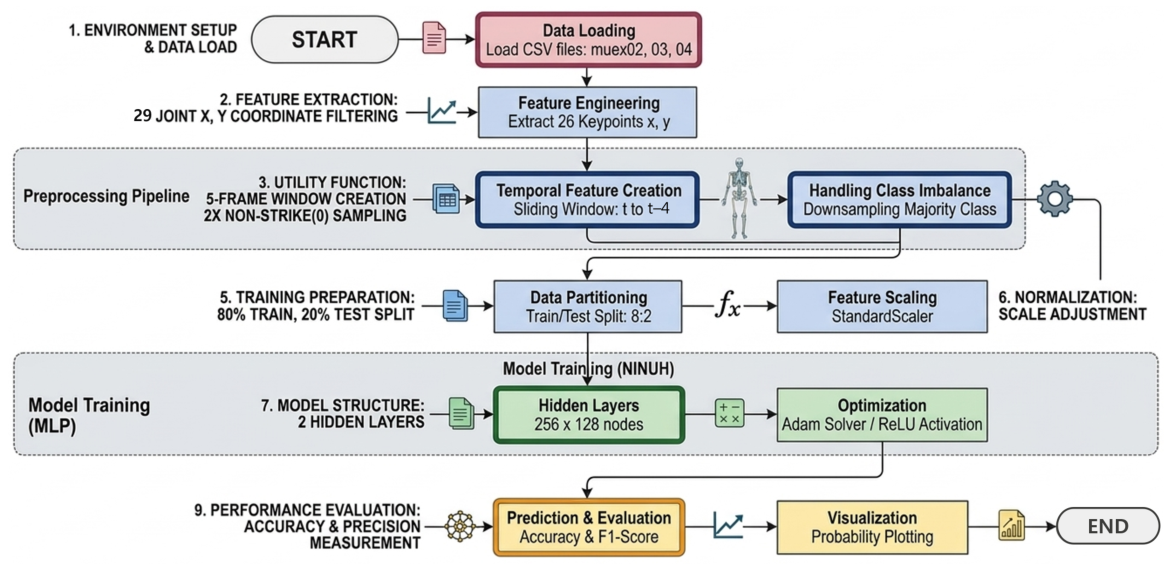
4.1. Framework Overview
4.2. Experimental Environment of the L-DGC Framework
4.3. LEM
4.4. Results
4.4.1. Experimental Setup and Comparison
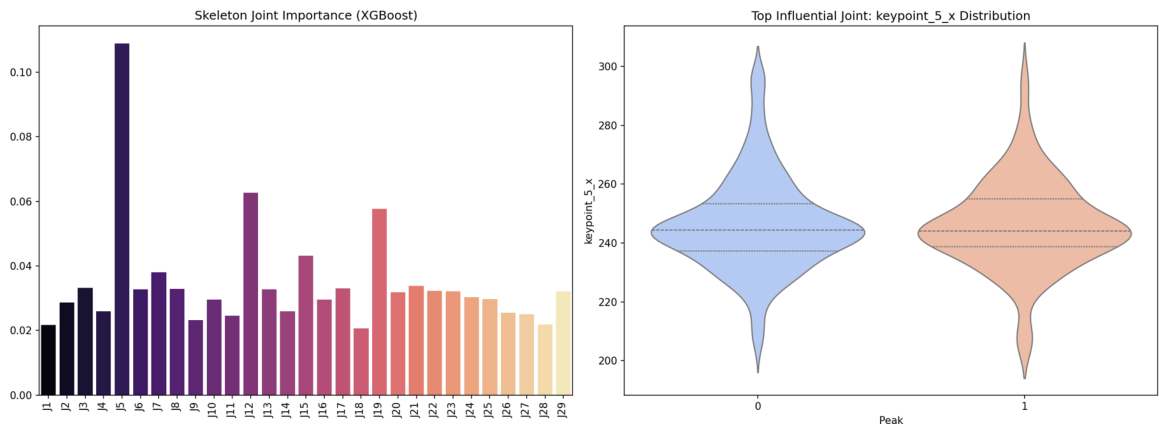
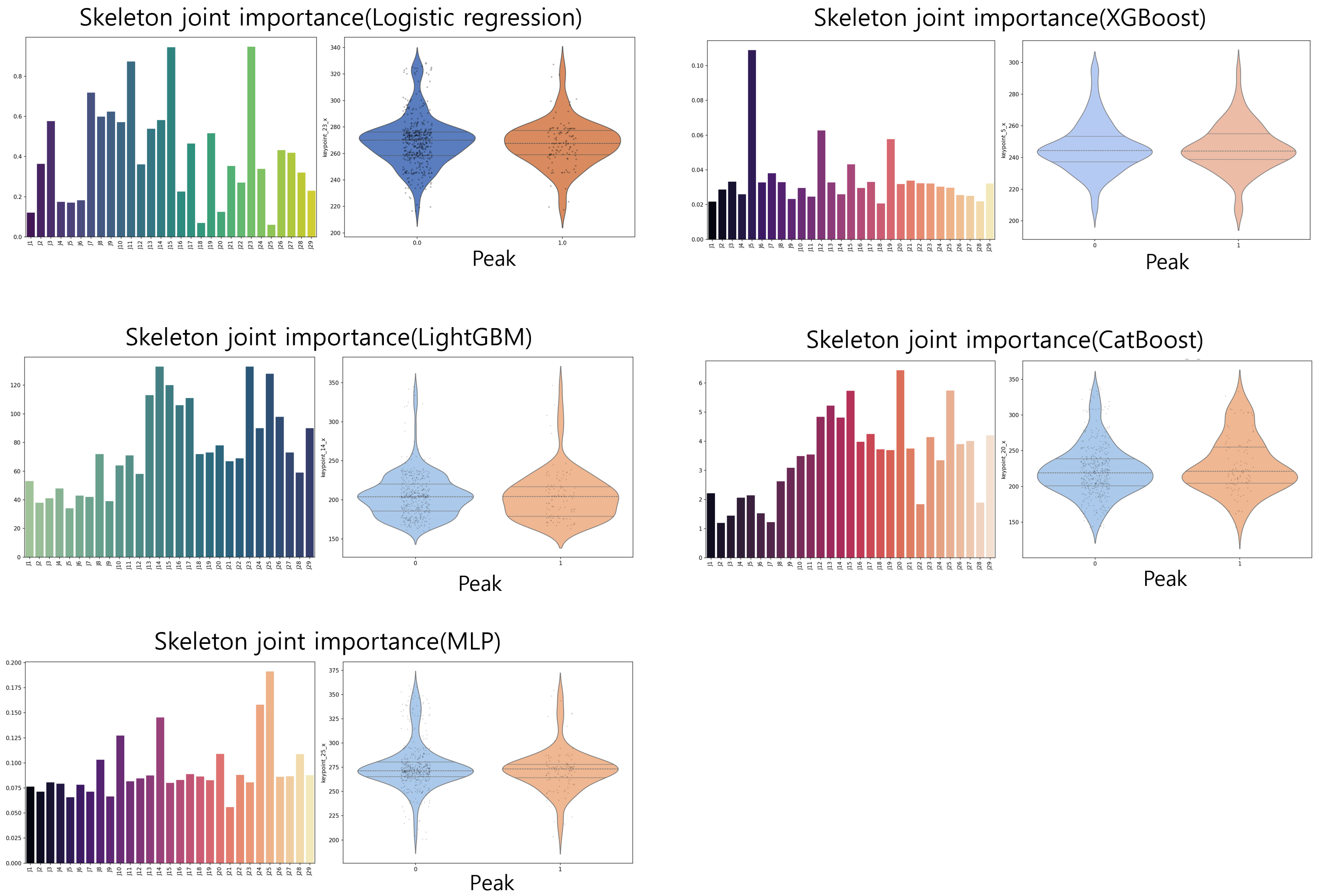
4.4.2. Experimental Results and Analysis
5. Conclusions
Author Contributions
Funding
Data Availability Statement
Conflicts of Interest
References
- Yi, H.; Li, H.; Liu, J.; Zhou, X.; Ye, J.; Wang, Z. E-Dance: Large Language Model-Guided Dance Generation. In Proceedings of the IEEE/CVF International Conference on Computer Vision (ICCV); IEEE: Piscataway, NJ, USA, 2023; pp. 1324–1334. [Google Scholar]
- Romera-Paredes, B.; Barekatain, M.; Novikov, A.; Balog, M.; Kumar, M.P.; Dupont, E.; Ruiz, F.J.R.; Ellenberg, J.S.; Wang, P.; Fawzi, O.; et al. Mathematical discoveries from program search with large language models. Nature 2024, 625, 468–475. [Google Scholar] [PubMed]
- Li, C.; Wen, Y.-H.; Jing, L. MotivDance: Fine-Grained Text-Guided Motivation Choreography with Music Synchronization. Proc. AAAI Conf. Artif. Intell. 2026, 40, 6046–6054. [Google Scholar] [CrossRef]
- Kim, S.; Park, J.; Lee, T. TCDiff++: An End-to-end Trajectory-Controllable Diffusion Model for Harmonious Music-Driven Group Choreography. Comput. Graph. Forum 2025, 44, e15023. [Google Scholar]
- Chen, W.; Zhang, K.; Wang, Y. GCDance: Genre-Controlled Music-Driven 3D Full Body Dance Generation. IEEE Robot. Autom. Lett. 2025, 10, 890–897. [Google Scholar]
- Zhang, X.; Li, Y.; Chen, S. DanceChat: Large Language Model-Guided Music-to-Dance Generation. arXiv 2025, arXiv:2506.10574. [Google Scholar]
- Jiang, B.; Chen, X.; Liu, W.; Yu, J.; Yu, G.; Chen, T. MotionGPT: Human motion as a foreign language. In Proceedings of the 37th International Conference on Neural Information Processing Systems (NIPS ’23); Curran Associates Inc.: Red Hook, NY, USA, 2023; Volume 880, pp. 20067–20079. [Google Scholar]
- Chen, H.; Huang, Z.; Dai, P.; Zhang, H.; Lin, G. Bailando: 3D Dance Generation by Actor-Critic GPT with Choreographic Memory. In Proceedings of the IEEE/CVF Conference on Computer Vision and Pattern Recognition (CVPR); IEEE: Piscataway, NJ, USA, 2022; pp. 16650–16659. [Google Scholar]
- Athanasiou, N.; Petrovich, M.; Black, M.J.; Varol, G. TEACH: Temporal Action Composition for 3D Humans. In Proceedings of the International Conference on 3D Vision (3DV); IEEE: Piscataway, NJ, USA, 2022; pp. 414–423. [Google Scholar]
- Tevet, G.; Raab, S.; Gordon, B.; Shafir, Y.; Cohen-Or, D.; Bermano, A.H. Human Motion Diffusion Model. In Proceedings of the International Conference on Learning Representations (ICLR), Kigali, Rwanda, 1–5 May 2023. [Google Scholar]
- Zhang, M.; Guo, X.; Pan, L.; Cai, Z.; Hong, F. ReMoDiffuse: Retrieval-augmented motion diffusion model. In Proceedings of the IEEE/CVF International Conference on Computer Vision; IEEE: Piscataway, NJ, USA, 2023; pp. 3676–3685. [Google Scholar]
- Gong, K.; Lian, D.; Chang, H.; Guo, C.; Jiang, Z.; Zuo, X.; Wang, X. TM2D: Bimodality Driven 3D Dance Generation via Music-Text Integration. In Proceedings of the IEEE/CVF International Conference on Computer Vision (ICCV); IEEE: Piscataway, NJ, USA, 2023; pp. 14942–14952. [Google Scholar]
- Li, B.; Zhao, Y.; Zhelun, S.; Sheng, L. DanceFormer: Music Conditioned 3D Dance Generation with Parametric Motion Transformer. Proc. AAAI Conf. Artif. Intell. 2022, 36, 1272–1279. [Google Scholar] [CrossRef]
- Petrovich, M.; Black, M.J.; Varol, G. Action-Conditioned 3D Human Motion Synthesis with Transformer VAE. In Proceedings of the IEEE/CVF International Conference on Computer Vision (ICCV); IEEE: Piscataway, NJ, USA, 2021; pp. 10985–10995. [Google Scholar]
- Guo, C.; Zou, S.; Zuo, X.; Wang, S.; Ji, W.; Li, X.; Cheng, L. Generating Diverse and Natural 3D Human Motions from Text. In Proceedings of the IEEE/CVF Conference on Computer Vision and Pattern Recognition (CVPR); IEEE: Piscataway, NJ, USA, 2022; pp. 5152–5161. [Google Scholar]
- Chen, K.; Tan, Z.; Lei, J.; Zhang, S.-H.; Guo, Y.-C.; Zhang, W.; Hu, S.-M. ChoreoMaster: Choreography-oriented music-driven dance synthesis. ACM Trans. Graph. 2021, 40, 145. [Google Scholar] [CrossRef]
- Petrovich, M.; Black, M.J.; Varol, G. TEMOS: Generating diverse human motions from textual descriptions. In Proceedings of the IEEE/CVF Conference on Computer Vision and Pattern Recognition (CVPR); IEEE: Piscataway, NJ, USA, 2022; pp. 18312–18321. [Google Scholar]
- Tseng, H.Y.; Castellano, G.; Tulyakov, S. EDGE: Editable Dance Generation from Music. In Proceedings of the IEEE/CVF Conference on Computer Vision and Pattern Recognition (CVPR); IEEE: Piscataway, NJ, USA, 2023; pp. 448–458. [Google Scholar]













| Model | LLM-Based Reasoning | Trajectory Control | Music Alignment | User-Editable |
|---|---|---|---|---|
| MotivDance [3] | No | No | High | No |
| TCDiff++ [4] | No | Yes | High | No |
| GCDance [5] | No | No | High | No |
| DanceChat [6] | Yes | No | High | Yes |
| Bailando [8] | No | No | Moderate | No |
| L-DGC (Ours) | Yes | Yes | High | Yes |
| Category | Detailed Items | Included Contents |
|---|---|---|
| Visual Elements | All-round | From head to toe, a seamless screen that does not go off-screen |
| Audio Elements | Beat | Includes high-quality audio streams for easy rhythm analysis, such as beats, kick drums, and snare |
| Group | Keypoints (Index 0–28) | |
|---|---|---|
| Lower | Center of the buttocks, left buttocks, left knee, left ankle, left big toe, left little toe, right buttocks, right knee, right ankle, right big toe, right little toe |  |
| Upper | Waist, chest, neck, left shoulder, left elbow, left wrist, left thumb, left ring finger, right shoulder, right elbow, right wrist, right thumb, right ring finger | |
| Face | Nose, left eye, left ear, right eye, right ear |
| 0000.json |
|---|
| { "image_name": "S_L_017_0000.jpg", |
| "width": 496, "height": 500, |
| "keypoints": [ |
| { "id": 0, "x": 220.66, "y": 152.19, "visibility": 0.99 }, |
| { "id": 1, "x": 221.85, "y": 143.93, "visibility": 0.99 }, |
| ... |
| { "id": 28, "x": 201.32, "y": 471.84, "visibility": 0.96 }]} |
| Bash |
|---|
| ffmpeg -i input_video.mp4 -vn -acodec libmp3lame -q:a 2 audio_output.mp3 |
| Bash |
|---|
| spleeter separate input01.mp3 -o output |
| Classification | Evaluation Item | Detailed Analysis Content |
|---|---|---|
| Dance Elements | Expression and Technology | Rhythm, bounce, body expression (emotion, rhythm of movement, dance ideas), etc. |
| Music Elements | Rhythm and Melody Analysis | Kick drum, snare drum, bass, melody, hi-hat, vocals, etc. |
| Integrated evaluation indicators | Wow Point | Correlation between the musical pitch or accent beat and the dance pose |
| Classification | Frequency Range | Details |
|---|---|---|
| Kick Drum | 60–100 Hz (Low) | Forms strong energy peaks and determines the impact of the beat |
| Snare | 2–5 kHz (Mid-High) | Short, strong peak shape |
| Hi-hat | 5–10 kHz (High) | Sharp and fine signal |
| Before | After |
|---|---|
| public Vector3 JSONLeftFoot = new Vector3 (−0.2f, −0.06f, 0); public Vector3 JSONLeftHand = new Vector3 (−0.203f, 0.76f, 0); public Vector3 JSONRightFoot = new Vector3 (0.07f, −0.06f, 0); public Vector3 JSONRightHand = new Vector3 (0.08f, 0.76f, 0); public Vector3 JSONLeftShoulder = new Vector3 (−0.111f, 1.277f, 0); public Vector3 JSONRightSoulder = new Vector3 (0.141f, 1.222f, 0); | public Vector3 JSONLeftFoot = new Vector3 (−0.2f + a, −0.06f + a, 0); public Vector3 JSONLeftHand = new Vector3 (−0.203f + a, 0.76f + a, 0); public Vector3 JSONRightFoot = new Vector3 (0.07f + a, −0.06f + a, 0); public Vector3 JSONRightHand = new Vector3 (0.08f + a, 0.76f + a, 0); public Vector3 JSONLeftShoulder = new Vector3 (−0.111f + a, 1.277f + a, 0); public Vector3 JSONRightSoulder = new Vector3 (0.141f + a, 1.222f + a, 0); |
| Bash |
|---|
| The Character is dancing, but the arm movements feel too small. Can you make them bigger wider. |
| Phase | Components | Key and Roles |
|---|---|---|
| Input | Prompt Pool | Consultation based on professional choreography datasets (multiple instructions) |
| Process | Prompt Layer | Optimize and test by combining JSON motion data and modules |
| Output | Answer Set | Create/save control data and linguistic storage for Unity motion editing |
| Bash |
|---|
| Starting LLM-DANCE Performance Evaluation: Deep Learning-Based Dance Gesture Recognition and Movement Analysis [Don’t Close This Window …] [We Are Talking About Dance Choreography With UNIT Character.] » This is llama … »> THE CHARACTER IS DANCING, BUT THE ARM MOVEMENTS FEEL TOO SMALL. CAN YOU MAKE THEM BIGGER WIDER. I’d be happy to help you amplify the arm movements of your dancing character. To make the arm movements bigger and wider, we can try a few techniques: 1. Exaggerate the range of motion: Instead of having the arms move in small arcs, let’s increase the distance between the starting and ending points of each arm movement. This will give the illusion that the arms are moving more broadly. 2. Add some flair with gestures: Incorporate bigger, more dramatic hand gestures to add visual interest. For example, you could have the character throw their arms up in the air, or wave them dramatically across their body. 3. Use the entire arm: Instead of just moving the forearm and wrist, let’s involve the entire arm, including the shoulder and upper arm. This will create a more dynamic, sweeping motion. Here are some examples of how you could apply these techniques to your character’s dance: As they spin around, their arms could be extended outward, with palms facing down, and then sweep back in toward their body. When they jump up or kick out, their arms could shoot upward or swing wide, adding to the overall energy and enthusiasm of the movement. During a slow, sensual section, you could have them move their arms in languid arcs, as if they’re embracing an invisible partner. Remember, the key is to make the arm movements bigger and more expressive while still staying true to the character’s personality and the style of dance. By amplifying the arm movements, you can add visual interest, emphasize certain emotions or themes, and create a more engaging performance overall. »> |
| Criteria | Expert Avg. | Model Score | Corr. (r) | 95% CI | p-Value |
|---|---|---|---|---|---|
| Artistic Quality | 4.2 ± 0.3 | 4.0 ± 0.4 | 0.82 | [0.71, 0.90] | <0.01 |
| Rhythmic Sync | 4.5 ± 0.2 | 4.3 ± 0.3 | 0.89 | [0.82, 0.94] | <0.001 |
| Continuity | 4.1 ± 0.4 | 3.9 ± 0.4 | 0.78 | [0.65, 0.87] | <0.05 |
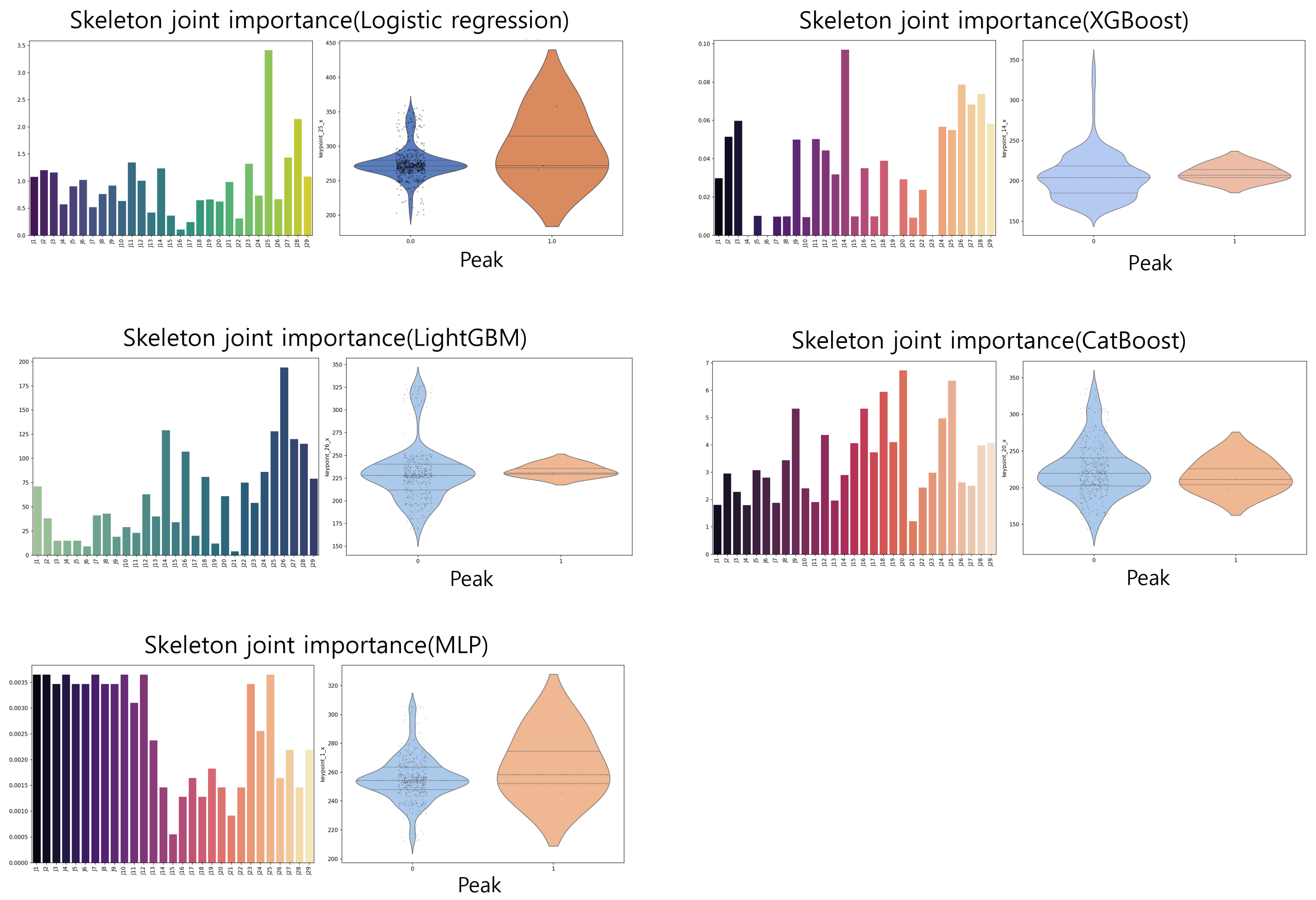
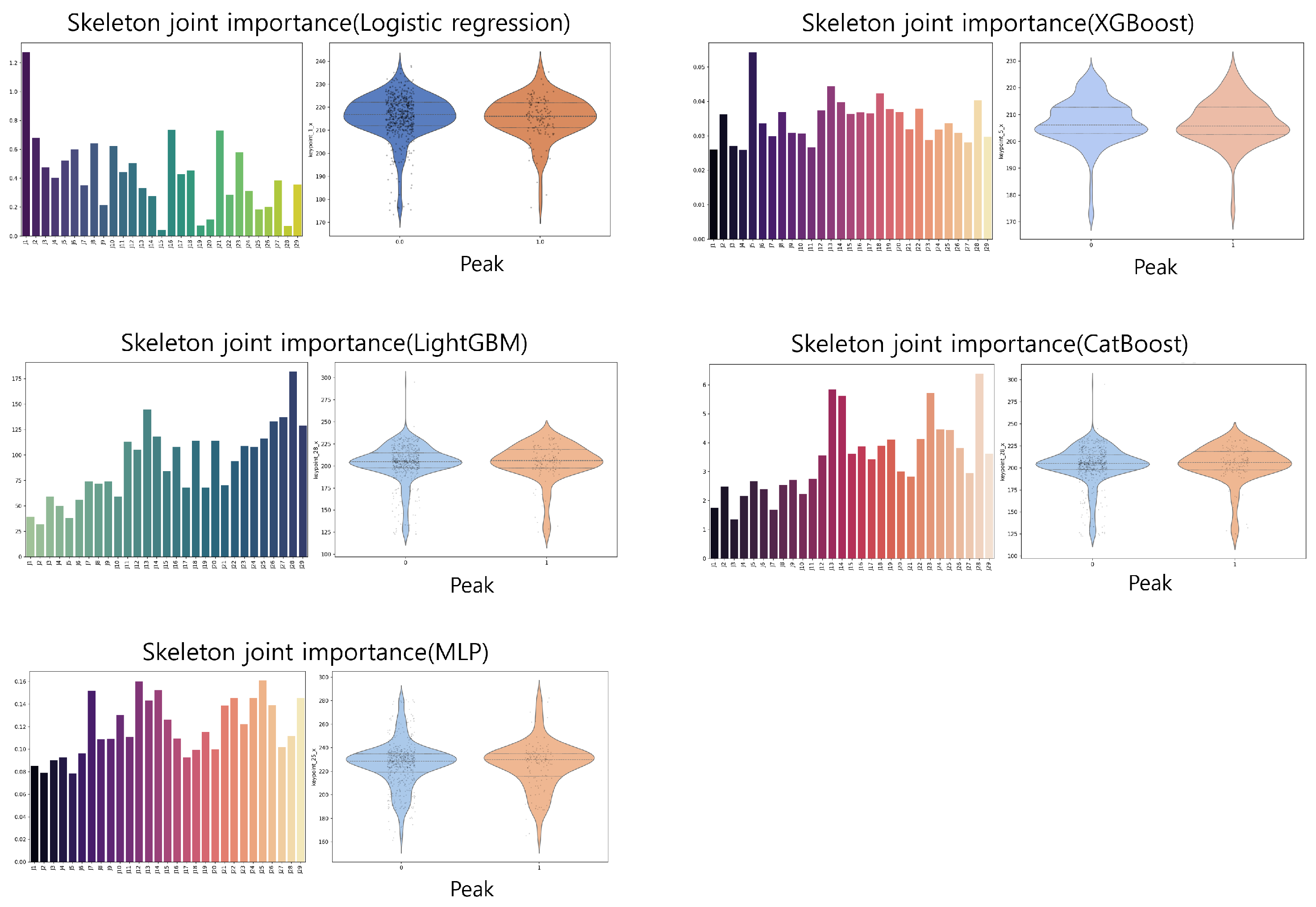
| Model | Top Influential Joint | Core Interpretation (Why It is Important) |
|---|---|---|
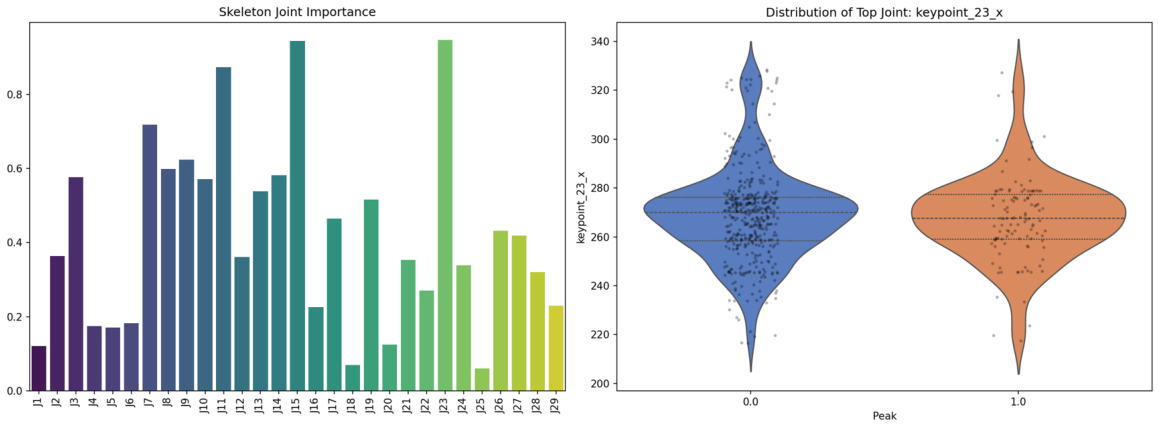
| Logistic | J23 | Global Trajectory: The main arc of the arm swing. |
| XGBoost | J5 | Decision Boundary: The trigger condition for the hit. |
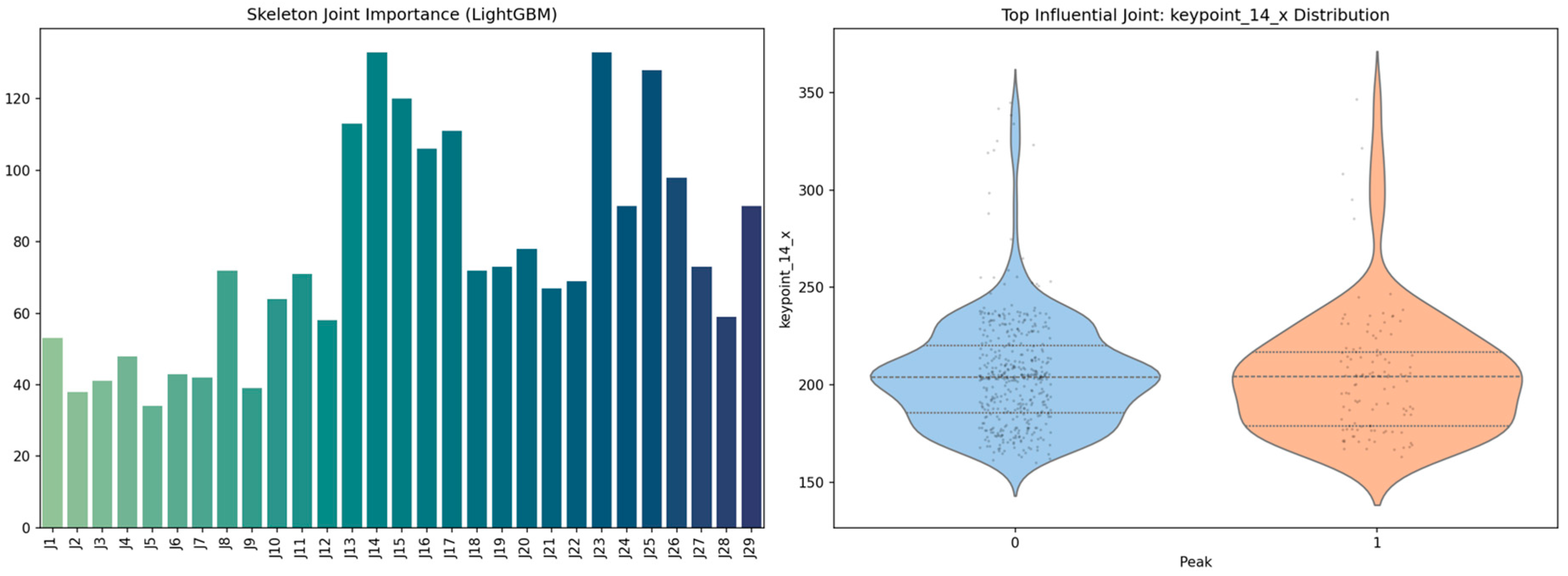
| LightGBM | J14 | Rhythmic Pattern: The most informative swing path. |
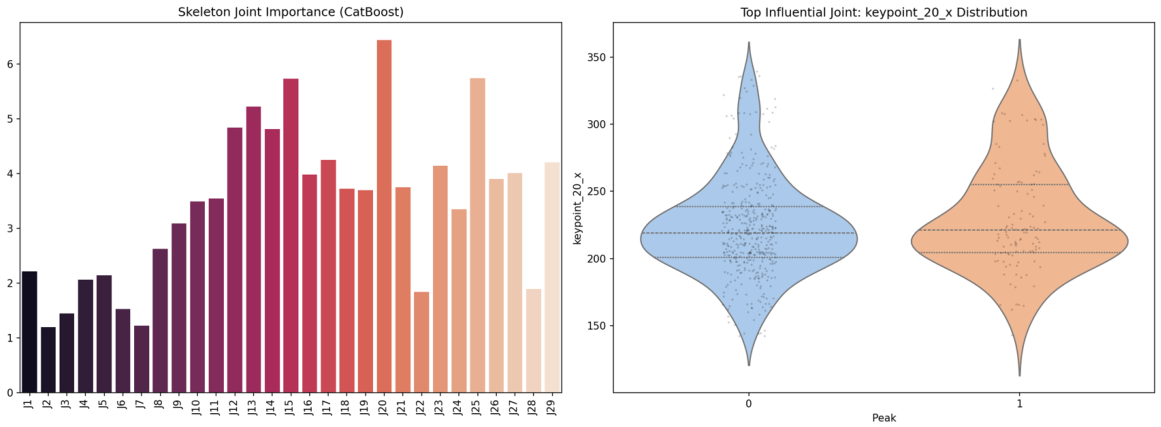
| CatBoost | J20 | Stability: Robust positioning for impact. |
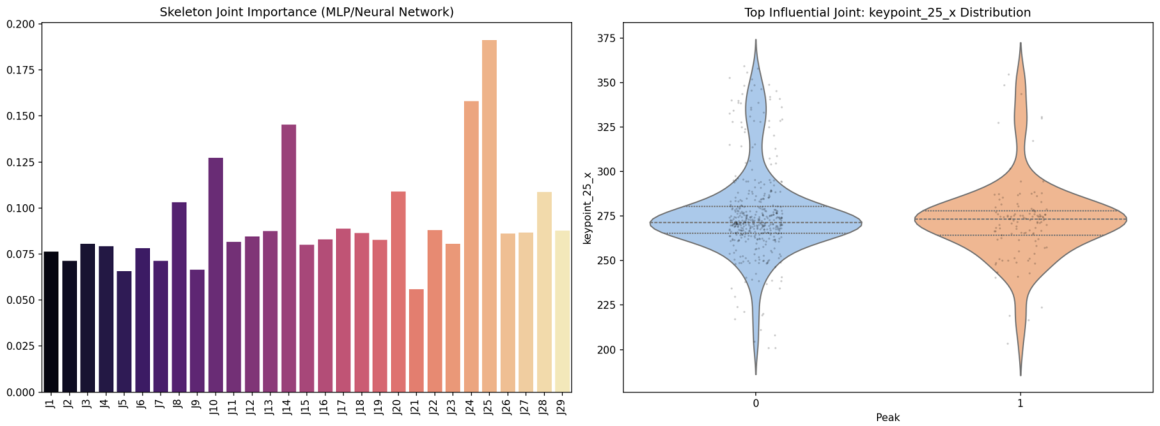
| MLP | J25 | Weight Balance: The complex postural anchor for the strike. |
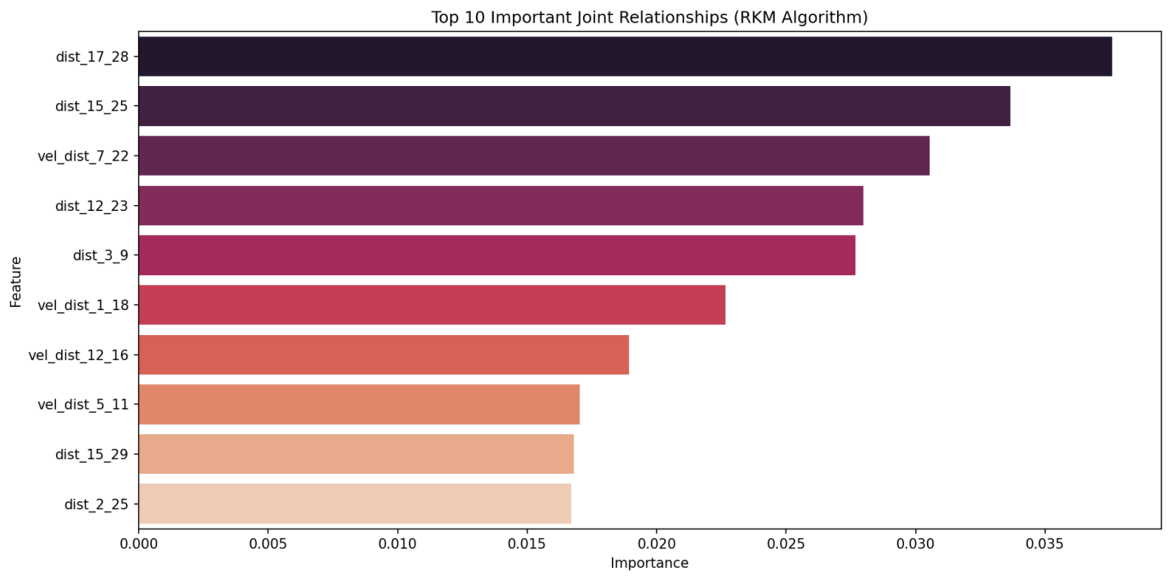
| Rank | Feature | Interpretation |
|---|---|---|
| 1st | dist_17_28 | Core Posture Bridge: The distance between these joints is the most critical factor, likely anchoring the torso to the lower body. |
| 2nd | dist_15_25 | Strike Geometry: Defines the angle and reach of the arm relative to the center of gravity. |
| 3rd | vel_dist_7_22 | Swing Velocity: The rate at which these two points close the gap, representing the actual speed of the downstroke. |
| 4th | dist_12_23 | Upper Body Stability: Maintaining shoulder–hip alignment during the strike. |
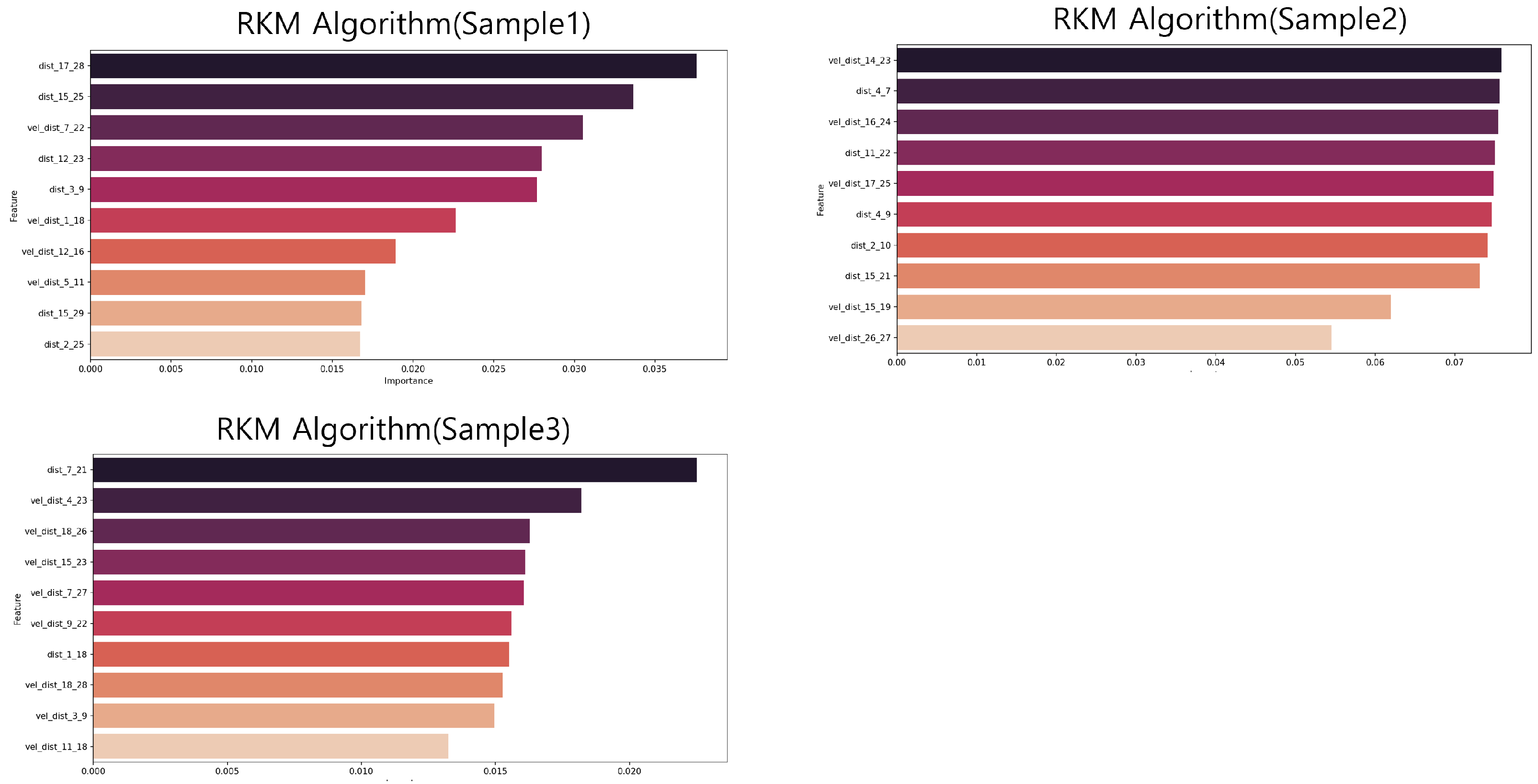
| Rank | Connectivity (Feature) | Biomechanical Role | Consistency |
|---|---|---|---|
| 1st | dist_17_28 | Torso–Hip Anchor | Very High |
| 2nd | vel_dist_14_23 | Swing Velocity | High |
| 3rd | dist_15_25 | Range of Motion | High |
| 4th | vel_dist_7_22 | Impact Coordination | Medium |
Disclaimer/Publisher’s Note: The statements, opinions and data contained in all publications are solely those of the individual author(s) and contributor(s) and not of MDPI and/or the editor(s). MDPI and/or the editor(s) disclaim responsibility for any injury to people or property resulting from any ideas, methods, instructions or products referred to in the content. |
© 2026 by the authors. Licensee MDPI, Basel, Switzerland. This article is an open access article distributed under the terms and conditions of the Creative Commons Attribution (CC BY) license.
Share and Cite
Yoo, H.; Sung, Y. L-DGC: LLM-Based Dance Generative Control. Appl. Sci. 2026, 16, 6825. https://doi.org/10.3390/app16136825
Yoo H, Sung Y. L-DGC: LLM-Based Dance Generative Control. Applied Sciences. 2026; 16(13):6825. https://doi.org/10.3390/app16136825
Chicago/Turabian StyleYoo, Hanha, and Yunsick Sung. 2026. "L-DGC: LLM-Based Dance Generative Control" Applied Sciences 16, no. 13: 6825. https://doi.org/10.3390/app16136825
APA StyleYoo, H., & Sung, Y. (2026). L-DGC: LLM-Based Dance Generative Control. Applied Sciences, 16(13), 6825. https://doi.org/10.3390/app16136825