1. Introduction
With the continuous expansion of infrastructure construction, a large amount of high-water-content bentonite slurry is produced during the construction of underground engineering such as shield tunnels and bored piles. Such engineering slurry is characterized by extremely high water content (usually 300–500%), high clay content and very low permeability. Its efficient dewatering and resource utilization have become one of the key issues urgently to be solved in the field of geotechnical engineering. In engineering construction, cement is often adopted as the traditional soil improvement and solidification agent. Although it achieves excellent stabilization performance, a massive amount of CO
2 is emitted during its production, and cement manufacturing alone accounts for approximately 8% of global CO
2 emissions [
1,
2]. Therefore, many researchers have turned to solid waste materials to realize soil stabilization and improvement while achieving waste recycling, among which slag-based industrial solid waste is the most commonly used material. Under this background, it is of great engineering practical significance to explore efficient, economical and environmentally friendly improvement methods for high-water-content bentonite slurry.
Electro-osmotic consolidation technology uses a direct-current electric field to drive the directional migration of pore water in soil from the anode to the cathode. It has a remarkable drainage and stabilization effect on low-permeability fine-grained soils and has been widely used in the treatment of soft clay and sludge. However, traditional electro-osmotic consolidation suffers from problems such as long treatment duration, reduced electro-osmotic efficiency, and electrode corrosion in practical applications, which limit its popularization. Therefore, relevant studies have attempted to combine electro-osmosis with surcharge preloading, vacuum preloading and other techniques to make up for the shortcomings of a single method [
3,
4,
5,
6,
7]. For example, experimental results on the electro-osmotic consolidation of sludge using electrokinetic geosynthetic (EKG) electrodes show that this type of electrode has a higher dewatering efficiency than conventional metal electrodes [
8]. Meanwhile, the combined method of chemical treatment and electro-osmosis has also attracted extensive attention [
9,
10]. By investigating the influence of cation types on the microstructure and mechanical properties of soft clay during electro-osmosis combined with chemical grouting, it is found that high-valence cations can significantly improve the electro-osmotic coefficient and electrical conductivity of soil and optimize pore distribution through flocculation [
11]. Subsequently, analytical models for consolidation with continuous drainage boundaries under electro-osmosis–surcharge preloading [
12], coupled models of electro-osmosis–chemical solidification [
13] and other models have been successively established. These models not only theoretically reveal the synergistic mechanism of the combined action of electro-osmosis and surcharge loading but also consider the effect of chemico-osmosis on ion migration and the consolidation process, providing theoretical support for the electrochemical combined treatment of soft soil.
As an eco-friendly material with a low carbon footprint and low cost, slag-based industrial solid waste has been extensively studied in the field of soft soil stabilization in recent years [
14]. Among them, ground granulated blast furnace slag (GGBS) has been proven to significantly improve the mechanical properties of soft clay due to its excellent pozzolanic activity and cementitious performance. Studies have shown that the compressive strength, elastic modulus and consolidation rate of geopolymer-stabilized soil are significantly superior to those of ordinary Portland cement-stabilized soil [
15]. Gaddam et al. [
16] used fly ash and GGBS-based geopolymer to stabilize soft clay. At a dosage of 20%, the unconfined compressive strength of the stabilized soil increased remarkably with the rising proportion of GGBS, indicating the potential of slag-based materials to replace cement. Furthermore, Amiri et al. [
17] investigated the effectiveness of slag-based alkali-activated materials in stabilizing organic soil, verifying their feasibility in treating soft soil with high organic matter content. Multi-solid waste-based soil stabilizers developed by compounding various industrial solid wastes can effectively optimize the mechanical properties of stabilized soil through synergistic effects [
18]. The mechanism lies in that slag-based materials generate cementitious products such as calcium silicate hydrate (C-(A)-S-H) via hydration reactions [
19], which fill soil pores and cement particle skeletons, thus effectively enhancing soil strength and durability. However, when relying solely on slag for the stabilization of high-water-content bentonite slurry, drainage inhibition often occurs due to the strong water absorption and expansion of bentonite and blocked drainage paths, which restricts the improvement of stabilization efficiency.
Polyacrylamide (PAM) flocculants, as high-efficiency organic macromolecular polymers, have been widely used in sewage treatment, tailings dewatering, dredged slurry disposal and other fields. Polyacrylamide can effectively flocculate fine particles through mechanisms such as adsorption bridging and charge neutralization, significantly improving the sedimentation and dewatering performance of slurry [
20,
21]. According to different ionic types, PAM can be classified into cationic polyacrylamide (CPAM), anionic polyacrylamide (APAM) and non-ionic polyacrylamide (NPAM). Among them, a study on the enhanced dewatering performance of dredged sediments using dual flocculants with CPAM and APAM applied sequentially found that the water content of sediment cakes and turbidity of supernatant decreased significantly at dosages of 0.16‰ CPAM and 0.12‰ APAM [
22]. Novel Fe-PAM organic-inorganic hybrid flocculants can effectively reduce the capillary suction time of slurry and accelerate the consolidation process by virtue of the dual mechanisms of charge neutralization of Fe
3+ and adsorption bridging of long PAM chains [
23,
24,
25]. By comparing the effects of APAM and chitosan flocculants, it was found that APAM exerted a more significant influence on dewatering during the filtration stage [
26].
Notably, the combined application of flocculants and electro-osmotic consolidation has gradually become an important research direction for the efficient treatment of high-water-content slurry in recent years [
27,
28]. Flocculation pretreatment can form flocs with structural pores in the slurry and reduce the initial solid-phase resistance, thereby creating more favorable conditions for subsequent electro-osmotic drainage. Zhang et al. [
29] and Liu et al. [
30] conducted laboratory experiments on marine soft clay using the combined process of flocculation–vacuum preloading–electro-osmosis, confirming that this combined method can significantly delay the decay of dewatering efficiency and prolong the effective duration of electro-osmosis. Further research was then carried out on the electro-osmotic solidification effect of engineering slurry after pretreatment with composite flocculants. It was found that the APAM-PAC-Ca(OH)
2 composite flocculant can form a floc structure with pores inside the slurry that are beneficial to electro-osmotic drainage. After solidification, various cementitious products such as C-(A)-S-H, CAH and polymer network structures fill the soil pores, achieving effective soil stabilization. These studies provide a useful reference for the synergistic application of flocculants and electro-osmotic consolidation technology.
However, for bentonite slurry with high water content, existing studies still face key scientific challenges. Single slag stabilization tends to block drainage channels due to the strong water absorption and expansion characteristics of bentonite, resulting in low stabilization efficiency. Although single electro-osmosis or combined flocculation–electro-osmosis methods can improve dewatering performance, they fail to endow the slurry with long-term strength and stability. The synergistic mechanism of polyacrylamide (PAM) combined with slag in such slurry remains unclear. Systematic investigations are still lacking on whether PAM can form porous flocs suitable for electro-osmotic dewatering via flocculation to provide an initial skeleton for slag hydration, and whether hydration products of slag can stabilize flocs and enhance soil strength. Furthermore, most current research on flocculation–electro-osmosis focuses on dredged sludge and common soft clay, while few studies concern the integrated flocculation–preloading–electro-osmosis (FPE) treatment of bentonite slurry.
Different from previous studies, this study adopts slag as a low-carbon cementitious material to realize multi-stage synergy of flocculation pore formation, electro-osmotic drainage and slag cementation. Anionic polyacrylamide (APAM) is applied for pre-flocculation to construct highly permeable floc networks, which alleviate channel blockage and provide migration pathways for slag hydration and electro-osmotic flow. By virtue of the adsorption-bridging and charge-neutralization effects of APAM, the flocculation effect is further strengthened together with high-valence cations released from slag. Under the coupled driving effect of electro-osmosis and preloading, efficient dewatering and synchronous solidification are achieved, thereby establishing an innovative FPE treatment technique.
In view of the above research gaps, the optimal combined dosages of APAM and slag are determined through sedimentation experiments in this study. A series of FPE combined consolidation experiments are carried out, during which drainage volume, settlement, current and temperature are monitored in real time. After experiments, the pH value, free swelling ratio, moisture content and shear strength of treated soil are measured, and microscopic morphology and mineral composition characteristics are analyzed. Combined with electro-osmosis theory, bound water theory, adsorption theory and hydration reaction theory, the synergistic mechanism and experimental laws of APAM and slag within the FPE system are clarified. This study aims to provide a feasible and low-carbon combined treatment strategy for efficient dewatering and resource utilization of high-water-content bentonite slurry.
2. Materials and Methods
2.1. Experimental Materials
Compared with traditional cement materials, solid waste materials such as slag are widely used in soil stabilization due to their low cost, excellent solidification performance and environmental friendliness. In this experiment, S95 high-grade slag powder (Yantai Anda Environmental Protection Technology Co., Ltd., Yantai, China) was adopted, which contains abundant SiO2 and CaO and possesses high activity. Sodium-based bentonite (Weifang Yuandong Bentonite Co., Ltd., Weifang, China) was selected, with montmorillonite as its main mineral component. The moisture content of bentonite slurry was set at 700%, and primary distilled water was used in the experiment to eliminate the influence of ions in water on experimental results. Instability of electrode materials reduces the efficiency of electro-osmotic consolidation, and extra metal cations released from electrodes interfere with experimental data. Accordingly, ruthenium–iridium-coated titanium electrodes were employed in the electro-osmotic consolidation stage. This material features superior stability, which effectively eliminates the adverse effects of electrode instability on experimental outcomes.
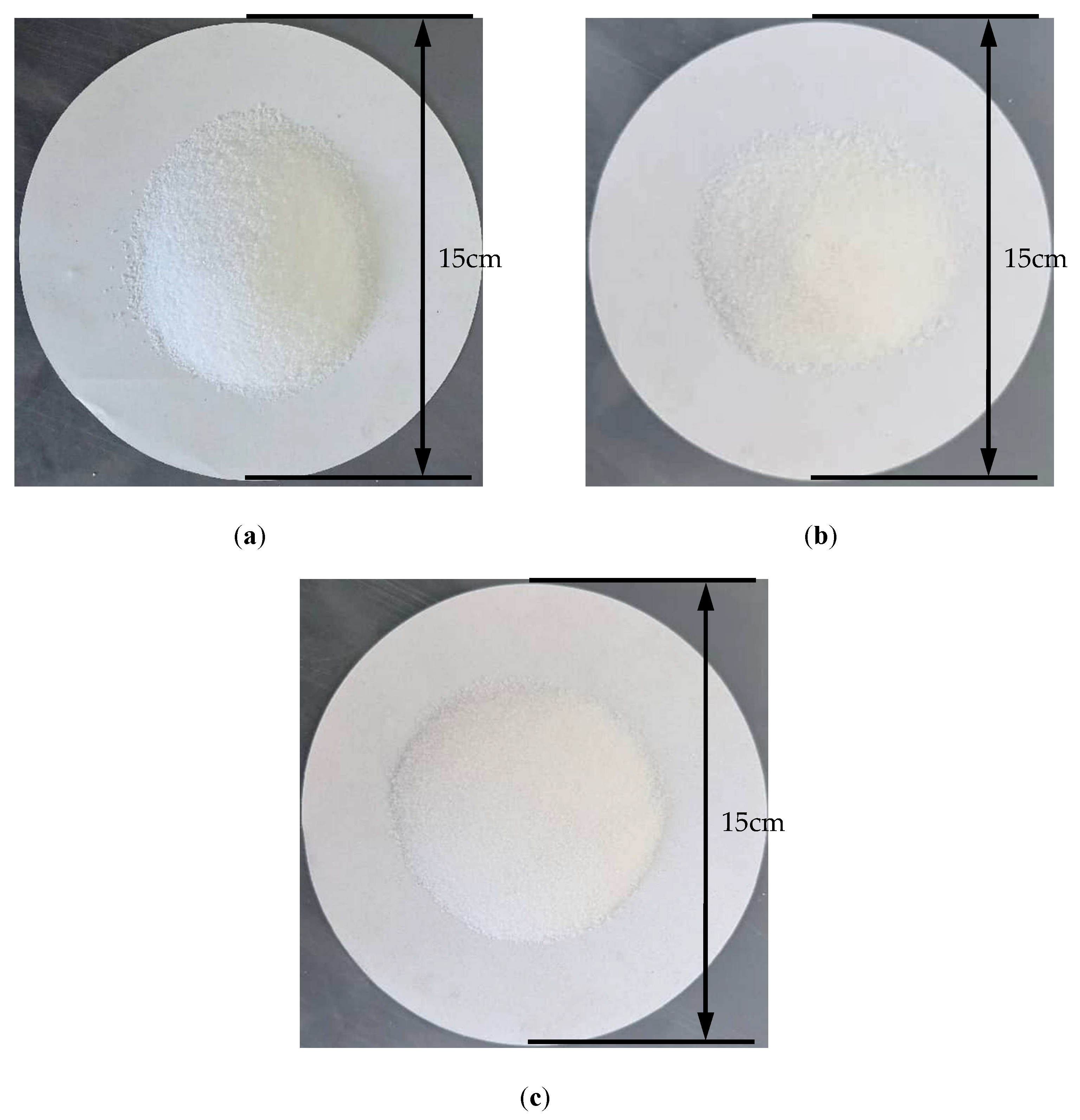
Three types of polyacrylamide (PAM) were selected: non-ionic polyacrylamide (NPAM), cationic polyacrylamide (CPAM), and anionic polyacrylamide (APAM), all with a molecular weight of 12 million. The three types of PAM exhibit roughly the same appearance. As an organic polymer material, PAM possesses favorable adsorption properties. A settlement column experiment [
31] was conducted to determine the most suitable type and dosage of PAM for bentonite slurry with a moisture content of 700% so as to achieve better consolidation effects during multi-stage consolidation. The detailed comparison and selection of specific types and dosages will be elaborated in the following sections, and the three PAM materials are shown in
Figure 1.
2.2. Experimental Program
The moisture content of the bentonite slurry was also set at 700%, and the dosages of slag and PAM were both calculated based on the mass of dry soil. In addition, due to the strong adsorption capacity of PAM, random direct addition may lead to localized excessive adsorption and compromise the accuracy of experimental results. Therefore, polyacrylamide is usually prepared in an aqueous solution first before being introduced into the bentonite slurry [
29]. The bentonite and water required for the experiment were weighed out first, including 500 g of bentonite and 3500 g of water. 2500 g of water was mixed with the bentonite and stirred for approximately 2 min. Then, the required amount of PAM was dissolved in 1000 g of water and stirred until fully dissolved, after which it was added to the slurry and mixed uniformly using a stirrer (Zhejiang Haotong Technology Co., Ltd., Hangzhou, China). The mixture was then immediately placed on the experimental platform to conduct the experiment.
Preliminary experiments revealed that in all groups with a slag content of no more than 1%, ions inherent in slag reduced the thickness of the electric double layer formed by bentonite, thereby facilitating drainage during the physical dewatering stage. Nevertheless, over time, the generated cementitious products gradually blocked seepage and electro-osmosis channels, resulting in an overall inhibitory effect after the electro-osmotic consolidation stage. Only the group with 0.2% slag content exhibited a promoting effect. In addition, after slag incorporation, its alkali-activated active substances were decomposed, and the resultant cementitious products bonded soil particles, which consequently improved shear strength. Among all experimental groups, the 1% slag content group achieved the most remarkable improvement in shear strength compared with the pure bentonite group, especially in the vicinity of the cathode.
Therefore, the 0.2% slag dosage with the optimal drainage promotion effect and the 1% slag dosage with the best overall strength improvement in shear strength experiments were selected. On this basis, the suitable types and dosages of PAM for each group were determined, and pure bentonite and PAM mixture groups were set as the control groups. The APAM dosages under different slag contents were obtained based on the settlement column experiment, and groups with 0% slag content were used as controls to compare the effect of PAM. The experimental scheme is shown in
Table 1.
During the experiment preparation period, the main experimental apparatus was cleaned and dried first, and graduated cylinders of different specifications were prepared to measure drainage volume. The room temperature was adjusted to 25 °C and kept constant throughout the experiment. The required raw materials were weighed using an electronic balance, mixed uniformly with a stirrer for 5 min, and then slowly poured into the main device to ensure a uniform colloid free of air bubbles. After the mixture filled the cylinder, the upper soil surface was leveled with a straight ruler. The drainage pipe was connected, and plastic wrap was used to prevent water evaporation, followed by recording the initial time.
The experiment was divided into three stages: self-weight drainage, physical pressurization and electro-osmotic drainage. After the completion of self-weight drainage, preloading was applied. Filter paper and geotextile with appropriate sizes were laid sequentially on the upper layer of slurry, and then the designed load was imposed. During pressurization, water adsorbed by the geotextile flowed into the hollow cylinder. Hence, the volume of such water was weighed during load replacement and incorporated into the total drainage volume of each stage. Before initiating electro-osmotic drainage, conductive titanium wires were embedded in the upper part, and temperature sensors were inserted into the side temperature jacks. The power supply device was turned on with the DC power voltage set to 10 V [
32,
33,
34,
35] to start electro-osmotic consolidation. Regular readings were taken during the experiment, and the recorded data were compared with the image data to correct experimental errors.
Upon experiment completion, the load was removed and soil samples were taken out, which were equally divided into three parts from top to bottom for the determination of moisture content and shear strength. A miniature vane shear apparatus was adopted to measure shear strength at the upper part and cathode contact surface of each soil sample. The soil samples were placed into sampling boxes, weighed and then dried in an oven at high temperature to obtain moisture content values. Subsequent experiments, including free swelling ratio and pH value, were all conducted based on oven-dried soil samples. Specifically, the free swelling ratio experiment was strictly implemented in accordance with Test Methods of Soils for Highway Engineering (JTG 3430-2020) [
36]. The soil pH value after electro-osmotic consolidation was measured by a temperature-compensated electrode and pH meter. The liquid and plastic limits were determined via a combined liquid-plastic limit tester following the specifications of the Soil Test Procedures (SL 237-1999) [
37].
Microstructural characterization was performed using scanning electron microscopy–energy dispersive X-ray spectroscopy (SEM-EDS) and Fourier transform infrared spectroscopy (FTIR). SEM observations were carried out using a ZEISS Sigma 360 (Oberkochen, Germany), while FTIR measurements were conducted with a Nicolet iS20 spectrometer (Thermo Fisher Scientific, Waltham, MA, USA).
2.3. Determination of PAM Type and Optimum Dosage
2.3.1. PAM Adsorption Mechanism
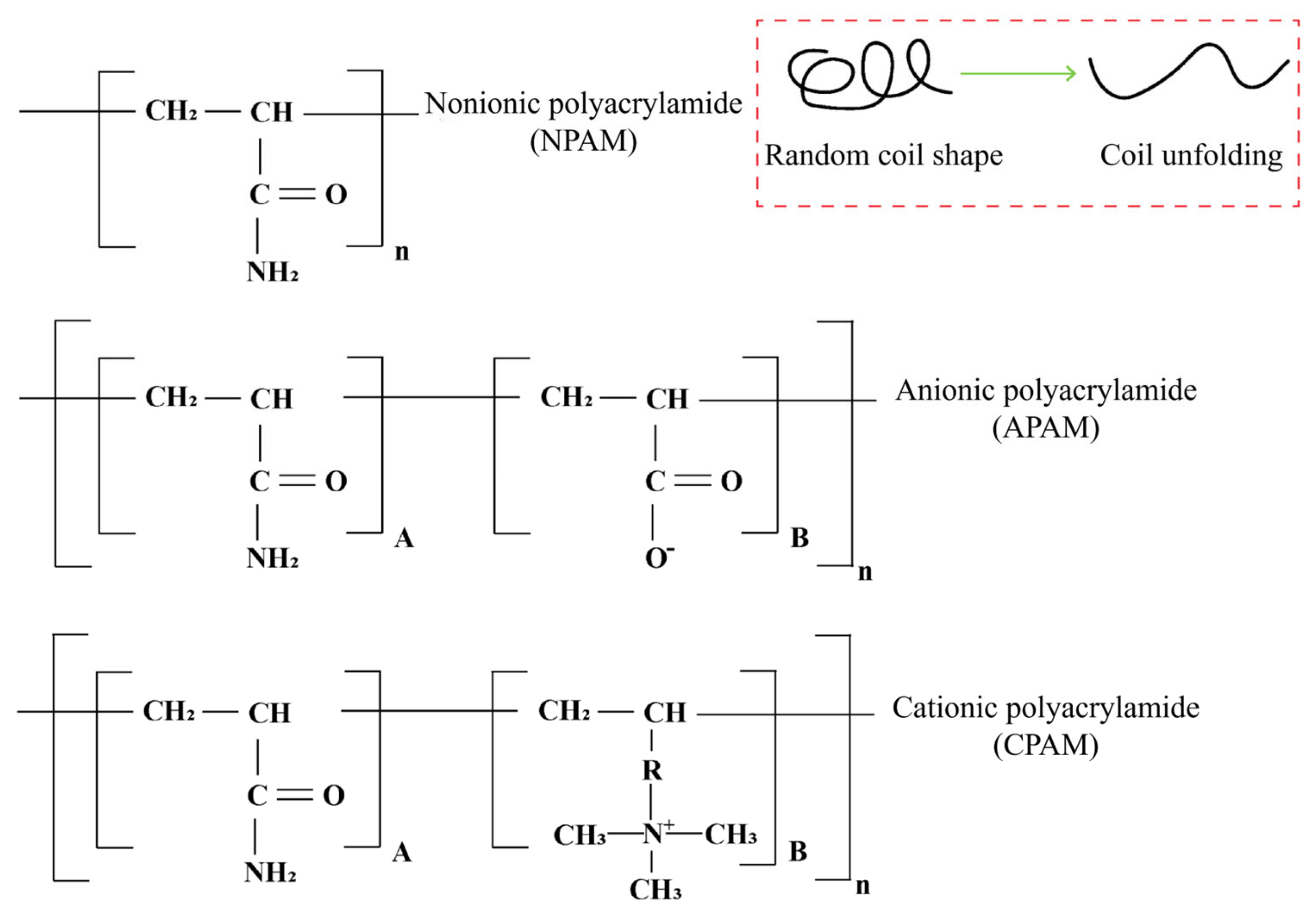
All three types of PAM are organic polymer chains. The chemical structures of non-ionic, cationic, and anionic polyacrylamide are [-CH
2-CH(CONH
2)-]
n, [-CH
2-CH(CONH
2)-CH
2-CH(N
+(CH
3)
3X
−)-]
n and [-CH
2-CH(CONH
2)-CH
2-CH(COO
−)-]
n, respectively, as shown in
Figure 2. The three types are classified according to the different functional groups on their chains, resulting in different treatment effects of various PAM types on the same soil. When dissolved in water, the polymer gradually transforms from a solid state into a hydrogel state, and the polymer chains gradually unfold, exhibiting a random coil conformation in aqueous solution. As the chains attract soil particles to form larger aggregates, the random coils stretch gradually. A more extended structure is more conducive to attracting soil particles and provides more possibilities for bonding between functional groups and soil particles. Therefore, for different applications, different types of PAM can be selected, and different solution environments can be established to meet the requirements of soil adsorption and modification by PAM.
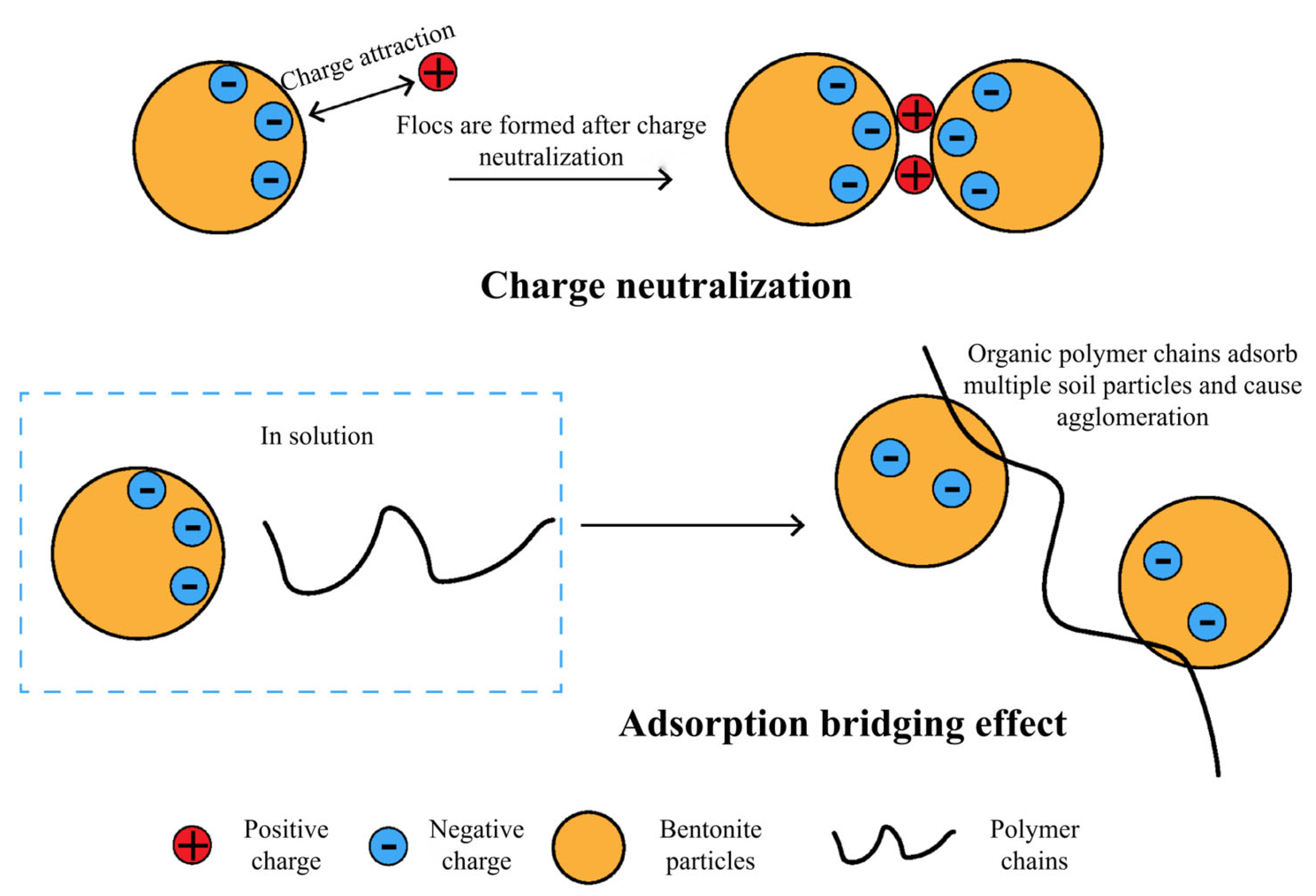
There are two main mechanisms for the flocculation effect caused by the attraction and agglomeration of soil particles by PAM. First, the polymer attracts soil particles through van der Waals forces and charge neutralization. Charge neutralization mostly occurs in the adsorption between CPAM and clay particles. The cationic functional groups of CPAM adsorb and attract negatively charged clay particles. The mutual balance of positive and negative charges disrupts the charge stability in the clay suspension, leading to mutual aggregation of soil particles and subsequent solid–liquid separation to achieve flocculation [
38]. Second, the long chains of the polymer form chemical bonds, such as hydrogen bonds, with the surfaces of soil particles. One long chain carries or bridges multiple soil particles to form large aggregates, thereby achieving solid–liquid separation. The specific adsorption mechanism is shown in
Figure 3. A higher molecular weight of the polymer results in longer polymer chains, and a solution environment more favorable for chain stretching enhances the adsorption effect of PAM.
In addition, adsorption via charge balancing has a relatively weak effect and is reversible; external disturbances such as intense stirring may break this charge balance and weaken adsorption. In contrast, bridging via chemical bonds formed between chain functional groups and soil particle surfaces is much stronger, less likely to be broken, and irreversible. Upon dissolution in water, the polymer behaves similarly to a hydrogel. Excessive dosage results in excess polymer coating soil particles, making the overall slurry formed by hydrated soil hydrophobic. The amide functional group (-CONH
2) on the polymer long chain can react with Al-OH and Si-OH on bentonite particles to form hydrogen bonds, thus adsorbing soil particles [
39]. Amide groups are prone to hydrolysis under alkaline conditions, impairing the performance of NPAM. Anionic groups such as carboxylate (-COO
−) on APAM can also react with binding sites on the bentonite surface to form bridging structures. Meanwhile, metal cations attract both negatively charged APAM and clay particles, forming metal cation bridges that intensify adsorption [
40].
However, slag was added in this experiment. Although CaO dissolved from slag provides Ca
2+ in water, the reaction products of slag and water also interact with the polymer to form larger aggregates. Carboxylate groups bind H+ under acidic conditions, which may reduce the adsorption effect of APAM in acidic environments. The quaternary ammonium group (-N
+(CH
3)
3) in CPAM carries a positive charge and can adsorb negatively charged clay particles and other components while remaining relatively stable in weakly acidic environments. The discussion of polymeric materials in this article also draws on the work of Theng [
41].
2.3.2. Selection of PAM Type and Content
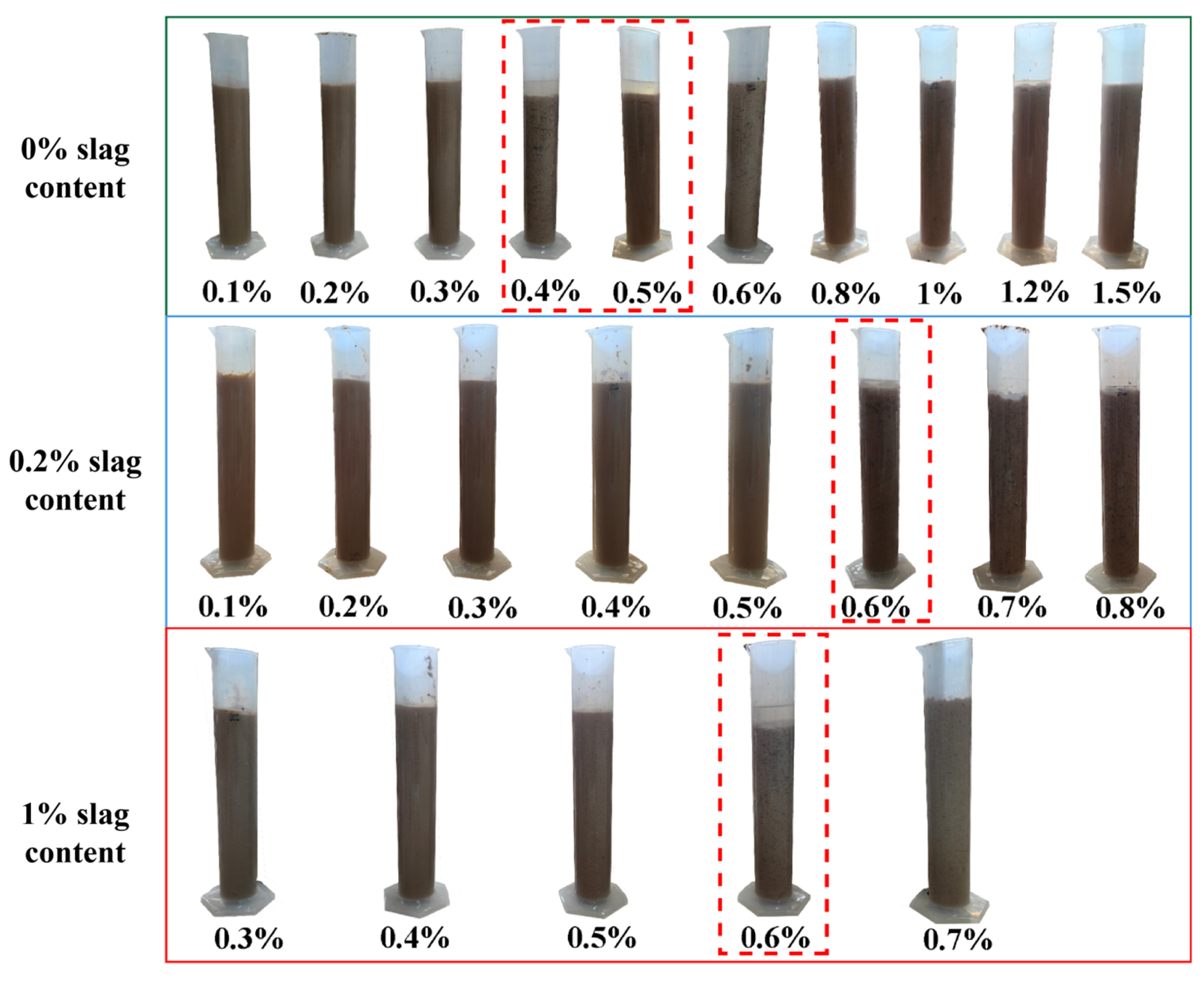
To determine the most suitable type and dosage of PAM under respective slag contents, a settlement column experiment was adopted to observe and identify the settlement behavior. The favorable adsorption effect of PAM may compensate for the poor drainage consolidation performance of slag in the early stage, thereby promoting the drainage consolidation of soil. Combined with the excellent solidification effect of slag, the physical and mechanical properties of bentonite are comprehensively improved.
Figure 4 shows the settlement diagrams with different APAM additions under various slag contents, and the measuring cylinder has a capacity of 500 mL. The 0.2% slag content that promotes the drainage effect and the 1% slag content with the best overall improvement in shear strength indicators were selected, and different types of PAM were added.
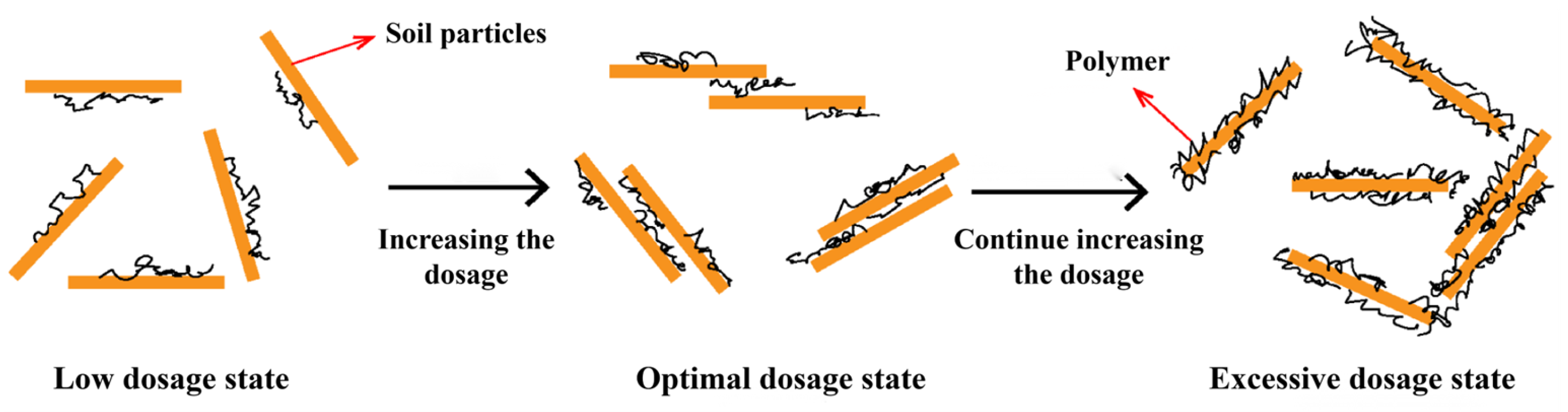
First, when APAM is added, the settlement column experiment exhibits three stages with increasing APAM dosage under each slag content. At low APAM dosages, no solid–liquid separation was observed in the appearance of the bentonite slurry, with no obvious visual change. However, the internal properties of the slurry had already become hydrophobic due to the hydrogel formed by polymer dissolution. For the 0% slag content group, this stage occurred at an APAM dosage within 0.3%; for the 0.2% and 1% slag content groups, this stage occurred at an APAM dosage within 0.5%. As the APAM dosage continued to increase, the adsorption effect of the polymer intensified, and solid–liquid separation was observed in the bentonite slurry. At this point, particle agglomeration caused by polymer adsorption resulted in solid–liquid separation, with aggregates in the soil settling to the lower part under self-weight. Since the added APAM was relatively low, the free liquid still exhibited high fluidity. The adsorption and coating of bentonite particles by the polymer were at an appropriate dosage. With a further increase in APAM dosage, solid–liquid separation still existed in the soil, but the settling effect of soil particle aggregates was poor due to hydrogel coating. Meanwhile, an excessively high APAM dosage increased the viscosity of the liquid, which was unfavorable for drainage. Simplified diagrams of the interactions between the polymer and soil particles in solution under the three slag contents are shown in
Figure 5. No obvious solid–liquid separation was observed in the NPAM and CPAM groups, but the overall soil became hydrophobic under the action of the hydrogel. This may be attributed to the instability of the amide functional group (-CONH
2) and quaternary ammonium group (-N
+(CH
3)
3) in an alkaline environment. The carboxylate group (-COO
−) in APAM remains more stable under alkaline conditions, which may result in more stable adsorption of APAM and thus the occurrence of solid–liquid separation.
In summary, APAM exhibited obvious solid–liquid separation in this experiment, and the free liquid maintained high fluidity at a moderate dosage. Excessive dosage leads to hydrogel filling, coating, and increased viscosity, which are detrimental to consolidation. Therefore, 0.4% APAM is recommended for the 0% slag content group, and 0.6% APAM for the 0.2% and 1% slag content groups.
3. Results and Discussions
3.1. Drainage Volume
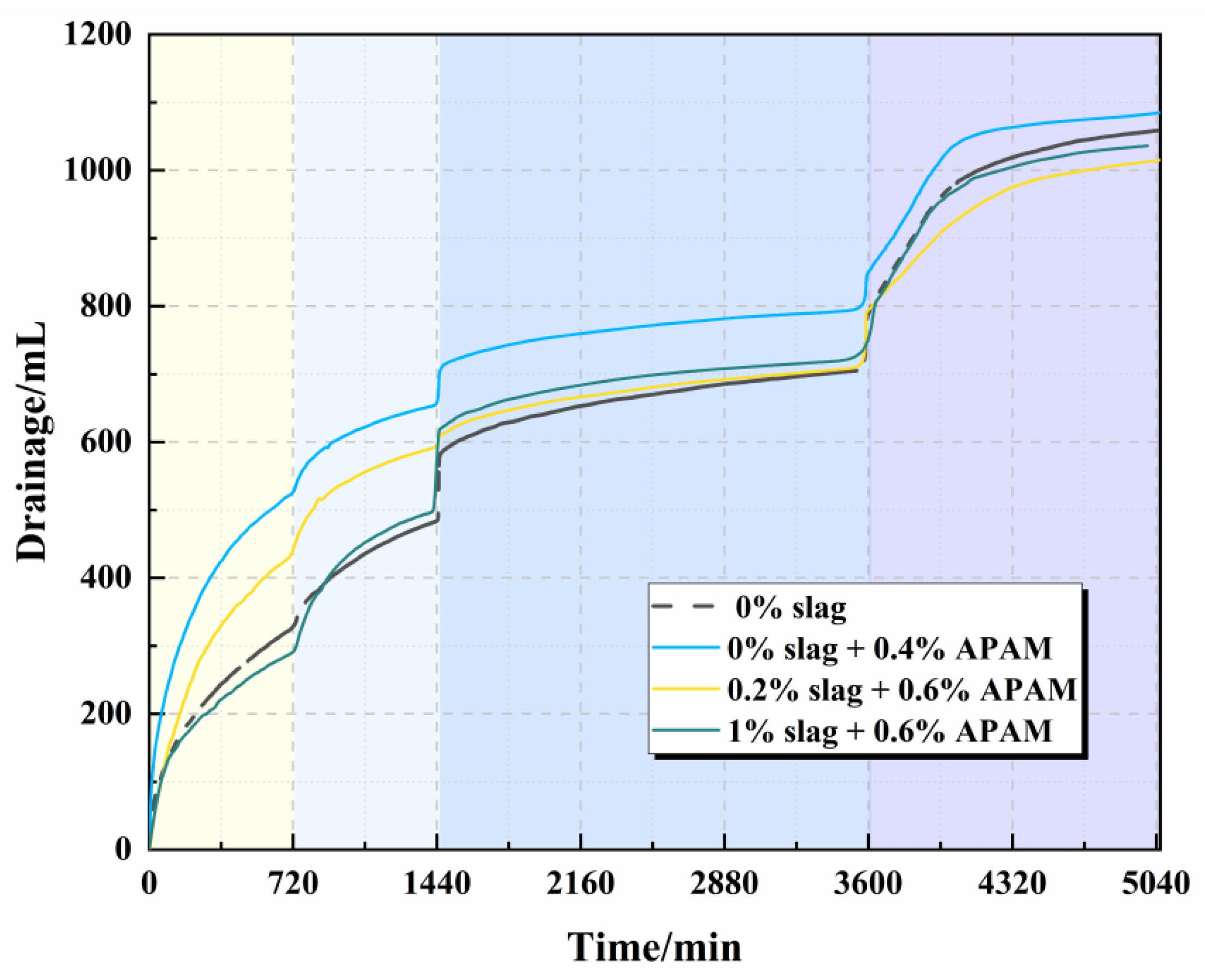
In the self-weight drainage stage, the 0% slag + 0.4% APAM group and the 0.2% slag + 0.6% APAM group exhibited relatively high drainage rates. This was caused by the formation of large particle aggregates due to polymer adsorption, which led to particle settlement and solid–liquid separation under self-weight. Particle aggregation created more pores and numerous seepage channels, allowing pore water to drain extensively under self-weight alone. Meanwhile, the APAM dosage matched with each slag content was appropriate, and the pore liquid maintained high fluidity, resulting in a rapid increase in drainage volume during the self-weight stage. However, the drainage of the 1% slag + 0.6% APAM group showed no significant increase during the self-weight stage; on the contrary, it had the smallest drainage volume among all experimental groups. This was because the 1% slag content was considerably higher than 0% and 0.2%, and APAM adsorbed slag and its reaction products. The colloidal substances temporarily blocked seepage channels, leading to the lowest drainage rate. During the self-weight drainage stage, increasing the APAM dosage did not continuously raise the drainage rate.
At the first loading stage, the water discharge of the group with 0% slag + 0.4% APAM and the group with 0.2% slag + 0.6% APAM remained in the lead. The reactions of additives in the soil became more sufficient during the self-weight drainage stage. The water discharge rate of the group with 1% slag + 0.6% APAM increased rapidly after the first loading. The water wrapped by colloidal substances drained at an accelerated rate under pressure, gradually exceeding that of the pure bentonite group. Moreover, this group achieved the highest average water discharge rate during the first loading stage. At the end of the first loading stage, the drainage above the experiment cylinder was sucked out, resulting in an abrupt change in the curve. The water discharge of all experimental groups was higher than that of the pure bentonite group. For the combination of 1% slag + 0.6% APAM, the cementation and wrapping effects hindered water drainage during the self-weight stage, and the water discharge rate increased significantly under external force only when loading was applied.
During the secondary loading stage, the drainage volume of each experimental group changed steadily and was higher than that of the pure bentonite group. The exception was the 0% slag + 0.4% APAM group, which showed a significantly higher drainage volume. The increase in drainage for the other APAM-added groups was not obvious during the secondary loading stage, and was even comparable to that of the pure bentonite group in the later period. This indicates that the addition of polymer adsorbs soil particles, increases seepage paths, and accelerates water discharge in the physical drainage stage, but has an insignificant effect on increasing the total drainage volume.
After the electric field was applied, the directional seepage of cations from the anode to the cathode drove water movement in the same direction. Similar to the pure slag experimental group, the electro-osmotic drainage curve also showed an upward trend after APAM addition. APAM did not significantly increase the electro-osmotic drainage volume of the soil, and the 0.6% APAM group even exhibited an inhibitory effect. Yang et al. [
31] reported that the incorporation of APAM significantly improved the electro-osmotic drainage effect of clay, with a remarkable increase in electro-osmotic drainage volume, but the promoting effect weakened when the APAM dosage was excessively high. Furthermore, the binding of carboxylate groups (-COO
−) with metal cations weakened the electric double layer of clay particles, which enhanced drainage. The above results differ from those in this section. The reason lies in that the experimental conditions in the literature prepared soil into a fluid–plastic state with a moisture content of 40%, and the electro-osmosis experiment was conducted immediately after reagent mixing. The adsorption of APAM formed more seepage channels and thus increased drainage. In contrast, the experiments in this study adopted a multi-stage and long-term drainage scheme, by which most free water had already been discharged before the electro-osmotic drainage stage. At this point, APAM exerted no significant improvement in the electro-osmotic drainage of bentonite, and excessive APAM coating of soil particles even suppressed electro-osmotic drainage. Similarly, Zhang et al. [
29] stated that the addition of polymer attracted soil particles into aggregates, increased the permeability coefficient of soil particles, and thereby raised the drainage volume. The consolidation–drainage curves under the combined action of slag and APAM are presented in
Figure 6. From left to right, the four colored modules represent four distinct stages: self-weight stage (yellow area), first loading stage (light blue area), secondary loading stage (blue area), and electro-osmosis stage (purple area). The experimental group with 0% slag was retained in the curve as a control group.
In summary, the addition of APAM accelerates the drainage rate in the early stage of physical drainage but has an insignificant effect on improving the total drainage volume. Excessive APAM may even inhibit drainage consolidation by adsorbing and coating soil particles, slag and slag reaction products.
3.2. Settlement
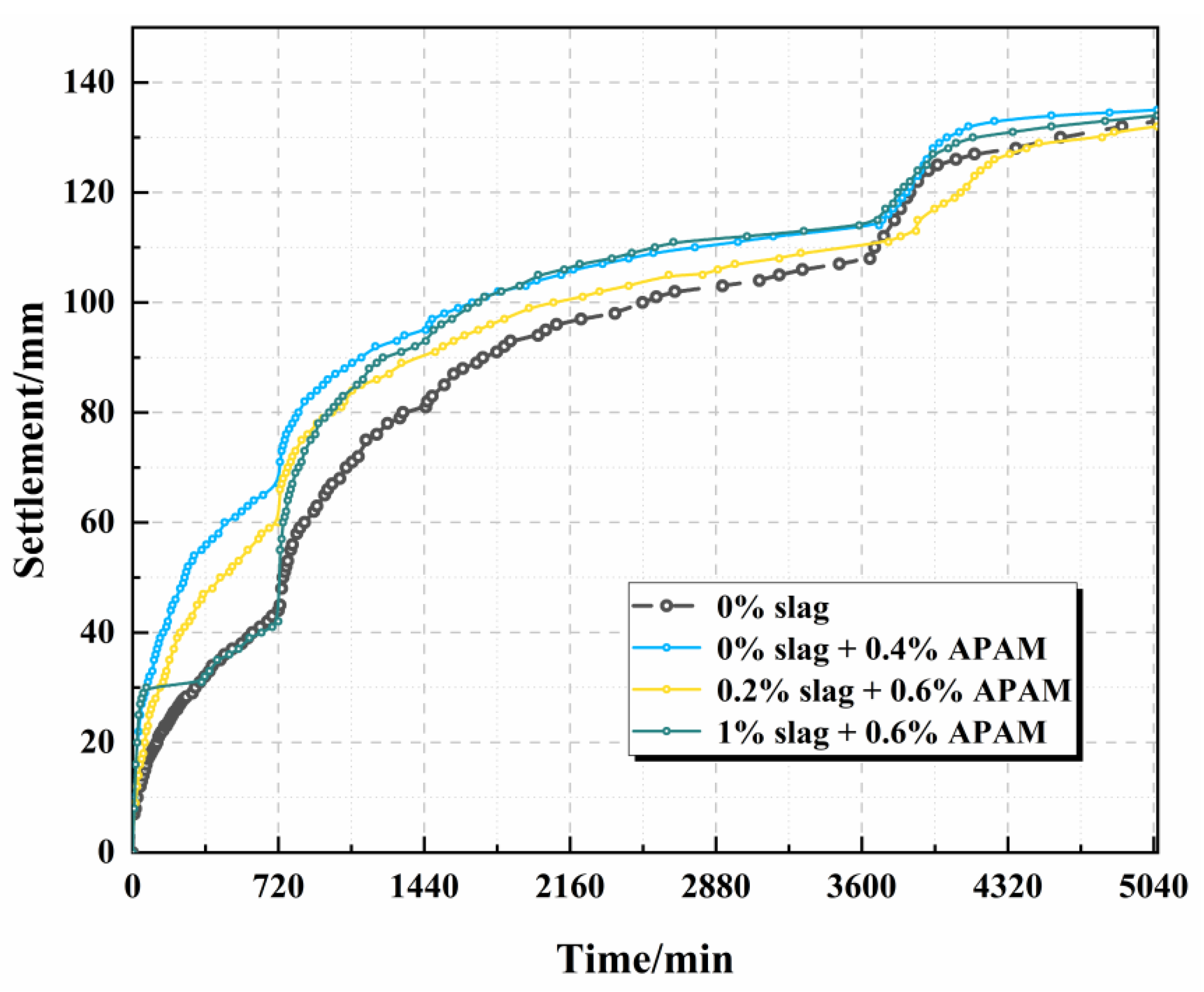
The variation law of settlement is similar to that of drainage. The 0% slag + 0.4% APAM group and the 0.2% slag + 0.6% APAM group exhibited obvious promoting effects during the physical drainage consolidation stage, with significant increases in settlement. In the self-weight stage, after soil agglomeration and solid–liquid separation under the effect of the polymer, free water cannot be discharged in time under self-weight, while soil particles have already settled, resulting in temporary stagnation of settlement. This is reflected in the sudden decrease in the slope of the settlement curve for the 1% slag + 0.6% APAM group during self-weight drainage consolidation. Settlement resumed increasing as pore water is gradually discharged.
During the first loading and secondary loading stages, the settlement rate gradually decreased with time, and the settlement of the experimental groups with APAM addition remained consistently higher. This is because the adsorption and agglomeration effects of APAM reduce the distance between soil particles, accelerate the discharge of free water under loading, and lead to a significant increase in settlement. After the end of secondary loading, the advantage in settlement of the APAM-added groups became insignificant. This indicates that although APAM exerts a certain promoting effect on settlement during the physical drainage consolidation stage by weakening the electric double layer of soil particles through carboxylate groups (-COO
−), such improvement is not remarkable. Moreover, the introduction of APAM significantly shortens the drainage time for the same volume of water. The settlement curves under the combined effect of slag and APAM are shown in
Figure 7.
During the electro-osmotic consolidation stage, the settlement of the APAM-added groups was slightly higher than that of other groups, showing a similar trend to the drainage stage. In summary, APAM only accelerated settlement during the self-weight consolidation and pressure consolidation stages but had little effect on improving the total settlement.
3.3. Electric Current
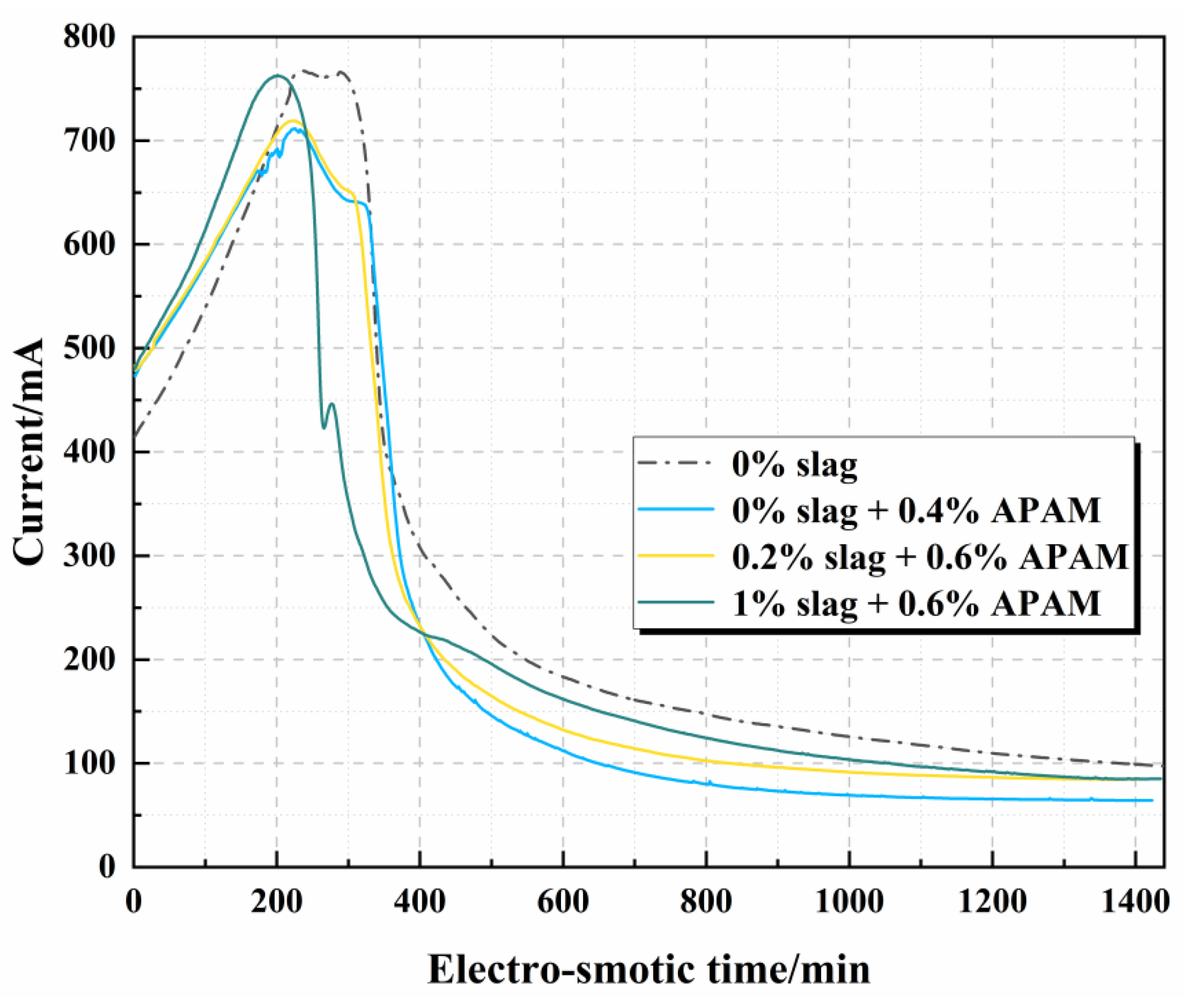
Compared with the current curves of the groups with only slag addition, the initial current was significantly higher after APAM addition. In other words, the current with APAM was higher during the initial rising stage, which was mainly attributed to the following reasons: (1) APAM carries partial negative charges, and its addition increases the concentration of conductive charges in the soil [
31], thus raising the current value during the initial current rising stage of electro-osmotic consolidation and (2) the adsorption and flocculation effects after polymer addition increase the permeability coefficient of the soil compared with the groups without polymer, meaning that seepage channels are enhanced, which improves electrical transport after the electric field is applied [
42]. The modification of soil structure by APAM resulted in a higher current at the initial stage of electrification.
As the electrification time increases, water is discharged rapidly, and the current gradually reaches its peak value. The peak current of all groups with APAM addition is lower than that of the pure bentonite group, indicating that both the slag and APAM dosages adopted in the experiment have a weakening effect on the peak current. The channels favorable for current transmission formed by the polymer in the early stage gradually close as water is discharged and the moisture content decreases, leading to a gradual increase in apparent resistivity. Consequently, the current gradually declines after reaching the peak. The current curves after APAM addition consist of only rising and falling segments. A weak current recovery appears only in the group with 1% slag + 0.6% APAM, and the overall current curves are relatively stable. In contrast, the 0% slag group shows an obvious trend of current decrease followed by recovery. This is still attributed to the modification of the soil structure by the polymer. As mentioned in the sections on moisture content and shear strength, the polymer enhances the integrity of the soil. During electrification, the adsorption and dependence of the polymer on water reduce the efficiency of water migration. The backflow of water is restricted by polymer adsorption, resulting in only rising and falling trends in the curve after polymer addition. In fact, the current decay rate of the 0% slag + 0.4% APAM group and the 0.2% slag + 0.6% APAM group tends to slow down or even rise after the peak current, but the polymer suppresses this variation. The current data recorded by the paperless recorder during the electrification stage are plotted in
Figure 8.
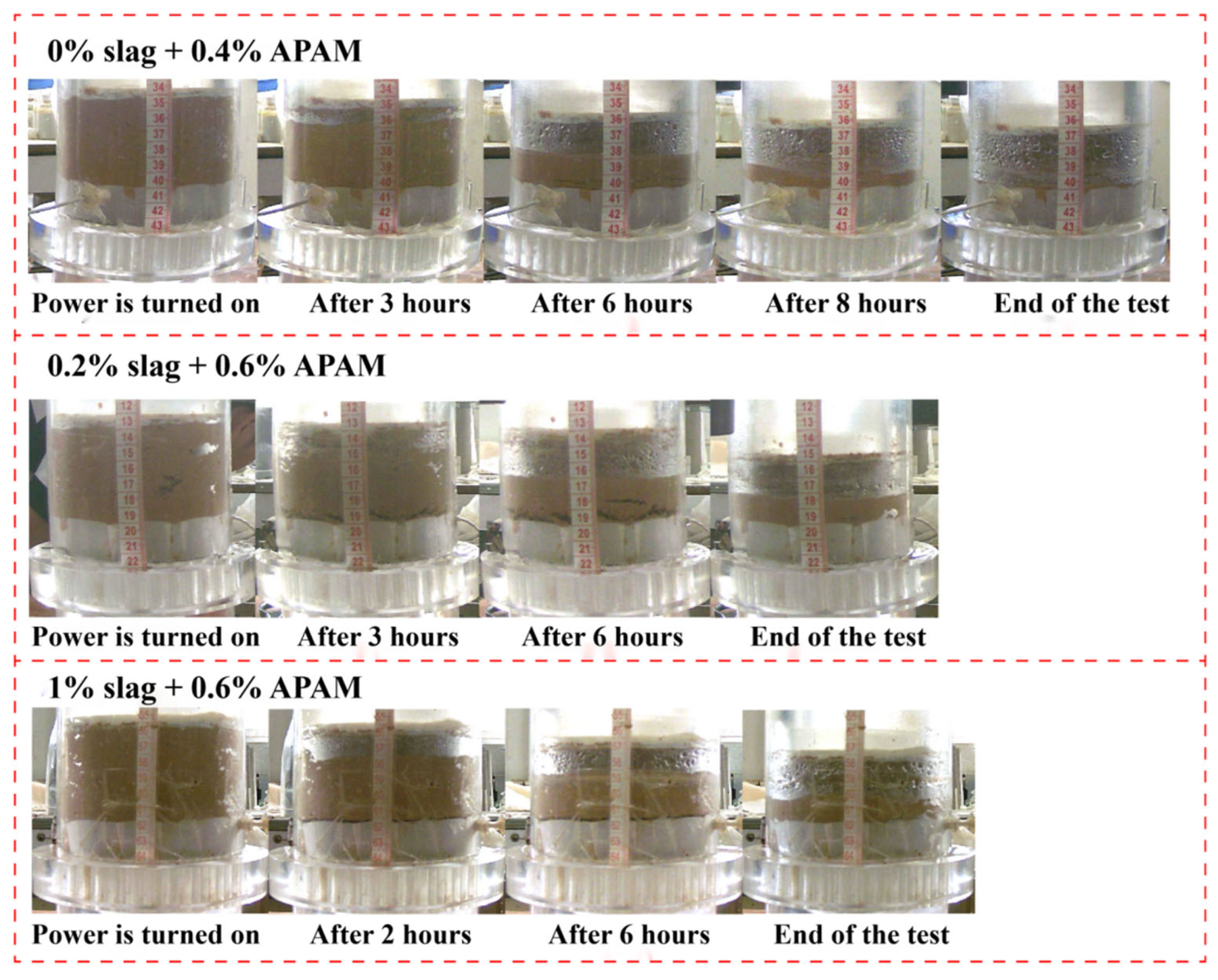
Pictures at different stages during the experiment were selected to verify the above analysis.
Figure 9 shows the electro-osmotic experiment process of the three groups with APAM addition. The phenomenon observed in all experimental groups was a stable water dissipation process, and no large-scale cracks developed in the main soil column, unlike in the groups with only slag addition. Water gradually receded starting from the cylinder wall, the height of the soil column decreased, and the soil consolidation degree increased steadily. The phenomenon of the first group in the figure was relatively stable, with water gradually dissipating over time. The main soil columns of the second and third groups maintained good integrity without cracks during the experiment. However, the water in the slurry adhering to the cylinder wall dissipated while part of the soil remained stuck to the wall, resulting in a “local tearing” phenomenon that was not caused by the reduction in moisture content of the soil column. The hydrogel-like polymer exerted a significant effect on the soil. APAM helped maintain the integrity of the soil mass, which was an advantage over the groups with only slag addition. Moreover, during rapid drainage, the adsorption effect of the polymer helped prevent the extensive development of cracks caused by the rapid decrease in moisture content.
In addition, according to Equation (1) [
43], the apparent electrical conductivity of the soil is proportional to its intrinsic electrical conductivity and effective cross-sectional area. When the APAM content is 0, extensive cracks form in the soil column. Longer and wider cracks reduce the effective cross-sectional area of the soil column, resulting in a substantial decrease in apparent electrical conductivity during crack development. For APAM contents of 0.4% and 0.6%, no cracks appear in the soil column, and the apparent conductance declines steadily. This is because electro-osmotic consolidation reduces the pore water content within the soil column. As the consolidation progresses, the moisture content of the specimen gradually decreases, which lowers the electrical conductivity of the soil column and consequently leads to a reduction in its apparent conductance.
The occurrence of the “local tearing” phenomenon was more obvious in the second and third groups under the combined action of slag and APAM and lasted longer than in the first group. As mentioned previously, the polymer adsorbs slag and its reaction products, which may reduce the integrity of the outer slurry after water dissipation on the cylinder wall. The polymer changed from mainly adsorbing bentonite particles to mainly adsorbing bentonite particles while partially adsorbing slag and its reaction products, which resulted in a more pronounced and longer-lasting “local tearing” phenomenon.
where
G = apparent conductance of soil column;
I = current in soil column;
U = voltage across both ends of the soil column;
σ = electrical conductivity of soil column;
S = effective cross-sectional area of soil column;
L = length of soil column specimen.
Toward the end of the electro-osmotic consolidation stage, the current in the soil gradually stabilized. The current with APAM addition was also lower than that of the pure bentonite group. A large amount of free water was discharged, and the hydrogel filled and coated soil particles while adsorbing ions in the soil, reducing current conduction paths. The hydrogel modified the soil structure to make it more uniform and decreased soil porosity. In some polymer-accumulated regions, hydrogel networks formed and even acted as insulating layers. These factors resulted in a significant reduction in current after APAM addition. In summary, APAM reduced the activity of water migration during the electro-osmotic consolidation stage. Moreover, the combined action of slag and APAM led to lower soil uniformity in the electro-osmotic consolidation stage for groups with slag addition, compared with the group containing only APAM.
As illustrated in
Figure 6 of
Section 3.1, the drainage rate gradually stabilizes over the secondary loading stage, signifying that drainage is almost terminated. After the electric field is applied to start the electro-osmosis stage, drainage rebounds sharply with a continuous rise in cumulative discharged volume. Meanwhile, total drainage volume and total energy consumption during electro-osmosis are quantified using measured data from
Figure 6 and
Figure 8, and the energy consumption per unit drainage volume is further calculated (
Table 2). The energy consumption of all test groups falls between 0.00047 and 0.00059 kWh/mL. Consequently, the FPE treatment technology presents prominent merits of low energy consumption, low carbon emission and high efficiency.
3.4. Temperature
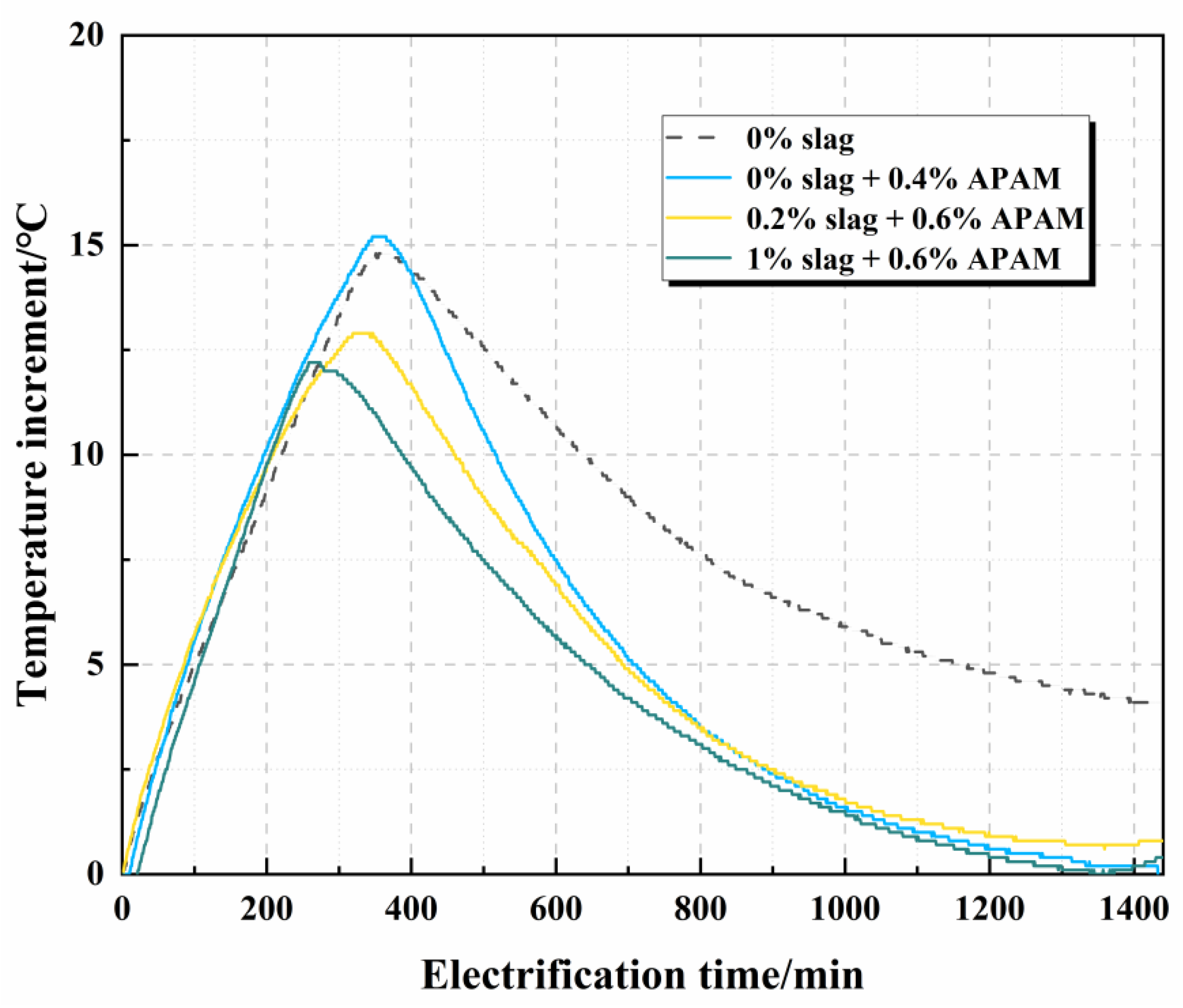
Joule heat generated by the electric current in the soil is the main reason for the rapid temperature rise. The temperature variation curve after APAM addition exhibits the same trend as that of the group with only slag addition, showing a process of rapid temperature rise followed by slow decline. During the rapid temperature rise stage, the peak temperature in the soil is lower after APAM addition, especially for the combination of 1% slag + 0.6% APAM, which presents the lowest peak temperature among all experimental groups. This is because the seepage channels formed by polymer adsorption are greatly weakened after the discharge of free water in the electro-osmotic stage, resulting in a rapid increase in apparent resistivity. A faster current decline after reaching the peak is also observed in the current curves. This also leads to a lower peak temperature and a faster temperature drop rate after APAM addition. The adsorption and coating effects of APAM hydrogel result in higher apparent resistivity in the soil after free water is gradually discharged. The Joule heat generated after the peak current is insufficient to maintain the internal temperature of the soil, causing the temperature to quickly approach room temperature. At the end of the experiment, the temperature variation inside the soil is even close to zero. In summary, the adsorption and coating effects of hydrogel on soil particles suppress the temperature rise inside the soil during the electro-osmotic consolidation stage. The temperature data during the electro-osmotic consolidation stage recorded by the paperless recorder were plotted as the temperature increment curve in
Figure 10.
3.5. Moisture Content
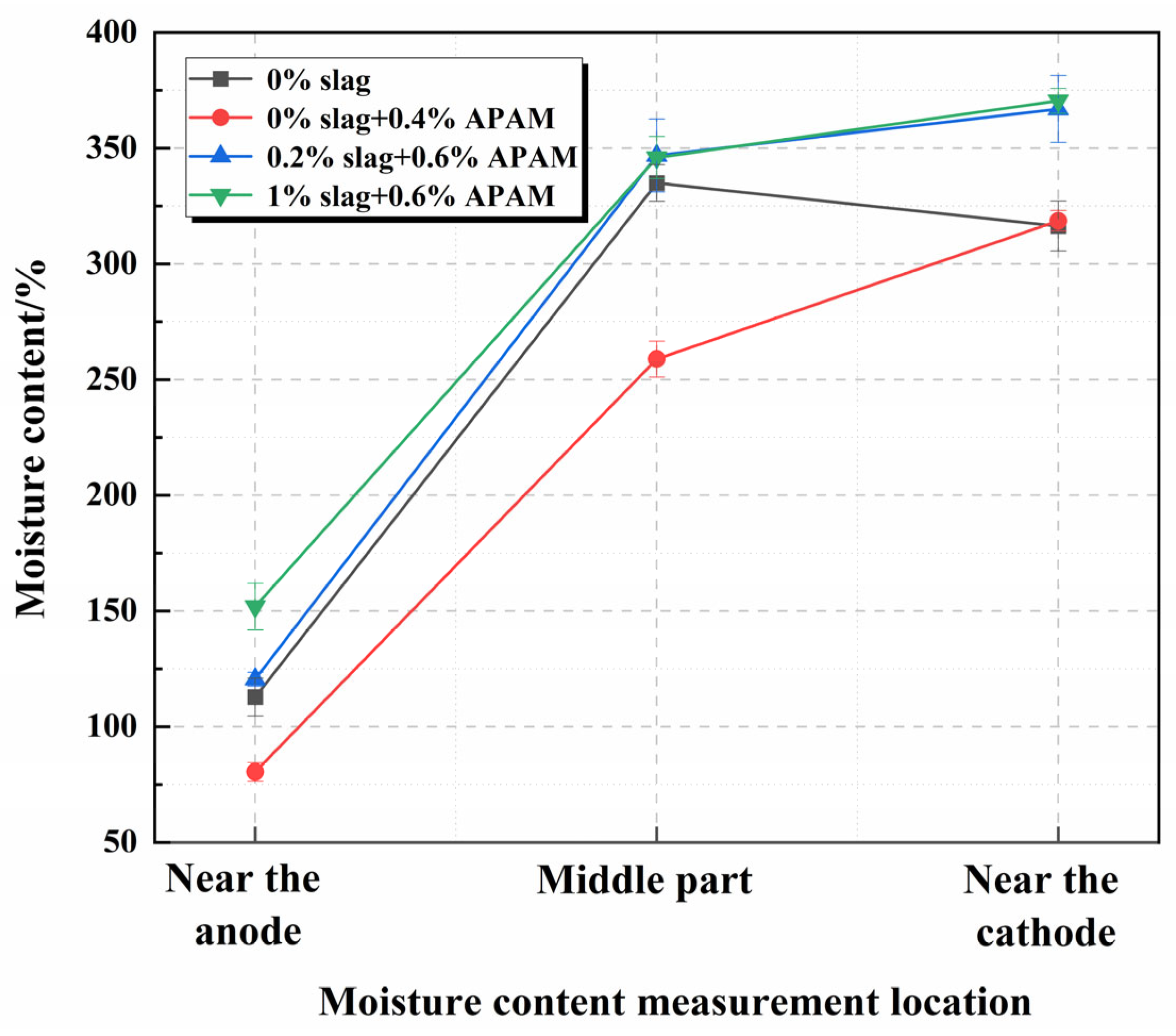
Compared with the initial moisture content of 700%, the moisture content of soil samples in all groups decreased remarkably after multi-stage consolidation and dewatering treatment. Since the direction of gravity was consistent with that of the applied electric field, pore water migrated directionally from the anode to the cathode and was discharged outwards. For the experimental group with 0% slag content group, the moisture content near the anode, in the middle part and near the cathode was 113%, 335% and 316%, respectively, showing an uneven distribution where the value at the anode was obviously lower than those in the middle and cathode regions, and the middle part had a slightly higher moisture content than the cathode. After the addition of 0.4% APAM, the moisture content increased gradually from the anode to the cathode, reaching 80%, 259% and 319% in sequence. In comparison, the moisture content at the anode and middle positions was further reduced, while that near the cathode remained almost unchanged. Similarly, the moisture contents at the three positions were 120%, 347% and 367% in the group with 0.2% slag plus 0.6% APAM, and 152%, 346% and 370% in the group with 1% slag plus 0.6% APAM. The moisture content of soil after the experiment under the combined action of slag and APAM is shown in
Figure 11.
It indicates that the hydration reaction of slag and the incorporation of polymers altered the internal soil structure. The adsorption and coating effects of polymers on soil particles optimized seepage paths, making water discharge driven by gravity or external surcharge more efficient and thus accelerating dewatering in the early and middle stages. The excessively fast drainage rate, together with the barrier effect of hydrogel formed by polymer adsorption among soil aggregates, led to a more uniform moisture distribution before electro-osmosis commenced in APAM-amended specimens than in groups with slag only. At the start of electro-osmotic dewatering, water was continuously drained out. The strong water adsorption capacity and flocculation effect of polymers changed the water migration law inside the soil. Meanwhile, APAM addition reduced the electric current within the soil, which weakened the activity of water migration. Consequently, the final moisture distribution of treated soil became more homogeneous. The experimental phenomena presented in
Figure 9 verified that the distinct water backflow observed in pure slag groups was effectively eliminated after APAM addition, and the water loss proceeded steadily throughout the electro-osmotic consolidation stage.
In conclusion, the incorporation of APAM modifies water migration characteristics and improves the uniformity of dewatering. Accordingly, the final moisture distribution pattern transforms from the original state of high moisture in the middle and low values at both ends into a gradual increasing trend from the anode to the cathode. Nevertheless, restricted by the relatively weak independent dewatering capacity of APAM, the overall difference in final soil moisture content is not significant compared with specimens without APAM addition.
3.6. pH
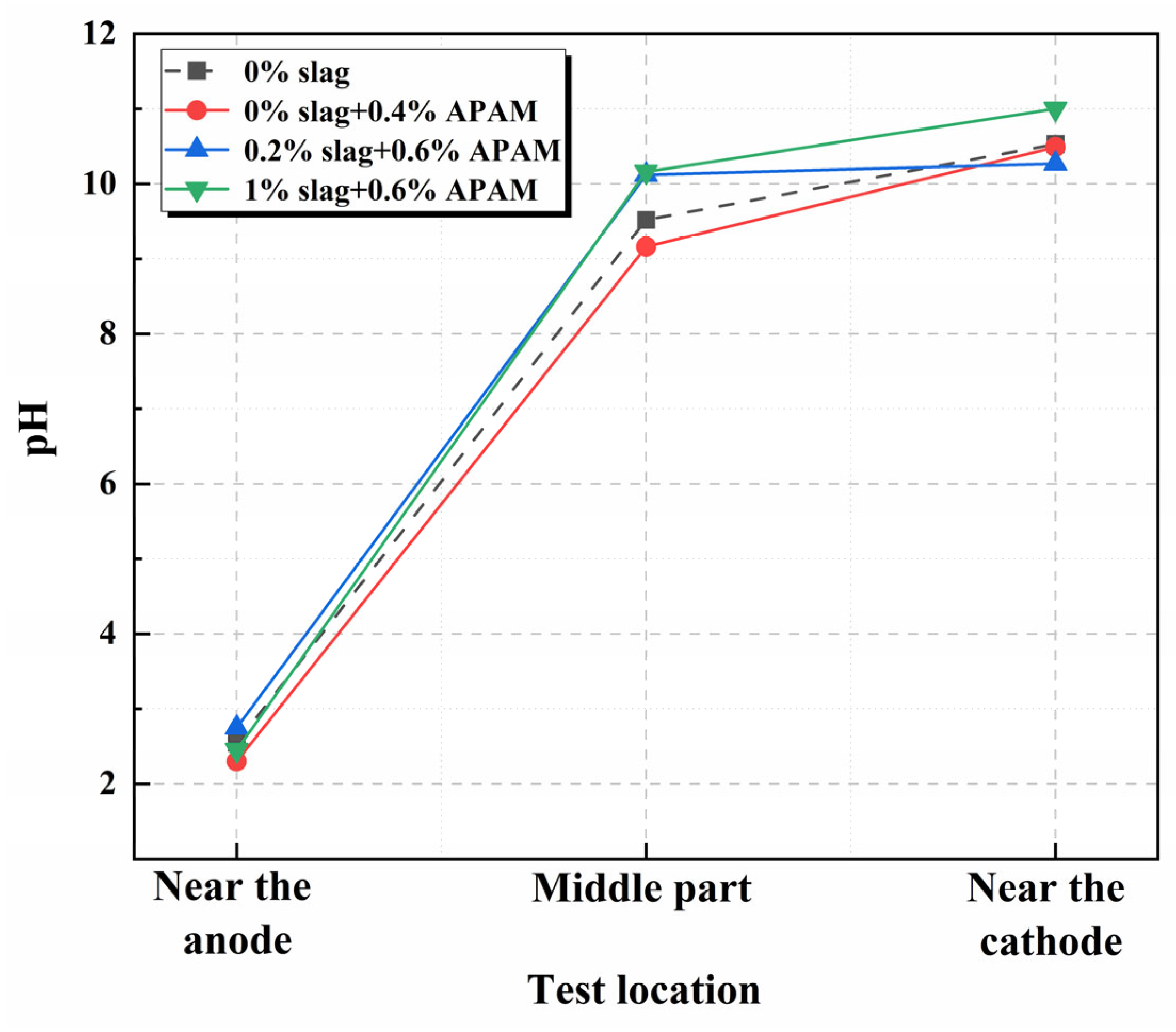
Under the action of a direct current electric field, the water oxidation reaction occurs at the anode to generate abundant hydrogen ions (H+), rendering the anode zone strongly acidic. A water reduction reaction takes place at the cathode to produce hydroxide ions (OH−), which makes the cathode zone strongly alkaline. Affected by the migration and neutralization of H+ and OH−, the pH value in the middle zone falls between those of the two electrode zones.
In the group with only slag added, the pH values at the anode, middle section and cathode were 2.55, 9.52 and 10.53, respectively, showing a typical pH gradient distribution characteristic of electro-osmosis. After adding 0.4% APAM, the corresponding pH values decreased to 2.3, 9.16 and 10.49. The pH variations in different experimental groups after the completion of experiments are shown in
Figure 12. As a macromolecular flocculant, APAM forms a hydrogel network inside the soil. On one hand, it restricts the free migration of ions in pore fluid via adsorption and coating effects and reduces the diffusion rate of H
+ and OH
−. On the other hand, the viscous effect of hydrogel enables hydrogen ions produced at the anode to accumulate near electrodes and hinders their migration toward the middle area, thus further lowering the anode pH value. Meanwhile, the migration of hydroxide ions generated at the cathode is also inhibited, resulting in a slight drop in pH values of the middle and cathode zones compared with the group without APAM.
The experimental groups of 0.2% slag + 0.6% APAM and 1% slag + 0.6% APAM reveal that the increase in slag dosage leads to a slight decline in anode pH and a mild rise in pH values of the middle and cathode zones. The main reason is that the accelerated hydration reaction of high-content slag consumes a large amount of pore water, which further densifies the APAM-formed hydrogel network and increases its viscosity. This condition restrains the diffusion of anode H+ toward the middle part, causing hydrogen ion accumulation and a slight local pH reduction. When the adsorption and buffering effect of the hydrogel on H+ reaches a certain level, the pH value presents a minor rebound. In addition, cations such as Ca2+ and Mg2+ contained in slag undergo cation exchange and flocculation with bentonite particles, which weakens the blocking effect of APAM on ion migration to a certain extent and facilitates the diffusion of cathode-generated OH− to the middle area. Consequently, the middle pH rises obviously with the increase in slag content (from 9.0 to 10.0 and further to 10.4), and the cathode pH also increases accordingly (from 10.2 to 10.6 and finally to 11.0).
In summary, regardless of the addition of slag or APAM, the anode pH values of all experimental groups remain within the strongly acidic range of 2.3~2.8, while the cathode pH values stay in the strongly alkaline range of 10.2~11.0. This demonstrates that the electrolysis reaction always dominates throughout the electro-osmosis process; hence, the overall variation range of pH values is relatively small.
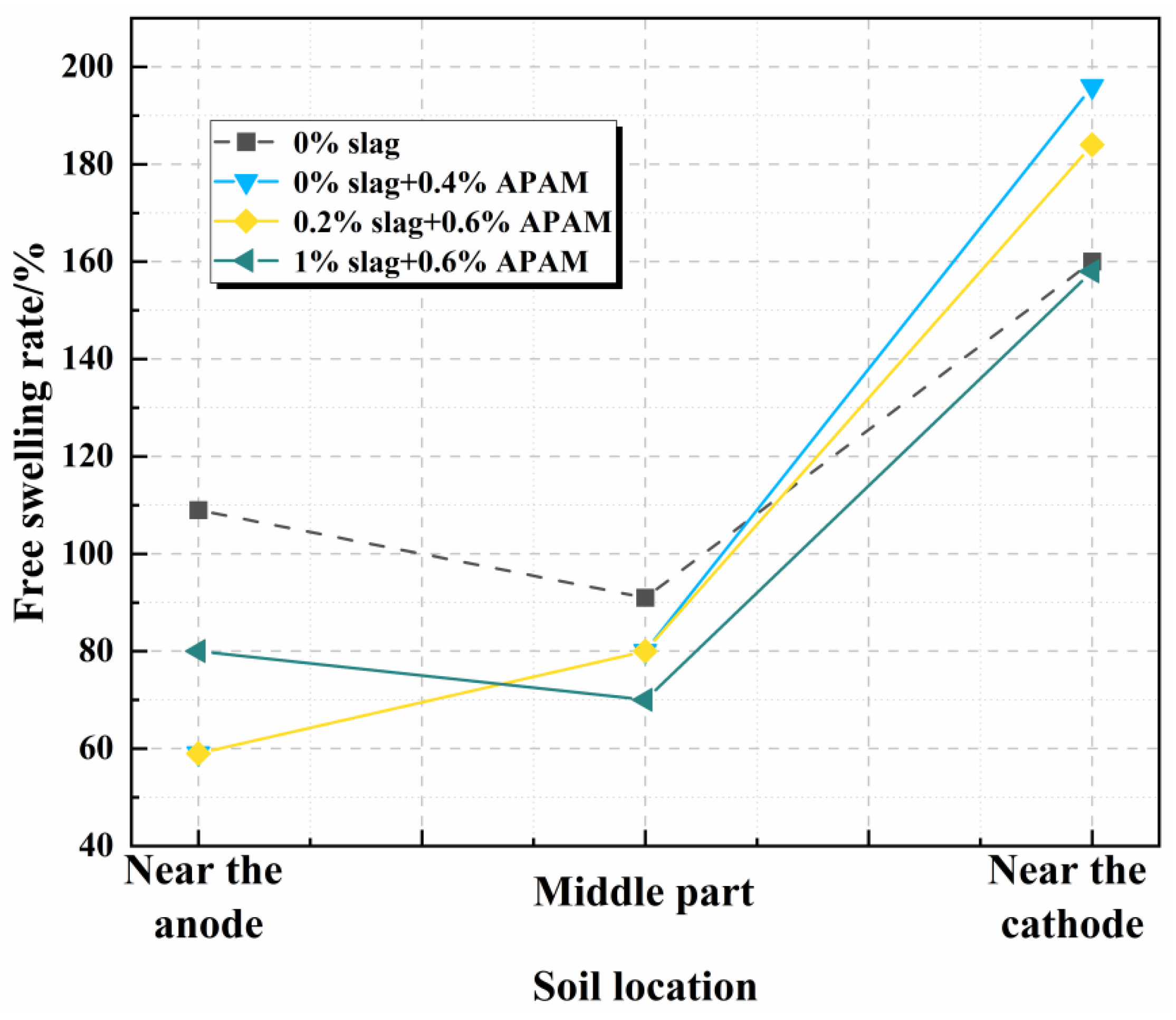
3.7. Free Swell Ratio
The free swell ratio at the anode and middle positions of the soil tends to decrease after APAM addition. During the electrification stage, positive charges near the anode attract negatively charged ions and APAM. Compared with the vicinity of the cathode, APAM is distributed more densely near the anode. In the free swell ratio experiment, this portion of APAM coats soil particles, resulting in a lower free swell ratio than in the pure bentonite and pure slag experimental groups.
However, a change in this trend occurs near the cathode, where the free swell ratio of the APAM-added groups becomes higher. This abnormal phenomenon is related to the non-uniform concentration distribution of APAM in the soil. Under the influence of the electric field, the APAM concentration near the cathode is lower than that near the anode. In the free swell ratio experiment, an appropriate amount of APAM hydrogel near the anode interacts with bentonite particles and increases the thickness of the electric double layer formed by bentonite [
38], resulting in a higher free swell ratio near the cathode after APAM addition. As shown in
Figure 13, the group with 0% slag + 0.4% APAM—which has the lowest APAM dosage—exhibits the highest free swell ratio near the cathode. The APAM concentration near the cathode in this group may be optimal, leading to a more significant increase in the thickness of the electric double layer of bentonite under the action of APAM after water absorption. In summary, the effect of APAM on the free swell ratio of the soil after the experiment is concentration-dependent. Near the cathode, an appropriate amount of APAM combined with a relatively low potential gradient causes only slight modification to the soil structure, resulting in an increase in the free swell ratio.
3.8. Shear Strength
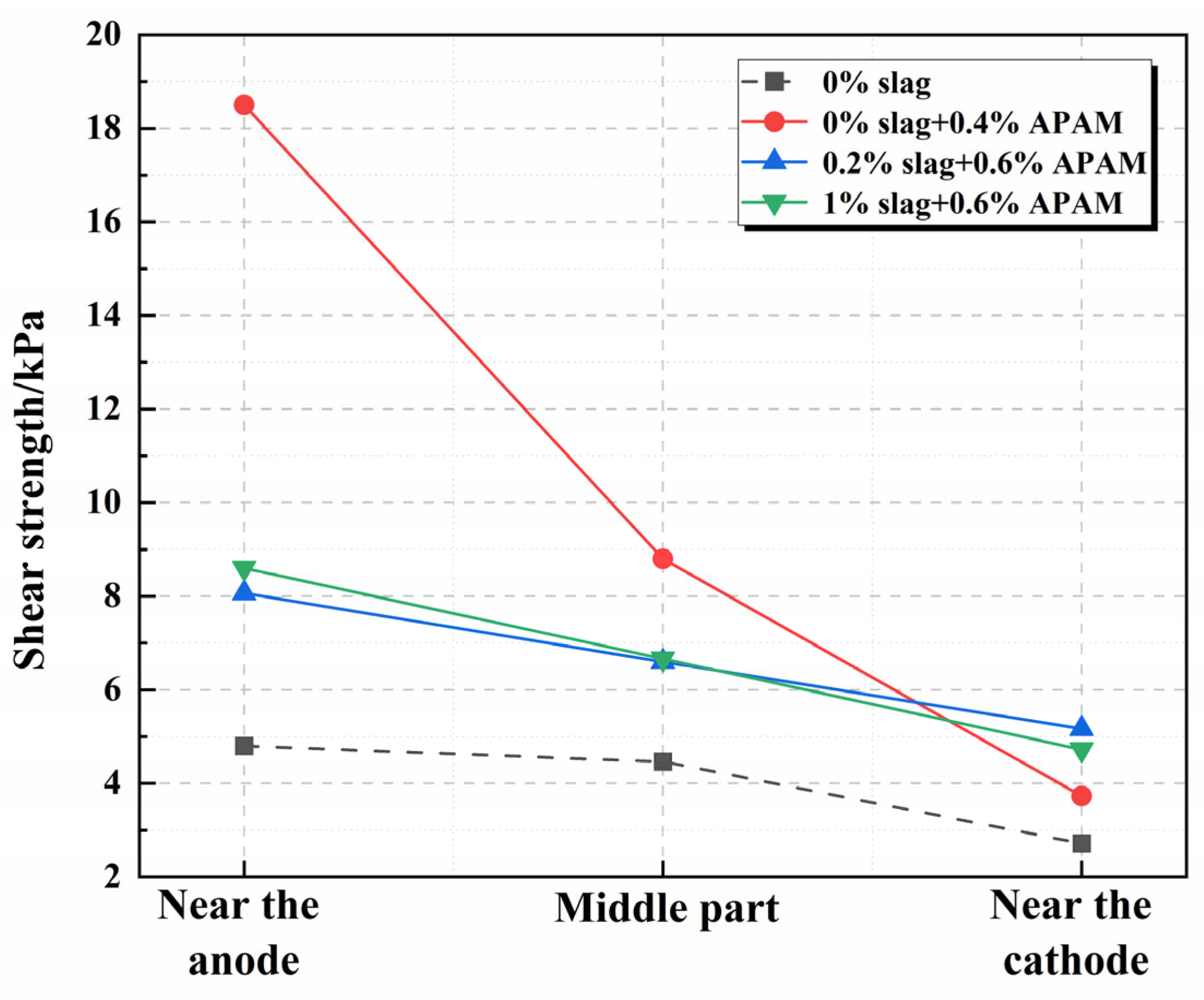
Shear strength is significantly increased after APAM addition and remains the highest at all positions. The agglomeration and adsorption effects of APAM play a key role. The cohesion provided by these effects functions during the shear strength experiment, resulting in a significant increase in soil strength after APAM incorporation. After the completion of the test, the shear strength at different positions of the soil column was measured, as shown in
Figure 14.
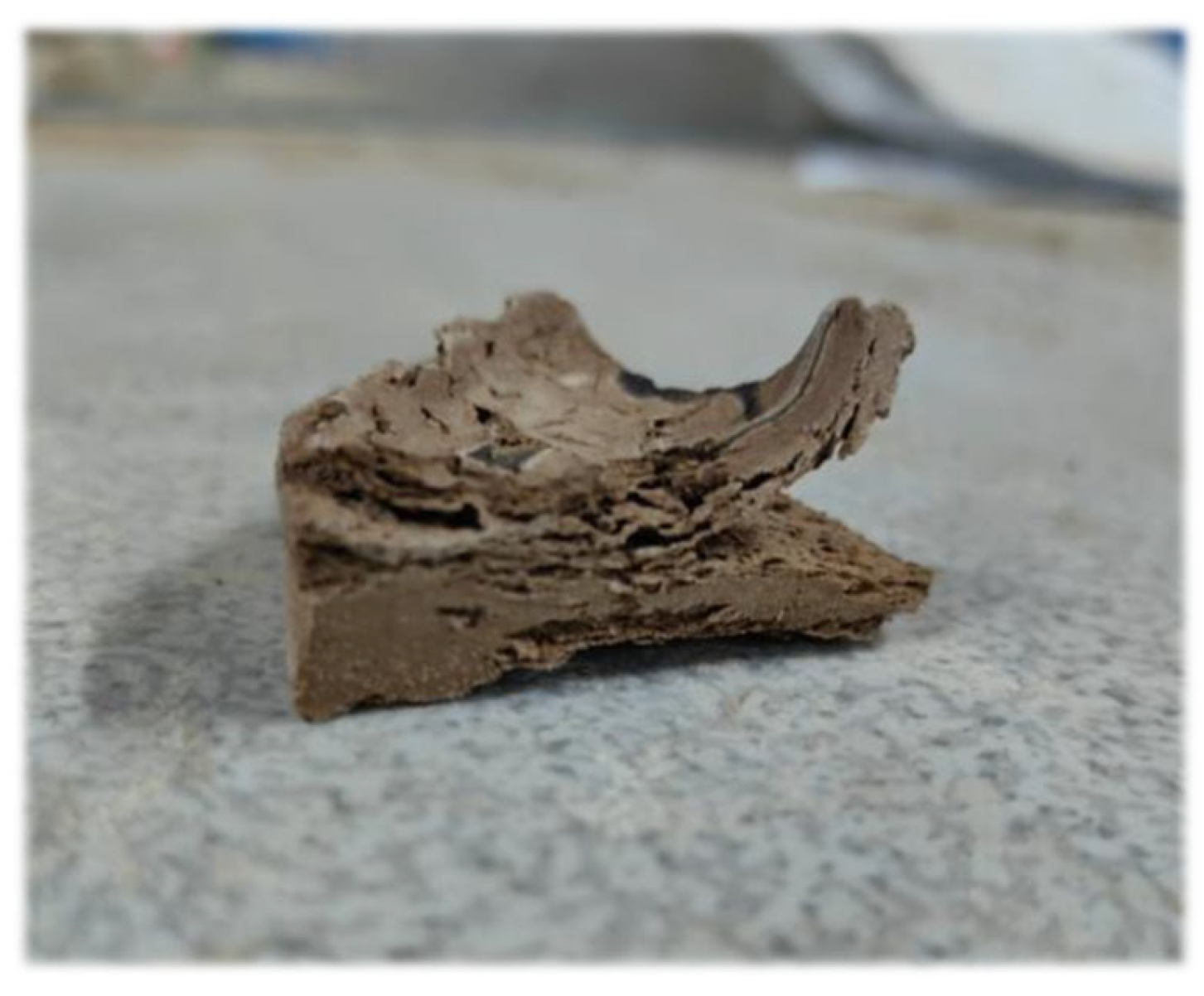
Figure 15 shows the soil sample near the anode of the 1% slag + 0.6% APAM group after oven drying. Due to the presence of APAM, the polymer bonds the dried soil particles together, and the favorable bonding performance even causes the soil to exhibit a warped state. In contrast, specimens without APAM addition appear as soil clumps after drying, without the formation of layered flakes or irregular shapes caused by bonding.
Figure 14 illustrates that the shear strength of soil decreases gradually from the anode to the cathode after polymer addition. The strength near the anode was higher because the substantial reduction in moisture content started from the anode. The lower moisture content near the anode resulted in a higher dry density and thus greater strength. In addition, the anode attracted negatively charged APAM, and the cementation effect of APAM was more pronounced under the low moisture content condition, leading to superior strength near the anode.
It can be seen from the moisture content distribution diagram that the experimental group with an APAM dosage of 0.6% had a higher moisture content after the experiment. Therefore, the improvement effect of hydrogel cementation on shear strength was inferior to that of the group with an APAM dosage of 0.4%. That is, the 0.2% slag + 0.6% APAM group and the 1% slag + 0.6% APAM group exhibited lower and more gradual shear strength. Moreover, the presence of slag did not strongly interact with APAM to reinforce the soil. Slag and its reaction products occupied the adsorption sites of APAM, affected the integrity of the soil, and even weakened the shear strength of the soil mass.
3.9. Liquid and Plastic Limits
The liquid limit refers to the critical moisture content at which soil changes from a plastic state to a flow state. When the soil moisture content reaches the liquid limit, the soil presents an extremely soft slurry state and can flow under slight external force. The plastic limit is the critical moisture content at which soil transforms from a semi-solid state to a plastic state. Soil begins to exhibit plasticity once its moisture content drops to the plastic limit.
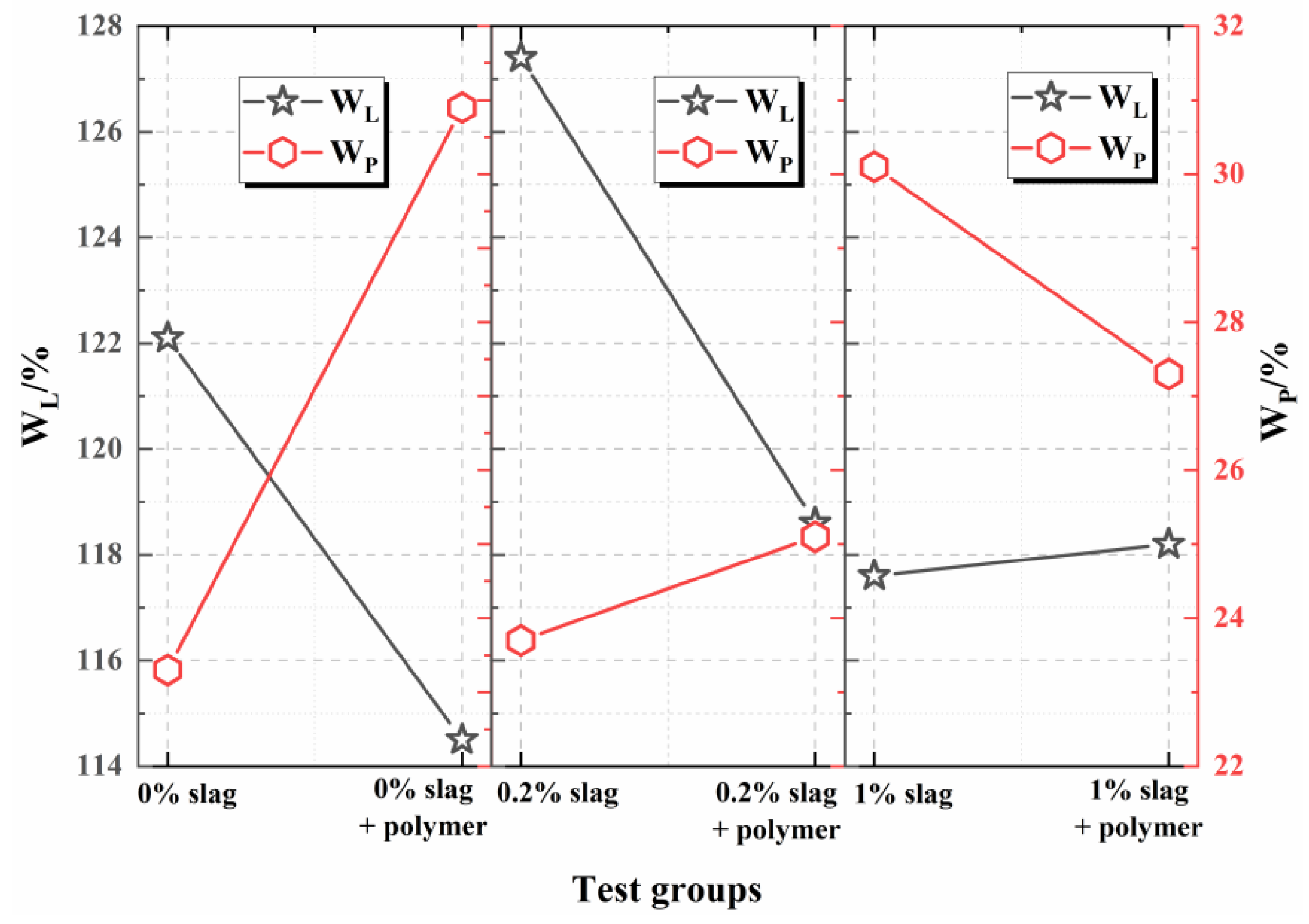
APAM exhibits strong adsorption. To a certain extent, such adsorption and coating effects render the soil hydrophobic, reduce water absorption, swelling behavior, frictional resistance, and viscosity of soil particles, and decrease the contact between water and bentonite particles. Except for the group with 1% slag content, the liquid limit and plasticity index of the soil decrease while the plastic limit increases after APAM addition. The liquid and plastic limits of bentonite under different slag contents and corresponding APAM polymer dosages are plotted in
Figure 16. This is different from the conclusion obtained by Chen et al. [
44] in experiments on sodium polyacrylate (PAAS)-modified bentonite. The incorporation of PAAS increased both the liquid limit and plastic limit of bentonite, showing good chemical compatibility with bentonite. This is mainly because the hydrophilicity of PAAS is significantly stronger than that of APAM, leading to different results in the boundary water content experiments. In summary, different organic polymer admixtures result in different modification effects on the properties of bentonite. The addition of APAM reduces the liquid limit and plasticity index of bentonite.
3.10. Microscopic Analysis
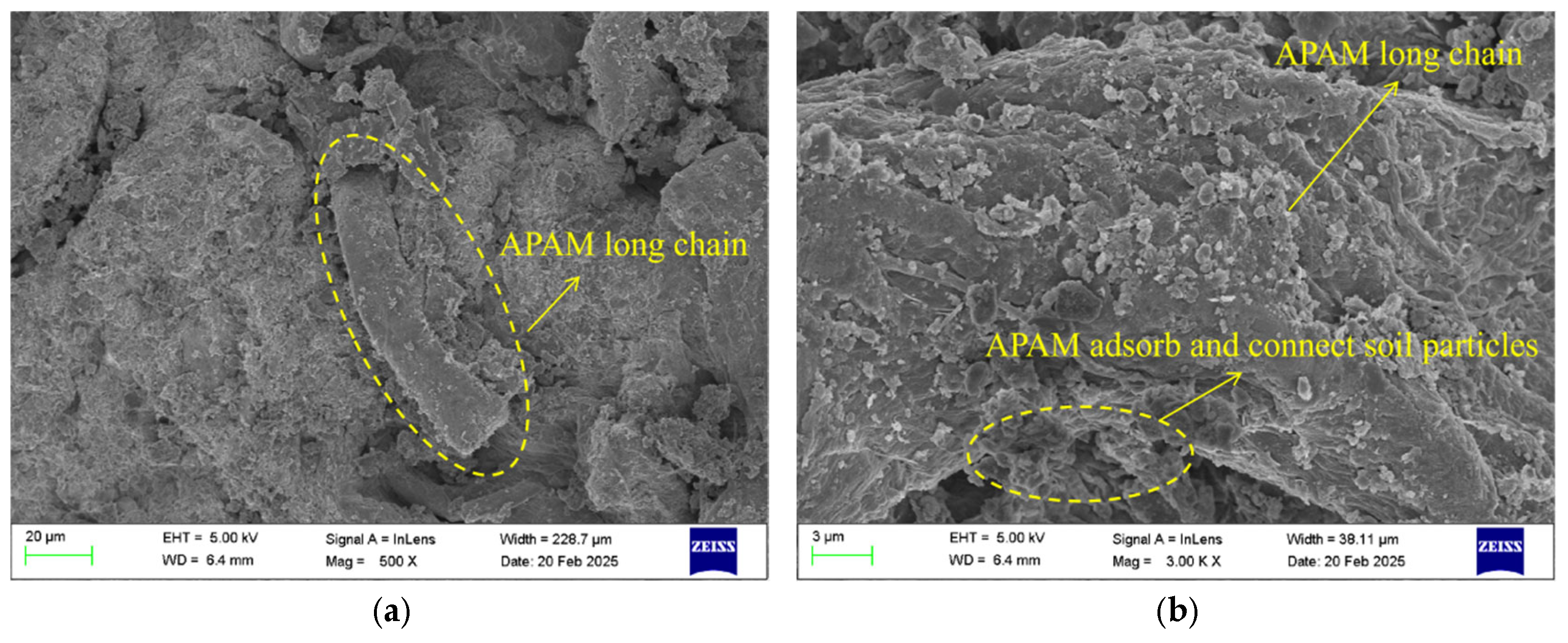
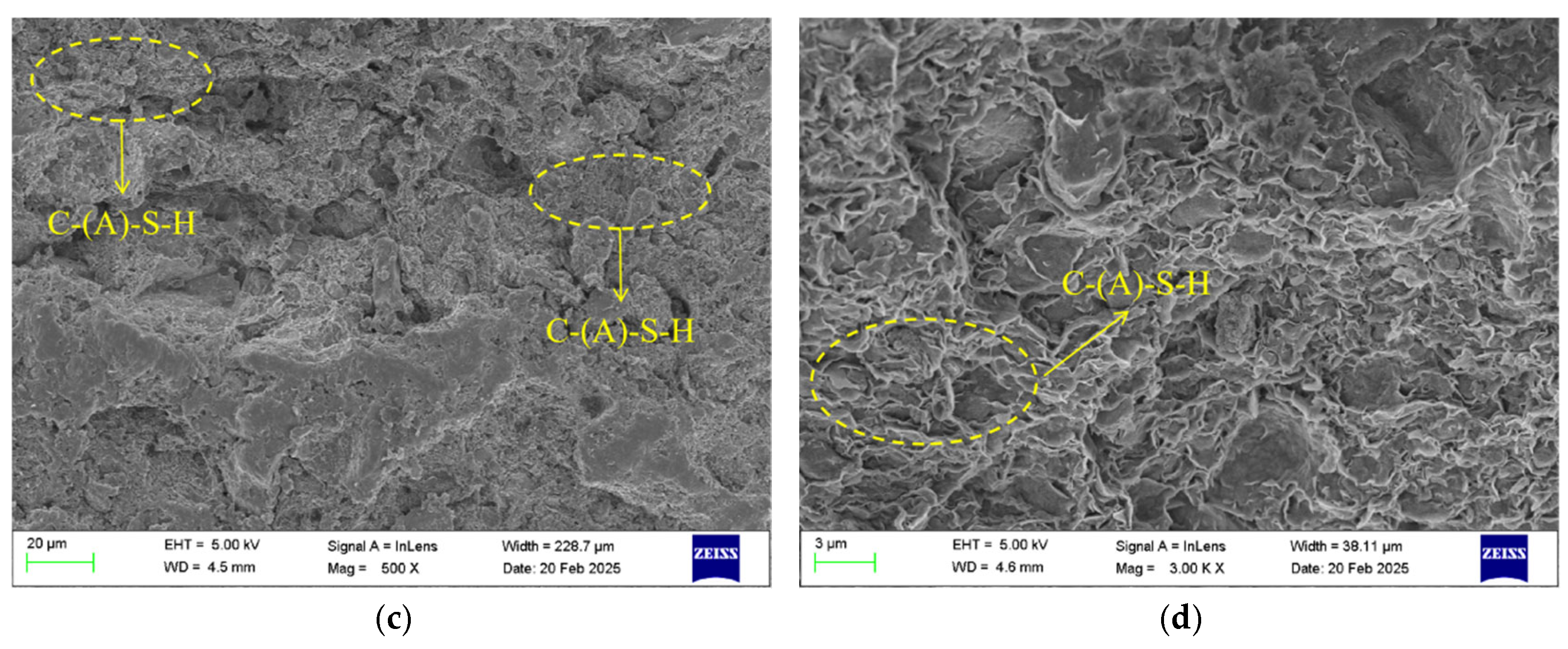
In this study, microscopic morphology experiments were conducted on the soil near the cathode in typical experimental groups, as shown in
Figure 17. In the group with only APAM addition, i.e.,
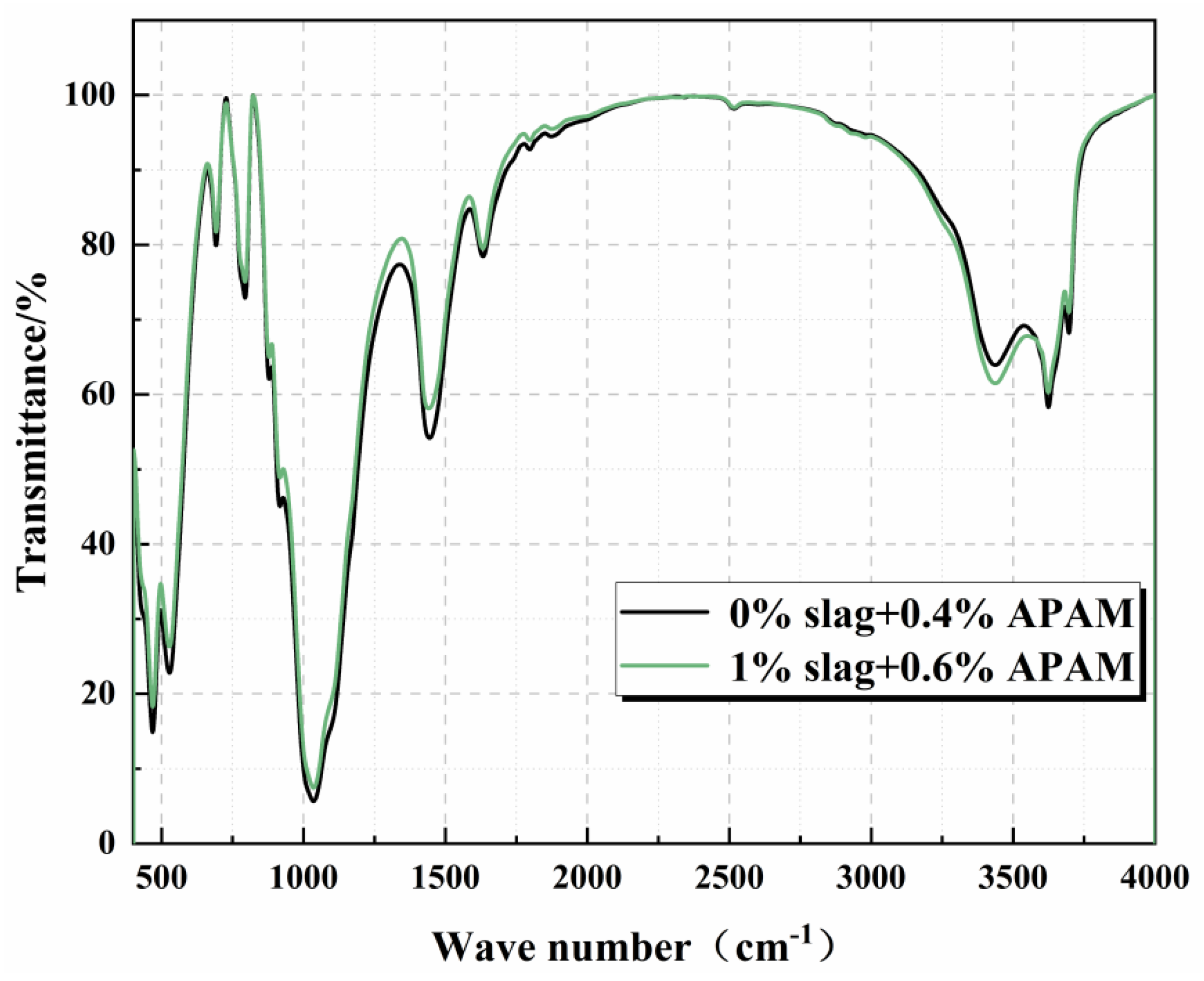
Figure 17a,b, long-chain APAM was observed. The APAM adsorbed soil particles and filled soil pores, resulting in improved strength compared with the pure bentonite group. When APAM and slag acted together, a large amount of flocculent cementitious products was observed on the surface of soil particles near the cathode. No chain-like APAM was visible on the surface due to the wrapping of these cementitious products. Owing to the presence of cementitious products, the soil strength near the cathode was slightly higher than that of the group with only APAM addition. At the same time, soil pores in the micromorphology images were reduced, and obvious stacking of cementitious products can be seen in the 3.00KX image. The low transmittance near 1035 cm
−1 in
Figure 18 is caused by the asymmetric stretching vibration of Si-O-T (T represents Si or Al). Meanwhile, the transmittance near this vibration band changed slightly in the experimental groups with slag addition, as the formation of C-(A)-S-H affected the vibration signal in this region.
4. Conclusions
This study employs the high-molecular organic flocculant APAM to compensate for the insufficient drainage and consolidation performance in the early stage, combined with the excellent solidification effect of slag, attempting to achieve both effective drainage and consolidation of high-water-content bentonite slurry and the solidification of bentonite.
The adsorption of bentonite particles by the polymer increases the seepage channels in the soil slurry, allowing water to be discharged more easily under self-weight, pressure, or an electric field. However, APAM only increases the permeability coefficient of the soil and accelerates the drainage and settlement rate through its adsorption and agglomeration effects, without significantly increasing the total drainage volume and settlement of the slurry.
In addition to its impact on drainage and settlement, the aggregation and adsorption effects of polymer hydrogels on soil can also homogenize the distribution of soil moisture content. The moisture content of the soil column increases gradually from the anode to the cathode, while the shear strength decreases from the anode to the cathode. Furthermore, such adsorptive cementation effect increases the shear strength of the soil and eliminates visible cracks in the soil column during the electro-osmotic consolidation stage (the shear strength near the cathode increased by about 37.1%).
Regarding the variation in current and temperature during the electro-osmotic process, the current rose faster initially due to the temporary increase in seepage channels. However, after most free water was discharged, the coating of soil particles and slag by the polymer increased the apparent resistivity of the soil, reducing both the current and temperature during the electro-osmotic consolidation stage (during electro-osmotic consolidation, the addition of APAM leads to a maximum reduction of approximately 120mA in electric current, and the temperature decreased by 4.5 °C). Notably, the combined effect of slag and APAM showed a poor improvement in soil consolidation.
Apart from the aforementioned effects, different concentrations of APAM may exert different influences on the free swell ratio of the soil: an appropriate amount of APAM increases the thickness of the electric double layer of bentonite, thereby raising the free swell ratio, while excessive APAM hydrogel coats soil particles and restricts free swelling. It is also worth noting that the addition of APAM causes little change in the pH value of the soil environment after the experiment (the fluctuation range is between 0.04 and 0.36).
Finally, from the perspective of microstructural characteristics, the coating and lubricating effects of hydrogel reduce the water-holding capacity of bentonite. Specifically, chain-shaped APAM and flocculent C-(A)-S-H cementitious products cementing and filling soil particles were observed in the microanalysis.
The above experimental results show that APAM does improve the early-stage consolidation efficiency but has no significant effect on enhancing the overall consolidation performance of the experiment. APAM effectively increases the uniformity and integrity of the soil, yet its combined effect with slag on bentonite consolidation is relatively poor.