1. Introduction
Additive manufacturing has significantly expanded the design space of engineering components by enabling the fabrication of geometrically complex structures that are difficult or impossible to obtain through conventional manufacturing processes. Among these, architected and lattice materials have attracted increasing attention because their mechanical response can be tailored not only through the properties of the base material but also through the design of the internal architecture [
1,
2,
3]. By controlling cell geometry, porosity, ligament thickness and feature size, it is possible to obtain lightweight structures with specific stiffness, energy absorption, deformation or auxetic behaviour [
4,
5,
6,
7]. Most research on additively manufactured lattice and architected materials has focused on the direct fabrication of three-dimensional components and on the characterization of their mechanical performance. Maconachie et al. [
8] reviewed the design, fabrication, and mechanical performance of SLM lattice structures, highlighting the role of relative density, unit-cell topology and manufacturing-related defects. Yin et al. [
9] focused on lattice structures for energy absorption, showing that their response has mainly been investigated under compression, impact and other mechanical loading conditions. Ushijima et al. [
10] combined analytical modelling, FEM and compression tests to investigate the stiffness and plastic collapse strength of stainless-steel micro-lattice structures. Hanks et al. [
11] compiled mechanical property data from the literature to compare different unit-cell topologies in terms of elastic modulus, Poisson’s ratio, yield strength, buckling strength and plateau strength. More recently, Liu et al. [
12] reviewed the main factors affecting the mechanical properties of additively manufactured lattice structures, including material, loading direction, gradient design and hybrid topology.
Overall, these works provide important design criteria for selecting lattice topologies and tailoring their mechanical response. However, they mainly address lattice structures as final load-bearing or energy-absorbing components rather than as semi-finished blanks intended for subsequent forming operations. The direct printing of complex three-dimensional geometries may also introduce several practical limitations, including long production times, anisotropic mechanical properties, limited surface quality, and the need for support structures in overhanging or concave regions. These issues become particularly relevant when cup-like or shell-like components are considered. An alternative manufacturing strategy could therefore consist of producing flat architected blanks by additive manufacturing and subsequently shaping them through conventional forming processes.
Deep drawing is a well-established sheet metal forming process used to transform flat blanks into cup-shaped components. In conventional metallic sheets, drawability is mainly governed by material ductility, thickness, friction, blank-holder force and drawing ratio [
13,
14,
15,
16]. In this context, additive manufacturing has already been explored as an enabling technology for sheet-forming applications, especially within rapid tooling strategies. Schuh et al. [
17] investigated additively manufactured polymer tools for sheet metal forming, showing their potential for flexible and cost-effective prototype tooling, while also highlighting deformation and dimensional accuracy limitations under forming loads. Bergweiler et al. [
18] specifically analyzed the dimensional precision of deep-drawn cups produced using direct polymer additive tooling, demonstrating the feasibility of FFF tools made of PLA and carbon-fibre-reinforced PA, but also showing that tool deformation and compensation allowances strongly affect cup accuracy. Giorleo and Ceretti [
19] evaluated FFF-produced punches for deep drawing applications and reported that polymeric punches can successfully form aluminum and steel blanks under selected conditions, although radial displacement and elastic deformation of the punch may lead to dimensional deviations and, in more severe cases, reduced drawability. More recently, Ge et al. [
20] reviewed hybrid additive manufacturing–sheet forming processes and identified AM–deep drawing as a promising route for producing complex components, mainly through the fabrication of tools, local reinforcements, or functional features.
Overall, these studies demonstrate that additive manufacturing can effectively support deep drawing by reducing tooling lead time and cost, particularly for prototyping and low-volume production. However, in most cases, additive manufacturing has been used to fabricate the forming tools or additional functional features, while the blank itself remained a conventional continuous sheet. Conversely, when the blank is an additively manufactured architected composite disc, the forming response is expected to be strongly influenced by the internal geometry. In this case, deformation is not controlled only by the constitutive behaviour of the material. Architecture-dependent mechanisms also play a key role, including ligament stretching, cell rotation, local bending, pore opening/closure and stress redistribution across the infill pattern. Despite the growing interest in architected materials, the formability of additively manufactured lattice or perforated composite blanks remains poorly understood. Furthermore, the influence of feature size within a given architecture, such as the hole diameter in perforated designs, has not been systematically related to retained cup height, elastic recovery and local distortion after forming. This lack of knowledge limits the possibility of designing additively manufactured semi-finished blanks specifically intended for subsequent forming operations.
The central hypothesis of this work is that the deep drawability of additively manufactured composite architected discs is governed not only by material volume or porosity, but by the ability of the infill architecture to accommodate and redistribute deformation during forming. To investigate this hypothesis, a two-step experimental and numerical study was carried out. First, four infill strategies, namely perforated body, re-entrant, square and triangular, were compared at different imposed drawing depths. Based on this preliminary screening, the perforated body architecture was selected for a second campaign, in which the hole diameter was systematically varied. Experimental tests were combined with FEM simulations to interpret the observed behaviour in terms of deformation mode, stress redistribution, punch load, forming energy and strain path.
The aim of the study is to assess the feasibility of using additively manufactured composite-architected discs as formable semi-finished blanks and to identify the main geometric parameters controlling their deep-drawing response. The results provide design-oriented insights for the development of printed architected blanks that can be subsequently shaped by forming processes, opening a possible route toward hybrid additive–forming manufacturing strategies for lightweight cup-like components.
2. Materials and Methods
The experimental and numerical methodology was designed to evaluate the influence of infill architecture and feature size on the deep drawability of additively manufactured composite discs. The work was organized into two complementary experimental campaigns. In the first campaign, different infill strategies were compared under identical forming conditions in order to assess the role of the global architecture on the ability of the disc to undergo deep drawing without macroscopic failure. In the second campaign, the most promising architecture was further investigated by varying the characteristic feature size, namely the hole diameter, to analyze its effect on cup height retention, elastic recovery and local hole deformation.
2.1. Blank Design, Manufacturing and Experimental Procedure
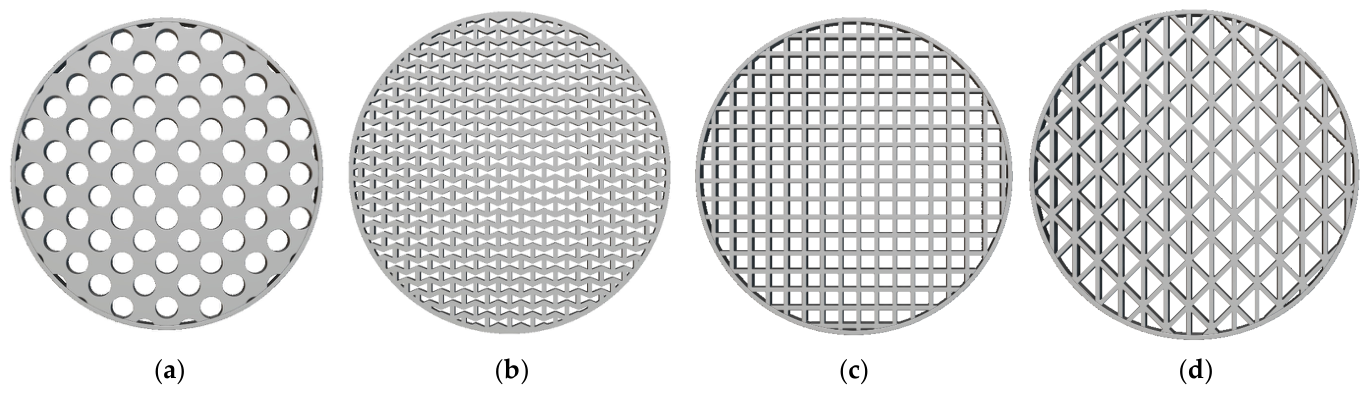
The specimens investigated in this study were designed as flat circular composite discs with an external diameter of 70 mm and a nominal thickness of 1 mm. This geometry was selected to produce disc-shaped blanks suitable for subsequent deep drawing tests. All blanks included a continuous external rim with a width of 2 mm, while the internal region was modified according to the selected infill architecture. The first design campaign was aimed at comparing different infill strategies while maintaining comparable material volume and porosity. Four architectures were investigated: perforated body, re-entrant, square and triangular, as shown in
Figure 1. The design parameters used to generate the different geometries are reported in
Table 1. The infill geometries were generated using nTop, and the cell dimensions were adjusted in order to obtain similar porosity values among the configurations. This design choice was adopted to reduce the influence of material volume and to focus the comparison on the effect of the internal architecture on drawability.
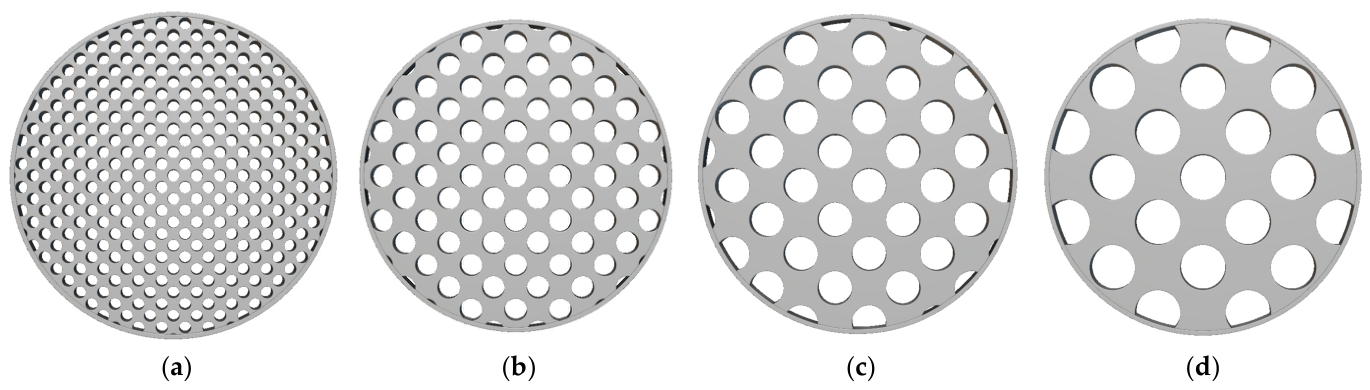
Based on the outcome of the first campaign, a second set of specimens was designed by focusing on the perforated body architecture. In this case, the general disc geometry and the external rim were kept unchanged, while the hole diameter was varied to investigate the effect of feature size on the forming response. Four hole diameters were considered: 2.5 mm, 5 mm, 7.5 mm and 10 mm, as shown in
Figure 2. This second campaign was intended to clarify how the characteristic size of the perforations affects cup height retention, elastic recovery and local deformation of the holes after drawing.
The specimens were manufactured using a Mark Two material extrusion system (Markforged, Watertown, MA, USA). The selected material was Onyx (Markforged), a nylon-based thermoplastic reinforced with chopped carbon fibres. Since the material is processed by material extrusion, the chopped carbon fibres may preferentially align along the deposition path during printing. As a result, the printed blanks can exhibit anisotropic mechanical behaviour related to raster orientation, fibre alignment and interlayer bonding. In the present work, the toolpath strategy was kept constant for all specimens. In particular, a raster orientation of +45° was adopted for one layer and −45° for the following layer, alternating this sequence throughout the thickness of the blank. The material properties provided by the manufacturer and the main printing parameters used for specimen production are summarized in
Table 2. The extrusion temperature was set to 275 °C, while no active heating was applied to the build plate. A layer height of 0.1 mm and a 0.4 mm nozzle were used for all specimens, in order to ensure consistent printing conditions throughout the experimental campaign.
The deep drawing tests were carried out using an EVL/400 A hydraulic press (Galdabini, Varese, Italy). The punch speed was kept constant at 1 mm/s, while the maximum press load was set to 180 kN. The blank-holder load was fixed at 1 kN, according to industrial practice, and the punch–die clearance was set to 1.1 mm, consistent with the nominal blank thickness. For the infill strategy campaign, three replicas were produced and tested for each architecture at two imposed drawing depths, namely 10 mm and 20 mm. The same forming depths were adopted in the perforated body campaign to evaluate the effect of hole diameter.
After forming, the specimens were inspected to classify the drawing outcome. A specimen was classified as successfully drawn when the cup maintained its structural continuity after unloading, without visible through-thickness cracks, tearing, or ligament rupture. Conversely, a specimen was classified as failed when macroscopic crack initiation, tearing, through-thickness rupture of one or more ligaments, or loss of structural continuity of the cup was observed. Local elastic recovery, moderate hole distortion or local ovalization were not considered as failure unless associated with visible fracture or loss of integrity. For the perforated body campaign, additional dimensional measurements were performed using a mechanical calliper with a resolution of 0.01 mm. The retained cup height was measured after unloading to evaluate the actual drawn geometry and the effect of elastic recovery. Moreover, the deformation of the holes located along the lateral wall of the cup was quantified by measuring the maximum and minimum diameters of five representative holes for each specimen. The side-hole aspect ratio was then calculated as the ratio between the maximum and minimum measured diameters. The measured data were analyzed statistically to determine whether the investigated responses were significantly affected by the design parameters. Analysis of variance was used to evaluate the significance of hole diameter and imposed drawing depth, while Tukey’s test was adopted to identify statistically different groups among the tested conditions. Interval plots were also used to support the interpretation of the experimental trends.
2.2. FEM Modelling
The numerical simulations were carried out using the commercial finite element software DEFORM-3D V14 (SFTC, Columbus, OH, USA). The FEM analysis was not intended to directly predict fracture initiation, since no calibrated damage or interlayer delamination model was implemented. Instead, the simulations were used as an interpretative tool to compare the deformation modes, stress redistribution, punch load, forming energy and strain paths associated with the different infill architectures and perforated-body configurations.
The blank material was modelled as an isotropic elastic–plastic material. This assumption should be considered a first-order approximation of the printed composite material. The isotropic material model was adopted to compare architecture-dependent deformation trends under consistent assumptions. It was not intended to provide a fully predictive description of the local mechanical response of the printed composite. This simplification may affect the prediction of local stress concentrations, strain localization, and failure initiation, especially in ligaments whose orientation differs from the principal deposition directions. For this reason, the numerical results were interpreted as qualitative and comparative indicators of the deformation mechanisms, while the explicit influence of fibre alignment, raster orientation and interlayer anisotropy will be addressed in future work. The elastic behaviour was defined by a Young’s modulus of 1248 MPa and a Poisson’s ratio of 0.48, according to tensile data reported in the literature for nylon filled with carbon short fibres [
22]. This Young’s modulus differs from the nominal tensile modulus reported in
Table 2, which corresponds to the commercial datasheet value provided by the material supplier. The value from Ref. [
22] was selected for the FEM model because it was obtained from experimental tests on printed specimens and was therefore considered more representative of the actual mechanical response of the material after material extrusion. The plastic behaviour was implemented starting from an engineering stress–strain curve obtained from the same reference [
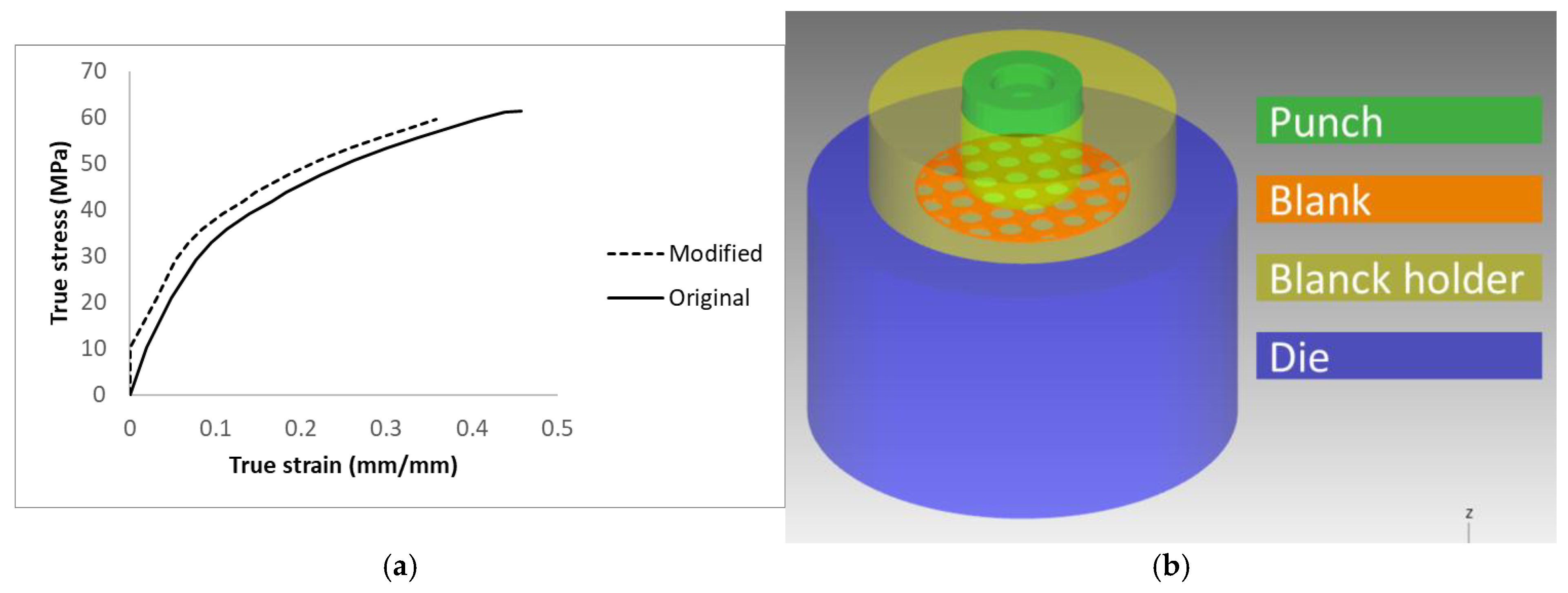
22]. The curve was first digitized to extract engineering stress–strain data, which were then converted into true stress–true strain using standard logarithmic relationships. Subsequently, the elastic contribution was removed using the selected Young’s modulus in order to obtain the true plastic strain. The resulting flow curve was truncated before the onset of severe necking to improve numerical stability and was finally implemented in DEFORM as true stress versus effective plastic strain. The original stress–strain curve and the flow curve used as material input are reported in
Figure 3a.
The numerical model reproduced the experimental deep drawing setup. The blank was modelled as a deformable body, while the punch, die, and blank holder were considered rigid bodies, consistent with their steel construction and their significantly higher stiffness compared with the polymer composite blank.
Figure 3b shows the simulation setup for the perforated body configuration. A Coulomb friction coefficient of 0.1 was imposed at the contact interfaces between the blank and the forming tools. The die and blank holder were kept fixed, whereas the punch was assigned a vertical velocity of 1 mm/s, matching the experimental forming condition.
The simulations were carried out using an explicit time discretization of 0.1 s per step. A total of 200 steps was simulated, corresponding to a maximum punch displacement of 20 mm. This discretization was selected after preliminary numerical trials as a compromise between solution stability, computational time and convergence of the main forming outputs. The blanks were discretized using a tetrahedral mesh with a minimum element size of 0.5 mm. The same meshing strategy was adopted for all investigated geometries in order to ensure a consistent comparison among the different infill configurations.
It should be noted that a direct quantitative validation of the numerical model was not possible in the present study. The experimental press used for the forming tests was not equipped with a data acquisition system for recording punch force or forming energy during the process. Moreover, the simulations were stopped at the imposed punch displacement, with the punch still in contact with the cup, whereas the experimental measurements of cup height and local distortion were performed after unloading. Therefore, the numerical model could not directly reproduce the elastic recovery occurring after punch removal, which significantly affects the final experimental geometry. For these reasons, the FEM results were used only as qualitative and comparative indicators to interpret the architecture-dependent deformation trends leading to successful forming or macroscopic failure.
To fulfil this aim, different numerical outputs were extracted depending on the objective of each campaign. For the infill strategy campaign, the FEM analysis was used to interpret the different failure tendencies observed experimentally. For this purpose, displacement maps were analyzed to compare the global deformation mode of the cups, while two-colour mean stress maps were used to distinguish tensile-dominated and compression-dominated regions. In addition, the maximum tensile and compressive values of the mean stress were extracted to compare the severity of the stress state among the different architectures.
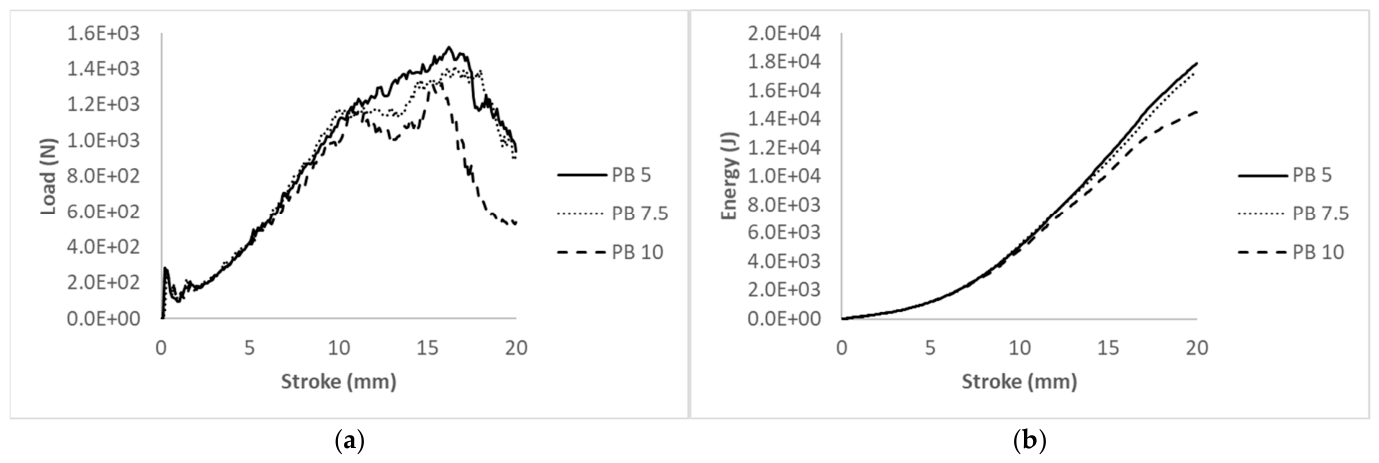
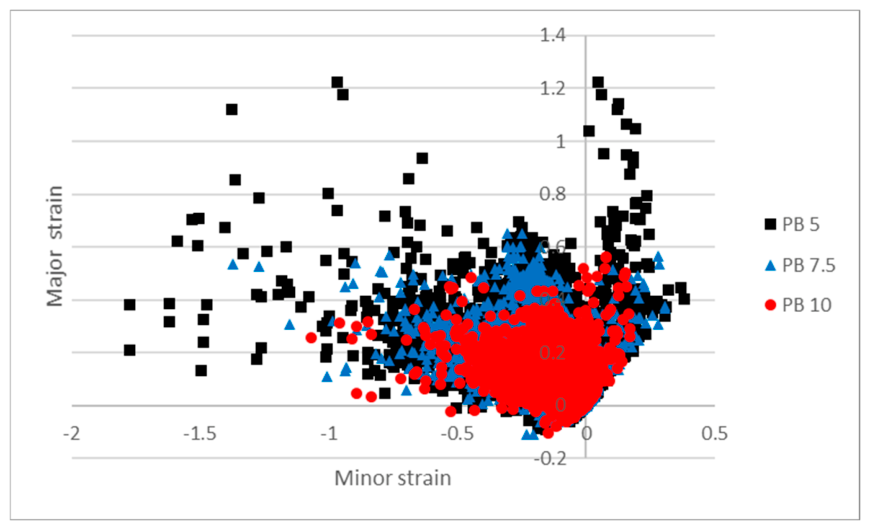
For the perforated-body campaign, the FEM analysis was focused on understanding how the hole diameter affects the forming response. In this case, the punch load and forming energy were extracted to compare the mechanical resistance and energy demand of the different perforated configurations. Moreover, forming limit diagrams were generated from the simulated strain states to evaluate the influence of the hole diameter on the strain path and localization tendency during deep drawing. This analysis was used to identify whether smaller or larger holes lead to more severe local deformation and to support the interpretation of the experimentally observed balance between formability, elastic recovery, and retained cup height.
3. Experimental Results
The results are presented following a two-step experimental strategy. First, different infill architectures were compared at fixed drawing depths in order to identify the geometries capable of sustaining the imposed forming operation without visible failure. This initial campaign was intended to evaluate the role of architecture-dependent deformation mechanisms, such as ligament rotation, cell opening, and strain redistribution. Based on the experimental outcome, the perforated-body architecture was selected for a second investigation, in which the hole diameter was systematically varied while maintaining the same general design concept. This second campaign aimed to clarify the effect of feature size on the achievable drawing depth, elastic recovery, and local deformation of the holes.
3.1. Infill Strategy Campaign
The experimental outcomes are summarized in
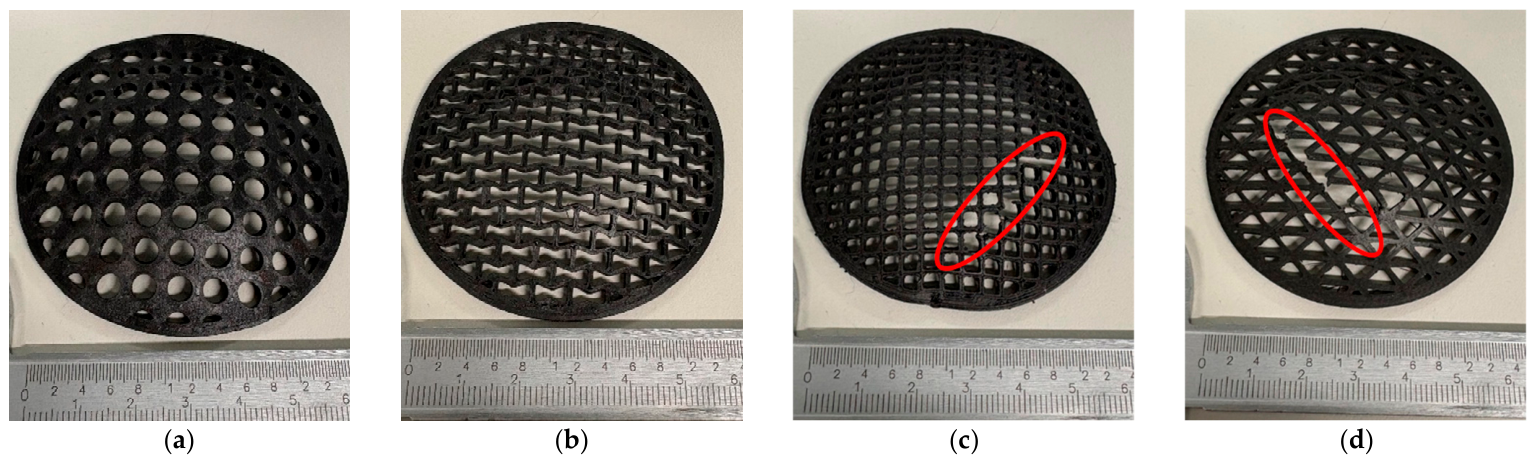
Table 3. At a drawing depth of 10 mm, only the perforated body and re-entrant configurations were successfully drawn without visible fracture. Conversely, the square and triangular lattices failed during the forming operation, indicating that these architectures were not able to redistribute the imposed deformation effectively. The top views of representative specimens after 10 mm drawing are shown in
Figure 4, where the different deformation modes induced by the infill geometry can be clearly observed. The perforated body and re-entrant structures preserved the overall integrity of the cup, whereas the square and triangular configurations exhibited evident damage and loss of structural continuity.
When the imposed drawing depth was increased to 20 mm, the difference between the successful configurations became more pronounced. As reported in
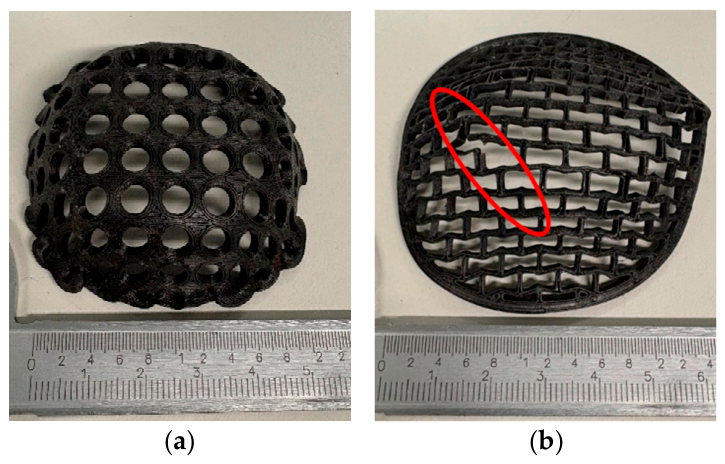
Table 3, the perforated body was the only geometry able to withstand the higher drawing depth, whereas the re-entrant configuration also failed under this more severe forming condition. Representative top views of the perforated body and re-entrant specimens after 20 mm drawing are shown in
Figure 5. The comparison indicates that, although the re-entrant architecture was effective at lower drawing depths, its deformation-accommodation capability was exceeded at 20 mm. In contrast, the perforated body maintained its structural integrity, suggesting a more robust response under increasing forming severity.
Overall, the results of the first campaign show that the drawability of lattice-based sheets is strongly affected by the infill architecture. The failure of the square and triangular patterns at 10 mm suggests that relatively rigid cell topologies are less suitable for deep drawing, likely because they promote localized deformation at ligaments and nodes. The re-entrant geometry showed an improved response at 10 mm, probably due to the ability of the auxetic architecture to accommodate deformation through cell rotation and opening/closing mechanisms. However, this mechanism was not sufficient at 20 mm. The perforated body emerged as the most promising configuration, as it successfully sustained both drawing depths, and was therefore selected for the subsequent campaign focused on the effect of hole diameter.
3.2. Perforated Body Campaign
Based on the results of the first campaign, the perforated body was selected for a second experimental investigation, since it was the only architecture able to withstand both imposed drawing depths without macroscopic failure. The aim of this second campaign was to evaluate the influence of the hole diameter on the drawability of the perforated architecture. Four different hole diameters were considered, namely 2.5 mm, 5 mm, 7.5 mm and 10 mm, while maintaining the same overall specimen geometry and forming conditions. The experimental outcomes are summarized in
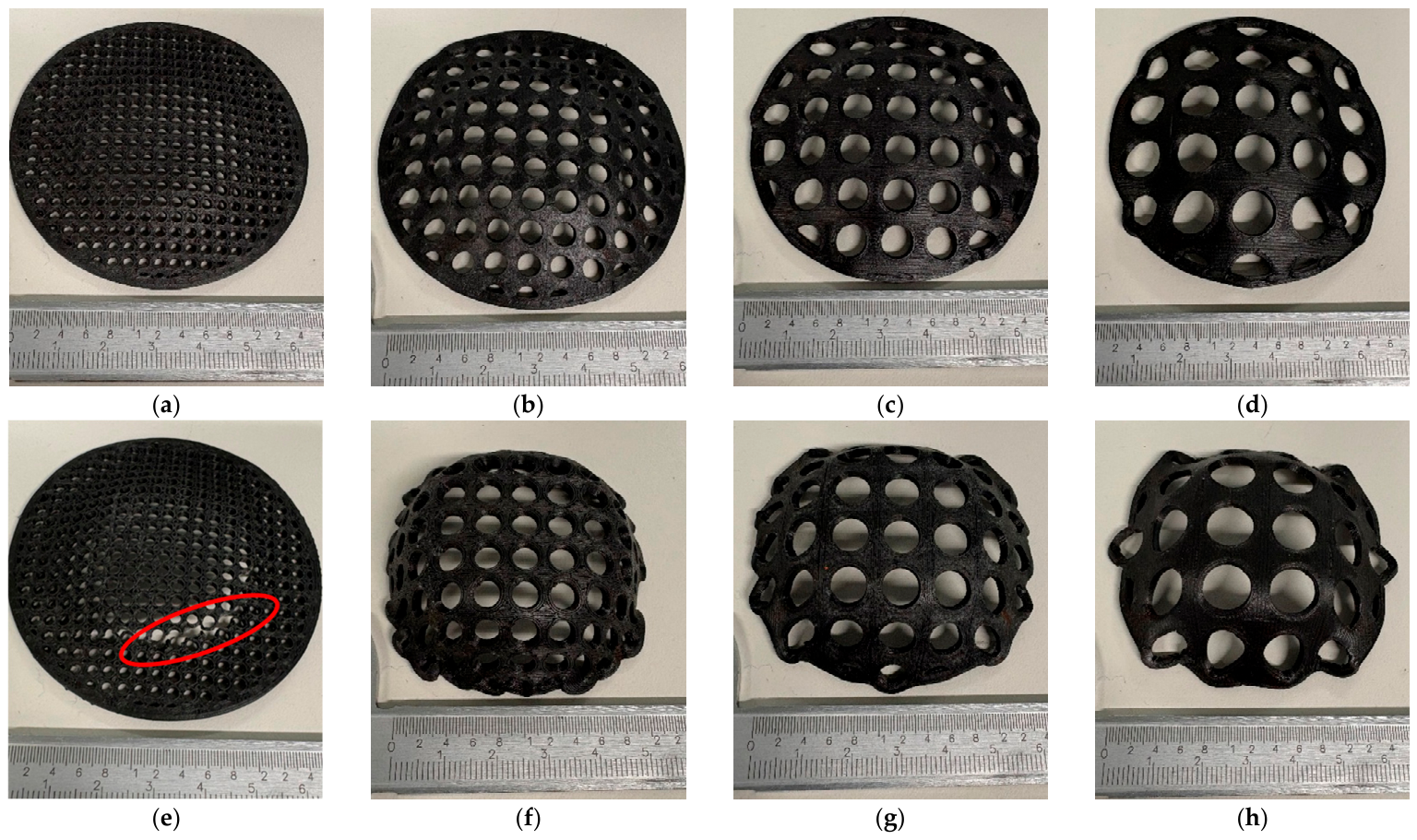
Table 4. At a drawing depth of 10 mm, all the investigated perforated configurations were successfully drawn, regardless of the hole diameter. This indicates that, under moderate forming conditions, the perforated architecture is sufficiently compliant to accommodate the imposed deformation even when the hole size is varied. Representative top views of the specimens after 10 mm drawing are reported in
Figure 6a–d. No macroscopic failure can be observed, although the deformation of the holes becomes progressively more evident as the forming operation modifies the initially planar geometry of the sheet.
A different behaviour was observed when the imposed drawing depth was increased to 20 mm. As shown in
Table 4, the configuration with 2.5 mm holes failed, whereas the specimens with 5 mm, 7.5 mm and 10 mm holes were successfully formed. The corresponding top views are shown in
Figure 6e–h. This result suggests that the smallest hole diameter leads to a less favourable forming response. Although this configuration contains a larger amount of material and could therefore be expected to be mechanically stronger, the reduced hole size also decreases the local compliance of the architecture. Therefore, the structure appears less capable of accommodating the imposed deformation through geometric rearrangement, leading to a higher tendency toward localized failure.
The quantitative analysis reported in
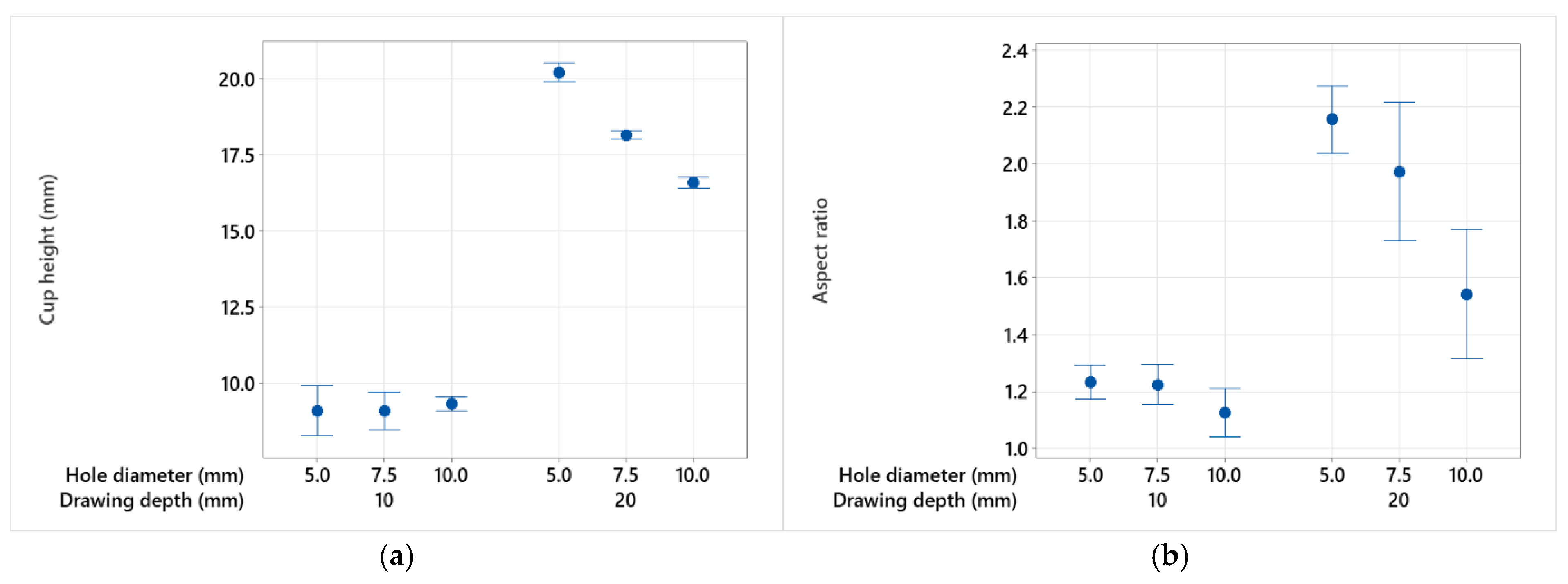
Figure 7 and summarized in
Table 5 and
Table 6 further supports the experimental observations. The ANOVA results reported in
Table 5 indicate that both the imposed drawing depth and the hole diameter significantly affect the final cup height, with
p-values lower than 0.001. The interaction between these two factors is also significant, showing that the effect of hole diameter depends on the severity of the drawing operation. This trend is clarified by the Tukey grouping reported in
Table 6. At an imposed drawing depth of 10 mm, the final cup heights are very similar for the 5, 7.5 and 10 mm hole diameters, and all configurations belong to the same statistical group. Conversely, at 20 mm, the final retained cup height decreases significantly as the hole diameter increases, from 20.19 mm for the 5 mm holes to 18.14 mm and 16.57 mm for the 7.5 mm and 10 mm holes, respectively. From a physical point of view, the statistical significance of hole diameter indicates that the feature size directly modifies the mechanical balance between structural continuity and geometric compliance. At a 20 mm drawing depth, the decrease in retained cup height with increasing hole diameter can be interpreted as the consequence of a more compliant perforated architecture, which accommodates the imposed deformation more easily during punch penetration but exhibits greater elastic recovery after unloading. Conversely, smaller holes provide greater structural continuity and shape retention but reduce the local deformation-accommodation capability of the architecture.
The side-hole aspect ratio was also significantly affected by the hole diameter, the drawing depth and their interaction, as reported in
Table 5. At 10 mm drawing depth, the aspect ratio remains low and statistically comparable for all the investigated hole diameters, indicating limited local distortion of the holes under moderate forming conditions. When the drawing depth is increased to 20 mm, the aspect ratio increases markedly, especially for the 5 and 7.5 mm holes, which belong to the same statistical group in
Table 6. The 10 mm holes, instead, show a significantly lower aspect ratio at 20 mm, indicating reduced local ovalization. This result provides a physical interpretation of the ANOVA outcome for the side-hole aspect ratio. Smaller holes are embedded in a locally stiffer and more continuous structure, so the imposed deformation is accommodated through stronger local ovalization of the holes. Larger holes, instead, provide a wider geometric feature over which the deformation can be redistributed, reducing local distortion even though the global cup shape is less retained after unloading.
Overall, the perforated body campaign shows that the hole diameter controls the balance between formability, elastic recovery and local deformation. Small holes increase the apparent structural continuity of the sheet, but reduce the geometric compliance required to accommodate deep drawing. Conversely, larger holes improved deformation accommodation and reduced local hole distortion, although they also promote higher elastic recovery and lower final retained depth. Therefore, the perforated body architecture appears to be particularly promising for forming-compatible additively manufactured sheets, provided that the hole diameter is properly selected as a compromise between structural resistance and deformation accommodation.
4. FEM Results and Discussion
The FEM analysis was used as an interpretative tool to rationalize the experimental trends observed in the drawing campaigns. Since no calibrated fracture or interlayer delamination model was implemented, the numerical results were not intended to predict failure initiation directly. Instead, the simulations were used to compare the deformation modes, stress distribution, forming load and strain paths associated with the different architectures. This approach allows the experimentally observed drawability differences to be interpreted in terms of architecture-dependent deformation accommodation and localization mechanisms.
4.1. Infill Strategies Discussion
The FEM analysis was first used to interpret the different deformation mechanisms activated by the investigated infill strategies.
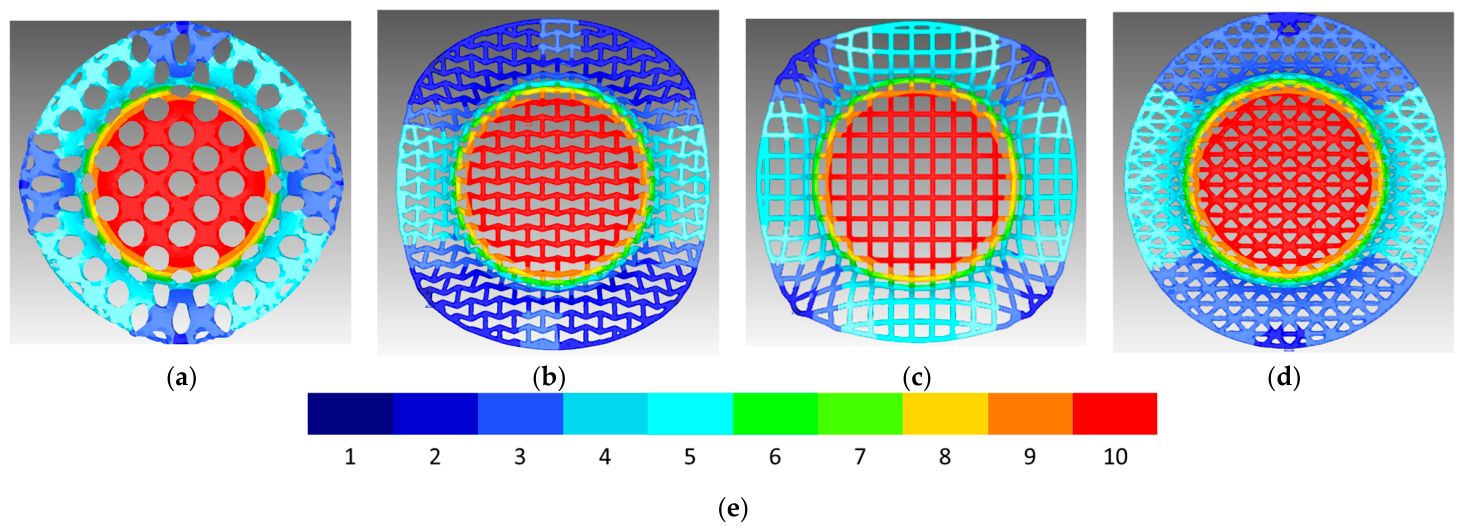
Figure 8 shows the false colour map of the displacement of the cups after 10 mm of drawing. A first important observation is that the infill architecture strongly affects the global deformation of the cup. In conventional deep drawing of continuous sheets, the reduction in diameter is generally associated with a relatively homogeneous radial material flow. In contrast, the presence of architected infill patterns introduces a geometry-dependent deformation path. The perforated body configuration, shown in
Figure 8a, exhibits a more regular and approximately biaxial deformation mode, with a comparatively uniform reduction in the cup diameter. The re-entrant geometry, reported in
Figure 8b, shows a more directional deformation pattern, indicating that the auxetic architecture introduces a preferential deformation direction due to the opening and rotation of the cells. The square geometry in
Figure 8c exhibits a more pronounced loss of circularity, with a tendency of the cup contour to evolve toward a polygonal shape. Finally, the triangular pattern in
Figure 8d appears to better preserve a radial-like deformation field, but this apparent geometric regularity does not correspond to better drawability, as the experimental tests showed failure at 10 mm. This suggests that preserving the global radial shape is not sufficient to guarantee successful forming if the local architecture is too stiff to accommodate the imposed deformation.
To further interpret these deformation modes,
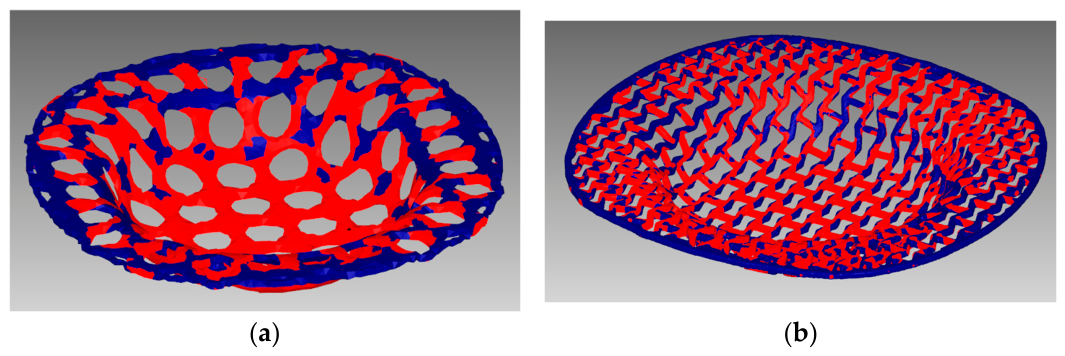
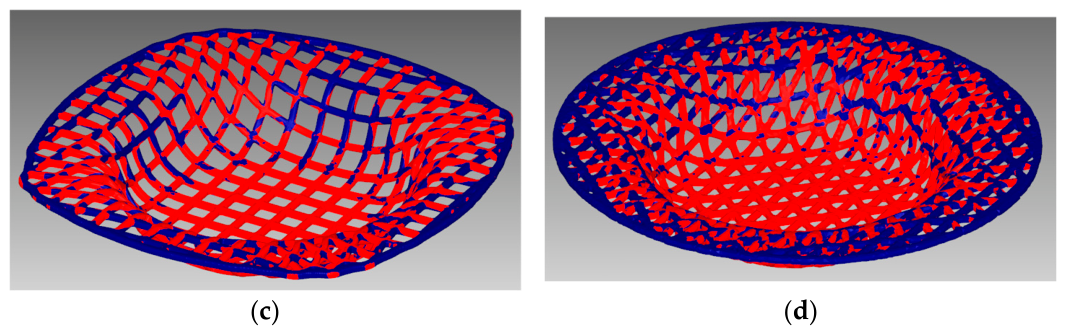
Figure 9 reports a two-colour false map of the mean stress state, where red regions indicate tensile-dominated areas and blue regions indicate compression-dominated areas. The different infill strategies generate markedly different tensile/compressive distributions. In the perforated body configuration (
Figure 9a), a compression-dominated annular region can be observed close to the die radius, while the bottom region is mainly subjected to tensile conditions. This stress distribution appears relatively regular, suggesting that the perforated architecture allows the material to redistribute the imposed deformation without producing severe localized stress gradients. This behaviour is consistent with the experimental integrity observed for the perforated body at both drawing depths. The re-entrant configuration, shown in
Figure 9b, exhibits a more anisotropic stress pattern. This is coherent with the deformation mode observed in
Figure 8b and can be attributed to the auxetic nature of the architecture, in which cell rotation and opening/closing mechanisms govern the deformation response. At 10 mm, this mechanism appears effective in accommodating the imposed out-of-plane deformation, as experimentally observed. However, the same mechanism becomes insufficient when the drawing depth is increased to 20 mm, as discussed below. The square and triangular configurations, shown in
Figure 9c,d, exhibit more critical stress distributions. In these geometries, the cell topology is intrinsically stiffer and offers fewer kinematic mechanisms for local rearrangement during drawing. As a consequence, the imposed deformation is more likely to be accommodated through localized tensile and compressive stress concentrations at ligaments and nodes. This explains why, despite their different global deformation modes, both architectures failed experimentally at a drawing depth of 10 mm.
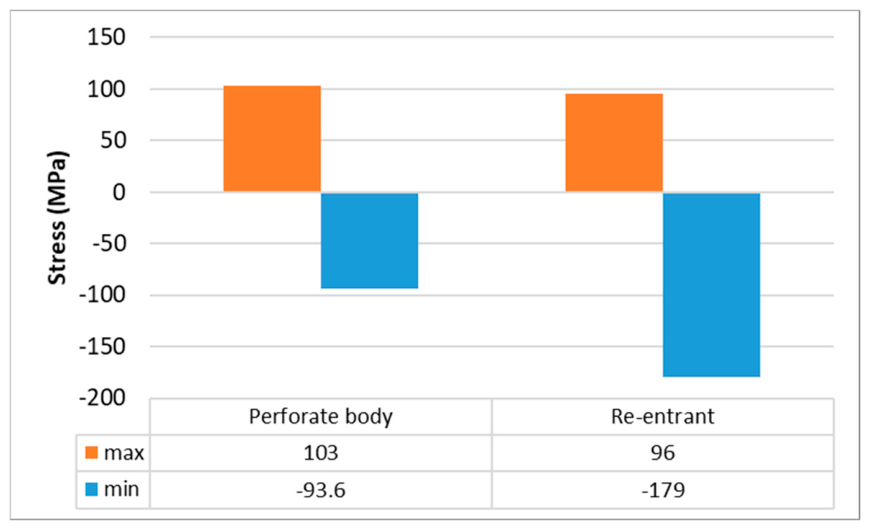
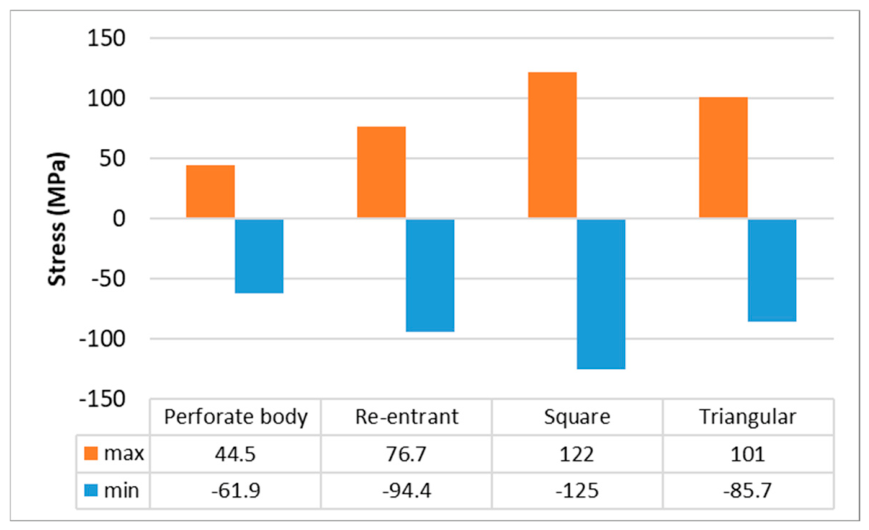
The quantitative comparison of the average tensile and compressive stress values at a 10 mm drawing depth is reported in
Figure 10. The square and triangular configurations exhibit the most severe stress conditions, with higher tensile and compressive stresses compared with the perforated body and re-entrant geometries. This supports the experimental observation that these two architectures are less suitable for deep drawing. Their rigid cell layouts promote localized stress accumulation rather than distributed deformation accommodation, thereby increasing the likelihood of failure. Conversely, the perforated body exhibits a more balanced stress response, while the re-entrant architecture benefits from a deformation mechanism based on cell rotation, which delays failure under moderate forming conditions.
The comparison at 20 mm drawing depth, reported in
Figure 11, further clarifies the different behaviour of the two architectures that survived the 10 mm test. When the drawing depth is increased, the re-entrant geometry exhibits a greater difference between tensile and compressive stresses. This indicates that the auxetic deformation mechanism, although effective at lower depth, progressively leads to more severe stress localization when the imposed displacement increases. This numerical evidence is consistent with the experimental failure of the re-entrant configuration at 20 mm. In contrast, the perforated body maintains a more stable stress response, confirming its higher robustness under more severe drawing conditions.
Overall, the FEM results indicate that the drawability of additively manufactured architected blanks is governed by the ability of the infill architecture to redistribute the stress and strain states generated during deep drawing. From a sheet-forming perspective, successful configurations are those able to accommodate the imposed punch displacement without producing excessive localization of tensile- or compression-dominated regions. The perforated body provides the most robust response because its geometry promotes a more regular deformation field and a more balanced redistribution of tensile and compressive stresses. The re-entrant pattern is effective at moderate drawing depth because cell rotation and opening/closure mechanisms provide additional kinematic accommodation, but this mechanism becomes insufficient at higher imposed displacement. Conversely, the square and triangular lattices behave as locally stiffer and more stretching-dominated architectures. This limits geometric rearrangement and promotes stress concentration at ligaments and nodes. Therefore, the numerical results support the experimental trend by showing that failure is not controlled only by material volume or porosity, but by the architecture-dependent ability to distribute deformation and avoid critical strain localization during forming.
4.2. Perforated Body Discussion
After identifying the perforated body as the most robust architecture in the infill strategy campaign, the FEM analysis was used to investigate how the hole diameter affects the forming response of this configuration. The numerical comparison was carried out on the perforated body specimens with holes of 5 mm, 7.5 mm and 10 mm. The 2.5 mm configuration was not included in the FEM comparison at 20 mm because it experimentally failed at this drawing depth, although it was drawable under the milder 10 mm condition. The punch load curves shown in
Figure 12a show that the three simulated perforated body configurations require comparable maximum forming loads, with peak values close to 1300 N. This indicates that the maximum load alone is not sufficient to clearly distinguish the effect of hole diameter on the forming response. However, differences become more evident when considering the evolution of the curves during the drawing stroke. In particular, the perforated body with 10 mm holes shows a lower resistance to deformation in the final stage of the process, suggesting that the larger holes reduce the overall stiffness of the architecture and facilitate geometric accommodation during drawing. This interpretation is further supported by the forming energy reported in
Figure 12b. Although the maximum punch loads are similar, the energy required to reach the imposed drawing depth decreases with increasing hole diameter. The 5 mm and 7.5 mm configurations show higher energy absorption, approximately 18,000 J, whereas the 10 mm configuration requires a lower energy, approximately 14,000 J. This result suggests that larger holes make the perforated architecture more compliant and easier to form. However, this lower energy requirement should not be interpreted simply as a better forming performance. Rather, it indicates a reduction in the mechanical resistance of the sheet, which is consistent with the larger elastic recovery observed experimentally for specimens with larger holes.
The Forming Limit Diagram (FLD) reported in
Figure 13 provides a complementary interpretation of the deformation mechanisms. The perforated body with 5 mm holes exhibits the widest strain distribution, with several points located at high major strain and negative minor strain values. This indicates a more severe and localized deformation path, despite the higher amount of material and apparent structural continuity of this configuration. The 7.5 mm configuration shows intermediate behaviour, with a less scattered but still relatively broad strain cloud. In contrast, the 10 mm configuration exhibits a more compact strain distribution, with fewer extreme strain states. This suggests that larger holes allow the architecture to accommodate the imposed deformation through geometric rearrangement, reducing the severity of local strain localization.
The combined analysis of load, energy and strain path therefore highlights a relevant trade-off. Smaller holes increase the stiffness and load-bearing capability of the perforated sheet, but they also reduce its geometric compliance and promote more severe local deformation. Larger holes reduce the forming energy and lead to a less critical strain distribution because they make the perforated architecture more compliant during punch penetration. However, this higher compliance also promotes a larger elastic recovery after unloading. As a consequence, although these configurations are easier to form, the final experimentally measured cup height is lower than the imposed punch displacement. Therefore, the optimal hole diameter cannot be selected only by maximizing the amount of material or minimizing the forming load. Instead, it should be defined as a compromise between structural resistance, deformation accommodation and elastic recovery.
Overall, the FEM results support the experimental trends observed in the perforated body campaign by showing how the hole diameter modifies the balance between stiffness, geometric compliance and strain localization. From a sheet-forming perspective, smaller holes increase the structural continuity of the blank and require higher forming energy, but they also reduce the ability of the architecture to accommodate the imposed deformation through pore distortion and local geometric rearrangement. This explains why the 5 mm configuration is associated with a stiffer response and a more critical strain distribution in the FLD. Conversely, the 10 mm configuration exhibits lower forming energy and a less severe strain localization, indicating a more compliant deformation mode. However, this increased compliance also promotes higher elastic recovery after unloading, resulting in a lower retained cup height. The 7.5 mm configuration represents an intermediate condition between these two limiting behaviours. Therefore, the optimal hole diameter should not be selected only by maximizing stiffness or minimizing strain localization. It should result from a balance between forming resistance, deformation accommodation, strain distribution, and shape retention after unloading.
5. Conclusions
This study investigated the deep-drawing response of additively manufactured short-fibre reinforced polymer composite architected discs. Within the investigated material, thickness, disc geometry and forming conditions, the results showed that the formability of the blanks is strongly affected by the internal architecture. The perforated body provided the most robust response, withstanding both 10 and 20 mm drawing depths, whereas the re-entrant geometry was successful only at 10 mm. Square and triangular lattices failed at 10 mm, suggesting that architectures with higher local stiffness and limited deformation accommodation capability are less suitable for the investigated forming conditions.
Within the perforated body family, the hole diameter controlled the balance between formability, elastic recovery and local deformation. The 2.5 mm configuration failed at 20 mm, whereas larger holes reduced local ovalization and strain localization but also promoted higher elastic recovery, leading to lower retained cup height. Therefore, the forming response cannot be interpreted only in terms of material volume or porosity, but rather as a compromise between local stiffness, geometric compliance, strain localization, and shape retention.
The FEM analysis, used as a first-order interpretative model, supported the experimental evidence by highlighting architecture-dependent deformation paths, tensile/compressive stress redistribution, forming energy and strain localization. Although the model was not intended to predict failure initiation and did not include a calibrated damage or delamination criterion, it helped rationalize why some architectures redistributed deformation more effectively than others.
The main limitations of this study are related to the use of a single material, one nominal thickness, one disc geometry, and a simplified isotropic FEM model. Future work will investigate different materials, thicknesses, printing strategies and anisotropic constitutive models, together with a more complete quantitative validation of the numerical simulations through force–displacement curves, forming energy and final geometry measurements.