1. Introduction
The dynamic response of lightweight embankments under vehicle collisions and the safety and stability of roadside guardrail foundations serve as core indicators for evaluating the rationality of lightweight embankment engineering and road protection facility design in soft-soil regions. However, this issue is governed by the coupled effects of multiple factors, including the physical and mechanical parameters of lightweight soil, embankment filling technology, guardrail foundation forms, collision speed and angle, and vehicle type. Moreover, these influencing factors exhibit pronounced nonlinearity and uncertainty under impact loading. Wang et al. [
1] systematically analyzed the structural damage and maintenance economy of vehicles under low-speed collisions based on C-IASI test data, clarifying the engineering characteristics of high frequency and high maintenance costs associated with low-speed collisions. Zhan et al. [
2] established a two-stage LSTM-BN model to realize accurate real-time prediction of vehicle collision risks, revealing the governing mechanism of the nonlinear coupling of human-vehicle-road multi-dimensional factors on collision risk. Kim et al. [
3] conducted collision analysis on reinforced concrete guardrails using a node-independent model, uncovering the cooperative mechanical behavior between bridge decks and guardrails. Chen et al. [
4] evaluated the crashworthiness of guardrails on long-span cable-stayed bridges via multi-angle collision simulations, identifying the controlling effect of impact angle on guardrail failure modes and vehicle trajectories. Zhang et al. [
5] developed a vehicle–guardrail collision model using finite element method (FEM), clarifying the influences of vehicle type, speed, and angle on guardrail deformation and energy absorption. Gu [
6] investigated the performance of corrugated beam guardrails in lightweight foam soil sections and verified the ultimate crash capacity and foundation stability of guardrails using the energy method. Ma et al. [
7] performed collision simulations on novel assembled composite guardrails with explicit FEM, revealing the influence of guardrail connection details and foundation forms on crash performance. Habtemariam et al. [
8] implemented high-speed vehicle–guardrail collision simulations using the discrete element method, providing a lightweight numerical approach for complex impact scenarios. Zheng et al. [
9] studied the heavy vehicle crash resistance of FRP–concrete composite guardrails, highlighting the key roles of composite structures and rigid foundations in enhancing protective efficiency. Wei et al. [
10] proposed a novel high-strength steel lightweight guardrail and conducted its structural and safety performance design, offering an optimized scheme for guardrails adapted to lightweight subgrades. Pan et al. [
11] revealed the failure mechanism of urban road guardrails under vehicle impact using the finite element method, and proposed guardrail optimization schemes from the perspectives of columns, bases, and connection details. Yu et al. [
12] compared the crashworthiness of rotary guardrails and corrugated beam guardrails, confirming that rotary guardrails exhibit superior performance in vehicle guiding, energy absorption, and deformation control. Wu et al. [
13] optimized the structure of a new type of corrugated beam guardrail through orthogonal tests, and clarified the influences of guardrail plate thickness, column thickness, and block thickness on crashworthiness. Gong [
14] systematically investigated the effects of slope parameters of concrete barriers on vehicle impact protection, and put forward the optimal combination of slope parameters. Pan et al. [
15] summarized the dynamic response characteristics of frame structures and bridge piers under vehicle collision, and revealed the differences in failure modes between reinforced concrete and concrete-filled steel tubular structures under impact loading. Liu et al. [
16] established a guardrail collision risk assessment model based on catastrophe theory, realizing quantitative safety grade evaluation under multi-factor coupling. Wen et al. [
17] conducted sensitivity analysis of guardrail crashworthiness parameters considering anchorage effects, indicating that anchor plate and column thicknesses are key factors affecting protective performance. Ma et al. [
18] analyzed the dynamic response of anti-collision guardrails in the cable zone of cable-stayed bridges under vehicle impact, providing a basis for guardrail design in special bridge sections. Zhang et al. [
19] carried out full-scale impact tests and numerical simulations on recycled foamed concrete wall-type guardrails, verifying the crashworthiness and reliability of the new lightweight guardrail. Yang et al. [
20] established a 3D simulation model via explicit FEM, and systematically evaluated the crash performance of the movable median guardrail from the aspects of energy absorption, vehicle acceleration, collision trajectory and guardrail dynamic response. Cao et al. [
21] conducted high-fidelity finite element simulations to investigate the requirements and failure modes of concrete barriers under MASH TL-4 and TL-5 conditions. An inelastic pushover analysis method was proposed to evaluate the bearing capacity of these concrete barriers. Based on the damage modes observed in pushover analysis, a modified yield line method (MYLM) was developed to estimate the load-carrying capacity of concrete barriers. Xu et al. [
22] analyzed the failure modes, influencing factors and impact force responses of conventional and strengthened RC structures under vehicle collision.
Shi et al. [
23] reported that incorporating ceramsite lightweight aggregates increased the peak stress by 151% and energy absorption density by 211%, enabling rapid attenuation of pressure waves. A recent review by Boddepalli et al. [
24] highlighted that the low self-weight, good energy absorption, and deformation capacity of foamed concrete make it particularly suitable for seismic-resistant and impact-prone applications. Economically, the lightweight nature reduces foundation treatment costs. Cai et al. [
25] demonstrated that a bridge-head-free cone slope retaining wall using foamed concrete effectively saves construction costs while reducing differential settlement with increased replacement thickness. Environmentally, foamed concrete can incorporate industrial by-products to lower its carbon footprint. Zhang et al. [
26] showed that replacing 70% of cement with ground circulating fluidized bed fly ash (CFBFA) reduced global warming potential by 52.3% and total cumulative energy consumption by 43.2%. These combined advantages make foamed concrete an ideal lightweight fill for embankments in soft-soil regions. Chen et al. [
27] systematically investigated the dynamic compressive behavior of foamed concrete over a wide strain-rate range (500 s
−1 to 1300 s
−1) and temperatures (25 °C to 600 °C) using a high-temperature viscoelastic SHPB technique, establishing a reliable stress–strain constitutive model for impact applications. Regarding guardrail foundation design, Jia and Li [
28] optimized the separated concrete guardrail foundation for expressway reconstruction projects, demonstrating that foundation stability directly affects safety performance and that soil compaction positively correlates with guardrail stability. Li et al. [
29] developed a practical finite element model for a guardrail post embedded in soil, where the post–soil interaction was represented by nonlinear uncoupled springs, and validated the approach using explicit FEM. Similarly, Sassi and Ghrib [
30] created a numerical model of a rigid impactor striking a roadside post, comparing a continuum soil model (Drucker–Prager) with a simplified subgrade method using parallel springs and dampers, and found the simplified method efficient and accurate for simulating soil-post interaction under impact.
Although extensive research has been conducted on the dynamic response of vehicle–guardrail collision systems, most existing studies are based on conventional soil subgrades or rigid pavements. Foamed concrete, as a lightweight embankment material, exhibits fundamentally different mechanical behaviors under impact loading due to its low density, high porosity, and high compressibility. Nevertheless, critical research gaps remain: (1) Existing studies on foamed concrete are almost exclusively focused on static loading conditions. Its dynamic constitutive relationship, failure criteria, and energy absorption mechanism under high-strain-rate vehicle impact are still unclear. (2) Current optimization of guardrail foundations is primarily targeted at conventional soil or rock subgrades, with a lack of systematic investigation into the contact stress distribution, deformation compatibility, and overall stability of the L-shaped foundation resting on a compressible lightweight embankment. (3) Safety evaluation indices (e.g., lateral displacement limit, stress diffusion efficiency, local crushing tolerance) for lightweight embankments under vehicle collision have not yet been established, leaving engineering design without clear guidelines.
To address the above gaps, this paper pursues the following three objectives: Objective 1: To experimentally characterize the static mechanical properties (compressive strength, elastic modulus, stress–strain relationship) of foamed concrete with different mix proportions through uniaxial compression tests, providing basic material data for subsequent numerical simulations. Objective 2: To develop a coupled finite element model of the vehicle–guardrail–lightweight embankment system, and to analyze the lateral displacement and stress distribution of foamed concrete embankments with varying strengths under a standard collision scenario, thereby revealing their dynamic response characteristics. Objective 3: To propose and validate an optimal design of the guardrail foundation (specifically, the base plate length) that effectively reduces deformation and stress concentration in the lightweight embankment, and to provide a cost-effectiveness recommendation.
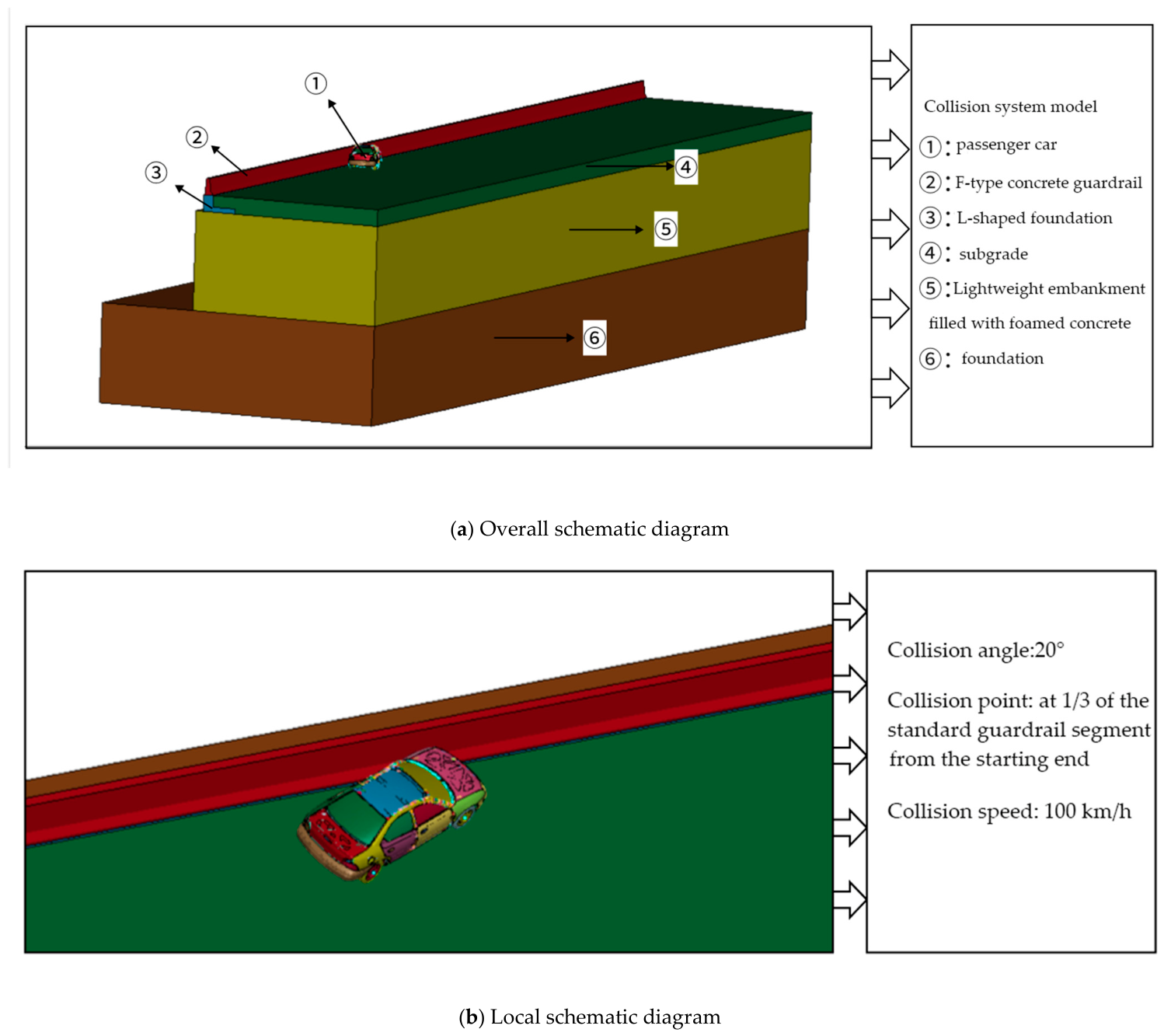
Full-scale vehicle collision tests, while providing the most direct validation, are prohibitively expensive, time-consuming, and involve safety risks. Numerical simulation using the finite element method offers a practical alternative that allows systematic parametric studies under controlled conditions. In this study, a validated passenger car model is employed, and the material models for foamed concrete are calibrated against experimental static test data. The finite element approach enables us to investigate the influence of various foundation lengths (four cases) on embankment response, which would be impractical through physical testing. It is acknowledged that numerical modeling involves simplifications (e.g., linear elastic assumption for the guardrail, omission of embankment slopes), and these limitations are discussed in the relevant sections. Nevertheless, for comparative design optimization, the method provides reliable insights.
This work provides three novel contributions beyond existing literature. First, while previous studies on foamed concrete have focused on static properties, this study systematically characterizes its static mechanical parameters (strength, modulus, statistical variability) and directly uses them as inputs for impact simulation. Second, unlike existing vehicle–guardrail collision models that assume conventional subgrades, this study develops a coupled model explicitly representing the lightweight embankment with a crushable foam material and the L-shaped foundation with contact interaction. Third, this study proposes a quantitative optimization of the guardrail foundation base slab length (10–20% increase) based on both lateral displacement and peak stress criteria, providing a cost-effective design reference specifically for lightweight embankments in soft-soil regions.
4. Results
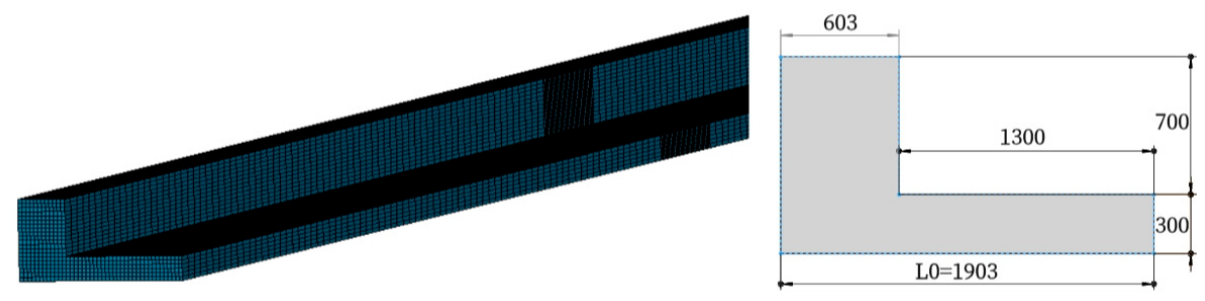
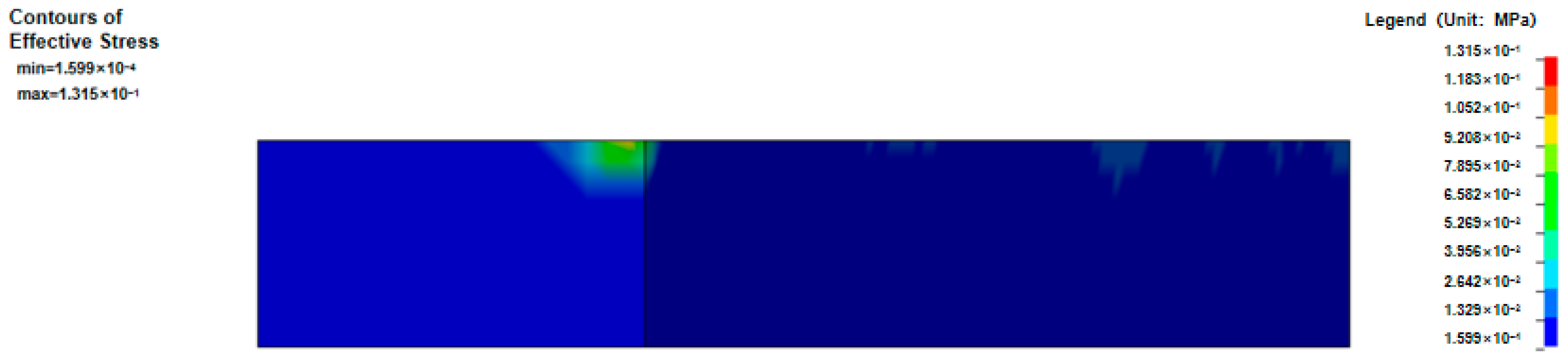
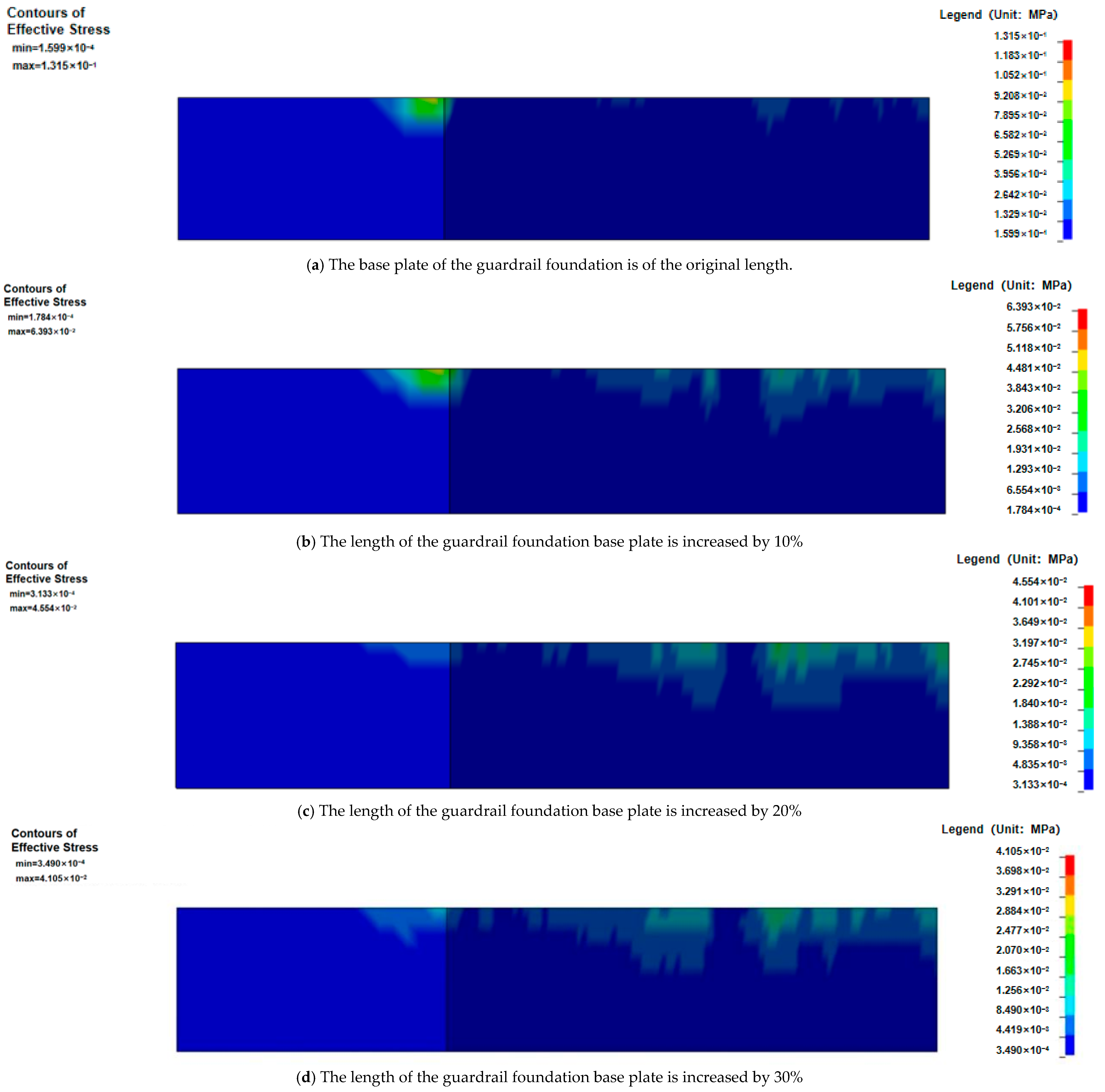
Figure 11 shows the stress distribution of the lightweight embankment with different base slab lengths when the passenger car impacts the roadside guardrail under the same collision conditions. Increasing the base slab length effectively reduces stress concentration and lateral deformation of the lightweight embankment primarily by altering the load path and stress diffusion pattern of the collision load as it transfers downward from the guardrail. When the vehicle strikes the guardrail at a given angle, the L-shaped foundation tends to rotate slightly about its right-angled edge under the horizontal impact component. This rotation creates a localized compressive stress concentration zone between the slab edge and the top surface of the embankment. Under the original slab length (1.0 L
0), almost the entire load is transmitted to the embankment through the narrow strip at the slab edge, resulting in a high peak stress and significant local compression deformation. When the slab length is increased, two favorable changes occur in load transfer. First, the contact area increases: the interface between the underside of the slab and the embankment expands from a narrow strip to a wider band, significantly reducing the pressure per unit area. Second, the load diffusion angle increases: the vertical load introduced at the slab edge can spread deeper and wider into the embankment, analogous to the stress bulb effect beneath a rigid foundation on an elastic half-space. Consequently, the peak stress decreases and the stress gradient within the embankment becomes gentler. Meanwhile, the reduction in lateral displacement is mainly attributed to enhanced rotational restraint of the foundation. A longer slab provides a larger overturning resistance arm, which reduces the rotation angle of the foundation under the same horizontal impact force, thereby decreasing the lateral push on the embankment. In summary, increasing the slab length simultaneously improves two mechanisms: vertical stress diffusion and lateral rotational stability. Thus, without changing the material quantity (only length is increased, not thickness or reinforcement), the overall safety performance of the lightweight embankment under impact loading is effectively enhanced. In addition, by comparing
Figure 11c,d, it is found that when the base slab length is increased by 30%, the internal stress distribution and stress magnitude of the lightweight embankment are basically consistent with those when the length is increased by 20%. This indicates that after the base slab length increases to a certain extent, the stress distribution of the lightweight embankment reaches a relatively stable state, and further increasing the base slab length will no longer exert a significant effect on the stress distribution of the lightweight embankment.
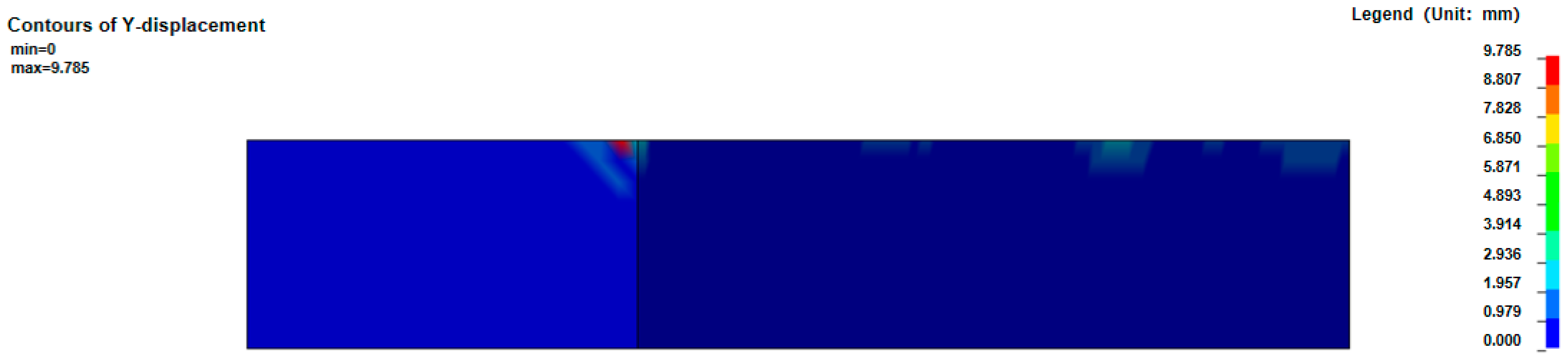
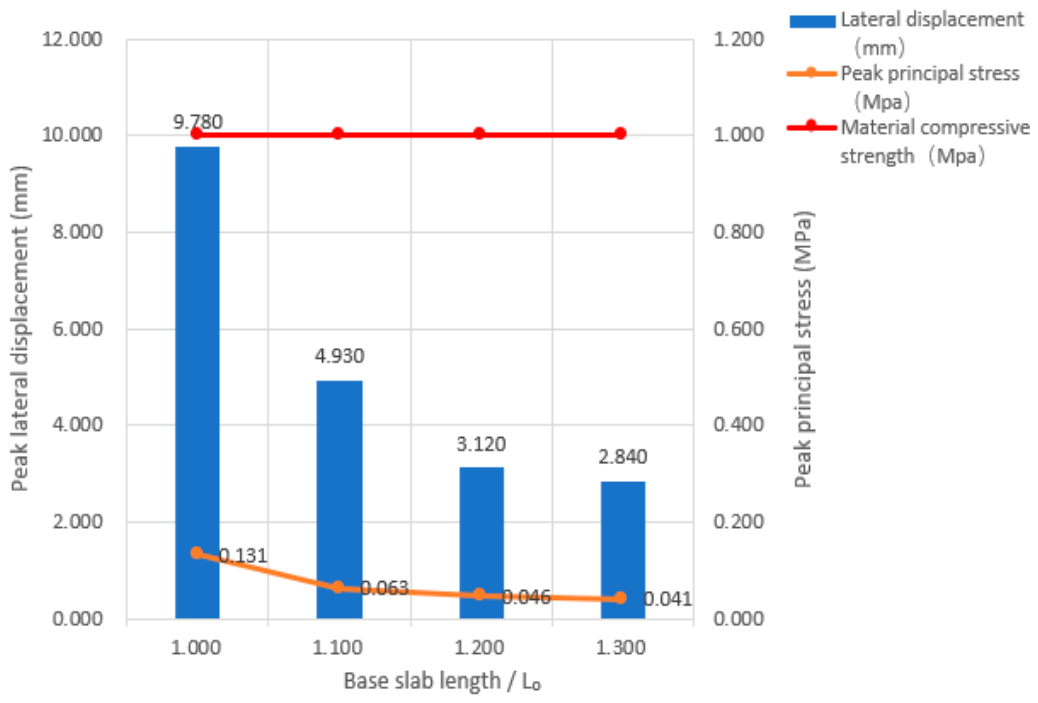
Figure 12 shows the peak lateral displacement of the lightweight embankment corresponding to different base slab lengths. For the original base slab length L
0, the impact caused by the passenger car at a given speed results in significant lateral displacement of the embankment, with a peak value of 9.78 mm. However, when the base slab length is increased by 10% and tested under identical collision conditions, the peak lateral displacement of the lightweight embankment drops to 4.93 mm, representing a reduction of 49.6% compared with the original case. As the base slab length is further increased by 20%, the peak lateral displacement decreases to 3.12 mm under the same collision scenario, a reduction of 68.1%. When the length is increased by 30%, the peak lateral displacement slightly decreases to 2.84 mm, with an overall reduction of approximately 71.0%. With the gradual increase in base slab length, the peak lateral displacement of the lightweight embankment under the same collision conditions shows a decreasing trend, yet the rate of reduction gradually slows down. This phenomenon indicates that, after a certain length is reached, the effect of further increasing the base slab length on improving the stability of the lightweight embankment diminishes gradually. Properly extending the base slab length can effectively transfer the collision load acting on the guardrail downward into the entire lightweight embankment. Such load transfer enables the whole structure to resist the load jointly, thus preventing instability failure caused by excessive local deformation.
The calculated peak stress is far below the elastic limit strength of the material, indicating that during the collision, the designed foundation configuration can effectively distribute the impact stress, leaving sufficient engineering safety margin.
Comparing the trends of lateral displacement and stress distribution obtained in this study with those reported in the existing literature reveals good consistency. Regarding lightweight embankments, Gu [
6] analyzed the ultimate impact resistance of corrugated beam guardrails on foamed lightweight soil sections using an energy method, and pointed out that foundation stability is a key factor affecting guardrail performance. This echoes our finding that increasing the base slab length significantly reduces embankment deformation. In terms of foamed concrete materials, Shi et al. [
23] reported that ceramsite-based foamed concrete exhibits high energy absorption under high strain rates (with a 151% increase in peak stress), indicating excellent impact resistance. In our study, the peak principal stress of the lightweight embankment under collision remained far below the material strength (only 13%), further confirming its safety margin.
With respect to guardrail foundation optimization, Sassi and Ghrib [
30] found that soil-post interaction plays a dominant role in the dynamic response of guardrails. In the present study, increasing the length of the L-shaped foundation base slab enhanced the rotational resistance of the foundation. Both studies emphasize the importance of foundation-soil interaction. Furthermore, Zhang et al. [
19] conducted full-scale impact tests on recycled foamed concrete wall-type guardrails and demonstrated the good crashworthiness of lightweight guardrails, which is consistent with our conclusion that no global failure occurs in the foamed concrete embankment under the investigated collision conditions.
It should be noted that the above comparisons are largely trend-based and qualitative, because there are few quantitative studies in the existing literature that specifically address the coupled system of a foamed concrete lightweight embankment and an L-shaped guardrail foundation under vehicle collision. The quantitative results of this study, such as the decreasing trend of displacement with increasing base slab length, can serve as a reference benchmark for future similar research.
5. Conclusions
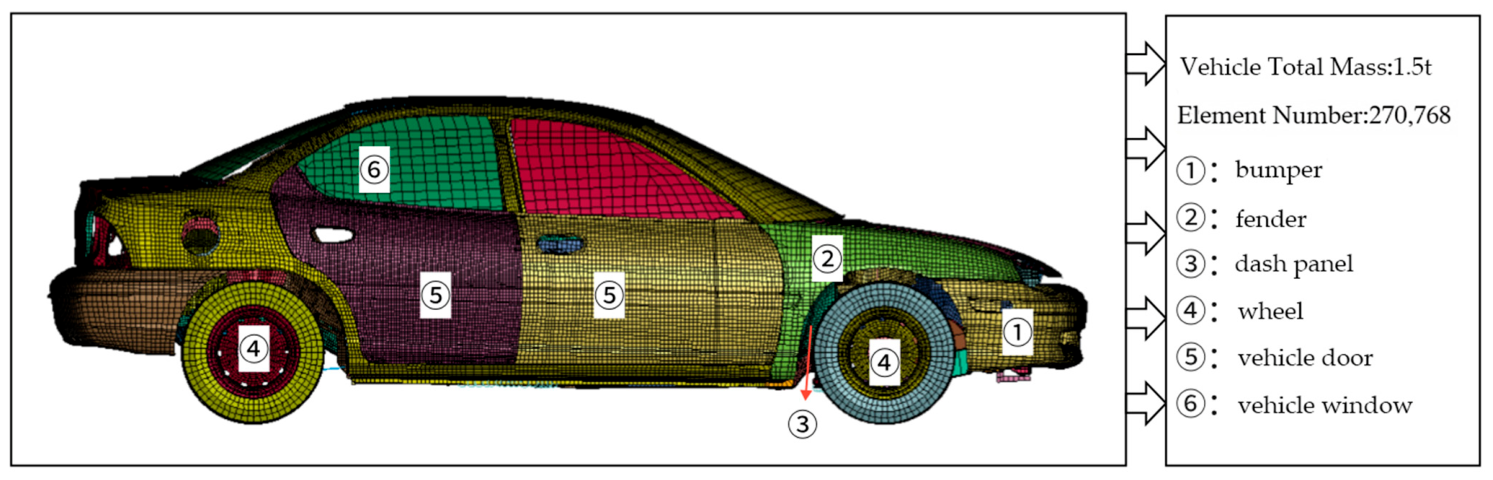
The experimental results show that foamed concrete with a density of 431–559 kg/m3 has a compressive strength of 1.04–1.38 MPa and an elastic modulus of 318–401 MPa. Under the investigated collision conditions (1.5 t passenger car, 100 km/h, 20° impact angle), increasing the foundation base slab length from 1.0 L0 to 1.2 L0 reduces the peak lateral displacement of the lightweight embankment by 68% (from 9.78 mm to 3.12 mm) and the peak principal stress by 39% (from 0.131 MPa to 0.0455 MPa). The peak principal stress is only 13% of the material strength, indicating a sufficient safety margin.
Under the specific conditions investigated in this study (1.5 t passenger car, 100 km/h impact velocity, 20° impact angle, and foamed concrete compressive strengths ranging from 1.0 to 1.4 MPa), increasing the base slab length can effectively reduce lateral deformation and stress concentration of the lightweight embankment. Within this scope, increasing the base slab length by 10–20% appears to be a reasonable optimization scheme that can improve the stability of the embankment–guardrail system while achieving favorable cost-effectiveness. It should be noted that this conclusion is limited to the investigated conditions; further validation under a wider range of vehicle types, impact angles, and material strengths is required before generalizing to other engineering applications.
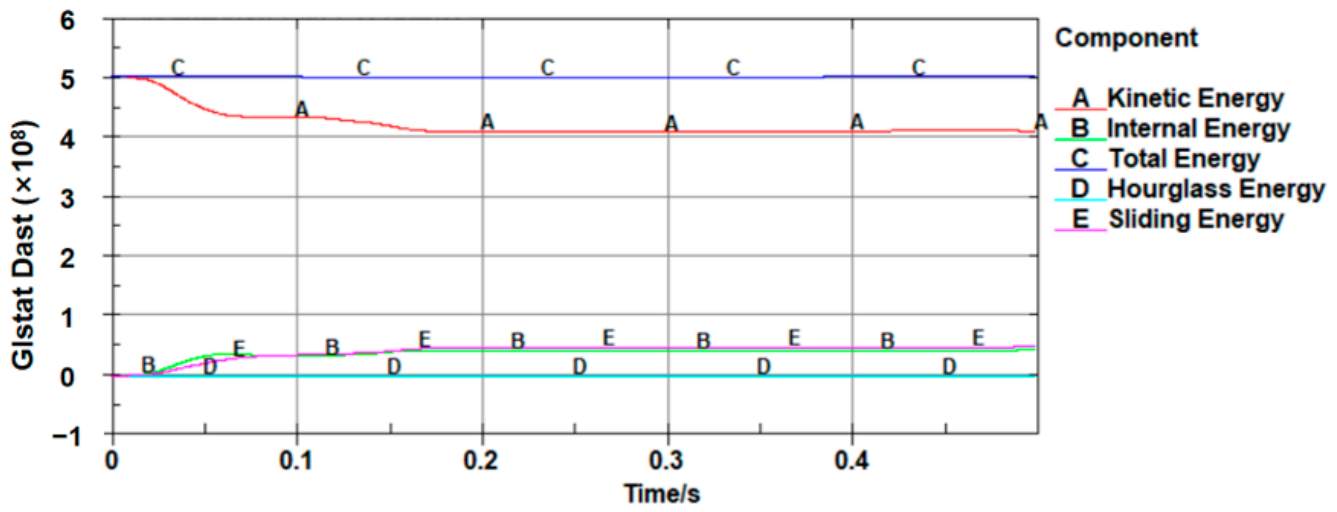
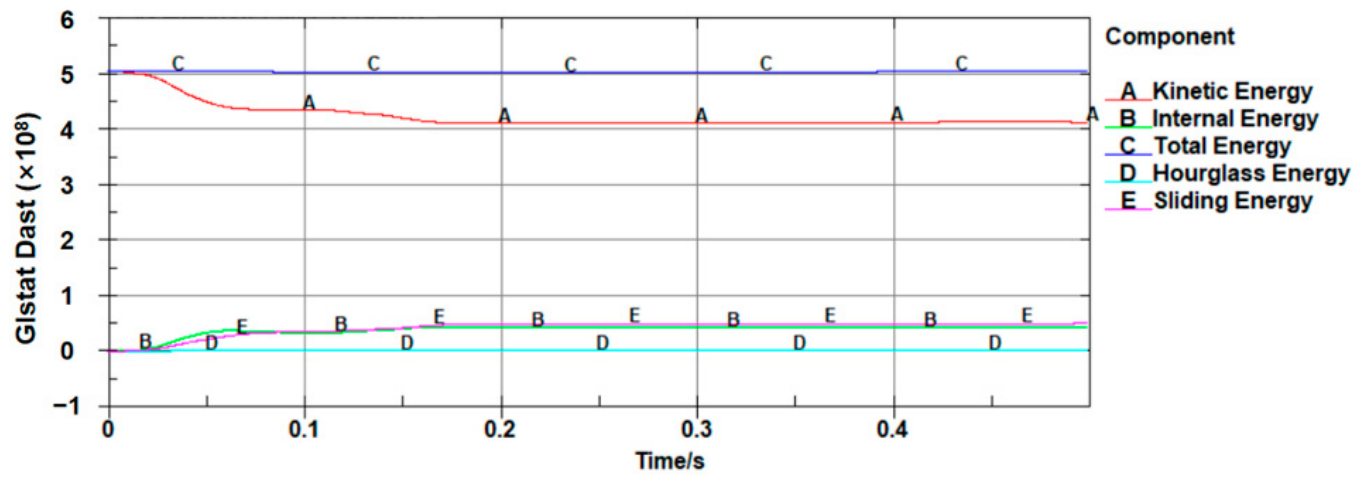
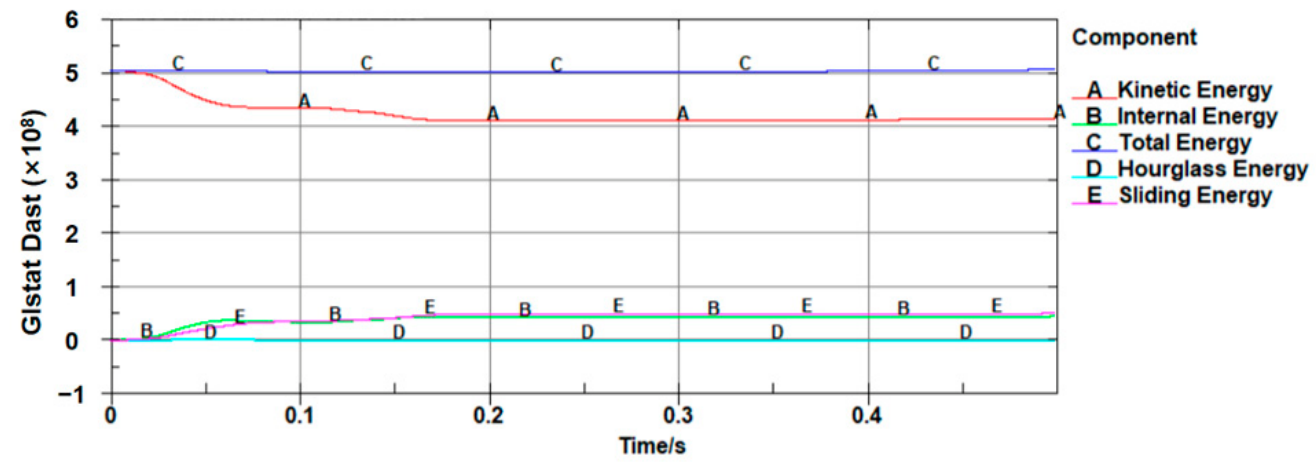
This study lacks direct experimental validation. The proposed foundation optimization is based solely on numerical simulations without comparison against laboratory tests, field measurements, or full-scale crash test data. While indirect validation is provided by energy balance, mesh stability, material parameters derived from tests, and the use of a validated NCAC vehicle model, the absolute values of predicted displacements and stresses should be interpreted with caution. Therefore, the recommended 10–20% increase in base slab length should be considered as a preliminary design reference.
Future research may focus on the following aspects: (1) validating the numerical predictions through small-scale model tests or comparison with existing crash test data; (2) incorporating rate-dependent nonlinear material constitutive models to better capture the high-strain-rate behavior of foamed concrete; (3) extending the study to other vehicle types (e.g., trucks, buses), impact velocities (60–100 km/h), and impact angles (10–30°); (4) exploring multi-objective optimization of other foundation geometric parameters (e.g., slab thickness, L-shaped foundation shape); and (5) conducting a sensitivity analysis with finer length increments (e.g., 5%, 15%) to more precisely determine the optimal range. Further research along these directions will better facilitate practical applications in soft-soil regions. (6) In this study, only three specimens were prepared for the uniaxial compression tests. Although this meets the minimum requirement of the specification, the relatively small sample size limits the comprehensive characterization of statistical reliability. It is recommended that at least six specimens be prepared per group in future studies, and that more systematic statistical analyses (e.g., analysis of variance, regression analysis) be introduced to more accurately evaluate the statistical variability of material parameters and its influence on impact resistance.