
Article

Deformation and Failure Mechanism of Soil–Rock Mixture Landslide Subjected to Impoundment of Reservoir—A Case Study

1
College for Elite Engineers, China University of Geosciences (Wuhan), Wuhan 430074, China
2
Geotechnical Engineering Department, Broadvision Engineering Consultants Co., Ltd., Kunming 650200, China
3
State Laboratory of Geohazard Prevention and Geoenvironment Protection, Chengdu 610059, China
*
Author to whom correspondence should be addressed.
Appl. Sci. 2026, 16(13), 6553; https://doi.org/10.3390/app16136553
Submission received: 18 May 2026 / Revised: 23 June 2026 / Accepted: 26 June 2026 / Published: 1 July 2026
(This article belongs to the Section Earth Sciences)

Abstract

Reservoir water level fluctuations can reactivate landslides and cause severe losses. This study examines the Niulanjiang landslide, reactivated by the impoundment of the Xiluodu Hydropower Station in Southwest China, using field investigations, in situ displacement monitoring, and direct shear tests on soil–rock mixtures. The results show that the land-slide experienced a progressive failure process, evolving from long-term shear creep in the sliding zone to localized abrupt creep and finally to overall fracture sliding. The loose soil–rock mixture provided the structural basis for instability, whereas reservoir water level fluctuation was the dominant trigger. Rising water levels increased shear stress and promoted seepage-induced weakening, causing local failure of the sliding surface and gradual formation of a shear outlet. Laboratory tests indicate that rock block content and moisture content strongly affect mechanical behavior: higher rock block content enhances shear dilatancy and strain softening, while higher moisture content promotes shear contraction, plastic deformation, and linear reductions in cohesion and internal friction angle. The failure mechanism involves coupled strength degradation and increased seepage force. Initial instability occurred in the middle slope under hydrostatic–hydrodynamic pressure, then propagated rearward and forward, reducing front resistance and driving overall sliding toward the Niulanjiang River. These findings support early warning and mitigation of similar reservoir-induced landslides.

1. Introduction

Landslides are a common natural disaster in mountainous areas and represent a process of terrain reshaping and restabilization under geodynamic actions or human activity [1,2,3]. Once triggered, landslides pose significant threats to human life and property. The southwestern region of China is located on the eastern edge of the Tibetan Plateau. These regions experience long-term profound uplift under the squeezing between the Eurasian and Indian plates, resulting in deeply incised valleys such as those of the Jinsha River and Lancang River. Hence, due to steep terrain, complex geological structures, and human engineering activities readily induce high-position landslides in these bank slopes of Jinsha River and Lancang River [4,5,6]. Among these, reservoir impoundment-induced bank landslides are one of the most severe geological disasters in the mountainous regions of Southwest China. In recent years, there has been an increase in landslide events triggered by reservoir impoundment in China. For instance, since the impoundment began at the Jinping hydropower station in 2012, the maximum impoundment level has reached 1880 m, and four large landslides have been identified within the reservoir area, Jiefanggou landslide, Santan landslide, Shuiwenzhan landslide, and Gapa landslide [7]. These events attract more attention to the importance of understanding the behavior of landslides induced by reservoir impoundment operations [8,9,10].
In recent years, research on landslides under reservoir operation conditions mainly focuses on the displacement evolution characteristics and the failure mechanisms of landslides [11,12,13,14]. Regarding the displacement evolution of reservoir landslides, most scholars declare that most landslides are not sudden, instantaneous failure but rather a process of progressive instability [15,16]. Gutiérrez et al. (2015) [17] studied the reactivation and deformation evolution of the Canelles landslide within Spain’s Yesa Reservoir, revealing that the landslide predominantly underwent incremental deformation without significant sliding deformation. Glueer et al. (2019) [18] made a detailed study of the Moosfluh landslide in Switzerland and revealed that three retrogressive secondary rockslides developed during the first six weeks of the Moosfluh landslide acceleration. Wu et al. (2022) [19,20,21] analyzed the displacement evolution of the Gapa landslide in China through monitoring data collected before and after reservoir impoundment, revealing the deformation mechanism of landslides under the influence of static and dynamic water pressure action.
The failure mechanism of reservoir landslides is also a hot topic [19,21,22]. Based on studies of reservoir bank landslides in the United States and Canada, Schuster (1979) [23] proposed nine mechanisms of reservoir landslide deformation, including layered slippage, debris slippage, debris flow, and lateral spread of soil slopes. Song et al. (2018) [24] posited that the increase in the Shuping landslide, China, was dominated by reservoir water drawdown, and the durations of the slide acceleration phases were much shorter than the reservoir water drawdown durations. Wu et al. (2019) [25] examined the failure mechanism of the Shuping landslide, concluding that the decline in reservoir water level was the primary factor accelerating the landslide movement, and the release of pore water pressure lagged behind the reservoir discharge, inducing an accelerated deformation phase in the Shuping landslide. Jiang et al. (2021) [20] investigated the variations of groundwater, deformation, and failure process of Dahuaqiao landslide, China. Under different fluctuation speeds of reservoir water level using a physical model, the results showed that seepage pressure caused by water level difference increased landslide displacement. Laboratory shear tests of landslide slip-zone soils are also a crucial means of exploring landslide failure. Miao et al. (2014) [26] studied the shear strength of slip-zone soils from 21 landslides developed in Jurassic red beds of the Three Gorges Reservoir area in China, finding a positive relationship between shear strength and shear rate, which could recover after a short consolidation time following shear cessation. Based on ring shear creep tests, Wang et al. (2020) [27] suggested that the stepwise deformation behavior of creeping landslides in the Three Gorges Reservoir area could be explained by rate-dependent residual shear strength. Subsequently, Zou et al. (2020) [28] established a shear constitutive model describing the entire process of deformation and failure of slip-zone soils, proposing a dynamic stability assessment method based on cumulative displacement changes of landslides.
Although progress has been made in understanding reservoir impoundment-triggered landslides, their instability mechanisms remain unclear under complex geo-environmental conditions and human engineering activities [29,30,31,32,33,34]. The Niulanjiang landslide, located at the confluence of the Jinsha and Niulanjiang rivers in Southwest China, consists mainly of permeable, weakly cemented soil–rock mixtures over dolomitic and argillaceous limestone. Long-term water level fluctuations induced by the nearby Xiluodu Hydropower Station increase the risk of reactivation. However, the failure mechanism of this type of reservoir-induced soil–rock mixture landslide remains poorly understood.
This study aims to clarify the deformation characteristics, shear behavior, and failure mechanism of a reservoir-induced soil–rock mixture landslide by integrating field monitoring, laboratory shear tests, and numerical simulation.

2. Case Description

2.1. Location and Regional Environment

The proposed Niulanjiang Bridge in Zhaotong City, Yunan province, China, is one of the key projects of the Jinsha River Highway and has a total length of 410 m, spanning the Niulanjiang River, a tributary of the Jinsha River, with the Qiaojia and Yongshan bank slopes on the eastern and western banks, respectively. Figure 1 shows the location of Niulanjiang Bridge, found in a region belonging to a warm temperate semi-humid monsoon climate, with distinct vertical climatic zoning, an annual average temperature of 16 °C, and a wide variety of plants. The slopes on the eastern and western banks are steep, with frequent local rock mass collapses. The study area is characterized by narrow ‘V’-shaped valleys and high, steep mountains, with notable downcutting by the Jinsha River, and contains three main tensile and shear–tensile fault zones. These faults are relatively small in scale and lack strong zonality, exhibiting undulating features along their strike, as shown in Figure 1c.
Downstream of the Yongshan slope is the giant Xiluodu hydropower station, which has a normal water storage height of 600 m, total capacity of 12.67 × 10⁹ m3, and regulated storage capacity of 6.46 × 10⁹ m3, and affects the stability of the Niulanjiang Bridge slopes [35] . Xiluodu reservoir was initially uplifted to 540 m in 2012, then continuously impounded to the highest water level (600 m), and underwent drawdown–filling cycles between 500 m and 600 m.

2.2. Niulanjiang Slope Deformation Stage

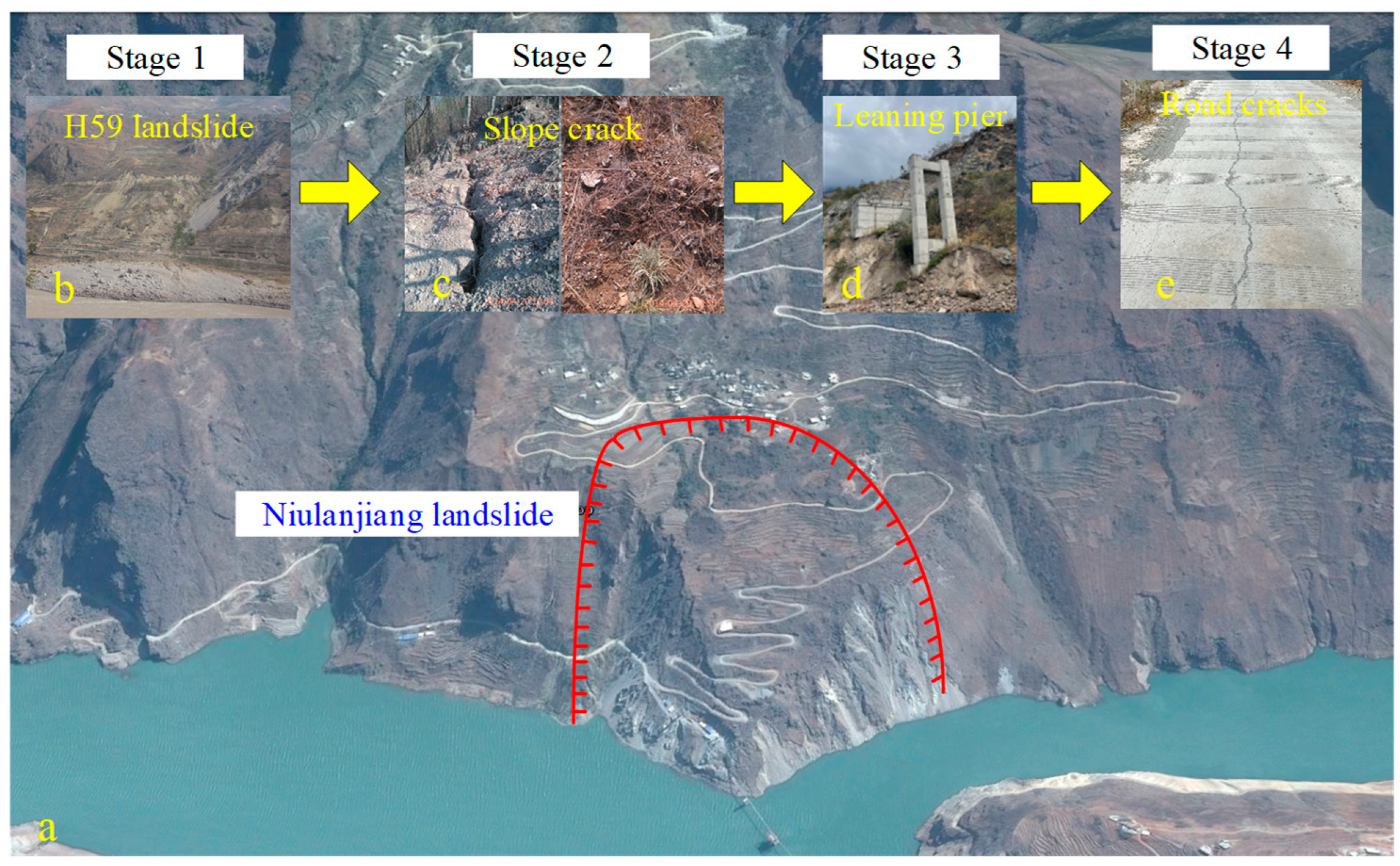
Since construction began on 26 January 2013, the Niulanjiang Bridge has undergone several impoundment and release processes due to the operation of the Xiluodu hydropower station. The bridge piers and the Yongshan bank slope have been significantly displaced, while deformation of the Qiaojia bank slope has been minimal. According to a field survey and statistical analysis, the deformation of the Yongshan slope has undergone four stages, shown in Figure 2. In the first stage (26 January 2013, to 5 April 2014), construction of the Niulanjiang Bridge began in 2013, and the H59 landslide, located approximately 130 m downstream of the bridge, was identified by the operator of the Xiluodu hydropower station. However, it was assessed as posing no potential threat to the bridge piers, as shown in Figure 2. In the second stage (5 April 2014 to 27 November 2014), the Xiluodu hydropower station’s water level rose to 570 m, and two ground surface cracks appeared on the Yongshan bank slope (Figure 2). The construction company discovered significant deformation of the bridge pier foundations, halting bridge construction. Subsequent surveys found multiple landslides near the bridge site, as shown by the blue lines in Figure 1. In the third stage (27 November 2014 to 28 November 2016), the water storage level of the Xiluodu hydropower station reached 600 m, and the deformation of the Yongshan slope and bridge pier foundations developed further, with the deformation rate increasing. At this point, a larger landslide area formed on top of the original landslides, known as the Niulanjiang landslide, as indicated by the red lines in Figure 1. In the fourth stage (28 November 2016, to present), the large deformation of the Yongshan slope and the bridge pier foundations continued to increase due to the Niulanjiang landslide without showing signs of stabilization, resulting in the displacement of the bridge foundations. At present, the construction of Niulanjiang Bridge remains halted due to the effects of the landslide.

2.3. Geology and Geomorphology of Niulanjiang Landslide

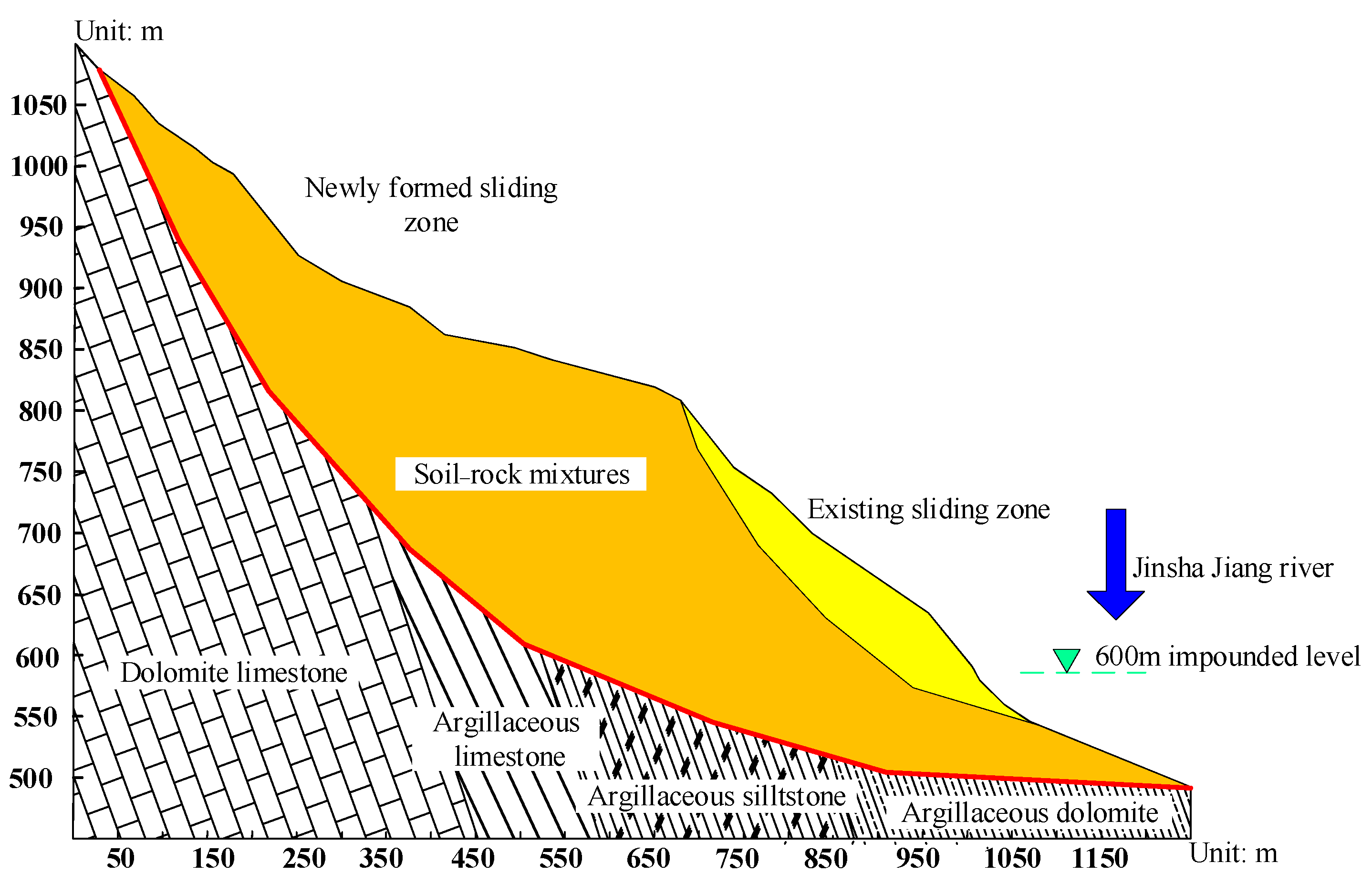
The Niulanjiang landslide is located on the Yongshan bank slope, with an elevation ranging from 670 m to 530 m, a height difference of 140 m, and a sliding direction pointing towards the Niulanjiang River. Figure 2 shows its geometric morphology. Borehole core logs have revealed that the landslide has a width of 580 m, length of 650 m, average thickness of 10 m, and a maximum thickness of 11 m. The area of the landslide slope is approximately 302,000 m2, the landslide volume is approximately 3,024,000 m3, and the slope angle ranges from 40° in the upper part to 35° in the lower part. Hence, it is classified as a large-scale, slow-moving landslide, confirmed as reactivated by the Xiluodu reservoir impoundment. The Niulanjiang landslide severely affects the construction of the Niulanjiang Bridge, and its potential sliding could cause river blockage and surge waves, posing significant hazards.

2.4. Lithology of Landslide

The lithostratigraphy and structure of the landslide were studied by drilling and field surveys. It is a typical rock–soil mixture landslide, mainly composed of gravelly soil that is slightly to moderately dense. The overburden thickness ranges from 9 to 11 m, and the underlying bedrock consists of dolomite, muddy dolomite, and argillaceous limestone interbedded with argillaceous sandstone (shown in Figure 3). The rock mass is broken, and the drilling core is mostly sand and gravel. The orientation of the bedrock is 139°∠42°. The specific descriptions of the rock layers are as follows:
(1)
Gravelly Soil: This layer is off-white to purplish–red, and is characterized as slightly moist and medium-dense. It is composed of dolomitic limestone with a particle size of 1–5 cm and a gravel content of 65%. The foundational bearing capacity has a basic allowable value of 450 kPa, and the standard value for friction resistance is 140 kPa.
(2)
Dolomitic Limestone: This rock layer is brownish–red to off-white, characterized by well-developed fractures and strong weathering, and has a texture ranging from angular gravel to gravelly sand. The saturated uniaxial compressive strength of the rock is 63.1 MPa, the foundational bearing capacity has a basic allowable value of 450 kPa, and the standard value for friction resistance is 150 kPa.
(3)
Muddy Dolomite: This rock layer is off-white to light red, has a muddy texture and thin to medium-thick layered structure, and is also strongly weathered and presents as a broken rock mass. The saturated uniaxial compressive strength is 71.3 MPa, with a foundational bearing capacity basic allowable value of 450 kPa, and a standard value for friction resistance of 150 kPa.
It is noted that the characteristic bearing capacity values were then determined according to relevant Chinese design specifications, such as the *Specifications for Design of Highway Bridges and Culverts Foundations and Substructures* (JTG 3363). The cohesion and internal friction angle of the soil were determined through laboratory shear tests.

2.5. Monitoring Layout

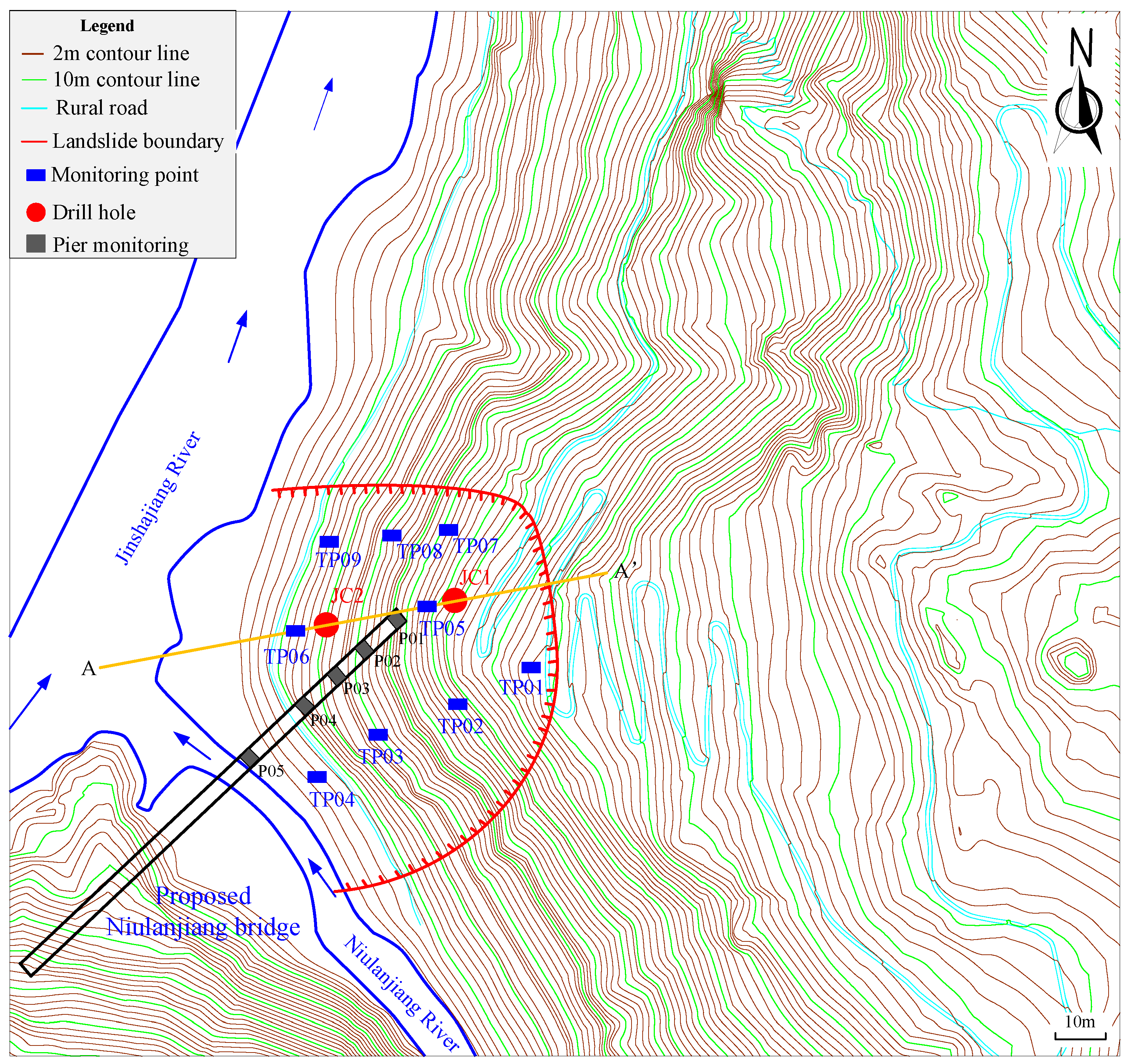
To investigate the deformation characteristics of the Niulanjiang landslide since stage 3, nine surface displacement monitoring points (identifiers: TP01–TP09) and two deep displacement monitoring points (identifiers: JC1 and JC2) were arranged within the scope of the landslide (see Figure 4). Surface displacement monitoring was set up using the Beidou GNSS monitoring system, China, and constantly improved during reservoir impoundment, while deep displacement was monitored by a digital inclinometer system. In addition, five inclination monitoring points (identifiers: P01–P05) were arranged on bridge piers. Continuous real-time monitoring data were collected over approximately 900 days, with reservoir levels and precipitation recorded synchronously, and automatically obtained by wireless communication technology. Hence, it is easy to investigate the relationship between landslide deformation and reservoir water drawdown.

3. Experimental Preparation of Soil–Rock Mixtures

3.1. Specimen Preparation

The soil–rock mixture layer of the Niulanjiang landslide is characterized by a loose structure, low strength, and low stiffness, and is susceptible to plastic deformation under the influence of gravity and external forces. Therefore, mastering the physical and mechanical properties of such geomaterials is helpful to understand the landslide initiation mechanisms.
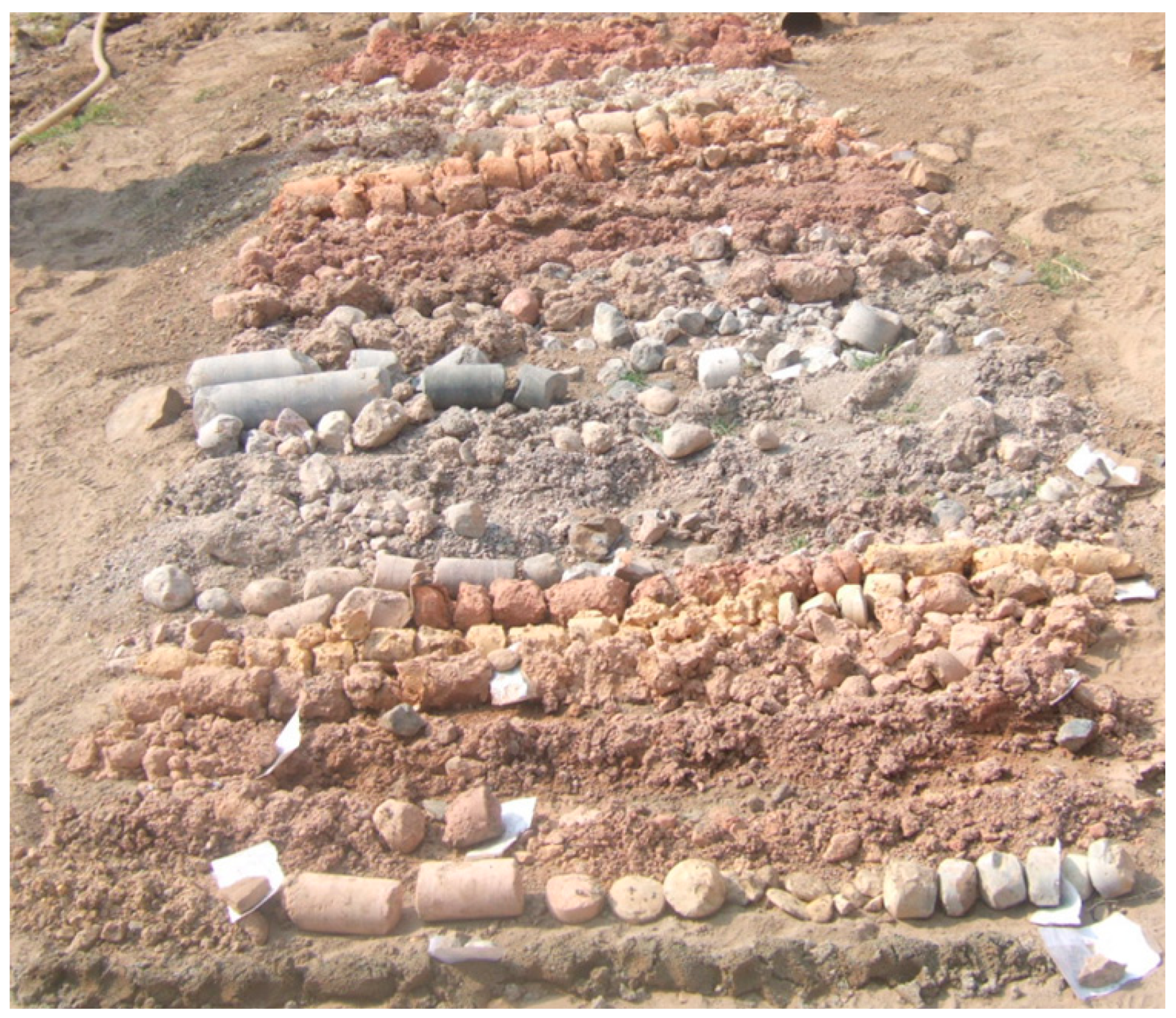
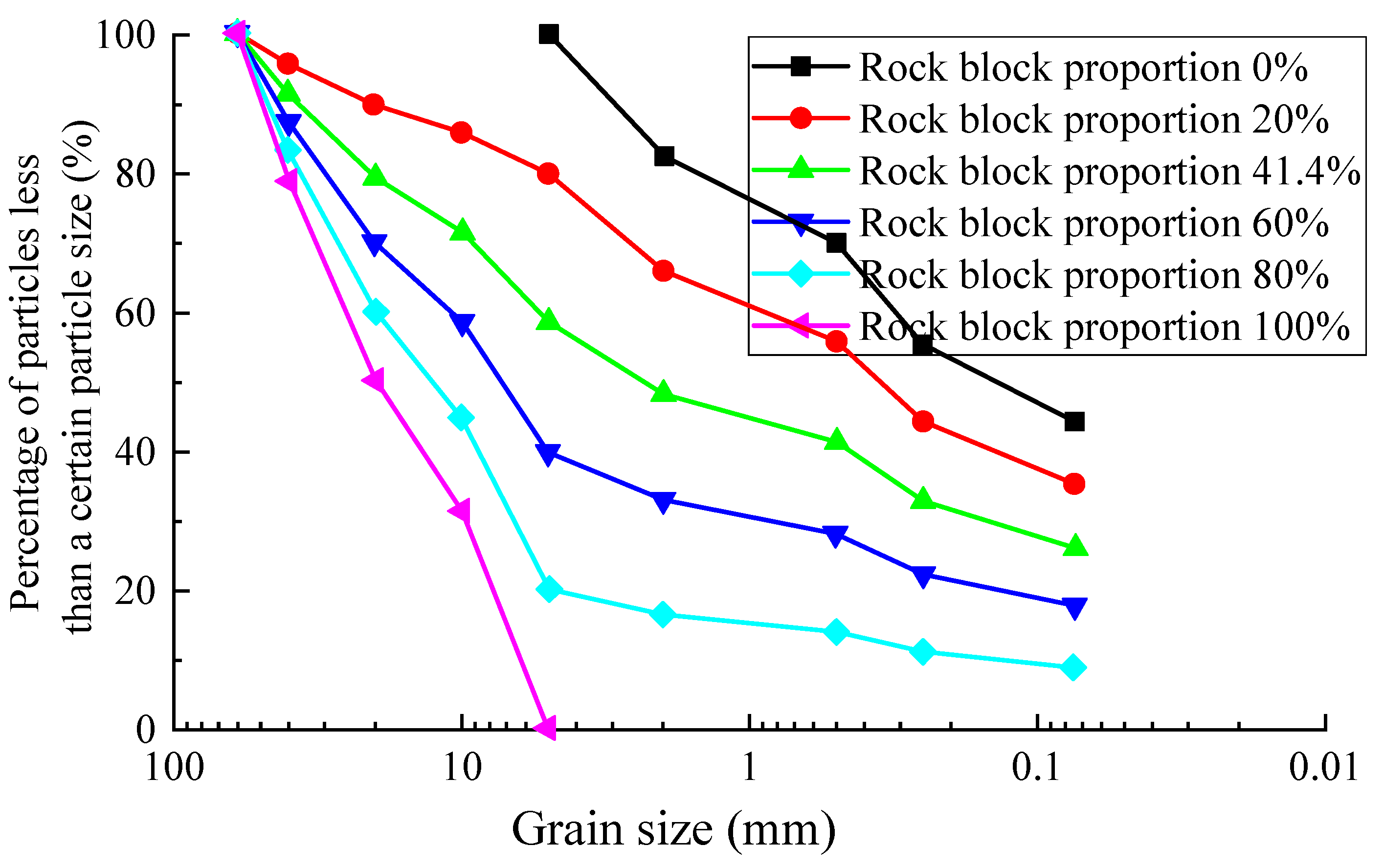
To investigate the influence of reservoir water level fluctuations on the mechanical characteristics of the soil–rock mixture, the samples were drilled from the front edge of the landslide (shown in Figure 5) and then underwent a series of direct shear tests as they had varying rock and moisture contents. The natural moisture content of the soil–rock mixture was determined to be 10.6% through oven-drying methods, with a dry density of 1.66 g/cm3 and a rock block proportion of 41.4%. The particle gradation of the soil–rock mixture was ascertained by sieving, as depicted in Figure 6.
Before the direct shear tests, the collected soil–rock mixture was air-dried, sieved, and recombined according to the designed particle gradation and rock block proportion, with the latter controlled by dry mass. The target water contents were obtained by adding calculated amounts of water, followed by sealing for 24 h to ensure uniform moisture distribution. The prepared mixtures were placed into the shear box in layers and compacted to a dry density close to the field value of 1.66 g/cm3. The saturated samples were prepared by inundation until the sample mass became stable.

3.2. Experimental Apparatus of Shear Tests

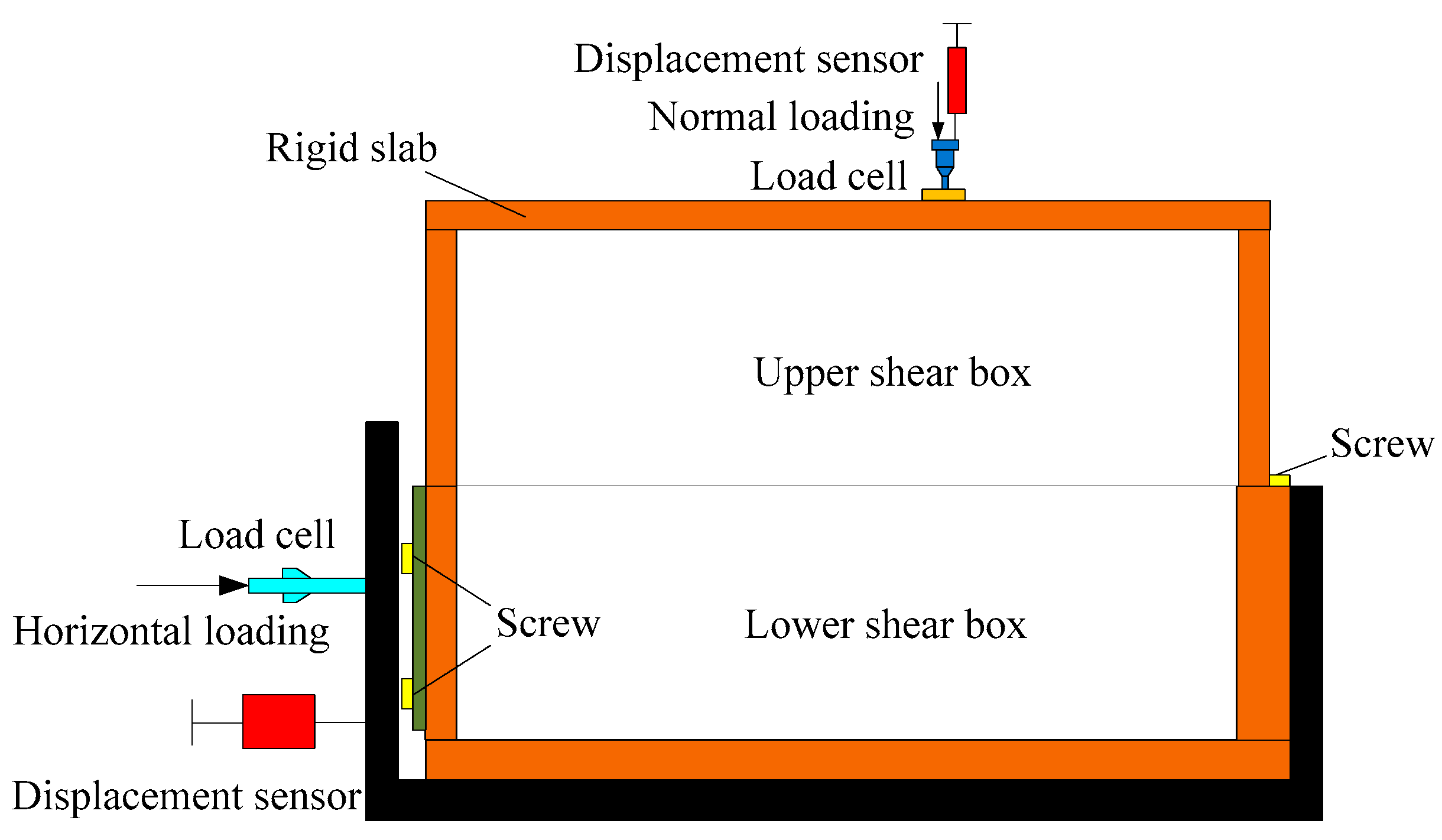
THE-100 large-scale direct shear apparatus, comprising a load-bearing frame, rigid shear box, vertical loading device, horizontal shearing loading device, hydraulic system, and system for computer control and data acquisition, was used in direct shear experiments. Figure 7 shows the schematic diagram of the rigid shear box, whose dimensions are 500 mm × 500 mm × 410 mm, including a 10 mm shear joint. The frictional force between the upper and lower shear boxes is minimized or eliminated through rollers and balls on the front and back sides of the rigid slab (Figure 7), and the axial loading system is either stress- or displacement-controlled.

3.3. Experimental Scheme of Shear Tests

Both rock block proportion and moisture content significantly affect the mechanical properties of soil–rock mixtures [36,37]. On this basis, the shear tests were divided into two groups to examine the shear characteristics of the soil–rock mixture under varying rock block proportions and moisture contents. To clarify the experimental scheme, the tested soil–rock mixture samples are summarized in Table 1.

4. Results and Discussion

4.1. Deformation Characteristics of Niulanjiang Landslide Measured by Long-Term Monitoring

Deformation Evolution Stage Analysis

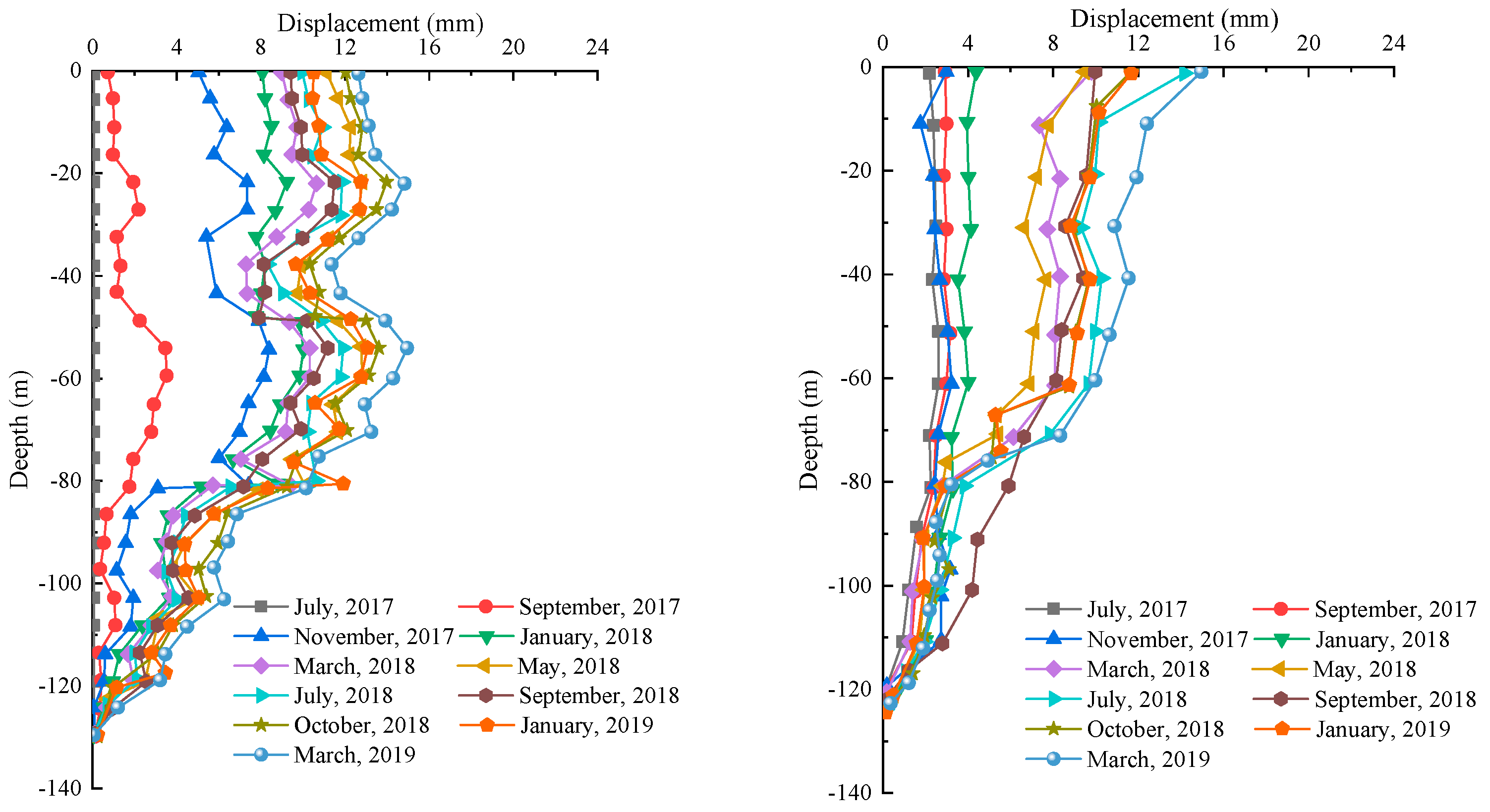
From July 2017 to June 2020, a three-year deformation monitoring scheme of the Niulanjiang landslide was conducted. The monitoring data revealed that the landslide’s evolution could be summarized by shear creep, creep sudden, and overall sliding deformation, as detailed below.
(1)
Shear creep deformation
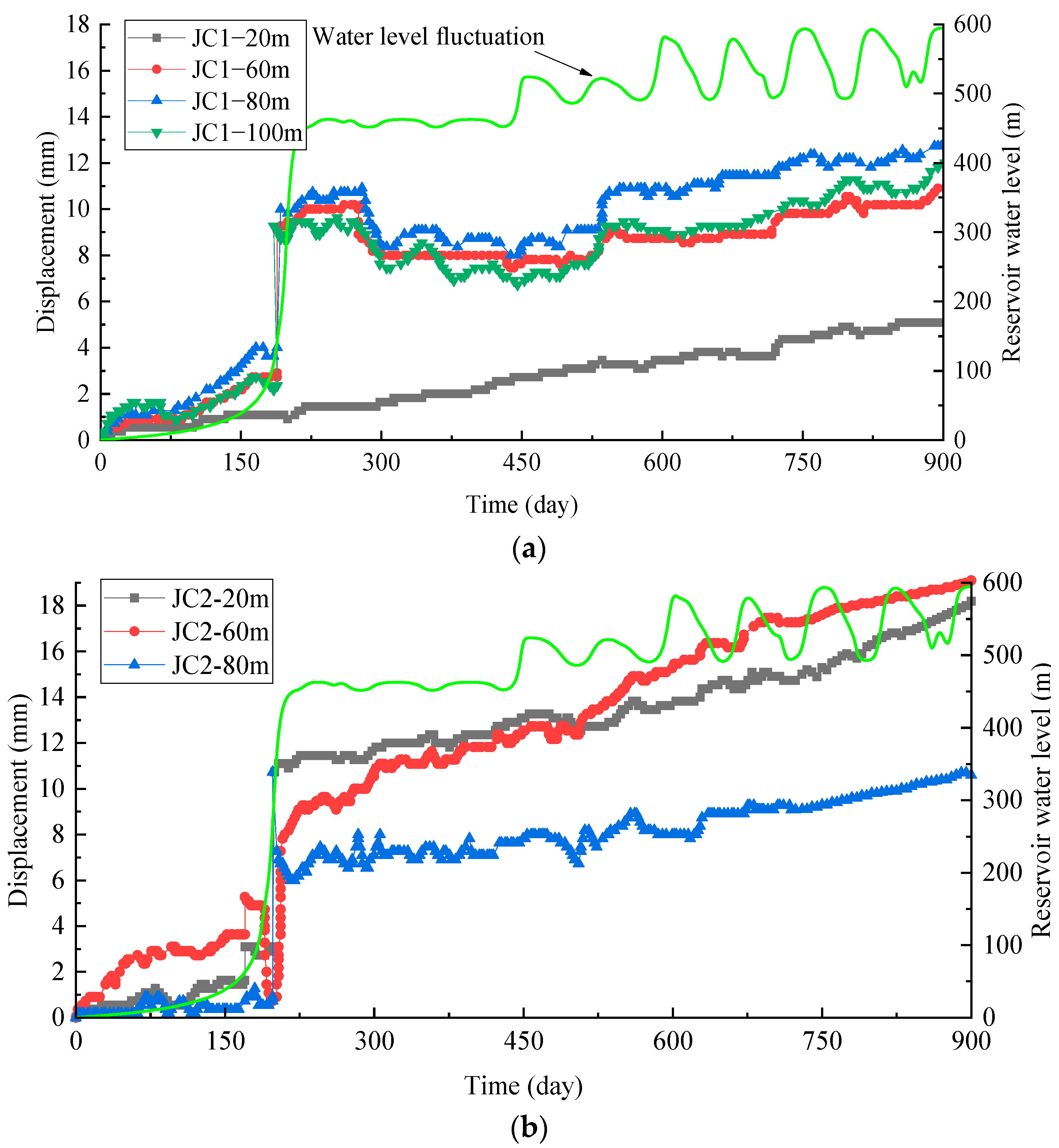
Figure 8 and Figure 9 represent the displacement–time curves of the deep displacement monitoring points JC1 and JC2 for different depths, respectively. From these figures, a continual increase in deep displacement over time is observed, with a low displacement rate. Except for sudden displacement changes, the annual deformation does not exceed 1.0 cm. Prior to November 2017, deep displacement was at a low level, with a maximum value of 4 mm; however, after significant displacement in November 2017, deep displacement began to increase slowly again. By June 2020, the maximum deep displacement had reached 16 mm, and the deformation continued to rise without any signs of convergence.
(2)
Creep sudden deformation
Under the effects of storage capacity regulation in the Xiluodu reservoir, the water level of the Jinsha River surged to 450 m in November 2017, coinciding with the significant sudden change in displacement observed at deep monitoring points JC1 and JC2, with displacement increment values between 6 and 10 mm, as illustrated in Figure 9. After November 2017, fluctuations in the water level continued to affect the changes in deep displacement, though the overall amplitude of change remained small. The deep deformation of JC1 and JC2 accelerated at almost the same time as when the reservoir water fluctuated, indicating that the fluctuation of reservoir water levels is one of the important factors in Niulanjiang landslide deformation.
(3)
Overall sliding deformation
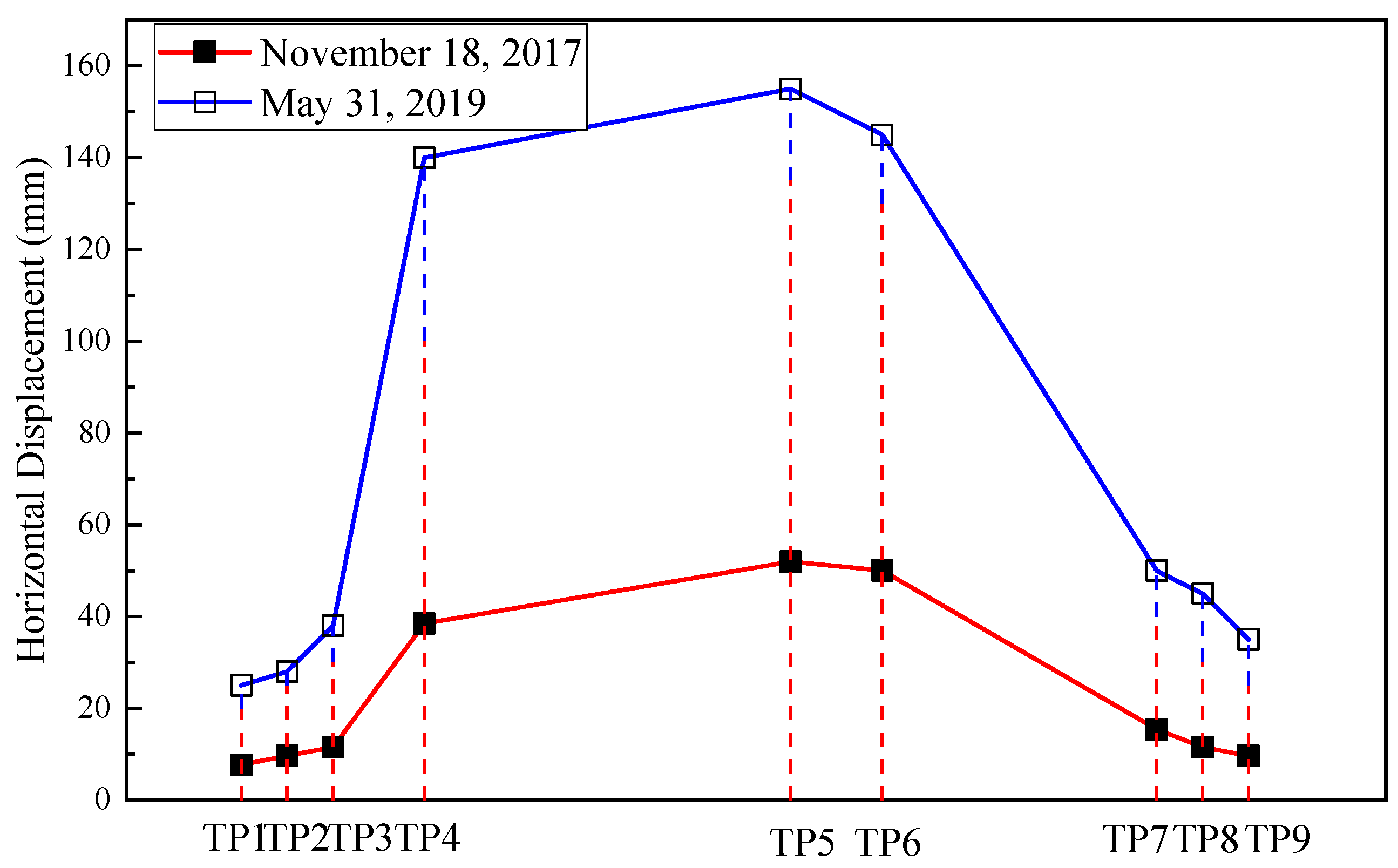
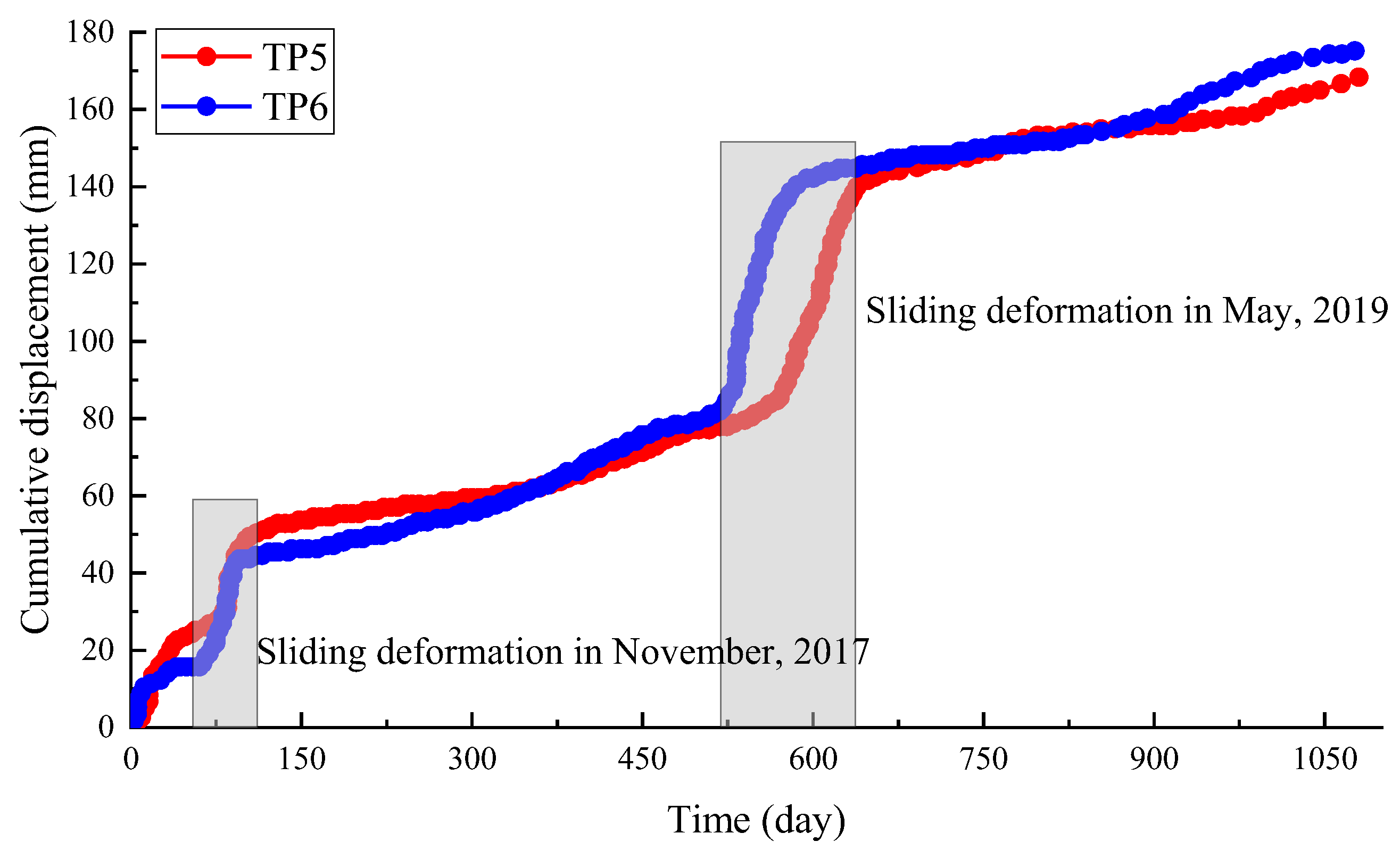
During the storage capacity regulation of the Xiluodu reservoir, two significant sliding deformations of the Niulanjiang landslide occurred in November 2017 and May 2019, respectively. Figure 10 shows the slope surface displacement patterns after the two recorded sliding deformations. The magnitude of the cumulative displacement was different at all nine monitoring points during the two sliding deformation stages. The main feature of the sliding deformation in November 2017 was the presentation of cracks at the rear edge of the landslide and the eastern boundary, with the cracks at the western side being partially connected. The maximum deformation measured by surface monitoring reached 52 mm, as shown in Figure 10. The sliding deformation in May 2019 developed from the sliding in November 2017, and its main features were the opening and development of rear edge cracks and eastern boundary cracks, respectively, formed in November 2017. A new shear outlet of the landslide was also formed, and the maximum surface deformation monitored reached 155 mm. By this time, the sliding surface of the landslide had become interconnected, and the frontal shear outlets had been formed intermittently. The cumulative displacements of typical monitoring points TP5 and TP6 are presented in Figure 11. After May 2019, the surface deformation continued to increase.
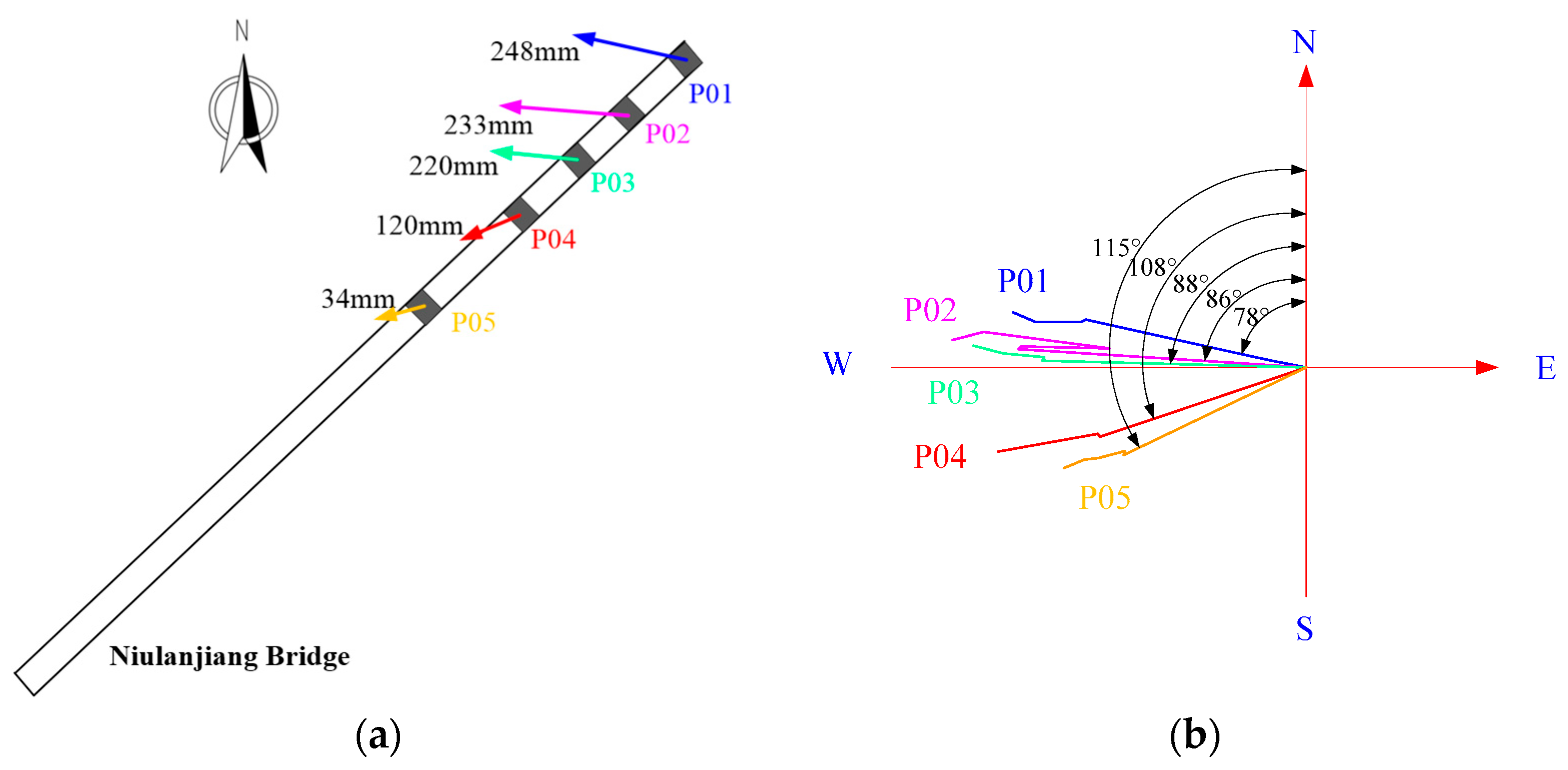
These two sliding deformations seriously affected the stability of the Niulanjiang Bridge piers. Displacement monitoring points were installed on the tops of piers 1# to 5# of the bridge to monitor the deformation characteristics, as shown in Figure 12 for May 2020. It can be seen that piers 1# to 5# tended to shift in the southwest direction, which is consistent with the main sliding direction of the Niulanjiang landslide, with a magnitude of displacement ranging between 30 mm and 250 mm. The largest deformation presented at pier 1#. Hence, as the landslide deformation increases, significant deformation of the bridge piers will occur, affecting the stability of the proposed Niulanjiang Bridge.

4.2. Shear Mechanical Behavior of Soil–Rock Mixtures

4.2.1. Relationship Between Shear Stress and Shear Displacement

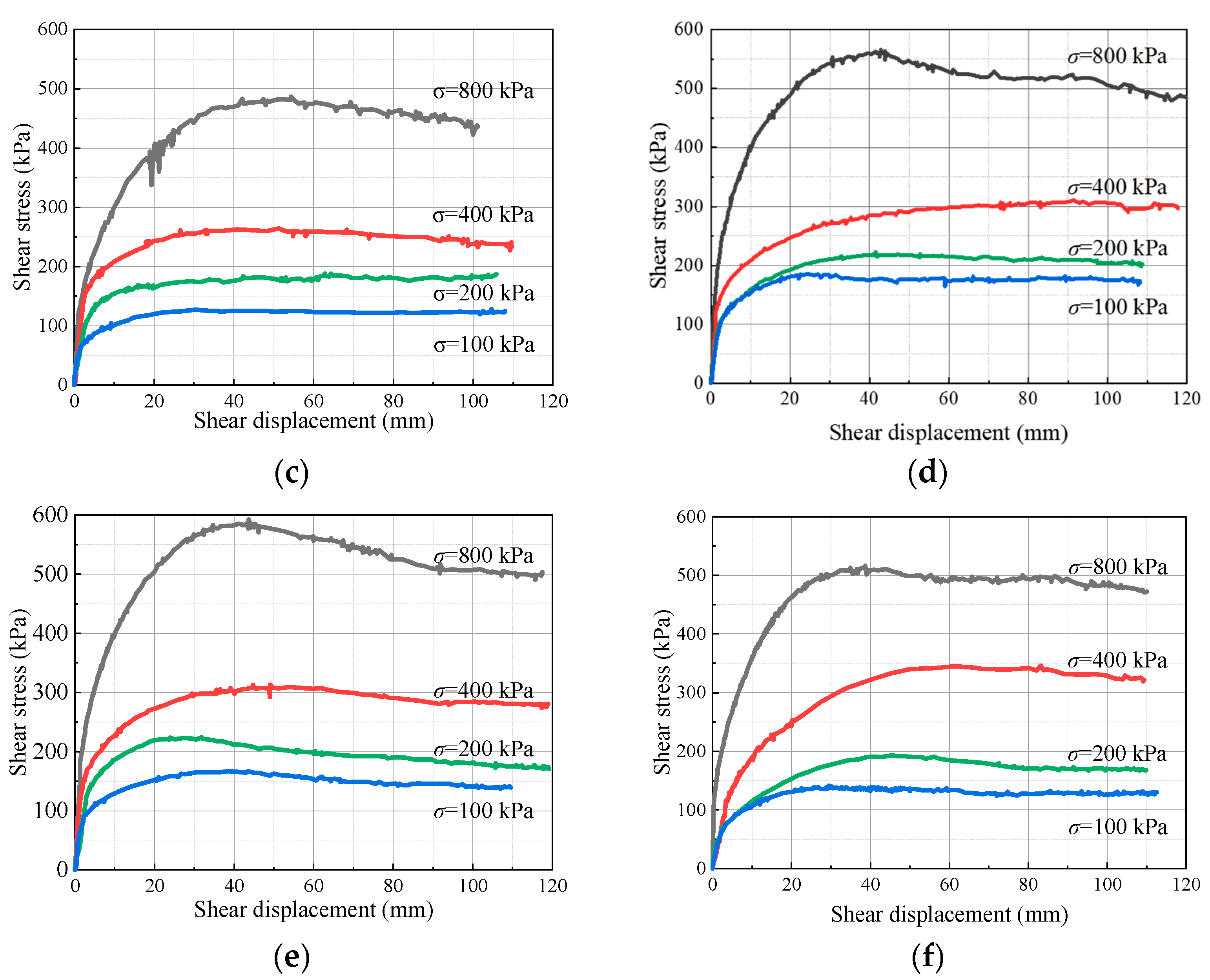
Direct shear tests on soil–rock mixtures with varying rock and moisture contents were conducted under normal stresses of 100 kPa, 200 kPa, 400 kPa, and 800 kPa, which cover both the estimated in situ stress level of the shallow sliding mass and a wider laboratory stress range. To ensure the reliability of the test data, testing was repeated four times for each condition. Typical test results were selected to draw the shear stress–shear displacement curves for soil–rock mixtures with different rock block proportions, as shown in Figure 13. These curves indicate that at a lower rock block proportion (0~20%), the shear stress continuously increases with the increase in shear displacement, exhibiting strain-hardening behavior. After shear stress reaches plastic yield, the deformation presents as plastic flow; at this point, with no increase in shear stress, the shear stress–shear displacement curve does not show distinct peak shear stress, displaying a plastic strain failure mode. For high rock block proportions (≥41.4%), the shear stress–shear displacement curves mainly go through three stages—strain hardening, strain softening, and residual deformation—and present a clear peak shear stress, indicative of a strain-softening failure mode.
The different shear behaviors are mainly related to the internal structure of soil–rock mixtures [26]. At low rock block proportions, the soil matrix controls the shear response, and particle rearrangement and compression lead to strain-hardening behavior. With increasing rock block proportion, rock blocks form a skeleton and interlocking structure, producing a clear peak shear stress. The subsequent destruction of this interlocking structure causes strain softening and residual deformation. In addition, higher moisture content weakens particle bonding and lubricates contacts, making the samples more prone to plastic deformation.
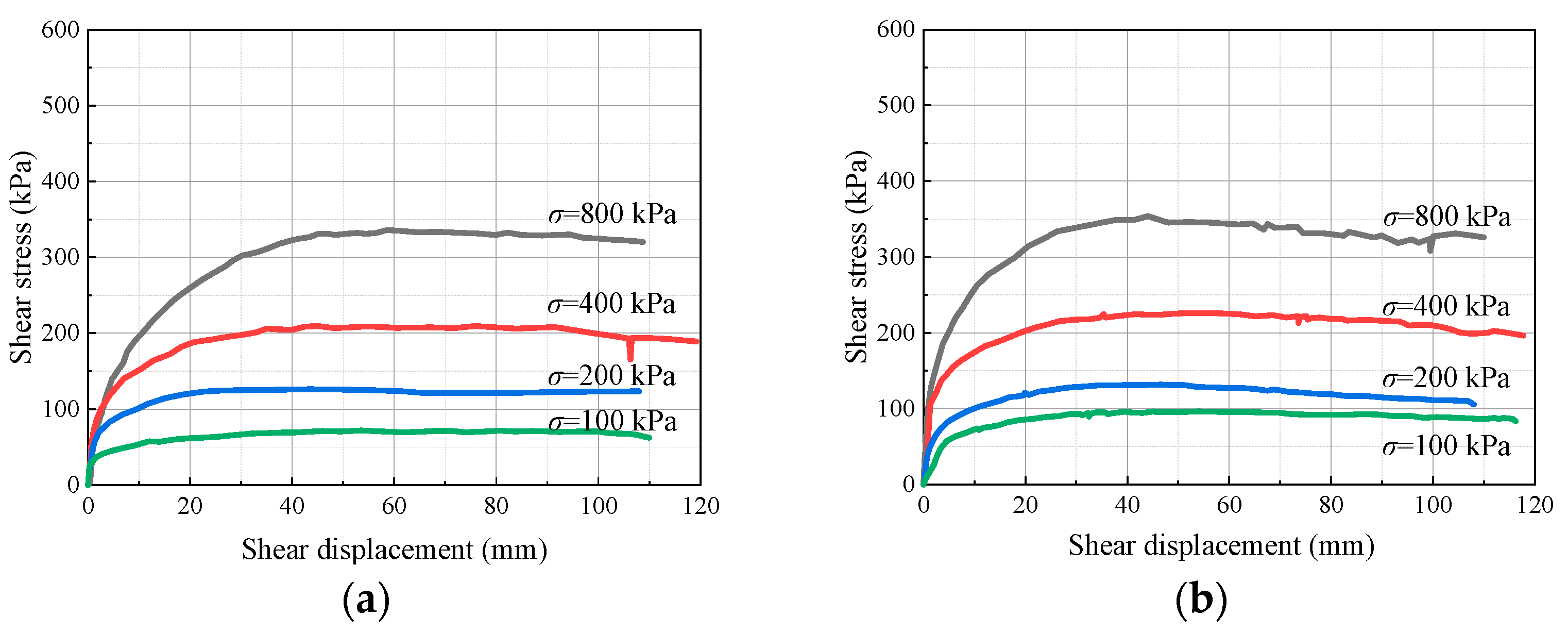
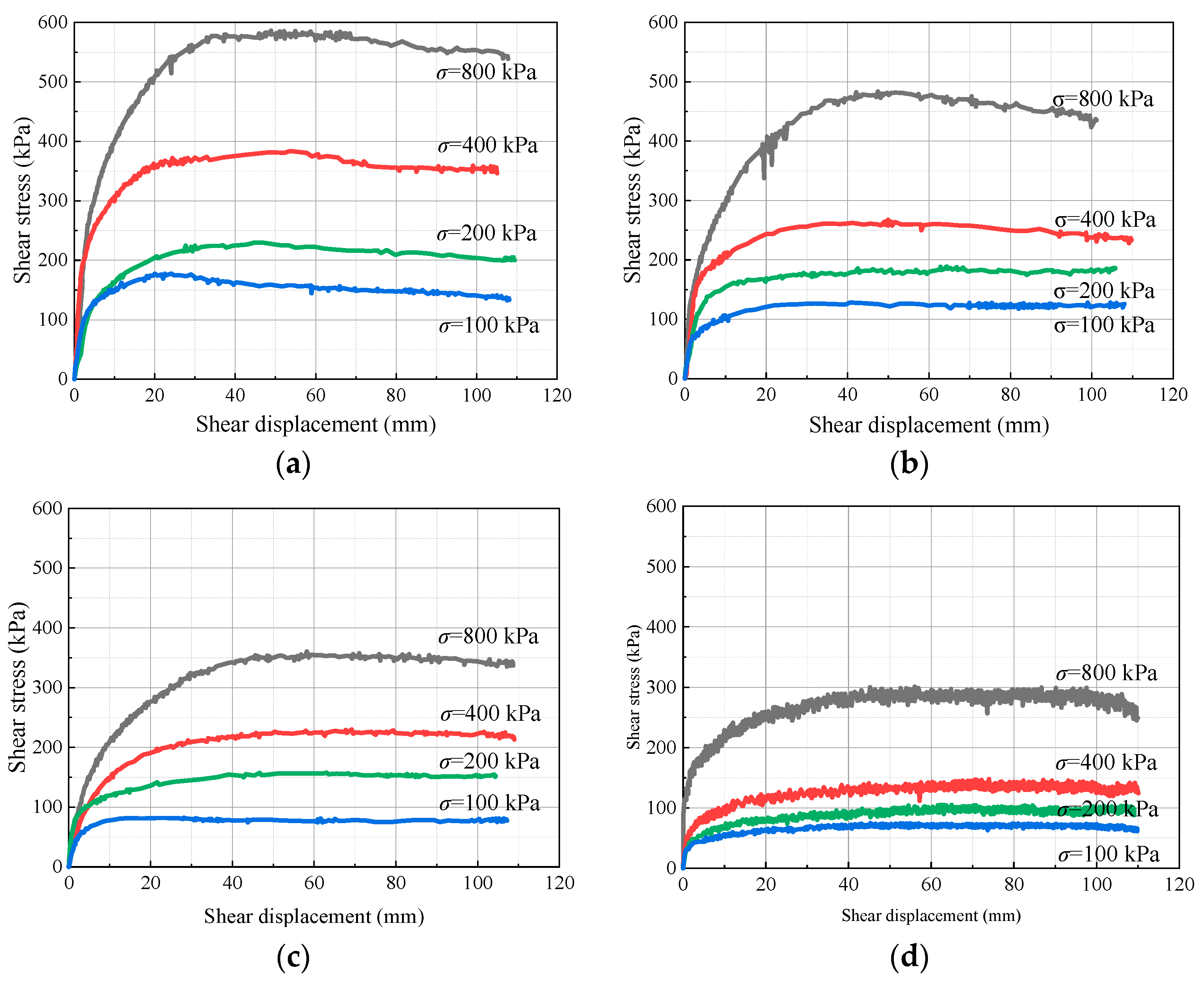
The shear stress–shear displacement curves for soil–rock mixtures with different moisture contents are illustrated in Figure 14. At lower moisture contents (≤10.2%), the curve morphology can be broadly divided into three stages: strain hardening, strain softening, and a post-peak residual shear stress stage showing a strain-softening failure mode. This behavior is mainly related to the relatively strong particle interlocking, matric suction, and frictional resistance under low water-content conditions. At higher moisture contents (≥14.6%), the shear stress–shear displacement curve mainly experiences the strain hardening and plastic deformation stages, manifesting a plastic strain failure mode, as the increase in water content weakens the bonding and suction between fine particles, reduces effective frictional resistance, and enhances the lubrication and rearrangement of particles during shearing.
Due to being limited by indoor test conditions, all shear tests were conducted at a fixed moisture content, which is a shortcoming of this study. According to the test results, shear displacement presents a continuously increasing trend with rising moisture content. In follow-up research, geoelectrical non-invasive monitoring will be adopted to obtain real-time in situ moisture content, which, when combined with data assimilation techniques [38,39,40], will enable us to further explore the continuous correlation between dynamic moisture content and landslide shear displacement.

4.2.2. Shear Dilation and Shear Contraction Characteristics

The relationship between shear displacement and normal displacement for soil–rock mixture samples with varying rock block proportions is depicted in Figure 15. In general, dilatancy occurs in samples at normal stress σ ≤ 200 kPa; at normal stress σ ≥ 400 kPa, they exhibit shear contraction. The value of shear contraction increases with increasing normal stress, consistent with the characteristics of coarse-grained soil, which experiences shear dilation and contraction at low and high normal stress, respectively [41]. The differences in dilatancy among soil–rock mixtures with different rock block proportions are mainly reflected in the maximum shear dilatancy or shear contraction [24]. It is shown that the maximum dilatancy increases with the increase in rock block proportion, while the maximum contraction tends to decrease. For example, under a normal stress of 100 kPa, the maximum shear dilatancy is 2.18 mm, 3.03 mm, and 5.23 mm for rock block proportions of 0%, 41.4%, and 80%, respectively, while under a normal stress of 400 kPa, the maximum shear contraction for the same proportions is 2.75 mm, 1.06 mm, and 0.52 mm, respectively.
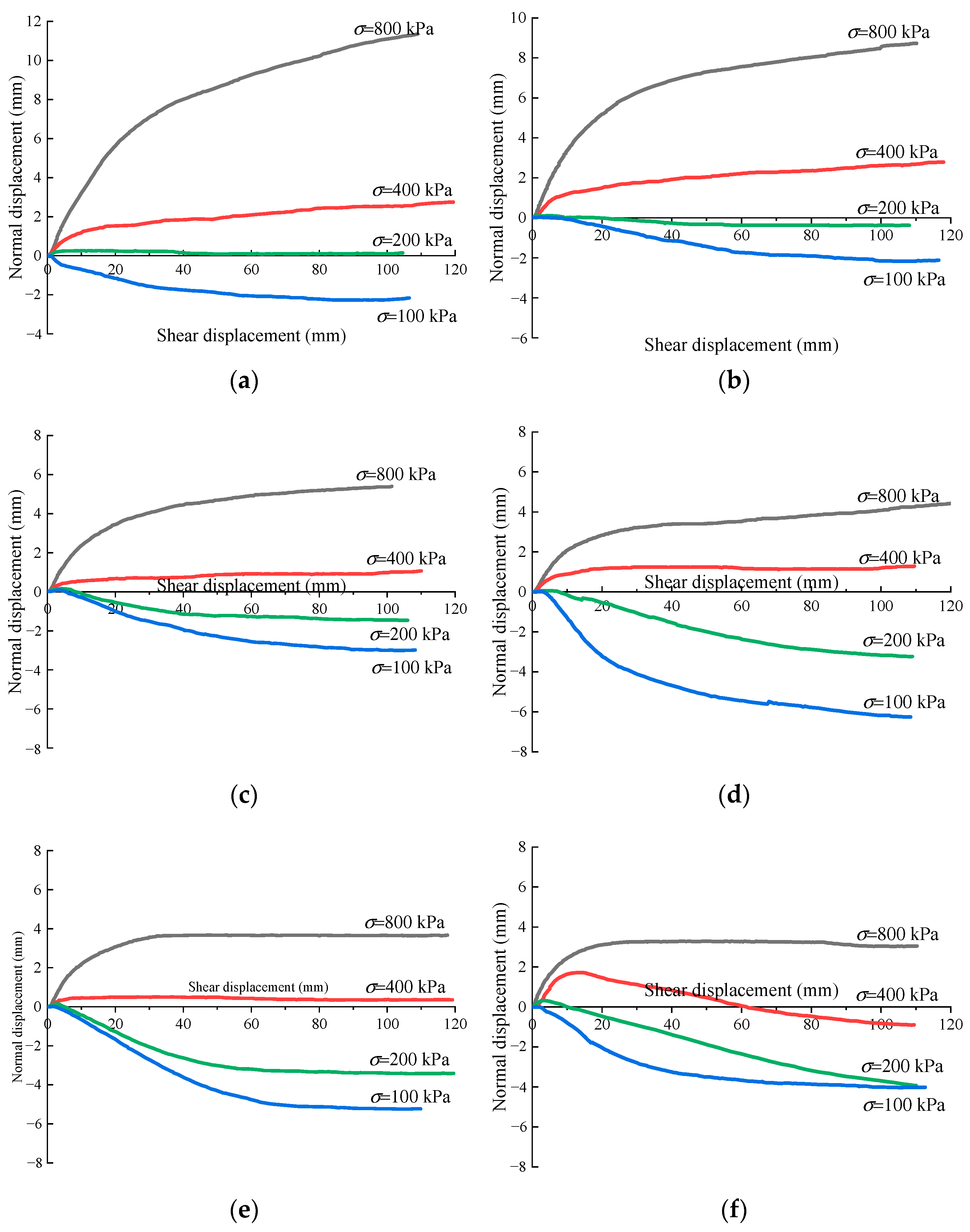
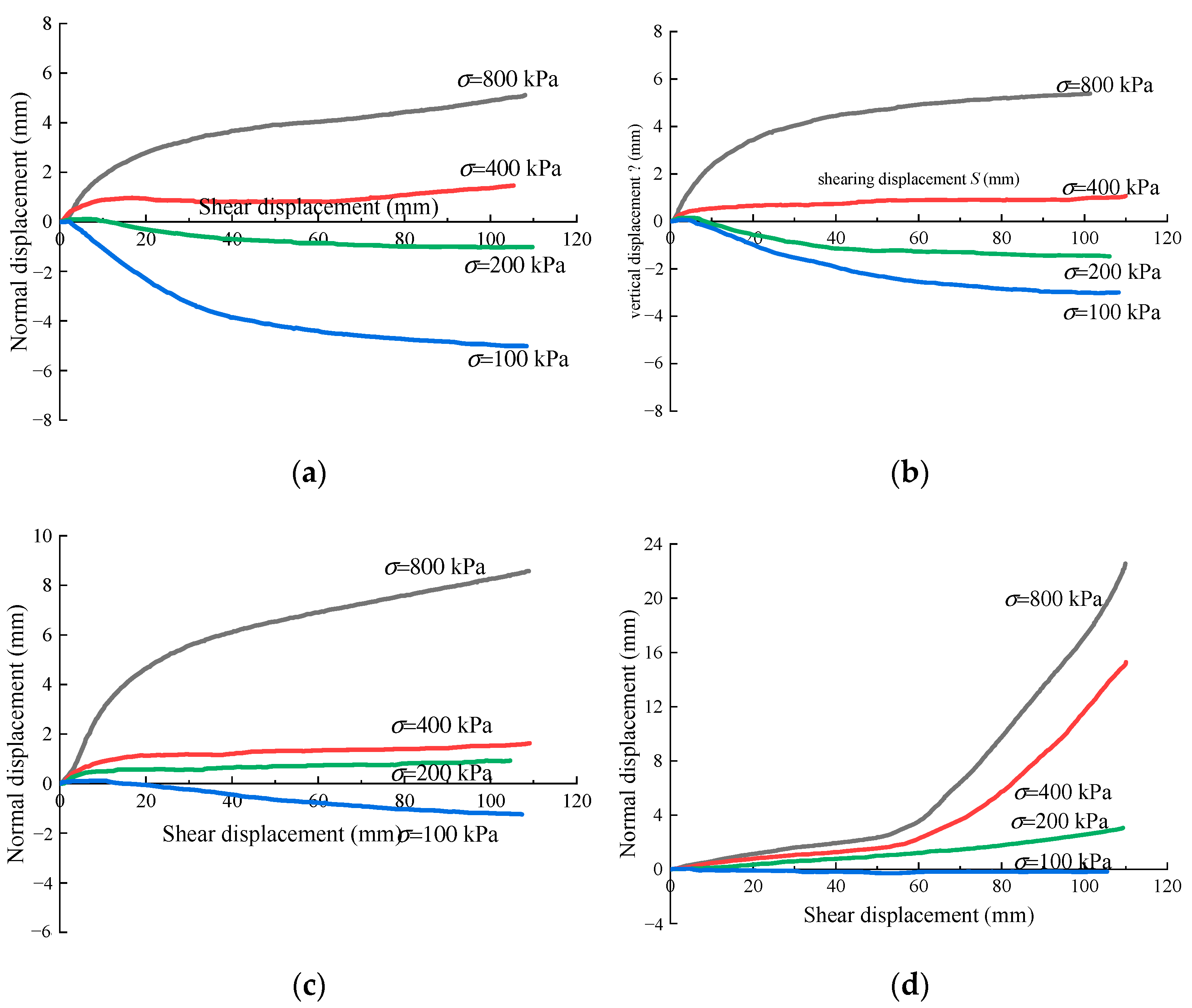
Figure 16 presents the relationship between shear displacement and normal displacement for soil–rock mixture samples with different moisture contents. The samples still exhibit the characteristics of shear dilatancy under low normal stress and shear contraction under high normal stress, which is consistent with the experimental results of [42,43]. However, with the increase in moisture content, shear contraction gradually increases, and under high moisture content conditions, the samples undergo only shear contraction deformation. At lower rock block proportions (0–20%), the soil–rock mixture is mainly controlled by the fine-grained matrix, and the coarse particles cannot form an effective load-bearing skeleton; therefore, the specimen shows progressive plastic deformation without an obvious peak shear stress. For high rock block proportions (≥41.4%), the coarse particles gradually form a skeleton structure, and particle interlocking becomes stronger, resulting in a clear peak shear stress. After the peak stress is reached, contact damage, particle rearrangement, and local shear-band development weaken the skeleton structure, leading to post-peak strain softening and a residual shear stress stage. Similar effects of rock block proportion on the shear behavior of soil–rock mixtures have been reported in previous studies [36,37].

4.2.3. Shear Strength Characteristics

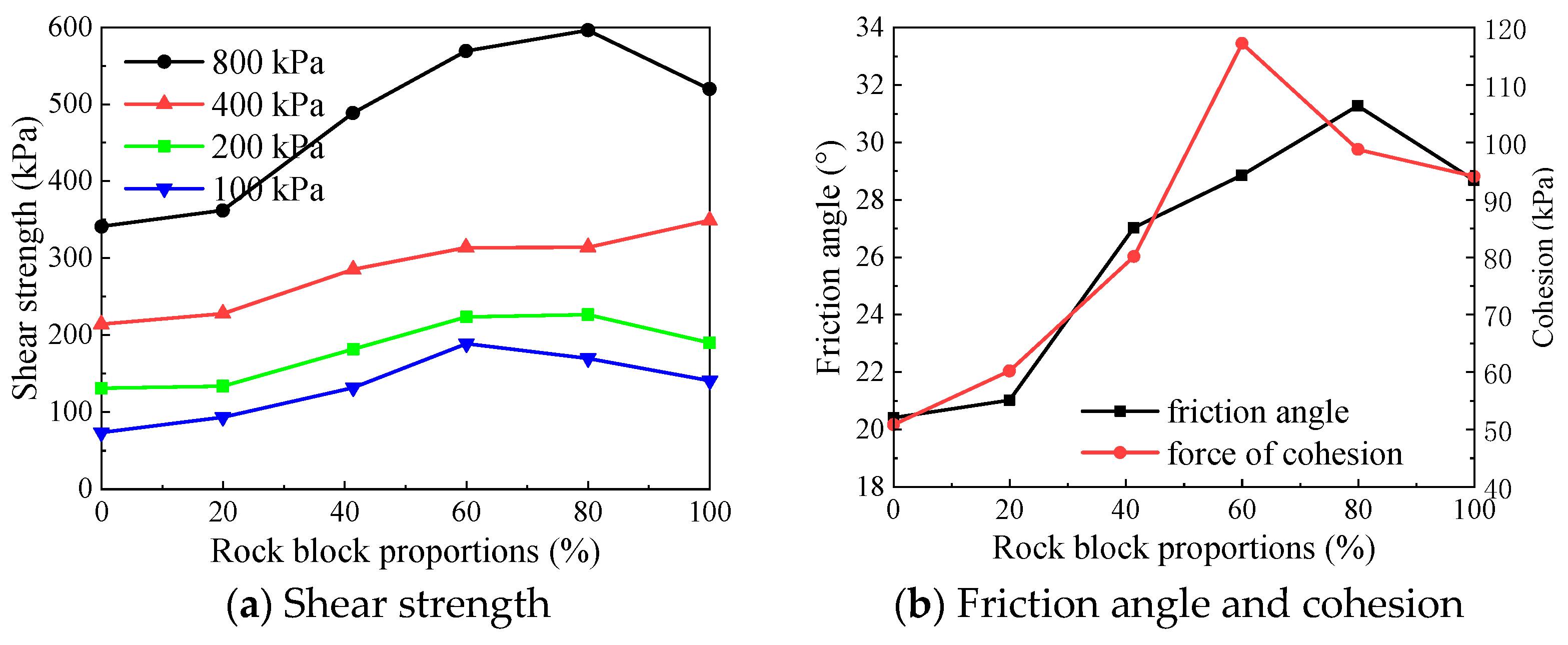
Based on the shear test data, the shear strength, cohesion, and friction angle of the soil–rock mixtures were calculated. Figure 17 presents the shear strength indices for mixtures with different rock block proportions. As depicted in the figure, the shear strength of the soil–rock mixtures firstly increases and then decreases with increasing rock block proportion. Combined with the previous shear deformation analysis, the variation in shear strength is mainly caused by changes in the structure of the mixture and the shear deformation mode induced by the rock block proportion. As the proportion increases, an internal framework structure forms within the sample, and the interlocking and occlusal action between the blocks is enhanced, enabling a transition from fine particle dislocation-type to biting-type shear deformation, which drives greater rock particle deformation [36]. Hence, the shear strength of the soil–rock mixture sample increases as the rock block proportion increases. When the rock block proportion exceeds 80%, the interlocking effect between rocks is reduced due to the small number of fine particles and more voids within the rock framework, the biting-type shear deformation is weakened during the shear process, and the shear strength of the soil–rock mixture sample is reduced.
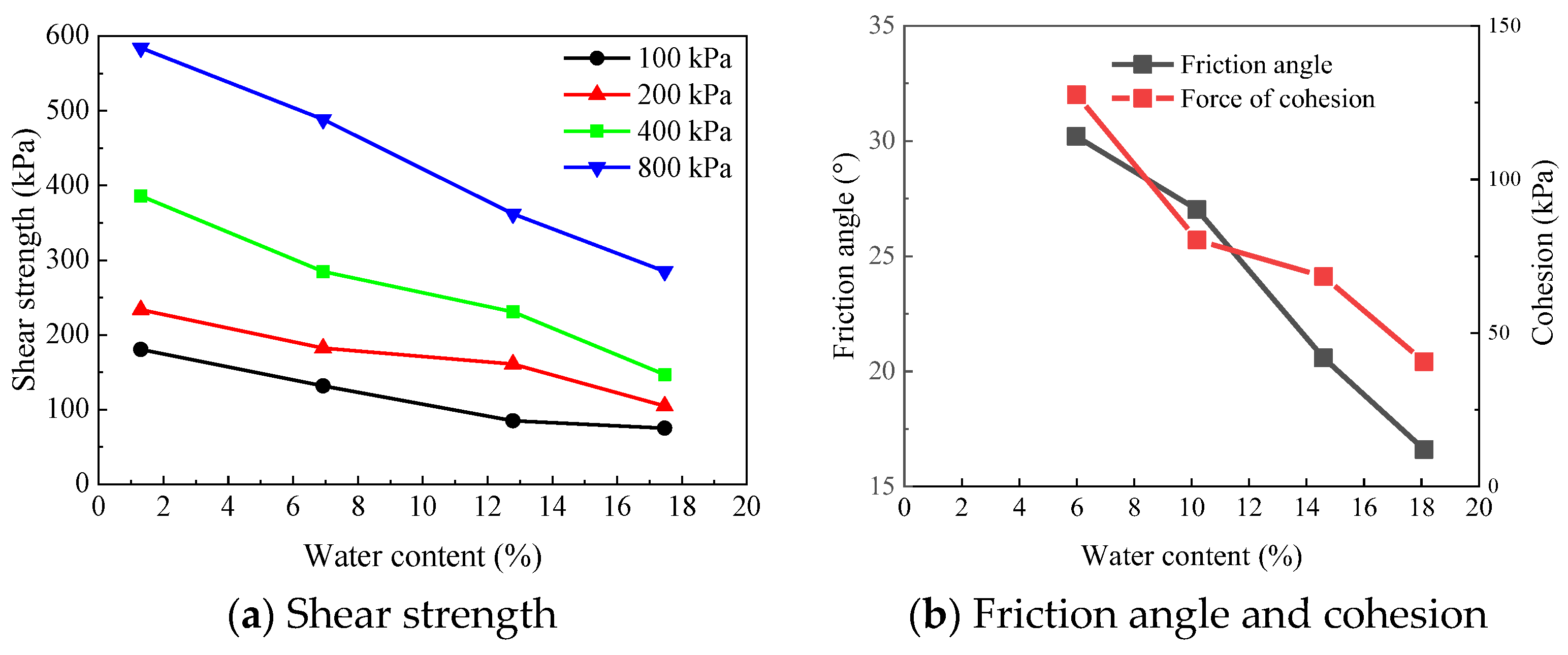
The shear strength indices for soil–rock mixture samples with different moisture contents are shown in Figure 18. The shear strength of the samples significantly decreases with increasing moisture content. Taking a normal stress of 100 kPa as an example, as the moisture content increases from 6% to 18.1%, the shear strength of the samples decreases from 179.8 kPa to 74.6 kPa, a reduction of 58.5%, demonstrating that water has a significant softening effect on the strength of the soil–rock mixtures. This is because the increase in moisture content weakens the occlusal action between the particles within the sample, reducing the intensity of biting-type shear deformation and consequently lowering the shear strength.

4.3. Deformation and Failure Mechanism of Niulanjiang Landslide

4.3.1. Numerical Simulation of Niulanjiang Landslide Under Water Level Fluctuations

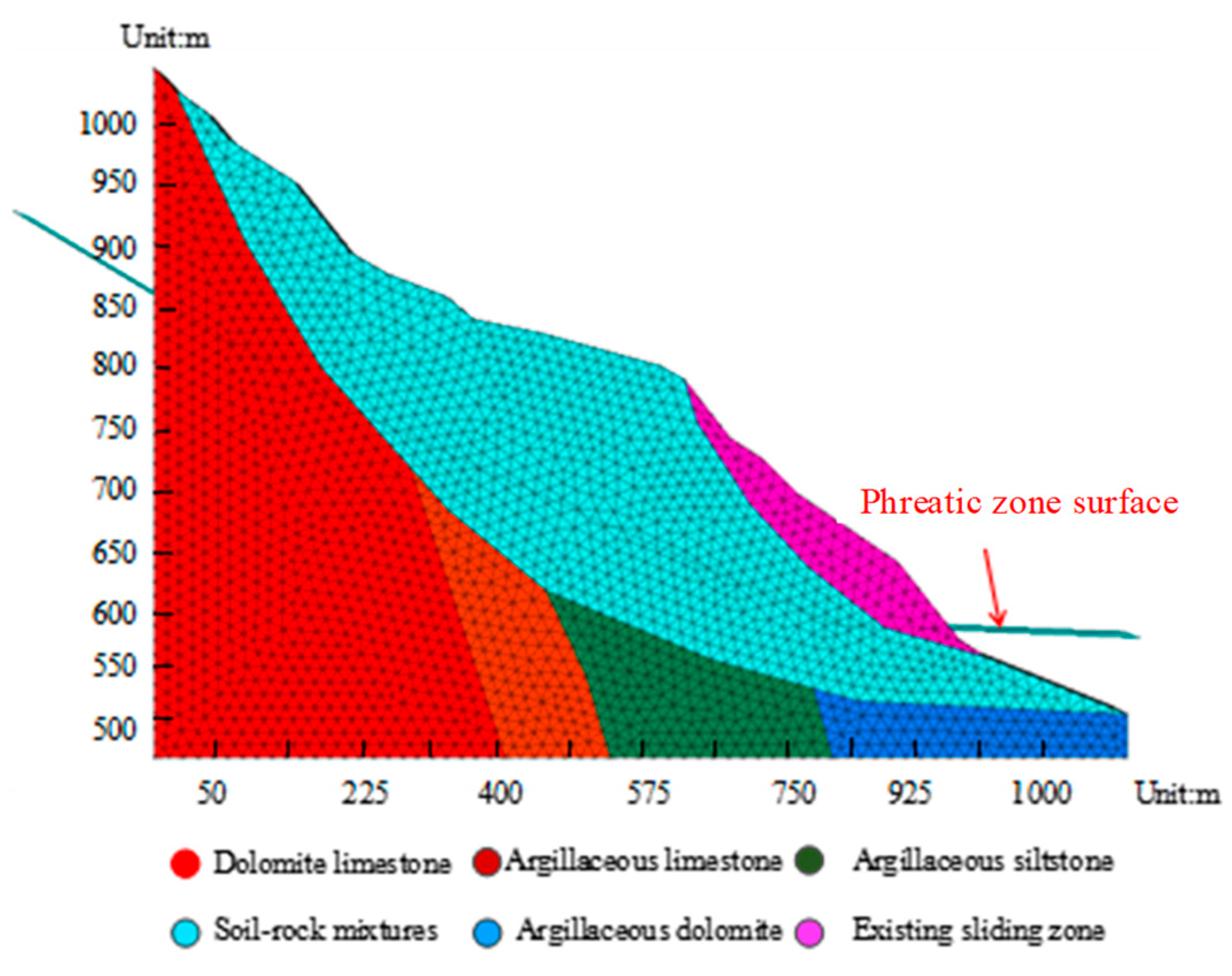
The Niulanjiang landslide is a complicated hydro-mechanical coupling process, involving unsaturated seepage and nonlinear mechanical response. The Darcy motion and Richards equations are used to describe unsaturated seepage of porous-rich soil–rock mixtures, the Mohr–Coulomb criterion is used to describe their mechanical response, and the effective stress principle establishes the relationship between pore-water pressure and effective stress. The hydro-mechanical coupling process is solved within the framework of FLAC 3D 7.0 software, using a 2D numerical model generated according to the geological cross-section, shown in Figure 19. All of the parameters used are summarized in Table 2 and Table 3. The elastic modulus and Poisson’s ratio were mainly obtained from the engineering geological investigation report and recommended values for similar lithologies. The permeability coefficient and porosity were determined based on the hydrogeological investigation data and values reported for similar fractured rock masses and soil–rock mixtures. The shear strength parameters of the soil–rock mixture were obtained from the direct shear tests in this study.
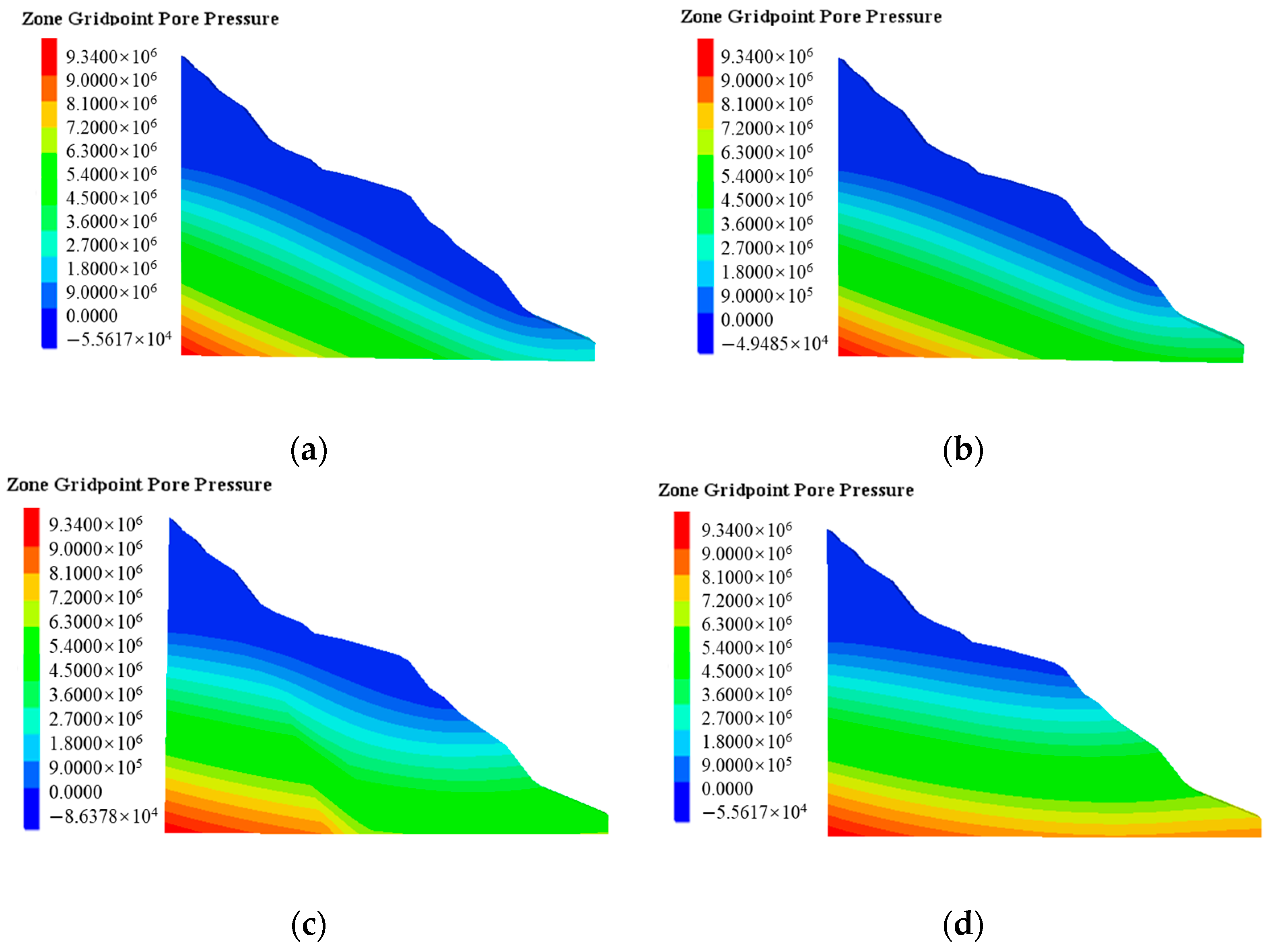
Pore-water pressure is a key factor governing the shear strength of soils. As illustrated in Figure 20, with the water level rising stepwise from the initial condition to 650 m, 700 m, and 750 m, pore-water pressure within the slope increases consistently, accompanied by a progressive strengthening and expansion of the high-pressure zone. The spatial distribution is characterized by higher pore pressures in the lower slope (toe and deeper region) and lower values upslope, forming a clear upward-decreasing gradient. With a further rise in water level, the elevated pore-pressure zone propagates inward and upward, and the contours become denser, indicating intensified hydraulic gradients and seepage, thereby reducing effective stress and creating unfavorable hydraulic conditions for subsequent deformation.
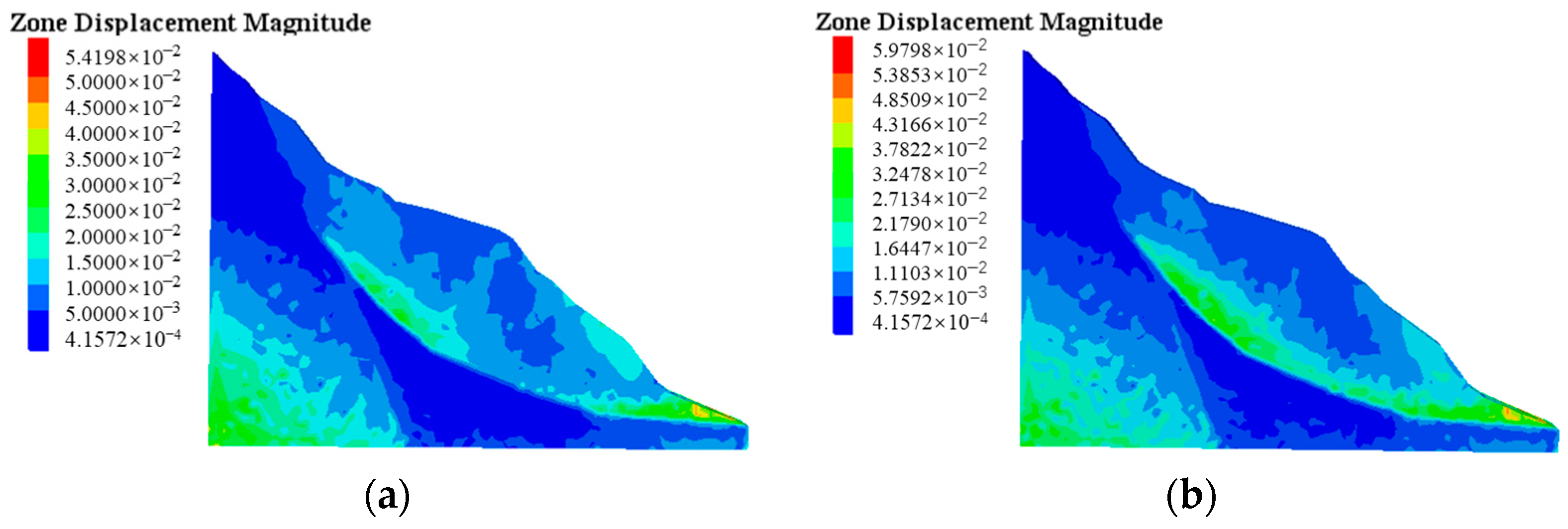
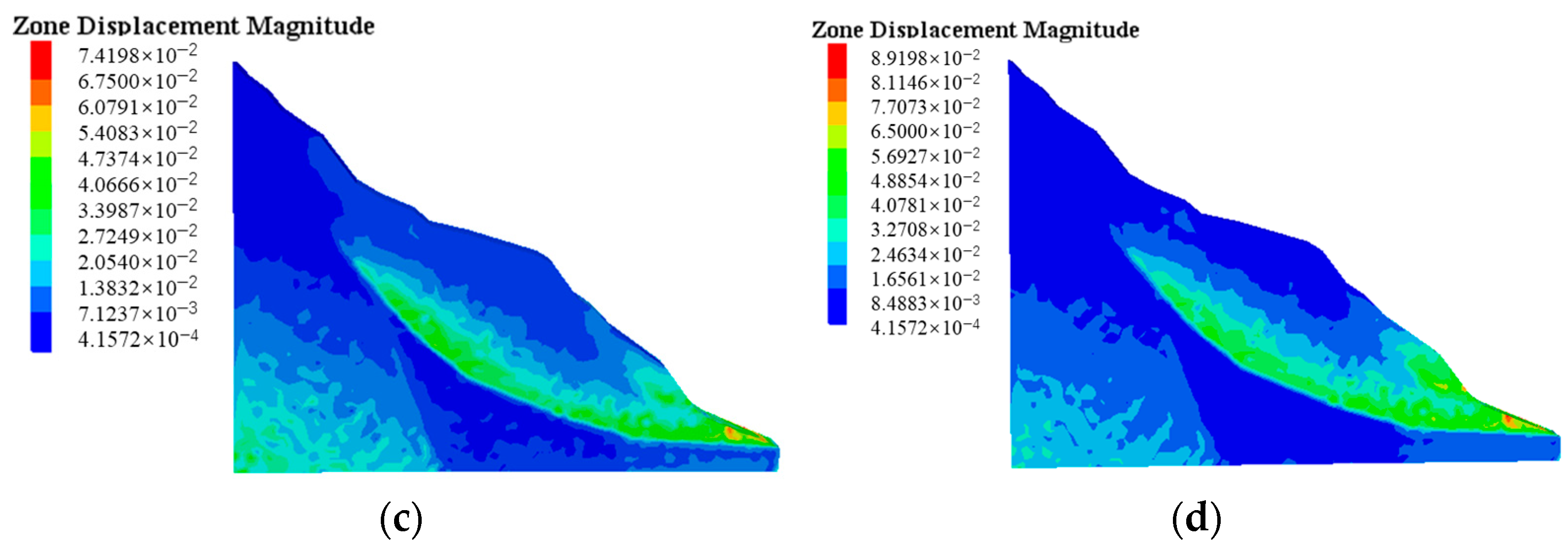
Figure 21 shows that as the reservoir water level rises from 610 m to 650 m, 700 m, and 750 m, the displacement of the landslide mass gradually increases. Large displacement zones are mainly concentrated in the middle part near the potential slip surface and progressively extend toward the front and rear edges. Reservoir infiltration weakens the soil–rock mixture while seepage force and hydrostatic pressure increase, causing the middle part of the slope to deform first and develop local shear failure. The deformation then propagates along the slip zone toward both edges, eventually forming a continuous slip surface and inducing overall movement toward the Niulanjiang River valley, characterized by initial instability in the middle part followed by expansion toward the front and rear edges. The displacement increase in Figure 21 is mainly related to reservoir water infiltration and seepage force. As the water level rises, pore-water pressure in the sliding zone increases, reducing effective normal stress and shear strength, while the increased hydraulic gradient simultaneously generates downslope seepage force, which further promotes slope deformation. Therefore, both the displacement magnitude and deformation range increase with rising water level. Similar mechanisms have been reported in reservoir landslides affected by water level fluctuations [25,36].
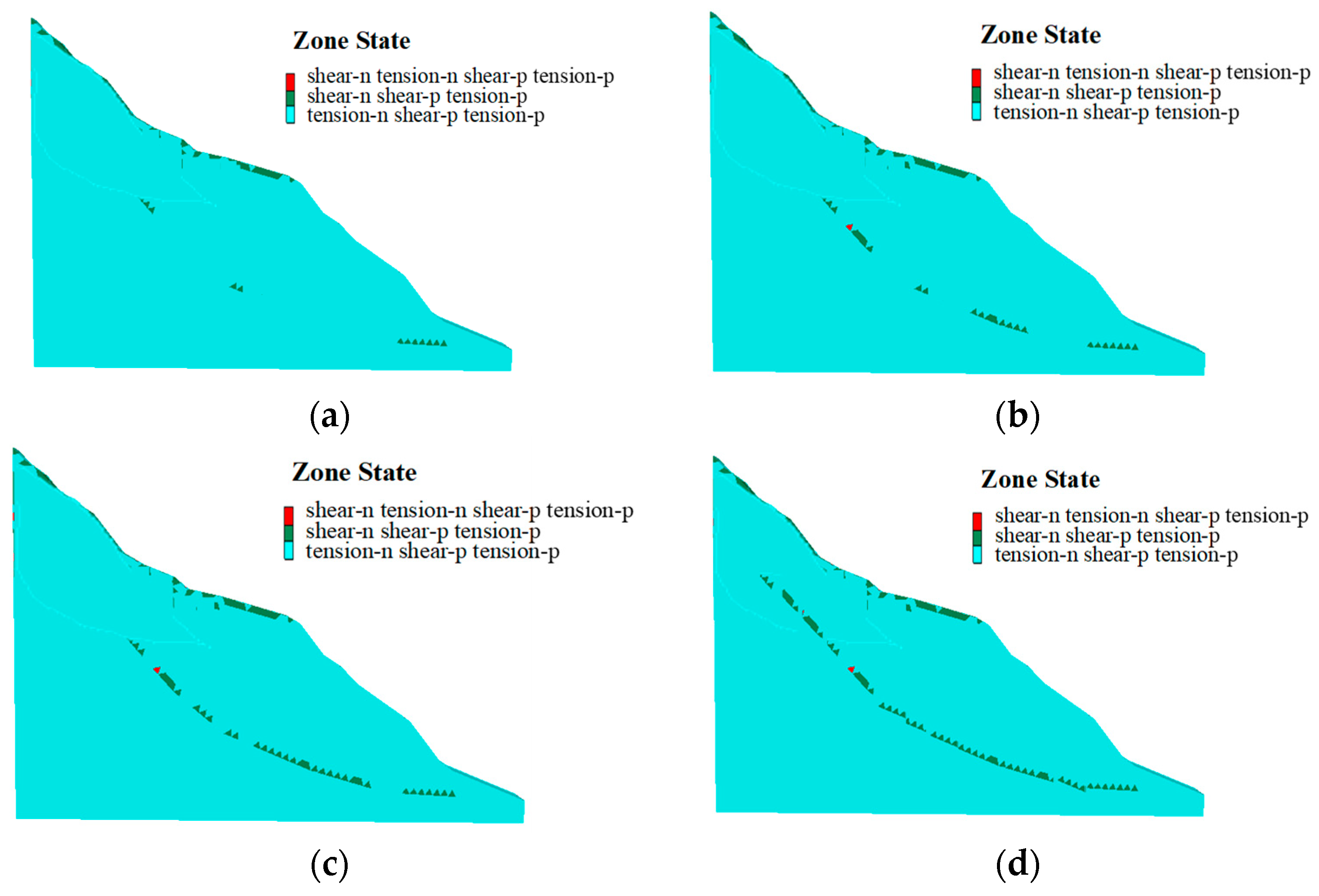
Figure 22 shows the plasticity distribution at different time periods, which first appears locally in the mid-slope, then expands and connects along the potential sliding zone as the water level rises to 422 m and 601 m. When the water level reaches 780 m, the plastic band further extends toward both the toe and the crest, with stronger plastic concentration at the ends, indicating deformation spread driven by pore-pressure increase and reduced effective stress.

4.3.2. Theoretical Analysis of Disaster Evolution Process of Niulanjiang Landslide

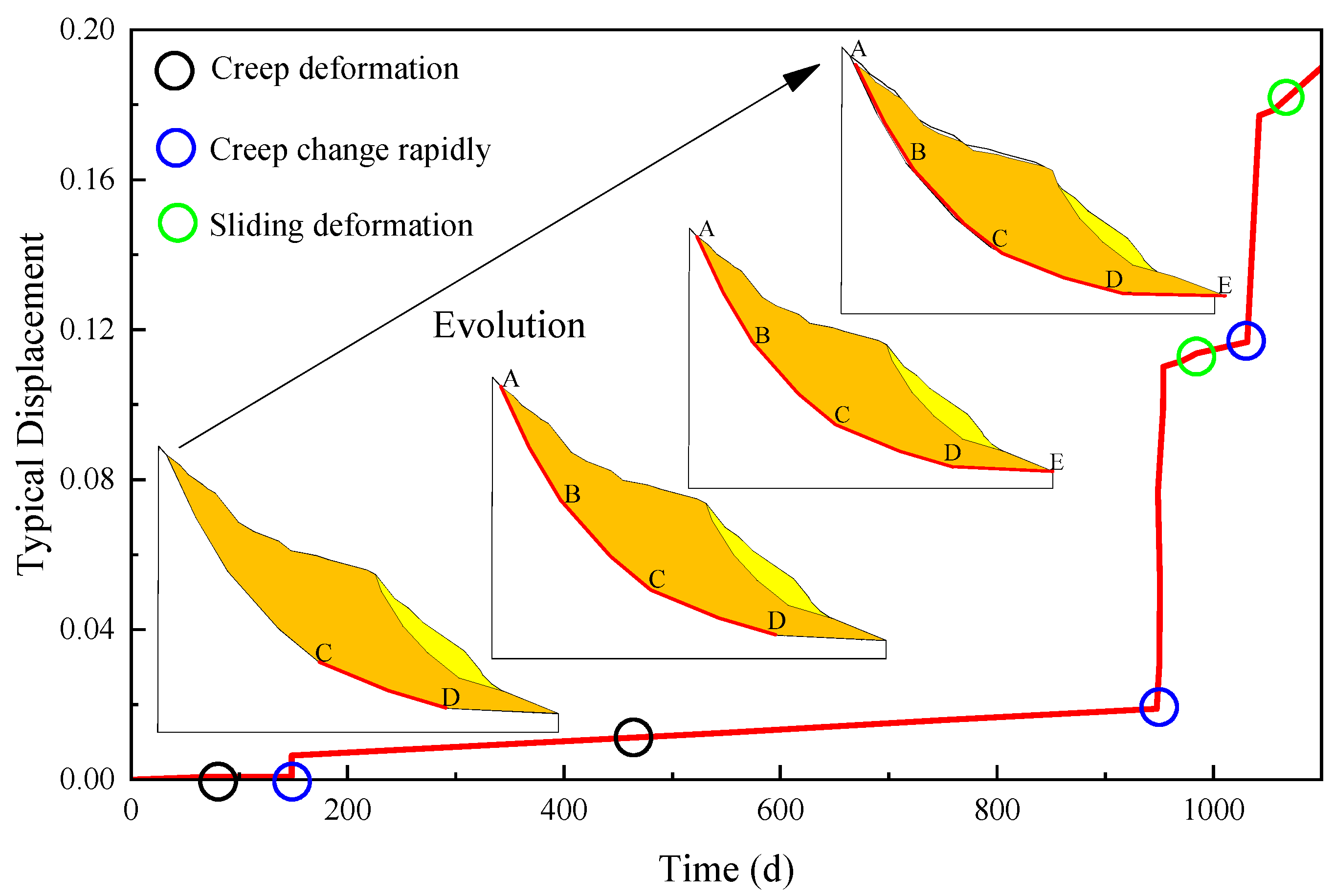
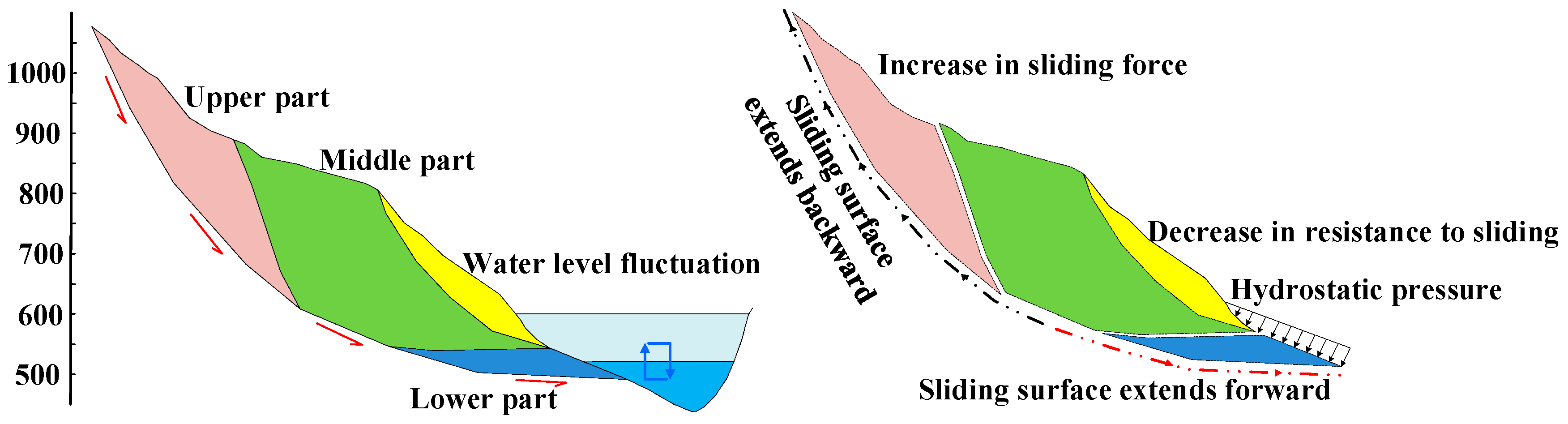
Based on the monitoring results, laboratory shear tests, and numerical simulation, the failure of the Niulanjiang landslide can be interpreted as a progressive hydro-mechanical instability process controlled by reservoir impoundment. Figure 23 illustrates the formation process of the sliding surface. During reservoir water level fluctuation, infiltration and pore-water pressure increased along the sliding zone, especially in the middle part of the slope. Meanwhile, the direct shear tests showed that increasing the moisture content significantly reduced the cohesion and internal friction angle of the soil–rock mixture. Therefore, the sliding zone gradually experienced strength degradation under the combined effects of water-induced softening and seepage force.
The middle part of the landslide was the most sensitive zone during reservoir impoundment. Under the combined action of hydrostatic pressure, hydrodynamic pressure, and reduced shear strength, the local shear resistance in the CD segment became lower than the driving force, causing local shear failure and progressive interconnection of the sliding band. The displacement of this weakened segment then transferred stress to the rear and front parts of the landslide; as a result, tensile cracks developed in the rear ABC segment, while the DE segment gradually formed a shear outlet under the extrusion and sliding thrust from the upper landslide body.
As the local failure zones expanded and became connected, the sliding surface gradually penetrated through the landslide body, the front part lost its resisting effect, and the safety factor decreased below the critical state. Consequently, the landslide evolved from local deformation to overall sliding toward the Niulanjiang River, as shown in Figure 24; therefore, it can be characterized by a middle-slope initiation and rearward–forward progressive failure mode, in which reservoir-induced seepage force and water-related strength degradation jointly control the final instability.

5. Conclusions

Niulanjiang soil–rock mixture landslide under reservoir impoundment by integrating field monitoring, direct shear tests, and numerical simulation. The main conclusions are as follows:
(1)
Long-term monitoring shows that the Niulanjiang landslide underwent a progressive deformation process closely related to reservoir water-level fluctuation. The deformation pattern can be summarized as shear creep, localized abrupt deformation, and overall sliding, but the overall process remained controlled by gradual accumulation of deformation and intermittent acceleration.
(2)
Direct shear tests indicate that the mechanical behavior of the soil–rock mixture is significantly affected by rock block content and moisture content. Higher rock block content enhances particle interlocking and strain-softening behavior, whereas higher moisture content promotes shear contraction and plastic deformation. The increase in water content also reduces cohesion and internal friction angle, weakening the shear resistance of the sliding zone.
(3)
The failure mechanism of the landslide is mainly governed by the coupled effects of reservoir-induced seepage force and water-related strength degradation. Local failure first occurred in the middle part of the slope, where hydrostatic and hydrodynamic pressures were relatively significant. The failure then propagated toward the rear and front parts, causing rear tensile cracking, gradual formation of the frontal shear outlet, and final overall sliding toward the Niulanjiang River.
(4)
This study is mainly based on one typical reservoir-induced soil–rock mixture landslide. The laboratory tests and numerical model cannot fully reproduce the complex in situ stress state, material heterogeneity, and long-term cyclic reservoir effects. Further studies should combine longer-term monitoring, more case comparisons, and fully coupled hydro-mechanical simulations to improve the general applicability of the proposed mechanism.

Author Contributions

Conceptualization, K.W. and L.L.; methodology, W.P.; software, F.X.; validation, K.W. and L.L.; formal analysis, F.X.; investigation, W.P.; resources, L.L.; data curation, K.W.; writing—original draft preparation, K.W.; writing—review and editing, K.W.; visualization, W.P.; supervision, L.L.; project administration, F.X.; funding acquisition, F.X. All authors have read and agreed to the published version of the manuscript.

Funding

This work is supported by the Opening funding of State Laboratory of Geohazard Prevention and Geoenvironment Protection, grant number SKLGP2024K023, Yunnan Communications Investment Group Science and Technology Innovation Project (No. YLJS-KF-2024-10, YCIC-YF-2023-01). Those supports are gratefully acknowledged.

Institutional Review Board Statement

Not applicable.

Informed Consent Statement

Not applicable.

Data Availability Statement

The data that support the findings of this study are available from the authors upon reasonable request.

Conflicts of Interest

Author Kai Wang was employed by Geotechnical Engineering Department, Broadvision Engineering Consultants Co., Ltd. The remaining authors declare that the research was conducted in the absence of any commercial or financial relationships that could be construed as a potential conflict of interest.

References

  1. Crosta, G.; Imposimato, S.; Roddeman, D. Landslide spreading, impulse water waves and modelling of the Vajont Rockslide. Rock. Mech. Rock. Eng. 2016, 49, 2413–2436. [Google Scholar]
  2. Notti, D.; Wrzesniak, A.; Dematteis, N.; Lollino, P.; Fazio, N.; Zucca, F.; Giordan, D. A multidisciplinary investigation of deep-seated landslide reactivation triggered by an extreme rainfall event: A case study of the Monesi di Mendatica landslide, Ligurian Alps. Landslides 2021, 18, 2341–2365. [Google Scholar] [CrossRef]
  3. Singeisen, C.; Massey, C.; Wolter, A.; Kellett, R.; Bloom, C.; Stahl, T.; Gasston, C.; Jones, K. Mechanisms of rock slope failures triggered by the 2016 Mw 7.8 Kaikōura earthquake and implications for landslide susceptibility. Geomorphology 2022, 415, 108386. [Google Scholar] [CrossRef]
  4. Paronuzzi, P.; Rigo, E.; Bolla, A. Influence of filling–drawdown cycles of the Vajont eservoir on Mt. Toc slope stability. Geomorphology 2013, 191, 75–93. [Google Scholar]
  5. Li, C.; Long, J.; Liu, Y.; Li, Q.; Liu, W.; Feng, P.; Li, B.; Xian, J. Mechanism analysis and partition characteristics of a recent highway landslide in Southwest China based on a 3D multi-point deformation monitoring system. Landslides 2021, 18, 2895–2906. [Google Scholar] [CrossRef]
  6. Yu, X.; Gong, B.; Tang, C. Study of the slope deformation characteristics and landslide mechanisms under alternating excavation and rainfall disturbance. Bull. Eng. Geol. Environ. 2021, 80, 7171–7191. [Google Scholar] [CrossRef]
  7. Hu, X.; Wu, S.; Zhang, G.; Zheng, W.; Liu, C.; He, C.; Liu, Z.; Guo, X.; Zhang, H. Landslide displacement prediction using kinematics-based random forests method: A case study in Jinping Reservoir Area, China. Eng. Geol. 2021, 283, 105975. [Google Scholar] [CrossRef]
  8. Dasanayaka, U.; Matsuda, Y. Role of social capital in local knowledge evolution and transfer in a network of rural communities coping with landslide disasters in Sri Lanka. Int. J. Disaster Risk Reduct. 2022, 67, 102630. [Google Scholar] [CrossRef]
  9. Kohler, M.; Hodel, D.; Keller, L.; Molinari, A.; Puzrin, A. Case study of an active landslide at the flank of a water reservoir and its response during earthquakes. Eng. Geol. 2023, 323, 107243. [Google Scholar] [CrossRef]
  10. Zhang, Q.; Zou, J.; Chi, M.; Jiao, Y.; Yan, Y. On the strong mining-induced earthquakes induced by the fracturing of key strata during deep coal mining. Int. J. Geomech. 2024, 24, 04024080. [Google Scholar]
  11. Koler, M.; Puzrin, A. Mechanism of Co-Seismic Deformation of the Slow-Moving La Sorbella Landslide in Italy Revealed by MPM Analysis. J. Geophys. Res.-Earth Surf. 2022, 127, e2022JF006618. [Google Scholar]
  12. Yang, X.; Jiang, Y.; Zhu, J.; Ding, B.; Zhang, W. Deformation characteristics and failure mechanism of the Moli landslide in Guoye Town, Zhouqu County. Landslides 2023, 20, 789–800. [Google Scholar] [CrossRef]
  13. Zhang, W.; Klein, B.; Randolph, M.; Alexander, M. Upslope Failure Mechanisms and Criteria in Submarine Landslides: Shear Band Propagation, Slab Failure and Retrogression. J. Geophys. Res.-Solid Earth. 2021, 126, e2021JB022041. [Google Scholar] [CrossRef]
  14. Zhu, H.; Ye, X.; Pei, H.; Zhang, W.; Cheng, G.; Li, Z. Probing multi-physical process and deformation mechanism of a large-scale landslide using integrated dual-source monitoring. Geosci. Front. 2024, 15, 101773. [Google Scholar]
  15. Macciotta, R.; Hendry, M.; Martin, C. Developing an early warning system for a very slow landslide based on displacement monitoring. Nat. Hazards. 2016, 81, 887–907. [Google Scholar]
  16. Liu, C. Progressive failure mechanism in one-dimensional stability analysis of shallow slope failures. Landslides 2009, 6, 129–137. [Google Scholar] [CrossRef]
  17. Gutierrez, F.; Linares, R.; Roque, C.; Zarroca, M.; Carbonel, D.; Rosell, J.; Gutierrez, M. Large landslides associated with a diapiric fold in Canelles Reservoir (Spanish Pyrenees): Detailed geological–geomorphological mapping, trenching and electrical resistivity imaging. Geomorphology 2015, 241, 224–242. [Google Scholar] [CrossRef]
  18. Glueer, F.; Loew, S.; Manconi, A.; Aaron, J. From Toppling to sliding: Progressive Evolution of the Moosfluh Landslide, Switzerland. J. Geophys. Res.-Earth Surf. 2019, 124, 2899–2919. [Google Scholar] [CrossRef]
  19. Wu, S.; Hu, X.; Zheng, W.; Zhang, G.; Liu, C.; Xu, C.; Zhang, H.; Liu, Z. Displacement behavior and potential impulse waves of the Gapa landslide subjected to the Jinping Reservoir fluctuations in Southwest China. Geomorphology 2022, 397, 108013. [Google Scholar]
  20. Jiang, Z.; Wang, H.; Xie, W. Deformation mechanism of deposit landslide induced by fluctuations of reservoir water level based on physical model tests. Environ. Earth Sci. 2021, 80, 40. [Google Scholar] [CrossRef]
  21. Urmi, Z.; Saeidi, A.; Chavali, R.; Yerro, A. Failure mechanism, existing constitutive models and numerical modeling of landslides in sensitive clay: A review. Geoenviron. Disasters. 2023, 10, 14. [Google Scholar] [CrossRef]
  22. Liu, D.; Hu, X.; Zhou, C.; Xu, C.; He, C.; Zhang, H.; Wang, Q. Deformation mechanisms and evolution of a pile-reinforced landslide under long-term reservoir operation. Eng. Geol. 2020, 275, 105747. [Google Scholar]
  23. Schuster, R. Reservoir-induced landslides. Bull. Eng. Geol. Environ. 1979, 20, 8–15. [Google Scholar] [CrossRef]
  24. Song, K.; Wang, F.; Yi, Q.; Lu, S. Landslide deformation behavior influenced by water level fluctuations of the Three Gorges Reservoir (China). Eng. Geol. 2018, 247, 58–68. [Google Scholar] [CrossRef]
  25. Wu, Q.; Tang, H.; Ma, X.; Wu, Y.; Hu, X.; Wang, L.; Criss, R.; Yuan, Y.; Xu, Y. Identification of movement characteristics and causal factors of the Shuping landslide based on monitored displacements. Bull. Eng. Geol. 2019, 78, 2093–2106. [Google Scholar]
  26. Miao, H.; Wang, G.; Yin, K.; Kamai, T.; Li, Y. Mechanism of the slow-moving landslides in Jurassic red-strata in the Three Gorges Reservoir, China. Eng. Geol. 2014, 171, 59–69. [Google Scholar]
  27. Wang, S.; Wang, J.; Wu, W.; Cui, D.; Su, A.; Xiang, W. Creep properties of clastic soil in a reactivated slow-moving landslide in the Three Gorges Reservoir Region, China. Eng. Geol. 2020, 267, 105493. [Google Scholar] [CrossRef]
  28. Zou, Z.; Yan, J.; Tan, H.; Wang, S.; Xiong, C.; Hu, X. A shear constitutive model for describing the full process of the deformation and failure of slip zone soil. Eng. Geol. 2020, 276, 105766. [Google Scholar] [CrossRef]
  29. Ma, Y.; Meng, X.; Yao, C.; Zhang, X.; Dong, W.; Jiang, Q. Electro-mechanical impedance technique for concrete strength monitoring: Three-dimensional model development and experimental verification. Measurement 2023, 222, 113558. [Google Scholar]
  30. Ma, Y.; Jiang, Q.; Dai, J.; Li, Y. A method for evaluating the onset time and velocity of S-wave in concrete materials. Mater. Struct. 2022, 55, 174. [Google Scholar] [CrossRef]
  31. Zhou, K.; Wang, H.; Liao, J.; Zhang, Y.; Chen, F.; Yang, Z. Deformation and failure mechanism of colluvial landslide under sustained rainfall- a case study if Xinzhan landslide in Tongzi County, China. Alex. Eng. J. 2023, 71, 89–103. [Google Scholar] [CrossRef]
  32. Zhao, J.; Duan, S.; Chen, B.; Li, L.; He, B.; Li, P.; Liu, G. Failure mechanism of rock masses with complex geological conditions in a large underground cavern: A case study. Soil Dyn. Earthq. Eng. 2024, 177, 108439. [Google Scholar] [CrossRef]
  33. Zhao, J.; Jiang, Q.; Lu, J.; Chen, B.; Peo, S.; Wang, Z. Rock fracturing observation based on microseismic monitoring and borehole imaging: In situ investigation in a large underground cavern under high geostress. Tunn. Undergr. Space Technol. 2022, 126, 104549. [Google Scholar] [CrossRef]
  34. Zhou, G.; Lu, X.; Xie, Y.; Cui, K.; Tang, H. Mechanisms of the Non-Uniform Breach Morphology Evolution of Landslide Dams Composed of Unconsolidated Sediments During Overtopping Failure. J. Geophys. Res.-Earth Surf. 2022, 127, e2022JF006664. [Google Scholar]
  35. Wang, N.; He, J.; Du, X.; Cai, B.; Zhao, J. Deformation and failure mechanism of Yanjiao rock slope influenced by rainfall and water level fluctuation of the Xiluodu hydropower station reservoir. J. Mt. Sci. 2023, 20, 1–14. [Google Scholar] [CrossRef]
  36. Grangeon, T.; Dropppo, G.; Esteves, C. From soil aggregates to riverine flocs: A laboratory experiment assessing the respective effects of soil type and flow shear stress on particles characteristics. Hydrol. Process. 2014, 28, 4141–4155. [Google Scholar]
  37. Pra-ai, S.; Boulon, M. Soil–structure cyclic direct shear tests: A new interpretation of the direct shear experiment and its application to a series of cyclic tests. Acta Geotech. 2017, 12, 107–127. [Google Scholar]
  38. De Carlo, L.; Berardi, M.; Vurro, M.; Caputo, M. Geophysical and hydrological data assimilation to monitor water content dynamics in the rocky unsaturated zone. Environ. Monit. Assess. 2018, 190, 310.1–310.17. [Google Scholar] [CrossRef]
  39. Tian, J.; Qin, J.; Yang, K.; Zhao, L.; Chen, Y.; Lu, H.; Li, X.; Shi, J. Improving surface soil moisture retrievals through a novel assimilation algorithm to estimate both model and observation errors. Remote Sens. Environ. 2022, 269, 112802. [Google Scholar] [CrossRef]
  40. Wicki, A.; Jansson, P.; Lehmann, P.; Hauck, C.; Stahli, M. Simulated or measured soil moisture: Which one is adding more value to regional landslide early warning. Hydrol. Earth Syst. Sci. 2021, 25, 4585–4610. [Google Scholar] [CrossRef]
  41. Tarhouni, M.; Hawlader, B. Drained cyclic behaviour and state-dependent stress–dilatancy relationship of sand in direct simple shear tests. Soil Dyn. Earthq. Eng. 2023, 168, 107801. [Google Scholar]
  42. Yao, Y.; Li, J.; Ni, J.; Liang, C.; Zhang, A. Effects of gravel content and shape on shear behaviour of soil-rock mixture: Experiment and DEM modelling. Comput. Geotech. 2022, 141, 104476. [Google Scholar] [CrossRef]
  43. Araujo, G.; Moreno, J.; Zornberg, J. Shear behavior of mixtures involving tropical soils and tire shreds. Constr. Build. Mater. 2021, 276, 122061. [Google Scholar] [CrossRef]
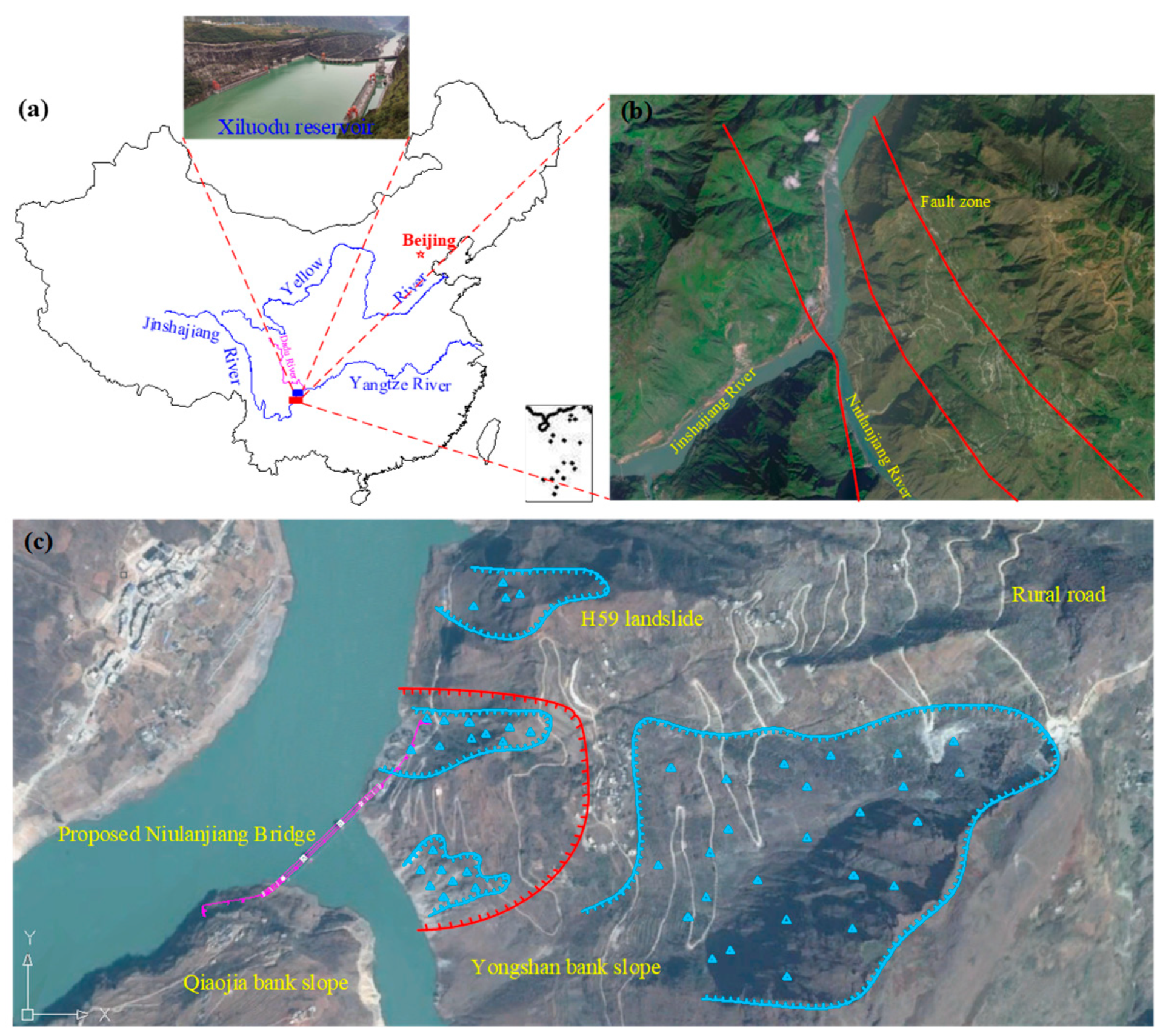
Figure 1. Location and field overview of the Niulanjiang landslide: (a,b) landslides near the proposed Niulanjiang Bridge; (c) landslide boundaries before and after reservoir impoundment, marked by blue and red lines, respectively.
Applsci 16 06553 g001
Figure 2. Engineering geological characteristics of the Niulanjiang landslide. (a) Overview of Niulanjiang landslide, (b) H59 landslide, (c) slope cracks, (d) leaning pier, (e) road cracks (red line represents landslide boundary).
Applsci 16 06553 g002
Figure 3. Engineering geological structure of Niulanjiang landslide.
Applsci 16 06553 g003
Figure 4. Plan view showing layout of deformation monitoring points, including surface displacement, deep displacement, and bridge pier inclination monitoring.
Applsci 16 06553 g004
Figure 5. Selected soil–rock mixture samples in typical drilled core (drilling depth is 70 m).
Applsci 16 06553 g005
Figure 6. Particle gradation curves of soil–rock mixtures under different rock block proportions.
Applsci 16 06553 g006
Figure 7. THE-100 large rock material direct shear system.
Applsci 16 06553 g007
Figure 8. Deep deformation curves of JC1 and JC2 at different stages.
Applsci 16 06553 g008
Figure 9. Creep deformation of JC1 and JC2 deep monitoring points. (a) Displacement–time curves of JC1 monitoring point for different depths. (b) Displacement–time curves of JC2 monitoring point for different depths.
Applsci 16 06553 g009
Figure 10. Deformation condition of Niulanjiang landslide in November 2017 and May 2020.
Applsci 16 06553 g010
Figure 11. Cumulative horizontal displacements based on selected TP5 and TP6 points.
Applsci 16 06553 g011
Figure 12. Deformation condition of Niulanjiang Bridge piers in May 2020. (a) Displacement contour, (b) deformation direction.
Applsci 16 06553 g012
Figure 13. Shear stress–shear displacement of soil–rock mixtures under different rock block proportions. (a) Rock block proportion = 0%, (b) rock block proportion = 20%, (c) rock block proportion = 41.4%, (d) rock block proportion = 60%, (e) rock block proportion = 80%, (f) rock block proportion = 100%.
Applsci 16 06553 g013aApplsci 16 06553 g013b
Figure 14. Shear stress–shear displacement of soil–rock mixtures under different moisture contents. (a) Moisture content = 6%, (b) moisture content = 10.2%, (c) moisture content = 14.6%, (d) moisture content = 18.1%.
Applsci 16 06553 g014
Figure 15. Curves of shear displacement and normal displacement under different rock block proportions. Note: Positive normal displacement denotes shear dilation, and negative normal displacement denotes compression or shear contraction. (a) Rock block proportion = 0%, (b) rock block proportion =20%, (c) rock block proportion = 41.4%, (d) rock block proportion = 60%, (e) rock block proportion = 80%, (f) rock block proportion = 100%.
Applsci 16 06553 g015
Figure 16. Curves of shear displacement and normal displacement under different moisture contents. Note: Positive normal displacement denotes shear dilation, and negative normal displacement denotes compression or shear contraction. (a) Moisture content = 6%, (b) moisture content = 10.2%, (c) moisture content = 14.6%, (d) moisture content = 18.1%.
Applsci 16 06553 g016
Figure 17. Shear strength index of soil–rock mixtures under different rock block proportions.
Applsci 16 06553 g017
Figure 18. Shear strength index of soil–rock mixtures under different moisture contents.
Applsci 16 06553 g018
Figure 19. Rock mass type classification map.
Applsci 16 06553 g019
Figure 20. Pore-water pressure distribution under different water levels. (a) Initial condition, (b) water level rising to 650 m, (c) water level rising to 700 m, (d) water level rising to 750 m.
Applsci 16 06553 g020
Figure 21. Displacement variation under different water levels. (a) Water level rising to 610 m, (b) water level rising to 650 m, (c) water level rising to 700 m, (d) water level rising to 750 m.
Applsci 16 06553 g021aApplsci 16 06553 g021b
Figure 22. Plastic zone distribution under different water levels. (a) Water level rising to 610 m, (b) water level rising to 650 m, (c) water level rising to 700 m, (d) water level rising to 750 m.
Applsci 16 06553 g022
Figure 23. Characteristic curve of landslide evolution process.
Applsci 16 06553 g023
Figure 24. Failure mode of Niulanjiang landslide.
Applsci 16 06553 g024
Table 1. Summary of tested soil–rock mixture samples.
SampleRock Block Proportion (%)Moisture Content (%)Illustration
R00.010.6Soil-dominated sample, no rock blocks
R2020.010.6Low rock block proportion
R41.441.410.6Natural rock block proportion
R606010.6High rock block proportion
R808010.6Very high rock block proportion
R10010010.6Rock block-dominated sample
W6.141.46.1Air-dried condition, natural gradation retained
W10.241.410.2Natural moisture condition, natural gradation retained
W14.641.414.6Wet condition, natural gradation retained
W18.141.418.1Saturated condition after inundation, natural gradation retained
Table 2. Rock mass mechanical parameters.
Rock Mass TypeDensity
/(kg/m3)
Elastic Modulus
/Pa
Poisson’s Ratio
/%
Cohesion
/kPa
Friction Angle
Dolomitic limestone27003 × 10140.251 × 10235
Argillaceous limestone28003.5 × 10140.221 × 10225
Argillaceous siltstone26001.5 × 10140.282 × 10220
Argillaceous dolomite26502.5 × 10140.262 × 10220
Soil–rock mixture23005 × 10120.32Shown in Figure 17 and Figure 18Shown in Figure 17 and Figure 18
Existing slip zone210010 × 1020.35256
Table 3. Seepage model parameters.
Rock Mass TypePermeability Coefficient
/(m2/Pa·s)
Porosity
/%
Fluid Density
/(kg/m3)
Fluid Tensile Strength
/kPa
Dolomitic limestone9.2 × 10−100.810000
Argillaceous limestone7.2 × 10−100.810000
Argillaceous siltstone8.3 × 10−100.810000
Argillaceous dolomite3.9 × 10−100.810000
Soil–rock mixture9.8 × 10−90.810000
Existing slip zone7.2 × 10−90.810000
Disclaimer/Publisher’s Note: The statements, opinions and data contained in all publications are solely those of the individual author(s) and contributor(s) and not of MDPI and/or the editor(s). MDPI and/or the editor(s) disclaim responsibility for any injury to people or property resulting from any ideas, methods, instructions or products referred to in the content.