Article

Optimization of Environmentally Friendly Flotation Reagents for Quartz–K-Feldspar Separation Using Response Surface Methodology


Departament d’Enginyeria Minera, Industrial i TIC, Universitat Politècnica de Catalunya Barcelona Tech, Av. Bases de Manresa 61-63, 08242 Manresa, Barcelona, Spain
*
Author to whom correspondence should be addressed.
Appl. Sci. 2026, 16(13), 6484; https://doi.org/10.3390/app16136484
Submission received: 29 May 2026 / Revised: 15 June 2026 / Accepted: 19 June 2026 / Published: 29 June 2026

Abstract

Selective separation of quartz and feldspar is vital for high-purity silicate raw materials but is challenging due to similar surface chemistries. Conventional flotation typically requires high reagent dosages and hazardous chemicals, raising environmental and economic issues. This study proposes a sustainable flotation strategy using green, bio-derived reagents to improve quartz–feldspar separation by eco-friendly bio-derived reagents. Sodium oleate, a fatty acid collector, was used with low-toxicity modifiers to create synergistic systems. Flotation performance was tested by reagent dosage and pH, with mineral characteristics analyzed via X-ray Fluorescence (XRF) and Particle Size Distribution (PSD). Results showed that the investigated reagent systems improved the differential flotation response between quartz and K-feldspar. Under the optimized flotation conditions (pH 9.24), quartz recovery reached 84.01%, demonstrating that environmentally friendly reagent combinations can achieve favorable flotation performance while reducing chemical consumption. Response Surface Methodology (RSM) was used to optimize flotation variables like pH and reagent dosage, developing a model to predict conditions for favorable flotation response, enabling systematic process improvement. These findings highlight reagent-system optimization as an eco-friendly method for mineral beneficiation, aligning with green chemistry and sustainable practices.

1. Introduction

Quartz and feldspar are the most common silicate minerals in the Earth’s crust and serve as essential raw materials for the glass, ceramic, filler, and advanced functional material industries [1,2,3]. As demand for high-performance glass and ceramic products increases, quality standards for these raw materials have become stricter, especially regarding chemical purity, mineralogical composition, and particle size distribution [4,5]. Even small amounts of unwanted silicate phases can adversely affect melting behavior, product transparency, mechanical strength, and energy consumption during further processing. Therefore, the effective and selective separation of quartz and feldspar remains a long-standing challenge in mineral processing and separation science [6,7].
From a surface chemistry perspective, quartz and feldspar exhibit closely related physicochemical properties. Quartz is a silica mineral, whereas feldspar is an aluminosilicate mineral with similar crystal frameworks, surface hydroxyl groups, and overlapping points of zero charge under typical aqueous conditions [8,9]. These similarities significantly limit the effectiveness of conventional flotation strategies, especially when using single collectors. In industrial practice, selectivity is often achieved using amine-based collectors, fluoride-containing activators, or relatively high reagent dosages [10,11,12]. Although such methods can provide acceptable technical performance, they raise ongoing concerns related to toxicity, corrosivity, reagent costs, wastewater treatment, and environmental compliance [13,14].
In recent years, green and sustainable chemistry has become a key focus in research across chemical engineering, materials science, and separation technology [15,16]. Modern green chemistry not only aims to replace hazardous substances but also strives to reduce overall chemical use by improving functional efficiency, system integration, and mechanistic understanding [17]. In this context, separation processes are increasingly assessed by their chemical footprint, energy consumption, and alignment with circular economy principles. As a result, developing sustainable separation strategies that minimize reagent use while maintaining high selectivity has become a major research goal [18].
Advances in sustainable separation science demonstrate a clear shift from single-molecule reagent development to system-based reagent design [19,20,21,22]. Binary and ternary reagent systems enable synergistic interactions in which individual components play complementary roles, such as regulating surface charge, promoting selective adsorption, controlling dispersion, and modifying wettability. By partitioning these functions among multiple reagents, mixed systems can achieve higher selectivity at lower total dosages compared with traditional single-collector schemes [21,22]. This approach is particularly promising for mineral systems with subtle surface chemical differences, such as quartz and feldspar, where separation efficiency relies on minor variations in surface charge and adsorption behavior.
Fatty acid collectors, especially sodium oleate, have gained renewed interest as bio-derived and relatively low-toxicity alternatives to traditional collectors [23]. Their renewable source and environmentally friendly profile align well with green chemistry principles. However, when used alone, fatty acids often exhibit limited selectivity and require relatively high doses to achieve acceptable recoveries, particularly in complex silicate systems [24]. Recent research suggests that combining fatty acids with suitable modifiers or auxiliary collectors can significantly enhance their performance by promoting selective adsorption, stabilizing surface charge differences, and reducing non-selective mineral flotation [25,26,27,28,29]. Nonetheless, systematic studies that directly link reagent synergy to surface chemistry descriptors and flotation selectivity in quartz–feldspar systems remain quite limited.
Recent studies have demonstrated significant progress in fluorine-free quartz–feldspar flotation systems operating under neutral and weakly alkaline conditions. Suo et al. [30] reported successful flotation separation of quartz and feldspar using amine ether collectors, achieving high selectivity under weakly alkaline conditions through selective adsorption and hydrogen-bond interactions on quartz surfaces. Sun et al. [31] demonstrated that hydroxypropyl starch can effectively depress feldspar while maintaining favorable quartz flotation performance. Hu et al. [32] investigated a combined collector system consisting of sodium oleate and TTPC, showing that mixed collector strategies can significantly improve flotation selectivity without the use of hydrofluoric acid. Similarly, Chen et al. [33] reported that ionic-liquid-based collectors selectively modified quartz surface properties under neutral flotation conditions. Recent mechanistic studies have also shown that polyetheramine and amine-based collectors can achieve effective quartz–feldspar separation through selective adsorption and electrostatic interactions at mineral surfaces. Recent studies have demonstrated increasing interest in environmentally friendly flotation systems for silicate mineral beneficiation. Mohanty et al. [34] reported successful neutral-pH selective flotation of quartz using a biodegradable polymer collector, demonstrating that effective flotation performance can be achieved without the use of hydrofluoric acid. Their findings highlighted the potential of sustainable polymer-based reagent systems to improve flotation selectivity while reducing environmental impact. These developments support the growing trend toward fluorine-free and low-toxicity flotation strategies for quartz and feldspar beneficiation. Response Surface Methodology (RSM) has been increasingly applied for flotation optimization and process evaluation. Pattanaik and Venugopal [35], Ao et al. [36], and Liu et al. [37] demonstrated the usefulness of RSM in evaluating reagent interactions, flotation performance, and process optimization for complex mineral systems.
Despite these advances, relatively few studies have focused on environmentally friendly polymer-assisted flotation systems combined with statistical optimization approaches. Furthermore, the relationship between reagent synergy, flotation selectivity, and sustainable reagent consumption remains insufficiently understood. Furthermore, the specific research gap concerning environmentally friendly polymer-assisted flotation systems, reagent synergy, and flotation selectivity under weakly alkaline conditions has been clearly identified and highlighted. Therefore, the development of green reagent systems capable of achieving effective quartz–feldspar separation under environmentally benign conditions remains an important research challenge.
Conventional quartz–feldspar flotation often requires high reagent consumption and potentially hazardous chemicals. Therefore, environmentally friendlier reagent systems with lower chemical consumption are increasingly being investigated. When combined with flotation performance data, these techniques enable a mechanistic understanding of separation behavior that goes beyond simple trial-and-error optimization. Such mechanism-based analysis is now commonly expected in high-impact journals focusing on separation science, colloid chemistry, and sustainable technologies [30].
This study evaluates environmentally friendlier reagent systems for the flotation behavior of quartz and K-feldspar under mild alkaline conditions using preliminary response surface analysis. By integrating flotation performance with surface chemistry and sustainability considerations, this work contributes to the growing field of green separation technologies. The results demonstrate that rational reagent system design, rather than increasing chemical input, can effectively achieve efficient and selective separation of chemically similar silicate minerals, aligning with current principles of green and sustainable chemistry [38].
Although recent studies have demonstrated the potential of fluorine-free collectors, amine ethers, polyetheramines, and fatty-acid-based systems, limited information is available regarding the synergistic behavior of bio-derived flotation reagents and polymeric modifiers under weakly alkaline conditions. In addition, the application of statistical optimization tools to evaluate environmentally friendly reagent systems remains relatively unexplored. Therefore, this study investigates the flotation behavior of quartz and K-feldspar using green reagent combinations and Response Surface Methodology (RSM) to identify favorable operating conditions and evaluate reagent interaction effects (Supplementary Figure S1).

2. Materials and Methods

2.1. Materials

Commercial quartz provided by Jardi Pond SL, Madrid, Spain, with a particle-size range of 100–1000 µm was used in this study. Potassium feldspar was supplied as a commercial powder (VICAR, S.A., Manises, Spain), with 90% passing 106 µm. Prior to flotation, the quartz-rich material was comminuted in a ceramic laboratory ball mill. The mill feed was characterized by a top size of 1 mm and 80% passing 500 µm. Ball milling was maintained at 40% ball change volume, with the rotational speed maintained at approximately 77% of the critical speed. Grinding media sizes ranged from 1.0 to 2.5 mm. After milling, the product was manually sieved, and the 53–200 µm fraction was used as flotation feed. The final particle size distribution (PSD) was measured using a Horiba LA 350 (Kyoto, Japan) particle size analyzer. As shown in Figure 1, the distribution yielded d50 of 80 µm and d90 of 150 µm. This size range is suitable for flotation experiments because mineral liberation generally occurs within this fraction.
Chemical composition was determined by a portable X-ray fluorescence (XRF) analysis performed at the ALS laboratories, Spain (Table 1).

2.2. Sample Preparation

Quartz and K-feldspar were used to evaluate flotation behavior under controlled laboratory conditions. Quartz consisted predominantly of SiO2, whereas feldspar contained higher Al2O3 and alkali oxides typical of K-feldspar. Samples were crushed (if required), ground, and sieved to obtain particle-size fractions suitable for flotation (typically 53–200 µm) to ensure adequate liberation and stable flotation performance. Prepared samples were dried and stored in sealed containers prior to testing.

2.3. Characterization and Reagents

Mineralogical composition was verified by X-ray diffraction (XRD) from UPC Barcelona, Spain and chemical composition was determined by XRF. Particle-size distributions were measured to confirm suitability for flotation.
Environmentally friendly reagents were used, including collectors and low-toxicity modifiers. Sodium oleate (NaOL) was used as a co-collector from Merck, Spain. Polymeric flotation modifiers derived from polyacrylamide chemistry (Derypol, Barcelona, Spain), including TX 9880, were tested individually. These reagents were evaluated as single, binary, and tertiary systems. Pulp pH was adjusted using dilute HCl and NaOH from Merck, Mollet del Vallès, Spain. Pine oil from ICL, Spain and methyl isobutyl carbinol (MIBC) was used as a frother from Sigma- Aldrich, Spain depending on test conditions. All reagent solutions were prepared using deionized water.

Rationale for Single-Mineral Flotation Testing

To investigate reagent–surface interactions and evaluate the selectivity of environmentally friendly flotation reagents under controlled laboratory conditions, high-purity quartz and K-feldspar were examined individually using single-mineral flotation tests.
Single-mineral flotation provides a fundamental approach for identifying adsorption behavior, flotation response, and reagent selectivity without interference from competitive adsorption, entrainment, slime coating, or particle–particle interactions commonly observed in mixed-mineral systems. This methodology is widely used during early-stage reagent screening and flotation mechanism investigations.
The Selectivity Index (SI) reported in this study was calculated using recoveries obtained from independent quartz and feldspar flotation tests conducted under identical operating conditions. Consequently, the SI values represent relative flotation selectivity between the investigated minerals rather than direct separation efficiency in mixed-mineral systems.
Although single-mineral flotation provides valuable mechanistic information, mixed-mineral flotation and natural ore validation are necessary to fully assess industrial applicability. Such investigations are currently being undertaken and will be reported in future work.
To investigate the mixed-mineral validation strategy, flotation tests were initially conducted using high-purity quartz and K-feldspar to isolate reagent–mineral surface interactions and evaluate reagent synergy under simplified conditions. Because quartz and feldspar exhibit similar surface properties, competitive adsorption and entrainment in mixed systems can obscure mechanistic interpretation during early-stage reagent screening.
To assess industrial relevance, future work will include flotation tests using synthetic mixed feeds and natural ores. Quartz and feldspar will be blended at controlled ratios and treated using the optimized reagent scheme, and mineral recoveries will be quantified by XRF-based mass balance.

2.4. Flotation Procedures

The experimental program evaluated the effects of reagent combinations on the flotation behavior of pure quartz and pure K-feldspar, rather than mixed-mineral systems. Microflotation screening and batch flotation tests were conducted in laboratory flotation cells. Microflotation was designed and customized with glass in the lab; the glass is made of Vidrafloc, Spain. Batch cell was used with Metso-Outotec 2-liter automatic frother scrapper designs from Metso Spain S.A, Madrid, Spain. In each test, a known mass of mineral was dispersed in deionized water to achieve the desired pulp density. Conditioning was performed sequentially with pH modifier, collector(s), and frother. Air was then introduced at a constant flow rate, and flotation was conducted for a fixed time. Concentrate and tailing were collected separately, filtered, dried, and weighed. Flotation experiments were conducted at the natural pulp pH of the mineral suspension (approximately pH 7–8), without additional pH adjustment unless otherwise specified. This approach was adopted to evaluate flotation performance under environmentally relevant conditions while minimizing chemical consumption.
Hallimond microflotation tests: 2.0 g of quartz or feldspar was dispersed in 100 mL of deionized water. Conditioning consisted of 3 min with the pH modifier, 1 min with the collector, and 1 min with the frother. Air flow was 15 cc/min, and flotation time was 2–3 min. Collectors were DR2200 and DR4000. Pine oil and MIBC were used as a frother.
All flotation experiments were conducted in triplicate under identical operating conditions, and the reported results correspond to the average values obtained from three independent tests.
Further, 30 g of solid sample was dispersed in 150–200 mL of deionized water, corresponding to approximately 15–20 wt% solids. Conditioning was performed for 3 min with pH modifier, 3 min with collector or polymeric reagent, and 1 min with frother prior to flotation. Mass pull, flotation time, and product masses were recorded. Product compositions were determined by XRF. Hallimond microflotation tests were used for preliminary reagent screening, whereas batch flotation experiments were used for flotation optimization and response surface analysis. No background electrolyte was added in this preliminary study because the objective was to evaluate reagent behavior under simplified laboratory conditions. The single-mineral flotation approach was selected to isolate reagent–surface interactions during early-stage reagent screening [39]. Single-mineral flotation testing is widely used during reagent screening and flotation mechanism investigations [39,40]. The observed flotation behaviour can be interpreted according to classical flotation theory and particle–bubble attachment principles [41].

2.5. Data Analysis and Selectivity Index Calculation

Flotation selectivity between quartz and K-feldspar was evaluated using the SI. Because flotation experiments were conducted using single-mineral systems, recoveries of quartz and feldspar were obtained from independent flotation tests performed under identical experimental conditions. Therefore, the calculated SI represents the relative flotation selectivity between minerals rather than the separation efficiency of mixed-mineral systems. This approach enables evaluation of reagent–mineral surface interactions during early-stage reagent optimization while avoiding interference from entrainment and competitive adsorption effects.
Because flotation experiments were conducted using single-mineral systems, the SI was calculated using recoveries obtained from independent quartz and feldspar flotation tests performed under identical experimental conditions. In this study, SI therefore represents the relative flotation selectivity between minerals rather than separation efficiency in mixed-mineral systems.
SI = [RQ (1 − RF)]/[RF (1 − RQ)]
where RQ is the quartz recovery and RF is the feldspar recovery.

3. Results and Discussion

3.1. Preliminary Statistical Evaluation of Quartz Flotation Performance

The flotation results obtained from single-mineral experiments provide a mechanistic basis for evaluating reagent selectivity prior to validation using mixed-mineral systems. The experiments performed under mildly alkaline conditions (pH ≈ 9.24) demonstrated stable flotation behavior, indicating that differential flotation behavior was observed without external pH modification. Optimum flotation conditions were identified based on the maximum SI, calculated from independent quartz and feldspar recovery data obtained under identical conditions. Calcium species are known to influence silicate mineral flotation through surface activation mechanisms [42].
It should be emphasized that the flotation results presented in this study were obtained using single-mineral systems. Therefore, the observed flotation responses primarily reflect reagent–surface interactions and intrinsic flotation selectivity. Although the flotation results suggest possible reagent–surface interactions, FTIR spectroscopy, adsorption measurements, and MLA-based product characterization were beyond the scope of the present study. Therefore, the proposed mechanisms should be regarded as preliminary interpretations requiring further validation. In industrial flotation systems, additional factors, including competitive adsorption, entrainment, slime coating, mineral liberation, and particle association, may influence separation performance. Consequently, the present results should be interpreted as mechanistic flotation indicators rather than direct industrial separation efficiencies. Similar adsorption behaviour has been reported for quartz flotation using amine-based collector systems [43].
Under the optimized conditions (Table 2), quartz recovery reached 84.01%, indicating favorable flotation response under environmentally benign reagent conditions. These results demonstrate that high recovery and favorable flotation response can be achieved using environmentally benign reagent systems without increasing chemical dosage.
All flotation performance values reported in this study correspond to experimentally measured recoveries obtained under the optimized flotation conditions presented in Table 3. For consistency, the maximum quartz recovery achieved was 84.01%.
Flotation has also been applied for silicon-bearing materials and secondary silicon resources [44]. Selective adsorption of mixed collector systems on quartz and feldspar surfaces has been reported previously [45]. Flotation performance was strongly dependent on pulp pH. Although flotation experiments were initially conducted, at several pH conditions, near-optimum flotation response was obtained under mildly alkaline conditions (pH ≈ 9.24) to evaluate reagent performance. Quartz flotation response remained moderate, indicating limited selectivity. As pH increased toward mildly alkaline conditions (8–10), the flotation response improved significantly. The highest flotation responses were observed within the recovery range of approximately 70–85%, particularly around pH 9–10. This region represents the optimal flotation window where both recovery and flotation response were maximized.
Beyond this optimal range, further increases in recovery did not correspond to improvements in grade, suggesting increased entrainment or reduced selectivity at higher mass pull. The clustering of experimental data within the mildly alkaline region confirms stable flotation performance using green reagent systems. These results indicate that mildly alkaline conditions promote possible reagent interaction with mineral surfaces on quartz surfaces, improving flotation response and flotation stability. The flotation response suggests that reagent interactions influenced mineral surface behavior under the investigated conditions.

3.2. Response Surface Modeling of Feldspar Flotation

3.2.1. Model Equation

Response Surface Methodology is a well-established statistical optimization tool for evaluating variable interactions and process responses [46]. The RSM analysis was intended as a preliminary statistical evaluation of reagent interactions within the investigated operating range to evaluate the combined effects of collector dosage (A) and frother dosage (B) on feldspar flotation recovery and grade. Experimental results were fitted using a second-order quadratic polynomial model to describe the relationship between operating variables and flotation response systems [42]. The general model form is:
Y = β0 + β1A + β2B + β12AB + β11A2 + β22B2
  • Y—response variable (e.g., recovery or grade).
  • A—collector dosage (g/t).
  • B—frother dosage (g/t).
Coefficients:
  • β0—intercept (response when A and B are zero).
  • β1—linear effect of collector dosage.
  • β2—linear effect of frother dosage.
  • β12—interaction effect between collector and frother.
  • β11—quadratic effect of collector dosage.
  • β22—quadratic effect of frother dosage.
The fitted regression equations obtained from response surface modeling are expressed as follows:
Feldspar recovery model
R (%) = 351.3099 − 0.2177A − 5.0148B − 0.0003A2 + 0.0055AB + 0.0139B2

3.2.2. Model Adequacy

Model adequacy was assessed using the coefficient of determination (R2) and the normalized root-mean-square error (NRMSE). The recovery model produced R2 = 0.7773 and NRMSE = 0.4719. These values indicate moderate agreement between experimental and modeled flotation responses within the investigated operating range.
Response Surface Methodology was performed using MATLAB R2026a to evaluate the influence of reagent dosage and pH on quartz flotation performance. The experimental variables were coded at three levels, namely low (−1), center (0), and high (+1), as shown in Table 4. Response Surface Methodology (RSM) was employed to investigate the interaction effects of flotation reagents on mineral recovery and selectivity. Experimental variables and their corresponding coded levels are presented in Table 4. The coded variables were generated according to standard RSM procedures and used to develop regression models describing flotation performance within the investigated operating range [35,36,37].
All flotation experiments were performed under identical laboratory conditions using the same flotation cell, pulp density, conditioning sequence, and air flow rate. Reagent dosages and pH values were carefully controlled throughout the experimental program to ensure reproducibility of flotation responses. Neutral-pH quartz–feldspar flotation using polyetheramine systems has also been reported [47].

3.2.3. Surface Interpretation

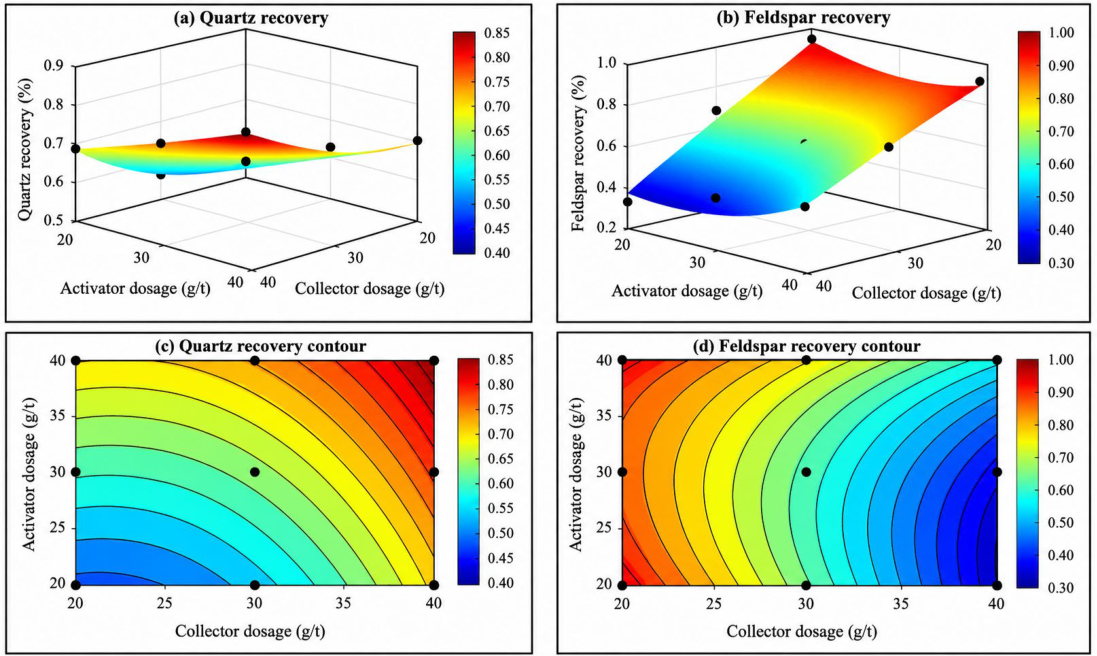
The three-dimensional response surfaces (Figure 2) show nonlinear relationships between collector and frother dosages and flotation performance operating domain [33].
Recovery initially rises with collector dosage due to improved mineral hydrophobicity and better particle–bubble attachment. However, excessive collector addition decreases selectivity, resulting in stabilization or a slight decline in recovery. Frother dosage significantly influenced froth stability and bubble dispersion. Moderate frother addition improved flotation efficiency, whereas excessive frother promoted entrainment effects that negatively affected concentrate quality. Contour plots confirmed the presence of interaction effects between collector and frother dosages, as indicated by elliptical contour patterns. The overlap between high-recovery and high-grade regions defines a balanced dosage window suitable for efficient beneficiation. It should be noted that the quadratic models represent statistical approximations of experimental data and were interpreted only within the investigated.

3.3. Reagent Synergy and Sustainability Assessment

3.3.1. Reagent Performance Comparison

Comparative flotation experiments were carried out using traditional chemical reagents to assess their effects on flotation selectivity and reagent consumption [34]. Conventional collectors needed relatively high dosages (3000 g/t). Conversely, bio-based reagents enhanced selectivity and allowed for partial reduction in chemical use. The most favorable differential flotation response was observed with the combined green–bio reagent systems, which achieved quartz recoveries above 80% and selectivity indices between 60 and 70 at lower collector dosages (1500 g/t). The observed flotation trends suggest possible synergistic interactions among the reagents, improving the relative flotation response between quartz and feldspar without increasing chemical input. Comparing these results with previous studies shows that high quartz recoveries under neutral or mildly alkaline conditions are possible with optimized reagent systems [1,2]. However, many existing systems require relatively high collector dosages. This study demonstrates that a rational design of reagent systems can achieve competitive recovery rates while lowering environmental impact. From a sustainability standpoint, flotation efficiency can be improved through reagent synergy instead of increasing chemical addition. Lower reagent dosages combined with better selectivity support the development of greener mineral processing methods aligned with modern sustainable chemistry principles.
A limitation of this study is that flotation experiments were performed with single-mineral systems, not complex mixtures or natural ores. While this approach helps to clearly understand reagent–surface interactions, industrial performance can also be affected by entrainment and competitive adsorption. Therefore, subsequent validation with mixed feeds and pilot-scale tests is recommended.
To further validate the preliminary mixed-mineral flotation behavior, MLA analysis is recommended for the floated and non-floated products. Unlike XRF, which provides bulk chemical composition, MLA can directly quantify quartz and K-feldspar proportions, mineral liberation, and particle associations. Therefore, MLA-based product characterization would provide stronger evidence for confirming feldspar flotation, quartz settling behavior, and flotation selectivity under the investigated reagent conditions.
To further assess the potential of environmentally friendly reagent systems, additional response surface modeling was conducted using the Clariant green collector system.

3.3.2. Clariant Collector Systems

A first-order response surface model (poly11) was used to assess the effect of collector dosage (A) and activator dosage (B) on quartz flotation performance with the Flotigam-based reagent system. The simplified linear–interaction model was chosen because of the limited number of experimental runs available for this reagent system, ensuring accurate estimation of regression parameters [35,36].
The fitted model for quartz recovery exhibited moderate agreement with experimental data (R2 = 0.639), indicating that recovery variations were only partially governed by reagent dosage within the investigated range. In contrast, flotation response demonstrated strong dependence on reagent dosage, with a high coefficient of determination (R2 = 0.929), confirming reliable prediction of concentrate quality trends.
The positive coefficient associated with activator dosage indicates improved quartz selectivity as NaOL dosage increases, whereas increasing collector dosage slightly lowers selectivity, suggesting possible entrainment or decreased selectivity at higher collector levels.
The response surface plots indicate that quartz flotation performance is strongly influenced by the interaction between sodium oleate and Flotigam 2835-2L dosages. Increasing sodium oleate dosage generally improved quartz recovery up to an optimum region, beyond which further addition produced limited improvement. The contour plots demonstrate the existence of a favorable dosage window where recovery and grade are simultaneously enhanced, suggesting synergistic interactions between the collector and co-collector system.

3.3.3. Polyacrylamide Polymer System

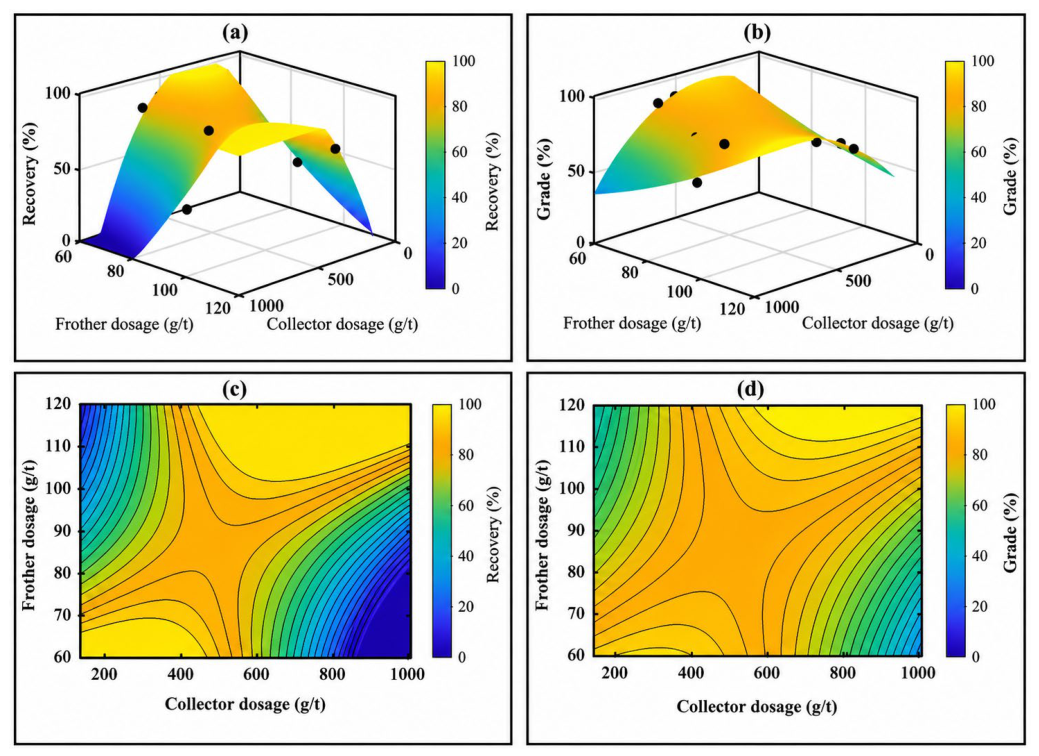
The polyacrylamide polymer reagent system showed stronger quadratic behavior compared to the Clariant system, indicating greater sensitivity of flotation performance to collector–frother interaction effects. The higher curvature seen in the response surfaces suggests improved reagent synergy, leading to better selectivity at moderate reagent dosages. Figure 3a demonstrates that feldspar recovery initially increases with increasing collector dosage due to enhanced mineral hydrophobicity and improved particle–bubble attachment. However, excessive collector addition leads to diminishing improvements, indicating saturation of available adsorption sites. Similarly, moderate frother dosages improved bubble dispersion and froth stability, whereas excessive frother addition promoted entrainment effects that may negatively affect flotation selectivity.
The Response Surface Methodology (RSM) was employed as a preliminary statistical tool to evaluate the influence of reagent dosage interactions on flotation performance and to identify favorable operating regions. The developed models should not be interpreted as fully predictive optimization models because the experimental dataset was limited and extensive center-point replications were not included.
The recovery model of the Clariant reagent system exhibited a moderate coefficient of determination (R2 = 0.639), indicating that additional factors not included in the model may influence flotation performance. Therefore, the model was primarily used to identify flotation trends and reagent interaction effects within the investigated operating range rather than to provide precise quantitative predictions.
Future studies involving additional experimental runs, center-point replications, residual analysis, and independent validation experiments are expected to improve model robustness and predictive capability.
Table 5 summarizes the flotation performance obtained using different reagent categories. Conventional chemical collectors required relatively higher dosages and produced moderate separation selectivity. Bio-based reagents improved selectivity while allowing partial reduction in chemical consumption.
Because of the limited number of experimental runs available in this preliminary study, the experimental matrix did not include extensive center-point replication. The best performance was achieved using combined green–bio reagent systems, which provided higher quartz recovery and selectivity at reduced reagent dosages. This demonstrates that flotation efficiency can be enhanced through reagent synergy rather than increased chemical addition. The reduction in reagent dosage, combined with improved separation performance, supports the sustainability advantages of green flotation systems.

3.3.4. Sustainability Industrial Relevance

Recent assessments have highlighted the strategic relevance of European high-purity quartz resources, emphasizing the need for sustainable beneficiation technologies [6,32]. Comparative flotation experiments were conducted using conventional chemical reagents, bio-based reagents, and combined green–bio reagent systems to evaluate their influence on flotation selectivity and reagent consumption [30,31,32,33,34]. The results demonstrate that flotation selectivity improved progressively from chemical-only systems to bio-based reagents and was maximized when green and bio reagents were applied in combination.
Single chemical collectors produced moderate selectivity but required relatively high reagent dosages to maintain stable flotation performance. In contrast, bio-based reagents achieved improved selectivity at reduced dosages, indicating more efficient surface modification mechanisms.
The highest separation efficiency was achieved with combined green–bio reagent systems, which yielded quartz recoveries of approximately 80% while maintaining an acceptable selectivity trend with reduced reagent consumption. This improvement in selectivity at lower reagent dosage demonstrates synergistic interactions among reagent components that enhance discrimination of mineral surfaces without increasing chemical input [32,42,46].
From a sustainability perspective, the reduction in reagent consumption combined with improved flotation selectivity supports the adoption of environmentally benign reagent systems in mineral processing operations. These findings indicate that flotation efficiency can be enhanced through reagent-system design rather than increased chemical addition, contributing to greener and more sustainable mineral processing practices.
To facilitate comparison between conventional flotation systems, recently reported environmentally friendly reagent systems, and the HF-free flotation strategy investigated in this study, a comparative summary is presented in Table 5.
As shown in Table 5, the proposed HF-free flotation approach demonstrates the potential to achieve selective quartz flotation while avoiding hydrofluoric acid, supporting current efforts toward sustainable mineral beneficiation.
The optimized reagent scheme reduces chemical consumption while maintaining high recovery, indicating potential applicability in industrial feldspar beneficiation circuits. Recent studies have examined quartz–feldspar flotation in mild or neutral pH conditions using different reagents. Suo et al. tested and also mentioned in Table 6 amine ether collectors and found that dodecylamine polyoxyethylene ether (AC1210) [40] achieved nearly 90% recovery difference between quartz and feldspar at pH 8.0, due to selective adsorption and hydrogen bonding on quartz surfaces. Hu et al. showed that sodium oleate (NaOL) systems can provide strong selectivity at neutral pH flotation, supporting the use of environmentally friendly fatty acid collectors. Systems using ethylenediamine and polyetheramine have also demonstrated quartz flotation selectivity at neutral pH. In eco-friendly methods, cationic surfactant collectors like PEA delivered about 97.8% quartz recovery with minimal feldspar flotation at mild alkaline pH (9.0–9.5), confirming the potential of green collectors for high-efficiency separation. Prior research indicates that quartz–feldspar flotation can be successfully performed in neutral or slightly alkaline conditions using amine ether, polyetheramine, and fatty acid collectors, achieving high recovery and selectivity through competitive adsorption and surface modification mechanisms [30,32,34,46]. Efficient flotation removal of mica from quartz–feldspar systems has also been demonstrated [48].
The results obtained in this study demonstrate that the proposed reagent system offers an effective and environmentally sustainable approach for quartz–feldspar flotation separation, achieving high recovery while reducing chemical consumption. Although the laboratory-scale experiments confirm the technical feasibility and improved selectivity of the optimized reagent scheme, further studies are ongoing to refine reagent combinations, reduce dosage requirements, and evaluate process performance under pilot- and industrial-scale conditions [1,42,45]. Continued investigation will support the development of practical, sustainable flotation strategies for large-scale beneficiation of silicate minerals. The statistical models should therefore be interpreted as empirical approximations of flotation trends rather than universal predictive models. Eco-friendly collectors have shown considerable potential for improving flotation selectivity while reducing environmental impact [49].
A limitation of the present study is that flotation experiments were performed using single-mineral systems rather than mixed-mineral feeds or natural ores. While this approach enables clear evaluation of reagent adsorption behavior and flotation selectivity, it does not fully account for the complex interactions occurring in industrial flotation circuits [46]. Future studies will focus on synthetic quartz–feldspar mixtures and representative natural ore samples to validate the optimized reagent scheme under more realistic operating conditions.
The response surface models developed in this study were based on a limited experimental dataset and should therefore be regarded as empirical trend models rather than universal predictive models. Although the models successfully identified favorable flotation regions and reagent interaction effects, additional experimental observations would improve statistical confidence and model reliability. Consequently, the current RSM results are intended to support reagent screening and preliminary process optimization rather than industrial process design [43,44].

4. Conclusions

Response Surface Methodology successfully identified favorable operating regions and reagent interaction trends for quartz flotation under the investigated conditions. However, due to the limited number of experimental runs, the developed models should be interpreted as preliminary statistical approximations rather than fully predictive optimization tools.
The optimized reagent scheme consisting of sodium oleate (38 g/t), Flotigam 2835-2L (30 g/t), and pine oil (50 g/t) under mildly alkaline conditions (pH ≈ 9) achieved a maximum quartz recovery of 84.01%. These results demonstrate that environmentally friendly flotation reagents can provide favorable flotation performance while reducing dependence on conventional high-dosage chemical systems.
The ability to achieve effective flotation performance under mildly alkaline conditions (pH ≈ 9) demonstrates that flotation selectivity can be enhanced through physicochemical optimization rather than increased chemical intensity.
Future work should include FTIR spectroscopy, adsorption measurements, MLA characterization, and mixed-mineral flotation studies to further validate the proposed flotation mechanisms and reagent selectivity.
A limitation of the present study is that flotation experiments were conducted primarily using single-mineral systems. Therefore, the reported flotation responses represent preliminary selectivity trends rather than direct industrial separation efficiency. Further validation using synthetic mixed-mineral systems and natural ores is required. Although this approach allows for a clear interpretation of reagent–surface interactions, industrial flotation performance may also be influenced by entrainment, slime coating, and competitive adsorption effects in mixed-mineral systems. Consequently, mixed-feed and pilot-scale validation studies are recommended as the next step to confirm process performance under practical operating conditions. This study demonstrates that mechanistically designed green reagent systems can replace conventional high-dosage chemical schemes while maintaining competitive flotation performance.
The ability to achieve effective quartz–feldspar separation at the optimum flotation response was obtained under mildly alkaline conditions (pH ≈ 9.24) and with reduced reagent dosage. This fact demonstrates that flotation selectivity can be enhanced through physicochemical optimization response surface methods. The study demonstrated that environmentally friendlier reagent systems can influence the differential flotation behavior of quartz and K-feldspar under mild alkaline conditions. Using Response Surface Methodology (RSM), optimal conditions were determined to maximize selectivity and recovery. The flotation behavior suggests possible selective reagent interactions with mineral surfaces, creating differences in mineral wettability. Overall, it provides a sustainable and efficient alternative to traditional flotation chemicals. Detailed surface chemistry investigations such as zeta potential, contact angle, FTIR, or adsorption measurements are recommended for future work to confirm the proposed flotation mechanisms.
Although FTIR characterization would provide additional evidence regarding adsorption mechanisms, the present study focused on flotation performance and preliminary surface characterization through zeta potential and contact angle measurements. FTIR analysis is recommended for future investigations.
Overall, the study demonstrates the potential of environmentally friendly reagent systems for selective quartz–K-feldspar flotation under mild alkaline conditions, supporting the development of more sustainable mineral beneficiation strategies. The findings are consistent with recent developments in fluorine-free flotation, sustainable reagent systems, and environmentally friendly mineral beneficiation strategies [30,31,32,33,34,47,48,49].

Supplementary Materials

The following supporting information can be downloaded at: https://www.mdpi.com/article/10.3390/app16136484/s1, Figure S1: environmentally friendly regents optimization response surface process flow diagram.

Author Contributions

Conceptualization, K.M. and J.O.; methodology, K.M.; software, K.M.; validation, K.M. and J.O.; investigation, K.M., P.A., J.O., C.H.S., and H.A.; formal analysis, K.M., A.E., and J.L.; data curation, K.M.; resources, J.O.; writing—original draft preparation, K.M.; writing—review and editing, K.M. and P.A.; visualization, K.M. and P.A.; supervision, P.A., J.O., C.H.S., and H.A.; project administration, J.O.; funding acquisition, J.O. All authors have read and agreed to the published version of the manuscript.

Funding

This research was funded by Horizon Europe programme QUEEN (Quartz Enrichment Enabling Near-Zero Silicon Production Grant Agreement 101178144) and by the Generalitat de Catalunya for the Consolidated Research Groups SGR 01041 (RIIS).

Data Availability Statement

The original contributions presented in the study are included in the article; further inquiries can be directed to the corresponding author.

Acknowledgments

The authors would like to express their sincere gratitude to Clariant, Dubai and Derypol, S.A. for kindly providing the chemicals used in this study.

Conflicts of Interest

The authors declare no conflicts of interest.

References

  1. Mohanty, K.; Oliva, J.; Alfonso, P.; Sampaio, C.H.; Anticoi, H. A comparative study of quartz and potassium feldspar flotation process using different chemical reagents. Minerals 2024, 14, 167. [Google Scholar] [CrossRef]
  2. Mohanty, K.; Oliva, J.; Alfonso, P.; Sampaio, C.H.; Anticoi, H.; Valero, J.; Niubó, M.; Sanmartín, A. Study of the flotation behaviour mechanisms of quartz and K-feldspar using biodegradable chemicals. In Proceedings of the 12th International Flotation Conference (Flotation’25), Cape Town, South Africa, 17–20 November 2025; Minerals Engineering International: Falmouth, UK, 2025; pp. 1–4. Available online: https://www.min-eng.com/flotation25/drafts/session3/mohanty.pdf (accessed on 18 April 2026).
  3. Mohanty, K.; Oliva, J.; Alfonso, P.; Sampaio, C.H.; Anticoi, H.; Eljoudiani, A. A sustainable solution for quartz direct flotation by using green chemicals at neutral pH. In Proceedings of the 12th International Flotation Conference (Flotation’25), Cape Town, South Africa, 17–20 November 2025; Minerals Engineering International: Falmouth, UK, 2025; Available online: https://www.min-eng.com/flotation25/drafts/posters/mohanty.pdf (accessed on 18 April 2026).
  4. Mohanty, K.; Oliva, J.; Alfonso, P. Research into New Valorization Processes for Sandy Resources; Universitat Politècnica de Catalunya: Barcelona, Spain, 2022; Available online: https://upcommons.upc.edu/bitstreams/23aadeb9-a40e-4d01-8d9f-643e6111ec72/download (accessed on 5 May 2026).
  5. Dai, L.; Feng, B.; Zhang, L.; Chen, Y.; Bayoundoula, J. Selective flotation separation of spodumene and quartz using carboxylated chitosan as depressant. Miner. Eng. 2023, 203, 108343. [Google Scholar] [CrossRef]
  6. Mohanty, K.; Oliva, J.; Alfonso, P.; Sampaio, C.H.; Anticoi, H. Perspectives for high-purity quartz from European resources. Minerals 2025, 15, 1080. [Google Scholar] [CrossRef]
  7. Fuerstenau, D.W.; Pradip. Zeta potentials in the flotation of oxide and silicate minerals. Adv. Colloid Interface Sci. 2005, 114–115, 9–26. [Google Scholar] [CrossRef] [PubMed]
  8. Bulatovic, S.M. Handbook of Flotation Reagents; Elsevier: Amsterdam, The Netherlands, 2007. [Google Scholar]
  9. Xie, R.; Zhu, Y.; Liu, J.; Li, Y. The flotation behavior and adsorption mechanism of a new cationic collector on the separation of spodumene from feldspar and quartz. Sep. Purif. Technol. 2021, 264, 118445. [Google Scholar] [CrossRef]
  10. Vidyadhar, A.; Rao, K.H. Adsorption mechanism of mixed cationic/anionic collectors in feldspar–quartz flotation system. J. Colloid Interface Sci. 2007, 306, 195–204. [Google Scholar] [PubMed]
  11. Rao, S.R. Surface Chemistry of Froth Flotation; Springer: Boston, MA, USA, 2004. [Google Scholar]
  12. Gui, Y.; Zhu, X.; Fu, H. Preparation of silica powder from low-grade quartz by mechanical activation acid leaching and its mechanism. Silicon 2025, 17, 835–849. [Google Scholar] [CrossRef]
  13. Kosmulski, M. Surface Charging and Points of Zero Charge; CRC Press: Boca Raton, FL, USA, 2009. [Google Scholar]
  14. Heyes, G.W.; Allan, G.C.; Bruckard, W.J.; Sparrow, G.J. Review of Flotation of Feldspar. Miner. Process. Extr. Metall. Trans. Inst. Min. Metall. Sect. C 2012, 121, 72–78. [Google Scholar] [CrossRef]
  15. Orhan, E.C.; Bayraktar, I. Amine–oleate interactions in feldspar flotation. Miner. Eng. 2006, 19, 48–55. [Google Scholar] [CrossRef]
  16. Ibrahim, I.; Hussin, H.; Azizli, K.A.M.; Alimon, M.M. A study on the interaction of feldspar and quartz with mixed anionic/cationic collector. Malays. J. Fundam. Appl. Sci. 2011, 7, 2. [Google Scholar]
  17. Yang, S.; Zhang, H.; Chi, R.; Bao, S.; Xu, Y.; Liu, C. A critical review on the application of green polymer-type scale inhibitors in mineral flotation. Miner. Eng. 2023, 204, 108436. [Google Scholar] [CrossRef]
  18. Anastas, P.T.; Warner, J.C. Green Chemistry: Theory and Practice; Oxford University Press: Oxford, UK, 2000. [Google Scholar]
  19. Sheldon, R.A. Green chemistry and resource efficiency. Green Chem. 2016, 18, 3180–3183. [Google Scholar] [CrossRef]
  20. Derhy, M.; Taha, Y.; Ait-Khouia, Y.; Elghali, A.; Hakkou, R.; Benzaazoua, M. Assessment of Selective Quartz Flotation in Phosphate Beneficiation: A Waste-to-Product Solution for Tailings Valorization. Sep. Purif. Technol. 2025, 359, 130528. [Google Scholar] [CrossRef]
  21. Ge, W.; Guo, Z.; Liu, J.; Zhu, Y.; Yuan, S.; Gao, P.; Zhang, X.; Han, Y. Green reagent-driven resource recovery: Separation of hematite and iron-bearing silicate minerals from complex low-grade iron ore. J. Environ. Chem. Eng. 2025, 13, 119969. [Google Scholar]
  22. Filippov, L.O.; Duverger, A.; Filippova, I.V.; Kasaini, H.; Thiry, J. Selective flotation of silicates and Ca-bearing minerals: The role of non-ionic reagent on cationic flotation. Miner. Eng. 2012, 36, 314–323. [Google Scholar]
  23. Nagaraj, D.R. Reagent selection and optimization—The case for a holistic approach. Miner. Eng. 2005, 18, 151–158. [Google Scholar] [CrossRef]
  24. Hart, B.; Biesinger, M.; Smart, R.S.C. Improved statistical methods applied to surface chemistry in minerals flotation. Miner. Eng. 2006, 19, 790–798. [Google Scholar] [CrossRef]
  25. Ozdemir, O.; Nguyen, A.V. Fatty acid adsorption on quartz. Colloids Surf. A 2006, 282–283, 287–293. [Google Scholar]
  26. Xu, L.; Tian, J.; Wu, H.; Lu, Z.; Sun, W.; Hu, Y. The flotation and adsorption of mixed collectors on oxide and silicate minerals. Adv. Colloid Interface Sci. 2017, 250, 1–14. [Google Scholar] [CrossRef] [PubMed]
  27. Li, P.; Ren, Z.; Xie, E.; Duan, S.; Gao, H.; Wu, J.; He, Y. Application of mixed collectors on quartz–feldspar by fluorine-free flotation separation and their interaction mechanism: A review. Physicochem. Probl. Miner. Process. 2021, 57, 139–156. [Google Scholar]
  28. Chau, T.T.; Bruckard, W.J.; Koh, P.T.L.; Nguyen, A.V. A review of factors that affect contact angle and implications for flotation practice. Adv. Colloid Interface Sci. 2009, 150, 106–115. [Google Scholar] [CrossRef] [PubMed]
  29. Yang, S. Nanoparticle Flotation Collectors. Ph.D. Thesis, McMaster University, Hamilton, ON, Canada, 2012. Available online: https://macsphere.mcmaster.ca/items/a28929c6-e6cb-49df-8900-86249c18ae06/full (accessed on 18 June 2026).
  30. Suo, X.; Yu, B.; Sha, J.; Gao, R.; Qi, M.; Huang, Y.; Peng, W.; Guo, X.; Wang, W.; Cao, Y.; et al. Flotation Separation of Quartz and Feldspar under Weak Alkaline Conditions Using Amine Ether as a Novel Collector. Chem. Eng. Sci. 2025, 315, 121873. [Google Scholar] [CrossRef]
  31. Sun, N.; Wang, G.; Ge, P.; Sun, W.; Xu, L.; Tang, H.; Wang, L. Selective Flotation of Quartz from Feldspar Using Hydroxypropyl Starch as Depressant. Miner. Eng. 2023, 195, 108022. [Google Scholar] [CrossRef]
  32. Hu, X.; Luo, X.; Liu, Z.; Zhou, H.; Tang, X.; Yang, Z.; Yang, S. Flotation Separation of Feldspar from Quartz Using NaOL and TTPC as a Combined Collector. Colloids Surf. A Physicochem. Eng. Asp. 2025, 727, 138445. [Google Scholar] [CrossRef]
  33. Chen, S.; Chen, Y.; Gu, G.; Yao, X.; Hu, H. Influence and Mechanism of 1-Dodecyl-3-methylimidazolium Bromide on the Flotation Behavior of Quartz and Feldspar in a Neutral System. Minerals 2025, 15, 1235. [Google Scholar] [CrossRef]
  34. Mohanty, K.; Oliva, J.; Alfonso, P.; Sampaio, C.H.; Anticoi, H.; Lladó, J.; Niubó, M.; Eljoudiani, A.; Ochoa, G.A.; Vera-Burau, A.; et al. Neutral-pH Selective Flotation of Quartz Using a Biodegradable Polymer Collector: Toward HF-Free Sustainable Beneficiation. Results Eng. 2026, 30, 111032. [Google Scholar] [CrossRef]
  35. Pattanaik, A.; Venugopal, R. Analysis of reverse cationic iron ore fines flotation using RSM-D-optimal design—An approach towards sustainability. Adv. Powder Technol. 2018, 29, 3404–3414. [Google Scholar]
  36. Ao, L.; Zhang, H.; Zhang, J.; Li, G. Optimization of Flotation Conditions for Long-Flame Coal Mud by Response Surface Method. Minerals 2024, 14, 636. [Google Scholar] [CrossRef]
  37. Liu, B.; Li, W.; Lin, Z.; Fen, J. Optimization of mixed collector ratios for quartz–petalite separation via response surface methodology synergistic adsorption mechanisms. Langmuir 2025, 41, 15686–15703. [Google Scholar] [PubMed]
  38. Wang, D.; Liu, L.; Zhang, Z.; Peng, Q.; Shi, C.; Liu, X.; Liu, X.; Zhou, H.; Wen, W. Atomic-Scale Planarization Surface of Quartz Glass Induced by Novel Green Chemical Mechanical Polishing Using Three Ingredients. Mater. Today Sustain. 2024, 25, 100669. [Google Scholar] [CrossRef]
  39. Fuerstenau, M.C.; Han, K.N. Principles of Mineral Processing; SME: Littleton, CO, USA, 2003. [Google Scholar]
  40. Wills, B.A.; Wills, J.F. Wills’ Mineral Processing Technology, 8th ed.; Butterworth-Heinemann: Oxford, UK, 2016. [Google Scholar]
  41. Fuerstenau, M.C.; Jameson, G.J.; Yoon, R.-H. Froth Flotation: A Century of Innovation; SME: Littleton, CO, USA, 2007. [Google Scholar]
  42. Luo, X.P.; Zhang, Y.B.; Zhou, H.P.; Xie, F.X.; Yang, Z.Z.; Zhang, B.Y.; Luo, C.G. Flotation Separation of Spodumene and Albite with Activation of Calcium Ion Hydrolysate Components. Rare Met. 2022, 41, 3919–3929. [Google Scholar] [CrossRef]
  43. Li, X.; Zhang, Q.; Hou, B.; Ye, J.; Mao, S.; Li, X. Flotation separation of quartz from collophane using an amine collector and its adsorption mechanisms. Powder Technol. 2017, 318, 224–229. [Google Scholar] [CrossRef]
  44. Ning, T. Recovery of silicon from metallurgical-grade silicon-refined slag by flotation with sodium silicate as depressant. Trans. Nonferrous Met. Soc. China 2023, 33, 1619–1628. [Google Scholar]
  45. Li, C.; Xu, Y.; Dou, M.; Liu, R.; Li, Y.; Bai, Y.; Sun, Q.; Yin, W. Selective Adsorption Mechanism of a New Combined Collector on the Surfaces of Quartz and Potassium Feldspar. J. Chem. Phys. 2025, 162, 7. [Google Scholar] [CrossRef] [PubMed]
  46. Myers, R.H.; Montgomery, D.C.; Anderson-Cook, C.M. Response Surface Methodology; Wiley: Hoboken, NJ, USA, 2016. [Google Scholar]
  47. Jiang, X.; Chen, J.; Ban, B.; Song, W.; Chen, C.; Yang, X. Application of Competitive Adsorption of Ethylenediamine and Polyetheramine in Direct Float of Quartz from Quartz–Feldspar Mixed Minerals under Neutral pH Conditions. Miner. Eng. 2022, 188, 107850. [Google Scholar] [CrossRef]
  48. Qi, M.; Zhang, H.; Hu, Z.; Luo, W.; Yu, B.; Peng, W.; Huang, Y.; Wang, J.; Wang, W.; Huang, Y. Efficient Separation of Mica from Feldspar and Quartz Using Flotation in Quaternary Ammonium Salt System. Miner. Eng. 2025, 234, 109683. [Google Scholar] [CrossRef]
  49. Ma, L.; Zhang, H.; Zhang, G.; Fan, Z.; Zhao, P. A Fundamental Study on the Selective Flotation Separation of Magnesite and Quartz Using an Eco-Friendly Collector PKO-H: A Performance and Adsorption Mechanism Study. Minerals 2025, 15, 933. [Google Scholar] [CrossRef]
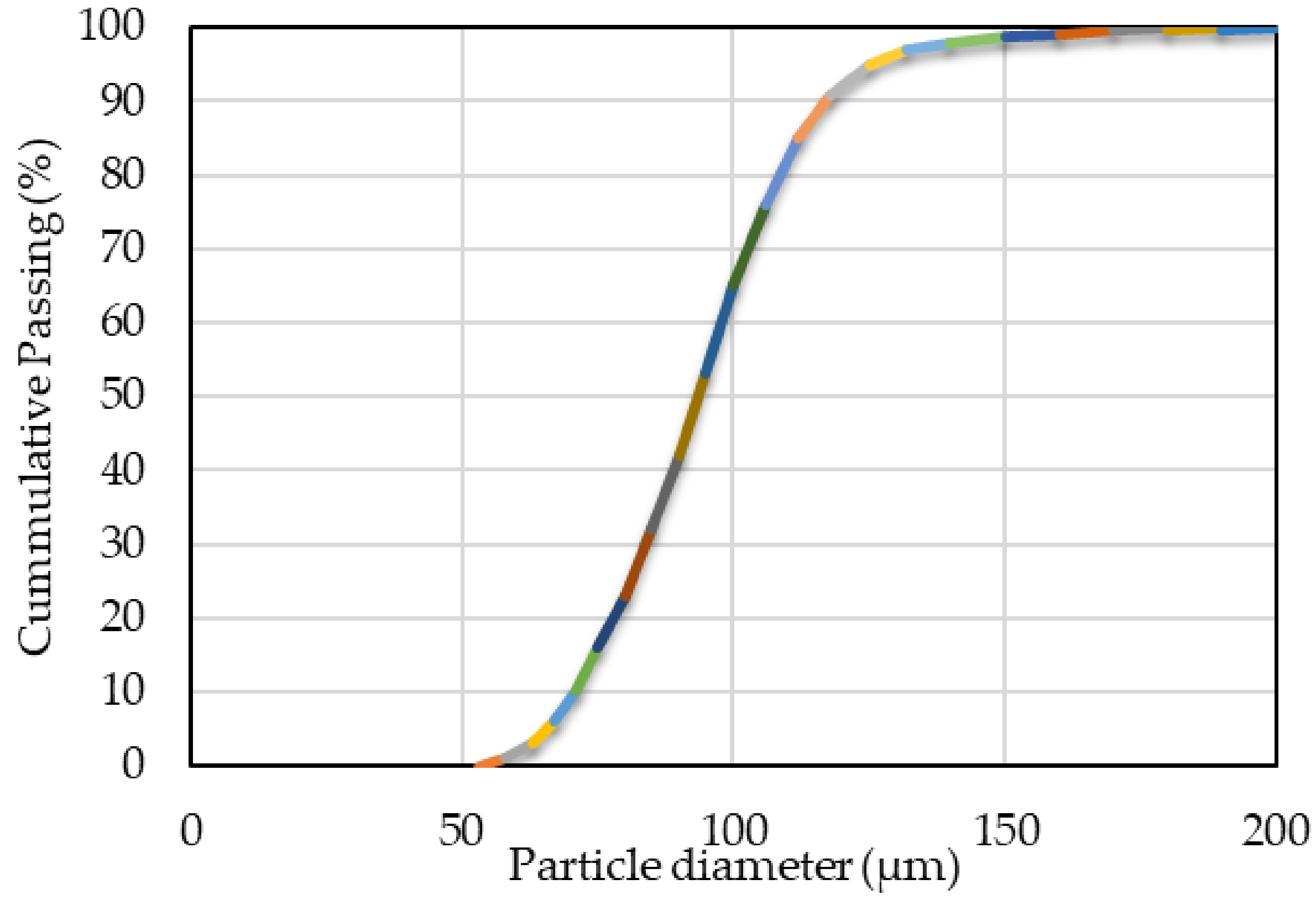
Figure 1. Particle size distributions of flotation feed.
Applsci 16 06484 g001
Figure 2. Response surface and contour plots showing the effects of collector and frother dosages on quartz recovery (a,c) and feldspar recovery (b,d). Panels (a,b) present the fitted response surfaces, while panels (c,d) show the corresponding contour plots. Black markers represent the experimental data points used for model fitting.
Applsci 16 06484 g002
Figure 3. Response surface and contour plots showing the effects of collector and frother dosages on quartz recovery (a,c) and feldspar recovery (b,d). Panels (a,b) present the fitted response surfaces, while panels (c,d) show the corresponding contour plots. Black circles represent the experimental design points.
Applsci 16 06484 g003
Table 1. Chemical composition of quartz and K-feldspar samples (wt.%) of flotation feed.
OxideQuartz (wt.%)K-Feldspar (wt.%)
SiO295.3364.62
Al2O32.8217.35
TiO20.040.00
Fe2O30.140.10
MgO0.100.02
CaO0.250.21
Na2O0.512.60
K2O0.7015.00
Table 2. Selected chemical reagents used in the froth flotation experiments.
ReagentSupplierReagent TypeFunction in FlotationRemarks
Sodium oleateSigma-AldrichFatty acid reagentCo-collector/surface modifierBio-derived reagent used in mixed collector systems
Flotigam 2835-2LClariantCationic amine collectorCollectorLower-toxicity amine collector
TX 9880DerypolPolyacrylamide polymerPolymeric flotation modifierMay influence dispersion and flotation selectivity
Pine oilICLFrotherFroth stabilizationUsed in flotation tests
MIBCMerKFrotherFroth stabilizationFrother for bubble stabilization
Table 3. Experimentally, the best recoveries were obtained under the optimized flotation conditions.
ItemValue
Mineral floatedQuartz
Best experiment51
Particle size53–200 µm
Feed mass100 g
pHmild alkaline condition (~9)
Co-CollectorSodium oleate (38 g/t)
CollectorFlotigam 2835-2L (30 g/t)
FrotherPine oil (50 g/t)
Quartz recovery84.01%
Table 4. Experimental factors and levels used in for MATLAB-based RSM analysis.
FactorSymbolLow Level (−1)Center Level (0)High Level (+1)Unit
Sodium oleate dosageA203040g/t
Flotigam 2835-2L dosageB203040g/t
Pine oil dosageC305070g/t
pHD8.59.09.5
Table 5. Sustainability comparison of flotation reagent systems.
Reagent System CollectorsReferencesCollector Dosage (g/t)Qtz Recovery (%)Separation Stability
Conventional[1,3,9]300060–75Moderate
HF-free regent systemThis work100080–85Highly stable
Table 6. Comparison of quartz recovery reported in previous studies and the present work.
ReferenceCollector
System
Target Mineral SystempH RangeCollector Dosage (g·t−1)Quartz Recovery (%)Key Observation
[30]Dodecylamine + Amino-trimethylphosphonic acid (ATMP)Quartz–magnesite7–10200–500>90ATMP enhances selectivity of DDA for quartz over magnesite
[31]Amine ether (AC1210)Quartz–feldspar~8200–400~71 (mixed ore)Improved selective separation under weak alkaline conditions
[32]Modified starch depressant + amine collectorQuartz–feldspar9–10300–60085–92Feldspar effectively depressed while quartz floats
[46]Gemini cationic collector + NaOLQuartz–feldspar~7300–800~85–90High SI achieved with mixed collector system
Present workHF free reagent systemQuartz–feldspar7–8~100084–85%High recovery with improved selectivity and environmentally friendly conditions
Disclaimer/Publisher’s Note: The statements, opinions and data contained in all publications are solely those of the individual author(s) and contributor(s) and not of MDPI and/or the editor(s). MDPI and/or the editor(s) disclaim responsibility for any injury to people or property resulting from any ideas, methods, instructions or products referred to in the content.