AI-Assisted Creep Time Prediction Using Creep Strain Curves of AISI 316 Austenitic Stainless Steel: Effects of Data Transformation and Hyperparameter Optimisation



Featured Application
Abstract
1. Introduction
2. Materials and Methods
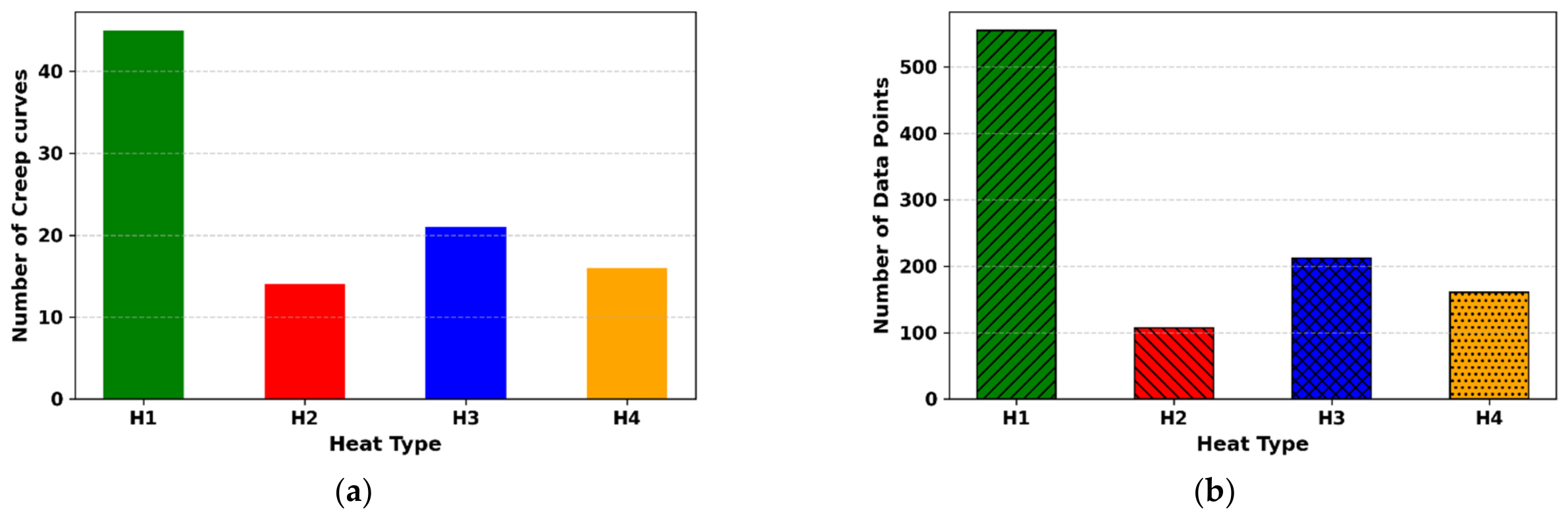
2.1. Data Description
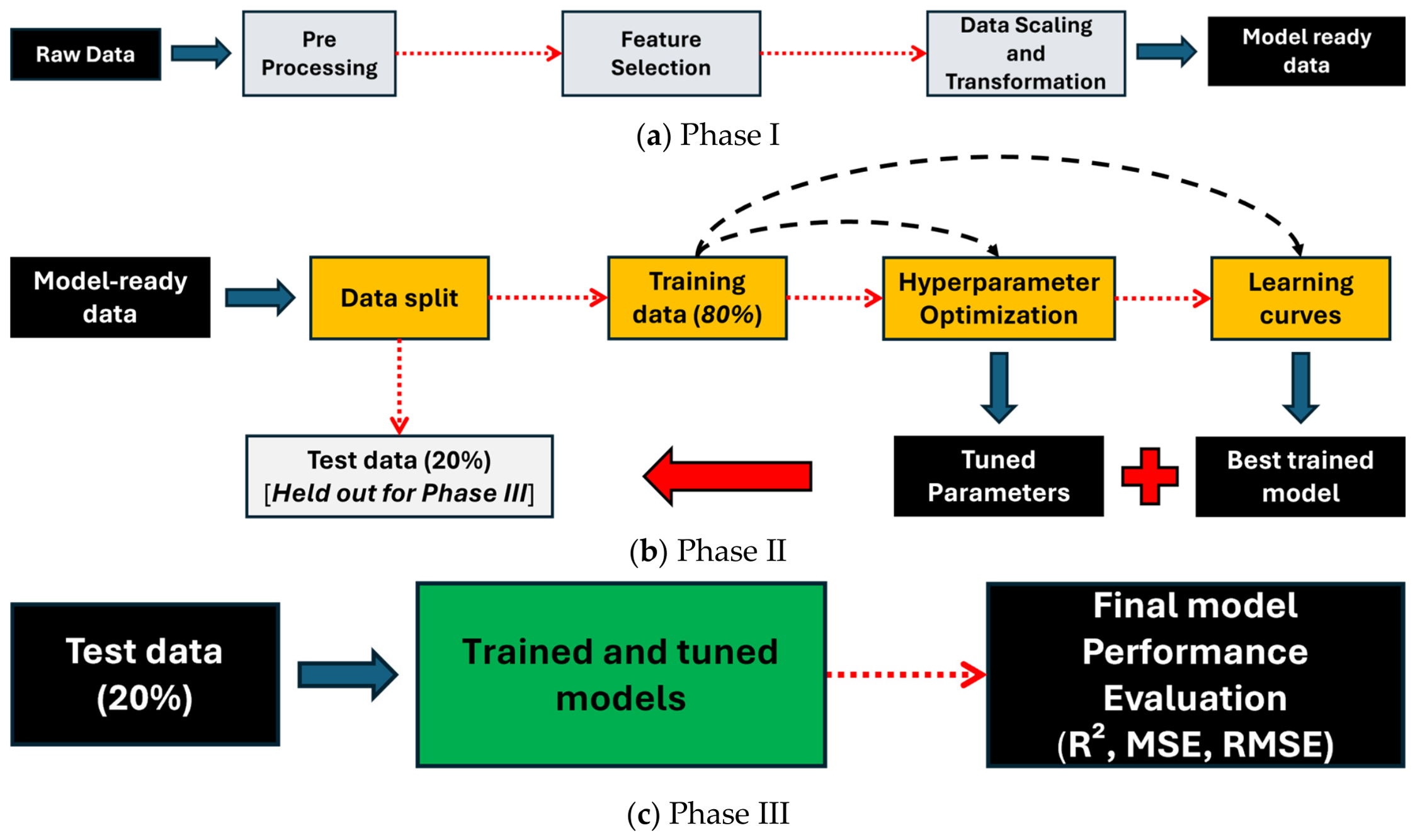
2.2. Methodological Pipeline
2.2.1. Phase I—Dataset Setup and Feature Selection
2.2.2. Phase II—Model Training and Hyperparameter Optimisation
2.2.3. Phase III—Creep Time Prediction
2.3. Models
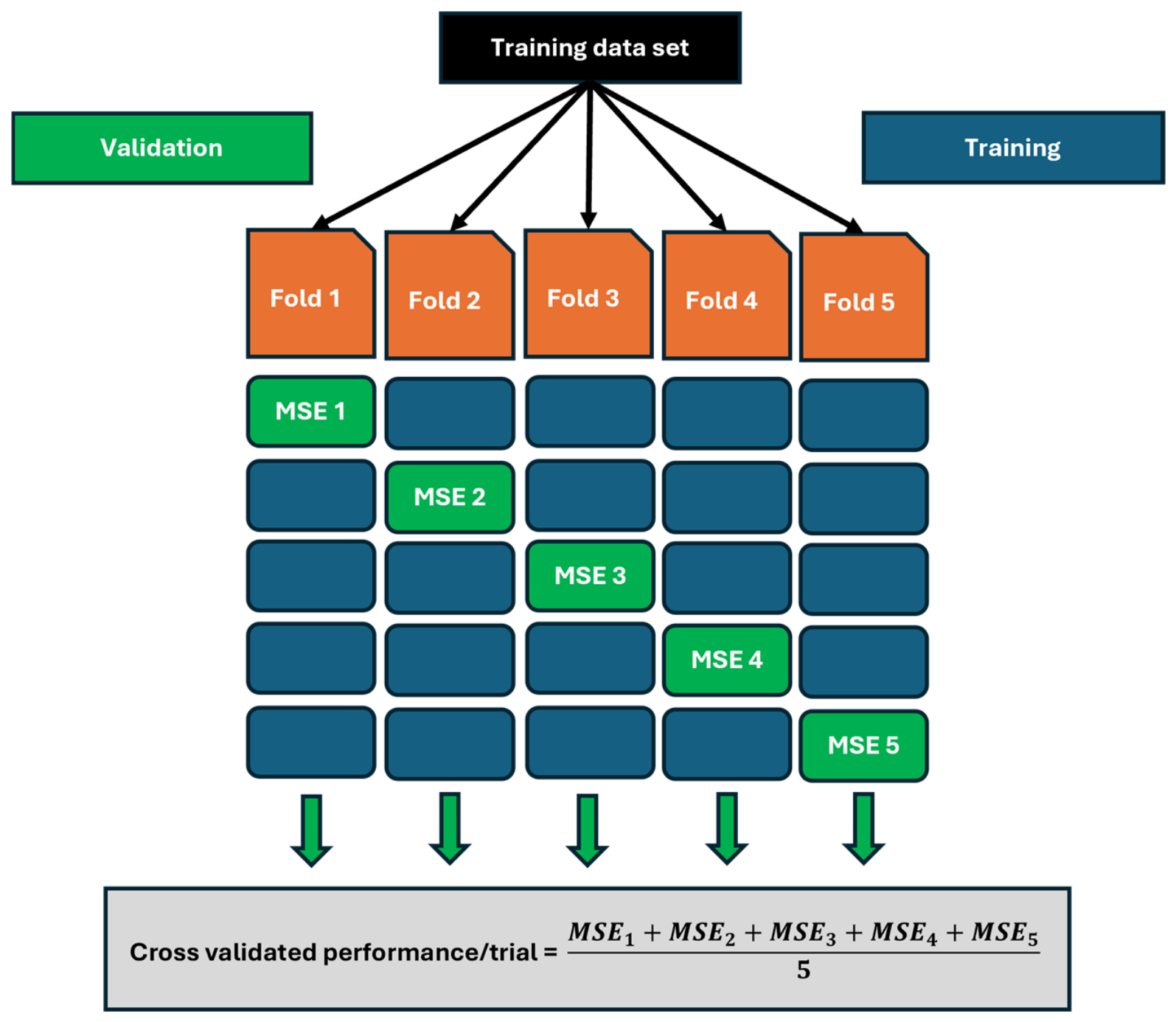
2.4. Hyper Parameter Optimisation (HPO)
2.5. Training and Learning Curves (LC)
3. Results & Discussion
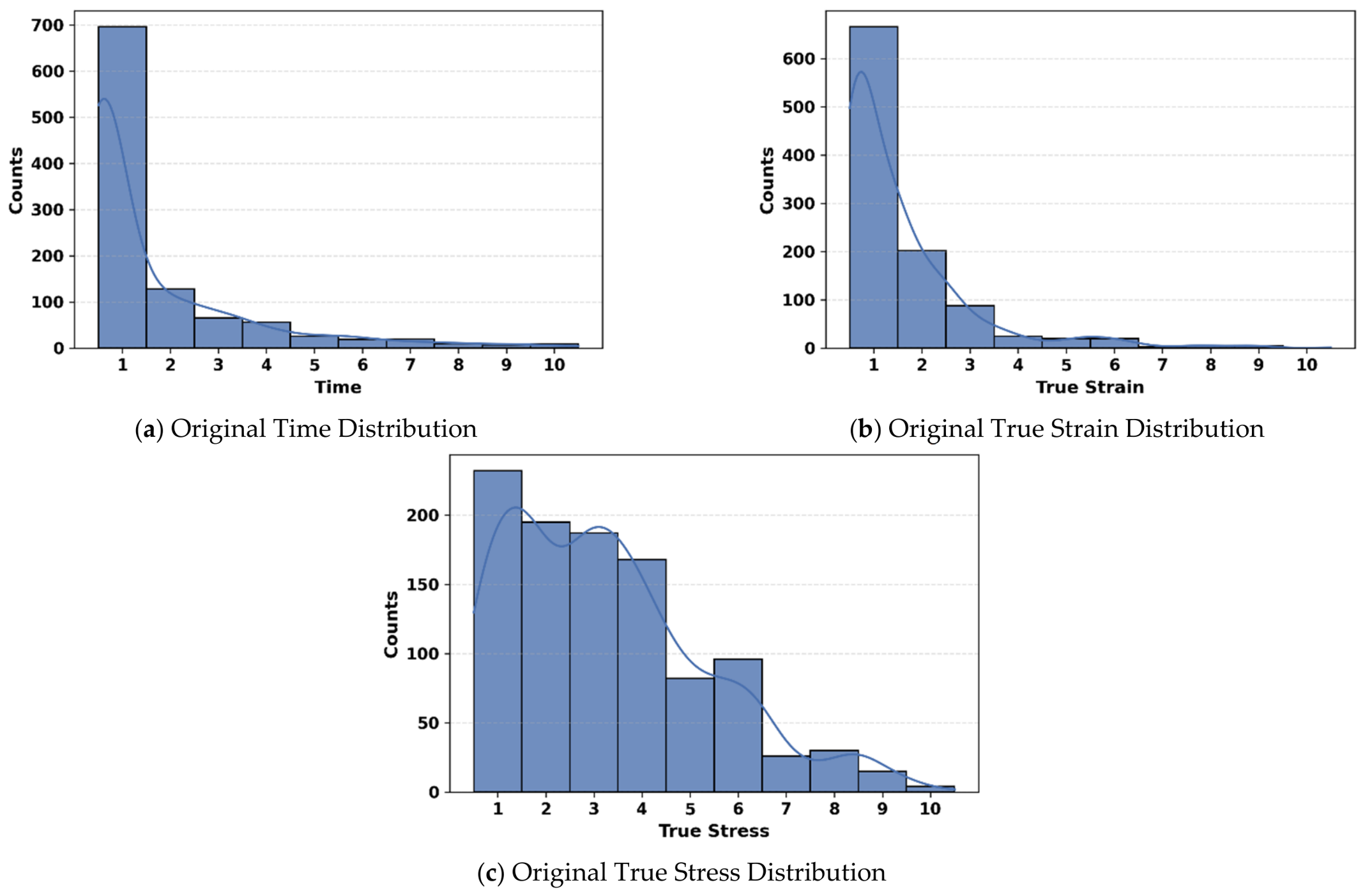
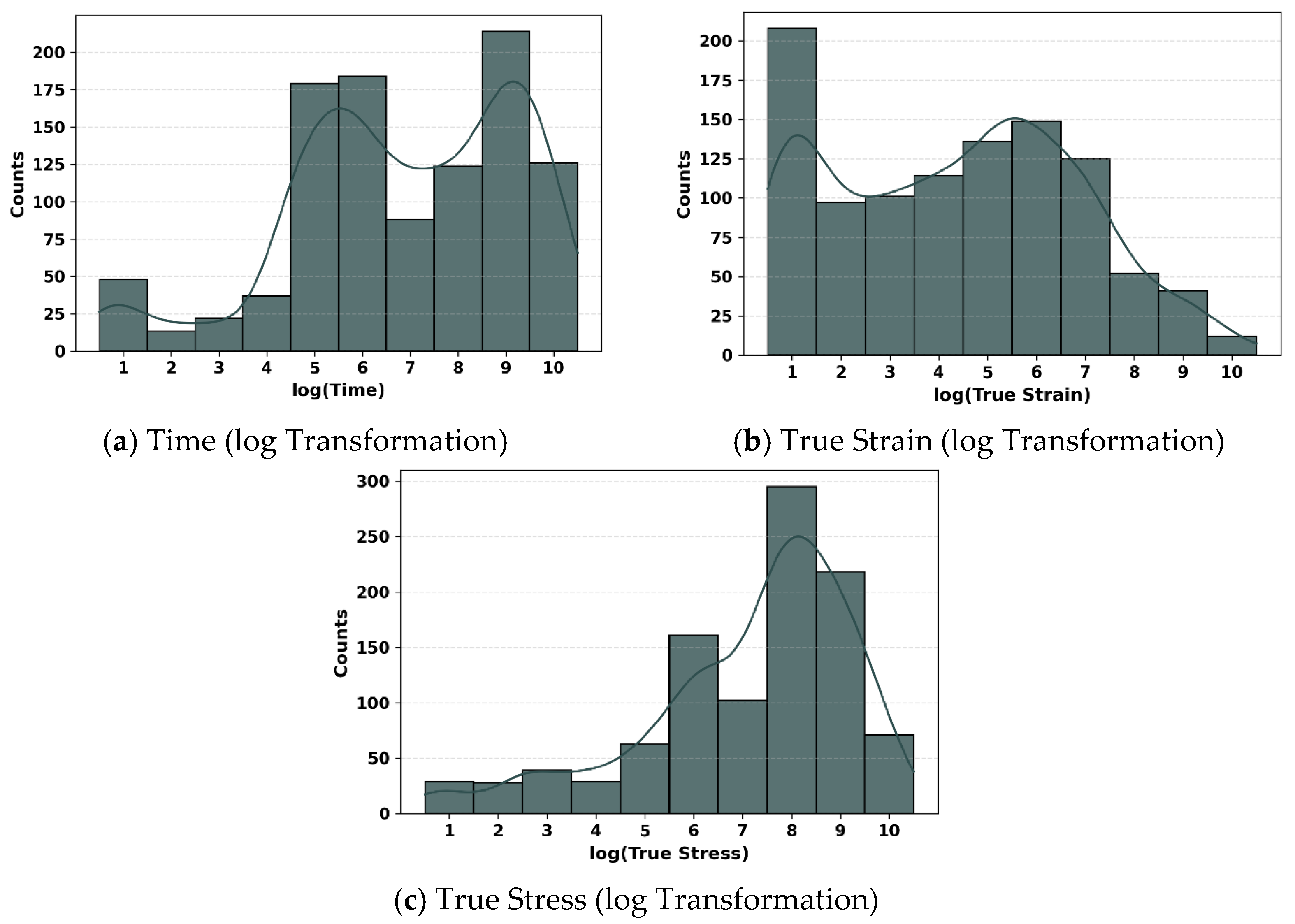
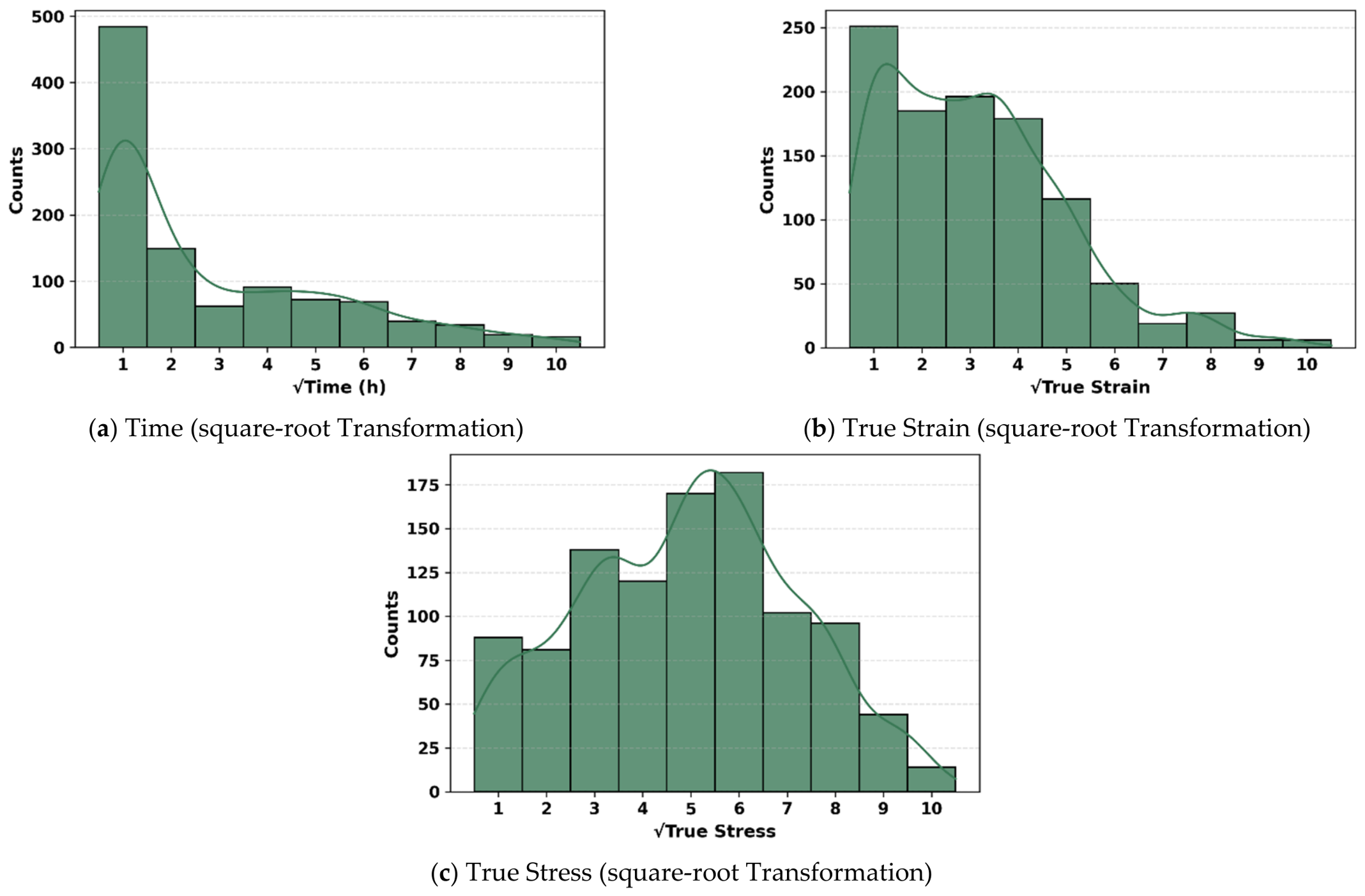
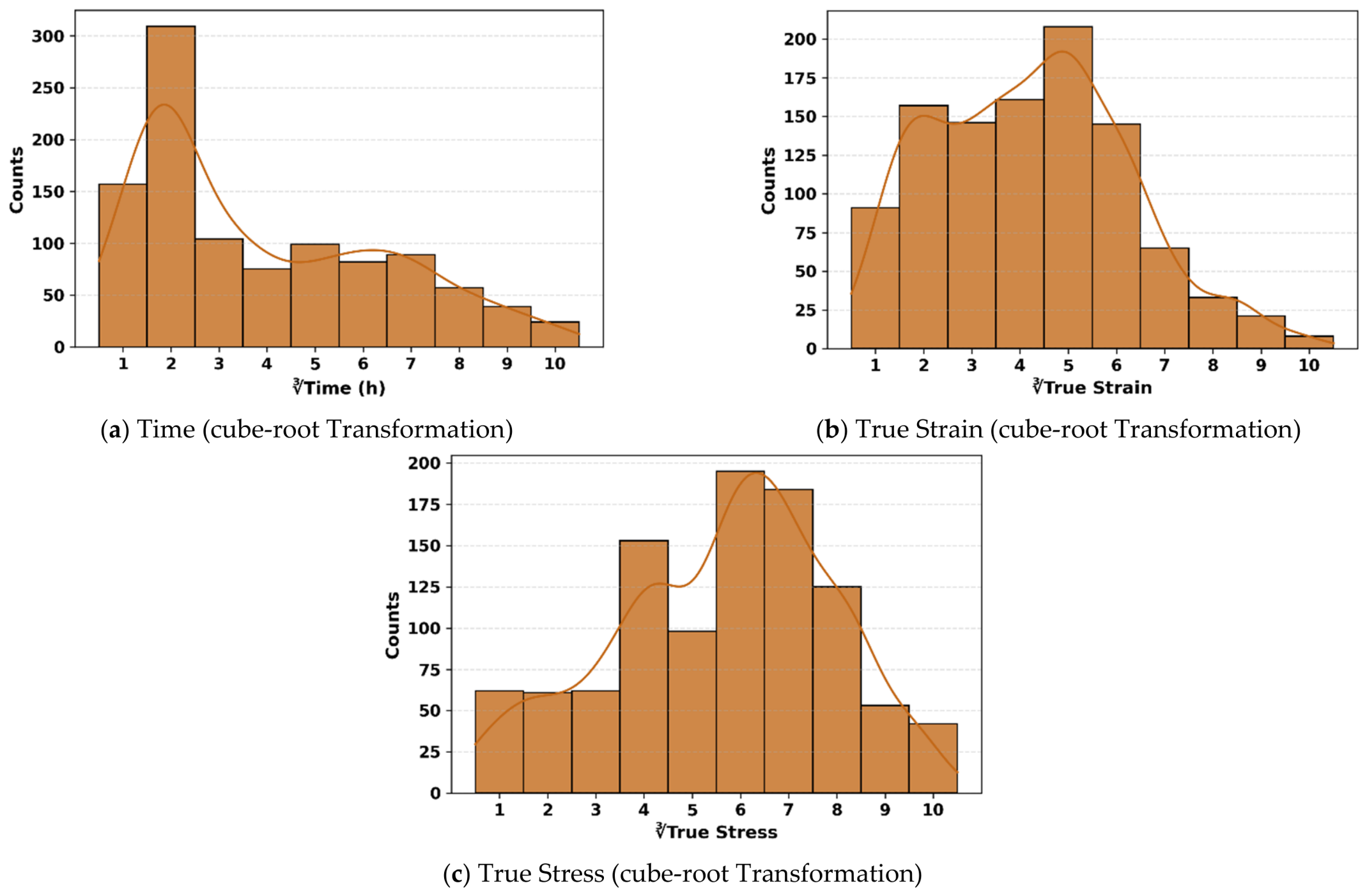
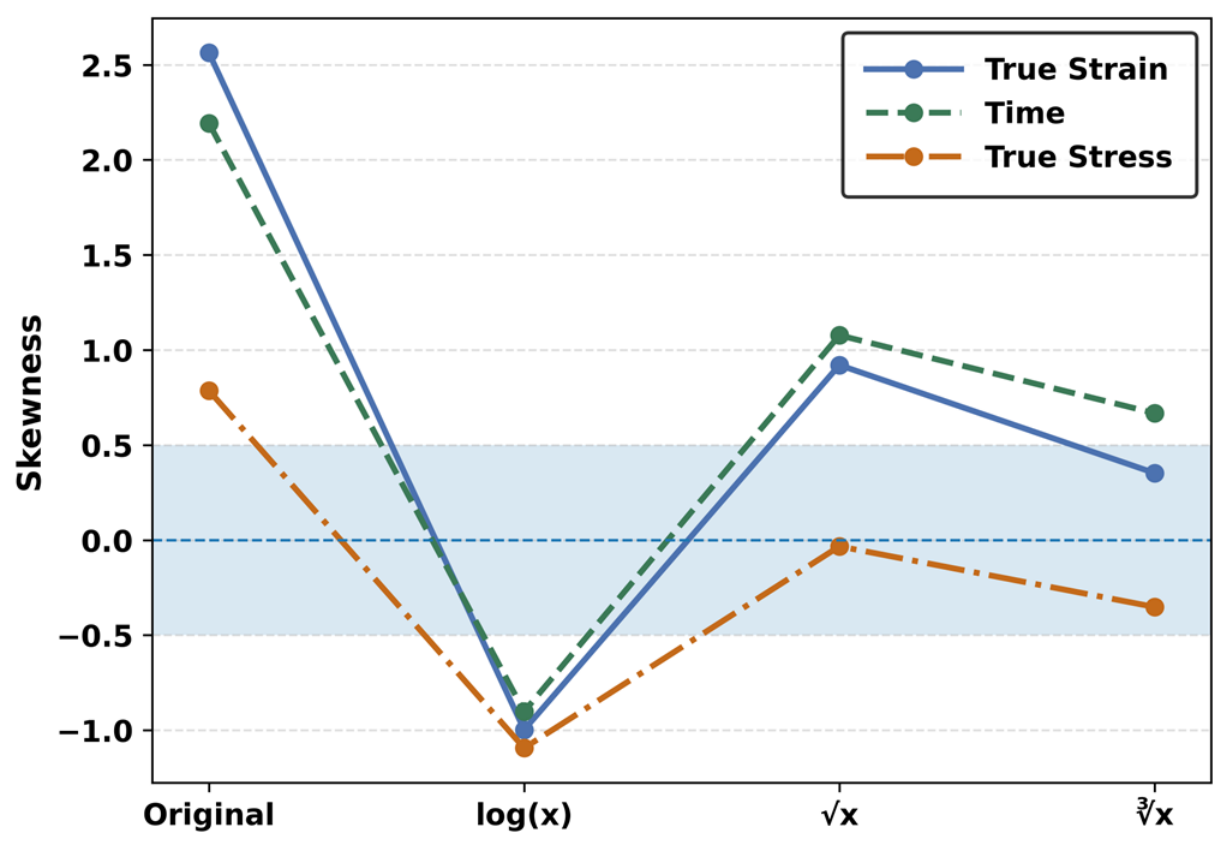
3.1. Data Transformation Strategies
3.2. Transformation Effects on Model Learning
3.3. Learning Curves (LC): Generalisation and Model Selection
3.4. Hyperparameter Optimisation
3.5. Creep Time Predictions: Rupture-Time Results
4. Conclusions
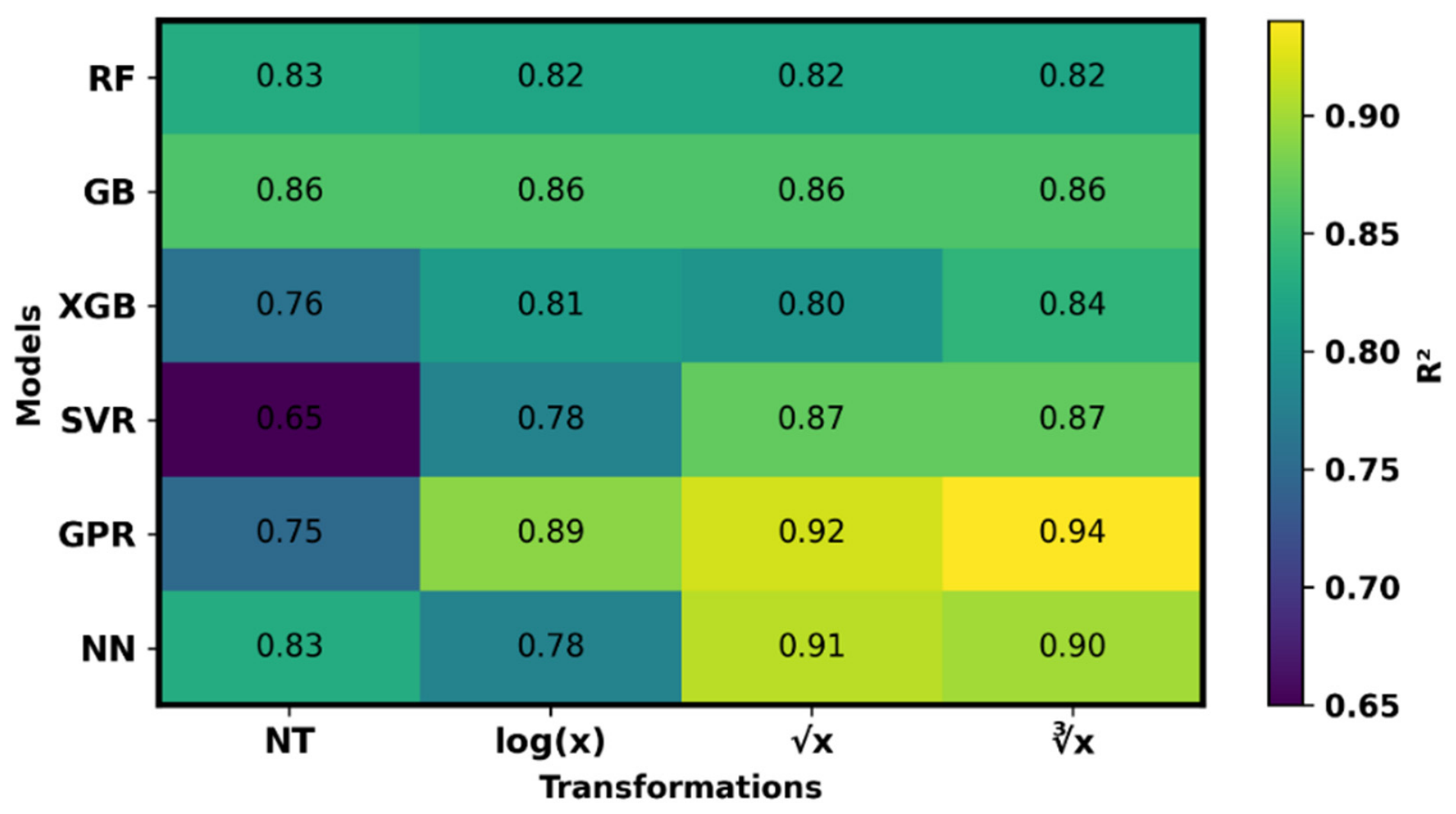
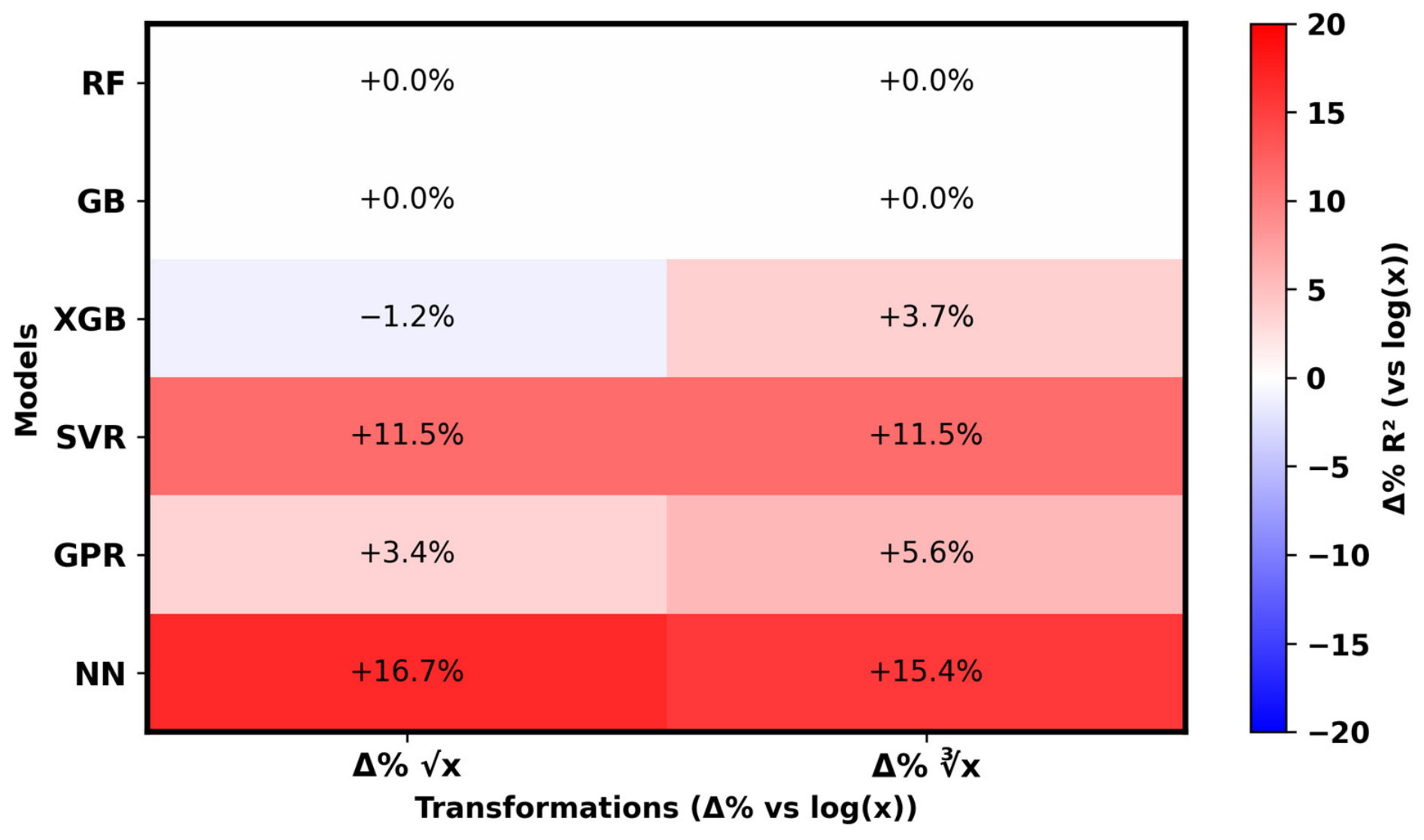
- The cube-root transformations resulted in higher validation performance for SVR, GPR, and NN.
- The tree-based models (RF, GB, and XGB) were insensitive to the choice of transformation.
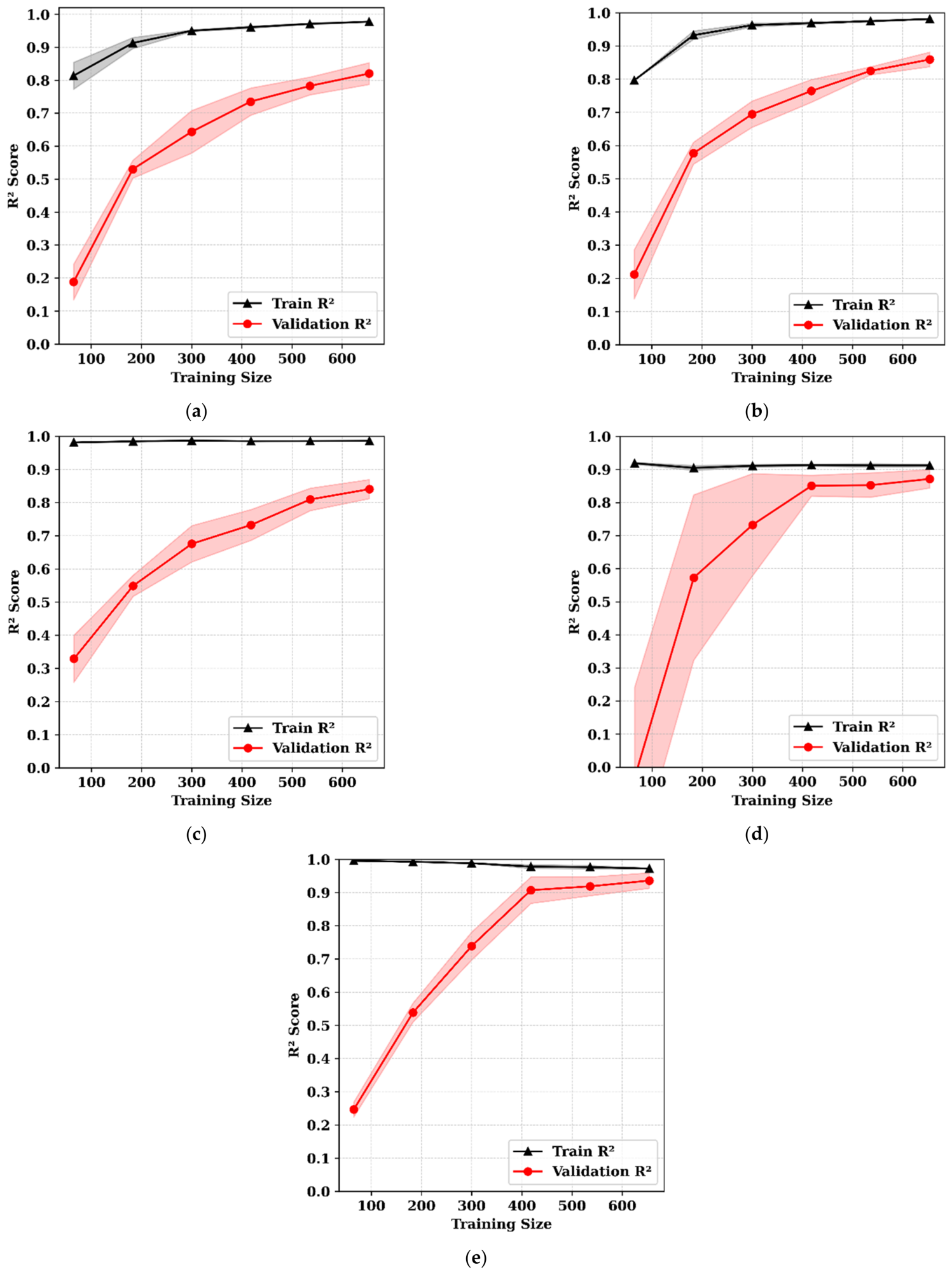
- Learning curve analysis revealed mild overfitting for the tree-based models, while SVR, GPR, and NN demonstrated minimal overfitting.
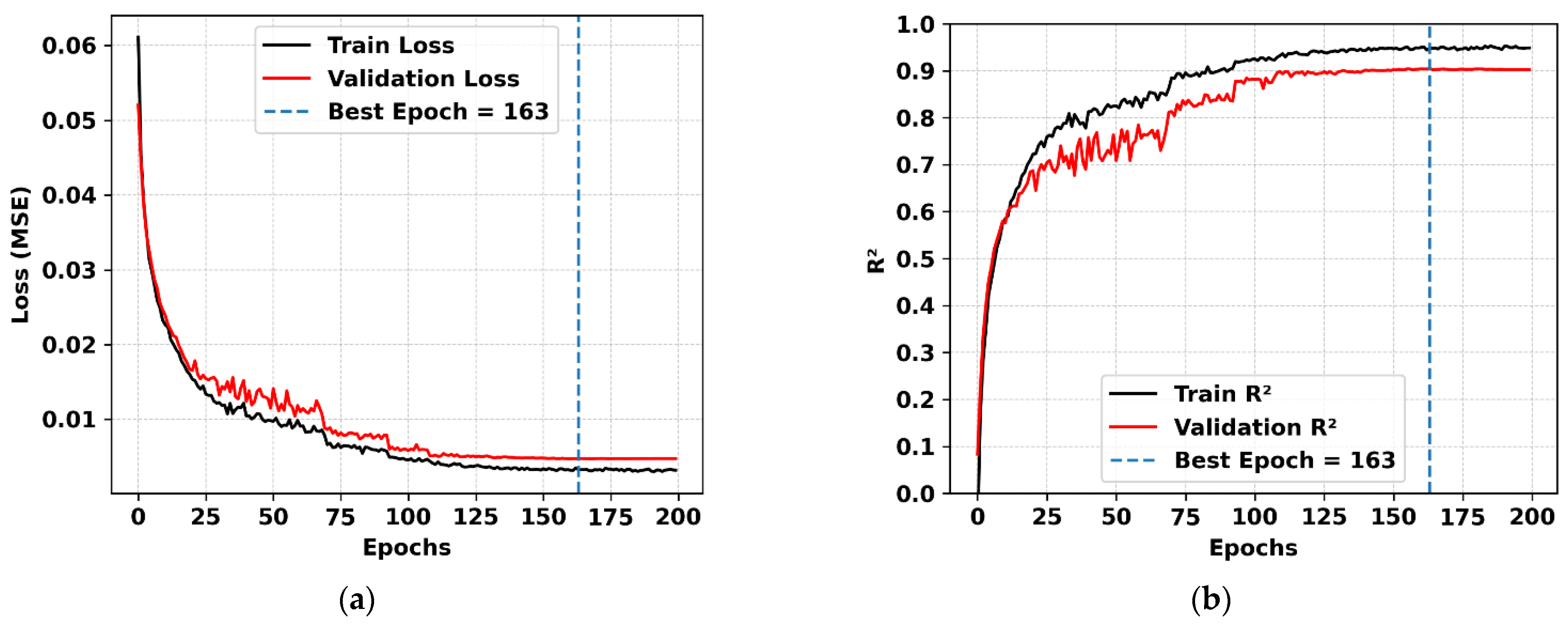
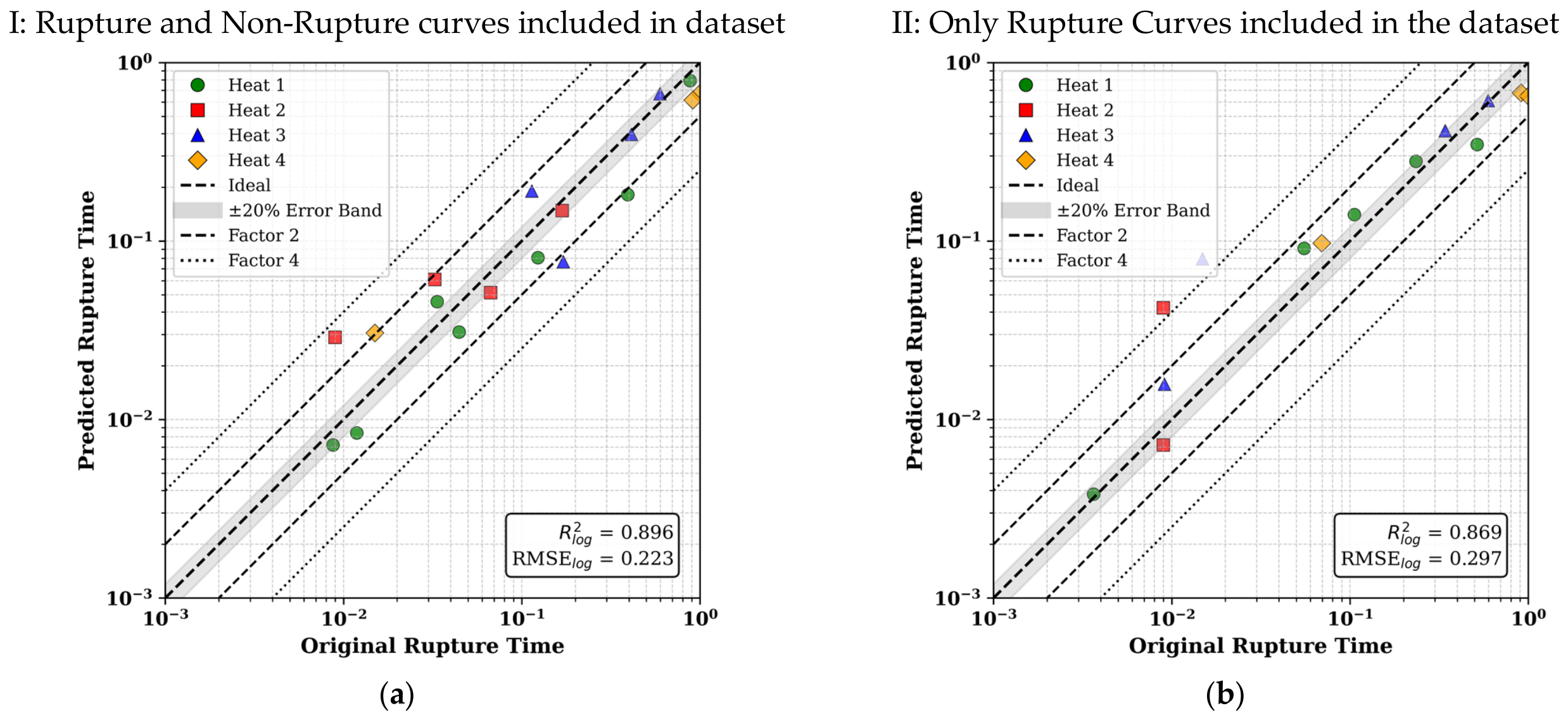
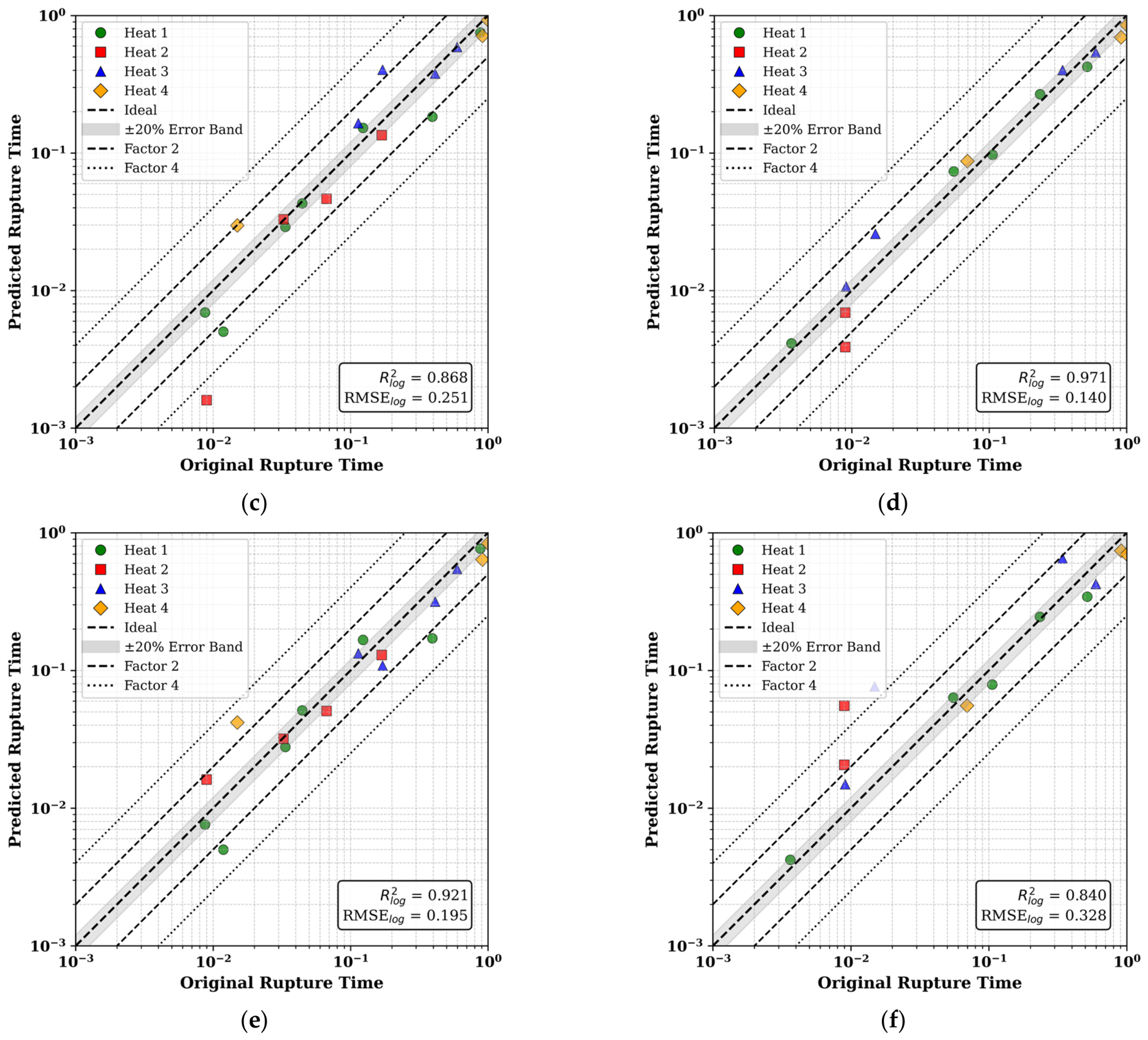
- During time to rupture prediction, the NN model achieved the highest overall predictive accuracy (R2 = 0.92), followed by SVR (0.90) and GPR (0.87).
- The per-heat evaluation (individual heat performance) revealed that SVR provided the most accurate predictions for Heats 1 and 4, and NN performed best for Heats 2 and 3.
- Importantly, the effect of incorporating the non-rupture creep curves on the respective model performance in predicting the rupture time was not uniform across the models. It depends mainly on the choice of model, like SVR and NN, which benefited from their incorporation, while GPR performance was hindered.
Author Contributions
Funding
Data Availability Statement
Acknowledgments
Conflicts of Interest
Abbreviations
| AI | Artificial Intelligence |
| ML | Machine Learning |
| HPO | Hyperparameter Optimisation |
| CV | Cross-Validation |
| LC | Learning Curves |
| RF | Random Forest |
| GB | Gradient Boosting |
| XGB | Extreme Gradient Boosting |
| SVR | Support Vector Regressor |
| GPR | Gaussian Process Regressor |
| NN | Neural Network |
Appendix A. Models
Appendix A.1. Random Forest

Appendix A.2. Gradient Boosting

Appendix A.3. Extreme Gradient Boosting
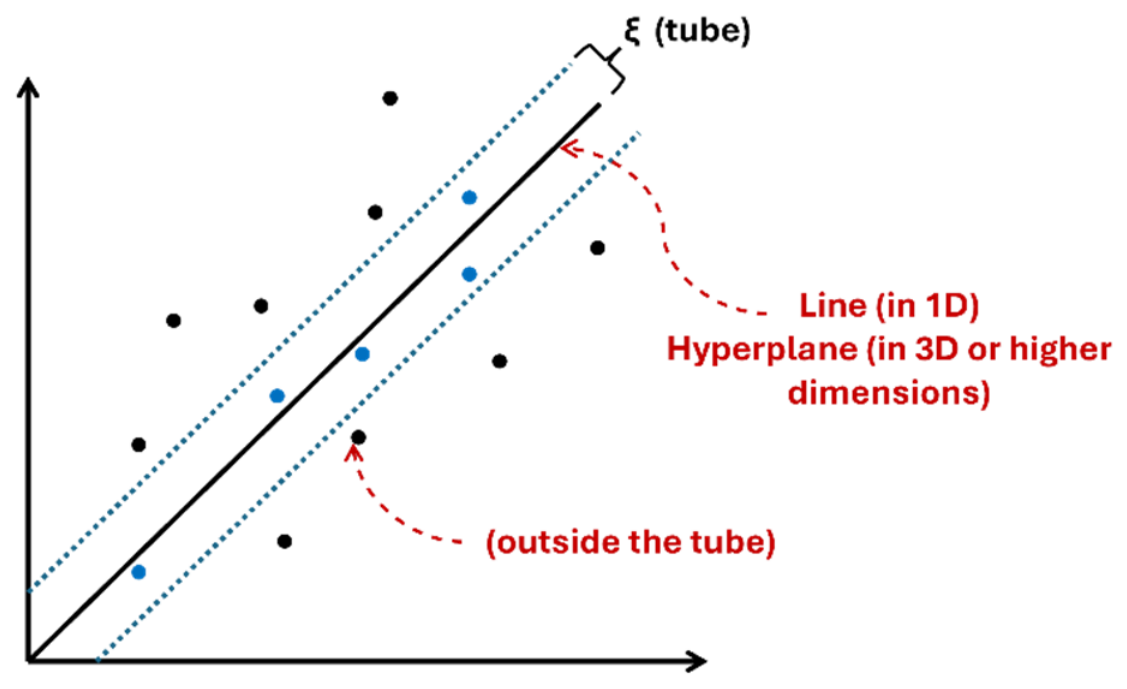
Appendix A.4. Support Vector Regressor

Appendix A.5. Gaussian Process Regressor
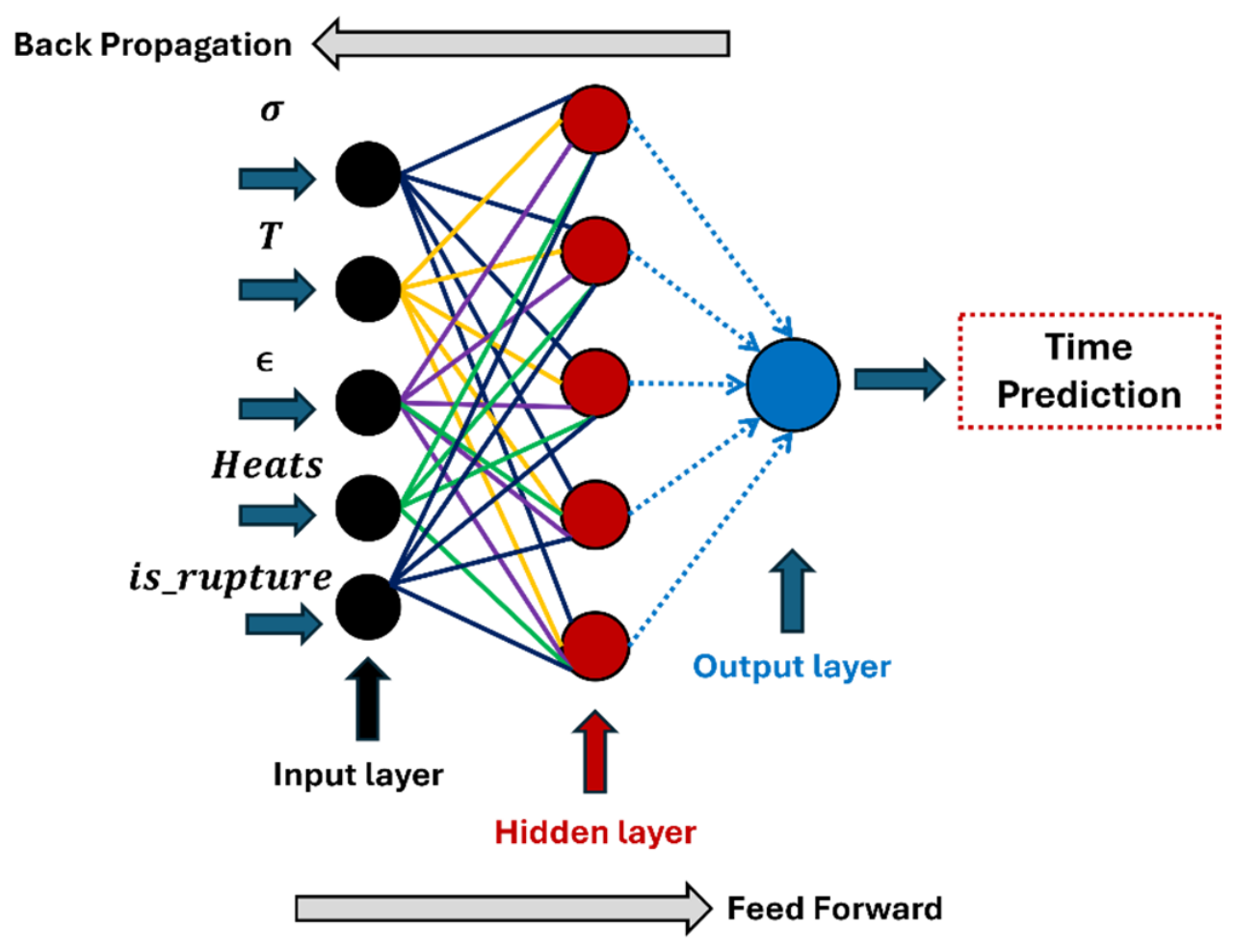
Appendix A.6. Neural Network (NN)

Appendix B. Description of Model Hyperparameters
| Model | Hyperparameters | Description |
| RF | n_estimators | Total number of independent trees in the ensemble model |
| max_dept | Represents the depth of the tree from the root node (first) to the leaf node (terminal node), controlling the maximum number of splits along any path | |
| min_samples_split | Minimum number of samples required to split an internal node | |
| min_samples_leaf | Minimum number of samples required at a leaf node (end node of the tree) | |
| max_features | Number of randomly selected and considered for finding the best split (the choice is made at each node) | |
| bootstrap | Determined whether sampling of data is done with replacement (True) or without replacement (False) for each tree | |
| GB/XGB | n_estimators | Number of boosting steps (like number of trees in RF) |
| learning_rate | Shrinkage step which controls the lowering of the weights in each boosting step | |
| max_dept | Same as that for RF | |
| min_child_weight | Like max_dept and gamma (restricts the number of splits of each tree) | |
| gamma (XGB) | Minimum loss reduction required to make a split (regularisation parameter) | |
| subsample | Fraction of data used for training at each boosting step | |
| colsample_bytree | Fraction of features (the choice is made once for each tree) | |
| reg_lambda (XGB) | L1 regularisation coefficient (controls the strength of penalty) | |
| reg_alpha (XGB) | L2 regularisation coefficient (controls the strength of penalty) | |
| SVR | kernel | Real valued symmetrical function (linear, polynomial, radial basis and sigmoid are some of the common kernel functions) |
| epsilon | Width of the margin (ε-tube) around the regression line within which errors are ignored, controlling models’ sensitivity | |
| C | Regularisation parameter that controls model complexity by weighting the penalty for constraint violations | |
| GPR | kernel | Function defining similarity points (radial basis, Matérn) |
| constant_value | Scaling factor controlling the overall signal magnitude of the Gaussian process | |
| length_scale | Determines how smooth or flexible the fitted function is, smaller value fits the data more closely | |
| alpha | Noise variance term added to the kernel matrix for numerical stability and regularisation, preventing overfitting | |
| NN | units_1 & units_2 | Number of neurons in hidden layer 1 and hidden layer 2 |
| activation | Determines how the input to each node is mathematically transformed into its output for each layer, governing the nonlinear behaviour of the network | |
| dropout | Randomly deactivates a fraction of neurons during training to prevent overfitting (regularisation parameter of NN) | |
| L2_reg | L2 regularisation coefficient (controls the strength of penalty) | |
| learning_rate | Controls the size of weight updates during training, determining how quickly or slowly a neural network learns from errors | |
| optimizer_name | Algorithm that updates the network weights to minimise loss (Nadam, Adam) |
References
- Bhardwaj, H.K.; Shukla, M. A unified creep and fatigue life prediction approach for 316 austenitic stainless steel using machine and deep learning. Fatigue Fract. Eng. Mater. Struct. 2024, 47, 3444–3463. [Google Scholar] [CrossRef]
- Bhardwaj, H.K.; Shukla, M. Machine Learning-Based Improved Creep Life Prediction of 316 Austenitic Stainless Steel with Add-on Chemical and Microstructural Features. J. Mater. Eng. Perform. 2025, 34, 18978–18996. [Google Scholar] [CrossRef]
- Lee, Y.S.; Kim, D.W.; Lee, D.Y.; Ryu, W.S. Effect of grain size on creep properties of type 316LN stainless steel. Met. Mater. Int. 2001, 7, 107–114. [Google Scholar] [CrossRef]
- Narula, P.; Kumar, P.A.; Vanaja, J.; Reddy, G.V.P.; Rao, G.V.S.N. Machine learning assisted prediction of creep data of India specific reduced activation ferritic martensitic steel. Mater. Today Commun. 2023, 35, 106165. [Google Scholar] [CrossRef]
- Holdsworth, S. Creep-ductility of high temperature steels: A review. Metals 2019, 9, 342. [Google Scholar] [CrossRef]
- Baraldi, D.; Holmström, S.; Nilsson, K.-F.; Bruchhausen, M.; Simonovski, I. 316L(N) Creep Modeling with Phenomenological Approach and Artificial Intelligence Based Methods. Metals 2021, 11, 698. [Google Scholar] [CrossRef]
- Larson, F.R.; Miller, J. A Time-Temperature Relationship for Rupture and Creep Stresses. Trans. ASME 1952, 74, 765–775. [Google Scholar] [CrossRef]
- Manson, S.S.; Haferd, A.M. A Linear Time-Temperature Relation for Extrapolation of Creep and Stress-Rupture Data; NACA: Boston, MA, USA, 1953. [Google Scholar]
- Orr, R.L.; Sherby, J.E.; Dorn, O.D. Correlations of Rupture Data for Metals at Elevated Temperatures; American Society of Mechanical Engineers (ASME): New York, NY, USA, 1953. [Google Scholar]
- Monkman, F.C.; Grant, N.J. An Empirical Relationship Between Rupture Life and Minimum Creep Rate in Creep-Rupture Tests. In Proc of the ASTM; ASTM International: West Conshohocken, PA, USA, 1956; Volume 56, pp. 593–620. [Google Scholar]
- Evans, R.W.; Wilshire, B. Creep of Metals and Alloys; The Institute of Metals: London, UK, 1985. [Google Scholar]
- Bagley, R.L.; Jones, D.I.G.; Freed, A.D. Renewal creep theory. Metall. Mater. Trans. A 1995, 26, 829–843. [Google Scholar] [CrossRef]
- Xiang, S.; Chen, X.; Fan, Z.; Chen, T.; Lian, X. A deep learning-aided prediction approach for creep rupture time of Fe–Cr–Ni heat-resistant alloys by integrating textual and visual features. J. Mater. Res. Technol. 2022, 18, 268–281. [Google Scholar] [CrossRef]
- Zhou, C.L.; Yuan, R.H.; Liao, W.J.; Yuan, T.H.; Fan, J.K.; Tang, B.; Zhang, P.X.; Li, J.S.; Lookman, T. Creep rupture life predictions for Ni-based single crystal superalloys with automated machine learning. Rare Met. 2024, 43, 2884–2890. [Google Scholar] [CrossRef]
- Chai, M.; He, Y.; Li, Y.; Song, Y.; Zhang, Z.; Duan, Q. Machine Learning-Based Framework for Predicting Creep Rupture Life of Modified 9Cr-1Mo Steel. Appl. Sci. 2023, 13, 4972. [Google Scholar] [CrossRef]
- Wei, L.; Wang, S.; Hao, W.; Huang, J.; Qu, N.; Liu, Y.; Zhu, J. Prediction of High-Temperature Creep Life of Austenitic Heat-Resistant Steels Based on Data Fusion. Metals 2023, 13, 1630. [Google Scholar] [CrossRef]
- Zhang, S.; Wang, L.; Zhu, S.P.; Deng, X.; Fu, S.; Luo, C.; Dong, Y.; Yan, D. Physics-informed neural network for creep-fatigue life prediction of Inconel 617 and interpretation of influencing factors. Mater. Des. 2024, 245, 113267. [Google Scholar] [CrossRef]
- Qin, Q.; Zhang, Z.; Long, H.; Zhuo, J.; Li, Y. Prediction of creep properties of Co–10Al–9W superalloys with machine learning. J. Mater. Sci. 2024, 59, 4571–4585. [Google Scholar] [CrossRef]
- Zhang, X.; Yao, J.; Wu, Y.; Liu, X.; Wang, C.; Liu, H. A Method for Predicting the Creep Rupture Life of Small-Sample Materials Based on Parametric Models and Machine Learning Models. Materials 2023, 16, 6804. [Google Scholar] [CrossRef] [PubMed]
- Sakurai, J.; Demura, M.; Inoue, J.; Yamazaki, M. Creep Life Predictions by Machine Learning Methods for Ferritic Heat Resistant Steels. ISIJ Int. 2023, 63, 1786–1797. [Google Scholar] [CrossRef]
- Jan, M.B.; Chai, M. Machine learning approaches for creep rupture life prediction of metallic materials: A comprehensive review. Int. J. Press. Vessel. Pip. 2026, 219, 105690. [Google Scholar] [CrossRef]
- Yang, T.X.; Dou, P. Prediction of creep rupture life of ODS steels based on machine learning. Mater. Today Commun. 2024, 38, 108117. [Google Scholar] [CrossRef]
- Brownlee, J. Data Preprocessing with Machine Learning; Machine Learning Mastery: Vermont, Australia, 2020. [Google Scholar]
- Fan, Y.; Zhang, H.; Ding, Y.; Wu, Y.; Guo, J.; Li, F. Multi-objective optimization based on reduced order model for VHTR design. Ann. Nucl. Energy 2026, 237, 112460. [Google Scholar] [CrossRef]
- Qiao, Z.; Ning, S.; Gai, Y.; Xie, C. A digital twin guided physical-virtual denoising method for early fault detection of rolling element bearings. Mech. Syst. Signal Process. 2026, 249, 114108. [Google Scholar] [CrossRef]
- Akiba, T.; Sano, S.; Yanase, T.; Ohta, T.; Koyama, M. Optuna: A Next-generation Hyperparameter Optimization Framework. In Proceedings of the KDD’19: Proceedings of the 25th ACM SIGKDD International Conference on Knowledge Discovery & Data Mining, Anchorage, AK, USA, 4–8 August 2019; pp. 2623–2631. [Google Scholar] [CrossRef]
- Holdsworth, S.R.; Askins, M.; Baker, A.; Gariboldi, E.; Holmström, S.; Klenk, A.; Ringel, M.; Merckling, G.; Sandstrom, R.; Schwienheer, M.; et al. Factors influencing creep model equation selection. Int. J. Press. Vessel. Pip. 2008, 85, 80–88. [Google Scholar] [CrossRef]
- Wang, J.; Fa, Y.; Tian, Y.; Yu, X. A machine-learning approach to predict creep properties of Cr–Mo steel with time-temperature parameters. J. Mater. Res. Technol. 2021, 13, 635–650. [Google Scholar] [CrossRef]
- Géron, A. Hands-on Machine Learning with Scikit-Learn, Keras & TensorFlow, 2nd ed.; O’Reilly Media: Santa Rosa, CA, USA, 2019. [Google Scholar]
- Wang, C.; Wei, X.; van der Zwaag, S.; Wang, Q.; Xu, W. From creep-life prediction to ultra-creep-resistant steel design: An uncertainty-informed machine learning approach. Acta Mater. 2025, 292, 121073. [Google Scholar] [CrossRef]
- Chen, Y.; Zhao, Y. Machine learning-based predictions and analyses of the creep rupture life of the Ni-based single crystal superalloy. Sci. Rep. 2023, 14, 20716. [Google Scholar] [CrossRef]
- Shekhar, S.; Bansode, A.; Salim, A. A Comparative study of Hyper-Parameter Optimization Tools. In Proceedings of the 2021 IEEE Asia-Pacific Conference on Computer Science and Data Engineering (CSDE), Brisbane, Australia, 8–10 December 2021. [Google Scholar] [CrossRef]
- Swetlana, S.; Rout, A.; Singh, A.K. Machine learning assisted interpretation of creep and fatigue life in titanium alloys. APL Mach. Learn. 2023, 1, 016102. [Google Scholar] [CrossRef]
- Han, H.; Li, W.; Antonov, S.; Li, L. Mapping the creep life of nickel-based SX superalloys in a large compositional space by a two-model linkage machine learning method. Comput. Mater. Sci. 2022, 205, 111229. [Google Scholar] [CrossRef]
- Agrawal, T. Hyperparameter Optimization in Machine Learning; Springer: Berlin/Heidelberg, Germany, 2021. [Google Scholar] [CrossRef]
- Bartz, E.; Bartz-Beielstein, T.; Zaefferer, M.; Mersmann, O. Hyperparameter Tuning for Machine and Deep Learning with R: A Practical Guide; Springer: Berlin/Heidelberg, Germany, 2023. [Google Scholar] [CrossRef]
- Snoek, J.; Larochelle, H.; Adams, R.P. Practical Bayesian optimization of machine learning algorithms. Adv. Neural Inf. Process. Syst. 2012, 4, 2951–2959. [Google Scholar]
- Bergstra, J.; Bardenet, R.; Bengio, Y.; Kégl, B. Algorithms for hyper-parameter optimization. In Advances in Neural Information Processing Systems 24 (NIPS 2011); NeurIPS Proceedings: San Diego, CA, USA, 2011; Volume 2011, pp. 1–9. [Google Scholar]
- Hatem, G.; Zeidan, J.; Goossens, M.; Moreira, C. Normality Testing Methods and the Importance of Skewness and Kurtosis in Statistical Analysis. BAU J.-Sci. Technol. 2022, 3, 7. [Google Scholar] [CrossRef]
- Mohr, F.; van Rijn, J.N. Learning curves for decision making in supervised machine learning: A survey. Mach. Learn. 2024, 113, 8371–8425. [Google Scholar] [CrossRef]
- Rasmussen, C.E.; Williams, C.K.I. Gaussian Processes for Machine Learning; The MIT Press: Cambridge, MA, USA, 2006; Volume 7. [Google Scholar]
- Drucker, H.; Surges, C.J.C.; Kaufman, L.; Smola, A.; Vapnik, V. Support vector regression machines. Adv. Neural Inf. Process. Syst. 1997, 1, 155–161. [Google Scholar]
- Ceungh, H.L.; Uvdal, P.; Mirkhalaf, M. Augmentation of scarce data—A new approach for deep-learning modeling of composites. Compos. Sci. Technol. 2024, 249, 110491. [Google Scholar] [CrossRef]
- Goodfellow, I.; Bengio, Y.; Courville, A. Deep Learning; The MIT Press: Cambridge, MA, USA, 2019; Volume 29, ISBN 3463353563306. Available online: www.deeplearningbook.org (accessed on 1 January 2026).
- Pan, Y.; Zeng, X.; Xu, H.; Sun, Y.; Wang, D.; Wu, J. Evaluation of Gaussian process regression kernel functions for improving groundwater prediction. J. Hydrol. 2021, 603, 126960. [Google Scholar] [CrossRef]
- Breiman, L. Random Forests. Mach. Learn. 2001, 45, 5–32. [Google Scholar] [CrossRef]
- Mienye, I.D.; Jere, N. A Survey of Decision Trees: Concepts, Algorithms, and Applications. IEEE Access 2024, 12, 86716–86727. [Google Scholar] [CrossRef]
- Khan, M.Y.; Qayoom, A.; Nizami, M.S.; Siddiqui, M.S.; Wasi, S.; Raazi, S.M.K.U.R. Automated Prediction of Good Dictionary EXamples (GDEX): A Comprehensive Experiment with Distant Supervision, Machine Learning, and Word Embedding-Based Deep Learning Techniques. Complexity 2021, 2021, 2553199. [Google Scholar] [CrossRef]
- Friedman, J.H. Greedy function approximation: A gradient boosting machine. Ann. Stat. 2001, 29, 1189–1232. [Google Scholar] [CrossRef]
- Baharvand, S.; Ahmari, H. Application of Machine Learning Approaches in Particle Tracking Model to Estimate Sediment Transport in Natural Streams; Springer: Dordrecht, The Netherlands, 2024; Volume 38. [Google Scholar] [CrossRef]
- Chen, T.; Guestrin, C. XGBoost: A scalable tree boosting system. In Proceedings of the 22nd ACM SIGKDD International Conference on Knowledge Discovery and Data Mining (KDD’16), San Francisco, CA, USA, 13–17 August 2016; pp. 785–794. [Google Scholar] [CrossRef]
- Kleynhans, T.; Montanaro, M.; Gerace, A.; Kanan, C. Predicting top-of-atmosphere thermal radiance using MERRA-2 atmospheric data with deep learning. Remote Sens. 2017, 9, 1133. [Google Scholar] [CrossRef]
- Williams, C.K.I.; Rasmussen, C.E. Gaussian Processes for Regression. Adv. Neural Inf. Process. Syst. 1996, 8, 514–520. [Google Scholar]
- McCulloch, W.S.; Pitts, W. A logical calculus of the ideas immanent in nervous activity. Bull. Math. Biophys. 1943, 5, 115–133. [Google Scholar] [CrossRef]
- Rosenblatt, F. The Perceptron: A Probabilistic Model for Information Storage and Organization in the Brain. Psychol. Rev. 1958, 65, 386–408. [Google Scholar] [CrossRef] [PubMed]
- Rumelhart, D.E.; Hinton, G.E.; Williams, R.J. Learning Representations by Back-Propagating Errors. Nature 1986, 323, 533–536. [Google Scholar] [CrossRef]
- Wang, X.; Liu, Y.; Xin, H. Bond strength prediction of concrete-encased steel structures using hybrid machine learning method. Structures 2021, 32, 2279–2292. [Google Scholar] [CrossRef]



| Subset | Rupture | Non-Rupture | Total Curves |
|---|---|---|---|
| Training | 60 | 16 | 76 |
| Testing | 13 | 6 | 19 |
| Models | Validation | Train–Validation Gap | Plateau Reached | Test |
|---|---|---|---|---|
| RF | 0.82 | 0.16 | No | 0.50 |
| GB | 0.86 | 0.12 | No | 0.64 |
| XGB | 0.84 | 0.15 | No | 0.44 |
| SVR | 0.87 | 0.04 | Yes | 0.90 |
| GPR | 0.94 | 0.03 | Yes | 0.87 |
| NN | 0.90 | 0.04 | Yes | 0.92 |
| Model | Hyperparameters | Search Range | Tuned Values |
|---|---|---|---|
| RF | n_estimators | 100–500 | 475 |
| max_dept | 5–15 | 15 | |
| min_samples_split | 2–20 | 3 | |
| min_samples_leaf | 2–10 | 2 | |
| max_features | sqrt, log2, None | sqrt | |
| bootstrap | True, False | False | |
| GB | n_estimators | 100–250 | 236 |
| learning_rate | 0.001–0.1 (log scale) | 0.083 | |
| max_dept | 4–10 | 8 | |
| min_samples_split | 10–20 | 20 | |
| min_samples_leaf | 10–20 | 10 | |
| subsample | 0.1–0.9 | 0.85 | |
| max_features | sqrt, log2, None | log2 | |
| XGB | n_estimators | 50–300 | 187 |
| learning_rate | 0.001–0.1 (log scale) | 0.061 | |
| max_dept | 4–10 | 7 | |
| min_child_weight | 1–10 | 3 | |
| gamma | 0–5 | 0.0005 | |
| subsample | 0.2–0.8 | 0.73 | |
| colsample_bytree | 0.5–1.0 | 0.88 | |
| L1(reg_alpha) | 1 × 10⁻⁶–10 | 0.0437 | |
| L2(reg_lambda) | 1 × 10⁻⁶–10 | 0.0102 | |
| SVR | C | 1 × 10⁻²–300 (log scale) | 298.78 |
| epsilon | 1 × 10⁻²–10 | 0.0168 | |
| kernel | rbf, sigmoid | rbf | |
| GPR | kernel | rbf, Matérn | Matérn |
| constant_value | 0.1–6 (log scale) | 0.510 | |
| length_scale | 0.01–6 (log scale) | 0.109 | |
| alpha | 1 × 10⁻⁵–1 × 10⁻¹ (log scale) | 0.031 | |
| NN | units_1 | 32,512 | 352 |
| units_2 | 32,512 | 416 | |
| dropout | 0–0.5 | 0.0165 | |
| L2_reg | 1 × 10⁻⁶, 0.01 (log scale) | 1.318 × 10⁻⁶ | |
| learning_rate | 1 × 10⁻⁴, 1 × 10⁻² (log scale) | 0.00154 | |
| optimizer_name | adam, rmsprop, nadam | nadam | |
| activation function | not tuned | ReLU | |
| batch size | 16, 32, 64 | 16 |
| Models | SVR | GPR | NN |
|---|---|---|---|
| Heat 1 | 0.172 | 0.193 | 0.209 |
| Heat 2 | 0.292 | 0.357 | 0.152 |
| Heat 3 | 0.198 | 0.189 | 0.120 |
| Heat 4 | 0.206 | 0.206 | 0.277 |
Disclaimer/Publisher’s Note: The statements, opinions and data contained in all publications are solely those of the individual author(s) and contributor(s) and not of MDPI and/or the editor(s). MDPI and/or the editor(s) disclaim responsibility for any injury to people or property resulting from any ideas, methods, instructions or products referred to in the content. |
© 2026 by the authors. Licensee MDPI, Basel, Switzerland. This article is an open access article distributed under the terms and conditions of the Creative Commons Attribution (CC BY) license.
Share and Cite
Nazim, A.; Tonti, A.; Gariboldi, E. AI-Assisted Creep Time Prediction Using Creep Strain Curves of AISI 316 Austenitic Stainless Steel: Effects of Data Transformation and Hyperparameter Optimisation. Appl. Sci. 2026, 16, 6283. https://doi.org/10.3390/app16136283
Nazim A, Tonti A, Gariboldi E. AI-Assisted Creep Time Prediction Using Creep Strain Curves of AISI 316 Austenitic Stainless Steel: Effects of Data Transformation and Hyperparameter Optimisation. Applied Sciences. 2026; 16(13):6283. https://doi.org/10.3390/app16136283
Chicago/Turabian StyleNazim, Arsalan, Andrea Tonti, and Elisabetta Gariboldi. 2026. "AI-Assisted Creep Time Prediction Using Creep Strain Curves of AISI 316 Austenitic Stainless Steel: Effects of Data Transformation and Hyperparameter Optimisation" Applied Sciences 16, no. 13: 6283. https://doi.org/10.3390/app16136283
APA StyleNazim, A., Tonti, A., & Gariboldi, E. (2026). AI-Assisted Creep Time Prediction Using Creep Strain Curves of AISI 316 Austenitic Stainless Steel: Effects of Data Transformation and Hyperparameter Optimisation. Applied Sciences, 16(13), 6283. https://doi.org/10.3390/app16136283