4.2. Temperature–Pressure Coupling and Alternating Conditions Impact on Cement Sheath Stress
To explore how temperature–pressure coupling and alternating conditions impact the cement sheath stress, the numerical simulation parameters are set with a casing pressure of 75 MPa, fracturing fluid displacement of 12 m
3/min, initial fracturing fluid temperature of 25 °C, and a well depth of 4300 m, analyzing the changing features of the cement sheath stresses (radial and tangential). As depicted in
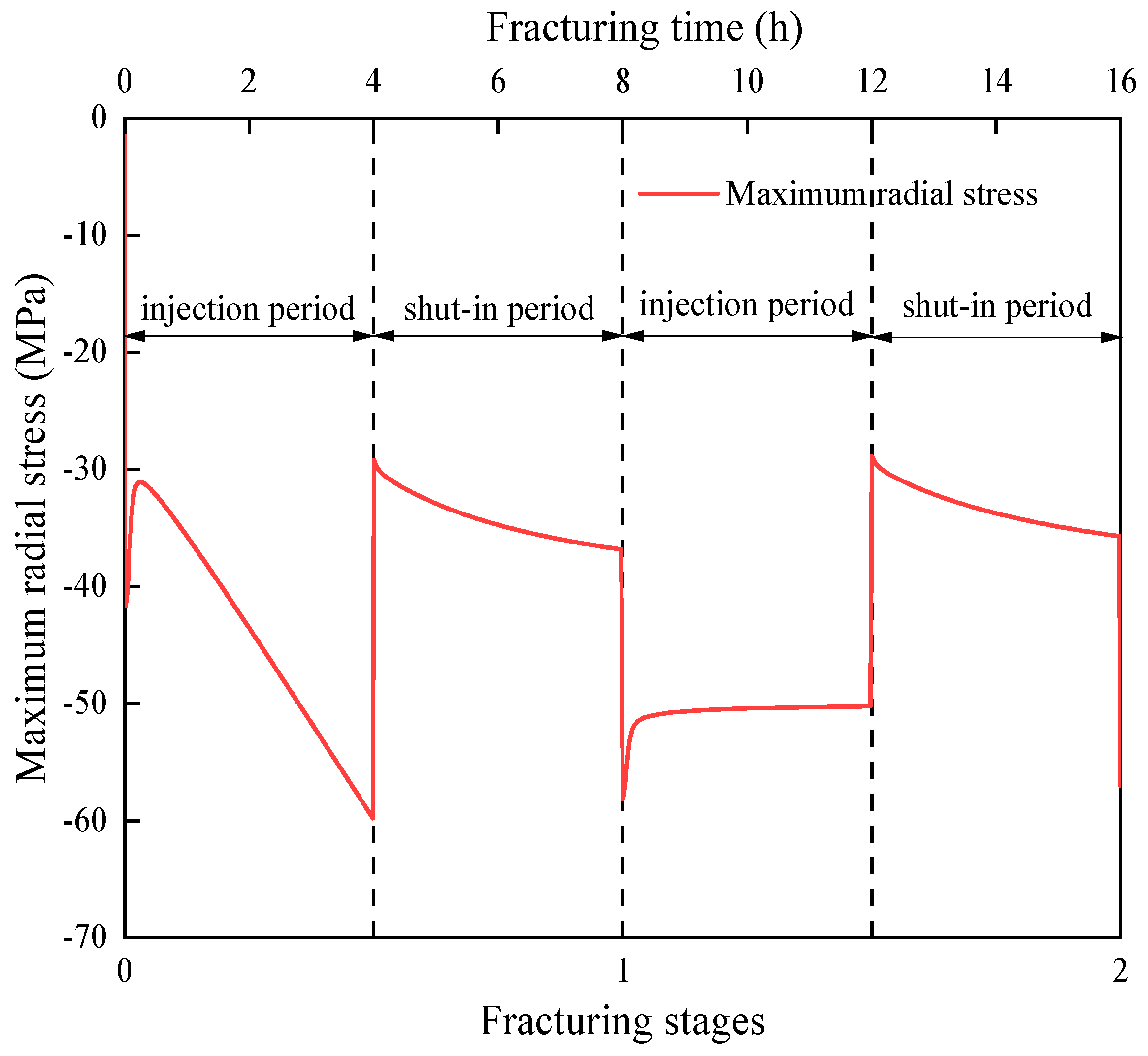
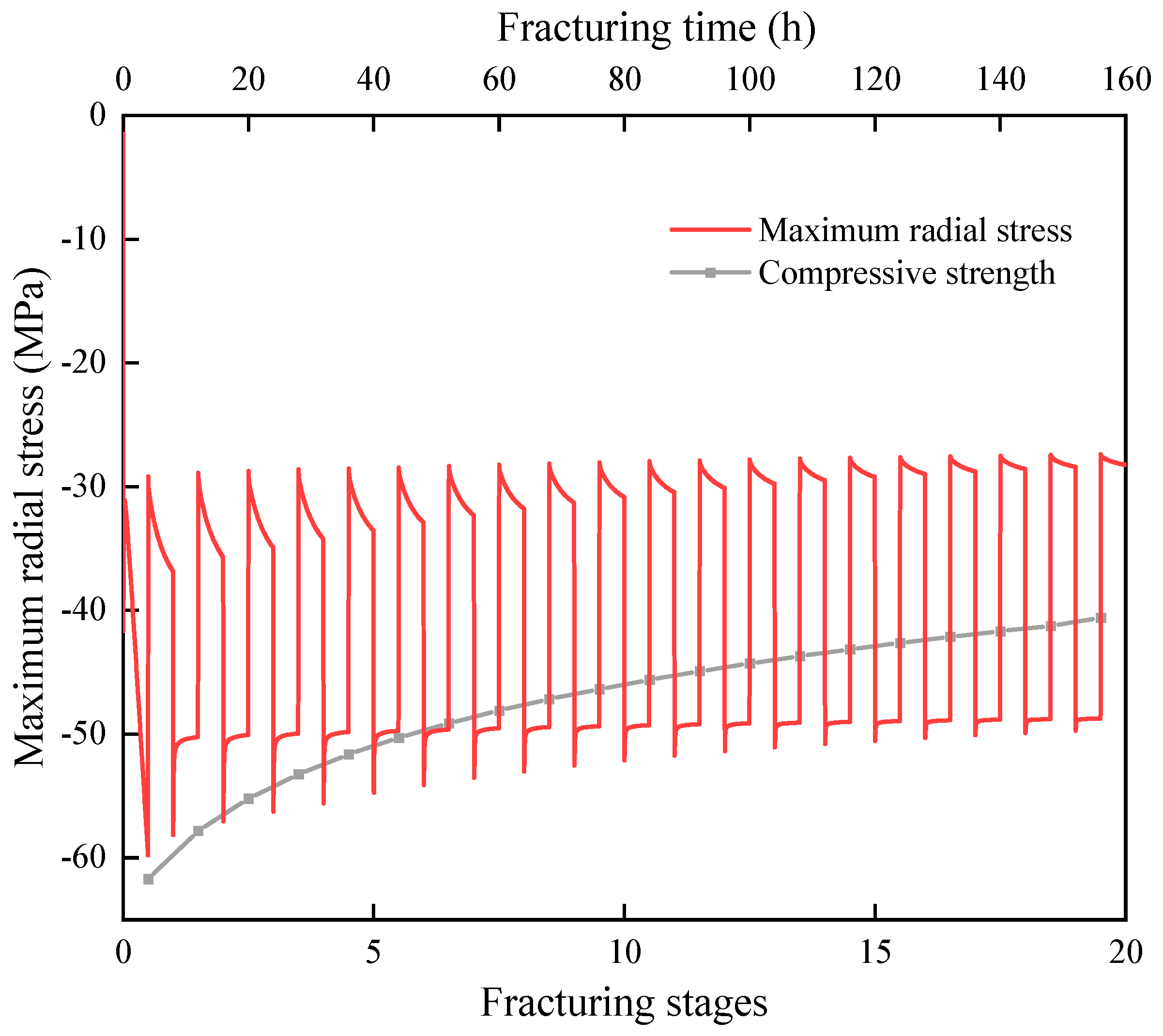
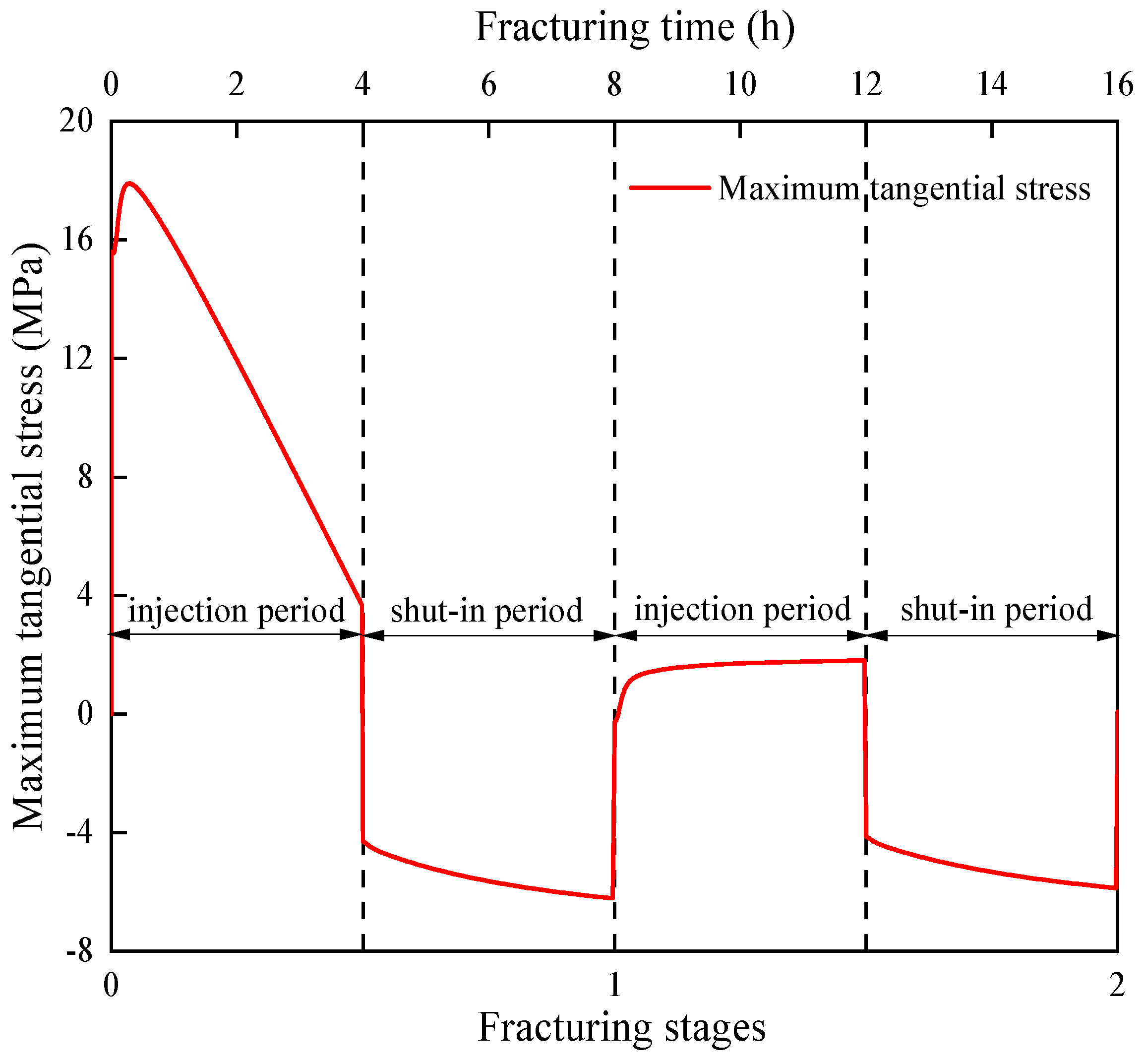
Figure 8, during the first two fracturing stages, the combined action of temperature–pressure coupling effects and alternating loads causes the cement sheath stress to exhibit distinct periodic variation patterns. These stress variations demonstrate cycles perfectly synchronized with the fracturing operation cycles (4 h injection phase + 4 h shut-in phase), a pattern that remains consistent throughout all 20 fracturing stages.
As depicted in
Figure 8, the pattern of change in the cement sheath’s radial stress is complex under cyclic fracturing. The specific manifestations are as follows:
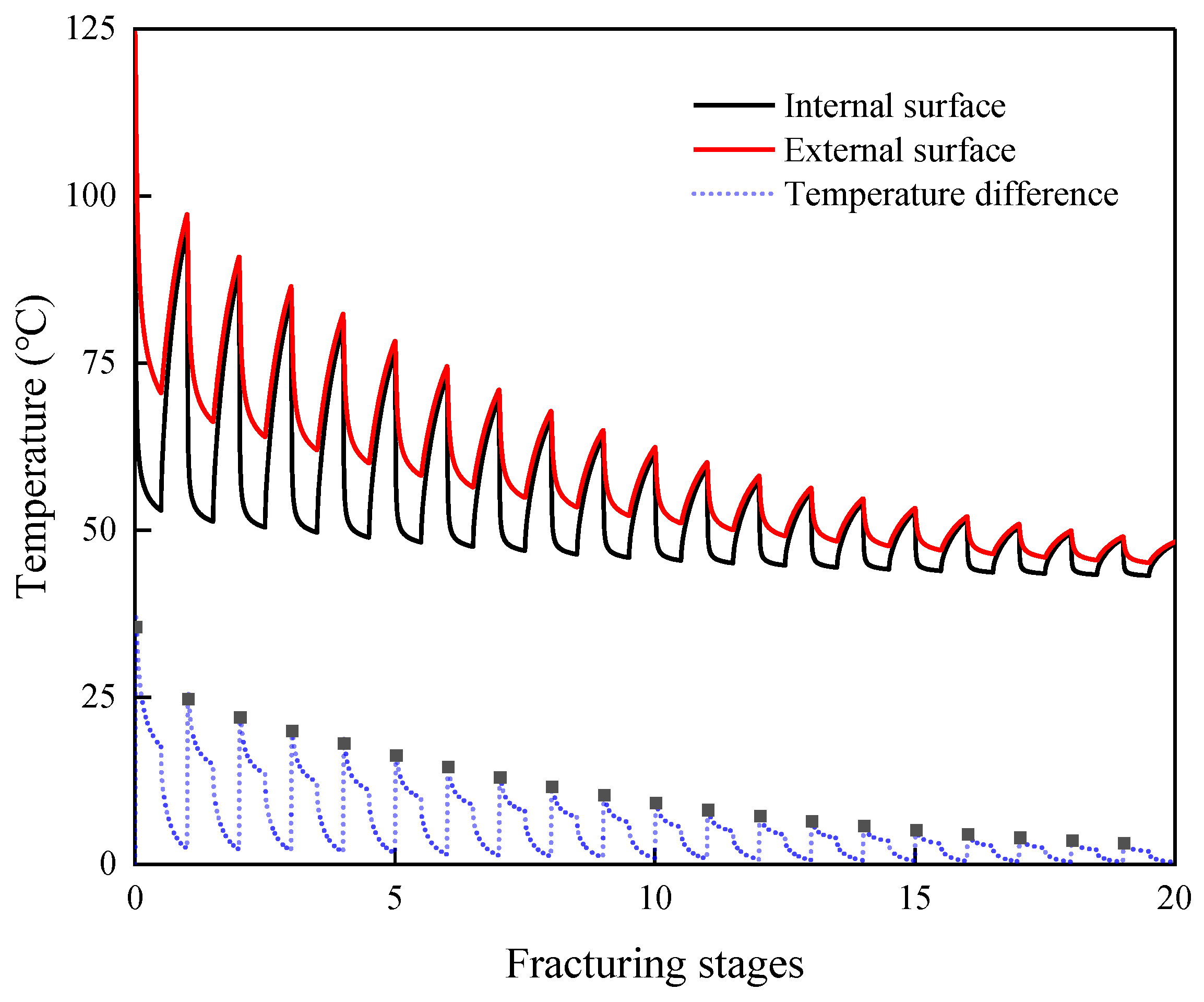
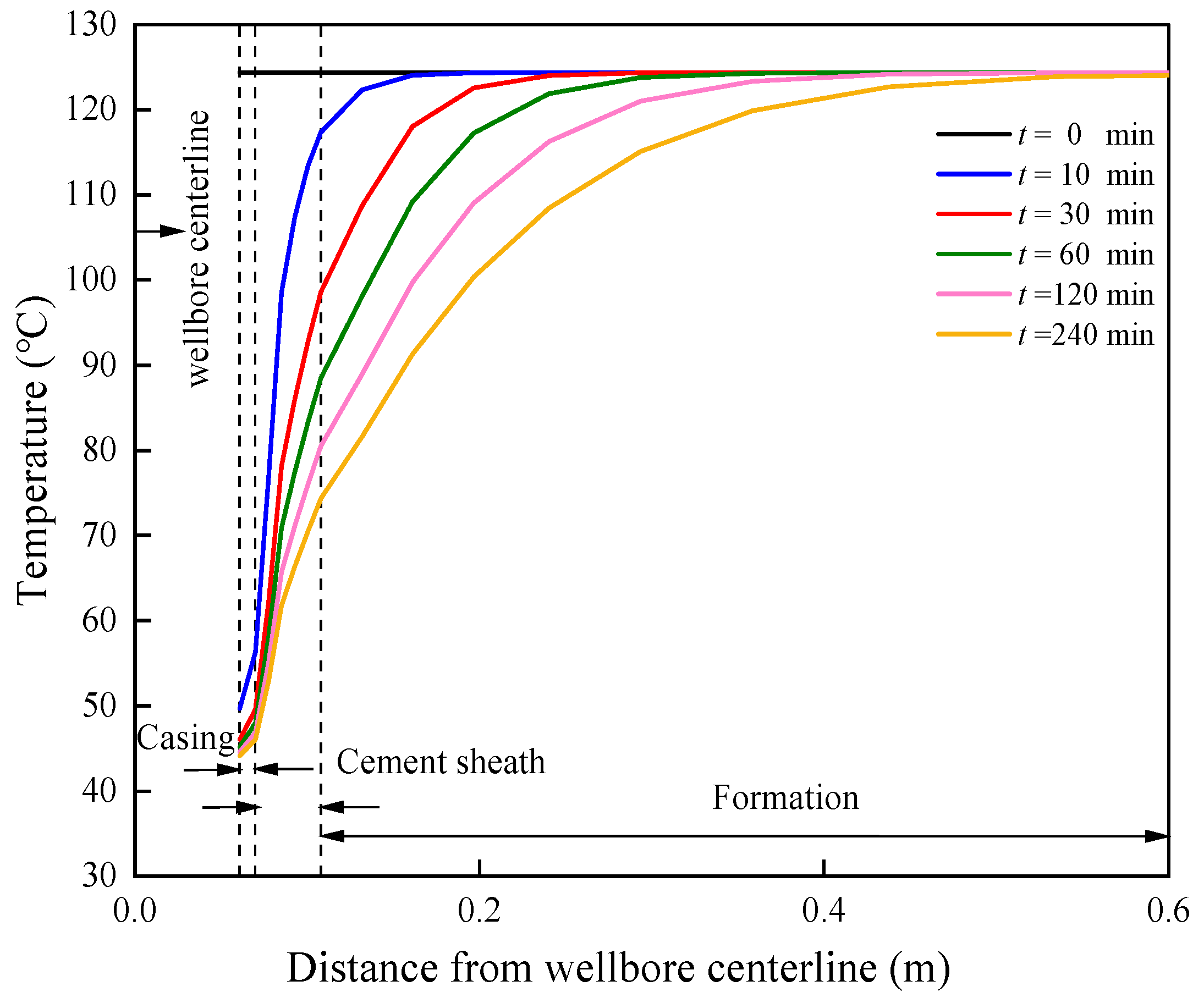
During the injection phase of the first fracturing stage, the radial stress first decreases and then increases (the negative sign only indicates that the cement sheath is under compression). When fracturing fluid initially enters the casing, the original completion fluid in the wellbore moves downward, and the casing contracts due to cooling, reducing its compressive effect on the cement sheath and consequently decreasing radial stress. Under thermal conduction effects, the temperature of the internal wall of the cement sheath gradually becomes almost the same as that of the external wall of the casing, and simultaneously, the temperature of the external wall of the cement sheath starts to decline, leading to overall contraction. Combined with the mechanical load from formation pressure, the radial stress continuously increases until the end of the injection phase. During the shut-in phase of the first fracturing stage, the fluid stops flowing, and the internal pressure reduces to hydrostatic pressure, lessening the compressive force acting on the cement sheath, which results in an immediate drop in radial stress. As fracturing time progresses, the cement sheath temperature gradually rises due to thermal conduction, leading to thermal expansion. However, constrained by both the casing and formation, this expansion is restricted, resulting in increased radial stress that superimposes the original compressive load, further compressing the cement sheath.
During the injection phase of the second fracturing stage, when fluid re-enters the wellbore, the cement sheath’s radial stress instantly increases. In this stage, the compressive load borne by the cement sheath is mainly controlled by the casing pressure and formation pressure. Notably, the formation pressure fully manifested its influence during the first-stage injection phase. For the following fracturing procedures, the stress condition of the cement sheath is analyzed, taking into consideration the impact of the already established formation pressure. As the second fracturing stage progresses, the casing undergoes cooling and contraction, which diminishes its compressive impact on the cement sheath. Consequently, the radial stress diminishes until the conclusion of the injection phase. Upon re-entering the shut-in phase, the radial stress instantly decreases and then gradually increases with continued fracturing time.
As illustrated in
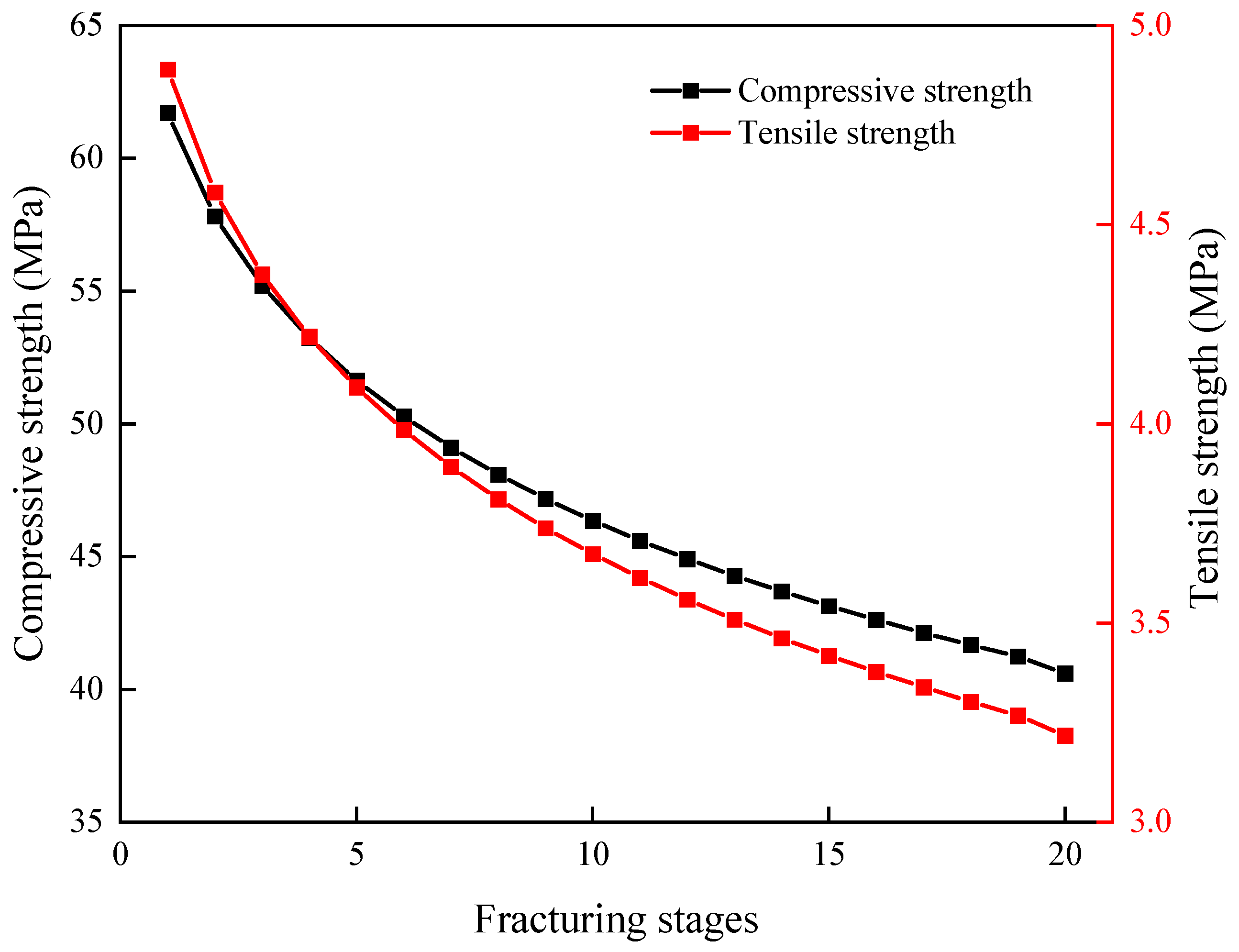
Figure 9, the cement sheath’s radial stress variation pattern during subsequent fracturing stages follows a similar trend to that observed in the second stage. However, due to the progressive degradation of compressive strength of the cement sheath with increasing fracturing stage, the absolute value of radial compressive stress gradually decreases.
As shown in
Figure 10, the cement sheath tangential stress variations are described as follows:
During the injection phase of the first fracturing stage, the tangential stress initially increases and then decreases. This trend is obtained from the numerical simulation results, although the local peak is not very obvious in the figure due to the short duration of the initial stress variation. When the fracturing fluid first enters the casing, the original completion fluid within the wellbore moves downward, causing the cement sheath temperature to decrease and the tangential stress to increase. Subsequently, due to thermal conduction, the temperature difference between the internal and external walls of the cement sheath decreases, and the overall wellbore temperature continues to decline, leading to contraction of the cement sheath and a reduction in tangential stress until the end of the injection phase. During the shut-in phase, with fluid flow ceased and internal casing pressure reduced, the tangential stress direction reverses (negative values). As the cement sheath temperature gradually rises and thermal expansion occurs, constrained by both casing and formation, this restricted expansion causes tangential stress to increase.
At the beginning of the second fracturing stage, when fracturing fluid re-enters the casing, the tangential stress direction reverses again (positive values). In this stage, the compressive load imposed on the cement sheath is mainly determined by the casing pressure and the formation pressure, with the formation pressure having fully acted during the first fracturing stage. In the subsequent fracturing stages, the cement sheath’s stress state is analyzed according to this established mechanical condition. Under thermal conduction effects, overall cooling-induced contraction of the wellbore causes tangential stress to rise until the injection phase ends. Upon re-entering the shut-in phase, the tangential stress direction reverses once more and gradually increases with extended fracturing time.
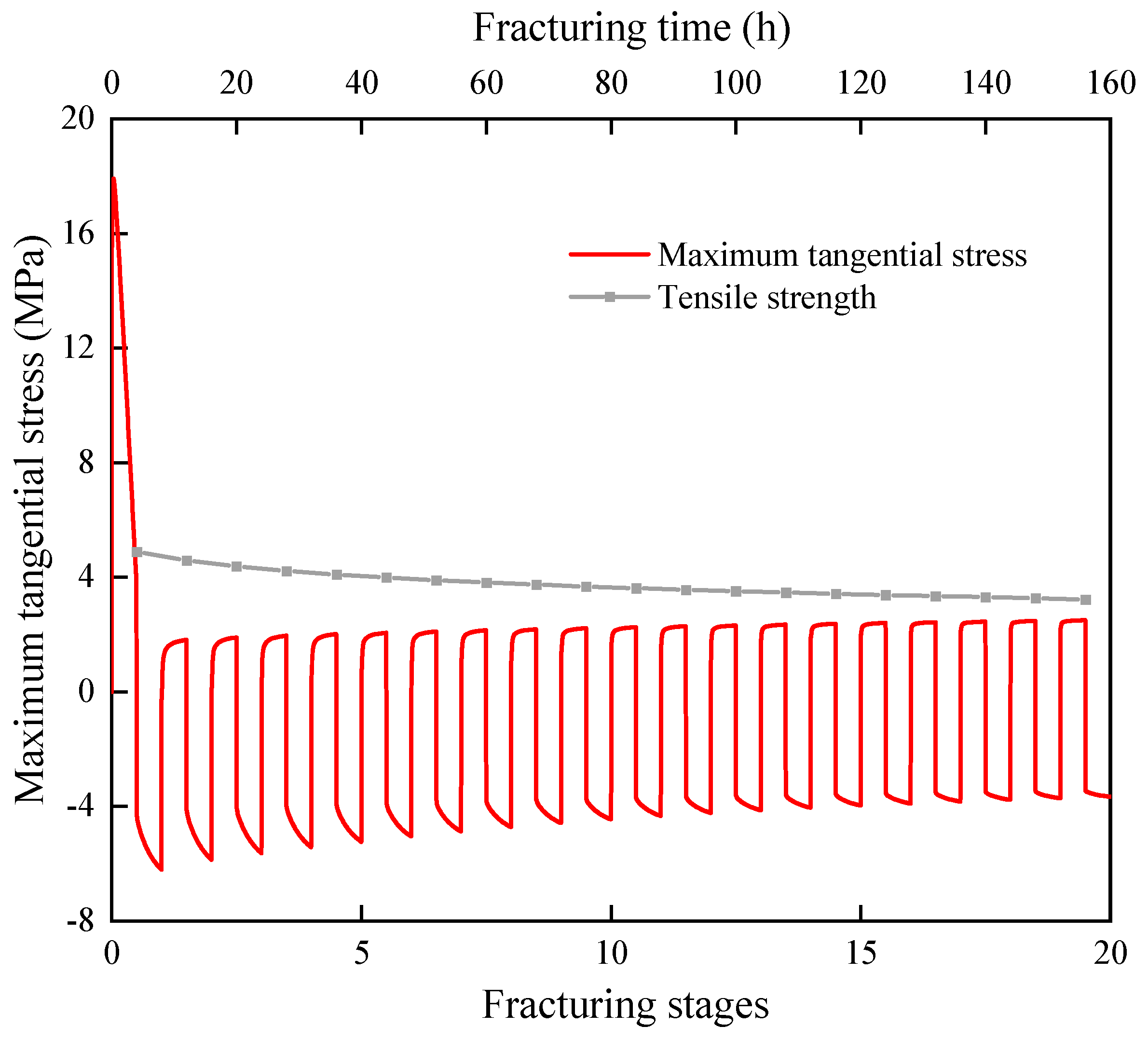
The fracturing patterns of subsequent fracturing stages are similar to those of the second. However, with the increase in the fracturing stage, the cement sheath tensile strength gradually deteriorates. Meanwhile, the overall trend of the tangential stress is that the positive tangential stress gradually increases as the fracturing stage progresses. The negative tangential stress decreases slowly, as depicted in
Figure 11.
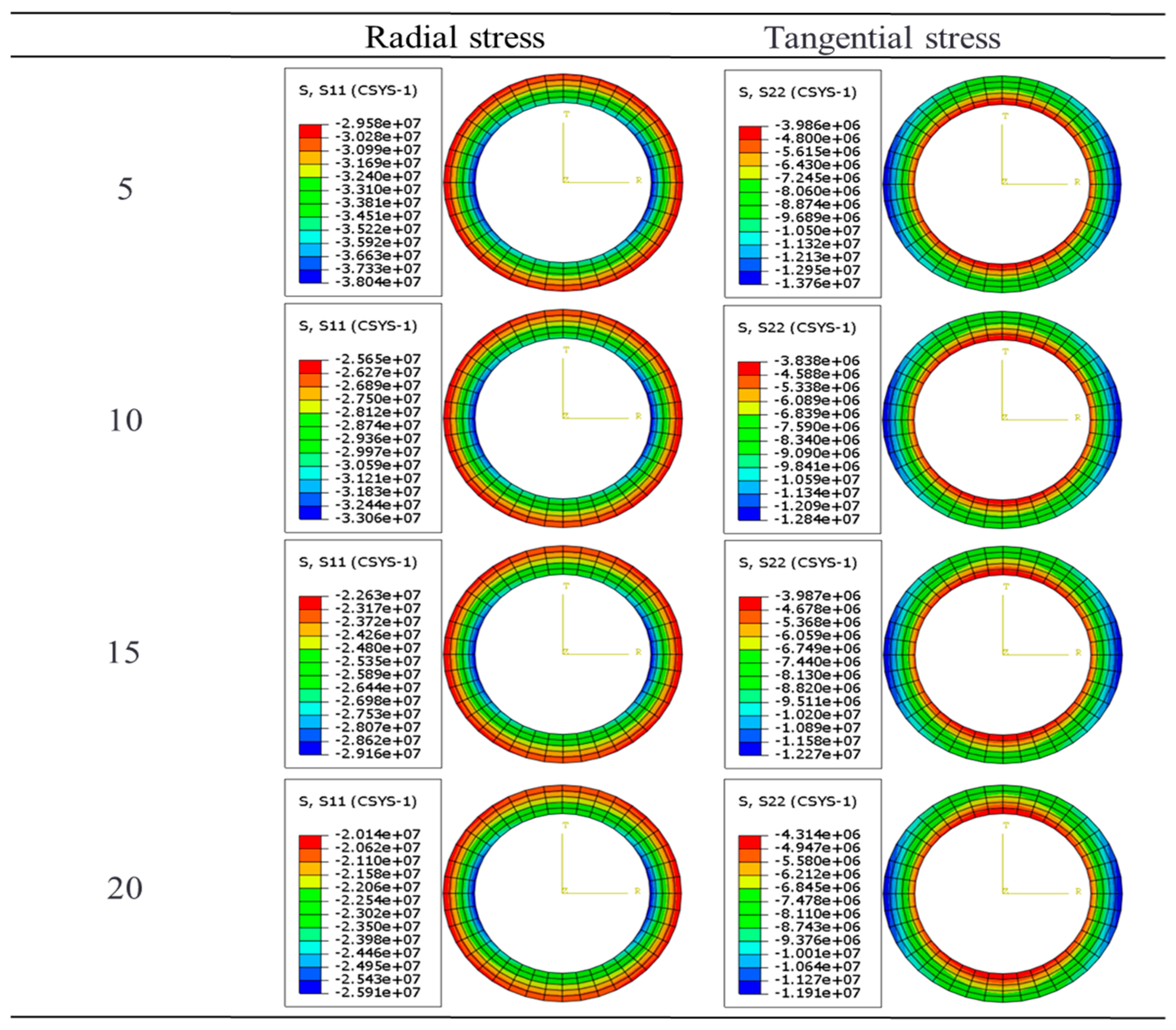
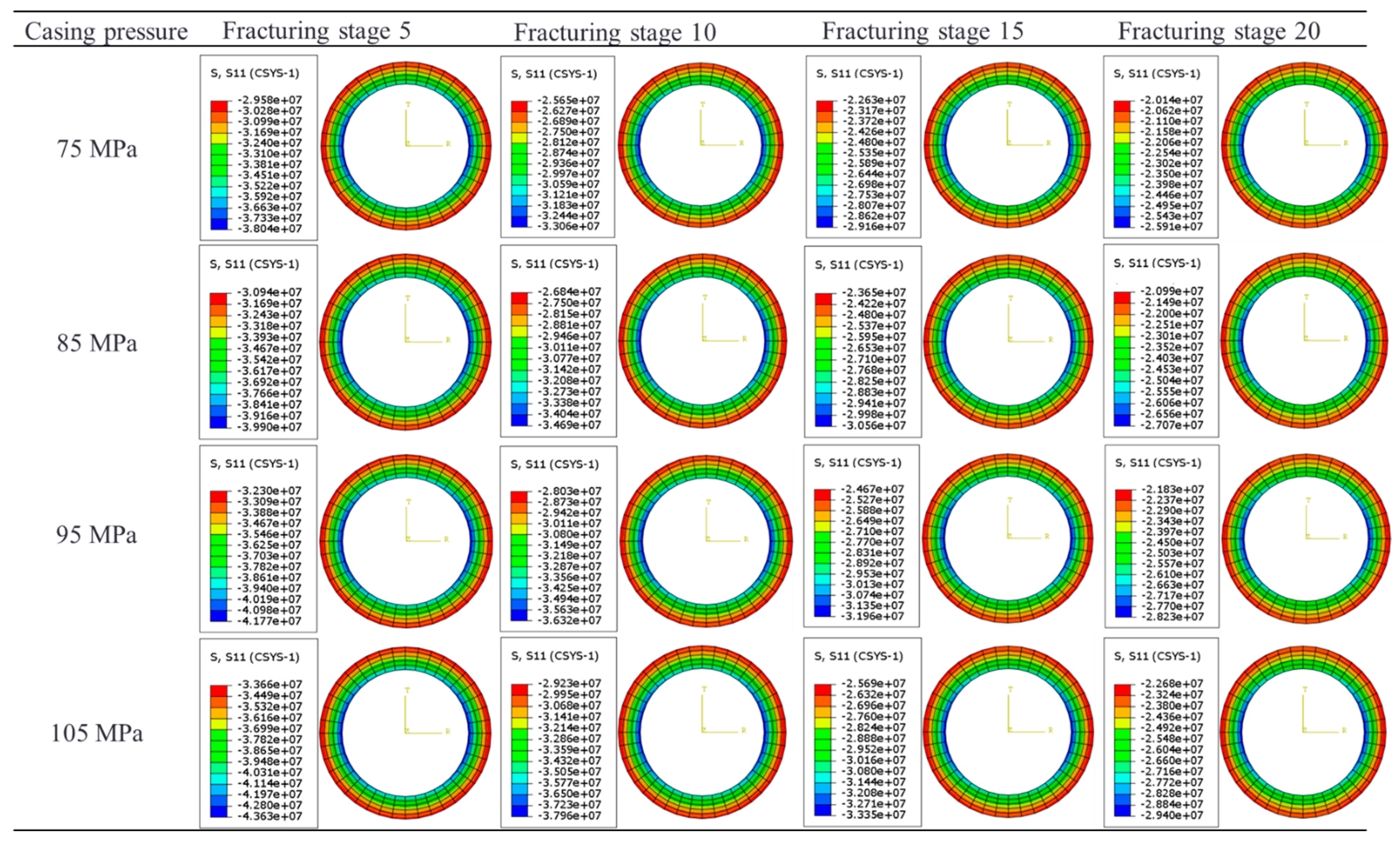
Throughout the multi-stage fracturing procedure, the distribution of the cement sheath stresses (radial and tangential) after varying fracturing stages is shown in
Figure 12. As the compressive and tensile strengths of the cement sheath deteriorate with the increasing number of fracturing stages, the peak radial and tangential stresses it can bear show a decreasing trend. A quantitative analysis reveals that when the count of the fracturing stage is 5, the peak radial stress within the cement sheath is −38.04 MPa, and the maximum tangential stress is −13.76 MPa. When the fracturing stage increases to 20, the corresponding stress values decrease to −25.91 MPa and −11.91 MPa, with a reduction of 31.89% and 13.44%, respectively.
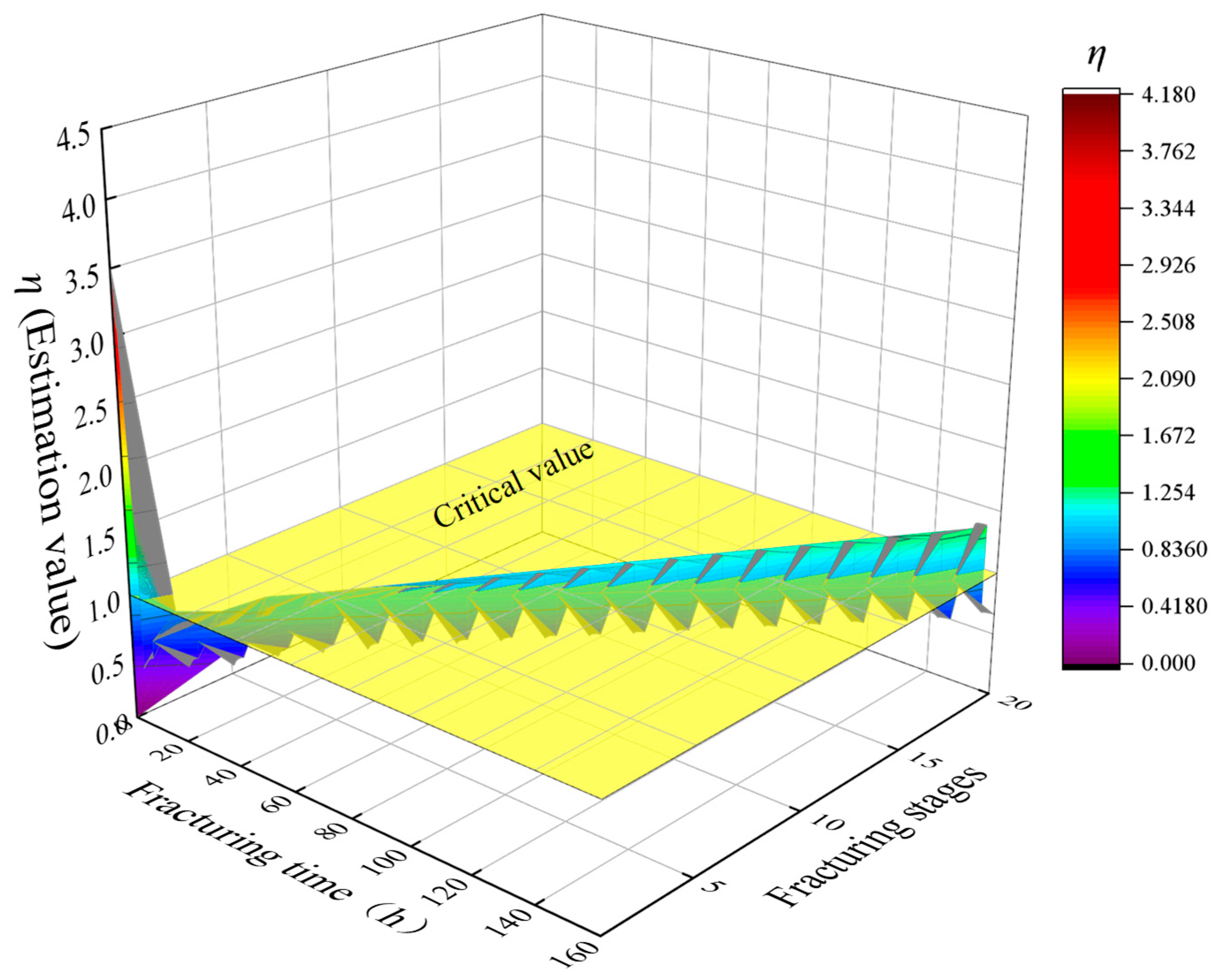
Figure 13 defines
as the Mohr–Coulomb damage value, which is dimensionless. Under the temperature–pressure coupling and alternation conditions, the cement sheath integrity is evaluated in accordance with the modified Mohr–Coulomb failure criterion. As is noticeable from the figure, during the 20-stage fracturing process, the peak value of
occurs during the injection phase of the first fracturing stage. In this instant, the cement sheath tangential stress has exceeded its tensile strength, which theoretically poses a risk of failure. However, in practice, because the strength of the cement material has not yet significantly deteriorated in the initial stage, the structural integrity is still maintained.
Provided that the cement sheath remains intact during the injection period of the first stage, its tensile strength will gradually deteriorate as the fracturing stage increases. In particular, from the shut-in phase of the first fracturing stage until the shut-in phase of the seventh stage, the damage level of the cement sheath consistently stays beneath the threshold value. This suggests that no failure risk exists within this time frame. However, from the eighth fracturing stage until the operation comes to an end, the cement sheath faces failure risks during the injection phases of subsequent stages.
4.3. Sensitivity Analysis
Considering the practicality of multi-stage fracturing operations and combining the numerical model established previously, the cement sheath stresses (radial and tangential) under temperature–pressure coupling and its integrity are analyzed. During the analysis, the cement sheath stress under various casing pressures, fracturing fluid displacements, initial temperatures of fracturing fluid, and well depths (fracturing stages) is examined. The purpose is to analyze the influence of these factors on the structural failure of the cement sheath and manage them appropriately to minimize the failure risk.
4.3.1. Casing Pressure Sensitivity Analysis
In shale gas exploitation by staged hydraulic fracturing, the cyclical change in casing pressure with each fracturing stage directly affects the stress evolution patterns within the cement sheath. To elucidate the mechanistic interplay between cyclic fracturing-induced dynamic casing pressure and cement sheath stress evolution, calculations are performed at a well depth of 4300 m with initial fracturing parameters set at 12 m3/min displacement, 25 °C fluid temperature, and 20 fracturing stages, examining dynamic radial and tangential stress variations under varying casing pressures (75 MPa, 85 MPa, 95 MPa, 105 MPa). Throughout the shut-in phase of each fracturing stage, when the casing pressure reduces to the hydrostatic pressure at 4300 m depth, the cement sheath stress variations under varying casing pressures become primarily thermally dominated.
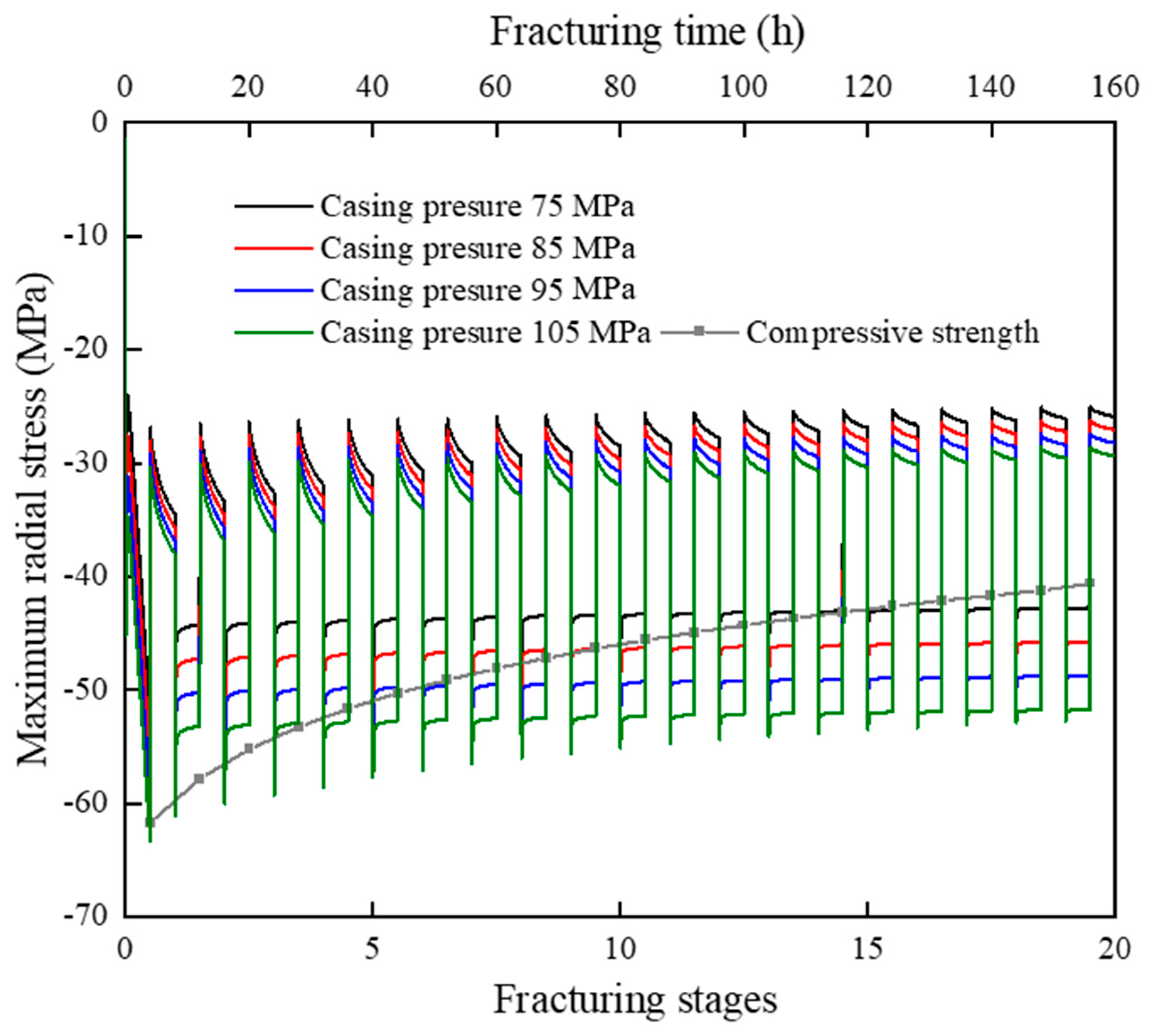
Figure 14 shows how the radial stress changes with varying casing pressures as the fracturing stage advances, from which the following observations can be made:
(a) Under identical casing pressure conditions, during the first-stage fracturing injection period, the cement sheath radial stress initially decreases before increasing. In contrast, the radial stress progressively declines with extended injection time in subsequent injection periods. During all shut-in periods of fracturing operations, the radial stress instantly decreases as the casing pressure drops to hydrostatic pressure. Subsequently, as the cement sheath temperature gradually recovers, its radial stress increases with prolonged shut-in time.
(b) For the equivalent fracturing stage, the cement sheath radial stress demonstrates a consistent upward trend with increasing casing pressure.
(c) Higher casing pressures correlate with expanded ranges of the fracturing stages where radial stress exceeds the compressive strength. Specifically, at 75 MPa, 85 MPa, 95 MPa and 105 MPa casing pressures, the radial stress surpasses the stage-specific compressive strength during stages 13–20, 9–20, 6–20, and 1–20 injection periods, respectively. However, during shut-in periods across all stages, the radial stress consistently remains below the compressive strength threshold.
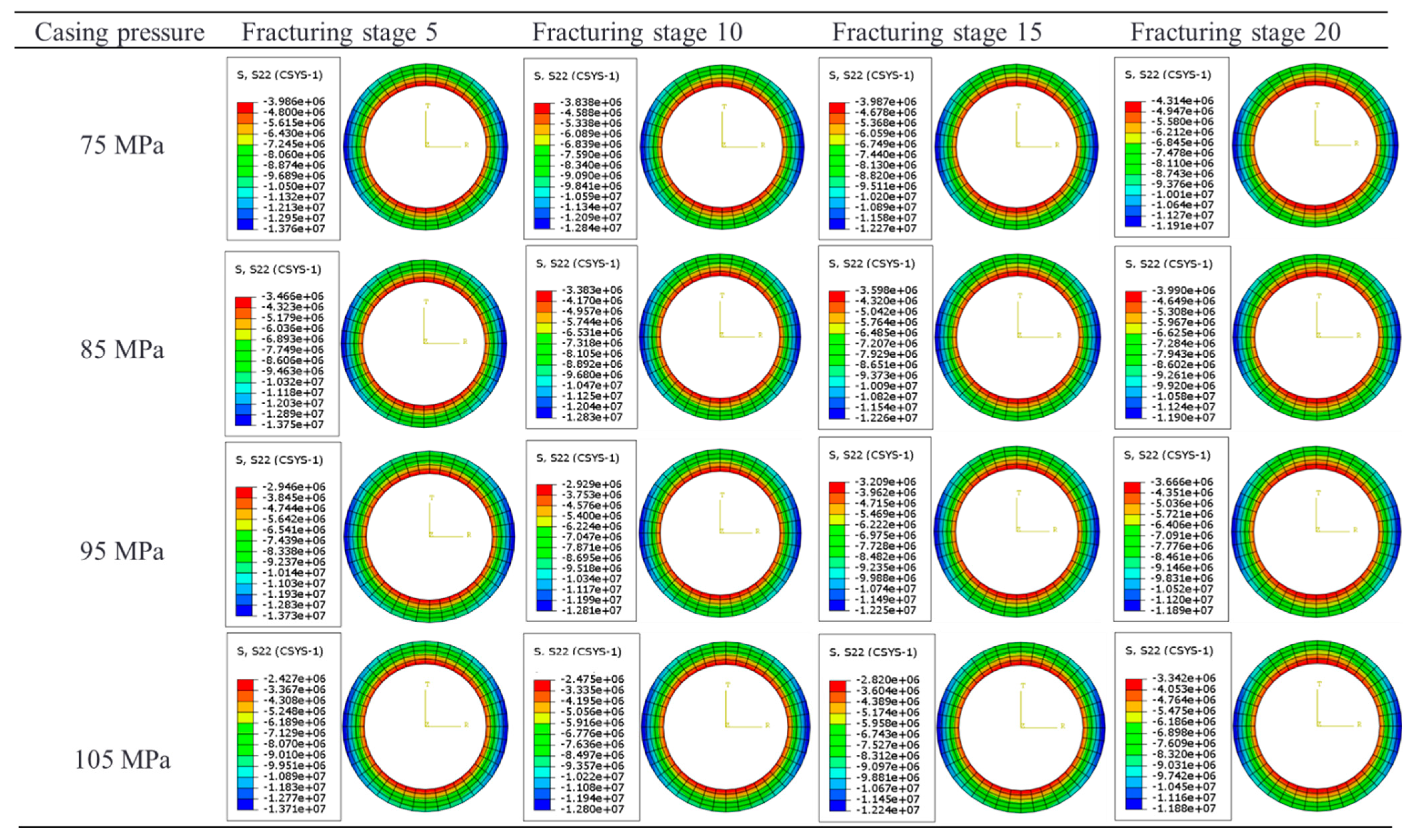
To further quantify the overall trend of the radial stress with changes in casing pressures during the multi-stage fracturing process, the radial stress changes under varying casing pressures are compared. The fracturing stages are 5th, 10th, 15th, and 20th, respectively, as depicted in
Figure 15. Based on this figure, the following information is clearly discernible.
(a) For a constant casing pressure, the radial stress diminishes as the fracturing stage increases. According to quantitative analysis, with the casing pressure being 75 MPa, the peak radial stresses at the fifth, 10th, 15th, and 20th fracturing stages are −38.04 MPa, −33.06 MPa, −29.16 MPa, and −25.91 MPa, respectively. From the fifth to the 20th fracturing stage, the radial stress decreases cumulatively by 31.89%.
(b) For an identical fracturing stage, the radial stress rises as the casing pressure escalates. When the count of fracturing stages is five, the maximum radial stresses at casing pressures of 75 MPa, 85 MPa, 95 MPa, and 105 MPa measure −38.04 MPa, −39.9 MPa, −41.77 MPa, and −43.63 MPa, respectively. When the casing pressure starts from 75 MPa and ultimately reaches 105 MPa, the cement sheath radial stress experiences a cumulative growth of 14.70%.
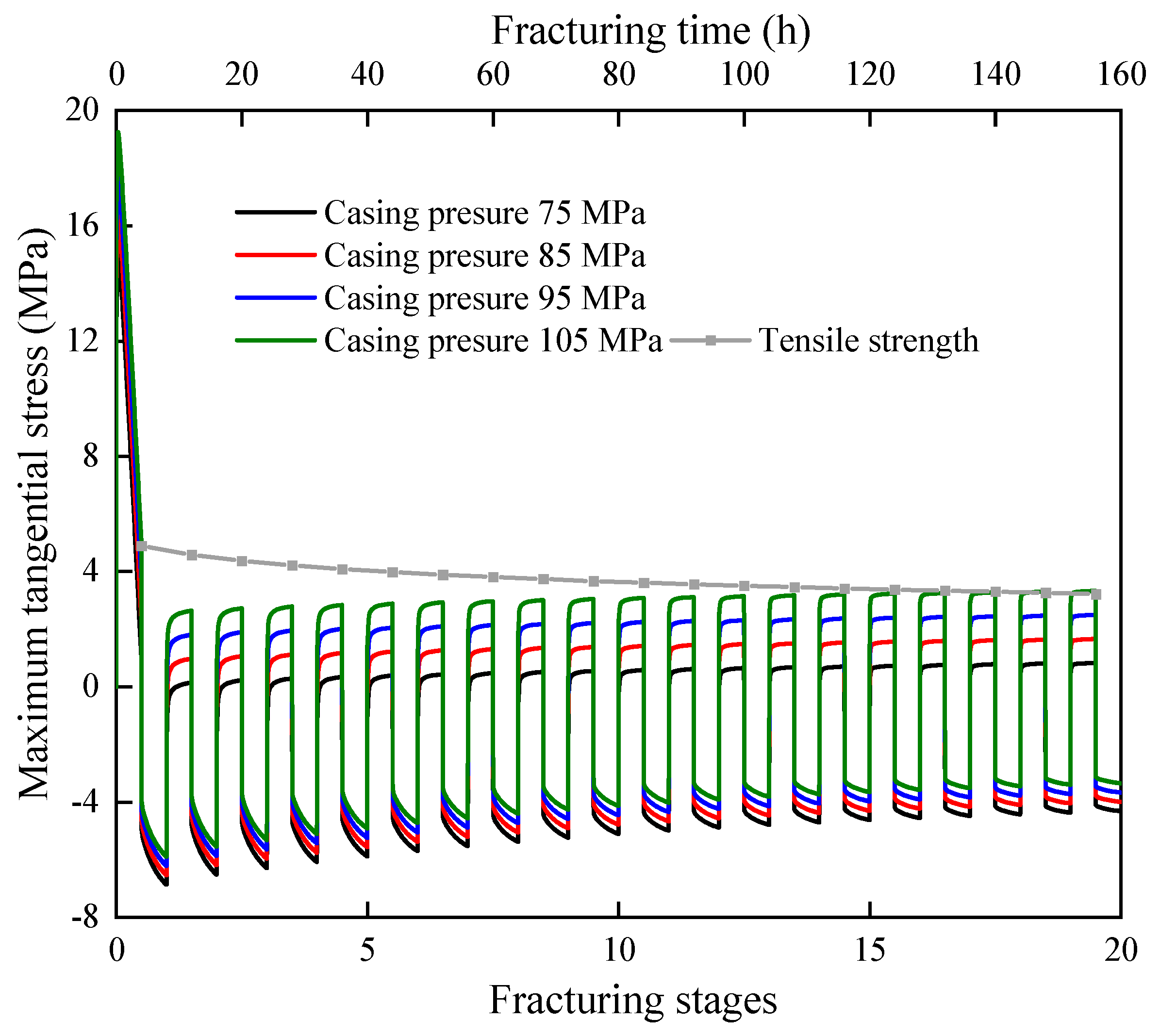
With the increasing fracturing stage, the patterns of tangential stress variation under various casing pressures are depicted in
Figure 16. From this figure, the following observations can be made.
(a) At a constant casing pressure, throughout the initial fracturing stage’s injection period, the positive tangential stress exhibits an increasing trend followed by a reduction. Throughout the injection phases of subsequent fracturing stages, the positive tangential stress increases with the continuous increase in the fracturing fluid injection time. In contrast, during all shut-in periods of fracturing, the casing pressure falls to hydrostatic levels, causing the tangential stress to invert. Subsequently, as the cement sheath’s temperature slowly returns to normal, the negative tangential stress intensifies with extended shut-in time.
(b) At a constant number of fracturing stages, the cement sheath tangential stress demonstrates a consistent upward trend with increasing casing pressure.
(c) During the initial fracturing stage’s injection period, the tangential stress surpasses the tensile strength of the cement sheath for all casing pressures. In subsequent fracturing stages, the tangential stress never surpasses the tensile strength that is specific to each stage across all casing pressure levels.
To further quantify the overall trend of tangential stress with changes in casing pressures during the multi-stage fracturing process, the tangential stress changes under varying casing pressures are compared when the fracturing stages are fifth, 10th, 15th, and 20th, respectively, as depicted in
Figure 17. Based on this figure, the following information can be discerned.
(a) Under the same casing pressure, tangential stress displays a decreasing trend as the fracturing stage increases. Quantitative analysis indicates that when the casing pressure is 75 MPa, the peak tangential stresses at the fifth, 10th, 15th, and 20th fracturing stages are −13.76 MPa, −12.84 MPa, −12.27 MPa, and −11.91 MPa, respectively. During the fracturing process from the fifth to the 20th fracturing stage, the cumulative reduction in the cement sheath tangential stress is 13.44%.
(b) Under the same fracturing stage, the tangential stress positively correlates with casing pressure, exhibiting a progressive increase as the casing pressure rises. In the fifth fracturing stage, the peak tangential stresses at casing pressures of 75 MPa, 85 MPa, 95 MPa, and 105 MPa are −13.76 MPa, −13.75 MPa, −13.73 MPa, and −13.71 MPa, respectively. As the casing pressure increases from 75 MPa to 105 MPa, the cumulative increase in the tangential stress is 0.36%.
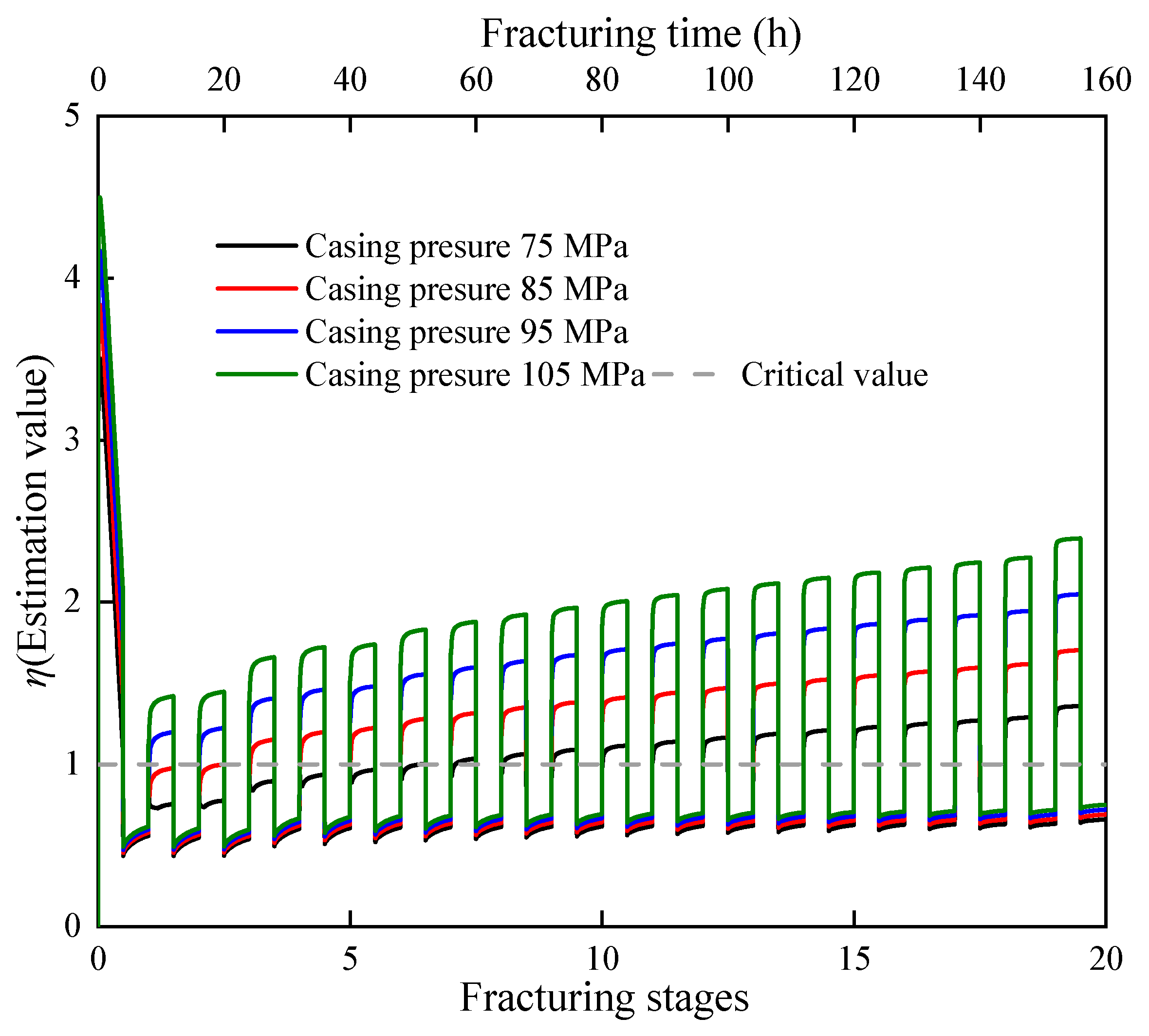
Figure 18 illustrates the dynamic variation in failure criterion values under varying casing pressures during fracturing. The analysis results based on the modified Mohr–Coulomb failure criterion are as follows:
(a) Under consistent casing pressure, the damage value of the cement sheath exhibits a distinctly non-uniform distribution across various fracturing stages: it reaches its peak during the first-stage fracturing, while in subsequent stages, the peak damage value shows a monotonically increasing trend with the progression of fracturing stages.
(b) With a fixed number of fracturing stages, the damage value demonstrates a continuous growth pattern as the casing pressure gradually increases.
(c) During the injection phase of the first-stage fracturing, the damage values under varying casing pressures all exceed the failure criterion threshold. In the injection phases of other fracturing stages, as the casing internal pressure rises, the range of fracturing stages in which the cement sheath damage value surpasses the threshold gradually expands. Specifically, when the casing pressures are 75 MPa, 85 MPa, 95 MPa, and 105 MPa, the cement sheath damage values exceed the threshold during the injection phases of stages 8-20, 4-20, 2-20, and 2-20, respectively. However, during the shut-in phases of all fracturing stages, the cement sheath damage values remain below the threshold.
When the cement sheath damage value exceeds the critical threshold, it reveals that the cement sheath integrity has been compromised. Higher casing pressures subject the cement sheath to more significant mechanical stress, increasing the risk of failure. Therefore, in fracturing operations, reasonably reducing the casing pressure is a critical factor in guaranteeing the integrity of the cement sheath.
4.3.2. Displacement Sensitivity Analysis
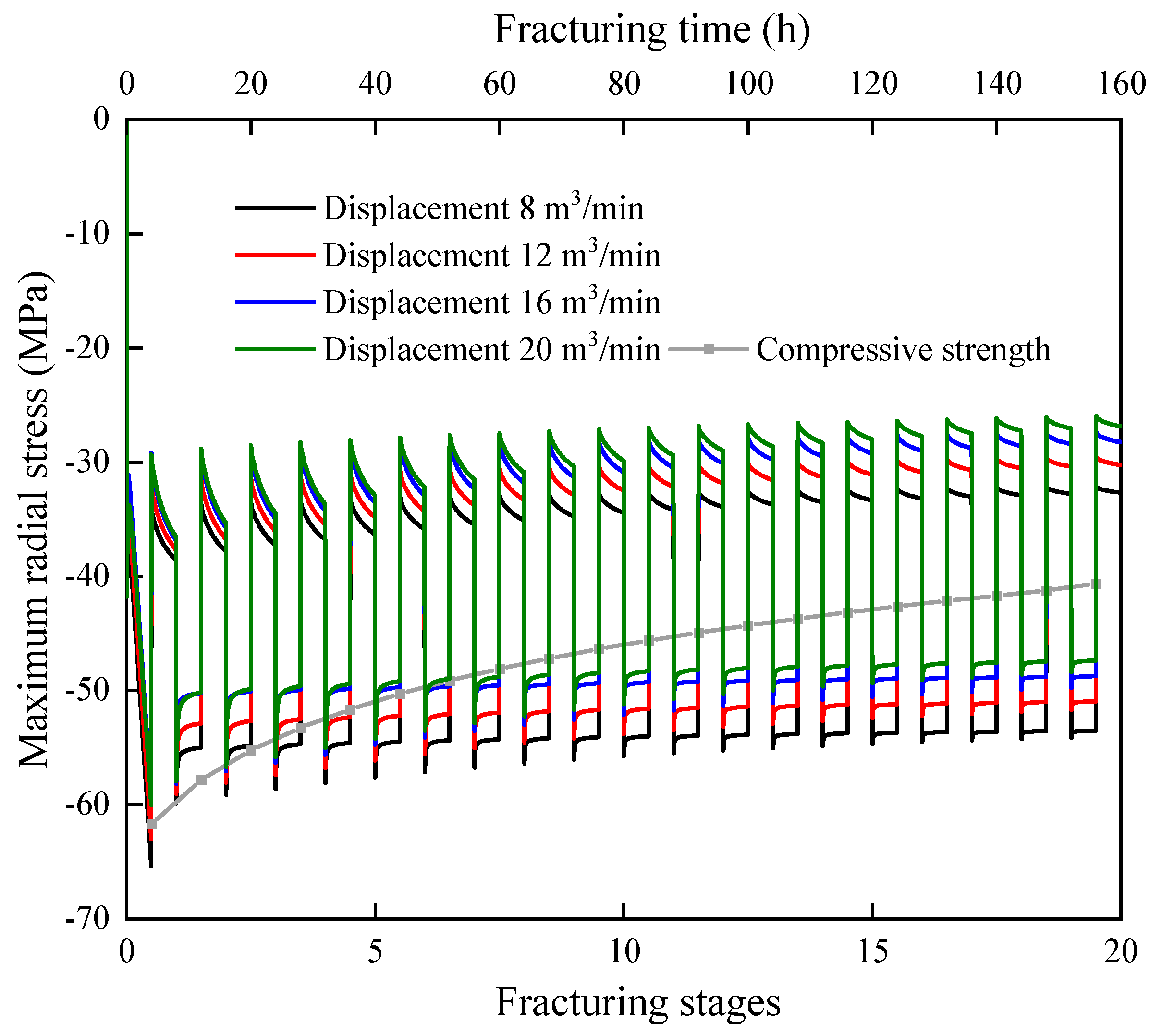
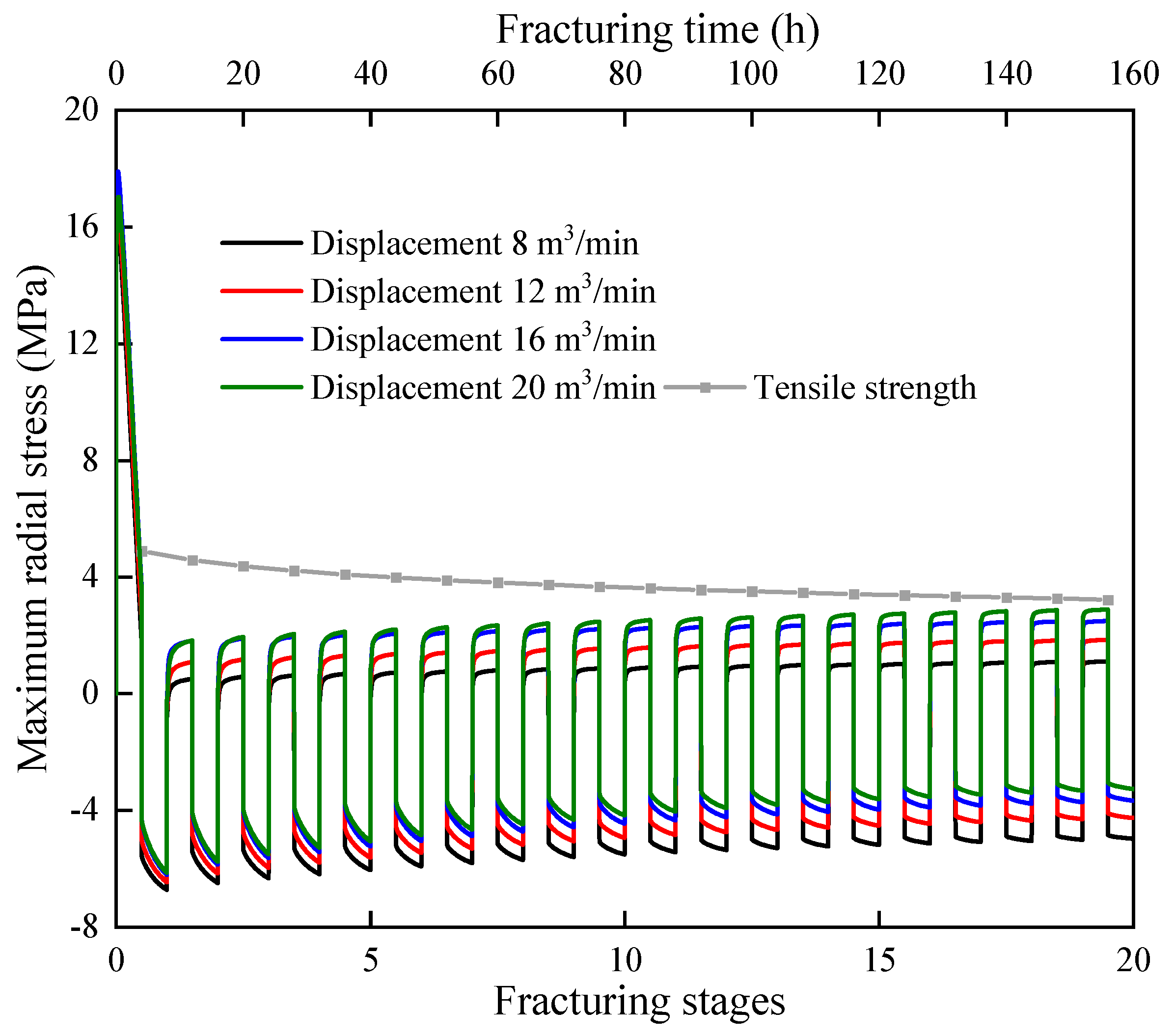
Throughout the hydraulic fracturing operation, changes in fracturing fluid displacements significantly impact the frictional resistance and heat transfer coefficients inside the wellbore, which further alter the temperature and pressure conditions inside the wellbore, ultimately exerting a significant influence on the cement sheath’s stress condition. To handle this situation, the casing pressure is 95 MPa, the fracturing fluid temperature is 25 °C, and the fracturing stage is set at 20. The cement sheath at a depth of 4300 m was chosen as the research target to analyze the variation rules of the radial and tangential stresses under varying fracturing fluid displacements (8 m3/min, 12 m3/min, 16 m3/min, and 20 m3/min).
As the fracturing stage increases,
Figure 19 shows the variation laws of the radial stress under varying fracturing fluid displacements.
(a) Under the same fracturing fluid displacements, during the injection phase of the first fracturing stage, the radial stress initially shows a decreasing trend and subsequently undergoes an increase. During the injection periods of the other fracturing stages, the radial stress exhibits a downward trend as the injection duration of the fracturing fluid extends. In contrast, during all shut-in periods of fracturing, the radial stress instantaneously decreases as the casing pressure reduces to the hydrostatic pressure value. Subsequently, as the temperature of the cement sheath gradually recovers, its radial stress increases as the duration of shut-in expands.
(b) Under the same fracturing stage, the radial stress keeps on diminishing as the displacement of the fracturing fluid increases.
(c) As the fracturing fluid displacement increases, the range of fracturing stages in which the cement sheath radial stress exceeds its compressive strength gradually narrows. Specifically, when the fracturing fluid displacements are 8 m3/min, 12 m3/min, 16 m3/min, and 20 m3/min, the radial stress surpasses the compressive strength corresponding to the respective fracturing stage during the injection periods of fracturing stages 1-20, 1-20, 3-20, and 4-20, respectively. During the shut-in phases of all fracturing stages, the radial stress remains below its compressive strength.
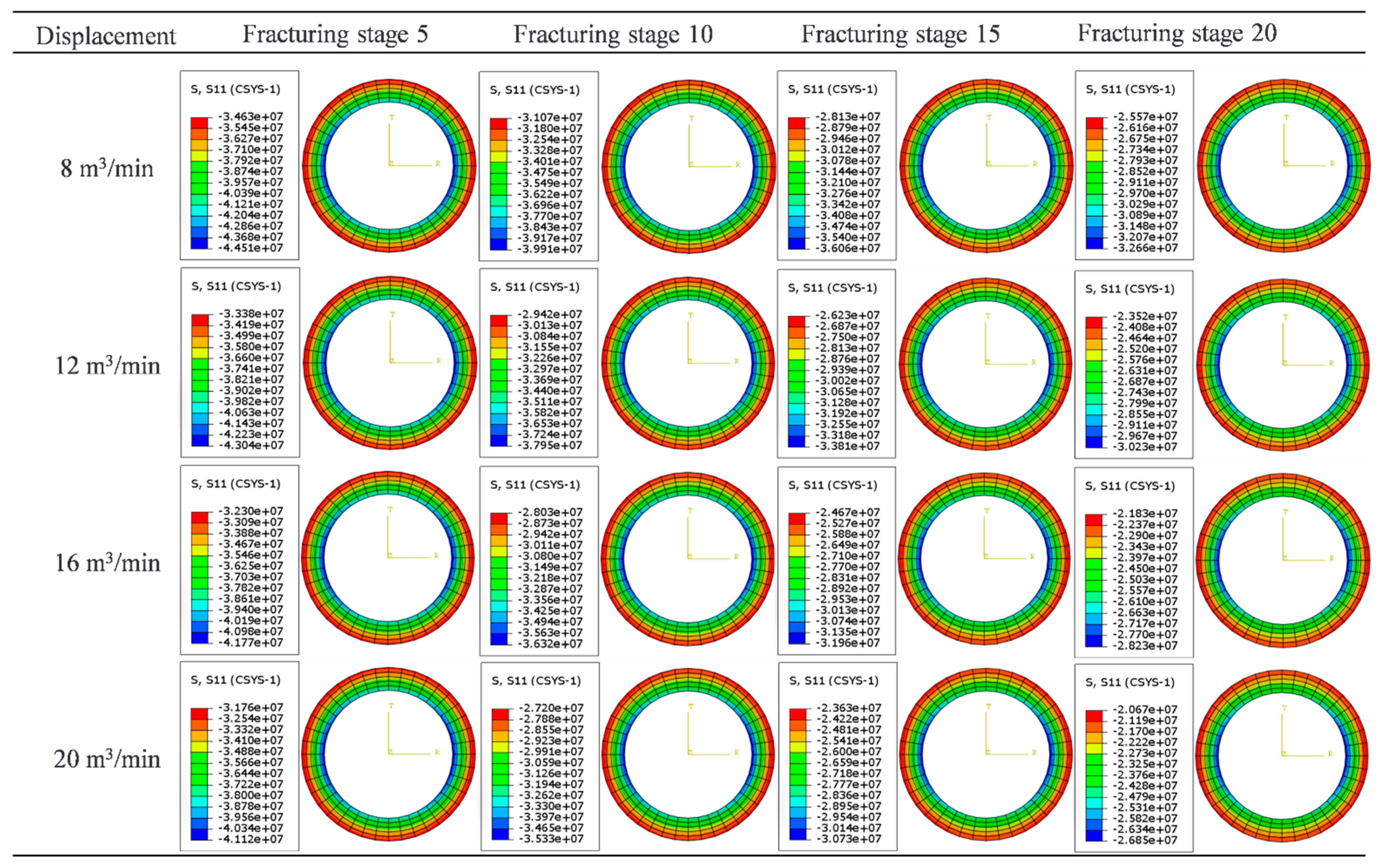
To further quantify the radial stress under varying fracturing fluid displacements, the radial stress was compared at varying fracturing fluid displacements and at the fifth, 10th, 15th, and 20th fracturing stages, as depicted in
Figure 20. Based on this figure, the following is evident:
(a) Under the same fracturing fluid displacements, the cement sheath radial stress displays a decreasing trend as the fracturing stage increases. Quantitative analysis indicates that when the fracturing fluid displacement is 8 m3/min, the maximum radial stresses at the fifth, 10th, 15th, and 20th fracturing stages are −44.51 MPa, −39.91 MPa, −36.06 MPa, and −32.66 MPa, respectively. During the fracturing process from the fifth to 20th stages, the cumulative reduction in the radial stress is 26.62%.
(b) Under the same number of fracturing stages, the radial stress rises as the fracturing fluid displacement increases. When there are five fracturing stages, the maximum radial stresses at fracturing fluid displacements of 8 m3/min, 12 m3/min, 16 m3/min, and 20 m3/min are −44.51 MPa, −43.04 MPa, −41.77 MPa, and −41.12 MPa, respectively. As the fracturing fluid displacement increases from 8 m3/min to 20 m3/min, the cumulative reduction in the radial stress is 7.62%.
As the fracturing stage progresses, the variation patterns of the tangential stress under varying fracturing fluid displacements are depicted in
Figure 21. According to this figure, we can notice the following.
(a) Under the same fracturing fluid displacements, during the injection period of the first fracturing stage, the positive cement sheath tangential stress initially increases and subsequently declines. During the injection periods of the other fracturing stages, the positive tangential stress increases with the injection time of the fracturing fluid. In contrast, during all shut-in periods of fracturing, since the casing pressure reduces to the hydrostatic pressure, the tangential stress reverses direction. Subsequently, as the cement sheath’s temperature gradually recovers, the negative tangential stress demonstrates a positive correlation with shut-in time.
(b) Under the same number of fracturing stages, the cement sheath tangential stress continuously keeps decreasing as the displacement of the fracturing fluid increases.
(c) During the injection phase of the first fracturing stage, the cement sheath tangential stress exceeds the tensile strength corresponding to the first fracturing stage for all fracturing fluid displacements. In the other fracturing stages, the tangential stress remains below the tensile strength corresponding to the respective fracturing stage.
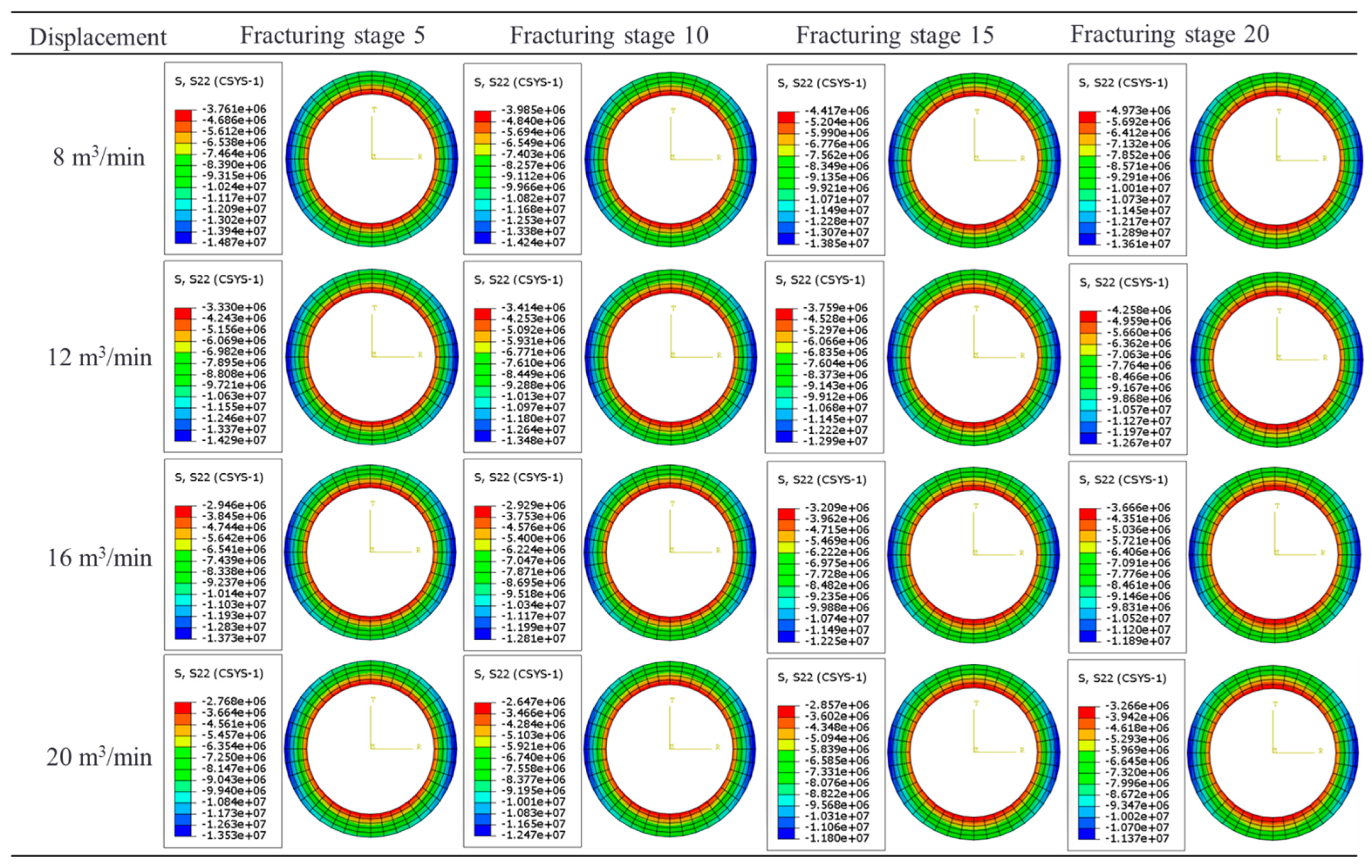
To further quantify the tangential stress under varying fracturing fluid displacements, the tangential stress was compared under the conditions of varying fracturing fluid displacements and at the fifth, 10th, 15th, and 20th fracturing stages, as depicted in
Figure 22. According to this figure, it is noticeable that:
(a) Under the same fracturing fluid displacements, the tangential stress decreases with the increase in the fracturing stage. Quantitative analysis indicates that when the fracturing fluid displacement is 8 m3/min, the maximum tangential stresses at the fifth, 10th, 15th, and 20th fracturing stages are −14.87 MPa, −14.24 MPa, −13.85 MPa, and −13.61 MPa, respectively. From the fifth to the 20th stages, the cumulative reduction in the tangential stress is 8.47%.
(b) Under the same number of fracturing stages, the tangential stress rises as the fracturing fluid displacement increases. When there are five fracturing stages, the maximum tangential stresses at fracturing fluid displacements of 8 m3/min, 12 m3/min, 16 m3/min, and 20 m3/min are −14.87 MPa, −14.29 MPa, −13.73 MPa, and −13.53 MPa, respectively. As the fracturing fluid displacement increases from 8 m3/min to 20 m3/min, the cumulative reduction in the tangential stress is 9.01%.
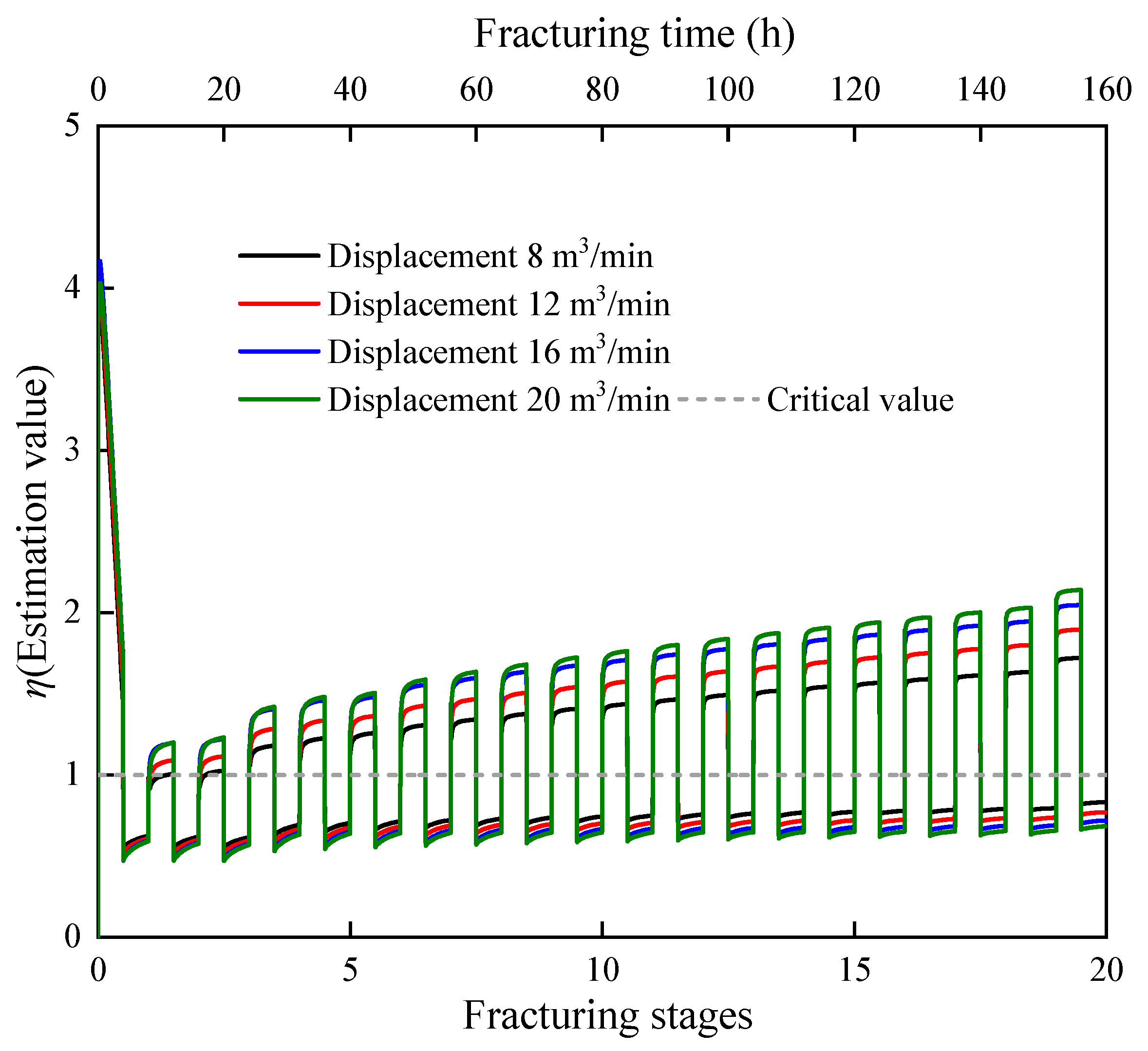
Figure 23 illustrates the variation in the failure determination values under varying fracturing fluid displacements as the process continues. The determination results relying on the modified Mohr–Coulomb criterion demonstrate the following.
(a) Under the same fracturing fluid displacements, the cement sheath’s damage value shows a significant non-uniform distribution characteristic in each fracturing stage. It reaches the peak value during the first fracturing stage, and the peak damage value during the successive fracturing stages rises in a monotonous manner as the fracturing stage increases.
(b) Under the same number of fracturing stages, during the 20-stage fracturing process, the damage value keeps increasing as the fracturing fluid displacement grows.
(c) When the fracturing fluid displacement is 8 m3/min, the damage value exceeds the determination value in the whole fracturing stages except the injection period of the second stage. When the fracturing fluid displacement is 12 m3/min, 16 m3/min, and 20 m3/min, the damage value exceeds the determination value in all injection periods of the fracturing stages. However, during the shut-in periods of all fracturing stages, the damage value remains below the determination value.
An increase in fracturing fluid displacements causes a considerable volume of low-temperature fracturing fluid to enter the well rapidly, causing a rapid decline in the temperature of the cement sheath and intensifying the damaging effect resulting from thermal stress. Although the damage values in all injection periods of the fracturing stages exceed the critical determination value under varying fracturing fluid displacements, altering the displacements fails to bring about an effective improvement in the failure situation of the cement sheath. However, decreasing the displacements of the fracturing fluid is capable of reducing the damage value. As demonstrated by the analysis presented previously, moderately decreasing the displacement of fracturing fluid can effectively lower the probability of cement sheath failure.
4.3.3. Initial Temperature Sensitivity Analysis
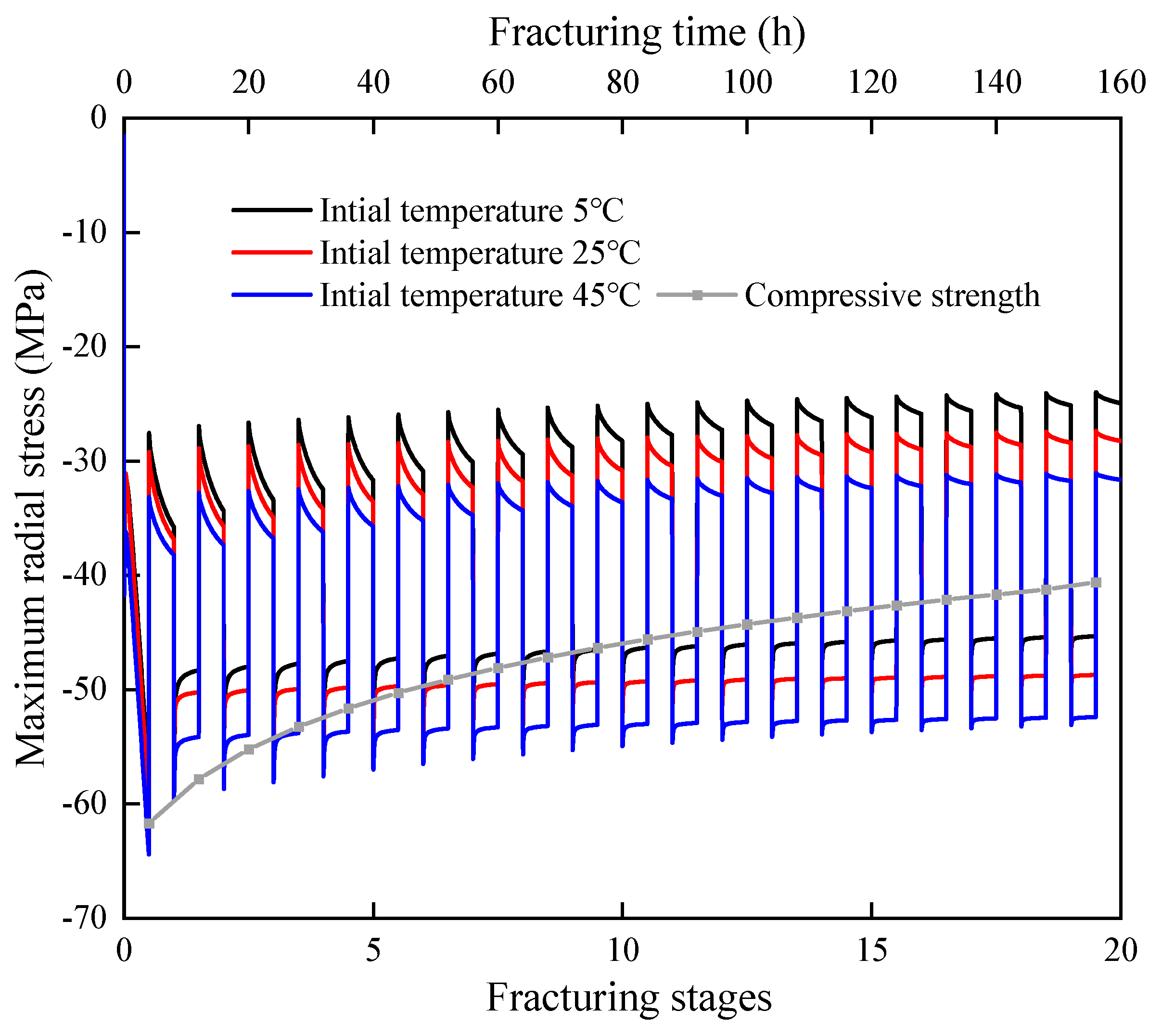
The initial temperature of the fracturing fluid shows a significant seasonal variation throughout the hydraulic fracturing operation, characterized by lower initial temperatures in winter and higher initial temperatures in summer. This temperature difference can significantly alter the temperature and pressure in the wellbore, thereby directly affecting the thermal stress condition and the mechanical performance of the cement sheath. To address this, the initial fracturing fluid displacement is determined to be 12 m3/min, the fracturing stage is 20, and the casing pressure is 95 MPa. The cement sheath at a depth of 4300 m is chosen as the research target to analyze the variation rules of the radial and tangential stresses under varying initial fracturing fluid temperatures (5 °C, 25 °C, and 45 °C).
As the fracturing stage goes up, the variation laws of the radial stress under varying initial fracturing fluid temperatures are presented in
Figure 24. According to this figure, we can see the following.
(a) Under the same initial temperature, during the injection phase of the first fracturing stage, the radial stress initially shows a decreasing trend and subsequently undergoes an increase. During the injection periods of the other fracturing stages, the radial stress exhibits a downward trend as the injection duration of the fracturing fluid extends. In contrast, during all shut-in periods of fracturing, the radial stress instantaneously decreases as the casing pressure reduces to the hydrostatic pressure value. Subsequently, as the temperature of the cement sheath gradually recovers, its radial stress increases as the duration of shut-in expands.
(b) Under the same fracturing stage, the cement sheath radial stress continuously keeps increasing as the initial temperature of the fracturing fluid rises.
(c) As the initial temperature increases, the radial stress of the cement sheath surpasses its compressive strength and gradually broadens. Specifically, when the initial temperature is 5 °C, 25 °C, and 45 °C, the radial stress surpasses the compressive strength corresponding to the respective fracturing stage during the injection periods of fracturing stages 7-20, 6-20, and 1-20, respectively. During the shut-in periods of all fracturing stages, the radial stress always remains below its compressive strength.
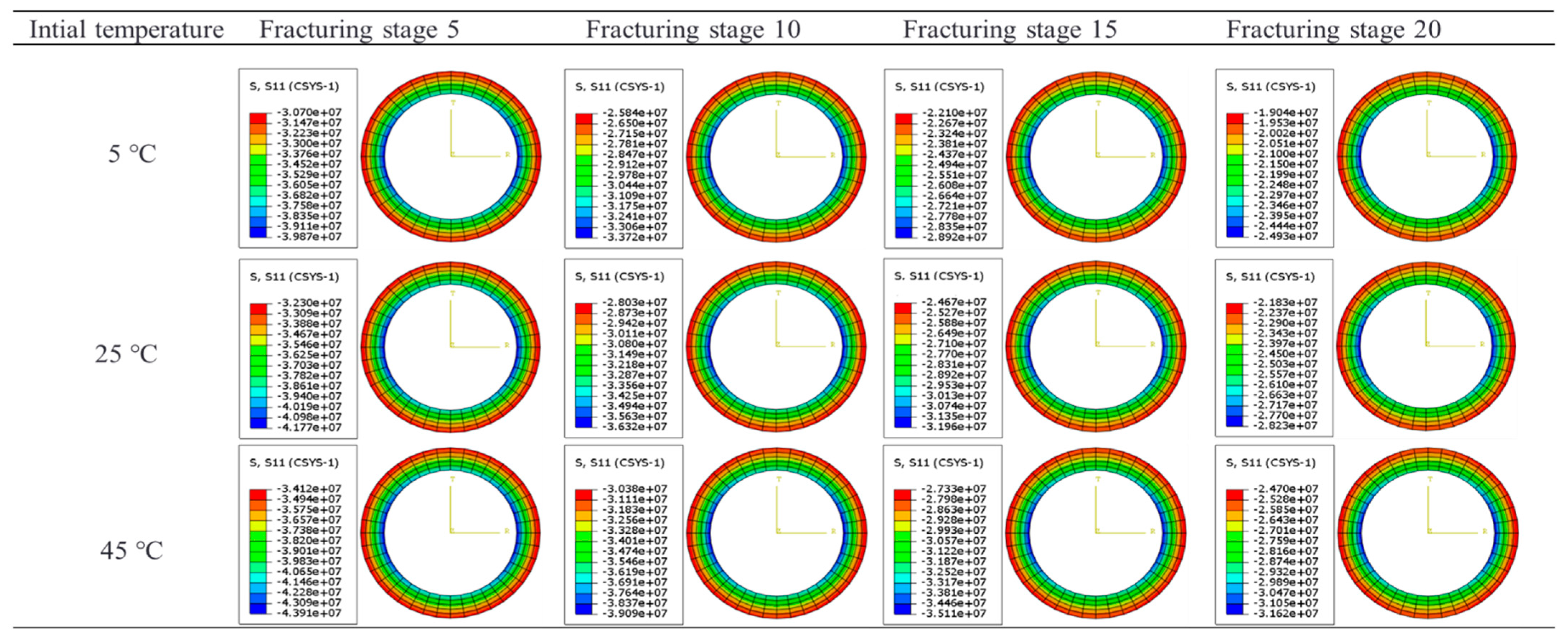
To further quantify the radial stress under varying initial temperatures, we compare the radial stresses at the fifth, 10th, 15th, and 20th fracturing stages for various initial fluid temperatures, as depicted in
Figure 25. Based on this figure, we can discern the following.
(a) Under identical initial temperatures, the radial stress diminishes as the fracturing stage increases. Through quantitative analysis, it is revealed that when the initial temperature is 5 °C, the maximum radial stresses at the fifth, 10th, 15th, and 20th fracturing stages are −39.87 MPa, −33.72 MPa, −28.92 MPa, and −24.93 MPa, respectively. From the fifth to the 20th stages, the radial stress accumulates a total reduction of 37.47%.
(b) For the equivalent fracturing stage, the radial stress rises as the initial temperature of the fracturing fluid rises. At stage 5, when initial temperatures are 5 °C, 25 °C and 45 °C, the corresponding maximum radial stresses are −39.87 MPa, −41.77 MPa and −43.91 MPa, respectively. When the initial temperature goes up from 5 °C to 45 °C, the radial stress accumulates a total increase of 10.13%.
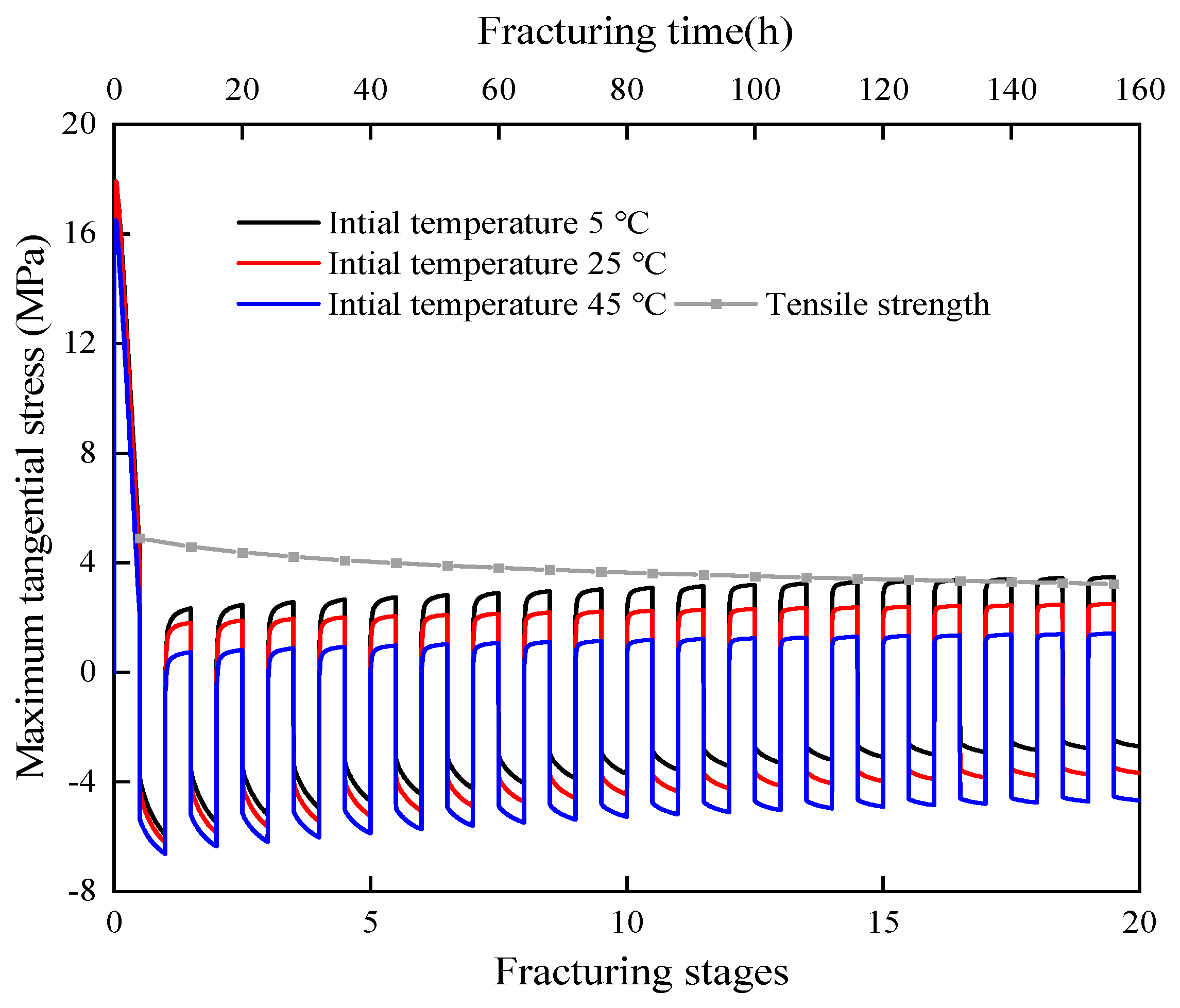
Figure 26 demonstrates the variation patterns of cement sheath tangential stress under varying initial fracturing fluid temperatures as the fracturing stage progresses, revealing the following characteristics.
(a) Under identical initial fluid temperatures, during the first-stage injection period, the positive tangential stress initially increases and then decreases, while in subsequent injection periods, it progressively rises with extended injection time. During all shut-in periods, as casing pressure reduces to hydrostatic pressure, the tangential stress reverses direction (negative values) and gradually increases with shut-in time as temperature recovers.
(b) For the equivalent fracturing stage, the tangential stress exhibits a consistent decreasing trend with higher initial fluid temperatures.
(c) During the first-stage injection period, regardless of initial fluid temperature, the tangential stress exceeds the tensile strength for that stage. However, the tangential stress remains below the stage-specific tensile strength threshold in all subsequent fracturing stages.
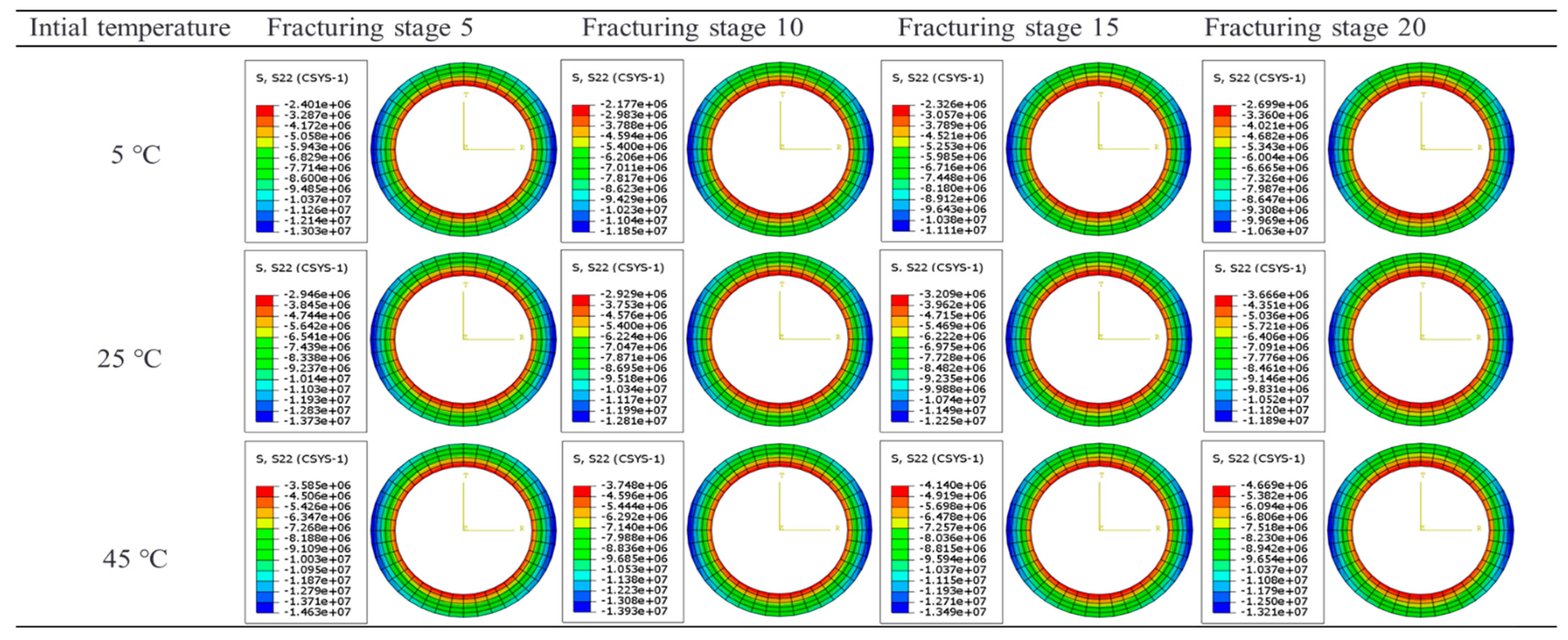
To further quantify the tangential stress under varying initial temperatures, a comparison is conducted on the tangential stresses at the fifth, 10th, 15th, and 20th fracturing stages with varying initial fluid temperatures, as illustrated in
Figure 27. Based on this figure, we can discern the following.
(a) Under identical initial fracturing fluid temperatures, the tangential stress decreases with the increment in the fracturing stage. Quantitative analysis reveals that when the initial fracturing fluid temperature is 5 °C, the maximum tangential stresses at the fifth, 10th, 15th, and 20th fracturing stages are −13.03 MPa, −11.85 MPa, −11.11 MPa and −10.63 MPa, respectively. From stage 5 to stage 20, the tangential stress shows a cumulative reduction of 18.42%.
(b) For the equivalent fracturing stage, the cement sheath tangential stress increases with higher initial fracturing fluid temperatures. At stage 5, when initial temperatures are 5 °C, 25 °C and 45 °C, the corresponding maximum tangential stresses measure −13.03 MPa, −13.73 MPa and −14.63 MPa, respectively. When the initial temperature climbs from 5 °C to 45 °C, the tangential stress accumulates a total increase of 3.84%.
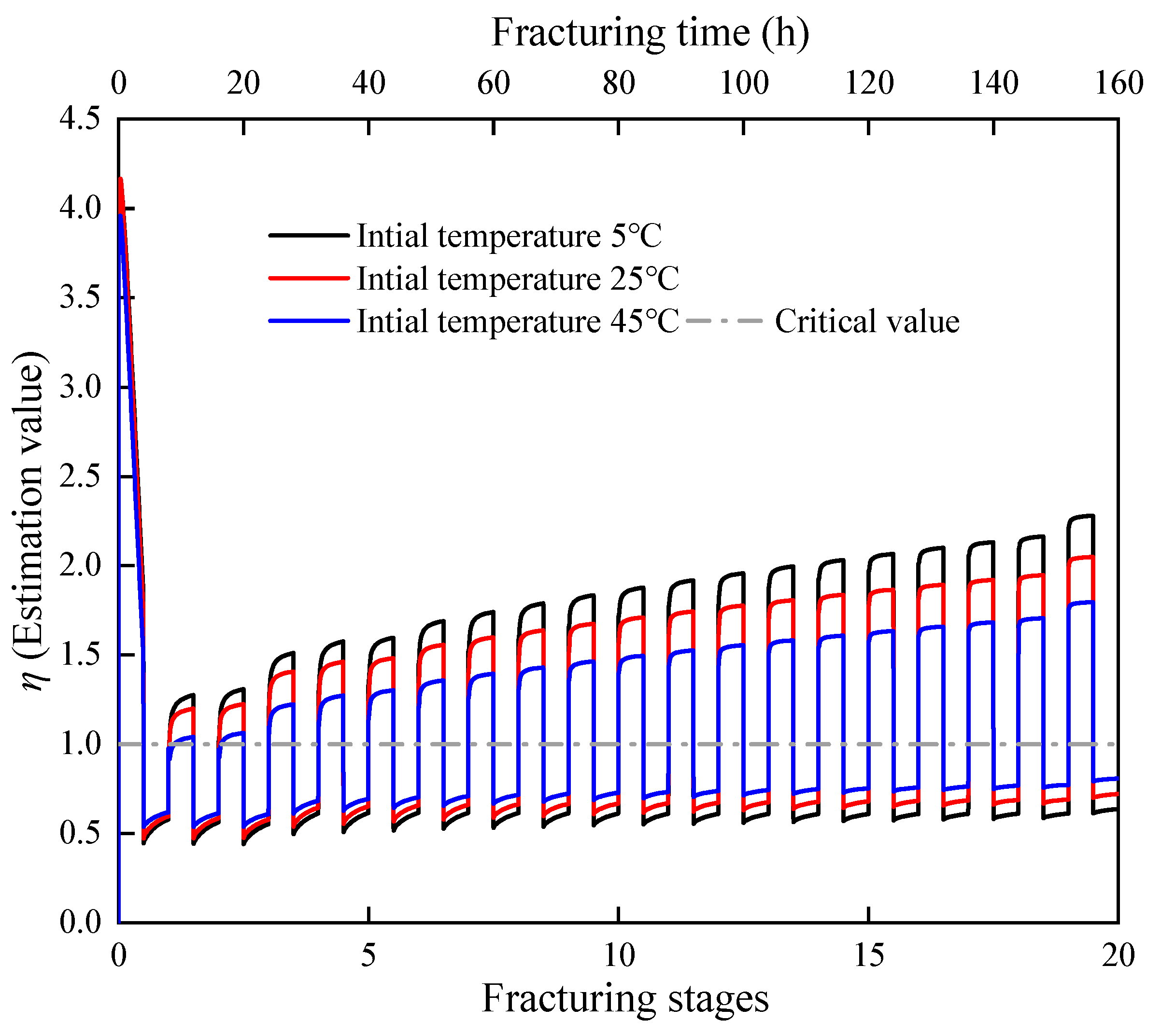
Figure 28 illustrates the variation in the failure determination values under varying initial temperatures. The determination results relying on the modified Mohr–Coulomb criterion demonstrate the following.
(a) Under the same initial temperature, the cement sheath’s damage value shows a significant non-uniform distribution characteristic in each fracturing stage: it reaches the peak value during the first fracturing stage, and in the subsequent fracturing stages, the peak value of damage shows a monotonic increase as the fracturing stage rises.
(b) Under the same fracturing stage, the damage value maintains a continuous decrease as the initial temperature goes up.
(c) When the initial temperatures are 5 °C, 25 °C, and 45 °C, the cement sheath’s damage value exceeds the determination value in the whole injection period of the fracturing stages; however, during the shut-in periods of all fracturing stages, the damage value constantly stays beneath the determined value.
From the failure determination results, it is evident that elevating the initial temperature of the fluid can efficiently minimize the potential for cement sheath failure. Notably, when the temperature is 45 °C, the damage value experiences a substantial decrease. This is because an increment in the initial temperature of the fluid lessens the temperature difference between the internal and external walls of the cement sheath, thereby decreasing the negative effect generated by thermal stress. Although decreasing the initial temperature of the fluid does not significantly improve the integrity failure condition of the cement sheath, moderately raising the initial temperature of the fracturing fluid is conducive to optimizing the stress state of the cement sheath and decreasing its damage value.
4.3.4. Well Depth Sensitivity Analysis
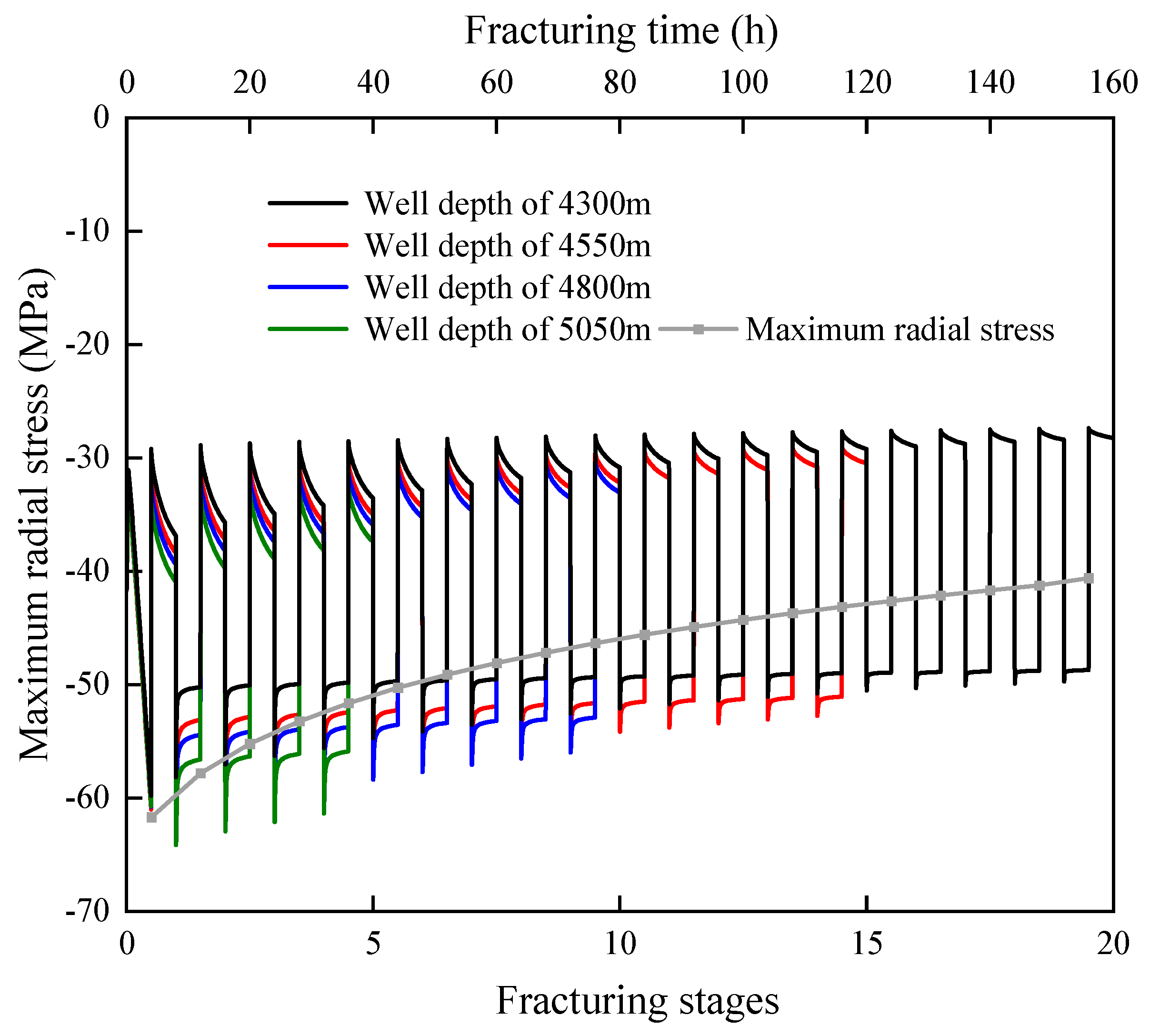
While the multi-stage fracturing operation was being carried out in the horizontal interval, different depths corresponded to distinct fracturing stages, with the number of cyclic fracturing operations increasing progressively toward the toe of the horizontal well. Furthermore, the thermo-mechanical conditions of the cement sheath varied with depth, resulting in depth-dependent stress evolution characteristics. To investigate the effect of well depth (fracturing stages) on the cement sheath’s integrity, the initial fracturing fluid displacement was set at 12 m3/min, the initial temperature at 25 °C, and the casing pressure at 95 MPa. The dynamic variation patterns in cement sheath stresses (radial and tangential) were calculated for varying well depths (5050 m, 4800 m, 4550 m, and 4300 m) corresponding to varying fracturing stages of five, 10, 15, and 20, respectively.
The variation patterns of the radial stress under varying well depths as the fracturing stage increased are presented in
Figure 29. According to this figure, we can see the following.
(a) Under the same well depth condition, during the injection phase of the first fracturing stage, the radial stress initially shows a decreasing trend and subsequently undergoes an increase. During the injection periods of the other fracturing stages, the radial stress decreases with the increase in fracturing fluid injection time. In contrast, during all shut-in periods of fracturing, the radial stress instantaneously decreases as the casing pressure reduces to the hydrostatic pressure value. Subsequently, as the temperature of the cement sheath gradually recovers, its radial stress increases as the duration of shut-in expands.
(b) In the case of an identical number of fracturing stages, the radial stress continuously grows with the progression of well depth.
(c) As the well depth increases, the range of fracturing stages in which the radial stress surpasses its compressive strength gradually narrows. Specifically, when located at varying well depths of horizontal wells (4300 m, 4550 m, 4800 m, and 5050 m), the radial stress surpasses the compressive strength corresponding to the respective fracturing stage during the injection periods of fracturing stages 3-20, 3-15, 3-10, and 2-5, respectively. During the shut-in periods of all fracturing stages, the radial stress always remains below its compressive strength.
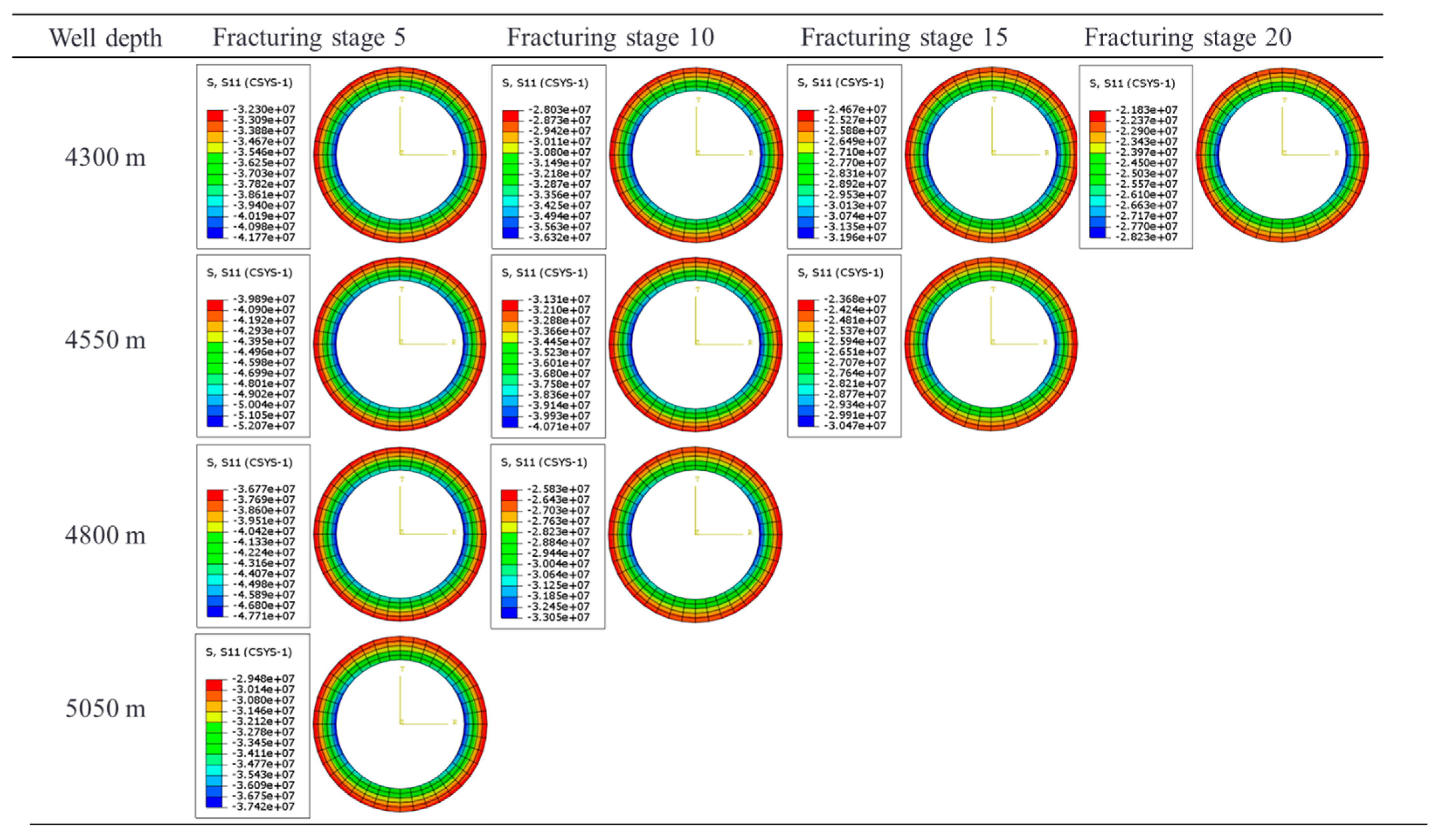
To systematically quantify the distribution patterns of the radial stress along the well depth, this study comparatively analyzed the evolutionary characteristics of radial stress under the fifth, 10th, 15th, and 20th fracturing stages within the well depth interval of 4300–5050 m, as depicted in
Figure 30. Based on this figure, the following is evident.
(a) Under the same well depth condition, the radial stress drops as the fracturing stage increases. The results of the quantitative analysis show that, at a well depth of 4300 m, the peak radial stresses of the cement sheath during the fifth, 10th, 15th, and 20th fracturing stages are −41.77 MPa, −36.32 MPa, −31.96 MPa, and −28.23 MPa, respectively. From the fifth to the 20th fracturing stage, the cumulative reduction in the radial stress is 32.42%.
(b) Under the same fracturing stage, an increase in well depth leads to a corresponding increase in the radial stress of the cement sheath. When the count of fracturing stages is five, the peak radial stresses of the cement sheath at well depths of 4300 m, 4550 m, 4800 m, and 5050 m are −41.77 MPa, −52.07 MPa, −47.71 MPa, and −37.42 MPa, respectively. As the well depth increases from 4300 m to 5050 m, the cumulative reduction in the radial stress is 10.41%.
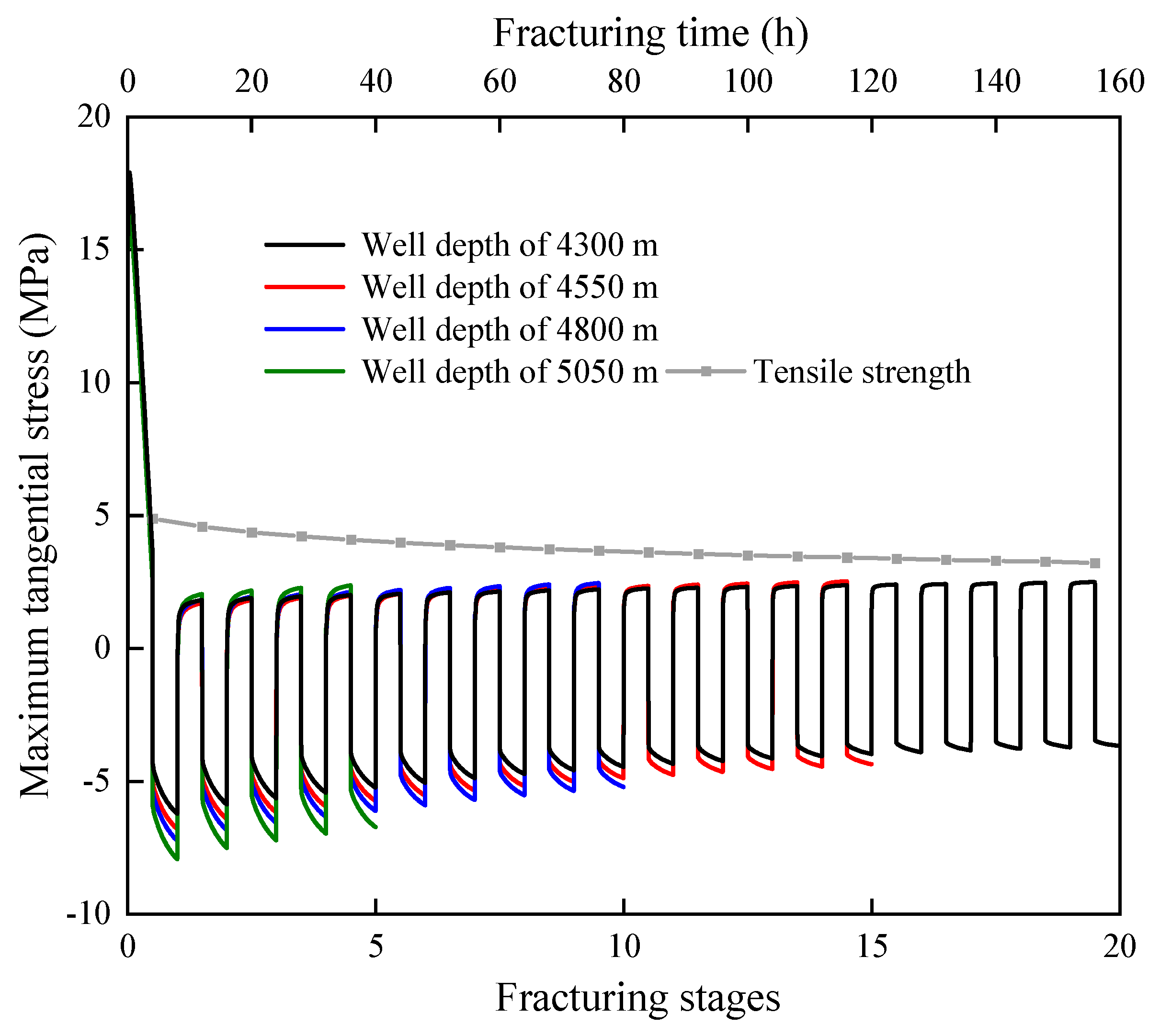
As the fracturing stage increases, the variation patterns of the tangential stress under varying well depths are illustrated in
Figure 31. According to this figure, the following can be seen.
(a) Under the same well depth condition, during the injection phase of the first fracturing stage, the positive tangential stress shows an initial upward trend followed by a decline. During the injection periods of the other fracturing stages, the positive tangential stress demonstrates an upward tendency with the augmentation of fracturing fluid injection time. In contrast, when the casing pressure decreases to the hydrostatic pressure level during all shut-in periods of fracturing, the tangential stress reverses direction. Subsequently, with the gradual recovery of the cement sheath’s temperature, the negative tangential stress increases as the shut-in time is prolonged.
(b) Under the same fracturing stage, tangential stress presents a consistent downward tendency as the well depth progresses.
(c) During the injection phase of the first fracturing stage, the tangential stress surpasses the tensile strength corresponding to the first fracturing stage for all well depths. In the other fracturing stages, the tangential stress remains below the tensile strength applicable to each fracturing stage.
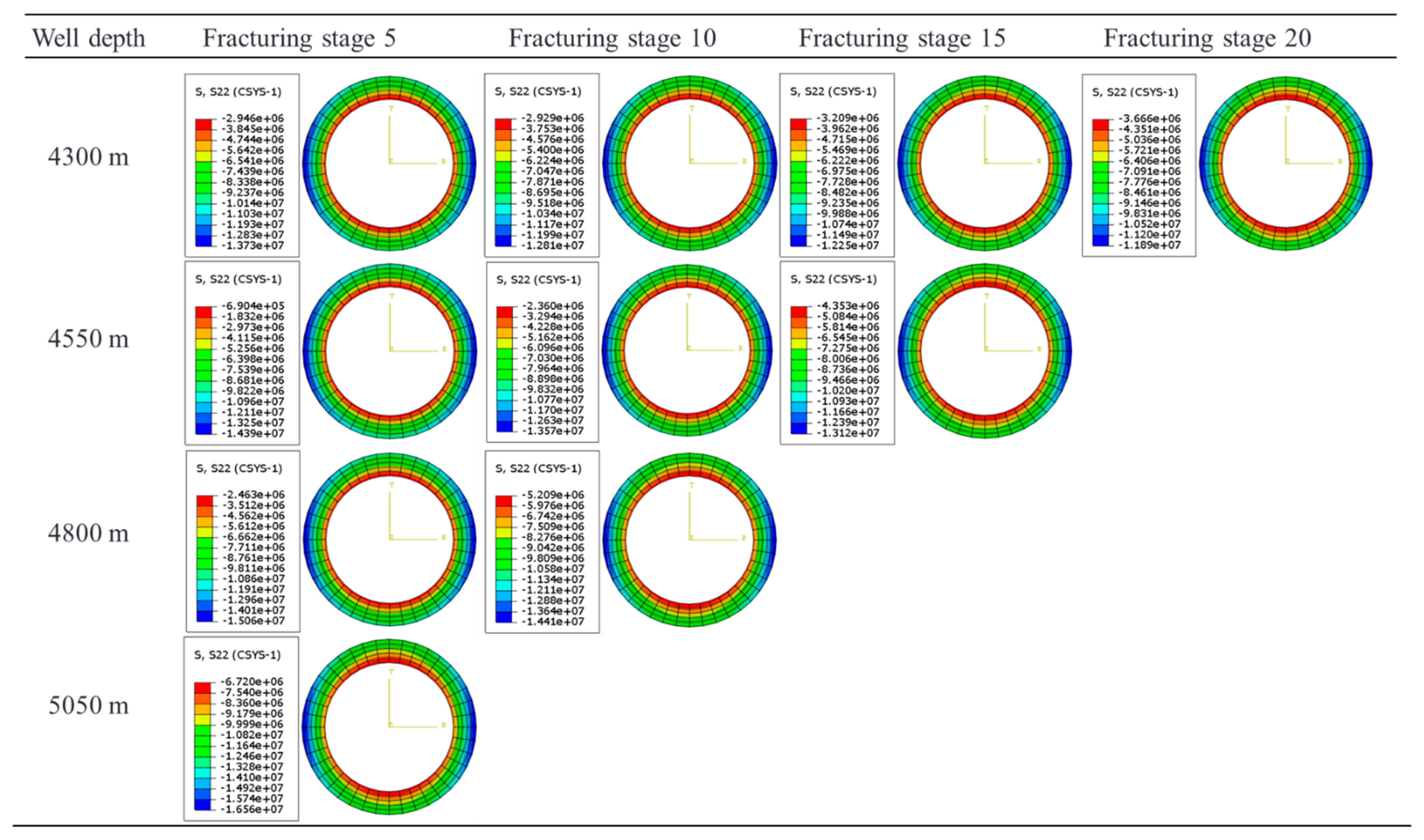
To further quantify the overall trend of the tangential stress under varying well depths during the multi-stage fracturing process, the tangential stress at varying well depths (4300 m, 4550 m, 4800 m, and 5050 m) and at the fifth, 10th, 15th, and 20th fracturing stages was compared, as depicted in
Figure 32. Based on this figure, we can discern the following:
(a) Under the same well depth condition, the tangential stress exhibits a decreasing trend as the fracturing stage increases. Quantitative analysis indicates that at a well depth of 4300 m, the peak tangential stresses at the fifth, 10th, 15th, and 20th fracturing stages are −13.73 MPa, −12.81 MPa, −12.25 MPa, and −11.89 MPa, respectively. During the fracturing operations from the fifth to the 20th fracturing stage, the cumulative reduction in the tangential stress is 13.40%.
(b) Under the same number of fracturing stages, an increase in well depth results in a corresponding rise in the tangential stress. When the count of fracturing stages is five, the peak tangential stress at well depths of 4300 m, 4550 m, 4800 m, and 5050 m is −13.73 MPa, −14.39 MPa, −15.06 MPa, and −16.56 MPa, respectively. As the well depth increases from 4300 m to 5050 m, the cumulative increase in the tangential stress is 20.61%.
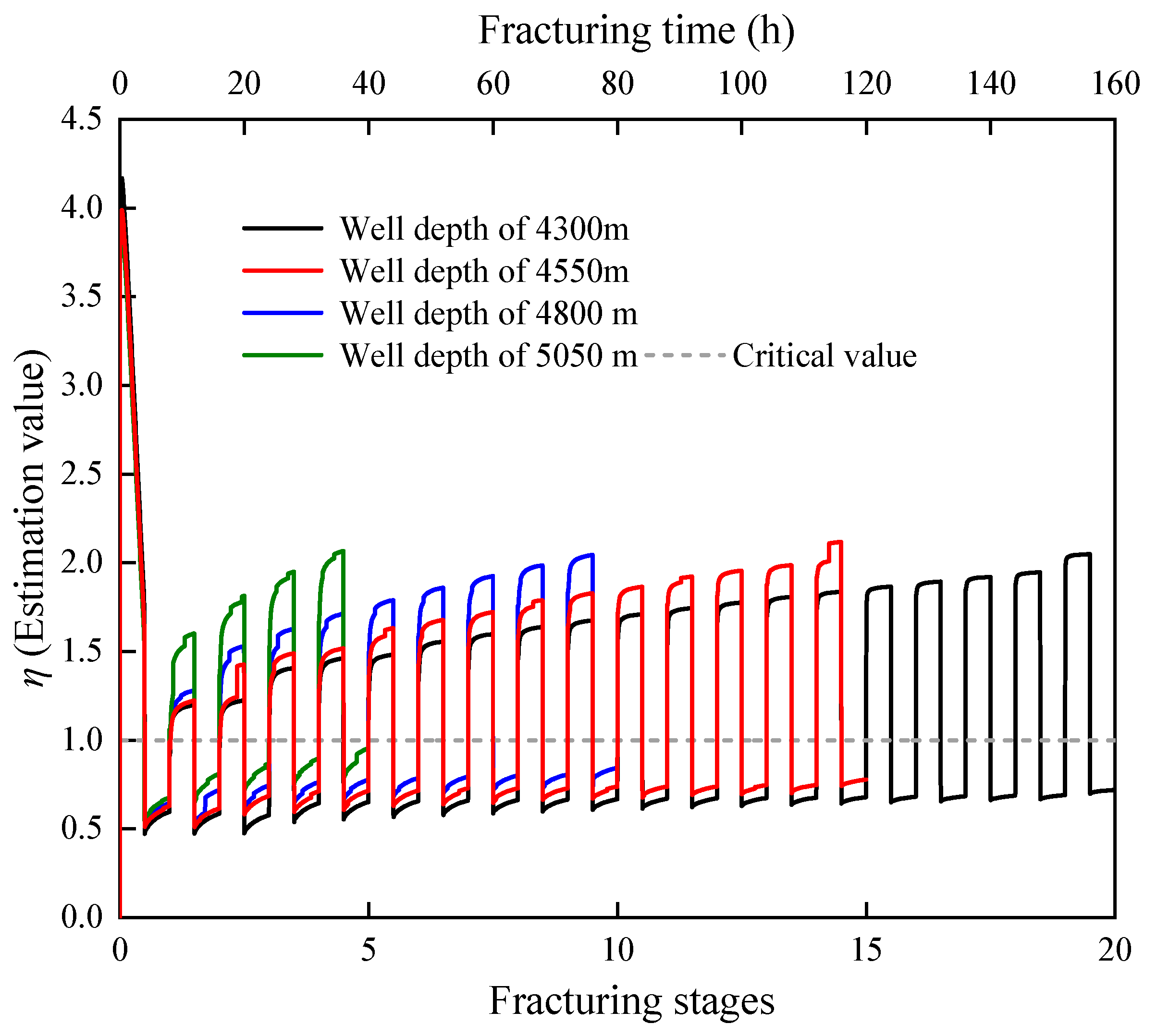
Figure 33 illustrates the variation in the failure determination values under varying well depths. The determination results relying on the modified Mohr–Coulomb criterion indicate that:
(a) Under the same well depth condition, the cement sheath’s damage value shows a significant non-uniform distribution characteristic in each fracturing stage: it reaches the peak value during the first fracturing stage, and the peak damage value during the successive fracturing stages rises in a monotonous manner as the fracturing stage goes up.
(b) Under the same fracturing stage, at the fifth fracturing stage, the damage value steadily rises as the well depth increases.
(c) When the depth of the horizontal well is 4300m, 4550 m, 4800 m and 5050 m, respectively, the cement sheath’s damage value exceeds the determination value in all injection periods of the fracturing stages; however, during the shut-in periods of all fracturing stages, the cement sheath’s damage value always remains below the determination value.
From the Mohr–Coulomb determination results, it is evident that the nearer to the horizontal well heel, the more severe the failure of the cement sheath becomes, with the peak damage value being the highest at a well depth of 5050 m. This situation arises because, as the well depth increases, the period during which heat exchange takes place between the fracturing fluid and the wellbore is extended, significantly reducing the disturbance effect on the surrounding temperature field and thereby weakening its coupled influence on the cement sheath stress changes. Therefore, a lower horizontal well depth is advantageous for safeguarding the cement sheath’s integrity.