Article

Energy Management Strategy Based on State Feedback for Coaxial Parallel Hybrid Tractors

1
Automotive Engineering Research Institute, Jiangsu University, Zhenjiang 212013, China
2
National Key Laboratory of Special Vehicle Design and Manufacturing Integration Technology, Baotou 014030, China
3
Laboratory of Fluid Power and Mechatronic Systems, Zhejiang University, Hangzhou 310027, China
*
Author to whom correspondence should be addressed.
Appl. Sci. 2026, 16(12), 6176; https://doi.org/10.3390/app16126176
Submission received: 3 May 2026 / Revised: 31 May 2026 / Accepted: 1 June 2026 / Published: 18 June 2026

Abstract

Hybrid tractors are a promising solution for reducing fuel consumption and emissions in agricultural machinery. However, their low-speed, high-torque operation with frequent load fluctuations demands an energy management strategy (EMS) that is both real-time capable and highly adaptive. This study focuses on a coaxial parallel hybrid electric tractor, developing a forward simulation model that integrates longitudinal vehicle dynamics, engine, motor, battery, and transmission systems. An improved equivalent fuel consumption minimization strategy (ECMS) with state-of-charge feedback correction, termed F-ECMS, is proposed. It dynamically adjusts the equivalence factor based on real-time battery SOC to approach optimal fuel economy while sustaining charge. Dynamic programming (DP) is used to establish a global benchmark. Simulations under a typical plowing cycle show that over 14,400 s, the F-ECMS maintains SOC (0.5964) close to the DP reference (0.6000), while achieving a 1.51% reduction in equivalent fuel consumption compared to a rule-based strategy. The results demonstrate that the proposed F-ECMS offers an effective balance between real-time performance and fuel economy, showing strong potential for practical implementation in hybrid agricultural vehicles.

1. Introduction

Agricultural mechanization serves as a crucial foundation for modern agricultural production systems. However, the high fuel consumption and significant emissions associated with traditional diesel tractors make their green transition an urgent priority [1]. In this context, the hybridization of tractors emerges as a key technological pathway, offering the potential to substantially enhance energy efficiency and reduce emissions through optimized energy flow management [2]. Among various configurations, the coaxial parallel hybrid powertrain has garnered considerable attention in the tractor domain due to its high transmission efficiency, ease of inheriting traditional layouts, and effective capabilities in providing electric assist and regenerative braking [3].
Unlocking the full potential of hybrid systems hinges on efficient Energy Management Strategies (EMS). Unlike on-road vehicles, agricultural field operations present unique challenges: tractors frequently operate at low speeds with high torque demands. Furthermore, due to uneven soil resistance and the complex dynamics of implements, the load exhibits intense and transient fluctuations [4,5,6]. These conditions impose stringent requirements on the real-time capability, robustness, and dynamic response of the EMS [7]. An outstanding EMS must, while ensuring operational performance, coordinate the power output from the engine and motor in real-time to mitigate load shocks, optimize operating points, and maintain the sustainability of the battery’s state of charge (SOC) [8].
Among various EMSs, the Equivalent Consumption Minimization Strategy (ECMS), derived from Pontryagin’s Minimum Principle, has become a research focus due to its good real-time performance and theoretical near-global optimality [9]. However, the equivalence factor in the standard ECMS requires pre-calibration for specific driving cycles, which limits its adaptability. To address this, scholars have proposed various adaptive ECMS methods. Musardo et al. [10] pioneered an adaptive ECMS framework, estimating the equivalence factor online based on real-time conditions to maintain battery charge and minimize fuel consumption, laying a foundation for subsequent research. Tian et al. [11] designed an ECMS based on an Adaptive Neuro-Fuzzy Inference System (ANFIS) for a parallel hybrid electric bus. Their approach trained the ANFIS model using optimal trajectory data obtained from Dynamic Programming (DP), enabling online intelligent decision-making for the equivalence factor. Sun et al. [12] developed a real-time traffic-information-based adaptive ECMS for a plug-in hybrid electric bus. By employing a Markov chain to predict future vehicle speed and proactively adjust the equivalence factor, they improved fuel economy.
In the field of agricultural machinery, research on EMSs tailored for the special working conditions of tractors is also advancing. Zhu et al. [13] proposed a fuzzy adaptive ECMS for a parallel hybrid tractor equipped with a Hydro-mechanical Continuously Variable Transmission (HMCVT). By dynamically adjusting the equivalence factor via a fuzzy controller, they achieved fuel consumption reductions of 6.71% and 5.04% in plowing and transport cycles, respectively. Liu et al. [14] presented a real-time strategy based on fuzzy logic rules for a series-parallel hybrid tractor, validating its effectiveness and potential for real-time application through comparison with DP with a final state constraint.
Despite significant progress, there remains considerable scope for deepening research on EMSs for tractors’ unique operational profiles. First, the validation of existing strategies often relies on specific or simplified duty cycles. In practice, short-term, severe load fluctuations caused by varying soil conditions, implement types, and operator behavior place higher demands on the instantaneous decision-making capability and robustness of an EMS. A desirable strategy should maintain system efficiency and charge balance even in the absence of precise future load information. Second, regarding the balance between innovation and engineering applicability, while adaptive methods based on fuzzy logic or neural networks demonstrate good performance, their complex parameter tuning and lower interpretability pose challenges for implementation and calibration on agricultural machinery controllers. In contrast, methods based on classical control theory offer simpler structures and easier deployment, but the tuning rules and performance limits of their parameters under the extreme transient conditions typical of tractors warrant further investigation. Finally, a rigorous EMS study requires establishing a complete validation chain from high-fidelity simulation to Hardware-in-the-Loop (HIL) testing, with quantitative benchmarking against a global optimal solution.
To bridge the identified research gaps, this study focuses on a coaxial parallel hybrid tractor, aiming to develop an energy management strategy that combines good real-time performance, strong adaptability, and engineering usability. The main contributions of this work are threefold: First, a comprehensive forward simulation and validation platform is constructed. This includes a forward-facing tractor simulation model incorporating driver, longitudinal dynamics, and key component models. The Dynamic Programming (DP) algorithm is employed to obtain the global optimal solution for a representative plowing cycle, providing a quantitative benchmark for evaluating online strategies. Second, a state feedback-based Equivalent Consumption Minimization Strategy (F-ECMS) is proposed. Tailored to the “low-speed, high-torque, load-transient” characteristics of tractor operation, the F-ECMS dynamically adjusts the equivalence factor online via a PI controller. This allows the strategy to adaptively maintain charge balance and guide the powertrain to operate efficiently using only current state information. The method features a simple structure and low computational load, favoring practical engineering implementation. Third, a comprehensive validation from simulation to HIL testing is conducted. The proposed F-ECMS is compared against a rule-based (RB) strategy and the DP global optimum on the typical plowing cycle. Its real-time execution capability and robustness are further verified on an HIL test platform.
The remainder of this paper is organized as follows. Section 2 details the configuration, parameters, and component models of the coaxial parallel hybrid powertrain. Section 3 elaborates on the design of the DP benchmark strategy, the RB baseline strategy, and the proposed F-ECMS. Section 4 defines the test cycle and performance evaluation metrics, presents the simulation results, and provides a comparative analysis and discussion.

2. System Configuration and Dynamic Modeling

2.1. System Configuration and Vehicle Parameters

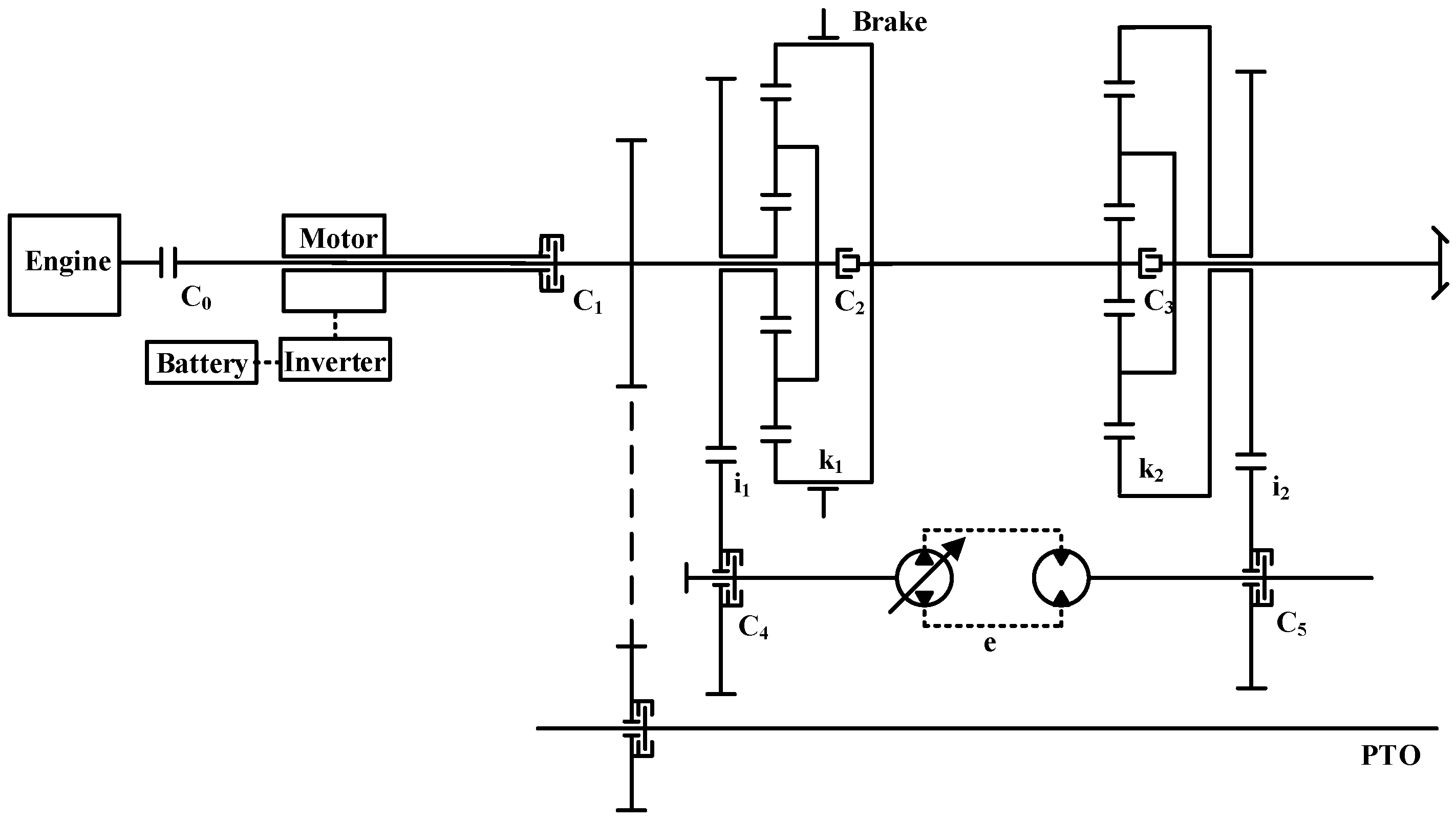
As shown in Figure 1, the coaxial parallel hybrid electric tractor studied in this paper features a system configuration where the engine and a permanent magnet synchronous motor are coaxially coupled. This combined power source drives the transmission system through a clutch and a hydro-mechanical continuously variable transmission (HMCVT). In this configuration, the electric motor serves a dual function, providing both driving torque and regenerative braking capability, while the power battery acts as the energy storage unit, responsible for storing and releasing electrical energy. Key parameters for the vehicle and powertrain are listed in Table 1.
This coaxial parallel configuration offers significant advantages for agricultural applications: it boasts a compact structure, facilitates integration based on traditional tractor driveline layouts (implying relatively low retrofit costs), and the shared output shaft enables effective electric torque assist and regenerative braking. Through coordinated control of the clutch and the brake within the HMCVT, the system can flexibly switch between driving modes and power flow paths. For instance, it allows for rapid decoupling of the engine from the driveline during pure electric driving or when responding to transient load demands, thereby enhancing system responsiveness [15].
The energy flow within the system follows these principles: Under high traction demand, the motor provides auxiliary torque to shave peak loads on the engine, encouraging the engine to operate within its high-efficiency zone. During moderate load conditions, the engine operates in its high-efficiency region and can simultaneously drive the motor to act as a generator, moderately charging the battery to maintain the State of Charge (SOC). When the power demand falls below the engine’s efficient operating point or during vehicle braking, the motor switches to generator mode to recover energy. The core objective of the Energy Management Strategy (EMS) is to make intelligent decisions and enable smooth transitions between these operational modes based on real-time demands. This aims to synergistically optimize overall system efficiency, ensure operational performance, and maintain SOC balance [16,17].

2.2. Driver Model

Based on the deviation between the actual vehicle speed and the target speed, the driver issues commands via the accelerator and brake pedals. The onboard Electronic Control Unit (ECU) interprets these pedal signals, along with the current vehicle speed, to determine the required torque, typically by referencing a pre-calibrated MAP. The driver and the ECU can be collectively considered as a PID controller, where the driver’s skill and the sophistication of the ECU’s algorithm directly influence the control performance. The required torque can be calculated as follows:
T r e q = K p e + K i e d t + K d d e d t
where e = v o b j v represents the deviation between the target speed and the actual speed, and K p ,   K i ,   K d are the proportional, integral, and derivative gain coefficients, respectively.

2.3. Engine Model

Engine modeling methods can be primarily categorized into physics-based modeling rooted in thermodynamic principles and data-driven numerical modeling. The former characterizes dynamic behavior by establishing differential equation sets describing in-cylinder combustion, heat transfer, and other processes, resulting in complex models with sensitive parameters. The latter, based on steady-state data from bench tests, directly establishes static mapping relationships that reflect output and efficiency characteristics.
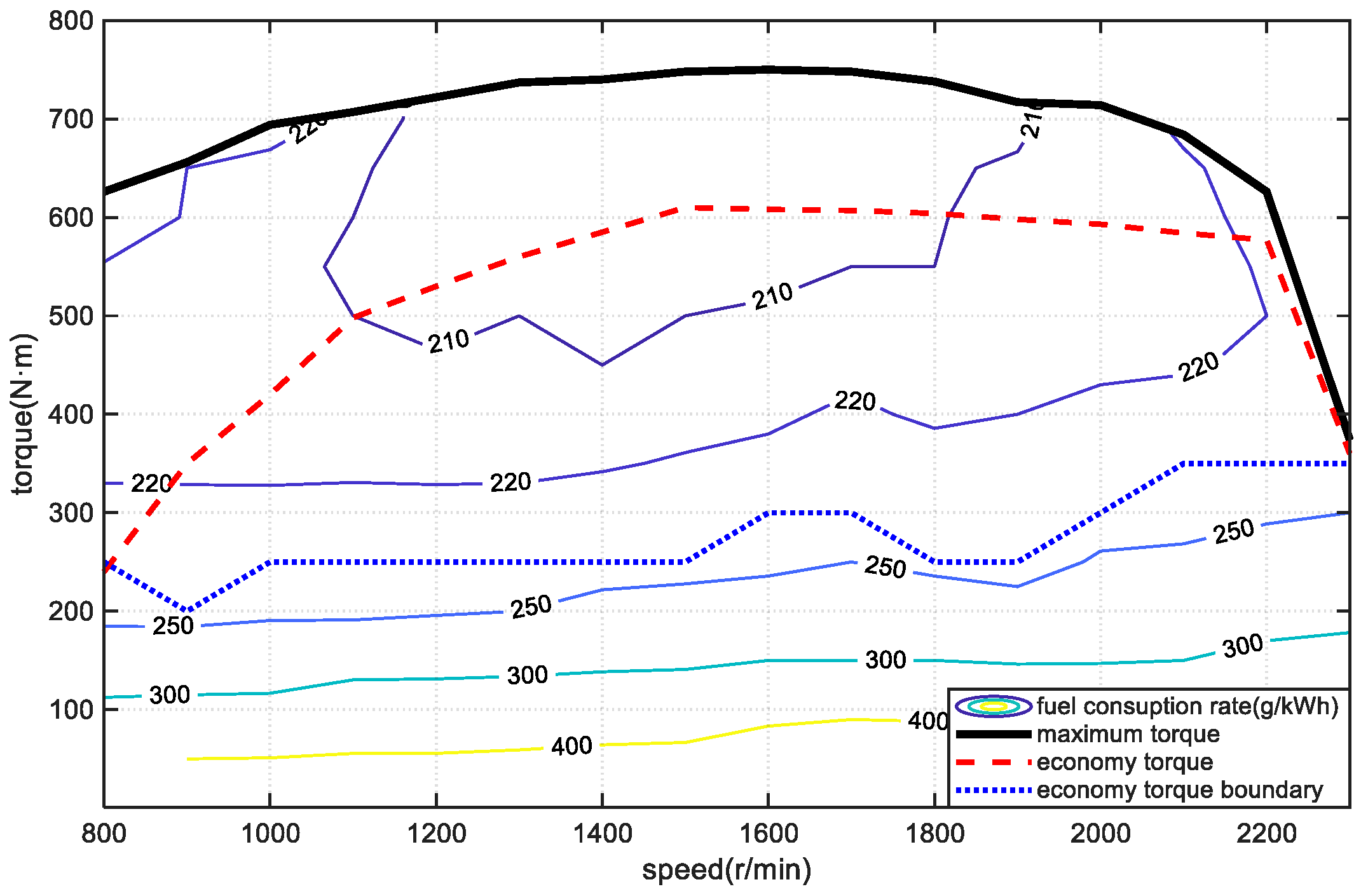
The core focus of this study lies in vehicle-level energy flow management and optimal control, which has a relatively low dependency on the intricate details of internal engine transient processes. Therefore, a data-driven numerical modeling approach is adopted. Steady-state fuel consumption rate data across various engine speeds and torque points are obtained through bench tests of a WP6.180E40 diesel engine. The WP6.180E40 diesel engine used in this study was manufactured by Weifang Weichai-Deutz Diesel Engine Co., Ltd. (Weifang, China). Using interpolation methods, the engine’s universal characteristic map (also known as the fuel consumption map), as shown in Figure 2, is established. The functional relationship is described as:
m ˙ f = f map ( ω e , T e )
The operation of the engine must satisfy its external speed characteristic curve and speed limits, as defined by the following constraints:
0 T e T e , max ( ω e ) ,   ω e , min ω e ω e , max
where ω e is the engine speed, T e is the engine torque, T e , max ( ω e ) is the maximum achievable torque at the current speed, and ω e , min ,   ω e , max are the minimum and maximum allowable speeds, respectively.

2.4. Electric Motor Model

The electric motor serves a dual function: in pure electric or hybrid drive modes, it operates as a motor, consuming electrical energy to provide driving torque; in charging-while-driving or regenerative braking modes, it acts as a generator, converting mechanical energy into electrical energy to charge the battery.
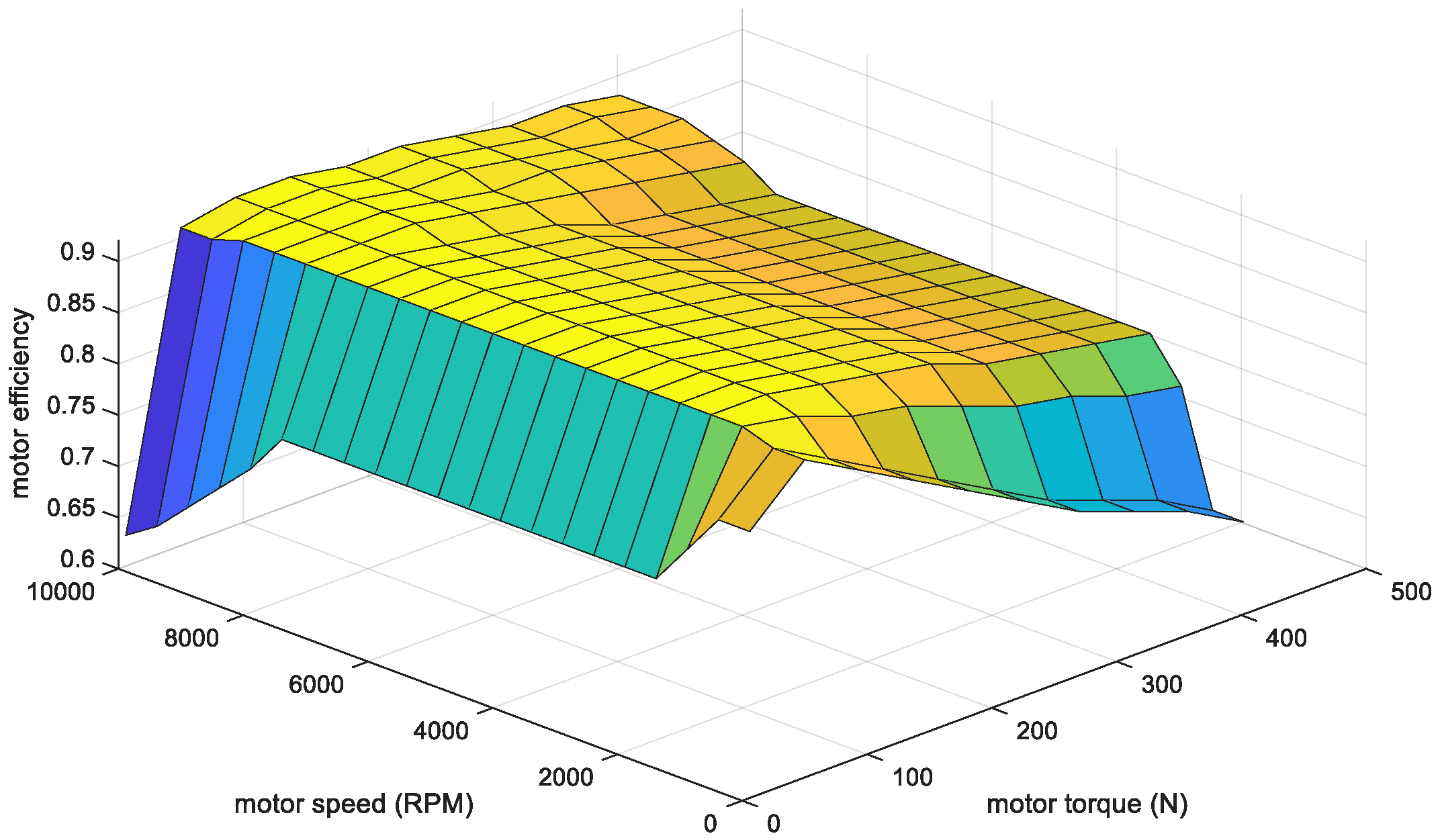
This study similarly employs a data-driven numerical modeling approach. By acquiring efficiency data of the motor across various steady-state speed and torque operating points, the motor efficiency map shown in Figure 3 is constructed.
The motor power can be calculated as follows:
P m = T m n m 9550 η m j
where P m is the motor power, T m is the motor output torque, n m is the motor speed, and η m is the motor efficiency. The exponent is −1 when the motor is operating in driving mode, and 1 when it is in generating mode.
The torque output of the motor must satisfy its external characteristic constraints, meaning it is bounded by the minimum and maximum torque curves corresponding to its current speed:
T m , min ( ω m ) T m T m , max ( ω m )
where T m , min ( ω m ) ,   T m , max ( ω m ) represent the maximum regenerative (braking) torque and the maximum driving torque at the current speed, respectively.

2.5. Battery Model

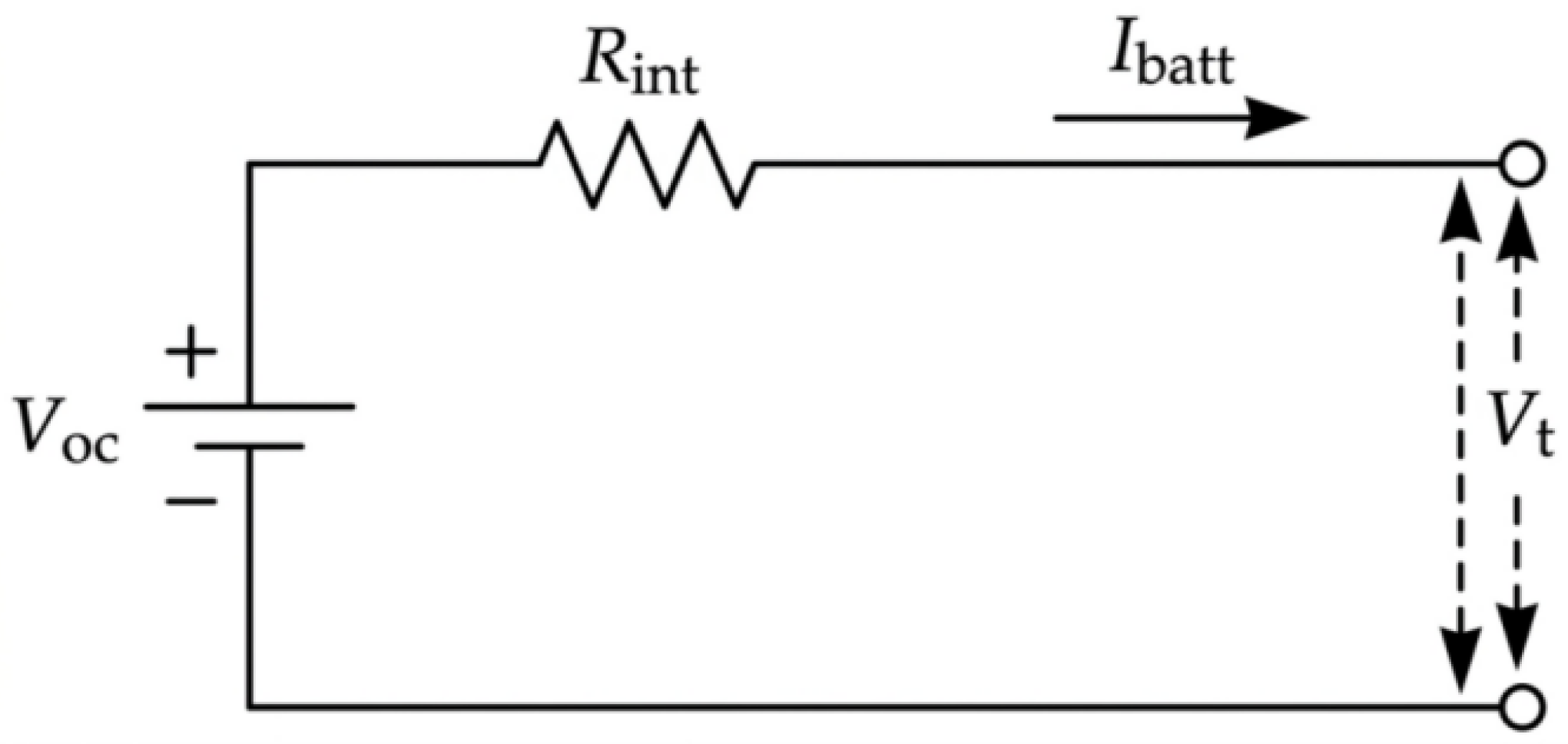
This study employs an equivalent circuit model to describe the power battery pack, as illustrated in Figure 4. The model represents the battery as a voltage source connected in series with an internal resistance, with both parameters being functions of the battery’s State of Charge (SOC). According to Kirchhoff’s voltage law, the battery terminal voltage V t can be calculated as:
V t = V O C ( S O C ) I b a t t R int ( S O C )
where I b a t t is the battery current, defined as positive during discharge and negative during charge. The electrical power of the battery is calculated by:
P b a t t = V t I b a t t
Substituting Equation (6) into Equation (7) yields the formula for calculating the current:
I b a t t = V O C V O C 2 4 R int P b a t t 2 R int
The battery State of Charge (SOC), reflecting the actual available capacity, is defined as the ratio of the remaining capacity to the nominal capacity of the battery. It is calculated using the Ampere-hour integration method as follows:
S O C ( t ) = S O C ( 0 ) 0 t I b a t t ( τ ) d τ Q n o m
where Q n o m is the nominal capacity of the battery. To reduce the depth of charge/discharge and prolong battery life, the SOC is constrained within predefined upper and lower limits:
S O C min S O C S O C max

2.6. Transmission Model

Based on bench test data, the transmission ratio of the Hydro-Mechanical Continuously Variable Transmission (HMCVT) was matched with the goal of optimizing the diesel engine’s fuel economy. By testing the HMCVT in combination with the diesel engine and measuring the engine’s fuel consumption at different throttle openings, its optimal fuel economy operating points were obtained. The relationship between the optimal fuel economy speed of the diesel engine and the throttle opening was then fitted using a polynomial. Combined with the relationship between the tractor’s travel speed and the HMCVT ratio, this can be expressed as:
n e , o p t = 210 α 4 150 α 3 + 810 α 2 + 1000 α + 750 i H M = 0.377 r w n e ( 1 δ ) v i 0 i f
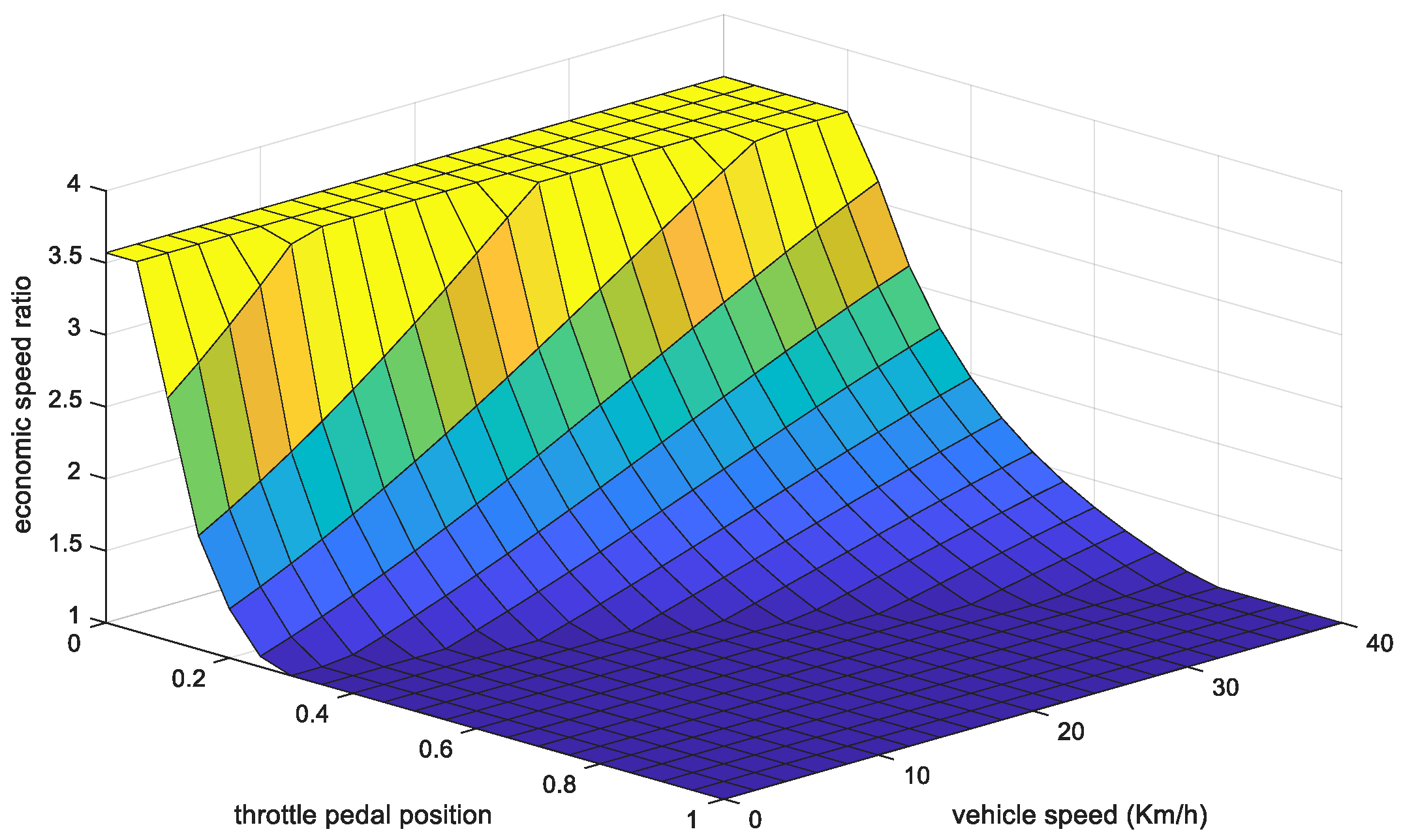
where α is the throttle opening; n e , o p t is the optimal fuel economy speed of the diesel engine; n e is the engine speed; v represents the tractor speed; r w is the radius of the tractor’s driving wheel; i H M is the transmission ratio of the HMCVT; i 0 is the final drive ratio; i f is the wheel-side reduction ratio; δ is the slip ratio of the tractor’s driving wheels. According to the current standard GB/T 3871.9-2006 [18], the tire slip ratio must not exceed 15%. In the modeling for this study, a slip ratio of 10% is adopted. Based on the aforementioned relationships, the optimal fuel economy transmission ratio surface for the HMCVT is plotted, as shown in Figure 5. The transmission ratio control strategy in this study is formulated based on this MAP. Specifically, the target transmission ratio is determined by querying the MAP using the tractor’s real-time velocity and throttle opening.
For the parallel configuration, the transmission input (i.e., the power source output) must satisfy the following physical constraints:
T r e q = T e + T m n e = n m

2.7. Tractor Longitudinal Dynamic Model

During operation, a tractor is subject to air resistance, grade resistance, rolling resistance, acceleration resistance, and traction resistance. The longitudinal dynamic model of the tractor can be expressed by the following equation:
F t = F f + F w + F i + F T + ε m d v d t F f = m g f cos θ F w = 1 2 ρ C D A v 2 F i = m g sin θ F T = k s h b v = ω w r w / ( 1 + δ )
where F t is the total tractive force at the wheels; F f is the rolling resistance; F w is the aerodynamic resistance; F i is the grade resistance; F T is the implement traction resistance; ε m d v d t represents the acceleration resistance, accounting for translational and rotational inertia; r w is the driving wheel radius; ρ is the air density; C D is the aerodynamic drag coefficient; A is the frontal area; m is the total machine mass; g is the acceleration due to gravity; f is the rolling resistance coefficient; θ is the slope angle; v is the tractor speed; ω w is the driving wheel angular speed; δ is the wheel slip ratio.

3. Energy Management Strategy Formulation

3.1. Dynamic Programming Global Optimal Benchmark

To obtain the theoretical lower bound of fuel consumption for the energy management strategy under a given operational cycle and to establish a benchmark for evaluating real-time strategies, this study employs the Dynamic Programming (DP) method for offline global optimization. Dynamic Programming determines the optimal control sequence that satisfies all system constraints by enumerating all feasible state transitions, thus providing a reference target for evaluating online strategies. However, due to the “curse of dimensionality” and its dependence on complete a priori knowledge of future driving conditions, this method is not suitable for real-time control [19].
In this study, the energy management problem is formulated as a discrete-time finite-horizon optimal control problem. The time horizon is discretized into N + 1 decision points denoted as k = 0 , 1 , 2 , , N , with a time step of Δ t = 1 s . The system state variable is the battery state of charge (SOC), i.e., x k = SOC k . To solve the problem using dynamic programming, the SOC is further discretized over its admissible range with a state discretization step of Δ SOC = 0.002 . The control variable u k is defined as the ratio of the engine torque to its maximum available torque at the current speed. To search for feasible control actions in the global optimization, u k is also discretized with a control resolution of 0.002. All admissible control values form the feasible control set U k ( x k ) at the current state. This control set must satisfy the system’s instantaneous power balance equation and strictly comply with physical constraints, including the torque-speed characteristics of the engine and motor, battery charge/discharge power limits, and the safe operating window of the SOC.
The system dynamics are described by the state equation:
x k + 1 = f k ( x k , u k )
The total cost function J to be minimized is composed of stage costs and a terminal cost:
J = k = 0 N 1 L k ( x k , u k ) + Φ ( x N )
Here, the stage cost L k represents the fuel consumption for a single time step. The terminal cost Φ ( x N ) is used to penalize the deviation of the final SOC from the target reference value S O C r e f . Its purpose is to enforce charge sustenance by the end of the cycle, preventing the strategy from artificially reducing the apparent fuel consumption by depleting the battery energy:
L k ( x k , u k ) = m ˙ f ( x k , u k ) Δ t Φ ( x N ) = α ( S O C N S O C r e f ) 2
where m ˙ f denotes the instantaneous fuel consumption rate, and α represents the penalty coefficient, which is set to 100,000 in this study.
The optimization problem is solved via backward recursion based on Bellman’s principle of optimality. Define J k * ( x ) as the minimum cost-to-go from step k and state x to the terminal. Starting from the terminal condition J N * ( x ) = Φ ( x ) , the Bellman equation is solved recursively backward:
J k * ( x i ) = min u U k [ L k ( x i , u ) + J k + 1 * ( f k ( x i , u ) ) ]
During the solution process, the algorithm stores the optimal cost J k * and the corresponding optimal control law u k * for each discretized state point. Subsequently, by applying this control law in a forward simulation, the complete globally optimal state and control trajectories are obtained.
Although Dynamic Programming is not applicable online, the optimal power split behavior it reveals provides crucial insights and a strict performance upper bound for designing real-time near-optimal strategies. This theoretical benchmark is particularly valuable for avoiding the performance misjudgments that heuristic strategies might make due to myopic, locally optimal decisions under the highly fluctuating load conditions typical of field operations [20].

3.2. Rule-Based Benchmark Strategy

To establish a practical benchmark model representing traditional tractor control logic, this study also employs a Rule-Based (RB) strategy for comparison. Rule-Based Energy Management Strategies determine the operating modes and torque distribution of power sources directly based on predefined logical conditions. Their implementation is simple, robustness is high, and they are a classic method widely used in engineering practice. Common deterministic rule-based strategies mainly include the Thermostat Strategy, the Power Following Strategy, and their variants.
The Thermostat Strategy aims to maintain the battery State of Charge (SOC) within a predefined optimal range. When the SOC falls below the set lower limit, the engine is started and operated at a constant power level corresponding to its point of minimum brake-specific fuel consumption. Part of this power is used to propel the vehicle, while the remaining part charges the battery. When the SOC recovers to the set upper limit, the engine is shut off, and the vehicle is driven solely by the electric motor using battery power. This strategy allows the engine to operate consistently at its most efficient point, resulting in lower emissions. However, it leads to frequent battery charge/discharge cycles, and the SOC can only fluctuate within a narrow range during operation, especially under high-load conditions or during frequent braking events.
The Power Following Strategy commands the engine output power to follow the vehicle’s driving power demand in real-time. The engine is no longer fixed at a single operating point but varies with the load. This strategy reduces the frequency of battery charge/discharge cycles, which is beneficial for extending battery life. However, the engine cannot always operate within its high-efficiency zone, leading to poorer overall efficiency and emission performance.
To effectively integrate the advantages of the two types of strategies and precisely adapt them to the complex and variable operating conditions of tractors, this study designs a deterministic power distribution rule based on the battery State of Charge (SOC) threshold and real-time power demand. The primary objective of this rule is to maintain engine operation within its high-efficiency zone, while leveraging the motor’s fast response characteristic to assist in meeting the system’s transient power demands and recovering energy during braking to achieve the overall goal of charge sustainability. The specific power distribution logic is as follows: If the required torque does not exceed the maximum output capability of the motor, the operating mode is determined based on the SOC level—when the SOC is above 0.8, the system prioritizes pure electric drive mode; when the SOC falls below 0.2, it enters driving charging mode, where the engine operates at either the most economical torque or the maximum torque point at the current speed to charge the battery. If the required torque exceeds the motor’s capability for solo propulsion, the system enters hybrid drive mode, in which the engine operates at its maximum torque point, and any shortfall is supplemented in real time by the motor.
Such deterministic RB strategies are easy to calibrate, have strong real-time performance, and possess engineering robustness. However, their control rules rely on prior experience or static parameter settings. Consequently, they exhibit poor adaptability when facing significantly different dynamic operational conditions, such as tractor plowing and transport. This highlights the need to develop more intelligent, strongly adaptive energy management strategies.

3.3. State Feedback-Based ECMS

The Equivalent Consumption Minimization Strategy (ECMS) is an instantaneous optimization method based on Pontryagin’s Minimum Principle [21]. Its core concept involves introducing an equivalence factor to convert the use of electrical energy from the battery into an equivalent amount of fuel consumption, thereby transforming the optimization problem at each time step into minimizing this equivalent fuel consumption.
A key advantage of ECMS is its ability to convert the global, long-horizon constrained optimization problem into a series of instantaneous optimization problems that can be solved online, with solutions theoretically capable of approaching the global optimum. The equivalence factor serves as the crucial tuning parameter, determining the cost relationship between immediate fuel use and electrical energy use at the current moment. If its value is set too low, it will lead to premature depletion of the battery charge; if set too high, it fails to fully utilize the high-efficiency assistance potential of the electric motor [22].
For agricultural machinery like tractors, which operate under complex and variable conditions, the traction load fluctuates drastically with soil conditions and implement types. Using a fixed equivalence factor makes it difficult to maintain charge balance by the end of an operation cycle. Therefore, to enhance the strategy’s adaptability to dynamic operating conditions, this study introduces a feedback-based ECMS. This method employs closed-loop correction of the equivalence factor based on the deviation between the real-time battery SOC and its reference value, thereby improving the system’s robustness across different operational modes.
The designed F-ECMS minimizes the equivalent fuel consumption rate m ˙ e q at each control instant. The optimization problem is defined as follows:
min u U   m ˙ e q ( u , t ) = m ˙ f ( u , t ) + s ( t ) P b a t t ( u , t ) Q l h v
Among them, m ˙ f ( u , t ) is the instantaneous fuel consumption rate of the engine, P b a t t ( u , t ) is the battery power, Q l h v is the lower heating value of the fuel, s ( t ) is the time-varying equivalence factor, and the control variable u represents the engine torque sequence.
At each time instant t , the optimal control input u * ( t ) is obtained by minimizing the equivalent fuel consumption rate within the current feasible control set U :
u * ( t ) = arg min u U   m ˙ e q ( u , t )
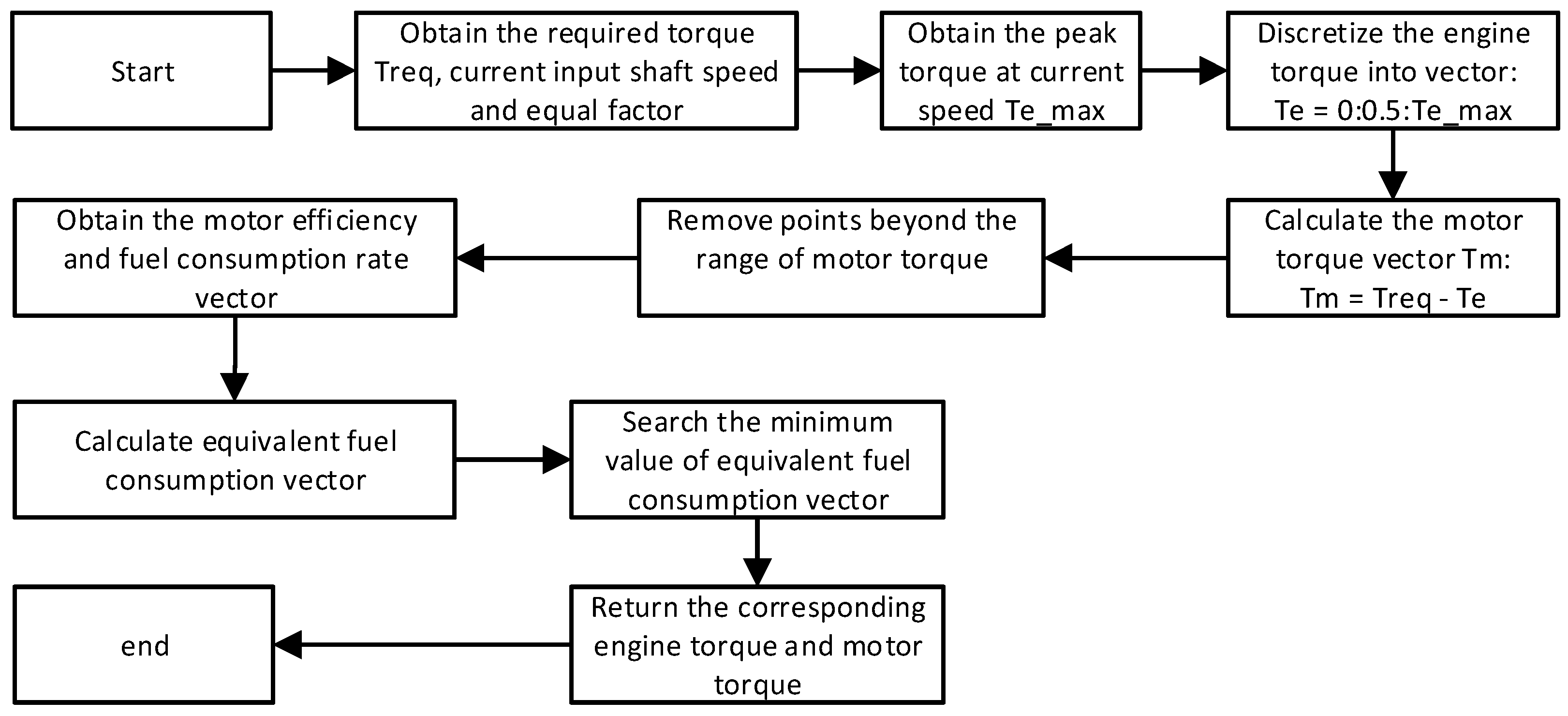
The constraints defining the control set U include the torque-speed characteristics of both the engine and the motor, the battery power limits, and the allowable range of the SOC. A flowchart of the real-time optimization process is illustrated in Figure 6.
To ensure charge sustenance at the end of the operational cycle, the equivalence factor is adjusted online based on battery SOC feedback through a Proportional-Integral (PI) controller as follows:
s ( t ) = s ( 0 ) + K p ( S O C t e f S O C ( t ) ) + K i 0 t ( S O C t e f S O C ( t ) ) d t
where K p ,   K i are the proportional and integral gains, respectively, and S O C r e f is the reference SOC value. The equivalence factor s ( t ) is constrained within the typical range of [ 1 ,   3.5 ] . Its initial value, s ( 0 ) , is set to the midpoint of this range, i.e., s ( 0 ) = 2.3 . Thereafter, s ( t ) is dynamically adjusted according to Equation (20).
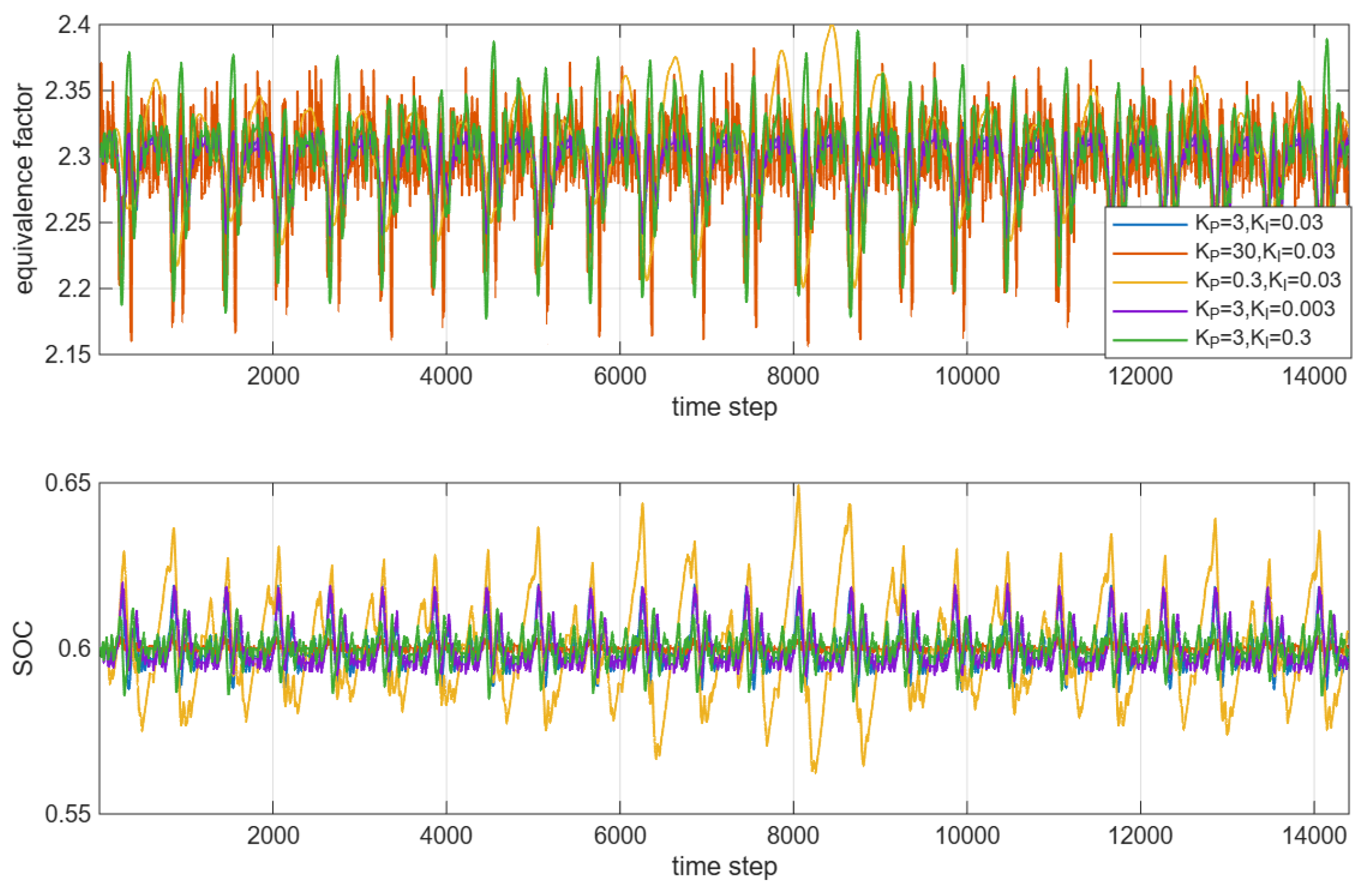
The proportional gain K p primarily influences the correction response speed. An excessively high K p can cause oscillations in s ( t ) , while a value too low leads to sluggish correction. The integral gain K i mainly governs the elimination of steady-state error; however, an overly large K i may induce integral windup under abrupt changes in operating conditions. To determine suitable parameters, the tuning process prioritized the tracking accuracy of the battery SOC relative to its reference trajectory and the adjustment smoothness of the equivalence factor s ( t ) as the primary objectives. Parameters were tuned via trial-and-error within a reasonable range. After comprehensively comparing the control performance under different parameter combinations, K p = 3 and K i = 0.03 were selected.
In practical engineering implementation, the dynamic characteristics of the actuators must be considered. Torque rate limits and mode-switching hysteresis are typically incorporated into the control logic to mitigate frequent transients and reduce wear on the power sources.

4. Simulation and Discussion

4.1. Operating Cycle Specification

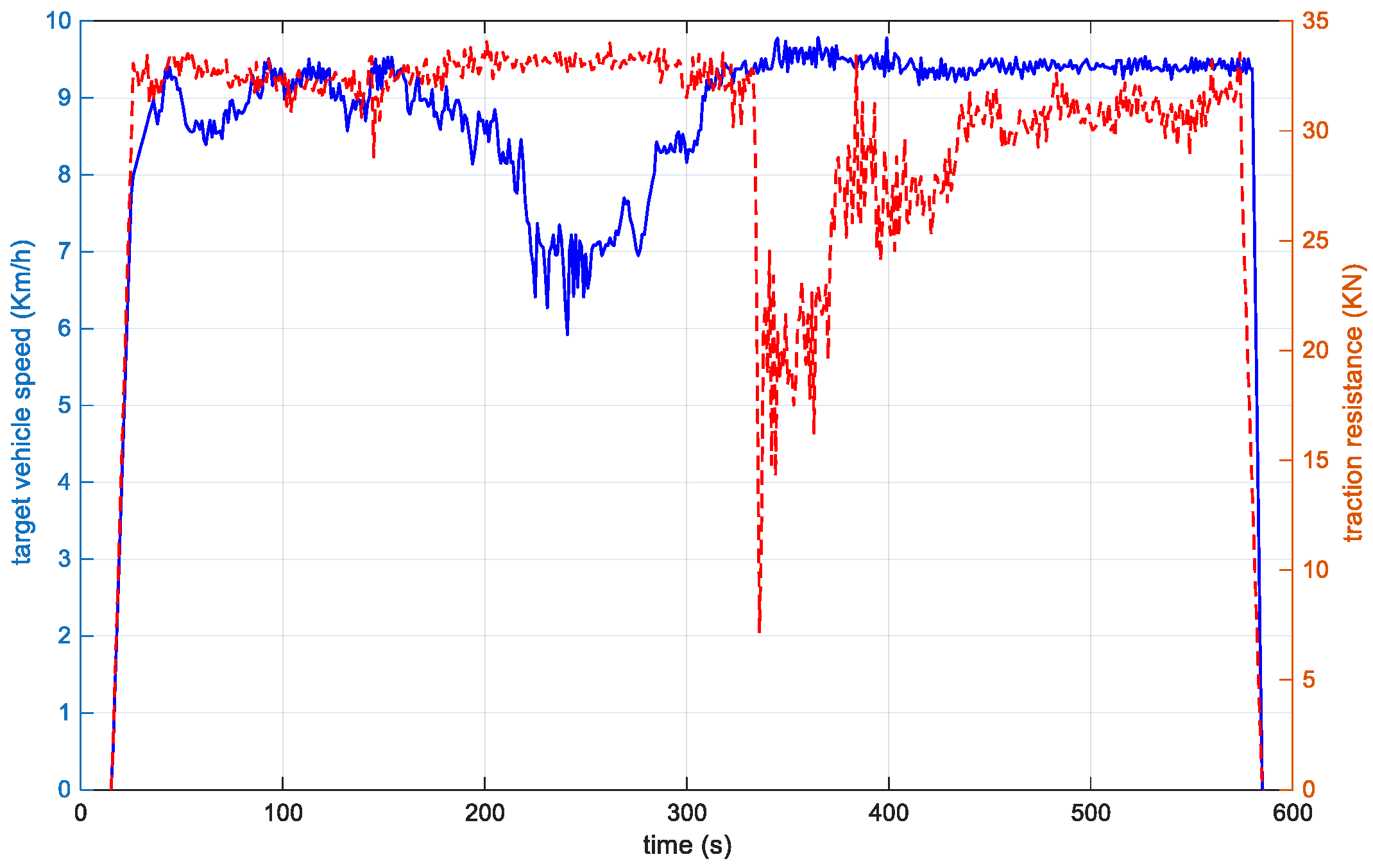
High-horsepower tractors are typically paired with heavy implements such as subsoilers, large rotary tillers, and combined tillage machines, and are primarily responsible for high-traction load operations like subsoiling and plowing in China. To establish a simulation cycle that closely reflects real-world conditions and effectively validates the dynamic performance of energy management strategies, this study designed a field test with a plowing depth of 0.26 m. The design was based on agricultural tractor duty cycle data from the U.S. Environmental Protection Agency’s non-road vehicle test procedures, combined with the designed speed and traction resistance range for typical plowing operations. Raw traction resistance data were collected using a high-precision tension sensor. Following the German Agricultural Society testing standards, the data were filtered, and duty cycle segments were extracted and analyzed. Ultimately, the tractor plowing speed-resistance cycle shown in Figure 7 was constructed.
This standard cycle has a duration of 600 s, with an average traction resistance of 36.60 kN and an average operating speed of 8.86 km/h. Its core characteristic lies in the resistance exhibiting sustained, intense, and irregular transient fluctuations. This replicates the typical load transient behavior caused by uneven soil compaction and implement dynamics interaction. This cycle not only characterizes the continuous load of heavy-duty plowing operations but also, with its inherent high-dynamic disturbances, provides a representative test scenario for evaluating the rapid response capability, robustness, and charge-sustaining performance of energy management strategies.
The initial battery SOC was set to 0.6. The simulation was run for 24 cycles under this operational condition, resulting in a total duration of 14,400 s, with a time step of 1 s. Regarding the evaluation metrics, since the terminal SOC may differ across strategies, the equivalent fuel consumption is adopted as the core economic performance indicator. It is calculated using the following formula:
M e q = M f u e l + Δ E b a t t Q l h v
where M e q is the equivalent fuel consumption, M f u e l is the cumulative fuel consumption of the engine, and Δ E b a t t is the net change in battery energy.

4.2. Results and Discussion

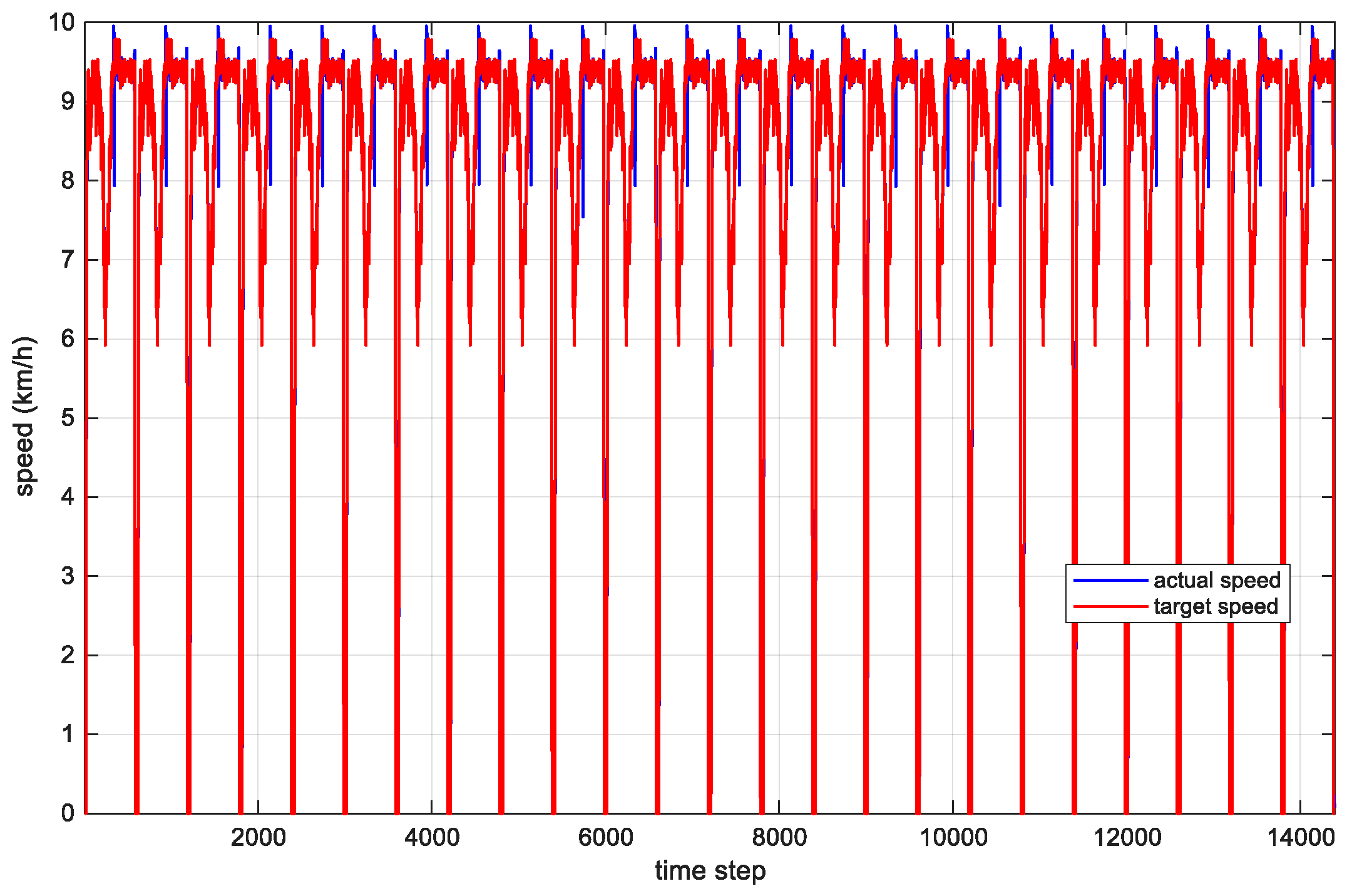
Figure 8 illustrates the variation trend of the actual speed versus the target speed. It can be observed that the actual vehicle speed tracks the target speed well, indicating good dynamic response performance of the driver model.
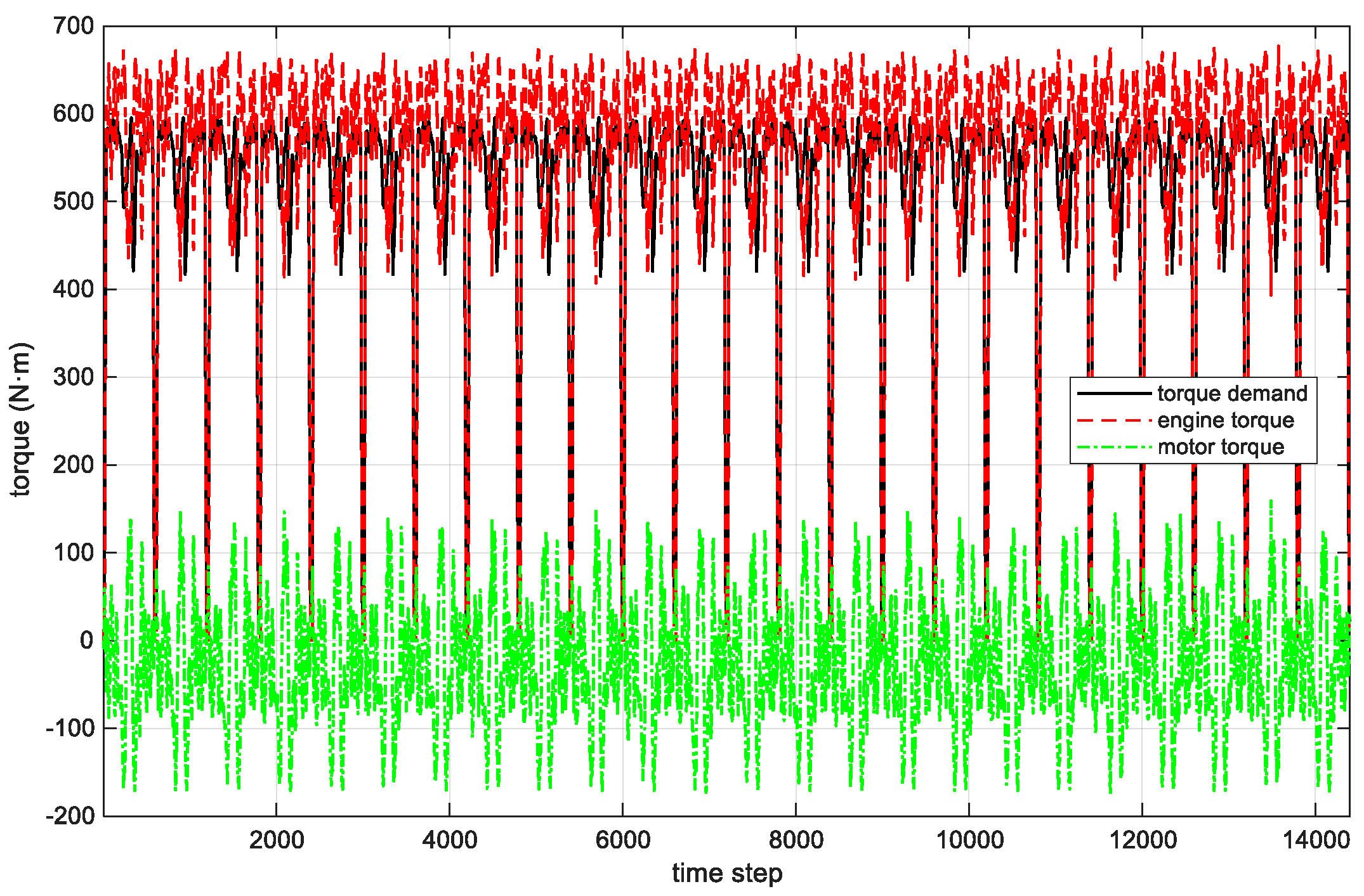
Based on the required torque and rotational speed measured in the simulation, the global optimal solution for this operating condition was obtained using the Dynamic Programming algorithm. Figure 9 presents the real-time torque distribution results of the F-ECMS. It is evident that this strategy effectively integrates the torque outputs from the engine and the motor. It leverages the rapid response capability of the motor to handle sudden load changes, thereby smoothing out engine torque fluctuations. During traction operations, engine efficiency is typically lower in the high-torque, low-speed region. The timely transient assistance from the motor helps prevent the engine operating point from falling into inefficient zones, consequently enhancing the overall system efficiency.
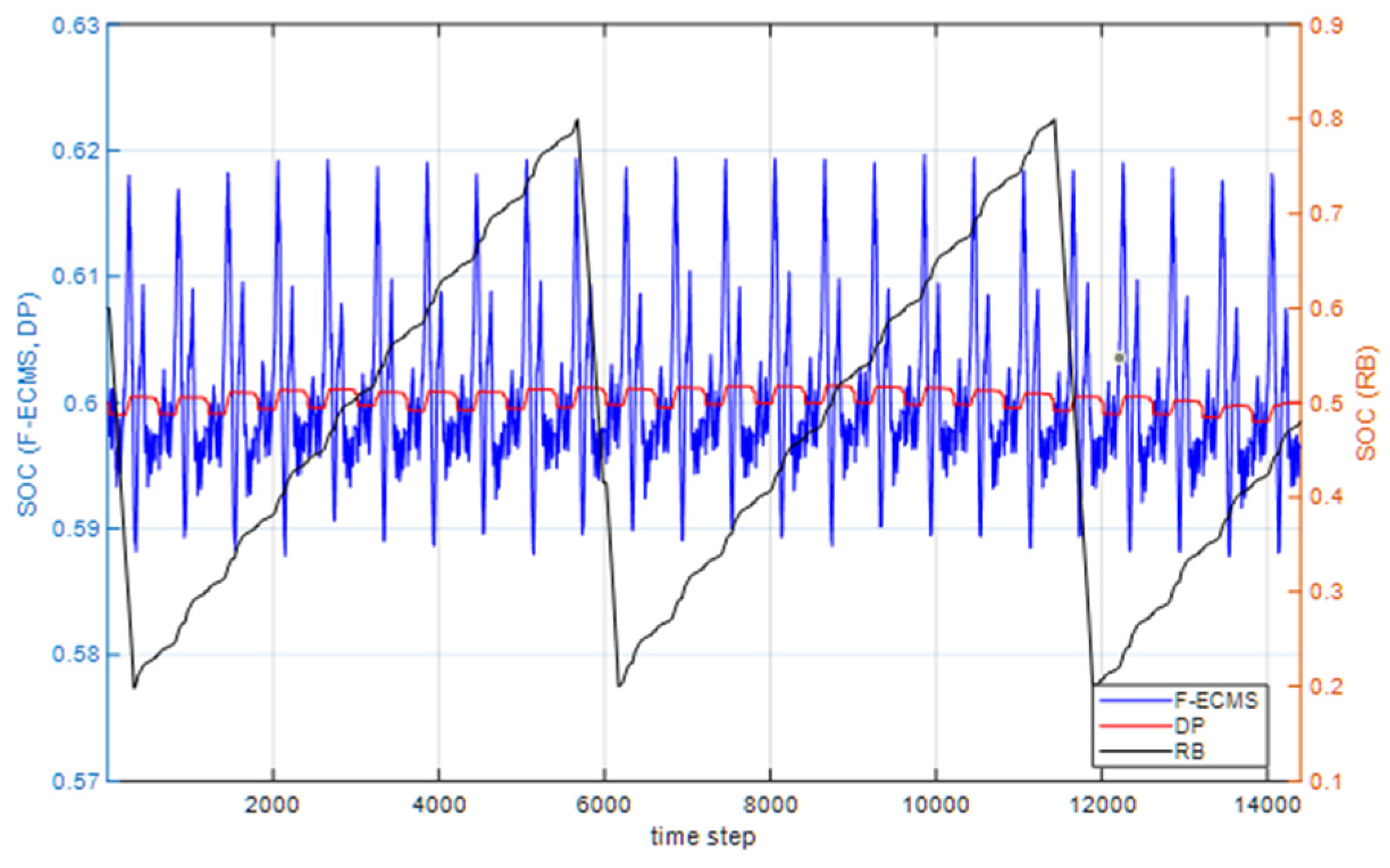
Figure 10 compares the battery SOC trajectories under the three strategies. As the global optimal benchmark, the DP strategy demonstrates the best charge sustenance capability, with its final SOC value nearly identical to the initial value. The proposed F-ECMS, relying on its closed-loop correction mechanism, achieves good tracking of the reference SOC. In contrast, the RB strategy, due to its lack of adaptive regulation, exhibits larger SOC fluctuations and deviates significantly from the initial value at the end of the cycle, resulting in poorer charge sustenance. This further underscores the critical role of closed-loop feedback in maintaining energy balance: F-ECMS adjusts the equivalence factor in real-time based on the SOC deviation, performs gentle charging when the engine operates efficiently, thereby stabilizing the SOC near the reference range and achieving a maintenance effect close to that of the DP strategy.
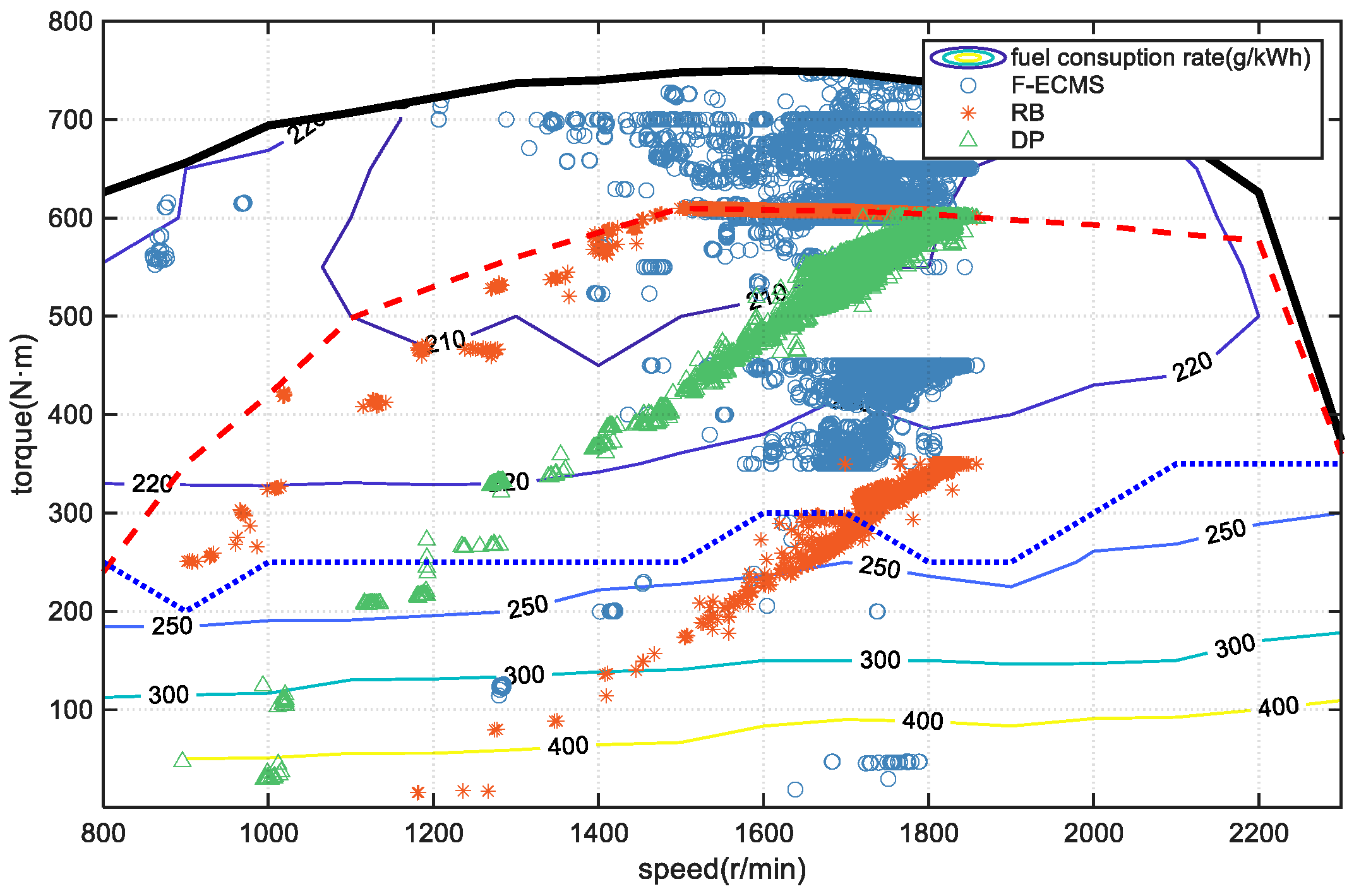
The distribution of engine operating points (Figure 11) explains the economic performance differences from another perspective. The operating points of the DP strategy are densely concentrated in the highest efficiency region. Most operating points of the F-ECMS are also clustered in the high-efficiency zone. Although some operating points of the RB strategy lie on the optimal economy curve, a considerable portion deviate from the high-efficiency area, leading to a reduction in its overall efficiency.
Table 2 summarizes the comprehensive performance data of the three strategies. Under the plowing cycle used in this study, the equivalent fuel consumption of the F-ECMS is 5.09% higher than the globally optimal DP result, indicating a relatively small gap. Simultaneously, the DP benchmark strategy achieves a 6.28% fuel saving compared to the RB strategy, while the proposed F-ECMS strategy realizes a 1.51% fuel saving while maintaining the SOC close to the reference value.
Figure 12 presents a comparison of the dynamic evolution of the equivalence factor and the tracking performance of the battery SOC for five sets of typical proportional and integral coefficients of the PI controller. It can be observed that different combinations of PI parameters have a significant impact on the convergence speed and fluctuation characteristics of the equivalence factor. When K p is excessively large (orange curve), the equivalence factor exhibits severe oscillation in the initial stage and sustains high-frequency fluctuations throughout the operation, reflecting serious overshoot and instability in the control system. Conversely, when K i is too large (green curve), although the equivalence factor can stabilize relatively quickly, it is prone to substantial instantaneous deviations when subjected to sudden changes in external operating conditions. In contrast, when K p = 3 and K i = 0.03 are selected (blue curve), the fluctuation amplitude of the equivalence factor is significantly reduced, the curve’s smoothness is the highest, and it consistently remains within a reasonable constraint interval. Regarding the SOC tracking results: with this parameter set, the SOC trajectory closely follows the reference value without noticeable divergence or severe oscillation. Compared to other parameter combinations, the tracking error is smaller, and the overall operation is stable.
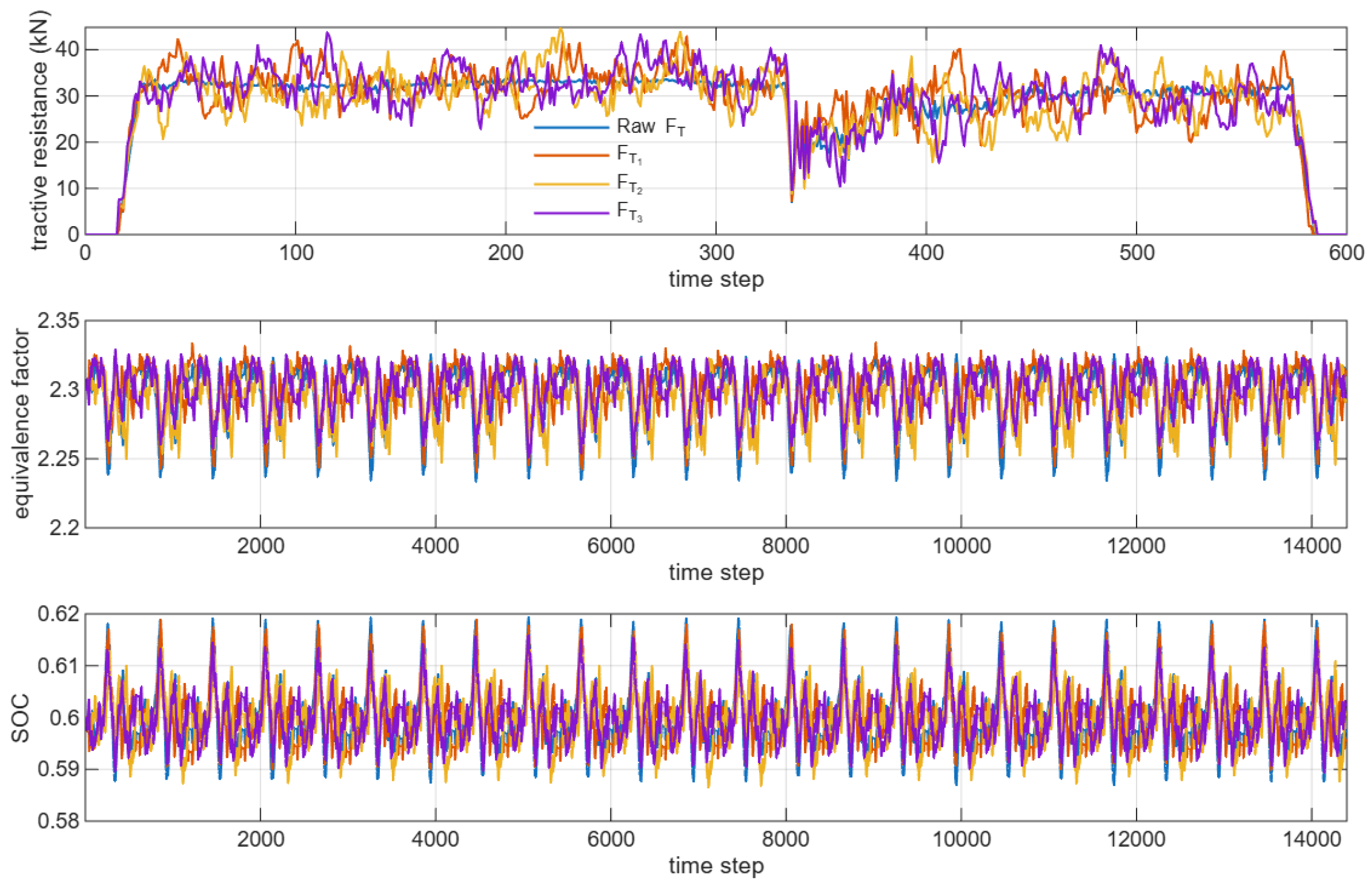
To evaluate the robustness of the proposed strategy under uncertain and time-varying soil conditions, this study introduces a first-order autoregressive random disturbance based on the benchmark plowing cycle traction resistance data. This aims to simulate the spatial variability characteristics of soil compactness, moisture, and shear strength in actual field operations. Specifically, the disturbance term acting on the traction resistance is generated by the following difference equation:
Δ F T ( t k ) = α Δ F T ( t k 1 ) + σ w ( t k )
where α = 0.85 is the autoregressive coefficient, describing the temporal correlation of soil resistance; σ = 2.5 kN is the disturbance intensity, accounting for approximately 6.8% of the average traction resistance; and w ( t k ) is standard Gaussian white noise. The traction resistance after superimposing the disturbance is Δ F T ( t k ) = α Δ F T ( t k 1 ) + σ w ( t k ) , which is then subjected to physical saturation limiting within [ 0 ,   50 ] .
As shown in Figure 13, the traction resistance curve, obtained by superimposing random disturbances on the actual operational data, exhibits distinct time-varying and high-frequency fluctuation characteristics, simulating the resistance variations caused by uneven soil compactness in real fields. It can be observed that, despite significant disturbances in the traction resistance, the trajectories of the equivalence factor s ( t ) and the battery SOC still closely adheres to the target reference values, and the curves for different parameter sets are highly consistent. The experimental results demonstrate that the proposed control scheme maintains excellent control accuracy and stability even in complex and variable soil environments.
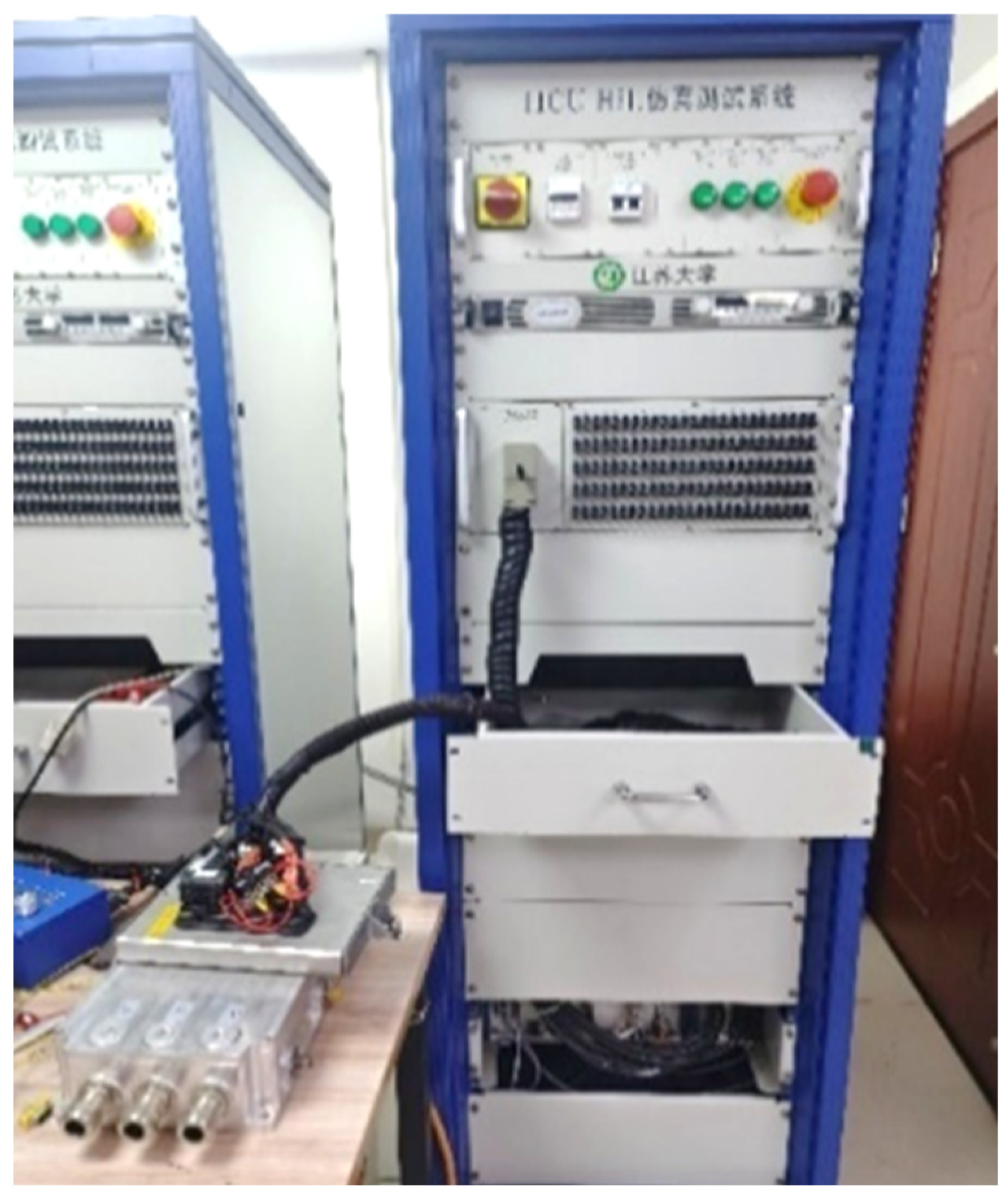
To validate the functionality, real-time capability, and robustness of the F-ECMS in a near-real testing environment, this study also developed a complete verification solution based on Hardware-in-the-Loop (HIL) simulation technology. The system physically connects a high-fidelity real-time vehicle model with the actual vehicle control unit (VCU) of the hybrid tractor, forming a closed-loop test environment. The test setup is shown in Figure 14.
The core hardware of the system includes an upper computer running NI VeriStand, an NI PXIe real-time target machine for executing the real-time model, an NI XNET interface card for CAN communication, NI DAQ data acquisition cards for signal conversion, and the VCU controller under test based on the Motohawk platform.
First, the tractor longitudinal dynamics model developed in Simulink was adapted and compiled into executable code capable of running on the real-time target machine. The model interfaces were specially configured to receive control commands from the VCU and feedback vehicle status. Subsequently, the F-ECMS control algorithm developed in MotoHawk was compiled and flashed onto the physical VCU. During testing, closed-loop communication between the vehicle model and the VCU was established by configuring CAN signal mapping and physical I/O channels. This enabled the VCU to issue control commands based on the virtual vehicle status and receive responses from the model, thereby achieving comprehensive verification of the controller algorithm in a laboratory environment. The entire HIL test was conducted on a standard test cabinet integrated with modules for power management, real-time simulation, signal conditioning, and more.
The definitions of the main CAN signal parameters for the vehicle body model are listed in Table 3.
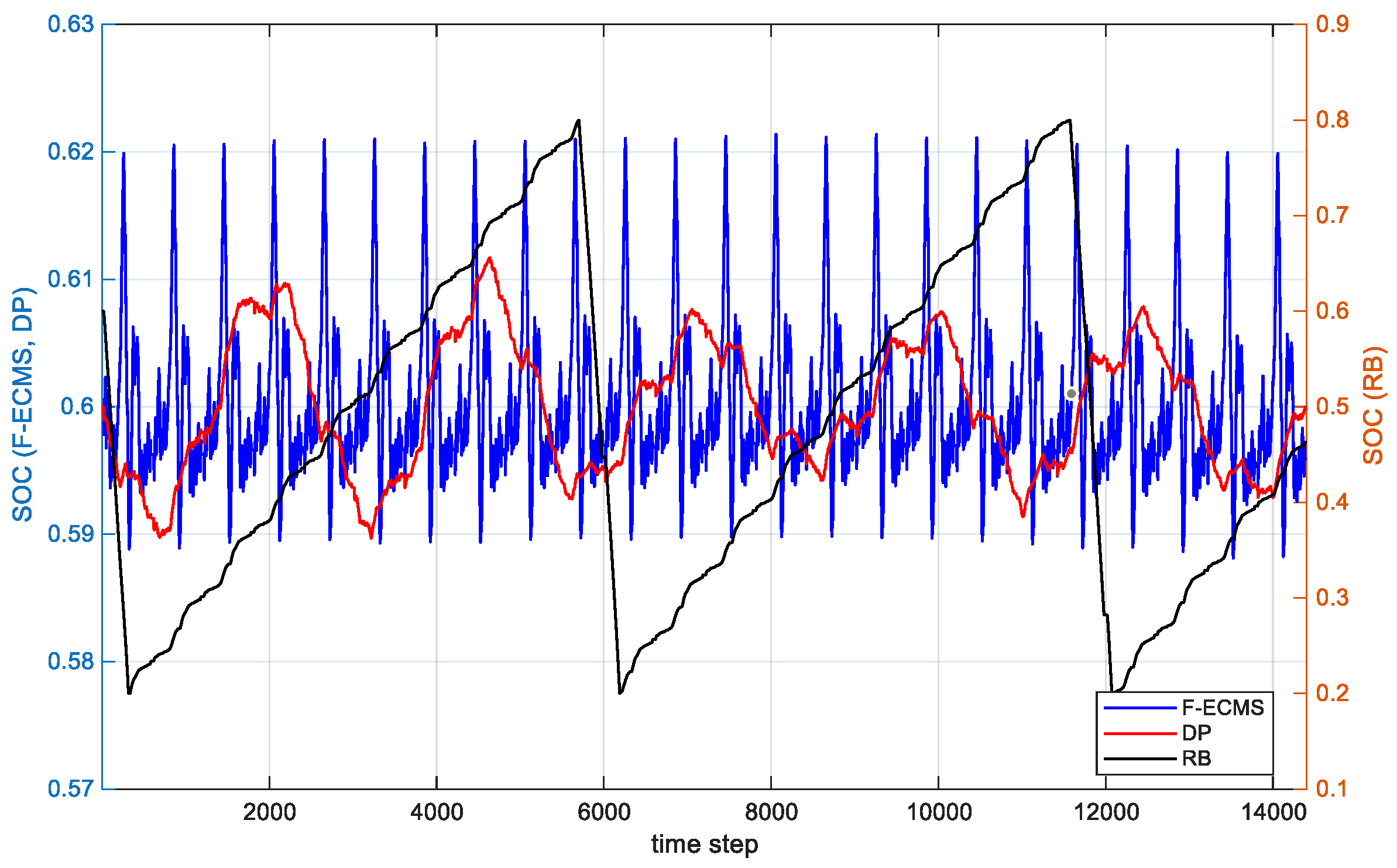
Figure 15 and Table 4 present the SOC trajectories and fuel consumption results for the three strategies under HIL testing. The results indicate that the DP benchmark strategy achieves a fuel saving of 5.34% compared to the RB strategy, while the F-ECMS realizes a fuel saving of 1.64% while maintaining the SOC close to its reference value.
The HIL test results are largely consistent with the pure simulation outcomes, with only a minor discrepancy. Specifically, the equivalent fuel saving rates achieved are 1.64% and 1.51%, respectively, resulting in a deviation of approximately 0.13 percentage points. This deviation primarily stems from the inherent temporal characteristics of the HIL test environment, including the fixed execution cycles of the physical controller, CAN communication delays, and the discretization effects of the model execution step size. These non-ideal factors, which are unavoidable in actual closed-loop deployment, introduce subtle variations in instantaneous optimization conditions, ultimately accumulating over extended operating cycles to produce the observed result deviation. Nevertheless, the high degree of consistency in both fuel-saving trends and SOC maintenance capability demonstrates that the core optimization logic of the F-ECMS remains effective in a quasi-physical environment that incorporates real hardware timing characteristics, affirming its strong engineering feasibility.

5. Conclusions

This study proposes a State of Charge (SOC) feedback-based adaptive Equivalent Consumption Minimization Strategy (F-ECMS) for a coaxial parallel hybrid tractor and validates its effectiveness through simulation and hardware-in-the-loop (HIL) testing. The main conclusions are as follows:
(1)
A high-fidelity forward simulation platform for the hybrid tractor, incorporating vehicle dynamics and key components, was constructed. The global optimal fuel consumption benchmark for a typical plowing cycle was obtained using dynamic programming, providing a clear reference for evaluating online strategies.
(2)
Addressing the characteristic of highly transient loads in tractor operation, an online equivalence factor correction mechanism based on PI feedback was designed. Relying solely on current state information, the F-ECMS maintains charge balance, guides the system toward efficient operation, and features a simple structure with low computational load, demonstrating good potential for engineering deployment.
(3)
In a 4 h simulation of a typical plowing cycle, the F-ECMS achieved an equivalent fuel saving of 1.51% compared to the rule-based strategy while maintaining SOC stability (final deviation of 0.0036), verifying its fuel-saving potential. HIL testing further confirmed the strategy’s effectiveness and robustness in a near-real environment.
This study also has several aspects that warrant further investigation. First, the simplification of the HMCVT efficiency to a fixed value in the model could be refined in the future by integrating dynamic efficiency maps to improve the accuracy of energy efficiency assessment. Second, while the current cost function focuses on fuel economy, future work could incorporate battery health state to extend the optimization framework to the full lifecycle dimension. Furthermore, the minor discrepancies between simulation and HIL test results primarily stem from step discretization and communication delay effects inherent to the real hardware platform. More granular signal-level analysis could be conducted in the future to further quantify their impact.
In summary, the F-ECMS achieves a good balance among real-time capability, fuel economy, and engineering applicability, providing a feasible solution for energy management in hybrid agricultural machinery. Subsequent work will delve deeper into multi-condition validation, integration of battery lifespan considerations, and the incorporation of intelligent constraints.

Author Contributions

Conceptualization, Z.Z. and Y.X.; methodology, Y.X.; software, Y.X.; validation, H.Z. and D.W.; formal analysis, Z.Z.; investigation, H.Z.; resources, Z.Z. and Y.X.; data curation, Z.Z. and Y.X.; writing—original draft preparation, Y.X.; writing—review and editing, Z.Z. and Y.X.; visualization, Y.X.; supervision, Z.Z.; project administration, H.Z. and D.W.; funding acquisition, Z.Z., H.Z. and D.W. All authors have read and agreed to the published version of the manuscript.

Funding

This research was funded by National Key Laboratory of Special Vehicle Design and Manufacturing Integration Technology (Inner Mongolia First Machinery Group): Integrated Design and Intelligent Control of Hydro-Mechanical Compound Transmission System for Special Vehicles, Grant No. GZ2023KF007, [CNY 100,000]. National Natural Science Foundation of China (General Program): Configuration Optimization and Interactive Control of a Multi-mode Powertrain Combining Oil-Electric Hybrid and Hydro-Mechanical Transmission for High-Horsepower Tractors, Grant No. 52272435, [CNY 590,000].

Institutional Review Board Statement

Not applicable.

Informed Consent Statement

Not applicable.

Data Availability Statement

The data that support the findings of this study are available from the corresponding author at zhuzhenjs@126.com upon reasonable request.

Conflicts of Interest

The authors declared no potential conflicts of interest.

References

  1. Shen, Y.; Yang, F.; Wu, J.; Luo, S.; Khan, Z.; Zhang, L.; Liu, H. Advances and Future Trends in Electrified Agricultural Machinery for Sustainable Agriculture. Agriculture 2025, 15, 2367. [Google Scholar] [CrossRef]
  2. Zhu, Z.; Yang, Y.; Wang, D.; Cai, Y.; Lai, L. Energy saving performance of agricultural tractor equipped with mechanic-electronic-hydraulic powertrain system. Agriculture 2022, 12, 436. [Google Scholar]
  3. Mocera, F.; Somà, A. Analysis of a parallel hybrid electric tractor for agricultural applications. Energies 2020, 13, 3055. [Google Scholar] [CrossRef]
  4. Dai, D.; Chen, D.; Wang, S.; Li, S.; Mao, X.; Zhang, B.; Wang, Z.; Ma, Z. Compilation and extrapolation of load spectrum of tractor ground vibration load based on CEEMDAN-POT model. Agriculture 2023, 13, 125. [Google Scholar] [CrossRef]
  5. Han, J.; Yan, X.; Tang, H. Method of controlling tillage depth for agricultural tractors considering engine load characteristics. Biosyst. Eng. 2023, 227, 95–106. [Google Scholar] [CrossRef]
  6. Yu, Y.; Hao, S.; Guo, S.; Tang, Z.; Chen, S. Motor torque distribution strategy for different tillage modes of agricultural electric tractors. Agriculture 2022, 12, 1373. [Google Scholar] [CrossRef]
  7. Lu, E.; Xue, J.; Chen, T.; Jiang, S. Robust trajectory tracking control of an autonomous tractor-trailer considering model parameter uncertainties and disturbances. Agriculture 2023, 13, 869. [Google Scholar] [CrossRef]
  8. Zhu, Z.; Chai, X.; Xu, L.; Quan, L.; Yuan, C.; Tian, S. Design and performance of a distributed electric drive system for a series hybrid electric combine harvester. Biosyst. Eng. 2023, 236, 160–174. [Google Scholar] [CrossRef]
  9. Serrao, L.; Onori, S.; Rizzoni, G. ECMS as a realization of Pontryagin’s minimum principle for HEV control. In Proceedings of the 2009 American Control Conference, St. Louis, MO, USA, 10–12 June 2009; IEEE: Piscataway, NJ, USA, 2009; pp. 3964–3969. [Google Scholar]
  10. Musardo, C.; Rizzoni, G.; Guezennec, Y.; Staccia, B. A-ECMS: An adaptive algorithm for hybrid electric vehicle energy management. Eur. J. Control 2005, 11, 509–524. [Google Scholar] [CrossRef]
  11. Tian, X.; He, R.; Sun, X.; Cai, Y.; Xu, Y. An ANFIS-based ECMS for energy optimization of parallel hybrid electric bus. IEEE Trans. Veh. Technol. 2019, 69, 1473–1483. [Google Scholar] [CrossRef]
  12. Sun, X.; Cao, Y.; Jin, Z.; Tian, X.; Xue, M. An adaptive ECMS based on traffic information for plug-in hybrid electric buses. IEEE Trans. Ind. Electron. 2022, 70, 9248–9259. [Google Scholar] [CrossRef]
  13. Zhu, Z.; Zeng, L.; Chen, L.; Zou, R.; Cai, Y. Fuzzy adaptive energy management strategy for a hybrid agricultural tractor equipped with HMCVT. Agriculture 2022, 12, 1986. [Google Scholar] [CrossRef]
  14. Liu, M.; Lei, S.; Yan, X.; Li, Y.; Zhang, J.; Xu, L. Energy management strategy for series-parallel hybrid electric tractors during traction operations. Int. J. Agric. Biol. Eng. 2026, 19, 76–87. [Google Scholar] [CrossRef]
  15. Sun, L.; Liu, M.; Wang, Z.; Wang, C.; Luo, F. Research on load spectrum reconstruction method of exhaust system mounting bracket of a hybrid tractor based on MOPSO-wavelet decomposition technique. Agriculture 2023, 13, 1919. [Google Scholar] [CrossRef]
  16. Liu, Z.; Xu, X.; Xie, J.; Wang, F.; Su, P. Variable transmission ratio design of a steer-by-wire system for intelligent vehicles. Proc. Inst. Mech. Eng. Part C J. Mech. Eng. Sci. 2022, 236, 9341–9353. [Google Scholar]
  17. Wang, J.; Cai, Y.; Chen, L.; Shi, D.; Wang, R.; Zhu, Z. Review on multi-power sources dynamic coordinated control of hybrid electric vehicle during driving mode transition process. Int. J. Energy Res. 2020, 44, 6128–6148. [Google Scholar] [CrossRef]
  18. GB/T 3871.9-2006; Agricultural Tractors—Test Procedures—Part 9: Drawbar Power Tests. Standardization Administration of the People’s Republic of China: Beijing, China, 2006.
  19. Zhang, S.; Xiong, R. Adaptive energy management of a plug-in hybrid electric vehicle based on driving pattern recognition and dynamic programming. Appl. Energy 2015, 155, 68–78. [Google Scholar] [CrossRef]
  20. Xie, S.; Hu, X.; Xin, Z.; Brighton, J. Pontryagin’s minimum principle based model predictive control of energy management for a plug-in hybrid electric bus. Appl. Energy 2019, 236, 893–905. [Google Scholar] [CrossRef]
  21. Kessels, J.T.B.A.; Koot, M.W.T.; Van Den Bosch, P.P.J.; Kok, D.B. Online energy management for hybrid electric vehicles. IEEE Trans. Veh. Technol. 2008, 57, 3428–3440. [Google Scholar] [CrossRef]
  22. Wang, S.; Yu, P.; Shi, D.; Yu, C.; Yin, C. Research on eco-driving optimization of hybrid electric vehicle queue considering the driving style. J. Clean. Prod. 2022, 343, 130985. [Google Scholar] [CrossRef]
Figure 1. Powertrain Configuration Diagram.
Applsci 16 06176 g001
Figure 2. Engine Universal Characteristic Map.
Applsci 16 06176 g002
Figure 3. Motor Efficiency Map.
Applsci 16 06176 g003
Figure 4. Equivalent Circuit Model.
Applsci 16 06176 g004
Figure 5. Optimal Fuel-Economy Transmission Ratio Surface.
Applsci 16 06176 g005
Figure 6. ECMS Real-Time Optimization Flowchart.
Applsci 16 06176 g006
Figure 7. Operational Cycle.
Applsci 16 06176 g007
Figure 8. Actual vs. Target Speed Profiles.
Applsci 16 06176 g008
Figure 9. F-ECMS Torque Distribution Profile.
Applsci 16 06176 g009
Figure 10. Battery SOC Trajectory.
Applsci 16 06176 g010
Figure 11. Engine Operating Point Distribution.
Applsci 16 06176 g011
Figure 12. System Dynamic Response under Varying Proportional and Integral Gains.
Applsci 16 06176 g012
Figure 13. System Dynamic Response under Variable Soil Resistance Conditions.
Applsci 16 06176 g013
Figure 14. HIL Simulation Setup.
Applsci 16 06176 g014
Figure 15. SOC Trajectories under HIL Testing.
Applsci 16 06176 g015
Table 1. Main Parameters of the Hybrid Tractor.
ComponentParameterValue
TractorTotal mass (kg)8200
Drive wheel radius (m)0.875
EngineRated power (kW)132
Rated speed (rpm)2300
Peak torque (Nm)750
Electric MotorNominal power (kW)45
Peak power (kW)85
Peak torque (Nm)250
BatteryRated voltage (V)350
Capacity (Ah)45
Transmission systemHMCVT Ratio1.00~3.57
Final drive reduction ratio3.70
Wheel reducer6.40
Table 2. Performance Comparison of Different Strategies.
StrategyInitial SOCFinal SOCΔSOCEquivalent Fuel (kg)Fuel Saving (%)
RB0.600.47900.121086.06520 (baseline)
F-ECMS0.600.59640.003684.76501.51
DP0.600.60000.000080.66206.28
Table 3. Signals of the Vehicle Model.
Signal TypeSignal DefinitionStep SizeRange of Values
Input signalInitial SOC0.1[0.1, 1]
Engine torque demand0.1[0, 1]
Motor torque demand0.1[0, 1]
Brake signal0.1[0, 1]
Output signalEngine Torque Feedback10[0, 800]
Engine Speed Feedback10[800, 2300]
Motor Speed Feedback10[800, 2300]
Motor Torque Feedback5[−200, 250]
Current SOC0.1[0.1, 1]
Table 4. Performance Comparison of Different Strategies under HIL Testing.
StrategyInitial SOCFinal SOCΔSOCEquivalent Fuel (kg)Fuel Saving (%)
RB0.600.46300.137086.55320
F-ECMS0.600.59590.004185.13581.64
DP0.600.60000.000081.92955.34
Disclaimer/Publisher’s Note: The statements, opinions and data contained in all publications are solely those of the individual author(s) and contributor(s) and not of MDPI and/or the editor(s). MDPI and/or the editor(s) disclaim responsibility for any injury to people or property resulting from any ideas, methods, instructions or products referred to in the content.