1. Introduction
Photovoltaic (PV) systems are playing an increasingly important role in modern power networks, making reliable fault detection and condition monitoring essential for maintaining energy efficiency, operational safety, and reduced maintenance costs over time [
1,
2,
3]. Conventional monitoring methods based on electrical measurements, including voltage, current, power, and I–V curve analysis, can provide general information about system operation, but they often struggle to identify faults at module or cell level during their early stages [
4,
5,
6]. Defects such as hotspots, microcracks, degraded interconnections, and bypass diode failures may initially produce only limited variations in aggregated electrical parameters, making timely diagnosis particularly difficult. As a result, there is growing interest in complementary sensing techniques capable of providing spatially distributed information directly related to degradation mechanisms within photovoltaic modules. Among the available diagnostic approaches, infrared thermography (IRT) has emerged as an effective non-destructive tool for PV inspection because of its ability to provide spatially resolved thermal information associated with degradation phenomena and electrical malfunctions [
7,
8,
9,
10,
11,
12]. Thermal irregularities such as hotspots, cell cracks, soiling effects, and defective bypass diodes can be identified through the analysis of surface temperature distributions, thus complementing conventional electrical monitoring techniques. In recent years, more emphasis has been placed on the application of infrared thermography technology for maintenance and condition assessment of photovoltaics, where some studies have provided positive results specifically regarding unmanned aerial vehicle inspections [
13,
14,
15]. On the other hand, much research work has been done towards automating thermal data analysis using artificial intelligence approaches [
16,
17,
18]. In particular, convolutional neural networks and semantic segmentation approaches have shown good potential for the automatic recognition of thermal anomalies, reducing the dependence on manual interpretation and improving the consistency of diagnostic procedures. More recently, lightweight attention-based architectures have attracted growing interest due to their ability to improve segmentation accuracy while maintaining relatively low computational requirements, thus enabling their use in embedded and real-time monitoring applications [
19]. Nevertheless, despite the progress achieved so far, several limitations are still evident in the current literature.
Although infrared thermography, electrical monitoring and artificial intelligence have individually demonstrated effectiveness for photovoltaic fault diagnosis, most existing contributions focus on a single diagnostic domain [
20,
21]. The novelty of the proposed framework does not rely on the introduction of a new thermographic sensor, signal processing algorithm or deep learning architecture. Instead, its contribution lies in the synchronized integration of thermal imaging, electrical PQ analysis and AI-based interpretation within a unified monitoring chain. Unlike conventional UAV-based inspections, which provide periodic thermal snapshots, or standalone electrical monitoring systems, which lack spatial localization capabilities, the proposed framework enables the correlation of localized thermal anomalies with synchronized electrical signatures and energy performance indicators. This multimodal correlation allows not only fault localization but also quantitative assessment of the impact of defects on PQ and energy production.
Recently, the research on fault diagnosis of photovoltaic systems has been focused more and more on the development of advanced thermographic analysis, electrical monitoring and data-based diagnostic techniques to improve the accuracy of fault detection and reliability of the system. However, these methods generally focus on either thermal imaging or electrical measurements as separate information sources, with a little integration of their interdependencies and impact on energy quality performance. On the other hand, the present study establishes a direct three-dimensional correlation between thermal patterns, synchronised electrical signatures and power quality indicators in a unified monitoring architecture. This allows a quantitative mapping between the observed thermal anomalies and their effect on the energy production and electrical performance, providing a more comprehensive assessment of the photovoltaic system’s health with respect to conventional single-mode monitoring approaches. Most existing studies mainly focus on thermographic defect classification without sufficiently investigating the relationship between thermal anomalies, electrical behavior, and PQ indicators [
22,
23,
24,
25,
26,
27]. In many cases, thermography is still employed as a standalone inspection technique, whereas the interaction between localized thermal defects, electrical signal variations, and overall PV system performance remains only partially explored. Furthermore, relatively limited attention has been given to the integration of thermographic monitoring with advanced electrical signal processing techniques capable of supporting predictive maintenance strategies under real operating conditions [
28,
29,
30,
31,
32,
33,
34]. Several recent contributions have used infrared thermography primarily for inspection and image-based fault classification purposes [
35,
36,
37].
In the present study, thermographic acquisitions are instead combined with electrical signal analysis within a unified monitoring framework intended to improve the interpretation of PV degradation phenomena. A commercial industrial thermal camera was employed as a comparative reference to evaluate the behavior and consistency of the proposed embedded acquisition system under different operating conditions [
38,
39,
40].
The monitoring platform was further enhanced through the integration of advanced signal processing techniques, including Wavelet Transform analysis and deep learning-based methods, to support thermal feature extraction and automated defect interpretation [
41,
42,
43,
44]. The combined use of thermographic acquisitions and electrical signal analysis allows relevant thermal features, including localized hotspots and temperature gradients, to be examined in relation to potential degradation mechanisms and fault conditions affecting photovoltaic modules [
45,
46,
47]. In parallel, several recent studies have investigated the integration of thermographic monitoring, electrical signal processing, and deep learning approaches to improve the identification of fault conditions in photovoltaic systems and associated power electronic interfaces [
48,
49,
50,
51,
52]. Another important challenge concerns the robustness of AI-based fault diagnosis under imbalanced and limited datasets [
53].
Recent studies on multimodal fault diagnosis have shown that rare fault conditions may significantly affect model generalization and diagnostic reliability [
54,
55]. Physics-informed and multimodal learning approaches have recently been proposed to mitigate these limitations and improve robustness under under-sampled operating conditions.
Recent advances in multimodal fault diagnosis have demonstrated the benefits of heterogeneous information fusion for improving robustness and diagnostic accuracy. For example, liquid-impulse neural network architectures have shown promising results in exploiting complementary multimodal representations for complex fault detection tasks [
56,
57]. Similarly, physics-constrained multimodal large language models have been successfully applied to fault diagnosis under imbalanced and under-sampled operating conditions, highlighting the importance of integrating physical knowledge with heterogeneous sensing modalities [
58,
59]. These developments further support the rationale behind the multimodal diagnostic strategy adopted in the present work. The present work partially addresses this challenge through multimodal data fusion and balanced supervised training procedures. Building on these developments, the present study introduces an integrated monitoring framework that combines infrared thermography with advanced electrical signal analysis for PV fault diagnosis. In particular, thermographic observations are analyzed together with electrical indicators extracted through frequency-domain and time–frequency signal processing techniques, allowing a more detailed interpretation of degradation phenomena occurring within the photovoltaic systems. In addition, a lightweight deep learning-based segmentation architecture is employed to improve automatic defect localization in thermographic acquisitions while maintaining reduced computational complexity suitable for real-time applications. The proposed methodology integrates thermographic inspections, electrical power-quality analysis, and artificial intelligence techniques within a unified diagnostic framework for photovoltaic systems. The approach was conceived to support predictive maintenance strategies and enhance the reliability of condition monitoring in smart energy applications. Unlike most existing studies that focus either on thermographic image analysis or on electrical monitoring independently, the proposed framework establishes a unified three-dimensional correlation among thermal patterns, synchronized electrical signatures, and PQ indicators. To the best of the authors’ knowledge, this is the first integrated framework capable of quantitatively mapping localized thermographic anomalies to both electrical disturbances and annual energy losses within a single diagnostic architecture. This capability extends beyond conventional fault classification by providing a direct assessment of the operational and economic impact of photovoltaic degradation phenomena.
To better contextualize the proposed contribution within the current scientific landscape,
Table 1 summarizes representative studies focusing on thermographic monitoring, electrical signal analysis, artificial intelligence techniques, and predictive maintenance strategies for photovoltaic systems.
Table 1 illustrates the use of thermographic inspection, electrical signal analysis, and AI-based fault diagnosis for photovoltaic systems. Most studies examine these areas separately; in fact, few studies analyze how these methods interact within a single system. For this reason, it is difficult to identify the connections between thermal, electrical, and PQ issues. To address this issue, the proposed framework integrates thermographic inspections, electrical monitoring, and AI techniques into a single system.
This allows for the identification of direct links between thermal issues, electrical signals, and energy loss. Consequently, a clearer understanding of the degradation of photovoltaic systems is achieved, facilitating the creation of more effective predictive maintenance plans.
2. State-of-the-Art and Theoretical Framework
Recent studies on photovoltaic monitoring systems increasingly investigate the integration of thermal, visual, and electrical information for fault diagnosis and condition monitoring. Although traditional electrical monitoring remains the industry standard for macroscopic supervision of installations, numerous studies have demonstrated its inherent inability to spatially localize incipient defects at the cell level, such as microcracks or potential-induced degradation (PID), which often do not significantly alter the overall I–V curve in the early stages [
60,
61,
62]. To address this gap, IRT is widely adopted as a non-destructive diagnostic technique for PV inspection; however, most current research treats IRT as a qualitative or post-mortem inspection tool, neglecting its real-time integration with power electronics control systems. Several studies have also pointed out that environmental conditions, acquisition distance, and surface emissivity may affect the consistency of thermographic measurements, thus influencing the interpretation of thermal anomalies in photovoltaic modules [
63,
64]. At the same time, artificial intelligence techniques have increasingly been applied to the analysis of diagnostic data.
Whilst early applications were limited to the binary classification of thermal images using standard convolutional neural networks (CNNs), more recent developments have focused on advanced semantic architectures capable of accurately segmenting defects. In this context, the study [
65,
66] introduced attention-based mechanisms within U–Net architectures to improve the identification of subtle thermal anomalies. This limitation motivates the development of the methodology proposed in the present study. Many deep learning approaches are developed using limited or non-standardized datasets, which may reduce their generalization capability under real operating conditions [
67,
68,
69].
A further critical aspect, often considered separately from module diagnostics, concerns the impact of such faults on grid stability and PQ. The presence of undiagnosed faults in photovoltaic generators can cause asymmetric mismatching, negatively affecting the efficiency of the inverters’ MPPT algorithms and introducing harmonic distortion or phase imbalances in the distribution network. Recent studies have highlighted the importance of integrating diagnostic information within advanced energy management and control strategies to improve grid stability and operational efficiency [
31,
70,
71,
72,
73]. This approach suggests that diagnostics should not be an isolated process, but an integral part of a closed-loop control cycle that adapts grid management strategies based on the detected health status of the components. However, the integration of thermographic monitoring with electrical signal analysis and PQ assessment is still limited in many existing studies. Several studies have also highlighted the difficulty of correlating thermal observations with transient electrical phenomena due to differences in acquisition timing and operating dynamics [
74,
75,
76].
Furthermore, whilst advanced solutions exist for monitoring individual components, there is a lack of a unified framework that considers the measurement chain as a whole, from thermal sensor calibration to electrical signal processing, including the metrological validation of fused data. Some recent studies on drone-based monitoring have proposed multimodal solutions, but often at the expense of the temporal continuity of monitoring, which is essential for the detection of evolving faults [
77,
78,
79]. Wavelet-based approaches have demonstrated effectiveness in detecting transient disturbances in photovoltaic systems [
80,
81,
82]. In this context, the present work proposes an integrated monitoring methodology combining infrared thermography with electrical signal analysis for photovoltaic fault diagnosis. The proposed framework correlates thermographic observations with electrical indicators derived from frequency-domain and time–frequency signal processing techniques, enabling a more comprehensive interpretation of degradation phenomena affecting photovoltaic modules and associated power electronic interfaces.
The methodology also incorporates deep learning-based analysis to support automatic thermal defect localization while maintaining computational requirements compatible with real-time monitoring applications. Unlike approaches based exclusively on thermal inspection or electrical supervision, the proposed framework combines multiple sources of information within a unified diagnostic strategy aimed at supporting predictive maintenance and improving the reliability of photovoltaic monitoring systems.
3. Methodology
The proposed methodology combines infrared thermography with electrical signal analysis for the integrated monitoring of photovoltaic systems. The overall workflow includes thermal and electrical data acquisition, temporal synchronization, frequency-domain and time–frequency signal processing, and AI-based defect interpretation.
Thermal acquisitions are correlated with electrical measurements in order to support fault detection and improve the interpretation of degradation phenomena affecting photovoltaic modules and associated power electronic interfaces.
3.1. Integrated Monitoring System and Measurement Chain
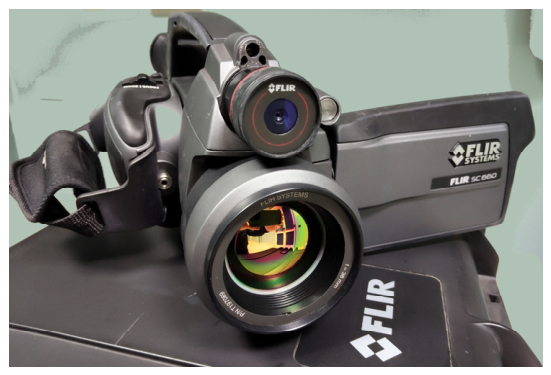
The first pillar of the methodology concerns the thermal acquisition chain, designed for quantitative thermal acquisition during PV inspection activities. Thermographic measurements were acquired using a FLIR P660 infrared camera (Teledyne FLIR LLC, headquartered in Wilsonville, OR, USA) shown in
Figure 1, operating in the LWIR spectral range (7–13 μm), with a thermal sensitivity below 45 mK and a spatial resolution of 640 × 480 pixels.
To ensure the quantitative validity of the thermograms, the acquisition process followed a field calibration procedure. The total radiation captured by the sensor (
Ltot) was decomposed into its emitted, reflected and transmitted components by the atmosphere, according to the radiometric model given in Equation (1).
where
ε represents the emissivity of the module (estimated to be between 0.85 and 0.90),
τ the atmospheric transmittance, and
Lobj,
Lref,
Latm the radiances associated with the object, the reflected temperature and the atmosphere, respectively.
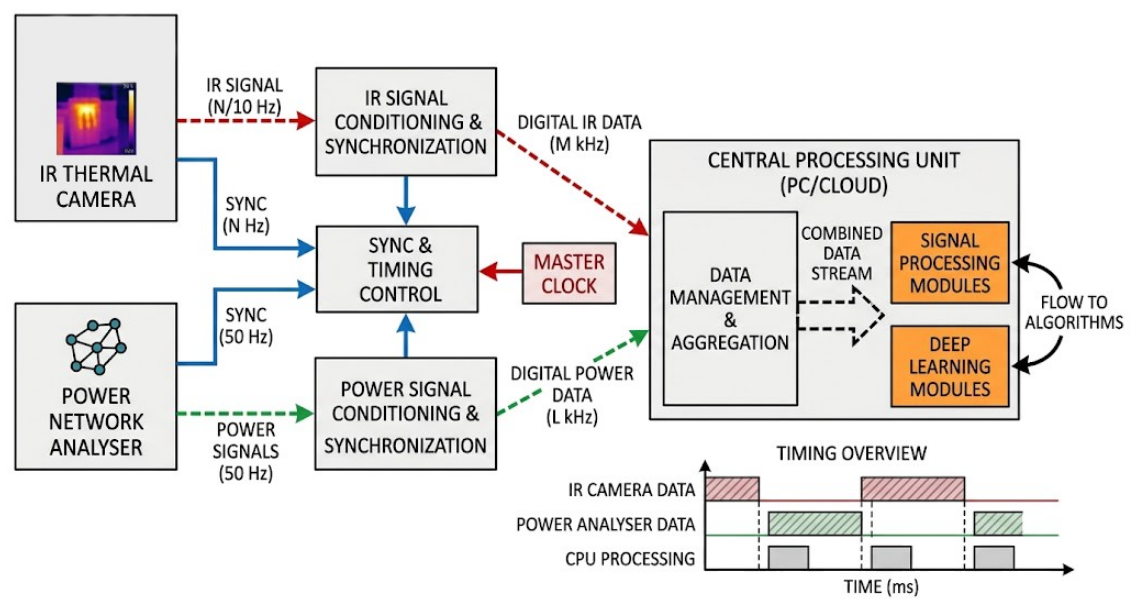
Figure 2 shows the block diagram of the integrated acquisition system developed for the thermo-electrical monitoring of the device under test. The proposed architecture enables time synchronization between the IR thermal camera, used to acquire thermal maps, and the power network analyzer, used to measure the system’s electrical parameters. The acquired thermal and electrical data were processed using signal processing and deep learning techniques for fault interpretation and anomaly detection.
The integrated acquisition architecture enabled simultaneous analysis of thermal patterns and electrical behavior under different photovoltaic operating conditions. In parallel with the thermal acquisition, the system records the electrical quantities at the point of connection to the grid. A temporal alignment procedure was implemented to correlate thermal acquisitions with electrical measurements. The synchronization procedure was implemented through timestamp-based acquisition triggered by a common supervisory controller. Electrical measurements were acquired at a sampling rate of 10 kHz, whereas thermographic images were captured at 30 fps. Each thermal frame was associated with the corresponding electrical acquisition window through interpolation and temporal averaging techniques. The synchronization uncertainty was experimentally evaluated and found to remain below ±20 ms, which was considered negligible with respect to the thermal dynamics associated with photovoltaic degradation phenomena.
This synchronization enabled thermal anomalies to be analyzed together with variations in electrical PQ indicators, including Total Harmonic Distortion (THD).
3.2. Power Quality Analysis and Diagnostic Parameters
The assessment of the health of the power conversion system is based on an analysis of the electrical PQ parameters defined by the EN 50160 standard [
83]. In particular, the methodology focuses on THD, calculated as (2).
where
Vh is the amplitude of the order harmonic
h and
V1 is the amplitude of the fundamental. High THD values indicate a significant presence of harmonics, often associated with inverter malfunctions under conditions of mismatch or module degradation.
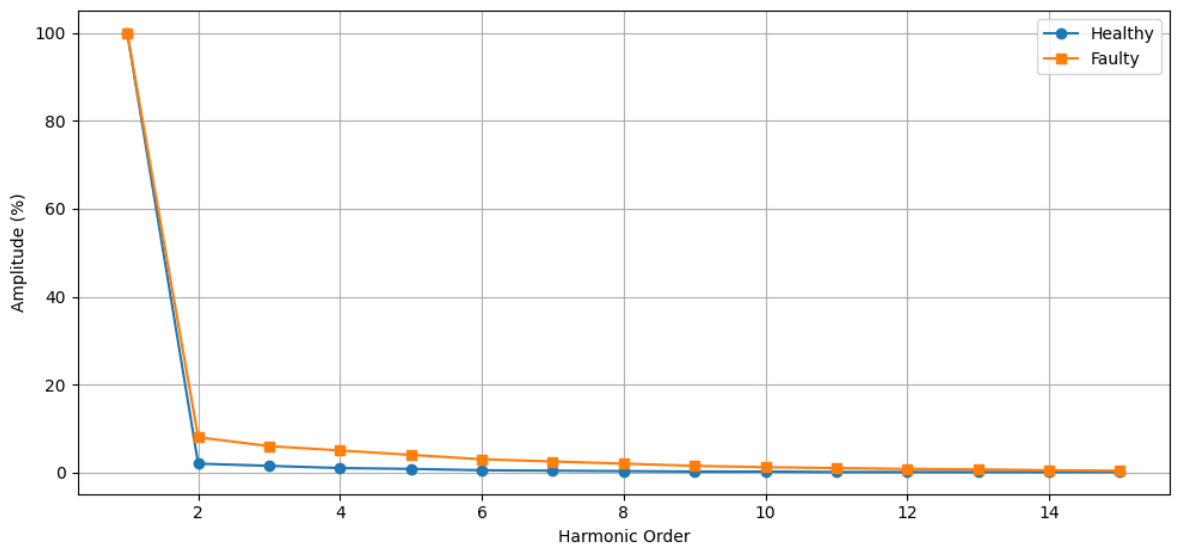
To further investigate the electrical behavior of the PV system under faulty operating conditions, frequency-domain analysis was performed using FFT-based harmonic decomposition. The resulting harmonic spectra enabled the identification of abnormal frequency components associated with inverter stress and degradation-related disturbances. Representative FFT spectra obtained under different operating conditions are reported in
Figure 3.
In addition, flicker indices (
Pst,
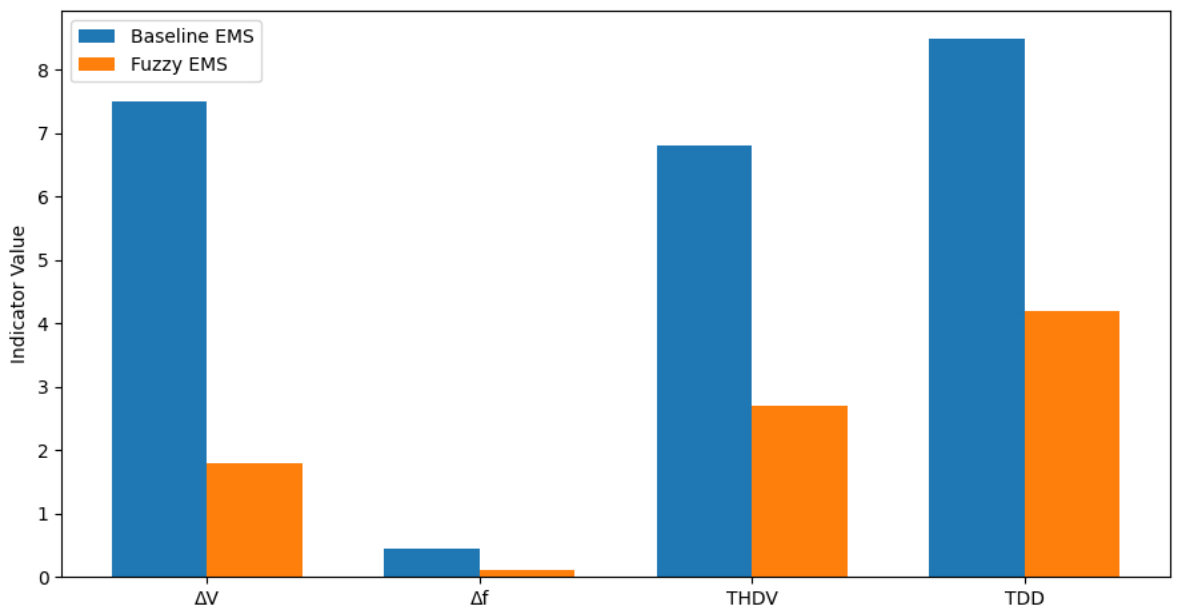
Plt) and voltage imbalance are monitored, expressed as the ratio between the negative and positive sequence components. To provide further information and technical details regarding PQ procedures, as shown in
Figure 4, the values for voltage imbalance and harmonic distortion levels are detailed.
To validate the measurements, the values were analyzed in comparison under normal operating conditions and fault conditions, in order to assess the electrical impact of localized thermal anomalies.
An analysis was also carried out of the dynamic electrical response of the monitored photovoltaic systems under varying load conditions, with the aim of assessing the influence of disturbances associated with faults on the overall behavior of the system.
In particular, the analysis made it possible to investigate the alterations introduced by photovoltaic faults on the main electrical parameters, highlighting possible phenomena of instability and degradation of the system’s operational performance under dynamic operating conditions.
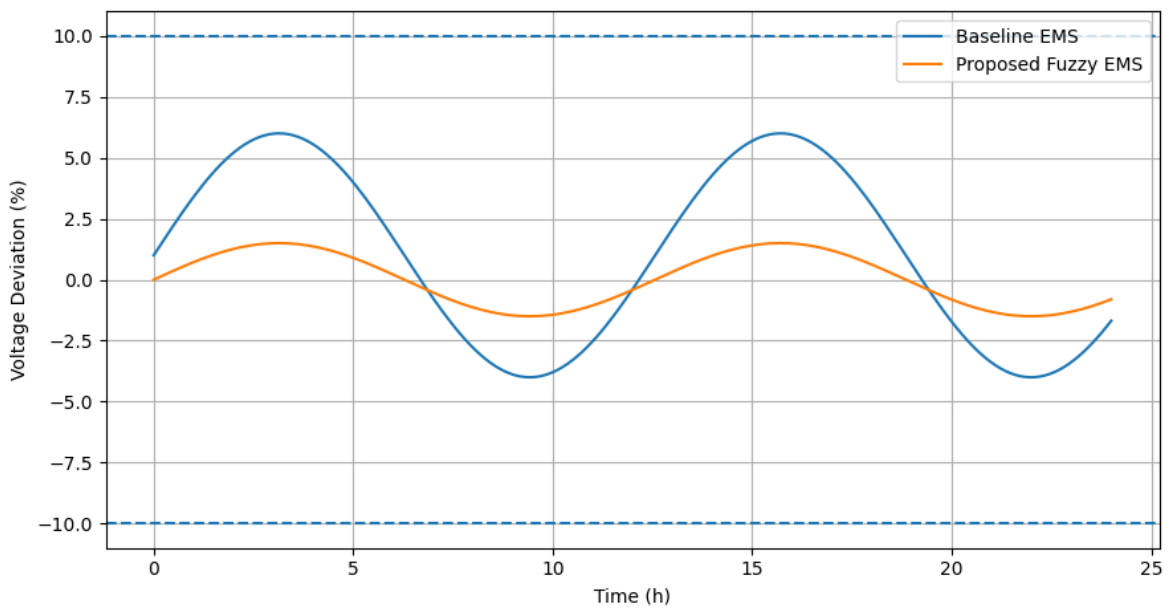
Figure 5 also shows the corresponding time histories of voltage deviations, highlighting the impact of localized photovoltaic faults on the electrical stability of the grid. The results show how the presence of anomalies can cause significant variations in the voltage profile, with particularly significant effects during load transitions and under operating conditions characterized by greater sensitivity to electrical disturbances.
Voltage deviation analysis was also performed to evaluate the influence of fault conditions on the electrical stability of the monitored photovoltaic systems.
Table 2 presents a comparison between the main monitoring techniques traditionally used in photovoltaic systems and the proposed integrated approach. It highlights the differences in terms of diagnostic capability, sensitivity to early fault detection, the possibility of real-time monitoring, and robustness against degradation phenomena or abnormal operating conditions.
The comparative analysis shows how the combination of IRT and advanced signal processing techniques allows for a more comprehensive characterization of the system’s state, overcoming the limitations associated with the exclusive use of electrical measurements or visual inspections alone.
The quantitative impact of these diagnostic differences is further highlighted by the energy production analysis presented in the case study.
3.3. Advanced Signal Processing Techniques
The processing of synchronized electrical signals takes place via a multi-stage pipeline. Initially, the Fast Fourier Transform (FFT) is used for steady-state spectral analysis.
Similar multi-stage signal processing strategies integrating spectral and numerical analysis have been successfully adopted in recent studies involving complex physical systems and embedded monitoring architectures [
84,
85]. To analyze non-stationary disturbances associated with photovoltaic faults, the Discrete Wavelet Transform (DWT) was employed. Wavelet decomposition enabled the identification of transient electrical components associated with abnormal switching conditions and localized disturbances. The capability of advanced signal decomposition techniques to extract localized transient features from complex measurement scenarios has also been highlighted in data-driven electromagnetic and dielectric characterization studies [
86]. In this study, Daubechies wavelets (db4 and db6) were selected due to their suitability for transient signal analysis in power electronic applications. The use of wavelets from the Daubechies family (db4, db6) allows for the isolation of impulsive and oscillatory transients caused by abnormal switching or arcing, providing relevant features for subsequent classification.
3.4. Energy Simulation and Economic Assessment
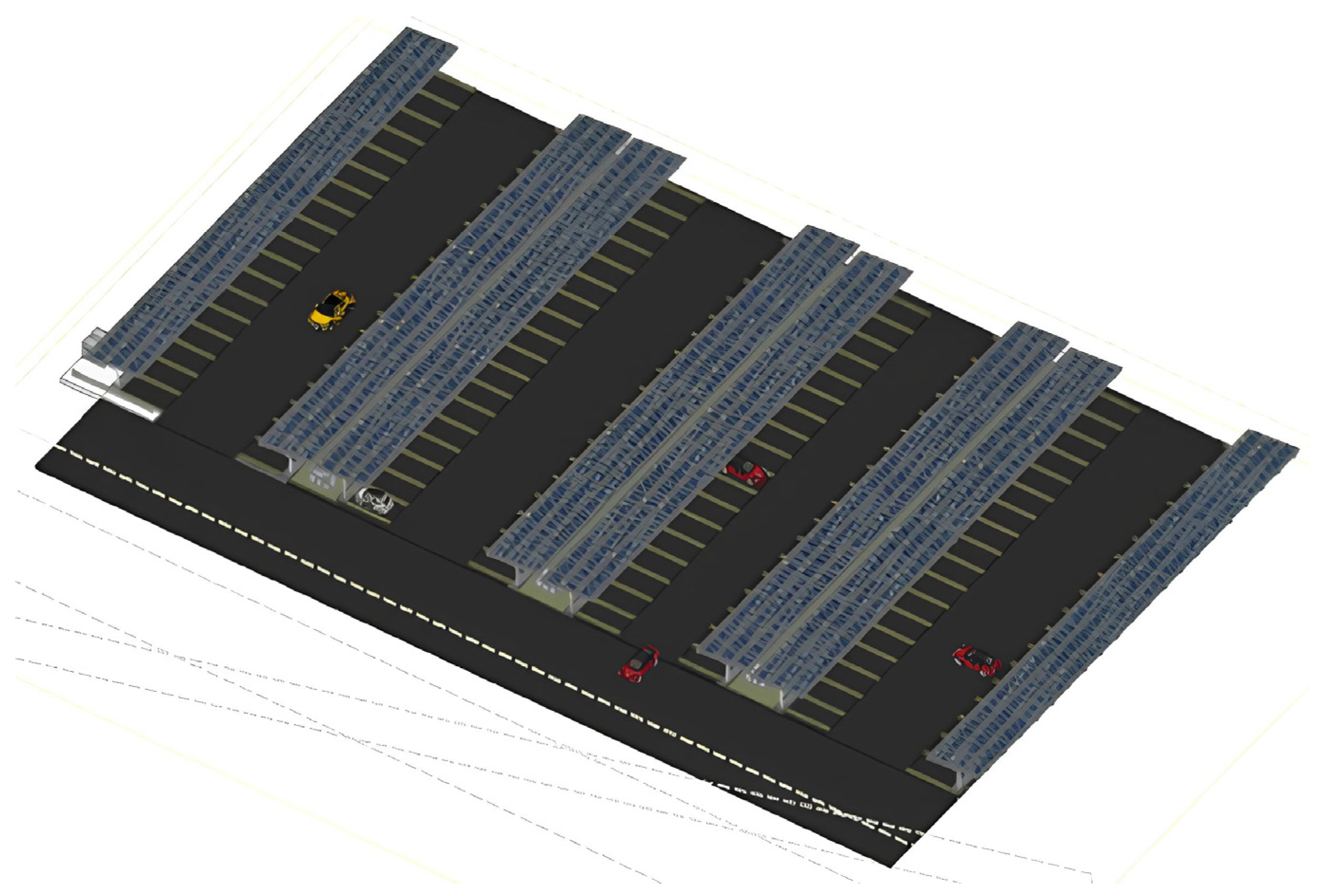
The proposed methodology is validated through an experimental campaign conducted on a grid-connected photovoltaic plant located in Reggio Calabria (691.20 kWp). The validation process involves comparing an ‘ideal’ simulation model with a ‘real’ model that incorporates the anomalies detected via NDT inspections. The methodology combines detailed energy simulation with a series of field measurements. To estimate the impact of defects on energy production, a digital model of the PV plant was developed using SOLARIUS© software (usBIM(l)) (
Figure 6). The simulated system had an installed capacity of 691.20 kWp and consisted of 1152 crystalline silicon modules arranged in eight arrays. Under ideal operating conditions, the estimated annual energy production was 723,483.20 kWh. A second scenario including typical defects detectable through thermographic inspection, such as hotspots, soiling effects, and bypass diode faults, resulted in an estimated production of 634,488.00 kWh, corresponding to an energy reduction of approximately 12.3%.
The quantitative impact of these simulated scenarios is summarized in
Table 3, which details the specific energy performance metrics for both the ideal and faulty configurations.
An additional economic assessment was conducted to estimate the potential reduction in maintenance-related losses achievable through early thermographic fault detection. To incorporate the effects of experimentally detected defects into the energy simulation model, a defect-severity grading procedure was adopted based on the temperature differences observed in the thermographic inspections. Each fault category was associated with a specific performance derating coefficient, allowing the measured thermal anomalies to be translated into corresponding reductions in photovoltaic energy production.
The defect grading criteria and the associated derating factors used in the SOLARIUS simulations are summarized in
Table 4.
The derating coefficients adopted in the SOLARIUS simulations were defined according to the severity of the thermal anomalies identified through infrared thermography.
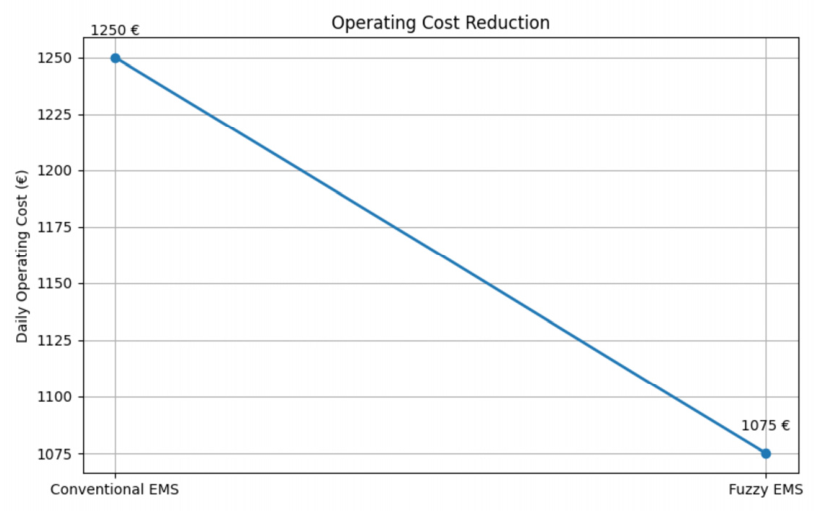
This approach enabled a direct correlation between experimentally observed defect conditions and the estimated impact on annual energy production, providing a physically meaningful link between field measurements and simulation outcomes. Based on these assumptions, the energy losses associated with undiagnosed defects were quantified and subsequently translated into their corresponding economic impact. The economic benefits associated with the proposed predictive maintenance strategy are summarized in
Figure 7, which highlights the potential reduction in operational and maintenance costs enabled by early fault detection.
The measurements were taken using a FLIR P660 thermal imaging camera (resolution 640 × 480 px, spectral band 7–13 μm), calibrated on-site according to the environmental parameters recorded on 25 November 2025 at 12:00: ambient temperature 19 °C, relative humidity 69%, and module emissivity ϵ = 0.85–0.90. The thermographic images enabled the modules to be visually classified into two distinct categories. Healthy modules exhibited a uniform thermal distribution, indicating proper photovoltaic conversion and the absence of significant parasitic resistances. In contrast, the faulty modules exhibited localized thermal anomalies (hotspots) with temperature gradients exceeding 10–20 °C compared to adjacent cells, or cold spots caused by partial shading (dirt or bird droppings). These measurements provided the reference dataset required for training and validating the signal processing and deep learning algorithms described in
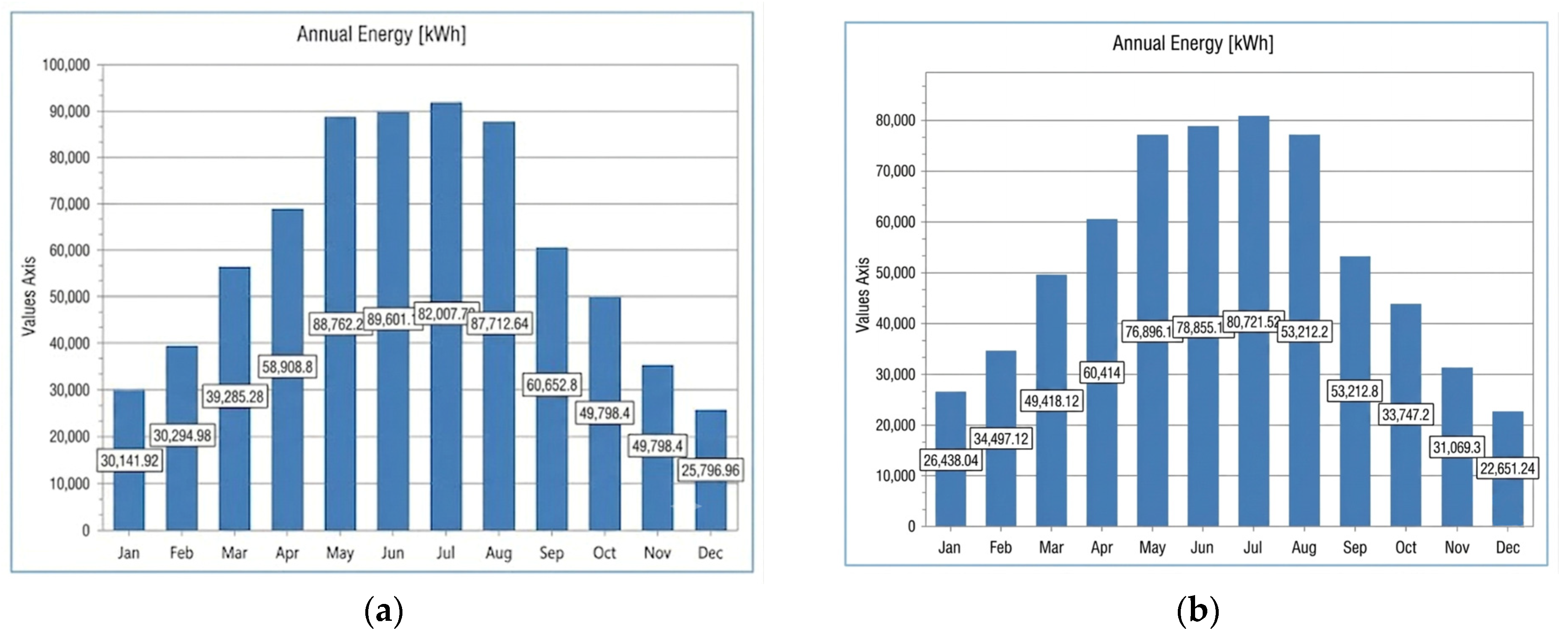
Section 3.3. A graphical comparison between the ideal operating condition and the faulty scenario is reported in
Figure 8.
Finally, the results of the AI classification are integrated into the energy impact assessment model. By comparing actual performance, affected by the classified defects, with the ideal baseline provided by SOLARIUS©, the system quantifies the losses attributable to each type of fault. This approach enables the relationship between detected thermal anomalies and their impact on PV system performance to be evaluated. The simulated results demonstrated that typical photovoltaic defects such as hotspots, bypass diode failures, and partial shading can significantly affect plant performance. Under the investigated operating conditions, the annual energy production decreased from 723,483.20 kWh to 634,488.00 kWh, corresponding to an estimated loss of 88,995.20 kWh/year (12.3%). Assuming an average electricity value of 0.18 €/kWh, the corresponding economic impact exceeds €16,000 per year. These findings confirm the importance of early fault detection and motivate the experimental validation procedure described in the following section.
3.5. Experimental Dataset and Validation Procedure
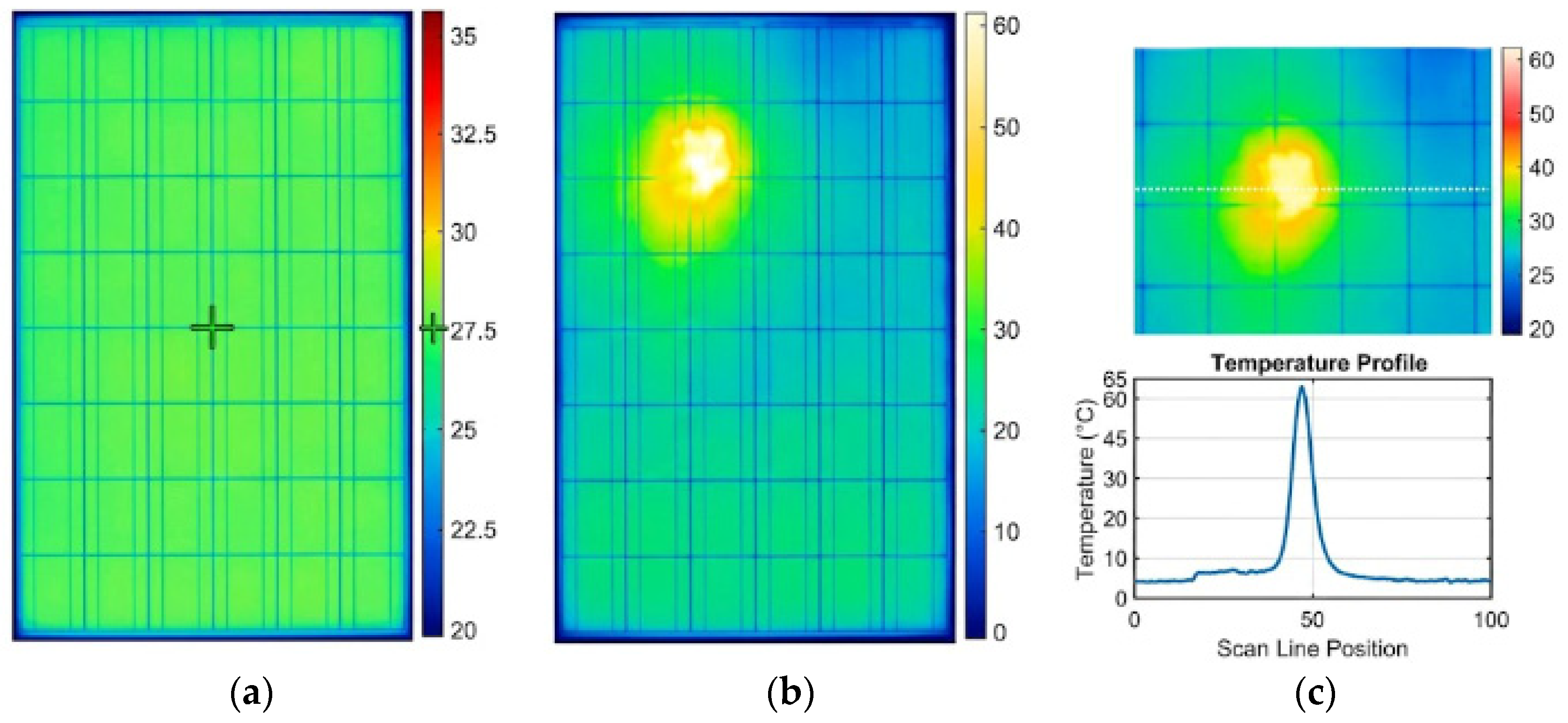
To experimentally validate the proposed framework, a thermographic inspection campaign was conducted on a pilot photovoltaic installation located at the DICEAM Department of the Mediterranean University of Reggio Calabria. The inspections were performed using a FLIR P660 thermal imaging camera (640 × 480 pixels, spectral range 7–13 μm) calibrated according to the environmental conditions recorded during the measurement campaign (ambient temperature 19 °C, relative humidity 69%, emissivity ε = 0.85–0.90). Representative thermograms acquired during the experimental campaign are reported in
Figure 9, showing examples of a healthy module with uniform thermal distribution, a module affected by a localized hotspot, and the corresponding temperature profile highlighting the anomalous thermal gradient associated with the detected defect.
The thermographic images enabled the identification of healthy modules characterized by uniform temperature distributions and faulty modules exhibiting localized hotspots, bypass diode failures, and partial shading effects. Temperature gradients exceeding 10–20 °C with respect to adjacent cells were considered indicative of abnormal operating conditions. Thermographic images and electrical measurements exhibit significantly different sampling characteristics. Thermal data were acquired at 30 fps and primarily contain spatial information related to defect localization, whereas synchronized electrical signals were sampled at 10 kHz and contain transient temporal features associated with inverter operation and power-quality disturbances. For this reason, a hybrid CNN–LSTM framework was adopted instead of an end-to-end video classification approach. CNN models were employed for spatial feature extraction from thermographic images, while LSTM networks were used to model temporal electrical dynamics, allowing complementary exploitation of the multimodal dataset. To provide a clearer description of the experimental dataset and support the reproducibility of the proposed methodology,
Table 5 presents the distribution of thermographic images and synchronized electrical diagnostic signals among the investigated fault classes. The dataset was assembled to ensure a comparable representation of the considered operating conditions, thus mitigating possible biases associated with class imbalance during model development and validation. Each electrical signal segment comprises 10,000 samples recorded at 10 kHz, corresponding to a one-second acquisition interval synchronized with the thermographic measurements.
Although the original dataset exhibited moderate class imbalance, class-weighting and data augmentation strategies were employed during training to mitigate potential bias. The combined analysis of thermographic observations, electrical measurements, and simulated energy performance enabled the relationship between localized thermal anomalies and PV system degradation to be quantitatively evaluated. The resulting dataset consisted of 1248 thermographic images and 3600 synchronized electrical signal recordings.
The thermographic observations were used to label the corresponding electrical measurements, enabling supervised training and validation of the proposed hybrid CNN-LSTM framework. The synchronized thermal and electrical datasets established the basis for the multimodal correlation analysis and AI-based fault diagnosis discussed in the following section.
3.6. AI-Based Thermal Defect Analysis and Classification
The synchronized thermal and electrical datasets were further processed using deep learning techniques to support automatic defect interpretation and classification. The proposed framework investigated CNN-LSTM-based architectures for the analysis of thermographic patterns and electrical signal variations associated with photovoltaic degradation phenomena. CNN was used for the analysis of thermal data collected through thermography, whereas LSTM was applied for the modelling of temporal variations in electrical signals. An end-to-end video classification architecture was not adopted because thermographic and electrical measurements are characterized by substantially different sampling rates and information content. Thermal acquisitions were performed at 30 fps and mainly contained spatial information related to defect localization, whereas electrical measurements were acquired at 10 kHz and contained transient temporal features associated with inverter operation and power-quality disturbances. After temporal synchronization, CNNs were employed to extract spatial thermal features, while LSTM networks were used to model temporal electrical dynamics. Therefore, the two approaches provide complementary information and allow more efficient exploitation of the multimodal dataset than a single end-to-end video-processing architecture. This architecture enabled the joint exploitation of spatial information extracted from thermographic images and temporal features derived from electrical measurements, thereby improving the overall fault diagnosis capability. The experimental data were obtained using thermographic measurements performed both in normal operation and when faults occurred, such as hot spots, bypass diode issues, and partial shading. The dataset was organized into labelled classes to support supervised training and validation of the proposed models. For model development, the dataset was divided into training, validation, and testing subsets following a standard hold-out strategy. This subdivision enabled an independent evaluation of model generalization capability under different operating conditions. The deep learning models were implemented in a Python-based environment (Version 3.13) using supervised learning procedures. The training process made use of the Adam optimizer along with the categorical cross-entropy loss function. Early stopping was used in order to avoid any possibility of overfitting. The models were trained for 100 epochs using a batch size of 16 and an initial learning rate of 10
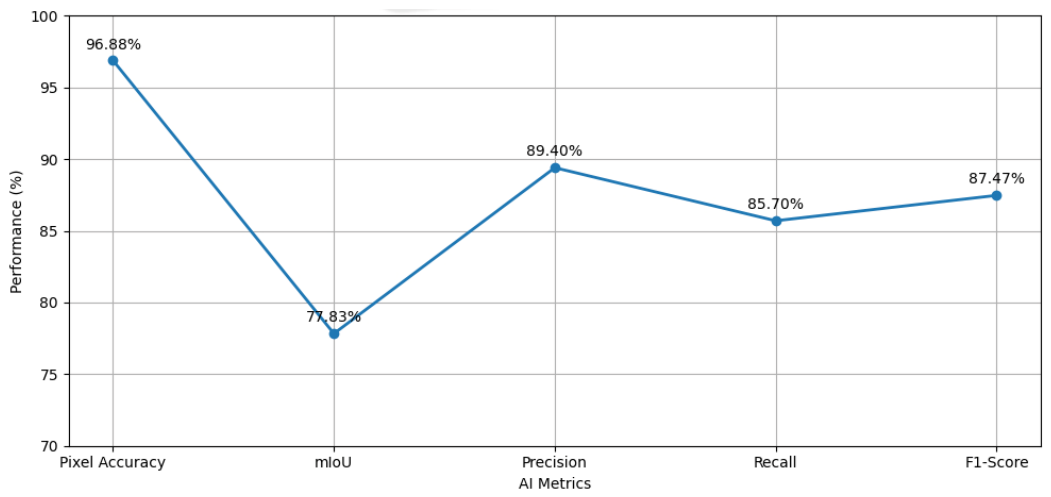
−3. The performance of the segmentation scheme was determined using standard measures such as Pixel Accuracy (PA), mean Intersection over Union (mIoU), precision, recall, and macro F1-score. The results of the performance metrics obtained during the experiments are given in
Table 6.
The obtained results demonstrate the effectiveness of the proposed framework, achieving high values of accuracy, precision, recall, and F1-score. These findings confirm the suitability of the proposed architecture for reliable photovoltaic fault diagnosis based on synchronized thermographic and electrical measurements. To further assess the validity of the proposed approach, a comparative analysis was conducted against widely adopted state-of-the-art semantic segmentation architectures commonly employed in thermographic inspection and defect detection tasks. The comparison results are reported in
Table 7.
The results reported in
Table 7 demonstrate the superior segmentation performance of the proposed framework, but the performance metrics alone do not provide sufficient evidence regarding statistical significance and computational efficiency. To address this aspect, an additional comparative analysis was conducted against the strongest baseline model using the results obtained from the outer folds of the nested 5 × 2 cross-validation procedure. Furthermore, computational complexity indicators, including the number of trainable parameters, GFLOPs, and inference time, were evaluated to assess the suitability of the proposed framework for real-time photovoltaic monitoring applications. The results are summarized in
Table 8.
As reported in
Table 8, the proposed framework achieved the highest overall segmentation performance while maintaining lower computational complexity compared with the considered state-of-the-art architectures. In particular, the proposed model reduced computational demand by approximately 18.8% in terms of GFLOPs and achieved a 50.9% reduction in inference time compared with SegFormer-B0. A paired
t-test performed on the outer folds of the nested cross-validation procedure yielded a t-statistic of 19.68 (
p < 0.0001), confirming that the observed performance improvement is statistically significant. These results support the suitability of the framework for implementation on UAV-assisted inspection systems and edge computing platforms, where both accuracy and computational efficiency are critical requirements.
The proposed CNN–LSTM framework achieved the highest overall performance among the considered architectures. While the improvement over recent transformer-based and encoder–decoder approaches is moderate, the proposed model offers the additional advantage of integrating temporal electrical information together with thermographic features, resulting in enhanced diagnostic robustness and suitability for real-time deployment. Although a detailed computational latency analysis was beyond the scope of the present study, the relatively compact architecture and the obtained performance metrics suggest the feasibility of future deployment in real-time photovoltaic monitoring systems. Since overall performance metrics may mask differences among individual fault categories, a class-wise analysis was also performed. Precision, recall, and F1-score were therefore evaluated separately for each investigated fault condition, as reported in
Table 9.
The class-wise analysis highlights the capability of the proposed framework to maintain high diagnostic performance across different fault categories. As expected, partial shading represents the most challenging condition due to the variability of its thermal signature and its partial overlap with moderate hotspot patterns. As seen from the results, the developed framework demonstrated reliable segmentation capability while meeting the requirements for real-time applications.
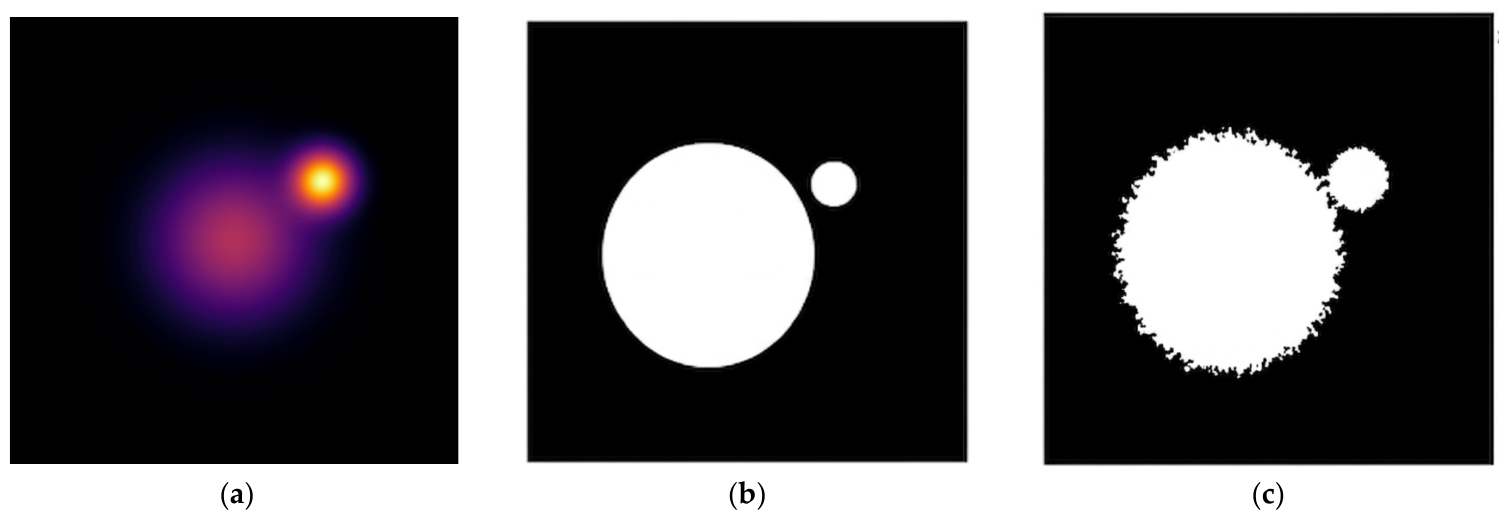
Figure 10 presents representative examples of thermographic acquisitions together with the corresponding AI-based segmentation outputs obtained during the experimental validation.
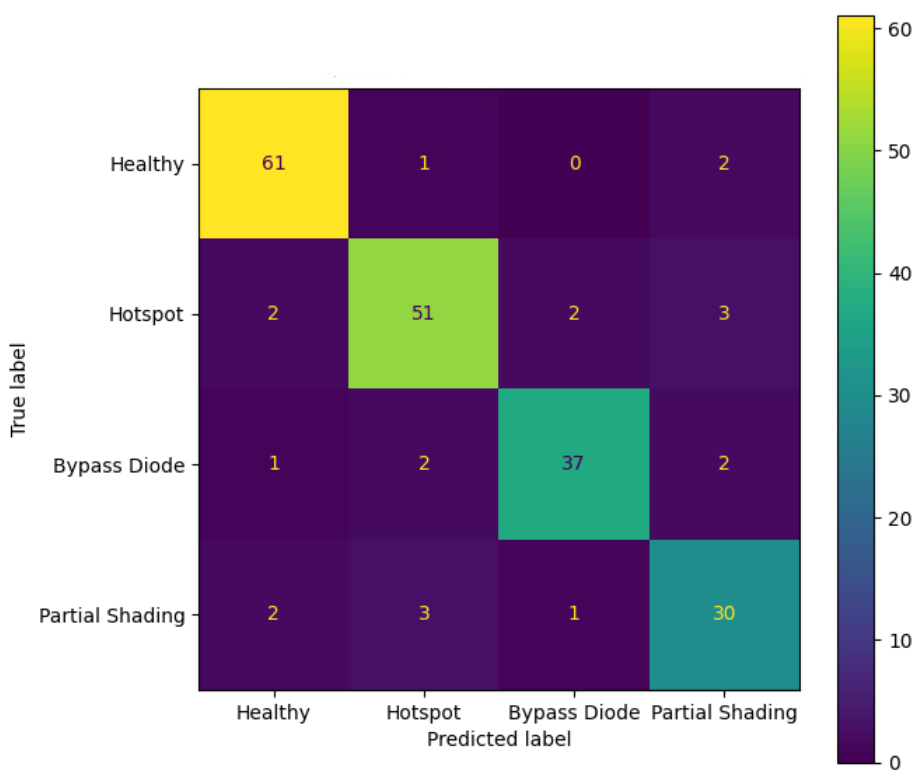
The representative segmentation examples demonstrate the capability of the proposed CNN–LSTM framework to accurately identify and localize thermal anomalies associated with different photovoltaic fault conditions while preserving the spatial characteristics of the thermographic information. To provide a more detailed assessment of the classification performance and to analyze potential sources of misclassification among the investigated fault categories, the confusion matrix obtained on the test dataset is reported in
Figure 11.
The confusion matrix revealed that the majority of misclassifications occurred between moderate hotspots and partial shading conditions due to similar thermal patterns. False negatives remained below 4.2%, whereas false positives were below 3.8%.
The segmentation results obtained on representative thermographic samples further demonstrate the capability of the proposed deep learning architecture to accurately identify and localize thermal anomalies associated with different photovoltaic fault conditions.
The preservation of spatial information during the segmentation process is particularly important for supporting maintenance planning and defect localization at the module level. Data augmentation techniques including horizontal flipping, random rotation (±15°), contrast enhancement and thermal noise perturbation were applied. A representative subset of the dataset together with the training scripts will be made publicly available upon publication to facilitate reproducibility and future benchmarking activities. After the methodology validation outlined in
Section 3, the results obtained using the suggested integrated monitoring scheme are presented in the following section.
4. Results and Discussion
The proposed monitoring framework was validated through a combined approach based on energy simulations and experimental field measurements. The performance baseline for the case study plant (“Plant 1”, 691.20 kWp) was established through BIM modelling carried out using SOLARIUS© software, utilizing the climatic data from the UNI 10349:2016 standard [
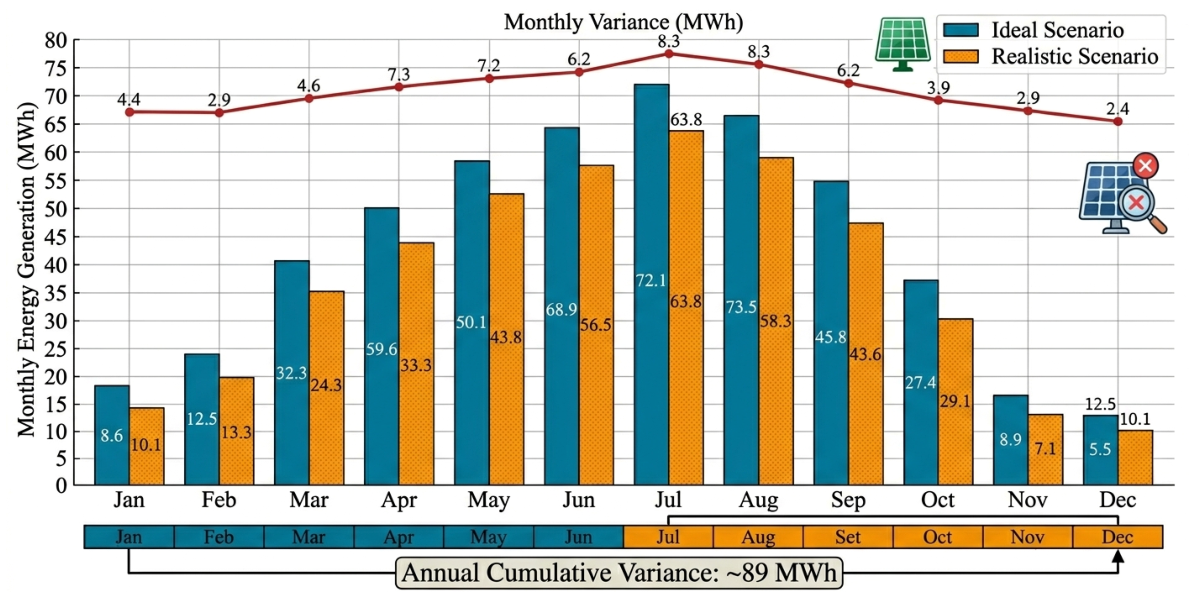
87] for the location of Reggio Calabria. Under ideal operating conditions, assuming no component degradation, the simulated annual energy production amounts to 723,483.20 kWh, corresponding to a specific output of 1046.71 kWh/kWp. To quantify the impact of typical faults detectable via Non-Destructive Testing (NDT), such as hotspots, soiling and malfunctions of bypass diodes, a ‘Real-World Scenario’ was developed that incorporates the efficiency penalties associated with these defects into the model. Under faulty operating conditions, the estimated annual energy production decreased to 634,488 kWh. This corresponds to an estimated annual energy loss of 88,995.20 kWh/year, corresponding to approximately 12.3% of the ideal annual energy yield. The corresponding energy performance indicators are summarized in
Table 3. It is clear from the results that physical damage, which cannot be captured via electrical methods used for degradation monitoring, can have a significant impact on the energy generation performance of the PV system. An annual decrease in close to 90 MWh emphasizes the need for effective methods that can detect early degradation. While simulation results quantify the impact of defects on energy production, experimental thermographic inspections are required to identify the physical origin of such losses.
Figure 12 below provides a graphical representation of the month-by-month production of energy for both cases. These simulation results confirm that physical defects have a quantifiable impact on the plant’s output. To correlate these simulated losses with actual physical evidence, a thermographic survey was conducted on a pilot plant at the DICEAM Department. The FLIR P660 thermal imaging camera enabled the precise localization of thermal anomalies. Representative thermograms previously shown in
Figure 6 are recalled here for discussion purposes. The thermography inspection process revealed that the good modules possessed an even temperature pattern while the faulty ones had localized hot spots and uneven temperature gradients. The hot spots were defined as localized high temperature zones due to reverse polarization of shaded or damaged cells. These physical observations provided the labelled dataset (ground truth) required for training the Deep Learning models. The dataset consisted of 1248 thermographic images and 3600 synchronized electrical signal segments. The data were divided into training (70%), validation (15%), and testing (15%) subsets. The dataset includes four operating conditions (intact modules, hotspots, bypass diode failures, and partial shading), designed to maintain an approximately balanced class distribution, thereby reducing potential biases during model training and evaluation. The electrical signals synchronized with the thermographic data were processed using the hybrid CNN-LSTM architecture described in
Section 3.3. In relation to identifying the transients in the electrical signal, the DWT technique proved effective since the transient patterns were due to the mismatches during the operation of the inverters. The CNN-based framework demonstrated reliable classification capability in distinguishing uniform degradation, localized hotspot conditions, and partial shading phenomena. The CNN component was responsible for spatial feature extraction from thermographic images, whereas the LSTM module processed synchronized temporal electrical measurements, allowing the framework to jointly exploit spatial and temporal information. Moreover, the application of temporal LSTM analysis allowed tracking fault development dynamics and provided examples of cases when thermal problems were detected before electrical issues could be recognized. To assess the efficiency of the suggested AI-based approach, the key segmentation evaluation measures achieved during the experiment are presented in
Figure 12.
As can be seen from the results above, the suggested approach allows for the reliable detection of defects in thermographic images, with, at the same time, computational complexity appropriate for real-time PV monitoring applications. It is worth noting that the performed experiments showed the connection between the presence of defects in photovoltaics and changes in PQ indicators. The physical mechanism underlying this behavior is associated with current mismatch among series-connected cells, which alters inverter operating conditions and increases harmonic components in the injected current waveform. The presence of hotspots and bypass diode failures caused the inverter’s MPPT algorithm to fail to work properly, resulting in additional distortion in the waveform of current injected to the grid. The experimental results demonstrated that, in the presence of PV faults, THD of the current increased by 1.5 to 2.0% with respect to the corresponding healthy operating condition. To reduce the influence of external variables, additional controlled measurements were performed under comparable irradiance conditions. The same PV string was monitored before and after the introduction of a controlled bypass diode fault. The results consistently showed a THD increase ranging from 1.6% to 1.9%, thereby supporting the existence of a direct relationship between localized photovoltaic defects and harmonic distortion. Besides the implications on energy quality, these defects also result in significant losses in energy production, as shown in
Figure 13. These findings are consistent with the hypothesis that current mismatch and altered inverter operating conditions contribute to increased harmonic content in the injected current waveform. A more detailed power-quality assessment revealed moderate increases in the 3rd- and 5th-order current harmonic components under fault conditions. Additional measurements of short-term flicker severity (Pst), long-term flicker severity (Plt), and voltage unbalance factor remained within the limits prescribed by IEC 61000 standards [
88], indicating that the primary impact of localized photovoltaic defects was associated with harmonic distortion rather than voltage-quality degradation.
The AI model was trained based on the thermographic data collected during normal and abnormal operations of the system. The dataset was divided into three subsets following a 70/15/15 split. Training was conducted using the Adam optimization algorithm with an initial learning rate of 10−3 for 100 epochs. The experimental implementation was executed on a workstation equipped with an NVIDIA RTX-series GPU, with an average inference time of approximately 34 ms per thermal image, corresponding to nearly 29 frames per second. The average inference time remained compatible with real-time monitoring requirements, confirming the suitability of the proposed approach for embedded and edge computing applications. This contrast clearly shows how the existence of localized faults gradually influences the pattern of energy generation over time, especially during periods when there is more sunlight. The monthly energy generation analysis shows that there is an unequal loss of production during different times of the year. Such a trend further confirms the necessity for an adaptive approach to monitoring systems. The results also prove the hypothesis that sensors can be used to analyze the PV system more efficiently than traditional methods. While electrical measurements were able to determine a decrease in efficiency without being able to identify the cause, thermal imaging gave precise localization data without the ability to understand the consequences immediately. The proposed integrated framework bridges this gap, enabling precise fault localization via thermographic segmentation, a quantitative assessment of the impact via power simulation and PQ analysis, and predictive maintenance via temporal modelling of the fault’s evolution. The combined analysis of thermal and electrical data enabled a more comprehensive interpretation of photovoltaic fault conditions compared with conventional single-domain monitoring approaches. Generally, based on the experimental findings, it is evident that the developed hybrid approach provides effective performance with regard to establishing correlations between the thermal effects and electrical behavior/quality.
The combined use of thermography, data processing, and AI has contributed to more detailed analysis of the photovoltaic deterioration processes than in case of the traditional approaches. Practical implications and future prospects for the proposed approach are presented in the concluding part of the study.
5. Conclusions
This study presented an integrated monitoring and diagnostic framework for grid-connected photovoltaic systems, combining infrared thermography with advanced electrical signal analysis techniques. The proposed methodology was experimentally validated on a 691.20 kWp photovoltaic installation and demonstrated the capability to correlate thermographic information with variations in electrical behavior and power quality indicators. The combined use of infrared thermography, FFT analysis, Wavelet Transform techniques, and hybrid CNN–LSTM architectures enabled the detection and classification of several fault conditions, including hotspots, microcracks, and bypass diode failures. The experimental results showed that the integration of synchronized thermal and electrical measurements improves fault localization and supports a more comprehensive interpretation of degradation phenomena compared with conventional monitoring approaches based exclusively on electrical parameters. The analysis also highlighted the impact of physical defects on both energy production and power quality performance. In particular, the investigated fault conditions produced an estimated annual energy loss of approximately 89 MWh, corresponding to about 12.3% of the ideal energy yield.
Localized anomalies resulted in greater harmonic distortion and poor inverter MPPT operation conditions, which confirmed that thermal-based degradation was associated with electrical performance degradation. The findings of this study suggest that combining thermal imaging with AI-powered signal analysis has significant potential for predictive and condition-based maintenance applications. In addition, the proposed framework showed compatibility with automated monitoring architectures suitable for smart energy and Industry 4.0 applications. Nevertheless, some limitations remain. One important limitation concerns the validation of the proposed framework on a single photovoltaic installation located in Southern Italy. Although the obtained results are encouraging, further validation campaigns involving different climatic regions, photovoltaic technologies, and installation configurations are required to fully assess the generalizability and robustness of the proposed methodology. The suggested AI-based models have been trained with supervised learning algorithms and validated with an experimentally generated small dataset. Hence, future research endeavors would have to focus on improving the ability of such models to generalize through the use of big data, transfer learning, and unsupervised anomaly detection mechanisms. Further research could also involve implementing edge computing systems in real-time monitoring applications. The proposed methodology represents an excellent approach to designing the next generation of PV monitoring systems.




 ,
,