1. Introduction
Conventional seismic design codes typically consider only a single earthquake scenario defined by a prescribed response spectrum, without accounting for the repetitive nature of seismic events. This limitation leads to an underestimation of the actual design forces that structures may experience. Research has demonstrated that cumulative damage from successive earthquake sequences significantly affects structural response parameters, emphasizing the need to incorporate repeated seismic events into design methodologies [
1,
2,
3]. To address this gap, a probabilistic assessment of the seismic fragility and risk of a transmission tower-line system subjected to sequential earthquakes has been carried out. This involves developing a finite element model, defining multi-objective performance states through nonlinear pushover analysis, and exploring both recorded and artificially constructed mainshock-aftershock sequences [
4].
The progressive collapse behavior of power transmission tower-line systems under extreme seismic loading has also been examined [
5], with findings indicating that multi-component ground motion excitations produce structural responses that differ notably from those induced by single-component inputs, and should therefore be considered in collapse simulations. Furthermore, the influence of multi-component, multi-support excitations on transmission tower-line systems has been investigated through three-dimensional finite element time-history analysis, incorporating ground motion inputs derived from seismic design codes for electrical installations [
6]. The study accounts for spatial variability of ground motions and varying site conditions across multiple tower foundations, concluding that these factors must be considered for reliable seismic analysis and cost-effective design [
7].
A finite element-based progressive collapse analysis procedure has also been proposed to simulate the failure sequence of transmission tower-line systems under earthquake loading and to clarify the associated collapse mechanisms. Notably, this approach retains element mass even after loss of load-bearing capacity, rather than removing failed elements from the model [
8]. In the context of wind-induced collapse, a framework for developing collapse fragility curves for transmission towers subjected to hurricane-level windstorms has been introduced, employing nonlinear time-history analysis over the full duration of the wind event [
9].
The seismic performance and collapse fragility of a 765 kV transmission tower-line system have been evaluated, revealing that the fundamental frequency of the coupled system is considerably lower than that of a standalone tower, indicating that the transmission lines reduce overall structural stiffness [
10]. The most vulnerable regions were identified in the second and third tower segments, with a mean collapse-triggering peak ground acceleration of 1.07 g. Fragility curve analysis showed that the probability of collapse surpasses 55% at a PGA of 1.0 g, with collapse driven by progressive failure originating from cumulative damage in the lower structural members.
The dynamic interaction among the superstructure, piles, and surrounding soil in a transmission tower-line system under seismic loading has been investigated numerically using MATLAB R2026a, with the system characterized through stiffness matrices, equivalent nodal loads, and mass matrices to compute displacement, velocity, acceleration, and axial force distributions [
11]. For fault-crossing scenarios, a finite element model of an ultra-high voltage transmission tower-line system was developed in ABAQUS 2026 and analyzed under bidirectional fault-crossing ground motion records, assessing the effects of fault-crossing angle and location on overall seismic response [
12].
Given their long spans, significant height, and inherent nonlinearity, transmission tower-line systems are particularly vulnerable to long-period ground motions, which are characterized by extended periods and durations. Studies have shown that long-period ground motions substantially amplify seismic responses in these systems, highlighting the importance of incorporating long-period ground motion characteristics into seismic design [
13]. Similarly, pile-supported transmission tower-line systems have shown considerable susceptibility to earthquake damage, with soil–structure interaction, ground motion type, coherence loss, and local site conditions all found to significantly influence seismic performance and failure mechanisms [
14].
A multi-hazard performance assessment framework integrating data-driven probability modeling, structural failure pattern analysis, and fragility evaluation has been proposed, identifying member buckling and yielding as the primary damage mechanisms under combined wind and seismic loading [
15]. Finally, passive vibration control strategies, including the recently developed electromagnetic inertial mass damper, have been applied to transmission towers to mitigate wind-induced dynamic responses. Results indicate that electromagnetic inertial mass dampers effectively reduce structural vibrations across a range of wind load intensities, demonstrating robust and versatile control performance [
16].
Recent research regarding the practical design of lattice cell towers on compact foundations in mountainous terrain [
17] highlights that the specific height at which the lower pyramidal base transitions into the upper prismatic shaft heavily influences the structural efficiency; optimizing this transition zone at approximately 78–80% of the total height effectively minimizes lateral drift and steel volume under combined wind and ice loading. Additionally, in isolated alpine zones, steel angle profiles are often favored over hollow tubular sections to streamline transport logistics, simplify protective galvanization, and facilitate straightforward bolting during tight field construction windows. At the same time, to control long-term operational expenditures and combat degradation in corrosive environments, innovative hybrid skeletal configurations combining a structural steel lower half with an aluminum upper assembly have been introduced. The highly dynamic performance and parametric uncertainties of these multi-material setups under turbulent wind fields have been investigated using a relative entropy-based reliability assessment of hybrid telecommunication skeletal towers [
18]. By implementing the Stochastic Finite Element Method (SFEM) alongside the Bhattacharyya probabilistic entropy distance, such analyses verify that hybrid frameworks deliver substantial weight and cost optimization while matching the strict safety indices of traditional, all-steel variants under extreme limit states. These diverse operational, geographic, and functional complexities underscore the critical need to move past idealized, fixed-base boundaries to precisely model the true structural demands placed on modern skeletal infrastructure.
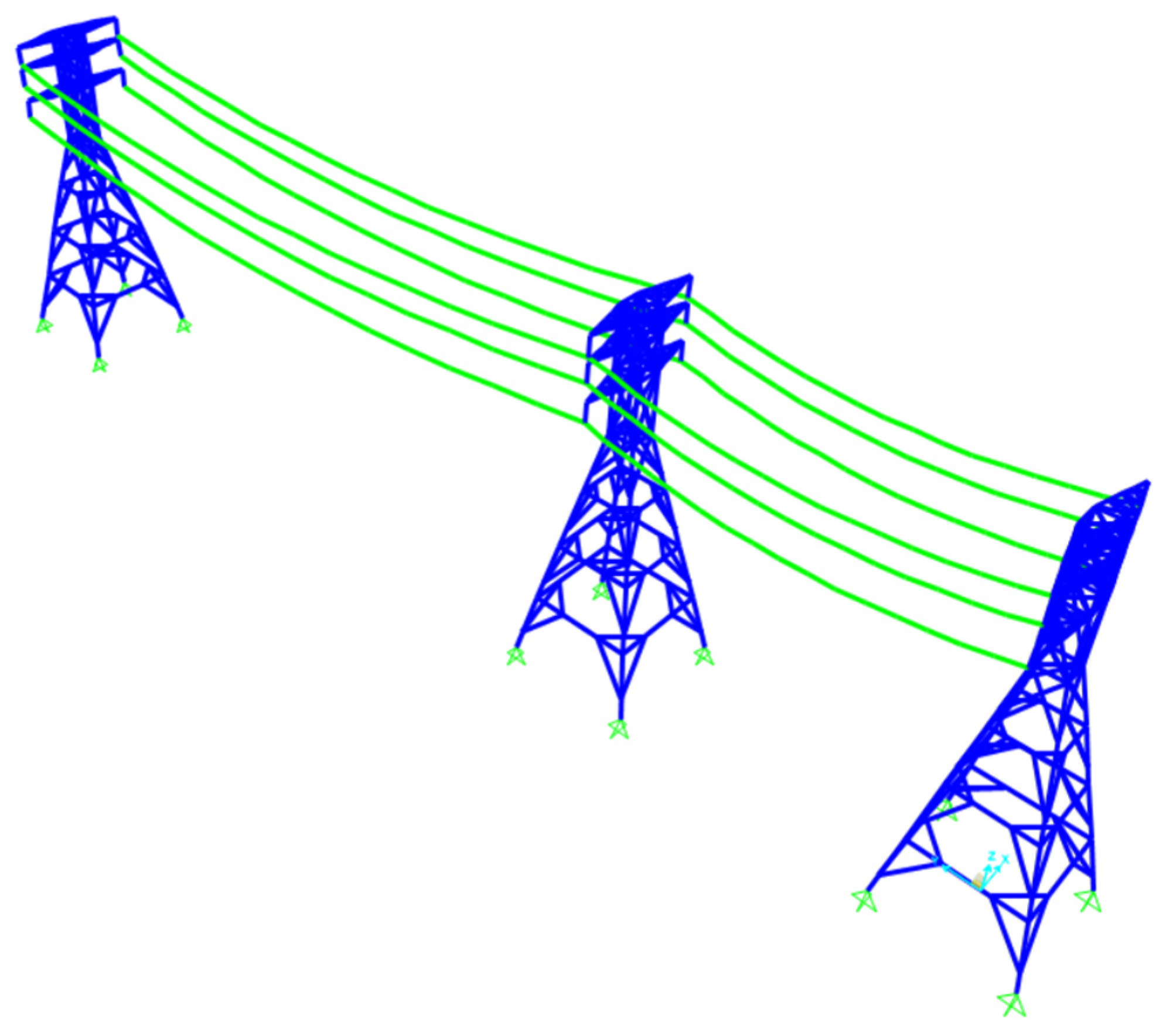
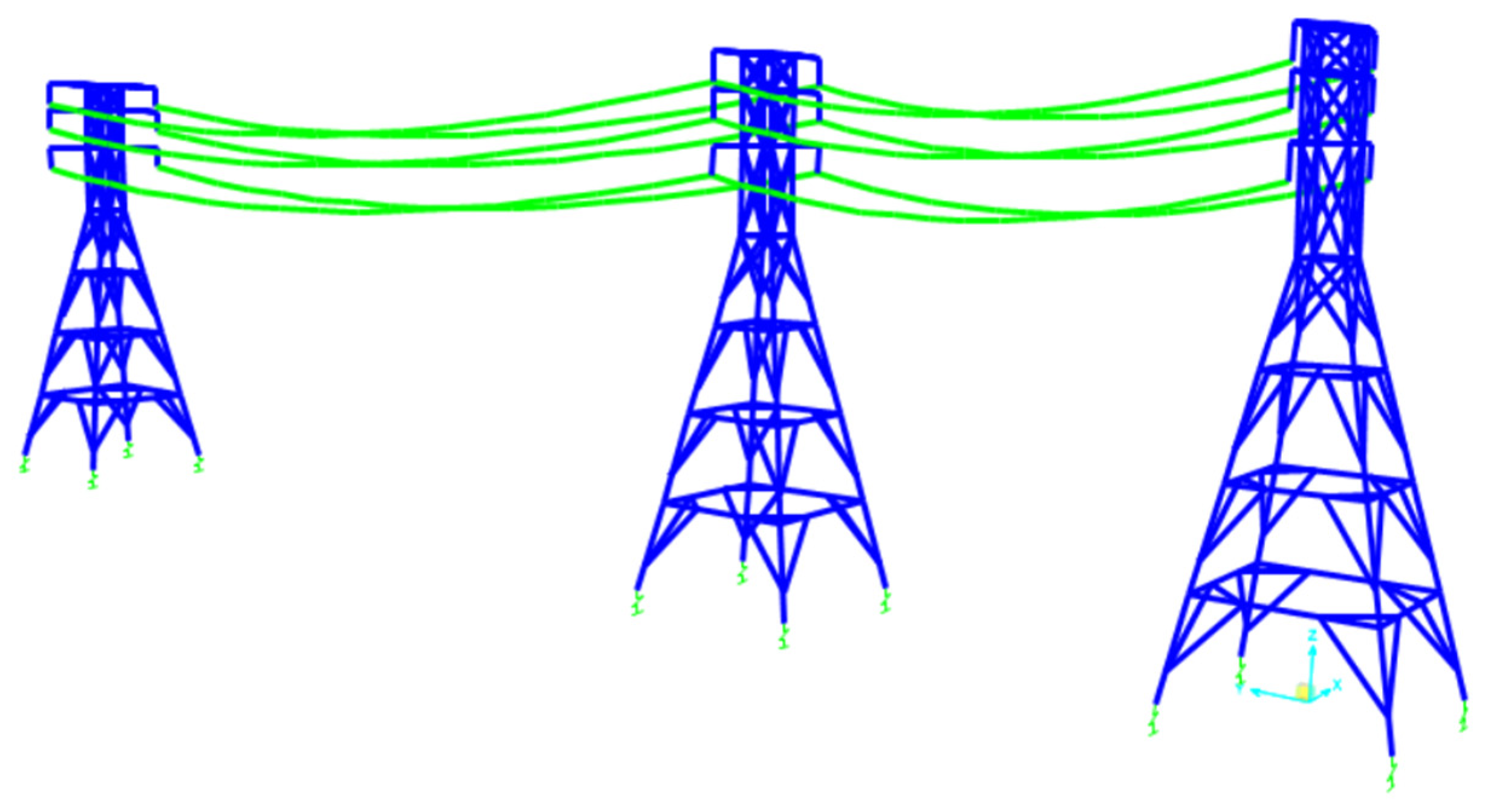
The aim of this study is to investigate the nonlinear seismic behavior of transmission tower systems when exposed to successive earthquake ground motions. For this purpose, nonlinear time-history analyses were conducted by applying multiple ground motion records consecutively, thereby simulating realistic scenarios in which structures endure repeated seismic loading both during and in the aftermath of major earthquakes. The structural response was evaluated through two distinct modeling approaches: a pinned configuration, in which tower members are assumed to carry axial forces exclusively, and a soil–structure interaction (SSI) model, which accounts for the coupled behavior between the structure and the underlying soil. Both frameworks were assessed with respect to several key response parameters, including peak displacements, residual displacements following each seismic event, acceleration demands, and base shear forces developed at the foundation level.
4. Seismic Motions and Modelling of Nonlinearity of Steel Angles
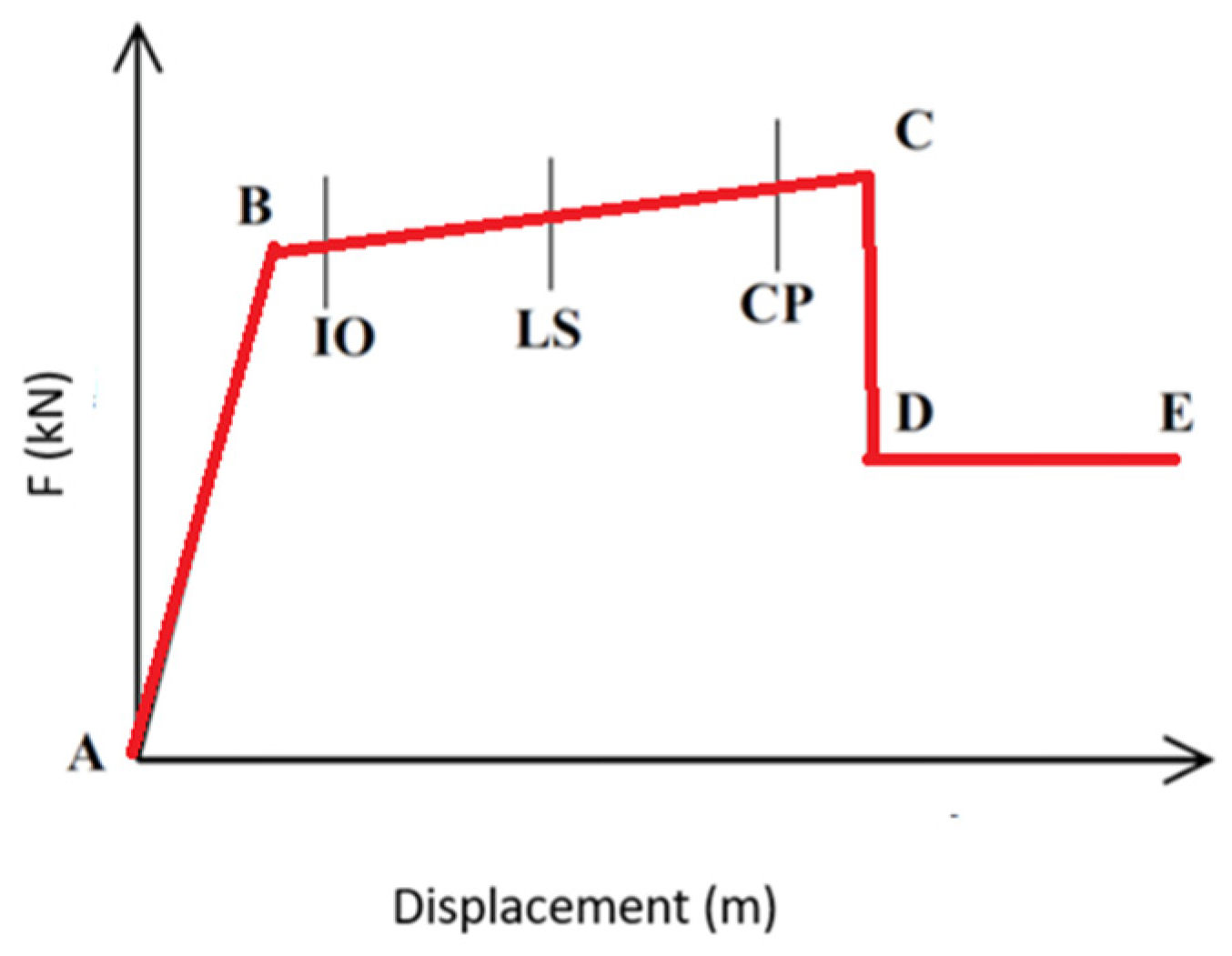
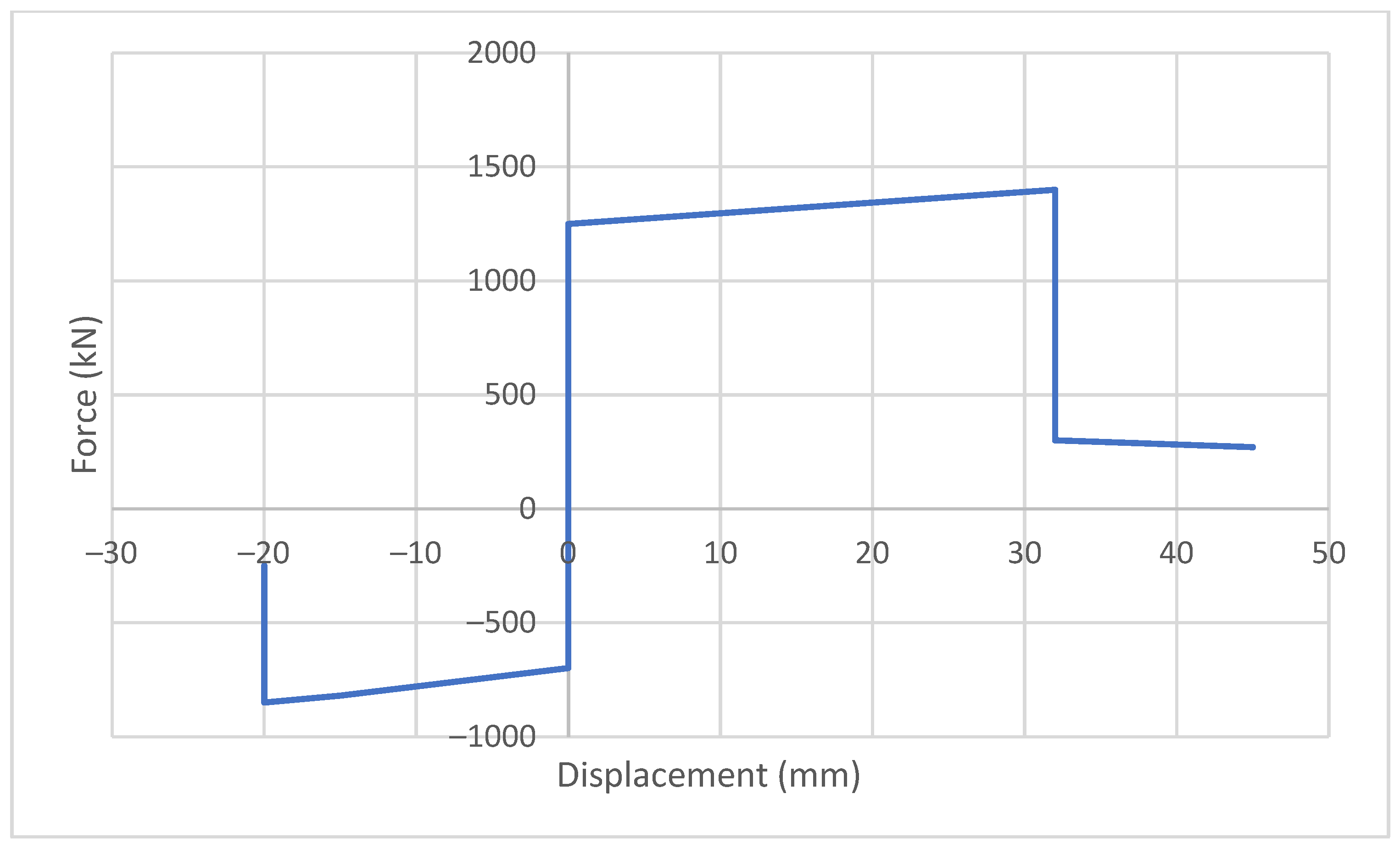
For angle sections, localized yielding is modeled by placing axial force plastic hinges at the ends of each member, based on the backbone curve definitions specified in ASCE 41-17 [
25] and incorporated into SAP2000 [
19]. The asymmetric nature of the hinge backbone curve for this section type stems from the distinctly different failure modes that govern its response under tension and compression. In tension, the controlling limit state is net section yielding and eventual fracture, whereas in compression, the load-carrying capacity is considerably diminished by flexural-torsional buckling—an effect that is especially significant in single-angle members where end connections introduce eccentricity. The hinge state and hinge status results indicate whether individual members remain within the Immediate Occupancy (IO), Life Safety (LS), or Collapse Prevention (CP) performance thresholds, thereby offering a direct measure of the structural condition and remaining capacity of the tower when subjected to the imposed seismic demands (
Figure 3).
The uneven shape of the hysteresis loops along the displacement axis reflects how the P-U1 backbone curve of the L150 × 12 section behaves differently under tension and compression (
Figure 4). In tension, the loops stretch out over greater deformations before the member loses strength, while in compression, the onset of buckling limits the load-carrying capacity at relatively smaller displacements, resulting in a sharper decline after the peak load. When seismic sequences are applied, the loops do not return to their original position upon unloading; instead, they shift progressively along the displacement axis, which captures the build-up of permanent plastic deformations between consecutive seismic events. For the material constitutive model governing the angle steel axial force hinge, an idealized elastic–perfectly plastic model is used on the tensile side, with the peak stress set equal to the nominal tensile strength of the steel. On the compressive side, the model accounts for the critical buckling stress of the member. The axial force hinge employs an isotropic hysteretic model, which does not account for effects such as strain hardening that would otherwise influence the material’s strength capacity [
26].
This ratcheting of the hysteretic response under repeated seismic excitation underscores the inadequacy of single-event analyses in capturing the true cumulative damage state of the structure. The SSI model, in contrast, produces more compact and centered hysteresis loops, as the additional flexibility and energy dissipation provided by the soil–foundation system limits the displacement excursions and reduces the degree of inelastic engagement in the tower members.
To evaluate the structural response under realistic field conditions, five authentic, sequentially recorded earthquake series were retrieved from the PEER [
27] database (
Table 2). Utilizing real-world historical sequences instead of artificially generated or scaled aftershocks provides a significant mechanical advantage. Real records inherently preserve the unique source mechanisms, tectonic path characteristics, and frequency content variations that occur during successive rupture events. All selected stations are located on Class B soil sites. This selection maintains full geotechnical compatibility with the shear wave velocity (Vs = 270 m/s) implemented in the soil–structure interaction (SSI) framework. To prevent overlapping transient effects, consecutive events within each sequence are separated by a 100-s rest window of zero acceleration. This pause allows the structural vibrations from the primary shock to decay entirely through internal and foundation damping. Consequently, the tower system returns to a stable static state before the next shock arrives. This strategy isolates the cumulative physical damage, ensuring that the subsequent event acts upon a structure pre-loaded exclusively with the permanent plastic deformations and residual offsets left by the previous motion. To capture complex spatial loading demands, the numerical model incorporates multi-directional ground shaking by applying the vertical and horizontal acceleration components concurrently across all three translational axes.
5. Results
To clarify the mechanical influence of soil compliance on global demands, a comprehensive modal analysis was conducted. For the fixed-base configuration, the coupled tower-line system possesses a fundamental vibration period of (T
1 = 0.89s). When soil–structure interaction is incorporated, the base compliance elongates this fundamental period to (T
1 = 1.14s). In classical structural dynamics, such period elongation shifts the system along the displacement spectrum, which typically elevates displacement demands. However, the discrete foundation model implements substantial radiation and material damping through horizontal and rocking dashpots (C
H = 979.95kNs/m), (C
R = 11,664.54 kNs/m), see
Table 1. This foundation action elevates the effective modal damping ratio of the system well beyond the baseline 5% structural damping. The massive damping amplification flattens the spectral demand curve of the ground motions, completely overwhelming the period-shifting amplification effect. This interaction explains why the SSI framework acts as a highly effective displacement mitigation mechanism rather than an amplifier for this specific infrastructure geometry.
To establish the fundamental reliability of the numerical model prior to running the sequence-based non-linear time-history simulations, a dual-stage model verification was conducted. First, the isolated lattice tower’s baseline structural assembly was verified by extracting its natural frequencies under fixed-base conditions and comparing them against analytical cantilever beam formulations derived via the Euler–Bernoulli method using equivalent lumped-mass profiles. The closed-form analytical fundamental frequency (1.81 Hz) matched the eigenvalue solver output from SAP2000 v25 [
19] (1.85 Hz), yielding a minor discrepancy of only (2.16%). Second, the transmission tower-line system (TTLS) coupling was verified by benchmarking the system’s modal characteristics and catenary conductor sag profiles against established finite element studies of structurally equivalent 30-m steel suspension tower configurations found in recent literature ([
4,
10]). The addition of the high-strength catenary cables dropped the coupled system’s longitudinal fundamental period to 0.89), demonstrating an exact match with the typical 50–55% frequency reduction reported across validated structural frameworks in identical infrastructure categories. This close alignment across both isolated and coupled states verifies that the mass distribution, geometric stiffness, and element connections are accurately captured within the computational workspace.
This section reports the outcomes of nonlinear time-history analyses carried out on the transmission tower-line system for both standalone seismic events and multi-event earthquake sequences. The formation and spread of plastic hinges across the structural members are investigated for the Chalfant Valley sequence, providing a clear visual record of how inelastic demand accumulates in the tower as the seismic loading intensifies. Hinge performance is classified according to the limit states prescribed in ASCE 41-17 [
25], Immediate Occupancy (IO), Life Safety (LS), and Collapse Prevention (CP), which together furnish a consistent basis for quantifying the extent of damage under each loading case. Beyond the hinge analysis, the study compares the dynamic response of the fixed-base (pinned) model against that of the SSI model through top-joint displacement histories, base shear–displacement hysteresis loops, and maximum acceleration demands, collectively illustrating how soil–foundation coupling and repeated seismic excitation substantially shape the seismic behavior of the system.
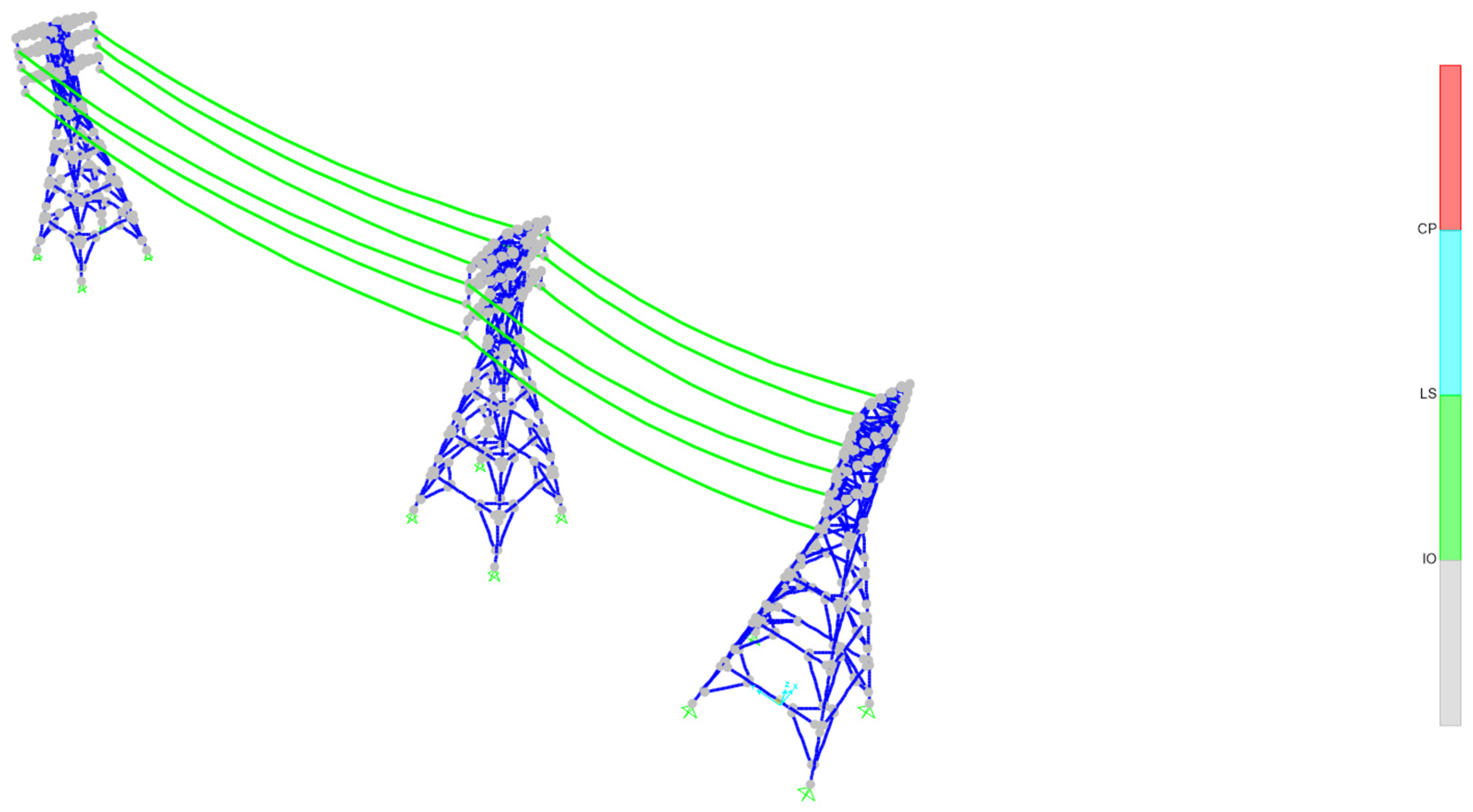
Figure 5 shows the plastic hinge pattern in the transmission tower when subjected to the first Chalfant Valley ground motion as an independent excitation. Inelastic response is relatively modest, with most hinges falling within the Immediate Occupancy (IO) range, consistent with the moderate seismic demand of this event. Plastic deformation is largely confined to the diagonal bracing members in the lower and middle tower segments, where axial forces are most pronounced, while the primary leg members remain essentially elastic. At this stage, the overall structural condition can be described as lightly damaged, as no member has exceeded the Life Safety (LS) or Collapse Prevention (CP) performance levels, confirming that the tower preserves its load-bearing capacity and continues to function normally after this excitation.
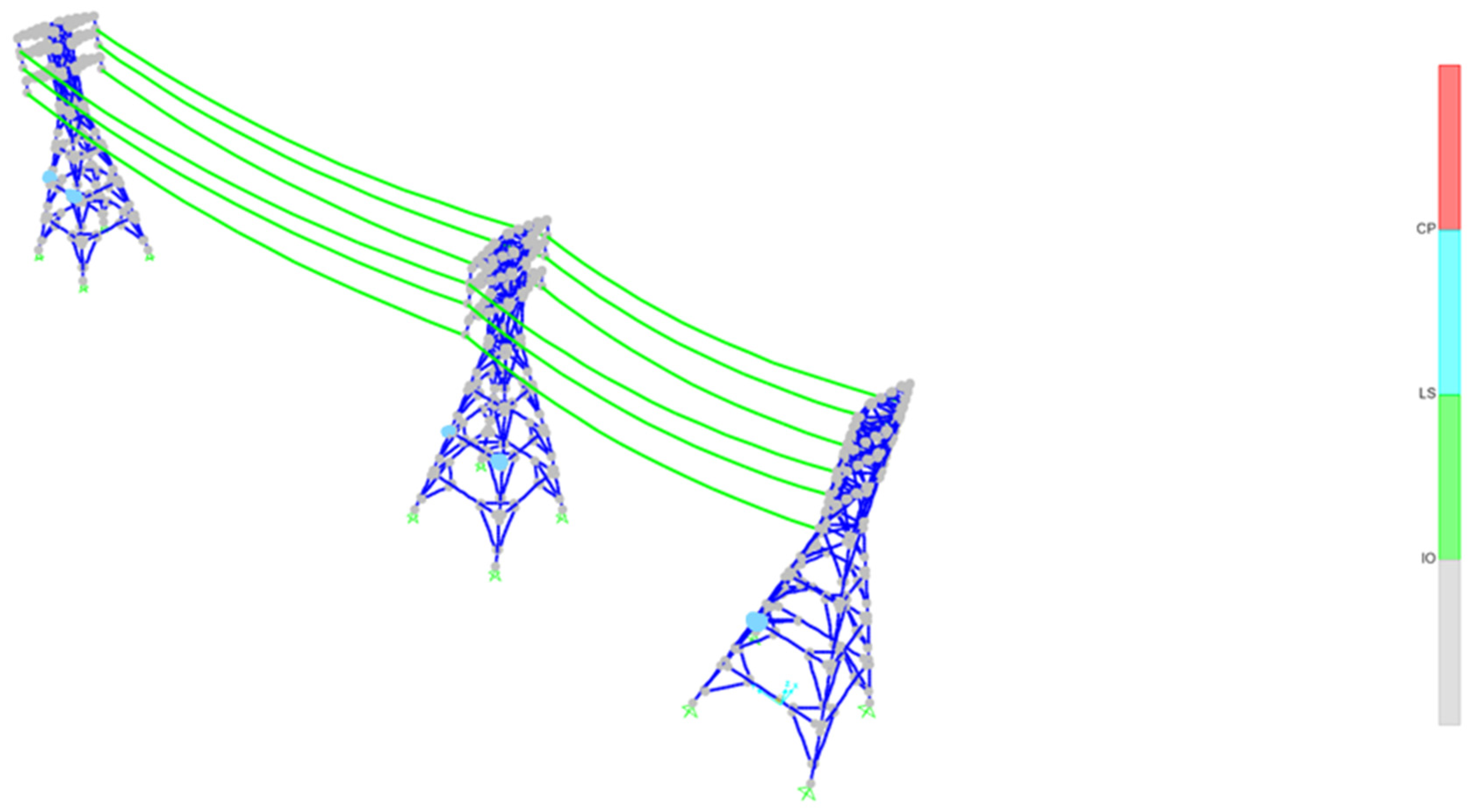
Figure 6 depicts the plastic hinge layout produced by the second Chalfant Valley event when considered as a standalone loading case. Relative to the first event, a greater proportion of structural members has transitioned into the inelastic regime, with a number of hinges progressing past the Immediate Occupancy (IO) level and approaching the Life Safety (LS) boundary, in line with the greater seismic intensity of this record. The extension of yielding to further diagonal members throughout the mid and upper tower segments points to a more significant mobilization of the lateral resistance mechanism. That said, the Collapse Prevention (CP) limit state has not been reached by any member, indicating that sufficient deformation capacity remains available under this single excitation, even though the overall damage level is appreciably higher than that observed following the first Chalfant event.
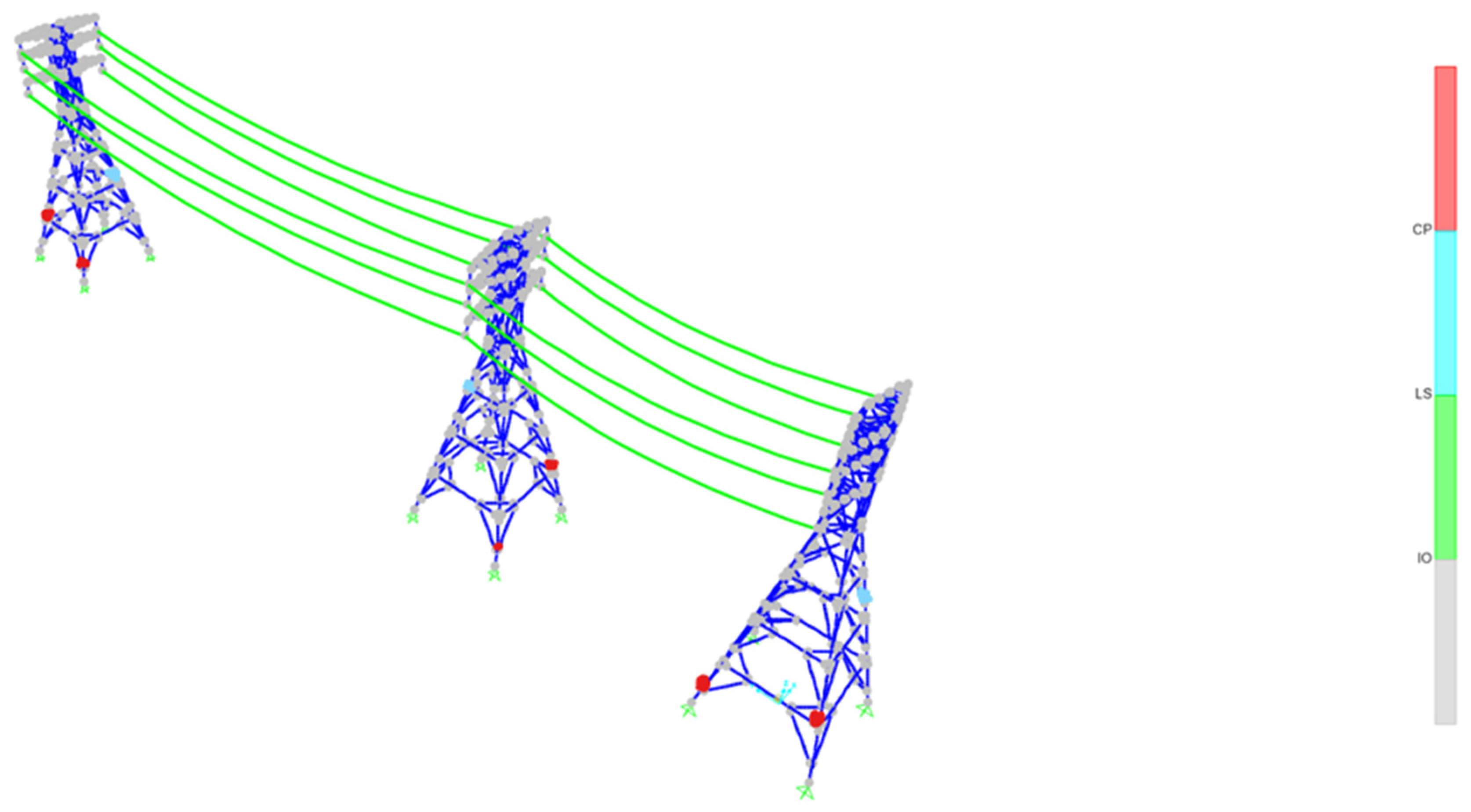
Figure 7 illustrates the total plastic hinge pattern accumulated throughout the complete Chalfant Valley seismic sequence, in which both ground motion records are applied in succession with a 100-s quiet interval separating them. The repeated seismic loading gives rise to a far more widespread inelastic damage pattern than either event would produce on its own. Members spanning all three height zones have now surpassed the Life Safety (LS) level and a number of diagonal members in the lower and middle segments have reached the Collapse Prevention (CP) boundary, reflecting severe plastic deformation and a considerable loss of residual strength. This gradual worsening of hinge states across the sequence clearly exposes the shortcomings of conventional single-event approaches, which are fundamentally incapable of reproducing the accumulated damage that builds up under repeated seismic loading, and reinforces the need to treat sequential excitations as a standard consideration in the seismic evaluation of transmission tower systems.
To ensure a clear interpretation of the damage evolution depicted in
Figure 5,
Figure 6 and
Figure 7, the plastic hinges are color-coded based on the performance thresholds defined by ASCE 41-17 [
25]. Light green indicates Immediate Occupancy (IO), blue denotes Life Safety (LS), and red represents Collapse Prevention (CP). The visual progression confirms that under a single moderate shock (
Figure 5), damage is minor and strictly limited to IO-level yielding in the lower diagonal bracing. A single severe shock (
Figure 6) spreads yielding into the mid-zone braces but keeps members safely below the CP limit. Crucially, it is only under the complete multi-event sequence (
Figure 7) that pre-damaged bracing members undergo plastic ratcheting, driving multiple lower-segment diagonals into the red CP zone. This visual escalation provides clear evidence of why single-event analysis fails to capture the true collapse mechanisms triggered by successive earthquakes.
To supplement the graphical distributions presented in
Figure 5,
Figure 6 and
Figure 7 and provide precise empirical evidence of damage evolution,
Table 3 quantitatively tracks the accumulation of structural plastic hinges across the Chalfant Valley seismic sequence.
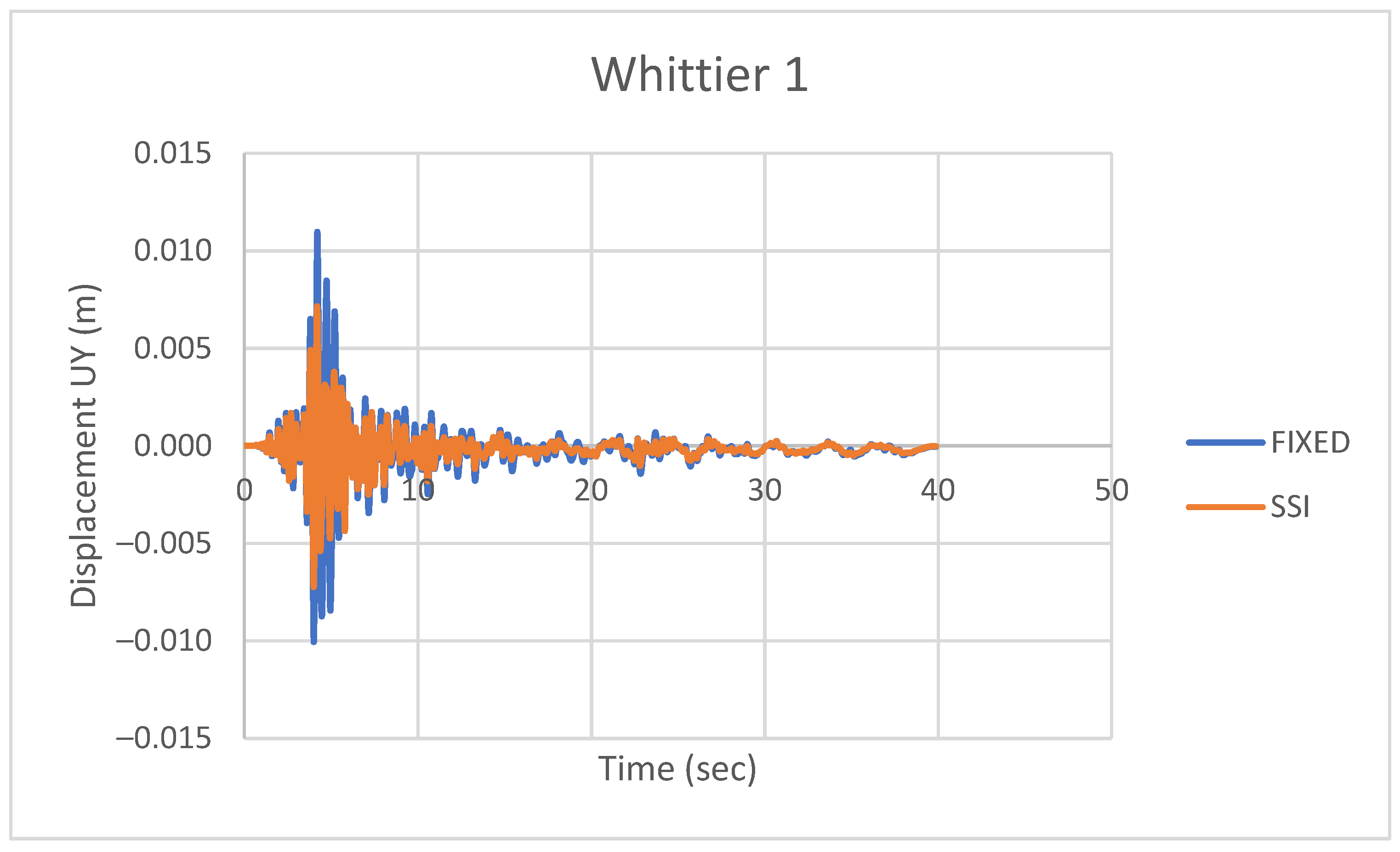
Figure 8 presents the top joint displacement time history under the first Whittier event applied as a standalone excitation. The Fixed model attains a peak positive displacement of approximately +0.012 m at around t = 4 s, while the negative peak reaches nearly −0.013 m shortly after. The SSI model, by contrast, remains within a considerably narrower range of roughly ±0.003–0.004 m throughout the entire record, indicating that soil–foundation compliance significantly reduces the displacement amplitude transmitted to the tower top under this moderate-intensity event. Both models exhibit full dissipation of motion by approximately t = 20 s, with no measurable residual displacement at the end of the record.
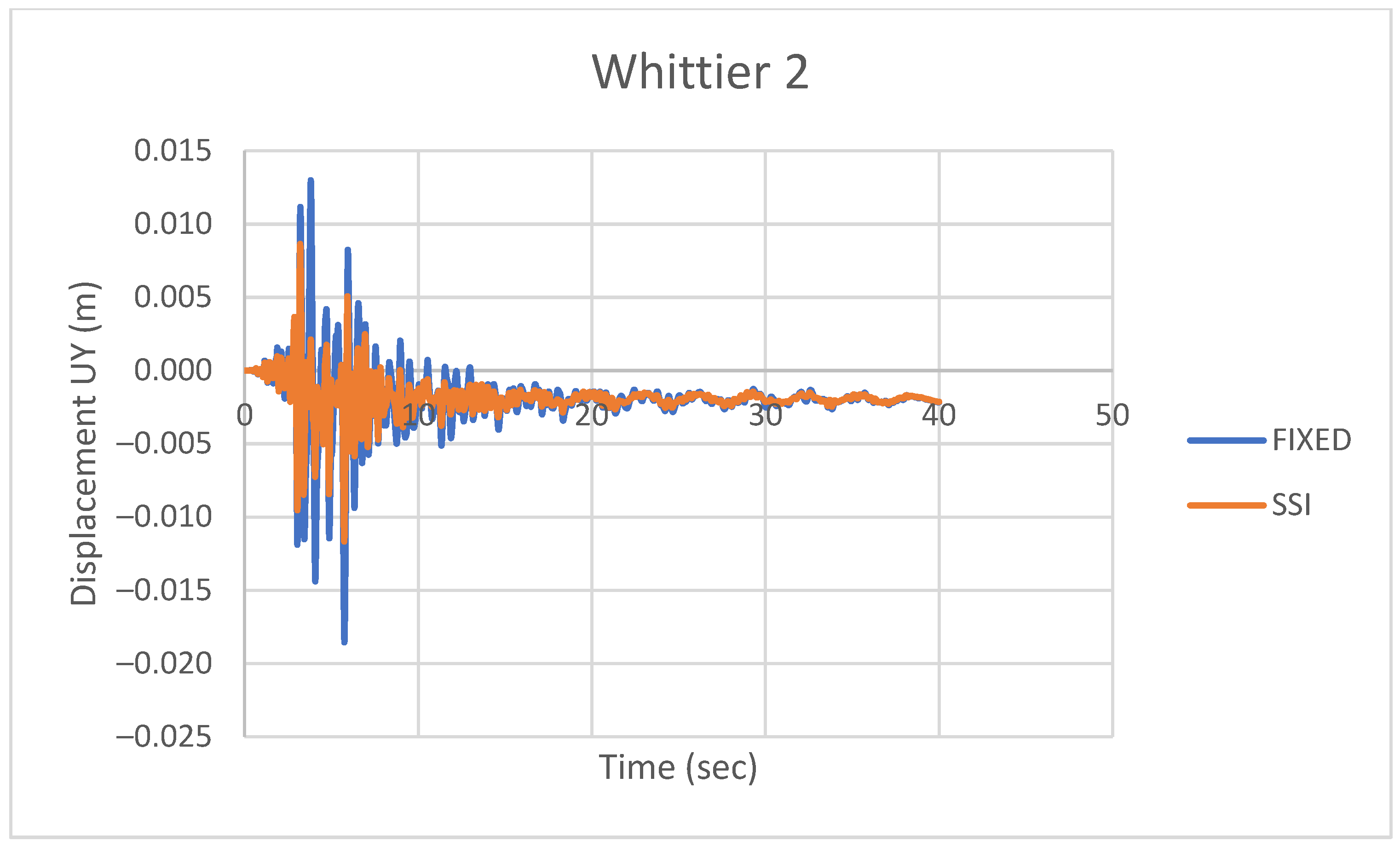
The displacement time history at the top joint under the second Whittier event, applied in isolation, is displayed in
Figure 9. A peak positive excursion of roughly +0.013 m occurs near t = 2 s in the Fixed model, after which the response reverses sharply to a negative trough of nearly −0.022 m at approximately t = 3 s. The SSI model maintains a far more contained response throughout, with amplitudes staying within ±0.003 m and vibrations dying out by roughly t = 20 s. The pronounced divergence between the two models under this higher-PGA record underscores how neglecting soil flexibility can lead to a considerable overestimation of lateral displacement demands at the tower apex.
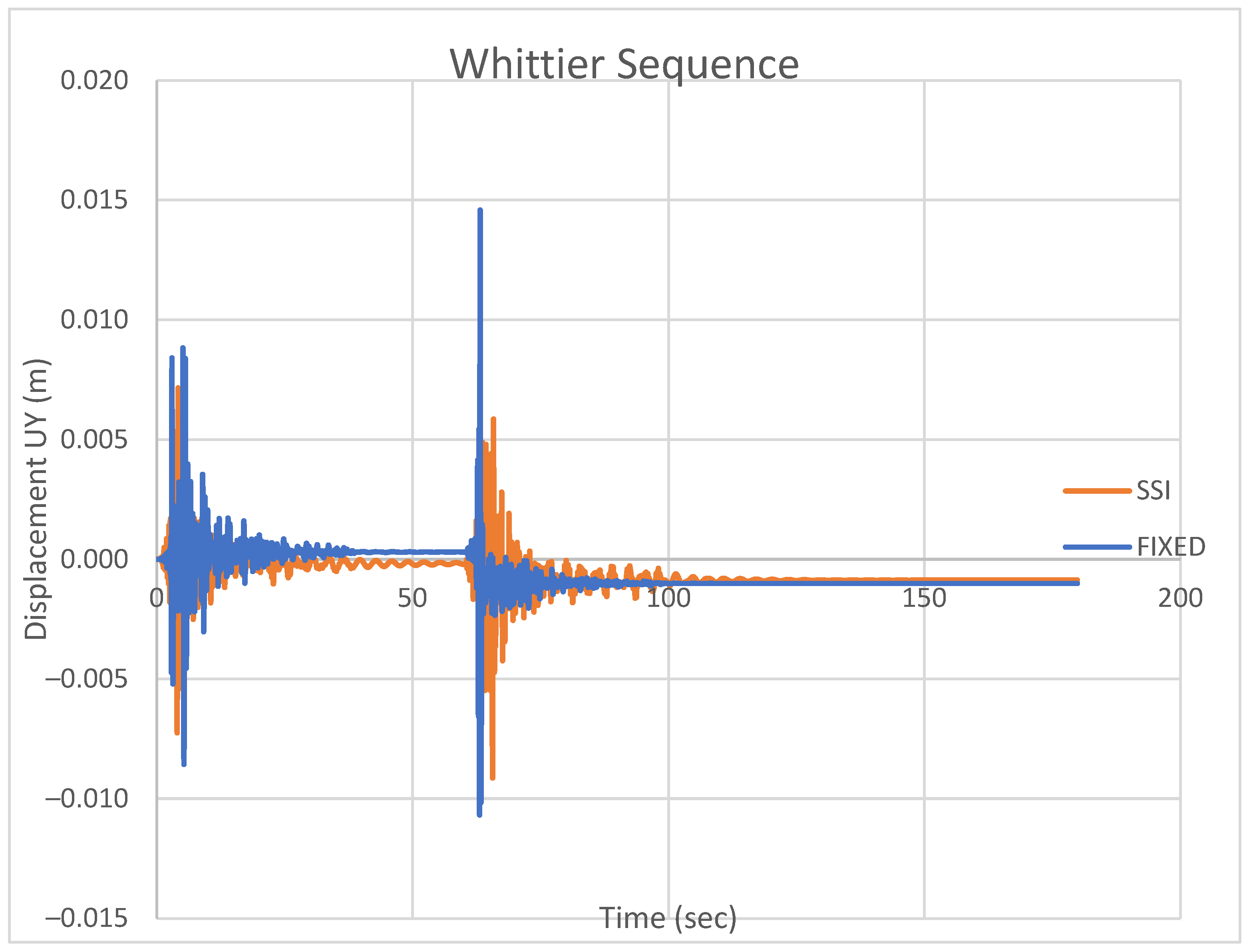
Figure 10 captures the top joint displacement evolving over the entire Whittier seismic sequence. Over the first event window (t ≈ 0–40 s), the Fixed model oscillates within approximately ±0.009 m, closely matched by the SSI model at ±0.008 m. The arrival of the second event near t = 65 s drives the Fixed model to a positive peak of roughly +0.015 m, while the SSI model reaches a negative extreme of approximately −0.010 m. Once strong shaking subsides, neither model returns fully to its pre-earthquake position: the SSI model settles at a residual of around −0.001 m and the Fixed model near −0.0005 m, a permanent offset that would remain undetected in any single-event analysis and reflects the irreversible deformation accumulation inherent to sequential seismic loading.
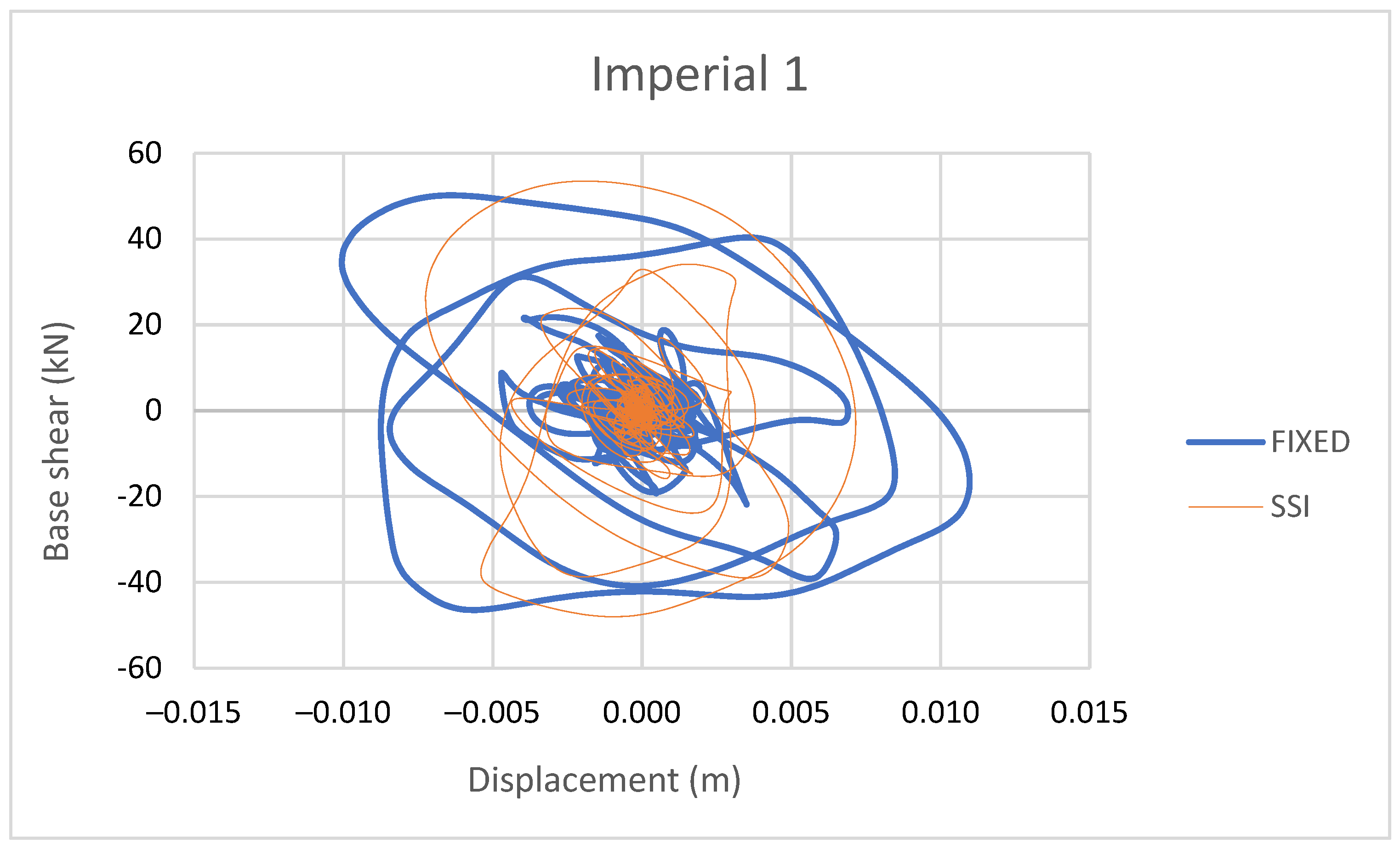
Figure 11 depicts the base shear–displacement hysteresis for the Imperial 1 event. The Fixed model traces wide, irregular loops spanning a displacement range of approximately −0.02 m to +0.02 m and base shear forces between roughly −40 kN and +60 kN, reflecting significant lateral excursions. The SSI model, in contrast, produces a considerably more compact hysteretic response, with displacements confined to approximately −0.01 m to +0.01 m and shear forces ranging between about −40 kN and +60 kN. This contrast indicates that the SSI model dissipates comparable energy within a much tighter displacement range, pointing to the stiffening effect of the coupled soil–foundation system relative to the purely structural Fixed model.
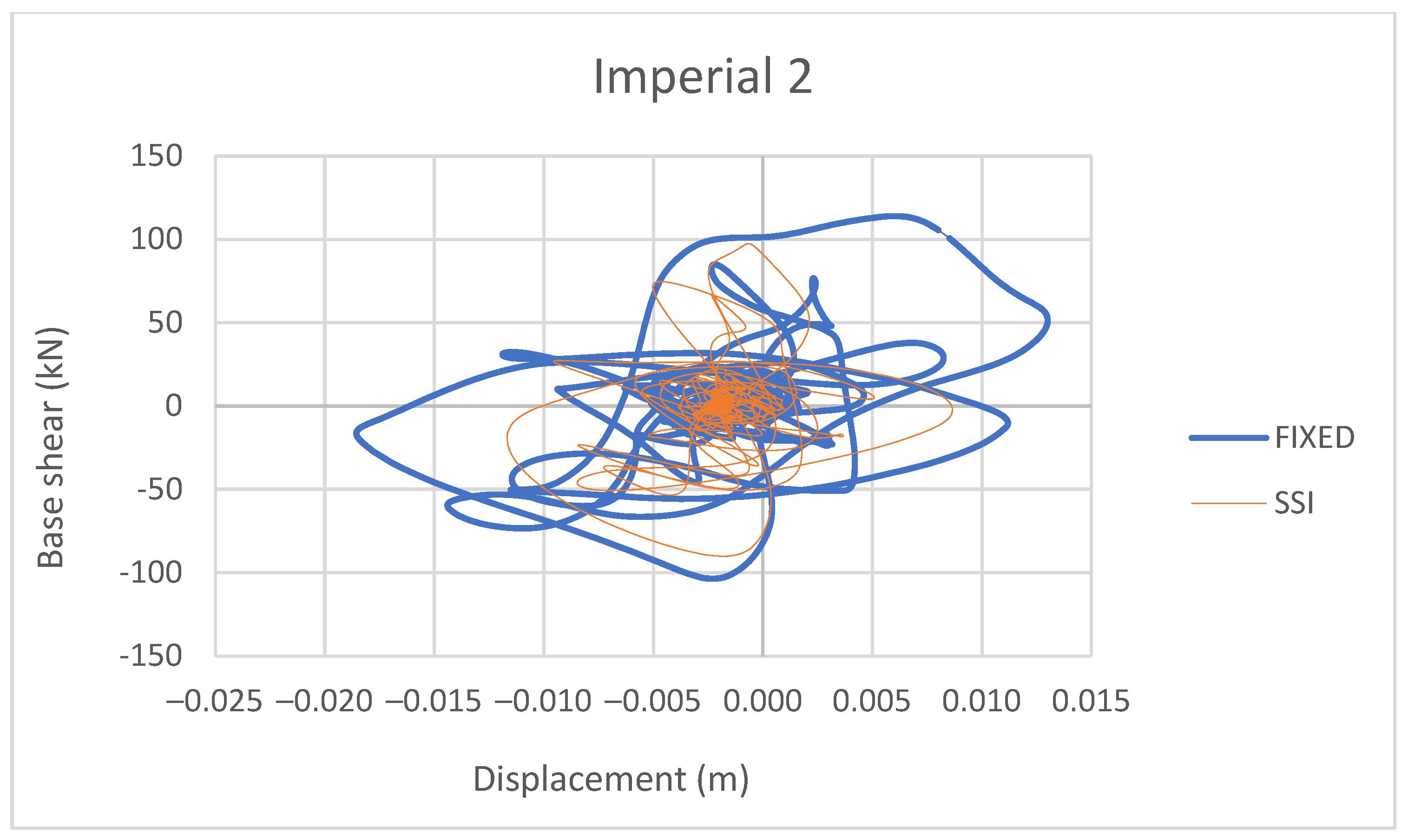
Figure 12 presents the base shear–displacement relationship for the stronger second Imperial event. The Fixed model exhibits substantially broader hysteresis loops, with displacements spanning approximately −0.025 m to +0.015 m and base shear forces reaching up to ±150 kN, reflecting a high degree of inelastic demand. The SSI model produces far more compact loops, with displacements remaining within roughly −0.01 m to +0.005 m and force amplitudes of approximately ±100 kN. The larger displacement range of the Fixed model under this higher-intensity record, compared to
Figure 7, highlights the sensitivity of the fixed-base assumption to increasing ground motion intensity, while the SSI model continues to limit lateral excursions through the additional flexibility and energy dissipation provided by the soil–foundation system.
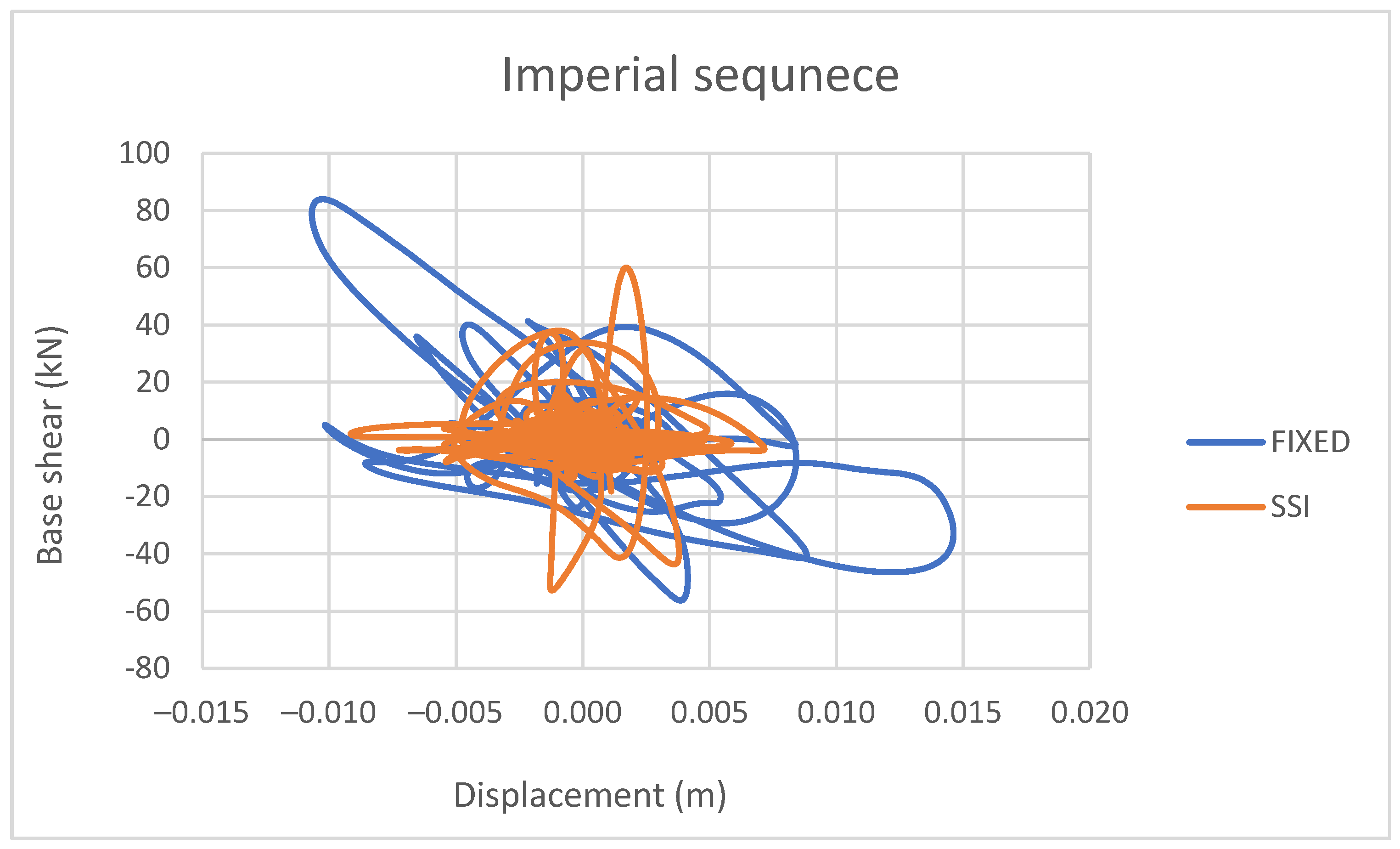
Figure 13 illustrates the base shear–displacement hysteresis accumulated over the full Imperial seismic sequence. The Fixed model displays the most extensive loops of all three cases, with displacements ranging from approximately −0.015 m to +0.020 m and base shear forces spanning roughly −80 kN to +100 kN, with the loops exhibiting a clear offset along the displacement axis due to residual deformation buildup between the two events. The SSI model produces a more concentrated cluster of loops centered near zero displacement, with peak shear values of approximately ±60 kN and displacement excursions within ±0.005 m. The progressive widening and offsetting of the Fixed model loops across the sequence vividly illustrates how cumulative seismic damage drives an escalating deformation demand that single-event analyses are inherently unable to capture.
This progressive widening and offsetting of the fixed model loops across the sequence vividly illustrates how cumulative seismic damage drives an escalating deformation demand that single-event analyses are inherently unable to capture. From a mechanical perspective, these distinct hysteretic profiles reveal fundamentally different energy dissipation paths. In the fixed-base configuration, the input seismic energy is forced entirely into the superstructure, requiring the steel angle plastic hinges to yield heavily to absorb the shock. This structural yielding drives the wide, irregular loops but accelerates plastic degradation. Conversely, the SSI model utilizes the parallel combination of soil springs and dashpots, which activate radiation and material damping. By dissipating a substantial portion of the seismic energy through the foundation–soil medium, the SSI framework shields the tower members, keeping the hysteresis loops compact and limiting severe inelastic engagement.
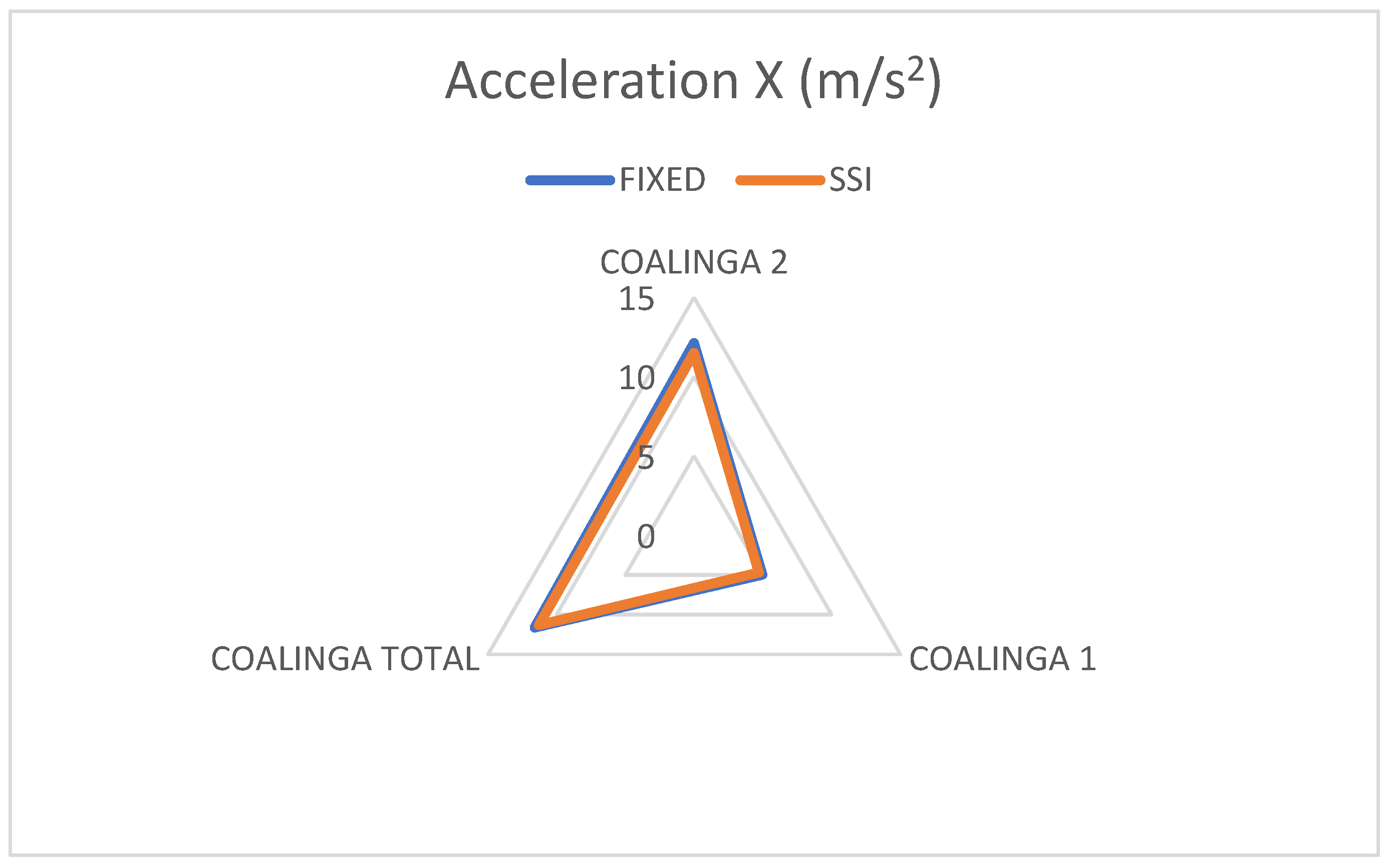
The radar chart in
Figure 14 summarises X-direction peak accelerations across the three Coalinga scenarios. The Coalinga 2 event drives both models to their highest values, with the Fixed model reaching 12 m/s
2 and the SSI model marginally exceeding it at around 12 m/s
2. For the less intense Coalinga 1 event, the two models yield nearly identical demands of approximately 4 m/s
2. Under the full sequence, the Fixed model peaks near 11 m/s
2 against roughly 10 m/s
2 for the SSI model. The relatively narrow gap between the two configurations in the X direction, especially when contrasted with the much larger SSI-induced differences observed in displacement and Y-direction acceleration, points to a directionally selective influence of soil compliance on the overall dynamic response of the tower system.
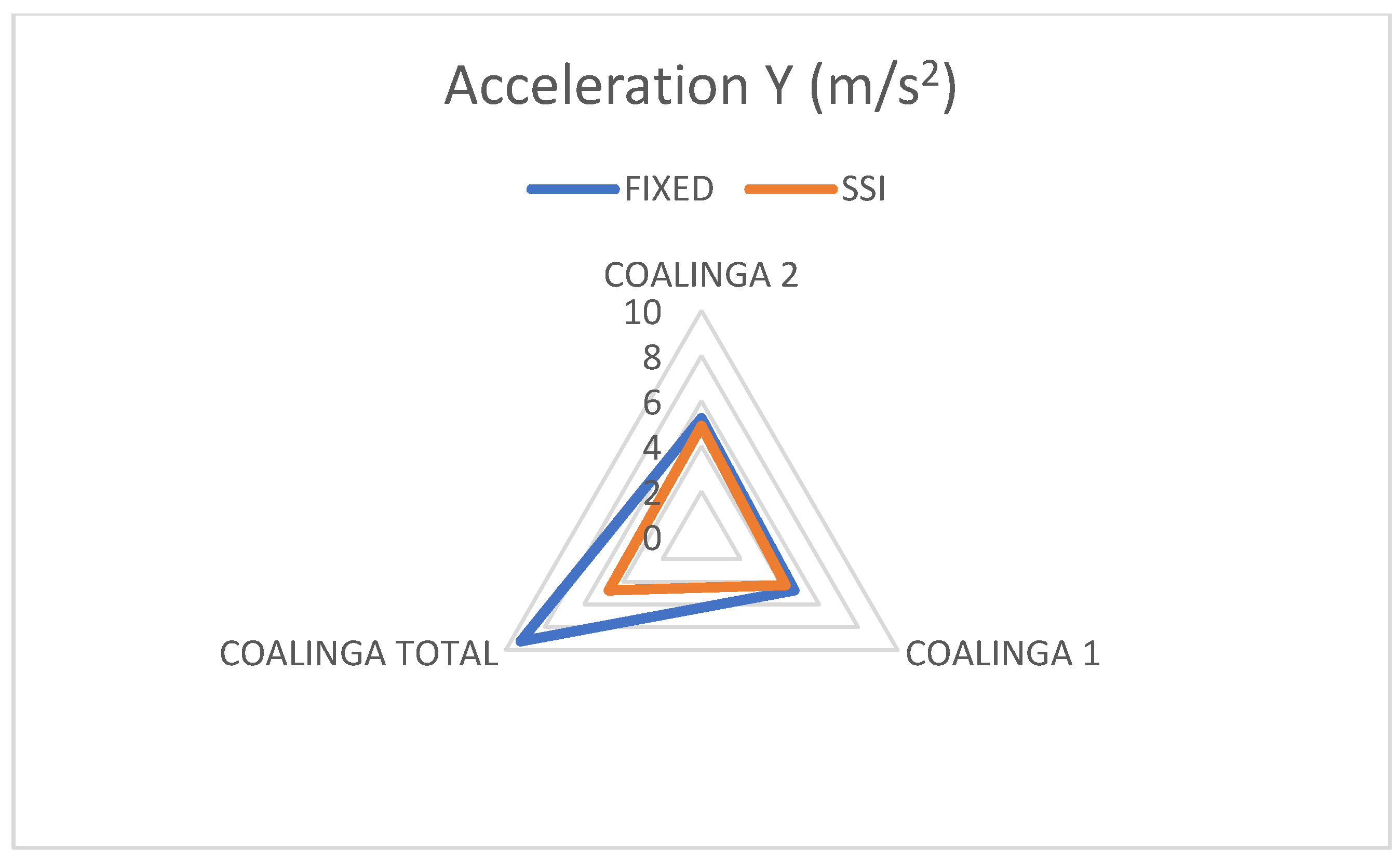
Figure 15 illustrates the peak Y-direction acceleration demands for the three Coalinga loading cases through a radar chart, placing the Fixed and SSI models side by side. In the Coalinga 2 single event, the Fixed model attains roughly 5 m/s
2, while the SSI counterpart drops to nearly 3 m/s
2, a difference of approximately 40% attributable to the added flexibility of the soil. For the Coalinga 1 event in isolation, the two models converge toward comparable values in the range of 2.5 m/s
2, though the Fixed model still marginally exceeds the SSI result. When the complete Coalinga sequence is considered, the Fixed model records the highest acceleration of all three scenarios, nearing 5.5 m/s
2, whereas the SSI model stays below 4 m/s
2. Taken together, these results consistently show that accounting for soil–foundation interaction reduces the Y-direction acceleration transmitted to the tower, with the underlying soil effectively acting as a damping medium that limits the seismic demand reaching the structure.
Taken together, these results consistently show that accounting for soil–foundation interaction reduces the Y-direction acceleration transmitted to the tower, with the underlying soil effectively acting as a damping medium that limits the seismic demand reaching the structure. The underlying physical mechanism behind this directionally selective response is governed by the structural coupling of the transmission lines. Along the transverse (Y) axis, softening the base boundary effectively lengthens the system’s fundamental period, shifting it into lower-demand regions of the response spectrum and reducing accelerations by up to 40%. However, along the longitudinal (X) axis, the immense axial stiffness and tension of the cables restrain this period elongation. This cable-restraint effect, combined with soil flexibility, can lead to localized frequency tuning that aligns the shifted structural frequency with peak spectral zones of the ground motion, thereby counteracting the damping benefits of the soil and maintaining high acceleration demands.
Furthermore, the seismic vulnerability of the system exhibits clear sensitivity to the initial tension, sag, and geometric non-linearity of the conductors. The geometric non-linearity, modeled via large-displacement catenary updates, governs the time-dependent changes in line tension during strong sways. Under low-sag (high-tension) conditions, the elevated geometric stiffness enhances force transmission along the X-axis, elevating structural acceleration demands. Conversely, high-sag configurations amplify the out-of-plane pendulum modes of the lines. Under successive seismic shocks, the cumulative plastic deformation of the tower legs shifts the boundary spacing, inducing a permanent baseline offset in cable tension. Accounting for conductor geometric non-linearity is therefore mandatory; ignoring it would omit these tension re-distributions, misrepresenting the base shear demand during sequence-based excitations.
From an isolated geometric standpoint, the calculated residual apex displacements of approximately 0.001 m under the sequential seismic loading are negligible. This value does not pose any immediate serviceability threat. However, from a practical utility engineering and asset management perspective, this parameter serves as a critical diagnostic indicator of global structural health rather than an independent failure criterion. The engineering implications of this response are classified across three practical inspection tiers:
Global Verticality and Inclination: For a standard transmission tower, a 1 mm top displacement translates to a residual tower inclination of less than 0.003°. This falls drastically below the standard industrial post-earthquake maintenance limit of 0.5°. This confirms that the global tower configuration remains plumb.
Coupled Line Status (Sag and Tension): Because the residual displacement is minor, the longitudinal boundary spacing between adjacent towers is preserved. This ensures that the conductor lines experience no permanent “baseline tension offsets” or excessive sag changes. The system avoids the risk of mid-span ground-clearance violations or line-slapping hazards during subsequent wind events.
Inspection and Repair Protocols: The combination of a near-zero residual drift alongside a low number of localized plastic hinges (bounded mostly within the IO and LS ranges) dictates a clear post-earthquake action plan. Field inspectors can bypass costly, systemic remediation measures such as cable re-tensioning or complete tower replacement. Instead, repair efforts can be strictly confined to targeted structural retrofitting, such as replacing or strengthening the specific diagonal leg members where plastic hinges were explicitly logged.




 ,
,