Anti-Hypoxic Phytochemicals in Gao-Shan-Hong-Jing-Tian Oral Liquid: LC-MS Profiling, Network Pharmacology, and Carbonic Anhydrase Inhibition
 , and
, and 
Abstract
1. Introduction
2. Materials and Methods
2.1. Chemicals and Reagents
2.2. Analysis by HPLC
2.2.1. Sample Preparation for HPLC Experiments
2.2.2. HPLC Analysis
2.3. Analysis by LC-MS
2.3.1. LC-MS Sample Preparation
2.3.2. LC-MS Conditions and Data Processing
2.4. Network Pharmacology Analysis
2.4.1. Active Component Screening and Target Prediction
2.4.2. Network Construction and Pathway Analysis
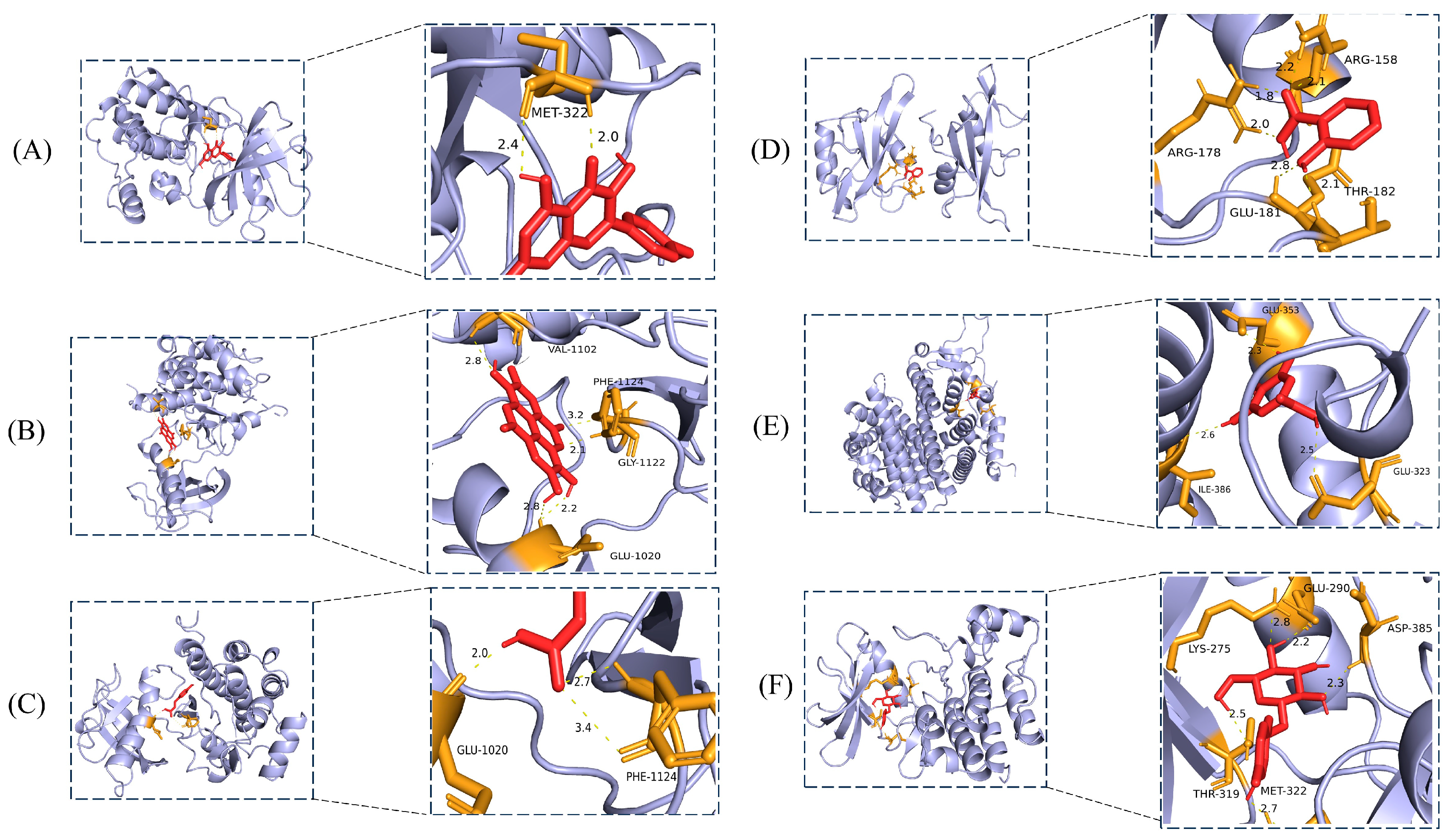
2.5. Molecular Docking
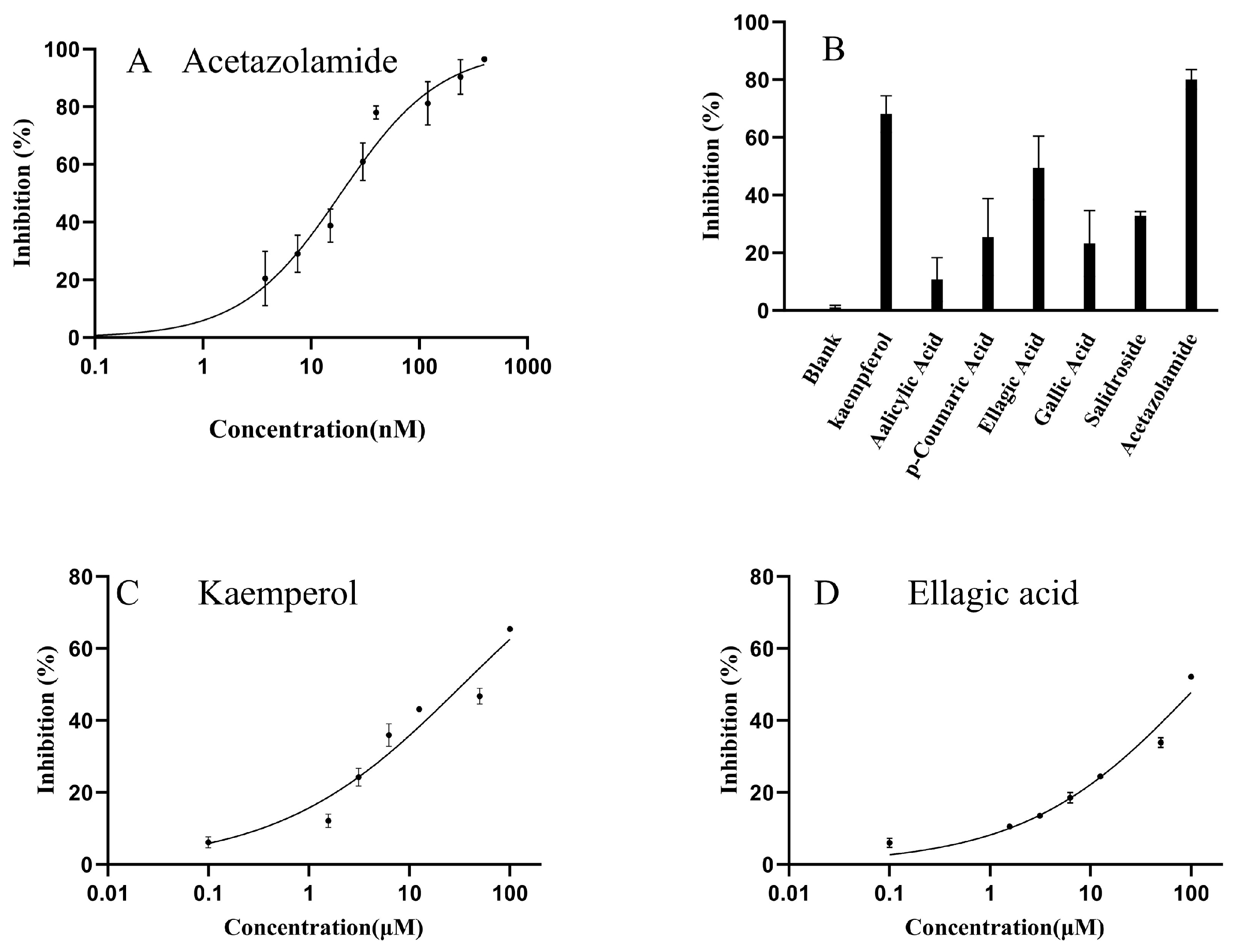
2.6. CA Inhibition Assay
3. Results
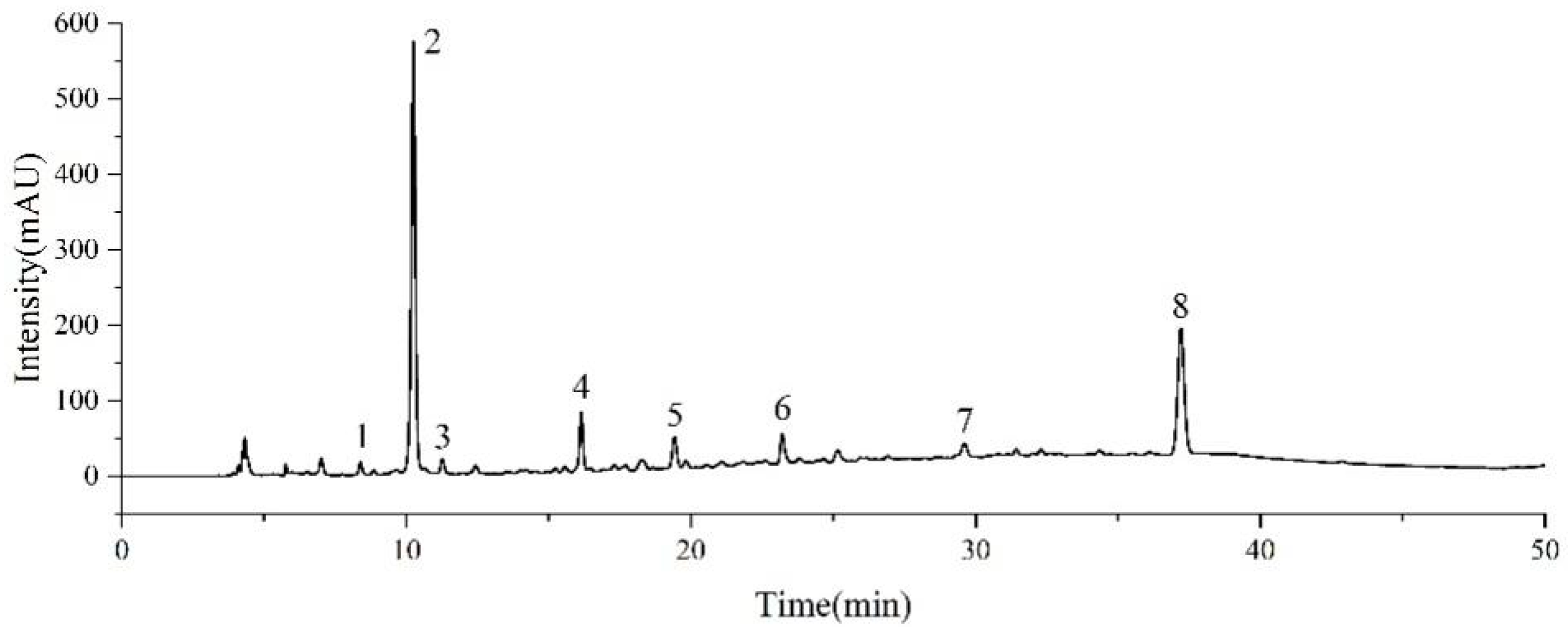
3.1. HPLC Analysis Results
3.2. LC-MS Analysis Results
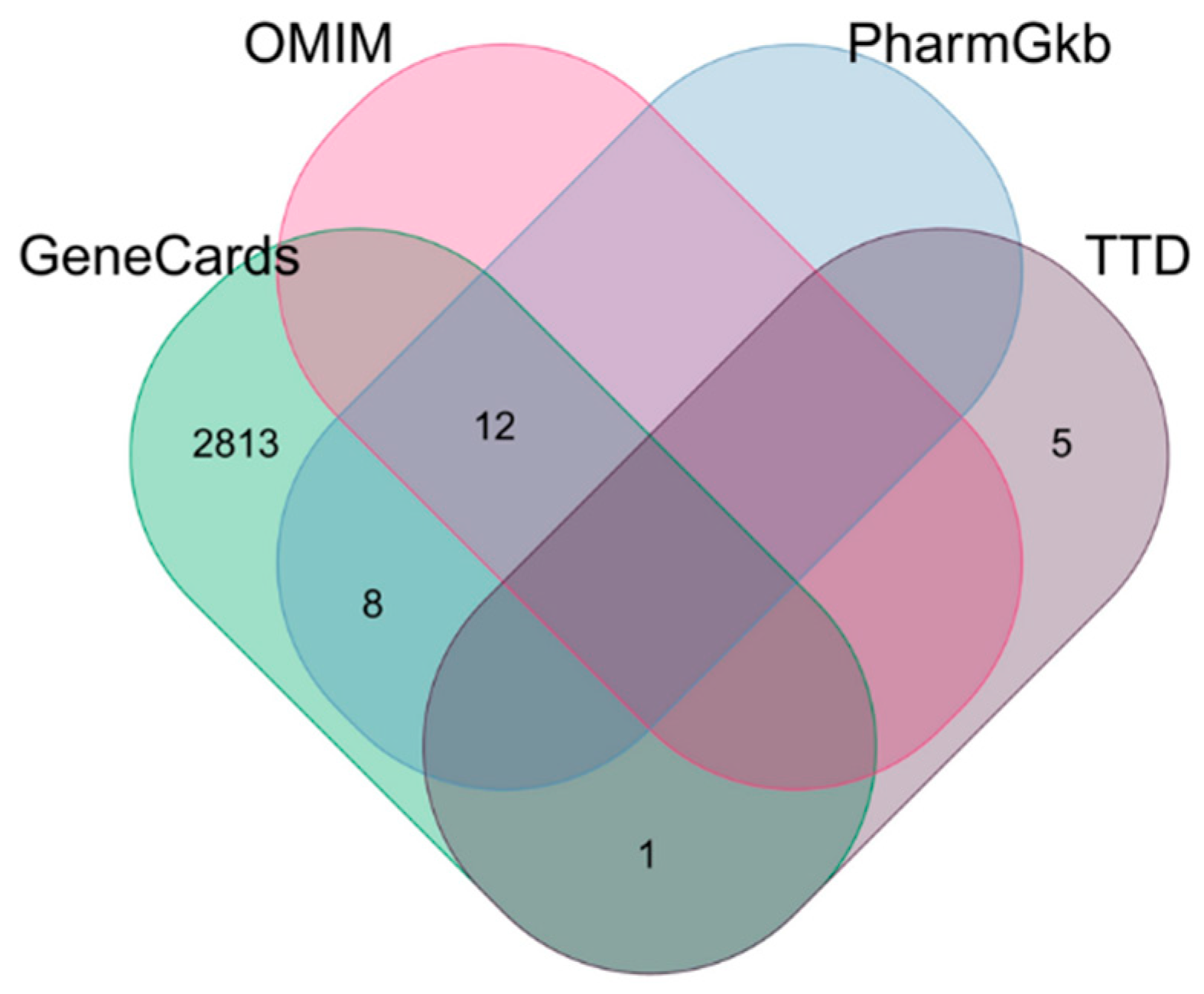
3.3. Compound and Target Gene Collection
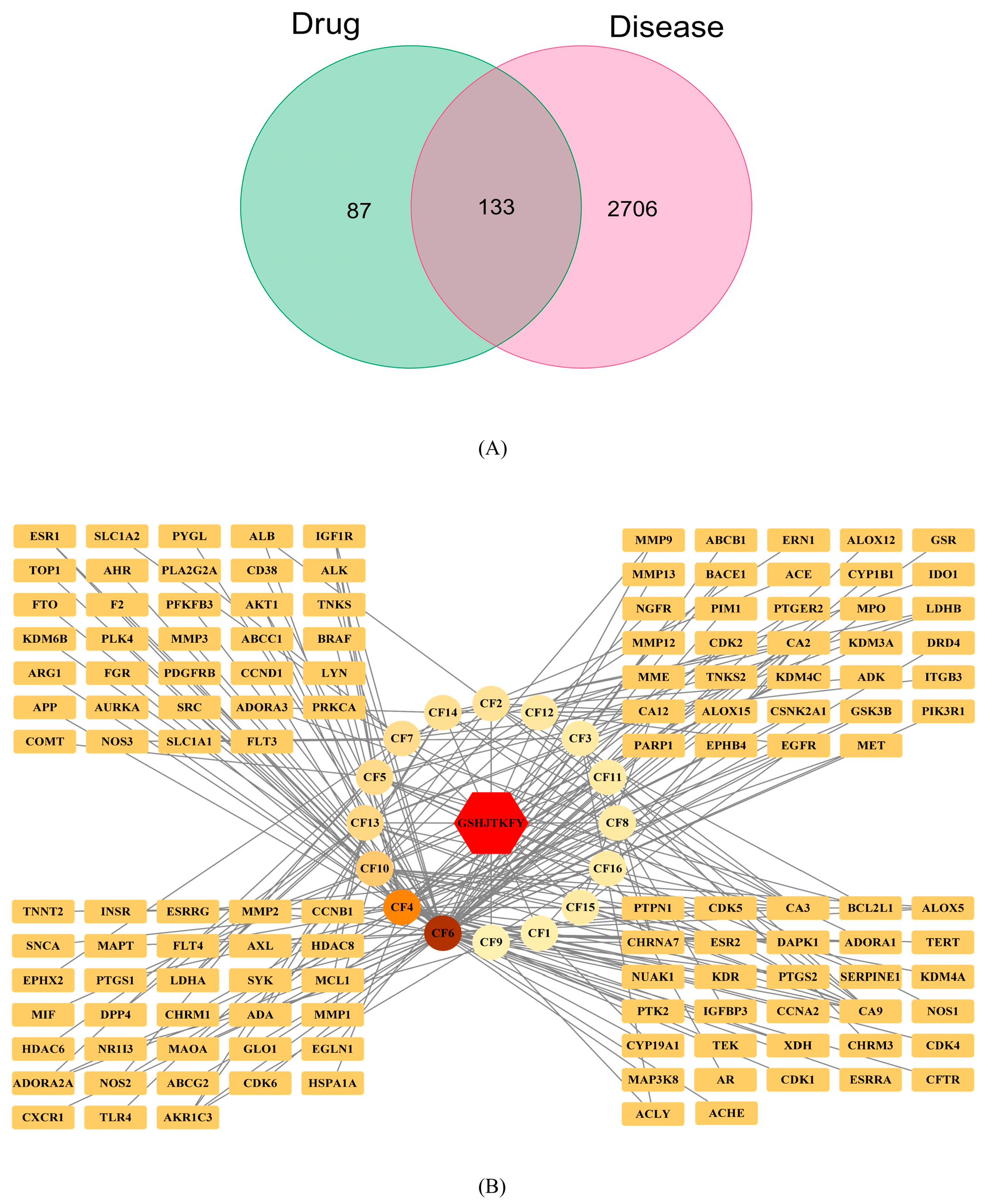
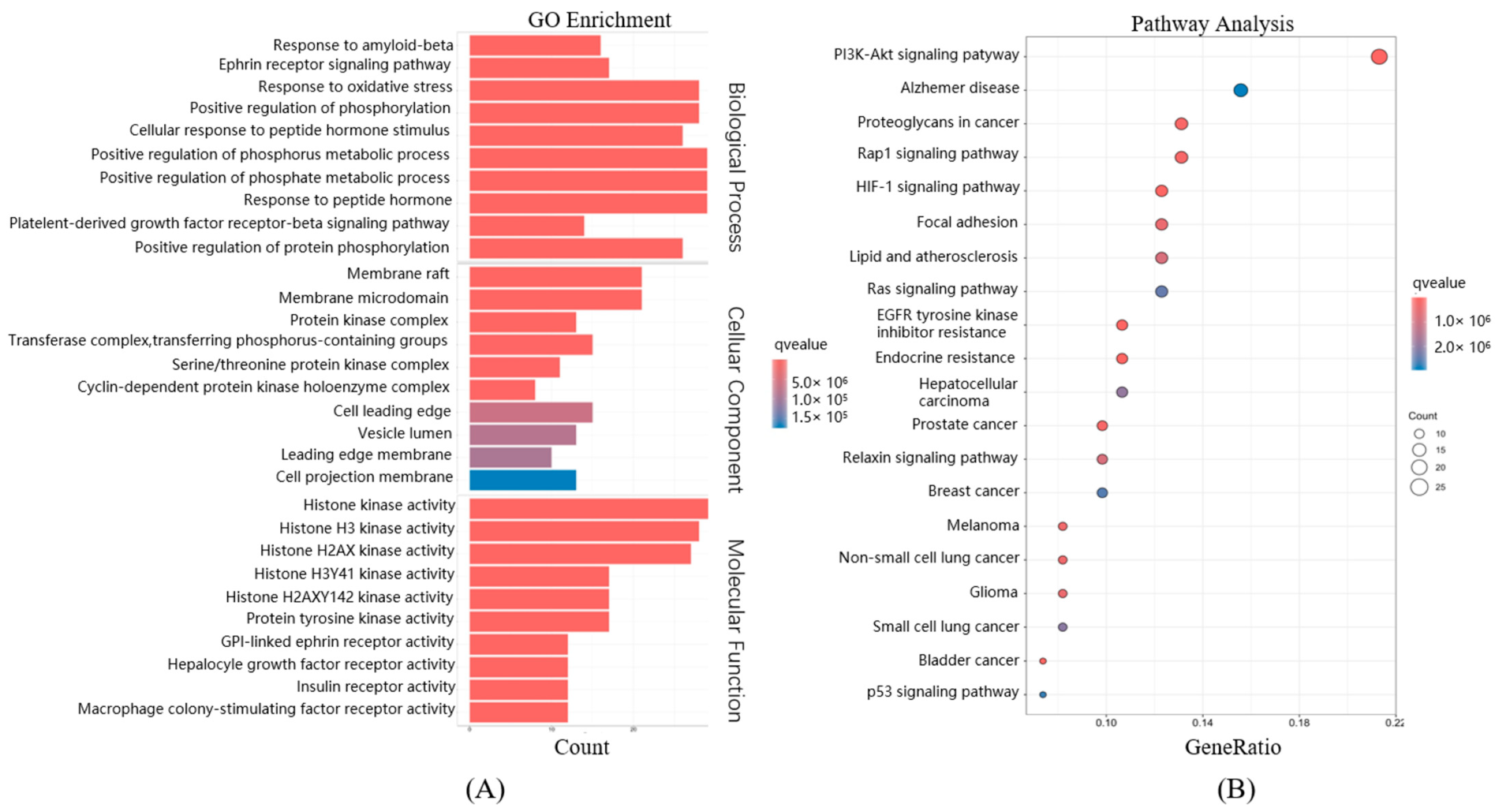
3.4. Construction of Networks and Pathway Analysis
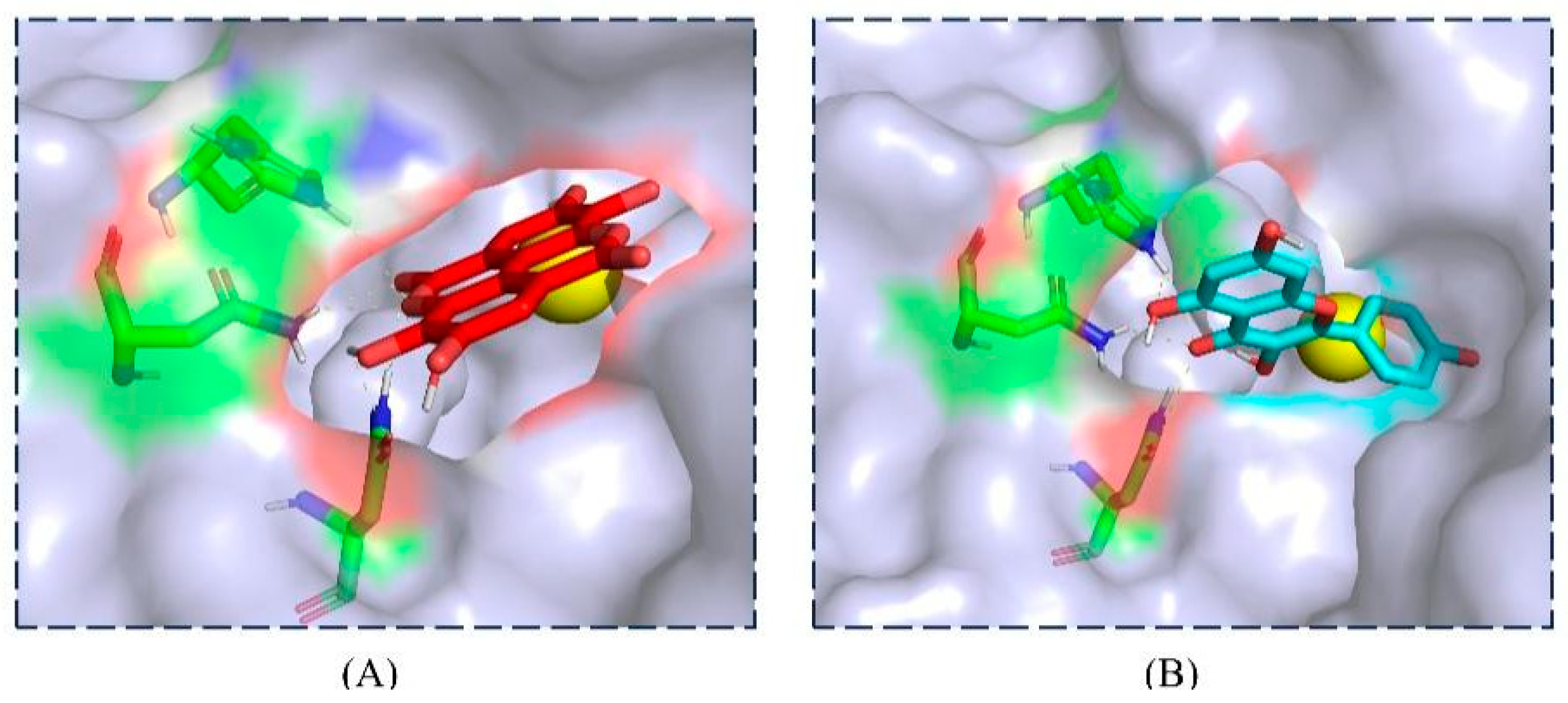
3.5. Molecular Docking Validation
3.6. CA Activity Inhibition Determination
4. Discussion
5. Conclusions
Supplementary Materials
Author Contributions
Funding
Institutional Review Board Statement
Informed Consent Statement
Data Availability Statement
Conflicts of Interest
Abbreviations
| GSHJT | Gao-shan-hong-jing-tian |
| HPLC | High-performance liquid chromatography |
| LC-MS | Liquid chromatography–mass spectrometry |
| CA | Carbonic anhydrase |
| AMS | Acute mountain sickness |
| MOPS | 4-Morpholinepropanesulfonic acid |
| PNPA | 4-nitrophenyl acetate |
| PPI | Protein–protein interaction |
| DC | Degree centrality |
| CC | Closeness centrality |
| BC | Betweenness centrality |
| EC | Eigenvector centrality |
| LAC | Local Average Connectivity |
| NC | Network centrality |
References
- Gatterer, H.; Villafuerte, F.C.; Ulrich, S.; Bhandari, S.S.; Keyes, L.E.; Burtscher, M. Altitude illnesses. Nat. Rev. Dis. Primers 2024, 10, 43. [Google Scholar] [CrossRef]
- Wang, X.; Cui, L.; Ji, X. Cognitive impairment caused by hypoxia: From clinical evidences to molecular mechanisms. Metab. Brain Dis. 2022, 37, 51–66. [Google Scholar] [CrossRef] [PubMed]
- Mallet, R.T.; Burtscher, J.; Pialoux, V.; Pasha, Q.; Ahmad, Y.; Millet, G.P.; Burtscher, M. Molecular mechanisms of high-altitude acclimatization. Int. J. Mol. Sci. 2023, 24, 1698. [Google Scholar] [CrossRef]
- Serrano-Dueñas, M. High-altitude headache. Expert Rev. Neurother. 2007, 7, 245–248. [Google Scholar] [CrossRef] [PubMed]
- Bailey, D.M.; Taudorf, S.; Berg, R.M.; Lundby, C.; McEneny, J.; Young, I.S.; Evans, K.A.; James, P.E.; Shore, A.; Hullin, D.A.; et al. Increased cerebral output of free radicals during hypoxia: Implications for acute mountain sickness? Am. J. Physiol. Regul. Integr. Comp. Physiol. 2009, 297, R1283–R1292. [Google Scholar] [CrossRef]
- Ellsworth, A.J.; Larson, E.B.; Strickland, D. A randomized trial of dexamethasone and acetazolamide for acute mountain sickness prophylaxis. Am. J. Med. 1987, 83, 1024–1030. [Google Scholar] [CrossRef]
- Gao, B.B.; Lu, T.S.; Zhang, H.Y. Research progress on Rhodiola L. plants. China J. Tradit. Chin. Med. Pharm. 2023, 38, 3740–3743. [Google Scholar]
- Ma, D.; Wang, L.; Jin, Y.; Gu, L.; Yin, G.; Wang, J.; Yu, X.-a.; Huang, H.; Zhang, Z.; Wang, B.; et al. Chemical characteristics of Rhodiola crenulata and its mechanism in acute mountain sickness using UHPLC-Q-TOF-MS/MS combined with network pharmacology analysis. J. Ethnopharmacol. 2022, 294, 115345. [Google Scholar] [CrossRef] [PubMed]
- Liang, K.; Ma, S.; Luo, K.; Wang, R.; Xiao, C.; Zhang, X.; Gao, Y.; Li, M. Salidroside: An overview of its promising potential and diverse applications. Pharmaceuticals 2024, 17, 1703. [Google Scholar] [CrossRef]
- Tao, H.; Wu, X.; Cao, J.; Peng, Y.; Wang, A.; Pei, J.; Xiao, J.; Wang, S.; Wang, Y. Rhodiola species: A comprehensive review of traditional use, phytochemistry, pharmacology, toxicity, and clinical study. Med. Res. Rev. 2019, 39, 1779–1850. [Google Scholar] [CrossRef]
- Liu, Y.; Chen, C.; Qiu, J.; Fang, Z.; Wu, H.; Zhang, X.; Wang, S. Characterization of the chemical constituents in Hongjingtian injection by liquid chromatography quadrupole time-of-flight mass spectrometry. Biomed. Chromatogr. 2019, 33, e4446. [Google Scholar] [CrossRef]
- Zakharenko, A.M.; Razgonova, M.P.; Pikula, K.S.; Golokhvast, K.S. Simultaneous determination of 78 compounds of Rhodiola rosea extract by supercritical CO2-extraction and HPLC-ESI-MS/MS spectrometry. Biochem. Res. Int. 2021, 2021, 9957490. [Google Scholar] [CrossRef]
- Ma, T.Y.; Xu, Z.X.; Lin, Y.G.; Liao, J.; Fan, X.H. From fragments to function: A review of AI-driven mass spectrometry and fragment-based strategies. Acupunct. Herb. Med. 2026, 6, 28–41. [Google Scholar] [CrossRef]
- Duan, X.; Wang, N.; Peng, D. Application of network pharmacology in synergistic action of Chinese herbal compounds. Theory Biosci. 2024, 143, 195–203. [Google Scholar] [CrossRef]
- Zhao, L.; Zhang, H.; Li, N.; Chen, J.; Xu, H.; Wang, Y.; Liang, Q. Network pharmacology, a promising approach to reveal the pharmacology mechanism of Chinese medicine formula. J. Ethnopharmacol. 2023, 309, 116306. [Google Scholar] [CrossRef]
- Pinzi, L.; Rastelli, G. Molecular docking: Shifting paradigms in drug discovery. Int. J. Mol. Sci. 2019, 20, 4331. [Google Scholar] [CrossRef]
- Yang, C.; Wang, J.; Cheng, Y.; Yang, X.; Feng, Y.; Zhuang, X.; Li, Z.; Zhao, W.; Zhang, J.; Sun, X.; et al. N-Quinary heterocycle-4-sulphamoylbenzamides exert anti-hypoxic effects as dual inhibitors of carbonic anhydrases I/II. Bioorg. Chem. 2020, 100, 103931. [Google Scholar] [CrossRef]
- Carter, M.J. Carbonic anhydrase: Isoenzymes, properties, distribution, and functional significance. Biol. Rev. 1972, 47, 465–513. [Google Scholar] [CrossRef] [PubMed]
- Singh, P.; Arifuddin, M.; Supuran, C.T.; Nerella, S.G. Carbonic anhydrase inhibitors: Structural insights and therapeutic potential. Bioorg. Chem. 2025, 156, 108224. [Google Scholar] [CrossRef] [PubMed]
- Swenson, E.R. Carbonic anhydrase inhibitors and high altitude illnesses. Subcell. Biochem. 2014, 75, 361–386. [Google Scholar] [CrossRef]
- Giovannuzzi, S.; Supuran, C.T. Human carbonic anhydrase modulators: The past, present, and future. Trends Pharmacol. Sci. 2025, 46, 836–847. [Google Scholar] [CrossRef]
- Huyut, Z.; Beydemir, Ş.; Gülçin, İ. Inhibition properties of some flavonoids on carbonic anhydrase I and II isoenzymes purified from human erythrocytes. J. Biochem. Mol. Toxicol. 2017, 31, e21930. [Google Scholar] [CrossRef]
- Karioti, A.; Carta, F.; Supuran, C.T. Phenols and polyphenols as carbonic anhydrase inhibitors. Molecules 2016, 21, 1649. [Google Scholar] [CrossRef] [PubMed]
- Supuran, C.T. Coumarin carbonic anhydrase inhibitors from natural sources. J. Enzym. Inhib. Med. Chem. 2020, 35, 1462–1470. [Google Scholar] [CrossRef]
- Jia, X.; Fan, X.; Yang, Z. Carrier-free immobilized enzyme for ligand fishing of carbonic anhydrase inhibitors in Salvia miltiorrhiza. Talanta 2025, 283, 127160. [Google Scholar] [CrossRef] [PubMed]
- Shen, N.; Wang, T.; Gan, Q.; Liu, S.; Wang, L.; Jin, B. Plant flavonoids: Classification, distribution, biosynthesis, and antioxidant activity. Food Chem. 2022, 383, 132531. [Google Scholar] [CrossRef]
- Wang, X.; Yang, Y.; An, Y.; Fang, G. The mechanism of anticancer action and potential clinical use of kaempferol in the treatment of breast cancer. Biomed. Pharmacother. 2019, 117, 109086. [Google Scholar] [CrossRef]
- Chu, T.; Wang, Y.; Wang, S.; Li, J.; Li, Z.; Wei, Z.; Li, J.; Bian, Y. Kaempferol regulating macrophage foaming and atherosclerosis through Piezo1-mediated MAPK/NF-κB and Nrf2/HO-1 signaling pathway. J. Adv. Res. 2025, 75, 635–650. [Google Scholar] [CrossRef]
- Zhao, J.; Ling, L.; Zhu, W.; Ying, T.; Yu, T.; Sun, M.; Zhu, X.; Du, Y.; Zhang, L. M1/M2 re-polarization of kaempferol biomimetic NPs in anti-inflammatory therapy of atherosclerosis. J. Control. Release 2023, 353, 1068–1083. [Google Scholar] [CrossRef]
- Li, N.; Cheng, Y.; Jin, T.; Cao, L.; Zha, J.; Zhu, X.; He, Q. Kaempferol and ginsenoside Rg1 ameliorate acute hypobaric hypoxia induced lung injury based on network pharmacology analysis. Toxicol. Appl. Pharmacol. 2023, 480, 116742. [Google Scholar] [CrossRef] [PubMed]
- Gil, T.Y.; Hong, C.H.; An, H.J. Anti-inflammatory effects of ellagic acid on keratinocytes via MAPK and STAT pathways. Int. J. Mol. Sci. 2021, 22, 1277. [Google Scholar] [CrossRef]
- Lu, L.X.; Wei, Y.J.; Yang, L.P.; Mierzhati, M.M.; Li, L.H.; Ma, X. Optimization of extraction process for gallic acid and evaluation of its antibacterial activity. J. Chin. Tradit. Pat. Med. 2025, 47, 1972–1975. [Google Scholar]
- Lu, G.; Wang, X.; Cheng, M.; Wang, S.; Ma, K. The multifaceted mechanisms of ellagic acid in the treatment of tumors: State-of-the-art. Biomed. Pharmacother. 2023, 165, 115132. [Google Scholar] [CrossRef]
- Liu, Q.; Liang, X.; Liang, M.; Qin, R.; Qin, F.; Wang, X. Ellagic acid ameliorates renal ischemic-reperfusion injury through NOX4/JAK/STAT signaling pathway. Inflammation 2020, 43, 298–309. [Google Scholar] [CrossRef]
- Li, S.; Wang, Y.; Zhou, W.; Wang, Y.; Zhang, Z.; Wu, Z.; Tu, B.; Xiao, C.; Liu, D.; Yan, J.; et al. Comprehensive proteomics profiling reveals biomarkers of oxidative stress and membrane integrity in red blood cells in acute altitude sickness. ACS Omega 2025, 10, 49870–49886. [Google Scholar] [CrossRef]
- Wang, Z.Y.; Wei, Y.M.; Chen, D.G. Kaempferol ameliorates oxidative stress injury in the retina through activating the PI3K/AKT/mTOR signaling pathway. J. Xuzhou Med. Univ. 2024, 44, 243–249. [Google Scholar]
- Deepika; Maurya, P.K. Ellagic acid: Insight into its protective effects in age-associated disorders. 3 Biotech 2022, 12, 340. [Google Scholar] [CrossRef] [PubMed]
- Chen, L.; Wu, S.Z.; Luo, F.M. Status of Research on Molecular Mechanisms and Management of Acute Mountain Sickness. West China Med. J. 2024, 39, 897–905. [Google Scholar]
- Bangar, S.P.; Chaudhary, V.; Sharma, N.; Bansal, V.; Ozogul, F.; Lorenzo, J.M. Kaempferol: A flavonoid with wider biological activities and its applications. Crit. Rev. Food Sci. Nutr. 2023, 63, 9580–9604. [Google Scholar] [CrossRef] [PubMed]
- Pooja; Sharma, M.; Singh, K.; Himashree, G.; Bhaumik, G.; Kumar, B.; Sethy, N.K. Estrogen receptor (ESR1 and ESR2)-mediated activation of eNOS-NO-cGMP pathway facilitates high altitude acclimatization. Nitric Oxide 2020, 102, 12–20. [Google Scholar] [CrossRef]
- Wang, B.; He, J.; Cui, Y.; Yu, S.; Zhang, H.; Wei, P.; Zhang, Q. The HIF-1α/EGF/EGFR signaling pathway facilitates the proliferation of yak alveolar type II epithelial cells in hypoxic conditions. Int. J. Mol. Sci. 2024, 25, 1442. [Google Scholar] [CrossRef]
- Corley, K.M.; Taylor, C.J.; Lilly, B. Hypoxia-inducible factor 1alpha modulates adhesion, migration, and FAK phosphorylation in vascular smooth muscle cells. J. Cell. Biochem. 2005, 96, 971–985. [Google Scholar] [CrossRef] [PubMed]
- Niisato, M.; Yamashita, M.; Kawasaki, Y.; Furukawa, H.; Sato, T.; Kawada, I. Insulin-like growth factor-1/insulin-like growth factor-1 receptor signalling in macrophages facilitates recovery from acute lung injury. Ann. Med. 2026, 58, 2606565. [Google Scholar] [CrossRef] [PubMed]
- Qin, X.D.; Liu, Y.; Zhu, J.Q.; Wang, S.; Lin, S.J.; Guo, Z.K. Mechanism study of Qinnao Yizhi Recipe on fighting against neuron apoptosis through regulating PI3K/Akt signaling transduction way. Chin. J. Integr. Tradit. West. Med. 2017, 37, 1482–1486. [Google Scholar]
- Aschner, M.; Skalny, A.V.; Lu, R.; Santamaria, A.; Zhou, J.-C.; Ke, T.; Karganov, M.Y.; Tsatsakis, A.; Golokhvast, K.S.; Bowman, A.B.; et al. The role of hypoxia-inducible factor 1 alpha (HIF-1α) modulation in heavy metal toxicity. Arch. Toxicol. 2023, 97, 1299–1318. [Google Scholar] [CrossRef] [PubMed]
- Cai, Y.; Ying, F.; Liu, H.; Ge, L.; Song, E.; Wang, L.; Zhang, D.; Tang, E.H.C.; Xia, Z.; Irwin, M.G. Deletion of Rap1 protects against myocardial ischemia/reperfusion injury through suppressing cell apoptosis via activation of STAT3 signaling. FASEB J. 2020, 34, 4482–4496. [Google Scholar] [CrossRef]
- Yang, H.; Xue, W.; Ding, C.; Wang, C.; Xu, B.; Chen, S.; Zha, B.; Sun, Y.; Zhu, H.; Zhang, J.; et al. Vitexin mitigates myocardial ischemia/reperfusion injury in rats by regulating mitochondrial dysfunction via Epac1-Rap1 signaling. Oxidative Med. Cell. Longev. 2021, 2021, 9921982. [Google Scholar] [CrossRef]



| No. | Name | RT (min) | m/z | Adduct | ppm | Formula |
|---|---|---|---|---|---|---|
| 1 * | Salicylic acid | 2.490 | 137.02460 | [M-H]− | 1.0 | C7H6O3 |
| 2 | Volemitol | 2.924 | 211.0824 | [M-H]− | 0.2 | C7H16O7 |
| 3 | Ribose | 2.960 | 209.0670 | [M+CH3COO]− | 1.6 | C5H10O5 |
| 4 | Gluconic acid | 2.983 | 195.0511 | [M-H]− | 0.4 | C6H12O7 |
| 5 | (2S,3R,4S)-4-(2-{[(2E)-3-(3,4-Dihydroxyphenyl)-2-propenoyl]oxy}ethyl)-2-(beta-D-glucopyranosyloxy)-3-vinyl-3,4-dihydro-2H-pyran-5-carboxylic acid | 3.007 | 537.1662 | [M-H]− | 8.9 | C25H30O13 |
| 6 | Lactulose | 3.042 | 341.1079 | [M-H]− | 3.0 | C12H22O11 |
| 7 | Calceolarioside A | 3.099 | 477.1446 | [M-H]− | 9.2 | C23H26O11 |
| 8 | Betaine | 3.109 | 118.0858 | [M+H]+ | 5.0 | C5H11NO2 |
| 9 | Trehalose | 3.133 | 365.1050 | [M+Na]+ | 1.2 | C12H22O11 |
| 10 | Gentiobiose | 3.144 | 381.0791 | [M+K]+ | 0.7 | C12H22O11 |
| 11 | D-(-)-quinic acid | 3.193 | 191.0564 | [M-H]− | 1.3 | C7H12O6 |
| 12 | Phloroglucinol | 3.214 | 127.0382 | [M+H]+ | 6.1 | C6H6O3 |
| 13 | Maltotriose | 3.216 | 539.1375 | [M+Cl]− | 0.3 | C18H32O16 |
| 14 | Abscisic acid | 3.354 | 287.1238 | [M+Na]+ | 5.5 | C15H20O4 |
| 15 | L-Pipecolic acid | 3.644 | 130.0861 | [M+H]+ | 1.2 | C6H11NO2 |
| 16 | Malate | 3.701 | 133.0142 | [M-H]− | 0.0 | C4H6O5 |
| 17 | Isocitric acid | 3.725 | 191.0198 | [M-H]− | 0.2 | C6H8O7 |
| 18 | N-Fructosyl pyroglutamate | 4.106 | 290.0883 | [M-H]− | 0.6 | C11H17NO8 |
| 19 | Adenosine | 4.841 | 268.1039 | [M+H]+ | 0.3 | C10H13N5O4 |
| 20 | Guanosine | 5.171 | 284.099 | [M+H]+ | 1.6 | C10H13N5O5 |
| 21 | Gallic acid hexoside | 5.370 | 331.0667 | [M-H]− | 1.0 | C13H16O10 |
| 22 * | Gallic acid | 6.158 | 169.0145 | [M-H]− | 0.5 | C7H6O5 |
| 23 | 3-Hydroxy-3-methylglutaric acid | 7.459 | 345.0823 | [2M-2H+Na]− | 5.7 | C6H10O5 |
| 24 | 3-[3-[4,5-dihydroxy-6-(hydroxymethyl)-3-[3,4,5-trihydroxy-6-(hydroxymethyl)oxan-2-yl]oxyoxan-2-yl]oxy-4,5-dihydroxy-6-(hydroxymethyl)oxan-2-yl]oxy-2-(3,4-dihydroxyphenyl)-5,7-dihydroxychromen-4-one | 7.832 | 787.1939 | [M-H]− | 0.1 | C33H40O22 |
| 25 | Quercetin-3,4′-O-di-beta-glucoside | 9.039 | 627.1553 | [M+H]+ | 0.5 | C27H30O17 |
| 26 | Pyrogallol | 9.080 | 127.0382 | [M+H]+ | 6.1 | C6H6O3 |
| 27 | (E)-3-[2-[(2S,3R,4S,5S,6R)-3,4,5-trihydroxy-6-(hydroxymethyl)oxan-2-yl]oxyphenyl]prop-2-enoic acid | 9.095 | 371.0979 | [M+HCOO]− | 1.1 | C15H18O8 |
| 28 | Aucubin | 9.187 | 345.1187 | [M-H]− | 1.1 | C15H22O9 |
| 29 | Acremine I | 9.198 | 299.1134 | [M+CH3COO]− | 0.7 | C12H16O5 |
| 30 | 3,5-Dihydroxybenzoic acid | 9.279 | 153.0190 | [M-H]− | 2.0 | C7H6O4 |
| 31 * | Salidroside | 9.135 | 301.1194 | [M-H]− | 1.0 | C14H20O7 |
| 32 | (2R,3S,4S,5R,6R)-2-[[(2R,3R,4R)-3,4-dihydroxy-4-(hydroxymethyl)oxolan-2-yl]oxymethyl]-6-[2-(4-hydroxyphenyl)ethoxy]oxane-3,4,5-triol | 9.394 | 477.1602 | [M+HCOO]− | 2.5 | C19H28O11 |
| 33 | 4-{[(3S,4R,5S)-3-Hydroxy-5-(4-hydroxy-3-methoxyphenyl)-4-(hydroxymethyl)tetrahydro-3-furanyl]methyl}-2-methoxyphenyl beta-D-glucopyranoside | 9.731 | 583.2019 | [M+HCOO]− | 2.4 | C26H34O12 |
| 34 | [3,4,5-trihydroxy-6-(3,4,5-trihydroxybenzoyl)oxyoxan-2-yl]methyl 3,4,5-trihydroxybenzoate | 10.357 | 483.0771 | [M-H]− | 1.9 | C20H20O14 |
| 35 | 3,4-di-O-galloylquinic acid | 10.473 | 495.0762 | [M-H]− | 3.7 | C21H20O14 |
| 36 | Caffeic acid hexoside | 11.316 | 341.0873 | [M-H]− | 1.3 | C15H18O9 |
| 37 | Phenylacetaldehyde | 12.107 | 121.0640 | [M+H]+ | 6.5 | C8H8O |
| 38 | 1,3,6-tri-O-galloylglucose | 12.998 | 635.0877 | [M-H]− | 2.0 | C27H24O18 |
| 39 * | Tyrosol | 13.189 | 139.0754 | [M+H]+ | 2.6 | C8H10O2 |
| 40 | 3-(3,4-Dihydroxyphenyl)Prop-2-Enoic Acid | 15.072 | 179.0350 | [M-H]− | 0.3 | C9H8O4 |
| 41 | 5,7-dihydroxy-2-(4-hydroxy-3-methoxyphenyl)-6-methoxy-3-[(2S,3R,4S,5S,6R)-3,4,5-trihydroxy-6-[[(2R,3R,4S,5S,6R)-3,4,5-trihydroxy-6-(hydroxymethyl)oxan-2-yl]oxymethyl]oxan-2-yl]oxychromen-4-one | 16.222 | 671.1826 | [M+H]+ | 1.3 | C29H34O18 |
| 42 | Epigallocatechin-3-Monogallate | 16.288 | 457.0763 | [M-H]− | 3.0 | C22H18O11 |
| 43 | Sweroside | 16.600 | 359.1337 | [M+H]+ | 0.0 | C16H22O9 |
| 44 | [(2R,3R,4S,5R,6S)-2-(hydroxymethyl)-4,5,6-tris[(3,4,5-trihydroxybenzoyl)oxy]oxan-3-yl] 3,4,5-trihydroxybenzoate | 17.507 | 787.1003 | [M-H]− | 0.5 | C34H28O22 |
| 45 | (3R,3′R,4R,6′S,7R)-5-Hydroxy-6′,7-dimethyl-6,8-dioxo-3′,4,4′,5′,6,6′,7,8-octahydrospiro[isochromene-3,2′-pyran]-3′,4,7-triyl triacetate | 17.791 | 451.1237 | [M-H]− | 1.9 | C21H24O11 |
| 46 | (-)-Epigallocatechin gallate | 18.470 | 457.0769 | [M-H]- | 1.5 | C22H18O11 |
| 47 | (-)-Gallocatechin gallate | 19.557 | 459.0916 | [M+H]+ | 1.3 | C22H18O11 |
| 48 | Quercetin-3,4′-O-di-beta-glucoside | 19.458 | 625.1391 | [M-H]− | 3.2 | C27H30O17 |
| 49 * | p-Coumaric acid | 22.917 | 163.04230 | [M-H]− | 0.7 | C9H8O3 |
| 50 | Luteolin-4′-O-glucoside | 22.981 | 447.0925 | [M-H]− | 1.7 | C21H20O11 |
| 51 | (2R,3S,4S,5R,6R)-2-[[(2R,3S,4S,5R)-3,4-dihydroxy-5-(hydroxymethyl)oxolan-2-yl]oxymethyl]-6-[(E)-3-phenylprop-2-enoxy]oxane-3,4,5-triol | 25.707 | 446.2019 | [M+NH4]+ | 0.4 | C20H28O10 |
| 52 * | Ellagic acid | 27.309 | 300.9988 | [M-H]− | 0.7 | C14H6O8 |
| 53 | 1,4-Cyclohexanedione | 30.860 | 113.0593 | [M+H]+ | 3.5 | C6H8O2 |
| 54 | Spiraeoside | 31.978 | 463.0867 | [M-H]− | 3.2 | C21H20O12 |
| 55 | Isoquercetrin | 32.263 | 465.1028 | [M+H]+ | 0.2 | C21H20O12 |
| 56 | Tricin 5-glucoside | 32.759 | 493.1346 | [M+H]+ | 1.0 | C23H24O12 |
| 57 | Syringetin-3-O-glucoside | 34.147 | 509.1284 | [M+H]+ | 1.1 | C23H24O13 |
| 58 | Luteolin-7-glucoside | 34.354 | 449.1080 | [M+H]+ | 0.3 | C21H20O11 |
| 59 | Syringetin-3-O-galactoside | 37.871 | 507.1138 | [M-H]− | 1.3 | C23H24O13 |
| 60 | Afzelin | 38.210 | 431.0973 | [M-H]− | 2.5 | C21H20O10 |
| 61 | Quercetin 3-O-glucuronide | 40.250 | 477.0663 | [M-H]− | 2.5 | C21H18O13 |
| 62 | Isorhamnetin-3-glucoside-4′-glucoside | 42.849 | 639.1556 | [M-H]− | 1.7 | C28H32O17 |
| 63 | Lonicerin | 43.109 | 595.1651 | [M+H]+ | 1.5 | C27H30O15 |
| 64 | (2R,3R,4S,5S,6R)-2-octoxy-6-[[(2S,3R,4S,5R)-3,4,5-trihydroxyoxan-2-yl]oxymethyl]oxane-3,4,5-triol | 48.219 | 469.2278 | [M+HCOO]− | 2.7 | C19H36O10 |
| 65 | (6,6-Dimethylbicyclo [3.1.1]hept-2-yl)methyl 6-O-[(2R,3R,4R)-3,4-dihydroxy-4-(hydroxymethyl)tetrahydro-2-furanyl]-beta-D-glucopyranoside | 48.371 | 493.2277 | [M+HCOO]− | 2.7 | C21H36O10 |
| 66 | Kaempferol-7-O-alpha-L-rhamnoside | 48.532 | 431.0969 | [M-H]− | 3.4 | C21H20O10 |
| 67 | Atractyloside A | 48.565 | 471.221 | [M+Na]+ | 1.7 | C21H36O10 |
| 68 | Kaempferol-7-O-rhamnoside | 48.753 | 433.1128 | [M+H]+ | 0.3 | C21H20O10 |
| 69 | Luteolin | 48.775 | 285.0400 | [M-H]− | 1.5 | C15H10O6 |
| 70 | (2Z)-4,6-dihydroxy-2-[(4-hydroxy-3,5-dimethoxyphenyl)methylidene]-1-benzofuran-3-one | 52.869 | 329.0663 | [M-H]− | 1.1 | C17H14O7 |
| 71 * | Kaempferol | 53.089 | 285.0436 | [M-H]− | 0.7 | C15H10O6 |
| NO. | Name |
|---|---|
| CF1 | 1,4-Cyclohexanedione |
| CF2 | 3,5-Dihydroxybenzoic Acid |
| CF3 | 3-Hydroxy-3-methylglutaric acid |
| CF4 | Ellagic acid |
| CF5 | Gallic acid |
| CF6 | Kaempferol |
| CF7 | L-Pipecolic acid |
| CF8 | Luteolin |
| CF9 | Malate |
| CF10 | p-Coumaric acid |
| CF11 | Phenylacetaldehyde |
| CF12 | Phloroglucinol |
| CF13 | Salicylic acid |
| CF14 | Salidroside |
| CF15 | Pyrogallol |
| CF16 | Tyrosol |
| NO. | Name | Degree |
|---|---|---|
| CF6 | Kaempferol | 69 |
| CF4 | Ellagic acid | 42 |
| CF10 | p-Coumaric acid | 18 |
| CF13 | Salicylic acid | 13 |
| CF5 | Gallic acid | 12 |
| Compound | Binding Energy (Kcal/mol) | ||||||
|---|---|---|---|---|---|---|---|
| SRC | PTK2 | PIK3R1 | ESR1 | EGFR | IGF1R | LYN | |
| Kaempferol | −8.0 | −7.5 | −6.9 | −8.3 | −7.7 | −8.2 | −8.6 |
| Ellagic acid | −8.6 | −9.2 | −7.0 | −8.7 | −8.2 | −9.4 | −8.6 |
| p-Coumaric acid | −5.9 | −6.0 | −5.6 | −6.3 | −5.4 | −6.3 | −5.9 |
| Salicylic acid | −6.4 | −5.8 | −5.0 | −6.1 | −5.0 | −5.9 | −5.7 |
| Gallic acid | −6.2 | −5.6 | −4.8 | −6.6 | −5.5 | −5.8 | −6.1 |
| Salidroside | −7.5 | −7.4 | −6.5 | −7.3 | −6.9 | −7.4 | −7.7 |
Disclaimer/Publisher’s Note: The statements, opinions and data contained in all publications are solely those of the individual author(s) and contributor(s) and not of MDPI and/or the editor(s). MDPI and/or the editor(s) disclaim responsibility for any injury to people or property resulting from any ideas, methods, instructions or products referred to in the content. |
© 2026 by the authors. Licensee MDPI, Basel, Switzerland. This article is an open access article distributed under the terms and conditions of the Creative Commons Attribution (CC BY) license.
Share and Cite
Zheng, C.; Zhu, R.; Hua, S.; Shen, G.-F.; Zhang, S.; Tang, Y.; Wang, Y. Anti-Hypoxic Phytochemicals in Gao-Shan-Hong-Jing-Tian Oral Liquid: LC-MS Profiling, Network Pharmacology, and Carbonic Anhydrase Inhibition. Appl. Sci. 2026, 16, 6022. https://doi.org/10.3390/app16126022
Zheng C, Zhu R, Hua S, Shen G-F, Zhang S, Tang Y, Wang Y. Anti-Hypoxic Phytochemicals in Gao-Shan-Hong-Jing-Tian Oral Liquid: LC-MS Profiling, Network Pharmacology, and Carbonic Anhydrase Inhibition. Applied Sciences. 2026; 16(12):6022. https://doi.org/10.3390/app16126022
Chicago/Turabian StyleZheng, Cheng, Rui Zhu, Shuyang Hua, Guo-Fang Shen, Shujing Zhang, Yu Tang, and Yi Wang. 2026. "Anti-Hypoxic Phytochemicals in Gao-Shan-Hong-Jing-Tian Oral Liquid: LC-MS Profiling, Network Pharmacology, and Carbonic Anhydrase Inhibition" Applied Sciences 16, no. 12: 6022. https://doi.org/10.3390/app16126022
APA StyleZheng, C., Zhu, R., Hua, S., Shen, G.-F., Zhang, S., Tang, Y., & Wang, Y. (2026). Anti-Hypoxic Phytochemicals in Gao-Shan-Hong-Jing-Tian Oral Liquid: LC-MS Profiling, Network Pharmacology, and Carbonic Anhydrase Inhibition. Applied Sciences, 16(12), 6022. https://doi.org/10.3390/app16126022