



Systematic Literature Review of AI-Driven Multi-Cloud Anomaly Detection in Zero-Trust Frameworks


Abstract
1. Introduction
1.1. Problem Statement
1.2. Research Questions
1.3. Contributions
- An in-depth systematic taxonomy of AI-based techniques for anomaly detection techniques in cloud and multi-cloud environments, including supervised, unsupervised, self-supervised, federated learning, graph-based, and hybrid approaches.
- A mapping that connects AI methods, deployed models (single cloud, hybrid, multi-cloud), and zero-trust capabilities such as continuous monitoring, micro-segmentation, identity federation, and policy-based enforcement.
- A comparative analysis of widely used datasets and evaluation metrics, including their strengths, limitations, and suitability in multi-cloud and zero trust scenarios.
- Conducing comprehensive research gap, future work direction in multi cloud environments with aligned with privacy and compliance requirements.
2. Background
2.1. Cloud Computing and the Move Toward Multi-Cloud
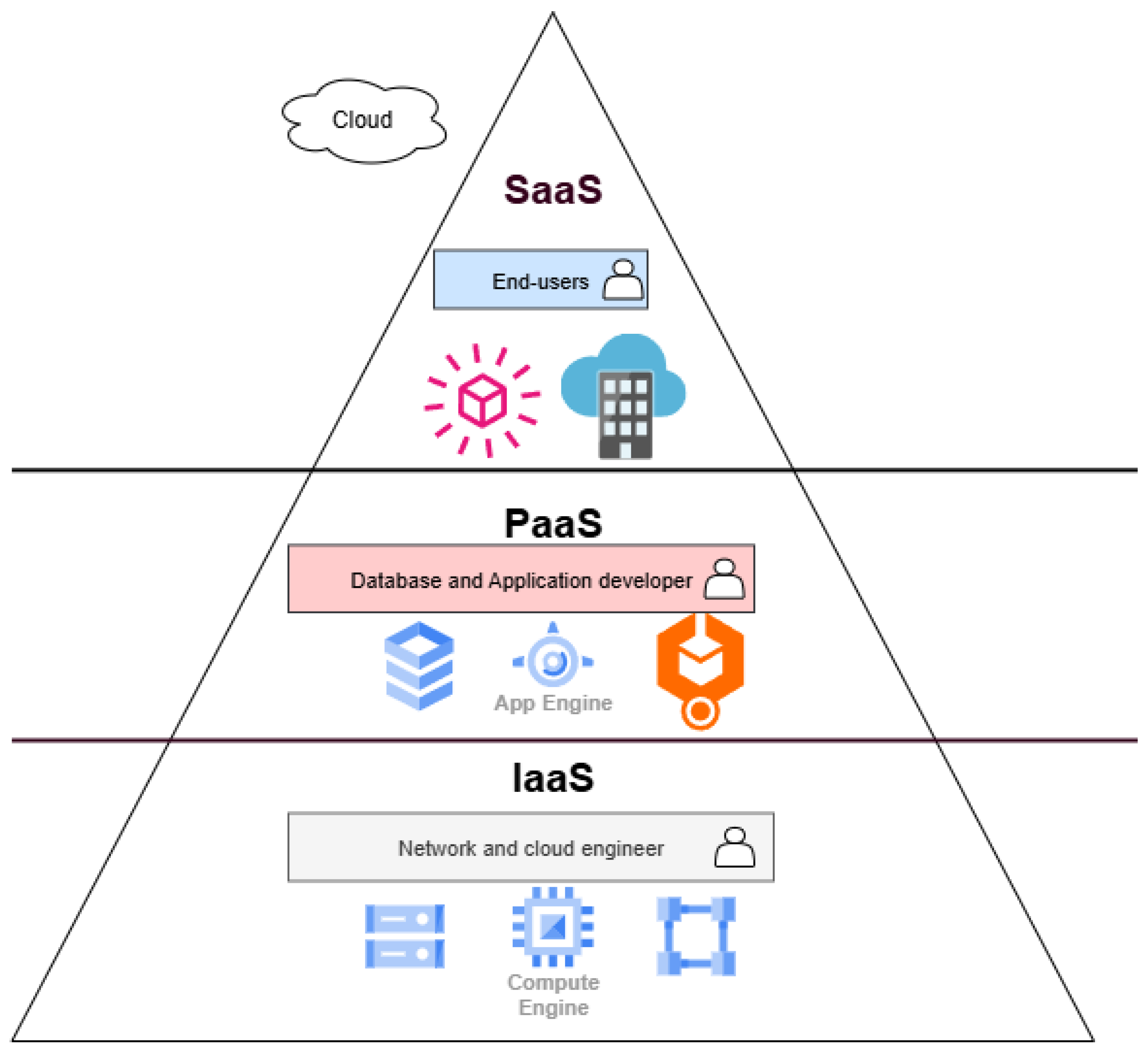
2.2. Cloud Services Models
2.3. Security Challenges in Multi-Cloud Environments
2.4. Evolution of the Threat Landscape in Cloud Computing
2.5. Zero Trust Security Paradigm
2.6. AI-Driven Anomaly Detection for Cloud Security
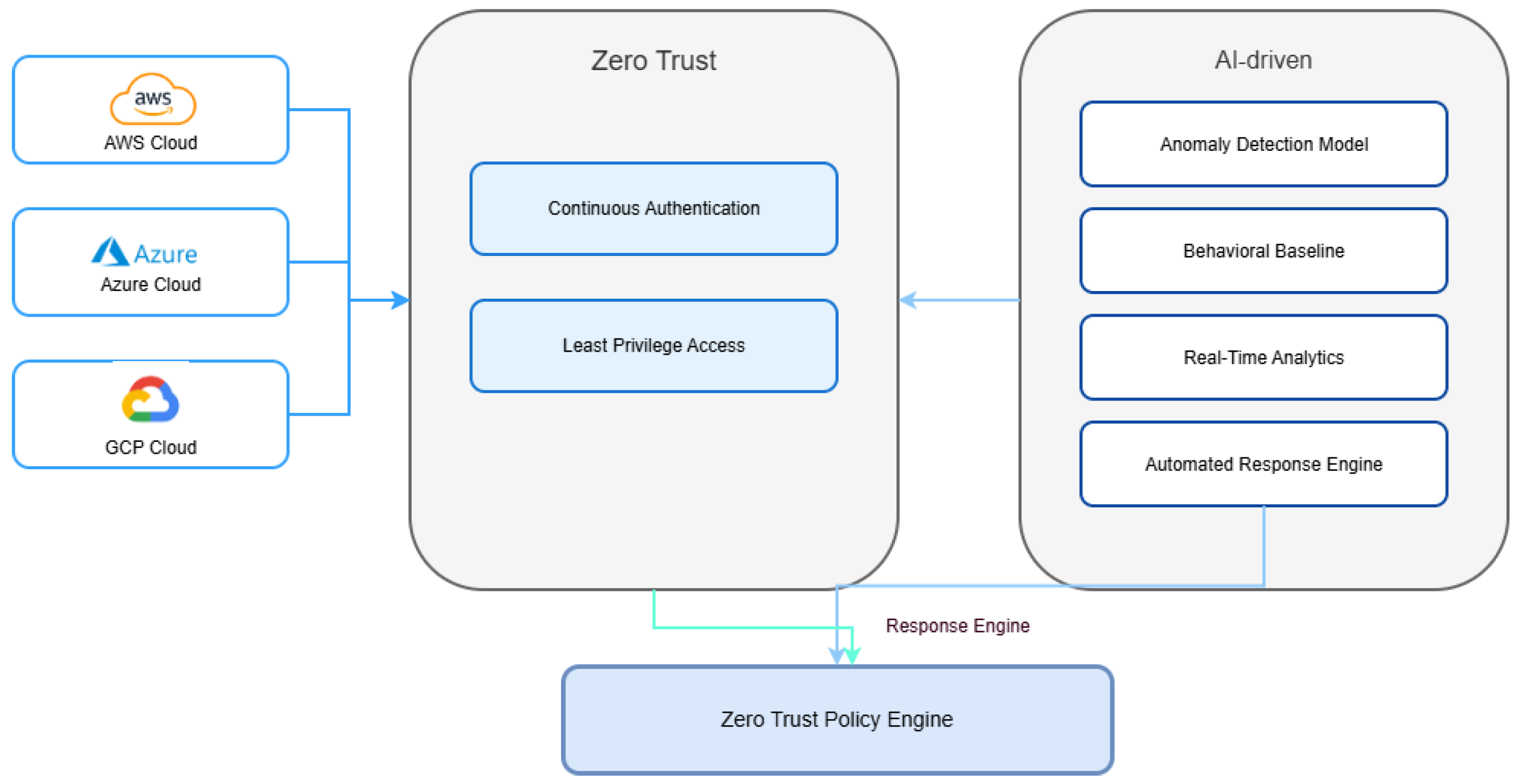
2.7. Integration of Zero Trust and AI in Multi-Cloud Environments
2.8. Regulatory and Governance Considerations
3. Research Methodology
3.1. Inclusion and Exclusion Criteria
3.1.1. Inclusion Criteria
3.1.2. Exclusion Criteria
3.2. Information Sources
3.3. Search Strategy
(“multi-cloud” OR “hybrid cloud”) AND (“anomaly detection” OR “AI-driven security”) AND (“Zero Trust” OR “zero-trust architecture”).
Search Filters Applied
3.4. Selection Process
3.5. Quality Assessment
- Clarity of the research objectives.
- Description of the AI technique and system architecture.
- Clear definition of what is a cloud or multi-cloud environment.
- Evaluation and reporting of performance measures.
- Clear consideration of zero-trust principles.
- Relevance to anomaly detection and cloud security.
- Level of the methodology used to indicate reproducibility.
3.6. Data Extraction and Coding
- Author(s) and year of publication.
- Application domain (e.g., enterprise systems, IoT, healthcare, telecommunication).
- Model of cloud deployment (e.g., single cloud, hybrid, multi-cloud, edge/fog).
- Type of AI learning technique (e.g., supervised, unsupervised, self-supervised, federated, graph-based, hybrid).
- Datasets used for evaluation.
- Reported evaluation metrics (e.g., accuracy, precision, recall, F1 score).
- Zero-trust principles (e.g., continuous monitoring, identity management, micro-segmentation, policy enforcement).
- Key findings and limitations.
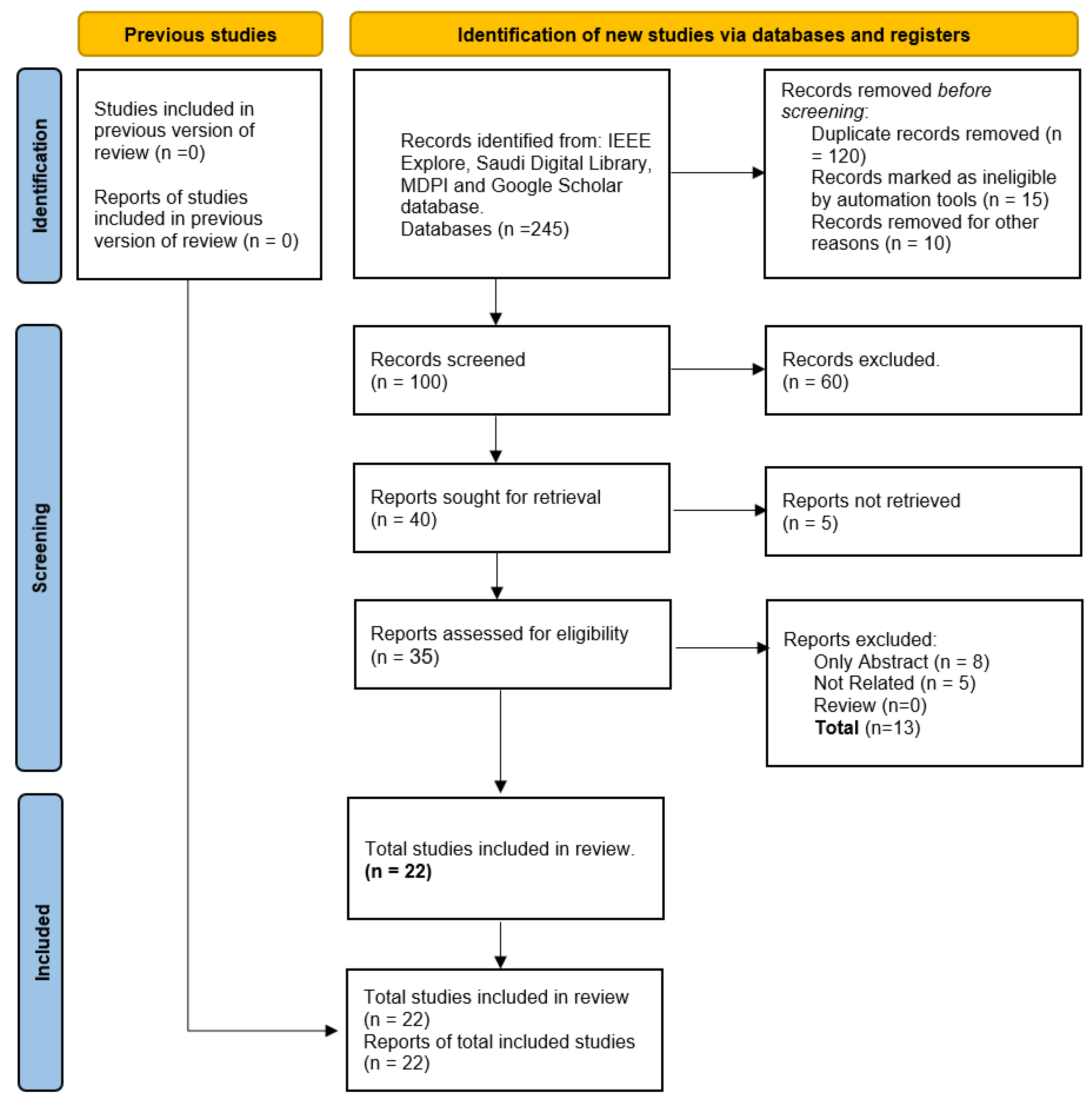
3.7. Identification Phase
3.8. Screening Phase
3.9. Eligibility and Inclusion Phase
4. Literature Review
4.1. AI-Only Anomaly Detection
4.2. AI-Enabled Zero-Trust Architectures
4.3. Zero Trust-Heavy Studies Focusing on Architecture and Policy
4.4. Survey/Conceptual Works
5. Discussion of Related Work
6. Results and Discussion
6.1. RQ1—AI Methods and Algorithms
6.2. RQ2—Datasets and Evaluation Metrics
6.3. RQ3—Integration of Zero-Trust Principles
6.4. RQ4—Operational Challenges and Limitations
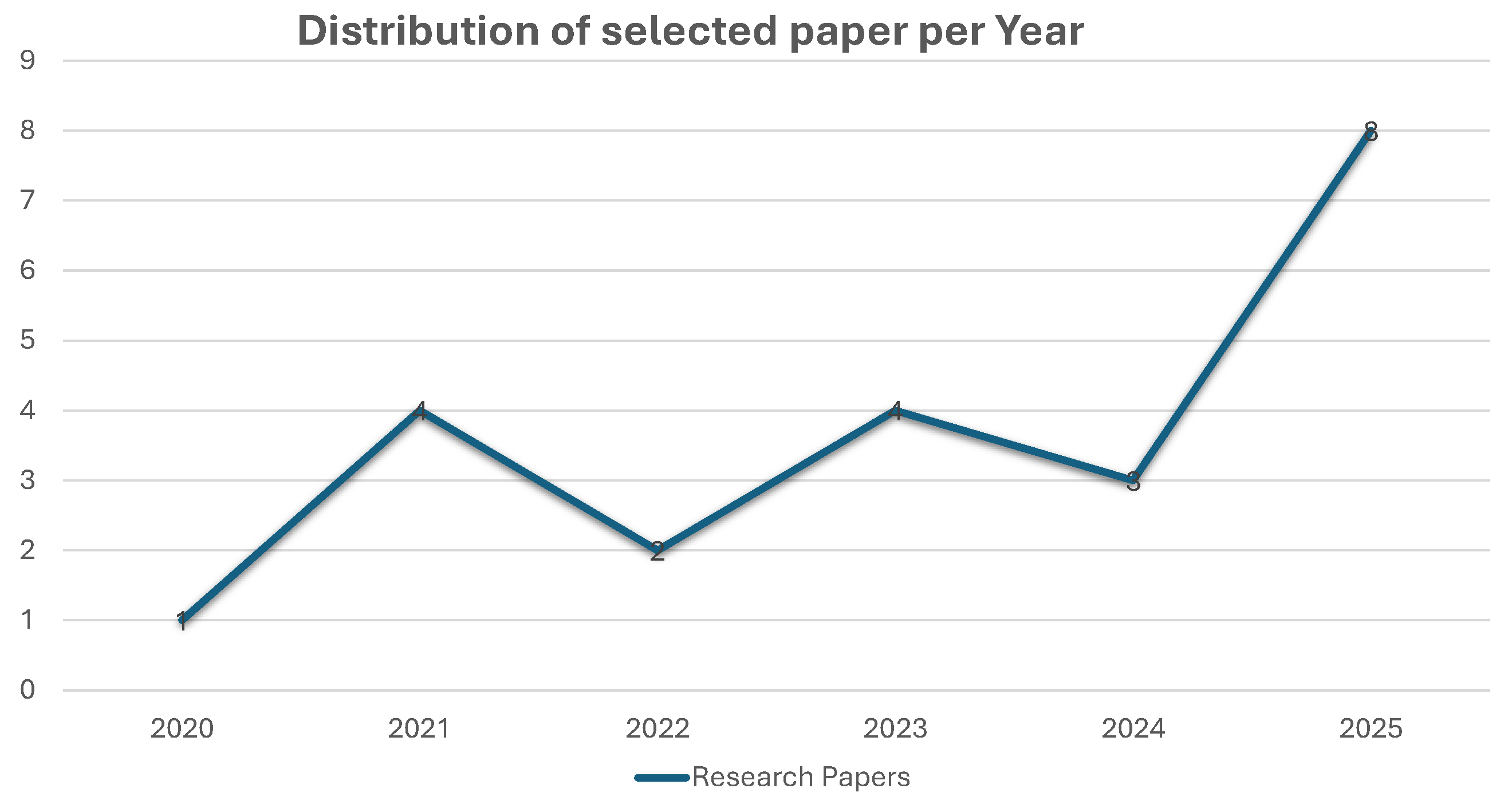
6.5. RQ5—Emerging Trends and Research Opportunities
7. Conceptual Reference Architecture for AI-Driven Anomaly Detection in Multi-Cloud Zero-Trust Environments
Illustrative Use Case: Cross-Cloud Identity-Based Anomaly Detection
8. Conclusions and Future Work
Future Work and Directions
Author Contributions
Funding
Institutional Review Board Statement
Informed Consent Statement
Data Availability Statement
Acknowledgments
Conflicts of Interest
References
- Ghasemshirazi, S.; Shirvani, G.; Alipour, M.A. Zero Trust Applications, Challenges, and Opportunities. arXiv 2024, arXiv:2309.03582. [Google Scholar]
- Rose, S.; Borchert, O.; Mitchell, S.; Connelly, S. Zero Trust Architecture; Technical Report NIST SP 800-207; National Institute of Standards and Technology: Gaithersburg, MD, USA, 2020. [CrossRef]
- Sarkar, S.; Choudhary, G.; Shandilya, S.K.; Hussain, A.; Kim, H. Security of Zero Trust Networks in Cloud Computing: A Comparative Review. Sustainability 2022, 14, 11213. [Google Scholar] [CrossRef]
- Parisa, S.K.; Banerjee, S.; Whig, P. AI-Driven Zero Trust Security Models for Retail Cloud Infrastructure: A Next-Generation Approach. Int. J. Sustain. Dev. Field IT 2023, 15, 15. [Google Scholar]
- Lian, H.; Wang, X.; Zhang, C. AI-Powered Anomaly Detection in Cloud Environments: A Lightweight Security Framework under Zero Trust Architecture. Acad. Nexus J. 2025, 4. Available online: https://ruj.uj.edu.pl/entities/publication/a3906326-ccbe-4584-9510-e8eccc5a51e9 (accessed on 1 June 2026).
- Jonnakuti, S. Zero-Trust Architectures for Secure Multi-Cloud AI Workloads. Int. J. Lead. Res. Publ. 2021, 2, 88–97. [Google Scholar] [CrossRef]
- Sharma, S. Multi-Cloud Environments: Reducing Security Risks in Distributed Architectures. J. Artif. Intell. Cyber Secur. 2021, 5, 1–5. [Google Scholar]
- Manne, T.A.K. Implementing Zero Trust Architecture in Multi-Cloud Environments. Int. J. Comput. Eng. 2023, 4, 1–9. [Google Scholar] [CrossRef]
- Westerberg, J. Network Security in Zero Trust: Adapting Enterprise Network to Zero Trust. Master’s Thesis, Tampere University of Applied Sciences, Tampere, Finland, 2021. [Google Scholar]
- Alavizadeh, H.; Alavizadeh, H.; Jang-Jaccard, J. Automation and Orchestration of Zero Trust Architecture: Potential Solutions and Challenges. Mach. Intell. Res. 2024, 21, 294–317. [Google Scholar] [CrossRef]
- Gambo, M.L.; Almulhem, A. Zero Trust Architecture: A Systematic Literature Review. arXiv 2025, arXiv:2503.11659. [Google Scholar] [CrossRef]
- Suleiman, B.; Zhang, Y.; Alibasa, M.J.; Youssef, J.; Bao, Y. A Systematic Literature Review on the Implementation and Challenges of Zero Trust Architecture Across Domains. Sensors 2025, 25, 6118. [Google Scholar] [CrossRef]
- Kumar, P. Zero Trust Architecture for Sme Cybersecurity Enhancing Resilience in the Digital Transformation Era. Int. J. Progress. Res. Eng. Manag. Sci. 2025, 5, 2791–2819. [Google Scholar]
- Mosli, R. Optimal Job Role Allocation for Compliance with NCA-ECC Controls Using the Saudi Cybersecurity Workforce Framework. IEEE Access 2024, 12, 128235–128245. [Google Scholar] [CrossRef]
- Talati, D.V. Enhancing Multi-Cloud Security with Quantum-Resilient AI for Anomaly Detection. World J. Adv. Res. Rev. 2022, 13, 629–638. [Google Scholar] [CrossRef]
- Zanasi, C.; Russo, S.; Colajanni, M. Flexible Zero Trust Architecture for the Cybersecurity of Industrial IoT Infrastructures. Adv. Hoct. Netw. 2024, 156, 103414. [Google Scholar] [CrossRef]
- Sun, P.J. Security and Privacy Protection in Cloud Computing: Discussions and Challenges. J. Netw. Comput. Appl. 2020, 160, 102642. [Google Scholar] [CrossRef]
- Zhang, Y.; Suleiman, B.; Alibasa, M.J.; Zheng, X.; Moustafa, N.; Bao, Y. Privacy-Aware Anomaly Detection in IoT Environments Using FedGroup: A Group-Based Federated Learning Approach. J. Netw. Syst. Manag. 2024, 32, 20. [Google Scholar] [CrossRef]
- Nasiruzzaman, M.; Ali, M.; Salam, I.; Miraz, M.H. The Evolution of Zero Trust Architecture (ZTA) from Concept to Implementation. Int. J. Cyber Secur. 2025, 5, 1–8. [Google Scholar]
- Almulla, Z.T.; Rahman, H. The Role of Network Segmentation and Micro-Segmentation in Operational Technology Security. In Proceedings of the 2025 International Conference on Artificial Intelligence in Information and Communication (ICAIIC); IEEE: New York, NY, USA, 2025; pp. 0342–0347. [Google Scholar] [CrossRef]
- Ward, R.; Beyer, B. BeyondCorp: A New Approach to Enterprise Security. Login USENIX Mag. 2014, 39, 6–11. [Google Scholar]
- Laghari, A.A.; Khan, A.A.; Ksibi, A.; Hajjej, F.; Kryvinska, N.; Almadhor, A.; Mohamed, M.A.; Alsubai, S. A Novel and Secure Artificial Intelligence Enabled Zero Trust Intrusion Detection in Industrial Internet of Things Architecture. Sci. Rep. 2025, 15, 26843. [Google Scholar] [CrossRef] [PubMed]
- Cui, L.; Qu, Y.; Xie, G.; Zeng, D.; Li, R.; Shen, S.; Yu, S. Security and Privacy-Enhanced Federated Learning for Anomaly Detection in IoT Infrastructures. IEEE Trans. Ind. Inform. 2022, 18, 3492–3500. [Google Scholar] [CrossRef]
- Prabu, K.; Vanitha, A.; Radhakrishnan, R.; Rajakumar, P.; Thenmozhi, E.; Ramesh, S.P. Enhancing Cloud Security with AI-Driven Anomaly Detection for Zero-Day Threats. In Proceedings of the 2024 1st International Conference on Advances in Computing, Communication and Networking (ICAC2N); IEEE: New York, NY, USA, 2024; pp. 1087–1092. [Google Scholar] [CrossRef]
- Nass, S.J.; Levit, L.A.; Gostin, L.O. Beyond the HIPAA Privacy Rule: Enhancing Privacy, Improving Health Through Research; National Academies Press: Washington, DC, USA, 2009. [Google Scholar] [CrossRef]
- European Parliament and Council of the European Union. Regulation (EU) 2016/679 (General Data Protection Regulation). Off. J. Eur. Union 2016, L119, 1–88. [Google Scholar] [CrossRef]
- State of California. California Consumer Privacy Act of 2018; California Civil Code §1798.100–1798.199; California State Legislature: Sacramento, CA, USA, 2018.
- National Cybersecurity Authority (NCA). Essential Cybersecurity Controls (ECC-1:2018); National Cybersecurity Baseline; National Cybersecurity Authority (NCA): Riyadh, Saudi Arabia, 2018.
- National Cybersecurity Authority (NCA). Cloud Cybersecurity Controls (CCC-1:2020); Official National Cybersecurity Framework; National Cybersecurity Authority (NCA): Riyadh, Saudi Arabia, 2020.
- Kingdom of Saudi Arabia. Personal Data Protection Law (PDPL), 2021. Royal Decree No. M/19. Available online: https://sdaia.gov.sa/en/Research/Pages/DataProtection.aspx (accessed on 1 June 2026).
- Nwachukwu, C.; Durodola-Tunde, K.; Akwiwu-Uzoma, C. AI-driven anomaly detection in cloud computing environments. Int. J. Sci. Res. Arch. 2024, 13, 692–710. [Google Scholar] [CrossRef]
- Page, M.J.; McKenzie, J.E.; Bossuyt, P.M.; Boutron, I.; Hoffmann, T.C.; Mulrow, C.D.; Shamseer, L.; Tetzlaff, J.M.; Akl, E.A.; Brennan, S.E.; et al. The PRISMA 2020 statement: An updated guideline for reporting systematic reviews. BMJ 2021, 372, n71. [Google Scholar] [CrossRef]
- Almajed, H.; Alsaqer, A.; Albuali, A. Towards Effective Anomaly Detection Machine Learning Solutions in Cloud Computing. IJACSA Int. J. Adv. Comput. Sci. Appl. 2025, 16, 1335–1351. [Google Scholar] [CrossRef]
- Bakro, M.; Kumar, R.R.; Husain, M.; Ashraf, Z.; Ali, A.; Yaqoob, S.I.; Ahmed, M.N.; Parveen, N. Building a cloud-IDS by hybrid bio-inspired feature selection algorithms along with random forest model. IEEE Access 2024, 12, 8846–8874. [Google Scholar] [CrossRef]
- Jaber, A.N.; Rehman, S.U. FCMSVM based intrusion detection system for cloud computing environment. Clust. Comput. 2020, 23, 3221–3231. [Google Scholar] [CrossRef]
- Thapa, P.; Arjunan, T. AI-Enhanced Cybersecurity: Machine Learning for Anomaly Detection in Cloud Computing. J. Emerg. Technol. Innov. 2025, 9, 25–37. [Google Scholar]
- Megouache, L.; Zitouni, A.; Sadouni, S.; Djoudi, M. Machine Learning for Cloud Data Classification and Anomaly Intrusion Detection. Rev. Des Sci. Et Technol. De L’Information-Ser. ISI 2024, 29, 1809–1819. [Google Scholar] [CrossRef]
- Moreira, D.A.; Marques, H.P.; Costa, W.L.; Celestino, J.; Gomes, R.L.; Nogueira, M. Anomaly detection in smart environments using AI over fog and cloud computing. In Proceedings of the IEEE Consumer Communications & Networking Conference (CCNC); IEEE: New York, NY, USA, 2021. [Google Scholar]
- Micheal, L. Integrating AI-Powered Anomaly Detection with Zero-Trust Authorization for Cloud APIs. ResearchGate, 2025; unpublished manuscript.
- Narang, A.; Gogineni, L. Zero-Trust Security in Intrusion Detection Networks: An AI-Powered Threat Detection in Cloud Environments. Int. J. Sci. Res. Mod. Technol. 2025, 4, 60–70. [Google Scholar] [CrossRef]
- Ofili, B.T.; Erhabor, E.O.; Obasuyi, O.T. Enhancing Federal Cloud Security with AI Zero Trust, Threat Intelligence and CISA Compliance. World J. Adv. Res. Rev. 2025, 25, 2377–2400. [Google Scholar] [CrossRef]
- Sunkara, G. Implementing Zero Trust Architecture in Modern Enterprise Networks. SAMRIDDHI A J. Phys. Sci. Eng. Technol. 2025, 17, 1. [Google Scholar] [CrossRef]
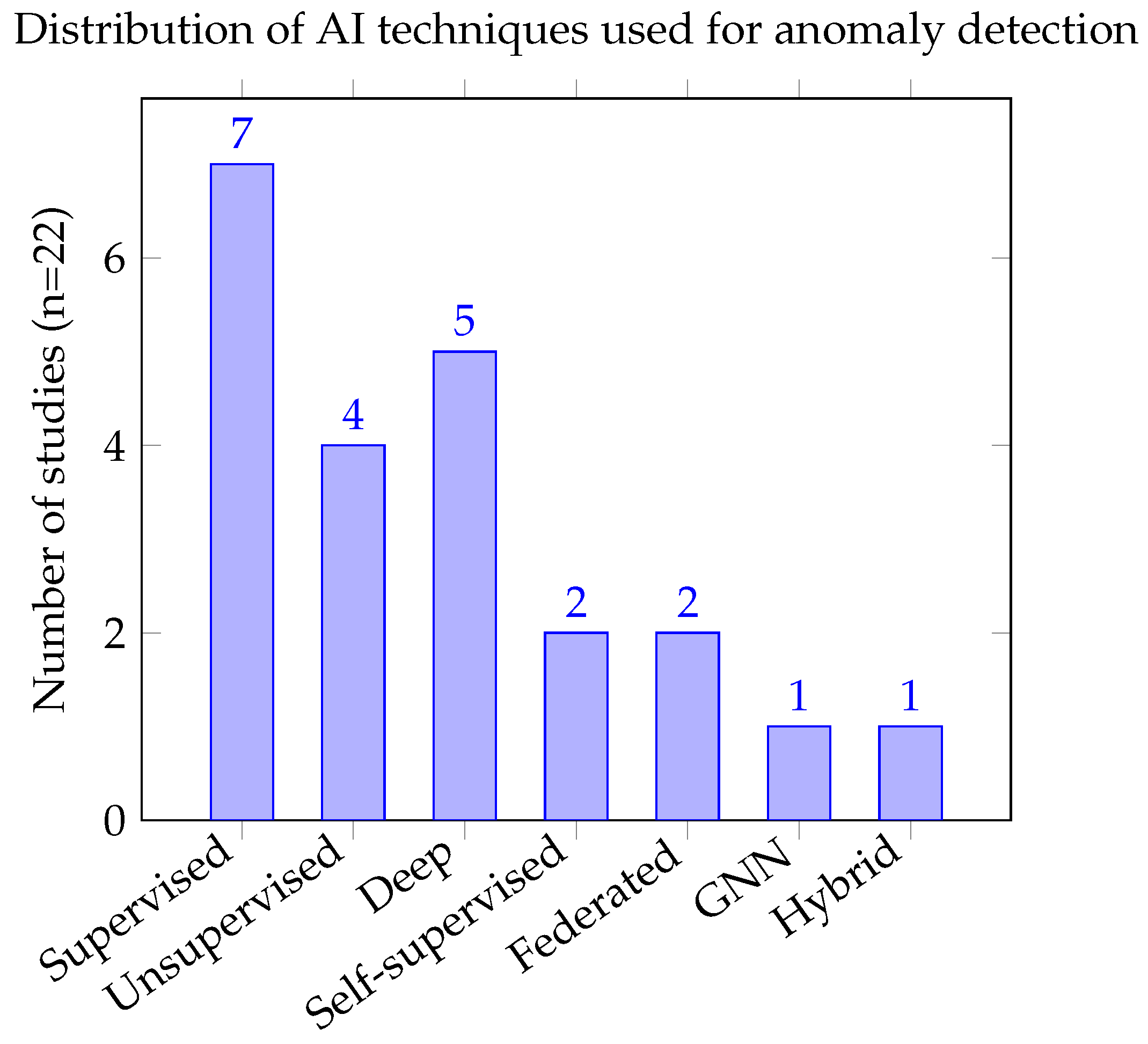
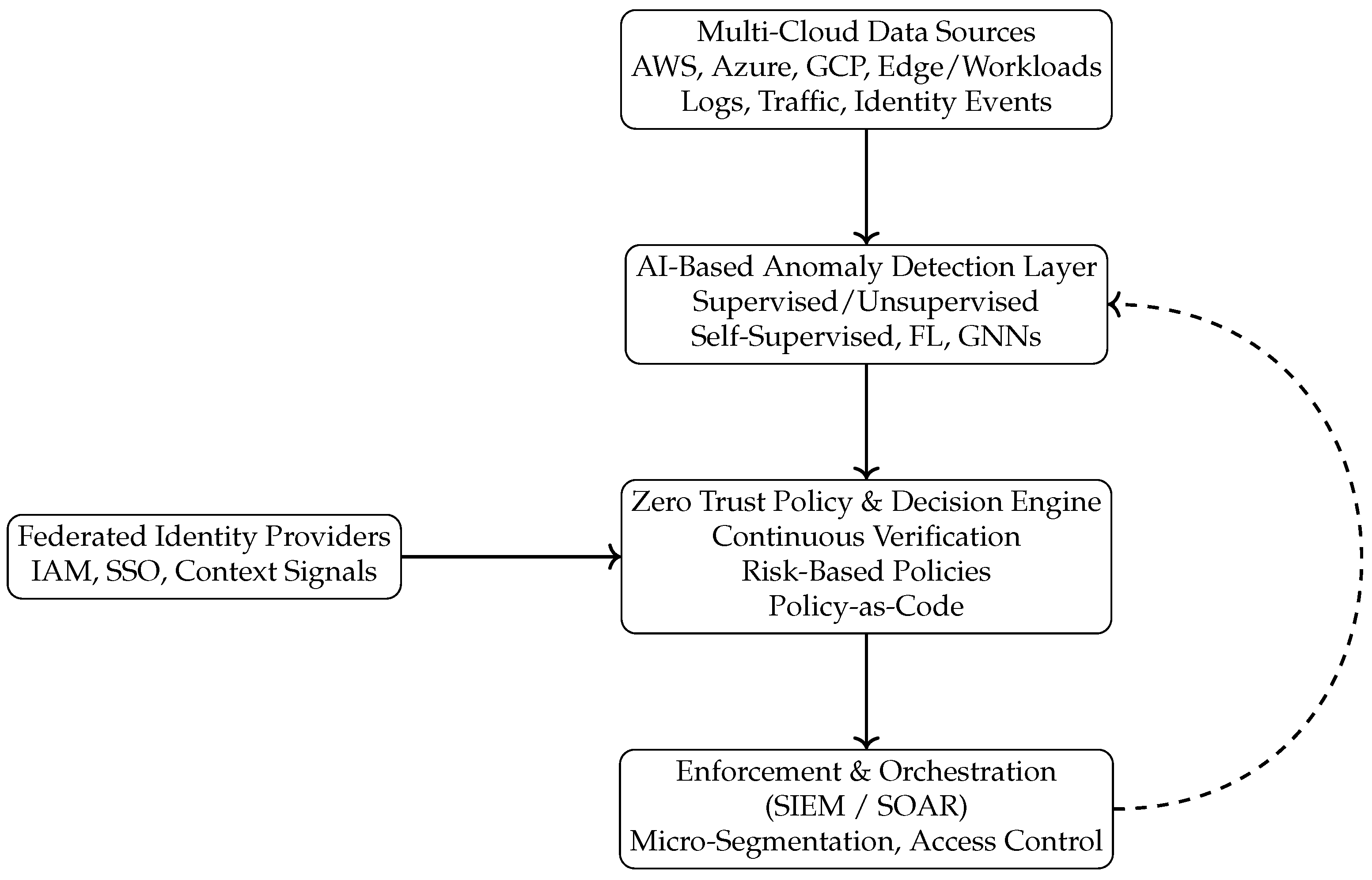

| Multi-Cloud Challenge Area | Security Challenges | Potential Threats |
|---|---|---|
| Complexity and Heterogeneity | Different architectures and security models hinder unified governance and policy consistency. | Misconfigurations, policy gaps, exploitable vulnerabilities. |
| Expanded Attack Surface | Multiple access points (APIs, consoles, interfaces) and inconsistent IAM increase exposure. | Unauthorized access, lateral movement, privilege escalation, data breaches. |
| Data Privacy and Compliance | Varied regulations and encryption requirements complicate unified compliance and data protection. | Regulatory violations, data leaks, legal and financial penalties. |
| Author(s) | Research Focus | Methods and Metrics | Key Findings and Limitations |
|---|---|---|---|
| [15] | AI-based anomaly detection in multi-cloud using federated and self-supervised learning | Federated intelligence, graph neural networks, post-quantum cryptography; F1-score, recall, precision, false positive rate, scalability | 96.8% detection and faster response; but resource overhead, complex policy enforcement, limited real-time zero trust context |
| [39] | AI anomaly detection with zero-trust risk-adaptive authorization for APIs | Isolation forest, autoencoders, LSTM, random forest; accuracy, recall, precision, FP/FN rates | Improved API attack detection and dynamic access control; but model drift, explainability gaps, limited general multi-cloud zero trust integration |
| [13] | Zero-trust architecture for SMEs adopting cloud | Comparative analysis with case studies; detection rates, false positives, time-to-response | Enhanced SME resilience and compliance; but cost/complexity high, minimal AI automation, lacks multi-cloud orchestration |
| [41] | AI and zero trust for federal cloud modernization | Literature and case studies; detection accuracy, policy violations, response time, compliance audits | Strong regulatory insight and adaptive analytics; but lacks federated AI learning, real-time cross-cloud enforcement, and explainable detection |
| [4] | AI-driven zero trust for retail cloud security | ML models (RF, XGBoost, LSTM), SOAR automation; detection accuracy, false positives, response time | Better detection and compliance for retail but heavy computational overhead, alert fatigue, and sector-specific scope |
| [8] | Implementing ZTA in multi-cloud with AI analytics | Standards (NIST 800-207), tool survey; coverage, policy consistency, compliance | Effective adaptive security; but generic approach, lacks scalable federated AI anomaly detection and real-time zero-trust orchestration |
| [3] | Review of zero-trust network models for cloud | Comparative taxonomy of frameworks and vendor solutions; adaptability, automation, detection | Improved resilience with AI and behavioral analytics; but no universal standards, integration barriers, and weak cross-cloud support |
| [36] | Survey of ML anomaly detection methods in cloud | Review of supervised/unsupervised/hybrid; accuracy, F1, FP/FN, complexity | High accuracy (>98%) but needs labeled data, lacks privacy, automated zero-trust policy, and cross-cloud adaptation |
| [6] | Federated AI pipeline for secure multi-cloud under zero trust | Modular federated architecture, OIDC/SAML, Kubernetes; latency, breach exposure, policy fidelity | Better privacy and orchestration; but no large-scale attack validation, limited explainable detection, and context adaptation |
| [40] | Zero-trust IDS for IoT/IIoT edge security | Ensemble AI (XGBoost vs RNN/KNN); accuracy 94.55%, recall 98.38%, F1 94.22% | Excellent IoT detection but vertical focus only; lacks federated, multi-cloud generalization and adaptive zero trust enforcement |
| [4] | AI and zero trust with SOAR for retail multi-cloud | Simulated multi-cloud deployments, comparative benchmarking; detection/mitigation, latency | Detection improvement of 16–19%, faster mitigation; but costly integration, complex scaling, and limited cross-sector applicability |
| Author(s) | Research Focus | Methods and Metrics | Key Findings and Limitations |
|---|---|---|---|
| [8] | Zero-trust for multi-cloud microservices | Architectural analysis and best-practice comparison; incident reduction, enforcement latency | Improved cross-cloud policy enforcement but lacks federated AI anomaly detection and strong experimental validation |
| [33] | Systematic review of ML anomaly detection in cloud | Synthesis of 32 studies; detection rates, false positives, F1-score | Ensemble methods >99% accuracy but complex, limited real-time adaptation and no federated zero trust support |
| [7] | AI-driven zero-trust risk mitigation for multi-cloud | STRIDE/DREAD risk models; risk score reduction, MTTR, compliance | 40–60% posture improvement but macro-level only; lacks real-time anomaly detection and dynamic zero-trust policy |
| [1] | Conceptual zero trust and AI integration | Theoretical review of ZT models; potential metrics discussed conceptually | Highlights AI potential but no empirical evaluation or cross-cloud zero trust practical application |
| [19] | Evolution of zero-trust architecture with AI role | Case studies on BeyondCorp and NIST frameworks; qualitative evaluation | Shows AI promise but no tested AI-driven anomaly detection or federated learning for multi-cloud zero trust |
| [42] | Zero-trust models (Forrester, NIST) in enterprise networks | Qualitative case comparisons; threat reduction, latency, ZT coverage | Mainly threat response and auth; lacks adaptive real-time anomaly detection and empirical multi-cloud validation |
| [9] | Adapting zero trust to enterprise networks | Constructive qualitative study with NIST/ISO frameworks | Suggests AI analytics but limited automation; no federated learning or cross-cloud zero trust orchestration |
| [34] | IDS with bio-inspired feature selection | Random forest + feature selection; ROC, accuracy up to 99% | Strong single-cloud detection but no policy harmonization, federated anomaly learning, or multi-cloud zero trust integration |
| [35] | Hybrid IDS using Fuzzy C-Means + SVM | Clustering + SVM; classification accuracy, FP reduction | High accuracy but validated only on single-cloud; no dynamic zero trust or privacy-preserving AI |
| [37] | Hybrid K-means + Extreme Learning Machine IDS | K-means + ELM; >99% accuracy, computational efficiency | No evaluation in federated multi-cloud; lacks context-aware zero trust orchestration |
| [38] | Intelligent anomaly detection for fog/cloud | Random forest on CICIDS; accuracy and recall focus | Good detection but tied to specific infra; no federated learning or adaptive zero trust for multi-cloud |
| Metric | AI-Driven Zero Trust (Synthesized from Reviewed Works) | Legacy ML/Security Models |
|---|---|---|
| Anomaly Detection Accuracy | 96–99% | 85–92% |
| False Positive Rate | 1.5–2.5% | 4–10% |
| Mean Time to Detect/Respond | −53%/−47% | Baseline |
| Compliance (GDPR, HIPAA, CCPA) | Full | Partial |
| Adaptive Access Control Effectiveness | High (dynamic, per session) | Moderate (policy-based) |
| Computational Overhead (Multi-cloud) | <10% resource impact | 15–25% (or more) |
| Scalability (Events/s) | Millions with low latency | Often bottlenecked |
| Architecture Layer | Use Case Description |
|---|---|
| Data Collection Layer | Identity logs, API access logs, and network telemetry are collected across the cloud providers, revealing abnormal locations and patterns of login and access. |
| Anomaly Detection Layer | Federated and self-supervised AI model detects deviation in behavior on a cross-cloud basis without sharing raw identity or workload data. |
| Policy and Decision Layer | The zero-trust policy engine considers the anomaly scores together with the contextual risk and classifies the session as high risk based on the continuous verification. |
| Identity Provider Layer | Federated identity services enforce step-up authentication and limit access to sensitive resources. |
| Enforcement and Orchestration Layer | SIEM is used to correlate the alerts while SOAR playbooks revoke the sessions, isolate affected workloads, and trigger automated incident response. |
Disclaimer/Publisher’s Note: The statements, opinions and data contained in all publications are solely those of the individual author(s) and contributor(s) and not of MDPI and/or the editor(s). MDPI and/or the editor(s) disclaim responsibility for any injury to people or property resulting from any ideas, methods, instructions or products referred to in the content. |
© 2026 by the authors. Licensee MDPI, Basel, Switzerland. This article is an open access article distributed under the terms and conditions of the Creative Commons Attribution (CC BY) license.
Share and Cite
Almulla, Z.; Albuali, A. Systematic Literature Review of AI-Driven Multi-Cloud Anomaly Detection in Zero-Trust Frameworks. Appl. Sci. 2026, 16, 5938. https://doi.org/10.3390/app16125938
Almulla Z, Albuali A. Systematic Literature Review of AI-Driven Multi-Cloud Anomaly Detection in Zero-Trust Frameworks. Applied Sciences. 2026; 16(12):5938. https://doi.org/10.3390/app16125938
Chicago/Turabian StyleAlmulla, Ziad, and Abdullah Albuali. 2026. "Systematic Literature Review of AI-Driven Multi-Cloud Anomaly Detection in Zero-Trust Frameworks" Applied Sciences 16, no. 12: 5938. https://doi.org/10.3390/app16125938
APA StyleAlmulla, Z., & Albuali, A. (2026). Systematic Literature Review of AI-Driven Multi-Cloud Anomaly Detection in Zero-Trust Frameworks. Applied Sciences, 16(12), 5938. https://doi.org/10.3390/app16125938

