


A Feature-Tag-Driven Semantic Control Framework for AIGC-Based Furniture Design Using LoRA Fine-Tuning

Abstract
1. Introduction
1.1. Research Background and Problem Statemen
1.2. Existing Technical Paths and Their Limitations
1.3. Optimization of Semantic Mapping Based on Feature-Tag Driving
1.4. Research Aims
2. Materials and Methods
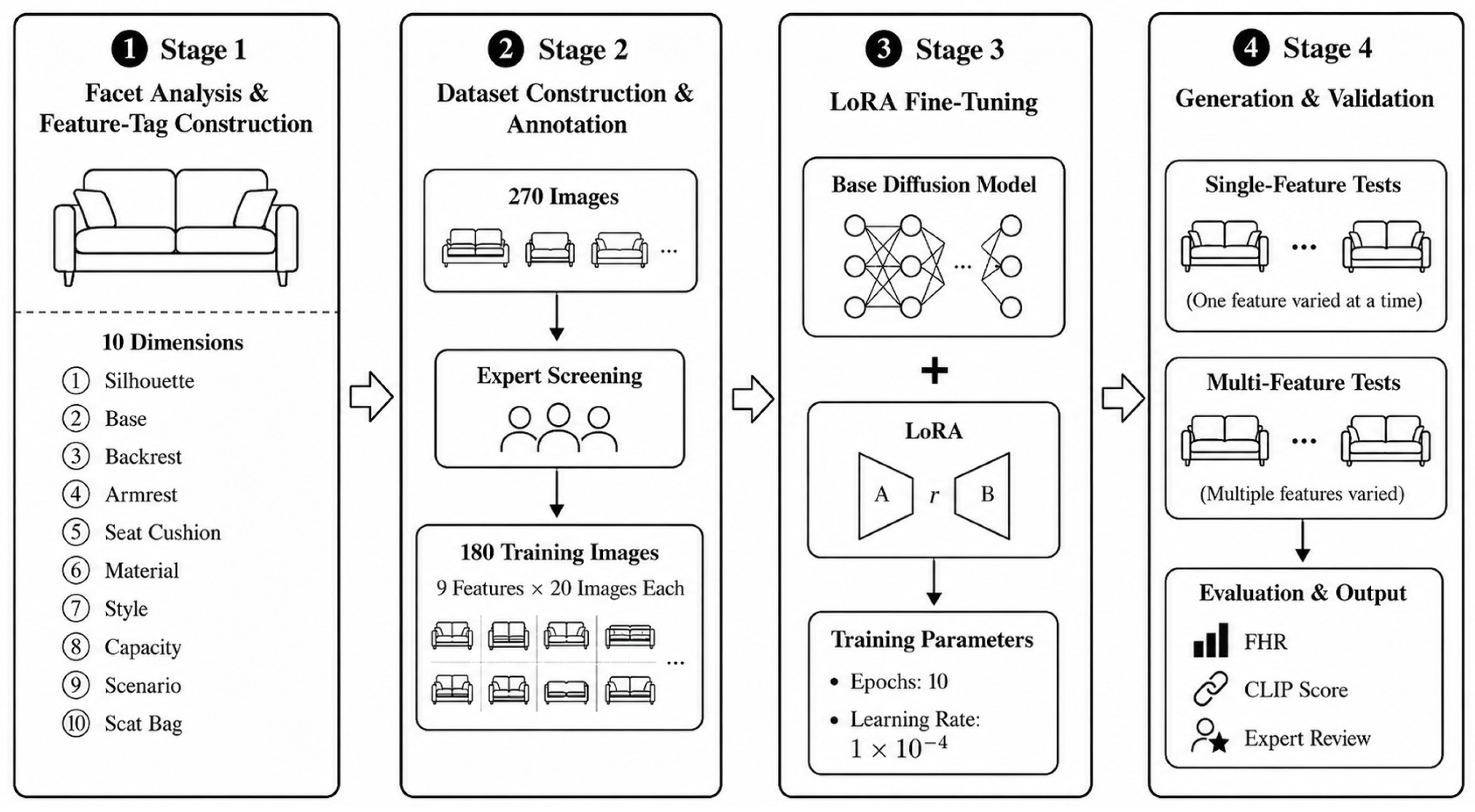
2.1. Feature-Tag-Driven Training Framework
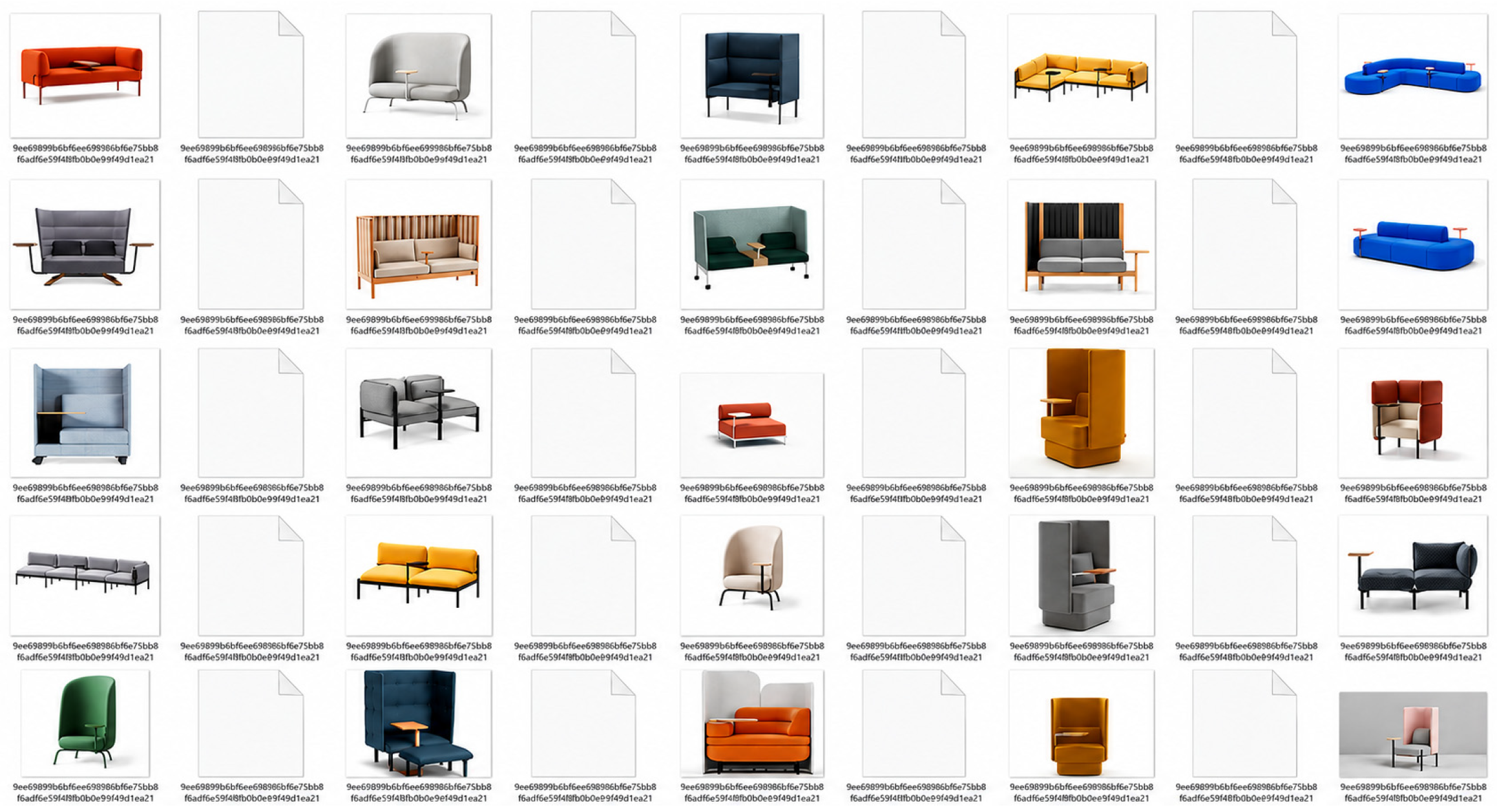
2.1.1. Dataset Construction and Feature Tag System
2.1.2. Feature Tag Standardization and Annotation
2.1.3. LoRA-Based Training Framework
2.2. Implementation of Feature-Tag-Driven Design Methodology for Furniture
2.2.1. Design-Oriented Dataset Construction and Comparative Setup
- Baseline Model (General Design Representation): A general-purpose diffusion model was employed using natural language descriptions as input. In this setting, design intent is interpreted through probabilistic linguistic associations, often resulting in ambiguous structural representation and omission of low-frequency features.
- Feature-Tag-Driven Model (Structured Design Representation): The proposed model incorporates feature tags as structured semantic indices. These tags correspond to explicit design knowledge and enable the model to establish stable mappings between input conditions and structural features. This approach transforms the design process from vague textual prompting into structured feature-driven generation.
2.2.2. Feature-Tag Encoding for Structural Representation
- Geometric Explicitness: Structural components provide clear and measurable physical features, allowing reliable evaluation of design representation accuracy.
- Controlled Complexity: Focusing on mid-level structural features ensures efficient knowledge encoding while maintaining sufficient representational richness for design validation.
2.2.3. Integration of Structural Design Knowledge via LoRA
- Consistent expression of structural features;
- Reduced semantic drift during generation;
- Independent control of local components without disrupting overall morphology.
2.2.4. Design Validation Through Structured Experimental Tasks
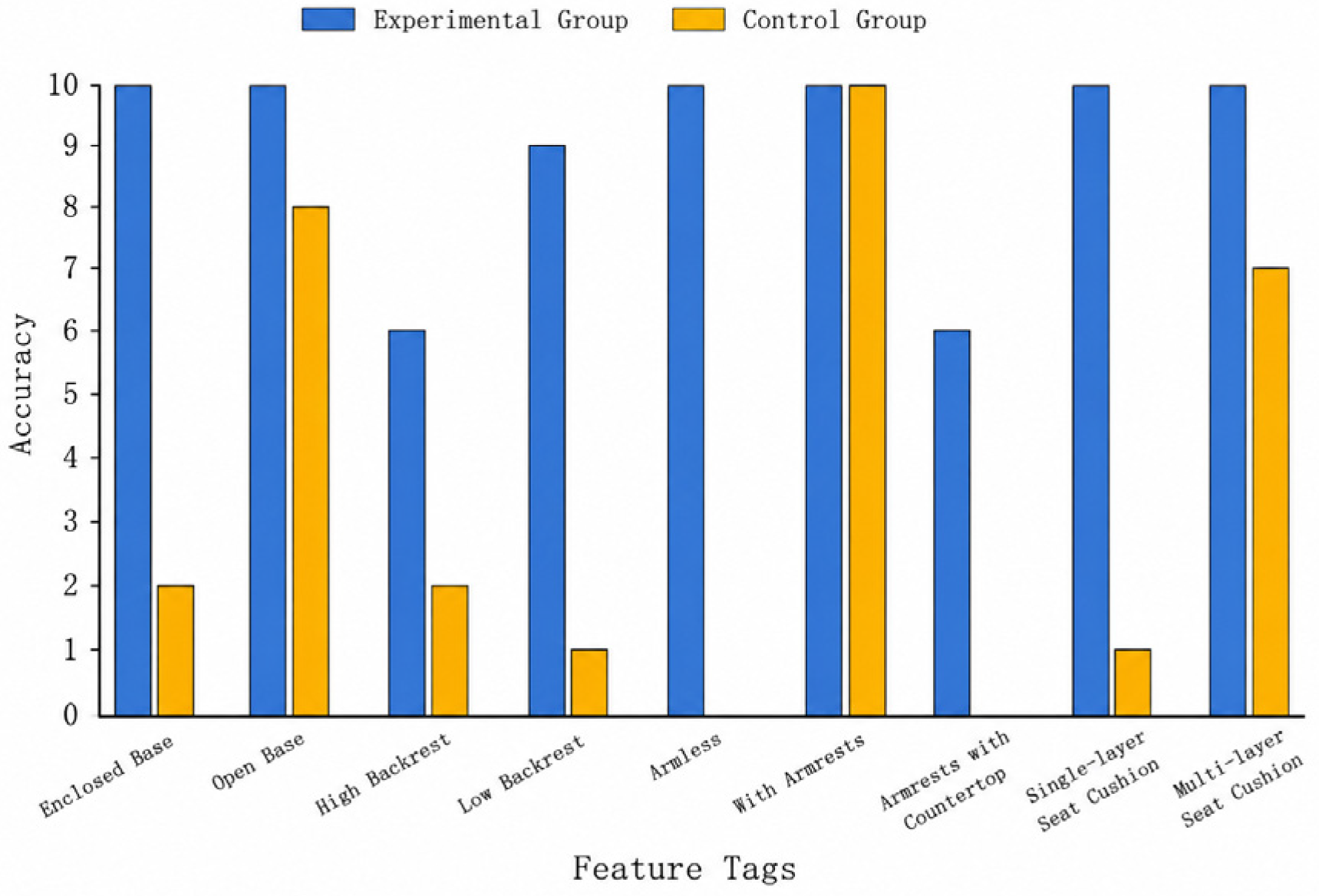
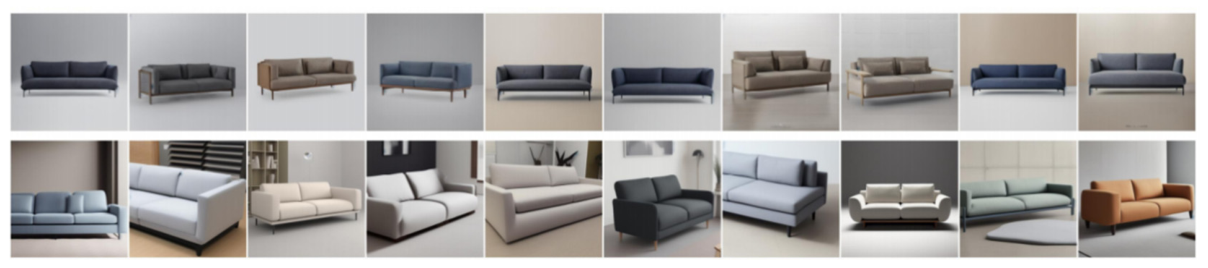
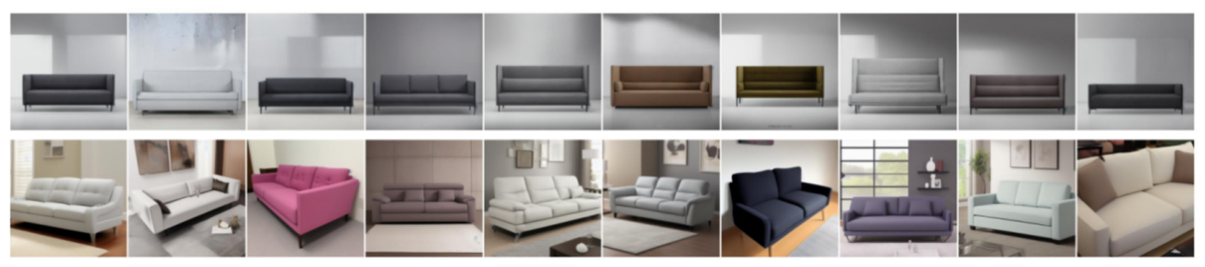
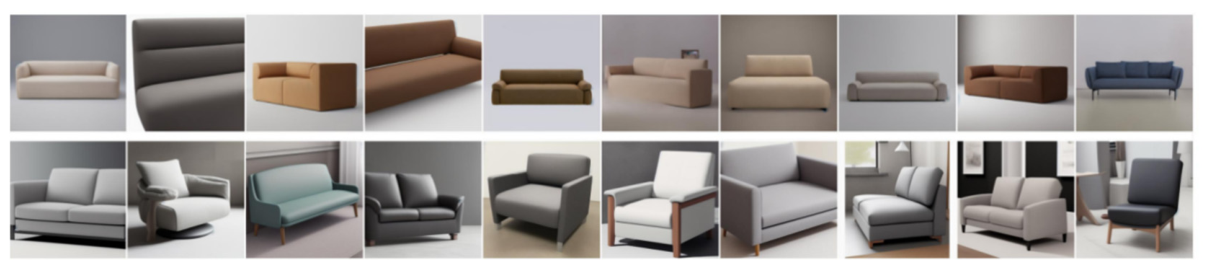
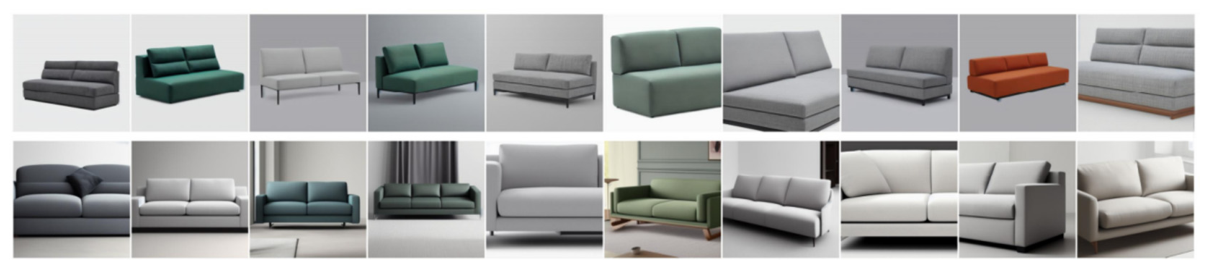
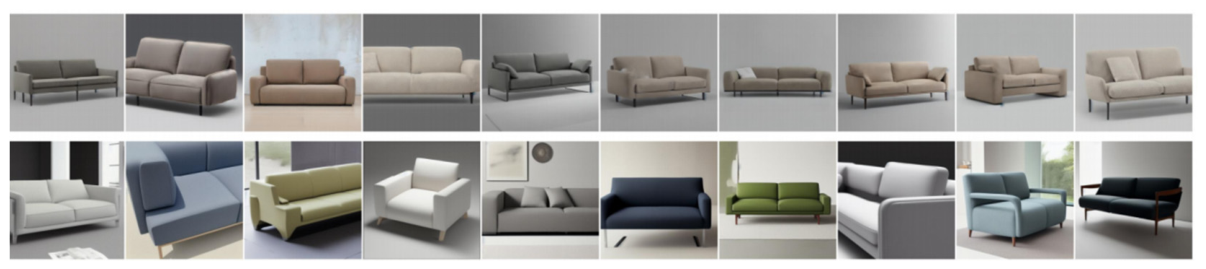
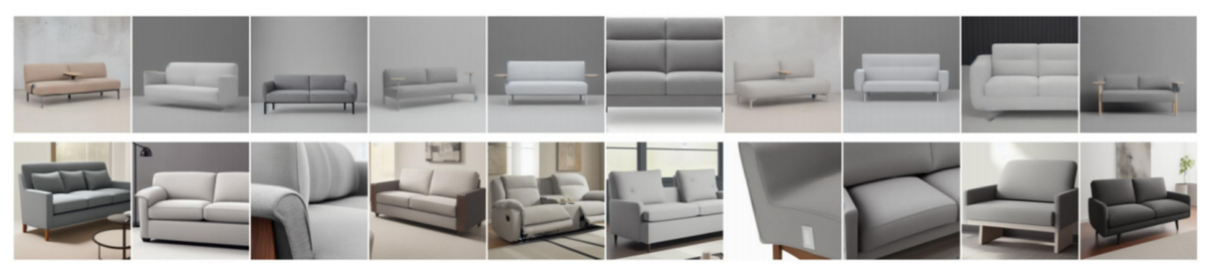
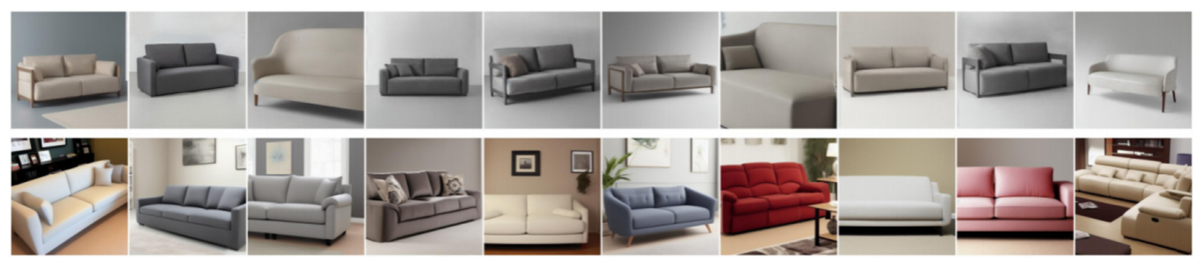
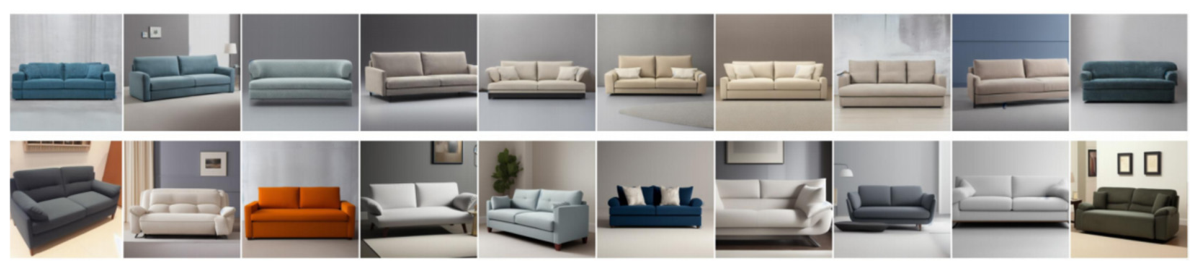
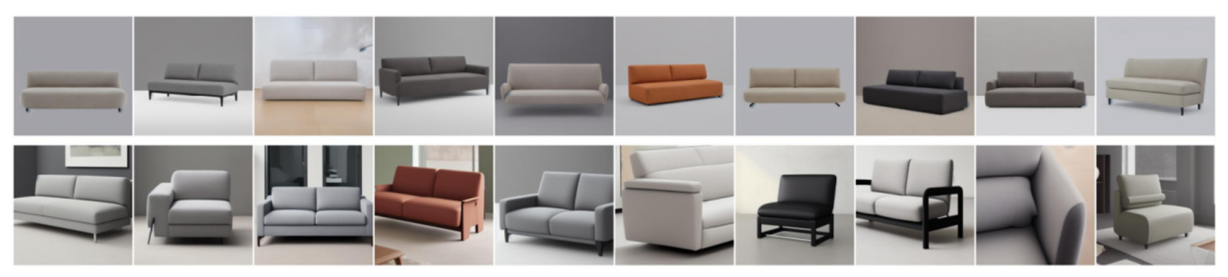
- Stage 1: Accuracy Verification of Single-Dimensional Feature Response. This stage aims to evaluate the directional generation precision of the fine-tuned model regarding atomized design features. Independent generation tests were conducted for the nine core features of Category C within the facet system (e.g., closed base, no armrests, armrests with countertop, etc.). Ten samples were generated for each feature dimension. By quantitatively comparing the output consistency of the experimental group and the control group under a single semantic constraint, the model’s ability to capture specific design components was assessed.
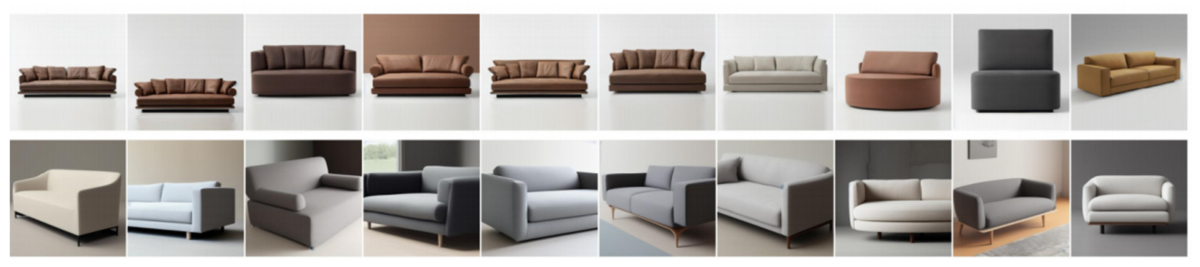
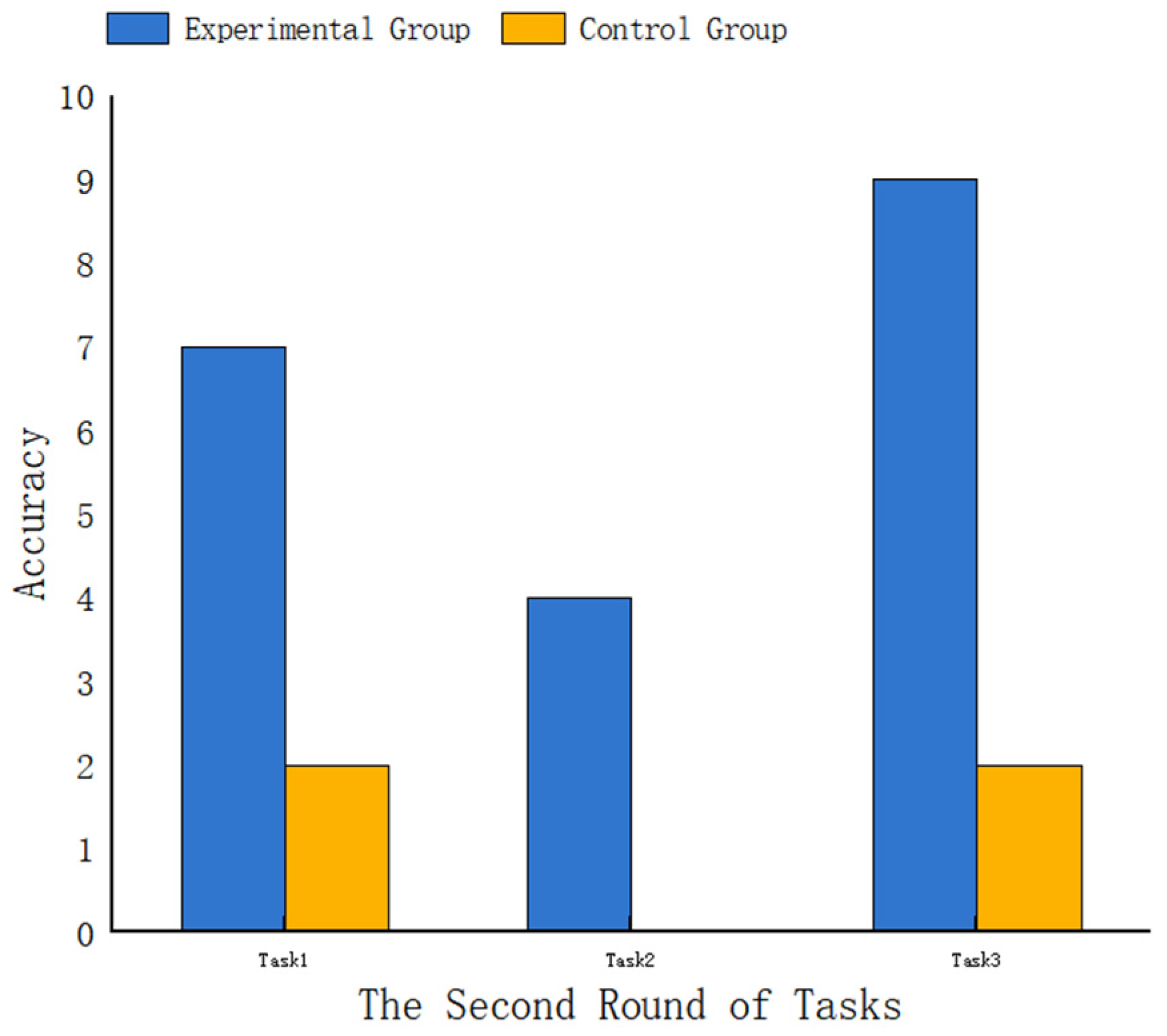
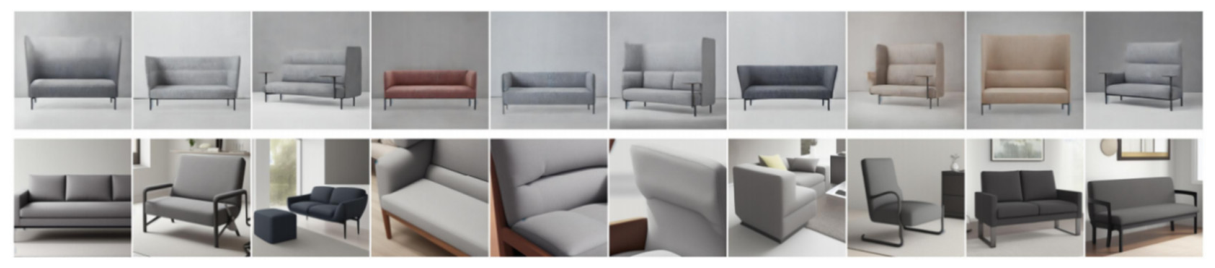
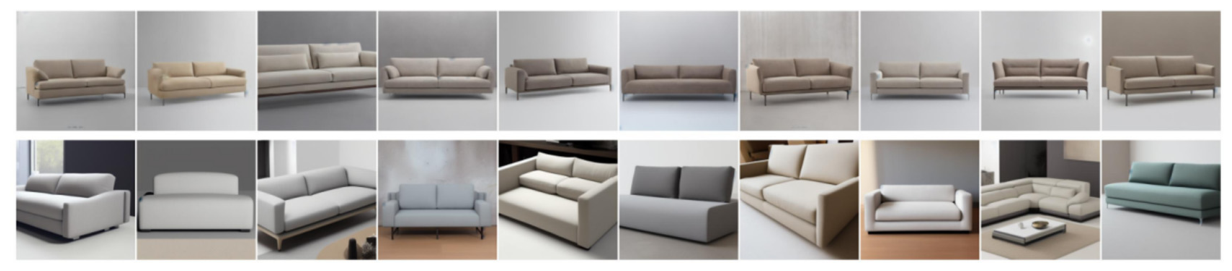
- Stage 2: Robustness Evaluation of Multi-Dimensional Feature Combinations. This stage aims to test the model’s synergistic performance and feature decoupling capabilities when processing complex and multiple design constraints. Three groups of representative composite design tasks with potential morphological conflicts were selected for verification:
- Task A: Low backrest combined with no armrests;
- Task B: High backrest combined with armrests with countertop;
- Task C: Open base combined with multi-layered seat bags.
2.2.5. Evaluation Metrics as Indicators of Design Performance
- Structural Consistency: Whether components conform to predefined geometric characteristics;
- Semantic Clarity: Whether features are clearly expressed without distortion or ambiguity.
3. Results
3.1. Facet System Construction Results
3.2. Accuracy Analysis of Single-Dimensional Feature Generation
3.3. Robustness Evaluation of Multi-Dimensional Composite Features
4. Discussion
5. Conclusions
- The proposed feature-tag-driven framework achieves a significant improvement in Feature Hit Rate (FHR) compared to baseline models under single-feature conditions.
- Under multi-feature composite tasks, the framework maintains structural consistency across all tested feature combinations, with no structural distortion or missing components.
- The facet-based annotation system enables independent control of structural components (base, backrest, armrest, seat) without affecting overall morphology.
- The framework reduces semantic drift in low-frequency structural features (e.g., “no armrests,” “armrests with countertop”) from near-zero to usable accuracy.
Author Contributions
Funding
Data Availability Statement
Acknowledgments
Conflicts of Interest
Abbreviations
| AIGC | Artificial Intelligence-Generated Content |
| LoRA | Low-Rank Adaptation |
| FHR | Feature Hit Rate |
| CLIP | Contrastive Language–Image Pre-training |
| CNN | Convolutional Neural Network |
| GAN | Generative Adversarial Network |
| CAD | Computer-Aided Design |
| CAE | Computer-Aided Engineering |
References
- Yang, C.; Liu, F.; Ye, J.; Chen, L. A product form design method integrating Kansei engineering and diffusion model. Adv. Eng. Inform. 2023, 57, 102058. [Google Scholar] [CrossRef]
- Quan, H.; Li, S.; Zeng, C.; Li, M.; Zhang, Y. Big Data and AI-Driven Product Design: A Survey. Appl. Sci. 2023, 13, 9433. [Google Scholar] [CrossRef]
- Wang, Z.; Pan, H.; Li, J.; Chen, X. Exploring product rendering generation design catering to multi-emotional needs. Adv. Eng. Inform. 2024, 62, 102809. [Google Scholar] [CrossRef]
- Bordas, A.; Le Masson, P.; Thomas, M.; Weite, T. What is generative in generative artificial intelligence? A design-based perspective. Res. Eng. Des. 2024, 35, 441. [Google Scholar] [CrossRef]
- Carpo, M. Beyond Digital: Design and Automation at the End of Modernity; MIT Press: Cambridge, MA, USA, 2023. [Google Scholar]
- Cao, Y.; Abdul Aziz, A.; Mohd Arshard, W.N.R. Stable diffusion in architectural design: Closing doors or opening new horizons? Int. J. Archit. Comput. 2024, 23, 339–357. [Google Scholar] [CrossRef]
- Kobayashi, M.; Kume, K. Design Generation Using Stable Diffusion and Questionnaire Survey. Comput.-Aided Des. Appl. 2024, 21, 859–868. [Google Scholar] [CrossRef]
- Kang, X.; You, W.; Luo, Y. Bio-inspired product design system integrating retrieval-augmented question answering and semantic fusion diffusion model. Adv. Eng. Inform. 2025, 67, 103537. [Google Scholar] [CrossRef]
- Lu, P.; Hsiao, S.W.; Tang, J.; Wu, F. A generative-AI-based design methodology for car frontal forms design. Adv. Eng. Inform. 2024, 62, 102835. [Google Scholar] [CrossRef]
- Yin, H.; Zhang, Z.; Liu, Y. The Exploration of Integrating the Midjourney Artificial Intelligence Generated Content Tool into Design Systems to Direct Designers towards Future-Oriented Innovation. Systems 2023, 11, 566. [Google Scholar] [CrossRef]
- Zhu, H.P.; Li, X.L.; Huang, W.Q.; Li, C. Chair style recognition and intelligent design using deep learning methods. Furniture 2021, 42, 37–40+60. (In Chinese) [Google Scholar]
- Zhu, W.S.; Wang, Y.J.; Zheng, W.J. Rendering of furniture design sketches based on generative adversarial networks (Pix2pix). Furnit. Inter. Des. 2023, 30, 117–121. (In Chinese) [Google Scholar]
- Liu, J.; Gao, H.; Yezhova, O. Generative design of bamboo furniture combining game theory and AI-generated content. BioResources 2025, 20, 8611–8631. [Google Scholar] [CrossRef]
- Zhang, L.; Agrawala, M. Adding conditional control to text-to-image diffusion models. arXiv 2023, arXiv:2302.05543. [Google Scholar]
- Rombach, R.; Blattmann, A.; Lorenz, D.; Esser, P.; Ommer, B. High-resolution image synthesis with latent diffusion models. In Proceedings of the IEEE/CVF Conference on Computer Vision and Pattern Recognition (CVPR), New Orleans, LA, USA, 19–24 June 2022; IEEE: New York, NY, USA, 2022; pp. 10684–10695. [Google Scholar]
- Wang, H.; Li, X.L. Optimization of AIGC-aided design pathway for the upholstered furniture domain. Furnit. Inter. Des. 2024, 31, 56–61. (In Chinese) [Google Scholar]
- Kim, F.; Johanes, M.; Huang, J. Text2Form diffusion: Framework for learning curated architectural vocabulary. In Proceedings of the 41st Conference on Education and Research in Computer Aided Architectural Design in Europe (eCAADe), Graz, Austria, 20–23 September 2023; eCAADe: Lubeck, Germany, 2023. [Google Scholar]
- Hu, E.J.; Shen, Y.; Wallis, P.; Allen-Zhu, Z.; Li, Y.; Wang, S.; Chen, W. LoRA: Low-rank adaptation of large language models. arXiv 2021, arXiv:2106.09685. [Google Scholar]
- Li, S.; Su, S.; Lin, X. Optimizing the hyper-parameters of deep reinforcement learning for building control. Build. Simul. 2025, 18, 765–789. [Google Scholar] [CrossRef]
- Manmatharasan, P.; Bitsuamlak, G.; Grolinger, K. AI-driven design optimization for sustainable buildings: A systematic review. Build. Environ. 2025, 310, 112707. [Google Scholar] [CrossRef]
- Ma, Z.; Cui, S.; Joe, I. An enhanced proximal policy optimization-based reinforcement learning method with random forest for hyperparameter optimization. Appl. Sci. 2022, 12, 7006. [Google Scholar] [CrossRef]
- Xu, W.; Wu, Z.H. Manufacturing Processes of Upholstered Furniture; China Forestry Publishing House: Beijing, China, 2008; pp. 15–19. (In Chinese) [Google Scholar]
- Gao, J.Z.; He, F.J. Review of faceted retrieval models and key technologies. Libr. Trib. 2012, 32, 112–116. (In Chinese) [Google Scholar]
- Li, X.L.; Yang, Q. Construction of a conceptual model for intangible cultural heritage data resources based on faceted classification. J. Libr. Sci. 2023, 45, 33–38. (In Chinese) [Google Scholar]
- Zou, J. Customized seating comfort and structural design of upholstered sofas. Furniture 2019, 40, 60–64+83. (In Chinese) [Google Scholar]
- Duan, J.; Zhang, X.S. Study on Morphological Characteristics of American Neoclassical Sofas. Master’s Thesis, Central South University of Forestry and Technology, Changsha, China, 2013. (In Chinese) [Google Scholar]
- Guo, T.T. Aesthetic Quantitative Research on Sofa Wooden Frame and Soft-Packing Color Design. Master’s Thesis, Nanjing Forestry University, Nanjing, China, 2020. (In Chinese) [Google Scholar]
- Hevner, A.R.; March, S.T.; Park, J.; Ram, S. Design science in information systems research. Manag. Inf. Syst. Q. 2004, 28, 75–105. [Google Scholar] [CrossRef]
- Peng, G.; Wang, H.; Zhang, H. A hypernetwork-based approach to collaborative retrieval and reasoning of engineering design knowledge. Adv. Eng. Inform. 2019, 42, 100956. [Google Scholar] [CrossRef]
- Kwon, S.; Monnier, L.V.; Barbau, R.; Bernstein, W.Z. Enriching standards-based digital thread by fusing as-designed and as-inspected data using knowledge graphs. Adv. Eng. Inform. 2020, 46, 101102. [Google Scholar] [CrossRef] [PubMed]
- Ruiz, N.; Li, Y.; Jampani, V.; Pritch, Y.; Rubinstein, M.; Aberman, K. DreamBooth: Fine Tuning Text-to-Image Diffusion Models for Subject-Driven Generation. In Proceedings of the IEEE/CVF Conference on Computer Vision and Pattern Recognition (CVPR); IEEE: New York, NY, USA, 2023; pp. 22500–22510. [Google Scholar]
- Yang, Y.; Wen, W.; Peng, L.; Song, C.; Chen, Y.; Li, H.; Yang, X.; Lu, Q.; Cai, D.; He, X.; et al. LoRA-Composer: Leveraging Low-Rank Adaptation for Multi-Concept Customization in Training-Free Diffusion Models. IEEE Trans. Image Process. 2025, 34, 693–706. [Google Scholar] [CrossRef] [PubMed]


| Focal Term | TAG Labels |
|---|---|
| closed base | closed base |
| open base | open base |
| high backrest | high backrest |
| low backrest | low backrest |
| No armrests | No armrests |
| With armrests | With armrests |
| armrests with countertop | armrests with countertop |
| Single layer seat bag | Single layer seat bag |
| Multi-layered seat bag | Multi-layered seat bag |
| Repeat | Epoch | Unet Lr | Network Alpha | Optimizer | Base Model |
|---|---|---|---|---|---|
| 50 | 10 | 1.00 × 10⁻⁴ | 64 | Adam W8bit | Product Design |
| Facet No. | Basic Category | Focal Terms (Tags) | Description |
|---|---|---|---|
| Facet 1 | Sofa Category | Modular Sofa Single Sofa | Modular sofas consist of multiple independent modules following modular design principles; single sofas are standalone and non-detachable. They differ significantly in design and form. |
| Facet 2 | Capacity | 1-seater 2-seater 3-seater 4-seater and above | Related to sofa design dimensions; defines the scale of the sofa. |
| Facet 3 | Style | Eastern Western Modern Classical | Divided by region (Eastern/Western) with clear distinctions and moderate granularity. Modern and Classical styles exhibit large, distinct differences. |
| Facet 4 | Silhouette & Shape | Irregular U-shaped L-shaped S-shaped Straight Curved | Defines the overall form of the sofa, which has a profound impact on the design. |
| Facet 5 | Main Material | Leather Sofa Fabric Sofa Leather-Fabric Mix Sofa Metal Sofa Wood Sofa Other Materials | Defines the CMF (Color, Material, Finish), categorized into five primary types: leather, fabric, mixed, metal, and wood. |
| Facet 6 | Scenario | Indoor Sofa Outdoor Sofa | Significant differences exist between indoor and outdoor sofas in terms of materials, scale, and other design factors. |
| Facet 7 | Base | Closed Base Open Base | Closed: Base is flush with the floor; Open: Base is elevated from the floor. |
| Facet 8 | Backrest | High Backrest Low Backrest | High: Includes screen-like forms or heights reaching above the head; Low: Lower backrest profile. |
| Facet 9 | Armrest | No Armrest With Armrest Armrest with Table | No Armrest: Sofas without arm components; With Armrest: Sofas with arm components; With Table: Armrests integrated with a tabletop surface. |
| Facet 10 | Seat Cushion | Single-layer Multi-layer | Single: Single-tier seat form; Multi: Multi-tier form characterized by visible partition lines. |
Disclaimer/Publisher’s Note: The statements, opinions and data contained in all publications are solely those of the individual author(s) and contributor(s) and not of MDPI and/or the editor(s). MDPI and/or the editor(s) disclaim responsibility for any injury to people or property resulting from any ideas, methods, instructions or products referred to in the content. |
© 2026 by the authors. Licensee MDPI, Basel, Switzerland. This article is an open access article distributed under the terms and conditions of the Creative Commons Attribution (CC BY) license.
Share and Cite
Li, X.; Li, Z.; Wang, H. A Feature-Tag-Driven Semantic Control Framework for AIGC-Based Furniture Design Using LoRA Fine-Tuning. Appl. Sci. 2026, 16, 5917. https://doi.org/10.3390/app16125917
Li X, Li Z, Wang H. A Feature-Tag-Driven Semantic Control Framework for AIGC-Based Furniture Design Using LoRA Fine-Tuning. Applied Sciences. 2026; 16(12):5917. https://doi.org/10.3390/app16125917
Chicago/Turabian StyleLi, Xuelian, Ziru Li, and Hao Wang. 2026. "A Feature-Tag-Driven Semantic Control Framework for AIGC-Based Furniture Design Using LoRA Fine-Tuning" Applied Sciences 16, no. 12: 5917. https://doi.org/10.3390/app16125917
APA StyleLi, X., Li, Z., & Wang, H. (2026). A Feature-Tag-Driven Semantic Control Framework for AIGC-Based Furniture Design Using LoRA Fine-Tuning. Applied Sciences, 16(12), 5917. https://doi.org/10.3390/app16125917

