1. Introduction
Grottoes, as important carriers of human civilization, are widely distributed in regions with different geological conditions around the world, especially sandstone grottoes in northwest and southwest China and Central Asia, which have extremely high historical, artistic, and scientific value. However, under the influence of natural forces and human activities over thousands of years, grotto rock masses exposed to complex geological environments and climatic conditions for a long time generally suffer from structural instability, water seepage, weathering, and spalling [
1] (as shown in
Figure 1). Among them, dissolution-induced spalling, as a typical hydrochemical damage, directly affects the surface integrity and deep stability of grotto rock masses and has become a key scientific problem restricting the long-term preservation of grottoes [
2].
Most grottoes are excavated in sandstone cliffs. Calcite, as a primary mineral, exists in sandstone strata of grottoes, and its main chemical component is calcium carbonate (CaCO
3), which is easily dissolved by water [
3,
4]. Acidic water containing CO
2, SO
2, and other acidic gases in the atmosphere has a more significant dissolution effect [
5,
6]. The dissolution phenomenon mainly occurs during water seepage, where water chemically dissolves pores and fractures in the rock mass. Some particles and minerals are lost with water flow, resulting in the enlargement of pores and fractures, and further leading to spalling of the rock mass. Complementary microscopic analyses confirmed that calcite content is substantially higher in crust sites than in subflorescence sites, and that Ca
2+ migration from the rock interior to the surface during solution transport combines with CO
32− and SO
42− to precipitate secondary gypsum and calcite during drying, leading to crust formation [
6,
7]. This process not only weakens the macroscopic mechanical properties of the rock but also changes the geometric morphology and contact mechanical characteristics of fracture surfaces, further aggravating the mechanical deterioration of joints. Therefore, water-rock dissolution has a crucial impact on the short-term and long-term stability of fractured rock masses in grottoes [
8].
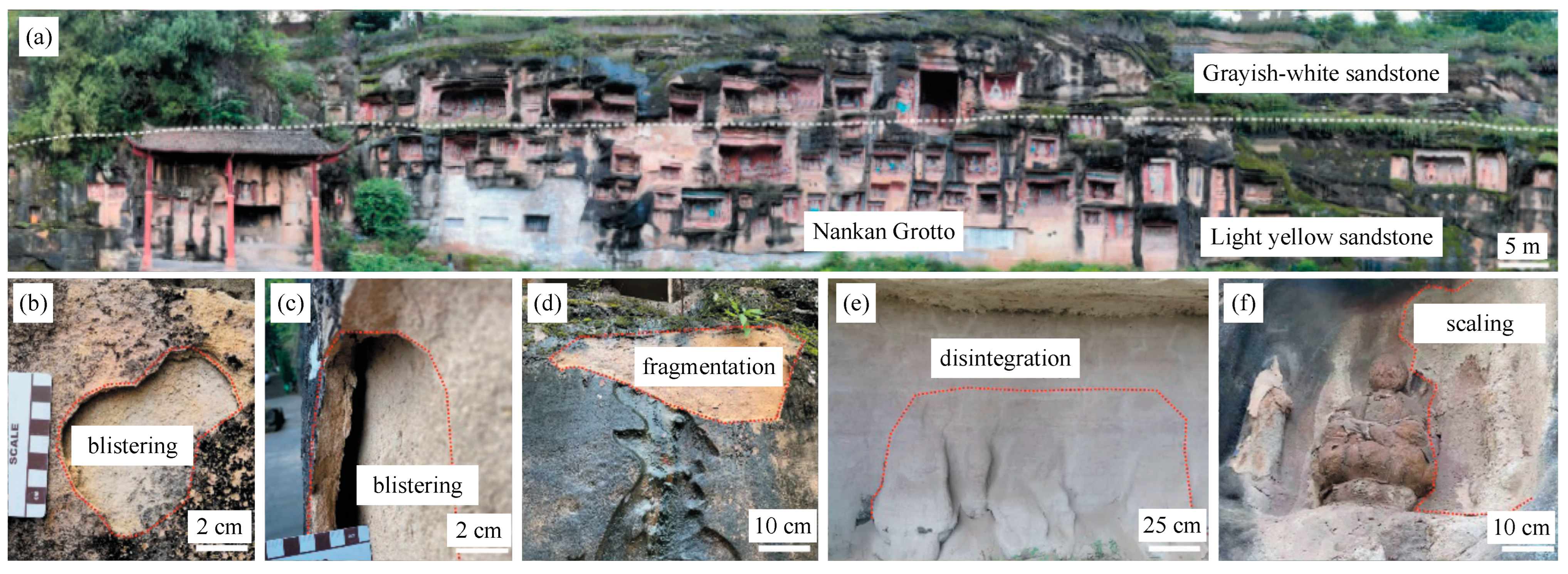
Figure 1.
Field photograph of the Nankan Grotto and typical detachment patterns: (
a) overview of the Nankan Grotto; (
b) blistering; (
c) blistering; (
d) fragmentation; (
e) disintegration; (
f) scaling (adapted from [
6]).
Figure 1.
Field photograph of the Nankan Grotto and typical detachment patterns: (
a) overview of the Nankan Grotto; (
b) blistering; (
c) blistering; (
d) fragmentation; (
e) disintegration; (
f) scaling (adapted from [
6]).
In recent years, many experimental and theoretical studies have been carried out on the influence of water-rock chemical interaction on rock mechanical properties. Experimentally, through acid immersion [
9,
10], flow reaction devices [
11], and real-time monitoring techniques [
12], researchers have systematically revealed the variation laws of rock mass loss, mineral ion dissolution rate, pore structure evolution, and macroscopic mechanical parameters (such as tensile strength, fracture toughness, and elastic modulus) under different pH values [
13,
14], temperatures [
15,
16], flow rates [
17], and ion concentrations [
18]. For example, some studies have found that the dissolution rate of calcite-cemented sandstone in acidic solution increases exponentially with the increase in H
+ concentration and preferentially occurs along grain boundaries and microcracks, forming local damage zones inside the rock [
19]. Theoretically, based on chemical reaction kinetics and fracture mechanics, empirical or semi-empirical relationships between mineral dissolution rate and crack propagation have been established, and attempts have been made to introduce chemical damage into fracture toughness degradation models [
20].
However, there are still several key deficiencies in existing studies. First, most experimental and theoretical models are based on homogeneous rock samples [
21], and the response mechanism of discontinuities, such as joints and fractures widely existing in natural rock masses under hydrochemical erosion, is not clear, ignoring the preferential development of dissolution along structural planes. Second, most existing numerical simulation methods adopt a continuous medium mechanics framework [
22], which is difficult to deal with discontinuous deformation behaviors such as joint parameter degradation, local cracking, block sliding, and detachment after hydrochemical erosion. Third, current methods generally lack a numerical simulation approach that can simultaneously consider chemical dissolution, crack propagation, nonlinear joint contact, and block movement. Therefore, it is necessary to develop a discontinuous numerical method that can characterize water-rock chemical dissolution and reveal the progressive damage evolution and spalling failure mechanism of the grotto surrounding rock under acidic water environments.
Discontinuous Deformation Analysis (DDA) [
23], as a numerical method suitable for simulating large deformation and large displacement of discrete block systems, has been widely applied to the stability analysis of slopes [
24,
25], tunnels [
26], rockfall [
27], and rock burst mechanisms [
28]. However, the traditional DDA method does not consider the nonlinear degradation effect of joint mechanical parameters caused by water-rock chemical dissolution.
Therefore, based on the DDA method, this study introduces a mineral dissolution model and a chemical residual strength factor, establishes a nonlinear joint constitutive model considering hydrochemical dissolution, and proposes an improved DDA method for water-rock dissolution. On the basis of typical example verification, the evolution process of joint cracking in grotto surrounding rock under different erosion durations is further simulated, and the progressive failure mechanism of dissolution-induced spalling damage is revealed, so as to provide theoretical support and numerical tools for grotto cultural heritage protection and water damage prevention. It should be explicitly noted that the basic formulation of the chemical residual strength factor (
Section 3.1 and
Section 3.2) follows our previous work (Gao et al., 2023) [
29]. The present study extends that framework in the following aspects: (i) incorporation of a full nonlinear hardening-softening behavior considering chemical effects (
Section 3.3); and (ii) simulation of the complete evolution of grottoes from microcrack initiation to block detachment under acidic environments (
Section 4.3).
3. Dissolution-Induced Damage and Fracture Model
3.1. Mineral Dissolution Mechanism Along Cracks
Most grottoes are excavated in sandstone cliffs. Calcite, as a primary mineral in sandstone strata, is mainly distributed within the pores between quartz and feldspar grains. As a carbonate mineral, calcite consists primarily of calcium carbonate (CaCO
3) and is susceptible to dissolution in water. This process is significantly enhanced in acidic solutions enriched with atmospheric gases such as CO
2 and SO
2, and can be described by the following reaction [
31]:
With the continuous supply of H
+, the unstable intermediate product HCO
3− tends to transform into CO
2. The mass change in the solid phase mainly occurs during this stage; therefore, subsequent reactions can be neglected, and the Ca
2+ reaction is considered the dominant process. According to the mass conservation principle, the amount of Ca
2+ released from the rock is equal to the increase in Ca
2+ concentration in the solution. The reaction rate can thus be expressed as [
29,
32,
33]:
where
à denotes the total fluid–solid interfacial area per unit volume, which can be calculated as
A/
V,
A is the fluid–solid interfacial area, and
V is the solution volume. [
i] and
γ[i] represent the concentration of species
i in the solution and its stoichiometric content in the mineral, respectively.
k+ and
k- are the forward and reverse reaction rate constants. Assuming that the temperature and pH remain constant within a time increment dt, and neglecting the precipitation term
k- in Equation (11) to maintain linearity, the increment of Ca
2+ after immersion time t can be written as [
29]:
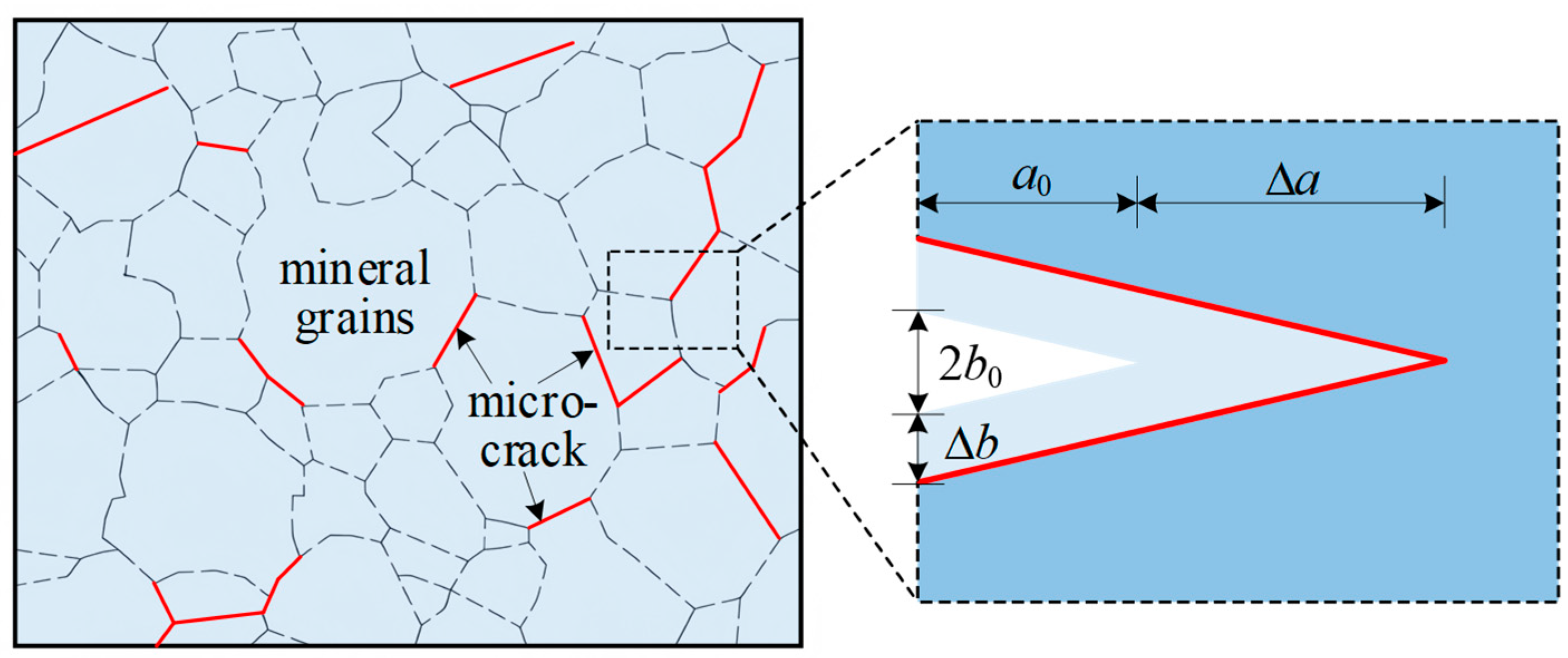
If the rock specimen is simplified as an infinite plate with unit thickness, the fluid–solid interfacial area after dissolution can be expressed as:
where
a(
t) and
b(
t) denote the half-length and half-width of the crack after immersion time
t, respectively (see
Figure 5).
Considering the existence of a plastic zone at the crack tip [
34], the crack geometry is affected, while the stress intensity factors (SIFs) remain unchanged. A correction coefficient
κ is introduced to account for the variation in the plastic zone:
where
a0 and
b0 are the initial half-length and half-width of the crack, respectively, and
L(
t) represents the extension of the crack induced by chemical reactions after time
t. Treating the ion concentration in the solution as a known parameter, Equation (12) can be rewritten in integral form as:
where
λ is a coefficient reflecting the influence of dissolution on the activity, corresponding to the ratio of crack surface area to the total fluid–solid interfacial area. Based on the measured increment of major ion moles in the solution, the crack geometry evolution can be determined from Equations (14) and (15).
In the present model, temperature and pH are assumed constant within each time increment, and the precipitation term is neglected to maintain linearity. These assumptions are reasonable for relatively short-term simulations (days to months) under controlled laboratory conditions or for mechanism-oriented studies.
3.2. Chemical Corrosion Damage at Fractures
Water–rock interaction is a key factor affecting the stability of grottoes. Structural instability generally initiates from crack initiation and propagation. It is therefore natural to relate chemical dissolution to fracture mechanics concepts used in rock failure analysis. Numerous experimental studies have demonstrated a strong correlation between fracture toughness and chemical corrosion. Although quantitatively describing such complex chemical processes remains challenging, developments in damage mechanics and fracture mechanics provide valuable theoretical insights.
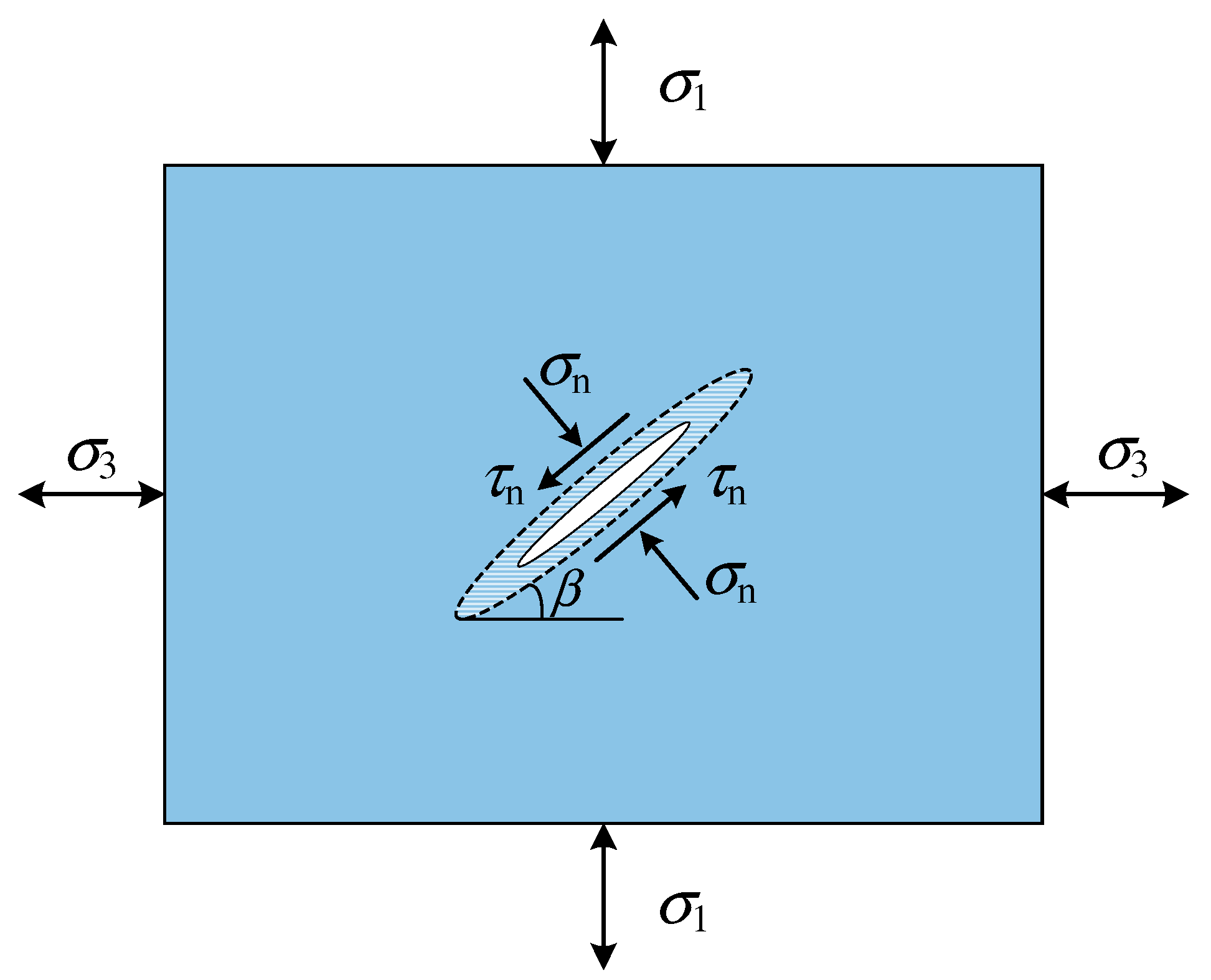
Considering a continuous rock specimen containing an inclined crack far from the boundary, the stress intensity factor (SIF) at the crack tip can be expressed as [
29,
35]:
where
a is half of the crack length;
σn and
τn are the normal and shear stresses acting along the crack plane, respectively; and
σ1 and
σ2 are the far-field stresses (see
Figure 6).
When the SIF exceeds the fracture toughness, unstable crack propagation occurs. Under constant environmental conditions, fracture toughness is an intrinsic material property. As given in Equation (16), the SIF is influenced by external loading, frictional properties, and crack geometry.
The effect of chemical dissolution on the friction coefficient remains uncertain. Some studies indicate a reduction due to surface smoothing and reduced asperity interlocking, while others report an increase due to dissolution-induced roughness enhancement (higher JRC). Overall, no consistent trend has been established. Crack geometry plays a critical role in controlling SIFs during dissolution. Chemical reactions alter crack surfaces, especially near the crack tip, where dissolution or precipitation is most active under stress. This leads to continuous changes in crack geometry, modifying the stress state and plastic zone size, and thus promoting crack propagation. Meanwhile, dissolution along crack surfaces directly enlarges crack apertures.
Therefore, the degradation of fracture toughness can be quantitatively evaluated by analyzing crack geometry evolution. Substituting Equation (14) into Equation (16), the SIF after dissolution is given by [
29]:
Assuming a constant external stress field, the SIF increases with crack length during dissolution. When the SIF exceeds
KIC or
KIIC, unstable crack propagation occurs:
From another perspective, the increase in SIF can be interpreted as an apparent reduction in fracture toughness under constant stress conditions:
Accordingly, a hydrochemical residual strength factor
Dc is introduced to quantify the degradation of fracture toughness:
Previous studies have shown that Mode I fracture toughness is linearly related to tensile strength, and Mode II fracture toughness is linearly related to shear strength:
where
σp and
τp denote peak tensile and shear strengths, respectively, and
λ and
η are empirical constants. Thus, the same residual strength factor
Dc can be used to describe the degradation of peak strengths [
29]:
where
,
,
and
denote the corresponding parameters after chemical degradation.
3.3. Nonlinear Constitutive Model
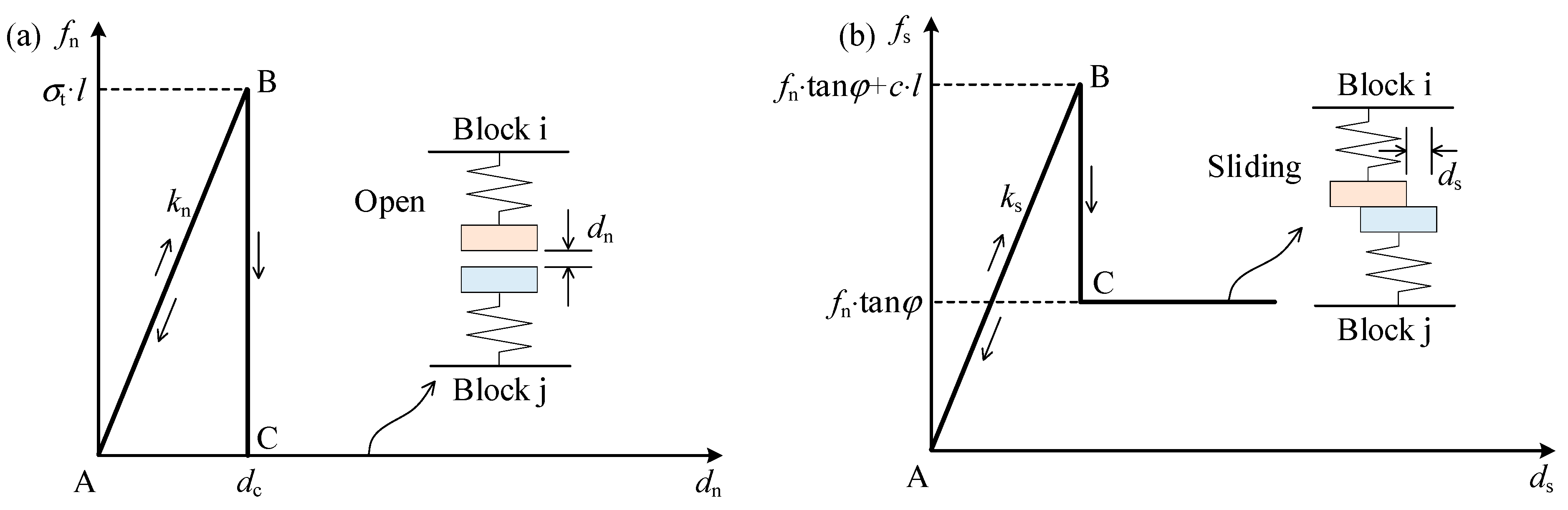
In the original DDA framework, shear failure is evaluated using the Mohr–Coulomb criterion, while tensile failure is governed by the maximum normal stress criterion. Although effective for simulating crack initiation and propagation, the original model does not account for cumulative damage or energy dissipation. In contrast, the nonlinear constitutive model provides a more realistic description of fracture processes in both intact and fractured materials, particularly capturing nonlinear behavior at crack tips.
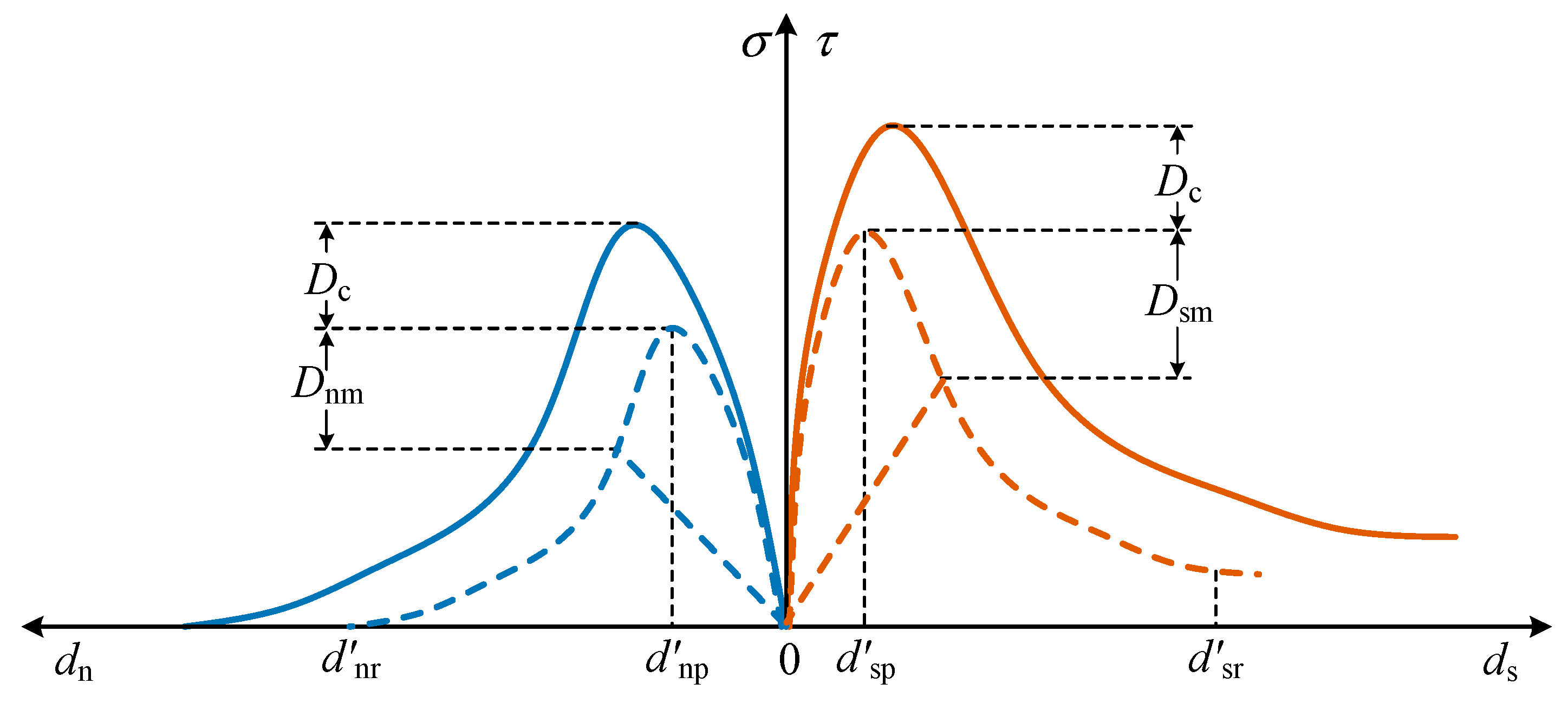
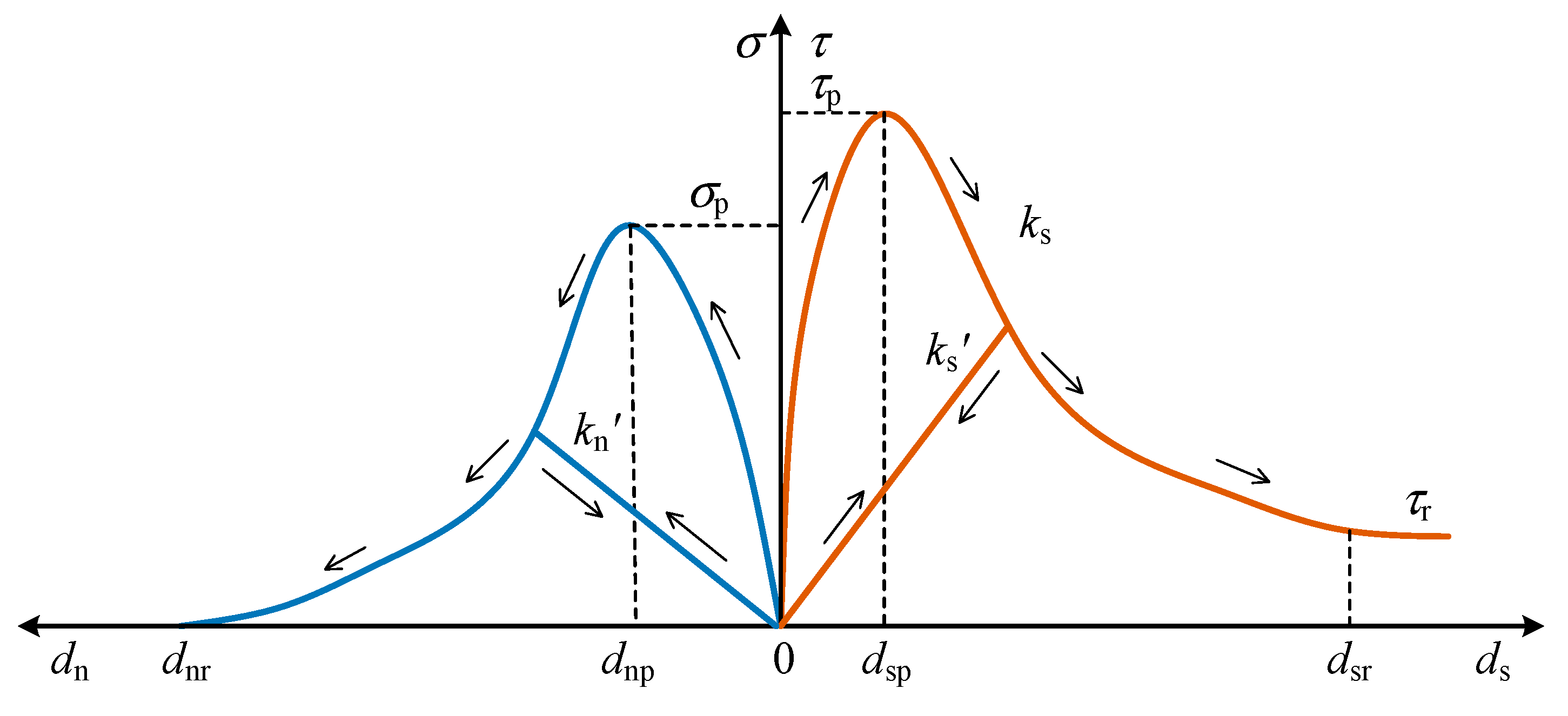
The model consists of two stages: a hardening stage before peak stress is reached, followed by a softening stage prior to complete failure [
36]. The area under the stress-displacement curve corresponds to the critical fracture energies
GIC and
GIIC, displayed in
Figure 7.
During the hardening stage, stresses increase with the initial stiffnesses
kn and
ks until the critical displacements
dnp and
dsp are reached. Subsequently, the response enters the softening stage, governed by a damage-based law [
29]:
where
Dnm and
Dsm represent mechanical residual factors. The degraded stiffnesses are expressed as:
where
dnmax and
dsmax denote the historical maximum displacements, indicating that unloading does not reduce accumulated damage.
dnr and
dsr are residual displacements.
According to the Griffith–Irwin criterion, residual displacements can be expressed as:
The relationship between fracture energy and fracture toughness is given by:
Substituting Equation (22) into Equation (26), the fracture energy after chemical degradation is obtained as [
29]:
By incorporating Equations (22) and (27) into Equations (23)–(25), all parameters required for the nonlinear constitutive model can be determined.
In
Figure 8, the dashed lines represent the degraded constitutive behavior after chemical corrosion, while the solid lines correspond to the original material. The parameters
Dnm(
Dsm) and
Dc describe the effects of mechanical and chemical damage on peak strength.
In the numerical implementation, the chemical residual strength factor Dc is computed at the beginning of each time step based on the cumulative dissolution time. It should be noted that since the chemical reaction rate is much slower than the mechanical contact iterations, within the open-close iterations of a given time step, Dc is held constant.
3.4. Flowchart of the Improved DDA
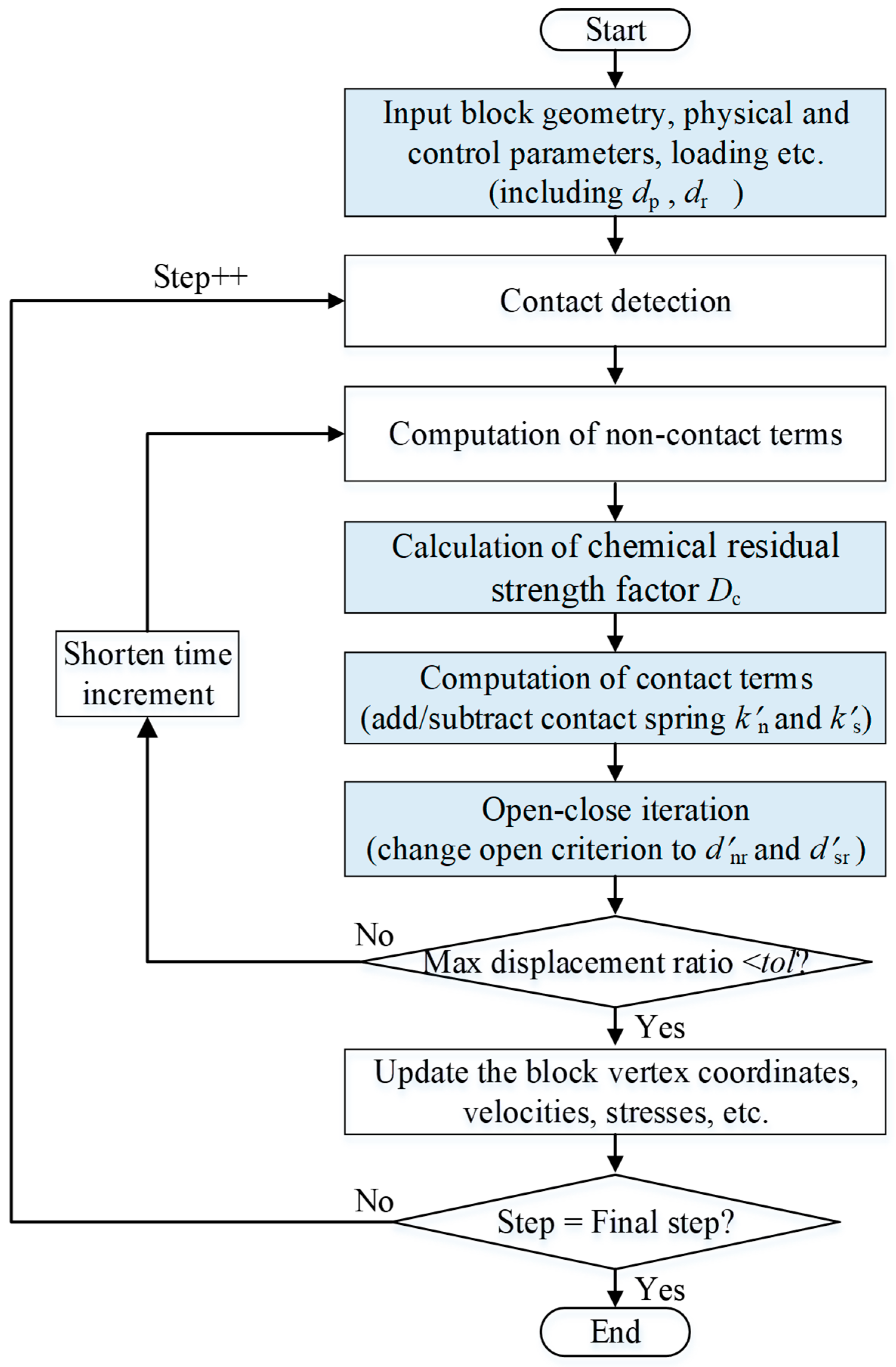
To enhance the comprehension of the computational processes,
Figure 9 provides a simplified flowchart depicting the proposed improved DDA incorporating the nonlinear constitutive model with chemical damage. In this flowchart, the procedures marked in light blue highlight the integration of the nonlinear model with chemical damage. Two crucial modifications are noted in the flowchart. First, the calculation of the residual strength factor
Dc. Second, the failure criterion should be replaced by the nonlinear method, i.e.,
dn <
d’
nr, and
ds <
d’
sr.
4. Numerical Verification
The calculation parameters used for this section are given in the following
Table 1:
4.1. Implementation Verification Using Two-Block Contact Model
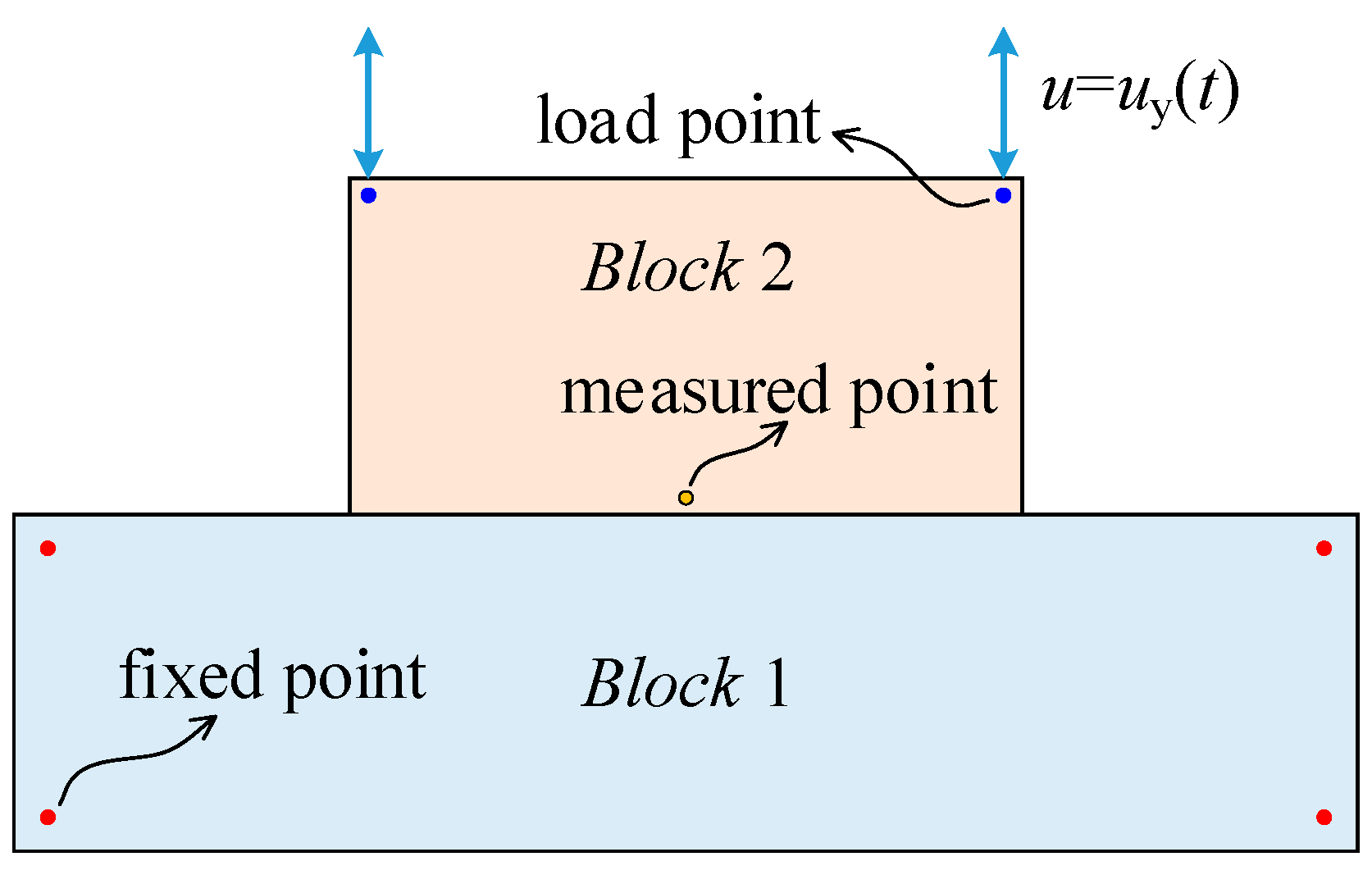
This example considers a two-block normal contact model for numerical implementation verification, as shown in
Figure 10. The four corner points of the lower block (Block 1) are fully constrained. As illustrated in
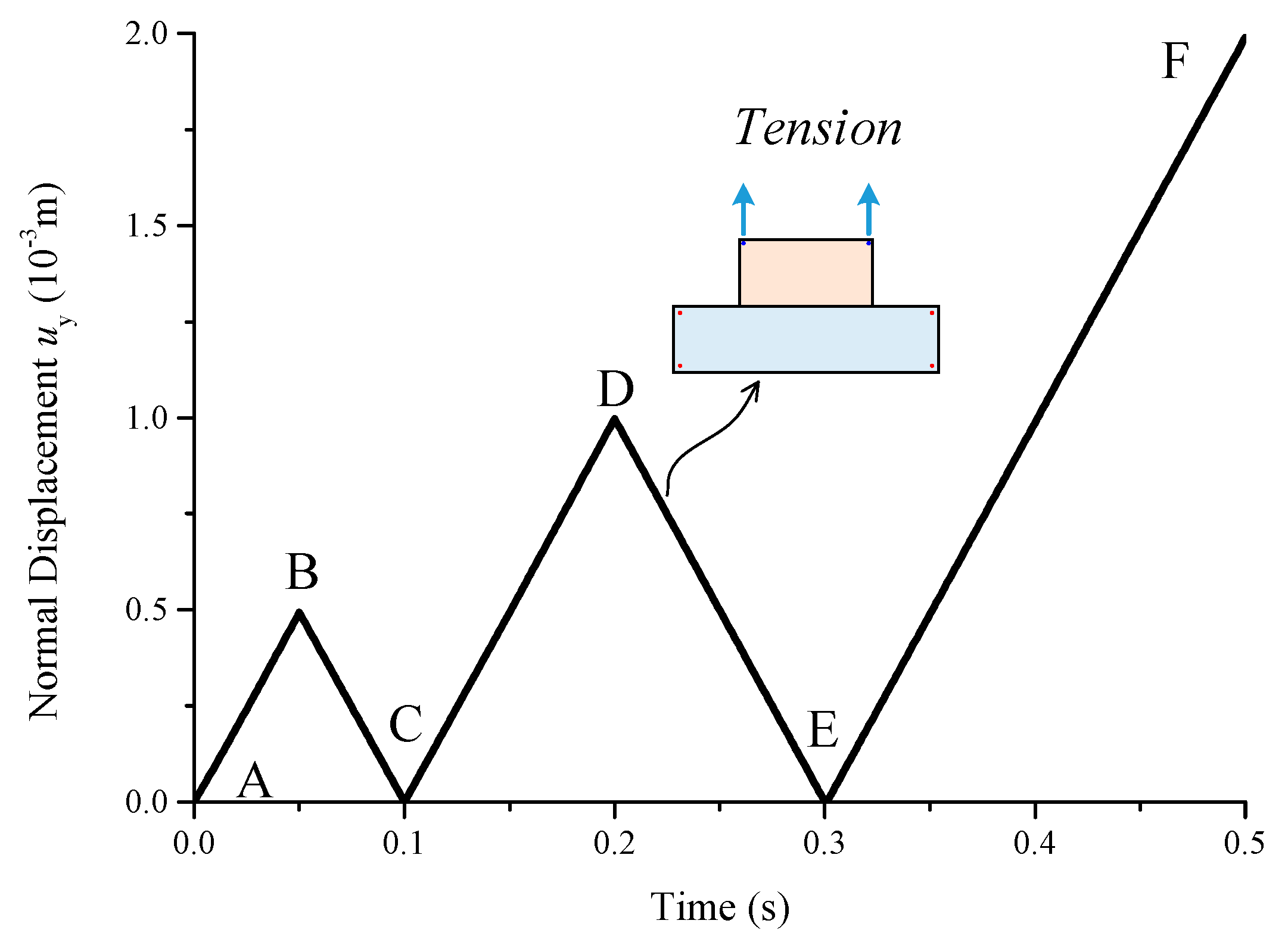
Figure 11, time-dependent normal displacement boundary conditions
u =
uy(
t) are applied at the two loading points on the top of the upper block (Block 2). A monitoring point is defined along the contact interface to extract the normal stress
σy-displacement response.
The physical parameters of the blocks are as follows: density ρ = 2500 kg/m3, Young’s modulus E = 200 GPa, and Poisson’s ratio μ = 0. The contact interface is characterized by cohesion c = 1 MPa, tensile strength σt = 4 MPa, and internal friction angle φ = 10°. The numerical parameters are set as: contact stiffness kn = 2 × 10⁹ N/m3, time step Δt = 0.001 s, total steps N = 500, and maximum allowable displacement ratio of 0.01. The chosen value of kn ensures that contact penetration is kept within acceptable limits, and the time interval is selected to satisfy the Courant-type stability condition for explicit-like iterative schemes in DDA and to ensure convergence of the open-close iteration. The parameter dp in the cohesive zone model (CZM) is 3 × 10⁻⁴ m. The contact length between the two blocks is 0.4 m.
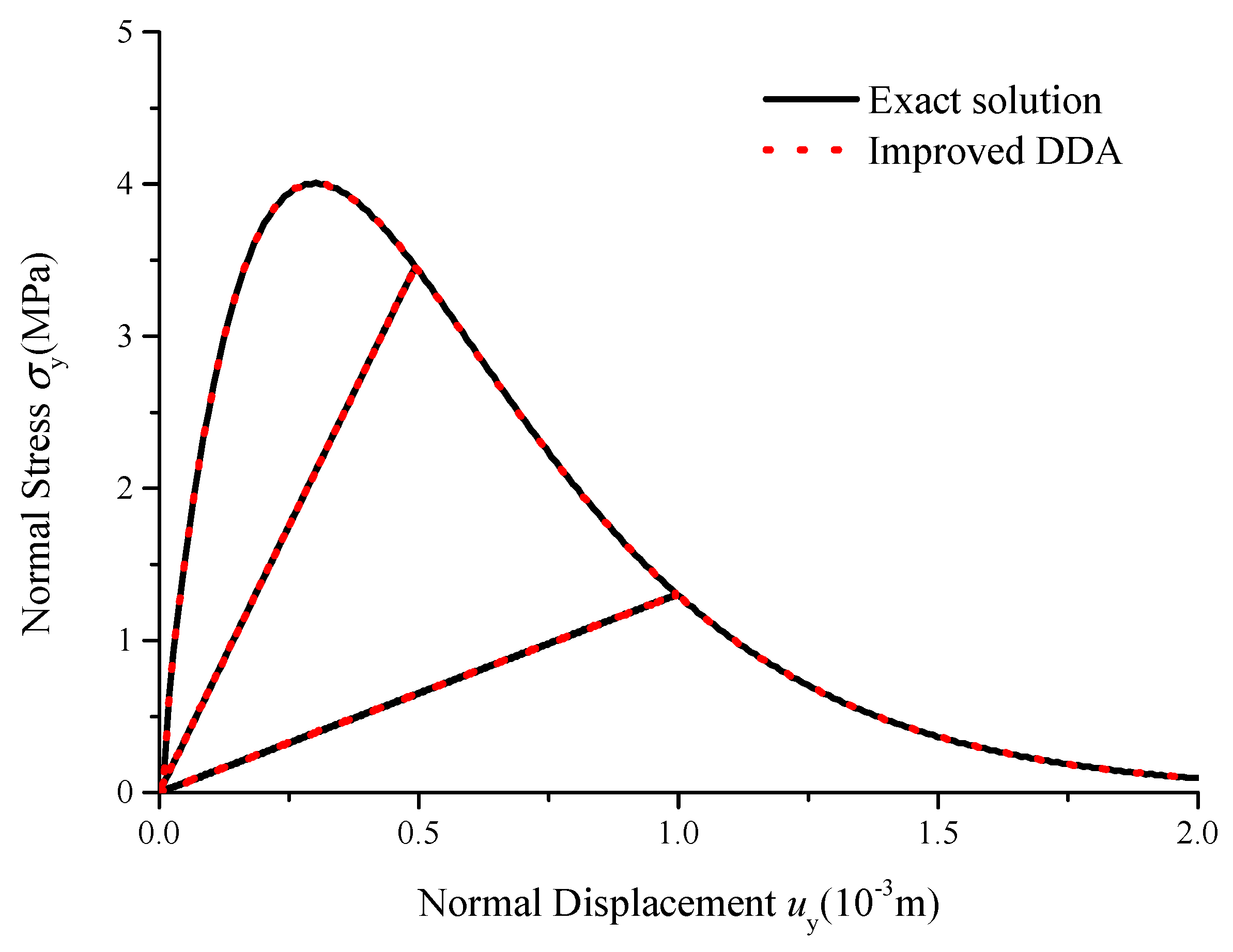
Figure 12 presents the comparison between the improved DDA results and the exact analytical solution in terms of normal stress-displacement (
σy-
uy) response. Overall, the improved DDA results (red dashed line) show excellent agreement with the exact solution (black solid line). During the first loading–unloading stage (A-B-C), the stress in Block 2 increases from zero to a peak value of 4.0 MPa. After reaching the peak tensile strength, the joint strength begins to degrade, indicating the onset of the softening stage. Upon reloading after unloading, the peak strength is reached earlier (stage C-D-E), reflecting stiffness degradation due to accumulated damage. This stage corresponds to the nonlinear damage regime of the contact interface, where contact stiffness gradually decreases with increasing displacement, and the stress growth rate is significantly reduced. A pronounced hysteresis loop is observed between loading and unloading paths, which is consistent with the nonlinear constitutive behavior of the interface. In the subsequent loading stage (E-F), corresponding to the large-deformation relaxation regime, the contact stress continuously decreases with increasing displacement and eventually approaches zero, exhibiting typical contact relaxation behavior.
Overall, this example demonstrates that the improved DDA method accurately reproduces peak stress, peak displacement, and hysteresis behavior during cyclic loading. It effectively captures energy dissipation and damage evolution at the contact interface, confirming its accuracy and physical consistency in modeling joint behavior.
4.2. Effect of Chemical Dissolution on Tensile Behavior
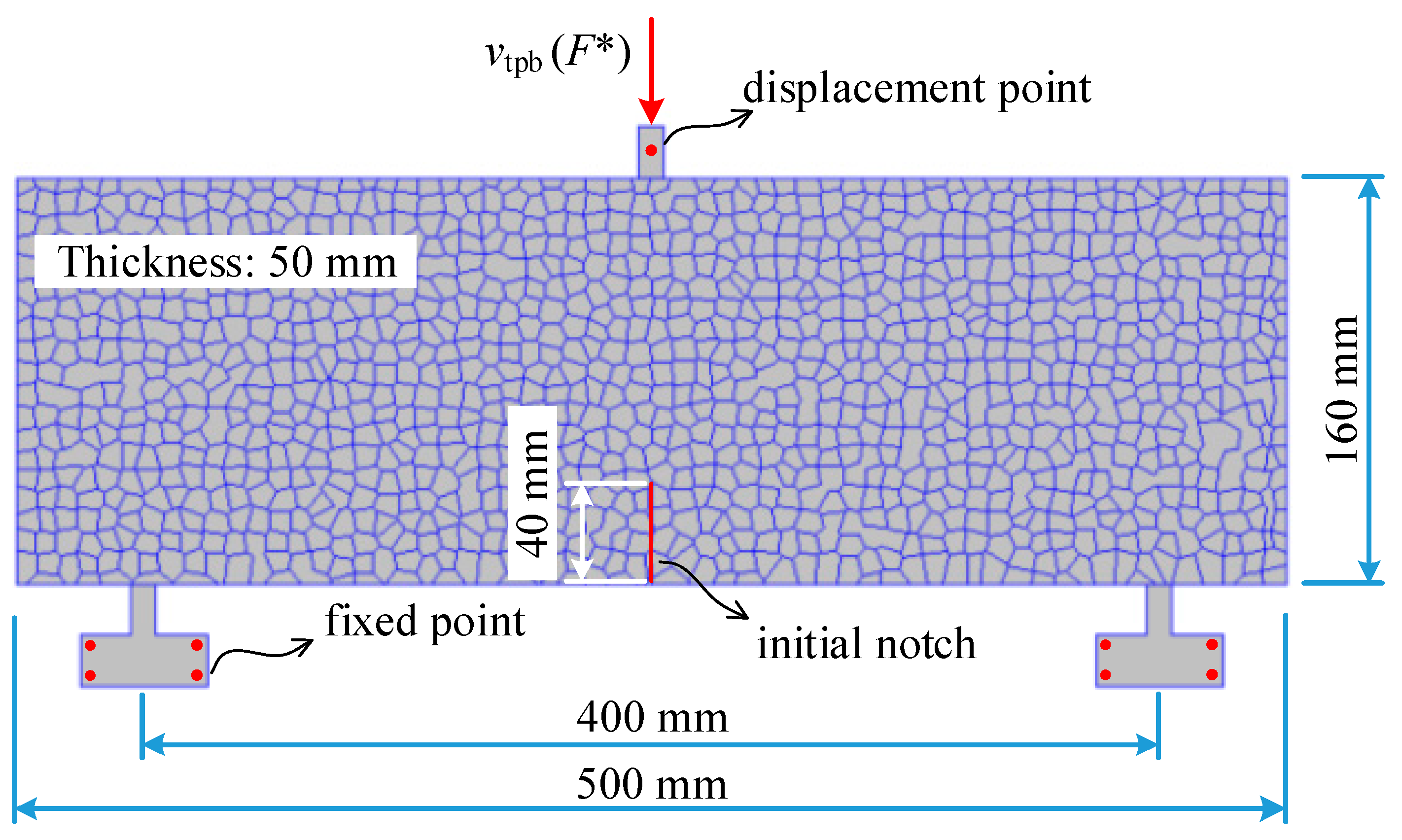
To demonstrate the capability of the proposed method in capturing hydrochemical damage effects, such as joint degradation, contact failure, and crack propagation, as well as the model’s ability to reproduce qualitative degradation trends under assumed chemical parameters. A three-point concrete bending beam model with a prefabricated notch using Voronoi tessellation [
37] is constructed (as shown in
Figure 13). Concrete is used here as a validated surrogate for calcite-cemented sandstone, because both materials rely on calcium-based cementitious phases (calcium silicate hydrate in concrete vs. calcite in sandstone) that are susceptible to acid dissolution. The geometric parameters are as follows [
38]: length
L = 500 mm, span
S = 400 mm, height
h = 160 mm, thickness
b = 50 mm, and initial notch height of 40 mm. The beam material is concrete with properties:
ρ = 2500 kg/m
3,
E = 33.8 GPa, and
μ = 0.2. Joint parameters are: cohesion
c = 10 MPa, friction angle
φ = 30°, and tensile strength
σt = 3.5 MPa. Numerical parameters include
kn = 2 × 10
9 N/m
3, Δ
t = 0.0001 s, N = 1000, displacement ratio 0.01, and
dp = 3 × 10
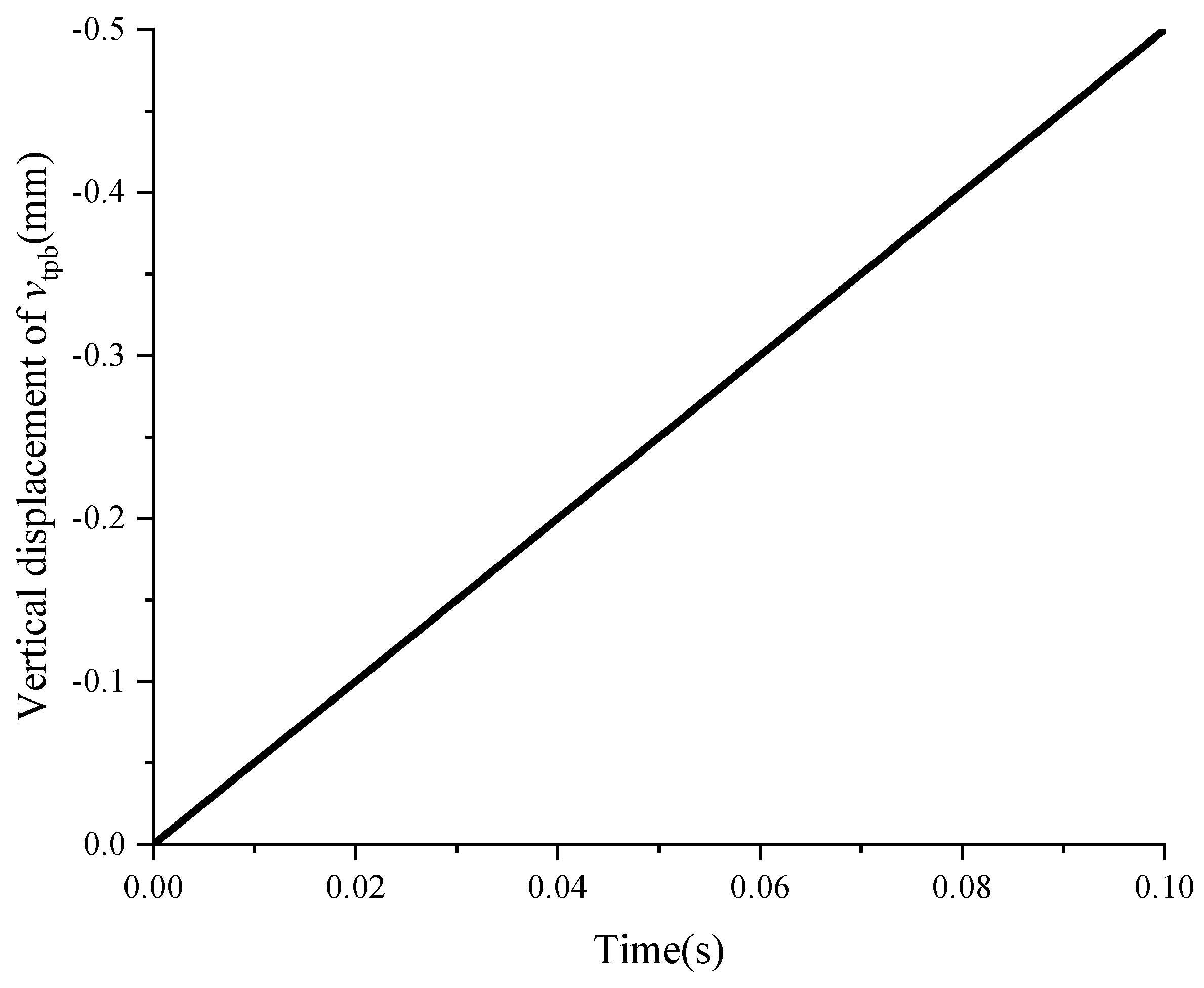
−6 m. A displacement-controlled load
vtpb is applied at the beam midpoint (as given in
Figure 14), and the reaction force
F* is recorded.
For an acidic solution with pH = 2, the hydrochemical residual strength factor
Dc at 0, 7, 30, and 90 days is 1.0, 0.884, 0.804, and 0.750, which adopted from Gao et al. [
29].
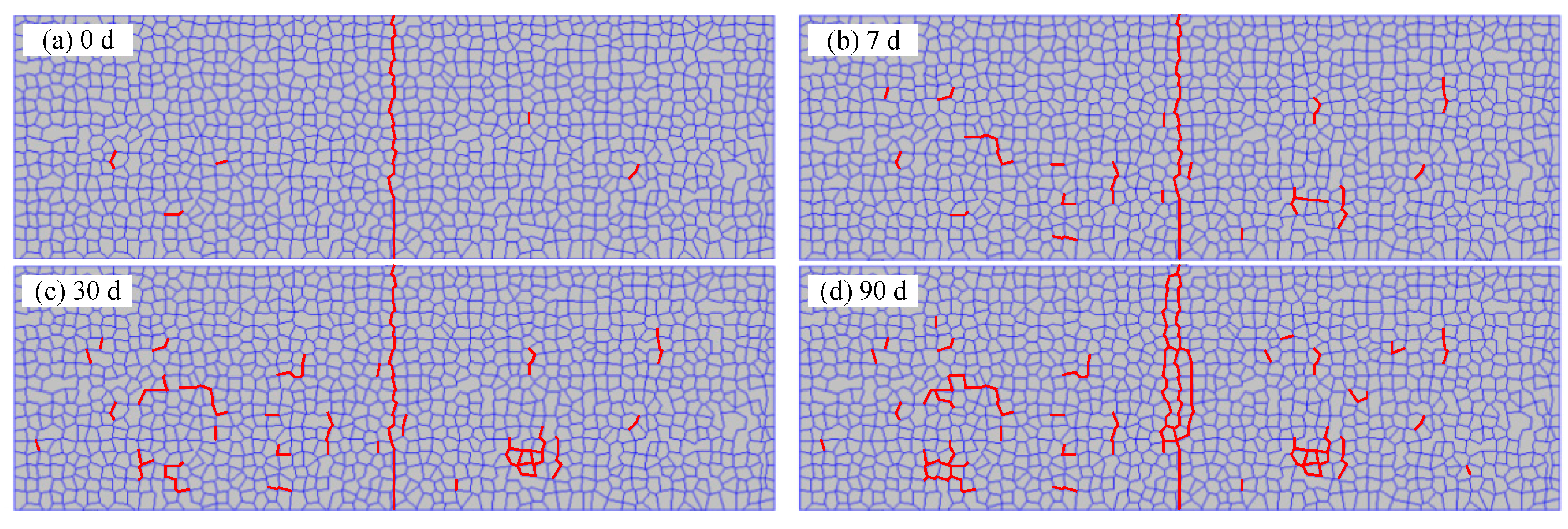
Figure 15 shows crack evolution patterns under different erosion durations. In this Figure, red lines represent joints in an open state (tensile failure, loss of bonding). At 0 days, only a few microcracks exist, and the main crack propagates stably along the notch. After 7 days, microcracks increase significantly, and secondary cracks appear, indicating initial material degradation. At 30 days, cracks coalesce and form localized damage zones, and crack branching becomes evident. At 90 days, a dense crack network develops, and structural integrity is severely compromised.
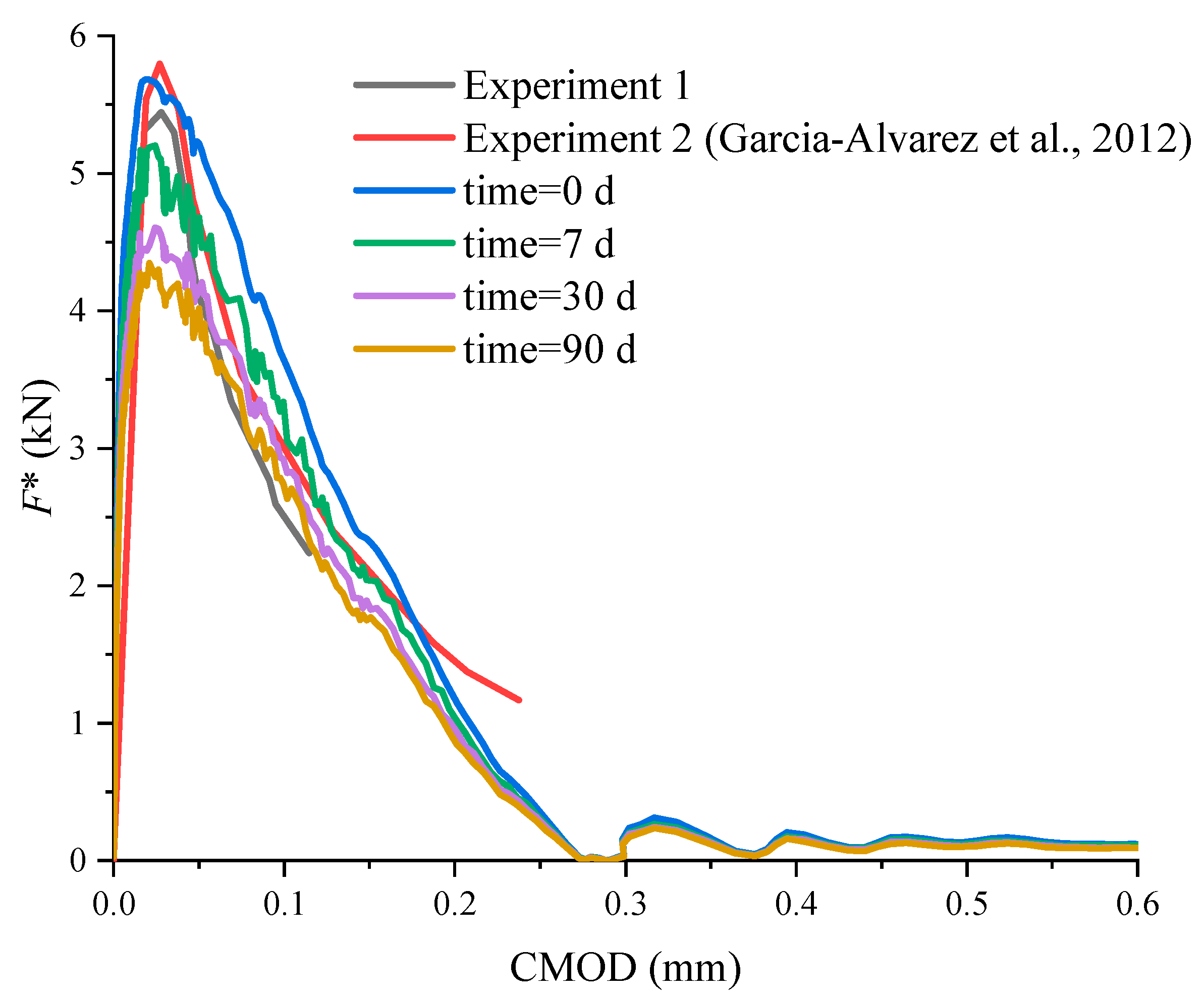
Figure 16 shows the relationship between reaction force and crack mouth opening displacement (
F*-CMOD), compared with experimental results from Garcia-Alvarez et al. [
39]. The experimental data from García-Álvarez et al. [
39] are used solely for validating the mechanical response under non-corroded conditions (0 days). For erosion durations of 7, 30, and 90 days, no independent experimental data are available; therefore, these results are presented as predictive simulations of chemical degradation based on the proposed model. With increasing erosion time, the peak load decreases from approximately 5.7 kN (0 d) to 5.2 kN (7 d), 4.6 kN (30 d), and 4.3 kN (90 d). The softening slope becomes more gradual, and residual strength decreases, indicating significant degradation of fracture toughness. At the same CMOD level, longer erosion durations correspond to lower load-carrying capacity, demonstrating cumulative damage effects. These results are consistent with crack evolution patterns and reveal the deterioration mechanism of hydrochemical erosion on rock mechanical behavior.
4.3. Simulation of the Grotto Spalling Process
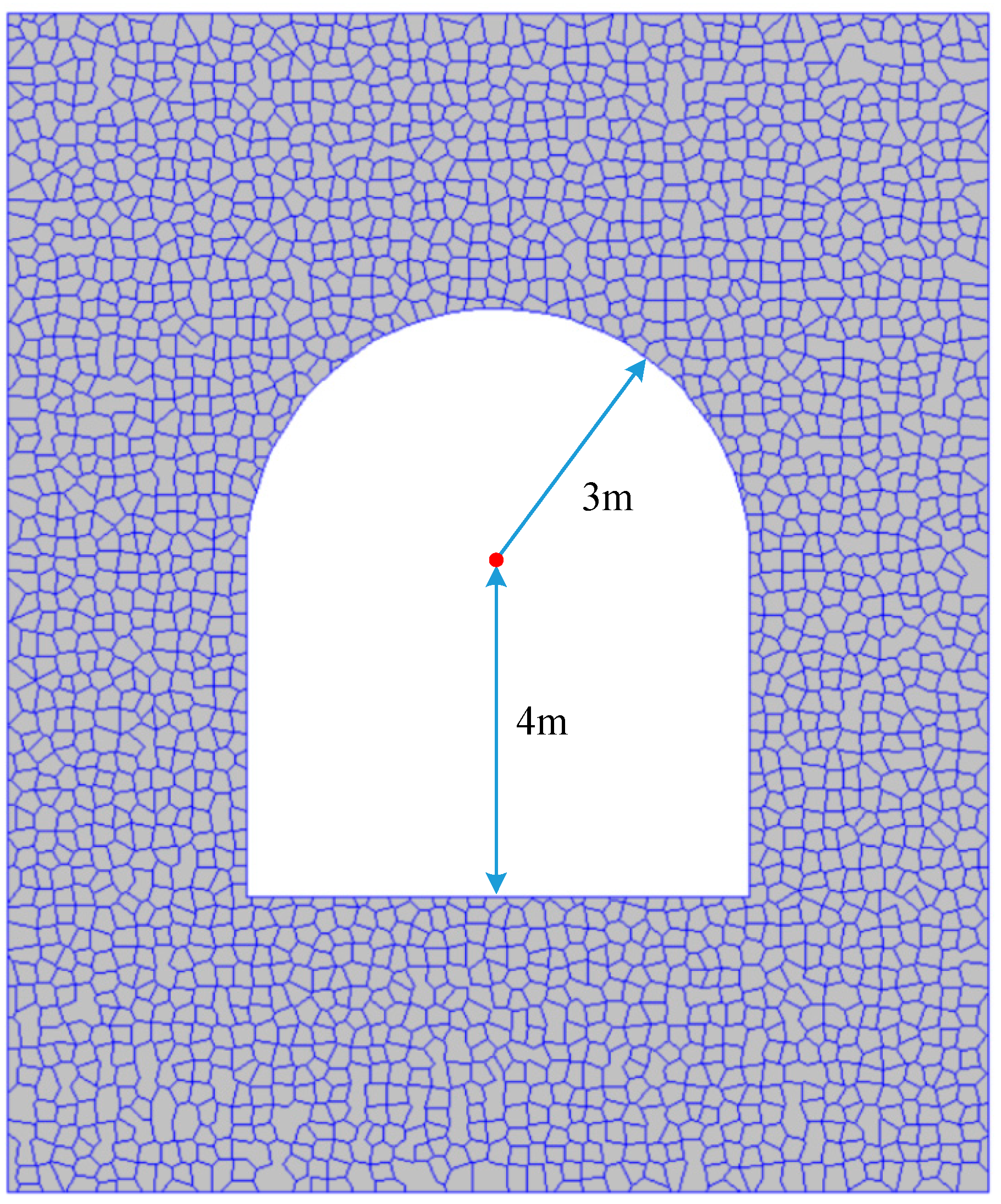
A DDA model with a composite geometry (rectangular lower part and semicircular arch) is established to simulate the evolution of hydrochemical damage in the grotto surrounding rock (
Figure 17). The model parameters are: arch radius 3 m, span 6 m, wall height 4 m, and total height 7 m. Rock properties:
ρ = 2400 kg/m
3,
E = 12 GPa,
μ = 0.25. Joint properties:
c = 2.0 MPa,
φ = 35°,
σt = 2.5 MPa. Numerical parameters:
kn = 3 × 10
9 N/m
3, Δ
t = 0.001 s, N = 1000, and
dp = 3 × 10
−5 m. It should be noted that the model is parameterized based on the typical calcite cemented sandstone characteristics reported in the literature for grottoes [
6]. We now address that the bottom of the model is fixed in both x- and y-directions, and the lateral boundaries are roller-supported. An initial gravitational stress field is applied based on the rock density and depth. The simplified geometry (rectangular base with a semicircular arch) is adopted as an idealized representation to illustrate the progressive failure mechanism induced by hydrochemical erosion. While field conditions are more complex, this illustrative case allows for a controlled mechanistic analysis. The model parameters are chosen to be representative of typical sandstone grottoes. In addition, the acidic solution is assumed to infiltrate from the arch crown and along the exposed inner surface, representing the most common seepage path in grottoes.
As illustrated in
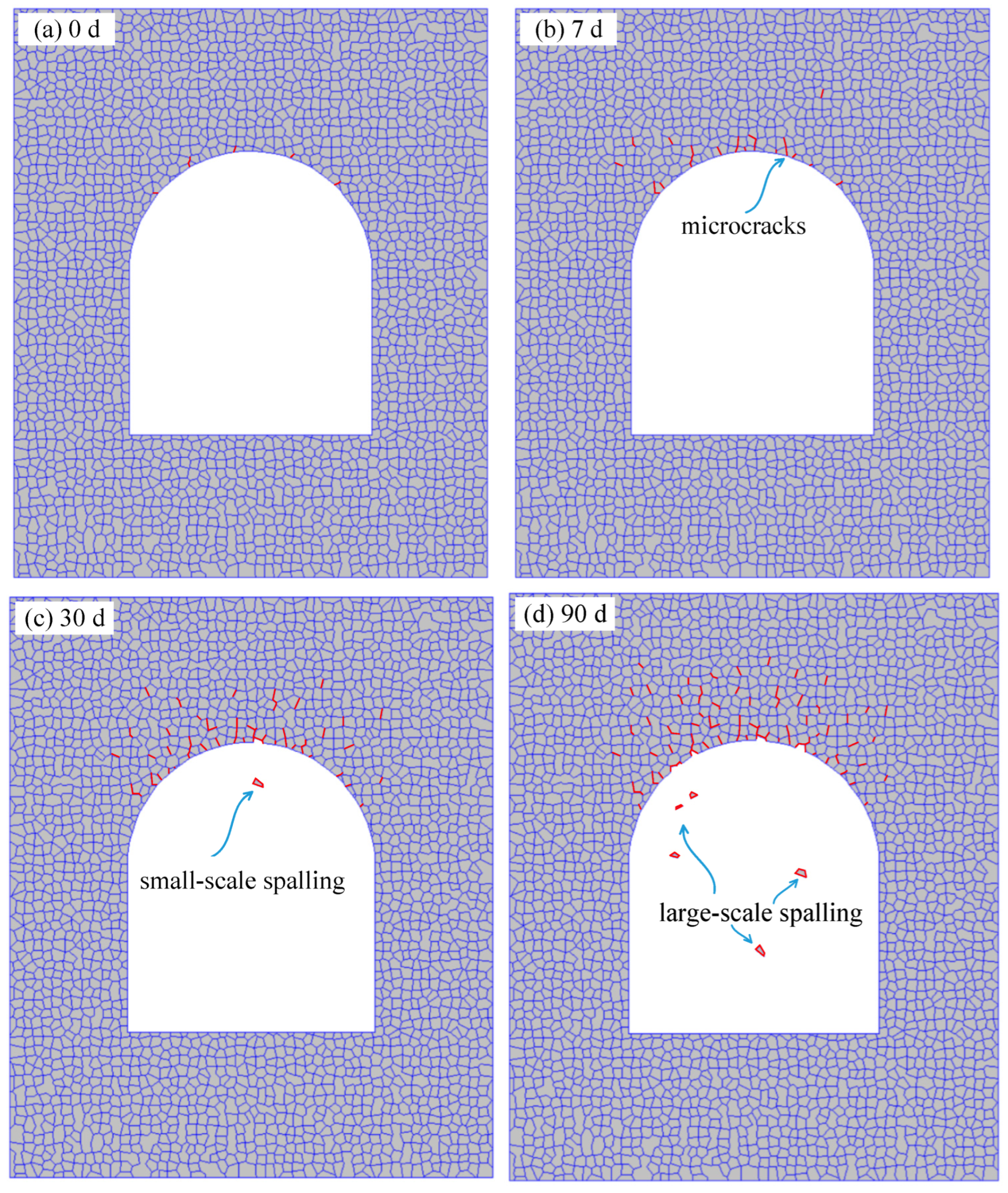
Figure 18, red lines indicate joint contacts that have undergone an open state. A block is considered detached when all its surrounding joints are open and the block is no longer constrained; such blocks are visualized with hatched filling. The evolution of joint cracking in the surrounding rock of the grotto under different erosion durations in an acidic solution (pH = 2). As shown in
Figure 18a, in the absence of chemical erosion, only initial contact interfaces exist within the rock mass, and no evident newly formed cracks are observed, indicating that the surrounding rock remains structurally intact. With the progression of hydrochemical erosion, as shown in
Figure 18b, acidic solution infiltrates along the block joints and induces mineral dissolution, resulting in a reduction in inter-block bonding strength. Consequently, a small number of microcracks initiate at the arch crown and arch shoulders, and begin to propagate radially into the surrounding rock, marking the onset of the micro-damage stage. As the erosion duration increases (
Figure 18c), the number and density of microcracks increase significantly. The radial crack network in the crown region becomes more developed, with some cracks showing signs of coalescence. Meanwhile, crack propagation extends from the crown toward the arch shoulders and the upper sidewalls, indicating that the damage induced by hydrochemical processes gradually spreads from localized regions into the interior of the surrounding rock. Under long-term exposure to acidic conditions, as shown in
Figure 18d, joint cracking enters an accelerated evolution stage. A dense network of interconnected cracks forms in the crown and adjacent regions, exhibiting a mesh-like pattern. As cracks coalesce, local blocks become detached, leading to spalling failure.
To provide a reproducible and objective assessment of the hydrochemical damage evolution, four quantitative metrics are extracted from the DDA simulations at each erosion time (0, 7, 30, and 90 days). The results are summarized in
Table 2. As shown, all damage metrics increase monotonically with erosion time. After 7 days, the number of active cracks increases from 8 to 26. By 30 days, the number of active cracks more than doubles, and the block starts to spall. Between 30 and 90 days, a continuous deterioration is observed: the total crack length increases from 5.57 m to 7.56 m. The maximum displacement at 90 days is 5.08 m, approximately 5 times the value at 30 days. In addition, the cumulative detached block volume increases from 0.021 m
3 to 0.078 m
3. These quantitative trends confirm the progressive nature of hydrochemically induced spalling damage.
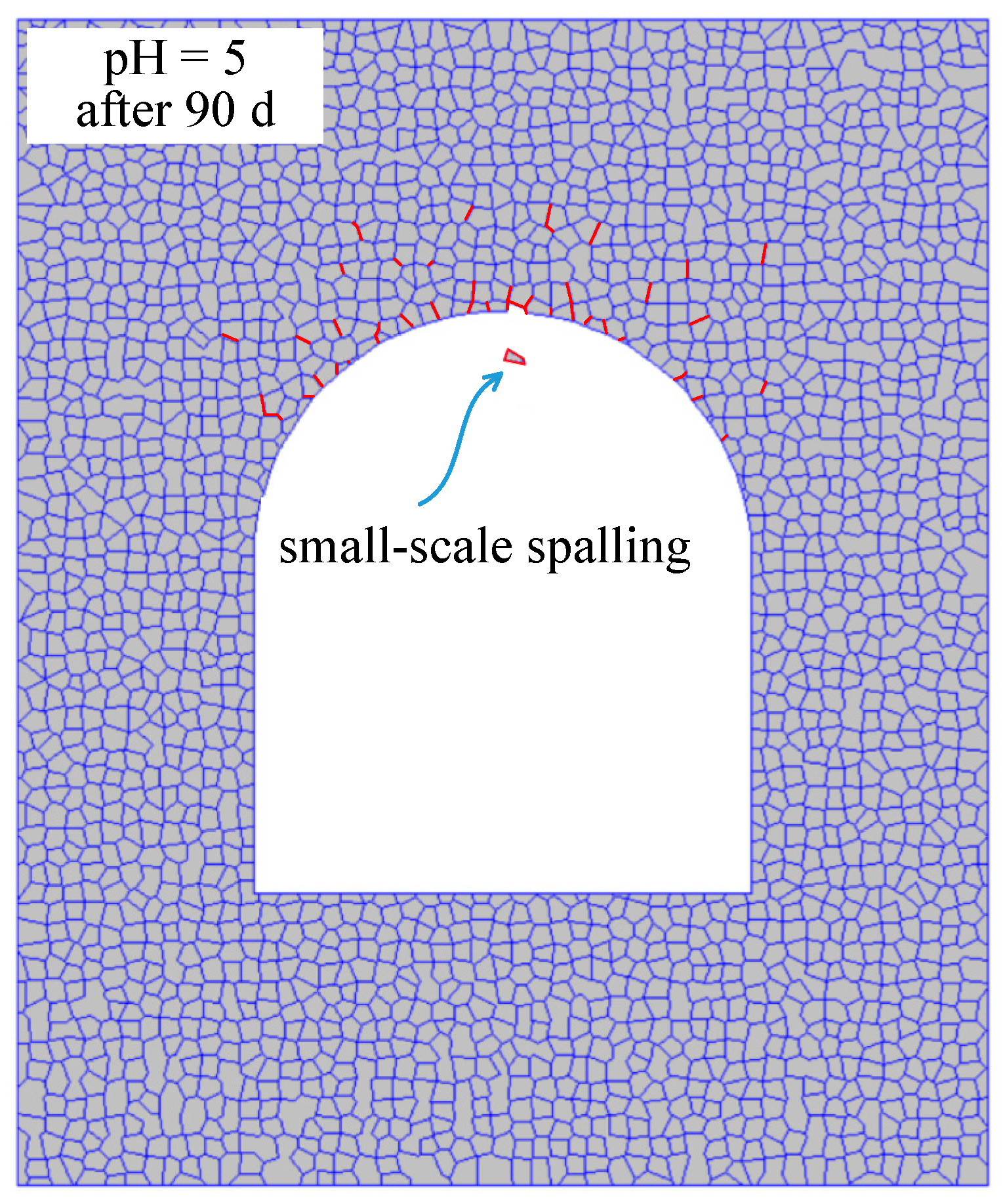
To evaluate the impact of environmental and joint characteristics on the spalling phenomenon in grottoes, two additional simulations were performed for the grotto model under a mild acid condition (constant pH = 5) and with varying friction angle (φ = 30° and 40°) after 90 days of erosion. All other parameters remain the same as in the baseline case (pH = 2, φ = 35°).
At pH = 5, the progressive crack propagation pattern, i.e., initiation at arch crown, radial growth, coalescence, and spalling, remains identical to that at pH = 2, but the timeline is substantially delayed (as shown in
Figure 19). The crack network at pH = 5 after 90 days resembles that at pH = 2 after 30 days. This is because the H
+ concentration is lower, reducing the dissolution rate proportionally. Thus, while absolute timing is sensitive to pH, the failure mechanism is robust.
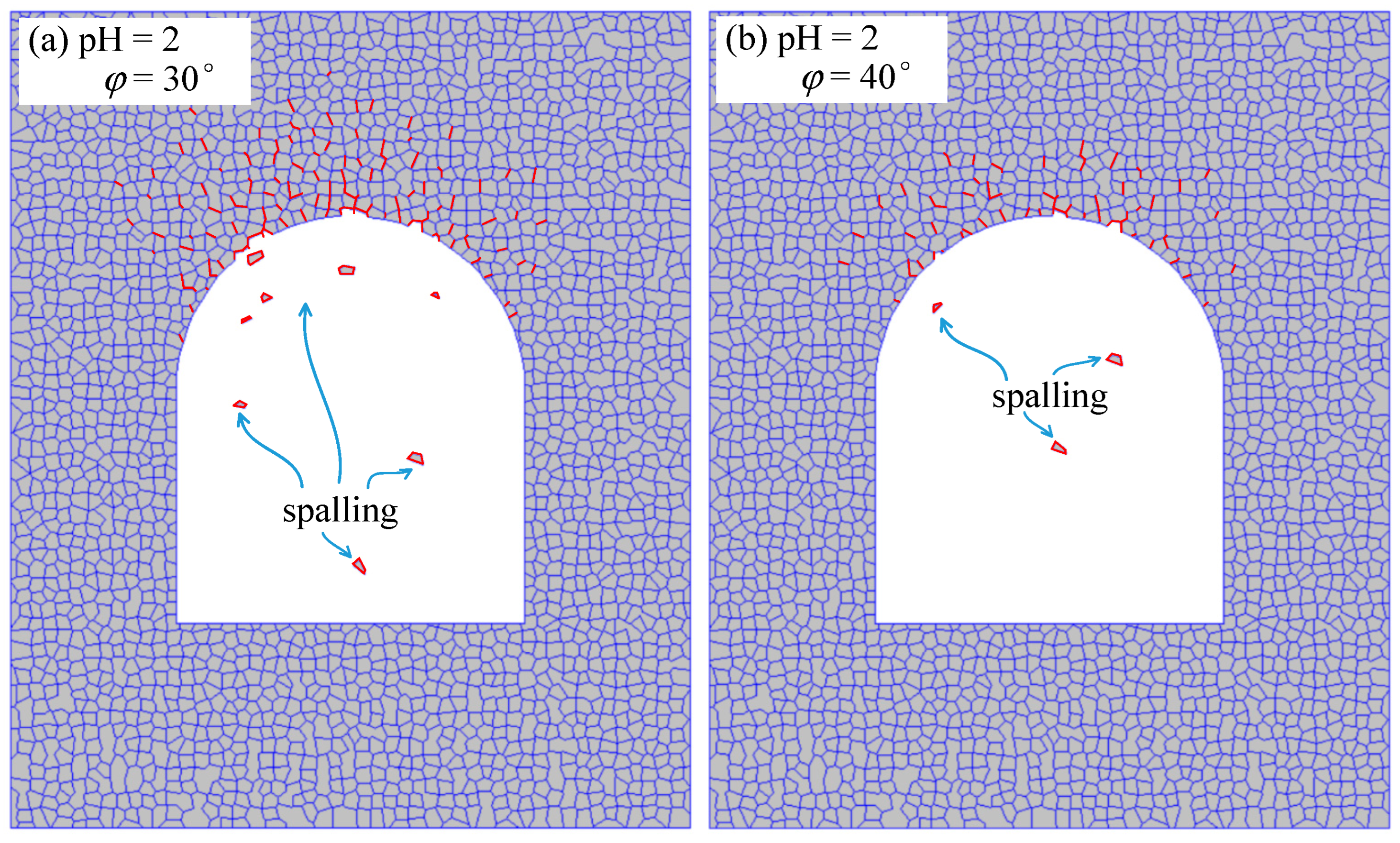
In addition, different joint characteristics are also taken into consideration. The post-dissolution friction angle
φ was varied by ±5° (from 35° to 30° and 40°) while keeping other parameters constant at 90 days of erosion. As displayed in
Figure 20, A lower
φ (30°) accelerates crack propagation and increases the detached block volume compared to the baseline. A higher
φ (40°) delays crack coalescence but does not prevent ultimate spalling. This demonstrates that although friction uncertainty affects the timing and extent of spalling, the fundamental progressive failure mechanism remains unchanged.
These results demonstrate that hydrochemical erosion is a primary driving factor for joint cracking and block detachment in the grotto surrounding rock. The damage evolution follows a progressive pattern characterized by micro-damage initiation, crack propagation, and coalescence leading to instability. The combination of Voronoi tessellation and the DDA method effectively captures the discontinuous cracking behavior under hydrochemical conditions, providing a robust numerical framework for analyzing deterioration mechanisms and supporting the design of conservation strategies for grotto heritage.
5. Discussion
The proposed method links mineral dissolution kinetics to fracture mechanics through a time-dependent chemical residual strength factor Dc. Unlike empirical degradation models that prescribe stiffness reduction, our approach derives Dc directly from crack geometry evolution. This provides a mechanistic basis for understanding why acidic environments accelerate spalling: dissolution increases crack length and aperture, raising the stress intensity factor (SIF) under constant far-field stress. Once the SIF surpasses fracture toughness, subcritical crack growth transitions to unstable propagation, which can be interpreted as an apparent toughness reduction. This chemomechanical coupling explains the progressive failure pattern observed in grotto simulations—from microcracks at the arch crown to coalescence and block detachment.
Compared with continuous damage models that cannot handle block detachment, and with traditional DDA that lacks chemical degradation, the proposed method captures both nonlinear joint behavior (hardening, softening, hysteresis) and the gradual loss of inter-block bonding due to dissolution. The two-block and three-point bending validations confirm that the model reproduces peak strength reduction, stiffness degradation, and crack branching with increasing erosion time—trends consistent with experimental observations on acid-etched calcareous rocks. Notably, the hysteresis loops in
Figure 12 reflect energy dissipation from cumulative damage, a feature absent in elastic-perfectly plastic contact models.
The grotto simulations reveal that hydrochemical erosion can induce large-scale spalling within decades under aggressive acidity (pH = 2). Under mild acidity (pH = 5), the same mechanism operates on a longer timescale, implying that reducing acid input effectively extends service life. The friction angle φ affects the rate and volume of detached blocks but does not alter the fundamental failure sequence, suggesting that chemical protection (e.g., water diversion, anti-carbonation coatings) should be prioritized over purely mechanical reinforcement in acid-prone environments.
Several limitations warrant further investigation. The model assumes constant pH and temperature within each time step, whereas natural seepage chemistry fluctuates due to buffering, evaporation, and recharge. Crack geometry is idealized as elliptical; natural joints have rough surfaces and mineral fillings that affect both dissolution patterns and contact behavior. Additionally, stress-enhanced dissolution is neglected, which could accelerate predicted spalling. Finally, direct experimental validation on sandstone, rather than a concrete surrogate, is needed. Future work will address these aspects to enhance predictive capability for grotto conservation.
6. Conclusions
This study proposed a hydrochemical damage-coupled Discontinuous Deformation Analysis (DDA) method to simulate dissolution-induced spalling in sandstone grottoes. A chemical residual strength factor Dc, based on time-dependent crack geometry evolution, was derived from mineral dissolution kinetics and incorporated into a nonlinear joint constitutive model that captures hardening, softening, and hysteresis.
The main findings are as follows. First, the proposed chemical residual strength factor effectively quantifies the degradation of fracture toughness, tensile strength, and shear strength. The evolution of crack geometry reveals how dissolution increases the stress intensity factor, leading to accelerated crack propagation under constant external stress. Second, the improved DDA method accurately reproduces nonlinear joint behavior, including peak stress, displacement, and hysteresis effects. The three-point bending simulation shows that increasing erosion time reduces peak load (from 5.7 kN at 0 d to 4.3 kN at 90 d) and enhances crack branching, indicating the model’s capacity to capture the expected degradation trend under assumed chemical erosion. Third, the grotto simulation demonstrates that hydrochemical erosion is the primary driver of crack development and block detachment, following a progressive pattern from micro-damage (7 d) to crack coalescence (30 d) to large-scale spalling (90 d).
These findings provide a mechanical basis for understanding long-term degradation of grotto rock masses under acidic environments. Practical implications include that prior chemical damage lowers the threshold for mechanical weathering processes such as freeze–thaw and salt crystallization. The proposed method provides a numerical tool for long-term stability assessment of grotto heritage. Limitations include constant pH/temperature assumptions and simplified crack geometry; future work will incorporate reactive transport and freeze–thaw cycles.