Article

Effect of Lupin Flour Incorporation on the Quality Characteristics of Chicken Meat Sausages

by
Marius-Mihai Ciobanu
,
Mihai Cătălin Ciobotaru
and
Diana-Remina Manoliu
*
“Ion Ionescu de la Brad” Iasi University of Life Sciences, 3 Mihail Sadoveanu Alley, 700490 Iasi, Romania
*
Author to whom correspondence should be addressed.
Appl. Sci. 2026, 16(12), 5794; https://doi.org/10.3390/app16125794 (registering DOI)
Submission received: 18 May 2026 / Revised: 5 June 2026 / Accepted: 5 June 2026 / Published: 8 June 2026

Abstract

The incorporation of plant-based protein ingredients into processed meat products represents a promising strategy for reformulating meat products while addressing sustainability and resource efficiency concerns within the food industry. This study investigated the effect of sweet lupin flour incorporated at 2%, 4%, and 6% substitution levels on the quality characteristics of chicken meat sausages. Four batches were produced: a control (CB0%) and three lupin-enriched formulations (CLS2%, CLS4%, CLS6%), and evaluated for proximate composition, pH, water activity, colorimetric parameters, Warner–Bratzler shear force, and sensory acceptability. Lupin flour incorporation significantly modified all parameters, increasing ash, fat, carbohydrate, and energy content while moderately reducing moisture and protein. A progressive decrease in pH and water activity was observed alongside a colorimetric shift toward higher lightness and yellowness, with total color differences exceeding the visual perceptibility threshold of 5 at CLS4% and CLS6%. Shear force and work of cutting increased proportionally with substitution level, reflecting structural reinforcement of the protein matrix. Sensory evaluation confirmed that 2% substitution maintained overall acceptability within the positive range of the hedonic scale, while 4% remained acceptable but with some sensory decline, and the 6% received scores below the scale midpoint. These results suggest that lupin flour can be incorporated at up to 4%, while maintaining overall sensory scores within the positive range of the hedonic scale, supporting its potential as a plant-derived ingredient in the reformulation of poultry-based processed meat products.

1. Introduction

Currently, according to World Demographics, of the total global population of 8.2 billion people, 58.5% live in urban areas, compared to 46% in the year 2000 [1], and by 2050, two thirds of global population growth will take place in cities. Moreover, the World Urbanization Prospects 2025 report notes that approximately 60% of the land converted to urban use since 1970 was previously productive agricultural land [2]. In this context, population growth, accelerating urbanization, and increasing pressure on global food systems have intensified the need for solutions to maintain and improve human health by ensuring adequate access to healthy and affordable food, both in developed and developing countries [3], as the global food crisis represents a challenge from both the demand and supply side [4]. At the same time, urban populations are largely food purchasers and depend almost exclusively on markets for their food supply, making them vulnerable to economic fluctuations that affect food prices, and also making dietary quality increasingly dependent on the composition and nutritional value of processed food products [5,6].
Furthermore, the shift in dietary behavior has also contributed to a nutritional transition toward increased consumption of processed foods, particularly from animal protein sources, fats, and refined sugars, which carry long-term health consequences [7]. Complementary strategies are therefore needed, oriented toward the reformulation of processed food products with sustainable and accessible plant-based protein sources.
One approach adopted by the food industry involves the complete replacement of animal protein with plant-based products (meat alternatives) [8,9], driven by sustainability concerns such as the high cost of animal farming, large volumes of greenhouse gas emissions with negative environmental impact, and the excessive consumption of animal protein in developed countries, with implications for both the environment and health through the aggravation of diet-related diseases [10,11]. However, the complete elimination of meat from the diet also carries disadvantages, as meat is a popular source of complete proteins with high digestibility, a beneficial amino acid profile for the human body, and essential micronutrients [9,10,12].
As an alternative to complete replacement, increasing attention has been directed toward hybrid or reformulated meat products, in which a portion of the meat component is replaced with plant-derived ingredients. This approach may contribute to reducing meat consumption while maintaining many of the nutritional and sensory characteristics associated with conventional meat products [10]. To combine food security and climate resilience, one strategy may involve the introduction into agricultural systems of underutilized crops (neglected, minor, or orphan crops), which offer nutritional, phytochemical, and therapeutic benefits, as well as high adaptability to environmental conditions [13]. Among the plant-based alternatives for the reformulation of meat products, legumes represent one of the most promising alternatives [14].
In Romania, poultry meat occupies a central place in meat consumption, compared to beef, pork, sheep and goat meat, and represents an important segment of the meat industry due to its affordability and high consumer acceptance, making it a suitable matrix for reformulation with plant-derived ingredients [15,16].
According to FAOSTAT data, poultry meat production in Romania exceeded 500 thousand tonnes in 2023, while poultry consumption reached 25.38 kg per capita, reflecting the importance of this product within the national food sector [17].
At the same time, increasing interest is being directed toward healthier and more sustainable food formulations incorporating plant-based ingredients, stimulating research focused on improving the nutritional profile and functional value of processed meat products. This trend is consistent with recent consumer behavior of reducing meat consumption and greater openness toward plant-based foods, particularly for health-related reasons [18].
Recent studies conducted on chicken meat products have confirmed that partial substitution of animal protein with plant-based ingredients can be achieved without major compromise of physicochemical quality and consumer acceptability, supporting the broader applicability of this reformulation strategy across different legume sources and product types [19].
Lupin belongs to this category, a leguminous plant of the genus Lupinus, with over 400 varieties, of which only four are cultivated for human or animal consumption: white lupin (Lupinus albus L.), narrow-leaved or blue lupin (Lupinus angustifolius L.), yellow lupin (Lupinus luteus L.), and Andean lupin (Lupinus mutabilis L.) [20,21]. Out of all varieties, the most important edible species is L. angustifolius [22,23].
Lupin is generally known for its high protein content (30–44%, depending on variety), non-starch polysaccharides and dietary fiber (30–41%, predominantly insoluble), as well as a relatively low lipid content (6–8%) in the form of mono- and polyunsaturated fatty acids [14,22,24,25]. Lupin seeds also contain vitamins (particularly B-complex vitamins: thiamine and riboflavin) [25], antioxidants (tocopherols, carotenoids, and phenolic compounds) [24,26], and minerals (micro- and macro-elements totaling 30–40 mg/kg, with K, Mn, and Mg predominant among macro-elements, and Ca, Fe, and Na dominant among micro-elements) [27,28].
Although lupin naturally contains antinutritional components such as tannins, flavonoids, and alkaloids in variable concentrations, as well as naturally occurring bitter compounds (mainly quinolizidine alkaloids) [20,23], sweet lupin varieties have been developed that are suitable for animal and human consumption, with nutritional advantages related to a reduced content of antinutritional factors such as lectins, trypsin inhibitors, and saponins [14,24,29]. Additionally, procedures have been developed to remove the bitter taste from lupin seeds by eliminating alkaloids from whole seeds through washing using water as a solvent [20,30], through alkaline treatments [31], probiotic fermentation (yeast) [30], or microwave and infrared treatments [32].
The use of lupin as a food ingredient can be highly diverse, ranging from consumption as a snack or in salads, through the production of tofu [33], chips [34], or plant-based milk from lupin seeds [35], to the incorporation of lupin flour into a wide range of food products such as cheese and meat substitutes, fermented products, mayonnaise, noodles, pasta, and baked goods [14,22,24,36], or even the extraction of oil from the seeds (rich in monounsaturated and polyunsaturated fatty acids) [37]. One advantage of lupin flour is that it contains no gluten-forming proteins, making it suitable for gluten-free foods intended for people with celiac disease [20]; however, an important note is that lupin is classified as a major allergen under European legislation, in accordance with EU Regulation 1169/2011 [38], which requires mandatory labelling of these ingredients. Although it falls within the category of non-animal ingredients, alongside dietary fibers, which can be used in meat products for their potential to improve nutritional quality and nutraceutical properties, lupin flour may impart a bitter, rancid-like off-flavor to products [14,22,29,39].
The nutritional potential of lupin flour has thus been documented across various food matrices; however, limited data are available regarding the incorporation of lupin flour into cooked chicken sausages, particularly at relatively low substitution levels. Previous studies on sausage-type products have primarily focused on beef sausages [22] and fermented pork sausages [40].
In this context, the present study aimed to evaluate the effect of lupin flour addition at substitution levels of 2%, 4%, and 6% on the overall quality of chicken meat sausages, compared to a control batch without lupin addition (0%). These levels were selected to investigate the feasibility of low incorporation rates, in order to evaluate the effects of progressively increasing lupin flour incorporation on product quality. The main physicochemical parameters, instrumental texture properties, and sensory quality of the products were evaluated, with the aim of identifying the optimal substitution level that ensures a sustainably reformulated product with an acceptable balance between product composition, technological performance, and sensory quality.

2. Materials and Methods

2.1. Raw Materials and Experimental Design

For this research, four batches of chicken sausages were prepared: a control batch without lupin flour (CB0%) and three experimental batches in which sweet lupin flour replaced 2%, 4%, and 6% of the chicken meat fraction. The lupin flour used in this study was a commercial organic product (Rapunzel Naturkost GmbH, Legau, Germany) purchased from a local retailer, with the following approximate composition according to the manufacturer’s declaration: 14 g fat, 13 g carbohydrates, 23 g dietary fibre and 40 g protein per 100 g. The flour was incorporated as a partial replacement of the chicken meat fraction. The substitution levels corresponded to 1.93%, 3.86%, and 5.80% of the total formulation, as shown in Table 1. All raw materials were sourced from local suppliers and stored under refrigeration at 2–4 °C prior to processing.

2.2. Manufacturing Process

The manufacturing process was conducted in the Meat Processing Workshop of the “Ion Ionescu de la Brad” Iasi University of Life Sciences, following standard procedures described in previous studies [41,42], with specific adaptations for chicken meat sausage formulation. Boneless chicken thigh meat was ground using a WP-105 meat grinder (Revic Sp. z o.o., Sosnowiec, Poland) equipped with a 6 mm diameter sieve. Each formulation was produced as an independent batch of approximately 5 kg. The ground meat was transferred to a Titane 45V cutter (DADAUX SAS, Bersaillin, France), where salt and the pre-weighed spice mix were first incorporated. Subsequently, lupin flour was added according to the formulation. The batter was mixed for approximately 10 min, while monitoring batter consistency to obtain a homogeneous and cohesive meat matrix, while maintaining the temperature below 10–12 °C throughout the process. The resulting mixture was then stuffed into natural sheep casings (with a diameter of 18–20 mm), using a vacuum filler RVF 327 (REX-Technologie GmbH & Co. KG, Thalgau, Austria) and twisted into individual sausage units.
The thermal treatment was carried out in an industrial smokehouse equipped with an integrated core-temperature probe (INDU iMAX500, STAWIANY, Pszczółki, Poland) using natural beech wood smoke. The process consisted of a four-stage cycle (as shown in Table 2): drying, hot smoking, steam cooking until a core temperature of 72 °C was reached, followed by a cooling period to an internal temperature below 20 °C. Relative humidity was maintained at approximately 10% during the drying and smoking stages and at 99% during steam cooking. Core temperature was monitored using the calibrated probe thermometer inserted into the geometric center of the product. After processing, the sausages were cooled and stored under refrigerated conditions (4 ± 1 °C) until physicochemical, textural, and sensory analyses were performed.

2.3. Physicochemical Analyses

The pH values of the chicken sausage samples were determined using a digital pH meter HI98163 (Hanna Instruments, Cluj-Napoca, Romania), specifically designed for meat products. Prior to measurements, the instrument was calibrated using two buffer solutions with known pH values (pH 4.01 and pH 7.01). The electrode was inserted directly into the sample after calibration, and the pH value was recorded once the device stabilized. The electrode was cleaned with distilled water between measurements to prevent cross-contamination [39].
Water activity (aw) of the chicken sausages was determined using a humimeter RH2 portable water activity meter (Schaller Messtechnik, St. Ruprecht an der Raab, Austria), by placing the ground samples into the measuring chamber and sealing it. Readings were recorded after reaching moisture equilibrium, indicated by a stable display value with variations below 0.002 aw over a period of 5 to 8 min.
The proximate composition of the chicken sausages was determined using standard analytical methods of the Association of Official Analytical Chemists (AOAC). Moisture content was assessed gravimetrically using the oven-drying method (AOAC 950.46) at 105 °C until constant weight. Crude lipid content was determined using the Soxhlet extraction method (AOAC 960.39), while crude protein content was measured using the Kjeldahl method (AOAC 981.10, N × 6.25), and ash content was determined via dry-ashing in a muffle furnace at 550 °C (AOAC 923.03) until constant weight [39,43]. All determinations were performed in triplicate. The total carbohydrate content of the sausage samples was calculated by difference [22], using Equation (1); the resulting value represents total carbohydrates by difference and includes dietary fibre originating from lupin flour. The energy value was calculated according to Equation (2) [44].
Carbohydrate   content   % = 100 %   moisture + %   fat + %   ash + %   protein
Energy   kcal / 100   g = Protein   ×   4 + Fat   ×   9 + Carbohydrates   ×   4

2.4. Instrumental Analyses

The instrumental color parameters of the sausage samples were determined using the Chroma Meter CR-410 colorimeter (Konica Minolta Inc., Tokyo, Japan) in the CIELAB color space, following the method described in previous studies [45,46]. Color measurements were performed on three independent sample replicates from each batch, at locations equally distributed over the sample surface and cross-section; the reported results are expressed as mean values. The light source used was D65 with a 2° observation angle and a measuring aperture of 8 mm illuminating a 50 mm diameter surface area. Color parameters were expressed by the instrument as L* (lightness: black-white), a* (green-red), and b* (blue-yellow). Additionally, chroma (C*), hue angle (h°) and color difference (ΔE) were calculated according to Equations (3)–(5) [39,45,47]:
h °   =   arctan b / a
C* = √(a*2 + b*2)
E = ( L 0 L 1 ) 2 + ( a 0 a 1 ) 2 + ( b 0 b 1 ) 2
Instrumental texture for the chicken sausages was evaluated using the Warner–Bratzler shear test, with a Texture Analyzer (TAPlus, Lloyd Instruments, Ametek Inc., Bognor Regis, UK), following the procedure applied in previous studies on reformulated meat products, with minor adaptations for the specific product type analyzed [39]. Three independent sausages from each treatment were analyzed. Prior to testing, all samples were conditioned at room temperature (20 ± 1 °C) for approximately 30 min to minimize temperature-related variability and were prepared into uniform cylinders of 5 cm length and 1.5 cm diameter. A V-shaped Warner–Bratzler blade attached to a 500 N load cell was used for all measurements. One section from each sausage was positioned horizontally on the test platform, with its longitudinal axis perpendicular to the direction of blade movement, and cut at a crosshead speed of 100 mm/min. The results were recorded as shear force (N) and work of cutting (mJ).

2.5. Sensory Evaluation

The sensory evaluation of sausage samples was conducted in February 2026 in the Sensory Analysis Laboratory of the “Ion Ionescu de la Brad” Iasi University of Life Sciences, Romania. A panel of 20 semi-trained evaluators, aged between 25 and 42 years, consisting of faculty members and graduate students from the Food Engineering majors at the University of Life Sciences with previous experience in the sensory analysis of various meat products, evaluated the products with regard to sensory parameters of appearance, aroma, taste, texture, and overall acceptability.
Prior to testing, all panelists received a briefing session to familiarize them with the evaluation procedure, attribute definitions, and scoring scale. Room-temperature water was provided to the panelists for palate cleansing between sample evaluations. The sensory assessment was conducted using a hedonic acceptance test, whereby participants evaluated the four formulations of chicken meat sausages through the following sensory attributes: appearance, aroma, taste, texture, and overall acceptability. A 9-point hedonic scale was used for scoring (1 = extremely unpleasant; 5 = neither pleasant nor unpleasant; 9 = extremely pleasant). Each sample was evaluated once by each panelist in individual sensory booths designed to minimize external distractions and interactions among evaluators. Samples were presented in pieces of approximately 2–3 cm, coded with three-digit random codes, and served at room temperature (20 ± 1 °C) in a randomized order under standardized laboratory conditions [42,48].

2.6. Statistical Analysis

The determinations were performed in triplicate, and the results were presented as mean value ± standard deviation (SD). Statistical analysis was performed using SPSS software (IBM SPSS Statistics version 21.0); one-way analysis of variance (ANOVA) and Tukey’s test were utilized to determine significant differences between the variables, with a significance level of p < 0.05. Prior to ANOVA, homogeneity of variances was assessed using Levene’s test. Because all panelists evaluated all formulations, sensory data were additionally analyzed using the Friedman test to account for the repeated-measures nature of the sensory evaluation. Principal component analysis (PCA) was applied for the quality parameters results using XLSTAT software (version 2026, Addinsoft, Paris, France). Although each formulation was prepared as an individual production batch, the triplicate measurements refer to analytical determinations performed on samples collected from the same batch. Therefore, the statistical analysis describes the variability within the tested batches and the observed differences among the formulations. Further validation with independent production replicates should be performed to confirm the reproducibility and broader applicability of the findings.

3. Results and Discussion

3.1. Physico-Chemical Characterization of Supplemented Chicken Sausages

The proximate composition of chicken meat sausages with different levels of lupin flour substitution is presented in Table 3. Values are expressed as mean ± standard deviation from three replicated determinations. All chemical characteristics analyzed showed statistically significant differences between batches (p < 0.001), determined using the Tukey HSD test (p < 0.05), based on the mean square error obtained from the ANOVA analysis, highlighting the notable influence of the substitution level on the nutritional profile of the finished products.
Dry matter content increased significantly with increasing lupin flour substitution level, from 34.26 ± 0.06% (CB0%) to 36.98 ± 0.03% (CLS6%), with all batches differing significantly from each other (p < 0.001). Correspondingly, moisture content decreased from 65.74 ± 0.06% (CB0%) to 63.02 ± 0.03% (CLS6%). This trend reflects the capacity of lupin flour to modify the water balance of the protein matrix, driven by interactions between the flour components (proteins, carbohydrates, fibers) and meat proteins, which may lead to the formation of a more complex gelled matrix and to the redistribution of water within the system during thermal treatment [49]. Although lupin flour exhibits high water-holding capacity in its raw state, in thermally processed products, the partial substitution of myofibrillar proteins with plant-based proteins may result in a protein network with a different water-binding capacity, yielding a product with lower moisture content [50].
At the same time, the increase in the solid fraction was accompanied by modifications in nutritional composition, evidenced by a decrease in protein content and an increase in fat, ash, and carbohydrate contents. Protein content decreased with increasing lupin flour addition, from 19.13 ± 0.04% (CB0%) to 18.33 ± 0.03% (CLS6%), with all batches showing statistically significant differences. This decrease reflects the replacement of myofibrillar meat proteins, characterized by high biological value and superior functional capacity, with plant-based proteins from lupin flour, which, although present in significant quantities, are associated with substantial fiber and carbohydrate fractions that may produce a dilution of the total protein content relative to the product [25,51]. Moreover, these compositional changes are consistent with patterns reported across different meat products enriched with plant-based dietary fibers, where fiber addition generally modifies the water balance and reduces protein content relative to total product mass [52].
In contrast, fat content increased slightly, from 10.43 ± 0.06% (CB0%) to 11.14 ± 0.07% (CLS6%), with increasing levels of lupin flour. This trend is not fully consistent with some reports in the literature, where substitution of meat with plant-based ingredients leads to a decrease in lipid content due to the reduction of the animal fat fraction [14,22,50,53]. In the present study, the relative increase in fat content may be attributed to both the lipid contribution of the lupin flour and the concomitant reduction in moisture content observed in the reformulated products. As the lupin flour used in this study contained approximately 14 g of fat per 100 g, its incorporation contributed directly to the lipid fraction of the formulations, while the lower moisture content increased the relative proportion of solids in the final product.
Similar results were reported by Bakhsh et al. [53], who compared plant-based meat alternatives (using textured vegetable protein and mushrooms as protein sources) with pork and beef patties. The authors described a significant decrease (p < 0.001) in moisture and total protein from 74.66 ± 0.60% and 21.75 ± 0.48% in pork meat products to 51.53 ± 0.54% and 16.77 ± 0.755% in meat analogs, respectively. Specifically, the addition of lupin flour showed the same trend of variation in chemical composition, a decrease in moisture and total protein and an increase in carbohydrates, across different meat products, such as beef burgers [14] and beef sausages [22]. Contrary results were reported by El-Hadidie et al. [50], who performed higher-level substitutions of meat with lupin flour at 30%, 60%, and 100% in luncheon-like products, obtaining a significant increase in protein content and a decrease in fat content, attributed to the low-fat content of lupin flour at such high substitution levels.
The increase in ash content, from 4.29 ± 0.14% to 4.94 ± 0.06%, indicates a higher mineral contribution associated with lupin flour, which is known for its significant mineral content and contributes to the increase in the inorganic fraction of the product [29]. In parallel, the increase in total carbohydrate content is driven primarily by the contribution of non-starch polysaccharides and dietary fiber from lupin flour, which contribute to modifications in the composition and functional properties of the product [25]. These components not only alter the nutritional balance but also influence the structure of the food matrix, participating in water retention and texture development.
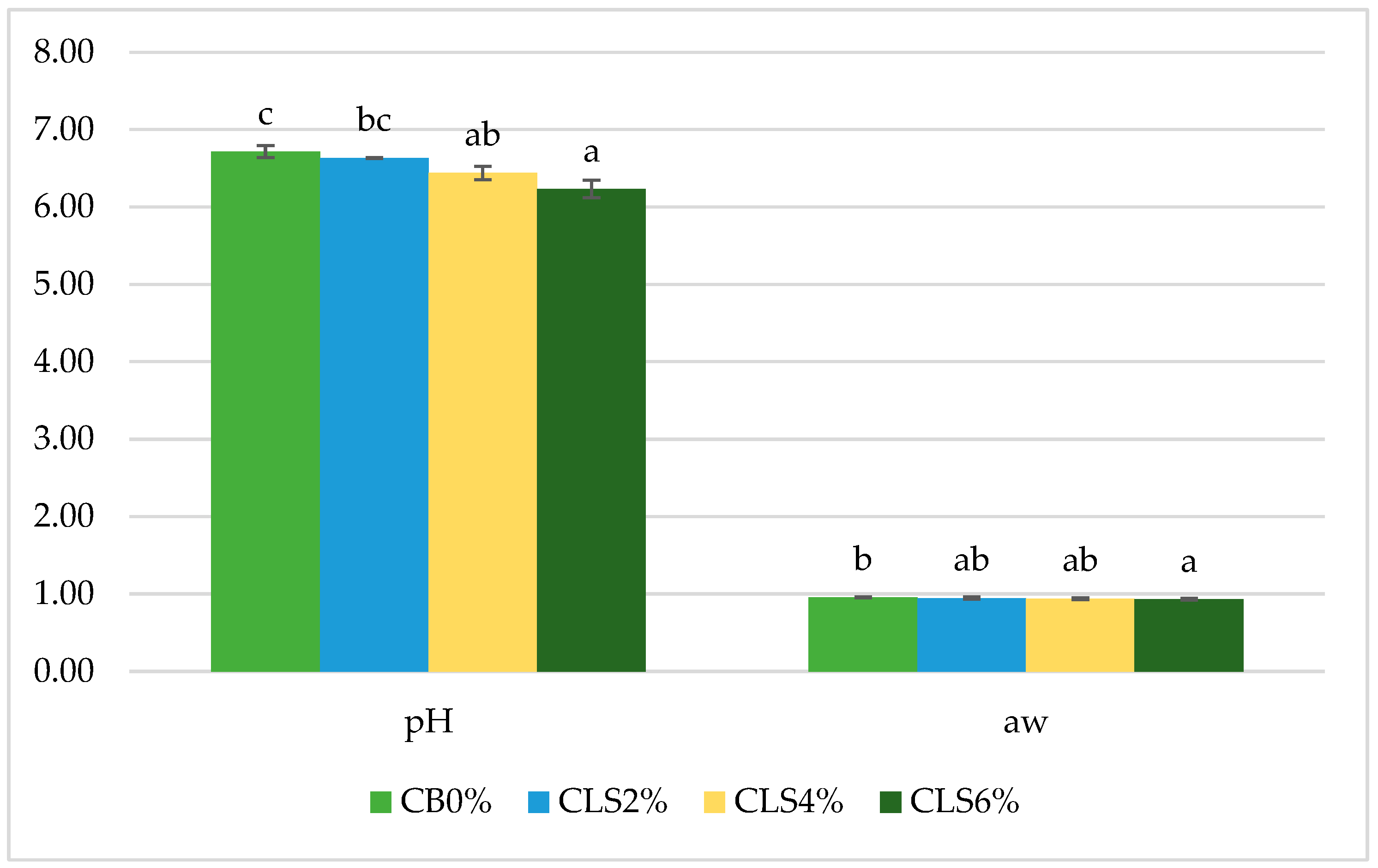
The results for pH and water activity of the chicken meat sausage samples with different levels of lupin flour substitution are presented in Figure 1 and Table 4. All parameters analyzed showed statistically significant differences between batches (p ≤ 0.028), determined using the Tukey HSD test (p < 0.05), based on the mean square error obtained from the ANOVA analysis, highlighting the progressive influence of the lupin flour substitution level on the physicochemical stability of the finished products.
Mean pH values for the four product variants ranged from 6.23 ± 0.11 (CLS6%) to 6.72 ± 0.08 (CB0%), recording significant decreases with increasing substitution level. This reduction in pH may be associated with the incorporation of lupin flour, which has been reported to contain phenolic compounds and organic acids naturally that could influence the chemical characteristics of the mixed meat–plant ingredient matrix. Elhordoy et al. [51] reported that lupin seeds are rich in bioactive compounds, including phenolic compounds predominantly in free form (~90%), which contribute to the modification of the chemical properties of lupin-based products. A similar decrease in pH as a function of plant-based ingredient addition level was also reported in previous studies [39], where the addition of apple and sugar beet fibers fresh meat-based pasta (tagliatelle-type products) resulted in a progressive and significant decrease in pH, from 5.97 ± 0.03 (control) to 5.33 ± 0.04 (maximum addition level), attributed to the intrinsic acidity of the plant-based ingredients used.
Water activity (aw) decreased significantly from 0.956 ± 0.008 (CB0%) to 0.932 ± 0.007 in the CLS6% formulation (p = 0.028). Tukey’s post hoc test revealed significant differences between the control and CLS6% sample, whereas the intermediate formulations (CLS2% and CLS4%) did not show significant differences from either extreme treatment. The decrease in aw with increasing substitution level is correlated with the reduction in free moisture content and can be attributed to the water-binding capacity of lupin flour components, particularly dietary fibers and globular proteins, which immobilize a greater proportion of water in the structural matrix, thereby reducing available free water [39,54]. Similar trends have been reported by Akwetey et al. [55] in frankfurters, where water activity varied differently depending on the level of wheat addition; although statistically non-significant, water activity decreased initially at a 5% addition level (0.977) and also at 15% (0.970), compared to the control batch (0.980).
The results obtained for the Warner–Bratzler shear test presented in Table 4 indicate that the higher substitution percentage resulted in an increase in product hardness, from 30.63 ± 1.85 N (CB0%) to 47.56 ± 0.96 N (CLS6%), with no statistically significant differences between the CLS4% and CLS6% batches. The same ascending profile was recorded for the mechanical work of shear, which increased from 362.82 ± 12.37 mJ (CB0%) to 488.22 ± 9.27 mJ (CLS6%), with significant differences from the control starting from the CLS4% level (p < 0.001).
The increase in mechanical shear resistance with substitution level reflects the structural changes induced by lupin flour in the protein matrix of the chicken sausages. The presence of dietary fiber contributes to the formation of a denser, more rigid network with greater mechanical resistance compared to the myofibrillar network of the control batch [56].
The results of the present study are partially contradictory to those reported by Leonard et al. [22], who observed that substitution with roasted lupin flour in beef sausages was associated with a softer texture, reporting decreases in TPA parameters (hardness, cohesiveness, gumminess, springiness, chewiness) with increasing substitution level. These differences may be attributed to multiple factors, such as: (1) the type of product, as the authors reported results for beef sausages with an emulsified structure, thermally treated by baking (at 200 °C for 24 min), which involves different protein gelation mechanisms; (2) the substitution level, 2–6% in the present study versus 12–36% in Leonard et al. [22], at which the structural weakening effect becomes dominant; and (3) the degree of hydration of lupin flour prior to incorporation, which significantly influences the functional behavior of fibers within the meat matrix. In contrast, the addition of lupin protein isolate at 2% significantly increased textural parameters (hardness, gumminess, chewiness) in minced meat gels [57], confirming that at low substitution levels, the matrix reinforcement effect predominates over structural weakening.
Both soluble and insoluble dietary fibers from lupin flour can limit protein gelation; insoluble fibers have the capacity to physically entrap proteins, while soluble fibers compete for water and alter protein interactions [51], a mechanism that explains the progressive increase in shear resistance observed, proportional to the substitution level.

3.2. Color Evaluation of Supplemented Chicken Sausages

The colorimetric parameters of chicken meat sausages with different levels of lupin flour addition, both on the external surface and in cross-section, are presented in Table 5. At the surface color level, lightness L* increased significantly with increasing substitution level (p = 0.003), while the red component a* decreased significantly (p < 0.001). ΔE values increased with lupin flour incorporation, indicating progressively greater color differences compared to the control. Since different perceptibility thresholds have been reported in the literature, with ΔE > 3 [58] indicating a perceptible color difference and ΔE > 5 [59] indicating a more evident visual difference, the observed values were interpreted in relation to both criteria. Using the higher threshold reported in the literature (ΔE > 5) [59], clearly visible differences were observed starting from the CLS4% level, both at the surface (5.64 ± 0.85) and cross-section (5.80 ± 0.39). In contrast, the ΔE value recorded for CLS2% in cross-section (2.52 ± 0.34) remained below the lower threshold, indicating only a limited color difference compared to the control. At the cross-sectional color level, L* did not differ significantly between batches (p = 0.173), whereas all other parameters (a*, b*, C*, h°, ΔE) showed significant differences (p < 0.05).
Colorimetric parameter analysis reveals a synergistic effect of lupin flour addition on the optical properties of the products, manifested by an increase in L* and b* values, alongside moderate variations in the a* component. This trend is observed at both the surface and cross-sectional levels, indicating a systemic influence of the plant-based ingredient on the product matrix.
The increase in lightness, both at the surface and in cross-section, with substitution level is directly explained by the light, cream-yellow color characteristic of lupin flour, which upon partial replacement of meat leads to a relative reduction in chicken meat pigment concentration, increasing light reflectance [60]. In parallel, the increase in b* values (intensification of yellow color) confirms the chromatic contribution of lupin flour, characterized by yellow hues, as well as the contribution of the spice mix, which may further intensify this chromatic component. The presence of statistically significant differences in lightness at the external surface compared to the cross-section may also be conditioned by the interaction with the plant-based ingredient and the way its introduction affects phase distribution and product behavior during thermal treatment and processing conditions [61,62].
The relatively stable or slightly variable a* values suggest that the influence of lupin flour addition on the red component is limited and dominated by pigment dilution and the transformations induced by thermal treatment, including myoglobin denaturation and the formation of derived pigments [63]. At the same time, the more pronounced differences observed at the surface compared to the cross-section indicate that Maillard-type browning reactions occurring during thermal transfer processes have a more pronounced contribution at the product surface, where processing conditions are more intense [22,46].
Similar results were reported by Papavergou et al. [40] in fermented pork sausages and by Alrahaife & Abu-Alruz [14] in beef burgers with lupin flour, where the substitution of animal protein with plant-based ingredients led to increased lightness and yellow color intensity of the products, alongside a reduction in redness. In contrast, Leonard et al. [22], for beef sausages with lupin, reported an increase in lightness for raw samples and an opposite effect—a decrease in lightness (L*) and an increase in red and yellow color—for thermally treated sausages. The authors explain these differences through the higher percentage of lupin flour added (reaching up to 36%), as well as the conditioning of lupin flour and spices through roasting, which promotes the development of the Maillard browning reaction, resulting in reduced lightness and a more intense red color in cooked samples.
For a more complete characterization of the color changes induced by lupin flour addition, the derived parameters chroma (C*) and hue angle (h°) were also analyzed, providing additional information about the saturation and dominant hue of the color. Chroma expresses the intensity or vividness of the color, with higher values indicating a more saturated, visually intense color. In contrast, hue angle describes the dominant color hue and is expressed in degrees; conventionally, 0° corresponds to red, 90° to yellow, 180° to green, and 270° to blue [59].
The increase in C* values observed in the lupin-enriched batches indicates an intensification of chromatic saturation, suggesting that the product acquires a more vivid visual appearance. In parallel, the increase in h° values highlights the color dilution effect [64] through a shift of the dominant color toward the yellow zone of the colorimetric space, which is consistent with the increase in b* values and with the intrinsic cream-yellow color of lupin flour. Thus, the addition of the plant-based ingredient not only influences the lightness of the product but also modifies its overall chromatic profile, shifting it toward more yellow and more saturated tones.
The progressive increase in ΔE values with higher levels of lupin flour indicates that the color differences become perceptible to consumers, supporting the observed changes in visual appearance. The maximum values obtained at the highest addition level—5.91 ± 0.78 (at the surface) and 6.73 ± 0.22 (in cross-section)—indicate an appreciable difference that may influence the consumer’s first impression. Nevertheless, sensory acceptability studies have demonstrated that chromatic changes induced by plant-based ingredients are frequently accepted when the taste and textural profile is satisfactory [14,39,65,66].

3.3. Sensorial Analysis of Supplemented Chicken Sausages

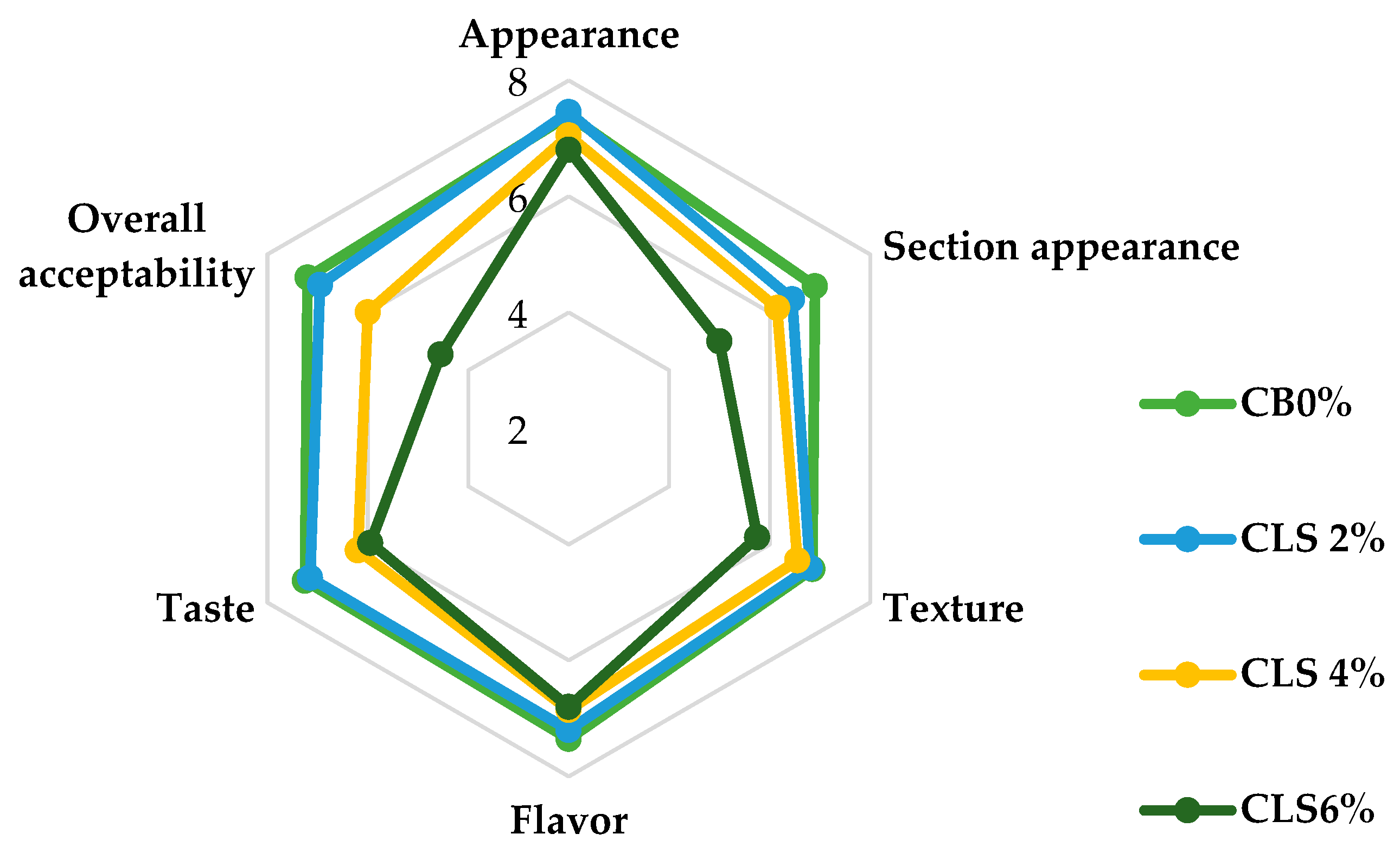
The sensory properties of chicken sausages with different levels of lupin flour substitution are presented in Table 6 and illustrated in Figure 2. Sensory evaluation was performed using a 9-point hedonic scale (1 = extremely unpleasant; 9 = extremely pleasant) by a panel of evaluators, and significant differences between batches were determined using the Tukey HSD test (p < 0.05). The sensory parameters evaluated showed a decreasing trend with increasing lupin flour substitution level, with significant differences between batches (p < 0.05) for most attributes, particularly for the CLS6% batch, which obtained the lowest acceptability scores.
Scores for general external appearance and cross-sectional appearance decreased non-significantly from 7.40 ± 0.60 and 6.90 ± 1.65 (CB0%), respectively, up to the 4% lupin flour addition level (CLS4%), before decreasing significantly to 7.05 ± 1.47 (CLS4%) and 5.00 ± 1.38 (CLS6%), respectively. The color changes induced by lupin flour, through increased lightness and a shift in hue toward yellow, as shown by instrumental analysis in the previous section, may explain the less favorable visual perception of the batches with higher substitution levels. Furthermore, the perception of appearance is also correlated with the colorimetric changes of the product, both at the surface and in cross-section, where ΔE values exceeded the threshold of visual perception, recording values of 5.91 and 6.73, respectively, and the yellow component b* increased significantly with substitution level.
The texture attribute showed a decreasing trend, from 6.85 ± 1.35 (CB0%) to 5.75 ± 1.12 (CLS6%), with statistically significant differences observed at the highest substitution level (p < 0.05). This trend is consistent with the increase in shear force measured instrumentally, suggesting the formation of a denser matrix and a firmer texture in samples with higher lupin flour content. A similar negative sensory perception of texture was also reported by Leonard et al. [22] for beef sausages, who observed a decline in texture acceptability with increasing levels of lupin flour substitution, reaching a score of 3.25 at the maximum inclusion level of 36%. The lower texture scores may be attributed to a grainy or dry mouthfeel during mastication, likely caused by the high content of insoluble dietary fiber in lupin flour.
Similar results regarding the sensory modification of perceived texture as a function of lupin substitution level were reported by Hall & Johnson [67], who conducted sensory evaluation of several products containing lupin flour (Lupinus angustifolius) and observed that overall acceptability decreased compared to the control for muffins and bread, while cookies and breakfast bars maintained scores similar to the control, suggesting that the effect of lupin on perceived texture is strongly dependent on the food matrix and the substitution level used. Additionally, Holkovičová et al. [68] associated the addition of lupin flour to baked goods with product densification and reduced elasticity, effects attributed to the high fiber content that disrupts the protein network and modifies the rheological properties of the matrix.
Similarly, scores for flavor and taste decreased progressively, with significant differences starting from the CLS4% level for taste (p < 0.05). The decrease in taste and flavor acceptability is consistent with the presence of compounds responsible for the characteristic off-flavors of lupin, such as saponins, phenolics, and alkaloids, which generate bitter–astringent aromatic notes [69]. However, the intensity of this effect is strongly dependent on the food matrix and the substitution level used. Jayasena et al. [33] reported that the addition of lupin flour at ≤40% in instant noodles did not affect taste acceptability, with scores decreasing significantly only at 50% substitution, while Leonard et al. [22] observed that differences in flavor and taste scores between the control batch and formulations with up to 18% lupin in beef sausages were not significant, with a steep decline in acceptability scores occurring only at higher substitution levels.
Abreu et al. [29] support these observations in a systematic review of consumer perception and acceptability of lupin-derived products, stating that, while the addition of lupin to food products may represent an acceptable approach for improving nutritional value, the exploitation of its potential as an ingredient is limited by sensory aspects, particularly the intrinsic aroma, taste, and olfactory sensations, which are frequently perceived negatively by consumers.
Overall acceptability decreased significantly from 7.20 ± 0.77 (CB0%) to 4.55 ± 1.28 (CLS6%), with statistically significant differences starting from the 4% addition level (p < 0.05). The CB0% and CLS2% batches obtained overall acceptability scores of 7.20 and 6.95, respectively, both situated in the “pleasant” zone of the scale, while CLS4% (6.00) remained at the lower limit of positive acceptability, and CLS6% (4.55) fell below the neutral threshold of the hedonic scale (5 = neither pleasant nor unpleasant), suggesting that this substitution level significantly compromises the overall acceptability of the product from the consumer’s perspective. In their study, Leonard et al. [22] indicated that lupin flour can be incorporated into beef sausage manufacturing at up to 12% of the total composition without significantly affecting consumer acceptability, while another study reported high overall acceptability for a 20% lupin powder addition in chicken burgers, compared to substitution levels of 10% and 35% [70].
In addition to the ANOVA/Tukey comparison presented in Table 6, the sensory data were additionally analyzed using the Friedman test to account for the repeated-measures nature of the sensory evaluation. The Friedman test revealed significant differences among formulations for section appearance (χ2 = 15.617, p = 0.001), taste (χ2 = 20.911, p < 0.001), and overall acceptability (χ2 = 31.850, p < 0.001), whereas no significant differences were observed for appearance (p = 0.138), texture (p = 0.055), and flavor (p = 0.369).
These results confirm that the addition level, matrix, and product type represent technological inputs that determine variability in the physicochemical profile as well as in sensory perception, indicating that all these processing conditions contribute to and influence the overall quality of the product [14,29,33,71]. Overall, the results of the sensory evaluation confirm that low lupin flour substitution levels (2%) represent the optimal range from a consumer acceptability perspective for the chicken meat sausage category, whereas the 4% level remained technologically feasible with a moderate sensory compromise.
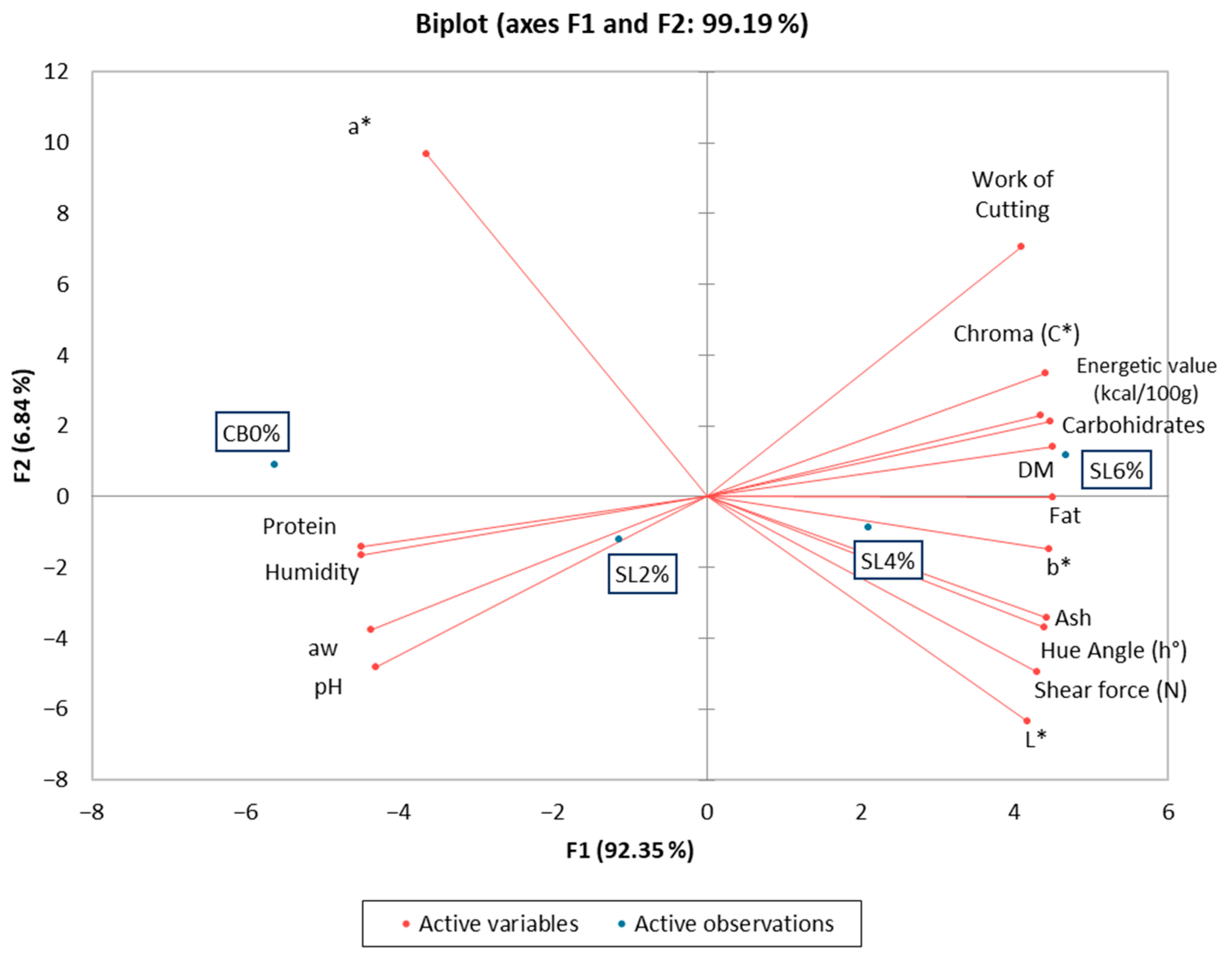
The relationships among the physicochemical parameters of chicken meat sausage samples enriched with lupin flour were investigated using Principal Component Analysis (PCA), as illustrated in Figure 3. The PCA biplot explained 99.19% of the total variance, with the first principal component (PC1) accounting for 92.35% and the second principal component (PC2) for 6.84%, providing an excellent two-dimensional representation of the dataset. These results support the reliability of the visual interpretation of the relationships among variables and sample distribution.
Along the F1 axis, the main discriminant component, the control batch (CB0%) is clearly positioned in the left quadrant, showing positive correlations with protein, moisture, aw, pH, and red color (a*), which reflect the typical profile of chicken meat sausages without substitution—namely, higher protein and moisture content, increased water activity, higher pH, and characteristic surface redness. This distinct separation from the other batches confirms that the incorporation of lupin flour induces significant and systematic modifications in the physicochemical profile of the final product.
The CLS4% and CLS6% batches are grouped in the right quadrant of the biplot, exhibiting positive correlations with work of cutting, shear force (N), lightness (L*), hue angle (h), chroma (C*), yellow color (b*), ash, fat, dry matter and carbohydrates content, and also energetic value, parameters that increase progressively with the level of substitution, in agreement with the trends observed in the instrumental analyses. The close proximity of these two batches on the biplot suggests that, in terms of the overall physicochemical profile, CLS4% and CLS6% are more similar to each other than to the control or CLS2%, which is consistent with the absence of statistically significant differences between them for certain individual parameters.

4. Conclusions

The study demonstrated the feasibility of using lupin flour as a plant ingredient for the partial substitution of chicken meat in sausage formulations. The partial substitution of chicken meat with lupin flour at 2%, 4%, and 6% produced dose-dependent changes across all quality parameters evaluated. In terms of proximate composition, lupin flour increased ash, fat, carbohydrate, and energy content while moderately reducing moisture and protein (only by 0.8 percentage points at the highest level of substitution). In the context of increasing interest in sustainable food systems and reformulated meat products, these results indicate that low levels of lupin flour can be incorporated while maintaining the overall quality of the final product. Between the formulations, the 2% level of substitution offers the most favorable balance between quality and sensory acceptance, while 4% remains a technically feasible alternative with minor sensory compromise, and higher incorporation levels registered a gradual reduction in consumer acceptability.

4.1. Practical Implications for Consumers

The partial replacement of chicken meat with lupin flour in poultry-based meat sausages may contribute to the diversification of dietary protein sources and support the development of products containing both animal- and plant-derived ingredients, without major changes in dietary habits. Such reformulated products can represent a strategy for consumers seeking to reduce their reliance on exclusively meat-based foods due to health, nutritional, or environmental concerns, while maintaining the sensory characteristics and familiarity associated with traditional meat products.

4.2. Implications for the Food Industry

The present findings can provide information for the development of reformulated poultry meat products incorporating plant-based ingredients. The results indicate that the successful incorporation of lupin flour into chicken sausage formulations is highly dependent on the level of substitution. Therefore, the study highlights the importance of formulation optimization and the identification of substitution levels that balance nutritional characteristics, technological performance, and sensory acceptability. These findings may support food manufacturers in diversifying meat product portfolios and developing hybrid meat products, while contributing to ongoing efforts toward more sustainable product reformulation strategies.

4.3. Study Limitations and Future Research Directions

The research study was limited to the evaluation of physicochemical characteristics, colorimetric attributes, Warner–Bratzler shear test parameters, and sensory quality of freshly produced sausages. Storage stability, oxidative changes, microbiological quality, or consumer acceptance under market conditions were not investigated. Future research should therefore focus on the shelf-life evaluation of lupin-enriched sausages, the assessment of oxidative and microbiological stability under refrigerated storage, and evaluate the potential to extend consumer-acceptable substitution thresholds without compromising sensory quality.

Author Contributions

Conceptualization, M.-M.C. and D.-R.M.; methodology, D.-R.M.; software, M.C.C.; validation, M.-M.C., D.-R.M. and M.C.C.; formal analysis, D.-R.M.; investigation, D.-R.M.; resources, M.-M.C.; data curation, D.-R.M. and M.C.C.; writing—original draft preparation, D.-R.M. and M.C.C.; writing—review and editing, D.-R.M.; visualization, M.C.C.; supervision, M.-M.C.; project administration, M.-M.C.; funding acquisition, M.-M.C. All authors have read and agreed to the published version of the manuscript.

Funding

This research received no external funding.

Institutional Review Board Statement

The study was conducted in accordance with the Declaration of Helsinki and approved by the Ethics Committee of the Faculty of Agriculture, University of Life Sciences in Iasi, Romania (4428/21 January 2026).

Informed Consent Statement

Informed consent was obtained from all subjects involved in the study.

Data Availability Statement

The original contributions presented in the study are included in the article; further inquiries can be directed to the corresponding author.

Acknowledgments

During the preparation of this manuscript, the authors used AI tools (GPT version 5.5) for the purpose of improving language clarity, readability, and overall editorial quality. The authors carefully reviewed, revised, and edited the output and take full responsibility for the final content of this publication.

Conflicts of Interest

The authors declare no conflicts of interest.

References

  1. Worldometer. World Demographics. 2026. Available online: https://www.worldometers.info/demographics/world-demographics/#urb (accessed on 18 March 2026).
  2. United Nations. World Urbanization Prospects 2025: Summary of Results; UN DESA/POP/2025/TR/NO. 12; United Nations: New York, NY, USA, 2025.
  3. Vieira, L.C.; Serrao-Neumann, S.; Howes, M.; Mackey, B. Unpacking Components of Sustainable and Resilient Urban Food Systems. J. Clean. Prod. 2018, 200, 318–330. [Google Scholar] [CrossRef]
  4. Zou, T.; Dawodu, A.; Mangi, E.; Cheshmehzangi, A. Exploring Current Trends, Gaps & Challenges in Sustainable Food Systems Studies. Sustainability 2023, 15, 10248. [Google Scholar] [CrossRef]
  5. Zezza, A.; Tasciotti, L. Urban Agriculture, Poverty, and Food Security: Empirical Evidence from a Sample of Developing Countries. Food Policy 2010, 35, 265–273. [Google Scholar] [CrossRef]
  6. Djan, M.A. Urban Food Security: Examining the Unique Challenges and Opportunities Associated with Ensuring Food Security in Urban Areas. Eur. J. Nutr. Food Saf. 2023, 15, 42–52. [Google Scholar] [CrossRef]
  7. Hawkes, C.; Harris, J.; Gillespie, S. Urbanization and the Nutrition Transition. In Global Food Policy Report; International Food Policy Research Institute: Washington, DC, USA, 2017; pp. 34–41. [Google Scholar] [CrossRef]
  8. Sha, L.; Xiong, Y.L. Plant Protein-Based Alternatives of Reconstructed Meat: Science, Technology, and Challenges. Trends Food Sci. Technol. 2020, 102, 51–61. [Google Scholar] [CrossRef]
  9. Cutroneo, S.; Prandi, B.; Faccini, A.; Pellegrini, N.; Sforza, S.; Tedeschi, T. Comparison of Protein Quality and Digestibility between Plant-Based and Meat-Based Burgers. Food Res. Int. 2023, 172, 113183. [Google Scholar] [CrossRef]
  10. Sobczak, P.; Grochowicz, J.; Łusiak, P.; Żukiewicz-Sobczak, W. Development of Alternative Protein Sources in Terms of a Sustainable System. Sustainability 2023, 15, 12111. [Google Scholar] [CrossRef]
  11. Ayuso, P.; García-Pérez, P.; Nieto, G. New Insights and Strategies in the Nutritional Reformulation of Meat Products Toward Healthier Foods. Molecules 2025, 30, 2565. [Google Scholar] [CrossRef]
  12. Ahmad, R.S.; Imran, A.; Hussain, M.B. Nutritional Composition of Meat. Meat Sci. Nutr. 2018, 61, 61–75. [Google Scholar] [CrossRef]
  13. Quintieri, L.; Nitride, C.; Angelis, E.D.; Lamonaca, A.; Pilolli, R.; Russo, F.; Monaci, L. Alternative Protein Sources and Novel Foods: Benefits, Food Applications and Safety Issues. Nutrients 2023, 15, 1509. [Google Scholar] [CrossRef]
  14. Alrahaife, A.J.F.; Abu-Alruz, K. Effects of Incorporation of Lupin Flour on the Quality Attributes of Beef Burger. Online J. Anim. Feed Res. 2023, 13, 328–339. [Google Scholar] [CrossRef]
  15. Chiurciu, I.A.; Vlad, I.M.; Stoicea, P.; Zaharia, I.; David, L.; Soare, E.; Fîntîneru, G.; Micu, M.M.; Dinu, T.A.; Tudor, V.C.; et al. Romanian Meat Consumers’ Choices Favour Sustainability? Sustainability 2024, 16, 11193. [Google Scholar] [CrossRef]
  16. Pîrlea, G.M.; Vlad, Ș.T.; Ianițchi, D.; Maftei, M.L.; Moise, A.E.; Grosu, H. Poultry Meat: Nutritional, Sensory and Commercial Analysis from Production to Consumption. Sci. Pap. Anim. Sci. Biotechnol. 2025, 58, 231–241. [Google Scholar]
  17. Food and Agriculture Organization of the United Nations (FAO). FAOSTAT Statistical Database. 2026. Available online: https://www.fao.org/faostat/en/#data/FBS (accessed on 28 May 2026).
  18. Smart Protein Project; ProVeg International. Evolving Appetites: An In-Depth Look at European Attitudes Towards Plant-Based Eating; European Union’s Horizon 2020 Research and Innovation Programme: Brussels, Belgium, 2023; Available online: https://proveg.org/report/evolving-appetites-an-in-depth-look-at-european-attitudes-towards-plant-based-eating/ (accessed on 28 May 2026).
  19. Boișteanu, P.-C.; Anchidin, B.-G.; Ciobanu, M.-M. Exploring Sensory Attributes in Spinach- and Offals-Filled Chicken Roulades: An Empirical Analysis. Foods 2025, 14, 303. [Google Scholar] [CrossRef]
  20. Estivi, L.; Brandolini, A.; Gasparini, A.; Hidalgo, A. Lupin as a Source of Bioactive Antioxidant Compounds for Food Products. Molecules 2023, 28, 7529. [Google Scholar] [CrossRef]
  21. Lemus-Conejo, A.; Rivero-Pino, F.; Montserrat-de la Paz, S.; Millan-Linares, M.C. Nutritional Composition and Biological Activity of Narrow-Leafed Lupins (Lupinus angustifolius L.) Hydrolysates and Seeds. Food Chem. 2023, 420, 136104. [Google Scholar] [CrossRef]
  22. Leonard, W.; Hutchings, S.C.; Warner, R.D.; Fang, Z. Effects of Incorporating Roasted Lupin (Lupinus angustifolius) Flour on the Physicochemical and Sensory Attributes of Beef Sausage. Int. J. Food Sci. Technol. 2019, 54, 1849–1857. [Google Scholar] [CrossRef]
  23. Reinhard, H.; Rupp, H.; Sager, F.; Streule, M.; Zoller, O. Quinolizidine Alkaloids and Phomopsins in Lupin Seeds and Lupin Containing Food. J. Chromatogr. A 2006, 1112, 353–360. [Google Scholar] [CrossRef]
  24. Villarino, C.B.J.; Jayasena, V.; Coorey, R.; Chakrabarti-Bell, S.; Johnson, S.K. Nutritional, Health, and Technological Functionality of Lupin Flour Addition to Bread and Other Baked Products: Benefits and Challenges. Crit. Rev. Food Sci. Nutr. 2016, 56, 835–857. [Google Scholar] [CrossRef]
  25. Ramos-Diaz, J.; Oksanen, S.; Kantanen, K.; Edelmann, J.; Suhonen, H.; Sontag-Strohm, T.; Piironen, V.; Jouppila, K. Characterization of Texturized Meat Analogues Containing Native Lupin Flour and Lupin Protein Concentrate/Isolate. Heliyon 2023, 9, e20503. [Google Scholar] [CrossRef] [PubMed]
  26. Sujak, A.; Kotlarz, A.; Strobel, W. Compositional and Nutritional Evaluation of Several Lupin Seeds. Food Chem. 2006, 98, 711–719. [Google Scholar] [CrossRef]
  27. Bartkiene, E.; Bartkevics, V.; Starkute, V.; Krungleviciute, V.; Cizeikiene, D.; Zadeike, D.; Maknickiene, Z. Chemical Composition and Nutritional Value of Seeds of Lupinus luteus L., L. angustifolius L. and New Hybrid Lines of L. angustifolius L. Zemdirbyste 2016, 103, 107–114. [Google Scholar] [CrossRef]
  28. Prusinski, J. White Lupin (Lupinus albus L.)—Nutritional and Health Values in Human Nutrition—A Review. Czech J. Food Sci. 2017, 35, 95–105. [Google Scholar] [CrossRef]
  29. Abreu, B.; Lima, J.; Rocha, A. Consumer Perception and Acceptability of Lupin-Derived Products: A Systematic Review. Foods 2023, 12, 1241. [Google Scholar] [CrossRef] [PubMed]
  30. Cortés-Avendaño, P.; Tarvainen, M.; Suomela, J.-P.; Glorio-Paulet, P.; Yang, B.; Repo-Carrasco-Valencia, R. Profile and Content of Residual Alkaloids in Ten Ecotypes of Lupinus mutabilis Sweet after Aqueous Debittering Process. Plant Foods Hum. Nutr. 2020, 75, 184–191. [Google Scholar] [CrossRef]
  31. Jiménez-Martínez, C.; Mora-Escobedo, R.; Cardador Martínez, A.; Muzquiz, M.; Martin Pedrosa, M.; Davila-Ortiz, G. Effect of Aqueous, Acid, and Alkaline Thermal Treatments on Antinutritional Factors Content and Protein Quality in Lupinus campestris Seed Flour. J. Agric. Food Chem. 2010, 58, 1741–1745. [Google Scholar] [CrossRef] [PubMed]
  32. Sterna, V.; Jansons, I.; Jansone, Z.; Zhylina, M. Application of Microwave and Infrared Treatment to Reduce Antinutrients in Lupine Seeds. Agron. Res. 2025, 23, 503–512. [Google Scholar] [CrossRef]
  33. Jayasena, V.; Khu, W.S.; Nasar-Abbas, S.M. The Development and Sensory Acceptability of Lupin-Based Tofu. J. Food Qual. 2010, 33, 85–97. [Google Scholar] [CrossRef]
  34. Özcan, M.M.; İpek, D.; Ghafoor, K.; Al Juhaimi, F.; Uslu, N.; Babiker, E.E.; Mohamed Ahmed, I.A.; Alsawmahi, O.N. Physico-Chemical and Sensory Properties of Chips Produced Using Different Lupin (Lupinus albus L.) Flour Formulations and Cooking Methods. Int. J. Food Sci. Technol. 2021, 56, 2780–2788. [Google Scholar] [CrossRef]
  35. Al-Saedi, N.; Agarwal, M.; Ma, W.; Islam, S.; Ren, Y. Proteomic Characterisation of Lupin (Lupinus angustifolius) Milk as Influenced by Extraction Techniques, Seed Coat and Cultivars. Molecules 2020, 25, 1782. [Google Scholar] [CrossRef]
  36. Csutorás, C.; Giran, L.; Hudák, O.; Rácz, L. Development and Evaluation of Potential Functional Food Biscuits Made from White Lupin. Prog. Agric. Eng. Sci. 2021, 17, 89–100. [Google Scholar] [CrossRef]
  37. Jung, S. Aqueous Extraction of Oil and Protein from Soybean and Lupin: A Comparative Study. J. Food Process. Preserv. 2009, 33, 547–559. [Google Scholar] [CrossRef]
  38. Regulation (EU) No 1169/2011 of the European Parliament and of the Council of 25 October 2011 on the Provision of Food Information to Consumers. Off. J. Eur. Union 2011, L304, 18–63. Available online: https://eur-lex.europa.eu/eli/reg/2011/1169/oj/eng (accessed on 19 March 2026).
  39. Manoliu, D.R.; Ciobotaru, M.C.; Ciobanu, M.M.; Boișteanu, P.C. Development and Characterization of Meat-Based Pasta Enriched with Apple and Sugar Beet Fibers. Foods 2025, 14, 3837. [Google Scholar] [CrossRef]
  40. Papavergou, E.; Bloukas, J.; Doxastakis, G. Effect of Lupin Seed Proteins on Quality Characteristics of Fermented Sausages. Meat Sci. 1999, 52, 421–427. [Google Scholar] [CrossRef]
  41. Ciobanu, M.M.; Manoliu, D.R.; Ciobotaru, M.C.; Flocea, I.E.; Anchidin, B.G.; Postolache, A.N.; Boișteanu, P.C. Sensorial Characterization of Mutton Products in Membrane Made in the Meat Processing Workshop of USV Iași. Sci. Pap. Ser. D Anim. Sci. 2023, 66, 453–458. [Google Scholar]
  42. Manoliu, D.R.; Ciobanu, M.M.; Ciobotaru, M.C.; Postolache, A.N.; Anchidin, B.G.; Boișteanu, P.C. Physico-Chemical and Sensory Evaluation of Three Types of Pork Mortadella Manufactured in the IULS Meat Processing Microsection. Sci. Pap. Ser. D Anim. Sci. 2023, 66, 527–531. [Google Scholar]
  43. Naghdi, S.; Rezaei, M.; Kashiri, M.; Rezaei, F.; Naseri, S.; Nourani, H.; Khakpour, Z. Development and Evaluation of Low-Fat Fish and Chicken Nuggets Fortified with Date Seed Powder and Quinoa Flour as Agricultural Dietary Fiber Sources. Food Sci. Nutr. 2025, 13, e4749. [Google Scholar] [CrossRef]
  44. Yameogo, C.W.; Bengaly, M.D.; Savadogo, A.; Nikiema, P.A.; Traore, S.A. Determination of chemical composition and nutritional values of Moringa oleifera leaves. Pak. J. Nutr. 2011, 10, 264–268. [Google Scholar] [CrossRef]
  45. Anchidin, B.G.; Lipșa, F.D.; Manoliu, D.R.; Ciobanu, M.M.; Ciobotaru, M.C.; Gucianu, I.; Boișteanu, P.C. Enhancing Antioxidant Capacity in Functional Meat Products through Infusion with Sea Buckthorn Oil to Combat Inherent Antioxidant Deficiency. Sci. Pap. Ser. D Anim. Sci. 2024, 67, 366–380. [Google Scholar]
  46. Gucianu, I.; Lipșa, F.D.; Anchidin, B.G.; Flocea, E.I.; Boișteanu, P.C.; Ciobanu, M.M. Combating food waste by making a functional product from a slaughterhouse by-product and profiling its nutritional value. Sci. Pap. Ser. D Anim. Sci. 2024, 67, 457–464. [Google Scholar]
  47. Hill, B.; Roger, T.; Vorhagen, F.W. Comparative Analysis of the Quantization of Color Spaces on the Basis of the CIELAB Color-Difference Formula. ACM Trans. Graph. (TOG) 1997, 16, 109–154. [Google Scholar] [CrossRef]
  48. Ciobanu, M.M.; Ciobotaru, M.C.; Gucianu, I.; Boișteanu, P.C.; Manoliu, D.R. Impact of Bone Broth on Protein Content, Color, and Consumer Preferences in Emulsified Chicken and Turkey Frankfurters. Sci. Pap. Ser. D Anim. Sci. 2024, 67, 395–403. [Google Scholar]
  49. Osman, A.; El-Araby, G.M.; Taha, H. Potential Use as a Bio-Preservative from Lupin Protein Hydrolysate Generated by Alcalase in Food System. J. Appl. Biol. Biotechnol. 2016, 4, 76–81. [Google Scholar] [CrossRef]
  50. El-Hadidie, S.T.; Galhoum, G.F.; El-Kholany, E.A. Quality Attributes and Shelf Life of Luncheon-like Products Prepared from Meat and Lupine Flour. Egypt. J. Agric. Res. 2017, 95, 1725–1746. [Google Scholar] [CrossRef]
  51. Elhordoy, M.R.; Kadam, A.; Vazquez, D.; Medrano, A.; Koksel, F. Exploring the Potential of Lupin (Lupinus angustifolius) Flour-Based Ingredients in Developing High Moisture Meat Analogues. J. Food Sci. 2025, 90, e70407. [Google Scholar] [CrossRef] [PubMed]
  52. Manoliu, D.R.; Ciobanu, M.M.; Ciobotaru, M.C.; Anchidin, B.G.; Boișteanu, P.C. The Impact of Fruit Fiber on Meat Products: A Mini Review. Sci. Pap. Ser. D Anim. Sci. 2024, 67, 481–489. [Google Scholar]
  53. Bakhsh, A.; Lee, S.J.; Lee, E.Y.; Hwang, Y.H.; Joo, S.T. Evaluation of rheological and sensory characteristics of plant-based meat analog with comparison to beef and pork. Food Sci. Anim. Resour. 2021, 41, 983–996. [Google Scholar] [CrossRef]
  54. Marczak, A.; Mendes, A.C. Dietary Fibers: Shaping Textural and Functional Properties of Processed Meats and Plant-Based Meat Alternatives. Foods 2024, 13, 1952. [Google Scholar] [CrossRef]
  55. Akwetey, W.Y.; Ellis, W.O.; Oduro, I.N. Using Whole Cowpea Flour (WCPF) in Frankfurter-Type Sausages. J. Anim. Prod. Adv. 2012, 2, 450–455. [Google Scholar]
  56. Stanišić, N.; Kurćubić, V.S.; Stajić, S.B.; Tomasevic, I.D.; Tomasevic, I. Integration of dietary fibre for health benefits, improved structure, and nutritional value of meat products and plant-based meat alternatives. Foods 2025, 14, 2090. [Google Scholar] [CrossRef]
  57. Mavrakis, C.; Doxastakis, G.; Kiosseoglou, V. Large Deformation Properties of Gels and Model Comminuted Meat Products Containing Lupin Protein. J. Food Sci. 2006, 68, 1371–1376. [Google Scholar] [CrossRef]
  58. Pathare, P.B.; Opara, U.L.; Al-Said, F.A.J. Colour Measurement and Analysis in Fresh and Processed Foods: A Review. Food Bioprocess Technol. 2013, 6, 36–60. [Google Scholar] [CrossRef]
  59. Ruedt, C.; Gibis, M.; Weiss, J. Meat Color and Iridescence: Origin, Analysis, and Approaches to Modulation. Compr. Rev. Food Sci. Food Saf. 2023, 22, 3366–3394. [Google Scholar] [CrossRef]
  60. Prinyawiwatkul, W.; McWatters, K.H.; Beuchat, L.R.; Phillips, R.D. Physicochemical and Sensory Properties of Chicken Nuggets Extended with Fermented Cowpea and Peanut Flours. J. Agric. Food Chem. 1997, 45, 1891–1899. [Google Scholar] [CrossRef]
  61. Momchilova, M.; Gradinarska-Ivanova, D.; Yordanov, D.; Zsivanovits, G.; Pats, N. Effect of Different Protein Sources (Plant, Cricket Powder and Microalgae) on the Technological and Functional Properties and Sensory Characteristics of Pork Meatballs. Meat Technol. 2024, 65, 25–35. [Google Scholar] [CrossRef]
  62. Rathnayake, D.; Nadolny, J.M.; Sultanbawa, Y.; Smyth, H.E. Colour Transition Dynamics of Commercial Plant- and Animal-Based Meat Analogues. Foods 2025, 14, 3616. [Google Scholar] [CrossRef] [PubMed]
  63. Hunt, M.C.; Sørheim, O.; Slinde, E. Color and Heat Denaturation of Myoglobin Forms in Ground Beef. J. Food Sci. 2008, 64, 847–851. [Google Scholar] [CrossRef]
  64. King, D.A.; Hunt, M.C.; Barbut, S.; Claus, J.R.; Cornforth, D.P.; Joseph, P.; Kim, Y.H.; Lindahl, G.; Mancini, R.A.; Nair, M.N.; et al. American Meat Science Association Guidelines for Meat Color Measurement. Meat Muscle Biol. 2023, 6, 12473. [Google Scholar] [CrossRef]
  65. Gamarra-Castillo, O.; Echeverry-Montaña, N.; Marbello-Santrich, A.; Hernández-Carrión, M.; Restrepo, S. Meat Substitute Development from Fungal Protein (Aspergillus oryzae). Foods 2022, 11, 2940. [Google Scholar] [CrossRef]
  66. Pisinov, B.; Keškić, T.; Petričević, M.; Đurović, S.; Kulic, G.; Stamenić, T.; Sekulić, Z. Storage of Buckwheat Products as a Factor Affecting Colour Condition and Implications on Meat Products. In Proceedings of the 15th International Symposium “Modern Trends in Livestock Production”, Belgrade, Serbia, 29–31 October 2025; pp. 261–274. [Google Scholar] [CrossRef]
  67. Hall, R.S.; Johnson, S.K. Sensory Acceptability of Foods Containing Australian Sweet Lupin. J. Food Sci. 2006, 69, SNQ92–SNQ97. [Google Scholar] [CrossRef]
  68. Holkovičová, T.; Kohajdová, Z.; Lauková, M.; Minarovičová, L.; Staruch, L. Impact of Lupin Inclusion on Rheological and Qualitative Characteristics. Pol. J. Food Nutr. Sci. 2025, 75, 5–15. [Google Scholar] [CrossRef]
  69. Wanniarachchi, P.C.; Shea, G.; Mocerino, M.; Bennett, S.J.; Bhattarai, R.R.; Coorey, R. What Makes Lupins Less Palatable to Consumers? Can the Sensory Quality of Lupin be Improved and Commercialized? Compr. Rev. Food Sci. Food Saf. 2025, 24, e70265. [Google Scholar] [CrossRef] [PubMed]
  70. Al-Dalain, S.Y.A.; Haddad, M.A.; Freihat, A.; Arabiat, S. Using Sweet Lupine powder as a healthy supplement for the Production of Functional Chicken Burger in Jordan. Curr. Res. Nutr. Food Sci. 2023, 11, 164–173. [Google Scholar] [CrossRef]
  71. Flocea, E.I.; Ciobanu, M.M.; Anchidin, B.G.; Ciobotaru, M.C.; Manoliu, D.R.; Gucianu, I.; Boișteanu, P.C. Evaluation of the impact of artificial additive on physicochemical quality parameters in a functional meat product with heterogeneous structure. Sci. Pap. Ser. D Anim. Sci. 2024, 67, 443–450. [Google Scholar]
Figure 1. pH and water activity (aw) of chicken sausages with different levels of lupin flour substitution. Different lowercase letters above the bars indicate significant differences between samples according to Tukey’s HSD test (p < 0.05). CB0%—control sample (0% lupin flour); CLS2%—2% lupin flour substitution; CLS4%—4% lupin flour substitution; CLS6%—6% lupin flour substitution.
Applsci 16 05794 g001
Figure 2. Radar plot of hedonic mean scores for appearance, flavor, taste, texture, and overall acceptability of the control sample and lupin flour-added samples. CB0%—control sample; CLS2%, CLS4%, CLS6%—2%, 4%, and 6% lupin flour substitution.
Applsci 16 05794 g002
Figure 3. Principal Component Analysis (PCA) biplot illustrating the relationships between physicochemical parameters and chicken sausage formulations with different levels of lupin flour substitution. CB0%—control sample; CLS2%, CLS4%, CLS6%—2%, 4%, and 6% lupin flour substitution.
Applsci 16 05794 g003
Table 1. Recipe for chicken sausages with lupin flour.
BatchesCB0%CLS2%CLS4%CLS6%
IngredientsAmount (%)
Chicken thigh96.6294.6992.7590.82
Lupin flour01.93%3.86%5.80%
Salt1.931.931.931.93
Spice mix1.451.451.451.45
Total100%100%100%100%
CLS2%, CLS4%, and CLS6% indicate formulations in which lupin flour replaced 2%, 4%, and 6% of the chicken meat fraction.
Table 2. Thermal treatment schedule applied in the industrial smokehouse for chicken sausages.
StageChamber Temperature (°C)Duration (min)
Drying5520
Smoking6840
Boiling/Steam cooking78-
Hot air drying805
Table 3. Proximate composition of control and supplemented chicken sausages. Data are expressed as mean ± standard deviation.
Chemical CharacteristicsCB0%CLS2%CLS4%CLS6%p-Value
Dry matter (%)34.26 ± 0.06 a35.32 ± 0.08 b36.06 ± 0.10 c36.98 ± 0.03 d<0.001
Moisture (%)65.74 ± 0.06 d64.68 ± 0.08 c63.94 ± 0.10 b63.02 ± 0.03 a<0.001
Fat (%)10.43 ± 0.06 a10.77 ± 0.17 b10.93 ± 0.02 bc11.14 ± 0.07 c<0.001
Total protein (%)19.13 ± 0.04 d 18.84 ± 0.02 c18.60 ± 0.09 b18.33 ± 0.03 a<0.001
Ash (%)4.29 ± 0.14 a4.67 ± 0.09 b4.89 ± 0.05 bc4.94 ± 0.06 c<0.001
Total carbohydrates (%)0.42 ± 0.06 a1.05 ± 0.19 b1.64 ± 0.14 c2.56 ± 0.14 d<0.001
Energy value (kcal 100 g−1)172.04 ± 0.60 a176.46 ± 0.81 b179.29 ± 0.44 c183.86 ± 0.24 d<0.001
Values are given as means ± Standard deviation from three repeated determinations. Means with different superscripts in a row orientation indicate significant differences (p < 0.05) between samples determined using the Tukey test.
Table 4. Results for Warner–Bratzler shear forces, pH value and water activity of chicken sausage formulations. Data are expressed as mean ± standard deviation.
Analyzed ParameterSamplesp-Value
CB0%CLS2%CLS4%CLS6%
Shear force (N)30.63 ± 1.85 a42.76 ± 1.99 b46.37 ± 1.32 c47.56 ± 0.96 c<0.001
Work of shear (mJ)362.82 ± 12.37 a374.80 ± 10.92 a415.55 ± 7.65 b488.22 ± 9.27 c <0.001
pH6.72 ± 0.08 c6.63 ± 0.01 bc6.44 ± 0.09 ab6.23 ± 0.11 a<0.001
Water activity0.956 ± 0.008 b0.949 ± 0.011 ab0.940 ± 0.005 ab0.932 ± 0.007 a0.028
Values are given as means ± Standard deviation from three repeated determinations. Means with different superscripts in a row orientation indicate significant differences (p < 0.05) between samples determined using the Tukey test.
Table 5. Colorimetric attributes of control and supplemented chicken sausages. Data are expressed as mean ± standard deviation.
Color ParametersSamplesL*(D65)a*(D65)b*(D65)C*ΔE
Surface colorCB0%41.83 ± 0.84 a18.98 ± 0.16 b14.76 ± 0.14 a24.05 ± 0.10 a37.87 ± 0.44 a-
CLS2%43.76 ± 0.81 b17.70 ± 0.25 a17.02 ± 0.26 b24.56 ± 0.36 a43.88 ± 0.07 b3.28 ± 0.68 a
CLS4%44.52 ± 0.26 b17.52 ± 0.12 a19.46 ± 0.29 c26.19 ± 0.21 b47.99 ± 0.51 c5.64 ± 0.85 b
CLS6%44.34 ± 0.45 b17.79 ± 0.10 a19.89 ± 0.27 c26.69 ± 0.17 b48.19 ± 0.50 c5.91 ± 0.78 b
p-value0.003<0.001<0.001<0.001<0.0010.011
Section colorCB0%48.98 ± 0.52 a16.93 ± 0.11 b11.90 ± 0.19 a20.70 ± 0.19 a35.10 ± 0.29 a-
CLS2%49.30 ± 0.34 a16.25 ± 0.14 a14.27 ± 0.21 b21.63 ± 0.16 b41.29 ± 0.53 b2.52 ± 0.34 a
CLS4%49.74 ± 0.29 a16.15 ± 0.22 a17.56 ± 0.34 c23.86 ± 0.33 c47.40 ± 0.55 c5.80 ± 0.39 b
CLS6%49.79 ± 0.60 a16.15 ± 0.23 a18.52 ± 0.39 d24.57 ± 0.44 c48.92 ± 0.20 d6.73 ± 0.22 c
p-value0.1730.002<0.001<0.001<0.001<0.001
L*(D65)—lightness (ranging from 0 = black to 100 = white); a*(D65)—red–green component (positive values = red tones, negative values = green); b*(D65)—yellow–blue component (positive values = yellow tones, negative values = blue); C*—chroma (color saturation or intensity, higher values indicate more vivid colors); h°—hue angle (expresses the dominant color tone); ΔE—total color difference. Values are given as means ± Standard deviation from three repeated determinations. Different superscript letters within a column (for each section) indicate significant differences between samples according to Tukey’s HSD test (p < 0.05).
Table 6. Sensory properties of chicken sausage formulations fortified with lupin flour. Data are expressed as mean ± standard deviation.
Sensory AttributeSamplesp-Value
CB0%CLS2%CLS4%CLS6%
Appearance7.40 ± 0.60 b7.45 ± 0.69 b7.05 ± 1.47 ab6.80 ± 1.20 a0.175
Section appearance6.90 ± 1.65 b6.45 ± 1.36 b6.15 ± 0.59 b5.00 ± 1.38 a<0.001
Texture6.85 ± 1.35 b6.80 ± 1.32 b6.55 ± 1.05 ab5.75 ± 1.12 a0.076
Flavor7.35 ± 0.81 b7.20 ± 0.89 b6.85 ± 0.99 ab6.80 ± 1.01 a0.140
Taste 7.25 ± 0.91 b7.15 ± 0.88 b6.20 ± 1.11 a5.95 ± 1.15 a<0.001
Overall acceptability7.20 ± 0.77 c6.95 ± 0.94 c6.00 ± 1.12 b4.55 ± 1.28 a<0.001
Values are given as means ± standard deviation. Different superscript letters within each sensory attribute indicate significant differences between samples according to Tukey’s HSD test (p < 0.05). The p-values correspond to the overall one-way ANOVA results.
Disclaimer/Publisher’s Note: The statements, opinions and data contained in all publications are solely those of the individual author(s) and contributor(s) and not of MDPI and/or the editor(s). MDPI and/or the editor(s) disclaim responsibility for any injury to people or property resulting from any ideas, methods, instructions or products referred to in the content.