Article

Structural and Tribological Behavior of Nanostructured Ti80Ni20 Powder

1
Laboratory of Metal Materials Forming (LMF2M), Faculty of Technology, Badji Mokhtar University Annaba, BP.12, Annaba 23000, Algeria
2
LAMIH Univ Polytechnique Hauts-de-France, UMR 8201, F-59313 Valenciennes, France
*
Author to whom correspondence should be addressed.
Appl. Sci. 2026, 16(11), 5619; https://doi.org/10.3390/app16115619
Submission received: 22 March 2026 / Revised: 10 May 2026 / Accepted: 11 May 2026 / Published: 3 June 2026

Abstract

Mechanically milled Ti80Ni20 powders were compacted and sintered at various temperatures after being milled for 9 h in a protective atmosphere. Scanning electron microscopy (SEM) was used to evaluate the morphology of the surfaces. Oscillating friction and wear tests were carried out in ambient air using an oscillating tribotester. As a counter pair, we used a ball of Al2O3 with a diameter of 6 mm under different conditions of normal applied load for the three sintering regimes. SEM characterizations, the micro- and nano-hardness, roughness measurements, and the friction coefficient were used to study the tribological behavior of the samples’ surface morphology, as well as the weight loss following testing. According to the findings, the resistance to wear and friction of the biomedical Ti80Ni20 alloy can vary depending on the preparation and treatment methods used. Surface coating is recommended to further improve the tribological behavior of the substrates. The novelty of this study lies in the combined investigation of the microstructural evolution and tribological behavior, offering a better understanding of the performance of nanostructured titanium–nickel alloys in engineering applications.

1. Introduction

Nanocrystalline materials are single- or multi-phase polycrystalline materials characterized by grain sizes in the nanometer range (10−9 m). Ultrafine-grained materials generally possess grain sizes between 100 nm and 1 μm. Compared with conventional coarse-grained polycrystalline materials, these materials exhibit a much higher volume fraction of grain boundaries, which can markedly influence their physical, mechanical, and chemical properties [1].
Nanotechnology provides a wide range of novel nanomaterials with applications in various fields, including medicine [2], aerospace applications [3], aviation [4], and the energy sector [5], among others.
Recent studies have focused on nanomaterials with medical applications, which have the potential to transform the way diseases are diagnosed, prevented and treated in the future. Titanium–nickel alloys are widely used, particularly in orthodontics, due to their excellent physical, mechanical, and chemical performance, such as their shape memory effect, superelasticity, good ductility, biocompatibility, and corrosion resistance in aggressive conditions [6,7].
The choice of the Ti80Ni20 alloy, originally developed as an aeronautical material and biomaterial [8], is based on its improved tribological properties and behavior, as well as its potential contribution to scientific research in the field of nano-biomaterials [9].
Nanocrystalline materials can be synthesized either by condensing small clusters or by breaking down polycrystalline bulk materials into nanometer-scale crystalline units [1]. In this study, high-energy ball milling was selected, as it involves the mechanical reduction of solids into smaller particles without altering their aggregation state. This technique can be used to produce particles with specific shapes and sizes, increase the surface area, and introduce defects into solids, which are beneficial for subsequent processes such as chemical reactions and sorption. Furthermore, severe plastic deformation during the milling process can enhance the proportion of highly active surface regions [10].
Previous studies investigated the morphological evolution and phase transformations of the Ti80Ni20 alloy produced by mechanical alloying at different milling times (0, 4, 9, and 20 h) in order to obtain nanostructured powders. The structural and morphological evolution was characterized using X-ray diffraction (XRD) and scanning electron microscopy (SEM), while the phase composition was analyzed using MAUD software (version 2.96, 2019). The results showed that after 9 h of milling interaction between the Ti and Ni particles led to the formation of nanocrystalline disordered Ti(Ni) and Ni(Ti) solid solutions, in addition to residual pure-titanium particles. However, these studies primarily focused on powder synthesis and phase identification, with no evaluation of the consolidation process or the resulting functional properties.
In this study, the Ti–Ni alloy composition was selected and a milling time of 9 h was adopted based on previous findings. The resulting powders were then compacted and sintered at three different temperatures to examine the influence of the sintering conditions on the material response. Unlike previous investigations, which were restricted to powder synthesis and phase identification, this work places particular emphasis on the tribological behavior of the consolidated bulk samples. This strategy provides a more comprehensive understanding of the interplay between the processing parameters, microstructural evolution, and tribological performance, thereby extending the findings reported in Ref. [8]. The primary objective is to consolidate nanostructured powders into bulk materials while retaining their nanostructural features.
During the sintering process, it is known that several metastable phases can form during the solidification of a Ni-Ti equiatomic alloy as well as three stable intermetallic phases (NiTi2, NiTi, and Ni3Ti). Some of these phases may have low melting points and can easily form after being heated [11].
The presence of oxygen in the milling atmosphere and the sintering furnace can contribute to the formation of TiO2. These compounds are able to change the alloy’s wear behavior [12].
The aim of this research is to investigate the Ti80Ni20 alloy, with particular emphasis on its frictional wear resistance under different conditions, as well as its processing and consolidation behavior and the resulting microstructural and surface morphological evolution. In addition, the effects of compaction pressure, sintering temperature, and powder particle size on the dimensional changes in the sintered Ti80Ni20 compacts were systematically examined.

2. Materials and Methods

2.1. Elaboration of Ti80Ni20 Alloy

The titanium–nickel alloy was prepared from elemental micrometric powders of Ti and Ni, each with a purity of 99.9% and a particle size of ~3 μm supplied by Sigma-Aldrich (St. Louis, MO, USA) (Table 1) in order to provide a nominal composition of Ti80Ni20 (wt%). This mixture was mechanically alloyed in a Fritsch P7 planetary ball mill using hardened steel vials and balls (5 balls, Ø = 12 mm) at room temperature. To avoid contamination, the vials containing the balls were sealed in a glove box under an argon atmosphere.
The crystallographic parameters were taken from standard JCPDS reference cards. (44-1294 for hcp-Ti and 04-0850 for fcc-Ni) [13].
The ball-to-powder weight ratio (BPR) was about 35:5 and the rotating speed was 400 rpm. To minimize the friction effect that causes temperature rise inside the vials, the milling process was set to pause for 30 min every hour until the 9 h cycle was completed.
The structural information reported in this study is supported by previous X-ray diffraction analyses performed on Ti–Ni systems. In the referenced work, the diffraction patterns were analyzed using Rietveld refinement, allowing accurate determination of the phase composition and lattice parameters. The refinement procedure was carried out using standard crystallographic software (as reported in Ref. [8]). These results provide a useful basis for interpreting the structural evolution observed in the present work.

2.2. Compacting Powders Condition

After the dewatering of the powders, nanoscale particles were cold-pressed in a tungsten cylindrical-shaped compact without lubricant. Palettes with a 10 mm diameter and a 2 mm thickness are made using uniaxial isostatic compression at a 500 MPa pressure. Each pressed compact weighed 2 g. The following formula calculates the density from the weight and dimensional measurements. It gave a value of ±0.00637 g/mm3:
ρ = m/V
where ρ is the material’s apparent density measured by dividing the weight m by the compacted sample’s volume V.

2.3. Sintering Condition

The sintering process for the compacted pellets was carried out in a tubular furnace under a vacuum atmosphere of 10−5 mbar with argon as a protective inert gas. The following time–temperature cycle was applied: First, the pellets were heated at a rate of 15 °C/min to one of the selected sintering temperatures (850 °C, 900 °C, or 1000 °C). After being held isothermally for 1 h, the samples were allowed to cool slowly inside the furnace under the same protective atmosphere.
Since titanium is the primary element in this alloy, it is appropriate to select a sintering temperature corresponding to approximately 0.8 of its melting temperature (Tm). It has been reported that sintering and diffusion processes in powders occur at lower temperatures than in bulk materials due to their high surface energy. Controlled residual porosity is generally considered beneficial in biomaterials; therefore, complete densification is not always desirable.

2.4. Microstructural and Image Analysis

Microstructural characterization of the sintered samples was performed using scanning electron microscopy (DSM960 A Zeiss equipment). The micrographs obtained were used to qualitatively evaluate the evolution of the porosity and grain morphology as a function of the sintering temperature.
Quantitative image analysis was carried out using ImageJ software. The SEM images were first calibrated and converted to grayscale, followed by thresholding to distinguish the pores from the solid matrix. The porosity fraction was calculated as the ratio of the pore area to the total analyzed area and expressed as a percentage.
For each sintering condition, several representative micrographs were analyzed to ensure the reliability of the porosity measurements. This approach allowed a consistent evaluation of the microstructural evolution with sintering temperature.

2.5. Tribological Study

In this study, the contact pair consisted of a Ti80Ni20 sample (10 mm in diameter) and an Al2O3 ball. Considering the testing time was kept constant, the main experimental parameters considered were the applied load and the sintering regime.
The weight loss of the samples was determined using a microelectronic balance by measuring the mass difference before and after testing. Surface roughness was also measured prior to and after the tribological tests.
Friction and wear tests were carried out in ambient air on a linear oscillating tribometer CSM for the three sintering regimes. This continuously records the coefficient of friction as a function of time/sliding under different conditions of normal load (1, 3 and 5 N) with the same speed (10 mm·s−1) while the sliding distance is set to 20 m. As a counter pair, we used an Al2O3 ball 6 mm in diameter (supplied by CSM Instruments) as presented in Table 2. All tests were conducted under uncontrolled but recorded ambient conditions to ensure reproducibility and to represent typical room-temperature tribological behavior.
The micro-hardness of the sample was evaluated by measuring the depth of penetration using a square-based diamond pyramid with a 136° apex angle (VICKERS test [14]). Additionally, nano-hardness was measured by nanoindentation tests with a Berkovich indenter, characterized by a three-sided pyramid geometry with 65.3° between the centerline and the faces [15].

3. Results and Discussion

3.1. Morphological Analysis

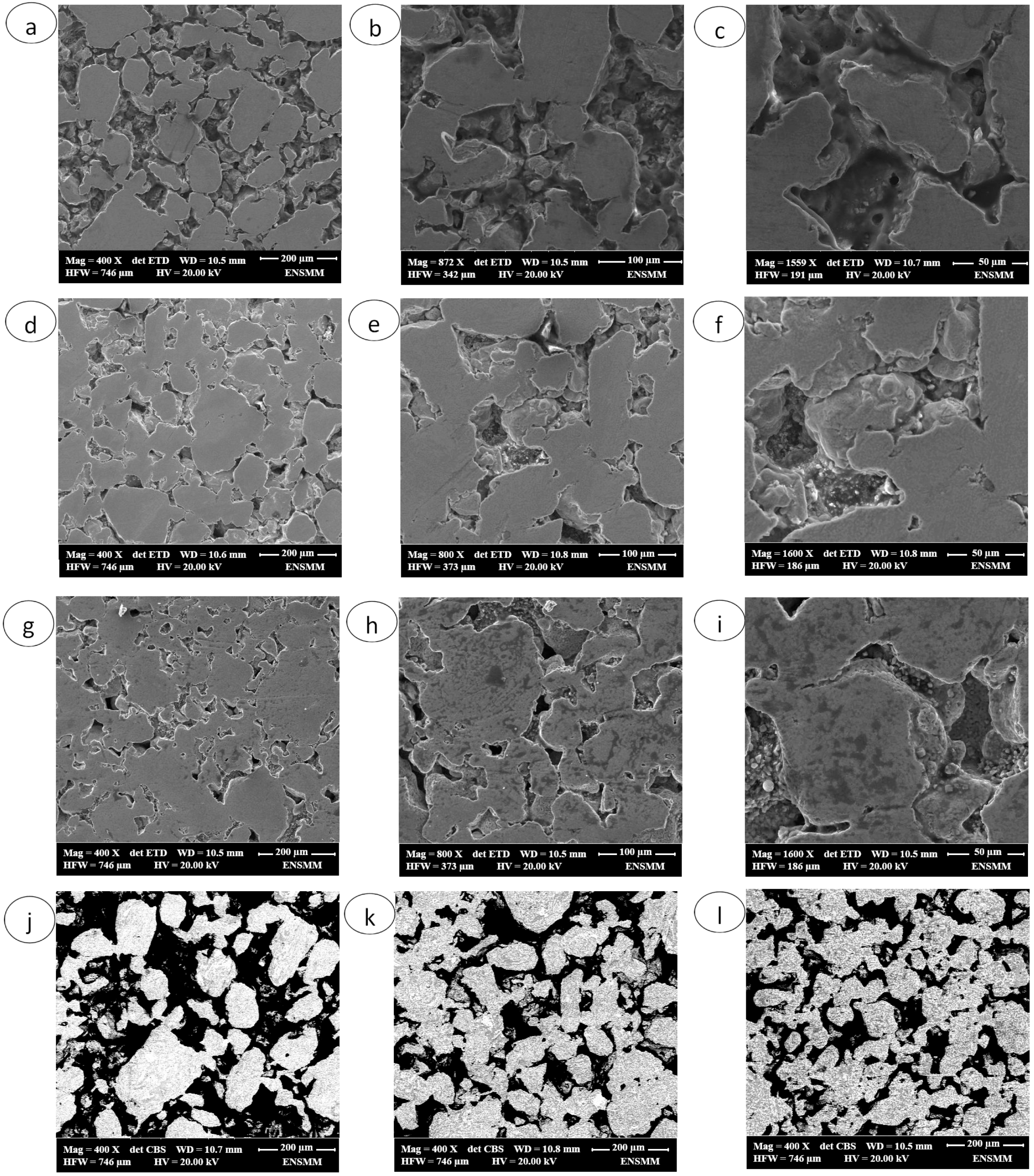
Figure 1 illustrates the SEM micrographs of the Ti80Ni20 sintered pellets after different sintering regimes at various magnifications (200 µm, 100 µm and 50 µm). We aimed to investigate the effect of the sintering regime on the morphological characteristics of the particles, such as the grain size and porosity.
Shrinkage, defined as the reduction in the sample dimensions, occurs during the sintering process due to a combination of mechanisms, including inter-diffusion between particles, pore filling, crystalline rearrangement, and stress relaxation.
Stress relaxation plays an important role by reducing internal stresses generated during compaction, allowing particles to rearrange more easily and enhancing interparticle bonding. This process is driven by atomic diffusion at elevated temperatures, which promotes densification.
The densification mechanism can therefore be described as a sequential process involving neck formation between particles, progressive pore shrinkage, pore isolation, and structural reorganization toward a more stable configuration [16,17].
The formation of “neck growth” between touching particles causes the densification mechanism. Pore rounding and the start of grain development are considered to occur in the “middle stage”. In this stage, SEM micrographs indicate that pores are still partially interconnected, reflecting the intermediate stage of densification. Therefore, the component is not hermetic. Finally, sintering occurs when pores collapse into closed spheres, reduced the impediment of grain growth.
Previous research has demonstrated that the consolidation procedure used for nano-powders is crucial for achieving high densification while preserving the refined microstructure [16,18,19].
We can observe that powder particles are rather homogeneous, indicating that material transfers are active; however, they appear porous on a micrometer scale. Small and large pores can demonstrate excellent values of compression strength at a relatively low weight [20]. Regardless of the pore type (closed, open, or blind), porosity is considered a highly beneficial feature for orthopedic implant applications. Porous biomaterials exhibit a lower elastic modulus, enabling better mechanical compatibility with natural bone. Such compatibility reduces stress-shielding phenomena and enhances load distribution at the bone–implant interface, thereby improving implant performance and osseointegration [21].
It is clear that the deformed particles with different morphologies obtained during the mechanosynthesis process [8] are bonded together irregularly according to the sintering mechanism of the ductile materials. Particle rearrangement is also observed.
The heating temperature and the holding time are not sufficient for particles to completely interconnect, which explains the presence of pores of random sizes and shapes. In this context, the studies presented above were carried out to predict the phenomena that take place in the solid phases during sintering [22].
A comparison of the microstructural morphology between the milled powders in Ref. [8] and the consolidated samples in the present study highlights significant differences. In the previous work, the mechanically alloyed powders exhibited irregular shapes with a high degree of porosity and loose particle contacts. After compaction and sintering in the current study, the powders transformed into a more dense and coherent structure, with reduced porosity and better particle bonding. This evolution of morphology is directly linked to the observed improvements in tribological performance and mechanical stability, demonstrating the critical role of consolidation and sintering in tailoring the functional properties of the Ti–Ni alloy.
The prior particle size is a very important feature that dictates the sintering behavior. In this case, the Ti80Ni20 powders were nanoscale after a milling of 9 h (as mentioned elsewhere [8]), which would normally allow complete densification. Thus, the sintering temperature influences the extent of enlargement.
After sintering at 850 °C, the pellets exhibit a porosity of approximately 10%, while a finer grain structure is observed compared to the other samples. The average porosity fraction decreases to about 7% at 900 °C and further to 5% at 1000 °C. The observed flattened morphology is attributed to the pelletization and compaction step prior to sintering, which may influence the initial pore distribution.
The porosity fraction and grain size were quantified using image analysis of SEM micrographs processed with ImageJ software. The porosity was calculated from thresholded images as the ratio of pore area to the total area, while the grain size was estimated using the linear intercept method.
These results confirm that increasing the sintering temperature promotes densification, resulting in reduced porosity and improved microstructural compaction.
The evolution of porosity with sintering temperature clearly reflects the progressive densification of the material. As observed, the porosity decreases from approximately 10% at 850 °C to about 7% at 900 °C, and further to nearly 5% at 1000 °C. This reduction is accompanied by a visible contraction of the samples, indicating a transition from a relatively porous structure to a more compact one.
This contraction should not be interpreted as a simple dimensional change, but rather as the macroscopic manifestation of complex microstructural transformations. At lower temperatures, the material consists of loosely packed particles with significant void spaces. As the temperature increases, atomic diffusion becomes more active, promoting particle rearrangement and the formation of interparticle necks. These necks grow progressively, pulling particles closer together and leading to pore shrinkage and partial pore elimination.
In parallel, the reduction in porosity contributes to a decrease in structural defects such as grain boundaries and unstable interfaces, while favoring a more energetically stable crystalline arrangement. The overall process results in improved packing efficiency and a more homogeneous microstructure.
Therefore, the measured contraction and the decrease in porosity are strongly correlated and can be directly attributed to densification mechanisms involving pore filling, microstructural rearrangement, and defect reduction, as consistently supported by SEM observations.
Figure 1j–l was obtained using secondary electrons, which are more sensitive to the surface topography of the sample. In contrast, the images obtained using backscattered electrons are more sensitive to compositional (chemical) contrast, where brighter regions correspond to areas with higher average atomic numbers. Since the studied material is a homogeneous alloy, we can say that the white spots represent the presence of the alloy while the black ones show the presence of cavities.
The observed microstructural features are strongly influenced by the compaction and sintering conditions, which control the densification, pore distribution, and interparticle bonding in the Ti80Ni20 alloy. These parameters play a key role in determining the microstructural stability of the material.
  • Structural characterization
Based on a previous study, the results indicate that the X-ray diffraction pattern of the initial Ti–Ni powder mixture (0 h) reveals the presence of the characteristic peaks of the hcp-Ti and fcc-Ni phases, confirming the retention of their original crystallographic structures prior to mechanical processing. Ti is indexed to the hcp structure (space group P63/mmc), while Ni exhibits an fcc structure (space group Fm-3m), in agreement with standard crystallographic data.
After 9 h of milling, significant structural modifications are observed. In addition to the residual Ni phase, the formation of a nanocrystalline disordered fcc-Ni(Ti) solid solution is detected. This phase exhibits a lattice parameter of a = 0.3543 ± 0.0001 nm and a crystallite size of approximately 24 nm, with a relative fraction of about 15%.
The emergence of this solid solution is attributed to the progressive diffusion of Ti atoms into the Ni lattice, activated by severe plastic deformation during milling. The repeated fracturing, cold welding, and re-agglomeration of particles promote defect accumulation and localized energy storage, which enhance atomic intermixing and facilitate solid solution formation [8].

3.2. Results of Tribological Study

3.2.1. Roughness Analysis

This study focuses on the surface roughness of samples intended for biomedical implant applications, where roughness values close to those of natural bone are required to promote adequate interfacial shear strength. [23].
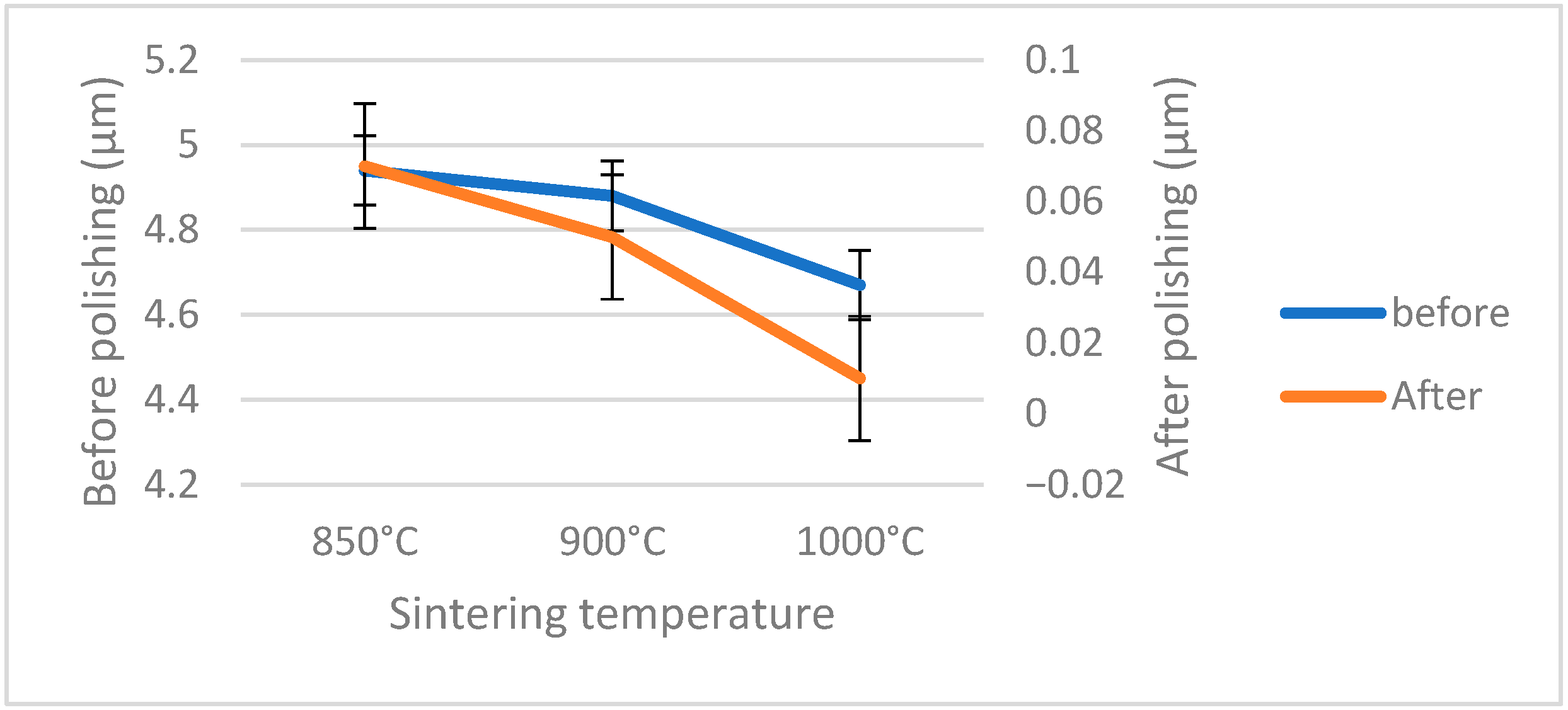
The roughness values before and after polishing for every treatment are presented in Table 3 and Figure 2:
The evolution of surface roughness as a function of sintering temperature (Figure 2) shows a slight decrease in Ra values from 850 °C to 1000 °C before polishing (from 4.94 to 4.67 µm). This trend can be attributed to enhanced diffusion mechanisms and neck growth between particles at higher temperatures, leading to a more homogenized surface.
After polishing, a significant reduction in roughness is observed for all samples, with Ra decreasing to 0.07, 0.05, and 0.01 µm for the 850 °C, 900 °C, and 1000 °C conditions, respectively. This indicates that higher sintering temperatures improve the polishing efficiency due to better densification and reduced surface irregularities.
At 900 °C, the roughness values exhibit more non-linear behavior compared to at 850 °C and 1000 °C. For instance, Rq decreases significantly (from 11.88 to 5.32 µm), while Rz and Rt also show a reduction. This suggests that sintering at 900 °C may correspond to an intermediate densification stage, where pore shrinkage is dominant but not yet fully stabilized.
After polishing, the roughness values at 900 °C (Ra = 0.05 µm) are lower than those at 850 °C but slightly higher than those at 1000 °C, confirming a progressive improvement in surface quality with increasing temperature.
After a treatment at 1000 °C, the results showed that Ti80Ni20 presented a lower roughness, which is required in the biomedicine field [24].
Several studies have highlighted the importance of implant surface topography and its large influence on the bone–implant response.
Some of these studies suggested that a highly specific surface topography with an Ra value between 1 and 1.5 µm provides an optimal surface for bone integration [25]. Others have created a standardized list comparing the specific morphological characteristics of body implants [26] and dental implants [27]. Furthermore, a higher implant surface roughness leads to greater bone-to-implant contact [28].
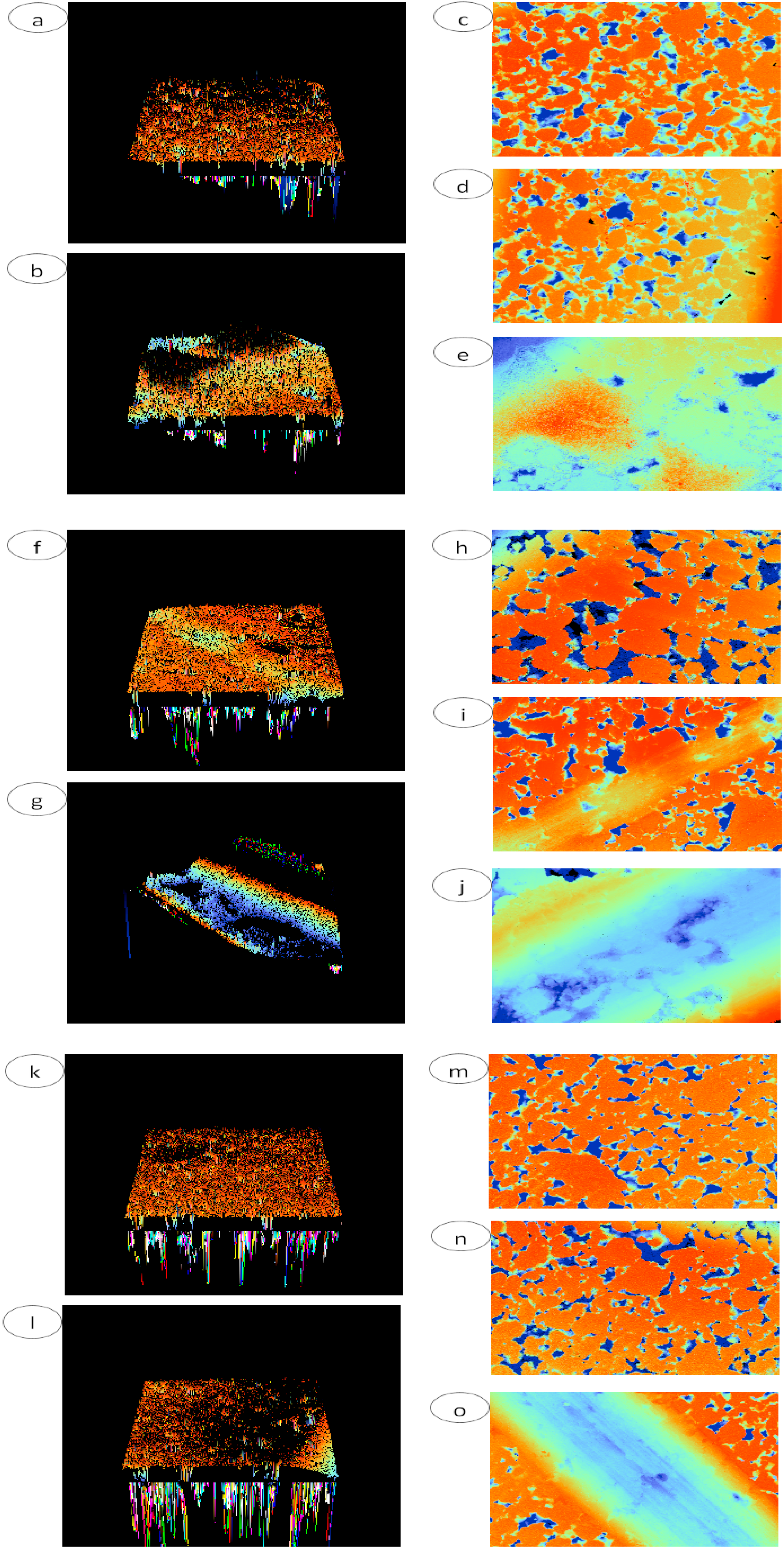
By associating these values, representing the traditional 2D parameters used to characterize the surface roughness, with the topography of the surface (Figure 3), we can predict the interfacial shear strength of the implant.
In the Figure 3, the left column shows 3D surface reconstructions highlighting the depth and morphology of wear tracks, while the right column presents the corresponding 2D top-view maps. The color scale qualitatively represents the surface height variations, where warmer colors indicate elevated regions and cooler colors correspond to valleys and worn areas.
At 850 °C, the surface exhibits pronounced irregularities and deeper wear grooves, indicating incomplete densification. At 900 °C, the surface becomes relatively more homogeneous, reflecting an intermediate densification stage. At 1000 °C, a smoother surface with less pronounced wear features is observed, confirming improved densification and surface integrity.
These observations are consistent with the roughness measurements, where higher sintering temperatures lead to reduced roughness and improved surface quality.

3.2.2. Hardness Determination

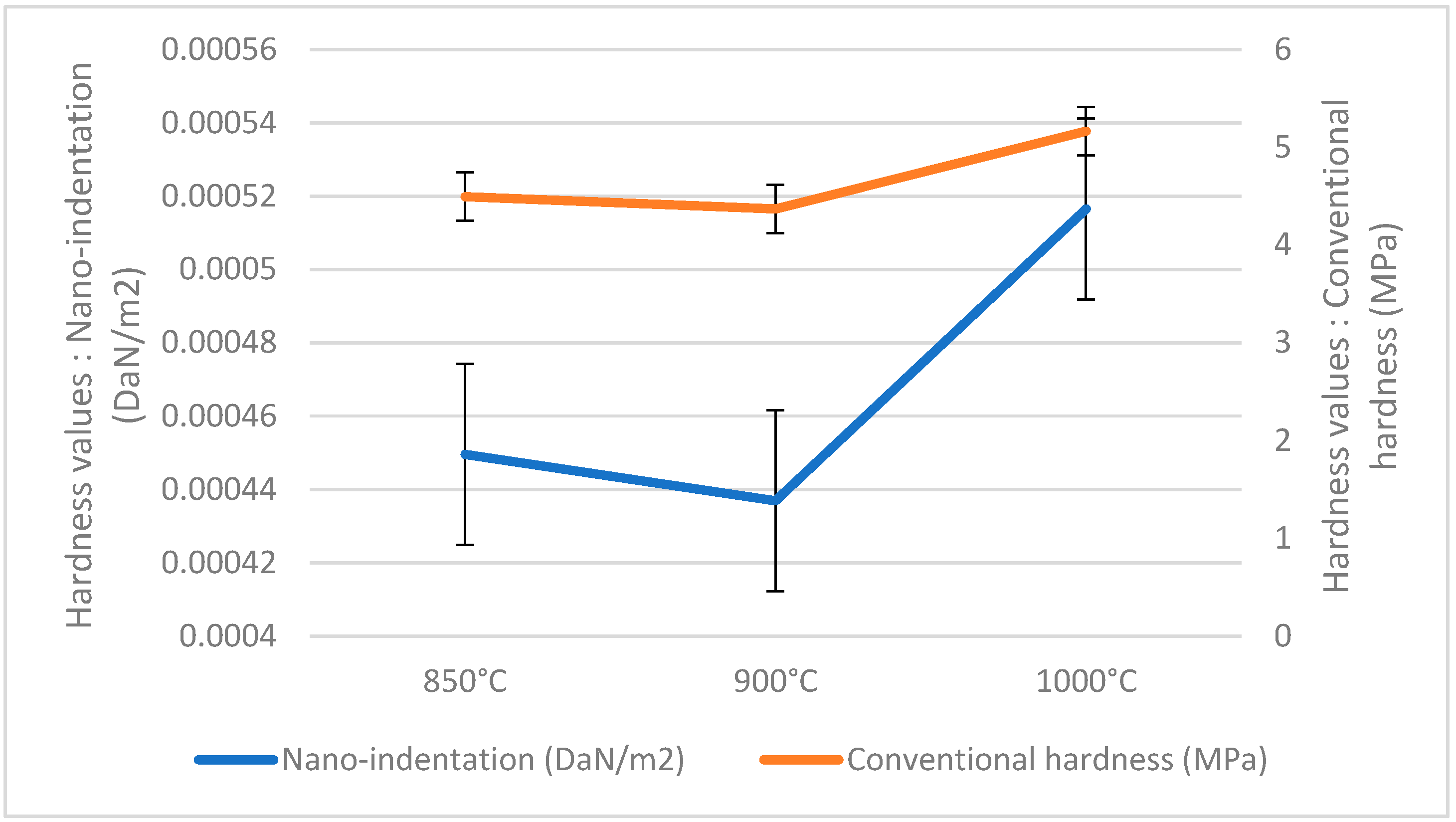
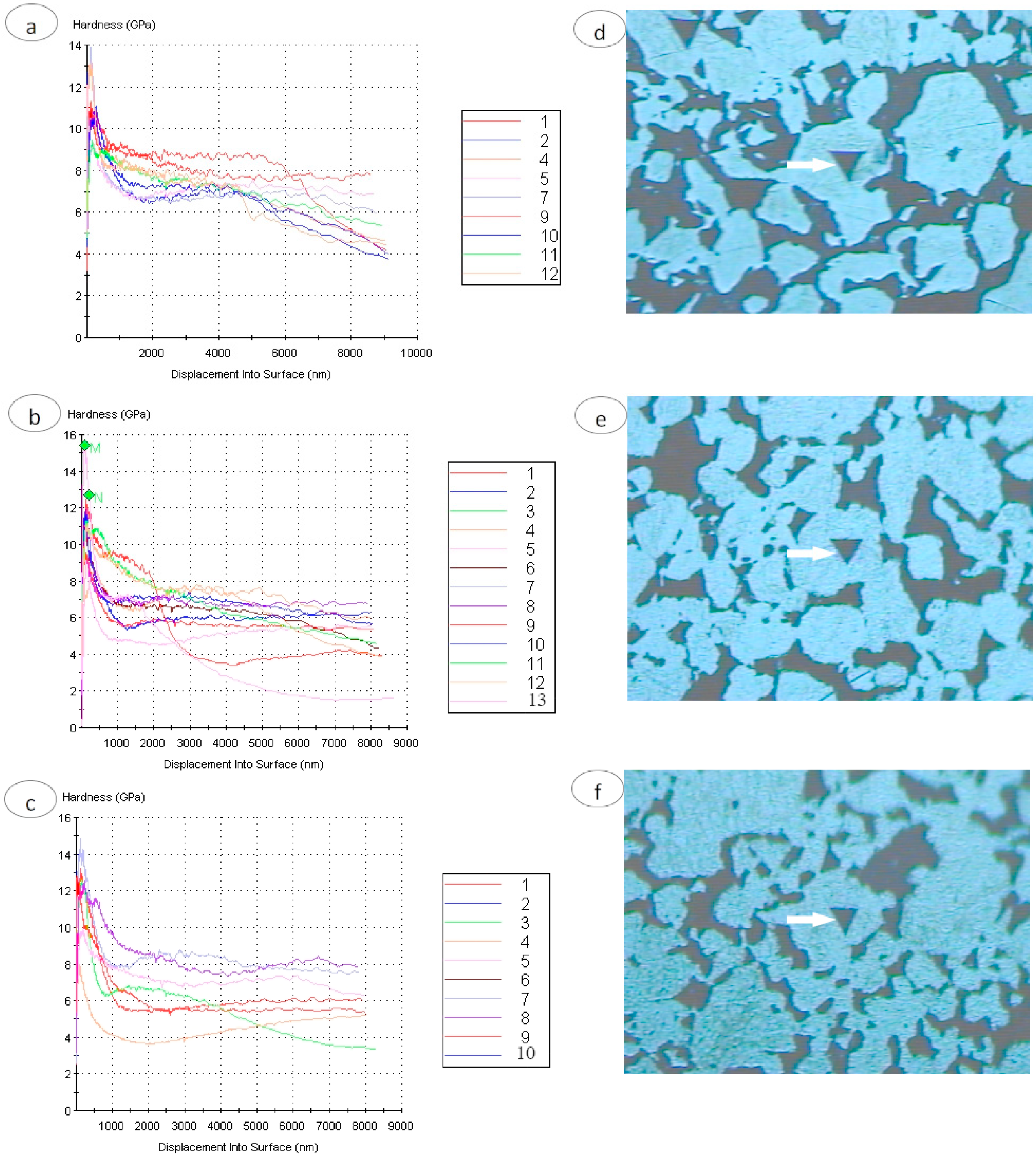
The mechanical properties, including the micro- and nanoindentation hardness of the sintered Ti80Ni20 nano-powder, were determined using microindentation and nanoindentation techniques. The corresponding average values are presented in Figure 4 and Figure 5.
The effect of sintering temperature on the hardness of the treated samples is shown in Figure 4. Evidently, there is negative correlation between the hardness and sintering temperature.
The hardness value decreases with increasing sintering temperature. This behavior can be explained by the combined effects of diffusional homogenization and increased porosity with rising temperature. In addition, enhanced diffusion kinetics lead to a reduction in hardness of the final product and consequently a decrease in wear resistance.
Several other mechanisms may also contribute to hardness reduction with increasing temperature, such as particle rearrangement induced by the milling process, stress relaxation, a decrease in dislocation density, decomposition of hard intermetallic compounds such as Ti2Ni, and grain growth.
While densification generally improves the mechanical properties, excessive grain growth at higher temperatures leads to softening of the material. The change in slope observed around 900 °C suggests a transition from densification-controlled behavior to grain growth-dominated mechanisms. This transition explains the reduction in hardness despite improved structural homogeneity [29,30,31].
The difference in hardness values between conventional microindentation and nanoindentation can be attributed to the indentation scale. At the microscale, the indenter penetrates both the material matrix and the pores, leading to lower apparent hardness values due to the porosity effect. In contrast, nanoindentation mainly probes the material matrix, minimizing the influence of pores and thus providing higher and more representative hardness values of the intrinsic material response. Previous studies have reported that hardness values obtained by nanoindentation are typically about 10% higher than those measured by micro-hardness tests, depending on the material’s microstructure and porosity level [32].
At 900 °C, the nanoindentation response exhibits distinct transitional behavior compared with the lower and higher sintering temperatures. The load–displacement curves in Figure 5b show a more stabilized penetration trend and a moderate reduction in the scatter between the individual indentation measurements, suggesting improved microstructural homogeneity.
This behavior can be attributed to the onset of significant neck growth between particles and progressive densification during sintering. At this temperature, atomic diffusion becomes sufficiently active to enhance particle bonding and reduce interparticle voids, although complete pore elimination has not yet been achieved. As a result, the material still retains some residual porosity, which explains the remaining dispersion in the indentation profiles.
The corresponding micrograph (Figure 5e) supports this interpretation, showing a more compact morphology compared with the lower-temperature sample, with a noticeable reduction in pore connectivity and a more continuous solid phase. This intermediate microstructure indicates that 900 °C represents the critical temperature at which densification mechanisms become dominant.
Consequently, the mechanical response at 900 °C reflects a balance between residual porosity and improved grain cohesion, leading to enhanced resistance to penetration relative to the lower-temperature condition, while still remaining below the performance observed at higher sintering temperatures.

3.2.3. The Weight Loss

Table 4 summarizes the mass loss values for each test. After an applied load of 3 N, the lost weight of sample (b) (900 °C), 17.5%, was significantly higher than that of sample (a) (850 °C), which was 11%, and sample (c) (1000 °C), which was a weight loss of 6.45%.
A similar trend is observed at 5 N, with higher weight loss values. The same tendency is also noted at 1 N; however, the differences between the samples remain relatively small under this lower load.
Overall, the wear rate is consistently higher for the sample treated at 900 °C. This behavior can be explained based on Archard’s law, which states that the volumetric wear loss is inversely proportional to the hardness of the material. Therefore, the higher wear observed at 900 °C suggests a relatively lower hardness compared to the other samples [33].
However, this interpretation should be considered in relation to the microstructural evolution induced by sintering temperature. At intermediate temperatures such as 900 °C, microstructural changes including grain growth and local heterogeneities may occur. These features can reduce grain-boundary strengthening and promote plastic deformation during sliding. In addition, the presence and distribution of residual porosity can act as stress concentration sites, facilitating material detachment and accelerating wear.
It is also important to note that Archard’s law is based on ideal assumptions, including homogeneous materials and stable contact conditions. In the case of sintered materials, deviations from this model are expected due to microstructural heterogeneity and porosity, which influence the real contact area and local stress distribution during sliding.
Regarding the effect of applied load, the wear behavior shows an increasing tendency with load; however, this increase is not strictly linear. This deviation from ideal Archard behavior may be related to progressive surface damage mechanisms such as microcrack formation, plastic deformation, and particle pull-out, which become more pronounced at higher loads.
Finally, all wear tests were performed in triplicate, and the reported values correspond to the average results. The variability between measurements was found to be limited, and standard deviations confirm the reliability and reproducibility of the observed trends.

3.2.4. Friction Coefficient

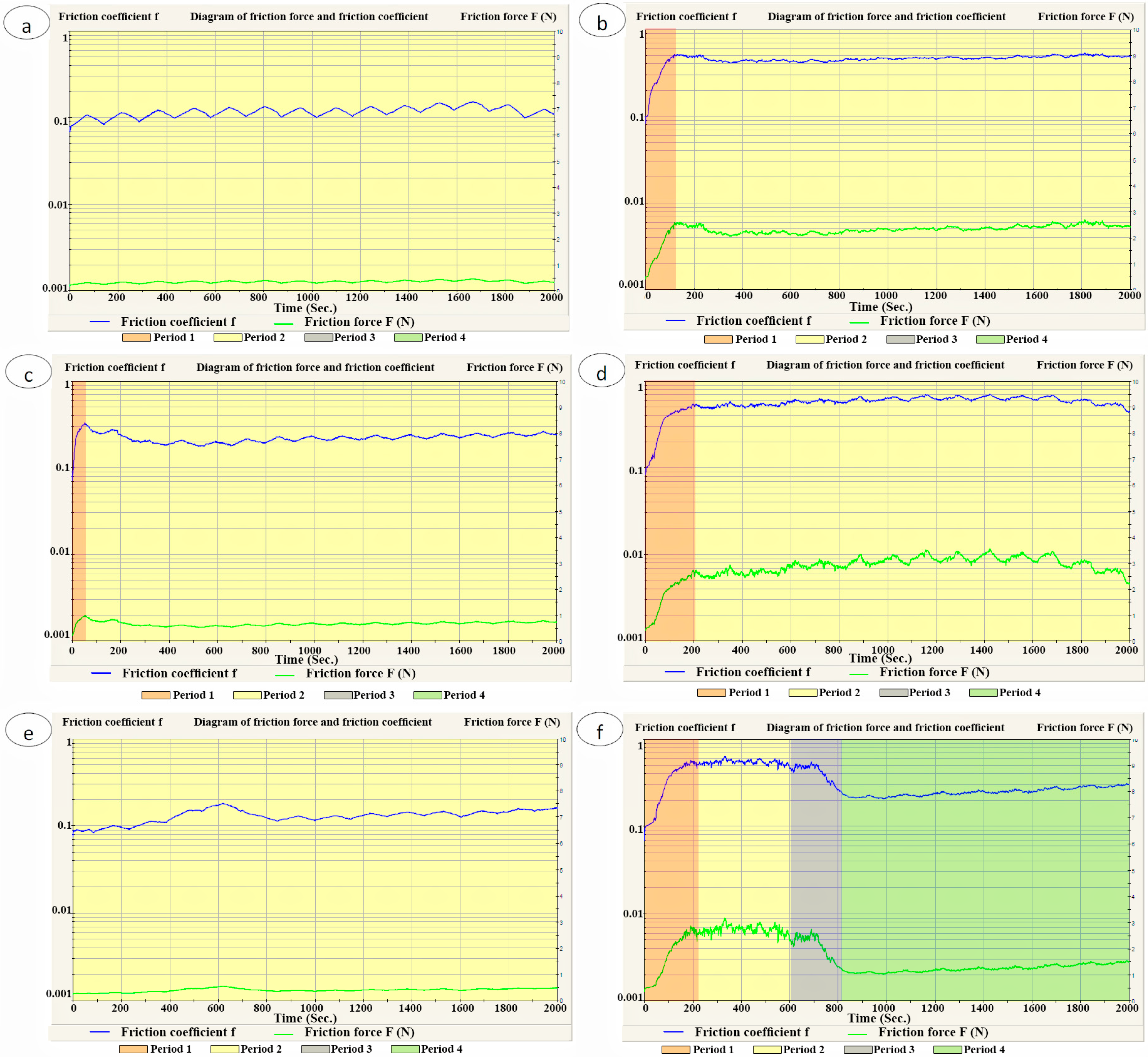
The evolution curves of the friction coefficient under different conditions (sintering regime, normal load) of sintered pellets made of the Ti80Ni20 alloy are illustrated in Table 5 and Figure 6.
In general, the friction curve is characterized by four periods:
Period 1: A rapid increase in the friction coefficient which is considered characteristic of a ductile material (compared to steel) [34,35].
Period 2: A slight decrease in the coefficient of friction; the third body on the track generated by friction wear plays a similar role to a solid lubricant.
Period 3: A significant increase in the coefficient of friction; the third body is fragmented and oxidized and most likely plays the role of an abrasive.
Period 4: The stabilization of the friction coefficient.
Based on the analysis and comparison of the obtained curves, several successive friction and wear regimes can be identified as follows:
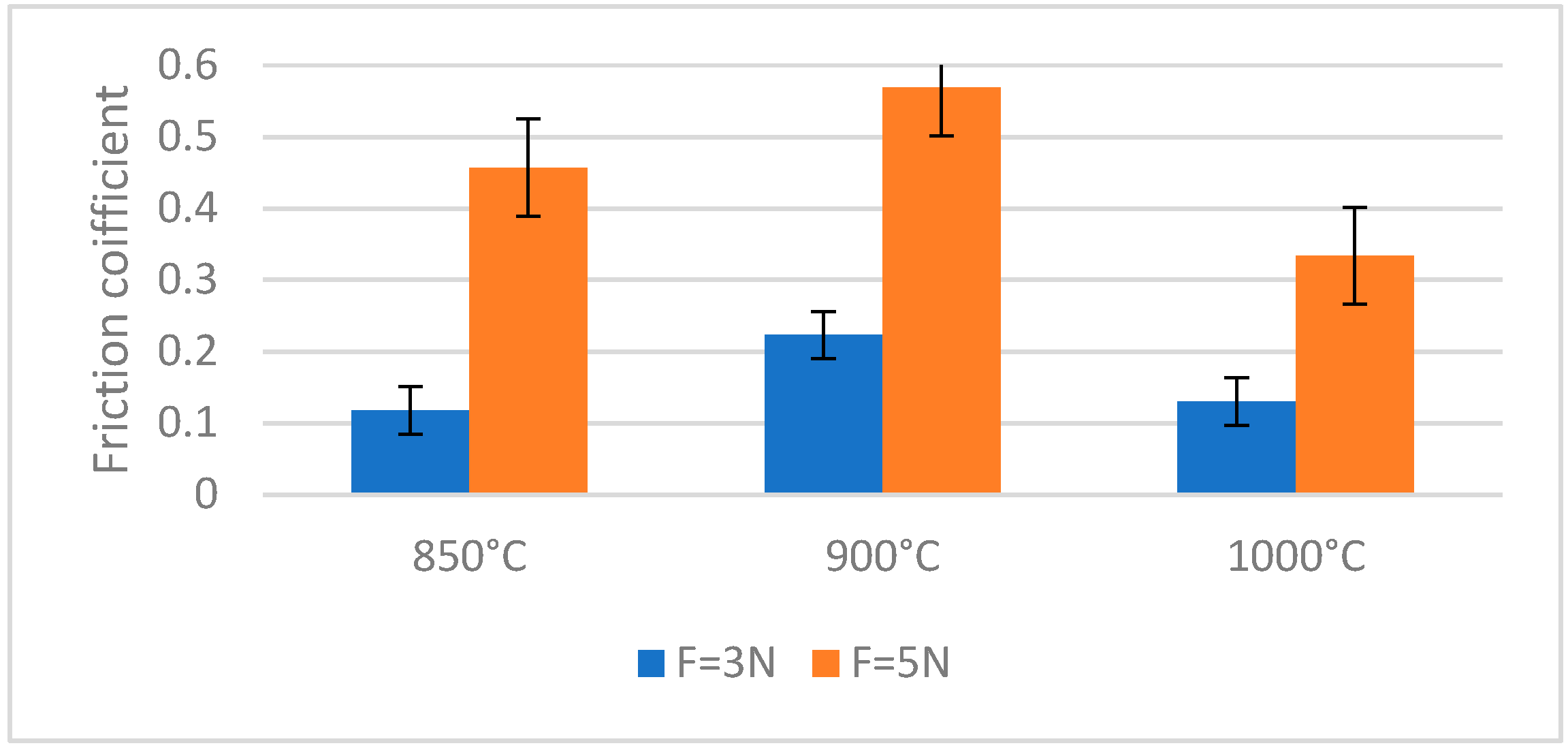
At T = 850 C (3 N), the absence of the first characteristic regime usually observed in ductile materials may be attributed to the formation of an oxide layer during sintering. This oxide layer can increase the surface hardness and lead to a low average coefficient of friction of about 0.118 (Table 5). This behavior indicates good resistance to friction, as observed in Figure 6a. The graphical illustration of the sintering temperature versus for each load applied (Figure 7) and the SEM micrograph shown in Figure 8a supports this interpretation, revealing detached particles on the surface without significant deformation or flattening.
At T = 900 °C (3 N), a sharp increase in the coefficient of friction to approximately 0.332 was observed (Table 5), indicating more ductile behavior of the alloy. Consequently, the surface asperities became less pronounced and the roughness decreased due to plastic deformation. Afterwards, a slight decrease followed by a relatively stable friction coefficient was observed.
At T = 1000 °C (3 N), the alloy exhibited noticeable resistance to wear and friction, characterized by a gradual increase in the coefficient of friction over a longer period, as shown in Figure 6c.
At T = 850 °C (5 N), we observed a sudden increase in the friction coefficient. This behavior is similar to that typically observed in ductile materials and was followed by a decrease and subsequent stabilization of the friction coefficient, as shown in Figure 6d.
At T = 900 °C (5 N), the sample exhibited a behavior similar to that observed at 850 °C (5 N), but without the decrease in the coefficient of friction. This may be attributed to the absence of a third-body layer generated during friction and wear, which normally acts as solid lubricant and contributes to reducing friction resistance, as illustrated in Figure 6e.
At T = 1000 °C (5 N), the friction curve revealed the presence of four distinct regimes. The first regime corresponds to an increase in the coefficient of friction associated with the ductile behavior of the material, followed by a relatively stable region between 150 and 700 cycles. Subsequently, a decrease in the coefficient of friction was observed up to approximately 820 cycles, followed by a new increase. This behavior may be related to the fragmentation and oxidation of the third-body layer, which likely plays an abrasive role.
  • Effect of processing parameters on tribological behavior
Effect of applied load: As shown in Table 5, under identical sintering conditions and different normal loads (3 and 5 N), the average coefficient of friction increased with load under all temperatures. The recorded values were 0.118 and 0.457 at 850 °C, 0.223 and 0.569 at 900 °C, and 0.130 and 0.334 at 1000 °C (for 3 and 5 N, respectively). These results clearly indicate a direct relationship between the applied load and the coefficient of friction, where higher loads lead to increased friction.
Effect of sintering regime: At constant applied loads (Figure 7), the Ti80Ni20 alloy exhibited its highest coefficient of friction at 900 °C, indicating lower wear resistance compared to the other sintering conditions. In contrast, samples sintered at 1000 °C showed improved tribological performance with lower friction coefficients.

3.2.5. Wear and Surface Morphology

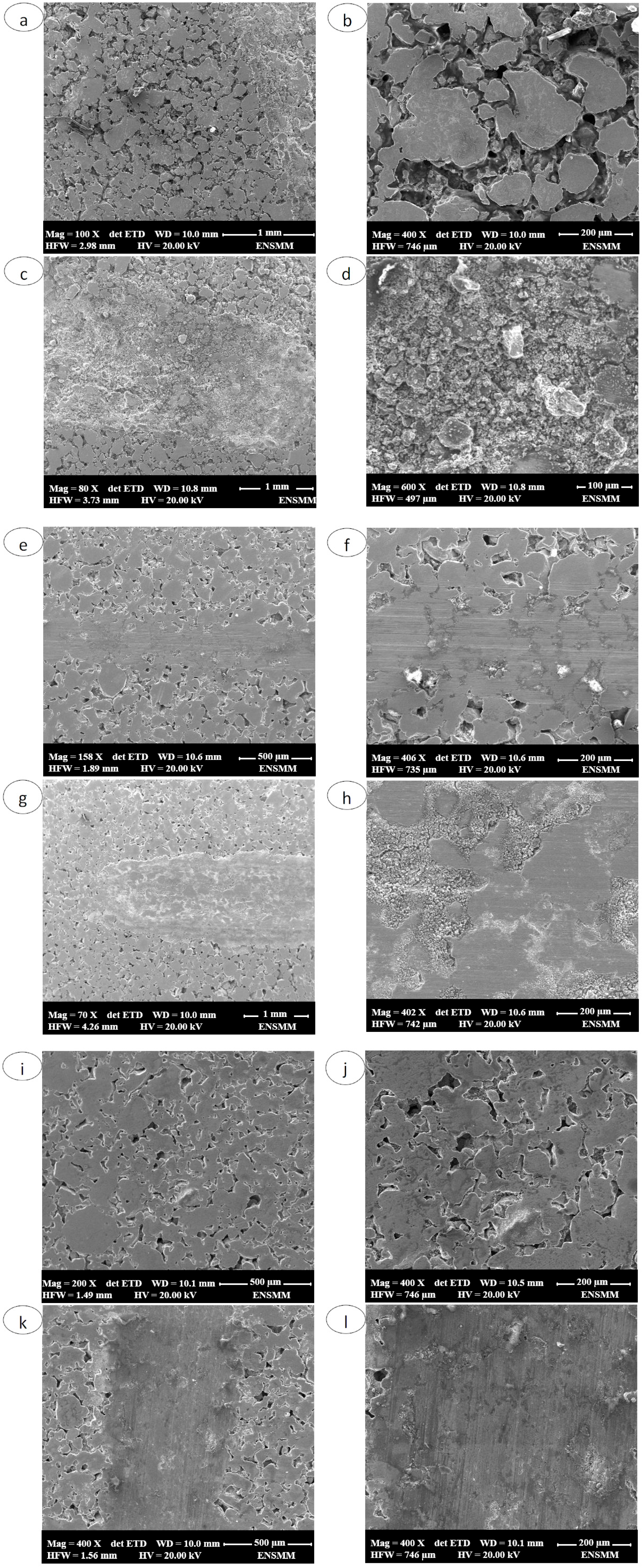
Scanning electron micrographs of the worn surfaces after the wear test are presented in Figure 8. The surfaces show pronounced plowing grooves, which are characteristic of abrasive wear mechanisms [36,37]. This observation is consistent with the measured weight loss results, indicating significant material removal during sliding.
The wear track surface appears flattened under the effect of the applied load, leading to plastic deformation and material removal in the form of debris. Abrasive wear results in a rougher surface, where dry sliding between asperity contacts (ball–substance interface) generates high local stresses. This in turn promotes adhesion, plastic deformation, and plowing mechanisms. Consequently, wear grooves, surface flattening, and pore filing are observed as characteristic features of the worn surface (Figure 8).
After treatment at 900 °C, the SEM images confirm that the material becomes more ductile and displays reduced resistance to friction wear. The sintered particles appear more flattened, which is characteristic of ductile wear behavior [38]. The presence of a deeper wear track indicates an increased wear rate.
By varying the sintering regime (e.g., 850 °C-5 N), it can be observed that the wear debris consists of delaminated particles as a consequence of the increasing hardness of the alloy. The absence of extensive plastic deformation features, such as severe smearing or large adhesive junctions, suggests that adhesive wear is not the dominant mechanism. Instead, the increased hardness of the alloy limits plastic flow and promotes brittle fragmentation, resulting in the generation of small detached particles. Furthermore, the observed debris morphology supports the predominance of abrasive wear, where hard asperities or particles contribute to surface scratching and material removal.
Figure 8 and Table 4 reveal that the loss of material increases with the applied load. The strength of the material strongly depends on the applied load, sintering regime, elaboration method, working conditions and type of friction.
The tribological behavior of the investigated Ti–Ni alloys is closely related to the microstructural characteristics induced by the compaction and sintering processes. In particular, improved densification and reduced porosity lead to better load distribution during sliding, thereby enhancing wear resistance. Conversely, the presence of residual pores and weak interparticle bonding can promote crack initiation and material removal, resulting in higher wear rates and friction coefficients. These findings highlight the strong interdependence between the processing conditions, microstructural stability, and tribological performance.
In the present study, where nanostructured Ti80Ni20 exhibits moderate wear resistance/a high friction coefficient, such surface engineering approaches could further improve its performance. Surface modification through protective coatings is widely considered an effective approach to enhance the tribological performance of metallic materials. The improvement is mainly attributed to the formation of a stable and mechanically resistant surface layer that reduces direct asperity contact, thereby lowering adhesive interactions and wear severity during sliding. In addition, such coatings can act load-bearing layers, redistributing contact stresses and limiting plastic deformation of the substrate under repeated-loading conditions. Among the most studied solutions, hard ceramic coatings such as titanium nitride (TiN) and carbon-based coatings like diamond-like carbon (DLC) have shown significant efficiency in improving wear resistance due to their high hardness, chemical stability, and low shear strength at the sliding interface. These characteristics lead to a reduction in friction coefficient and material loss, particularly under dry sliding conditions. Therefore, applying appropriate surface coatings could be a promising strategy to further optimize the tribological behavior of the investigated nanostructured titanium [39,40].

4. Conclusions

A nanostructured Ti80Ni20 alloy was synthesized by powder metallurgy methods with the aim of improving the tribological behavior. The effect of sintering temperature and the load applied on the surface roughness, micro-hardness, nano-hardness, weight loss, friction, wear behavior and surface morphology were evaluated.
Overall, the results show that both processing parameters strongly govern the microstructure and resulting properties of the alloy. In particular, sintering temperature plays a key role in controlling densification, which directly affects the hardness and tribological response. The sample sintered at 900 °C exhibits the lowest hardness and the poorest wear resistance, while higher sintering temperatures lead to improved mechanical stability and reduced friction and wear.
The friction coefficient does not evolve in a single simple trend; instead, it shows multi-stage behavior during sliding, which reflects changes in contact conditions and wear mechanisms over time. In addition, the applied load clearly affects the response of the material, where higher loads tend to increase friction and accelerate surface damage.
The SEM observations support the tribological results. They reveal clear differences in wear track morphology, wherein the 900 °C sample shows the most severe damage, including deeper grooves and more pronounced plastic deformation, consistent with its lower hardness and higher friction coefficient. In contrast, samples treated at higher temperatures exhibit smoother wear tracks, indicating improved resistance to material removal.
Weight loss measurements further confirm these trends, showing higher material loss for the least hardened sample, particularly under increased loads, which highlights the combined effects of mechanical strength and loading conditions on wear behavior.
Finally, an inverse relationship is observed between hardness and wear resistance, where improved hardness is associated with reduced material loss and better tribological performance.
Overall, optimizing the sintering temperature is crucial to achieving a balanced combination of hardness and wear resistance in Ti80Ni20 alloys. Surface modification strategies, particularly the application of protective coatings, are recommended as a promising approach to further enhance the tribological performance of the studied material.

Author Contributions

Conceptualization, M.B. and L.D.; methodology, M.B.; validation, L.D.; investigation, M.B.; resources, A.M.; data curation, M.B.; writing—original draft preparation, M.B.; writing—review and editing, M.B.; visualization, M.B.; supervision, L.D.; project administration, L.D. All authors have read and agreed to the published version of the manuscript.

Funding

This research received no external funding. The APC will be covered by the author.

Institutional Review Board Statement

Not applicable.

Informed Consent Statement

Not applicable.

Data Availability Statement

The experimental data generated in this study are available from the corresponding author upon reasonable request due to privacy restrictions.

Acknowledgments

The authors are very grateful to Smili Billel from the Laboratory of Inorganic Materials Chemistry, University Badji Mokhtar, Annaba (Algeria), for the elaboration concerning the nanostructured powders.

Conflicts of Interest

The authors declare no conflicts of interest. The study was self-funded by the authors, and the funders had no role in the design of the study; in the collection, analyses, or interpretation of data; in the writing of the manuscript; or in the decision to publish the results.

References

  1. Meyers, M.A.; Mishra, A.; Benson, D.J. Mechanical properties of nanocrystalline materials. Prog. Mater. Sci. 2006, 51, 427–556. [Google Scholar] [CrossRef]
  2. Aguilar, Z. Nanomaterials for Medical Applications; Elsevier: Amsterdam, The Netherlands, 2012; p. 544. [Google Scholar]
  3. Cabrera, C.R.; Miranda, F. Advanced Nanomaterials for Aerospace Applications; Pan Stanford: Singapore, 2014. [Google Scholar]
  4. Pathak, S.; Saha, G.C.; Abdul Hadi, M.B.; Jain, N.K. Engineered nanomaterials for aviation industry in COVID-19 context: A time-sensitive review. Coatings 2021, 11, 382. [Google Scholar] [CrossRef]
  5. Ruiz-Anchondo, T.; Flores-Holguín, N.; Glossman-Mitnik, D. Natural carotenoids as nanomaterial precursors for molecular photovoltaics: A computational DFT study. Molecules 2010, 15, 4490–4510. [Google Scholar] [CrossRef]
  6. Anene, F.; Aiza Jaafar, C.; Zainol, I.; Azmah Hanim, M.; Suraya, M. Biomedical materials: A review of titanium based alloys. Proc. Inst. Mech. Eng. Part C J. Mech. Eng. Sci. 2021, 235, 3792–3805. [Google Scholar] [CrossRef]
  7. Ishfaq, K.; Rehman, M.; Khan, A.R.; Wang, Y. A review on the performance characteristics, applications, challenges and possible solutions in electron beam melted Ti-based orthopaedic and orthodontic implants. Rapid Prototyp. J. 2022, 28, 525–545. [Google Scholar] [CrossRef]
  8. Dekhil, L.; Louidi, S.; Bououdina, M.; Fellah, M. Microstructural, Magnetic, and Nanoindentation Studies of the Ball-Milled Ti80Ni20 Alloy. J. Supercond. Nov. Magn. 2019, 32, 3623–3636. [Google Scholar] [CrossRef]
  9. Niinomi, M. Mechanical biocompatibilities of titanium alloys for biomedical applications. J. Mech. Behav. Biomed. Mater. 2008, 1, 30–42. [Google Scholar] [CrossRef]
  10. Baláž, P. High-Energy Milling. In Mechanochemistry in Nanoscience and Minerals Engineering; Springer: Berlin/Heidelberg, Germany, 2008; pp. 103–132. [Google Scholar]
  11. Sadrnezhaad, S.K.; Selahi, A.R. Effect of mechanical alloying and sintering on Ni–Ti powders. Mater. Manuf. Process. 2004, 19, 475–486. [Google Scholar] [CrossRef]
  12. Moghanian, A.; Sharifianjazi, F.; Abachi, P.; Sadeghi, E.; Jafarikhorami, H.; Sedghi, A. Production and properties of Cu/TiO2 nano-composites. J. Alloys Compd. 2017, 698, 518–524. [Google Scholar] [CrossRef]
  13. Joint Committee on Powder Diffraction Standards (n.d.). Reference Cards 44-1294 for Hcp-Ti and 04-0850 for Fcc-Ni; JCPDS: Newtown Square, PA, USA.
  14. Larsson, P.L. On the Behavior of Mechanical Stress Fields at Indentation of Materials with Residual Stresses. J. Mater. Eng. Perform. 2021, 30, 2566–2573. [Google Scholar] [CrossRef]
  15. Zhang, X.; Zhang, C. Inconsistent nanoindentation test hardness using different Berkovich indenters. J. Mater. Res. Technol. 2023, 25, 6198–6208. [Google Scholar] [CrossRef]
  16. Luo, S.D.; Liu, B.; Tiam, J.; Qian, M. Sintering of titanium in argon and vacuum: Pore evolution and mechanical properties. Int. J. Refract. Met. Hard Mater. 2020, 90, 105226. [Google Scholar] [CrossRef]
  17. Lee, S.-M.; Suk-Joong, L.K. Evaluation of densification mechanisms of liquid-phase sintering. Int. J. Mater. Res. 2022, 92, 669–674. [Google Scholar] [CrossRef]
  18. Groza, J.R.; Dowding, R.J. Nanoparticulate materials densification. Nanostructured Mater. 1996, 7, 749–768. [Google Scholar] [CrossRef]
  19. Ch’ng, H.N.; Pan, J. Sintering of particles of different sizes. Acta Mater. 2007, 55, 813–824. [Google Scholar] [CrossRef]
  20. Mour, M.; Das, D.; Winkler, T.; Hoenig, E.; Mielke, G.; Morlock, M.M.; Schilling, A.F. Advances in porous biomaterials for dental and orthopaedic applications. Materials 2010, 3, 2947–2974. [Google Scholar] [CrossRef]
  21. Burg, K.J.; Porter, S.; Kellam, J.F. Biomaterial developments for bone tissue engineering. Biomaterials 2000, 21, 2347–2359. [Google Scholar] [CrossRef]
  22. Igharo, M.; Wood, J.V. Compaction and Sintering Phenomena in Titanium—Nickel Shape Memory Alloys. Powder Metall. 1985, 28, 131–139. [Google Scholar] [CrossRef]
  23. Butz, F.; Takahiro, O.; Ichiro, N. Interfacial shear strength of endosseous implants. Int. J. Oral Maxillofac. Implant. 2011, 26, 746. [Google Scholar]
  24. Shalabi, M.M.; Gortemaker, A.; Hof, M.V.T.; Jansen, J.A.; Creugers, N.H.J. Implant surface roughness and bone healing: A systematic review. J. Dent. Res. 2006, 85, 496–500. [Google Scholar] [CrossRef]
  25. Hansson, S. Surface roughness parameters as predictors of anchorage strength in bone: A critical analysis. J. Biomech. 2000, 33, 1297–1303. [Google Scholar] [CrossRef]
  26. Wennerberg, A.; Albrektsson, T. Suggested guidelines for the topographic evaluation of implant surfaces. Int. J. Oral Maxillofac. Implant. 2000, 15, 331–344. [Google Scholar]
  27. Covani, U.; Giacomelli, L.; Krajewski, A.; Ravaglioli, A.; Spotorno, L.; Loria, P.; Das, S.; Nicolini, C. Biomaterials for orthopedics: A roughness analysis by atomic force microscopy. J. Biomed. Mater. Res. Part A 2007, 82, 723–730. [Google Scholar] [CrossRef]
  28. Mendoza-Arnau, A.; Vallecillo-Capilla, M.-F.; Cabrerizo-Vilchez, M.-A.; Rosales-Leal, J.-I. Topographic characterisation of dental implants for commercial use. Med. Oral Patol. Oral Y Cir. Bucal 2016, 21, e631. [Google Scholar] [CrossRef] [PubMed]
  29. German, R.M. Sintering Theory and Practice; Wiley: New York, NY, USA, 1996. [Google Scholar]
  30. Callister, W.D.; Rethwisch, D.G. Materials Science and Engineering: An Introduction, 10th ed.; Wiley: Hoboken, NJ, USA, 2018. [Google Scholar]
  31. Carter, C.B.; Norton, M.G. Ceramic Materials: Science and Engineering, 2nd ed.; Springer: New York, NY, USA, 2013. [Google Scholar]
  32. Oliver, W.C.; Pharr, G.M. An improved technique for determining hardness and elastic modulus using load and displacement sensing indentation experiments. J. Mater. Res. 1992, 7, 1564–1583. [Google Scholar] [CrossRef]
  33. Popov, V. Generalized archard law of wear based on rabinowicz criterion of wear particle formation. Facta Univ. Ser. Mech. Eng. 2019, 17, 39–45. [Google Scholar] [CrossRef]
  34. Peng, J.; Vijayanand, V.D.; Knowles, D.; Truman, C.; Mostafavi, M. The sensitivity ranking of ductile material mechanical properties, geometrical factors, friction coefficients and damage parameters for small punch test. Int. J. Press. Vessel. Pip. 2021, 193, 104468. [Google Scholar] [CrossRef]
  35. Zhang, N.; Zhang, J.; Lu, L.; Zhang, M.; Zeng, D.; Song, Q. Wear and friction behavior of austempered ductile iron as railway wheel material. Mater. Des. 2016, 89, 815–822. [Google Scholar] [CrossRef]
  36. Li, D. Abrasive wear. Frict. Lubr. Wear Technol. 2017, 18, 243–251. [Google Scholar]
  37. Abdelbary, A. 2-Sliding mechanics of polymers. In Wear of Polymers and Composites; Woodhead Publishing: Darya Ganj, India, 2014; pp. 37–66. [Google Scholar]
  38. Kumar, S.; Pandey, R.; Sign Panwar, R.; Pandey, O.P. Effect of particle size on wear of particulate reinforced aluminum alloy composites at elevated temperatures. J. Mater. Eng. Perform. 2013, 22, 3550–3560. [Google Scholar] [CrossRef]
  39. Holmberg, K.; Matthews, A. Coatings Tribology: Properties, Mechanisms, Techniques and Applications in Surface Engineering; Elsevier: Amsterdam, The Netherlands, 2009. [Google Scholar]
  40. Donnet, C.; Erdemir, A. Tribology of Diamond-Like Carbon Films; Springer: Berlin/Heidelberg, Germany, 2008. [Google Scholar]
Figure 1. Images of morphological changes in the Ti80Ni20 sintered pellets as a function of sintering time: (ac,j) were treated at 850 °C; (df,k) at 900 °C; and (gi,l) at a temperature of 1000 °C.
Applsci 16 05619 g001
Figure 2. Roughness values before and after polishing for every treatment (850 °C, 900 °C and 1000 °C).
Applsci 16 05619 g002
Figure 3. Profilometric 3D images comparing the surface morphology after sintering with wear marks under different conditions: The 3D profilometric surface topography and corresponding 2D wear track maps of samples sintered at different temperatures: (ae) 850 °C, (fj) 900 °C, and (ko) 1000 °C.
Applsci 16 05619 g003
Figure 4. The effect of sintering temperature on conventional hardness and nanoindentation.
Applsci 16 05619 g004
Figure 5. Nanoindentation variation in the sintered samples in different treatment temperatures. (a) Nanoindentation variation in the sintered samples at 850 °C; (b) nanoindentation variation in the sintered samples at 900 °C; (c) nanoindentation variation in the sintered samples at 1000 °C; (d) Berkovich indenter print of a sample treated at 850 °C; (e) Berkovich indenter print of a sample treated at 900 °C; (f) Berkovich indenter print of a sample treated at 1000 °C. The arrow indicates the nanoindentation trace. The diamond represents the nano hardness trace.
Applsci 16 05619 g005
Figure 6. Friction coefficient versus sliding distance under different loads of 3 and 5 N: (a,b) 850 °C condition friction coefficient curve; (c,d) 900 °C condition friction coefficient curve; (e,f) 1000 °C condition friction coefficient curve under 3 and 5 N load, respectively.
Applsci 16 05619 g006
Figure 7. Friction coefficient versus sintering temperature for each load applied.
Applsci 16 05619 g007
Figure 8. Worn surfaces, deformation and plastic flow of Ti80Ni20 sliding against an Al2O3 ball: sintered pallet surface with wear marks after sintering at a temperature of 850 °C: (a,b) under a normal load of 3 N, (c,d) under a normal load of 5 N; sintered pallet surface with wear marks after sintering at a temperature of 900 °C: (e,f) under a normal load of 3 N, (g,h) under a normal load of 5 N; sintered pallet surface with wear marks after sintering at a temperature of 1000 °C: (i,j) under a normal load of 3 N, (k,l) under a normal load of 5 N, and 0.457 MPa at 850 °C and 0.223 MPa and 0.569 MPa at 900°C.
Applsci 16 05619 g008
Table 1. Powder characteristics (Ti and Ni).
PowderPurity (%)Crystal StructureCell ParameterTheoretical DensityMelting Temperature
Ti~99.999Hcpa (nm) = 0.2952
c (nm) = 0.4686
4.506 g/cm31668 °C
Ni~99.995Fcca (nm) = 0.35248.907 g/cm31455 °C
Hcp: Hexagonal compact; Fcc: face-centered cubic.
Table 2. Tribological conditions of the study.
Friction PairBall Al2O3
Normal load1, 3 and 5 N
Sliding distance20,000 mm
Sliding speed10.0 mm/s
Ball diameter6 mm
Wear track radius6 mm
Number of cycles530.5
Ball geometrySphere
Temperature~20.0 °C
Humidity~38.0% r.H
AtmosphereAir
Young’s modulus (Ti80Ni20)2500 MPa
Poisson’s ratio (Ti80Ni20)0.33
Table 3. Statistics of surface roughness before and polishing.
Sample Before PreparationSample After Preparation
Sintering temperature850 °C900 °C1000 °C850 °C900 °C1000 °C
Ra (µm)4.944.884.670.070.050.01
Rq (µm)11.885.327.010.080.020.01
Rz (µm)53.7242.3645.211.120.420.66
Rt (µm)45.6339.1644.471.050.540.67
Table 4. Evolution of weight loss before and after wear test.
Sample(a)(b)(c)
Sintering temperature850 °C900 °C1000 °C
Before or after testingbefore1 N3 N5 Nbefore1 N3 N5 Nbefore1 N3 N5 N
Weight loss2 g1.977 g1.78 g1.523 g2 g1.927 g1.65 g1.34 g2 g1.984 g1.871 g1.689 g
Relative percentage100%1.15%11%23.85%100%3.65%17.5%33%100%0.8%6.45%15.55%
Table 5. Friction coefficient values versus sintering temperature and load applied.
850 °C900 °C1000 °C
FN (N)Star COFMin COFMax COFMean COFPH Ca (Mpa)Star COFMin COFMax COFMean COFPH Ca (Mpa)Star COFMin COFMax COFMean COFPH Ca (Mpa)
3 N0.0730.0720.1520.118790.0810.0810.3320.223790.0840.0840.1800.13079
5 N0.0970.0970.5390.457940.0880.0880.7110.569940.0860.0860.6370.33494
FN (N): A normal load applied (N); Star COF: the initial value of the friction coefficient; Min COF: the minimum value of the friction coefficient; Max COF: the maximum value of the friction coefficient; Mean COF: the mean value of the friction coefficient; PH Ca: the calculated Hertz pressure.
Disclaimer/Publisher’s Note: The statements, opinions and data contained in all publications are solely those of the individual author(s) and contributor(s) and not of MDPI and/or the editor(s). MDPI and/or the editor(s) disclaim responsibility for any injury to people or property resulting from any ideas, methods, instructions or products referred to in the content.