Prediction Model for Low-Cycle Fatigue Life of Cast TiAl Alloys Based on Defect Stress Concentration Effects

Abstract
1. Introduction
2. Experiments and Methods
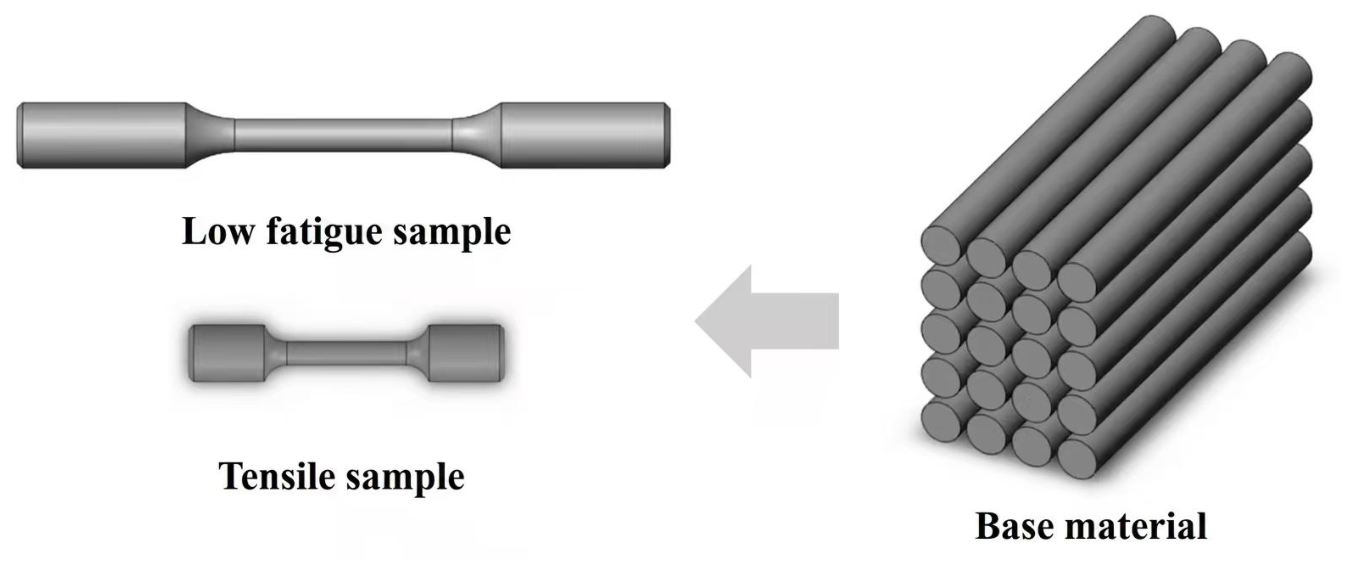
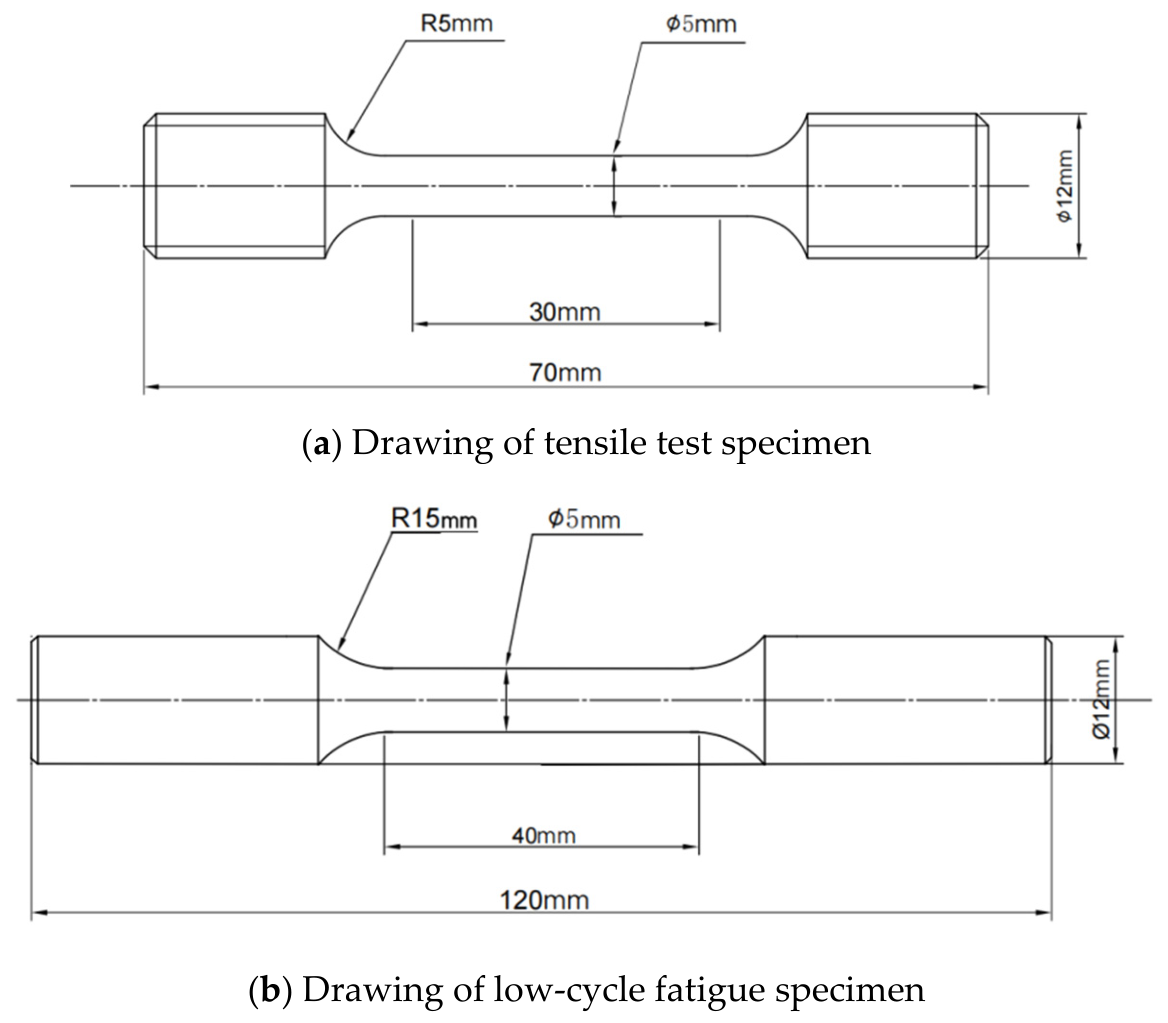
2.1. Test Specimen
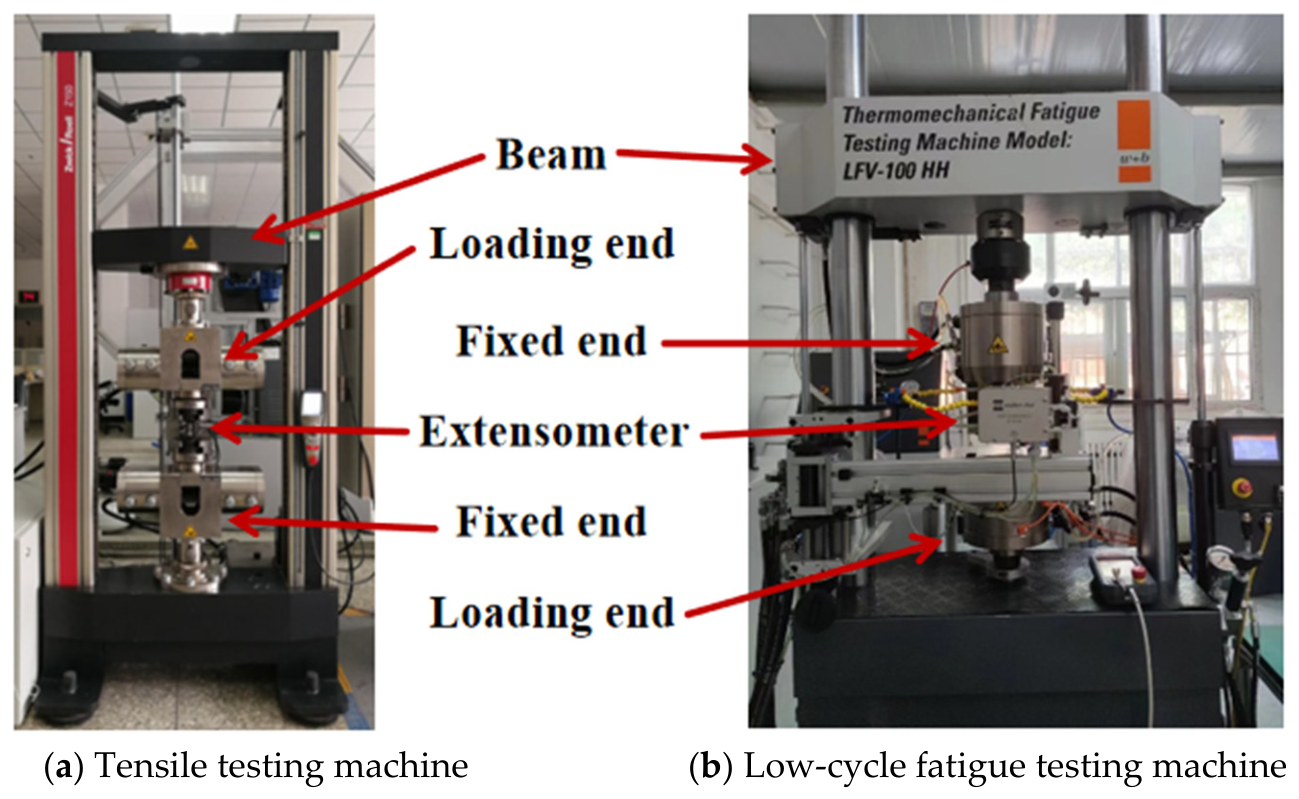
2.2. Experimental Equipment
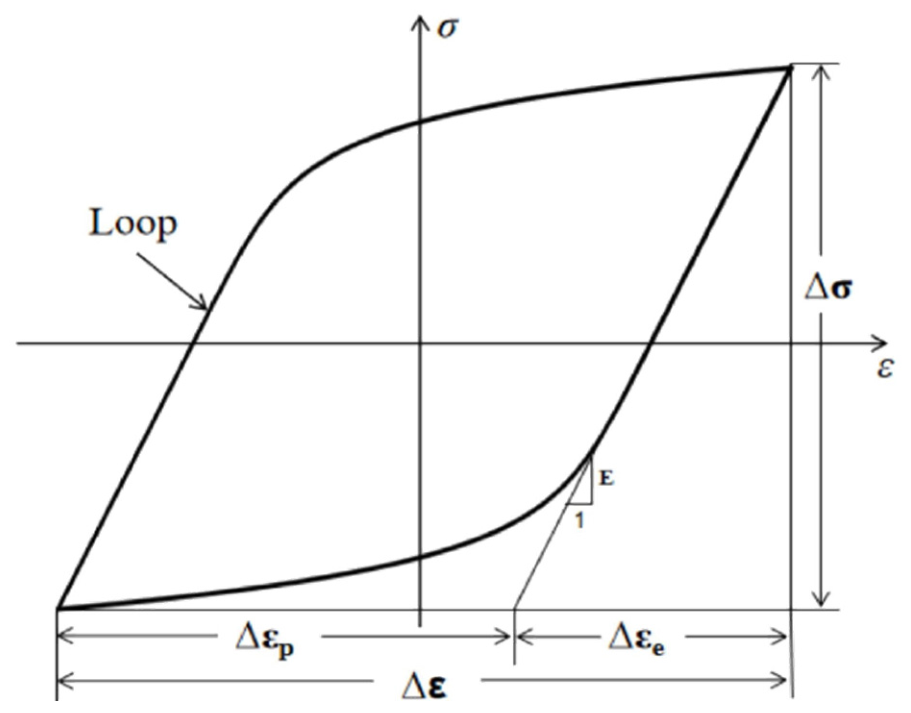
2.3. Experimental Results
3. Lifespan Dispersion Analysis and CT Detection
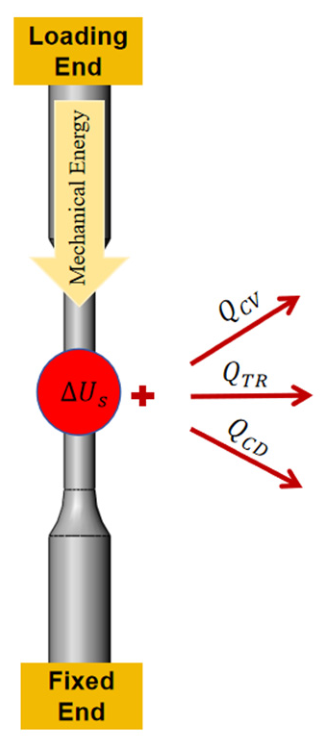
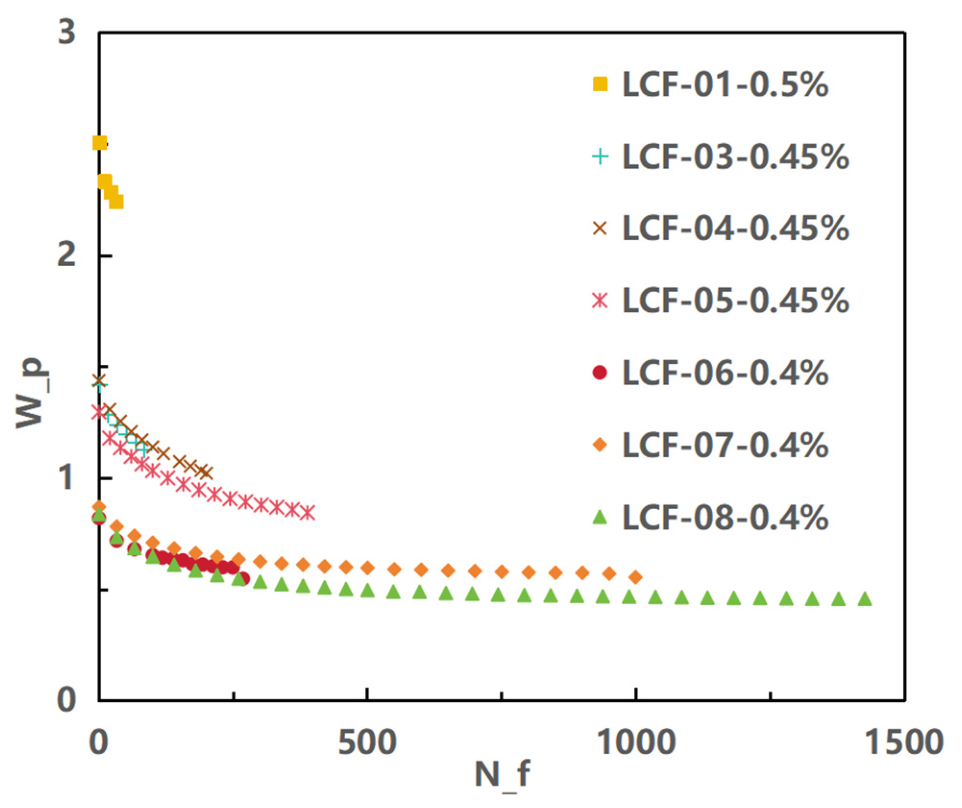
3.1. Energy Dissipation Analysis
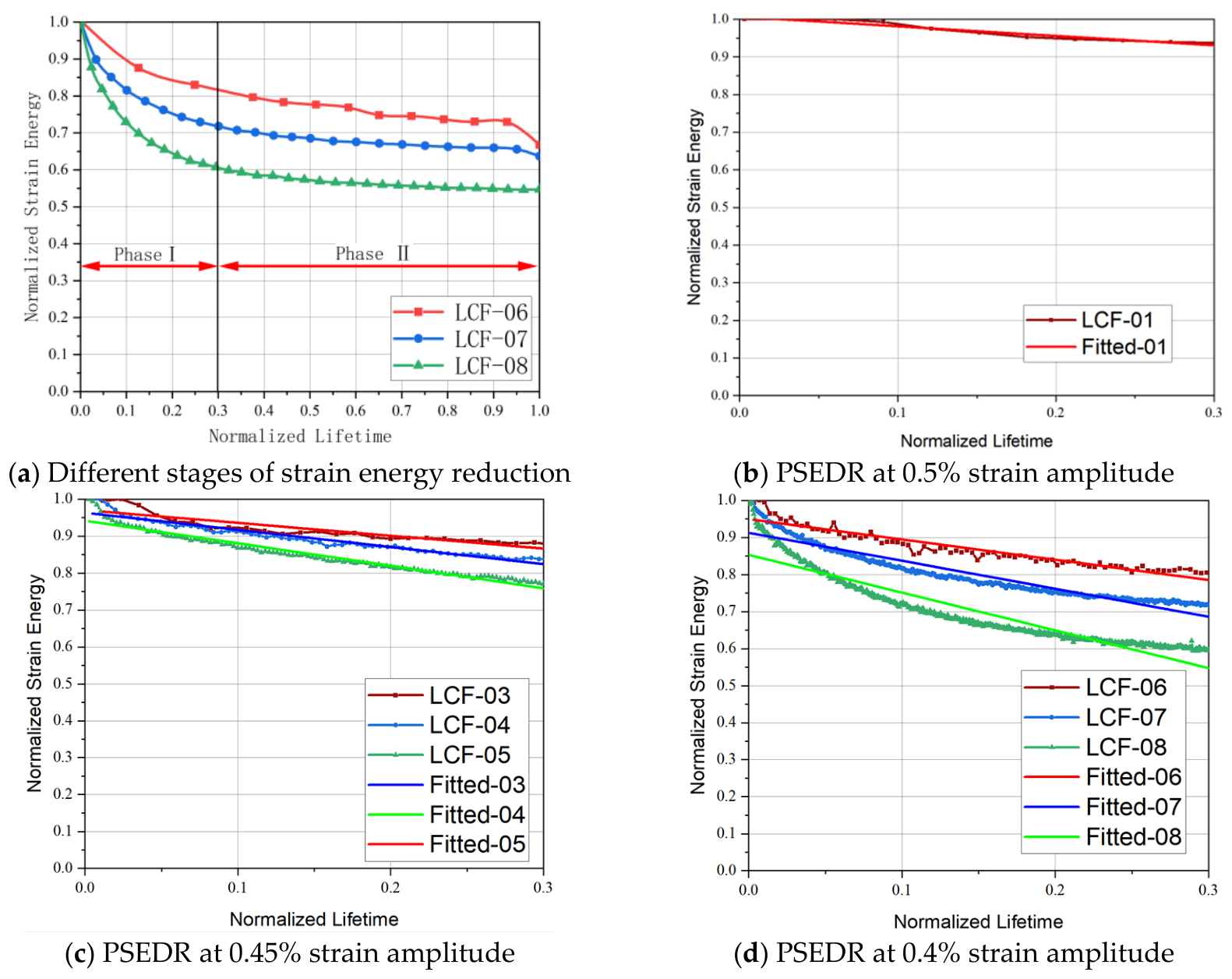
3.2. Normalization Analysis
3.3. X-Ray Non-Destructive Testing
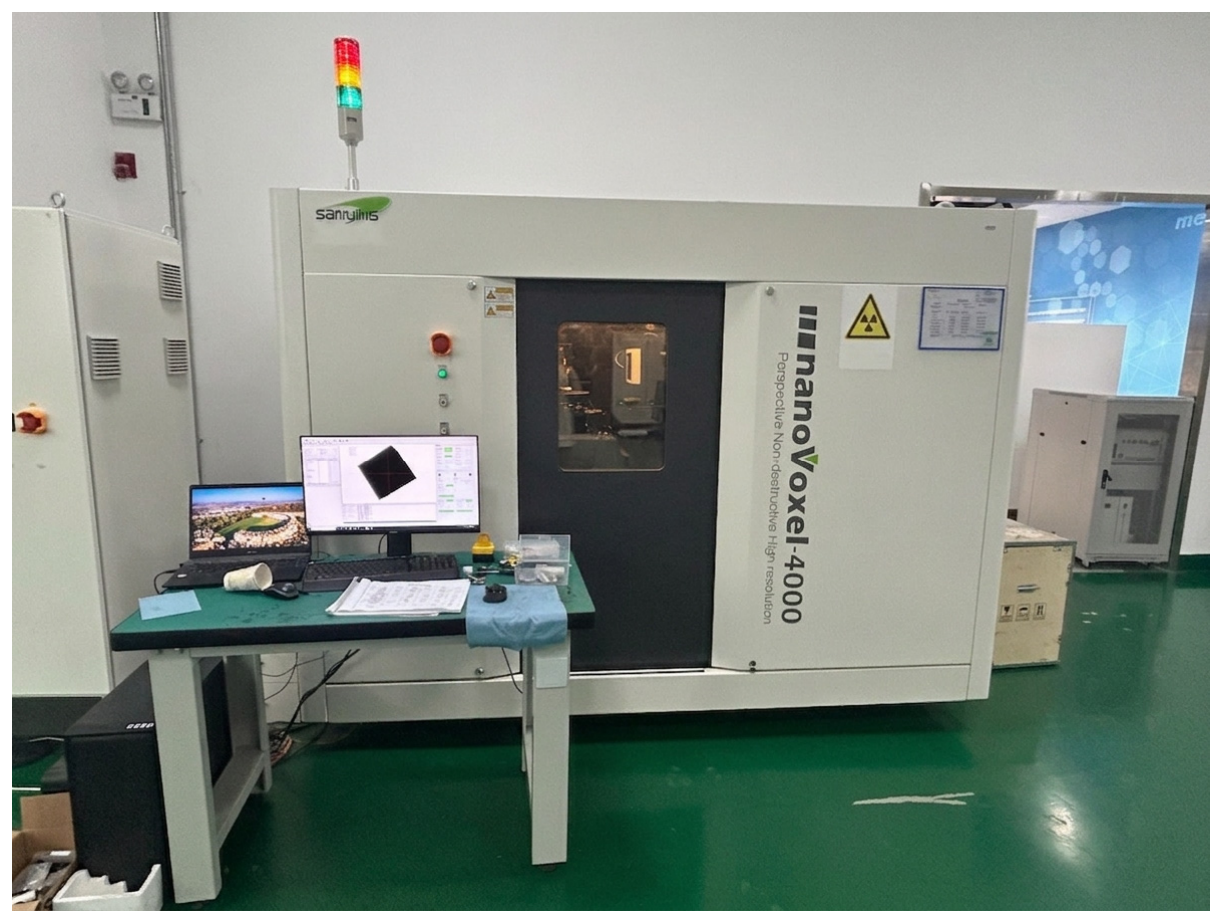
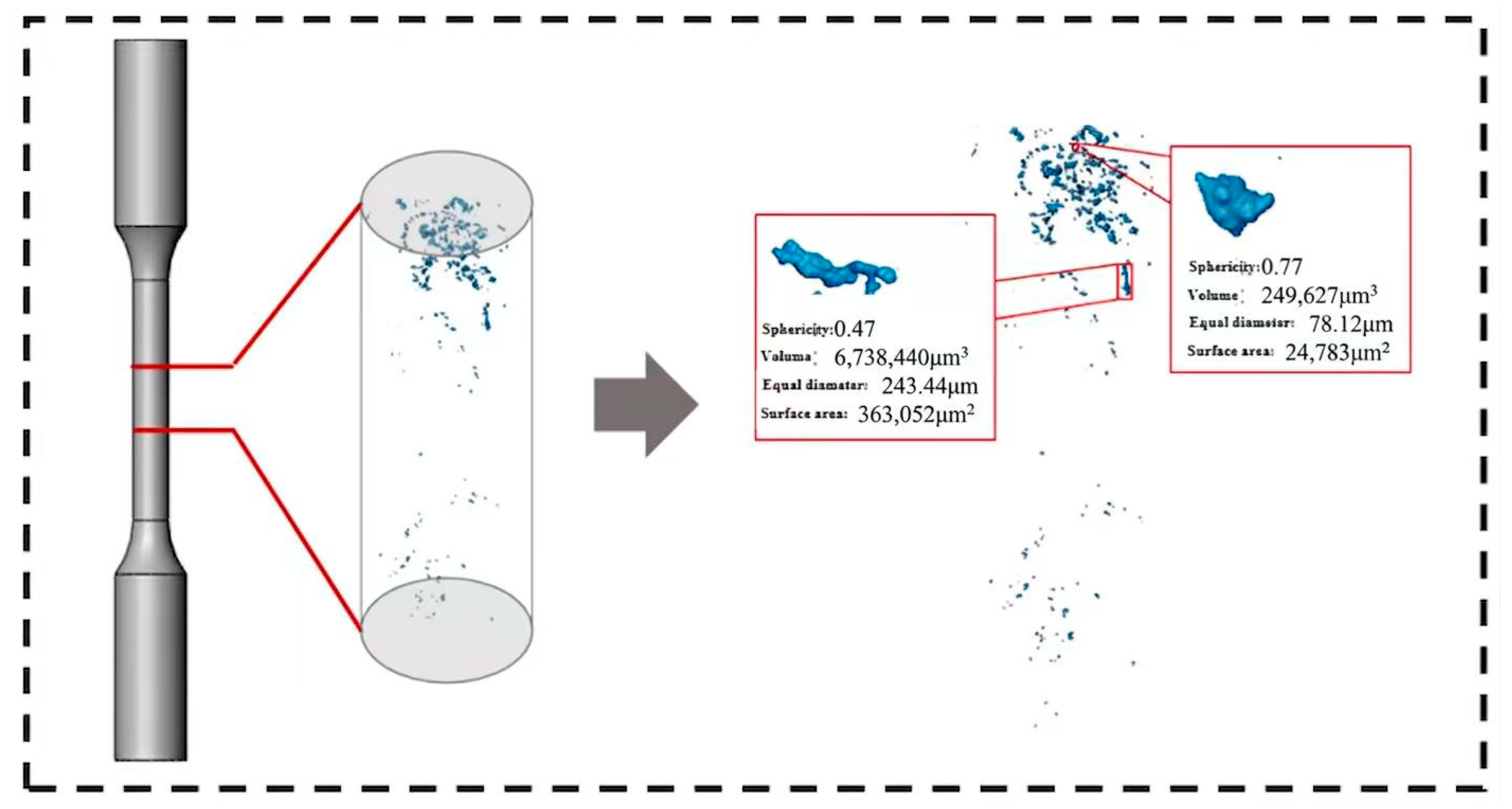
3.3.1. Equipment and Test Samples
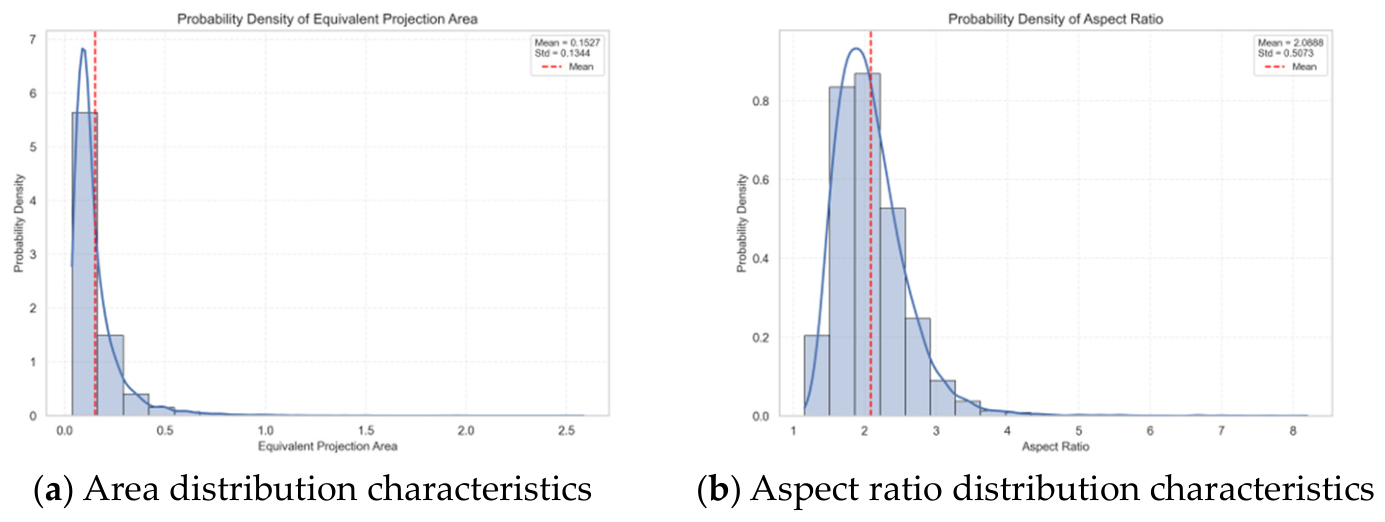
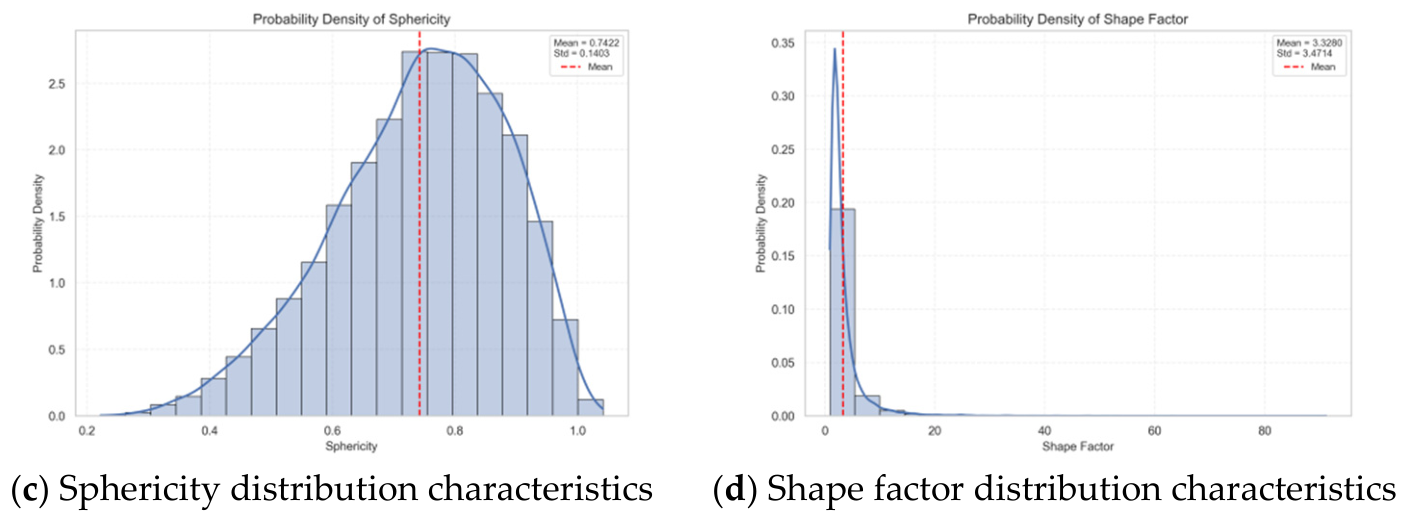
3.3.2. Defect Statistical and Correlation Analysis
4. Low-Cycle Fatigue Model
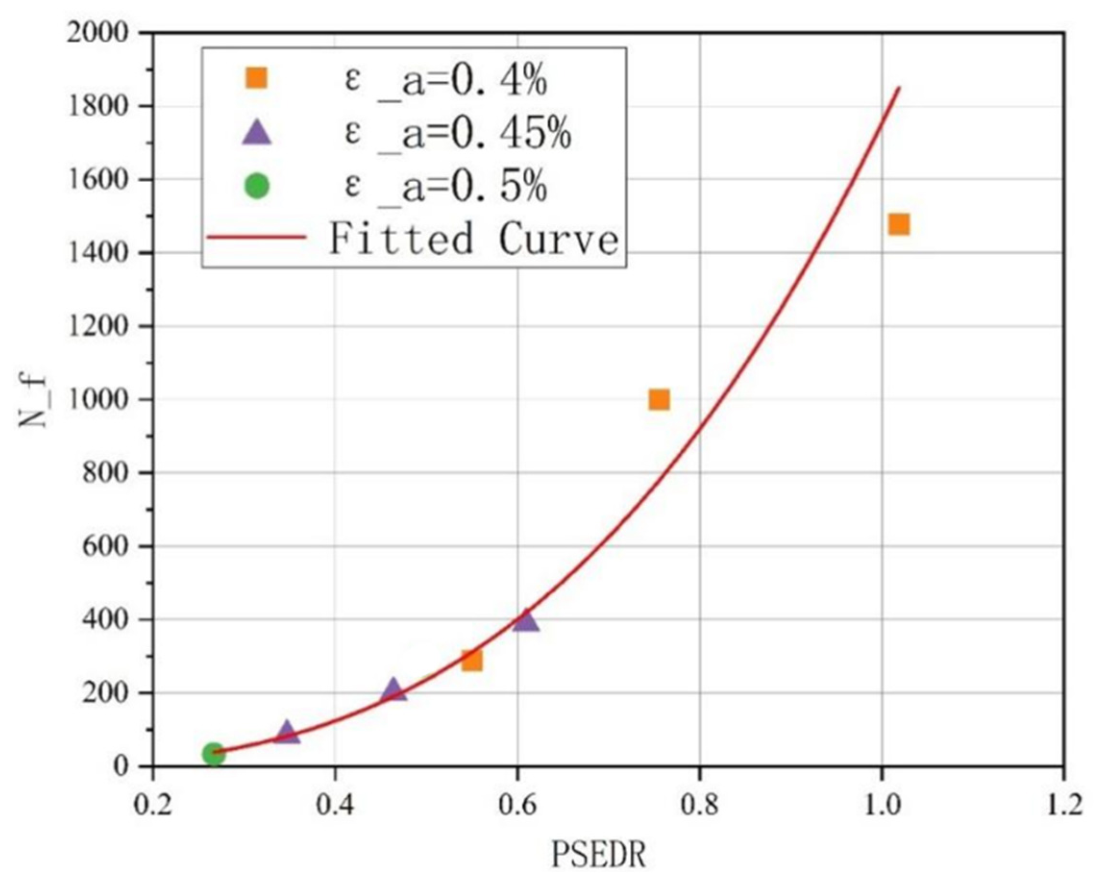
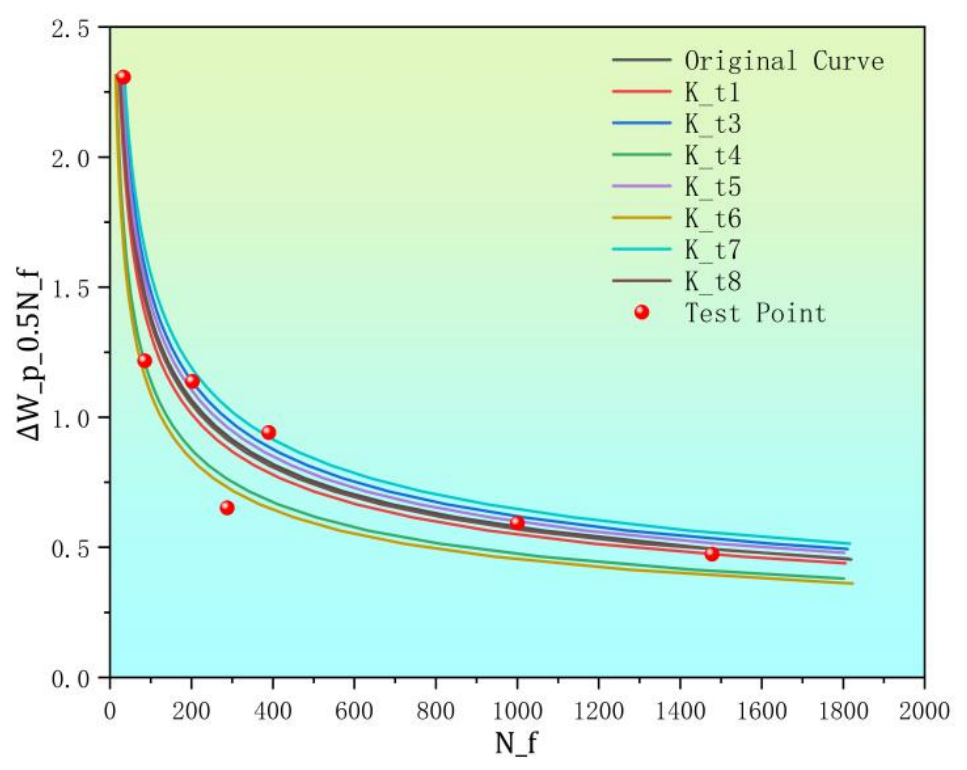
4.1. Plastic Strain Energy Density Model
4.2. Stress Concentration Factor
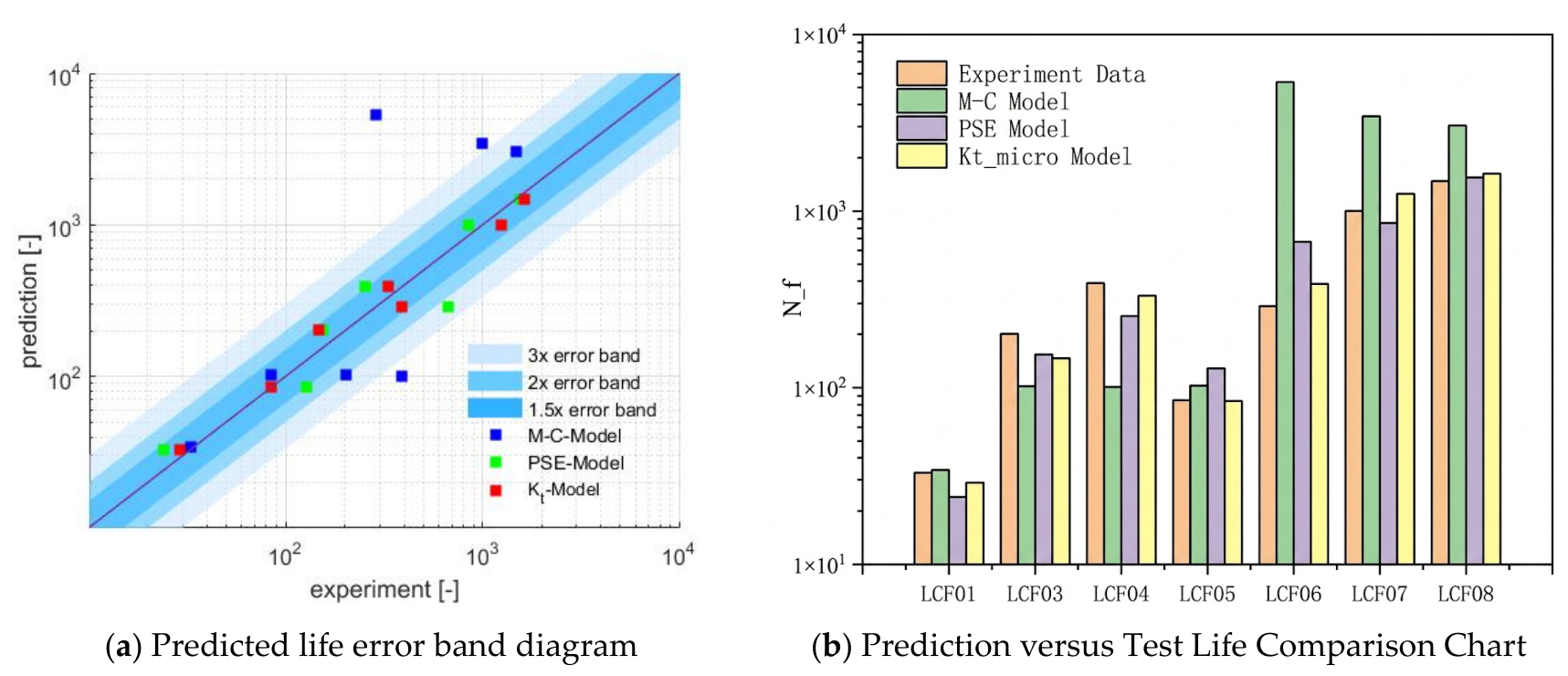
4.3. Model Prediction Interval and Prediction Accuracy
5. Conclusions
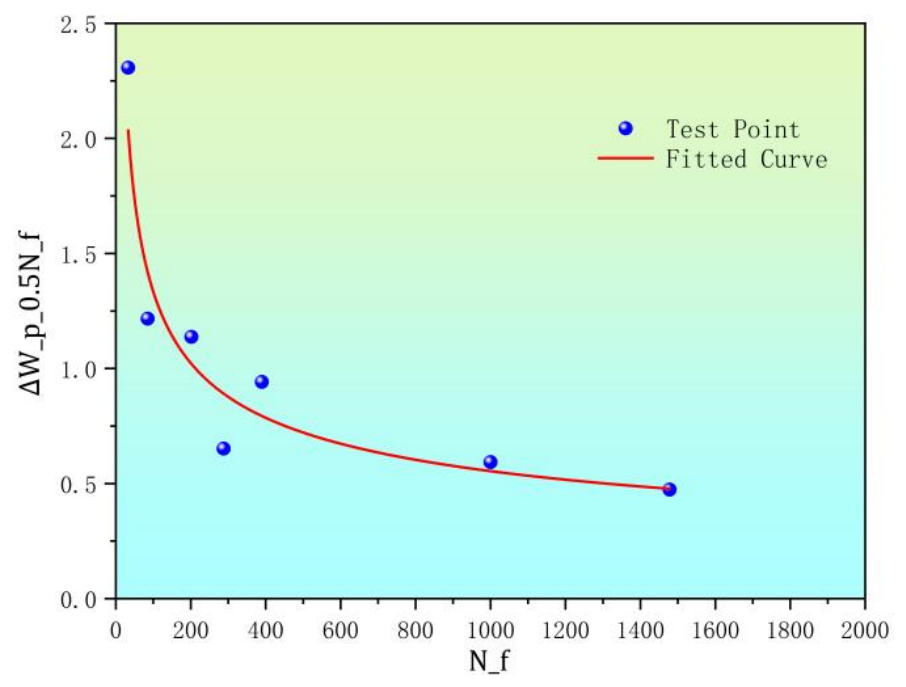
- The evolution of strain energy during low-cycle fatigue can be divided into two distinct stages. Material fatigue life exhibits a clear correlation with the rate of decrease in plastic strain energy during the first stage.
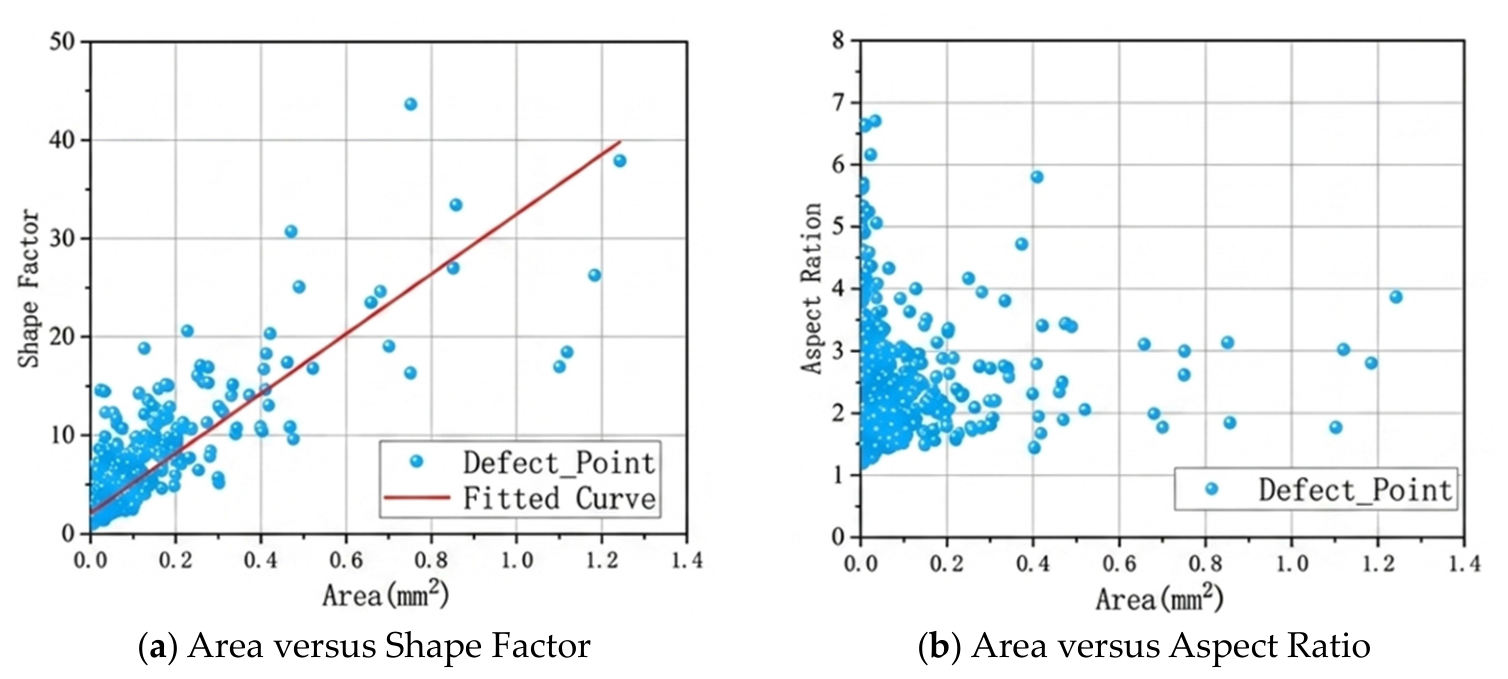
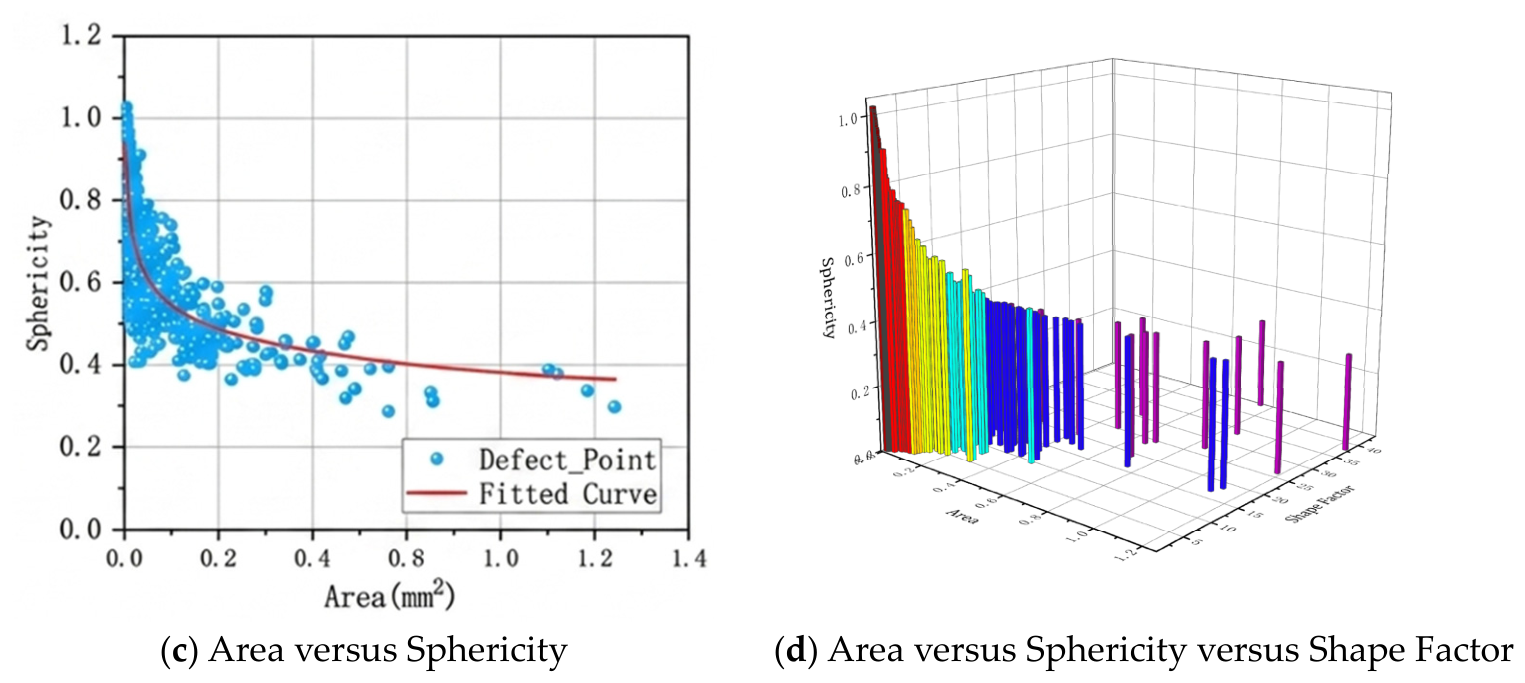
- Defect area exhibits a significant linear correlation with the shape factor and follows a power-law relationship with sphericity. Furthermore, it was found that when the defect area is below a certain threshold, the three parameters maintain a remarkably stable relative relationship. When the defect area exceeds a certain threshold, the sphericity remains relatively stable, but the shape factor exhibits significant dispersion.
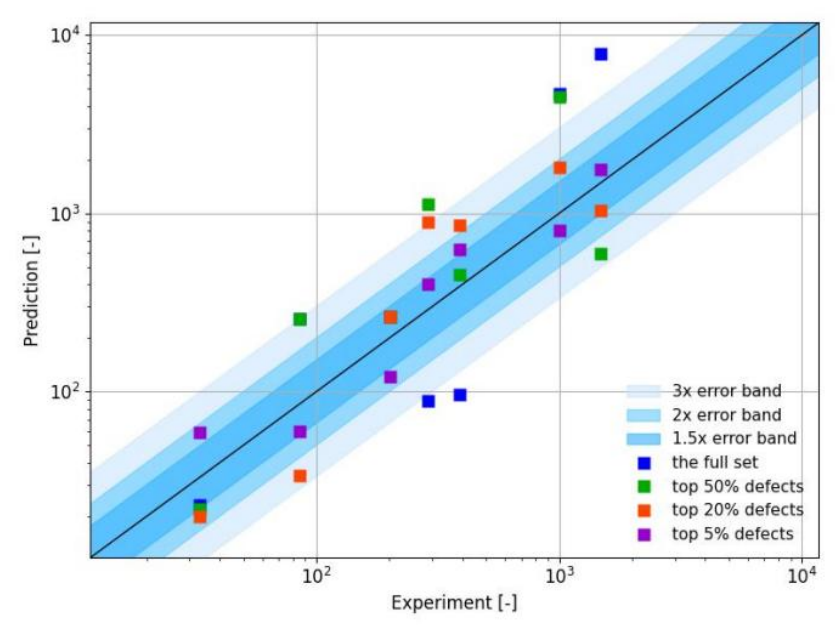
- Compared to traditional plastic strain energy models, the modified model provides better prediction of fatigue life dispersion for specimens containing internal defects. It can generate prediction intervals, significantly improve prediction accuracy, and reduce overall error.
- This study has certain limitations that call for further research. First, the actual fatigue fracture origin of the specimens was not identified. As this paper argues that internal defects govern LCF life dispersion, fracture surface evidence is essential to confirm whether cracks initiated from the predicted critical defects. Due to experimental constraints, such characterization was not performed, leaving the link between critical defects and fatigue life unproven. This limitation is noted, and confirming fracture origins will be a focus of future research.
Author Contributions
Funding
Data Availability Statement
Conflicts of Interest
References
- Raji, S.A.; Popoola, A.P.I.; Pityana, S.L.; Tlotleng, M. Microstructure and Mechanical Properties of Heat-Treated Ti-Al-Si Alloy Produced via Laser In Situ Alloying. J. Mater. Eng. Perform. 2021, 30, 1–12. [Google Scholar] [CrossRef]
- Ellard, J.J.M.; Mathabathe, M.N.; Siyasiya, C.; Bolokang, A.S. Vacuum melting of compressed powders and hot rolling of the as-cast Ti-48Al-2Nb-0.7Cr-0.3Si intermetallic alloy: Mechanical properties and microstructural analysis. J. Manuf. Process. 2023, 101, 1214–1223. [Google Scholar] [CrossRef]
- Fiedler, K.; Rolfe, B.F. Integrated Shape and Topology Optimization—Applications in Automotive Design and Manufacturing. SAE Int. J. Mater. Manuf. 2017, 10, 385–394. [Google Scholar] [CrossRef]
- Jolly, M.; Katgerman, L. Modelling of defects in aluminium cast products. Prog. Mater. Sci. 2021, 123, 100824. [Google Scholar] [CrossRef]
- Hyuk, J.K.; Hong, K.K. Computer aided engineering (CAE) simulation for the design optimization of gate system on high pressure die casting (HPDC) process. Robot. Comput.-Integr. Manuf. 2018, 55, 147–153. [Google Scholar] [CrossRef]
- Wang, Q.; Apelian, D.; Lados, D.A. Fatigue behavior of A356-T6 aluminum cast alloys. Part I. Effect of casting defects. J. Light Met. 2001, 1, 73–84. [Google Scholar] [CrossRef]
- Mu, P.; Nadot, Y.; Nadot-Martin, C.; Chabod, A.; Serrano-Munoz, I.; Verdu, C. Influence of casting defects on the fatigue behavior of cast aluminum AS7G06-T6. Int. J. Fatigue 2014, 63, 97–109. [Google Scholar] [CrossRef]
- Patil, P.; Nalawade, R.; Balachandran, G.; Balasubramanian, V. Analysis of solidification behaviour of low alloy steel ingot casting—Simulation and experimental validation. Ironmak. Steelmak. 2015, 42, 512–524. [Google Scholar] [CrossRef]
- Hardin, R.A.; Beckermann, C. Effect of Porosity on Deformation, Damage, and Fracture of Cast Steel. Metall. Mater. Trans. A 2013, 44, 5316–5332. [Google Scholar] [CrossRef]
- Zhang, S.; Hu, L.; Yang, Z.; Niu, S.; Bao, H.; Jin, Q. A Contribution to the Study of the Integrity Surface of the IC10 Ni3Al-Based Alloy After Creep-Feed Grinding with a Focus on High-Temperature Fatigue Life. Metals 2024, 14, 1440. [Google Scholar] [CrossRef]
- Nagel, S.; Rauber, C.; Veile, I.; Knödel, P.; Ummenhofer, T. Influence of internal imperfections on the fatigue resistance of cast steel—Testing methodology. MATEC Web Conf. 2019, 300, 09001. [Google Scholar] [CrossRef]
- Schuscha, M.; Horvath, M.; Leitner, M.; Stoschka, M. Notch Stress Intensity Factor (NSIF)-Based Fatigue Design to Assess Cast Steel Porosity and Related Artificially Generated Imperfections. Metals 2019, 9, 1097. [Google Scholar] [CrossRef]
- Draper, S.L.; Lerch, B.A.; Pereira, J.M.; Miyoshi, K.; Arya, V.K.; Zhuang, W. Durability Assessment of Gamma TiAl—Final Report; NASA/TM—2004-212303; NASA: Washington, DC, USA, 2004.
- Edwards, T.E.J. Recent progress in the high-cycle fatigue behaviour of γ-TiAl alloys. Mater. Sci. Technol. 2018, 34, 1919–1939. [Google Scholar] [CrossRef]
- Yves, N. Fatigue from Defect: Influence of Size, Type, Position, Morphology and Loading. Int. J. Fatigue 2022, 154, 106531. [Google Scholar] [CrossRef]
- Stopka, K.S.; Sangid, M.D. Modeling fatigue behavior of additively manufactured alloys with an emphasis on pore defect morphology. J. Mech. Phys. Solids 2023, 181, 105429. [Google Scholar] [CrossRef]
- Murakami, Y. Metal Fatigue: Effects of Small Defects and Nonmetallic Inclusions; Academic Press: Cambridge, MA, USA, 2019. [Google Scholar]
- Ryota, S.; Takayuki, S.; Pornthep, C.; Manabu, E. Prediction of Fatigue Life of Steels in Consideration of Defect-induced Crack Initiation and Propagation. ISIJ Int. 2019, 60, 799–806. [Google Scholar] [CrossRef]
- Chi, W.; Wang, W.; Li, Y.; Xu, W. Defect induced cracking and modeling of fatigue strength for an additively manufactured Ti-6Al-4V alloy in very high cycle fatigue regime. Theor. Appl. Fract. Mech. 2022, 119, 103380. [Google Scholar] [CrossRef]
- Zhu, M.; Xuan, F. Fatigue life and mechanistic modeling of interior micro-defect induced cracking in high cycle and very high cycle regimes. Acta Mater. 2018, 157, 259–275. [Google Scholar] [CrossRef]
- Hu, Y.; Chen, Z.; Xi, J.; Jiang, J.; Berto, F.; Nikbin, K. Defect characteristics-based low-cycle fatigue life prediction model for additive manufactured Ti-6Al-4 V alloys. Theor. Appl. Fract. Mech. 2024, 134, 104737. [Google Scholar] [CrossRef]
- Leven, M.M.; Frocht, M.M. Stress-Concentration Factors for Single Notch in Flat Bar in Pure and Central Bending. J. Appl. Mech. 1952, 19, 560–561. [Google Scholar] [CrossRef]
- Afazov, S.; Serjouei, A.; Hickman, G.J.; Mahal, R.; Goy, D.; Mitchell, I. Defect-based fatigue model for additive manufacturing. Prog. Addit. Manuf. 2022, 8, 1059–1066. [Google Scholar] [CrossRef]
- Serrano-Munoz, I.; Buffiere, J.Y.; Verdu, C. Casting defects in structural components: Are they all dangerous? A 3D study. Int. J. Fatigue 2018, 117, 471–484. [Google Scholar] [CrossRef]
- Li, X.; Wang, Z. Thermo-fatigue life evaluation of SnAgCu solder joints in flip chip assemblies. J. Mater. Process. Tech. 2006, 183, 6–12. [Google Scholar] [CrossRef]
- Peng, Y.; Liu, Y.; Li, H.; Xing, J. Research on low cycle fatigue life prediction considering average strain. Mater. Res. Express 2022, 9, 016521. [Google Scholar] [CrossRef]
- Hu, Y.; Shi, J.; Cao, X.; Zhi, J. Low Cycle Fatigue Life Assessment Based on the Accumulated Plastic Strain Energy Density. Materials 2021, 14, 2372. [Google Scholar] [CrossRef]
- Feng, E.; Wang, X.; Jiang, C. A new multiaxial fatigue model for life prediction based on energy dissipation evaluation. Int. J. Fatigue 2019, 122, 1–8. [Google Scholar] [CrossRef]
- Wang, J.; Jiang, W.; Wang, Q. Experimental and numerical evaluation of fatigue crack growth rate based on critical plastically dissipated energy. Int. J. Fatigue 2018, 118, 87–97. [Google Scholar] [CrossRef]
- Hu, Y.; Liu, Y.; Xi, J.; Jiang, J.; Wang, Y.; Chen, A.; Nikbin, K. Energy dissipation-based LCF model for additive manufactured alloys with dispersed fatigue properties. Eng. Fail. Anal. 2024, 159, 108139. [Google Scholar] [CrossRef]
- Hodowany, J.; Ravichandran, G.; Rosakis, A.J.; Rosakis, P. Partition of plastic work into heat and stored energy in metals. Exp. Mech. 2000, 40, 113–123. [Google Scholar] [CrossRef]
- Sarfarazi, S.; Fulgione, M.; Fabbrocino, F. Physics-Informed Decision Framework for Reuse of Reclaimed Steel Members Under Uncertainty. Metals 2026, 16, 171. [Google Scholar] [CrossRef]
- Sarfarazi, S.; Modano, M.; Fulgione, M. Artificial Intelligence for Dynamic Characterization of Composite Panel Structures: A Structured Review. Mech. Res. Commun. 2026, 151, 104607. [Google Scholar] [CrossRef]
- Ramberg, W.; Osgood, W.R. Description of Stress-Strain Curves by Three Parameters; NACA-TN-902; NASA: Washington, DC, USA, 1943.
- Toda, H.; Maire, E.; Aoki, Y.; Kobayashi, M. Three-dimensional strain mapping using in situ X-ray synchrotron microtomography. J. Strain. Anal. Eng. 2011, 46, 549–561. [Google Scholar] [CrossRef]
- Maurel, V.; Rémy, L.; Dahmen, F.; Haddar, N. An engineering model for low cycle fatigue life based on a partition of energy and micro-crack growth. Int. J. Fatigue 2008, 31, 952–961. [Google Scholar] [CrossRef]
- Shen, W.; Qiu, Y.; Xu, L.; Song, L. Stress concentration effect of thin plate joints considering welding defects. Ocean Eng. 2019, 184, 273–288. [Google Scholar] [CrossRef]
- Han, S.; Dinh, T.D.; De Baere, I.; Boone, M.; Van Paepegem, W. Study of the effect of defects on fatigue life prediction of additive manufactured Ti-6Al-4V by combined use of micro-computed tomography and fracture-mechanics-based simulation. Int. J. Fatigue 2024, 180, 108110. [Google Scholar] [CrossRef]



| Element | Ti | Al | V | Cr | Zr |
|---|---|---|---|---|---|
| Nominal composition | Balance | 33.8% | 3.0% | 1.0% | 0.5% |
| Temperature (°C) | Elastic Modulus () | Yield Strength (MPa) | Tensile Strength (MPa) | Elongation Ratio (%) |
|---|---|---|---|---|
| 25 | 160.56 | 308.9 | 424.5 | 25.02 |
| /2(%) | /2(%) | /2(%) | () | () | () | ||
|---|---|---|---|---|---|---|---|
| LCF-01 | 0.500 | 4.02 × 10⁻³ | 9.36 × 10⁻⁴ | 512 | 2.3069 | 127 | 33 |
| LCF-03 | 0.450 | 4.14 × 10⁻³ | 3.29 × 10⁻⁴ | 458 | 1.1373 | 110 | 202 |
| LCF-04 | 0.450 | 4.30 × 10⁻³ | 1.67 × 10⁻⁴ | 471 | 0.9412 | 109 | 390 |
| LCF-05 | 0.450 | 4.04 × 10⁻³ | 4.23 × 10⁻⁴ | 445 | 1.2166 | 110 | 85 |
| LCF-06 | 0.400 | 3.65 × 10⁻³ | 2.98 × 10⁻⁴ | 440 | 0.6517 | 120 | 288 |
| LCF-07 | 0.400 | 3.91 × 10⁻³ | 6.52 × 10⁻⁴ | 450 | 0.5931 | 115 | 1001 |
| LCF-08 | 0.400 | 3.93 × 10⁻³ | 5.31 × 10⁻⁴ | 479 | 0.4735 | 122 | 1478 |
| PSEDR | 0.267 | 0.347 | 0.550 |
| 0.4639 | 0.756 | ||
| 0.610 | 1.019 |
| Parameter | RMSE | MAE | |
|---|---|---|---|
| Value | 0.9137 | 154.0065 | 88.9289 |
| Defect Characteristics | ||||
|---|---|---|---|---|
| mean value | 0.153 | 2.089 | 0.742 | 3.328 |
| standard deviation | 0.134 | 0.507 | 0.140 | 3.471 |
| minimum value | 2.585 | 8.199 | 1.041 | 91.217 |
| maximal value | 0.037 | 1.159 | 0.222 | 0.886 |
| (%) | (%) | |||
|---|---|---|---|---|
| LCF-01 | 0.500 | 33 | 24 | −27.24 |
| LCF-03 | 0.500 | 202 | 154 | −23.56 |
| LCF-04 | 0.450 | 390 | 254 | −34.84 |
| LCF-05 | 0.450 | 85 | 129 | 52.13 |
| LCF-06 | 0.450 | 288 | 668 | 132.13 |
| LCF-07 | 0.400 | 1001 | 856 | −14.32 |
| LCF-08 | 0.400 | 1478 | 1548 | 4.79 |
| Parameters | |||||
|---|---|---|---|---|---|
| value | 0.1462 | 2 | −0.0671 | 7.3330 | −0.38 |
| 1.8645 | 0.2705 | 0.4999 | 0.4410 | |
| 0.6236 | 0.4507 | 0.7957 | 0.7978 | |
| 1.2720 | 0.2757 | 0.5814 | 0.3535 | |
| 0.8026 | 0.3123 | 1.7700 | 2.1576 | |
| 1.5713 | 0.2513 | 1.9219 | 2.9177 | |
| 1.1146 | 0.2977 | 1.6071 | 0.2637 | |
| 1.4402 | 0.3440 | 2.2334 | 0.6222 |
| (%) | ||||
|---|---|---|---|---|
| LCF-01 | 33 | 0.8872 | 29 | −12.92 |
| LCF-03 | 202 | 0.9675 | 147 | −27.17 |
| LCF-04 | 390 | 0.8590 | 331 | −15.10 |
| LCF-05 | 85 | 1.1189 | 84 | −1.14 |
| LCF-06 | 288 | 1.1694 | 387 | 34.30 |
| LCF-07 | 1001 | 0.8229 | 1250 | 24.97 |
| LCF-08 | 1478 | 0.9329 | 1624 | 9.87 |
Disclaimer/Publisher’s Note: The statements, opinions and data contained in all publications are solely those of the individual author(s) and contributor(s) and not of MDPI and/or the editor(s). MDPI and/or the editor(s) disclaim responsibility for any injury to people or property resulting from any ideas, methods, instructions or products referred to in the content. |
© 2026 by the authors. Licensee MDPI, Basel, Switzerland. This article is an open access article distributed under the terms and conditions of the Creative Commons Attribution (CC BY) license.
Share and Cite
Liu, Y.; Chen, G.; Sun, Z.; Jing, G.; Xu, R. Prediction Model for Low-Cycle Fatigue Life of Cast TiAl Alloys Based on Defect Stress Concentration Effects. Appl. Sci. 2026, 16, 5575. https://doi.org/10.3390/app16115575
Liu Y, Chen G, Sun Z, Jing G, Xu R. Prediction Model for Low-Cycle Fatigue Life of Cast TiAl Alloys Based on Defect Stress Concentration Effects. Applied Sciences. 2026; 16(11):5575. https://doi.org/10.3390/app16115575
Chicago/Turabian StyleLiu, Ye, Guang Chen, Zaiwei Sun, Guoxi Jing, and Rui Xu. 2026. "Prediction Model for Low-Cycle Fatigue Life of Cast TiAl Alloys Based on Defect Stress Concentration Effects" Applied Sciences 16, no. 11: 5575. https://doi.org/10.3390/app16115575
APA StyleLiu, Y., Chen, G., Sun, Z., Jing, G., & Xu, R. (2026). Prediction Model for Low-Cycle Fatigue Life of Cast TiAl Alloys Based on Defect Stress Concentration Effects. Applied Sciences, 16(11), 5575. https://doi.org/10.3390/app16115575