1. Introduction
Edible insects are playing an increasingly important role in research on alternative protein sources, the design of functional foods, and sustainable food systems. In recent years, growing interest in edible insects as novel food has been accompanied by successive EU authorizations concerning, among others,
Tenebrio molitor,
Locusta migratoria,
Acheta domesticus, and
Alphitobius diaperinus [
1,
2,
3,
4,
5,
6]. At the same time, an analysis of regulatory acts, scientific literature, and expert sources indicates that terminology for processed insect forms has not yet been fully harmonized.
In scientific discourse, the terms “insect flour” and “insect powder” are used in parallel, while in Polish one encounters “mąka z owadów” (“insect flour”), “mąka owadzia” (“insect flour”), “mączka z owadów” (“insect meal”), and “sproszkowana postać” (“powdered form”).
This problem is not merely linguistic. Terminology affects the description of the raw material, its technological classification, and the clarity of communication among researchers, food technologists, specialists in food regulation, and consumers.
At the regulatory level, the European Union consistently uses terms referring to the product’s physical form and degree of processing, most notably “powder” [
1,
2,
3,
4,
5,
6]. In implementing acts concerning edible insects as novel food, this term appears, among others, in the phrases “frozen, dried and powder forms of yellow mealworm (
Tenebrio molitor larva)” [
1], “frozen, dried and powder forms of
Locusta migratoria” [
2], “frozen, dried and powder forms of
Acheta domesticus” [
3], “partially defatted powder” about
Acheta domesticus [
4], “frozen, paste, dried and powder forms of
Alphitobius diaperinus larvae” [
5], and “UV-treated powder of whole
Tenebrio molitor larvae” [
6]. In the Polish-language versions of these acts, these formulations correspond to terms such as “sproszkowana postać” (“powdered form”).
At the same time, the scientific literature presents a more complex picture. The FAO report also confirms the international dimension of the terminology under discussion, Edible Insects: Future Prospects for Food and Feed Security, which uses the term “insect flour” [
7]. In food technology publications, this term is commonly used in relation to bread, cakes, cookies, pasta, and snack products in which ground insects replace part of conventional flour [
8,
9,
10,
11,
12,
13,
14]. Moreover, there are publications in which powder and flour coexist within the same paper, suggesting the absence of a single established terminological norm [
12].
The terminological issue also has practical implications that go beyond the wording itself. The names assigned to processed insect ingredients influence literature retrieval, keyword selection, database indexing, regulatory interpretation, manuscript review, and communication with non-specialist audiences. Consequently, inconsistent terminology may affect not only scientific precision but also the comparability of studies and the translation of research findings into food innovation and practical applications.
Poland is considered here not as an isolated linguistic case, but as an analytically useful example of how European Union regulatory terminology interacts with national scientific, institutional, and sector-specific usage. This makes it possible to examine the international problem of terminological inconsistency through a concrete and documentable national context.
This study analyzed terminology used for processed edible insects in scientific literature, European Union regulations, bibliometric databases, and selected Polish-language sources using bibliometric, regulatory, and linguistic approaches. The study focused on the contextual meaning and use of the terms “insect flour”, “insect powder”, and “insect meal”, as well as on whether the observed variation supports the need for context-sensitive harmonization rather than the replacement of all terms by one universal label. The central research question was: to what extent do regulatory, technological, disciplinary, and national-language contexts influence the choice between the terms “insect flour”, “insect powder”, and “insect meal”?
2. Materials and Methods
This study combined bibliometric, regulatory, and linguistic analysis to evaluate terminology used for processed edible insects. The analysis included European Union legal acts, international expert reports, scientific publications indexed in bibliometric databases, and selected Polish-language scientific and institutional sources. The first group included European Union legal acts concerning edible insects authorized as novel food [
1,
2,
3,
4,
5,
6]. The second group consisted of international expert materials, including the FAO report Edible Insects: Future Prospects for Food and Feed Security [
7]. The third group comprised scientific publications in the fields of food technology, nutrition, and edible insect research that used the terms “insect flour”, “insect powder”, and “insect meal” [
8,
9,
10,
11,
12]. The fourth group included Polish institutional documents, university materials, trade publications, and expert sources containing the terms “mąka z owadów”, “mąka owadzia”, “mączka z owadów”, and “sproszkowana postać” [
15,
16,
17,
18,
19,
20,
21,
22,
23].
The literature review included materials published in English and Polish that directly addressed processed insect ingredients in the context of food, feed, legal regulations, or scientific communication. Searches were conducted using combinations of the terms “insect flour”, “insect powder”, “insect meal”, “mąka z owadów”, “mąka owadzia”, “mączka z owadów”, and “sproszkowana postać”. Sources were included if they referred directly to processed forms of edible insects and terminology used in food, feed, or regulatory contexts.
Particular attention was given to Polish scientific and institutional sources related to edible insects, including university publications, research institute reports, and implementation-oriented materials.
To complement the qualitative analysis, a bibliometric analysis was conducted using data from the Web of Science Core Collection and Scopus. Searches were carried out in January 2026 and covered publications from 2015 to 2025. The analysis focused on the terms “insect flour”, “insect powder”, and “insect meal”. Separate searches were performed for each term, and separate bibliometric maps were generated for each dataset. In both databases, the searches were based on publication titles, abstracts, and author keywords. Bibliometric maps were generated using VOSviewer software (version 1.6.20; Leiden University, Leiden, The Netherlands). Association strength normalization was applied in the visualization process. The analysis included keyword co-occurrence analysis, cluster visualization, and overlay visualization to assess changes in keyword occurrence and thematic relationships related to the terms “insect flour”, “insect powder”, and “insect meal” between 2015 and 2025. Publication classification by subject categories and research areas was also analyzed in both databases. In the keyword co-occurrence analysis, the minimum occurrence threshold was set at five for all datasets.
The analysis was limited to publications indexed in the Web of Science and Scopus databases. All analyzed bibliographic records included diverse types of scientific documents, whose structures depended on the database and the search term used. Despite this limitation, the adopted approach allowed the identification of the main directions in the use of the analyzed terminology in the scientific literature.
3. Results and Discussion
3.1. Bibliometric Characteristics of the Analyzed Terminology
The bibliometric analysis conducted for the period 2015–2025 revealed substantial differences in the frequency of use of the terms “insect flour”, “insect powder”, and “insect meal” in the Web of Science and Scopus databases (
Table 1). The highest number of publications was identified for the term “insect meal”, with 661 records in Web of Science and 754 records in Scopus. Lower numbers of publications were observed for the terms “insect flour” and “insect powder”. For “insect flour”, 92 records were identified in Web of Science and 135 in Scopus, whereas “insect powder” had 109 and 157 records, respectively (
Table 1).
3.2. Research Areas and Disciplinary Distribution
The analysis of publication subject categories in the Web of Science and Scopus databases (
Table 2) demonstrated that both the terms “insect flour” and “insect powder” were most frequently associated with food science, agriculture, and biological sciences. In the Web of Science database, the dominant category for both terms was Food Science and Technology, with 57 publications for “insect flour” and 80 for “insect powder”. A similar pattern was observed in Scopus, where the category Agricultural and Biological Sciences included 110 publications for “insect flour” and 130 publications for “insect powder”.
Differences between the analyzed terms were also visible in other subject categories. In the Web of Science database, the term “insect flour” appeared more frequently in the categories Entomology (19 publications) and Nutrition Dietetics (9 publications) compared with “insect powder”, for which 14 and 6 publications were identified, respectively. In contrast, “insect powder” was more strongly represented in categories related to engineering, materials science, and applied physics, including Engineering Multidisciplinary, Materials Science Multidisciplinary, and Physics Applied, each represented by 5 publications.
In the Scopus database, “insect powder” was more frequently associated with Immunology and Microbiology (33 publications), Engineering (19 publications), Chemical Engineering (17 publications), Physics and Astronomy (7 publications), and Materials Science (6 publications) compared with “insect flour”. Both terms were also strongly represented in the Social Sciences category, with 21 publications for “insect flour” and 22 publications for “insect powder”.
Categories related to biochemistry and chemistry were also identified in both databases. In Web of Science, Biochemistry Molecular Biology included 11 publications for “insect flour” and 8 publications for “insect powder”. In Scopus, Biochemistry, Genetics and Molecular Biology comprised 19 and 22 publications, respectively, while the Chemistry category included 16 publications for “insect flour” and 17 publications for “insect powder”.
In contrast to “insect flour” and “insect powder”, the term “insect meal” demonstrated a substantially broader disciplinary distribution in both the Web of Science and Scopus databases. In the Web of Science database, the highest numbers of publications were identified in Agriculture Dairy Animal Science (219 publications), Fisheries (160 publications), Veterinary Sciences (156 publications), Food Science Technology (112 publications), Entomology (92 publications), Marine Freshwater Biology (91 publications), and Agriculture Multidisciplinary (86 publications). Similarly, in the Scopus database, “insect meal” was strongly represented in Agricultural and Biological Sciences (625 publications), Veterinary (171 publications), Environmental Science (90 publications), and Biochemistry, Genetics and Molecular Biology (78 publications). These findings indicate that the term “insect meal” is predominantly associated with feed-related, aquaculture, animal nutrition, and veterinary research contexts.
3.3. Regulatory Terminology in EU Legal Acts
The analysis of European Union legal acts demonstrated a clear preference for terminology based on the term “powder” or “powdered form” when describing processed edible insects authorized as novel foods [
1,
2,
3,
4,
5,
6]. In the Polish-language versions, these correspond to phrases such as “sproszkowana postać” (“powdered form”). No analyzed EU legal act used the term “insect flour” as the official product denomination.
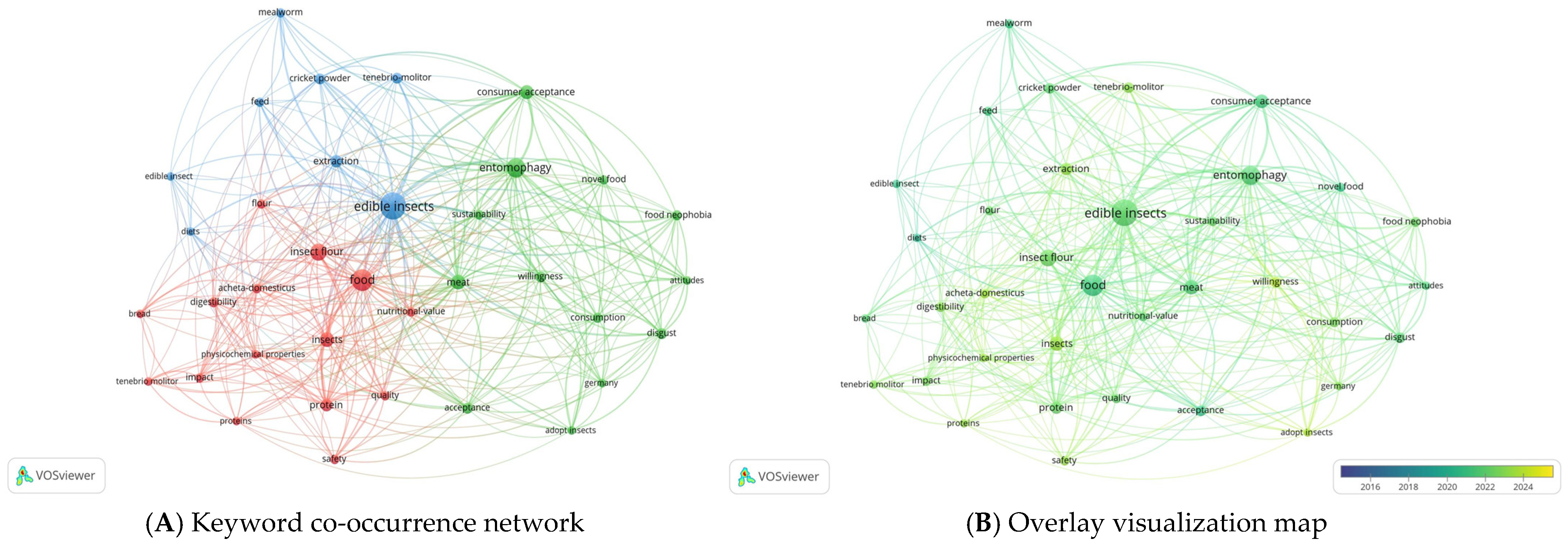
3.4. Keyword Co-Occurrence Analysis for “Insect Flour”
The keyword co-occurrence analysis for the term “insect flour” revealed thematic relationships associated mainly with food applications, nutritional properties, and consumer oriented aspects of edible insects.
The keyword co-occurrence analysis identified three main thematic clusters (
Figure 1A). The first cluster focused mainly on the technological and nutritional aspects of foods containing insect-derived ingredients. The identified keywords included “food”, “insect flour”, “protein”, “digestibility”, “physicochemical properties”, “quality”, “safety”, “bread”. The second cluster was primarily associated with consumer perceptions and acceptance of edible insects. The most frequently occurring keywords included “entomophagy”, “consumer acceptance”, “food neophobia”, “disgust”, “attitudes”, “consumption”, “novel food”. This thematic area indicates growing research interest in the psychological, behavioral, and social determinants influencing consumer attitudes toward insect-based foods. The third cluster focusing on research related to insect processing, extraction methods, and the use of insects in food and feed applications.
The overlay visualization (
Figure 1B) demonstrated temporal differences in the occurrence of keywords within the analyzed literature. Earlier-occurring terms were more frequently associated with species-specific topics and practical applications, including the terms “mealworm”, “feed”, “edible insect”, and “cricket powder”. Keywords related to food applications and nutritional aspects, such as “food”, “insect flour”, “digestibility”, “protein”, and “nutritional value”, showed an intermediate period of the highest occurrence intensity.
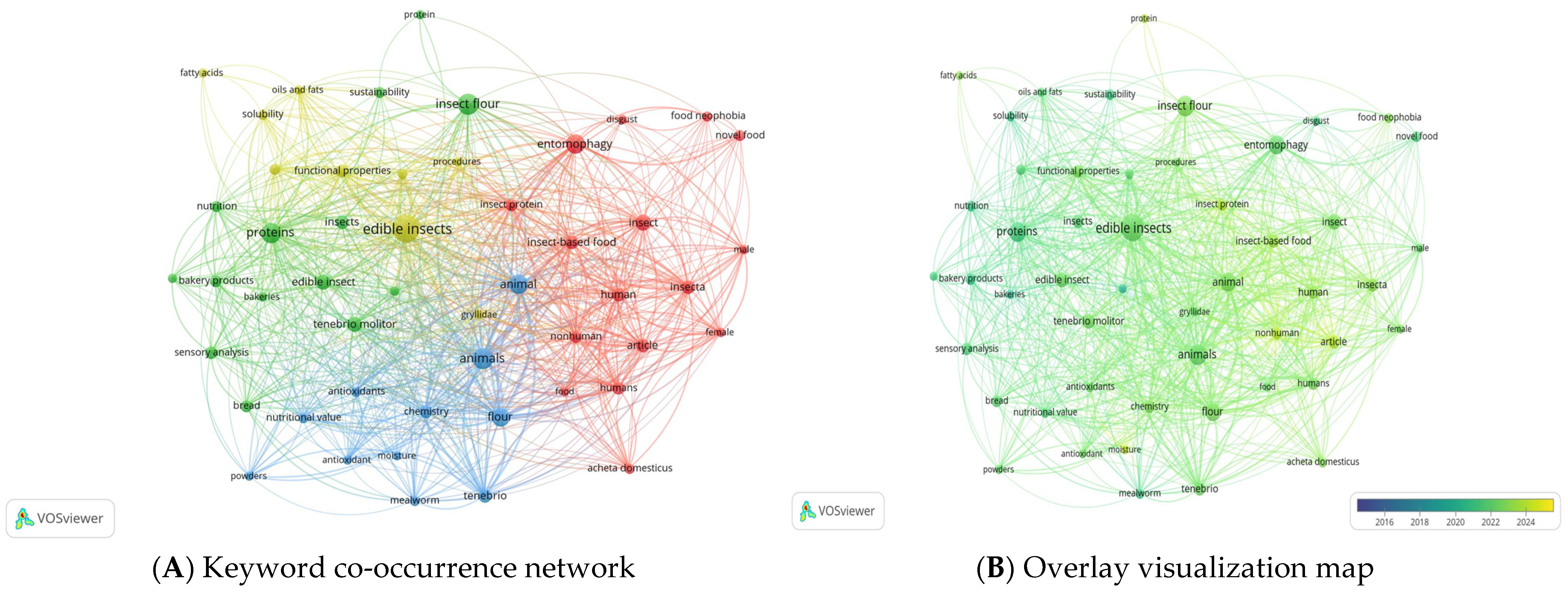
3.5. Keyword Co-Occurrence Analysis for “Insect Flour” in Scopus
The bibliometric analysis conducted in the Scopus database for the term “insect flour” revealed a more differentiated thematic structure than the analysis based on Web of Science data, indicating broader disciplinary coverage in Scopus (
Figure 2).
The keyword co-occurrence analysis identified four main thematic clusters (
Figure 2A). The first cluster was mainly related to consumer perceptions and behavioral aspects of edible insect consumption. It included terms such as “entomophagy”, “food neophobia”, “disgust”, “novel food”, “insect-based food”, “human”, “male”, and “female”. The second cluster included keywords such as “bakery products”, “bread”, “insect flour”, “proteins”, “nutrition”, “sensory analysis”, “consumer acceptance”, and “Tenebrio molitor”. This cluster indicates studies focused on the use of insect flour in food product formulation and the evaluation of nutritional value, sensory properties, and consumer acceptance of such products. The third cluster was associated mainly with the chemical composition and physicochemical properties of insects. It included terms such as “flour”, “powders”, “nutritional value”, “moisture”, “chemistry”, “antioxidants”, “mealworm”, and “Tenebrio”. The fourth cluster covered topics related to the functional and technological properties of insect-derived ingredients, including “functional properties”, “solubility”, “emulsification”, “fatty acids”, “oils and fats”, and “food handling”.
The overlay visualization (
Figure 2B) did not demonstrate substantial temporal differentiation in keyword occurrence. Earlier-occurring terms were more frequently associated with processed forms of insects and physicochemical properties, including “flour”, “powders”, “mealworm”, “Tenebrio”, and “moisture”. Keywords related to nutritional aspects, such as “insect flour”, “proteins”, “nutrition”, “bakery products”, and “sensory analysis”, showed an intermediate temporal occurrence pattern. More recent keywords were more frequently associated with consumer perceptions and acceptance of insects, including “food neophobia”, “novel food”, “disgust”, “human”, and “insect-based food”.
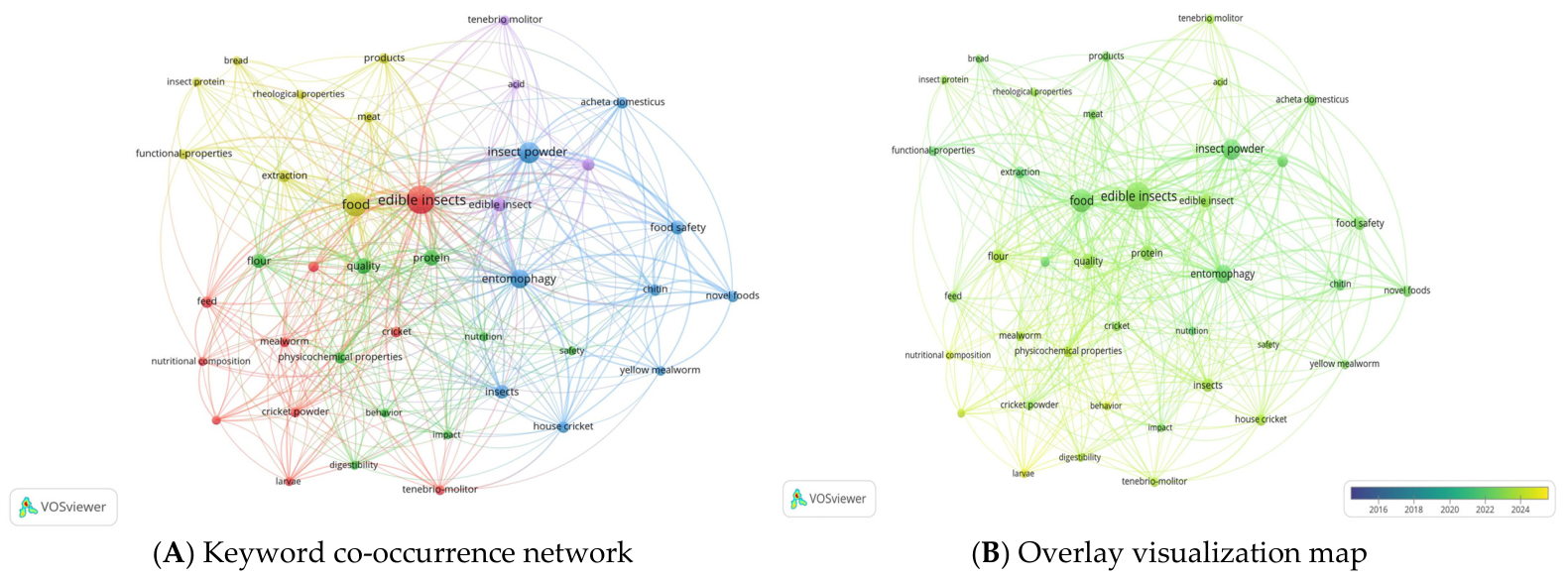
3.6. Keyword Co-Occurrence Analysis for “Insect Powder” in Web of Science
The bibliometric analysis conducted for the term “insect powder” in the Web of Science database demonstrated a stronger association with food safety, physicochemical characterization, bioactive compounds, and the functional properties of processed insects than with the use of insects in food product formulation and sensory quality evaluation, which were more dominant in analyses related to the term “insect flour” (
Figure 3).
The keyword co-occurrence analysis identified five thematic clusters (
Figure 3A). The first cluster covered topics related mainly to nutritional composition, bioactive compounds, and the use of insects in food and feed, including keywords such as “cricket powder”, “feed”, “mealworm”, and “Tenebrio molitor”. The second cluster was associated primarily with the nutritional and physicochemical properties of processed insects. It included terms such as “behavior”, “digestibility”, “flour”, “impact”, “nutrition”, “physicochemical properties”, “protein”, “quality”, and “safety”. The third cluster focused on food safety and regulatory aspects related to the use of specific edible insect species. It included keywords such as “food safety”, “novel foods”, “Acheta domesticus”, “house cricket” and “yellow mealworm”. The fourth cluster was related mainly to technological and functional aspects of the use of processed insects. The fifth cluster had a complementary character and included the terms “acid”, “edible insect”, “novel food”, and “Tenebrio molitor”.
The overlay visualization (
Figure 3B) demonstrated only slight temporal variation in keyword occurrence. Most terms showed a similar period of occurrence, indicating the parallel development of several research areas associated with the term “insect powder”.
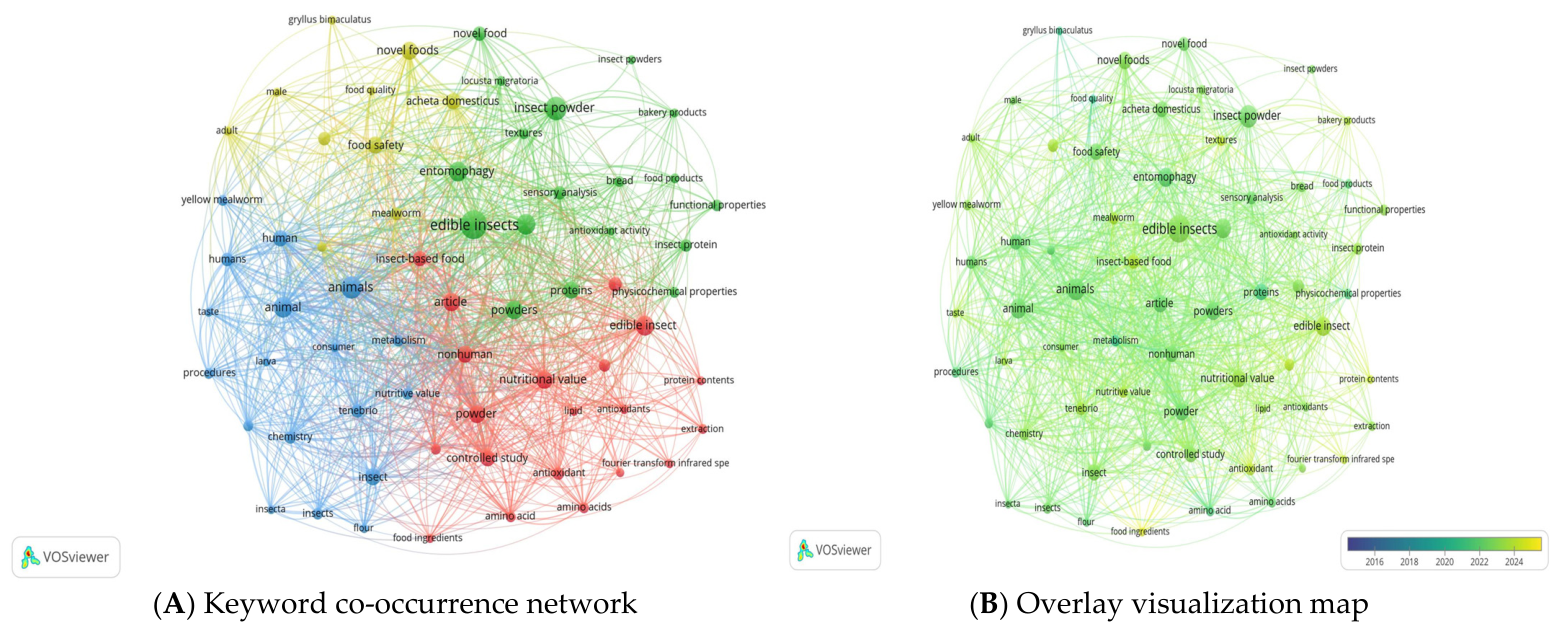
3.7. Keyword Co-Occurrence Analysis for “Insect Powder” in Scopus
The bibliometric structure of the term “insect powder” in the Scopus database is illustrated in
Figure 4.
The keyword co-occurrence analysis for the term “insect powder” in the Scopus database identified four thematic clusters (
Figure 4A). The first cluster was related mainly to chemical composition, nutritional value, and the characterization of insect-derived ingredients. It included terms such as “amino acids”, “antioxidants”, “lipid”, “nutritional value”, “protein content”, “powder”, “food ingredients”, and “extraction”. The second cluster included keywords such as “insect powders”, “edible insects”, “bakery products”, “bread”, “food products”, “functional properties”, “physicochemical properties”, “sensory analysis”, “insect protein”, “textures”, “Locusta migratoria”, and “Tenebrio molitor”. This cluster reflects studies concerning the use of powdered insects in food products and the evaluation of their technological, physicochemical, and sensory properties. The third cluster included terms such as “animals”, “chemistry”, “consumer”, “flour”, “food handling”, “humans”, “insects”, “larva”, “metabolism”, “nutritive value”, “procedures”, “taste”, “Tenebrio”, and “yellow mealworm”. The fourth cluster concerned studies on insect species, food quality, and food safety aspects. It included terms such as “Acheta domesticus”, “Gryllus bimaculatus”, “house cricket”, “mealworm”, “food safety”, “food quality”, “food industry”, “novel foods”.
The overlay visualization (
Figure 4B) demonstrated only slight temporal variation in keyword occurrence. Most terms were represented by similar shades of green, indicating the parallel development of several research areas. Therefore, this map should not be interpreted as showing a clear shift from compositional studies toward application-oriented research. Slightly later average occurrence values were observed mainly for terms related to food safety, quality, and food applications, such as “food safety”, “food quality”, “novel foods”, “bakery products”, and “food products”.
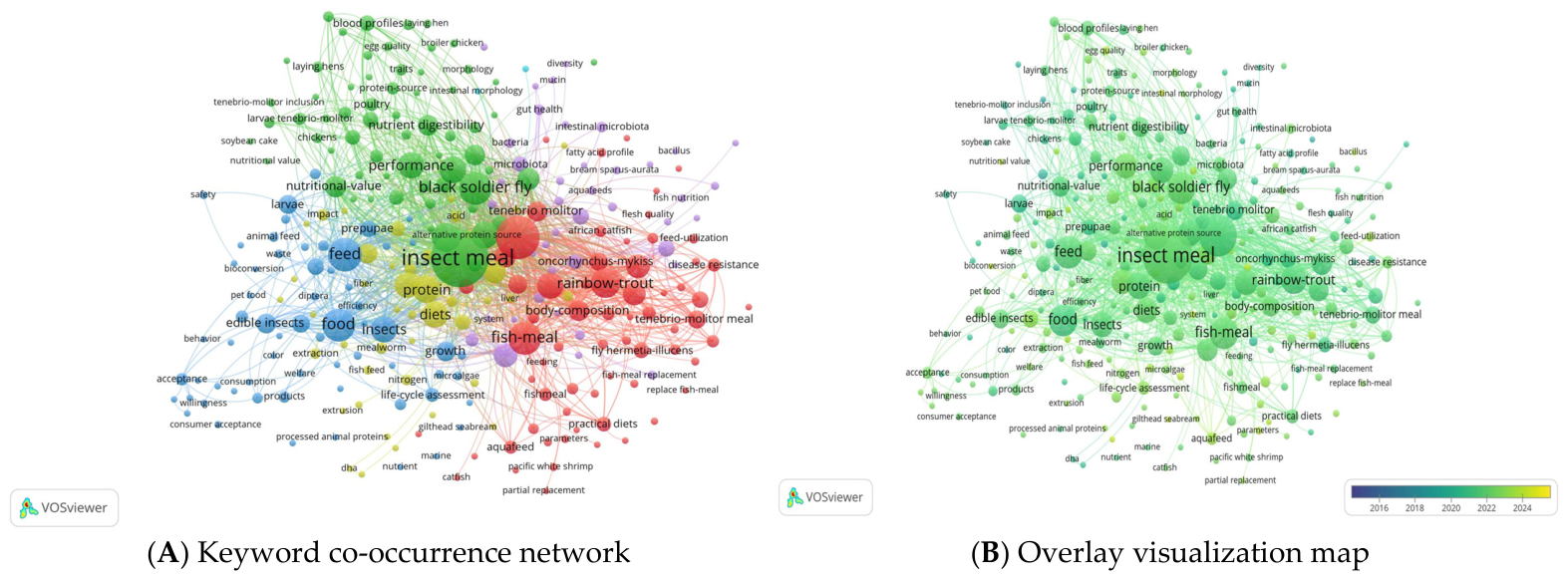
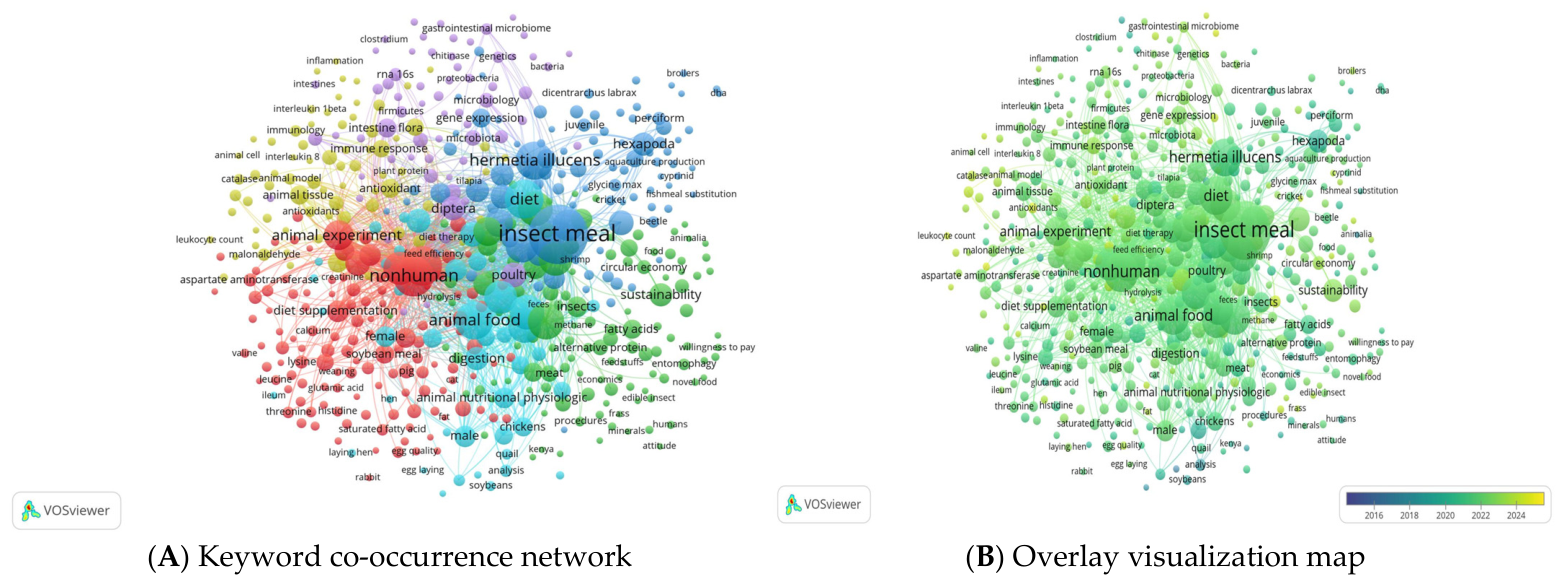
3.8. Keyword Co-Occurrence Analysis for “Insect Meal” in Web of Science and Scopus
The analysis of the term “insect meal” demonstrated that in both databases the term was associated primarily with animal nutrition, aquaculture, and feed applications, although the range and structure of keywords differed between the Web of Science and Scopus databases (
Figure 5 and
Figure 6).
In the Web of Science database, the term co-occurred with keywords such as “animal feed”, “fish meal replacement”, “fish feed”, “poultry”, “meat”, “pet food”, “aquafeed”, “rainbow trout”, “nutrient digestibility”, and “growth” (
Figure 5A). In contrast, the Scopus database was dominated by terms including “animal experiment”, “animal food”, “fish meal substitution”, “aquaculture production”, “digestion”, “sustainability”, and “nonhuman” (
Figure 6A). The presence of the keyword “nonhuman” is important because it indicates that the term “insect meal” is used mainly in the context of animal nutrition research.
The overlay visualization analysis (
Figure 5B and
Figure 6B) also indicated that the research scope related to the term “insect meal” has gradually expanded in recent years. In addition to traditional topics associated with animal nutrition and aquaculture, increasing attention has been paid to alternative protein sources, feed efficiency, and the sustainability of food and feed systems. Despite this broader research context, the term “insect meal” remains much more strongly associated with the feed sector than with the use of insects in food products intended for human consumption.
3.9. Temporal Trends in Terminology Use
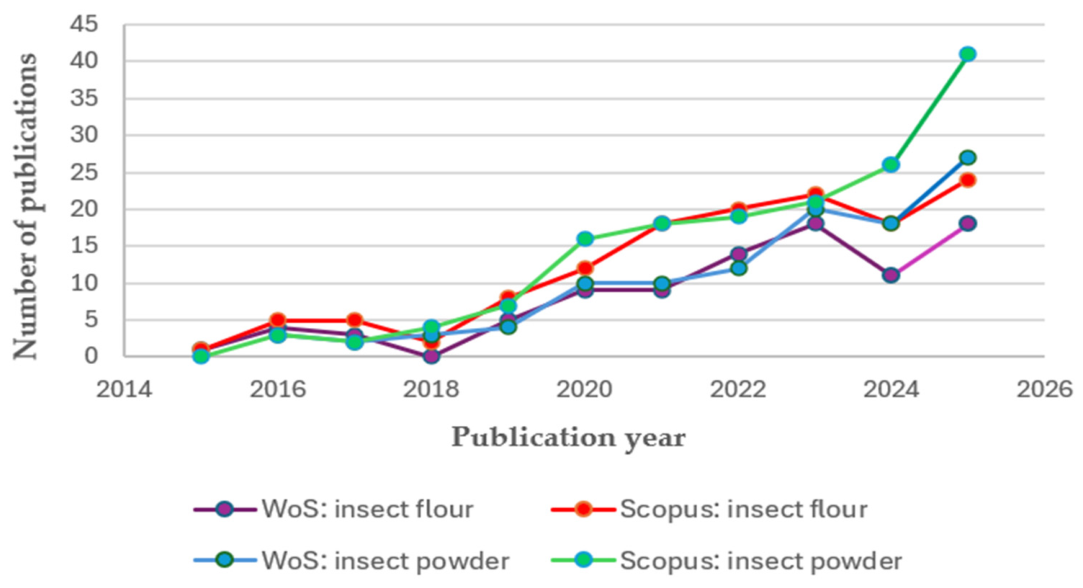
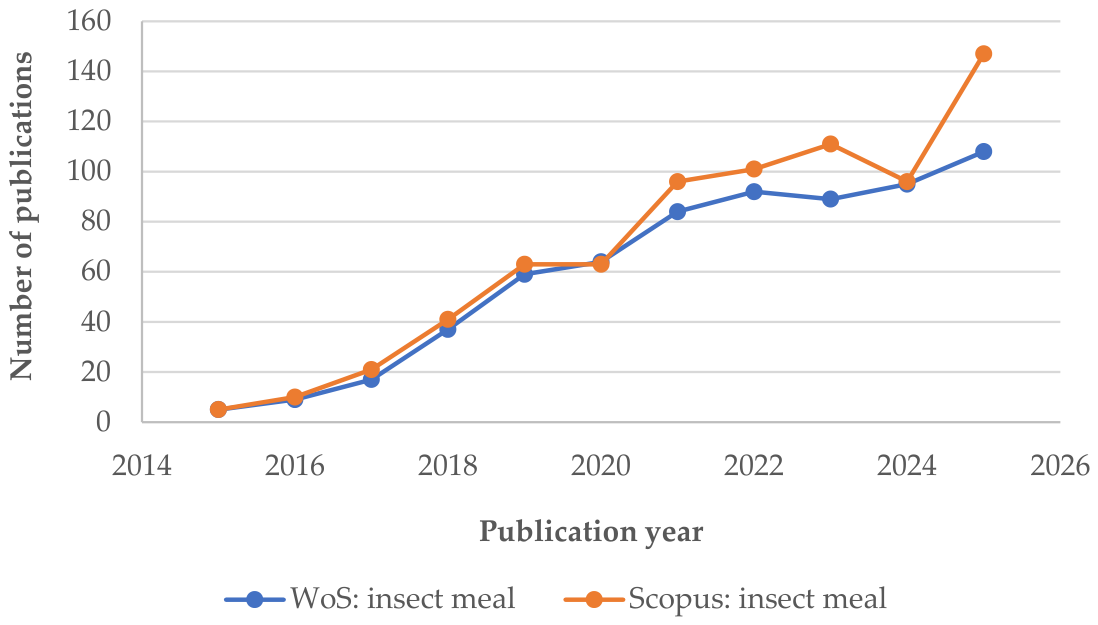
The temporal analysis demonstrated a systematic increase in the frequency of use of the terms “insect flour”, “insect powder” and “insect meal” between 2015 and 2025 (
Figure 7 and
Figure 8). A particularly pronounced rise in the use of the term “insect powder” was observed after 2020, especially in the Scopus database (
Figure 7). This trend may indicate the growing influence of regulatory terminology applied within the European Union, where terms referring to powder-based forms predominate. At the same time, the sustained and gradually increasing presence of the term “insect flour” suggests that terminology referring to the technological function of the ingredient remains strongly established in food technology and novel food product development research.
In comparison with “insect flour” and “insect powder”, the term “insect meal” appeared considerably more frequently throughout the analyzed period, particularly in the Scopus database (
Figure 7 and
Figure 8). The number of publications increased steadily after 2017, with the highest values observed in 2025. The consistently high occurrence of this term suggests that “insect meal” remains strongly established in scientific discourse, especially in studies related to feed applications, and animal nutrition.
3.10. Geographical Distribution of Publications
The analysis of country distribution demonstrated clear geographical differences in the use of the terms “insect flour”, “insect powder” and “insect meal” across the Web of Science and Scopus databases (
Table 3).
The geographical distribution of publications indicated that Italy and Poland were among the countries with the highest numbers of records for both the terms “insect flour” and “insect powder” in the Web of Science and Scopus databases (
Table 3). Compared with other countries, Poland demonstrated consistently high publication activity for both analyzed terms, with 17 and 19 records for “insect flour” and 17 and 18 records for “insect powder” in the Web of Science and Scopus databases, respectively. These findings indicate that issues related to the terminology of insect-derived ingredients are clearly evident in the Polish scientific literature, further underscoring the need for clear, consistent terminology in scientific communication.
For the term “insect meal,” substantially more records were identified in both databases. Most publications originated from Italy. Poland also ranked among the countries with relatively high publication activity, with 34 records in Web of Science and 44 records in Scopus (
Table 3).
3.11. Functional Interpretation of Terminology Coexistence
The parallel use of the terms powder, flour, and meal reflects the absence of a unified nomenclature for processed edible insect ingredients across regulatory, technological, and application-specific contexts. In the regulatory domain, classification is based primarily on physical form and processing status. Accordingly, European Union legal acts consistently use terms such as powder, partially defatted powder, and UV-treated powder, which define the authorized product in relation to its material form rather than its functional role in food systems [
1,
2,
3,
4,
5,
6]. Such terminology is consistent with the requirements of legal precision and regulatory standardization.
By contrast, food technology literature frequently applies function-oriented terminology. In formulations such as bread, snacks, pasta, or confectionery products, insect-derived ingredients are often incorporated as partial substitutes for conventional flour, which supports the recurrent use of the term insect flour in scientific publications [
8,
9,
10,
11,
12,
13,
14]. In this case, the term refers less to compositional equivalence and more to technological functionality within the product matrix. This functional usage explains the persistence of flour in food application studies, even where powder would be the more strictly regulatory designation.
In Polish terminology, an additional distinction is observed in relation to feed use. The term mączka is conventionally associated with feed materials and animal nutrition, and therefore occurs more frequently in zootechnical and feed-related contexts than in human-food applications [
18,
21,
22,
23]. This indicates that national terminology is shaped not only by translation of English-language expressions, but also by established sectoral usage patterns.
From an application perspective, terminology also has implications for communication beyond specialist discourse. Therefore, the naming of processed insect ingredients may influence not only terminological precision, but also interpretability and acceptance in market-oriented communication. Overall, terminological variation in this field should be regarded as a cross-sector issue involving regulation, food technology, feed classification, and consumer-facing communication.
Importantly, these frameworks do not compete in a simple right-versus-wrong manner, but reflect different operational needs. For this reason, terminological harmonization should focus on context-appropriate usage criteria rather than on eliminating all alternative forms.
3.12. Presence of the Term “Insect Flour” in Publications Affiliated with Polish Institutions
The term “insect flour” appears in peer-reviewed publications co-authored by researchers affiliated with Polish scientific institutions [
8,
9,
10,
11]. One example is the paper by Kowalski et al., published in the Polish Journal of Food and Nutrition Sciences, entitled “Effect of the Addition of Edible Insect Flour from Yellow Mealworm (
Tenebrio molitor) on the Sensory Acceptance and the Physicochemical and Textural Properties of Sponge Cake” [
8]. The expression “edible insect flour” already appears in the title. The authors were affiliated with, among others, the University of Agriculture in Kraków, the Academy of Applied Sciences in Nowy Sącz, and the Medical University of Gdańsk. The same naming pattern is also used in the paper by Kowalski et al., published in Antioxidants, entitled “Chemical Composition, Antioxidant Properties and Sensory Aspects of Sponge Cakes Supplemented with Edible Insect Flours” [
9]. In this case, the term edible “insect flours” was likewise used directly in the title.
In the paper by Wójtowicz et al. published in Processes (Application of Edible Insect Flour as a Novel Ingredient in Fortified Snack Pellets), the term edible “insect flour” was also used [
10]. The authors represented, among others, the University of Life Sciences in Lublin, the Institute of Agrophysics of the Polish Academy of Sciences, the Medical University of Lublin, and the University of Agriculture in Krakow.
Similarly, in the paper by Draszanowska et al., published in Foods and concerning oatmeal cookies supplemented with
Tenebrio molitor, the terms “insect flour” and “mealworm flour” appear repeatedly throughout the text [
11].
Taken together, these publications show that the term “insect flour” is used in part of the peer-reviewed literature co-authored by researchers affiliated with Polish scientific institutions [
8,
9,
10,
11].
3.13. Co-Occurrence of “Powder” and “Flour” Within the Same Publication
An important example is the paper by Gantner et al. from Warsaw University of Life Sciences, titled “Wheat Bread Enriched with House Cricket Powder (
Acheta domesticus L.) as an Alternative Protein Source” [
12]. In the same paper, alongside “cricket powder”, the terms “cricket flour”, “insect powder”, “insect flours”, as well as the phrases bread with “insect flour” and bread with “cricket flour”, also appear. This example clearly illustrates the absence of a single established terminological norm. If both terms can coexist within the same scientific publication, then the problem does not lie in the obvious incorrectness of one of them, but rather in the overlap of different usage frameworks.
3.14. Broader Implications of Terminological Inconsistency
Terminological inconsistency has consequences that extend beyond wording. First, it affects literature retrieval and evidence synthesis. If similar ingredients are indexed under powder, flour, meal, or national-language equivalents, searches may yield incomplete or fragmented results, especially in interdisciplinary reviews combining food science, regulation, nutrition, and consumer research. This is particularly relevant in a rapidly developing field such as edible insect science, where terminology continues to evolve alongside regulation and commercialization.
Second, inconsistency complicates interpretation across disciplinary boundaries. A food technologist may use the term flour in a formulation-oriented sense. In contrast, a regulatory specialist may consider powder the more accurate label, and a feed specialist may interpret meal as the more appropriate category. Without explicit clarification, the same ingredient may therefore be described differently depending on the disciplinary lens, even when the underlying material is similar.
Third, the issue has practical consequences for innovation and communication. Reviews on edible insect processing emphasize that processing methods directly affect the nutritional, sensory, functional, and safety characteristics of the final ingredient [
24,
25]. This means that a terminology based only on colloquial usage may become insufficient when the degree of processing is technologically relevant. A clearer distinction between whole-insect powder, defatted powder, protein-rich fraction, hydrolysate-derived ingredient, or feed meal may therefore become increasingly important as the sector develops.
Finally, terminological ambiguity may influence consumer-facing communication. Because consumer acceptance tends to improve when insects are incorporated into familiar foods in non-recognizable forms, product wording may affect perceived familiarity, naturalness, and risk [
26,
27]. For this reason, greater transparency in naming is not merely a taxonomic issue; it is also relevant to labeling clarity, interdisciplinary understanding, and the effective transfer of research into food products and market practice.
Taken together, these observations indicate that terminological inconsistency should be interpreted as a structured consequence of three partially overlapping logics: regulatory classification, technological function, and sector-specific convention. The problem is therefore not limited to lexical variation itself, but concerns the absence of transparent criteria for selecting terminology according to the scientific, regulatory, technological, or communication context.
3.15. Polish Nomenclature: Mąka, Mączka, and Sproszkowana Postać in Scientific, Institutional, and Educational Discourse
At the level of Polish terminology, the situation is particularly noteworthy because at least three naming variants coexist in reference to processed edible insect forms: “mąka z owadów” or “mąka owadzia”, “mączka z owadów”, and “sproszkowana postać” [
1,
2,
3,
4,
5,
6,
15,
16,
17,
18,
19,
20,
21,
22,
23]. This variation is neither incidental nor merely stylistic. On the contrary, it is present in scientific publications, research institute reports, trade materials, university sources, ministerial documents, and even in the formal academic circulation related to the training of new researchers.
In food applications for human consumption, the term mąka is more frequently encountered. One early example is the publication by Bartkowicz and Babicz-Zielińska, in which the phrase “mąka ze świerszczy” (“cricket flour”) appears [
15]. Similarly, in the trade text by Ławrowski, the expressions “mąka ze świerszczy” and “mąka owadzia” appear [
16]. The website of the University of Warmia and Mazury in Olsztyn likewise uses the phrase “mąka owadzia w produktach cukierniczych” (“insect flour in confectionery products”) [
17].
An important source documenting terminological practice in Poland is the report commissioned by the Ministry of Agriculture and Rural Development and prepared by the Prof. Wacław Dąbrowski Institute of Biotechnology of the Agricultural and Food Industry—State Research Institute (IBPRS-PIB), entitled Zapewnienie podstaw do tworzenia nowych produktów żywnościowych (novel food) o wzrastającym potencjale na rynku żywności [
18]. Throughout the text, terms such as “mąka ze świerszczy domowych” (“house cricket flour”), “mąka z mączników” (“mealworm flour”), and “mąka z szarańczy” (“locust flour”) appear repeatedly. This indicates that the term “mąka” functions in Polish expert discourse as a widespread term for an ingredient used in products intended for human consumption.
It is also noteworthy that the same IBPRS-PIB report simultaneously uses the term mączka, for example in expressions such as mączka z larw mącznika młynarka (“meal from yellow mealworm larvae”), mączka z szarańczy wędrownej (“locust meal”), and mączka ze świerszcza domowego (“house cricket meal”) [
18]. This shows that within a single institutional document, two naming variants coexist, and their usage appears to depend on context. The term mąka is more commonly used in discussions of food applications and formulations for humans, whereas mączka is more strongly associated with the feed context. The coexistence of both terms in a single report is itself a strong argument against the simplified view that only one of them may be regarded as acceptable.
Further confirmation is provided by conference and implementation-oriented discourse. The program of the 41st Conference on Grain and Bakery Processing, organized by IBPRS-PIB, included a presentation entitled Mąka ze świerszczy i co dalej? (“Cricket flour—and what next?”) [
20].
A third variant that must be clearly distinguished is “sproszkowana postać” or “sproszkowana forma” (“powdered form”). Unlike “mąka” and “mączka”, this term does not refer to the function of the ingredient or to the feed tradition, but rather to the physical form of the product. Its meaning derives directly from EU regulatory language, in which terms such as powder, partially defatted powder, and UV-treated powder are consistently used [
1,
2,
3,
4,
5,
6]. In Polish expert discourse, “sproszkowana postać” is an important term because it allows closer alignment of Polish terminology with EU nomenclature.
The examples discussed above lead to the conclusion that Polish terminology referring to processed edible insects is not chaotic but context-dependent. “Mąka” seems to predominate in food applications and food technology, whereas “mączka” is more strongly associated with the feed and zootechnical contexts. In contrast, “sproszkowana postać” is consistent with the terminology used in EU regulatory documents. The problem, therefore, does not lie in the mere coexistence of these variants, but in the fact that the criteria for their use are not always sufficiently transparent. It is precisely this lack of clarity that may lead to misinterpretations and argues for a more conscious ordering of the principles governing the use of the terms in question.
3.16. Is Harmonization Needed?
The sources analyzed do not justify the claim that one term should be regarded as the only correct one and all others as incorrect. Rather, they show that different terms function in parallel across regulatory, technological, applicative, and feed-related contexts [
1,
2,
3,
4,
5,
6,
7,
8,
9,
10,
11,
12,
13,
14,
15,
16,
17,
18,
19,
20,
21,
22,
23]. At the same time, the available material shows that this ambiguity is not limited to audiences outside the specialization. Doubts about the proper terminology also arise within the community of researchers working on edible insects, as evidenced by the parallel use of different terms in the literature and by discussions among experts.
In this situation, the question of terminological harmonization arises not only in scientific and regulatory communication, but also in communication with consumers. The lack of transparent naming principles may hinder the coherent description of edible insect ingredients and their applications.
However, terminological harmonization need not mean imposing a single mandatory name. Rather, it may involve a more clearly defined set of rules governing the use of particular terms and the scope of their application. In such an approach, “insect powder” and “sproszkowana postać” could function as general terms consistent with regulatory language. “Insect flour” and “mąka z owadów” could be used in a technological context, when ground insects play a role in the product analogous to that of flour. “Mączka z owadów” would remain a term more appropriate primarily in the feed and zootechnical domain. Each of these forms could be acceptable, provided that its use is consistent and clearly defined.
A synthetic overview of the context-dependent use of the principal terms discussed in this review is presented in
Table 4.
4. Conclusions
The present analysis indicates that the main challenge is not to identify a single, universally correct term for processed edible insect ingredients, but to develop transparent, context-sensitive principles for the use of terminology. Such principles would support greater consistency in scientific reporting, regulatory communication, product development, and consumer-oriented labeling.
Terminology for processed edible insect ingredients remains only partially harmonized across regulatory, scientific, technological, and national-language contexts. European Union legal acts consistently rely on powder-based terminology, whereas the food science and product development literature frequently use “insect flour” in formulation-oriented contexts. In Polish discourse, the coexistence of “mąka z owadów”, “mączka z owadów”, and “sproszkowana postać” reflects not simple inconsistency, but different communicative, technological, and sector-specific functions.
The central issue is therefore not the identification of one universally valid term, but the establishment of clearer rules for context-appropriate usage. A functional and context-sensitive approach appears more useful than a strictly prescriptive one: “powder” and “sproszkowana postać” align with regulatory language; “insect flour” and “mąka z owadów” remain useful when the ingredient functions as a flour-type component in food formulation; and “mączka z owadów” is more appropriate in feed-related contexts.
Greater terminological transparency would improve literature retrieval, manuscript preparation, peer review, interdisciplinary communication, regulatory translation, and consumer-oriented labeling. Future studies should also investigate how terminology influences consumer perception and product acceptance.
Future terminology frameworks should also account for the increasing diversification of insect-derived ingredients and their technological processing. Terminology harmonization should therefore be regarded not as a purely lexical matter, but as a practical scientific and technological need accompanying the further development of edible insects as food and feed ingredients.
This study was limited to publications indexed in the Web of Science and Scopus databases, as well as to selected Polish-language and European regulatory sources. Future studies could extend the analysis to additional databases, countries, and regulatory systems outside the European Union.