1. Introduction
With the rapid development of infrastructure construction in China, the demand for concrete has continued to increase, resulting in a growing imbalance between the supply and demand of construction sand. The shortage of natural river sand has therefore become an important issue in the construction industry [
1,
2]. As a potential alternative fine aggregate, aeolian sand has attracted increasing attention because of its wide distribution and abundant reserves in arid and desert regions. Previous studies have also demonstrated the feasibility of using desert-derived aggregates, such as aeolian sand and Gobi gravel, in cement-based materials, including ultra-high-performance concrete [
3]. In hydraulic canal construction in irrigation districts, the partial replacement of river sand with locally available aeolian sand can reduce transportation demand, lower construction costs, and promote local resource utilization. This approach is also beneficial for ecological protection and sustainable engineering development in arid regions [
4]. Therefore, the effective utilization of aeolian sand in concrete represents both a practical response to the shortage of natural fine aggregates and an important pathway toward resource-efficient construction [
5]. However, the engineering use of aeolian sand in concrete is still influenced by its unique physical characteristics, such as fine particle size, rounded morphology, smooth surface texture, and different grading compared with natural river sand. These characteristics may change the packing density, interfacial bonding, hydration product distribution, and pore structure of concrete. Therefore, a systematic investigation of the relationship between aeolian sand characteristics and concrete performance is necessary before its wider application in hydraulic and structural engineering.
In recent years, considerable progress has been made in the study of aeolian sand concrete. The performance of concrete containing aeolian sand is closely related to the physical and chemical characteristics of the fine aggregate. Compared with river sand, aeolian sand usually has a smaller particle size, a narrower grading range, and a smoother surface, which may affect water demand, compactness, and the bonding behavior between aggregate particles and cement paste. Existing research has shown that the particle morphology, grading characteristics, and fineness of aeolian sand significantly influence the workability, pore structure, interfacial transition zone, and mechanical properties of concrete [
6,
7,
8]. Although the Ca/Si ratio has been widely used to characterize the composition and structure of hydration products in cement-based materials, its role in explaining the later-age strength evolution of aeolian sand concrete under different replacement ratios has not been fully clarified. In particular, most existing studies have discussed the aeolian sand replacement ratio, curing age, microstructure, and strength development separately, while limited attention has been paid to their coupled relationships. Therefore, it is necessary to further examine how the aeolian sand replacement ratio and curing age affect the Ca/Si ratio and how these factors jointly influence the compressive strength of aeolian sand concrete. The geometric characteristics of aeolian sand particles are closely related to the strength development of concrete. Owing to long-term wind transport, collision, and abrasion, aeolian sand particles are generally rounded or sub-rounded, relatively fine, and smoother in surface texture. In contrast, river sand particles are usually angular or slightly rounded with rougher surfaces, which is more favorable for mechanical interlocking with the cement matrix. An appropriate amount of aeolian sand can improve particle packing, fill micropores, and provide nucleation sites for hydration products, thereby enhancing matrix densification and compressive strength. Wang Yaohong et al. [
9] reported that aeolian sand can affect hydration product distribution in the interfacial transition zone and thereby influence strength development. M.H.H. et al. [
4] found that properly treated aeolian sand refines the interfacial microstructure and improves the distribution of hydration products. Zhao Jing et al. [
10] further showed, using SEM, EDS, and backscattered electron analysis, that the Ca/Si ratio and hydration product characteristics play important roles in interfacial densification and strength development. The Ca/Si ratio is commonly used as an important microchemical indicator for evaluating the composition of calcium silicate hydrate gels. A lower or more stable Ca/Si ratio is often associated with the formation of denser C-S-H structures, while variations in the Ca/Si ratio may reflect changes in hydration degree, microstructural compactness, and interfacial transition zone quality. Therefore, analyzing the Ca/Si ratio can help explain the strength evolution of aeolian sand concrete from a microscopic perspective. Other studies based on nuclear magnetic resonance, air-void analysis, and SEM observations have indicated that pore structure, internal defects, and interfacial characteristics are key factors controlling the compressive strength of aeolian sand concrete [
6,
7,
8]. These findings suggest that aeolian sand has considerable potential as a partial substitute for river sand when its replacement ratio is properly controlled.
Despite the progress mentioned above, the current understanding of aeolian sand concrete is still incomplete, especially with respect to its later-age mechanical behavior and microstructural evolution. Existing studies have mainly focused on the influence of aeolian sand content on basic mechanical properties, whereas the combined effects of the replacement ratio, curing age, and hydration product composition have not been sufficiently clarified. First, most previous studies have focused on the standard curing age of 28 d, while the continued hydration process and microstructural evolution at later curing ages have received less attention. This limits the understanding of the long-term strength development of aeolian sand concrete, especially for hydraulic and structural applications in which later-age strength is closely related to serviceability and durability [
4,
6,
7,
8,
10]. Second, although strength development, pore characteristics, and interfacial structure have been widely discussed, relatively limited attention has been paid to the Ca/Si ratio as an indicator of hydration product composition. Since the Ca/Si ratio is closely associated with the structure and composition of calcium silicate hydrate gels, it may provide valuable insight into matrix densification and strength evolution [
11,
12,
13]. Third, few studies have quantitatively evaluated the coupled effects of the aeolian sand replacement ratio, curing age, and Ca/Si ratio on compressive strength. These factors have often been considered separately, and their interactions remain unclear [
14,
15,
16]. Therefore, reliable predictive models for the later-age compressive strength of aeolian sand concrete still need further development.
To address these gaps, this study investigates the later-age behavior of aeolian sand concrete from both macroscopic and microscopic perspectives. Aeolian sand collected from the Taklamakan Desert was used to partially replace river sand on an equal-mass basis. Replacement ratios and curing ages were selected to reflect the gradual variation in aeolian sand content and the continued development of concrete strength beyond the standard curing age. This design allows the influence of aeolian sand content and curing age on later-age strength to be evaluated more systematically. Compressive strength tests were conducted under different curing ages and replacement ratios, while SEM and EDS analyses were used to characterize microstructural morphology and variations in the Ca/Si ratio. On this basis, response surface methodology was employed to establish a quadratic regression model for compressive strength, with the aeolian sand replacement ratio, curing age, and Ca/Si ratio selected as independent variables [
6,
10,
11,
14,
15,
16]. The objectives of this study are to clarify the effects of these factors on later-age compressive strength, reveal their interactive relationships quantitatively, and provide a theoretical basis for the performance optimization and engineering application of aeolian sand concrete.
2. Materials and Methods
2.1. Project Background
Xinjiang is characterized by an arid climate and uneven distribution of construction sand resources. Farmland irrigation channels are important hydraulic structures for agricultural water conveyance. As commonly used water conveyance structures, concrete channels can reduce seepage losses, improve water conveyance efficiency, and ensure stable operation. Compared with conventional cast-in-place channels, precast concrete channels offer advantages such as shorter construction periods, stable component quality, reduced on-site work, and lower environmental impact. Therefore, investigating concrete materials suitable for irrigation channel engineering in Xinjiang is of practical significance.
In many irrigation districts of Xinjiang, natural river sand resources are limited, and the transportation distance of conventional fine aggregates is relatively long. In contrast, aeolian sand is widely distributed in desert and arid regions and can be used as a locally available fine aggregate. The partial replacement of river sand with aeolian sand in concrete channel components can reduce material transportation costs, improve local resource utilization, and promote the green and sustainable construction of water conservancy projects.
Based on the above engineering demand, this study investigates aeolian sand concrete prepared with different aeolian sand replacement ratios. Compressive strength tests were conducted at different curing ages, and SEM and EDS analyses were used to characterize hydration products and the Ca/Si ratio, thereby exploring the strength development mechanism. This engineering background provides a practical basis for selecting the aeolian sand replacement ratio, curing age, and Ca/Si ratio as the main factors in the regression analysis of compressive strength.
2.2. Raw Materials
Ordinary Portland cement (OPC, grade 42.5) produced by Xinjiang Tianye Group Co., Ltd. (Shihezi, Xinjiang, China)was used as the main binder. Class I fly ash was used as a supplementary cementitious material. Crushed pebble with a particle size of 5–20 mm was used as the coarse aggregate, with a bulk density of 1653 kg/m
3, an apparent density of 2645 kg/m
3, and a mud content of 2.0%. Two types of fine aggregates were used, namely washed river sand from the Manas River in Xinjiang and aeolian sand collected from the Taklimakan Desert. The river sand had a bulk density of 1560 kg/m
3, an apparent density of 2590 kg/m
3, a fineness modulus of 2.596, a moisture content of 0.3%, and a mud content of 2.1%. The aeolian sand had a bulk density of 1618 kg/m
3, an apparent density of 2342 kg/m
3, a fineness modulus of 0.194, a moisture content of 0.4%, and a mud content of 1.3%. Tap water was used for mixing. A polycarboxylate-based high-performance water-reducing agent with a water reduction rate of 20% was used to improve the workability of the mixtures. The main physical properties of the fine aggregates and the technical properties of the cement are presented in
Table 1 and
Table 2.
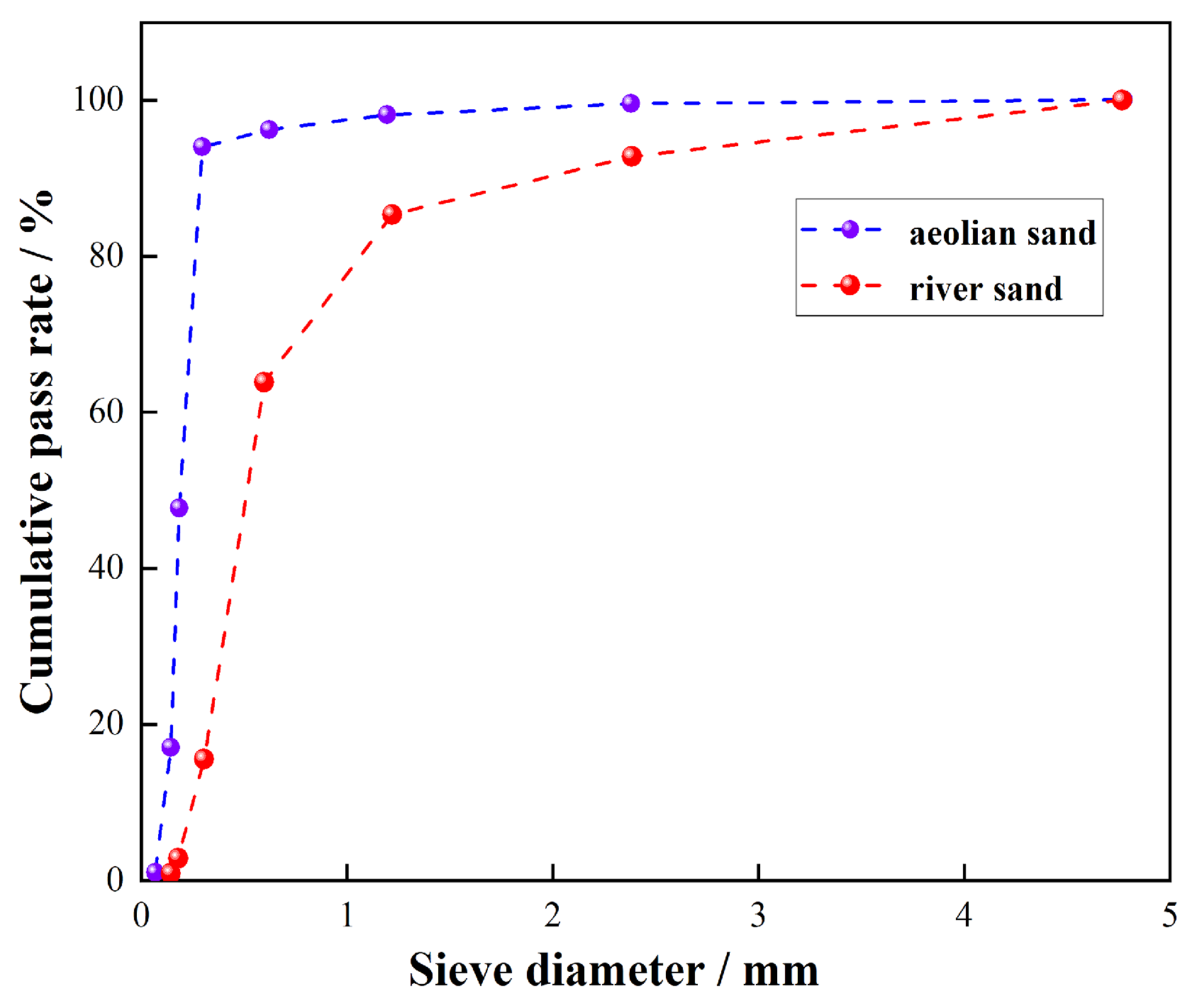
Figure 1 shows the gradation curves of the sands used in the experiment. The river sand has a relatively low moisture content and a relatively high mud content, with good particle gradation. In contrast, the aeolian sand has relatively rounded particle surfaces, a higher moisture content and a lower mud content; its particles are smaller and more uniformly distributed, but its gradation is poor.
2.3. Mixture Proportions
The mixture proportions of the aeolian sand concrete were designed in accordance with JGJ 55-2011, Specification for Mix Proportion Design of Ordinary Concrete [
17]. Aeolian sand was used to replace river sand at replacement ratios of 0%, 20%, 40%, 60%, 80%, and 100% to systematically investigate their effects on compressive strength and microstructural evolution. The water-to-binder ratio was fixed at 0.40 and the sand ratio at 0.32. Fly ash was incorporated at 15% of the total binder to improve particle packing and reduce the heat of hydration. Its pozzolanic reaction also influences the Ca/Si ratio by consuming Ca(OH)
2 and promoting additional C–S–H formation, thereby affecting matrix densification and compressive strength. Six concrete mixtures were prepared and denoted as ASC-0, ASC-20, ASC-40, ASC-60, ASC-80, and ASC-100, where the number indicates the aeolian sand replacement ratio. Detailed mixture proportions are listed in
Table 3. This combination of controlled water content, aeolian sand replacement, and fly ash addition ensured consistent mixture properties while enabling the evaluation of microstructural and mechanical behavior across the tested range. The detailed mixture proportions are listed in
Table 3.
2.4. Experimental Methods and Procedures
2.4.1. Compressive Strength Test
Compressive strength tests were conducted to investigate the strength development of concrete with different aeolian sand replacement ratios and to provide a basis for subsequent microstructural analysis, in accordance with GB/T 50081-2019, Standard for Test Methods of Physical and Mechanical Properties of Concrete [
18]. Cubic specimens with dimensions of 100 mm × 100 mm × 100 mm were prepared. According to the standard, the measured compressive strength of these non-standard specimens was multiplied by a size conversion coefficient of 0.95. The tests were conducted at curing ages of 3, 7, 14, 28, and 56 d. Six aeolian sand replacement ratios were considered, namely 0%, 20%, 40%, 60%, 80%, and 100%. For each replacement ratio at each curing age, three parallel specimens were tested. Thus, a total of 90 specimens were used for the compressive strength tests, corresponding to 6 replacement ratios × 5 curing ages × 3 specimens. The compressive strength values are the averages of the three corrected results, and the standard deviation was used to evaluate the data dispersion. The 28 d compressive strength was used as the conventional strength evaluation index, while the 56 d strength was used to assess the later-age strength development of aeolian sand concrete. Based on the compressive strength results, representative specimens were selected for SEM and EDS analyses.
2.4.2. Microstructural Texting
To observe the microstructure of the concrete matrix and the interfacial transition zone (ITZ) as well as the distribution of hydration products, one cubic specimen per aeolian sand replacement ratio was selected at curing ages of 3 d, 28 d and 56 days for microscopic analysis. Prior to SEM testing, small samples of approximately 10 × 10 × 10 mm were cut from each specimen, dried, and coated with a conductive layer. For EDS analysis, three different points within the ITZ of each specimen were selected for elemental measurements to obtain representative data. At each curing age, at least one specimen per mixture was tested, and data from multiple measurement points were combined to acquire representative SEM and EDS information.
SEM: Microstructural observations were performed using a ZEISS Sigma 360 field-emission scanning electron microscope. Specimens cured for 3, 28, and 56 d were treated by ethanol immersion, grinding, polishing, and gold sputtering before observation.
EDS: Elemental analysis was conducted using an Oxford Xplore 300 energy-dispersive spectrometer (Oxford Instruments NanoAnalysis, Abingdon, Oxfordshire, UK). The relative contents of major elements and the Ca/Si ratio were obtained to evaluate the effects of aeolian sand on the hydration products and microstructure of concrete.
2.4.3. Response Surface Modeling and Statistical Analysis
To quantitatively evaluate the coupled effects of the aeolian sand replacement ratio, curing age, and Ca/Si ratio on the compressive strength of concrete, a quadratic response surface model was established. In this model, the aeolian sand replacement ratio, curing age, and Ca/Si ratio were taken as independent variables, while compressive strength was treated as the response value. The fitting quality and predictive capability of the model were evaluated using the coefficient of determination (R
2), adjusted R
2, predicted R
2, adequate precision, and analysis of variance (ANOVA). This approach was used to reveal the quantitative relationship between macroscopic strength development and microstructural parameters in aeolian sand concrete [
14,
15,
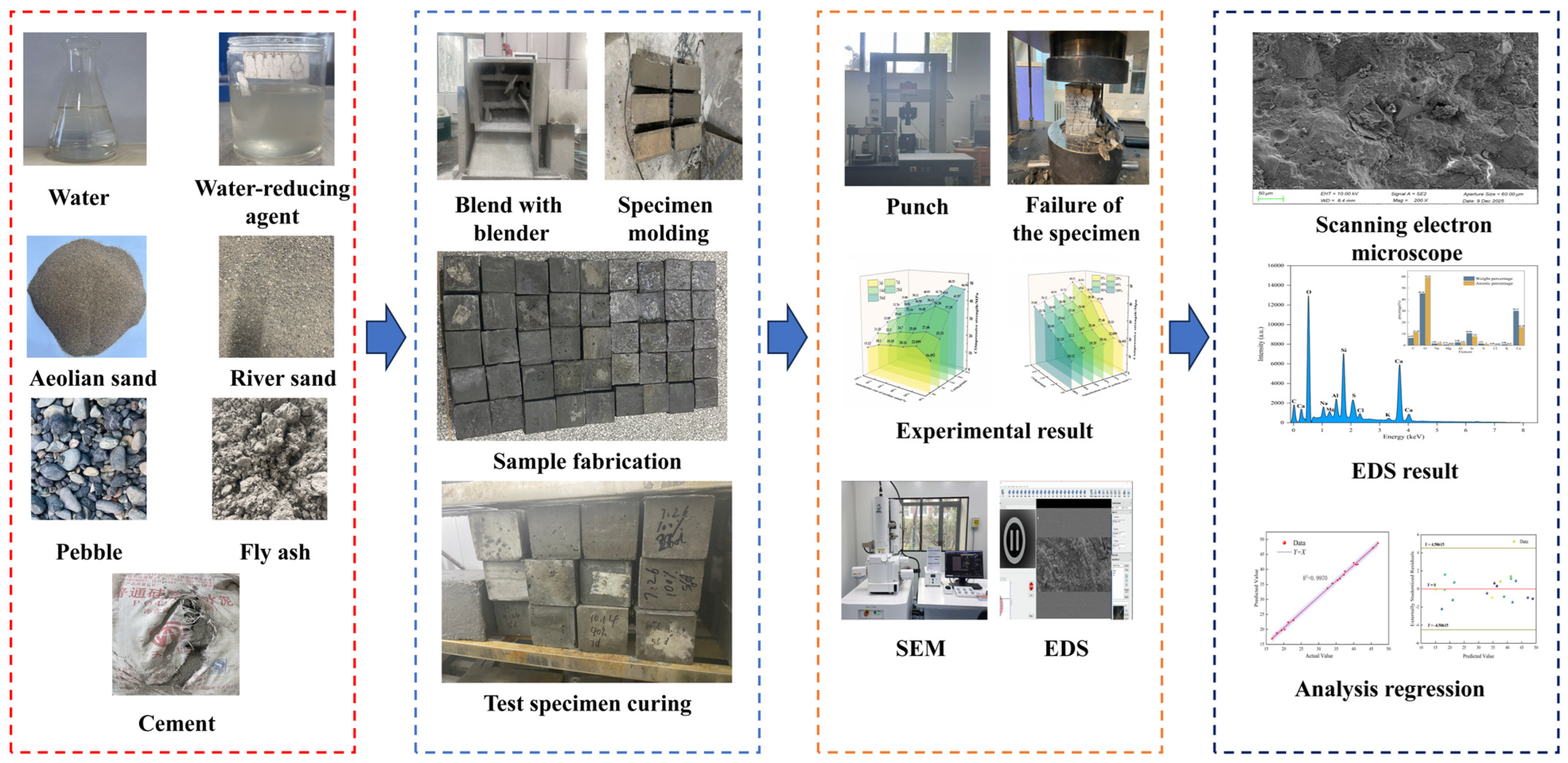
16]. The entire process is illustrated in
Figure 2.
3. Results
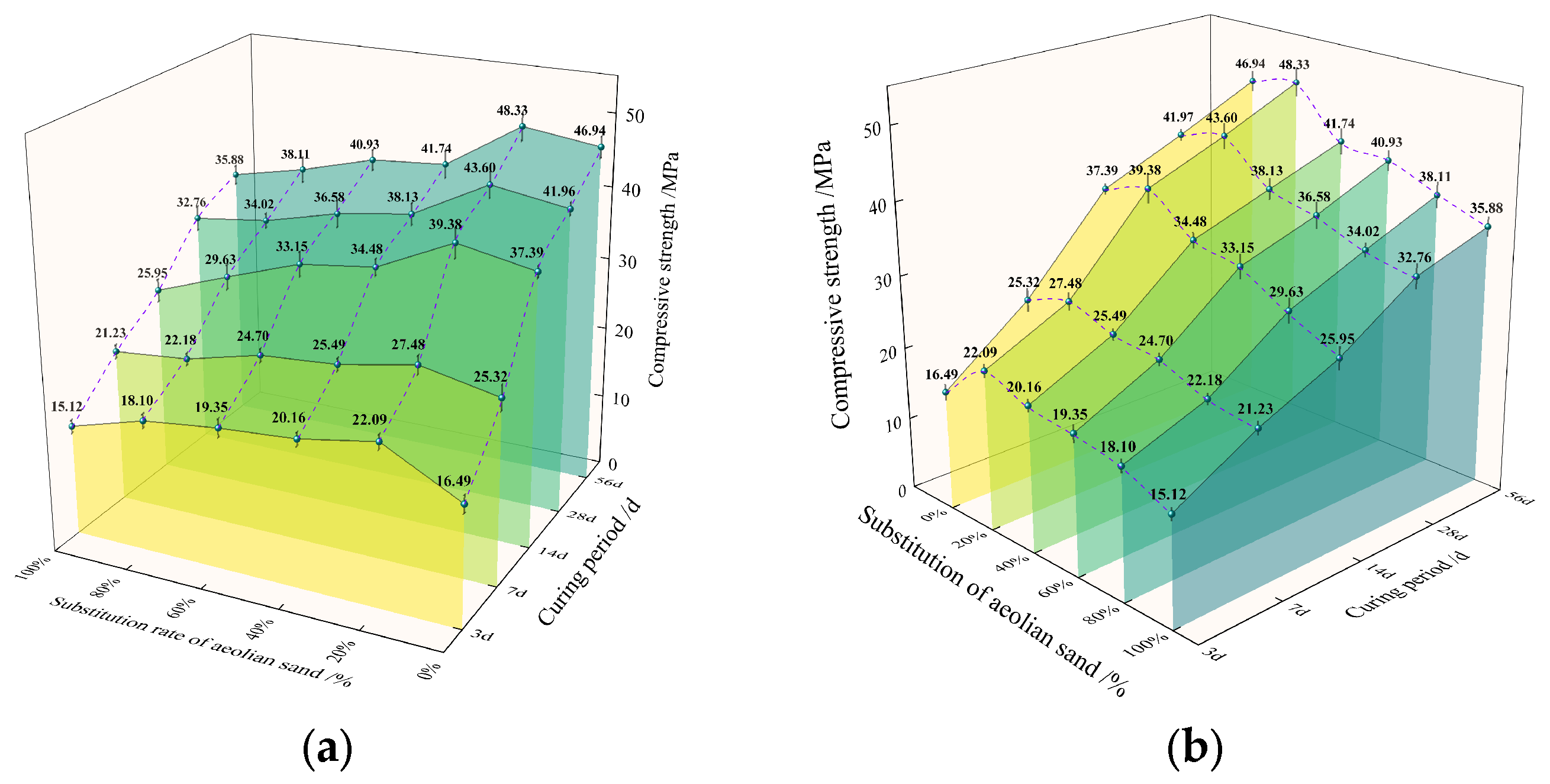
To analyze the effects of the aeolian sand replacement ratio and curing age on the compressive strength of concrete, and to further investigate the strength development beyond the standard curing age, compressive strength tests were conducted on concrete with different aeolian sand replacement ratios at curing ages of 3, 7, 14, 28, and 56 d. The results are shown in
Figure 3.
3.1. Compressive Strength Development
As shown in
Figure 3a, the compressive strength of aeolian sand concrete generally increased first and then decreased with an increasing aeolian sand replacement ratio. A similar trend has also been reported in previous studies [
4]. The highest compressive strength was obtained at a replacement ratio of 20%, with values of 44.60 ± 1.77 MPa at 28 d and 48.33 ± 1.93 MPa at 56 d. The relatively small standard deviations shown by the error bars indicate the good repeatability of the compressive strength results. Under this condition, the 28 d and 56 d compressive strengths increased by 3.90% and 2.96%, respectively, compared with those of the 0% replacement group. In addition, compared with the 40%, 60%, 80%, and 100% replacement groups, the 20% group showed increases of 14.34%, 19.19%, 28.15%, and 33.08% at 28 d and 15.78%, 18.07%, 26.81%, and 34.69% at 56 d, respectively. This improvement can be mainly attributed to the fact that an appropriate amount of aeolian sand improves fine aggregate gradation and exerts a micro-filling effect, thereby enhancing matrix compactness and compressive strength. Moreover, the 20% replacement group still exhibited relatively high strength at 56 d, indicating that a moderate aeolian sand content can continuously promote the later-age strength development of concrete. However, when the replacement ratio increased to 40% and above, the compressive strength decreased continuously. This is because excessive aeolian sand leads to an imbalance in aggregate gradation, weakens the aggregate–paste interfacial bond, increases pores and microcracks, reduces internal compactness, and destabilizes the load-bearing skeleton.
As shown in
Figure 3b, the compressive strength of all aeolian sand concrete groups increased gradually with curing age, with higher growth rates at early ages than at later stages. The compressive strength reached a maximum at a 20% aeolian sand replacement ratio. This is mainly because moderate aeolian sand content improves fine aggregate gradation and particle packing while simultaneously providing micro-filling and nucleation sites for hydration products in both the matrix and the interfacial transition zone (ITZ), resulting in a denser microstructure [
19,
20]. The error bars represent the standard deviations of three parallel specimens, and their relatively small ranges indicate good repeatability. During the 0–28 d period, the compressive strength growth rates at increasing replacement ratios were 1.49, 1.55, 1.36, 1.30, 1.21, and 1.17 MPa/d and decreased to 0.18, 0.17, 0.13, 0.16, 0.15, and 0.11 MPa/d during the 28–56 d period. Early-stage strength gains are mainly due to the rapid hydration and deposition of products facilitated by the fine particle size and large specific surface area of aeolian sand. At later stages, further pore filling and ITZ densification slow down strength growth. Nevertheless, compressive strength continued to increase slowly after 28 d, indicating ongoing hydration and microstructural refinement beyond the standard curing age. Strength decreased when the replacement ratio exceeded 20%, as excessive aeolian sand disrupted aggregate gradation and weakened interfacial bonding, increasing pores and microcracks.
3.2. Microstructural Analysis
To investigate the effects of the aeolian sand replacement ratio and curing age on the microstructure of concrete, SEM was used to observe the matrix surface and interfacial transition zone (ITZ). Owing to the limited magnification and resolution, the SEM analysis mainly focused on matrix morphology, pore and crack distribution, and ITZ bonding characteristics [
21]. Hydration products were discussed based on visible morphology and typical features reported in the literature, with their phase assignment further supported by the EDS results.
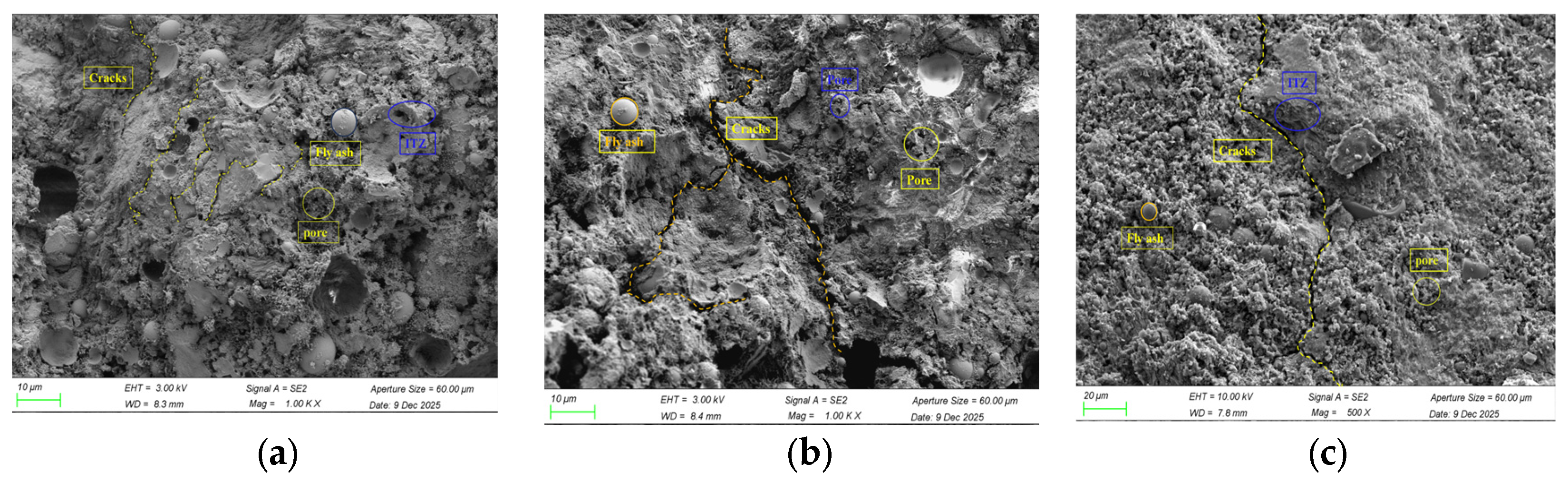
As shown in
Figure 4, at 3 d, the 0% group showed flocculent and clustered gel-like hydration products, which may be associated with C–S–H gel according to previous studies [
8,
9]. Relatively abundant pores, weak ITZ bonding, and local cracks were also observed, indicating an underdeveloped early-age microstructure. In the 20% group, more continuous gel-like hydration products covered the particle surfaces, reduced pore connectivity, and improved ITZ bonding. This suggests that an appropriate amount of aeolian sand can fill initial pores and provide nucleation sites, thereby promoting early hydration and microstructural optimization. However, at 100% replacement, more pores and interfacial cracks were observed, and the ITZ remained relatively loose, indicating that excessive aeolian sand is unfavorable for early microstructure development.
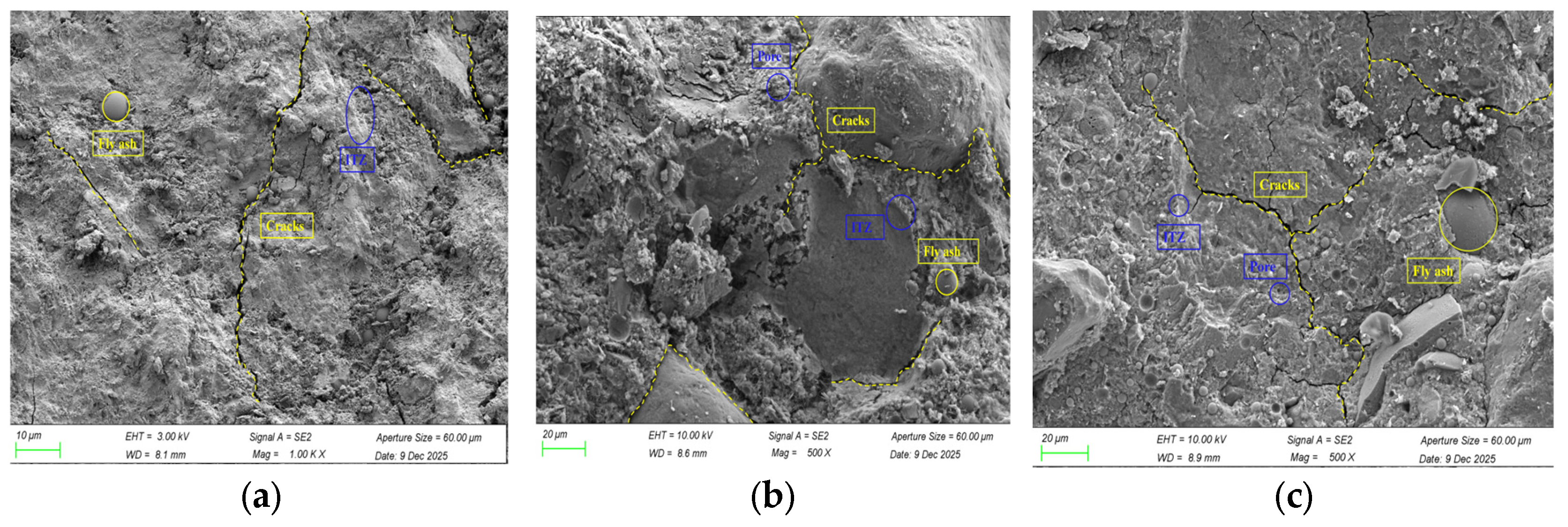
According to
Figure 5, compared with the specimens cured for 3 d, all groups cured for 28 d generally exhibited improved matrix integrity, closer particle–paste contact, and fewer visible pores and local defects, although the degree of microstructural improvement still varied with the aeolian sand replacement ratio. Among them, the 20% group showed the most pronounced improvement. More gel-like hydration products were observed in the matrix, and these products were more continuously distributed on particle surfaces and in the interfacial regions. Some visible pores were filled, and the contact between aggregate and paste appeared closer. In addition, the loose region around the ITZ was reduced compared with that at 3 d, with fewer visible microdefects, indicating a more compact overall microstructure. These observations suggest that an appropriate amount of aeolian sand may exert micro-filling and nucleation effects, thereby promoting the deposition of hydration products and improving the microstructure of both the matrix and the ITZ.
By comparison, although the 0% group also showed clear improvement at 28 d, with increased hydration products and improved structural integrity, a small number of pores and loose regions were still observed, and the ITZ was not completely compact. In contrast, due to the excessively high replacement ratio, the 100% group still exhibited obvious pores, local defects, and relatively weak interfacial bonding, indicating that its microstructural optimization at 28 d was limited. Overall, from 3 d to 28 d, continued hydration increased the amount of hydration products in both the matrix and interfacial regions, gradually filled pores, and reduced the loose regions around the ITZ, resulting in a more compact microstructure than that observed at the early age.
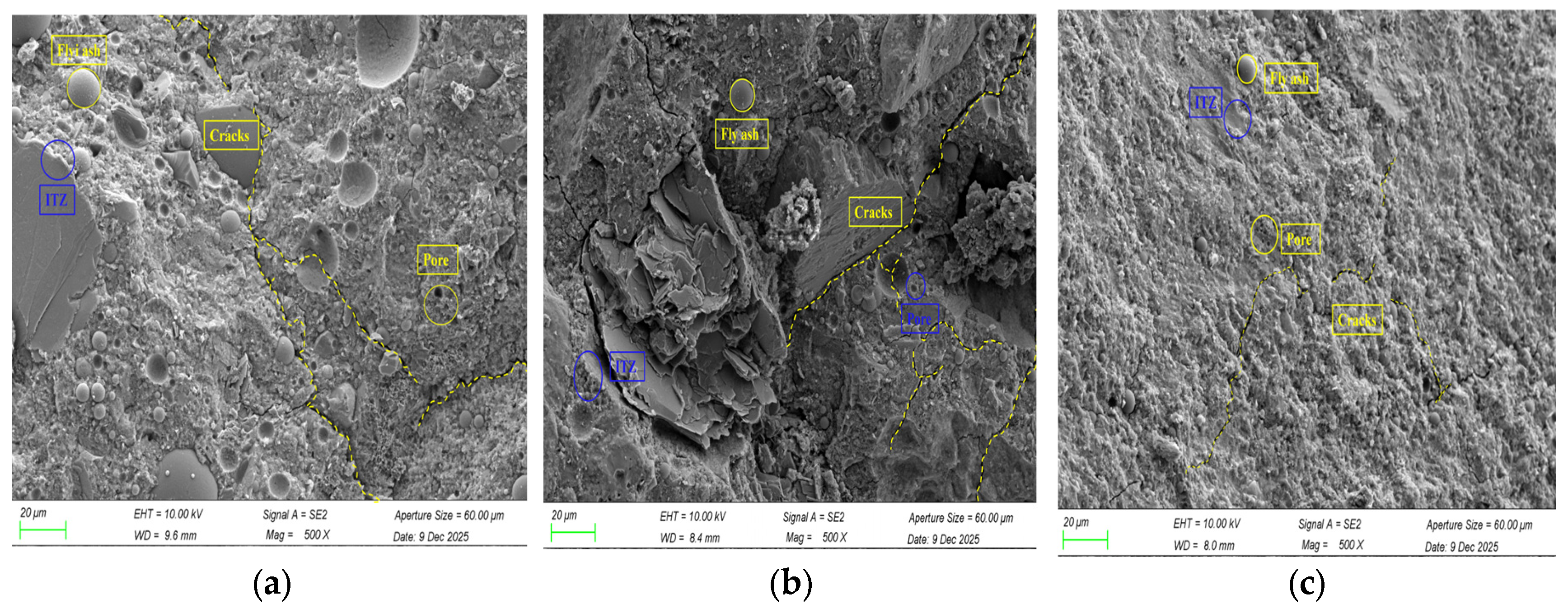
As shown in
Figure 6, when the curing age increased from 28 d to 56 d, the matrix and interfacial transition zone (ITZ) of all groups showed further microstructural development. Overall, the microstructure continued to improve with curing age, although the degree of improvement varied with the aeolian sand replacement ratio. The 20% group, which had already shown a relatively compact morphology at 28 d, exhibited fewer visible pores, reduced local defects, and improved interfacial bonding at 56 d. These observations indicate that an appropriate amount of aeolian sand is beneficial for improving the later-age microstructure of concrete. This behavior may be attributed to the micro-filling and nucleation effects of aeolian sand at the 20% replacement ratio, which promoted the continued deposition of hydration products in the matrix and interfacial regions, thereby reducing pore connectivity and local defects [
6,
7,
10,
19]. In contrast, the 0% group lacked the filling effect of aeolian sand fines, while the 100% group still showed more visible pores, interfacial defects, and loose regions due to the excessive replacement ratio. Therefore, the later-age microstructural improvement in these two groups was less pronounced than that in the 20% group.
In summary, a 20% aeolian sand replacement ratio promoted the formation and deposition of gel-like hydration products through micro-filling and nucleation effects, thereby improving the pore structure and interfacial bonding characteristics of the ITZ. With increasing curing age, an appropriate amount of aeolian sand not only contributed to early-age structural formation but also favored the continued improvement in the interfacial region at later ages. In contrast, the 0% and 100% groups still exhibited more loose regions and connected pores at later ages, especially the 100% group, which showed more visible cracks and higher crack connectivity. These microstructural differences suggest that the later-age strength development of aeolian sand concrete is closely related to the continuous formation of hydration products and the improvement in structural stability, which can be further interpreted together with the variation in the Ca/Si ratio.
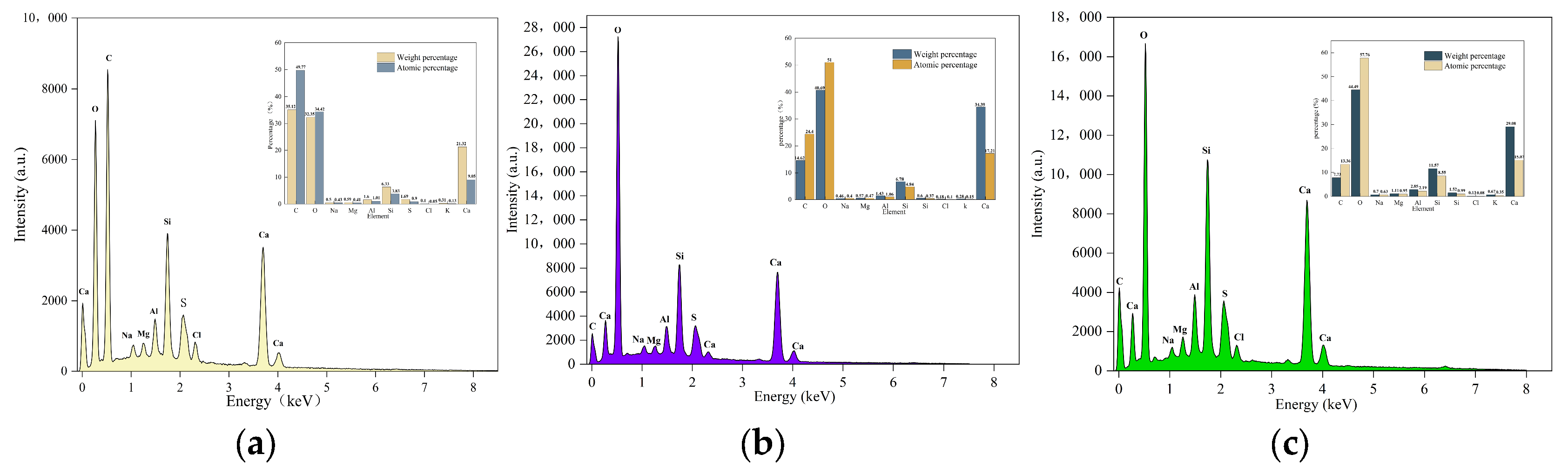
3.3. EDS Analysis and Ca/Si Ratio Variation
During hydration, the Ca/Si ratio is an important parameter for characterizing the composition and evolution of C–S–H gel. In general, the Ca/Si ratio of C–S–H gel is mainly distributed within the range of 0.6–2.0, whereas a value higher than 2.0 may indicate a certain degree of Ca(OH)
2 enrichment in the system [
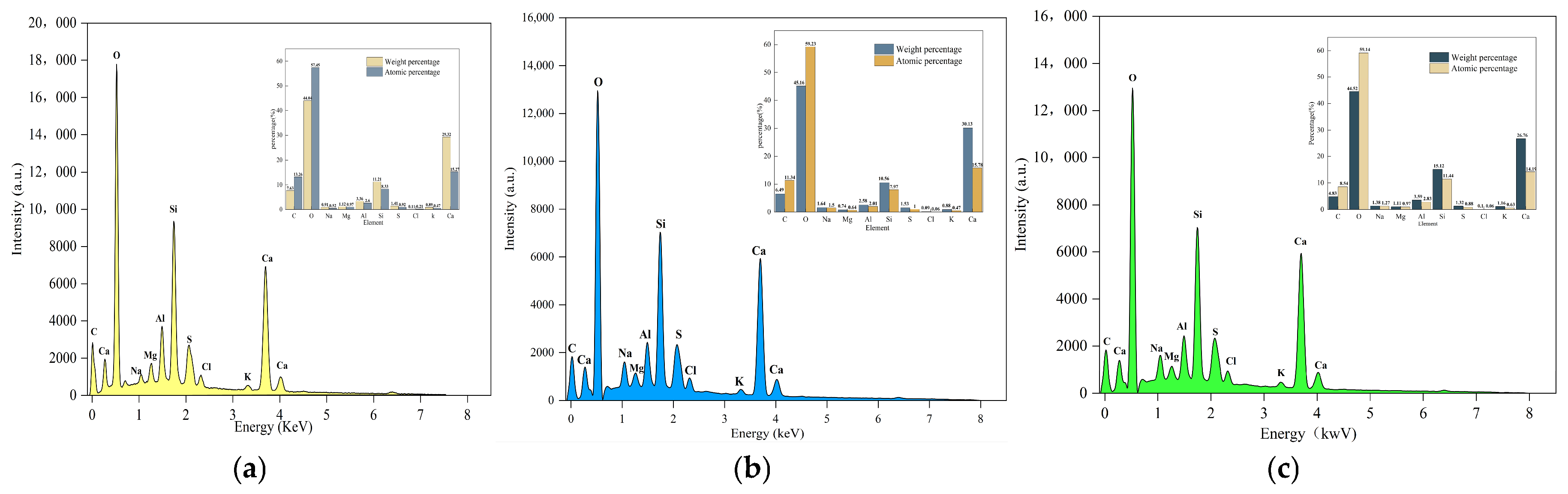
10]. Combined with the EDS results and elemental mapping, all groups were found to contain O, Ca, and Si as the major elements, together with minor elements such as Al, C, S, Na, Mg, K, and Cl, indicating that a cementitious system dominated by hydration products had been formed within the specimens [
10,
22].
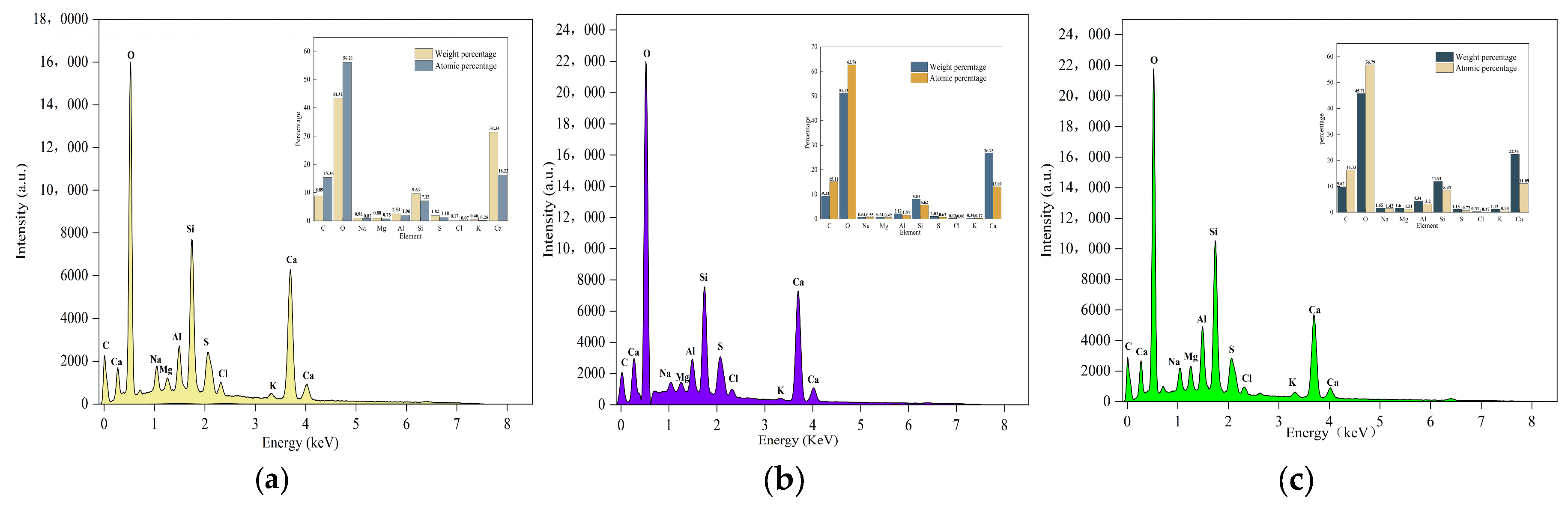
As shown in
Figure 7, at 3 days, all specimens were still in the early hydration stage, and a certain amount of hydration products had already formed. However, the overall enrichment in Ca remained relatively limited. The Ca/Si ratios of the 0%, 20%, and 100% groups were 1.83, 1.99, and 1.24, respectively, all within the typical range of C-S-H gel, indicating that this stage was mainly characterized by the formation of early hydration products and the initial development of the microstructure. The slightly higher Ca/Si ratio in the 20% group suggests that an appropriate aeolian sand replacement level may help improve particle packing and provide additional nucleation sites for the deposition of early hydration products. In contrast, the relatively lower Ca/Si ratio in the 100% group indicates a comparatively silica-rich system at a high replacement level, resulting in differences in the composition of hydration products and the development of the early microstructure compared with the other two groups. Overall, the 3-day age mainly reflects the initial formation characteristics of hydration products in aeolian sand concrete, and the Ca/Si ratio had already shown noticeable differences among the groups with different replacement levels.
As shown in
Figure 8, at 28 days, the hydration reaction in all specimens progressed further, and the elemental composition of Ca and Si changed markedly compared with that at 3 days. Based on the atomic percentages, the Si contents of the 0%, 20%, and 100% groups were approximately 7.12%, 5.62%, and 8.43%, respectively, while the corresponding Ca contents were 16.22%, 13.84%, and 11.09%. The calculated Ca/Si ratios were therefore about 2.28, 2.46, and 1.32, respectively. Compared with those at 3 days, the Ca/Si ratios of the 0%, 20%, and 100% groups increased by 0.45, 0.48, and 0.08, corresponding to increases of 24.59%, 24.24%, and 6.45%, respectively. These results indicate that hydration products continued to develop in all specimens at 28 days, although the degree of evolution differed significantly with the replacement level. Among them, the 20% group showed the highest Ca/Si ratio, suggesting that an appropriate aeolian sand replacement level may be more favorable for continued cement hydration and the deposition of hydration products at this stage, thereby contributing to the optimization of the matrix and interfacial transition zone (ITZ). In comparison, although the 0% group showed clear improvement relative to the early stage, its Ca/Si ratio remained lower than that of the 20% group, indicating a relatively limited degree of optimization in hydration product composition. The 100% group showed only a slight increase in the Ca/Si ratio, from 1.24 to 1.32, which was the smallest increase among the three groups, indicating that excessive replacement weakened the evolution of hydration product composition and was unfavorable for the further densification of the microstructure. Overall, 28 days can be regarded as a critical stage at which hydration products continue to develop and microstructural differences among the specimens become more pronounced, with the 20% replacement group exhibiting the most favorable Ca/Si characteristic.
As shown in
Figure 9, the Ca/Si ratios of all specimens further increased at 56 d compared with those at 28 d, with increments of 0.53, 1.57, and 0.96 for the 0%, 20%, and 100% groups, respectively. This indicates that aeolian sand concrete still underwent continued hydration after the standard curing age, accompanied by the further evolution of hydration products and internal structure. Among the three groups, the 20% group showed the largest increase, suggesting a stronger capacity for later-stage hydration and microstructural refinement. By contrast, the 0% group showed minimal subsequent development, while the 100% group, despite some increase, still exhibited constrained later-stage optimization due to its relatively low Ca/Si level at earlier ages. Combined with the SEM results, the 20% group showed a more continuous matrix and a denser interfacial transition zone at 56 d, whereas the 0% and 100% groups still exhibited visible pores, cracks, and locally discontinuous regions, particularly in the 100% group. These results suggest that an appropriate aeolian sand replacement level is beneficial not only for the continued development of hydration products but also for the further densification of the matrix and interfacial structure.
3.4. Regression Analysis of Compressive Strength Based on Response Surface Methodology
To quantitatively evaluate the combined effects of aeolian sand replacement, curing age, and Ca/Si ratio on concrete compressive strength, response surface methodology (RSM) was performed using Design-Expert 13 software based on compressive strength and microstructural data. The model was fitted to the measured compressive strength values and representative Ca/Si ratios obtained via EDS. In this study, the Ca/Si ratio was treated as a microstructural indicator reflecting the evolution of hydration products rather than an independent physical factor directly controlling compressive strength. A quadratic response surface model was then fitted to the experimental data to analyze trends and potential interactions among aeolian sand replacement, curing age, and Ca/Si ratio. Model performance was evaluated using R2, adjusted R2, and predicted R2.
3.4.1. Response Surface and Interaction Analysis
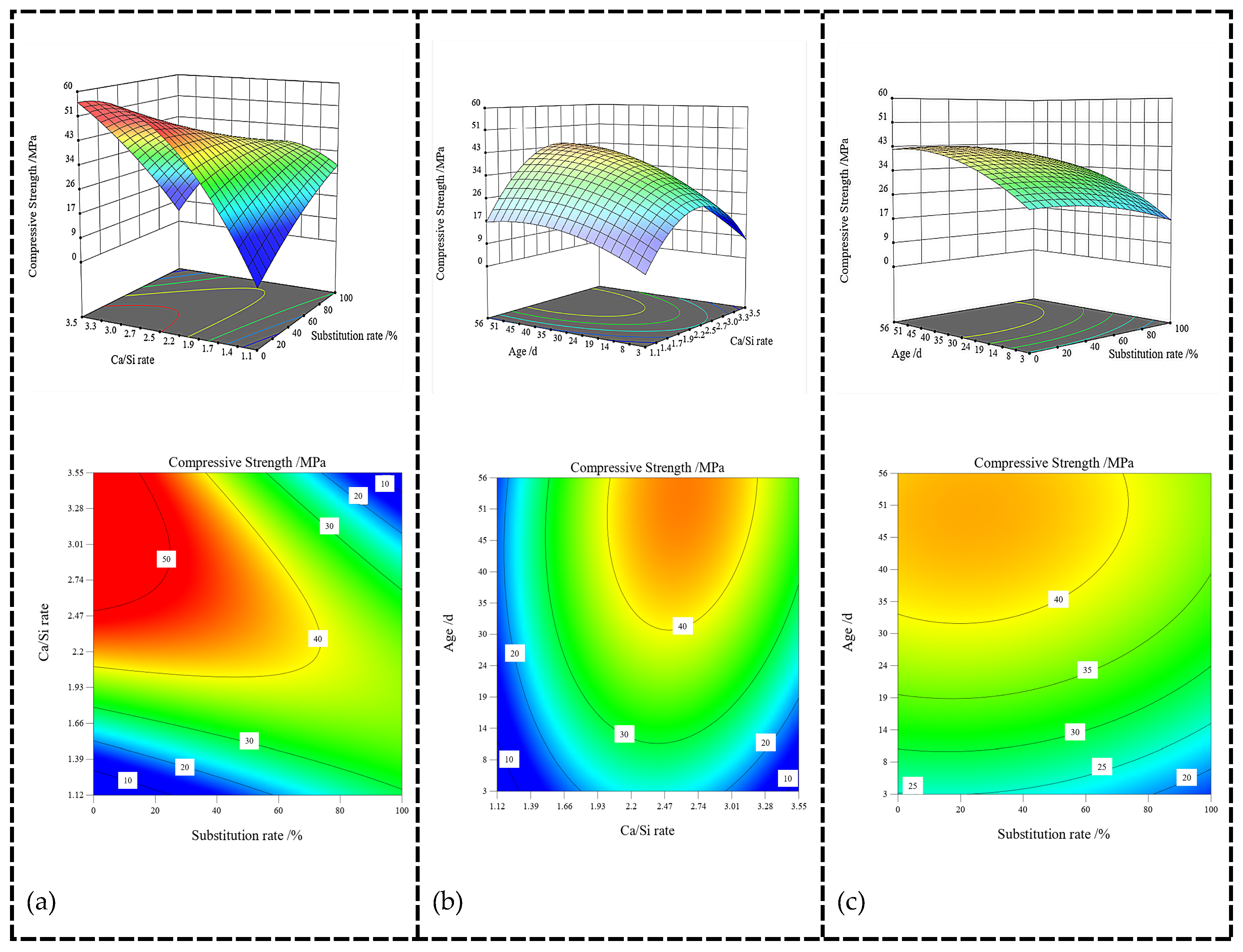
Based on the response surface and contour plots, the aeolian sand replacement ratio, Ca/Si ratio, and curing age all showed nonlinear effects on compressive strength. In general, the high-strength region was obtained under a moderate aeolian sand replacement ratio, an appropriate Ca/Si ratio, and a longer curing age. In contrast, excessive replacement, an unsuitable Ca/Si ratio, or a short curing age led to a clear reduction in strength, indicating a coupled influence of these factors.
As shown in
Figure 10a, the interaction between the replacement ratio and Ca/Si ratio was significant. Compressive strength first increased and then decreased with increasing replacement ratio. The maximum strength, approximately 51 MPa, was observed at a replacement ratio of about 10–30% and a Ca/Si ratio of about 2.8–3.3. When the replacement ratio increased to 60–100%, the strength decreased to 30–40 MPa. ANOVA showed that the replacement ratio had a highly significant effect on compressive strength, whereas the individual effect of the Ca/Si ratio was not significant. However, their interaction term was highly significant, indicating that the effect of the Ca/Si ratio depended on the replacement ratio. As shown in
Figure 10b, the response surface for the replacement ratio and curing age showed that compressive strength increased with curing age but decreased at excessive replacement ratios. ANOVA confirmed that curing age was the most significant factor affecting strength, while the interaction between the replacement ratio and curing age was not significant. This suggests that strength development was mainly controlled by their main effects. As shown in
Figure 10c, increasing curing age significantly improved compressive strength, although the growth rate decreased at later ages. The Ca/Si ratio also had an optimal range. Higher strength was obtained at a Ca/Si ratio of approximately 2.4–3.0 and a curing age of 35–56 days. The significant quadratic terms of the Ca/Si ratio and curing age further indicate their nonlinear effects, with curing age being more dominant.
Overall, curing age and the aeolian sand replacement ratio were the main factors controlling compressive strength, while the Ca/Si ratio mainly affected strength through its interaction with the replacement ratio. An appropriate amount of aeolian sand may improve the matrix through micro-filling and nucleation effects, whereas excessive replacement can disturb aggregate gradation and increase pores and interfacial defects [
6,
8,
9]. Therefore, under the present experimental conditions, an aeolian sand replacement ratio of about 20%, combined with a suitable Ca/Si ratio and a longer curing age, was more favorable for improving the compressive strength of aeolian sand concrete [
14,
15,
16].
3.4.2. Regression Model Development and Analysis of Variance
The results show that the compressive strength of aeolian sand concrete is influenced not only by the aeolian sand replacement ratio and curing age but also by the composition of hydration products and the microstructural characteristics. Among these factors, the Ca/Si ratio is an important microstructural parameter that reflects the variation in hydration product composition and, to some extent, the evolution of the internal structure. Therefore, the aeolian sand replacement ratio, Ca/Si ratio, and curing age were selected as independent variables, denoted as X1, X2, and X3, respectively, while compressive strength was taken as the response variable Y to establish a quadratic regression model based on response surface methodology.
Response surface methodology is a multivariate statistical method that can characterize the effects of factors and their interactions on the response through regression fitting. It is well suited for the quantitative analysis of the compressive strength of aeolian sand concrete under multiple parameters. The quadratic response surface regression model is expressed as follows:
where
X1,
X2, and
X3 represent the aeolian sand replacement ratio, Ca/Si ratio, and curing age, respectively, and
Y denotes the predicted compressive strength of concrete.
The analysis of variance results are presented in
Table 4. The model F-value was 290.92 with
p < 0.0001, indicating that the model was highly significant. The residual sum of squares and mean square were 6.46 and 0.8071, respectively, suggesting that the unexplained error was small and that the model adequately described the effects of the aeolian sand replacement ratio, Ca/Si ratio, and curing age on compressive strength. Among the main effects,
X1 and
X3 were highly significant, with F-values of 35.27 and 52.62, respectively, indicating that the aeolian sand replacement ratio and curing age were the dominant factors, with curing age showing the stronger effect. In contrast,
X2 was not significant when considered alone (F = 4.79,
p = 0.0600), suggesting a relatively weak independent effect.
For the interaction terms, X1X2 was highly significant (F = 30.72, p = 0.0005), indicating a strong interaction between the aeolian sand replacement ratio and Ca/Si ratio. By contrast, X1X3 and X2X3 were not significant, suggesting relatively weak interactions involving curing age. Among the quadratic terms, X12, X22, and X32 were all significant, with F-values of 6.40, 9.91, and 23.53, respectively, indicating that the response of compressive strength to these factors was nonlinear. The largest F-value for X32 further suggests that curing age showed the most pronounced nonlinear effect. Based on the F-values, the influence of the factors and interactions on compressive strength followed the order X3 > X1 > X1X2 > X32 > X22 > X12 > X2 > X2X3 > X1X3. Overall, the quadratic response surface model was statistically significant and provided a reliable basis for goodness-of-fit evaluation, model diagnosis, and interaction analysis.
3.4.3. Model Goodness of Fit and Validation
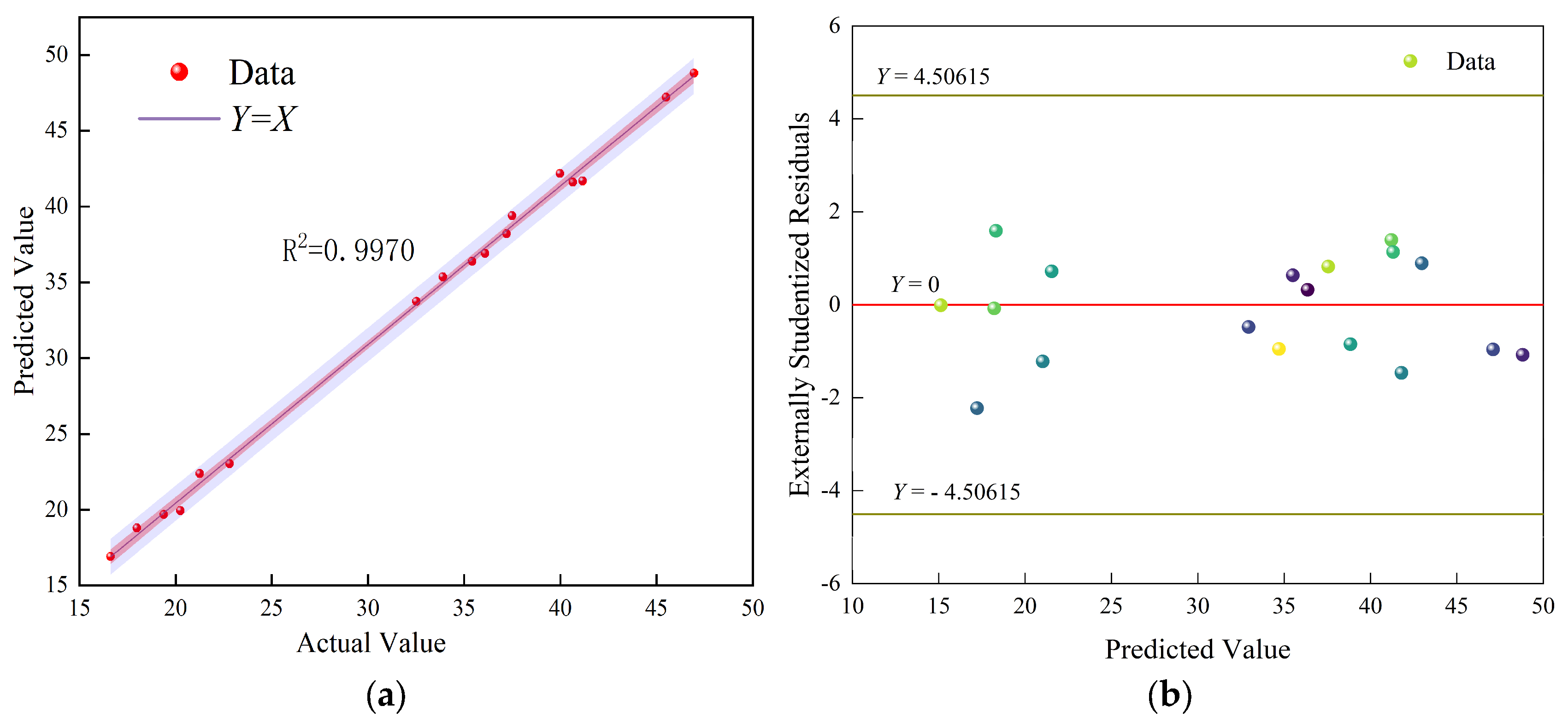
After confirming the statistical significance of the regression model, its goodness of fit and predictive performance were further evaluated. As shown in
Table 5, the R
2, adjusted R
2, and predicted R
2 values were 0.9970, 0.9935, and 0.9650, respectively, indicating that the quadratic response surface model effectively described the variation in compressive strength under the designed experimental conditions. In addition, the signal-to-noise ratio was 50.3561, which was much greater than 4, suggesting an adequate model signal. The close agreement between the adjusted R
2 and predicted R
2 values further indicates that the model had good internal consistency and fitting stability. Therefore, the model was used for the comparison of predicted and experimental values, residual analysis, and response surface interaction analysis [
14,
15,
16].
To verify the reliability and applicability of the response surface model, the agreement between the predicted and experimental values, as well as the residual distribution, was analyzed. As shown in
Figure 11, most data points were distributed close to the 45° reference line with only limited scatter, indicating good agreement between the predicted and experimental values. This suggests that the model can accurately capture the variation in the compressive strength of aeolian sand concrete [
14,
15,
16]. Overall, the predicted values were close to the measured results, confirming the good fitting performance of the quadratic response surface model [
23].
The residual analysis further showed that the data points were randomly dispersed without obvious outliers, indicating that the overall error of the model was within a reasonable range. In addition, no clear clustering pattern was observed in the residuals, suggesting good model stability within the experimental range and the absence of significant systematic bias. Combined with the agreement between predicted and experimental values, these results demonstrate that the proposed model can not only describe the effects of the aeolian sand replacement ratio, Ca/Si ratio, and curing age on compressive strength with good accuracy but also provide satisfactory predictive applicability.