A Structured Critical Review of Machine Learning Approaches for ECG-Based Detection of Dysglycemia and Their Translational Readiness

 ,
, 
Abstract
1. Introduction
2. Literature Search and Review Methodology
2.1. Search Strategy
2.2. Eligibility Criteria
2.3. Study Selection and Data Extraction
2.4. Methodological Limitations and Potential Sources of Bias
2.5. Data Synthesis
- -
- ECG-based classification studies;
- -
- Biomarker estimation approaches (HbA1c or glucose prediction);
- -
- HRV-focused physiological modeling;
- -
- Multimodal prediction frameworks;
- -
- Wearable or continuous monitoring approaches.
3. Results
3.1. General Characteristics and Aims
- ECG-only screening models aimed at non-invasive dysglycemia detection;
- Biomarker estimation approaches focused on HbA1c or glucose prediction;
- HRV-centered physiological modeling studies;
- Multimodal prediction systems incorporating ECG together with glycemic or clinical variables;
- Experimental proof-of-concept and highly controlled exploratory studies.
3.2. Data Sources and Study Populations
3.3. ECG Acquisition and Signal Configuration
3.4. Feature Representation and ECG-Derived Biomarkers
3.5. Machine Learning Models
3.6. Model Performance and Validation
3.7. Model Maturity and Translational Readiness
4. Discussion
4.1. Requirements for Clinical Translation
4.2. Toward Practical ECG-Based Screening Systems
4.3. Clinical Implementation Considerations
5. Limitations of This Review
6. Conclusions
Supplementary Materials
Author Contributions
Funding
Data Availability Statement
Conflicts of Interest
Abbreviations
| AI | Artificial Intelligence |
| ANOVA | Analysis of Variance |
| AUC | Area Under the Curve |
| BMI | Body Mass Index |
| CAN | Cardiac Autonomic Neuropathy |
| CAD | Coronary Artery Disease |
| CEEMDAN | Complete Ensemble Empirical Mode Decomposition with Adaptive Noise |
| CGM | Continuous Glucose Monitoring |
| CMR | Cardiac Magnetic Resonance |
| CMD | Coronary Microvascular Dysfunction |
| CNN | Convolutional Neural Network |
| CV | Cross-Validation |
| DCM | Diabetic Cardiomyopathy |
| DL | Deep Learning |
| DLM | Deep Learning Model |
| ECG | Electrocardiogram |
| EHR | Electronic Health Record |
| EMD | Empirical Mode Decomposition |
| F1-score | Harmonic Mean of Precision and Recall |
| FPG | Fasting Plasma Glucose |
| GBM | Gradient Boosting Machine |
| GRI | Glycaemia Risk Index |
| Grad-CAM | Gradient-weighted Class Activation Mapping |
| HbA1c | Glycated Hemoglobin |
| HR | Heart Rate |
| HRV | Heart Rate Variability |
| IFG | Impaired Fasting Glucose |
| KNN | k-Nearest Neighbors |
| LR | Logistic Regression |
| LSTM | Long Short-Term Memory |
| ML | Machine Learning |
| NB | Naïve Bayes |
| OGTT | Oral Glucose Tolerance Test |
| PPBG | Postprandial Blood Glucose |
| PRISMA | Preferred Reporting Items for Systematic Reviews and Meta-Analyses |
| RF | Random Forest |
| ROC | Receiver Operating Characteristic |
| SE | Squeeze-and-Excitation |
| SVM | Support Vector Machine |
| T2DM | Type 2 Diabetes Mellitus |
References
- Nanda, M.; Sharma, R.; Mubarik, S.; Aashima, A.; Zhang, K. Type-2 Diabetes Mellitus (T2DM): Spatial-temporal Patterns of Incidence, Mortality and Attributable Risk Factors from 1990 to 2019 among 21 World Regions. Endocrine 2022, 77, 444–454. [Google Scholar] [CrossRef]
- Atageldiyeva, K.; Syssoyev, D.; Mussina, K.; Poddighe, D.; Gaipov, A.; Galiyeva, D. All-cause hospital admissions and incidence of type 2 diabetes among adolescents in Kazakhstan. Sci. Rep. 2025, 15, 20746. [Google Scholar] [CrossRef]
- Ziegler, D.; Herder, C.; Papanas, N. Neuropathy in prediabetes. Diabetes/Metab. Res. Rev. 2023, 39, e3693. [Google Scholar] [CrossRef]
- White, N.H.; Pan, Q.; Knowler, W.C.; Schroeder, E.B.; Dabelea, D.; Chew, E.Y.; Blodi, B.; Goldberg, R.B.; Pi-Sunyer, X.; Darwin, C.; et al. Risk Factors for the Development of Retinopathy in Prediabetes and Type 2 Diabetes: The Diabetes Prevention Program Experience. Diabetes Care 2022, 45, 2653–2661. [Google Scholar] [CrossRef]
- Ahmad, A.; Lim, L.-L.; Morieri, M.L.; Tam, C.H.-T.; Cheng, F.; Chikowore, T.; Dudenhöffer-Pfeifer, M.; Fitipaldi, H.; Huang, C.; Kanbour, S.; et al. Precision prognostics for cardiovascular disease in Type 2 diabetes: A systematic review and meta-analysis. Commun. Med. 2024, 4, 11. [Google Scholar] [CrossRef]
- Genuth, S.M.; Palmer, J.P.; Nathan, D.M. Classification and Diagnosis of Diabetes. In Diabetes in America, 3rd ed.; National Institute of Diabetes and Digestive and Kidney Diseases (US): Bethesda, MD, USA, 2018. [Google Scholar] [PubMed]
- Thomas, A.; Shenoy, M.T.; Shenoy, K.; George, N. Glucometers for Patients with Type 2 Diabetes Mellitus: Are they helpful? Int. J. Med. Stud. 2021, 9, 140–144. [Google Scholar] [CrossRef]
- Seidu, S.; Kunutsor, S.K.; Ajjan, R.A.; Choudhary, P. Efficacy and Safety of Continuous Glucose Monitoring and Intermittently Scanned Continuous Glucose Monitoring in Patients With Type 2 Diabetes: A Systematic Review and Meta-analysis of Interventional Evidence. Diabetes Care 2024, 47, 169–179. [Google Scholar] [CrossRef] [PubMed]
- Swapna, G.; Soman, K.P.; Vinayakumar, R. Diabetes Detection Using ECG Signals: An Overview. In Deep Learning Techniques for Biomedical and Health Informatics. Studies in Big Data; Dash, S., Acharya, B., Mittal, M., Abraham, A., Kelemen, A., Eds.; Springer: Cham, Switzerland, 2020; Volume 68. [Google Scholar] [CrossRef]
- Balcıoğlu, A.S.; Müderrisoğlu, H. Diabetes and cardiac autonomic neuropathy: Clinical manifestations, cardiovascular consequences, diagnosis and treatment. World J. Diabetes 2015, 6, 80–91. [Google Scholar] [CrossRef] [PubMed]
- Mandavia, C.H.; Aroor, A.R.; DeMarco, V.G.; Sowers, J.R. Molecular and metabolic mechanisms of cardiac dysfunction in diabetes. Life Sci. 2013, 92, 601–608. [Google Scholar] [CrossRef]
- Adeghate, E.; Singh, J. Structural changes in the myocardium during diabetes-induced cardiomyopathy. Heart Fail. Rev. 2014, 19, 15–23. [Google Scholar] [CrossRef] [PubMed]
- Isaksen, J.L.; Sivertsen, C.B.; Jensen, C.Z.; Graff, C.; Linz, D.; Ellervik, C.; Jensen, M.T.; Jørgensen, P.G.; Kanters, J.K. Electrocardiographic markers in patients with type 2 diabetes and the role of diabetes duration. J. Electrocardiol. 2024, 84, 129–136. [Google Scholar] [CrossRef]
- Kuehl, M.; Stevens, M.J. Cardiovascular autonomic neuropathies as complications of diabetes mellitus. Nat. Rev. Endocrinol. 2012, 8, 405–416. [Google Scholar] [CrossRef] [PubMed]
- Filipović, N.; Guić, M.M.; Košta, V.; Vukojević, K. Cardiac innervations in diabetes mellitus—Anatomical evidence of neuropathy. Anat. Rec. 2023, 306, 2345–2365. [Google Scholar] [CrossRef] [PubMed]
- Sudo, S.Z.; Montagnoli, T.L.; Rocha, B.d.S.; Santos, A.D.; de Sá, M.P.L.; Zapata-Sudo, G. Diabetes-Induced Cardiac Autonomic Neuropathy: Impact on Heart Function and Prognosis. Biomedicines 2022, 10, 3258. [Google Scholar] [CrossRef]
- Evans, A.J.; Li, Y.-L. Remodeling of the Intracardiac Ganglia During the Development of Cardiovascular Autonomic Dysfunction in Type 2 Diabetes: Molecular Mechanisms and Therapeutics. Int. J. Mol. Sci. 2024, 25, 12464. [Google Scholar] [CrossRef]
- Tarvainen, M.P.; Laitinen, T.P.; Lipponen, J.A.; Cornforth, D.J.; Jelinek, H.F. Cardiac Autonomic Dysfunction in Type 2 Diabetes —Effect of Hyperglycemia and Disease Duration. Front. Endocrinol. 2014, 5, 130. [Google Scholar] [CrossRef]
- Qian, L.-L.; Liu, X.-Y.; Li, X.-Y.; Yang, F.; Wang, R.-X. Effects of Electrical Remodeling on Atrial Fibrillation in Diabetes Mellitus. Rev. Cardiovasc. Med. 2023, 24, 3. [Google Scholar] [CrossRef]
- Coopmans, C.; Zhou, T.L.; Henry, R.M.; Heijman, J.; Schaper, N.C.; Koster, A.; Schram, M.T.; van der Kallen, C.J.; Wesselius, A.; Engelsman, R.J.D.; et al. Both Prediabetes and Type 2 Diabetes Are Associated With Lower Heart Rate Variability: The Maastricht Study. Diabetes Care 2020, 43, 1126–1133. [Google Scholar] [CrossRef] [PubMed]
- Alam, K.C.; Dasari, D.; Modampuri, A.K. A clinical study of corrected QT interval in type 2 diabetes mellitus patients. MRIMS J. Health Sci. 2024, 12, 268–273. [Google Scholar]
- Chávez-González, E.; Calero, Y.M.E.; Harrichand, S.; Mensah, E.B. QRS and QT Interval Modifications in Patients with Type 2 Diabetes Mellitus. Curr. Health Sci. J. 2022, 48, 270–276. [Google Scholar] [CrossRef]
- Singh, R.M.; Waqar, T.; Howarth, F.C.; Adeghate, E.; Bidasee, K.; Singh, J. Hyperglycemia-induced cardiac contractile dysfunction in the diabetic heart. Heart Fail. Rev. 2018, 23, 37–54. [Google Scholar] [CrossRef]
- Bakkar, N.-M.Z.; Dwaib, H.S.; Fares, S.; Eid, A.H.; Al-Dhaheri, Y.; El-Yazbi, A.F. Cardiac Autonomic Neuropathy: A Progressive Consequence of Chronic Low-Grade Inflammation in Type 2 Diabetes and Related Metabolic Disorders. Int. J. Mol. Sci. 2020, 21, 9005. [Google Scholar] [CrossRef]
- Balakrishnan, K.; Velusamy, D.; Ramasamy, K.; Hinkle, H.E.; Hudson, H.J.; Pachori, R.B.; Khan, H. Artificial intelligence approaches for non-invasive diabetes prediction using ECG signals: A systematic review. Comput. Methods Programs Biomed. 2026, 278, 109264. [Google Scholar] [CrossRef]
- Alimbayev, C.; Alimbayeva, Z.; Ozhikenov, K.; Karibayev, K.; Orynbay, Z.; Igembay, Y.; Daniyalov, M.; Nurdanali, A. Electrocardiographic Signatures of Dysglycaemia: Mechanistic Foundations, Digital Biomarkers, and Artificial Intelligence for Non-Invasive Diabetes Risk Stratification. Appl. Sci. 2026, 16, 2902. [Google Scholar] [CrossRef]
- Page, M.J.; McKenzie, J.E.; Bossuyt, P.M.; Boutron, I.; Hoffmann, T.C.; Mulrow, C.D.; Shamseer, L.; Tetzlaff, J.M.; Akl, E.A.; Brennan, S.E.; et al. The PRISMA 2020 statement: An updated guideline for reporting systematic reviews. Int. J. Surg. 2021, 88, 105906. [Google Scholar] [CrossRef]
- Lin, C.-S.; Lee, Y.-T.; Fang, W.-H.; Lou, Y.-S.; Kuo, F.-C.; Lee, C.-C.; Lin, C. Deep Learning Algorithm for Management of Diabetes Mellitus via Electrocardiogram-Based Glycated Hemoglobin (ECG-HbA1c): A Retrospective Cohort Study. J. Pers. Med. 2021, 11, 725. [Google Scholar] [CrossRef]
- Kulkarni, A.R.; Patel, A.A.; Pipal, K.V.; Jaiswal, S.G.; Jaisinghani, M.T.; Thulkar, V.; Gajbhiye, L.; Gondane, P.; Patel, A.B.; Mamtani, M.; et al. Machine-learning algorithm to non-invasively detect diabetes and pre-diabetes from electrocardiogram. BMJ Innov. 2023, 9, 32–42. [Google Scholar] [CrossRef]
- Gupta, K.; Bajaj, V. A Robust Framework for Automated Screening of Diabetic Patient Using ECG Signals. IEEE Sens. J. 2022, 22, 24222–24229. [Google Scholar] [CrossRef]
- Cordeiro, R.; Karimian, N.; Park, Y. Hyperglycemia Identification Using ECG in Deep Learning Era. Sensors 2021, 21, 6263. [Google Scholar] [CrossRef]
- Naqvi, S.Z.H.; Aziz, S.; Khan, M.U.; Abbas, M.; Haider, A.; Hashmi, H.A. Electrocardiography based System for Characterization of Diabetes. In Proceedings of the 2020 International Conference on Electrical, Communication, and Computer Engineering (ICECCE), Istanbul, Turkey, 12–13 June 2020; pp. 1–6. [Google Scholar] [CrossRef]
- Li, J.; Lu, J.; Tobore, I.; Liu, Y.; Kandwal, A.; Wang, L.; Zhou, J.; Nie, Z. Towards noninvasive and fast detection of Glycated hemoglobin levels based on ECG using convolutional neural networks with multisegments fusion and Varied-weight. Expert Syst. Appl. 2021, 186, 115846. [Google Scholar] [CrossRef]
- Li, J.; Tobore, I.; Liu, Y.; Kandwal, A.; Wang, L.; Nie, Z. Non-invasive Monitoring of Three Glucose Ranges Based On ECG By Using DBSCAN-CNN. IEEE J. Biomed. Health Inform. 2021, 25, 3340–3350. [Google Scholar] [CrossRef]
- Mohsen, F.; Safa, A.; Shah, Z. ECG features improve multimodal deep learning prediction of incident T2DM in a Middle Eastern cohort. Sci. Rep. 2025, 15, 27164. [Google Scholar] [CrossRef] [PubMed]
- Fengade, V.S.; Swati, H.; Chandak, M.; Rattan, R.; Singhal, A.; Kamble, P.; Phatak, M.; John, N. Development of Enhanced Machine Learning Models for Predicting Type 2 Diabetes Mellitus Using Heart Rate Variability: A Retrospective Study. Cureus 2025, 17, e80933. [Google Scholar] [CrossRef]
- Koga, D.; Kaneda, R.; Komiya, C.; Ohno, S.; Takeuchi, A.; Hara, K.; Horino, M.; Aoki, J.; Okazaki, R.; Ishii, R.; et al. Artificial intelligence identifies individuals with prediabetes using single-lead electrocardiograms. Cardiovasc. Diabetol. 2025, 24, 415. [Google Scholar] [CrossRef]
- Zhang, H.; Jethani, N.; Puli, A.; Garber, L.; Jankelson, L.; Aphinyanaphongs, Y.; Ranganath, R. New-Onset Diabetes Assessment Using Artificial Intelligence-Enhanced Electrocardiography. arXiv 2022, arXiv:2205.02900. [Google Scholar] [CrossRef]
- Wang, L.; Mu, Y.; Zhao, J.; Wang, X.; Che, H. IGRNet: A Deep Learning Model for Non-Invasive, Real-Time Diagnosis of Prediabetes through Electrocardiograms. Sensors 2020, 20, 2556. [Google Scholar] [CrossRef] [PubMed]
- Site, A.; Nurmi, J.; Lohan, E.S. Machine-Learning-Based Diabetes Prediction Using Multisensor Data. IEEE Sens. J. 2023, 23, 28370–28377. [Google Scholar] [CrossRef]
- Santhakumar, D.; Shree, K.D.; Buvanesvari, M.; Kumar, A.S.; Salau, A.O. HD-MVCNN: High-density ECG signal based diabetic prediction and classification using multi-view convolutional neural network. Egypt. Inform. J. 2024, 28, 100573. [Google Scholar] [CrossRef]
- Chiu, I.-M.; Cheng, C.-Y.; Chang, P.-K.; Li, C.-J.; Cheng, F.-J.; Lin, C.-H.R. Utilization of Personalized Machine-Learning to Screen for Dysglycemia from Ambulatory ECG, toward Noninvasive Blood Glucose Monitoring. Biosensors 2023, 13, 23. [Google Scholar] [CrossRef]
- Musale, R.; Paithane, A.N. Design and develop an algorithm for a diabetic detection using ECG signal. In Proceedings of the 2017 International Conference on Computing Methodologies and Communication (ICCMC), Erode, India, 18–19 July 2017; pp. 961–966. [Google Scholar]
- Song, H.-J.; Han, J.-H.; Cho, S.-P.; Im, S.-I.; Kim, Y.-S.; Park, J.-U. Predicting Dysglycemia in Patients with Diabetes Using Electrocardiogram. Diagnostics 2024, 14, 2489. [Google Scholar] [CrossRef]
- Zhang, X.; Liu, C.; Sun, Y.; You, L.; Zhang, X.; Shang, H. Clinical research on artificial intelligence medical diagnostic devices: A scoping review. EngMedicine 2026, 3, 100120. [Google Scholar] [CrossRef]
- Fahim, Y.A.; Hasani, I.W.; Kabba, S.; Ragab, W.M. Artificial intelligence in healthcare and medicine: Clinical applications, therapeutic advances, and future perspectives. Eur. J. Med. Res. 2025, 30, 848. [Google Scholar] [CrossRef]
- Bartusik-Aebisher, D.; Raj, D.R.J.; Aebisher, D. Artificial Intelligence in Medical Diagnostics: Foundations, Clinical Applications, and Future Directions. Appl. Sci. 2026, 16, 728. [Google Scholar] [CrossRef]
- Kelly, C.J.; Karthikesalingam, A.; Suleyman, M.; Corrado, G.; King, D. Key challenges for delivering clinical impact with artificial intelligence. BMC Med. 2019, 17, 195. [Google Scholar] [CrossRef]
- American Diabetes Association Professional Practice Committee. 17. Diabetes Advocacy: Standards of Care in Diabetes—2024. Diabetes Care 2024, 47, S307–S308. [Google Scholar] [CrossRef]
- Hannun, A.Y.; Rajpurkar, P.; Haghpanahi, M.; Tison, G.H.; Bourn, C.; Turakhia, M.P.; Ng, A.Y. Cardiologist-level arrhythmia detection and classification in ambulatory electrocardiograms using a deep neural network. Nat. Med. 2019, 25, 65–69, Erratum in: Nat Med. 2019, 25, 530. https://doi.org/10.1038/s41591-019-0359-9. [Google Scholar] [CrossRef]
- Neri, L.; Oberdier, M.T.; van Abeelen, K.C.J.; Menghini, L.; Tumarkin, E.; Tripathi, H.; Jaipalli, S.; Orro, A.; Paolocci, N.; Gallelli, I.; et al. Electrocardiogram Monitoring Wearable Devices and Artificial-Intelligence-Enabled Diagnostic Capabilities: A Review. Sensors 2023, 23, 4805. [Google Scholar] [CrossRef]
- Alimbayev, C.; Alimbayeva, Z.; Ozhikenov, K.; Bodin, O.; Mukazhanov, Y. Development of Measuring System for Determining Life-Threatening Cardiac Arrhythmias in a Patient’s Free Activity. East.-Eur. J. Enterp. Technol. 2020, 1, 12–22. [Google Scholar] [CrossRef]
- Rudin, C. Stop Explaining Black Box Machine Learning Models for High Stakes Decisions and Use Interpretable Models Instead. Nat. Mach. Intell. 2019, 1, 206–215. [Google Scholar] [CrossRef]
- Topol, E.J. High-performance medicine: The convergence of human and artificial intelligence. Nat. Med. 2019, 25, 44–56. [Google Scholar] [CrossRef]
- Shaffer, F.; Ginsberg, J.P. An Overview of Heart Rate Variability Metrics and Norms. Front. Public Health 2017, 5, 258. [Google Scholar] [CrossRef]
- Rieke, N.; Hancox, J.; Li, W.; Milletarì, F.; Roth, H.R.; Albarqouni, S.; Bakas, S.; Galtier, M.N.; Landman, B.A.; Maier-Hein, K.; et al. The future of digital health with federated learning. npj Digit. Med. 2020, 3, 119. [Google Scholar] [CrossRef]
- Leinonen, T.; Wong, D.; Vasankari, A.; Wahab, A.; Nadarajah, R.; Kaisti, M.; Airola, A. Empirical investigation of multi-source cross-validation in clinical ECG classification. Comput. Biol. Med. 2024, 183, 109271. [Google Scholar] [CrossRef]
- Nasef, D.; Nasef, D.; Basco, K.J.; Singh, A.; Hartnett, C.; Ruane, M.; Tagliarino, J.; Nizich, M.; Toma, M. Clinical Applicability of Machine Learning Models for Binary and Multi-Class Electrocardiogram Classification. AI 2025, 6, 59. [Google Scholar] [CrossRef]
- Attia, I.Z.; Tseng, A.S.; Benavente, E.D.; Medina-Inojosa, J.R.; Clark, T.G.; Malyutina, S.; Kapa, S.; Schirmer, H.; Kudryavtsev, A.V.; Noseworthy, P.A.; et al. External validation of a deep learning electrocardiogram algorithm to detect ventricular dysfunction. Int. J. Cardiol. 2021, 329, 130–135. [Google Scholar] [CrossRef]
- Kalmady, S.V.; Salimi, A.; Sun, W.; Sepehrvand, N.; Nademi, Y.; Bainey, K.; Ezekowitz, J.; Hindle, A.; McAlister, F.; Greiner, R.; et al. Development and validation of machine learning algorithms based on electrocardiograms for cardiovascular diagnoses at the population level. npj Digit. Med. 2024, 7, 133. [Google Scholar] [CrossRef]
- Ly, C.O.; Unnikrishnan, B.; Tadic, T.; Patel, T.; Duhamel, J.; Kandel, S.; Moayedi, Y.; Brudno, M.; Hope, A.; Ross, H.; et al. Shortcut learning in medical AI hinders generalization: Method for estimating AI model generalization without external data. npj Digit. Med. 2024, 7, 124. [Google Scholar] [CrossRef]
- Quer, G.; Arnaout, R.; Henne, M.; Arnaout, R. Machine Learning and the Future of Cardiovascular Care. State-of-the-Art Review. J. Am. Coll. Cardiol. 2021, 77, 300–313. [Google Scholar] [CrossRef]
- Steinhubl, S.R.; Muse, E.D.; Topol, E.J. The emerging field of mobile health. Sci. Transl. Med. 2015, 7, 283rv3. [Google Scholar] [CrossRef]
- Alimbayev, C.; Alimbayeva, Z.; Ozhikenov, K.; Karibayev, K.; Orynbay, Z.; Igembay, Y.; Daniyalov, M.; Nurdanali, A. Development and Pilot Evaluation of a Wearable 12-Lead ECG System for Multilead Feature Analysis in Individuals with Different Glycemic Status. Sensors 2026, 26, 1598. [Google Scholar] [CrossRef]
- Yang, Y.; Gao, W. Wearable and flexible electronics for continuous molecular monitoring. Chem. Soc. Rev. 2019, 48, 1465–1491. [Google Scholar] [CrossRef]
- Lin, C.-S.; Liu, W.-T.; Chen, Y.-H.; Lin, S.-H.; Lin, C. Artificial intelligence-enabled electrocardiography from scientific research to clinical application. EMBO Mol. Med. 2026, 18, 22–40. [Google Scholar] [CrossRef]
- Liu, X.; Rivera, S.C.; Moher, D.; Calvert, M.J.; Denniston, A.K.; Ashrafian, H.; Beam, A.L.; Chan, A.-W.; Collins, G.S.; Deeks, A.D.J.; et al. Reporting guidelines for clinical trial reports for interventions involving artificial intelligence: The CONSORT-AI extension. Lancet Digit. Health 2020, 2, e537–e548. [Google Scholar] [CrossRef]
- Alimbayeva, Z.; Alimbayev, C.; Ozhikenov, K.; Bayanbay, N.; Ozhikenova, A. Wearable ECG Device and Machine Learning for Heart Monitoring. Sensors 2024, 24, 4201. [Google Scholar] [CrossRef]






| Database | Search Fields | Search Query | Filters/Limits |
|---|---|---|---|
| PubMed | Title/Abstract | (“ECG” OR “electrocardiogram” OR “heart rate variability”) AND (“diabetes” OR “prediabetes” OR “hyperglycemia” OR “dysglycemia”) AND (“machine learning” OR “deep learning” OR “artificial intelligence”) | English language; peer-reviewed articles; searched February 2025 |
| Scopus | Title, Abstract, Keywords | TITLE-ABS-KEY (“ECG” OR “electrocardiogram” OR “heart rate variability”) AND TITLE-ABS-KEY (“diabetes” OR “prediabetes” OR “hyperglycemia” OR “dysglycemia”) AND TITLE-ABS-KEY (“machine learning” OR “deep learning” OR “artificial intelligence”) | English language; articles and conference papers; searched February 2025 |
| Web of Science | Topic field | TS = (“ECG” OR “electrocardiogram” OR “heart rate variability”) AND TS = (“diabetes” OR “prediabetes” OR “hyperglycemia” OR “dysglycemia”) AND TS = (“machine learning” OR “deep learning” OR “artificial intelligence”) | English language; articles and proceedings papers; searched February 2025 |
| IEEE Xplore | Metadata and Abstract | (“ECG” OR “electrocardiogram” OR “heart rate variability”) AND (“diabetes” OR “prediabetes” OR “hyperglycemia” OR “dysglycemia”) AND (“machine learning” OR “deep learning” OR “artificial intelligence”) | English language; journals and conference proceedings; searched February 2025 |
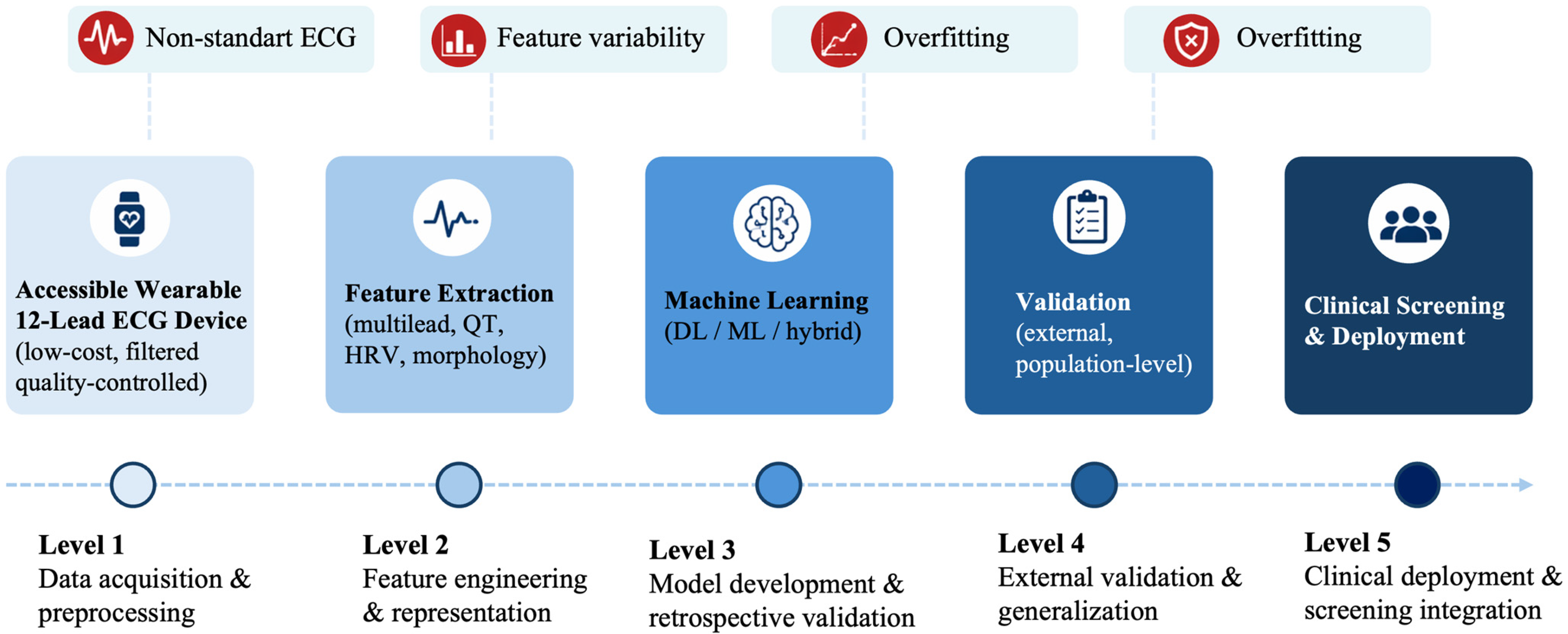
| Level | Operational Characteristics |
|---|---|
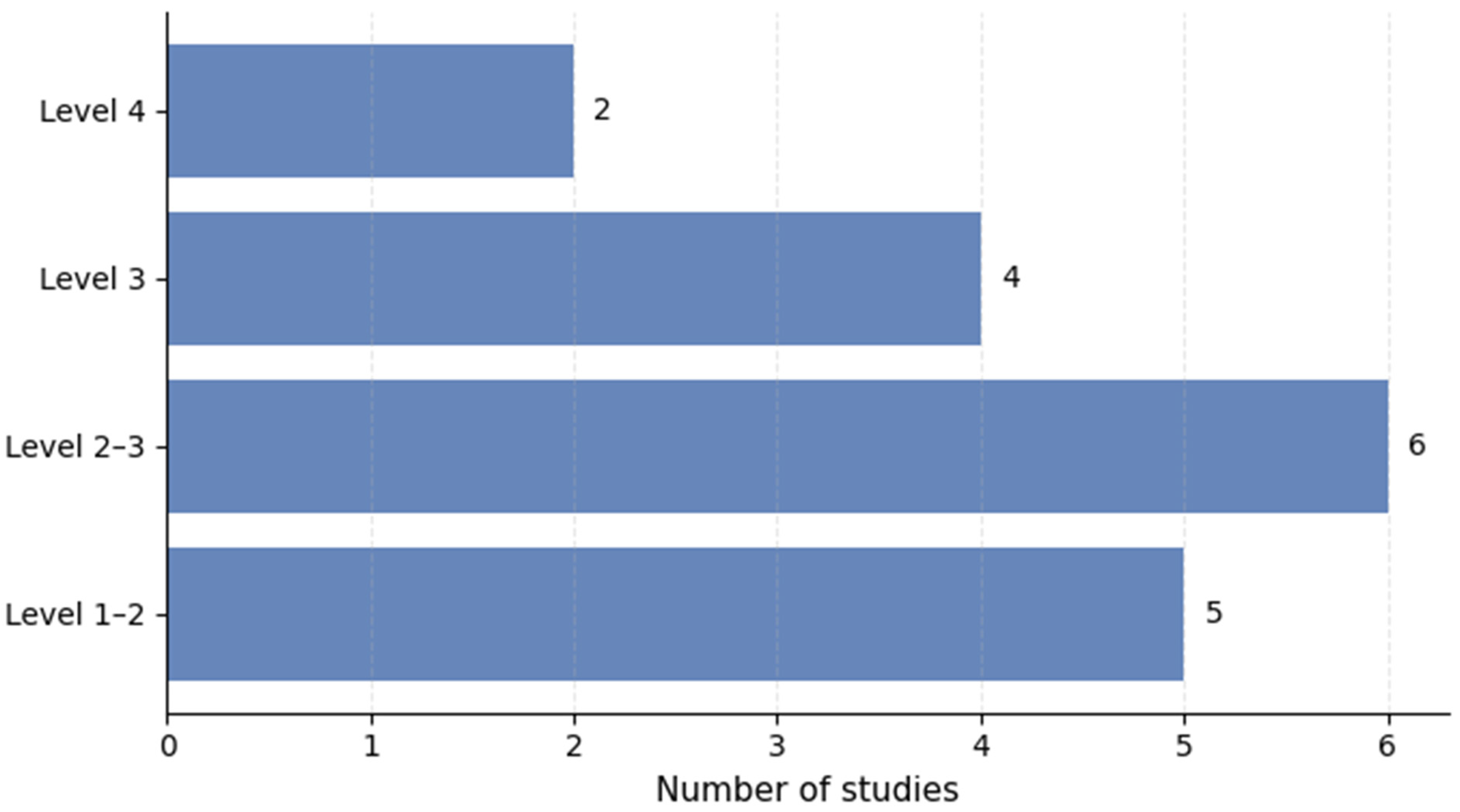
| Level 1 | Proof-of-concept studies with very small cohorts, highly controlled conditions, and no clinical validation |
| Level 2 | Early-stage ML development studies with internal validation only and limited dataset diversity |
| Level 3 | Retrospective clinical validation studies using larger or clinically structured datasets |
| Level 4 | Studies with external validation and/or large population-based cohorts approaching translational applicability |
| Level 5 | Prospective real-world clinical deployment or implementation studies |
| Study | Year | Signal | Dataset | ECG | N | Population | Marker | Design | Model | Performance | Limitations | Maturity |
|---|---|---|---|---|---|---|---|---|---|---|---|---|
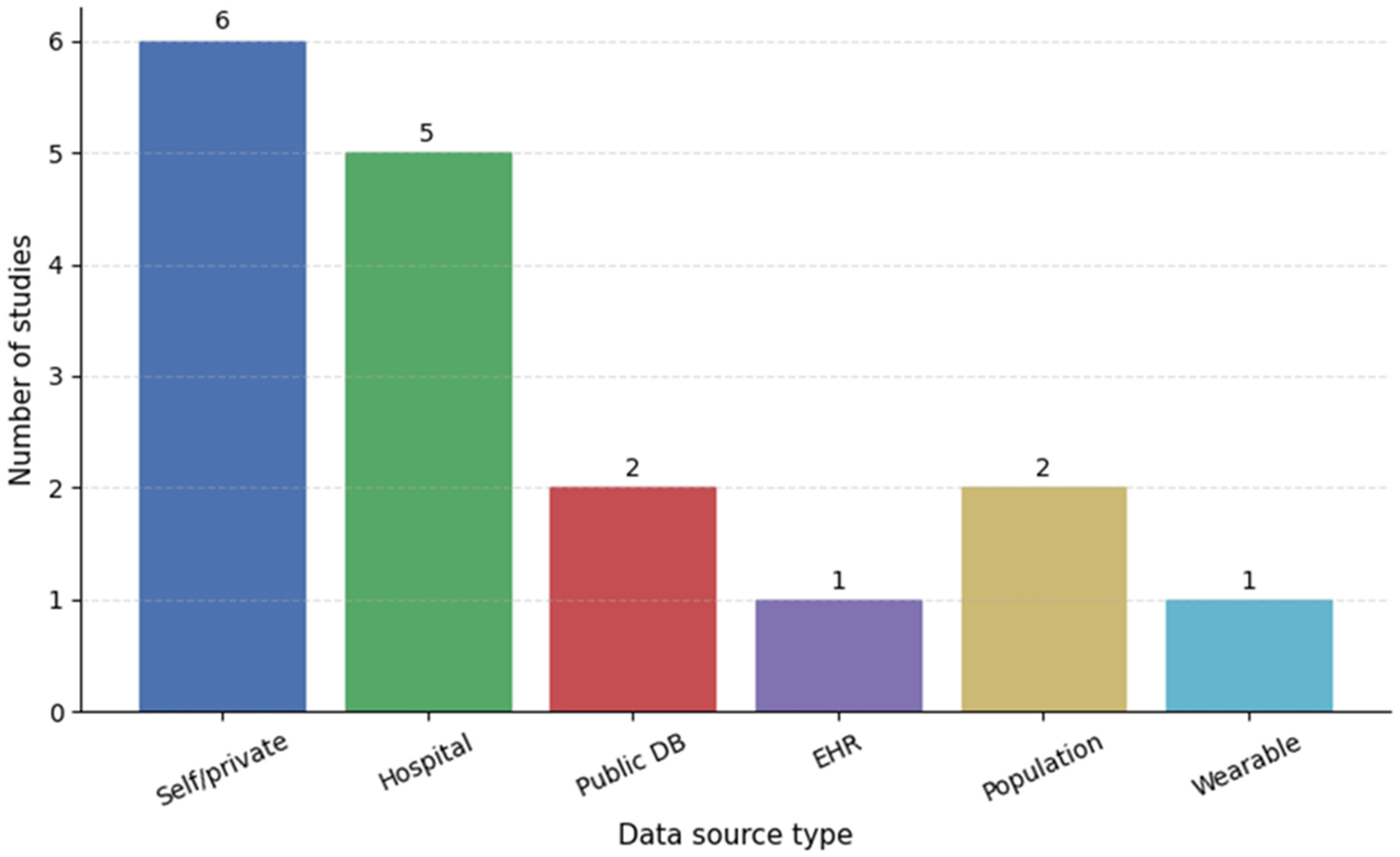
| [28] | 2021 | ECG | Outpatient cohort (hospital-based) | 12-lead, 500 Hz, 10 s; intervals (HR, PR, QRS, QT, QTc), axes (P, QRS, T) | 4832 | Non-DM, prediabetes, T2DM; mean duration ~4.7 y | HbA1c | Retrospective cohort (validated) | CNN-based DL (ResNet + SE + attention) | AUC 0.826; Sens 71.9%; Spec 77.7% | Moderate accuracy; reduced performance in severe DM; single-center | Level 3 (retrospective clinical validation) |
| [29] | 2023 | ECG | Ethnic cohort (Sindhi, India; high-risk families) | 12-lead, 10 s, 1000 Hz | 1262 (10,461 beats) | Mean age ~48 y; 61% female; high cardiometabolic burden | HbA1c, FPG, RBG | Observational; train/val/test split | XGBoost (best); compared with RF, MLP, LSTM, CNN, Transformer | Acc 96.8%; Prec 97.1%; Rec 96.2%; F1 96.6% | Selection bias; no external validation; beat-level analysis; limited generalizability | Level 2 (model development, internal validation) |
| [30] | 2022 | ECG | Private dataset (non-public) | Single-lead; 256 Hz; resting | 86 (24,630 segments) | 35 T2DM/51 healthy; age 20–70 y | Glucose (≥160 mg/dL) | Supervised classification | Decision Tree (DTC); compared with FT, MT, CT | Acc 86.9%; Sens 81.9%; Spec 90.6%; F1 82.8% | Small sample; no external validation; private dataset; limited generalizability | Level 2–3 (prototype; limited clinical validation) |
| [31] | 2021 | ECG | Private dataset (Taiwan; ECG + glucose) | Single-lead; 1000 Hz; 60 s | 1119 | Age 38–80 y; mixed glycemic status | Blood glucose (≥100 mg/dL) | Retrospective; binary classification; 80/20 sp lit + CV | Deep NN (10-layer); compared with LR, SVM | AUC 0.945; Sens 87.6%; Spec 85.0% | Private dataset; no external validation; sensitive to signal quality | Level 3 (advanced ML validation) |
| [32] | 2020 | ECG | Self-collected dataset | 3-electrode setup (wrist + ankles) | 24 (~1500 samples) | 10 diabetic/14 healthy | Clinical status (no HbA1c/glucose) | Experimental; 5-fold CV | SVM (cubic); compared with DT, LDA, NB, KNN | Acc 96.8% | Very small sample; no objective biomarkers; no external validation; high overfitting risk | Level 1–2 (proof-of-concept) |
| [33] | 2021 | ECG | Hospital-based dataset (wearable ECG) | Single-lead; 60 s segments | 370 (~317k segments) | T2DM only; mean age ~43.5 y | HbA1c | Retrospective; 5-fold CV | CNN-MFVW; compared with CNN, CNN-LSTM | Acc 90.2%; AUC 0.990; F1 0.901 | No control group; small cohort; no external validation; sensitive to preprocessing | Level 2–3 (model development; limited clinical validation) |
| [34] | 2021 | ECG | Self-collected experimental dataset | Single-lead; 1000 Hz | 21 (~22k segments) | Young adults; mixed glycemic status | Blood glucose (OGTT) | Prospective; 3-class classification | DBSCAN + CNN | Acc 81.7%; Sens 98.5%; Spec 76.8% | Very small sample; controlled setting; selection bias; no external validation | Level 2 (early-stage experimental study) |
| [35] | 2025 | ECG + clinical (multimodal) | Population-based cohort (Qatar Biobank) | 12-lead (clinical) | 2043 + 395 (test) | Middle Eastern; mean age ~46 y | HbA1c, FPG | Cross-sectional + longitudinal (5-year follow-up) | DNN (ECG-DiaNet; ECG + CRFs) | AUC 0.845 (multimodal); 0.822 (CRF); 0.675 (ECG) | No external validation; single-region cohort; small longitudinal test set | Level 3 (advanced clinical ML; longitudinal validation) |
| [36] | 2025 | HRV (ECG-derived) | Retrospective cohort (AFT lab, India) | Lead II; 1000 Hz; 5 min segments | 519 (261 T2DM/258 controls) | Age 18–55 y; no major comorbidities | FBG, PPBG, HbA1c | Retrospective; binary classification; 80/20 split | CatBoost (best); compared with LR, KNN, RF, GBM | Acc 91.3%; AUC 0.91; Sens 90.6%; Spec 91.9% | No external validation; controlled setting; HRV-only features; limited generalizability | Level 2–3 (validated ML model) |
| [37] | 2025 | ECG (engineered features) | Population-based cohort (Japan; external validation) | 12-lead; 10 s; 500 Hz | 16,766 + 2456 (external) | General population; higher risk in older subjects | FPG, HbA1c | Retrospective; internal + external validation | LightGBM (best); compared with LR, RF, XGBoost, DNN | AUC 0.851 (internal); 0.785 (external) | Feature-based (no raw ECG DL); moderate specificity; class imbalance | Level 4 (advanced clinical ML with external validation) |
| [38] | 2022 | ECG + demographics (multimodal) | EHR cohort (NYU Langone) | 12-lead; 10 s; 250–500 Hz | 25,951 (test); large training cohort | Outpatients; new-onset diabetes subgroup | HbA1c ≥ 6.5% | Retrospective; prediction; external validation | DL (ResNet); ECG + demographics | AUC 0.80 (model); 0.68 (risk score) | Selection bias; multimodal dependence; no real-world validation; data not public | Level 4 (advanced clinical ML; near-translational) |
| [39] | 2022 | ECG (image-based) | Hospital cohort (China; 3 centers) | 12-lead ECG images; 5 s | ~2914 | Middle-aged/elderly; high-risk | FPG, OGTT | Retrospective; binary classification; CV + test set | CNN (JGRNet); compared with AlexNet, GoogleNet, SVM | Acc 0.781; AUC 0.777 | Image-based ECG (information loss); no external validation; moderate performance | Level 2–3 (early DL with internal validation) |
| [40] | 2023 | Multimodal (ECG + glucose + ACC + respiration) | DINAMO wearable dataset (free-living) | Wearable ECG; 250 Hz; continuous (~4 days) | 29 (20 healthy/9 diabetic) | Mixed cohort; continuous monitoring | Continuous glucose | Experimental; supervised classification | XGBoost (best); compared with LR, DT, RF, SVM | Acc 98.2% (multimodal); ~87.5% (ECG only) | Very small sample; uses glucose input; no external validation; high overfitting risk | Level 1–2 (exploratory multimodal study) |
| [41] | 2024 | ECG (high-density) | Private dataset (self-collected) | HD-ECG (up to 98 leads) | 50 | Healthy volunteers | Not specified | Experimental; supervised classification | CNN (HD-MVCNN) | Acc 99.0%; F1 94.5% | No glycemic ground truth; unclear labels; small sample; unrealistic setup (98 leads); no validation | Level 1 (concept study) |
| [42] | 2023 | ECG | MIMIC-III (ICU subset) | Single-lead; 125 Hz; 1 s windows | 50 | ICU patients; median age 64 y | Blood glucose | Retrospective; personalized classification | One-class SVM | AUC 0.92 (beat); 0.97 (10 s) | ICU-only cohort; small sample; personalized model; no external validation | Level 3 (advanced ML validation) |
| [43] | 2017 | HRV (RR-interval) | Public dataset (PhysioNet) | RR intervals (QRS-based) | 50 (33 normal/17 diabetic) | Not specified | Not reported | Supervised classification | SVM | Acc ~95% | Very small sample; no glycemic markers; unclear labels; no external validation | Level 2 (early-stage study) |
| [44] | 2024 | HRV (ECG-derived) | Hospital cohort (Korea; prospective) | Wearable ECG; 250 Hz | 83 → 21 (final) | T2DM only; elderly (mean ~69 y) | Continuous glucose | Observational; temporal prediction | 1D CNN (ResNet-like; HRV input) | Acc 90.5%; Sens 87.5%; Spec 92.7% | Very small final cohort; no control group; HRV-only; no external validation | Level 3 (clinical ML validation) |
| Domain | Key Finding | Strengths | Limitations | Required Improvement |
|---|---|---|---|---|
| Data characteristics | ECG-based dysglycemia detection is feasible across multiple datasets | Large-scale studies demonstrate predictive potential | Most studies rely on small, single-center datasets; limited diversity | Large, multi-center, population-level datasets |
| ECG acquisition | Signal characteristics strongly influence model performance | Multilead ECG provides richer physiological information | Heterogeneous acquisition protocols; frequent use of single-lead ECG | Standardized, wearable multilead ECG systems |
| Feature representation | Both engineered and deep features capture relevant information | HRV and repolarization features show physiological relevance | Lack of standardization; inconsistent preprocessing | Hybrid feature frameworks with standardized pipelines |
| Machine learning models | ML and DL models achieve high performance under controlled conditions | CNN, boosting models show strong results | Performance depends on dataset rather than model; limited interpretability | Robust, interpretable models validated across datasets |
| Model performance | High reported accuracy in many studies | Strong results in experimental settings | Overfitting, optimistic bias, poor comparability | Standardized evaluation metrics and protocols |
| Validation strategy | Validation is a key bottleneck | Some studies include external validation | Most rely on internal validation; data leakage risk | External and prospective validation |
| Model maturity | Majority of studies at early/intermediate levels | Emerging Level 3–4 studies | Limited translational readiness | Maturity-driven development frameworks |
| Clinical applicability | ECG has potential for non-invasive screening | Scalable and low-cost modality | No real-world deployment; lack of screening studies | Integration into clinical workflows and screening programs |
| System integration | End-to-end systems are required | Advances in wearable ECG devices | Fragmented pipelines; lack of standardization | Integrated acquisition–ML–validation systems |
| Maturity Level | General Characteristics | Validation Status | Dataset Requirements | Translational Meaning |
|---|---|---|---|---|
| Level 1 | Proof-of-concept/exploratory study | Internal only or absent | Small, highly selective cohorts | Technical feasibility only |
| Level 2 | Initial model development | Cross-validation/train–test split | Single-center datasets | Early methodological evidence |
| Level 3 | Clinical ML validation | Independent test set, structured retrospective evaluation | Larger clinical datasets | Moderate translational potential |
| Level 4 | Advanced clinical validation | External validation across cohorts | Multi-center/population-based datasets | Near-translational readiness |
| Level 5 | Real-world deployment | Prospective and implementation evaluation | Representative screening populations | Clinically deployable screening system |
Disclaimer/Publisher’s Note: The statements, opinions and data contained in all publications are solely those of the individual author(s) and contributor(s) and not of MDPI and/or the editor(s). MDPI and/or the editor(s) disclaim responsibility for any injury to people or property resulting from any ideas, methods, instructions or products referred to in the content. |
© 2026 by the authors. Licensee MDPI, Basel, Switzerland. This article is an open access article distributed under the terms and conditions of the Creative Commons Attribution (CC BY) license.
Share and Cite
Alimbayeva, Z.; Alimbayev, C.; Ozhikenov, K.; Ozhikenova, A.; Shylmyrza, U.; Khaidarova, K. A Structured Critical Review of Machine Learning Approaches for ECG-Based Detection of Dysglycemia and Their Translational Readiness. Appl. Sci. 2026, 16, 5359. https://doi.org/10.3390/app16115359
Alimbayeva Z, Alimbayev C, Ozhikenov K, Ozhikenova A, Shylmyrza U, Khaidarova K. A Structured Critical Review of Machine Learning Approaches for ECG-Based Detection of Dysglycemia and Their Translational Readiness. Applied Sciences. 2026; 16(11):5359. https://doi.org/10.3390/app16115359
Chicago/Turabian StyleAlimbayeva, Zhadyra, Chingiz Alimbayev, Kassymbek Ozhikenov, Aiman Ozhikenova, Ussen Shylmyrza, and Kymbat Khaidarova. 2026. "A Structured Critical Review of Machine Learning Approaches for ECG-Based Detection of Dysglycemia and Their Translational Readiness" Applied Sciences 16, no. 11: 5359. https://doi.org/10.3390/app16115359
APA StyleAlimbayeva, Z., Alimbayev, C., Ozhikenov, K., Ozhikenova, A., Shylmyrza, U., & Khaidarova, K. (2026). A Structured Critical Review of Machine Learning Approaches for ECG-Based Detection of Dysglycemia and Their Translational Readiness. Applied Sciences, 16(11), 5359. https://doi.org/10.3390/app16115359