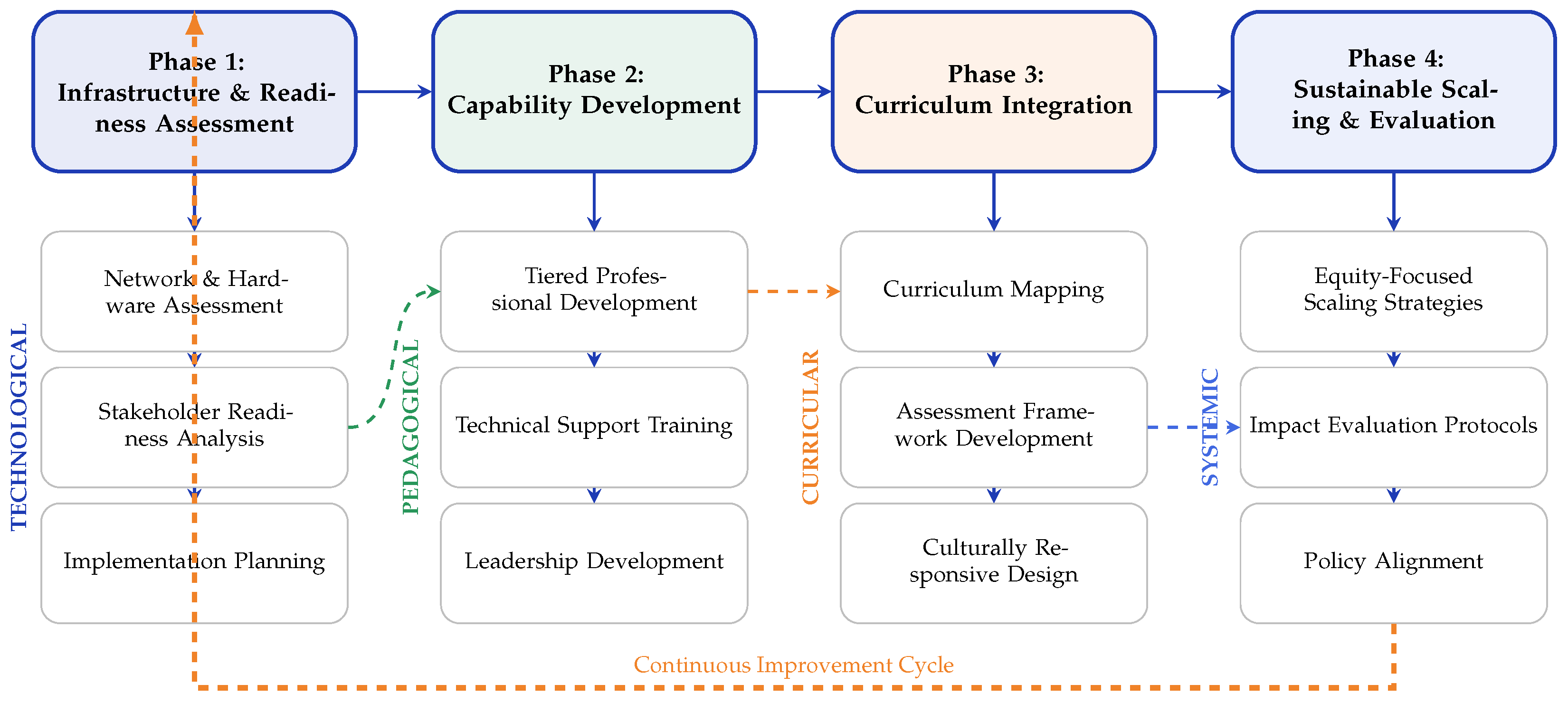
Human-Centered XR Integration for STEM Education in New Zealand: A Systematic Review and Implementation Framework



Abstract
1. Introduction
2. Methodology
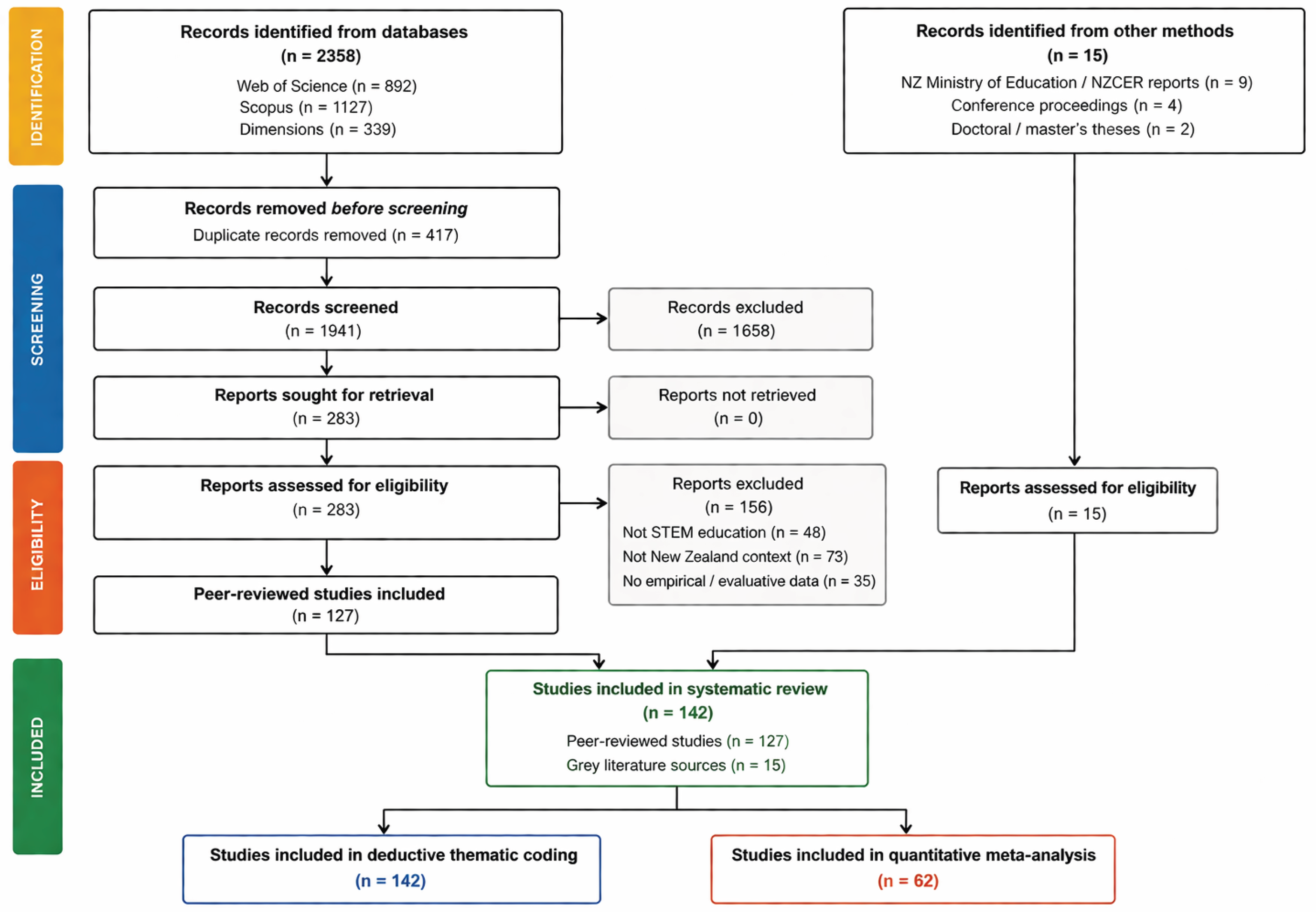
2.1. Selection Process
2.2. Data Collection Process
2.3. Grey Literature Search
2.4. Risk of Bias Assessment
2.5. Effect Measure Justification
2.6. Synthesis Methods
3. Results
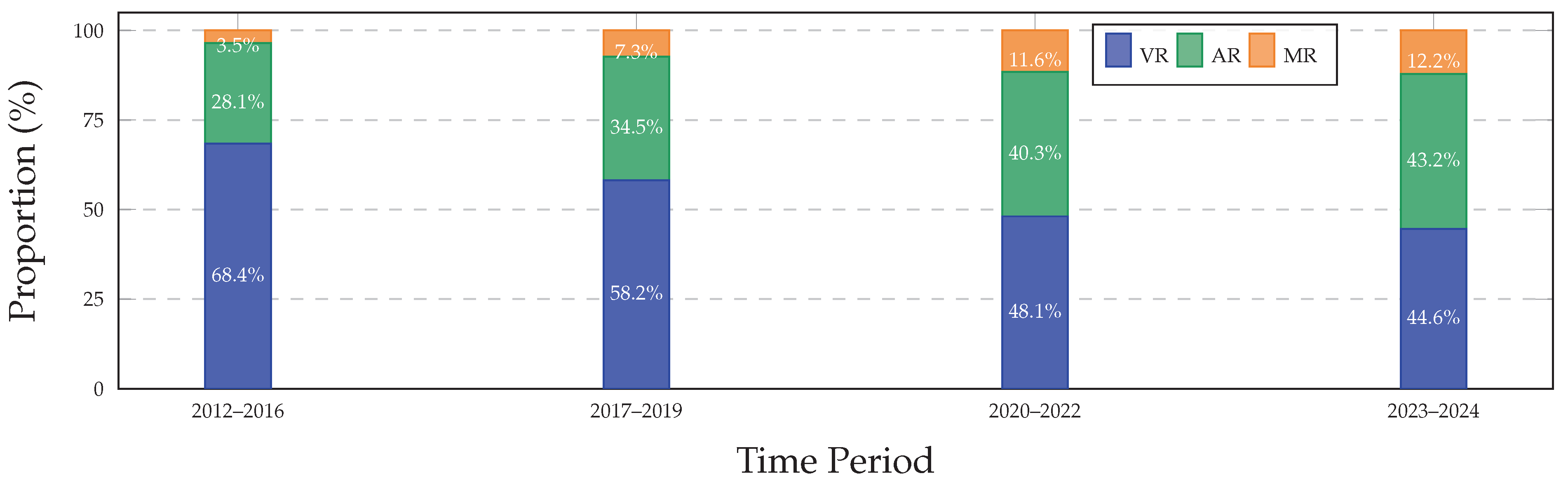
3.1. Bibliometric Analysis
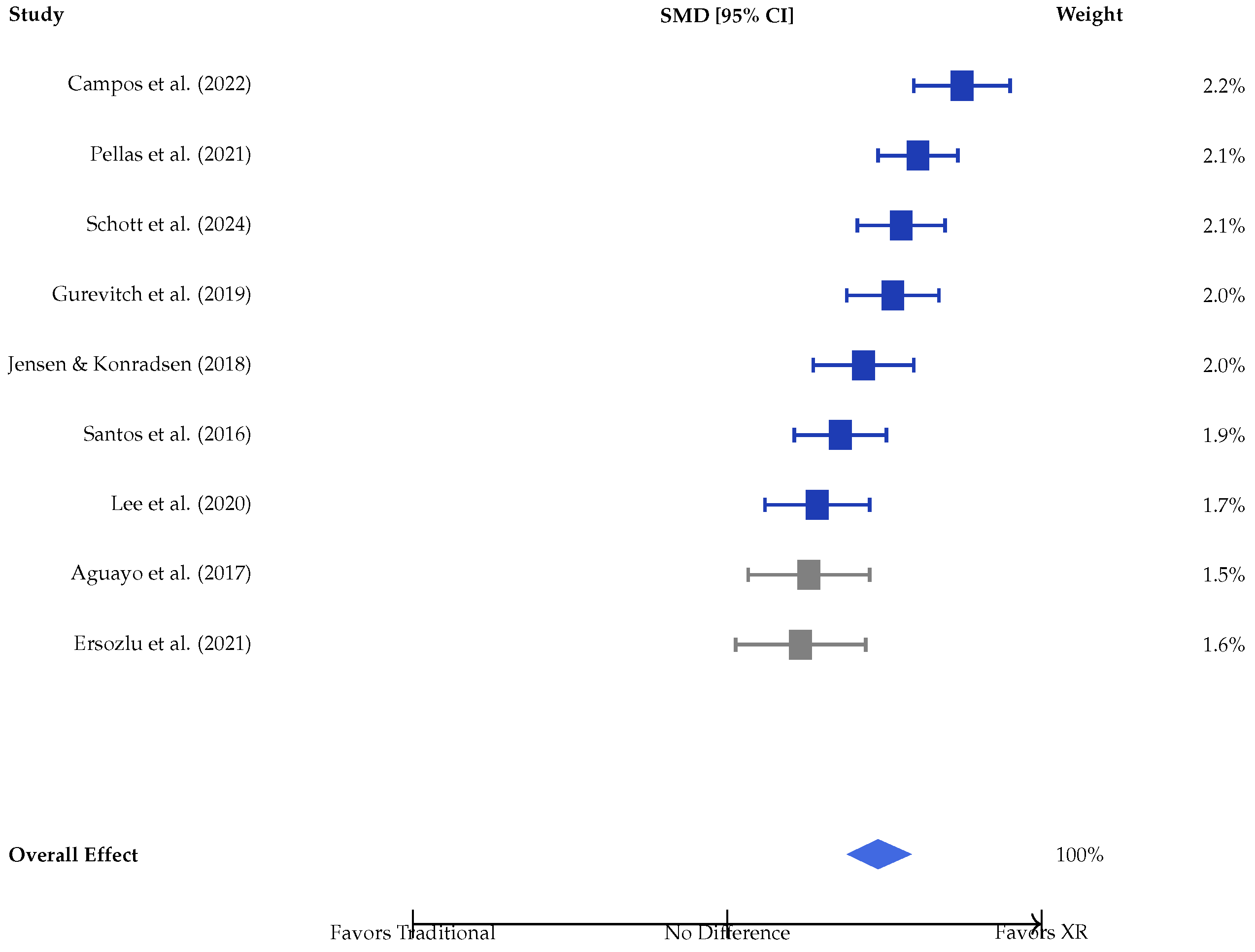
3.2. Meta-Analysis of Learning Outcomes
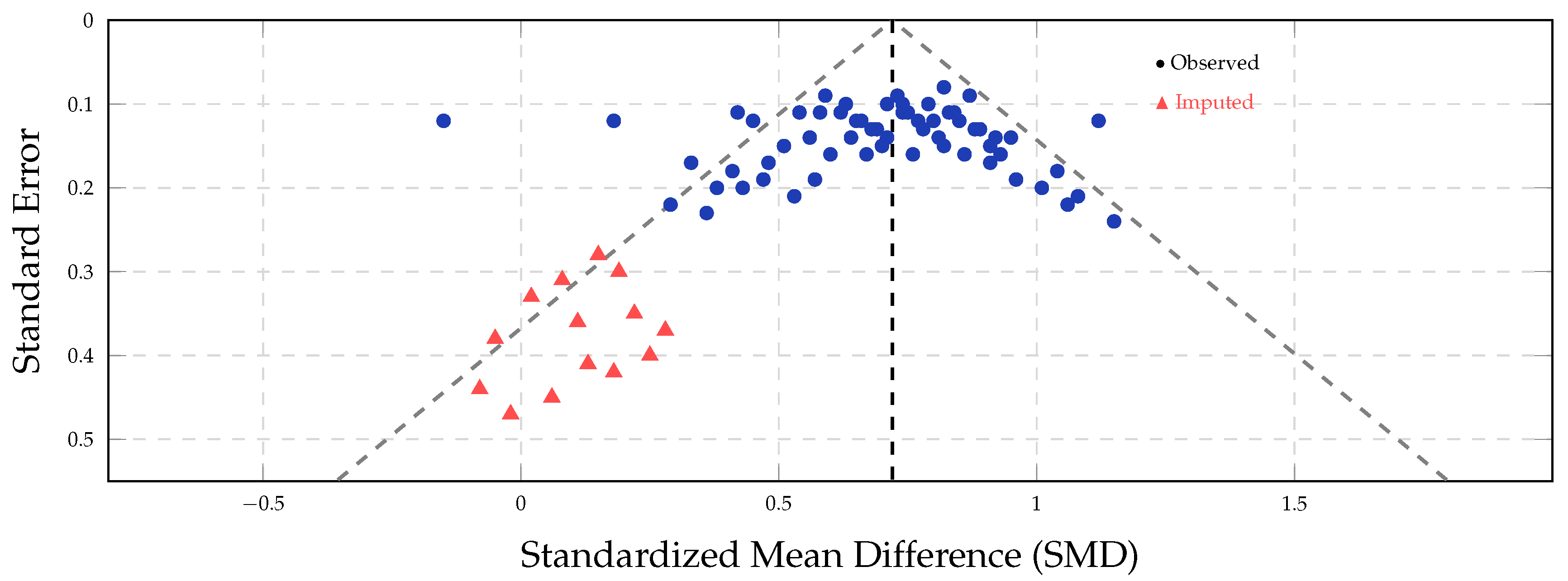
3.3. Sensitivity Analysis
3.4. Qualitative Thematic Analysis
3.5. Case Studies
3.6. Methodological Quality Assessment
4. Proposed Implementation Framework
5. Discussion
5.1. Theoretical Implications
5.2. Practical Implications
5.3. Limitations and Research Gaps
6. Conclusions
Supplementary Materials
Author Contributions
Funding
Institutional Review Board Statement
Informed Consent Statement
Data Availability Statement
Conflicts of Interest
References
- Tene, T.; Tixi, J.A.M.; Robalino, M.d.P.; Salazar, M.J.M.; Gomez, C.V.; Bellucci, S. Integrating immersive technologies with STEM education: A systematic review. Front. Educ. 2024, 9, 1410163. [Google Scholar] [CrossRef]
- Burke, D.; Crompton, H.; Nickel, C. The use of extended reality (XR) in higher education: A systematic review. TechTrends 2025, 69, 998–1011. [Google Scholar] [CrossRef]
- Chen, C.-H.; Hung, H.-Y.; Yeh, H.-C. Augmented reality in K–12 education: A systematic review and meta-analysis of the literature from 2000 to 2020. Sustainability 2022, 14, 9725. [Google Scholar] [CrossRef]
- Radianti, J.; Majchrzak, T.A.; Fromm, J.; Wohlgenannt, I. A systematic review of immersive virtual reality applications for higher education: Design elements, lessons learned, and a research agenda. Comput. Educ. 2020, 147, 103778. [Google Scholar] [CrossRef]
- Milgram, P.; Kishino, F. A taxonomy of mixed reality visual displays. IEICE Trans. Inf. Syst. 1994, E77-D, 1321–1329. [Google Scholar]
- Speicher, M.; Hall, B.D.; Nebeling, M. What is mixed reality? In Proceedings of the 2019 CHI Conference Human Factors in Computing Systems, Glasgow, UK, 4–9 May 2019; pp. 1–15. [Google Scholar] [CrossRef]
- Garzón, J.; Acevedo, J. Meta-analysis of the impact of augmented reality on students’ learning gains. Educ. Res. Rev. 2019, 27, 244–260. [Google Scholar] [CrossRef]
- Wang, X.; Young, G.W.; Iqbal, M.Z.; Guckin, C.M. The potential of extended reality in rural education’s future—Perspectives from rural educators. Educ. Inf. Technol. 2024, 29, 8987–9011. [Google Scholar] [CrossRef]
- Makransky, G.; Petersen, G.B. The cognitive affective model of immersive learning (CAMIL): A theoretical research-based model of learning in immersive virtual reality. Educ. Psychol. Rev. 2021, 33, 937–958. [Google Scholar] [CrossRef]
- Mann, S.; Furness, T.; Yuan, Y.; Iorio, J.; Wang, Z. All reality: Virtual, augmented, mixed (X); mediated (X,Y); multimediated reality. arXiv 2018, arXiv:1804.08386. [Google Scholar]
- Dunleavy, M.; Dede, C. Augmented reality teaching and learning. In Handbook of Research on Educational Communications and Technology; Spector, J.M., Merrill, M.D., Elen, J., Bishop, M.J., Eds.; Springer: New York, NY, USA, 2014; pp. 735–745. [Google Scholar] [CrossRef]
- Flavián, C.; Ibáñez-Sánchez, S.; Orús, C. The impact of virtual, augmented and mixed reality technologies on the customer experience. J. Bus. Res. 2019, 100, 547–560. [Google Scholar] [CrossRef]
- New Zealand Ministry of Education. Digital technologies: Hangarau Matihiko. The New Zealand Curriculum, 2017. Available online: https://nzcurriculum.tki.org.nz/ (accessed on 15 March 2025).
- New Zealand Ministry of Education. The New Zealand Curriculum for English-Medium Teaching and Learning in Years 1–13; Learning Media: Wellington, New Zealand, 2007. [Google Scholar]
- Bolstad, R.; Gilbert, J.; McDowall, S.; Bull, A.; Boyd, S.; Hipkins, R. Supporting Future-Oriented Learning and Teaching—A New Zealand Perspective; New Zealand Council for Educational Research: Wellington, New Zealand, 2012. [Google Scholar]
- Kerr, B.; Averill, R. Culturally sustaining assessment for indigenous learners in Aotearoa New Zealand: Drawing from policy, research, and educator voices. Teach. Teach. Educ. 2024, 145, 104567. [Google Scholar] [CrossRef]
- Stewart, G.; Hipkins, R. Epistemic agency, indigenous knowledge, and the school science curriculum: Reflections from Aotearoa New Zealand. Int. J. Sci. Educ. 2024, 46, 1986–2002. [Google Scholar] [CrossRef]
- Johnston, K. Building indigenous knowledge: Exploring the pedagogy of Māori knowledge in the digital computing information technology tertiary sector of New Zealand. J. Contemp. Issues Educ. 2022, 17, 18–31. [Google Scholar] [CrossRef]
- Hipkins, R.; Cowie, B.; Boyd, R.; Keown, C. Enduring Competencies for Designing Science Learning Pathways; New Zealand Council for Educational Research: Wellington, New Zealand, 2022. [Google Scholar]
- Yang, C.; Zhang, J.; Hu, Y.; Yang, X.; Chen, M.; Shan, M.; Li, L. The impact of virtual reality on practical skills for students in science and engineering education: A meta-analysis. Int. J. STEM Educ. 2024, 11, 28. [Google Scholar] [CrossRef]
- Pellas, N.; Mystakidis, S.; Kazanidis, T. Immersive virtual reality in K-12 and higher education: A systematic review of the last decade scientific literature. Virtual Real. 2021, 25, 835–861. [Google Scholar] [CrossRef]
- Crogman, H.T.; Cano, V.D.; Pacheco, E.; Sonawane, R.B.; Boroon, R. Virtual reality, augmented reality, and mixed reality in experiential learning: Transforming educational paradigms. Educ. Sci. 2025, 15, 303. [Google Scholar] [CrossRef]
- Ironsi, C.S. Examining the impact of augmented reality on students’ learning outcomes. Sci. Rep. 2025, 15, 36401. [Google Scholar] [CrossRef]
- Lin, X.P.; Li, B.B.; Yao, Z.N.; Yang, Z.; Zhang, M. The impact of virtual reality on student engagement in the classroom—A critical review of the literature. Front. Psychol. 2024, 15, 1360574. [Google Scholar] [CrossRef] [PubMed]
- Garzón, J.; Pavón, J.; Baldiris, S. Ten years of augmented reality in education: A meta-analysis of (quasi-) experimental studies to investigate the impact. Comput. Educ. 2022, 191, 104641. [Google Scholar] [CrossRef]
- Howard, M.C. A meta-analysis of augmented reality programs for education and training. Virtual Real. 2023, 27, 2887–2907. [Google Scholar] [CrossRef]
- Merchant, Z.; Goetz, E.T.; Cifuentes, L.; Keeney-Kennicutt, W.; Davis, T.J. Effectiveness of virtual reality-based instruction on students’ learning outcomes in K-12 and higher education: A meta-analysis. Comput. Educ. 2014, 70, 29–40. [Google Scholar] [CrossRef]
- Christopoulos, A.; Mystakidis, S.; Kurczaba, J.; Laakso, M.J.; Stylios, C. Is immersion in 3D virtual games associated with mathematical ability improvement in game-based learning? Int. J. Sci. Math. Educ. 2024, 22, 1479–1499. [Google Scholar] [CrossRef]
- Lai, J.W.; Cheong, K.H. Adoption of virtual and augmented reality for mathematics education: A scoping review. IEEE Access 2022, 10, 13693–13703. [Google Scholar] [CrossRef]
- Mystakidis, S.; Christopoulos, A.; Pellas, N. A systematic mapping review of augmented reality applications to support STEM learning in higher education. Educ. Inf. Technol. 2022, 27, 1883–1927. [Google Scholar] [CrossRef]
- Lin, K.-Y.; Fan, S.-C.; Lu, C.-J. Virtual reality and augmented reality-supported K-12 STEM learning: Trends, advantages and challenges. Educ. Inf. Technol. 2025, 30, 3971–4005. [Google Scholar] [CrossRef]
- Pellas, N.; Dengel, A.; Christopoulos, R. Virtual and augmented reality in science, technology, engineering, and mathematics (STEM) education: An umbrella review. Information 2024, 15, 515. [Google Scholar] [CrossRef]
- Huang, T.-C.; Tseng, H.-P. Extended reality in applied sciences education: A systematic review. Appl. Sci. 2025, 15, 4038. [Google Scholar] [CrossRef]
- Balalle, H. Learning beyond realities: Exploring virtual reality, augmented reality, and mixed reality in higher education: A systematic literature review. Discov. Educ. 2025, 4, 151. [Google Scholar] [CrossRef]
- Makransky, G.; Lilleholt, L. A structural equation modeling investigation of the emotional value of immersive virtual reality in education. Educ. Technol. Res. Dev. 2018, 66, 1141–1164. [Google Scholar] [CrossRef]
- Meccawy, M. Teachers’ prospective attitudes towards the adoption of extended reality technologies in the classroom: Interests and concerns. Smart Learn. Environ. 2023, 10, 36. [Google Scholar] [CrossRef]
- Nikou, S.A.; Koutromanos, G.; Mikropoulos, A.T. Exploring teachers’ competences to integrate augmented reality in education: Results from an international study. TechTrends 2025, 69, 189–205. [Google Scholar] [CrossRef]
- Ripsam, M.I.E.; Nerdel, C. Augmented reality in the science classroom—Implementing pre-service teacher training in the competency area of simulation and modeling according to the DiKoLAN framework. Educ. Sci. 2023, 13, 1016. [Google Scholar] [CrossRef]
- New Zealand Government. Digital Strategy for Aotearoa; Ministry of Business, Innovation & Employment: Wellington, New Zealand, 2022. Available online: https://www.digital.govt.nz/ (accessed on 15 March 2025).
- Chiang, Y.-C.; Liu, S.-C. The effects of extended reality technologies in STEM education on students’ learning response and performance. J. Balt. Sci. Educ. 2023, 22, 568–578. [Google Scholar] [CrossRef]
- Wu, B.; Yu, X.; Gu, X. Effectiveness of immersive virtual reality using head-mounted displays on learning performance: A meta-analysis. Br. J. Educ. Technol. 2020, 51, 1991–2005. [Google Scholar] [CrossRef]
- Villena-Taranilla, F.; Tirado-Olivares, R.; Cózar-Gutiérrez, R.; González-Calero, J.A. Effects of virtual reality on learning outcomes in K-6 education: A meta-analysis. Educ. Res. Rev. 2022, 35, 100434. [Google Scholar] [CrossRef]
- Ibáñez-Sánchez, S.; Orús, C.; Flavián, C. Augmented reality filters on social media: Analyzing the drivers of playability based on uses and gratifications theory. Psychol. Mark. 2022, 39, 559–578. [Google Scholar] [CrossRef]
- Parong, J.; Mayer, R.E. Cognitive and affective processes for learning science in immersive virtual reality. J. Comput. Assist. Learn. 2021, 37, 226–241. [Google Scholar] [CrossRef]
- Dengel, A.; Mägdefrau, J. Immersive learning explored: Subjective and objective factors influencing learning outcomes in immersive educational virtual environments. In Proceedings of the 2018 IEEE International Conference on Teaching, Assessment, and Learning for Engineering (TALE), Wollongong, Australia, 4–7 December 2018; IEEE: Piscataway, NJ, USA, 2018; pp. 608–615. [Google Scholar] [CrossRef]
- Klingenberg, S.; Jørgensen, M.L.; Dandanell, G.; Skriver, K.; Mottelson, A.; Makransky, G. Investigating the effect of teaching as a generative learning strategy when learning through desktop and immersive VR: A media and methods experiment. Br. J. Educ. Technol. 2020, 51, 2115–2138. [Google Scholar] [CrossRef]
- Lowell, V.L.; Tagare, K.M. Varying cognitive load in a virtual reality science lab simulation. J. Comput. Assist. Learn. 2023, 39, 595–608. [Google Scholar] [CrossRef]
- Bower, M.; Howe, C.; McCredie, N.; Robinson, A.; Grover, D. Augmented reality in education—Cases, places and potentials. Educ. Media Int. 2014, 51, 1–15. [Google Scholar] [CrossRef]
- Southgate, E.; Smith, S.P.; Cividino, C.; Saxby, S.; Kilham, J.; Eather, G.; Scevak, J.; Summerville, D.; Buchanan, R.; Berber, C.L. Embedding immersive virtual reality in classrooms: Ethical, organisational and educational lessons in bridging research and practice. Int. J. Child-Comput. Interact. 2019, 19, 19–29. [Google Scholar] [CrossRef]
- Fowler, C. Virtual reality and learning: Where is the pedagogy? Br. J. Educ. Technol. 2015, 46, 412–422. [Google Scholar] [CrossRef]
- Radianti, J.; Fromm, J.; Majchrzak, T.A.; Gerhard, R. How to design effective immersive virtual reality learning environments: A systematic literature review. Educ. Inf. Technol. 2023, 28, 14933–14966. [Google Scholar] [CrossRef]
- Petersen, G.B.; Klingenberg, S.; Mayer, R.E.; Makransky, G. The virtual field trip: Investigating how to optimize immersive virtual learning in climate change education. Br. J. Educ. Technol. 2020, 51, 2098–2114. [Google Scholar] [CrossRef]
- Hwang, G.-J.; Chien, S.-Y. Definition roles, and potential research issues of the metaverse in education: An artificial intelligence perspective. Comput. Educ. Artif. Intell. 2022, 3, 100082. [Google Scholar] [CrossRef]
- Johnson-Glenberg, M.C. Immersive VR and education: Embodied design principles that include gesture and hand controls. Front. Robot. AI 2018, 5, 81. [Google Scholar] [CrossRef] [PubMed]
- Suh, A.; Prophet, J. The state of immersive technology research: A literature analysis. Comput. Hum. Behav. 2018, 86, 77–90. [Google Scholar] [CrossRef]
- Makransky, G.; Terkildsen, T.S.; Mayer, R.E. Adding immersive virtual reality to a science lab simulation causes more presence but less learning. Learn. Instr. 2019, 60, 225–236. [Google Scholar] [CrossRef]
- Rojas-Sánchez, M.A.; Palos-Sánchez, P.R.; Folgado-Fernández, J.A. Systematic literature review and bibliometric analysis on virtual reality and education. Educ. Inf. Technol. 2023, 28, 155–192. [Google Scholar] [CrossRef] [PubMed]
- Makransky, G.; Mayer, R.E. Benefits of taking a virtual field trip in immersive virtual reality: Evidence for the immersion principle in multimedia learning. Educ. Psychol. Rev. 2022, 34, 1771–1798. [Google Scholar] [CrossRef]
- Makransky, G.; Petersen, G.B. Immersive virtual reality and presence: A learning perspective. Educ. Psychol. Rev. 2017, 29, 1–20. [Google Scholar]
- Parong, J.; Mayer, R.E. Learning science in immersive virtual reality. J. Educ. Psychol. 2018, 110, 785–797. [Google Scholar] [CrossRef]
- Ferdinand, J.; Soller, S.; Hahn, J.-U.; Parong, J.; Göllner, R. Enhancing the effectiveness of virtual reality in science education through an experimental intervention involving students’ perceived usefulness of virtual reality. Technol. Mind Behav. 2023, 4, 1. [Google Scholar] [CrossRef]
- Elme, L.; Jørgensen, M.L.M.; Dandanell, G.; Mottelson, A.; Makransky, G. Immersive virtual reality in STEM: Is IVR an effective learning medium and does adding self-explanation after a lesson improve learning outcomes? Educ. Technol. Res. Dev. 2022, 70, 1601–1626. [Google Scholar] [CrossRef]
- Radianti, J.; Majchrzak, T.A.; Fromm, J.; Stieglitz, S.; Vom Brocke, J. Virtual reality applications for higher education: A market analysis. In Proceedings of the 54th Hawaii International Conference on System Sciences (HICSS-54), Online, 4–9 January 2021. [Google Scholar]
- Ibáñez, M.B.; Delgado-Kloos, C. Augmented reality for STEM learning: A systematic review. Comput. Educ. 2018, 123, 109–123. [Google Scholar] [CrossRef]
- Santos, M.E.C.; Lübke, A.I.W.; Taketomi, T.; Yamamoto, G.; Rodrigo, M.M.T.; Sandor, C.; Kato, H. Augmented reality as multimedia: The case for situated vocabulary learning. Res. Pract. Technol. Enhanc. Learn. 2016, 11, 1. [Google Scholar] [CrossRef] [PubMed]
- Hsu, T.-C. Learning English with augmented reality: Do learning styles matter? Comput. Educ. 2017, 106, 137–149. [Google Scholar] [CrossRef]
- Bacca, J.; Baldiris, S.; Fabregat, R.; Graf, S.; Kinshuk. Augmented reality trends in education: A systematic review. Educ. Technol. Soc. 2014, 17, 133–149. [Google Scholar]
- Yilmaz, R. Augmented reality trends in education. Educ. Sci. Theory Pract. 2018, 18, 1–25. [Google Scholar]
- Chiang, T.H.C.; Yang, S.J.H.; Hwang, G.-J. An augmented reality-based mobile learning system to improve students’ learning achievements and motivations in natural science inquiry activities. Educ. Technol. Soc. 2014, 17, 352–365. [Google Scholar]
- Akçayır, M.; Akçayır, G. Advantages and challenges associated with augmented reality for education: A systematic review of the literature. Educ. Res. Rev. 2017, 20, 1–11. [Google Scholar] [CrossRef]
- Wu, H.-K.; Lee, S.W.-Y.; Chang, H.-Y.; Liang, J.-C. Current status, opportunities, and challenges of augmented reality in education. Comput. Educ. 2013, 62, 41–49. [Google Scholar] [CrossRef]
- Mishra, P.; Koehler, M.J. Technological pedagogical content knowledge: A framework for teacher knowledge. Teach. Coll. Rec. 2006, 108, 1017–1054. [Google Scholar] [CrossRef]
- Petko, D.; Mishra, P.; Koehler, M.J. TPACK in context: An updated model. Comput. Educ. Open 2025, 8, 100244. [Google Scholar] [CrossRef]
- Peikos, G.; Sofianidis, A. What is the future of augmented reality in science teaching and learning? An exploratory study on primary and pre-school teacher students’ views. Educ. Sci. 2024, 14, 480. [Google Scholar] [CrossRef]
- Wang, T.; Zhao, Z.; Li, Y. Teachers’ AI-TPACK: Exploring the relationship between knowledge elements. Sustainability 2024, 16, 978. [Google Scholar] [CrossRef]
- Page, M.J.; McKenzie, J.E.; Bossuyt, P.M.; Boutron, I.; Hoffmann, T.C.; Mulrow, C.D.; Shamseer, L.; Tetzlaff, J.M.; Akl, E.A.; Brennan, S.E.; et al. The PRISMA 2020 statement: An updated guideline for reporting systematic reviews. BMJ 2021, 372, n71. [Google Scholar] [CrossRef]
- Iqbal, M.F.B.; Tran, K.; Yan, W.Q.; Abraham, H.; Nguyen, M. Human-Centered XR Integration for STEM Education in New Zealand: A Systematic Review and Implementation Framework. INPLASY Protocol 202630113. 2026. Available online: https://inplasy.com/inplasy-2026-3-0113/ (accessed on 30 March 2026).
- Luo, H.; Li, G.; Feng, Q.; Yang, Y.; Zuo, M. Virtual reality in K-12 and higher education: A systematic review of the literature from 2000 to 2019. J. Comput. Assist. Learn. 2021, 37, 887–901. [Google Scholar] [CrossRef]
- Furukawa, T.A.; Barbui, C.; Cipriani, A.; Brambilla, P.; Watanabe, N. Imputing missing standard deviations in meta-analyses can provide accurate results. J. Clin. Epidemiol. 2006, 59, 7–10. [Google Scholar] [CrossRef]
- Hong, Q.N.; Pluye, P.; Fàbregues, S.; Bartlett, G.; Boardman, F.; Cargo, M.; Dagenais, P. Mixed Methods Appraisal Tool (MMAT), Version 2018: User Guide; McGill University: Montreal, QC, Canada, 2018; Available online: http://mixedmethodsappraisaltoolpublic.pbworks.com/ (accessed on 15 March 2025).
- Sawilowsky, S.S. New effect size rules of thumb. J. Mod. Appl. Stat. Methods 2009, 8, 597–599. [Google Scholar] [CrossRef]
- Viechtbauer, W. Conducting meta-analyses in R with the metafor package. J. Stat. Softw. 2010, 36, 1–48. [Google Scholar] [CrossRef]
- Damschroder, L.J.; Aron, D.C.; Keith, R.E.; Kirsh, S.R.; Alexander, J.A.; Lowery, J.C. Fostering implementation of health services research findings into practice: A consolidated framework for advancing implementation science. Implement. Sci. 2009, 4, 50. [Google Scholar] [CrossRef]
- Chi, M.T.H.; Wylie, R. The ICAP framework: Linking cognitive engagement to active learning outcomes. Educ. Psychol. 2014, 49, 219–243. [Google Scholar] [CrossRef]
- Sakr, A.; Abdullah, T. Virtual, augmented reality and learning analytics impact on learners, and educators: A systematic review. Educ. Inf. Technol. 2024, 29, 14223–14265. [Google Scholar] [CrossRef]
- Santos, M.E.C.; Chen, A.; Taketomi, T.; Yamamoto, G.; Miyazaki, J.; Kato, H. Augmented reality learning experiences: Survey of prototype design and evaluation. IEEE Trans. Learn. Technol. 2014, 7, 38–56. [Google Scholar] [CrossRef]
- Vergara, D.; Rubio, M.P.; Lorenzo, M. On the design of virtual reality learning environments in engineering. Multimodal Technol. Interact. 2017, 1, 11. [Google Scholar] [CrossRef]
- Pellas, N.; Fotaris, P.; Kazanidis, I.; Wells, D. Augmenting the learning experience in primary and secondary school education: A systematic review of recent trends in augmented reality game-based learning. Virtual Real. 2019, 23, 329–346. [Google Scholar] [CrossRef]
- Fidan, M.; Tuncel, M. Integrating augmented reality into problem based learning: The effects on learning achievement and attitude in physics education. Comput. Educ. 2019, 142, 103635. [Google Scholar] [CrossRef]
- Yılmaz, R.M. Augmented reality trends in education between 2016 and 2017 years. In State of the Art Virtual Reality and Augmented Reality Knowhow; Intech: Rang-du-Fliers, France, 2018; pp. 81–97. [Google Scholar] [CrossRef]
- Araiza-Alba, P.; Keane, T.; Chen, W.S.; Kaufman, J. Immersive virtual reality as a tool to learn problem-solving skills. Comput. Educ. 2021, 164, 104121. [Google Scholar] [CrossRef]
- Cheng, K.-H. Parents’ user experiences of augmented reality book reading: Perceptions, expectations, and intentions. Educ. Technol. Res. Dev. 2019, 67, 303–315. [Google Scholar] [CrossRef]
- Fokides, E. Digital educational games and mathematics: Results of a case study in primary school settings. Educ. Inf. Technol. 2018, 23, 851–867. [Google Scholar] [CrossRef]
- Cai, S.; Wang, X.; Chiang, F.K. A case study of augmented reality simulation system application in a chemistry course. Comput. Hum. Behav. 2014, 37, 31–40. [Google Scholar] [CrossRef]
- Thees, M.; Kapp, S.; Strzys, M.P.; Beil, F.; Lukowicz, P.; Kuhn, J. Effects of augmented reality on learning and cognitive load in university physics laboratory courses. Comput. Hum. Behav. 2020, 108, 106316. [Google Scholar] [CrossRef]
- Ritter, K.-A., III; Stone, C.W.; Chambers, T.L. Curriculum design for teaching autonomous systems in the immersive virtual environment of virtual reality. J. STEM Educ. 2019, 20, 50–55. [Google Scholar]
- Ferdig, R.E.; Kosko, K.W. Implementing 360 video to increase immersion, perceptual capacity, and teacher noticing. TechTrends 2020, 64, 849–859. [Google Scholar] [CrossRef]
- Weng, C.; Otanga, S.; Weng, S.M.; Cox, J. Effects of interactivity in E-textbooks on 7th graders science learning and cognitive load. Comput. Educ. 2018, 120, 172–184. [Google Scholar] [CrossRef]
- Klopfer, E. Augmented Learning: Research and Design of Mobile Educational Games; MIT Press: Cambridge, MA, USA, 2008. [Google Scholar]
- Gorman, D.; Hoermann, S.; Lindeman, R.W.; Shahri, B. Using virtual reality to enhance food technology education. Int. J. Technol. Des. Educ. 2022, 32, 1659–1677. [Google Scholar] [CrossRef]
- Videla, R.; Aguayo, C.; Veloz, T. From STEM to STEAM: An enactive and ecological continuum. Front. Educ. 2021, 6, 709560. [Google Scholar] [CrossRef]
- Petrov, P.D.; Atanasova, T.V. The effect of augmented reality on students’ learning performance in STEM education. Information 2020, 11, 209. [Google Scholar] [CrossRef]
- Ziden, A.A.; Ziden, A.A.A.; Ifedayo, A.E. Effectiveness of augmented reality (AR) on students’ achievement and motivation in learning science. EURASIA J. Math. Sci. Technol. Educ. 2022, 18, em2097. [Google Scholar] [CrossRef]
- Ciloglu, T.; Ustun, A.B. The effects of mobile AR-based biology learning experience on students’ motivation, self-efficacy, and attitudes in online learning. J. Sci. Educ. Technol. 2023, 32, 309–337. [Google Scholar] [CrossRef]
- Wilkerson, M.; Maldonado, V.; Sivaraman, S.; Rao, R.R.; Elsaadany, M. Incorporating immersive learning into biomedical engineering laboratories using virtual reality. J. Biol. Eng. 2022, 16, 20. [Google Scholar] [CrossRef]
- Silva-Díaz, F.; Marfil-Carmona, R.; Narváez, R.; Fuentes, A.S.; Carrillo-Rosúa, J. Introducing virtual reality and emerging technologies in a teacher training STEM course. Educ. Sci. 2023, 13, 1044. [Google Scholar] [CrossRef]
- Volioti, C.; Orovas, C.; Sapounidis, T.; Trachanas, G.; Keramopoulos, E. Augmented reality in primary education: An active learning approach in mathematics. Computers 2023, 12, 207. [Google Scholar] [CrossRef]
- Kim, J.; Kim, K.-S.; Ka, J.; Kim, W. Teaching methodology for understanding virtual reality and application development in engineering major. Sustainability 2023, 15, 2725. [Google Scholar] [CrossRef]
- Birt, J.; Stromberga, Z.; Cowling, M.; Moro, C. Mobile mixed reality for experiential learning and simulation in medical and health sciences education. Information 2018, 9, 31. [Google Scholar] [CrossRef]
- Bower, M.; Kennedy, G.E.; Dalgarno, B.; Lee, M.J.W.; Kenney, J.; Barba, P.D. Use of media-rich real-time collaboration tools for learning and teaching in Australian and New Zealand universities. In Proceedings of the ASCILITE 2012—Annual conference of the Australian Society for Computers in Tertiary Education, Wellington, New Zealand, 25–28 November 2012. [Google Scholar]
- Farley, H.; Gregory, S.; Grant, S.; Butler, D.; Jacka, L.; Orwin, L.; Jones, J.K. An informal community of practice: The case of the DEHub Virtual Worlds Working Group. In Proceedings of the ASCILITE 2012—Annual conference of the Australian Society for Computers in Tertiary Education, Wellington, New Zealand, 25–28 November 2012. [Google Scholar]
- Gregory, S.; Gregory, B.; Hillier, M.; Jacka, L.; Schutt, S.; Ellis, D.; Stokes-Thompson, F.; Wood, D.; Masters, Y.; Farley, H.; et al. Sustaining the future through virtual worlds. In Proceedings of the ASCILITE 2012—Annual conference of the Australian Society for Computers in Tertiary Education, Wellington, New Zealand, 25–28 November 2012. [Google Scholar]
- Gregory, S.; Gregory, B.; Reiners, T.; Fardinpour, A.; Hillier, M.; Lee, M.J.; Jacka, L.; Butler, D.; Holloway, D.; Grant, S.; et al. Virtual worlds in Australian and New Zealand higher education: Remembering the past, Understanding the present and imagining the future. In Proceedings of the 30th Annual conference on Australian Society for Computers in Learning in Tertiary Education, ASCILITE 2013, Macquarie Park, Australia, 1–4 December 2013; pp. 312–324. [Google Scholar]
- Gregory, S.; Gregory, B.; Wood, D.; Butler, D.; Pasfield-Neofitou, S.; Hearns, M.; Freitas, S.S.; Farley, H.; Warren, I.; Jacka, L.; et al. Rhetoric and reality: Critical perspectives on education in a 3D virtual world. In Proceedings of the ASCILITE 2014—Annual Conference of the Australian Society for Computers in Tertiary Education, Dunedin, New Zealand, 23–26 November 2014; pp. 279–289. [Google Scholar]
- Shedlock, K.; Vos, M.; Chard, S. Design science research: Building evaluation into the construction of indigenous cultural artefacts in New Zealand. In Proceedings of the 27th Australasian Conference on Information Systems, ACIS 2016, Wollongong, Australia, 5–7 December 2016. [Google Scholar]
- Aguayo, C.; Cochrane, T.; Narayan, V. Key themes in mobile learning: Prospects for learner-generated learning through AR and VR. Australas. J. Educ. Technol. 2017, 33, 27–40. [Google Scholar] [CrossRef]
- Pereira, G.H.D.A.; Stock, K.; Delazari, L.S.; Centeno, J.A.S. Augmented Reality and Maps: New Possibilities for Engaging with Geographic Data. Cartogr. J. 2017, 54, 313–321. [Google Scholar] [CrossRef]
- Qureshi, C.; Schnabel, M.A.; Moleta, T. CityAR: Wellington: Exploring cities through mixed realities. In Proceedings of the 36th eCAADe Conference, Smart Cities, Volume 2; eCAADe: Brussels, Belgium, 2018; pp. 687–692. [Google Scholar]
- Sinfield, D.L. The boundaries of education: Using mobile devices for connecting people to places. Res. Learn. Technol. 2018, 26, 2121. [Google Scholar] [CrossRef]
- Gregory, S.; Gregory, B.; Wood, D.; Grant, S.; Nikolic, S.; Hillier, M.; Hearns, M.; Jacka, L.; McDonald, M.; Reiners, T.; et al. Vision—A space for digital learning and exploring pedagogies: Virtual world education. In Proceedings of the ASCILITE 2019—Conference Proceedings—36th International Conference of Innovation, Practice and Research in the Use of Educational Technologies in Tertiary Education: Personalised Learning. Diverse Goals. One Heart, Singapore, 2–5 December 2019; pp. 130–138. [Google Scholar]
- Gregory, S.; Gregory, B.; Wood, D.; Grant, S.; Nikolic, S.; Hillier, M.; Hearns, M.; Jacka, L.; McDonald, M.; Reiners, T.; et al. Me, us and it: Insiders views of the complex technical, organisational and personal elements in using virtual worlds in education. In Proceedings of the ASCILITE 2017—Conference Proceedings—34th International Conference of Innovation, Practice and Research in the Use of Educational Technologies in Tertiary Education, Toowoomba, Australia, 4–6 December 2017; pp. 260–267. [Google Scholar]
- Gurevitch, L.; Miller, T.; Fraser, S. Designing Educational Experiences: Resurrecting the Archive through Collaborative Exhibition Augmented Reality, Virtual Reality and the National Library of New Zealand. Encount. Theory Hist. Educ. 2019, 20, 137–157. [Google Scholar] [CrossRef]
- Parsons, D.; Inkila, M.; Lynch, J. Navigating learning worlds: Using digital tools to learn in physical and virtual spaces. Australas. J. Educ. Technol. 2019, 35, 144–159. [Google Scholar] [CrossRef]
- Sutherland, D. Transitions from Primary to Secondary School Playgrounds: From reality to virtual reality. In Learning and Connecting in School Playgrounds: Using the Playground as a Curriculum Resource; Taylor and Francis: Oxfordshire, UK, 2019; pp. 70–86. [Google Scholar] [CrossRef]
- Aguayo, C.; Eames, C.; Cochrane, T. A Framework for Mixed Reality Free-Choice, Self-Determined Learning. Res. Learn. Technol. 2020, 28, 2347. [Google Scholar] [CrossRef]
- Bell, D.R.; Smith, J.K. Inside the Digital Learning Laboratory: New Directions in Museum Education. Curator Mus. J. 2020, 63, 371–386. [Google Scholar] [CrossRef]
- Erturk, E.; Reynolds, G. The expanding role of immersive media in education. In Proceedings of the 14th IADIS International Conference e-Learning 2020, EL 2020—Part of the 14th Multi Conference on Computer Science and Information Systems, MCCSIS 2020, Virtual, 21–25 July 2020; pp. 191–194. [Google Scholar]
- Moore, A.; Daniel, B.; Leonard, G.; Regenbrecht, H.; Rodda, J.; Baker, L.; Ryan, R.; Mills, S. Comparative usability of an augmented reality sandtable and 3D GIS for education. Int. J. Geogr. Inf. Sci. 2020, 34, 229–250. [Google Scholar] [CrossRef]
- Rho, E.; Chan, K.; Varoy, E.J.; Giacaman, N. An Experiential Learning Approach to Learning Manual Communication Through a Virtual Reality Environment. IEEE Trans. Learn. Technol. 2020, 13, 477–490. [Google Scholar] [CrossRef]
- Rashid, S.; Khattak, A.; Ashiq, M.; Rehman, S.U.; Rasool, M.R. Educational Landscape of Virtual Reality in Higher Education: Bibliometric Evidences of Publishing Patterns and Emerging Trends. Publications 2021, 9, 17. [Google Scholar] [CrossRef]
- Adams, J.; Flavell, F.; Raureti, R. Mixed reality results in vocational education: A case study with HoloLens 2. Res. Learn. Technol. 2022, 30, 2803. [Google Scholar] [CrossRef]
- McLauchlan, J.; Farley, H. A Fast Track to Knowledge: Using Virtual Reality for Learning in Prisons. In Histories and Philosophies of Carceral Education: Aims, Contradictions, Promises and Problems; Springer International Publishing: Berlin/Heidelberg, Germany, 2022; pp. 229–251. [Google Scholar] [CrossRef]
- Qi, Z.T.; Rummel, L.; Jauny, R.; Rowe, D. A Teaching and Learning Design in Nursing Education Using Mobile AR Technology. In Proceedings of the 2022 IEEE International Conference on Teaching, Assessment and Learning for Engineering, TALE 2022, Hong Kong, China, 4–7 December 2022; pp. 749–752. [Google Scholar] [CrossRef]
- Regenbrecht, H.; Park, N.; Duncan, S.; Mills, S.; Lutz, R.; Lloyd-Jones, L.; Ott, C.; Thompson, B.; Whaanga, D.; Lindeman, R.W.; et al. Atea Presence—Enabling Virtual Storytelling, Presence, and Tele-Co-Presence in an Indigenous Setting. IEEE Technol. Soc. Mag. 2022, 41, 32–42. [Google Scholar] [CrossRef]
- Samarasinghe, D.A.S.; Piri, I.S. Assessing design buildability through virtual reality from the perspective of construction students. Built Environ. Proj. Asset Manag. 2022, 12, 823–836. [Google Scholar] [CrossRef]
- Aguayo, C.; Eames, C. Using mixed reality (XR) immersive learning to enhance environmental education. J. Environ. Educ. 2023, 54, 58–71. [Google Scholar] [CrossRef]
- Aravind, N.; Treacy, D.; Chagpar, S.; Harvey, L.A.; Glinsky, J.V.; Sherrington, C.; Hassett, L.M. Implementing digital devices to increase mobility training for people receiving inpatient rehabilitation: Protocol for a feasibility hybrid type II randomized controlled trial. Pilot Feasibility Stud. 2023, 9, 1. [Google Scholar] [CrossRef]
- Gomindes, A.R.; Adeeko, E.S.; Khatri, C.; Ahmed, I.; Sehdev, S.; Carlos, W.J.; Ward, T.; Leverington, J.; Debenham, L.; Metcalfe, A.; et al. Use of Virtual Reality in the Education of Orthopaedic Procedures: A Randomised Control Study in Early Validation of a Novel Virtual Reality Simulator. Cureus J. Med. Sci. 2023, 15, e45943. [Google Scholar] [CrossRef]
- Grodecki, K.; Goulding, A. Digital Experiences in Physical Spaces: Virtual Reality and Public Libraries in Aotearoa New Zealand; Lecture Notes in Computer Science (Including Subseries Lecture Notes in Artificial Intelligence and Lecture Notes in Bioinformatics); Springer: Cham, Switzerland, 2023; Volume 13972, pp. 157–170. [Google Scholar] [CrossRef]
- Hudson, P.; Whaanga, H.; Keegan, T.T. Computing Technologies for Resilience, Sustainability, and Resistance. IEEE Ann. Hist. Comput. 2023, 45, 27–38. [Google Scholar] [CrossRef]
- Lloyd-Jones, L.; Ott, C.; Regenbrecht, H.; Whaanga, H. Virtual Reality Powhiri-Practicing an indigenous welcoming ceremony. In Proceedings of the 35th Australian Computer-Human Interaction Conference, Ozchi 2023, Wellington, New Zealand, 2–6 December 2023; pp. 550–563. [Google Scholar] [CrossRef]
- Marks, S.; Parga, S.G. Computer Graphics and Extended Reality Courses for the Programmophobic. In Proceedings of the SIGGRAPH Asia 2023 Educators Forum, SA 2023, Sydney, Australia, 12–15 December 2023. [Google Scholar] [CrossRef]
- Reihana, K.R.; Wehi, P.M.; Pomare-Peita, M.; Harcourt, N.; Ellis, J.I.; Murray, J.M. Indigitization: Technology as a mode for conservation sustainability and knowledge transfer in indigenous New Zealand communities. Biol. Conserv. 2023, 285, 110237. [Google Scholar] [CrossRef]
- Hallein, E.; Shallcross, D.; Dalvean, J.; Celi, P.; McGowan, M.; Jacobson, C.; Bramley, E.; Weston, J.F.; Barber, S. Collaborative Development of a Farm Systems Learning Platform ‘4D Virtual Farm’. J. Vet. Med. Educ. 2024, 52, 8–16. [Google Scholar] [CrossRef]
- Jayamaha, L. Exploring Mixed Reality Board Games as an Innovative Educational Tool for Teaching History in Primary Schools. Int. J. Technol. Educ. Sci. 2024, 8, 20–40. [Google Scholar] [CrossRef]
- Schott, C.; Milligan, A.; Marshall, S. Immersive VR for K-12 experiential education—Proposing a pedagogies, practicalities, and perspectives informed framework. Comput. Educ. X Real. 2024, 4, 100068. [Google Scholar] [CrossRef]
- Washbrooke, S.; Giacaman, N. Play, Code, Learn: Fostering computational thinking in primary aged learners through interactive play. In IoT, AI, and ICT for Educational Applications; EAI/Springer Innovations in Communication and Computing; Papadakis, S., Ed.; Springer: Cham, Switzerland, 2024; pp. 135–162. [Google Scholar] [CrossRef]
- Schreurs, S.; Geypen, K.; Haesen, B. A systematic review and meta-analysis of mixed reality in vocational education and training. Virtual Real. 2025, 29, 42. [Google Scholar] [CrossRef]
- Li, F.; Wang, X.; He, X.; Cheng, L.; Wang, Y. How augmented reality affected academic achievement in K-12 education: A meta-analysis and thematic-analysis. Interact. Learn. Environ. 2023, 31, 5582–5600. [Google Scholar] [CrossRef]
- Valdivia, L.J.; Del-Valle-Soto, C.; Castillo-Vera, J.; Rico-Campos, A. Mixed reality for education (MRE) implementation and results in online classes for engineering. J. Vis. Exp. 2023, e65091. [Google Scholar] [CrossRef] [PubMed]
- Almufarreh, A. Exploring the potential of mixed reality in enhancing student learning experience and academic performance: An empirical study. Systems 2023, 11, 292. [Google Scholar] [CrossRef]
- Petruse, R.E.; Grecu, V.; Gakić, M.; Gutierrez, J.M.; Mara, D. Exploring the efficacy of mixed reality versus traditional methods in higher education: A comparative study. Appl. Sci. 2024, 14, 1050. [Google Scholar] [CrossRef]
- Ersozlu, Z.; Ledger, S.; Ersozlu, A.; Mayne, F.; Wildy, H. Mixed-reality learning environments in teacher education: An analysis of TeachLivE research. SAGE Open 2021, 11, 3. [Google Scholar] [CrossRef]
- Pande, P.; Thørisson, A.; Klingenberg, B.; Makransky, G. Long-term effectiveness of immersive VR simulations in undergraduate science learning: Lessons from a media-comparison study. Res. Learn. Technol. 2021, 29, 1–24. [Google Scholar] [CrossRef]
- Sweller, J.; van Merriënboer, J.J.G.; Paas, F. Cognitive architecture and instructional design: 20 years later. Educ. Psychol. Rev. 2019, 31, 261–292. [Google Scholar] [CrossRef]
- Campos, E.H.; Hidrogo, I.; Zavala, G. Impact of virtual reality use on the teaching and learning of vectors. Front. Educ. 2022, 7, 965640. [Google Scholar] [CrossRef]
- Jensen, L.; Konradsen, F. A review of the use of virtual reality head-mounted displays in education and training. Educ. Inf. Technol. 2018, 23, 1515–1529. [Google Scholar] [CrossRef]
- Lee, K.; Courtney, M.; McGlashan, A.; Neveldsen, P.; Toso, M. Initial teacher education students’ perceptions of technology and technology education in New Zealand. Int. J. Technol. Des. Educ. 2020, 30, 437–458. [Google Scholar] [CrossRef]
- Hamilton, D.; McKechnie, J.; Edgerton, E.; Wilson, C. Immersive virtual reality as a pedagogical tool in education: A systematic literature review of quantitative learning outcomes and experimental design. J. Comput. Educ. 2021, 8, 1–32. [Google Scholar] [CrossRef]
- Dunnagan, C.L.; Dannenberg, D.A.; Cuales, M.P.; Earnest, A.D.; Gurnsey, R.M.; Gallardo-Williams, M.T. Production and evaluation of a realistic immersive virtual reality organic chemistry laboratory experience: Infrared spectroscopy. J. Chem. Educ. 2020, 97, 258–262. [Google Scholar] [CrossRef]
- Maksimenko, N.; Okolzina, A.; Vlasova, A.; Tracey, C.; Kurushkin, M. Introducing atomic structure to first-year undergraduate chemistry students with an immersive virtual reality experience. J. Chem. Educ. 2021, 98, 2104–2108. [Google Scholar] [CrossRef]
- Barrett, A.; Gandhi, R.; Naganathan, H.A.; Daniels, A.; Zhang, D.; Onwunaka, Y.; Luehmann, C.; White, D. Social and tactile mixed reality increases student engagement in undergraduate lab activities. J. Chem. Educ. 2018, 95, 1755–1762. [Google Scholar] [CrossRef]
- Dalgarno, B.; Lee, M.J.W. What are the learning affordances of 3-D virtual environments? Br. J. Educ. Technol. 2010, 41, 10–32. [Google Scholar] [CrossRef]
- Braun, V.; Clarke, V. Using thematic analysis in psychology. Qual. Res. Psychol. 2006, 3, 77–101. [Google Scholar] [CrossRef]
- Thomas, J.; Harden, A.; Newman, M. Synthesis: Combining results systematically and appropriately. In An Introduction to Systematic Reviews, 2nd ed.; Gough, D., Oliver, S., Thomas, J., Eds.; SAGE: London, UK, 2017; pp. 179–226. [Google Scholar]
- Kirkwood, A.; Price, L. Technology-enhanced learning and teaching in higher education: What is `enhanced’ and how do we know? A critical literature review. Learn. Media Technol. 2014, 39, 6–36. [Google Scholar] [CrossRef]
- Dede, C.J.; Jacobson, J.; Richards, J. Introduction: Virtual, augmented, and mixed realities in education. In Virtual, Augmented, and Mixed Realities in Education; Liu, D., Dede, C., Huang, R., Richards, J., Eds.; Springer: Singapore, 2017; pp. 1–16. [Google Scholar] [CrossRef]
- Slavin, R.E. Best-evidence synthesis: An alternative to meta-analytic and traditional reviews. Educ. Res. 1986, 15, 5–11. [Google Scholar] [CrossRef]
- Stojšić, I.; Džigurski, A.I.; Maričić, O.; Bibić, L.I.; Vučković, S.Đ. Possible application of virtual reality in geography teaching. J. Subj. Didact. 2016, 1, 83–96. [Google Scholar] [CrossRef]
- Dwivedi, Y.K.; Hughes, L.; Baabdullah, A.M.; Ribeiro-Navarrete, S.; Giannakis, M.; Al-Debei, M.M.; Dennehy, D.; Metri, B.; Buhalis, D.; Cheung, C.M.; et al. Metaverse beyond the hype: Multidisciplinary perspectives on emerging challenges, opportunities, and agenda for research, practice and policy. Int. J. Inf. Manag. 2022, 66, 102542. [Google Scholar] [CrossRef]
- Çoban, M.; Akçay, N.O.; Çelik, I. Using virtual reality technologies in STEM education: ICT pre-service teachers’ perceptions. Knowl. Manag. E-Learn. Int. J. 2022, 14, 269–285. [Google Scholar] [CrossRef]
- Sánchez-López, A.L.; Jáuregui-Jáuregui, J.A.; García-Carrera, N.A.; Perfecto-Avalos, Y. Evaluating effectiveness of immersive virtual reality in promoting students’ learning and engagement: A case study of analytical biotechnology engineering course. Front. Educ. 2024, 9, 1287615. [Google Scholar] [CrossRef]
- Freina, L.; Ott, M. A literature review on immersive virtual reality in education: State of the art and perspectives. In Proceedings of the International Scientific Conference Elearning and Software for Education, Bucharest, Romania, 23–24 April 2015; Volume 1, pp. 133–141. [Google Scholar] [CrossRef]
- Bolstad, R. Digital Technologies for Learning: Findings from the NZCER National Survey of Primary and Intermediate Schools 2016; New Zealand Council for Educational Research: Wellington, New Zealand, 2017. [Google Scholar]
- New Zealand Ministry of Education. Connected Ako: Digital and Data for Learning: A Strategy for Education Agencies 2023–2033; Ministry of Education: Wellington, New Zealand, 2023; ISBN 978-1-77690-937-7.
- Moore, P.M.; Huang, T.; Leung, C. Rural Connectivity: Economic Benefits of Closing the Rural Digital Divide; New Zealand Institute of Economic Research: Wellington, New Zealand, 2022. [Google Scholar]
- Stone, M. Pūhoro STEM Academy. NZASE Sci. Commun. 2020, 1–4. [Google Scholar]
- Qureshi, S.Y. Exploring Science in New Zealand Secondary Schools. Ph.D. Dissertation, University of Otago, Dunedin, New Zealand, 2022. [Google Scholar]
- Reinsfield, E. Integrating digital technologies into the New Zealand curriculum: Future-focused and technological ways of thinking. Australas. J. Technol. Educ. 2019, 5, 1–12. [Google Scholar] [CrossRef]
- Reinsfield, E. Secondary technology teachers’ perceptions and practice: Digital technology and a future-focused curriculum in New Zealand. Waikato J. Educ. 2018, 23, 61–74. [Google Scholar] [CrossRef]
- Fox-Turnbull, W.H. Implementing digital technology in the New Zealand Curriculum. Australas. J. Technol. Educ. 2018, 5, 1–18. [Google Scholar] [CrossRef]
- Fletcher, J.; Everatt, J.; Mackey, J.; Fickel, L.H. Digital technologies and innovative learning environments in schooling: A New Zealand experience. New Zeal. J. Educ. Stud. 2020, 55, 91–112. [Google Scholar] [CrossRef]
- Starkey, L.; Yates, A. Do digital competence frameworks align with preparing beginning teachers for digitally infused contexts? An evaluation from a New Zealand perspective. Eur. J. Teach. Educ. 2022, 45, 476–492. [Google Scholar] [CrossRef]
- Alansari, M.; Wylie, C.; Hipkins, R.; Overbye, S.; Tuifagalele, R.; Watson, S.R.C. 2021 National Survey of Secondary Schools; New Zealand Council for Educational Research: Wellington, New Zealand, 2022. [Google Scholar] [CrossRef]
- Farley, H.; Herrera, E. Unlocking empathy and preparedness: Enhancing criminal justice education with virtual reality. In Proceedings of the ASCILITE 2023 Conference Proceedings: People, Partnerships and Pedagogies, Christchurch, New Zealand, 3–6 December 2023. [Google Scholar] [CrossRef]
- Dede, C. Immersive interfaces for engagement and learning. Science 2009, 323, 66–69. [Google Scholar] [CrossRef]
- Davis, F.D. Perceived usefulness, perceived ease of use, and user acceptance of information technology. MIS Q. 1989, 13, 319–340. [Google Scholar] [CrossRef] [PubMed]
- Jang, J.; Ko, Y.; Shin, W.S.; Han, I. Augmented reality and virtual reality for learning: An examination using an extended technology acceptance model. IEEE Access 2021, 9, 6798–6809. [Google Scholar] [CrossRef]
- Venkatesh, V.; Morris, M.G.; Davis, G.B.; Davis, F.D. User acceptance of information technology: Toward a unified view. MIS Q. 2003, 27, 425–478. [Google Scholar] [CrossRef]
- New Zealand Government. Education and Training Act 2020; Parliamentary Counsel Office: Wellington, New Zealand, 2020. Available online: https://www.legislation.govt.nz/ (accessed on 15 March 2025).
- Lindgren, R.; Johnson-Glenberg, M.C. Emboldened by embodiment: Six precepts for research on embodied learning and mixed reality. Educ. Res. 2013, 42, 445–452. [Google Scholar] [CrossRef]
- Papanastasiou, G.; Drigas, A.; Skianis, C.; Lytras, D.; Papanastasiou, E. Virtual and augmented reality effects on K-12, higher and tertiary education students’ twenty-first century skills. Virtual Real. 2019, 23, 425–436. [Google Scholar] [CrossRef]
- Haupt, J.; Kolb, D.; Winkelmann, A. Learning effectiveness of immersive virtual reality in education and training: A systematic review of findings. Comput. Educ. Real. 2024, 4, 100053. [Google Scholar] [CrossRef]
- Zhu, B.; Feng, M.; Lowe, H.; Kesselman, J.; Harrison, L.; Dempski, R.E. Increasing enthusiasm and enhancing learning for biochemistry-laboratory safety with an augmented-reality program. J. Chem. Educ. 2018, 95, 1747–1754. [Google Scholar] [CrossRef]
- Pottle, J. Virtual reality and the transformation of medical education. Future Healthc. J. 2019, 6, 181–185. [Google Scholar] [CrossRef]
- Kavanagh, S.; Luxton-Reilly, A.; Wuensche, B.; Plimmer, B. A systematic review of virtual reality in education. Themes Sci. Technol. Educ. 2017, 10, 85–119. [Google Scholar]
- Greenwald, S.W.; Corning, W.; Funk, M.; Maes, P. Comparing learning in virtual reality with learning on a 2D screen using electrostatics activities. J. Univers. Comput. Sci. 2018, 24, 220–245. [Google Scholar] [CrossRef]
- Hamash, M.; Ghreir, H.; Tiernan, P. Breaking through barriers: A systematic review of extended reality in education for the visually impaired. Educ. Sci. 2024, 14, 365. [Google Scholar] [CrossRef]
- Cowling, M.A.; Birt, J.R. Pedagogy before technology: A design-based research approach to enhancing skills development in paramedic science using mixed reality. Information 2018, 9, 29. [Google Scholar] [CrossRef]
- Emma, O. Extended reality in the digital age: A literature review on technology-driven learning environments. Comput. Educ. Real. 2025, 8, 100127. [Google Scholar] [CrossRef]

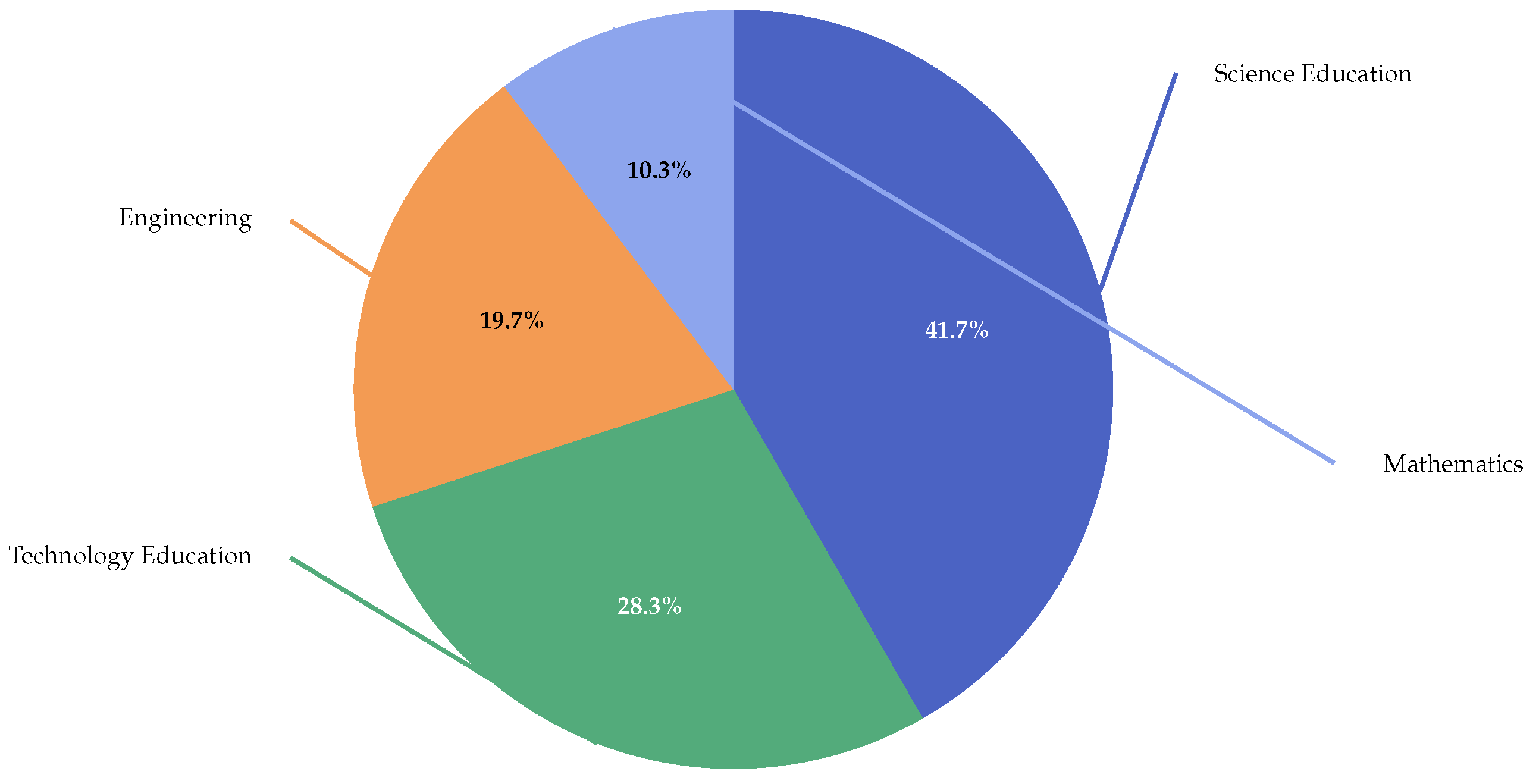

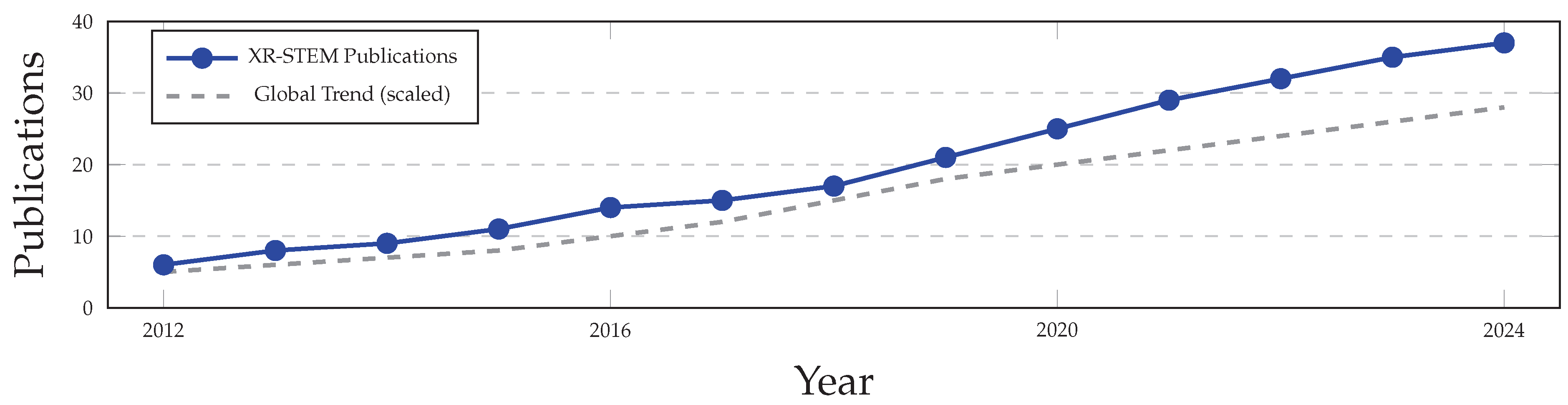



| Study Design | 1 Star | 2 Stars | 3 Stars | 4 Stars | 5 Stars | Total |
|---|---|---|---|---|---|---|
| Quantitative RCT | 1 | 2 | 7 | 10 | 8 | 28 |
| Quantitative non-RCT | 3 | 6 | 14 | 12 | 7 | 42 |
| Quantitative descriptive | 2 | 4 | 8 | 5 | 3 | 22 |
| Qualitative | 1 | 3 | 9 | 7 | 4 | 24 |
| Mixed methods | 1 | 4 | 9 | 8 | 4 | 26 |
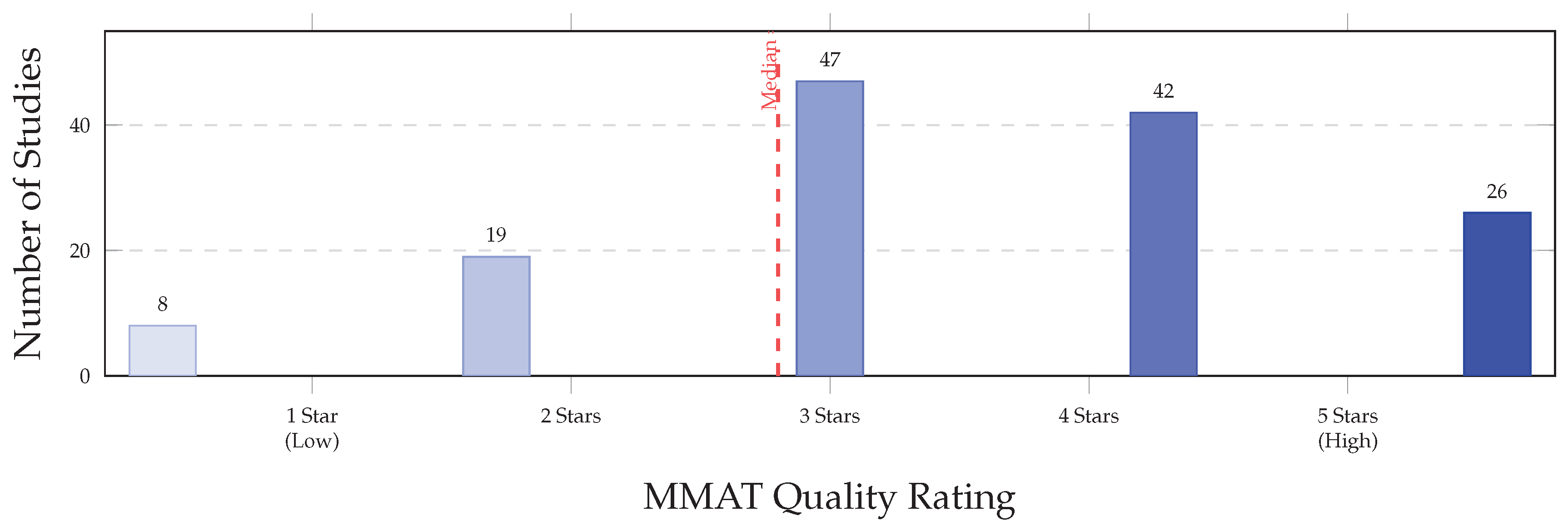
| Total | 8 | 19 | 47 | 42 | 26 | 142 |
| Level | Key Barriers | Prevalence |
|---|---|---|
| Policy | Absence of XR frameworks; Insufficient funding; Regulatory uncertainty | 52% |
| Institutional | Leadership gaps; Resource allocation; Inadequate support infrastructure | 73% |
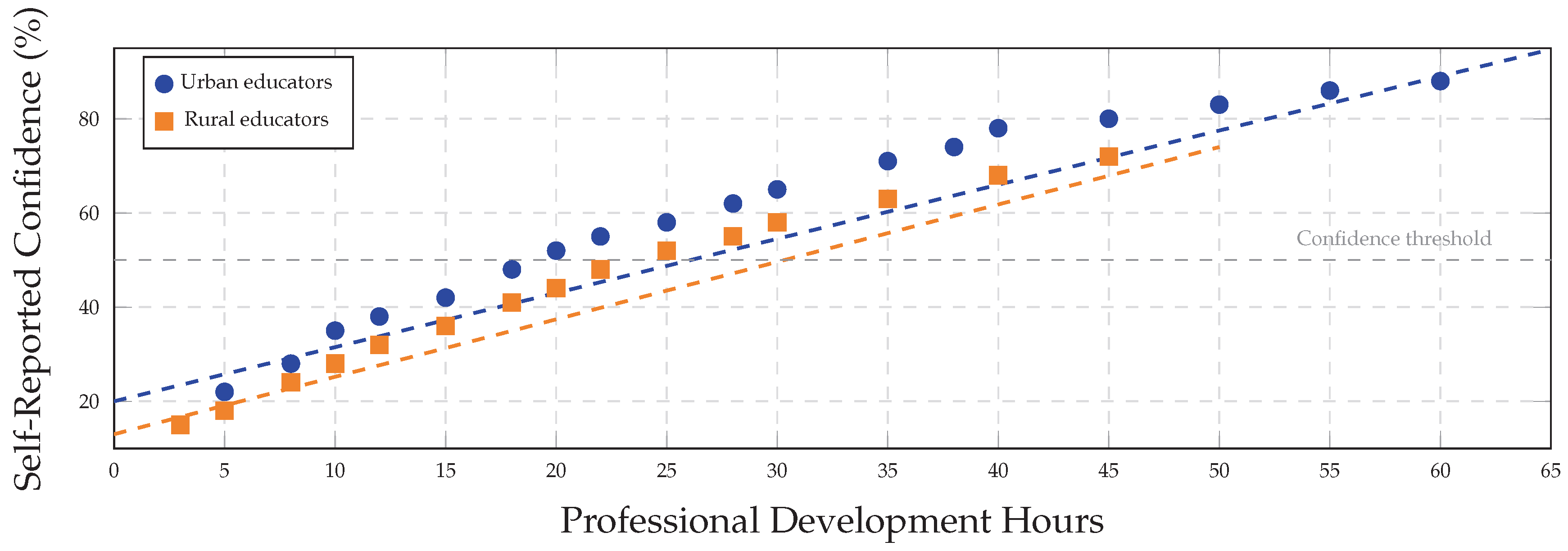
| Educator | Insufficient professional development; Time constraints; Assessment challenges | 82% |
| Technological | Hardware availability; Network limitations; Interoperability issues | 68% |
| Content | Limited curriculum-aligned resources; Insufficient cultural content | 63% |
| Student | Digital inequities; Varying literacy; Physical discomfort | 47% |
| Moderator | Studies | SMD [95% CI] | p-Value |
|---|---|---|---|
| XR Modality | 0.038 * | ||
| VR | 32 | 0.76 [0.59, 0.93] | |
| AR | 24 | 0.71 [0.54, 0.88] | |
| MR | 6 | 0.54 [0.31, 0.77] | |
| Educational Level | 0.015 * | ||
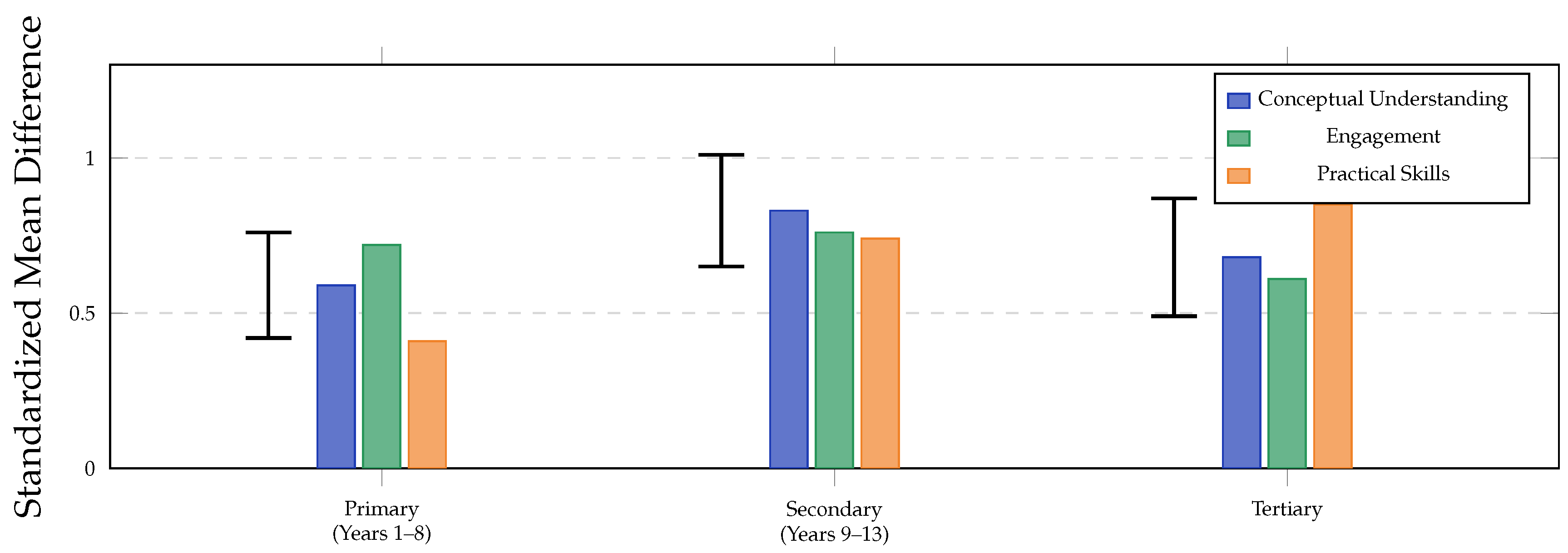
| Primary | 18 | 0.59 [0.42, 0.76] | |
| Secondary | 26 | 0.83 [0.65, 1.01] | |
| Tertiary | 18 | 0.68 [0.49, 0.87] | |
| Study Duration | 0.003 ** | ||
| Short (<1 month) | 23 | 0.64 [0.46, 0.82] | |
| Medium (1–6 months) | 31 | 0.75 [0.58, 0.92] | |
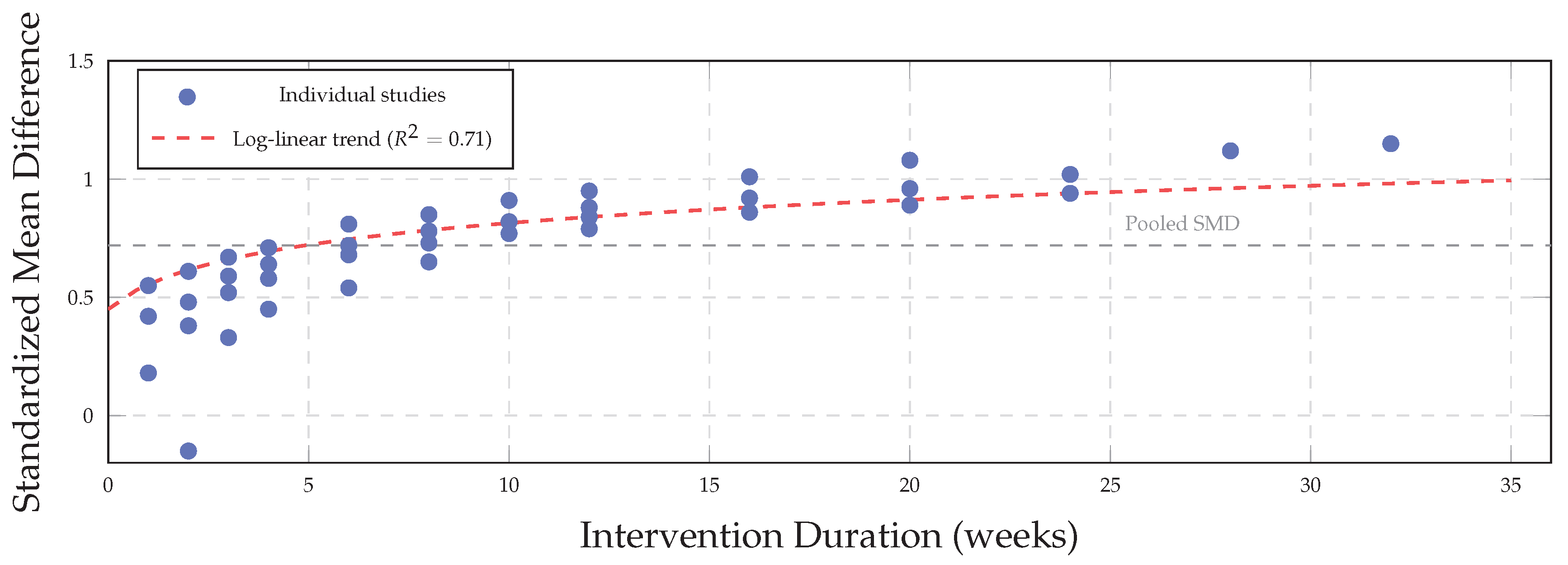
| Long (>6 months) | 8 | 0.88 [0.64, 1.12] | |
| Implementation Type | 0.001 ** | ||
| Supplementary | 37 | 0.65 [0.50, 0.80] | |
| Integrated | 25 | 0.83 [0.67, 0.99] |
Disclaimer/Publisher’s Note: The statements, opinions and data contained in all publications are solely those of the individual author(s) and contributor(s) and not of MDPI and/or the editor(s). MDPI and/or the editor(s) disclaim responsibility for any injury to people or property resulting from any ideas, methods, instructions or products referred to in the content. |
© 2026 by the authors. Licensee MDPI, Basel, Switzerland. This article is an open access article distributed under the terms and conditions of the Creative Commons Attribution (CC BY) license.
Share and Cite
Iqbal, M.F.B.; Tran, K.T.P.; Yan, W.Q.; Abraham, H.; Nguyen, M. Human-Centered XR Integration for STEM Education in New Zealand: A Systematic Review and Implementation Framework. Appl. Sci. 2026, 16, 5090. https://doi.org/10.3390/app16105090
Iqbal MFB, Tran KTP, Yan WQ, Abraham H, Nguyen M. Human-Centered XR Integration for STEM Education in New Zealand: A Systematic Review and Implementation Framework. Applied Sciences. 2026; 16(10):5090. https://doi.org/10.3390/app16105090
Chicago/Turabian StyleIqbal, Muhammad Faisal Buland, Kien T. P. Tran, Wei Qi Yan, Hazel Abraham, and Minh Nguyen. 2026. "Human-Centered XR Integration for STEM Education in New Zealand: A Systematic Review and Implementation Framework" Applied Sciences 16, no. 10: 5090. https://doi.org/10.3390/app16105090
APA StyleIqbal, M. F. B., Tran, K. T. P., Yan, W. Q., Abraham, H., & Nguyen, M. (2026). Human-Centered XR Integration for STEM Education in New Zealand: A Systematic Review and Implementation Framework. Applied Sciences, 16(10), 5090. https://doi.org/10.3390/app16105090