Pressure Changes During Lunar Regolith Simulant Movement in Dusty Thermal Vacuum Chamber


Abstract
1. Introduction
2. Materials and Methods
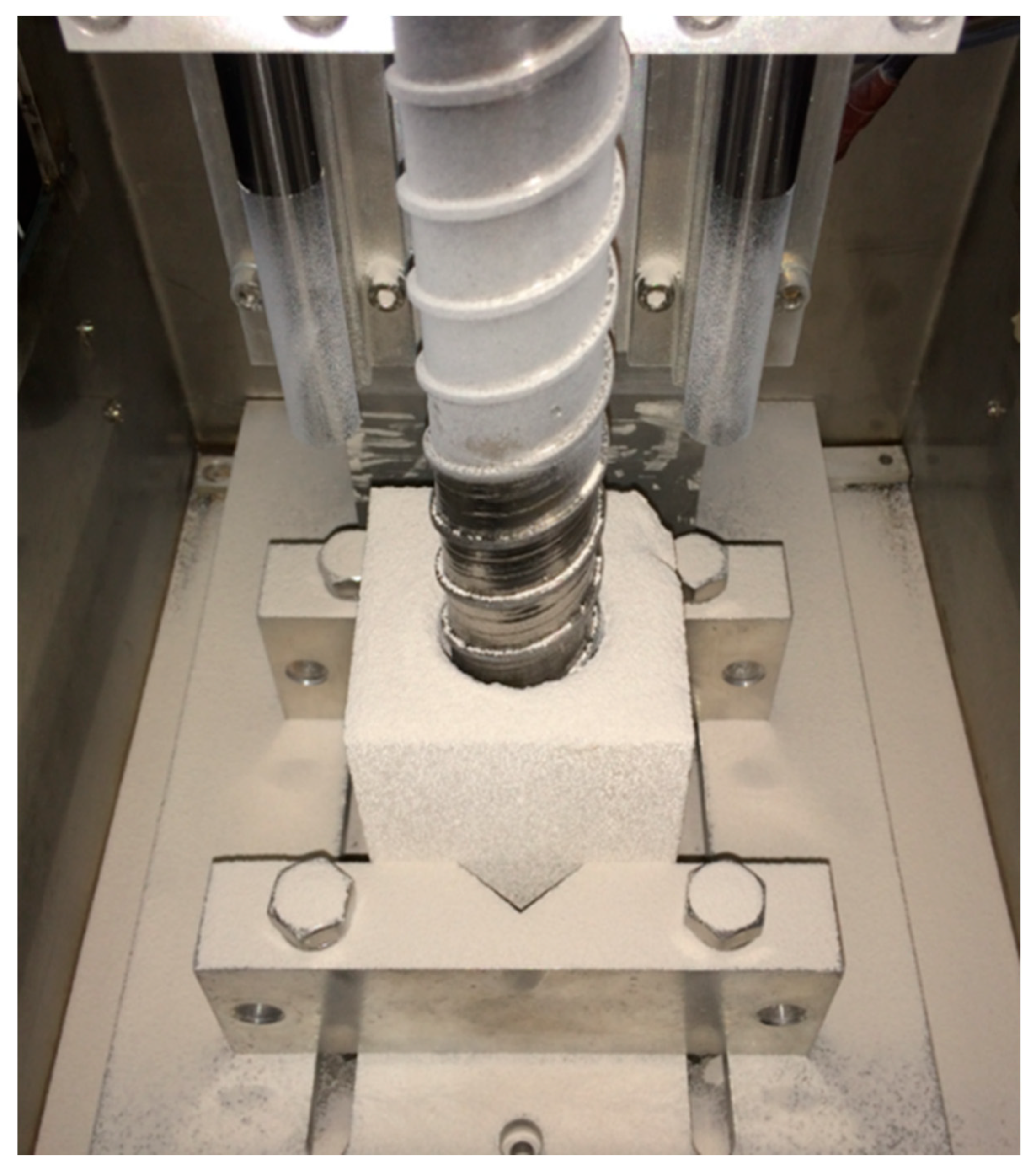
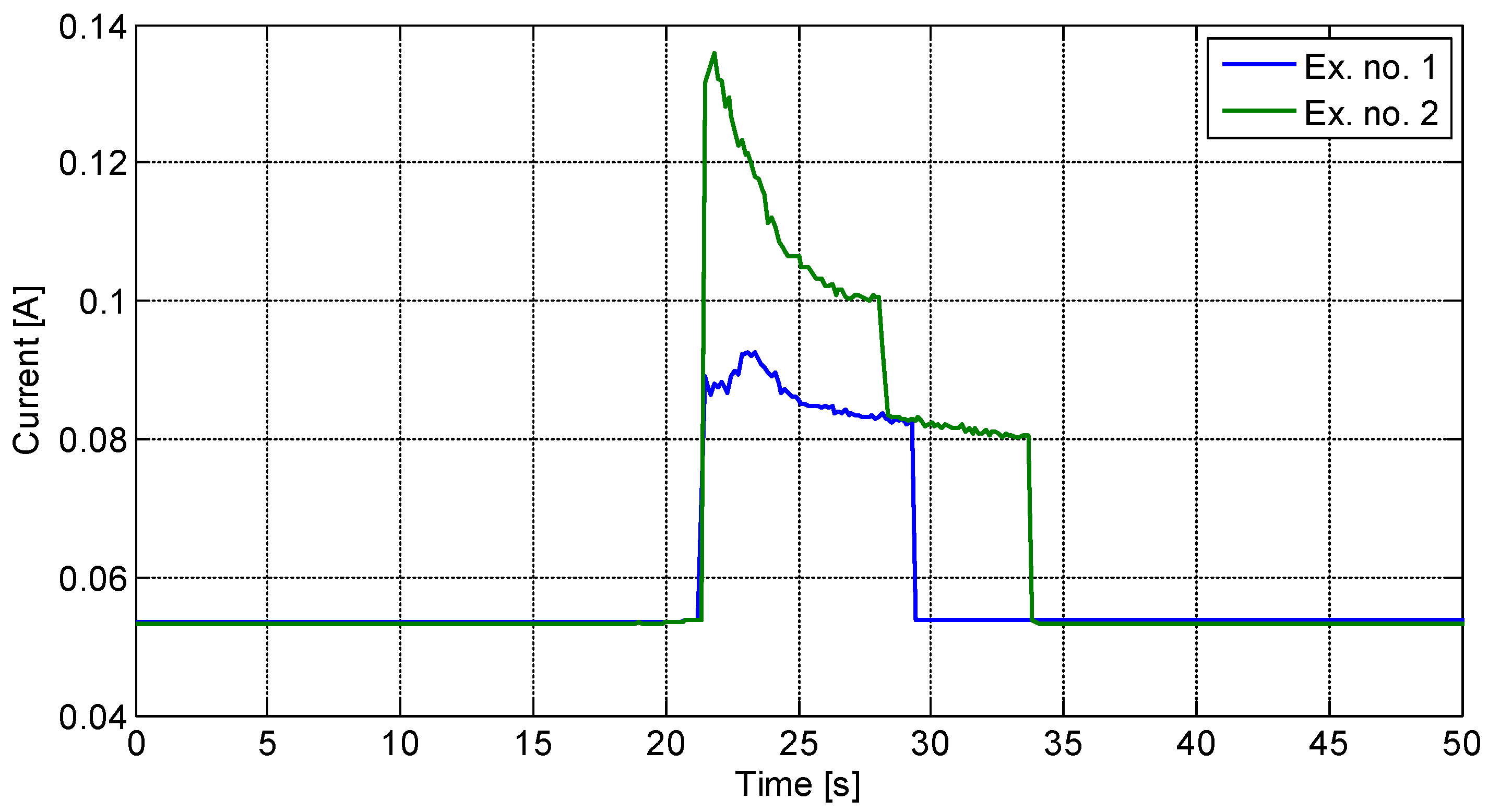
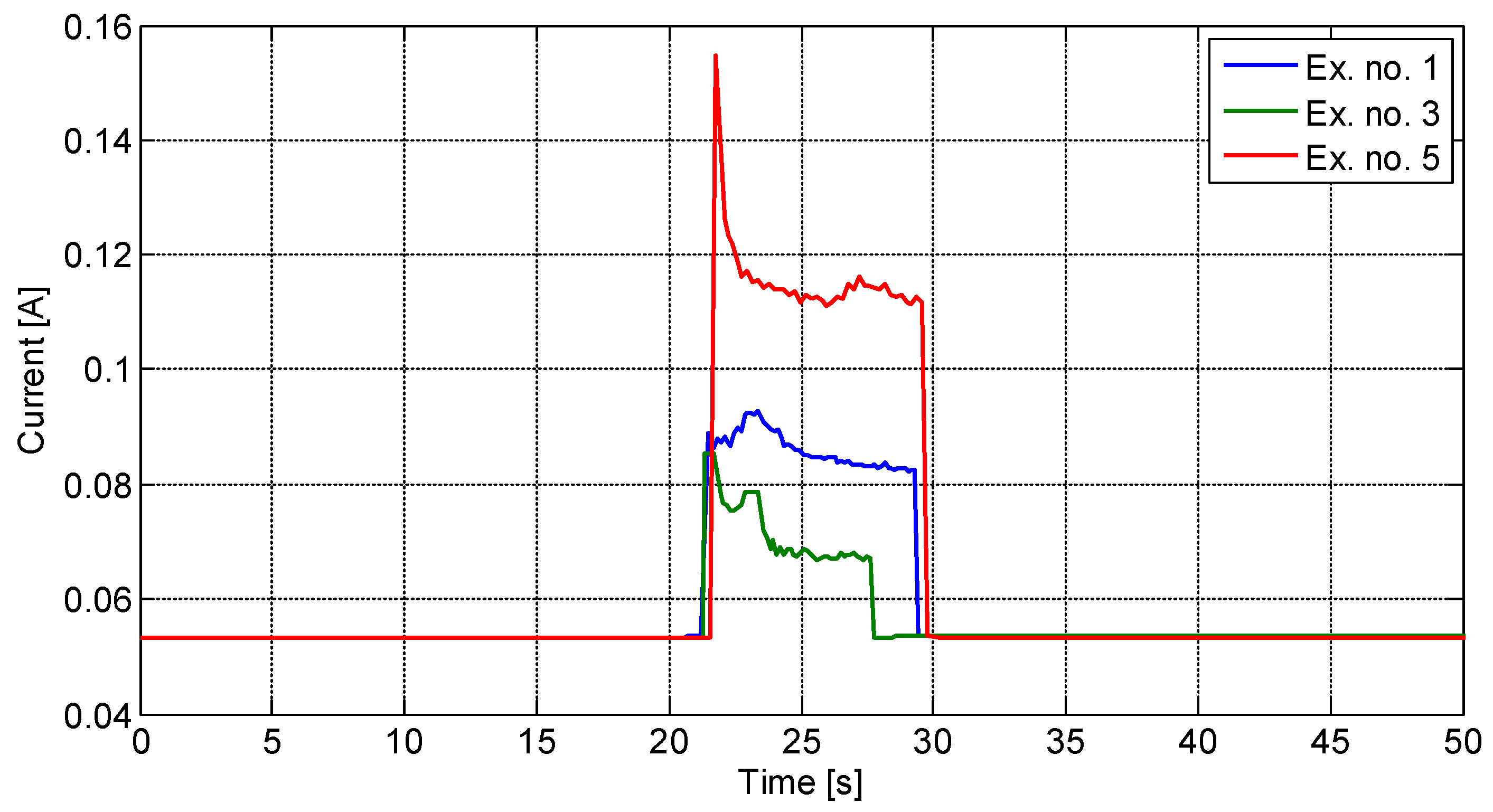
- The disturbance of the drilling process under vacuum conditions reported in [20]. During drilling in cellular concrete YTONG (see Figure 1), reduced force and torque were observed under vacuum conditions compared with normal conditions for the same technological parameters of drilling (rate of drilling 1 mm/s, tool rate 70 rpm). Under vacuum conditions, the axial weight on bit and torque were reduced by 15–20%. The reason was the expansion of gas encapsulated in the pores and the sublimation of encapsulated water.
- Turn on the rotary pump (Alcatel-Annecy PASCAL 2033 SD)—23.3 CFM pumping speed.
- Turn on the diffusion pump (Balzer DIF 200; pumping speed 2000 L/s, power 2000 W) when the pressure inside the chamber reaches 0.2 mbar.
- Wait approximately 4 h (12 h in the low-temperature case) to reach 1 × 10⁻⁴ mbar pressure before starting the experiments.
- Displacement: 140–160 mm;
- Speed: 21 mm/s;
- Duration: 7–8 s;
- Penetration depth: 100 mm (half of the measurement bin).
3. Results
3.1. Experimental Case Description
3.2. Vision Data Recorded During the Experiments
3.3. Pressure Measurements
4. Discussion
5. Conclusions
- The obtained results show that the preparation and placement of lunar regolith analogs (such as AGK2010) in the bin should be done under vacuum conditions, regardless of external temperature. Dirty/dusty thermal vacuum chambers operating at the 10−4 mbar level should have a capability to place or handle regolith under vacuum conditions.
- The gases encapsulated in the lunar regolith analogs (such as AGK2010) not placed into the bin under vacuum conditions may influence planned experiments where regolith mobilization occurs—for example, drilling experiments (as in [27]), regolith sampling (as in [20]), and regolith excavation. At laboratory and high temperature, this influence might reduce the power requirements of the tested device. At low temperature, this impact can be the opposite.
- Water vapor or other atmospheric gases encapsulated between regolith analog grains is a possible main contributor to volatile outgassing in the presented experiments (10−4 mbar level, room and 72 °C temperature). This conclusion is based on experience with testing under vacuum conditions; however, at this stage there is no direct evidence that other adsorbed atmospheric gases are not a source of this effect.
- The split-spoon sampler moving through the regolith and the pressure sensors provide a good approach to validate proper preparation of regolith in TVACs.
- New versions of the DTVAC should be equipped with systems allowing the reduction in water vapor and other atmospheric gas content in regolith and rocks.
- Standard geotechnical tests of granular matter (such as angle of friction and cohesion) may differ depending on the conditions (atmosphere, vacuum) in which the regolith was prepared. To prove this statement and determine uncertainty of this effect, more experiments are needed.
Author Contributions
Funding
Data Availability Statement
Acknowledgments
Conflicts of Interest
References
- As Artemis Moves Forward, NASA Picks SpaceX to Land Next Americans on Moon, NASA. Available online: https://www.nasa.gov/news-release/as-artemis-moves-forward-nasa-picks-spacex-to-land-next-americans-on-moon/ (accessed on 21 April 2026).
- Terrae Novae 2030+ Strategy Roadmap, ESA. Available online: https://esamultimedia.esa.int/docs/HRE/Terrae_Novae_2030+strategy_roadmap.pdf (accessed on 21 April 2026).
- Zheng, Y.; Ouyang, Z.; Li, C.; Liu, J.; Zou, Y. China’s Lunar Exploration Program: Present and future. Planet. Space Sci. 2008, 56, 881–886. [Google Scholar] [CrossRef]
- Benaroya, H.; Bernold, L. Engineering of lunar bases. Acta Astronaut. 2008, 62, 277–299. [Google Scholar] [CrossRef]
- Cesaretti, G.; Dini, E.; De Kestelier, X.; Colla, V.; Pambaguian, L. Building components for an outpost on the Lunar soil by means of a novel 3D printing technology. Acta Astronaut. 2014, 93, 430–450. [Google Scholar] [CrossRef]
- Carrier, W.D., III; Olhoeft, G.R.; Mendell, W. Lunar Sourcebook; Cambridge University Press: New York, NY, USA, 1991; pp. 522–530. [Google Scholar]
- Badescu, V. Moon: Prospective Energy and Material Resources; Springer: Berlin/Heidelberg, Germany, 2012. [Google Scholar] [CrossRef]
- Cohen, B.; Zacny, K. Drilling in Extreme Environments: Penetration and Sampling on Earth and Other Planets; Wiley-VCH Verlag GmbH & Co. KGaA: Weinheim, Germany, 2009. [Google Scholar]
- Qian, Y.; Xiao, L.; Head, J.W.; van der Bogert, C.H.; Hiesinger, H.; Wilson, L. Young lunar mare basalts in the Chang’e-5 sample return region, northern Oceanus Procellarum. Earth Planet. Sci. Lett. 2021, 555, 11670. [Google Scholar] [CrossRef]
- Crawford, I.A. Lunar resources: A review. Prog. Phys. Geogr. Earth Environ. 2015, 39, 137–167. [Google Scholar] [CrossRef]
- Mitchel, J.K.; Houston, W.N.; Scott, R.F.; Costes, N.C.; Carrier, W.D., III; Bromwell, L.G. Mechanical Properties of Lunar Soil: Density, Porosity, Cohesion, and Angle of Internal Friction. In Proceedings of the Third Lunar Science Conference, Houston, TX, USA, 10–13 January 1972; Volume 3, pp. 3235–3253. [Google Scholar]
- Colaprete, A.; Schultz, P.; Goldstein, D.; Summy, D.; Bart, G.D.; Asphaug, E.; Korycansky, D.; Landis, D.; Sollitt, L.; Heldmann, J.; et al. Detection of water in the LCROSS ejecta plume. Science 2010, 330, 463–468. [Google Scholar] [CrossRef] [PubMed]
- Taylor, L.A.; Pieters, C.M.; Britt, D. Evaluations of lunar regolith simulants. Planet. Space Sci. 2016, 126, 1–7. [Google Scholar] [CrossRef]
- Bednarz, S.; Rzyczniak, M.; Gonet, A.; Seweryn, K. Research of Formed Lunar Regholit Analog AGK-2010. Arch. Min. Sci. 2013, 58, 551–556. [Google Scholar] [CrossRef]
- Zhang, W.; Cheng, Q.; Li, T. Technical progress in the utilization and exploitation of small celestial body resources. Acta Astronaut. 2023, 208, 219–255. [Google Scholar] [CrossRef]
- Just, G.H.; Smith, K.; Joy, K.; Roy, M. Parametric review of existing regolith excavation techniques for lunar In Situ Resource Utilisation (ISRU) and recommendations for future excavation experiments. Planet. Space Sci. 2020, 180, 104746. [Google Scholar] [CrossRef]
- Go, G.H.; Lee, J.; Chung, T.; Ryu, B.H.; Jin, H.; Zhuang, L.; Shin, H.S.; Kim, J.H.; Yun, T.S. Controlling soil disturbance of a lunar regolith simulant bed during depressurization in a vacuum chamber. Sci. Rep. 2021, 11, 1878. [Google Scholar] [CrossRef] [PubMed]
- Rickman, H.; Słaby, E.; Gurgurewicz, J.; Śmigielski, M.; Banaszkiewicz, M.; Grygorczuk, J.; Królikowska, M.; Morawski, M.; Seweryn, K.; Wawrzaszek, R. CHOMIK: A Multi-Method Approach for Studying Phobos. Sol. Syst. Res. 2014, 48, 279–286. [Google Scholar] [CrossRef]
- Seweryn, K. The new concept of sampling device driven by rotary hammering actions. IEEE/ASME Trans. Mechatron. 2016, 21, 2477–2489. [Google Scholar] [CrossRef]
- Seweryn, K.; Rybus, T.; Tkacz, A. Rotary clamshell excavator: Loose regolith sampling device dedicated to lunar environment. In Proceedings of the Symposium on Advanced Space Technologies in Robotics and Automation (ASTRA 2025), ESTEC, Noordwijk, The Netherlands, 7–9 October 2025. [Google Scholar]
- Kurek, K.; Seweryn, K.; Tkacz, A.; Just, G. Detection of Lunar Regolith Acquired by Excavator Using Radiofrequency (RF) Sensors. Sensors 2025, 25, 751. [Google Scholar] [CrossRef] [PubMed]
- NASA-STD-1008; NASA Technical Standard, Classifications and Requirements for Testing Systems and Hardware to be Exposed to Dust. NASA: Washington, DC, USA, 2021.
- Kleinhenz, J.; Paulsen, G.; Zacny, K.; Smith, J. Impact of drilling operations on lunar volatiles capture: Thermal vacuum tests. In Proceedings of the 8th Symposium on Space Resource Utilization, Kissimmee, FL, USA, 5–9 January 2015. [Google Scholar]
- Kruzelecky, R.V.; Lavoie, J.; Murzionak, P.; Heapy, J.; Mena, M.; Wallach, E.; Sinclair, I.; Schinn, G.W.; Cloutis, E.; Ghafoor, N.; et al. Dusty thermal vacuum (DTVAC) facility integration. In Proceedings of the 16th Biennial International Conference on Engineering, Science, Construction, and Operations in Challenging Environments, Cleveland, OH, USA, 9–12 April 2018; pp. 1189–1202. [Google Scholar] [CrossRef]
- Cooney, E.; Hadler, K.; Conti, M. Next Level ISRU Research Testbed Landing at ESRIC. In Proceedings of the I-Sairas Conference, Brisbane, Australia, 19–21 November 2024. [Google Scholar]
- Zhang, T.; Liu, S.; Ding, X.; Xu, K.; Guan, Y. Thermal vacuum regolith environment simulator for China’s deep lunar drilling exploration. Appl. Therm. Eng. 2018, 144, 779–787. [Google Scholar] [CrossRef]
- Teper, W. Research on Efficiency of Borehole Cleaning from Cuttings Under Extreme Conditions Without the Use of Liquid. Ph.D. Thesis, AGH University of Krakow, Faculty of Drilling, Oil and Gas, Krakow, Poland, June 2019. [Google Scholar]
- Chung, T.; Ahn, H.; Yoo, Y.; Shin, H.S. An experimental study on air evacuation from lunar soil mass and lunar dust behavior for lunar surface environment simulation. J. Korean Soc. Civ. Eng. 2019, 39, 327–333. [Google Scholar]
- ISO 14644-1:2015; Cleanrooms and Associated Controlled Environments. Part 1: Classification of Air Cleanliness by Particle Concentration. International Organization for Standardization (ISO): Geneva, Switzerland, 2015.



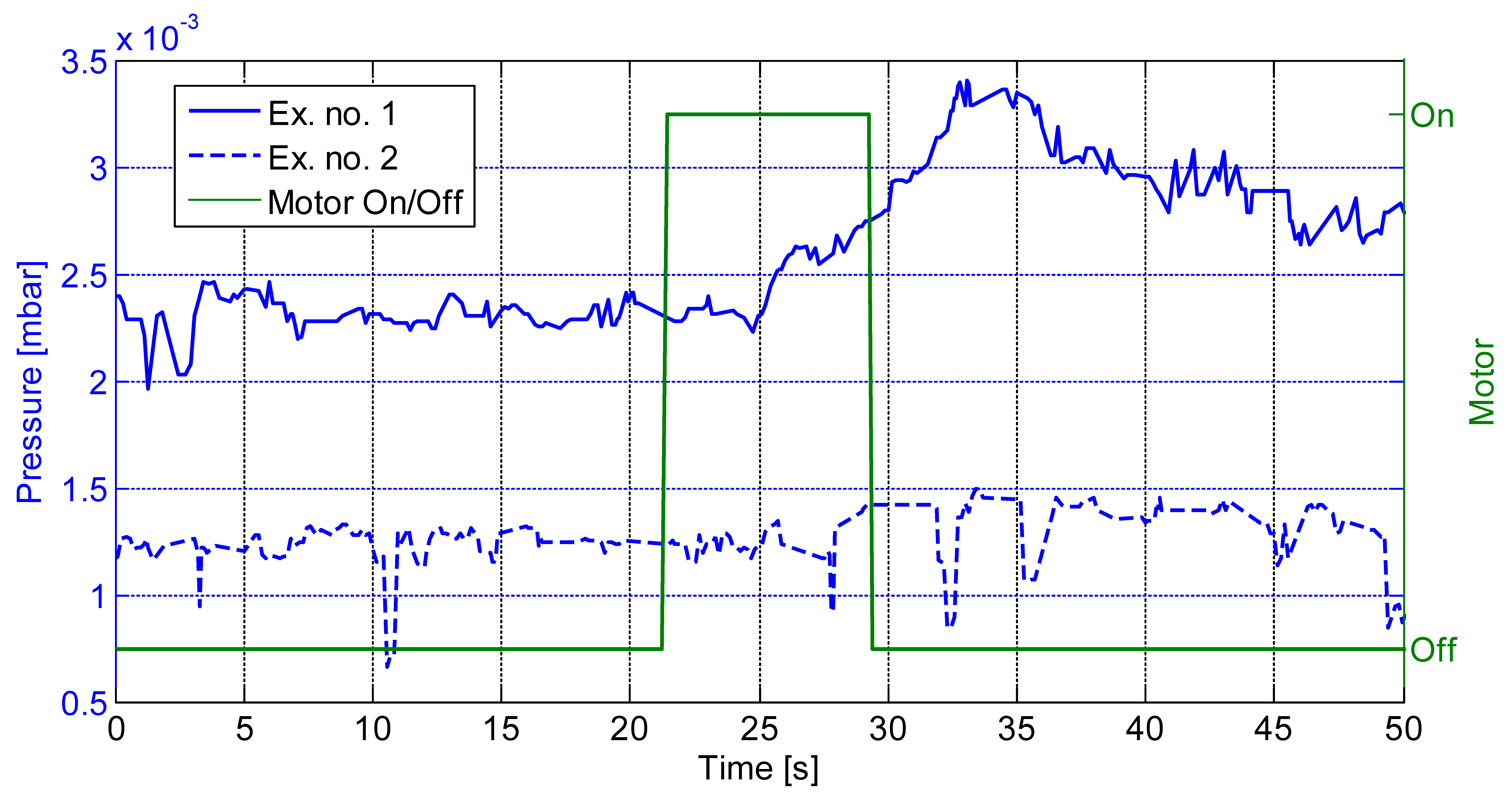
| Exp. No. | Temperature | Regolith Placement | Time of Phases (s) |
|---|---|---|---|
| 1 | 22 °C | in atmospheric conditions | 120/600/10/86,400 |
| 2 | 22 °C | in vacuum conditions | 120/600/10/86,400 |
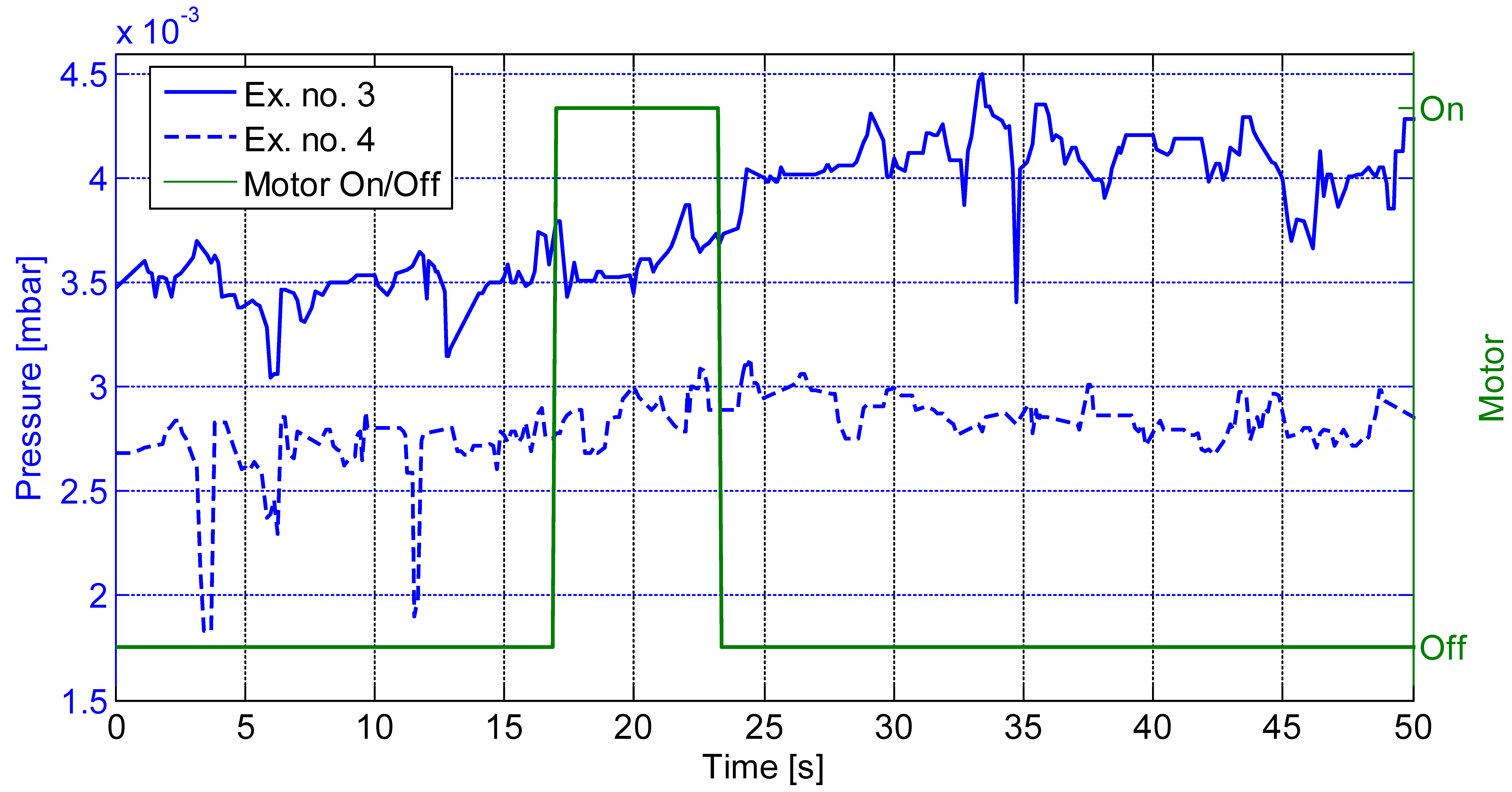
| 3 | 72 °C | in atmospheric conditions | 120/21,600/10/86,400 |
| 4 | 72 °C | in vacuum conditions | 120/21,600/10/86,400 |
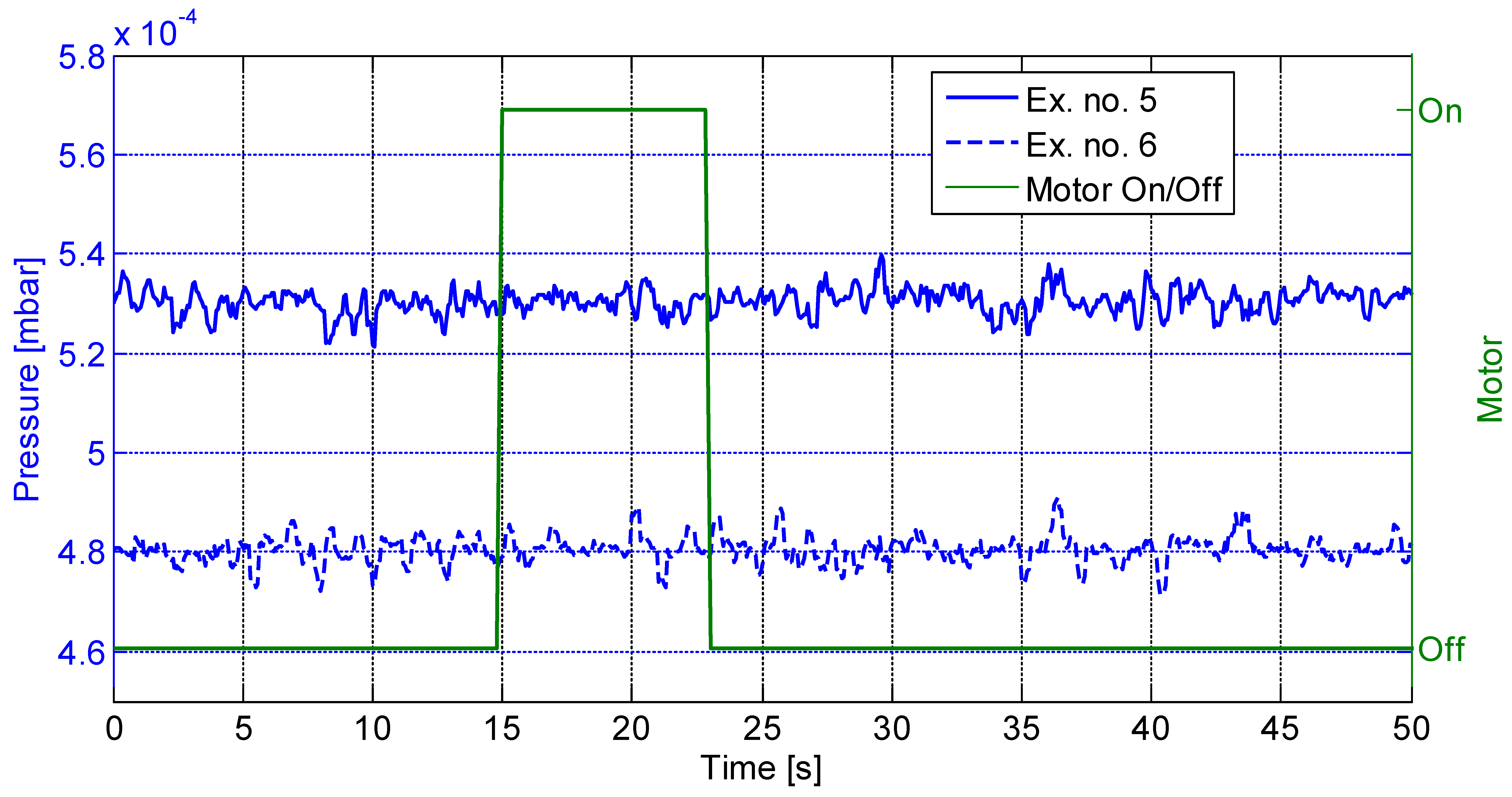
| 5 | −30 °C | in atmospheric conditions | 120/28,800/10/86,400 |
| 6 | −30 °C | in vacuum conditions | 120/28,800/10/86,400 |
| Exp. No. | Measured Temperature (°C) | Baseline Pressure (10−4 mbar) | Peak Pressure (10−4 mbar) | Pressure Rise (10−4 mbar) | Recovery Time (s) |
|---|---|---|---|---|---|
| 1 | 22.1 | 23 | 34.5 | 11.5 | 25 |
| 2 | 22.3 | 12 | 14 | 2 | 5 |
| 3 | 71.4 | 35 | 45 | 10 | 50 |
| 4 | 65.4 * | 27 | 31 | 4 | 25 |
| 5 | −32.9 | 5.3 | 5.4 | 0.1 | - |
| 6 | −33.6 | 4.8 | 4.8 | 0 | - |
Disclaimer/Publisher’s Note: The statements, opinions and data contained in all publications are solely those of the individual author(s) and contributor(s) and not of MDPI and/or the editor(s). MDPI and/or the editor(s) disclaim responsibility for any injury to people or property resulting from any ideas, methods, instructions or products referred to in the content. |
© 2026 by the authors. Licensee MDPI, Basel, Switzerland. This article is an open access article distributed under the terms and conditions of the Creative Commons Attribution (CC BY) license.
Share and Cite
Seweryn, K.; Uhl, T.; Teper, W. Pressure Changes During Lunar Regolith Simulant Movement in Dusty Thermal Vacuum Chamber. Appl. Sci. 2026, 16, 5082. https://doi.org/10.3390/app16105082
Seweryn K, Uhl T, Teper W. Pressure Changes During Lunar Regolith Simulant Movement in Dusty Thermal Vacuum Chamber. Applied Sciences. 2026; 16(10):5082. https://doi.org/10.3390/app16105082
Chicago/Turabian StyleSeweryn, Karol, Tadeusz Uhl, and Wojciech Teper. 2026. "Pressure Changes During Lunar Regolith Simulant Movement in Dusty Thermal Vacuum Chamber" Applied Sciences 16, no. 10: 5082. https://doi.org/10.3390/app16105082
APA StyleSeweryn, K., Uhl, T., & Teper, W. (2026). Pressure Changes During Lunar Regolith Simulant Movement in Dusty Thermal Vacuum Chamber. Applied Sciences, 16(10), 5082. https://doi.org/10.3390/app16105082