1. Introduction
As a typical narrow-bandgap infrared semiconductor, single-crystal germanium has emerged as a pivotal functional material in aerospace infrared imaging systems, micro-electromechanical system (MEMS) sensors, and solid-state quantum computing devices, owing to its superior optical transmission in the 2–14 μm spectral range and distinct semiconductor properties. With the rapid evolution of optoelectronic technologies toward high precision and miniaturization, the manufacturing standards for single-crystal germanium optical components have become increasingly stringent. The aforementioned high-end applications impose exacting demands on the manufacturing precision of single-crystal germanium optical components, requiring not only nanometric form accuracy but also sub-nanometric surface roughness (Ra < 0.5 nm). Conventional loose abrasive machining techniques, such as grinding and polishing, inevitably introduce difficult-to-repair damage due to random high-energy impacts. These defects include abrasive embedment, three-dimensional micro-crack networks, and complex residual tensile stress fields within the surface and subsurface layers. Such inherent limitations severely compromise the service life and reliability of optical elements under extreme environments, rendering them inadequate for the “defect-free” surface requirements in the mass production of critical components like short-wave brittle semiconductor/optical materials such as germanium and silicon exhibit brittleness at the macroscopic scale, but under specific small-scale and precision cutting conditions, they can achieve plastic flow removal of materials like metals, thereby avoiding brittle fracture damage. This article demonstrates through experiments that by strictly controlling the cutting depth (usually at the sub-micron or even nanometer level) and process parameters, the processing of germanium can be transformed from brittle mode to ductile mode, resulting in a smooth surface without cracks. Infrared windows, high-power laser mirrors, and freeform aspheric lenses [
1,
2,
3,
4]. Blake P N et al. pointed out that brittle semiconductor/optical materials such as germanium and silicon exhibit brittleness at the macroscopic scale, but under specific small-scale and precision cutting conditions, they can achieve plastic flow removal of materials like metals, thereby avoiding brittle fracture damage. This article demonstrates through experiments that by strictly controlling the cutting depth (usually at the sub-micron or even nanometer level) and process parameters, the processing of germanium can be transformed from brittle mode to ductile mode, resulting in a smooth surface without cracks [
5].
To overcome the limitations of traditional methods, single-point diamond turning (SPDT) is regarded as an ideal approach for achieving “ductile-regime” machining of single-crystal germanium due to its superior precision. However, the intrinsic physical attributes of single-crystal germanium—specifically its high Vickers hardness (8–9 GPa), low fracture toughness (KIC ≈ 0.5 MPa·m
1/2), and significant crystallographic anisotropy—result in complex mechanical responses during nanometric cutting. Under the high-stress field induced by the cutting tool, the material is prone to crossing critical thresholds, transitioning from plastic flow to brittle fracture, accompanied by micro-defects such as amorphous phase transformation and dislocation entanglement. This instability in the material removal mechanism makes surface integrity control challenging, thereby severely restricting the enhancement of optical performance. Consequently, an in-depth dissection of the material removal mechanism, the critical scale criterion for brittle-to-ductile transition, the influence of crystallographic orientation (e.g., (100), (110), (111)) on cutting force anisotropy, and the evolution of machining-induced defects is of profound theoretical value for constructing a universal ductile-regime ultra-precision machining theory. Furthermore, it holds significant engineering implications for improving the performance of optical systems and the service reliability of quantum devices [
6,
7].
In recent years, with the rapid advancement of computational materials science, molecular dynamics (MD) simulation has become a powerful tool for unveiling the fundamental laws of material removal. This method enables researchers to observe and resolve transient physical processes at the atomic scale in real-time [
8], including dislocation nucleation and slip, the formation and propagation of amorphous shear bands, high-pressure phase transformations (e.g., Ge-I to Ge-II), and temperature–strain rate coupling effects [
9]. The revelation of these microscopic mechanisms has laid a solid theoretical foundation for optimizing cutting parameters, predicting surface damage, and formulating efficient, low-damage manufacturing processes. As a thermo-mechanical coupling technique [
10], laser-assisted machining (LAM) aims to reduce the flow stress of the material and suppress brittle fracture by introducing a controllable local thermal softening effect at the cutting front [
11,
12], thereby improving surface quality. However, its practical engineering application faces complex physical challenges: non-uniform thermal stress fields induced by laser-material interactions may lead to thermal cracking [
13,
14]; precise control of the heat-affected zone imposes rigorous requirements on temperature field distribution; and rapid heating–cooling cycles may trigger non-equilibrium phase transformations, altering the material’s intrinsic properties. Traditional macroscopic experimental methods are limited by spatiotemporal resolution, making it difficult to capture the microscopic mechanisms involving multi-field coupling and transient evolution [
15,
16].
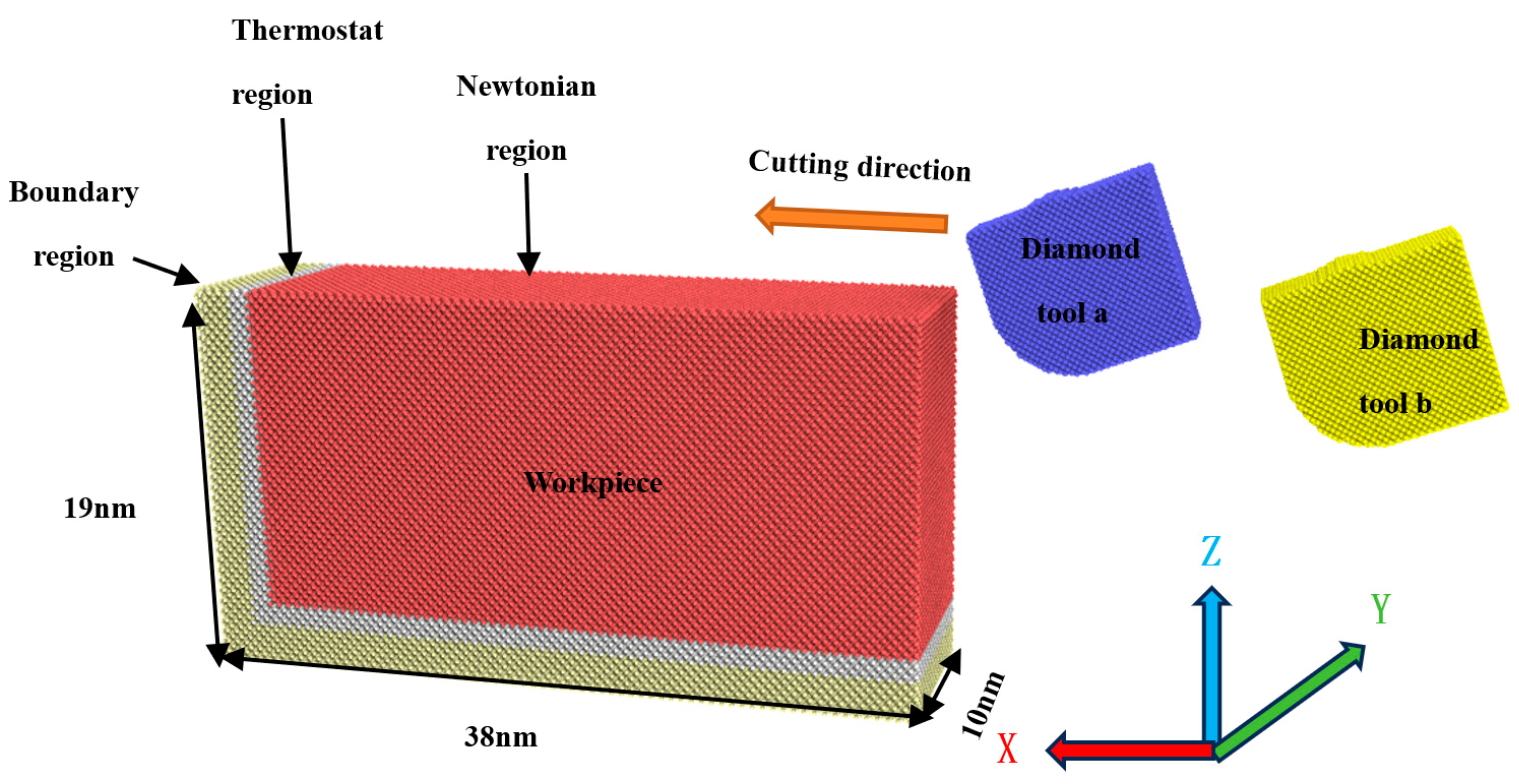
Therefore, in this study, we simulated the cutting process under different uniform preheating temperatures. By conducting comparative analyses of multiple cutting experiments and regulating the preheating temperature, we optimized the material softening state in the cutting zone. Using molecular dynamics simulations and data analysis, we investigated the phase transformation mechanisms and material removal behavior of single-crystal germanium during nano-cutting assisted by uniform preheating temperatures.
Unlike conventional MD studies on single-crystal germanium machining that predominantly focus on isothermal conditions, this work makes the following novel contributions: A wide-range temperature coupling mechanism is revealed. By systematically varying the preheating temperature from 300 K to 900 K, this study uncovers a non-monotonic evolution of material removal mode—transitioning from brittle fracture (300–450 K), to optimal plastic flow (450–750 K), and finally to thermo-mechanical instability (>750 K)—which has rarely been quantitatively demonstrated in prior MD simulations. An optimal processing window is identified. For the first time, the trade-off between material removal efficiency and subsurface damage is clarified: 450 K minimizes subsurface damage, while 750 K maximizes removal efficiency, beyond which thermal softening is counterbalanced by viscous flow and local melting. Atomic-scale phase transformation kinetics are quantified. Through coordination number analysis, this work elucidates how temperature modulates the Ge-I → metastable CN5 → Ge-II/amorphous pathway, providing a mechanistic explanation for the brittle-to-ductile transition under thermally assisted nano-machining.
3. Data Statistics and Analysis
3.1. Atomic Height Distribution Map Under Different Cutting Conditions
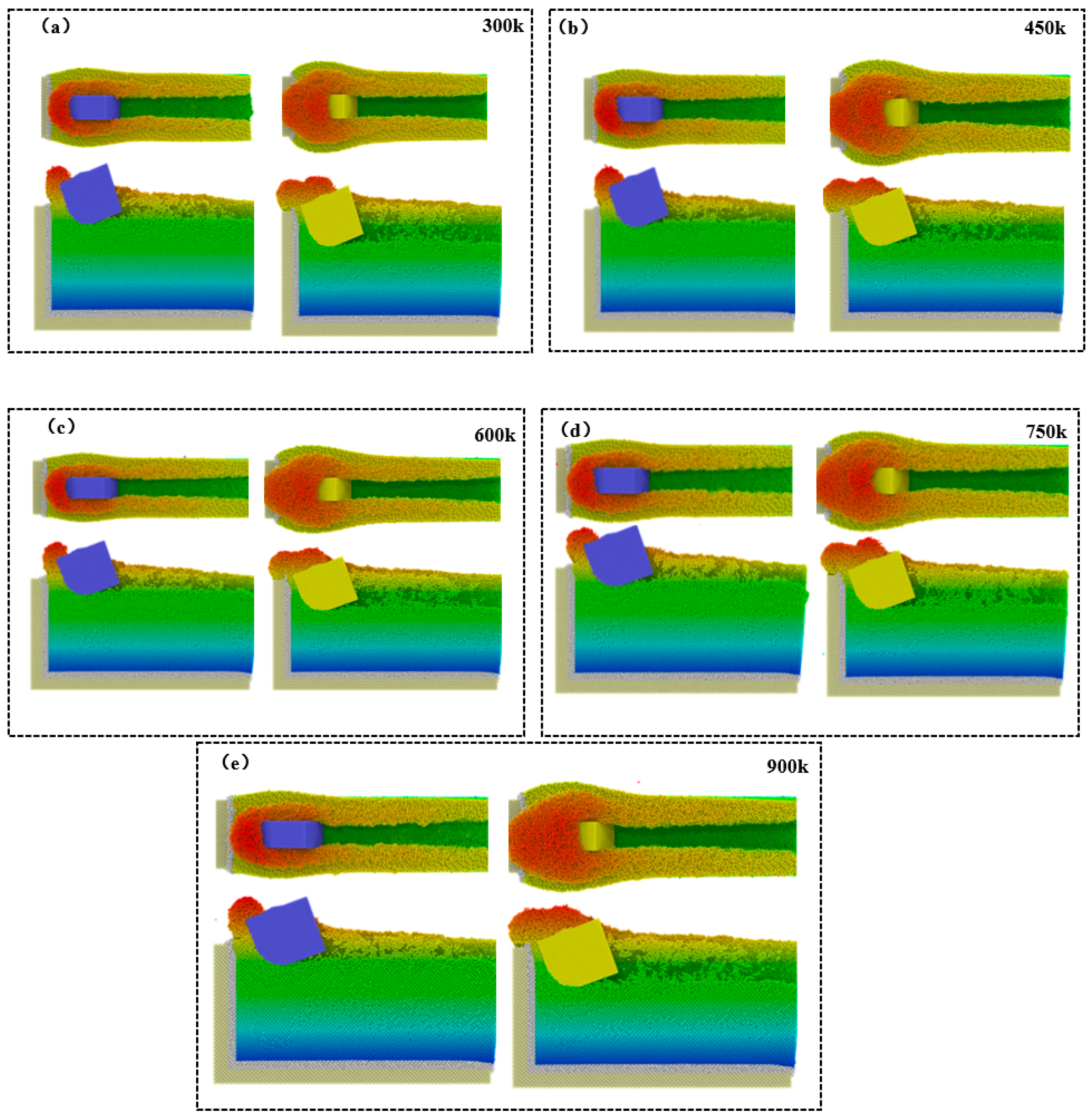
Figure 3 presents the atomic height distribution of the workpiece after single-crystal germanium is cut to the maximum distance, which serves as key evidence for characterizing the morphology of the machined surface, subsurface damage, and material flow behavior. The atomic height distribution map adopts a rainbow color scale, following the gradient variation rule from cool colors to warm colors. Blue represents the region with the lowest atomic height, while red and orange correspond to the highest atomic height. Intermediate gradient colors stand for different height levels, which can intuitively reveal the undulating morphological distribution characteristics of atoms on the material surface after cutting. The atomic pile-up morphology observed in the figure arises primarily from two sources. First, atoms located ahead and to the sides of the cutting edge undergo severe plastic deformation under continuous shearing and extrusion by the tool, exceeding the elastic recovery limit of the lattice. This causes a large number of atoms to detach from the diamond cubic structure and transition into an amorphous state, forming the main body of the pile-up zone. The dispersion in height distribution reflects the local inhomogeneity of the amorphization process. Second, atoms from deeper regions of the workpiece migrate toward the cutting zone via dislocation slip or stress-induced phase transformation from the diamond cubic to β-tin structure, propagating along specific slip systems or shear planes, and accumulate ahead of the tool and along the edges of the machined surface, resulting in crystallographic orientation-dependent pile-up features.
Heating temperature is a critical parameter for controlling the aforementioned atomic distribution and plays a decisive role in both the macroscopic material removal mode and the underlying microscopic mechanisms. Molecular dynamics simulations reveal that as temperature increases, the yield strength of single-crystal germanium decreases, and enhanced thermal motion of atoms promotes dislocation activity and the formation of amorphous shear bands, thereby significantly improving its plastic deformability. At the microscopic level, this is manifested as enhanced atomic mobility in the machined region within the atomic height distribution, and a shift in material removal mechanism from cleavage fracture and brittle fragmentation to extensive plastic flow. This transition facilitates the formation of continuous chips and a machined surface with lower roughness.
Furthermore, at elevated temperatures (900 K) coupled with cutting stresses, simulations reveal a material removal behavior approaching “thermo-mechanical instability,” which can be characterized as a “tearing” mechanism. This phenomenon stems from local temperatures nearing or exceeding the recrystallization temperature or even the local softening point, causing a drastic, nonlinear reduction in material strength. Concurrently, the combination of extremely high strain rates and elevated temperatures in the cutting zone may induce significant thermal stress concentration. Under these conditions, instead of exhibiting uniform plastic flow, the material undergoes localized, unstable viscous flow or cohesive failure at its weakest points, presenting “tearing” features at the atomic scale. This unstable mode of material removal is a fundamental cause of the significantly increased roughness, intensified micro-undulations, and even microscopic tearing traces observed on the machined surface at the nanoscale. Theoretically, this explains why excessively high temperatures can sometimes be detrimental to achieving ultra-smooth surfaces. It should be noted that the observed tearing-like behavior at 900 K is an atomic-scale manifestation of thermally activated viscous flow and localized melting under extreme thermo-mechanical coupling, rather than macroscopic fracture. Similar phenomena have been reported in high-temperature MD simulations of silicon and germanium.
3.2. Number of Atoms Removed from the Material Under Different Cutting Conditions
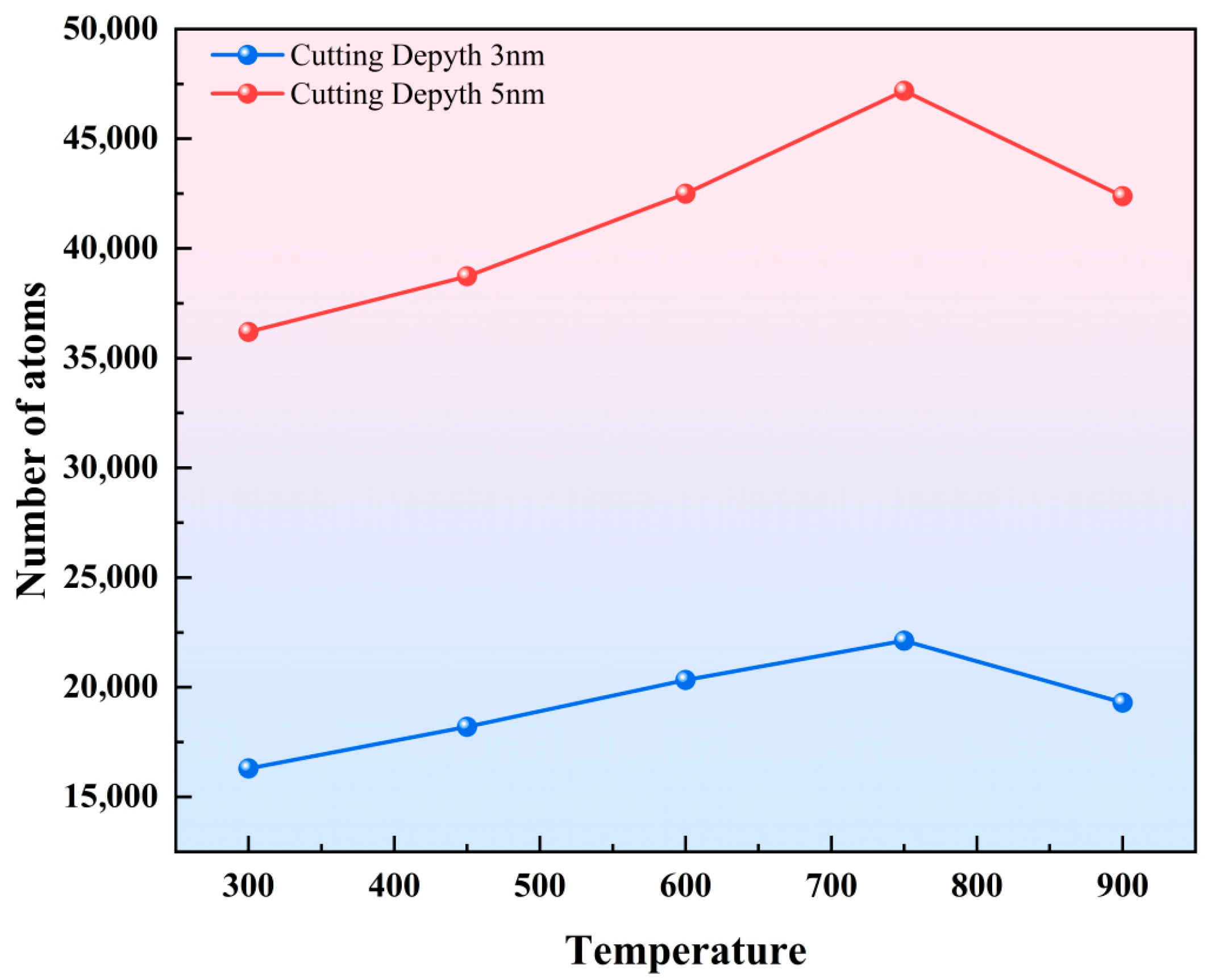
Figure 4 presents the number of removed atoms under different cutting depths and temperatures, reflecting variations in material removal volume across distinct machining conditions. When the cutting depth increases from 3 nm to 5 nm, the number of removed atoms rises substantially. In both cutting trials, from 300 K to 750 K, the number of removed atoms consistently increases with temperature, which is attributable to the thermal softening effect of the material. At a cutting depth of 3 nm, the number of removed atoms increases by approximately 40.8% when the temperature rises from 300 K to 750 K. For a cutting depth of 5 nm, the increase over the same temperature range is about 22.1%. These results confirm the role of thermal softening in enhancing the machinability of the material.
At 900 K, the number of removed atoms in both cutting trials decreased compared to the 750 K condition, marking a transition in the dominant mechanism. This phenomenon is fundamentally attributed to complex competing effects introduced by excessive temperatures: while thermal softening persists, intensified thermal diffusion and potential microstructural relaxation or pre-melting begin to exert adverse impacts. As the temperature approaches approximately half of the material’s melting point (Ge melts at ~1211 K), intensified lattice vibrations and enhanced atomic mobility promote significant viscous flow or plastic extrusion of the material ahead of the cutting zone under stress, rather than effective “cutting” removal by the tool, thus reducing apparent removal efficiency. Furthermore, in nanoscale cutting, such extreme temperatures may induce more drastic surface atomic reconstruction or amorphization, forming a “buffer layer” that partially dissipates cutting energy. Consequently, in the 750 K to 900 K interval, the escalation of these negative factors outweighs the positive contribution of thermal softening, resulting in a slight decline in removal efficiency after reaching its peak.
The number of removed atoms in the first cutting trial (3 nm) exhibited a more pronounced decline after the peak at 750 K (dropping by approximately 15.4%), whereas the decrease in the second trial (5 nm) was relatively moderate (dropping by about 1.7%). This discrepancy reveals the coupled effect of scale dependence and the heat-affected zone (HAZ). Consequently, when excessive temperatures lead to the over-degradation of the mechanical properties within this layer, the beneficial effect on cutting rapidly diminishes. In contrast, for deeper cutting (5 nm), the tool engages a larger volume of material at a greater depth. Under these conditions, the influence volume of thermal softening is more substantial, and the adverse effects of high temperatures (such as energy dissipation) are partially offset by the larger-scale plastic removal process.
In summary, the material removal efficiency in the cutting of single-crystal germanium at different preheating temperatures does not increase monotonically with rising temperature; rather, an optimal processing window exists. Prior to reaching the optimum temperature, the thermal softening mechanism is the primary driver for enhanced removal rates; beyond this threshold, thermal diffusion losses and the transition in high-temperature rheological behavior become the limiting factors.
3.3. Distribution of Atomic Coordination Numbers Under Different Cutting Conditions
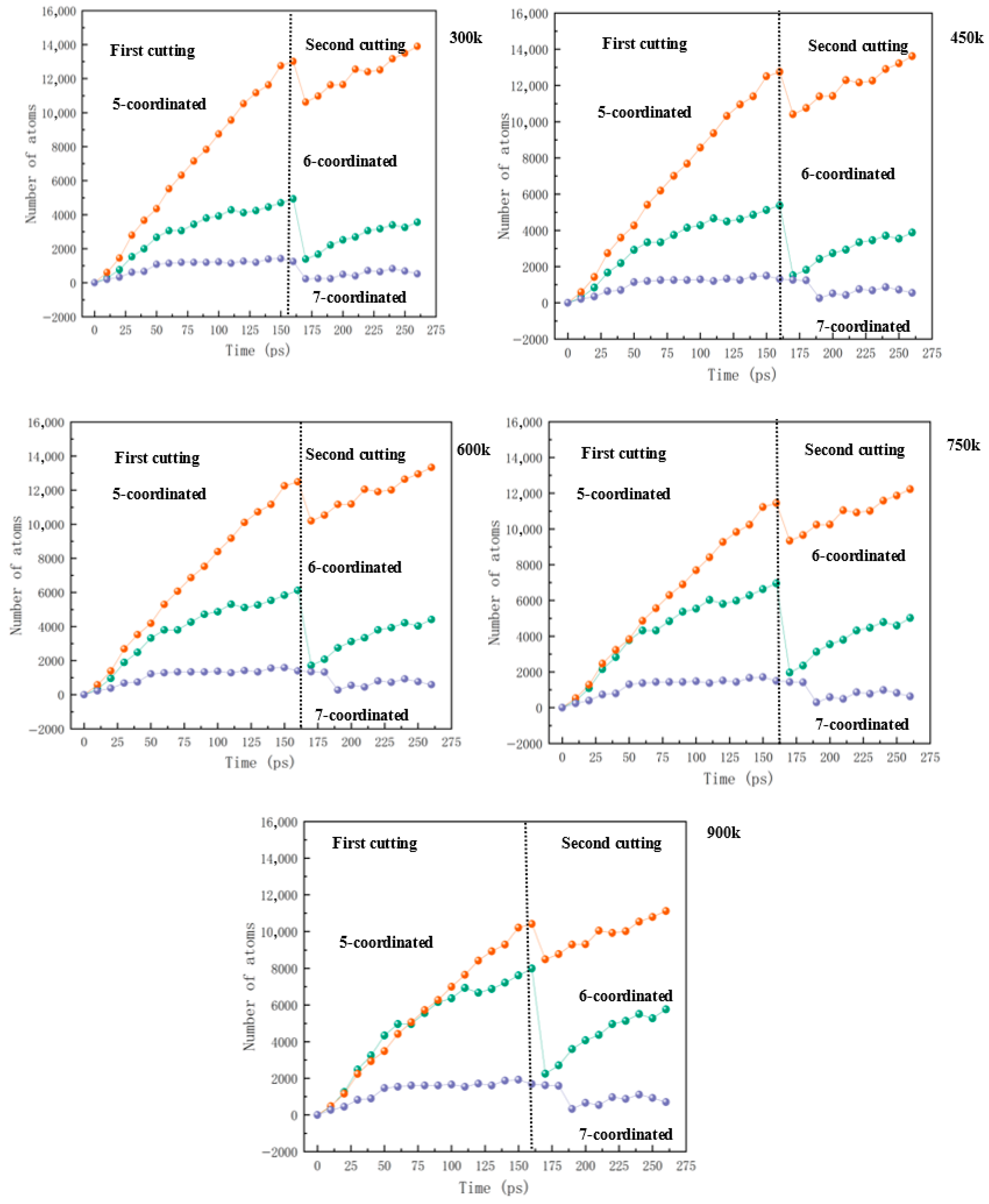
To investigate the structural phase transformation behavior of single-crystal germanium during the cutting process, this study calculated the coordination numbers of workpiece atoms under different machining conditions, with the distribution patterns shown in
Figure 5. According to phase transformation theory, diamond cubic Ge-I can transform into the β-tin structure under high pressure. Among the identified coordination states, atoms with a coordination number of 5 represent a metastable intermediate structure, those with a coordination number of 6 correspond to the β-tin phase, and atoms with a coordination number of 7 indicate an amorphous state.
Zhu P Z et al pointed out that a phase transition from Ge-I (four-coordinated diamond cubic) to Ge-II (six-coordinated β-tin) occurs during the nanoindentation process; it is explained that in the MD simulation of germanium, coordination numbers are usually used to assist in phase identification [
29]. Lai M et al. clearly observed in the MD simulation of nano cutting: diamond cubic → β-Sn phase transition, and direct amorphization; it is mentioned that the surface after processing has an amorphous structure [
30]. Previous nanoindentation simulation studies have revealed that when the hydrostatic pressure exerted on single-crystal germanium exceeds a specific critical value, its atomic structure transforms from the diamond cubic structure (Ge-I) to the β-tin structure (Ge-II). This theory posits that atoms in the β-tin structure possess a coordination number (CN) of 6, whereas atoms with a CN of 5 can be regarded as a transitional state towards the β-tin structure, and those with a CN of 7 correspond to a liquid-like amorphous arrangement. To investigate the structural phase transformation behavior of single-crystal germanium during the cutting process, this study performed coordination number calculations on the workpiece atoms. Furthermore, to intuitively reveal the evolution of phase-transformed atoms under multiple cutting conditions, a quantitative statistical analysis was conducted on the various types of phase-transformed atoms within the workpiece following different cutting depths.
The results indicate that the population of atoms with a coordination number (CN) of 5 significantly exceeds those with CN = 6 and CN = 7, with the latter being the least abundant. This distribution suggests that during the cutting process, a substantial number of Ge-I atoms initially transform into an intermediate transitional structure (CN = 5). Once the stress in the cutting zone reaches a specific threshold, a portion of these atoms further transforms into the β-tin structure (CN = 6), while others convert into an amorphous structure (CN = 7) under higher stress. During the first cutting pass, the number of phase-transformed atoms with CN = 5, 6, and 7 exhibits a significant increase, with the most pronounced rise observed for CN = 5 atoms. This further corroborates a close correlation between the increment of phase-transformed atoms and the cutting depth.
Furthermore, as heating temperature gradually increases, enhanced atomic thermal motion and diffusion capabilities accelerate the transition of these metastable intermediate structures toward more stable configurations, leading to a decrease in the number of CN = 5 atoms with rising temperature. The coordination number of 6 corresponds to the β-tin structure (Ge-II), a phase that is more stable under high pressure. Elevated temperatures provide the necessary thermal activation energy for the phase transformation from the diamond structure (Ge-I) to the β-tin structure (Ge-II), resulting in a substantial increase in the population of this stable structure. This phenomenon reflects the material’s tendency to seek a lower free energy state at high temperatures. Meanwhile, the increased temperature intensifies atomic disordering and thermal perturbations, driving a fraction of atoms (potentially originating from unstable intermediate states or directly via thermal activation) into a highly coordinated, disordered arrangement. Consequently, at higher temperatures, although the generation rate of atoms with CN = 7 remains positive, the net growth rate declines as a portion of these amorphous atoms may undergo further reorganization or relax into other structures.
3.4. Material Damage Depth Under Different Cutting Conditions
As a typical brittle semiconductor material, single-crystal germanium is prone to the formation of subsurface damage layers during ultra-precision machining, which compromises device performance. Temperature acts as a critical factor influencing material removal mechanisms and damage evolution; however, its effect on damage depth is not monotonic but rather exhibits complex nonlinear characteristics. Previous studies have indicated that single-crystal germanium undergoes behaviors such as brittle-to-ductile transition and amorphous phase transformation during cutting, which are highly sensitive to temperature. Nevertheless, a systematic explanation is currently lacking regarding the variation patterns and physical mechanisms of damage depth during dual cutting passes at different temperatures—particularly concerning the non-monotonic phenomenon where damage depth initially decreases and subsequently increases with rising temperature.
In molecular dynamics simulations, the depth of damage is defined as the extension depth of the subsurface damage layer caused by processing along the direction perpendicular to the processed surface. The calculation is carried out through hierarchical statistics and a threshold determination method, and its logic and steps are as follows:
Structural analysis and atomic classification: After the cutting simulation is completed, the entire workpiece system is subjected to coordination number analysis using OVITO software to identify and label all phase transition atoms with CN ≠ 4.
Work layering: Divide the workpiece into a series of thin sheets with uniform thickness along the Z-axis (depth direction). For the jth layer, calculate the ratio of the number of phase transition atoms
in that layer to the total number of atoms
in that layer:
.
Set a damage threshold η. Starting from the outermost layer (j = 1), inspect layer by layer towards the interior of the material. The depth of subsurface damage is defined as the depth from the processed surface to the deepest atomic layer that satisfies
. In this study, the threshold η was set to 0.1:
Here, represents the vertical distance from the processed surface to the center of the jth layer. is the number of phase transition atoms with CN ≠ 4 in the jth layer. is the total number of atoms in the jth layer. η is the damage determination threshold.
Monocrystalline germanium is susceptible to subsurface damage during ultra-precision machining.
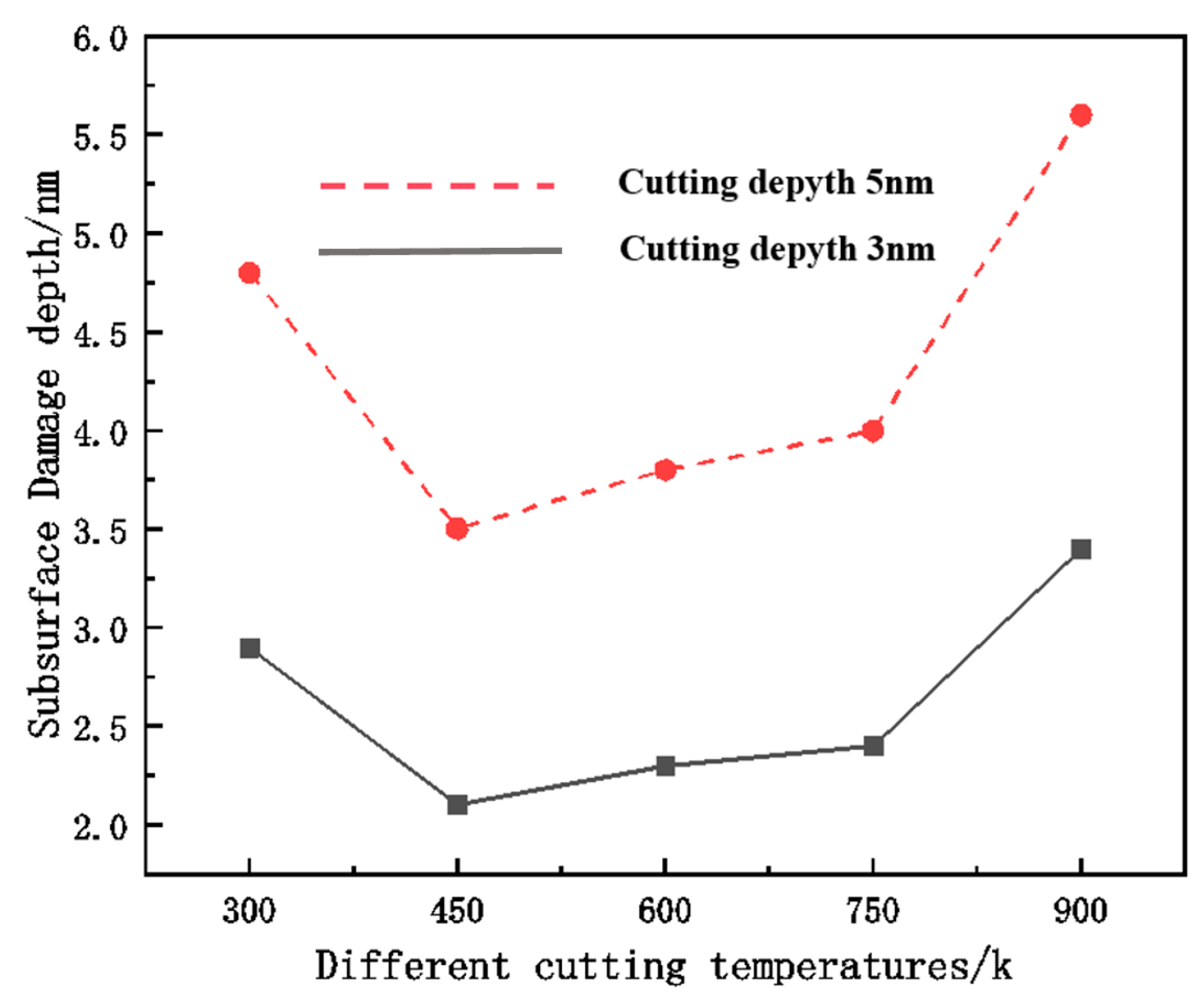
Figure 6 shows the distribution of material damage depth at different cutting depths and temperatures. At 300 K, brittle fracture dominates, with micro-cracks and cleavage leading to a deep damage layer. When the temperature rises to 450 K, the material undergoes a brittle-to-ductile transition: activated dislocation slip enhances plastic deformation, which absorbs cutting energy and suppresses crack growth, thus reducing damage depth. Between 450 K and 750 K, dislocation motion becomes predominant; defects such as tangles and pile-ups extend deeper, causing a mild increase in damage depth. At 900 K, material softening intensifies, atomic diffusion rises, and lattice stability declines, resulting in extensive plastic flow under the tool and a deeper stress-affected zone, which raises the damage depth again. The figure indicates that the least damage occurs at 450 K. Hence, to minimize machining-induced damage, 450 K is the optimal temperature.
3.5. Distribution of Atomic Structure and Workpiece Surface Roughness Under Different Cutting Conditions
Surface roughness is the core parameter for evaluating the quality of machined surfaces. In this study, the arithmetic mean roughness of the outermost atoms of the workpiece after molecular dynamics simulation was analyzed to quantify the degree of surface irregularity. Calculation formula: The calculation formula for arithmetic mean roughness is as follows:
Here, N is the total number of outermost atoms of the workpiece involved in the calculation. It is usually defined as all atoms whose Z coordinate is located within the top 1–2 atomic layers.
is the coordinate of the i-th surface atom in the direction perpendicular to the processed surface (Z-axis).
is the average Z-coordinate of all n surface atoms. Before calculation, the original atomic coordinate data is usually fitted with a least squares plane to eliminate system bias caused by the overall tilt of the workpiece, where
can be considered as 0. Surface roughness serves as a critical metric for evaluating the quality of ultra-precision machining, directly influencing the functional performance of optical components. As a brittle semiconductor, single-crystal germanium is prone to surface defects such as micro-cracks, brittle fracture, and material spalling during cutting, which significantly deteriorate surface roughness. Temperature is a pivotal factor affecting the material removal mechanism and surface formation process; by modulating the material’s plastic deformability and phase transformation behavior, it exerts a profound influence on the final surface quality. Previous studies have indicated that single-crystal germanium exhibits a brittle-to-ductile transition (BDT) temperature range, resulting in a non-monotonic trend where surface roughness initially decreases and subsequently increases with rising temperature. Furthermore, in the cutting of single-crystal germanium, the effect of cutting depth on surface roughness is nonlinear, characterized by a distinct critical depth of cut effect. Below this critical threshold, roughness increases gradually with cutting depth; beyond it, the surface quality deteriorates drastically.
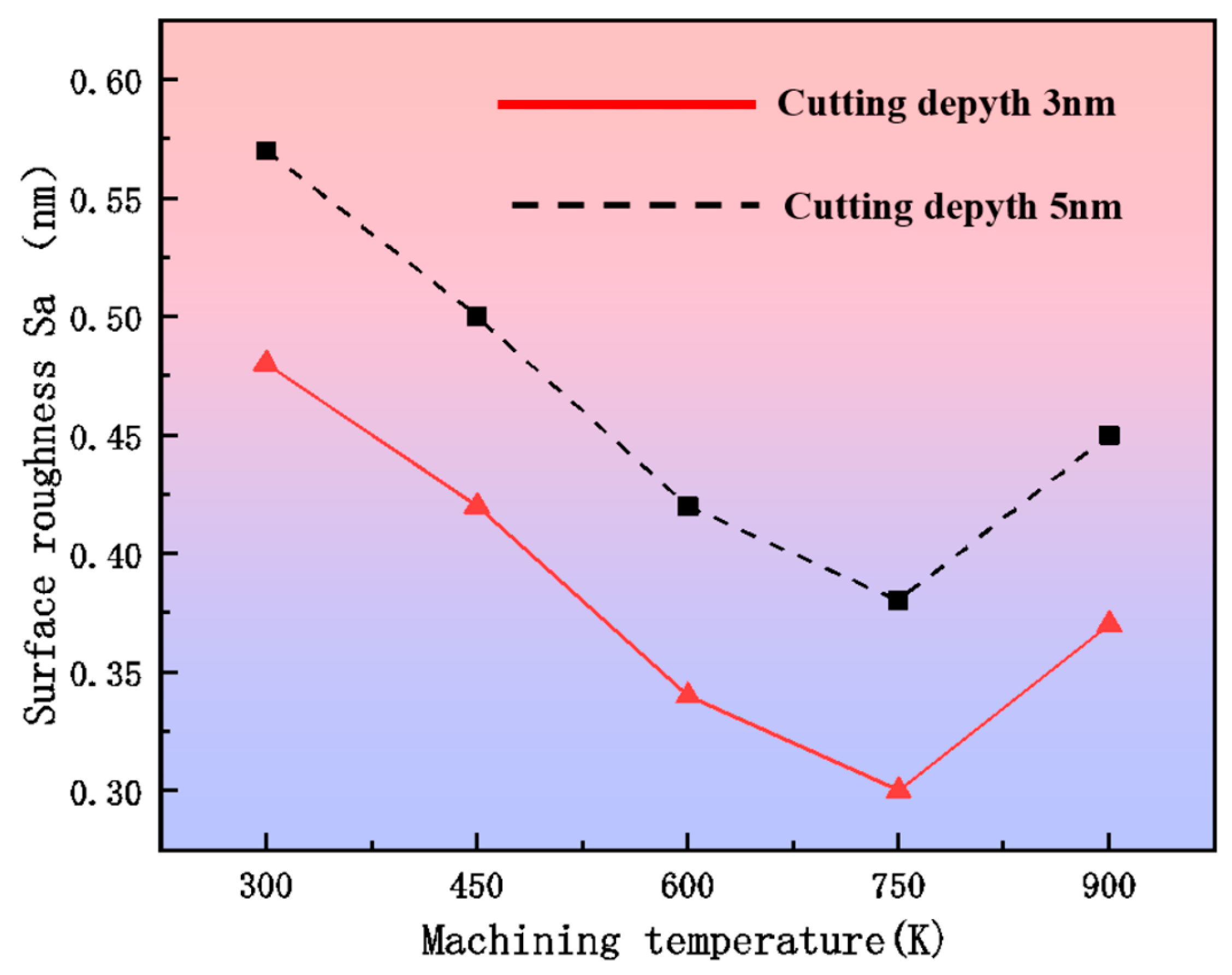
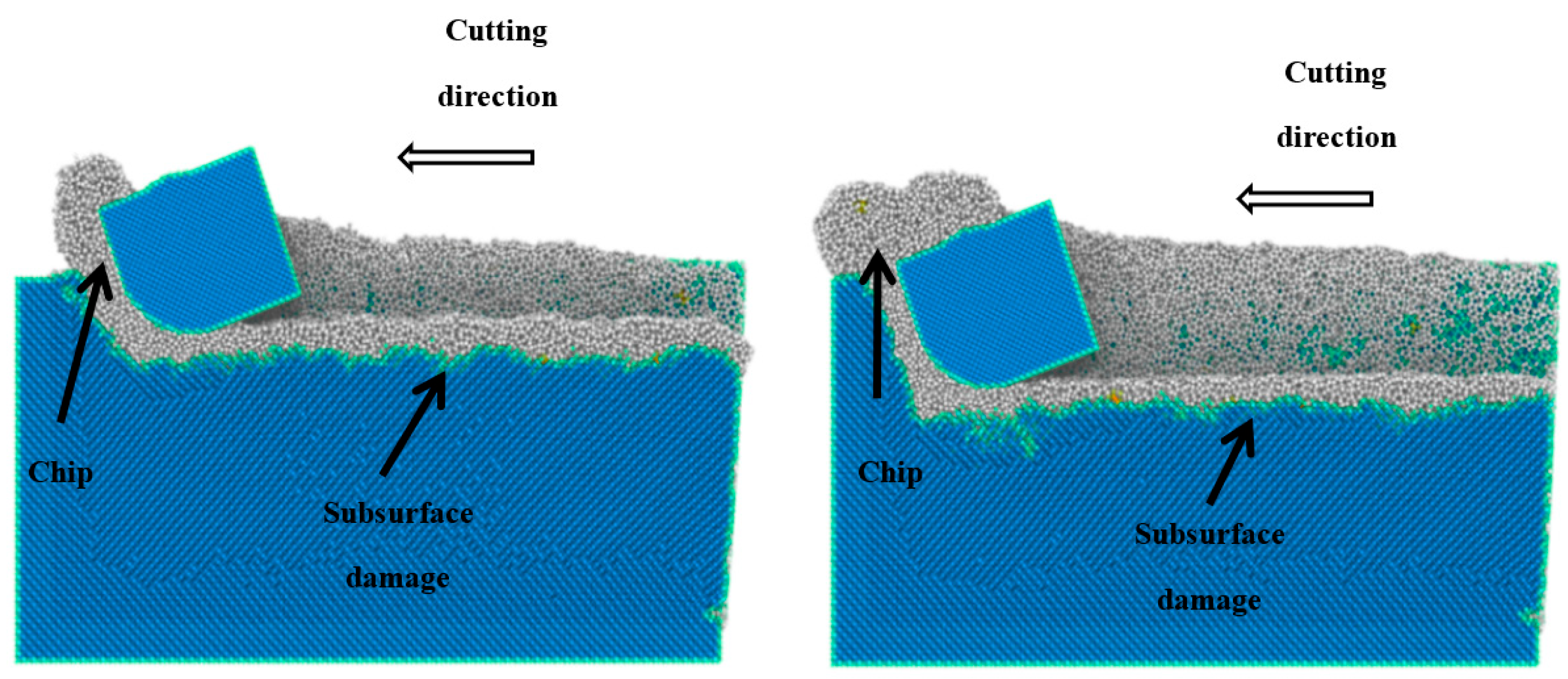
Figure 7 displays the atomic structure distribution of the workpiece at varying cutting depths, illustrating how cutting depth directly influences surface quality and crystalline structure. Greater cutting depths produce a thicker subsurface amorphous layer in monocrystalline germanium and propagate lattice distortion further into the workpiece.
Temperature also significantly affects surface quality. As shown in
Figure 8, below 750 K, surface roughness decreases with rising cutting temperature for a given depth. Above 900 K, however, roughness increases. This non-monotonic behavior stems from the temperature-dependence of plastic deformation, phase transformation, and final surface morphology in monocrystalline germanium. Its brittle-to-ductile transition leads to an initial decline followed by a rise in surface roughness with temperature. At 750 K, surface roughness reaches a minimum for both cutting depths, indicating that optimal surface quality is achieved at this temperature.
At room temperature (300 K), single-crystal germanium exhibits brittle characteristics. During cutting, phenomena such as cleavage fracture, micro-crack propagation, and brittle spalling occur readily, resulting in an uneven surface with high roughness. As the temperature rises to the 450–750 K range, the material undergoes a brittle-to-ductile transition (BDT). Increased atomic thermal vibration energy activates dislocation slip systems, significantly enhancing the material’s plastic deformability. Under this plasticity-dominated mechanism, material removal is achieved continuously through dislocation slip and plastic flow rather than brittle fracture. Consequently, the surface formation process becomes smoother, waviness and peak-to-valley height differences are reduced, and surface roughness decreases.
Elevated temperatures weaken interatomic bonding forces and reduce the material’s yield strength (thermal softening effect), leading to a concomitant decrease in cutting forces. Lower cutting forces imply reduced extrusion and shearing actions by the tool, minimizing instability factors such as vibration and chatter. This results in a more stable surface formation process. Simultaneously, thermal softening favors plastic deformation over brittle fracture, reducing surface defects like spalling and chipping, thereby improving surface integrity and lowering roughness.
During the cutting of single-crystal germanium, the high temperature and high pressure in the tool-workpiece contact zone can induce amorphous phase transformation, forming an amorphous layer. In the 300–750 K range, as temperature increases, this amorphous layer may become more uniform and dense, acting akin to a “polishing” layer that smooths the surface. This layer effectively fills micro-cracks and defects, thereby reducing surface roughness.
Higher temperatures enhance dislocation mobility; dislocations generated during cutting are more likely to migrate to the surface or annihilate each other via slip and climb, reducing the residual surface defects such as dislocation pile-ups and tangles. Meanwhile, enhanced atomic diffusion at high temperatures lowers surface energy, driving surface atoms to flatten the surface via diffusion. This surface recovery effect contributes to reduced roughness.
However, when the temperature exceeds 750 K (approaching 0.62 times the melting point), single-crystal germanium undergoes significant softening, and its yield strength drops sharply. Although plasticity further increases, excessive softening leads to higher material viscosity, making the material prone to adhesion and built-up edge (BUE) formation during cutting. Adhesive friction between the tool’s rake face and the chip, as well as between the flank face and the machined surface, may cause the surface to be “torn” or “smeared,” creating new defects and increasing roughness.
Under high-temperature conditions (>750 K), dynamic recrystallization may occur, redistributing dislocation density and forming new grain boundaries. If the recrystallized grain size is non-uniform or if grain coarsening occurs, uneven grain boundary steps will form on the surface, increasing roughness. Additionally, grain boundary sliding becomes a significant deformation mechanism; grain boundary migration can lead to surface defects such as grooves and steps.
At high temperatures, the material’s coefficient of thermal expansion increases. Combined with higher local temperature rises during cutting, this results in a more complex thermal stress field. Thermal stresses can induce defects like micro-cracks and inhomogeneous phase transformations, forming micro-protuberances or micro-pits that increase roughness. Furthermore, thermal expansion mismatch between the tool and workpiece may introduce additional stresses, affecting surface quality.
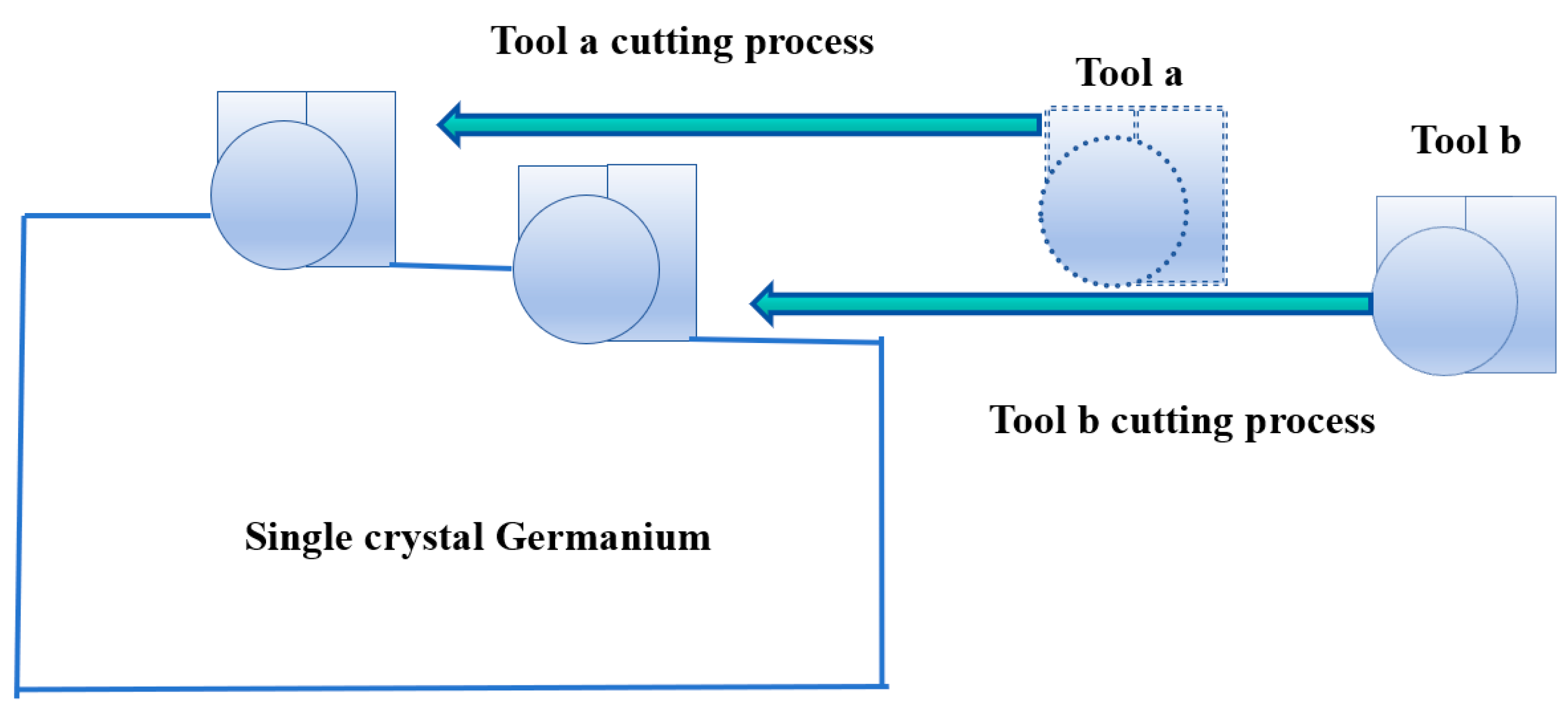
The surface formed after the first cutting pass possesses a certain roughness and may contain a strain-hardened layer, dislocation networks, and residual stresses. During the second pass, the tool effectively “finishes” the machined surface, removing peaks and micro-cracks left by the first pass, resulting in a flatter surface. This “pre-machining/finishing” strategy leads to a generally lower surface roughness in the second pass. Additionally, the first pass alters the mechanical properties of the surface layer through plastic deformation, amorphization, and dislocation multiplication. In the low-temperature range (300–450 K), the first pass may induce strain hardening, increasing material strength and making the material more resistant to deformation during the second pass.
Temperature modulates the difference in surface quality between the two passes by influencing the material’s constitutive relationship and surface formation mechanisms. At 300 K, the material is highly brittle; the first pass yields poor surface quality, leaving significant room for improvement by the second pass. In the 450–750 K range, enhanced plasticity results in better initial surface quality, so the relative improvement from the second pass is smaller. At 900 K, excessive softening leads to defects like adhesion and BUE in both passes, limiting the potential for improvement.
3.6. Cutting Forces Under Different Cutting Conditions
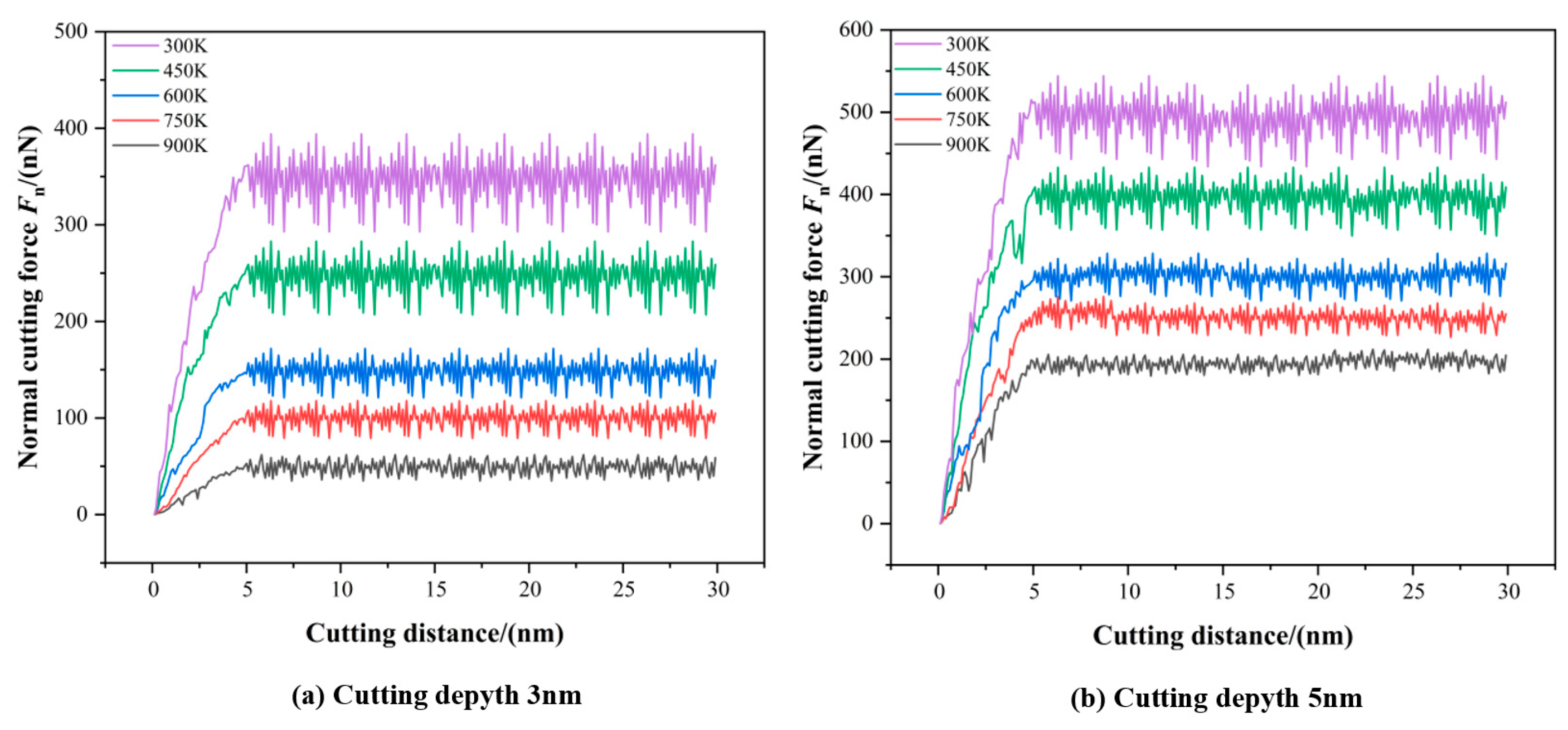
The curve of normal cutting force versus cutting distance shown in
Figure 9 clearly reveals the profound influence of temperature on the nanometric cutting process of monocrystalline germanium. Overall, at different cutting depths, the normal cutting force exhibits a significant decreasing trend with rising temperature. Particularly when the temperature increases from 300 K to 750 K, the cutting force curve shifts downward markedly, indicating that the material’s resistance to deformation is effectively reduced. This macroscopic phenomenon primarily results from the thermal softening effect, which lowers the shear strength and flow stress of the material. Specifically, in the low-temperature range (300 K to 600 K), as temperature increases, the thermal activation of atoms reduces the energy barriers for dislocation nucleation and slip. Although the material transitions from brittle fracture to plastic deformation (such as the formation of amorphous shear bands), the dominant factor governing the cutting force is the significant reduction in material hardness due to elevated temperatures. This aligns with the observation in the figure that the cutting force continuously decreases from 300 K to 750 K.
When the temperature is further elevated to 900 K, although the average cutting force remains lower than at low temperatures, the curve exhibits significantly larger fluctuation amplitudes and occasional force spikes. This indicates that in addition to thermal softening, a new dominant mechanism begins to intervene: local melting of the material surface layer. Previous molecular dynamics studies have shown that under heating or high-strain-rate deformation, germanium may undergo surface premelting or amorphization at temperatures far below its bulk melting point. Under the extremely high local pressure and shear strain at the tool tip, combined with the global high temperature of 900 K, the surface layer material is highly likely to enter a transient molten state, forming an ultra-thin liquid film. The behavior of this film is dualistic: on one hand, acting as a lubricating layer, it causes a drastic reduction in friction, explaining the overall low level of force; on the other hand, the viscous flow, atomic recombination, and potential reflux/resolidification of the molten material introduce strong instability. This instability causes the cutting force to oscillate violently, occasionally producing peaks that are higher than the average values, which explains the intensified fluctuations observed in the 900 K curve.
Furthermore, comparing the two figures reveals that at a larger cutting depth, both the absolute value of the cutting force and its sensitivity to temperature are more pronounced. This stems from the fact that increasing the cutting depth directly enlarges the contact area and shear volume between the tool and the material, involving more material in the temperature-driven thermo-mechanical coupling process. A larger plastic deformation zone implies a greater accumulation of local energy that is more prone to inducing phase transformations or melting in the surface layer. Consequently, the influence window of temperature is broadened, and the effects are amplified, manifested as more distinct force value gaps between curves at different temperatures under deeper cutting depths.
In summary, the cutting force behavior of single-crystal germanium in nanometric cutting is temperature-sensitive and mechanistically complex. In the range of 300 K to 750 K, the reduction in cutting force is dominated by thermal softening. However, near 900 K, local melting and the complex rheology of the molten film become dominant, leading to violent fluctuations in cutting force even at a low average level. Meanwhile, increasing the cutting depth significantly enhances these temperature effects, making the thermo-mechanical coupling process more prominent.