1. Introduction
As the global population ages, age-related frailty, reduced muscle strength, slower walking speed, and impaired postural balance have become increasingly visible problems. These changes affect not only individuals’ quality of life but also the burden of care on healthcare systems. In older adults, falls occur frequently and often lead to serious consequences such as injury, hospitalization, functional decline, dependence on care, and reduced quality of life. For this reason, fall prevention has become one of the central topics in rehabilitation engineering [
1,
2,
3,
4]. The impact of falling is not limited to physical trauma alone. A history of falls and fear of falling may cause hesitation in activities of daily living (ADL), avoidance of movement, and a gradual decline in mobility over time [
5]. Walkers are therefore among the assistive devices most commonly used in clinical practice to support reduced mobility and impaired balance control [
6]. Conventional passive walkers, however, do not always provide sufficient or safe support. This is particularly evident in wheeled systems, where the mechanical interaction between the user and the device may become inadequate during sudden balance disturbances. When the user loads the device with a large force, the walker may move forward unintentionally because the system cannot generate an adequate counter-response [
7,
8,
9]. This shows that walkers should be considered not only as passive support devices but also as human–machine interaction systems whose behavior in critical situations must be designed with care.
To address these limitations of passive systems, smart walkers equipped with sensors, electromechanical actuators, embedded processors, and advanced control algorithms have been developed [
10,
11,
12]. Smart walkers have emerged as robotic assistive systems that can interpret the user’s motion intent, monitor environmental conditions, and adapt walking support when needed. At the same time, the addition of motors, batteries, sensors, and computing units does not merely introduce new functions; it also brings new engineering challenges. It has been shown that the horizontal forces generated during user–device interaction can affect gait patterns and perceived exertion, while walker-assisted ambulation may itself be metabolically demanding by nature [
13,
14]. For this reason, the goal in smart walker design is not simply to add more technology to the system, but to provide an interaction that remains natural, predictable, and low-effort while keeping the overall physical burden of the device manageable for the user [
11,
15]. This need has made it necessary to develop control strategies for smart walkers that are both user-compatible and safe.
Within this context, control strategies based on physical human–robot interaction have gained increasing importance. In particular, shared-control and admittance-based methods aim to make walking assistance more natural and more compatible with the user by exploiting the forces applied by the user to the device [
16]. The literature shows that admittance-based structures have been widely used in smart walkers for path following, safe motion in confined spaces, and support generation that is responsive to user intent [
17,
18,
19]. More recent studies have shown that hybrid motion models and machine learning approaches can provide a more precise adjustment between the user’s gait phases and the speed profile of the device [
20]. Even so, it remains an open question whether structures that perform well during normal walking are equally adequate under unexpected risk conditions.
In recent years, research on smart walkers has increasingly focused on customizable robotic assistants, environment-aware guidance, close-proximity interaction, and control strategies with variable load support [
21,
22,
23,
24,
25]. The central challenge in these systems, however, is balancing normal walking assistance with safety during crisis situations. On the one hand, the device is expected to provide smooth and comfortable support during walking. On the other hand, it must also be able to respond quickly and reliably in situations such as sudden forward pitching, vertical collapse, asymmetric loading, or lateral instability. Although some systems in the literature include active fall-detection and braking strategies, the form and level of protective intervention remain important design issues. This is especially true in high-momentum situations, where safety depends not only on stopping the motion but also on how the mechanical effect transferred from the user to the device is managed. For this reason, there is growing interest in more context-sensitive and graded protection strategies [
25,
26,
27].
In addition, in many existing safety approaches, fall detection and protective intervention are defined on the basis of a limited number of sensor indicators and specific risk patterns [
25,
26,
28,
29,
30]. In real-life settings, however, falls rarely develop as simple and one-dimensional events. Different forms of load transfer, balance loss, and recovery behavior may emerge within the same sequence of events [
31]. A similar challenge of maintaining robust balance against dynamic disturbances is also framed in the design of bipedal robots in engineering [
32]. Consequently, a safe smart walker architecture should not be limited to a controller that merely provides walking assistance. It should also incorporate a higher-level decision structure capable of distinguishing between different types of crises, making context-sensitive decisions, and selecting the appropriate mechanical response.
The ability of smart walkers to generate safe interventions depends on an accurate perception of the user’s instantaneous gait and balance state. For many years, wearable sensors, particularly IMU-based systems and ambulatory measurement setups, have been widely used in conventional clinical gait analysis and early fall-detection systems [
33,
34]. These solutions, however, are not always practical for daily use. This is especially true for older adults, for whom the regular placement of such sensors on the correct body locations, maintenance of calibration, and acceptance of long-term use can be challenging [
35]. For this reason, contactless sensing approaches that do not require sensors to be attached to the user and that operate directly from the device body have attracted increasing attention in recent years.
In this area, 2D LiDAR systems integrated into the device body have become an important option. LiDAR-based approaches enable real-time monitoring of nearby spatial patterns and the user’s motion state from the walker chassis [
33,
36]. Along the same line, other sensing technologies have also been adopted in smart walkers for close-range interaction, guidance, and hands-free assistance [
37,
38]. Decision mechanisms based solely on spatial data, however, still have important limitations. Studies on laser-based person and leg tracking have shown that factors such as leg overlap, close crossings, narrow-space maneuvers, and short-term occlusions can significantly reduce tracking performance [
39,
40,
41]. For this reason, spatial monitoring is an important source of information, but in most cases, it needs to be supported by additional sensor data when safety-level decisions are required.
A similar limitation is observed in systems that rely only on kinetic data. The forces applied by the user to the walker provide valuable information for interpreting human intent and balance state. Yet, decision mechanisms based on these signals alone may be insufficient in some cases to distinguish normal load transfer from potentially risky situations [
42,
43]. For this reason, recent studies have increasingly turned toward multimodal sensor-fusion approaches in smart walkers [
28,
44]. Evaluating the spatial information obtained from LiDAR together with handle-based force/torque data and inertial measurements provides a more robust basis for decision-making, both by reducing the likelihood of false alarms and by enabling more reliable classification of true risk conditions [
28,
45].
The role of smart walkers has also expanded beyond mechanical gait assistance alone. Recent studies have addressed intention prediction during front-following [
46], adjustment of the assistance level according to loading conditions [
22], and machine learning-based classification using smart walker data [
47]. These developments indicate that the field is moving toward health monitoring, intention estimation, and personalized support. Even so, architectures that combine these functions within a single real-time safety framework, without wearable sensors and with explicit intervention prioritization, remain limited.
The sensor modalities, control approaches, safety objectives, and current limitations of representative studies in the smart walker literature are summarized in
Table 1.
When the current literature is considered as a whole, three main gaps become evident. First, systems that provide comfortable, admittance-based, user-compatible support during normal walking and systems that deliver safe intervention during crisis situations have generally been developed along separate lines. Studies that integrate these two functions within the same control framework remain limited. Second, many systems still rely predominantly on single sensing sources, whereas multimodal decision architectures in which spatial, kinetic, and inertial data cross-validate one another are encountered less often. Third, although real-life falls usually do not arise from a single simple event but rather from overlapping and successive crisis patterns, hierarchical decision mechanisms capable of prioritizing and managing such complex situations in existing smart walkers are still not sufficiently mature [
24,
25,
26,
48].
Building on these gaps, this study proposes a cognitive smart walker architecture that combines normal walking assistance and active fall prevention within a single embedded framework. The system integrates a 2D LiDAR for contactless lower-limb monitoring, a six-degree-of-freedom force/torque sensor for user–walker interaction, and a 3D IMU for dynamic observation, all processed on a Raspberry Pi 4 (Raspberry Pi Ltd., Cambridge, UK) through ROS. In this way, the proposed approach evaluates not only pushing and loading forces but also inter-leg spatial geometry, sudden inertial changes, and their temporal relationships.
On the control side, the system employs a command-level variable-admittance-based structure that maps filtered forward interaction force to a signed duty-cycle command rather than to a rigid speed command. Above this support layer, a Hierarchical State Machine interprets multimodal sensor signals through filtering, cross-validation, and prioritization, thereby enabling graded intervention. Early-stage risks are handled through motor-based dynamic braking, whereas severe physical crises additionally trigger lateral support legs to enlarge the support polygon. The architecture also addresses post-crisis recovery and successive crisis patterns through priority override and recovery-abort mechanisms.
The contributions of this work are as follows:
An integrated smart walker architecture is presented that combines user-compatible walking assistance during normal operation with active-safety intervention during crisis situations. Within this framework, 2D LiDAR, a six-degree-of-freedom force/torque sensor, and IMU data are processed together in a ROS-based embedded system running on a Raspberry Pi 4. As a result, the system considers not only the forces applied by the user to the device but also lower-limb geometry, sudden inertial changes, and the temporal relationships among these variables.
A command-level variable-admittance-based walking-support scheme is developed in which the filtered forward interaction force is mapped to a signed duty-cycle command rather than to a rigid speed command. This structure provides more transparent and predictable support during normal walking, while becoming more conservative under dynamic conditions that may precede a crisis.
A lightweight LiDAR-based spatial processing pipeline is established, including region filtering, polar-to-Cartesian transformation, DBSCAN-based clustering, anatomical cluster validation, and kinematic metric extraction. This pipeline enables real-time monitoring of step width, step length, and especially the Gap metric, allowing foot-entanglement-like risks to be transferred to the decision layer at an early stage.
A Hierarchical State Machine-based decision mechanism is proposed in which sensor data are interpreted through multimodal cross-validation and prioritization rather than treated as independent alarm signals. This enables the system to distinguish between different crisis types, prioritize simultaneous risk patterns, and select the appropriate intervention level based on risk severity. Within this structure, Level 2 early-risk conditions are handled through motor-based dynamic braking and virtual-wall behavior. In contrast, Level 1 severe physical crises additionally trigger lateral support legs through linear actuators, thereby enlarging the support polygon.
The proposed system addresses not only isolated crisis events but also post-crisis recovery and sustained multi-crisis management. In particular, the recovery-abort mechanism allows the walker to re-enter a higher-level safety mode when renewed loading occurs during recovery.
The architecture is validated across a broad set of scenarios under controlled conditions. In an 80-sample macro-evaluation dataset constructed on a standard 10 m walking track, crisis detection performance, false-alarm behavior, and intervention consistency are evaluated across 50 real crisis cases and 30 non-crisis scenarios. In addition, selected time-series examples from a total experimental pool of 110 tests are used to show how HSM decisions are reflected in motor and actuator outputs.
2. Materials and Methods
The smart walker system developed in this study was designed as an integrated mechatronic platform that monitors the user’s gait behavior in a multimodal manner, interprets these data in real time, and produces active safety intervention when required. The system was not conceived merely as a passive assistive device that provides motion support. It was also equipped with a decision structure capable of evaluating user intent, balance state, and patterns that may precede a crisis. For this reason, the overall architecture was organized into three main layers: a sensing layer, a cognitive processing layer, and a mechatronic intervention layer.
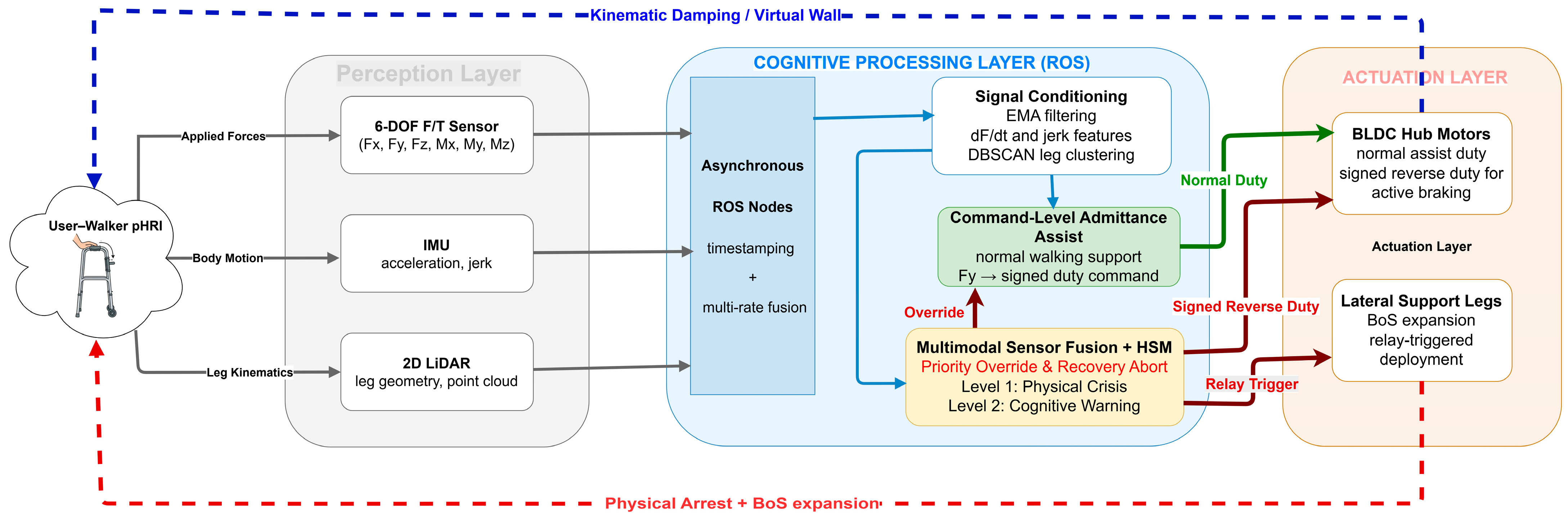
In the proposed architecture, the physical interaction between the user and the device is monitored via the force/torque sensor, body dynamics are observed via the IMU, and lower-limb geometry is tracked via the 2D LiDAR. These multimodal data are brought together through ROS (Robot Operating System) nodes within a Raspberry Pi-based embedded processing framework. After signal conditioning and feature extraction, the system either generates normal walking assistance or switches to a safety-prioritized intervention mode when a crisis condition is detected. In this way, the system can provide smooth, user-compatible support during normal operation while also producing physical responses such as active braking and base expansion under risk conditions. The block diagram given in
Figure 1 summarizes this data flow and the relationship between the layers.
2.1. System Architecture and Hardware
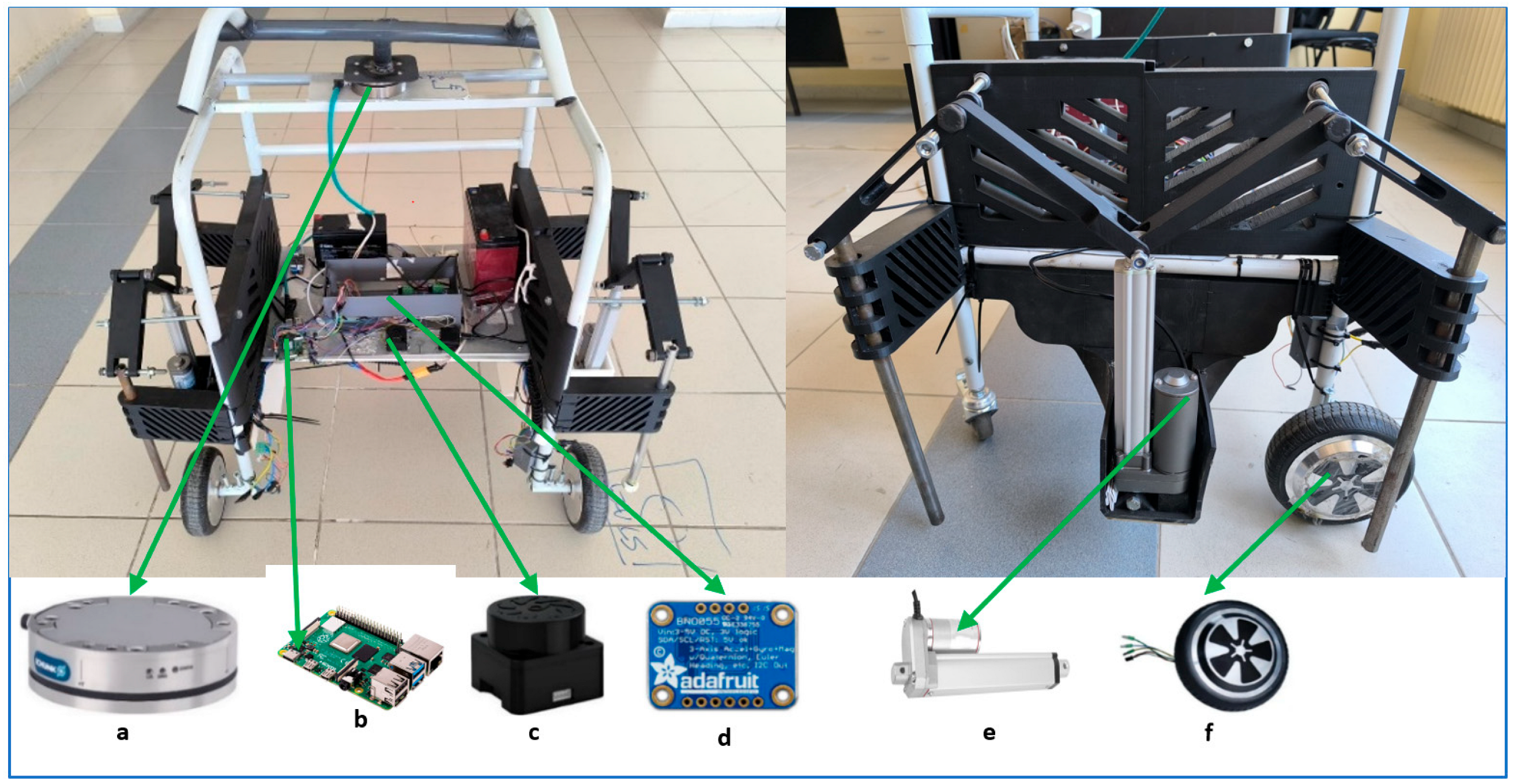
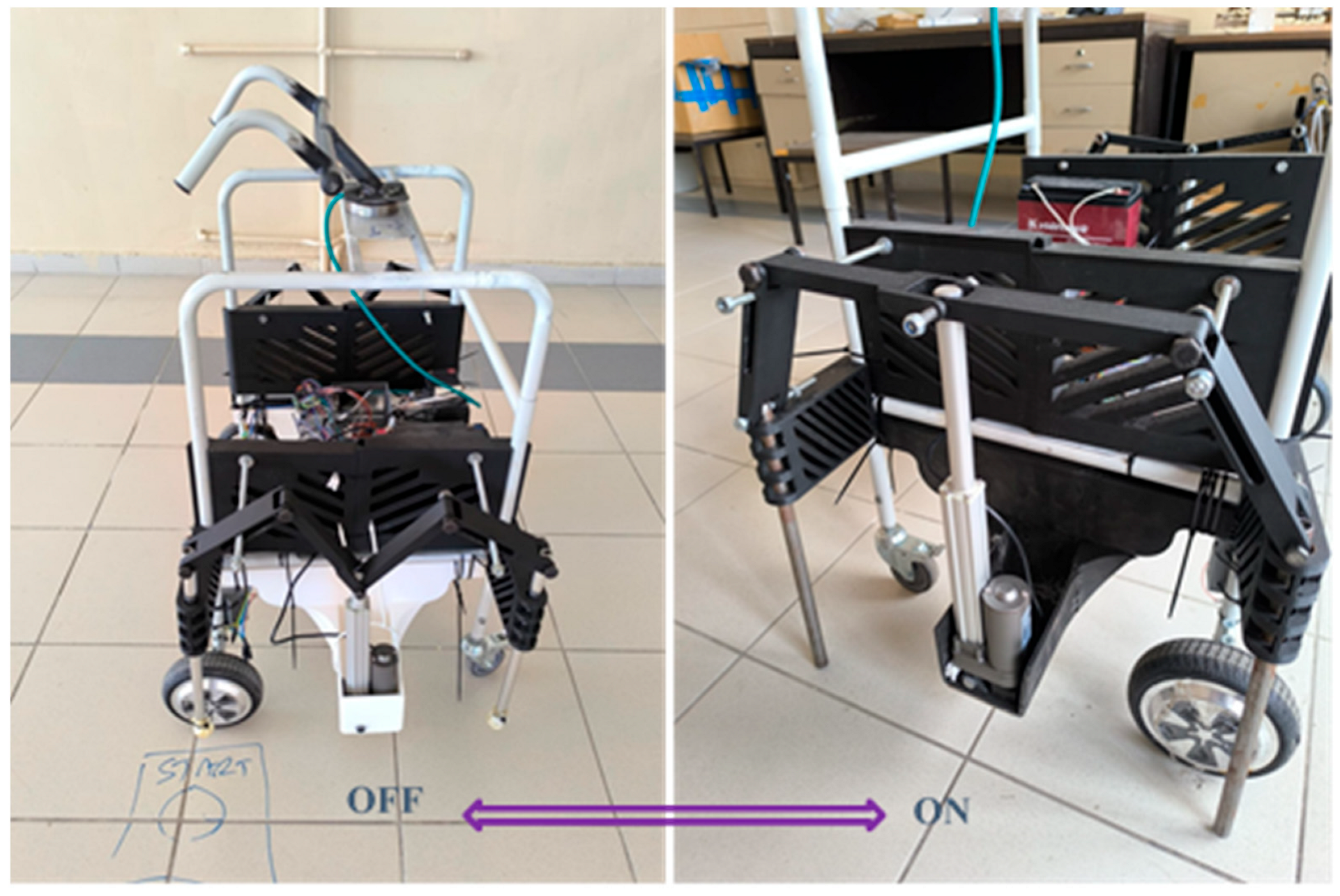
The developed smart walker prototype consists of multimodal sensors, an embedded processing unit, and active actuators mounted on a standard walker frame. The main hardware components of the prototype are shown in
Figure 2. This hardware configuration was designed not only to measure the physical interaction between the user and the walker, but also to respond to that interaction in real time.
A 6-DOF force/torque sensor mounted at the handle region measures the user’s forward pushing force, vertical-load transfer, and changes in lateral moment applied to the walker. A fully 3D, 9-axis IMU module integrated into the walker body monitors the inertial state of the device, spatial orientation changes, and sudden dynamic variations. A 2D LiDAR sensor installed in the lower region tracks the position of the user’s legs in a contactless manner. This 2D approach was deliberately chosen over a 3D LiDAR because scanning a single horizontal plane is anatomically sufficient for lower-limb tracking, significantly reduces the computational burden for real-time processing, and preserves user privacy. All of these data are processed through the ROS framework on a Raspberry Pi-based embedded processing unit.
On the motion-generation and safety-intervention side, the system includes two main actuator groups. The first consists of BLDC hub motors used for normal walking assistance and active braking. The second consists of lateral support legs that are deployed only in high-risk physical crises. These support legs are opened by means of linear actuators and enlarge the support polygon of the walker, allowing the structure to settle more stably on the ground. In this way, the system goes beyond providing assistive drive alone and can also modify its physical base when needed to increase safety.
2.2. Perception Layer and ROS-Based Cognitive Processing
As shown in
Figure 1, the perception layer monitors user–walker interaction through three sensing axes: force/torque interaction, inertial behavior, and spatial gait information. The force/torque sensor provides F
x, F
y, F
z, M
x, M
y, and M
z, which reflect not only the user’s forward pushing intent but also how the user loads the device. Forward force is used to initiate normal walking assistance, vertical unloading to assess grip loss and collapse-like conditions, and lateral moments to interpret tipping tendency. IMU measurements complement this interpretation by capturing sudden dynamic changes, while the 2D LiDAR provides contactless information on inter-leg spacing, gait geometry, and possible foot-entanglement patterns. This multimodal structure was adopted to reduce the false alarms and missed detections that may arise in single-sensor systems.
In the system, force/torque data are read by a dedicated data-acquisition node. During initialization, this node applies a software tare by averaging the raw serial data over a short reference window and then publishes the corrected force/torque measurements. The same node also records experimental telemetry simultaneously. As a result, the sensing layer provides a stable source of data not only for decision-making but also for experimental evaluation and figure generation.
The multimodal data coming from the perception layer are brought together in a ROS-based cognitive processing layer running on a Raspberry Pi 4. Within this layer, sensor data are not handled as independent streams; instead, they are processed within a time-consistent and task-oriented decision structure. Force/torque and IMU data are updated at higher rates, whereas LiDAR data arrive at a lower frequency. For this reason, the data flow is not forced into a single fixed sampling rate; instead, it is evaluated asynchronously via ROS nodes with timestamp-based synchronization and a zero-order hold (ZOH) mechanism, ensuring that the 20 Hz main decision loop always fetches the most recent time-aligned data without computational jitter.
The first processing step in this layer is signal conditioning. Raw force signals are filtered before command generation, and derivative-based variables are monitored through smoothed channels. LiDAR data also undergo region filtering and clustering so that the raw point cloud is converted into meaningful leg clusters. As a result, the decision layer operates on filtered, interpretable variables rather than noisy raw measurements. Within the same ROS framework, these processed signals serve two purposes: command generation for normal walking assistance and safety-prioritized crisis management through multimodal fusion and the Hierarchical State Machine.
2.3. Command-Level Variable Admittance-Based Control
In smart walker systems, not only safety during crises but also comfort during routine use are key factors in determining overall acceptability. For this reason, the user-applied forward force was not directly mapped to a rigid speed command. Instead, a command-level admittance-based structure was adopted, in which the filtered force signal is converted into a smoother, safer signed-duty-cycle command. In pHRI, admittance theory generally maps force inputs to motion outputs via a dynamic mass–spring–damper model. In the present study, however, this principle was not implemented as a full physical admittance controller; rather, it was used as a virtual command-mapping layer for safe and predictable walking assistance.
The objective of this structure is not to pull the user or dominate the walking motion, but to generate low-amplitude, controlled assistance that remains compatible with natural walking intent. This design also suppresses high-frequency involuntary force fluctuations before they are reflected in the motors. In this sense, the proposed structure should be regarded as a command-generation filter rather than a closed-loop speed controller.
The continuous-time equation (Equation (1)) at the command level can be written as follows:
Here, u(t) is a virtual state variable that represents the signed duty-cycle (PWM) command sent to the motor drivers rather than a rigid physical wheel speed. This PWM signal dictates the average voltage across the motor terminals, generating a proportional mechanical torque that translates into a linear tractive force at the wheels to dynamically assist or resist the user’s movement. Fnet(t) denotes the net force obtained from the user’s forward interaction force. Beff(t) represents the effective damping coefficient updated according to the instantaneous dynamic context, whereas Mv denotes the virtual inertia parameter that determines how rapidly the command rises. The purpose of this model is not to simulate the physical wheel dynamics in full detail, but to determine how agile or how conservative the system response should be for a given applied force.
In real-time implementation, this model is solved in discrete time. Since the system operates with a 20 Hz decision loop, the time step was taken as Δt = 0.05 s, and the continuous-time equation (Equation (2)) was converted into the following discrete-time form:
The main advantage of this recursive form is that, at each control cycle, the new command is updated using the previous command together with the instantaneous force information, so abrupt command jumps are naturally suppressed. Before the net interaction force is computed, the raw forward-force signal is passed through an exponential moving average (EMA) filter to reduce noise and parasitic fluctuations (Equation (3)):
The net interaction force is then defined as follows (Equation (4)):
In this expression, denotes the filtered value of the forward-force channel, whereas represents the support threshold used to suppress low-amplitude and involuntary force components. An important advantage of Equation (2) is that it remains computationally lightweight for implementation on the Raspberry Pi, while allowing the new command at each cycle to be updated using the previous command value together with the current force information. In this way, real-time applicability is preserved, and abrupt changes in command generation are naturally suppressed.
In this study, as implemented in the controller code, the smoothing coefficient was set to α = 0.2 and the support threshold to Fthr = 15.0 N. These parameters should not be interpreted as direct physical constants. Rather, they are engineering settings chosen to balance filtering and response speed. When α is selected too large, the filter follows the raw signal too closely, and tremor-related or short-term force fluctuations are reflected more strongly in the command. When α is selected too small, on the other hand, the signal becomes excessively smoothed and the system responds more slowly to the user’s actual walking intent. For this reason, α = 0.2 was adopted because it provided a practical balance between vibration suppression and timely support generation. The deadband threshold applied after filtering (Fthr = 15.0 N) is likewise a functional parameter rather than an absolute physical limit. Its role is to distinguish true walking intent from parasitic force components. With this threshold, slight grip corrections, small vibrations, and short-term involuntary force changes are not transmitted directly to the motor as driving commands. In other words, the aim here is not to map the entire raw force signal to the motor, but to include in command generation only those force components that are consistent with walking intent and carry a low risk of false triggering.
The parameters M
v and B
eff are virtual tuning parameters rather than exact physical mass and damping values. Increasing M
v slows the rise of the command, whereas increasing B
eff suppresses the command more strongly and makes the system more conservative. These parameters were tuned empirically to preserve walking comfort while limiting false triggering. Because assistive horizontal forces can influence gait biomechanics and perceived exertion in smart walkers [
14], the proposed structure should be interpreted as a command-level assistance mapping rather than a full physical speed controller.
Within this framework, the damping coefficient was not kept fixed, but was defined so that it could be updated according to the user’s instantaneous dynamic state. The reason for this choice was to provide smoother support during normal walking while producing a more conservative command in the presence of sudden shocks or conditions that may precede instability, thereby preventing the system from moving away from the user. For this purpose, the Jerk
x quantity derived from IMU data is monitored, and the effective damping coefficient is increased when the prescribed threshold is exceeded. This relationship can be summarized as follows (Equation (5)):
In the controller algorithm, the baseline damping value was set to Bbase = 5.0, whereas the high-damping value was set to Bhigh = 15.0. The quantity Jthr represents the threshold selected to distinguish sudden dynamic disturbances in the system. The logic here is that the system should not respond with the same reflex under all conditions. It should remain more transparent during normal driving, while behaving more cautiously in the presence of sudden dynamic perturbations. In other words, the Jerkx information is used here not to trigger a crisis mode directly, but as a safety-related input that adjusts the aggressiveness of normal driving support according to the context. The “Virtual Wall” and dynamic braking behavior applied by the Hierarchical State Machine (HSM) in Level 2 crises (foot entanglement and grip loss) are also derived directly from this variable damping architecture.
The generated command u[k] is not applied to the motor without limitation. Instead, it is constrained within predefined PWM ranges by taking into account the physical hardware limits and user safety. In this way, a command that could theoretically grow without bound is restricted to a safe driving level in real implementation. During normal walking assistance, the aim is not to generate high speed, but to make the bulky structure of the walker more transparent to some extent and to reduce the pushing load on the user. In crisis modes, by contrast, special braking or reverse-torque commands that are distinct from the normal driving command are generated by the Hierarchical State Machine. This distinction is important because it allows both user-intent-sensitive support generation and safety-oriented active intervention to operate within the same command framework.
The recorded Motor_PWM variable does not represent the carrier PWM waveform itself; it represents the signed duty-cycle command generated at each control cycle. Accordingly, the motor plots presented in the Results section show the time evolution of the high-level motor command rather than the electrical square-wave signal applied at the driver level.
Overall, the proposed command-level variable admittance structure provides computationally lightweight, intention-compatible, and stable walking assistance, while also enabling the same framework to behave more conservatively when instability begins to emerge. Terms such as Mv, Beff, α, Fthr and Δt should therefore be interpreted as engineering tuning parameters rather than exact physical constants.
2.4. Lidar-Based Spatial Processing and Extraction of Gait Metrics
One of the autonomous decision mechanisms of the smart walker is the reliable monitoring of the user’s lower-limb kinematics without the need for wearable sensors. For this purpose, a YDLIDAR T-mini Pro sensor (Shenzhen EAI Technology Co., Ltd., Shenzhen, China) was integrated into the lower rear section of the walker chassis at a height of 0.30 m above the ground. Positioning the sensor at this height was intended to reduce ground-related interference and to scan a more stable geometric cross-section of the adult lower extremities. The two-dimensional raw point-cloud data acquired from the sensor at 10 Hz were processed within the ROS-based main controller running on a Raspberry Pi 4 through successive stages of filtering, clustering, and metric extraction.
In the first preprocessing stage, instead of using the full 360° scanning field of the sensor, only the front-lateral region containing the user’s legs was evaluated. For this purpose, the angular window was limited to the range [], after which radial filtering was applied and only reflections within m were accepted. In this way, the computational load was drastically reduced—enabling the Raspberry Pi 4 to comfortably execute the DBSCAN spatial clustering in real time—and unnecessary readings originating from the walker chassis itself or from distant environmental objects were prevented from entering the decision process. Spatial preprocessing steps of this kind are widely used in real-time LiDAR-based gait tracking and environmental monitoring applications.
The filtered polar-coordinate data (
,
) were transformed into Cartesian space before the clustering step (Equation (6)):
After this transformation, the point cloud was processed using the DBSCAN algorithm in order to separate the clusters representing the user’s legs from environmental noise. The main reason for choosing DBSCAN was that it does not require a fixed number of clusters in advance, can naturally exclude outliers, and can separate irregular geometries such as legs on the basis of point density [
49]. At the same time, studies on laser-based person and leg tracking have shown that leg overlap, close crossings, narrow-space maneuvers, and short-term occlusions can adversely affect tracking performance. In this study, the algorithm was operated in synchrony with the sensor’s 10 Hz scanning cycle using a neighborhood radius of ε = 0.1 m and a minimum number of points of MinPts = 3.
After clustering, the resulting candidate clusters were evaluated in terms of anatomical plausibility. For this purpose, the maximum internal distance was calculated for each cluster, and clusters with an internal diameter greater than 0.25 m were treated as erroneous merges based on the expected geometric thickness of an adult lower leg. Such clusters were excluded from the analysis because they typically arise when one leg is merged into the same cluster as a wall, a table leg, or a similar environmental object. This anatomically constrained filtering ensures that the clustering is robust and generalized against indoor environmental clutter. In this way, the system focused only on the two main anatomically meaningful clusters.
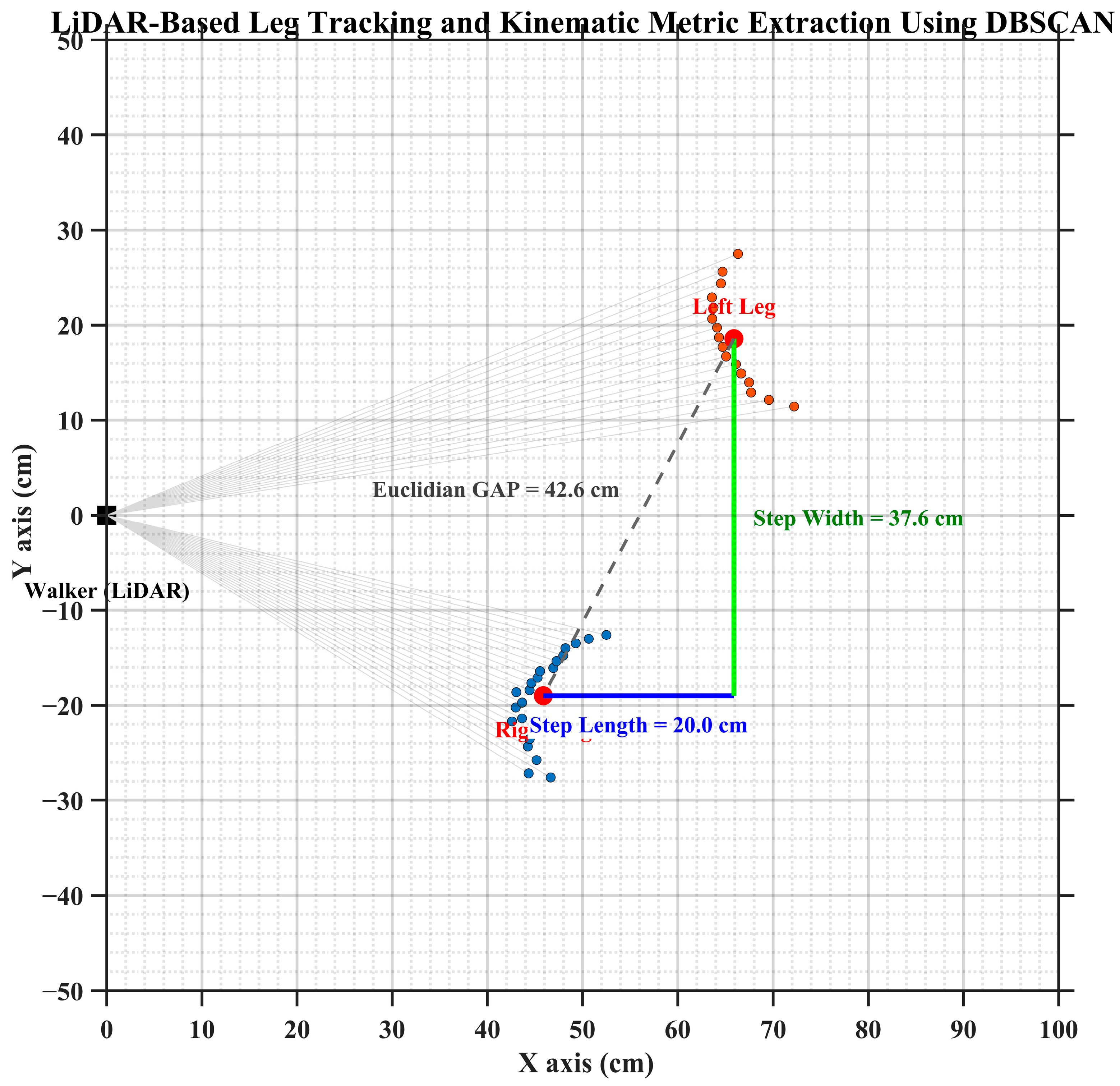
Once the valid clusters had been identified, the geometric centroid of each cluster was computed, and the left–right leg assignment was made according to the positions of these centroids along the Y-axis. Accordingly, the cluster with the larger Y coordinate was labeled as the left leg, whereas the cluster with the smaller Y coordinate was labeled as the right leg (Yleft > Yright). In addition, the depth information of the clusters along the X-axis was compared to determine which leg was leading during the swing phase. This information was used particularly in monitoring gait asymmetry and step-phase transitions.
Using the leg centroids, three basic kinematic metrics were computed in real time for crisis detection and gait analysis (Equations (7)–(9)). The first of these was step width, defined as the absolute difference between the two legs along the
Y-axis:
The second metric was step length, calculated as the absolute difference between the two legs along the
X-axis:
The third and most critical metric was the two-dimensional Euclidean distance between the leg centroids:
These spatial metrics were updated continuously at 10 Hz and transferred to the main decision loop, which operated at 20 Hz, by means of a zero-order hold within the multi-rate sensor-fusion architecture. Step width and step length were used to monitor gait symmetry and maneuvering behavior, whereas the Gap metric, in particular, was treated as the primary spatial indicator for identifying risky situations, such as foot entanglement or scissoring-like patterns.
Figure 3 shows a DBSCAN-based analysis of instantaneous LiDAR data from a walking trial. The right and left legs are detected as separate clusters, their centroids are marked in red, and step length, step width, and the Euclidean Gap are calculated from these centroid locations.
In this study, the critical threshold for inter-leg spacing was set to 0.21 m. The continuously computed Gap value was compared against this threshold, and when the condition Gap < 0.21 m was satisfied, the spacing between the lower extremities was considered to have fallen below the normal walking pattern. This condition was used as a spatial risk trigger for the Hierarchical State Machine. In this way, the system was able to track pathologically reduced spacing between the legs through a single scalar variable and transfer foot-entanglement-related situations to the decision layer at an early stage.
Overall, this LiDAR pipeline provides a lightweight spatial perception chain consisting of region filtering, polar-to-Cartesian transformation, DBSCAN-based clustering, anatomical validation, and kinematic metric extraction. It was designed not as a standalone decision layer, but as one component of the multimodal sensor-fusion framework operating together with force/torque and IMU data.
2.5. Multimodal Sensor Fusion and Hierarchical State Machine
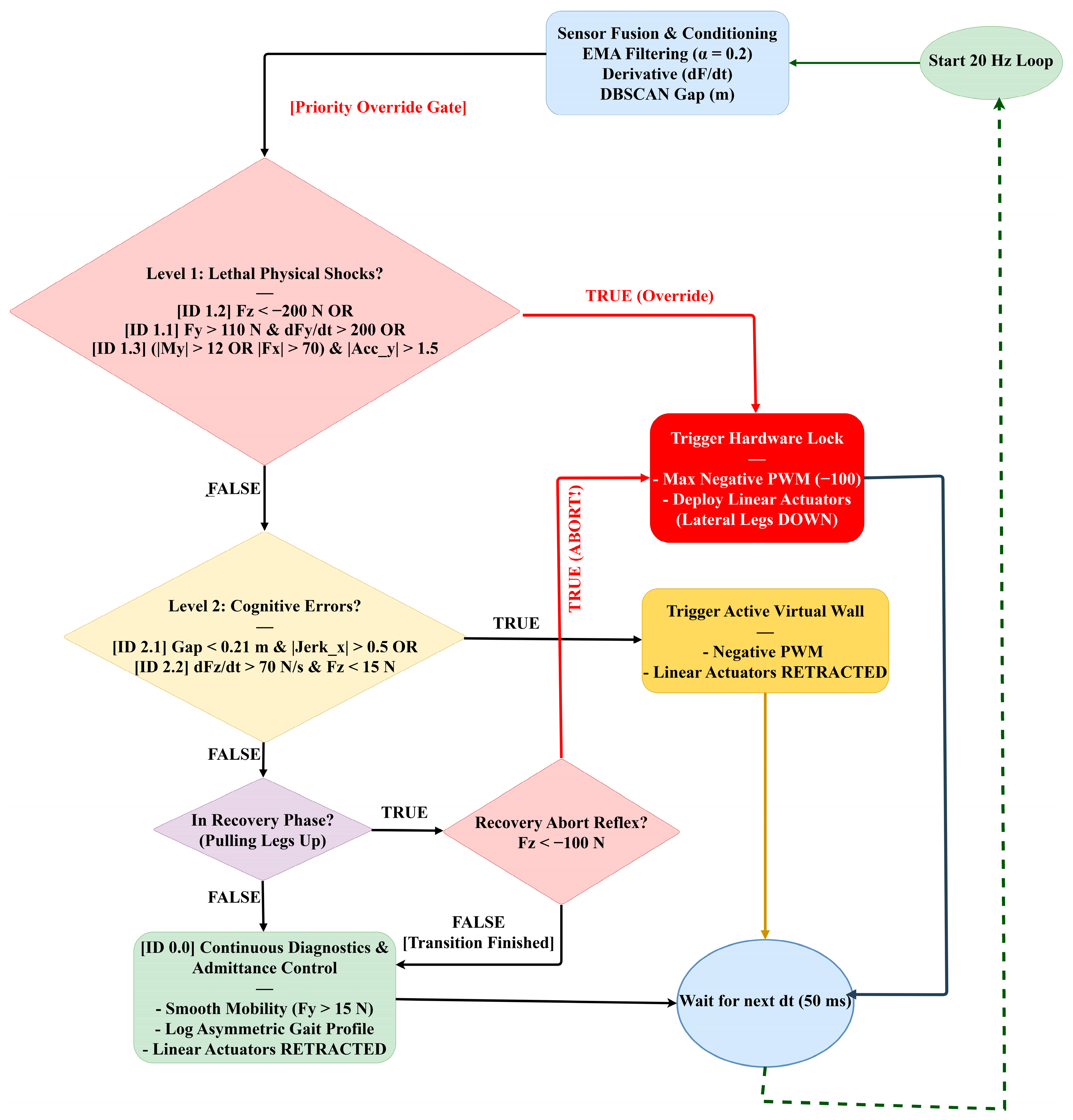
The main innovation of the proposed smart walker architecture lies in processing LiDAR, IMU, and force/torque data through a Hierarchical State Machine that unifies them under a single decision framework and manages risks according to priority, rather than treating them as separate decision blocks (
Figure 4). This structure was designed not only to determine whether a risk is present but also to identify which pattern is more critical when multiple risk patterns arise simultaneously and to initiate the appropriate physical intervention. For this reason, the system operates beyond conventional threshold-based alarm logic and determines the appropriate response level by interpreting sensor data in context.
The decision process is executed within the main loop running at 20 Hz. At each cycle, the sensor data are first conditioned. In this stage, force signals are smoothed using an exponential moving average filter, force derivatives are computed, and the inter-leg spacing obtained from LiDAR data is updated. In this way, the Hierarchical State Machine operates not on raw and noisy sensor streams, but on filtered and interpretable variables that are more suitable for decision-making. In the flowchart, this step is represented by the “Sensor Fusion & Conditioning” block, which serves as the starting point for all crisis-related decisions.
The first gate in the decision tree is the high-priority gate at which Level 1 extreme-risk or severe physical shock conditions are evaluated. This gate operates according to a priority override logic. In other words, the system first checks for severe crises that carry a direct risk of physical collapse. If such a condition is detected, it transitions immediately to the physical intervention mode without evaluating lower-level cognitive or spatial risks. This approach ensures that, in situations where multiple patterns are present at the same time—such as foot entanglement together with excessive loading—the more critical risk is treated as dominant. This prioritization logic is also conceptually consistent with the priority override approach implemented in the existing controller structure.
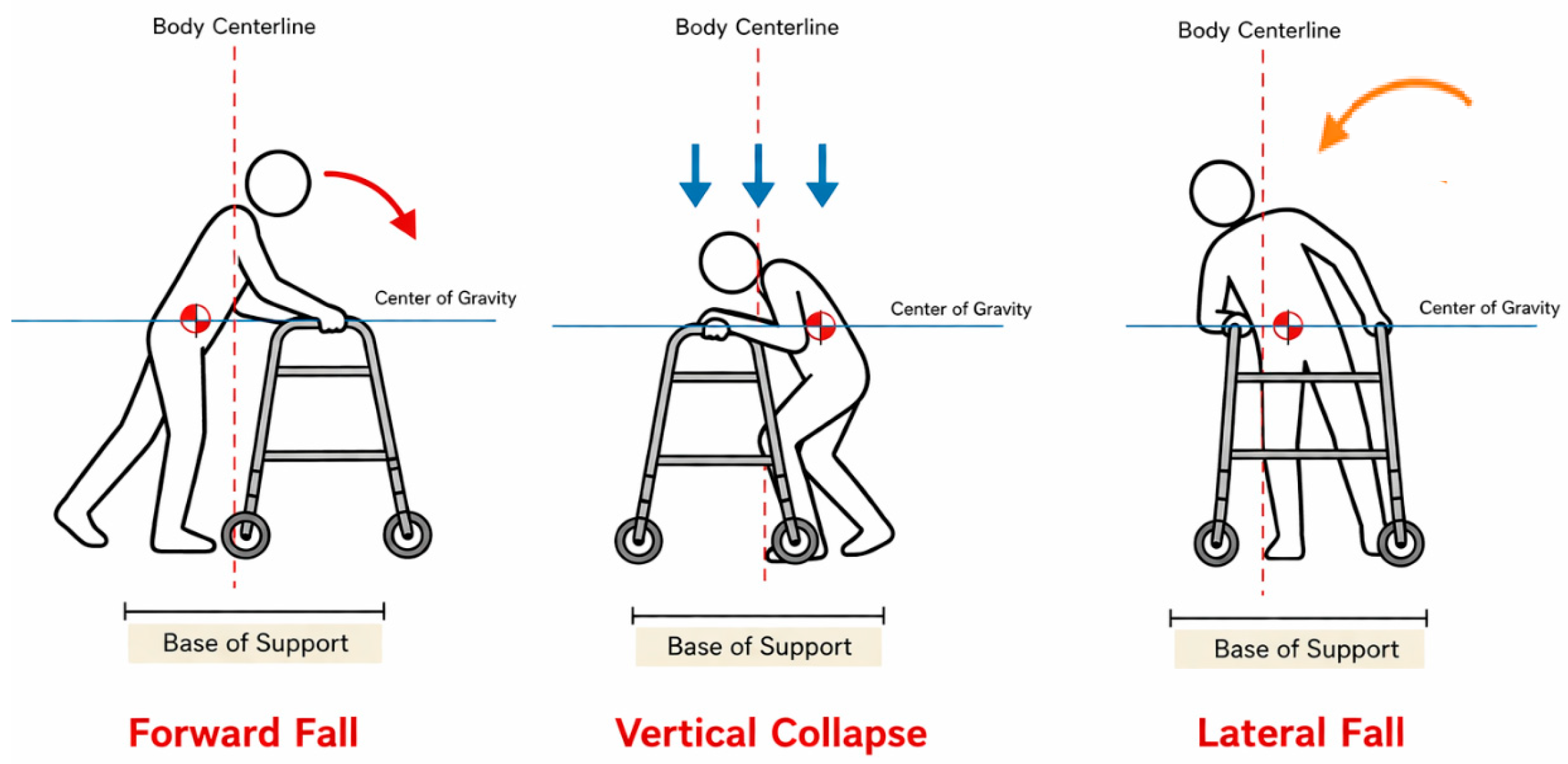
Level 1 Crises. Level 1 crises correspond to high-risk situations in which body-weight transfer to the walker becomes pronounced and motor response alone may be insufficient (
Figure 5). At this level, dynamic braking is supplemented by deployment of the lateral support legs through linear actuators, thereby enlarging the support polygon. The relevant conditions are defined explicitly in the control code, and actuator deployment is activated only in these severe events.
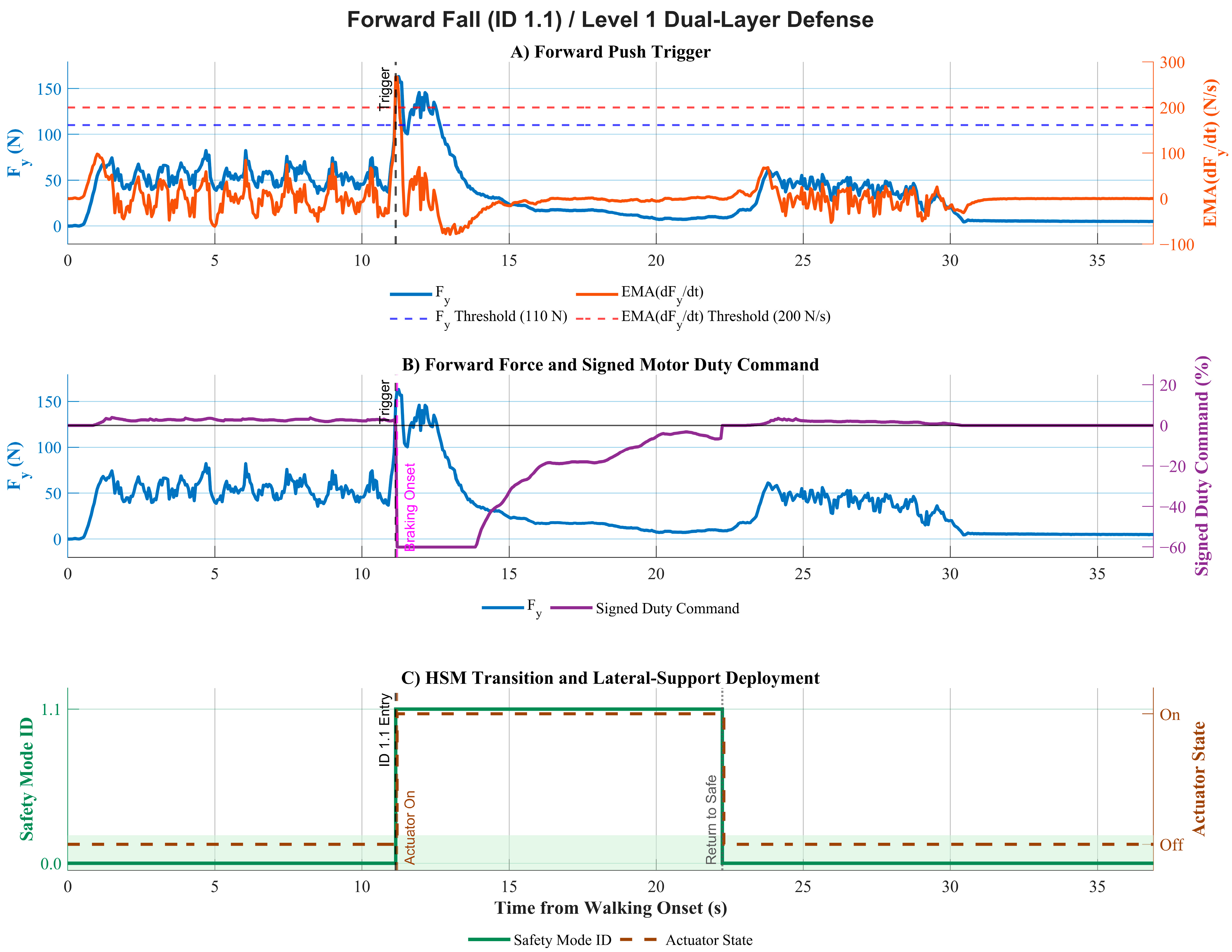
ID 1.1 Forward fall: This crisis is defined by the joint evaluation of the forward pushing force and the sudden increase in that force. In the code, the triggering condition is Fy > 110 N together with the EMA-filtered force derivative exceeding the threshold of 200 N/s. This approach is intended to distinguish pathological forward pitching from a merely strong but normal push by taking into account not only the force magnitude but also the sudden forward load transfer.
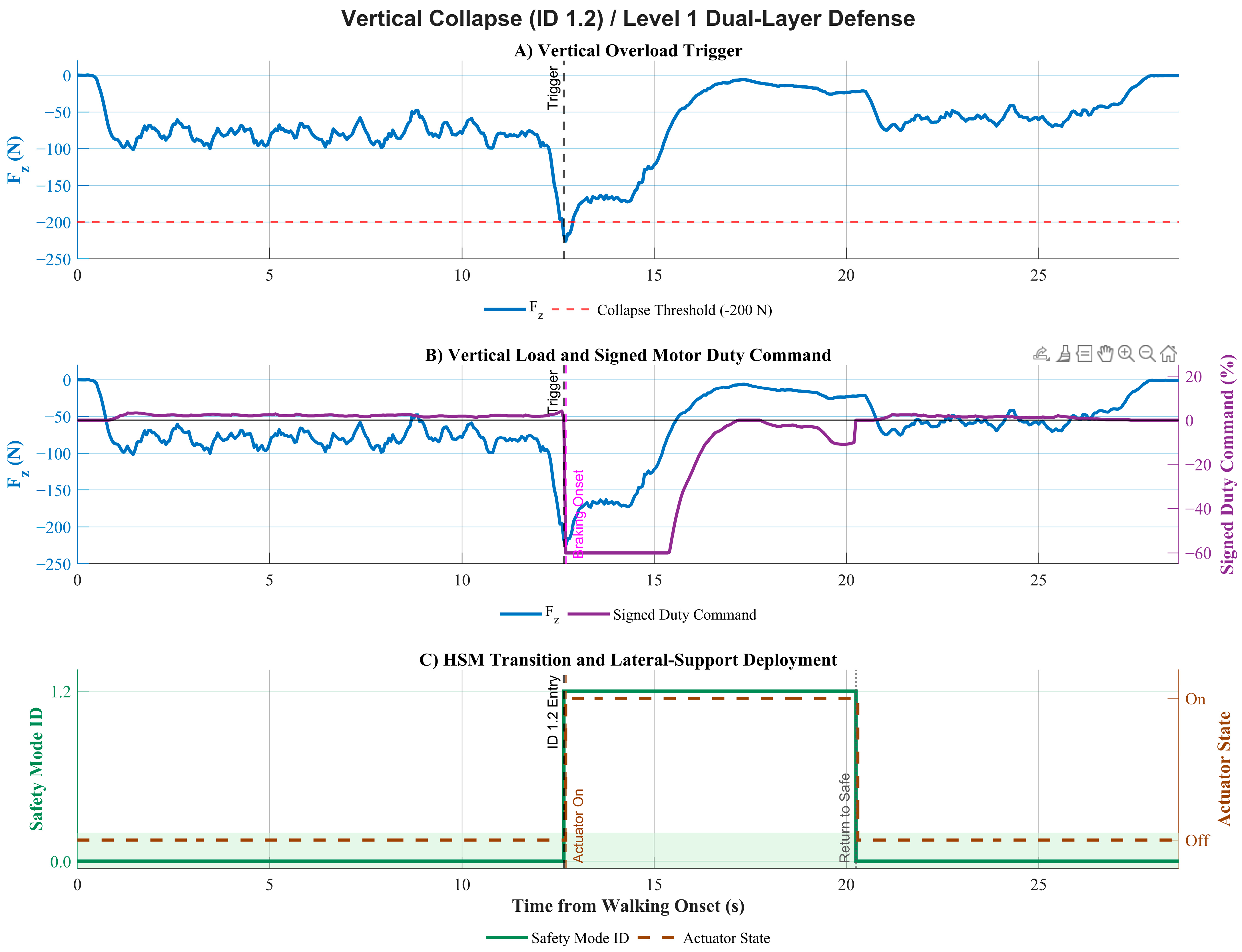
ID 1.2 Vertical collapse: This condition is one of the highest-priority risk scenarios in the system. The triggering logic is based directly on the vertical-load component, and a crisis state is initiated in the code when the condition Fz < −200 N is satisfied. This threshold is used as a critical indicator of situations in which the user transfers body weight to the device suddenly and markedly.
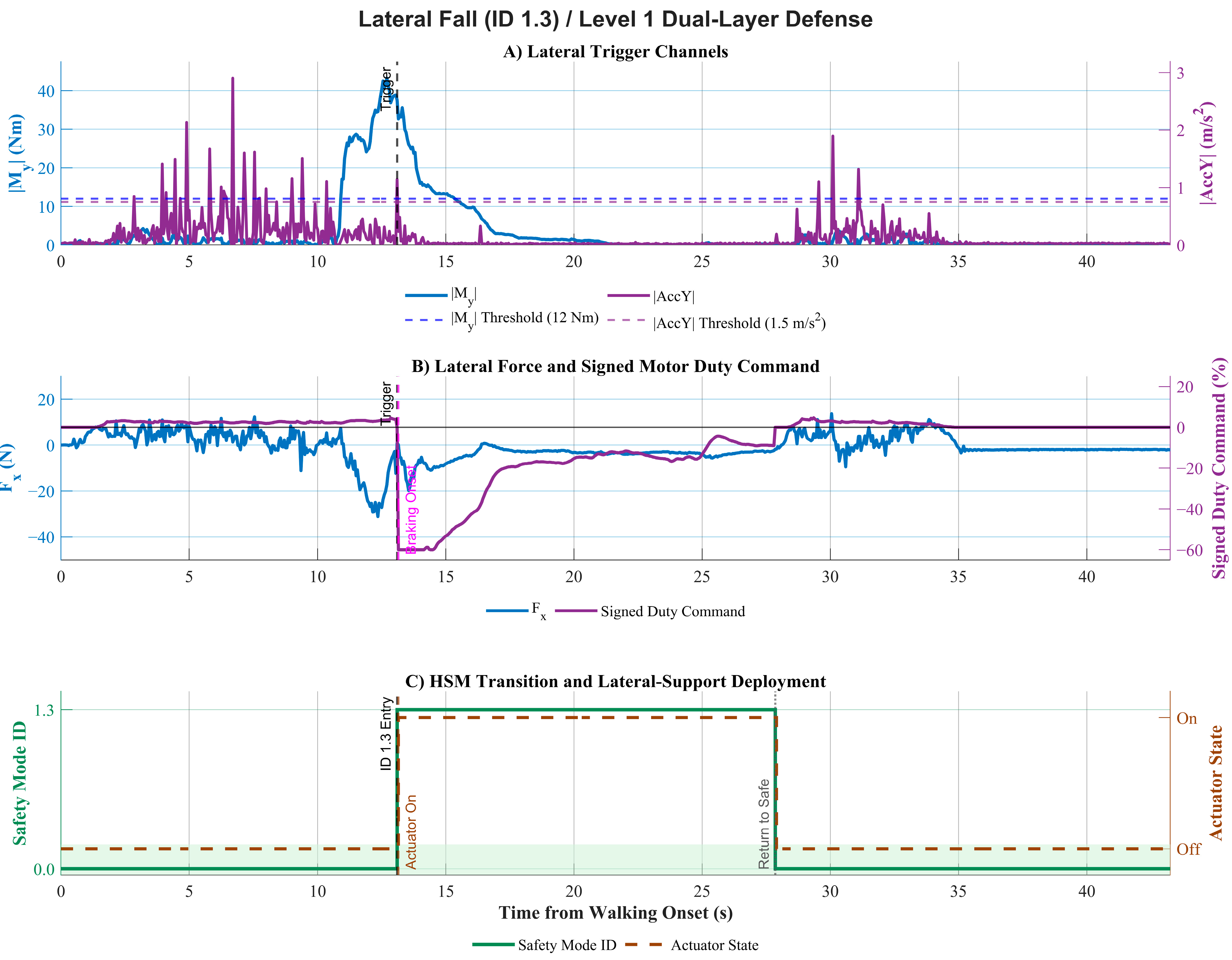
ID 1.3 Lateral fall: Lateral fall is not defined on the basis of a single moment or force component alone. Instead, it requires either the lateral torque threshold ∣My∣ > 12 Nm or the lateral shear-force threshold ∣Fx∣ > 70 N to be exceeded, together with the simultaneous condition that the lateral acceleration measured by the IMU satisfies ∣ay∣ > 1.5 m/s2. In this way, the system evaluates genuine physical tipping tendency through multimodal confirmation rather than reacting to spurious lateral loading.
When any Level 1 physical crisis is detected, the system transitions directly to the “Trigger Hardware Lock” mode. In this mode, two interventions are initiated simultaneously. First, maximum negative PWM is applied to the motors to generate an active resisting action. Second, the linear actuators are triggered and the lateral support legs are lowered. As a result, the walker not only produces dynamic resistance in the forward direction but also settles more stably on the ground by physically enlarging its support polygon. For this reason, the Level 1 intervention is not limited to motor braking alone; it is a combined safety response in which motor-based resistance and base expansion are used together.
If the Level 1 gate is not activated, the system proceeds to Level 2 cognitive or early-stage risks. This level includes situations that arise before complete physical collapse occurs but still require rapid intervention. In the flowchart, this group is labeled “Level 2: Cognitive Errors?” Two main risk patterns are evaluated at this stage.
Level 2 Crises. Level 2 crises include early-stage risk conditions in which balance begins to deteriorate but full physical collapse has not yet occurred (
Figure 6). At this level, intervention is limited to motor-based dynamic braking and virtual-wall behavior, without activating the linear actuators.
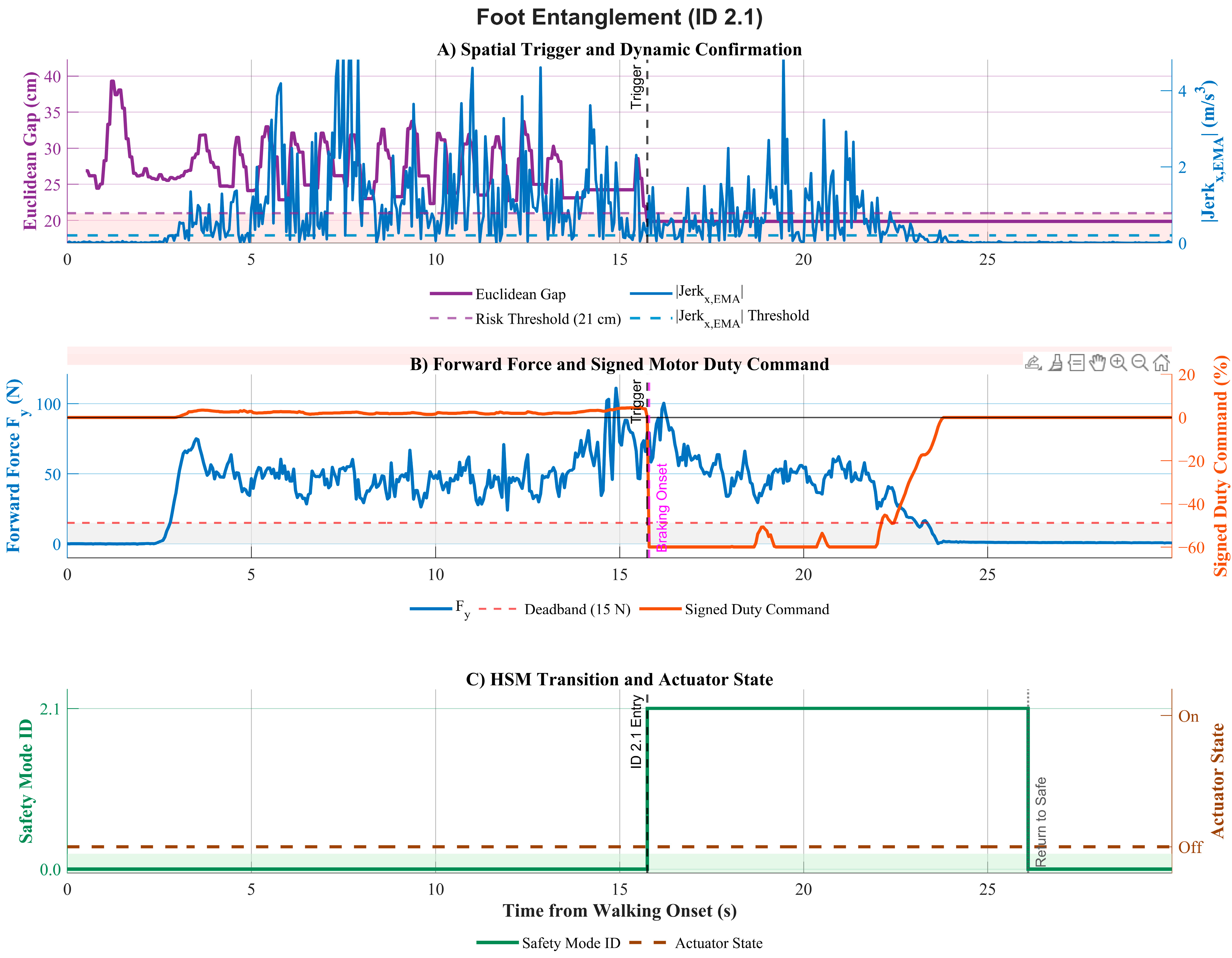
ID 2.1 Foot entanglement: This crisis is triggered when the Euclidean distance between the leg centroids, denoted as Gap and computed from LiDAR data, falls below the prescribed critical threshold. To prevent natural step narrowing during straight walking from producing false alarms, this spatial reduction is cross-validated with the Jerkx information obtained from the IMU. In the control code, the triggering condition is defined as Gap < 0.21 m together with ∣Jerkx∣ > 0.5 m/s3.
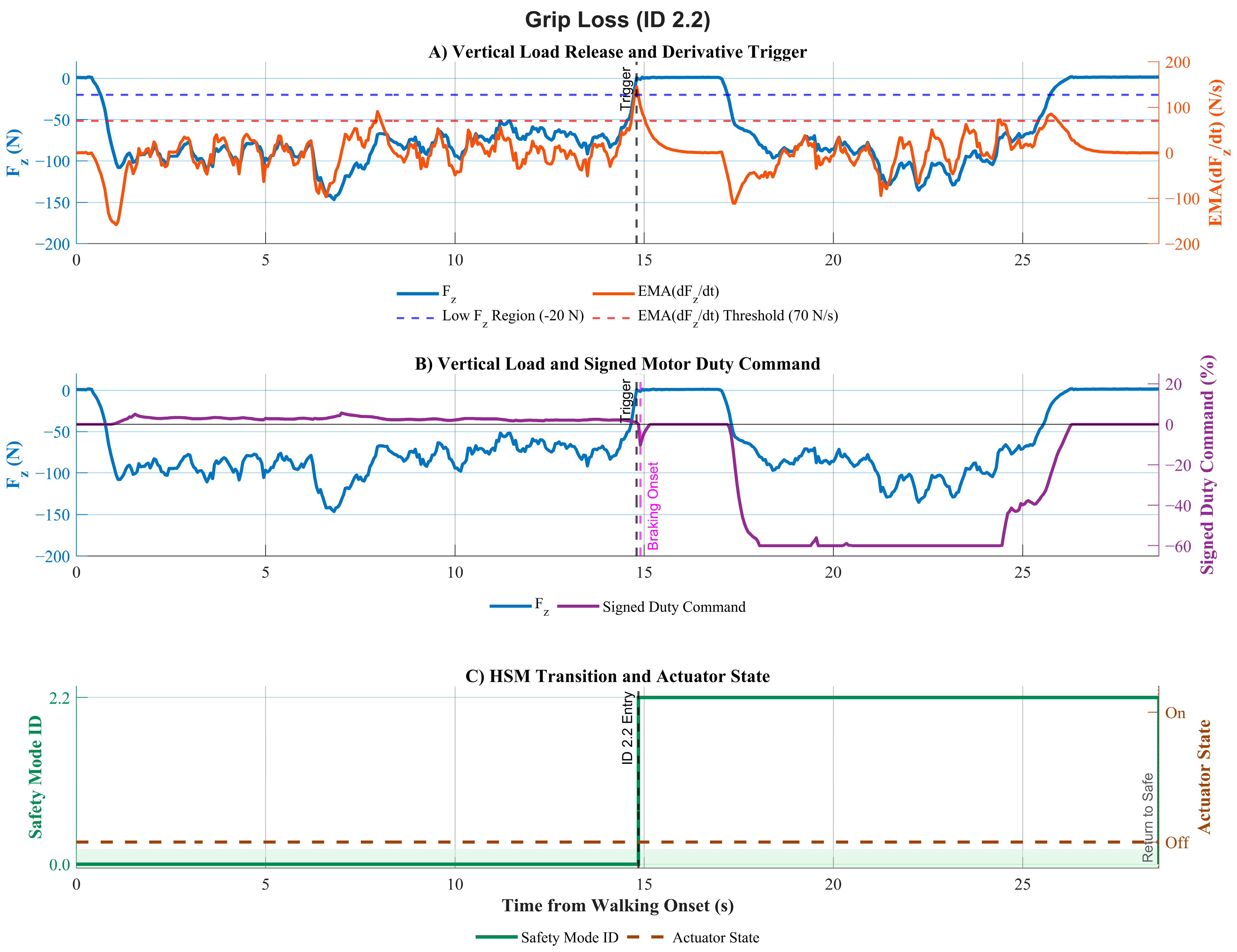
ID 2.2 Grip loss: This scenario represents cases in which the user’s hands suddenly disengage from the handles. In the system, this condition is not evaluated solely on the basis of the magnitude of Fz, but together with the derivative change associated with the sudden unloading in the vertical direction. In the code, grip loss is triggered when the EMA-based derivative of dFz/dt exceeds the threshold of 70 N/s, while the instantaneous and previous-cycle values of ∣Fz∣ are simultaneously low and the Fz,EMA value remains below −20 N. In this way, short-term grip adjustments are distinguished, as far as possible, from actual grip-loss events.
When one of the Level 2 risks is detected, the system transitions to the “Trigger Active Virtual Wall” mode. In this mode, the linear actuators are not activated and the lateral support legs remain closed. The intervention is applied only through the motors. According to the flowchart, a bounded active virtual-wall behavior is generated at this stage through negative PWM commands. The main objective here is not to produce a platform behavior that moves away from the user, but rather to generate a controlled dynamic resistance that damps motion and prevents sudden forward escape. In this way, Level 2 crises are addressed through a lighter, yet still effective, intervention layer compared with the more severe Level 1 physical crises.
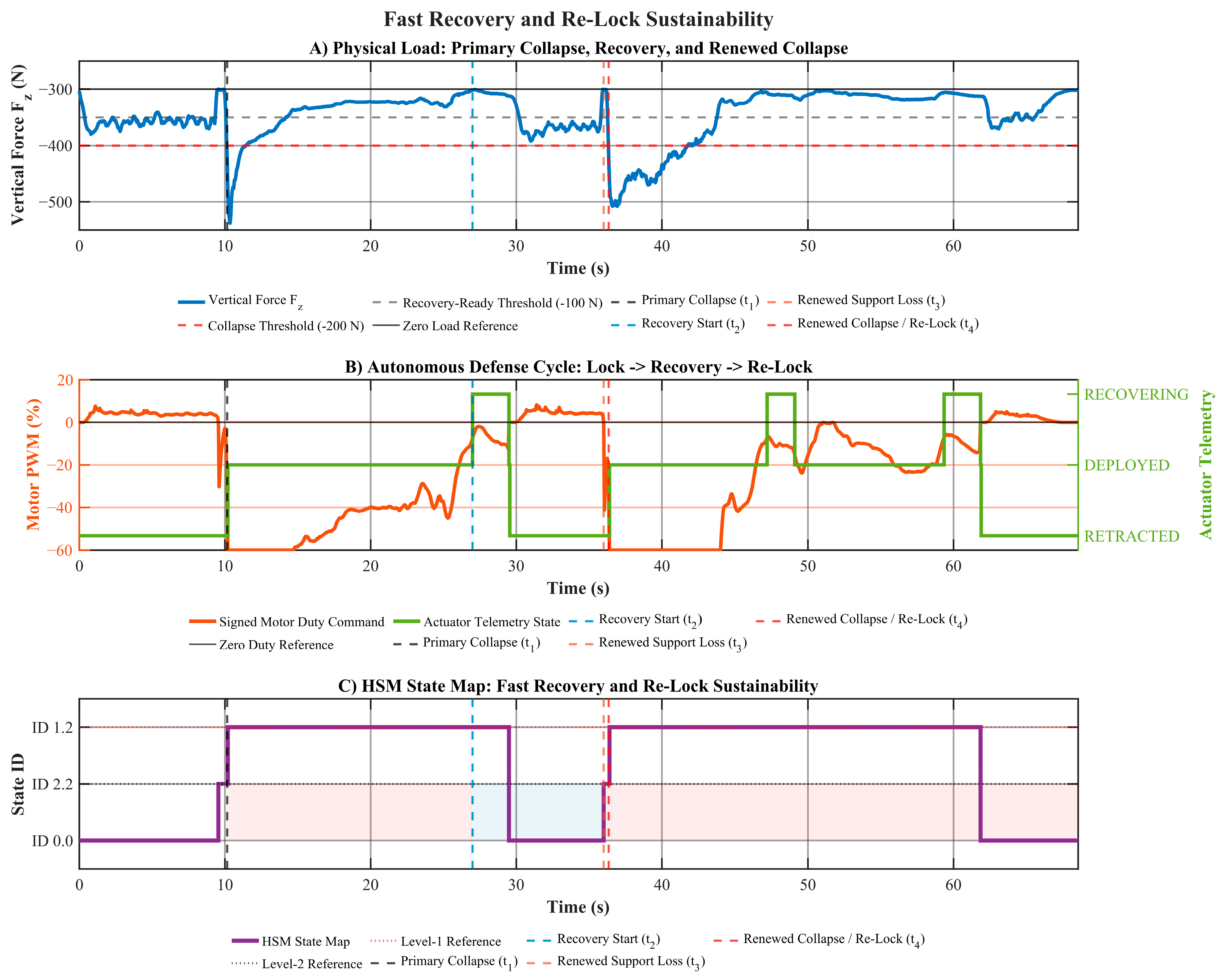
Recovery phase: The third part of the decision tree is the recovery phase. If, after any crisis, the system is in the stage of retracting the support legs, the “In Recovery Phase?” query is activated, as shown in the flowchart. This phase is the transition period during which the system restores its physical configuration before returning to the safe-walking mode. This process, however, is not completed passively or unconditionally. If a new episode of excessive vertical loading occurs during recovery, the recovery-abort reflex mechanism is triggered. In the flowchart, this reflex is defined by the condition Fz < −100 N. In such a case, instead of continuing recovery, the system returns to the higher-level physical locking mode and re-initiates the intervention. This feature provides an important safety advantage, especially in successive crises or crises involving renewed loading.
The system returns to the safe-walking mode only when no Level 1 or Level 2 gate is activated and the recovery phase has also been completed. In the flowchart, this state is represented as [ID 0.0] continuous diagnostics and admittance control. In this mode, the system maintains normal walking assistance, generates a user-intent-sensitive admittance-based command when Fy > 15, records asymmetric gait patterns, and keeps the linear actuators in the retracted state. For this reason, the safe-walking mode is not a passive standby state. Rather, it is an active operating mode capable of continuous diagnostics, continuous monitoring, and immediate transition to crisis states whenever required.
Mechatronic intervention layer. The mechatronic intervention layer is the part in which the commands generated by the decision algorithm are converted into physical action. In this study, this layer consists of two main actuator groups. The first is the BLDC hub motors. The second is the lateral support legs deployed by linear actuators.
During normal walking, the hub motors generate a low-amplitude assistive drive command. At this stage, the aim is not to create a system that walks in place of the user, but to provide support that eases the initial push and makes walking assistance smoother. During crisis situations, the same motors switch to active braking through reverse-signed duty-cycle commands. For this reason, the motors function in the system not only as motion-generating elements but also as components that produce dynamic resistance for safety purposes.
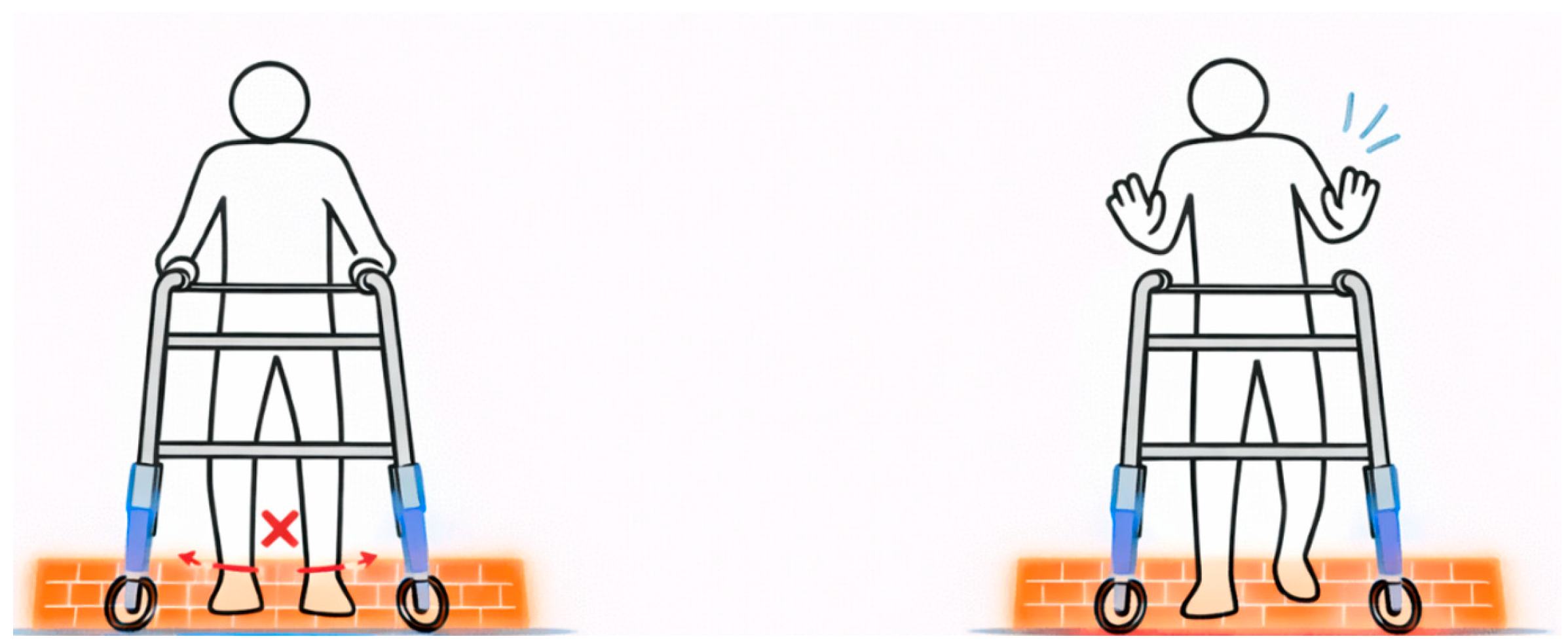
The lateral support legs are used only in high-priority physical crises. These legs are deployed downward through linear actuators, thereby enlarging the base area of the walker (
Figure 7). In situations such as vertical collapse, forward fall, or lateral fall, generating counter-torque through the motors alone may not be sufficient. For this reason, the system employs a second layer of defense by expanding the physical support polygon and allowing the structure to settle more securely on the ground, utilizing linear actuators structurally validated to withstand peak vertical-collapse loads exceeding 400 N. This dual-layer approach shows that the proposed system produces safety intervention not only at the software level, but also directly at the mechatronic level.
Overall, the proposed HSM does more than classify sensor patterns. It prioritizes risks, coordinates dynamic braking and physical base expansion at different levels, and supervises renewed loading during recovery. In this sense, the system functions not only as a walking aid, but as an integrated safety platform capable of interpreting risk and selecting the appropriate physical response.
2.6. Experimental Setup, Protocol, and Data Logging
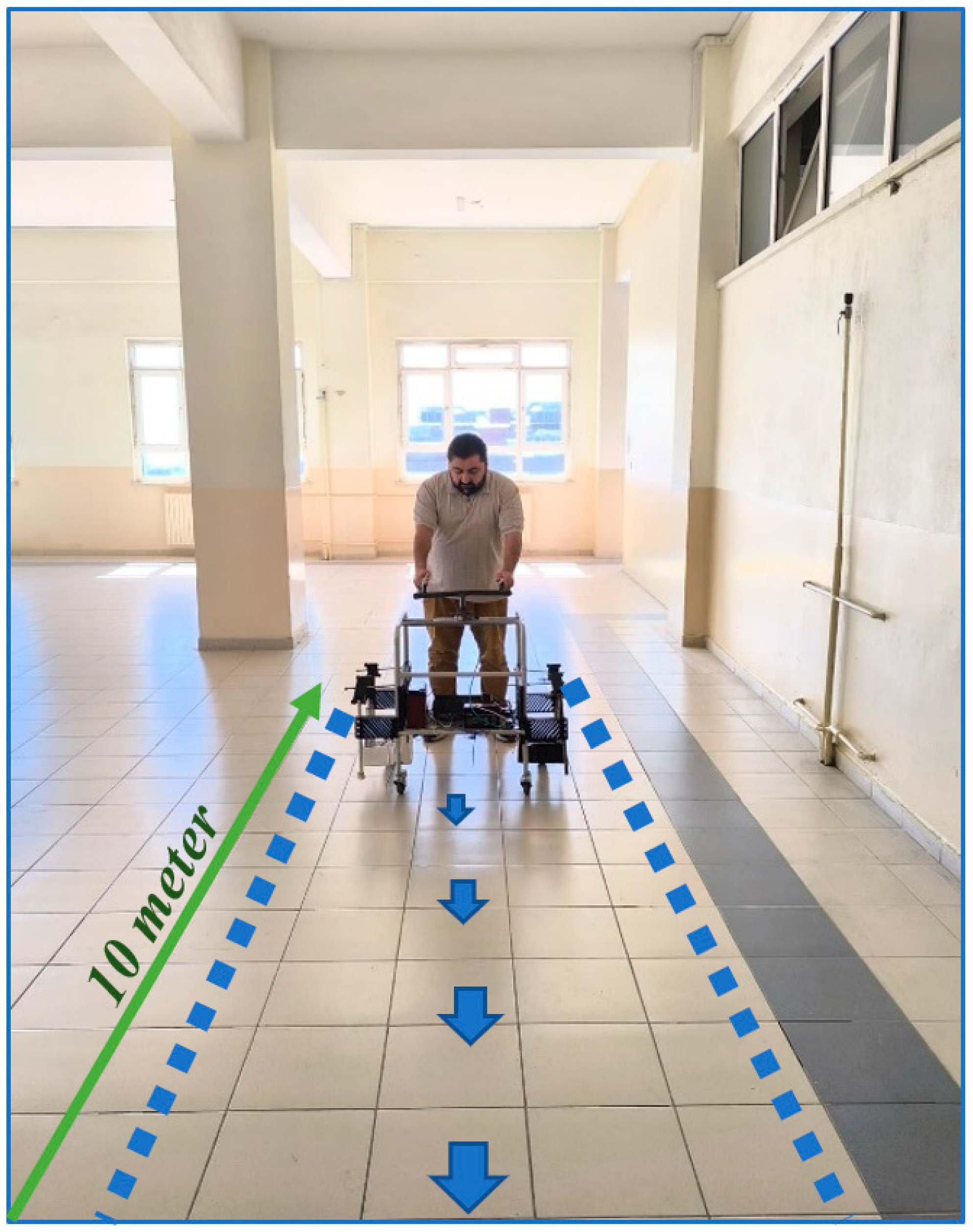
A controlled laboratory protocol was designed to evaluate perceptual accuracy, autonomous reaction time, and physical human–robot interaction (pHRI) stability in the developed smart walker. To assess both nominal walking assistance and crisis-time safety on the same platform, the protocol included isolated as well as complex scenarios and was organized around a standard 10 m walking track derived from the 10 m Walk Test (10MWT) [
50] (
Figure 8). Because the system is still at the stage of preclinical prototype validation, high-risk pathological crisis scenarios were performed by a healthy volunteer (age: 34 years; height: 170 cm) in order to challenge the mechanical and algorithmic limits of the device under controlled conditions. All experimental procedures were conducted in accordance with the Declaration of Helsinki.
The experiments were conducted on a straight laboratory test track, where both the normal walking-support behavior and the crisis-management behavior of the system were evaluated within the same physical environment. A total of 110 independent tests were conducted to examine the performance of the Hierarchical State Machine (HSM) and the multimodal sensor-fusion architecture. Of these tests, 80 consisted of isolated scenarios, whereas 30 involved complex scenarios including simultaneous or successive crises.
The main scenarios evaluated in the experiments are summarized below:
[ID 0.0] Reference admittance-based walking support and asymmetric gait: Observation of the effort-reducing support provided by the device under normal walking conditions, together with continuous monitoring of LiDAR-based spatial metrics during safe operation.
Upper-extremity tremor isolation: Suppression of high-frequency vibrations applied at the handles through EMA-based filtering and prevention of false-positive alarms.
[ID 2.1] Foot entanglement: Reduction in inter-leg spacing to the condition Gap < 0.21 m, as tracked by LiDAR, and cross-validation of this condition using IMU data.
[ID 2.2] Sudden grip loss: Evaluation of the vertical unloading pattern caused by sudden release of the handles, based on dFz/dt and the associated force patterns.
[ID 1.1] Forward fall: Simulation of forward-pitching tendency through excessive forward pushing force and sudden load transfer.
[ID 1.2] Vertical collapse: Testing of sudden vertical-load transfer represented by the threshold condition Fz < −200 N.
[ID 1.3] Lateral fall: Evaluation of the physical expansion performance of the linear actuators and the base of support (BoS) under asymmetric torque, shear-force, and lateral-acceleration patterns.
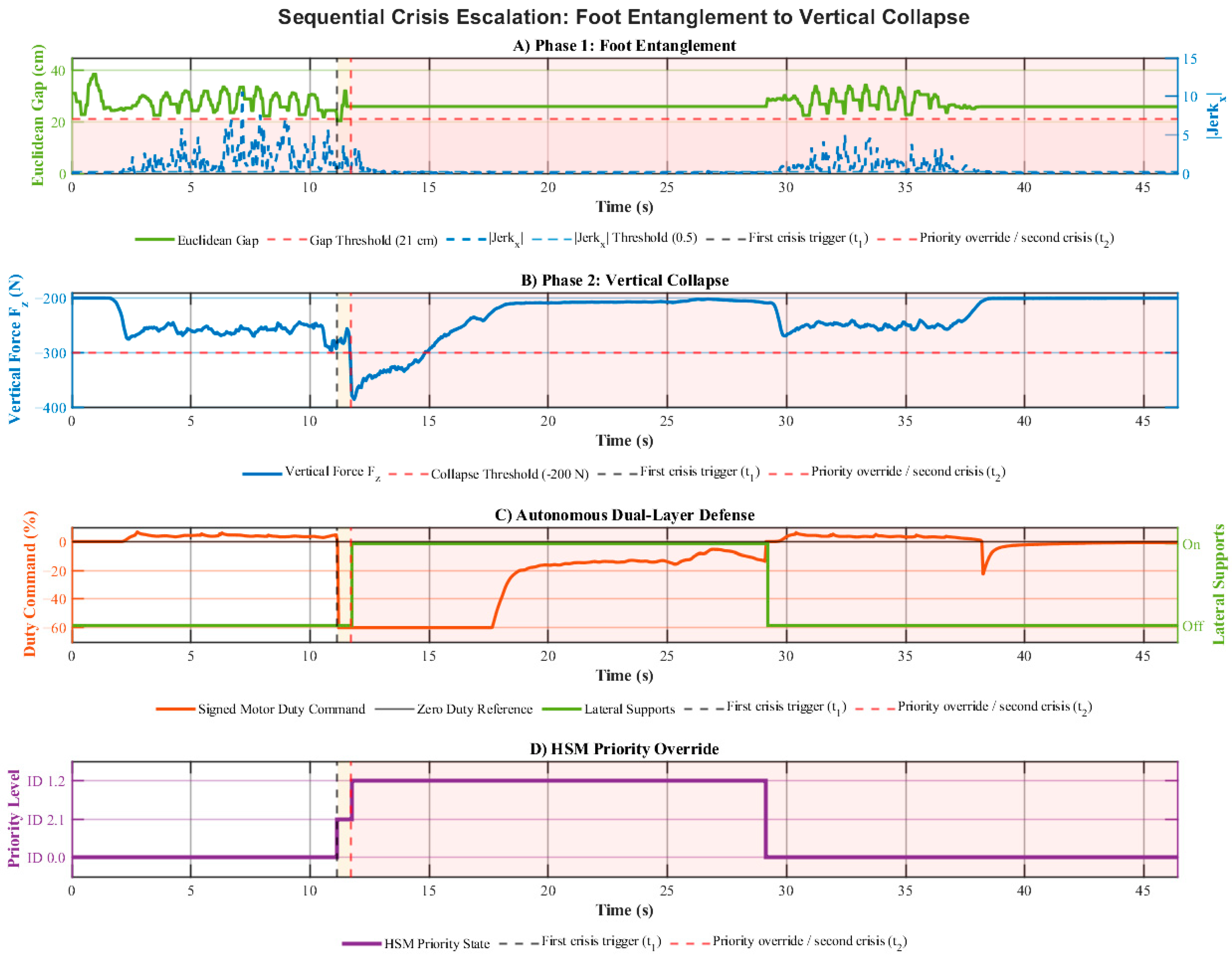
Complex simultaneous crises (simultaneous override and recovery abort): Testing of the HSM’s ability to prioritize simultaneous crises and to reject successive shocks occurring during the recovery phase.
This scenario set was designed to evaluate not only crisis recognition but also prioritization and recovery behavior.
For experimental evaluation, the main sensor and decision variables used by the system were recorded simultaneously. After software taring, the data-acquisition node publishes the force/torque measurements and, at the same time, stores variables such as timestamp, force/torque components, IMU data, risk counter, safety state, mode ID, motor duty-cycle command, actuator state, step width, step length, and the identity of the leading leg in a CSV file. Force/torque and IMU data were collected at the main control frequency of 20 Hz, whereas LiDAR data were collected at their native scanning frequency of 10 Hz. During the offline analysis stage, all data were aligned on a common time axis. This recording structure makes it possible to present the decision processes defined in the Methods section directly through temporal telemetry in the Results section.
This telemetry structure also plays a critical role in interpreting controller behavior. For example, sign changes in the motor command during crisis events, actuator engagement, or activation of a specific mode ID can be examined not only through conceptual descriptions, but also directly through recorded data. In this way, the proposed operating logic is presented as an experimentally observable process rather than only as a conceptual block structure.
To evaluate the stability of the system’s crisis detection quantitatively, a confusion matrix was constructed from the dataset comprising 110 tests. In this evaluation, correct detection of actual crises was coded as True Positive (TP), spurious alarms generated under normal conditions as False Positive (FP), missed crises as False Negative (FN), and correct maintenance of safe operation as True Negative (TN). System performance was calculated using accuracy, precision, recall, and F1-score (Equations (10)–(13)):
These metrics enabled joint evaluation of overall classification performance, false-alarm behavior, and missed-crisis risk. In this way, the protocol provided a quantitative framework for assessing both normal walking support and crisis-management performance. This protocol enabled joint evaluation of classification performance, false-alarm behavior, biomechanical threshold separation, and temporal response characteristics under both crisis and non-crisis conditions.
4. Discussion
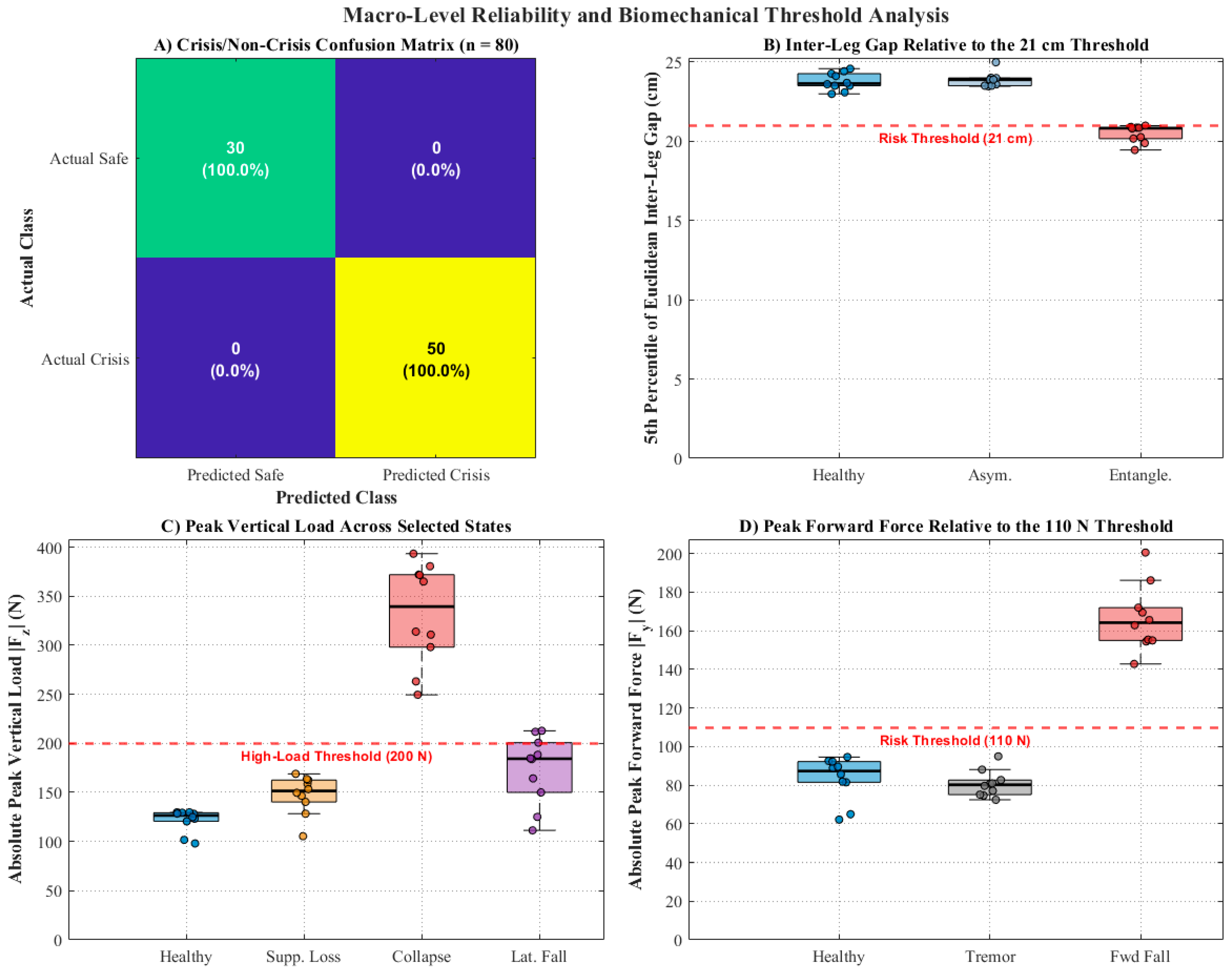
The results obtained under controlled preclinical conditions indicate that the proposed smart walker architecture can provide both transparent walking assistance and graded active safety within the same framework. As shown in
Figure 9, the HSM-based structure correctly identified all true crisis scenarios while producing no unnecessary intervention in non-crisis cases. This balance between sensitivity and selectivity is critical in smart walker design, because safety depends not only on reacting during instability, but also on remaining unobtrusive during normal walking.
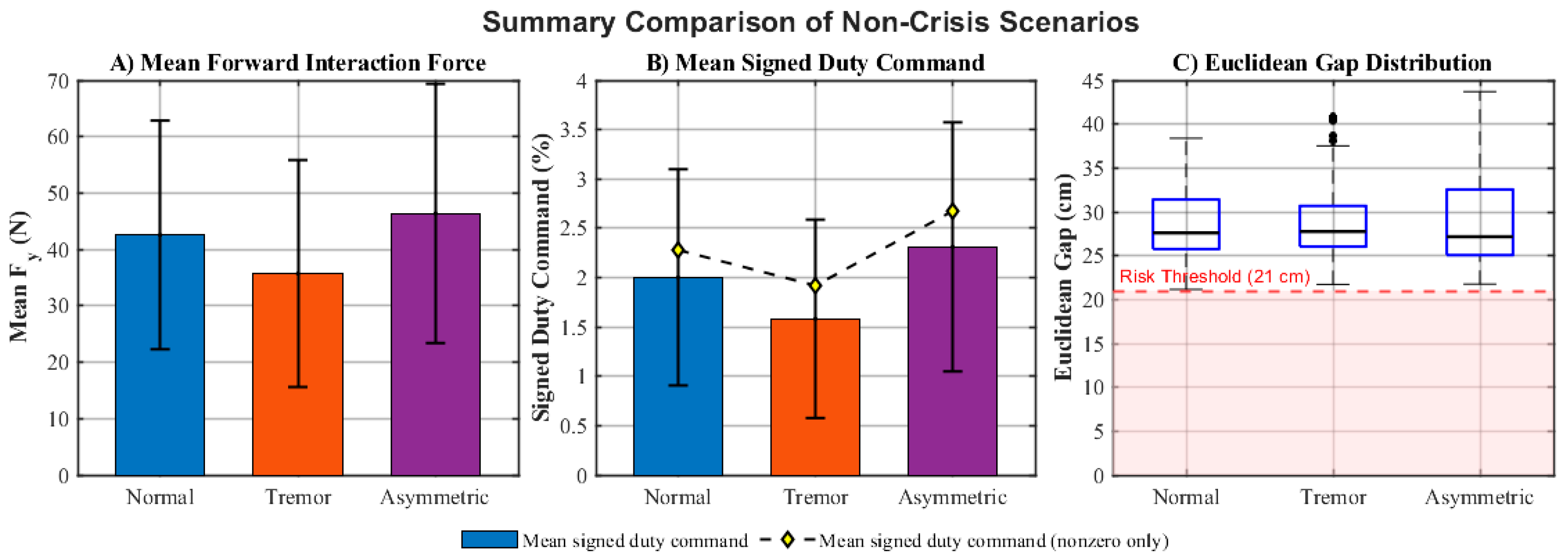
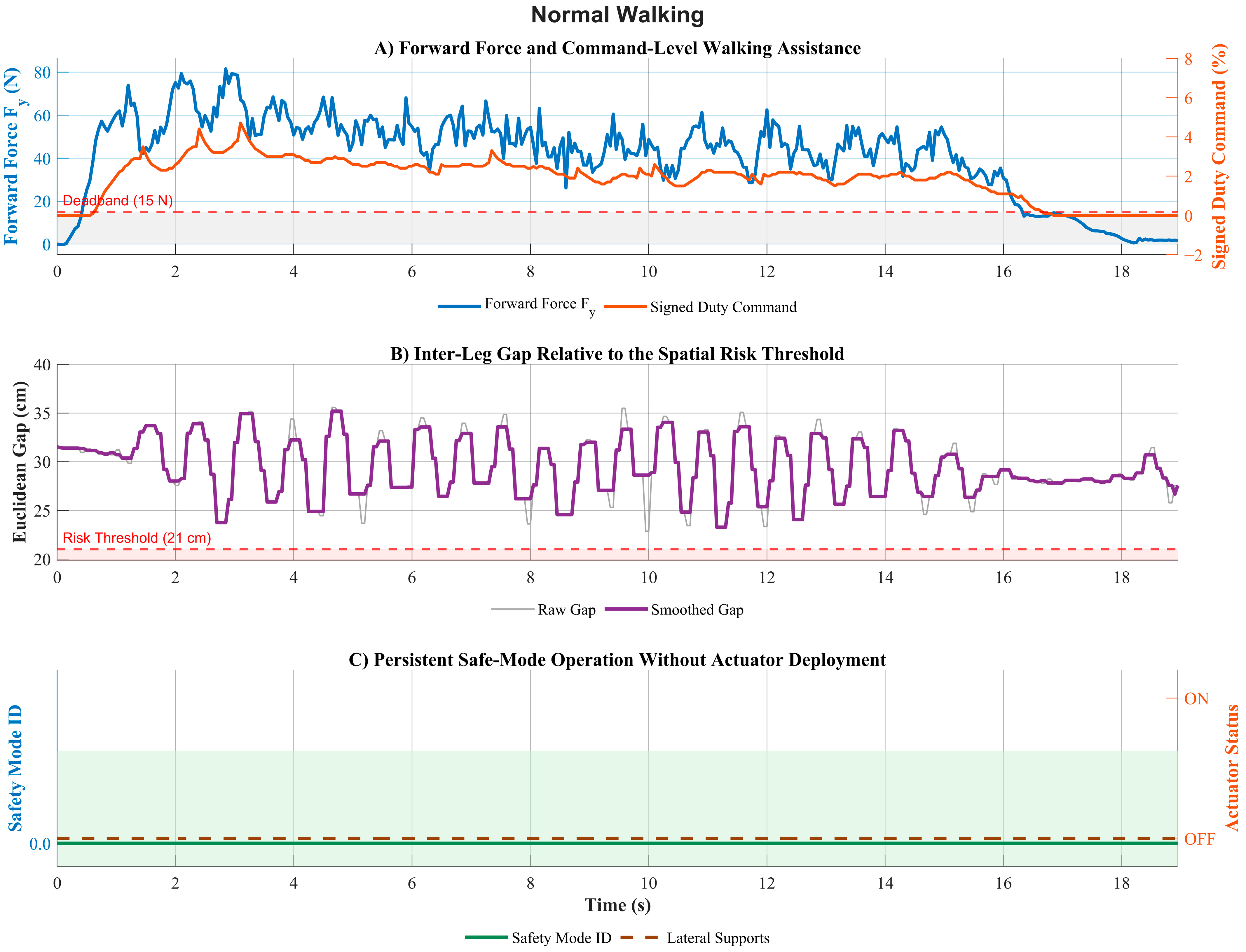
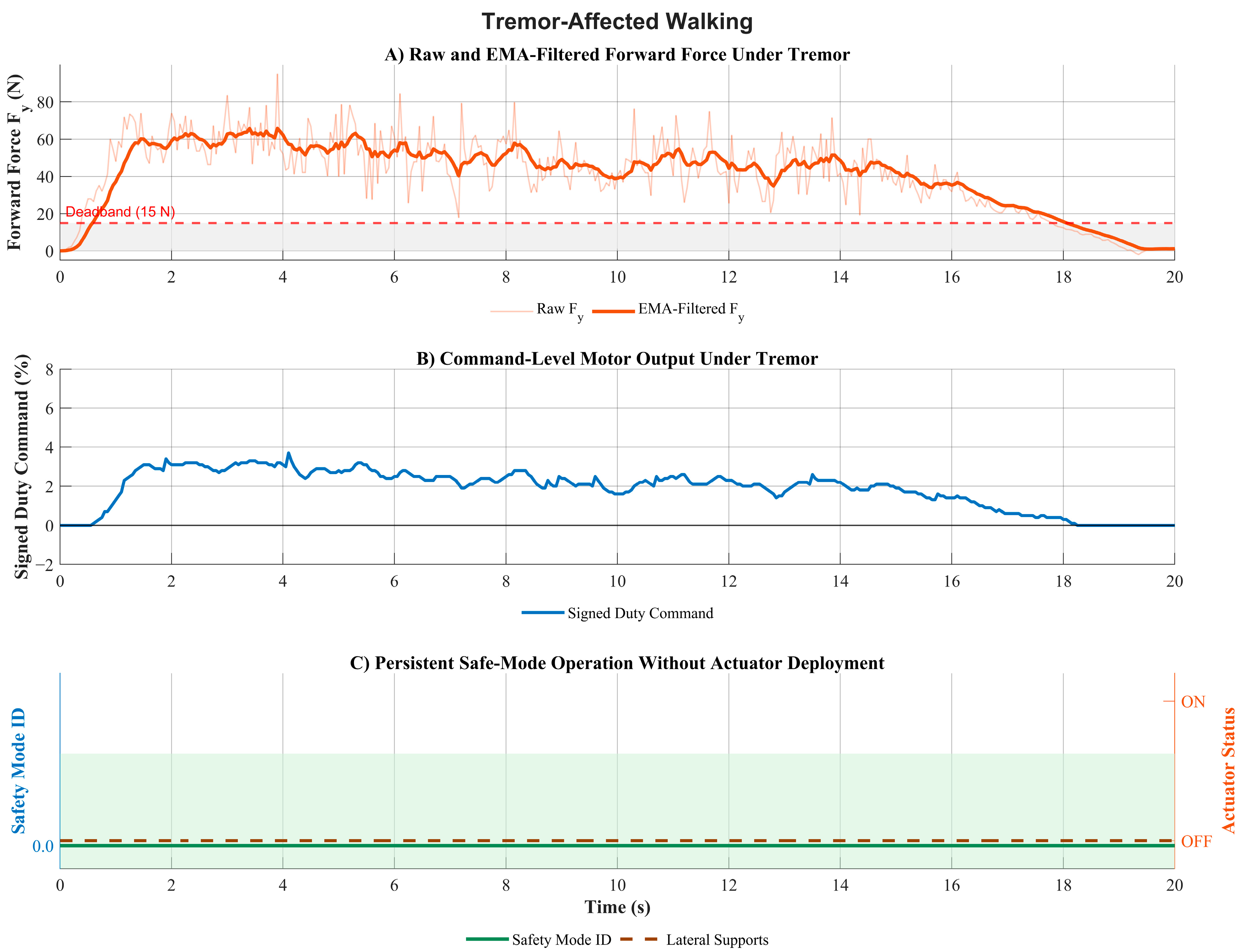
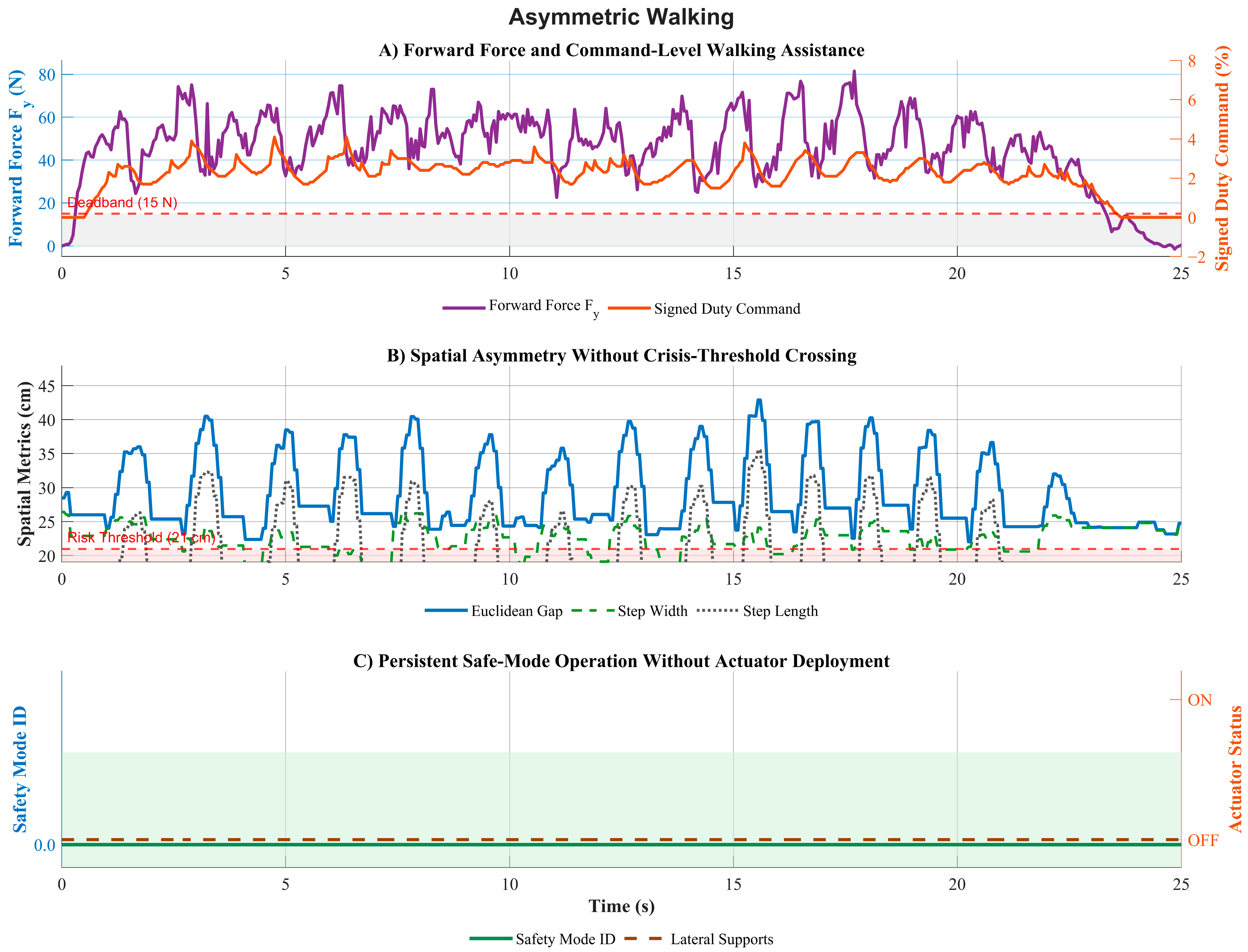
The non-crisis results shown in
Figure 10,
Figure 11,
Figure 12 and
Figure 13 support this interpretation. The controller provided bounded assistance during normal walking, attenuated tremor-related force fluctuations through EMA-based conditioning, and monitored asymmetric but non-crisis gait patterns without leaving safe mode. These findings are broadly consistent with previous studies showing that admittance- and shared-control-based walker strategies can improve user compatibility and walking comfort [
17,
18,
19]. However, the present results extend that line of work by showing that the same transparent support layer can also serve as a stable basis for false-alarm-resistant safety supervision. In other words, the walker does not treat every force fluctuation or gait irregularity as a crisis, but preserves selectivity while remaining ready to escalate when a true hazard emerges.
A second important finding is that multimodal sensing is tied directly to intervention selection.
Figure 14 and
Figure 15 show that foot entanglement and grip loss arise from different sensing patterns: the former is identified through LiDAR-based spatial narrowing together with IMU-confirmed dynamic disturbance, whereas the latter is recognized mainly through abrupt vertical unloading and derivative-based force behavior. In many multisensor fall-detection and gait-tracking studies, fusion improves recognition reliability but remains at the level of detection alone [
28,
44,
45]. In the present system, by contrast, multimodal sensing is used not only to identify the event, but also to determine the physical form of the response. This represents an important distinction, because sensor fusion here is directly linked to real-time safety action rather than to classification alone.
The Level 1 results strengthen this interpretation. As shown in
Figure 16,
Figure 17 and
Figure 18, forward fall, vertical collapse, and lateral fall are associated with different dominant biomechanical signatures, yet all three converge on the same higher-level defense strategy: reverse-direction motor braking combined with deployment of the lateral support legs. This indicates that the HSM is not functioning as a simple threshold alarm. Rather, it distinguishes between events that can still be handled through motor-based resistance and events that require a stronger physical defense. In this respect, as originally outlined in the structured comparison in
Table 1, the proposed system goes beyond the more limited “risk detection plus basic intervention” pattern reported in parts of the active-safety literature [
27,
28]. It distinguishes itself through a cognitive architecture that provides graded intervention (Level 1/Level 2), priority-based multi-crisis management, a supervised recovery-abort reflex, and the active physical expansion of the base of support (BoS). Its contribution lies in matching intervention magnitude to crisis severity through a clear hierarchical structure.
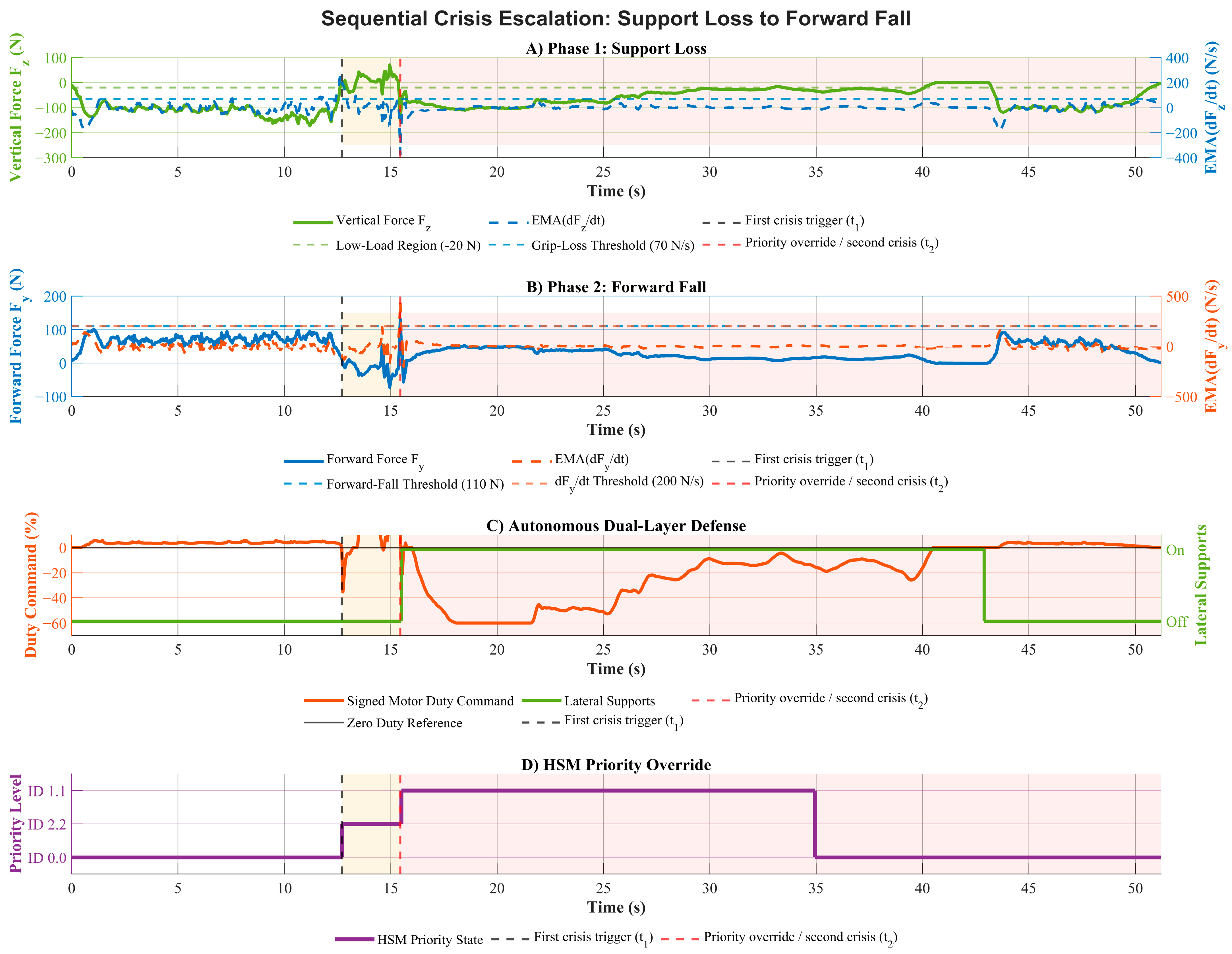
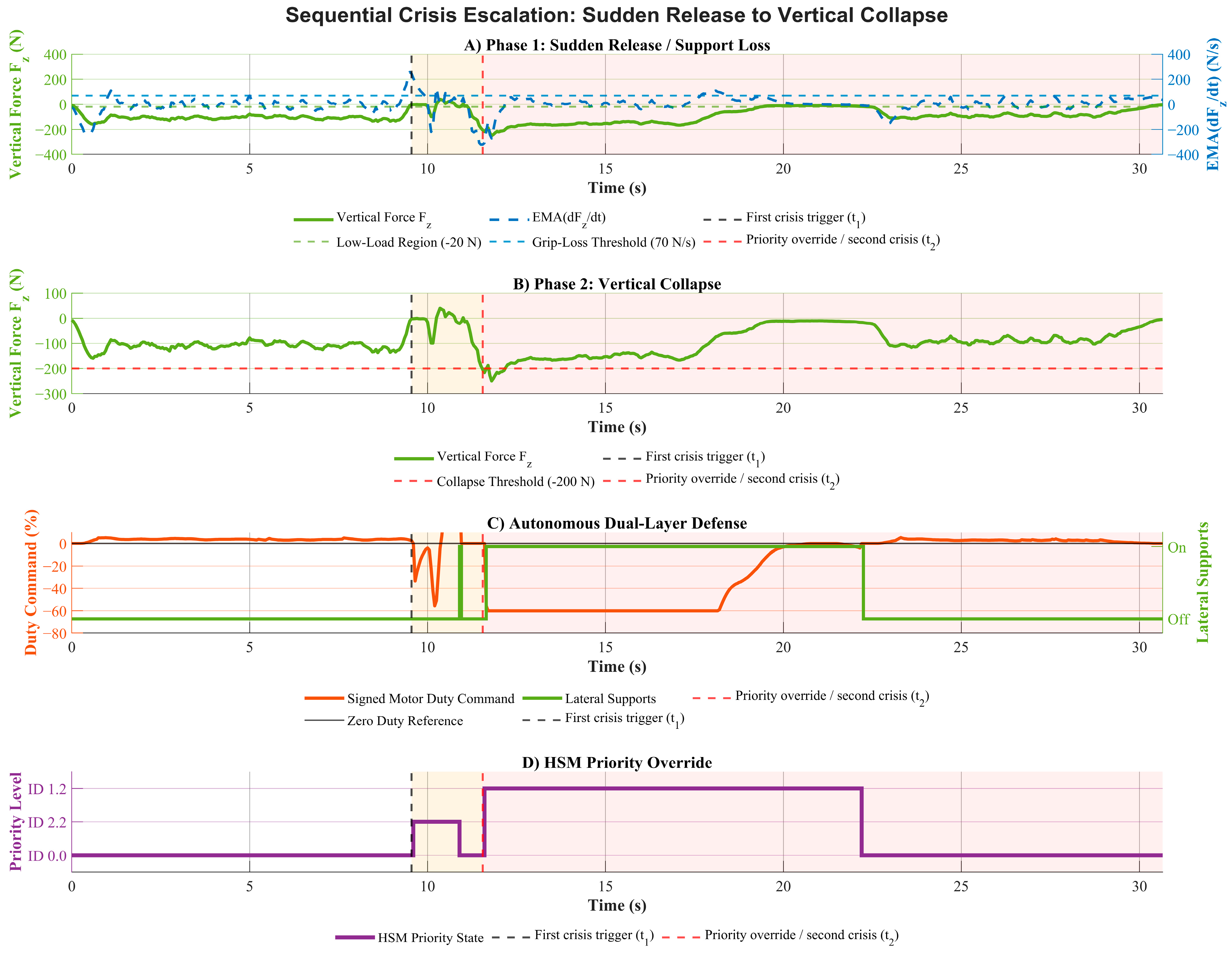
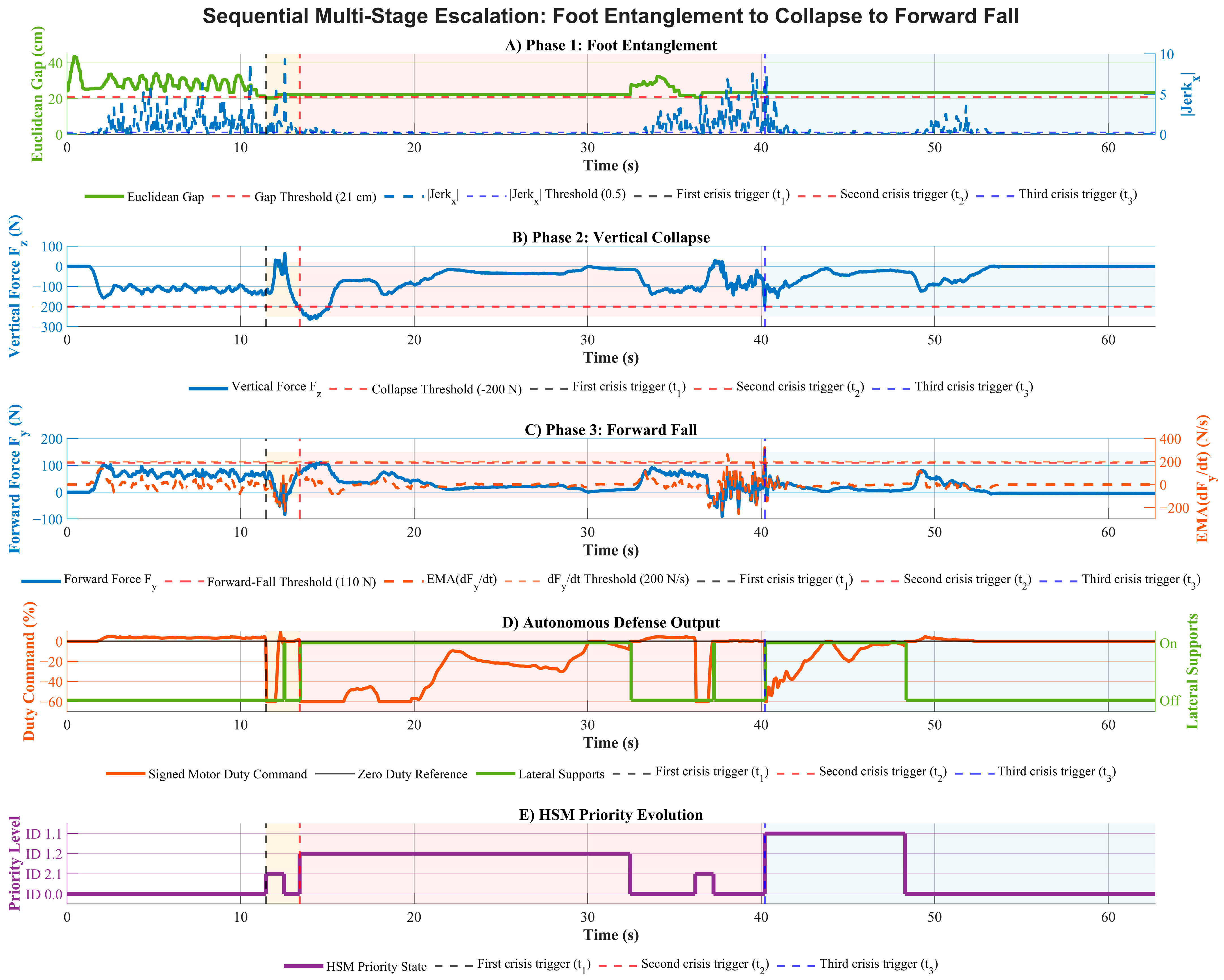
The edge-case results in
Figure 19,
Figure 20,
Figure 21 and
Figure 22 further show that the proposed walker is designed for evolving events rather than isolated triggers. When foot entanglement evolves into vertical collapse, the system escalates from ID 2.1 to ID 1.2. When support loss develops into forward fall, ID 2.2 is overridden by ID 1.1. In the multi-stage case, the dominant threat is re-evaluated more than once. This behavior is important because real-world falls rarely unfold as single-stage events [
31]. Instead, they often involve rapid changes in support condition, loading direction, and postural mechanics. The prioritization behavior observed here therefore addresses a real limitation of simpler safety schemes: the inability to revise intervention logic as the event develops.
It is important to acknowledge that the specific crisis states defined in the HSM (e.g., forward fall, vertical collapse) do not exhaustively cover the infinite biomechanical choreographies of all possible real-world falls. However, the system’s underlying safety philosophy is based on monitoring fundamental physical boundary violations. Regardless of how unusually a user loses balance, if the event transfers significant kinetic energy to the device, it will inevitably violate one or more of these core boundaries—such as extreme downward load, asymmetric lateral torque, or sudden spatial confinement—thereby triggering the appropriate ‘catch-all’ protective response.
The post-crisis recovery results shown in
Figure 23 add another important dimension. Recovery is handled as a supervised transition rather than as a fixed-time release. Once the force conditions move toward a safer region, the controller enters an intermediate recovery state, but it can still return to a higher protection level if renewed instability appears. This means that recovery is treated as part of the same context-sensitive safety architecture rather than as an irreversible shutdown step. From an engineering perspective, this is a meaningful feature because it supports not only crisis intervention but also post-crisis sustainability and renewed stabilization when needed.
The timing results also support the practical feasibility of the design. Across the scenarios examined in
Section 3, the transition from verified trigger to motor or actuator response generally occurred within about one control cycle, and the full sensing-decision-actuation process remained within approximately 100–150 ms depending on the event. Human corrective postural responses are often reported on the order of a few hundred milliseconds [
51,
52,
53]. The present results therefore suggest that, at least at the engineering level, the proposed architecture can generate protective action within a clinically relevant temporal range. This should not be interpreted as evidence of clinical superiority, but it does indicate that the integrated safety pipeline operates fast enough to justify further translational investigation.
Several limitations must nevertheless be acknowledged. This study should be regarded as an advanced preclinical proof of concept rather than as evidence of clinical effectiveness. The experiments were conducted in a laboratory setting with a healthy volunteer simulating pathological crisis patterns, so the direct transfer of the present thresholds to frail older adults or neurologically impaired users cannot be assumed. In addition, as noted in the Introduction, 2D LiDAR-based spatial monitoring remains sensitive to clutter, narrow passages, overlap, and short-term occlusion [
39,
40,
41]. Long-term user acceptance, perceived exertion, and performance in natural home environments were also not evaluated. These issues should be addressed in future studies through user-specific threshold calibration, clinical testing with the target population, and longer-term evaluation under realistic daily-living conditions.
Overall, the findings support the view that the proposed architecture provides a strong engineering basis for next-generation active-safety smart walkers. Its main strength lies not in any single sensing modality or intervention mechanism, but in the integration of multimodal perception, hierarchical decision-making, graded response, priority override, and supervised recovery within one coherent structure. In that sense, the study suggests a practical path toward smart walkers that remain supportive during normal walking while becoming progressively more protective as instability begins to develop and evolve.