Article

Influence of Matrix Hardness and Diamond Parameters on the Performance of Impregnated Diamond Bits During Rotary-Percussive Drilling

1
CCTEG Xi’an Research Institute (Group) Co., Ltd., 82 Jinye 1st Road, Gaoxin District, Xi’an 710077, China
2
Faculty of Engineering, China University of Geosciences, Wuhan 430074, China
*
Author to whom correspondence should be addressed.
Appl. Sci. 2026, 16(10), 4954; https://doi.org/10.3390/app16104954
Submission received: 3 April 2026 / Revised: 6 May 2026 / Accepted: 13 May 2026 / Published: 15 May 2026

Abstract

Rotary-percussive drilling is extensively used for efficient hard rock breakage, and the performance of impregnated diamond bits (IDBs) is primarily governed by matrix characteristics and diamond parameters. However, under impact conditions, diamonds do not behave as static cutting elements. Instead, they undergo a continuous cycle of microfracture (creating fresh sharp edges), intact retention (maintaining stability), and matrix wear-induced exposure (renewal). This work reveals this impact-driven dynamic balance mechanism. Fe-based matrix IDBs with different carbon fiber contents (regulating matrix hardness) and diamond parameters (concentration, particle size) were fabricated to study the effects of relevant parameters on bit wear and drilling performance under rotary-percussive drilling conditions. Within the experimental scope, it was found that carbon fiber can reduce the torque during drilling. The optimal balance of the three phases occurs at a matrix hardness of 95.8 HRB, where the combined proportion of micro-fracture and whole diamonds reaches 69.9% and emerging diamonds 12.9%, yielding the highest wear performance index α = 0.236. With increasing diamond concentration, the rate of penetration (ROP) and diamond exposure height decreased and the proportion of blunt diamond increased; the best balance is at an 80% concentration (α = 0.213). When the diamond mesh size increases, the ROP decreases rapidly, the torque first decreases and then increases, the proportion of whole diamonds first increases and then decreases, and the proportion of pull-out diamonds first decreases and then increases. The optimal mesh size is #50/60 (α = 0.241). This study not only provides parameter optimization, but also offers a mechanical understanding of how impact controls diamond self-sharpening and renewal, providing a new foundation for designing IDBs for impact rotary drilling.

1. Introduction

Rotary-percussive drilling technology is a key approach for achieving efficient fragmentation of hard and brittle rock formations and has been widely applied in deep resource exploration, oil and gas drilling, geotechnical engineering, and infrastructure construction [1,2,3,4,5,6,7]. As the core tool of this technology, impregnated diamond bits (IDBs) directly determine drilling efficiency, operational cost, and safety. Their performance is particularly critical in complex, highly abrasive formations such as granite, reinforced concrete, and deep hard rock [8,9,10]. With the continuous extension of drilling depth toward ultra-deep formations, both rock hardness and abrasiveness increase markedly, posing severe challenges to conventional IDBs, including short service life, low mechanical rate of penetration, and poor drilling stability [11,12,13]. Therefore, optimizing the key design parameters of IDBs to enhance their adaptability and performance under rotary-percussive drilling conditions has become an urgent demand in the drilling industry.
The performance of a IDB is governed by the combined effects of multiple factors, among which matrix hardness and diamond parameters are two key determinants [14,15,16]. As the supporting and bonding medium for diamond particles, the hardness and composition of the matrix play a critical role in maintaining the protrusion height of the diamonds and ensuring stable cutting action [2,17]. Meanwhile, matrix hardness must be precisely matched with diamond properties: excessively high hardness increases matrix brittleness, whereas insufficient hardness leads to premature matrix wear and early diamond pull-out, thereby reducing bit service life. In particular, under rotary-percussive drilling conditions, more stringent requirements are imposed on both the hardness and impact resistance of the matrix [18,19,20].
Optimization of matrix composition has long been a major research focus. Iron-based matrices alloyed with pre-alloyed CrFe, Ni, Co, and Cu can achieve a balanced combination of hardness and flexural strength, making them suitable for drilling in highly abrasive reinforced-concrete formations [11,21] A novel Cu35Ni25Co25Cr15 high-entropy alloy–WC (HEA–WC) binder is capable of forming M7C3 and M23C6 compounds at the diamond–matrix interface, which significantly enhances interfacial adhesion and reduces mechanical specific energy compared with conventional copper-based binders [22]. After liquid-phase sintering, NiP–Cu–WC matrices can attain hardness and wear coefficients comparable to those of hot-pressed components, providing a feasible alternative to the traditional infiltration process [23]. By optimizing hot-pressing sintering parameters—such as holding time, temperature, and pressure—the hardness and flexural strength of the matrix can also be effectively tailored [14]. In addition, some studies have shown that brazing techniques (e.g., Ni–Cr + Cu–Ce composite fillers and multi-stage brazing) can improve the stability of the diamond–matrix bond, extending bit service life by more than 50% [24,25]. It has also been reported that incorporating carbon fibers into composite materials can enhance tensile strength and impact resistance. Ma introduced basalt fibers into the matrix of IDBs, leading to improved bit performance [26]. Fiber reinforcement is therefore considered a viable approach for enhancing the performance of IDBs.
As the primary cutting elements, the geometric and physical parameters of diamonds directly govern the cutting efficiency and wear resistance of drill bits. In terms of particle size, studies on the additive manufacturing of diamond tools by Yang et al. demonstrated that diamond particles with a size of 17.6 μm (W20) provide optimal flexural strength and wear resistance of the composite; however, excessively large particles tend to deteriorate slurry dispersion stability and cause severe sedimentation [27]. Tian investigated the influence of diamond grain size (#200–#500 mesh) on the formability and performance of 3D-printed diamond tools, showing that, when the diamond volume fraction is kept constant, decreasing grain size leads to reductions in relative density and key mechanical properties due to an increase in defects [28]. Previous studies have consistently shown that diamond particle size has a pronounced effect on the mechanical and tribological properties of composites; fine-grained diamonds enhance the wear resistance of polycrystalline diamond compact (PDC) cutters, whereas coarse-grained diamonds improve impact toughness [29,30]. Diamond concentration is also a critical parameter. In sapphire wafer grinding, chemically agglomerated abrasive clusters with a diamond content of 42% exhibit the highest material removal rate [31]. In Cu–Sn–Ti matrix composites, a diamond concentration of 10 wt% results in peak microhardness and compressive yield strength, while excessive diamond content induces matrix cracking and performance degradation [32]. Moreover, uniform diamond distribution is essential for improving drilling efficiency. The application of multi-stage encapsulation and stepwise sieving techniques can effectively mitigate diamond agglomeration, achieving approximately a 30% increase in mechanical rate of penetration compared with conventional bits [16]. Surface modification of diamond particles—such as Mo coatings, Mo2C coatings, and multilayer graphene coatings—can further enhance interfacial bonding with the matrix, reduce thermal damage during manufacturing, and extend bit service life [17,33,34].
Although numerous studies have investigated the performance of IDBs, most have treated impact as merely an additional loading condition. What remains unclear is how repeated impact fundamentally alters the diamond–matrix–rock interaction dynamics—specifically, whether diamonds remain static cutting elements or undergo a continuous process of microfracture, retention, and renewal. This mechanistic gap limits the rational design of bits for percussive-rotary drilling beyond empirical parameter tuning. For example, during rotary-percussive drilling, the IDB is subjected to dynamic impact loads that alter the interfacial behavior between the matrix and diamonds, thereby affecting diamond protrusion height and wear mechanisms [35]. Moreover, the mechanisms by which diamond particle size and concentration influence performance under rotary-percussive drilling have not yet been fully elucidated.
To address this gap, the objective of this study is not simply to identify optimal values of matrix hardness, diamond concentration, or mesh size, but to reveal the impact-driven mechanism that governs bit performance. We show that under impact, diamond behavior follows a dynamic cycle of microfracture (self-sharpening), intact retention (stability), and matrix wear-induced exposure (renewal). This mechanism explains why ‘harder’ or ‘stronger’ does not always mean ‘better’ under rotary-percussive conditions. Through experimental design, performance testing, and microstructural characterization, we elucidate how matrix hardness and diamond parameters modulate this cycle, providing a theoretical basis and technical support for the design and manufacturing of high-performance IDBs tailored for rotary-percussive drilling in complex hard rock formations.

2. Materials and Methods

2.1. Materials and IDB Preparation

In conventional flat-faced IDBs, bit wear is relatively small during short-distance laboratory drilling. To achieve greater wear within a limited drilling distance, this study designed a three-cutting-tooth drill bit with specifications of Φ 60/41.5 mm. The working lip occupies one-fourth of the entire lip surface, and each individual working lip has a central angle of 30°, as shown in Figure 1. Based on previous hardness experiments on matrix formulations with varying carbon fiber (CF) content, five IDBs were fabricated with CF (Carbonene Technology (Shenzhen) Co., Ltd., Shenzhen, China) additions of 0%, 1%, 2%, 3%, and 4%. The bit matrix was composed of pre-alloyed powder FJT-A2 (Hunan Metallurgical Materials Research Institute, Changsha, China; Fe 70%, Cu 30%), with a diamond (ZhongNan Diamond Co., Ltd., Changsha, China) concentration of 80% (volume fraction 20 vol%) and a particle size of #40/50 mesh. After testing IDBs with matrices of different hardness, the optimal matrix formulation was selected. The hardness test adopts GB/T 230.1 [36]. Use a hardened steel ball indenter with a diameter of 1/16 inch (approximately 1.588 mm). The total load is 100 kgf, applied twice with initial load (10 kgf) and main load (90 kgf). Under the action of the initial test force and main test force, press the indenter into the surface of the specimen, maintain it for a specified time, and then remove the main test force. Calculate the hardness value based on the increment of residual indentation depth. Take the average of 8 tests on the same sample. Based on this formulation, the effect of diamond concentration (70%, 80%, 90%, 100%, 110%) on bit performance was investigated. Following the identification of the optimal concentration, the influence of diamond mesh size on bit performance was studied, with mesh sizes of #30/35 (D500–600 μm), #40/50 (D300–425 μm), #50/60 (D250–300 μm), #60/70 (D212–250 μm), and #70/80 (D180–212 μm). All IDBs were fabricated using a hot-press sintering process at a sintering temperature of 900 °C, a sintering pressure of 15 MPa, and a holding time of 3 min.

2.2. Drilling Tests and Microscopic Analysis

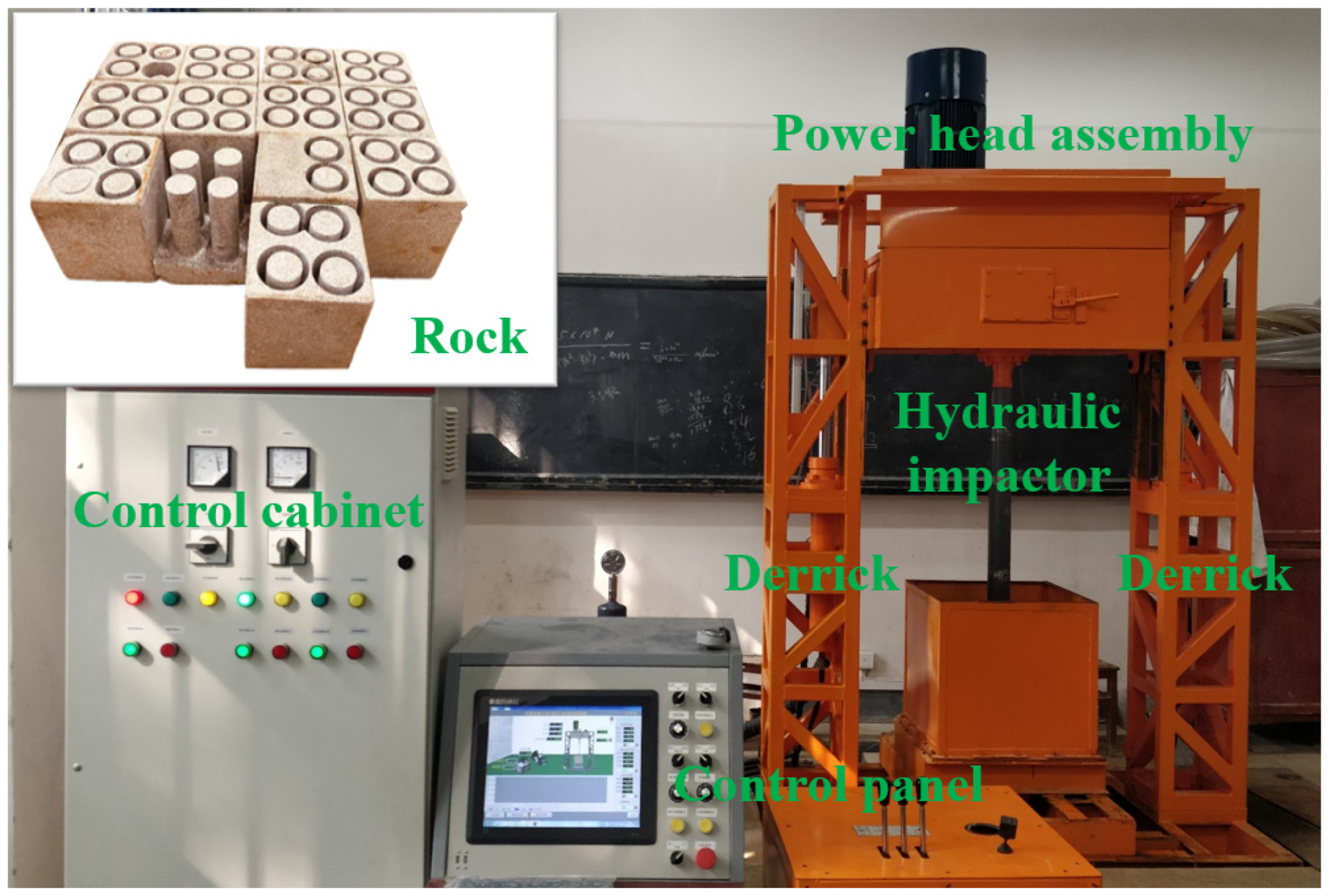
Rock drilling experiments were carried out on the XD-1DB micro-drilling experimental platform (Figure 2), jointly developed with Hengyang Drilling Machinery Factory. The IDBs were pre-sharpened with a grinding wheel prior to testing. The experiments employed a rotary-percussive drilling process using a hydraulic impactor (Langfang Juli Exploration Technology Co., Ltd., Langfang, China, model YZX54). The experimental drilling parameters were a weight on bit (WOB) of 10 MPa, a rotation speed of 300 r/min, a pump volume of 60 L/min (impact frequency 30 Hz, impact energy 27 J), and a single drilling depth of 100 mm [37]. Each set of parameters was tested on a single bit due to experimental constraints. The consistent trends across multiple parameter variations support the main conclusions, but future studies should perform three or more repetitions to enable statistical analysis. The drilling target was sesame-gray granite, with its properties summarized in Table 1. After drilling, the worn bit lip surfaces were examined using a three-dimensional confocal microscope (VK-X100K, Keenes Co., Ltd., Tokyo, Japan).
In this study, the wear rate of the IDB, v m (gm−1), was evaluated based on the mass loss per unit drilling depth, i.e., the mass of the bit lost while drilling a unit distance. In actual drilling operations, operational efficiency and time-related costs are also critical; therefore, a bit must maintain high efficiency while exhibiting low wear. To better assess bit performance, a bit wear performance index, α, is defined as the ratio of rate of penetration (ROP) to bit wear rate. Under the assumption of neglecting energy consumption, a higher penetration rate coupled with lower bit wear indicates superior bit performance. The bit wear performance index α (m2g−1h−1) is expressed as:
α = R O P v m

3. Results and Discussion

3.1. Effect of Matrix Hardness on Bit Performance

3.1.1. Analysis of Drilling Process of IDBs with Varying Matrix Hardness

The bit wear, average ROP, and average torque from the drilling experiments are presented in Table 2. It can be observed that bits Y2 and Y3, with matrix hardnesses above 100 HRB, exhibited penetration rates below 1 m/h, while another bit with a penetration rate below 1 m/h was Y1, which contained no carbon fiber (CF). In contrast, bits with lower matrix hardnesses, Y4 and Y5, achieved penetration rates above 1.21 m/h. These results indicate that matrix hardness has a significant effect on penetration rate, with lower-hardness matrices providing higher drilling efficiency in hard and dense formations.
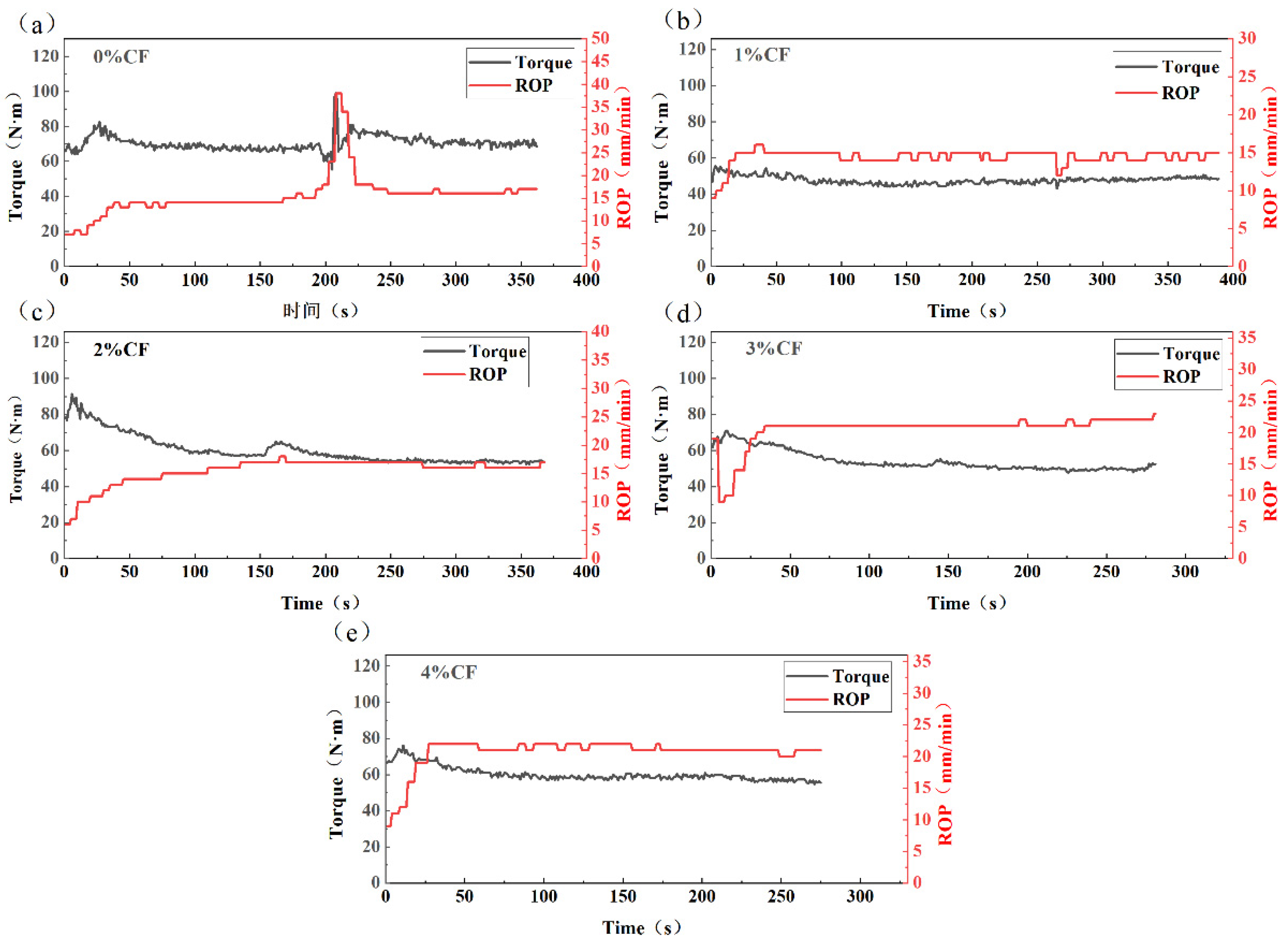
Figure 3 shows the real-time torque and ROP during the drilling process. Torque fluctuations are caused by rock heterogeneity and unavoidable disturbances from the drilling rig, but overall, torque and ROP exhibit a certain correlation. At the initial stage of drilling, because the cutting-in process targets the grinding wheel, torque initially increases when the drilling target switches to granite. At this point, the diamonds further protrude beyond the pre-sharpened surface to adapt to the rock. As drilling progresses, the protrusion process stabilizes, and torque gradually decreases and eventually stabilizes. There is a strong positive correlation between WOB and torque. In this experiment, all drilling parameters except CF content were kept constant, resulting in different matrix hardness values. Bit Y1 exhibited the highest average torque at 70.47 N·m, while Y2 had the lowest average torque at 47.84 N·m. These results indicate that the addition of CF can effectively reduce torque during drilling, thereby lowering drilling energy consumption.

3.1.2. Analysis of Bit Wear with Varying Matrix Hardness

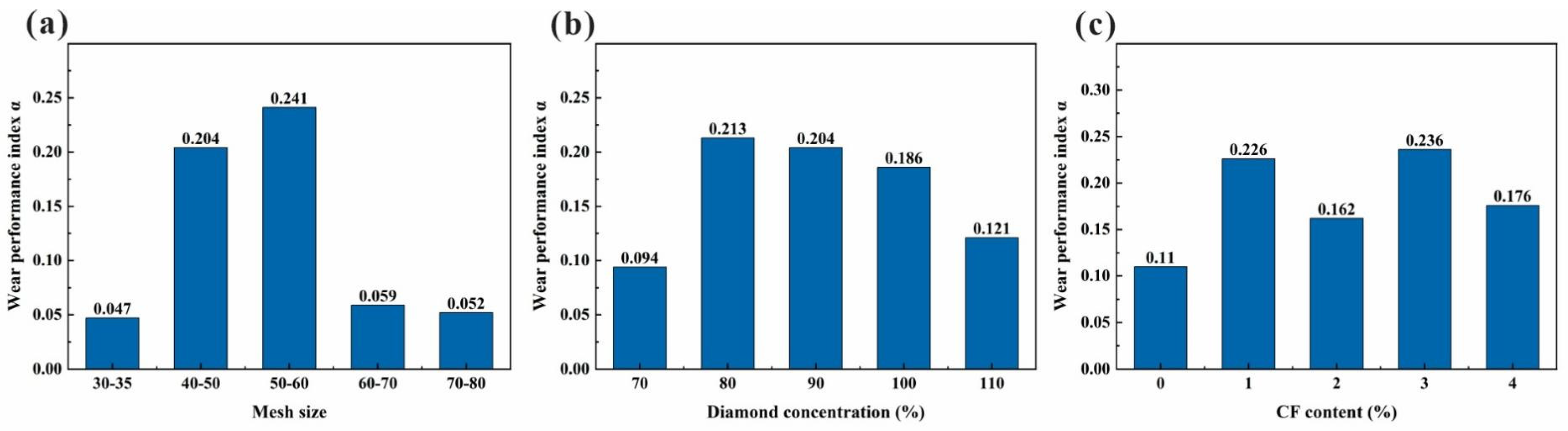
From Table 2, it can be seen that the IDB without CF has the highest wear. This indicates that CF can effectively reduce the wear of the IDB. Overall, higher matrix hardness corresponds to lower wear, with bits Y2 and Y4 showing relatively low wear among the five tested bits. The sesame-gray granite used in the drilling experiments is a hard and dense rock; when drilling such formations, lower-hardness, less wear-resistant matrices can better allow diamond protrusion, thereby maintaining higher penetration rates. Excluding bit Y1 (which contains no CF), overall bit wear increases as matrix hardness decreases. As shown in Figure 4, when the matrix hardness is 95.8 HRB, the bit wear performance index reaches a maximum of 0.236, corresponding to a CF addition of 3%, indicating that bit Y4 exhibits the best overall performance. Bit Y5, with the lowest matrix hardness of 89.5 HRB, achieved the highest penetration rate of 1.288 m/h; however, due to its higher wear, its overall performance index is 0.176, which is lower than that of bit Y4.

3.1.3. Analysis of Diamond Protrusion Characteristics with Varying Matrix Hardness

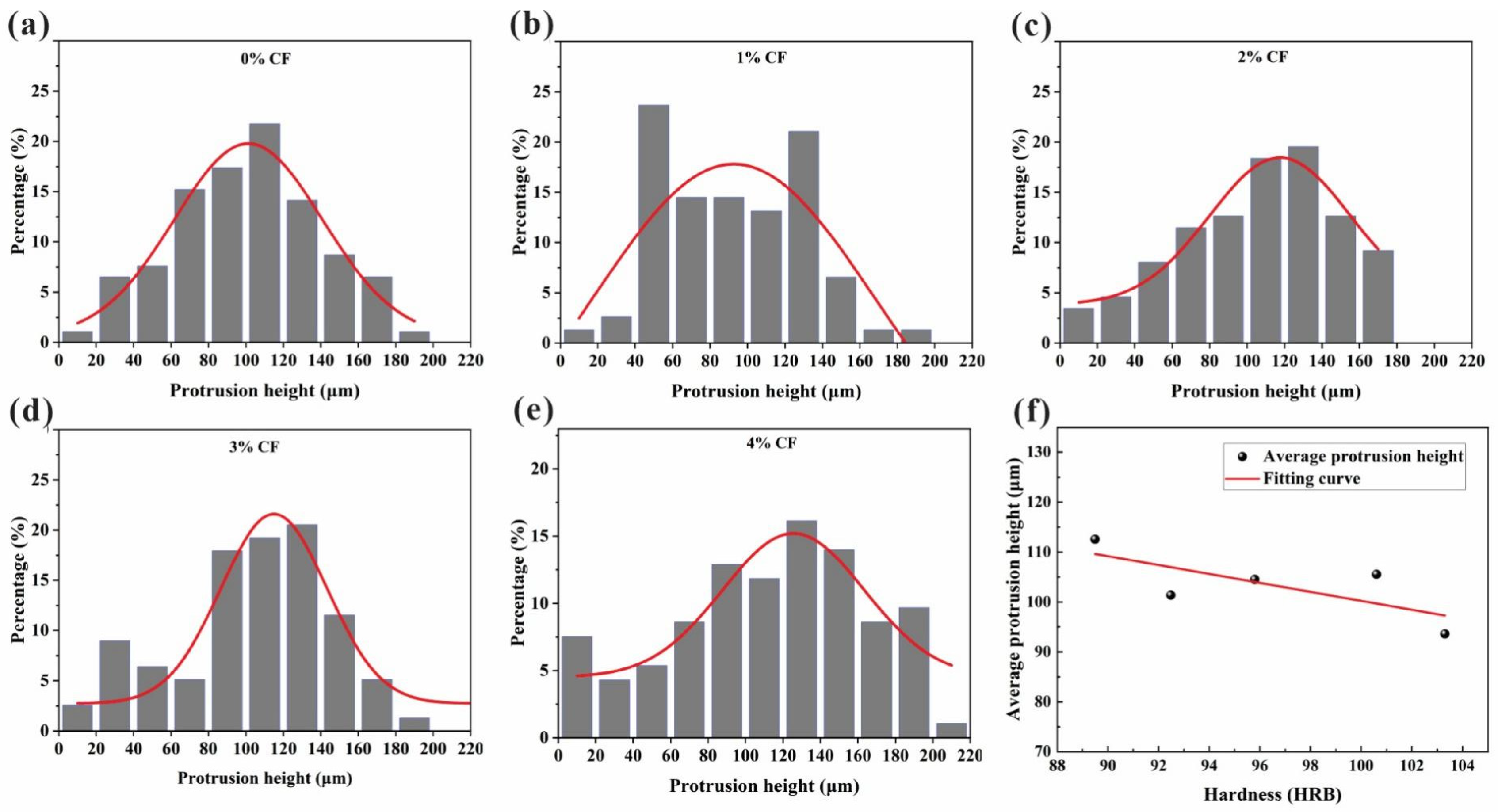
A Gaussian distribution was used to statistically analyze the protrusion heights of randomly selected diamond particles (approximately 100 diamonds in total). The distribution pattern and central tendency of diamond protrusion heights on the bit surface are shown in Figure 5. Through curve fitting, the mean value and standard deviation of the diamond protrusion heights were obtained. The standard deviation reflects the degree of dispersion of the protrusion heights; a smaller standard deviation indicates more concentrated data and a steeper distribution curve, whereas a larger standard deviation corresponds to greater dispersion and a flatter curve.
For bit Y1, the Gaussian fitting of the diamond protrusion height distribution shows good agreement, with a fitting coefficient of 0.949, a standard deviation of 79.20, and an average protrusion height of 101.37 μm on the bit surface. Bit Y2 exhibits an average protrusion height of 93.58 μm with a standard deviation of 153.78, which is the smallest mean protrusion height among the five bits. As can be seen from Figure 5, the diamond protrusion heights of bit Y2 are highly dispersed, with approximately 90% of the diamonds distributed within the range of 40–160 μm, indicating a relatively uniform but widely spread distribution. Bit Y3 has an average protrusion height of 105.52 μm with a standard deviation of 75.09. Bit Y4 shows an average protrusion height of 104.51 μm and a standard deviation of 56.91, which is the smallest among the five bits. Moreover, the proportion of diamonds with protrusion heights greater than 90 μm in bit Y4 is higher than that in the other four bits. Bit Y5 exhibits the highest average protrusion height of 112.59 μm, with a standard deviation of 75.09, and also has the lowest matrix hardness. In contrast, bit Y2, which has the highest matrix hardness, shows the smallest average protrusion height among the five bits. Lower matrix hardness facilitates matrix wear, thereby allowing diamonds to protrude more effectively. Under certain conditions, higher diamond protrusion heights enable more effective rock cutting, help maintain better fluid flow channels on the bit surface, and enhance bit cooling. Overall, as matrix hardness increases, diamond protrusion height tends to decrease.
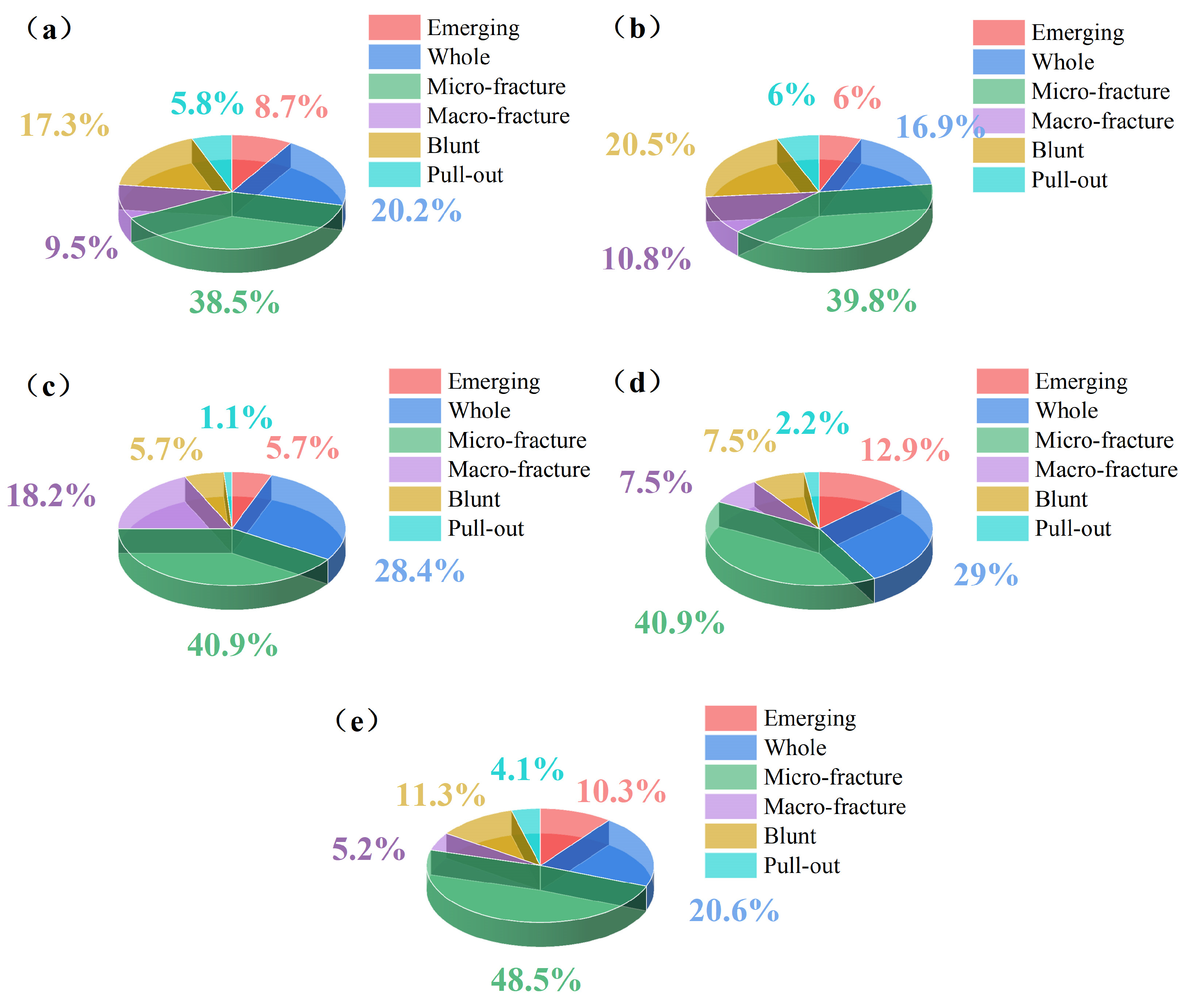
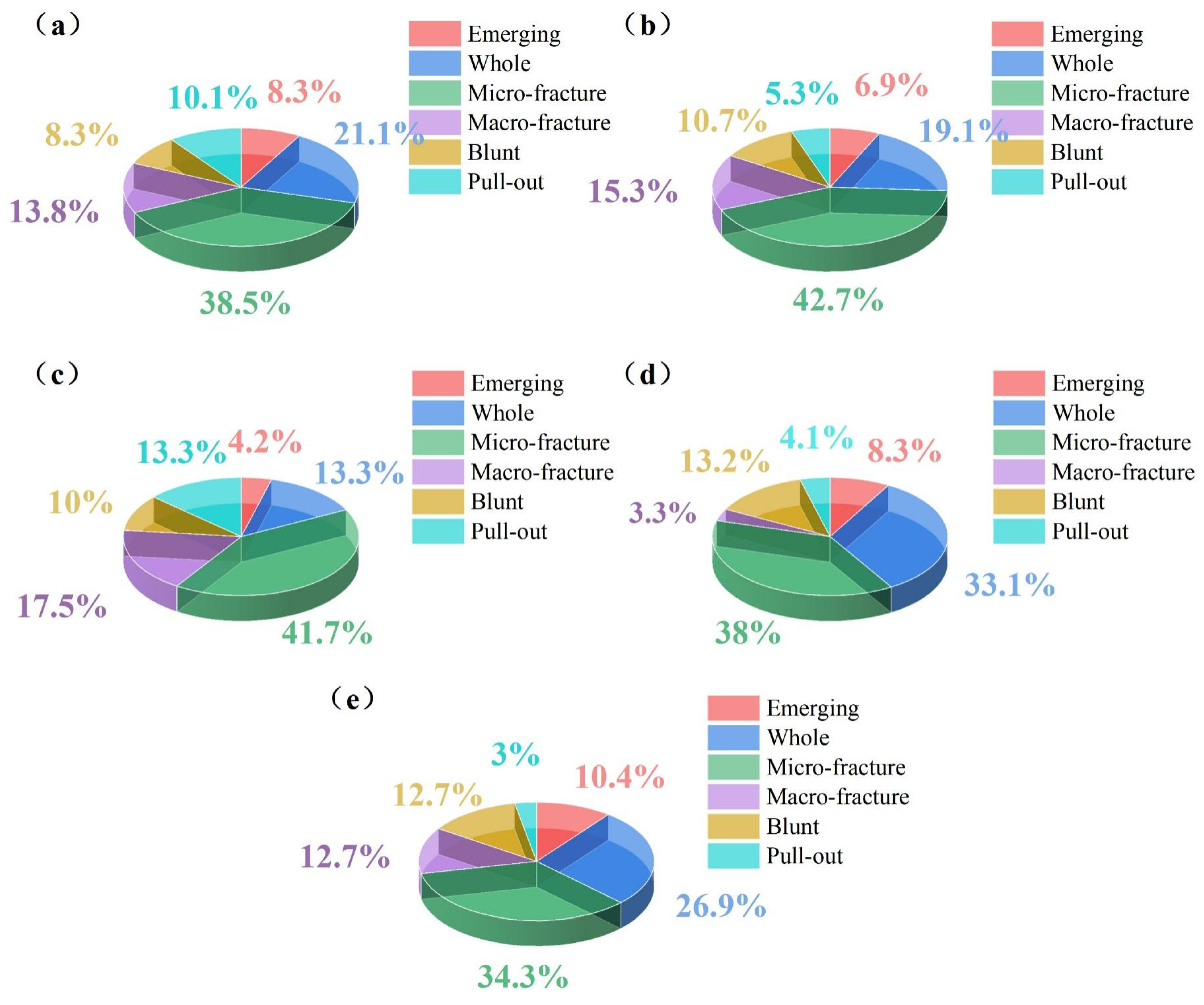
Figure 6 shows the percentage of diamond states on the surface of each bit collection area. From the results, it can be seen that the diamond on the bit surface is mainly composed of whole diamond and micro-fracture diamond. The proportion of micro-fracture diamonds in the exposed diamond of bit Y1 is the highest at 38.5%, followed by whole diamonds accounting for 20.2% of the total diamonds; among them, the proportion of blunt diamonds is 17.3%. Except for bit Y2, the proportion of blunt diamonds is relatively high compared to other bits, which may be due to its relatively high exposure quantity. The surface of bit Y2 also has the highest proportion of micro-fracture diamonds, followed by blunt diamonds. The blunt diamonds of Y2 have the highest proportion among the five bits, accounting for 20.5%. Due to its highest hardness, the matrix is more difficult to wear during the intermediate process, and the proportion of blunt diamonds increases. The top two types of diamonds for bit Y3 are micro-fracture diamonds and whole diamonds, while the third type is macro-fracture diamonds, and its proportion of macro-fracture diamonds is also the highest among the five bits. The proportion of micro-fracture diamond and whole diamond in bit Y4 is 69.9%, which is the highest among the five bits. At the same time, the proportion of emerging diamond is also the highest at 12.9%. The emerging diamond will gradually evolve into whole or micro-fracture diamond during subsequent drilling, which ensures good continuity of the bit’s cutting edge. The proportion of micro-fracture diamonds in bit Y5 is the highest, accounting for 48.5%. Due to its lowest matrix hardness and highest diamond protrusion height, the probability of diamond breakage during drilling is higher.
Under rotary-percussive drilling, two key observations emerge. First, micro-fractur- diamonds account for 30–50% of all exposed diamonds across all bits—significantly higher than in conventional rotary drilling. This indicates that impact deliberately induces controlled diamond microfracture, which creates fresh sharp edges (self-sharpening). Second, the proportion of emerging diamonds is highest (12.9%) for bit Y4 (95.8 HRB), where the matrix hardness allows for sufficient wear to expose new diamonds but not so fast as to cause premature pull-out. Together, these observations reveal a dynamic balance cycle: impact → diamond microfracture (sharpening) + whole diamond retention (stability) + matrix wear → new diamond exposure.
When the matrix is too hard (Y2, 103.3 HRB), the proportion of blunt diamonds reaches 20.5% (highest among all bits), while emerging diamonds are minimal. The matrix wears too slowly to expose new diamonds, and the cycle stalls. When the matrix is too soft (Y5, 89.5 HRB), diamond protrusion height is highest (112.59 μm) but the proportion of pulled-out diamonds increases, and the continuity of renewal is disrupted. At the intermediate hardness (Y4, 95.8 HRB), the combined proportion of micro-fractured + whole diamonds reaches 69.9% (highest), and emerging diamonds are also highest (12.9%). This is the sweet spot where the cycle operates continuously.
As a result of this optimal cycle, bit Y4 achieves the highest wear performance index α = 0.236 (Figure 4), with a balanced ROP (1.277 m/h) and wear loss (0.54 g). This demonstrates that under impact, the best performance is not achieved by maximizing hardness or wear resistance alone, but by tuning the matrix to sustain the diamond renewal cycle.

3.2. Effect of Diamond Concentration on IDB Performance

3.2.1. Analysis of Drilling Process of IDBs at Different Diamond Concentrations

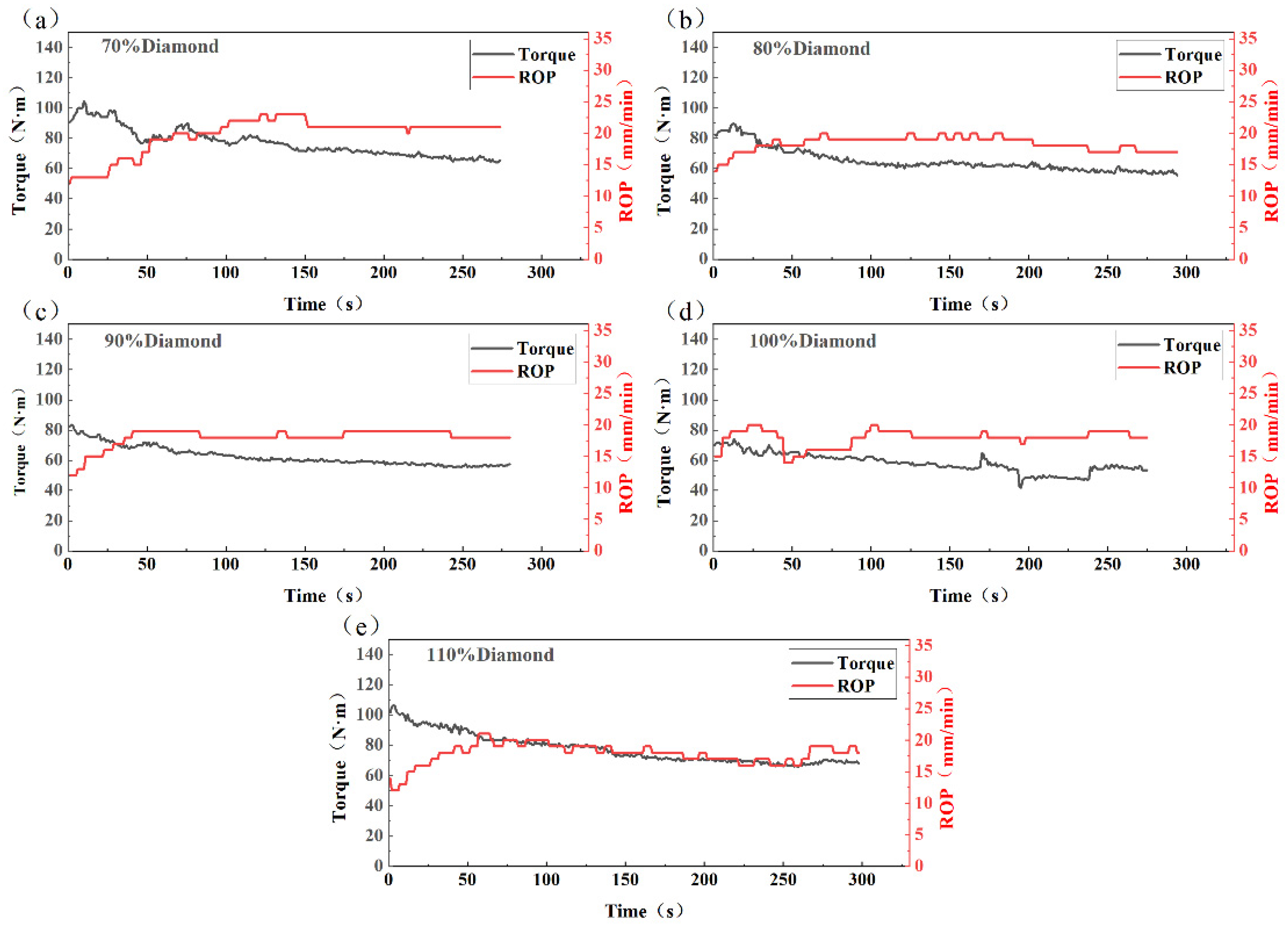
Based on the bit wear performance index α and the diamond protrusion characteristics on the surface for bits with different matrix hardness, the formulation with a hardness of 95.8 HRB was selected to investigate the effect of diamond concentration on bit wear. The experimental results are summarized in Table 3. When the diamond concentration was 70%, bit N1 exhibited the greatest wear while also achieving the highest ROP for the same drilling distance. Overall, as diamond concentration increases, the ROP gradually decreases. At lower diamond concentrations, fewer diamonds are exposed per unit area on the bit surface, resulting in higher contact pressure on individual diamonds and consequently higher rock-breaking efficiency. Both bits N1 and N5 experienced relatively high torque during drilling, exceeding 70 N·m. The torque shows a trend of first decreasing and then increasing with increasing diamond concentration. Figure 7 presents the real-time torque and ROP curves for each bit during drilling.

3.2.2. Analysis of Bit Wear at Different Diamond Concentrations

It can be seen from Table 3 that as the diamond concentration increases, the wear of the IDB shows a trend of first decreasing and then increasing. In traditional rotary drilling, it is generally believed that the wear of the IDB gradually decreases with the increase in diamond concentration. In this experiment, rotary-percussive drilling technology was used. For the strength of the drill bit matrix itself, the increase in diamond concentration will reduce its bending and other strength properties. Therefore, under the conditions of rotary-percussive drilling, this may exacerbate the wear of the IDB, leading to an increase in wear. The wear performance indicators of the IDB were calculated based on the data in Table 3, and the results are shown in Figure 4. The wear performance index α of the bit first increases and then decreases with the increase in diamond concentration. When the diamond concentration is 80%, the maximum wear performance index α of the bit is 0.213. As the diamond concentration continues to increase, the wear performance index α of the bit gradually decreases. Overall, when the diamond concentration is 80% and 100%, the wear performance of the bit is better.

3.2.3. Analysis of Diamond Protrusion Characteristics at Different Diamond Concentrations

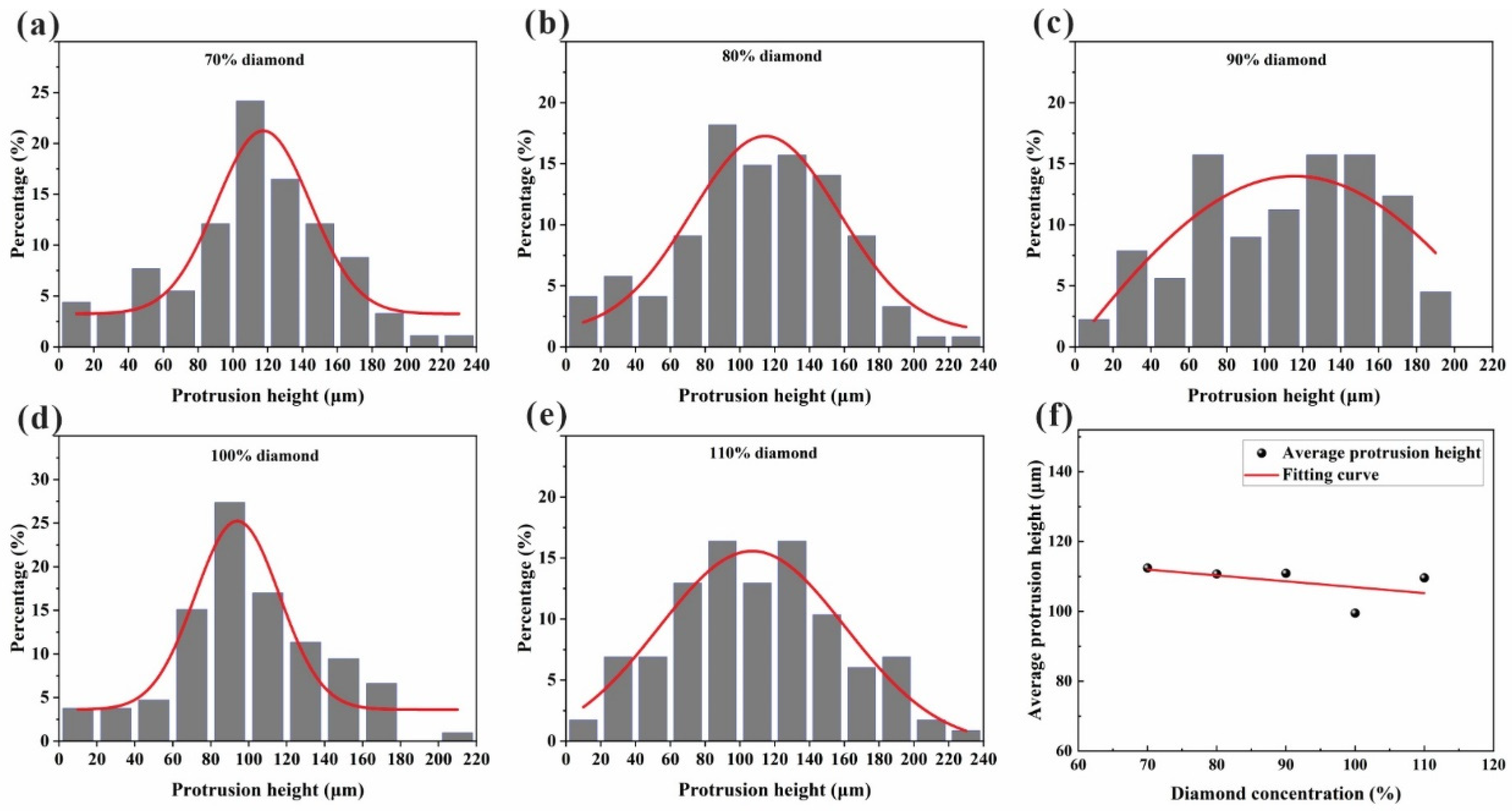
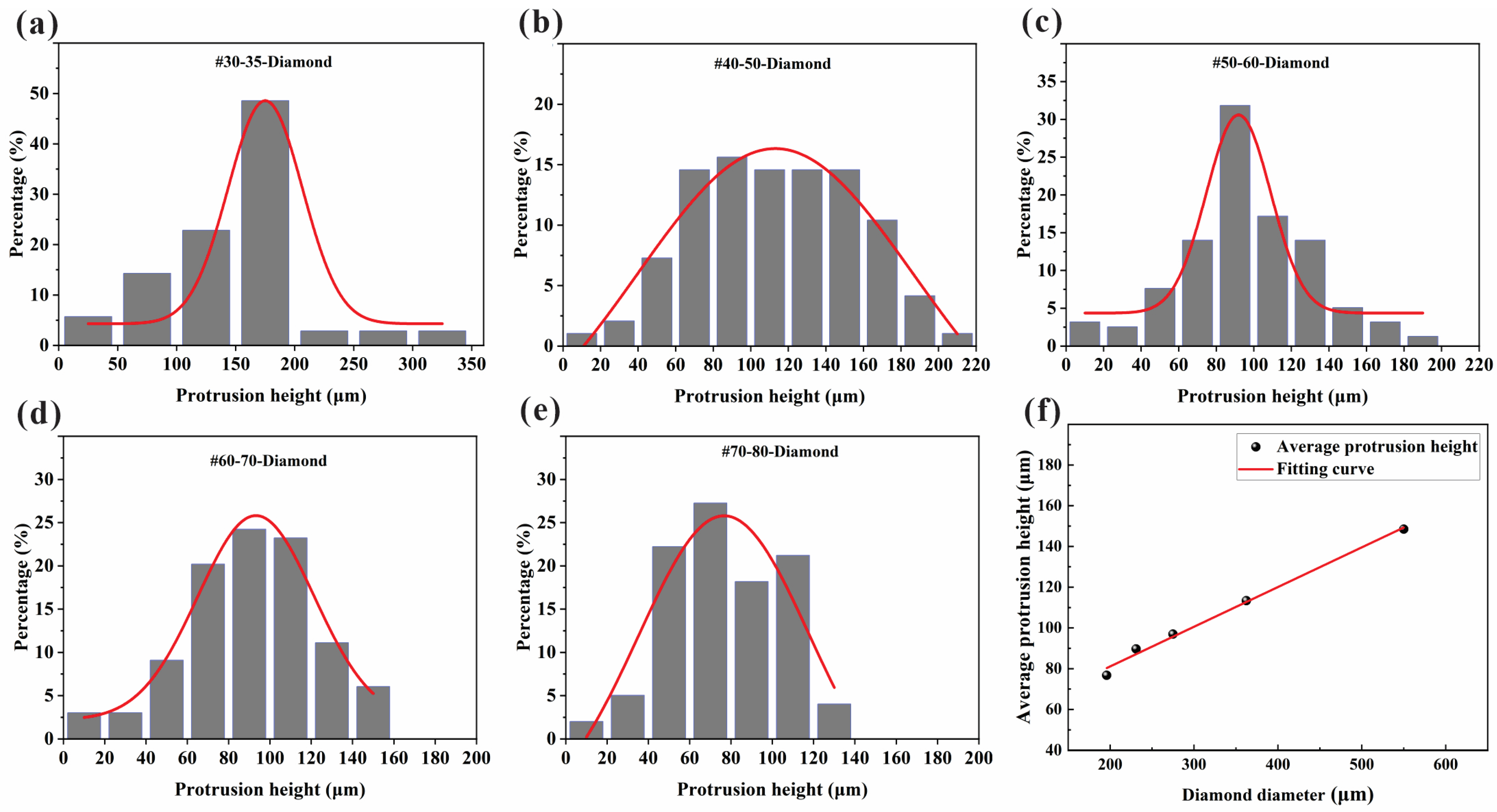
Figure 8 presents the frequency distribution of diamond protrusion heights on the bit surfaces of the five IDBs. The average protrusion height of bit N1 is 112.40 μm, with a standard deviation of 54.06. Among them, diamonds ranging from 100 μm to 120 μm account for more than 20%. Bit N2 exhibits an average protrusion height of 110.7 μm with a standard deviation of 85.32 μm, with most diamonds distributed between 80 and 180 μm. The average protrusion height of drill bit N3 is 110.89 μm, with a standard deviation of 134.78. It can be seen from Figure 8c that the diamond protrusion height of bit N3 is more dispersed. The average protrusion height of bit N4 is 99.49 μm, with a standard deviation of 44.43. As shown in Figure 8d, the diamond protrusion heights on N4 are more concentrated, with over 25% of the diamonds falling within the 80–100 μm range. Bit N5 exhibits an average protrusion height of 109.57 μm and a standard deviation of 107.30 μm, with most diamonds distributed between 60 and 160 μm. Figure 8f shows the fitting curve between diamond concentration and bit protrusion height. It can be seen that overall, as the diamond concentration increases, the average protrusion height decreases.
Figure 9 shows the percentage distribution of diamond particle states on the sampled areas of the surfaces for bit N1–N5. The results indicate that the diamonds on the bit surfaces are primarily whole diamonds, micro-fracture diamonds, and macro-fracture diamonds. For bit N1, micro-fractured diamonds constitute the highest proportion at 38.5%, followed by whole diamonds at 21.1%, while macro-fracture diamonds rank third at 13.8%. On the surface of bit N2, micro-fracture diamonds account for the highest proportion at 42.7%, followed by whole and macro-fracture diamonds. Similarly, for bit N3, micro-fracture diamonds are predominant at 41.7%, followed by macro-fracture diamonds at 17.5%. For bit N4, both micro-fracture and whole diamonds account for over 30% of the total, representing relatively high proportions. Bit N5 is also dominated by micro-fracture and whole diamonds, with emerging diamonds accounting for 10.4%, the highest among the five bits. Overall, as diamond concentration increases, the proportion of blunt diamonds also rises. Higher diamond concentrations result in more diamonds exposed per unit area, reducing the pressure on individual diamonds and thereby increasing the likelihood of diamond blunting.

3.3. Effect of Diamond Mesh Size on IDB Performance

3.3.1. Analysis of Drilling Process of IDBs at Different Diamond Mesh Sizes

Based on the wear performance index α of IDBs with different diamond concentrations and the cutting characteristics of bit surfaces, a formula with a hardness of 95.8 HRB and an 80% diamond concentration were selected to study the effect of diamond mesh size on IDB wear. Five IDBs with diamond mesh sizes of #30/35, #40/50, #50/60, #60/70, and #70/80 were produced for drilling experiments.
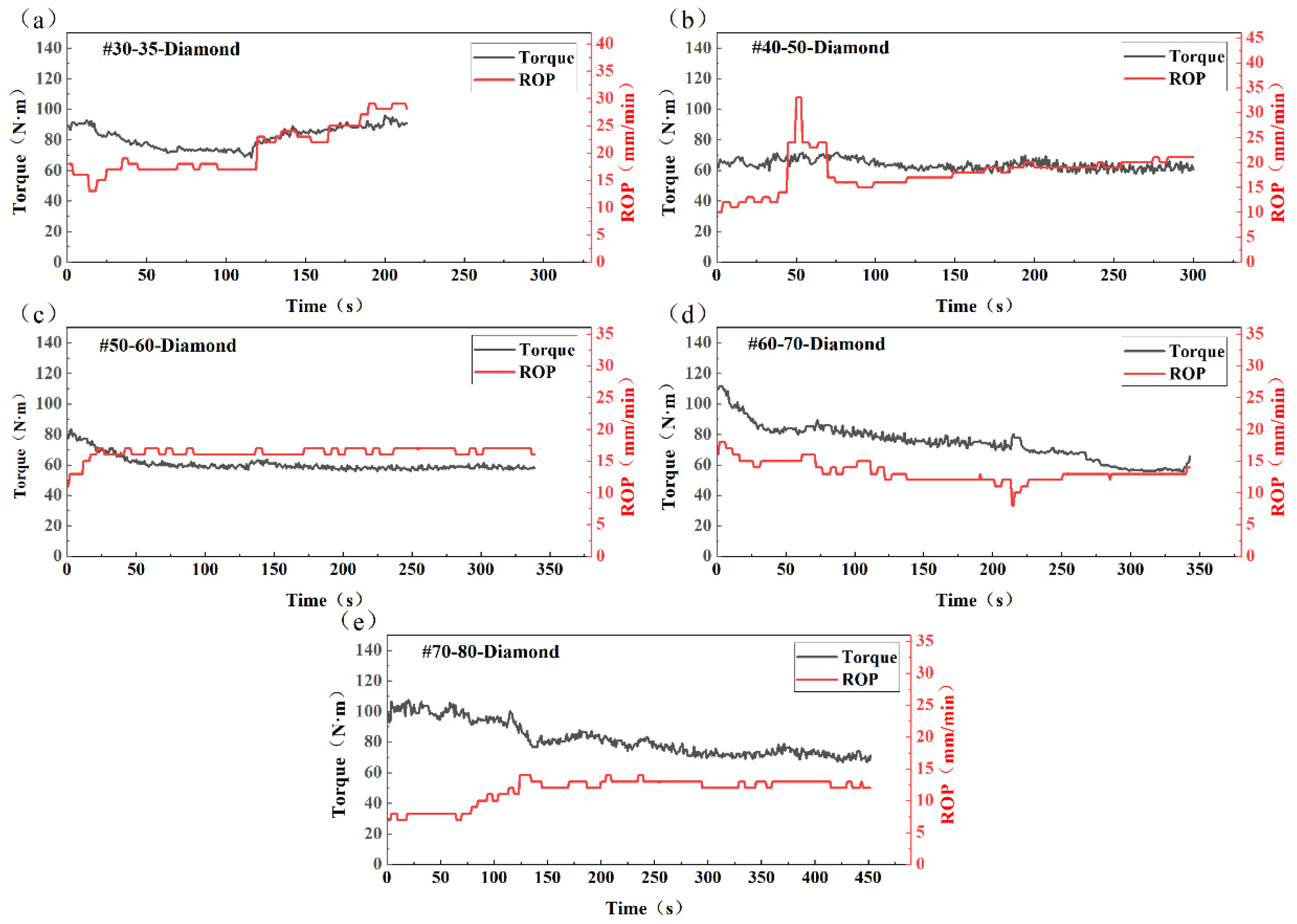
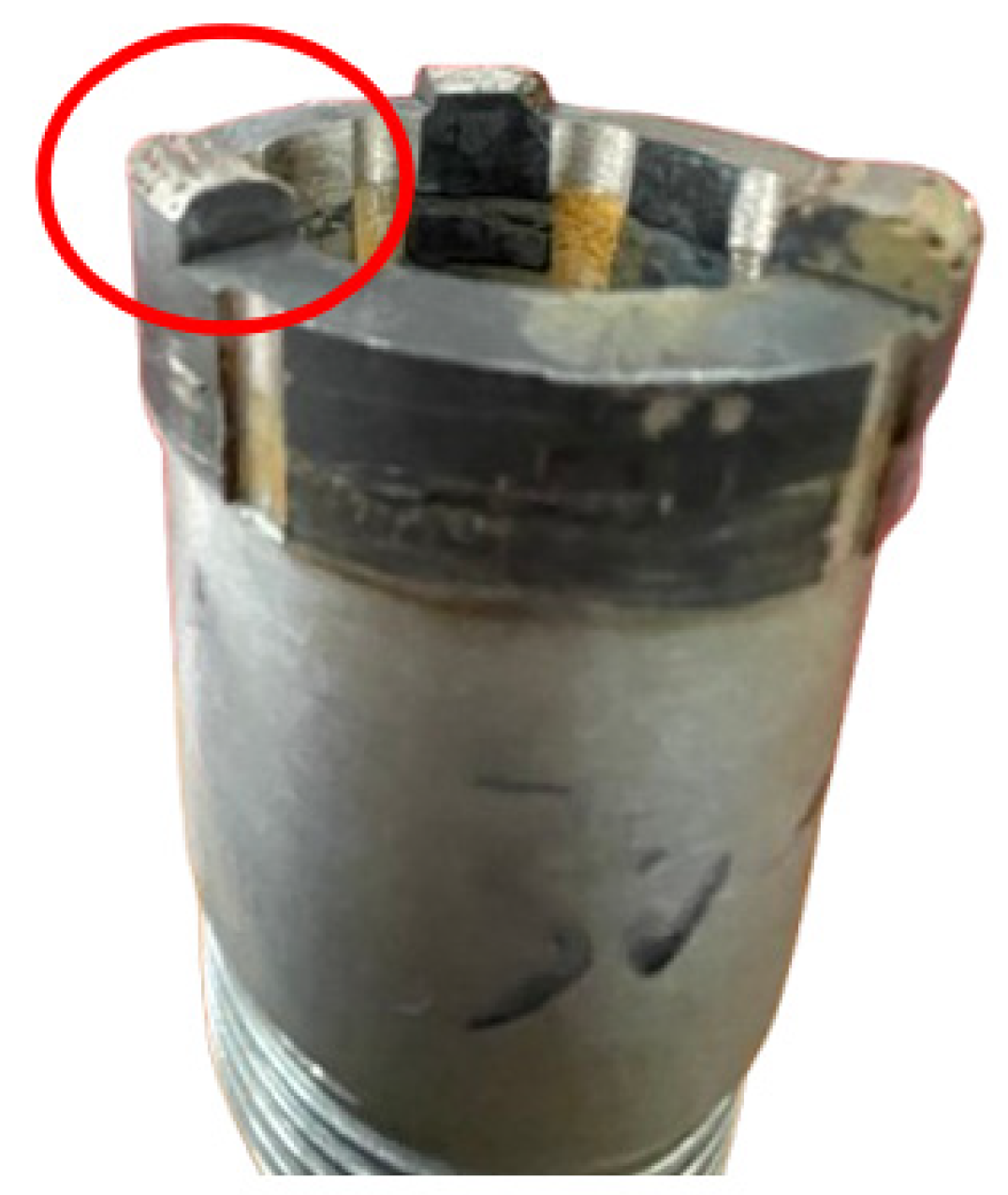
According to Table 4, as the diamond mesh size increases, the ROP gradually decreases. When the diamond mesh size is #30/35, the ROP is 1.329 m/h, which is the fastest among the five IDBs. Figure 10 shows the curves of torque and ROP over time during the drilling process. It can be observed that the ROP of IDB M1 suddenly increases after drilling for a period of time. Upon post-drilling inspection of the bit (Figure 11), abnormal wear was observed on the working teeth; both the inner and outer diameters were worn, and the surface cross-section exhibited a trapezoidal shape. The diamond mesh size was too fine, leading to accelerated wear at an 80% diamond concentration. As the diamond mesh size gradually increases to #70/80, the ROP drops to a minimum of 0.734 m/h. Smaller diamond mesh sizes correspond to larger diamond diameters. At the same concentration, fewer exposed diamonds per unit area result in greater pressure per diamond and deeper penetration into the rock. The real-time ROP of IDB M2 had a large fluctuation in the early stage, which was due to the rock sample shaking during drilling, causing the ROP to suddenly increase and then stabilize. Since the analysis utilized the average ROP, this fluctuation can be disregarded. As diamond mesh size increased, torque initially decreased before rising again. At #30/35 diamond mesh size, the average torque was 81.84 N·m. Torque gradually decreased with finer grit sizes, reaching a minimum of 60.69 N·m at #50/60 diamond mesh size. Beyond this point, torque increased progressively with finer grit sizes.

3.3.2. Analysis of Bit Wear at Different Diamond Mesh Sizes

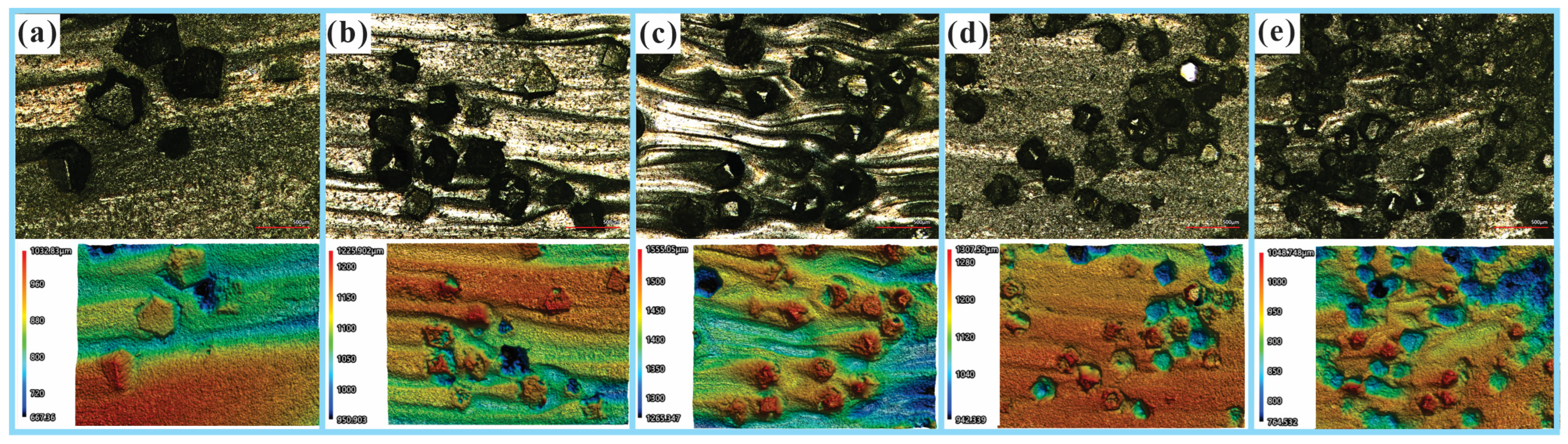
As shown in Table 4, with increasing diamond mesh size, the overall wear rate of the IDB first decreases and then increases. Similar to the effect of diamond concentration, in conventional rotary drilling, it is generally believed that as diamond concentration increases, IDB wear gradually decreases. However, under rotary-percussive drilling conditions, the IDB is subjected to continuous impact forces. This may intensify wear on the IDB, leading to an increase in the wear rate. As shown in Figure 12, as the diamond mesh size increases, the number of diamond-like particles per unit area rises, leading to agglomeration of some diamonds. This causes flaking during drilling operations. Simultaneously, the reduced diameter of the diamonds results in poorer retention by the matrix. Under identical impact conditions, smaller diamond particles are more prone to detachment. Calculations based on the data in Table 4 yielded the bit wear performance index, with results shown in Figure 4. The bit wear performance index α first increases and then decreases alongside rising diamond mesh size. When the diamond mesh size is #50/60, the drill bit wear performance index α reaches its maximum value of 0.241. As the diamond mesh size continues to increase, the wear performance index α gradually decreases. Overall, the IDBs with diamond mesh sizes #40/50 and #50/60 exhibit superior wear performance.

3.3.3. Analysis of Diamond Protrusion Characteristics at Different Diamond Mesh Sizes

Figure 13 shows the frequency distribution of diamond protrusion heights on the bit surface of five IDBs with different diamond mesh sizes. Bit M1 exhibits an average protrusion height of 148.46 μm with a standard deviation of 31.53 μm. Diamonds within the 100 μm to 200 μm range account for approximately 70% of the total. Due to their larger diameter, these diamonds also exhibit higher protrusion heights. The average protrusion height of bit M2 is 113.40 μm with a standard deviation of 147.09 μm; the average protrusion height of bit M3 is 96.92 μm with a standard deviation of 34.30 μm. Bit M4 recorded an average protrusion height of 89.71 μm with a standard deviation of 56.17 μm; the average protrusion height for bit M5 was 76.72 μm, with a standard deviation of 82.97 μm. As the diamond mesh size increases, the protrusion height gradually decreases.
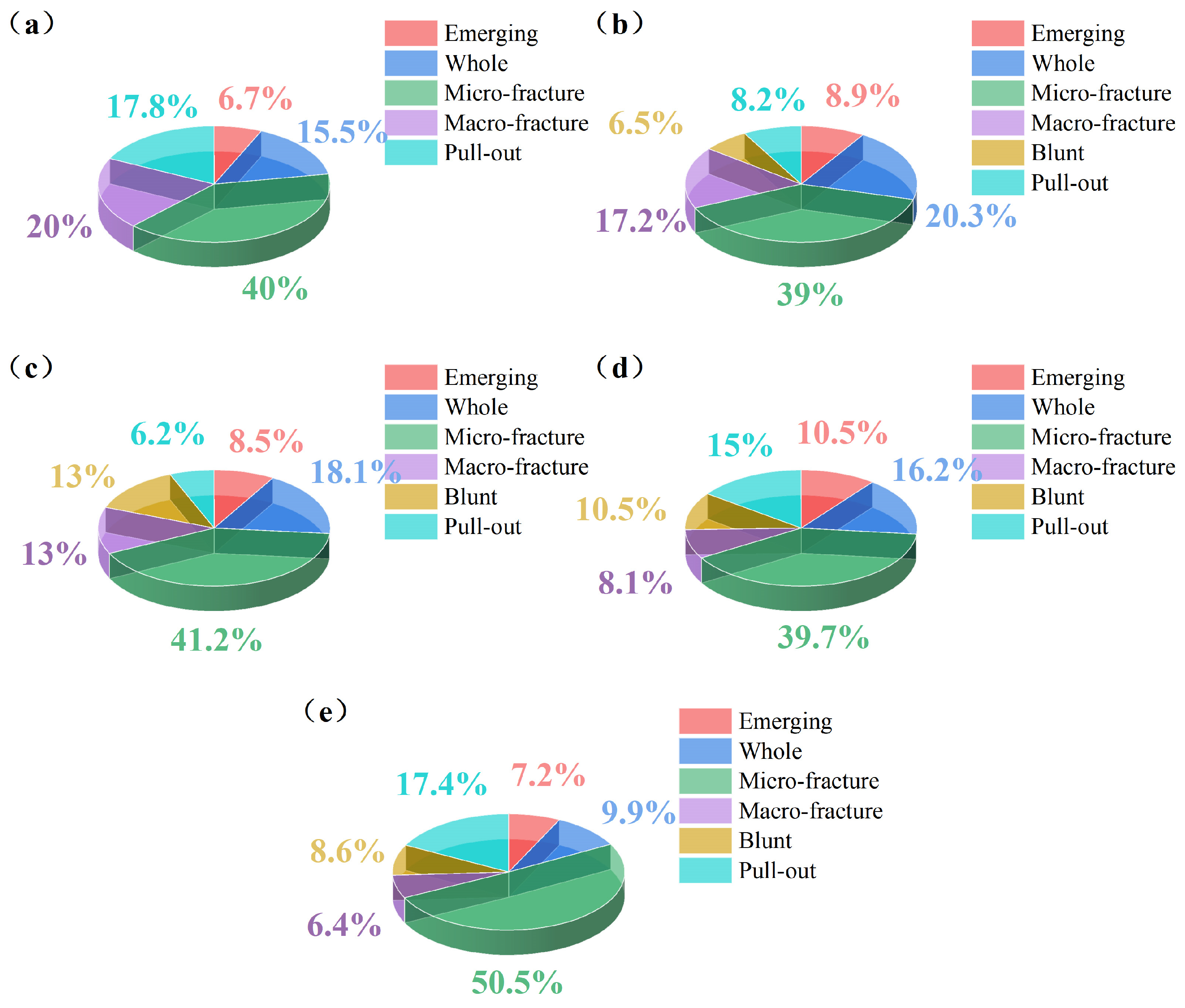
Figure 14 shows the percentage distribution of diamond states on the surface of bits M1 to M5 in the sampling area. Among the diamonds exposed from bit M1, micro-fracture diamonds accounted for the highest proportion at 40%, followed by macro-fracture diamonds at 20% of the total diamonds, while pull-out diamonds ranked third at 17.8%. For bit M2, micro-fracture diamonds constituted the largest proportion at 39%, followed by whole diamonds and macro-fracture diamonds. Similarly, micro-fracture diamonds dominated the lip surface of bit M3 at 41.2%, with whole diamonds accounting for 18.1%. Bit M4 exhibited the highest proportion of micro-fracture diamonds on its surface, followed by whole diamonds, while pull-out diamonds reached 15%. The surface of bit M5 primarily contained micro-fracture diamonds at 50.5%, followed by pull-out diamonds at 17.4%. Overall, as diamond mesh size increased, the proportion of whole diamonds first rose then decreased, while the proportion of pull-out diamonds first decreased then increased.

3.4. Impact-Driven Dynamic Balance Mechanism

Based on the systematic observations across matrix hardness, diamond concentration, and mesh size, we propose a unified mechanism for IDB performance under rotary-percussive drilling. Under repeated impact loads, the diamond–matrix system does not wear down monotonically but enters a dynamic cycle consisting of three phases:
(1) Microfracture-assisted self-sharpening: Impact causes controlled micro-fracture of exposed diamonds, generating fresh sharp edges without complete diamond loss.
(2) Whole diamond retention: A fraction of diamonds remain intact, providing stable cutting action.
(3) Matrix wear and diamond renewal: Gradual wear of the Fe-based matrix exposes new diamond layers, replenishing the cutting surface.
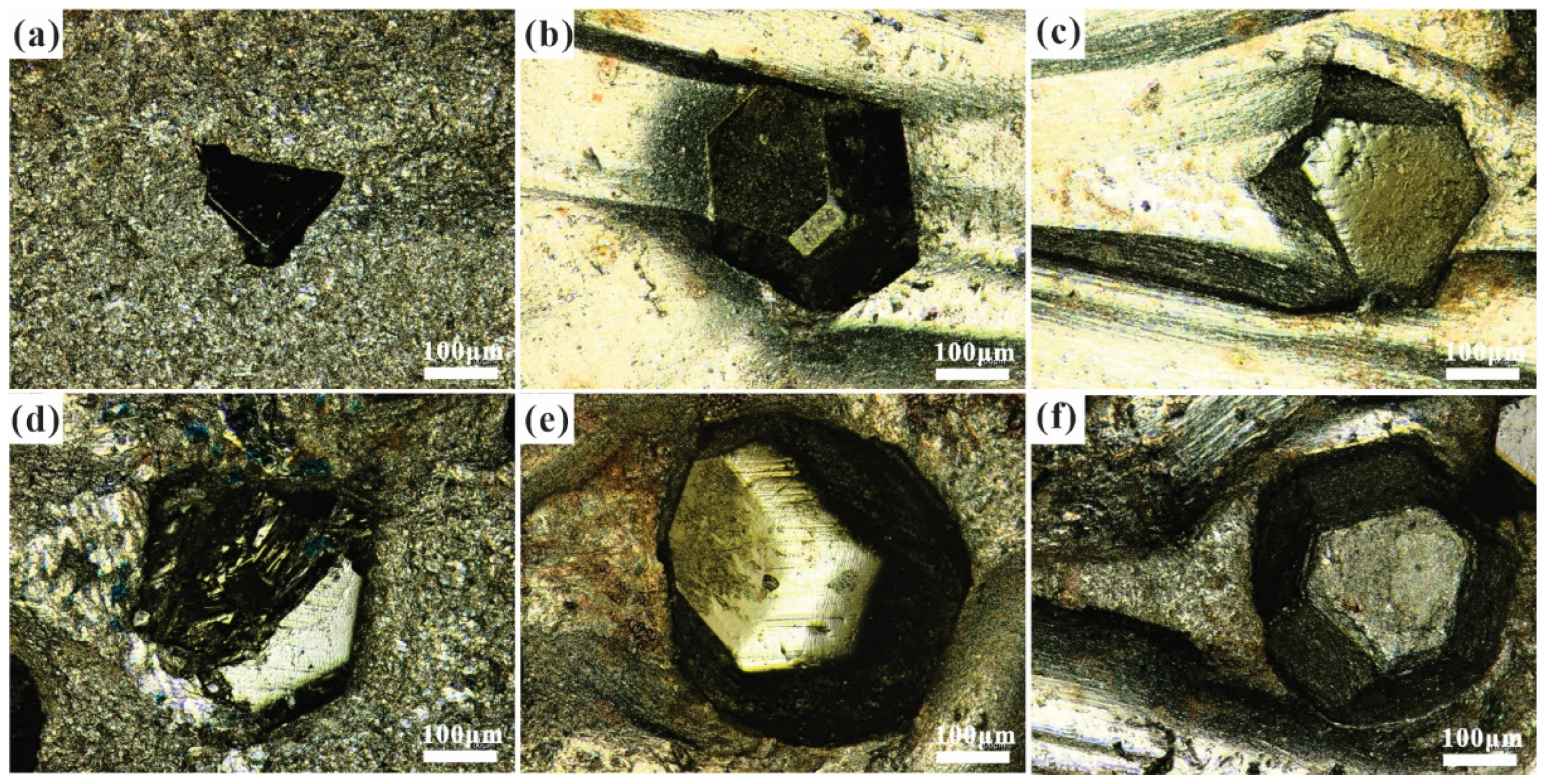
The overall drilling performance depends on the balance of these three processes. A matrix that is too hard blocks Phase 3 (renewal), leading to diamond blunting (Figure 15e). A matrix that is too soft accelerates Phase 3 but also increases diamond pull-out (Figure 15f), breaking the cycle. Similarly, too high a diamond concentration reduces contact pressure per diamond, suppressing Phase 1 (micro-fracture) and increasing blunting; too low a concentration causes excessive macro-fracture and pull-out. Optimal performance occurs when the three phases operate at a sustained, balanced rate. This mechanism explains why performance is not a simple function of any single parameter, and why the wear performance index α correlates strongly with the combined proportion of micro-fracture + whole + emerging diamonds.

4. Conclusions

The performance of the matrix and diamond parameters significantly determine the service life of IDBs. A high-performance matrix can effectively enhance drilling efficiency and bit longevity while reducing drilling costs. This study prepared IDBs with varying CF content and diamond parameters. Through drilling experiments under rotary-percussive drilling conditions, the effects of different matrix hardness and diamond parameters on the wear behavior and drilling performance of the bits were investigated. Within the experimental scope, the following conclusions were drawn:
(1) Under rotary-percussive drilling, the performance of IDBs is governed by an impact-driven dynamic balance mechanism involving three phases: microfracture-assisted self-sharpening, whole diamond retention, and matrix-wear-induced diamond renewal. Optimal drilling efficiency is achieved when these three phases are balanced, not when any single property (hardness, concentration, or grain size) is maximized.
(2) Matrix hardness modulates the renewal phase. At 95.8 HRB, the combined proportion of micro-fractured and intact diamonds reached 69.9% and emerging diamonds 12.9%, yielding the highest wear performance index α = 0.236. Harder or softer matrices disrupted the cycle by either blocking renewal or causing premature pull-out. CF effectively reduces torque during drilling. As matrix hardness increases, diamond protrusion height tends to decrease.
(3) Under rotary-percussive drilling conditions, as diamond concentration increases, ROP gradually decreases, the average protrusion height of diamonds diminishes, and the proportion of blunt diamonds rises. Higher diamond concentrations result in more exposed diamonds per unit area, reducing pressure per diamond and increasing the likelihood of diamond blunting. The bit wear performance index α first increases and then decreases with rising diamond concentration. At 80% diamond concentration, the index α reaches its maximum value of 0.213, indicating optimal bit performance. For hard, dense, weakly abrasive formations, a diamond concentration of 80% is recommended under rotary-percussive drilling conditions. For highly abrasive formations, concentrations of 90% or 100% are recommended.
(4) Diamond mesh size influences both retention and renewal. Under rotary-percussive drilling conditions, as diamond mesh size increases, ROP gradually decreases, torque first decreases then increases, and average diamond protrusion height decreases. The proportion of whole diamonds first increases then decreases, while the proportion of pull-out diamonds first decreases then increases. Overall bit wear initially decreased then increased. Under rotary-percussive drilling conditions, continuous impact subjected the bit to increased diamond fragmentation and shedding, leading to higher wear rates. The wear performance index α first increased then decreased with rising diamond concentration. At diamond mesh size #50/60, α reached its maximum value of 0.241. Under the Fe-based matrix formulation system used in this experiment, for hard, dense, weakly abrasive formations, diamond mesh size #50/60 is recommended for rotary-percussive drilling conditions. For strongly abrasive formations, the finer-grained diamond mesh size #60/70 is recommended.

Author Contributions

Z.W.: Conceptualization, Methodology, Investigation, Writing—Original Draft; N.Y.: Data curation, Supervision; Q.L.: Writing—Review and Editing, Funding acquisition; S.T.: Methodology; Writing—Review and Editing, L.D.: Project administration, Funding acquisition; J.F.: Formal analysis, Data curation. All authors have read and agreed to the published version of the manuscript.

Funding

This work is supported by the National Natural Science Foundation of China (contract no. 41972327, no. 42472380) and the Special Project for Scientific and Technological Innovation and Entrepreneurship Funds of Tiandi Science & Technology Co., Ltd. (contract no. 2023-2-TD-ZD002, no. 2024-TD-MS003).

Institutional Review Board Statement

Not applicable.

Informed Consent Statement

Not applicable.

Data Availability Statement

The original contributions presented in this study are included in the article. Further inquiries can be directed to the corresponding author.

Conflicts of Interest

The authors declare that this study received funding from Special Project for Scientific and Technological Innovation and Entrepreneurship Funds of Tiandi Science & Technology Co., Ltd. The funder was not involved in the study design, collection, analysis, interpretation of data, the writing of this article or the decision to submit it for publication. Authors Zhiming Wang, Ningping Yao, Quanxin Li, Jun Fang were employed by the company CCTEG Xi’an Research Institute (Group) Co., Ltd. The remaining authors declare that the research was conducted in the absence of any commercial or financial relationships that could be construed as potential conflicts of interest.

References

  1. Franca, L.F.P. A Bit–Rock Interaction Model for Rotary–Percussive Drilling. Int. J. Rock. Mech. Min. Sci. 2011, 48, 827–835. [Google Scholar] [CrossRef]
  2. Zhang, C.; Gao, K.; Lv, X.; Liu, Z.; Xie, X.; Zhao, Y. Experimental Study on the Rock-Breaking Mechanism of Annular-Grooved Structure and Rotary Direction for Impregnated Diamond Bits. Geoenergy Sci. Eng. 2025, 249, 213812. [Google Scholar] [CrossRef]
  3. Liu, Q.; Huang, T. Impact Rock-Breaking Mechanisms and Energy Transfer Laws of Conical Tooth Bits in Hot Dry Rocks. Pet. Explor. Dev. 2025, 52, 1053–1063. [Google Scholar] [CrossRef]
  4. Yue, W.V.; He, M.; Zhu, H.; Yue, Z.; Long, S.; Zhang, M. Drilling Parameter Acquisition and Rock Strength Determination on Rotary-Percussive Drilling for Drill-and-Blast Excavation. J. Rock. Mech. Geotech. Eng. 2026. [Google Scholar] [CrossRef]
  5. Wang, J.; Fang, Q.; Zheng, G.; Wang, G.; Chen, J.; Zhang, J.; Zhao, P. Influences of Bit Button Wear on Performance of Rotary-Percussive Drilling: MBD-DEM Coupling Simulation and Verification. J. Rock. Mech. Geotech. Eng. 2025, 17, 1585–1598. [Google Scholar] [CrossRef]
  6. Xi, Y.; Xing, J.; Li, J.; Wang, H.; Li, J.; Liu, G. Research on Rock Breaking Mechanism of Rotary-Percussion Drilling in Marine Hard Rock Strata and the Influence of Engineering and Tool Parameters on ROP. Geoenergy Sci. Eng. 2025, 249, 213781. [Google Scholar] [CrossRef]
  7. Xi, Y.; Yao, Y.; Zhao, H.-A.; Li, Q.; Li, J.; Chen, Y.-C. Dynamic Characteristics of Anisotropic Shale and Rock-Breaking Efficiency of the Axe-Shaped Tooth under Different Impact Load-Bedding Angles. Pet. Sci. 2025, 22, 2020–2041. [Google Scholar] [CrossRef]
  8. Yang, Y.; Song, D.; Ren, H.; Huang, K.; Zuo, L. Study of a New Impregnated Diamond Bit for Drilling in Complex, Highly Abrasive Formation. J. Pet. Sci. Eng. 2020, 187, 106831. [Google Scholar] [CrossRef]
  9. Meiling, J.; Jiapin, C.; Zhiyong, O.; Lina, S.; Haixia, W.; Chun, L. Design & Application of Diamond Bit to Drilling Hard Rock in Deep Borehole. Procedia Eng. 2014, 73, 134–142. [Google Scholar] [CrossRef][Green Version]
  10. Liu, W.; Gao, D. Study on the Anti-Wear Performance of Diamond Impregnated Drill Bits. Int. J. Refract. Met. Hard Mater. 2021, 99, 105577. [Google Scholar] [CrossRef]
  11. Hu, H.; Chen, W.; Deng, C.; Yang, J. Effect of Matrix Composition on the Performance of Fe-Based Diamond Bits for Reinforced Concrete Structure Drilling. Int. J. Refract. Met. Hard Mater. 2021, 95, 105419. [Google Scholar] [CrossRef]
  12. Mostofi, M.; Richard, T.; Franca, L.; Yalamanchi, S. Wear Response of Impregnated Diamond Bits. Wear 2018, 410–411, 34–42. [Google Scholar] [CrossRef]
  13. Tan, S.; Li, C.; Fang, X.; Shi, H.; Duan, L.; Li, C. Investigation of Filling Phase Percentages on the Performance of WC-Cu Based Hot-Pressing Diamond Bit Matrices. Metals 2019, 9, 1305. [Google Scholar] [CrossRef]
  14. Zhou, Q.; Ma, Y.; Ren, J. Optimization of Hot Press Sintering Parameters for Basalt Fiber Reinforced Impregnated-Diamond Drill Bit Matrix Composite Materials Using Response Surface Method. Int. J. Refract. Met. Hard Mater. 2025, 133, 107365. [Google Scholar] [CrossRef]
  15. Huang, R.; Richard, T.; Mostofi, M. Experimental Study of Impregnated Diamond Bit Part 2: Effect of the Bit Wear State on the Drilling Response. Wear 2026, 586, 206466. [Google Scholar] [CrossRef]
  16. Ma, Y.L.; Ding, Y.; Sun, Z.G.; Ren, J.; Zhao, J.L.; Zhou, Q.Q. Achieving Uniform Diamond Distribution in Impregnated Bits through Multi-Stage Encapsulation and Stage-by-Stage Sieving: A Pathway to Enhanced Drilling Performance. Int. J. Refract. Met. Hard Mater. 2025, 133, 107338. [Google Scholar] [CrossRef]
  17. Mao, X.; Meng, Q.; Yuan, M.; Wang, S.; Wang, J.; Huang, S.; Liu, B.; Gao, K. Wear Performance of the Fe-Ni-WC-Based Impregnated Diamond Bit with Mo2C-Coated Diamonds: Effect of the Interface Layer. Wear 2023, 522, 204683. [Google Scholar] [CrossRef]
  18. Moseley, S.; Momeni, S. Wear Phenomena in Different Cemented Carbides during Rotary-Percussive Drilling in Reinforced Concrete. Int. J. Refract. Met. Hard Mater. 2022, 108, 105941. [Google Scholar] [CrossRef]
  19. Song, H.; Shi, H.; Chen, Z.; Li, G.; Ji, R.; Chen, H. Numerical Study on Impact Energy Transfer and Rock Damage Mechanism in Percussive Drilling Based on High Temperature Hard Rocks. Geothermics 2021, 96, 102215. [Google Scholar] [CrossRef]
  20. Wang, Z.; Sun, W.; Kang, J.; Tao, Y.; Tan, S.; Duan, L. Influence of Drilling Technology on Wear Evolution of Impregnated Diamond Bits. Int. J. Refract. Met. Hard Mater. 2024, 123, 106793. [Google Scholar] [CrossRef]
  21. Hu, H.; Chen, W.; Deng, C.; Yang, J. Effect of Fe Prealloyed Powder and the Sintering Process on the Matrix Properties of Impregnated Diamond Bits. J. Mater. Res. Technol. 2021, 12, 150–158. [Google Scholar] [CrossRef]
  22. Gao, Y.; Xiao, H.; Liu, B.; Liu, Y. Enhanced Drilling Performance of Impregnated Diamond Bits by Introducing a Novel HEA Binder Phase. Int. J. Refract. Met. Hard Mater. 2024, 118, 106449. [Google Scholar] [CrossRef]
  23. Luno-Bilbao, C.; Polvorosa, N.G.; Veiga, A.; Iturriza, I. New Strategies Based on Liquid Phase Sintering for Manufacturing of Diamond Impregnated Bits. Int. J. Refract. Met. Hard Mater. 2024, 119, 106540. [Google Scholar] [CrossRef]
  24. Duan, D.; Sun, L.; Fang, X.; Lin, Q.; Li, C.; Jiang, Z. Microstructure and Processing Performance of Brazed Diamond Drill Bits with Ni–Cr + Cu–Ce Composite Solder. Diam. Relat. Mater. 2019, 93, 216–223. [Google Scholar] [CrossRef]
  25. Rongjun, S.; Chuanliu, W. Development of Multi-Stage High Matrix Diamond Coring Bit. Procedia Eng. 2014, 73, 78–83. [Google Scholar] [CrossRef][Green Version]
  26. Ma, Y.; Ren, J.; Zhou, Q. Exposure Behavior and Drilling Efficiency of Basalt Fiber Composite Impregnated Diamond Bits in Hard Granite. Int. J. Rock. Mech. Min. Sci. 2024, 183, 105950. [Google Scholar] [CrossRef]
  27. Yang, W.; Ni, X.; Hu, Z.; Deng, X.; Wu, S.; Liu, J. Influence of Diamond Particle Size on the Mechanical and Tribological Characteristics of Vat Photopolymerization-Additive Manufactured Diamond Tools with Special Structure Designs. Compos. Commun. 2025, 59, 102568. [Google Scholar] [CrossRef]
  28. Tian, C.; Tang, Y.; Zou, Y.; Wan, Y.; Li, X. The Effect of Diamond Grain Size on the Formability and Mechanical Property of 3D-Printed Diamond Tool. Int. J. Refract. Met. Hard Mater. 2024, 124, 106821. [Google Scholar] [CrossRef]
  29. Wang, X.; Tu, J.; Liu, B. Effects of Initial Diamond Particle Size on the Comprehensive Mechanical Properties of PDC. Ceram. Int. 2025, 51, 10433–10442. [Google Scholar] [CrossRef]
  30. Ke, X.; Ivankovic, A.; Yang, X.; Prasad, V.; Murphy, N.; Zhu, X. Effect of Diamond Powder Grain Size Distribution on Mechanical and Application Properties of PDC. Diam. Relat. Mater. 2025, 155, 112367. [Google Scholar] [CrossRef]
  31. Wang, Z.; Huang, S.; Liu, K.; Zhao, Z.; Fan, Y.; Chen, J.; Yao, Y.; Pang, M.; Ma, L.; Su, J. Effect Mechanism of Diamond Content on Tribo-Chemical Processing of Sapphire Wafers Using Developed Clusters of Diamond and Ceria Chemically Agglomerated Abrasive Cluster. Ceram. Int. 2025, 51, 24707–24721. [Google Scholar] [CrossRef]
  32. Wang, J.; Li, Y.; Zeng, Z.; Wang, H.; Shi, C.; Yang, B.; Li, Y. Microstructure, Mechanical Properties, and Tribological Behavior of Diamond-Reinforced CuSnTi Matrix Composites by Hot Press Sintering. J. Alloys Compd. 2025, 1024, 180203. [Google Scholar] [CrossRef]
  33. Li, K.; Hu, Z.; Yang, W.; Duan, W.; Ni, X.; Hu, Z.; He, W.; Cai, Z.; Liu, Y.; Zhao, Z.; et al. Selective Laser Melting and Mechanical Behavior of Mo-Coated Diamond Particle Reinforced Metal Matrix Composites. Diam. Relat. Mater. 2024, 144, 110952. [Google Scholar] [CrossRef]
  34. Duan, D.; Ma, Y.; Ding, J.; Chang, Z.; Liu, H.; Xu, L.; Jiang, Z. Effect of Multilayer Graphene Addition on Performance of Brazed Diamond Drill Bits with Ni–Cr Alloy and Its Mechanism. Ceram. Int. 2020, 46, 16684–16692. [Google Scholar] [CrossRef]
  35. Saai, A.; Bjørge, R.; Dahl, F.; Antonov, M.; Kane, A.; Diop, J.-B.; Ojala, N. Adaptation of Laboratory Tests for the Assessment of Wear Resistance of Drill-Bit Inserts for Rotary-Percussive Drilling of Hard Rocks. Wear 2020, 456–457, 203366. [Google Scholar] [CrossRef]
  36. GB/T 230.1; Metallic Materials—Rockwell Hardness Test—Part 1: Test Method. Standards Press of China (SPC): Beijing, China, 2018.
  37. Liu, G.Z. Diamond Drilling Handbook; Beijing, Geological Publishing House: Beijing, China, 1992. [Google Scholar]
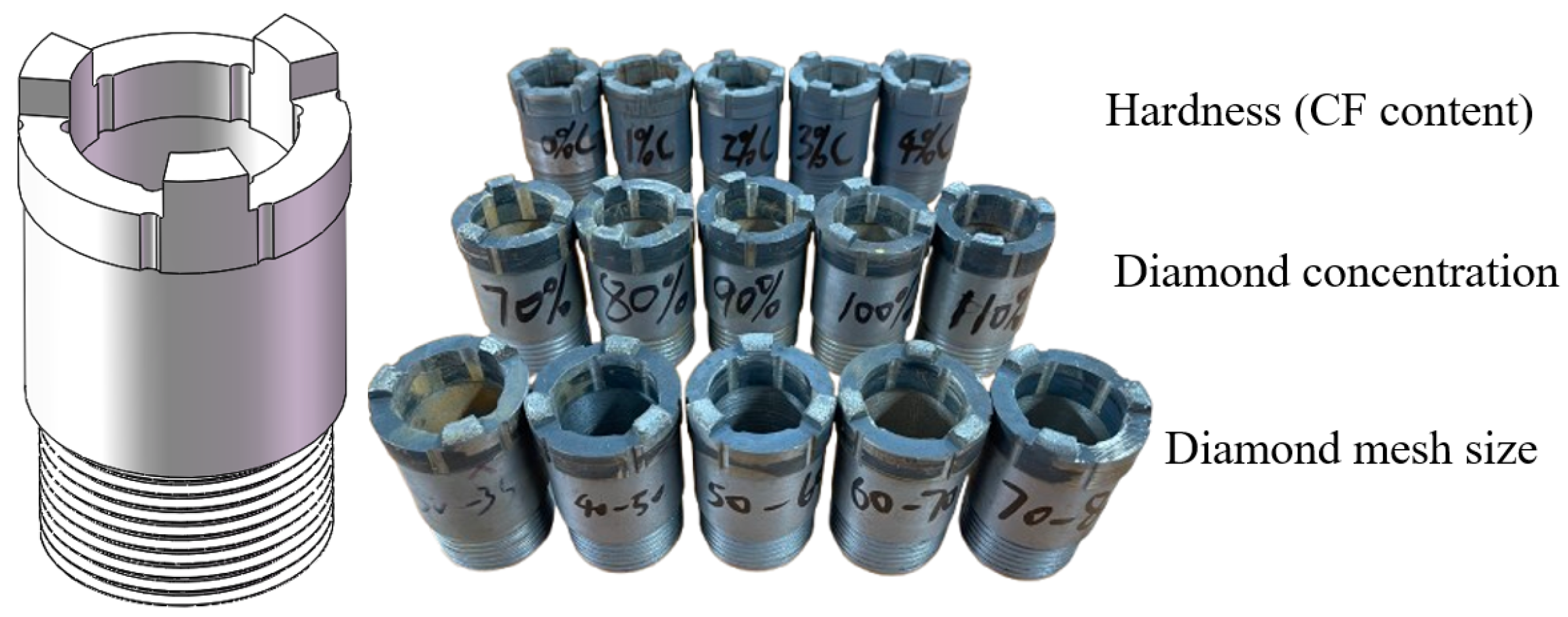
Figure 1. Experimental IDBs.
Applsci 16 04954 g001
Figure 2. Experimental Platform.
Applsci 16 04954 g002
Figure 3. Real-time torque and ROP of IDBs with varying matrix hardness: (a) 0%CF IDB; (b) 1%CF IDB; (c) 2%CF IDB; (d) 3%CF IDB; (e) 4%CF IDB.
Applsci 16 04954 g003
Figure 4. Bit wear performance index: (a) index α with varying mesh size; (b) index α with varying diamond concentration; (c) index α with varying CF content.
Applsci 16 04954 g004
Figure 5. Frequency distribution of diamond protrusion height of IDBs with varying hardness: (a) 0%CF IDB; (b) 1%CF IDB; (c) 2%CF IDB; (d) 3%CF IDB; (e) 4%CF IDB; (f) average protrusion height of IDBs with varying hardness IDBs.
Applsci 16 04954 g005
Figure 6. Percentage of diamond state of IDBs with varying hardness: (a) 0%CF IDB; (b) 1%CF IDB; (c) 2%CF IDB; (d) 3%CF IDB; (e) 4%CF IDB.
Applsci 16 04954 g006
Figure 7. Real-time torque and ROP of IDBs at different diamond concentrations: (a) 70% Diamond IDB; (b) 80% Diamond IDB; (c) 90% Diamond IDB; (d) 100% Diamond IDB; (e) 110% Diamond IDB.
Applsci 16 04954 g007
Figure 8. Frequency distribution of diamond protrusion height of IDBs at different diamond concentrations: (a) 70% Diamond IDB; (b) 80% Diamond IDB; (c) 90% Diamond IDB; (d) 100% Diamond IDB; (e) 110% Diamond IDB; (f) average protrusion height of IDBs at different diamond concentrations.
Applsci 16 04954 g008
Figure 9. Percentage of diamond state of IDBs at different diamond concentrations: (a) 70% Diamond IDB; (b) 80% Diamond IDB; (c) 90% Diamond IDB; (d) 100% Diamond IDB; (e) 110% Diamond IDB.
Applsci 16 04954 g009
Figure 10. Real-time torque and ROP of IDBs at different diamond mesh sizes: (a) 30/35 Diamond IDB; (b) 40/50 Diamond IDB; (c) 50/60 Diamond IDB; (d) 60/70 Diamond IDB; (e) 70/80 Diamond IDB.
Applsci 16 04954 g010
Figure 11. Bit M1.
Figure 11. Bit M1.
Applsci 16 04954 g011
Figure 12. Morphology of the bit surface of IDBs at different diamond mesh sizes: (a) 30/35 Diamond IDB; (b) 40/50 Diamond IDB; (c) 50/60 Diamond IDB; (d) 60/70 Diamond IDB; (e) 70/80 Diamond IDB.
Applsci 16 04954 g012
Figure 13. Frequency distribution of diamond protrusion height of IDBs at different diamond mesh sizes: (a) 30/35 Diamond IDB; (b) 40/50 Diamond IDB; (c) 50/60 Diamond IDB; (d) 60/70 Diamond IDB; (e) 70/80 Diamond IDB; (f) average protrusion height of IDBs at different diamond diameter.
Applsci 16 04954 g013
Figure 14. Percentage of diamond state of IDBs at different diamond mesh sizes: (a) 30/35 Diamond IDB; (b) 40/50 Diamond IDB; (c) 50/60 Diamond IDB; (d) 60/70 Diamond IDB; (e) 70/80 Diamond IDB.
Applsci 16 04954 g014
Figure 15. Diamond state category: (a) emerging diamond; (b) whole diamond; (c) micro-fracture diamond; (d) macro-fracture diamond; (e) blunt diamond; (f) pull-out diamond.
Applsci 16 04954 g015
Table 1. The strength properties of the granite.
Granite PropertiesValue
Compressive strength (MPa)164
Tensile strength (MPa)8.7
Indentation hardness of rock (MPa)3016
Table 2. Experimental Results of IDBs with Varying Matrix Hardness.
IDB NumberCF Content/%Hardness/HRBMass Loss/gROP/mh−1Torque/N·m
Y1092.480.880.96770.47
Y21103.300.400.90247.84
Y32100.600.600.97160.26
Y4395.800.541.27754.19
Y5489.500.731.28860.25
Table 3. Experimental Results of IDBs at Different Diamond Concentrations.
IDB NumberDiamond Concentration /%Mass Loss/gROP/mh−1Torque/N·m
N1701.31.22677.05
N2800.531.1365.10
N3900.551.12362.68
N41000.61.11758.15
N51100.911.10377.62
Table 4. Experimental Results of IDBs at Different Diamond Mesh Sizes.
IDB NumberMesh SizeMass Loss/gROP/mh−1Torque/N·m
M130/352.821.32981.84
M240/500.551.12063.86
M350/600.421.01260.69
M460/701.390.82474.49
M570/801.410.73482.03
Disclaimer/Publisher’s Note: The statements, opinions and data contained in all publications are solely those of the individual author(s) and contributor(s) and not of MDPI and/or the editor(s). MDPI and/or the editor(s) disclaim responsibility for any injury to people or property resulting from any ideas, methods, instructions or products referred to in the content.