Aviation plays a crucial role in modern transportation systems by enabling fast, flexible, and long-range mobility for both civilian and military applications. Within this sector, helicopters represent a unique class of rotorcraft due to their vertical take-off and landing capability, allowing operation in remote, constrained, and urban environments [
1,
2,
3]. Helicopters are widely utilized in critical missions such as emergency medical services, search and rescue, offshore logistics, surveillance, forestry management, and border control operations [
4]. Despite their operational versatility, helicopter systems are associated with relatively high environmental impacts compared to many other transport modes. This is mainly due to high fuel consumption rates and inefficient aerodynamic performance during hover and low-speed flight conditions [
5]. As a result, helicopter operations contribute significantly to atmospheric pollution through emissions of carbon monoxide (CO), nitrogen oxides (NOx), hydrocarbons (HC), and particulate matter (PM) [
6]. These pollutants have serious implications for human health, climate change, and regional air quality degradation [
7]. Helicopters often operate using turboshaft engines fueled by aviation kerosene or similar fuel types, and their emission levels vary significantly depending on flight phase and engine load conditions [
8]. The variability of operational modes such as takeoff, hover, cruise, and landing introduces complex emission patterns that make environmental performance assessment challenging [
9]. In particular, low altitude operations increase the local concentration of pollutants, further intensifying environmental impacts in populated areas [
10]. Increasing global demand for air mobility and specialized aviation services has led to a continuous rise in aviation-related emissions [
11]. Although aviation contributes a smaller share of total global emissions compared to other sectors, its environmental footprint is expected to grow without technological and operational improvements [
12]. In this context, helicopter operations represent a particularly sensitive area due to their frequent use in low-altitude missions and proximity to populated regions [
13]. International regulatory authorities such as the International Civil Aviation Organization (ICAO) emphasize the importance of reducing aircraft emissions through cleaner engine technologies, optimized operations, and improved environmental monitoring systems [
14]. However, evaluating helicopter environmental performance remains a complex task due to the diversity of engine types, operational conditions, and emission characteristics [
15]. In this context, the evaluation of helicopter engines requires a multi-criteria approach that simultaneously considers performance and environmental indicators. Key criteria include shaft horsepower (SHP), fuel flow rate, and emission indices such as HC, CO, PM, and NOx [
16]. These criteria are inherently conflicting, as higher engine power is often associated with increased fuel consumption and emissions, making decision-making a multi-objective problem [
17]. Furthermore, uncertainty in emission data, operational variability and expert judgment adds additional complexity to the evaluation process [
18]. Therefore, robust decision-making tools are required to handle uncertainty while providing a reliable ranking of alternatives. Multi-Criteria Decision-Making (MCDM) methods provide an effective framework for addressing such complex problems. Techniques such as Analytic Hierarchy Process (AHP), VIKOR, and TOPSIS have been widely used in engineering and transportation studies for evaluating alternatives under multiple criteria [
19]. AHP is used to determine the relative importance of criteria, VIKOR provides compromise ranking solutions, and TOPSIS evaluates alternatives based on their distance from ideal solutions [
20]. Recent studies demonstrate that hybrid MCDM approaches significantly improve decision reliability and stability compared to single method approaches, particularly in uncertain environments such as aviation emission assessment [
21]. Despite these advancements, there is still a lack of comprehensive studies focusing specifically on helicopter engine environmental evaluation using integrated fuzzy MCDM frameworks. Most existing studies either focus on fixed-wing aircrafts or do not adequately address uncertainty in emission data [
22]. To address this gap, this study proposes a hybrid fuzzy MCDM framework for evaluating the environmental performance of helicopter engines. The proposed approach integrates interval type-2 fuzzy sets with AHP, VIKOR, and TOPSIS methods to handle uncertainty and provide robust ranking results [
23,
24]. The model enables a comprehensive assessment of helicopter engines under multiple conflicting criteria and provides a structured decision support tool for environmentally sustainable engine selection.
1.1. The Motivation for Using a Multi-Criteria Decision-Making Approach
Multi-criteria decision-making (MCDM) provides a structured framework for solving complex engineering problems involving multiple conflicting criteria, enabling optimal decision-making through trade-off analysis between performance and environmental objectives [
25]. In helicopter engine assessment, performance evaluation requires simultaneous consideration of operational efficiency and environmental impact. In this study, 34 single-engine light utility helicopter engines are evaluated using six criteria: shaft horsepower (SHP), fuel flow, hydrocarbon emissions (HC), carbon monoxide emissions (CO), particulate matter (PM), and nitrogen oxides (NOx), across five phases of the landing and take-off (LTO) cycle [
26,
27]. Given the inherent uncertainty in emission data and expert evaluations, interval type-2 fuzzy sets are employed to better capture ambiguity compared to classical fuzzy approaches [
28]. Type-reduction and defuzzification are performed using both the Centroid method and the Taguchi loss function to enhance result stability [
29]. Following the fuzzy evaluation stage, the Analytic Hierarchy Process (AHP) is applied to determine criterion weights. First, a pairwise comparison matrix is constructed based on expert judgments using Saaty’s 1–9 scale. The matrix is then normalized and the priority vector is derived to obtain the relative weights of the criteria. The maximum eigenvalue (λmax) is computed, and the Consistency Index (CI) is calculated as
. The Consistency Ratio (CR) is then obtained using
, where RI is the Random Index. The results confirm that CR < 0.10, indicating acceptable consistency of expert judgments and ensuring the reliability of the derived weights. VIKOR is applied to obtain a compromise solution based on group utility and individual regret, while TOPSIS is used as a validation mechanism based on distance from ideal solutions [
30,
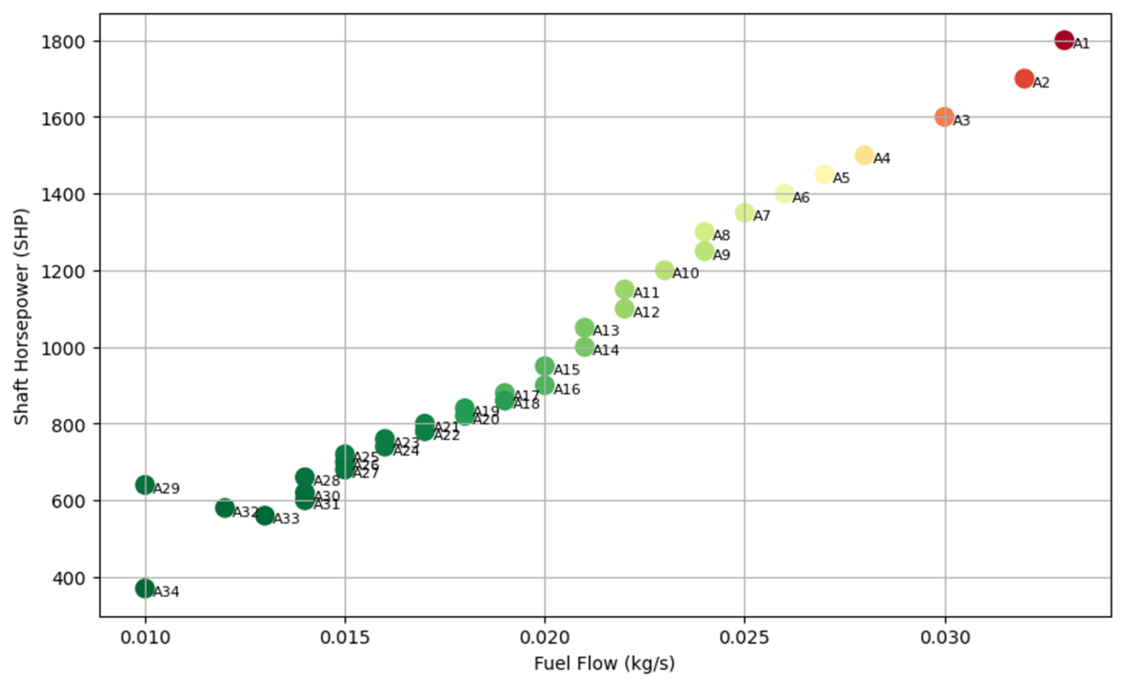
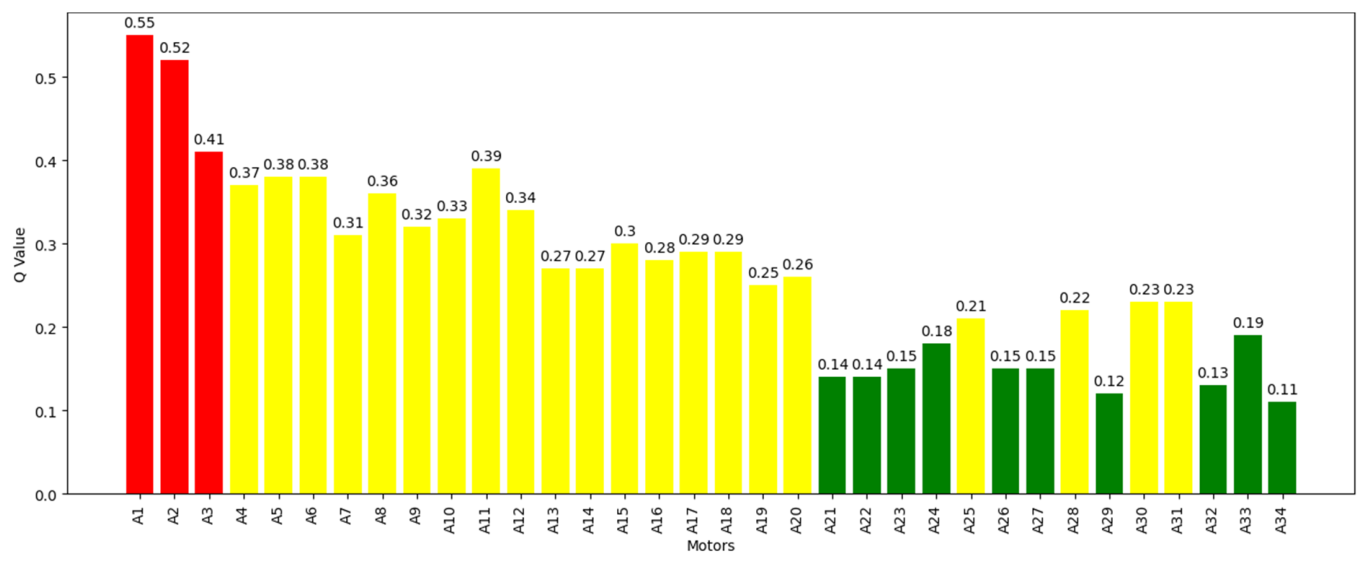
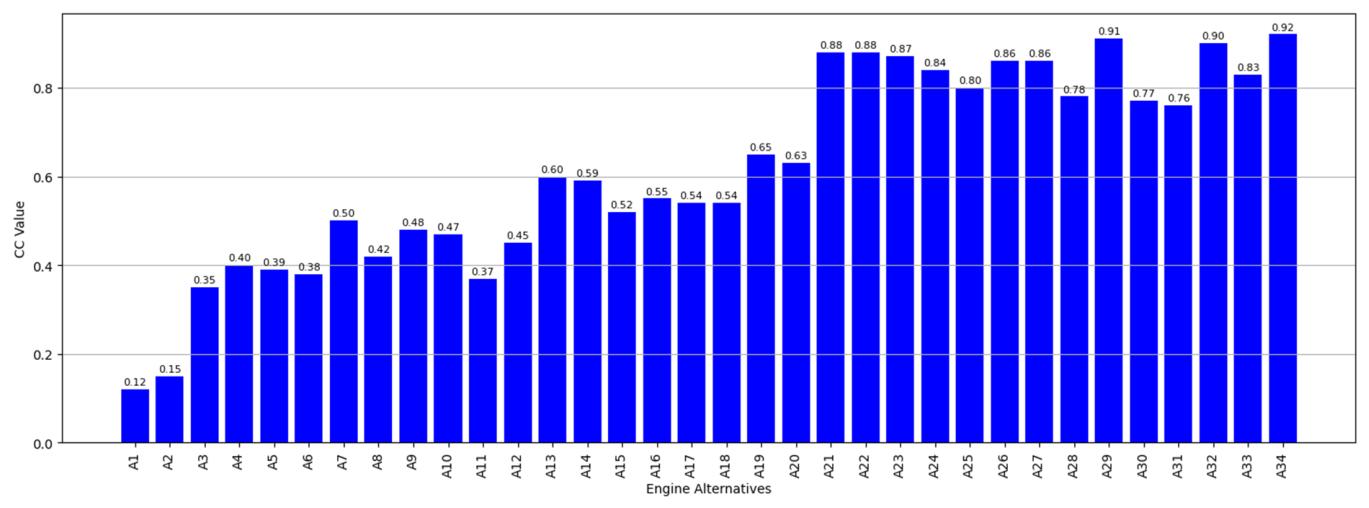
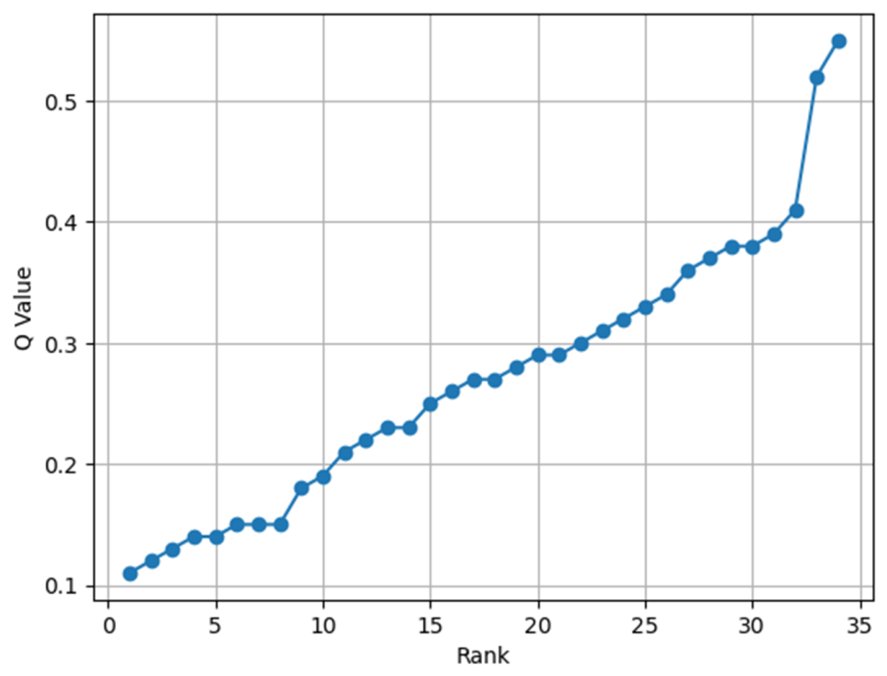
31]. The results demonstrate that engines A34, A29, and A32 perform best in terms of environmental efficiency, whereas A1 and A2 exhibit the poorest performance due to higher fuel consumption and emissions [
32,
33]. Sensitivity analysis confirms that the proposed framework is stable under moderate changes in criterion weights [
34]. Overall, integrating interval type-2 fuzzy sets with AHP, VIKOR, and TOPSIS provides a robust decision support framework for helicopter engine selection, where emission-related criteria play a dominant role in environmental performance evaluation [
35,
36].
1.3. Problem Description
The increasing demand for efficient and environmentally sustainable aviation systems makes helicopter engine evaluation a complex engineering decision problem. Helicopter engines significantly influence operational efficiency, fuel consumption, and environmental emissions. Selecting the most suitable engine is a multi-criteria problem due to conflicting objectives such as maximizing power output while minimizing fuel consumption and emissions. In this study, 34 single-engine light utility helicopter engines are evaluated using empirical data across different operational phases of the LTO cycle. The dataset includes diverse engine types with different design characteristics, making direct comparison difficult. Therefore, a structured multi-criteria decision-making framework is required to ensure consistent and transparent evaluation. The following sections define the evaluation criteria, data acquisition process, and methodological framework used to rank helicopter engines and assess their environmental performance systematically.
1.3.1. Alternative Options
Helicopter engines have an important share in performance and efficiency. In our article, we examined engine types in terms of their effects on the environment. Alternative helicopter engines used in this study are listed in
Table 1.
1.3.2. Criteria for Green Helicopter Engine Evaluation
This study identifies six parameters for evaluating the environmental and operational performance of helicopter engines aimed at ecological sustainability. The criteria include shaft horsepower (SHP) (C1), fuel flow (C2), and four emission indices: hydrocarbon (HC) (C3), carbon monoxide (CO) (C4), particulate matter (PM) (C5), and nitrogen oxides (NOx) (C6).
Shaft Horsepower (
SHP)
per engine (
C1)
: Horsepower quantifies the power output of a helicopter engine by measuring the frequency at which engine pistons move up and down in one minute. It determines performance metrics such as acceleration, load carrying capacity, and tractive effort, with shaft horsepower (SHP) being a common specification for helicopters and airplanes [
55,
56].
Fuel Flow per engine (kg/s) (
C2)
: Helicopters require sufficient fuel to complete flights safely, considering potential deviations. Fuel load must remain within the usable capacity and decrease progressively during operation. Fuel flow quantifies fuel consumption under controlled operational conditions [
57].
Emission Index for Hydrocarbon (HC) (g/kg) (
C3): Hydrocarbons are partially combusted or evaporative emissions from the engine that can mix with nitrogen oxides to form photochemical smog, which adversely affects respiratory health and living organisms. Polycyclic aromatic hydrocarbons generated by HC emissions are linked to cancers, including hematological malignancies [
58,
59].
Emission Index for Carbon Monoxide (CO) (g/kg) (
C4)
: Incomplete combustion in engines, caused by a richer fuel mixture and uneven cylinder temperature distribution, produces CO, an odorless and colorless gas with high affinity for hemoglobin. CO exposure reduces oxygen transport in the blood and can lead to toxicity, asphyxiation, and severe health effects at high concentrations [
60,
61].
Emission Index for Particulate Matter (
PM) (g/kg) (
C5)
: PM emissions result from carbon molecules in fuel that are not fully combusted. Diesel-powered engines typically emit carbon, hydrocarbons, sulfur dioxide, and sulfuric acid particles, contributing to air pollution [
62,
63].
Emission Index for Nitrogen Oxides (
NOx) (g/kg) (
C6)
: NOx includes gases such as NO, NO
2, N
2O, N
2O
3, N
2O
4, and N
2O
5, with NO and NO
2 being the most critical pollutants. They have atmospheric residence times of 1–10 days and primarily originate from fossil fuel combustion, causing respiratory disorders. NO affects the neurological system, whereas NO
2 irritates lung alveoli and contributes to the formation of PM2.5 and PM10 in urban areas [
64,
65].
Although noise pollution and maintenance costs are also important factors in helicopter operations, they are not included in this study. This is because the analysis focuses on in-flight environmental performance and emission-related indicators, which are consistently available for all engine types. In particular, SHP, fuel flow, HC, CO, PM, and NOx enable a uniform and comparable assessment across the 34 helicopter engines and are directly aligned with ICAO-based emission evaluation frameworks. Therefore, the selected criteria ensure data completeness, methodological consistency, and comparability of results.
1.3.3. Model Driven Data Acquisition Approach
The Federal Office of Civil Aviation (FOCA) supervises civil aviation activities in Switzerland, ensuring compliance with safety regulations and promoting sustainable aviation practices. FOCA also monitors licensed aviation operators to guarantee environmentally responsible use of airspace and airport facilities [
66]. Within this framework, FOCA provides comprehensive datasets on pollutant emissions from helicopters across various operational categories. These datasets, with shaft horsepower (SHP) as the independent variable, have been compiled through collaborations with the German Aerospace Center (DLR), gas turbine engine manufacturers, helicopter technical manuals, and flight test programs [
67]. The data support the estimation of pollutant emissions that impact the environment surrounding airports, considering operational hours, flight phase durations, and engine parameters. Flight operations for light utility helicopters with single engines are modeled according to FOCA-approved procedures, developed in consultation with experienced flight instructors. These procedures detail the time in mode and power settings for each flight phase, including takeoff, approach, and landing, enabling accurate calculations of environmental effects [
68].
Table 2 presents the recommended time in mode and power settings for single-engine light utility helicopter operations across various flight maneuvers [
69].
Table 2 outlines the standard operational parameters for single-engine light utility helicopters, including flight phases, operational acronyms, recommended power settings for the LTO cycle, and the duration assigned to each phase within the LTO cycle. The flight phases are denoted as GI-D for ground-idle departure, TO for takeoff, AP for approach, and GI-A for ground idle arrival [
71]. Light utility helicopters require maximum power, approximately 87%, during the takeoff phase, whereas the minimum power is consumed during the ground idle approach phase (GI-A) at around 7% [
72]. These average power settings form the primary input variables for calculating fuel flow rates and emission indices in the dataset analyzed. The focus on single turboshaft engine light-duty helicopters is justified by their versatility in both civilian and military operations. Such helicopters perform diverse missions, including medical evacuation, search and rescue, emergency medical services, pilot training, troop transport, light attack, reconnaissance and surveillance, law enforcement, military and civilian logistics, and traffic monitoring [
73,
74].
Table 2 provides the ICAO assigned codes, helicopter models, and engine types for the single turboshaft light utility helicopters, which form the core dataset of this study [
75]. It should be noted that real operational conditions, such as military, rescue, or emergency missions, may deviate from the standard LTO cycle profiles in terms of power settings, duration, and maneuver characteristics. However, the LTO cycle is widely accepted as a standardized framework for aviation emission assessment and is recommended by international authorities such as ICAO. Therefore, it provides a consistent and comparable basis for evaluating different helicopter engines under controlled conditions. This approach allows for systematic comparison across alternatives, although it may not fully capture all mission-specific operational variations.
Only helicopter engines with complete datasets across all six evaluation criteria and all LTO phases were included in the study. This ensures data consistency, comparability, and reliability of the decision-making process, while engines with missing or incomplete records were excluded. The dataset used in this study is compiled from multiple authoritative and validated sources to ensure both accuracy and scientific reliability. The primary source is the Federal Office of Civil Aviation (FOCA), which provides standardized and quality-controlled emission inventories widely used in aviation environmental assessments. Additional performance-related data are obtained from the German Aerospace Center (DLR), whose datasets are based on experimental studies and validated engine performance models. Engine-specific technical parameters, including shaft horsepower and fuel flow, are further verified using official manufacturer technical manuals and certified engine documentation. The selected sample consists of 34 single-engine light utility helicopters that are widely utilized in both civilian and military operations, including training, surveillance, medical evacuation, and transport missions. This ensures the representativeness of commonly used engine configurations within this helicopter class. Furthermore, emission values are derived or validated using ICAO Landing and Take Off (LTO) cycle-based modeling procedures in accordance with FOCA-approved methodologies, which are internationally recognized in aviation emission analysis. The integration of multiple independent data sources, together with standardized LTO based modeling and cross-validation procedures, enhances the robustness, consistency, and reliability of the dataset. Therefore, the data used in this study provide a scientifically sound and representative basis for the proposed multi-criteria decision-making analysis.
1.3.4. Proposed Approach
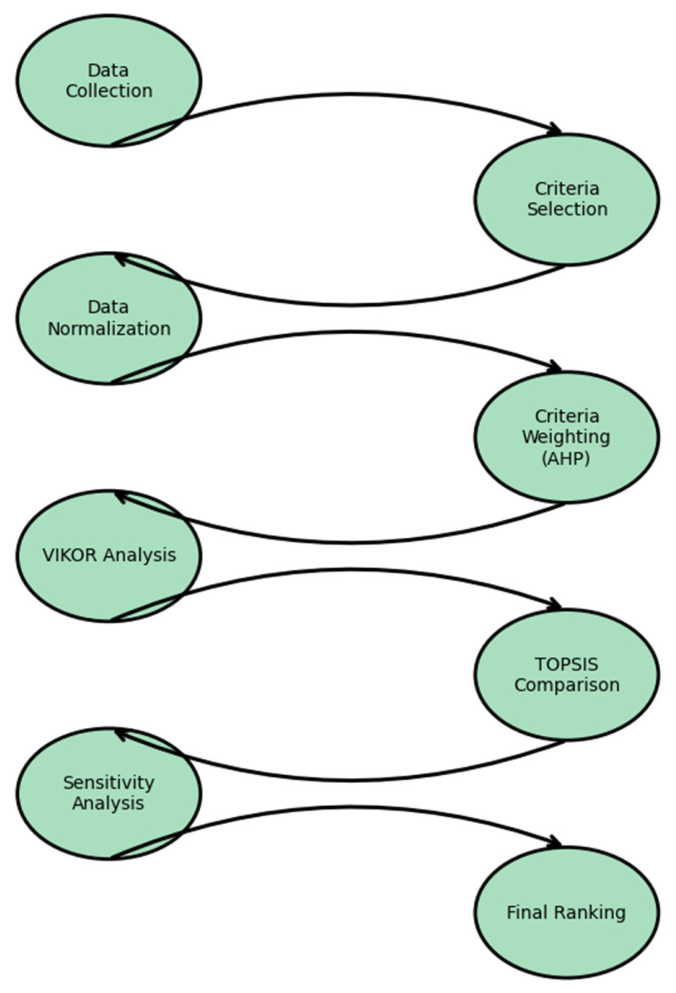
This study initially employs a model-driven data acquisition approach, collecting data for 34 green helicopters based on six criteria across five distinct states. A multi-criteria decision-making interval type-2 fuzzy approach is proposed for the assessment of eco-friendly helicopters. We evaluated two types of reduction methods: the weighted sum and the Taguchi loss function, which was presented as an alternative technique. Ultimately, a comparison of these two methodologies is conducted to substantiate our methodology. This section elucidates our comprehensive methodology, detailing the model-driven data acquisition approach, the characteristics of IT2F membership functions, the implementation of the Taguchi loss function as an alternative type of reduction strategy, and the ranking of green helicopters.
1.3.5. Model Driven Data Acquisition and Approach Details
The study implements a detailed methodology for collecting and preparing datasets necessary to determine the emission indices of single-engine light utility helicopters, which are influenced by engine power and fuel flow during the LTO cycle [
76,
77]. To robustly evaluate the environmental performance of these helicopters, a hybrid multi-criteria decision-making framework is employed, integrating AHP, VIKOR, and TOPSIS with an interval type-2 fuzzy approach. This methodology enables precise ranking and classification of helicopters into eco-label categories green, greener, and greenest by effectively handling uncertainty and ambiguity in both performance and emission data.
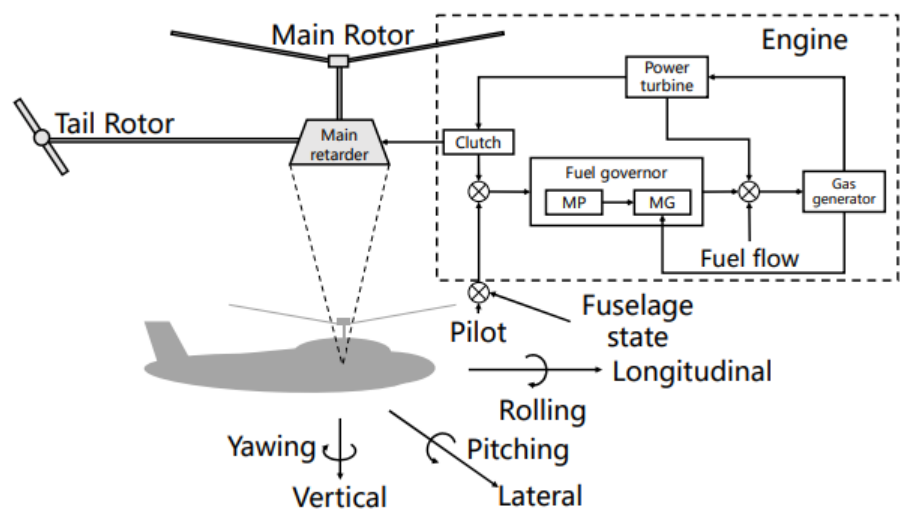
Figure 1 presents a schematic illustration of a single-engine light-duty helicopter, providing a visual reference for the type of aircraft analyzed in this study, while serving as the basis for applying the combined interval type-2 interval type-2 fuzzy AHP (IT2F-AHP)–VIKOR–TOPSIS methodology [
78,
79].