Review

Advances in Spatial Optimization for Intelligent UAV Swarms: Methods, Coordination Mechanisms, and Decision Support


1
Institute of Systems Engineering, Academy of Military Sciences, Beijing 100089, China
2
Aerospace Information Research Institute, Chinese Academy of Sciences, Beijing 100094, China
*
Author to whom correspondence should be addressed.
Appl. Sci. 2026, 16(10), 4912; https://doi.org/10.3390/app16104912
Submission received: 5 October 2025 / Revised: 9 December 2025 / Accepted: 24 December 2025 / Published: 14 May 2026

Abstract

The rapid evolution of intelligent cluster systems—such as UAV swarms and networked autonomous agents—has brought spatial optimization and decision-making to the forefront of intelligent systems research. This paper provides a systematic and critical review of recent advances in spatial optimization for multi-agent intelligent clusters, focusing on four core domains: UAV swarm path planning, resource allocation, traffic network analysis, and visualization technologies. A bibliometric analysis based on the Web of Science Core Collection (2000–2024) identifies two major methodological transitions. In path planning, research has moved from traditional algorithms (A*, Dijkstra, dynamic programming), effective in static settings but limited in dynamic and large-scale applications, to bio-inspired optimization and deep reinforcement learning methods that improve adaptability and efficiency. In resource allocation, studies have shifted from centralized single-algorithm models to distributed, self-organizing hybrid frameworks that enhance robustness and real-time responsiveness. Moreover, intelligent cluster technologies are increasingly applied to urban traffic management and visualization, where analysis has advanced from static 2D mapping to interactive 3D and immersive VR/AR environments. A comparative framework is proposed to evaluate existing algorithms by adaptability, computational complexity, and scalability. The review concludes that future research should emphasize hybrid algorithm integration, cross-disciplinary data-driven modeling, and immersive visualization to support real-time decision-making. This study consolidates the evolutionary trajectory of intelligent cluster optimization, identifies critical research gaps, and outlines a roadmap for the next generation of intelligent spatial optimization systems.

1. Introduction

With the rapid advancement of artificial intelligence, sensing technologies, and distributed computing, intelligent clusters are emerging as a powerful and efficient paradigm for large-scale collaborative operations across scientific and industrial domains [1]. From early host-centric architectures to network-centric systems, and from coordinated UAV swarm operations to intelligent urban traffic management [2,3], cluster-based systems have significantly enhanced operational efficiency and offered new computational approaches to solving complex spatial decision-making problems [4]. Among various types of intelligent clusters, intelligent UAV swarms—composed of multiple autonomous aerial agents—are receiving increasing attention due to their high mobility, adaptability, and suitability for spatially distributed tasks.
An intelligent swarm consists of multiple autonomous agents such as drones, ground robots, or smart sensors that coordinate through information exchange, cooperative control, and dynamic task allocation [5]. These systems exhibit strong autonomy, flexibility, and scalability, enabling them to operate effectively in dynamic and uncertain environments [6]. With the integration of artificial intelligence, big data analytics, and cloud–edge computing, UAV swarms are evolving toward self-organizing, data-driven spatial optimization frameworks capable of real-time perception, decision-making, and coordinated execution [7].
Within UAV swarm research, spatial optimization plays a foundational role. First, path planning remains a core challenge in coordinated multi-agent operations [8]. Through collaborative trajectory optimization, UAV swarms can efficiently accomplish missions such as reconnaissance, inspection, delivery, and disaster monitoring [9]. Traditional algorithms—including A*, Dijkstra, and dynamic programming—perform well in static scenarios but struggle with scalability and adaptability under highly dynamic or large-scale swarm conditions. To overcome these limitations, researchers have increasingly adopted intelligent optimization techniques—such as particle swarm optimization (PSO), ant colony optimization (ACO), and genetic algorithms (GA) as well as deep reinforcement learning (DRL). These bio-inspired and data-driven approaches better capture collective behaviors and environmental dynamics, improving robustness and computational efficiency in complex path-planning tasks [10].
Second, resource and task allocation has become another essential research area in UAV swarms [11]. As swarm sizes and mission complexities increase, centralized or single-algorithm approaches often fail to meet multi-objective requirements. Hybrid strategies that combine distributed collaboration, self-organization, and real-time optimization have demonstrated enhanced robustness and responsiveness, supporting scalable multi-agent coordination in uncertain environments.
Third, visualization and decision-support technologies provide indispensable tools for understanding, monitoring, and optimizing spatial decisions in UAV swarms [12]. Visualization has progressed from static 2D interfaces to interactive 3D and VR/AR-enhanced environments, significantly improving situational awareness, interpretability, and human–machine collaboration. These tools facilitate intuitive tracking of swarm behaviors, anomaly detection, and strategy evaluation.
Overall, research on spatial optimization for intelligent UAV swarms is advancing rapidly, with major progress in trajectory optimization, distributed coordination, network-aware task allocation, and visualization-based decision support. As UAV applications expand into areas such as disaster response, environmental monitoring, urban logistics, and intelligent transportation, future research must emphasize algorithmic innovation, robust coordination mechanisms, cross-domain integration, and immersive decision-support technologies, ultimately enabling large-scale real-world deployment of intelligent swarm systems.
Against this background, this paper provides a comprehensive overview of recent advances in spatial optimization for intelligent UAV swarms, focusing on three major dimensions:
(1)
Methods—including classical optimization, bio-inspired algorithms, and DRL-based approaches for swarm path planning and spatial decision-making;
(2)
Coordination mechanisms—covering centralized, distributed, and hybrid strategies for multi-agent task and resource allocation;
(3)
Decision-support techniques—encompassing spatial network modeling, situational awareness, and visualization technologies.
By synthesizing representative research findings and identifying cross-cutting challenges, this review outlines key research trends and future directions for advancing spatial optimization in intelligent UAV swarms.

2. Bibliometric Analysis

To examine the development, knowledge structure, and evolving research trends of intelligent UAV swarm spatial optimization, a bibliometric analysis was conducted based on publications indexed in the Web of Science Core Collection (WoSCC) from 2000 to 2024. WoSCC was selected due to its wide coverage of high-impact journals across engineering, computer science, and decision systems, ensuring data reliability and disciplinary representativeness. The search strategy incorporated keywords related to UAV or drone swarms, path or spatial optimization, task or resource allocation, and visualization. To ensure the quality and reliability of the dataset, this study included only peer-reviewed English-language journal articles, conference papers, and review publications, while excluding all non–peer-reviewed materials to maintain academic rigor.
After duplicate removal and relevance screening, 500 publications were retained as the core dataset for bibliometric analysis. These 500 documents formed the basis for quantitative evaluations, such as research trends, keyword co-occurrence, and knowledge domain clustering. Subsequently, building upon this dataset, a further in-depth methodological and thematic assessment was conducted to identify studies that provide substantial theoretical contributions, representative models, or critical insights. Through this process, 107 publications were selected as the primary references cited throughout this paper.
To ensure full transparency in the literature selection pipeline, the complete multi-stage screening process—from initial retrieval to the final set of included studies—is summarized in Table 1.
Bibliometric data were analyzed using CiteSpace 6.2.R4, with results cross-validated through VOSviewer 1.6.20, to identify keyword co-occurrences, citation relationships, and thematic clusters [13,14]. CiteSpace is widely recognized for its capability in mapping research frontiers and detecting structural patterns in scientific knowledge [15,16,17]. Annual time slicing (2000–2024) and Pathfinder pruning were applied to highlight significant citation connections while reducing redundant network structures.
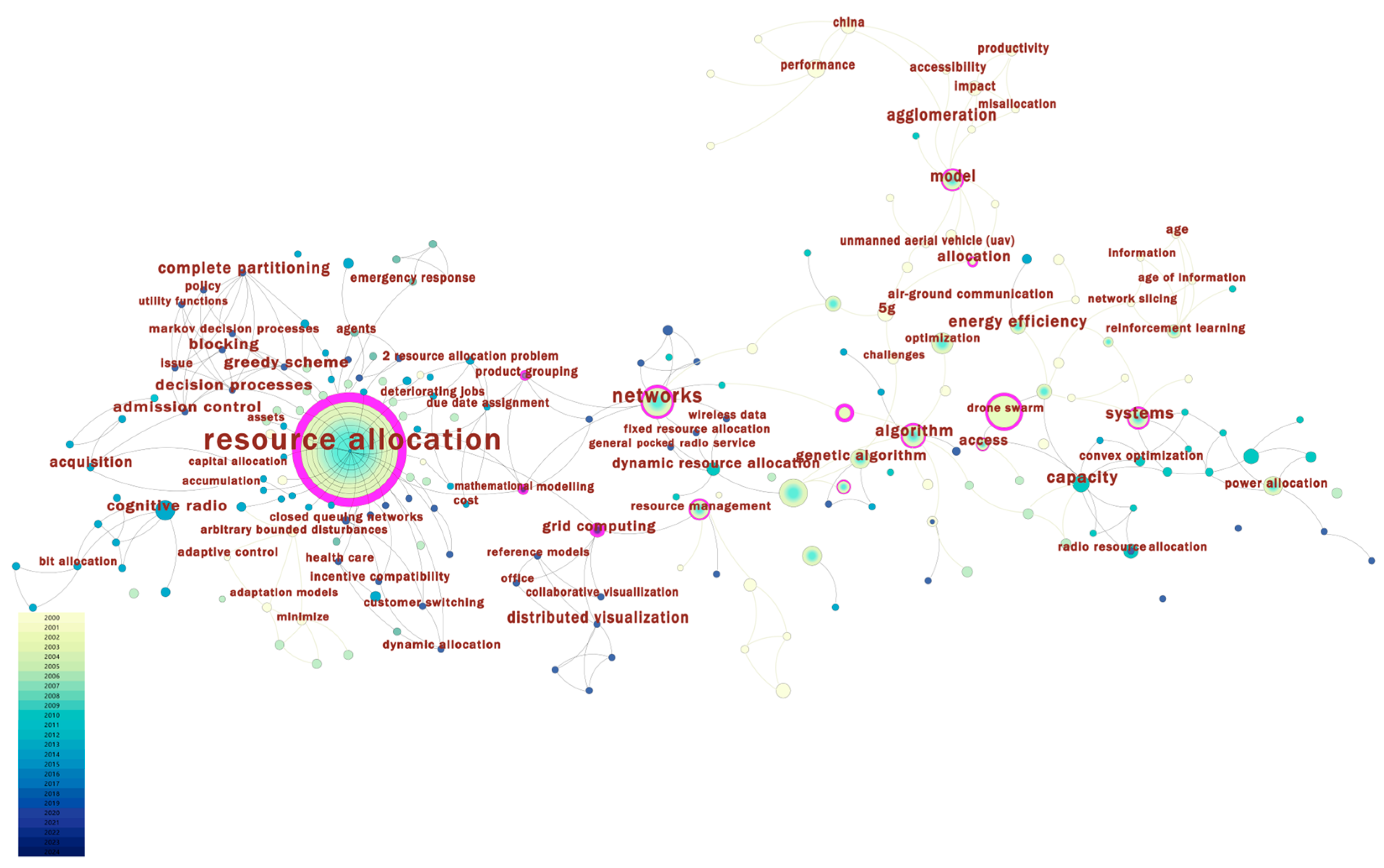
The keyword co-occurrence network (Figure 1) reveals the core themes shaping the field of UAV swarm spatial optimization. Keywords such as “resource allocation,” “optimization,” and “drone swarm” occupy central positions in the network, indicating their foundational role. Closely associated clusters—such as “distributed control,” “network analysis,” and “visualization”—reflect the increasing convergence of optimization theory, communication networks, and spatial decision-support systems. This structure illustrates a broader disciplinary shift from isolated single-agent optimization toward integrated, system-level modeling emphasizing coordination, adaptivity, and multi-agent interaction.
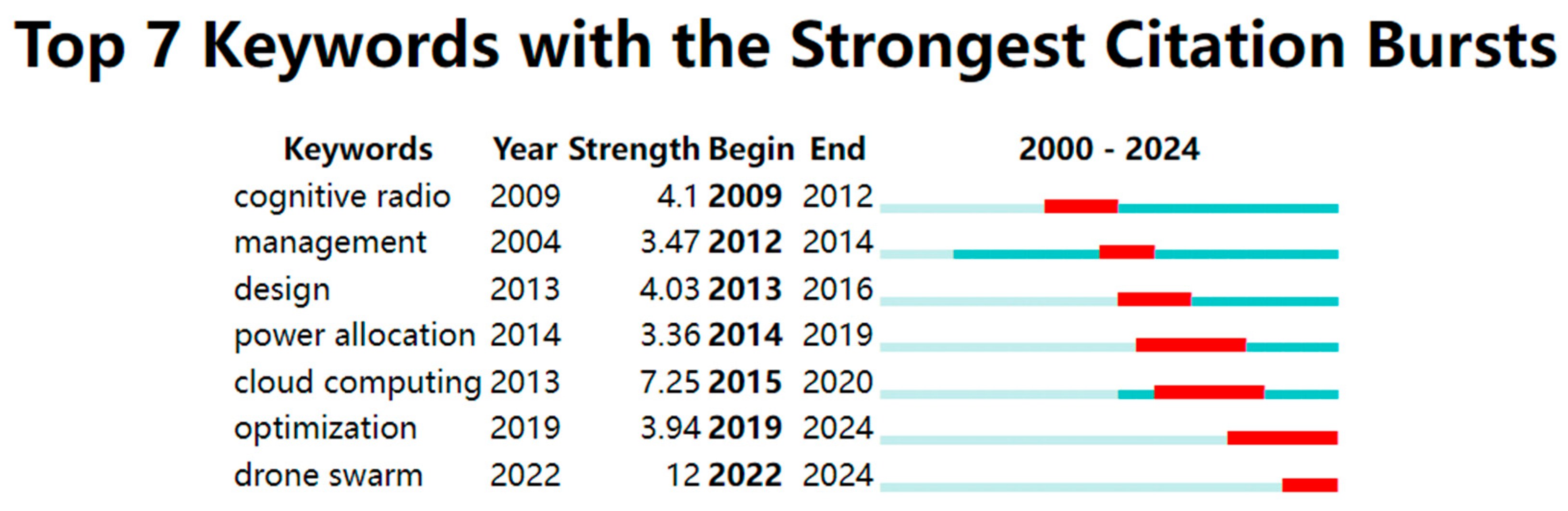
A temporal analysis of citation bursts provides further insight into the field’s evolution (Figure 2). Early bursts focused on enabling technologies such as cognitive radio (2009–2012) and cloud computing (2015–2020), which established the foundation for distributed computation and networked collaboration. In recent years, bursts associated with “optimization” (2019–2024) and “drone swarm” (2022–2024) demonstrate a transition toward intelligent, adaptive, and data-driven optimization paradigms. This trend mirrors a broader shift in autonomous systems research, where learning-based algorithms increasingly replace static rule-based models in handling complex and dynamic environments.
Overall, the bibliometric findings suggest a clear methodological progression in UAV swarm spatial optimization—from deterministic, centralized computation to distributed, learning-enabled, and self-organizing frameworks. Although the analysis is limited to English-language WoSCC-indexed publications, it provides a coherent and transparent overview of the field’s knowledge structure and developmental trajectory. These results establish a quantitative foundation for the thematic discussion in subsequent sections.

3. Research Trends

With the rapid development of UAV technology and its broad application in military operations, precision agriculture, environmental monitoring, and disaster response, intelligent UAV swarms have become a key enabler for efficient multi-agent coordination. Among the core technologies underpinning swarm operation, path planning, resource allocation, traffic network analysis, and 2D–3D visualization represent four major methodological pillars shaping recent research progress [18,19,20,21,22]. This section synthesizes representative advancements across these dimensions, summarizes their methodological logic, and highlights emerging trends.

3.1. UAV Swarm Path Planning: Methods, Capabilities, and Algorithmic Evolution

Path planning forms one of the foundational capabilities of intelligent UAV swarms, enabling coordinated maneuvering, collision avoidance, formation preservation, and mission-oriented navigation within dynamic, uncertain, and potentially adversarial environments. As the operational scope of UAV swarms expands from structured airspace to complex, cluttered, and communication-constrained settings [23], research on path planning has shifted from classical single-agent formulations to multi-agent, distributed, and learning-driven paradigms. This section synthesizes the methodological evolution of swarm path planning across three major lines of development—classical deterministic algorithms, bio-inspired intelligent optimization, and deep reinforcement learning (DRL)—and discusses their respective strengths, limitations, and implications for future swarm systems.

3.1.1. Traditional Deterministic Algorithms

Traditional algorithms, including A* [24], Dijkstra’s algorithm [25], and dynamic programming [26], provide the formal underpinnings of path planning. Their mathematical determinism and theoretical guarantees make them valuable for safety-critical and constrained applications. Several representative extensions further demonstrate their applicability.
For instance, A* has been hybridized with sampling-based planners, such as the A*–RRT* framework proposed by Zhang and Wu for dynamic urban airspace management [27], which enhances feasibility in cluttered 3D environments. Farid et al. introduced an improved heuristic A* algorithm with truncation-based node reduction to mitigate the explosion of redundant states in high-dimensional searches [28].
Similarly, Liu et al. incorporated Monte Carlo simulation into Dijkstra’s algorithm to model stochastic variations in traversal costs, enabling more robust route selection for power grid inspection [29]. Dynamic programming has also been extended for UAV trajectory generation, including discrete-interval speed optimization under environmental constraints [30] and DEM-based 3D path planning for complex terrain navigation [31].
These studies highlight the rigor and interpretability of classical algorithms. However, their foundational assumptions—static environments, centralized computation, and single-agent decision-making—are fundamentally misaligned with UAV swarm settings. As swarm scale grows, the joint state space expands exponentially, agent trajectories become strongly coupled, and real-time re-planning is often necessary. Consequently, classical algorithms serve as an important optimality benchmark, but exhibit limited scalability and adaptability for large-scale, dynamic swarm deployments.

3.1.2. Intelligent Optimization Algorithms

While classical deterministic algorithms provide theoretically optimal solutions under static and fully known environments, they become increasingly ineffective as UAV swarm operations shift toward non-convex, uncertain, and multi-objective mission spaces. In this context, bio-inspired intelligent optimization algorithms—including Particle Swarm Optimization (PSO) [32], Ant Colony Optimization (ACO) [33], and Genetic Algorithms (GA) [34]—have emerged as a major line of research for global path planning in complex environments. These methods rely on population-based stochastic search mechanisms, enabling flexible exploration beyond the structural constraints of traditional planners.
Particle Swarm Optimization (PSO) is a swarm intelligence-based optimization algorithm inspired by the behavior of birds flocking to hunt. PSO involves multiple “particles” moving within the search space and sharing information to converge toward the global optimum. In drone swarm path planning, PSO defines each drone as a “particle” and adjusts its flight path based on the motion directions of neighboring drones and its own historical experience, achieving collaborative flight within the swarm. This algorithm is characterized by strong global search capabilities and low computational complexity, making it suitable for real-time path planning in dynamic environments. Yu et al. proposed a hybrid PSO algorithm (SDPSO) that integrates Simulated Annealing to improve global optimality updates and employs dimensional learning strategies to reduce particle oscillations, thereby enhancing convergence speed [35]. Haris et al. developed an autonomous path-planning method for drones based on PSO, generating suboptimal feasible paths considering threats and energy cost optimization [36]. However, PSO is prone to local optima and exhibits limited performance in multi-objective optimization scenarios.
Ant Colony Optimization (ACO) mimics the foraging behavior of ants, utilizing pheromone accumulation and evaporation mechanisms for path planning. In drone swarms, each drone acts as an “ant,” exploring the environment and leaving “pheromones” to guide other drones toward better flight paths. ACO demonstrates exceptional performance in solving path optimization problems, especially in multi-objective optimization, obstacle avoidance, and dynamic environments. Zhen et al. proposed a Hybrid Artificial Potential Field and Ant Colony Optimization (HAPF-ACO) method for cooperative task planning in dynamic and uncertain environments, targeting time-sensitive moving objectives [37]. Wang et al. introduced a multi-colony ACO algorithm for drone path planning, effectively addressing the complexity arising from more control points and task requirements [38]. However, ACO involves high computational overhead, and in large-scale drone swarms, excessive pheromone concentration can lead to homogenized path selection, reducing diversity.
Genetic Algorithms (GA) are based on Darwin’s theory of natural selection and genetic evolution, simulating biological evolution processes such as selection, crossover, and mutation to find optimal solutions. In drone swarm path planning, GA generates multiple potential path solutions, producing new paths through crossover and mutation to gradually approach the optimal solution. GA has robust global search capabilities, making it suitable for identifying near-optimal paths in complex environments. Pehlivanoglu and Pehlivanoglu proposed an enhanced GA for solving path-planning problems in autonomous drones targeting coverage optimization, accelerating convergence by improving the initial population generation method [39]. Wu et al. employed an improved GA (ISAFGA) that integrates Simulated Annealing for secondary selection operations, enhancing efficiency and global search capabilities [40]. However, GA suffers from high computational complexity and slower convergence speeds, making it unsuitable for tasks requiring high real-time responsiveness.

3.1.3. Deep Reinforcement Learning Algorithms

As UAV swarm operations increasingly involve real-time decision-making under uncertainty, Deep Reinforcement Learning (DRL) has emerged as a key methodological direction for path planning in high-dimensional and dynamically evolving environments. Unlike classical or bio-inspired optimization approaches, DRL directly learns state–action mappings through interaction with the environment, enabling adaptive policy formation without relying on explicit models or predefined heuristics.
Early work enhanced Q-learning through improved reward shaping, action-selection strategies, and initialization schemes to accelerate convergence in unknown environments [41], while hybrid A*–Q-learning frameworks showed improved path quality through global–local policy coordination [42]. The transition to Deep Q-Networks (DQN) enabled UAVs to operate effectively in large and continuous state spaces, as demonstrated in neural-network-augmented Q-learning systems [43] and gravity-aware variants that integrate physical constraints into action selection [44]. Parallel developments in policy-gradient algorithms, particularly Proximal Policy Optimization (PPO), introduced more stable policy updates suitable for dynamic multi-agent scenarios, including frequency-decomposition reward mechanisms [45] and replay-buffer-augmented PPO variants aimed at improving sample efficiency and policy stability [46].
Despite their promise, DRL approaches exhibit structural challenges that constrain their operational deployment in UAV swarm systems. Training often requires substantial computational resources and large volumes of interactive data; convergence remains sensitive to reward specification and environmental stochasticity; and policy behavior lacks formal guarantees on stability, safety, or interpretability. Moreover, multi-agent DRL introduces coordination and non-stationarity issues that complicate scalable swarm-level learning.
Consequently, DRL methods represent a powerful adaptive decision-making paradigm, particularly suited for complex, partially observable, or rapidly changing environments. However, their integration into UAV swarm path planning typically necessitates hybrid architectures that combine learning-based policies with rule-based safety layers, distributed communication frameworks, or global optimization modules to ensure reliable, interpretable, and operationally viable swarm behaviors.

3.1.4. Comparative Summary of Path Planning Algorithms

To synthesize the methodological landscape discussed above, Table 2 provides a structured comparison of representative path-planning approaches across four major paradigms: classical deterministic algorithms, bio-inspired intelligent optimization, hybrid metaheuristics, and deep reinforcement learning. The comparison highlights their core methodological characteristics, strengths, structural limitations, and typical application contexts.
The four paradigms exhibit complementary strengths and structural constraints. Classical deterministic algorithms provide strong optimality guarantees but do not scale to dynamic or multi-agent contexts. Bio-inspired optimization enhances global search across complex landscapes, yet suffers from stochastic convergence behavior and sensitivity to parameterization. Hybrid metaheuristics offer improved stability by integrating global and local search mechanisms, though at the cost of rising computational and structural complexity. DRL represents a transformative shift toward learning-based autonomy for large-scale and uncertain environments, but faces challenges related to data efficiency, interpretability, and training reliability.
The selection of an appropriate path-planning paradigm therefore depends critically on task characteristics, including environmental dynamics, swarm scale, safety requirements, computational constraints, and the need for real-time adaptation. Future research trends point toward integrated frameworks that couple global optimization with learning-based local policies and distributed coordination mechanisms to meet the demands of large-scale UAV swarm operations.
From a practical perspective, deterministic and sampling-based planners are well suited for small-scale and static environments due to their computational efficiency and strong optimality guarantees, but they scale poorly in highly dynamic and large-scale swarm scenarios. Metaheuristic and swarm-intelligence algorithms improve scalability at the cost of increased computational overhead and parameter sensitivity. Deep reinforcement learning-based planners exhibit superior adaptability and real-time responsiveness in complex environments; however, their practical deployment is still constrained by training cost, generalization ability, and safety verification. Therefore, hybrid planning frameworks that combine classical optimization with learning-based local adaptation appear to be the most promising direction for real-world large-scale UAV swarm applications.
Overall, path planning research for UAV swarms exhibits a progression from classical deterministic approaches to population-based metaheuristics and, more recently, to hybrid and deep reinforcement learning frameworks. While deterministic methods retain value for interpretability and optimality in static scenarios, hybrid and learning-driven methods better address scalability and adaptability in large-scale, dynamic environments—albeit with challenges in safety, stability, and explainability. These observations motivate the need for integrated coordination and resource-allocation mechanisms that can exploit learned local policies while preserving system-level guarantees.

3.2. Resource Allocation Strategies for Drone Swarms

Resource allocation and task assignment represent a foundational component of UAV swarm autonomy, determining how heterogeneous agents coordinate to achieve mission objectives under dynamic and uncertain conditions. Early research predominantly applied single optimization algorithms to assign tasks based on static cost structures, but the growing complexity of swarm-scale operations has driven a methodological shift toward hybrid, distributed, and learning-enabled approaches. Hybrid algorithms integrate complementary strengths of evolutionary, bio-inspired, and heuristic methods to handle multi-objective and tightly coupled decision spaces. In parallel, distributed and self-organizing frameworks have gained prominence for their scalability and robustness, reducing dependence on centralized control and enabling adaptive coordination in partially observable environments.
Recent advances in artificial intelligence, particularly in real-time adaptive optimization and multi-agent learning, further expand the capabilities of swarm task allocation. These developments support continuous reallocation in response to environmental changes, improve resilience under uncertainty, and enable more flexible collaboration across heterogeneous agents. At the same time, interdisciplinary integration—spanning big data analytics, cloud computing, and cross-platform multi-robot coordination—has broadened the operational scope and technical landscape of swarm allocation research. Collectively, these trends illustrate the evolution of task allocation from static, algorithm-centric strategies toward highly adaptive, distributed, and intelligence-enhanced coordination frameworks suited for large-scale, complex UAV swarm missions.

3.2.1. From Single Algorithms to Hybrid Algorithms

Early research on UAV swarm task allocation relied predominantly on single-algorithm optimization frameworks, where evolutionary algorithms (e.g., GA, DE), swarm-intelligence methods (e.g., PSO, ACO, ABC), and physics-inspired approaches such as the Gravitational Search Algorithm (GSA) were applied independently to assign tasks under static or moderately complex conditions. These methods leverage population-based search or agent-interaction metaphors to approximate global optima, with representative studies demonstrating the effectiveness of GA’s evolutionary operators [47], PSO’s collective dynamics [48], ABC’s solution-pool–based exploration [49], and GSA’s Newtonian-force–driven optimization [50]. While these approaches offered promising results for small-scale or single-objective allocation, their performance degraded significantly as task interdependencies, environmental uncertainty, and swarm size increased.
To address these limitations, research has progressively shifted toward hybrid algorithms, which integrate complementary computational mechanisms to enhance robustness, scalability, and adaptivity. Hybrid frameworks combine the global exploration capacity of evolutionary or swarm-intelligence algorithms with the precision of local search, rule-based heuristics, or mathematical programming. For example, Boskovic et al.’s hierarchical CoMPACT architecture integrates mission planning, dynamic reconfiguration, and bio-inspired behaviors within a unified multilayer structure suited for complex cooperative operations [51]. Similarly, Butenko and Murphey conceptualize cooperative systems as distributed entities whose interactions—either explicit or implicit—form the basis of coordinated task execution, thereby motivating hybrid decentralized–hierarchical allocation schemes [52].
The integration trend extends beyond algorithmic fusion to cross-domain coordination. Hybrid frameworks increasingly leverage AI, big-data analytics, cloud platforms, and multi-robot collaboration to support large-scale distributed decision-making. Representative examples include the two-stage mixed-integer programming and improved A* framework for multi-UAV task assignment and flight planning [53], and hierarchical clustering combined with MILP for ISR-oriented task allocation in small UAV teams [54]. These approaches highlight how hybrid mechanisms enable more flexible and data-informed coordination in environments characterized by multimodal constraints and heterogeneous agents.
Overall, hybrid algorithms represent an evolutionary step from single-method strategies toward integrated, multi-layered coordination mechanisms, capable of balancing global optimality with real-time adaptivity. However, increased structural complexity, the need for extensive parameterization, and potential scalability issues remain critical challenges, motivating further research into modular, learning-enhanced, and distributed hybrid task allocation frameworks.

3.2.2. Distributed Self-Organizing Collaboration and Real-Time Optimization

Distributed self-organizing task allocation has become a central research direction in UAV swarm coordination, driven by the need for scalability, resilience, and rapid adaptation in dynamic environments. Compared with centralized schemes, which rely on a single global controller, distributed methods remove single-point vulnerabilities and enable UAVs to make autonomous decisions based on locally perceived information and peer-to-peer communication. Current research generally structures distributed task allocation along two main paradigms: (1) centralized–global optimization methods that still rely on a supervisory node but apply intelligent heuristics, and (2) fully decentralized schemes emphasizing autonomy, negotiation, and adaptive learning.
(1)
Centralized Task Allocation Methods
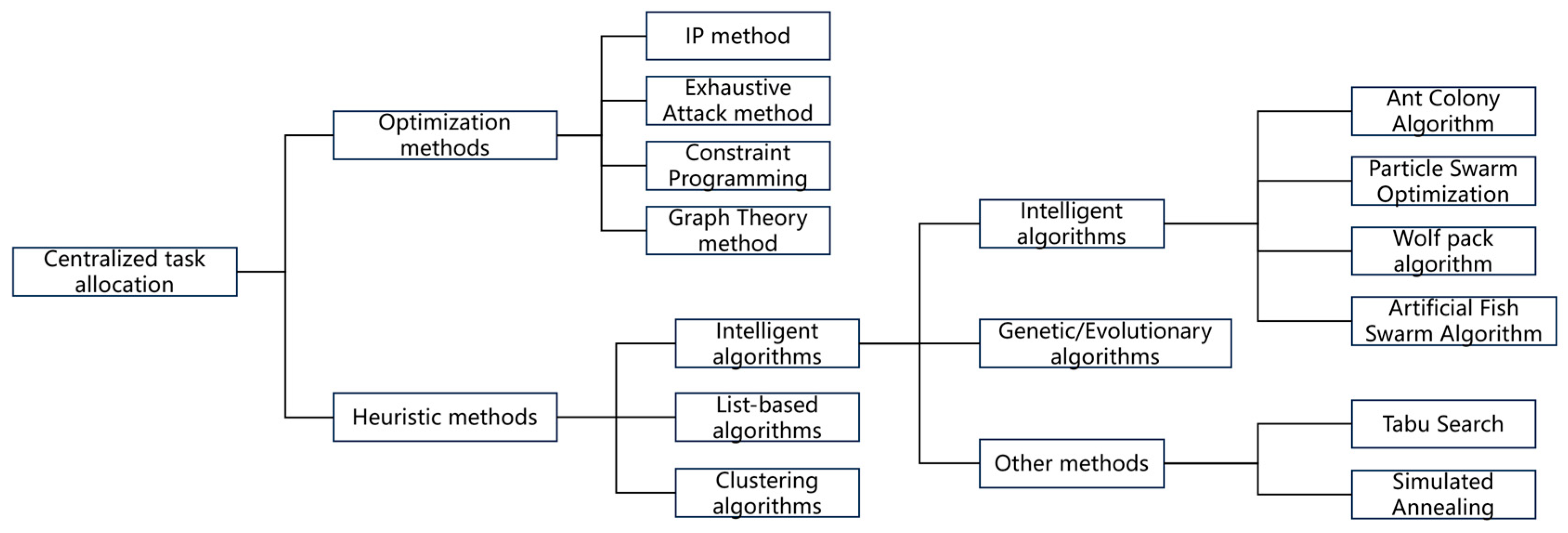
Centralized strategies construct a global control center that aggregates real-time information on swarm status, environmental dynamics, mission priorities, and resource conditions. Based on this global situational awareness, the controller computes an allocation plan—often formulated as an optimization problem—and issues precise task assignments to individual UAVs. This paradigm enables globally optimal or near-optimal solutions within defined constraints since the controller has complete information and can eliminate redundant operations or conflicts. As illustrated in Figure 3, centralized approaches typically include optimization-based methods (e.g., integer programming, constraint programming, graph theory formulations) and heuristic/intelligent algorithms such as tabu search, simulated annealing, ant colony optimization, and particle swarm optimization.
Recent studies demonstrate that intelligent heuristics can significantly enhance centralized allocation efficiency. Zhao et al. introduced an Adaptive Tabu Search Algorithm (ATSA) that dynamically adjusts tabu tenure and neighborhood structures, improving performance in UAV–SRB logistics distribution problems and reducing task execution time [55]. Huo et al. developed the SJSA strategy, incorporating virtual nodes and a universal distance matrix into a 3D vehicle-routing formulation; by integrating differential evolution and genetic operations, their method achieved faster global search and more stable convergence [56]. These studies highlight the advantage of centralized methods in achieving coordination precision and structured optimization.
However, centralized approaches face inherent scalability constraints. As swarm size grows, the computation and communication load placed on the central controller increases sharply. Any failure or attack on the controller may compromise the entire system, making centralized schemes unsuitable for large-scale or adversarial contexts. Communication bottlenecks and latency also limit responsiveness, reducing their effectiveness in rapidly changing environments.
(2)
Distributed Task Allocation Methods
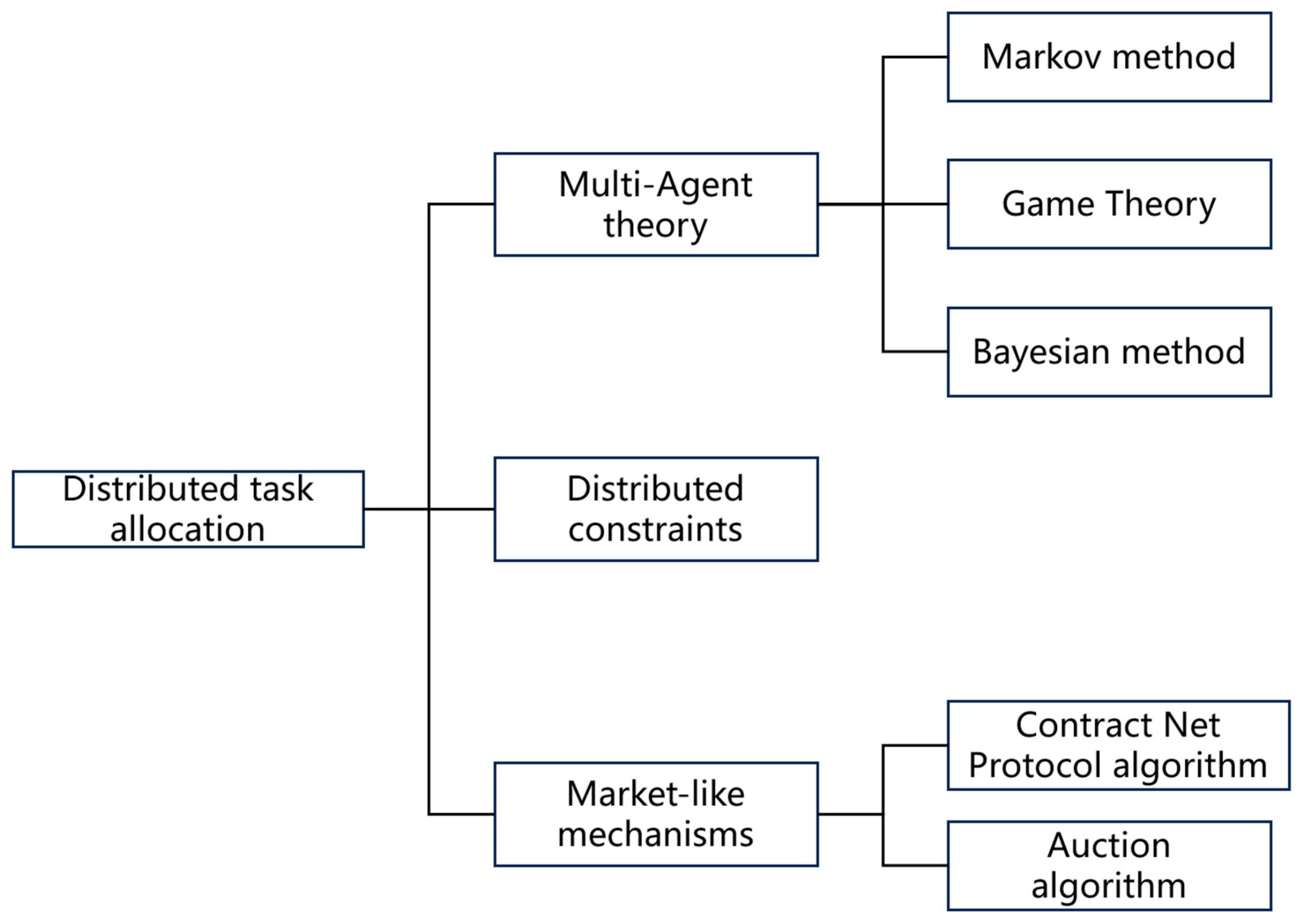
To overcome the structural limitations of centralized schemes, distributed approaches allocate decision-making authority to individual UAVs. Each UAV autonomously interprets local observations, evaluates feasible actions, and coordinates with neighbors using explicit communication or implicit behavioral cues. As shown in Figure 4, distributed task allocation methods can be grouped into three major categories: multi-agent decision frameworks, distributed constraint reasoning, and market-inspired negotiation mechanisms.
Multi-Agent Decision Frameworks. Zhang et al. proposed a game-theoretic distributed task allocation model incorporating networked evolutionary dynamics and the POTVLLA algorithm, demonstrating strong robustness and scalability even under UAV or task failures [57]. Similarly, game-theoretic spectrum allocation models decompose tasks, analyze task-feature requirements, and construct distributed interactive games to manage spectrum resources efficiently in UAV communication networks [58]. Monte Carlo simulations show that the approach outperforms hand-crafted heuristics across varying fire scales and swarm sizes. Building upon MDP reasoning, a decentralized task allocation algorithm incorporating uncertainty into state rewards guarantees convergence and achieves at least 50% of the global optimal solution in stochastic environments [59].
Distributed Constraint and Information Fusion Mechanisms. Hu et al. developed a Bayesian rule–based probabilistic map update method combined with consensus-driven map fusion. Their results demonstrate that UAVs ultimately converge to a consistent probability map of target presence, even under asynchronous sampling and constrained communication [60]. Fu et al. proposed a Bayesian coalition structure model to address task allocation under uncertain task locations. Through belief updating and coalition reasoning, the algorithm achieves stable and utility-maximizing task allocation in the presence of incomplete information [61]. Jin et al. introduced a distributed cooperative coverage algorithm in which each UAV determines actions based solely on local sensing and neighbor communication [7]. Without relying on global communication or environment modeling, the method achieves complete and persistent coverage with strong scalability and stability [62].
Market-Inspired Negotiation Mechanisms. Hu and Yang applied a distributed auction algorithm to agricultural multi-task UAV scenarios, enabling decentralized task grouping, conflict resolution, and distributed path planning [63]. Rinaldi et al. modeled Multi-UAV Task Allocation (MUAVTA) as a combinatorial auction problem and used a Variable Neighborhood Search (VNS) algorithm to overcome local optima and improve convergence under different budget constraints [64]. Zhen et al. improved the Contract Net Protocol (CNP) for heterogeneous UAV target-attacking tasks, designing enhanced one-to-one and many-to-one negotiation schemes that outperform basic CNP in allocation efficiency and load balance [65]. Wang et al. further developed an Improved CNP (ICNP) by integrating credit mechanisms and selective bidding, effectively reducing communication overhead and improving timeliness without sacrificing task quality [66]. Despite these advancements, distributed task allocation still faces challenges, including communication delays, local-optimal convergence, conflict resolution, and coordination stability under uncertainty. Balancing decentralized autonomy with global coordination remains a core research challenge.

3.2.3. Comparative Summary of Resource Allocation for Intelligent Methods

To synthesize the methodological characteristics of the resource allocation paradigms reviewed above, Table 3 summarizes the representative approaches, key strengths, limitations, and typical application scenarios across centralized, distributed, market-based, game-theoretic, and hybrid/self-organizing frameworks.
Overall, centralized methods provide precise, globally optimal decision-making for small-scale or highly structured mission environments but lack robustness and scalability. Distributed methods demonstrate superior adaptability and resilience but may face convergence and coordination challenges under communication constraints. Market-based, game-theoretic, and learning-driven approaches enrich the distributed paradigm with negotiation, strategic interaction, and adaptive intelligence, respectively. Selecting an appropriate strategy should consider swarm size, computational budget, mission dynamics, and required robustness levels.
As resource-allocation frameworks increasingly depend on local information, communication patterns, and dynamic environmental cues, the structure of the underlying transportation network emerges as a key factor shaping coordination feasibility and efficiency. Understanding network connectivity, flow constraints, and temporal variability therefore provides an essential foundation for subsequent analyses of swarm mobility, accessibility, and mission execution.

3.3. Intelligent UAV Swarm Traffic Network Analysis

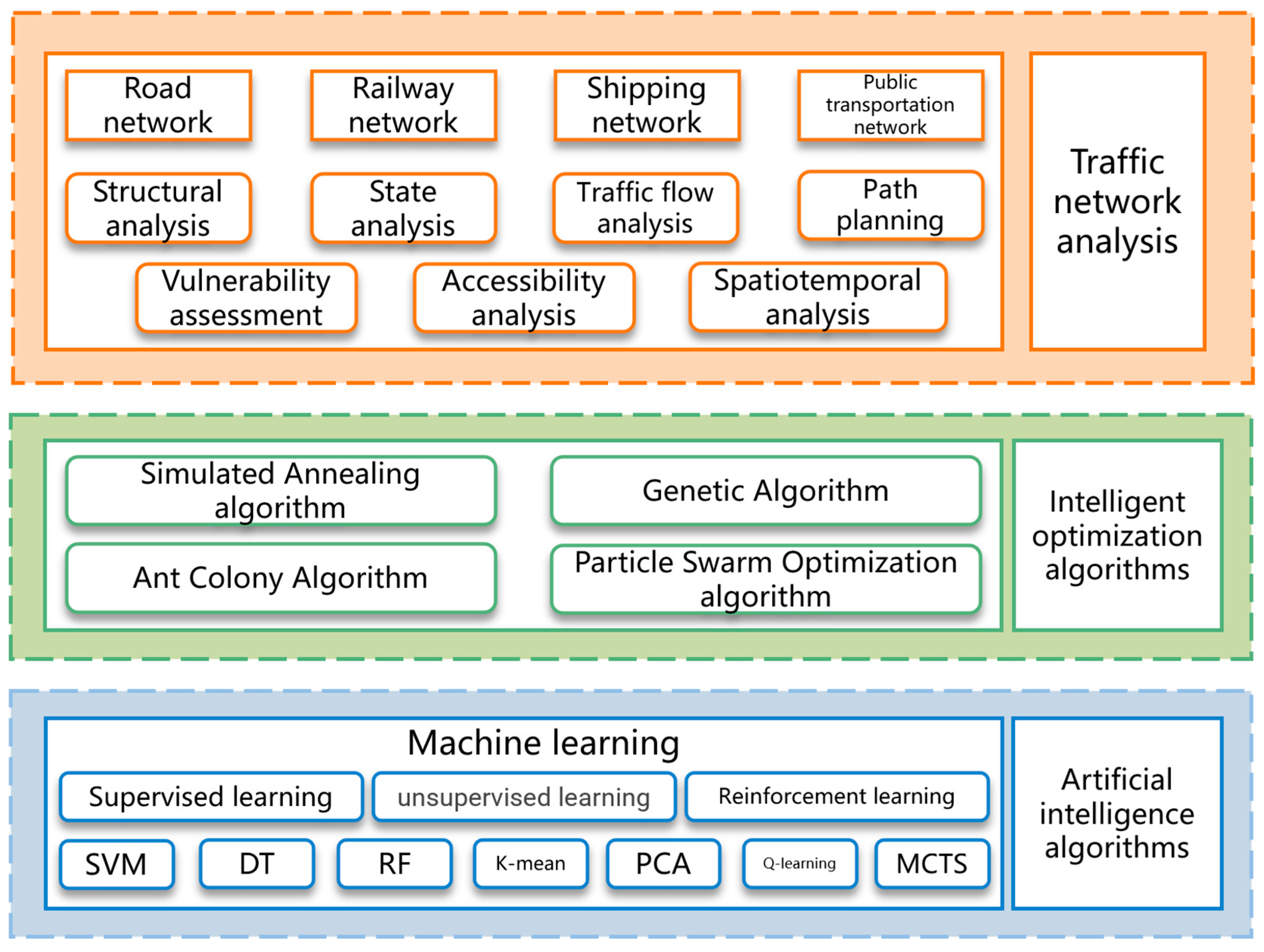
With the rapid development of today’s urban digital construction, an increasing amount of traffic network data urgently requires in-depth analysis. This has led to a sharp increase in the computational load for network analysis, raising ever more stringent demands on the accuracy and efficiency of computation [67]. Against such a backdrop, some advanced intelligent swarm algorithms have been quickly applied to the field of traffic network analysis. At the same time, with the advancement of UAV technologies, UAV networking has become increasingly important, and these advanced intelligent algorithms for traffic network analysis have been integrated into intelligent UAV swarms (Figure 5).

3.3.1. Traffic Network Analysis and Intelligent Optimization Algorithms

Traffic network analysis mainly focuses on conducting comprehensive studies of the nodes and edges that are closely interconnected by a series of topological rules [68]. In the transportation field, these nodes and edges comprise critical traffic infrastructure such as various base stations and routes. They interconnect to form a complete system that efficiently facilitates the smooth flow of people, goods, and information. As a powerful analytical method, traffic network analysis is an important tool for exploring economic development, social progress, urban connectivity, and emergency response. By analyzing the nodes and lines within road networks, railway networks, shipping networks, public transportation networks, and rail transit networks, it is possible to carry out density analysis, flow analysis, and optimization.
The key content of traffic network analysis is very extensive, encompassing a wide range of topics including traffic network structure analysis, state analysis, flow analysis and prediction, route planning, vulnerability assessment, accessibility, and spatiotemporal analysis. Certain innovative meta-heuristic swarm algorithms [69], such as simulated annealing, genetic algorithms, ant colony optimization, and particle warm optimization, play a critical role in traffic network analysis [70]. These algorithms have been widely used in traffic network analysis and offer robust support for intelligent swarm spatial optimization decision-making, enabling more efficient handling of large-scale data and more accurate assessment of network performance. Driven by these algorithms, traffic network analysis is continuously progressing toward greater efficiency and precision, laying a solid foundation for the sustainable development of urban transportation.
Zhao and Zeng employed simulated annealing to reduce road network vulnerability in emergency scenarios [71]. Shanmugasundaram and Sushita adopted genetic algorithms for sensitivity analysis of transportation networks [72]. Mahfoud proposed a MapReduce-based parallel genetic algorithm to solve the shortest-path problem in urban traffic networks [73]. Zhang and Pan enhanced the genetic algorithm with simulated annealing to study the scheduling problem in the Maritime Silk Road shipping network [74]. Vitins et al. used ant colony optimization and complex graph theory to analyze the impact of opening community policies on road network structure, traffic congestion, and commuting efficiency [75]. Ye applied particle swarm optimization to classify and mine data in vehicular ad hoc networks (VANETs) [76]. Zhou et al. used three types of time series forecasting models to mine big data from floating vehicles, analyzing the urban traffic network situation in Xi’an [77].

3.3.2. Learning-Driven Traffic Network Modeling for Intelligent UAV Swarms

In the process of intelligent swarm spatial optimization decision-making, one must contend with numerous challenges in traffic network analysis. Current methods are often constrained by computational complexity, which becomes increasingly critical as network size grows. Under these circumstances, harnessing artificial intelligence to analyze complex networks is becoming ever more important. The rapid development of AI has propelled the emergence of intelligent swarm technologies. Intelligent swarm optimization algorithms play a key role in traffic flow identification, traffic congestion forecasting, event response, and emergency management. As advancements in intelligent computing continue, a class of hyper-heuristic algorithms is quickly gaining prominence in the field of traffic network analysis. Machine learning, as a vital domain of AI, has the ability to handle extremely complex problems. It covers supervised learning, unsupervised learning, and reinforcement learning, with a corresponding array of increasingly sophisticated and diverse algorithms including Support Vector Machines (SVM), Decision Trees (DT), Random Forest (RF), k-means clustering, Principal Component Analysis (PCA), Q-Learning, Monte Carlo Tree Search (MCTS), neural networks, and more. In intelligent swarm spatial optimization decision-making, machine learning provides powerful technical support for traffic network analysis, helping to achieve more efficient and more precise spatial optimization. Through in-depth analysis and optimization of traffic networks, it is possible to improve the operational efficiency of transportation systems and enhance the overall development level of cities.
Nie et al. improved the particle swarm optimization algorithm to train an RBF neural network model for short-term traffic flow prediction in intelligent transportation systems [78]. Yang et al. employed a spectral clustering technique under unsupervised learning to analyze changes in traffic states [79]. Ding et al. used centrality measures, accessibility changes, complexity networks, and the BGLL (Blondel, Guillaume, Lambiotte, and Lefebvre) model to partition rail transit networks [80]. Jiang et al. adopted independent component analysis (ICA) to identify congestion in aviation traffic complex networks [81]. Sui et al. constructed a Maritime Traffic Situation Complex Network (MTSCN) using topological characteristics such as vertex strength, clustering coefficient, and network structure entropy, and examined the condition and evolution of maritime traffic systems [82]. Song et al. used a gravity-inspired deep learning model to forecast the Shanghai traffic network [83]. Zhao et al. adopted the K-means++ method, multiple vulnerability assessment models, and a Ridge Regression model to investigate the vulnerability of the Beijing rail transit network [84]. Chen et al. proposed an algorithm combining Recurrent Neural Networks (RNN) and Mixture Density Networks (MDN), improving both the accuracy and scalability of short-term traffic flow prediction [85].
As a key tool in researching economic development, social progress, urban connectivity, and emergency response, traffic network analysis is becoming increasingly important. With the acceleration of globalization and the continued advance of urbanization, higher demands are being placed on transportation systems and traffic network analysis, including the growing requirements of intelligent UAV swarms. Beyond ensuring convenient and efficient network scheduling, there is also a need for rapid responsiveness to emergencies to protect lives and property. Against the backdrop of the gradual maturity of meta-heuristic algorithms—such as simulated annealing, genetic algorithms, ant colony optimization, and particle swarm optimization—and the rapid rise of AI, more emerging intelligent algorithms are being applied to traffic network analysis, and more innovative solutions are being deployed in actual scenarios. This not only facilitates the resolution of current challenges but also adds new impetus to the future development of intelligent UAV swarms.
Regarding practical deployment, static network analysis models are computationally efficient and easy to implement, making them suitable for offline planning and small-scale applications. In contrast, dynamic and learning-based network models provide stronger predictive capability and adaptability but impose significantly higher requirements on data acquisition, real-time computation, and communication reliability. For large-scale UAV swarms operating in urban or highly dynamic airspaces, the scalability of such network models is closely tied to the availability of edge computing and distributed sensing infrastructures. Consequently, lightweight dynamic modeling and hierarchical network abstraction are likely to play a key role in future scalable swarm network optimization.
In summary, traffic network analysis for UAV swarms has evolved from static topological characterization toward dynamic, predictive, and learning-driven modeling paradigms. Spatiotemporal connectivity prediction and dynamic vulnerability assessment are becoming essential for supporting real-time task reassignment, cooperative control, and large-scale swarm coordination. Future research is expected to further integrate dynamic graph learning, communication constraints, and edge-assisted computation to enable adaptive and reliable network-level optimization.

3.4. 2D and 3D Visualization

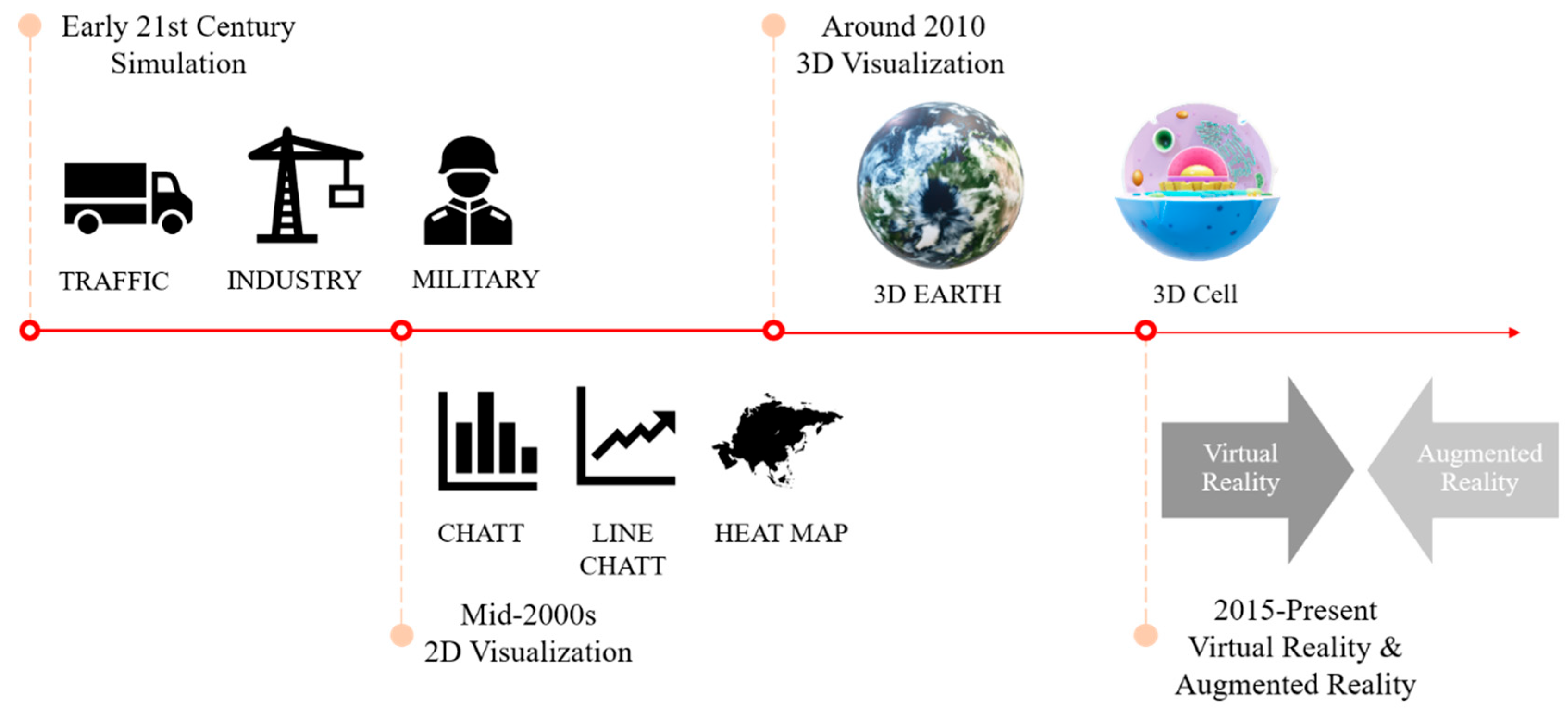
Visualization has long served as an essential component of spatial decision-support systems, providing intuitive interfaces for understanding complex system dynamics and algorithmic outputs [86]. In the context of intelligent UAV swarms, visualization plays a critical role in interpreting multi-agent interactions, validating optimization processes, and supporting human–machine collaborative decision-making. Because swarm coordination and path planning inherently occur in three-dimensional, time-varying environments, effective visualization is indispensable for analyzing emergent behavior, diagnosing failures, and assessing algorithm performance [12] (Figure 6).

3.4.1. From Early 2D Simulation to Dynamic Visualization

During the early 2000s, visualization was primarily achieved through discrete-event and continuous-system simulations, widely used in industrial operations [67,86], traffic management [87,88], and military training [89,90]. These systems emphasized mathematical fidelity and deterministic behavioral reproduction. In UAV swarm research, 2D visualization tools provided foundational capabilities for trajectory display, mission monitoring, and performance evaluation [91]. For example, Nowak et al. integrated the Swarmfare Viewer into the SWARMFARE simulation framework to depict UAV trajectories and behavior pat-terns in real time, facilitating intuitive examination of swarm coordination [92].
Attempts to improve environmental realism led researchers to incorporate weather, illumination, and terrain factors into simulation environments. Gong et al. enhanced sensor realism by embedding environmental disturbances into simulated imagery [93]. Similarly, Bai et al. visualized multi-UAV formation changes during dynamic threat reconfiguration, highlighting the importance of visualization in interpreting multi-agent cooperation [94]. However, purely 2D visual representations struggle to capture the inherently spatial and volumetric characteristics of complex UAV environments, limiting analysts’ ability to perceive altitude interactions, occlusions, or 3D obstacle distributions [95,96].

3.4.2. Advancements in 3D Visualization and Agent-Based Simulation

With improved computing power and richer geospatial data sources [97], 3D visualization has gradually become a central component of intelligent swarm analysis. Wang et al. integrated geospatial data with multi-agent models to construct an interactive 3D urban traffic simulation, validating the feasibility of three-dimensional multi-agent visualization for complex environments [98]. Kalogerakis et al. developed the I3DVP platform to unify 3D graphics, VR interfaces, and domain knowledge, enabling interoperable visual analytics across application domains [99].
Compared with 2D representations, 3D visualization offers notable advantages:
(1)
Intuitive spatiotemporal perception—UAV obstacle avoidance, formation changes, or multi-target tracking can be directly mapped in 3D space [100].
(2)
Higher task efficiency—Kjellin et al. showed that 3D visualization reduces task time by more than fourfold in low-density information environments and lowers user error rates [101].
(3)
Accurate representation of interactions—3D platforms also enable analysis of communication topology and sensor coverage [102].
Recent applications leverage game engines (Unity, Unreal) to simulate physical interactions, including aerodynamic drag, multi-body dynamics, wind fields, and dynamic obstacles. For instance, Cauchard et al. introduced Drone.io, a gesture-controlled system that blends real-time projection with 3D interaction, enhancing intuitive UAV navigation [103]. Shi et al. combined 3D visualization with 2D ground projections to clearly present the relationship between UAV altitude and coverage [104].

3.4.3. Toward Immersive VR/AR Visualization and Digital Twins

Despite its advantages, 3D visualization faces challenges including computational over-head, rendering complexity, and interaction design constraints. VR/AR technologies have emerged as promising solutions to these limitations. VR facilitates immersive mission rehearsal, real-time situational awareness, and more natural spatial interaction [105]. By integrating real-world terrain, meteorological models, and swarm telemetry, VR environments allow managers to evaluate swarm performance under diverse operating conditions [106]. However, current VR-based research mainly relies on game engines, which may exhibit viewpoint occlusion, perspective distortion, and limited numerical precision, highlighting the need for dedicated scientific visualization frameworks [107].
From an engineering perspective, conventional 2D visualization systems remain highly scalable and computationally efficient, making them suitable for large-scale monitoring applications with limited hardware resources. Immersive 3D, VR/AR, and digital-twin-based visualization platforms provide superior situational awareness and decision support for complex swarm missions, but their scalability is constrained by rendering latency, data synchronization, and hardware requirements. The practical deployment of such advanced visualization systems therefore requires careful system-level co-design with communication, computation, and optimization modules to ensure real-time performance and operational reliability.
In conclusion, visualization has progressed from passive 2D displays to immersive 3D, VR/AR, and digital-twin systems that increasingly function as active decision-support tools. To be operationally effective, visualization platforms must integrate with path-planning and allocation modules to enable a “prediction–simulation–decision–feedback” loop, while addressing real-world issues of data fusion, latency, and interpretability.

4. Discussion

In recent years, unmanned aerial vehicles (UAVs) have evolved from isolated platforms into large-scale intelligent swarms capable of coordinated sensing, computation, and decision-making. Their applications in emergency response, ecological monitoring, urban logistics, and intelligent transportation highlight the essential role of spatial optimization in enabling efficient, safe, and adaptive swarm operations. This section synthesizes methodological advances across four major research domains—path planning, resource allocation, network analysis, and visualization—while identifying cross-cutting challenges and emerging opportunities.
Path Planning: From Deterministic Algorithms to Adaptive Learning. Path planning forms the algorithmic foundation of swarm autonomy. Classical deterministic methods such as A*, Dijkstra’s algorithm, and dynamic programming offer optimality guarantees in static environments but struggle under large-scale, uncertain, or adversarial conditions. To overcome these limitations, researchers have adopted metaheuristic optimization methods (including particle swarm optimization, ant colony optimization, and genetic algorithms) as well as deep reinforcement learning. These approaches provide strong global search capability and adaptability but still face challenges including computational overhead, convergence stability, and limited interpretability. Future efforts should focus on hybrid architecture that integrate analytical optimization with learning-driven adaptation to enable reliable real-time planning under uncertainty.
Resource Allocation: Increasingly Distributed and Learning-Driven. Efficient resource allocation is essential for scalable swarm coordination. Early centralized models provided precise scheduling but suffered from limited scalability and vulnerability to single-point failure. Research has therefore progressed toward distributed and hybrid strategies supported by consensus algorithms, auction mechanisms, evolutionary models, and multi-agent reinforcement learning. These methods enable decentralized task assignment, dynamic cooperation, and resilience under changing conditions. However, ensuring coordination stability, communication efficiency, and fairness in bandwidth-limited or highly dynamic environments remains a major challenge. A deeper integration of distributed optimization principles with data-driven learning is expected to support more robust and self-organizing swarm management frameworks.
Network Analysis: Toward Predictive and Adaptive Connectivity. UAV swarms operate within highly dynamic communication and task networks. The evolving network topology, link quality, and load distribution significantly influence overall system performance. Traditional network analysis—focusing on structure, flow, accessibility, and vulnerability—has been expanded with metaheuristic algorithms and machine learning models for traffic prediction, congestion detection, and robustness evaluation. However, many current approaches assume partially static environments. Future research should incorporate dynamic graph learning, spatiotemporal modeling, and predictive control to support adaptive reconfiguration of swarm networks under environmental uncertainty.
Visualization: From Passive Display to Active Decision Support. Visualization serves as the interface between complex swarm optimization processes and human cognition. Traditional two-dimensional visualization enables trajectory display and basic monitoring but fails to represent dense three-dimensional swarm interactions. Advances in three-dimensional visualization and immersive technologies such as virtual reality and augmented reality have enabled more intuitive observation and control of swarm behavior. Despite significant progress, challenges remain in data fusion, real-time rendering, interaction design, and integrating visualization into the swarm optimization cycle. Future visualization systems should evolve into interactive, predictive, and explainable components that provide active support for human decision-makers.
Despite the progress across these four domains, intelligent UAV swarm optimization continues to face several intertwined challenges. Swarms must dynamically balance tasks with varying urgency and value, which requires adaptive prioritization and multi-objective trade-off mechanisms capable of integrating risk awareness. They must also remain robust under environmental uncertainty, where weather variability, sudden obstacles, and communication degradation demand real-time re-optimization and uncertainty-aware decision-making. Moreover, as UAV swarms become increasingly autonomous, human–machine collaboration emerges as an essential research frontier. Human operators are transitioning from direct controllers to strategic supervisors, requiring new models of explainable decision-making, shared control, and trust calibration.
Overall, intelligent UAV swarm spatial optimization is shifting from deterministic computation toward adaptive, learning-driven, and human-in-the-loop decision systems. Continued advances in hybrid optimization, distributed collaboration, dynamic network modeling, and immersive visualization will shape the next generation of swarm intelligence, driving the field toward greater autonomy, resilience, and interpretability.

5. Conclusions

Intelligent UAV swarm technology has developed into a foundational component of modern autonomous and cyber-physical systems, enabling collaborative sensing, distributed decision-making, and coordinated task execution across a wide range of application domains. This review systematically synthesized the methodological evolution of spatial optimization for UAV swarms and revealed a clear shift from classical, deterministic models toward intelligent optimization and adaptive learning–based coordination frameworks.
Traditional path-planning algorithms such as A*, Dijkstra, and dynamic programming remain effective for static and small-scale operational scenarios due to their determinism and interpretability. However, their lack of scalability and adaptability limits their performance in dynamic and uncertain environments. Bio-inspired metaheuristic methods—including PSO, ACO, and GA—extend global search capability and provide flexible mechanisms for handling multi-objective optimization and nonlinear constraints. Building upon these advances, deep reinforcement learning (DRL) introduces autonomous strategy learning and real-time adaptation, allowing UAV swarms to optimize collaborative behaviors through continuous interaction with the environment.
Resource allocation has evolved from centralized optimization to distributed, auction-based, and game-theoretic frameworks, significantly enhancing scalability and robustness in large-scale swarm missions. Traffic network analysis methods—powered by metaheuristics and machine learning—enable the modeling of inter-agent dependencies, network vulnerability, and flow dynamics, providing system-level support for collaborative decision-making. Meanwhile, 2D/3D visualization has become an indispensable enabling technology that enhances situational awareness, interpretability, and human–machine interaction.
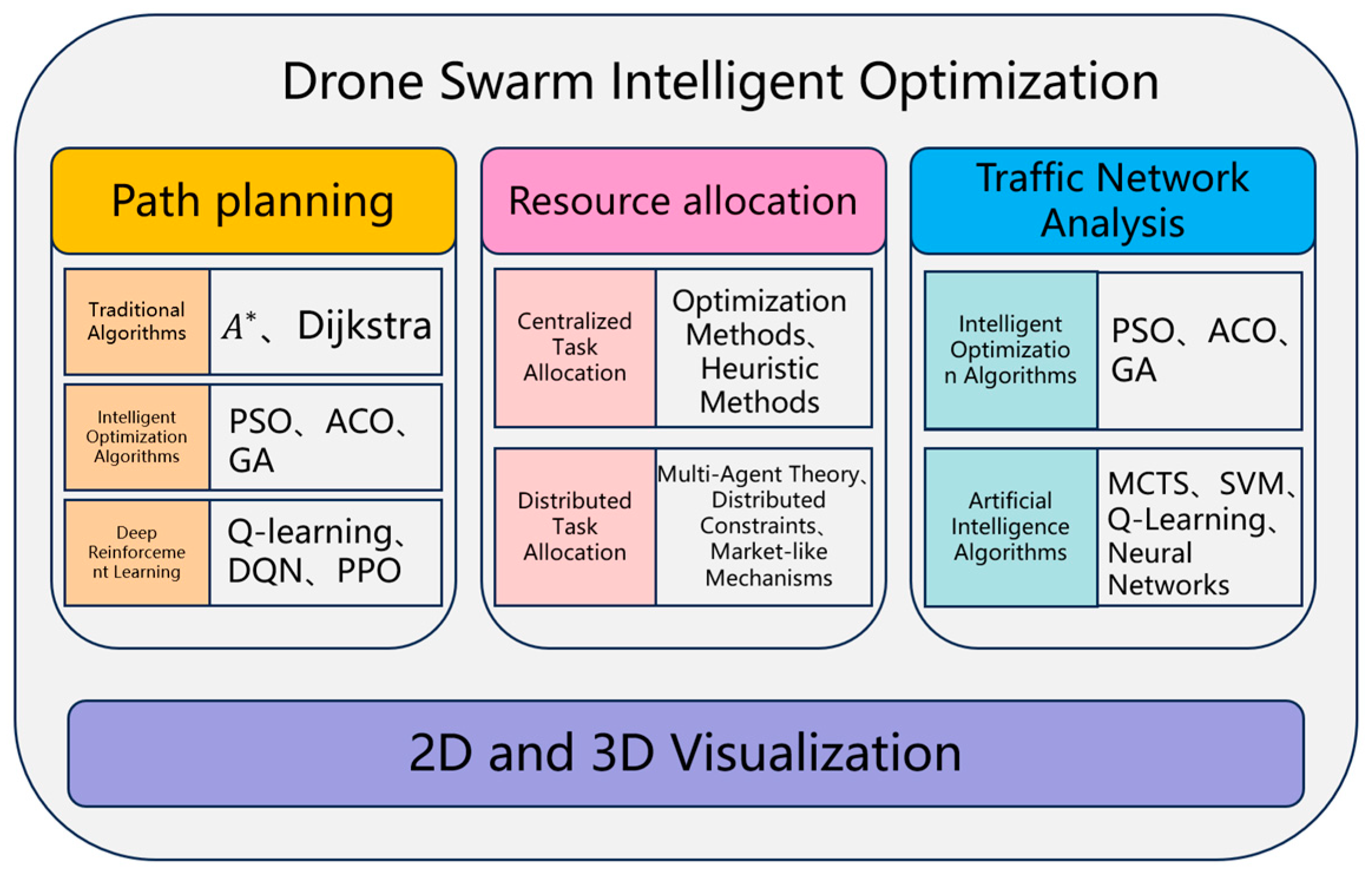
Together, these developments indicate the emergence of a hybrid intelligent paradigm, in which analytical optimization, heuristic exploration, distributed collaboration, and adaptive learning are combined to enhance the robustness, scalability, and real-time responsiveness of UAV swarm systems. The overall methodological structure summarized in this review is illustrated in Figure 7, which integrates four major dimensions—path planning, resource allocation, traffic network analysis, and 2D/3D visualization—into a unified framework of swarm spatial optimization.
In summary, the shift from rule-based computation to adaptive, learning-driven intelligence marks a significant milestone in UAV swarm research. The conceptual framework synthesized in this review provides a solid foundation for the next generation of scalable, autonomous, and mission-aware UAV swarm systems operating in complex real-world environments.

6. Future Perspectives

To synthesize the main findings of existing research and highlight the emerging development directions in intelligent UAV swarm optimization, a comparative summary is presented in Table 4. The table outlines key insights across four major methodological domains—path planning, resource allocation, traffic network analysis, and visualization—together with their corresponding future research trends.
With this overview, the future development of intelligent UAV swarm systems can be further articulated as follows. First, cross-disciplinary integration will become essential. The fusion of artificial intelligence, geospatial computation, big data analytics, and cloud–edge collaboration will greatly enhance swarm autonomy, predictive capability, and situational awareness. Second, hybrid intelligent optimization frameworks—combining deep reinforcement learning with metaheuristic optimization—will provide more balanced solutions to large-scale, multi-objective, and dynamic problems. Such frameworks are expected to improve convergence, robustness, and coordination efficiency. Third, distributed self-organizing mechanisms will be fundamental for building scalable and resilient swarm systems. Research must address communication constraints, incomplete information, decentralized learning, and real-time multi-agent coordination. Fourth, immersive visualization technologies (3D visualization, VR, AR) will become critical for improving spatial cognition and interactive decision-making, enabling operators to manage large-scale swarm behaviors more intuitively. Finally, real-world deployment scenarios—from disaster relief to environmental monitoring and smart-city governance—will continue to drive technological innovation. Ensuring safety, interpretability, and ethical compliance will remain crucial for enabling UAV swarms to operate reliably in sensitive or high-risk environments.

Author Contributions

Conceptualization, Y.Z. and H.Z.; methodology, Y.Z.; software, Y.Z.; validation, H.L. and R.C.; formal analysis, Y.Z. and H.L.; investigation, H.Z. and R.C.; resources, H.Z.; data curation, H.Z.; writing—original draft preparation, Y.Z.; writing—review and editing, Y.Z., H.Z. and H.L.; visualization, H.L.; supervision, H.Z.; project administration, H.Z.; funding acquisition, H.Z. All authors have read and agreed to the published version of the manuscript.

Funding

This research received no external funding.

Data Availability Statement

Data available from the corresponding author upon request.

Conflicts of Interest

The authors declare no conflicts of interest.

References

  1. Zhou, X.; Wen, X.; Wang, Z.; Gao, Y.; Li, H.; Wang, Q.; Yang, T.; Lu, H.; Cao, Y.; Xu, C.; et al. Swarm of micro flying robots in the wild. Sci. Robot. 2022, 7, eabm5954. [Google Scholar] [CrossRef] [Scilit]
  2. Wang, H.; Zhao, H.; Zhang, J.; Ma, D.; Li, J.; Wei, J. Survey on unmanned aerial vehicle networks: A cyber physical system perspective. IEEE Commun. Surv. Tutor. 2019, 22, 1027–1070. [Google Scholar] [CrossRef] [Scilit]
  3. Rajender, R.; Anupama, C.S.S.; Moses, G.J.; Lydia, E.L.; Kadry, S.; Lim, S. Artificial Intelligence-Enabled Cooperative Cluster-Based Data Collection for Unmanned Aerial Vehicles. Comput. Mater. Contin. 2022, 73, 3351–3365. [Google Scholar]
  4. Husnain, G.; Anwar, S. An intelligent cluster optimization algorithm based on Whale Optimization Algorithm for VANETs (WOACNET). PLoS ONE 2021, 16, e0250271. [Google Scholar] [CrossRef] [Scilit]
  5. Li, J.; Xiong, N.; Park, J.H.; Liu, C.; Ma, S.; Cho, S. Intelligent model design of cluster supply chain with horizontal cooperation. J. Intell. Manuf. 2012, 23, 917–931. [Google Scholar] [CrossRef] [Scilit]
  6. Senouci, O.; Harous, S.; Aliouat, Z. Survey on vehicular ad hoc networks clustering algorithms: Overview, taxonomy, challenges, and open research issues. Int. J. Commun. Syst. 2020, 33, e4402. [Google Scholar] [CrossRef] [Scilit]
  7. Jin, Y.; Qian, Z.; Yang, W. UAV cluster-based video surveillance system optimization in heterogeneous communication of smart cities. Drones 2020, 8, 55654–55664. [Google Scholar] [CrossRef] [Scilit]
  8. Sushma, M.B.; Mashhoodi, B.; Tan, W.; Liujiang, K.; Xu, Q. Spatial drone path planning: A systematic review of parameters and algorithms. J. Transp. Geogr. 2025, 125, 104209. [Google Scholar] [CrossRef] [Scilit]
  9. Chen, H.; Luo, F.; Zhou, J.; Dong, Y. Multi-Objective Optimized GPSR Intelligent Routing Protocol for UAV Clusters. Mathematics 2024, 12, 2672. [Google Scholar] [CrossRef] [Scilit]
  10. Heidari, A.; Jafari Navimipour, N.; Unal, M.; Zhang, G. Machine learning applications in internet-of-drones: Systematic review, recent deployments, and open issues. ACM Comput. Surv. 2023, 55, 1–45. [Google Scholar] [CrossRef] [Scilit]
  11. Yang, J.; Huang, X. Intelligent Planning Modeling and Optimization of UAV Cluster Based on Multi-Objective Optimization Algorithm. Electronics 2022, 11, 4238. [Google Scholar] [CrossRef] [Scilit]
  12. Ahmad, T.; Morel, A.; Cheng, N.; Palaniappan, K.; Calyam, P.; Sun, K.; Pan, J. Future UAV/Drone Systems for Intelligent Active Surveillance and Monitoring. ACM Comput. Surv. 2025, 58, 1–37. [Google Scholar] [CrossRef] [Scilit]
  13. Chen, C. Searching for intellectual turning points: Progressive knowledge domain visualization. Proc. Natl. Acad. Sci. USA 2004, 101, 5303–5310. [Google Scholar] [CrossRef] [Scilit]
  14. Chen, C. CiteSpace II: Detecting and visualizing emerging trends and transient patterns in scientific literature. J. Am. Soc. Inf. Sci. Technol. 2006, 57, 359–377. [Google Scholar] [CrossRef] [Scilit]
  15. Chen, X.; Liu, Y. Visualization analysis of high-speed railway research based on CiteSpace. Transp. Policy 2020, 85, 1–17. [Google Scholar] [CrossRef] [Scilit]
  16. Fang, Y.; Yin, J.; Wu, B. Climate change and tourism: A scientometric analysis using CiteSpace. J. Sustain. Tour. 2018, 26, 108–126. [Google Scholar] [CrossRef] [Scilit]
  17. Azam, A.; Ahmed, A.; Wang, H.; Wang, Y.; Zhang, Z. Knowledge structure and research progress in wind power generation (WPG) from 2005 to 2020 using CiteSpace based scientometric analysis. J. Clean. Prod. 2021, 295, 126496. [Google Scholar] [CrossRef] [Scilit]
  18. Gul, F.; Mir, I.; Abualigah, L.; Sumari, P.; Forestiero, A. A consolidated review of path planning and optimization techniques: Technical perspectives and future directions. Electronics 2021, 10, 2250. [Google Scholar] [CrossRef] [Scilit]
  19. Ding, C.; Cao, X.; Liu, C. How does the station-area built environment influence Metrorail ridership? Using gradient boosting decision trees to identify non-linear thresholds. J. Transp. Geogr. 2019, 77, 70–78. [Google Scholar] [CrossRef] [Scilit]
  20. Maritan, C.A.; Lee, G.K. Resource allocation and strategy. J. Manag. 2017, 43, 2411–2420. [Google Scholar] [CrossRef] [Scilit]
  21. Hashmi, S.J.; Alabdullah, B.; Al Mudawi, N.; Algarni, A.; Jalal, A.; Liu, H. Enhanced data mining and visualization of sensory-graph-Modeled datasets through summarization. Sensors 2024, 24, 4554. [Google Scholar] [CrossRef] [Scilit]
  22. Van Wijk, J.J. The value of visualization. In VIS 05; IEEE Visualization: New York, NY, USA, 2005; pp. 79–86. [Google Scholar]
  23. Liu, J.; Zhang, W.; Ji, H.; Zhu, M. A summary of UAV swarm path planning algorithm research. Aerosp. Electron. Warf. 2022, 38, 9–12. [Google Scholar]
  24. Flores-Caballero, G.; Rodriguez-Molina, A.; Aldape-Perez, M.; Villarreal-Cervantes, M.G. Optimized Path-Planning in Continuous Spaces for Unmanned Aerial Vehicles Using Meta-Heuristics. Drones 2020, 8, 176774–176788. [Google Scholar] [CrossRef] [Scilit]
  25. Prasad, N.L.; Ramkumar, B. 3-D Deployment and Trajectory Planning for Relay Based UAV Assisted Cooperative Communication for Emergency Scenarios Using Dijkstra’s Algorithm. IEEE Trans. Veh. Technol. 2023, 72, 5049–5063. [Google Scholar] [CrossRef] [Scilit]
  26. Li, J.; Xiong, Y.; She, J. UAV Path Planning for Target Coverage Task in Dynamic Environment. IEEE Internet Things J. 2023, 10, 17734–17745. [Google Scholar] [CrossRef] [Scilit]
  27. Zhang, Z.; Wu, J.; Dai, J.; He, C. Optimal Path Planning with Modified A-Star Algorithm for Stealth Unmanned Aerial Vehicles in 3D Network Radar Environment. Proc. Inst. Mech. Eng. Part G J. Aerosp. Eng. 2022, 236, 72–81. [Google Scholar] [CrossRef] [Scilit]
  28. Farid, G.; Cocuzza, S.; Younas, T.; Razzaqi, A.A.; Wattoo, W.A.; Cannella, F.; Mo, H. Modified A-Star (A*) Approach to Plan the Motion of a Quadrotor UAV in Three-Dimensional Obstacle-Cluttered Environment. Appl. Sci. 2022, 12, 5791. [Google Scholar] [CrossRef] [Scilit]
  29. Liu, L.; Zhou, X.; Li, C.; Gao, X.; Luo, S.; Xue, G. Research and Design of Grid Safety Inspection Path Planning and Work Order Assignment Based on Dijkstra and Optimal Scheduling. Appl. Math. Nonlinear Sci. 2024, 9. [Google Scholar] [CrossRef] [Scilit]
  30. Mohiuddin, A.; Taha, T.; Zweiri, Y.; Gan, D. UAV Payload Transportation via RTDP Based Optimized Velocity Profiles. Energies 2019, 12, 3049. [Google Scholar] [CrossRef] [Scilit]
  31. Zhang, Z.; Wu, Q.; Zhang, B.; Yi, X.; Tang, Y. UAV Flight Strategy Algorithm Based on Dynamic Programming. J. Syst. Eng. Electron. 2018, 29, 1293. [Google Scholar] [CrossRef] [Scilit]
  32. Roberge, V.; Tarbouchi, M.; Labonte, G. Comparison of Parallel Genetic Algorithm and Particle Swarm Optimization for Real-Time UAV Path Planning. IEEE Trans. Ind. Inform. 2013, 9, 132–141. [Google Scholar] [CrossRef] [Scilit]
  33. Li, Y.; Zhang, Z.; Sun, Q.; Huang, Y. An Improved Ant Colony Algorithm for Multiple Unmanned Aerial Vehicles Route Planning. J. Frankl. Inst. 2024, 361, 107060. [Google Scholar] [CrossRef] [Scilit]
  34. Li, L.; Gu, Q.; Liu, L. Research on Path Planning Algorithm for Multi-UAV Maritime Targets Search Based on Genetic Algorithm. In Proceedings of the 2020 IEEE International Conference on Information Technology, Big Data and Artificial Intelligence (ICIBA), Chongqing, China, 6–8 November 2020; Volume 1, pp. 840–843. [Google Scholar]
  35. Yu, Z.; Si, Z.; Li, X.; Wang, D.; Song, H. A Novel Hybrid Particle Swarm Optimization Algorithm for Path Planning of UAVs. IEEE Internet Things J. 2022, 9, 22547–22558. [Google Scholar] [CrossRef] [Scilit]
  36. Haris, M.; Bhatti, D.M.S.; Nam, H. A Fast-Convergent Hyperbolic Tangent PSO Algorithm for UAVs Path Planning. IEEE Open J. Veh. Technol. 2024, 5, 681–694. [Google Scholar] [CrossRef] [Scilit]
  37. Zhen, Z.; Chen, Y.; Wen, L.; Han, B. An intelligent cooperative mission planning scheme of UAV swarm in uncertain dynamic environment. Aerosp. Sci. Technol. 2020, 100, 105826. [Google Scholar] [CrossRef] [Scilit]
  38. Wang, Y.; Zhu, J.; Huang, H.; Xiao, F. Bi-Objective Ant Colony Optimization for Trajectory Planning and Task Offloading in UAV-Assisted MEC Systems. IEEE Trans. Mob. Comput. 2024, 23, 12360–12377. [Google Scholar] [CrossRef] [Scilit]
  39. Pehlivanoglu, Y.V.; Pehlivanoglu, P. An enhanced genetic algorithm for path planning of autonomous UAV in target coverage problems. Appl. Soft Comput. 2021, 112, 107796. [Google Scholar] [CrossRef] [Scilit]
  40. Wu, X.; Yin, Y.; Xu, L.; Wu, X.; Meng, F.; Zhen, R. MULTI-UAV Task Allocation Based on Improved Genetic Algorithm. IEEE Access 2021, 9, 100369–100379. [Google Scholar] [CrossRef] [Scilit]
  41. Bo, L.; Zhang, T.; Zhang, H.; Yang, J.; Zhang, Z.; Zhang, C.; Liu, M. Improved Q-Learning Algorithm Based on Flower Pollination Algorithm and Tabulation Method for Unmanned Aerial Vehicle Path Planning. IEEE Access 2024, 12, 104429–104444. [Google Scholar] [CrossRef] [Scilit]
  42. Li, D.; Yin, W.; Wong, W.E.; Jian, M.; Chau, M. Quality-Oriented Hybrid Path Planning Based on A* and Q-Learning for Unmanned Aerial Vehicle. IEEE Access 2022, 10, 7664–7674. [Google Scholar] [CrossRef] [Scilit]
  43. Liu, X.; Zhong, W.; Wang, X.; Duan, H.; Fan, Z.; Jin, H.; Huang, Y.; Lin, Z. Deep Reinforcement Learning-Based 3D Trajectory Planning for Cellular Connected UAV. Drones 2024, 8, 199. [Google Scholar] [CrossRef] [Scilit]
  44. Han, L.; Zhang, H.; An, N. A Continuous Space Path Planning Method for Unmanned Aerial Vehicle Based on Particle Swarm Optimization-Enhanced Deep Q-Network. Drones 2025, 9, 122. [Google Scholar] [CrossRef] [Scilit]
  45. Huang, X.; Wang, W.; Ji, Z.; Cheng, B. Representation Enhancement-Based Proximal Policy Optimization for UAV Path Planning and Obstacle Avoidance. Int. J. Aerosp. Eng. 2023, 2023, 1–15. [Google Scholar] [CrossRef] [Scilit]
  46. Zhan, G.; Zhang, X.; Li, Z.; Xu, L.; Zhou, D.; Yang, Z. Multiple-UAV Reinforcement Learning Algorithm Based on Improved PPO in Ray Framework. Drones 2022, 6, 166. [Google Scholar] [CrossRef] [Scilit]
  47. Holland, J.H. Adaptation in Natural and Artificial Systems: An Introductory Analysis with Applications to Biology, Control, and Artificial Intelligence; MIT Press: Cambridge, MA, USA, 1992. [Google Scholar]
  48. Kennedy, J.; Eberhart, R. Particle swarm optimization. In Proceedings of the ICNN’95-International Conference on Neural Networks, Perth, WA, Australia, 27 November–1 December 1995; IEEE: New York, NY, USA; Volume 4, pp. 1942–1948.
  49. Xu, Y.; Fan, P.; Yuan, L. A simple and efficient artificial bee colony algorithm. Math. Probl. Eng. 2013, 2013, 526315. [Google Scholar] [CrossRef] [Scilit]
  50. Rashedi, E.; Nezamabadi-pour, H.; Saryazdi, S. GSA: A Gravitational Search Algorithm. Inf. Sci. 2009, 179, 2232–2248. [Google Scholar] [CrossRef] [Scilit]
  51. Liu, Z.; Wang, X.; Shen, L.; Zhao, S.; Cong, Y.; Li, J.; Yin, D.; Jia, S.; Xiang, X. Mission-oriented miniature fixed-wing UAV swarms: A multilayered and distributed architecture. IEEE Trans. Syst. Man Cybern. Syst. 2020, 52, 1588–1602. [Google Scholar] [CrossRef] [Scilit]
  52. Butenko, S.; Murphey, R.; Pardalos, P.M. (Eds.) Cooperative Control: Models, Applications and Algorithms; Springer Science & Business Media: Berlin/Heidelberg, Germany, 2013; p. 1. [Google Scholar]
  53. Dorling, K.; Heinrichs, J.; Messier, G.G.; Magierowski, S. Vehicle routing problems for drone delivery. IEEE Trans. Syst. Man Cybern. Syst. 2016, 47, 70–85. [Google Scholar] [CrossRef] [Scilit]
  54. Pasha, J.; Elmi, Z.; Purkayastha, S.; Fathollahi-Fard, A.M.; Ge, Y.E.; Lau, Y.Y.; Dulebenets, M.A. The drone scheduling problem: A systematic state-of-the-art review. IEEE Trans. Intell. Transp. Syst. 2022, 23, 14224–14247. [Google Scholar] [CrossRef] [Scilit]
  55. Gao, X.; Zhu, X.; Zhai, L. Minimization of aerial cost and mission completion time in multi-UAV-enabled IoT networks. IEEE Trans. Commun. 2023, 71, 5335–5347. [Google Scholar] [CrossRef] [Scilit]
  56. Huo, L.; Zhu, J.; Wu, G.; Li, Z. A Novel Simulated Annealing Based Strategy for Balanced UAV Task Assignment and Path Planning. Sensors 2020, 20, 4769. [Google Scholar] [CrossRef] [Scilit] [PubMed]
  57. Zhang, Z.; Jiang, J.; Xu, H.; Zhang, W.-A. Distributed dynamic task allocation for unmanned aerial vehicle swarm systems: A networked evolutionary game-theoretic approach. Chin. J. Aeronaut. 2024, 37, 182–204. [Google Scholar] [CrossRef] [Scilit]
  58. Petrenko, V.; Tebueva, F.; Antonov, V.; Ryabtsev, S.; Pavlov, A.; Sakolchik, A. Method and algorithm for task allocation in a heterogeneous group of UAVs in a clustered field of targets. J. King Saud Univ.-Comput. Inf. Sci. 2023, 35, 101580. [Google Scholar] [CrossRef] [Scilit]
  59. Boroujeni, S.P.H.; Razi, A.; Khoshdel, S.; Afghah, F.; Coen, J.L.; O’Neill, L.; Fule, P.; Watts, A.; Kokolakis, N.M.T.; Vamvoudakis, K.G. A comprehensive survey of research towards AI-enabled unmanned aerial systems in pre-, active-, and post-wildfire management. Inf. Fusion 2024, 108, 102369. [Google Scholar] [CrossRef] [Scilit]
  60. Hu, J.; Xie, L.; Lum, K.-Y.; Xu, J. Multiagent Information Fusion and Cooperative Control in Target Search. IEEE Trans. Control Syst. Technol. 2013, 21, 1223–1235. [Google Scholar] [CrossRef] [Scilit]
  61. Fu, X.; Zhang, J.; Zhang, L.; Chang, S. Coalition formation among unmanned aerial vehicles for uncertain task allocation. Wirel. Netw. 2019, 25, 367–377. [Google Scholar] [CrossRef] [Scilit]
  62. Huang, L.; Qu, H.; Zuo, L. Multi-Type UAVs Cooperative Task Allocation Under Resource Constraints. IEEE Access 2018, 6, 17841–17850. [Google Scholar] [CrossRef] [Scilit]
  63. Hu, J.; Yang, J. Application of distributed auction to multi-UAV task assignment in agriculture. Int. J. Precis. Agric. Aviat. 2018, 1, 44–50. [Google Scholar] [CrossRef] [Scilit]
  64. Rinaldi, M.; Primatesta, S. Comprehensive task optimization architecture for urban UAV-based intelligent transportation system. Drones 2024, 8, 473. [Google Scholar] [CrossRef] [Scilit]
  65. Zhen, Z.; Wen, L.; Wang, B.; Hu, Z.; Zhang, D. Improved contract network protocol algorithm based cooperative target allocation of heterogeneous UAV swarm. Aerosp. Sci. Technol. 2021, 119, 107054. [Google Scholar] [CrossRef] [Scilit]
  66. Wang, X.; Gao, X.; Wang, L.; Su, X.; Jin, J.; Liu, X.; Deng, Z. Resilient multi-objective mission planning for UAV formation: A unified framework integrating task pre- and re-assignment. Def. Technol. 2025, 45, 203–226. [Google Scholar] [CrossRef] [Scilit]
  67. Lu, J.; Osorio, C. A probabilistic traffic-theoretic network loading model suitable for large-scale network analysis. Transp. Sci. 2018, 52, 1509–1530. [Google Scholar] [CrossRef] [Scilit]
  68. Zhang, M.; Huang, T.; Guo, Z.; He, Z. Complex-network-based traffic network analysis and dynamics: A comprehensive review. Phys. A Stat. Mech. Its Appl. 2022, 607, 128063. [Google Scholar] [CrossRef] [Scilit]
  69. Iliopoulou, C.; Kepaptsoglou, K.; Vlahogianni, E. Metaheuristics for the transit route network design problem: A review and comparative analysis. Public Transp. 2019, 11, 487–521. [Google Scholar] [CrossRef] [Scilit]
  70. Shi, J.; Leau, Y.B.; Li, K.; Park, Y.J.; Yan, Z. Optimization and decomposition methods in network traffic prediction model: A review and discussion. IEEE Access 2020, 8, 202858–202871. [Google Scholar] [CrossRef] [Scilit]
  71. Zhao, F.; Zeng, X. Simulated annealing–genetic algorithm for transit network optimization. J. Comput. Civ. Eng. 2006, 20, 57–68. [Google Scholar] [CrossRef] [Scilit]
  72. Shanmugasundaram, N.; Sushita, K.; Kumar, S.P.; Ganesh, E.N. Genetic algorithm-based road network design for optimising the vehicle travel distance. Int. J. Veh. Inf. Commun. Syst. 2019, 4, 344–354. [Google Scholar] [CrossRef] [Scilit]
  73. Mahfoud, S.W.; Goldberg, D.E. Parallel recombinative simulated annealing: A genetic algorithm. Parallel Comput. 1995, 21, 1–28. [Google Scholar] [CrossRef] [Scilit]
  74. Zhang, Z.; Pan, K. Analysis of Transportation Network Scheduling of Maritime Silk Road and International Digital Trade Potential Based on Improved Genetic Algorithm under Digital Trade Barriers. Wirel. Commun. Mob. Comput. 2022, 2022, 7903376. [Google Scholar] [CrossRef] [Scilit]
  75. Vitins, B.J.; Axhausen, K.W. Optimization of large transport networks using the ant colony heuristic. Comput.-Aided Civ. Infrastruct. Eng. 2009, 24, 1–14. [Google Scholar] [CrossRef] [Scilit]
  76. Ye, S.; Xu, L.; Li, X. Vehicle-Mounted Self-Organizing Network Routing Algorithm Based on Deep Reinforcement Learning. Wirel. Commun. Mob. Comput. 2021, 2021, 9934585. [Google Scholar] [CrossRef] [Scilit]
  77. Zhou, R.; Chen, H.; Chen, H.; Liu, E.; Jiang, S. Research on traffic situation analysis for urban road network through spatiotemporal data mining: A case study of Xi’an, China. IEEE Access 2021, 9, 75553–75567. [Google Scholar] [CrossRef] [Scilit]
  78. Nie, S.; Zhong, Y.; Hu, M. Short-time traffic flow prediction method based on universal organic computing architecture. Adv. Mater. Res. 2012, 756–759, 2785–2789. [Google Scholar]
  79. Yang, S.; Wu, J.; Qi, G.; Tian, K. Analysis of traffic state variation patterns for urban road network based on spectral clustering. Adv. Mech. Eng. 2017, 9, 1687814017723790. [Google Scholar] [CrossRef] [Scilit]
  80. Ding, R.; Fu, J.; Du, Y.; Du, L.; Zhou, T.; Zhang, Y.; Shen, S.; Zhu, Y.; Chen, S. Structural evolution and community detection of China rail transit route network. Sustainability 2020, 14, 12342. [Google Scholar] [CrossRef] [Scilit]
  81. Jiang, X.; Wen, X.; Wu, M.; Song, M.; Tu, C. A complex network analysis approach for identifying air traffic congestion based on independent component analysis. Phys. A Stat. Mech. Its Appl. 2019, 523, 364–381. [Google Scholar] [CrossRef] [Scilit]
  82. Sui, Z.; Wen, Y.; Huang, Y.; Zhou, C.; Xiao, C.; Chen, H. Empirical analysis of complex network for marine traffic situation. Ocean Eng. 2020, 214, 107848. [Google Scholar] [CrossRef] [Scilit]
  83. Song, R.; Spadon, G.; Pelot, R.; Matwin, S.; Soares, A. Enhancing global maritime traffic network forecasting with gravity-inspired deep learning models. Sci. Rep. 2024, 14, 16665. [Google Scholar] [CrossRef] [Scilit] [PubMed]
  84. Zhao, J.; Liang, Q.; Guo, J.; Pu, K. Vulnerability assessment and evolution analysis of Beijing’s urban rail transit network. Phys. A Stat. Mech. Its Appl. 2024, 653, 130078. [Google Scholar] [CrossRef] [Scilit]
  85. Chen, M.; Chen, R.; Cai, F.; Li, W.; Guo, N.; Li, G. Short-term traffic flow prediction with recurrent mixture density network. Math. Probl. Eng. 2021, 2021, 1–9. [Google Scholar] [CrossRef] [Scilit]
  86. Xiao, N.; Bennett, D.A.; Armstrong, M.P. Interactive evolutionary approaches to multiobjective spatial decision making: A synthetic review. Comput. Environ. Urban Syst. 2007, 31, 232–252. [Google Scholar] [CrossRef] [Scilit]
  87. O’Kane, J.F.; Spenceley, J.R.; Taylor, R. Simulation as an essential tool for advanced manufacturing technology problems. J. Mater. Process. Technol. 2000, 107, 412–424. [Google Scholar] [CrossRef] [Scilit]
  88. Fellendorf, M.; Vortisch, P. Microscopic traffic flow simulator VISSIM. In Fundamentals of Traffic Simulation; Springer: Berlin/Heidelberg, Germany, 2010; pp. 63–93. [Google Scholar]
  89. Han, Y.; Liu, L.; Duan, L.; Zhang, R. Towards reliable UAV swarm communication in D2D-enhanced cellular networks. IEEE Trans. Wirel. Commun. 2020, 20, 1567–1581. [Google Scholar] [CrossRef] [Scilit]
  90. Cao, P.; Lei, L.; Cai, S.; Shen, G.; Liu, X.; Wang, X.; Zhang, L.; Zhou, L.; Guizani, M. Computational intelligence algorithms for UAV swarm networking and collaboration: A comprehensive survey and future directions. IEEE Commun. Surv. Tutor. 2024, 26, 2684–2728. [Google Scholar] [CrossRef] [Scilit]
  91. Fu, S.; Li, K.; Huang, H.; Ma, C.; Fan, Q.; Zhu, Y. Red-billed blue magpie optimizer: A novel metaheuristic algorithm for 2D/3D UAV path planning and engineering design problems. Artif. Intell. Rev. 2024, 57, 134. [Google Scholar] [CrossRef] [Scilit]
  92. Nowak, D.J.; Price, I.; Lamont, G.B. Self organized UAV swarm planning optimization for search and destroy using SWARMFARE simulation. In Proceedings of the 2007 Winter Simulation Conference, Washington, DC, USA, 9–12 December 2007; pp. 1315–1323. [Google Scholar]
  93. Gong, S. UAV Based Distributed Automatic Target Detection Algorithm Under Realistic Simulated Environmental Effects; West Virginia University: Morgantown, WV, USA, 2007. [Google Scholar]
  94. Bai, C.; Duan, H.; Li, C.; Zhang, Y. Dynamic multi-UAVs formation reconfiguration based on hybrid diversity-PSO and time optimal control. In Proceedings of the 2009 IEEE Intelligent Vehicles Symposium, Xi’an, China, 3–5 June 2009; pp. 775–779. [Google Scholar]
  95. Abdalhakim, H.; Abdelfattah, M. An intelligent visualized decision toolbox IVDT for fuzzy decision maker. In Proceedings of the 2009 ISECS International Colloquium on Computing, Communication, Control, and Management, In Virtual, 29 September 2009; IEEE: New York, NY, USA, 2009; Volume 2, pp. 115–118. [Google Scholar]
  96. Metni, N.; Hamel, T. A UAV for bridge inspection: Visual servoing control law with orientation limits. Autom. Constr. 2007, 17, 3–10. [Google Scholar] [CrossRef] [Scilit]
  97. Dean, J.; Ghemawat, S. MapReduce: Simplified data processing on large clusters. Commun. ACM 2008, 51, 107–113. [Google Scholar] [CrossRef] [Scilit]
  98. Wang, T.; Tang, S.; Pang, P. 3D urban traffic system simulation based on geo-data. In Proceedings of the ITRE 2004. 2nd International Conference Information Technology: Research and Education, London, UK, 28 June–1 July 2004; IEEE: New York, NY, USA, 2004; pp. 59–63. [Google Scholar]
  99. Kalogerakis, E.; Christodoulakis, S.; Moumoutzis, N. Coupling ontologies with graphics content for knowledge driven visualization. In Proceedings of the IEEE Virtual Reality Conference (VR 2006), Alexandria, VA, USA, 25–29 March 2006; pp. 43–50. [Google Scholar]
  100. Wagner Filho, J.A.; Stuerzlinger, W.; Nedel, L. Evaluating an immersive space-time cube geovisualization for intuitive trajectory data exploration. IEEE Trans. Vis. Comput. Graph. 2019, 26, 514–524. [Google Scholar] [CrossRef] [Scilit]
  101. Kjellin, A.; Pettersson, L.W.; Seipel, S.; Lind, M. Evaluating 2D and 3D visualizations of spatiotemporal information. ACM Trans. Appl. Percept. (TAP) 2008, 7, 1–23. [Google Scholar] [CrossRef] [Scilit]
  102. Abramson, J.; Adler, J.; Dunger, J.; Evans, R.; Green, T.; Pritzel, A.; Ronneberger, O.; Willmore, L.; Ballard, A.J.; Jumper, J.M.; et al. Accurate structure prediction of biomolecular interactions with AlphaFold 3. Nature 2024, 630, 493–500. [Google Scholar] [CrossRef] [Scilit]
  103. Cauchard, J.R.; Tamkin, A.; Wang, C.Y.; Vink, L.; Park, M.; Fang, T.; Landay, J.A. Drone. io: A gestural and visual interface for human-drone interaction. In Proceedings of the 2019 14th ACM/IEEE International Conference on Human-Robot Interaction (HRI), Daegu, Republic of Korea, 11–14 March 2019; pp. 153–162. [Google Scholar]
  104. Shi, W.; Li, J.; Xu, W.; Zhou, H.; Zhang, N.; Shen, X. 3D Drone-cell deployment optimization for drone assisted radio access networks. In Proceedings of the 2017 IEEE/CIC International Conference on Communications in China (ICCC), Qingdao, China, 22–24 October 2017; pp. 1–6. [Google Scholar]
  105. Rodina, A.; Wang, T.; Yan, P.; Gomes, E.D.; Dunphy, M.P.; Pillarsetty, N.; Koren, J.; Gerecitano, J.F.; Taldone, T.; Chiosis, G.; et al. The epichaperome is an integrated chaperome network that facilitates tumour survival. Nature 2016, 538, 397–401. [Google Scholar] [CrossRef] [Scilit]
  106. Wang, X.; Wang, X.; Ma, S.; Chen, W.; Wang, F.Y. Vehicular Visualization: Enhancing Mobility Decisions With Human–Machine Interactions. IEEE Trans. Intell. Veh. 2023, 8, 4653–4663. [Google Scholar] [CrossRef] [Scilit]
  107. Wald, I.; Johnson, G.P.; Amstutz, J.; Brownlee, C.; Knoll, A.; Jeffers, J.; Jeffers, J.; Navrátil, P. OSPRay-a CPU ray tracing framework for scientific visualization. IEEE Trans. Vis. Comput. Graph. 2016, 23, 931–940. [Google Scholar] [CrossRef] [Scilit] [PubMed]
Figure 1. Co-occurrence network of keywords in UAV swarm spatial optimization studies derived from CiteSpace analysis (2020–2024).
Applsci 16 04912 g001
Figure 2. Top seven keywords with the strongest citation bursts in UAV swarm spatial optimization research (2000–2024).
Applsci 16 04912 g002
Figure 3. Classification of Centralized Task Allocation Methods.
Applsci 16 04912 g003
Figure 4. Classification of Distributed Task Allocation Methods.
Applsci 16 04912 g004
Figure 5. Intelligent Swarm Algorithms in Traffic Network Analysis.
Applsci 16 04912 g005
Figure 6. Developmental Trajectory of Visualization in Intelligent Swarm Spatial Optimization.
Applsci 16 04912 g006
Figure 7. Overall Architecture of UAV Swarm Intelligent Optimization Tasks.
Applsci 16 04912 g007
Table 1. Literature Screening Process.
StageDescriptionPublications
Initial RetrievalSearch results based on WoSCC4112
DeduplicationRemoval of duplicated records3284
Title & Abstract ScreeningExclusion of clearly irrelevant or marginally related literature1187
Relevance & Scope FilteringScreening based on thematic alignment and research-focus consistency500
In-depth Methodological AssessmentEvaluation of methodological rigor, model completeness, and experimental validity233
Full-Text ScreeningFinal selection based on theoretical contribution and technical depth107
Final Included StudiesPublications used for full-text citation and qualitative deep analysis107
Table 2. Comparative Summary of Representative Path Planning Algorithms.
CategoryRepresentative MethodsStrengthsLimitationsTypical Application Scenarios
Traditional Deterministic AlgorithmsA*, Dijkstra, Dynamic ProgrammingMathematically rigorous; optimality guarantees in static and fully observable environmentsLimited scalability; poor adaptability to dynamic, uncertain, or multi-agent settingsSingle-UAV planning; static obstacle environments
Bio-inspired OptimizationPSO, ACO, GAStrong global search capability; flexible handling of multi-objective and non-convex landscapesVulnerable to early convergence; parameter sensitivity; limited real-time performanceCooperative multi-UAV missions; navigation in uncertain terrains
Hybrid AlgorithmsGA–PSO, ACO–SA, heuristic fusion modelsCombine global and local search abilities; improved convergence and robustnessComplexity increases with hybridization; difficult to generalizeReal-time mission re-planning; multi-constraint optimization tasks
Deep Reinforcement LearningDQN, PPO, A3CHigh adaptability; scalable decision-making in high-dimensional dynamic environments; supports continuous learningRequires extensive training data; high computational cost; limited interpretability and stabilityLarge-scale dynamic UAV swarms; real-time adaptive flight control
Table 3. Comparative Summary of Resource Allocation Strategies.
Top-Level ParadigmSub-Category/Representative ApproachesStrengthsLimitationsApplication Scenarios
Centralized MethodsOptimization-Based (Linear/Nonlinear Programming, MIP)High control precision; globally optimalLow scalability; single-point failureSmall-scale UAV networks; deterministic scheduling
Heuristic/Intelligent Algorithms (TS, SA, ACO, PSO) Flexible; efficient for complex constraintsStill limited by central controllerMedium-sized routing & task assignment
Distributed MethodsDistributed Optimization (Consensus, Distributed Gradient Descent)Scalable; robust to failuresSensitive to communication delaysCooperative mapping; decentralized scheduling
Market-/Auction-Based (CNP, Auctions)Intuitive; suitable for dynamic tasksMay yield suboptimal resultsReal-time logistics; heterogeneous coordination
Game-Theoretic/Evolutionary ModelsCapture strategic interactionsMay not converge; complexStrategic resource sharing; coalition formation
Learning-Based & Self-Organizing (MARL, Hybrid Models)Adaptive; supports non-stationary environmentsHigh training cost; stability issuesLarge-scale adaptive UAV swarms
Table 4. Comparative Summary of Intelligent Optimization Methods and Future Directions for UAV Swarm Systems.
Research TopicMain FindingsKey Future Development Directions
Path PlanningDeterministic and sampling-based methods ensure stability in static environments; learning-based and hybrid methods enhance adaptability in dynamic scenariosLarge-scale real-time cooperative planning; safety-guaranteed learning; hybrid optimization–learning frameworks
Resource AllocationCentralized methods achieve high global optimality but limited scalability; distributed and MARL methods improve robustness and adaptabilityScalable distributed allocation; communication-efficient coordination; generalizable multi-agent learning
Traffic Network AnalysisStatic models support offline evaluation; dynamic and data-driven models improve real-time predictionLightweight dynamic modeling; edge-enabled airspace optimization; hierarchical network abstraction
Visualization2D visualization ensures efficiency; 3D, VR/AR, and digital twins enhance situational awarenessReal-time digital twins; immersive decision-support systems; AI-driven visual analytics
Disclaimer/Publisher’s Note: The statements, opinions and data contained in all publications are solely those of the individual author(s) and contributor(s) and not of MDPI and/or the editor(s). MDPI and/or the editor(s) disclaim responsibility for any injury to people or property resulting from any ideas, methods, instructions or products referred to in the content.