Article

Study on the Mass Loss Characteristics of Underwater Explosion Bubble Pulsation

1
School of Mechanical Engineering, Nanjing University of Science and Technology, Nanjing 210094, China
2
Shanghai Mechanical and Electrical Engineering Research Institute, Shanghai 201109, China
*
Author to whom correspondence should be addressed.
Appl. Sci. 2026, 16(10), 4888; https://doi.org/10.3390/app16104888
Submission received: 10 April 2026 / Revised: 7 May 2026 / Accepted: 11 May 2026 / Published: 14 May 2026
(This article belongs to the Section Applied Physics General)

Abstract

The underwater explosion bubble is one of the primary loads generated by underwater explosive detonations, and the presence of complex detonation products results in its unique physical evolution characteristics. Based on classical bubble dynamics theory, this paper introduces the JWL equation of state for explosives and the instantaneous detonation assumption to determine the initial boundary conditions of the explosion bubble, establishing a second-order analytical model. Addressing the mass loss during bubble pulsation, the physical mechanisms of convective mass transfer in the boundary layer and the inertial scattering of insoluble elements are analyzed. Accordingly, a modified dynamic model incorporating mass loss is established. The accuracy and reliability of the proposed model are verified through comparison with experimental data from underwater explosions. The results indicate that the inertial scattering of insoluble elements is the dominant mechanism governing bubble mass loss, while the macroscopic effects of the mass loss of detonation products primarily manifest during the secondary pressure pulsation and subsequent evolution stages. This study provides reliable theoretical predictions within the primary pulsation cycles of explosion bubble pulsation characteristics, providing theoretical support for further elucidating the underlying mechanisms of underwater explosion bubble dynamics.

1. Introduction

Early research on underwater bubble dynamics originated in the mid-19th century with the attention drawn to cavitation phenomena on high-speed propellers [1]. The pioneering work of Besant [2] and Rayleigh [3] laid the theoretical foundation for this field. Subsequently, the engineering demands of underwater explosions further propelled the development of bubble dynamics. Based on the adiabatic gas law, Lamb [4] constructed a preliminary mechanical model for the expansion of underwater explosion bubbles. Inspired by the studies of Rayleigh and Lamb, Plesset [5] introduced the Bernoulli equation in terms of velocity potential and derived the Rayleigh–Plesset (R-P) equation, which describes the motion of an ideal spherical bubble in an incompressible fluid. This equation established the classical mechanical framework for single-bubble motion, marking the formal inception of bubble dynamics theory.
Based on the acoustic approximation, Herring [6] first derived a bubble dynamic equation incorporating a first-order correction for fluid compressibility. Subsequently, Trilling [7] simplified the form of this equation, developing the classical Herring-Trilling (H-T) model. Based on Gilmore [8], the Kirkwood-Bethe (K-B) hypothesis [9] simplified the partial differential equations governing the flow field. The established Gilmore model effectively extended the applicability of the bubble boundary velocity up to Mach 2.2. Furthermore, Keller and Kolodner [10] employed a linear wave equation instead of the Laplace equation to solve the flow field motion, constructing the Keller-Kolodner (K-K) model capable of describing the effect of pressure wave radiation on bubble motion. The aforementioned three models constituted the core foundation for the evolution of bubble dynamics during that period. Building upon this, scholars such as Flynn [11,12], Lastman and Wentzell [13], Cramer [14], Rath [15], and Keller and Miksis [16] conducted extensive subsequent research, continuously enriching and refining the theoretical framework of bubble dynamics.
The continuous maturation of mathematical analysis methods, such as the Poincaré-Lighthill-Kuo (PLK) method, singular perturbation method, and asymptotic expansion, has provided powerful tools for approximately solving partial differential equations and investigating highly nonlinear problems like underwater explosions [17,18,19]. By obtaining the perturbation solution of the nonlinear wave equation, Tilmann [20] derived a bubble dynamic equation containing a second-order Mach number accuracy term. Focusing on phenomena such as cavitation, bubble boundary effects, and collapse jets in compressible fluids, Shima and Tomita [21,22], conducted systematic theoretical and experimental research, constructing a comprehensive bubble dynamic model with second-order Mach accuracy. Prosperetti and Lezzi employed the singular perturbation method to systematically investigate bubble evolution in compressible fluids; after unifying the mathematical forms of various equations with first-order Mach accuracy [17], they further derived a second-order Mach accuracy equation containing dual control parameters [23]. Studies have demonstrated that when the bubble boundary velocity exceeds Mach 0.5 and the internal-to-external pressure ratio reaches the order of 5000, the computational accuracy of the second-order equation is significantly superior to that of the first-order models. In summary, the second-order equation can more objectively and accurately characterize the physical features of the flow field under the extreme high-pressure and high-speed conditions during the initial stage of underwater explosions.
However, most existing bubble dynamic models are based on the assumptions of an ideal gas and constant mass, making it difficult to accurately characterize the state evolution of real detonation products. This leads to significant deviations in predicting the subsequent pulsation characteristics of bubbles in deep-water, high-pressure environments. Therefore, based on the bubble dynamic equation with second-order Mach accuracy, this paper introduces the JWL (Jones-Wilkins-Lee) equation of state to determine the initial boundary conditions of the high-pressure bubble. Simultaneously, the convective mass transfer and the inertial scattering effect of carbon elements are quantified, establishing a modified bubble dynamic model coupled with mass loss. Finally, the proposed model is verified through comparison with multiple sets of experimental data, revealing the energy conversion and load attenuation laws of deep-water explosion bubbles.

2. Basic Theoretical Model of Underwater Explosion Bubble

2.1. Basic Assumptions

Constrained by the prohibitive risks, high costs, and data acquisition difficulties associated with real underwater explosion tests, existing studies frequently employ methods such as lasers, electric sparks, or high-pressure air guns to generate bubbles for simulating the explosion process. Although the macroscopic dynamic evolution of non-explosive bubbles exhibits a high degree of similarity to that of explosive bubbles under specific conditions, real explosive bubbles possess significant uniqueness in terms of the initial energy output structure, the discontinuity characteristics of transient physical quantities at the bubble boundary, and the necessary assumptions for theoretical modeling. Therefore, before establishing a theoretical model for underwater explosion bubble dynamics, it is imperative to first clarify its specific physical laws.
Existing bubble dynamic theories have introduced various physical mechanisms, such as fluid viscosity, compressibility, boundary effects, surface tension, and heat and mass loss, tailored to different application backgrounds, thereby constructing numerous models with diverse emphases. Targeting the extreme loading scenario of underwater explosions, the theoretical model in this study is formulated based on the following fundamental assumptions:
  • Irrotational and inviscid assumption: The high-speed motion of underwater explosion bubbles constitutes a typical high Reynolds number flow, where the fluid inertial force is significantly greater than the viscous force; thus, fluid viscosity can be reasonably neglected in theoretical calculations. Simultaneously, according to Kelvin’s circulation theorem, the motion of this inviscid flow field can be approximately treated as an irrotational potential flow;
  • Negligible surface tension assumption: Explosion bubbles possess a large macroscopic scale and an extremely high initial internal pressure. That is, under extreme conditions where the initial pressure reaches the order of several GPa and the initial boundary expansion velocity of the bubble reaches several km/s.
  • Compared to the high-pressure hydrodynamic loads inside the bubble, the surface tension at the gas–liquid interface is a higher-order small quantity and is consequently ignored in dynamic calculations;
  • Adiabatic process assumption: The first pulsation period of the bubble is extremely short, and the heat exchange at the gas–liquid interface is negligible compared to the total thermal energy contained within the bubble. Therefore, it is assumed that the thermodynamic state evolution during this period strictly follows an adiabatic process.
  • Fluid compressibility assumption: The compressibility of the liquid is implicitly defined by the characteristic constant (B = 3049) bar and the adiabatic index (m = 7.15) in the Tait equation of state, corresponding to an equivalent bulk modulus of water under normal temperature and pressure of approximately 2.2 GPa. The detonation process of explosives exerts a strong compressive effect on the surrounding water medium. Therefore, the compressibility of the fluid must be fully taken into account, which is a fundamental prerequisite for characterizing shock wave radiation and bubble dynamic evolution.
  • It should be particularly noted that neglecting viscosity and surface tension during the bubble expansion phase and the high-speed collapse phase is entirely reasonable. However, when the bubble collapses to near its minimum radius, the extremely large interfacial curvature causes the surface tension effect to become pronounced; in the subsequent residual pulsation stage, the decrease in flow velocity also increases the contribution of viscous dissipation. Nevertheless, within the first two primary pulsation cycles, due to the dominance of the extremely high internal gas pressure, the influence of these two effects on the deviation of the macroscopic radius trajectory remains secondary.

2.2. Basic Bubble Dynamic Equations

Based on the fundamental physical assumptions presented previously, the evolution of the underwater explosion bubble and its surrounding flow field adheres to the basic conservation laws of an ideal fluid. In a spherical coordinate system, the continuity equation and the radial momentum equation of the fluid medium are expressed as follows:
d ρ d t + ( ρ u ) r + 2 ρ u r = 0
u t + u u r = 1 ρ P r
where t is the time, r is the radial spatial coordinate, and ρ , P , and u denote the density, pressure, and radial velocity of the fluid, respectively.
Given that the flow field is assumed to be an irrotational potential flow, the velocity potential ϕ (satisfying u = ϕ ) is introduced. Integrating the momentum equation with respect to the radial spatial dimension yields the unsteady Bernoulli equation for an inviscid compressible fluid:
ϕ t + 1 2 u 2 + P P d P ρ = C ( t )
where the lower limit of integration P represents the far-field hydrostatic pressure.
To establish the coupling relationship for the thermodynamic states inside and outside the bubble, the specific enthalpy of the fluid, h , is defined. For the adiabatic isentropic process of the flow field, d h = d P / ρ is satisfied. On this basis, the dynamic enthalpy parameter, H , is introduced:
H ( P ) = P P d P ρ
By combining the continuity equation and the momentum equation under the acoustic approximation condition (i.e., the fluid particle velocity is significantly less than the local speed of sound in the fluid, u c ), the governing equation of the flow field can be simplified into the form of a second-order wave equation:
2 ϕ 1 c 2 2 ϕ t 2 = 0
where c is the local speed of sound in the fluid, defined as c = d P / d ρ .
To accurately characterize the strong nonlinear perturbation exerted by the high-speed bubble boundary on the compressible fluid domain during the initial stage of an underwater explosion, this paper adopts the bubble dynamic equation with second-order Mach accuracy derived by Prosperetti and Lezzi (the LPE equation) as the core computational model within the theoretical framework of the aforementioned governing equations. This equation effectively preserves the higher-order effects of fluid compressibility on bubble evolution, establishing a rigorous mathematical and physical foundation for the subsequent introduction of the real detonation equation of state for explosives and the modification for deep-water mass loss.

2.3. Construction of Initial Bubble Conditions Based on the JWL Equation of State

The instantaneous detonation assumption is a fundamental method commonly utilized in the theoretical analysis and numerical calculation of underwater explosions. This model postulates that the condensed explosive completes the detonation process within an extremely short duration, instantaneously transforming into a gas sphere composed of high-temperature and high-pressure detonation products. Concurrently with the generation of an outwardly propagating initial shock wave at the interface between the detonation products and the external water medium, the extreme internal pressure drives the bubble boundary to expand outward at a specific initial velocity.
The equation of state (EOS) characterizing the explosive detonation products is a core control parameter that determines the reliability and accuracy of the computational model, serving as a critical bridge for introducing classical bubble dynamic equations into the field of explosion mechanics. In the study of non-explosive bubbles generated by electric sparks or lasers, the ideal gas EOS or simple power-function isentropic equations are frequently employed. However, for real underwater explosions, the density of detonation products in the Chapman-Jouguet (C-J) state reaches approximately 2 g/cm3, rendering their approximation as an ideal gas a clear violation of objective physical laws. Furthermore, a single-exponent isentropic equation cannot accurately describe the physical evolution characteristics of the entire large-amplitude pulsation and expansion process of the bubble. Therefore, this paper introduces the JWL EOS into the theoretical model. As a dedicated EOS for describing explosive detonation products, the JWL equation can accurately characterize the high-pressure behavior during the initial expansion phase while smoothly transitioning to describe the ideal-gas-like properties in the later expansion phase. By utilizing this equation, an accurate representation of the p-V relationship throughout the entire bubble pulsation process is achieved.
Based on the instantaneous detonation assumption, the accurate definition of initial condition parameters is the foundation for ensuring the precision of subsequent numerical solutions. This study utilizes the JWL EOS to determine the initial detonation state, adopting the initial detonation parameters calculated at a relative volume of V = 1 as the computational baseline for the explosion bubble:
p g = A e R 1 + B e R 2 + C
According to the VKK hypothesis, it is assumed that the instantaneous pressure and particle velocity on both sides of the bubble boundary reach a state of dynamic equilibrium at the moment detonation is completed. Combined with basic detonation theory, other initial parameters for the explosion bubble calculation can be obtained [24]. The compressible EOS for the external water medium adopts the Tait equation, expressed as:
ρ l ρ m = p l + B p + B
where the dimensionless exponent m = 7.15 and the characteristic constant B = 3049 bar ; ρ l and p l are the density and pressure of the liquid at the boundary, respectively, while ρ and p denote the density of the undisturbed far-field water medium and the ambient hydrostatic pressure, respectively.
Considering the large macroscopic scale of the explosion bubble and its ultra-high internal temperature and pressure, this study reasonably neglects the effects of bubble surface tension and liquid viscosity in the theoretical modeling. It is assumed that the gas pressure inside the bubble boundary equals the liquid pressure outside, signifying the continuity of normal stress at the interface:
p g = p l
Consequently, based on fluid momentum conservation and the interface continuity condition, the initial boundary expansion velocity u of the explosion bubble can be derived as:
u = p l ρ 1 ρ ρ l = p l ρ 1 p l + B p + B 1 / m
It should be noted that the instantaneous detonation assumption neglects the propagation time of the detonation wave within the explosive and the kinetic processes of the incompletely reacted products. For explosions in the extreme near field, this simplification may lead to a slight overestimation of the very early-stage bubble expansion rate and the shock wave peak pressure. However, for the macroscopic pulsation period (on the order of milliseconds) of interest in this study, the very early dynamic discrepancies have been smoothed out by the redistribution of the initial energy. This assumption therefore offers sufficient engineering accuracy while maintaining computational efficiency.
In summary, within the theoretical model of deep-water explosion bubbles established in this paper, the JWL EOS is selected for the state of the detonation products. Based on the instantaneous detonation assumption and the gas–liquid interface equilibrium condition, the set of initial parameters established for the explosion bubble can be comprehensively expressed as:
R = R 0 R ˙ = u l p g = A e R 1 + B e R 2 + C
Due to the exponential decay characteristics of the A, B, and C terms in the JWL equation of state, this equation automatically and continuously degenerates into a description of state similar to that of an ideal gas during the transition from the high-density phase of the detonation products (V ≈ 1) to the deeply expanded pulsation stage (V∼103). This mathematical characteristic ensures thermodynamic consistency and numerical stability of the model under extreme pressure gradients.

2.4. Validation of the Theoretical Model

2.4.1. Model Validation Based on Classical Experimental Data

Based on the theoretical model and mathematical equations of explosion bubbles established in the preceding sections, a corresponding numerical computation program was developed on the MATLAB R2024a platform. The computation process was carried out using the ode45 variable-step solver for numerical integration, with the relative error tolerance set to 1 × 10⁻⁸, the absolute error tolerance set to 1 × 10⁻¹⁰, and interpolation points set to 25. To verify the reliability and computational accuracy of the theoretical model, experimental data of explosion bubbles under different working conditions were selected to perform model validation calculations. The selected experiments include three typical explosives, TNT, PETN, and TETRYL, with charge masses ranging from 1 g to 272 g and water depths up to 182.88 m [25,26,27,28]. The above experimental conditions cover a wide range and exhibit reasonable gradients in physical parameters, thereby providing a reliable validation benchmark for the numerical model. Owing to the limited survivability of sensors under extreme high-pressure environments, current experimental validation is primarily focused on the bubble radius R and pulsation period t , both of which can be directly obtained via high-speed photography. These two macroscopic geometric and dynamic parameters represent the most intuitive external manifestations of the integrated energy evolution within the bubble, offering high macroscopic validity. Constrained by experimental conditions, a detailed comparison of the near-field pressure field structure will be addressed in future work. The specific experimental conditions are listed in Table 1.
The theoretical model calculations require the JWL equation of state parameters for various explosive types; these are detailed in Table 2.
Applying the established explosion bubble theoretical model to the aforementioned experimental conditions and explosive parameters yielded explosion bubble parameters for various operating conditions. In research about underwater explosion load, characteristic parameters of the first pulsation period directly characterize the macroscopic bubble energy converted and output by the system, thus constituting a key focus for theoretical derivation and engineering evaluation. Specifically, the maximum bubble radius during the first pulsation and the pulsation period serve as critical bases for weapon damage assessment. To quantitatively validate the computational accuracy of the theoretical model presented in this study, we extracted the first maximum radius and pulsation period under various operating conditions for comparative analysis, with detailed results shown in Table 3 and Table 4.
Quantitative analysis reveals that compared to four sets of classical experimental data, the present theoretical model predicts the first maximum bubble radius with maximum, minimum, and average deviations of 7.92%, 1.10%, and 5.25%, respectively. The first bubble pulsation period exhibits maximum, minimum, and average deviations of 6.24%, 0.48%, and 3.40%, respectively. These extremely low deviations fully demonstrate the exceptionally high predictive accuracy of the developed theoretical model for the first pulsation characteristics of explosion bubbles, with computed bubble dynamics showing excellent agreement with classical experimental results.

2.4.2. Model Validation Against Simulated Deep-Water Explosion Pressure Tank Test Data

To further validate the applicability and reliability of the theoretical model developed in this study under extreme deep-water conditions, cross-validation was conducted in a high hydrostatic pressure deep-water environment. This utilized bubble pulsation period and specific bubble energy measurement data obtained from simulated deep-water explosion pressure tank tests. Detailed comparisons between theoretical predictions and experimental data are presented in Table 5 and Table 6.
Quantitative comparison reveals that the relative deviation between the theoretical model’s predicted first bubble pulsation period and experimental results ranges from 1.16% to 2.53%, while the relative deviation in specific bubble energy ranges from 0.11% to 6.60%, with all errors rigorously maintained below 7%. This result confirms strong consistency between theoretical calculations and measurements obtained from deep-water pressure tank tests.
In summary, cross-validation through multiple classic operating conditions and deep-water simulation experiments fully demonstrates that the theoretical model and numerical calculation method for underwater explosion bubbles constructed in this paper possess high reliability and computational accuracy. They can be effectively applied to in-depth research on the dynamic evolution and loading characteristics of explosion bubbles under extreme deep-water conditions.

3. Deep-Water Explosion Bubble Mass Loss Theoretical Model

During intense pulsation of an explosive underwater detonation bubble, continuous dissipation of mass, mechanical energy, and thermal energy occurs at the gas–liquid interface. Within existing theoretical frameworks, compressible fluid equations already incorporate mechanical energy dissipation, while thermal losses remain difficult to quantify directly due to constraints imposed by the adiabatic assumption. Under shallow-water conditions, bubble mass and energy dissipation constitute negligible quantities, rendering traditional dissipation-free models sufficiently accurate. However, as hydrostatic pressure increases dramatically in deep-water environments, interfacial mass exchange and dissolution rates of detonation products intensify significantly, resulting in markedly distinct load attenuation characteristics between deep-water and shallow-water bubbles. Given the inability of traditional constant-mass models to characterize this complex physical process, this study focuses on mass loss in deep-water explosion bubbles, thoroughly investigating dissipation mechanisms under deep-water conditions and their impact on dynamic evolution patterns.

3.1. Mechanism of Mass Loss in Deep-Water Explosion Bubbles

Underwater explosion bubbles are characterized by large macroscopic scales, violent boundary motion, and short pulsation periods; during such highly dynamic evolution, steady-state molecular diffusion alone contributes negligibly to overall mass transfer. During the rapid expansion and contraction of bubbles, an intense turbulent boundary layer forms between the internal detonation products and the surrounding aqueous medium, with convective mass transfer dominating material exchange across the gas–liquid interface. According to boundary layer mass transfer theory, this turbulent boundary layer can be subdivided into three regions along the normal direction perpendicular to the phase interface: the laminar sublayer, buffer layer, and turbulent core. Within the laminar sublayer adjacent to the interface, fluid motion occurs predominantly parallel to the interface, with normal mass transfer relying solely on molecular diffusion driven by random thermal motion of molecules; in the buffer layer, molecular diffusion and eddy diffusion act in concert. In the bulk turbulent region, intense eddy diffusion plays an absolutely dominant role, so molecular diffusion effects in this region are typically justifiably neglected in macroscopic kinetic calculations.
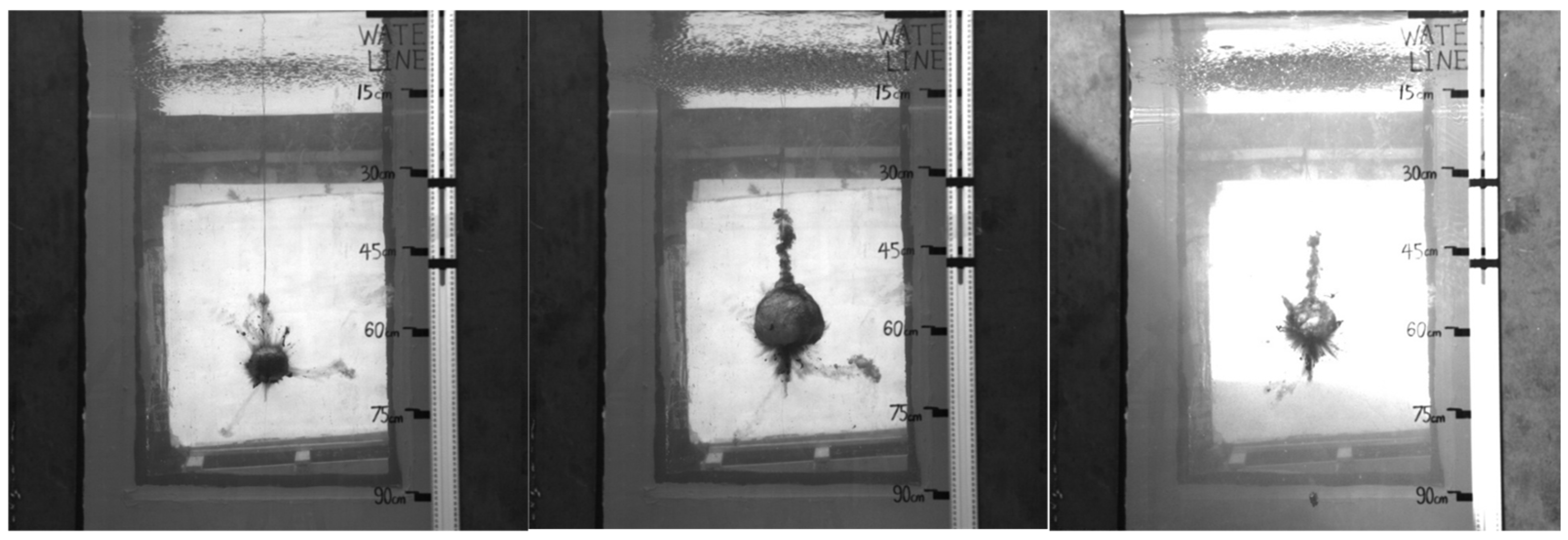
For explosion bubbles, their boundary motion velocity spans an extremely wide range (plummeting from an initial several kilometers per second to zero), resulting in highly transient changes in mass transfer boundary layer thickness and intensely unsteady characteristics in interfacial mass transfer rates. Beyond convective mass transfer as a fundamental dissipation mechanism, another dominant mass loss mechanism emerges during the high-speed contraction phase of explosion bubbles: detonation products contain substantial insoluble macromolecular elemental substances (e.g., solid carbon particles) whose physical inertia far exceeds that of conventional gas molecules; During the rapid contraction of the bubble, the inward radial motion of these macromolecular elemental substances severely lags behind the contraction velocity of the bubble boundary. This significant inertial discrepancy causes the macromolecular elemental substances to directly penetrate the gas–liquid phase interface, being stripped off or detached from the bubble interior into the surrounding water. As shown in Figure 1, the objective existence of this inertial scattering mechanism has been visually confirmed by high-speed photographic results from multiple explosion bubble experiments [29].
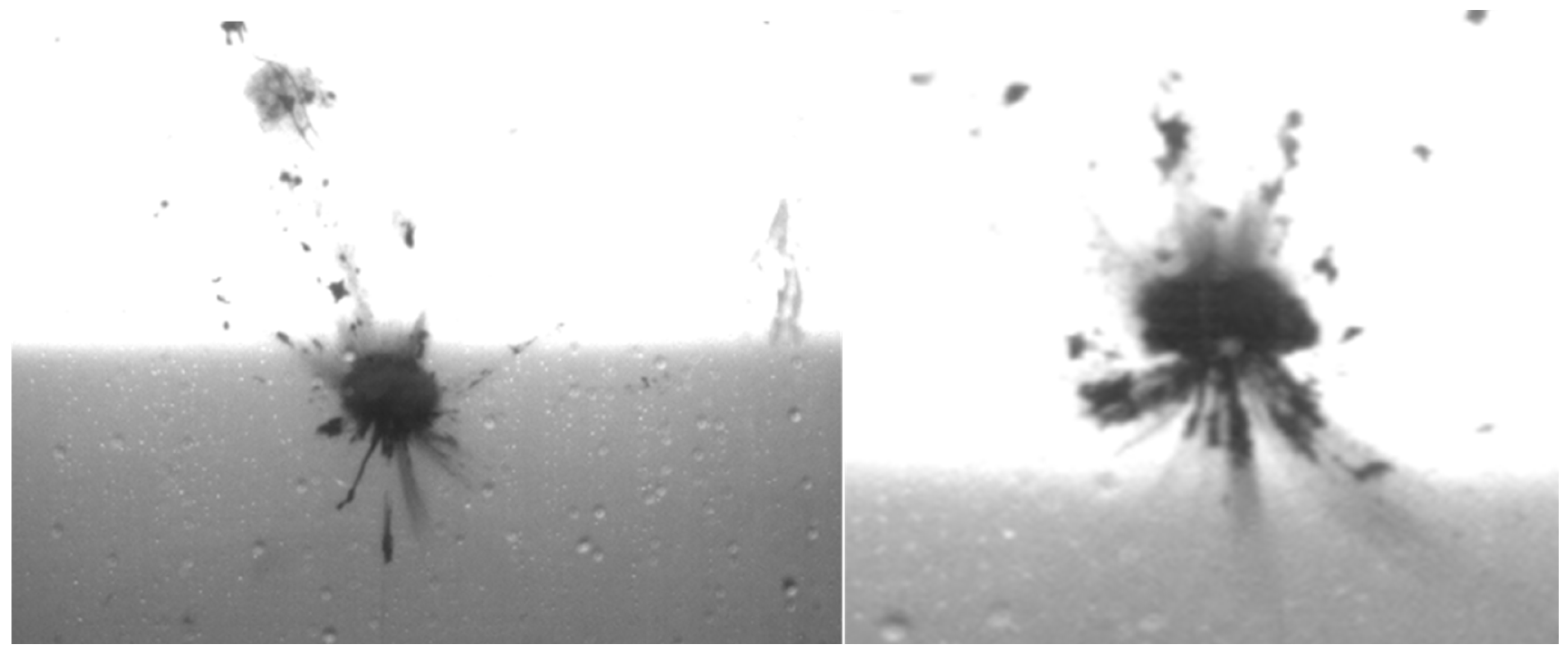
Observation of high-speed photographic images of explosion bubbles reveals a pronounced ‘wake’ characteristic during the contraction phase. As shown in Figure 2, this phenomenon is attributed to the precipitation and stripping of elemental carbon from the solid phase within the detonation products; and the geometric length of the ‘wake’ positively correlates with the contraction velocity of the bubble boundary—that is, the faster the boundary velocity, the more significant the inertial stripping effect.
In summary, the mass loss of explosion bubbles is primarily driven cooperatively by two mechanisms: firstly, convective mass transfer of soluble detonation product components across the phase interface; The second mechanism is the inertial scattering of insoluble solid products (primarily composed of elemental carbon) dispersed from the bubble interior. The presence of these products not only reduces the internal energy density of the bubble but also directly compromises the strength and dynamic stability of the bubble boundary, resulting in premature collapse and significantly diminished pulsation cycles under high hydrostatic pressure. Given that inertial scattering involves complex mechanical challenges of multiphase flow coupling at extremely high Reynolds numbers, current research remains at a qualitative analysis level; accurate quantitative characterization requires further investigation. Regarding the first convective mass transfer mechanism, this paper contends that: due to the instantaneous initial detonation pressure reaching several GPa, far exceeding the ambient pressure in deep-water environments, the motion velocity at the bubble boundary approaches the speed of sound. In comparison, the dissolution rate of detonation products into the aqueous medium and the rate of mass exchange are significantly lower than the fluid motion velocity. Therefore, during the initial expansion phase, the impact of mass loss on the energy output of the initial shock wave and bubble energy is minimal and can be neglected in macroscopic kinetics calculations.
In contrast to the condensation process of water vapor at the interface, which primarily involves latent heat exchange with the ambient medium and yields a reversible total mass change, the solid free carbon particles generated by explosives with negative oxygen balance characteristics (e.g., TNT) possess significantly greater physical inertia. During the extremely rapid contraction phase, the inertial scattering of these insoluble solid-phase particles results in a permanent, irreversible loss of the working substance at the bubble core, thereby playing a dominant role in triggering the macroscopic stepwise decay of the pulsation energy.

3.2. Theoretical Model of Mass Loss

Based on the classical Fick’s first law and Fick’s second law in mass transfer theory, the fundamental governing equations for Mass loss in explosion bubbles can be expressed as:
c t = D 2 c = D 2 c r 2 + 2 r c r
where c is the solute concentration, D is the diffusion coefficient.
Under normal temperature and pressure, the diffusion coefficient D of typical gaseous products in water is on the order of 10 9   m 2 / s . The present model employs a constant D as a first-order approximation to capture the macroscopic magnitude of convective mass transfer; accounting for the transient nonlinear response of the actual diffusion coefficient D to temperature and pressure will be a key step in future model refinement.
Based on classical gas–liquid mass transfer theory and the governing equations for convective mass transfer, combined with the pulsation characteristics of explosion bubbles, this paper establishes a theoretical model for mass loss of explosion products in underwater detonations. The fundamental governing equation for convective mass transfer of explosion products during pulsation is:
m ˙ = 4 π R 2 D [ c i t e s t a r t ] c r r = R
[ c i t e s t a r t ] c r r = R = c s c l l d i f f
where D is the diffusion coefficient of explosion products in water (units: m 2 / s ); c s is the equilibrium concentration of explosion products at the bubble boundary. Neglecting mass transfer resistance between gas and liquid, this equilibrium concentration is considered to be the saturation concentration of the products in water. c l denotes the material concentration in the liquid phase. In the study of deep-water explosion bubbles, given the extensive nature of the water body, it can be approximated as 0. l d i f f represents the instantaneous diffusion penetration depth. To account for material diffusion mechanisms during bubble pulsation, the bubble structure is simplified into two components: a bubble core with the highest internal heat and a ‘cold’ boundary layer in thermal equilibrium with the liquid. For moving bubbles, the instantaneous diffusion penetration depth is l d i f f = R D / R ˙ ; When the bubble boundary velocity approaches zero, the instantaneous diffusion depth tends towards infinity. Based on the fundamental equation of convective mass transfer and employing Fourier series representation, the desired cut-off diffusion depth is derived as R / π . Consequently, the final expression becomes:
l d i f f = m i n R D R ˙ , R π
The saturation concentration of explosion products is primarily determined using the classical Henry’s law for gas solubility in water. Henry’s law states that in a sealed container at constant temperature, the partial pressure of a gas is proportional to its molar concentration dissolved in the liquid, commonly expressed as:
P B = k x , B x B
Henry coefficients k vary significantly for various substances at different temperatures. Based on the pressure conditions of the aqueous medium, the saturation concentration of explosion products at the gas–liquid interface of the explosion bubble c s can be determined.
To incorporate the mass loss model into the established theoretical calculation model for deep-water explosion bubbles, the mass loss mathematical model must be integrated with the JWL equation of state for explosives. The algorithm implementation is primarily based on the following assumptions:
During the numerical solution of the bubble dynamics equations, considering the diffusion time scale, within each extremely short time step calculated using the ODE45 solver, it is approximated that the mass diffusion during this period is negligible and does not cause changes in bubble radius or boundary velocity.
Assuming the ambient water body is sufficiently large, the mass diffusion caused by the explosion bubble does not affect global concentration changes in the substance within the entire water domain.
Only the mass transfer process of explosion products entering the water is considered; the hydration process in water is neglected. It is assumed that after diffusing from the bubble into water, explosion products do not accumulate in concentration around the explosion bubble.
Based on these assumptions, the mass loss model can be incorporated into the JWL equation of state for explosion products. Within each computational time step, instantaneous mass loss is introduced, a new specific volume V is calculated and substituted into the JWL equation, thereby achieving the numerical model solution for deep-water explosion problems considering mass loss. The specific correction methodology is illustrated in Figure 3.

4. Underwater Explosion Tests and Analysis of Mass Loss Effects

To validate the rationality and reliability of the proposed model, this section analyzes the effects of mass loss on underwater explosion bubble pulsation characteristics through integration of theoretical modeling with experimental data.

4.1. Underwater Explosion Bubble Test

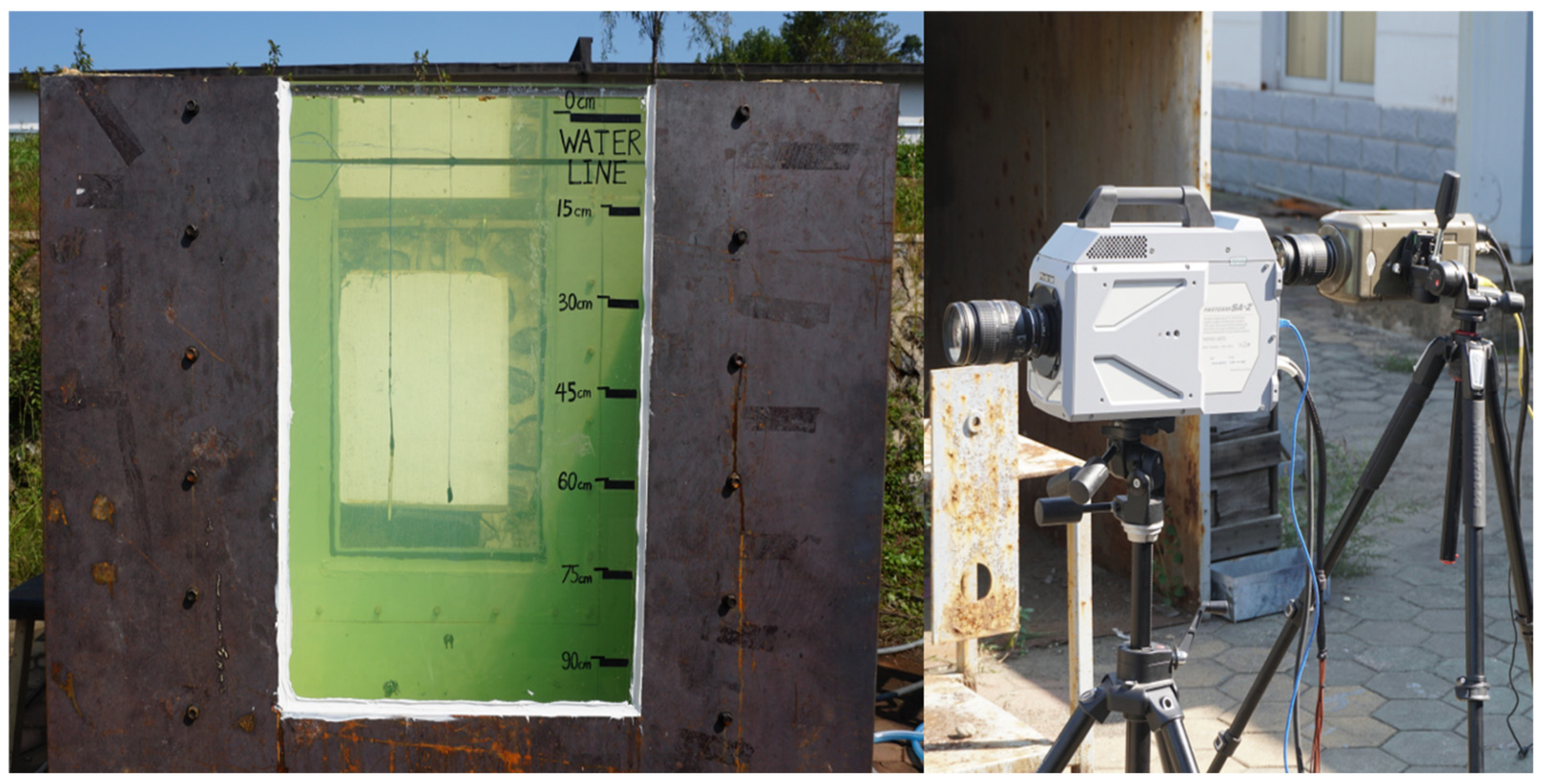
To verify the accuracy of the developed numerical model in describing explosive bubble dynamic evolution behavior, benchmark validation was performed against experimental results from explosive bubble tank tests in shallow water, as shown in Figure 4. The assessment focused on the model’s predictive capabilities for jet formation and migration behavior under gravitational effects. Aquarium testing was conducted in a 1 m × 1 m × 1 m explosion water tank using 1 g equivalent CL-20, PETN, and RDX explosives, with detonation depth set at 0.6 m. The complete physical process of bubble pulsation was recorded through the aquarium’s side-mounted optical observation window using a high-speed camera system operating at 20,000 FPS.

4.2. Experimental Results

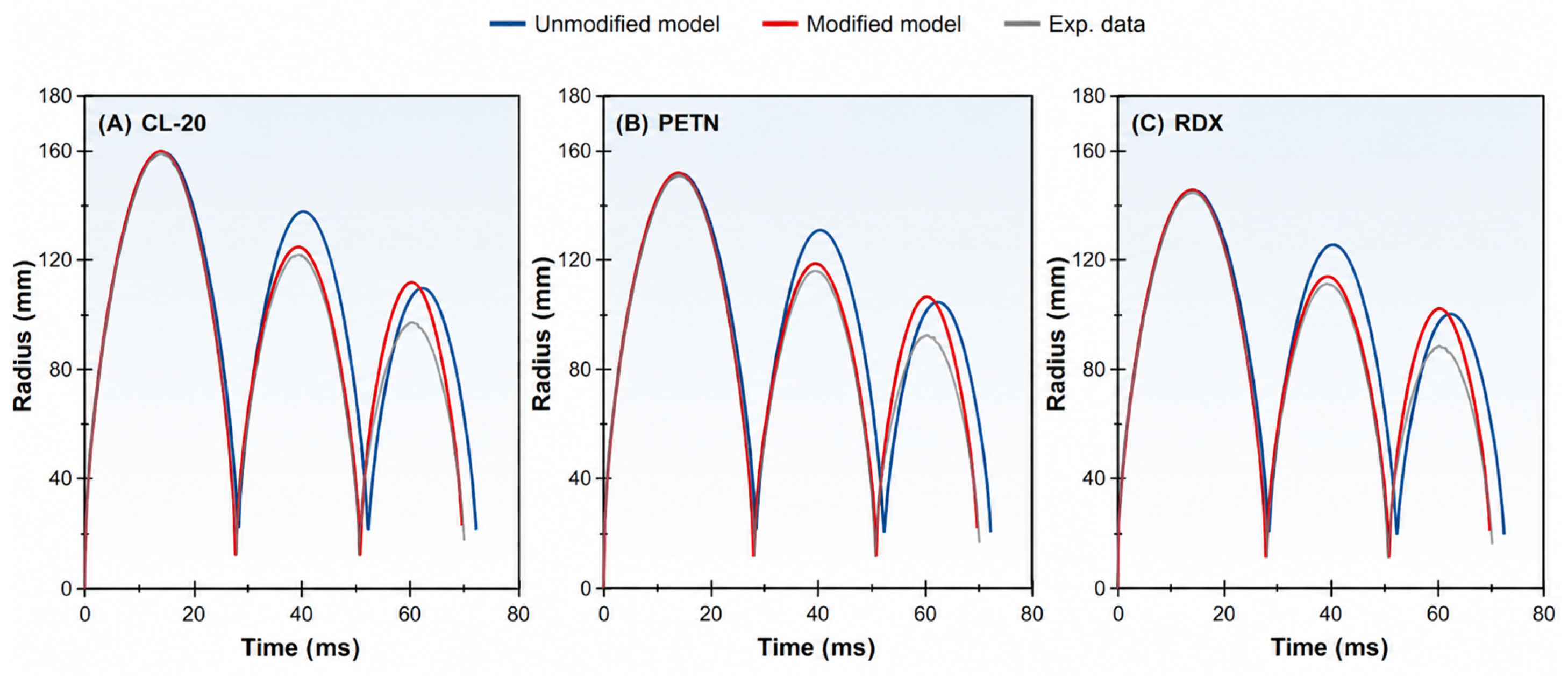
Bubble radius evolution consistently demonstrated characteristic periodic oscillations, exhibiting rapid expansion, collapse, and multiple re-expansion phases. From the experimental curves in Figure 5, it is evident that the bubble undergoes at least three distinct pulsation periods. During the first cycle, the bubble rapidly expands to its maximum radius before undergoing violent collapse. Subsequently, during the second and third cycles, the amplitude gradually attenuates while the period slightly prolongs, demonstrating significant energy dissipation characteristics. This phenomenon aligns with classical underwater explosion bubble dynamics principles, confirming that the experimental system effectively captures the primary physical processes of bubble evolution.
Experimental curves demonstrate that the proposed model provides more accurate predictions for bubble pulsation across different explosive types, particularly at time scales beyond the first pulsation period. With corrections applied, the model exhibits significantly improved prediction accuracy during bubble jet formation and subsequent multi-cycle oscillations.

4.3. Analysis of the Influence of Mass Loss from Exploding Bubbles

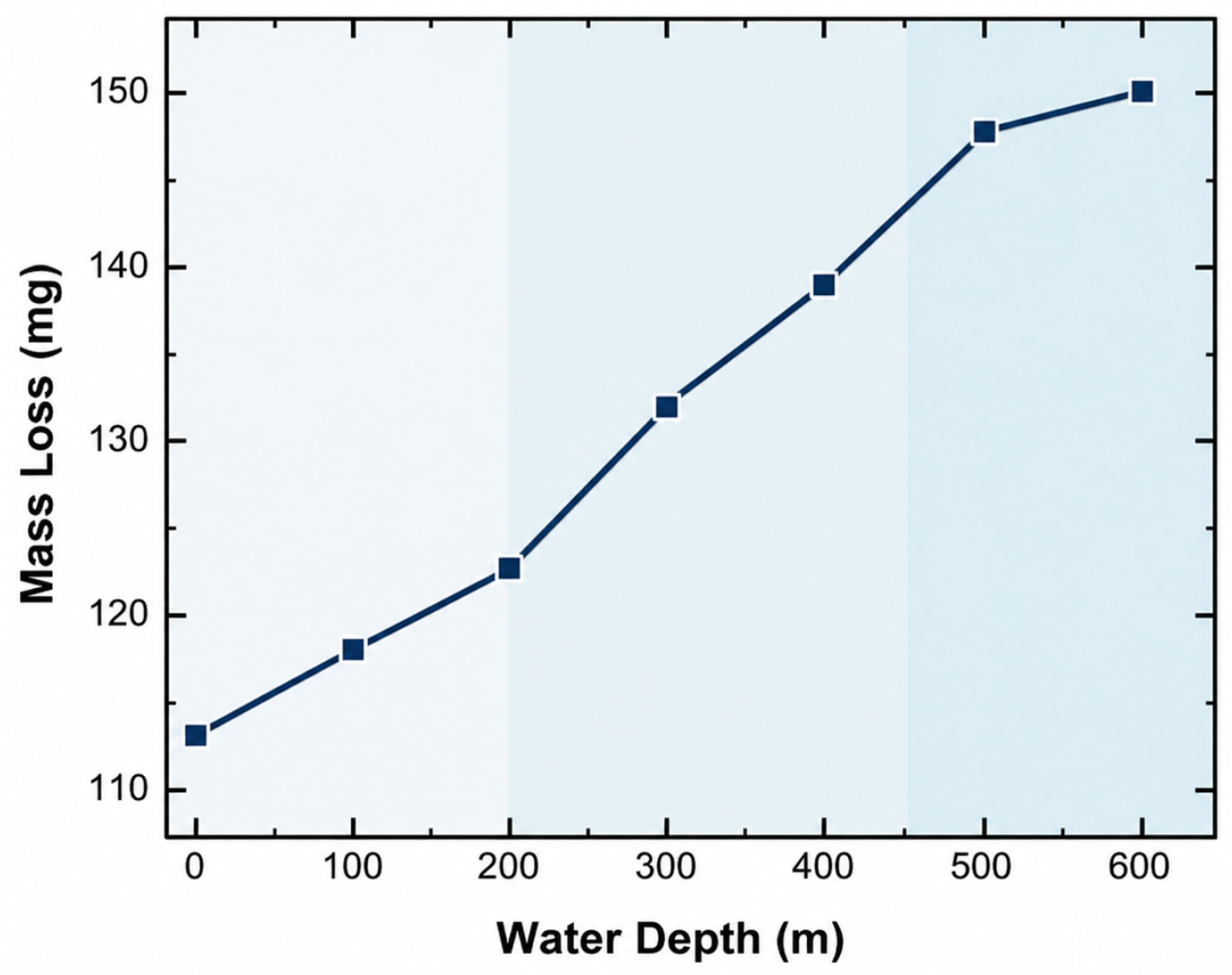
Based on the deep-water explosion mass loss theoretical model established previously, this section quantitatively assesses the mechanism. Computational conditions employ a 30 g TNT equivalent explosive. To investigate the controlling influence of hydrostatic pressure on the dissipation process, mass loss patterns under varying water depths were first calculated for the convective mass transfer mechanism. Given that the effective damage work of explosion bubbles is predominantly concentrated within the first two pulsation periods, the analysis extracted the cumulative mass loss parameter at the conclusion of the second bubble pulsation. The computational results are presented in Figure 6.
As shown in Figure 6, bubble mass loss induced by convective mass transfer demonstrates a monotonic increase with greater water depth. Nevertheless, within 600 m water depth, the total dissipation remains at the milligram scale. Hydrodynamic analysis reveals that although deep-water hydrostatic pressure compresses bubble volume and diminishes gas–liquid interfacial contact area, it concurrently elevates internal bubble product concentration and solubility. This consequently amplifies the interfacial chemical potential gradient substantially. Quantitative results demonstrate that the enhancement of mass transfer by chemical potential gradients significantly outweighs the inhibition caused by reduced contact area. Consequently, the bubble’s total mass loss increases with water depth, indicating that deep-water environments substantially drive explosion bubble mass loss.
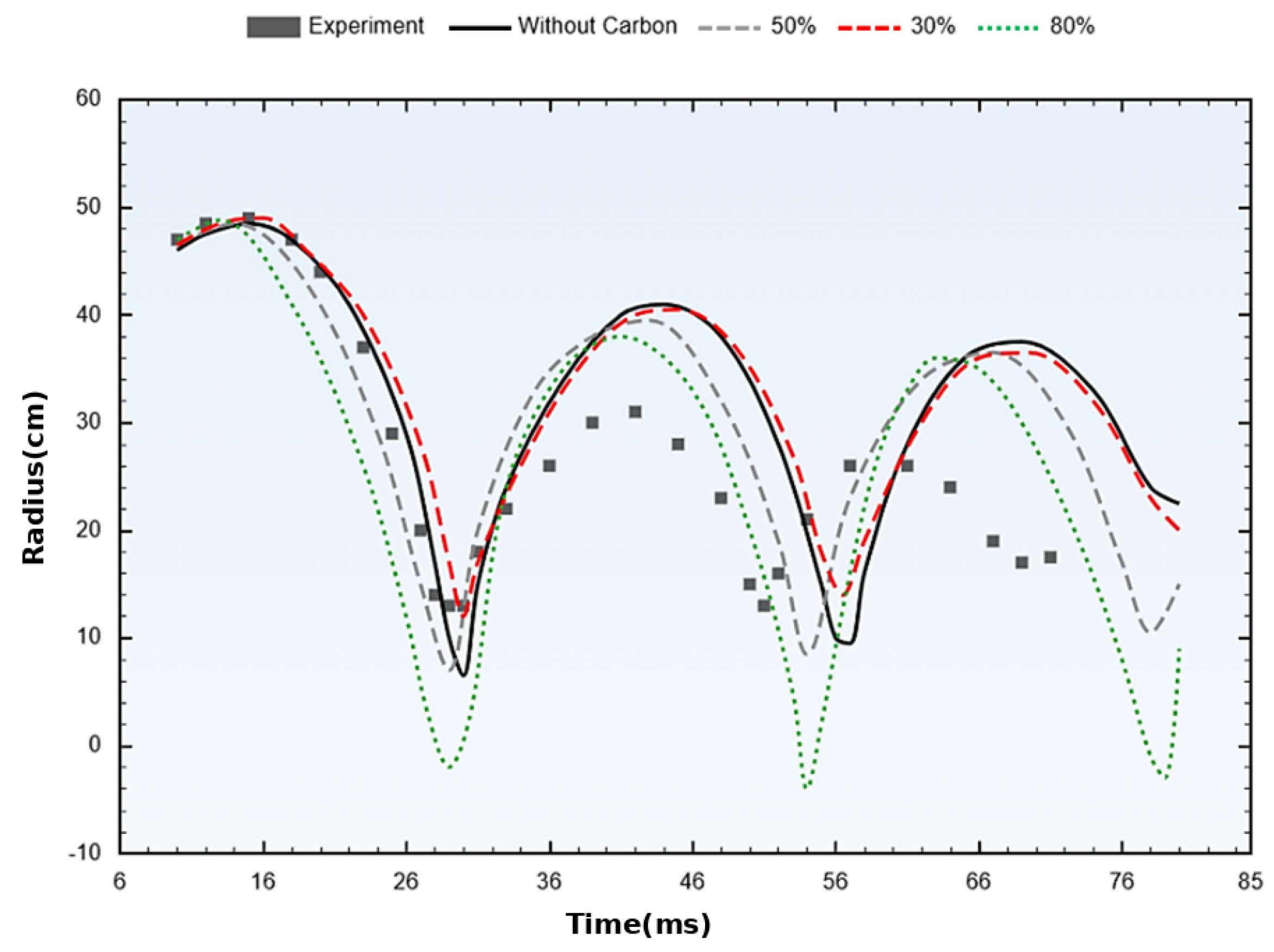
Due to the current lack of precise micro-analytical solutions for the dynamic stripping of solid particles in extreme transient turbulence, this paper investigates the effect of the carbon shedding rate through a parametric study. The results indicate that the shedding rate primarily controls the slope of amplitude decay in subsequent pulsation cycles. For the TNT explosive studied here, a shedding rate of 50% provides the best phenomenological agreement with the energy decay characteristics observed in the second and third cycles of the experiments. This value can be regarded as an empirical phenomenological parameter that reflects the specific carbon-containing characteristics of the explosive.
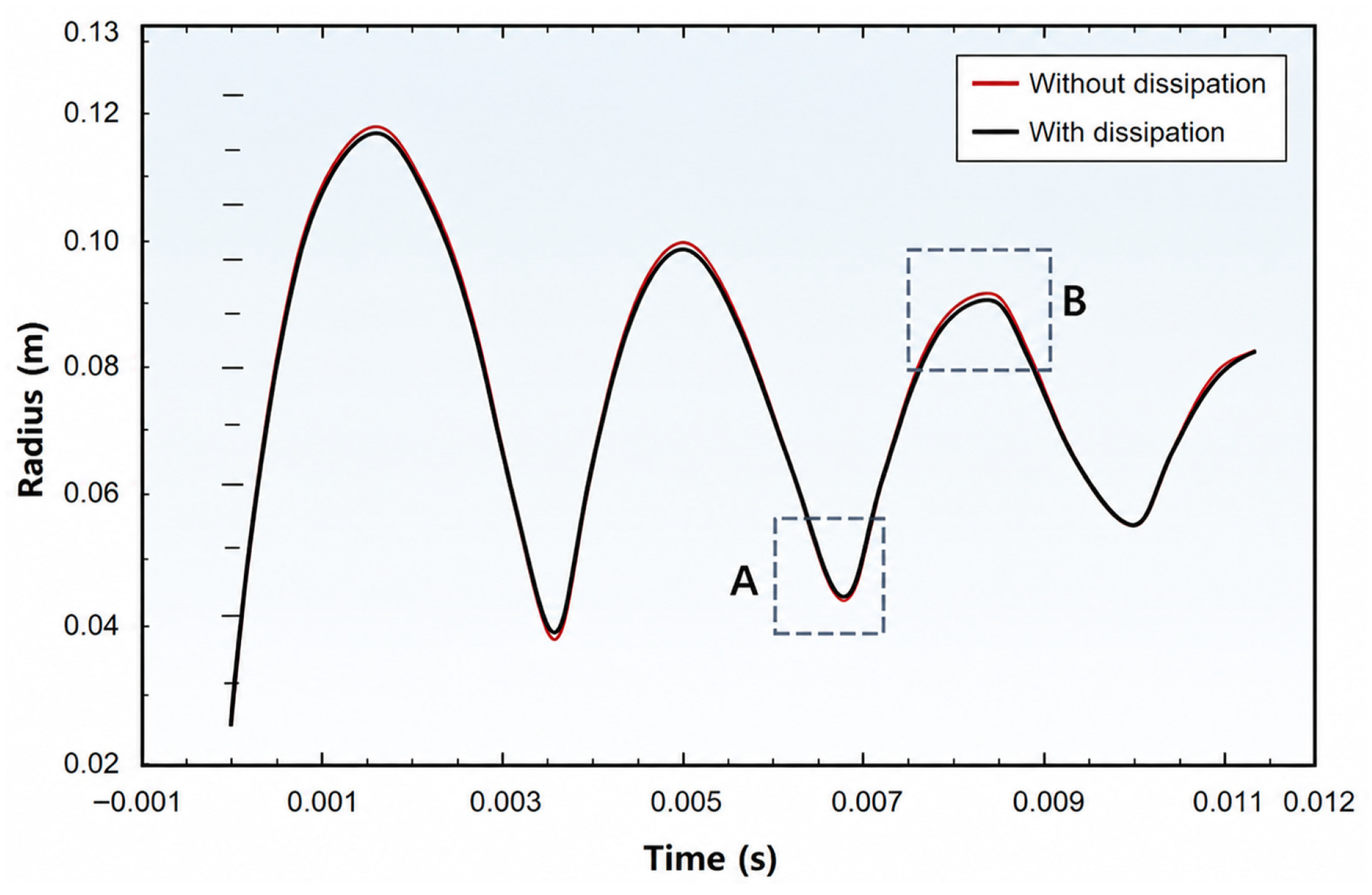
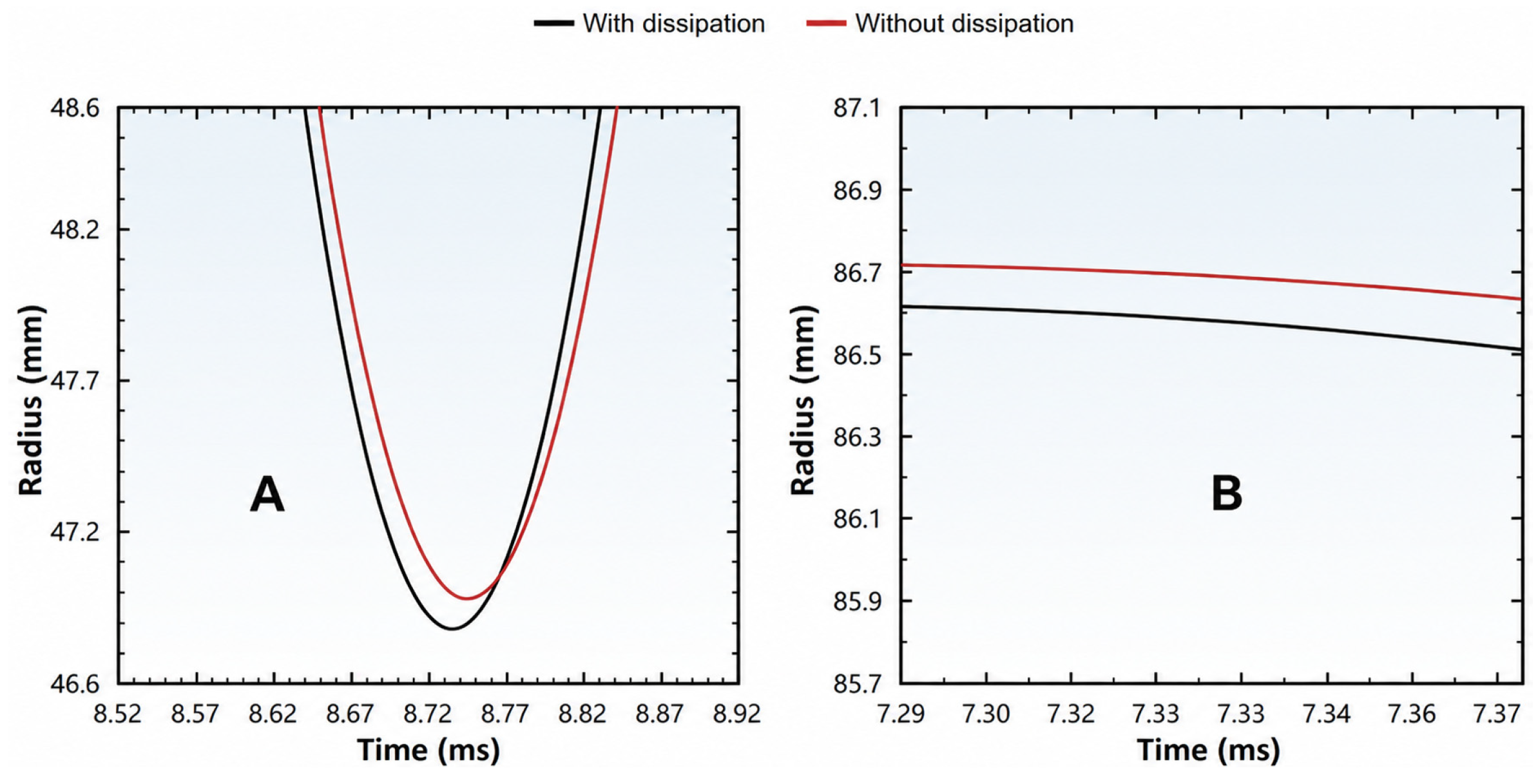
To evaluate the macroscopic impact of mass loss on bubble load characteristics, model predictions at 600 m water depth were extracted. Evolution curves incorporating convective mass transfer were compared with radius-time (R-t) curves from the original dissipation-free model (Figure 7 and Figure 8). Comparison results demonstrate that the two curves exhibit high coincidence at the macroscopic scale, indicating that the convective mass transfer mechanism exerts minimal interference on the overall bubble pulsation process. Further observation of locally magnified views depicting the second pulsation’s minimum radius and the third pulsation’s maximum radius (Figure 8B) reveals that mass loss induces a slight shortening of the bubble pulsation period and a decaying trend in local extreme radii. The underlying physical mechanism is that mass loss causes gas density attenuation and internal pressure reduction within the bubble, consequently diminishing its work capacity during subsequent expansion phases. Although this cumulative dissipation effect gradually manifests with increasing pulsation cycles, its substantial impact on overall loading characteristics is essentially negligible due to the vast temporal scale difference between macroscopic bubble momentum exchange and microscopic convective mass transfer.
Synthesizing prior mechanistic analysis, the detachment of insoluble solid carbon particles primarily occurs during the bubble’s intense contraction phase, exhibiting particular intensity at the first pulsation period’s conclusion. To quantify the impact of this mechanism, different proportions of carbon loss were selected in this study to investigate their effects on explosion bubble pulsation. The results show that the dispersion of carbonaceous products has a significant influence on bubble pulsation, especially during the pulsation periods after the first oscillation. The calculation results with 50% carbon loss show better agreement with the experimental values. However, it is still impossible to quantitatively evaluate the actual carbon loss at present. Future work will improve the experimental measurement methods to quantitatively evaluate the dissipation of insoluble products. Analysis of Figure 9 indicates that the elemental carbon detachment effect significantly modulates bubble dynamics behavior, resulting in stepwise attenuation of the bubble’s subsequent expansion radii and pulsation periods. Comparing explosives with different oxygen balances, such as TNT (which exhibits a highly negative oxygen balance) and CL-20 (which has a relatively good oxygen balance) as shown in Figure 5, it can be clearly observed that the energy decay rate and amplitude reduction in the carbon-rich explosive TNT during the late pulsation stage are significantly greater than those of CL-20. This finding, from a macroscopic perspective, provides corroborative evidence for the actual physical contribution of the inertial scattering mechanism of solid carbon particles in dominating the mass dissipation process. Although this mechanism does not substantially alter the macroscopic morphology of the first pulsation period, it profoundly influences load transport during subsequent decay cycles. Compared with the original model [30], the computational curve incorporating the elemental carbon dissipation mechanism demonstrates substantially improved agreement with experimental data points, effectively enhancing the model’s long-term evolution prediction accuracy.
The progressively increasing divergence between calculations and experiments during the second and subsequent pulsation cycles arises not only from the accumulation of errors caused by simplifications in the mass dissipation model, but more importantly from the inherent limitations of the one-dimensional spherically symmetric model. In the actual evolution, gravity/buoyancy-driven asymmetric collapse induces a high-speed jet, which converts part of the internal energy into irreversible turbulent kinetic energy in the flow field. This three-dimensional energy dissipation mechanism is not captured in the current one-dimensional analytical framework, and is the primary reason why the predicted bubble radius in the later stages is slightly too large.
Furthermore, the introduction of mass dissipation fundamentally alters both mass conservation and energy conservation of the bubble, thereby modifying its dynamic response in terms of both radius amplitude and pulsation period. During the expansion phase, the continuous loss of detonation products reduces the amount of material available for effective work, thereby lowering the maximum radius attainable by the bubble. During contraction and rebound, mass loss does not cease; detonation products continue to escape outward. This not only directly reduces the total mass available for bubble rebound, but also causes part of the energy carried away with the products in the form of heat to be unavailable for subsequent expansions, further decreasing the bubble radius. The shortening of the pulsation period arises from an increase in the equivalent stiffness of the system and a decrease in its equivalent inertia: mass dissipation reduces the total amount of gas inside the bubble when it contracts to its minimum volume, lowering the compression resistance and thus increasing the equivalent stiffness; simultaneously, the continuous reduction in gas mass inside the bubble decreases the system inertia. Together, these effects shorten the time required for the bubble to complete one expansion-contraction cycle.
In summary, the mass loss effect objectively influences the nonlinear evolution of deep-water explosion bubbles, manifesting macroscopically as dual attenuation in both geometric scale and pulsation period, with this effect becoming more pronounced with increasing water depth. However, a significant disparity exists in the relative contributions of convective mass transfer versus inertial scattering, the two core mechanisms, to bubble load characteristics. The revised computational model incorporating both dissipation mechanisms can more faithfully reproduce the transient load attenuation process of deep-water explosion bubbles following the first pulsation period.

5. Conclusions

This paper focuses on explosion bubbles, integrating the JWL equation of state with bubble dynamics equations to establish a one-dimensional spherical pulsation analytical model. We propose an explosion bubble mass loss analysis model upon this foundation. The model enables more reliable predictive calculations beyond the first pulsation cycle, revealing the mass loss mechanisms in explosion bubbles. This research supports underwater explosion energy assessment and spatial dynamic behavior analysis of explosion bubbles. The principal findings are summarized as follows:
(1)
Based on bubble dynamics equations, the JWL equation of state for explosives was introduced. Combined with detonation theory analysis of explosives, an analytical model for spherical pulsation of explosion bubbles was proposed. Combined with classical literature data, the scientific rationality of the proposed model was demonstrated, enabling a high-precision solution for spherical pulsation of explosion bubbles within the first pulsation period.
(2)
Based on analysis of detonation product characteristics and the physical process of underwater explosion bubble pulsation, two primary mass loss mechanisms for explosion bubble pulsation were proposed: convective mass transfer at the gas–liquid interface and inertial scattering of insoluble products. On this basis, a mass loss model for explosion bubble pulsation based on classical mass transfer theory was developed. A correction method for the analytical model of explosion bubbles accounting for mass loss was proposed, and the reliability of the model was validated through experiments.
(3)
Based on the proposed model and experimental data, the influence of mass loss on explosion bubble pulsation was analyzed. The findings reveal that among the two mass loss mechanisms proposed in this study, the influence of inertial scattering of insoluble products is more significant, while the effect of convective mass transfer is minimal. Mass loss has minimal impact on the first pulsation of explosion bubbles, but its influence becomes more pronounced during cycles after the second pulsation. Quantitative analysis indicates that the inertial scattering mechanism of insoluble products plays a dominant role, contributing over 90% of the apparent mass and energy loss, whereas the convective mass transfer effect based on dissolution-diffusion accounts for less than 10% of the macroscopic loss on the microsecond-to-millisecond timescale.
Although the present model achieves good predictive results for the first and second pulsation cycles, it is based on the spherical symmetry assumption and adopts a simplified dissipation model, thus failing to capture the three-dimensional complex effects in the late stage. Addressing this limitation is an important direction for the future three-dimensional extension of the model.

Author Contributions

Conceptualization, L.D.; formal analysis, T.L.; data curation, T.L.; writing—original draft preparation, T.L.; writing—review, Y.G.; and project administration, H.Z. All authors have read and agreed to the published version of the manuscript.

Funding

This research received no external funding.

Institutional Review Board Statement

Not applicable.

Informed Consent Statement

Not applicable.

Data Availability Statement

Data is contained within the article.

Conflicts of Interest

The authors declare no conflicts of interest.

Abbreviations

The following abbreviations are used in this manuscript:
TNTTrinitrotoluene
CL-20Hexanitrohexaazaisowurtzitane
PETNPentaerythritol tetranitrate
RDXCyclotrimethylenetrinitramine

References

  1. Shima, A. Studies on bubble dynamics. Shock Waves 1997, 7, 33–42. [Google Scholar] [CrossRef]
  2. Besant, W.H. A Treatise on Hydrostatics and Hydrodynamics; Cambridge University Press: London, UK, 1859; pp. 92–97. [Google Scholar]
  3. Rayleigh, L. On the pressure developed in a liquid during the collapse of a spherical cavity. Lond. Edinb. Dublin Philos. Mag. J. Sci. 1917, 6, 94–98. [Google Scholar] [CrossRef]
  4. Lamb, H. On the early stages of a submarine explosion. Lond. Edinb. Dublin Philos. Mag. J. Sci. 1923, 6, 257–265. [Google Scholar] [CrossRef]
  5. Plesset, M.S. The dynamics of cavitation bubbles. J. Appl. Mech. 1949, 16, 277–282. [Google Scholar] [CrossRef]
  6. Herring, C. Theory of the Pulsations of the Gas Bubble Produced by an Underwater Explosion; Department of the Navy, Office of Naval Research: Washington, DC, USA, 1950; pp. 35–130. [Google Scholar]
  7. Trilling, L. The collapse and rebound of a gas bubble. J. Appl. Phys. 1952, 23, 14–17. [Google Scholar] [CrossRef]
  8. Gilmore, F.R. The Growth or Collapse of a Spherical Bubble in a Viscous Compressible Liquid; Engineering Report No.26; California Institute of Technology: Pasadena, CA, USA, 1952. [Google Scholar]
  9. Kirkwood, J.G.; Bethe, H. The Pressure Wave Produced by an Underwater Explosion, Basic Propagation Theory, Part 1; Report No.588; OSRD: Washington, DC, USA, 1942. [Google Scholar]
  10. Keller, J.B.; Kolodner, I.I. Damping of Underwater Explosion Bubble Oscillation. J. Appl. Phys. 1956, 27, 1152–1161. [Google Scholar] [CrossRef]
  11. Flynn, H.G. Cavitation dynamics. I. A mathematical formulation. Acoust. Soc. Am. J. 1975, 57, 1379–1396. [Google Scholar] [CrossRef]
  12. Flynn, H.G. Cavitation dynamics: II. Free pulsations and models for cavitation bubbles. J. Acoust. Soc. Am. 1975, 58, 1160–1170. [Google Scholar] [CrossRef]
  13. Lastman, G.J.; Wentzell, R.A. Cavitation of a bubble in an inviscid compressible liquid, with comparisons to a viscous incompressible liquid. Phys. Fluids 1979, 22, 2259–2266. [Google Scholar] [CrossRef]
  14. Cramer, E. The dynamics and acoustic emission of bubbles driven by a sound field. In Cavitation and Inhomogeneities in Underwater Acoustics; Springer: Berlin/Heidelberg, Germany, 1980; pp. 54–63. [Google Scholar]
  15. Rath, H.J. Free and forced oscillations of spherical gas bubbles and their translational motion in a compressible fluid. In Cavitation and Inhomogeneities in Underwater Acoustics; Springer: Berlin/Heidelberg, Germany, 1980; pp. 64–71. [Google Scholar]
  16. Keller, J.B.; Miksis, M. Bubble oscillations of large amplitude. J. Acoust. Soc. Am. 1980, 68, 628–633. [Google Scholar] [CrossRef]
  17. Prosperetti, A.; Lezzi, A. Bubble dynamics in a compressible liquid. Part 1. First-order theory. J. Fluid Mech. 1986, 168, 457–478. [Google Scholar] [CrossRef]
  18. Lighthill, M.J. A technique for rendering approximate solutions to physical problems uniformly valid. Phil. Mag. 1949, 40, 1179–1201. [Google Scholar] [CrossRef]
  19. Kuo, Y.H. On the flow of an incompressible viscous fluid past a flat plate at moderate Reynolds numbers. J. Math. Phys. 1953, 32, 83–101. [Google Scholar] [CrossRef]
  20. Tilmann, P.M. Nonlinear Sound-Scattering by Small Bubbles. In Cavitation and Inhomogeneities in Underwater Acoustics; Springer: Berlin/Heidelberg, Germany, 1980; pp. 113–118. [Google Scholar]
  21. Tomita, Y.; Shima, A. High-speed photographic observations of laser-induced cavitation bubbles in water. Acta Acust. United Acust. 1990, 71, 161–171. [Google Scholar]
  22. Tomita, Y.; Shima, A.; Sato, K. Dynamic behavior of two-laser-induced bubbles in water. Appl. Phys. Lett. 1990, 57, 234–236. [Google Scholar] [CrossRef]
  23. Lezzi, A.; Prosperetti, A. Bubble dynamics in a compressible liquid. Part 2. Second-order theory. J. Fluid Mech. 1987, 185, 289–321. [Google Scholar] [CrossRef]
  24. Zhang, J.; Wang, S.; Jia, X.; Gao, Y.; Ma, F. An engineering application of Prosperetti and Lezzi equation to solve underwater explosion bubbles. Phys. Fluids 2021, 33, 017118. [Google Scholar] [CrossRef]
  25. Cole, R.H. Underwater Explosion; American Institute of Physics: College Park, MD, USA, 1948. [Google Scholar]
  26. Swift, E.; Decius, J.C.; Winget, C.L.; Brown, R.M.; Allen, B. Measurement of Bubble Pulse Phenomena, III: Radius and Period Studies; Navy Department, Bureau of Ordnance: Washington, DC, USA, 1947. [Google Scholar]
  27. Wang, B.; Zhang, Y.P.; Wang, Y.P. Experimental study on bubble oscillation formed during underwater explosions. Explos. Shock Waves 2008, 28, 572–576. [Google Scholar]
  28. Wang, B.; Zhang, Y.P.; Wang, Y.P. An Experimental Method of Studying Underwater Explosion Bubble Oscillation. Chin. J. High Press. Phys. 2009, 23, 332–337. [Google Scholar]
  29. Chao, H.; Bin, W.; Yuanping, Z.; Cangli, L.; Xiongliang, Y. Jet characteristics of explosion bubbles in free-field water from cylindrical charges. Explos. Shock Waves 2011, 31, 263–267. [Google Scholar]
  30. Swift, E.; Decius, J.C. Underwater Explosion Research; Office of Naval Research: Washington, DC, USA, 1950. [Google Scholar]
Figure 1. High-speed photographic image of an explosion bubble.
Applsci 16 04888 g001
Figure 2. High-speed photographic image of an explosion bubble from a small-yield explosive.
Applsci 16 04888 g002
Figure 3. Mass loss Correction Methodology for Explosion Bubbles.
Applsci 16 04888 g003
Figure 4. Experimental Setup Diagram.
Applsci 16 04888 g004
Figure 5. (A) CL-20 Explosive (B) PETN Explosive (C) RDX Explosive Data Comparative Analysis.
Applsci 16 04888 g005
Figure 6. Relationship Between Convective Mass Transfer Mass Loss and Water Depth.
Applsci 16 04888 g006
Figure 7. Computational result comparison between models incorporating convective mass transfer versus the original model.
Applsci 16 04888 g007
Figure 8. Partial enlargement of comparative curves. (A) Enlarged view of point A; (B) Enlarged view of point B.
Applsci 16 04888 g008
Figure 9. Comparison of calculated explosion bubble dynamics with experimental data incorporating mass loss corrections.
Applsci 16 04888 g009
Table 1. Experimental conditions from literature.
Test IDExplosive TypeCharge Mass/gWater Depth/m
1TNT272.00182.88
2PETN4.451.06
3PETN1.521.07
4TETRYL249.0091.44
Table 2. JWL equation of state for model-validation explosives.
Explosive TypeA/GPaB/GPaC/GPaR1R2ω
TNT371.23.2310.7344.150.950.30
PETN617.016.90.694.41.20.25
TETRYL586.8310.6710.7744.41.20.275
Table 3. Comparison of First Maximum Radius Results.
Test IDFirst Maximum
Radius/m
(Experimental)
First Maximum
Radius/m
(Calculated)
Relative Deviation
10.3790.3566.23%
20.02690.02535.77%
30.01920.01777.92%
40.4520.4471.10%
Table 4. Comparison of First Pulsation Period Results.
Test IDFirst Pulsation
Period/ms
(Experimental)
First Pulsation
Period/ms
(Calculated)
Relative Deviation
116.6715.636.24%
245.3144.591.59%
332.92231.1765.30%
426.8526.720.48%
Table 5. Comparison of bubble first pulsation period data.
Explosive Mass/gAmbient Pressure/MPaPulsation Period/ms
(Test)
Pulsation Period/ms
(Calculated)
Relative Deviation
1043.0412.9782.07%
52.5322.4762.21%
62.1782.1222.53%
3053.6133.5671.16%
63.1233.0671.79%
Table 6. Specific bubble energy data comparison.
Explosive Mass/gAmbient
Pressure/MPa
Specific Bubble
Energy/(MJ/kg)
(Experimental)
Specific Bubble
Energy/(MJ/kg)
(Calculated)
Relative Deviation
1041.9451.8325.81%
51.9631.8366.47%
61.9711.8396.60%
3051.9021.9221.16%
61.9311.9290.11%
Disclaimer/Publisher’s Note: The statements, opinions and data contained in all publications are solely those of the individual author(s) and contributor(s) and not of MDPI and/or the editor(s). MDPI and/or the editor(s) disclaim responsibility for any injury to people or property resulting from any ideas, methods, instructions or products referred to in the content.