1. Introduction
Against the backdrop of the “dual carbon” goals, photovoltaic (PV) power generation has developed rapidly. It is recognized that, in regions with extreme wind climates—such as hurricane-prone coastal areas, tornado alleys, or locations with frequent severe storms—fixed-tilt photovoltaic systems are often the preferred engineering solution. Fixed-tilt arrays, particularly those equipped with dual-anchoring at both the upper and lower edges, offer superior structural reliability and reduced mechanical complexity compared to trackers. In such environments, the incremental energy yield provided by tracking may not justify the increased structural risk and maintenance burden. However, in a substantial number of utility-scale solar markets—including those in much of the United States interior, Spain, the Middle East, India, and Australia—wind climates fall within a moderate range, where trackers can be safely deployed provided that appropriate wind-resistant design measures are implemented. The wind speeds and turbulence characteristics simulated in this study correspond to ASCE Category C terrain, which is representative of open-country exposure common to many utility-scale solar sites. Therefore, the dynamic amplification factors and response characteristics reported herein are directly applicable to a broad class of commercially relevant installations while also providing a benchmark for assessing when site-specific wind conditions may warrant the selection of fixed-tilt alternatives.
Because the PV modules of single-axis solar trackers can rotate with changes in the sun’s incident angle, their power generation efficiency exceeds that of fixed-tilt systems by 10~30% [
1,
2,
3,
4]; thus, they are widely used. To reduce the cost of power generation, PV modules have become increasingly large, support structures have become longer, and the dimensions of the main shaft have become smaller. Single-axis solar trackers consequently experience reduced torsional stiffness and lower natural frequencies, which increases their vulnerability to wind-induced vibration—a response that is primarily torsional [
5].
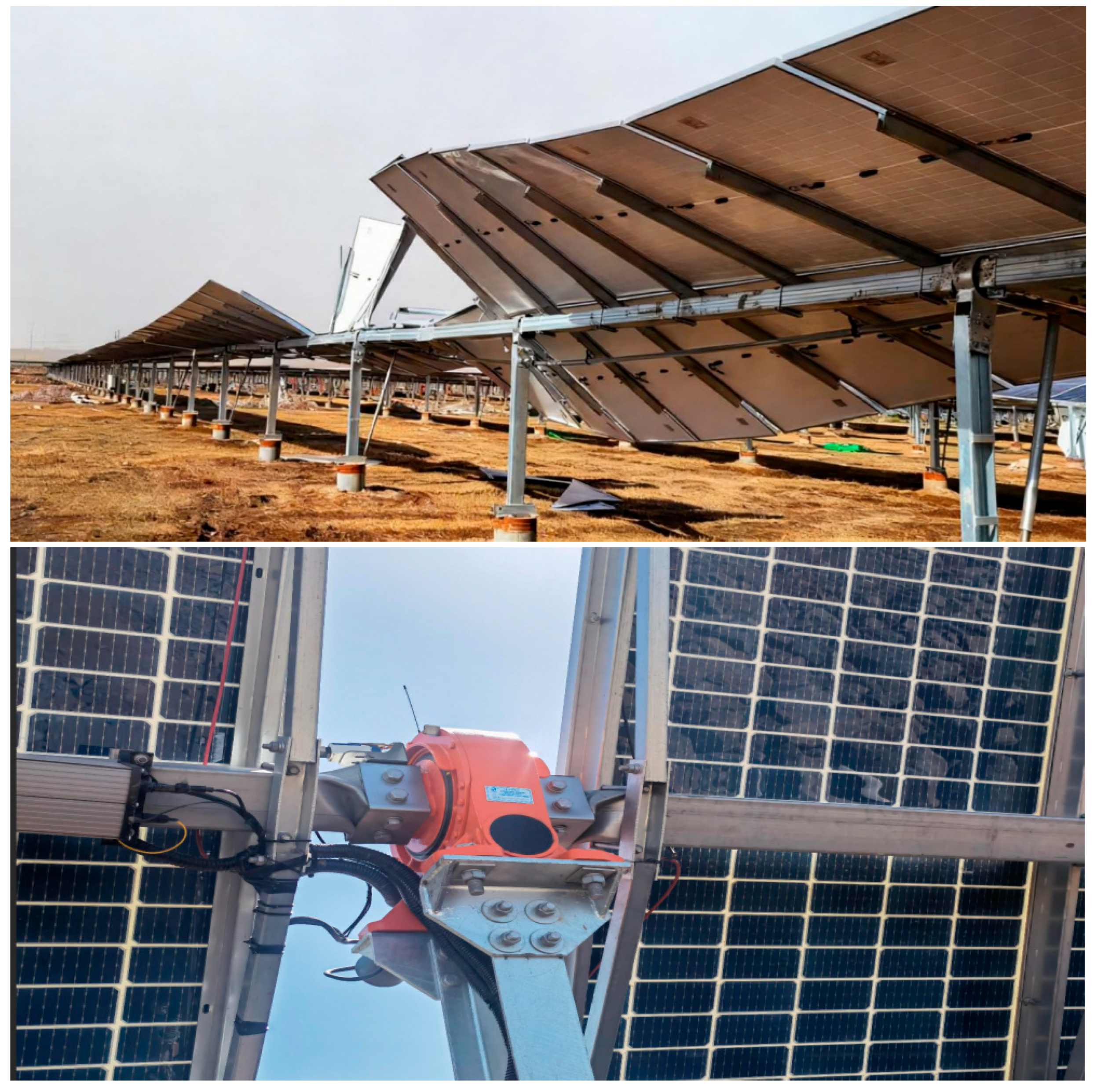
Figure 1 shows a single-axis solar tracker that suffered wind-induced vibration failure. The failure mode is torsional, and the most severe effects are concentrated near the drive motor.
Previous studies [
5,
6,
7,
8,
9,
10] have shown that single-axis solar trackers exhibit a predominantly torsional vibration mode. Previous studies [
11,
12,
13,
14,
15,
16] have also shown that solar trackers are subjected not only to wind pressure perpendicular to the PV modules but also to torque. Single-axis solar trackers are therefore vulnerable to wind-induced torsional vibration, a response that depends heavily on dynamic wind loads. A previous study conducted rigid model wind tunnel tests on a single of such trackers [
12]. The results showed that a higher standard deviation of the torque coefficient occurred when the PV modules were nearly horizontal. As the tilt angle increased, the torque fluctuation became smaller. At larger negative tilt angles, the torque coefficient exhibited a greater standard deviation than at positive tilt angles. References [
13,
17,
18] employed CFD numerical simulations to investigate the flow field around a single-row tracker. Their results indicate that pronounced vortex shedding occurs in the wake region of the tracker at large tilt angles, whereas this phenomenon is not observed at small tilt angles. A single row of single-axis solar trackers was tested using rigid model wind tunnel methods in [
12]. The results indicated the following: At smaller tilt angles, the torque coefficient fluctuations were large for all trackers. At larger tilt angles, the torque coefficient exhibited a larger standard deviation under negative angles than under positive angles. Additionally, at larger negative tilt angles, the torque coefficient of the R1 tracker showed a smaller standard deviation than that of the single-row tracker. This was attributed to the vortex shedding phenomenon of the R1 tracker under interference conditions at larger negative tilt angles. Larger tilt angles caused the torque coefficient standard deviation to be highest for the R2 tracker, and negative tilt angles yielded a larger standard deviation than positive tilt angles. The standard deviations of the torque coefficients for the remaining trackers were smaller than that of the R1 tracker. References [
19,
20,
21] used full aeroelastic model tests to study the aerodynamic instability of single-point drive solar trackers. The results showed that solar trackers are prone to aerodynamic instability within a tilt angle between 20~30° or −20~−15°. References [
6,
7,
10] conducted wind tunnel tests of aeroelastic models. The results indicated that solar trackers are more susceptible to aerodynamic instability when the tilt angle is small.
To date, through rigid model pressure measurement wind tunnel tests, certain progress has been made in analyzing dynamic wind loads on the surface of solar trackers. From this review, three specific knowledge gaps emerge: (i) there is a lack of studies that integrate full-array wind load measurements with three-dimensional structural response analysis to predict wind-induced vibrations across the entire tracker length; (ii) although interference effects on wind loads have been documented, their translation into structural response amplification or reduction has not been systematically quantified; and (iii) practical, region-specific dynamic amplification factors for single-axis solar tracker arrays—essential for wind-resistant design—are conspicuously absent from the literature. This study addresses these gaps by combining rigid model pressure measurements on an eight-row array with finite element time-history analysis to compute the wind-induced torsional response of a full-scale single-axis tracker and to derive the first region-specific DAF recommendations.
The specific objectives of this study are threefold: (1) to characterize the distribution of mean and fluctuating wind loads across a multi-row, single-axis tracker array under varying tilt and wind direction angles; (2) to compute the resulting wind-induced torsional responses using finite element time-history analysis, identifying critical regions and loading scenarios; and (3) to derive practical dynamic amplification factors for different zones of the tracker array, thereby providing engineers with quantitative tools for wind-resistant design.
It is important to note that the tilt angle of a solar tracker represents a fundamental trade-off between energy yield and structural wind vulnerability. Optimal energy generation typically requires the modules to be oriented as close to perpendicular to the incident solar radiation as possible, which varies diurnally and seasonally. This study does not aim to determine the optimal tilt angle from an energy yield perspective; rather, it aims to provide the wind-induced response data necessary for engineers to evaluate the structural consequences of any chosen tilt angle strategy. By quantifying the dynamic amplification factors and torsional responses across the full range of operational tilt angles (−60° to 60°), this study enables a more informed assessment of the structural risks associated with different tracking strategies.
2. Wind Tunnel Test and Response Calculation
2.1. Geometric Parameters of the Solar Tracker
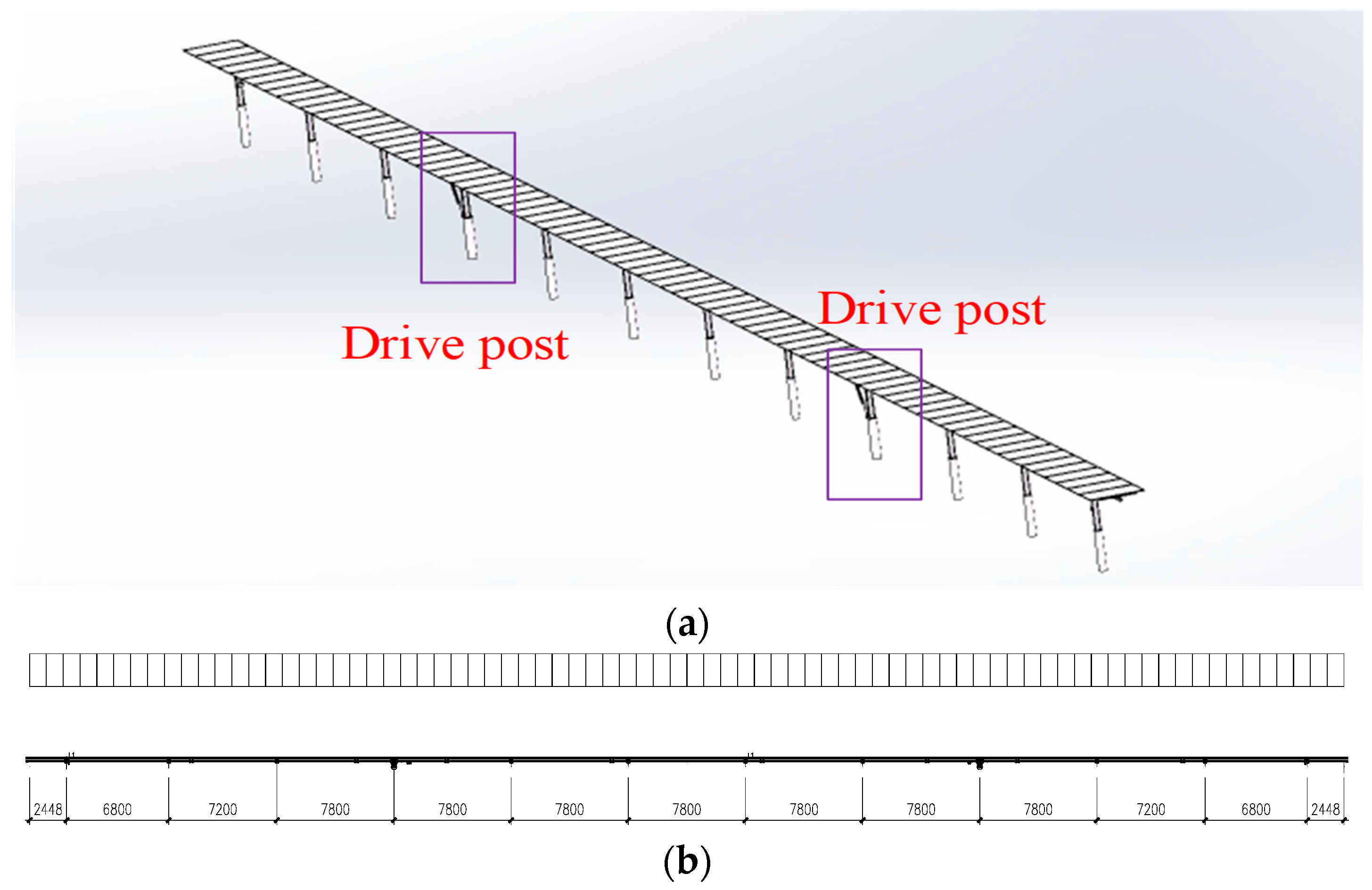
The studied solar tracker features a dual-point drive system, and its geometry is depicted in
Figure 2. Its chord length measures 2.187 m, and its total length reaches 87.5 m. The tracker is equipped with 78 PV modules, each with dimensions of 2187 mm × 1102 mm × 35 mm. The solar tracker adopts a dual-point drive system, with a total of 12 posts. Among them, 2 are drive posts, which provide torsional restraint for the rotating shaft, and the remaining 10 are ordinary posts, which can provide horizontal and vertical restraints for the shaft but cannot provide torsional restraint.
The specific parameters are shown in
Table 1.
2.2. Natural Vibration Characteristics of the Solar Tracker
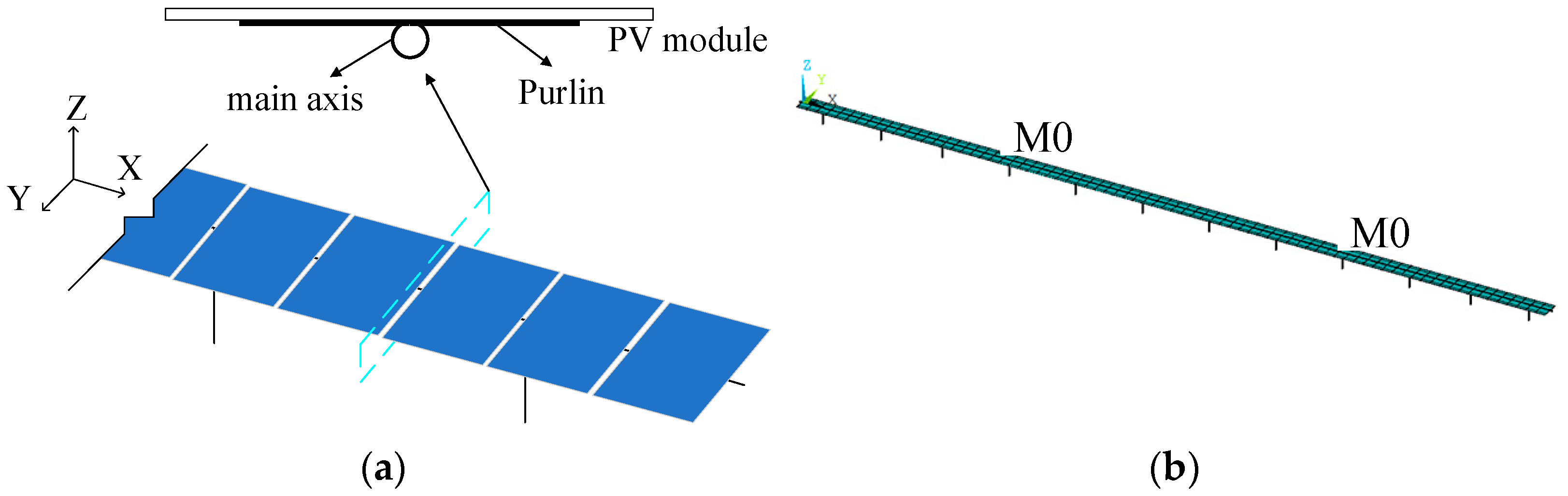
The wind-induced vibration of a single-axis solar tracker is strongly dependent on its natural vibration characteristics. The PV modules are connected to the purlins, and the purlins are connected to the main shaft, as shown in
Figure 3a. The natural vibration characteristics of the solar tracker were analyzed and studied using ANSYS V16.0. The Beam188 element has good applicability for slender structures; therefore, it was used to model the main shaft, posts, and purlins of the single-axis solar tracker. PV modules have a large planar area and small thickness; the Shell181 element was used to simulate and calculate the PV modules of the single-axis solar tracker. For the drive unit, only the influence of mass is considered; therefore, it was modeled using the Mass21 element. A structural model was established by inputting nodal coordinates and meshing elements. Fixed constraints were applied to the bases of the posts. At the drive motor locations, constraints restricting torsion around the X-axis were applied. At the tops of the posts without drive motors, the main shaft and vertical posts were coupled to allow the main shaft to rotate freely. The finite element model of the structure consists of the main shaft, posts, purlins, PV modules, and drive motors (M0), as shown in
Figure 3b.
Reference [
11] indicates that the natural vibration characteristics of a solar tracker exhibit little difference at different tilt angles; therefore, an analysis of the natural vibration characteristics was conducted at a tilt angle of 0°. The rotating shaft, purlins, and posts of the solar tracker are all made of steel. The frame of the PV modules is made of aluminum alloy, while the remaining parts are primarily made of glass-related materials. The specific parameters are shown in
Table 2.
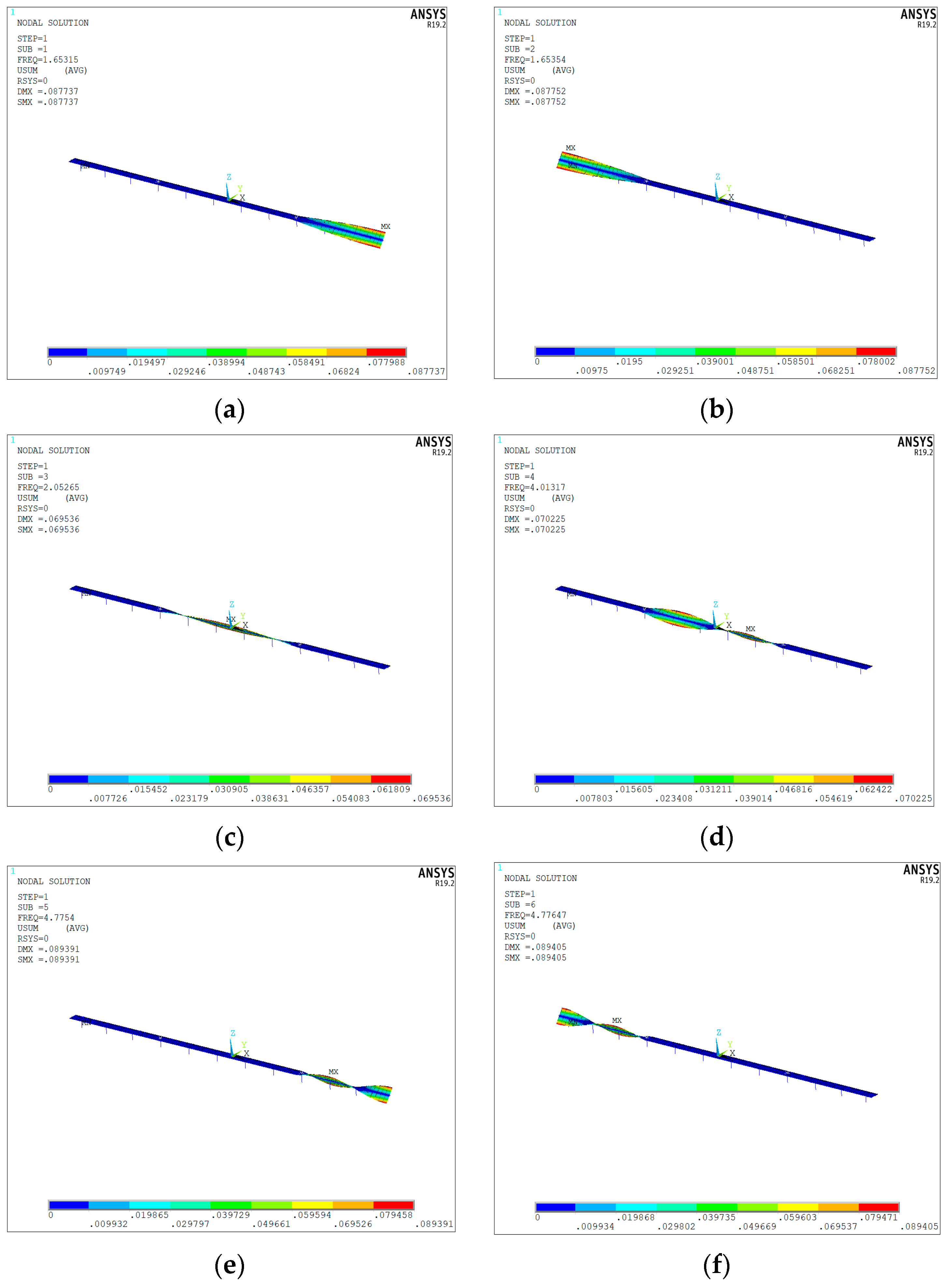
Through the analysis and calculation of the natural vibration characteristics of horizontal single-axis solar trackers, the first six mode shapes and natural frequencies were determined, as shown in
Figure 4, where the different colors of the color scale represent different displacements and values shown are dimensionless displacements. The first mode shape is torsion at one free end, and the second mode shape is torsion at the opposite end. The frequencies of the first and second modes are very close, approximately 1.65 Hz. This is mainly because the single-axis solar tracker adopts a centrally symmetric configuration, in line with the account provided in [
5]. The third and fourth mode shapes are torsion in the middle region, with corresponding natural frequencies of 4.01 Hz. The fifth and sixth mode shapes represent second-order torsion in the end regions. It is evident that the primary mode shapes of the single-axis solar tracker are torsional.
2.3. Rigid Model Pressure Measurement Test
The wind-induced vibration of a solar tracker is closely related to its natural vibration characteristics and wind loads. In this study, the time history of wind loads on the PV module surface was obtained through rigid model pressure measurement tests. The detailed test procedure is provided in [
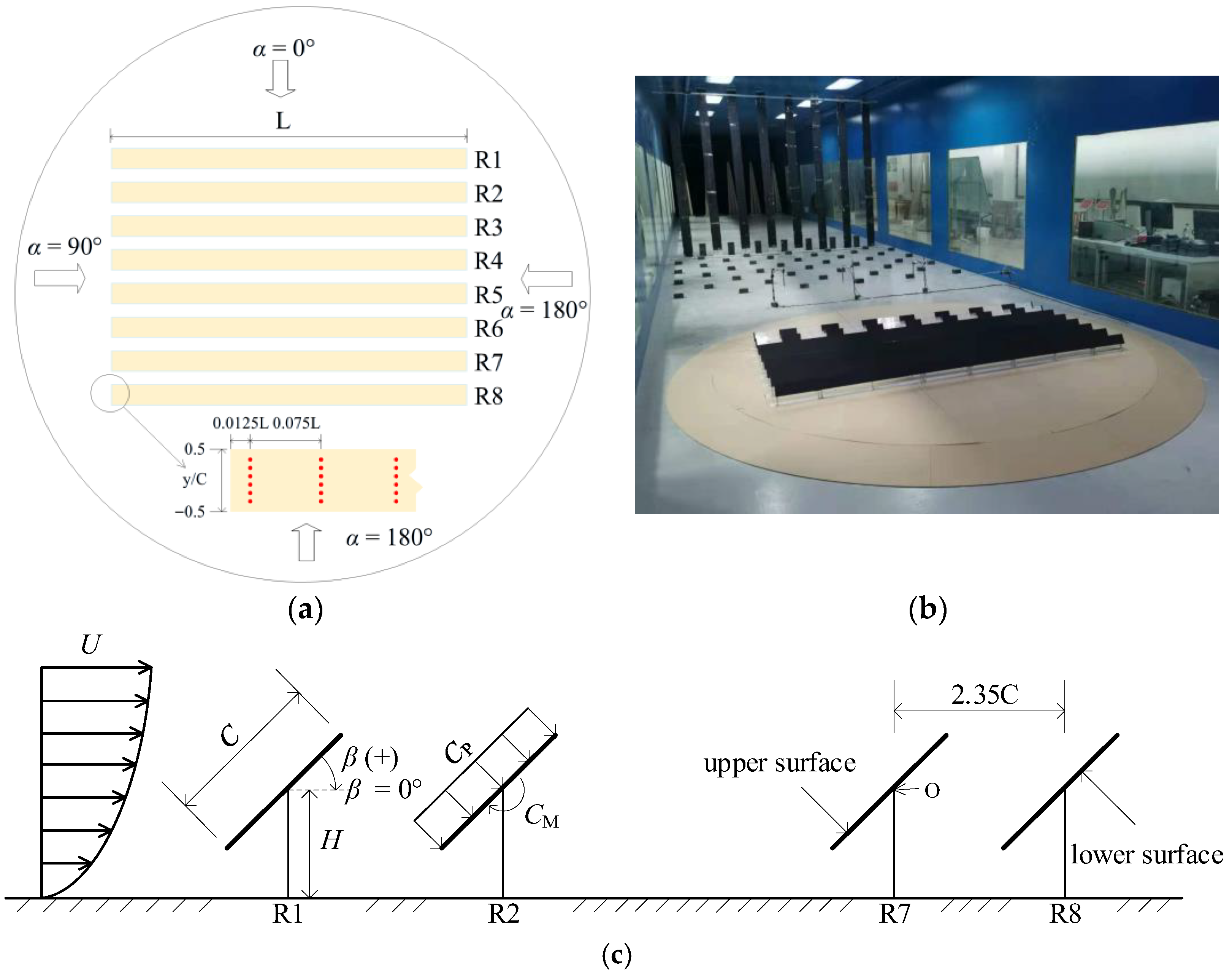
22]. The PV array test investigated 8 rows of solar trackers, with wind direction angles ranging from 0° to 180° at 10° intervals, as shown in
Figure 5a. The tilt angles of the PV modules ranged from −60° to 60° at 5° intervals. Each row of the model was equipped with 168 pressure taps in total. Along the model length L, cross-sections were set up at regular intervals of 0.075 L for pressure tap installation, and the outermost column of taps was placed 0.0125 L from the model’s edge. Each cross-section was fitted with six pressure taps on both its upper and lower surfaces, which were evenly spaced along the chord length to allow for concurrent pressure detection on both sides. Each pressure measurement point along the chord corresponded to a segment length of C/6. A photograph of the test setup can be seen in
Figure 5b.
This test utilized the low-speed test section of the Shijiazhuang Tiedao University wind tunnel. Its dimensions are 24 m long, 4.38 m wide, and 3 m high. At a flow speed of 20 m/s, approximately 0.5% longitudinal turbulence intensity and less than ±0.5% non-uniformity in wind speed distribution were recorded. The test used Category C terrain roughness as specified by ASCE [
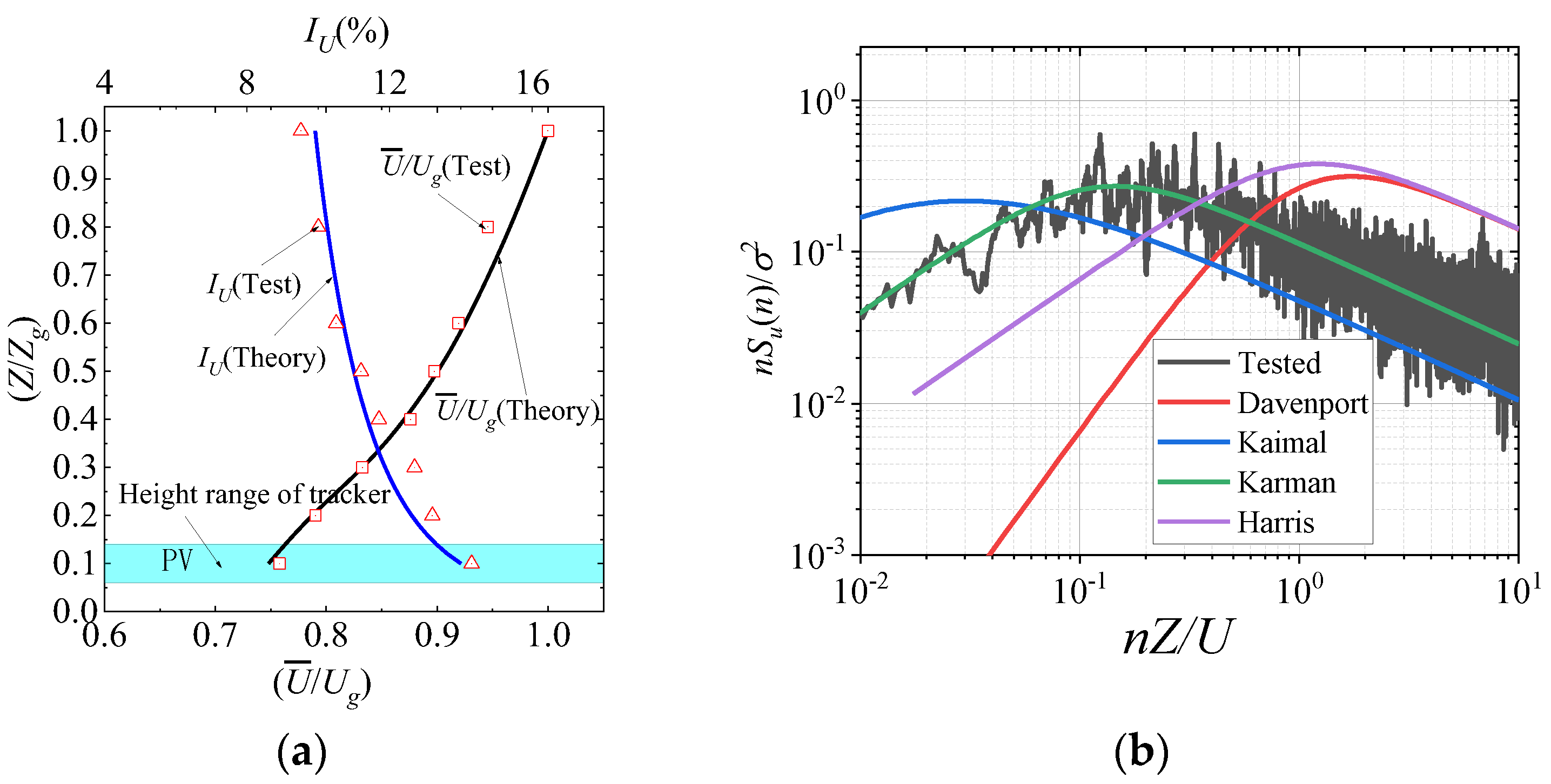
23]. The measured wind speed and turbulence intensity profiles at the turntable center are illustrated in
Figure 6a. The definitions of the parameters in
Figure 6 are as follows:
IU represents the turbulence intensity;
Z/
Zg represents the dimensionless height (
Zg is the main axis height);
U/
Ug represents the dimensionless wind speed (
Ug: wind speed at main axis height);
nZ/
U represents the standard dimensionless frequency; and
nSμ(n)/
σ2 represents the dimensionless power spectrum. The simulated wind speed profile and turbulence intensity profile are in good agreement with the theoretical results. The incoming wind speed spectrum of the model height region at the turntable center is illustrated in
Figure 6b. The measured results are in good agreement with those of the Karman spectrum.
Table 3 shows the main test parameters.
2.4. Parameter Definitions
The pressure coefficient at the measurement points is used to describe the local wind pressure distribution on the model surface, and it is defined as follows:
where
is the time history of the wind pressure coefficient at the measuring point. Positive values indicate pressure on the upper surface of the model, and negative values indicate suction.
and
are the time histories of the wind pressure acting on the model’s upper and lower surfaces, respectively.
is the air density.
is the incoming wind speed at the rotational shaft height of the test model.
denotes the mean wind pressure coefficient at the measuring point, serving to reflect the magnitude of the coefficient. The standard deviation of the wind pressure coefficient at the measuring point is represented by , which is used to characterize its stability over time.
The torque coefficient is used to describe the sectional torque of the solar tracker and is defined as follows: The direction of the torque coefficient is defined as shown in
Figure 5c.
where
is the time history of the section torque coefficient;
is the length represented by the measuring point;
is the coordinate of the measuring point;
N is the total number of measuring points; and
C denotes the chord length of the tracker.
is the mean torque coefficient, with representing its standard deviation.
2.5. Calculation of Response Results
Currently, the time-domain method and the frequency-domain methods are commonly used to calculate the wind-induced response of structures. In this study, the time-domain method is adopted for analysis, which employs a deterministic time-history analysis approach for wind-induced response evaluation. As this method is based on numerical integration, it is subject to fewer assumptions than the frequency-domain method. The time-history data of the structural response can be obtained by integrating the dynamic equilibrium equations. When properly applied with consistent modeling assumptions, the time-domain method can provide accurate solutions; however, it is recognized that the reliability of the results depends on the validity of the underlying assumptions, including the structural damping model, the spatial and temporal scaling of wind loads, and the rigid-model representation of aerodynamic forces.
First, aerodynamic forces are constructed and then applied to the finite element model for structural response analysis. In this study, two degrees of freedom are considered; therefore, when constructing aerodynamic forces, the aerodynamic forces in two directions should be taken into account in accordance with the structural modeling approach. These are the torque along the X-axis and the pressure perpendicular to the PV modules. Converting the wind pressure coefficients and torque coefficients of the horizontal single-axis solar tracker into aerodynamic forces refers to transforming the wind pressure coefficient and torque coefficients of each node
i into the time history of wind pressure
and the time history of torque
, respectively. For spatial assignment, each pressure tap location on the model corresponds to a tributary area on the full-scale structure. Given the cross-sectional distribution of pressure taps (six taps on each surface along the chord, spaced at C/6 intervals), the pressure coefficient at each finite element node is obtained via linear interpolation of the measured coefficients at adjacent tap locations along both the chordwise and spanwise directions.
where
Fi is the wind pressure at node
i;
Mi is the torque at node
i;
CPi is the wind pressure coefficient at node
i; and
CMi is the torque coefficient at node
i.
C is the chord length of the horizontal single-axis solar tracker. Li is the length of the solar tracker represented by node i; is the height variation coefficient of wind pressure, with a value of 1.0; and is the fundamental wind pressure, calculated as 0.3 kPa.
The frequency of the wind load on the full-scale structure is calculated using Equation (4), yielding a value of 27.37 Hz, which corresponds to a time step of 0.0367 s.
where
fm,
CM, and
UM denote the sampling frequency, model width, and incoming wind speed in the wind tunnel test, respectively;
f,
C, and
U represent the corresponding wind load frequency, tracker width, and wind speed for the full-scale structure.
The time history of nodal loads is applied to the finite element model, and the Newmark-
β method is used to calculate the time-history response to obtain the displacement response time history
of each node. The damping ratio was taken as 0.03 in the calculation process. The mean displacement is denoted by
, and the standard deviation of displacement is denoted by
. The wind-induced vibration of the solar tracker is characterized by the dynamic amplification factor, whose definition is given in formula (5).
where
is the dynamic amplification factor (DAF), and
G is the gust factor.
It should be noted that the DAF values derived in this study are based on the specific tracker geometry (dual-point drive, 87.5 m total length, chord length 2.187 m), wind exposure (ASCE Category C terrain), and structural modeling assumptions described herein. While the methodology is general, the numerical DAF values are directly applicable to trackers of similar configuration and should be adjusted for substantially different geometries, terrain categories, or structural systems. Therefore, the DAF recommendations presented in
Section 3.4 should be regarded as applicable within the validated scope of the present model rather than as universal design values.
3. Results
3.1. Influence of Tilt Angle on Torque Coefficient of Solar Tracker Array
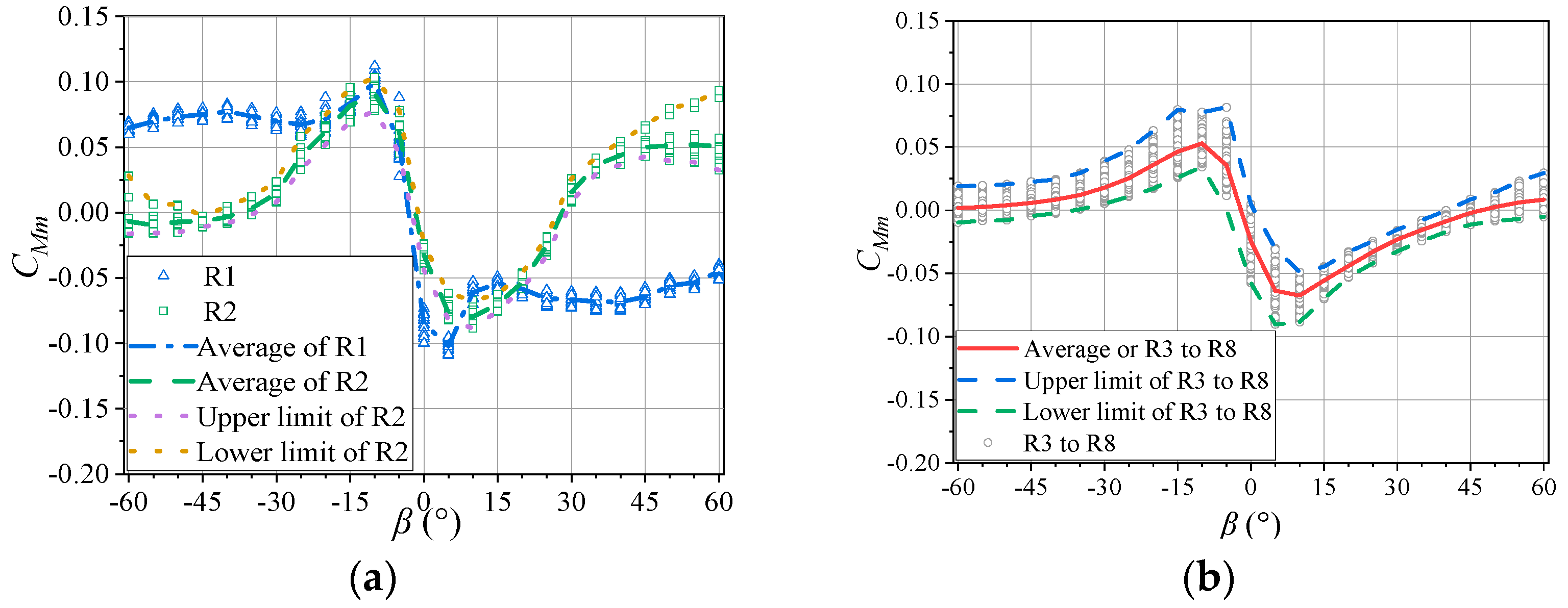
The single-axis solar tracker is a slender structure. To more accurately determine the wind pressure on the surface of the tracker, pressure taps were arranged on 14 cross-sections along the spanwise direction. The upper and lower limits in the figure represent the maximum and minimum torque coefficients among the 14 cross-sections, respectively. In
Figure 7a, each point reflects the average torque coefficient over different sections of R1 and R2. The dash–dot and dashed lines stand for the overall mean of these sectional coefficients for the two regions in turn. For tilt angles between −10° and 5°, the mean torque coefficient of R1 increases with the growing angle between the panel and the ground. Within the tilt angles of −10° and 5°, the mean torque coefficient of R1 reaches its maximum moments, which are 0.0997 and −0.102, respectively. Within the large tilt angle range of 15° < |
β| < 60°, the mean torque coefficient of R1 remains relatively large; thus, this range exerts negligible influence on this value. When the tilt angle is 0°, the torque coefficient of the solar tracker is negative; when
β is approximately −2°, the mean torque coefficient is approximately 0. Across various tilt angles, the average torque coefficient for each section of R1 in the tracker array distributes uniformly along its total length (L).
It can be seen in
Figure 7a,b that, within a tilt angle between −10° and 5°, the downstream rows R2–R8 exhibit similar mean torque coefficient variation patterns to R1. Nevertheless, the shading impact of R1 causes the torque coefficient means of the downstream rows R2–R8 to drop as the PV modules tilt further upward. Within the large tilt angle range (15° < |
β| < 60°), these coefficients for R2~R8 decrease continuously with increasing module inclination. This demonstrates that the wake flow of the front-row PV modules changes the wind load distribution pattern of the rear-row modules. At relatively large tilt angles (30° < |
β| < 60°), the rear-row modules endure the combined effect of positive and negative torque due to the front-row wake. From 30° to 60°, the mean torque coefficient of each R2 section along the tracker’s length is diametrically opposed to that of R1. Reference [
12] points out that such a result may stem from the fact that, at larger tilt angles, PV modules are affected by flow separation, while at smaller tilt angles, they are affected by flow reattachment.
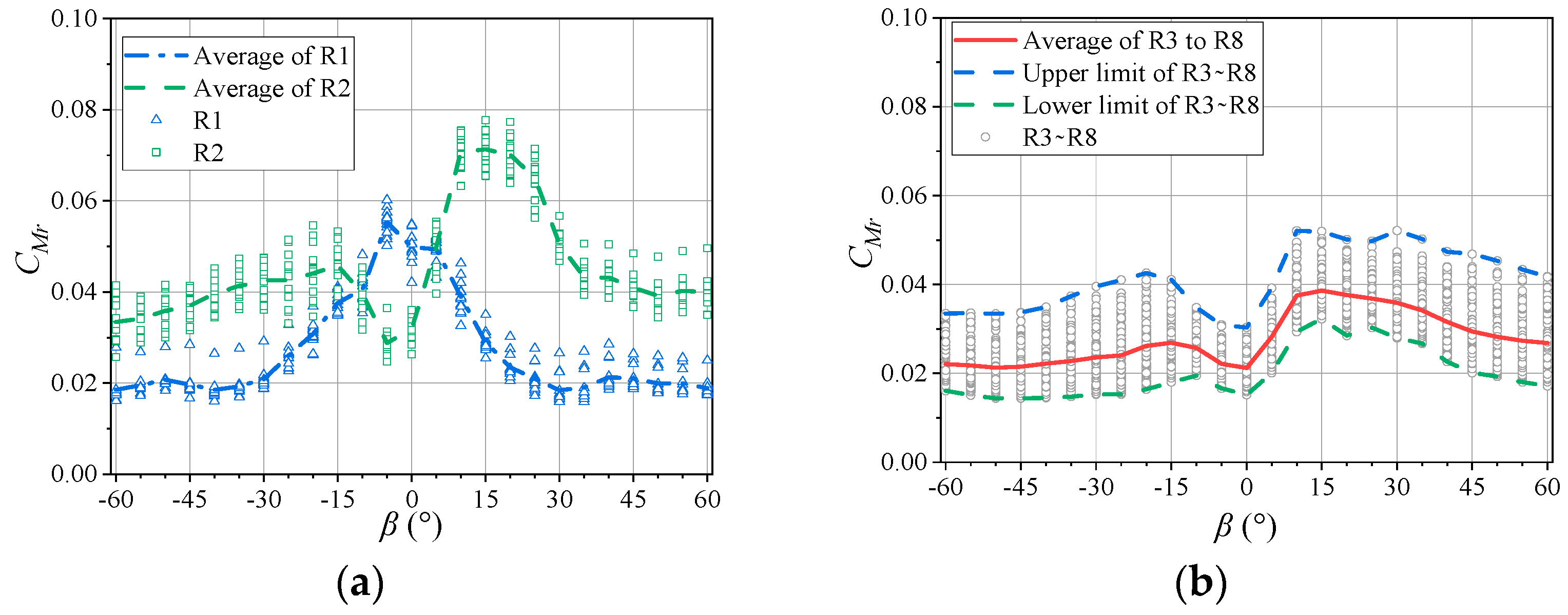
Two key characteristics can be observed in the interference effect on the torque coefficient RMS of the solar tracker array: First, at small tilt angles (0°< |
β| < 15°), R1 exhibits a shielding effect on the downstream rows R2~R8. Second, between large tilt angles (15° < |
β| < 60°), it exhibits an amplification effect. By comparing
Figure 8a,b, it can be seen that, at tilt angles where R1 reaches its peak value, the RMS of torque coefficients of the downstream rows R2~R8 in the solar tracker array are relatively small. Within the tilt interval of −10° to 5°, the RMS torque coefficient of R1 is consistently higher than that of the downstream rows R2–R8. In contrast to the trend of the RMS torque coefficient of R1 increasing with the module’s inclination relative to the ground, the RMS torque coefficients of R2–R8 reach their minimum at a tilt angle of 0°. As the module’s inclination increases, these RMS values decline continuously after attaining their peak magnitudes. Relative to the negative tilt domain, the RMS torque coefficients of the downstream rows are larger in the positive tilt domain. In the negative tilt domain, the peak RMS torque coefficients of R2–R8 occur at a tilt angle of −20°. In the positive tilt domain, the peak for R2 appears at 15°, while the peaks for R3–R8 occur at 30°.
3.2. Tilt Angle Influence on Wind-Induced Responses of Single-Axis Solar Tracker Arrays
Reference [
5] point out that wind-induced failure in single-axis solar trackers primarily manifests as torsional damage. As illustrated in
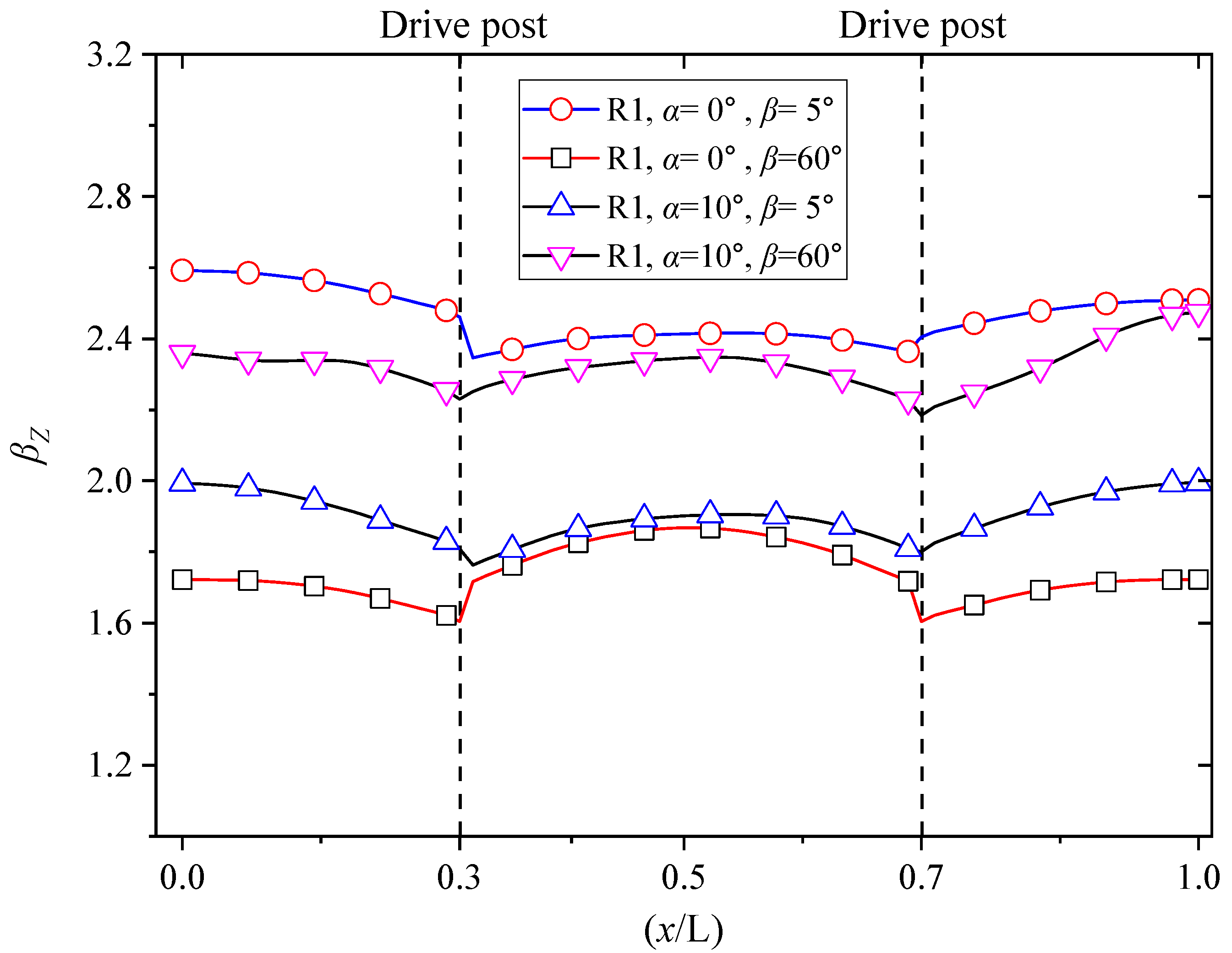
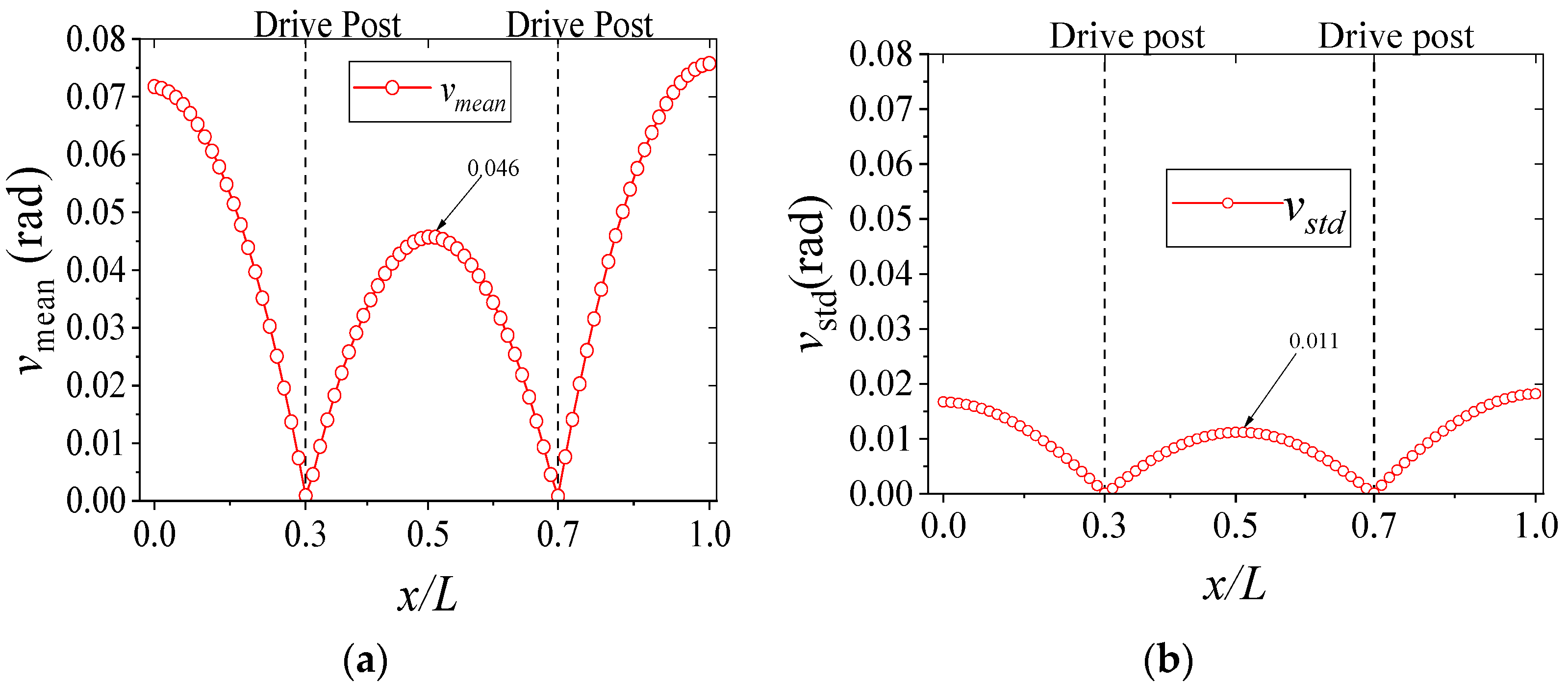
Figure 4, the initial mode shapes of the single-axis solar tracker are dominated by torsion about the X-axis, with more pronounced torsional deformation occurring at the tracker’s end regions and the mid-section between the two drive posts. Accordingly, three nodes positioned at the tracker’s two ends and midpoint (x/L = 0, x/L = 0.5, x/L = 1) were chosen to examine how varying parameters affect the wind-induced dynamic response of the single-axis solar tracker. Under wind loads, the wind-induced response of the single-axis solar tracker is relatively small in the Y and Z directions, with the response being predominantly torsional around the X-axis. Taking a wind direction angle of 0° and a tilt angle of 20° as an example,
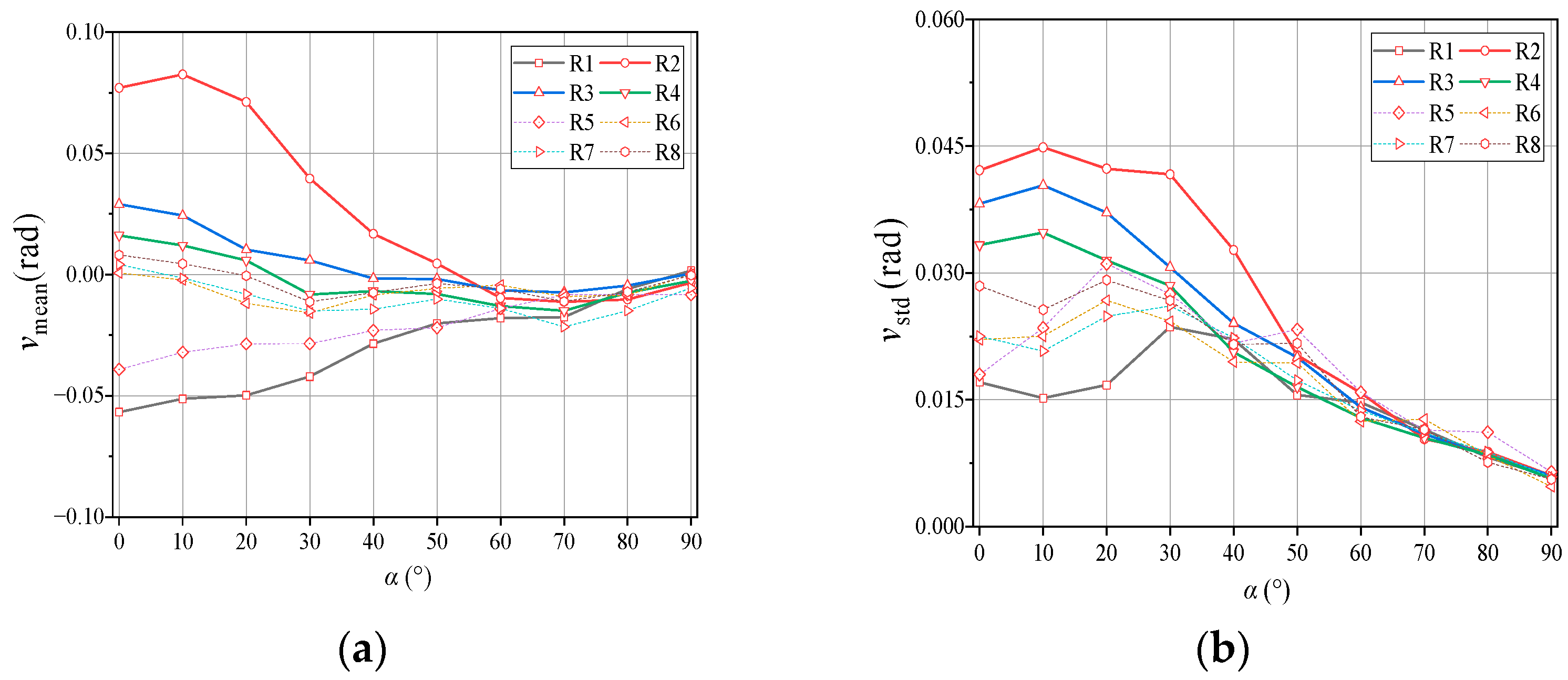
Figure 9 presents the torsional angle of the R1 tracker. Regarding the mean torsional angle, the maximum value is 0.076 rad, equivalent to 4.35°. Such a large angular variation can easily lead to damage of the solar tracker and directly affect the power generation efficiency of the solar tracker system. The RMS torsional angle of the single-axis solar tracker follows a trend that is largely analogous to that of the mean torsional angle.
Figure 9 shows that, at
α = 0°, the variation in the mean torsional angle with the tilt angle at the three positions (x/L = 0, 0.5, 1) of the solar tracker is basically consistent. Furthermore, it can be seen in
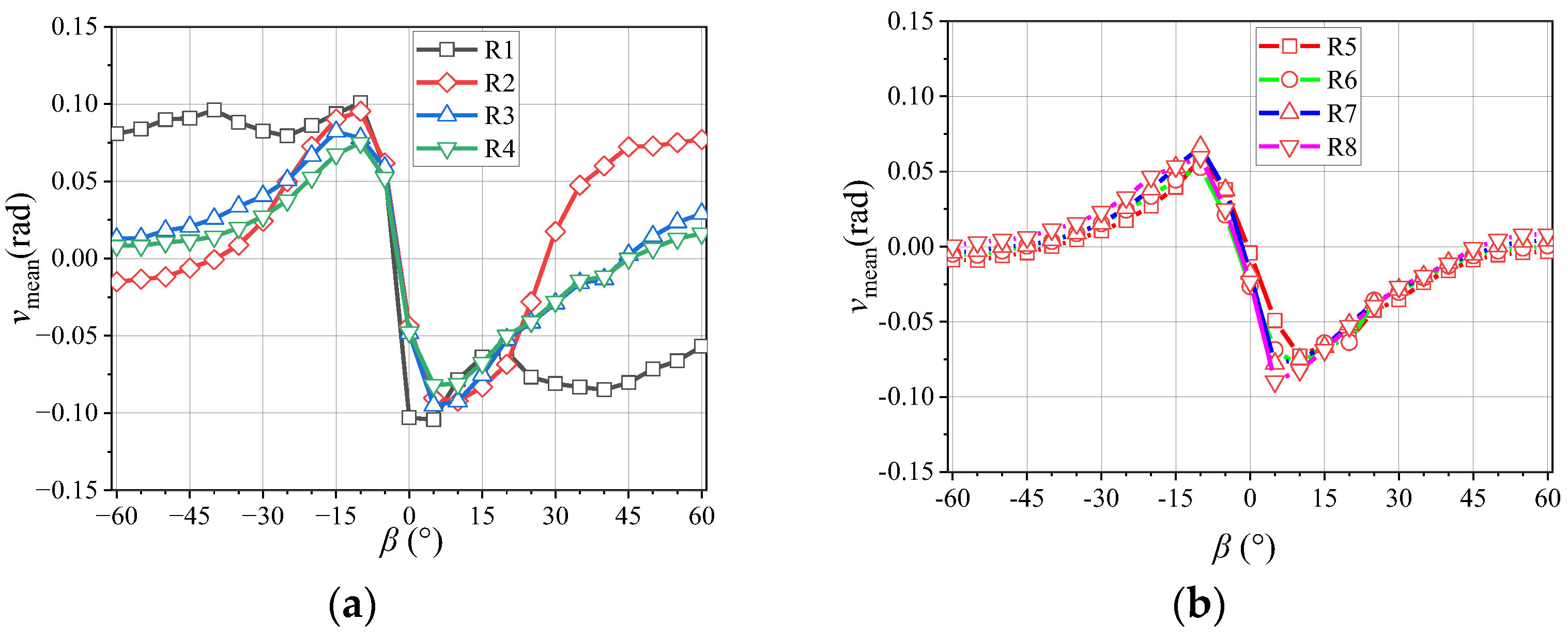
Figure 9 that the torsional vibration is more pronounced in the end regions of the tracker. Therefore, the position at x/L = 0 was selected to analyze the influence of the tilt angle on the wind-induced torsional angle of the single-axis solar tracker. The variation in the mean torsional angle of the single-axis solar tracker array with the tilt angle at
α = 0° is presented in
Figure 10 and
Figure 11. The mean torsional angle of R1 reaches its maximum values at tilt angles of −10° and 5°, which are 0.101 rad and −0.104 rad, respectively. For the large tilt angle range (15° < |
β| < 60°), R1’s mean torsional angle maintains relatively high values and is nearly insensitive to variations in tilt angle. However, the mean torsional angle of the downstream rows in the solar tracker array declines progressively as the tilt angle rises. Owing to the wake interference generated by the front-row PV modules, at relatively large tilt angles (30°< |
β| < 60°), the downstream rows display a torsional orientation that diverges from that of R1. The interference influence on the wind-induced torsional angle of the single-axis solar tracker array aligns with the evolution trend of the mean torque coefficient. This effect is most notable in the large tilt domain (15°< |
β| < 60°) and manifests as a shielding effect. This shielding-to-amplification transition is consistent with the observations of reference [
12].
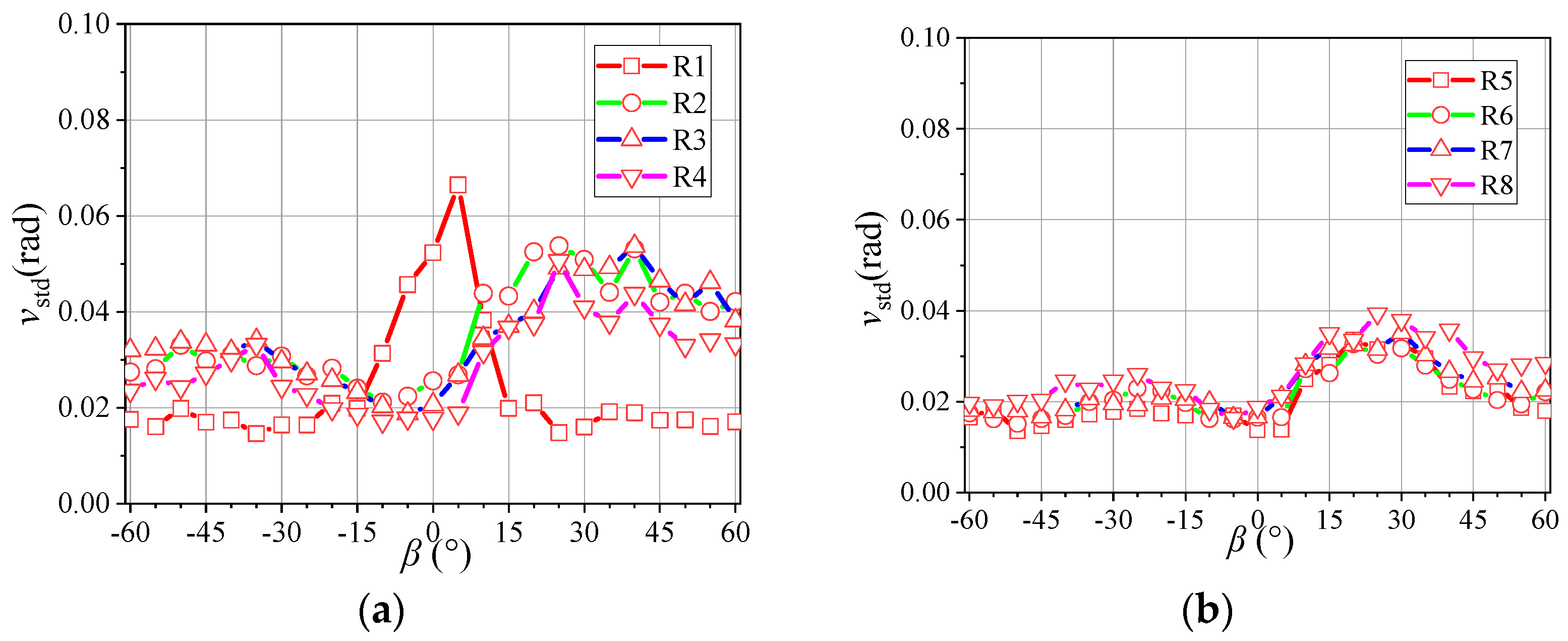
Figure 11 depicts the evolution of the root-mean-square (RMS) torsional angle with tilt angle for the single-axis solar tracker array at
α = 0°. The interference influence on the RMS torsional angle of the array demonstrates two distinct traits: First, at small tilt angles (0° < |
β| < 15°), R1 acts as a shielding barrier for the downstream rows R2–R8. Second, at large tilt angles (15° < |
β| < 60°), it exerts an amplifying influence.
A side-by-side inspection of
Figure 11a,b reveals that, within the tilt interval of −15° to 10°, the RMS torsional angle of R1 is consistently higher than that of the downstream rows R2–R8. In contrast to the trend of the RMS torsional angle of R1 increasing with the module’s inclination relative to the ground, the RMS torsional angles of R2–R8 reach their minimum near 0° tilt. Relative to the negative tilt domain, the downstream rows exhibit larger RMS torsional angles in the positive tilt domain, with peak values occurring near ±30°. Within the negative tilt angle range, the RMS of the torsional angles of R2~R8 in the solar tracker array show relatively little variation with the tilt angle. However, in the positive tilt domain, these RMS values gradually decline after attaining their peak magnitudes as the tilt angle rises.
The peak RMS torsional angles observed at
β ≈ 30° for the downstream rows align qualitatively with the critical tilt angle ranges for torsional galloping identified by Martínez-García et al. [
19], suggesting that the fluctuating response measured in rigid model tests and the aeroelastic instability observed in sectional model tests share common aerodynamic origins.
3.3. Wind Direction Influence on Wind-Induced Torsional Angles of Single-Axis Solar Tracker Arrays
Conditions with a relatively large mean torsional angle (
β = 5°) and a significant interference effect (
β = 60°) were chosen to examine how the wind direction angle affects the wind-induced torsional angle of the solar tracker array.
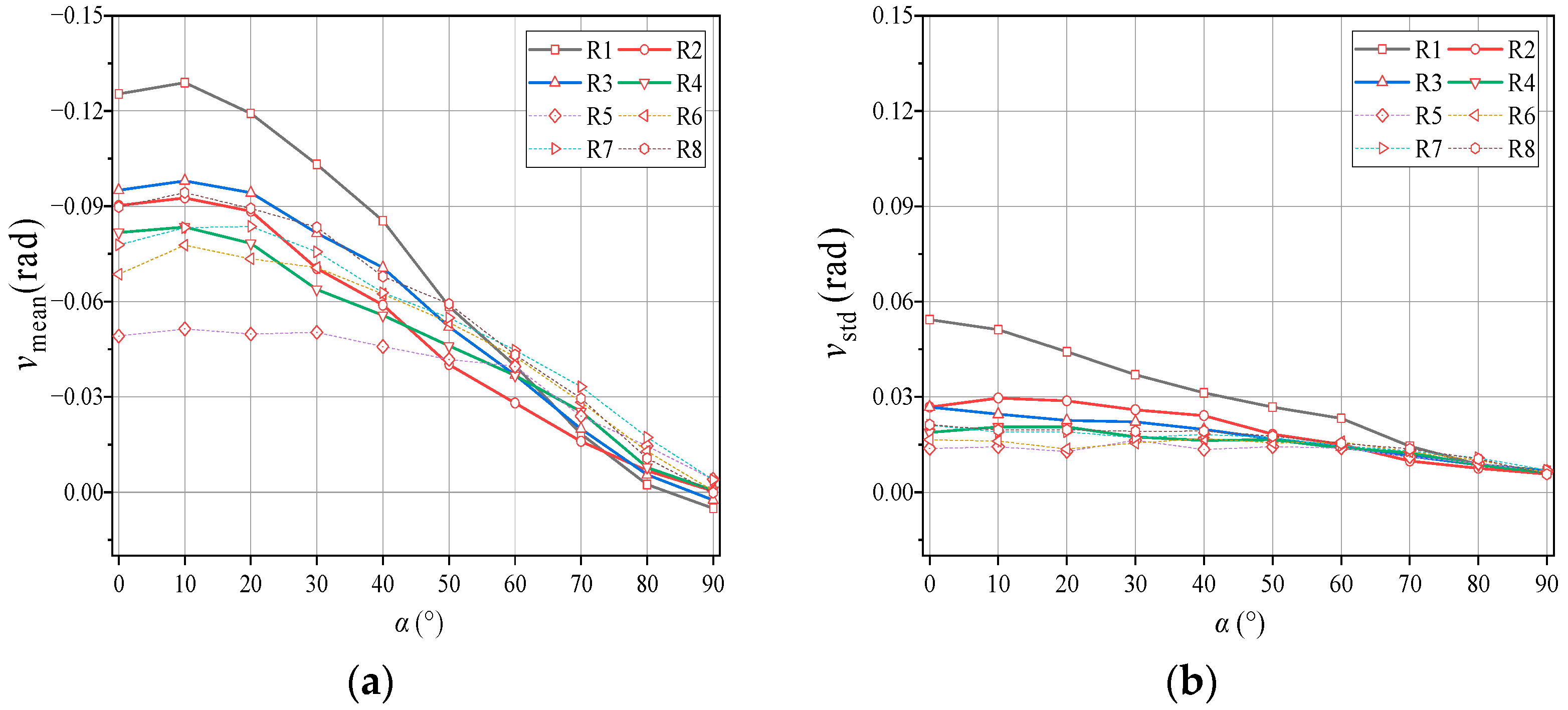
Figure 12,
Figure 13 and
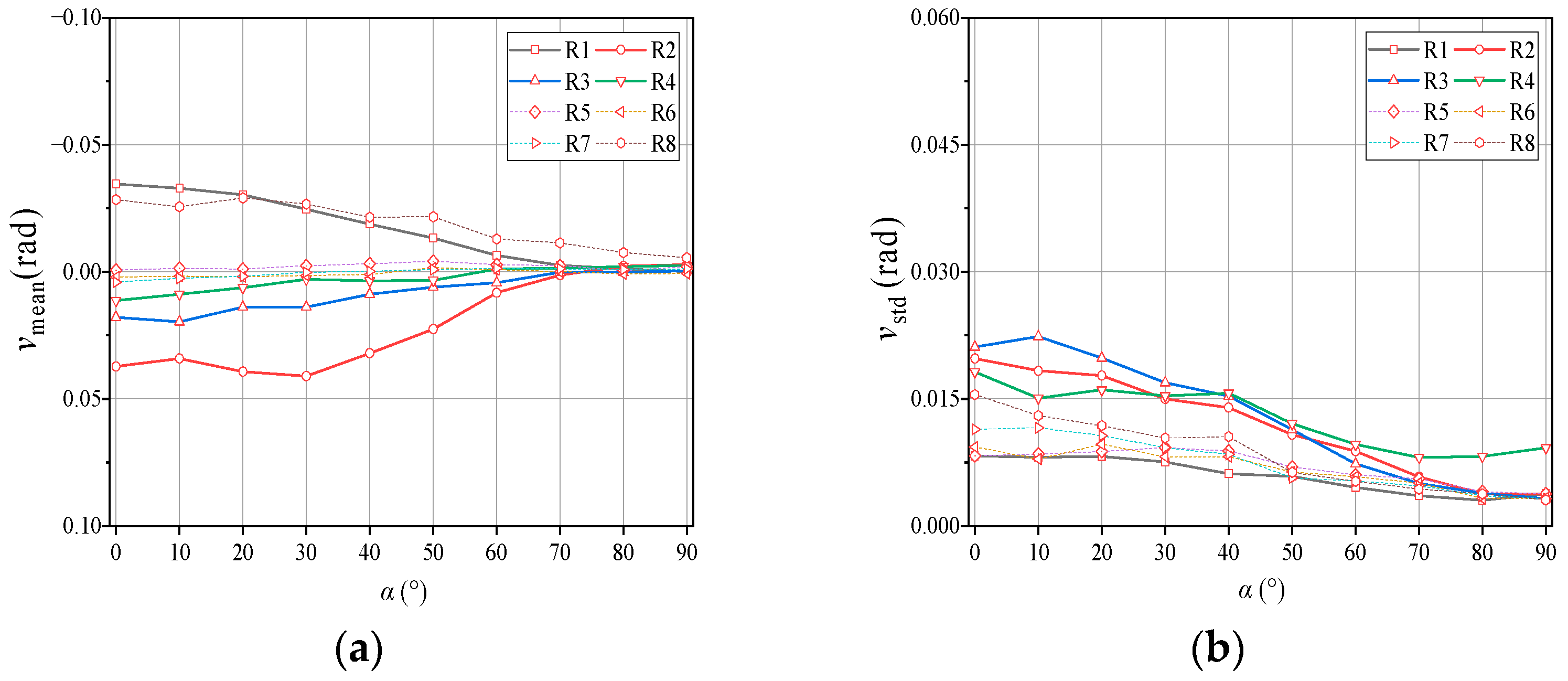
Figure 14 display the mean and RMS torsional angles of the single-axis solar tracker array at x/L = 0, 0.5, and 1, respectively, at a tilt angle of 5°. The mean torsional angle of the solar tracker array decreases as the wind direction angle increases. The most unfavorable wind direction for the solar tracker array at x/L = 0 occurs at a wind direction angle of 10°, while at x/L = 0.5 and 1, the most unfavorable wind direction angle occurs at 0°. A comparison between x/L = 0 and x/L = 1 reveals that this difference is mainly influenced by the incoming wind, with x/L = 0 located at the windward end. Furthermore, the mean torsional angle of the array rows does not decrease with an increasing row number under oblique wind directions. Therefore, attention should be paid to the locations where larger torsional angles occur in the downstream rows.
The RMS of the torsional angle of R1 in the solar tracker array gradually decreases as the wind direction angle rises, while the RMS of the torsional angles of the downstream rows R2~R8 remain essentially unchanged. Due to the interference from the front row, the RMS of torsional angles of the downstream rows show slight differences at small wind direction angles. After the wind direction angle exceeds 50°, the angle between the incoming wind and the longitudinal direction of the solar tracker becomes smaller, and the RMS of torsional angles of the structure become essentially consistent. Due to the wake interference from the front row, the RMS torsional angles of the downstream rows in the array gradually decrease with an increasing row number at all tested wind direction angles.
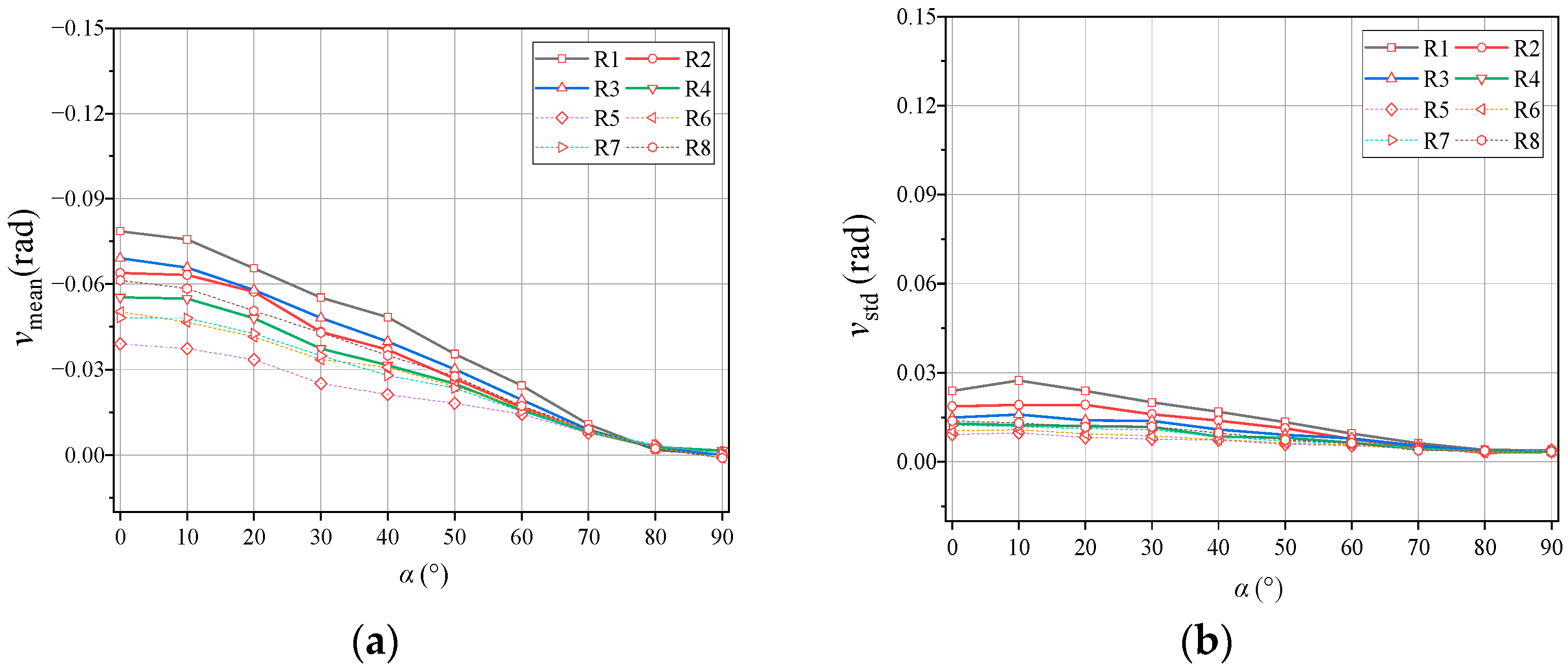
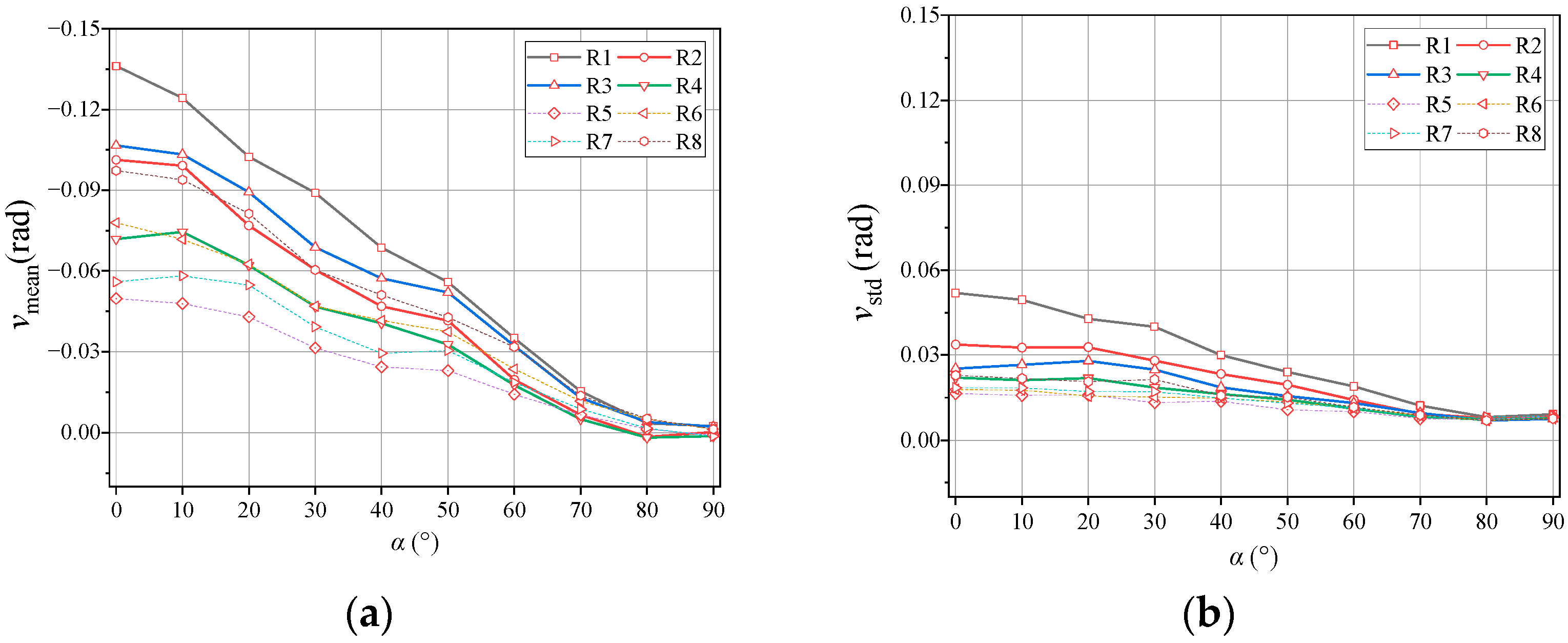
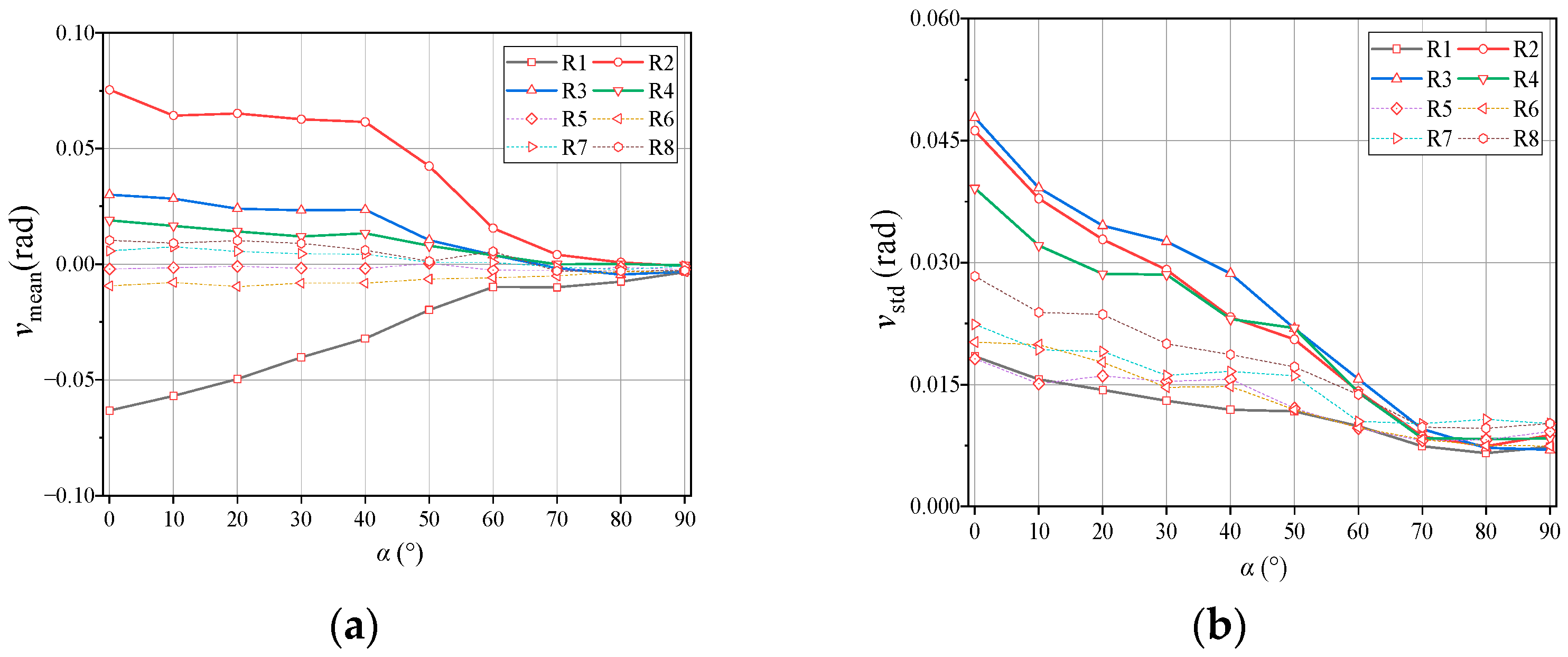
Figure 15,
Figure 16 and
Figure 17 present the mean and RMS torsional angles of the single-axis solar tracker array at x/L = 0, 0.5, and 1, respectively, at a tilt angle of 60°. Unlike the case at a tilt angle of 5°, the variation in the torsional angle of the single-axis solar tracker array with the wind direction angle is more complex at a tilt angle of 60°. At x/L = 0, the most adverse wind direction for R2 occurs at 10°, while for the other rows, it appears at 0°. Due to the interference influence on wind loads, the torque coefficient of R2 exhibits a direction distinct from that of R1, causing the torsional orientation of R2 under wind loads to differ from that of R1. Furthermore, in terms of magnitude, R2 exhibits a larger torsional angle than R1. Therefore, it is essential to distinguish between different locations in the design of the solar tracker array. As the wind direction angle increases, the incoming flow gradually aligns parallel to the tracker’s longitudinal axis. Consequently, the interference impact on the downstream rows weakens, and, under direct wind action, the mean torsional angle of the downstream rows shifts from the opposite direction to the same direction as R1. Attention should be paid to the most adverse wind direction at the windward end of downstream rows; for instance, the most adverse wind direction for R7 occurs at 70°.
Due to the shielding effect at the windward end, at x/L = 0.5 and 1, the torsional angle of the single-axis solar tracker array gradually decreases with the wind direction angle, and the interference effect does not show the same weakening trend as observed at x/L = 0. It is worth noting that at a tilt angle of 60°, the maximum RMS of torsional angle of the single-axis solar tracker array occurs at R2 and R3, whereas at a tilt angle of 5°, the maximum RMS of torsional angle consistently occurs at R1 across different locations. This is because, at large tilt angles, complex flow fields exist within the solar tracker array, where phenomena such as vortex shedding, flow separation, and reattachment are more pronounced. Therefore, when studying the dynamic characteristics of the structure, attention should be paid to the different effects of the wind direction angle on the RMS of values at large and small tilt angles.
3.4. Dynamic Amplification Factor
Figure 18 presents the dynamic amplification factors of the single-axis solar tracker under two tilt conditions. A comparative analysis reveals that, consistent with the evolution trend of the wind-induced torsional response, the maximum values of the dynamic amplification factor of the single-axis solar tracker occur at the ends and mid-span positions away from the drive motors.
Under certain conditions, such as
α = 0° and
β = 60°, the mean torsional response of the single-axis solar tracker array is relatively small, but the RMS value is somewhat large. If calculated according to Equation (4), this would result in an extremely large dynamic amplification factor. The dynamic amplification factors obtained from such conditions do not apply to other conditions or structural locations. Therefore, for the calculation of the dynamic amplification factor of the single-axis solar tracker array, the maximum value cannot be directly taken. In this study, the peak wind-induced torsional angles under different tilt and wind direction conditions were first enveloped to determine the most adverse scenarios, after which the dynamic amplification factors were calculated. The sensitivity of the wind-induced torsional angle to tilt angle and wind direction angle parameters varies at different locations of the array. Therefore, zoning of the array was carried out to determine the dynamic amplification factor more conveniently and accurately.
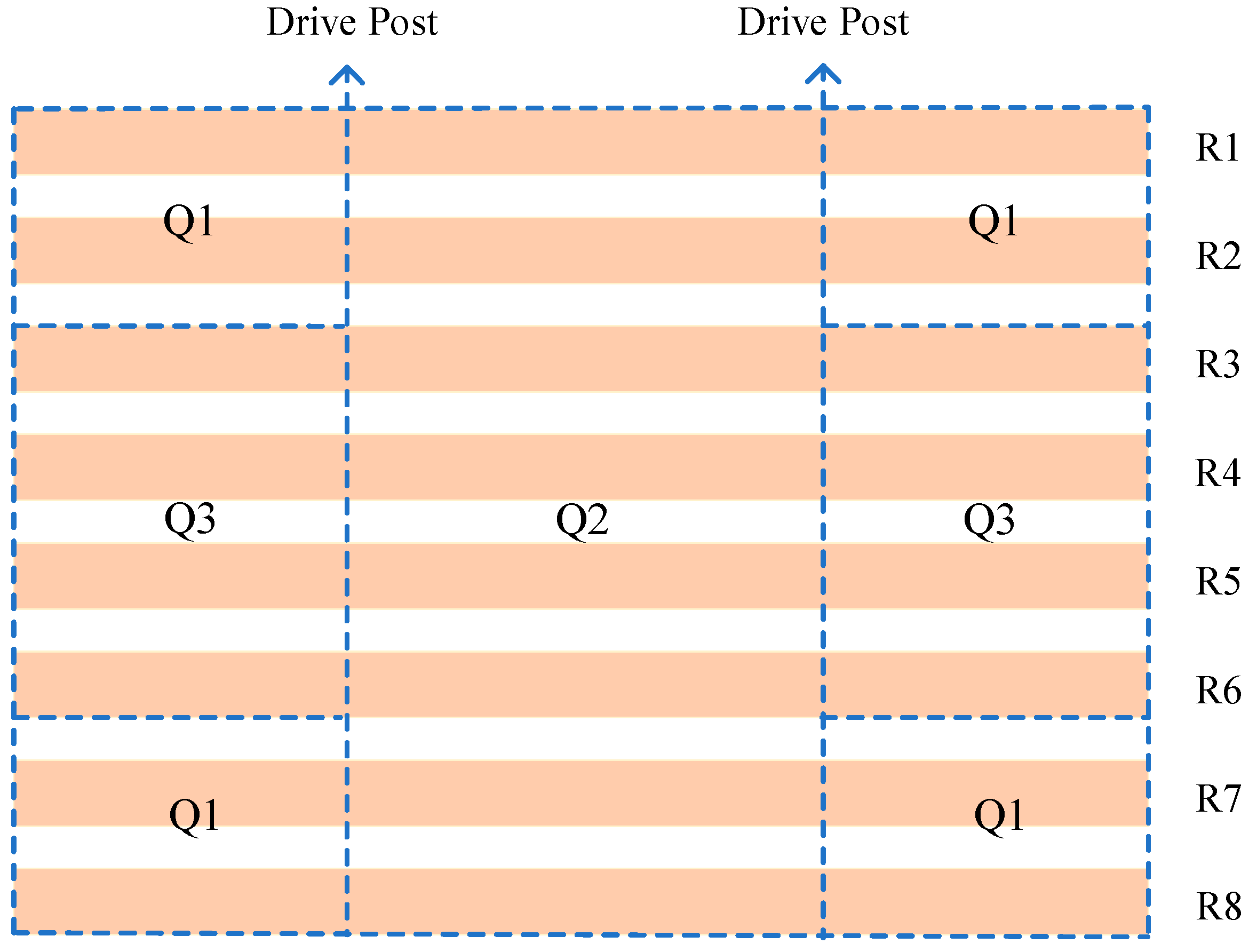
Figure 19 shows a zoning diagram of the dynamic amplification factor for the single-axis solar tracker array, where Q1 represents the corner region, Q2 represents the mid-span region, and Q3 represents the end region.
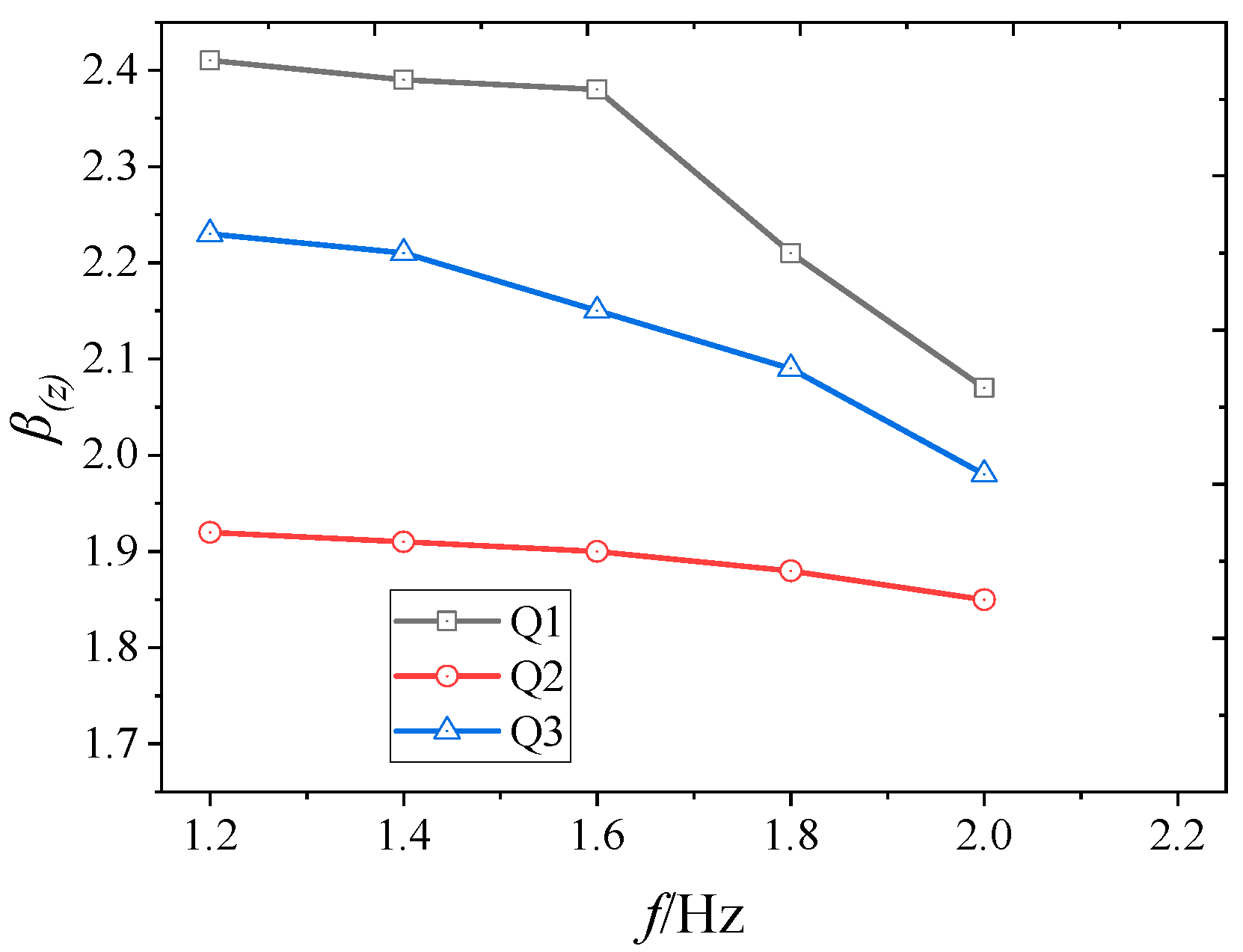
Furthermore, calculations were performed to obtain the wind-induced torsional responses of solar trackers with different natural frequencies. According to the zoning method for the solar tracker array shown in
Figure 19,
Figure 20 presents recommended values for the dynamic amplification factor of the array at distinct positions. Within the indicated natural frequency range, the dynamic amplification factor of the single-axis solar tracker array ranges from 2.07 to 2.41 in the Q1 region, from 1.85 to 1.92 in the Q2 region, and from 1.98 to 2.23 in the Q3 region. The dynamic amplification factor of the solar tracker increases gradually with an increasing natural frequency.
The recommended DAF values presented below are derived from the specific tracker configuration and wind conditions investigated in this study. While these values provide a practical reference for preliminary design of similar single-axis tracker arrays, site-specific validation—through aeroelastic wind tunnel testing or field monitoring—is recommended for critical installations, particularly those in complex terrain or with significantly different structural characteristics.
4. Conclusions
In this study, wind loads acting on the solar tracker surface were acquired via wind tunnel tests, followed by finite element time-history analysis of the solar tracker using numerical calculation methods. The impacts of tilt and wind direction angles on the wind-induced torsional response of the solar tracker were examined. The dynamic amplification factors of the single-axis solar tracker array at varying natural frequencies were computed, establishing a foundation for determining structural design values for solar trackers. The details are as follows:
(1) Regarding the mean torque coefficient, the interference effect appears as a shielding effect, most evident at large tilt angles (15° < |β| < 60°). Regarding the RMS of the torque coefficient, the interference effect shifts from shielding at small tilt angles (0° < |β| < 15°) to amplification at large tilt angles (15° < |β| < 60°).
(2) The first several modes of the single-axis solar tracker are all torsional modes, making it more prone to torsional vibration under wind loads. The maximum torsional angles of the wind-induced dynamic response of the single-axis solar tracker occur at the ends of the tracker and at the midpoint between the two drive posts.
(3) In the single-axis solar tracker array, at tilt angles of −10° and 5°, the mean torsional angle reaches its maximum, and a significant shielding effect is observed. At small tilt angles, the RMS of the torsional angle of the R1 tracker is larger than that of the trackers in the wake region, exhibiting a shielding effect. At large tilt angles, the RMS of the torsional angle of the R1 tracker is smaller than that of other trackers in the wake region, exhibiting an amplification effect.
(4) At large tilt angles, the wind direction angle exerts a notable influence on the wind-induced dynamic behavior of the single-axis solar tracker array. The most adverse wind direction for the windward edge of the array occurs near a wind direction angle of 0°, while the most unfavorable wind directions for the mid-span and leeward end occur near a larger wind direction angle of 50°.
(5) Based on the wind-induced dynamic behavior of the single-axis solar tracker, recommendations are provided for the dynamic amplification factor values of single-axis solar tracker arrays of comparable configuration and exposure. For corner regions, the dynamic amplification factor ranges from 2.07 to 2.41; for mid-span regions, it ranges from 1.85 to 1.92; for end regions, it ranges from 1.98 to 2.23. These values are applicable within the scope of the present model and should be adjusted for configurations differing substantially in geometry, terrain exposure, or structural system.
Author Contributions
Conceptualization, T.C.; data curation, H.Z. and F.W.; formal analysis, F.W. and X.Z.; funding acquisition, X.Z.; investigation, Y.L., Y.G. and Q.Z.; Language improvement; writing—original draft, F.W. and T.C. All authors have read and agreed to the published version of the manuscript.
Funding
The authors gratefully acknowledge the support of the Science and Technology Project of Hebei Education Department (No. QN2025424) and the Natural Science Foundation Project of Shijiazhuang Institute of Railway Technology (2025ZR04).
Data Availability Statement
The raw data supporting the conclusions of this article will be made available by the authors on request.
Acknowledgments
We are very grateful to Wenyong Ma from Shijiazhuang Tiedao University for his instructive comments and great encouragement.
Conflicts of Interest
The authors declare no conflicts of interest.
References
- Koussa, M.; Cheknane, A.; Hadji, S.; Haddadi, M.; Noureddine, S. Measured and modelled improvement in solar energy yield from flat plate photovoltaic systems utilizing different tracking systems and under a range of environmental conditions. Appl. Energy 2011, 88, 1756–1771. [Google Scholar] [CrossRef]
- Bahrami, A.; Okoye, C.O.; Atikol, U. Technical and economic assessment of fixed, single and dual-axis tracking PV panels in low latitude countries. Renew. Energy 2017, 113, 563–579. [Google Scholar] [CrossRef]
- Lave, M.; Kleissl, J. Optimum fixed orientations and benefits of tracking for capturing solar radiation in the continental United States. Renew. Energy 2011, 36, 1145–1152. [Google Scholar] [CrossRef]
- Vieira, R.G.; Guerra, F.K.O.M.V.; Vale, M.R.B.G.; Araújo, M.M. Comparative performance analysis between static solar panels and single-axis tracking system on a hot climate region near to the equator. Renew. Sustain. Energy Rev. 2016, 64, 672–681. [Google Scholar] [CrossRef]
- Valentín, D.; Valero, C.; Egusquiza, M.; Presas, A. Failure investigation of a solar tracker due to wind-induced torsional galloping. Eng. Fail. Anal. 2022, 135, 106137. [Google Scholar] [CrossRef]
- Taylor, Z.J.; Feero, M.A.; Browne, M.T.L. Aeroelastic instability mechanisms of single-axis solar trackers. J. Wind Eng. Ind. Aerodyn. 2024, 244, 105626. [Google Scholar] [CrossRef]
- Wu, Q.; Wang, X.; He, J.; Hua, X.; Chen, Z. Study on the flutter characteristics of single-axis solar trackers based on wind tunnel tests of an aeroelastic model. Structures 2025, 82, 110455. [Google Scholar] [CrossRef]
- Rodríguez-Casado, C.; Martínez-García, E.; Manzanares-Bercial, R.; Ruiz-Moral, J.L.; Blanco-Marigorta, E.; Navarro-Manso, A. Experimental Benchmark for the 3D wind tunnel testing of torsional aeroelastic instabilities in single-axis solar trackers. J. Wind Eng. Ind. Aerodyn. 2024, 253, 105838. [Google Scholar] [CrossRef]
- Wu, Q.; Wang, X.; He, J.; Chen, Z.; Hua, X. Amplitude-dependent analyses on nonlinear flutter performance of single-axis solar trackers. Sol. Energy 2026, 307, 114381. [Google Scholar] [CrossRef]
- Wang, X.; Wu, Q.; He, J.; Luo, J.; Hua, X.; Chen, Z. Torsional flutter performance of single-axis solar trackers. Phys. Fluids 2026, 38, 044110. [Google Scholar] [CrossRef]
- Bao, T.; Li, Z.; Pu, O.; Chan, R.W.K.; Zhao, Z.; Pan, Y.; Yang, Y.; Huang, B.; Wu, H. Modal analysis of tracking photovoltaic support system. Sol. Energy 2023, 265, 112088. [Google Scholar] [CrossRef]
- Browne, M.T.L.; Taylor, Z.J.; Li, S.; Gamble, S. A wind load design method for ground-mounted multi-row solar arrays based on a compilation of wind tunnel experiments. J. Wind Eng. Ind. Aerodyn. 2020, 205, 104294. [Google Scholar] [CrossRef]
- Reina, G.P.; De Stefano, G. Computational evaluation of wind loads on sun-tracking ground-mounted photovoltaic panel arrays. J. Wind Eng. Ind. Aerodyn. 2017, 170, 283–293. [Google Scholar] [CrossRef]
- Aly, A.M. On the evaluation of wind loads on solar panels: The scale issue. Sol. Energy 2016, 135, 423–434. [Google Scholar] [CrossRef]
- Abiola-Ogedengbe, A.; Hangan, H.; Siddiqui, K. Experimental investigation of wind effects on a standalone photovoltaic (PV) module. Renew. Energy 2015, 78, 657–665. [Google Scholar] [CrossRef]
- Aly, A.M.; Bitsuamlak, G. Aerodynamics of ground-mounted solar panels: Test model scale effects. J. Wind Eng. Ind. Aerodyn. 2013, 123, 250–260. [Google Scholar] [CrossRef]
- Suárez, J.L.; Cadenas, D.; Rubio, H.; Ouro, P. Vortex Shedding Dynamics Behind a Single Solar PV Panel Over a Range of Tilt Angles in Uniform Flow. Fluids 2022, 7, 322. [Google Scholar] [CrossRef]
- Irtaza, H.; Agarwal, A. CFD Simulation of Turbulent Wind Effect on an Array of Ground-Mounted Solar PV Panels. J. Inst. Eng. Ser. A 2018, 99, 205–218. [Google Scholar]
- Martínez-García, E.; Blanco-Marigorta, E.; Parrondo Gayo, J.; Navarro-Manso, A. Influence of inertia and aspect ratio on the torsional galloping of single-axis solar trackers. Eng. Struct. 2021, 243, 112682. [Google Scholar] [CrossRef]
- Martínez-García, E. Experimental determination of the resistance of a single-axis solar tracker to torsional galloping. Struct. Eng. Mech. 2021, 5, 519–528. [Google Scholar] [CrossRef]
- Young, E.; He, X.; King, R.; Corbus, D. A fluid-structure interaction solver for investigating torsional galloping in solar-tracking photovoltaic panel arrays. J. Renew. Sustain. Energy 2020, 12, 063503. [Google Scholar] [CrossRef]
- Ma, W.; Zhang, W.; Zhang, X.; Chen, W.; Tan, Q. Experimental investigations on the wind load interference effects of single-axis solar tracker arrays. Renew. Energy 2023, 202, 566–580. [Google Scholar] [CrossRef]
- ASCE. Minimum Design Loads and Associated Criteria for Buildings; ASCE: Reston, VA, USA, 2022. [Google Scholar]
Figure 1.
Scene after wind-induced failure.
Figure 1.
Scene after wind-induced failure.
Figure 2.
Schematic diagram of the single-axis solar tracker layout. (a) three-dimensional diagram. (b) plan view.
Figure 2.
Schematic diagram of the single-axis solar tracker layout. (a) three-dimensional diagram. (b) plan view.
Figure 3.
Calculation model for natural vibration characteristics of the single-axis solar tracker. (a) Three-dimensional model of the solar tracker. (b) Finite element model of the solar tracker.
Figure 3.
Calculation model for natural vibration characteristics of the single-axis solar tracker. (a) Three-dimensional model of the solar tracker. (b) Finite element model of the solar tracker.
Figure 4.
First six natural frequencies and mode shapes of the single-axis solar tracker. (a) 1st mode (b) 2nd mode (c) 3rd mode (d) 4th mode (e) 5th mode (f) 6th mode.
Figure 4.
First six natural frequencies and mode shapes of the single-axis solar tracker. (a) 1st mode (b) 2nd mode (c) 3rd mode (d) 4th mode (e) 5th mode (f) 6th mode.
Figure 5.
Schematic diagram of the test model: (a) top view, (b) test photograph, (c) sectional view.
Figure 5.
Schematic diagram of the test model: (a) top view, (b) test photograph, (c) sectional view.
Figure 6.
Wind field simulation results: (a) wind profile and turbulence intensity profile, (b) energy spectrum distribution.
Figure 6.
Wind field simulation results: (a) wind profile and turbulence intensity profile, (b) energy spectrum distribution.
Figure 7.
Spatial distribution of mean torque coefficients across the solar tracker array: (a) R1~R2, (b) R3~R8.
Figure 7.
Spatial distribution of mean torque coefficients across the solar tracker array: (a) R1~R2, (b) R3~R8.
Figure 8.
Distribution of root-mean-square (RMS) torque coefficients for the solar tracker array: (a) R1~R2, (b) R3~R8.
Figure 8.
Distribution of root-mean-square (RMS) torque coefficients for the solar tracker array: (a) R1~R2, (b) R3~R8.
Figure 9.
Torsional angle distribution of the R1 tracker. (a) Mean torsional angle. (b) RMS torsional angle.
Figure 9.
Torsional angle distribution of the R1 tracker. (a) Mean torsional angle. (b) RMS torsional angle.
Figure 10.
Mean torsional angle of the single-axis solar tracker array at x/L = 0. (a) R1~R4 of the solar tracker array. (b) R5~R8 of the solar tracker array.
Figure 10.
Mean torsional angle of the single-axis solar tracker array at x/L = 0. (a) R1~R4 of the solar tracker array. (b) R5~R8 of the solar tracker array.
Figure 11.
RMS torsional angle characteristics of the single-axis solar tracker array at x/L = 0. (a) R1~R4 of the solar tracker array. (b) R5~R8 of the solar tracker array.
Figure 11.
RMS torsional angle characteristics of the single-axis solar tracker array at x/L = 0. (a) R1~R4 of the solar tracker array. (b) R5~R8 of the solar tracker array.
Figure 12.
Torsional angle of the single-axis solar tracker under 5° tilt angle at x/L = 0. (a) Mean torsional angle. (b) RMS torsional angle.
Figure 12.
Torsional angle of the single-axis solar tracker under 5° tilt angle at x/L = 0. (a) Mean torsional angle. (b) RMS torsional angle.
Figure 13.
Torsional angle of the single-axis solar tracker under 5° tilt angle at x/L = 0.5. (a) Mean torsional angle. (b) RMS torsional angle.
Figure 13.
Torsional angle of the single-axis solar tracker under 5° tilt angle at x/L = 0.5. (a) Mean torsional angle. (b) RMS torsional angle.
Figure 14.
Torsional angle of the single-axis solar tracker under 5° tilt angle at x/L = 1. (a) Mean torsional angle. (b) RMS torsional angle.
Figure 14.
Torsional angle of the single-axis solar tracker under 5° tilt angle at x/L = 1. (a) Mean torsional angle. (b) RMS torsional angle.
Figure 15.
Torsional angle of the single-axis solar tracker under 60° tilt angle at x/L = 0. (a) Mean torsional angle. (b) RMS torsional angle.
Figure 15.
Torsional angle of the single-axis solar tracker under 60° tilt angle at x/L = 0. (a) Mean torsional angle. (b) RMS torsional angle.
Figure 16.
Torsional angle of the single-axis solar tracker under 60° tilt angle at x/L = 0.5. (a) Mean torsional angle. (b) RMS torsional angle.
Figure 16.
Torsional angle of the single-axis solar tracker under 60° tilt angle at x/L = 0.5. (a) Mean torsional angle. (b) RMS torsional angle.
Figure 17.
Torsional angle of the single-axis solar tracker under 60° tilt angle at x/L = 1. (a) Mean torsional angle. (b) RMS torsional angle.
Figure 17.
Torsional angle of the single-axis solar tracker under 60° tilt angle at x/L = 1. (a) Mean torsional angle. (b) RMS torsional angle.
Figure 18.
Dynamic amplification factors of the single-axis solar tracker.
Figure 18.
Dynamic amplification factors of the single-axis solar tracker.
Figure 19.
Zoning diagram of the dynamic amplification factor for single-axis solar tracker array.
Figure 19.
Zoning diagram of the dynamic amplification factor for single-axis solar tracker array.
Figure 20.
Recommended values for the dynamic amplification factor.
Figure 20.
Recommended values for the dynamic amplification factor.
Table 1.
The single-axis solar tracker’s parameters.
Table 1.
The single-axis solar tracker’s parameters.
| No. | Name | Parameter | Notes |
|---|
| 1 | Width of solar tracker | 2.187 m | |
| 2 | Length of solar tracker | 87.5 m | |
| 3 | Number of modules per row | 78 | |
| 4 | PV module dimensions | 2187 mm × 1102 mm × 35 mm | |
| 5 | Mass of PV module | 35 kg | |
| 6 | Rotating shaft dimensions | 135 mm × 4 mm | Galvanized steel tube |
| 7 | Overhang length in the torsional direction | 24.51 m | |
Table 2.
Parameters of different materials.
Table 2.
Parameters of different materials.
| Material | Density/(kg/m3) | Elastic Modulus/(Gpa) | Poisson’s Ratio/μ | Component |
|---|
| Glass | 2500 | 72 | 0.2 | PV module |
| Aluminum alloy | 2730 | 69 | 0.33 | Frame of PV module |
| Steel | 7850 | 206 | 0.3 | Purlin, rotating shaft, post |
Table 3.
Test parameters.
Table 3.
Test parameters.
| Parameter | Value | Notes |
|---|
| Geometric scale ratio | 1:30 | |
| Number of model rows | 8 | |
| Wind speed (U0) | ≈9 m/s | At the module center |
| Wind direction angle (α) | 0~180° | 10° increments |
| Tilt angle (β) | −60~60° | 5° increments |
| Disclaimer/Publisher’s Note: The statements, opinions and data contained in all publications are solely those of the individual author(s) and contributor(s) and not of MDPI and/or the editor(s). MDPI and/or the editor(s) disclaim responsibility for any injury to people or property resulting from any ideas, methods, instructions or products referred to in the content. |




 ,
,