1. Introduction
Long-term dry storage of spent nuclear fuel (SNF) is an essential element of the final stage of the nuclear fuel cycle [
1,
2] and of nuclear facility decommissioning programs. Because deep geological repositories have not yet entered commercial operation in most countries, dry storage is considered an interim, but long-term solution intended for several decades of service [
3]. In accordance with the IAEA recommendations [
4,
5], such systems must ensure nuclear and radiation safety throughout the entire storage period by means of passive residual heat removal, effective shielding, and preservation of spent fuel assembly (SFA) leak-tightness. Under these conditions, the calculation and analysis of dose fields become particularly important, as they constitute one of the few parameters that can be directly compared with operational measurements.
In practice, dry storage of SNF is predominantly implemented using cask-based systems, which have become widely used due to their modularity, the possibility of phased capacity expansion, and the combination of transportation and storage functions [
6,
7]. Regardless of their specific design features [
8,
9], dry storage cask systems must ensure confinement of radioactive materials, limitation of ionizing radiation release, and reliable removal of residual heat from the fuel [
10], primarily through natural convection. A key feature of these systems is the absence of direct access to the fuel and internal cask components during operation. This limits the possibilities for direct inspection of spent fuel condition and necessitates the use of computational assessment methods [
11,
12,
13].
As noted above, computational assessments of the radiation characteristics of cask systems are of key importance for demonstrating the safety of long-term dry storage. The spatial distributions of gamma and neutron ambient dose equivalent rates around the casks are among the few quantitative parameters available for analysis during operation. They are used to assess the radiological environment, plan operations, and confirm the effectiveness of the protective functions of the storage system. At the same time, the formation of dose fields is governed not only by the total activity of the SNF, but also by the spatial distribution of radiation sources, the complex geometry of the multilayer shielding system, and possible changes in fuel configuration during long-term storage. This substantially complicates the interpretation of measured external radiation parameters and requires the use of detailed radiation transport calculations.
Of particular interest in this context is spent nuclear fuel from fast reactors [
14,
15]. Compared with spent fuel from thermal reactors [
16], significantly less information is available in the open literature on its radiation characteristics under long-term dry storage conditions. The BN-350 reactor [
17,
18,
19,
20,
21,
22] represents a rare legacy fast-reactor system whose spent fuel inventory differs from standard light-water reactor SNF in fuel design, enrichment, burnup history, and storage configuration. After final shutdown, the BN-350 spent fuel was packaged into sealed canisters and transferred to UKKh-123 metal-concrete cask systems designed for at least 50 years of dry storage operation [
23]. Because the cask storage facility limits direct access to the fuel condition, computational modeling is required to assess radiation fields and the possible consequences of degraded internal configurations.
The radiation environment around the BN-350 SNF casks is formed by the combined contribution of gamma and neutron radiation. Gamma radiation generated by fission products and long-lived radionuclides determines the main portion of the dose exposure for decades after fuel discharge. At the same time, neutron radiation associated with spontaneous fission of actinides and (α,n) reactions remains important for both nuclear and radiation safety, particularly when analyzing scenarios involving loss of canister integrity or the redistribution of fuel. Such scenarios are especially relevant for long-term dry storage, where material degradation and changes in the internal fuel configuration may occur in the absence of direct operational access to the fuel. Their analysis enables conservative estimates of near-field dose rates and assessments of external radiation characteristics sensitive to changes in the internal arrangement of radiation sources.
The objective of this study is to perform a model-based computational assessment of the radiation characteristics of BN-350 SNF under long-term dry storage conditions. The analysis is based on MCNP calculations for the most radiation-intensive configuration of the TUK-123 (UKKh-123) cask system as of 1 January 2025. Both normal storage conditions and accident scenarios involving the partial failure of fuel assembly (FA) canisters and the redistribution of fuel material are considered. The obtained results provide a quantitative basis for assessing the radiation safety of the long-term cask storage of BN-350 SNF and make it possible to evaluate the effect of potential changes in fuel conditions on the formation of dose fields in the near and far zones around the casks.
2. Materials and Methods
2.1. BN-350 Spent Fuel and Dry Storage System
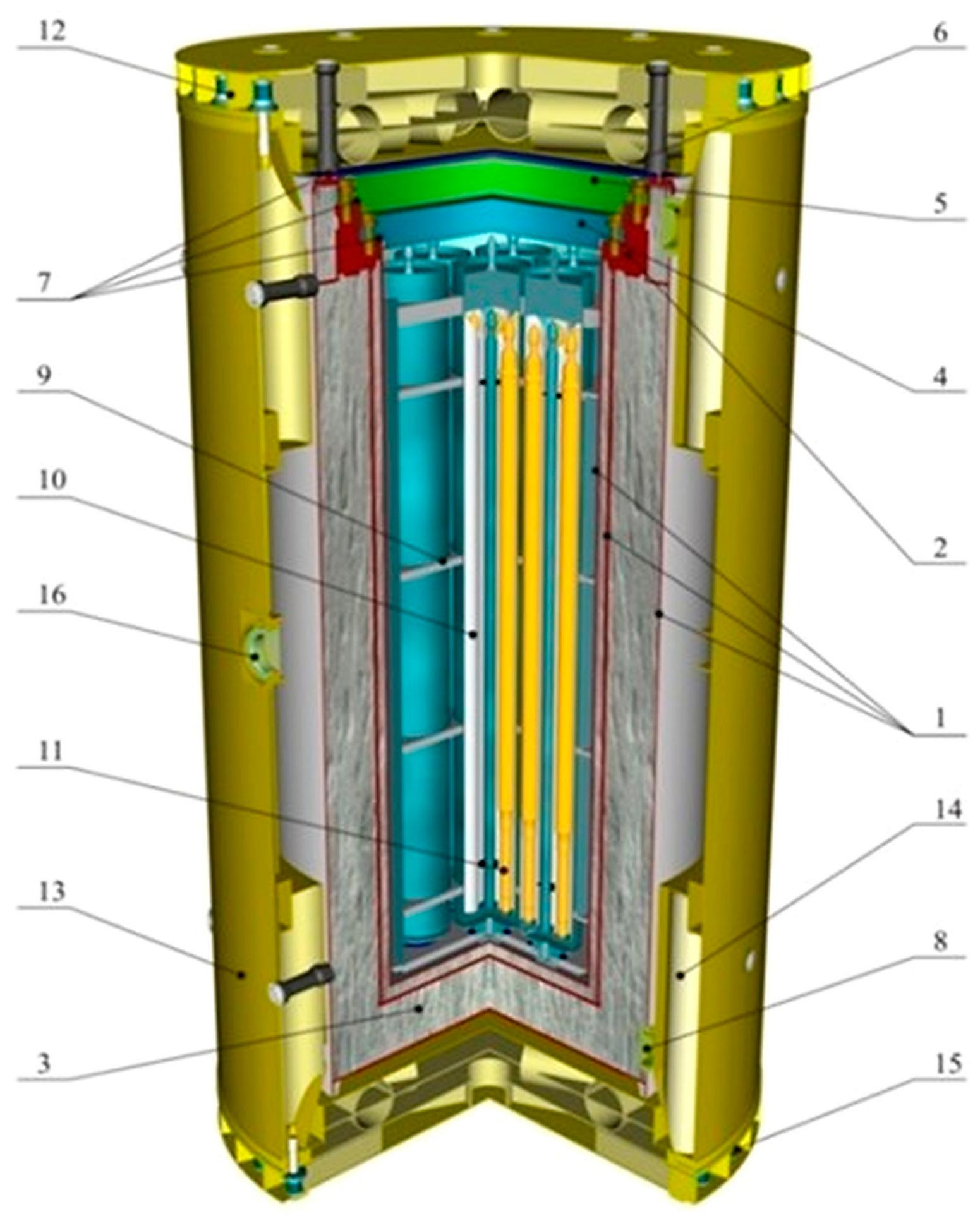
SNF from the BN-350 reactor, after discharge from the reactor core and interim pool storage, was transferred to long-term dry storage in the TUK-123 cask system (Open Joint Stock Company “Design Bureau of Special Machine Building” (OJSC “KBSM”), 64 Lesnoy Ave., Saint Petersburg, 194100, Russia). Dry storage is implemented using a multibarrier configuration that includes fuel rod claddings or stabilization capsules, sealed canisters filled with an inert atmosphere (argon), and an external metal-concrete cask (MCC). A general view of the TUK-123 transport and storage system is shown in
Figure 1. This configuration determines both the conditions for long-term fuel isolation and the specific features of external radiation field formation around the cask system.
The total mass of packaged BN-350 spent nuclear fuel, including the canisters, is about 680 t, while the mass of canisters loaded with fuel into a single UKKh-123 cask is about 12 t. The total mass of uranium contained in the BN-350 SNF is 209,518 kg, including 180,051 kg of depleted uranium and 29,467 kg of enriched uranium. The mass of plutonium accumulated in the spent fuel is 2905 kg. Thus, the total mass of nuclear materials in the spent fuel reaches 212,423 kg. The inventory of the major radionuclides in the spent fuel is characterized by the following uranium isotopic composition: 235U—5565 kg, 236U—421 kg, and 238U—203,532 kg. The plutonium component is represented by the following isotopes: 238Pu—1.430 kg, 239Pu—2816 kg, 240Pu—85 kg, 241Pu—2.100 kg, and 242Pu—0.038 kg. Of the total amount of 235U (5565 kg), 4992 kg are contained in enriched uranium, while the remaining amount of this isotope is present in depleted uranium.
During operation of the BN-350 reactor, three types of standard fuel assemblies (FAs) were used in the core: Type 1 FAs, Type 2 FAs, and upgraded FAs. In addition, control rod assemblies, compensating FAs, and experimental FAs were used. For all core configurations, Type 1 and Type 2 side blanket FAs were also employed. From 1973 to 1978, the reactor operated with the Type 1 core; from 1978 to 1991, with the Type 2 core; and from 1991 until final shutdown, with the upgraded core. Thus, BN-350 SNF represents a heterogeneous set of assemblies differing in design, enrichment, and burnup, which must be considered when selecting the limiting configuration for subsequent radiation-source and dose-field calculations.
The main characteristics of BN-350 SNF and its storage system are summarized in
Table 1. Characteristics of the individual spent fuel assemblies used for source-term definition are presented separately in
Table 2.
Table 1.
Main characteristics of BN-350 SNF and its long-term dry storage system.
Table 1.
Main characteristics of BN-350 SNF and its long-term dry storage system.
| Group | Parameter | Value |
|---|
| Total inventory of nuclear material in BN-350 SNF 1 | Mass of depleted uranium | 180,051 kg |
| Mass of enriched uranium | 29,467 kg |
| Mass of plutonium | 2905 kg |
| 235U | 5565 kg |
| 236U | 421 kg |
| 238U | 203,532 kg |
| 238Pu | 1.430 kg |
| 239Pu | 2816 kg |
| 240Pu | 85 kg |
| 241Pu | 2.100 kg |
| 242Pu | 0.038 kg |
| Isotopic composition of total BN-350 SNF inventory | Fraction of 238U in the total radionuclide inventory | 95.814% |
| Fraction of 235U in the total radionuclide inventory | 2.620% |
| Fraction of 239Pu in the total radionuclide inventory | 1.326% |
| Uranium isotopic composition | 2.66% 235U; 0.20% 236U; 97.14% 238U |
| Plutonium isotopic composition | 0.05% 238Pu; 96.96% 239Pu;
2.92% 240Pu; 0.072% 241Pu;
0.001% 242Pu |
| Standard core fuel assemblies | Types of standard fuel assemblies | Type 1; Type 2; upgraded |
| Reactor core operating periods | 1973–1978; 1978–1991; 1991–1999 |
| Reactor core fuel | UO2 |
| Initial 235U enrichment | Type 1: 17 and 26%; Type 2: 17 and 26%; upgraded: 17, 21, and 26% |
| Maximum fuel burnup | Type 1: 5.9% FIMA 2; Type 2: 8.9% FIMA; upgraded: 11.0% FIMA; experimental FAs: 12.9% FIMA |
| Fuel assembly length | 3500 mm |
| Design mass of fuel assembly | Type 1: 119–120 kg; Type 2: 117.3–117.5 kg; upgraded: 101 kg |
| Maximum mass of enriched uranium in a fuel assembly | Type 1: 29.4 kg; Type 2: 30.4 kg; upgraded: 28.1 kg |
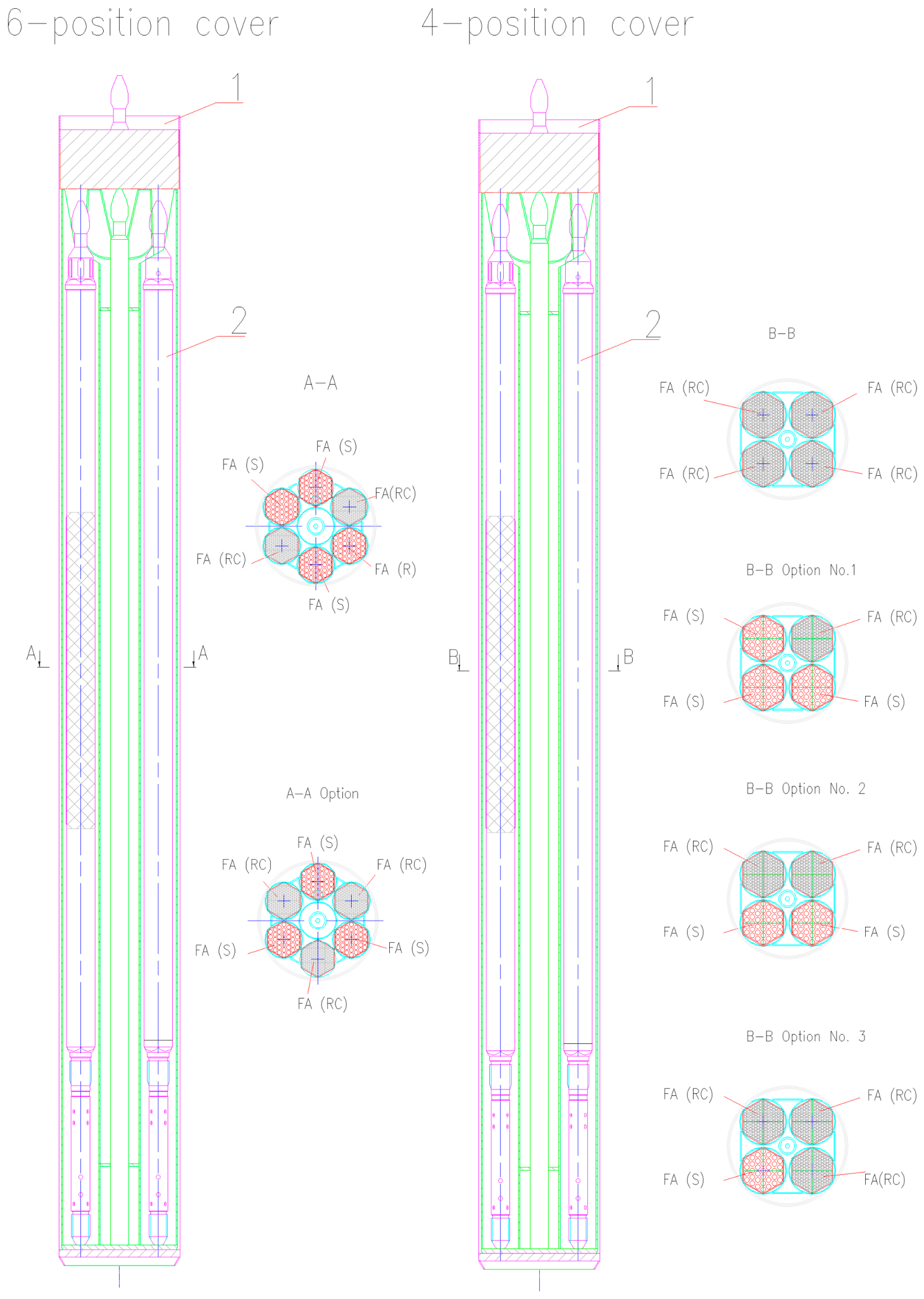
| SNF packaging | Types of sealed canisters | Six-position and four-position (see Figure 2) |
| Number of six-position canisters | 419 |
| Number of four-position canisters | 60 |
| Total number of sealed canisters | 479 |
| Cask storage system | Capacity of UKKh-123 | 8 canisters |
| Outer diameter of MCC | 2400 mm |
| Inner diameter of MCC | 1500 mm |
| Height of MCC | 5125 mm |
| Height of MCC inner cavity | 4146 mm |
| Mass of empty MCC | 79.8 t |
| Mass of spacer grid | not more than 5.3 t |
| Mass of UKKh | 86 t |
| Mass of UKKh loaded with fuel | about 100 t |
| Medium in the UKKh inner cavity | Inert gas |
| Design inert gas pressure at the time of storage placement | 0.08 MPa |
| Maximum normal internal operating pressure | up to 0.7 MPa |
| Mass of SNF canisters in one UKKh-123 | about 12 t |
| Total mass of packaged BN-350 SNF, including canisters | about 680 t |
| Design service life of the cask system | at least 50 years |
Figure 2.
Four-position and six-position canisters: 1—canister; 2—spent fuel assembly (SFA).
Figure 2.
Four-position and six-position canisters: 1—canister; 2—spent fuel assembly (SFA).
Table 2.
Main characteristics of the reference spent fuel assemblies used in defining the limiting configuration.
Table 2.
Main characteristics of the reference spent fuel assemblies used in defining the limiting configuration.
| Parameter | SFA 72626022390 | SFA TS-18 |
|---|
| Assembly type | upgraded | experimental |
| Initial 235U enrichment, % | 26 | 26 |
| Average core burnup, % FIMA | 9.34 | 10.96 |
| Maximum burnup in the core center, % FIMA. | 11.02 | 12.88 |
| Mass of enriched uranium, kg | 27.5498 | 29.5333 |
| Mass of depleted uranium, kg | 20.400 | 29.1927 |
| Mass of 235U, kg | 7.1452 | 7.6555 |
| Total activity as of 1 January 2025, Bq | 5.405 × 10¹⁴ | 5.850 × 10¹⁴ |
A single UKKh-123 accommodates eight SNF canisters. The metal-concrete cask body has a multilayer design comprising inner, intermediate, and outer metallic shells, with the space between them filled with heavyweight concrete. This design provides mechanical strength, leak-tightness, and effective attenuation of gamma and neutron radiation. The design service life of the cask system is at least 50 years.
For the present study, the BN-350 SNF must be heterogeneous not only in terms of assembly types but also in terms of its residual radiation characteristics. Among the core spent fuel assemblies (SFAs), two assemblies with the highest radiological significance were selected for subsequent computational analysis. The standard assembly with the highest residual heat generation at the time of discharge was the upgraded SFA 72626022390, with an initial enrichment of 26%, an average core burnup of 9.34% FIMA, and a maximum burnup of 11.02% FIMA at the core center. The experimental assembly with the highest fuel burnup among the core SFA was assembly TS-18, with an initial enrichment of 26%, an average core burnup of 10.96% FIMA, and a maximum burnup of 12.88% FIMA at the core center. These assemblies were used as reference cases for defining the limiting gamma and neutron source terms considered below in
Section 2.2.
Thus, the BN-350 SNF long-term dry storage system constitutes a multilevel barrier configuration in which the external dose fields are governed by the combined effects of the fuel nuclide inventory, the canister loading configuration, and the shielding properties of the MCC. This makes computational modeling an essential tool for the quantitative assessment of radiation safety in cask storage and for analyzing possible changes in dose fields associated with the loss of FA canister integrity.
2.2. Limiting Fuel Configuration and Source Term Definition
For the dose field calculations of the dry storage cask system, a fuel configuration limiting in terms of radiation characteristics was selected. The choice of this configuration was dictated by the heterogeneity of BN-350 SNF with respect to assembly type, initial enrichment, burnup, and residual radiation characteristics.
Considering the heterogeneity of BN-350 SNF in terms of assembly type, burnup, nuclide inventory, and residual radiation characteristics, two radiologically limiting core spent fuel assemblies (SFAs) were selected as reference cases for defining the limiting source term: the upgraded SFA 72626022390 and the experimental SFA TS-18. The former is the standard assembly with the highest residual heat generation at the time of discharge, whereas the latter is characterized by the highest fuel burnup among the core SFAs. The main characteristics of these assemblies are summarized in
Table 2.
The irradiation history of SFA 72626022390 comprised three campaigns: from 5 November 1991 to 3 May 1993 in core position 54 with an energy production of 241.20 GW·d; from 9 June 1993 to 8 June 1997 in core position 119 with an energy production of 329.21 GW·d; and from 18 July 1997 to 16 March 1998 in core position 19 with an energy production of 82.09 GW·d. The irradiation history of SFA TS-18 included operation from 4 April 1988 to 6 May 1991 in core position 131 with an energy production of 575.2 GW·d, followed by residence in the in-reactor storage position from 26 May 1991 to 15 October 1991, with an energy production of 73.3 GW·d. The passport mass of SFA 72626022390 is 27.5498 kg of enriched uranium, 20.400 kg of depleted uranium, and 7.1452 kg of 235U, whereas the corresponding values for SFA TS-18 are 29.5333 kg, 29.1927 kg, and 7.6555 kg of 235U, respectively.
The calculated nuclide inventory and activities of the principal fission products, actinides, and activation nuclides were determined as of 1 January 2025. The total activity of SFA TS-18 is 5.850 × 10¹⁴ Bq, whereas of SFA 72626022390 is 5.405 × 10¹⁴ Bq. In both cases, the activity is dominated by long-lived fission products, primarily 137Cs, 90Sr, and 90Y.
For SFA TS-18, the activity of 137Cs is 1.740 × 10¹⁴ Bq, 90Sr—1.360 × 10¹⁴ Bq, and 90Y—1.356 × 10¹⁴ Bq, while the total activity of fission products reaches 5.787 × 10¹⁴ Bq.
For SFA 72626022390, the activity of 137Cs is 1.539 × 10¹⁴ Bq, 90Sr—1.227 × 10¹⁴ Bq, and 90Y—1.223 × 10¹⁴ Bq, while the total activity of fission products reaches 5.351 × 10¹⁴ Bq.
The neutron source term of the SFAs is governed by the spontaneous fission of actinides and by (α,n) reactions on oxygen in uranium dioxide. According to the calculations performed for 1 January 2025, the neutron source intensity for SFA TS-18 is 1.520 × 10⁵ n/s in the reactor core, 1.146 × 10⁴ n/s in the upper end shield, and 9.942 × 10³ n/s in the lower end shield. For SFA 72626022390, the corresponding values are 1.209 × 10⁵ n/s, 1.092 × 10⁴ n/s, and 1.225 × 10⁴ n/s.
In defining the limiting configuration, not only the radiation characteristics of the individual SFAs were considered, but also their actual placement within sealed canisters together with other assemblies and stabilization capsules. This approach made it possible to use in the calculations not isolated source terms of individual SFAs, but a more realistic radiation source configuration corresponding to the actual canister loading conditions during long-term dry storage.
For the subsequent radiation transport analysis, the limiting source term was defined based on the most radiologically intensive canister and cask configuration. This provided the transition from the characteristics of individual SFAs to the integral radiation source term of the cask system, which determines the external dose fields under both normal storage conditions and accident scenarios associated with the partial failure of fuel assembly canisters and redistribution of fuel material.
The selected reference assemblies should be interpreted as limiting rather than average representatives of the BN-350 SNF inventory. The BN-350 inventory is heterogeneous and includes first-type, second-type, modernized, and experimental fuel assemblies with different enrichments, burnup levels, irradiation histories, and cooling times. SFA 72626022390 was selected as the standard assembly with the highest residual heat generation, while SFA TS-18 was selected as the assembly with the highest burnup among the considered core SFAs. These parameters directly affect the residual photon and neutron source terms and therefore define conservative conditions for external dose-rate calculations. Thus, the adopted source term provides a bounding estimate for the most radiologically significant configurations and should not be interpreted as an average representation of the entire BN-350 SNF inventory.
2.3. Computational Model and Monte Carlo Methodology
Neutronic and radiation transport calculations in this study were performed using the general-purpose MCNP code [
24]. The calculations took into account the transport, scattering, and absorption of both photon and neutron radiation. The ENDF/B-V and ENDF/B-VI nuclear data libraries were used.
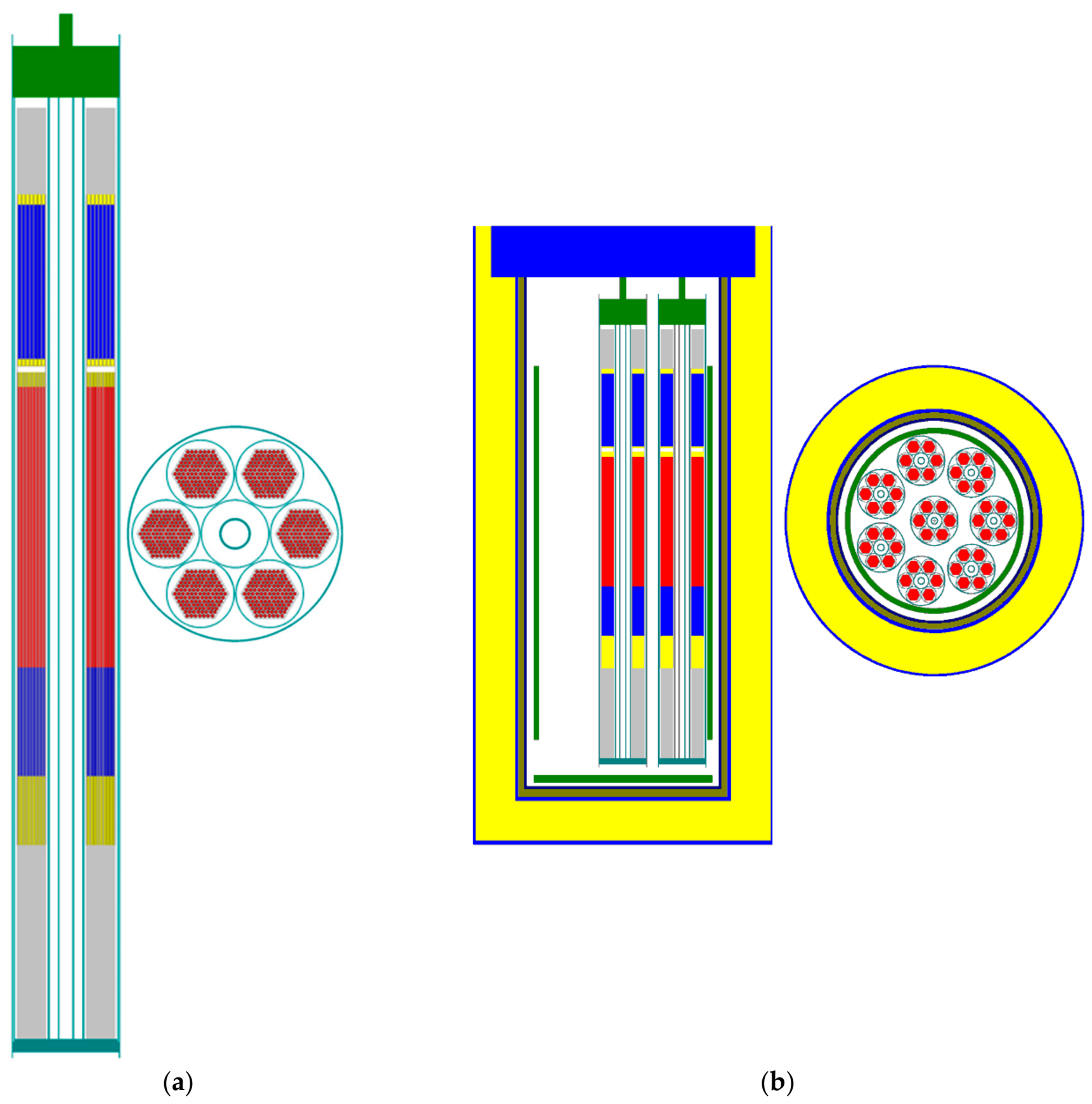
The computational model of the cask system was developed to reproduce the actual design of the UKKh-123 cask as closely as possible and included the geometry of the sealed SNF canisters, the MCC, and its radiation shielding. For calculations under both normal storage conditions and accident scenarios, the most radiologically intensive six-position canister was taken as the reference configuration; its computational model is shown in
Figure 3a. The canister geometry was represented by a cylindrical body with a diameter of 406.4 mm and a length of 3854 mm including the handling head, and the total length was 3989 mm. The shell thickness was taken as 4 mm, the bottom thickness as 25 mm, and the total thickness of the lid together with the welded protective plug as 200 mm.
In the UKKh-123 model, the outer diameter of the cask was taken as 2400 mm, the inner diameter as 1500 mm, and the total wall thickness as 900 mm. The cask contained eight canisters arranged in a spacer grid. In the reference configuration, each canister was assumed to contain three upgraded core SFAs and three Type 2 shielding SFAs, with the activities of fission products and activation nuclides conservatively taken at their maximum values. The computational configuration of the cask is shown in
Figure 3b. In the calculations, the cask radiation shielding was modeled layer by layer in accordance with the actual design. In the radial direction, the shielding was represented as a combined five-layer system consisting of 16 mm of 12Cr18Ni10Ti steel (in accordance with GOST 5632-72 [
25]), 53 mm of heavyweight concrete OPBST V90 D3400 (in accordance with GOST R 70222–2022 [
26]), 25 mm of 09G2SA-A steel (in accordance with GOST 19281–2014 [
27]), 340 mm of extra-heavyweight concrete OPBST V110 D4100 [
26], and 16 mm of 09G2SA-A steel. On the lid side, the shielding was represented by three layers: 190 mm of 09G2SA-A steel, 180 mm of 09G2SA-A steel, and 25 mm of 12Cr18Ni10Ti steel. On the bottom side, a five-layer configuration was used: 20 mm of 12Cr18Ni10Ti steel, 70 mm of heavyweight concrete, 25 mm of 09G2SA-A steel, 330 mm of extra-heavyweight concrete, and 25 mm of 09G2SA-A steel. The densities of the concrete layers were taken at the minimum allowable values, considering tolerances, namely 4.0 g/cm
3 for extra-heavyweight concrete and 3.3 g/cm
3 for heavyweight concrete. This choice was also consistent with a conservative approach to radiation attenuation assessment.
The photon and neutron source terms were defined based on the calculated characteristics of the radiologically limiting SFAs considered in
Section 2.2. In the dose field calculations, account was taken of the spatial distribution of sources within the canister and the cask, as well as of the combined contribution of the gamma and neutron components. For assessment of the radiological environment, radiation flux densities were determined at control points around the cask, followed by the conversion of photon and neutron fluence into ambient dose equivalent rate using appropriate fluence-to-dose conversion coefficients.
The MCNP model was developed using the available design information for the UKKh-123 cask, including the multilayer shielding structure, the arrangement of the SNF canisters, and the spatial distribution of the radiation sources. However, direct experimental validation of the internal model is limited by the sealed configuration of the cask and the absence of access to the fuel and canister interiors during normal storage. Therefore, the results should be interpreted as a conservative model-based assessment.
For benchmarking, the calculated axial dose-field trend was compared with our previous monitoring study of BN-350 SNF under long-term dry storage conditions [
28]. In that work, γ-spectrometric measurements were performed on the surfaces of 60 UKKh containers using a portable ORTEC scintillation gamma spectrometer based on a lanthanum-bromide detector with a 1.5-inch crystal and an energy resolution of approximately 2.8–4 keV at 662 keV. The scheme included 40 measurement positions on each container surface, with an exposure time of 60 s, and a collimator was used to reduce the influence of radiation from neighboring containers.
The comparison showed that the calculated and experimentally observed radiation-field maxima for the intact configuration occurred at approximately 2 m from the cask bottom. In addition, the ratio between radiation levels at approximately 1 m and 2 m from the cask bottom was about 2.6 in the calculated dose-rate estimates and about 2.7 in the experimental γ-count-rate measurements [
28]. This agreement supports the ability of the model to reproduce the main axial trend of the external radiation field. However, because the monitoring data in [
28] were reported mainly as γ-count rates rather than ambient dose equivalent rates at all detector positions used in the present calculations, this comparison should be interpreted as benchmarking of the spatial trend rather than as full point-by-point validation of absolute dose-rate values.
2.4. Normal and Accident Scenarios
The dose field calculations were performed for normal long-term dry storage conditions and for accident scenarios associated with canister integrity loss and redistribution of fuel within the cask system. In all cases, the external geometry of the cask and its shielding properties were assumed to remain unchanged; only the internal configuration of radiation sources was varied. The normal storage conditions corresponded to the design configuration of the cask, in which the SNF retained its original position within the sealed canisters, and the gamma and neutron source terms were defined based on the calculated nuclide inventory as of 1 January 2025. This case was used as the reference for comparison with the accident scenarios. The accident scenarios were formulated based on possible FA degradation during long-term storage. The scenarios considered included partial or complete failure of the metal canister wall, as well as the relocation of a fraction of the fuel pellets to the lower part of the cask. Thus, the analysis addressed the effect of both canister integrity loss itself and redistribution of nuclear material on the formation of external dose fields. All considered states were represented as a set of computational models differing only in the degree of canister failure and the fraction of relocated fuel. The list of models is given in
Table 3. This approach ensured direct comparison of the calculation results and made it possible to evaluate the sensitivity of the ambient dose equivalent rate to changes in the internal fuel configuration under normal and accident storage conditions.
The accident scenarios considered in Models 2–9 should be interpreted as engineering-conservative sensitivity cases rather than deterministic predictions of mechanical fuel degradation. The failure and relocation fractions of 25%, 50%, and 100% were selected to represent degradation states, namely initial partial degradation, intermediate degradation, and a limiting bounding case. This approach allows an uncertain continuous degradation process to be represented by several reference configurations.
Potential mechanisms that may contribute to degradation during long-term storage include corrosion, stress-corrosion cracking, thermal stresses, radiation embrittlement, creep, vibration, seismic impacts, and fuel fragmentation. Experience with irradiated stainless steels also indicates that humid-air conditions may contribute to intergranular corrosion under gamma-radiation exposure [
29]. In the event of severe loss of cladding or fuel-column integrity, fuel pellets or fragments may relocate downward under gravity. For this reason, downward relocation was adopted as a conservative gravity-driven reference morphology for evaluating the sensitivity of the external radiation field to source redistribution.
The exact morphology of degraded fuel cannot be predicted without a dedicated structural-mechanical and thermo-physical analysis, which is outside the scope of the present work. Other degradation morphologies, such as local clumping, partial suspension, or non-uniform spreading, are physically possible. Local clumping could increase dose rates in specific directions or at specific heights, whereas non-uniform spreading could smooth the axial dose profile. Therefore, the present results should be interpreted as bounding sensitivity calculations for downward source redistribution rather than as a complete description of all possible degraded fuel geometries.
All considered states were represented as a set of computational models differing only in the degree of canister failure and the fraction of relocated fuel. The list of models is given in
Table 3.
3. Results and Discussion
3.1. Radiation Characteristics Under Normal Storage Conditions
For normal long-term dry storage conditions, the initial intact configuration of the cask system corresponding to Model 1 was considered, in which the geometry of the canisters, the fuel position, and the nuclide composition of the radiation sources were assumed to remain as designed. The calculations were performed as of 1 January 2025 for the integral gamma and neutron source term of the cask, defined based on the most radiologically intensive loading configuration.
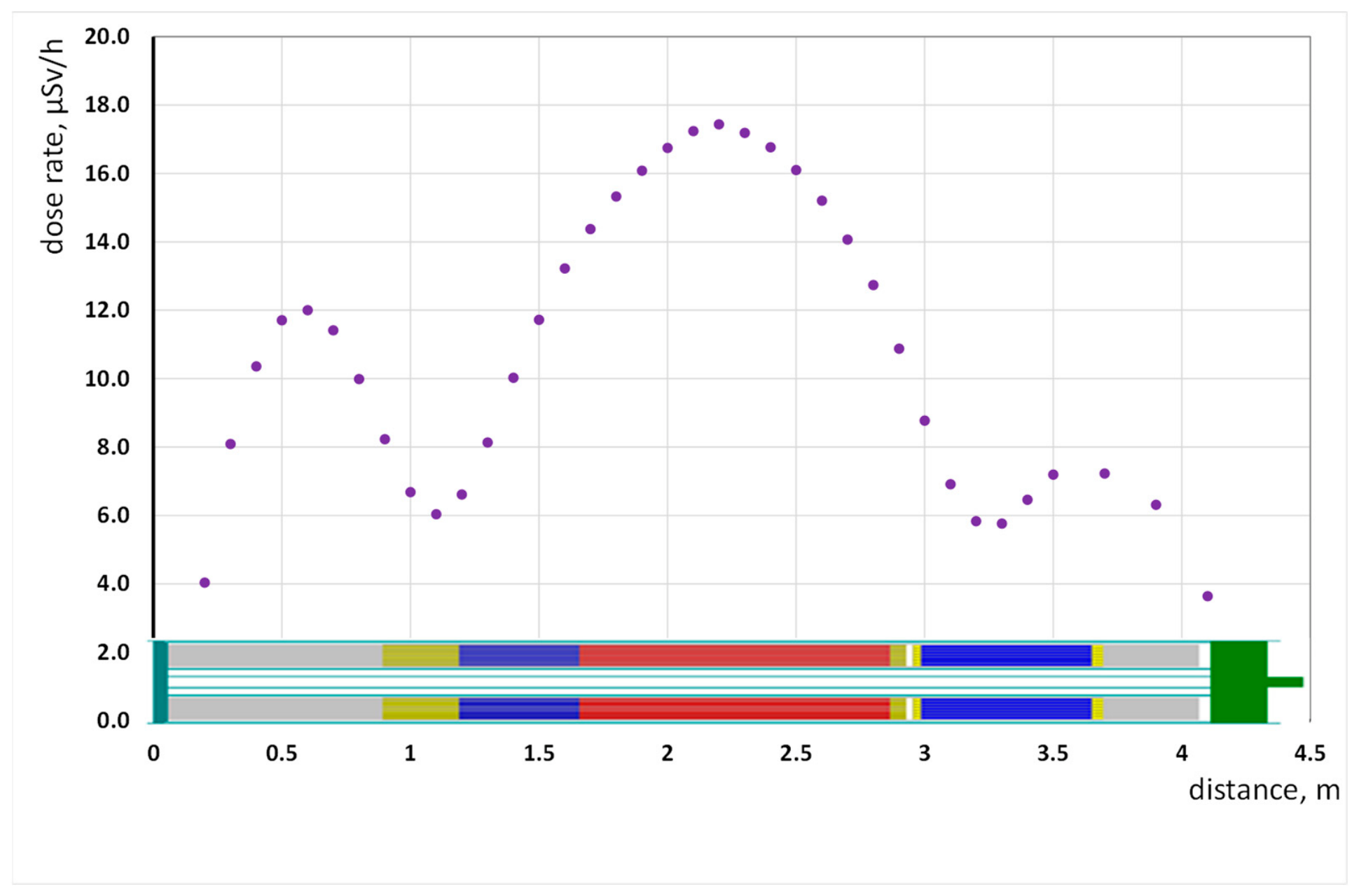
The results show that under normal storage conditions, the external dose field of the cask is markedly non-uniform in the near-field region and becomes substantially smoother with increasing distance. At 1 m from the cask surface, the vertical distribution of the ambient dose equivalent rate is characterized by local maxima associated with the axial distribution of the most active fuel regions within the canisters. As shown in
Figure 4, the near-field vertical profile of the ambient dose equivalent rate follows the overall axial structure of the source term, indicating that the internal fuel arrangement has a decisive influence on the formation of the external dose field.
The maximum ambient dose equivalent rate over the cask height in the interval from 0 to 2 m at 1 m from the cask surface is 17.43 μSv/h, while the average value is 9.96 μSv/h. In the present study, this average value was taken as the baseline level for comparison with the accident scenarios. At the same time, local maxima along the height exceed the average level, reflecting the non-uniform distribution of activity along the fuel assembly length and the different contributions of the active region and the end shields to the total radiation field.
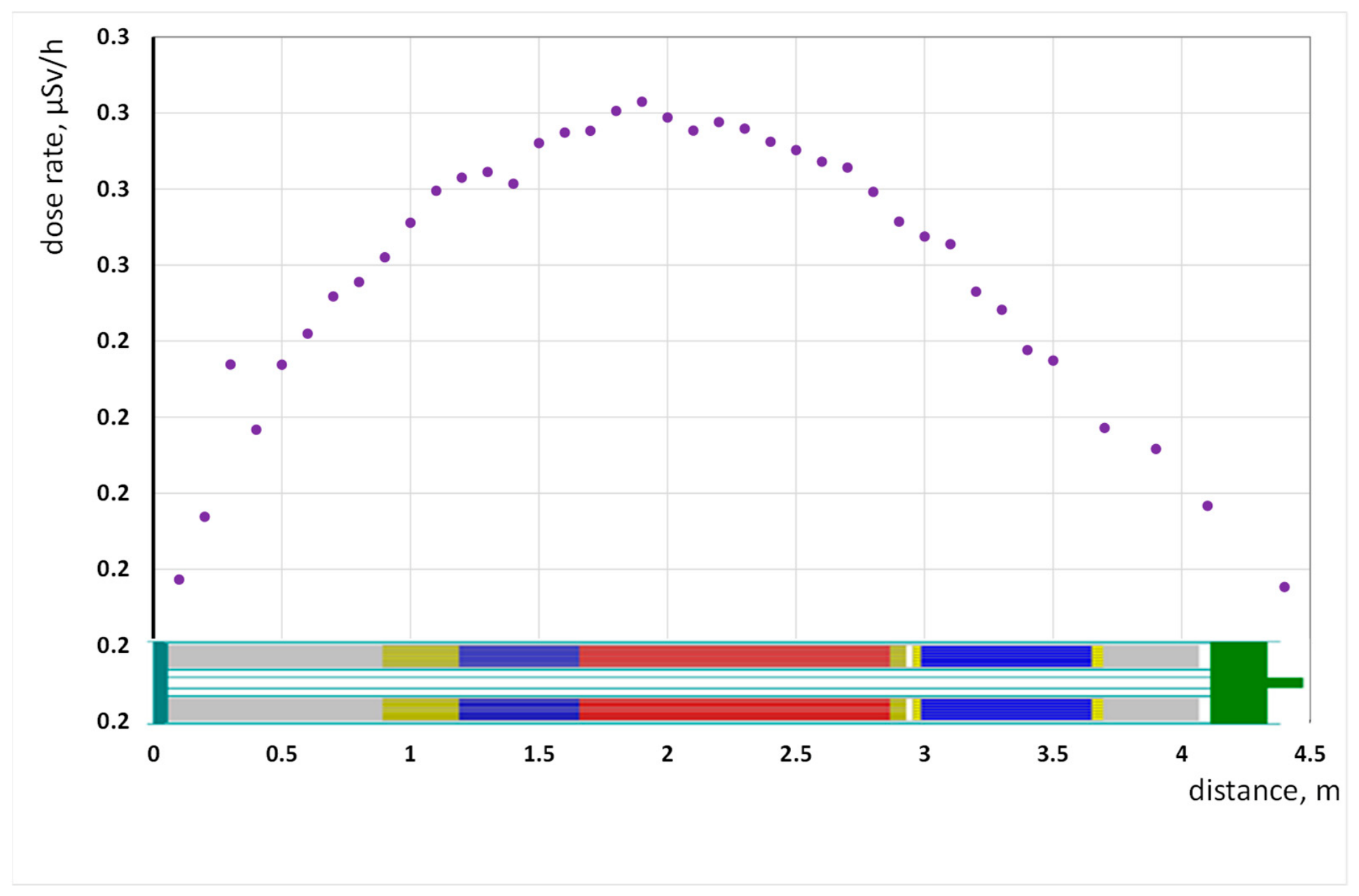
At 10 m from the cask, the dose field becomes substantially more uniform. This spatial smoothing is caused by both geometric attenuation and by the integration of contributions from different parts of the source as the distance increases. Under normal storage conditions, the maximum ambient dose equivalent rate at 10 m is 0.261 μSv/h. The corresponding vertical distribution is shown in
Figure 5. Unlike the near-field region, where the axial structure of the source term is clearly pronounced, its influence becomes much less distinct at greater distances, and the dose field assumes a smoother profile.
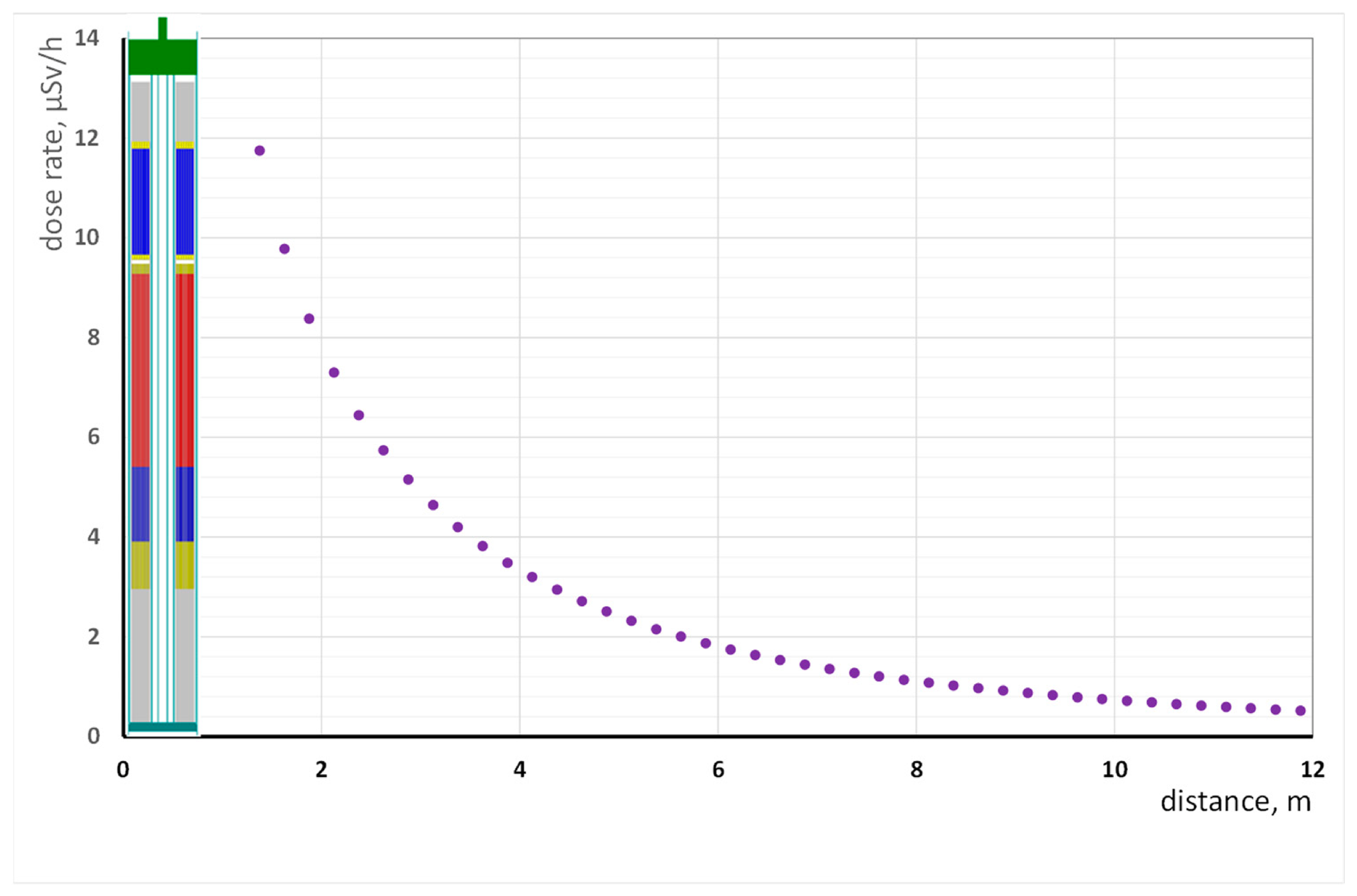
The radial attenuation of external radiation from the cask under normal storage conditions is shown in
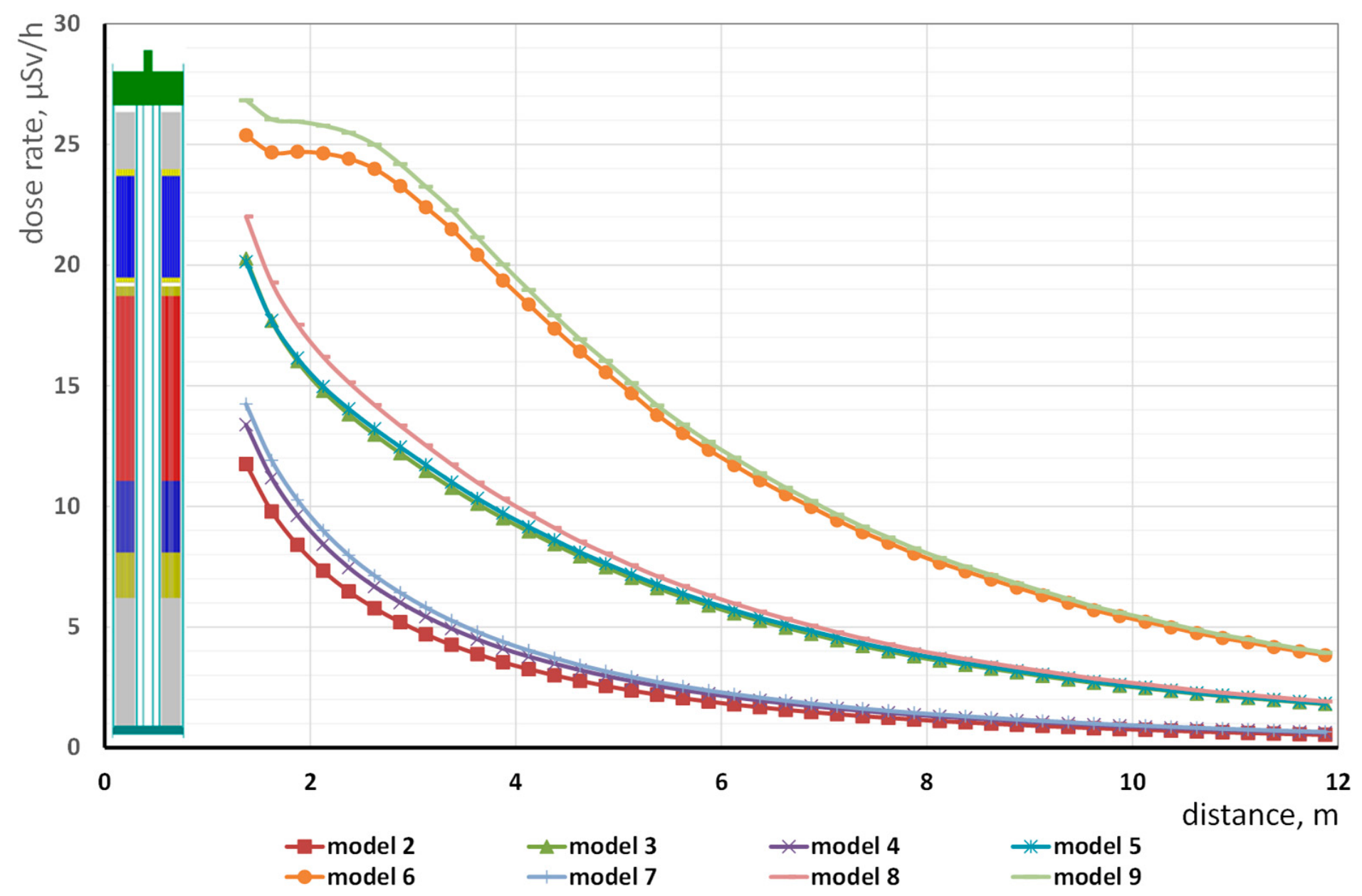
Figure 6. The calculations indicate that as the distance increases from 1 to 12 m, the ambient dose equivalent rate decreases by more than one order of magnitude. This behavior is due to the combined effect of geometric flux divergence and shielding by the metal-concrete cask structure. The obtained attenuation trend confirms that the most significant radiological burden is realized in the near-field region around the cask, whereas at distances on the order of 10 m, the external radiation levels are substantially lower.
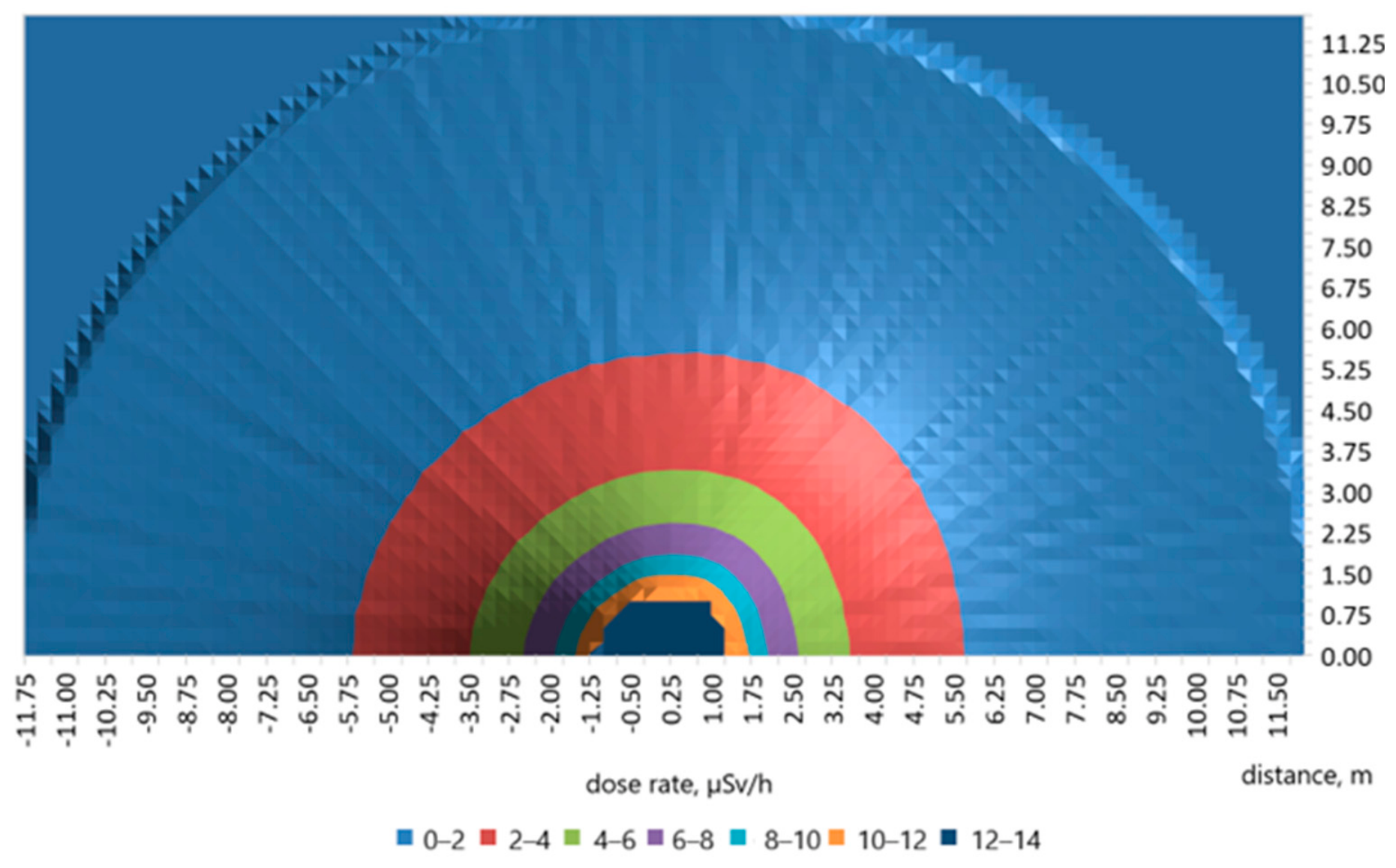
The dose field map for the initial configuration (
Figure 7) shows that the maximum external radiation is formed in the region corresponding to the axial position of the most active part of the fuel, whereas the ambient dose equivalent rate is lower in the upper and lower parts of the cask. This is consistent with the calculated axial profiles and confirms that under normal storage conditions, the dose field is governed primarily by the distribution of fission products in the active part of the spent fuel assemblies, with an additional but substantially smaller contribution from the neutron component and activation nuclides.
Thus, the intact configuration of the cask system is characterized by:
- (i)
pronounced non-uniformity of the ambient dose equivalent rate in the near-field region,
- (ii)
progressive smoothing of the dose field with increasing distance from the cask, and
- (iii)
a baseline level of external radiation against which the effects of canister failure and fuel material redistribution in accident scenarios can be quantitatively assessed.
The results obtained for Model 1 are used below as the reference case for the analysis of radiation safety under conditions of disturbed internal fuel configuration.
The non-uniform vertical dose-rate profile obtained for Model 1 indicates that the external radiation field is governed by the axial distribution of sources in the irradiated fuel rather than by geometric attenuation alone. This interpretation is consistent with published studies of shielding in dry storage casks [
30], which show that calculated dose distributions are highly sensitive to detailed source specification and cask geometry [
31].
From the standpoint of operational radiation protection, the calculated dose-rate levels indicate that the external radiation field is primarily significant in the near-field region around the cask. For the intact configuration, the average ambient dose equivalent rate at 1 m from the cask surface is approximately 10 μSv/h, whereas the maximum value at 10 m is approximately 0.26 μSv/h. This decrease with distance shows that external exposure can be effectively managed by standard radiation-protection measures, including controlled access, time limitation, distance, shielding, and routine radiation monitoring.
3.2. Radiation Characteristics for Accident Scenarios
For accident storage conditions, computational Models 2–9 were considered, differing in the degree of canister wall failure and in the fraction of fuel pellets relocated downward. Comparison of these models with the initial configuration (Model 1) showed that the effect of accident-induced changes on the external dose fields is governed primarily by fuel material redistribution, whereas canister wall failure by itself, with the original fuel arrangement preserved, has a much smaller effect. The main calculated characteristics for all considered models are summarized in
Table 4.
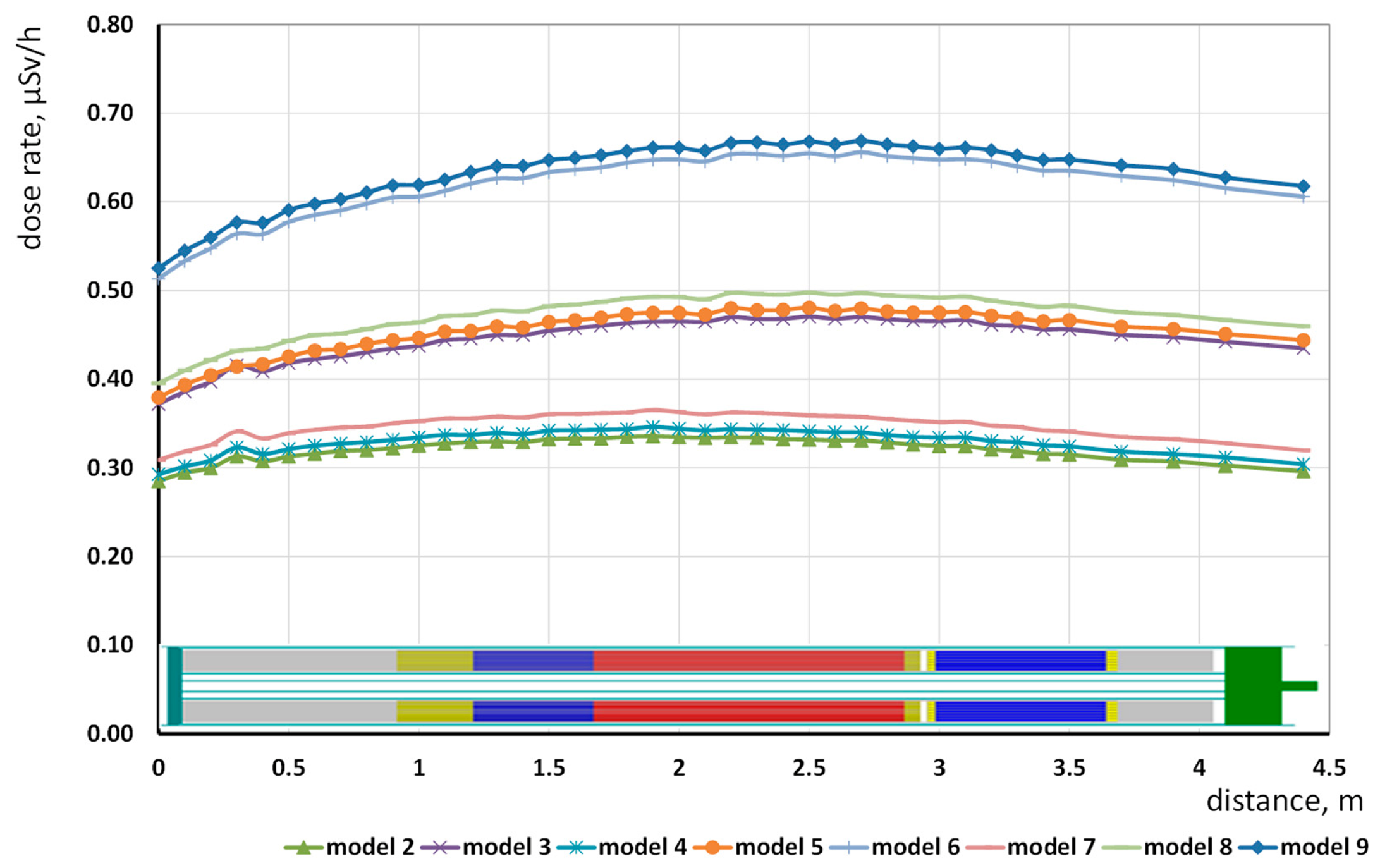
For Models 2, 4, and 7, corresponding to canister wall failure over 25, 50, and 100% of the canister height, respectively, with no fuel relocation, the changes in the dose fields are relatively limited. At 10 m from the cask, the maximum ambient dose equivalent rates were 0.336, 0.346, and 0.365 μSv/h, respectively. This indicates that as long as the original geometry of the fuel column is preserved, the contribution of canister wall failure to the formation of the external dose field remains moderate.
A different pattern is observed for scenarios in which canister wall failure is accompanied by downward relocation of part of the fuel pellets. For Models 3, 5, and 8, corresponding to 25% fuel relocation, the average ambient dose equivalent rate at 1 m from the cask increased to approximately 19 μSv/h, which substantially exceeded the baseline level for Model 1 (9.96 μSv/h). At 10 m, the maximum ambient dose equivalent rates for these models were 0.471, 0.481, and 0.498 μSv/h, respectively. These results show that even a partial fuel redistribution leads to a noticeable increase in external radiation, primarily in the near-field region.
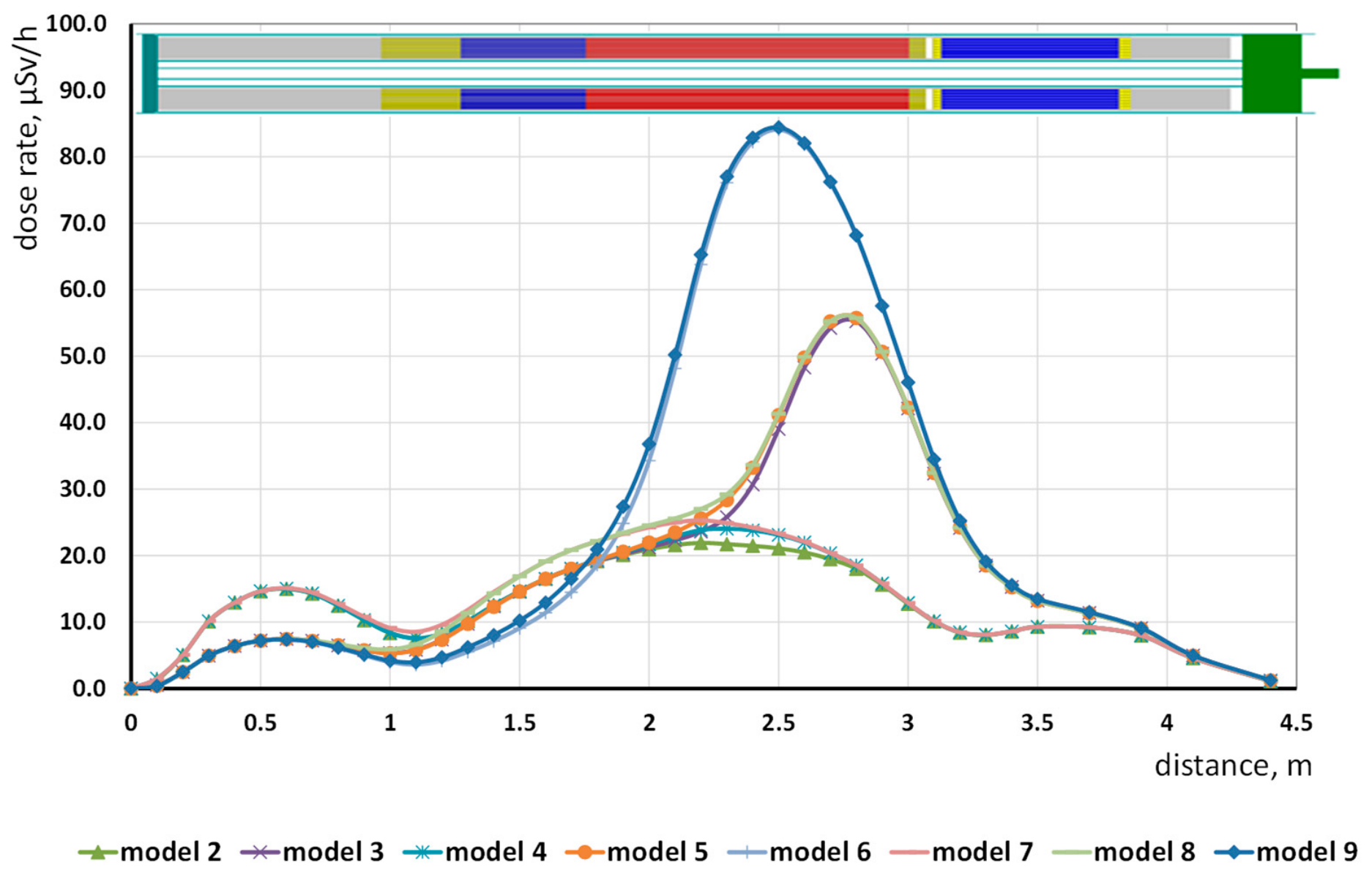
The most unfavorable results were obtained for Models 6 and 9, in which canister wall failure is combined with 50% fuel relocation. In these cases, the average ambient dose equivalent rate at 1 m reached 25.06 and 25.58 μSv/h, while the maximum values at 10 m were 0.656 and 0.669 μSv/h, respectively. Compared with the initial configuration, this corresponds to an almost fourfold increase in dose rate in the near-field region and an approximately twofold increase in external radiation level at 10 m. Thus, scenarios involving substantial fuel material redistribution define the upper bound of the possible dose fields.
The vertical distributions of ambient dose equivalent rate for the accident models at 1 m and 10 m are shown in
Figure 8 and
Figure 9, while the radial attenuation of the dose field is presented in
Figure 10. As in the normal storage case, a pronounced non-uniformity of the vertical dose distribution is retained in the near-field region; however, under accident scenarios, the maxima shift and intensify because of changes in the axial source distribution. At greater distances from the cask, the differences between models become partially smoothed out, although the overall increase in ambient dose equivalent rate for scenarios involving fuel relocation remains evident.
Overall, the calculation results show that canister wall failure without fuel redistribution does not lead to a sharp increase in external dose fields, whereas the relocation of fuel pellets to the lower part of the cask system is the determining factor in the increase in ambient dose equivalent rate. This is especially evident in the near-field region, where the external dose field is most sensitive to the internal configuration of radiation sources. Therefore, in the analysis of radiation safety for the long-term dry storage of BN-350 SNF, the greatest attention should be paid to scenarios associated not only with canister degradation, but also with changes in the spatial distribution of fuel within the cask.
One of the key findings of this study is that canister wall failure by itself leads only to a limited increase in the external dose rate, whereas fuel relocation significantly enhances the near-field dose. This trend is physically consistent with previous analyses of fuel configuration changes [
32], in which the redistribution of the radiation source into different axial regions or into the cask cavity was identified as the dominant factor controlling changes in the external dose rate outside the cask.
In the most conservative fuel-relocation scenarios, the average ambient dose equivalent rate at 1 m increases to approximately 25–26 μSv/h. This increase demonstrates that fuel relocation is safety-significant for near-field radiation conditions. However, the effect remains localized around the cask and can be addressed operationally by restricting access to the immediate cask area and applying standard radiation-protection procedures. From an operational radiation-protection perspective, this dose-rate increase is important for near-field work planning. Since external dose is proportional to time, one hour of work at 1 m from such a cask would correspond to an external dose of approximately 25 μSv, while shorter work durations would reduce the dose proportionally. The radial attenuation results also show that the dose rate decreases strongly with distance; therefore, increasing the distance from the cask remains an effective protective measure. If fuel relocation is suspected, operations near the cask should be managed by minimizing time near the source, maximizing distance, using shielding where practical, restricting access to the immediate cask area, and applying enhanced radiation monitoring. Thus, fuel relocation does not imply a loss of overall storage safety in the considered scenarios, but it is important for operational radiation protection and work planning in the near-field region.
3.3. Sensitivity of Dose Rate to Concrete Shielding Degradation
Since the UKKh-123 cask is intended for long-term storage, possible changes in the shielding properties of the concrete were considered by sensitivity analysis. In the base model, the concrete layers were represented using the minimum allowable densities of the corresponding heavyweight and extra-heavyweight concretes. To evaluate the possible effect of long-term drying, additional gamma-transport calculations were performed (see
Table 5) with different water contents in the concrete. Five concrete–moisture cases were considered: a high-moisture case, the reference case, mild drying, strong drying, and fully dry concrete. The reference case corresponds to the concrete composition used in the base MCNP model. The mild-drying, strong-drying, and fully dry cases represent progressive loss of water content, while the high-moisture case was included to check the opposite trend.
The results show that the gamma-dose component is weakly sensitive to concrete water content. Even in the fully dry limiting case, the calculated gamma dose increased by only about 5% relative to the reference case. This is expected because photon attenuation in concrete is controlled mainly by bulk density and effective atomic number. In contrast, hydrogen content is more important for neutron moderation. Therefore, possible long-term hydrogen loss may have a greater relative effect on the neutron component than on the gamma component.
3.4. Radiation Safety Assessment
In addition to the dose field assessment, a computational analysis of the radiation safety of the BN-350 spent nuclear fuel dry storage cask system was performed. The principal criterion used was the effective neutron multiplication factor,
, calculated for normal operating conditions and for several accident scenarios. The calculation results are presented in
Table 6 and
Table 7.
For normal operating conditions, the following configurations were considered: a single UKKh on a semi-infinite layer of steel and concrete, a single UKKh in an infinite water reflector, and a system of seven UKKhs in an infinite water reflector. The resulting values lie within the narrow range of 0.51315–0.51480, indicating low sensitivity of the neutronic characteristics of the system to external conditions in the absence of water inside the cask. The maximum value under normal operating conditions is 0.51480, which is well below the regulatory limit of 0.95.
The accident scenario calculations show that the dominant factor leading to an increase in is the presence of water or a steam–water mixture in the internal cavities of the cask and canisters. When the cask is placed in an infinite water reflector, but no water is present inside the UKKh, remains essentially at the level of normal operating conditions, namely 0.51332–0.51499. When the internal cavity of the cask is filled with water while the canisters remain dry, increases to 0.62412, and when both the cask and the canisters are filled with water, it rises to 0.74881. In the case where water is present only in the canisters, reaches 0.83105.
The largest increase in the neutron multiplication factor was observed when a steam–water medium formed inside the UKKh. In this case, the value was 0.89945 for the cask in an infinite water reflector and 0.90032 for the cask in air, which was the maximum result among all considered configurations. Despite the noticeable increase compared with dry conditions, these values also remained below the limiting criterion of 0.95.
High-temperature accident conditions at a material temperature of 800 °C were also analyzed. The calculations showed that increasing temperature reduces : for the dry configuration, the value was 0.28764, whereas for configurations with voids filled with water at densities ranging from 0.25 to 1.0 g/cm3, the calculated values varied from 0.36018 to 0.45468. Thus, even in the presence of water, high-temperature states are not limited to the maximum multiplication factor.
The criticality analysis focused on water and steam ingress scenarios because internal moderation is the dominant factor controlling the neutron multiplication factor in the considered dry-storage configuration. Mechanical rearrangement or compaction of fuel, including possible seismic-induced displacement, may affect the spatial distribution of fuel material, but in the absence of an efficient moderator, it is less favorable for increasing than water or steam ingress. This is supported by the low calculated values for dry configurations and by the significant increase observed only when water or steam–water media are introduced into the cask or canister cavities. Therefore, mechanical degradation scenarios were treated primarily as dose-field redistribution cases, whereas water/steam ingress was selected as the limiting criticality-relevant accident condition.
Overall, the results indicate that in the absence of water inside the cask, the system is characterized by stably low values with only weak sensitivity to external conditions. From the standpoint of radiation safety, the most unfavorable scenarios are those involving the presence of water, and especially a steam–water mixture, in the internal cavities of the UKKh and the canisters. However, even for the most conservative case, the calculated value did not exceed 0.90032, which was below the regulatory limit of 0.95. This supports the conclusion that the BN-350 SNF storage system remains subcritical under all normal and accident conditions considered, provided that no deformation of the canisters or spacer grid occurs.
Accordingly, the most radiation-sensitive scenarios are those involving internal flooding and steam–water mixture formation rather than changes in the external environment around the cask.
The highest
values were obtained for conditions involving steam inside the cask, indicating that the most reactive state is governed more by moderation within the cask cavity than by the external environment. This observation is consistent with the generally accepted understanding in spent fuel radiation safety that internal moderation and fuel configuration are the principal factors governing reactivity behavior under normal and accident conditions [
5,
33].
4. Conclusions
This study presents a computational assessment of the radiation characteristics and radiation safety of BN-350 spent nuclear fuel under long-term dry storage conditions in the TUK-123 cask system as of 1 January 2025. The analysis was based on the most radiologically intensive loading configuration and included calculations of external dose fields for normal storage conditions and accident scenarios, as well as an evaluation of the effective neutron multiplication factor for normal and accident states of the system.
The results show that under normal storage conditions, the external dose field of the cask in the near-field region is markedly non-uniform and is governed primarily by the axial distribution of the most active fuel regions within the canisters. For the intact configuration, the average ambient dose equivalent rate at 1 m from the cask surface was 9.96 μSv/h, whereas the maximum value at 10 m did not exceed 0.261 μSv/h. These results confirm that with the design configuration preserved, the radiological conditions around the UKKh-123 cask are determined mainly by long-lived fission products, primarily 137Cs, 90Sr, and 90Y.
It was established that under accident scenarios, the dominant factor affecting the external dose fields is not canister wall failure itself, but the redistribution of fuel within the cask system. With the partial relocation of fuel pellets, the average ambient dose equivalent rate at 1 m increased to approximately 19 μSv/h, while in the most conservative scenarios involving 50% fuel relocation, it reached approximately 25 μSv/h. These results demonstrate that the near-field region around the cask is most sensitive to changes in the internal fuel configuration, whereas in the far-field region, the effect of accident-induced changes is less pronounced.
The calculations of the effective neutron multiplication factor showed that under normal operating conditions, lies within the range 0.51315–0.51480 and depends only weakly on the external environment around the cask in the absence of water inside the UKKh. From the standpoint of nuclear safety, the most unfavorable scenarios are those involving the presence of water, and especially a steam–water mixture, in the internal cavities of the cask and canisters. However, even for the most conservative case, the calculated value did not exceed 0.90032, which remained below the regulatory limit of 0.95.
Overall, the results provide a conservative model-based basis for assessing the radiation and nuclear safety of BN-350 spent nuclear fuel in TUK-123/UKKh-123 casks. Within the assumptions of the developed MCNP model and the considered normal and accident boundary cases, the system remains subcritical, and the most significant increase in external dose rate is associated with fuel relocation. The findings can be used in future storage safety assessments, in the interpretation of radiation monitoring data, and in supporting spent fuel management strategies for BN-350 fuel during subsequent stages of the storage system life cycle.



 ,
,