Article

High-Voltage Electrical Impulse Rock-Breaking Principle Prototype and Investigation of Electrical Parameters

1
School of Mechatronics Engineering, Harbin Institute of Technology, Harbin 150001, China
2
Drilling Engineering Technology Research Institute of Daqing Drilling Engineering Company Limited, Daqing 163000, China
3
National Engineering Research Center of Oil & Gas Drilling and Completion Technology, Daqing 163000, China
4
China Petroleum Electric Energy Co., Ltd., Daqing 163000, China
*
Author to whom correspondence should be addressed.
Appl. Sci. 2026, 16(10), 4743; https://doi.org/10.3390/app16104743 (registering DOI)
Submission received: 27 February 2026 / Revised: 4 May 2026 / Accepted: 6 May 2026 / Published: 11 May 2026

Abstract

Due to the complex geological conditions and the low ability to drill into deep strata, the current traditional mechanical methods in deep well drilling have the problems of low production efficiency and high working costs. Aiming at the problem of modularization of industrial applications of pulse generators in high-voltage electric pulse rock breaking technology, a high-voltage electric pulse rock breaking system based on the compound booster method is proposed in this study, and the miniaturization of high-voltage electric pulse rock breaking equipment is realized. A small pulse generator based on the compound booster method is designed. A set of high-voltage electric pulse rock-breaking experimental platforms is set up with a multistage BK booster circuit and a voltage-doubling circuit. Under the condition that the output discharge frequency is 5 Hz and the peak voltage is not less than 500 kV, the platform is used to carry out the fracturing experiment of ~3000 m Yingcheng formation rhyolite. COMSOL Multiphysics software was used to build a rock breakdown simulation model, and the rock-crushing process was revealed under the action of the high-voltage electrical pulse through simulation. The results show that the experimental platform can meet the requirements of the high-voltage electric pulse rock-breaking experiment, and the combined pressure booster method expands the design idea for the industrial application of high-voltage electric pulse drilling technology.

1. Introduction

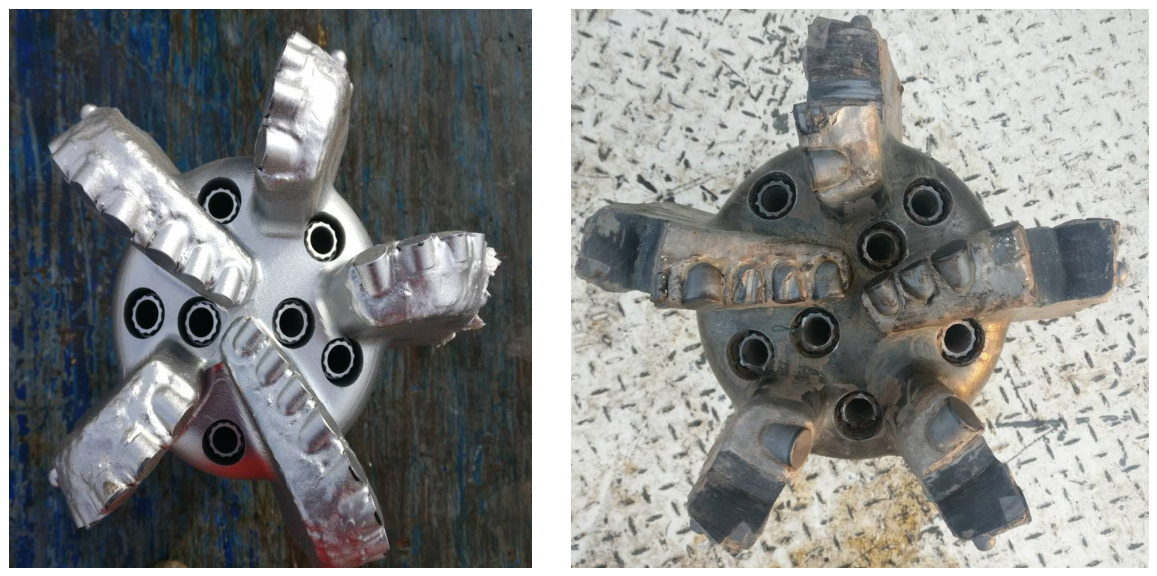
With rapid economic development, energy demand continues to grow, and oil and gas resources are still central to the energy demand structure [1,2]. Due to the efficient development of conventional oil and gas resources for many years, the main oil fields have entered the stage of high water cut and low production, and the difficulty of deep development is becoming increasingly serious. After geological exploration in recent years, most newly discovered oil and gas reservoirs have the characteristics of deep burial, low permeability, high reservoir tightness, complex formation, etc., and the difficulty of geological exploration and effective development has gradually increased [3,4,5]. In petroleum exploration and development, drilling engineering is linked to the largest investment scale, and its cost accounts for about 50% of the petroleum development process [6,7]. In the process of drilling construction, rock-breaking technology is its core content, and drilling construction quality directly affects the efficiency and cost of drilling engineering [8,9,10,11]. With the increase in drilling depth, the underground geological conditions are gradually becoming more complicated, and the difficulty of drilling is gradually increasing. The traditional mechanical drilling method also shows the characteristics of large energy consumption, low efficiency, long drilling cycle, and high construction risk, which greatly increases the overall construction cost. Over the years, conventional cone and PDC bits have had poor adaptability to drilling in deep strata such as igneous rock, especially in highly abrasive strata such as rhyolite, breccia, and tuff. The average drill bit penetration is only 50~100 m, with frequent trips and serious bit wear. The wear condition after use is shown in Figure 1.
To address the inherent limitations of low efficiency and elevated operational costs associated with conventional mechanical approaches in deep well drilling operations, a variety of innovative rock-breaking techniques have emerged in recent years, including high-pressure water jet rock breaking, thermal rock breaking, ultrasonic rock breaking, laser drilling rock breaking, and high-pressure electric pulse rock breaking [12,13,14]. Among these emerging technologies, EPD (Electrical Pulse Drilling) [15], alternatively referred to as PCD (Plasma Channel Drilling) [16,17], represents a promising novel drilling technology that has undergone substantial development over the past several decades. This method achieves rock fragmentation through the generation of plasma channels, high-velocity water jets, and intense shock waves produced by high-voltage electrical pulse discharges. In comparison with other rock-breaking methodologies, this technique offers distinct advantages, including environmental compatibility, precise directional crushing capability, and superior controllability over the entire rock-breaking process [18,19,20]. It is called a green rock-breaking technology in the face of complex hard rock-breaking speed and other characteristics [21,22]. Compared with traditional mechanical rotary drilling technology, the energy required by high-voltage electric pulse drilling technology (100~300 J/m3) is much lower than that required by traditional mechanical rotary drilling technology (about 1000 J/m3) [23]. High-pressure electric pulse drilling (EPD) technology is not limited by drilling depth and can reduce drilling costs and risks [19]. Therefore, high-pressure electric pulse drilling technology has great potential in exploring and developing oil, gas, and geothermal resources in deep and ultra-deep wells.
Drilling Fluid Conditions: Recent experimental studies have shifted focus from insulating oils to conductive drilling muds. These works highlight that the breakdown mechanism is significantly influenced by the “mud-rock” interface and the dielectric properties of drilling fluids, which differ markedly from traditional transformer oil environments. Plasma Channel 3D Growth: Moving beyond simple 2D assumptions, advanced visualization techniques and phase-field models have revealed that plasma channels exhibit complex, tree-like, and non-linear propagation within heterogeneous rock matrices, rather than straight linear paths.
Coupled Electro-Thermo-Mechanical Models: The latest modeling trends have evolved towards strong coupling of electromagnetic fields, thermal shock waves, and dynamic fracture mechanics. These models now account for non-equilibrium plasma states and the flash vaporization of pore fluids, providing a more accurate prediction of rock fragmentation.
These considerations provide crucial context for our work. While these recent studies have deepened the theoretical understanding of the fragmentation mechanism, our study specifically addresses the parallel challenge of equipment miniaturization (specifically the compound booster circuit design) required to physically deliver such high-voltage pulses in downhole environments—a critical engineering bottleneck that remains a focus of current industrial research.
From the perspective of global sustainable development and national energy strategy, this study aligns with the United Nations 2030 Agenda for Sustainable Development (directly contributing to SDG 7: Affordable and Clean Energy, SDG 9: Industry, Innovation and Infrastructure, and SDG 13: Climate Action), as well as China’s carbon peaking and carbon neutrality goals and strategic directives for deep/ultra-deep energy exploration in the 14th Five-Year Plan for Energy Development. Compared with conventional mechanical rotary drilling (~1000 J/m3 energy consumption), high-voltage electrical pulse drilling (EPD) has inherent low-carbon advantages with only 100–300 J/m3 energy input. The miniaturized compound-booster high-voltage pulse generator developed herein breaks through the critical engineering bottleneck restricting the downhole industrialization of EPD, enabling the transition of this green, low-energy rock-breaking technology from laboratory validation to field deployment. This work improves the exploitation efficiency of deep oil–gas and geothermal resources, reduces the energy intensity and carbon footprint of drilling operations, and provides core technical support for the sustainable development of the energy sector.
Although laboratory experiments have verified high-voltage electric pulse drilling technology (EPD), there are still many technical difficulties to be overcome in the process of industrial application of this technology: the development of a high-voltage electric pulse generator, the development of an electric pulse drill, and the research of supporting construction technology, as well as the stability and service life evaluation of the high-voltage electric pulse drilling system. The miniaturization of high-voltage electric pulse rock-breaking experimental devices can provide the corresponding design basis for the industrial application of high-voltage electric pulse drilling technology, especially in developing high-voltage electric pulse generators.

2. Materials and Methods

2.1. The Basic Principle of High-Voltage Electric Pulse Rock-Breaking Drilling

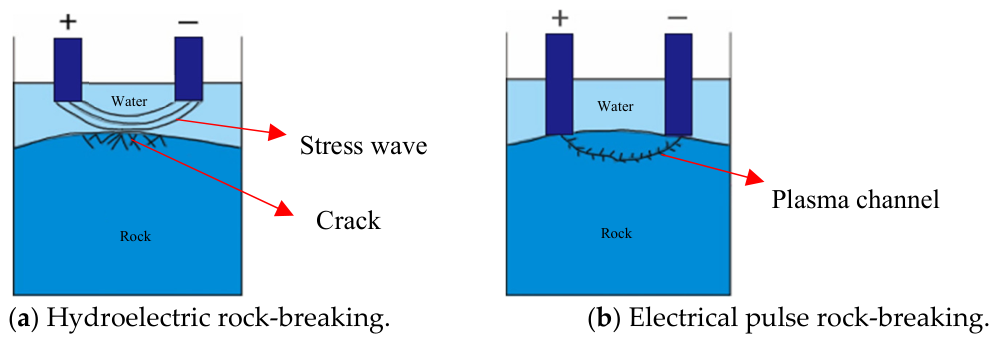
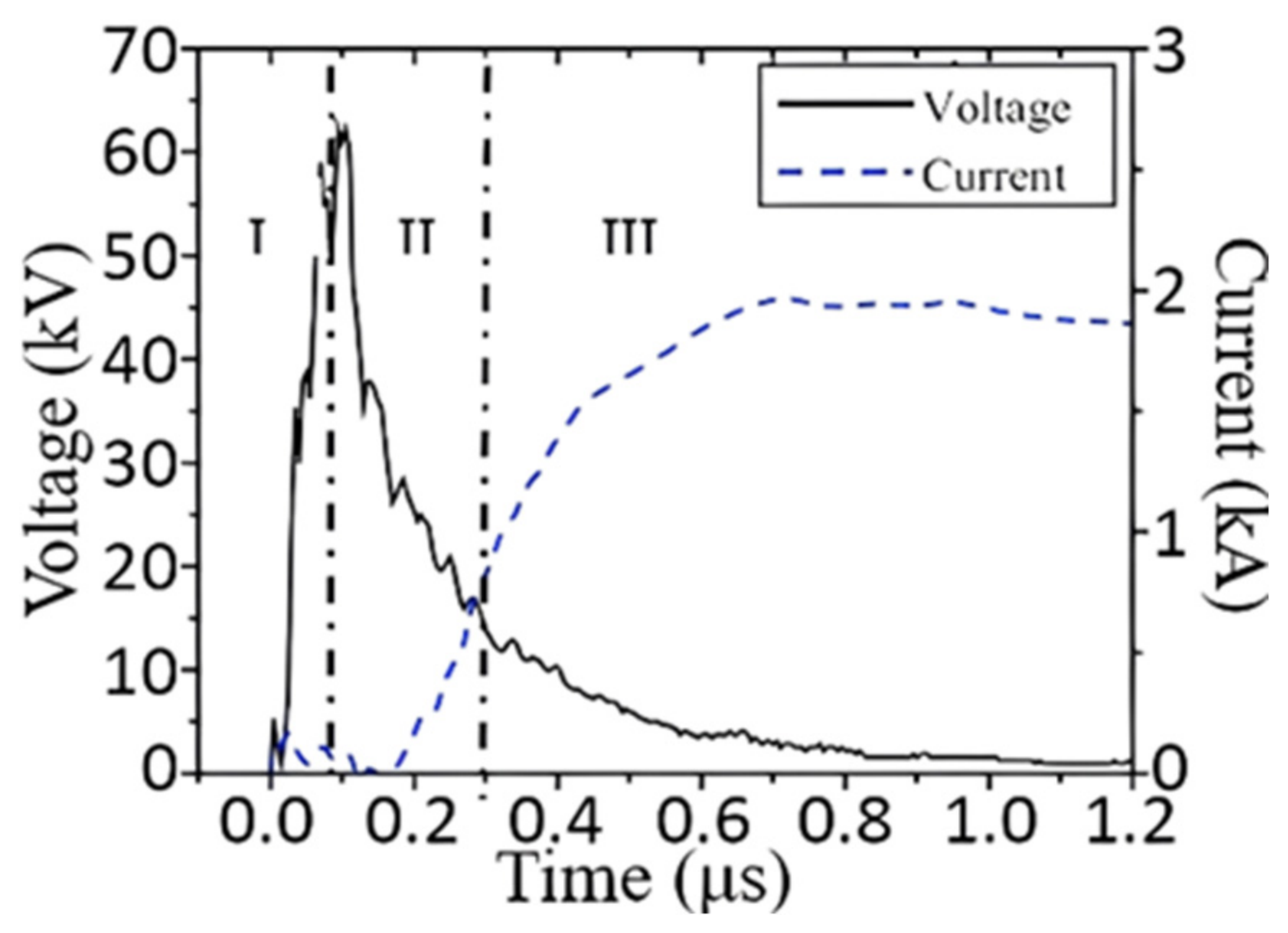
As shown in Figure 2, high-voltage electric pulse discharge rock breaking can be classified into two distinct categories based on the location of electrical discharge: hydraulic electric rock breaking and electric pulse rock breaking. In hydraulic electric rock breaking, the liquid medium undergoes electrical breakdown, and the discharge channel forms exclusively within the liquid phase; the resultant rock fragmentation is primarily driven by the shock waves and pressure waves generated during the discharge process. By contrast, in electric pulse rock breaking, the plasma discharge predominantly initiates and propagates inside the rock matrix, and rock failure is induced by the intense mechanical stress generated during the rapid expansion of plasma channels [24]. Specifically, the hydro-electric rock breaking discharge can be divided into two types according to the discharge form of the electrode: (1) the electrode is not in contact with the rock, and the water jet or shock wave generated by the liquid breaks down through the high-pressure discharge breaks the rock, (2) the electrode contacts with the rock and breaks the rock by discharging along the surface, which is different from the electric pulse rock breaking in the position of the plasma channel. As shown in Figure 3, the electric pulse rock breaking is mainly divided into three steps: (1) in the high voltage extreme voltage rising edge of no higher than 500 ns [24,25], the formation of a strong electric field makes the rock breakdown, this process within a few hundred nanoseconds, at the same time in the high voltage and ground end of the plasma channel and form the main channel of discharge, and then form a closed loop; (2) after the formation of a closed loop, the voltage at the high voltage end drops rapidly, the current in the loop increases rapidly, and the strong current rushes into the plasma channel instantaneously, generating instantaneous stress (103~104 MPa) and instantaneous high temperature (up to 104 K) [26]; (3) When the stress generated by the electric pulse exceeds the tensile stress inside the rock, cracks or rock breakage will occur inside the rock.
Relevant studies have been carried out on electric pulse rock-breaking devices at home and abroad. Kovalchuk et al. [27,28] developed a portable pulse generator with higher output power. Timoshkin et al. [29] developed a plasma drill and drilled well-defined holes in sandstone. In 2009, an electric pulse drilling experimental platform was built in Norway, and a shallow 15″ diameter hole was drilled in the rock. This was followed by a combination of electric pulse drill bits and rotary drilling methods in granite in 2011 [19]. Selfrag AG of Switzerland developed the first commercial high-voltage electric pulse rock-breaking experimental device for high-voltage electric pulse rock-breaking experiments [30,31]. In 2018, Baker Hughes, in collaboration with several universities and institutions, developed a downhole electro-pulse assisted rock-breaking drilling system (EIl) that can generate transient voltages of up to 600 kV in 120–150 ms. The system is powered by a mud motor that supplies the power needed for a pulse generator, which is then controlled by a trigger to generate a high-voltage pulse. Domestic research on electric pulse rock breaking started late, and there are fewer research institutions to carry out research on electric pulse rock breaking devices. Although there is still a certain gap between foreign countries, some progress has been made. Ji Nian Ying et al. developed a high-voltage pulse cable [32], and Chen Wei Feng et al. developed a high-voltage pulse test system [33].

2.2. Compound High-Voltage Electric Pulse Discharge Circuit Equivalent Model

High-voltage pulse generators in the rock-breaking process need to produce a higher discharge voltage; the direct use of AC modulation can simplify the experimental process, improve the reliability of the experimental device, and miniaturize the work needs. Therefore, there is no need to adopt an AD/AC design scheme, and the experimental installation is configured as a 220 V AC power supply. The main technical requirements of the generator are as follows: the output is 50–500 kV pulse voltage. Based on the input 220 V output, at least 50 kV conditions can be calculated as the booster ratio:
N > V 0 V i = 50000 220 = 227.27
where V 0 is the output voltage, V i is the input voltage.
Limited by the winding process of the transformer, the booster voltage of the single-stage BK transformer is difficult to exceed 17. The booster ratio of 220 V to 50,000 V is about 227.27, which is difficult to reach for ordinary single-stage coil transformers. Although pulse booster mode can increase the primary voltage to tens of thousands of volts, the booster efficiency is low, the power loss is large, the circuit design complexity is high, and it is difficult to output a strong current that is not easy to control.
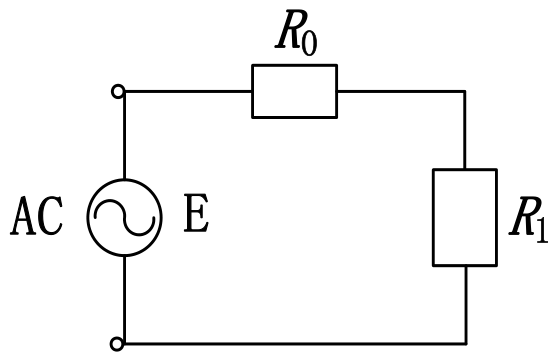
To ensure that the output of the high-voltage pulse generation system has a high output power, it is necessary to reduce the impedance loss in the circuit during the booster process as much as possible. However, in a fixed circuit system, it is difficult to further reduce the total resistance by replacing electronic components and circuit wires. However, the semiconductor components used in the voltage-doubling circuit of the compound booster circuit have a large positive pilot resistance, which produces a “bottleneck effect” on the booster system. As shown in Figure 4, the booster system uses an AC power supply; the output power of the booster system is:
P = R 1 R 0 + R 1 2 × E 2
where R 0 represents the circuit’s equivalent resistance; R 1 is the load at the output end of the booster, respectively; E is the electromotive force at the power supply input end.
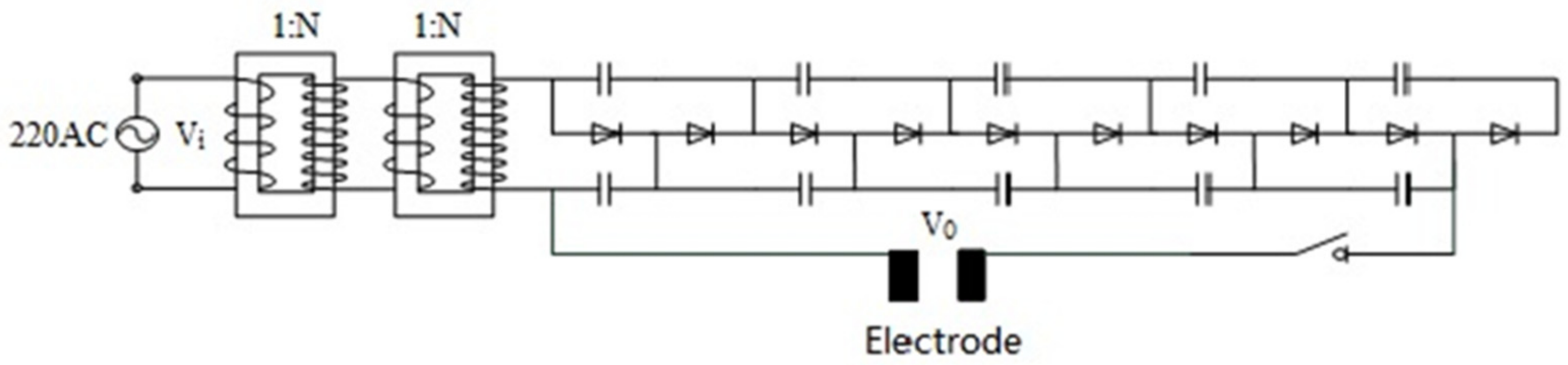
From the above formula, there are two effective schemes to improve the output power: increasing the equivalent resistance of the load or increasing the electromotive force of the power supply. R to take into account the larger output power and higher voltage, the research adopts a compound booster circuit, which combines the multistage BK booster circuit and voltage doubling circuit to make the local circuit work in the higher efficiency range to achieve higher output voltage and larger current, as shown in Figure 5.
The voltage doubling circuit can multiply the input voltage to a certain voltage value through full-wave rectification, so that the booster conversion efficiency of the voltage doubling link is improved, the realization process of the voltage doubling circuit is easy, and the booster height can be completed by time control, which is convenient to adjust the output voltage during the experiment. Therefore, the voltage-doubling part of the circuit designed in this study is 10 times the voltage, and the single-stage booster of the BK voltage regulator is calculated using the following formula:
N > V 0 10 V i = 15.07
The circuit using the two-stage BK transformer part is the constant booster part, which is stable and has high booster efficiency, but once the booster ratio is fixed, it cannot be changed. Considering that the secondary BK transformer is composed of high magnetic conductivity material and enameled wire winding, the enameled wire has a certain voltage limit, so the booster through the parallel transformer cannot be connected to more than one level. Otherwise, it will lead to the risk of winding breakdown. Therefore, we can calculate that the booster ratio is 15.07, which is lower than the design limit of the BK transformer and can be processed normally.
The voltage doubling and booster circuit part completes the output voltage of the secondary BK circuit to boost it again. This step-up process can be controlled by time to adjust the capacitor charging voltage, and the full-wave rectification process can be raised every cycle of the voltage to double the input voltage of the voltage-doubling circuit. The formula for calculating the charging voltage of one cycle is as follows:
V d = 220 0 T 2 sin 100 π t 1 e t R C d t
where R is the equivalent charging resistance of a single capacitor in the local circuit and C is the equivalent capacitance. The booster system uses a 50 Hz power supply to charge a single capacitor with a charging cycle of 20 ms, which can be charged to 95–99% within one cycle.
The actual output voltage will be an integer multiple, and the actual output voltage is:
V 0 T = n V d = 4.4 0 T 2 sin 100 π t 1 e t R C d t T
where T is the external power-on control time of the high-voltage generation system. From the above formula, we can determine the relationship between the output voltage and the charging time. When charging to the predetermined voltage, the closed switch K capacitor will discharge outwardly to do work. Due to the high voltage of the discharge circuit, the discharge control system needs to be isolated to prevent partial arc discharge in the electrical system from damaging the electrical components and endangering the safety of personnel. Control of the output voltage level is achieved by adjusting the external charging time when the system is charging. Because the output voltage is not an exact value but a certain voltage range, the system adopts open-loop control.

2.3. The Compound Booster System Is Established

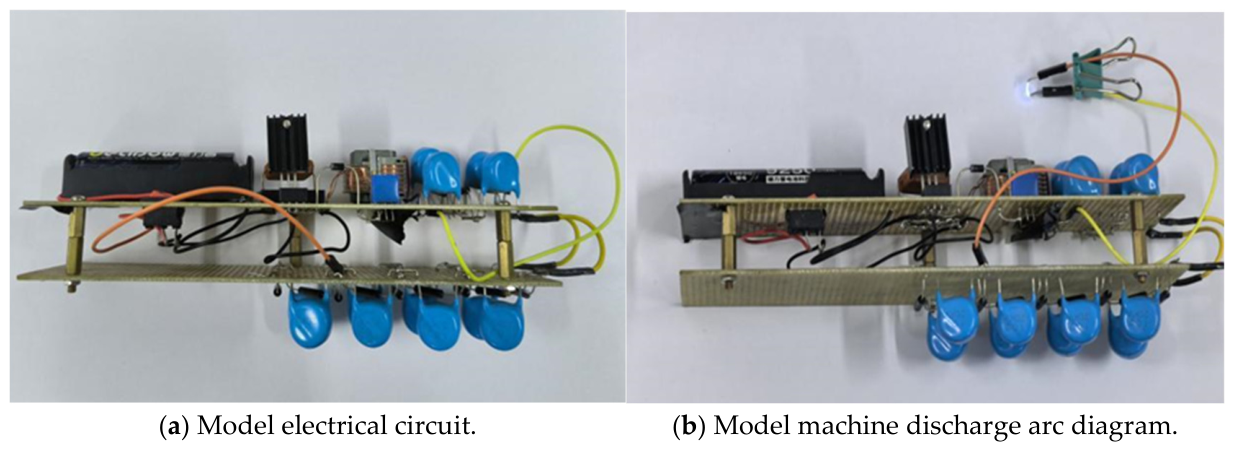
Due to the high voltage output, there is a certain risk. Before the design and production of the equipment, the pilot production and verification of the model machine, that is, the possibility of verifying the booster system scheme within a certain safety range. The trial-produced low-power model machine is shown in Figure 6.
Figure 6a shows the low-power model machine of the booster system, which adopts the combined transformer scheme of AD/AC plus 10 times the voltage. The output peak power is 25.9 W, and the output pulse voltage peak is 10 kV. Figure 6b shows the discharge picture of the low-power model machine, whose arc distance is greater than 1 cm. The use of the low-power model machine is mainly to verify the working possibility of voltage doubling in the pulse booster system and the effectiveness of the multi-voltage doubling circuit design scheme in the booster system to prepare for the design and manufacture of the high-power experimental prototype.
According to the experimental design scheme of the low-power model machine, the improved design and research of the high-power, high-voltage pulse booster system are studied. Due to the need for larger output power, using an AD/AC transformer scheme will obviously increase the intermediate link and increase the circuit loss, so the study of high-power design using an AC/AC transformer and a high-power voltage doubling circuit to form a composite scheme of AC/AC and a series voltage doubling circuit.
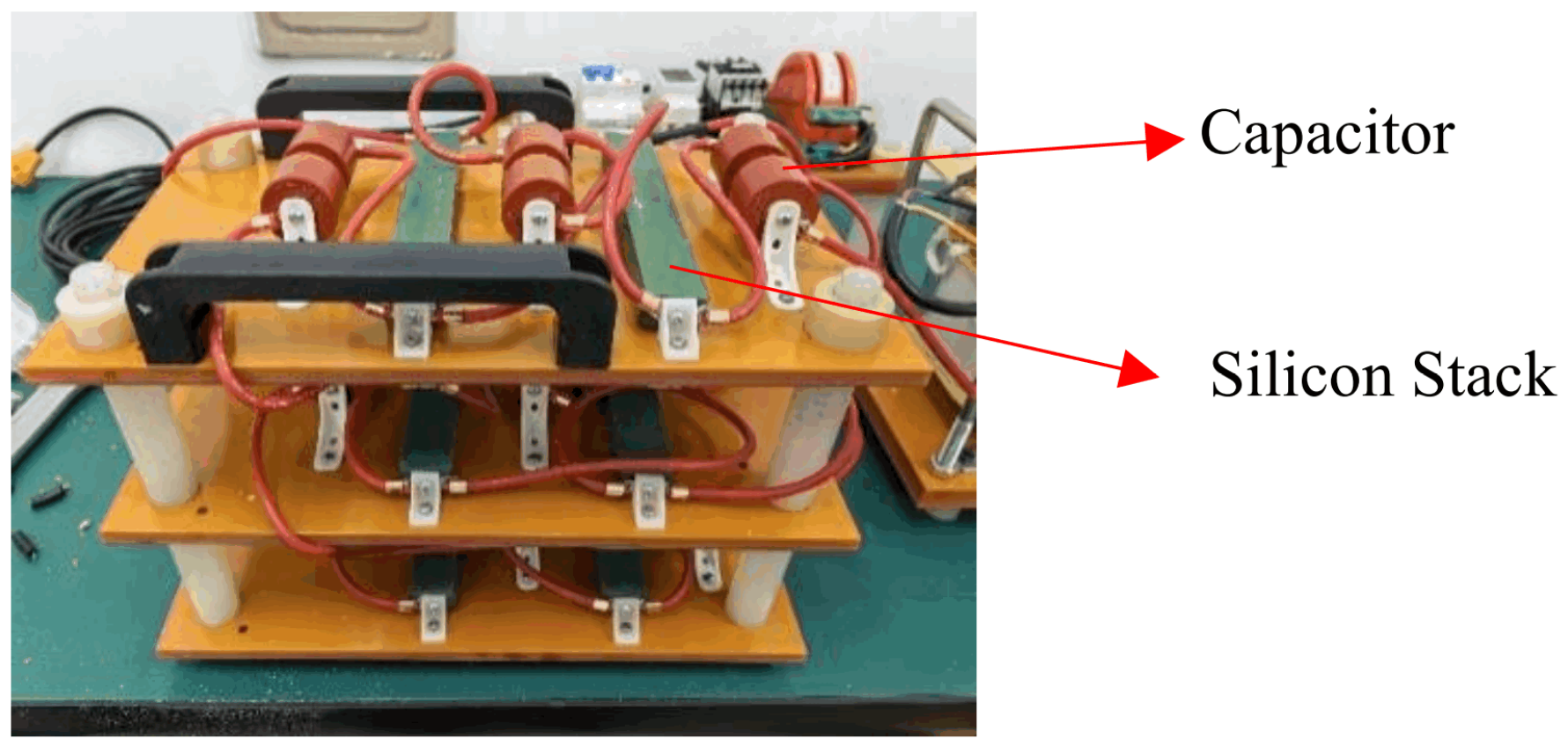
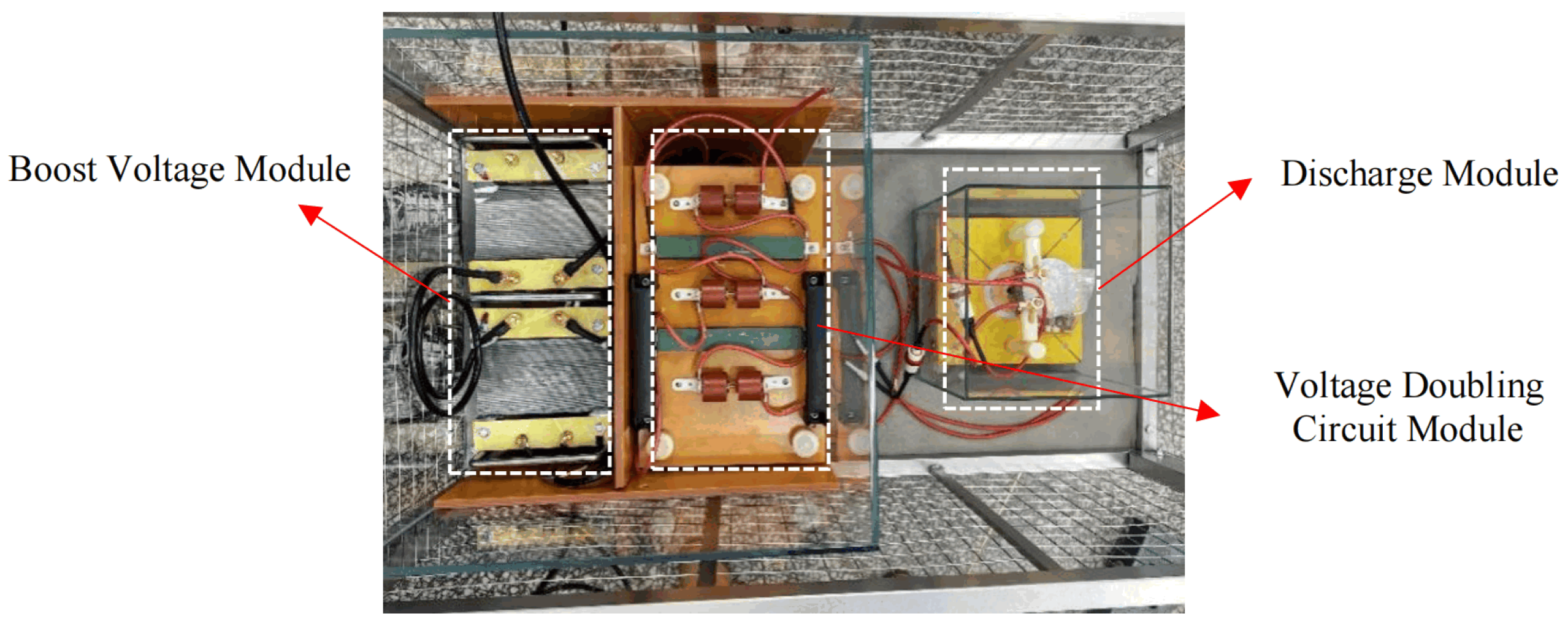
Considering that the voltage and power of the circuit system have been increased by a level, the corresponding components need to be re-selected and redesigned. To make the experimental conditions as simple as possible, the device uses a 220 V power supply. First, two parallel BK transformers are used for the initial booster to supply about 56 kV of power to the voltage-doubling circuit. As shown in Figure 7, each voltage-doubling circuit module stage uses a 60 kV silicon stack and two 50 kV capacitors in series as the booster stage. The 10-stage booster used in the voltage doubling circuit can boost 220 V AC to 560 kV to meet the plasma channel opening starting conditions required by the experiment. At the same time, output power is also an important indicator for high-voltage pulse systems. For the sake of safety, the input circuit of the booster system is controlled within 10 A (220 V). In order to save experiment space, the voltage doubling circuit is optimized, and the experimental device is shown in Figure 8.

3. Results

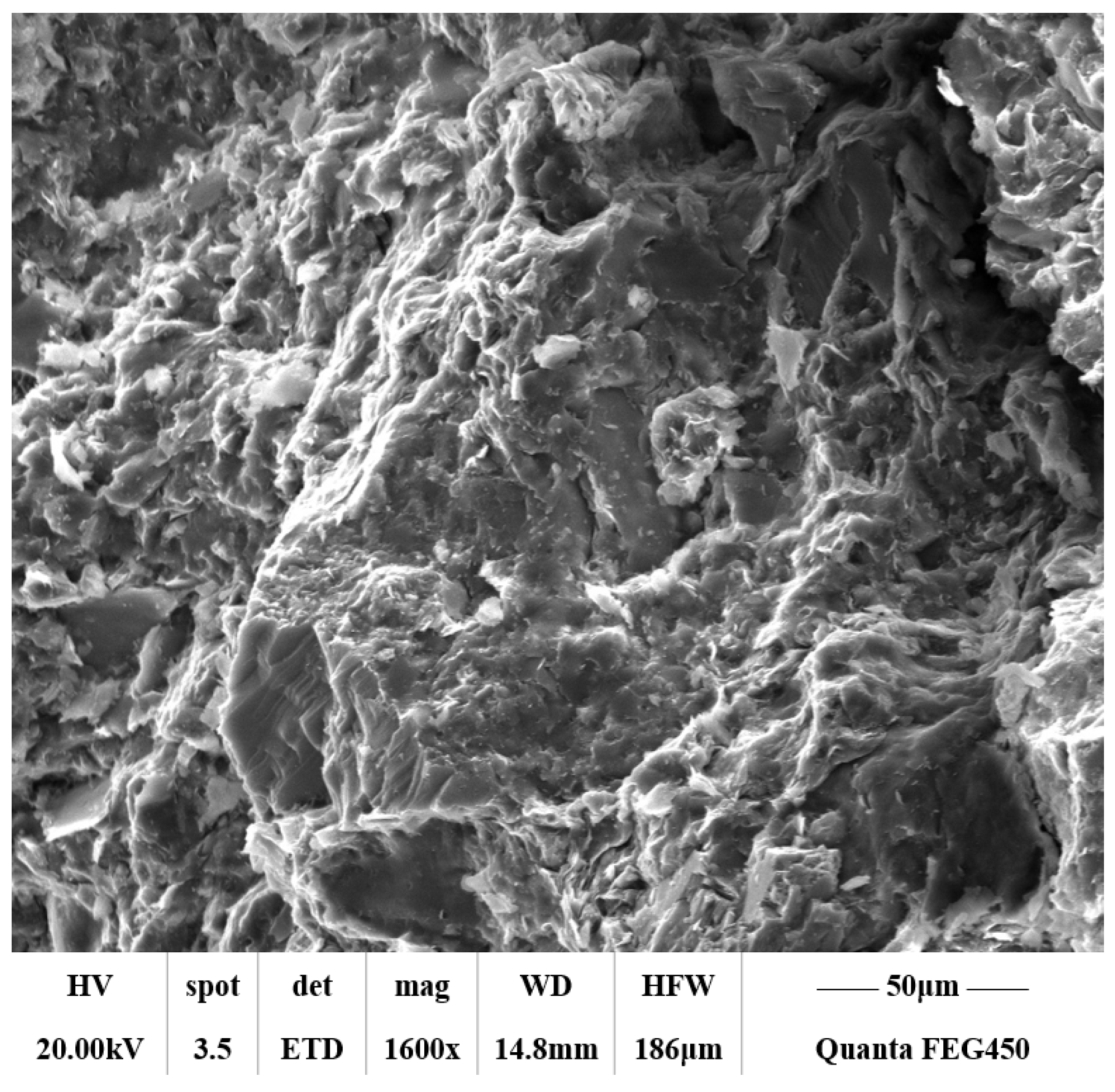
To verify the feasibility of rock breaking by the combined high-voltage electric pulse booster system, the rhyolite in the underground Yingcheng Formation of Block XS was selected as the experimental object for the test specimen. There are many elements in the rhyolite. The surface structure of the rhyolite was observed by scanning electron microscopy, and the elements in the rock are shown in Table 1. The rock properties of this horizon are shown in Table 2, and the internal structure is shown in Figure 9. It can be seen from the figure that the interior of the rock is not uniform. There are certain pores in the connection between particles.
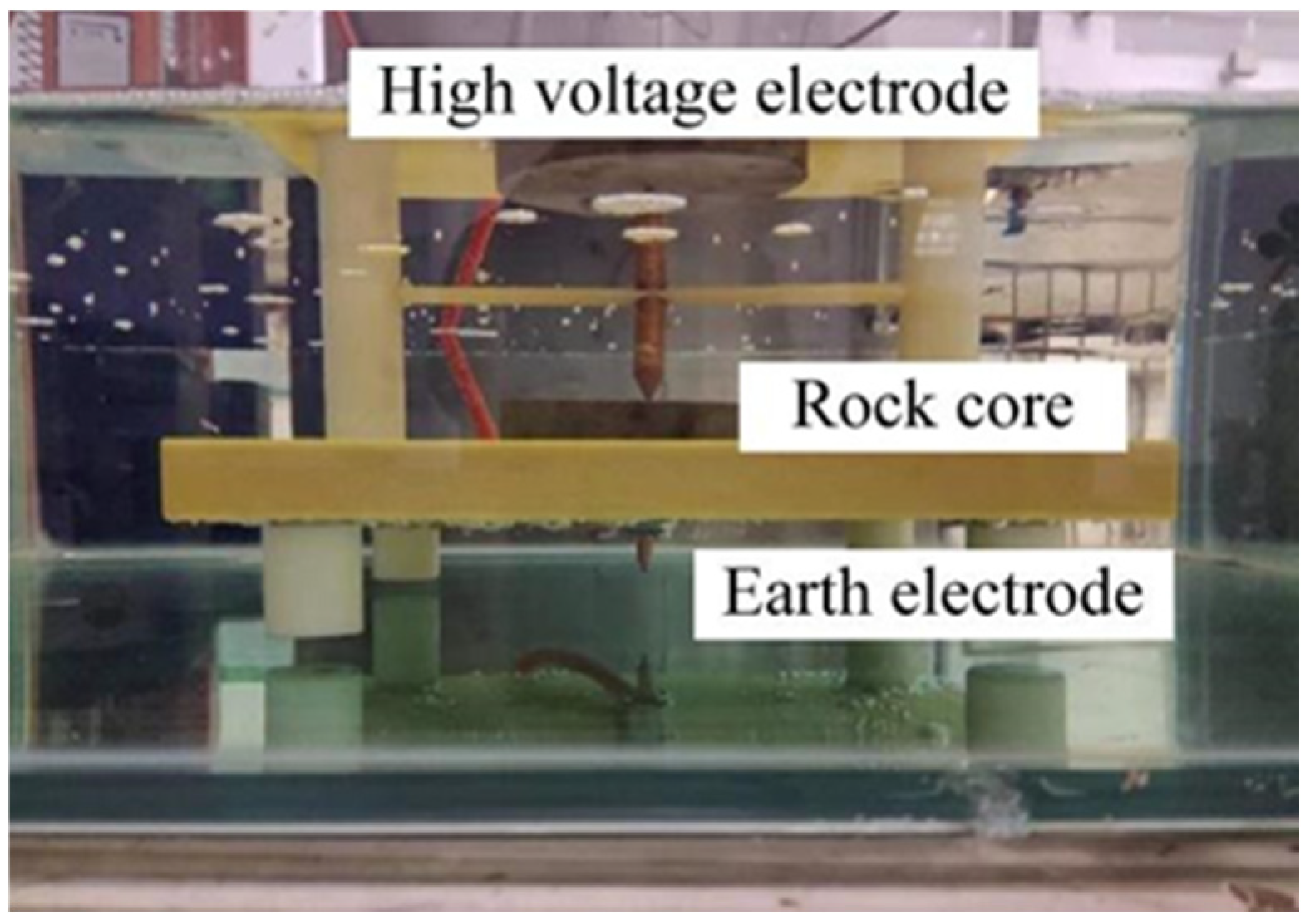
The experiment mainly measured the rock-breaking effect of the combined high-voltage electric pulse booster system by coaxial opposite electrodes. As shown in Figure 10, transformer oil was used as the insulating liquid medium, with the high-voltage electrode, grounding electrode, and rock samples immersed in it. The rock was placed between the two electrodes and kept in continuous contact with them. Pulsed voltage was applied to the coaxial opposing electrodes to record the electrical breakdown of the rock under a single electrical pulse.
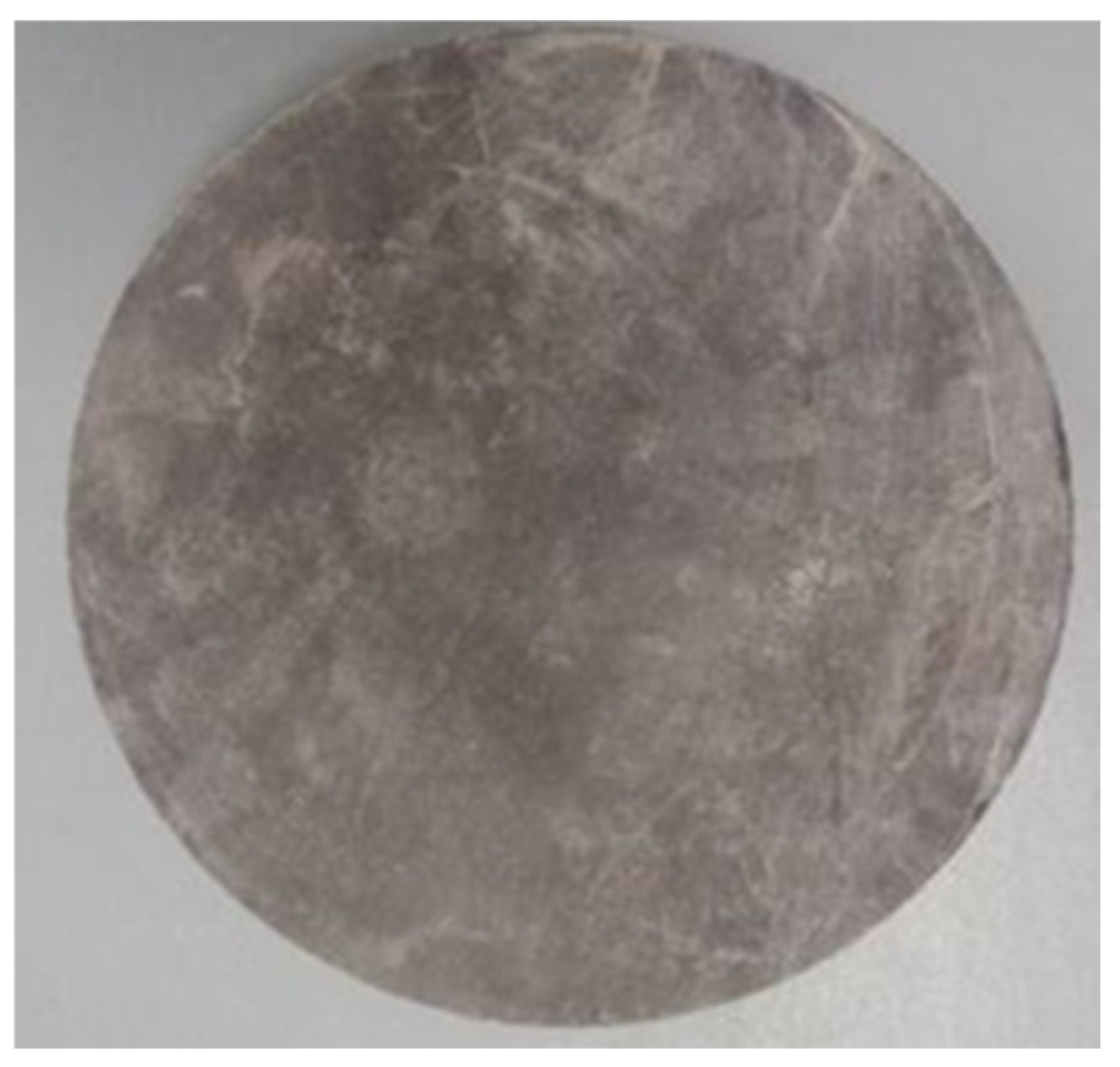
To guarantee experimental consistency and simplify the preparation of rock specimens, all test samples were uniformly fabricated into cylindrical cores with a diameter of 100 mm and a thickness of 15 mm using standard coring procedures, as presented in Figure 11.
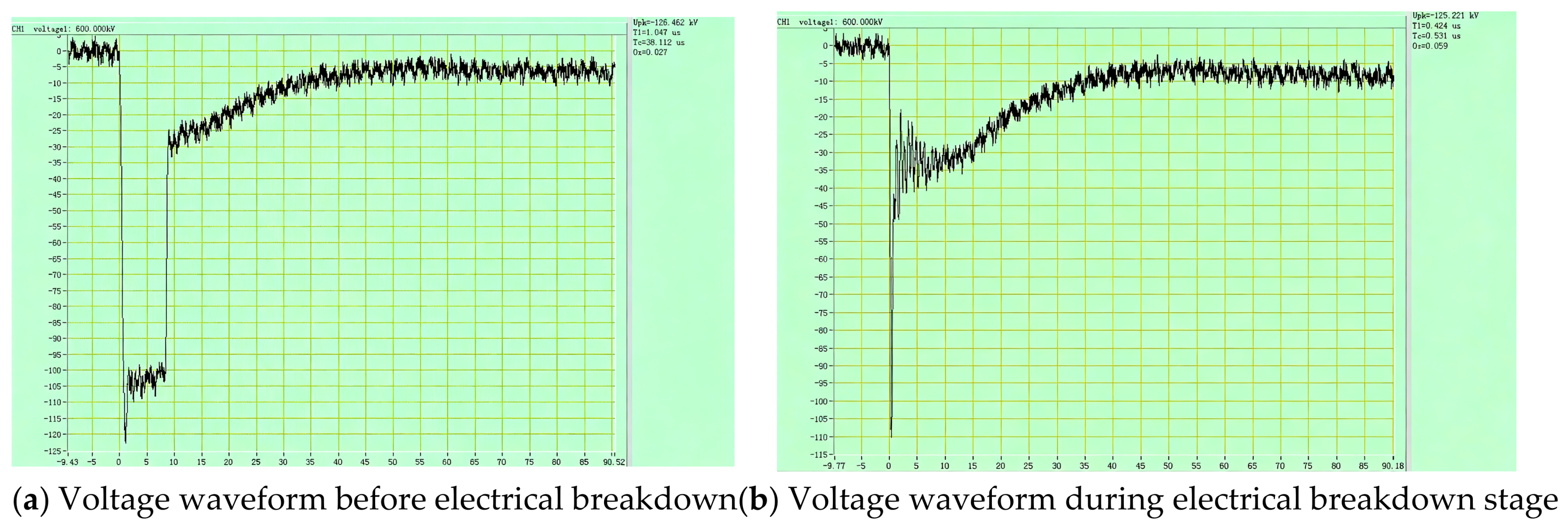
Figure 12 illustrates the representative voltage profiles of rock during the electrical breakdown process. Specifically, Figure 12a depicts the voltage waveform of a rock sample that remained intact without breakdown when subjected to a single high-voltage electrical pulse. The applied voltage rises sharply to a peak value of 126 kV, followed by a gradual decay phase. Figure 12b shows the voltage waveform during the electrical breakdown of the rock. The voltage reaches its peak at 424 ns and drops rapidly after the electrical breakdown. The voltage waveform following the breakdown of rhyolite is consistent with that shown in Figure 3. The breakdown time of the sample is approximately 500 ns, characterized by a sharp drop in voltage immediately after the breakdown.
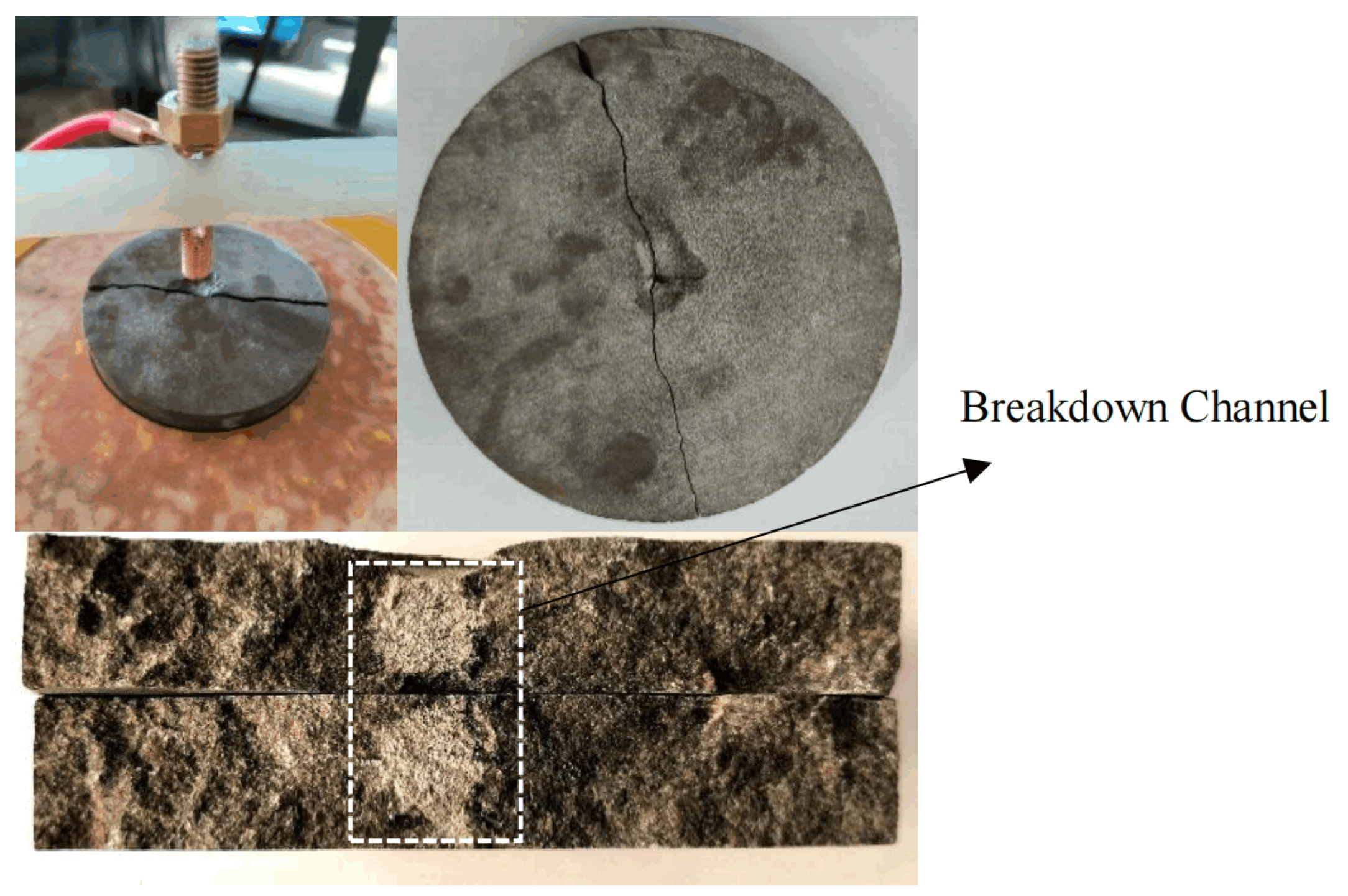
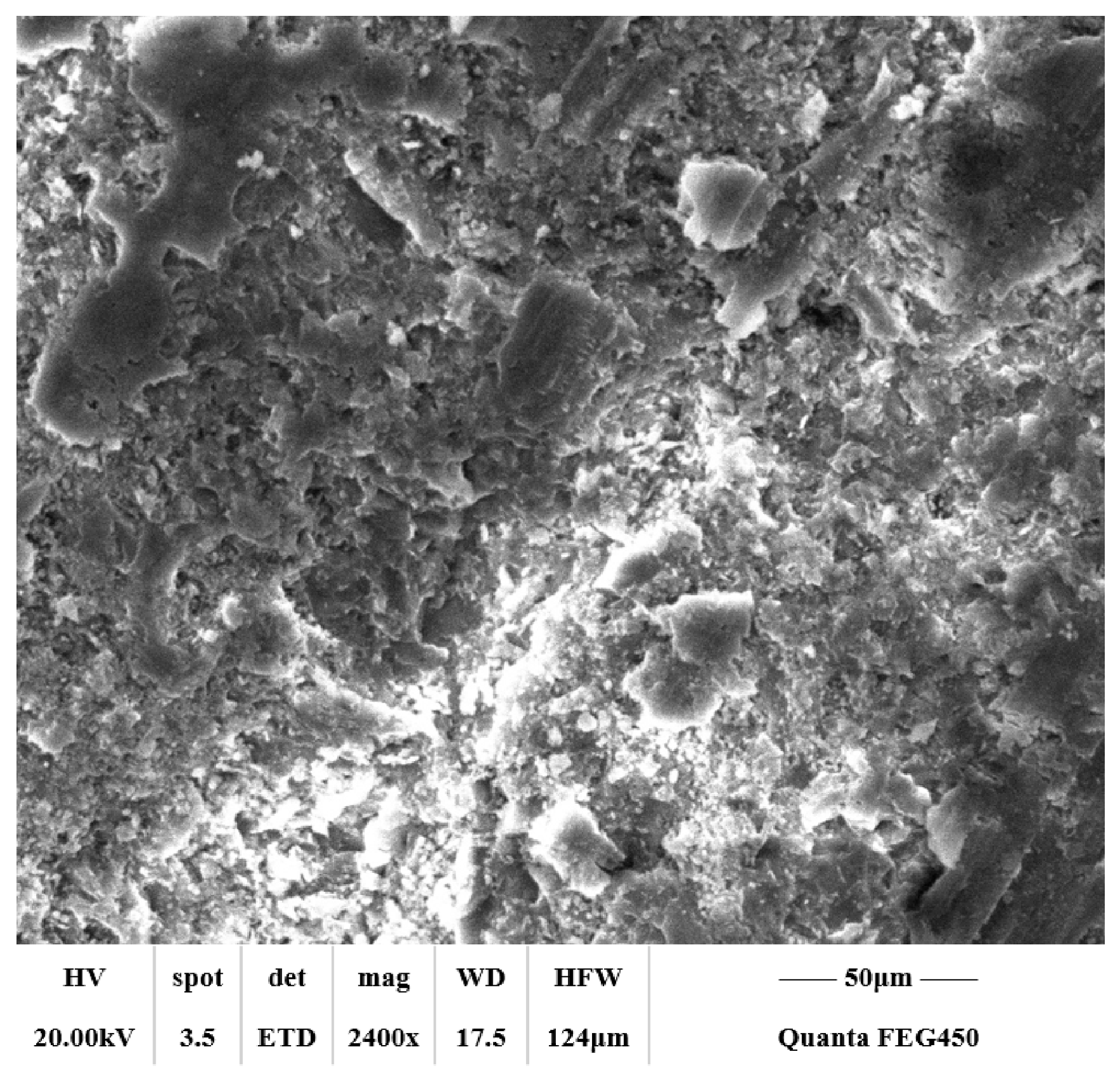
Figure 13 shows the morphology of the broken rock. The high-voltage electrode has an obvious deep pit, and the cracks are at the contact point between the electrode and the rock. By observing the fracture surface of the core, a breakdown channel with a maximum diameter of about 18 mm was formed between the electrodes, and electrical corrosion occurred in the channel. The internal structure was shown in Figure 14 through electron microscope scanning. Compared with the electron microscope image of the rock before the application of external voltage (Figure 9), it is found that: (1) when the rock is not affected by the external electric field, the internal section morphology of the rock is relatively complete, with fewer cracks and holes, and the surface is relatively smooth. The mineral particle structure is clearer, the boundary between particles is more obvious, and the particle integrity is better. The distribution of cracks inside the rock is relatively low, and the length and width of the cracks are small. The porosity of the rock is low, and the internal structure is compact. The distribution of mineral particles is more uniform, and there is no obvious local change. (2) Under the action of a high-voltage electric pulse, there are more holes and cracks in the interior of the rock, and the length and width of the cracks are larger. The shape of the mineral particles of the rock has changed, and the boundaries of the particles have become fuzzy. The distribution of mineral particles is not uniform. The porosity of rocks becomes larger, and the pores become larger, and new pores are formed under the action of the external electric field.
According to classical theory, the energy injected into the channel formed after rock breakdown by external electric energy (also known as plasma channel), ignoring the influence of radiation and other factors caused by the expansion of the plasma channel, has three main functions, namely, increasing the internal energy and potential energy of plasma channel and the work of plasma on the rock around the channel, namely:
Q = Q i + Q h + Q w
where Q i is the internal energy of the plasma channel, Q h is the pressure potential energy, and Q w represents the external work of the plasma.
Among these mechanisms, the plasma channel performs mechanical work on the rock in the form of a shock wave. The shock wave generated by the expansion work of the plasma channel is primarily dissipated through three distinct pathways: first, increasing the internal energy of the rock-solid medium; second, converting into kinetic energy of the rock-solid medium; and third, energy loss due to shock wave propagation into the surrounding insulating liquid medium.
Once an electrical breakdown occurs and a plasma channel is formed within the rock, the plasma channel can be approximated as a cylindrical column of constant length with a radius that evolves dynamically with time. As the plasma channel radius increases over time, the energy contained within the channel exerts a mechanical load on the adjacent rock matrix. When the induced stress exceeds the rock’s inherent fracture strength, cracks initiate and propagate, leading to rock fragmentation. When the energy injected into the plasma channel reaches tens to hundreds of joules, the channel undergoes rapid instantaneous thermal expansion inside the rock, generating a corresponding thermal expansion shock wave with a peak compressive pressure ranging from several hundred to several thousand megapascals.
Through explosion mechanics, rock mechanics-related theories to explore the impact of plasma channel expansion on the interior of the rock, the rock in a very short time under the rapid change in pressure, at the same time produces the corresponding displacement and deformation, such displacement and deformation will be transferred between the particles inside the rock, thus forming a disturbance, the disturbance in the form of a shock wave propagation. As the shock wave propagates radially outward from the plasma channel at its center, the heterogeneous composition and interfacial connections of various media within the rock lead to differential deformation and displacement of different constituent phases, ultimately resulting in rock fragmentation. The rock crushing process induced by the plasma channel can be divided into two sequential stages: first, the radial compression stage driven by the shock wave generated upon thermal expansion of the plasma channel; second, the rapid propagation stage of initial radial cracks in the rock under tensile stress, which is triggered by the overpressure field produced by the plasma channel. According to rock failure mechanics theory, rock fracture under explosive loading is predominantly tensile failure.
Drawing on the classical theory of explosion mechanics, the following assumptions are adopted for theoretical derivation: the rock to be penetrated is treated as a fluid medium; the energy release of the plasma channel is initiated by an electric detonation wire inserted into the rock with a negligible radius; and the plasma channel is approximated as a cylinder with a radius of 2 mm and a length of 15 mm. The detonation energy acts on the inner wall of the plasma channel and is subsequently transferred to the surrounding rock matrix. Consequently, the maximum pressure generated in the rock following electrical breakdown can be calculated using the corresponding empirical formula:
P m = 0.26 k ρ U 0 2 r l c
where ρ is the density of rock medium, 3.3 × 10³ kg/m3; k is the energy efficiency of the plasma injection channel, 4%; r is the plasma channel radius; l c is the length of the plasma channel; U 0 is the voltage.
Based on the assumptions, it is calculated that the maximum pressure generated by the instantaneous electrical breakdown of the rock under the action of 400 kV voltage is 436.8 MPa.
Because the breakdown of the rock is completed in a few hundred nanoseconds, it is impossible to accurately record the changes in the electric field strength, temperature, and stress inside the rock. Therefore, the finite element analysis software COMSOL Multiphysics 6.2 was used to analyze the electric field strength and temperature changes in the pores in the rock when the rock was broken down, and the influence of the pores on the rock breaking by high-voltage electric pulse was analyzed.
The simulation model employs a 2D axisymmetric geometric configuration to reduce three-dimensional computational costs while preserving the axisymmetric distribution characteristics of both the electric and temperature fields. The transient solver is adopted with a time step of 1 ns to capture the rapid variations during the nanosecond-scale electrical breakdown process. The model assumes a single spherical pore within the rock matrix, neglecting interactions among multiple pores and radiative energy losses during plasma channel expansion. Both rock and transformer oil are assumed to be isotropic continuous media.
The primary material parameters used in the simulation are as follows: Rhyolite possesses a relative permittivity of 5.6, an electrical conductivity of 1.0 × 10⁻⁶ S/m, a breakdown strength of approximately 12 kV/mm (experimental value), a thermal conductivity of 2.5 W/(m·K), a specific heat capacity of 800 J/(kg·K), and a density of 3.3 × 10³ kg/m3. Transformer oil (the insulating medium) has a relative permittivity of 2.2, an electrical conductivity of 1.0 × 10⁻¹² S/m, and a breakdown strength of approximately 15 kV/mm.
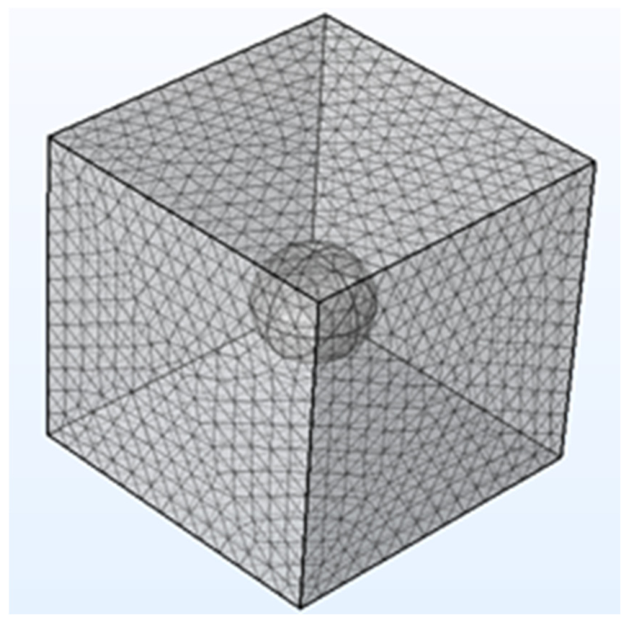
In order to facilitate the analysis, the rhyolite per unit volume was set as a square with a side length of 10 mm, and the pores in the rock were set as a single sphere. Based on the calculation, the porosity of the rhyolite was 2%, and the pore radius was 1.7 mm. The model was divided into grids, as shown in Figure 15.
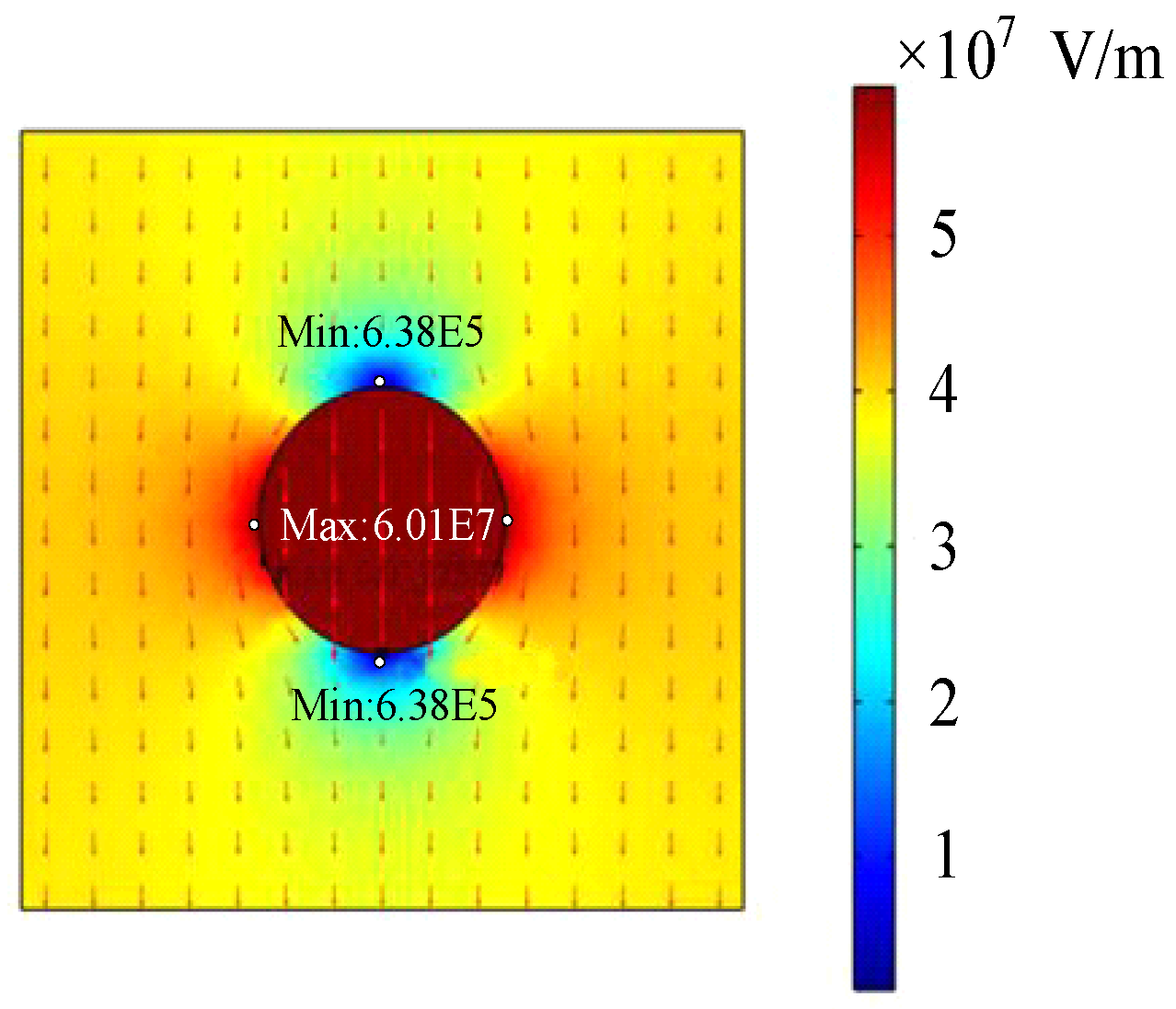
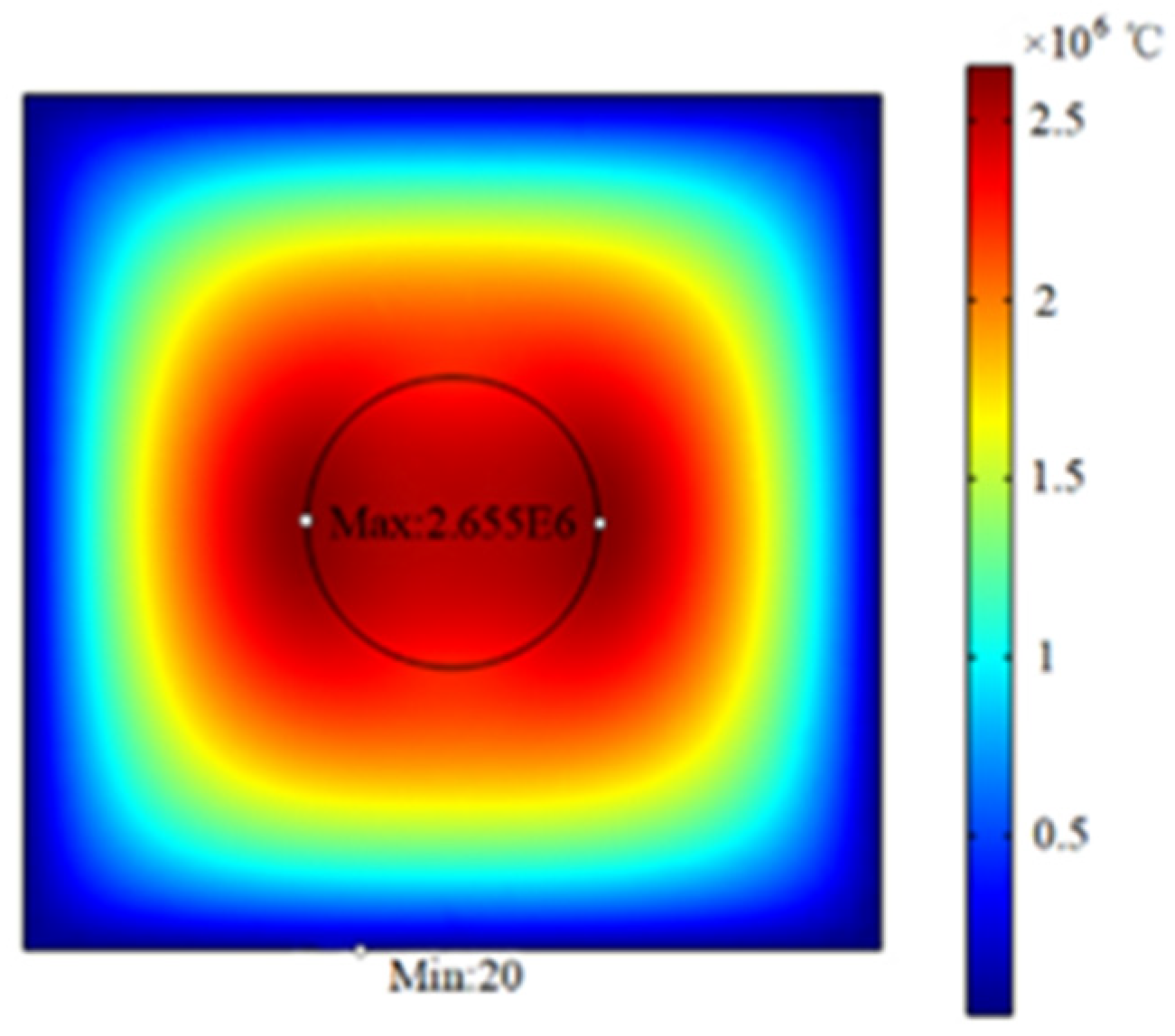
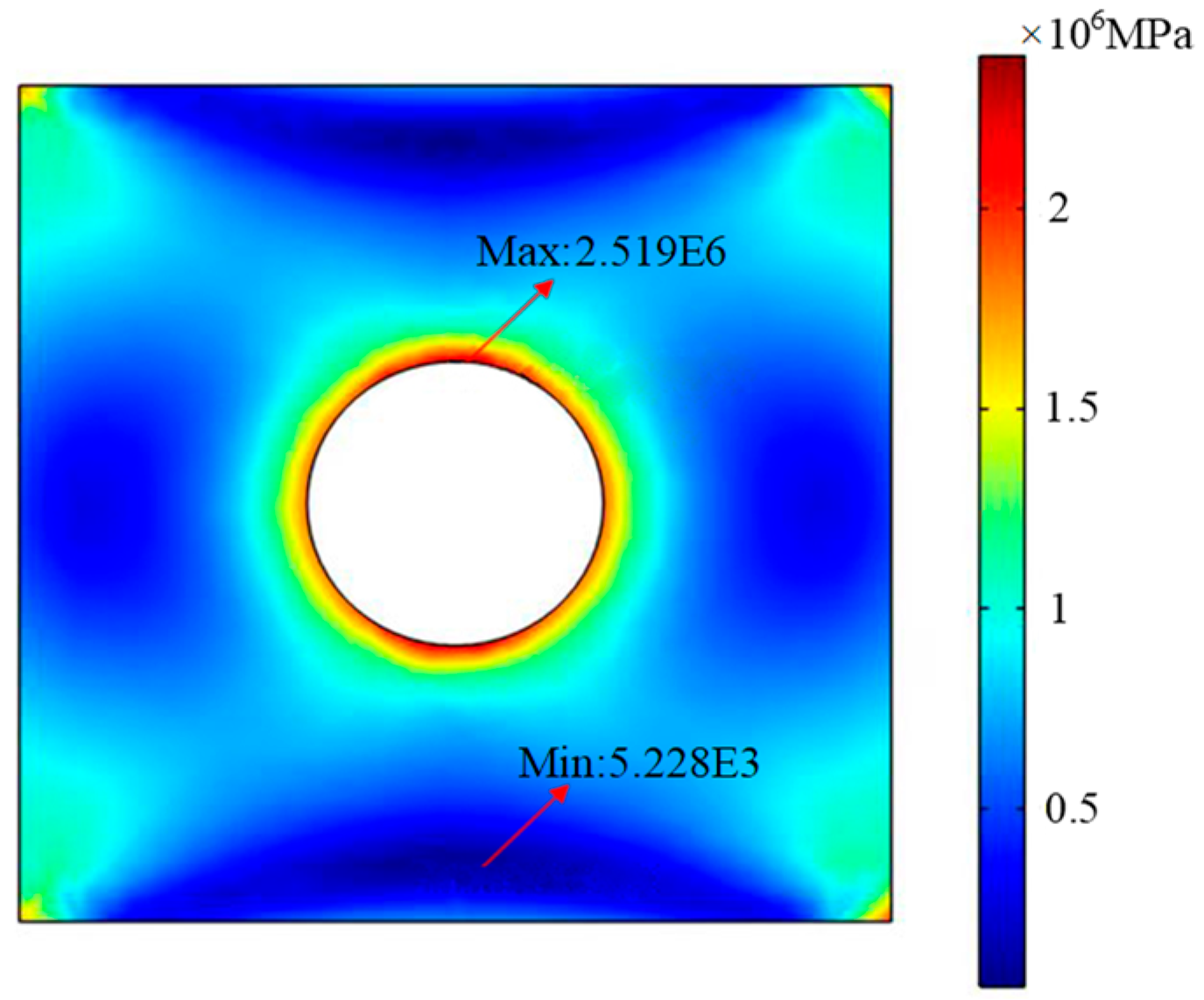
After calculating the model, the result is shown in Figure 16. The maximum electric field strength at the pore’s edge is 601.228 kV/cm. In contrast, the electric field strength at the upper and lower boundaries of the pore becomes smaller, and the minimum electric field strength near the pore boundary is 6.38 kV/cm. The electric field strength shows a significant difference around the pore. The rock is more easily broken down. Under the action of the external electric field, the temperature in the pore also increases sharply, as shown in Figure 17. The maximum temperature near the boundary of the pore is 2.65 × 10⁶ °C, and the minimum temperature at the edge of the rock is 20 °C, the set ambient temperature. As the temperature in the pores rises sharply, the pores expand rapidly to do external work. As shown in Figure 18, the maximum compressive stress generated between the pores and the rocks is 2.52 × 10⁶ MPa, and the minimum stress around the rocks is 5.23 × 10⁴ MPa, resulting in rock breakage.
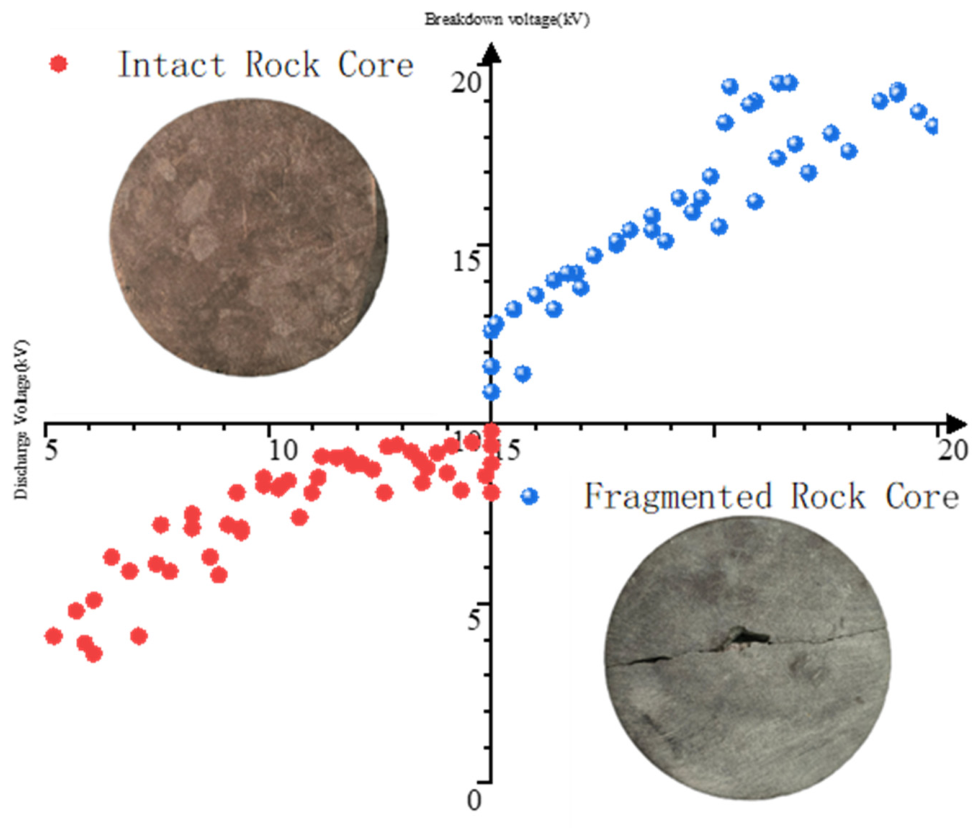
As shown in Figure 19, the statistical analysis of the experimental results shows that when the voltage amplitude ranges from 50 kV to 100 kV, the breakage probability of the core specimen is 0. When the voltage amplitude is between 100 kV and 150 kV, the core specimen will break down. When the pulse voltage is between 150 kV and 200 kV, all the core samples will be broken. According to the analysis of experimental data, with the increase in pulse voltage, the probability of electrical breakdown of rock will increase correspondingly. The experiment shows that with the increase in pulse voltage after the rock is broken down, the energy injected into the rock also increases correspondingly. The impact on the rock will also be enhanced, and the rock-crushing effect will be more obvious.

4. Conclusions

(1)
The high-voltage electric pulse rock-breaking test device is designed and built based on the compound booster method. Its maximum output instantaneous voltage is 500 kV, its discharge frequency is 5 Hz, and the output limit power is 3110.8 W. Through the fracturing experiment of rhyolite in the well depth of 3010 m~3400 m, it is verified that the experimental device can meet the demand of the rock breaking test.
(2)
The rock breaking test and simulation results of Yingcheng Formation rhyolite by the constructed compound pressure lift rock breaking test device reveal that under the action of high pulse voltage, the electric field strength around the pores in the rock forms a significant difference, resulting in the breakdown of the rock. Under the action of the external electric field, the temperature in the pores rises rapidly, and work is performed on the pores in the rock, resulting in the rock breaking.
(3)
The volume of the designed and constructed compound rock-breaking device is much smaller than that of the lightning pulse rock-breaking device. The design of the voltage-doubling circuit module can meet the requirements of the tool size in practical applications, but the booster module needs to be further optimized to reduce its volume to meet the requirements of the design of downhole tools in terms of size.
(4)
In this experiment, copper, with good electrical conductivity, was selected as the discharge electrode. However, due to the metallic characteristics of copper, its wear resistance, and the actual production application of the drill on the cemented carbide cutting teeth, there is a significant gap. This lack of wear resistance harms the rock-breaking effect’s stability and the electrode’s service life. Therefore, the follow-up research needs to focus on selecting electrode materials and further exploring those materials with excellent electrical conductivity and strong wear resistance as discharge electrodes to improve the performance and efficiency of the entire experimental device in rock-breaking operations.

5. Discussion

Drilling in deep formations faces significant challenges, including the poor ability to drill rock, high temperature, high pressure, and complex fluid media. To validate the feasibility of a designed miniaturized pulsed power generator platform, transformer oil with low conductivity was selected as the insulating dielectric medium for preliminary experiments.
Fragmentation tests on rhyolite using the miniaturized pulsed power generator confirmed the feasibility of High-Voltage Electrical Pulse Drilling (EPD). Numerical simulations further elucidated the rock fragmentation mechanism under high-voltage electrical pulses.
In practical drilling operations, however, water-based mud (WBM) or oil-based mud (OBM) is commonly used. The complex composition of mud leads to significantly higher electrical conductivity compared with transformer oil. Therefore, subsequent experiments should employ drilling fluids that better simulate downhole conditions.
Although the feasibility of EPD has been experimentally verified, mechanical drilling remains the primary rock-breaking method in field applications. Future research should therefore focus on the configuration of discharge electrodes on the drill bit and the design of electrode-impregnated bits. Additionally, given the abrasive downhole environment, electrode materials must possess not only high electrical conductivity but also excellent wear resistance.

Author Contributions

Conceptualization, Q.Z.; Methodology, Q.Z.; Software, Q.Z.; Validation, Q.Z. and Y.L.; Formal analysis, Q.Z. and Y.L.; Investigation, Y.L., X.P. and Z.L.; Resources, Y.L., X.P. and L.C.; Data curation, Q.Z., Y.L., X.P. and X.W.; Writing—original draft, Q.Z. and Y.L.; Writing—review & editing, Q.Z., X.P. and X.W.; Supervision, X.W. and L.C.; Project administration, X.P., X.W. and L.C.; Funding acquisition, Z.L. All authors have read and agreed to the published version of the manuscript.

Funding

This research received no external funding.

Institutional Review Board Statement

Not applicable.

Informed Consent Statement

Not applicable.

Data Availability Statement

The data presented in this study are available on request from the corresponding author. (The data are not publicly available due to privacy.)

Conflicts of Interest

Authors Qingyu Zhang, Linlin Chen and Zengle Li were employed by Drilling Engineering Technology Research Institute of Daqing Drilling Engineering Company Limited. Author Xiaolei Wang was employed by China Petroleum Electric Energy Co., Ltd. The remaining authors declare that the research was conducted in the absence of any commercial or financial relationships that could be construed as a potential conflict of interest.

References

  1. Wang, Z.Q.; Fan, Z.F.; Zhang, X.Y.; Liu, B.; Chen, X. Status, trends and enlightenment of global oil and gas development in 2021. Pet. Explor. Dev. 2022, 49, 1045–1060. [Google Scholar] [CrossRef]
  2. Burkin, V.V.; Kuznetsova, N.S.; Lopatin, V.V. Dynamics of electro burst in solids: I. Power characteristics of electro burst. J. Phys. D Appl. Phys. 2009, 42, 185204–185209. [Google Scholar] [CrossRef]
  3. Sun, J.X.; Zhao, H.S.; Ma, L. Key drilling technologies for ultra-deep well Zheng 10 in Junggar Basin. China Pet. Mach. 2023, 51, 17–24. [Google Scholar]
  4. Wang, D.Y.; Sun, J.; Zhang, J.X.; Gao, L. Discussion on technical status and development direction of land oilfield drilling equipment. China Pet. Mach. 2021, 49, 47–52. [Google Scholar]
  5. Wu, P.C.; Wang, Y.; Fu, L. Exploration andpractice of “One Trip” echnology for deep shale gas horizontal wells. China Pet. Mach. 2023, 51, 26–33. [Google Scholar]
  6. Liang, L.; Xiao, Y.B.; Li, D.P.; Duan, L.C.; Zhang, F.; Li, C.P. Development of a high voltage electric pulse rock breaking experiment device. Drill. Eng. 2021, 48, 76–82. [Google Scholar]
  7. Li, C.P.; Chikhotkin, V.; Duan, L.C. Research progress of electro pulse boring rock breaking technology. Geol. Sci. Technol. Inf. 2018, 37, 298–304. [Google Scholar]
  8. Wang, H.G.; Huang, H.C.; Bi, W.X.; Ji, G.; Zhou, B.; Zhuo, L. Deep and ultra-deep oil/gas well drilling technologies: Progress and prospect. Nat. Gas Ind. 2021, 41, 163–177. [Google Scholar] [CrossRef]
  9. Ji, Z.S.; Shi, H.Z.; Li, G.S.; Song, H. Improved drifting oscillator model for dynamical bit-rock interaction in percussive drilling under high-temperature condition. J. Pet. Sci. Eng. 2020, 186, 106772. [Google Scholar] [CrossRef]
  10. Tian, J.L.; Fan, C.Y.; Zhang, T.J.; Zhou, Y. Rock breaking mechanism in percussive drilling with the effect of high frequency torsional vibration. Energy Sources Part A Recovery Util. Environ. Eff. 2022, 44, 2520–2534. [Google Scholar]
  11. Tiskatine, R.; Eddemani, A.; Gourdo, L.; Abnay, B.; Ihlal, A.; Aharoune, A.; Bouirden, L. Experimental evaluation of thermo-mechanical performances of candidate rocks for use in high temperature thermal storage. Appl. Energy 2016, 171, 243–255. [Google Scholar] [CrossRef]
  12. Bluhm, H.; Frey, W.; Giese, H.; Hoppe, P.; Schultheiss, C.; Strassner, R. Application of pulsed HV discharges to material fragmentation and recycling. IEEE Trans. Dielectr. Electr. Insul. 2000, 7, 625–636. [Google Scholar] [CrossRef]
  13. Tian, J.; Xiong, Y.; Liu, Z.; Wang, L.; Wang, Y.; Yin, W.; Cheng, Y.; Zhao, Q. Experimental study on the discharge characteristics of high-voltage nanosecond pulsed discharges and its effect on the ignition and combustion processes. Appl. Energy 2024, 374, 124011. [Google Scholar] [CrossRef]
  14. Lehmann, F.; Reich, M.; Mezzetti, M.; Anders, E.; Voigt, M. The future of deep drilling-A drilling system based on electro impulse technology. Oil Gas-Eur. Mag. 2017, 43, 187–191. [Google Scholar]
  15. Zhang, Q.; Wang, G.; Pan, X.; Li, Y.; He, J.; Qi, Y.; Yang, J. High Voltage Electric Pulse Drilling: A Study of Variables through Simulation and Experimental Tests. Energies 2023, 16, 1174. [Google Scholar] [CrossRef]
  16. Liu, W.J.; Hu, H.; Zhu, X.H.; Luo, Y.; Chen, M. The fragmentation mechanism of granite in electrical breakdown process of plasma channel drilling. Geomech. Geophys. Geo-Energy Geo-Resour. 2023, 9, 22. [Google Scholar] [CrossRef]
  17. Inoue, H.; Lisitsyn, I.V.; Akiyama, H.; Nishizawa, I. Drilling of hard rocks by pulsed power. IEEE Electr. Insul. Mag. 2000, 16, 19–25. [Google Scholar] [CrossRef]
  18. Che, L.; Gu, X.H.; Li, H.D. Numerical analysis and experimental research on hard rock fragmentation by high voltage pulse discharge. Miner. Eng. 2021, 168, 106942. [Google Scholar] [CrossRef]
  19. Schiegg, H.O.; Rodland, A.; Zhu, G.; Yuen, D.A. Electro-pulse-boring (EPB): Novel super-deep drilling technology for low cost electricity. J. Earth Sci. 2015, 26, 37–46. [Google Scholar] [CrossRef]
  20. Qin, Y.H.; Gao, P.; Han, Y.X.; Li, Y.J. Fractal law of crushing products under high voltage pulse discharge. Met. Mines 2019, 2, 156–162. [Google Scholar]
  21. Yan, T.; Du, J.Y.; Li, W.; Bi, X.L.; Yao, S.L. A review of advanced drilling technology for efficient rock breaking. Pet. Miner. Mach. 2012, 41, 50–55. [Google Scholar]
  22. Bao, T.; Huang, N. Research and development prospect of rock crushing technology. Anhui Archit. 2010, 17, 110–116. [Google Scholar]
  23. Hu, Q. Experimental researches on pulse plasma discharge for deep ocean thin layer mineral resources crushing. Thalass. Int. J. Mar. Sci. 2019, 35, 405–412. [Google Scholar] [CrossRef]
  24. Fujita, T.; Yoshimi, I.; Shibayama, A.; Miyazaki, T.; Abe, K.; Sato, M.; Yen, W.T.; Svoboda, J. Crushing and Liberation of Materials by Electrical Disintegration. Eur. J. Miner. Process. Environ. 2001, 1, 113–122. [Google Scholar]
  25. Sperner, B.; Jonckheere, R.; Pfander, J.A. Testing the influence of high-voltage mineral liberationon grain size, shape and yield, and on fission track and Ar 40/39 dating. Chem. Geol. 2014, 371, 83–95. [Google Scholar] [CrossRef]
  26. Luo, Y.X.; Zhu, X.H.; Liu, W.J.; Zhang, Y.; Hu, H.; He, L.; Chen, M. Rock fragmentation and drilling experiment of electric impulse drilling and structural optimization of electrode bit. Geoenergy Sci. Eng. 2023, 227, 211896. [Google Scholar] [CrossRef]
  27. Kovalchuk, B.M.; Kharlov, A.V.; Vizir, V.A.; Kumpyak, V.V.; Zorin, V.B.; Kiselev, V.N. High-voltage pulsed generator for dynamic fragmentation of rocks. Rev. Sci. Instrum. 2010, 81, 103506. [Google Scholar] [CrossRef]
  28. Kovalchuk, B.M.; Kharlov, A.V.; Vizir, V.A.; Kumpyak, V.V.; Zorin, V.B.; Kiselev, V.N. High-voltage pulsed generators for electro-discharge technologies. J. Instrum. 2013, 8, P09012. [Google Scholar] [CrossRef]
  29. Timoshkin, I.V.; Mackersie, J.W.; MacGregor, S.J. Plasma channel miniature hole drilling technology. IEEE Trans. Plasma Sci. 2004, 32, 2055–2061. [Google Scholar]
  30. Wang, E.; Shi, F.; Manlapig, E. Pre-weakening of mineral ores by high voltage pulses. Miner. Eng. 2011, 24, 455–462. [Google Scholar] [CrossRef]
  31. Wielen, K.P.D.; Pascoe, R.; Weh, A.; Wall, F.; Rollinson, G. The influence of equipment settings and rock properties on high voltage breakage. Miner. Eng. 2013, 46, 100–111. [Google Scholar] [CrossRef]
  32. Ji, N.; Pei, Y.; Yan, K.; Liu, C.G.; Zhang, Z.C. Development of high voltage pulse transmission electric cable for plasma drill. Mach. Electron. 2012, 8, 7–10. [Google Scholar]
  33. Chen, W.; Yu, Y.; Zhang, Z. Research of high voltage nanosecond pulse measurement system based on optical fiber transmission technology. Sci. Technol. Eng. 2013, 13, 4936–4940. [Google Scholar]
Figure 1. Comparison of drill bit before and after use.
Applsci 16 04743 g001
Figure 2. Rock-breaking mode by high-voltage pulse.
Applsci 16 04743 g002
Figure 3. Waveform of voltage and current during electrical breakdown.
Applsci 16 04743 g003
Figure 4. Circuit diagram of the booster system.
Applsci 16 04743 g004
Figure 5. Circuit diagram of the compound booster system.
Applsci 16 04743 g005
Figure 6. Low-power model machine diagram.
Applsci 16 04743 g006
Figure 7. Voltage-doubling circuit device.
Applsci 16 04743 g007
Figure 8. Compound high-voltage electric pulse rock-breaking experimental device.
Applsci 16 04743 g008
Figure 9. Internal structure of rhyolite.
Applsci 16 04743 g009
Figure 10. Discharge module.
Applsci 16 04743 g010
Figure 11. Rock sample.
Applsci 16 04743 g011
Figure 12. Rock electrical breakdown voltage waveform.
Applsci 16 04743 g012
Figure 13. Rock morphology after electrical breakdown.
Applsci 16 04743 g013
Figure 14. Internal structure of the breakdown channel.
Applsci 16 04743 g014
Figure 15. Model diagram of a single pore in rock.
Applsci 16 04743 g015
Figure 16. Electric field intensity cloud diagram.
Applsci 16 04743 g016
Figure 17. Temperature field cloud diagram.
Applsci 16 04743 g017
Figure 18. Cloud map of the stress field.
Applsci 16 04743 g018
Figure 19. Breakdown voltage distribution of rhyolite.
Applsci 16 04743 g019
Table 1. Proportion of elements in rhyolite.
RocksSi (%)O (%)Mg (%)Al (%)K (%)Fe (%)
rhyolite22.7155.091.1914.063.962.25
Table 2. Rhyolite-related lithology.
RocksPorosity
(%)
Resistivity
(Ω·m)
Relative PermittivityBreakdown Strength
(kV/mm)
Specific Heat Capacity
(J/kg·K)
rhyolite26085.612800
Disclaimer/Publisher’s Note: The statements, opinions and data contained in all publications are solely those of the individual author(s) and contributor(s) and not of MDPI and/or the editor(s). MDPI and/or the editor(s) disclaim responsibility for any injury to people or property resulting from any ideas, methods, instructions or products referred to in the content.