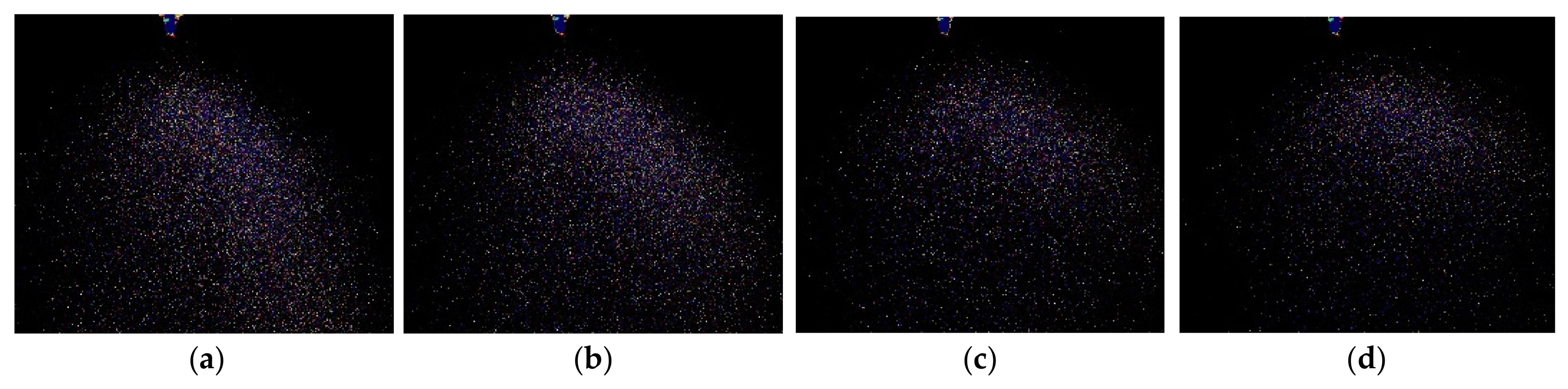
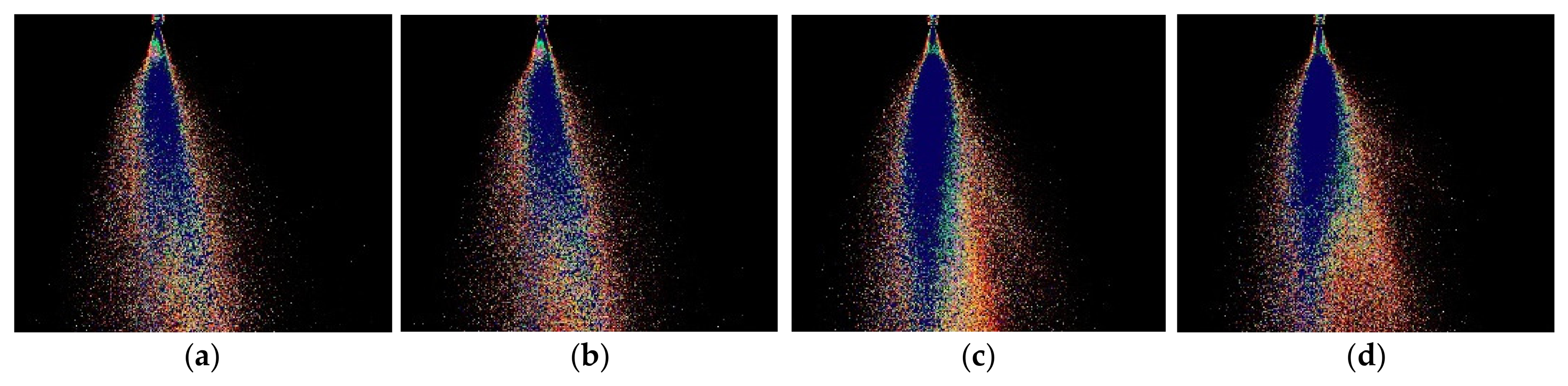
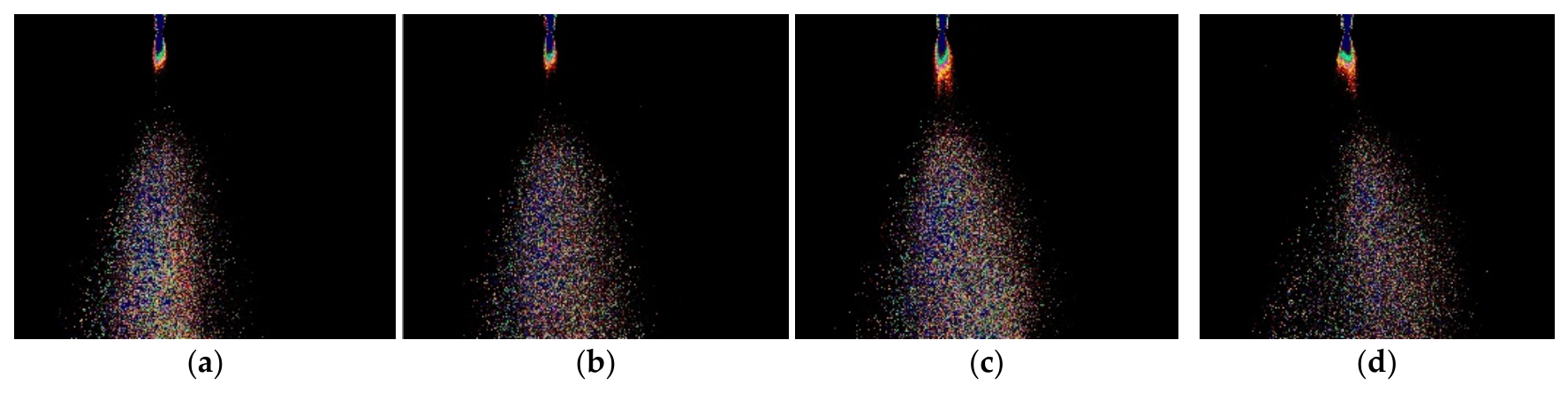
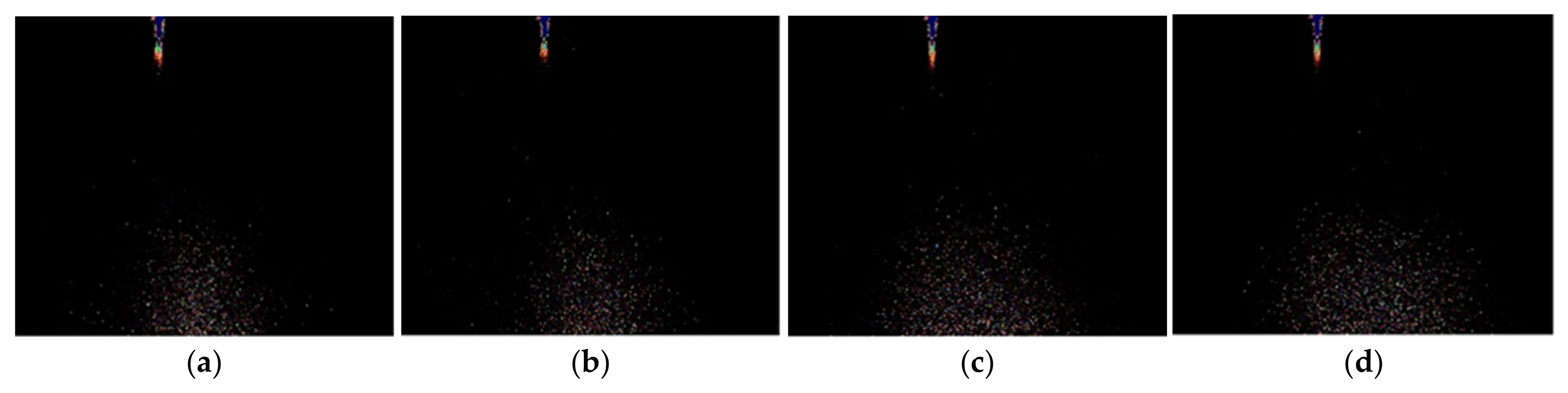
Effects of Crossflow Air on Conical Water Spray Structure Using a Laser-Based Imaging Method



Abstract
1. Introduction
2. Materials and Methods
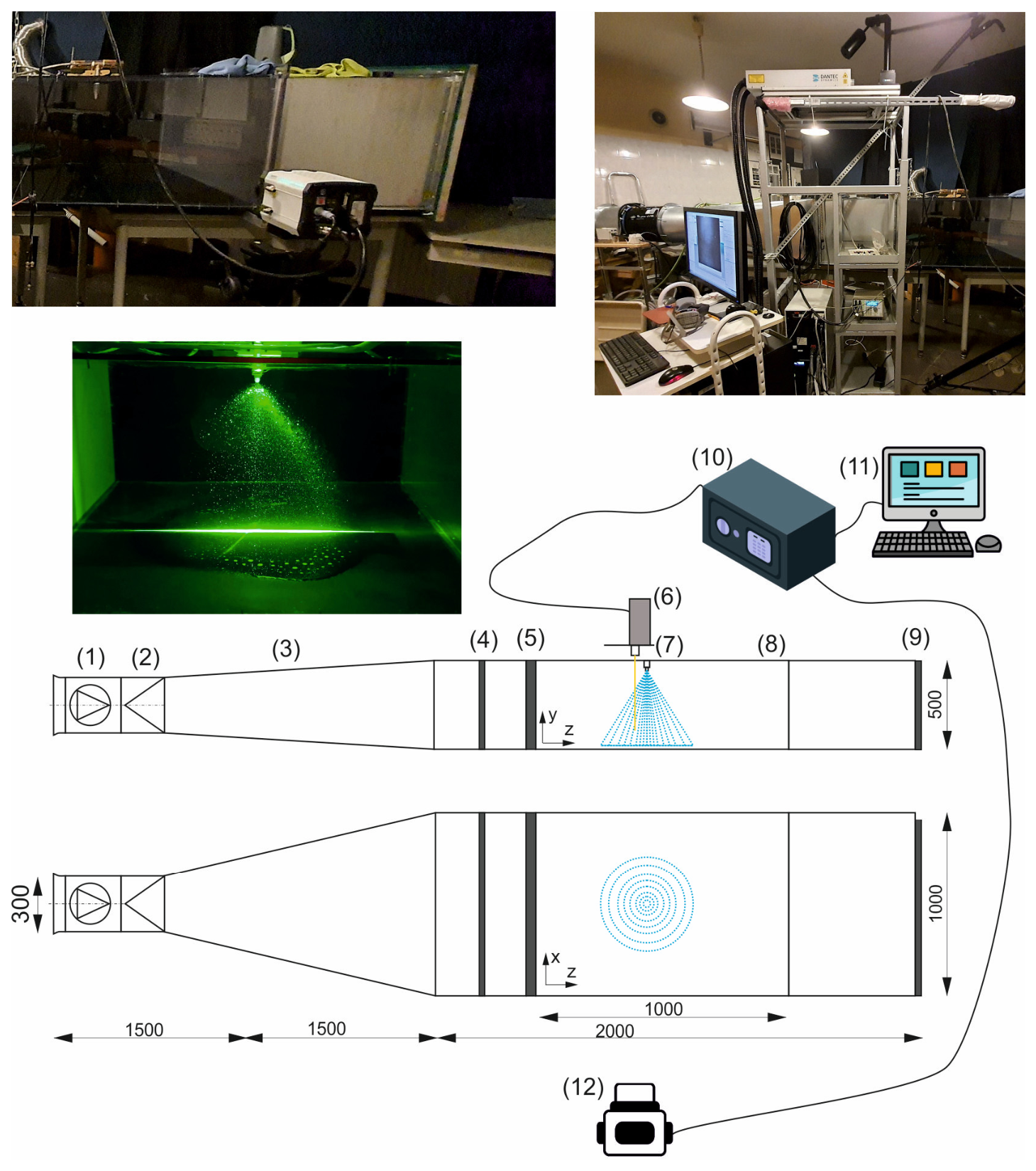
2.1. Experimental Set-Up
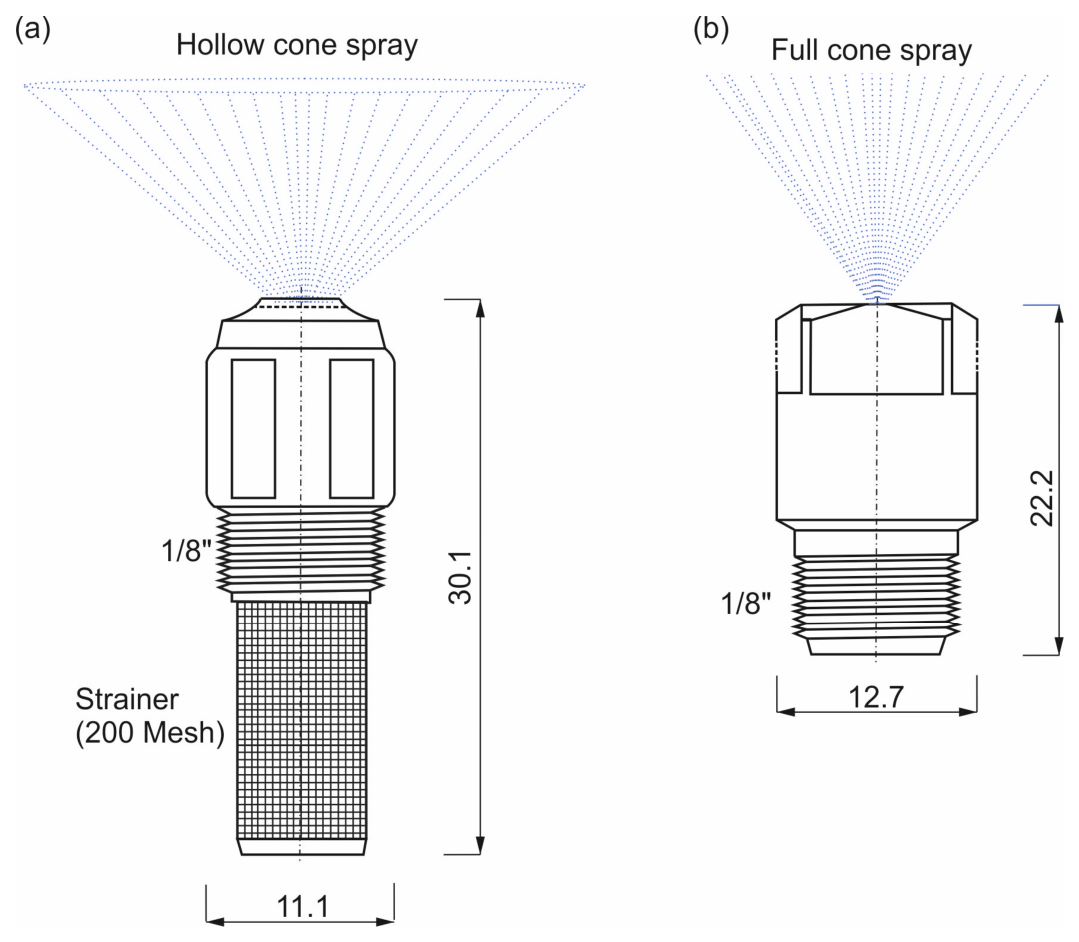
2.2. Nozzle Parameters
2.3. Test Procedure
2.4. Method for Creating a Spray Formation Region from the Results of Imaging Analysis
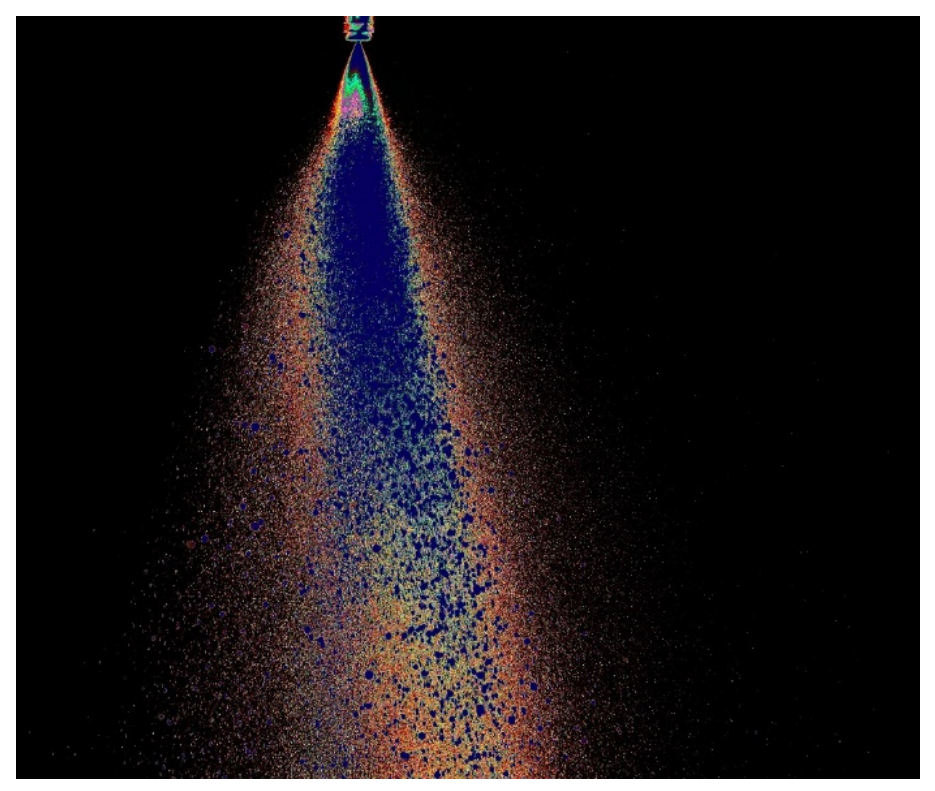
- Creating a composite image as a mean pixel value from 300 measured frames;
- Defining ten threshold pixel value levels using a Look-Up Table (LUT) [27] and applying a false color scale;
- Identifying areas in the processed composite image corresponding to the ten intensity classes based on the adopted LUT.
- Class I—black: no occurrence of water droplets (values < 1.0);
- Class II—red (values 1.0–12.0);
- Class III—yellow (values 13.0–23.0);
- Class IV—orange (values 24.0–34.0);
- Class V—pink-magenta (values 35.0–45.0);
- Class VI—purple (values 46.0–56.0);
- Class VII—green (values 57.0–67.0);
- Class VIII—cyan (values 68.0–78.0);
- Class IX—dark green (values 79.0–89.0);
- Class X—dark blue: areas where water droplets most frequently occur (values ≥ 90.0).
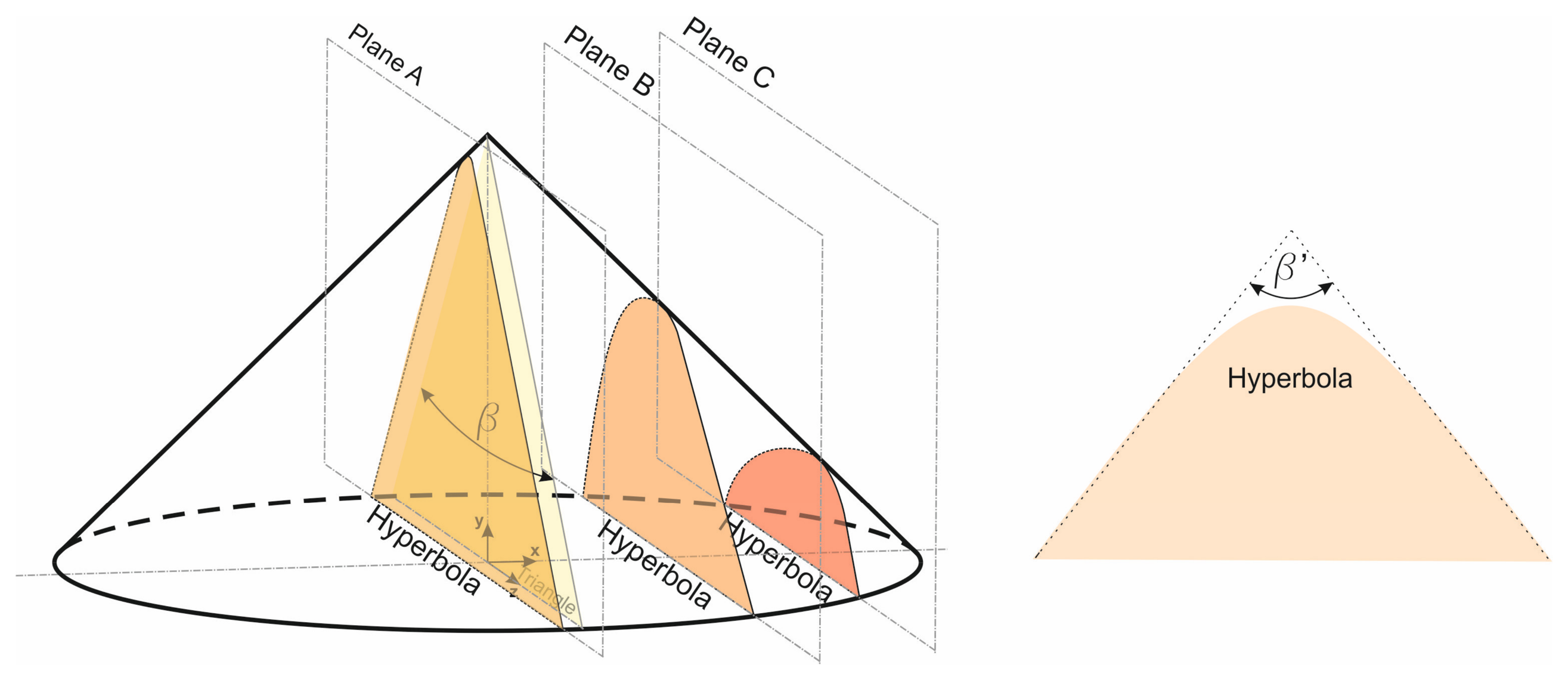
2.5. Determining the Sprayed Region from the Composite Image

3. Results and Discussion
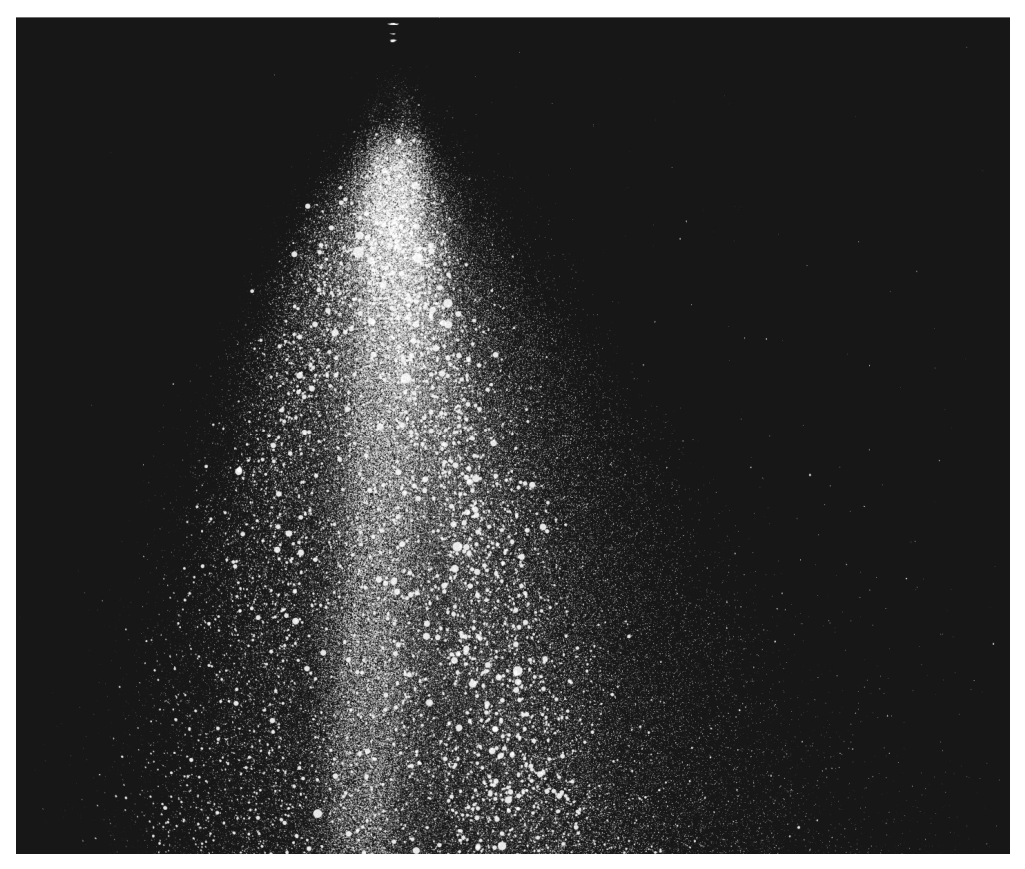
3.1. Analysis of Spray Images
3.2. Analysis of Changes in Apparent Spray Angles
3.3. Scope and Limitations of the Study
4. Conclusions
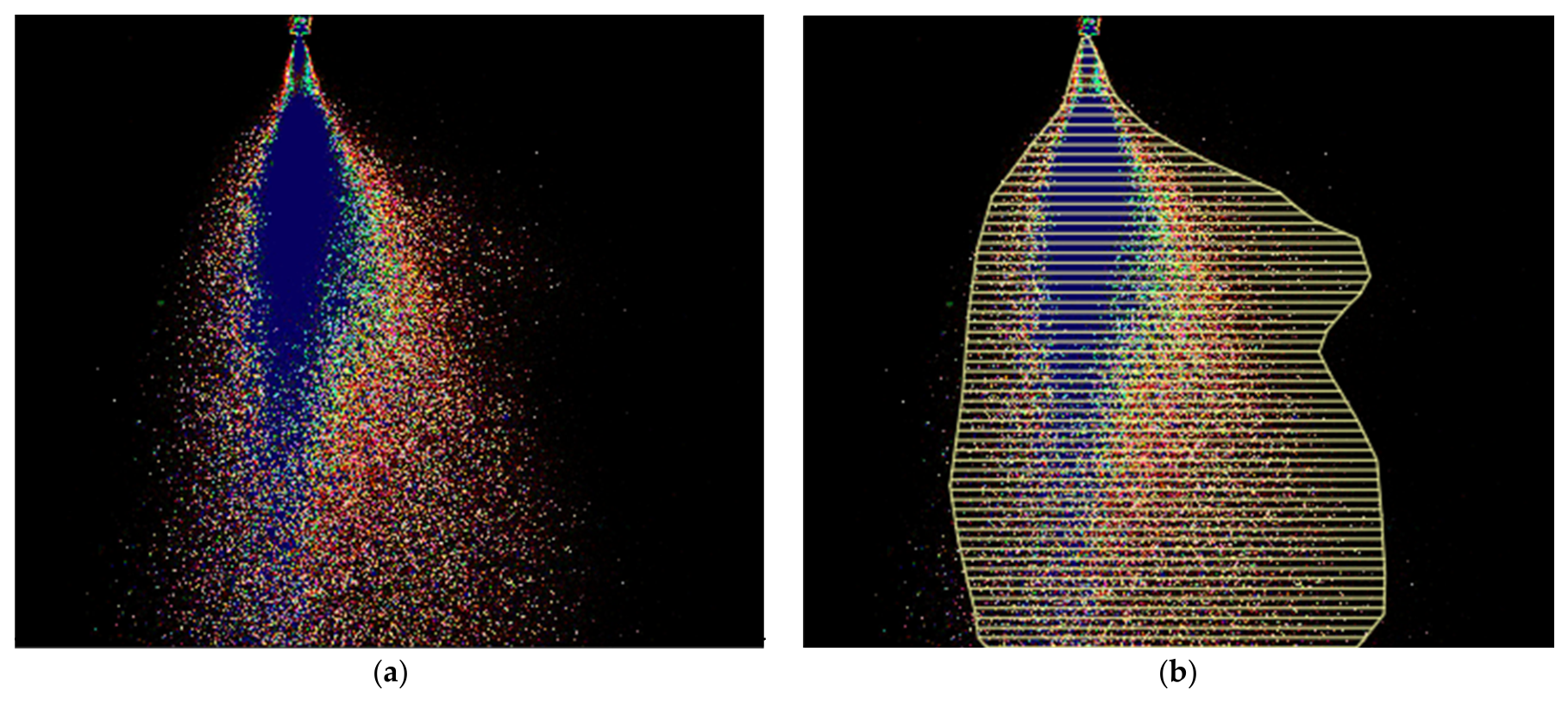
- The composite image (mean pixel values across multiple image frames) enables the application of the Look-Up Table (LUT) method to identify droplet regions. The implementation of a ten-threshold color scale provides a clear visualization of droplet distribution within a cross-section of the spray cone.
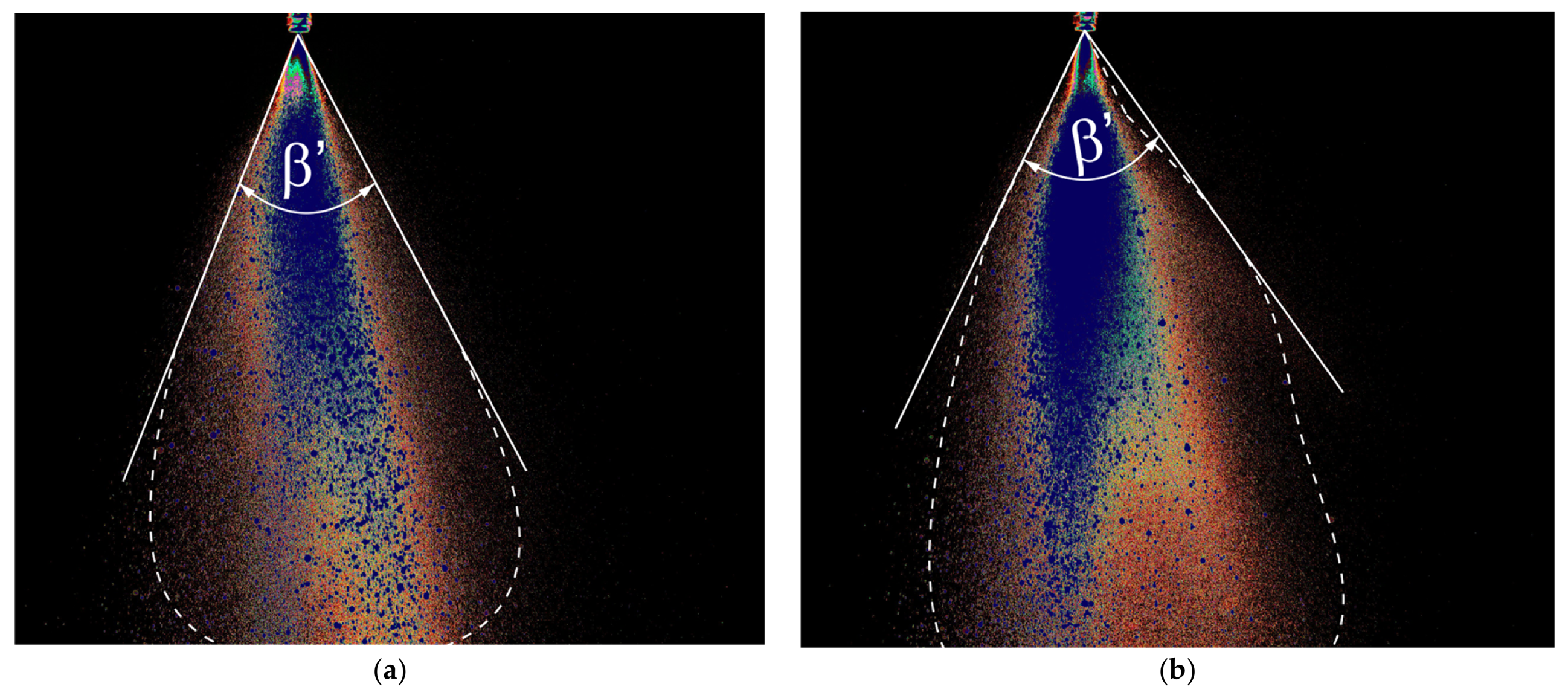
- In composite images, the spray envelope can be determined by identifying regions where at least 90% of the pixels in a unit area exceed a defined grayscale threshold. This approach offers a simple and effective means of assessing the influence of air velocity on the interaction between crossflow air and sprayed droplets.
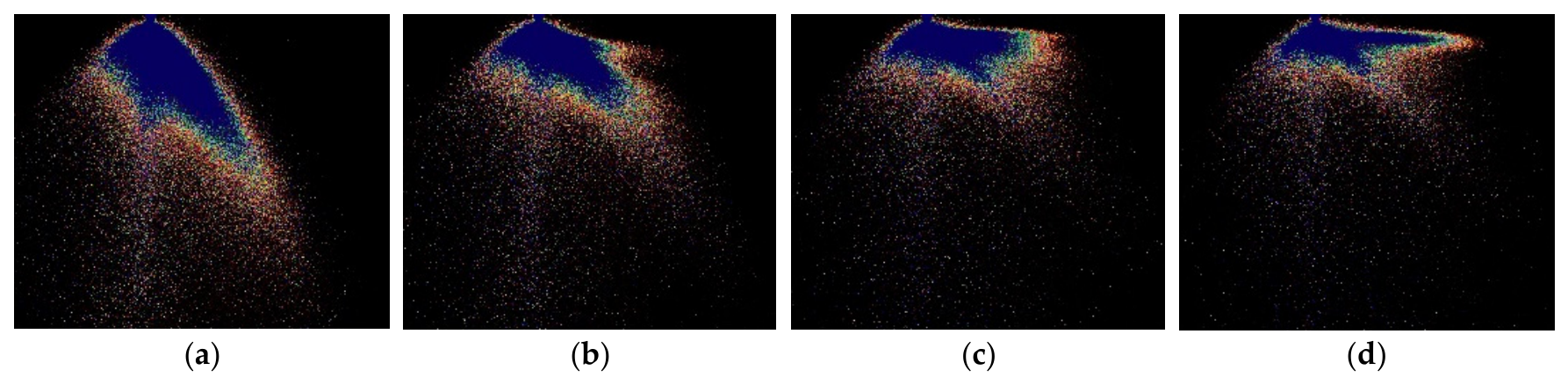
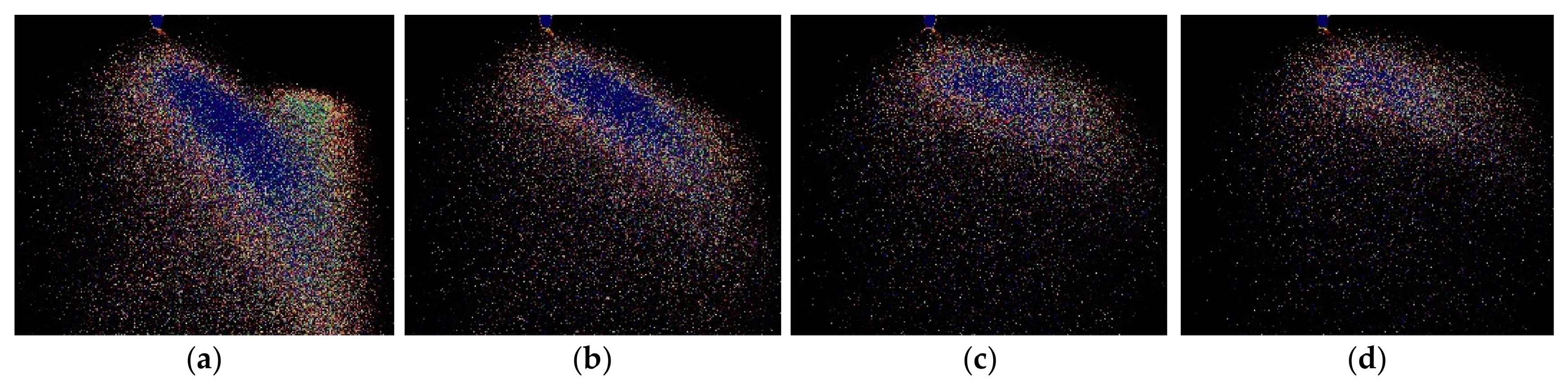
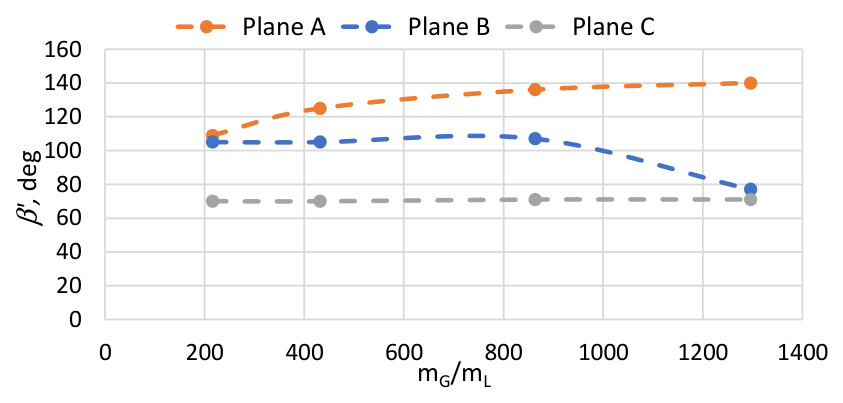
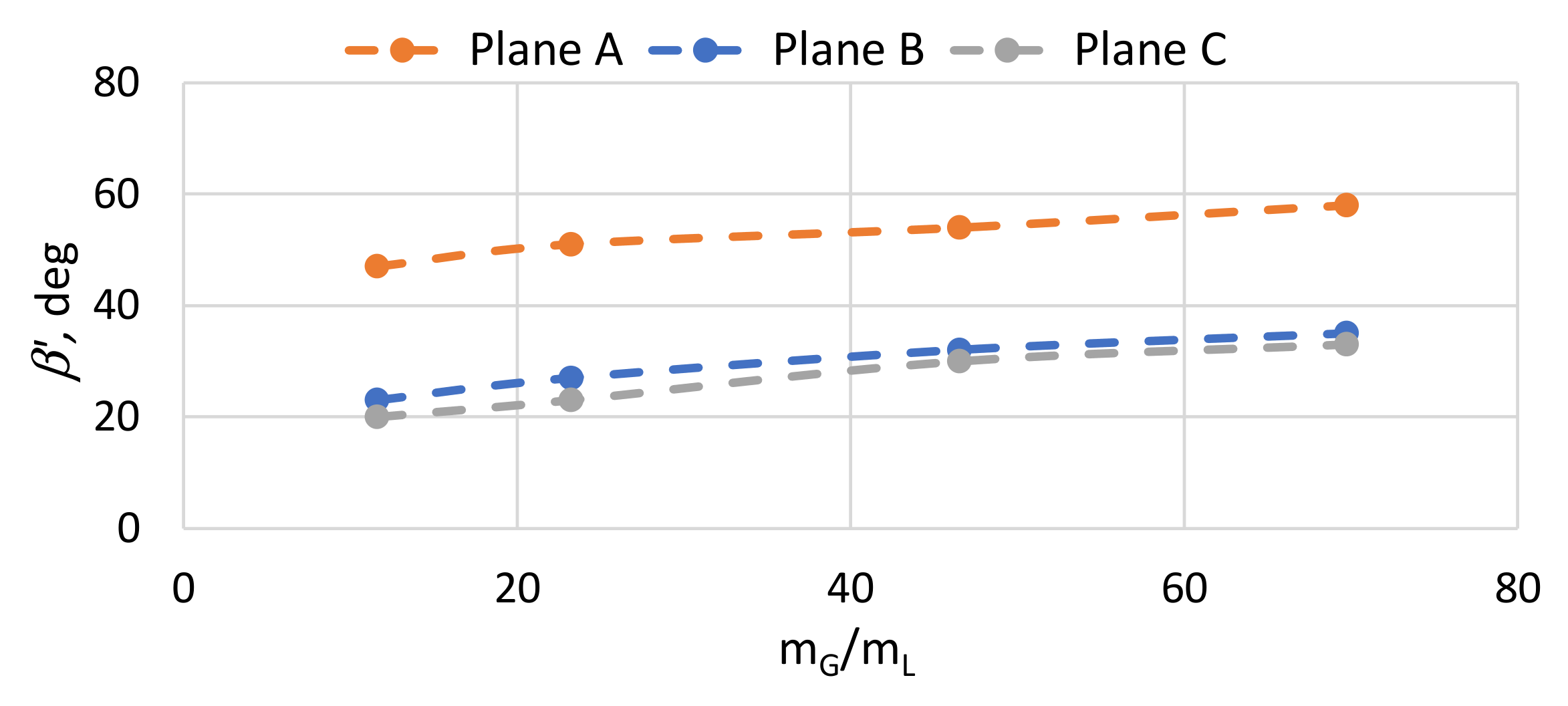
- Analysis of the spray cone geometry based on composite images allows for the determination of the apparent spray angle β’ in a given plane, as well as the evaluation of the effect of the air-to-water mass ratio on cone stability under crossflow conditions.
Author Contributions
Funding
Institutional Review Board Statement
Informed Consent Statement
Data Availability Statement
Acknowledgments
Conflicts of Interest
References
- Ochowiak, M.; Krupińska, A.; Włodarczak, S.; Matuszak, M.; Markowska, M.; Janczarek, M.; Szulc, T. The two-phase conical swirl atomizers: Spray characteristics. Energies 2020, 13, 3416. [Google Scholar] [CrossRef]
- Yang, F.; Liu, L.; Zhang, Y.; Du, Y.; Mao, E.; Zhu, Z.; Li, Z. Research on a variable universe control method and the performance of large sprayer active suspension based on an artificial fish swarm algorithm–back propagation fuzzy neural network. Agriculture 2024, 14, 811. [Google Scholar] [CrossRef]
- Bromann, M. The Design and Layout of Fire Sprinklers, 2nd ed.; CRC Press: Boca Raton, FL, USA, 2001. [Google Scholar]
- Guo, L.; Song, Y.; Zhao, S.; Tang, M.; Guo, Y.; Su, M.; Li, H. Dynamic linkage between aging, mechanizations and carbon emissions from agricultural production. Int. J. Environ. Res. Public Health 2022, 19, 6191. [Google Scholar] [CrossRef]
- Zhu, J.; Wang, H. Research on adaptive design of agricultural machinery equipment based on resource integration- sprayer case. In Proceedings of the 2nd International Conference on Information, Control and Automation, ICICA 2022, Chongqing, China, 2–4 December 2022. [Google Scholar] [CrossRef]
- Zhang, F.; Wu, F.; Chen, B.; Chen, G.; Deng, S.; Gui, Z.; Zhang, J. The influence of the surface hardness on the atomization performance of ultrasonic atomizer. J. Phys. Conf. Ser. 2025, 2951, 012050. [Google Scholar] [CrossRef]
- NFPA750; Standard on Water Mist Fire Protection Systems. National Fire Protection Association: Quincy, MA, USA, 2006.
- Kramm, K.; Orth, M.; Teiwes, A.; Kammerhofer, J.C.; Meunier, V.; Pietsch-Braune, S.; Heinrich, S. Influence of Nozzle Parameters on Spray Pattern and Droplet Characteristics for a Two-Fluid Nozzle. Chem. Ing. Tech. 2022, 95, 151–159. [Google Scholar] [CrossRef]
- Mlkvík, M.; Stähle, P.; Gaukel, V.; Zaremba, M.; Jedelský, J.; Jícha, M. Performance of twin-fluid atomizers for atomization of viscous solutions. EPJ Web Conf. 2015, 92, 02052. [Google Scholar] [CrossRef]
- Chen, S.; Xing, Y.; Liu, X.; Zhao, L. Numerical investigation of the effect of the injection angle on the spray structures of an air-blast atomizer. Eng. Comput. 2020, 38, 2048–2077. [Google Scholar] [CrossRef]
- Taboada, M.L.; López-Zapata, E.; Schuchmann, H.P.; Gaukel, V. Investigation of oil droplet breakup during atomization of emulsions: Comparison of pressure swirl and twin-fluid atomizers. Fluids 2021, 6, 219. [Google Scholar] [CrossRef]
- Seyedin, S.H.; Ahmadi, M.; Seyedin, S.V. Design and construction of the pressure swirl nozzle and experimental investigation of spray characteristics. Teh. Glas. 2019, 13, 204–212. [Google Scholar] [CrossRef]
- Taboada, M.L.; Schäfer, A.; Schuchmann, H.P.; Gaukel, V. Oil droplet breakup during pressure swirl atomization of food emulsions: Influence of atomization pressure and initial oil droplet size. J. Food Process Eng. 2020, 44, e13598. [Google Scholar] [CrossRef]
- Martínez, M.Á.B.; Becerra, D.; Gaukel, V. Modelling the Flow Conditions and Primary Atomization of an Air-Core-Liquid-Ring (ACLR) Atomizer Using a Coupled Eulerian–Lagrangian Approach. Flow Turbul. Combust. 2024, 113, 437–458. [Google Scholar] [CrossRef]
- Vaari, J.; Hostikka, S.; Sikanen, T.; Paajanen, A. Numerical simulations on the performance of water-based fire suppression systems. VTT Technol. 2012, 54, 150. [Google Scholar]
- Dancă, P.; Simionescu, Ş.; Simionescu, S.-M.; Cîrciumaru, G.; Nistoran, D.-E.G.; Chihaia, R.A.; Babutanu, C. Fish guidance system for a river water intake—Experimental and numerical study. IOP Conf. Ser. Earth Environ. Sci. 2023, 1185, 012018. [Google Scholar] [CrossRef]
- Brazhenko, V.; Mochalin, I.; Cai, J. DIY-PIV system for Poiseuille flow investigation in undergraduate fluid mechanics course. Int. J. Mech. Eng. Educ. 2025, 53, 373–390. [Google Scholar] [CrossRef]
- Reddy, Y.; Wahl, J.; Sjödahl, M. Experimental dataset investigation of deep recurrent optical flow learning for particle image velocimetry: Flow past a circular cylinder. Meas. Sci. Technol. 2024, 35, 085402. [Google Scholar] [CrossRef]
- King, B.; Winward, T.; Bjorneberg, D. Comparison of Sprinkler Droplet Size and Velocity Measurements Using a Laser Precipitation Meter and Photographic Method; Paper number 131594348; American Society of Agricultural and Biological Engineers: Kansas City, MO, USA, 2013. [Google Scholar] [CrossRef]
- King, B.; Bjorneberg, D. Droplet kinetic energy from center-pivot sprinklers. In Proceedings of the 5th National Decennial Irrigation Conference Proceedings Phoenix Convention Center, Phoenix, AZ, USA, 5–8 December 2010. [Google Scholar] [CrossRef]
- Bang, S.; Kim, T. Spray characteristics analysis of fire sprinkler spray with image processing. Int. J. Fire Sci. Eng. 2023, 37, 20–27. [Google Scholar] [CrossRef]
- Wang, H.; Araneo, L.; Coghe, A. An Experimental Study of Gaseous Transverse Injection and Mixing Process in a Simulated Engine Intake Port. SAE Int. J. Fuels Lubr. 2013, 6, 11–23. [Google Scholar] [CrossRef]
- Broniarz-Press, L.; Ochowiak, M.; Włodarczak, S.; Matuszak, M.; Maciejewska, A. Analiza kąta rozpylenia dla rozpylaczy wirowych. Inż. Apar. Chem. 2014, 53, 227–228. [Google Scholar]
- Linne, M. Imaging in the optically dense regions of a spray: A review of developing techniques. Prog. Energy Combust. Sci. 2013, 39, 403–440. [Google Scholar] [CrossRef]
- Zhu, X.; Lewballah, J.; Fordjour, A.; Jiang, X.; Liu, J.; Ofosu, S.A.; Dwomoh, F.A. Modelling of water drop movement and distribution in no wind and windy conditions for different nozzle sizes. Water 2021, 13, 3006. [Google Scholar] [CrossRef]
- Ferreira, T.; Rasband, W. ImageJ User Guide; IJ1.46r; NIH: Bethesda, MD, USA, 2012. Available online: https://imagej.net/ij/docs/guide/user-guide.pdf (accessed on 4 May 2026).
- Tsubokawa, T.; Tajima, H.; Maeda, Y.; Fukushima, N. Local look-up table upsampling for accelerating image processing. Multimed. Tools Appl. 2024, 83, 26131–26158. [Google Scholar] [CrossRef]
- Gouesbet, G.; Gréhan, G. Generalized Lorentz-Mie Theories; Springer Verlag: Berlin, Germany, 2011. [Google Scholar]
- Gillespy, T.; Rowberg, A.H. Dual lookup table algorithm: An enhanced method of displaying 16-bit gray-scale images on 8-bit RGB graphic systems. J. Digit. Imaging 1994, 7, 13–17. [Google Scholar] [CrossRef] [PubMed][Green Version]
- Settles, G. Schlieren and Shadowgraph Techniques; Springer: Berlin, Germany, 2001. [Google Scholar] [CrossRef]
- Wang, Z.; Hopfes, T.; Giglmaier, M.; Adams, N.A. Effect of Mach number on droplet aerobreakup in shear stripping regime. Exp. Fluids 2020, 61, 193. [Google Scholar] [CrossRef] [PubMed]



| Measurement Series | Series 1 | Series 2 | Series 3 | Series 4 | ||||
|---|---|---|---|---|---|---|---|---|
| m3/s | 0.1 | 0.2 | 0.4 | 0.6 | ||||
| Nozzle | I | II | I | II | I | II | I | II |
| Max. free passage diameter, mm | 0.65 | 0.59 | 0.65 | 0.59 | 0.65 | 0.59 | 0.65 | 0.59 |
| Water flow rate for p = 0.2 MPa, m3/h | 0.002 | 0.0372 | 0.002 | 0.0372 | 0.002 | 0.0372 | 0.002 | 0.0372 |
| Ratio | 5.56 × 10⁻⁶ | 1.03 × 10⁻⁴ | 2.78 × 10⁻⁶ | 5.17 × 10⁻⁵ | 1.39 × 10⁻⁶ | 2.58 × 10⁻⁵ | 9.26 × 10⁻⁷ | 1.72 × 10⁻⁵ |
| Ratio | 216 | 11.6 | 432 | 23.2 | 864 | 46.5 | 1296 | 69.7 |
| Plane | Apparent Angle | Series 1, 0.1 m3/s | Series 2, 0.2 m3/s | Series 3, 0.4 m3/s | Series 4, 0.6 m3/s | ||||
|---|---|---|---|---|---|---|---|---|---|
| Nozzle | |||||||||
| I | II | I | II | I | II | I | II | ||
| Plane A | β′, deg | 109 | 47 | 125 | 51 | 136 | 54 | 140 | 58 |
| Plane B | β′, deg | 105 | 23 | 105 | 27 | 107 | 32 | 77 | 35 |
| Plane C | β′, deg | 70 | 20 | 70 | 23 | 71 | 30 | 71 | 33 |
Disclaimer/Publisher’s Note: The statements, opinions and data contained in all publications are solely those of the individual author(s) and contributor(s) and not of MDPI and/or the editor(s). MDPI and/or the editor(s) disclaim responsibility for any injury to people or property resulting from any ideas, methods, instructions or products referred to in the content. |
© 2026 by the authors. Licensee MDPI, Basel, Switzerland. This article is an open access article distributed under the terms and conditions of the Creative Commons Attribution (CC BY) license.
Share and Cite
Obracaj, D.; Deszcz, P.; Wodziak, W.; Sobczyk, J. Effects of Crossflow Air on Conical Water Spray Structure Using a Laser-Based Imaging Method. Appl. Sci. 2026, 16, 4665. https://doi.org/10.3390/app16104665
Obracaj D, Deszcz P, Wodziak W, Sobczyk J. Effects of Crossflow Air on Conical Water Spray Structure Using a Laser-Based Imaging Method. Applied Sciences. 2026; 16(10):4665. https://doi.org/10.3390/app16104665
Chicago/Turabian StyleObracaj, Dariusz, Paweł Deszcz, Waldemar Wodziak, and Jacek Sobczyk. 2026. "Effects of Crossflow Air on Conical Water Spray Structure Using a Laser-Based Imaging Method" Applied Sciences 16, no. 10: 4665. https://doi.org/10.3390/app16104665
APA StyleObracaj, D., Deszcz, P., Wodziak, W., & Sobczyk, J. (2026). Effects of Crossflow Air on Conical Water Spray Structure Using a Laser-Based Imaging Method. Applied Sciences, 16(10), 4665. https://doi.org/10.3390/app16104665