Article

Electrical Performance of Hafnium Doped In2O3 Thin-Film Transistors Prepared Using a Solution Method


School of Physics Science and Technology, Xinjiang University, Urumqi 830017, China
*
Author to whom correspondence should be addressed.
Appl. Sci. 2026, 16(10), 4658; https://doi.org/10.3390/app16104658
Submission received: 24 March 2026 / Revised: 30 April 2026 / Accepted: 5 May 2026 / Published: 8 May 2026

Abstract

Indium hafnium oxide thin-film transistors (TFTs) were prepared by the sol-gel method, and their crystal structures, surface morphologies, chemical compositions, optical and electrical properties were systematically investigated using X-ray diffraction (XRD), atomic force microscopy (AFM), X-ray photoelectron spectroscopy (XPS), ultraviolet-visible (UV-Vis) spectroscopy, and a semiconductor parameter analyser. We mainly study the effects of hafnium doping on indium oxide-based thin-film transistors through the following electrical properties, including field-effect mobility (μ FE), carrier concentration, on/off current ratio (Ion/Ioff), threshold voltage (Vth), and subthreshold slope (SS). The oxygen defects concentration decreased from 25.83% to 17.82% when Hf doping was increased to 5 mol%. The effect of Hf doping on the structure, as well as the properties of the Hf-InOx thin films, was explored and it was found that Hf as a carrier inhibitor can effectively suppress the carrier concentration. This reduces the oxygen vacancy defects and improves the electrical performance of In2O3TFTs devices. The doped thin-film transistor exhibits excellent electrical properties with a mobility (μ) of 11.69 cm2/Vs, a threshold voltage (VTH) of 1.68 V, a subthreshold slope (SS) of 0.68 V/dec, and an on/off current ratio (Ion/Ioff) of 107 when the Hf doping level is 3 mol%. Research indicates that the Hf-InOx thin film prepared by the sol-gel method is a low-cost, high-performance, and widely applicable active layer material.

1. Introduction

Metal oxide semiconductors are key semiconductor devices that have the potential for a wide range of applications in electronic devices due to their better transmittance, higher carrier mobility and better environmental stability. Examples include indium tin oxide (InSnO), indium gallium zinc oxide (InGaZnO) and indium zinc oxide (InZnO) [1,2,3]. The characteristics of some metal oxides are shown in Table 1. They can be used in the manufacture of flexible displays, organic light-emitting diodes (OLEDs), photodetectors, and biosensors, etc. [4]. In2O3 is an n-type oxide semiconductor that is the most commonly used channel layer material for thin-film transistors (TFTs), and has shown excellent mobility and optical transparency in TFT applications. Nowadays, some of the excellent TFTs are made based on some complicated or expensive equipment, such as atomic layer deposition, magnetron sputtering, electrostatic spinning, and other methods. Compared to these methods with obvious drawbacks, the solution method has the advantages of simple operation, low cost, and easy control of the composition used in a large number of applications [5,6,7,8].
The high mobility of In2O3 films is mainly attributed to their oxygen vacancy (VO) concentration, which acts as both a defect and carrier concentration. This also leads to poor switching current ratios, threshold voltage and uniformity, and stability of In2O3 films under different stress conditions [9,10], thus limiting their applications. In order to optimise the poor performance of In2O3 films, we can choose to dope suitable dopants as carrier suppressors. Thus, the electrical performance of TFTs can be enhanced by reducing VO.
The selection of suitable dopant is mainly considered from three aspects: electronegativity, dissociation energy and standard electrode potential (SEP). The difference between the ion radius of the dopant and the ion radius of the host ion is also an important factor affecting the performance of the device. In this experiment, the coordination number of hf4+ ions used as dopants is 6, which is consistent with the coordination environment of In3+ ions in In2O3. And the ionic radius of In3+ ions is 0.80 Å, and the ionic radius of hf4+ ions is 0.71 Å. Compared with common ions such as Zr4+: 0.72 Å, Sn4+: 0.69 Å, Ti4+: 0.61 Å, Al3+: 0.54 Å, the difference in ionic radius between Hf4+ and In3+ is about 0.09 Å, which is a small size deviation and much smaller than the radius difference between commonly doped ions such as Ti4+ and Al3+ and In3+. Excessive radius deviation can cause lattice stress concentration, generate a large number of defects (such as vacancies, dislocations), and even damage the crystal structure of In2O3. The small size deviation of Hf4+ only causes slight lattice distortion, which can be quickly offset by lattice relaxation. And it can maintain lattice stability while introducing charge carriers. The difference in electronegativity between the dopant and oxygen, as well as the higher dissociation energy, contribute to the formation of strong metal–oxygen bonds [11,12]. SEP is even more important as a parameter affecting the inhibition ability of carrier suppressors, and metal elements with lower SEPs have a stronger tendency to bind to oxygen [13]. Metal cations such as Zn, La, Nd, Ho, Sc, Mg, Ca, Ti have been studied as dopants [5,14,15,16,17,18,19,20]. Sn is a commonly used dopant in In2O3, and many transparent conductors on the market are based on indium tin oxide (ITO). In ITO, Sn4+ replaces In3+ in the indium oxide crystal structure, thereby contributing one free electron to improve the electrical performance of the device [21]. Through simulation studies of transition metal doping, it was found that Zr, Hf, and Ta can be better dopants than Sn [22]. However, hafnium (Hf) atoms, due to their low standard electrode potential (−1.55 V) lower than indium In (−0.33 V), low electronegativity (1.30), and dissociation energy between Hf and O (801.7 KJ·mol−1), are much higher than the dissociation energy between In and O (346 KJ·mol−1) [23]. There is potential for doping with In2O3 thin films. Previous studies have prepared Hf-InOx-based thin films using methods such as radio frequency sputtering and grazing angle magnetron sputtering, but they either have high cost or complex operation [24]. Jiyuan Zhu et al. recently demonstrated that Hf-doped In2O3 (Hf-InOx) films prepared by atomic layer deposition (ALD) exhibit highly tunable electrical properties via oxygen vacancy modulation, enabling high-performance thin-film transistors (TFTs) with high mobility, large on/off ratio, and good bias stability. Their work confirms that Hf doping is an effective strategy to suppress excessive oxygen vacancies in In2O3 while maintaining high electron mobility, making Hf-doped In2O3 a promising candidate for next-generation oxide electronics. Inspired by these findings, the present work focuses on the structural, chemical, and electrical evolution of solution-processed Hf-doped In2O3 films with varying Hf content, aiming to elucidate the doping-structure–property relationships and provide guidance for optimising Hf-InOX-based TFTs [25]. Therefore, this paper selects the sol-gel method and Hf as the doping element to improve the electrical performance of In2O3 TFTs.
In this paper, we employed the sol-gel method to prepare Hf-InOx TFTs with different Hf doping concentrations. In2O3 films with different Hf doping concentrations were prepared using acetylacetone and ammonia water as fluxing agents. The effects of different Hf doping on the structure, surface morphology, chemical bonding state, optical properties and electrical properties of the devices were investigated by XRD, SEM, XPS and UV-Vis.

2. Materials and Methods

Indium nitrate hydrate (In(NO3)3-xH2O, 99.9%, Aladdin Reagent, Tianjin, China) and hafnium chloride (HfCl4, 98%, Aladdin Reagent, China, Tianjin) were dissolved in 2-methoxyethanol (C3H8O2, Analytical Reagent, Aladdin Reagent, China, Tianjin) solvent. The doping ratios of Hf were 0%, 1%, 3% and 5%, respectively. The concentration of the solution was controlled at 0.1 mol/L. Then, the precursor solution was stirred at room temperature for 2 h, and a certain amount of acetylacetone and ammonia was added and stirred for 4 h until complete dissolution. The prepared precursor solution was aged at room temperature and protected from light for 72 h.
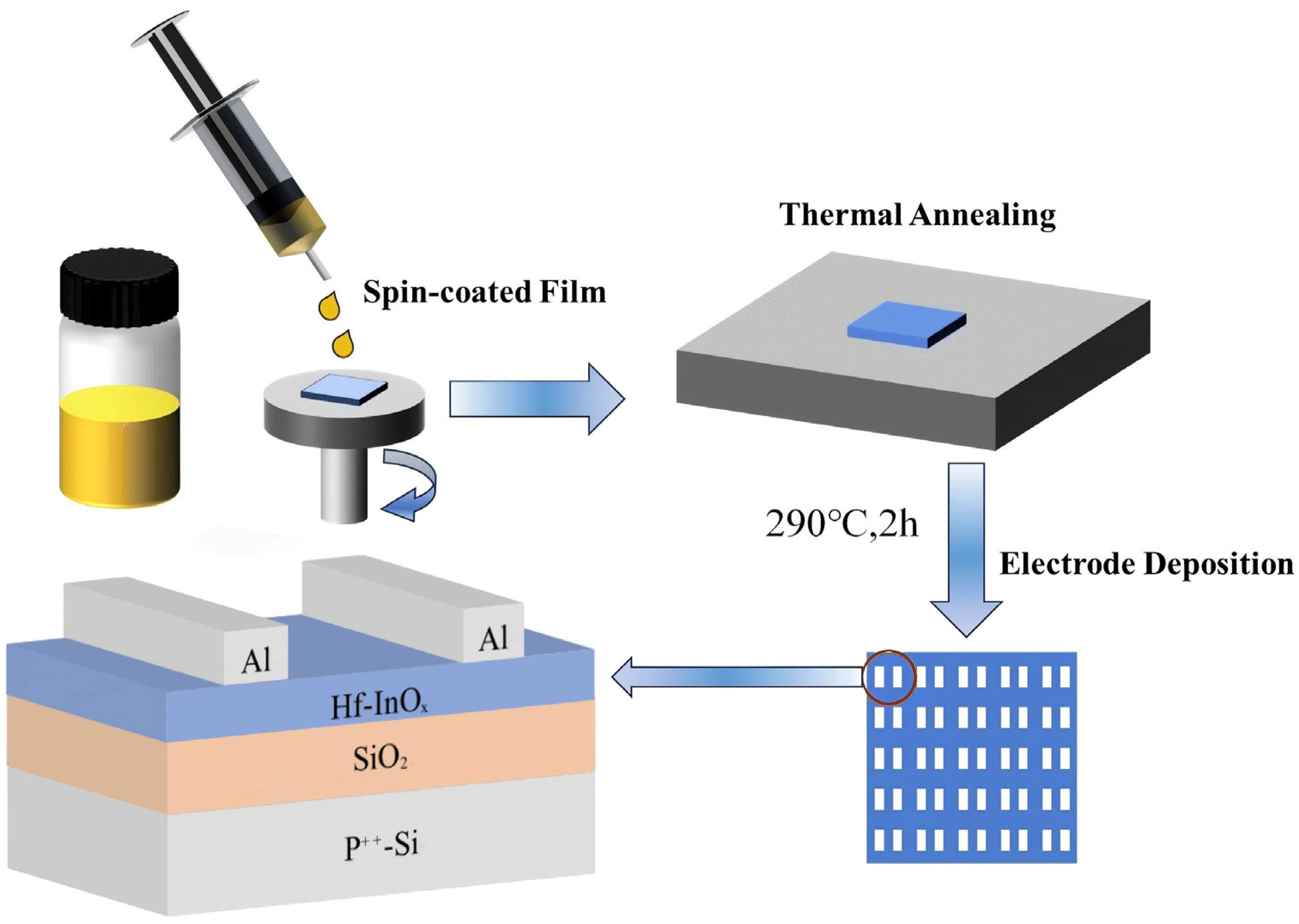
The resistivity of the wafers used in this experiment was 0.005 Ω-cm and the thickness was 100 nm SiO2 on a P(100) type Si substrate. The silicon wafers of size 2 × 2 cm were placed on a silicon wafer cleaning rack and then put into a washed beaker. The wafers were sonicated with acetone (CH3COCH3, 99.5%, Aladdin Reagent, Tianjin, China), anhydrous ethanol (C2H5OH, 99.7%, Aladdin Reagent, Tianjin, China) and deionised water for 15 min to remove surface impurities and blown dry, respectively, and treated under a plasma cleaner for 1 min to increase the surface hydrophilicity. The precursor solution was spin-coated onto the SiO2/Si substrate by a syringe at 5000 rpm at room temperature for 30 s. The denser Hf-InOx films were then baked on a heating table at 150 °C for 5 min. The samples were annealed in an air atmosphere at 290 °C for 2 h at a ramp rate of 5 °C/min and then cooled to room temperature to obtain Hf-InOx films. In order to prepare TFT devices with bottom-gate-top-contact structures, the prepared samples were glued with a metal mask plate, and then the Al electrodes were sputtered using a high-vacuum magnetron ion sputtering apparatus. The structure is shown in Figure 1.
The electrical properties of the TFT devices, including the transfer and output curves, were measured by a semiconductor parameter tester (Keysight B1500A, Xi’an, China) and a high and low temperature probe bench (Lake Shore TTPX, Shenzhen, China), and the X-ray photoelectron spectroscopy (XPS) measurements were performed on a Thermo Fisher ESCALAB250Xi (Shanghai, China). X-ray diffraction (XRD) experiments were carried out on a Smartlab 9 kw model manufactured (Tokyo, Japan), and SEM analysis was carried out on a SU8010 model manufactured by HITACHI, Tokyo, Japan.

3. Results

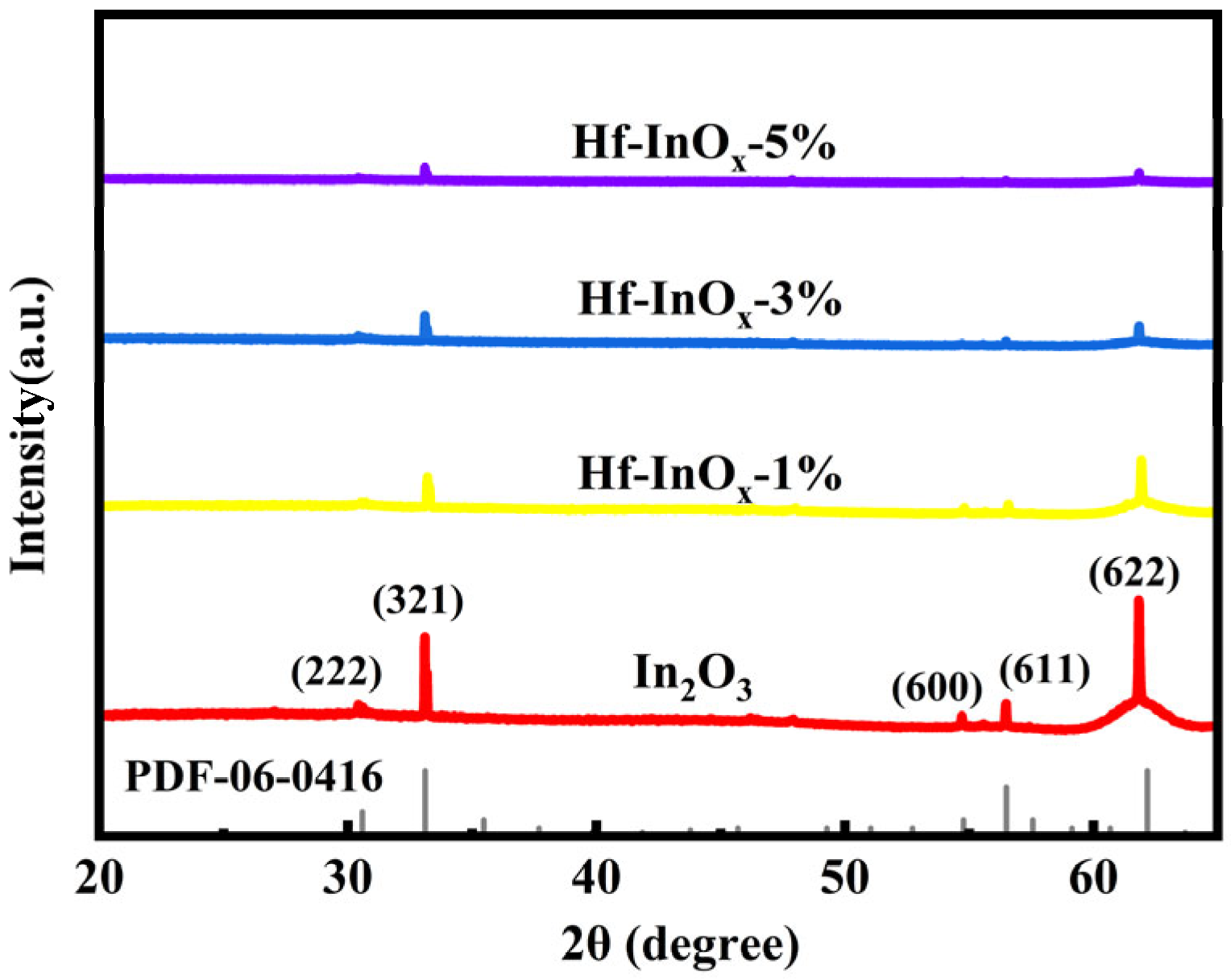
Figure 2 shows the XRD patterns of In2O3 films and Hf-InOx films with different Hf doping concentrations, from which we can see that the films have (222), (321), (600), (611) and (622) crystalline facets of In2O3 corresponding to the standard card (PDF-06-0416) [26]. It can be seen that the prepared film is polycrystalline. And no other diffraction peaks were observed, indicating that we successfully doped Hf atoms into the In2O3 film. With the increase in Hf doping concentration, the intensity of the crystallisation peak gradually weakens, indicating that the crystallinity of the film decreases with the increase in Hf doping concentration. And according to Scherrer’s formula: d = (k × λ)/(β × cosθ), where d is the average thickness of the grain, perpendicular to the crystal plane, i.e., the size of the grain, k is the Scherrer constant, λ is the X-ray wavelength, β is the half width of the sample diffraction peak, and θ is the diffraction angle. The full width at half maximum of the diffraction peak is inversely proportional to the grain size of the crystal plane. The full width at half maximum of the (622) diffraction peak gradually increases with the increase in Hf doping concentration, while the grain size of the crystal plane gradually decreases. The decrease in grain size will cause more grain boundary effects, which will affect the transport of charge carriers in the In2O3 channel layer.
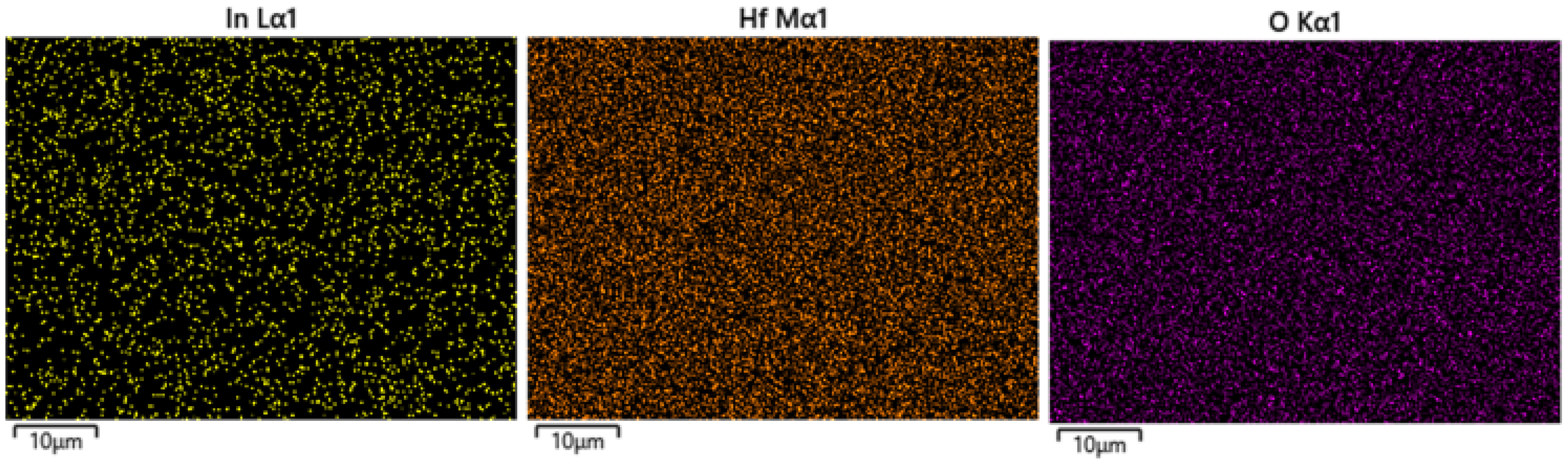
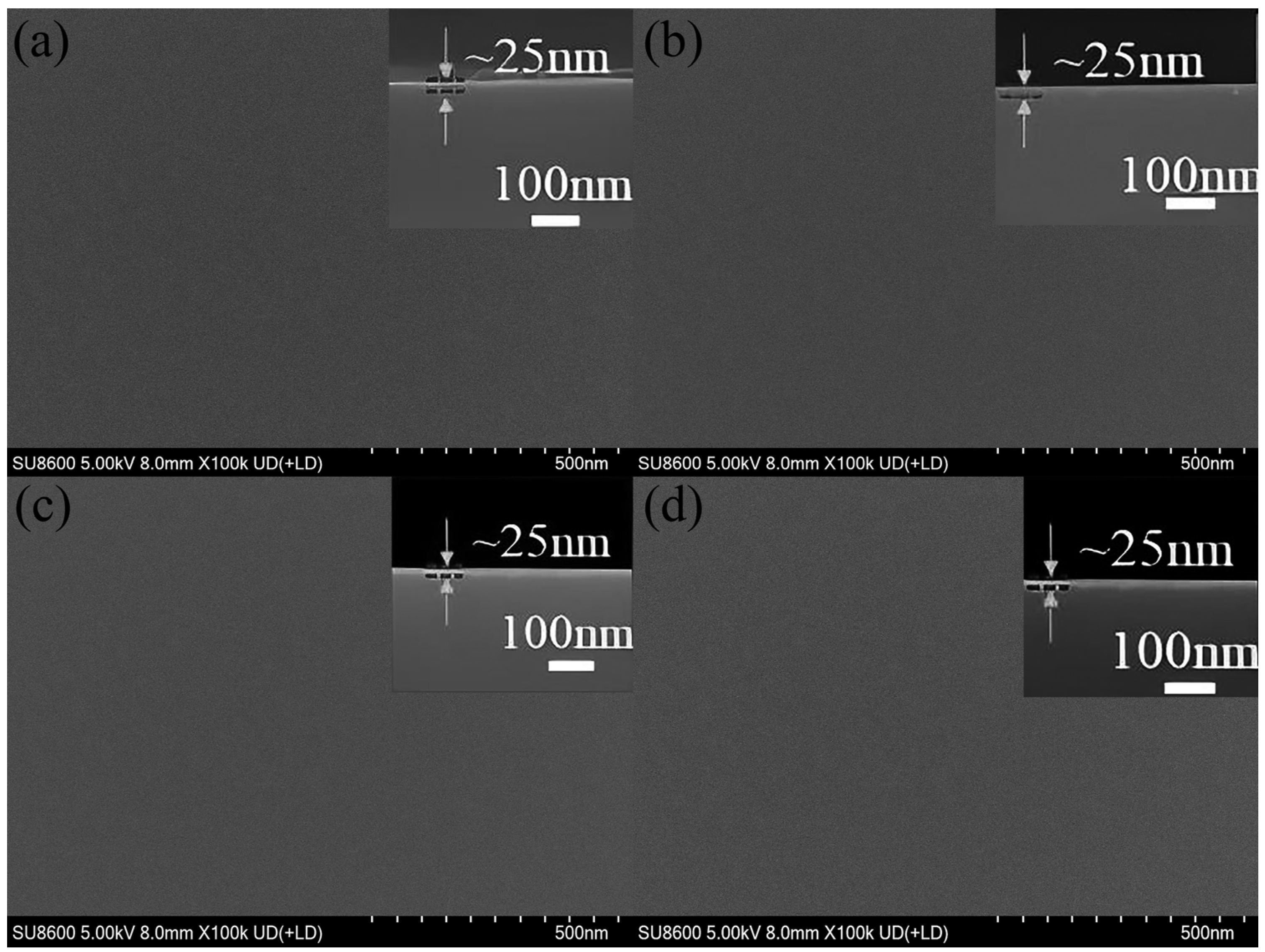
Figure 3 is the SEM image of Hf-InOx thin film. SEM is an important test to show the surface morphology of the film. From the SEM image of the surface of the film, it can be seen that the surface of Hf-InOx thin film is relatively smooth and uniform, and there are no obvious defects, such as cracks or voids, indicating a more continuous film. The illustration shows cross-sectional views of Hf-InOx thin films with different doping concentrations. The thickness of the film is about 25 nm. The thickness of the film can affect the electrical performance of the TFT, and the surface scattering mobility of charge carriers decreases exponentially because the thickness of the film is below the critical value of about 10 nm. Research has shown that a 20 nm thick active layer has the best mobility, and over time, the mobility gradually deteriorates. Therefore, we have controlled the film thickness at 25 nm. In the illustration, it can also be seen that there is a clear interface separation between the Hf-InOx layer and the substrate, indicating that there is no diffusion between the film and the substrate. Figure 4 shows the EDS elemental mapping of the Hf-InOx-3% film. From the EDS elemental mapping of the SEM image of the surface of Hf-InOx film, it can be seen that the In, Hf and O elements are uniformly distributed in the film, which indicates that the uniformity of the film is high. Smooth, flat and relatively uniform films without visible defects are important factors for the preparation of high quality TFT devices [27].
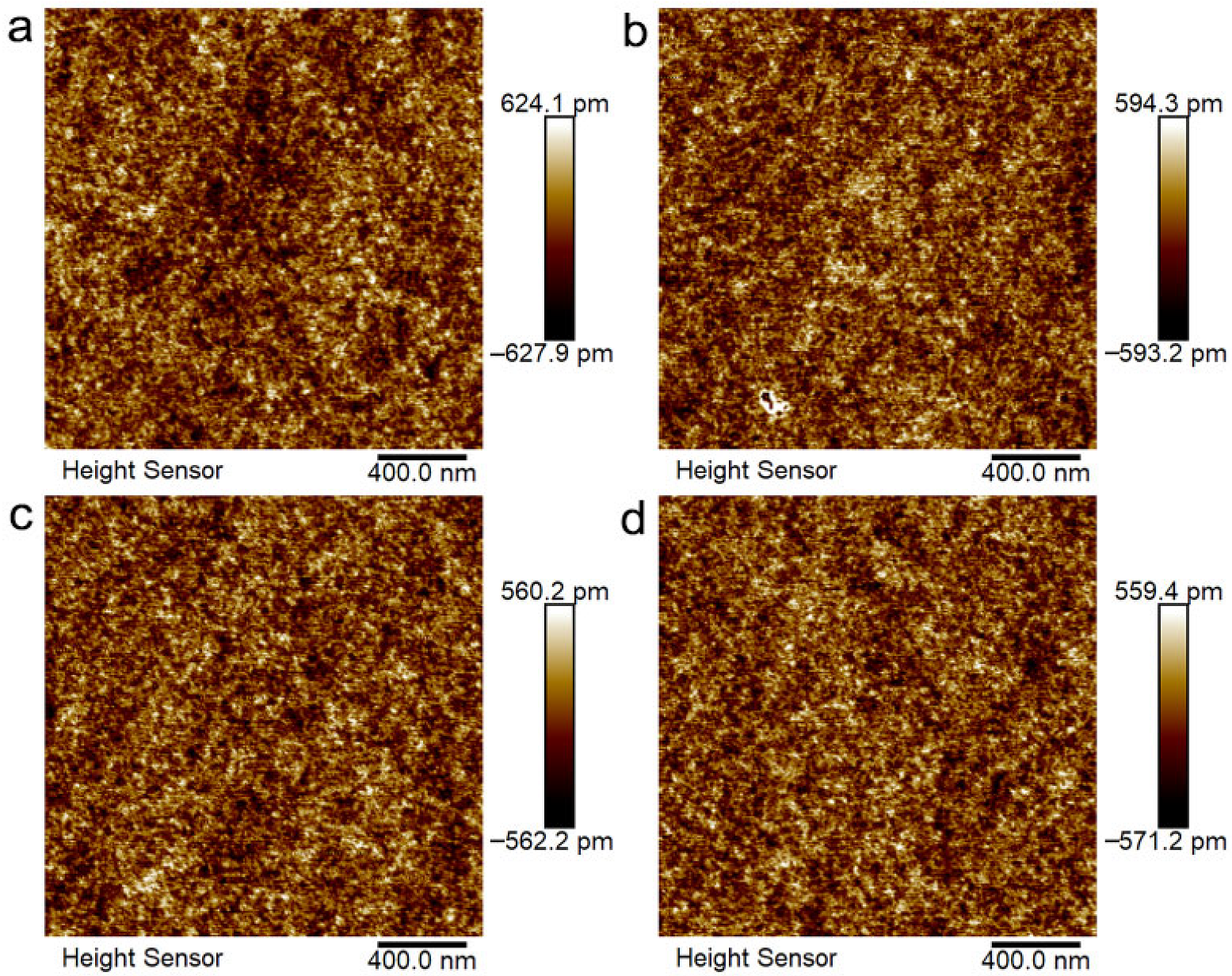
The AFM image of Hf-InOx thin film is shown in Figure 5, with a scanning range of 2 μm × 2 μm. Figure 5a–d show AFM images of undoped In2O3, Hf-InOx-1%, Hf-InOx-3%, and Hf-InOx-5% thin films, respectively. The roughness of the thin film samples is 0.179 nm, 0.169 nm, 0.161 nm, and 0.163 nm, respectively. We can see that with the increase in Hf doping concentration, the roughness will initially decrease slightly, which is due to the fact that appropriate doping of Hf can promote the uniform diffusion of atomic clusters. However, excessive Hf doping introduces obvious lattice distortion and residual internal stress, and induces local atomic aggregation and micro-phase separation. These structural inhomogeneities disrupt the uniform growth of the thin film, increase surface defects and grain boundary disorder, and consequently lead to an increase in surface roughness at high doping levels. The root mean square roughness of the film is less than 1 nm. However, roughness is a key factor affecting electron transport in the film. This is also an advantage of solution processing, as smaller roughness is beneficial for improving the performance of TFT devices.
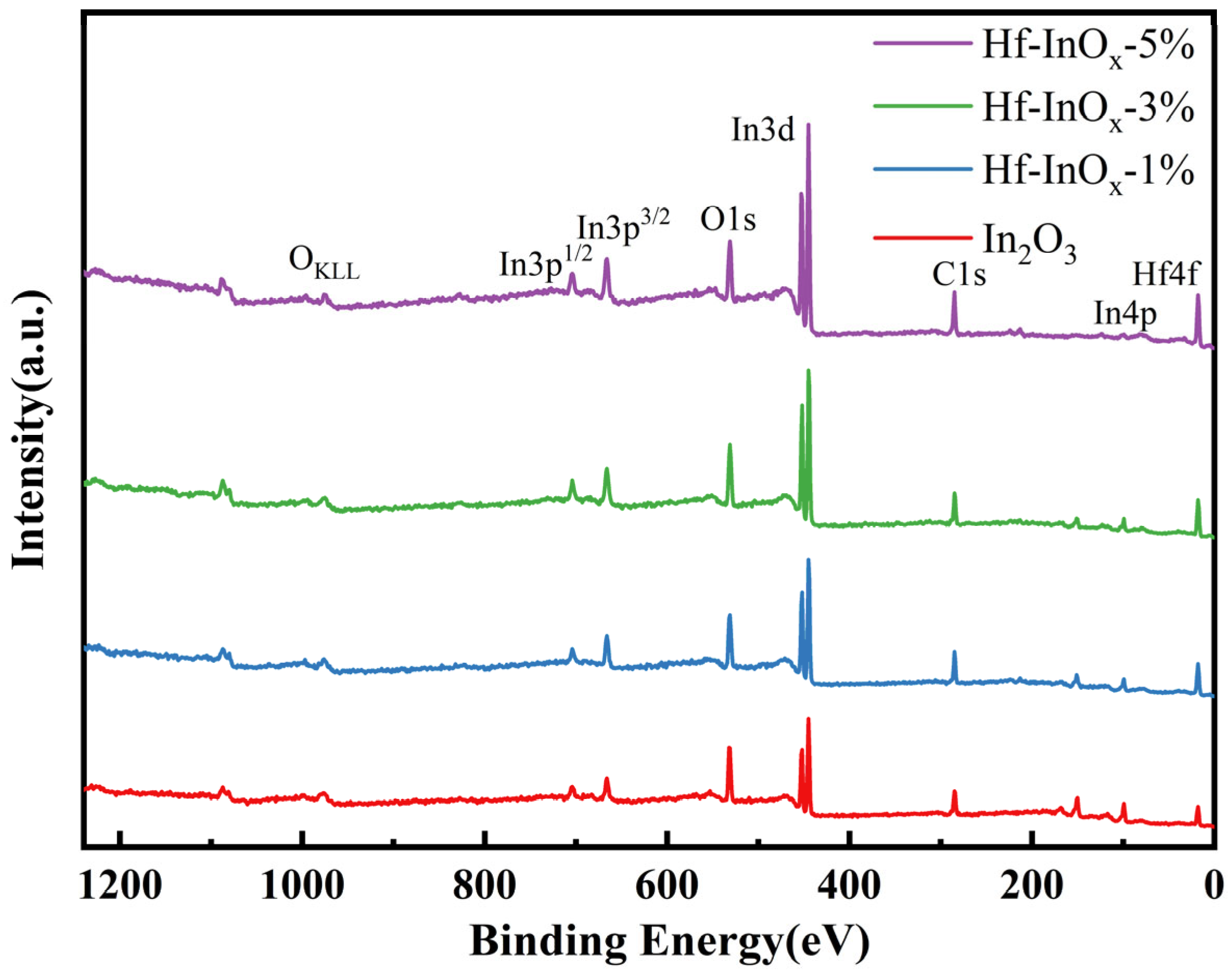
An XPS test can analyse the effect of different Hf doping on the chemical structure and chemical bonding state of In2O3 films. In Figure 6, the full XPS spectra of In2O3 films with different Hf doping are shown. All of the spectra have been calibrated by C1s peak (284.88 eV). With the Hf-InOx film, we can see that only the peaks corresponding to In, Hf, O and C are present, so it can be determined that no other impurity elements are present in the prepared film.
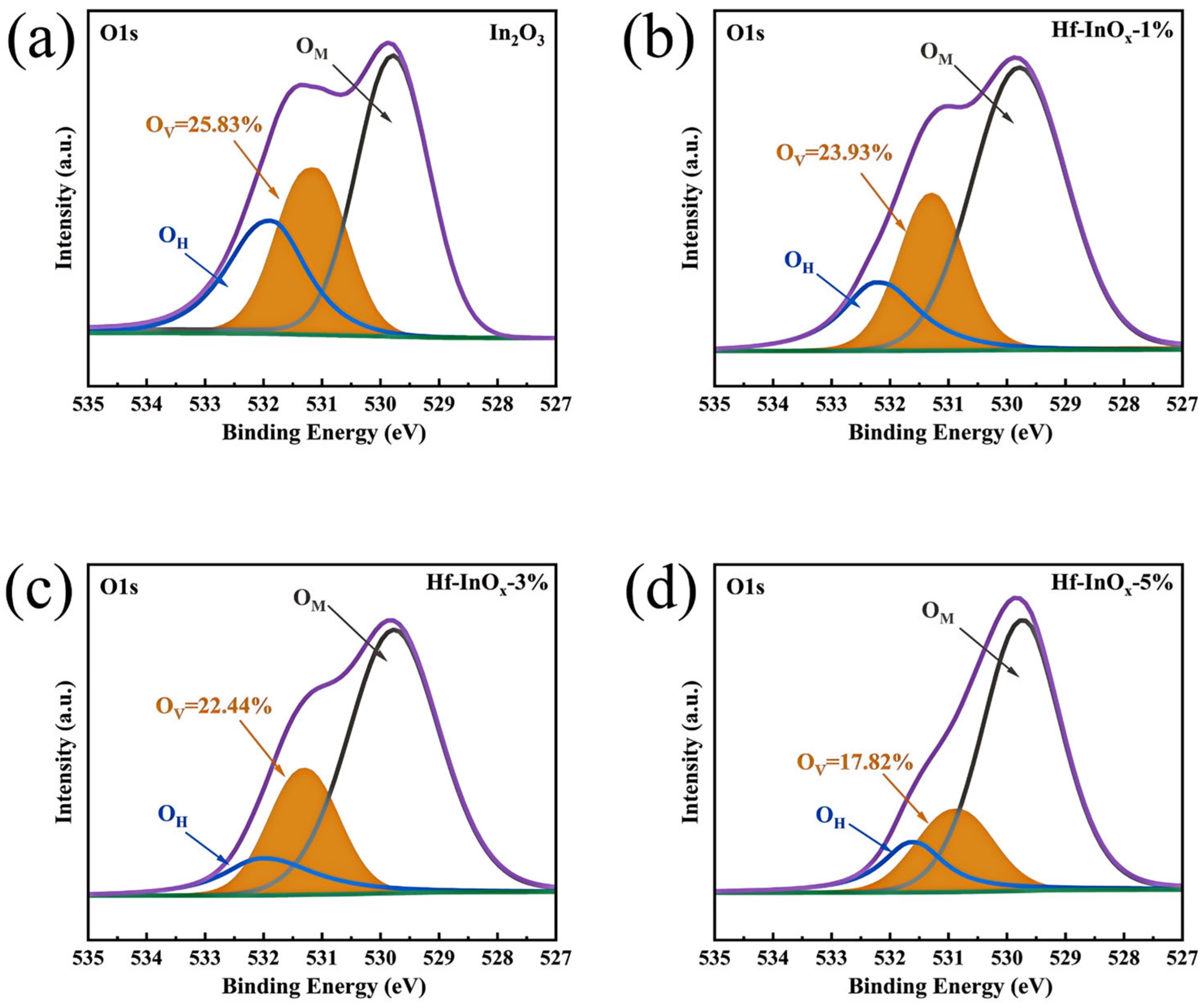
Figure 7a–d show the O1s profiles of In2O3 films with different Hf doping concentrations. All O1s peaks have been calibrated by the C1s peak (284.88 eV). The O1s have been divided into OM peak (529.6 eV) related to metal bonding between metal atoms and oxygen atoms (M-O), OV peak (531.2 eV) related to oxygen vacancy defects, and OH peak (532.1 eV) related to surface oxides (M-OH), such as H2O, CO2 or adsorbed O2 [28]. And OV is a key factor in determining the performance of TFT devices [29], so the values of OV/(OM + OV + OH) were calculated for different Hf doping concentrations, as shown in Figure 7. The value of OV/(OM + OV + OH) decreases from 25.83% to 17.82% with the increase in Hf doping, whereas the value of OM gradually increases, and it is well known that the larger the difference between the electronegativity of an atom and that of oxygen, the more likely it is that the corresponding metal–oxygen bond is formed with the electronegativity of Hf being 1.30 and that of In 1.78 [30]. With the increase in Hf doping, more and stronger Hf-O bonds were produced, which suppressed the generation of OV and reduced the defect density of the film. Oxygen defects can provide additional electrons for oxide semiconductors. Hf doping in In2O3 can suppress oxygen defects, reduce carrier concentration, and simultaneously optimise the electrical performance of the thin film. The doping of Hf can effectively improve the performance of In2O3 thin films.
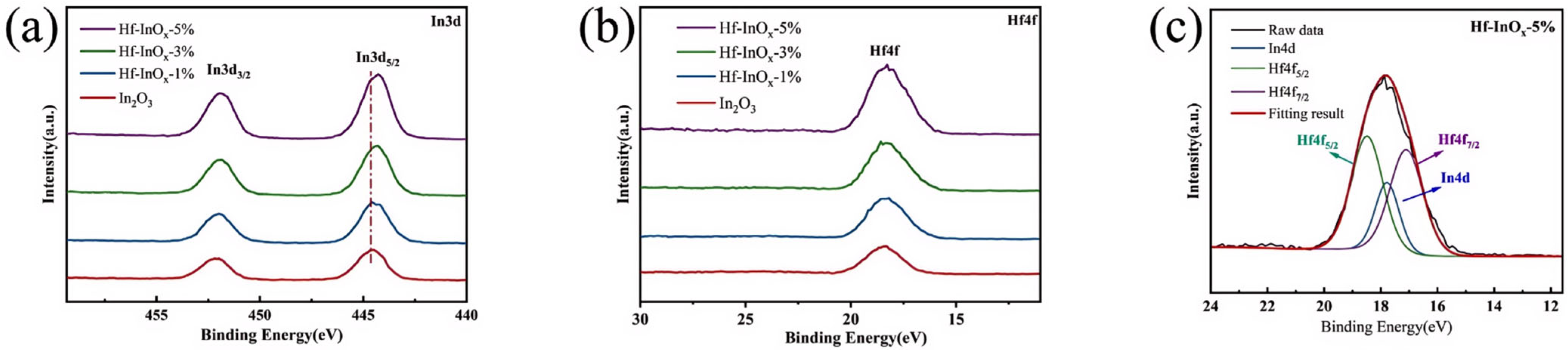
The XPS profiles of In3d, Hf4f, and In4d are shown in Figure 8a–c. The spin–orbit splitting of the In3d energy level into In3d3/2 (452.2 eV) and In3d5/2 (444.5 eV) peaks. Since the dissociation energy of Hf with O (801.7 KJ-mol−1) is much larger than that of In with O (346 KJ-mol−1), and oxygen will tend to bond with metal ions with higher dissociation energies. Due to the higher bond dissociation energy of Hf–O compared with In–O, Hf atoms preferentially combine with oxygen to form stable Hf–O bonds. As the Hf doping level increases, the formation of Hf–O bonds is further promoted, accompanied by the gradual substitution of unstable In–O bonds, thereby increasing the relative proportion of Hf–O bonds in the film. Therefore, more Hf-O bonds are generated with increasing doping, which gradually shifts the peak of In3d towards lower binding energies and can lead to a reduction of oxygen defects, as well as a decrease in the density of trapped states. The XPS pattern in the Hf4f region is more complicated, with the presence of In4d (17.9 eV) peaks in addition to the splitting of the spin–orbitals of the Hf4f energy level into Hf4f5/2 (18.5 eV) and Hf4f7/2 (16.9 eV) peaks. The intensity of the peaks is gradually enhanced with the increase in Hf doping, indicating that Hf has been successfully doped into the film.
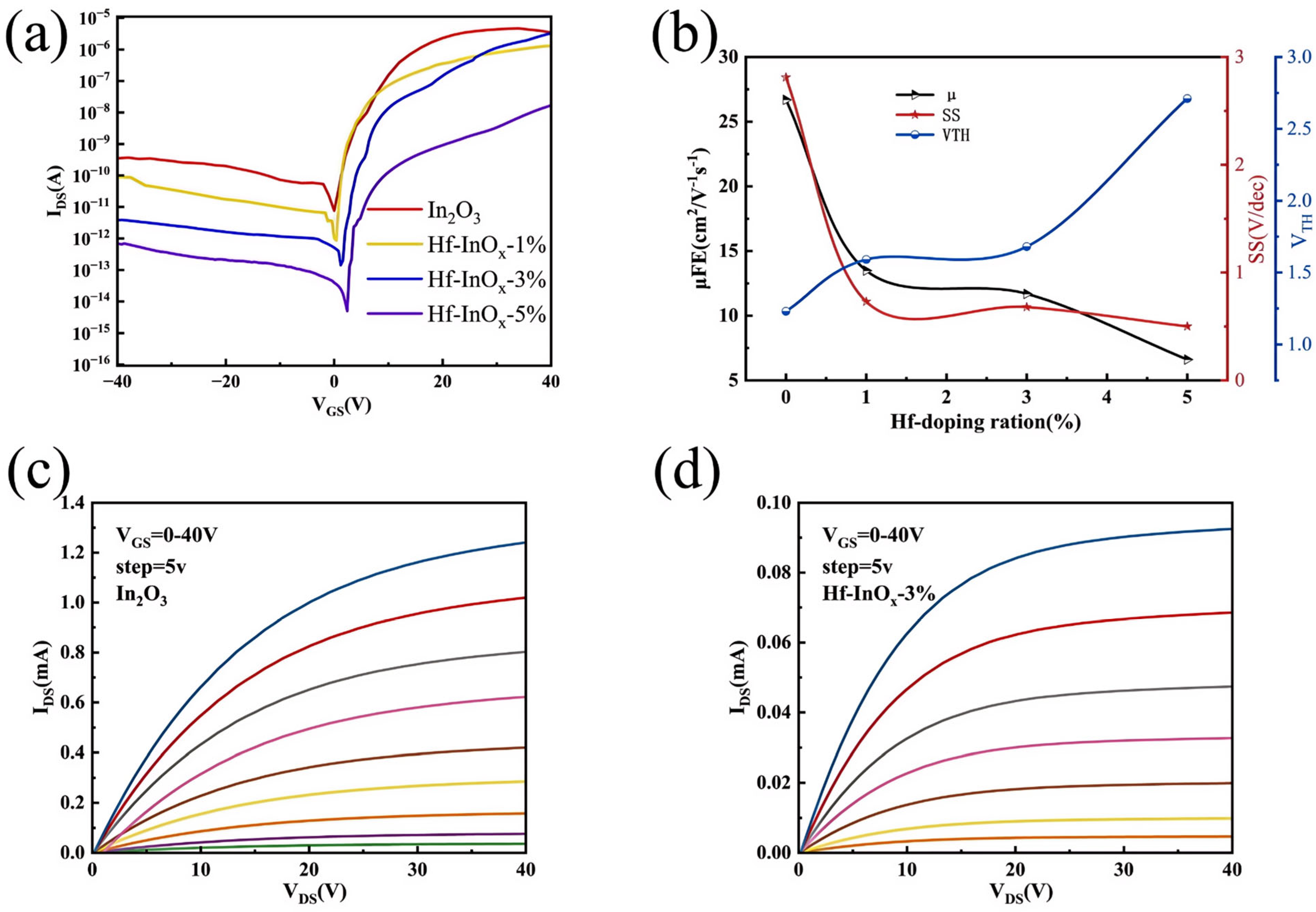
Figure 9a shows the transfer characteristic curves (IDS-VGS) of the Hf-InOx TFTs devices tested with the source-drain voltage (VDS) set to 1 V and the range of gate voltage from −40 V to +40 V. The transfer characteristic curves are shown in Figure 9b. All devices were tested at room temperature. In order to investigate the effect of different Hf doping levels on the electrical performance of Hf-InOx TFTs, the corresponding electrical performance parameters, such as field-effect mobility (μ), threshold voltage (VTH), current-switching ratio (Ion/Ioff), and subthreshold swing (SS), were calculated from the transfer characteristic curves, as shown in Table 2. The μ about the TFTs is calculated by the following equation:
μ FE   =   g m L V D S C O X W
where COX is the capacitance per unit area of the insulating layer SiO2 (100 nm). W (1000 μm) and L (250 μm) are the channel width and length, respectively, and gm = dIDS/dVGS is the transconductance of the TFTs. With the increase in Hf doping, the value of μ decreases from 26.69 cm2/Vs to 6.61 cm2/Vs, and the threshold voltage VTH increases from 1.23 V to 2.71 V. The shift of the transfer characteristic curve towards the positive direction indicates that the doping of Hf leads to a decrease in the conductivity of the active layer, and the device is in an enhanced working mode.
These are attributed to the reduction of oxygen vacancies in the film, which are usually generated during dehydroxylation/dehydration and condensation processes in solution-processed oxide semiconductor films [31], and the bonding strength of Hf to oxygen is much stronger than that of In to oxygen and the Hf has a lower SEP, so the addition of Hf can inhibit the concentration of the oxygen vacancy defects. This leads to the reduction of the carrier concentration, and the optimised microstructure of the thin film, reduced grain boundary defects, suppressed oxygen vacancies, and improved interface quality between the channel layer and gate dielectric, which collectively reduce carrier scattering. These factors dominate the electrical transport performance, thereby offsetting the negative impact of reduced carrier concentration and ultimately improving the electrical performance of the device [32]. The slight degradation of the on/off current ratio at 5% Hf doping can be reasonably explained by the evolution of surface morphology and structural defects. With the further increase in Hf doping content, the surface roughness slightly rises, accompanied by the introduction of local lattice distortion and residual internal stress. These excess structural defects and morphological inhomogeneities act as carrier trapping centres, increasing the off-state leakage current and consequently reducing the Ion/Ioff ratio compared with the 3% Hf-doped sample. The optimal current switching ratio Ion/Ioff of the device reaches 1.7 × 10⁷, which is nearly two orders of magnitude higher than that of the pure In2O3 TFTs, which is also mainly attributed to the suppression of oxygen vacancies by Hf. In line with the previous XPS analysis, the SS value reflects the ability of the TFT to switch rapidly, and is calculated as follows:
SS   =   d log ( I D S ) d V G S 1
When the doping amount of Hf is 0%, 1%, 3%, and 5%, the SS values are 2.81, 0.73, 0.68, and 0.50 V/dec. As the doping amount of Hf increases, the value of SS decreases gradually, and the electrical performance of the device is improved. It is also mainly due to the suppression of oxygen vacancies, as well as carriers by Hf. It shows that the doping of Hf can effectively improve the performance of TFTs. The density of interface trap states (Dit), as an important index affecting the performance of TFTs, can be estimated from the SS value. The calculation formula is as follows:
D it   =   C O X q 2 S S log ( e ) k B T / q 1
where q represents the unit charge density, KB represents the Boltzmann constant and T is the temperature. By calculation, Dit is 3.0 × 10¹³, 7.3 × 10¹², 6.7 × 10¹² and 4.8 × 10¹² for Hf doping of 0%, 1%, 3%, and 5%, respectively. The value of Dit decreases with Hf doping, which indicates that Hf doping can effectively reduce the density of trap states at the interface, and thus improve the performance of TFTs.
Figure 9c,d show the output characteristics (IDS-VDS) curves of pure In2O3 TFTs and Hf-InOx-3% TFTs, respectively. We can see a clear trend of linear increase in the output curve in the low VDS region, as well as a good saturation behaviour in the high VDS region, indicating a good ohmic contact between the source-drain electrodes and the active layer, which is a sign of n-type semiconductor devices [33]. At the same VDS condition, the value of IDS of the doped device is significantly lower than that of the undoped one, indicating that Hf has an effective suppression of the on-state current of the In2O3 thin-film transistor, and it can bring an improvement on the off-state current of the transistor.
From the above analysis, we can know that the Hf-InOx TFTs devices have the best performance when the doping amount of Hf is 3%, with μ of 11.69 cm2/Vs, VTH of 1.68 V, SS of 0.68 V/dec, Ion/Ioff of 1.7 × 10⁷, and Dit of 6.7 × 1012 cm−2/eV. Some of the recent literature on In2O3-based thin-film transistors (TFTs) prepared by the sol-gel method is summarised in Table 3.
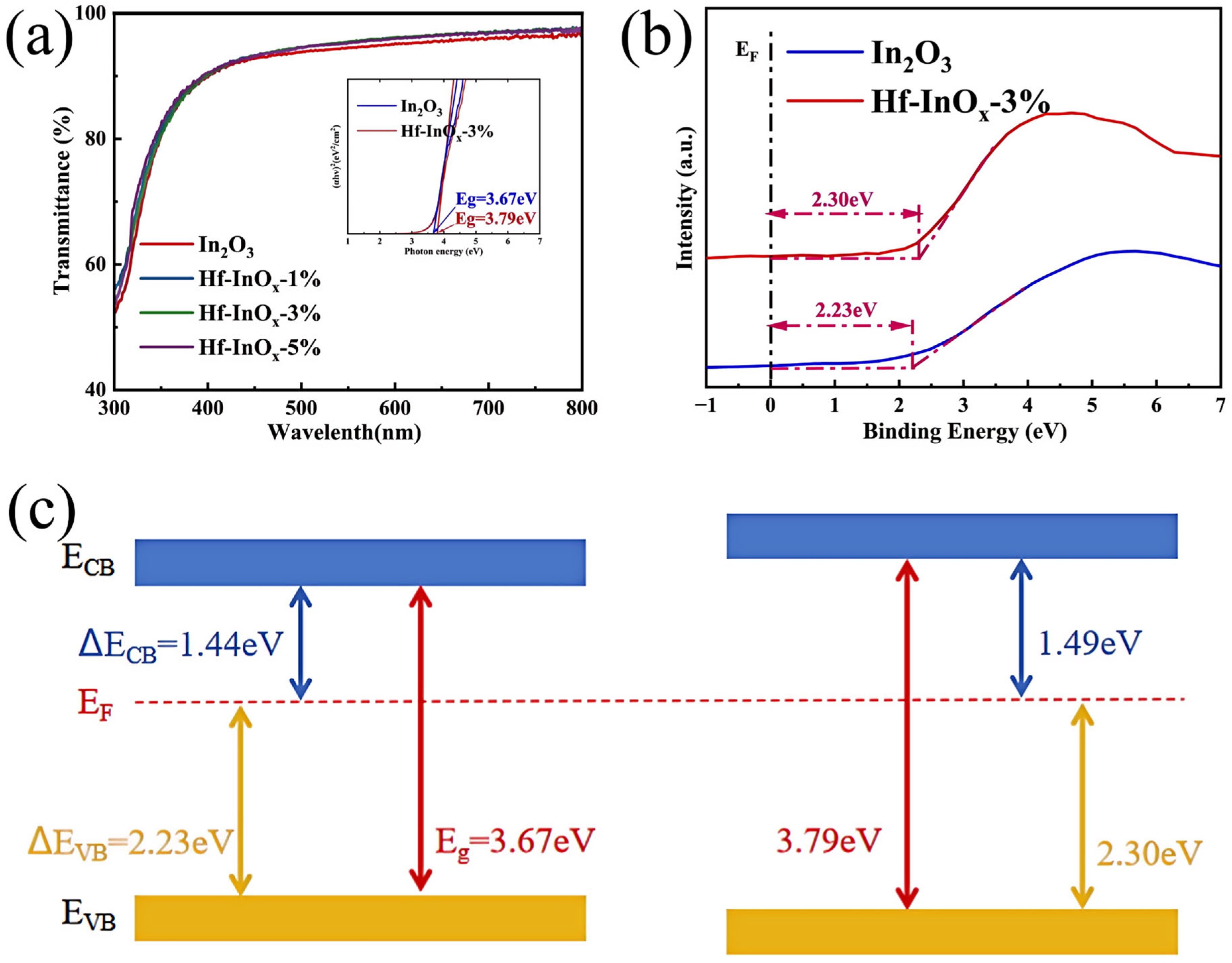
Figure 10a shows the optical property profile of the Hf-InOx thin-film sample. As one of the indicators of the performance of transparent devices, transmittance is also a very important parameter. As shown in the figure, we can see that the transmittance of Hf-InOx thin films with different Hf doping concentration is above 85% in the visible range, which indicates that it has great potential for the preparation of transparent electronic devices. The data from the transmission spectra were fitted to the standard Tauc plot equation:
α h v 2 = A ( h v E g ) 1 / 2
to study the changes of Hf doping on the thin-film band gap (Eg), valence band energy level (EV), conduction band energy level (EC) and energy band structure, where α is the absorbance exponent, h and ν are the Planck’s constant and frequency, respectively, and A is a constant. The inset shows the optical band gap (Eg) patterns of pure In2O3 film and Hf-InOx film at 3% doping. We can see that the Eg of the pure In2O3 film is 3.67 eV, while the Eg of the Hf-InOx film increases to 3.79 eV after Hf doping, mainly because the binding energy of Hf-O is larger than the binding energy of In-O. Typically, a dopant with a higher valence than the host ion that occupies the lattice sites replaces the host ion and donates free charge carries. This results in the Moss–Burstein shift, increasing the optical bandgap [38]. By doping of Hf, the oxygen vacancy defects are eliminated and the band gap increases. And the band gap of hafnium oxide is larger than that of indium oxide. Therefore, the doping of Hf results in a larger optical band gap of the film, and the increase in the band gap can reduce the electron carrier concentration by increasing the donor binding energy [39]. Figure 10b shows the valence band spectra of undoped In2O3 film and Hf-InOx-3% film measured by XPS. The valence band of the undoped In2O3 film is calculated to be 2.23 eV, and the valence band of the film with 3% Hf doping is 2.30 eV. The valence band of the film is enlarged by the doping of Hf. Based on the optical band gap, as well as the valence band, we estimated the conduction band energy level (EC) and Fermi energy level (EF). The conduction band offset can be obtained from ∆ECB= Eg − EVB. The ∆ECB of undoped In2O3 film and Hf-InOx-3% film are 1.44 eV and 1.49 eV, respectively. The energy band structures of undoped In2O3 and Hf-InOx-3% films are shown in Figure 10c. According to the theory of semiconductor physics, we can calculate the corresponding carrier concentrations from ∆ECB:
N e = N c e xp ( Δ E CB / KT )
where NC is the effective density of states in ECB. From the formula, the carrier concentration decreases with the doping of Hf. According to the previous electrical analysis, the film is an n-type oxide semiconductor, and in the n-type oxide semiconductor, electrons are generated mainly from the oxygen vacancies of the film, and the mode of transport of electrons in it is mainly dominated by osmotic conduction. Hf is a kind of carrier inhibitor, and its doping can make the carrier concentration decrease. The carrier concentration is related to the carrier mobility, in line with the previous analysis of the carrier mobility, but also explains why the doping of Hf can make the VTH shift to the positive direction.

4. Conclusions

In this paper, we have prepared Hf-doped In2O3-based thin-film transistors by using a simple and low-cost sol-gel method. XRD analysis shows that Hf doping can reduce the crystallinity and increase the crystallisation temperature of In2O3 films, and SEM analysis shows that the surface of the films is smooth and uniform without obvious cracks or defects such as voids, which is an important factor in the preparation of high-quality TFT devices. The XPS characterisation shows that by Hf doping, the defects, such as oxygen vacancies, can be reduced and the content of metal-oxygen bonds can be increased. Optical characterisation shows that Hf-InOx films have a high optical transmittance in the visible range. This is the basis for the preparation of transparent electronic devices in the future. Through the electrical test analysis, we can find that the electrical performance of the device can be improved by certain Hf doping. When the Hf doping concentration is 3%, the optimum performance of the device is achieved with μ = 11.69 cm2/Vs, VTH = 1.68 V, SS = 0.68 V/dec, and Ion/Ioff = 107. Therefore, Hf-InOx thin films prepared by the sol-gel method while doped with Hf as a carrier suppressor is a low-cost, high-performance and promising active layer material for a wide range of applications.

Author Contributions

Conceptualisation, H.Y.; methodology, H.Y.; software, H.Y.; validation, H.Y.; formal analysis, H.Y.; investigation, H.Y.; resources, H.Y.; data curation, H.Y.; writing—original draft preparation, H.Y.; writing—review and editing, H.Y.; visualisation, H.Y.; supervision, H.Y. and K.T.; project administration, H.Y.; funding acquisition, H.Y. All authors have read and agreed to the published version of the manuscript.

Funding

This research was supported by the National Natural Science Foundation of China (Grant No. 62141402).

Institutional Review Board Statement

Not applicable.

Informed Consent Statement

Not applicable.

Data Availability Statement

The data presented in this study are available on request from the corresponding author. The data are not publicly available due to the experimental data involves ongoing unpublished follow-up research.

Conflicts of Interest

The authors declare no conflicts of interest. The funders had no role in the design of the study; in the collection, analyses, or interpretation of data; in the writing of the manuscript; or in the decision to publish the results.

References

  1. Palomares-Sanchez, S.A.; Watts, B.E.; Klimm, D.; Baraldi, A.; Parisini, A.; Vantaggio, S.; Fornari, R. Sol-gel growth and characterization of In2O3 thin films. Thin Solid Film. 2018, 645, 383–390. [Google Scholar] [CrossRef]
  2. Liu, L.; Lv, T.; Liu, J.; Cheng, Q.; Wang, X. Research on the Preparation Process and Performance of Amorphous Indium Gallium Zinc Oxide Thin Film Transistors. Phys. Eng. 2024, 34, 178–185. [Google Scholar] [CrossRef]
  3. Cho, S.W.; Kim, Y.B.; Kim, K.S.; Yoon, D.H.; Jung, S.H.; Kang, W.J.; Cho, H.K. Electrical and chemical stability engineering of solution-processed indium zinc oxide thin film transistors via a synergistic approach of annealing duration and self-combustion process. Ceram. Int. 2017, 43, 8956–8962. [Google Scholar]
  4. Zhang, L. The effect of post-metal annealing on the electrical performance and stability of two step-annealed solution-processed In2O3 thin film transistors. Curr. Appl. Phys. 2021, 23, 19–25. [Google Scholar] [CrossRef]
  5. Yang, B. Preparation and Stability Study of Indium Oxide Based Thin Film Transistors. Bachelor’s Thesis, Shanghai University, Shanghai, China, 2023. [Google Scholar] [CrossRef]
  6. Sun, H. Preparation and Optoelectronic Properties of Indium Oxide Based Thin Films. Bachelor’s Thesis, Shenyang University of Technology, Shenyang, China, 2023. Available online: https://cdmd.cnki.com.cn/Article/CDMD-10144-1023702039.htm (accessed on 24 January 2025).
  7. Wang, J. Preparation and Modification of Indium Oxide Thin Film Transistors. Bachelor’s Thesis, Qingdao University, Qingdao, China, 2021. [Google Scholar] [CrossRef]
  8. Jeng, J.S. Improvement of transistor characteristics and stability for solution-processed ultra-thin high-valence niobium doped zinc-tin oxide thin film transistors. J. Alloys Compd. 2016, 676, 86–90. [Google Scholar] [CrossRef]
  9. Zhu, D.; Jiang, Z.; Zhang, W.; Yin, D.; Xu, W.; Han, S.; Fang, M.; Liu, W.; Cao, P.; Lu, Y. Room-temperature fabrication of high-performance H doped ZnO thin-film transistors. Mater. Chem. Phys. 2021, 261, 124248. [Google Scholar] [CrossRef]
  10. Lee, E.G.; Gong, Y.J.; Lee, S.-E.; Na, H.-J.; Im, C.; Kim, H.; Kim, Y.S. Conductive polymer-assisted metal oxide hybrid semiconductors for high-performance thin-film transistors. ACS Appl. Mater. Interfaces 2021, 13, 8552. [Google Scholar] [CrossRef]
  11. Aparna, C.; Shetty, P.K.; Mahesha, M.G.; Yashodhara, I.; Karunakara, N. Sensitivity estimation of indium oxide thin film for gamma sensing. J. Mater. Sci. 2023, 58, 11374. [Google Scholar] [CrossRef]
  12. Choi, Y.; Kim, G.H.; Jeong, W.H.; Bae, J.H.; Kim, H.J.; Hong, J.-M.; Yu, J.-W. Carrier-suppressing effect of scandium in InZnO systems for solution-processed thin film transistors. Appl. Phys. Lett. 2010, 97, 162102. [Google Scholar] [CrossRef]
  13. Ting, C.C.; Fan, H.Y.; Tsai, M.K.; Li, W.Y.; Yong, H.E.; Lin, Y.F. Improvement of electrical characteristics in the solution-processed nanocrystalline indium oxide thin-film transistors depending on yttrium doping concentration. Phys. Status Solidi A 2013, 211, 800–810. [Google Scholar] [CrossRef]
  14. Cai, Z.; Tuokedaerhan, K.; Yang, L.; Huang, Z.; Guo, C.; Azamat, R.; Sagidolda, Y. Effect of annealing temperature on the electrical properties of IZO TFTs. RSC Adv. 2025, 15, 16445–16454. [Google Scholar] [CrossRef]
  15. Du, H.; Tuokedaerhan, K.; Zhang, R. Electrical performance of La-doped In2O3 thin-film transistors prepared using a solution method for low-voltage driving. RSC Adv. 2024, 14, 15483–15490. [Google Scholar] [CrossRef]
  16. Lin, Z.; Lan, L.; Xiao, P.; Sun, S.; Li, Y.; Song, W.; Gao, P.; Song, E.; Zhang, P.; Wang, L.; et al. Effects of Rare-Earth Element Dopants in High-Mobility InOX-Based Thin-Film Transistors. IEEE Electron Device Lett. 2016, 37, 1139–1142. [Google Scholar] [CrossRef]
  17. Deng, Z.; Liang, Z.; Yang, Y.; Ye, Q.; Ning, H.; Liu, X.; Li, Z.; Luo, D.; Yao, R.; Peng, J. Heterojunction channel engineering for enhanced mobility and stability of solution-processed holmium-doped indium oxide thin film transistors. Mater. Sci. Semicond. Process. 2024, 184, 108776. [Google Scholar] [CrossRef]
  18. Song, W.; Lan, L.; Xiao, P.; Lin, Z.; Sun, S.; Li, Y.; Song, E.; Gao, P.; Zhang, P.; Wu, W.; et al. High-Mobility and Good-Stability Thin-Film Transistors with Scandium-Substituted Indium Oxide Semiconductors. IEEE Trans. Electron Devices 2016, 63, 4315–4319. [Google Scholar] [CrossRef]
  19. Li, Y. Preparation and Performance Study of In2O3 Based Thin Film Transistors by Solution Spin Coating. Bachelor’s Thesis, Yunnan University, Kunming, China, 2020. [Google Scholar] [CrossRef]
  20. Zhao, M. Development and Application of Calcium doped Indium Oxide Thin Film Transistor Based on Solution Method. Bachelor’s Thesis, Xi’an University of Electronic Science and Technology, Xi’an, China, 2021. [Google Scholar] [CrossRef]
  21. Xu, Y.H.; Zhang, Z.L.; Huang, C.Y.; Zhu, J.; Zhao, Y.; Shan, F. Al2O3 Passivation Engineering for Defect Blockade and Environmental Stability Enhancement in Solution-Processed In2O3 TFT. ECS J. Solid State Sci. Technol. 2025, 14, 085002. [Google Scholar] [CrossRef]
  22. Feng, J.; Choi, J.H.; Zhang, X.; Park, J.; Bae, J.H. Effects of iodine doping on structural and electrical characteristics of solution-processed indium oxide thin-film transistors and its potential application for iodine sensing. J. Korean Phys. Soc. 2024, 85, 66–75. [Google Scholar] [CrossRef]
  23. Na, J.H.; Park, J.H.; Park, W.; Feng, J.; Eun, J.S.; Lee, J.; Lee, S.H.; Jang, J.; Kang, I.M.; Kim, D.K.; et al. Dependence of Positive Bias Stress Instability on Threshold Voltage and Its Origin in Solution-Processed Aluminum-Doped Indium Oxide Thin-Film Transistors. Nanomaterials 2024, 14, 466. [Google Scholar] [CrossRef]
  24. Xu, W.; Peng, T.; Zhuo, S.; Lin, Q.; Huang, W.; Li, Y.; Xu, F.; Zhao, C.; Zhu, D. Aqueous Solution-Grown Crystalline Phosphorus Doped Indium Oxide for Thin-Film Transistors Applications. Int. J. Mol. Sci. 2022, 23, 12912. [Google Scholar] [CrossRef]
  25. Zhu, J.; Hu, S.; Chen, B.; Wei, S.; Zhang, Y.; Wu, X.; Zou, X.; Lu, X.; Sun, Q.; Zhang, D.W.; et al. Realization of tunable-performance in atomic layer deposited Hf-doped In2O3 thin film transistor via oxygen vacancy modulation. J. Chem. Phys. 2024, 160, 044706. [Google Scholar] [CrossRef]
  26. Yahia, A.; Attaf, A.; Saidi, H.; Dahnoun, M.; Khelifi, C.; Bouhdjer, A.; Saadi, A.; Ezzaouia, H. Structural, optical, morphological and electrical properties ofindium oxide thin films prepared by sol gel spin coating process. Surf. Interfaces 2019, 14, 158–165. [Google Scholar] [CrossRef]
  27. Zhu, L.; He, G.; Li, W.; Yang, B.; Fortunato, E.; Martins, R. Nontoxic, eco-friendly fully water-induced ternary Zr-Gd-O dielectric for high-performance transistors and unipolar inverters. Adv. Electron. Mater. 2018, 4, 1800100. [Google Scholar] [CrossRef]
  28. Wu, X.; He, G.; Wang, W.; Wang, L.; Xu, X.; Gao, Q.; Liu, Y.; Jiang, S. Electrical Performance Enhancement and Low-Frequency Noise Estimation of In2O3-Based Thin Film Transistor Based on Doping Engineering. IEEE Trans. Electron Devices 2023, 70, 105–112. [Google Scholar] [CrossRef]
  29. Yang, J.; Zhang, Y.; Qin, C.; Ding, X.; Zhang, J. Enhanced stability in Zr-doped ZnO TFTs with minor influence on mobility byatomic layer deposition. IEEE Trans. Electron Devices 2019, 66, 1760–1765. [Google Scholar] [CrossRef]
  30. Kim, T.; Jang, B.; Bae, J.-H.; Park, H.; Cho, C.S.; Kwon, H.-J.; Jang, J. Improvement in the performance of sol-gel processed In2O3 thin-film transistor depending on Sb dopant concentration. IEEE Electron Device Lett. 2017, 38, 1027. [Google Scholar] [CrossRef]
  31. Do, J.C.; Kim, H.B.; Ahn, C.H.; Cho, H.K.; Lee, H.S. Effect of annealing temperature on the electrical characteristics of Ti–Zn–Sn–O thin-film transistors fabricated via a solution process. J. Mater. Res. 2012, 27, 2293–2298. [Google Scholar] [CrossRef]
  32. Cai, W.; Li, M.; Li, H.; Qian, Q.; Zang, Z. Significant performance and stability improvement of low-voltage InZnO thin-film transistors by slight La doping. Appl. Phys. Lett. 2022, 121, 062108-1–062108-7. [Google Scholar] [CrossRef]
  33. Ding, Y.; Fan, C.; Fu, C.; Meng, Y.; Liu, G.; Shan, F. High-Performance Indium Oxide Thin-Film Transistors with Aluminum Oxide Passivation. IEEE Electron Device Lett. 2019, 40, 1949–1952. [Google Scholar] [CrossRef]
  34. Zhao, C.Y.; Li, J.; Zhong, D.Y.; Huang, C.X.; Zhang, J.H.; Li, X.F.; Jiang, X.Y.; Zhang, Z.L. Effect of La addition on the electrical characteristics and stability of solution-processed LaInO thin-film transistors with high-k ZrO2 gate insulator. IEEE Trans. Electron Devices 2018, 65, 526–532. [Google Scholar] [CrossRef]
  35. Li, Y.; Zhu, D.; Xu, W.; Han, S.; Fang, M.; Liu, W.; Cao, P.; Lu, Y. High-mobility nanometer-thick crystalline In-Sm-O thin-film transistors via aqueous solution processing. J. Mater. Chem. C 2020, 8, 310–318. [Google Scholar] [CrossRef]
  36. Lee, S.H.; Kim, T.; Lee, J.; Avis, C.; Jang, J. Solution-processed gadolinium doped indium-oxide thin-film transistors with oxide passivation. Appl. Phys. Lett. 2017, 110, 122102. [Google Scholar] [CrossRef]
  37. Wang, Z.; Zhao, T.; Li, J.; Zhang, J. Solution-processed high performance ytterbium-doped In2O3thin film transistor andits application in common-source amplifier. IEEE Trans. Electron Devices 2023, 70, 1073–1078. [Google Scholar] [CrossRef]
  38. Kaleemulla, S.; Madhusudhana Rao, N.; Girish Joshi, M.; Sivasankar Reddy, A.; Uthanna, S.; Sreedhara Reddy, P. Electrical andoptical properties of In2O3:Mo thin films prepared at various Mo-doping levels. J. Alloys Compd. 2010, 504, 351–356. [Google Scholar] [CrossRef]
  39. Yeom, H.I.; Ko, J.B.; Mun, G.; Park, S.H.K. High mobility polycrystalline indium oxide thin-film transistors by means of plasma-enhanced atomic layer deposition. J. Mater. Chem. C 2016, 4, 6873–6880. [Google Scholar] [CrossRef]
Figure 1. Schematic of solution synthesis and Schematic structure of Hf-InOx TFTs.
Applsci 16 04658 g001
Figure 2. XRD patterns of In2O3 TFTs with different Hf doping concentrations.
Applsci 16 04658 g002
Figure 3. SEM of Hf-InOx films: (a) 0 mol%; (b) 1 mol%; (c) 3 mol%; (d) 5 mol% The illustration is a cross-sectional view.
Applsci 16 04658 g003
Figure 4. EDS elemental mapping of Hf-InOx-3% films.
Applsci 16 04658 g004
Figure 5. AFM images of Hf-InOx thin films with different doping ratios: (a) 0 mol%; (b) 1 mol%; (c) 3 mol%; (d) 5 mol%.
Applsci 16 04658 g005
Figure 6. XPS full spectrum of Hf-InOx film.
Applsci 16 04658 g006
Figure 7. XPS images of Hf-InOx thin films O1s with different Hf doping ratios: (a) 0%; (b) 1%; (c) 3%; (d) 5%.
Applsci 16 04658 g007
Figure 8. XPS images of (a) In3d for Hf-InOx films with different Hf doping ratios (b) XPS pattern of Hf4f (c) XPS pattern of Hf4f for 5% Hf doped Hf-InOx films.
Applsci 16 04658 g008
Figure 9. (a) Transfer characteristic curves of Hf-InOx TFTs with different Hf doping ratios (VDS = 1V): (b) Electrical performance parameters of Hf-InOx TFTs with different Hf doping ratios; (c) Output characteristic curves of undoped In2O3 TFTs; and (d) Output characteristic curves of Hf-InOx TFTs doped with a concentration of 3%.
Applsci 16 04658 g009
Figure 10. (a) Optical properties of Hf-InOx films with different Hf doping ratios; the inset shows the optical band gaps of undoped In2O3 and Hf-InOx-3% films; (b) valence band maps of undoped In2O3 and Hf-InOx-3% films; (c) energy band structures of undoped In2O3 and Hf-InOx-3% films.
Applsci 16 04658 g010
Table 1. The characteristics of some metal oxides.
ChannelAnnealing Temperature (°C)DielectricMobility (cm2V−1s−1)Ion/IoffRef.
InSnO400 °CSiO27.3 cm2/Vs106[1]
InGaZnO450 °CZrO226.5 cm2/Vs107[2]
InZnO500 °CSiO29.1 cm2/Vs107[3]
Table 2. Electrical performance parameters of Hf-InOx TFTs with different Hf doping contents.
Hf-Doping (%)0%1%3%5%
μ (cm2/Vs)26.6913.4911.696.61
VTH (V)1.231.591.682.71
SS (V/dec)2.810.730.680.50
Ion/Ioff4.5 × 1051.3 × 1061.7 × 1073.8 × 106
Dit (cm−2/eV)3.0 × 10137.3 × 10126.7 × 10124.8 × 1012
Table 3. Summary of literature on In2O3 based TFTs prepared by sol-gel method.
ChannelAnnealing Temperature (°C)DielectricMobility (cm2/Vs)Ion/IoffRef.
In-Ca-O300SiO22.07106[15]
In-La-O500ZrO232.7105[34]
In-Sm-O350SiO221.51108[35]
In-Gd-O400Y2O39.74106[36]
In-Yb-O400Al2O313.32107[37]
In-Hf-O290SiO211.69107This work
Disclaimer/Publisher’s Note: The statements, opinions and data contained in all publications are solely those of the individual author(s) and contributor(s) and not of MDPI and/or the editor(s). MDPI and/or the editor(s) disclaim responsibility for any injury to people or property resulting from any ideas, methods, instructions or products referred to in the content.