Article

Development of a Korean-Specific Safety Checklist for Fishing Vessel Based on European Standards and Human and System Analysis Methods (SRK/SLMV, CREAM, STPA)


1
Department of Mechanical and Industrial Engineering, Norwegian University of Science and Technology, 7034 Trondheim, Norway
2
Department of Fishing Vessel Safety Research, Korea Maritime Transportation Safety Authority, Sejong-si 30100, Republic of Korea
*
Author to whom correspondence should be addressed.
Appl. Sci. 2026, 16(1), 86; https://doi.org/10.3390/app16010086 (registering DOI)
Submission received: 11 November 2025 / Revised: 11 December 2025 / Accepted: 19 December 2025 / Published: 21 December 2025
(This article belongs to the Special Issue Risk and Safety of Maritime Transportation)

Abstract

This study presents the development of a Korean-specific safety checklist for fishing vessels under 10 tons, aiming to strengthen self-safety management in small-scale fisheries. The research first reviewed representative European self-inspection systems and checklists from Norway, Denmark, the United Kingdom, and Ireland, which have established integrated safety management schemes combining self-managed risk assessment with periodic inspection. Following on these systems, three human and system analysis methods were employed: SRK/SLMV for identifying human error types and operational error mechanisms, CREAM for evaluating cognitive performance conditions and failure probabilities, and STPA for analyzing control-loop deficiencies and unsafe interactions within the system. Based on these analyses, a Korean-specific safety checklist was developed and structured into three components: Pre-operation, Post-operation, and Periodic Inspection. Each part was designed to reflect the actual operational characteristics of coastal fishing vessels while maintaining consistency with domestic regulatory requirements. The resulting checklist integrates human, technical, and organizational dimensions, providing a structured tool for evaluating risks and supporting self-assessment-based safety management in daily fishing operations.

1. Introduction

The fishing industry, though employing only a small fraction of the global labor force, consistently records one of the highest occupational fatality rates worldwide (Obeng et al., 2024 [1]). Owing to this characteristic, the International Maritime Organization (IMO) has established various conventions and regulations to enhance fishing vessel safety. The 2012 Cape Town Agreement, in particular, strengthened the standards for the design, construction, and inspection of fishing vessels 24 m or longer. However, as the vast majority of fishing vessels worldwide are smaller than 12 m, significant safety blind spots still remain in practice.
Recent academic trends show that research on fishing vessel safety has gradually expanded toward multidimensional and integrated approaches. In particular, Wang et al. (2023) [2] employed a data-driven framework that combined a Random Forest (RF) algorithm for feature selection with a Bayesian Network (BN) model using fishing vessel insurance-claim data, showing that accident severity is governed by the combined effects of season, accident type, human factors, fishing method, vessel age, gross tonnage, and wind speed. Complementing these findings from a broader perspective, Cao et al. (2023) [3] categorized the key contributing factors of marine accidents into human, ship, environmental, managerial, and accident-related factors, and identified human error and inadequate management systems as the most critical causes. These studies highlight that fishing vessel accidents arise from complex interactions among meteorological and sea-state conditions, human error, mechanical failures and operational or design deficiencies, rather than from a single cause. Consequently, there is an increasing need to move beyond traditional, factor-specific statistical analyses and to develop integrated, data-driven risk-assessment and predictive-modeling approaches. However, most previous studies remain limited to human-error or statistical classifications and are not readily applicable to daily vessel operations. Considering that fishing vessel safety management still depends largely on the empirical judgment and routine checks, there is a pressing need for a standardized, practical, and user-oriented checklist system that allows operators to directly assess and record potential hazards.
The checklist-based safety management system has evolved over decades. Caddy (1996) [4] proposed a checklist and scoring framework derived from the FAO Code of Conduct for Responsible Fisheries to quantitatively evaluate the accountability and sustainability of fisheries management, which later served as a foundation for international standard evaluation schemes. Piniella and Fernández-Engo (2009) [5] introduced one of the structured Safety Management Systems (SMS) for small fishing vessels, applying a five-level risk-ranking scheme (Trivial–Intolerable) based on probability–consequence combinations, thereby demonstrating the usefulness of a self-inspection (self-check) system. Lambert et al. (2015) [6], through National Oceanic and Atmospheric Administration (NOAA) technical guidelines proposed a data-driven risk-assessment procedure and safety-inspection checklist aimed at incorporating safety management into fisheries-design practices. These international developments have subsequently led to legal institutionalization and the expansion of voluntary risk-management frameworks. In Norway, Koo et al. (2024) [7] analyzed Norway’s fishing vessel safety legislation and risk-assessment practices, emphasizing a participatory safety culture supported by regular inspections, training, and crew involvement. The Norwegian Maritime Authority developed a digital tool, Verktøy for Risikovurdering, enabling fishers to identify and manage onboard risks through task-specific checklists. Recent field evidence also suggests that mobile applications can be a practical medium for checklist-based safety tools in commercial fishing. Bulzacchelli et al. (2023) [8] field-tested two iOS-based safety apps with commercial fishing captains and found that most users of the checklist-based FvDrills app rated it as very or extremely useful and easy to use, indicating a clear willingness to adopt smartphone-based safety tools. While the system reflects IMO and EU guidance, particularly the EU-OSHA (2017) [9] European guide for risk prevention in small fishing vessels, which provides practical risk-assessment procedures for small-scale operations, it is tailored to Norway’s regulatory framework under the Ship Safety and Security Act. As a result of these comprehensive measures, the country’s fishing-related fatality rate has declined to about 5–6 cases annually over the past decade.
While checklist-based safety management systems have become institutionalized in many countries, recent efforts have sought to integrate these systems with quantitative risk assessment and data-driven decision-making. The focus has shifted from simple inspection lists toward frameworks that quantify the likelihood and severity of potential hazards. Hollá et al. (2024) [10] proposed the KatAlSa model for small- and medium-sized enterprises, introducing a 5 × 5 matrix-based quantitative evaluation system that combines probability, consequence, and impact through the use of checklists. By enabling the visualization and tracking of risk levels, the model demonstrates potential applicability to the fisheries sector as a dashboard-based self-assessment and risk-management tool.
As part of this global evolution, the present study aims to develop a Korean-specific fishing vessel safety checklist that integrates international risk-assessment frameworks with the characteristics of domestic fishing vessel accidents. In South Korea, fishing vessel accidents remain concentrated among small coastal vessels, with most fatalities and missing-person cases between 2018 and 2022 occurring on vessels smaller than 5 tons (Kim et al., 2024) [11]. Recent national studies (Kim et al., 2024 [11]; Lee et al., 2024 [12]) indicate that approximately 70% of such accidents stem from human error. The main contributing factors are vessel aging, inadequate weather response, insufficient safety equipment and the absence of regular inspections. These findings underscore the necessity for empirical risk-assessment tools and autonomous self-check systems that can be directly utilized by field operators, alongside legal and institutional reinforcement.
Therefore, this study develops a safety checklist for Korean fishing vessel operations by combining European checklist models based on international safety standards. Human and system analysis methods for human reliability, cognitive performance and system-theoretical aspects are used to support this development. This process involved a comprehensive review of representative European checklists to identify essential components applicable to the Korean fishing industry and address areas inadequately addressed in existing domestic practices. The checklist was then refined by sequentially applying the SRK (Skill–Rule–Knowledge) & SLMV (Slip-Lapse-Mistake-Violation) model, CREAM (Cognitive Reliability and Error Analysis Method), and STPA (System-Theoretic Process Analysis) to identify potential hazards, human error patterns, and system-level control deficiencies. These analytical findings were integrated into the checklist to reflect the realistic operational situations of Korean coastal fishing vessels. In this study, the SRK/SLMV-based accident classification by Kim et al. (2024) [11] is used to link frequent human-error scenarios to specific checklist items. The CREAM analysis by Lee et al. (2024) [12] informs the selection of human error factors and the assignment of inspection frequencies and qualitative risk levels. STPA is applied to identify unsafe control actions and feedback paths in Korean fishing-vessel operations. In this way, the resulting checklist combines previous human-error findings with a system-level view of safety control.

2. Methodology

This study tried to develop a Korean-specific fishing vessel safety checklist by reviewing European checklist models and applying human reliability analysis in parallel with system-theoretic analysis. Through this integrated approach, the study aimed to integrate internationally established inspection procedures with the operational characteristics of Korean fishing vessels, while simultaneously accounting for both human cognitive errors and system-level control deficiencies in the design of a comprehensive safety management checklist.
Figure 1 presents the conceptual flow of the overall research process. The study began with the collection and organization of input data, followed by analytical procedures to identify human errors and system vulnerabilities. The analysis yielded intermediate outcomes that were further refined into final results, which were subsequently incorporated into the checklist design to reflect Korean regulatory standards and operational practices. The first step involved a comparative analysis of fishing vessel safety regulations and checklist systems in major European countries. Four representative nations (Norway, Denmark, the United Kingdom, and Ireland) were selected due to their well-established safety management systems for small fishing vessels. The legal and institutional foundations of each country, along with their operational safety procedures, were examined to identify the key regulatory mechanisms and the representative self-assessment checklists used in practice. European checklists commonly include items related to preparation, inspection, and risk awareness. Their purpose extends beyond technical verification to foster practical, risk-oriented safety management.
As part of the human and system analysis methods, the study aimed to analyze human errors based on actual Korean fishing vessel accident cases. Specifically, accident rulings and investigation reports from the Korea Maritime Safety Tribunal (KMST) were reviewed to identify direct and latent causal factors and to extract recurring risk patterns. Using this data, the SRK/SLMV model was applied to classify human errors according to cognitive level and behavioral type, thereby illustrating accident pathways and behavioral patterns. In parallel, previous research on maritime human factors was reviewed to categorize cognitive and behavioral errors specific to fishing operations, which were then linked with field survey data on real operational conditions. Based on this, the CREAM method was applied to quantify Performance Influencing Factors (PIFs) such as fatigue, teamwork quality, time pressure, and environmental conditions. Using these variables, the Cognitive Failure Probability (CFP) and Performance Influence Index (PII) were calculated to assess the likelihood of human error. Finally, drawing on both domestic and international accident cases, the STPA was conducted to analyze structural and feedback deficiencies within vessel control systems, identifying Unsafe Control Actions (UCAs), Risk-Control Measures, and Loss Scenarios. The analytical results were then integrated in the final stage. Based on European checklist structures, elements suitable for domestic application were identified, and the SRK/SLMV results were used to derive safety policy recommendations for improving operational responses to accidents. Quantitative findings from the CREAM analysis were used to highlight critical human behaviors and incorporate them into checklist items, while the STPA results informed the development of differentiated checklists tailored to specific operational phases (before departure, after return, and during emergency or accident situations). During this process, relevant Korean regulations and institutional standards were also reviewed to ensure consistency with domestic practices.
In conclusion, the study combined independent yet complementary approaches to develop a practical and evidence-based safety management checklist. By integrating international standards with the operational realities of Korean fishing vessels, the proposed checklist not only satisfies regulatory requirements but also serves as a user-oriented self-inspection tool that can be effectively applied in daily fishing operations.

3. Review and Characteristics

This section reviews representative European safety checklists, relevant Korean regulations, and the results of the SRK/SLMV-based accident analysis, the modified CREAM approach, and STPA. It summarizes the main findings and characteristics that guided the design of the proposed Korean-specific checklist.

3.1. Review of European Checklists

This subsection reviews representative European safety checklists, examining the distinctive features of each national system and identifying elements that are relevant to the development of a checklist suited to Korean fishing vessel operations.

3.1.1. Norway

Norway, enriched with abundant marine resources, is recognized as one of the world’s leading fishing nations and has established an institutional management system for fishing-vessel safety and sustainable fisheries at an early stage. Norwegian fishing vessels are subject to the laws and regulations enacted by the Norwegian Maritime Authority (NMA), which has continuously strengthened its safety standards through international cooperation and the implementation of IMO conventions since 1977. The enactment of the Ship Safety and Security Act in 2007 established the legal foundation for a systematic safety management regime for fishing vessels. In 2017, the NMA introduced the Regulation on Safety Management for Small Vessels under 500 Gross Tons, extending inspection requirements to smaller vessels. Under this regulation, vessels 15 m and above are inspected directly by the NMA, while those below 15 m are examined by authorized companies. Although only vessels of 500 gross tons and above are formally required to comply with the International Safety Management (ISM) Code, the NMA provides a simplified safety management system (SMS) for smaller vessels to promote voluntary and structured safety practices (Koo et al., 2024 [7]).
Based on this regulatory foundation, several practical manuals and checklists have been developed in Norway to support the implementation of fishing-vessel safety management in everyday operations. First, the KS-1150B Fartøysertifikat—Obligatorisk kontrollskjema for fiske- og fangstfartøy issued by the NMA serves as a statutorily required inspection checklist for verifying a vessel’s compliance with minimum technical and regulatory safety standards (NMA, 2016 [13]). This checklist covers structural integrity, onboard equipment, firefighting and lifesaving appliances, navigation systems, and emergency response arrangements. It functions as a foundational regulatory instrument that ensures the legal safety prerequisites required for the effective operation of any safety management system and provides the basis for all subsequent self-management activities. In second, the Sikkerhetsstyring på mindre fartøy (NMA, 2017 [14]) expands this regulatory foundation into a systematic and procedural guideline for small-vessel safety management. The document defines standardized procedures for identifying and evaluating operational hazards and for incorporating the assessment results into preventive actions and management processes. In particular, it includes standardized checklists and risk assessment templates covering emergency preparedness, maintenance routines, working conditions, and crew familiarization, thereby enabling vessel operators to independently assess and manage safety-related risks.
Finally, the Sikkerhetsstyringssystem: mal med veiledning (Stormo, 2011 [15]) provides a practical onboard manual that operationalizes the higher-level regulatory framework into a format applicable to field practice. It is specifically designed to support the implementation of self-regulated safety management on small vessels (under 500 gross tons and carrying fewer than 100 passengers). As shown in Table 1, the appendix of this document includes the Sjekkliste sikkerhets familiarisering (Safety Familiarization Checklist), which prescribes mandatory onboard safety training for new or replacement crew members, focusing on emergency response, equipment handling, and operational procedures. As such, manual of Stormo (2011) [15] functions as a practical and self-regulatory stage in which safety culture is internalized through voluntary participation and everyday practice by fishers, rather than through legal or administrative enforcement.

3.1.2. Denmark

Building on its long maritime tradition and the economic importance of fisheries, Denmark has developed a practical and well-structured safety management system for fishing vessels. The Danish Maritime Authority (DMA), which oversees maritime safety at the national level, provides the legal and operational foundation for vessel safety through technical regulations, executive orders, and detailed manuals. Denmark follows a systematic approach that integrates Safety Instructions, Self-Monitoring Inspections, and Technical Regulations.
Under the Guidelines for Drawing up Safety Instructions (DMA, 2020 [16]), shipowners must prepare written safety instructions for each type of navigational activity. These documents identify voyage-specific risks, outline preventive and technical measures, and ensure that crew members and passengers are properly trained and briefed. The Safety Instructions for Voyages with Small Vessels (DMA, 2012 [17]) further standardize this process through a twelve-section template covering vessel identification, navigation activities, risk identification, countermeasures, crew competence, rescue arrangements, and post-incident follow-up. For fishing vessels below 15 m, the DMA also requires an annual self-monitoring inspection based on the Checklist for Annual Self-Monitoring of Fishing Vessels below 15 m and its accompanying guideline (DMA, 2016 [18]). These specify 51 inspection items addressing life-saving appliances, navigation and radio equipment, watertight closures, fire-extinguishing systems, steering gear, and dual starting systems for main engines. The guideline describes the procedures in detail, including verifying liferaft hydrostatic releases, testing quick-closing fuel valves, and checking the condition of propeller shafts and rudder stocks. When a vessel undergoes major modification or machinery replacement, the captain must review the stability documentation to ensure seaworthiness. In addition, under the Technical Regulation on the Conduction of Surveys and Internal Inspections (DMA, 2004 [19]), the captain is required to submit the completed checklist, declaration form, and safety-instruction document to the DMA each year. Compliance with these self-monitoring obligations may exempt the vessel from certain external surveys. Overall, the Danish system represents a balanced approach that combines regulatory oversight with operational autonomy: while the DMA defines inspection criteria and procedures, the practical responsibility for implementation rests with the vessel captain.
As a supplementary reference, this study also reviewed the Tjekliste før afgang fra havn (Pre-departure checklist for fishing vessels between 7 and 15 m), developed by the Fiskeriets Arbejdsmiljøråd (Danish Fishermen’s Occupational Safety Council) in collaboration with the DMA (FA, 2015 [20]). Unlike other Danish checklists that are legally mandated, this form is a voluntary, operator-oriented tool intended for immediate on-board verification before departure. Because the present study aims to design a concise and practical checklist structure focusing on pre- and post-departure inspections, Table 2 presents this Danish example to illustrate how simple, task-based safety checks are implemented in small-scale fisheries.

3.1.3. United Kingdom

In the United Kingdom, fishing-vessel safety is administered primarily by the Maritime and Coastguard Agency (MCA), which enforces the Merchant Shipping and Fishing Vessels (Health and Safety at Work) Regulations 1997 and the International Labour Organization’s Work in Fishing Convention (No. 188) as part of national law. These regulations impose a mandatory obligation on vessel owners, skippers, and crew members to conduct systematic risk assessments for all onboard operations, ensuring that occupational and operational hazards are identified, evaluated, and controlled (MCA, 2020a [21]).
To facilitate compliance, the MCA and associated bodies such as Seafish and the Fishing Industry Safety Group (FISG) have developed a range of practical tools and guidelines. Among them, the Fishermen’s Safety Guide serves as a comprehensive manual covering six core domains: (1) hazard identification and control, (2) vessel safety, (3) personal safety, (4) fishing operations, (5) emergencies, and (6) crew health and welfare. Each section provides checklists and preventive measures addressing frequent accident types such as entanglement, slipping, and fatigue and includes a Personal Protective Equipment (PPE) Matrix specifying the required protective gear for different working locations and activities on board (MCA, 2020b [22]).
In terms of checklist, the UK has established a checklist-based safety management system for fishing vessels. The Code of Practice for the Safety of Fishing Vessels of Less than 15 Metres (Annex 1.5 and 1.6) provides a standardized inspection framework for decked vessels under 15 m in length, defining essential items to ensure both structural and operational safety. These annexes include detailed inspection requirements covering lifesaving, firefighting, navigation, and communication equipment, and require owners to document the condition and periodic maintenance of all safety devices. In particular, as shown in Table 3, Annex 1.5 specifies the standard equipment configuration for decked vessels between 10 and 12 m, listing mandatory items such as liferafts, lifejackets, satellite EPIRBs, fire extinguishers, and CO alarms. Considering the operational characteristics of small Korean coastal fishing vessels (typically 5–15 m), this study refers to the 10–12 m vessel category in the UK code as the principal benchmark for checklist design and analysis (MCA, 2016 [23]).
The inspection and documentation process is supported by the MCA’s online platform, “Safety Folder,” which enables digital management of vessel registration, risk assessments, inspection schedules, training records, and maintenance reminders. The system also facilitates compliance with the Lifting Operations and Lifting Equipment Regulations (LOLER) and the Provision and Use of Work Equipment Regulations (PUWER). In parallel, Seafish provides a paper-based version (Vessel Safety Folder for Fishing Vessels), allowing skippers to maintain written checklists, record induction training for new crew members, and document emergency drills directly on board. Additionally, the “Home and Dry” campaign, lssed by the FISG, offers an interactive digital self-assessment tool designed to promote compliance with ILO Convention No. 188. The platform provides fishermen with online safety information, educational videos, risk assessment templates, and self-audit checklists. The MCA also issues supplementary checklist-based guidelines, including Prevent Flooding on Fishing Vessels, Potting and Creeling Safety Leaflet, Single-Handed Fishing Guidance, and Fishing Vessel Stability Guidance, each addressing specific risk scenarios such as flooding, capsize, entanglement, and fatigue, along with recommended control measures (MCA, 2022 [24]).
Overall, the UK’s fishing vessel safety management procedure integrates regulatory codes (Code of Practice) with practical checklist systems (Checklist Practice) into a multi-layered structure. While the MCA defines legal standards and inspection criteria, fishermen implement them through the Safety Folder and Seafish checklists to conduct regular self-assessments and safety reviews. This approach represents a transition from a compliance-driven regulatory model to a proactive, checklist-based safety culture, emphasizing continuous risk awareness and prevention at the operational level.

3.1.4. Ireland

Ireland maintains one of the most productive fishing grounds in Europe, with a coastal economy heavily reliant on small-scale and mixed fisheries concentrated along its extensive Atlantic seaboard. The legal foundation for occupational safety in Irish fisheries is established under the Safety, Health and Welfare at Work Act 2005 (DETE, 2005 [25]), which sets out general duties for employers and workers to ensure safe working conditions across all industries, including maritime sectors. Complementing this general framework, the Merchant Shipping (Safety of Fishing Vessels) (15–24 Metres) Regulations 2007 (DT, 2007 [26]) specifies technical and operational safety requirements for small fishing vessels, such as equipment standards, inspection procedures, and seaworthiness criteria. Under the 2005 Act, the Health and Safety Authority (HSA) functions as the competent body responsible for enforcing occupational safety and health provisions on board fishing vessels. To assist vessel owners and skippers in complying with these legal duties, the HSA introduced the Fishing Vessel Safety Statement guideline (HSA, 2014 [27]). This document provides a standardized template for recording onboard hazards, assessing risks, defining preventive measures, and maintaining inspection records. It also ensures that safety responsibilities are documented and communicated to all crew members, with mandatory annual updates to reflect on any operational or regulatory changes.
As shown in Table 4, the Safety Statement incorporates a non-exhaustive safety checklist covering a wide range of operational areas, including emergency response (e.g., man overboard, fire, and flooding), communication equipment, lighting, ventilation, fatigue management, drug and alcohol control, berthing and fishing procedures, and first aid arrangements. It also includes a structured “Hazard–Risk–Action” matrix that specifies typical hazards, potential accident types, and corrective measures for each onboard area such as the deck, engine room, galley, and accommodation, thereby enabling skippers to evaluate risks and record corrective actions independently. In addition, the Periodic Checklist and Safety Equipment Checklist provide a framework for the regular inspection and maintenance of key equipment such as winches, derricks, electrical installations, bilge pumps, lighting, emergency exits, and life-saving appliances (EPIRBs, lifejackets, and liferafts). The HSA requires these records to be presented during inspections and may issue improvement notices in cases of non-compliance (HSA, 2014 [27]).
Overall, Ireland’s system represents a self-assessment and record-based approach that combines legal obligations with voluntary risk management. While Denmark and the United Kingdom primarily operate under state-certified safety regimes, Ireland places greater emphasis on the vessel owner and skipper as the central actors in a continuous cycle of self-inspection, documentation, and verification, thereby promoting practical, vessel-level safety assurance. The comparison of these four national systems also indicates potential areas for further development in each case. In Norway and Denmark, the strong emphasis on technical inspection standards and detailed documentary obligations, including multi-layered manuals and an annual self-monitoring checklist with 51 items, could be complemented by more streamlined, risk-based tools that help small crews focus on the most safety-critical checks. In the United Kingdom and Ireland, the coexistence of multiple codes, folders, guidance documents, and online tools, and, conversely, a non-exhaustive and largely text-based Safety Statement, suggests that further consolidation, sector-specific examples, and simplified templates may improve overall usability and consistency on board.

3.2. Korean Guidelines and Standards

South Korea’s fishing industry has developed upon the geographical advantage of being surrounded by seas on three sides, supporting balanced growth across coastal, offshore, and distant-water fisheries that utilize diverse marine resources and seasonal variations in fish species. Fishing villages across the nation have cultivated distinctive community identities based on traditional fishing techniques and cooperative practices handed down through generations.
In recent years, the Ministry of Oceans and Fisheries (MOF) has progressively established a comprehensive legal and governance system to strengthen the safety and occupational health management of fishing vessels. The Guidelines for Risk Assessment of Fishing Vessels (MOF, 2024a [28]) require all vessel owners to independently identify and evaluate onboard hazards. The guidelines specify five procedural stages: preparation, hazard identification, risk determination, mitigation planning, and documentation and recordkeeping, and officially designate the checklist method as one of the validated tools for assessment. Moreover, it mandates the active participation of all crew members in the assessment process, thereby institutionalizing a participatory risk management system based on onboard inspection sheets. In parallel, the Standards for the Safety, Health, and Accident Prevention of Fishing Vessel Crew (MOF, 2024b [29]) provide detailed requirements for onboard working environments, hygiene, lighting, ventilation, and PPE. The regulation also mandates regular medical examinations, post-accident measures, and training programs based on risk assessment outcomes, thereby reinforcing the linkage between statutory assessment procedures and practical safety management. To ensure field-level implementation, the government has distributed several standard manuals. For example, the Standard Manual for Occupational Safety and Health: Coastal Gillnet Fishery (MOF, 2021a [30]) includes a self-inspection checklist requiring vessel operators to review compliance with their safety and health obligations at least twice a year. The checklist covers management items such as the identification of hazards, budget allocation, worker consultation, safety training, and response to serious accidents. Additionally, the Self-Protection Safety Education Handbook (MOF, 2021b [31]), published by the Korea Maritime Safety Authority, offers a simplified version of safety checklists tailored for small-scale fishing vessels. It emphasizes self-inspection at each operational stage such as pre-departure weather and communication checks, prevention of collision during navigation, and emergency response to fire or capsizing and serves as an educational resource for onboard safety training.
Overall, Korea’s safety management system for fishing vessels has evolved into a multi-layered structure that integrates statutory risk assessment with practical self-check manuals. Anchored in the Fishing Vessel Operation and Fishermen’s Safety and Health Act, this system combines legal inspection procedures with industry-specific manuals and educational checklists. It promotes a self-driven safety culture and encourages active participation even among small-scale fishers. However, the current system still focuses more on procedural compliance than on practical application in the field. Many safety activities are carried out as formal routines rather than active risk management. In addition, the lack of a structured checklist makes it difficult for fishers to assess hazards consistently. To foster a truly preventive safety culture, behavioral change among fishers is also needed to replace long-standing habits with proactive safety practices. In comparison, European countries support statutory safety duties through standardized onboard checklists and clearly defined pre-departure and periodic inspection procedures. Introducing a similarly simple, standardized checklist format and phase-based procedures for small fishing vessels in Korea would be an important first step in strengthening national standards and making risk assessments more actionable in daily operations.

3.3. SRK/SLMV Model

In this study, the SRK model proposed by Rasmussen (2012) [32] and the SLMV model developed by Reason (1990) [33] were applied to systematically identify human factors contributing to fishing vessel accidents. The SRK model classifies human behavior into three levels of cognitive control: skill-based, rule-based, and knowledge-based behaviors. Skill-based behavior refers to routine actions performed automatically by experienced operators, which are prone to lapses of attention or habitual slips. Rule-based behavior occurs when existing procedures or regulations are applied incorrectly, often due to misinterpretation or poor judgment. Knowledge-based behavior involves higher-level reasoning used to solve unfamiliar problems, where errors may arise from insufficient information or faulty decision-making. The SLMV model complements this framework by categorizing specific types of human error into slip, lapse, mistakes, and violation. A slip represents an unintended action despite correct intention, while a lapse results from a failure of memory or attention. A mistake refers to a planning or decision error, and a violation denotes deliberate deviation from established rules or procedures.
Building on the findings of Kim et al. (2024) [11], this study analyzed their results and incorporated key insights into the checklist design. In that research, 453 accident rulings from the Korea Maritime Safety Tribunal (2018–2022) were examined using the SRK and SLMV models to classify human-error types. Although these rulings cover only 2018–2022, they still provide a recent and consistent picture of accident patterns in Korean coastal fisheries, where operational practices change slowly. Future studies should extend the analysis to newer accident data to confirm whether the identified human-error patterns and priorities remain valid.
The analysis revealed that collision and occupational (work-related) accidents were most strongly associated with human factors, particularly among small coastal vessels under 12 tons. The main causes of collision accidents included poor lookout, excessive speed, and non-compliance with navigation rules, which were primarily associated with attentional failures and procedural violations. As summarized in Table 5, according to the SRK analysis, human error contributed to 99% of give-way vessel collisions and 90% of stand-on vessel collisions, with skill-based errors accounting for 68% and 47%, respectively. These results indicate that attention lapses during routine and repetitive operations are the predominant causes of collision accidents. Occupational accidents accounted for approximately 7% of all fishing vessel incidents, with an annual average of about 146 cases. Based on SRK classification, skill-based errors comprised 58%, followed by knowledge-based (25%) and rule-based (18%) errors, suggesting that most incidents occurred during habitual work routines under reduced alertness. In the SLMV analysis, errors were distributed as slip (31%), lapse (30%), mistake (28%), and violation (3%), showing that execution failures and attention loss caused by fatigue, time pressure, and equipment malfunction were dominant. Overall, these findings demonstrate that the majority of fishing vessel accidents in Korea are closely related to skill- and rule-level human errors, such as inattentiveness, poor lookout, and non-adherence to procedures. In particular, habitual actions of experienced crew members, combined with insufficient equipment maintenance and incomplete compliance with safety regulations, frequently contributed to accident occurrence.
According to Kim et al. (2024) [11], seven policy directions were proposed to reduce human errors in fishing vessel accidents based on the SRK/SLMV analysis: (1) Adopt best practices from countries with low individual risk (IR) levels. Since Korea’s fishing vessel IR is relatively high compared to other nations, it is essential to analyze and benchmark the safety management systems of countries with lower risk levels to enhance domestic safety performance. (2) Prioritize industrial and collision accidents. Although machinery failures account for about half of all incidents, most casualties occur in industrial and collision accidents. Therefore, these two categories should be the primary focus of safety policies. (3) Develop tailored safety strategies according to vessel size. Small vessels should adopt checklist-based self-inspection systems that are simple and practical, while large vessels may apply risk-based safety management frameworks for more comprehensive control. (4) Ensure consistent safety policies across vessel age groups. Accident frequency did not vary significantly with vessel age, suggesting that safety policies should apply equally to both new and older vessels. This also indicates that maintenance and inspection systems for older vessels are functioning effectively. (5) Strengthen lookout protocols. As inadequate lookout is the leading cause of collision accidents, future safety policies should focus on improving watchkeeping procedures. Comprehensive management measures, including digital tools such as collision-avoidance systems and alarm devices, should be introduced while maintaining the operator’s active caution as the core principle. (6) Implement comprehensive strategies to reduce human errors. SRK/SLMV analysis revealed that most collisions are caused by routine operational errors that cannot be solved by training alone. Therefore, multifaceted safety measures addressing fatigue management, operational discipline, and human reliability are required. (7) Improve communication between Korean and foreign crew members. Miscommunication among multinational crews was found to contribute to many work-related accidents. Providing multilingual materials and standardized communication procedures can minimize misunderstanding and enhance cooperation on board.
In conclusion, the SRK/SLMV analysis showed that most fishing vessel accidents in Korea originate from repetitive working environments, where skill-based mistakes and rule violations occur frequently. This study systematically identified these cognitive and behavioral mechanisms and incorporated them into the design of a practical self-checklist that enables skippers to recognize and manage potential risks autonomously.

3.4. CREAM

CREAM (Cognitive Reliability and Error Analysis Method) is a widely used method for human reliability analysis, in which human performance is assessed through common performance conditions and qualitative rules. In the maritime domain, Di Nardo et al. (2021) [34] used CREAM to model human reliability in LPG storage and cargo-handling operations, showing how operational hazards emerge from the interaction between crew behavior, procedural complexity and organizational conditions. This example illustrates how human reliability analysis can provide a structured basis for safety management in complex, multistep processes.
In this section, the results of the preceding study by Lee et al. (2024) [12] on human re-liability analysis for fishing vessels using the CREAM were reviewed, and the estimated human-error probability by accident type were incorporated into the design of the fishing vessel safety checklist. The study did not directly apply the conventional CREAM used in other industrial fields. Instead, it developed a modified structure tailored to the working environment, operational characteristics, and crew composition of fishing vessels. In particular, CPCs (Common Performance Conditions) that were less relevant to small fishing operations, such as Adequacy of organization, Working conditions, and Operational support, were excluded, while three new CPCs that are more directly related to actual fishing activities, namely Fatigue, Environmental condition, and Technical condition, were added. Consequently, a total of nine revised CPC categories were established.
Each CPC was classified into positive, neutral, or negative levels, and the combination of these levels determined the control mode, which in turn affected the Cognitive Failure Probability (CFP). In the basic CREAM approach, the difference between the number of positive and negative CPCs is represented by the Context Influence Index (β), which is then used to estimate CFP. However, this approach captures only the count of CPCs, limiting its ability to reflect finer contextual differences. To address this limitation, the extended CREAM introduced the Performance Influence Index (PII), which assigns quantitative weights to each CPC level to compute β more precisely. For example, a deficient level of Fatigue is weighted at +1.9, an incompatible Technical condition at +0.7, and an unfavorable Environmental condition at +1.7, whereas an appropriate fatigue level is assigned −1.1, reducing the likelihood of error. By combining the computed β with the nominal probability value assigned to each failure type, the CFP for different accident scenarios can be quantified, allowing for detailed comparison of human-error likelihood across accident categories.
Subsequently, structured interviews were conducted with 13 Korean fishermen (six operating gillnetters and seven engaged in coastal fisheries) and two maritime-safety experts to obtain input values for each CPC level. Based on these interviews, seven representative fisherman cases were developed to reflect typical accident contexts and operational environments, encompassing variations in fishing methods, vessel size, weather conditions, and working hours. Using these inputs, a probabilistic CREAM model was constructed by integrating Bayesian Networks and Fuzzy Logic. The extended model enabled quantitative estimation of CFP while capturing both interdependencies and uncertainties among CPCs, thus representing the dynamic nature of fishing vessel operations and the complex interactions of human performance factors more realistically.
The analysis revealed that the combined effects of Fatigue, Environmental condition, and Technical condition had the most significant influence on accident occurrence probability. In particular, when dynamic CPCs such as adverse weather or nighttime operations were at a deficient level, the likelihood of human error increased by approximately 16.7 times compared to optimal conditions. Table 6 summarizes the CFP for each accident type, categorized into worst, neutral, and best conditions. Here, worst refers to the maximum-risk scenario in which all key CPCs are in negative states, neutral represents moderate working conditions where positive and negative CPCs are balanced, and best indicates the minimum-risk state in which CPCs remain positive.
The accident type “Falling inside the boat” corresponds to Action of the wrong type and shows the highest CFP value (1.5927) under worst conditions, making it the most sensitive to human factors. “Slipping on the deck”, associated with Wrong identification, recorded a CFP of about 0.0741 under neutral conditions, indicating that accident probability sharply increases under poor environmental conditions. “Getting caught in equipment”, linked to Action at the wrong time, is strongly affected by crew cooperation and individual experience levels. “Collision while sailing”, caused by Observation not made, exhibited a relatively low CFP (0.1397) even under worst conditions, suggesting that systematic communication and procedural management can effectively mitigate this risk. Lastly, “Getting caught in fishing nets”, related to Action on the wrong object, showed the lowest CFP (0.0298), representing the least hazardous scenario among the analyzed types.
These results demonstrate that the CREAM does not merely describe individual human-error factors but quantitatively captures how accident probability dynamically changes according to the interaction of multiple contextual variables such as fatigue, environment, and technical status. Consequently, the modified CREAM model advances beyond qualitative assessments by integrating probabilistic risk modeling with empirical field data, providing a practical foundation for developing a human-reliability-based safety checklist tailored to fishing vessel operations.

3.5. STPA

In this study, a System-Theoretic Process Analysis (STPA) was conducted to identify system-level risk factors associated with fishing vessel navigation and operations. Conventional analytical methods such as Fault Tree Analysis (FTA), Bayesian Networks (BN), and Formal Safety Assessment (FSA) have mainly focused on the probability of component failures or isolated causal events. However, in the case of fishing vessels, where human decision-making, mechanical control, and environmental factors interact closely, these traditional approaches are often insufficient to explain the underlying causes of accidents. STPA addresses this limitation by viewing the entire system as a control structure and by systematically identifying Unsafe Control Actions (UCAs) that may arise from interactions among human, technical, and environmental elements. Through this process, potential accident scenarios can be anticipated and mitigated before they occur (Leveson, 2016 [35]; Leveson and Thomas, 2018 [36])
The STPA procedure applied in this study followed the general process proposed by Leveson (2016) [35] and was adapted to reflect the operational characteristics of fishing vessels. The analysis consisted of four main steps: (1) defining system-level losses and hazards, (2) establishing the control structure, (3) identifying UCAs, and (4) deriving potential Loss Scenarios. The analysis was based on the operational structure of coastal gillnet fishing vessels with a capacity of approximately 4.99 tons and incorporated both domestic and international fishing vessel accident data. A comparative review of accident classifications from Korea, Europe, Australia, Japan, and Canada indicated that three types of accidents (collision, grounding, and fire or explosion) are consistently regarded as the most critical categories across all datasets.
In the first step, the primary system-level losses and hazards that may occur during fishing vessel operations were identified, as summarized in Table 7. The losses were classified into three categories: loss of human life or injury (L1), asset damage such as damage to the vessel, fishing gear, or equipment (L2), and loss of mission, which includes delays or failures in fishing operations (L3). Corresponding to these losses, three categories of hazards were derived. First, navigation-related hazards (H1) consist of collision or contact (H1.1), grounding (H1.2), and capsizing (H1.3), each of which can result in human injury, property damage, and operational loss (L1–L3). Second, technical system-related hazards (H2) include fire or explosion (H2.1) and mechanical failure or damage (H2.2), which primarily lead to asset damage (L2) and operational loss (L3). Third, fishing operation-related hazards (H3) involve situations in which fishing operations are not started or stopped, when necessary (H3.1) and delays in fishing schedules (H3.2), both of which can cause human injury (L1) and loss of mission (L3). This systematic mapping between losses and hazards provides a structured foundation for quantitatively defining potential accident scenarios in fishing vessel operations and serves as a reference for subsequent control-structure analysis.
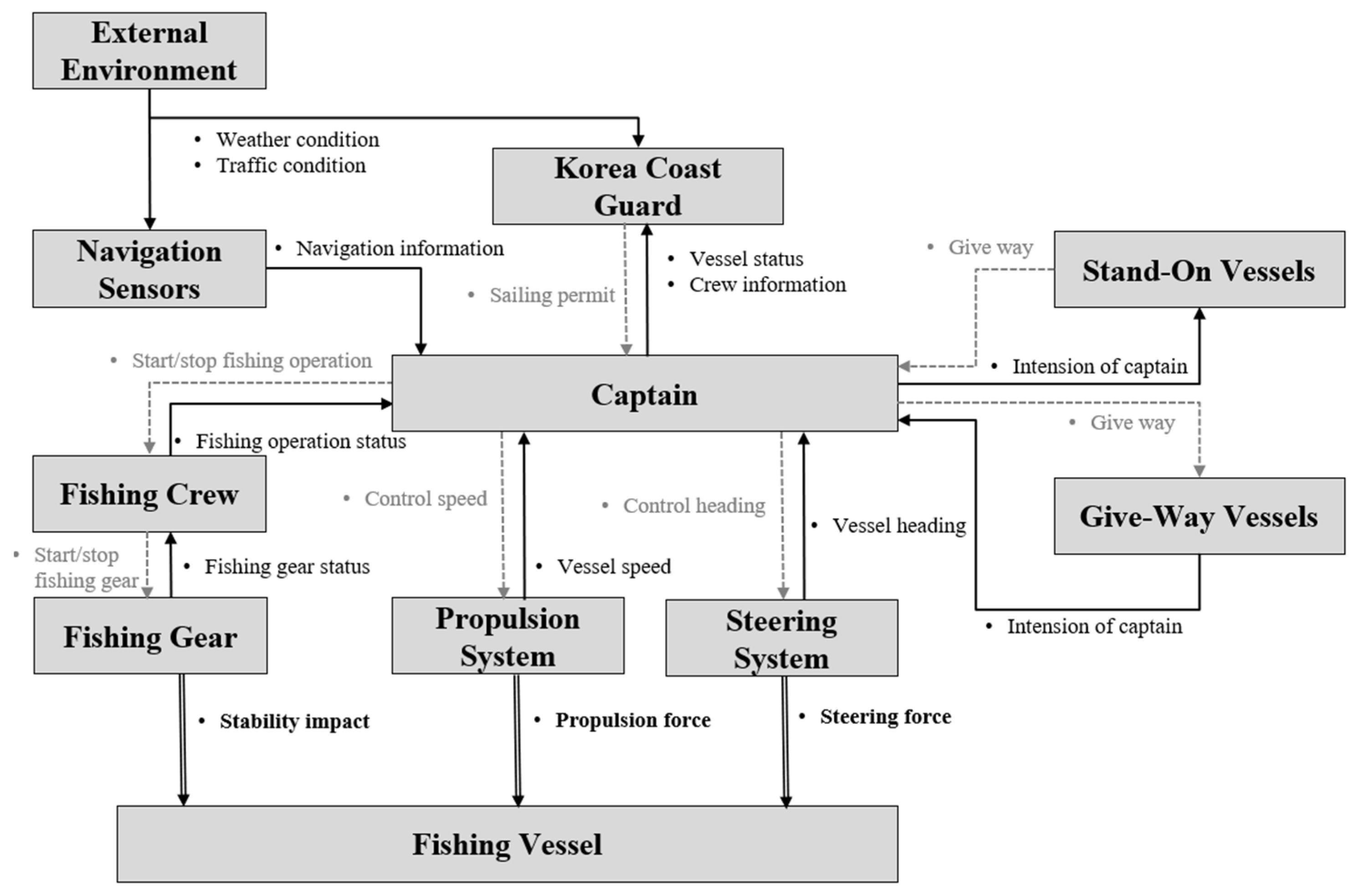
In the second step, the control structure of fishing vessel operations was defined. The controllers were identified as the Korea Coast Guard, the Captain, the Fishing Crew, and other vessels in the navigation route, categorized as Stand-On and Give-Way vessels. The controlled processes included the vessel’s propulsion system, steering system, fishing equipment, and navigation sensors. Commands and feedback are exchanged among these controllers, forming a closed control loop for safe vessel operations that encompasses navigation, fishing, communication, and collision-avoidance functions. Table 8 summarizes the detailed relationships among each controller’s responsibilities, process models, and feedback mechanisms. The Coast Guard supervises navigational safety by authorizing sailing permits and monitoring weather conditions, using vessel and crew status as feedback information. The Captain manages propulsion and steering systems, adjusting speed and heading to prevent collisions, and issues start or stop commands for fishing operations. The Fishing Crew executes these commands, monitors fishing gear conditions, and reports operational status to the Captain. The Stand-On and Give-Way vessels exchange navigational information with the Captain to coordinate right-of-way and collision-avoidance maneuvers. This structured mapping clarifies how control and feedback are distributed across all operational levels of a fishing vessel, providing the basis for subsequent identification of unsafe control actions.
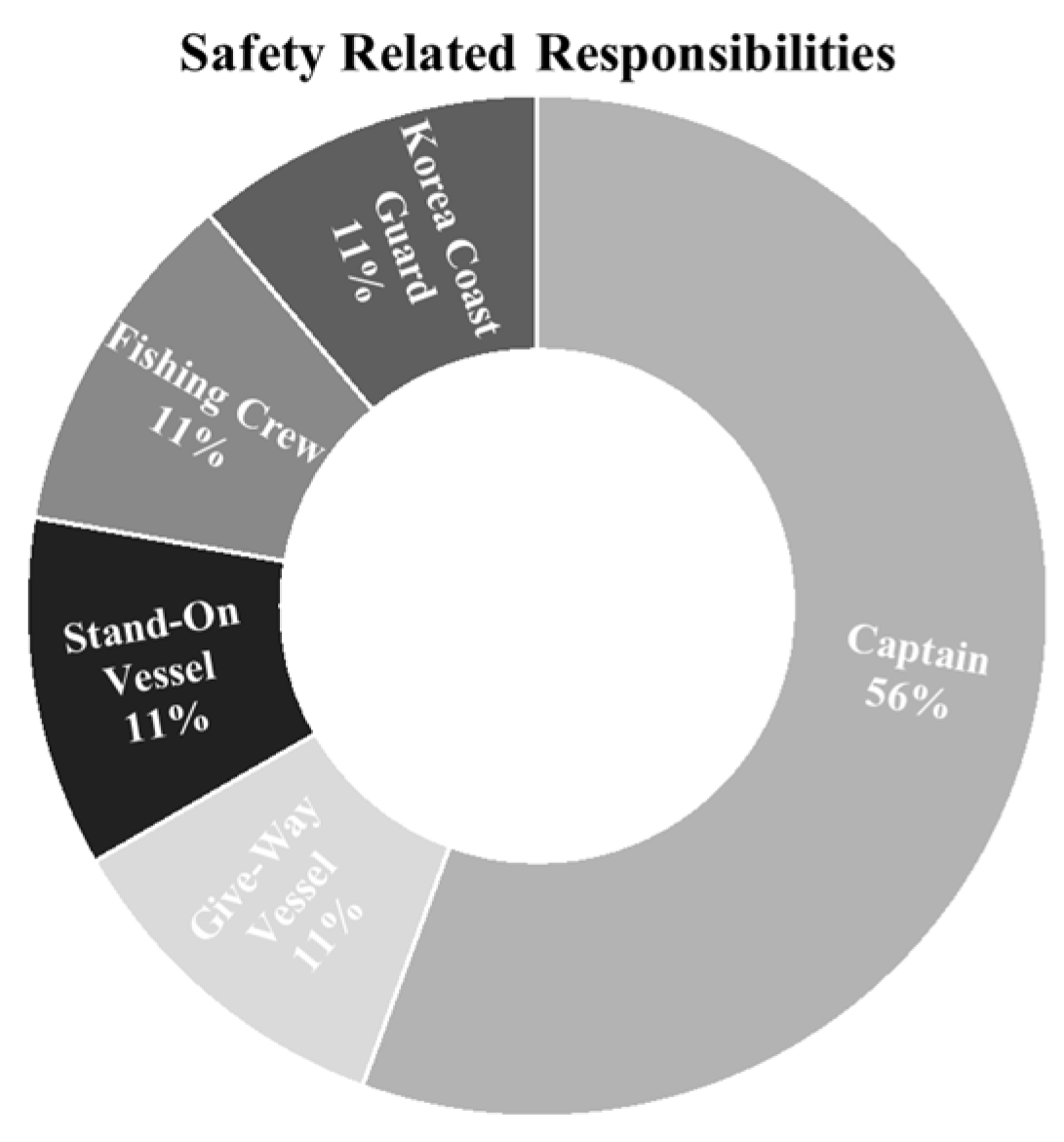
Figure 2 presents the overall control structure of fishing vessel operations, integrating the interactions between human operators, technical subsystems, and external environmental factors. The diagram illustrates how control commands and feedback such as sailing permits, navigation data, and operational status are exchanged among the Coast Guard, Captain, Crew, and nearby vessels to maintain safety. It also shows that the Captain serves as the central controller, linking the propulsion, steering, and fishing systems through continuous information flow and feedback loops. This systemic framework highlights how multi-layered control interactions contribute to the stability and safety of fishing vessel operations. As shown in Figure 3, the responsibility distribution analysis revealed that the Captain holds approximately 56 percent of all safety-related responsibilities, while the remaining controllers, including the Coast Guard, Fishing Crew, Stand-On Vessel, and Give-Way Vessel, each account for about 11 percent. This result indicates that the safety of fishing vessel operations depends primarily on the Captain’s decision-making ability, communication accuracy, and feedback management. In particular, real-time information exchange among the Captain, Fishing Crew, and Coast Guard plays a critical role in preventing control failures.
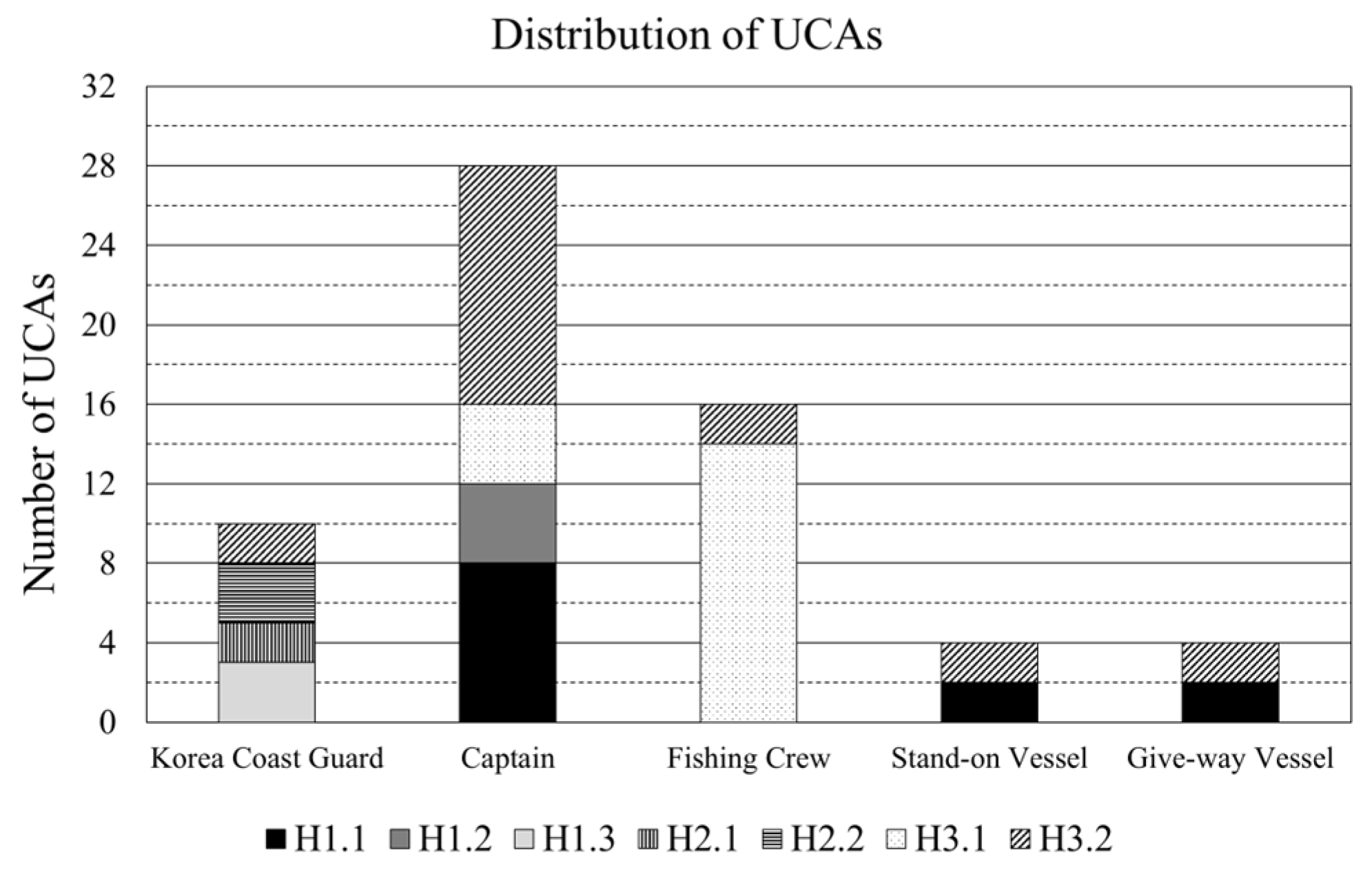
In the third step, UCAs were identified based on the previously defined control structure. A UCA refers to a control command that is not provided when required, is provided when unnecessary, or is issued too early or too late. The detailed derivation of UCAs was summarized in structured tables listing the controller, control action, condition, and unsafe control mode, with each unsafe action linked to the corresponding system-level hazard. In total, 54 UCAs were derived and categorized into four groups: inadequate or missing feedback, system or sensor failure, incorrect process model, and communication delay or misunderstanding. For example, when the Coast Guard fails to issue a sailing permit under safe weather conditions, it represents inadequate feedback, while a delayed collision-avoidance command by the Captain indicates a late control action. Figure 4 shows the distribution of UCAs among the main controllers. The Captain accounts for the largest proportion, mainly associated with incorrect process models and delayed commands, followed by the Fishing Crew and the Coast Guard, which are related to communication and feedback deficiencies. This result shows the dominant role of human and communication factors in unsafe control behaviors.
In the fourth step, loss scenarios were constructed from the identified UCAs. A total of 216 scenarios were derived, each describing how an unsafe command or missing feedback could escalate into an accident through technical malfunction or human error. These scenarios include cases such as delayed emergency responses due to feedback loss, sensor failure leading to misjudged proximity, and incorrect process models that cause premature or missing control actions. As summarized in Table 9, five representative examples were selected to illustrate how distinct combinations of control failures can evolve into collisions, equipment entanglement, or injuries on board. The table demonstrates that inadequate feedback and delayed actions often lead to collision risks under the Coast Guard or Captain level, whereas miscommunication and premature operations at the crew level can result in entanglement or falling accidents. These representative cases clarify the causal chain between control deficiencies and accident mechanisms, thereby supporting systematic loss identification and serving as a critical reference for developing the fishing vessel safety checklist.
In conclusion, rather than serving as a simple list of causes, these loss scenarios provide a structured explanation of how deficiencies in control and feedback loops can escalate into system-level losses. The insights obtained from the STPA results were subsequently incorporated into the development of the fishing vessel safety checklist, ensuring that the checklist items address not only technical inspections but also control reliability and communication integrity within actual vessel operations.

4. Development of the Safety Checklist

In this chapter, the development of a Korean-specific safety checklist designed for fishing vessels under 10 tons is presented, along with the basis for its selection. The checklist was developed by integrating representative European self-inspection systems (checklist) with the operational characteristics of Korean coastal fisheries, resulting in three practical forms: a pre-operation checklist, a post-operation checklist, and a periodic inspection checklist. Each item was derived from key procedures and structures identified in Norwegian, Danish, British, and Irish checklists and refined through the results of SRK/SLMV, CREAM, and STPA analyses to address both human errors and system-level control deficiencies.

4.1. Safety Checklist Design

This section explains the structure and application of the Korean-specific fishing vessel safety checklist, with the detailed items summarized in Table 10 and Table 11. The proposed checklist consists of a Pre/Post-Operation Checklist and a Periodic Inspection Checklist, each divided into Work-related and Equipment-related items. This division was designed to enhance clarity and convenience during inspection by distinguishing between human-related and mechanical factors. In practice, when behavioral and technical items are combined in a single list, fishers may overlook certain checks or experience confusion during inspection. Therefore, separating human-centered and equipment-centered items helps ensure a more systematic and intuitive inspection process. Also, to aid understanding, the tables include source citations for each checklist item. Although the checklist was broadly developed with reference to Korean regulations, European safety guidelines, and human and system analysis methods, the cited sources represent those that had the most significant influence on each item.
In Table 10, the Pre- and Post-Operation Checklists were designed for small fishing vessels under 10 tons, considering their short operation cycles and the practical working conditions of fishers. The pre-operation section includes items such as checking weather and navigational information, assessing crew fatigue and health conditions, verifying the use of protective equipment, and ensuring the normal operation of main engines and navigation systems. These items aim to prevent negligence and procedural errors that frequently occur before departure. The post-operation section includes confirming the completion of fishing activities, organizing and stowing catches, checking for equipment or gear damage, and cleaning the deck. These steps help reduce common mistakes and oversight during repetitive operations. All items are presented in a simple O/X format, allowing fishers to quickly perform self-checks at each operation cycle without additional administrative burden.
As shown in Table 11, the Periodic Inspection Checklist serves as a structured and record-based tool for long-term safety management. It consists of three categories (Work-related, Equipment-related, and Safety & Supplies) to ensure comprehensive coverage of both operational and technical risks. The inspection frequency and validity period of each item were primarily determined based on domestic (Korean) regulations such as the Guidelines for Risk Assessment of Fishing Vessels and the Standards for the Safety, Health, and Accident Prevention of Fishing Vessel Crew issued by the MOF. For items where explicit domestic criteria were unavailable, recommended inspection intervals were referenced from European checklists used in Norway, Denmark, and the United Kingdom.
The Work-related items include crew emergency drills (firefighting, rescue, and flooding control), safety education and accident-case sharing, orientation for new crew members, and regular risk assessments. These items aim to strengthen onboard safety awareness and ensure continuous improvement through documentation and training records. The Equipment-related items cover inspection of the propulsion, electrical, steering, and communication systems, as well as checks on watertight doors, hatches, decks, guardrails, and ropes. These ensure the early detection of technical defects such as corrosion, malfunction, and communication failure that could lead to operational hazards. In addition, the Safety & Supplies category focuses on lifesaving and emergency equipment critical to small fishing vessels, including fire extinguishers, lifebuoys, lifejackets, first-aid kits, and emergency power systems. Each of these items requires at least a monthly visual check and periodic replacement according to regulatory intervals. The periodic inspection checklist was also designed to accommodate web-based safety-management platforms, allowing real-time entry and monitoring of inspection data. For each inspection, users can record the Confirmation Date, and the Risk Level (categorized as High (H), Medium (M), or Low (L)) is automatically assigned based on the item’s validity period and recommended frequency. This feature enables managers to immediately identify overdue or high-risk items and to prioritize maintenance or training accordingly.
In practical use, the pre- and post-operation parts of the checklist are intended to be completed jointly by the captain and crew before departure and after returning to port for every voyage. In future implementation, these checks are envisioned to be carried out on mobile devices, so that ticking off items becomes a simple routine task while at the same time accumulating digital records that can later be used for feedback and trend analysis. The periodic inspection checklist is primarily aimed at owners, safety officers or inspectors. Although nominal inspection intervals are indicated for each item, these intervals do not always fully coincide with the actual evolution of risk, so critical items should be kept under continuous attention. In the planned web-based platform, the risk status of periodic items will be monitored in real time, and notifications (for example, text messages or in-app alerts) will be sent as inspection deadlines approach, prompting timely follow-up actions. Furthermore, for effective use in the field, the checklists should be supported by brief guidance notes and short training sessions for fishers and inspectors, so that the underlying analytical methods are embedded in simple, easy-to-understand procedures.

4.2. Reflected Components

4.2.1. European Checklists

The developed checklist was designed by selectively integrating the structural and procedural characteristics of European safety management systems. The Norwegian system contributed the technical and institutional foundation, Denmark provided the procedural and operational flow, the United Kingdom offered the human-centered and digitalized management structure, and Ireland introduced the self-assessment and record-based risk management concept. Together, these complementary features were integrated into a unified, practical Korean-specific safety checklist tailored for small fishing vessels. The specific contributions of each national system are summarized below.
In Norway, the safety management approach combines strict technical inspection standards with a culture of voluntary self-assessment. This balance between regulatory compliance and autonomous control provided the foundation for the Periodic Inspection Checklist in this study. The Norwegian system’s emphasis on systematic inspection of key technical components such as the hull, propulsion systems, and emergency equipment was reflected in the inclusion of standardized inspection items and record-based self-monitoring routines that can be continuously maintained by vessel operators.
In Denmark, the safety management structure is characterized by a procedural approach that emphasizes identifying voyage-specific hazards and confirming crew preparedness before departure. This concept was applied to the Pre- and Post-Operation Checklists, which present concise and practical inspection items such as weather verification, work planning, and emergency readiness. The Danish model also inspired the introduction of inspection frequency and validity period columns, enhancing traceability and systematic management of inspection records in the Korean version.
In the United Kingdom, the operations-based structure integrates human and technical factors within each stage of fishing activities. This approach directly influenced the design of the Pre- and Post-Operation Checklists, incorporating preventive items related to crew fatigue management, use of PPE, communication system checks, and emergency preparedness. The standardized maintenance requirements for essential safety equipment such as liferafts, EPIRBs, fire extinguishers, and CO alarms were incorporated into the Equipment-related Checklist. Moreover, the UK’s digital self-inspection platform provided a conceptual basis for developing the web-based safety management system proposed in this study, which allows vessel captains to record and monitor inspection results independently.
In Ireland, the safety management system follows a self-assessment and record-based structure centered on systematic documentation of risk management activities. This approach informed the design of the Periodic Inspection Checklist, where each item specifies inspection frequency, validity period, and confirmation date. A Risk Level indicator (High, Medium, Low) was also introduced to visualize risk priority and inspection status. Additionally, reflecting the operational conditions of small fishing vessels, the inspection frequency was standardized as “Quarterly recommended and Annual mandatory,” enabling fishers to perform realistic and autonomous self-inspections.
Overall, the proposed checklist incorporates key elements from European checklists. To adapt these elements to the Korean context, items are organized into a three-part structure of pre-operation, post-operation and periodic inspection, and each item is assigned an inspection frequency and qualitative risk level to indicate the relative priority of checks for the crew.

4.2.2. Human and System Analysis Method

The final checklist was developed by integrating the results of three complementary human and system analysis methods: SRK/SLMV, CREAM, and STPA. Each method identified safety-related factors from different perspectives and provided the analytical basis for determining the checklist’s structure, inspection frequency, and risk-level classification. SRK/SLMV provided the logical process by categorizing human error types across operational stages, CREAM quantified inspection intervals and risk levels based on human reliability factors, and STPA contributed technical inspection items and post-event management procedures by addressing control and feedback failures. The specific reflections are described below.
The SRK/SLMV analysis identified frequent patterns of human error occurring during fishing operations and served as the foundation for developing behavior-oriented inspection items. Skill-based and rule-based errors were primarily associated with the pre-departure phase and were translated into items such as “checking weather and navigational information,” “verifying vessel loading condition,” and “sharing the operational plan.” In contrast, lapse and violation errors were linked to post-operation stages and were reflected in items such as “reporting the end of operation,” “checking crew health condition,” and “inspecting catch arrangement and equipment condition.” The same preventive logic was also extended to the Periodic Inspection Checklist, where items such as “emergency training” and “accident-case sharing” were introduced to promote organizational learning and reduce recurring human errors.
The CREAM analysis quantified contextual factors affecting human reliability, known as CPCs, and provided the basis for defining inspection frequencies and assigning Risk Levels to each item. The analysis showed that deficiencies in fatigue, environmental conditions, and technical condition increase the likelihood of human error. Accordingly, periodic inspection items were categorized by 6-month, quarterly, and annual intervals. For example, “engine-room ventilation” and “navigation and communication equipment” were included as technical condition items, each assigned a high-risk level due to their potential degradation under poor CPCs. As a result, the CREAM findings offered a quantitative rationale for determining both inspection frequency and Risk Level (H, M, L), allowing the checklist to prioritize inspections based on human error probability rather than only regulatory importance.
The STPA focused on incorporating potential control failures and feedback losses into the inspection procedure. The main risk scenarios identified included delayed commands, sensor malfunctions, and communication mismatches, which were translated into technical items within the Pre- and Post-Operation Checklists. For instance, items such as “verifying navigation system status,” “confirming communication and emergency signaling,” and “checking feedback signal reception” directly correspond to Unsafe Control Actions (UCAs) derived from the STPA results. In addition, the need for corrective actions after incidents was reflected in the Risk Assessment item of the periodic inspection checklist, ensuring that post-event review and feedback procedures are conducted systematically after each operation.

4.2.3. Domestic Regulations

The final checklist was localized to reflect the safety management regulations and operational environment of Korean fishing vessels. While the European checklists provided the procedural structure and general format, the Korean version was adapted to align with the legal standards of the MOF and the actual operational conditions of domestic vessels. In particular, the Periodic Inspection Checklist was developed based on the references reviewed in Section 3.2, where the inspection intervals and validity periods were determined. Items with legally prescribed inspection frequencies were classified as legal inspection items, and each was assigned an inspection interval according to the type of equipment or system (e.g., monthly, quarterly or annually). These intervals reflect the statutory inspection schedule for vessel surveys (regular and intermediate inspections) as well as the mandatory replacement periods of major safety equipment, such as a 10-year replacement for fire extinguishers, the requirement of two lifebuoys for vessels under 20 m, and monthly visual checks for lifejackets. In contrast, items without explicit domestic legal requirements were organized as recommended inspection items, following the reference intervals (quarterly or semiannual) of European self-assessment manuals. This classification ensures regulatory compliance while maintaining compatibility with international self-inspection process.
Furthermore, the checklist was adapted to reflect the operational and structural characteristics of small fishing vessels under 10 tons, which are predominant in coastal fisheries. Korean vessels commonly engage in gillnetting, longlining, and purse seining, using hauling devices such as winches to retrieve fishing gear and catches. Since entanglement and crushing accidents often occur around these devices during hauling operations, a dedicated item, “checking the safety condition of winches, ropes, and hauling systems,” was added. This item represents a practical adaptation to the working environment of Korean vessels that is not typically found in European checklists. In addition, considering that the engine rooms of small Korean vessels are compact and poorly ventilated, new inspection items were included for “engine-room ventilation” and “exhaust and air-intake safety.” These items serve as field-oriented inspection criteria intended to prevent fire, suffocation, and combustion-related accidents frequently observed in domestic operations.
Moreover, the checklist structure aligns with the MOF’s ongoing policy direction emphasizing self-inspection and record-based safety management. Each checklist includes dedicated fields for recording inspection dates, inspector names, and validity periods, allowing vessel captains to independently manage and retain inspection records onboard. This structure was standardized to be compatible with future web-based safety management platforms, enabling real-time monitoring of inspection histories and coordination with administrative databases. Through this system, safety management extends beyond mere legal compliance to encompass integrated monitoring of equipment condition, inspection records, and risk levels, forming a comprehensive record-based self-assessment mechanism. As a result, the Korean-specific safety checklist proposed in this study faithfully incorporates domestic legal requirements while reflecting the distinctive operational characteristics of Korean fishing vessels. By combining inspection records with risk indicators, the checklist connects legal requirements with actual vessel operations, providing a practical and self-directed tool for everyday safety management.

5. Conclusions

This study developed a Korean-specific safety checklist for fishing vessels under 10 tons by integrating representative European self-inspection systems with human and system analysis methods. The proposed checklist is structured into three sections: Pre-operation, Post-operation, and Periodic Inspection. It was designed to reflect the actual working procedures and operational environments of coastal fishing vessels in Korea.
The analysis of European safety management systems revealed that major countries have adopted a combined structure of autonomous risk assessment and periodic inspection. Their checklists have evolved beyond simple equipment verification to include integrated management of operational procedures, human factors, and training records, with detailed variations according to vessel size and fishing type. These characteristics of European checklists provided a structural reference for this study, enabling the development of a checklist that aligns institutional requirements with real-world practices in Korea. Through the integrated application of SRK/SLMV, CREAM, and STPA analyses, the study identified the main types of human errors and control failures contributing to fishing vessel accidents. Based on these findings, checklist items covering human, technical, and organizational factors were developed to allow operators to assess risks in a systematic and quantitative way throughout all stages of fishing operations.
While the proposed checklist currently remains in a paper-based format, it should be further developed into a digital platform to enable real-time inspection and record management. In particular, Norway’s Risikoverktøyet allows fishers to input and evaluate task-specific hazards online, visualize risk reductions after corrective actions, and maintain continuous records, serving as a representative model of autonomous risk assessment. Likewise, the UK Maritime and Coastguard Agency’s Safety Folder integrate checklists, training records, and maintenance logs into a unified system that connects legal requirements with onboard practices. These examples suggest practical models for the digital transformation of the Korean checklist, making it possible to manage inspection results, risk levels, training histories and corrective actions within a centralized database.
In conclusion, this study bridges the gap between regulatory standards and real fishing operations by presenting a practical and autonomous safety management system for small vessels. The future digitalization and platform-based implementation of the proposed checklist are expected to provide an integrated environment for managing inspection records, risk indicators, and training data, ultimately contributing to the establishment of a preventive and data-driven safety culture in Korea’s coastal fisheries.
These checklists currently represent an analytically derived proposal based on accident analysis, European checklist models and Korean regulatory requirements, and systematic pilot testing and user validation have not yet been carried out. Follow up research will apply the checklists on selected coastal fishing vessels and include field visits to Korean fishing communities to gather feedback from crew members and cooperatives and refine the wording, structure and inspection frequencies. Building on these pilots, a simple web or mobile based checklist platform will be developed in cooperation with maritime safety authorities and local fishing organizations. This platform will support digital entry, storage and visualization of inspection records.

Author Contributions

Conceptualization, S.L. and H.K.; Methodology, S.L. and H.K.; Investigation, S.K.; Resources, S.L. and S.K.; Data curation, S.L. and H.K.; Writing—original draft preparation, S.L.; Writing—review & editing, H.K. and S.K.; Visualization, S.L.; Supervision, H.K.; Funding acquisition, S.K. All authors have read and agreed to the published version of the manuscript.

Funding

This research was supported by Korea Institute of Marine Science & Technology Promotion (KIMST) Funded by the Ministry of Oceans and Fisheries (RS-2022-KS221571).

Data Availability Statement

The raw data supporting the conclusions of this article will be made available by the authors on request.

Conflicts of Interest

The authors declare no conflict of interest.

Nomenclature

AbbreviationFull TermAbbreviationFull Term
AISAutomatic Identification SystemKOMSAKorea Maritime Safety Authority
BNBayesian NetworkLOLERLifting Operations and Lifting Equipment Regulations
CFPCognitive Failure ProbabilityLPGLiquid Petroleum Gas
CPCCommon Performance ConditionMCAMaritime and Coastguard Agency
CREAMCognitive Reliability and Error Analysis MethodMOBMan Overboard
DMADanish Maritime AuthorityMOFMinistry of Oceans and Fisheries
EPIRBEmergency Position Indicating Radio BeaconNMANorwegian Maritime Authority
EU-OSHAEuropean Agency for Safety and Health at WorkNOAANational Oceanic and Atmospheric Administration
FAOFood and Agriculture OrganizationPIFPerformance Influencing Factor
FISGFishing Industry Safety GroupPIIPerformance Influence Index
FSAFormal Safety AssessmentPPEPersonal Protective Equipment
FTAFault Tree AnalysisPUWERProvision and Use of Work Equipment Regulations
GPSGlobal Positioning SystemRFRandom Forest
HSAHealth and Safety Authority (Ireland)SLMVSlip-Lapse-Mistake-Violation
ILOInternational Labour OrganizationSMSSafety Management System
IMOInternational Maritime OrganizationSRKSkill–Rule–Knowledge Model
IRIndividual RiskSTPASystem-Theoretic Process Analysis
ISMInternational Safety ManagementUCAUnsafe Control Action
KIMSTKorea Institute of Marine Science & Technology PromotionVHFVery High Frequency Radio
KMSTKorea Maritime Safety Tribunal

References

  1. Obeng, F.; Domeh, D.; Khan, F.; Bose, N.; Sanli, E. An Operational Risk Management Approach for Small Fishing Vessel. Reliab. Eng. Syst. Saf. 2024, 247, 110104. [Google Scholar] [CrossRef]
  2. Wang, F.; Du, W.; Feng, H.; Ye, Y.; Grifoll, M.; Liu, G.; Zheng, P. Identification of Risk Influential Factors for Fishing Vessel Accidents Using Claims Data from Fishery Mutual Insurance Association. Sustainability 2023, 15, 13427. [Google Scholar] [CrossRef]
  3. Cao, Y.; Wang, X.; Yang, Z.; Wang, J.; Wang, H.; Liu, Z. Research in Marine Accidents: A Bibliometric Analysis, Systematic Review and Future Directions. Ocean Eng. 2023, 284, 115048. [Google Scholar] [CrossRef]
  4. Caddy, J.F. A Checklist for Fisheries Resource Management Issues Seen from the Perspective of the FAO Code of Conduct for Responsible Fisheries; FAO: Rome, Italy, 1996. [Google Scholar]
  5. Piniella, F.; Fernández-Engo, M.A. Towards System for the Management of Safety on Board Artisanal Fishing Vessels: Proposal for Check-Lists and Their Application. Saf. Sci. 2009, 47, 265–276. [Google Scholar] [CrossRef]
  6. Lambert, D.M.; Thunberg, E.M.; Felthoven, R.G. Guidance on Fishing Vessel Risk Assessments and Accounting for Safety at Sea in Fishery Management Design; National Oceanic and Atmospheric Administration: Washington, DC, USA, 2015. [Google Scholar] [CrossRef]
  7. Koo, K.; Kim, H.; Kwon, S. Analysis of Risk Assessment Methods in Norwegian Fishing Vessel Safety Legislation. J. Korean Soc. Fish. Technol. 2024, 60, 378–388. [Google Scholar] [CrossRef]
  8. Bulzacchelli, M.T.; Bellantoni, J.M.; McCue-Weil, L.; Dzugan, J. Field Test of Two Mobile Apps for Commercial Fishing Safety: Feedback from Fishing Vessel Captains. Work 2023, 75, 927–937. [Google Scholar] [CrossRef] [PubMed]
  9. EU-OSHA. European Guide for Risk Prevention in Small Fishing Vessels; European Agency for Safety and Health at Work: Bilbao, Spain, 2017; pp. 1–180. [Google Scholar]
  10. Hollá, K.; Kuricová, A.; Kočkár, S.; Prievozník, P.; Dostál, F. Risk Assessment Industry Driven Approach in Occupational Health and Safety. Front. Public Health 2024, 12, 1381879. [Google Scholar] [CrossRef] [PubMed]
  11. Kim, H.; Koo, K.; Lim, H.; Kwon, S.; Lee, Y. Analysis of Fishing Vessel Accidents and Suggestions for Safety Policy in South Korea from 2018 to 2022. Sustainability 2024, 16, 3537. [Google Scholar] [CrossRef]
  12. Lee, D.; Kim, H.; Koo, K.; Kwon, S. Human Reliability Analysis for Fishing Vessels in Korea Using Cognitive Reliability and Error Analysis Method (CREAM). Sustainability 2024, 16, 3780. [Google Scholar] [CrossRef]
  13. Norwegian Maritime Authority (NMA). KS-1150B Fartøysertifikat: Obligatorisk Kontrollskjema for Fiske- og Fangstfartøy; Norwegian Maritime Authority: Haugesund, Norway, 2016; Available online: https://www.sdir.no/siteassets/skjema/ks-1150b-feb25-fsf-fartssertifikat-for-fiske--og-fangstfartoy---obligatorisk.pdf (accessed on 10 November 2025). (In Norwegian)
  14. Norwegian Maritime Authority (NMA). Sikkerhetsstyring på Mindre Fartøy; Norwegian Maritime Authority: Haugesund, Norway, 2017. Available online: https://www.sdir.no/contentassets/68b81e51e5864022b0fab7b88b39dc74/sikkerhetsstyring_pa_mindre_fartoy_2022.pdf (accessed on 10 November 2025). (In Norwegian).
  15. Stormo, G. Sikkerhetsstyringssystem for Verneverdige Fartøy (<500 bt og <100 passasjerer): Mal Med Veiledning; Norsk Forening for Fartøyvern: Oslo, Norway, 2011. Available online: https://norsk-fartoyvern.no/wp-content/uploads/Mal-Sikkerhetsstyringssystem.pdf (accessed on 10 November 2025). (In Norwegian).
  16. Danish Maritime Authority (DMA). Guidelines for Drawing up Safety Instructions; Danish Maritime Authority: Korsør, Denmark, 2020. Available online: https://www.dma.dk/Media/637725841125250325/Retningslinjer%20for%20udarbejdelse%20af%20sikkerhedsinstruks-uk.pdf (accessed on 10 November 2025).
  17. Danish Maritime Authority (DMA). Safety Instructions for Voyages with Small Vessels; Danish Maritime Authority: Korsør, Denmark, 2012. Available online: https://www.dma.dk/Media/637725841464950940/Sikkerhedsinstruks-uk.pdf (accessed on 10 November 2025).
  18. Danish Maritime Authority (DMA). Guidelines for Checklist for Fishing Vessels Below 15 Metres; Danish Maritime Authority: Korsør, Denmark, 2016. Available online: https://www.dma.dk/Media/637720465993597261/Guidelines%20for%20checklist%20for%20fishing%20vessels%20below%2015%20metres.pdf (accessed on 10 November 2025).
  19. Danish Maritime Authority (DMA). Technical Regulation No. 8 of 15 July 2004 on the Conduction of Surveys and Internal Inspections; Danish Maritime Authority: Korsør, Denmark, 2004. Available online: https://www.dma.dk/Media/637720427964213895/Technical%20regulation%20on%20the%20conduction%20of%20surveys%20and%20internal%20inspections.pdf (accessed on 10 November 2025).
  20. Fiskeriets Arbejdsmiljøråd (FA). Tjekliste før afgang fra havn [Checklist for Annual Self-Monitoring of Fishing Vessels Below 15 Metres]; Fiskeriets Arbejdsmiljøråd: Esbjerg, Denmark, 2015. Available online: https://f-a.dk/wp-content/uploads/2015/02/Tjeklister.pdf (accessed on 10 November 2025). (In Danish).
  21. Maritime and Coastguard Agency (MCA). MGN 636 (M): Merchant Shipping and Fishing Vessels (Health and Safety at Work) Regulations 1997; Maritime and Coastguard Agency: Southampton, UK, 2020. Available online: https://assets.publishing.service.gov.uk/media/5f05ac68d3bf7f2bf0f9b5b6/MGN_636_-_FINAL.pdf (accessed on 10 November 2025).
  22. Maritime and Coastguard Agency (MCA). Fishermen’s Safety Guide: A Guide to Safe Working Practices and Emergency Procedures for Fishermen, Amendment 1; Maritime and Coastguard Agency: Southampton, UK, 2020. Available online: https://assets.publishing.service.gov.uk/media/5eac030986650c435a68dd0b/Fishermans_safety_guide_2020_amendment_1.pdf (accessed on 10 November 2025).
  23. Maritime and Coastguard Agency (MCA). The Code of Practice for the Safety of Fishing Vessels of Less than 15 Metres Length Overall (Draft Small Fishing Vessel Code); Maritime and Coastguard Agency: Southampton, UK, 2016. Available online: https://assets.publishing.service.gov.uk/media/5a8156c440f0b62305b8e6a7/Draft_Small_Fishing_Vessel_Code.pdf (accessed on 10 November 2025).
  24. Maritime and Coastguard Agency (MCA). Collection: Fishing Safety Guides and Publications; Maritime and Coastguard Agency: Southampton, UK, 2022. Available online: https://www.gov.uk/government/collections/fishing-safety-guides-and-publications (accessed on 10 November 2025).
  25. Department of Enterprise; Trade and Employment (DETE). Safety, Health and Welfare at Work Act 2005 (No. 10 of 2005); The Stationery Office: Dublin, Ireland, 2005. Available online: https://www.irishstatutebook.ie/eli/2005/act/10/enacted/en/pdf (accessed on 10 November 2025).
  26. Department of Transport (DT). Merchant Shipping (Safety of Fishing Vessels) (15–24 Metres) Regulations 2007 (S.I. No. 640 of 2007); The Stationery Office: Dublin, Ireland, 2007. Available online: https://www.irishstatutebook.ie/eli/2007/si/640/made/en/pdf (accessed on 10 November 2025).
  27. Health and Safety Authority (HSA). Fishing Vessel Safety Statement; Health and Safety Authority: Dublin, Ireland, 2014. Available online: https://www.hsa.ie/eng/publications_and_forms/publications/fishing/fishing_vessel_safety_statement.pdf (accessed on 10 November 2025).
  28. Ministry of Oceans and Fisheries (MOF). Guidelines for Risk Assessment of Fishing Vessels; Ministry of Oceans and Fisheries: Sejong-si, Republic of Korea, 2024. Available online: https://www.mof.go.kr/doc/ko/selectDoc.do?docSeq=62945&menuSeq=885&bbsSeq=35 (accessed on 10 November 2025). (In Korean).
  29. Ministry of Oceans and Fisheries (MOF). Standards for the Safety, Health, and Accident Prevention of Fishing Vessel Crews; Ministry of Oceans and Fisheries: Sejong-si, Republic of Korea, 2024. Available online: https://www.mof.go.kr/doc/ko/selectDoc.do?docSeq=62934&menuSeq=885&bbsSeq=35 (accessed on 10 November 2025). (In Korean).
  30. Ministry of Oceans and Fisheries (MOF). Standard Manual for Occupational Safety and Health: Coastal Gillnet Fishery; Ministry of Oceans and Fisheries: Sejong-si, Republic of Korea, 2021. Available online: https://www.suhyup.co.kr/synap/skin/doc.html?fn=temp_1717569016865100&rs=/synap/result/bbs/311 (accessed on 10 November 2025). (In Korean).
  31. Ministry of Oceans and Fisheries (MOF). Fisher’s Voluntary Safety Rules for Fishing Operations; Ministry of Oceans and Fisheries: Sejong-si, Republic of Korea, 2021. Available online: https://www.suhyup.co.kr/sites/suhyup/down/safetyEducation.pdf (accessed on 10 November 2025). (In Korean).
  32. Rasmussen, J. Skills, Rules, and Knowledge; Signals, Signs, and Symbols, and Other Distinctions in Human Performance Models. IEEE Trans. Syst. Man. Cybern. 2012, SMC-13, 257–266. [Google Scholar] [CrossRef]
  33. Reason, J. Human Error; Cambridge University Press: Cambridge, UK, 1990; ISBN 0521314194. [Google Scholar]
  34. Di Nardo, M.; Murino, T. The System Dynamics in the Human Reliability Analysis through Cognitive Reliability and Error Analysis Method: A Case Study of an LPG Company. Int. Rev. Civ. Eng. 2021, 12, 56–68. [Google Scholar] [CrossRef]
  35. Leveson, N. Engineering a Safer World: Systems Thinking Applied to Safety; The MIT Press: Cambridge, MA, USA, 2016; ISSN 0262533693. [Google Scholar]
  36. Leveson, N.; Thomas, J. STPA Handbook; Massachusetts Institute of Technology (MIT): Cambridge, MA, USA, 2018; Available online: https://www.flighttestsafety.org/images/STPA_Handbook.pdf (accessed on 10 November 2025).
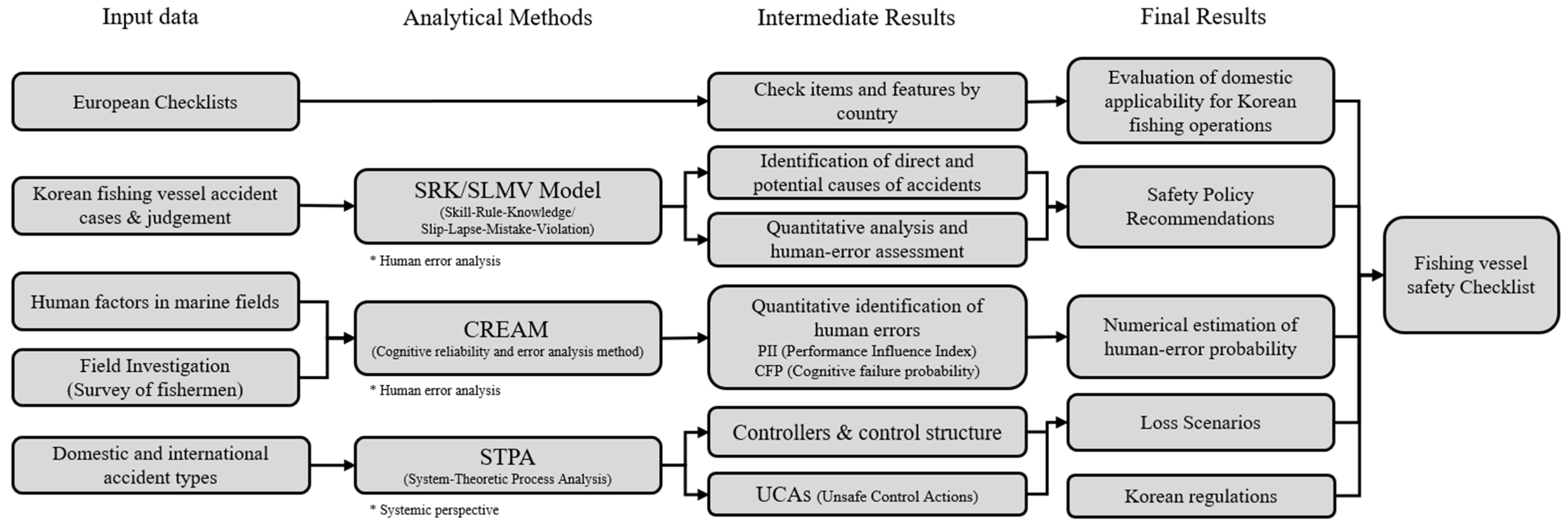
Figure 1. Conceptual flow of the checklist development process.
Applsci 16 00086 g001
Figure 2. Control structure of fishing vessel operations for STPA.
Applsci 16 00086 g002
Figure 3. Safety responsibility distribution among controllers.
Applsci 16 00086 g003
Figure 4. Distribution of UCAs among main controllers.
Applsci 16 00086 g004
Table 1. Norwegian safety familiarization checklist (Stormo, 2011 [15]).
Sjekkliste Sikkerhets Familiarisering (Safety Familiarization Checklist)
M = Muntlig (Oral Instruction), P = Praktisk (Practical Exercise)
Norsk (Original)English (Translation)
EmneSubject
HovedemnerMain Topics
M/PGjennomgang av perm for sikker-hetsstyringssystem.Review of the safety management system manual
M/PSkipets brann og sikkerhetsplan.Ship’s fire and safety plan
M/PAlarmsignal og alarminstruks + oppgaver.Alarm signals, alarm instructions, and assigned duties
M/PRederiets beredskapsplan.Company’s emergency preparedness plan
Rednings og sikkerhetsutstyr, plassering og brukRescue and safety equipment, location and use
PIntercomanleggIntercom system
PUtganger/nødutgangerExits/emergency exits
PRedningsvesterLife jackets
POverlevingsdrakter for mannskapImmersion suits for crew
PLivbøyer, m/line, lys, røykLifebuoys with lines, light, and smoke
PNød og evakueringsleiderEmergency and evacuation ladders
M/PNødbluss og fallskjermlysDistress flares and parachute rockets
M/PNødpeilesender, fri-flyt og SARTEmergency beacons (EPIRB, free-float, and SART)
M/PFørstehjelpskrin, båreFirst-aid kit and stretcher
PRedningsflåter, utsetting og utløsningLiferafts, launching and release procedures
PMOB-båt, utstyr og utsettingMan-overboard (MOB) boat, equipment, and launching
PGjennomgått båtmanevør/redningsøvelseBoat maneuver and rescue drill completed
Brannslukningsutstyr, plassering/brukFirefighting equipment, location/use
PBrannmeldere, varme og røykdetektorerFire alarms, heat, and smoke detectors
M/PBrannalarmsentralFire alarm control panel
PBrannslukningsapparaterFire extinguishers
PBrannposter m/slangerFire hydrants with hoses
PBrannøkserFire axes
PRøykdykkerutstyrSmoke-diving (firefighting) equipment
PStart av brannpumperStarting the fire pump
PStart av nødbrennumpumpeStarting the emergency fire pump
PNødstopbrytere for vifterEmergency stop switches for fans
PStenging av luftspjeld/ventilasjonClosing air dampers/ventilation systems
PPlassering og utløsning av Inergen/CO2Location and activation of Inergen/CO2 system
Nødprosedyrer/alarminstruksEmergency procedures/alarm instructions
M/PManuell nødstopp motorerManual emergencies stop for engines
PHurtiglukker for brennoljeQuick-closing valve for fuel oil
M/PLensearrangement og nødlensingBilge system and emergency bilge pumping
M/PNødstyringEmergency steering
M/PBrannslukking, prosedyrerFirefighting procedures
M/PMann-over-bord prosedyreMan-overboard procedure
M/PEvakuering. Fordeling til flåter og entring av disseEvacuation, allocation to life rafts and boarding procedures
MSkipets oljevernberedskapsplanShip’s oil pollution emergency plan
DriftsrutinerOperational routines
MOrdinære driftsrutinerOrdinary operating routines
M/PGjennomgang av risikovurderinger og avviksmeldingerReview of risk assessments and deviation reports
MRutiner ved liggetid i havnProcedures during port stay
MOm bord og ilandstigningEmbarkation and disembarkation routines
M/PVedlikeholdsrutinerMaintenance routines
Table 2. Danish pre-departure checklist for fishing vessels between 7 and 15 m (FA, 2015 [20]).
Tjekliste før Afgang fra Havn (Checklist Before Departure from Port)
Danish (Original)English (Translation)
Områder der bør EftersesAreas to be Inspected
RedningsmidlerLife-Saving Appliances
Er redningsmidler på plads og i orden?Are life-saving appliances in place and in good order?
Er foranstaltningerne ved overbordfald i orden?Are the arrangements for man overboard situations in order?
StyrehusWheelhouse/Bridge
Er lydsignal-apparatet i orden?Is the sound signalling device in working order?
Virker alle lanterner?Are all navigation lights functioning properly?
DækDeck
Er lænseportene frie?Are the freeing ports clear?
Er styrestangsarrangementet i orden?Is the steering-rod arrangement in order?
Er der tilstrækkeligt med brændstof om bord?Is there sufficient fuel on board?
Er vejrmeldingen for påtænkt fiskeri kontrolleret?Has the weather forecast for the intended fishing operation been checked?
Vil fartøjet under hele den påtænkte rejse have tilstrækkelig stabilitet og fribord?Will the vessel have sufficient stability and freeboard for the entire intended voyage?
Er luger og dæksler lukkede og skalkede?Are hatches and covers closed and properly secured?
Kan luger og døre sikres i åben tilstand?Can hatches and doors be secured in the open position?
Er sikkerhedsanordninger på takkelblokke og bomme i orden?Are safety devices on tackle blocks and booms in order?
Går betjeningshåndtag på spil/nettromler automatisk i neutralstilling?Do the operating handles on winches or net drums automatically return to the neutral position?
Maskinrum/fremdrivningsanlægEngine room/Propulsion system
Er pumper og andre lænsemidler i orden?Are the pumps and other bilge systems in working order?
Er vandstandsalarmerne i orden?Are the water-level alarms functioning properly?
Er slange- og søforbindelser uden lækage?Are the hose and sea connections free from leaks?
Er brandvisnings- og brandslukningsanlægget i orden?Are fire detection and fire-extinguishing systems in working order?
Table 3. British Checklist for Safety Equipment on Decked Fishing Vessels (10 m ≤ L < 12 m) (MCA, 2016 [23]).
ItemRemarks/ComplianceExpiry/Service Date
Lifejackets—1 per person + 2 spare
Liferaft(s)—sufficient capacity for all persons on board
2 Lifebuoys (with 18 m buoyant line attached) or 1 Lifebuoy (with 18 m buoyant line) + 1 Buoyant Rescue Quoit
3 Parachute Flares
2 Hand-held Flares
1 Smoke Signal (buoyant or handheld)
Gas Detector
1 Fire Blanket (light duty) in galley or cooking area (if applicable)
Fire Detectors
1 Fire Pump + Hose, 2 Multi-purpose Fire Extinguishers (ratings 5A/34B and 13A/113B), 1 Fire Bucket + Lanyard, 1 Fixed Fire Extinguishing System)
1 Multi-purpose Fire Extinguisher for oil fires (rating 13A/113B)
Satellite EPIRB (Emergency Position Indicating Radio Beacon)
VHF Radio—DSC fixed and hand-held
Bilge Pump
Bilge Level Alarm
Approved Navigation Lights & Sound Signals
Anchor and Cable/Warp
Compass
Waterproof Torch
Medical Kit
Radar Reflector
CO Alarm for every enclosed space with a fired cooking or heating appliance
Table 4. Irish Checklist from the Fishing Vessel Safety Statement (HSA, 2014 [27]).
CategoryChecklist Items
First Aid- Trained first aiders and a first aid kit as approved must be carried on board the vessel.
- The Trained First Aider is: ________
Communications- The communications equipment on board consists of the following: ________-
When not in use it will be left on this emergency channel: ________
Lighting- Are all working areas above, on and below deck properly lit?
- Are emergency lighting facilities available?—Are enough spare bulbs on board?
- Is the boarding area properly lit?
- Are reflective bands worn on deck?
- Is the searchlight working?
Fatigue- Prolonged periods without sleep impair judgement, concentration and the ability to communicate.
- If you find it difficult to remain alert on watch, notify the skipper immediately.
- Minimum rest periods should be discussed and agreed before going to sea.
Pre-Steaming Check List- Are adequate supplies (for example diesel, food, water, lube oil etc.) on board for expected trip duration?
- Does someone ashore know who is on board and your expected return date and time?
- Are adequate spare parts (for example hydraulic, electrical, mechanical etc.) on board for the trip?
- Have emergency muster procedures been practiced?—Are all relevant marine notices and charts on board?
- Is all ancillary equipment (e.g., generators and auxiliaries etc.) in good order?
- Do you understand all emergency signals on board and know how to respond to them?
Anchoring- Do you know the anchoring arrangements on board?
- Do you know the procedure for laying it up?
- How quickly can the anchor be shot in an emergency?
- Remember to stand clear of the anchor when it is being deployed or retrieved.
Drink and Drugs- What arrangements have been made for boarding?—Is the man on watch fit?
- Is anyone on board taking non-prescribed drugs while at sea?
- Is anyone on board prescribed medication?
- If the answer to any of these questions is yes, has the skipper been advised?
Ventilation- Carbon dioxide asphyxiation can result from inadequate ventilation of galleys and cabins.
- Carbon monoxide poisoning can result from incomplete combustion of gas/paraffin/diesel heaters.
- Engine exhaust fumes are extremely toxic.
- Liquid Petroleum Gas (LPG) leaks can kill.
The gas is heavier than air and sinks to cabin floor/bilge levels and can explode or ignite.
- Methane and other gases produced by rotting fish can kill.
- If you feel dizzy or awake with headaches, check heaters, cookers and ventilation fans and ducts,
report symptoms to the skipper. If necessary, evacuate cabins etc.
Emergency Stops- Does everyone on deck know the emergency stop signals?
- Who controls machinery emergency stops, such as winches, haulers etc.?
- Are emergency reverse signals and procedures clearly understood?
Berthing- Are all signaling procedures clearly understood?
- Remember to stand clear of ropes under strain.
- Avoid riding turns on drum ends.—Beware of ropes chafing at the pier edge.
- Make sure that deck hose is not underwater when the pump is shutdown.
- Take care not to get crushed between the side of the boat—watch fingers, hands etc.
- Are rope/wire splices/bridles sound and are all ropes/wires/bridles in good condition?
Painting and Dry Docking- Take great care when using ladders to climb masts or onto boats.
- Ensure that electrical wires from ashore are rigged.
Table 5. Comparison of human error ratios by accident type using SRK and SLMV Models (Kim et al., 2024 [12]).
Accident TypeCategorySRK ModelRatio (%)SLMV ModelRatio (%)
CollisionGive-way vesselSkill-based68Slip2
Rule-based18Lapse63
Knowledge-based13Mistake17
Others/Not human error1Violation17
Others/Not human error1
Stand-on vesselSkill-based47Slip0
Rule-based37Lapse48
Knowledge-based6Mistake37
Others/Not human error10Violation5
Others/Not human error10
Occupational AccidentSkill-based40Slip33
Rule-based18Lapse15
Knowledge-based21Mistake28
Others/Not human error21Violation3
Others/Not human error21
Table 6. CFP by accident type and generic failure mode based on the modified CREAM analysis (Lee et al., 2024 [12]).
Risk RankAccident TypeGeneric Failure TypeCFP (Worst)CFP (Neutral)CFP (Best)
1Falling inside the boatAction of the wrong type1.59270.28320.0949
2Slipping on the deckWrong identification0.41700.07410.0248
3Getting caught in equipmentAction at the wrong time0.17870.03180.0106
4Collision while sailingObservation not made0.13970.02480.0083
5Getting caught in fishing netsAction on the wrong object0.02980.00530.0018
Table 7. Classification of losses and hazards for fishing vessel operations based on STPA.
NoLoss
L1Loss of human life/injury
L2Asset damage (ship, fishing gear, etc.)
L3Loss of missions (fishing)
NoHazard
H1Navigation-related hazards
  H1.1  Collision/contact [L1, L2, L3]
  H1.2  Grounding [L1, L2, L3]
  H1.3  Capsizing [L1, L2, L3]
H2Technical system-related hazards
  H2.1  Fire/explosion [L1, L2, L3]
  H2.2  Mechanical system failure/damage [L2, L3]
H3Fishing operation-related hazards
  H3.1  Fishing operation is not started/stopped when necessary [L1, L3]
  H3.2  Not able to operate fishing on time [L3]
Table 8. Identification of control and feedback relationships among controllers in fishing vessels operations.
Korea Coast Guard
ResponsibilityProcess ModelFeedback
Provide sailing permits to captainVessel is ready to sail
Weather condition is good enough for sailing
Vessel status
Crew information
Captain
ResponsibilityProcess ModelFeedback
Control speed of vessel via propulsion systemNeed to control speed to prevent collisionSpeed of vessel
Location of other vessel
Control heading of vessel via steering systemNeed to control heading to prevent collisionHeading of vessel
Location of other vessel
Order start/stop fishing operation to fishing crewFishing operation is ready
Need to stop fishing operation for safety
Fishing operation status
Navigation status
Give way for stand-on vesselVessel is heading to stand-on vesselSpeed of vessel
Heading of vessel
Location of other vessel
Ask give way to give-way vesselOther vessel is heading to fishing vesselSpeed of other vessel
Heading of other vessel
Location of other vessel
Fishing Crew
ResponsibilityProcess ModelFeedback
Start/stop fishing operationFishing operation is ready
Need to stop fishing operation for safety
Start/stop order from captain
Fishing gear status
Stand-On Vessel
ResponsibilityProcess ModelFeedback
Ask give way to fishing vesselFishing vessel is approaching to other vesselSpeed of vessel
Heading of vessel
Location of other vessel
Give-Way Vessel
ResponsibilityProcess ModelFeedback
Give way for fishing vesselOther vessel is approaching to fishing vesselSpeed of other vessel
Heading of other vessel
Location of other vessel
Table 9. Representative loss scenarios derived from identified UCAs.
No.ControllerUCA (Summary)Representative Loss Scenario (Root-Cause Type)Linked HazardPotential Loss
1Korea Coast GuardDoes not issue sailing permit although vessel is ready and weather is safeReal-time readiness/weather feedback is missing, so the permit is delayed, and the fishing window is lost
(Inadequate Feedback/Communication Issues)
H3.2L3
2CaptainDelays speed command required for collision avoidanceCollision risk rises due to delayed hazard perception or sensor lag, leading to late deceleration
(Delayed Feedback/Human Error)
H1.1, H1.2L1, L2, L3
3CaptainStarts fishing operation too earlySystem mislabels readiness and activates gear before safety is secured
(Faulty System Trigger/Incorrect Process Model)
H3.1L1, L3
4Fishing CrewFails to relay/execute emergency stop when unsafeCommunication failure delays stopping of gear in a hazardous condition
(Miscommunication/System Failure)
H3.1L1, L3
5Give-Way VesselFails to give way to the fishing vesselMisjudged target motion or sensor fault delays the give-way action, increasing collision risk
(Incorrect Process Model/Sensor Failure)
H1.1L1, L2
Table 10. Pre- and Post-operation checklists for fishing vessel safety management.
Pre-Operation ChecklistSource
CategoryChecklist ItemO/X
Work-relatedHave you checked weather and navigational information before departure? Korean regulation;
EU checklist;
STPA
Have you confirmed that the vessel is not overloaded or carrying excess crew? EU checklist
Have you checked crew fatigue, alcohol use, and overall health condition? EU checklist;
CREAM
Have you reviewed and shared the operational plan with all crew members? EU checklist;
CREAM
Are all crew members wearing required protective equipment (life jackets, boots, gloves, etc.)? Korean regulation;
EU checklist
Are night or early-morning lighting systems sufficient and operating properly? Korean regulation
Equipment-relatedAre the engine, propulsion, and fuel-supply systems operating normally (no leaks, overheating, or malfunctions)? Korean regulation;
EU checklist; SRK/SLMV
Are navigation instruments functioning properly? EU checklist;
SRK/SLMV;
STPA
Are fire extinguishers, lifebuoys, and lifejackets in normal condition? EU checklist;
STPA
Are fishing gears properly arranged and safely secured (nets, winches, ropes, etc.)? EU checklist;
SRK/SLMV
Post-Operation ChecklistSource
CategoryChecklist ItemO/X
Work-relatedHave you reported the end of operation and return to port? Korean regulation;
SRK/SLMV
Have you checked the crew’s health condition after operation? EU checklist; SRK/SLMV;
CREAM
Have you completed the logbook and accident report? Korean regulation; SRK/SLMV;
STPA
Equipment-relatedAre catches properly arranged and stowed? Korean regulation;
EU checklist; SRK/SLMV
Have you checked whether used equipment or fishing gears are free from damage? Korean regulation;
EU checklist;
STPA
After hauling, are nets and ropes safely organized and stored? Korean regulation;
EU checklist
Have you removed water and oil residues and cleaned the deck? EU checklist;
CREAM
Table 11. Periodic inspection checklist for fishing vessel safety management.
Periodic Inspection ChecklistSource
Inspection ItemRecommended FrequencyValidity/RecordConfirmation DateRisk Level
Work-Related
Crew emergency training
(firefighting, rescue, flooding control, etc.)
At least once a yearKeep records for 5 yearsInspector’s nameH, L, MKorean regulation;
CREAM
Accident-case sharing and safety-training recordsAt least once a yearKeep records for 5 yearsInspector’s nameEnter below
Korean regulation;
EU checklist;
STPA
New-crew safety orientationUpon new
embarkation
Mandatory
before boarding
Inspector’s name EU checklist;
CREAM
Fish-hold and catch-storage condition
(hygiene, drainage, cooling)
-Every 6 months recommended0000-00-00 EU checklist
Winch/hauler emergency stop--0000-00-00 Korean regulation;
EU checklist;
Risk assessmentAt least once a yearKeep records for 3 years0000-00-00 Korean regulation;
EU checklist;
Equipment-relatedSource
Deck condition
(deck, structures, fishing gear, ropes, etc.)
At least once a month-0000-00-00 Korean regulation;
EU checklist;
Anti-slip condition/guardrail damageAt least once a month-0000-00-00 EU checklist;
SRK/SLMV;
CREAM
Safe access route securedAt least once a month-0000-00-00 EU checklist
Engine-room condition
(engine, lubrication, fuel, electrical systems)
At least once a monthInclude in
periodic
inspection
0000-00-00 Korean regulation;
SRK/SLMV
Engine-room ventilation/exhaust safetyAt least every 6 months-0000-00-00 EU checklist
Hatch and watertight door conditionQuarterly recommended-0000-00-00 EU checklist
Propulsion system
(propeller, shaft, steering gear) inspection
Every 4 years
recommended
Include in
periodic
inspection
0000-00-00 Korean regulation;
EU checklist;
CREAM
Navigation & communication equipment
(GPS, radar, AIS, VHF, etc.)
Quarterly recommendedInclude in
periodic
inspection
0000-00-00 Korean regulation;
EU checklist
Navigation lights and signal devicesQuarterly recommended-0000-00-00 EU checklist;
STPA
Electrical equipment
(charging, wiring, circuit breakers)
Quarterly recommendedInclude in
periodic
inspection
0000-00-00 EU checklist;
SRK/SLMV
Emergency power and battery conditionQuarterly recommended-0000-00-00 Korean regulation;
EU checklist
Safety & suppliesSource
Fire extinguisher
(two portable units < 5 t/10-year replacement)
Monthly (visual)Mandatory monthly check0000-00-00 Korean regulation;
EU checklist
Lifebuoys (for vessels < 20 mL OA, two units)Monthly (visual)Mandatory monthly check0000-00-00 Korean regulation;
EU checklist
LifejacketsMonthly (visual)Mandatory monthly check0000-00-00 Korean regulation;
EU checklist
First-aid kitQuarterlyReplace expired items0000-00-00 EU checklist;
SRK/SLMV
Disclaimer/Publisher’s Note: The statements, opinions and data contained in all publications are solely those of the individual author(s) and contributor(s) and not of MDPI and/or the editor(s). MDPI and/or the editor(s) disclaim responsibility for any injury to people or property resulting from any ideas, methods, instructions or products referred to in the content.