Changes in Functional Connectivity of Electroencephalography While Learning to Touch-Type


Abstract
1. Introduction
2. Materials and Methods
2.1. Preliminaries
2.2. EEG Data Acquisition and Preprocessing
- Excursion and amplifier saturation: contaminated periods are replaced with zero values, starting and ending at zero crossing before and after each event.
- Spikes caused by artifacts are identified, and the signal value is interpolated.
- Invalid epochs: if more than 128 zero values are inserted for an overlay (1 s epoch with 50% overlap), the current epoch is excluded from analysis.
- EMG: For each EEG channel, overlays with exceeding power within a combination of high frequency (based on 70–128 Hz bins for each overlay) and low frequency (based on 35–40 Hz) are labeled as periods with excessive EMG contamination. If only one overlay has EMG, posterior analysis is based on the average of the remaining two overlays. If excessive EMG is detected in two overlays, the second is classified as EMG, and it is excluded from analysis.
- Electrooculogram (EOG) due to eye blinks: Identification of eye blinks in the EEG without the use of a reference EOG channel is achieved through wavelet transforms that deconstruct the fast component of the bipolar Fz-POz signal, then a regression equation is used to identify the EEG regions contaminated with eye blinks. Representative EEG preceding the eye blink is inserted in the contaminated region.
2.3. Proposed Method
3. Results
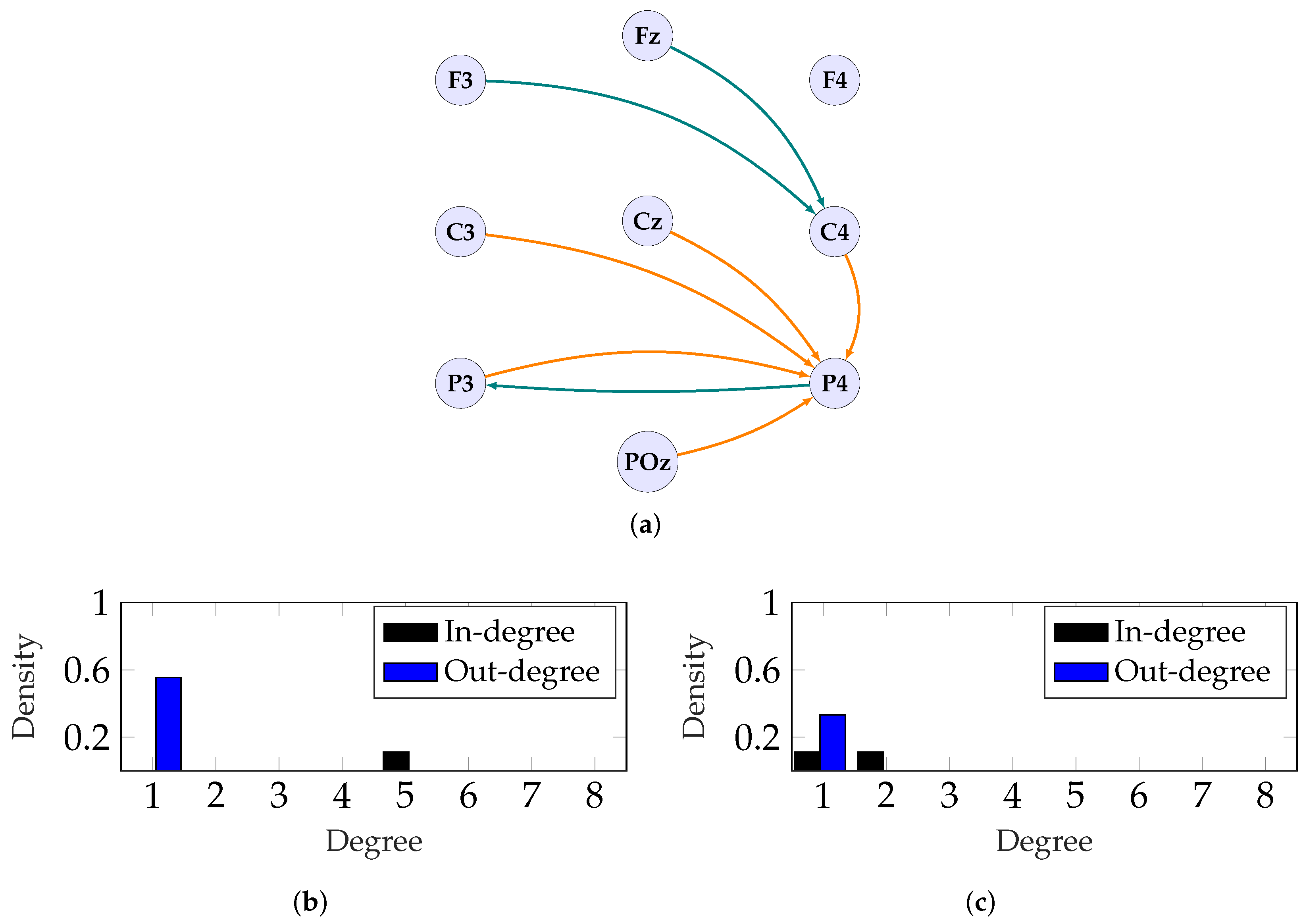
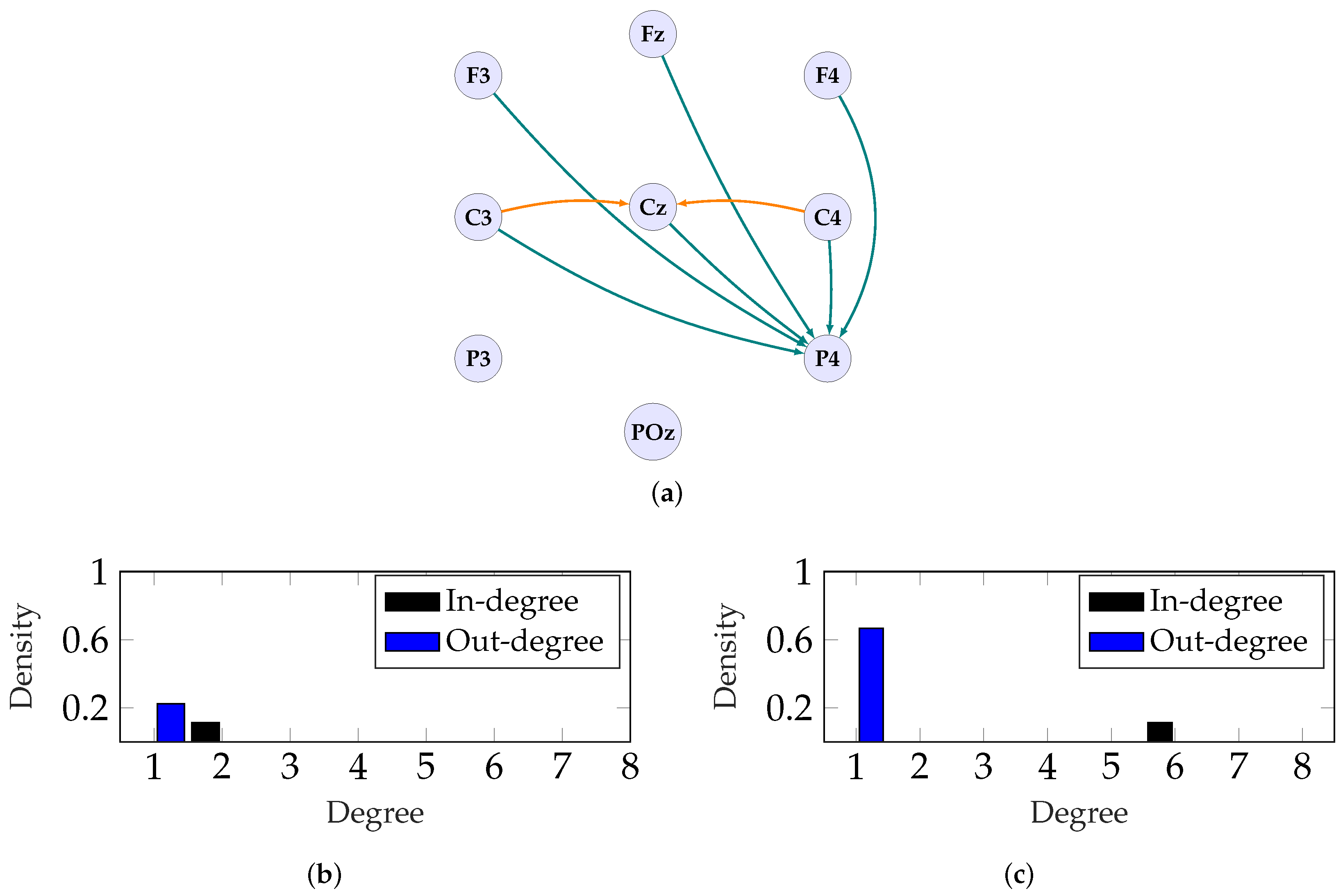
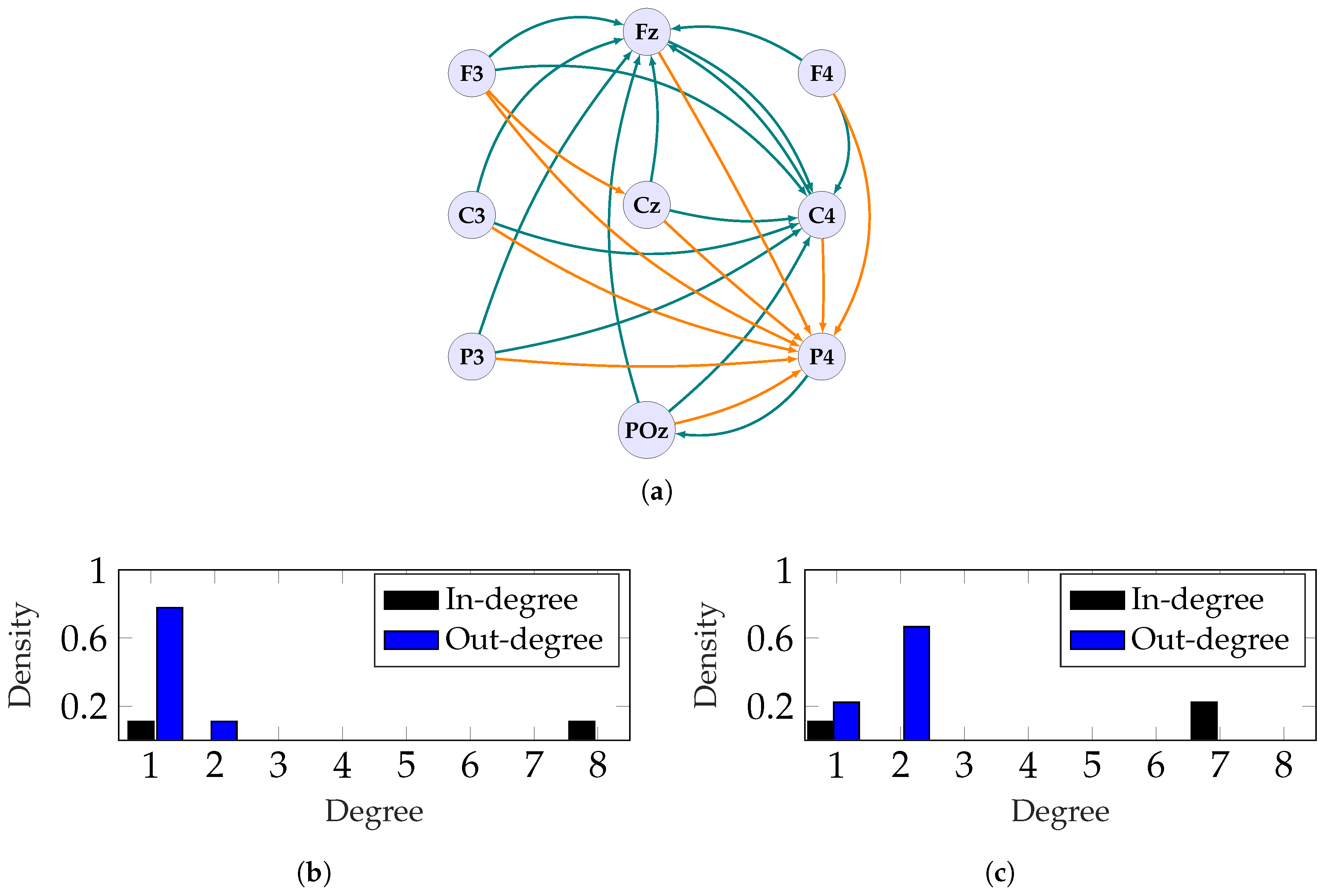
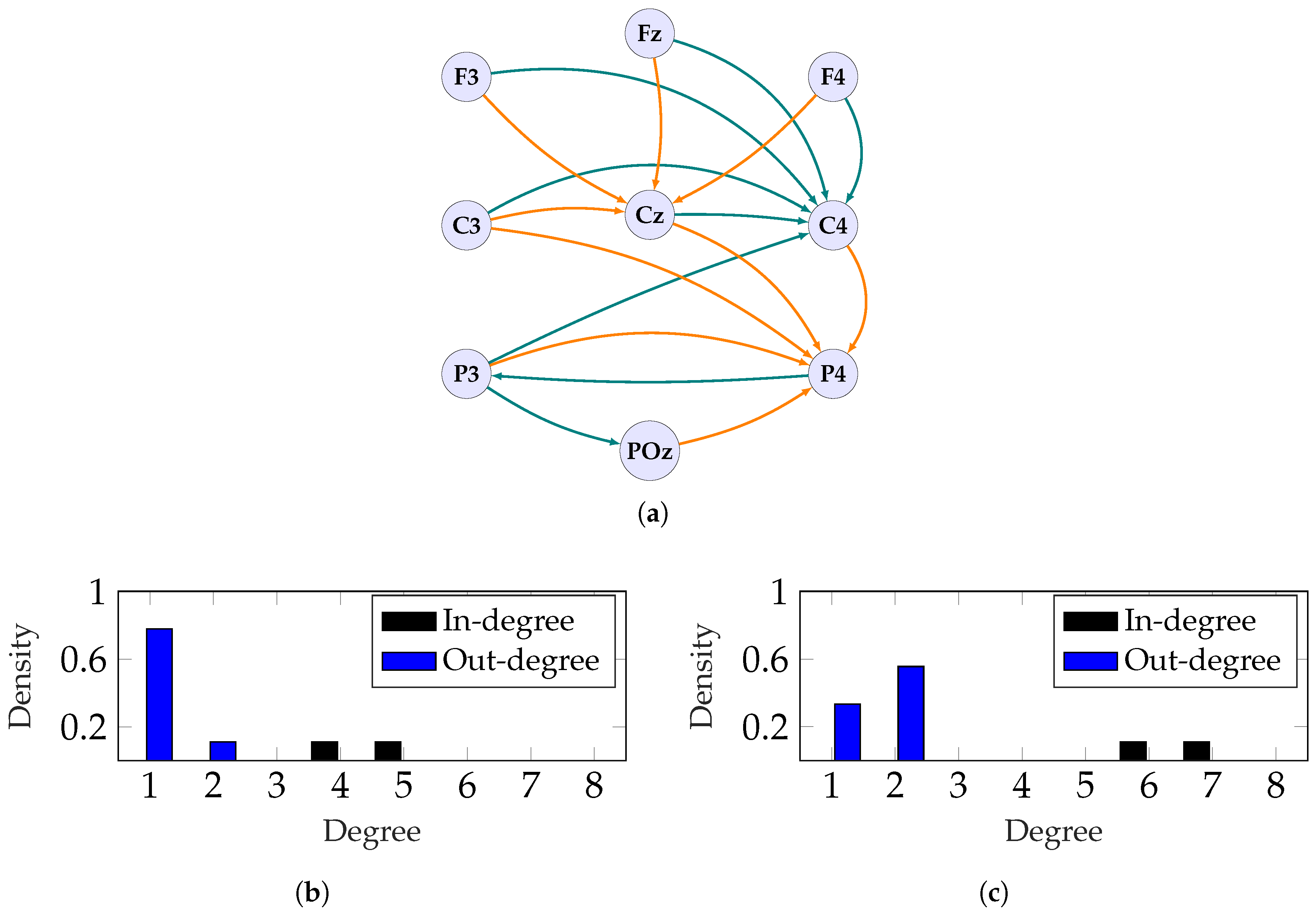
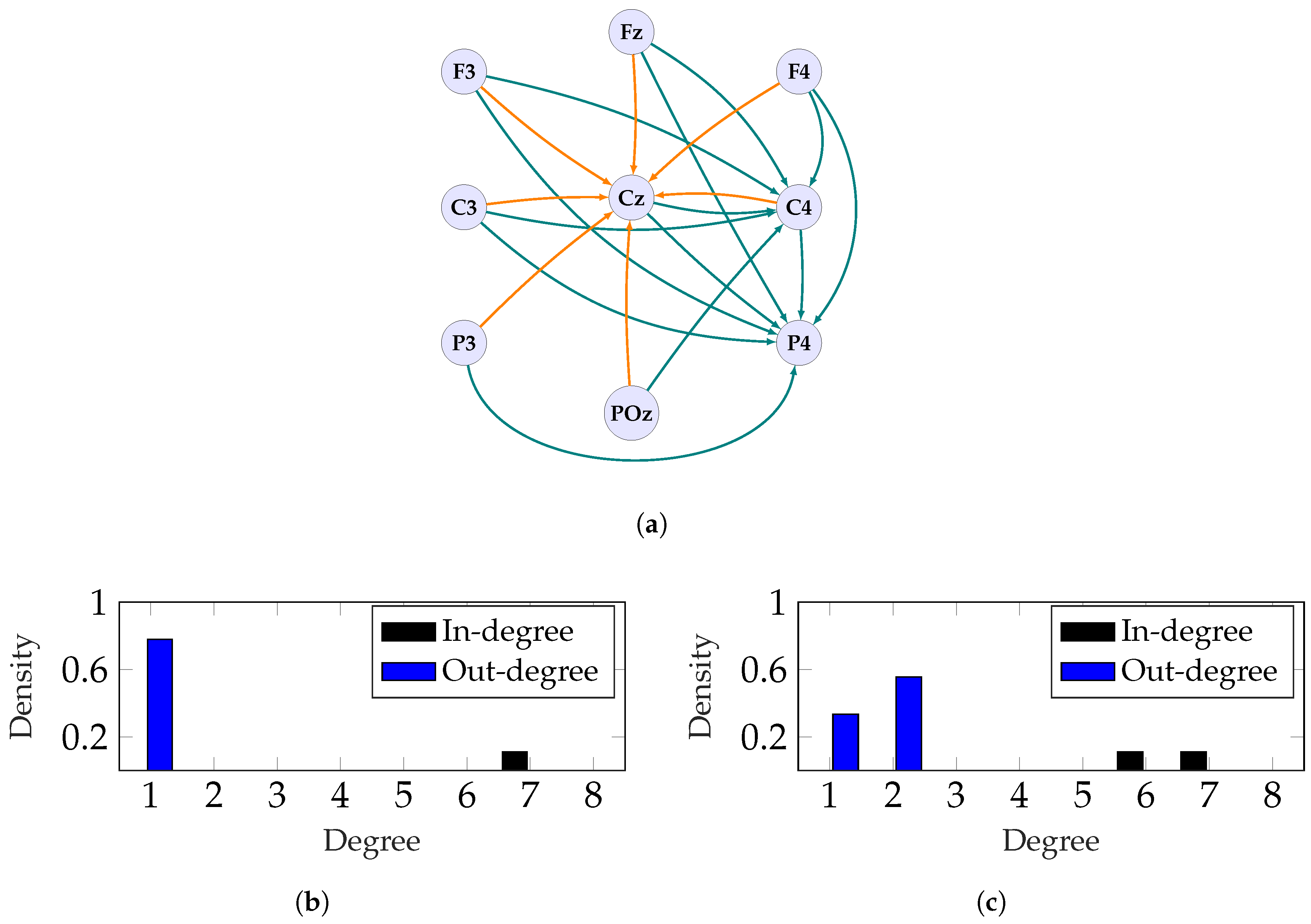
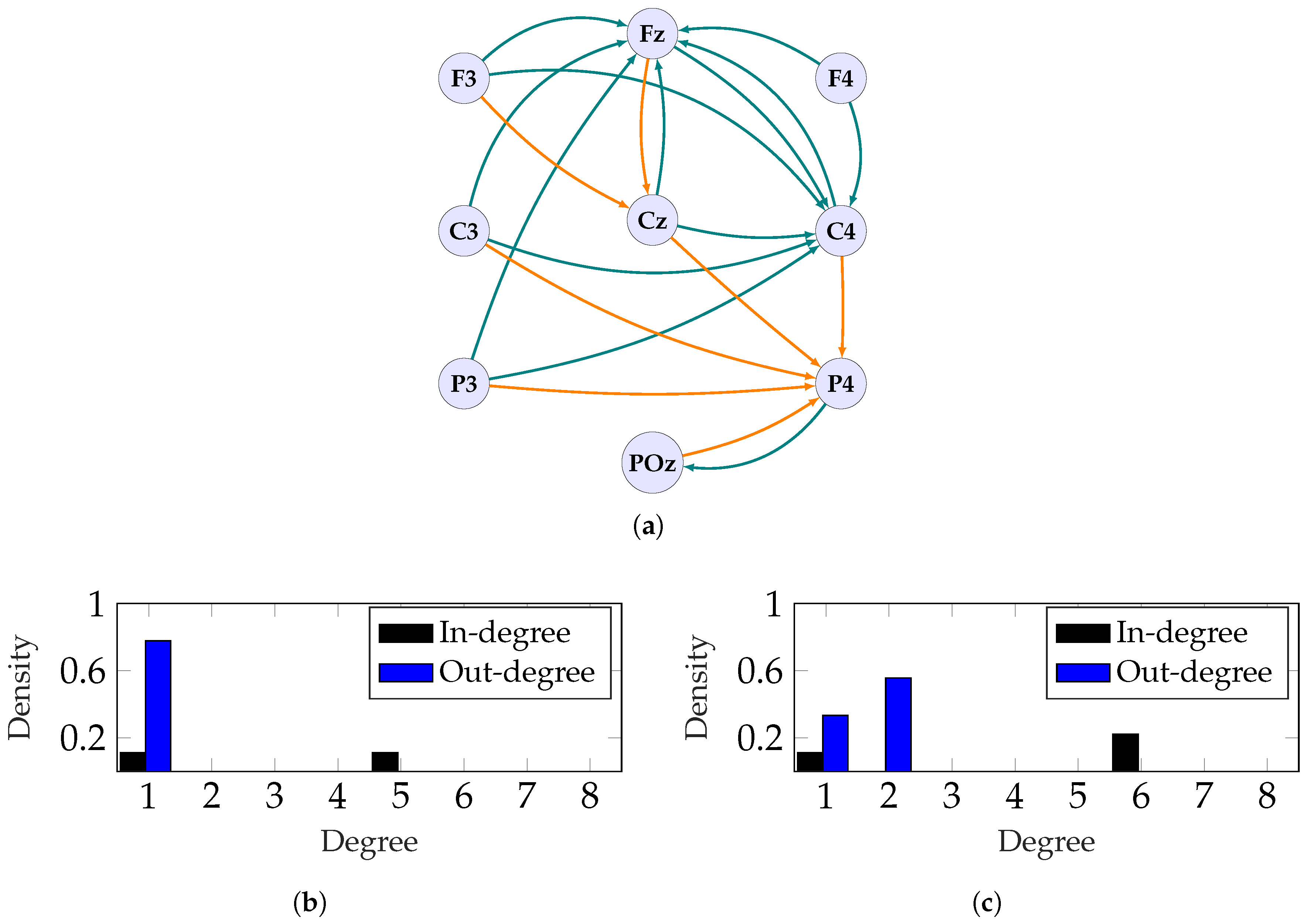
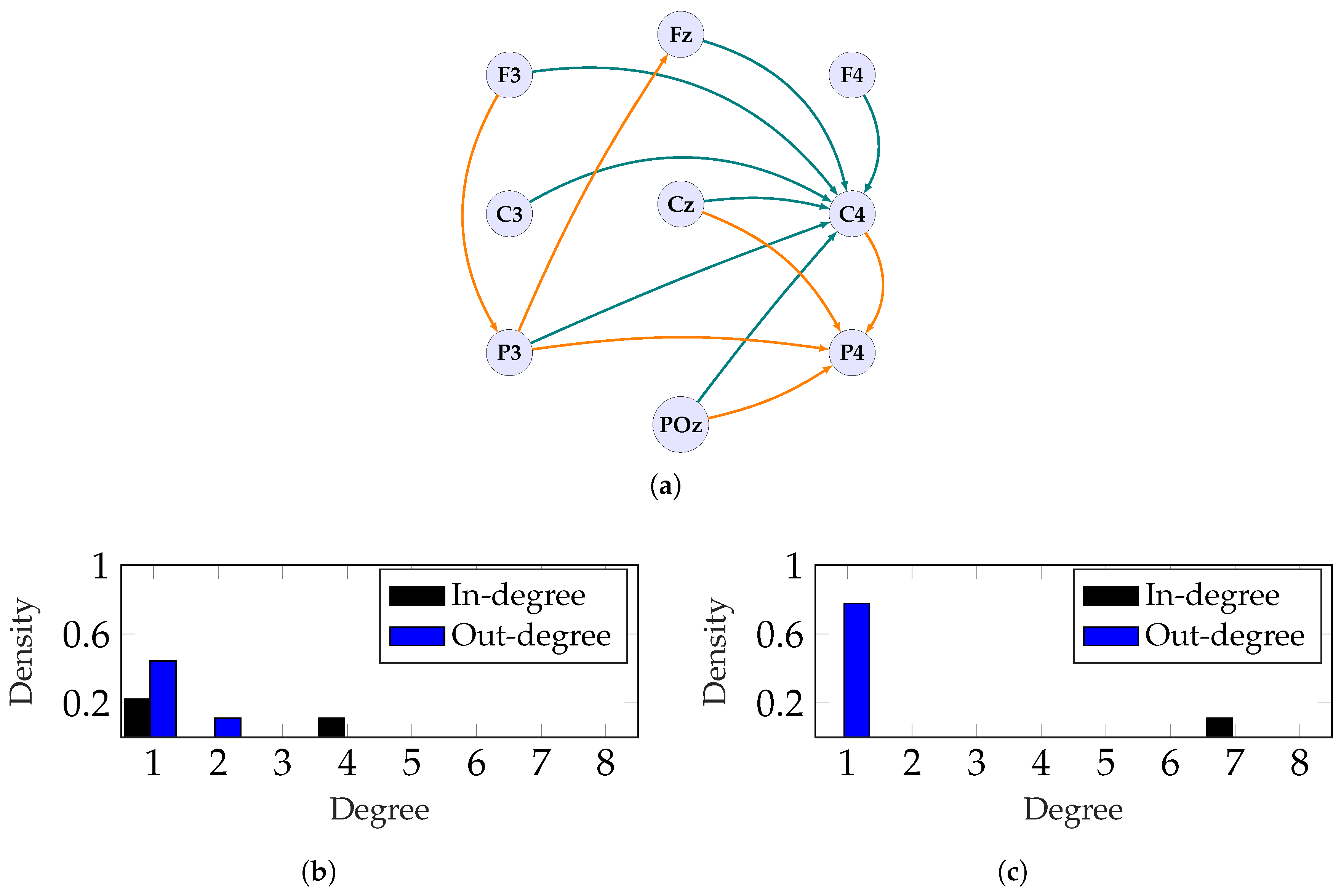
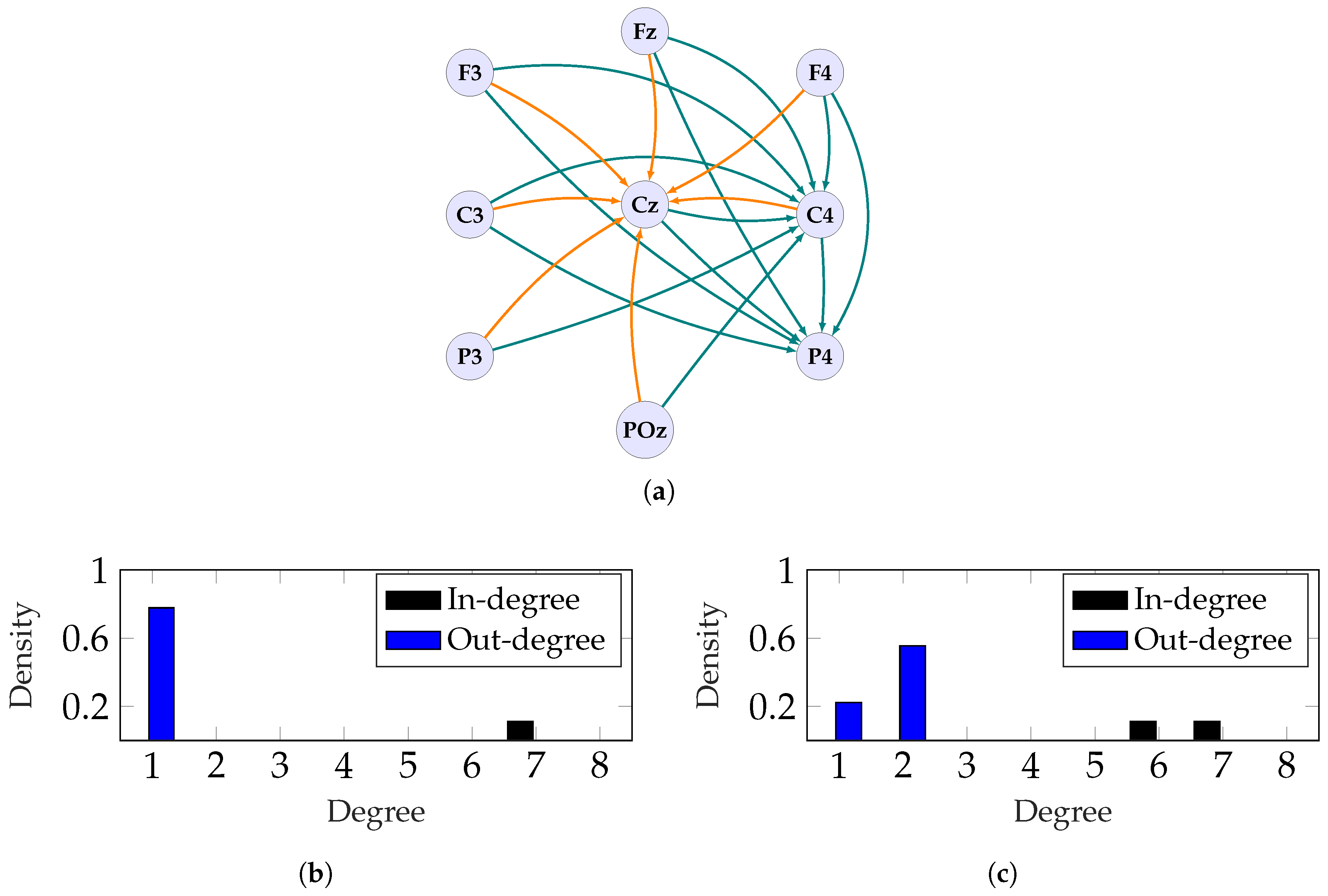
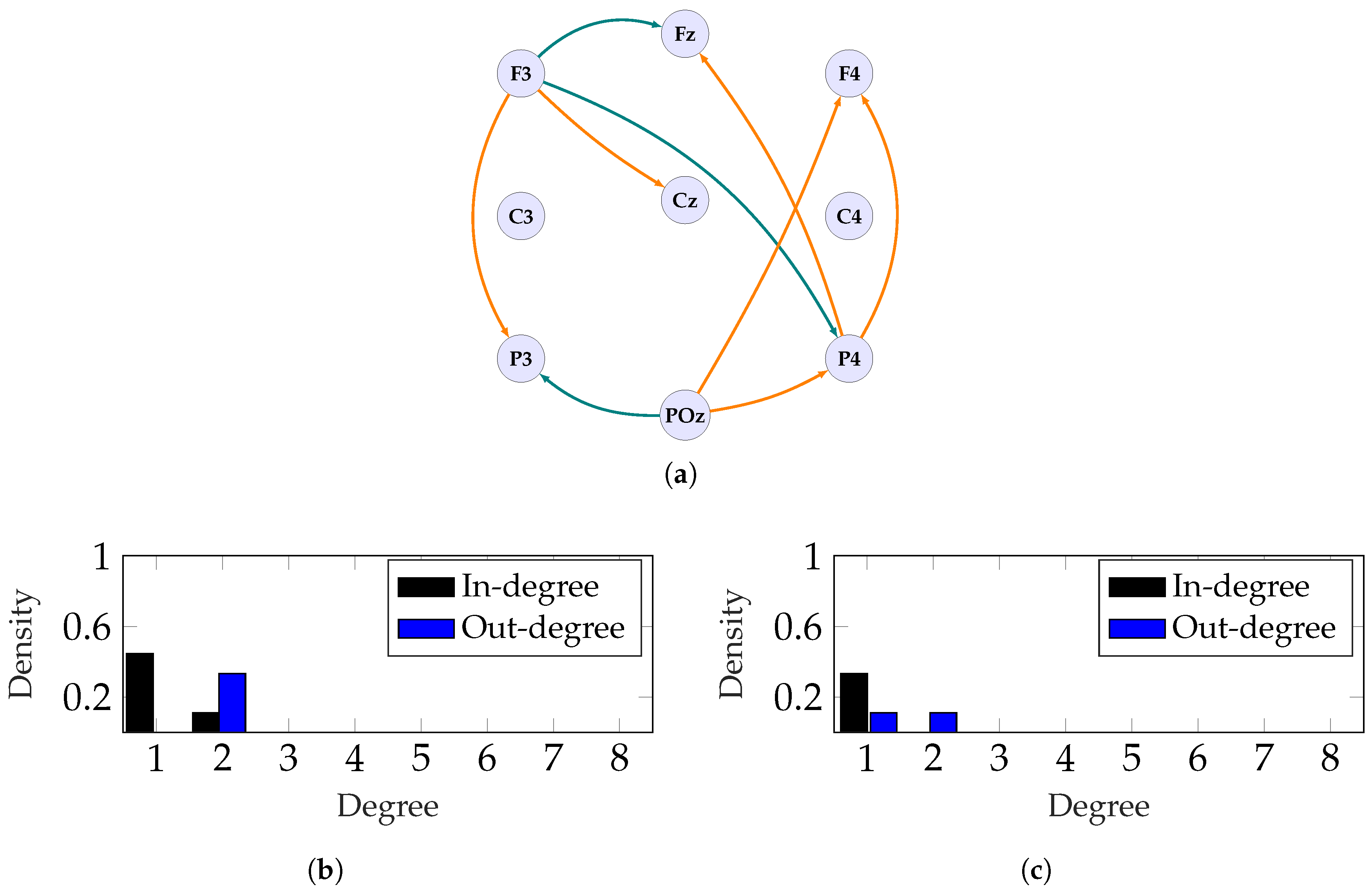
- (a)
- A spatial representation of the largest changes in connectivities that are preserved after thresholding the differences in PDC values between the last and first attempt of a lesson. The threshold used for binarization was % change in PDC value. Hence, changes greater than or less than were considered as a relevant increase or decrease, respectively. Such binarization allows for a compact representation of the most significant connectivities for a posterior analysis through measures of network topology (see, e.g., [17]), in which EEG measuring channels are considered as network nodes;
- (b)
- Density distributions of the change (increase or decrease) of the in-degree and out-degree of the directed networks. Those measures of degree indicate the number of connections being directed towards a node or getting out of a node, respectively. Then, the density is simply computed by dividing the number of nodes presenting a specific degree by the total number of nodes.
4. Discussion
4.1. Rhythm
4.2. Rhythm
4.3. Rhythm
4.4. Distribution of Connectivity Degree
4.5. Changes in Connectivity with Increasing Task Difficulty
4.6. Limitations of This Study
4.7. Future Work
- 1.
- How do interactions between different EEG rhythms, such as , , and bands, influence the process of learning, and can analyzing these couplings provide more comprehensive insights into neurocognitive mechanisms? Future research could explore cross-frequency coupling measures during skill acquisition [34].
- 2.
- How do individual differences, such as age, cognitive capacity, or prior experience, affect functional connectivity dynamics during learning? Personalized models and larger sample sizes could help tailor neurofeedback or educational interventions.
- 3.
- How do the observed changes in functional connectivity relate to long-term retention and transfer of learned skills? The experimental setup used to obtain the database involved a finite number of lessons and repetitions, which may not capture the full dynamics of longer-term learning processes and non-stationary brain activity, thus limiting external validity for more complex or extended training scenarios. It is clear that longitudinal studies assessing EEG dynamics beyond immediate training could evaluate the neural correlates of durable learning outcomes.
- 4.
- What are the neuroplasticity mechanisms underlying the observed decreases in specific rhythms like beta and gamma during learning, and can targeted interventions (e.g., neurofeedback, transcranial stimulation) enhance or accelerate the learning process?
5. Conclusions
- 1.
- EEG analytics can leverage the ability to monitor learners’ engagement and cognitive states in real-time, allowing for dynamic adjustments to training programs—such as modifying difficulty levels or providing targeted feedback—to improve skill acquisition and retention.
- 2.
- The proposed methodology enables identification of individual differences in functional brain connectivity related to learning, facilitating tailored training approaches that cater to each learner’s neurophysiological profile, thereby increasing efficiency and effectiveness.
- 3.
- Incorporating EEG-based measures of learning assessment provides an objective layer of evaluation—potentially leading to better understanding of how training translates to neurocognitive change.
- 4.
- Insights from the study can inform the design of neuroadaptive learning platforms that autonomously adjust content based on the learner’s brain activity, optimizing resource allocation and reducing time-to-competency.
Funding
Institutional Review Board Statement
Informed Consent Statement
Data Availability Statement
Conflicts of Interest
References
- Poldrack, R.A.; Congdon, E.; Triplett, W.; Gorgolewski, K.; Karlsgodt, K.; Mumford, J.; Sabb, F.; Freimer, N.; London, E.; Cannon, T.; et al. A phenome-wide examination of neural and cognitive function. Sci. Data 2016, 3, 160110. [Google Scholar] [CrossRef]
- Mullen, T.R.; Kothe, C.A.; Chi, Y.M.; Ojeda, A.; Kerth, T.; Makeig, S.; Jung, T.P.; Cauwenberghs, G. Real-time neuroimaging and cognitive monitoring using wearable dry EEG. IEEE Trans. Biomed. Eng. 2015, 62, 2553–2567. [Google Scholar] [CrossRef]
- Gutiérrez, D.; Ramírez-Moreno, M.A. Assessing a learning process with functional ANOVA estimators of EEG power spectral densities. Cogn. Neurodyn. 2016, 10, 175–183. [Google Scholar] [CrossRef] [PubMed]
- Blanco, A.D.; Ramirez, R. Evaluation of a sound quality visual feedback system for bow learning technique in violin beginners: An EEG study. Front. Psychol. 2019, 10, 165. [Google Scholar] [CrossRef] [PubMed]
- Jaušovec, N.; Jaušovec, K. Differences in induced brain activity during the performance of learning and working-memory tasks related to intelligence. Brain Cogn. 2004, 54, 65–74. [Google Scholar] [CrossRef]
- Gutiérrez, D.; Ramírez-Moreno, M.A.; Lazcano-Herrera, A.G. Assessing the acquisition of a new skill with electroencephalography. In Proceedings of the 2015 7th International IEEE/EMBS Conference on Neural Engineering, Montpellier, France, 22–24 April 2015; pp. 727–730. [Google Scholar] [CrossRef]
- He, B.; Yang, L.; Wilke, C.; Yuan, H. Electrophysiological imaging of brain activity and connectivity—challenges and opportunities. IEEE Trans. Biomed. Eng. 2011, 58, 1918–1931. [Google Scholar] [CrossRef]
- Gutiérrez, D.; Ramírez-Moreno, M.A. Electroencephalography Measurements During Colemak Typing Lessons. IEEE Dataport, 2020. Available online: https://ieee-dataport.org/open-access/electroencephalography-measurements-during-colemak-typing-lessons (accessed on 2 October 2025).
- Advanced Brain Monitoring. B-Alert Live Software User Manual D51-8201-2 Rev 6. 2019. Available online: https://www.biopac.com/wp-content/uploads/B-Alert-Live-Software-User-Manual.pdf (accessed on 2 October 2025).
- Berka, C.; Levendowski, D.J.; Cvetinovic, M.M.; Petrovic, M.M.; Davis, G.; Lumicao, M.N.; Zivkovic, V.T.; Popovic, M.V.; Olmstead, R. Real-time analysis of EEG indexes of alertness, cognition, and memory acquired with a wireless EEG headset. Int. J. Hum.-Comput. Interact. 2004, 17, 151–170. [Google Scholar] [CrossRef]
- Dorneich, M.C.; Whitlow, S.D.; Mathan, S.; Ververs, P.M.; Erdogmus, D.; Adami, A.; Pavel, M.; Lan, T. Supporting real-time cognitive state classification on a mobile individual. J. Cogn. Eng. Decis. Mak. 2007, 1, 240–270. [Google Scholar] [CrossRef]
- Berka, C.; Behneman, A.; Kintz, N.; Johnson, R.; Raphael, G. Accelerating training using interactive neuro-educational technologies: Applications to archery, golf and rifle marksmanship. Int. J. Sport Soc. 2010, 1, 87. [Google Scholar] [CrossRef]
- Dykstra, R.M.; Hanson, N.J.; Miller, M.G. Brain activity during self-paced vs. fixed protocols in graded exercise testing. Exp. Brain Res. 2019, 237, 3273–3279. [Google Scholar] [CrossRef]
- Baccalá, L.A.; Sameshima, K. Partial directed coherence: A new concept in neural structure determination. Biol. Cybern. 2001, 84, 463–474. [Google Scholar] [CrossRef] [PubMed]
- Schelter, B.; Winterhalder, M.; Eichler, M.; Peifer, M.; Hellwig, B.; Guschlbauer, B.; Lücking, C.H.; Dahlhaus, R.; Timmer, J. Testing for directed influences among neural signals using partial directed coherence. J. Neurosci. Methods 2006, 152, 210–219. [Google Scholar] [CrossRef] [PubMed]
- Rezaei, F.; Alamoudi, O.A.; Davani, S.; Hou, S. Fast asymptotic algorithm for real-time causal connectivity analysis of multivariate systems and signals. Signal Process. 2023, 204, 108822. [Google Scholar] [CrossRef]
- Rubinov, M.; Sporns, O. Complex network measures of brain connectivity: Uses and interpretations. Neuroimage 2010, 52, 1059–1069. [Google Scholar] [CrossRef] [PubMed]
- Pfurtscheller, G.; Lopes Da Silva, F.H. Event-related EEG/MEG synchronization and desynchronization: Basic principles. Clin. Neurophysiol. 1999, 110, 1842–1857. [Google Scholar] [CrossRef]
- d’Acremont, M.; Fornari, E.; Bossaerts, P. Activity in inferior parietal and medial prefrontal cortex signals the accumulation of evidence in a probability learning task. PLoS Comput. Biol. 2013, 9, e1002895. [Google Scholar] [CrossRef]
- Pfurtscheller, G. Event-related synchronization (ERS): An electrophysiological correlate of cortical areas at rest. Electroencephalogr. Clin. Neurophysiol. 1992, 83, 62–69. [Google Scholar] [CrossRef]
- Vilhelmsen, K.; Van der Weel, F.; Van der Meer, A.L. A high-density EEG study of differences between three high speeds of simulated forward motion from optic flow in adult participants. Front. Syst. Neurosci. 2015, 9, 146. [Google Scholar] [CrossRef]
- Chueh, T.Y.; Lu, C.M.; Huang, C.J.; Hatfield, B.D.; Hung, T.M. Collaborative neural processes predict successful cognitive-motor performance. Scand. J. Med. Sci. Sport. 2023, 33, 331–340. [Google Scholar] [CrossRef]
- Zhuang, P.; Toro, C.; Grafman, J.; Manganotti, P.; Leocani, L.; Hallett, M. Event-related desynchronization (ERD) in the alpha frequency during development of implicit and explicit learning. Electroencephalogr. Clin. Neurophysiol. 1997, 102, 374–381. [Google Scholar] [CrossRef]
- van Helvert, M.J.; Oostwoud Wijdenes, L.; Geerligs, L.; Medendorp, W.P. Cortical beta-band power modulates with uncertainty in effector selection during motor planning. J. Neurophysiol. 2021, 126, 1891–1902. [Google Scholar] [CrossRef]
- Tatti, E.; Ferraioli, F.; Peter, J.; Alalade, T.; Nelson, A.; Ricci, S.; Quartarone, A.; Ghilardi, M. Frontal increase of beta modulation during the practice of a motor task is enhanced by visuomotor learning. Sci. Rep. 2021, 11, 17441. [Google Scholar] [CrossRef]
- Gruber, T.; Müller, M. Oscillatory brain activity dissociates between associative stimulus content in a repetition priming task in the human EEG. Cereb. Cortex 2005, 15, 109–116. [Google Scholar] [CrossRef]
- Corbetta, M.; Shulman, G.L. Control of goal-directed and stimulus-driven attention in the brain. Nat. Rev. Neurosci. 2002, 3, 201–215. [Google Scholar] [CrossRef] [PubMed]
- Lang, W.; Beisteiner, R.; Lindinger, G.; Deecke, L. Changes of cortical activity when executing learned motor sequences. Exp. Brain Res. 1992, 89, 435–440. [Google Scholar] [CrossRef] [PubMed]
- Kaiser, J.; Lutzenberger, W. Induced gamma-band activity and human brain function. Neuroscience 2003, 9, 475–484. [Google Scholar] [CrossRef] [PubMed]
- Van Ede, F.; De Lange, F.; Jensen, O.; Maris, E. Orienting attention to an upcoming tactile event involves a spatially and temporally specific modulation of sensorimotor alpha-and beta-band oscillations. J. Neurosci. 2011, 31, 2016–2024. [Google Scholar] [CrossRef]
- Newton, A.T.; Morgan, V.L.; Gore, J.C. Task demand modulation of steady-state functional connectivity to primary motor cortex. Hum. Brain Mapp. 2007, 28, 663–672. [Google Scholar] [CrossRef]
- Zilverstand, A.; Sorger, B.; Zimmermann, J.; Kaas, A.; Goebel, R. Windowed correlation: A suitable tool for providing dynamic fMRI-based functional connectivity neurofeedback on task difficulty. PLoS ONE 2014, 9, e85929. [Google Scholar] [CrossRef][Green Version]
- Mohammadi, H.; Karwowski, W. Graph neural networks in brain connectivity studies: Methods, challenges, and future directions. Brain Sci. 2024, 15, 17. [Google Scholar] [CrossRef]
- Canolty, R.T.; Knight, R.T. The functional role of cross-frequency coupling. Trends Cogn. Sci. 2010, 14, 506–515. [Google Scholar] [CrossRef] [PubMed]


Disclaimer/Publisher’s Note: The statements, opinions and data contained in all publications are solely those of the individual author(s) and contributor(s) and not of MDPI and/or the editor(s). MDPI and/or the editor(s) disclaim responsibility for any injury to people or property resulting from any ideas, methods, instructions or products referred to in the content. |
© 2025 by the author. Licensee MDPI, Basel, Switzerland. This article is an open access article distributed under the terms and conditions of the Creative Commons Attribution (CC BY) license.
Share and Cite
Gutiérrez, D. Changes in Functional Connectivity of Electroencephalography While Learning to Touch-Type. Appl. Sci. 2026, 16, 84. https://doi.org/10.3390/app16010084
Gutiérrez D. Changes in Functional Connectivity of Electroencephalography While Learning to Touch-Type. Applied Sciences. 2026; 16(1):84. https://doi.org/10.3390/app16010084
Chicago/Turabian StyleGutiérrez, David. 2026. "Changes in Functional Connectivity of Electroencephalography While Learning to Touch-Type" Applied Sciences 16, no. 1: 84. https://doi.org/10.3390/app16010084
APA StyleGutiérrez, D. (2026). Changes in Functional Connectivity of Electroencephalography While Learning to Touch-Type. Applied Sciences, 16(1), 84. https://doi.org/10.3390/app16010084