1. Introduction
By 2030, 73.1% of Americans will be over the age of 65 [
1]. Currently, about 70% of older adults are affected by periodontal disease, and roughly 1 in 5 have untreated tooth decay [
2,
3]. Among older individuals, factors such as reduced manual dexterity, cognitive or physical limitations, and changes in immune function can increase the risk of developing root caries [
4].
Root caries remains a widespread concern, particularly affecting older adults by compromising their oral health and overall quality of life [
5]. It can lead to problems such as poor nutrition and impaired oral function. Epidemiological data indicate a global prevalence ranging from 25% to 100%, with approximately 41–42% of older adults affected, and annual incidence rates between 10% and 40% [
6]. These lesions, which usually form on the cervical root surfaces of teeth, are characterized by the demineralization and subsequent cavitation of root surfaces, involving enamel, cementum and dentin, and are typically classified as either non-cavitated (control) or cavitated [
7]. Non-cavitated lesions usually represent the early stage of decay, marked by mineral loss without structural damage, while cavitated lesions involve actual breakdown of the tooth surface [
8]. In addition, behavioral or systemic contributors such as inadequate oral hygiene, xerostomia, frequent carbohydrate intake, and reduced fluoride exposure contribute to the occurrence of root caries in older populations. If untreated at the proper time, these lesions might progress to the infection of the teeth’s pulp, often leading to tooth extraction due to unfavorable restorative outcomes. However, the effects of root caries go beyond damage to tooth structure. They frequently occur alongside periodontal disease, contributing to a complex relationship that influences both the oral and overall health of senior patients [
9].
The formation and progression of root caries are closely linked to the biofilm that develops on tooth surfaces, which is intensified by factors such as gingival recession and the inherently lower mineralization threshold of root tissues (critical pH 6.0–6.8) [
10]. These biofilms, as complex microbial communities including acidogenic microorganisms such as Streptococcus mutans, Lactobacillus, and Actinomyces, play a central role in both the onset and advancement of carious lesions. Their composition can be shaped by factors such as diet, oral hygiene, and saliva quality, which are particularly important for older patients. As people age, changes in the oral environment can alter the microbiome, potentially affecting how and where caries develop [
11].
In older adults, gingival recession often exposes more root surfaces, while changes in salivary flow and composition can further heighten the risk of root caries [
12]. Cavitated lesions in this group also tend to be more challenging to manage due to reduced access for cleaning and the protected spaces they create for biofilm buildup [
13]. Younger patients, though not exempt from root caries, generally exhibit different risk patterns influenced by habits such as diet and oral hygiene, as well as the condition of their periodontal tissues [
14].
Understanding the biofilm composition of root caries lesions is essential for developing targeted preventive and therapeutic strategies. The microbial composition of biofilms can indicate the potential pathogenicity of the lesion and inform the choice of antimicrobial agents or other interventions aimed at controlling or eliminating the biofilm [
15]. Differences in biofilm composition between healthy roots and cavitated root carious lesions and across different age groups can provide insights into the dynamics of root caries progression and the factors influencing the effectiveness of various treatment approaches.
Despite its clinical importance, research comparing the biofilm in control and cavitated root caries lesions across age groups remains limited. More data in this area could improve our ability to tailor care to patients at different stages of the disease and in other age brackets. As our knowledge of the oral microbiome continues to grow, focused studies like this are increasingly important.
This study aims to analyze and compare biofilm composition in control and cavitated root caries lesions across two age groups: adults younger than 65 and those 65 and older. This study provides information to develop prevention strategies to enhance oral health in older adults. The null hypothesis proposed that the microbial composition would be similar across both surface types and age groups.
2. Materials and Methods
2.1. Participants
Patients under comprehensive care enrolled in the Advanced Education in General Dentistry (AEGD) dental clinic at the University of Maryland School of Dentistry were screened for cavitated root caries lesions. The Institutional Review Board (IRB) and the University of Maryland School of Dentistry (Baltimore, MD, USA) approved the study (HP-00090352). Forty adults (23 females and 17 males) met the inclusion criteria after completing the clinical exam. The inclusion criteria were high caries risk, presence of a root-surface cavity, 18 years or older, having not taken any antibiotics in the last 6 months, or having received any active periodontal treatment in the previous 12 months, resulting in bleeding at the collection site. Patients who use orthodontic appliances or dentures attached to the tooth presenting RC lesion, alteration in the motor condition that modifies tooth brushing habits, use of commercial antiseptic mouthwash on the day of sample collection, history of current or past smoking, tobacco use, presence of gingival bleeding in the site of collection, and being pregnant or lactating were excluded. Each patient was randomly assigned to one of four groups: two control groups (B65C = 13, UP65C = 12) and two root caries groups (B65RC = 13, UP65RC = 6). Data were collected using a simple hand-sampling method at every opportunity. The informed consent was obtained from every patient to be included in the experiment. The mean age was 61.4 ± ~12.5 years, ranging from 34 to 84.
2.2. Clinical Assessment
The patients underwent a visual examination to assess signs of root caries, including discoloration or changes in root surface texture. Lesions may appear as dark spots or shadows that contrast with the lighter color of healthy root surfaces, ranging from light brown to black depending on the lesion’s age and activity level.
All clinical evaluations were performed under standard operatory lighting with magnification loupes to ensure consistent lesion detection. Inter-examiner calibration was not required, as a single examiner conducted all assessments; however, the examiner underwent an internal calibration exercise using 20 sample photographs and clinical cases to ensure diagnostic consistency with the ADA-CCM criteria.
Subsequently, patients were divided into four groups: two control groups (B65C = 13, UP65C = 12) and two root caries groups (B65RC = 13, UP65RC = 6). The control groups were RC-free, and the RC patients had one or more root caries lesions at the time of clinical examination. Root surface lesions were categorized as carious lesions when they present a dentinal cavitation with soft tissue. The American Dental Association Caries Classification System [
2] was used to diagnose and define RC lesions.
2.3. Biofilm Collection Sample
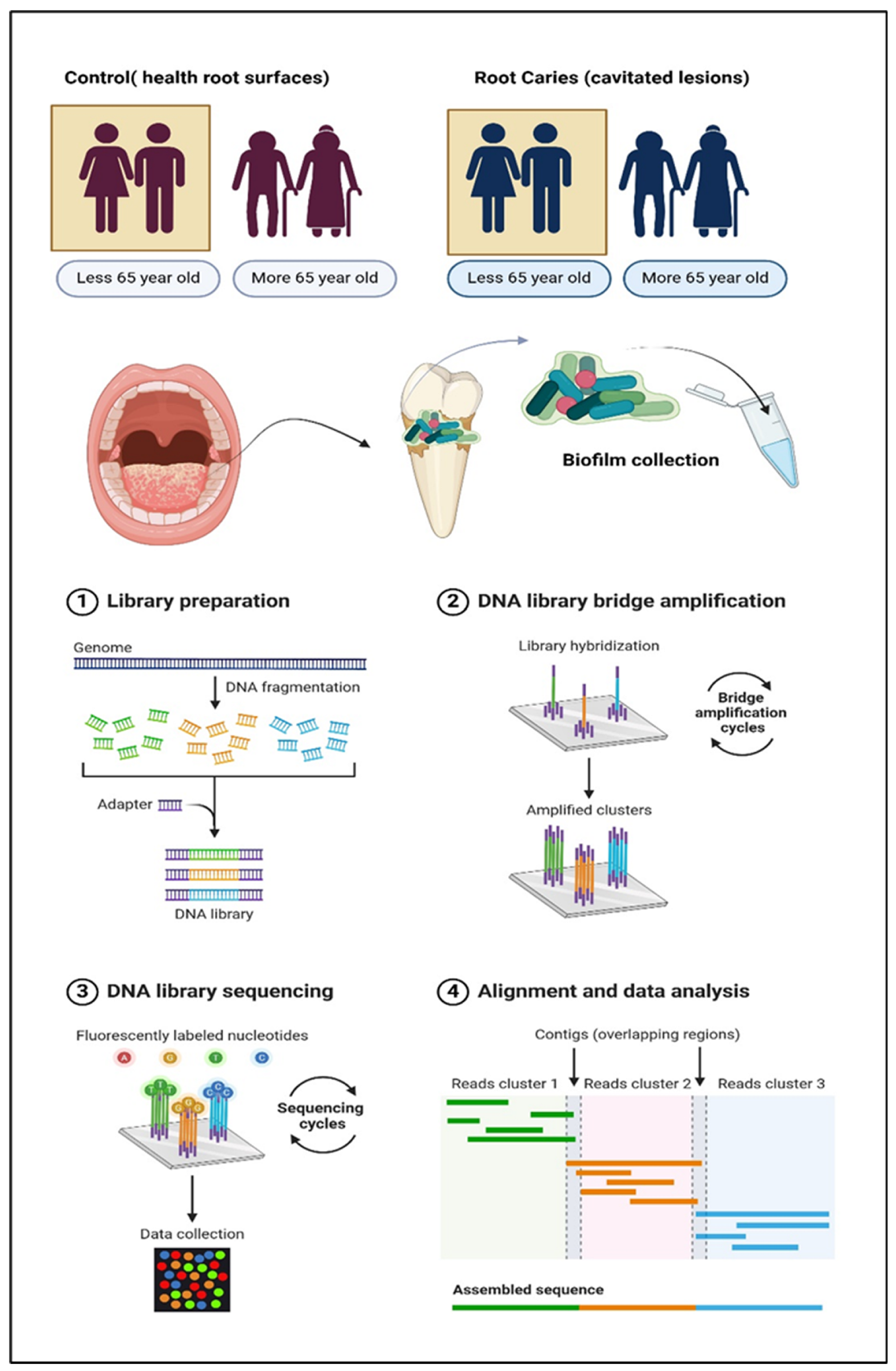
Collection followed strict aseptic procedures. Before sampling, the tooth surface was isolated with cotton rolls and gently air-dried for 5 s to avoid saliva dilution. Care was taken to avoid disturbing the gingival margin to reduce contamination from subgingival niches (
Figure 1). Each microbrush was rotated over the target area for 10 s to maximize biofilm retrieval. All samples were taken by one examiner (D.M). All specimens were placed into sterile 1.5 mL microcentrifuge tubes containing C 2.1 buffer solution (133 mM ammonium acetate, 0.04% sodium azide, and 0.04% bromophenol blue) and stored at −80 °C. Freeze–thaw cycles were avoided to preserve DNA integrity.
2.4. Sequencing Procedures
Prior to DNA extraction, samples were vortexed for 10 s to evenly disperse the biomass. DNA extraction followed Qiagen’s protocol and included a mechanical disruption step using sterile zirconia beads to improve the lysis of Gram-positive organisms with thick cell walls, such as Actinomyces and Corynebacterium.
Extracted DNA quality was assessed via Nanodrop spectrophotometry (Thermo Scientific, Camarillo, CA, USA) 260/280 ratio target ~1.8) and agarose gel electrophoresis. Library preparation was performed using the Illumina 16S Metagenomic Sequencing Library Preparation Kit, targeting the V3–V4 regions of the 16S rRNA gene. Dual-index barcoded primers were used, and the protocol was followed as per the manufacturer’s instructions.
Sequencing was conducted using an Illumina HiSeq 2500 platform (Illumina Inc., San Diego, CA, USA), adapted to produce 300 bp paired-end reads, at the Genomic Resource Center of the Institute for Genome Sciences, University of Maryland School of Medicine, Baltimore, MD, USA. Each sample yielded an average sequencing depth of approximately 45,000 reads, exceeding the recommended minimum for oral microbiome studies.
To control for contamination, negative extraction controls (blank tubes) and a ZymoBIOMICS Microbial Community Standard (mock community) were included throughout DNA extraction and library preparation. Potential contaminants were identified and filtered using the decontam R package version 3.6 (rlang, ggplot2) (utilizing both frequency and prevalence methods). Sequences present in negative controls but absent or rare (<0.1% relative abundance) in actual samples and the mock community were removed prior to analysis.
Bioinformatic processing was carried out using QIIME2. Reads underwent primer removal, denoising with DADA2, chimera filtering, and taxonomic classification using the SILVA 16S rRNA reference database. Operational taxonomic units (OTUs) were clustered at 97% similarity after denoising to ensure high accuracy. Sequencing depth was normalized across samples via rarefaction to allow for meaningful comparison of microbial communities.
Alpha diversity indices (Shannon and Simpson) and descriptive genus-level relative abundance profiles were calculated. Due to the small sample size and the study’s preliminary nature, no inferential statistical tests (e.g., PERMANOVA, differential abundance) were applied.
2.5. DNA Extraction and Purification
Bacterial DNA was extracted using the QIAamp DNA Mini Kit (Qiagen, Hilden, Renania, Germany), which includes a mechanical lysis step with zirconia beads to optimize recovery of Gram-positive taxa. The V3–V4 region of the 16S rRNA gene was amplified using primers compatible with the Illumina 16S Metagenomic Sequencing Library Preparation Kit.
Sequencing was conducted on the Illumina HiSeq 2500 platform, generating 300 bp paired-end reads, at the Genomic Resource Center of the Institute for Genome Sciences at the University of Maryland School of Medicine. Resulting reads were cleaned, quality-filtered, and clustered into OTUs at 97% similarity using the SILVA reference database for taxonomic assignment.
For the biofilm composition on healthy vs. cavitated root surfaces across the two age groups, only descriptive statistics were used to highlight meaningful trends in microbial composition; inferential statistical testing was not applied due to the exploratory design.
- (1)
Bacterial Diversity: Reporting each group’s average Shannon diversity index to describe the biofilm’s biodiversity. Higher values indicate a more diverse microbial community.
- (2)
Bacterial Dominance: Utilizing the Simpson’s dominance index to describe how evenly the bacteria are distributed within the biofilm. Lower values suggest a more equitable distribution among bacterial species.
- (3)
Most Prevalent Bacteria: Listing the most commonly identified bacteria in the biofilm of cavitated lesions and healthy root surfaces, along with their relative abundance percentages.
3. Results
Overall, 40 biofilm samples underwent complete sequencing analysis. Sequencing quality metrics showed an average Q30 score above 85%, indicating high-confidence base calls. Rarefaction curves plateaued for nearly all samples, confirming that the sampling depth was sufficient to capture within-sample diversity.
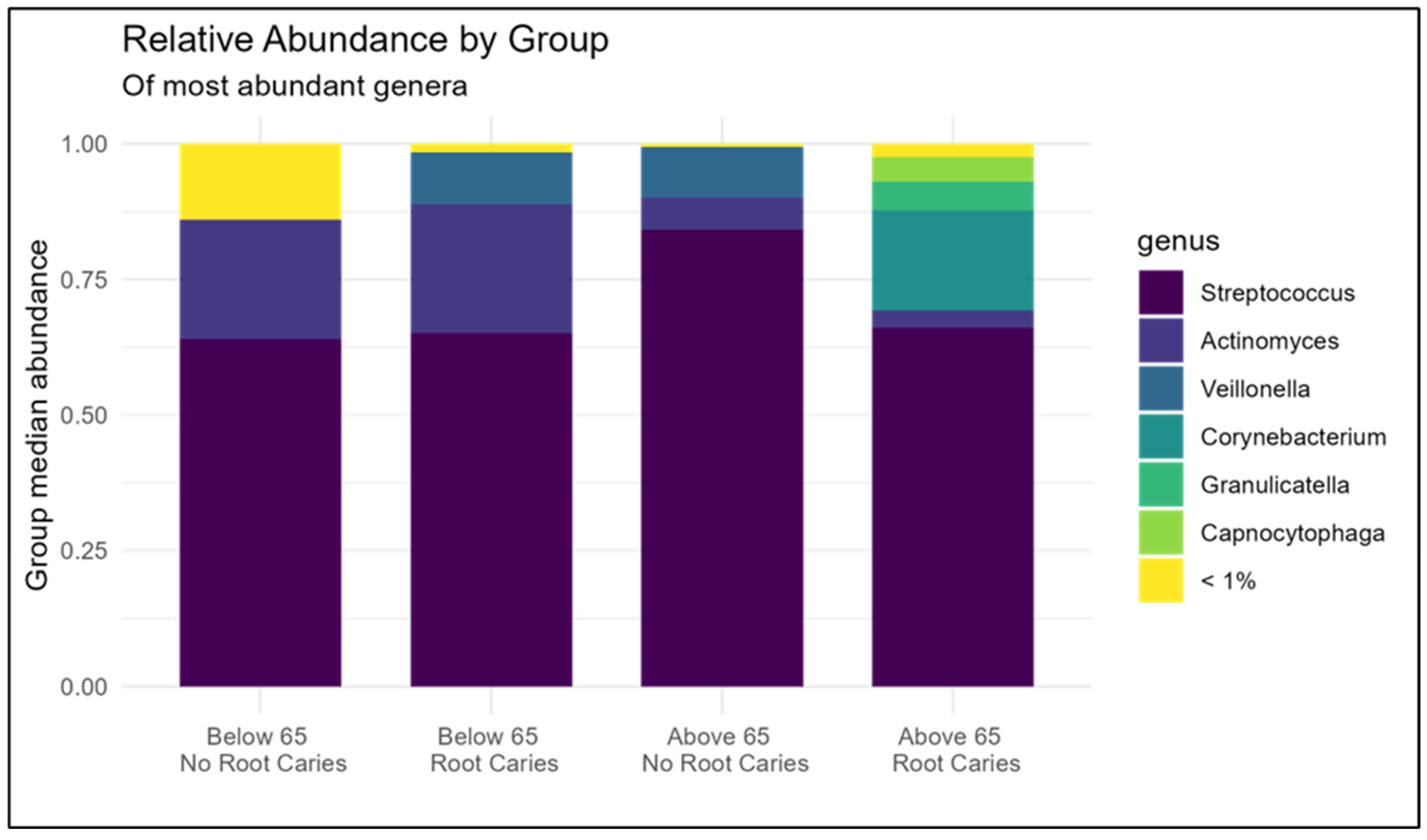
Across all groups,
Streptococcus spp. was the most abundant genus. However, in samples from cavitated surfaces, genera typically associated with mature or dysbiotic biofilms, such as
Corynebacterium spp.,
Actinomyces spp., and
Granulicatella spp. showed increased relative abundance compared to healthy surfaces. These differences varied by age group, as visualized in
Figure 2.
In the younger adult group (<65 years) with cavitated lesions, the microbial community was strongly dominated by Streptococcus spp. (mean relative abundance: 80%), with a notable presence of Actinomyces spp. relative to controls, suggesting a possible co-contribution of early colonizers to lesion formation in this group. This dominance coincided with lower representation of late colonizers, suggesting that root caries in younger adults may be driven by rapid acidogenic activity rather than prolonged biofilm maturation.
In contrast, older adults (≥65 years) with cavitated lesions showed a more diverse and evenly distributed community. In this group, Streptococcus spp. accounted for approximately 54% of the total community, while Actinomyces spp., Corynebacterium spp., and Capnocytophaga spp. were more prominent compared to the younger cohort and controls. These findings suggest that cavitated root surfaces in older adults may develop in a more complex ecological context, influenced by slower salivary clearance, medication-related xerostomia, or reduced mechanical plaque control.
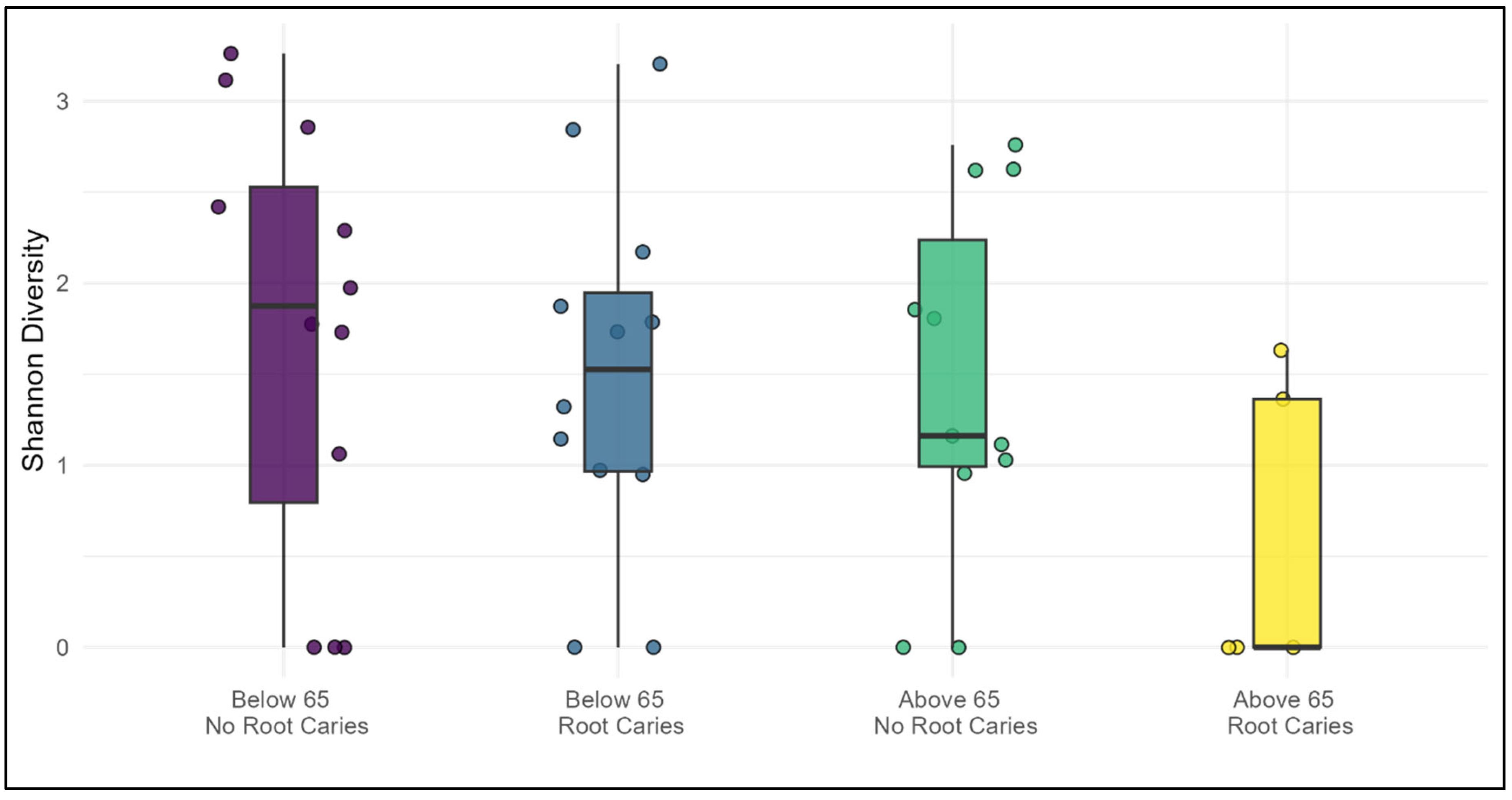
Shannon diversity index values (
Figure 3) were consistently higher on cavitated surfaces across age groups, showing richer microbial communities. This aligns with ecological drift theories, which suggest that cavitated niches create sheltered environments that support a broader microbial spectrum.
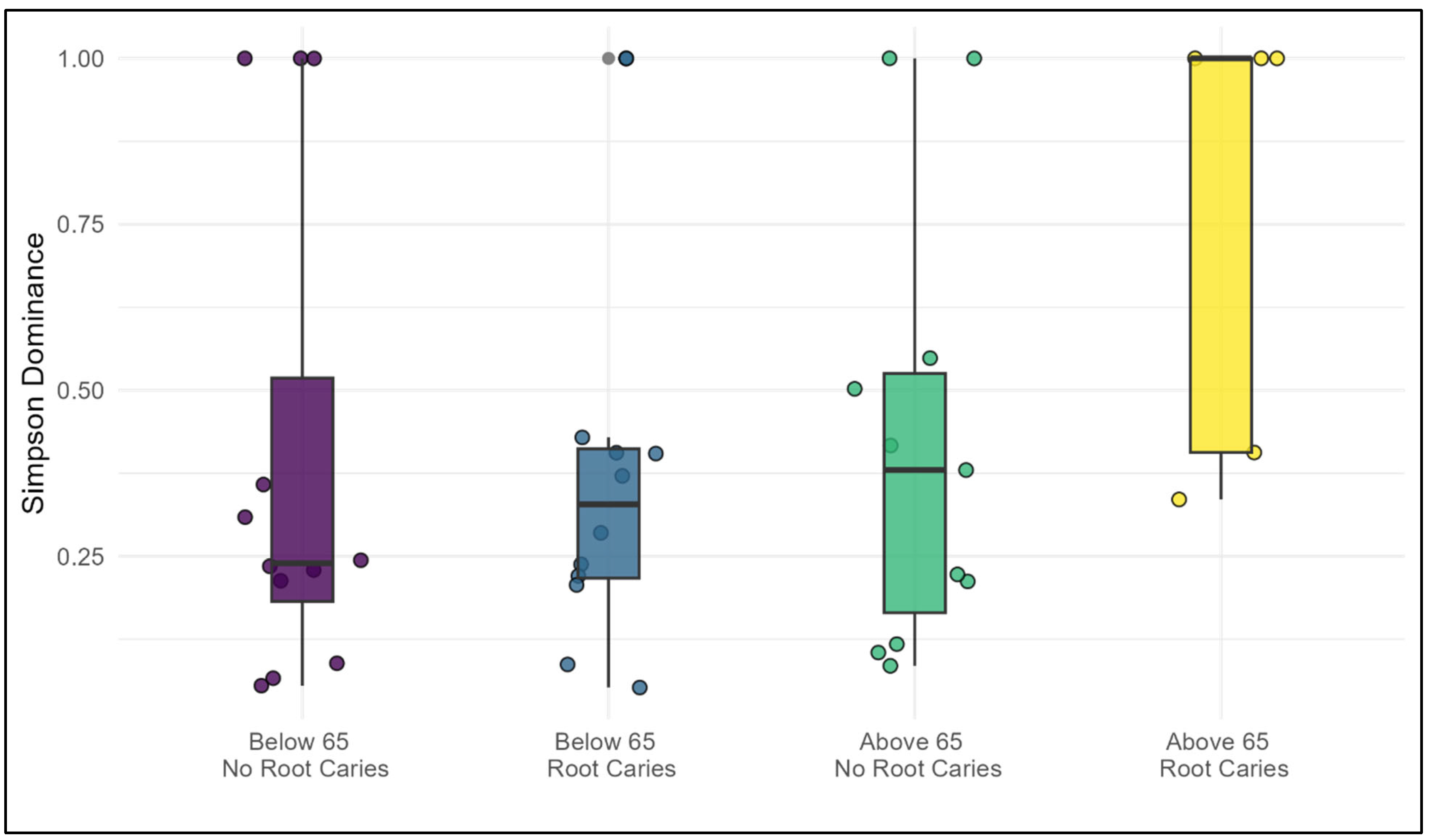
Simpson’s dominance index was lower in cavitated lesions, suggesting less dominance by a single taxon and greater community evenness (
Figure 4). Older adults, in particular, exhibited the lowest dominance values, indicating a more balanced microbial community structure.
The comparison between patients younger than 65 and those older than 65 reveals interesting trends. In general, older patients tend to show a different bacterial profile in their root caries lesions, possibly due to changes in saliva composition, pH, and other age-related oral health changes. These shifts could influence the oral microbial ecosystem, leading to differences in the predominant bacterial species between the two age groups. In the older cohort, the microbiome appears more diverse and structurally mature, reflecting the cumulative effects of long-term plaque accumulation, medications that reduce salivary flow, and a gradual decline in host immune factors. These conditions create a microenvironment that supports the growth of taxa typically associated with mature or more complex biofilms, such as Actinomyces, Corynebacterium, and Capnocytophaga, resulting in a community that is more evenly distributed and less dominated by a single genus.
The Shannon diversity index (
Figure 3), which measures bacterial community diversity, shows greater diversity in cavitated lesions across both age groups. This increased diversity within cavitated lesions suggests that the environment within these lesions supports a broader range of bacterial species. Moreover, the Shannon index may differ slightly between the two age groups, potentially reflecting age-related changes in oral microbiota composition. The Shannon index integrates two fundamental aspects of microbial ecology: (1) richness, which reflects the total number of different species present in the biofilm, and (2) evenness, which describes how uniformly these species are distributed. A community with many species that are present in relatively similar proportions will have a higher Shannon value than one dominated by a single taxon.
This metric is particularly relevant in dental research because caries is now understood as an ecological disease rather than a single-pathogen disease. A higher Shannon diversity in cavitated lesions indicates that, once structural breakdown occurs, the environment becomes more permissive, allowing both early and late colonizers to coexist. The exposed dentin, protected niches, and reduced mechanical disruption create conditions in which anaerobic, acidogenic, and proteolytic species can coexist, supporting a polymicrobial ecosystem that can accelerate lesion progression.
By contrast, a lower Shannon index on healthy root surfaces suggests a more stable and host-controlled microbiota dominated by a few health-associated species. These surfaces experience greater salivary flow, higher oxygen availability, and more frequent mechanical cleaning, all of which restrict microbial diversity.
Age-related differences in Shannon diversity offer additional insight. Older adults often experience reduced salivary flow due to systemic conditions and medications, gingival recession, and changes in immune function, all of which can alter the ecological balance on root surfaces. A slightly higher Shannon index in older adults may indicate a shift toward more complex, mature, and potentially more resilient biofilms. This pattern supports the growing evidence that aging creates ecological pressures that reshape the oral microbiome, potentially contributing to the higher burden of root caries in the elderly population.
Simpson’s dominance index (
Figure 4) quantifies the dominance of a given species within a community. The figures imply that control lesions tend to have higher dominance indices, suggesting that a few species predominate in these environments. In contrast, with their higher bacterial diversity, cavitated lesions would have a lower dominance index, indicating no single bacterial species overwhelmingly dominate the community. Simpson’s index provides a complementary perspective to the Shannon index by emphasizing the extent to which a community is dominated by one or a few highly abundant taxa. Mathematically, the index increases with dominance: if one taxon is numerically overwhelming, the Simpson value will be higher, reflecting a less even, more imbalanced ecosystem.
This observation is clinically meaningful because high dominance often reflects a biofilm in a more stable, host-controlled state rather than one undergoing ecological disruption. On healthy root surfaces, the higher Simpson’s index suggests that a limited group of health-associated bacteria—often Streptococcus, Actinomyces, or other early colonizers—constitute most of the community. These species thrive in oxygenated environments, benefit from regular mechanical disruption, and generally support a balanced biofilm compatible with host tissue health.
Cavitated lesions, in contrast, show lower Simpson values, showing that these biofilms are more evenly distributed across many different species. This aligns with the ecological progression of caries: once cavitation occurs and dentin becomes exposed, the microenvironment becomes sheltered, acidic, and low in oxygen, allowing anaerobic, proteolytic, and aciduric organisms to coexist. Instead of a single taxon dominating the lesion, a broader consortium takes part in the breakdown of the organic matrix, biofilm maturation, and lesion progression.
This reduced dominance in cavitated lesions also illustrates the concept of “microbial sharing of ecological niches,” where multiple taxa exploit the protected dentin environment. Such polymicrobial communities are known to be more resilient to disruption—whether mechanical, chemical, or antimicrobial—indicating why cavitated lesions often show more chronic disease behavior and require more extensive clinical management.
Age may further influence these dominance patterns. Older adults frequently exhibit greater microbial evenness due to factors, such as reduced salivary flow, systemic comorbidities, and medication use, all of which create conditions that favor the coexistence of multiple taxa. Therefore, lower dominance in older adults’ cavitated lesions could reflect a more mature, metabolically diverse microbial network, contributing to the higher treatment complexity observed in geriatric root caries.
Together, Simpson’s dominance index helps show not only the structural differences between healthy and cavitated biofilms but also how ecological stability varies with age and lesion severity. This ecological interpretation provides a deeper understanding of why cavitated lesions behave differently and may require tailored therapeutic strategies.
4. Discussion
In this study, dental plaque samples from the root surface, with and without carious lesions, were collected from two age groups for genomic analysis. Unlike traditional culture-based techniques, culture-independent approaches, commonly involving saliva and dental plaque samples, were used to examine the oral microbiome [
16,
17]. The results refuted the null hypothesis, showing that the microbial composition differed among the studied groups.
The findings of this study highlight the intricate and age-dependent nature of the oral microbiome associated with root caries. The distinct microbial signatures observed across lesion types and age groups reinforce the view that root caries is not the result of a single pathogenic species, but rather a polymicrobial process shaped by host factors, lesion environment, and microbial interactions [
9,
10,
18].
For example, Streptococcus spp. dominated cavitated lesions in younger adults (<65 years), accounting for 80% of total reads. In contrast, this genus comprised only 54% of reads in older adults (≥65 years) with cavitated lesions. An increase in Actinomyces spp. parallelled this reduction in dominance. (7%), as well as higher levels of Corynebacterium spp. and Capnocytophaga spp. in older adults. On healthy root surfaces, Actinomyces spp. made up 21% of the microbiota in older adults, compared to only 5% in younger individuals, suggesting age-related microbial shifts even in non-cavitated conditions.
The observed dominance of the most prevalent genus in cavitated root caries lesions across all age groups aligns with previous studies, which frequently identified it as a key player in the cariogenic process within the root caries-associated microbiota [
15,
18]. However, the marked difference in its prevalence between younger (80%) and older individuals (54%) with cavitated lesions suggests that age-related changes influence oral microbial dynamics. This variation indicates that the microbial ecosystem associated with root caries is not static but evolves with age, possibly due to physiological changes, alterations in immune response, or differences in oral hygiene practices over time [
19,
20].
Interpretations of the functional roles of specific genera are informed by the existing literature but were not directly tested in this study. The increased abundance of
Actinomyces in healthy root surfaces among older adults (21%) compared to younger individuals (5%) is particularly noteworthy.
Actinomyces is often associated with the initial stages of dental plaque formation and has a recognized role in the development of root caries [
21]. For instance,
Corynebacterium spp. has been shown in prior work to form structural scaffolds in mature biofilms, promoting spatial organization and coaggregation with
Actinomyces spp. and
Streptococcus spp. [
22]. Although our data show increased abundance of
Corynebacterium spp. in older adults, its structural role in lesion stability was not assessed here. These observations may suggest that aging influences the ecological trajectory of oral biofilms, although direct measurements of contributing host factors (e.g., salivary flow or immune function) were not included in this study. The higher prevalence of healthy roots in older adults could indicate a predisposition to root caries, highlighting the importance of preventive care and monitoring in this population [
22].
Our findings also align with, and in some ways diverge from, established patterns observed in coronal (enamel) caries. Both conditions share common early colonizers, such as
Streptococcus spp. and
Veillonella spp., which are frequently associated with acid production and pH-driven dysbiosis [
19,
20]. However, root caries lesions appear to support a more diverse and structurally complex microbial community, particularly in older adults. Genera such as
Actinomyces spp. and
Corynebacterium spp. are more prominently involved in root caries than in typical coronal lesions, possibly due to the anatomical and physiological differences between enamel and cementum surfaces, as well as slower lesion progression on root surfaces.
The presence of other bacteria, such as
Veillonella, Corynebacterium, Granulicatella, and
Capnocytophaga, and their distinct distribution patterns across age groups and lesion surfaces further illustrate the complexity of the oral microbiome. Recent evidence has shown
Corynebacterium’s prominence in mature oral biofilms, and its morphological and coaggregation features reveal that its long, filamentous cells serve as a scaffold for “hedgehog”-like biofilm architectures, organizing early colonizers such as
Actinomyces and
Streptococcus spp. along its filaments [
11,
15,
21]. In the context of cavitated root lesions, where salivary clearance is limited and immune factors are diminished,
Corynebacterium’s structural role likely promotes the persistence and spatial stability of pathogenic consortia, thereby contributing to lesion chronicity in older adults [
23,
24]
In contrast, the higher abundance of
Veillonella ssp. in the younger cohort’s lesions might reflect metabolic conditions, such as increased carbohydrate availability or oral pH profiles more favorable to acidogenic and aciduric bacteria. Given
Veillonella’s reliance on lactate produced by other species, such as
Streptococcus, its role in young individuals may involve synergistic relationships that facilitate caries progression in early-stage lesions [
25,
26]. While this explanation aligns with the observed microbial patterns, it remains speculative in the absence of functional or metabolic profiling.
Overall, the observed compositional differences between age groups suggest the influence of age-related changes on microbial ecology. Factors such as immune function, saliva composition, and systemic health conditions, such as diabetes, likely shape these microbial communities, creating niches that favor specific taxa over others [
27]. These results support a growing body of evidence that, as we age, attention to preventive strategies for root caries is warranted.
The variations in the Shannon diversity index and Simpson’s dominance index observed in this study follow a similar trend. The Shannon index, which quantifies diversity within a community by considering both species abundance and evenness, revealed greater diversity in cavitated lesions across all age groups, as expected given the complexity of the microorganisms involved [
28].
On the contrary, the Simpson’s dominance index, which emphasizes the concentration of dominance within a community, illustrates another aspect of microbial dynamics by indicating how evenly spread the bacterial population is. A lower dominance index in cavitated lesions implies a more equitable distribution of species, contrary to what one might expect in a disease-associated biofilm, where a few pathogenic species often predominate [
29].
The findings emphasize how lesion status and patient age shape the root-surface microbial ecosystem in distinct ways. The higher microbial diversity observed in cavitated lesions aligns with ecological succession models, suggesting that once structural breakdown occurs, the lesion becomes a protected microenvironment that can sustain multiple interacting taxa.
In younger adults, the heavy dominance of Streptococcus highlights a potential early dysbiosis pathway characterized by acidogenic–aciduric species. This mirrors findings from studies showing that younger adults often develop smooth-surface and root lesions in the presence of frequent carbohydrate exposure and rapid pH cycling [
30,
31]. Such lesions may progress more quickly but may also be more responsive to targeted metabolic interventions such as arginine-based toothpaste or high-fluoride varnish.
In older adults, the increased presence of Actinomyces and Corynebacterium aligns with age-associated oral changes documented in recent literature. Both genera are implicated in the architecture of complex multispecies root-surface biofilms and have been shown to thrive under conditions of lower salivary flow, altered buffering capacity, and increased gingival recession [
32]. Their increased abundance on healthy surfaces suggests that older adults may maintain subclinical dysbiosis longer before cavitation becomes evident. This group may benefit from enhanced plaque control, extended fluoride exposure, and hydration or saliva therapy to support oral defense mechanisms.
A more even distribution of bacteria within cavitated lesions (lower Simpson index) reinforces the notion that, once the hard tissue barrier is breached, the lesion becomes a shared ecological niche rather than one dominated by a single pathogen. This is clinically relevant: multispecies lesions may be more resistant to conventional antimicrobial therapies, suggesting that older adults might benefit from longer exposure times or combination preventive strategies. Another important observation is the sharper contrast between healthy and cavitated surfaces in older adults. This could mean that age amplifies the ecological shift that comes with cavitation. With multiple comorbidities and widespread medication use contributing to reduced saliva production [
33], older adults experience microbial pressures that may accelerate the transition from stable to dysbiotic biofilms [
34].
The study’s methodological strengths include standardized sample collection, high sequencing depth, and careful exclusion criteria to minimize confounders. Nevertheless, the cross-sectional design prevents causal inference, and functional metagenomic analyses were not conducted. Future studies should employ longitudinal designs and metagenomic or metatranscriptomic approaches to better understand the metabolic potential and temporal dynamics of these microbial communities.
While this study offers new perspectives on how age and lesion status affect root caries biofilms, it also has limitations. Our single-center, cross-sectional approach, which excluded individuals who had recently undergone antibiotics or periodontal therapy, may have skewed the sample and limited the generalizability of these results. Because one examiner collected biofilms at a single time point, we could not observe how communities shift over time or account for variation between operators. Salivary flow, medication use, and systemic health conditions were not measured in our study, Finally, using 16S rRNA sequencing tells us who is there but not what they are doing, so no insights into functional genes or expression driving caries. Functional gene activity was not assessed. Despite these constraints, our findings can inform future longitudinal and functional metagenomic studies and refine strategies for manipulating biofilm ecology in root caries management. Taken together, these findings emphasize that root caries, particularly in older adults, should be viewed not only as a structural disease but also as an ecological one shaped by aging biology, oral hygiene patterns, salivary function, and host–microbe interactions. Preventive strategies may need to shift toward personalized interventions that consider age-specific microbial profiles.




 and
and