Article

Dust Dispersion Mechanisms and Rail-Mounted Local Purification in Drill-and-Blast Tunnel Construction


1
School of Civil Engineering, Central South University, Changsha 410075, China
2
Jiangxi Communications Investment Group Co., Ltd., Nanchang 330009, China
*
Author to whom correspondence should be addressed.
Appl. Sci. 2026, 16(1), 519; https://doi.org/10.3390/app16010519
Submission received: 11 December 2025 / Revised: 31 December 2025 / Accepted: 2 January 2026 / Published: 4 January 2026
(This article belongs to the Special Issue Industrial Safety and Occupational Health Engineering)

Abstract

Drill-and-blast tunnel construction continuously releases high-intensity dust during drilling, blasting, and shotcreting, while conventional forced ventilation is often insufficient to control dust migration and worker exposure. This study develops three-dimensional Euler–Lagrange gas–solid two-phase models for these three typical processes to clarify the spatiotemporal dispersion of polydisperse dust and to explore effective control strategies. The simulations show that all processes generate a persistent high-concentration dust belt near the tunnel face, and a low-velocity recirculation zone at the crown acts as a structural hotspot of dust accumulation that is difficult to purge by longitudinal ventilation. Particle size strongly affects dispersion behaviour: coarse particles rapidly settle near the source under gravity, whereas fine and medium-sized particles remain suspended for long periods and can be transported over long distances, particularly after blasting. Based on these findings, a rail-mounted purification system with a dynamically adjustable position along the tunnel is proposed, and its preferred deployment zones are determined to work synergistically with the main airflow. The system is designed to perform near-source and crown-targeted removal, providing an engineering-oriented “dynamic local purification plus overall ventilation dilution” pathway for improving air quality in drill-and-blast tunnel construction.

1. Introduction

Drill-and-blast tunneling is widely used in mountain tunnel construction for its strong adaptability, but drilling, blasting and shotcreting generate large amounts of high-concentration dust in a short time, threatening workers’ respiratory health and on-site visibility [1,2]. In the confined and elongated tunnel space, the airflow is constrained by the surrounding rock, making it difficult to form efficient ventilation paths. Dust rapidly accumulates near the source and, driven by the ventilation flow, migrates axially along the tunnel to form large polluted zones. The frequent change in dust sources, rapid construction pace and coupling of multiple flow structures lead to transient, multi-scale dispersion that is difficult to control with conventional ventilation and dust-removal systems [3].
In recent years, computational fluid dynamics (CFD) has become an important tool for analysing dust dispersion in drill-and-blast tunnels [4,5]. Gas–solid Euler–Lagrange models, in which the airflow is solved in an Eulerian framework and dust particles are tracked in a Lagrangian framework, can resolve transient concentration fields, migration paths and deposition zones under realistic tunnel geometries and ventilation conditions. Existing studies have used such models to simulate drilling and blasting operations, to examine the influence of ventilation parameters and tunnel gradient on dust evolution, and to evaluate modified ventilation layouts or local extraction devices [6,7,8]. These works clarify key features of airflow–dust interaction at the heading and provide a quantitative basis for optimising construction ventilation.
At the same time, these studies consistently indicate that press-in longitudinal ventilation remains the dominant method for dust removal [9], but its structural limitations are evident. Although it can rapidly dilute dust near the duct outlet, its effect weakens along the tunnel as flow velocity decays and the available air volume at the heading decreases [10,11]. Low-velocity recirculation regions easily form near the crown and wall corners, where dust is trapped and gradually accumulates [12]. Fine particles that escape the near-face region are transported downstream into low-velocity zones in the rear of the tunnel, where the main flow is too weak to remove them efficiently [13]. As a result, conventional longitudinal ventilation often fails to eliminate high dust concentrations at the face and crown and may even extend pollution towards downstream work areas.
Overall, current research has not yet resolved the dust problem in drill-and-blast tunnels. Numerical simulations are most often setup for a single operation—drilling, blasting or shotcreting—so their dispersion characteristics are seldom compared within a unified tunnel model under consistent boundary conditions. High-risk regions at the face, crown and mid-tunnel are usually identified qualitatively; only a few studies quantitatively examine, in a systematic way, how particles of different sizes migrate to and accumulate in these regions. In addition, most existing work still focuses on refining longitudinal ventilation schemes by adjusting duct layouts and air volumes, whereas studies on new mobile or local purification systems remain relatively scarce.
To address these issues, this study establishes three-dimensional Euler–Lagrange gas–solid models for drilling, blasting and shotcreting under realistic geometric and ventilation conditions. The models are used to analyse the spatiotemporal evolution, migration pathways and enrichment patterns of dust with different particle sizes across the three operations, and to compare their dispersion characteristics within a unified framework. On this basis, a rail-mounted mobile purification system is proposed that moves synchronously with excavation activities and acts on identified high-risk zones. Its layout and operating ranges are optimised to provide a mechanistic and engineering reference for air-quality control in drill-and-blast tunnel construction.

2. Numerical Model and Methods

2.1. Theoretical Background of Dust Generation and Transport

In drill-and-blast tunnel construction, dust is mainly generated during drilling, blasting, and shotcreting. During drilling, the drill bit repeatedly impacts the rock, producing large amounts of cuttings; these are fragmented and entrained by compressed air, forming a high-concentration and nearly continuous dust source. In blasting, explosive gases expand rapidly and carry fine particles into the tunnel, while the blast-induced transient turbulent flow drives dust to spread over a short time. During shotcreting, high-pressure air jets accelerate cement and mortar particles; part of the material rebounds at the impact surface, producing fine dust. These three processes differ in emission duration, particle-size distribution, and dispersion patterns, giving rise to complex dust behaviour in the tunnel.
The dispersion of dust in a tunnel is treated as a typical gas–solid two-phase flow, where air is the continuous phase and dust particles are the dispersed phase. Because the ventilation velocity is far below 0.3 Mach, the airflow is modeled as incompressible and governed by the standard continuity and momentum equations. Particle motion is described by Newton’s second law under the combined action of drag, gravity, buoyancy, pressure-gradient and lift forces, and turbulent diffusion is considered through an effective diffusion coefficient [14,15,16]. On this basis, an Euler–Lagrange gas–solid two-phase framework is adopted, in which the airflow is solved in an Eulerian manner and dust particles are tracked in a Lagrangian manner.

2.2. Numerical Model Development

2.2.1. Geometric Model and Physical Assumptions

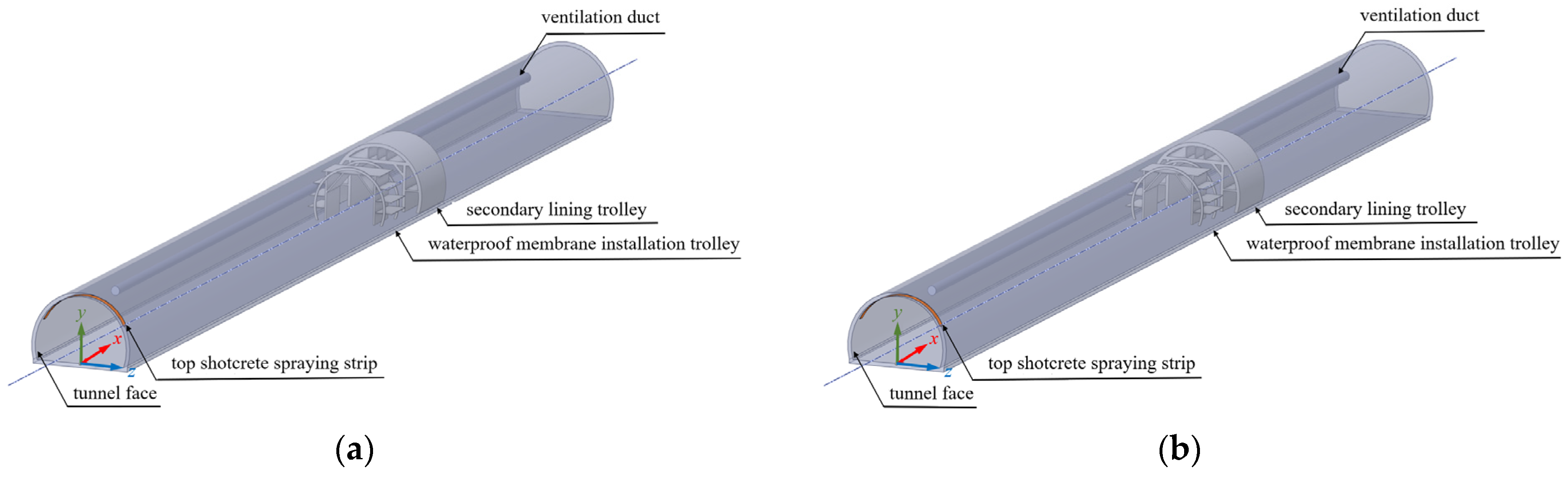
A three-dimensional numerical model of a 200 m long tunnel section was established based on a representative highway tunnel segment in Class III surrounding rock conditions, as shown in Figure 1. The tunnel has a circular-arched cross-section with a diameter of 13 m and a crown-to-invert height of 8.5 m. The waterproof-membrane installation trolley and the secondary-lining trolley were positioned 110 m and 120 m away from the tunnel face, respectively. The ventilation duct, with a diameter of 1.2 m, was placed 30 m from the face, and its centerline was 4 m above the tunnel floor.
To balance computational efficiency and engineering fidelity, the following physical assumptions are adopted:
(1) Only major structures that significantly disturb the airflow (ventilation duct, secondary-lining trolley, waterproof-membrane installation trolley) are included, whereas workers, lighting, and drainage facilities are neglected.
(2) The influence of wall roughness on airflow is neglected; tunnel walls are treated as reflective boundaries for dust particles, and the floor is defined as a trapping surface.
(3) Air is treated as an isothermal, incompressible fluid.
(4) Dust particles are assumed to be rigid spheres subjected to gravity, buoyancy, pressure-gradient force, Saffman lift, and aerodynamic drag.

2.2.2. Mesh Generation and Independence Study

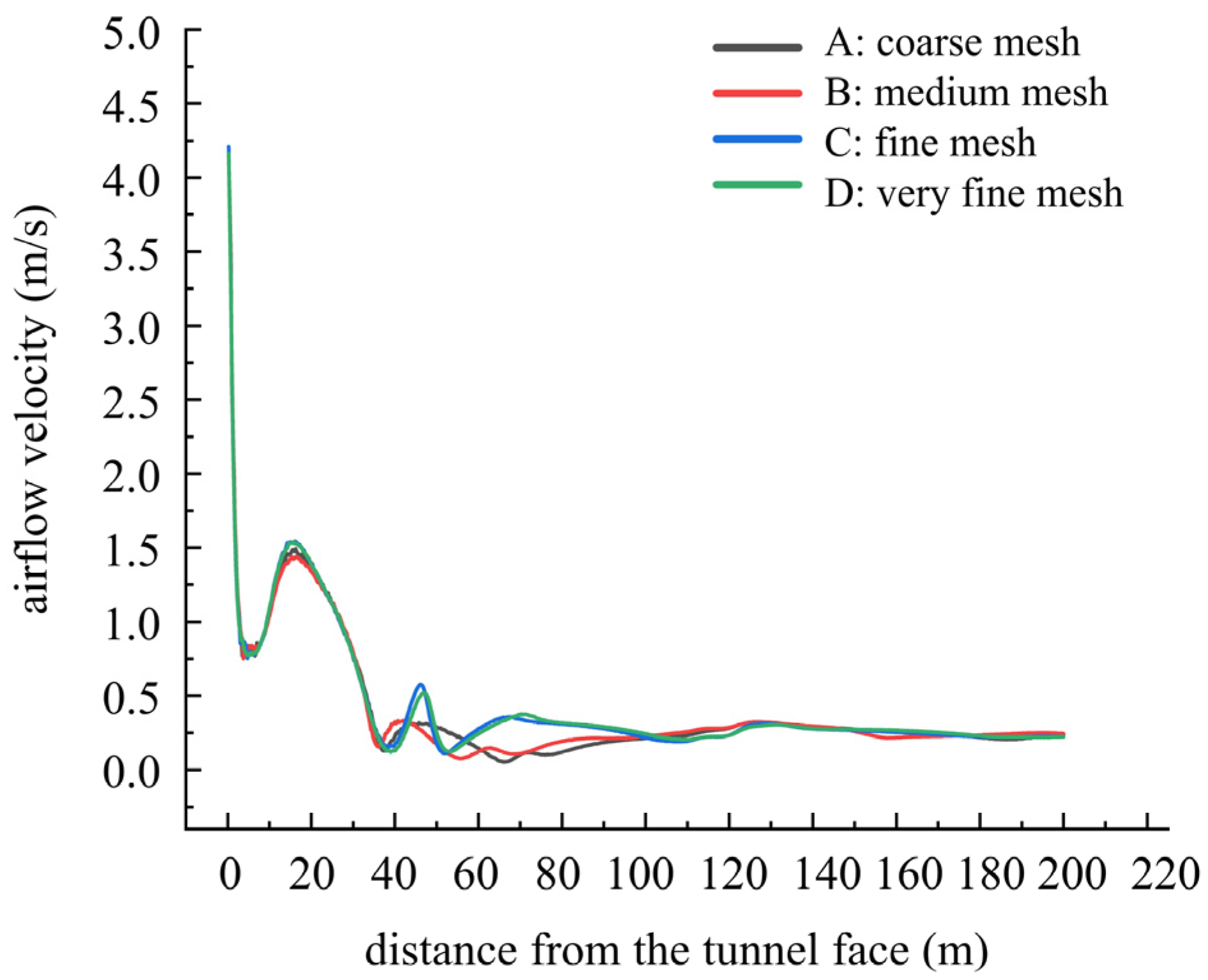
Polyhedral elements are used for discretization. Four meshes with different densities are generated: coarse mesh A (714,305 cells), medium mesh B (1,010,214 cells), fine mesh C (1,629,611 cells), and very fine mesh D (2,951,531 cells). For each mesh, once the solution converges, the air velocity at 800 monitoring points at a height of 1.5 m along the tunnel axis is extracted to perform a mesh-independence study [17,18]. The longitudinal velocity distributions under different meshes are shown in Figure 2.
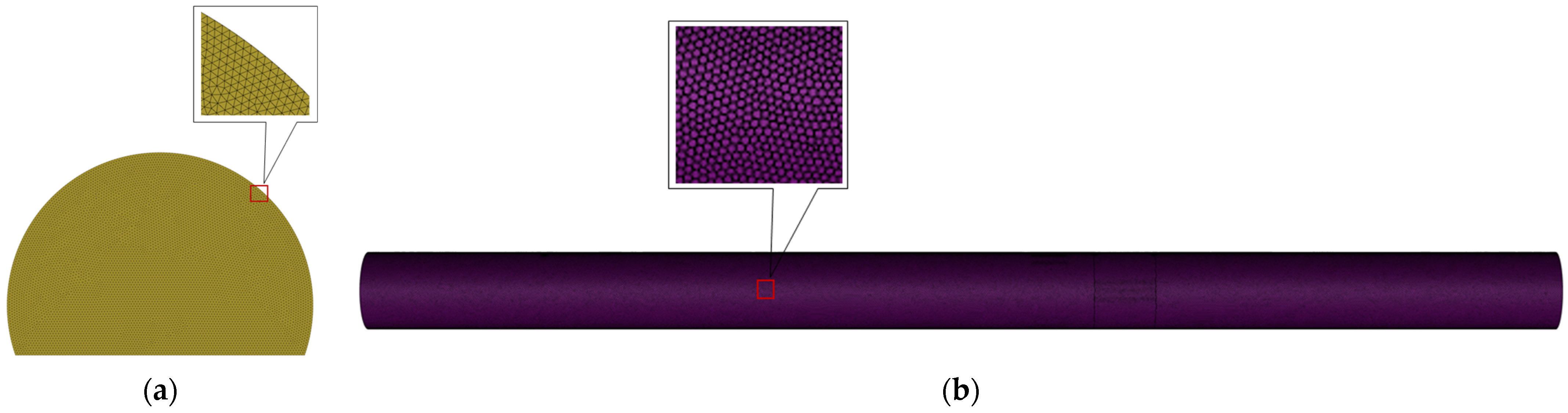
The results indicate that when the total cell number exceeds approximately 1.63 × 10⁶, the velocity distribution along the tunnel becomes nearly invariant, satisfying mesh-independence requirements. Consequently, mesh C (1,629,611 cells) is adopted. The mesh is locally refined near the dust emission zones and the ventilation inlet, with cell sizes down to 0.01 m, and gradually coarsened to 0.1–0.2 m in the far field, as illustrated in Figure 3.

2.2.3. Benchmarking Strategy for Model Validation

Direct full-scale measurements under exactly the same tunnel geometry, ventilation layout, and operating schedules are not available for the present study. To strengthen the credibility of the CFD–DPM predictions, we therefore conduct an indirect validation (benchmarking) against independent published field/experimental data on drill-and-blast tunnel construction [13,19,20]. The benchmarking focuses on three observable aspects that are representative of the governing physics: (i) the magnitude and temporal evolution of blasting dust (e.g., peak concentration level and multi-stage temporal behaviour); (ii) particle-size-dependent transport, especially the long-range suspension and downstream/crown contamination tendency of fine particles; and (iii) ventilation-driven decay/clearance characteristics (e.g., rapid near-face reduction but persistent downstream tail retention under longitudinal ventilation). The detailed benchmarking comparisons are reported in Section 3.4. While such benchmarking cannot replace one-to-one site validation, it provides an evidence-based consistency check that the key conclusions remain aligned with independent measurements reported in the literature.

2.3. Initial and Boundary Conditions

2.3.1. Initial Airflow and Source Terms

A forced (press-in) longitudinal ventilation scheme is adopted. The duct outlet is prescribed as 15 m/s and is oriented normal to the tunnel face, consistent with the on-site ventilation design. Unless otherwise specified, this ventilation condition is applied throughout the simulations.
(1)
Drilling dust source
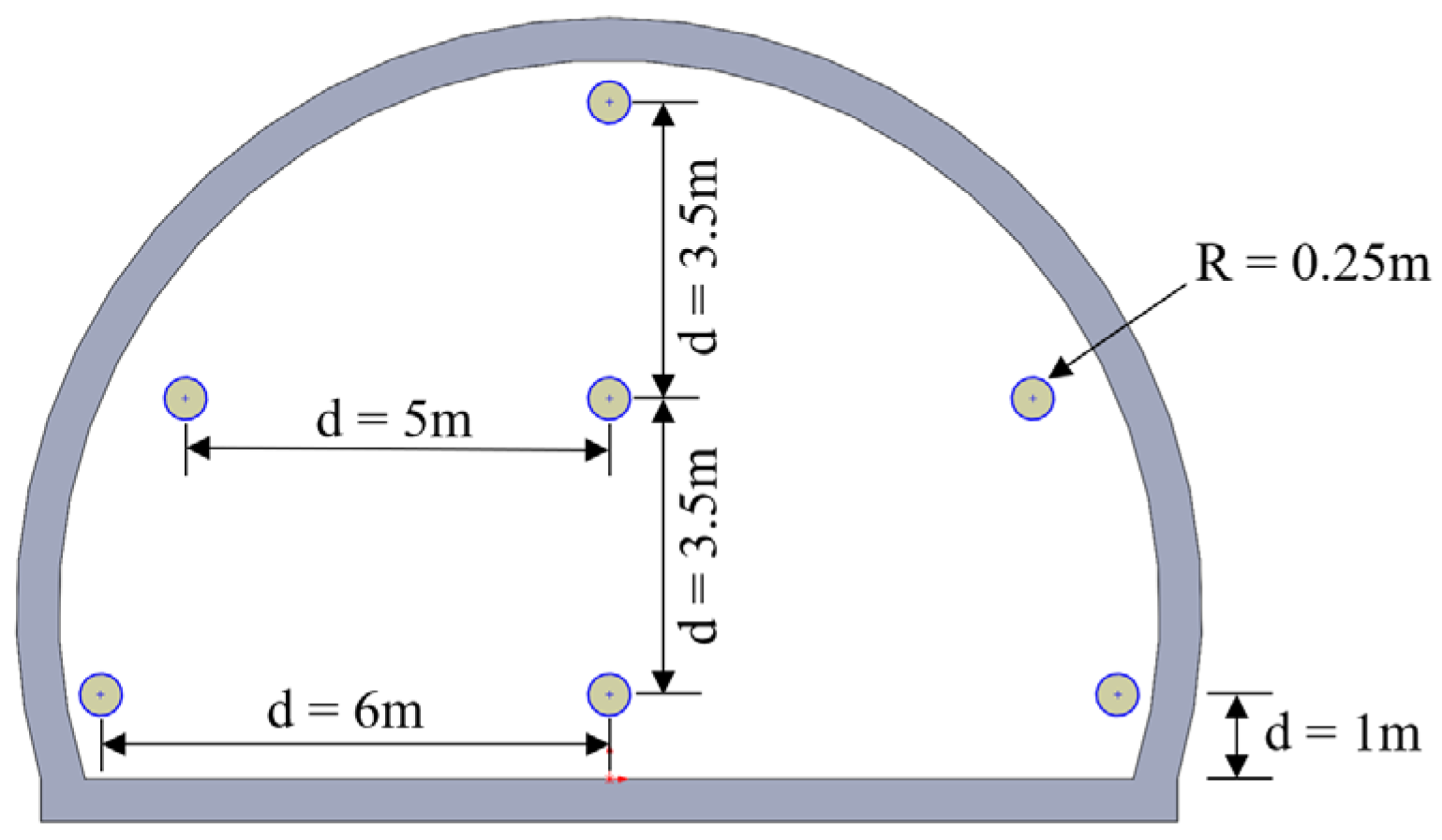
The dust emission configuration for the drilling process is illustrated in Figure 4. Three rows of blastholes are arranged at the tunnel face, each with a diameter of 0.5 m. The bottom row consists of three holes at a height of 1 m, with the two side holes 6 m away from the tunnel symmetry plane. The middle row also has three holes at a height of 4.5 m, with the two side holes 5 m from the symmetry plane. The top row contains a single central hole located at a height of 8 m.
(2)
Blasting dust source
Dust generation during blasting is strongly affected by hole position and depth, explosive type, and charge amount. In this study, representative parameters are adopted: the post-blast fume jet velocity is set to 7 m/s and the dust concentration to 1300 mg/m3. Dust is released from the tunnel face as a surface source and injected into the tunnel within 1 s after detonation, with a total mass flow rate of 0.837 kg/s. Longitudinal ventilation is initiated 1 min after blasting.
(3)
Shotcreting dust source
For the shotcreting process, two typical source configurations are considered according to the spraying direction: top shotcrete and side shotcrete (Figure 5). The shotcrete band is located 1 m from the tunnel face, with a width of 1 m. For top shotcrete, the spraying band is arranged near the crown, with its lower boundary 5 m above both side inverts. For side shotcrete, two bands extend from the invert up to a height of 5 m along both sidewalls.

2.3.2. Particle-Size Distribution and Dust Source Parameters

The Rosin–Rammler function [21] is used to describe the relationship between particle size and residual mass fraction:
Yd = exp[−(dp/d*)n]
where Yd is the residual mass fraction, d* is the characteristic particle size (mean diameter), and n is the size distribution index. Fitting experimental size-distribution data using Equation (1) yields the full particle-size distribution.
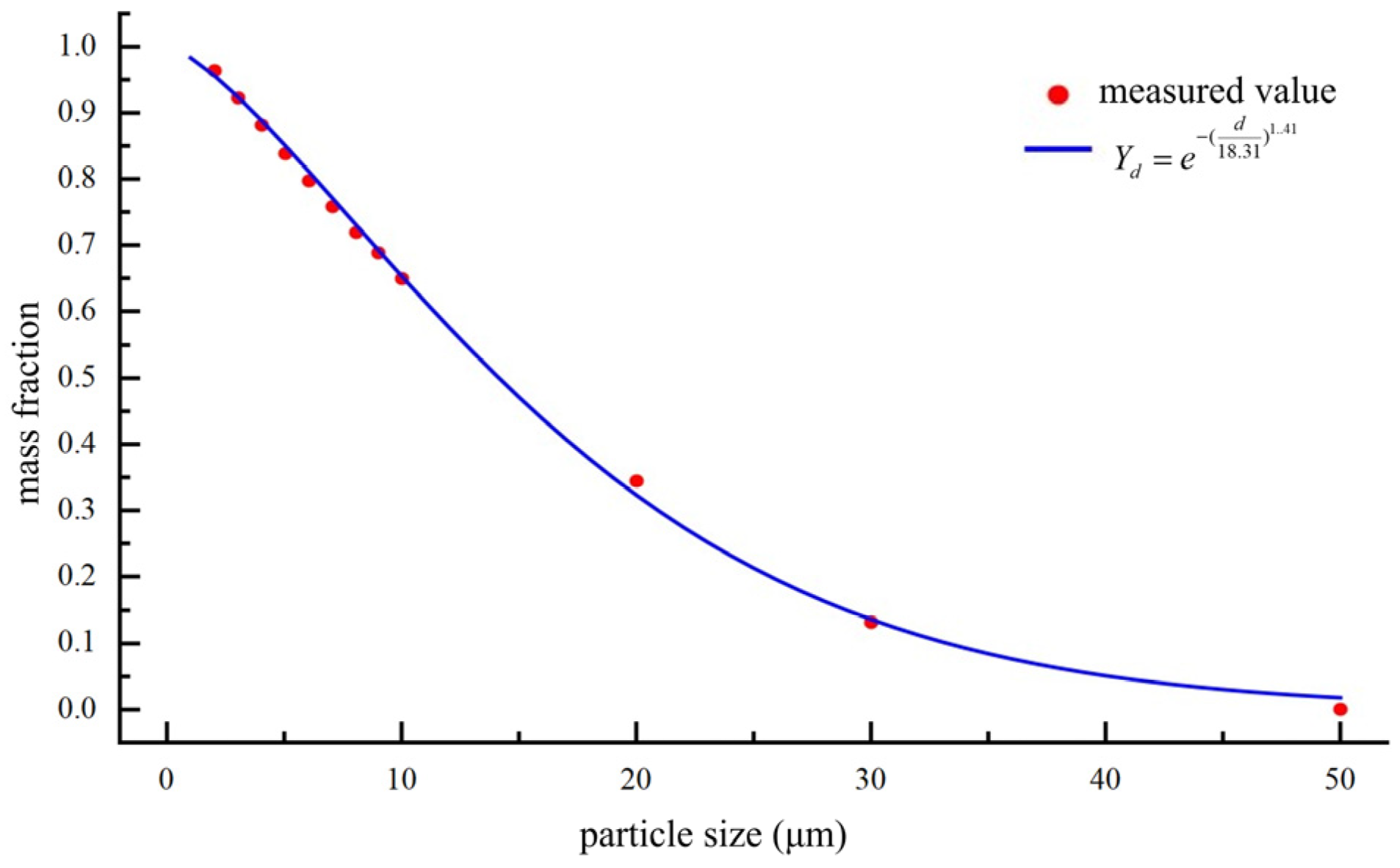
In tunnel drilling and blasting, dust is mainly composed of granite fragments, whereas during shotcreting, it is dominated by cement particles. The mass-based size distribution of granite dust is taken from “Study on Mass-Based Particle-Size Distribution Characteristics of 36 Types of Dust in Railway Workplaces” [22]. Fitting with the Rosin–Rammler function yields a mean particle diameter d* = 18.3 μm and a distribution index n = 1.41. The fitted curve is shown in Figure 6.
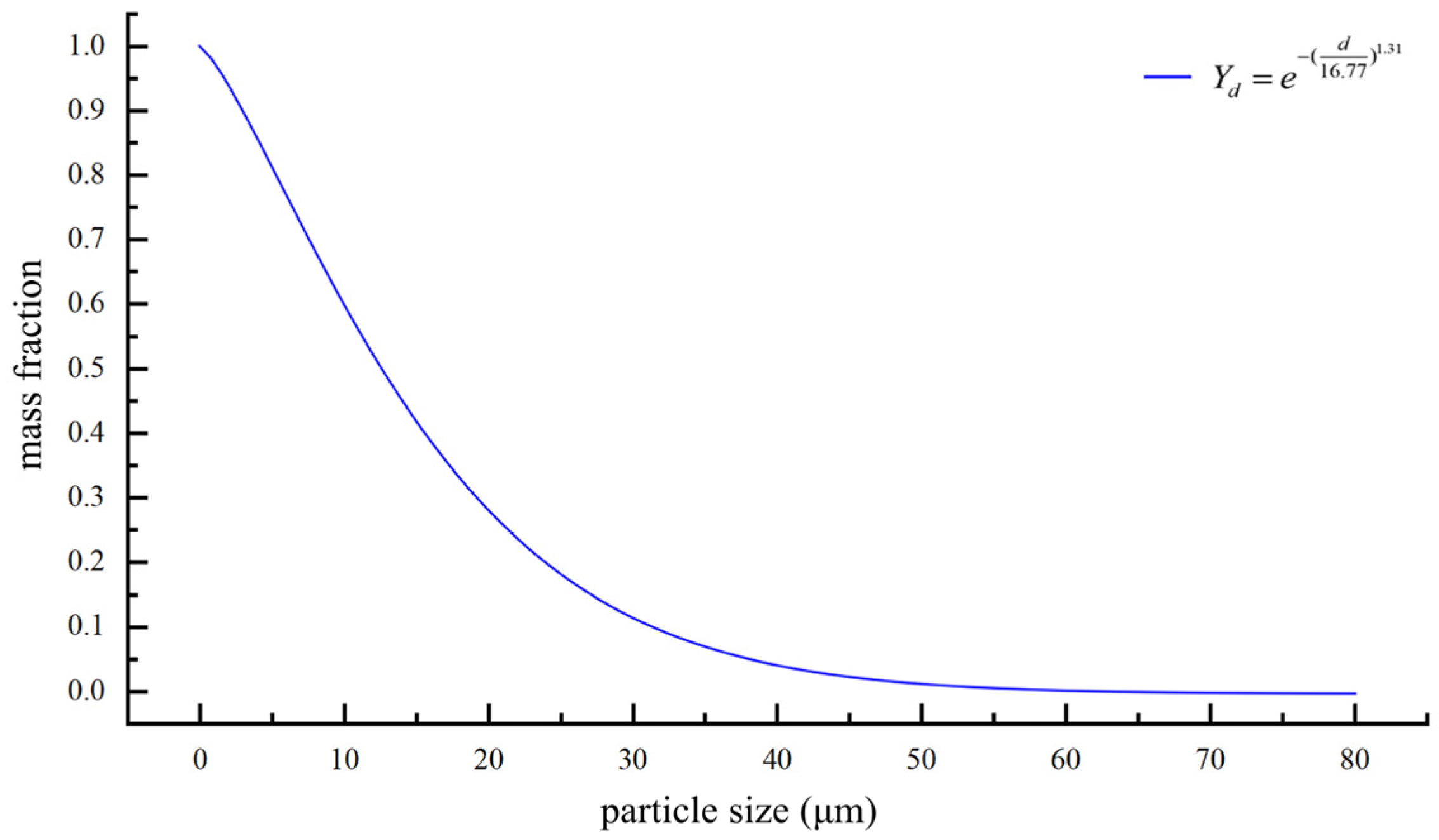
For cement dust, the mass-based size distribution is taken from relevant studies [23]. Fitting with the Rosin–Rammler function gives d* = 16.77 μm and n = 1.31. The fitted curve is shown in Figure 7.
The relevant dust-source parameters for drilling, blasting, and shotcreting operations are listed in Table 1. In practice, dust generation intensity may vary with operating details. In this study, the source intensity is represented by the equivalent values listed in Table 1 for a unified cross-process comparison, and moderate variations in source intensity are expected to primarily affect concentration magnitudes rather than the main spatial patterns governed by ventilation flow structures and particle inertia.

2.3.3. Boundary Conditions

Three types of boundary conditions are specified [24]. The ventilation duct outlet is defined as a velocity inlet, the tunnel exit as a pressure outlet, and the tunnel face, invert, and remaining walls as no-slip walls. Because the adhesion force between particles and the tunnel floor is much higher than other forces, the Discrete Phase Model (DPM) boundary at the invert is set to trap: once particles impact the floor, they are captured and removed from further tracking. At the tunnel exit, the DPM boundary is set to escape, meaning that particles leaving the domain are removed from the computation.
Velocity, turbulence intensity, and hydraulic diameter at the velocity inlet are specified according to the ventilation design parameters. The detailed settings of each boundary are listed in Table 2.

2.4. Solver Settings

The dust-laden airflow in the tunnel is modeled as a gas–solid two-phase flow. Turbulence of the continuous phase is described using the realizable kε model [25], which is widely adopted in engineering simulations of confined press-in jet ventilation due to its robustness and reasonable accuracy in predicting jet development and large-scale recirculation. The transport equations for the turbulent kinetic energy k and its dissipation rate ε, as well as the related model constants, follow the standard implementation in ANSYS Fluent 2022 R1 [26], and are therefore not repeated here.
Dust dispersion is handled with the Discrete Phase Model (DPM), whose main settings are summarized in Table 3. Two-way coupling between the gas and particle phases is enabled, and the airflow field and dust concentration field are solved in a coupled manner using a pressure-based solver.
The tunnel air temperature is set to 25 °C. The air density and dynamic viscosity are taken as ρ = 1.225 kg/m3 and μ = 1.789 × 10⁻⁵ kg/(m·s), respectively.

2.5. Simulation Scenarios

According to the dust emission characteristics and on-site operation procedures, three types of scenarios are defined.
(1)
Drilling scenario
Drilling is simulated under continuous ventilation. Dust is continuously released from the tunnel face and transported downstream by the airflow. A steady-state calculation is first performed to obtain the global flow field, followed by transient simulations to analyse dust dispersion and attenuation under ventilation, with particular attention to dust accumulation near the face and crown.
(2)
Blasting scenario
Dust from blasting is characterized by extremely high concentration and short release duration, with clear time lags between dust release and ventilation onset. To capture this behaviour, a two-stage simulation is adopted:
(1) Free-dispersion stage without ventilation (0–60 s): Dust is released at the tunnel face as a surface source at the instant of blasting. Its free dispersion and front propagation in still air are computed.
(2) Ventilation-cleaning stage (t ≥ 60 s): Ventilation is switched on 1 min after blasting. The subsequent migration, dilution, and removal of dust under forced ventilation are analysed. This short delay represents a practical non-instantaneous ventilation onset after blasting, and minute-scale delays in turning ventilation on have been reported in post-blast measurements and CFD-supported case studies [27,28].
This setup reflects both the transient high-concentration characteristics of blasting dust and the efficiency of subsequent ventilation.
(3)
Shotcreting scenario
Under continuous ventilation, two shotcrete configurations are considered: top shotcrete and side shotcrete. The dust source is prescribed in the shotcrete band. A combination of steady and transient simulations is used to investigate the dispersion and retention of dust under different spraying patterns, and to identify high-risk regions for dust accumulation.

3. Dust Dispersion Characteristics and Evolution

To quantitatively characterise dust behaviour in the tunnel, this section analyses the dispersion characteristics and evolution of dust during drilling, blasting and shotcreting. Based on the numerical results, particle trajectories, spatial distributions, longitudinal and cross-sectional mean concentrations, and their temporal evolution are examined.

3.1. Dust Dispersion During the Drilling Process

In the drilling stage of drill-and-blast tunnelling, dust generation is quasi-continuous and ventilation operates in a steady manner, so the dispersion pattern can be regarded as a steady transport field with superimposed local transient disturbances. Based on the numerical results, this subsection analyses the spatial distribution, longitudinal variation and temporal evolution of drilling dust.

3.1.1. Spatial Distribution

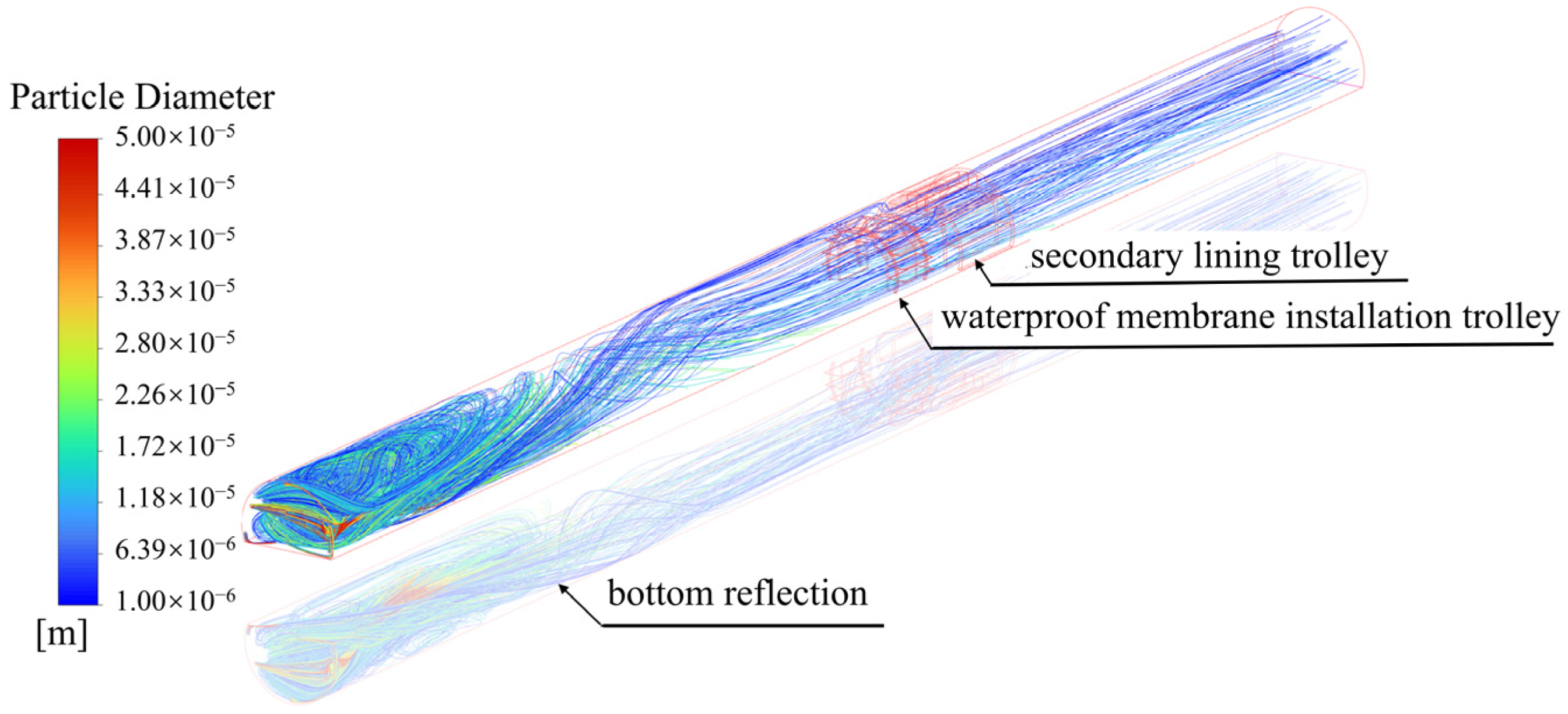
Under the prescribed Rosin–Rammler particle size distribution, the simulated particle trajectories for drilling dust are shown in Figure 8. Dust first accumulates in the near-face region and is then transported downstream in a helical manner under the combined effect of the main ventilation jet and local recirculation. Large particles are dominated by gravity and settle rapidly in the upstream region, while fine particles are strongly affected by turbulence, have long residence times and are more likely to migrate into the middle and rear parts of the tunnel.
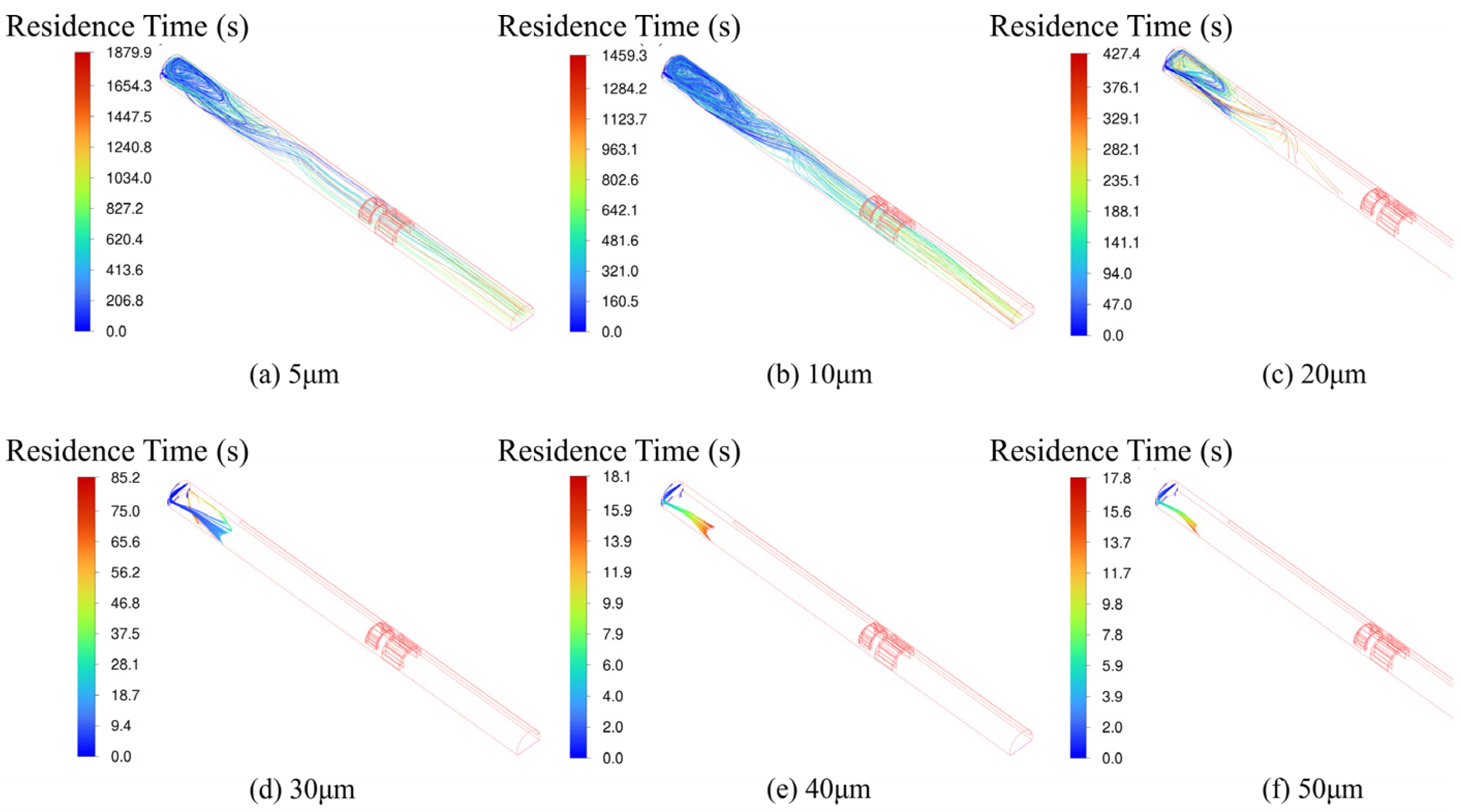
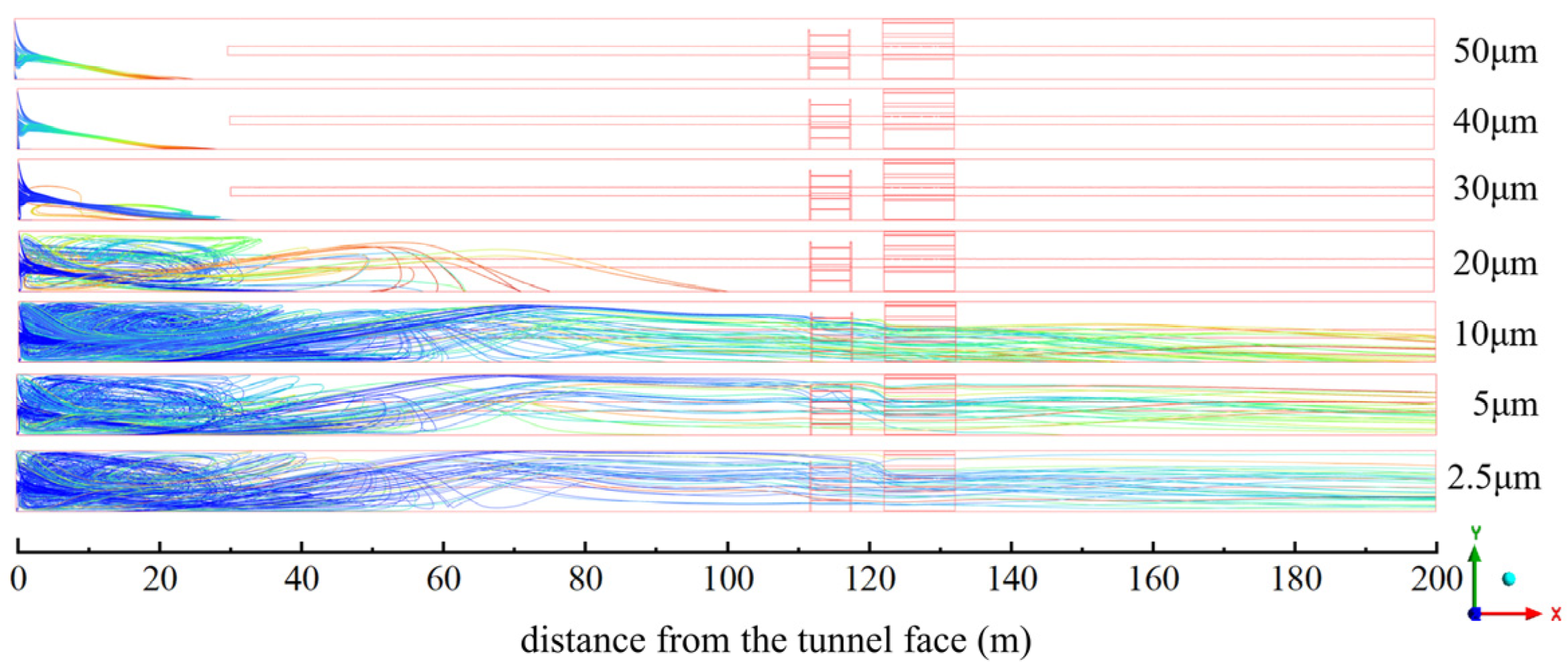
To clarify the size dependence, the particle diameter was discretized into six monodisperse groups (5, 10, 20, 30, 40 and 50 μm) for separate simulations. The corresponding trajectories are plotted in Figure 9. The results clearly demonstrate the strong control of both source location and particle size on the transport paths.
For large particles (dp ≥ 30 μm), the transport pattern is primarily governed by the position of the dust source. When the drilling holes are located at the lower part of the face, particles are driven along the left side of the tunnel by the main airflow and rapidly deposit on the floor under dominant gravitational settling. When the holes are at mid-height, particles are first pushed towards the left side, and a portion is lifted by the downward jet from the ventilation duct, forming a “near-floor backflow–local uplift–oblique upward transport–redeposition” loop that prolongs their residence time near the face. When the holes are arranged near the crown, particles are entrained by the upper branch of the flow and travel along the arch to the left sidewall, then move slightly upstream before settling.
As the particle size decreases (dp ≤ 20 μm), the Stokes number is reduced and the relative importance of fluid drag increases. The influence of recirculation on particle trajectories becomes more pronounced: small particles are captured by near-wall vortices and follow spiral paths rather than settling directly. This vortex-trapping effect markedly slows down the overall settling rate and extends the residence time of fine dust in the high-concentration region near the face, posing a persistent threat to air quality.
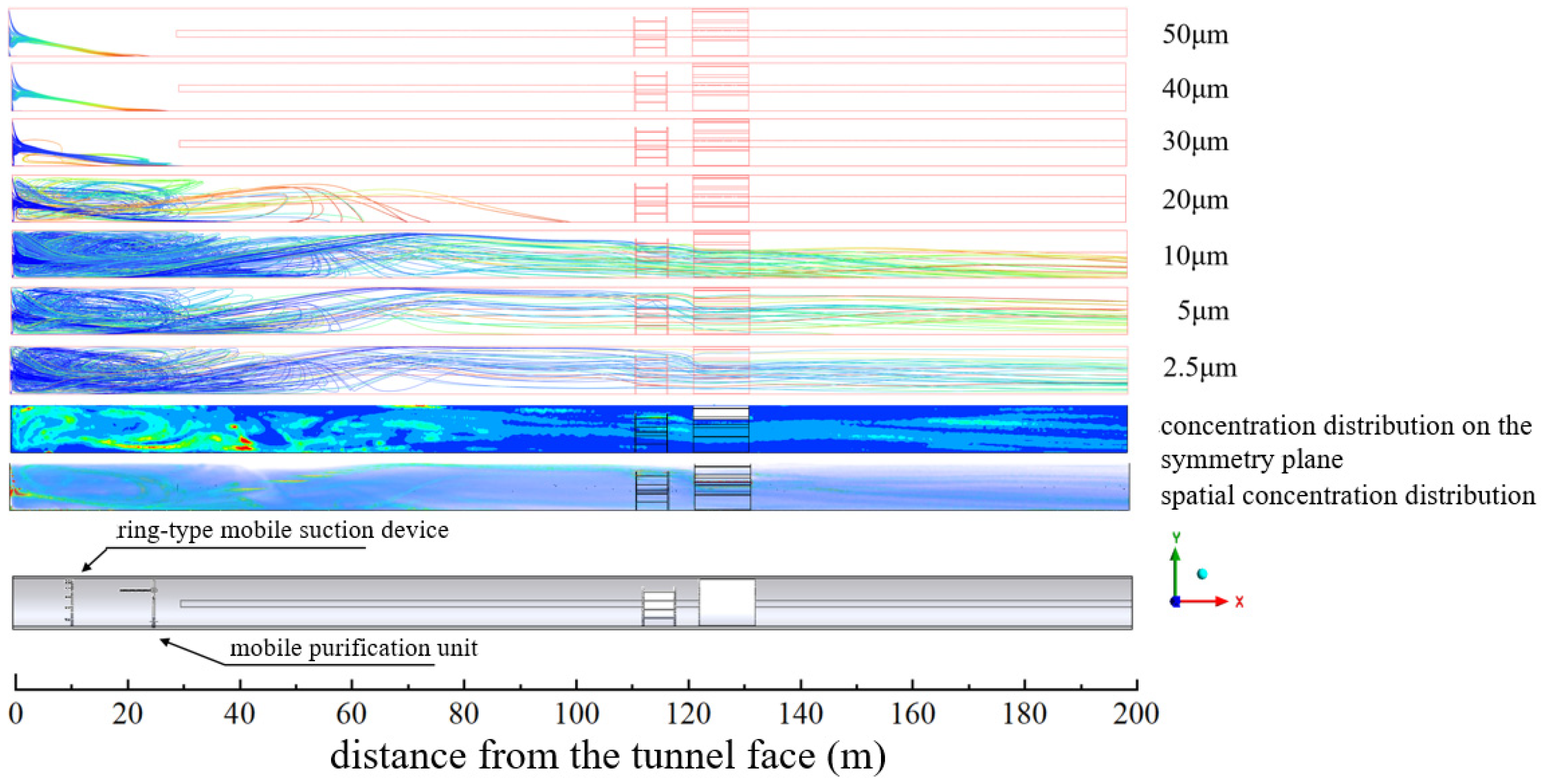
Figure 10 summarizes the final dispersion and deposition locations for different particle sizes. Particle size is the key factor controlling transport distance and settling rate. Large particles (dp ≥ 30 μm) are mainly governed by gravity and inertia and deposit rapidly: 50 μm particles complete settling within approximately 20 m from the face and 40 μm particles within about 25 m. Particles with a dp ≈ 30 μm begin to be noticeably affected by recirculation; part of the plume is drawn towards the left sidewall and then settles along the wall, with an overall settling distance of about 30 m. For medium-fine particles (dp ≈ 20 μm), the influence of vortices is significantly enhanced and trajectories become more helical, but most particles still settle before reaching the waterproofing-membrane installation trolley (≈35 m). In contrast, very fine particles (dp ≤ 10 μm) exhibit extremely low Stokes numbers; their motion is controlled by the recirculating flow and they spread throughout the entire computational domain, preferentially accumulating in the upper part of the tunnel and producing long-range, persistent pollution.
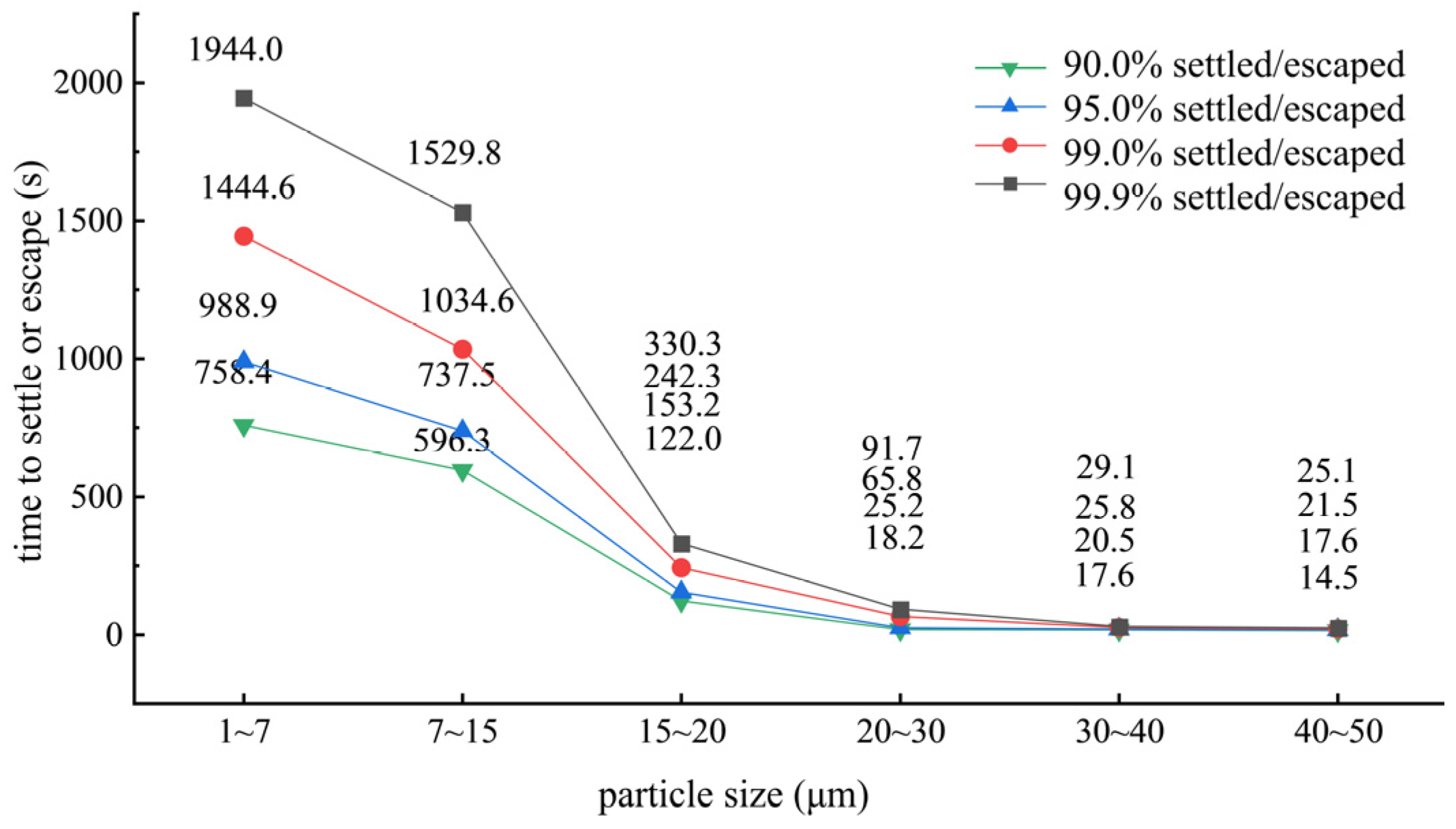
Based on the simulated particle statistics, the characteristic times required for particles in different size ranges to either settle or escape the tunnel are plotted in Figure 11, using the time for 99% of particles to settle or escape as a representative metric of airborne persistence. The results show that: for 30–50 μm particles, the characteristic time is about 26 s; for 20–30 μm particles, it increases to about 66 s; for 15–20 μm particles, it further increases to about 242 s; for 7–15 μm particles, it reaches about 1035 s; for 1–7 μm particles, it is as long as approximately 1445 s. These results demonstrate that particles with dp ≤ 20 μm have extremely long residence times and are therefore the most difficult to control. In longer tunnels, such particles will accumulate preferentially in the upper space, further increasing the time required for complete clearance. In practice, dust control should thus focus on the region upstream of the ventilation duct outlet and the 30–80 m zone downstream of the face, with particular emphasis on particles smaller than 20 μm.
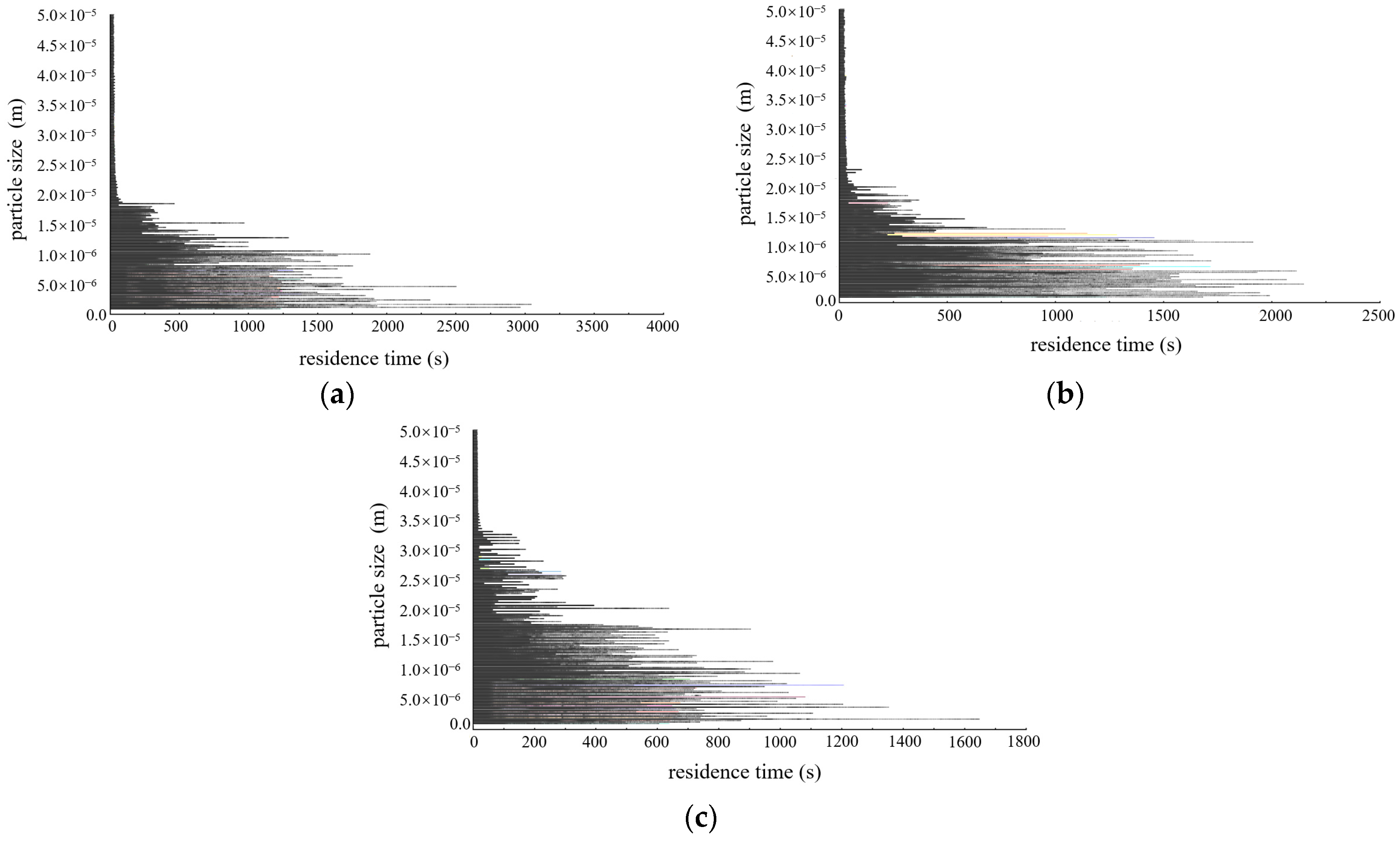
The inlet velocity is a primary factor governing the ventilation flow pattern (jet development and recirculation), and thus affects particle residence time. To quantify the influence of airflow velocity on particle residence time, additional simulations were conducted for inlet velocities of 10 and 20 m/s and compared with the base case of 15 m/s. The resulting scatter plots of settling/escape time versus particle size under different inlet velocities are shown in Figure 12. The results reveal pronounced particle-size-dependent differences in the influence of inlet velocity.
For fine particles (dp ≤ 15 μm), increasing the inlet velocity significantly enhances drag and shortens the time required for particles to either escape from the tunnel or settle.
For medium-sized particles (15–20 μm), the settling time decreases as the inlet velocity increases from 10 to 15 m/s, but increases again when the inlet velocity is further raised to 20 m/s. This is likely due to the combined effect of stronger shear-induced resuspension of deposited particles and intensified recirculation, which enhances particle trapping.
For medium-to-large particles (20–30 μm), the residence time increases monotonically with inlet velocity, as stronger flow also strengthens vortices near the face and promotes particle attachment and recirculation in this region.
For large particles (30–50 μm), gravitational settling remains dominant, and the influence of inlet velocity on settling time is negligible. These particles settle rapidly under all three inlet velocities.
Overall, smaller particles always require longer times to settle or escape. Although increasing inlet velocity can facilitate the removal of very fine particles, it also tends to extend the suspension time of certain medium-sized particles and may induce resuspension. Consequently, simply increasing ventilation velocity cannot achieve an optimal cleaning effect across all particle sizes.

3.1.2. Longitudinal Variation

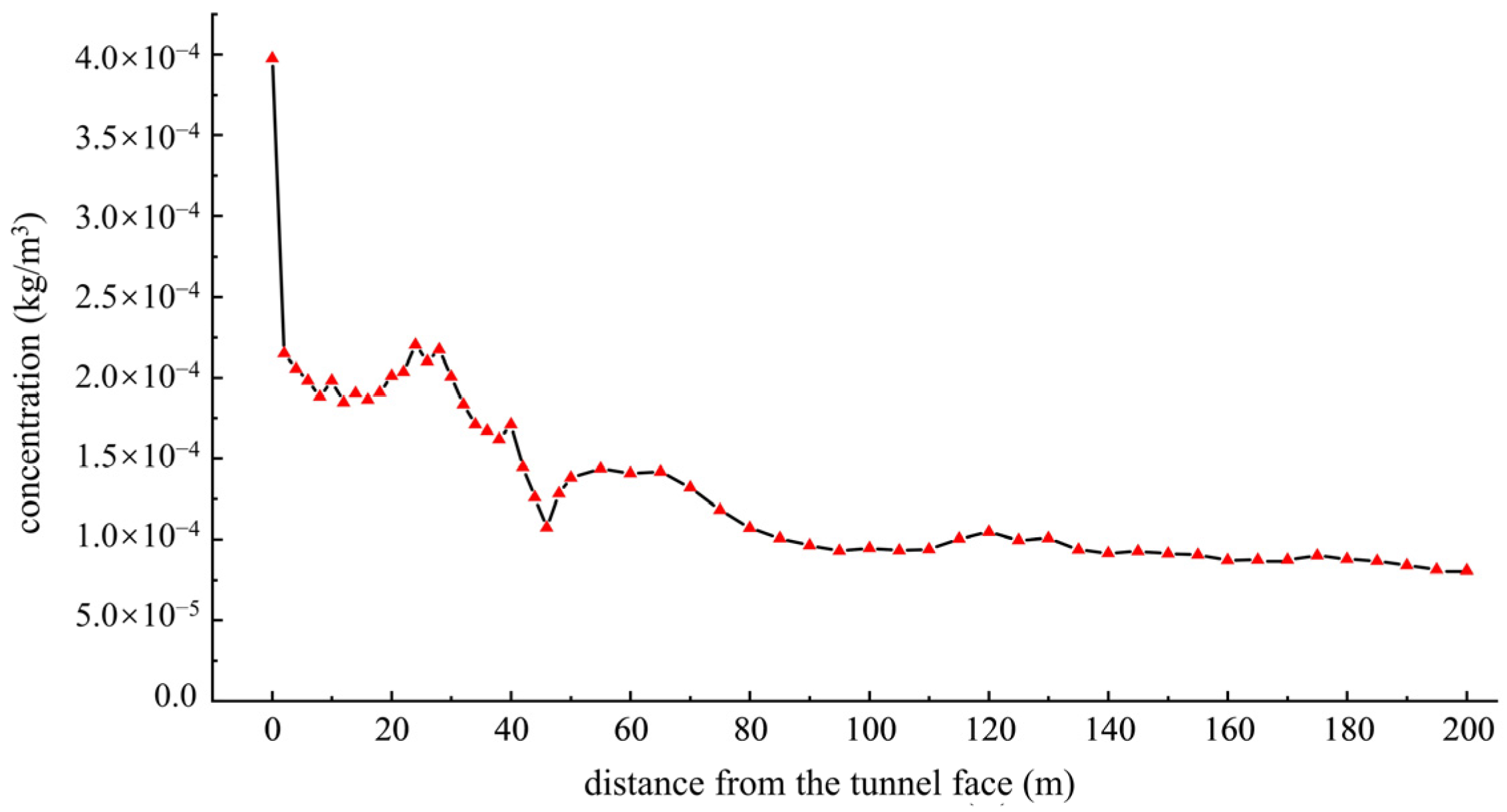
The longitudinal distribution of dust concentration is critical for the optimal placement of purification devices. To examine the steady-state concentration field under drilling conditions, cross-sections were arranged every 2 m within 50 m of the face and every 5 m beyond 50 m. The mean dust concentration on each section was computed, and the variation along the tunnel axis is depicted in Figure 13.
The instantaneous concentration at the face reaches a maximum of 397 mg/m3 and rapidly decays to 227 mg/m3 at 0.2 m from the face. Between 0 and 24 m, the mean concentration first decreases sharply and then increases again. This fluctuation is mainly attributed to the complex flow structure near the face: high-concentration dust initially enters the low-velocity vortex core, where it is diluted, and is subsequently re-entrained and transported by the high-velocity recirculating flow at the vortex periphery, leading to a local increase. Beyond 24 m, the concentration decreases progressively towards the outlet. These results indicate that the front part of the tunnel, especially the 0–24 m region, forms a persistent high-concentration belt. Prioritizing purification devices in this region can therefore maximize the reduction in dust concentration.
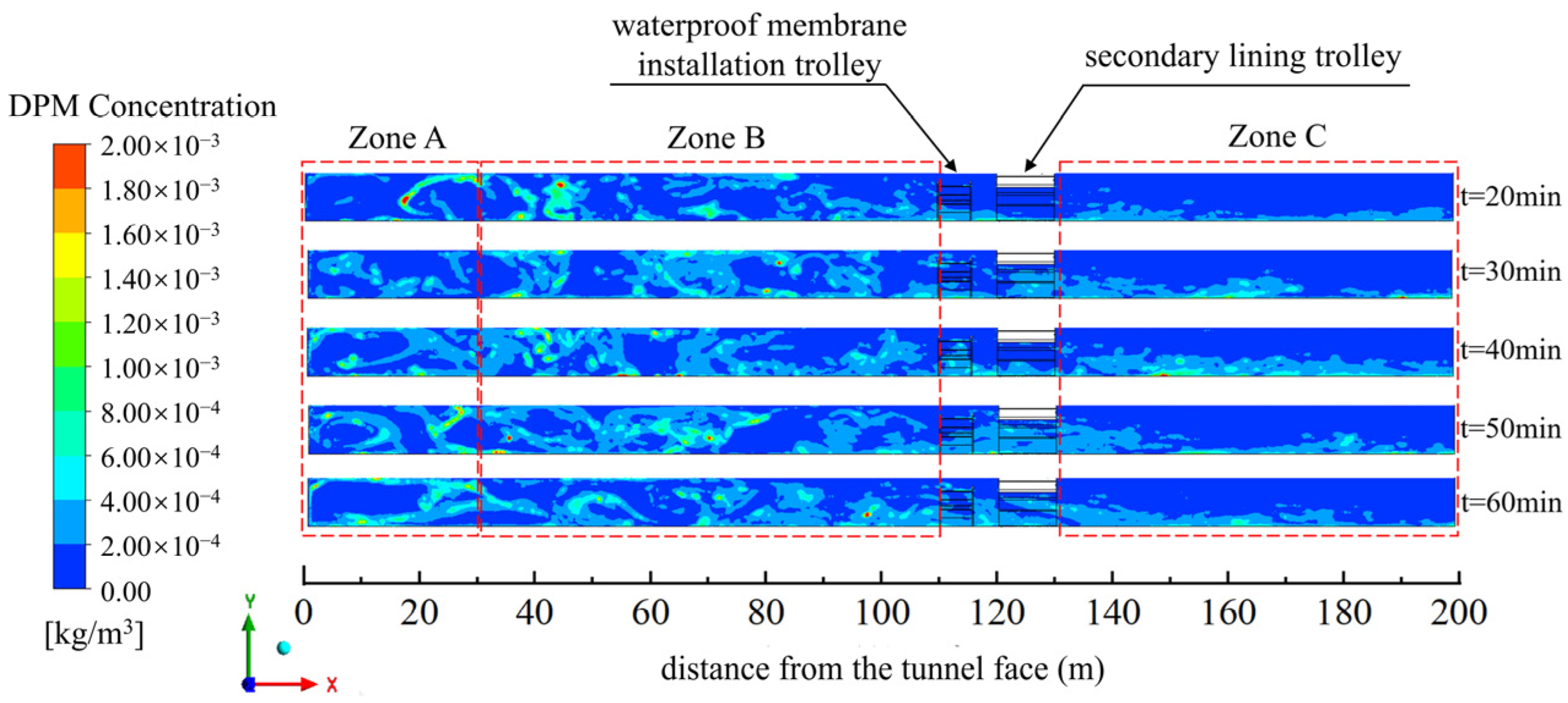
To investigate the spatial heterogeneity and temporal evolution of dust concentration during prolonged drilling, the dust field on the central longitudinal plane (z = 0) was analysed for t = 20–60 min. Based on the concentration patterns, the tunnel is divided into three characteristic regions: the near-face region (Zone A: 0–30 m), the transition region (Zone B: 30–110 m) and the downstream shielding region (Zone C: 130–200 m), as shown in Figure 14. Zone A exhibits markedly high dust concentration, with a cross-sectional pattern of “low in the centre and high near the boundaries”. This is because the high-speed supply air stream mainly occupies the central upper part of the tunnel and dilutes dust there, while dust accumulates in the surrounding low-velocity recirculation zones, particularly near the crown, confirming that the crown is a critical accumulation region. In Zone B, dust becomes more uniformly distributed throughout the cross-section. In addition, the presence of the waterproofing-membrane installation trolley and the secondary-lining trolley disturbs the airflow, creating local high-concentration hotspots that pose a serious health risk to workers. In Zone C, the combined effects of the mechanical blockage by the secondary-lining trolley and enhanced turbulence direct dust towards the lower part of the cross-section, resulting in increased near-floor concentrations.
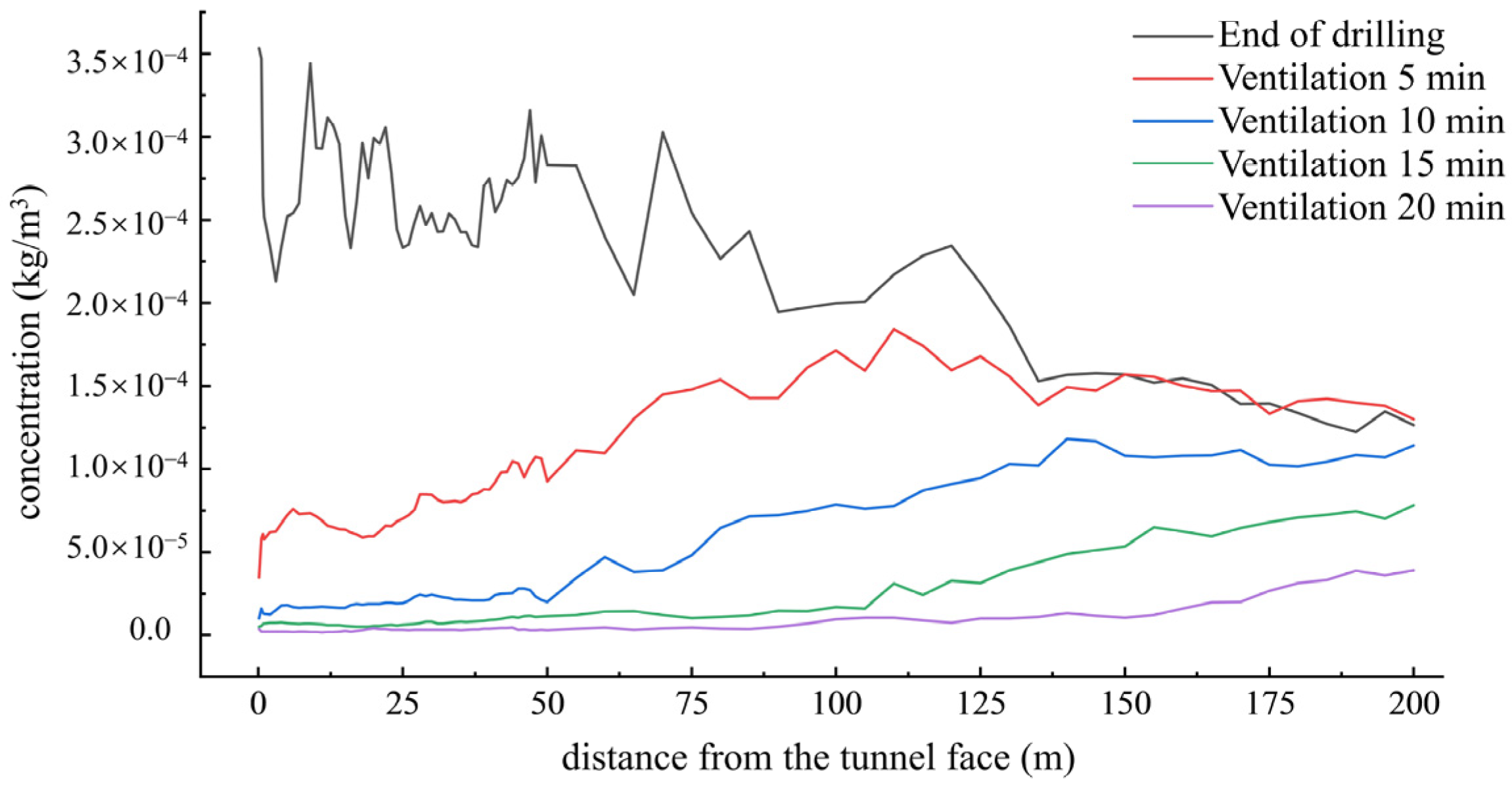
To evaluate the cleaning efficiency when drilling stops but ventilation continues, a scenario was simulated where drilling ceases after 1 h while ventilation is maintained. The longitudinal variation of mean concentration at different ventilation durations is plotted in Figure 15. Overall, dust concentration decreases with ventilation time, but the cleaning rate exhibits big spatial differences.
In the front part of the tunnel, rapid decay is observed. After 20 min of ventilation, the dust concentration near the face is reduced to about 2 mg/m3, and the concentration at 50 m is reduced to about 3.5 mg/m3, corresponding to a reduction of approximately 99% compared with the initial state. According to the Technical Guidelines for Railway Construction [29], this level already satisfies the permissible dust concentration for workplaces (the 4 mg/m3 tier specified for dust with <10% free SiO2 in the cited guideline, used here only as a reference threshold for workplace control).
In contrast, the rear part of the tunnel remains a long-term retention zone. At the outlet, the concentration only decreases from 126 to 39 mg/m3 after 20 min of ventilation, corresponding to a reduction of merely 69%. This indicates that dust, which is not effectively removed in the front part, is transported towards the outlet, where the airflow velocity is very low (≈0.2 m/s) and fine particles are difficult to discharge. Traditional longitudinal ventilation can therefore quickly reduce concentrations near the face but is ineffective in cleaning the rear sections where workers and equipment are concentrated. This behaviour is consistent with the commonly observed “longitudinal decay” and “tail retention” characteristics of longitudinal ventilation.

3.2. Dust Dispersion During the Blasting Process

Dust generated during blasting exhibits a characteristic three-stage behaviour: instantaneous high-concentration release, rapid free dispersion under stagnant air, and secondary transport driven by ventilation. The spatiotemporal evolution pattern is significantly different from that of drilling and shotcreting. This section analyses the dispersion behaviour in each stage based on the numerical results.

3.2.1. Dispersion Under Stagnant Air

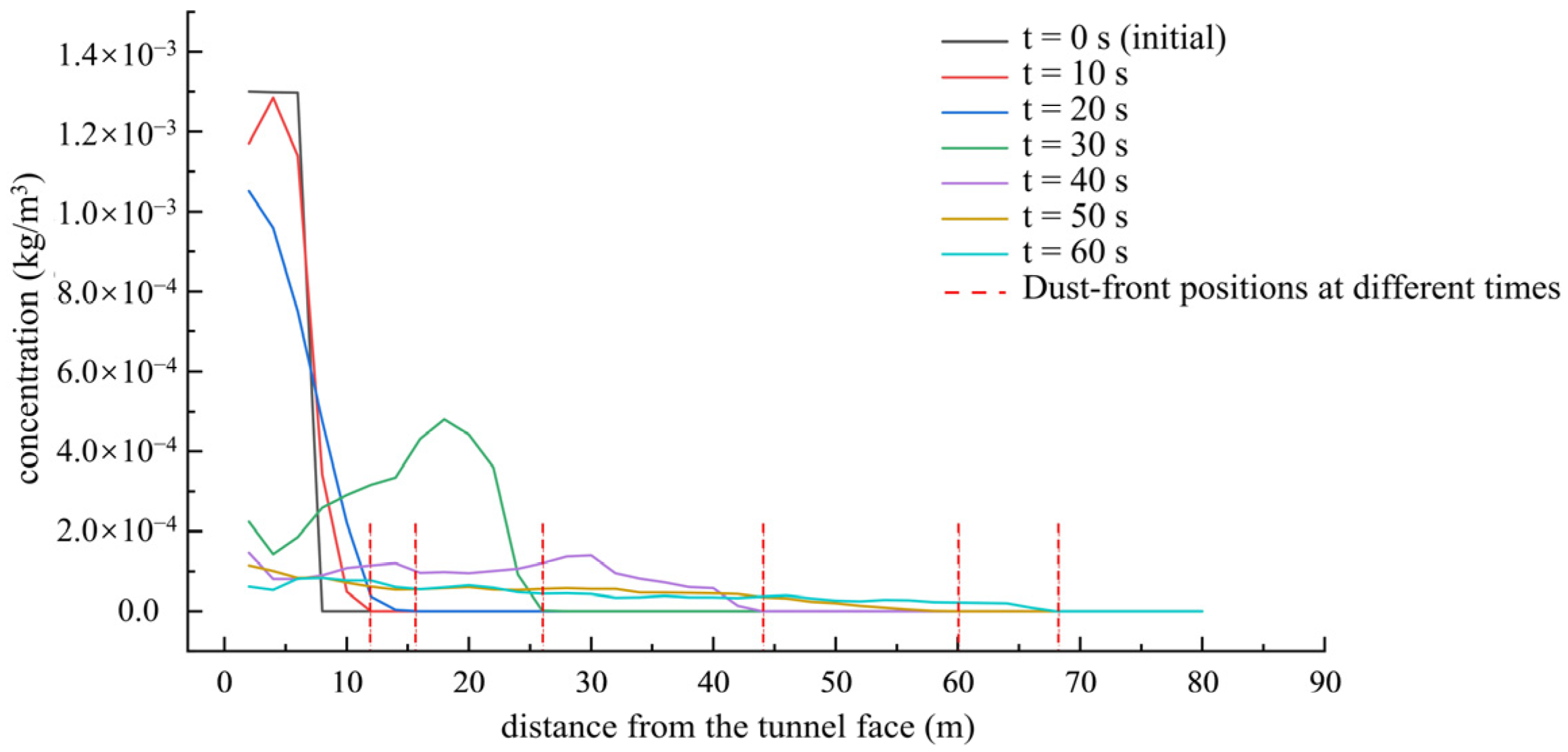
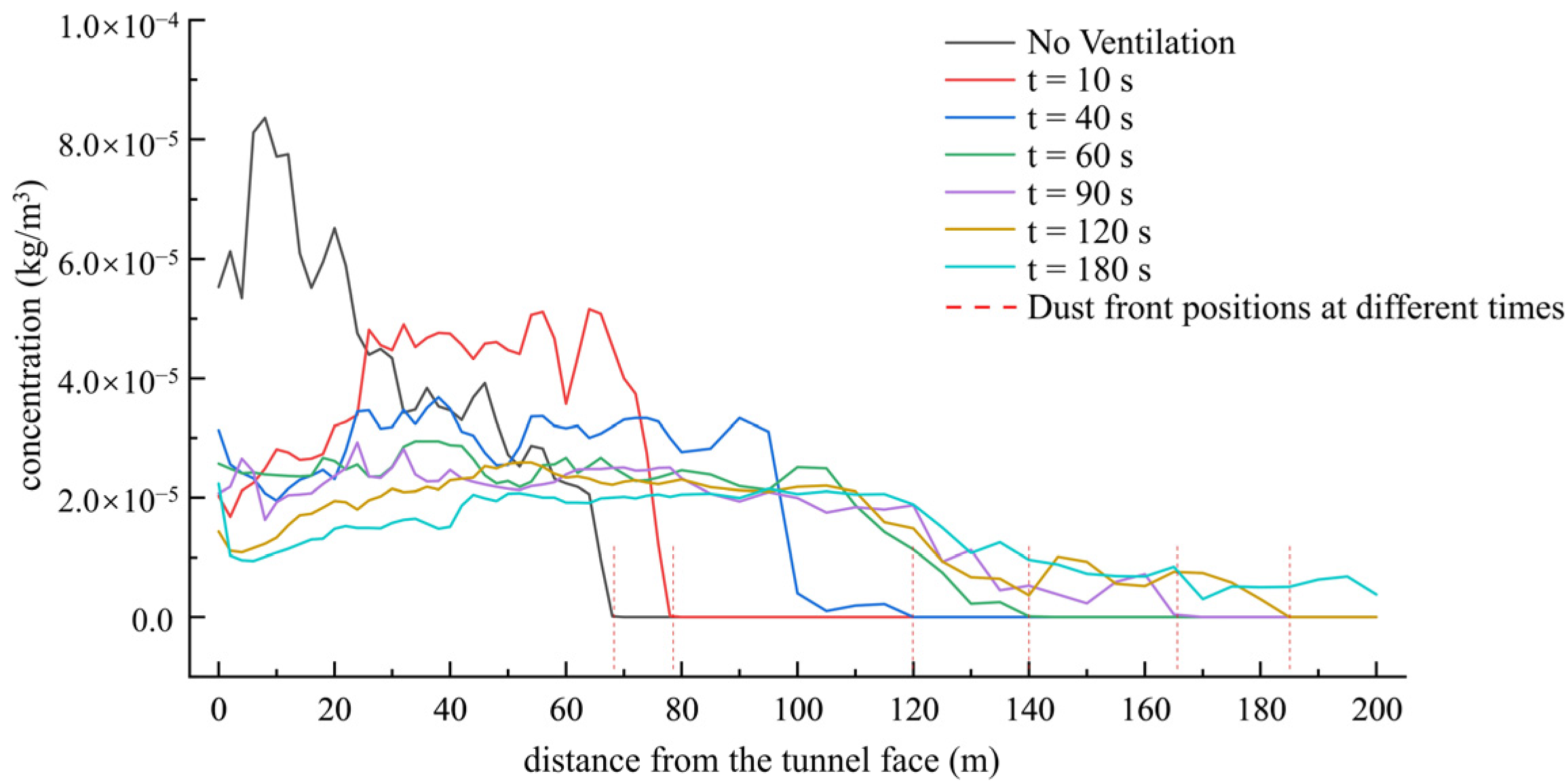
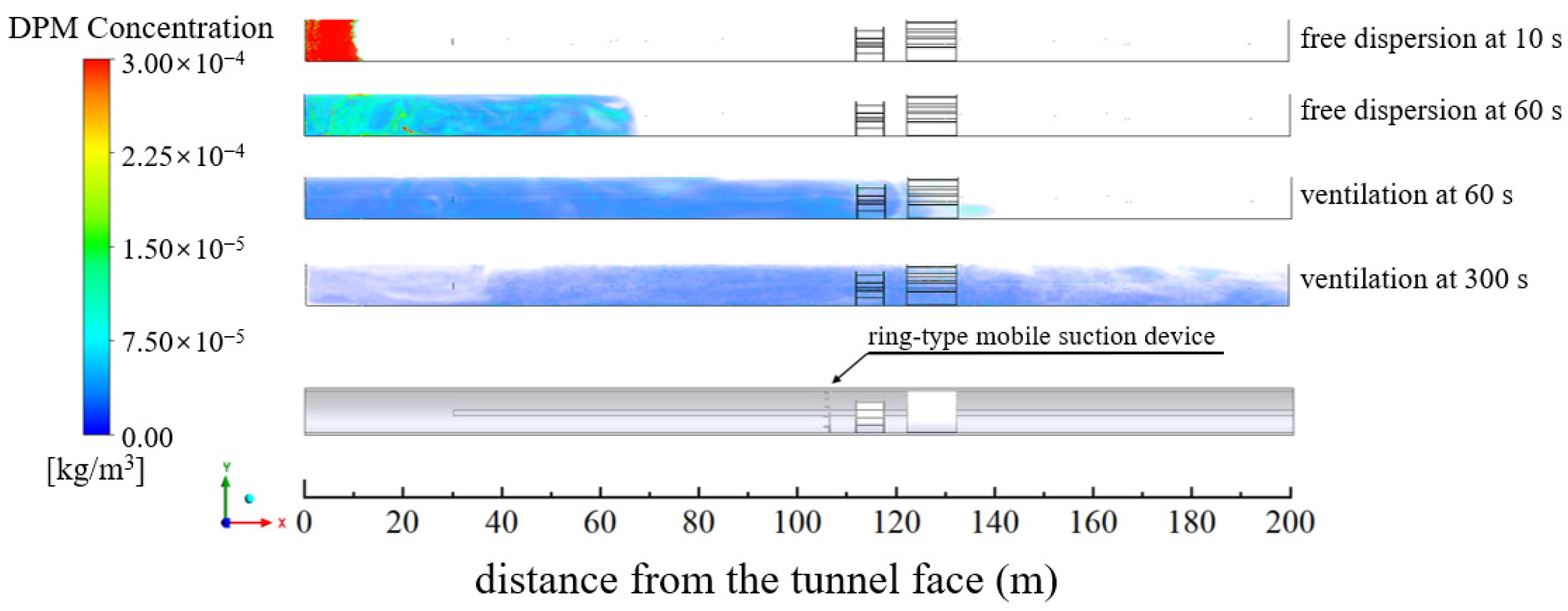
To quantify the transient dispersion of blasting dust in still air, a concentration threshold of 2 mg/m3 (Technical Guidelines for Railway Construction [29]) is adopted to define the leading edge of the dust cloud. The evolution of dust concentration without ventilation is shown in Figure 16.
Immediately after blasting, dust is ejected with extremely high initial velocity under the combined effects of the blast-induced shock wave and particle inertia, forming a dense cloud with a distinct front. During the no-wind stage, the front propagates rapidly along the tunnel while the peak concentration near the face decays sharply. From t = 10 to 60 s, the front advances from about 12 to 68 m, whereas the peak concentration near the face drops from 1284 mg/m3 to 139 mg/m3. Overall, the dust cloud exhibits a “high-front, low-rear” pattern that gradually smooths out: the cloud continues to extend downstream while the local peak concentration decreases.
The above results correspond to the baseline case where ventilation starts 60 s after blasting. Changing the ventilation-onset delay would mainly alter the duration of the still-air propagation stage, and it is expected to influence how far the dust cloud advances before forced dilution begins.
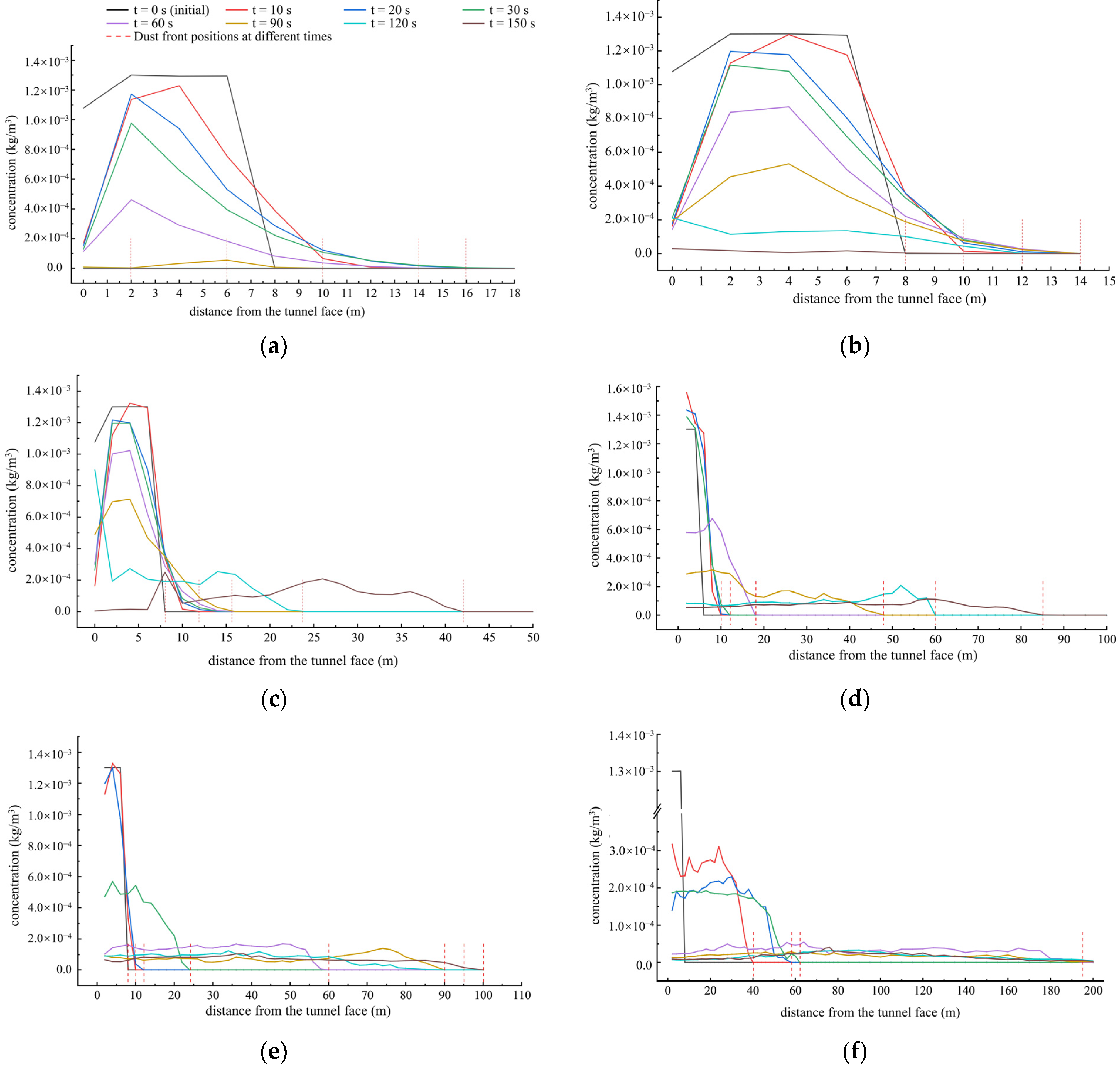
To investigate the size-dependent behaviour in this stage, six monodisperse particle sizes (30, 20, 15, 10, 5 and 2.5 μm) were simulated. The longitudinal mean concentration distributions within the first 150 s are shown in Figure 17. The propagation of the dust front exhibits strong dependence on particle size. For large particles (30 μm), the front reaches its maximum distance (16 m) at t = 20 s and then retreats as particles settle. Almost all particles have settled by 120–150 s, with deposition concentrated within 10 m of the face. This retreat indicates that, after rapid dissipation of the initial inertial energy, gravity quickly becomes dominant. For medium particles (20 μm), the maximum distance (14 m) is reached at t = 30 s; the subsequent retreat and settling are slower than for 30 μm particles, but nearly all particles still settle within 150 s. For fine particles (dp ≤ 15 μm), the dispersion range continues to increase over time. At t = 150 s, particles of 15, 10 and 5 μm have reached distances of approximately 42, 85 and 100 m, respectively. The 2.5 μm particles travel fastest and leave the computational domain in about 90 s.
These results show that the dispersion of blasting dust is strongly size-dependent: the smaller the particle, the longer the travel distance and the slower the settling, with fine particles capable of filling the entire computational domain in a short period and creating a pronounced “far-field” pollution risk.

3.2.2. Dispersion and Concentration Under Ventilation

To quantify the secondary transport behaviour when ventilation is initiated after free dispersion, the longitudinal concentration profiles were analysed from t = 60 s onwards, as shown in Figure 18. Before ventilation, dust is mainly confined within the first 68 m of the tunnel. Once ventilation starts, the concentration pattern changes rapidly. Within the first 10 s, the strong jet from the ventilation duct substantially reduces dust concentration near the face (e.g., at 8 m, the concentration decreases from 83.6 to 24.8 mg/m3), while simultaneously pushing the main body of the cloud downstream and forming a new high-concentration zone between 30 and 78 m. As ventilation continues, the cloud front migrates towards the outlet: at t = 40 and 60 s it reaches about 120 and 140 m, respectively, and the longitudinal profile evolves into a unimodal distribution that first increases and then decreases with distance. From t = 90 to 180 s, the front further advances to 165–200 m; upstream concentrations continue to decline, while the peak in the middle–downstream region rises slightly as the cloud moves.
These results indicate that in the early stage, ventilation primarily “relocates” dust rather than removing it. The high-concentration cloud originally near the face is rapidly transported and diluted, but, at the same time, pollution is transferred to the middle and downstream regions, including the areas around the forms and equipment, and covers the entire tunnel within about 3 min.
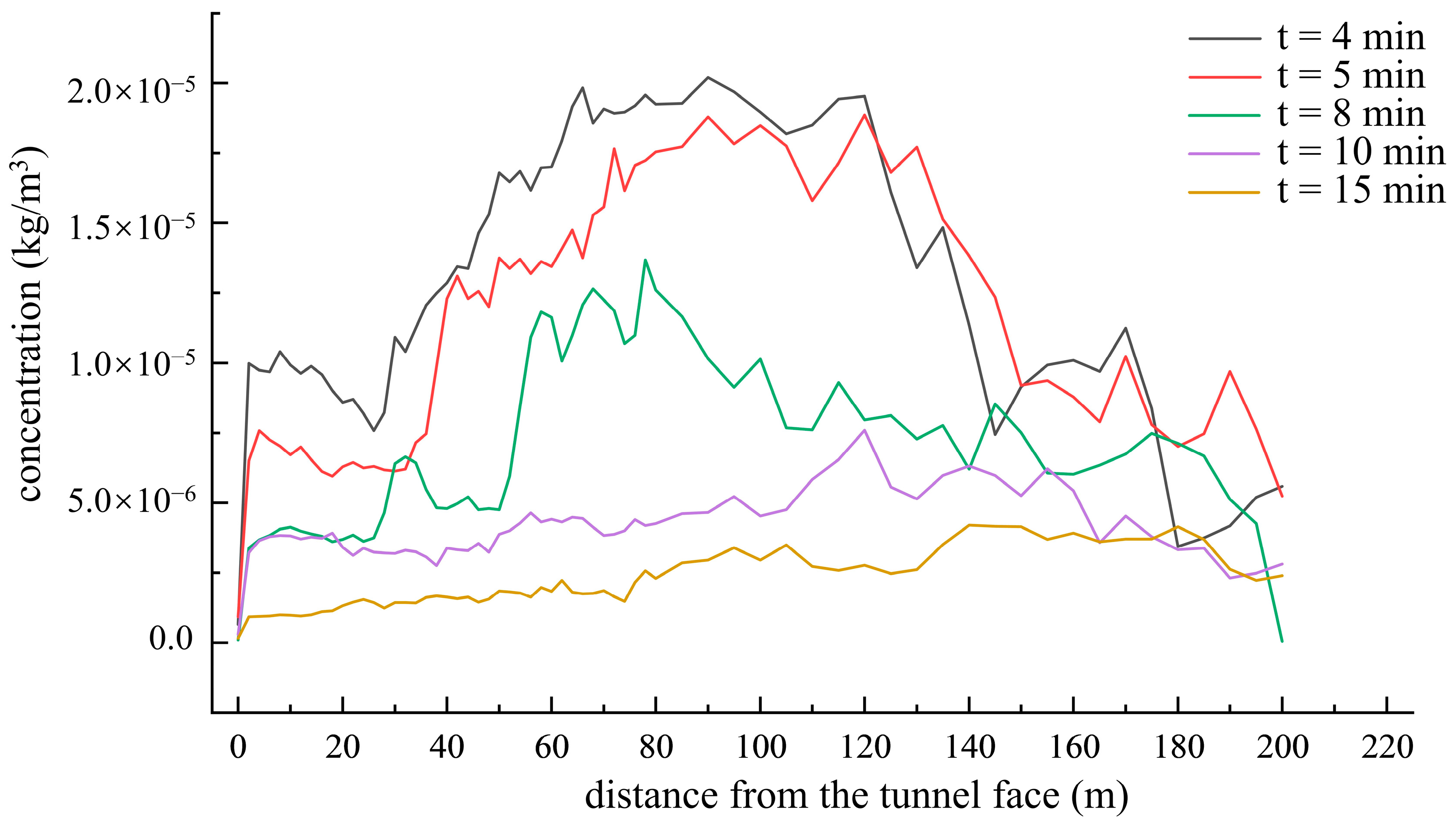
To visualise the cleaning efficiency under prolonged ventilation, the dust field was further analysed for t = 4–15 min, as shown in Figure 19. During this stage, the overall concentration in the computational domain continues to decrease, but the longitudinal profile gradually transitions to a pattern in which concentration increases with distance from the face. This indicates that the main cloud has shifted towards the outlet and that a persistent low-concentration contamination zone forms in the rear region. Once the global concentration falls to a low level, the decay rate becomes significantly slower, implying that under low-concentration conditions, the ability of the airflow to further transport and dilute remaining fine particles is limited, and the clearance of dust in the tail section becomes very inefficient.
In summary, blasting dust subjected to ventilation rapidly spreads throughout the tunnel and causes secondary pollution of downstream work areas. After the concentration enters the low-value range, relying solely on longitudinal ventilation cannot effectively remove the residual dust within a reasonable time.

3.3. Dust Dispersion During the Shotcreting Process

During shotcreting, high jet pressure, fine material particles and substantial rebound jointly result in dust with high initial velocity, long suspension time and a large proportion of respirable particles. Its dispersion behaviour differs markedly from that of drilling and blasting. This section analyses the spatiotemporal dispersion, concentration distribution and multi-size settling characteristics for two representative shotcreting modes: top shotcreting and sidewall shotcreting.

3.3.1. Dust Dispersion and Concentration Evolution Under Top Shotcreting

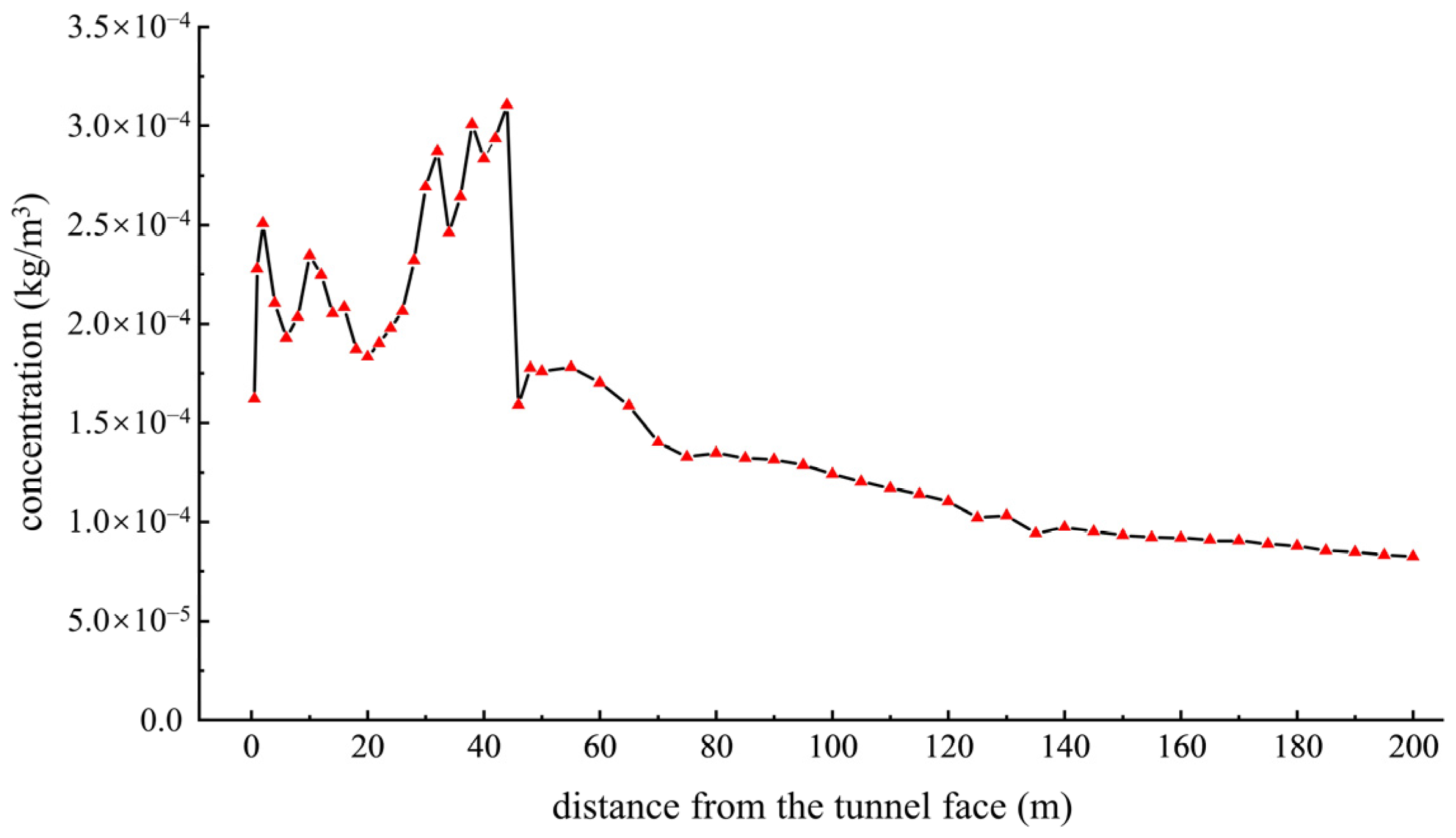
To characterise the steady-state longitudinal dust distribution under top shotcreting and to guide the placement of purification devices, cross-sectional mean concentrations were computed along the tunnel, as shown in Figure 20. The highest mean concentration occurs at about 44 m from the face, with a peak of 311 mg/m3. Between 0 and 44 m, the mean concentration first decreases and then increases. This pattern arises from the following mechanism: dust emitted from the shotcrete jet first enters the low-velocity vortex core near the face and is diluted (concentration decreases); subsequently, fine particles are entrained by the outer recirculation and accumulate downstream of the duct outlet (≈44 m), forming a persistent high-concentration cluster (concentration increases). Beyond 44 m, the concentration gradually decreases towards the outlet. Thus, for top shotcreting, the high-concentration region in the 0–44 m zone should be given priority in purification to achieve the best cleaning effect.
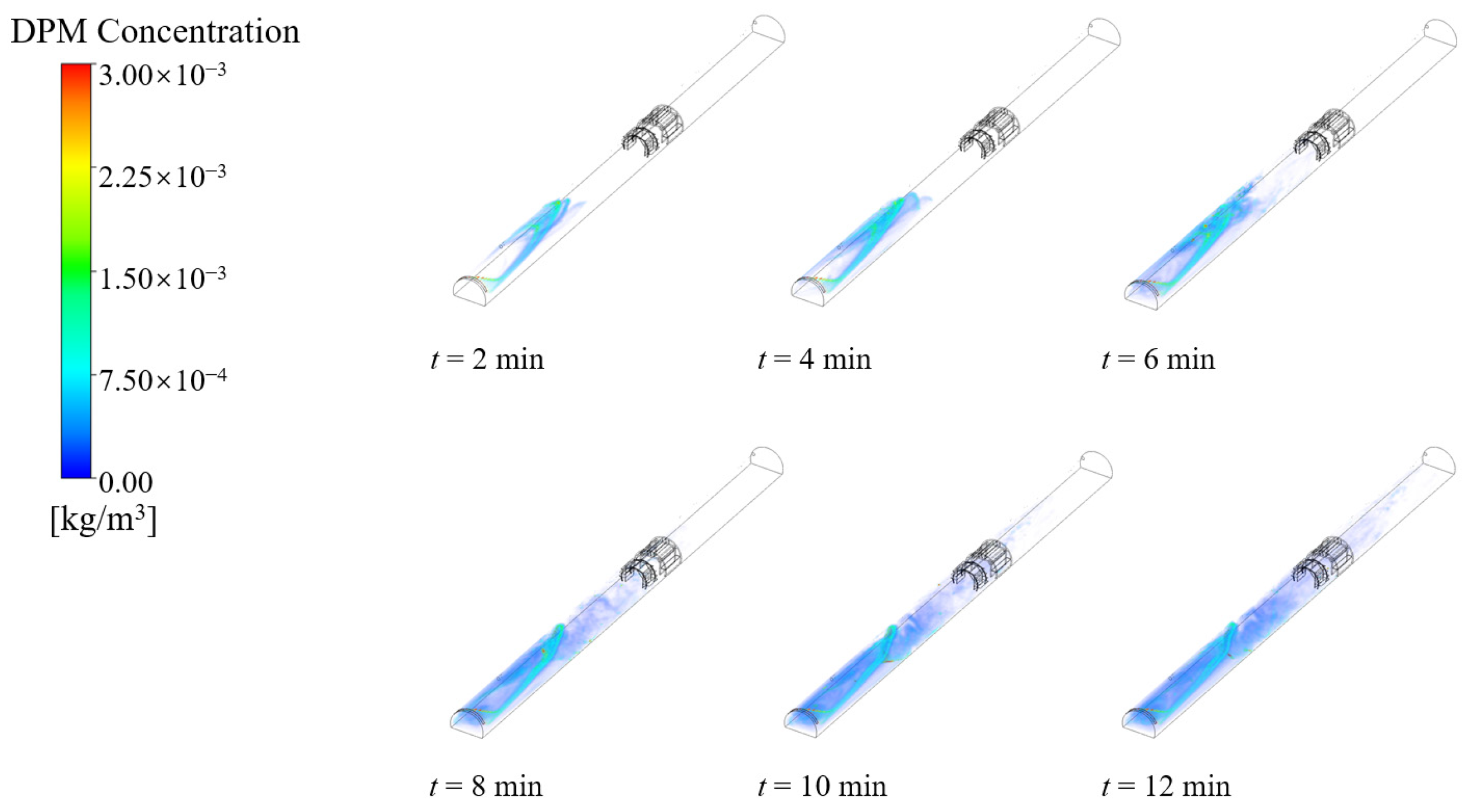
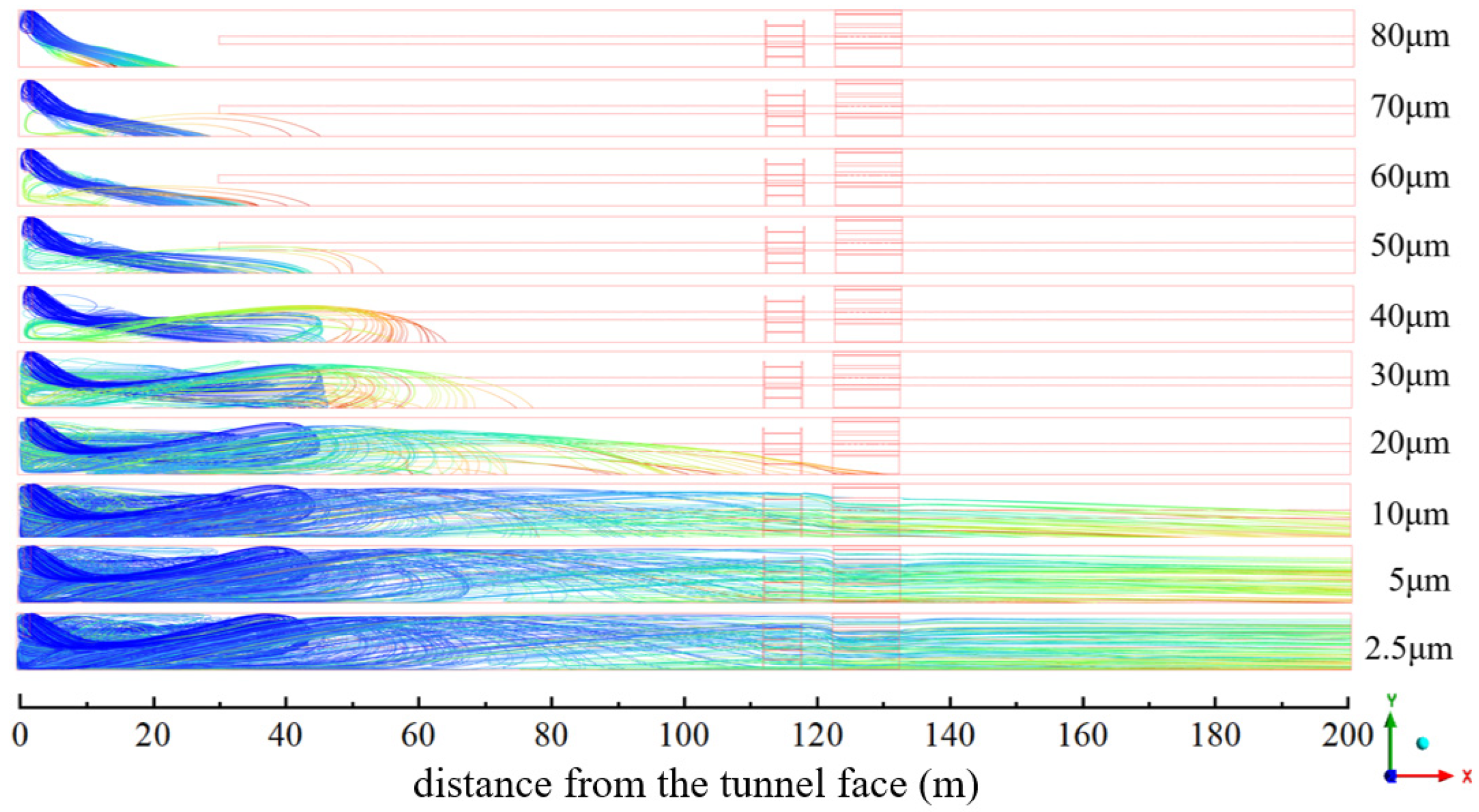
The transient evolution of dust concentration under continuous ventilation (Figure 21) shows a clear “top generation–sidewall transport–mid-section accumulation–downstream advection” pattern. Within about 4 min, dust released near the crown is driven towards the left sidewall and begins to accumulate in the upper part of the 30–70 m section. Between 6 and 8 min, this region develops into a stable high-concentration band, and mixing gradually fills the lower space, while the dust front extends to the secondary-lining form (≈130 m). From 10 to 12 min, the upper concentration in the 30–70 m region remains high and nearly unchanged, but the main body of the cloud continues to propagate towards the outlet and reaches the downstream end of the computational domain. Overall, the upper space of the 30–70 m section acts as a long-term accumulation zone, continuously supplying dust to the rear part of the tunnel and eventually contaminating the entire work area.
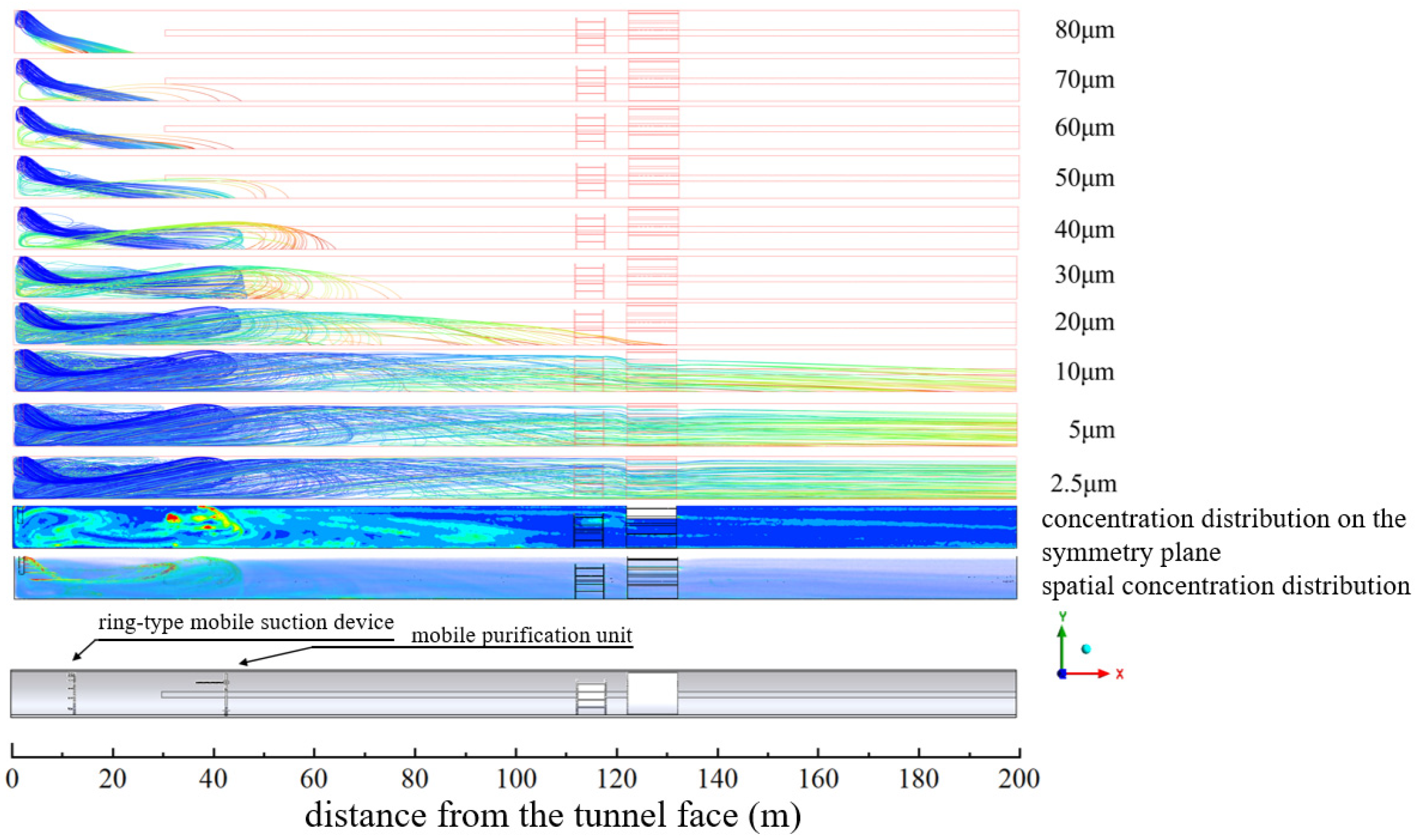
To quantify the final deposition locations for different particle sizes, a series of monodisperse simulations were performed for dp between 80 and 2.5 μm, as shown in Figure 22. The results show a clear size-segregated settling pattern. Large particles (dp ≥ 30 μm) are dominated by gravity and inertia and settle rapidly within roughly 25–55 m of the face, posing little risk of contaminating the far end of the tunnel. As particle size decreases to around 20 μm, drag becomes increasingly important and the settling distance is greatly extended, with most 20 μm particles depositing near the secondary-lining form (≈130 m). Fine particles (dp ≤ 10 μm) are dispersed throughout the entire computational domain and are difficult to remove by settling within the model boundaries; as dp decreases, the contribution of the upper tunnel space to the total settled dust mass increases markedly. These results are consistent with the recognised “crown retention + long-range transport of fine particles” pattern in coupled ventilation–particle systems and indicate that particles with dp ≤ 20 μm are the main contributors to far-field pollution and long-term crown-zone contamination.

3.3.2. Dust Dispersion and Concentration Evolution Under Side Shotcreting

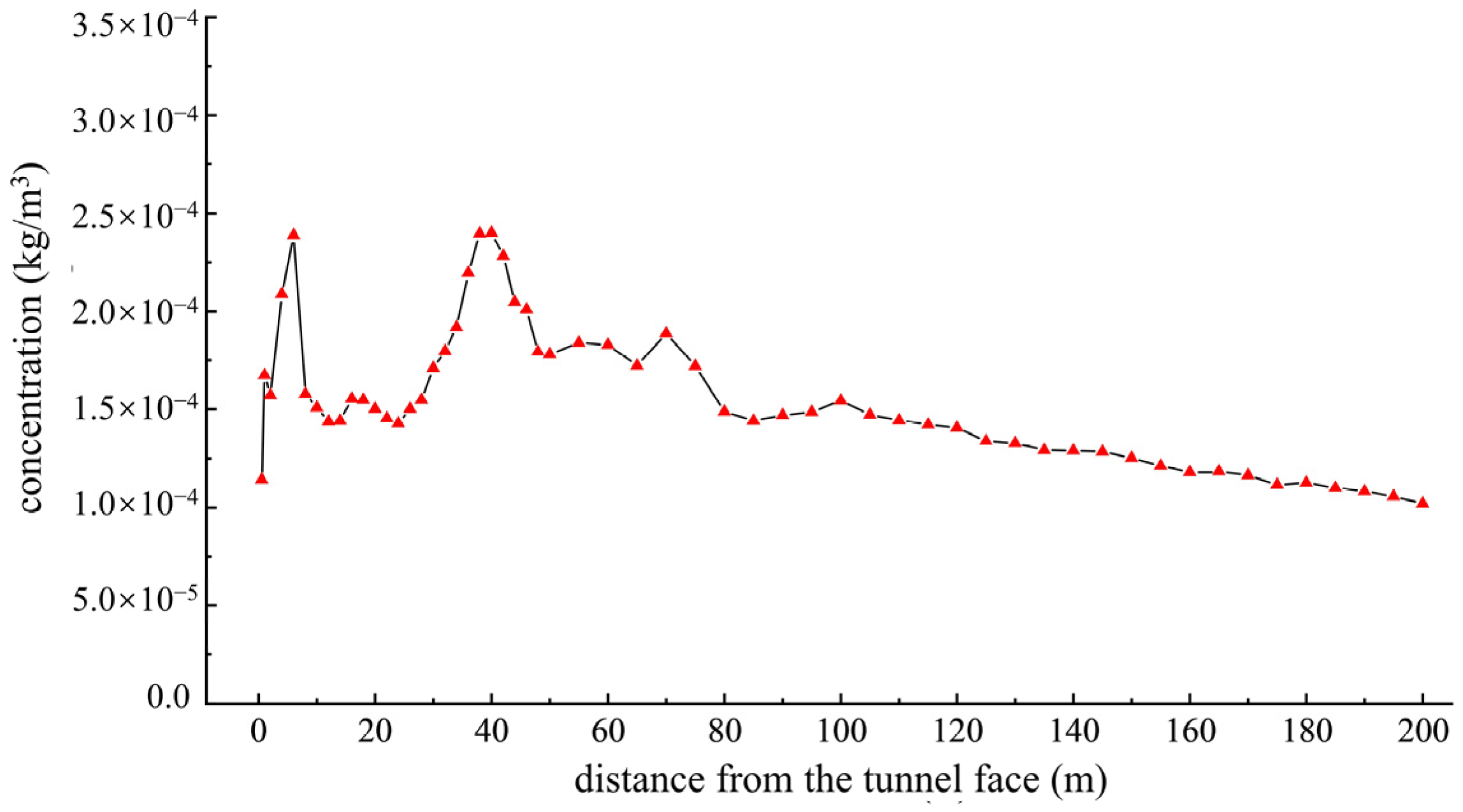
Similarly, the steady-state longitudinal distribution of dust concentration under sidewall shotcreting was computed, as shown in Figure 23. The maximum mean concentration occurs at about 40 m from the face with a peak of 240 mg/m3. The overall longitudinal trend is similar to that under top shotcreting but with a slightly lower peak value.
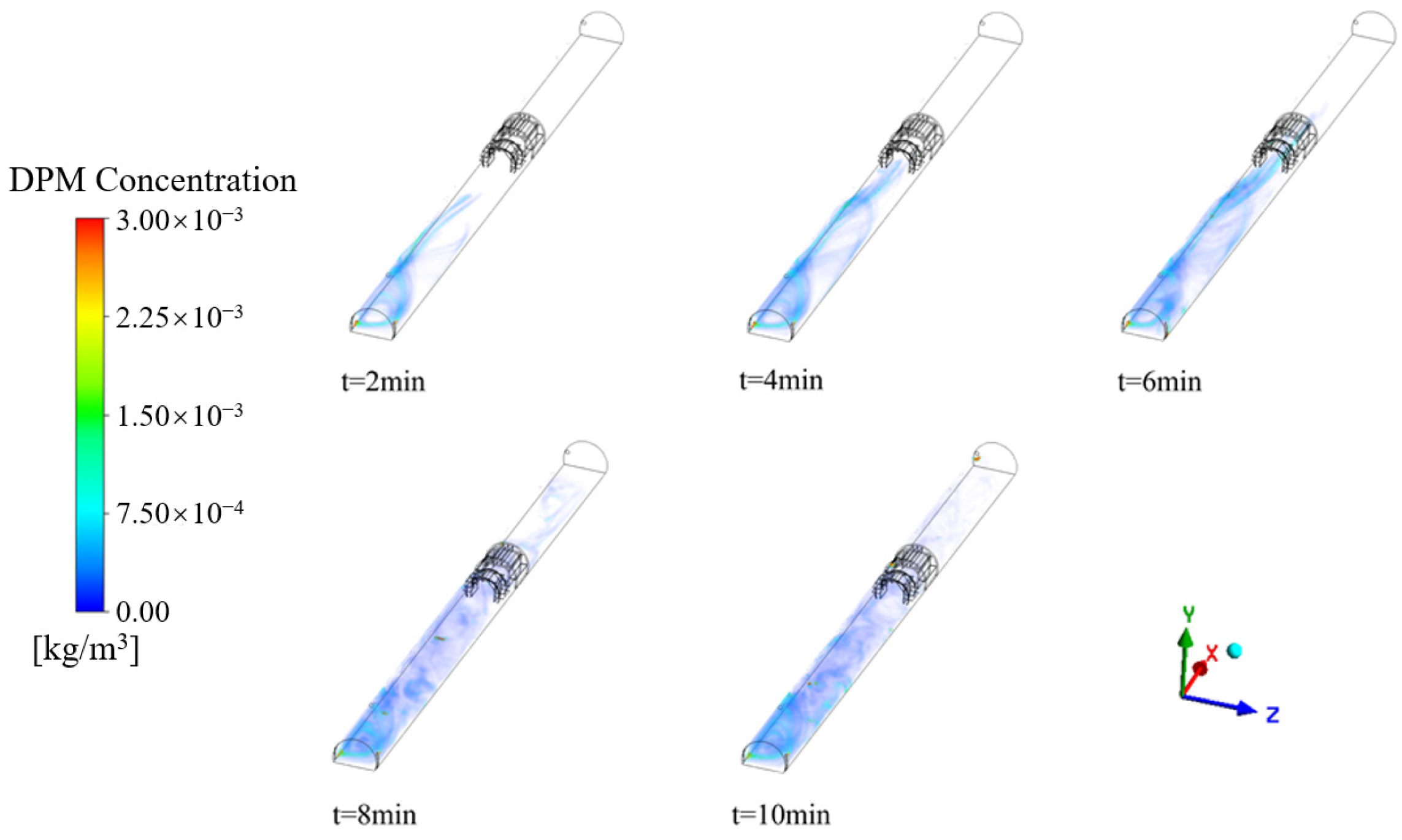
The transient behaviour of dust concentration (Figure 24) can be summarised into three stages: near-field accumulation, cross-sectional spread, and downstream transport. Within the first 4 min, the main dust cloud moves from the right side towards the left sidewall. Between 20 and 40 m, a high-concentration core rapidly forms in the upper-right region near the duct, while in the first 20 m, dust is initially concentrated in the lower part of the cross-section. By 4 min, the front has extended to the waterproofing-membrane formwork and dust between 40 and 90 m starts to spread from right to left. Between 6 and 8 min, the upper-right core between 20 and 40 m remains stable, the lower part of the first 40 m gradually fills and spreads towards the left and upper zones, and the 40–90 m section evolves towards near-full cross-sectional contamination. By about 8 min, the front reaches ~190 m and the overall concentration in the mid-tunnel region increases significantly. After 8 min, the first 40 m of the tunnel approaches a quasi-steady high-concentration state, and the transported dust cloud rapidly fills the cross-section downstream, leading to cross-section-wide contamination.
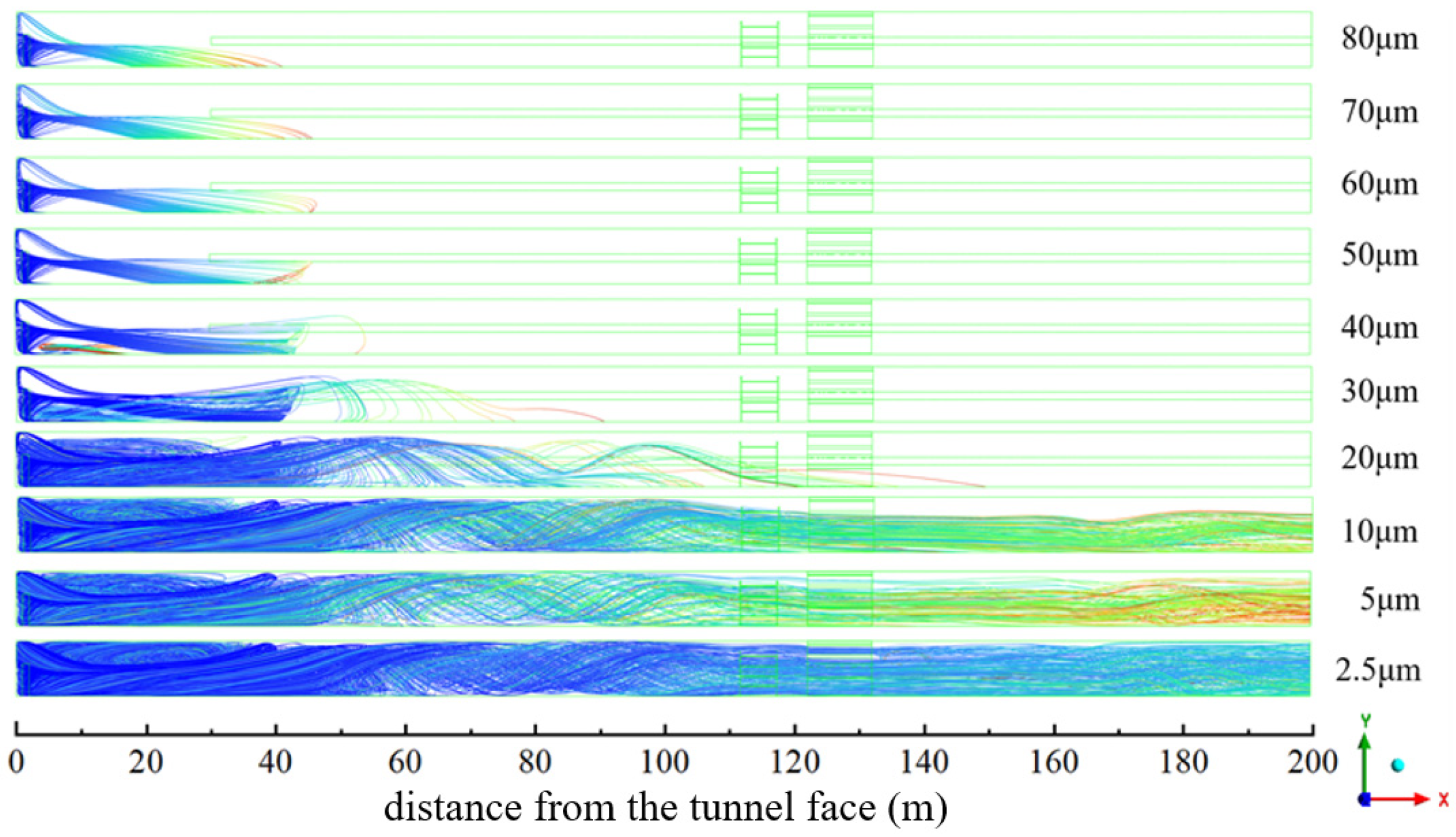
The final deposition locations of different particle sizes under sidewall shotcreting were also simulated for dp between 80 and 2.5 μm, as shown in Figure 25. The resulting size-segregated settling pattern is almost identical to that under top shotcreting, again confirming that particles with dp ≤ 20 μm are the main contributors to far-field pollution and long-term crown-zone contamination.

3.4. Benchmarking with Published Measurements

This section benchmarks key CFD–DPM outputs against independent published measurements as an evidence-based consistency check (Section 2.2.3).
Blasting dust magnitude and temporal evolution. Field monitoring combined with CFD-based inverse analysis has reported a characteristic M-shaped temporal profile of blasting dust concentration, with peak values on the order of 103 mg/m3, and has shown that fine particles (<10 μm) can remain widely dispersed along the tunnel after ventilation times on the order of 103 s (approximately 15–20 min) [19]. In our simulations, the blasting dust also exhibits a staged evolution from rapid initial release to subsequent transport governed by ventilation-induced jet and recirculation structures, and the concentration level near the face decays rapidly during the early transient period (see Section 3.2).
Ventilation-driven decay and clearance time scale. Field-validated studies have further reported that dust removal is considered essentially complete when the maximum concentration decreases to 10 mg/m3, and the corresponding clearance time can reach tens of minutes depending on tunnel length and airflow rate [13]. Our results similarly indicate a rapid reduction in the near-face region under ventilation, whereas the downstream/outlet region behaves as a long-term retention zone with a markedly slower decay (see Section 3.1, Section 3.2, Section 3.3), which is consistent with the commonly observed downstream “tail retention” under longitudinal ventilation.
Shotcreting dust level (source magnitude). Published measurements during shotcreting show that dry-mix spraying can generate substantially higher total and respirable dust concentrations than wet-mix shotcreting, typically by an order of magnitude [20]. This supports the use of a high-intensity dust source representation for shotcreting and the emphasis on fine-particle control in our simulations (Section 3.3).
Overall, the agreement in the order of magnitude and the qualitative temporal/size-dependent behaviours provides external support for the robustness of our key conclusions (persistent crown accumulation and the dominant contribution of fine particles). Quantitative differences are expected due to variations in tunnel geometry, explosive charge, ventilation configuration, and measurement criteria among different sites.

4. Design of the Rail-Mounted Purification System

4.1. Current Situation Assessment and Design Objectives

Dust control in drill-and-blast tunnel construction has long relied primarily on longitudinal forced ventilation, but numerical results (Section 3.1, Section 3.2, Section 3.3) highlight its structural limitations: During drilling and shotcreting, a persistent high-concentration dust belt develops within 0–30 m of the face, complicated by a low-velocity stagnation zone near the crown that causes long-term suspension and resistance to removal. During blasting, dust rapidly spreads under quiescent conditions and is subsequently advected downstream upon ventilation initiation, expanding contamination from local to global scales—a “secondary dispersion.” Across all three operations, fine particles—which exhibit long suspension times and strong long-range transport—have an inherently low capture efficiency, meaning traditional ventilation alone fails to meet purification requirements under high dust-loading conditions. Guided by the concepts of near-source capture and local enhancement, this study proposes a rail-mounted purification system featuring mobility and graded purification. The system is designed to act directly on the high-concentration dust belt and the crown stagnation zone, thereby compensating for the structural deficiencies of conventional ventilation.

4.2. Development of the Rail-Mounted Dust Purification Equipment

To accommodate the complex 3D distribution of dust in tunnels, the proposed system incorporates two core suction devices: a ring-type mobile suction device (for near-source capture) and a mobile purification unit (for intensified, stable purification).

4.2.1. Ring-Type Mobile Suction Device

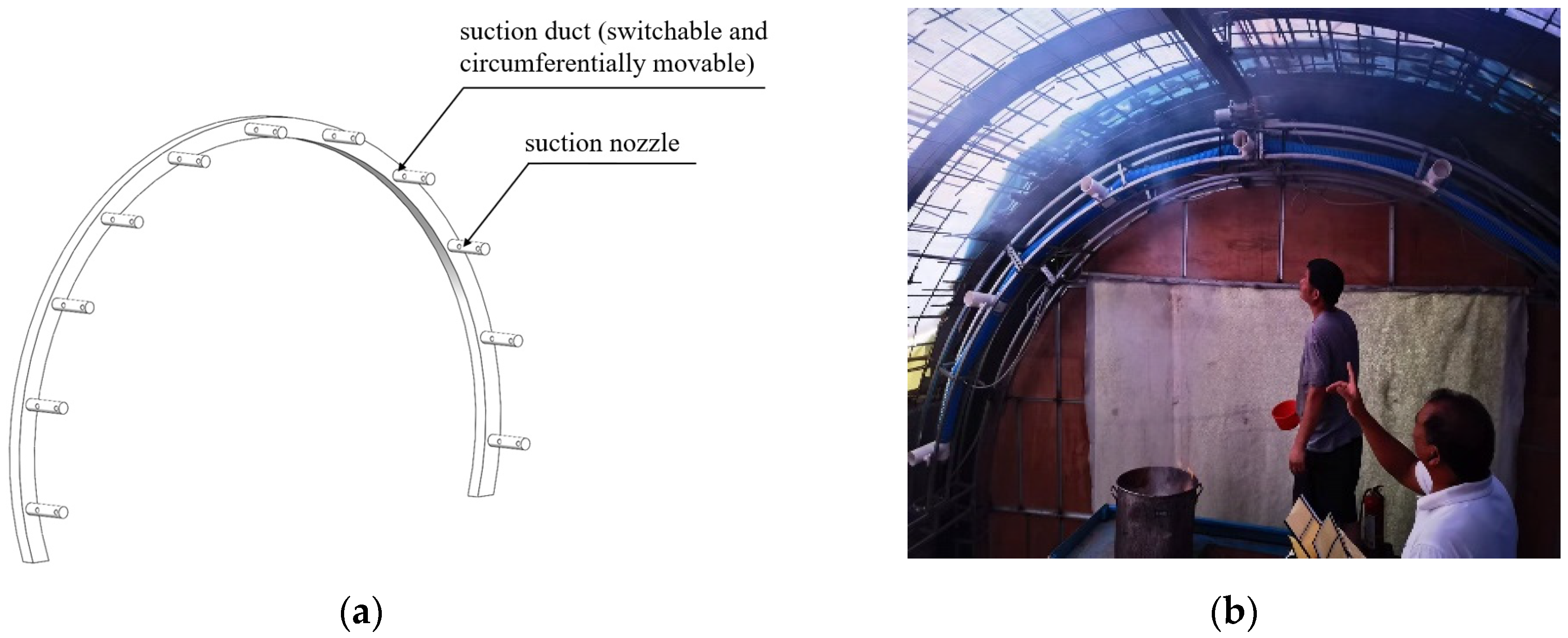
The ring-type mobile suction device consists of circumferentially movable suction ports suspended from an overhead rail system, as shown in Figure 26. To increase capture efficiency, the diameter of individual suction ports is reduced and their number increased, thereby increasing local inlet velocity and enhancing jet-induced entrainment of surrounding contaminated air and dust. The suction duct can be adjusted along the circumference to match the dominant dust accumulation height under different construction operations, enabling flexible, near-source, and position-accurate capture. Field tests in a full-scale tunnel model indicate that the device effectively captures near-source dust without interfering with construction activities.

4.2.2. Mobile Purification Unit

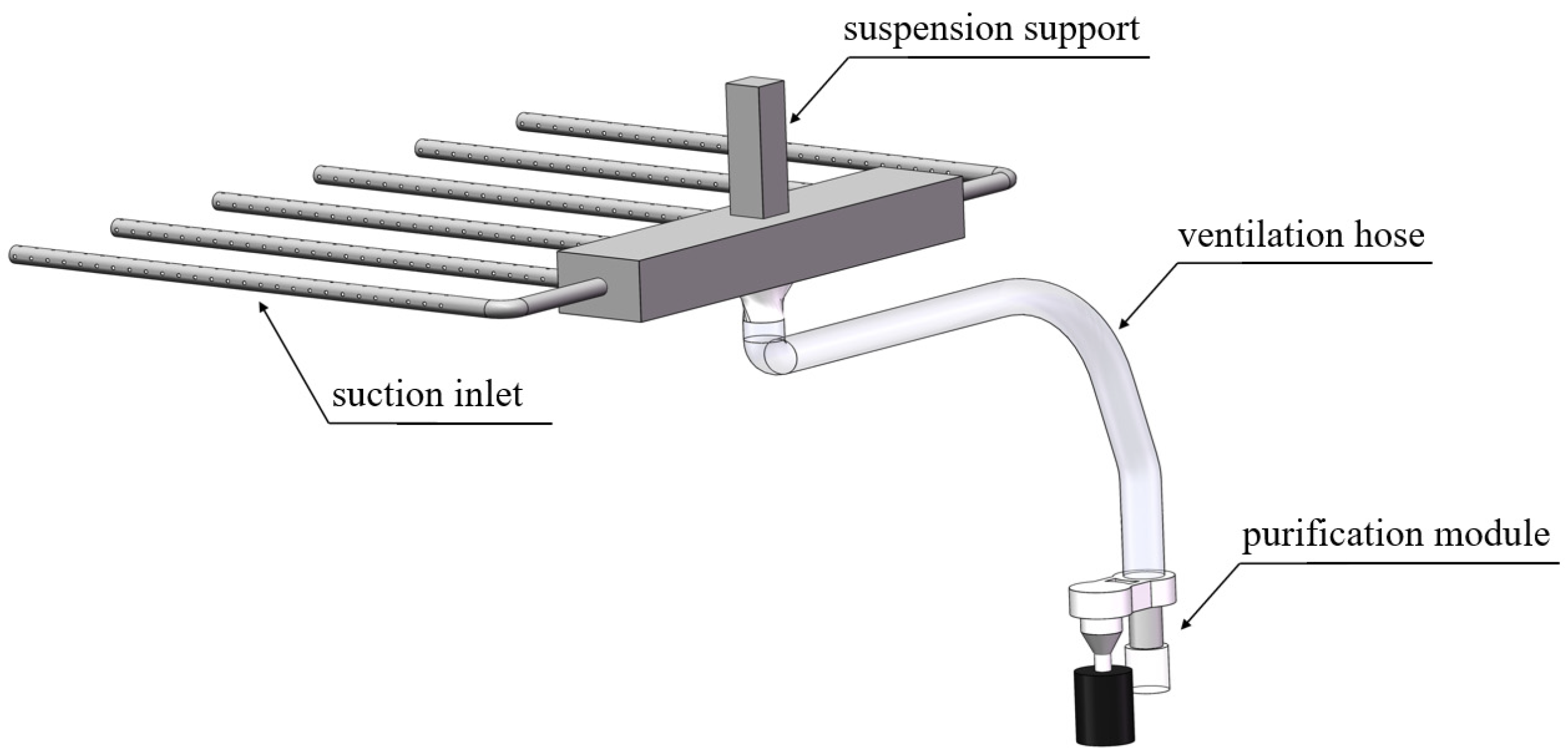
In addition to local hot spots near the face, numerical results indicate extended high-concentration regions further downstream. To enlarge the effective capture area and reinforce purification capability, a mobile purification unit is developed on the basis of the ring-type suction concept, as shown in Figure 27.
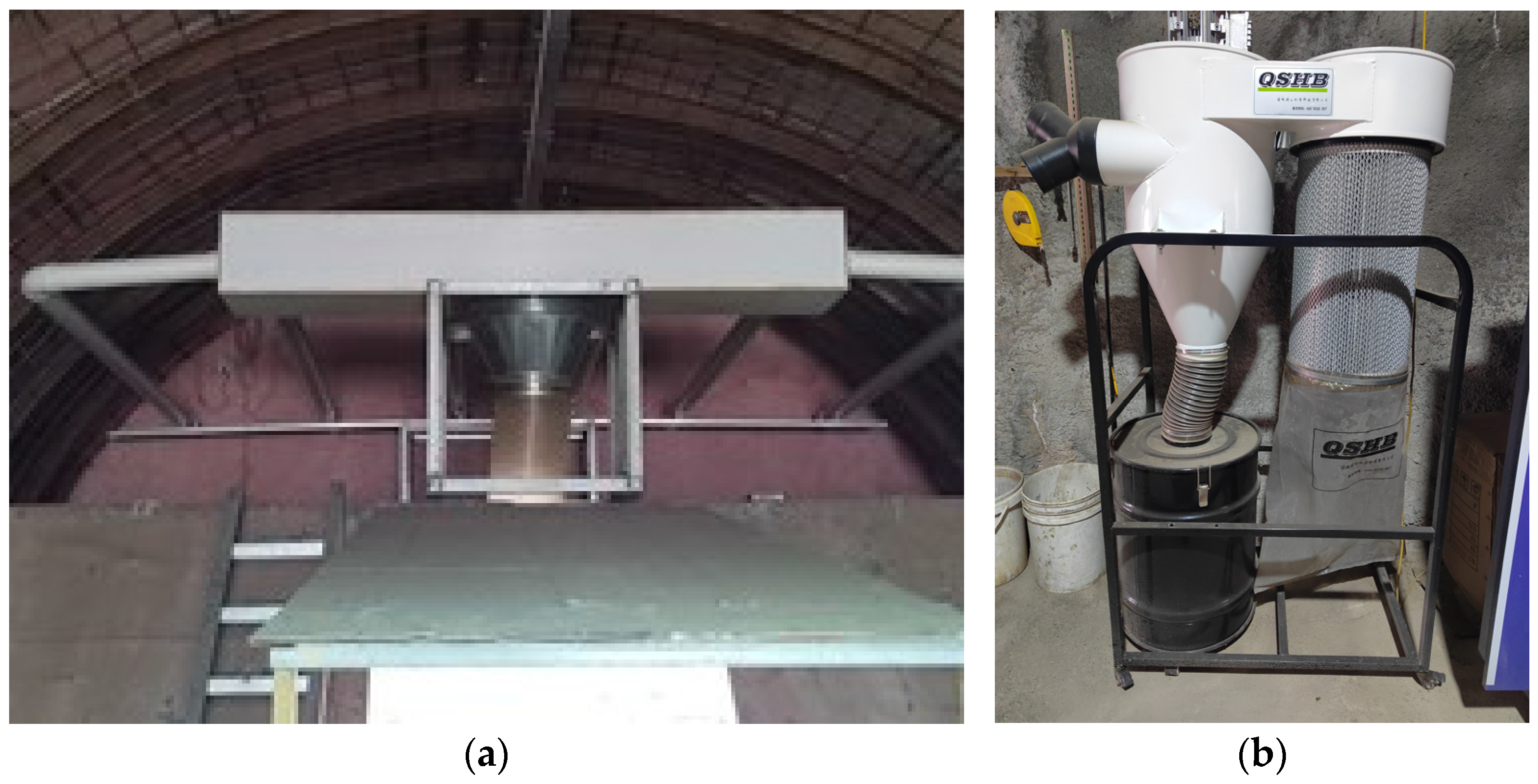
The unit uses an outward-extending hollow suction manifold equipped with multiple small-diameter suction ports. This configuration increases both the area of contact with contaminated air and the jet-induced entrainment, strengthening source-oriented purification in high-concentration regions. A purification module is installed at the lower part of the frame and can be moved synchronously with tunnel advance. The module is connected to the upper suction system via flexible ducts, allowing either on-site purification or centralized treatment depending on the engineering setup, as shown in Figure 28.
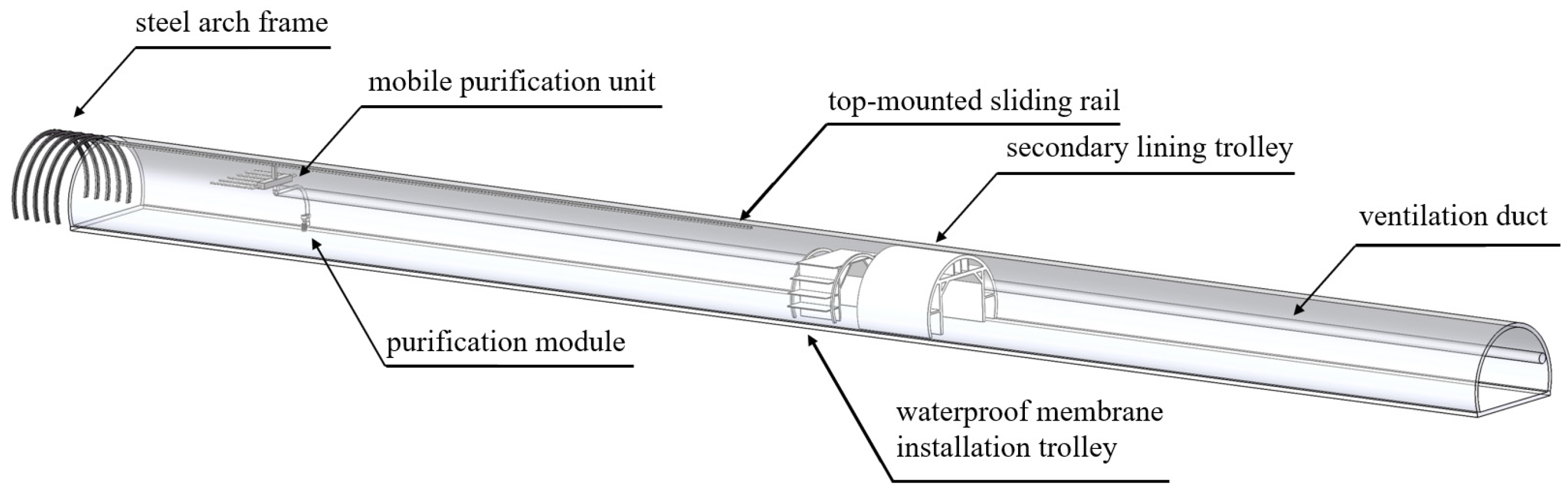
The ring-type mobile suction device and the mobile purification unit are integrated into a rail-mounted purification system. The system is typically installed between the excavation face and the secondary lining work zone. However, depending on the construction process and the corresponding dust characteristics, the system can flexibly deploy either the dust-collection unit (ring-type suction), the purification unit, or a combined configuration of both. Both devices travel along overhead rails fixed to the tunnel crown steel ribs, enabling rapid repositioning in response to changes in the active dust source. The structural setup is illustrated in Figure 29, showing the mobile purification unit.
The main advantages of this system include: (1) high flexibility, as the devices can be moved and re-positioned to track the construction face and adapt to different operations; (2) effective coverage of the entire working section using a single set of equipment, reducing total capital investment. The principal limitation is the need to install a dedicated rail system on the crown, which slightly increases initial structural and installation complexity.

4.3. Rail-Mounted Air Purification Schemes

The core concept of the proposed control strategy is to combine the rail-mounted purification equipment with conventional longitudinal ventilation and to implement graded purification schemes tailored to the dust dispersion characteristics of each construction operation.

4.3.1. Drilling Operation

Numerical simulations (Section 3.1) of the drilling operation indicate that dust circulates within the 0–30 m region ahead of the face, forming a pronounced concentration peak near the left wall around 25 m. Accordingly, a two-stage purification scheme is adopted, as illustrated in Figure 30.
Near-field ring-type purification. The ring-type mobile suction device is positioned at approximately 10 m from the face. The suction ports are shifted circumferentially to the height where dust tends to accumulate along the left sidewall. This stage primarily targets particles with dp < 30 µm, capturing them near the source before they are transported downstream.
Mid-field graded purification. The mobile purification unit is placed near the concentration peak at about 25 m from the face. This stage focuses on deep purification of fine particles with dp < 10 µm that have escaped the near-field capture and accumulated in the recirculation-dominated zone.
This combined graded strategy effectively weakens the high-concentration dust belt and reduces the downstream dust flux, thus lowering overall tunnel dust levels without interfering with drilling operations.

4.3.2. Blasting Operation

As shown in Section 3.2, blasting produces a short-duration, extremely high-concentration dust cloud. Under quiescent conditions, dust rapidly fills the near-face region; once ventilation is started, the dust cloud is advected downstream and ultimately spreads throughout the tunnel, resulting in secondary contamination. Because dust concentration is very high immediately after blasting and personnel cannot enter the work area safely, the purification scheme must exploit remote operation and early intervention.
In the proposed scheme, the rail-mounted purification system is initially parked near the mucking and support equipment, as illustrated in Figure 31. Immediately after blasting, it is driven toward the face along the overhead rails while operating in suction mode. By extracting dust as it moves forward, the system reduces the initial pollutant load in front of the face before the cloud is fully advected downstream by ventilation. This mitigates large-scale secondary dispersion, shortens the time required for dust concentration to fall to acceptable levels, and allows workers to re-enter the tunnel sooner for muck removal, rock bolting, and subsequent operations.

4.3.3. Shotcreting Operation

Taking the top-shotcreting condition as a representative case, the simulations in Section 3.3 indicate that the dust plume travels along the left sidewall at mid-height, with significant accumulation in the 30–50 m range and a pronounced concentration peak near the crown at about 40 m from the face. For shotcreting, the rail-mounted purification scheme again uses a two-stage configuration, as shown in Figure 32:
Near-field ring-type purification. The ring-type mobile suction device is positioned approximately 12 m from the face, with the suction ports adjusted circumferentially to the mid-height of the left sidewall. This stage mainly captures particles with a dp < 30 µm in the primary transport corridor of the dust plume.
Mid-field graded purification at the crown. The mobile purification unit is placed near the crown, around 42 m from the face, coinciding with the high-concentration accumulation zone identified in the simulations. This stage focuses on intensive removal of fine particles with dp < 10 µm that dominate long-range transport and crown-region retention.
This combined layout enables efficient removal of dust both at the source and at the peak accumulation zone without interfering with shotcrete spraying. It improves overall purification efficiency and reduces the amount of fine particulate matter transported to downstream work areas.

5. Conclusions

This study investigated dust generation, transport, and control during drill-and-blast tunnel construction via three-dimensional CFD–DPM simulations (drilling, blasting, and shotcreting), and developed a novel rail-mounted purification concept. The main findings are:
(1) Process-dependent dispersion patterns. Drilling produces a persistent high-concentration belt within 0–30 m of the face; shotcreting dust, driven by high-velocity jets and rebound, shifts its peak concentration towards the crown; blasting generates an instantaneous dust cloud that fills the face region and is subsequently transported axially by ventilation.
(2) Persistent crown recirculation zone. All three processes exhibit a low-velocity/weak-recirculation region near the crown, where dust accumulates and remains suspended for long periods. This “structural bottleneck” is poorly addressed by conventional forced longitudinal ventilation and becomes a critical target for control.
(3) Strong particle-size dependence. Coarse particles (dp ≥ 30 μm) are governed mainly by gravity and settle rapidly near the source, whereas medium-to-fine particles (dp ≤ 20 μm) are controlled by drag and vortical entrainment. Their characteristic settling/escape times are orders of magnitude longer, and they are responsible for long-range, long-duration pollution in the tunnel upper space and downstream sections.
(4) Limitations of conventional ventilation. Forced longitudinal ventilation cannot effectively penetrate near-face recirculation cells and is inefficient in removing fine particles; in blasting scenarios, it primarily redistributes dust, promoting through-tunnel transport and expanding the polluted zone rather than eliminating the contamination.
(5) Potential of a rail-mounted purification system. The proposed rail-mounted system can be repositioned with the working face to provide near-source, staged purification through jet-induced capture at the inlets, and to operate synergistically with longitudinal ventilation in a “local control + global dilution” mode. This configuration reduces peak concentrations in key working zones and improves the controllability and safety of high-dust operations.
Overall, the work clarifies the dominant dispersion mechanisms for typical drill-and-blast processes and outlines a rail-mounted, near-source purification strategy with practical potential for reducing worker exposure and improving the air quality of tunnel construction sites.
The conclusions are most applicable to drill-and-blast headings with press-in longitudinal ventilation and comparable geometric scales. Different tunnel cross-sections and heading lengths may change jet confinement and the downstream clearance distance, thereby shifting the location and intensity of local hotspots. Variations in inlet velocity and duct position may modify jet development and mixing, but the key mechanisms identified here, including crown-zone recirculation and the dominant long-range contribution of fine particles, remain important considerations for dust control. Urban tunnels with additional openings or shafts may provide alternative flow paths and enhanced dilution compared with mountain tunnels, and the quantitative results should be adapted to site-specific boundary conditions.

Author Contributions

Conceptualization, Y.W.; methodology, Y.W.; validation, R.S.; investigation, H.W.; resources, J.W.; data curation, L.W.; writing—original draft preparation, H.W.; writing—review and editing, H.W.; visualization, C.W.; project administration, Z.W. and Z.H. All authors have read and agreed to the published version of the manuscript.

Funding

This research was funded by the Scientific Research Project of the China Highway & Transportation Society, grant number 25303.

Institutional Review Board Statement

Not applicable.

Informed Consent Statement

Not applicable.

Data Availability Statement

The raw data supporting the conclusions of this article will be made available by the authors on request.

Conflicts of Interest

Authors Jiqing Wang, Changming Wan, Zhijian Wu and Ziquan Hu were employed by the company Jiangxi Communications Investment Group Co., Ltd. The remaining authors declare that the research was conducted in the absence of any commercial or financial relationships that could be construed as a potential conflict of interest.

References

  1. Hu, H.; Tao, Y.; Zhang, H.; Zhao, Y.; Lan, Y.; Ge, Z. Experimental study on the influence of longitudinal slope on airflow–dust migration behavior after tunnel blasting. Sci. Rep. 2023, 13, 19792. [Google Scholar] [CrossRef] [PubMed]
  2. Liu, J.; Zhao, H.; Wang, W.; Zhou, H.; Lu, F.; Wan, L.; Luo, X.; Teng, L. CO diffusion study and spatial and temporal variation modeling during the construction period of a plateau railroad tunnel. ACS Omega 2023, 8, 42565–42575. [Google Scholar] [CrossRef] [PubMed]
  3. Chang, X.; Ren, J.; Yang, R.; Tong, Y. Study on tunnel ventilation and pollutant diffusion mechanism during construction period. PLoS ONE 2025, 20, e0322984. [Google Scholar] [CrossRef] [PubMed]
  4. Zang, B.; Shao, L.; Li, Y.; Ran, H.; Wei, L. Investigation into dust migration patterns in small-section tunnels and large steep-sloped inclined shafts. Fluid Dyn. Mater. Process. 2025, 21, 555–571. [Google Scholar] [CrossRef]
  5. Shi, J.; Zhang, W.; Guo, S.; An, H. Numerical modelling of blasting dust concentration and particle size distribution during tunnel construction by drilling and blasting. Metals 2022, 12, 547. [Google Scholar] [CrossRef]
  6. Nie, W.; Sun, N.; Liu, Q.; Guo, L.; Xue, Q.; Liu, C.; Niu, W. Comparative study of dust pollution and air quality of tunnelling anchor integrated machine working face with different ventilation. Tunn. Undergr. Space Technol. 2022, 122, 104377. [Google Scholar] [CrossRef]
  7. Xiao, Y.; Yang, X.-E.; Wang, Z.-P.; Li, Q.-W.; Deng, J. Diffusion characteristics of coal dust associated with different ventilation methods in an underground excavation tunnel. Process Saf. Environ. Prot. 2024, 184, 1177–1191. [Google Scholar] [CrossRef]
  8. Zhang, X.; Lai, H.; Peng, Z.; Zhong, H.; Liao, Y.; Liao, J. Dust distribution pattern and optimization of tunnel ventilation system. Staveb. Obz.-Civ. Eng. J. 2024, 33, 435–451. [Google Scholar] [CrossRef]
  9. Xie, Z.; Ruan, C.; Zhao, Z.; Huang, C.; Xiao, Y.; Zhao, Q.; Lin, J. Effect of ventilation parameters on dust pollution characteristics of drilling operation in a metro tunnel. Tunn. Undergr. Space Technol. 2023, 132, 104867. [Google Scholar] [CrossRef]
  10. Liu, J.; Chen, Y.; Wang, W.; Hao, C.; Cai, F.; Teng, L.; Luo, X. Impact analysis of dust evolution pattern and determination of key ventilation parameters in highland highway construction tunnels. Heliyon 2024, 10, e33758. [Google Scholar] [CrossRef]
  11. Zhang, X.; Wang, Z.; Chen, W. Optimisation of synergistic ventilation between dust and gas in a gas tunnel. Sci. Rep. 2024, 14, 27582. [Google Scholar] [CrossRef] [PubMed]
  12. Wei, J.; Xu, X.; Jiang, W. Influences of ventilation parameters on flow field and dust migration in an underground coal mine heading. Sci. Rep. 2020, 10, 8563. [Google Scholar] [CrossRef] [PubMed]
  13. Peng, Y.; Wu, S.; Li, Y.; He, L.; Wang, P. Predictive analysis of ventilation dust removal time in tunnel blasting operations based on numerical simulation and orthogonal design method. Processes 2025, 13, 2415. [Google Scholar] [CrossRef]
  14. Crowe, C.T. On models for turbulence modulation in fluid–particle flows. Int. J. Multiph. Flow 2000, 26, 719–727. [Google Scholar] [CrossRef]
  15. Sommerfeld, M. Validation of a stochastic Lagrangian modelling approach for inter-particle collisions in homogeneous isotropic turbulence. Int. J. Multiph. Flow 2001, 27, 1829–1858. [Google Scholar] [CrossRef]
  16. Wang, Y.; Zhao, Y.; Yao, J. Large eddy simulation of particle deposition and resuspension in turbulent duct flows. Adv. Powder Technol. 2019, 30, 656–671. [Google Scholar] [CrossRef]
  17. Xue, Y.; Wang, J.; Xiao, J. Bibliometric analysis and review of mine ventilation literature published between 2010 and 2023. Heliyon 2024, 10, e26133. [Google Scholar] [CrossRef]
  18. Wang, J.; Xue, Y.; Xiao, J.; Shi, D. Diffusion characteristics of airflow and CO in the dead-end tunnel with different ventilation parameters after tunneling blasting. ACS Omega 2023, 8, 36269–36283. [Google Scholar] [CrossRef]
  19. Chen, Z.; Zhao, S.; Dong, C.; Wang, S.; Guo, Y.; Gao, X.; Sun, B.; Chen, W.; Guo, C. Three-Stage Numerical Simulation of Tunnel Blasting Dust Diffusion Based on Field Monitoring and CFD. Tunn. Undergr. Space Technol. 2024, 150, 105830. [Google Scholar] [CrossRef]
  20. Li, P.; Zhou, Z.; Chen, L.; Liu, G.; Xiao, W. Research on Dust Suppression Technology of Shotcrete Based on New Spray Equipment and Process Optimization. Adv. Civ. Eng. 2019, 2019, 4831215. [Google Scholar] [CrossRef]
  21. Wu, Y.; Jin, M.; Li, X.; Tian, J.; Yang, B.; Liu, J.; Zhou, S.; Wang, F. Experimental study on concentration and size distribution characteristics of particulate matter in cold and hot rolling. Atmosphere 2025, 16, 13. [Google Scholar] [CrossRef]
  22. Tan, H.; Shang, K.; Cui, Z.; Xue, G. Study on mass-based particle-size distribution characteristics of 36 types of dust in railway workplaces. Railw. Occup. Saf. Health Environ. Prot. 1994, 21, 87–93. [Google Scholar]
  23. Bentz, D.P.; Garboczi, E.J.; Haecker, C.J.; Jensen, O.M. Effects of cement particle size distribution on performance properties of Portland cement-based materials. Cem. Concr. Res. 1999, 29, 1663–1671. [Google Scholar] [CrossRef]
  24. Zhou, Y.; Wei, D.; Lv, X.; Wu, Z.; Shen, Z.; Yu, C.; Mu, Y.; Li, T. Research on the transport mechanism of tunnel dust based on FLUENT. Eng. Lett. 2025, 33, 520–529. [Google Scholar]
  25. Semin, M.; Faynburg, G.; Tatsiy, A.; Levin, L.; Nakariakov, E. Insights into turbulent airflow structures in blind headings under different ventilation duct distances. Sci. Rep. 2024, 14, 23768. [Google Scholar] [CrossRef]
  26. ANSYS Inc. ANSYS Fluent Theory Guide, Release 2022 R1; ANSYS Inc.: Canonsburg, PA, USA, 2022. [Google Scholar]
  27. Stewart, C.M. Practical Prediction of Blast Fume Clearance and Workplace Re-Entry Times in Development Headings. In Proceedings of the 10th International Mine Ventilation Congress (IMVC 2014), Sun City, South Africa, 17–22 August 2014. [Google Scholar]
  28. Tiile, R.N. Investigating Blast Fume Propagation, Concentration and Clearance in Underground Mines Using Computational Fluid Dynamics (CFD). Doctoral Dissertation, Missouri University of Science and Technology, Rolla, MO, USA, 2019. [Google Scholar]
  29. TZ 204-2008; Technical Guide for Railway Engineering Construction. China Railway Publishing House: Beijing, China, 2008.
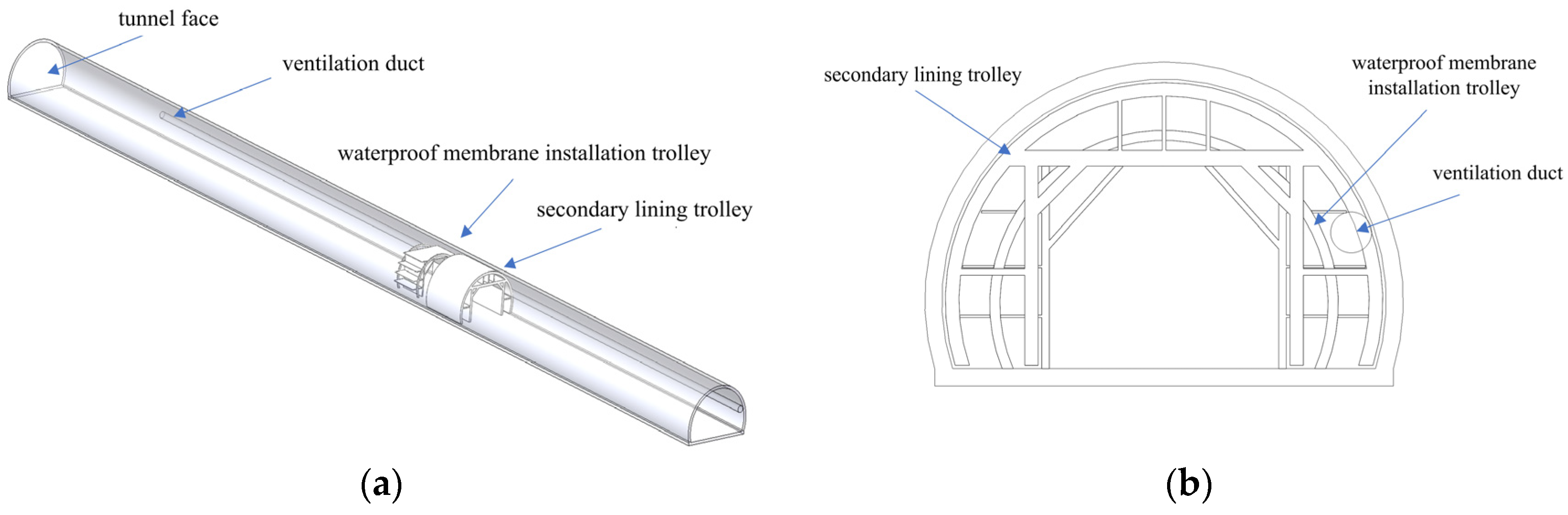
Figure 1. Schematic of the tunnel geometry and ventilation layout: (a) isometric view; (b) front view.
Applsci 16 00519 g001
Figure 2. Airflow velocity variation along the tunnel under different mesh resolutions.
Applsci 16 00519 g002
Figure 3. Computational mesh of the tunnel model: (a) transverse section; (b) longitudinal section.
Applsci 16 00519 g003
Figure 4. Schematic layout of dust emission sources during the drilling process.
Applsci 16 00519 g004
Figure 5. Schematic layout of dust emission sources during the shotcreting process: (a) top shotcrete strip; (b) sidewall shotcrete strips.
Applsci 16 00519 g005
Figure 6. Fitted particle-size distribution curve of granite dust.
Applsci 16 00519 g006
Figure 7. Fitted particle-size distribution curve of cement dust.
Applsci 16 00519 g007
Figure 8. Particle trajectories under the Rosin–Rammler size distribution for drilling dust.
Applsci 16 00519 g008
Figure 9. Particle trajectories of drilling dust for different particle diameters.
Applsci 16 00519 g009
Figure 10. Dispersion and deposition locations of drilling dust with different particle diameters.
Applsci 16 00519 g010
Figure 11. Settling/escape time of drilling dust for different particle-size ranges.
Applsci 16 00519 g011
Figure 12. Scatter plots of particle settling/escape time versus particle size under different inlet velocities: (a) 10 m/s; (b) 15 m/s; (c) 20 m/s.
Applsci 16 00519 g012
Figure 13. Steady-state cross-sectional average dust concentration distribution during drilling.
Applsci 16 00519 g013
Figure 14. Dust concentration contours on the central longitudinal plane (z = 0) at different times under drilling conditions.
Applsci 16 00519 g014
Figure 15. Mean dust concentration along the tunnel at different ventilation durations.
Applsci 16 00519 g015
Figure 16. Evolution of dust concentration under blasting in still air.
Applsci 16 00519 g016
Figure 17. Concentration Evolution of Freely Migrating Dust Particles with Different Diameters: (a) 30 μm; (b) 20 μm; (c) 15 μm; (d) 10 μm; (e) 5 μm; (f) 2.5 μm. All subplots share the same legend, which is shown once for the entire figure.
Applsci 16 00519 g017
Figure 18. Evolution of dust concentration during short-term ventilation following blasting.
Applsci 16 00519 g018
Figure 19. Evolution of dust concentration during long-term ventilation following blasting.
Applsci 16 00519 g019
Figure 20. Longitudinal variation of cross-sectional mean dust concentration under top shotcreting.
Applsci 16 00519 g020
Figure 21. Temporal evolution of spatial dust concentration under top-shotcreting.
Applsci 16 00519 g021
Figure 22. Deposition locations of dust particles of different sizes under the top-shotcreting condition.
Applsci 16 00519 g022
Figure 23. Longitudinal variation of cross-sectional mean dust concentration under side shotcreting.
Applsci 16 00519 g023
Figure 24. Spatial dust concentration contours at different times under side shotcreting.
Applsci 16 00519 g024
Figure 25. Dispersion locations of dust particles with different diameters under side shotcreting.
Applsci 16 00519 g025
Figure 26. Field test of the ring-type mobile suction device: (a) circumferentially movable suction ports; (b) dust extraction test in the full-scale tunnel model.
Applsci 16 00519 g026
Figure 27. Schematic diagram of the mobile purification unit.
Applsci 16 00519 g027
Figure 28. Mobile purification unit: (a) dust extraction device; (b) purification module.
Applsci 16 00519 g028
Figure 29. Schematic diagram of the mobile purification system.
Applsci 16 00519 g029
Figure 30. Arrangement of the rail-mounted purification system during drilling.
Applsci 16 00519 g030
Figure 31. Initial position of the rail-mounted purification system under the blasting operation.
Applsci 16 00519 g031
Figure 32. Arrangement of the rail-mounted purification devices during the shotcrete operation.
Applsci 16 00519 g032
Table 1. Primary dust source parameters for the three construction processes.
ProcessDust ParticleParticle Size Range (μm)Median Particle Size (μm)Initial Velocity (m/s)Mass Flow Rate (kg/s)Distribution Index
DrillingGranite1–5018.30.20.0051.41
BlastingGranite1–5018.370.8371.41
ShotcretingCement1–8016.80.50.0051.31
Table 2. Boundary condition settings.
Boundary NameModel LocationBoundary TypeParameters
InletVentilation duct outletVelocity-inletVelocity:
Turbulence intensity:
Hydraulic diameter:
15 m/s
2.77%
1.2 m
OutletTunnel exitPressure-outletDPM Condition:escape
WorkTunnel faceWallDPM Condition:reflect
FloorTunnel invertWallDPM Condition:trap
WallOther tunnel boundariesWallDPM Condition: reflect
Table 3. Parameter settings of the discrete phase model.
Discrete Phase ModelDefine
Interaction with the continuous phaseOn
Number of continuous phase iterations per DPM iteration20
Max. number of steps50,000
Unsteady particle trackingOn
Physical modelsSaffman lift force; pressure gradient force
Disclaimer/Publisher’s Note: The statements, opinions and data contained in all publications are solely those of the individual author(s) and contributor(s) and not of MDPI and/or the editor(s). MDPI and/or the editor(s) disclaim responsibility for any injury to people or property resulting from any ideas, methods, instructions or products referred to in the content.