


Abstract
To achieve environmental sustainability, especially in developing nations, the world needs immediate action because of present environmental trends. Sustainable consumer behavior (SCB) is very important for both improving environmental sustainability and mitigating climate change. Libya is dealing with increasing environmental problems, such as desertification, water shortages, and inadequate waste management. However, there are limited studies on factors influencing SCB at the household level in Libya from a social and economic point of view. This study investigates the socio-economic, attitudinal, and educational determinants of SCB among households in Libya. The primary objective is to examine the direct effects of socio-economic characteristics, environmental concern, price consciousness, and environmental education (EE) on SCB, as well as the mediating role of EE. A quantitative research design was employed using survey data collected from approximately 500 households. Structural equation modeling (SEM) was applied to test the hypothesized relationships. The results indicate that education, income, environmental concern, price consciousness, and environmental education significantly influence SCB, while EE plays a key mediating role between several antecedents and sustainable behavior. The findings highlight the importance of environmental education in facilitating sustainable consumption in economically constrained contexts and provide insights for policy interventions in Libya.
1. Introduction
The current state of the global environment calls for quick action to make sure that the environment is sustainable, especially in developing countries. Sustainable consumer behavior (SCB) is very important for improving environmental sustainability and mitigating climate change [1]. Libya faces growing environmental challenges such as desertification, limited water, and waste mismanagement. There is limited research on what drives SCB at the household level in Libya from a socio-economic point of view. This research investigates household SCB in Libya, focusing on how it relates to socio-economic factors. It also explores how psychological factors like environmental awareness, education, and price sensitivity affect SCB in Libyan households. Data from about 500 Libyan homes was collected to investigate how socio-economic factors and psychological drivers affect SCB. The results show that factors such as gender, education, and income really impact how households engage in SCB.
Households have been identified as the primary units of consumption; they play a critical role in environmental outcomes. Everyday household decisions range from energy use, food choices, waste management, and purchase decisions, all of which have direct or indirect impacts on the ecological footprint [2]. Sustainable consumer behavior (SCB) is a concept used to define individual and household consumption practices that minimize or mitigate the negative environmental impacts [3]. SCB has been widely identified as an essential driver of environmental sustainability, especially at grassroot levels [4]. Hence, understanding the determining factors of SCB has become increasingly important, particularly in developing economies where rapid socio-economic transitions intersect with environmental vulnerabilities.
This study contributes to the sustainable consumption literature in three important ways. First, it provides rare household-level empirical evidence from Libya, a post-conflict, oil-dependent economy facing acute environmental and economic constraints. Second, it integrates socio-economic factors, environmental concern, price consciousness, and environmental education into a single behavioral framework grounded in TPB and VBN. Third, by explicitly examining sustainable consumer behavior as a multidimensional construct, this study demonstrates how price consciousness operates differently across behavioral domains, thereby highlighting behavioral heterogeneity in economically constrained contexts.
1.1. Background
Libya’s arid and semi-arid climate contributes to several environmental problems, which are made worse by the country’s weak sustainability regulations. The main issues include water shortage, poor waste handling, and desertification [5]. Because of this, it is important to study sustainability efforts at the family level to see how these actions can improve the country’s environmental health. Libya is also experiencing social and economic changes that affect a family’s consumption habits [6]. Even with these issues, the research on environmental actions in Libya is limited when you compare it with studies conducted in other countries. This leaves a significant gap in understanding how the average Libya household perceives environmental issues, how socio-economic characteristics shape their behavior, and how factors such as cost perception and environmental education influence environmentally sustainable practices.
Libya’s environmental challenges such as chronic water scarcity, inefficient waste management systems, and accelerating desertification interact with the country’s post-conflict political instability and oil-dependent economy to shape household consumption patterns in ways that differ from stable developing nations. Within the theory of planned behavior (TPB) [7] framework, these structural constraints influence perceived behavioral control by limiting households’ capacity to adopt certain pro-environmental actions. From a value belief norm (VBN) [8] perspective, prolonged exposure to environmental degradation may heighten problem awareness and personal norms, yet economic insecurity can moderate the translation of these norms into action. Accordingly, understanding SCB in Libya requires situating behavioral antecedents within a context marked by disrupted governance, infrastructure deficits, and fluctuating household resources.
1.2. Study Objectives
Drawing on established behavioral frameworks, particularly the TPB and the VBN theory, this study examines how socio-economic factors, environmental concern, price consciousness, and environmental education jointly shape sustainable consumer behavior. While these frameworks have been widely applied in developed-country contexts, empirical evidence from economically constrained and politically unstable environments remains limited.
This study seeks to address the impact of socio-economic dynamics, environmental education, environmental concern, and product cost perception on sustainable consumer behavior at household levels in Libya. This study aims to capture the individual combined influence of these variables on household sustainable practices. By carrying out the study objectives, this study contributes to both environmental sustainability theory and practice. This study integrates socio-demographic, attitudinal, and situational factors into a comprehensive model to ensure a comprehensive household level sustainable behavior analysis. The reported findings are expected to inform educators, policy makers, and other stakeholders in Libya and other relatable contexts.
The significance of this study is in its attempt to bridge the attitude behavior gap by simultaneously considering socio-economic factors, cost perceptions, and environmental education. This study adopts a holistic perspective that reflects the complex reality of household consumption decision making. Situating this study within the Libyan context fills an empirical gap and also contributes to broader environmental sustainability debates in developing countries. The findings of this study provide insight to enable more inclusive and effective environmental sustainability strategies and efforts that factor actual household realities and socio-economic constraints in navigating environmental challenges.
2. Literature Review
Understanding sustainable consumer behavior (SCB) requires an integrative approach that recognizes how structural conditions, psychological drivers, and educational processes jointly shape behavior. While classical behavioral theories such as the TPB and the VBN theory explain the motivational foundations of pro-environmental behavior, neither fully accounts for the socio-economic constraints and knowledge gaps that characterize developing countries such as Libya. To address this gap, this study integrates socio-economic dynamics, environmental concern (EC), price consciousness, and environmental education (EE) within a single behavioral framework to explain household-level SCB.
In TPB, behavior is shaped by attitudes, subjective norms, and perceived behavioral control (PBC) [9], where individuals act when they have favorable evaluations, supportive norms, and sufficient capability. In VBN, behavior arises from value-based beliefs, awareness of consequences, and personal norms that motivate moral commitment to act [10]. However, in many developing-country contexts, individuals may hold pro-environmental values and attitudes yet lack the knowledge, skills, or perceived efficacy to translate these intentions into tangible behavior; a well-documented “attitude–behavior gap”.
EE represents a mechanism capable of bridging this gap. Unlike traditional TPB or VBN constructs, EE simultaneously strengthens cognitive understanding, affective connection, behavioral competence, and internalized environmental norms [11]. EE therefore operates at multiple stages of the behavioral generation process, enabling socio-economic influences, value orientations, and price-related considerations to be expressed as actual sustainable actions [12]. For this reason, EE is conceptualized as the primary mediating construct in this study.
The following subsections critically review the literature on socio-economic dynamics, product cost perception, environmental education, and environmental concern, and explain how these variables interact within an integrated TPB, VBN, and EE framework to shape SCB in resource-constrained environments.
2.1. Socio-Economic Dynamics
Socio-economic characteristics influence opportunities, constraints, and behavioral patterns in household decision making [13]. Gender differences affect environmental engagement, with women typically displaying stronger tendencies toward sustainable practices due to caregiving roles and household management responsibilities [14]. Age shapes SCB through generational differences in environmental attitudes and lifestyle patterns, with younger individuals expressing strong environmental values and older adults demonstrating stable resource-conserving habits [15]. The complexity of age in this regard is often associated with the financial stability of the different age groups and the general requirement of a green premium in SCB [16].
Education enhances environmental literacy and evaluative skills, improving individuals’ ability to make informed sustainable choices [17]. Income affects the affordability of sustainable products and the ability to invest in energy-efficient technologies [18]. These socio-economic conditions set the structural foundation upon which psychological and educational variables influence SCB.
H1.
Gender has a significant impact on SCB.
H2.
Age group has a significant impact on SCB.
H3.
Education has a significant impact on SCB.
H4.
Household monthly income has a significant impact on SCB.
2.2. Product Cost Perception
Product cost perception influences the extent to which households adopt sustainable consumption behaviors. While sustainable products often carry price premiums that discourage adoption, cost perception may also encourage austerity-driven conservation behaviors such as reducing electricity use, reusing materials, or recycling [19]. The green premium is characterized as the extra cost of producing low-carbon products or services compared with traditional products and services [20]. Thus, price consciousness may either inhibit or promote SCB depending on whether households respond through cost-saving or environmentally motivated actions [21]. Households with economic constraints and limited disposable income often prioritize affordability over environmental attributes and sustainability in their consumption, leading to short-term financial needs and long-term sustainability goals [22].
H5.
There is a relationship between the perception of product cost and SCB.
2.3. Environmental Education
Environmental education (EE) fosters knowledge, awareness, and pro-environmental attitudes in people. Formal environmental education (EE) is conceptualized as a multidimensional construct encompassing cognitive knowledge, affective awareness, behavioral competence, and norm internalization [22]. EE enhances environmental literacy, perceived behavioral control, and skill readiness for sustainable consumption [23]. EE is often associated with increased SCB, correlated with increased environmental knowledge, awareness, and concern [24]. In the Libyan context, where access to environmental information varies substantially, EE acts as an equalizing mechanism that equips individuals with the knowledge and capabilities necessary to adopt sustainable practices.
H6.
There is a relationship between EE and SCB.
2.4. Environmental Concern
Environmental concern is characterized as the extent of individuals’ awareness of ecological challenges and their will to contribute towards solving the challenges [25]. According to behavioral theories such as the TPB [7] and the VBN [2] theory, pro-environmental attitudes and values form the foundation of behavior and are moderated by situational constraints such as cost and availability [26]. Environmental concern plays a critical role in shaping SCB by influencing how individuals perceive environmental problems and their sense of responsibility to act on it [21]. Consumers with high environmental concern are reported to generally have more will to engage in environmental sustainability practices such as SCB [27].
Environmental concern reflects individuals’ awareness of and emotional investment in environmental problems. Environmental concern corresponds to value-based dispositions central to the VBN framework. However, concern alone may not directly translate into behavior, especially under economic or structural constraints [28]. Environmental education beyond just providing cognitive environmental resources also provides awareness and practical skills to turn concern into action [29]. EE strengthens the link between environmental concern and SCB by providing the competence and confidence needed to act on environmental values [30].
H7.
There is a relationship between environmental concern and SCB.
2.5. Environmental Education, Price Consciousness, and Sustainable Consumer Behavior
Price consciousness can act as a barrier to sustainable consumer behavior; this is because environmentally friendly consumer products are often associated with a green premium and perceived as more expensive [31]. However, environmental education has the effect of reframing consumer perceptions of value by highlighting long-term cost savings, as well as non-monetary values and benefits of SCB, i.e., health and ecological wellbeing [32]. Environmental education enables households to recognize energy-efficient appliances that may be costlier but have a longer cost benefit. Hence, environmental education moderates the negative perceptions of price consciousness, enabling households to adopt more sustainable consumer behaviors despite financial challenges and constraints [33].
Gender, education, and income shape access to environmental learning opportunities and information. EE strengthens the knowledge and skills required for sustainable action, mediating their effects. Environmental concern reflects value-based readiness, while EE provides the competence needed to act. EE reframes sustainable practices as economically beneficial, enabling price-conscious households to adopt SCB.
H8.
Environmental education has a significant mediating role between gender and SCB.
H9.
Environmental education has a significant mediating role between income level and SCB.
H10.
Environmental education has a significant mediating role between education level and SCB.
H11.
Environmental education has a significant mediating role between environmental concern and SCB.
H12.
Environmental education has a significant mediating role between price consciousness and SCB.
2.6. Integrated Framework
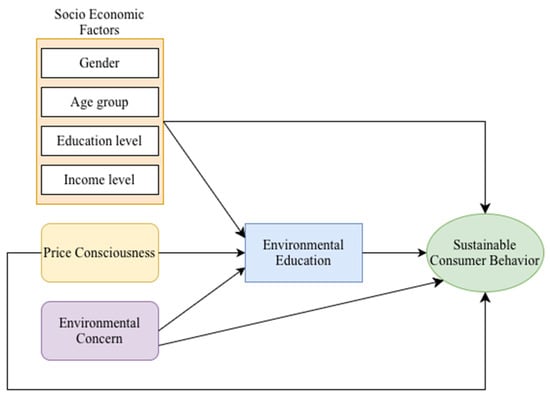
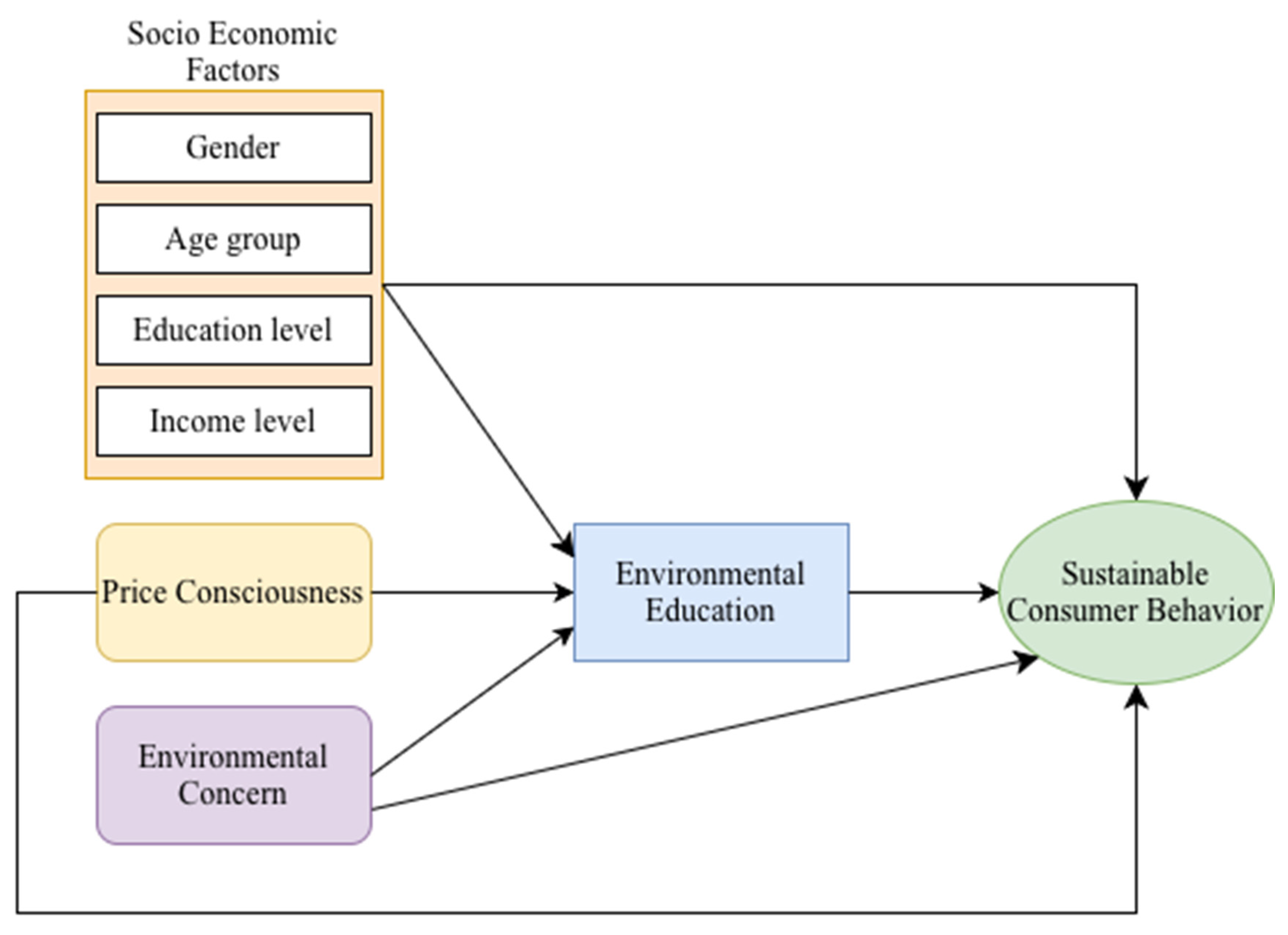
This study conceptualizes SCB as emerging from three interacting mechanisms. The first is the socio-economic characteristics influencing access to information, affordability, and household decision contexts. The second is environmental concern and price consciousness, which are influenced by attitudes, value, and economic evaluation of SCB. The third is EE transformation of motivations into actions by enhancing knowledge, skills, and perceived behavioral control of households. Through these mechanisms, EE serves as a bridge linking socio-economic factors and actual SCB in households. Figure 1 illustrates the conceptual model for this study.
Figure 1.
Research conceptual model.
3. Research Design
This study is designed to use a quantitative research methodology to investigate the impact of socio-economic dynamics, product cost perception, and environmental education on household sustainable consumer behavior. This study is designed to use the environmental and socio-economic context of Libya as a research case. The research design uses carefully selected variables to adequately encase the dimensions of the research problems and questions. This ensures that adequate insight is gained to answer the questions and fill the identified research gap.
The research design follows a structured sequence. First, validated multi-item scales were used to measure key latent constructs. Second, descriptive and bivariate analyses were conducted to explore socio-demographic differences across SCB dimensions. Third, structural equation modeling was employed to simultaneously test direct and mediated relationships among socio-economic factors, environmental concern, price consciousness, environmental education, and sustainable consumer behavior. Finally, supplementary regression analyses were conducted to examine the robustness of the price consciousness effect across individual SCB sub-dimensions.
3.1. Research Case and Sample
Libya is in North Africa and has an arid to semi-arid climate. Its varied socio-economic situation comes from its history, culture, and economy [34]. These socio-economic factors greatly shape people’s daily decisions [35]. Most Libyans reside in cities [36]. The country’s economy depends heavily on its oil reserves, which greatly influence its socio-economic standing and the environment. Ongoing political instability has caused economic ups and downs, which have also affected income and education [37].
This research looks at household spending in Libyan cities and nearby areas. The sample includes varied socio-economic backgrounds, which are needed to understand what affects household sustainable consumption behavior (SCB) in Libya. The study group includes household representatives from different income levels, jobs, and levels of education. This variety in the study group and sample allows for a thorough investigation and analysis, resulting in useful findings about different socio-economic influences on household SCB in Libya.
A random sampling method was used to give everyone an equal chance to be included and represented in this study. The final sample consisted of approximately 500 households, which exceeds commonly recommended minimum thresholds for structural equation modeling. Prior methodological research indicates that samples above 200 observations are sufficient for SEM estimation using maximum likelihood techniques, particularly for models with multiple latent constructs and mediation pathways. This sample size allows for strong statistical analysis and makes it easier to apply the research results to Libya’s overall population. Households were selected using a structured survey approach. The response rate was high, and the proportion of missing data was minimal. Missing values were handled using listwise deletion, as the level of missingness was below thresholds considered problematic for structural equation modeling.
3.2. Data Collection Tool
This study used a structured research questionnaire designed to be self-administered. The questionnaire was subdivided into sections, where each section was used to collect primary data for each research variable used in this study’s investigation. Questionnaire feedback was collected using a five-point Likert scale for each research variable, except the demographic section, which used multiple choice options. The questionnaires were designed using previously validated research scales. The socio-economic dynamics scale was adapted from the study of Surya et al. [38], and this scale had a total of four items. The price consciousness scale was adapted from the study of Levrini and Santos [39], and the scale contained four items. The environmental education scale was adapted from the study of Ardoin et al. [40], and the scale contained 13 items. The environmental education scale used captured the three core aspects: cognitive, affective, and competence. The environmental concern scale was adapted from the study of Khan et al. [41], and the scale contained 15 items. The sustainable consumer behavior scale was adapted from the study of Yue et al. [42], and this scale contained 30 items.
Environmental education was measured using items such as “I am aware of how my daily consumption choices affect the environment.” Environmental concern included items such as “Environmental problems pose a serious threat to future generations.” Price consciousness was assessed using items such as “I carefully compare prices before purchasing household products.” Sustainable consumer behavior included items such as “I try to reduce electricity and water consumption at home.” Participation in this study was solicited based on voluntary participation, with full disclosure regarding the research aims and objectives and participant confidentiality assured.
While the questionnaire included a total of 72 items, the instrument was designed to minimize respondent burden. Items on the questionnaire were concise, single sentence statements answered with a five-point Likert scale, allowing for rapid completion without the need for elaboration or extended recall. A pilot pretest was carried out to ensure the survey length was reasonable.
Data was collected over a period of six months, which significantly helped in ensuring adequate data collection due to a low response rate. The survey was administered using a mixed-mode approach, which included paper and online methods. The survey mode was chosen by participants based on accessibility and preference. This strategy ensured a broader reach across urban households while accommodating varying levels of sample access.
4. Results
4.1. Scale Reliability and Measurement Quality
The internal consistency reliability of all multi-item constructs as shown in Table 1 was assessed using Cronbach’s alpha. The results indicate satisfactory to excellent reliability across all constructs, exceeding the commonly accepted threshold of 0.70 [43]. Environmental education demonstrated strong internal consistency (α = 0.87), while environmental concern exhibited excellent reliability (α = 0.90). Price consciousness showed good reliability despite the small number of items (α = 0.79). Sustainable consumer behavior also demonstrated strong internal consistency (α = 0.88). These results confirm the adequacy of the measurement scales for subsequent multivariate and mediation analyses.
Table 1.
Reliability statistics.
In Table 2, the socio-demographic characteristics of the participants included in the study were identified as follows: 51.6% of the participants were female and 48.4% were male, with age distributions of 23.4% between 21 and 30 years, 21.6% between 31 and 40 years, 27.2% between 41 and 50 years, and 27.8% aged 51 years and above. Regarding educational level, 35.4% were high school graduates, 31.8% held a bachelor’s degree, and 32.8% held a master’s or doctoral degree. In terms of household monthly income, 19.2% had less than LYD 1000, 27.6% had between LYD 1001 and 3000, 30% had between LYD 3001 and 6000, and 23.2% had more than LYD 6001.
Table 2.
Distribution of participants by socio-demographic characteristics.
In Table 3, the scores obtained by the participants on the environmental education, environmental concern, and price consciousness scales are presented. An examination of Table 2 shows that the participants’ environmental education scores had a mean of 37.17 ± 3.67 (min = 27, max = 48), environmental concern scores had a mean of 47.64 ± 5.77 (min = 31, max = 63), and price consciousness scores had a mean of 12.18 ± 2.74 (min = 5, max = 24).
Table 3.
Participants’ scores on the environmental education, environmental concern, and price consciousness scales.
In Table 4, the scores of the participants on the SCB scale are presented. According to the findings, the mean score for the recycle paper subscale was 8.36 ± 2.69 (min = 0, max = 18), the mean score for the transportation energy saving subscale was 7.56 ± 1.91 (min = 1, max = 13), the mean score for the general recycling subscale was 17.73 ± 3.15 (min = 8, max = 28), the mean score for the eco-friendly purchase subscale was 34.81 ± 5.28 (min = 18, max = 52), and the mean score for the electricity consumption subscale was 21.58 ± 3.21 (min = 13, max = 32).
Table 4.
Participants’ scores on the sustainable consumer behavior scale.
In Table 5, the normality test results of the environmental education, environmental concern, price consciousness, and SCB scales of the participants are presented. Although the Kolmogorov–Smirnov test indicated statistically significant deviations from normality (p < 0.05), this result is expected for large samples exceeding 300 observations. The prior methodological literature indicates that normality tests become overly sensitive with large samples and may detect trivial deviations that do not meaningfully affect parameter estimation. Structural equation modeling with maximum likelihood estimation has been shown to be robust to moderate violations of normality in large samples. Therefore, the data was considered appropriate for SEM analysis.
Table 5.
Normality tests of participants’ scores on the environmental education, environmental concern, price consciousness, and sustainable consumer behavior scales.
4.2. Bivariate Analysis
In Table 6, the t-test results comparing participants’ SCB scale scores by gender are presented. For the recycle paper subscale, the mean score of females was significantly higher than that of males.
Table 6.
Comparison of participants’ scores on the sustainable consumer behavior scale by gender.
For the transportation energy saving subscale, the mean score of females was significantly higher than that of males. For the general recycling subscale, the mean score of females was significantly higher than that of males. For the eco-friendly purchase subscale, the mean score of females was significantly higher than that of males. For the electricity consumption subscale, the mean score of females was significantly higher than that of males.
In Table 7, the ANOVA results comparing participants’ SCB scale scores by age group are presented. For the recycle paper subscale, there was no statistically significant difference in mean scores among the age groups. For the transportation energy saving subscale, there was no statistically significant difference in mean scores among the age groups. For the general recycling subscale, there was no statistically significant difference in mean scores among the age groups.
Table 7.
Comparison of participants’ scores on the sustainable consumer behavior scale by age group.
For the eco-friendly purchase subscale, a statistically significant difference was found among the age groups. Post hoc analysis revealed that participants aged 51 years and above had significantly higher mean scores than those aged 21–30 years. For the electricity consumption subscale, a statistically significant difference was also found among the age groups. Post hoc analysis showed that participants aged 51 years and above had significantly higher mean scores than those aged 41–50 years.
In Table 8, the ANOVA results comparing participants’ SCB scale scores by education level are presented. For the recycle paper subscale, a statistically significant difference was found among the groups. High school graduates had significantly lower mean scores than both bachelor’s degree holders and master’s/PhD holders.
Table 8.
Comparison of participants’ scores on the sustainable consumer behavior scale by education.
For the transportation energy saving subscale, a significant difference was observed. High school graduates had significantly lower mean scores compared with participants with a bachelor’s degree and those with a master’s/PhD.
For the general recycling subscale, a significant difference was also detected. High school graduates scored significantly lower than both bachelor’s degree holders and master’s/PhD holders.
For the eco-friendly purchase subscale, a significant difference was found among education groups. High school graduates had significantly lower mean scores compared with bachelor’s degree holders and master’s/PhD holders.
For the electricity consumption subscale, a significant difference was observed. High school graduates had significantly lower mean scores than participants with a bachelor’s degree and those with a master’s/PhD.
In Table 9, the ANOVA results comparing participants’ SCB scale scores by household monthly income are presented. For the recycle paper subscale, a statistically significant difference was found among the groups. Participants with a monthly income of less than LYD 1000 had significantly lower mean scores than those with incomes of LYD 1001–3000, LYD 3001–6000, and above LYD 6001.
Table 9.
Comparison of participants’ scores on the sustainable consumer behavior scale by household monthly income.
For the transportation energy saving subscale, a significant difference was observed. Participants earning less than LYD 1000 had significantly lower mean scores than those with incomes of LYD 1001–3000, LYD 3001–6000, and above LYD 6001. For the general recycling subscale, a significant difference was found. Participants with incomes under LYD 1000 scored significantly lower than those earning LYD 1001–3000, LYD 3001–6000, and above LYD 6001.
For the eco-friendly purchase subscale, a significant difference was also observed. Participants earning less than LYD 1000 had significantly lower mean scores compared with those earning LYD 1001–3000, LYD 3001–6000, and above LYD 6001. For the electricity consumption subscale, a significant difference was detected. Participants with a monthly income of less than LYD 1000 had significantly lower mean scores than those earning LYD 1001–3000, LYD 3001–6000, and above LYD 6001.
In Table 10, the findings regarding the correlations between participants’ environmental education, environmental concern, and price consciousness scale scores and their SCB scale scores are presented. For the recycle paper subscale, positive and statistically significant correlations were found with environmental education, environmental concern, and price consciousness.
Table 10.
Correlations between participants’ scores on the environmental education, environmental concern, and price consciousness scales and their scores on the sustainable consumer behavior scale.
For the transportation energy saving subscale, positive and significant correlations were observed with environmental education, environmental concern, and price consciousness. For the general recycling subscale, positive and significant correlations were found with environmental education, environmental concern, and price consciousness.
For the eco-friendly purchase subscale, positive and significant correlations were observed with environmental education, environmental concern, and price consciousness. For the electricity consumption subscale, positive and significant correlations were also found with environmental education, environmental concern, and price consciousness.
4.3. Multivariate Analysis
Given this study’s focus on testing multiple direct and mediated relationships simultaneously, structural equation modeling was selected as the primary analytical technique. SEM is well-suited for complex models involving latent constructs and mediation effects and provides more comprehensive insights than univariate tests such as t-tests or ANOVA. Accordingly, hypothesis testing focused on SEM results. Structural equation modeling was conducted using SPSS AMOS 27 (Version 27). Model estimation was performed using the maximum likelihood method. Model fit was evaluated using multiple indices, including the chi-square statistic (χ2), comparative fit index (CFI), Tucker–Lewis index (TLI), root mean square error of approximation (RMSEA), and standardized root mean square residual (SRMR). The global SEM demonstrated good fit to the data (χ2 = 1243.6, df = 534, χ2/df = 2.33, CFI = 0.92, TLI = 0.91, RMSEA = 0.056, SRMR = 0.048), indicating that the hypothesized model adequately represents the observed relationships among the constructs.
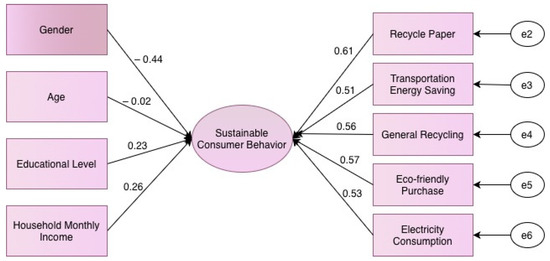
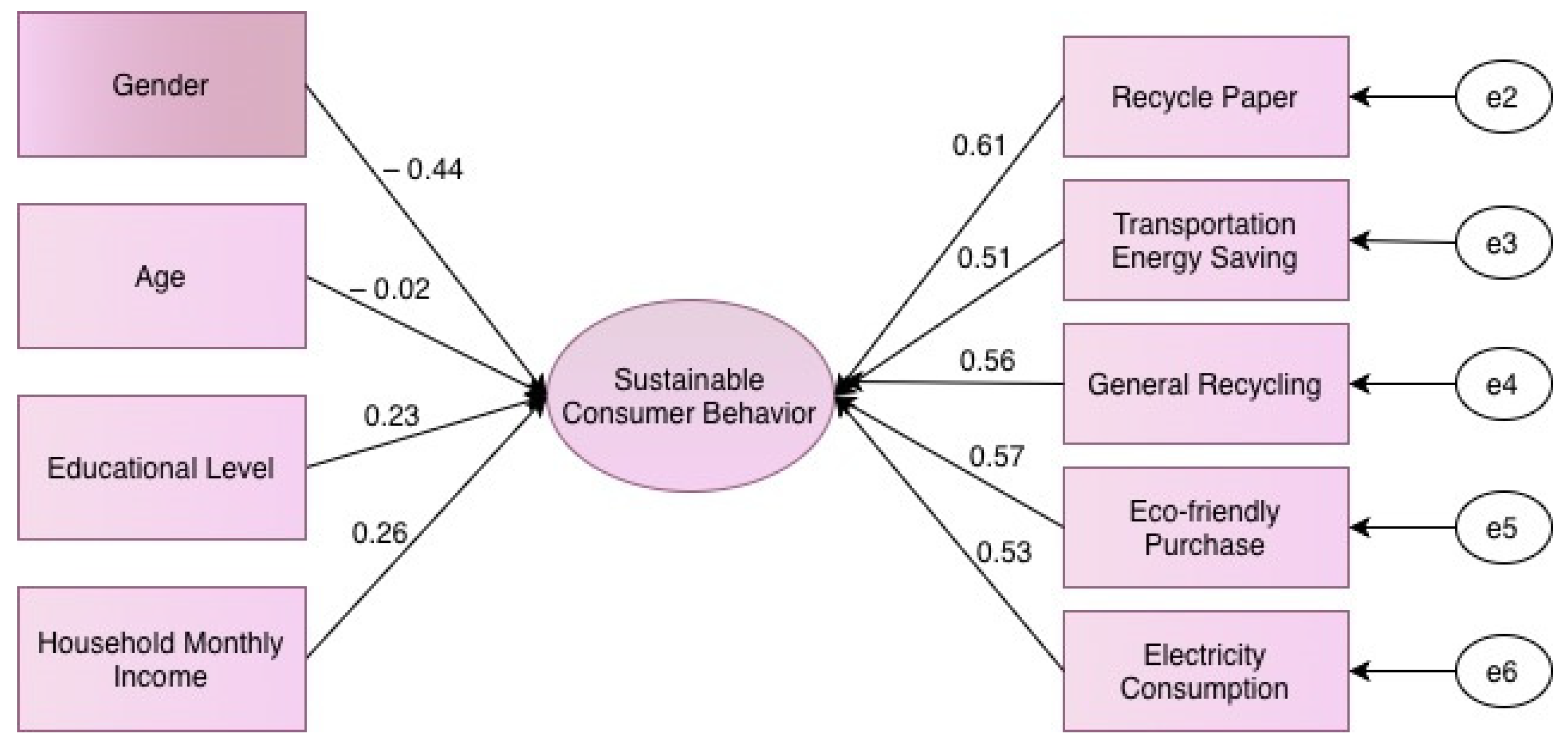
Figure 2 illustrates a specific mediation pathway from the global SEM. The global structural model demonstrated good fit (χ2 = 1243.6, df = 534, CFI = 0.92, TLI = 0.91, RMSEA = 0.056, SRMR = 0.048). According to the structural equation model presented in the figure, gender (β = −0.44), age (β = 0.02), education level (β = 0.23), and household monthly income (β = 0.26) have direct effects on sustainable consumer behavior. These coefficients indicate that gender (being female) is the strongest negative predictor, while education level and household monthly income are positive and significant predictors of sustainable consumer behavior.
Figure 2.
The predictive role of participants’ socio-demographic characteristics on sustainable consumer behavior scale scores.
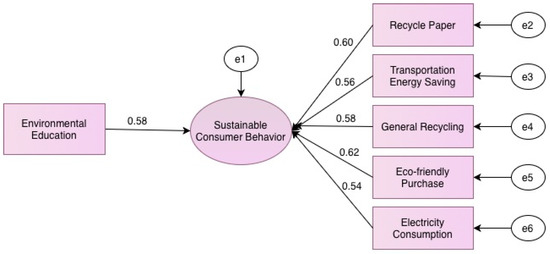
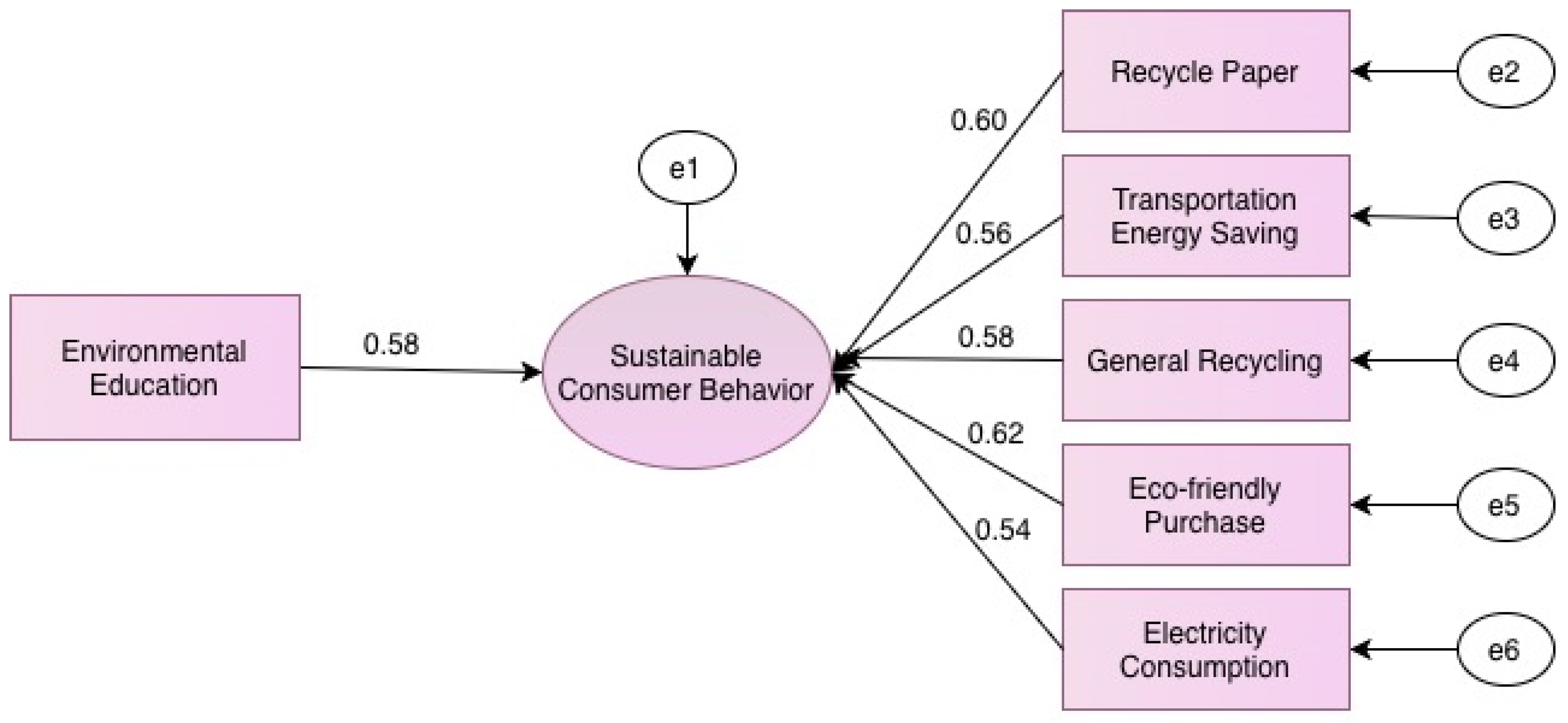
Figure 3 illustrates a specific mediation pathway from the global SEM. The global structural model demonstrated good fit (χ2 = 1243.6, df = 534, CFI = 0.92, TLI = 0.91, RMSEA = 0.056, SRMR = 0.048). As seen in the figure, environmental education has a positive and statistically significant effect on sustainable consumer behavior (β = 0.58). This result indicates that as participants’ level of environmental education increases, their sustainable consumer behavior also increases.
Figure 3.
The predictive role of participants’ environmental education scale scores on sustainable consumer behavior scale scores.
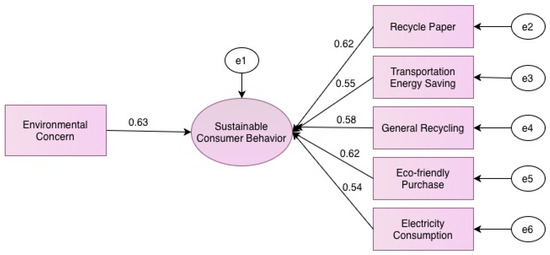
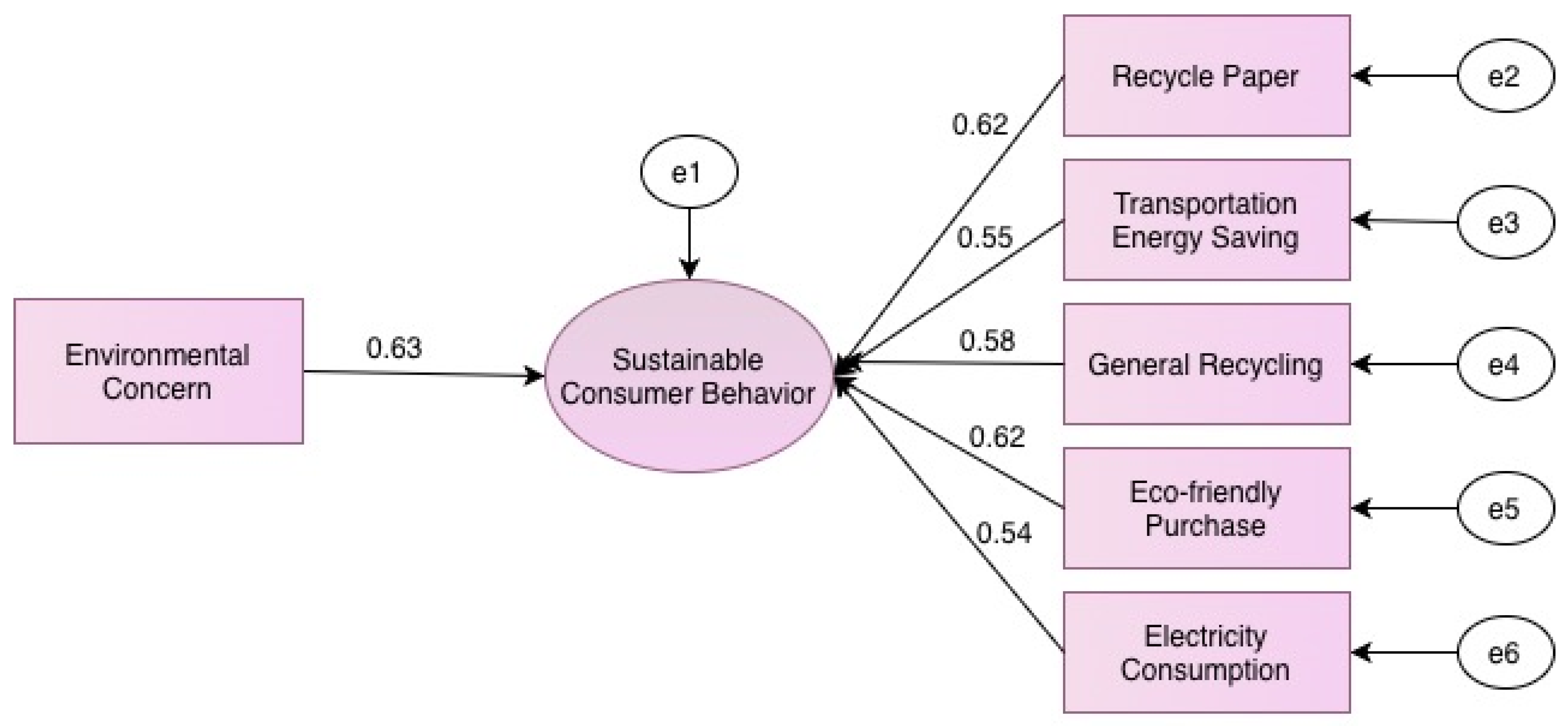
Figure 4 illustrates a specific mediation pathway from the global SEM. The global structural model demonstrated good fit (χ2 = 1243.6, df = 534, CFI = 0.92, TLI = 0.91, RMSEA = 0.056, SRMR = 0.048). As shown in Figure 4, environmental concern has a positive and significant impact on SCB (β = 0.63). This result indicates that an increase in participants’ level of environmental concern also leads to an increase in SCB.
Figure 4.
The predictive role of participants’ environmental concern scale scores on sustainable consumer behavior scale scores.
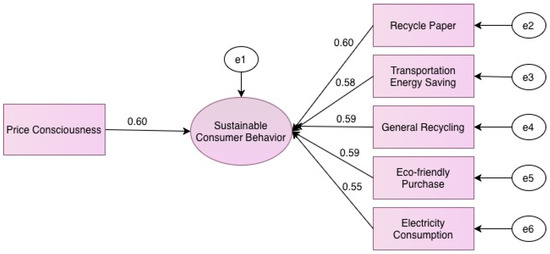
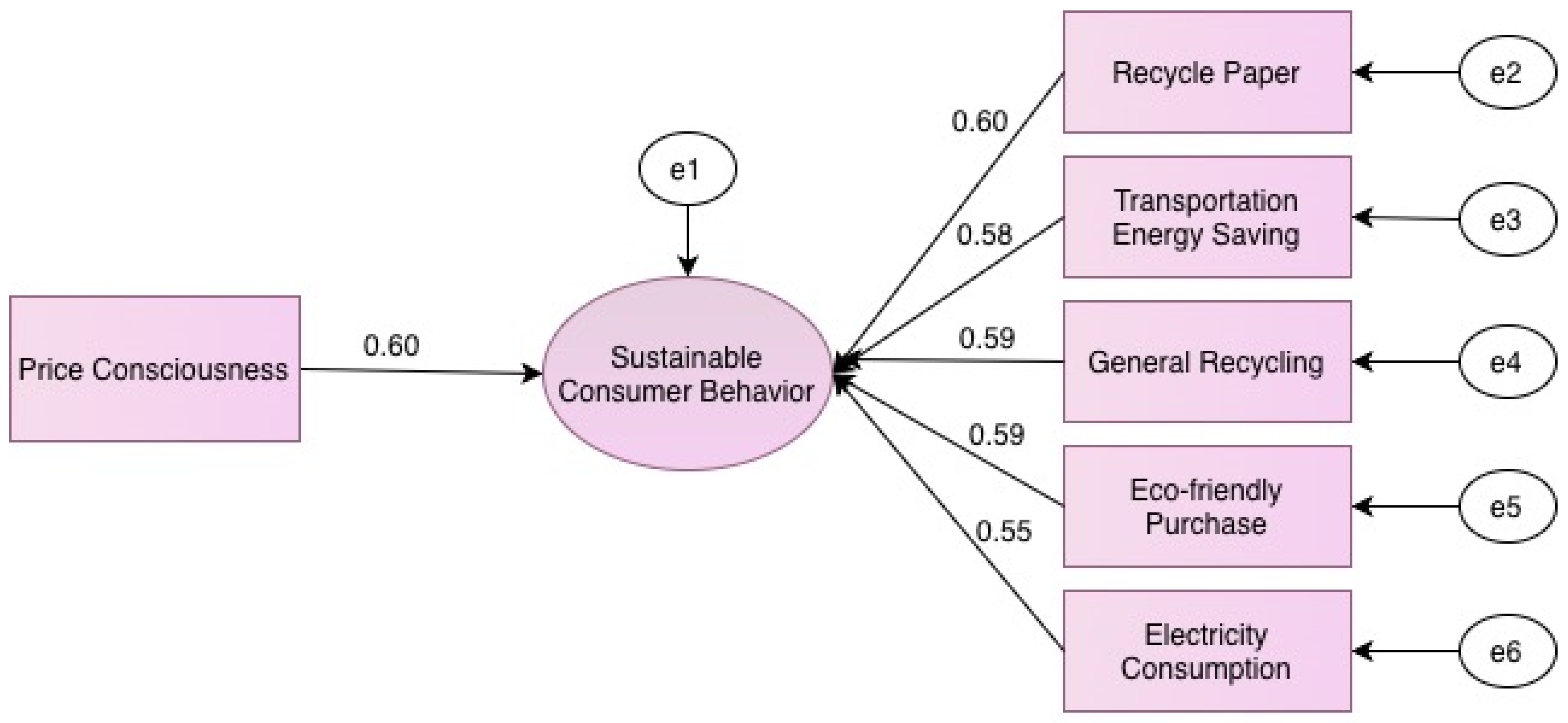
Figure 5 illustrates a specific mediation pathway from the global SEM. The global structural model demonstrated good fit (χ2 = 1243.6, df = 534, CFI = 0.92, TLI = 0.91, RMSEA = 0.056, SRMR = 0.048). According to Figure 4, price consciousness has a positive and significant impact on SCB (β = 0.60). This finding indicates that an increase in price consciousness also increases SCB among the study participants. To examine whether the observed relationship reflects a generalized effect across all forms of sustainable consumption or is driven by specific behavioral dimensions, a supplementary analysis was conducted where each of the five SCB dimensions was analyzed separately while controlling for the same set of socio-demographic and psychological variables. The results of this supplementary analysis are presented in Table S1 in the Supplementary Materials.
Figure 5.
The predictive role of participants’ price consciousness scale scores on sustainable consumer behavior scale scores.
These sub-dimension specific analyses confirm that the aggregated positive effect of price consciousness is statistically robust but behaviorally heterogeneous, being driven primarily by cost-saving and resource-conserving practices rather than eco-friendly purchasing. The aggregated SCB construct captures the overall intensity of household engagement in multiple sustainability-related practices. While aggregation allows for modeling general behavioral tendencies, it does not imply behavioral uniformity. Instead, it reflects the combined influence of diverse practices that may be motivated by different economic and psychological mechanisms. This distinction is addressed explicitly through sub-dimension analyses reported in the Supplementary Materials.
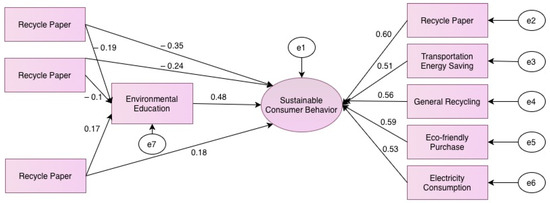
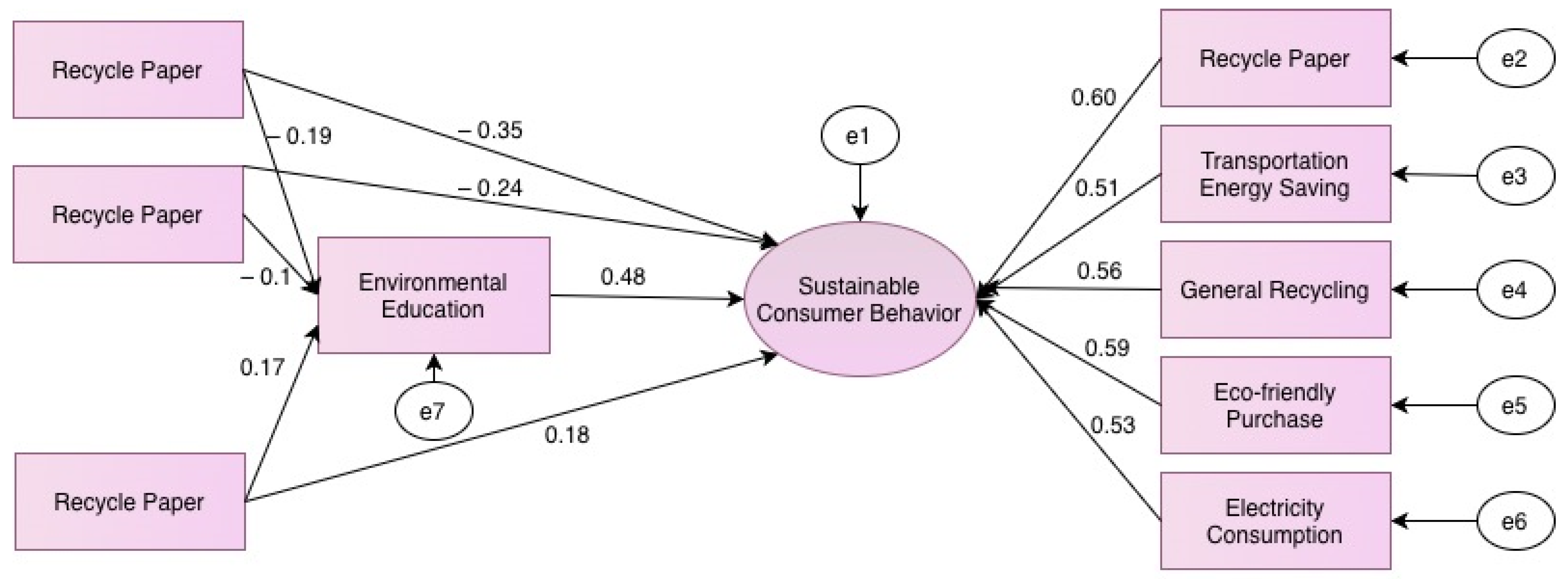
Figure 6 illustrates a specific mediation pathway from the global SEM. The global structural model demonstrated good fit (χ2 = 1243.6, df = 534, CFI = 0.92, TLI = 0.91, RMSEA = 0.056, SRMR = 0.048). According to Figure 6, gender as a factor has a negative and significant impact on environmental education (β = −0.19; p < 0.05), and monthly household income has a positive and significant impact on environmental education (β = 0.17; p < 0.05). Educational level is found to have a positive and significant impact on SCB (β = 0.24; p < 0.05), and monthly household income has a positive and significant direct effect on SCB (β = 0.18; p < 0.05). Gender is also found to have a negative and significant direct effect on SCB (β = −0.35; p < 0.05).
Figure 6.
The mediating role of environmental education scale scores in the relationship between participants’ socio-demographic characteristics and sustainable consumer behavior scale scores.
Environmental education has a positive and significant predictive effect on SCB (β = 0.48; p < 0.05). The inclusion of environmental education decreases the direct effect of gender, level of education, and monthly household income on SCB but still remains significant. Bootstrap analysis shows a significant indirect effect of gender on SCB mediated by environmental education (β = −0.09; 95% CI [−0.15, −0.04]). Similarly, a significant indirect effect of monthly household income on SCB is found to be mediated by environmental education (β = 0.08; 95% CI [0.04, 0.14]). These findings reveal a strong mediating role of environmental education between monthly household income, gender, and SCB in Libyan households.
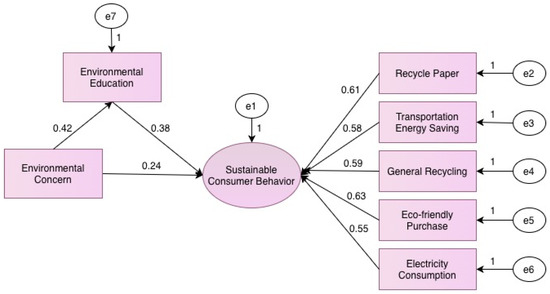
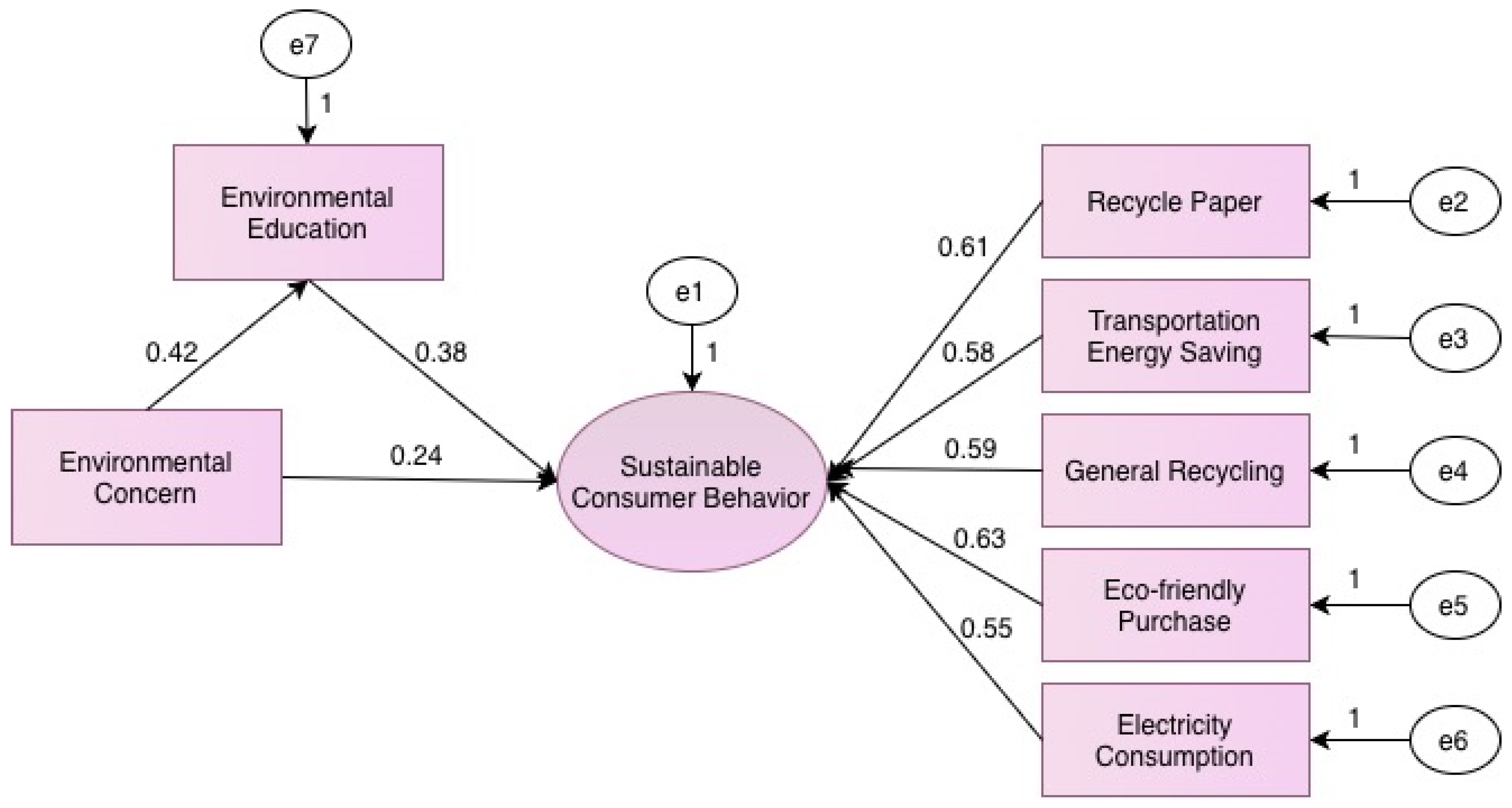
Figure 7 illustrates a specific mediation pathway from the global SEM. The global structural model demonstrated good fit (χ2 = 1243.6, df = 534, CFI = 0.92, TLI = 0.91, RMSEA = 0.056, SRMR = 0.048). According to the analysis results shown in Figure 7, environmental concern has a positive and significant effect on environmental education (β = 0.42; p < 0.05). Also, environmental education and environmental concern both have a direct positive and significant effect on SCB with (β = 0.38; p < 0.05) and (β = 0.24; p < 0.05), respectively. The inclusion of environmental education as a mediating variable in the model decreases the predictive power of environmental concern on SCB but still remains statistically significant. Bootstrap analysis shows the indirect effect of environmental concern on SCB via the mediating role of environmental education to be statistically significant (β = 0.16; 95% CI [0.09, 0.24]). These results show that environmental education has a partial mediating role between environmental concern and household SCB in Libya.
Figure 7.
The mediating role of environmental education scale scores in the relationship between participants’ environmental concern scale scores and sustainable consumer behavior scale scores.
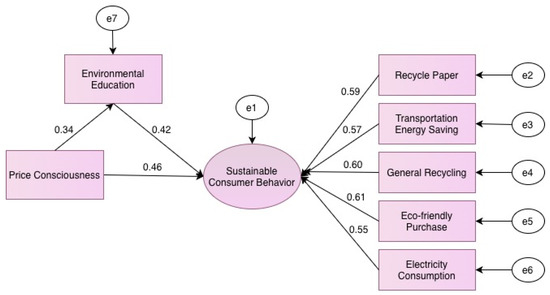
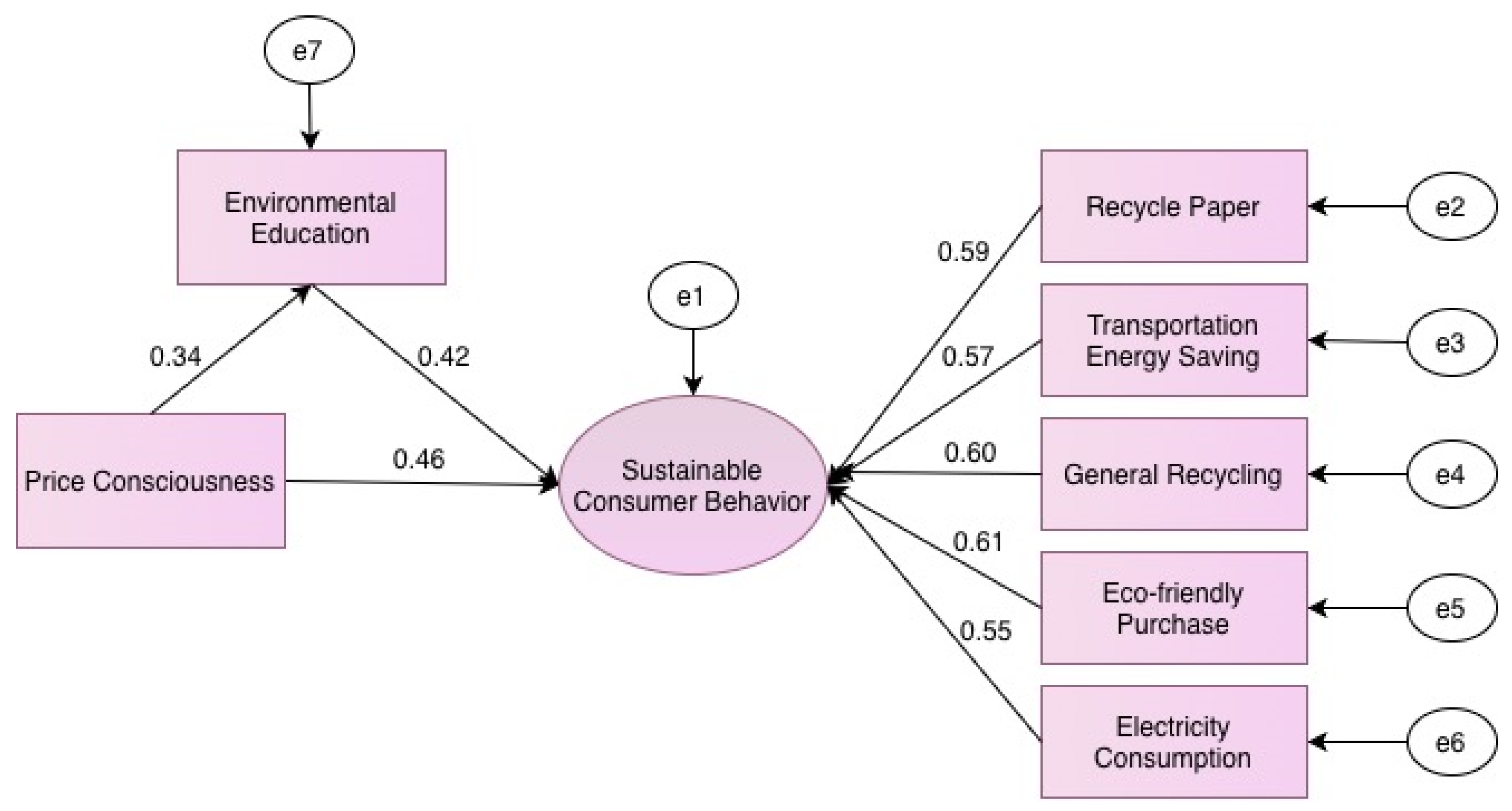
Figure 8 illustrates a specific mediation pathway from the global SEM. The global structural model demonstrated good fit (χ2 = 1243.6, df = 534, CFI = 0.92, TLI = 0.91, RMSEA = 0.056, SRMR = 0.048). According to Figure 8, price consciousness has a positive and significant effect on environmental education (β = 0.34; p < 0.05). Also, environmental education has a positive and significant effect on SCB (β = 0.42; p < 0.05), and price consciousness has a direct positive and significant effect on SCB (β = 0.46; p < 0.05). The inclusion of environmental education in the model does not affect the predictive power of price consciousness on SCB. However, the β coefficient decreases, which indicates a partial mediating effect. Bootstrap analysis shows that price consciousness has a significant indirect effect on SCB mediated by environmental education (β = 0.14; 95% CI [0.08, 0.21]). This study finds that teaching Libyans about the environment partially explains the connection between their awareness of prices and their sustainable consumption behavior at home.
Figure 8.
The mediating role of environmental education scale scores in the relationship between participants’ price consciousness scale scores and sustainable consumer behavior scale scores.
5. Discussion
This study examined the socio-economic, attitudinal, and educational factors influencing sustainable consumer behavior (SCB) among households in Libya. The findings reveal that SCB in this context emerges from the interaction of structural conditions, motivational orientations, and educational mechanisms aligning with the prior research on pro-environmental behavior in developing and transitional economies [38,39,40,41,42].
5.1. The Role of Socio-Economic Factors on Sustainable Consumer Behavior (SCB)
The results show that gender, education level, and household income significantly influence SCB. Women reported higher engagement in sustainable practices, supporting studies that attribute stronger environmental involvement to women’s traditional household roles and heightened sense of responsibility for family welfare [44]. Education exhibited a strong positive effect on SCB, consistent with evidence that higher educational attainment enhances environmental literacy, critical evaluation skills, and awareness of long-term environmental consequences [45]. Income was also a significant predictor, reflecting the affordability and resource access challenges typical in developing countries [46]. Higher-income households may be better able to bear green premiums, invest in energy-efficient goods, or adopt more environmentally oriented consumption patterns.
In contrast, age was not a significant predictor, which may reflect the socio-economic instability experienced across all age groups in Libya, where economic pressures override generational differences in environmental values or consumer preferences.
5.2. The Role of Environmental Education on Sustainable Consumer Behavior (SCB)
Environmental education had a strong direct effect on SCB and mediated the influence of several independent variables. This supports research showing that EE enhances knowledge, practical skills, and perceived behavioral control, enabling individuals to overcome structural constraints and adopt sustainable practices [40]. In Libya, where formal environmental training is limited and public environmental awareness is uneven, the role of EE is especially important. By improving cognitive understanding, affective awareness, and behavioral competence, EE helps individuals translate environmental concern and socio-economic resources into meaningful action.
The significance of EE as a mediator also aligns with the TPB interpretation that knowledge and competence underpin perceived behavioral control, which subsequently supports behavioral performance. Similarly, VBN theory emphasizes the internalization of norms, a process strengthened by educational experiences that reinforce personal responsibility and environmental stewardship.
5.3. The Role of Product Cost Perception on Sustainable Consumer Behavior (SCB)
Price consciousness demonstrated a significant positive relationship with SCB. Analyses on the sub-dimensions of SCB indicate that the positive effect of price consciousness is primarily driven by cost-saving behaviors such as recycling and energy conservation. However, this should not be interpreted as an indication that price-sensitive consumers are more environmentally motivated. Rather, in Libya’s economic environment characterized by fluctuating income levels, high inflation, and constrained purchasing power, price consciousness likely encourages behaviors that resemble sustainability, such as conserving electricity, reducing consumption, and reusing household materials. These behaviors align with cost-saving strategies reported in prior studies [39,42].
This finding highlights an important conceptual distinction: cost-saving behaviors and pro-environmental purchase behaviors do not arise from the same motivational logic. Sustainable actions such as energy conservation may be driven by financial necessity, while green purchasing may be limited by affordability constraints. Thus, the positive association between price consciousness and SCB likely reflects austerity-driven behavior rather than environmentally motivated consumption.
While much of the green consumption literature identifies price sensitivity as a barrier to sustainable purchasing, the present findings suggest that, in economically constrained contexts such as Libya, price consciousness may promote sustainability through necessity-driven conservation rather than value-driven green consumption.
5.4. The Role of Environmental Concern on Sustainable Consumer Behavior (SCB)
Environmental concern showed a strong direct effect on SCB and an indirect effect through EE. This supports VBN theory, which conceptualizes environmental concern as a value-based disposition that motivates individuals toward environmentally responsible behavior when supported by sufficient knowledge and perceived efficacy [41]. This agrees with Lou and Li [47], who found that environmental concern is a reliable attitude that leads to such behavior. However, concern alone does not always translate into action, especially in contexts where economic or situational barriers impede pro-environmental behavior [48].
The mediation effect of EE suggests that educational exposure helps individuals operationalize their concern by providing practical guidance, relevant knowledge, and behavioral skills. This finding illustrates how EE reduces the well-known attitude–behavior gap by strengthening the resource and competence elements necessary for environmentally concerned individuals to act consistently with their values.
5.5. Interpretation in the Libyan Socio-Economic Context
Interpreting the findings within Libya’s broader socio-economic landscape is essential. Political instability, economic volatility, and uneven access to information shape consumer decision making. Under such conditions, sustainable actions may emerge not from pro-environmental motivations but from necessity-driven, cost-saving decisions. The structural significance of education and income reflects the fact that sustainable consumption in Libya remains highly resource-dependent.
Environmental education thus emerges as one of the few modifiable factors capable of influencing sustainable behavior despite socio-economic constraints. Strengthening EE through schools, community initiatives, media campaigns, or local institutions could offer a practical pathway to enhance sustainability outcomes in the country. Furthermore, addressing affordability barriers may be crucial for shifting households from austerity-driven conservation toward more intentional, value-driven sustainable consumption.
Overall, the findings demonstrate that, in resource-constrained settings, sustainable consumer behavior results from a combination of structural, motivational, and educational influences. Enhancing environmental education and reducing affordability constraints can play pivotal roles in promoting sustainable consumption in Libya. From a TPB perspective, economic austerity reshapes perceived behavioral control by limiting available choices, while, within the VBN framework, strong personal norms may be expressed through low-cost behaviors when financial resources constrain value-consistent action.
5.6. Limitations
Several limitations should be acknowledged. This study relies on self-reported data, which may be subject to social desirability bias. The cross-sectional design limits causal inference, and the urban-focused sample may not fully capture consumption patterns in rural areas. Future research could employ longitudinal designs, mixed methods, or broader geographic coverage to further validate and extend the findings.
6. Conclusions
This research indicates that socio-economic factors have a real influence on sustainable consumption behavior (SCB) within Libyan families. This research also reveals that environmental education, environmental worries, and how people see product costs also have a real influence on SCB. This research suggests that women, those with more education, and higher-earning families tend to participate in SCB. It was found that education about the environment and worry for the environment can really predict and connect what people think and what they do. How people see product costs encourages SCB when actions relate to saving money, like saving energy. These findings underscore the importance of recognizing behavioral heterogeneity when interpreting price-related sustainability effects in economically constrained contexts. These results point to how connected structural, attitudinal, and situational factors are in deciding how Libyan families participate in SCB. A key contribution of this study is the empirical demonstration of behavioral heterogeneity within sustainable consumption, showing that identical economic drivers can generate different sustainability outcomes depending on the behavioral domain.
6.1. Recommendations
To promote sustainable consumption behavior (SCB), this study suggests policies that support vulnerable groups, along with subsidies and incentives. These actions can broaden access to eco-friendly products and energy-efficient technologies, which may lessen socio-economic gaps between households. Economic policies could motivate firms to market sustainable products, stressing the lasting advantages of SCB. Also, strategies that include all genders can make the most of women’s inclinations toward environmental issues and encourage men to take part in household sustainability practices. Finally, it is important to foster environmental concern and convert it into communal action to lessen environmental issues at the country and global levels.
6.2. Future Work
Future work ought to examine how environmental education impacts behavior over extended periods to judge whether changes are lasting. Research should also explore how Libyan cultural values, norms, and tech use shape sustainable consumption behavior.
Supplementary Materials
The following supporting information can be downloaded at: https://www.mdpi.com/article/10.3390/app16010512/s1; Table S1: Supplementary analysis of the effect of PC on SCB sub-dimensions.
Author Contributions
Conceptualization K.S.B.A. and A.K.; methodology, K.S.B.A. and A.K.; validation, K.S.B.A. and A.K.; formal analysis, K.S.B.A.; investigation, K.S.B.A.; data curation K.S.B.A.; writing—original draft preparation K.S.B.A.; writing—review and editing, A.K.; supervision, A.K. All authors have read and agreed to the published version of the manuscript.
Funding
This research received no external funding.
Institutional Review Board Statement
This study was conducted in accordance with the Declaration of Helsinki, and approved by the Scientific Research Ethics Committee of Near East University with application number NEU/ES/2024/1116 and date of approval of 9 October 2024.
Informed Consent Statement
Informed consent was obtained from all subjects involved in this study.
Data Availability Statement
Data is available upon request due to restrictions (privacy and ethical reasons).
Conflicts of Interest
The authors declare no conflicts of interest.
References
- Hunjra, A.I.; Bouri, E.; Azam, M.; Azam, R.I.; Dai, J. Economic growth and environmental sustainability in developing economies. Res. Int. Bus. Financ. 2024, 70, 102341. [Google Scholar] [CrossRef] [Scilit]
- Khurshid, A.; Huang, Y.; Khan, K.; Cifuentes-Faura, J. Innovation, institutions, and sustainability: Evaluating drivers of household green technology adoption and environmental sustainability of Africa. Gondwana Res. 2024, 132, 88–102. [Google Scholar] [CrossRef] [Scilit]
- Lawal, O.A.; Jimoh, A.A.; Abdullah, K.A.; Bello, B.A.; Awoyemi, E.D. Economic and environmental impact of energy audit and efficiency: A report from a Nigeria household. Energy Sustain. Dev. 2024, 79, 101387. [Google Scholar] [CrossRef] [Scilit]
- Li, H.; Li, Y.; Zheng, G.; Zhou, Y. Interaction between household energy consumption and health: A systematic review. Renew. Sustain. Energy Rev. 2024, 189, 113859. [Google Scholar] [CrossRef] [Scilit]
- Abdunnabi, M.; Etiab, N.; Nassar, Y.F.; El-Khozondar, H.J.; Khargotra, R. Energy savings strategy for the residential sector in Libya and its impacts on the global environment and the nation economy. Adv. Build. Energy Res. 2023, 17, 379–411. [Google Scholar] [CrossRef] [Scilit]
- Azubike, V.C.; Gatiesh, M.M. The intricate goal of energy security and energy transition: Considerations for Libya. Energy Policy 2024, 187, 114005. [Google Scholar] [CrossRef] [Scilit]
- Ajzen, I. The theory of planned behavior. Organ. Behav. Hum. Decis. Process. 1991, 50, 179–211. [Google Scholar] [CrossRef] [Scilit]
- Stern, P.C.; Dietz, T.; Abel, T.; Guagnano, G.A.; Kalof, L. A value-belief-norm theory of support for social movements: The case of environmentalism. Hum. Ecol. Rev. 1999, 6, 81–97. [Google Scholar]
- Sheeran, P.; Trafimow, D.; Armitage, C.J. Predicting behaviour from perceived behavioural control: Tests of the accuracy assumption of the theory of planned behaviour. Br. J. Soc. Psychol. 2003, 42, 393–410. [Google Scholar] [CrossRef] [Scilit]
- Hiratsuka, J.; Perlaviciute, G.; Steg, L. Testing VBN theory in Japan: Relationships between values, beliefs, norms, and acceptability and expected effects of a car pricing policy. Transp. Res. Part F Traffic Psychol. Behav. 2018, 53, 74–83. [Google Scholar] [CrossRef] [Scilit]
- Rickinson, M. Learners and learning in environmental education: A critical review of the evidence. Environ. Educ. Res. 2001, 7, 207–320. [Google Scholar] [CrossRef] [Scilit]
- Varela-Candamio, L.; Novo-Corti, I.; García-Álvarez, M.T. The importance of environmental education in the determinants of green behavior: A meta-analysis approach. J. Clean. Prod. 2018, 170, 1565–1578. [Google Scholar] [CrossRef] [Scilit]
- Arslan, H.M.; Khan, I.; Latif, M.I.; Komal, B.; Chen, S. Understanding the dynamics of natural resources rents, environmental sustainability, and sustainable economic growth: New insights from China. Environ. Sci. Pollut. Res. 2022, 29, 58746–58761. [Google Scholar] [CrossRef] [Scilit]
- Zaman, S.I.; Kusi-Sarpong, S. Identifying and exploring the relationship among the critical success factors of sustainability toward consumer behavior. J. Model. Manag. 2024, 19, 492–522. [Google Scholar] [CrossRef] [Scilit]
- Purcărea, T.; Ioan-Franc, V.; Ionescu, Ş.A.; Purcărea, I.M.; Purcărea, V.L.; Purcărea, I.; Mateescu-Soare, M.C.; Platon, O.-E.; Orzan, A.-O. Major shifts in sustainable consumer behavior in Romania and retailers’ priorities in agilely adapting to it. Sustainability 2022, 14, 1627. [Google Scholar] [CrossRef] [Scilit]
- Topić, M.; Kostopoulos, I.; Krstić, M. Sustainability, sociodemographic differences, and consumer behavior. Am. Behav. Sci. 2024. [Google Scholar] [CrossRef] [Scilit]
- Al-Nuaimi, S.R.; Al-Ghamdi, S.G. Sustainable consumption and education for sustainability in higher education. Sustainability 2022, 14, 7255. [Google Scholar] [CrossRef] [Scilit]
- Kirsten, F.; Eligius Biyase, M. Environmental perceptions and sustainable consumption behavior: The disparity among South Africans. Sustainability 2023, 15, 4847. [Google Scholar] [CrossRef] [Scilit]
- Shen, M.; Wang, J. The impact of pro-environmental awareness components on green consumption behavior: The moderation effect of consumer perceived cost, policy incentives, and face culture. Front. Psychol. 2022, 13, 580823. [Google Scholar] [CrossRef] [Scilit]
- Addae-Dapaah, K.; Wilkinson, J. Green premium: What is the implied prognosis for sustainability? J. Sustain. Real Estate 2020, 12, 16–33. [Google Scholar] [CrossRef] [Scilit]
- Rusyani, E.; Lavuri, R.; Gunardi, A. Purchasing eco-sustainable products: Interrelationship between environmental knowledge, environmental concern, green attitude, and perceived behavior. Sustainability 2021, 13, 4601. [Google Scholar] [CrossRef] [Scilit]
- Sun, Y.; Li, T.; Wang, S. “I buy green products for my benefits or yours”: Understanding consumers’ intention to purchase green products. Asia Pac. J. Mark. Logist. 2022, 34, 1721–1739. [Google Scholar] [CrossRef] [Scilit]
- Zameer, H.; Yasmeen, H. Green innovation and environmental awareness driven green purchase intentions. Mark. Intell. Plan. 2022, 40, 624–638. [Google Scholar] [CrossRef] [Scilit]
- Acosta Castellanos, P.M.; Queiruga-Dios, A. From environmental education to education for sustainable development in higher education: A systematic review. Int. J. Sustain. High. Educ. 2022, 23, 622–644. [Google Scholar] [CrossRef] [Scilit]
- Ghaffar, A.; Zaheer Zaidi, S.S.; Islam, T. An investigation of sustainable consumption behavior: The influence of environmental concern and trust in sustainable producers on consumer xenocentrism. Manag. Environ. Qual. Int. J. 2023, 34, 771–793. [Google Scholar] [CrossRef] [Scilit]
- DeVille, N.V.; Tomasso, L.P.; Stoddard, O.P.; Wilt, G.E.; Horton, T.H.; Wolf, K.L.; Brymer, E.; Kahn, P.H.; James, P. Time spent in nature is associated with increased pro-environmental attitudes and behaviors. Int. J. Environ. Res. Public Health 2021, 18, 7498. [Google Scholar] [CrossRef] [Scilit]
- Ahmed, R.R.; Streimikiene, D.; Qadir, H.; Streimikis, J. Effect of green marketing mix, green customer value, and attitude on green purchase intention: Evidence from the USA. Environ. Sci. Pollut. Res. 2023, 30, 11473–11495. [Google Scholar] [CrossRef] [Scilit]
- Kaur, B.; Gangwar, V.P.; Dash, G. Green marketing strategies, environmental attitude, and green buying intention: A multi-group analysis in an emerging economy context. Sustainability 2022, 14, 6107. [Google Scholar] [CrossRef] [Scilit]
- Kim, N.; Lee, K. Environmental consciousness, purchase intention, and actual purchase behavior of eco-friendly products: The moderating impact of situational context. Int. J. Environ. Res. Public Health 2023, 20, 5312. [Google Scholar] [CrossRef] [Scilit]
- Siraj, A.; Taneja, S.; Zhu, Y.; Jiang, H.; Luthra, S.; Kumar, A. Hey, did you see that label? It’s sustainable!: Understanding the role of sustainable labelling in shaping sustainable purchase behaviour for sustainable development. Bus. Strategy Environ. 2022, 31, 2820–2838. [Google Scholar] [CrossRef] [Scilit]
- Boermans, D.D.; Jagoda, A.; Lemiski, D.; Wegener, J.; Krzywonos, M. Environmental awareness and sustainable behavior of respondents in Germany, the Netherlands and Poland: A qualitative focus group study. J. Environ. Manag. 2024, 370, 122515. [Google Scholar] [CrossRef] [Scilit]
- Cheng, L.; Cui, H.; Zhang, Z.; Yang, M.; Zhou, Y. Study on consumers’ motivation to buy green food based on meta-analysis. Front. Sustain. Food Syst. 2024, 8, 1405787. [Google Scholar] [CrossRef] [Scilit]
- Perea, H.R.; Piedrahita, A.R.; Alzate, Ó.E.T. Models of environmental awareness: Exploring their nature and role in environmental education–a systematic review. Heliyon 2025, 11, e43679. [Google Scholar] [CrossRef] [Scilit]
- Nassar, Y.F.; El-Khozondar, H.J.; Alatrash, A.A.; Ahmed, B.A.; Elzer, R.S.; Ahmed, A.A.; Imbayah, I.I.; Alsharif, A.H.; Khaleel, M.M. Assessing the viability of solar and wind energy technologies in semi-arid and arid regions: A case study of Libya’s climatic conditions. Appl. Sol. Energy 2024, 60, 149–170. [Google Scholar] [CrossRef] [Scilit]
- Ammari, A.M.; Roosli, R. A Review of Prefabricated Housing Evolution, Challenges, and Prospects Towards Sustainable Development in Libya. Int. J. Sustain. Dev. Plan. 2024, 19, 1181–1194. [Google Scholar] [CrossRef] [Scilit]
- Kezeiri, S.; Lawless, R. Economic Development and Spatial Planning in Libya. In The Economic Development of Libya; Routledge: London, UK, 2023; pp. 1–24. [Google Scholar]
- Burgat, F. The Libyan economy in crisis. In The Economic Development of Libya; Routledge: London, UK, 2023; pp. 213–227. [Google Scholar]
- Surya, B.; Hadijah, H.; Suriani, S.; Baharuddin, B.; Fitriyah, A.T.; Menne, F.; Rasyidi, E.S. Spatial transformation of a new city in 2006–2020: Perspectives on the spatial dynamics, environmental quality degradation, and socio—Economic sustainability of local communities in Makassar City, Indonesia. Land 2020, 9, 324. [Google Scholar] [CrossRef] [Scilit]
- Levrini, G.R.; Jeffman Dos Santos, M. The influence of price on purchase intentions: Comparative study between cognitive, sensory, and neurophysiological experiments. Behav. Sci. 2021, 11, 16. [Google Scholar] [CrossRef] [Scilit]
- Ardoin, N.M.; Bowers, A.W.; Gaillard, E. Environmental education outcomes for conservation: A systematic review. Biol. Conserv. 2020, 241, 108224. [Google Scholar] [CrossRef] [Scilit]
- Khan, S.; Naushad, M.; Govarthanan, M.; Iqbal, J.; Alfadul, S.M. Emerging contaminants of high concern for the environment: Current trends and future research. Environ. Res. 2022, 207, 112609. [Google Scholar] [CrossRef] [Scilit]
- Yue, B.; Sheng, G.; She, S.; Xu, J. Impact of consumer environmental responsibility on green consumption behavior in China: The role of environmental concern and price sensitivity. Sustainability 2020, 12, 2074. [Google Scholar] [CrossRef] [Scilit]
- Ravinder, E.B.; Saraswathi, A.B. Literature review of Cronbach alpha coefficient (A) and Mcdonald’s omega coefficient (Ω). Eur. J. Mol. Clin. Med. 2020, 7, 2943–2949. [Google Scholar]
- Meyer, S.; Warren, M.A. Exploring the role of character strengths in the endorsement of gender equality and pro-environmental action in the UAE. Middle East J. Posit. Psychol. 2021, 7, 65–80. [Google Scholar]
- Li, X.; Zhang, D.; Zhang, T.; Ji, Q.; Lucey, B. Awareness, energy consumption and pro-environmental choices of Chinese households. J. Clean. Prod. 2021, 279, 123734. [Google Scholar] [CrossRef] [Scilit]
- Piao, X.; Managi, S. Determinants of pro-environmental behaviour: Effects of socioeconomic, subjective, and psychological well-being factors from 37 countries. Humanit. Soc. Sci. Commun. 2024, 11, 1293. [Google Scholar] [CrossRef] [Scilit]
- Lou, X.; Li, L.M.W. The relationship of environmental concern with public and private pro-environmental behaviours: A pre-registered meta-analysis. Eur. J. Soc. Psychol. 2023, 53, 1–14. [Google Scholar] [CrossRef] [Scilit]
- Habib, R.; White, K.; Hardisty, D.J.; Zhao, J. Shifting consumer behavior to address climate change. Curr. Opin. Psychol. 2021, 42, 108–113. [Google Scholar] [CrossRef] [Scilit]

Disclaimer/Publisher’s Note: The statements, opinions and data contained in all publications are solely those of the individual author(s) and contributor(s) and not of MDPI and/or the editor(s). MDPI and/or the editor(s) disclaim responsibility for any injury to people or property resulting from any ideas, methods, instructions or products referred to in the content. |
© 2026 by the authors. Licensee MDPI, Basel, Switzerland. This article is an open access article distributed under the terms and conditions of the Creative Commons Attribution (CC BY) license.