
Article

Modulation of Neuropsychiatric Symptoms by a Volatile Phytocomplex from Tetraclinis articulata in an Aβ1–42 Rat Model of Alzheimer’s Disease

by
Paula Alexandra Postu
1,
Marius Mihasan
2,
Dragos Lucian Gorgan
2,
Alexandru Bogdan Stache
2,
Fatima Zahra Sadiki
3,
Mostafa El Idrissi
3 and
Lucian Hritcu
2,*
1
Center for Fundamental Research and Experimental Development in Translation Medicine-TRANSCEND, Regional Institute of Oncology, 700483 Iasi, Romania
2
Department of Biology, Faculty of Biology, Alexandru Ioan Cuza University of Iasi, 700506 Iasi, Romania
3
Laboratory of Molecular Chemistry and Natural Substances, Department of Chemistry, Faculty of Sciences of Meknes, Moulay Ismail University, Meknès 11201, Morocco
*
Author to whom correspondence should be addressed.
Appl. Sci. 2026, 16(1), 511; https://doi.org/10.3390/app16010511 (registering DOI)
Submission received: 12 December 2025 / Revised: 27 December 2025 / Accepted: 31 December 2025 / Published: 4 January 2026
(This article belongs to the Special Issue New Challenges into Pharmacology)

Abstract

Tetraclinis articulata volatile phytocomplexes contain numerous bioactive terpenoids with neuroprotective potential; however, their efficacy in Alzheimer’s disease (AD)-related neuropsychiatric symptoms remain insufficiently explored. This study investigated the therapeutic effects of a Tetraclinis articulata-derived volatile phytocomplex (TLO) administered via inhalation at 1% and 3% concentrations for 21 consecutive days in a rat model of AD induced by intracerebroventricular injection of amyloid-beta 1–42 peptide (Aβ1–42). Behavioral assessment revealed that both 1% and 3% TLO significantly ameliorated anxiety- and depression-like behaviors, with effects comparable to diazepam (3 mg/kg, i.p.) and imipramine (20 mg/kg, i.p.), respectively. These behavioral improvements coincided with a partial restoration of brain-derived neurotrophic factor (BDNF) expression in the amygdala, whereas activity-regulated cytoskeleton-associated protein (ARC) levels remained unaffected. TLO also attenuated oxidative stress by reducing malondialdehyde (MDA) accumulation and enhancing superoxide dismutase (SOD) and glutathione peroxidase (GPX) activities, thereby contributing to the recovery of redox homeostasis. Furthermore, TLO provided significant protection against Aβ1–42-induced apoptotic DNA fragmentation, although it produced only minimal reductions in IL-1β expression, indicating limited anti-inflammatory effects. Collectively, these findings demonstrate that inhaled TLO, particularly at 1% and 3%, alleviates Aβ1–42-induced neuropsychiatric disturbances through antioxidant, anti-apoptotic, and BDNF-associated mechanisms, supporting its potential as an adjuvant phytotherapeutic strategy for managing behavioral symptoms in AD.

1. Introduction

Alzheimer’s disease (AD) is the most prevalent type of aging-associated irreversible neurodegeneration [1]. Cognitive decline, one of the distinct features of AD, is primarily correlated with hippocampal atrophy, and, more recently, with atrophy of the cerebral amygdala, both structural changes serving as predictors of AD progression [2]. At the amygdala level, accumulations of AD-characteristic misfolded proteins were detected since the early stages of the disease, presumably contributing to the neuropsychiatric symptoms that are dependent on this structure [3,4]. More often, neuropsychiatric symptoms are regarded as a major component of AD pathology, their severity being positively correlated with the degree of cognitive decline [5]. Depression and anxiety represent the second and third most common neuropsychiatric symptoms in AD, yet their precise prevalence is difficult to determine, mainly due to the absence of definitive biomarkers for either condition [6]. Moreover, in the context of AD, both depression and anxiety manifest atypically, often overlapping, making their diagnosis even more difficult [7]. Treating depression and anxiety in the context of AD appears equally problematic. Even though therapeutic options are available and already explored, most anxiolytic and antidepressant agents carry significant side effects that are of concern, especially in elderly patients. In addition, recent longitudinal analyses have found that first-line treatments for managing anxiety and depression in AD, while effective in alleviating neuropsychiatric symptoms, may be associated with an accelerated deterioration of cognitive function [8,9].
Phytopharmacotherapy has been regarded as a promising therapeutic strategy and has received increased attention since galantamine, a plant-derived compound, was approved for the management of cognitive symptoms, thereby demonstrating the potential of natural compounds to progress from experimental research to clinical application. In this context, diverse phytocomplexes have shown potential in managing neuropsychiatric and cognitive symptoms of AD by influencing underlying processes such as cholinergic dysfunction, neuroinflammation, oxidative imbalance, and abnormal protein aggregation [10,11,12]. Volatile phytocomplexes may be of pharmacological interest, as their therapeutic potential derives from their ability to deliver bioactive constituents to the central nervous system via inhalation or systemic absorption across the blood–brain barrier, thus providing a feasible strategy for managing AD patients with reduced compliance [13]. Among these, those derived from conifer species, characterized by a high content of terpenes and terpenoids, have been reported to exhibit neuroprotective, antioxidant, anti-inflammatory, and antitumor properties [14].
Tetraclinis articulata (Vahl) Masters, a conifer belonging to the Cupressaceae family, possesses documented therapeutic properties, including antioxidant activity demonstrated in various in vitro studies, anti-inflammatory effects evaluated using the murine paw edema model, and inhibition of LPS-induced nitric oxide production in murine macrophages, as well as cytotoxic activity against breast cancer cell lines such as MDA-MB-231 and MCF-7 [15]. However, the antioxidant and anti-inflammatory potential of T. articulata volatile phytocomplex (TLO) has been minimally investigated in neurodegenerative animal models [16,17]. Therefore, the present study aims to evaluate the neuroprotective effects of TLO in an Aβ1–42-induced AD rat model, focusing on its ability to mitigate anxiety- and depression-like behaviors and to modulate AD-related mechanisms such as imbalances in redox and inflammatory statuses and apoptotic DNA fragmentation.

2. Materials and Methods

2.1. Preparation and Analysis of the Essential Oil

The essential oil used in this study (TLO) was extracted according to the hydrodistillation protocol previously established by Sadiki et al. [16]. Hydrodistillation was operated in a conventional Clevenger-type apparatus. The volatile distillate was collected on anhydrous sodium sulphate and refrigerated at 4 °C. Its volatile composition was confirmed through GC-MS analysis following the methodology reported in the same study. Table S1 details the volatile constituents identified by GC-MS analysis.

2.2. Experimental Animals

Seventy Wistar albino male rats (10 weeks old; 270 ± 15 g) were used in this study. Animals were housed in a temperature-controlled, artificially ventilated facility under standard laboratory conditions, with ad libitum access to certified rodent chow and water. All experimental procedures complied with the European Communities Council Directive 2010/63/EU and the NIH Guide for the Care and Use of Laboratory Animals (NIH Publication No. 85-23). The study protocol and experimental design were reviewed and approved by the Institutional Ethics Committee (Approval No. 15309/22.07.2019).

2.3. Experimental Design and Treatment Regimens

The AD model was induced by stereotaxic intracerebroventricular (i.c.v.) administration of Aβ1–42. Each rat received a single injection of 4 µL Aβ1–42 solution (1 mM; Sigma-Aldrich) into the third cerebral ventricle, using Paxinos and Watson stereotaxic coordinates [18]. Sham-operated animals received 4 µL sterile saline i.c.v. under identical conditions. TLO was administered via inhalation once daily for 21 consecutive days at concentrations of 1% or 3%. Reference drugs were used as positive controls: imipramine (IMP; 20 mg/kg, i.p.) and diazepam (DZP; 3 mg/kg, i.p.), each administered as a single acute dose. A detailed timeline of Aβ1–42 administration, treatment schedules, and inhalation procedures is available in our previously published work [19].
Prior to AD induction and treatment, the animals were randomly assigned to seven experimental groups (n = 10 each): (1) Naive—untreated and behaviorally untested; (2) Sham-operated—received saline solution (i.c.v.); (3) Aβ1–42—received Aβ1–42 suspension (i.c.v.); (4) Aβ1–42 + IMP—received Aβ1–42 suspension (i.c.v.) and 20 mg/kg IMP solution (i.p.); (5) Aβ1–42 + DZP—received Aβ1–42 suspension (i.c.v.) and 3 mg/kg diazepam (DZP) solution (i.p.); (6) Aβ1–42 + 1%TLO—received Aβ1–42 suspension (i.c.v.) and 1% TLO via inhalation; and (7) Aβ1–42 + 3%TLO—received Aβ1–42 suspension (i.c.v.) and 3% TLO via inhalation.

2.4. Behavioral Analysis

The elevated plus maze (EPM) test was used to assess the potential anxiolytic effects of TLO. The standardized black Plexiglas apparatus was elevated 50 cm above the floor. For each trial, the rat was placed at the center of the maze facing a closed arm and allowed to explore freely for 5 min [20]. An experimenter blinded to treatment conditions recorded the time spent in the open and closed arms, as well as the number of entries into each arm. The maze was cleaned with 70% ethanol between tests to remove residual odor cues.
The forced swimming test (FST) was employed to evaluate the antidepressant-like effects of TLO. Rats were individually placed in a transparent cylindrical tank (58 cm height × 30 cm internal diameter) filled to a depth of 30 cm with water maintained at 22 ± 1 °C. The FST consisted of two sessions conducted 24 h apart: a 15 min pretest session followed by a 5 min test session [21]. During the test session, immobility (minimal movements required to keep the head above water) and swimming behavior (active, goal-directed movements) were recorded by an experimenter blinded to group assignments. After each session, rats were gently dried with a cotton towel and placed in pre-warmed cages to prevent hypothermia. Water was replaced between trials. All test sessions were video recorded using a Logitech HD Webcam C922 Pro Stream camera (Logitech International, Lausanne, Switzerland) for subsequent analysis, and movies were analyzed by ANY-maze software version 7.48 (Stoelting Co., Wood Dale, IL, USA).

2.5. Animal Euthanasia and Tissue Collection

Following completion of all behavioral assessments, rats from all experimental groups, including the Naive group, were euthanized via i.p. administration of a sodium pentobarbital overdose (150 mg/kg b.w.; Sigma-Aldrich, Darmstadt, Germany), followed by whole-brain excision. The brains were immediately placed on ice, and the amygdala regions were carefully dissected. For each group, amygdala samples from five randomly selected rats were rinsed with ice-cold sterile PBS (Capricorn Scientific GmbH, Ebsdorfergrund, Germany) and stored at −20 °C for subsequent biochemical analyses. The remaining five amygdala samples were transferred into RNA Save solution (Biological Industries, Beit Haemek, Israel) and preserved at −80 °C for molecular analyses.

2.6. RNA Isolation and Amygdala Real-Time Quantitative PCR (qRT-PCR)

Total RNA was extracted from amygdala tissue using the SV Total RNA Isolation System (Promega, Madison, WI, USA) according to the manufacturer’s protocol. RNA purity and concentration were assessed spectrophotometrically, and sample concentrations were normalized prior to downstream analysis. Gene expression of ARC, BDNF, and IL-1β was quantified using the GoTaq® 1-Step RT-qPCR System (Promega, Madison, WI, USA) on a 5-plex HRM Rotor-Gene 6000 real-time thermocycler (Corbett, Corbett, CA, USA), following the manufacturer’s instructions.
The primer sequences used for absolute quantification were
  • ARC: Forward 5′-CCCTGCAGCCCAAGTTCAAG-3′, Reverse 5′-GAAGGCTCAGCTGCCTGCTC-3′;
  • BDNF: Forward 5′-ATTACCTGCATGCCGCAAAC-3′, Reverse 5′-TGACCCACTCGCTAATACTGT-3′;
  • IL-1β: Forward 5′-AGCACCTTCTTTTCCTTCATCTT-3′, Reverse 5′-CAGACAGCAGGCATTTT-3′.
Data acquisition and analysis were performed using Rotor-Gene Q-Pure Detection Software v. 2.2.3 (Qiagen, Valencia, CA, USA).

2.7. Protein Extraction

Amygdala tissues stored at −20 °C were thawed on ice and weighed prior to processing. Each sample was resuspended in ice-cold 0.1 M potassium phosphate buffer (pH 7.4) containing 1.15% potassium chloride at a tissue-to-buffer ratio of 1:10 (w/v). The tissues were individually homogenized and then centrifuged at 960× g for 15 min at 4 °C. The resulting supernatants, containing soluble protein fractions, were collected for subsequent biochemical analyses. Total protein concentration was determined using the bicinchoninic acid (BCA) assay kit (Sigma-Aldrich, Darmstadt, Germany) according to standard procedures [22]. All protein extracts were used for oxidative stress measurements and assessment of apoptotic DNA fragmentation.

2.8. Determination of Oxidative Stress Marker Levels

Protein oxidative damage was assessed by quantifying protein carbonyl content using the method of Oliver et al. [23]. Briefly, proteins precipitated with trichloroacetic acid from amygdala extracts were incubated with 2,4-dinitrophenylhydrazine (DNPH) for 60 min at 30 °C under acidic conditions, allowing formation of stable hydrazone derivatives. Unreacted DNPH was removed by sequential washes with an ethanol-ethyl acetate mixture, and the resulting protein pellets were solubilized in guanidine hydrochloride buffer. The chromophore was measured spectrophotometrically at 370 nm, and carbonyl protein levels were expressed as nanomoles of carbonyl groups per mg of protein.
Lipid peroxidation was quantified by measuring malondialdehyde (MDA) levels according to the thiobarbituric acid reactive substances (TBARS) method described by Ohkawa et al. [24]. Amygdala protein extracts were incubated with TBA and perchloric acid under high-temperature conditions to generate pink-colored MDA-TBA adducts, which were detected spectrophotometrically at 532 nm. Results were expressed as nanomoles of MDA per mg of protein.

2.9. Determination of Antioxidant Enzyme Activities

Superoxide dismutase (SOD; EC 1.15.1.1) activity was measured according to the method of Winterbourn et al. [25]. Amygdala protein extracts were incubated at room temperature under light exposure in a phosphate-buffered reaction mixture (pH 7.8) containing riboflavin, disodium EDTA, and nitroblue tetrazolium (NBT). Light-induced superoxide generation reduced NBT to a blue formazan product. Following completion of the reaction, absorbance was recorded at 560 nm, and SOD activity was expressed as units per milligram of protein.
Glutathione peroxidase (GPX; EC 1.11.1.9) activity was evaluated using the protocol of Fukuzawa and Tokumura [26]. Protein extracts were incubated at 37 °C in 0.25 M sodium phosphate buffer (pH 7.4) containing disodium EDTA and sodium azide. The reaction was initiated by adding reduced glutathione (GSH) and hydrogen peroxide (H2O2) and terminated after 10 min by the addition of metaphosphoric acid. Supernatants obtained after centrifugation at room temperature were mixed with disodium phosphate and Ellman’s reagent to develop a yellow chromophore, which was quantified at 412 nm. GPX activity was expressed as units per milligram of protein, where one unit represents the amount of enzyme required to oxidize 1 µmol of GSH per min.

2.10. Determination of Apoptotic DNA Fragmentation

Apoptotic DNA fragmentation was quantified using the Cell Death Detection ELISA kit (version 8, Roche Diagnostics, Mannheim, Germany), following the manufacturer’s instructions. In brief, microplate wells pre-coated with anti-histone antibody were incubated with diluted amygdala protein extracts (1:20) for 90 min to allow binding of mono- and oligonucleosomes. After washing to remove unbound material, an anti-DNA-peroxidase (POD) antibody was added and incubated for an additional 90 min to bind the DNA portion of the captured nucleosomes. Excess antibody was removed, and the chromogenic substrate ABTS was added for 5 min. The resulting colorimetric reaction was measured at 405 nm using a microplate reader. Results were expressed as an enrichment factor, calculated according to the manufacturer’s guidelines.

2.11. Statistical Analysis

All data were analyzed using GraphPad Prism v9.1.0 (La Jolla, CA, USA). One-way analysis of variance (ANOVA) was performed, followed by Tukey’s post hoc multiple comparison test. Results are presented as mean ± standard error of the mean (SEM). Differences were considered statistically significant at p < 0.05.

3. Results and Discussion

3.1. The Effects of TLO on Anxiety- and Depression-like Behaviors

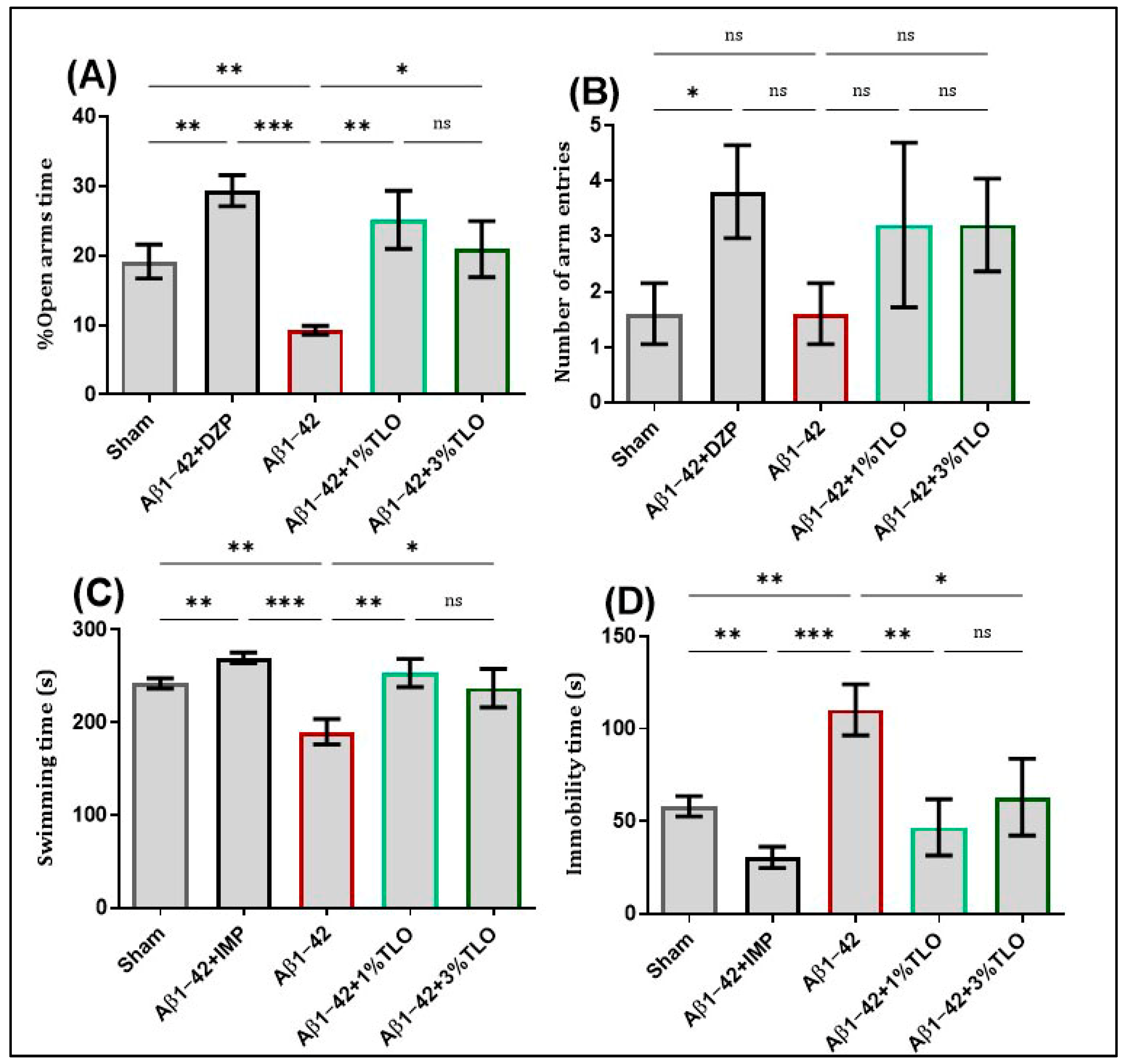
It is known that anxiety and depression manifest through different stages of AD [27]. More recently, a cross-sectional analysis indicated early life anxiety and depression, but not depression alone, as risk factors for developing AD [28]. In this study, TLO effects on both anxiety and depression were evaluated using standardized tests as EPM, and FST, with DZP and IMP being used as positive controls [29,30]. The anxiety-like, as well as the depression-like behaviors, were found to be elevated in the rats receiving Aβ1–42 as compared to the sham-operated rats (Figure 1). However, it was observed in the EPM test that Aβ1–42-treated rats receiving TLO spent more time in the open arms (Figure 1A), with no significant changes in the locomotor activity (Figure 1B), suggesting that TLO exerts an anxiolytic effect. In the FST, the Aβ1–42-treated rats receiving TLO exhibited increased swimming time (Figure 1C) and reduced immobility time (Figure 1D), indicating that TLO possesses antidepressant potential.
It may be considered that the therapeutic effects of TLO arise from its chemical composition, with α-pinene (22.6%), limonene (7.3%), camphor (14.5%), and L-bornyl acetate (16.8%) identified as the most abundant constituents [16] since α-pinene and limonene have already been shown to exert anxiolytic and antidepressant effects in murine models, such as early postnatal hypoxia [31], ketamine-induced schizophrenia [32] or chronic restraint stress [33,34].

3.2. The Effects of TLO on Neuroplasticity Markers

The dysregulated expression of BDNF is directly associated with impaired neuroplasticity in AD [35], particularly within the hippocampus. However, amygdala neuroplasticity has also been shown to depend on BDNF signaling [36], and aberrant BDNF levels were correlated with depressive symptoms, including those observed in AD [37,38]. Moreover, downregulation of ARC expression, which is downstream of the BDNF signaling pathway, has also been associated with depressive-like behavior [39,40].
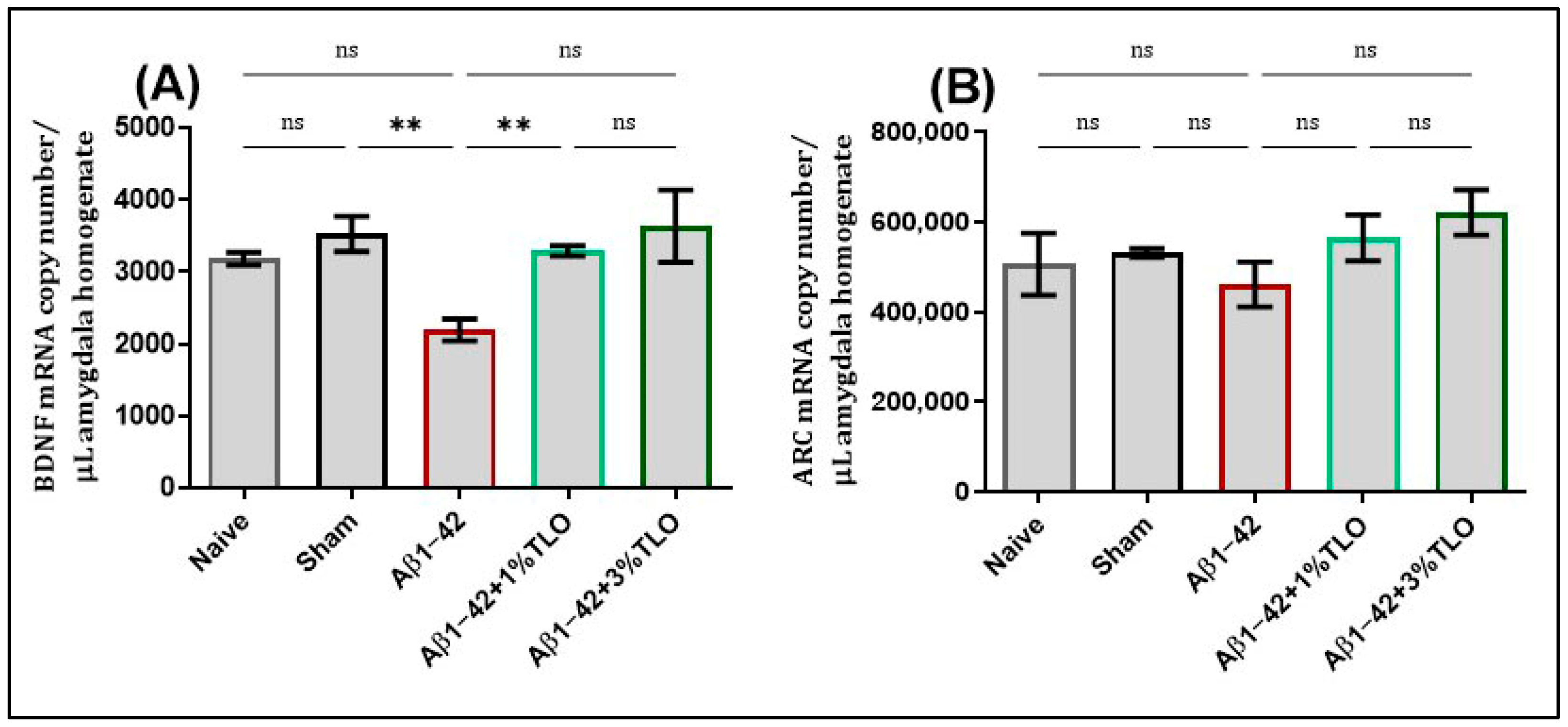
In this study, Aβ1–42 administration significantly reduced BDNF levels compared to sham-operated rats, while administration of TLO partially restored BDNF expression toward baseline (Figure 2A). Similarly, ARC expression in the amygdala was slightly reduced following Aβ1–42 delivery, while TLO administration partially counteracted this effect, yet none of these changes reached statistical significance (Figure 2B).

3.3. The Effects of TLO on Oxidative Stress Markers and Enzymatic Antioxidant Defense

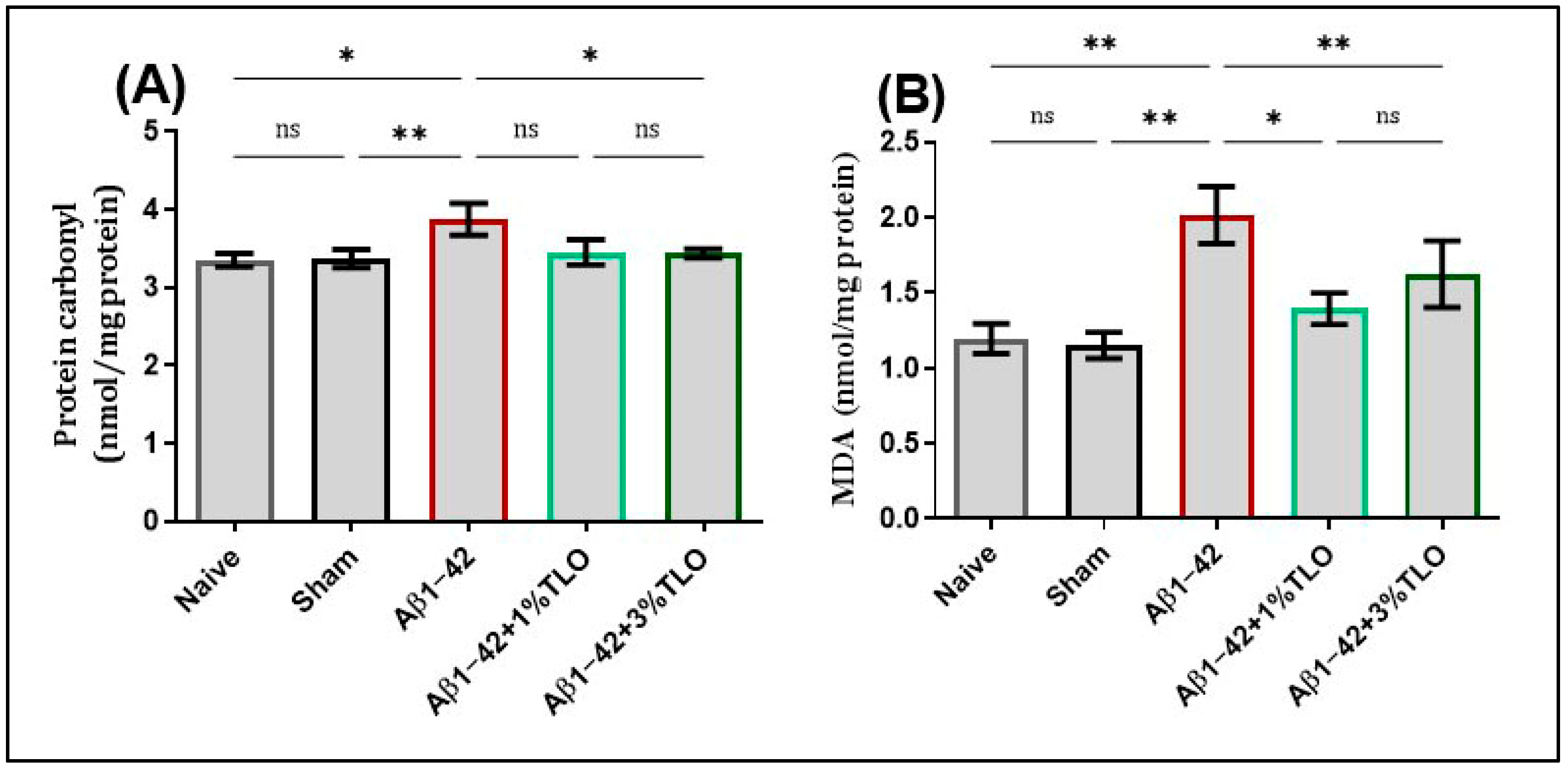
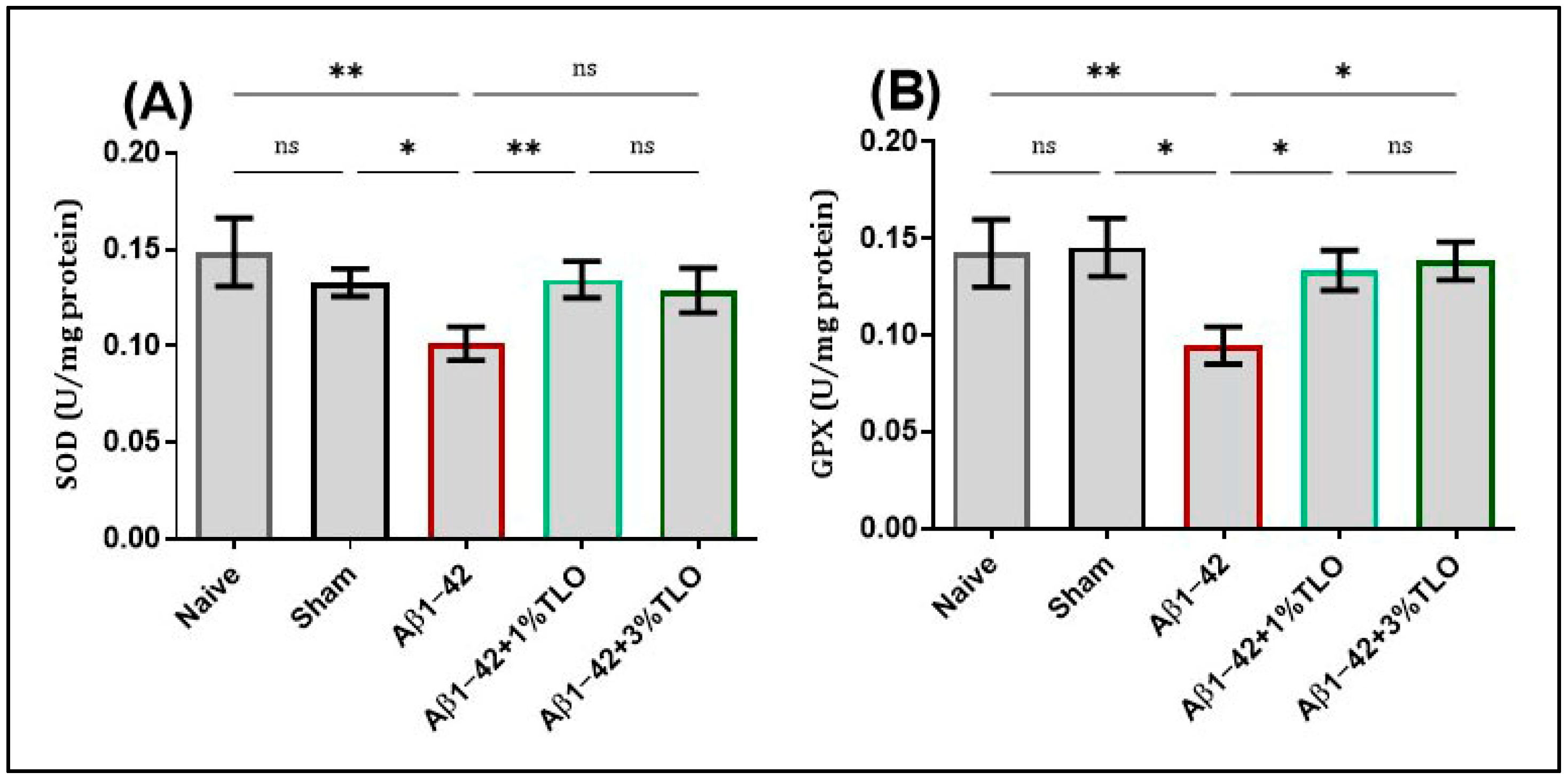
Oxidative stress is considered one of the AD hallmarks, actively contributing to the disease progression [41]. Disturbances in redox homeostasis are typically marked by increased levels of oxidative products derived from proteins (e.g., protein carbonyls, highly reactive aldehydes, methionine sulfoxide) and lipids (e.g., malondialdehyde, 4-hydroxynonenal), along with a reduction in scavenging potential of antioxidant-related enzymes (superoxide dismutase, glutathione peroxidase, catalase) [42]. In agreement with previous findings, elevated levels of protein carbonyls (Figure 3A) and MDA (Figure 3B) were detected in the rats receiving Aβ1–42, coupled with decreased activities of SOD (Figure 4A) and GPX (Figure 4B) antioxidant enzymes.
Administration of TLO to Aβ1–42-treated rats reversed lipid peroxidation, with MDA levels comparable to those in sham-operated rats (Figure 3B), whereas protein carbonyl levels remained slightly elevated following TLO administration (Figure 3A), indicating only a partial protection of TLO against protein oxidative damage. TLO also influenced antioxidant enzyme activities, with both SOD and GPX reaching values similar to those detected in the sham-operated rats (Figure 4A,B), indicating TLO’s potential to restore redox homeostasis within the amygdala. These results confirm the findings of previous studies that employed only in vitro techniques, such as DPPH, ABTS, or FRAP assays, to assess the antioxidant properties of TLO [15,43]. This result is, however, consistent with the chemical profile of TLO, as most of its major constituents are known to be potent antioxidants [32,44,45].

3.4. The Effects of TLO on Apoptotic DNA Fragmentation and Inflammatory Markers

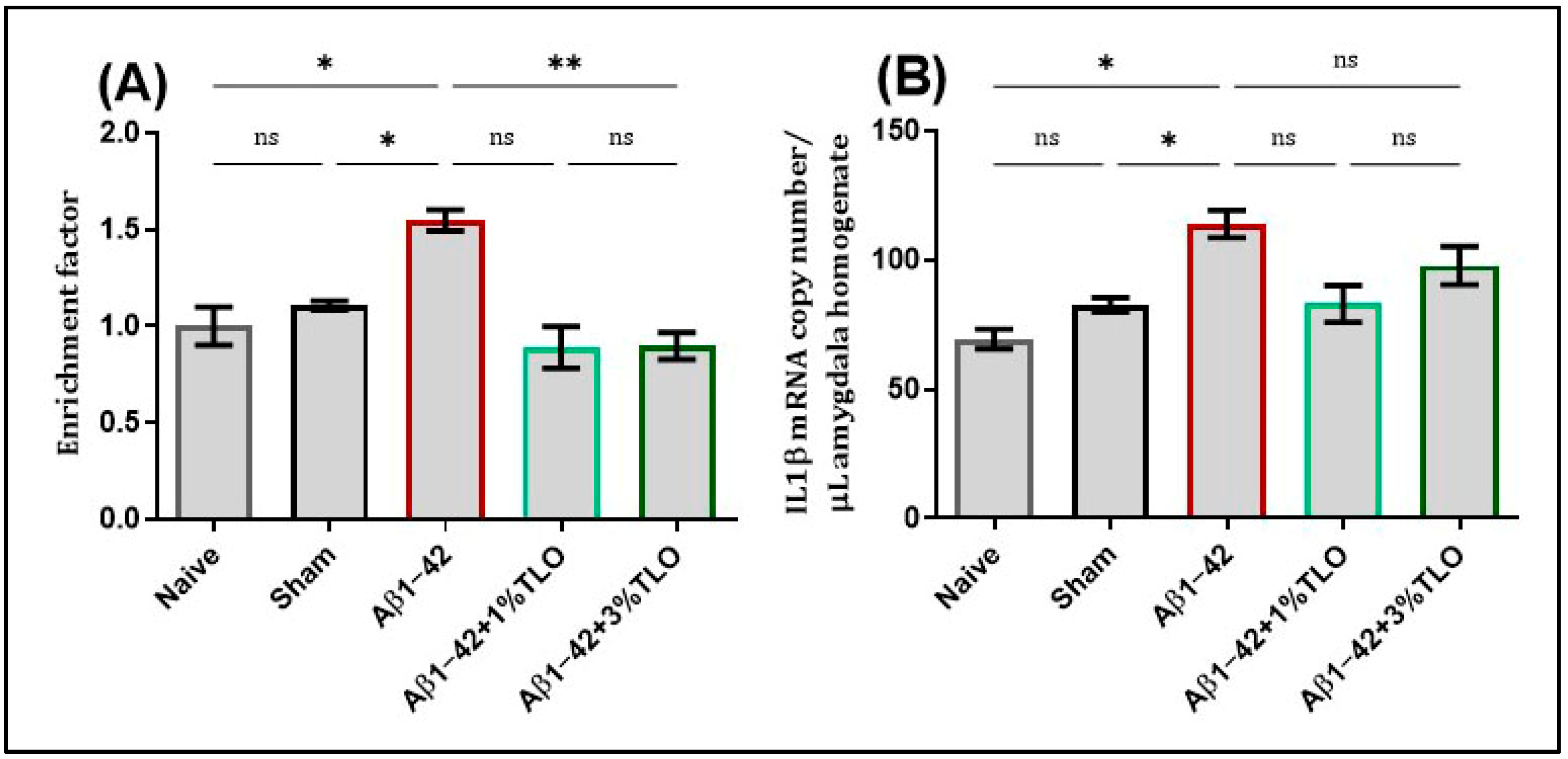
It has been shown that cellular insults, such as abnormally increased oxidative stress, are strongly correlated with neuronal DNA damage, which may further contribute to the upregulation of pro-inflammatory gene expression through multiple pathways [46,47]. Herein, elevated levels of histone-associated DNA fragments were detected in the Aβ1–42-treated rats (Figure 5A), suggesting increased DNA fragmentation within the amygdala, coupled with increased expression of pro-inflammatory cytokine IL1β (Figure 5B). Administration of TLO to the Aβ1–42-treated rats showed protective effects against DNA insults (Figure 5A); however, TLO failed to significantly reduce neuroinflammation, inducing only minor downregulation of the IL1β expression (Figure 5B). This result is in contrast with previous findings, which reported anti-inflammatory properties for TLO [15] and for its most abundant constituents [31,34,48,49]. This discrepancy may be explained by differences in experimental design, including the use of a chronic Aβ1–42-induced neurodegeneration model, the inhalational route of TLO administration, and the assessment of inflammation limited to IL-1β mRNA expression in the amygdala. In contrast, previous studies primarily investigated acute or peripheral inflammatory models, employed systemic administration, and evaluated protein-level inflammatory markers or broader cytokine panels, which may account for the stronger anti-inflammatory effects reported. However, experimental data exploring the anti-inflammatory and DNA-protective effects of TLO in animal models of neurodegenerative disorders are still limited.
The present study has several limitations that should be considered. First, the molecular analyses were limited to mRNA expression of BDNF, ARC, and IL-1β; therefore, protein-level validation, receptor activation (e.g., TrkB signaling), and downstream pathway analyses were not assessed. Second, neuroinflammation was evaluated solely through IL-1β gene expression, which provides only a partial view of inflammatory processes and does not allow definitive conclusions regarding anti-inflammatory efficacy. Third, due to the inhalational route of administration, precise dose normalization in mg/kg could not be determined, which limits direct comparison with systemically administered treatments. In addition, molecular and biochemical analyses were performed using a limited number of biological replicates, in accordance with ethical considerations, which may reduce sensitivity for detecting subtle molecular changes. Finally, this study focused primarily on neuropsychiatric symptoms and oxidative stress markers in the amygdala, without assessing cognitive outcomes or additional brain regions relevant to AD pathology.

4. Conclusions

In this experimental study, the potential of TLO to attenuate anxiety- and depression-like behaviors was evaluated using standardized behavioral tests in a murine Aβ1–42 AD model. Following the confirmation of anxiolytic and antidepressant effects of TLO, BDNF and ARC expression were examined as potential mechanisms underlying the attenuation of neuropsychiatric symptom severity, showing that TLO induced an upregulation of BDNF expression only. Moreover, TLO acted as a protective agent against apoptotic DNA fragmentation and lipid peroxidation induced by Aβ1–42 administration. In addition, TLO enhanced the activities of the antioxidant enzymes SOD and GPX, thereby restoring antioxidant defenses in the amygdala of Aβ1–42-treated rats.

Supplementary Materials

The following supporting information can be downloaded at: https://www.mdpi.com/article/10.3390/app16010511/s1, Table S1: Chemical composition of the Tetraclinis articulata essential oil.

Author Contributions

Conceptualization, L.H. and P.A.P.; methodology, P.A.P., M.M., D.L.G., A.B.S., F.Z.S., M.E.I. and L.H.; formal analysis, P.A.P. and L.H.; investigation, P.A.P., M.M., D.L.G., A.B.S., F.Z.S., M.E.I. and L.H.; resources, L.H., M.M., M.E.I. and D.L.G.; writing—original draft preparation, P.A.P. and A.B.S.; writing—review and editing, L.H. and P.A.P.; supervision, L.H.; funding acquisition, L.H., M.M., F.Z.S. and D.L.G. All authors have read and agreed to the published version of the manuscript.

Funding

Fatima Zahra Sadiki was supported by Doctoral scholarships Eugen Ionescu (2015/2016), Alexandru Ioan Cuza University, Iasi, Romania.

Institutional Review Board Statement

This experimental study has been previously approved by the local Ethics Committee for animal experimentation (No. 15309/22.07.2019) and has been conducted following the Directive 2010/63/EU of the European Parliament and of the Council of 22 September 2010 on the protection of animals for scientific purposes.

Informed Consent Statement

Not applicable.

Data Availability Statement

The data presented in this study are available on request from the corresponding author.

Conflicts of Interest

The authors declare no conflicts of interest.

References

  1. Zhang, J.; Zhang, Y.; Wang, J.; Xia, Y.; Zhang, J.; Chen, L. Recent Advances in Alzheimer’s Disease: Mechanisms, Clinical Trials and New Drug Development Strategies. Signal Transduct. Target. Ther. 2024, 9, 211. [Google Scholar] [CrossRef] [PubMed]
  2. Jaramillo-Jimenez, A.; Giil, L.M.; Tovar-Rios, D.A.; Borda, M.G.; Ferreira, D.; Brønnick, K.; Oppedal, K.; Aarsland, D. Association Between Amygdala Volume and Trajectories of Neuropsychiatric Symptoms in Alzheimer’s Disease and Dementia With Lewy Bodies. Front. Neurol. 2021, 12, 679984. [Google Scholar] [CrossRef]
  3. Stouffer, K.M.; Grande, X.; Düzel, E.; Johansson, M.; Creese, B.; Witter, M.P.; Miller, M.I.; Wisse, L.E.M.; Berron, D. Amidst an Amygdala Renaissance in Alzheimer’s Disease. Brain 2024, 147, 816–829. [Google Scholar] [CrossRef]
  4. Gonzalez-Rodriguez, M.; Villar-Conde, S.; Astillero-Lopez, V.; Villanueva-Anguita, P.; Ubeda-Banon, I.; Flores-Cuadrado, A.; Martinez-Marcos, A.; Saiz-Sanchez, D. Human Amygdala Involvement in Alzheimer’s Disease Revealed by Stereological and Dia-PASEF Analysis. Brain Pathol. 2023, 33, e13180. [Google Scholar] [CrossRef]
  5. Fisher, D.W.; Dunn, J.T.; Dong, H. Distinguishing Features of Depression in Dementia from Primary Psychiatric Disease. Discov. Ment. Health 2024, 4, 3. [Google Scholar] [CrossRef]
  6. Untu, I.; Davidson, M.; Stanciu, G.D.; Rabinowitz, J.; Dobrin, R.P.; Vieru, D.S.; Tamba, B.I. Neurobiological and Therapeutic Landmarks of Depression Associated with Alzheimer’s Disease Dementia. Front. Aging Neurosci. 2025, 17, 1584607. [Google Scholar] [CrossRef]
  7. Küpeli Akkol, E.; Tatlı Çankaya, I.; Şeker Karatoprak, G.; Carpar, E.; Sobarzo-Sánchez, E.; Capasso, R. Natural Compounds as Medical Strategies in the Prevention and Treatment of Psychiatric Disorders Seen in Neurological Diseases. Front. Pharmacol. 2021, 12, 669638. [Google Scholar] [CrossRef] [PubMed]
  8. Mo, M.; Abzhandadze, T.; Hoang, M.T.; Sacuiu, S.; Jurado, P.G.; Pereira, J.B.; Naia, L.; Kele, J.; Maioli, S.; Xu, H.; et al. Antidepressant Use and Cognitive Decline in Patients with Dementia: A National Cohort Study. BMC Med. 2025, 23, 82. [Google Scholar] [CrossRef]
  9. Borda, M.G.; Jaramillo-Jimenez, A.; Oesterhus, R.; Santacruz, J.M.; Tovar-Rios, D.A.; Soennesyn, H.; Cano-Gutierrez, C.A.; Vik-Mo, A.O.; Aarsland, D. Benzodiazepines and Antidepressants: Effects on Cognitive and Functional Decline in Alzheimer’s Disease and Lewy Body Dementia. Int. J. Geriatr. Psychiatry 2021, 36, 917–925. [Google Scholar] [CrossRef] [PubMed]
  10. Bordoloi, S.; Pathak, K.; Devi, M.; Saikia, R.; Das, J.; Kashyap, V.H.; Das, D.; Ahmad, M.Z.; Abdel-Wahab, B.A. Some Promising Medicinal Plants Used in Alzheimer’s Disease: An Ethnopharmacological Perspective. Discov. Appl. Sci. 2024, 6, 215. [Google Scholar] [CrossRef]
  11. Kwon, C.Y.; Lee, B. Herbal Medicine for Behavioral and Psychological Symptoms of Dementia: A Systematic Review and Meta-Analysis. Front. Pharmacol. 2021, 12, 713287. [Google Scholar] [CrossRef]
  12. John, O.O.; Amarachi, I.S.; Chinazom, A.P.; Adaeze, E.; Kale, M.B.; Umare, M.D.; Upaganlawar, A.B. Phytotherapy: A Promising Approach for the Treatment of Alzheimer’s Disease. Pharmacol. Res.—Mod. Chin. Med. 2022, 2, 100030. [Google Scholar] [CrossRef]
  13. Ma, Y.; Li, Y.; Yin, R.; Guo, P.; Lei, N.; Li, G.; Xiong, L.; Xie, Y. Therapeutic Potential of Aromatic Plant Extracts in Alzheimer’s Disease: Comprehensive Review of Their Underlying Mechanisms. CNS Neurosci. Ther. 2023, 29, 2045–2059. [Google Scholar] [CrossRef]
  14. Lima, A.; Arruda, F.; Frias, J.; Wortham, T.; Janeiro, A.; Rodrigues, T.; Baptista, J.; Lima, E. Anticholinesterase and Anti-Inflammatory Activities of the Essential Oils of Sawdust and Resin-Rich Bark from Azorean Cryptomeria Japonica (Cupressaceae): In Vitro and In Silico Studies. Int. J. Mol. Sci. 2024, 25, 12328. [Google Scholar] [CrossRef]
  15. Khatib, S.; Sobeh, M.; Bouissane, L. Tetraclinis Articulata (Vahl) Masters: An Insight into Its Ethnobotany, Phytochemistry, Toxicity, Biocide and Therapeutic Merits. Front. Pharmacol. 2022, 13, 977726. [Google Scholar] [CrossRef]
  16. Sadiki, F.Z.F.Z.; Idrissi, M.E.M.E.; Cioanca, O.; Trifan, A.; Hancianu, M.; Hritcu, L.; Postu, P.A.P.A. Tetraclinis Articulata Essential Oil Mitigates Cognitive Deficits and Brain Oxidative Stress in an Alzheimer’s Disease Amyloidosis Model. Phytomedicine 2019, 56, 57–63. [Google Scholar] [CrossRef] [PubMed]
  17. Khatib, S.; Mahdi, I.; Drissi, B.; Fahsi, N.; Bouissane, L.; Sobeh, M. Tetraclinis Articulata (Vahl) Mast.: Volatile Constituents, Antioxidant, Antidiabetic and Wound Healing Activities of Its Essential Oil. Heliyon 2024, 10, e24563. [Google Scholar] [CrossRef] [PubMed]
  18. Paxinos, G.; Watson, C. The Rat Brain in Stereotaxic Coordinates; Elsevier: Amsterdam, The Netherlands, 2007; ISBN 9780080475134. [Google Scholar]
  19. Postu, P.A.; Mihasan, M.; Gorgan, D.L.; Sadiki, F.Z.; El Idrissi, M.; Hritcu, L. Pinus Halepensis Essential Oil Ameliorates Aβ1-42-Induced Brain Injury by Diminishing Anxiety, Oxidative Stress, and Neuroinflammation in Rats. Biomedicines 2022, 10, 2300. [Google Scholar] [CrossRef]
  20. Venkataraman, A.; Ingraham, H. Elevated Plus Maze Protocol; protocols.io; Springer Nature: Cham, Switzerland, 2023. [Google Scholar] [CrossRef]
  21. Schiavone, S.; Tucci, P.; Mhillaj, E.; Bove, M.; Trabace, L.; Morgese, M.G. Antidepressant Drugs for Beta Amyloid-Induced Depression: A New Standpoint? Prog. Neuropsychopharmacol. Biol. Psychiatry 2017, 78, 114–122. [Google Scholar] [CrossRef]
  22. Smith, P.K.; Krohn, R.I.; Hermanson, G.T.; Mallia, A.K.; Gartner, F.H.; Provenzano, M.D.; Fujimoto, E.K.; Goeke, N.M.; Olson, B.J.; Klenk, D.C. Measurement of Protein Using Bicinchoninic Acid. Anal. Biochem. 1985, 150, 76–85. [Google Scholar] [CrossRef] [PubMed]
  23. Oliver, C.N.; Ahn, B.W.; Moerman, E.J.; Goldstein, S.; Stadtman, E.R. Age-Related Changes in Oxidized Proteins. J. Biol. Chem. 1987, 262, 5488–5491. [Google Scholar] [CrossRef]
  24. Ohkawa, H.; Ohishi, N.; Yagi, K. Assay for Lipid Peroxides in Animal Tissues by Thiobarbituric Acid Reaction. Anal. Biochem. 1979, 95, 351–358. [Google Scholar] [CrossRef]
  25. Winterbourn, C.; Hawkins, R.; Brian, M.; Carrell, R. The Estimation of Red Cell Superoxide Dismutase Activity. J. Lab. Clin. Med. 1975, 85, 337. [Google Scholar] [PubMed]
  26. Fukuzawa, K.; Tokumura, A. Glutathione Peroxidase Activity in Tissues of Vitamin E-Deficient Mice. J. Nutr. Sci. Vitaminol. 1976, 22, 405–407. [Google Scholar] [CrossRef]
  27. Botto, R.; Callai, N.; Cermelli, A.; Causarano, L.; Rainero, I. Anxiety and Depression in Alzheimer’s Disease: A Systematic Review of Pathogenetic Mechanisms and Relation to Cognitive Decline. Neurol. Sci. 2022, 43, 4107–4124. [Google Scholar] [CrossRef] [PubMed]
  28. Ma, L.; Tan, E.C.K.; Bush, A.I.; Masters, C.L.; Goudey, B.; Jin, L.; Pan, Y.; Group, A.R. Elucidating the Link Between Anxiety/Depression and Alzheimer’s Dementia in the Australian Imaging Biomarkers and Lifestyle (AIBL) Study. J. Epidemiol. Glob. Health 2024, 14, 1130–1141. [Google Scholar] [CrossRef] [PubMed]
  29. Calcaterra, N.E.; Barrow, J.C. Classics in Chemical Neuroscience: Diazepam (Valium). ACS Chem. Neurosci. 2014, 5, 253. [Google Scholar] [CrossRef]
  30. Johnson, N.R.; Wang, A.C.J.; Coughlan, C.; Sillau, S.; Lucero, E.; Viltz, L.; Markham, N.; Allen, C.; Dhanasekaran, A.R.; Chial, H.J.; et al. Imipramine and Olanzapine Block ApoE4-Catalyzed Polymerization of Aβ and Show Evidence of Improving Alzheimer’s Disease Cognition. Alzheimers Res. Ther. 2022, 14, 88. [Google Scholar] [CrossRef]
  31. Bakhtazad, S.; Ghotbeddin, Z.; Tabandeh, M.R.; Rahimi, K. Alpha-Pinene Ameliorate Behavioral Deficit Induced by Early Postnatal Hypoxia in the Rat: Study the Inflammatory Mechanism. Sci. Rep. 2024, 14, 6416. [Google Scholar] [CrossRef]
  32. Hajizadeh Moghaddam, A.; Malekzadeh Estalkhi, F.; Khanjani Jelodar, S.; Ahmed Hasan, T.; Farhadi-Pahnedari, S.; Karimian, M. Neuroprotective Effects of Alpha-Pinene against Behavioral Deficits in Ketamine-Induced Mice Model of Schizophrenia: Focusing on Oxidative Stress Status. IBRO Neurosci. Rep. 2024, 16, 182–189. [Google Scholar] [CrossRef]
  33. Bigdeli, Y.; Asle-Rousta, M.; Rahnema, M. Effects of Limonene on Chronic Restraint Stress-Induced Memory Impairment and Anxiety in Male Rats. Neurophysiology 2019, 51, 107–113. [Google Scholar] [CrossRef]
  34. Alkanat, M.; Alkanat, H.Ö. D-Limonene Reduces Depression-like Behaviour and Enhances Learning and Memory through an Anti-Neuroinflammatory Mechanism in Male Rats Subjected to Chronic Restraint Stress. Eur. J. Neurosci. 2024, 60, 4491–4502. [Google Scholar] [CrossRef]
  35. Jahan, I.; Harun-Ur-Rashid, M.; Islam, M.A.; Sharmin, F.; Al Jaouni, S.K.; Kaki, A.M.; Selim, S. Neuronal Plasticity and Its Role in Alzheimer’s Disease and Parkinson’s Disease. Neural Regen. Res. 2024, 21, 107. [Google Scholar] [CrossRef]
  36. Heldt, S.A.; Zimmermann, K.; Parker, K.; Gaval, M.; Ressler, K.J. BDNF Deletion or TrkB Impairment in Amygdala Inhibits Both Appetitive and Aversive Learning. J. Neurosci. 2014, 34, 2444–2450. [Google Scholar] [CrossRef] [PubMed]
  37. Numakawa, T.; Kajihara, R. Involvement of Brain-Derived Neurotrophic Factor Signaling in the Pathogenesis of Stress-Related Brain Diseases. Front. Mol. Neurosci. 2023, 16, 1247422. [Google Scholar] [CrossRef]
  38. Santos, M.; Lima, L.; Carvalho, S.; Mota-Pereira, J.; Pimentel, P.; Maia, D.; Correia, D.; Barroso, M.F.; Gomes, S.; Cruz, A.; et al. The Impact of BDNF, NTRK2, NGFR, CREB1, GSK3B, AKT, MAPK1, MTOR, PTEN, ARC, and SYN1 Genetic Polymorphisms in Antidepressant Treatment Response Phenotypes. Int. J. Mol. Sci. 2023, 24, 6758. [Google Scholar] [CrossRef]
  39. Li, Y.; Pehrson, A.L.; Waller, J.A.; Dale, E.; Sanchez, C.; Gulinello, M. A Critical Evaluation of the Activity-Regulated Cytoskeleton-Associated Protein (Arc/Arg3.1)’s Putative Role in Regulating Dendritic Plasticity, Cognitive Processes, and Mood in Animal Models of Depression. Front. Neurosci. 2015, 9, 279. [Google Scholar] [CrossRef] [PubMed]
  40. Gammie, S.C. Creation of a Gene Expression Portrait of Depression and Its Application for Identifying Potential Treatments. Sci. Rep. 2021, 11, 3829. [Google Scholar] [CrossRef]
  41. Butterfield, D.A. Oxidative Stress in Brain in Amnestic Mild Cognitive Impairment. Antioxidants 2023, 12, 462. [Google Scholar] [CrossRef] [PubMed]
  42. Arslan, J.; Jamshed, H.; Qureshi, H. Early Detection and Prevention of Alzheimer’s Disease: Role of Oxidative Markers and Natural Antioxidants. Front. Aging Neurosci. 2020, 12, 231. [Google Scholar] [CrossRef]
  43. Rabib, H.; Elagdi, C.; Hsaine, M.; Fougrach, H.; Koussa, T.; Badri, W. Antioxidant and Antibacterial Activities of the Essential Oil of Moroccan Tetraclinis Articulata (Vahl) Masters. Biochem. Res. Int. 2020, 2020, 9638548. [Google Scholar] [CrossRef]
  44. Sanshita; Devi, N.; Bhattacharya, B.; Sharma, A.; Singh, I.; Kumar, P.; Huanbutta, K.; Sangnim, T. From Citrus to Clinic: Limonene’s Journey Through Preclinical Research, Clinical Trials, and Formulation Innovations. Int. J. Nanomed. 2025, 20, 4433–4460. [Google Scholar] [CrossRef] [PubMed]
  45. Elbouzidi, A.; Jeddi, M.; Baraich, A.; Taibi, M.; Haddou, M.; El Hachlafi, N.; Yahyaoui, M.I.; Bellaouchi, R.; El Guerrouj, B.; Chaabane, K.; et al. Optimization of Eugenol, Camphor, and Terpineol Mixture Using Simplex-Centroid Design for Targeted Inhibition of Key Antidiabetic Enzymes. Curr. Issues Mol. Biol. 2025, 47, 512. [Google Scholar] [CrossRef] [PubMed]
  46. Ranganathan, R.; Sapozhnikov, G.; Ni, W.; Li, S.; Song, Y. Recent Developments in the Role of DNA Damage Response and Understanding Its Implications for New Therapeutic Approaches in Alzheimer’s Disease. Transl. Med. Aging 2023, 7, 52–65. [Google Scholar] [CrossRef]
  47. Firdous, S.M.; Khan, S.A.; Maity, A. Oxidative Stress-Mediated Neuroinflammation in Alzheimer’s Disease. Naunyn Schmiedebergs Arch. Pharmacol. 2024, 397, 8189–8209. [Google Scholar] [CrossRef]
  48. Zhao, Z.J.; Sun, Y.L.; Ruan, X.F. Bornyl Acetate: A Promising Agent in Phytomedicine for Inflammation and Immune Modulation. Phytomedicine 2023, 114, 154781. [Google Scholar] [CrossRef]
  49. dos Santos, E.; Leitão, M.M.; Aguero Ito, C.N.; Silva-Filho, S.E.; Arena, A.C.; de Souza Silva-Comar, F.M.; Nakamura Cuman, R.K.; Oliveira, R.J.; Nazari Formagio, A.S.; Leite Kassuya, C.A. Analgesic and Anti-Inflammatory Articular Effects of Essential Oil and Camphor Isolated from Ocimum Kilimandscharicum Gürke Leaves. J. Ethnopharmacol. 2021, 269, 113697. [Google Scholar] [CrossRef]
Figure 1. The effects of Tetraclinis articulata essential oil (1%TLO and 3%TLO) on anxiety-like (A,B) and depression-like (C,D) behaviors in Aβ1–42-treated animals. Data are presented as mean ± S.E.M. (n = 10 per group). Comparison between groups showed: (A) Aβ1–42 vs. Sham, ** p = 0.0049; Aβ1–42 vs. Aβ1–42 + DZP, *** p = 0.0003; Aβ1–42 vs. Aβ1–42 + 1% TLO, ** p = 0.0043; Aβ1–42 vs. Aβ1–42 + 3% TLO, * p = 0.0106. (B) Sham vs. Aβ1–42 + DZP, * p = 0.0484. (C) Aβ1–42 vs. Sham, ** p = 0.0077; Aβ1–42 vs. Aβ1–42 + IMP, *** p = 0.0004; Aβ1–42 vs. Aβ1–42 + 1% TLO, ** p = 0.0068; Aβ1–42 vs. Aβ1–42 + 3% TLO, * p = 0.0156. (D) Aβ1–42 vs. Sham, ** p = 0.0082; Aβ1–42 vs. Aβ1–42 + IMP, *** p = 0.0005; Aβ1–42 vs. Aβ1–42 + 1% TLO, ** p = 0.0060; Aβ1–42 vs. Aβ1–42 + 3% TLO, * p = 0.0366. ns—no statistical significance identified between groups.
Applsci 16 00511 g001
Figure 2. The effects of Tetraclinis articulata essential oil (1%TLO and 3%TLO) on the BDNF (A) and ARC (B) mRNA copy numbers detected in the cerebral amygdala of the Aβ1–42-treated rats. Data are presented as mean ± S.E.M. (n = 5 per group). Comparison between groups showed: (A) Aβ1–42 vs. Sham, ** p = 0.0091; Aβ1–42 vs. Aβ1–42 + 1% TLO, ** p = 0.0089. ns—no statistical significance identified between groups.
Applsci 16 00511 g002
Figure 3. The effects of Tetraclinis articulata essential oil (1%TLO and 3%TLO) on the protein carbonyl (A) and malondialdehyde (B) levels determined in the cerebral amygdala of the Aβ1–42-treated rats. Data are presented as mean ± S.E.M. (n = 5 per group). Comparison between groups showed: (A) Aβ1–42 vs. Sham, ** p = 0.0045; Aβ1–42 vs. Aβ1–42 + 3% TLO, * p = 0.0271. (B) Aβ1–42 vs. Sham, ** p = 0.0023; Aβ1–42 vs. Aβ1–42 + 1% TLO, * p = 0.0137; Aβ1–42 vs. Aβ1–42 + 3% TLO, ** p = 0.0049. ns—no statistical significance identified between groups.
Applsci 16 00511 g003
Figure 4. The effects of Tetraclinis articulata essential oil (1%TLO and 3%TLO) on superoxide dismutase (A) and glutathione peroxidase (B) activities were determined in the cerebral amygdala of the Aβ1–42-treated rats. Data are presented as mean ± S.E.M. (n = 5 per group). Comparison between groups showed: (A) Aβ1–42 vs. Sham, * p = 0.0182; Aβ1–42 vs. Aβ1–42 + 1% TLO, ** p = 0.0010. (B) Naive vs. Aβ1–42, ** p = 0.0056; Aβ1–42 vs. Sham, * p = 0.0238; Aβ1–42 vs. Aβ1–42 + 1% TLO, * p = 0.0212; Aβ1–42 vs. Aβ1–42 + 3% TLO, * p = 0.0220. ns—no statistical significance identified between groups.
Applsci 16 00511 g004
Figure 5. The effects of Tetraclinis articulata essential oil (1%TLO and 3%TLO) on apoptotic state (A) and inflammation (B) in the cerebral amygdala of the Aβ1–42-treated rats. Data are presented as mean ± S.E.M. (n = 5 per group). Comparison between groups showed: (A) Aβ1–42 vs. Sham, * p = 0.0207; Aβ1–42 vs. Aβ1–42 + 3% TLO, ** p = 0.0092. (B) Aβ1–42 vs. Sham, * p = 0.0123. ns—no statistical significance identified between groups.
Applsci 16 00511 g005
Disclaimer/Publisher’s Note: The statements, opinions and data contained in all publications are solely those of the individual author(s) and contributor(s) and not of MDPI and/or the editor(s). MDPI and/or the editor(s) disclaim responsibility for any injury to people or property resulting from any ideas, methods, instructions or products referred to in the content.