Article

Trace Detection of Ibuprofen in Solution Based on Surface Plasmon Resonance Technology

School of Sciences, Harbin University of Science and Technology, Harbin 150080, China
*
Author to whom correspondence should be addressed.
Appl. Sci. 2026, 16(1), 498; https://doi.org/10.3390/app16010498
Submission received: 6 December 2025 / Revised: 28 December 2025 / Accepted: 29 December 2025 / Published: 4 January 2026

Abstract

A surface plasmon resonance (SPR) sensor utilizing a molecularly imprinted polymer (MIP) film as the recognition element was developed for the selective detection of the non-steroidal anti-inflammatory drug ibuprofen (IBU). The molecularly imprinted film on the SPR sensor chip was prepared via photo-initiated in situ polymerization, enabling specific recognition of IBU molecules. Experimental results indicate that the SPR sensor can specifically identify IBU in solution, with a detection limit of 10−11 mol/L for ibuprofen. Within the concentration range of 10−11 to 10−4 mol/L, a linear relationship was observed between the SPR signal and the negative logarithm of the IBU concentration. This method offers the advantages of a low detection limit, wide detection range, and high selectivity, making it suitable for trace detection of IBU in solutions.

1. Introduction

Ibuprofen (isobutylphenylpropionic acid, IBU) is a typical non-steroidal anti-inflammatory drug widely used in clinical practice for its antipyretic and analgesic effects, and has seen extensive global application [1]. However, with the continuous growth of the population and the increase in per capita drug consumption, the detection frequency and concentration of ibuprofen in natural water environments have been rising [2]. This poses a potential risk to human health, specifically manifested as interference with the immune and metabolic systems, affecting normal physiological functions, and potentially leading to reproductive health issues, developmental abnormalities, etc. [3,4].
Current mainstream methods for IBU detection mainly include high-performance liquid chromatography (HPLC) [5], electrochemical analysis [6], capillary electrophoresis [7], and colorimetric methods [8]. However, these methods generally suffer from drawbacks such as expensive equipment, long processing time, low selectivity, and poor anti-interference capability. Therefore, developing a simple, inexpensive, and rapid IBU detection technology is crucial.
Surface plasmon resonance (SPR) is a physical-optical phenomenon that occurs at the interface between a dielectric (such as glass) and a thin film of a noble metal (e.g., Au or Ag). When the wave vector of the incident light matches that of the surface plasmon wave (SPW) on the metal film surface, the intensity of the reflected light drops sharply; this phenomenon is known as SPR. Since the SPR phenomenon is related to the refractive index (dielectric constant) of the medium adjacent to the metal film, it can be used to detect changes in the refractive index of that medium [9]. SPR detection technology is characterized by its simplicity, speed, label-free operation, and high sensitivity [10]. In recent years, SPR-based sensors have become an important component of detection methods in the biomedical field [11].
SPR sensor chips are typically modified with bioactive substances, such as antibodies or enzymes, which are immobilized on the chip surface as sensing elements to recognize target compounds. Biological recognition molecules offer high selectivity but have disadvantages including high cost, instability, short lifespan, and difficulties in preservation [12]. Molecularly imprinted polymers (MIPs), often referred to as “artificial antibodies,” are synthesized by copolymerizing functional monomers and cross-linkers in the presence of a template molecule. Once the template molecule is removed, the resulting cavities exhibit selective binding properties for the target molecule [13]. Compared to biological molecules, MIPs offer advantages such as lower cost, higher stability, and greater robustness, making them excellent alternative materials to overcome the aforementioned drawbacks [14,15].
In recent years, MIP-SPR sensors based on the molecular imprinting technique (MIT) have found broad application in the detection of small molecules [16]. Lai et al. successfully prepared MIP-SPR sensors for detecting theophylline, xanthine, and caffeine, marking the first reported use of MIP-SPR sensors for analytical detection [17]. Chen et al. fabricated an MIP-SPR sensor using a Ag film for the detection of methyl parathion, achieving a detection limit of 13.8 mg/L [18]. Bereli et al. developed an MIP-SPR sensor for detecting amoxicillin (AMO) in eggs, with a detection range of 0.1–10.0 ng/mL and a detection limit of 0.0005 ng/mL [19]. Cakir et al. employed UV polymerization to prepare an MIP-SPR sensor on an SPR chip surface for detecting amitrole; the sensor exhibited a detection range of 0.06–11.90 nM and a limit of detection (LOD) of 0.037 nM [20]. Nawaz et al. utilized two functional monomers synergistically to develop a novel MIP-SPR sensor for the selective detection of tetracycline (TC) in milk; the sensor’s detection range was 10−13 to 10−7 mol/L, with an LOD of 1.38 × 10⁻¹⁴ mol/L [21].
Building upon SPR detection technology, this study employed a UV-initiated in situ polymerization method to prepare an IBU molecularly imprinted film for modifying the Ag film of an SPR sensor, enabling the detection of IBU drug molecules in aqueous solution. Experimental results indicate that this sensor exhibits high detection specificity for IBU in solution, with a detection limit reaching 10−11 mol/L and a detection range of 10−11 to 10−4 mol/L. Compared to current IBU detection methods, this sensor offers advantages including lower cost, simpler operation, a lower detection limit, and a wider linear detection range, making it suitable for the trace detection of IBU drug residues in solutions.

2. Principle of SPR

When incident light from an optically denser medium to an optically rarer medium, if the angle of incidence exceeds the critical angle, the incident light will not enter the optically rarer medium but will instead be reflected back into the optically denser medium. This phenomenon is known as total internal reflection [22]. When light undergoes total internal reflection, it does not return entirely to the optically denser medium. Instead, a portion of the electromagnetic waves remains within the optically rarer medium, propagating along its surface. The intensity of these waves decays exponentially with increasing penetration depth. This type of electromagnetic wave is termed a evanescent wave [23].
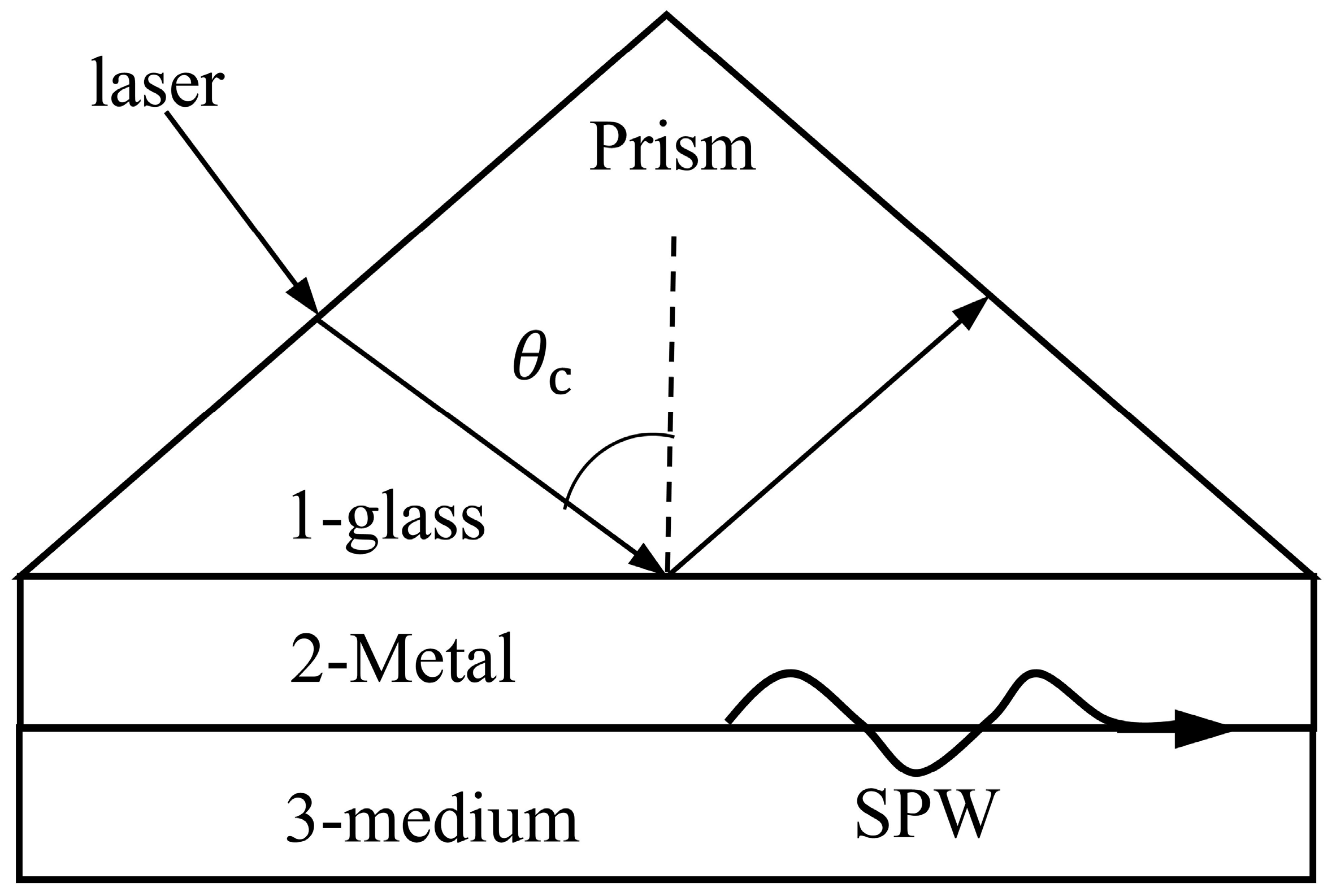
Resonance arises when the wave vector of the p-polarized evanescent wave matches that of the surface plasmon wave (SPW) on the metal (Au or Ag) surface. This leads to a sharp decrease in the intensity of the reflected light, resulting in the SPR phenomenon [9]. Taking the prism-coupled Kretschmann configuration as an example, its structure is shown in Figure 1.
Where the incident light is p-polarized, and the reflectance R of the reflected light can be expressed by the Fresnel formulas as [11]:
R = r 123 2 = r 12 + r 23 e x p ( 2 i k z 2 d ) 1 + r 12 r 23 e x p ( 2 i k z 2 d ) 2 ,   r i j = ε j k z i ε i k z j ε j k z i + ε i k z j   i , j = 1,2 , 3
k x = ω c ε 1 sin θ c ,   k z j ε j ( ω c ) 2 k x 2   j = 1,2 , 3
where d is the thickness of the metal film, ω is the frequency of the incident light, and θc is the incident angle. When θc reaches the resonance angle, the reflectance R in Equation (1) attenuates to its minimum. As can be seen from Equations (1) and (2), the SPR angle is sensitive to changes in the dielectric constant of the medium adjacent to the metal film. Therefore, the SPR phenomenon can be utilized to detect variations in the dielectric constant (refractive index) of the medium.

3. Materials and Methods

3.1. Materials

The chemicals used in this study included methacrylic acid (MAA), 2-hydroxyethyl methacrylate (HEMA), ethylene glycol dimethacrylate (EGDMA), 1-dodecanethiol (1-DDT), benzophenone (BP), ibuprofen (IBU), ketoprofen (KPF), naproxen (NAP), and cinnamic acid (CAA). All chemicals were of analytical grade and purchased from Shanghai Macklin Biochemical Technology Co., Ltd. (Shanghai, China). Acetic acid, tetrahydrofuran (THF), methanol, and ethanol, also of analytical grade, were obtained from Sinopharm Chemical Reagent Co., Ltd. (Shanghai, China). Deionized water was used throughout the experiments.

3.2. SPR Sensing Chip Preparation

The SPR sensing chip is the core component of SPR detection technology. In this study, a direct current (DC) magnetron sputtering method was employed to deposit a Ag film approximately 50 nm thick onto a BK7 cover glass surface as the metallic layer. While the SPR phenomenon is sensitive to changes in the refractive index of the medium adjacent to the Ag film, it lacks the inherent ability for selective recognition of specific substances. Therefore, to achieve specific detection of IBU drug molecules, the prepared SPR sensing chip’s Ag film was modified using the molecular imprinting technique (MIT).
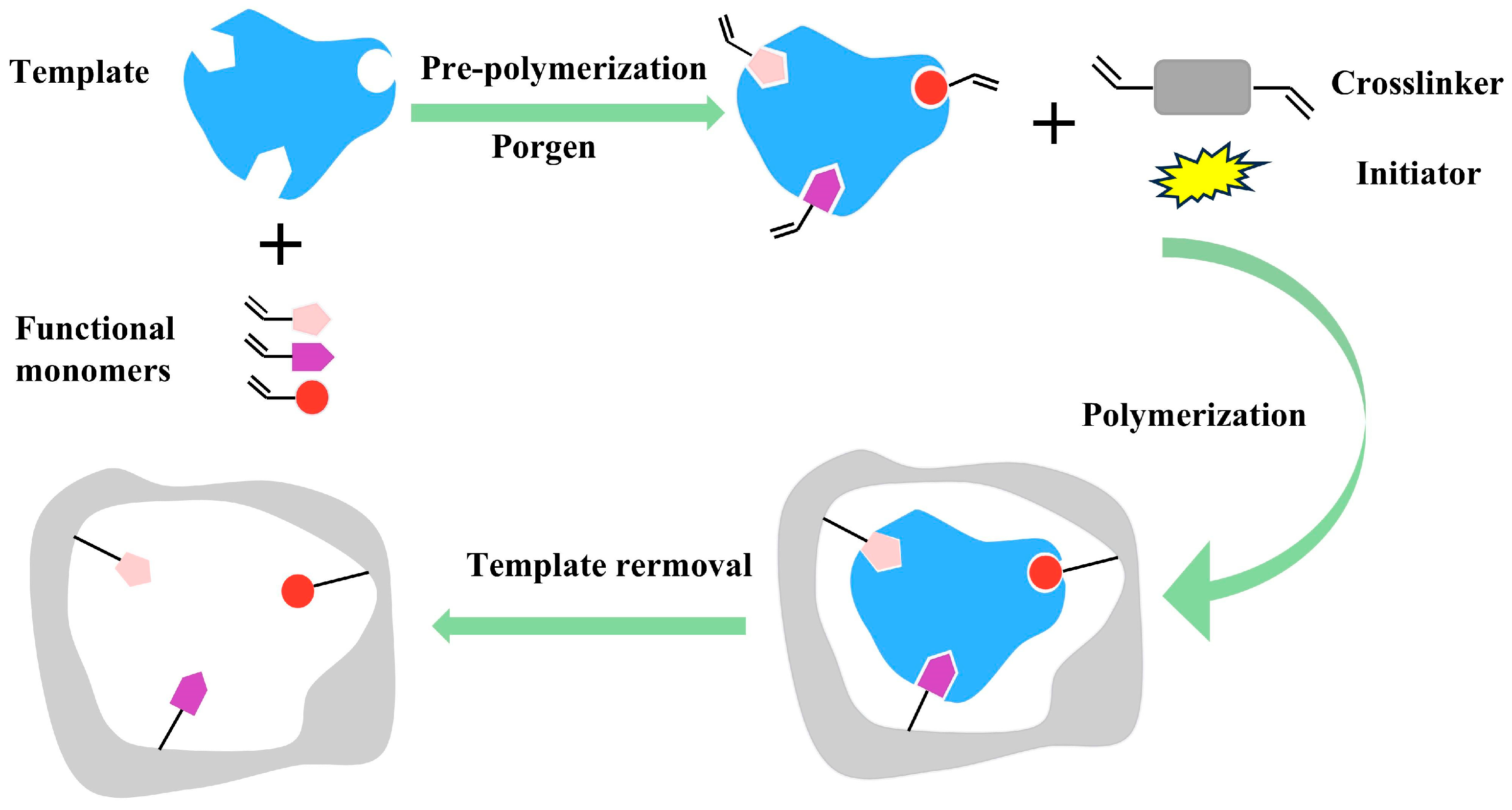
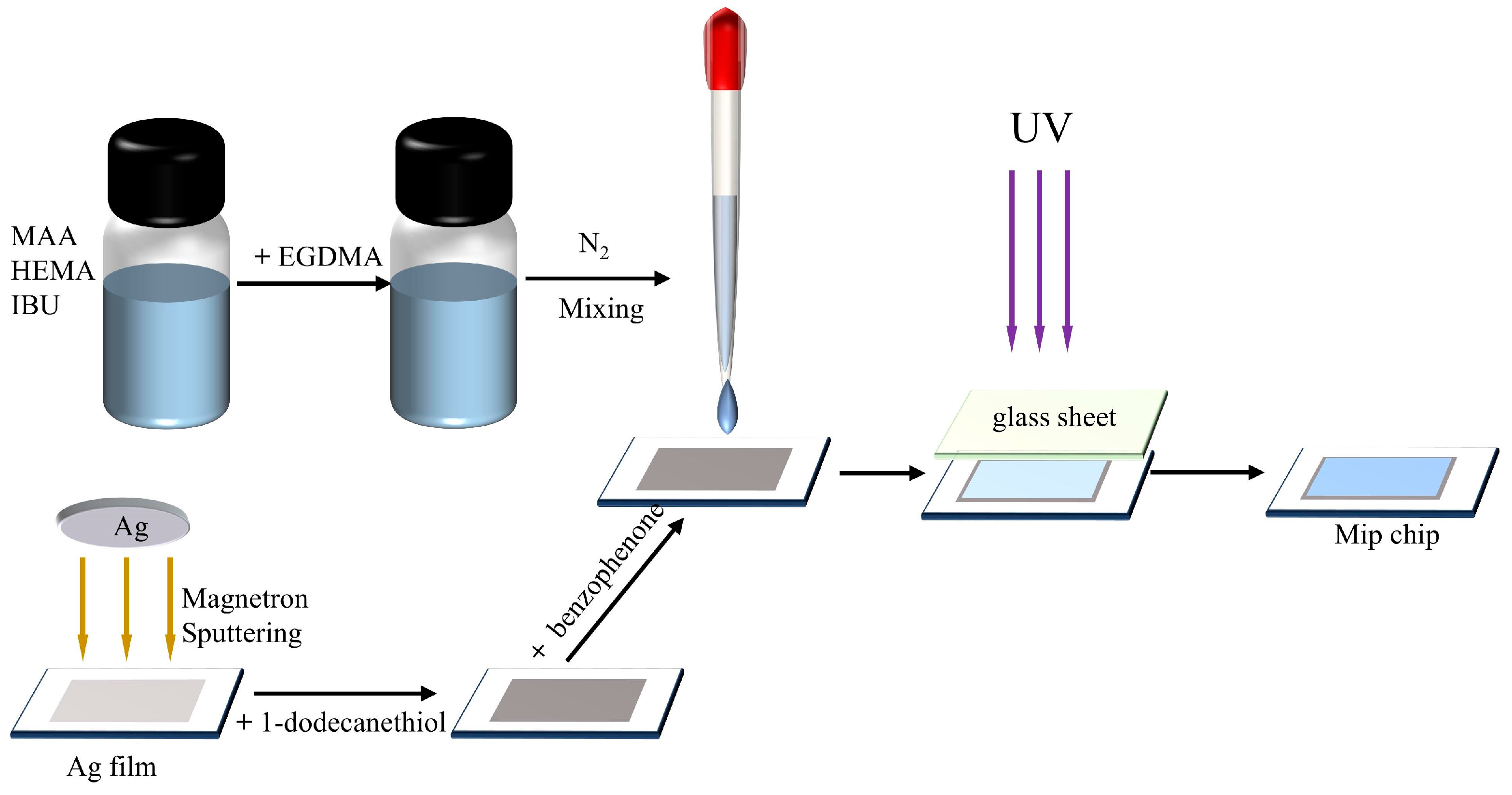
MIT is a technology that mimics the interaction between antigens and antibodies to achieve specific recognition of template molecules [24], and its principle is illustrated in Figure 2. Template molecules and functional monomers form complexes in a medium. Polymerization is then initiated by adding cross-linkers, initiators, etc., resulting in the formation of a rigid polymer network [25]. Subsequent removal of the template molecules leaves cavities within the polymer that precisely match the shape and functional groups of the template. These cavities can efficiently and specifically rebind the target molecules, enabling highly selective adsorption of the template [26]. The fabrication process of the SPR sensing chip is shown in Figure 3.
A pre-polymerization solution was prepared by dissolving 103 mg of IBU (0.5 mmol), 0.51 mL of methacrylic acid (MAA, 6 mmol), and 0.12 mL of hydroxyethyl methacrylate (HEMA, 1 mmol) in 7 mL of tetrahydrofuran (THF). The mixture was sonicated for 15 min and then sealed and allowed to stand at 4 °C for 12 h to form stable complexes between the template molecule and the functional monomers. Subsequently, 0.04 mL of ethylene glycol dimethacrylate (EGDMA, 0.21 mmol) was added, followed by sonication for 30 min to ensure homogeneity. The mixture was purged with nitrogen for 25 min to remove oxygen, yielding the final pre-polymerization solution.
The Ag chip with the immobilized initiator was washed with ethanol and dried with nitrogen. The pre-polymerization solution was dropped onto the chip surface, which was quickly covered with a glass slide to prevent solvent evaporation. Polymerization was initiated by irradiating the assembly with a UV-LED light source (wavelength: 365 nm) for 2 h, resulting in the formation of an MIF containing IBU template molecules on the Ag film.
The fabricated MIF-SPR sensor chip was repeatedly washed with a methanol and acetic acid mixture (9:1, v/v) to remove the template molecules, followed by rinsing with water to eliminate residual methanol and acetic acid. Non-imprinted films (NIFs) were prepared following the identical procedure described above, with the only exception being the omission of the IBU template molecule during the preparation of the pre-polymerization solution.

3.3. Setup and Detection

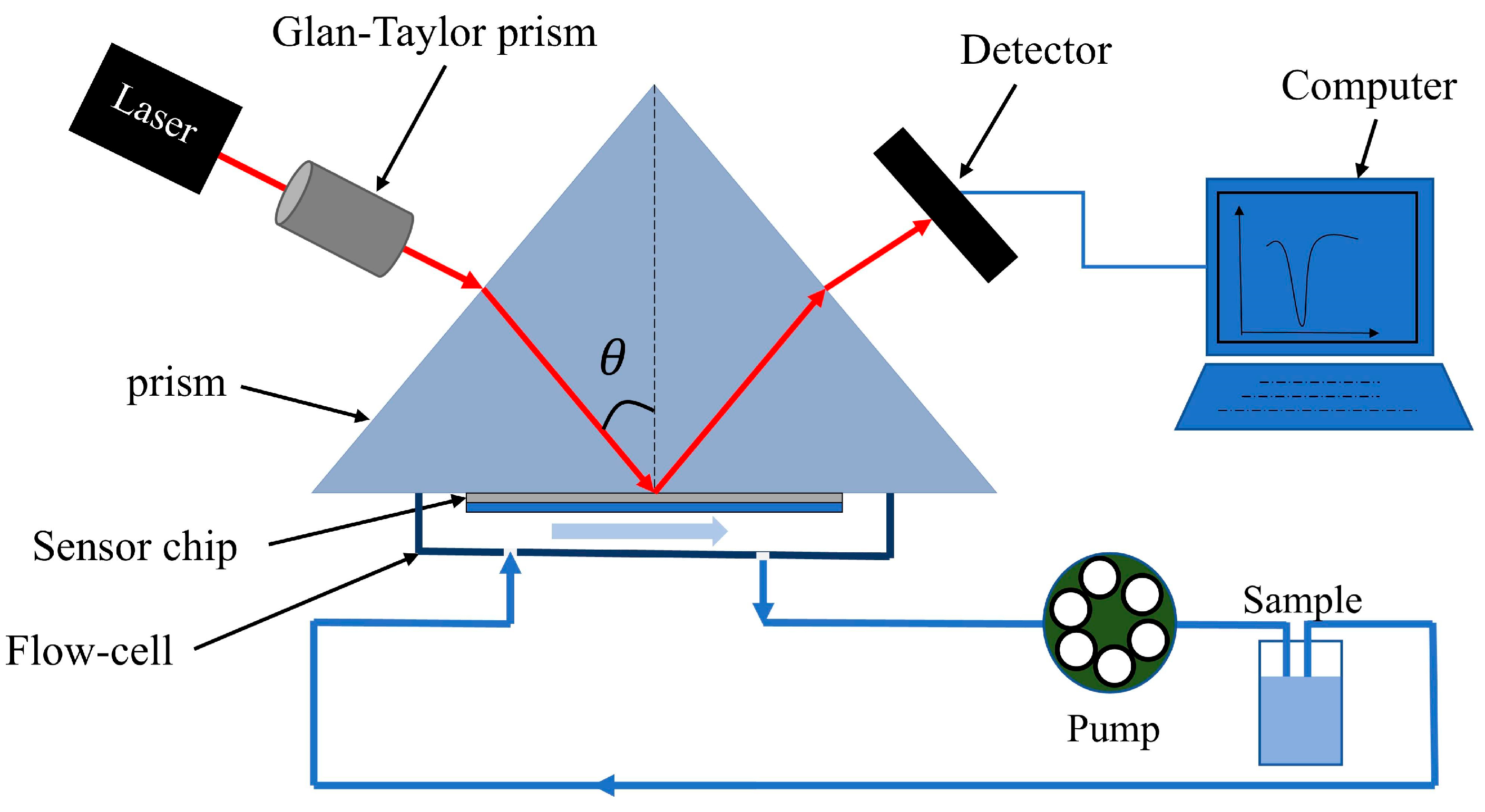
A Kretschmann-configuration angular modulation SPR sensing setup (shown in Figure 4) was employed for detection [27]. Light emitted from a 650 nm wavelength laser source passes through a Grunthaler–Taylor prism(Fujian Forecam Optics Co., Ltd., Fuzhou, China) before entering the sample detection apparatus. The sample detection device consists of a BK7 glass right-angle prism (Fujian Forecam Optics Co., Ltd., Fuzhou, China), an SPR chip, and a flow cell. The fabricated MIF-SPR chip was assembled onto the hypotenuse surface of a right-angle BK7 prism (refractive index = 1.515) using BK7 index-matching oil (refractive index = 1.515). A flow cell was then attached to the prism surface, and a peristaltic pump was used to deliver the sample solution into the flow cell at a constant flow rate of 20 μL/min. The entire assembly was mounted on a motorized rotation stage, allowing the incident angle to be adjusted by rotating the stage. The motorized rotation stage is controlled by a 7SC302 dual-axis motion controller. The entire motion control system was purchased from Beijing Saifan Optoelectronic Instrument Co., Ltd. (Beijing, China). The intensity of the reflected light was recorded by a silicon photodiode detector. Throughout the experiments, the temperature was maintained at 25 °C.

3.4. Contact Angle Measurement and Surface Morphology Characterization

The static contact angles of the MIF/Ag film and the NIF/Ag film were measured using a JY-82B Kruss DSA contact angle goniometer (KINO Industrial Co., New York, NY, USA). Samples larger than 2 mm × 2 mm were placed on the testing platform, and a water droplet was dispensed onto the sample surface via an automatic dosing system to measure the contact angle. The surface morphologies of the Ag film, the modified SAM/Ag film, the molecularly imprinted MIF/Ag film, and the non-imprinted NIF/Ag film were characterized using a Hitachi S-4800 scanning electron microscope (SEM) (Hitachi, Ltd., Tokyo, Japan).

4. Results and Discussion

4.1. Film Characterization

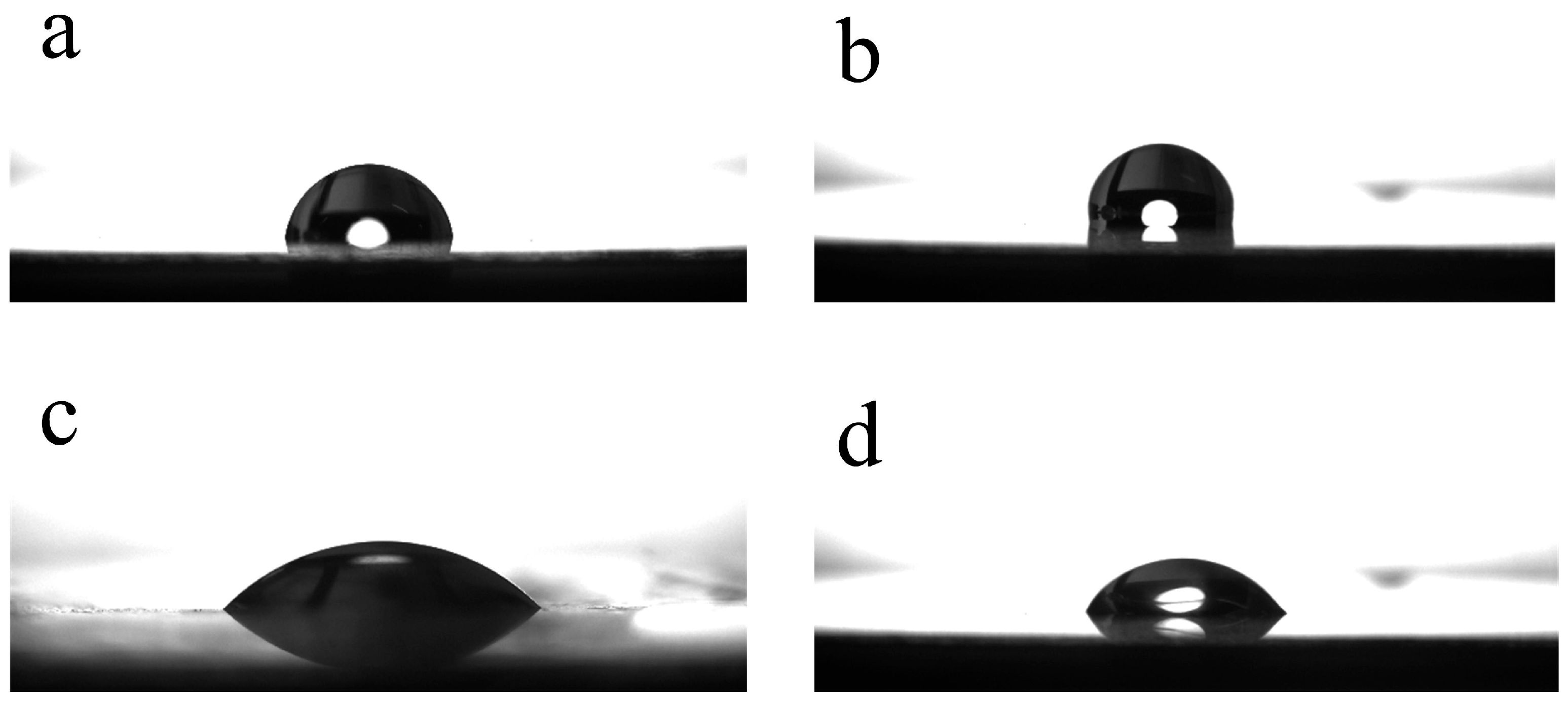
Figure 5 presents the measured water contact angles for the Ag, SAM/Ag, MIF/Ag, and NIF/Ag films. The formation of a hydrophobic SAM layer on the Ag chip surface via covalent bonding between 1-DDT and Ag enhanced surface hydrophobicity, increasing the contact angle from 77.3° for the bare Ag film (Figure 5a) to 104.7° for the SAM/Ag film (Figure 5b). Because hydrophilic monomers were used in their synthesis, both the resulting MIF/Ag and NIF/Ag films have hydrophilic characteristics when using in situ photoinitiated polymerization to form MIF films on Ag chip surfaces. As a result, both of these films’ contact angles are less than 90°. And the MIF/Ag film exhibited stronger surface hydrophilicity than the NIF/Ag film, owing to the presence of more hydrophilic groups (e.g., hydrogen bonds) and molecular cavities on its surface. Consequently, the contact angle of the MIF/Ag film was smaller than that of the NIF/Ag film, as shown in Figure 5c,d.
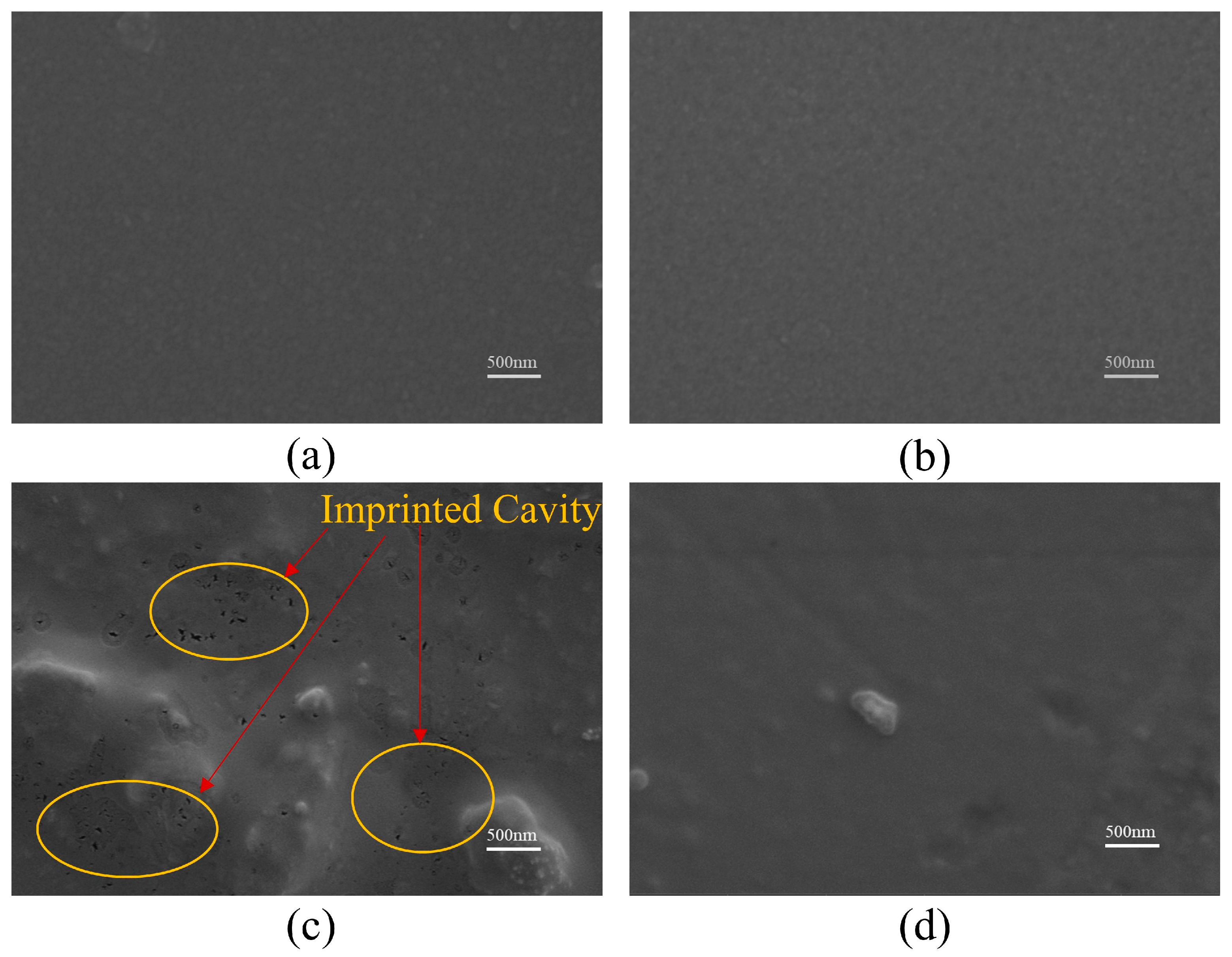
Figure 6 shows the SEM characterization results of the surface morphologies of the Ag, SAM/Ag, MIF/Ag, and NIF/Ag films. In Figure 6a,b, corresponding to the Ag film and the SAM/Ag film, respectively, the surfaces appear smooth and dense without obvious defects. Figure 6c,d display a polymer film formed via in situ polymerization on the SAM/Ag substrate. After elution of the IBU template molecules, the MIF/Ag film in Figure 6c exhibits distinct and uniformly distributed IBU molecular cavities. In contrast, the NIF/Ag film, which was prepared without the IBU template, lacks such cavities and therefore presents a smooth and dense surface. This is because template molecule IBU was added to MIF during preparation, whereas no IBU was added to NIF. MIF displays imprinting cavities following alternating washing with a mixed solution of methanol and acetic acid (volume ratio 9:1), whereas NIF does not.

4.2. SPR Detection Results

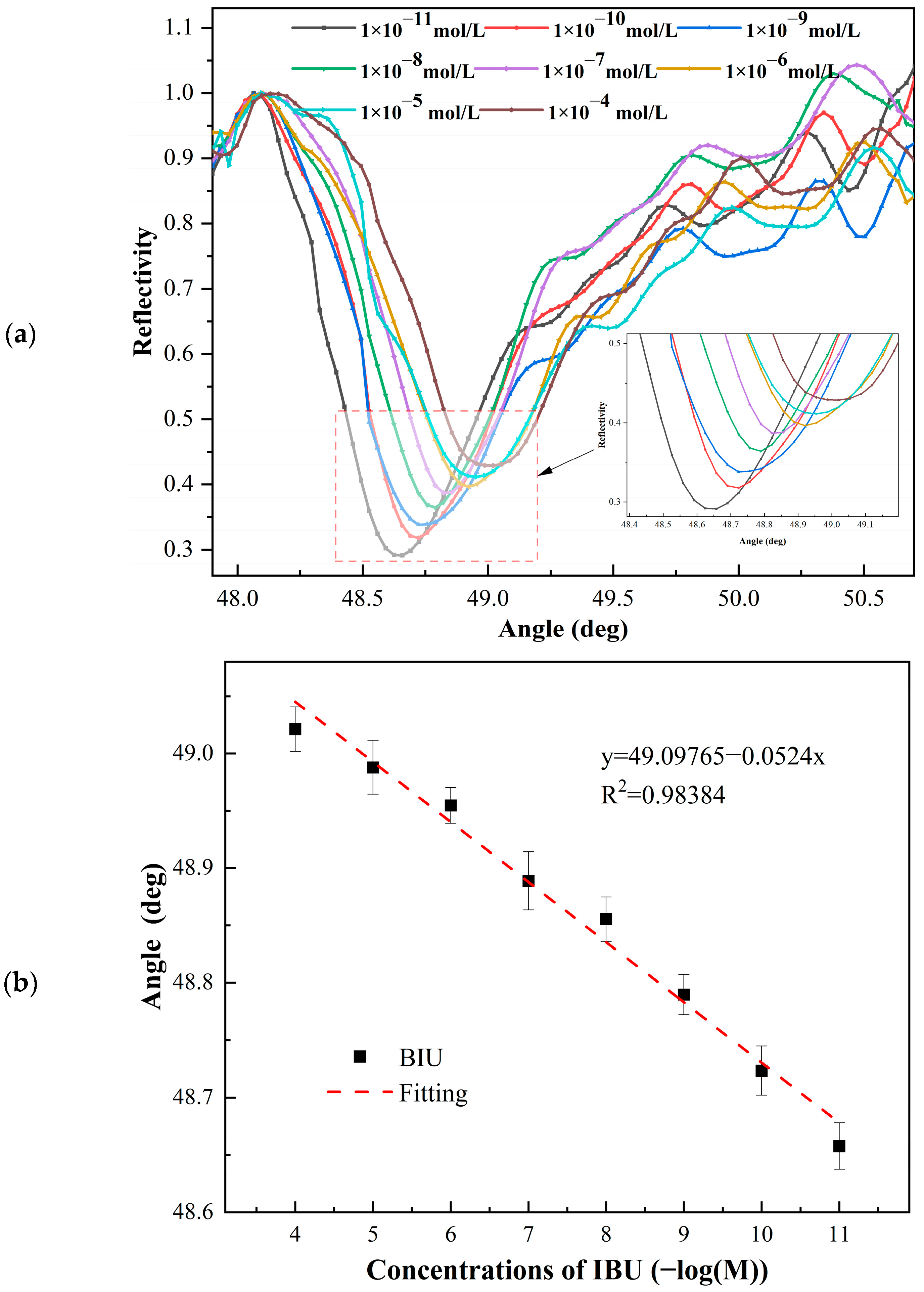
The MIF-SPR chip was used to detect IBU solutions at various concentrations. The MIF was first activated by flowing deionized water through the flow cell for 10 min. IBU solutions with concentrations ranging from 10−11 to 10−4 mol/L were prepared using a mixture of acetonitrile and deionized water (2:8, v/v) as the solvent. This experiment employs a stepwise dilution method to prepare the solution. Each solution was injected into the flow cell at a flow rate of 20 μL/min for a duration of 660 s. SPR measurements were performed in triplicate for each concentration. After each test, the MIF-SPR chip was regenerated by alternately washing it with methanol and deionized water before proceeding to the next concentration. The corresponding reflection spectra are shown in Figure 7a. It is evident that variations in the test solution’s concentration cause the SPR curve’s resonance angle and resonance absorption depth to change. However, the resonance angle shows a more noticeable shift than the resonance depth. As a result, we choose the response signal to be the resonance angle.
It can be observed that as the concentration of IBU in the test solution increases, more IBU template molecules are adsorbed onto and into the MIF, causing a change in the refractive index at the chip surface and a consequent gradual increase in the SPR angle. The variation in the SPR angle with IBU concentration is plotted in Figure 7b. Within the concentration range of 10−11 to 10−4 mol/L, the SPR angle shows a good linear relationship with the negative logarithm of the IBU concentration (−log(M)). Linear fitting yields a limit of detection of 10−11 mol/L, and a linear range of 10−11 to 10−4 mol/L. Therefore, this method is suitable for the trace detection of IBU in solution.
Table 1 compares the detection range and detection limit of the sensor developed in this work with other methods for measuring ibuprofen concentration. It can be seen that the MIF-SPR-based sensor for detecting ibuprofen concentration exhibits a broader detection range and a lower detection limit.

4.3. Selectivity and Reproducibility of the MIF

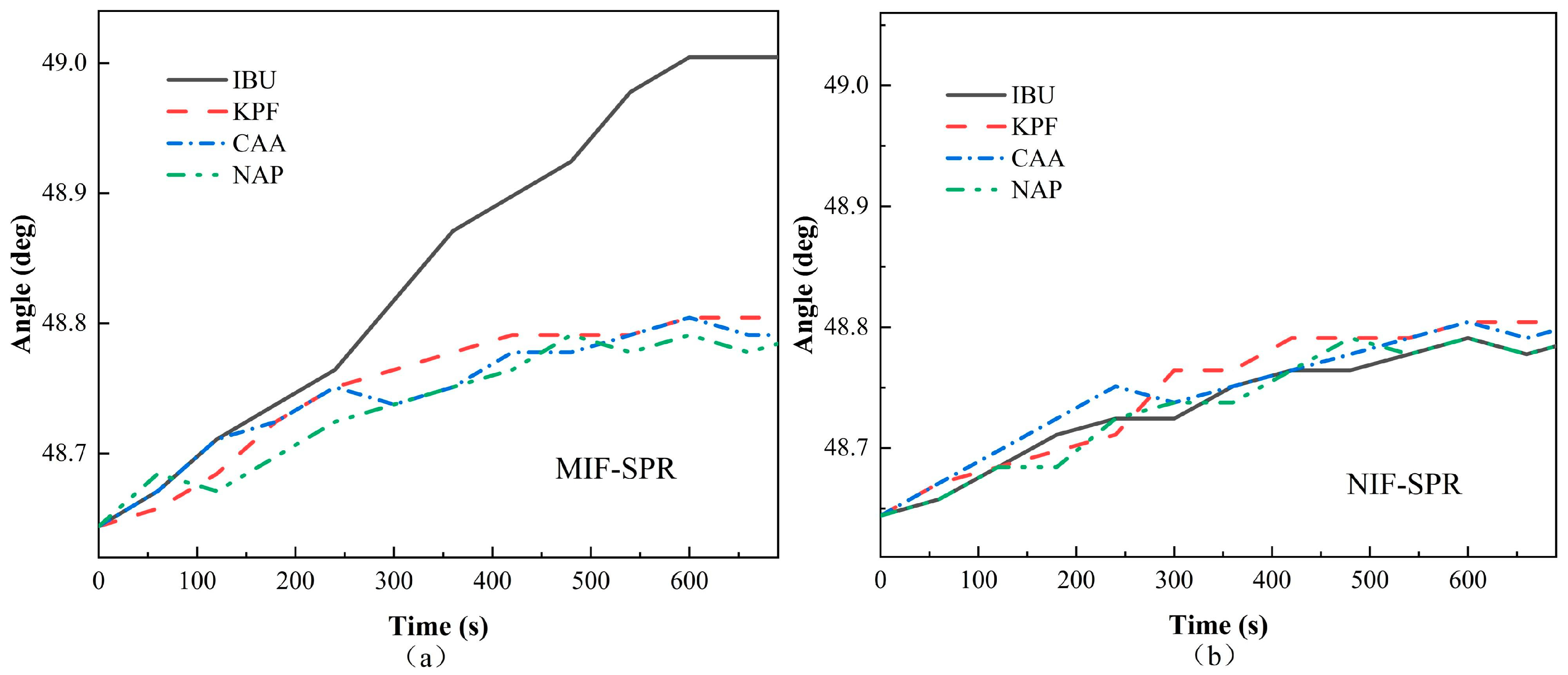
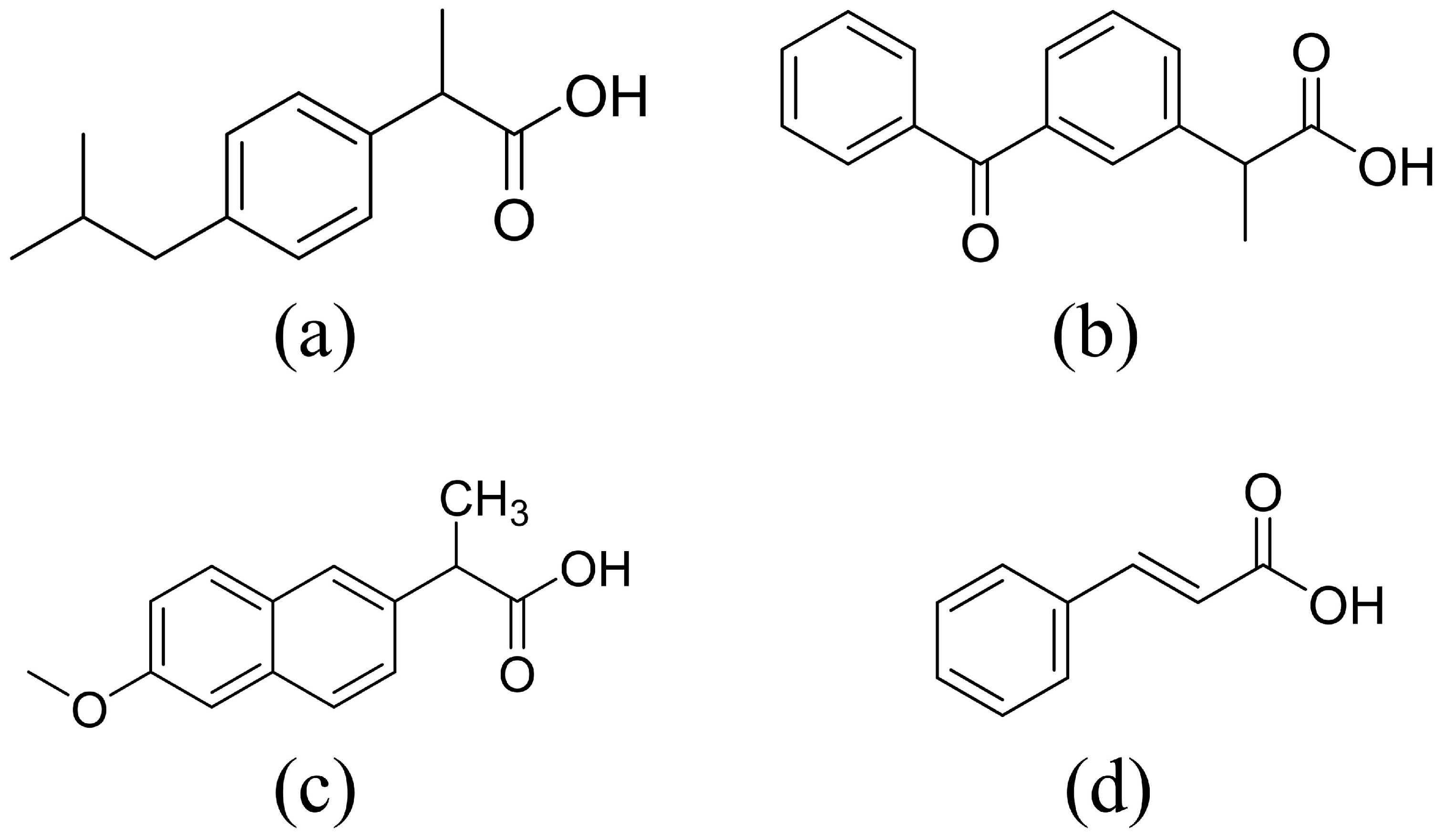
To evaluate the specificity of the MIF-SPR chip for detecting IBU, SPR measurements were conducted and compared using both MIF-SPR and NIF-SPR chips, testing solutions of IBU and its structural analogs KPF, NAP, and CAA. The chemical structural formulas of these drugs are shown in Figure 8. All drug solutions were prepared at a concentration of 10−4 mol/L using a mixture of acetonitrile and deionized water (2:8, v/v) as the solvent. The corresponding adsorption kinetics results for the MIF-SPR and NIF-SPR chips are shown in Figure 9.
In Figure 9a, a significant shift in the SPR angle for IBU adsorption on the MIF-SPR chip is observed after 250 s, with the change being substantially larger than those for the other drugs. This is attributed to the presence of IBU-specific cavities on the MIF-SPR chip, leading to selective adsorption of IBU molecules. However, since the cavities of IBU molecules on the MIF-SPR chip can only allow IBU molecules to enter but not other molecules, the MIF-SPR chip exhibits only non-specific adsorption for other drugs. At 660 s, the SPR angle shift for IBU ( Δ θ IBU) reached 0.36°, which is approximately 2.25 times greater than those for the other drugs ( Δ θ NAP = 0.147°, Δ θ KPF = 0.16°, Δ θ CAA = 0.147°).
In contrast, Figure 9b shows that the NIF-SPR chip, which lacks IBU-specific cavities, exhibits no significant time-dependent change in the SPR angle for any of the drugs tested. At 660 s, the corresponding SPR angle shifts for IBU, NAP, KPF, and CAA were 0.147°, 0.147°, 0.160°, and 0.160°, respectively, indicating no specific adsorption of IBU by the NIF-SPR chip.
These results demonstrate that the SPR chip modified with the MIF exhibits clear specificity for the detection of IBU molecules.
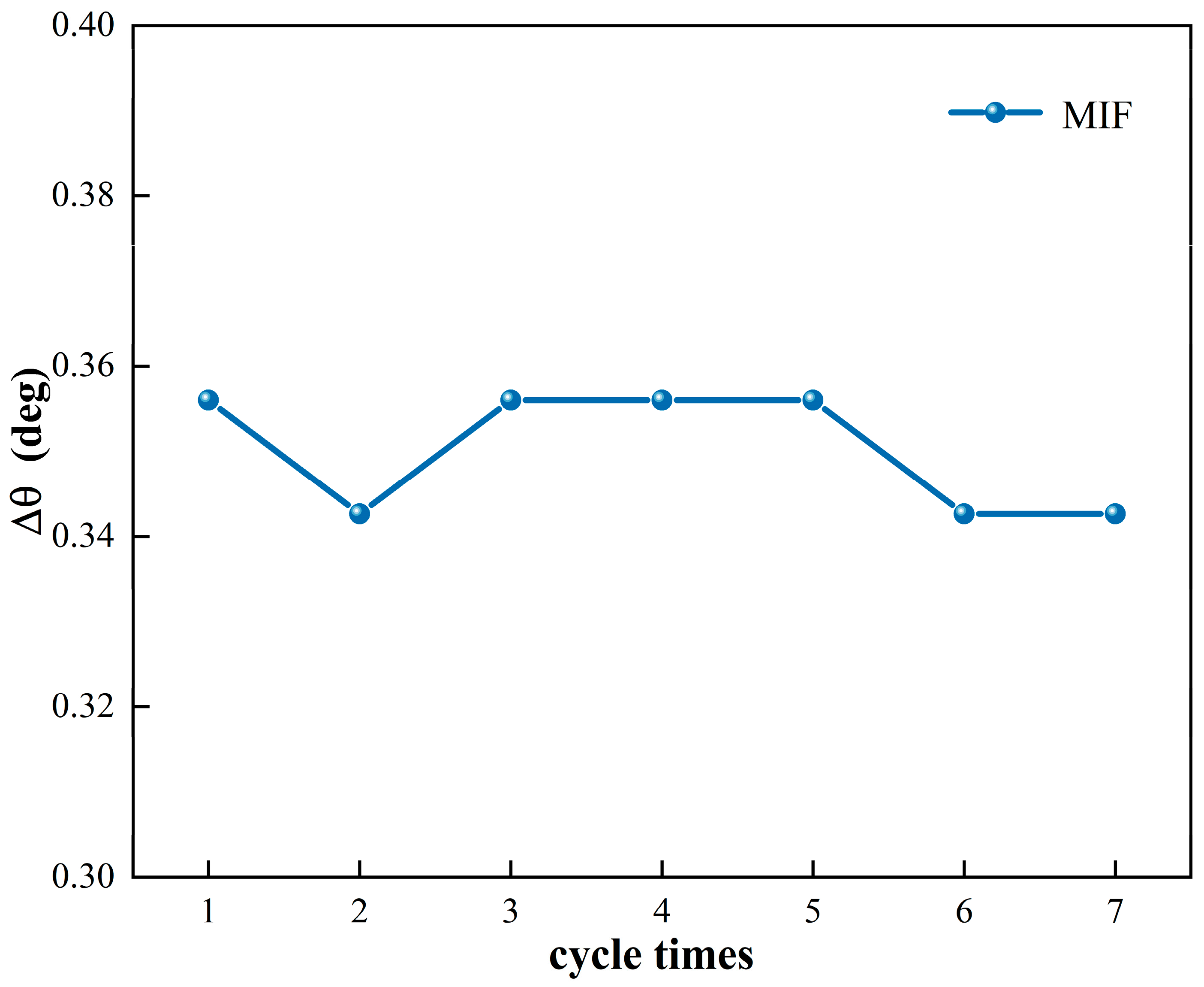
To further investigate the detection repeatability of the MIF-SPR chip, an adsorption–desorption–readsorption cycle was repeated seven times using an IBU solution at a concentration of 10−4 mol/L. After each adsorption step, an SPR measurement was performed, and the change in the SPR angle ( Δ θ ) before and after adsorption was calculated. The results are shown in Figure 10. A smaller variation in Δ θ indicates less damage to the IBU-imprinted cavities during the elution process and, consequently, better detection repeatability of the chip. Across the seven adsorption–desorption cycles, the maximum variation in Δ θ was 0.013°, with a relative standard deviation of 2%. The SPR angle of the MIF-SPR chip after reaching adsorption equilibrium with the same concentration of IBU solution showed no significant change. Even after multiple elution and adsorption cycles, the molecularly imprinted film still exhibited good adsorption performance. These results demonstrate that the MIF-SPR chip possesses excellent detection repeatability and can be reused for multiple cycles.

5. Conclusions

In this study, an MIF-SPR sensor chip was fabricated by modifying an SPR chip using the molecular imprinting technique, and it was employed for the detection of ibuprofen (IBU) in solution via SPR technology. The results show that this method achieves a detection limit of 10−11 mol/L for IBU in solution. Within the concentration range of 10−11 to 10−4 mol/L, the SPR angle exhibits a good linear relationship with the negative logarithm of the IBU concentration. Furthermore, comparative tests with various structural analogs and potential interferents demonstrated that, due to the presence of IBU-specific molecular cavities, the MIF-SPR chip possesses remarkable detection specificity for IBU molecules. Therefore, our method enables trace-level detection of the drug ibuprofen.

Author Contributions

Conceptualization, S.H., S.J. and Z.X.; Methodology, S.H., S.J. and F.Z.; Software, S.H. and S.J.; Validation, S.H. and Z.Y.; Formal analysis, S.H.; Investigation, S.H. and Z.Y.; Resources, Z.Y.; Data curation, S.H.; Writing—original draft, S.H.; Writing—review & editing, Z.Y.; Visualization, S.H.; Supervision, Z.Y.; Project administration, Z.Y.; Funding acquisition, Z.Y. All authors have read and agreed to the published version of the manuscript.

Funding

This research received no external funding.

Institutional Review Board Statement

Not applicable.

Informed Consent Statement

Not applicable.

Data Availability Statement

The raw data supporting the conclusions of this article will be made available by the authors on request.

Conflicts of Interest

The authors declare no conflict of interest.

References

  1. Jia, Y.; Khanal, S.K.; Yin, L.; Sun, L.; Lu, H. Influence of Ibuprofen and Its Biotransformation Products on Different Biological Sludge Systems and Ecosystem. Environ. Int. 2021, 146, 106265. [Google Scholar] [CrossRef]
  2. Wu, J.; Liu, Z.; Ma, Q.; Dai, L.; Dang, Z. Occurrence, Removal and Risk Evaluation of Ibuprofen and Acetaminophen in Municipal Wastewater Treatment Plants: A Critical Review. Sci. Total Environ. 2023, 891, 164600. [Google Scholar] [CrossRef]
  3. Huang, W.-T.; Wang, J.-H.; Ding, D.-C. Ibuprofen Use and Male Infertility: Insights from a Nationwide Retrospective Cohort Study. Eur. J. Obstet. Gynecol. Reprod. Biol. 2025, 307, 128–133. [Google Scholar] [CrossRef]
  4. Ellepola, N.; Ogas, T.; Turner, D.N.; Gurung, R.; Maldonado-Torres, S.; Tello-Aburto, R.; Patidar, P.L.; Rogelj, S.; Piyasena, M.E.; Rubasinghege, G. A Toxicological Study on Photo-Degradation Products of Environmental Ibuprofen: Ecological and Human Health Implications. Ecotoxicol. Environ. Saf. 2020, 188, 109892. [Google Scholar] [CrossRef]
  5. Aldewachi, H.; Omar, T.A. Development of HPLC Method for Simultaneous Determination of Ibuprofen and Chlorpheniramine Maleate. Sci. Pharm. 2022, 90, 53. [Google Scholar] [CrossRef]
  6. He, X.-Q.; Cui, Y.-Y.; Lin, X.-H.; Yang, C.-X. Fabrication of Polyethyleneimine Modified Magnetic Microporous Organic Network Nanosphere for Efficient Enrichment of Non-Steroidal Anti-Inflammatory Drugs from Wastewater Samples Prior to HPLC-UV Analysis. Talanta 2021, 233, 122471. [Google Scholar] [CrossRef] [PubMed]
  7. Alatawi, H.; Hogan, A.; Albalawi, I.; O’Sullivan-Carroll, E.; Alsefri, S.; Wang, Y.; Moore, E. Rapid Determination of NSAIDs by Capillary and Microchip Electrophoresis with Capacitively Coupled Contactless Conductivity Detection in Wastewater. Electrophoresis 2022, 43, 1944–1952. [Google Scholar] [CrossRef]
  8. Zhang, K.; Zhang, Y.; Lu, S.; Jiang, M.; Xu, J.; Wei, R. Cobalt Oxide-Based Nanocomposites for Colorimetric Detection of Ibuprofen as a Non-Steroidal Anti-Inflammatory Drug in Orthopedic Pain. Alex. Eng. J. 2024, 108, 789–799. [Google Scholar] [CrossRef]
  9. Yang, Z.; Gu, D.; Gao, Y. An Improved Dispersion Law of Thin Metal Film and Application to the Study of Surface Plasmon Resonance Phenomenon. Opt. Commun. 2014, 329, 180–183. [Google Scholar] [CrossRef]
  10. Steglich, P.; Lecci, G.; Mai, A. Surface Plasmon Resonance (SPR) Spectroscopy and Photonic Integrated Circuit (PIC) Biosensors: A Comparative Review. Sensors 2022, 22, 2901. [Google Scholar] [CrossRef] [PubMed]
  11. Yang, Z.; Wang, S.; Han, S.; Wei, L. High-Sensitivity Concentration Detection of Trace Doxycycline in Solution by Molecular Imprinting Based on Surface Plasmon Resonance Technology. J. Opt. Soc. Am. B 2024, 41, 1128. [Google Scholar] [CrossRef]
  12. Luo, Q.; Yu, N.; Shi, C.; Wang, X.; Wu, J. Surface Plasmon Resonance Sensor for Antibiotics Detection Based on Photo-Initiated Polymerization Molecularly Imprinted Array. Talanta 2016, 161, 797–803. [Google Scholar] [CrossRef]
  13. Çakır, O.; Baysal, Z. Pesticide Analysis with Molecularly Imprinted Nanofilms Using Surface Plasmon Resonance Sensor and LC-MS/MS: Comparative Study for Environmental Water Samples. Sens. Actuators B Chem. 2019, 297, 126764. [Google Scholar] [CrossRef]
  14. Birinci, H.S.; Akgönüllü, S.; Yavuz, H.; Arslan, O.; Denizli, A. Design of Molecularly Imprinted Polymer-Based Biomimetic Surface Plasmon Resonance Sensor for Detection of Methamphetamine in Plasma and Urine. Microchem. J. 2025, 213, 113668. [Google Scholar] [CrossRef]
  15. Hong, D.; Wang, C.; Gao, L.; Nie, C. Fundamentals, Synthetic Strategies and Applications of Non-Covalently Imprinted Polymers. Molecules 2024, 29, 3555. [Google Scholar] [CrossRef] [PubMed]
  16. Zhang, L.; Zhu, C.; Chen, C.; Zhu, S.; Zhou, J.; Wang, M.; Shang, P. Determination of Kanamycin Using a Molecularly Imprinted SPR Sensor. Food Chem. 2018, 266, 170–174. [Google Scholar] [CrossRef]
  17. Lai, E.P.; Fafara, A.; VanderNoot, V.A.; Kono, M.; Polsky, B. Surface Plasmon Resonance Sensors Using Molecularly Imprinted Polymers for Sorbent Assay of Theophylline, Caffeine, and Xanthine. Can. J. Chem. 1998, 76, 265–273. [Google Scholar] [CrossRef]
  18. Chen, B.; Cheng, X.; Liu, B. Surface Plasmon Resonance Sensor for Detection of Parathion Methyl in Water. Malays. J. Anal. Sci. 2017, 21, 1373–1379. [Google Scholar] [CrossRef]
  19. Bereli, N.; Çimen, D.; Hüseynli, S.; Denizli, A. Detection of Amoxicillin Residues in Egg Extract with a Molecularly Imprinted Polymer on Gold Microchip Using Surface Plasmon Resonance and Quartz Crystal Microbalance Methods. J. Food Sci. 2020, 85, 4152–4160. [Google Scholar] [CrossRef] [PubMed]
  20. Çakır, O.; Bakhshpour, M.; Göktürk, I.; Yılmaz, F.; Baysal, Z. Sensitive and Selective Detection of Amitrole Based on Molecularly Imprinted Nanosensor. J. Mol. Recognit. 2021, 34, e2929. [Google Scholar] [CrossRef]
  21. Nawaz, T.; Ahmad, M.; Yu, J.; Wang, S.; Wei, T. A Recyclable Tetracycline Imprinted Polymeric SPR Sensor: In Synergy with Itaconic Acid and Methacrylic Acid. New J. Chem. 2021, 45, 3102–3111. [Google Scholar] [CrossRef]
  22. Leong, H.-S.; Guo, J.; Lindquist, R.G.; Liu, Q.H. Surface Plasmon Resonance in Nanostructured Metal Films under the Kretschmann Configuration. J. Appl. Phys. 2009, 106, 124314. [Google Scholar] [CrossRef]
  23. Ekgasit, S.; Thammacharoen, C.; Knoll, W. Surface Plasmon Resonance Spectroscopy Based on Evanescent Field Treatment. Anal. Chem. 2004, 76, 561–568. [Google Scholar] [CrossRef]
  24. Dong, C.; Shi, H.; Han, Y.; Yang, Y.; Wang, R.; Men, J. Molecularly Imprinted Polymers by the Surface Imprinting Technique. Eur. Polym. J. 2021, 145, 110231. [Google Scholar] [CrossRef]
  25. Matsui, J.; Tamaki, K.; Sugimoto, N. Molecular Imprinting in Alcohols: Utility of a Pre-Polymer Based Strategy for Synthesizing Stereoselective Artificial Receptor Polymers in Hydrophilic Media. Anal. Chim. Acta 2002, 466, 11–15. [Google Scholar] [CrossRef]
  26. Xu, S.; Lu, H.; Zheng, X.; Chen, L. Stimuli-Responsive Molecularly Imprinted Polymers: Versatile Functional Materials. J. Mater. Chem. C 2013, 1, 4406. [Google Scholar] [CrossRef]
  27. Sharma, N.K.; Yadav, S.; Sajal, V. Theoretical Analysis of Highly Sensitive Prism Based Surface Plasmon Resonance Sensor with Indium Tin Oxide. Opt. Commun. 2014, 318, 74–78. [Google Scholar] [CrossRef]
  28. Peña-Velasco, G.; Hinojosa-Reyes, L.; Escamilla-Coronado, M.; Turnes-Palomino, G.; Palomino-Cabello, C.; Guzmán-Mar, J.L. Iron Metal-Organic Framework Supported in a Polymeric Membrane for Solid-Phase Extraction of Anti-Inflammatory Drugs. Anal. Chim. Acta 2020, 1136, 157–167. [Google Scholar] [CrossRef] [PubMed]
  29. Roushani, M.; Shahdost-fard, F. Ultra-Sensitive Detection of Ibuprofen (IBP) by Electrochemical Aptasensor Using the Dendrimer-Quantum Dot (Den-QD) Bioconjugate as an Immobilization Platform with Special Features. Mater. Sci. Eng. C 2017, 75, 1091–1096. [Google Scholar] [CrossRef]
Figure 1. Kretschmann coupling configuration of SPR.
Applsci 16 00498 g001
Figure 2. Fabrication process of the molecularly imprinted polymer.
Applsci 16 00498 g002
Figure 3. Schematic diagram of the MIF-SPR chip fabricated via photo-initiated in situ polymerization.
Applsci 16 00498 g003
Figure 4. Schematic diagram of the SPR sensing setup.
Applsci 16 00498 g004
Figure 5. Contact angle measurements on chip surfaces: (a) Ag (77.3°), (b) SAM/Ag (104.7°), (c) MIF/Ag (45.7°), and (d) NIF/Ag (55.4°).
Applsci 16 00498 g005
Figure 6. SEM images of different films: (a) Ag, (b) SAM/Ag, (c) MIF/Ag, and (d) NIF/Ag.
Applsci 16 00498 g006
Figure 7. SPR detection of IBU solutions at different concentrations: (a) SPR curves and (b) variation in the resonance angle with IBU concentration.
Applsci 16 00498 g007
Figure 8. Chemical Structure Formula of the Drug: (a) IBU, (b) KFP, (c) NAP, and (d) CAA.
Applsci 16 00498 g008
Figure 9. Specificity detection of IBU: (a) MIF-SPR and (b) NIF-SPR.
Applsci 16 00498 g009
Figure 10. Repeatability of the MIF-SPR sensor.
Applsci 16 00498 g010
Table 1. Comparison between this method and other IBU detection methods.
Analytical MethodsConcentration RangeDetection LimitReferences
HPLC4.85 × 10−7~1.5 × 10⁻⁶ mol/L8.73 × 10−9 mol/L[28]
electrochemical analysis1 × 10−12 mol/L~ 1.2 × 10⁻⁸ mol/L3.33 × 10−13 mol/L[29]
capillary electrophoresis4.85 × 10−6~9.7 × 10⁻⁵ mol/L2.9 × 10−6 mol/L[7]
colorimetric methods1 × 10−3~1 mol/L1 × 10−4 mol/L[8]
MIF-SPR10−11 ~10−4 mol/L10−11 mol/LThis study
Disclaimer/Publisher’s Note: The statements, opinions and data contained in all publications are solely those of the individual author(s) and contributor(s) and not of MDPI and/or the editor(s). MDPI and/or the editor(s) disclaim responsibility for any injury to people or property resulting from any ideas, methods, instructions or products referred to in the content.