Article

Influence of Segment Width on Tunnel Deformation and Ground Settlement in Shield Tunneling Beneath Residential Areas


1
China Railway 20th Bureau Group Southern Engineering Co., Ltd., Guangzhou 510000, China
2
School of Civil Engineering, Inner Mongolia University of Science and Technology, Baotou 014010, China
*
Author to whom correspondence should be addressed.
Appl. Sci. 2026, 16(1), 47; https://doi.org/10.3390/app16010047 (registering DOI)
Submission received: 19 November 2025 / Revised: 11 December 2025 / Accepted: 15 December 2025 / Published: 19 December 2025

Abstract

To investigate the influence of segmental lining width on ground and tunnel deformation during shield tunneling beneath residential buildings, a numerical analysis model was established using Midas GTS NX based on the engineering context of the Guangzhou Metro Guanggang Xincheng depot tunnel underpassing residential structures. The simulation results were validated through comparison with field monitoring data, and a gray relational analysis was employed to quantitatively assess the sensitivity of various deformation indicators to segment width. The findings indicate that, under the engineering scenario of a shield tunnel crossing beneath residential buildings, the use of 1.2 m-wide segments is more effective in controlling ground settlement and structural deformation of the tunnel compared with 1.5 m-wide segments. The deformation process associated with the 1.2 m segments exhibits a more stable settlement pattern, whereas the 1.5 m segments tend to induce repeated settlement–heave cycles in the surrounding ground, with a potential risk of segmental displacement exceeding warning thresholds. Sensitivity analysis shows that different deformation indicators respond unevenly to changes in segment width. From most to least sensitive, the indicators rank as follows: maximum ground deformation, maximum displacement during the post-excavation stage, and maximum displacement during the excavation stage. The results of this study provide theoretical support and reference for selecting segmental lining width in shield tunnels constructed beneath residential buildings.

1. Introduction

At present, with the rapid increase in urban population in China, subways have gradually become the main means of alleviating urban traffic pressure. In subway tunnel construction, shield tunneling offers advantages such as safety and efficiency [1]. However, due to the complexity of the urban environment, shield tunneling often encounters challenges such as underpassing buildings, roads, and pipelines. This can easily lead to safety issues such as segment damage, misalignment, ground deformation, and settlement during construction. Therefore, studying the impact of shield tunneling beneath buildings on tunnel settlement and ground deformation holds significant engineering importance.
During shield tunnel excavation, ground settlement and tunnel deformation have long been the focus of both engineering practice and academic research. Some scholars have analyzed the influence of tunneling parameters and construction sequences on tunnel deformation and ground settlement. Zhao Xinlong et al. [2], based on the theory of arching effect, found that tunnel deformation during shield construction was significant in both the pre- and post-initial setting stages of grouting. He Kuang [3] compared numerical simulation results with monitoring data and found that adjusting construction sequence and grouting pressure could reduce the influence of overlying buildings on tunnel deformation and ground settlement. Jiang Hao et al. [4] optimized shield tunneling parameters to reduce tunnel deformation and ground settlement during underpassing of structures. Thus, adjusting grouting parameters, tunneling parameters, and construction sequences can mitigate tunnel deformation and ground settlement caused by shield excavation. However, beyond ground settlement and tunnel deformation, it is also critical to study overall tunnel deformation and ground deformation when shield tunnels pass beneath buildings (structures). Han Shengzhang et al. [5], through numerical simulation, analyzed the impact of overlying buildings on tunnel deformation and found that greater face pressure led to more pronounced horizontal deformation in the upper soil layers. Wang Dezhi [6] conducted numerical simulation of tunnel deformation when underpassing buildings, finding that the high-risk zones observed during excavation were consistent with the simulation results, indicating that numerical modeling can predict potential risks. Wei Gang et al. [7] analyzed the influence of overlying foundation pits on tunnel deformation and found that they caused stress release directly above the tunnel, leading to noticeable tunnel heave. In addition, Zhang et al. [8] reported that, for standard 1.2 m-wide segments under staggered assembly, the opening deformation and shear dislocation at the outer and inner chords increase by 1.2 mm and 1.03 mm, respectively, compared with 1.5 m-wide segments, while the radial force, circumferential force, and bending moment decrease by 24.4%, 36.5%, and 41.7%, respectively. Guan [9] found that the bending moment in the segment width direction exhibits a non-uniform distribution, and that the segment width directly affects this distribution pattern. Zhang et al. [10] also noted that joint deformation is fundamentally controlled by the stress state of the bolts and the contact behavior between shield segments, and that an increase in the number of rings assembled tends to intensify segmental connection issues. Liu et al. [11] observed that the stiffness between rings varies spatially; the greater the stiffness difference, the more pronounced the assembly effect, leading to redistribution and transfer of local forces and deformations in the lining. Although these studies have examined various factors influencing ground and tunnel deformation during shield tunneling, systematic research focusing specifically on the influence of segmental width—a key structural parameter—on tunnel deformation and ground settlement in residential building undercrossing scenarios remains limited. As urban metro construction expands into increasingly complex environments, residential districts present particularly stringent deformation control requirements due to their high building density, diverse foundation types, and high sensitivity to ground movement. As the primary load-bearing component of a shield tunnel, the segmental lining width directly affects construction progress, assembly quality, and structural mechanical behavior, thereby exerting significant influence on ground settlement and tunnel deformation.
However, despite its importance, current research on the effects of segmental width on tunnel deformation is still insufficient. Existing studies predominantly focus on the influence of construction parameters or geological conditions, while specialized investigations into reducing tunnel deformation through optimization of segmental width remain scarce. Therefore, this study, based on the shield tunnel beneath densely built residential areas in the Guangzhou Metro Guanggang Xincheng depot project, employs Midas numerical simulation, field monitoring data, and gray relational analysis to examine the deformation characteristics of the ground and tunnel lining associated with two commonly used segment widths.

2. Engineering Overview

2.1. Project Introduction

In the Guangzhou Guanggang New Town Depot project, shield tunneling started from the launch shaft at the cut-and-cover exit line and advanced northwest, passing beneath Meiduiyong, Jiangxia Village (mainly 1–5-story residential houses), and the main teaching building of Wenwei Middle School, before arriving at the cut-and-cover receiving shaft at Xilang Station. The tunnel lining segments have an inner diameter of 5800 mm and an outer diameter of 6400 mm, using precast reinforced concrete segments of grade C50 with impermeability level ≥ S12. Each ring adopts a “3 + 2 + 1” block assembly scheme, consisting of four standard segments, two adjacent segments, and one key segment. The total thrust of the shield machine is less than 1800 t, with two cutterhead configuration schemes. During tunneling through Jiangxia Village (purple curve), the buildings directly above and at risk were demolished, as shown in Figure 1. The red-crossed buildings are those that were demolished, while the main influence during construction came from buildings on the left side of the tunnel (light blue area). The old residential houses on the left had foundations buried at depths of 1–1.5 m, with pile foundations and four-story brick-concrete structures. The shield tunnel section in this area extended from ring 100 to ring 150, as shown in Figure 1.

2.2. Geological Conditions

According to the geological survey data, the site is characterized as a fluvio-marine alluvial plain landform with a shallow groundwater table. During the survey, the initial groundwater depth within the site was measured at 0.10–3.20 m (elevation 3.14–10.29 m). In this stage, the average burial depth of the tunnel was 11.5 m, and the tunnel alignment was entirely within completely weathered clastic rock. The overlying strata mainly consisted of artificial fill, silty clay, and completely weathered clastic rock. The direct shear parameters of the completely weathered clastic rock were cohesion c = 26.0 kPa and friction angle φ = 20.0°, while the consolidated shear parameters were c = 29.0 kPa and φ = 22.0°. The main geological characteristics are shown in Table 1.

3. Numerical Simulation Analysis

3.1. Model Establishment

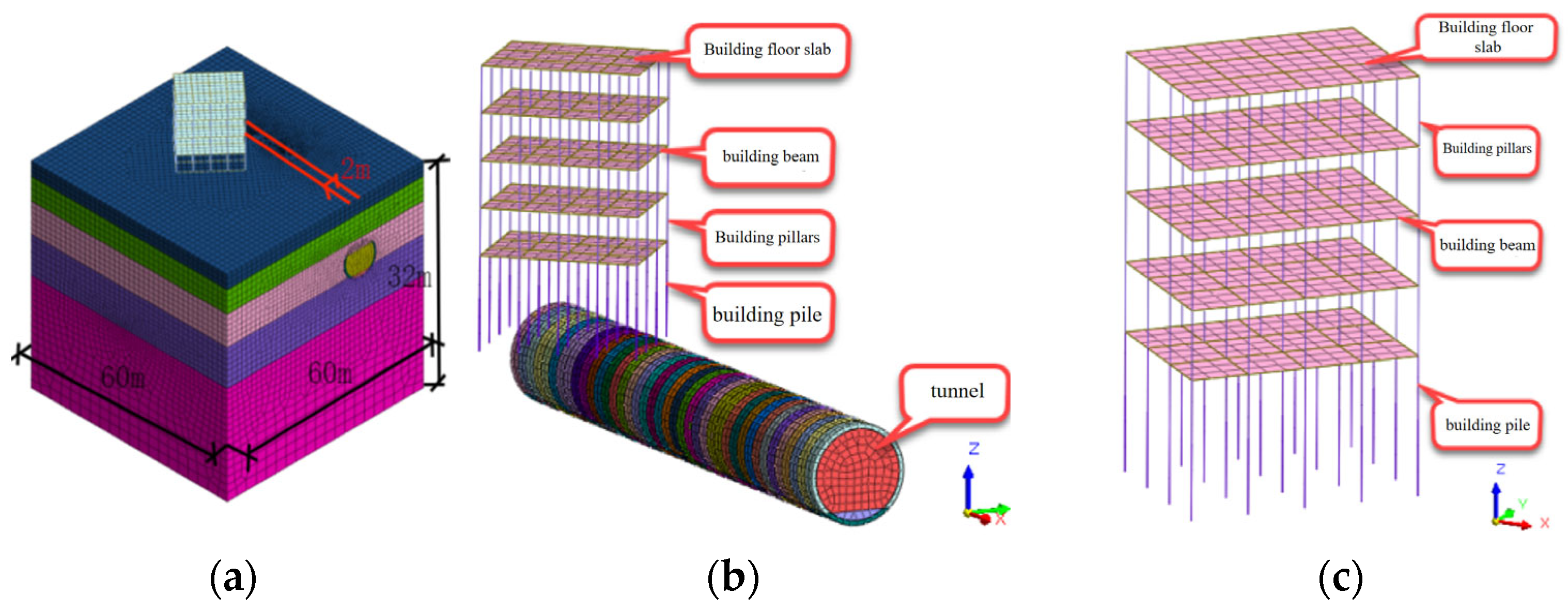
To investigate the influence of different segment widths on ground and tunnel deformation, a numerical simulation of a shield tunnel underpassing residential buildings was conducted using the Midas finite element platform. Ground settlement and tunnel deformation were analyzed for two segment widths—1.2 m and 1.5 m—used as lining support [12]. To ensure consistency between the numerical model and the actual engineering conditions (Rings 100–150), the model dimensions were set to 60 m in both length and width, with a depth of 32 m. The building foundation adopts a column-supported pile foundation composed of 16 piles, each with a length of 5.15 m. The superstructure consists of four stories, each with a story height of 4 m, located on the left side of the tunnel with a horizontal offset of 2 m from the tunnel centerline, as shown in Figure 2a.
The modeling details are as follows: the soil layers and the overlying building were meshed with an element size of 0.8 m, while the excavated zone and its surrounding region were refined to 0.4 m. The Mohr–Coulomb criterion was adopted to describe the failure behavior of the soil. The spatial relationship between the tunnel and the building is presented in Figure 2b. During tunnel excavation, the shield thrust was set to 100 kPa, with segment widths of 1.2 m and 1.5 m. The grouting pressure was assigned as 90 kPa, and the shield machine length was set to 7 m. The excavation step size was defined as equal to the segment width. The building load applied to the ground surface was approximately 61 kPa. The tail void closure volumes for the 1.2 m and 1.5 m segments were 2.19 m3 and 2.74 m3, respectively, as listed in Table 2 and Table 3.

3.2. Analysis of Ground Deformation Results

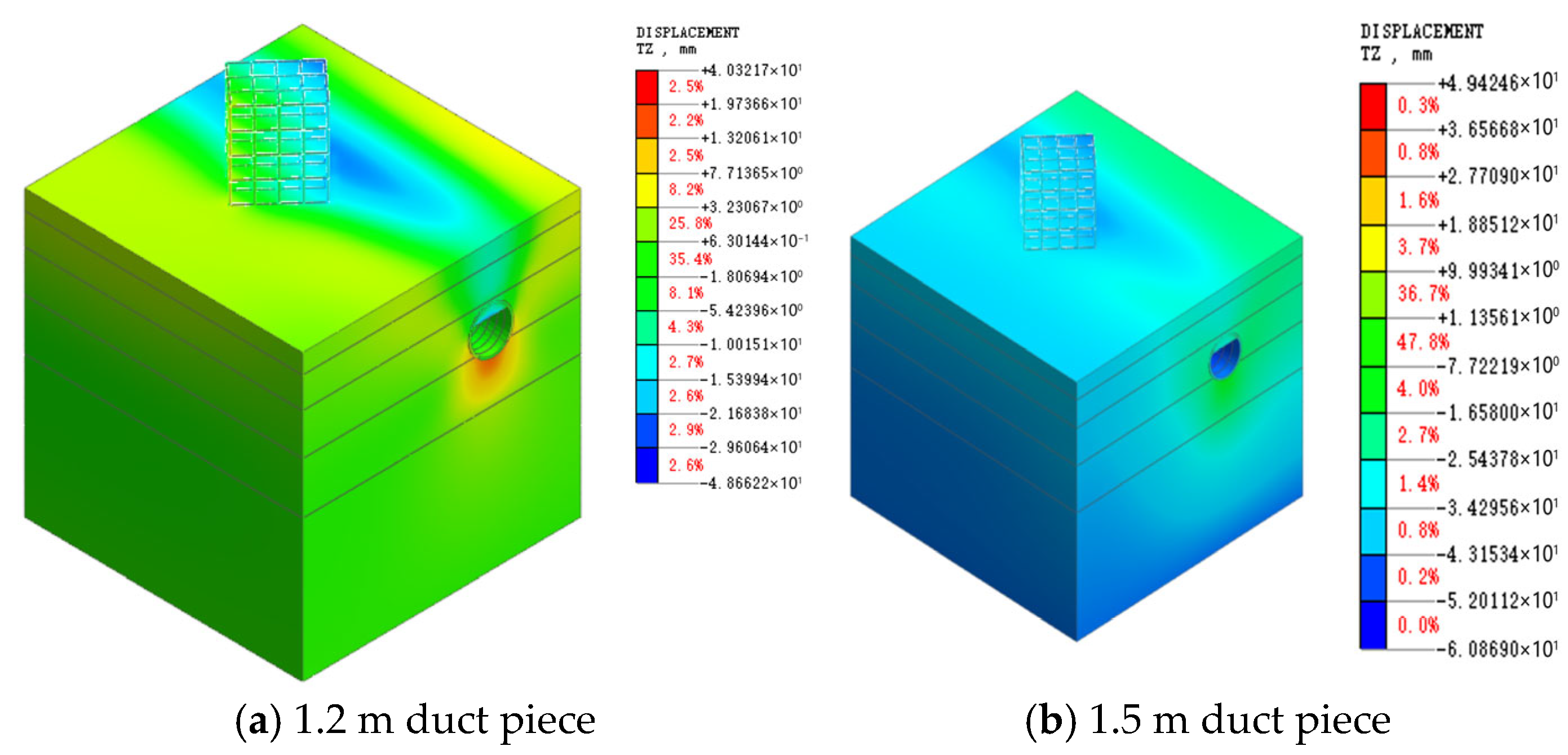
During shield tunneling beneath residential buildings, controlling ground deformation is a key requirement for ensuring both structural safety and construction security. Accordingly, this study compares and analyzes the ground deformation patterns associated with two segment widths—1.2 m and 1.5 m—with the corresponding results presented in Figure 3. The deformation control criteria adopted herein reference the specifications of the Chinese Code for Design of Metro (GB 50157-2013) [13], in conjunction with the high sensitivity of aging residential structures to deformation. Based on engineering practice and specialized assessments for this project, a settlement value of 50 mm was selected as the warning threshold for construction control.
Based on the analysis of Figure 3, during the shield tunneling process beneath residential buildings, the maximum ground settlement—regardless of whether 1.2 m or 1.5 m segments are used—occurs directly above the tunnel crown, while the maximum heave develops at the tunnel invert and within the soil mass on the left side of the overlying structure. Specifically, when 1.2 m segments are adopted, the soil above the tunnel exhibits an overall downward displacement, with a maximum settlement of −48.66 mm; meanwhile, a pronounced heave is observed beneath the tunnel, reaching 40.32 mm. In contrast, the 1.5 m segment configuration results in a smaller maximum settlement of only −6.086 mm, yet produces more significant uplift deformation, with a maximum heave of 49.42 mm, approaching the warning threshold of 50 mm.
Although neither scenario exceeds the prescribed warning limit, the deformation patterns differ fundamentally. This distinction can be explained by the core control mechanisms in shield tunneling—namely, volume loss, face pressure regulation, and synchronous grouting behavior. For the 1.2 m narrow segments, the smaller ring width leads to reduced excavation-induced volume loss per ring, enabling more timely adjustment to face pressure fluctuations and thus maintaining a more stable excavation face. Additionally, the smaller tail void allows synchronous grout to fill the annular gap more rapidly and effectively, constraining ground deformation to relatively uniform and controllable settlement. Conversely, the larger 1.5 m segment width results in a greater excavation span per ring, producing a more concentrated initial unloading zone and a more substantial instantaneous release of volume loss. The increased excavation face area also makes it more challenging to maintain uniform and stable face pressure, rendering the system more susceptible to local imbalance. Furthermore, the enlarged tail void temporarily delays grout filling and support formation, causing rapid stress redistribution in the surrounding ground, which in turn promotes more pronounced uplift-dominated deformation.
Therefore, the essential influence of segment width on ground deformation lies in its impact on the distribution of excavation-induced volume loss, the precision of face pressure control, and the timeliness of synchronous grouting. These coupled mechanisms ultimately govern both the magnitude and the pattern of ground deformation.

3.3. Analysis of the Displacement Result of Shield Tunnel Segment

3.3.1. Analysis of Segment Displacement During Shield Tunnel Excavation

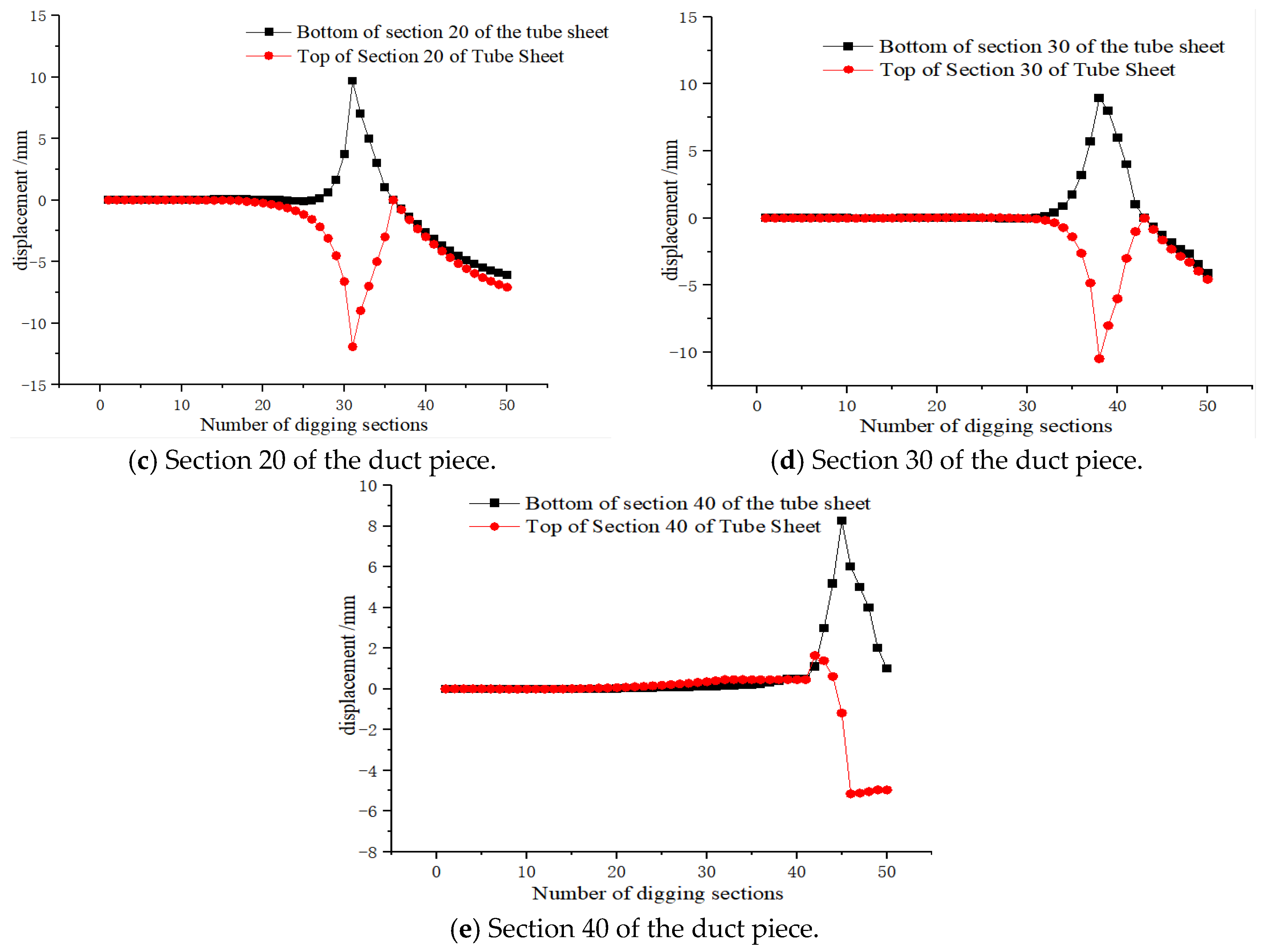
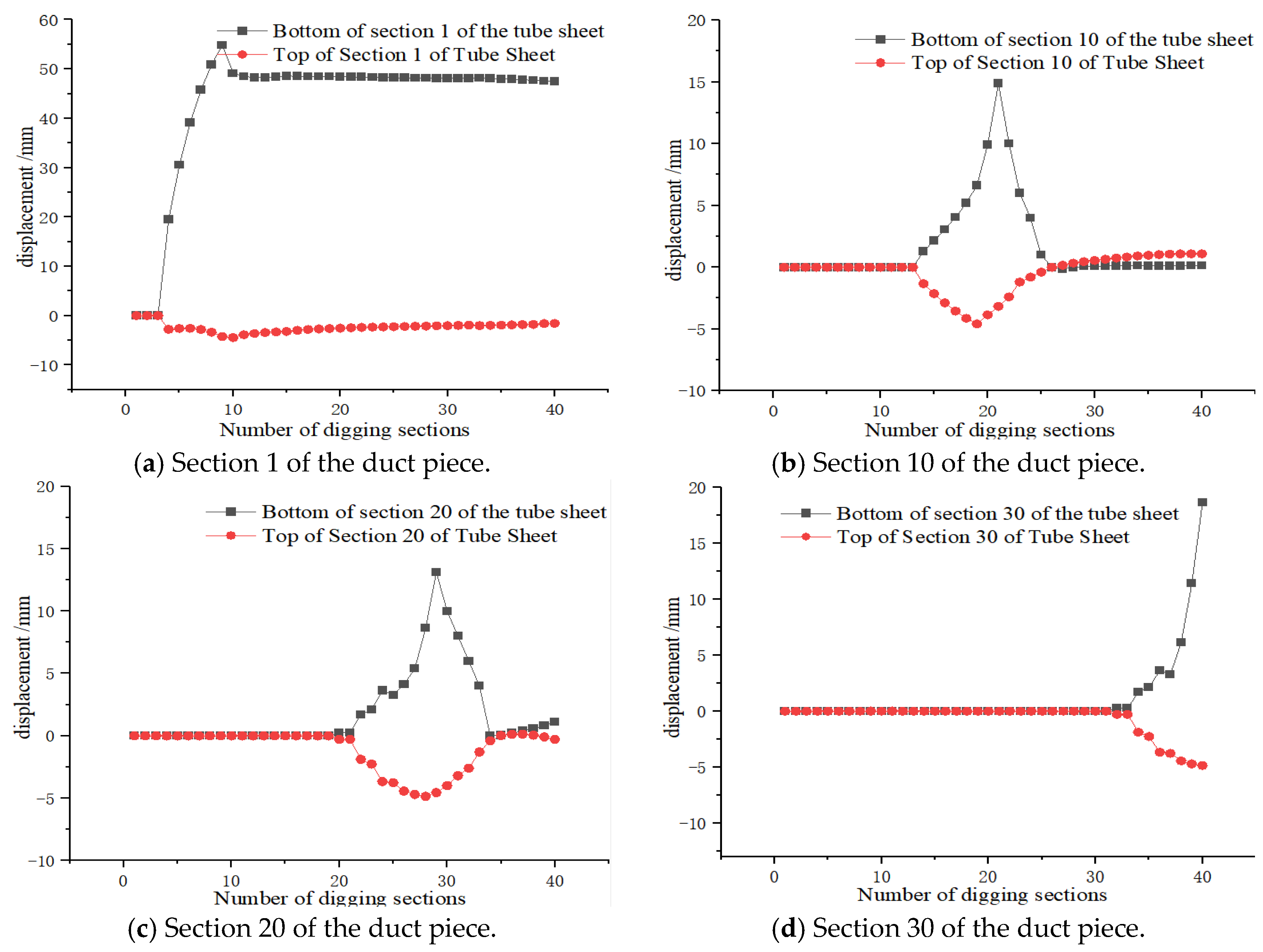
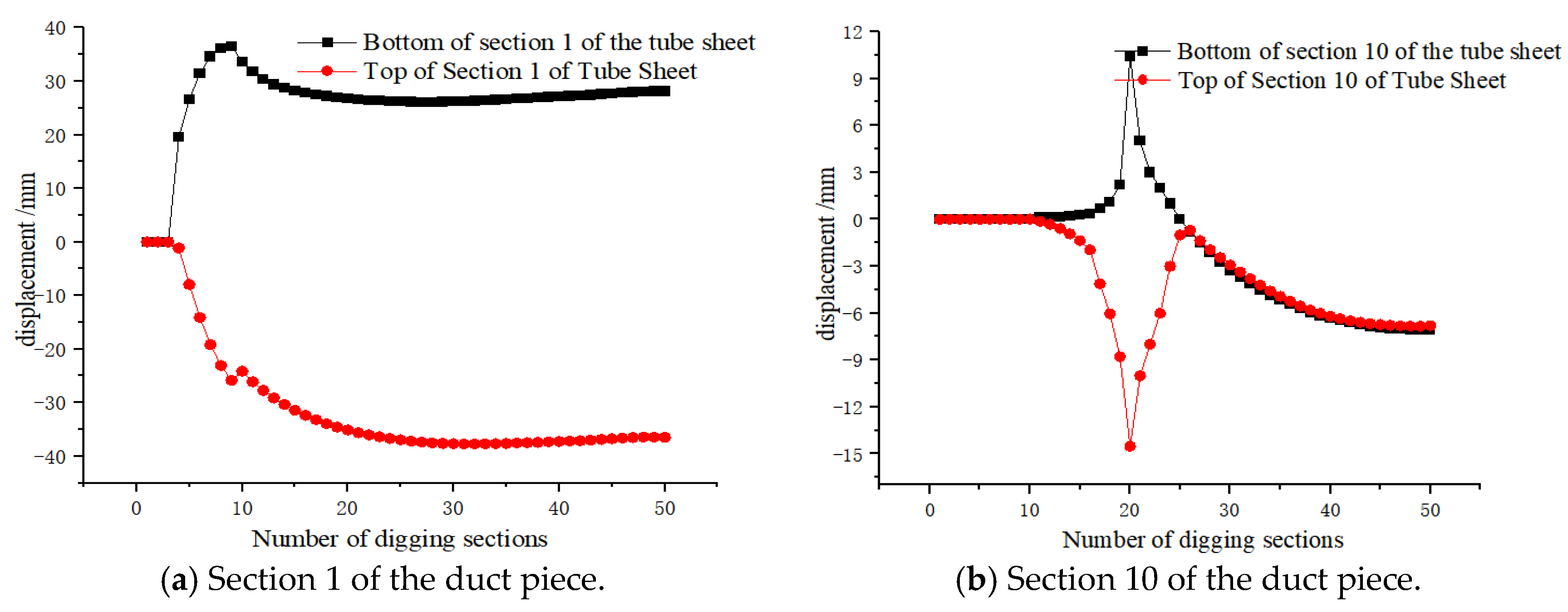
The segment is the main structural component of a shield tunnel. Excessive displacement of segments during excavation directly affects tunnel structural stability and may induce severe consequences such as ground settlement and collapse of overlying buildings. To investigate the displacement patterns of shield tunnel segments with two commonly used segment widths when passing beneath residential buildings, it is known from the literature [14,15,16] that the largest segment displacements occur at the tunnel crown and invert. Therefore, the tunnel crown and invert were selected as monitoring positions for the two segment widths. Due to differences in segment width, the number of simulated tunnel segments was not the same; for 1.2 m segments, rings 1, 10, 20, 30, and 40 were selected as monitoring points, while for 1.5 m segments, rings 1, 10, 20, and 30 were selected. The displacement patterns of tunnel segments are shown in Figure 4 and Figure 5.
According to the displacement evolution patterns illustrated in Figure 4, as the shield tunnel advances, all rings constructed with 1.2 m-wide segments exhibit a deformation mode characterized by upward displacement at the invert and downward displacement at the crown. Prior to the arrival of the shield machine at the monitored ring, the segments experience negligible movement. Once excavation reaches the monitored ring and the segment leaves the shield tail, deformation begins to develop under the influence of the surrounding earth pressure. When the shield advances to approximately ten rings beyond the monitored location, the displacement of each ring reaches its peak. The maximum crown displacements are −37.681 mm, −14.52 mm, −11.92 mm, −10.47 mm, and −5.61 mm for Rings 1 to 5, respectively, while the corresponding inverted displacements are 36.65 mm, 10.42 mm, 9.67 mm, 8.94 mm, and 8.62 mm. It is evident that Ring 1 undergoes the most pronounced deformation, with displacement progressively decreasing in the subsequent rings. This trend primarily results from the highly concentrated construction-induced disturbances at the initial excavation stage. On one hand, adjustments to the shield’s excavation posture and the release of initial in situ stresses in the ground contribute to increased deformation near the excavation face. On the other hand, as tunneling progresses, the grout behind the installed segments gradually hardens, enhancing the overall stiffness of the support system. Consequently, the redistribution of surrounding ground stresses becomes more stable, leading to a reduction in the influence of dynamic construction effects on the subsequent rings and, therefore, decreased displacement magnitudes.
As shown in Figure 5, with tunneling advance, the 1.5 m segments also exhibit upward displacement at the tunnel invert and downward displacement at the tunnel crown, and segment displacements occur after excavation passes the monitoring rings. After excavation passes the 10th ring, displacements reach maximum values, which is consistent with the displacement pattern of the 1.2 m segments, and will not be further elaborated here. However, the maximum crown displacements of the 1.5 m segment rings were −4.23 mm, −4.58 mm, −4.85 mm, and −4.67 mm, which were reduced by 88.77%, 68.45%, 59.31%, and 55.39% compared with those of the corresponding 1.2 m segment rings. The maximum invert displacements were 54.84 mm, 14.87 mm, 13.12 mm, and 18.62 mm, which were increased by 33.16%, 29.92%, 26.29%, and 51.878%, respectively, compared with those of the corresponding 1.2 m segment rings. It can thus be seen that the displacement of the 1.5 m segments was dominated by upward movement, while that of the 1.2 m segments was dominated by downward movement. However, the maximum displacement of the 1.5 m segments exceeded the warning threshold (50 mm). Therefore, during shield tunneling beneath buildings, segment width directly affects segment displacement, and 1.2 m segments exhibit better displacement control than 1.5 m segments.

3.3.2. Analysis of Overall Displacement Cloud Map of Shield Tunnel

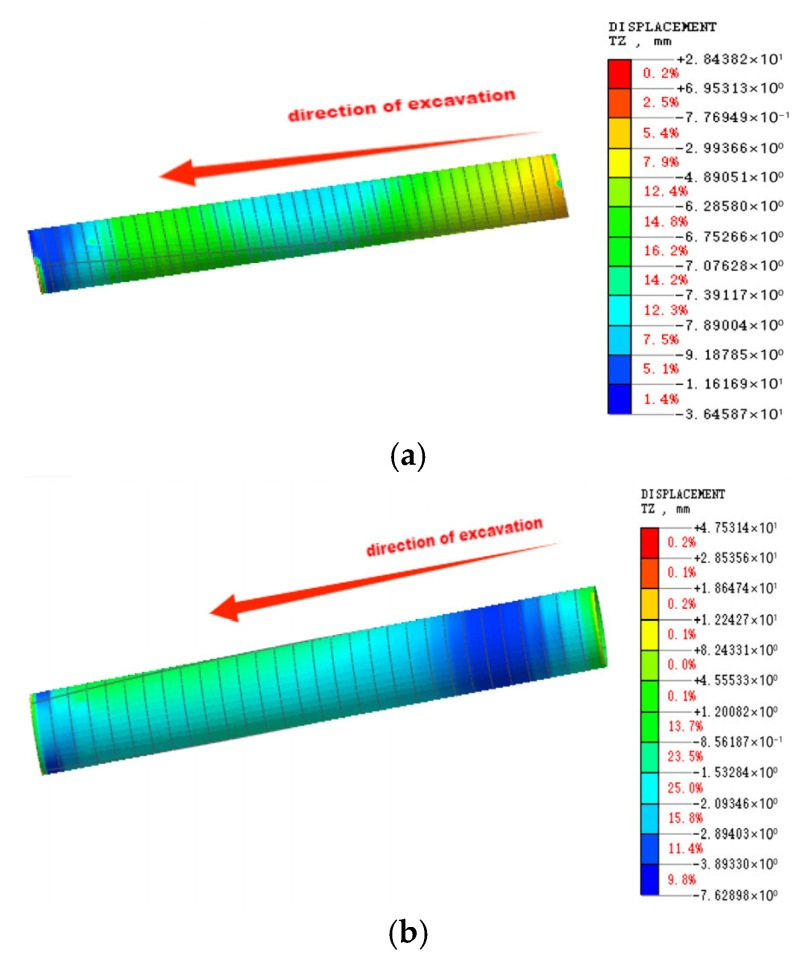
The final displacement of shield segments directly affects the structural stability, construction quality, and traffic operation safety [17,18]. Therefore, to comprehensively analyze the influence of two commonly used segment widths (1.2 m and 1.5 m) on the final displacement of the segments after excavation, the final displacement results of the segments were extracted, as shown in Figure 6.
From Figure 6a, it can be seen that the final displacement of the 1.2 m segments is mainly settlement, with displacement values primarily concentrated between −9.41 mm and −4.01 mm, accounting for 90%. The maximum settlement value is −36.45 mm, which does not exceed the engineering warning value (50 mm). The maximum uplift value of the 1.2 m segments is 28.43 mm, with uplift values mainly concentrated between 6.95 mm and 28.43 mm, accounting for 0.2%. The maximum uplift and settlement both occur at the first ring segment of the tunnel.
From Figure 6b, it can be seen that the final displacement of the 1.5 m segment tunnel changes from uplift to settlement and then back to uplift as the excavation progresses. The displacement values are mainly concentrated between −2.83 mm and 1.76 mm, accounting for 84.9%. The maximum settlement value is −7.62 mm, while the maximum uplift value reaches 47.73 mm, with uplift values mainly concentrated between 1.21 mm and 47.73 mm, accounting for 14.4%. The maximum settlement and uplift occur in the first and second ring segments.
From the above analysis, although the overall displacement of the 1.5 m segment tunnel is slightly smaller, the maximum local segment uplift during excavation exceeds the warning value (50 mm), and the final tunnel displacement shows a complex pattern of uplift at both ends and settlement in the middle. In contrast, the displacement distribution of the 1.2 m segment tunnel is entirely settlement, with both excavation and final displacement not exceeding the warning value. Therefore, in actual projects, considering that 1.2 m segments are more conducive to timely correction of shield tunnel displacement through shield machine attitude adjustment and frequent monitoring for settlement control [19,20], 1.2 m wide segments are adopted for support in this project.

4. Analysis of Measured Engineering Results

4.1. Ground Settlement Analysis

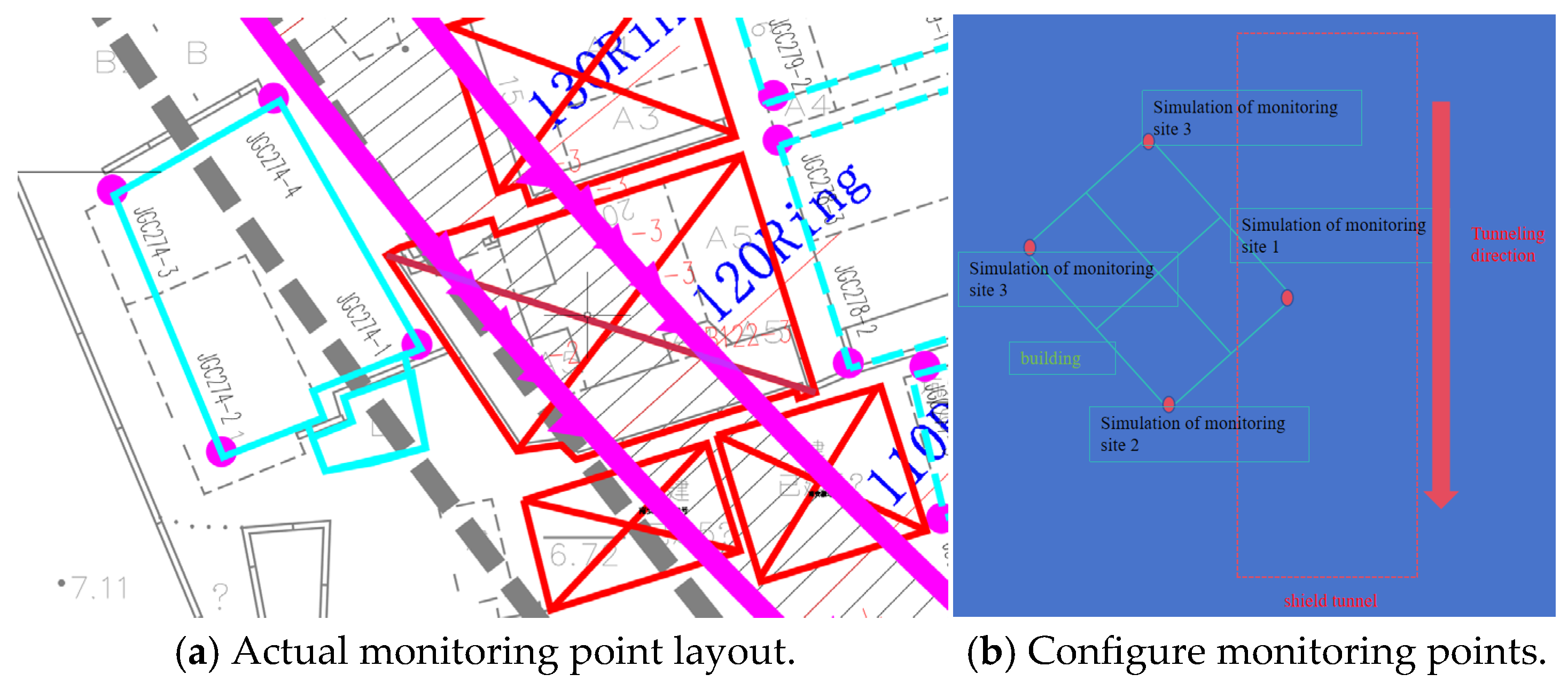
In actual engineering, to ensure the safety of the tunnel and the overlying buildings, during the construction of the shield tunnel under old residential buildings, the buildings directly above and to the right of the tunnel were demolished, leaving only the building above the left side of the tunnel. This condition is consistent with the numerical simulation. Four monitoring points were arranged at the four corners of the building on the left side of the tunnel, numbered JGC274-1, JGC274-2, JGC274-3, and JGC274-4, to conduct 24 h continuous ground settlement monitoring. The actual monitoring point layout is shown in Figure 7a.
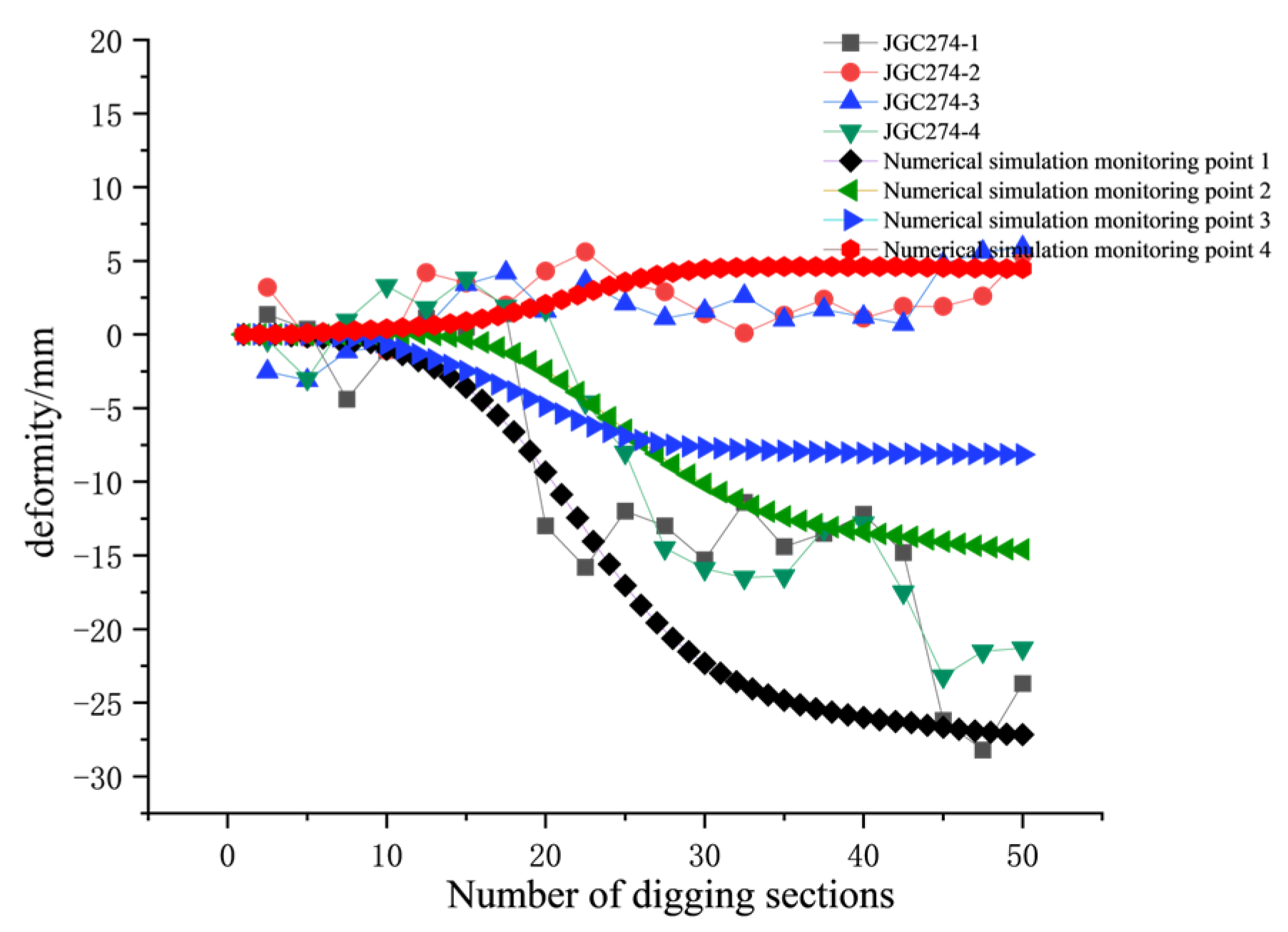
For comparison and data comprehensiveness, monitoring was also conducted on the building during numerical simulation, with the monitoring point layout shown in Figure 7b. The simulation monitoring points correspond one-to-one with the engineering monitoring points, e.g., numerical monitoring point 1 corresponds to engineering monitoring point JGC274-1, and so on. Finally, the ground deformation at the four corners of the building (JGC274-1 to JGC274-4) during shield tunnel excavation, together with the deformation at the simulation monitoring points, was plotted against ring number to obtain the settlement change relationship, as shown in Figure 8.
From Figure 8, it can be seen that deformation in numerical simulation varies continuously, while the field monitoring data fluctuates. This is because the simulation conditions are more ideal, whereas in the actual excavation, variations in soil parameters, shield machine attitude, and excavation parameters cause greater fluctuations in the measured data. However, the overall trends of the deformation curves are consistent. After the shield tunnel advanced to ring 10, the measured data at JGC274-1, JGC274-2, JGC274-3, and JGC274-4 increased sharply. Among them, ground monitoring points JGC274-2 and JGC274-3 showed uplift deformation, which increased continuously with tunnel excavation, reaching a maximum value of 5.1 mm at ring 49. Ground monitoring points JGC274-1 and JGC274-4 showed settlement deformation, which also increased with excavation, reaching a maximum value of −28.2 mm at ring 50.
From the numerical simulation results, it can be seen that monitoring point 4 experienced mainly uplift deformation with excavation progress. The uplift deformation first increased and then stabilized, with a maximum value of 4.9 mm. The maximum uplift values from simulation and field monitoring differed by 3.92%. Monitoring points 1–3 mainly showed settlement deformation, which increased with excavation and then stabilized, with a maximum settlement of −27.23 mm. The maximum settlement values from field and simulation differed by 3.43%.
Therefore, it can be concluded that measured monitoring points JGC274-2 and JGC274-3, as well as simulation monitoring point 4, mainly exhibited uplift deformation, whereas measured monitoring points JGC274-1 and JGC274-4, as well as simulation monitoring points 1–3, mainly exhibited settlement deformation. This is because during shield tunnel excavation, the soil directly above the tunnel mainly undergoes settlement, causing nearby buildings to tilt slightly toward the tunnel [14,15,16]. Consequently, ground monitoring at the far side of the building tends to exhibit uplift, while monitoring closer to the tunnel mainly exhibits settlement.

4.2. Analysis of Final Segment Displacement

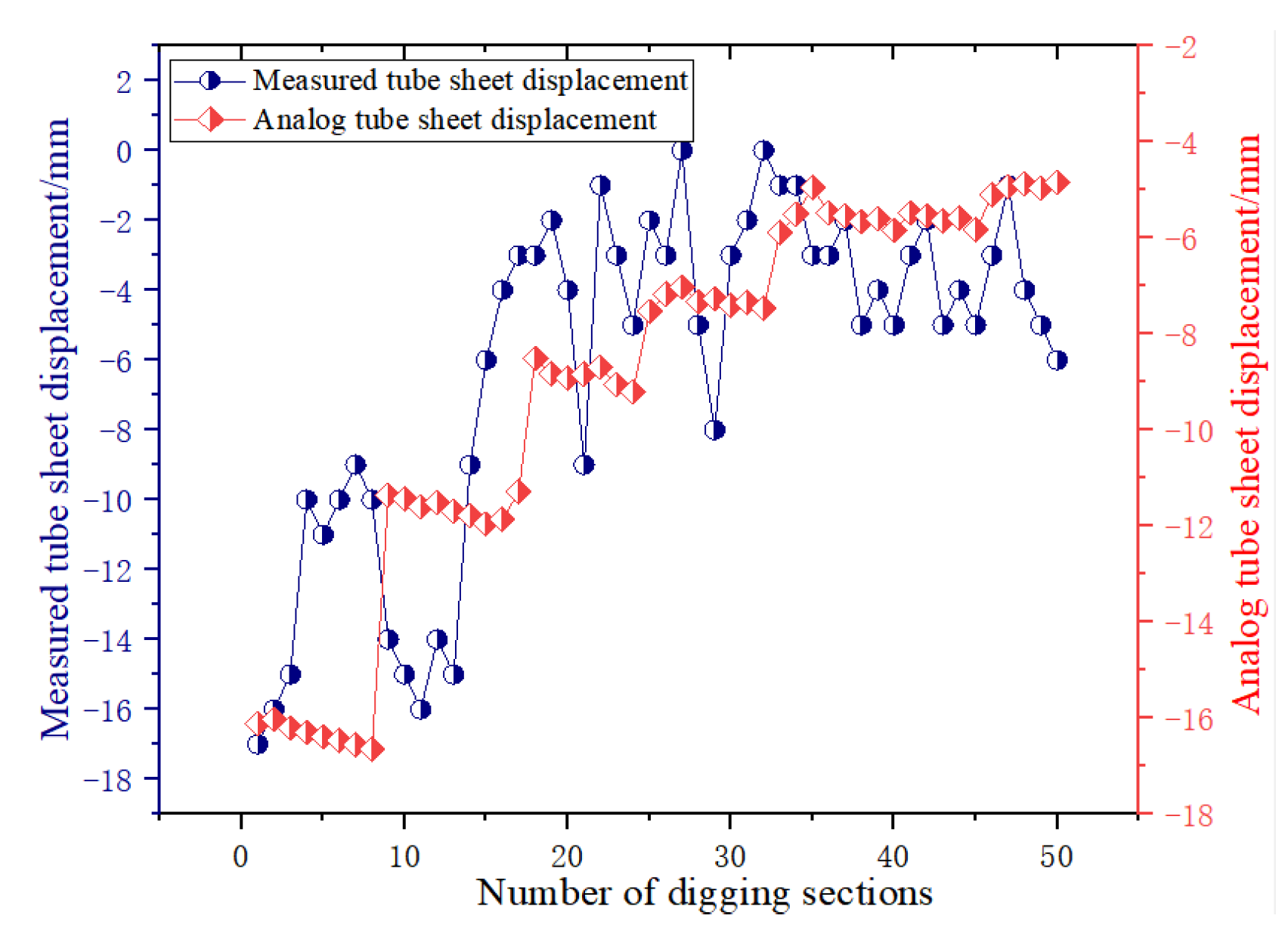
The final displacement of tunnel segments directly affects construction quality and traffic operation safety [21,22]. Therefore, monitoring the displacement of shield tunnel segments is of great importance. The measured vertical displacement data of the final segments in monitoring section rings 100–150 of the shield tunnel were compared with the simulated displacement–ring number data of 1.2 m wide segments. The comparison was based on the difference between the displacement of the crown and invert of the shield tunnel for both measured and simulated data, as shown in Figure 9.
As seen in Figure 9, the development trends of the final segment displacement curves from numerical simulation and field monitoring are basically consistent. During field monitoring, the maximum measured final displacement of the segment occurred at the first ring excavation (−16.12 mm). Subsequently, the absolute value of displacement exhibited oscillating variations—decreasing, increasing, decreasing again, and then increasing again. Approximately every seven rings, the displacement of the shield tunnel segments decreased sharply and then rose again, repeatedly with excavation progress. At ring 33, the measured displacement reached a minimum of 0 mm, after which the measured displacements fluctuated around −4 mm.
In comparison, the absolute value of simulated segment displacement first increased and then decreased significantly, with sharp decreases approximately every ten rings, followed by slow increases. At ring 35, the minimum displacement reached −4 mm, after which the values fluctuated around −5 mm. The maximum displacements in simulation and field monitoring were −17 mm and −16.12 mm, respectively, with a difference of 5.17%. The results of numerical simulation and field measurements are therefore basically consistent.
Further analysis of Figure 9 shows that both simulated and measured final segment displacements were dominated by settlement. The measured final displacements ranged from −17 mm to 0 mm, while the simulated displacements ranged from −16.12 mm to −2 mm. The measured data showed greater fluctuation compared to the simulation, mainly because during actual shield tunneling, factors such as shield machine attitude, grouting pressure, soil variability, and operational conditions [23,24,25,26] influence segment displacement, whereas numerical simulations are based on idealized conditions.

5. Discuss

5.1. The Influence of Pipe Segment Width on Formation Deformation

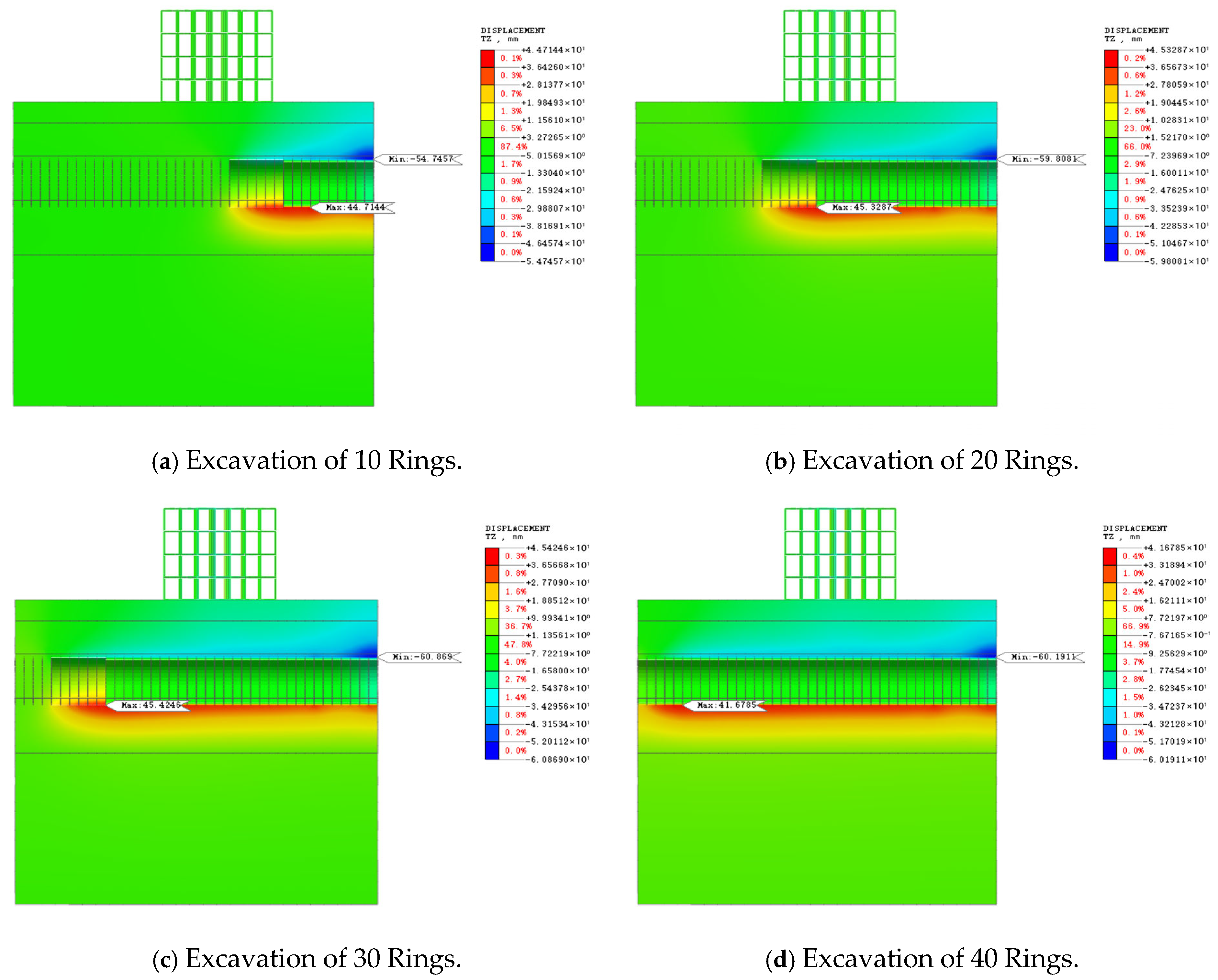
The preceding analysis examined the effects of 1.2 m and 1.5 m segment widths on ground deformation and final segment displacement. The numerical results demonstrated good agreement with field monitoring data, confirming the applicability of the 1.2 m segment configuration for the present project. To further investigate the influence of segment width on ground deformation, an additional tunnel model employing 1.0 m-wide segments was developed. The corresponding results are presented in Figure 10.
Analysis of Figure 10 shows that the ground deformation above the tunnel is dominated by settlement, whereas the soil beneath the tunnel primarily exhibits uplift. The maximum settlement values are −54.74 mm (10 rings), −59.80 mm (20 rings), −60.86 mm (30 rings), and −60.19 mm (40 rings). The corresponding maximum uplift values are 44.71 mm, 45.32 mm, 45.42 mm, and 41.67 mm. These results indicate that, with increasing excavation rings, the maximum settlement for the 1.0 m-wide segments increases initially and then stabilizes, reaching its peak of −60.86 mm at 30 rings before slightly decreasing. Similarly, the maximum uplift reaches its peak of 45.42 mm at 30 rings and then declines.
Compared with the 1.2 m-wide segments, the 1.0 m segments produce significantly larger maximum settlement and uplift values at all excavation stages, both exceeding the warning threshold. The maximum settlement for the 1.0 m segments (−60.86 mm) is 25.07% greater than that of the 1.2 m segments (−48.66 mm), and the maximum uplift (45.42 mm) is 12.63% larger than the maximum invert displacement of the 1.2 m segments (40.32 mm). This demonstrates that reducing the segment width further intensifies ground deformation. The main reason is that narrower segments possess lower stiffness per ring, rendering them more susceptible to deformation under the same earth pressure, thereby enlarging both the extent and intensity of ground disturbance. Moreover, reducing the segment width increases the number of rings, thereby increasing the number of joints—structural weak points where stiffness is comparatively low. This decreases the overall stiffness of the supporting system, weakening the ability to restrain ground displacement and consequently amplifying both settlement and uplift. These findings indicate that narrower segments cause ground deformation to reach larger magnitudes earlier in the excavation process, imposing stricter requirements on ground stability control during construction.

5.2. Gray Relational Analysis of Influencing Factors Related to Segment Width

As indicated in the preceding analysis, the use of 1.5 m-wide segments tends to cause rapid imbalance within the earth pressure balance system during excavation, resulting in irregular settlement or uplift of the tunnel. In contrast, the 1.2 m and 1.0 m segments involve a greater number of rings over the same excavation distance and slower construction progress, leading to deformation patterns dominated by settlement. This occurs because segment displacement is directly associated with pore water pressure, grout initial setting time, grouting pressure, and segment width. Consequently, changes in segment width have a direct impact on the displacement behavior of shield tunnels underpassing buildings. To further quantify the influence of different segment widths on ground settlement, tunnel segment displacement, and related deformation indicators, gray relational analysis was applied to the numerical simulation results.
Gray relational analysis quantitatively characterizes the degree of correlation among influencing factors by analyzing the dynamic development process of the system and comparing relationships among relevant parameters. In this study, the gray relational method was used to analyze the maximum ground deformation value, the maximum segment displacement during excavation, and the maximum final displacement of the tunnel under different segment widths. The calculation method is as follows [27]:
Y = Y ( k ) ( k = 1 , 2 .. n )
X i = X i ( k ) ( k = 1 , 2 . m )
The dimensionless processing of data is a prerequisite for gray relational analysis. The original data are normalized using Formula (3):
x ( k ) = x i ( k ) x ¯ i ( k )
where xi(k) k is the k-th time period; x ¯ i represents the average value; xi is a row in the comparison sequence (k = 1, 2, … n, i = 1,2 … m).
The calculation formula for the correlation coefficient is:
S i ( k ) = min i   min k y ( k ) x i ( k ) + p   max i   max k y ( k ) x i ( k ) y ( k ) x i ( k ) + p   max i   max k y ( k ) x i ( k )
where p is the resolution coefficient, and p is negatively correlated with resolution.
The correlation coefficient r can be calculated from Formula (5).
r i = 1 n k = 1 n S ( k ) , ( k = 1 , 2 n )
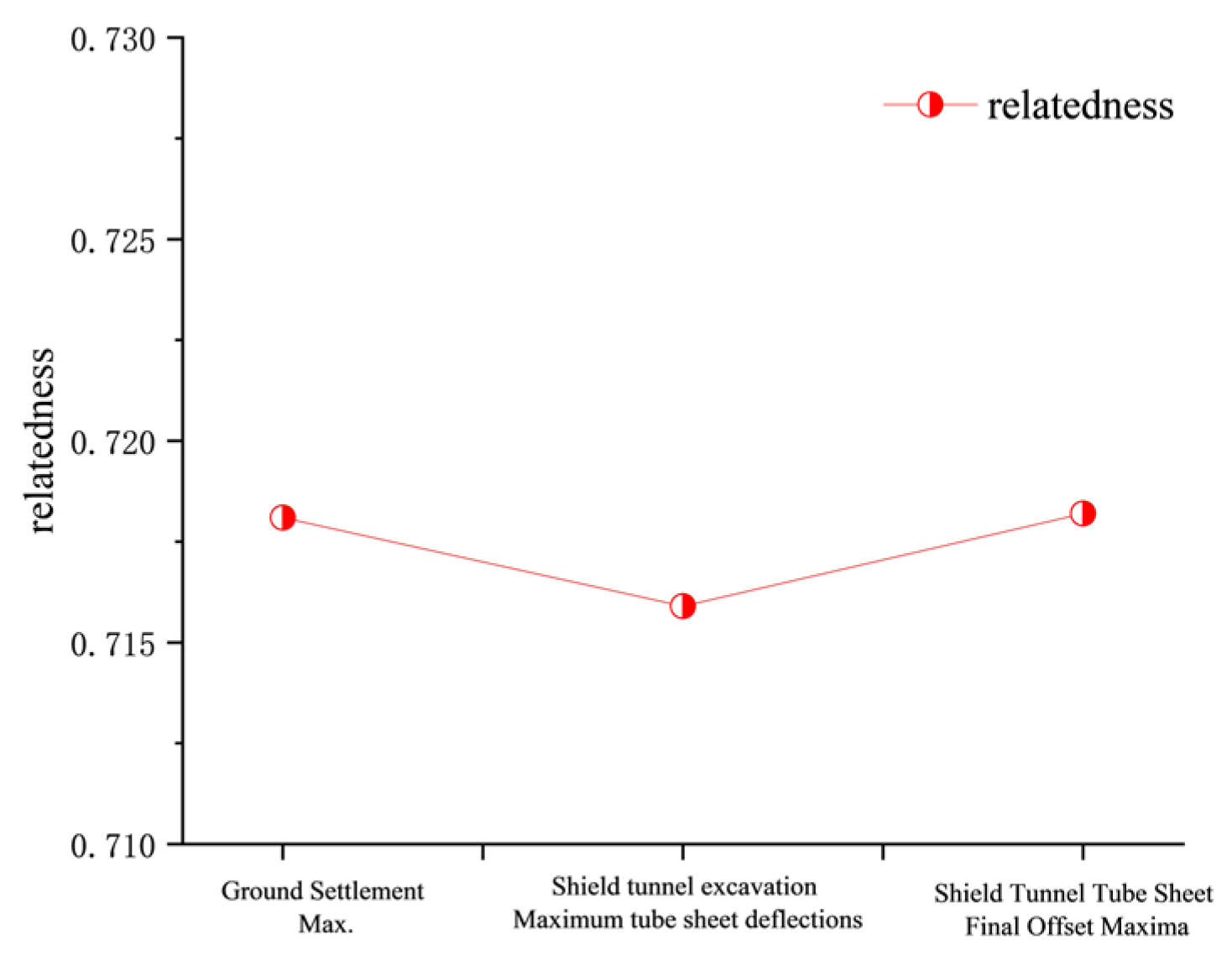
Based on the aforementioned computational procedures, the numerical simulation results for the 1.0 m, 1.2 m, and 1.5 m segment widths were incorporated to compute the gray relational degrees between segment width and three deformation indicators: maximum ground deformation, maximum segment displacement during excavation, and final tunnel displacement. The corresponding parameters and relational values are summarized in Table 4, and the results are illustrated in Figure 11.
As shown in Figure 11, segment width exhibits the strongest correlation with maximum ground deformation, followed by maximum displacement occurring after excavation, while the displacement observed during excavation shows the weakest correlation.
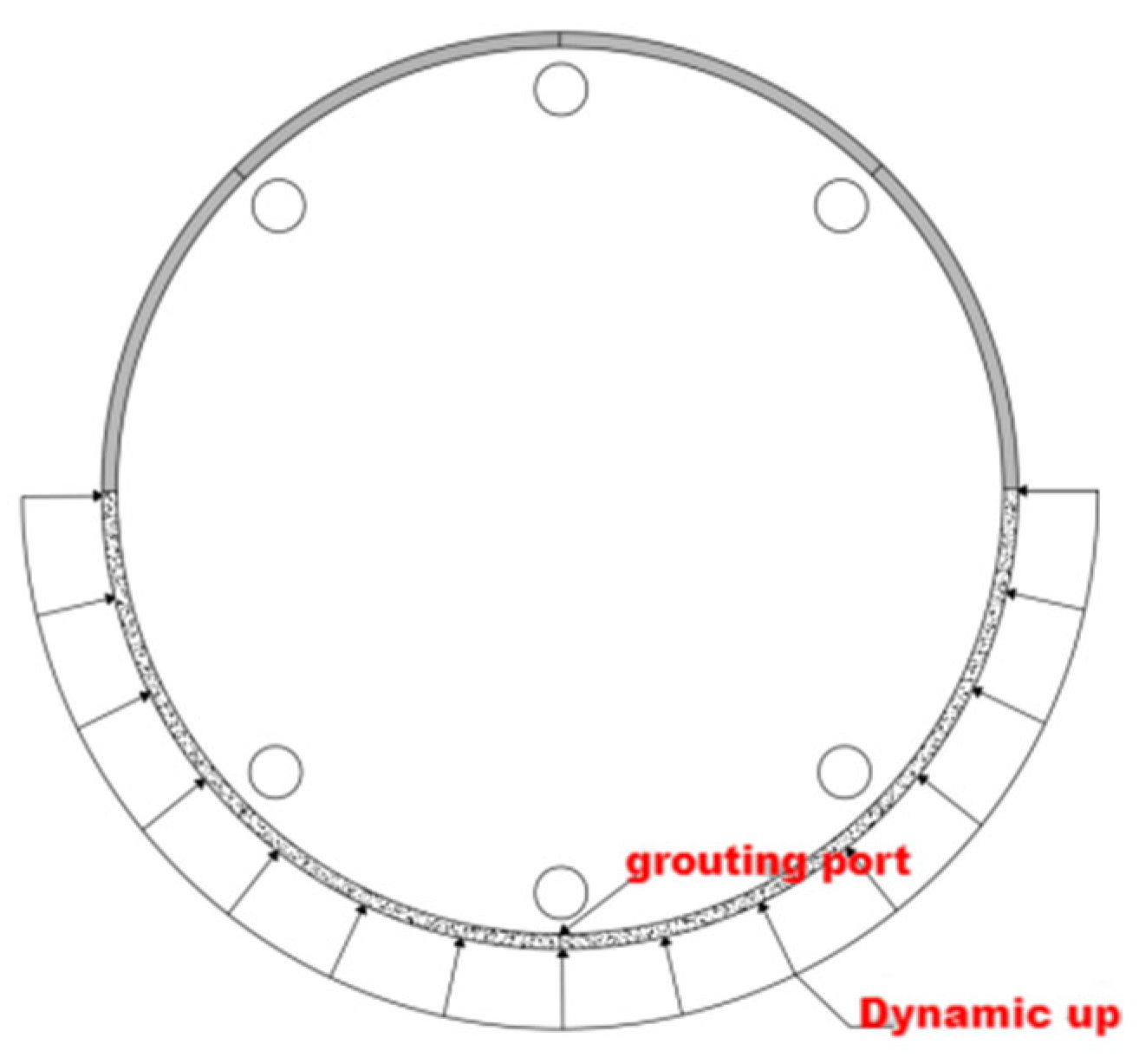
This is because segment grouting during shield tunnel excavation directly affects segment displacement. Grout inside the segment tends to concentrate at the bottom of the segment, generating uneven concentrated forces that cause displacement. Therefore, different segment widths directly influence the weight and distribution of grout inside each ring, thereby affecting displacement. As shown in Figure 11, the maximum uplift force of the segment can be expressed as [28,29,30]:
F = θ θ B P R 0 cos α d α = 2 B P R 0 sin θ ( 0 θ π 2 )
where B is the width of grout pressure action (m), p is the average grout pressure acting on the segment (MPa), R0 is the outer radius of the segment (m), and θ is the angle between the boundary of the grout distribution zone and the vertical axis.
It can thus be concluded that during tunnel excavation, the uplift force on the segment is positively correlated with segment width. Therefore, the wider the segment during shield tunneling, the higher the uplift force caused by grouting, and consequently, the larger the segment displacement. Hence, segment width has the greatest impact on maximum segment displacement, as shown in Figure 12.

6. Results

This study employed numerical simulation to systematically investigate the internal mechanisms governing ground settlement and tunnel deformation induced by two commonly used segment widths—1.2 m and 1.5 m—during shield tunneling beneath aging residential buildings. The objective was to provide essential theoretical support and technical guidance for tunnel construction under similarly sensitive conditions. The novelty of this work lies in its quantitative assessment of the differentiated deformation responses triggered by varying segment widths under the highly risk-sensitive scenario of underpassing residential structures, thereby establishing a clear priority hierarchy for deformation control. The findings offer practical and direct decision-making references for segment selection and deformation mitigation in engineering applications. The major conclusions are as follows:
  • During tunnel excavation, the 1.2 m segments primarily induced settlement deformation, with a maximum ground deformation of −48.66 mm, whereas the 1.5 m segments produced uplift-dominated deformation, reaching a maximum value of 49.82 mm. For both segment widths, significant deformation occurred above the tunnel crown and beneath the tunnel invert.
  • The maximum displacements recorded at each monitoring ring for the 1.5 m segments were consistently larger than those for the 1.2 m segments, with the peak displacement reaching 47.73 mm (compared with −37.681 mm for the 1.2 m segments). This indicates that the 1.2 m segment width provides better displacement control performance.
  • After tunnel breakthrough, the displacement associated with the 1.2 m segments remained settlement-dominated, whereas the 1.5 m segments exhibited repeated transitions between settlement and uplift with increasing ring number. The maximum deformation for both widths occurred at Ring 1, and the peak displacement for the 1.5 m segments was close to the 50 mm warning threshold, further confirming the superior deformation control capability of the 1.2 m segments.
  • The numerical simulation results demonstrated good agreement with field monitoring data, with error rates of 3.43%, 3.92%, and 5.17% for maximum settlement, uplift, and segment displacement, respectively. Gray relational analysis further revealed that the influence of segment width on deformation indicators decreases in the following order: maximum segment displacement during excavation, maximum ground deformation, and final post-excavation segment displacement.
  • This study was conducted under specific geological conditions involving underpassing residential buildings. The mechanisms governing the influence of segment width may vary among different ground types (e.g., soft soil, rock formations), and the present work focuses primarily on the widely used 1.2 m and 1.5 m segment widths. Future research could expand the comparative analysis across diverse geological environments to enhance the generalizability of the findings. Additionally, this study does not account for the coupled effects of segment material properties, assembly procedures, and other construction factors, which may interact with segment width to influence tunnel deformation. Incorporating multifactor coupling models in future studies would provide a more comprehensive understanding of segment deformation mechanisms.
In light of these limitations, potential future research directions include:
6.
Exploring the compatibility between geological conditions and segment width to develop a dynamic segment width decision-making model based on ground characteristics;
7.
Conducting multi-variable collaborative optimization involving segment width, material parameters, and construction parameters to enhance overall deformation control efficiency;
8.
Integrating large-scale field monitoring data with artificial intelligence algorithms to achieve intelligent prediction of segment width selection and deformation warnings, thereby providing more precise technical support for shield tunneling in complex engineering environments.

Author Contributions

Data curation, writing—original draft, supervision, funding acquisition, writing—original draft, visualization, validation, software, P.S.; funding acquisition, writing—original draft, visualization, validation, software, X.B. All authors have read and agreed to the published version of the manuscript.

Funding

This research was supported by the Scientific Research Program Project (YF2105SD08B) of China Railway 20th Bureau Group Co., Ltd.

Institutional Review Board Statement

Not applicable.

Informed Consent Statement

Not applicable.

Data Availability Statement

The original contributions presented in this study are included in the article. Further inquiries can be directed to the corresponding author.

Conflicts of Interest

The authors declare that this study received funding from China Railway 20th Bureau Group Southern Engineering Co. The funder was not involved in the study design, collection, analysis, interpretation of data, the writing of this article or the decision to submit it for publication.

References

  1. Khabbaz, H.; Gibson, R.; Fatahi, B. Effect of constructing twin tunnels under a building supported by pile foundations in the Sydney central business district. Undergr. Space 2019, 4, 261–276. [Google Scholar] [CrossRef]
  2. Zhao, X.L.; Hu, Y.T. Research on the Calculation of the Total Floating Amount of Segment Considering the Degree of Soil Arching Effect. RCT 2023, 12, 112–116. (In Chinese) [Google Scholar]
  3. He, K. Deformation analysis and control measures for shield tunnel passing under complex buildings. Urban Mass Transit 2023, 26, 62–73. (In Chinese) [Google Scholar]
  4. Jiang, H.; Liu, W.; Chen, J. Deformation Analysis of Yangtze River Embankment Crossed by Ultra-large Diameter Shield Tunneling in Soft and Water-rich Strata. Sci. Tec. Eng. 2024, 24, 11842–11850. (In Chinese) [Google Scholar]
  5. Han, S.Z.; Ji, Y.T.; Zhao, L.G. Influence Law and Control Measures of Shield Tunnel Undercrossing High Speed Railway Station: Taking the Tianjin Metro Line 4 as an Example of Undercrossing Tianjin West Station. J. Sci. Tec. Eng. 2024, 24, 13601–13611. (In Chinese) [Google Scholar]
  6. Wang, D.Z.; Niu, Y.F.; Wang, R. Influence of Underpass of Subway Shield Tunnel on Surface Building. Con. Qual. 2023, 41, 66–78. (In Chinese) [Google Scholar]
  7. Wei, G.; Qi, Y.J.; Wu, H.J. Changes in circumferential pressure and stresses in existing tunnels caused by tunnel crossing. J. Cent. South Univ. 2020, 51, 515–3527. (In Chinese) [Google Scholar]
  8. Zhang, S.; Gao, Z.; Wang, S. Study on the Seismic Response Characteristics of Shield Tunnels with Different General Segment Assembly Methods and Widths. Buildings 2023, 13, 2039. [Google Scholar] [CrossRef]
  9. Guan, L.X. Effect of Segment Width on Behavior of Shield Tunnel Assembledin Staggered Pattern. Chin. J. U Space Eng. 2015, 11, 852–858. (In Chinese) [Google Scholar]
  10. Zhang, J.; Guo, S.; Lin, Y.; Li, X. Deformation and adjustment mechanism of segment joint in shield tunneling. Arab. J. Geosci. 2022, 16, 1622–11059. [Google Scholar] [CrossRef]
  11. Liu, X.; Zhang, J.; Feng, K. Shear deformation characteristics and failure mechanisms of tunnel segment inter-ring joints: Numerical and experimental study. Eng. Fail. Anal. 2024, 158, 108045. [Google Scholar] [CrossRef]
  12. Sung, W.S.; Song, K.I.; Kim, K.Y.Y.; Ryu, H.H. Development of Grouting Quality Evaluation System for a Shield TBM Tunnel Using the Impact-Echo Method. Ksce. J. Civ. Eng. 2024, 28, 5335–5345. [Google Scholar] [CrossRef]
  13. GB 50157-2013; Code for Design of Metro. China Ministry of Housing and Urban-Rural Development: Beijing, China, 2013.
  14. Armen, Z.; Ter, M.; Anzhelo, G.O.; Rud, V.V. The Influence of Metro Tunnel Construction Parameters on the Settlement of Surrounding Buildings. Appl. Sci. 2024, 14, 6435. [Google Scholar] [CrossRef]
  15. Zhou, S.H.; Xiao, J.H.; Di, H.G.; Zhu, Y.H. Differential settlement remediation for new shield metro tunnel in soft soils using corrective grouting method: Case study. Can. Geotech. J. 2018, 55, 1877–1887. [Google Scholar] [CrossRef]
  16. Zhang, J.; Bao, X.K. Study on Reinforcement Technology of Shield Tunnel End and Ground Deformation Law in Shallow Buried Silt Stratum. Appl. Sci. 2025, 15, 7657. [Google Scholar] [CrossRef]
  17. Shi, S.; Zhu, F.J.; Ge, Z.W.; Hu, H.Q. Prediction and Analysis of Subsurface Settlement in a Double-Line Shield Tunnel. J. Geotech. Geoenviron 2024, 150, 12570–12590. [Google Scholar] [CrossRef]
  18. Li, C.; Wang, Z.; Liu, Q. Numerical Simulation of Mudstone Shield Tunnel Excavation with ABAQUS Seepage–Stress Coupling: A Case Study. Sustainability 2022, 15, 667. [Google Scholar] [CrossRef]
  19. Jeon, Y.; Jeon, S.; Jeon, S. Study on the behaviour of pre-existing single piles to adjacent shield tunnelling by considering the changes in the tunnel face pressures and the locations of the pile tips. Geomech. Eng. 2020, 21, 187–200. [Google Scholar]
  20. Ge, Z.G.; Yang, T.R.; Xie, J.N. Research on control measures of large-diameter shield tunnel undercrossing existing high-speed railway line. J. Civil. Eng. 2024, 57, 9–14. [Google Scholar]
  21. Xing, R.R.; Li, Y.J.; He, C.; Zhu, D.Q.; Li, Y.F. Study on Deformation Characteristics of the Segment in the Underwater Shield Tunnel with Varying Earth Pressure. Buildings 2024, 14, 2789. [Google Scholar] [CrossRef]
  22. Hui, J.; Yuan, D.J.; Zhou, S.X.; Zhao, D. Short-Term and Long-Term Displacement of Surface and Shield Tunnel in Soft Soil: Field Observations and Numerical Modeling. Appl. Sci. 2022, 12, 3564. [Google Scholar]
  23. Lueprasert, P.; Jongpradist, P.; Jongpradist, P.; Suwansawat, S. Numerical investigation of tunnel deformation due to adjacent loaded pile and pile-soil-tunnel interaction. Tunn. Undergr. Space Technol. 2017, 70, 166–181. [Google Scholar] [CrossRef]
  24. Wu, H.; Ye, Z.; Zhang, Y.T.; Liu, H.Q.; Liu, H.B. Seismic response of a shield tunnel crossing saturated sand deposits with different relative densities. Soil. Dyn. Earthq. Eng. 2023, 166, 107790. [Google Scholar] [CrossRef]
  25. Shi, Z.; Bu, X.B.; Zeng, K.; Xie, X.Y.; Zeng, H.B. Optimization study for cement-based grout mixture ratio of shield tunnel considering spatiotemporal evolution of grout buoyancy. Constr. Build. Mater. 2024, 442, 137600. [Google Scholar] [CrossRef]
  26. Zang, Q. Theoretical analysis of floating of through-seam segment in shield tunnel. Urban Roads Bridges Flood Control 2023, 42, 2683–2695. (In Chinese) [Google Scholar]
  27. Sun, W.B.; Zhang, J.Y.; Wang, X. Staged sensing method of fault sudden water based on gray correlation analysis. Chin. J. Undergr. Chin. Saf. Sci. 2024, 34, 63–70. (In Chinese) [Google Scholar]
  28. Park, H.; Oh, J.Y.; Kim, D.; Chang, S. Monitoring and Analysis of Ground Settlement Induced by Tunnelling with Slurry Pressure-Balanced Tunnel Boring Machine. Electron. Newsweekly 2018, 2018, 393–415. (In Chinese) [Google Scholar] [CrossRef]
  29. Ye, F.; Zhu, H.H.; Ding, W.Q. Longitudinal uplift analysis of shield tunnel based on elastic foundation beam. Chin. Rail. Sci. 2008, 4, 65–69. (In Chinese) [Google Scholar]
  30. Talmon, A.; Bezuijen, A. Analytical model for the beam action of a tunnel lining during construction. Int. J. Numer. Anal. Met. 2013, 37, 181–200. [Google Scholar] [CrossRef]
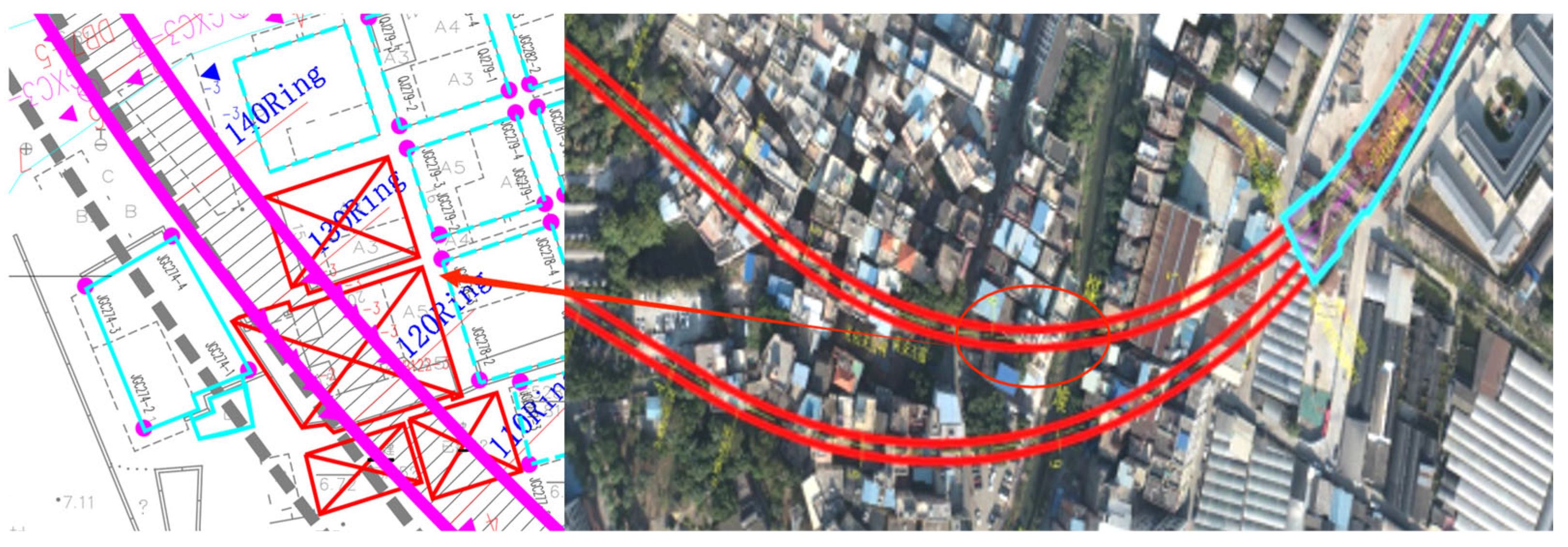
Figure 1. Diagram of shield tunneling under a building.
Applsci 16 00047 g001
Figure 2. MIDAS Model Diagram. (a) Layer Maps. (b) Buildings and Access Tunnels. (c) Buildings.
Applsci 16 00047 g002
Figure 3. Stratigraphic deformation results.
Applsci 16 00047 g003
Figure 4. 1.2 m-wide segment displacement.
Applsci 16 00047 g004aApplsci 16 00047 g004b
Figure 5. 1.5 m-wide segment displacement.
Applsci 16 00047 g005
Figure 6. Tunnel final displacement cloud map. (a) 1.2 m segment tunnel final displacement contour. (b) 1.5 m segment tunnel final displacement contour.
Applsci 16 00047 g006
Figure 7. Monitoring point layout.
Applsci 16 00047 g007
Figure 8. Simulated ground deformation and actual monitored ground deformation.
Applsci 16 00047 g008
Figure 9. Comparison of measured and simulated data of pipe displacement.
Applsci 16 00047 g009
Figure 10. Ground deformation induced by tunnel segments with a 1.0 m width.
Applsci 16 00047 g010
Figure 11. Correlation between pipe width and its influencing parameters.
Applsci 16 00047 g011
Figure 12. Schematic diagram of formation of grouting buoyancy.
Applsci 16 00047 g012
Table 1. Engineering geological characteristics.
Level NumberLayer DescriptionGeological DiagramThickness (m)
<1>Artificial fill; soil properties: loose to moderately compacted; soil type: medium soft soilApplsci 16 00047 i0012.4
<2>Sludge; rock and soil properties: plastic; soil type: weak soil4.5
<3>Fine clay; rock and soil properties: plastic; soil type: medium soft soil3.2
<4>Full weathered clastic rock; lithological properties: hard silt-like soil; soil type: medium-hard soil3
<5>Medium-grained weathered sandstone; rock and soil characteristics: the rock mass is relatively intact7
Table 2. Simulation soil layer parameters.
Layer NameStratigraphic
Depth (m)
Specific Weight
(kN·m−3)
Bulk Modulus
(MPa)
Modulus of Shearing, Shear Modulus (MPa)
miscellaneous fill2.2 m20.24.3815
silty clay3.5 m19.95.1719.2
Well weathered argilliferous mudstone5.3 m20.35.4726
Strongly weathered coarse sandstone6 m20.65.8124
Weathered coarse sandstone15 m25.75.9328
Table 3. Simulation Structure Parameters.
Structure NameThickness (mm)Severe (kN·m−3)Modulus of Elasticity
(MPa)
duct piece3202725.87
Grouting Layer (liquid state)160251.7
Grouting Layer (concreting)1602025
Table 4. Gray correlation calculation parameters and results.
Segment WidthMaximum Deformation of StrataMaximum Displacement of Segment During ExcavationMaximum Displacement of Segment After Excavation
1 m−61.67 mm−41 mm−39.41 mm
1.2 m−48.66 mm−38 mm−36.45 mm
1.5 m49.52 mm55 mm47.73 mm
Gray correlation results0.71810.71590.7182
Disclaimer/Publisher’s Note: The statements, opinions and data contained in all publications are solely those of the individual author(s) and contributor(s) and not of MDPI and/or the editor(s). MDPI and/or the editor(s) disclaim responsibility for any injury to people or property resulting from any ideas, methods, instructions or products referred to in the content.