


Abstract
Microfluidics has emerged as a powerful enabling technology in plant science, offering unprecedented control over microscale environments for the cultivation, manipulation, and analysis of plant cells, tissues, and organs. This review provides a comprehensive overview of the development and application of microfluidic systems in plant physiology and development studies. We categorize the platforms based on their structural designs and biological targets—from single-cell trapping devices and droplet-based screening systems to organ-on-a-chip and root–microbe interaction modules. Key applications include live-cell imaging, real-time monitoring of stress responses, microenvironment simulation, and high-throughput phenotyping. Particular attention is given to microfluidic investigations of plant mechanobiology, chemotropism, and cell-to-cell communication, as well as their integration with biosensors, electrophysiological tools, and environmental control systems. We also examine current limitations related to material compatibility, device scalability, and biological complexity, and highlight emerging solutions such as modular design, interdisciplinary integration, and soil-on-a-chip systems. By addressing both fundamental research needs and practical agricultural challenges, microfluidic technologies offer a transformative path toward precision plant science and sustainable crop innovation.
1. Introduction
Plant research encompasses multiple disciplines regarding usability for humans, such as ecology, biotechnology, agriculture, and medicine, each with its own goals and scales of study. While in situ field experiments capture natural interactions most authentically, they pose various methodological, environmental and logistical challenges while dissecting novel cellular pathways or traits: difficulty in continuous monitoring and sampling disturbances, restrictive permissions and regulations for transgenic organisms, uncontrollable biotic and abiotic factors, extensive land or greenhouse space and high resource demands [1,2,3]. To address some of these limitations, sensors and devices for live monitoring have been introduced in recent years [4]. However, standard approaches still primarily constitute of in vitro and in vivo cultivation of plant cells, tissues, organs or even whole plants grown in defined solid or liquid media (from <1 mL in multi-well plates to liters in bioreactors) [5,6,7,8] (Figure 1).
Figure 1.
Standard methods used in in vivo and in vitro studies—pots, flasks, Petri dishes, multi-well plates with estimated cultivation volume. Created by the author with BioRender.com.
The three pillars of in vitro plant methods are: (i) callus and suspension culture on nutrient media, underpinning everything from secondary metabolite production to somatic embryogenesis [9,10]; (ii) micropropagation—rapid clonal multiplication via nodal segments, shoot tips or meristems [11,12]; (iii) organ culture, isolating shoots, roots or embryos to probe organ-specific physiology [13]. Media choice (solid vs. liquid) and vessel scale follow the biological question: small volumes for cell assays; larger jars or pots (often with soil) to mimic later developmental stages [14,15].
A critical control lever is the application of plant growth regulators (auxins, cytokinins, gibberellins) to steer morphogenesis—callus induction, shoot vs. root formation, etc. [9,10,16]. Environmental synchronization (light cycles, temperature shifts, osmotic stress) further allows cell-cycle studies or developmental gating [17,18].
Beyond basic culture, specialized techniques include genetic transformation (Agrobacterium-mediated, biolistics) for functional genomics [19,20] and cryopreservation of germplasm for long-term storage and biodiversity conservation [21,22].
These established methods power everything from crop improvement to metabolic engineering. But to tackle future challenges, such as screening thousands of genotypes and dynamically probing single-cell responses, miniaturization and parallelization are key, which can be strongly promoted by the application of microfluidics.
Microfluidic technology has transformed experimental biology by enabling precise manipulation of fluids at the nanoliter to picoliter scale. By miniaturizing assay environments, microfluidics drastically reduces the consumption of reagents and biological samples, making experiments more cost-effective and resource-efficient [23,24]. The small scale of these systems accelerates processes through rapid diffusion and enables automated control over fluid flow [24]. One of the most impactful features of microfluidics is its capacity for high-throughput analysis: multiple assays or reactions can be performed simultaneously on a single chip, significantly increasing experimental throughput. Moreover, microfluidic platforms can integrate various laboratory steps, such as sample preparation, reaction execution, and detection, into one compact system, which not only streamlines workflows but also minimizes contamination and manual intervention [25]. In parallel, simplified microfluidic strategies have been developed to reduce operational complexity, including passive and pumpless approaches that rely on capillary forces, surface wetting, or evaporation-driven flow. By minimizing the need for external pumps and tubing, such systems lower technical barriers and may facilitate broader adoption of microfluidics in long-term and parallelized biological studies [26].
While most advances have targeted microbial or mammalian cells, plant biology presents unique demands (cell wall, larger cell size, photosynthetic requirements)—each calling for tailored channel geometries, material choices and light delivery strategies [27].
In this review, we will survey plant-focused microfluidic platforms used for cultivation and analysis in plant research, along with current trends and directions in their development.
2. Plant Cells, Tissues, and Organs in Microenvironments
2.1. Plant Research Fields with Advantageous Application of Microfluidic Devices
Microfluidic systems designed for the cultivation and analysis of plant tissues and organs typically consist of microchannels, chambers, and integrated structures that permit continuous microscopic observation during growth, using light or fluorescence microscopy. These devices are most commonly fabricated from polydimethylsiloxane (PDMS), often bonded to glass substrates to enhance optical clarity. PDMS is widely used due to its biocompatibility, gas permeability, and ease of prototyping, although it may present limitations in certain imaging modalities or chemical interactions. The complexity of plant-oriented microfluidic platforms varies, ranging from simple channel networks that guide tissue growth to advanced architectures tailored for specific experimental goals, such as chemical gradient generation, root–microbe interaction studies, or hormone transport analysis. A broad and growing spectrum of applications has been explored using such systems. Table 1 provides an overview of representative microfluidic platforms, 2m2m2,1,111categorized by their application area in plant research and the associated plant tissues or organs involved.
Table 1.
Microfluidic devices for plant research applications.
Some fields of applications particularly benefit from utilization of microfluidics throughout the process of investigation when compared to the standard methods of plant cultivation and analysis. Microdevices can be manufactured to either support or constrain the growth of specific plant organs, depending on the experimental aim. Additional microstructures assist in the immobilization, shaping, and positioning of samples, thereby enabling visualization and tracking of the target tissues or cells. Control of the media composition and creation of constant fluid flow allows for real-time observation of the effects and dynamics of environmental conditions on the objects of interest. The inclusion of sensors into the system design gives valuable information about the physical or chemical state of the cells and tissues.
In the next chapters of this review, we present a detailed overview of the main groups of aforementioned microfluidic devices, focusing on their current applications, limitations, and potential directions for further development.
2.2. Microchambers and Microchannels in Plant Cultivation
Although plant systems introduce unique biological requirements, such as rigid cell walls, larger cell sizes, and complex tissue organization, many core microfluidic strategies, originally developed for animal cells, microbes and algae, are transferable, provided appropriate design modifications are made [118,119].
When engineering microfluidic platforms for plant cultivation, several critical factors must be addressed:
- Fluid flow and shear stress: Plant cells vary significantly in their sensitivity to mechanical forces; for example, fragile root hairs and protoplasts require gentle flow regimes to prevent structural damage [120,121].
- Gas exchange: Unlike some animal cell cultures, plant systems depend on efficient CO2 and O2 diffusion, particularly during photosynthesis and root respiration [122,123].
- Cultivation volume: Optimal chamber or channel volume must balance sufficient nutrient delivery with the need to maintain biologically relevant interactions such as quorum sensing or paracrine signaling [124].
Microchambers represent a foundational component of plant-on-chip technologies, offering precise spatial and temporal regulation of environmental conditions. Their confined volumes—typically ranging from nanoliters to microliters—are particularly well-suited for high-throughput cultivation of single cells or organoids under controlled conditions. In contrast, larger cultivation chambers are the default choice for studies involving seeds, roots, and shoots. Depending on the plant species and developmental stage, these chambers often extend into the millimeter or even centimeter scale.
As illustrated in Figure 2, microchambers exhibit diverse architectural configurations tailored to specific experimental needs. For example:
Figure 2.
Chamber-based microfluidic platforms for cultivation of plant cells and organs. (a) Dual-layer chip with a cell chamber (upper layer) and a transfer channel (lower layer) separated by a porous membrane. The design supports metabolite exchange for downstream analysis. Schematic created by the authors with BioRender.com based on data reported in [31]. (b) Device with five culture chambers (900 × 3200 × 55 μm) in a pentagonal array for parallel protoplast cultivation. Microcolumns with 20 μm gaps prevent cell escape. The lower panel highlights the chamber structure (red-dotted square). Adapted with permission from [29]. © Springer-Verlag, 2010. (c) Stereomicroscopy image of a 3 × 3 array (top view) from a chip containing 300 chambers for seedling cultivation. A side-view schematic of three chambers is shown below. Scale bar: 1 mm. Reproduced with permission from [72]. © The Royal Society of Chemistry, 2017. (d) Root-TRAPR system for whole-plant cultivation. A large (128 × 85 mm) oval chamber supports root expansion and enables analysis of root/shoot growth and metabolite production. Reproduced from [78] under CC BY 4.0.
- (a)
- A dual-layer design separates a thin cell-cultivation chamber from an underlying transfer channel via a porous membrane, enabling continuous metabolite exchange [31].
- (b)
- A pentagonal array of interconnected chambers (~160 nL each) permits parallel cultivation of plant protoplast populations, with integrated microcolumn structures (20 μm gaps) that prevent cellular escape [29].
- (c)
- Large-scale arrays composed of square wells facilitate seedling cultivation and phenotyping; these systems support simultaneous exposure to multiple media compositions and allow for high-throughput screening [72].
- (d)
- Whole-plant or organ-level cultivation is enabled by macro-scale chambers (cultivation areas > 85 cm2), such as the Root-TRAPR system, which accommodates expansive root architectures while maintaining optical access for imaging and analysis [78].
These platforms ensure high control demonstrated on biologically relevant examples, and they are instrumental in plant tissue culture and morphogenesis studies.
Microchannels serve a complementary function by enabling guided growth and manipulation of single cells, as well as multicellular structures such as roots, pollen tubes, and vascular bundles. Their linear or branched geometries provide laminar flow for nutrient delivery and chemical gradient formation, directional guidance for elongating structures (e.g., root hairs, pollen tubes), as well as access for real-time, non-invasive imaging and spectroscopic analysis. Depending on the scientific aim and the size of investigated structure, channels vary in their diameter from just 1 μm (as in the investigation of cell abilities to pass through extremely narrow spaces [47]) up to 800 μm for accommodating tree roots early growth [111].
Figure 3 showcases a variety of channel-based applications: directional pollen tube growth (Figure 3a) [45], single-cell analysis via flow cytometry (Figure 3b) [59], cell nuclei in root hairs localization (Figure 3c) [75], and dual-flow configurations for asymmetric stimulus exposure (Figure 3d) [87]. These devices provide valuable insight into developmental and physiological processes with fine spatial resolution.
Figure 3.
Variety of microchannels for studying various plant cells and organs. (a) Microchannels guiding pollen tube growth. Pollen grains are hydrodynamically trapped, and channels of different geometries direct pollen tube elongation. Scale bars: 100 μm. Adapted with permission from [41]. © Blackwell Publishing Ltd., 2012. (b) Single-cell analysis of protoplasts via microfluidic flow cytometry. The microchannel (60 μm height, 40 μm width) permits passage of individual cells for fluorescence-based characterization. Reproduced from [59] under CC BY 4.0. (c) Coverslip-based device for root and root hair studies. Roots grow along a central channel, while lateral channels enable single root hair analysis using time-lapse and fluorescence imaging. Scale bar: 100 μm. Reproduced with permission from [75]. © Society for Experimental Biology and John Wiley & Sons Ltd., 2021. (d) Dual-flow-RootChip for root development under controlled conditions. Triangular microstructures guide root growth (left and middle panels), and a laminar flow system enables the creation of asymmetric chemical environments (right panel). Scale bar: 100 μm. Adapted with permission from [87]. © New Phytologist Trust, 2017.
In parallel with these architectural developments, alternative fabrication strategies are increasingly being explored to improve accessibility, scalability, and customization of plant microfluidic platforms. In particular, three-dimensional (3D) printing has emerged as a complementary approach to conventional soft lithography for the fabrication of microchamber- and channel-based systems. Several of the platforms discussed above demonstrate the feasibility of additively manufactured components across different biological scales. Ecosystem fabrication (EcoFAB) devices employ widely available 3D printing technologies to construct modular growth environments for studying plant–microbe interactions under controlled conditions [107]. Similarly, the Root-TRAPR system integrates a 3D-printed structural frame with optically transparent components to enable reusable, low-cost cultivation of larger plant root systems [78]. At the microscale, stereolithography-based 3D printing has been successfully applied to fabricate open microfluidic root imaging platforms, while careful material selection remains essential to ensure plant biocompatibility [86]. Beyond cultivation systems, recent work combining 3D-printed microfluidic transfer tools with droplet-based workflows has enabled image-guided handling and sorting of plant-derived cells such as pollen, highlighting the compatibility of additive manufacturing with advanced single-cell microfluidic operations [125]. Together, these examples illustrate how 3D printing can support rapid prototyping, modular design, and adaptation of microfluidic devices to diverse plant research applications.
Although many microfluidic platforms are optimized for cellular- or tissue-level investigations, an important consideration is the extent to which insights obtained under microscale confinement can be extrapolated to whole-plant physiology. The highly controlled environments characteristic of microfluidic systems enable precise dissection of localized responses, such as mechanosensing, chemotropism, or cell-to-cell signaling; however, whole plants integrate these responses across multiple organs and spatial scales. Consequently, direct quantitative translation from microfluidic conditions to macroscopic growth behavior remains challenging. Nevertheless, microfluidic studies provide valuable mechanistic understanding that can inform plant-level hypotheses when interpreted in the context of system-level regulation. Emerging strategies to bridge this scale gap include modular device architectures, root-focused platforms that preserve shoot development ex situ, and mesofluidic or ecosystem-inspired systems that accommodate larger cultivation volumes while retaining environmental control. Together, these approaches position microfluidics not as a replacement for whole-plant experiments, but as a complementary tool that links cellular mechanisms to organism-level function.
In the following chapters, we will explore specific microfluidic devices based on microchambers and microchannels, highlighting their applications in plant cell manipulation, tissue culture, and organ-level investigations.
3. Microfluidically Assisted Plant Technology
The potential applications of microfluidics in plant research are diverse. In precision agriculture, microfluidic systems allow for localized delivery of nutrients or pH adjustment directly at the root zone, optimizing growth conditions and reducing resource waste. In hydroponic and soilless cultivation, microfluidic technologies provide precise control over nutrient supply and root-zone environments, offering significant advantages in regions with limited arable land. Furthermore, integration of microfluidic-based biosensors enables real-time monitoring of plant exudates and biochemical markers, facilitating the early detection of plant diseases and supporting timely intervention strategies. Microfluidic systems can also be incorporated into controlled environment agriculture, such as vertical farming and greenhouse cultivation, where dynamic adjustment of environmental parameters can support the development of more resilient crop varieties.
In the following subchapters, we review recent advances in microfluidic applications for plant research, structured into three major areas: (1) cell-based investigations, (2) studies of plant development and structural characterization, and (3) investigations into plant cell stress responses and intercellular communication.
3.1. Microfluidic Devices for Cell-Based Investigation
Microfluidics technology, when operating in micro and nano dimensions, offers unique opportunity for the investigation of single cells, which is difficult to obtain using conventional research methods. Traditional approaches typically yield data averaged across entire cell populations, masking the variability and individual behaviors of cells. In contrast, single-cell or near-single-cell studies provide detailed insights into the specific physiological and molecular states of individual cells. To enable such investigations, microfluidic devices must meet specific criteria in terms of scale, fluid control precision and shear stress minimization. Given the broad range of studies in this area, we categorize microfluidic platforms into four main types, based on their structural and functional features: (1) chamber- and microstructure-based systems, (2) microchannel-based systems, (3) microsystems for cell sorting, and (4) systems designed to investigate plant cell biomechanics.
We begin by presenting key examples of chamber-based and structured microenvironments developed for plant cell studies. These devices typically employ confined wells, traps, or microfabricated cages to immobilize single cells or tissues for extended monitoring, cell fusion studies, or developmental analyses. The following studies illustrate the diversity of such platforms in terms of their technical features and biological applications (Table 2).
Table 2.
Chamber- and microstructures-based systems for plant cell investigation.
A wide range of chamber designs has been developed for plant cell cultivation and observation, reflecting the diverse functional demands of microfluidic assays—from maintaining cell viability to enabling controlled interactions or fusion events. One example emphasizing physiological support rather than mechanical manipulation is the PDMS-based microculture system introduced by Ju et al., who demonstrated that using an air-permeable PDMS cover sheet of optimized thickness (400 µm) significantly enhances oxygen delivery, enabling long-term protoplast culture and microcolony formation over 10 days [28]. Beyond cultivation, chambers can also function as biochemical assay units. Mickleburgh et al. developed a miniaturized microfluidic antibody-capture chip featuring dozens of nanoliter-scale chambers, each containing a printed antibody spot, enabling single-protoplast isolation, optical–chemical lysis, and quantitative single-molecule protein detection [32].
Depending on the experimental objective, chambers may also incorporate microstructures for cell immobilization or controlled pairing. For instance, protoplast fusion can be studied in relatively large chambers where cells interact stochastically and a simple microcolumn line provides minimal trapping [29], or alternatively in microdevices featuring arrays of U-shaped microstructures designed to hold a maximum of two protoplasts at a time [33]. Similarly to the latter approach, Seidel et al. presented a microfluidic device in which the observation chamber is covered with H-shaped trapping features formed by arranged posts. In their system, fluids can travel through the array in two directions, allowing for better placement and removal of double-trapped protoplasts [34]. In addition to these mechanically based trapping strategies, Hung et al. developed an electrofusion platform that uses an insulating orifice sheet between two Indium Tin Oxide (ITO) electrodes to align protoplasts by positive dielectrophoresis and achieve one-to-one fusion through pulsed electric fields [36].
For certain cells, such as the protonema cells of the moss Physcomitrella patens, trapping is not required. Instead, supporting pillars can serve as anchoring points, allowing the investigation of individual cells within a shared, large (2 × 12 mm), but thin (4.5–15 µm height) chamber filled with small clusters of cell via tubing [30]. The same organism was also studied using the aforementioned U-shaped trapping array (Figure 4a) [33]. Enclosing cells in confined spaces can serve not only as a trapping method but also as a means to investigate changes in cell geometry and cytoskeletal organization. Microdevices designed for such purposes often take the form of arrays composed of microvessels (Figure 4c) [35] or microwells (Figure 4d) [39]. Colin et al. further used microwell confinement to show that cortical tension, rather than geometry alone, governs microtubule orientation in protoplasts, with increased pressurization inducing a switch from longitudinal to transverse alignment [40]. This trapping approach can also be applied to more complex plant structures, such as ovules. A key design consideration in this case is the significantly larger dimensions required for the trapping microstructures—250 µm wide and 650 µm long cages allowed for successful cultivation of single ovules for long-term imaging.
Figure 4.
Trapping mechanisms for immobilizing various plant cell types. (a) U-shaped microtraps (60 × 45 μm) with lateral and backside openings (15 μm) for protoplast immobilization. Arrays are spaced at 200 μm in both directions. Scale bar: 500 μm. Adapted from [33] under CC BY 4.0. (b) H-shaped, irregular microtraps designed to accommodate protoplasts fusion by flowing liquid from one direction to another. Scale bar: 200 µm. Adapted from [34] under CC BY 4.0. (c) Microvessels facilitating protoplast regeneration under confined conditions. Reproduced from [35] under CC BY 4.0. (d) Microwells of various shapes for cell-shaping in defined geometries. Scale bars: 10 µm. Adapted from [39] under CC BY 4.0.
The variety of trapping devices alongside their dimensions are presented in Figure 4.
While chamber- and structure-based systems excel in immobilizing plant cells for prolonged observation or precise manipulation, other microfluidic approaches aim to recreate flow dynamics, gradient conditions or accommodate cell growth. Microchannel-based platforms are briefly described and summarized in Table 3.
Table 3.
Microchannel-based devices for plant cell investigation.
Depending on the target application, microfluidic channels for plant cell studies vary in size. They can be relatively large, serving as transport pathways or chamber analogs, or just slightly wider than the cell diameter to direct growth. Protoplasts, for example, fall into the former category. Microfluidic devices for protoplast research typically focus on isolation, lysis, cultivation, or analysis. A distinctive example is a device featuring multiple U-shaped microchannels with concave and convex-concave sieving arrays, enabling rapid protoplast extraction, collection, and lysis [41]. A related organelle-scale approach employs parallel deterministic lateral displacement (DLD) arrays for size-based chloroplast isolation, demonstrating that similar sieving principles can be adapted to subcellular targets with appropriate geometric scaling [42]. Cultivating protoplasts in large channels while maintaining fluid flow exposes them to mechanical stress, which is detrimental to these wall-less, fragile cells. To address this, Ko et al. designed a device incorporating an oval region to reduce flow velocity, posts of varying sizes to lower shear stress, and two column lines for protoplast trapping [49]. Notably, simpler crossed-channel systems have also been shown effective for processes such as cell wall regeneration, without the need for additional structures [51].
Droplet-based microfluidics offers another route for single protoplast observation. Large droplets (~4.5 µL) containing multiple protoplasts labeled with magnetic microparticles can be aligned using a magnet-equipped top plate for controlled evaluation [53]. To encapsulate individual cells, smaller channels and precise techniques such as cross-focusing droplet formation are required, enabling high-throughput generation and sorting of single-cell droplets [54,55].
Beyond hydrodynamic approaches, Landenberger et al. demonstrated an active optical-sorting strategy in which dynamically steerable optical tweezers displace and sort individual biological particles, including 30-µm plant protoplasts, based on morphology or fluorescence signals within a microfluidic chamber. This platform highlights the compatibility of optical gradient forces with plant cell handling and offers a flexible, label-adaptive alternative to geometry- or flow-based sorting methods [50].
Pollen tubes, among the fastest-growing plant cells, are ideal targets for microchannel-based investigations. Horade et al. developed a microchannel array for pollen tube growth, concluding that channels measuring 5–12 µm in both height and width support the insertion of single, intact tubes [44]. Around the same time, Agudelo et al. introduced TipChip, a modular microelectromechanical systems (MEMS)-based platform with a growth chamber, hydrodynamic traps for pollen grains, and microchannels of varying geometry to study tube growth, reorientation, and responses to air or chemical gradients (Figure 4a) [38,45,46]. Yanagisawa et al. further demonstrated that pollen tubes, root hairs, and moss protonemata can elongate through gaps as narrow as 1 µm [47], while other studies have used channel geometry modifications, in particular narrowing of channels (4–7 µm in diameter) for various length (20 or 400 µm), to investigate protein contributions to cell integrity under mechanical constraints [48].
Beyond protoplasts, other plant cell objects such as microspores are promising candidates for application of droplet-based microfluidics. In androgenesis research—where efficiency is typically low—creating numerous, individually monitored microenvironments is advantageous. Early demonstrations of droplet generation via microinjection date back to the 1990s [56], and more recent work shows embryogenic development of microspores in droplet- and tube-based system with volumes around 130 nL, allowing systematic screening of stimuli and effectors [57]. This platform has since been further developed to accommodate additional plant cell types, and Marczakiewicz-Perera et al. have demonstrated its applicability for prolonged protoplast cultivation and nearly single-cell–level observation [58].
Microchannels are also widely used for analytical applications. Cells can be transported to defined locations for targeted analysis, as in the case of RNA extraction using focused electric fields. Here, for example, intact cell clusters travel through a 100 µm deep and wide channel to a 3 µm hydrodynamic trap, facilitating molecular extraction for downstream analysis [43]. Additional microfluidic platforms for cell characterization and analysis are summarized in Table 4.
Table 4.
Analytical microsystems for plant cell characterization.
Microfluidic-based analytical tools for single-cell investigations often adapt standard bulk-culture techniques to smaller sample volumes, offering enhanced sensitivity and dynamic monitoring capabilities. These systems, including microfluidic flow cytometers and impedance spectroscopy platforms, are crucial for analyzing plant cell metabolic activity, viability, and developmental fate at the individual cell level. Among the early microfluidic analytical approaches, Xia et al. introduced a single-cell electrochemical detection platform integrating cell injection, electrokinetic trapping, electrical lysis, and end-channel amperometric readout within a double-T microfluidic architecture. Their system enabled quantification of intracellular ascorbic acid in individual Triticum aestivum protoplasts, demonstrating how microfluidics can couple precise cell handling with sensitive electrochemical detection to analyze electroactive metabolites at the single-cell level [52].
Microfluidic flow cytometry enables high-throughput single-cell analysis by transporting cells through narrow microchannels that fit individual cells, thus facilitating the assessment of population heterogeneity. Dai et al. developed a microfluidic flow cytometry system based on fluorescence detection, enabling single-cell measurements of intracellular reactive oxygen species (ROS) levels under various environmental stress conditions. Their study also demonstrated the photoprotective role of anthocyanins and the promotion of primary cell wall (PCW) formation by auxin at the single-cell level, using protoplasts as the model system [59].
Label-free impedance flow cytometry (IFC) platforms offer an alternative approach for characterizing plant cells by measuring their mechanical and electrical properties. Han et al. incorporated a constriction channel into a microfluidic IFC platform, allowing differentiation of protoplasts derived from different species and transgenic mutants overexpressing specific plasma membrane proteins. The two key parameters measured, passage time and impedance opacity, provided information on cell deformability and membrane electrical properties, respectively [63]. IFC was also successfully employed to assess pollen viability and germination potential. Heidmann et al. demonstrated that IFC could distinguish between dead and viable pollen based on cell size (with dead cells exhibiting reduced size), membrane integrity, and cytoplasmic conductivity across several species [62]. Similarly, Canonge et al. applied IFC to wheat microspores to monitor gametophytic and sporophytic developmental pathways, enabling early prediction of embryo yields and providing a robust marker for androgenesis efficiency [64]. Liu et al. further showed that dielectrophoresis-based microfluidic profiling of leaf protoplast subpopulations enables label-free differentiation of closely related herbal species, achieving high-confidence discrimination between moso and henon bamboo and demonstrating the utility of biophysical single-cell signatures for authentication [65].
The regeneration of the primary cell wall, a complex developmental process, has also been investigated using microfluidic impedance-based approaches. Chen et al. designed a platform combining microstructured electrodes with microfluidic channels for non-invasive, label-free quantitative assessment of PCW regeneration in single cells. Their system successfully discriminated between wild-type Arabidopsis cells and mutants with altered PCW properties (impairing the synthesis of cellulose and causing structural deregulation in PCW), highlighting the device’s potential for physical phenotyping [60].
A distinct application of microfluidics was presented by Zhang et al., who developed a plant-wearable microfluidic sensor for in situ detection of methyl parathion, a toxic but widely used pesticide. The device integrates capillary-driven electrolyte flow through microchannels and laser-induced graphene–gold nanoparticle electrodes. Attached directly to plant leaves, the sensor achieved high sensitivity across a wide concentration range (0.001 µM to 200 µM), offering rapid, continuous environmental monitoring capabilities [61].
Following the development of microfluidic analytical devices for biochemical and physiological assessments at the single-cell level, a complementary set of microfluidic platforms has emerged, specifically designed to investigate the biomechanical properties of plant cells. Understanding the mechanical behavior of plant cells is crucial, as these properties underpin cell function, environmental adaptation, and development, and can inspire biomimetic designs in material science and engineering.
Distinct from the previously discussed analytical tools, microfluidic devices for studying cell biomechanics often employ specialized structures that enable controlled application of mechanical forces to single cells. Plant cells exhibit a wide range of biomechanical properties, which reflect their functional specialization within the organism. Tip-growing cells, such as pollen tubes and root hairs, are particularly well-suited for these investigations due to their naturally invasive growth patterns and the mechanical challenges they encounter in vivo. Defining and quantifying these properties provides critical insights into cellular adaptation, developmental processes, and potential limitations imposed by environmental mechanical constraints. Analytical tools and microstructures used in cell biomechanics investigations are summarized in Table 5 and illustrated in Figure 5.
Table 5.
Microfluidic systems and structures enabling description of plant cell biomechanics.
Figure 5.
Microfluidic devices for biomechanical analysis of pollen tubes. (a) Bending-Lab-on-Chip for measuring cell wall stiffness. Pollen grains are trapped at the microchannel entrance, and the elongating tube is subjected to lateral fluid-induced deflection to estimate Young’s modulus. A microchannel kink prevents backflow-induced pollen displacement. Adapted with permission from [46]. © The Royal Society of Chemistry, 2013. (b) Flexure-integrated Lab-on-Chip for quantifying pollen tube invasive force. Tubes grow through twisted channels and encounter a microcantilever, enabling force measurement upon contact. Adapted with permission from [67]. © World Scientific Publishing Co., 2018. (c) Compression-based device for assessing pollen tube biomechanics. The elongating tube is laterally indented within a microchannel to quantify compressibility and stretch ratio. Adapted with permission from [68]. © The Royal Society of Chemistry, 2017.
The examples summarized in Table 5 share a common model system: pollen tubes growing inside microfluidic channels. Pollen grains are introduced into a main cultivation chamber, where they are immobilized using hydrodynamic traps and maintained by a continuous fluid flow. Channel geometries are often optimized to ensure secure immobilization of the pollen grains. Following germination, the pollen tubes grow through microchannels slightly larger than their diameter, facilitating mechanical interrogation. Depending on the experimental design, different mechanical forces are applied: compression or bending stresses are introduced via integrated test chambers [66,68], while microcantilevers serve as mechanical obstacles that allow for real-time measurement of growth forces and dynamic behavior [67]. These systems enable the quantification of critical biomechanical parameters such as Young’s modulus, invasive growth force, turgor pressure, and wall stiffness at the single-cell level.
The microfluidic systems summarized in Table 2, Table 3, Table 4 and Table 5 illustrate distinct trade-offs between environmental control, throughput, and long-term culture stability in plant cell–based investigations. Chamber- and microstructure-based platforms provide highly stable microenvironments that are well suited for extended cultivation, live-cell imaging, and biomechanical studies, but typically offer limited throughput and flexibility once fabricated. In contrast, microchannel-based devices enable precise spatial guidance and dynamic stimulus delivery, though prolonged confinement and shear stress may restrict long-term cell viability for sensitive plant cell types. Droplet-based and analytical microsystems excel in high-throughput screening and single-cell characterization, enabling rapid sampling and parallelization; however, maintaining droplet stability and sustained physiological relevance over extended timescales remains challenging. Together, these platforms are best viewed as complementary tools, with platform choice dictated by the balance between experimental duration, mechanical sensitivity, analytical depth, and throughput requirements.
3.2. Microfluidic Devices for Plant Development and Structural Characterization Research
Microfluidic devices offer platforms for live imaging, metabolite sampling, environmental modulation, and high-throughput phenotyping, often surpassing the limitations of traditional agar-based or soil-based methods. They have been particularly impactful for model plants like Arabidopsis thaliana, allowing for detailed investigations at both cellular and whole-plant levels. At the whole-plant scale, microfluidics can support root-zone management, spatially controlled chemical delivery, and real-time phenotyping under dynamic environmental conditions, facilitating integrated studies of growth, development, and stress responses. We categorized the devices developed for studying plant development and structural characterization based on their primary application areas: (1) microscale platforms for cellular and subcellular developmental studies, (2) high-throughput phenotyping, (3) root development and morphodynamics, (4) chemical and metabolite profiling, and (5) integrated environmental simulation platforms. An overview of selected studies is summarized in Table 6.
Table 6.
Microfluidic devices for plant morphogenesis and phenotyping studies.
Microscale microfluidic platforms have enabled detailed observation of developmental processes that are otherwise inaccessible in conventional culture systems. A notable example is the PDMS chamber system developed by Bascom et al., which supports long-term cultivation and high-resolution live imaging of Physcomitrella patens tissues. Because the chambers are directly bonded to a coverslip, the device allows continuous visualization of protonemal growth, subcellular dynamics, and mutant phenotypes over extended periods, with growth rates comparable to those on solid medium. This work demonstrates how stable microscale confinement paired with optical accessibility can facilitate real-time analysis of cellular and subcellular developmental events [69]. Building on such microscale approaches, a second class of devices—microfluidic chip arrays—focuses on high-throughput phenotyping of seeds and seedlings under controlled environments.
Simple yet highly useful microfluidic devices, such as chip arrays, have been developed to facilitate plant phenotyping by enabling faster workflows and easier comparison between experimental groups. These devices are primarily used for seed germination assays across different genotypes or culture conditions, seedling cultivation, and evaluation of root and/or leaf development. Early microdevices include chips with hydrodynamic seed traps [70] and multi-well arrays accommodating up to nearly 400 plantlets, where seeds are placed using an array seeder [72] or micro-vacuum seeder [73]. The ability to load large numbers of seeds, particularly small ones like Arabidopsis thaliana (250–600 µm in diameter), significantly reduces manual labor and minimizes mechanical damage.
Jiang et al. developed a device supporting 26 plants across two connected layers, where seeds are positioned in funnel structures and exposed to a constant flow of liquid medium through a 1.8 mm diameter channel. The relatively long growth channels enabled root imaging for up to 22 days; however, all seedlings were subjected to uniform growth conditions as they shared the same media flow [70]. This platform was later advanced by integrating it into a miniature greenhouse equipped with a Light-Emitting Diode (LED) ring, mini-fan, temperature and light sensors, and a control circuit allowing for rapid adjustments to the growth environment. A polymer-dispersed liquid crystal film on the front window enabled external imaging without disturbing the internal conditions [71].
Park et al. proposed a more complex and high-throughput system: a 20 × 20 array of 2 × 2 mm cultivation chambers. Seeds were distributed into agar-filled chambers using an array seeder, and the chip accommodated up to five different media compositions across the array. Seedling growth was monitored via digital single-lens reflex (DSLR) imaging [72]. Later, the system was further refined to be compatible with a standard 384-well plate, with seed loading optimized using a home-made micro-vacuum seeder featuring 16 suction needles. This modified array was used to study the effects of white light intensity on Arabidopsis growth [73].
These cultivation arrays exemplify the growing class of minifluidic and medifluidic devices—platforms whose dimensions are tailored to the physical characteristics of larger plant structures such as seeds, roots, or entire seedlings. While they depart from traditional microfluidic dimensions, these systems still rely on microfabrication principles and fluid control to achieve high-throughput phenotyping, parallel treatment conditions, and imaging compatibility. As such, they bridge the gap between chip-based microfluidics and whole-plant assays, providing a scalable approach to plant phenotyping.
Roots, due to their opacity and subterranean growth, are challenging research targets, yet their behavior provides critical insights into whole-plant health. Several microfluidic platforms have been developed for continuous live observation and detailed morphodynamic studies of plant roots.
Grossmann et al. introduced RootChip, a microchannel-based device enabling simultaneous cultivation and imaging of up to eight Arabidopsis plants. The device’s geometry was optimized for main root growth, and key parameters such as root length, growth rate, and intracellular sugar levels were monitored [79]. Another high-throughput device, RootArray, supported the growth of 64 plants in a configuration with roots in liquid media and shoots exposed to gaseous conditions. Integration with computational tools allowed for live imaging and automated analysis of gene expression patterns in 12 different transgenic lines under varying conditions [77].
Focusing on microchannel geometry, Sun et al. developed a crossed-channel device optimized for root diameter and growth length, which was used to investigate the effects of high salinity and phytohormone treatments on root and root hair development [74]. Singh et al. presented a more sophisticated coverslip-based chip, composed of three individual devices each supporting one plant. Each device included a main channel for primary root growth and numerous narrow side channels designed to individually guide root hairs, enabling precise tracking of nuclear migration during root hair development [75].
Alternatively, Suwanchaikasem et al. introduced Root-TRAPR, a modular growth chamber featuring an oval design that allows roots to develop more naturally, avoiding the restrictive geometry of typical microchannels. This system supported studies on the effects of chitosan treatment on root development, combining live imaging with root exudate collection, metabolic profiling, and genetic analysis [78].
Functional phenotyping, which encompasses chemical and metabolite profiling, remains a relatively underexplored aspect of plant analysis. These studies offer insight into dynamic biochemical changes in plant tissues in response to environmental conditions.
Patabadige et al. developed a system wherein plant roots grew within microchannels, while exudates were sampled through a perpendicular network separated by a nanoporous membrane. This allowed continuous, non-invasive collection of root exudates for spatiotemporal analysis via mass spectrometry, enabling the identification of compounds such as alanine, 5-oxoproline, isoleucine, and sucrose [76].
Aufrecht et al. introduced the rhizosphere-on-a-chip, a device mimicking natural soil structure with synthetic sand grains of varying sizes, allowing roots to explore a semi-natural microenvironment while retaining optical transparency for live imaging. This platform facilitated the prediction and experimental validation of root exudate hotspots using liquid microjunction surface sampling probe mass spectrometry (LMJ-SSP-MS) [84].
Alternatively, microfluidic technologies can be employed solely for metabolite analysis rather than cultivation. For example, microfluidic capillary zone electrophoresis coupled with mass spectrometry was used to analyze alkaloid levels in Lobelia cardinalis hairy root extracts, demonstrating another application of microscale techniques in plant metabolic studies [85].
Microfluidic devices developed for plant morphogenesis and phenotyping (Table 6) offer improved control over growth orientation, nutrient supply, and imaging conditions compared to conventional cultivation systems. Platforms based on structured chambers or guided growth channels support reproducible phenotyping and real-time monitoring of developmental dynamics, particularly for roots and seedlings. However, scalability toward mature plants remains limited by chamber size, nutrient delivery constraints, and the difficulty of integrating aerial tissues within enclosed microenvironments. While larger mesofluidic and modular designs partially address these challenges, trade-offs between environmental control and biological realism persist. Consequently, such platforms are most effective for early developmental stages and comparative phenotyping rather than full life-cycle studies.
3.3. Devices for Investigating Plant Cell Stress Response and Communication
The integration of microfluidic systems into plant biology research has transformed our ability to study plant responses to abiotic stresses with unprecedented precision. These devices allow for the manipulation of environmental variables, such as water availability, nutrient gradients, salinity, toxic additives and mechanical forces, while enabling continuous imaging and molecular assays. Particularly, root tissues have been extensively investigated using microfluidic platforms because they are the primary sites of environmental perception and signaling. Table 7 provides an overview of the current microfluidic devices applied in the study of plant signaling under abiotic stress, highlighting their cultivation methods, stress types, analytical approaches, and major findings. Together, these platforms offer versatile, scalable tools for advancing our understanding of plant stress biology.
Table 7.
Microfluidic devices used in investigation of signaling during abiotic stress in plants.
Many studies on the abiotic stress response in plants have led to the establishment or improvement of microfluidic devices. As described in the previous chapter, the RootChip platform has been further developed and modified to allow specific environmental control and analysis. Stanley et al. introduced a dual-flow version of this device, enabling root growth in a laminar flow environment of two fluid compositions. This setup allows real-time observation of the effects of stress exposure to only one side of the root. Additionally, the main growth channel was equipped with a triangular pillar array to ensure straight root growth and even exposure to each medium. Using this device, the effects of asymmetric phosphate exposure (Pi), as well as drought stress (induced by 20% PEG 8000), on root hair growth were investigated [87]. Further improvements were presented by Allan et al., who added a bi-directional flow feature. This modification enabled not only control over the fluid composition on either side of the Arabidopsis primary root but also directional flow control, allowing selective exposure of the root tip to a desired stress factor. The platform’s usability was demonstrated through studies on calcium signaling in response to salinity (NaCl-induced) and drought (PEG-induced) stress [88].
Moussus and Meier modified the original TipChip device by demonstrating the potential of 3D printing as a fabrication method. They tested the biocompatibility of various 3D printing materials with Arabidopsis thaliana and ultimately selected GR-10, despite observing a decreased germination rate for all tested materials. The final device could accommodate the growth of six individual plants and was used to investigate drought stress (induced by 10% and 20% PEG-6000) through analysis of root growth and development [86].
Several other devices, similar to the TipChip platform, have been developed over the years. These devices typically consist of a single microfluidic channel supporting primary root growth under a continuous fluid flow with variable effectors. Khan et al. created a simple device comprising six separate channels for root growth. Using fluorescence microscopy, they visualized the maturation zone, root tip, and cross-sectional zones of Brachypodium distachyon roots under 24 h osmotic stress (20% PEG) conditions. They also performed gene expression analysis of several up- and downregulated genes associated with osmotic pressure [89]. Similarly, Agarwal et al. proposed a microfluidic setup for supporting Brassica juncea root growth with a constant nutrient flow through the microchannel. They determined root growth rate under various medium flow rates and studied nutrient uptake under flow-modulated mechanical stress [90].
Another approach to stress investigation is a foldable microfluidic chip array used for salinity (NaCl-induced) and drought (10% PEG) studies. This device consists of multiple chips, each containing several seed germination chambers and corresponding conical-shaped root growth chambers. The chips are connected by elastic hinges, allowing for rapid relative comparison of plant phenotypes, such as germination rate and root length [97].
Applying a range of effector concentrations to different parts of the same organ provides highly reliable results by limiting experimental variation to the tested substance alone. Chai et al. demonstrated a microfluidic petaloid root-growth chip consisting of five separate growth chambers, each supporting a root portion from the same Oryza sativa plant. In their study, drought stress was applied using 5%, 10%, 20%, and 30% PEG-6000, and root length, shoot length, and total root projection area were determined via optical imaging [95].
A distinct study focusing on microgravity-induced stress was conducted by Du et al. They used a microfluidic chip containing five cultivation chambers for Arabidopsis thaliana seeds, with permanent magnets placed underneath. Seeds were subjected to microgravity conditions via Gd3+-promoted magnetic levitation, and germination and auxin distribution were assessed using fluorescence microscopy [98].
Beyond controlled lab conditions, microfluidic technologies have been adapted for use in natural environments to monitor plant stress directly. A microfluidic device for fluorescence detection of miRNAs was proposed for the early detection of phosphorus deficiency in leaf extracts. Based on a sandwich hybridization method, this platform enables rapid and sensitive detection (limit of 1 nM) of the Pi-stress-related miR399c biomarker [91,92]. Choi et al. introduced a paper-based analytical device for diagnosing drought stress through colorimetric detection of proline. This sensor, fabricated from Whatman paper patterned with wax and loaded with ninhydrin, reacts with proline present in plant extracts [100]. Further improvement was achieved by adding a second paper layer, enhancing field applicability with a measurement range of 3–50 mM and a detection time of only 3 min [101].
Another type of sensor for persistent drought monitoring was developed by Koman et al. They presented an electro-mechanical sensor based on a microfluidic chip attached to a plant leaf to monitor stomatal behavior. Stomata are microscopic pores on the leaf surface that regulate gas exchange and water loss by opening and closing in response to environmental cues such as light, humidity, and soil moisture. By applying a nanoparticle-based conducting ink, the sensor could differentiate between open and closed stomata states, correlating to illumination and soil water status [102].
Lastly, a microfluidic seed growth chip coupled with an electrospun nanofibrous membrane (ENM) was developed for evaluating heat stress responses. This device consists of 20 seed chambers arranged in a 4 × 5 array and interconnected by microchannels. Beneath the microfluidic layer, an ENM layer allows precise temperature control. Root development under heat stress was assessed through measurements of root length and width [93].
While microfluidic platforms for studying abiotic stress have provided valuable insight into plant responses at the level of individual cells, tissues, and organs, understanding plant biology requires an equally detailed exploration of how cells communicate both within the plant and with external organisms. In this section, we highlight microfluidic devices specifically designed to investigate cell–cell communication, offering new perspectives on intra- and interspecies interactions under controlled conditions.
Most of the devices discussed so far were developed for the study of relatively uniform cell populations, where measured parameters were typically averaged across large groups or restricted to limited subpopulations. In contrast, the systems described here are designed to accommodate different types of cells and focus on the interactions between them. Some devices provide insight into communication within a single organism, while others investigate interactions with symbiotic or pathogenic microbes. These devices are summarized in Table 8.
Table 8.
Characterization of microfluidic devices for cell–cell communication.
A critical design consideration in microfluidic devices used for investigating cell–cell interactions is the degree of contact and interference between interacting organisms. This is primarily determined by the spatial separation of cultivation chambers. Depending on the intended focus of the study, interacting organisms can either be separated by a semi-permeable membrane—facilitating metabolic exchange without direct contact—or co-cultivated in a shared chamber to allow detailed observation of physical interactions and signaling mechanisms. Chemical signaling involves the diffusion of metabolites, hormones, or other molecular signals across media to influence neighboring cells, while physical or mechanical communication requires direct contact, such as cell adhesion, biofilm formation, or structural interactions like hyphal penetration or root colonization.
In plant–microbe interaction studies, direct interactions are often explored at the root–microorganism interface, with roots typically cultivated in microchannels or chambers into which microorganisms are introduced and allowed to move freely. One of the first microfluidic devices for this purpose was described by Parashar and Pandey. They developed a system comprising a grid of eight separate channels, each supporting the growth of a single Arabidopsis thaliana seedling, thereby enabling parallel investigation of eight replicates while minimizing cross-contamination. Each microchannel was connected to thinner vertical channels for the introduction of chemicals or pathogens. Using this setup, the authors demonstrated early stages of pathogen–host interaction by inoculating zoospores of Phytophthora sojae and sugar beet nematodes (SBNs) into the channels and monitoring their effects under light microscopy over four days [110].
A comparable device was introduced by Massalha et al., termed the Tracking Root Interaction System (TRIS). This system accommodated nine separate roots, each growing in an individual channel mounted directly onto a microscopic stage. The channels were designed at an angle, promoting vertical growth of the seedlings before allowing roots to transition into a horizontal plane for improved imaging. Fluorescently labeled strains of Bacillus subtilis were introduced through inlets at the channel ends, and real-time colonization of root surfaces was observed using dark-field microscopy over a 30 min period. Longer observations, up to 12 h, were conducted using confocal microscopy, revealing bacterial accumulation at the root tips. Moreover, the system enabled the study of bacterial competition by co-inoculating roots with GFP-labeled Escherichia coli and mKate-labeled Bacillus subtilis strains [105].
Building on these designs, Noirot-Gros et al. adapted a similar multi-channel device to accommodate larger seedlings of Populus tremuloides. Their platform featured individual ports for inoculation, allowing the introduction of Pseudomonas fluorescens strains that formed biofilms on the root surfaces. Continuous imaging by laser-scanning confocal microscopy revealed diverse bacterial assemblies along the root surface [111].
A slightly different approach was taken by Aufrecht et al., who developed a device designed to investigate root–bacteria interactions at multiple root locations within a single plant. Although only one Arabidopsis thaliana seedling could be accommodated at a time, the device featured eight injection channels for targeted bacterial introduction along different regions of the root. After an initial cultivation period of three days, various fluorescently tagged bacterial strains were inoculated, and colonization was monitored over four days through fluorescence microscopy at 24 h intervals. This study revealed that the extent and pattern of root colonization were influenced by the initial bacterial inoculum density [106].
While microchannels are effective for structured root cultivation, alternative designs aim to better mimic the rhizosphere environment. Jabusch et al. developed the Imaging Fabricated Ecosystem (Imaging EcoFAB), an oval, transparent cultivation chamber capable of accommodating the entire root system of Brachypodium distachyon seedlings. To enhance imaging resolution and bring roots closer to the coverslip, the chamber floor was embedded with pillar structures, reducing the effective chamber height to approximately 1 mm. Roots growing freely between the pillars were visualized using light microscopy, and rhizosphere colonization was demonstrated using nine different strains of Pseudomonas simiae, each expressing a unique fluorescent protein. Additionally, the system was employed to study cross-species interactions, such as the growth of Neurospora crassa fungal hyphae along the roots [107,108].
Further exploration of plant–pathogen interactions was conducted by Cohen et al., who designed a microfluidic device with a single channel supporting primary root growth. In their study, droplets containing Phytophthora parasitica zoospores were introduced at one end of the channel, and zoospore movement trajectories were recorded at multiple locations along the root. They observed that zoospore speed and trajectory were significantly influenced by the presence of roots but only within a proximity of 300 µm [112].
The devices described thus far emphasize co-cultivation, providing valuable insights into symbiotic colonization and pathogenic invasion. However, in studies focusing on indirect interactions—such as signaling via secreted metabolites—physical separation of organisms may be preferred. For this purpose, modular microfluidic bioreactors have been developed. One such system, described by Finkbeiner et al., comprises multiple modules connected by tubing. Each module contains two chambers: an upper cultivation chamber for cells and a lower perfusion chamber for media flow, separated by a semi-permeable membrane supported by a mesh. This configuration allows chemical exchange without cell migration between chambers. By arranging the modules sequentially, researchers could investigate how metabolites produced by one cell type influence another. Finkbeiner et al. demonstrated the system’s versatility across three examples: enhancing vincristine synthesis through metabolic synergy between two Catharanthus roseus strains; regulating proliferation in tobacco BY-2 cells via quorum sensing; and detecting phytotoxins produced by Neofusicoccum parvum, leading to tobacco cell death [103].
A similar principle underlies the miniaturized bioelectricity generation device presented by Jiang et al., which cultivated hydroponic rice plants alongside electrogenic bacteria (Shewanella oneidensis MR-1 and Pseudomonas aeruginosa PA14). In this device, root exudates served as a carbon source for bacterial growth on carbon cloth electrodes. A semi-permeable membrane separated plant roots from the bacteria, enabling indirect interaction and resulting in bioelectricity generation without direct physical contact [116].
Interactions also occur at even finer scales, between neighboring plant cells. Investigating these processes requires single-cell resolution. Kurotani et al. developed a microfluidic device for trapping tobacco BY-2 cell filaments expressing GFP to study plasmodesmatal permeability using fluorescence recovery after photobleaching (FRAP) [104].
Finally, plant–microbe interactions not only manifest at cellular and structural levels but also induce genetic and transcriptomic changes. D’Agostino et al. utilized root nodules and tissues from Glycine max to perform single-nucleus RNA sequencing (sNucRNA-seq) using a droplet-based microfluidic platform. This technique enabled high-resolution dissection of molecular mechanisms underpinning symbiotic interactions [117].
In addition to direct interactions between different organisms or populations, communication within plant tissues themselves is often mediated by chemical gradients. One prominent example is chemotropism—the directional growth of plant organs in response to external chemical signals. Chemotropism plays a crucial role in diverse aspects of plant biology, from root foraging for nutrients to the guidance of pollen tubes during fertilization.
Microfluidic systems offer unparalleled precision in controlling the spatiotemporal distribution of chemical cues, enabling the generation of stable gradients that closely mimic natural conditions. These platforms facilitate real-time observation of plant responses, providing valuable insights into the signaling pathways, molecular mechanisms, and cellular behaviors underlying chemotropic phenomena.
A particularly well-studied case is pollen tube guidance, where microfluidic devices featuring arrays of channels and chambers are employed to trap ovules while positioning pollen tubes at a central point. This setup allows researchers to monitor pollen tube growth direction and attraction dynamics in response to chemical signals emitted by the ovules. Such devices are summarized in Table 9.
Table 9.
Microfluidic devices for chemotropic plant cells activity investigation.
Yetisen et al. developed a microsystem-based assay that closely mimics the in vivo microenvironment of ovule fertilization in Arabidopsis thaliana. This platform allowed quantitative assessment of pollen tube growth, targeting frequency, and directional preference toward unfertilized ovules, confirming the ability of pollen tubes to sense and respond to minute chemoattractant gradients [113]. Sato et al. expanded this approach by implementing T-junction and crossroad microchannel devices for Torenia fournieri pollen tubes. These devices provided a controlled pathway for pollen tube growth, achieving guidance response ratios of 56–57% and enabling the collection of pollen tubes attracted to female tissue with high purity for downstream molecular analyses [114]. Further refinement was achieved by Yanagisawa and Higashiyama, who introduced microslit-based channels to selectively permit only chemoattractant-responsive pollen tubes to reach the ovule source. This approach allowed precise quantification of chemotropic responses, excluding randomly growing pollen tubes and highlighting the potential of microfluidic selection for functional studies on signaling mechanisms [115]. These studies collectively demonstrate the versatility and precision of microfluidic devices in dissecting chemotropic responses in plant cells.
Microfluidic platforms developed for investigating abiotic stress responses and cell–cell communication in plants (Table 7, Table 8 and Table 9) predominantly focus on root systems and polarized tip-growing cells, such as pollen tubes, where precise spatial control of the microenvironment is essential. Root-based devices typically combine microchambers with guided microchannels to enable stable long-term cultivation while allowing localized application of chemical, mechanical, or osmotic stimuli. These configurations are well suited for monitoring adaptive stress responses, hormone signaling, and root–microbe interactions over extended timescales, although the confined geometry may limit the representation of complex soil heterogeneity. In contrast, microchannel-based platforms designed for pollen tube studies provide high temporal resolution and directional guidance for analyzing chemotropism and cell–cell signaling, but are generally restricted to short-term experiments and simplified extracellular environments. Overall, these systems prioritize environmental precision and imaging accessibility over throughput, making them particularly effective for mechanistic studies of plant stress signaling and intercellular communication.
4. Future Perspectives: Harnessing Microfluidics for Sustainable and Scalable Plant Technologies
Microfluidic systems are typically designed for specific research purposes, tailored to the biological characteristics of the cells, tissues, organs, or organisms under investigation. With recent technological advancements, numerous platforms have emerged that are well-established and capable of addressing complex scientific questions in plant research. A key to increasing the versatility of microfluidic devices lies in further customizing system parameters, such as the number, geometry, and dimensions of channels, cultivation volumes, fluid flow dynamics, and the inclusion of auxiliary microstructures, to meet the needs of diverse biological models.
Plant technologies span a wide range of applications, from agriculture and biotechnology to environmental monitoring and conservation. Each of these fields presents distinct challenges that demand innovative, precision-oriented tools. Microfluidics, grounded in the precise control of microscale fluid volumes, offers a compelling suite of capabilities to address these needs. However, many currently available systems are highly specialized and limited in scope, underscoring the necessity for continued innovation.
In sustainable agriculture, microfluidic devices have the potential to revolutionize water and nutrient delivery. Conventional irrigation techniques often result in overuse and environmental degradation, whereas microscale systems can optimize resource distribution at the root zone, thereby reducing waste and improving crop yield. Similarly, the impacts of climate change, including temperature shifts and altered precipitation patterns, call for resilient crop varieties. Microfluidic platforms can simulate dynamic environmental conditions to screen stress responses, accelerate trait selection, and support breeding efforts.
Microfluidics also presents valuable tools for combating plant diseases. By enabling the controlled introduction of pathogens and monitoring of immune responses, these systems allow for detailed characterization of plant–microbe interactions. This capability is crucial for developing next-generation disease control strategies. Additionally, in the context of soil health, microfluidic devices can be used to assess microbial communities, nutrient availability, and pollutant concentrations—insights that can be further leveraged to optimize phytoremediation processes.
In plant biotechnology, microfluidics facilitates gene editing, transformation, and tissue regeneration within tightly controlled microenvironments. These systems enable more efficient development of genetically modified crops with improved resistance to environmental stressors and pathogens. Beyond laboratory use, microfluidic sensors emerge as essential tools for environmental monitoring. Their ability to detect stress markers and contaminants in real time supports decision-making in land management and conservation strategies.
A particularly promising but technically challenging frontier lies in developing soil-on-a-chip systems capable of sampling exudates and nutrient fluxes without disturbing the microenvironment. This approach requires ultra-sensitive methods, such as microjunction-coupled mass spectrometry, to capture spatial and temporal data without disrupting native chemical gradients.
Despite these opportunities, several technical and biological barriers remain. Plant cells, with their rigid walls and complex architecture, behave differently from animal cells under fluidic stress. This necessitates the design of highly specialized platforms capable of mimicking the mechanical and chemical properties of plant tissues. Maintaining long-term cell viability within microfluidic systems is another major challenge, particularly for protoplasts and other fragile cell types that require finely tuned conditions.
Scalability continues to be a critical obstacle. While high-throughput microfluidic assays demonstrate strong potential under controlled laboratory conditions, their translation into robust, field-deployable agricultural technologies remains limited. Many existing platforms lack sufficient modularity and adaptability to accommodate different plant species, developmental stages, and experimental objectives. Future progress is therefore likely to rely less on increasing architectural complexity and more on intelligent data integration. In particular, coupling microfluidic platforms with automated imaging, machine learning, and artificial intelligence offers a powerful route toward real-time data interpretation, phenotype classification, and decision-making. Recent advances highlight the growing role of AI-assisted lab-on-chip systems in the early detection of plant diseases, where microfluidics combined with image analysis and digital diagnostics enables rapid, sensitive, and low-cost identification of pathogenic threats [126]. Such approaches may help bridge the gap between laboratory-scale innovation and scalable, practical solutions for crop monitoring and plant health management.
Material limitations further hinder the broad adoption of microfluidics in plant studies. While PDMS remains a popular choice, it poses challenges in terms of chemical compatibility and optical properties. Development of new materials that are biocompatible, chemically stable, and ideally biodegradable will be key to future breakthroughs.
Finally, meaningful progress in this space depends on bridging disciplinary divides. Effective integration of microfluidics into plant research requires collaboration among plant biologists, engineers, chemists, and data scientists—each contributing to the refinement of experimental systems and interpretive tools.
5. Conclusions
Microfluidics has established itself as a transformative tool for plant physiology and development research, offering unmatched precision, integration, and adaptability at the microscale. Yet to fully realize its potential, particularly in advancing sustainable agriculture and climate resilience, researchers must address technical constraints, enhance system versatility, and foster interdisciplinary collaboration. By tackling these challenges head-on, the next generation of microfluidic platforms could redefine how we cultivate, protect, and understand both natural plant ecosystems and human-impacted environments, including agricultural and other artificial systems.
Author Contributions
P.M.-P., J.M.K. and J.C.: Conceptualization and original draft preparation. All authors have read and agreed to the published version of the manuscript.
Funding
Mrs. Marczakiewicz-Perera acknowledges financial support from the Thuringian State Graduate Support (AkZ: 0062419-7152222163). Dr. J. Cao acknowledges financial support from the Allianz für Industrie und Forschung (AiF) through the ZIM program, project “µProPlant” (FKZ: KK5240405AJ2).
Data Availability Statement
No new data were created or analyzed in this study. Data sharing is not applicable to this article.
Acknowledgments
Helpful support and discussions with Winkelmann, Palme and Dovzhenko are gratefully acknowledged.
Conflicts of Interest
The authors declare no conflicts of interest.
Abbreviations
The following abbreviations are used in this manuscript:
| PDMS | polydimethylsiloxane |
| HILO | highly inclined and laminated optical sheet |
| MAC | microfluidic antibody capture |
| CMT | Cortical microtubule |
| ITO | Indium Tin Oxide |
| DLD | Deterministic lateral displacement |
| PTFE | Polytetrafluoroethylene |
| PP9 | perfluoromethyldecalin |
| MEMS | Microelectromechanical Systems |
| RNA | Ribonucleic acid |
| ED | Electrochemical detection |
| DC-iDEP | Direct-current insulator-based dielectrophoresis |
| ROS | Reactive oxygen species |
| PCW | Primary cell wall |
| IFC | impedance flow cytometry |
| BLOC | Bending-Lab-On-Chip |
| FiLoC | Flexure integrated Lab-on-a-Chip |
| FRET | Förster Resonance Energy Transfer |
| LMJ-SSP-MS | liquid micro-junction surface sampling probe mass spectrometry |
| CZE-MS | capillary zone electrophoresis-mass spectrometry |
| DSLR | Digital Single-Lens Reflex |
| LED | Light-Emitting Diode |
| NaCl | Sodium chloride |
| Pi | Inorganic phosphate |
| PEG | Polyethylene glycol |
| IAA | Indole-3-acetic acid |
| Kyn | Kynurenine |
| SGC | Seed Growth Chips |
| ENM | Electrospun nanofibrous membrane |
| FRAP | Fluorescence Recovery After Photobleaching |
| TRIS | Tracking root interaction system |
| mPFMC | Miniaturized plant-microbial fuel cell |
| SBN | Sugar beet nematode |
| GFP | Green Fluorescence Protein |
References
- Chen, J.; Zhang, Y.; Kuzyakov, Y.; Wang, D.; Olesen, J.E. Challenges in upscaling laboratory studies to ecosystems in soil microbiology research. Glob. Change Biol. 2023, 29, 569–574. [Google Scholar] [CrossRef] [Scilit]
- Frenkel, M.; Johansson Jänkänpää, H.; Moen, J.; Janssin, S. An illustrated gardener’s guide to transgenic Arabidopsis field experiments. New Phytol. 2008, 180, 545–555. [Google Scholar] [CrossRef] [Scilit]
- Jones, D.L.; Cooledge, E.C.; Chadwick, D.R. Is one year enough? A commentary on field experiment duration in agricultural research. Agric. Syst. 2025, 228, 104393. [Google Scholar] [CrossRef] [Scilit]
- Kuruppuarachchi, C.; Kulsoom, F.; Ibrahim, H.; Khan, H.; Zahid, A.; Sher, M. Advancements in plant wearable sensors. Comput. Electron. Agric. 2025, 229, 109778. [Google Scholar] [CrossRef] [Scilit]
- Loyola-Vargas, V.M.; De-la-Peña, C.; Galaz-Avalos, R.M.; Quiroz-Figueroa, F.R. Plant tissue culture. In Molecular Biomethods Handbook: Second Edition; Humana Press: Totowa, NJ, USA, 2008; pp. 875–904. [Google Scholar]
- Husen, S.; Husen, S.; Purnomo, A.E.; Tina, S.A.; Iriany, A.; Wahyono, P.; Roeswitawati, D. Liquid culture for efficient in vitro propagation of potato (Solanum tuberosum L.) using bioreactor system. Aust. J. Crop Sci. 2024, 18, 365–373. [Google Scholar]
- Podar, D. Plant growth and cultivation. Methods Mol. Biol. 2013, 953, 23–45. [Google Scholar]
- Junker, A.; Junker, A.; Muraya, M.M.; Weigelt-Fischer, K.; Arana-Ceballos, F.; Klukas, C.; Melchinger, A.E.; Meyer, R.C.; Riewe, D.; Altmann, T. Optimizing experimental procedures for quantitative evaluation of crop plant performance in high throughput phenotyping systems. Front. Plant Sci. 2015, 5, 770. [Google Scholar] [CrossRef] [Scilit]
- Schäfer, M.; Brütting, C.; Meza-Canales, I.D.; Großkinsky, D.K.; Vankova, R.; Baldwin, I.T.; Meldau, S. The role of cis-zeatin-type cytokinins in plant growth regulation and mediating responses to environmental interactions. J. Exp. Bot. 2015, 66, 4873–4884. [Google Scholar] [CrossRef] [Scilit]
- Ngomuo, M.; Mneney, E.; Ndakidemi, P. The Effects of Auxins and Cytokinin on Growth and Development of (Musa sp.) Var. “Yangambi” Explants in Tissue Culture. Am. J. Plant Sci. 2013, 4, 7. [Google Scholar] [CrossRef]
- Devi, R.; Govindarajan, I. Micropropagation for multiplication of elite genotypes. In Tissue Culture Techniques in Vegetable Crop Improvement; Nova Science Publishers, Inc.: New York, NY, USA, 2024; pp. 127–158. [Google Scholar]
- Li, X.; Chen, Z.; Hu, B.; Zeng, B. Establishment of a Highly Efficient Micropropagation System of Aquilaria crassna Pierre ex Lecomte. Forests 2024, 15, 1774. [Google Scholar] [CrossRef] [Scilit]
- Nimavat, N.; Parikh, P. Innovations in Date palm (Phoenix dactylifera L.) micropropagation: Detailed review of in vitro culture methods and plant growth regulator applications. Plant Cell Tissue Organ. Cult. 2024, 159, 6. [Google Scholar] [CrossRef] [Scilit]
- Doran, P.M. Therapeutically important proteins from in vitro plant tissue culture systems. Curr. Med. Chem. 2013, 20, 1047–1055. [Google Scholar]
- Bhatia, S.; Sharma, K. Microenvironmentation in Micropropagation. In Modern Applications of Plant Biotechnology in Pharmaceutical Sciences; Academic Press: Cambridge, MA, USA, 2015; pp. 345–360. [Google Scholar]
- Hedden, P.; Stephen, G. Thomas, Gibberellin biosynthesis and its regulation. Biochem. J. 2012, 444, 11–25. [Google Scholar] [CrossRef] [Scilit]
- Yousef, A.F.; Ali, M.M.; Rizwan, H.M.; Gad, A.G.; Liang, D.; Binqi, L.; Kalaji, H.M.; Wróbel, J.; Xu, Y.; Chen, F. Light quality and quantity affect graft union formation of tomato plants. Sci. Rep. 2021, 11, 9870. [Google Scholar] [CrossRef] [Scilit] [PubMed]
- Khaeim, H.; Kende, Z.; Balla, I.; Gyuricza, C.; Eser, A.; Tarnawa, Á. The Effect of Temperature and Water Stresses on Seed Germination and Seedling Growth of Wheat (Triticum aestivum L.). Sustainability 2022, 14, 3887. [Google Scholar] [CrossRef] [Scilit]
- Liu, S.; Wang, K.; Geng, S.; Hossain, M.; Ye, X.; Li, A.; Mao, L.; Kogel, K.H. Enemies at peace: Recent progress in Agrobacterium-mediated cereal transformation. Crop. J. 2024, 12, 321–329. [Google Scholar] [CrossRef] [Scilit]
- Liu, G.; Massel, K.; Tabet, B.; Godwin, I.D. Biolistic DNA Delivery and Its Applications in Sorghum bicolor. Methods Mol. Biol. 2020, 2014, 197–215. [Google Scholar]
- Engelmann, F.; Dussert, S. Cryopreservation. In Conservation of Tropical Plant Species; Springer: Berlin/Heidelberg, Germany, 2012; pp. 107–119. [Google Scholar]
- Białoskórska, M.; Rucińska, A.; Boczkowska, M. Molecular Mechanisms Underlying Freezing Tolerance in Plants: Implications for Cryopreservation. Int. J. Mol. Sci. 2024, 25, 10110. [Google Scholar] [CrossRef] [Scilit]
- Marchenkova, M.A.; Chapek, S.V.; Mukhanova, E.A.; Soldatov, A.V.; Kovalchuk, M.V. Microfluidic Processes As an Element of Bioinspired Technologies. Nanobiotechnology Rep. 2024, 19, 266–268. [Google Scholar] [CrossRef] [Scilit]
- Araz, M.K.; Tentori, A.M.; Herr, A.E. Microfluidic Multiplexing in Bioanalyses. SLAS Technol. 2013, 18, 350–366. [Google Scholar] [CrossRef] [Scilit]
- Barata, D.; van Blitterswijk, C.; Habibovic, P. High-throughput screening approaches and combinatorial development of biomaterials using microfluidics. Acta Biomater. 2016, 34, 1–20. [Google Scholar] [CrossRef] [Scilit]
- Priest, C.I.; Cheah, E.; Delon, L.; Nilghaz, A.; Thierry, B. Pumpless Microfluidic Devices and Uses Thereof. U.S. Patent Application 17/774,078, 24 November 2022. [Google Scholar]
- Sanati Nezhad, A. Microfluidic platforms for plant cells studies. Lab A Chip 2014, 14, 3262–3274. [Google Scholar] [CrossRef] [Scilit]
- Ju, J.I.; Ko, J.M.; Kim, S.H.; Baek, J.Y.; Cha, H.C.; Lee, S.H. Soft material-based microculture system having air permeable cover sheet for the protoplast culture of Nicotiana tabacum. Bioprocess. Biosyst. Eng. 2006, 29, 163–168. [Google Scholar] [CrossRef] [Scilit] [PubMed]
- Wu, H.; Liu, W.; Tu, Q.; Song, N.; Li, L.; Wang, J.; Wang, J. Culture and chemical-induced fusion of tobacco mesophyll protoplasts in a microfluidic device. Microfluid. Nanofluidics 2011, 10, 867–876. [Google Scholar] [CrossRef] [Scilit]
- Kozgunova, E.; Goshima, G. A versatile microfluidic device for highly inclined thin illumination microscopy in the moss Physcomitrella patens. Sci. Rep. 2019, 9, 15182. [Google Scholar] [CrossRef] [Scilit] [PubMed]
- Maisch, J.; Kreppenhofer, K.; Büchler, S.; Merle, C.; Sobich, S.; Görling, B.; Luy, B.; Ahrens, R.; Guber, A.E.; Nick, P. Time-resolved NMR metabolomics of plant cells based on a microfluidic chip. J. Plant Physiol. 2016, 200, 28–34. [Google Scholar] [CrossRef] [Scilit] [PubMed]
- Mickleburgh, T.G.; Salehi-Reyhani, A.; Magness, A.J.; Joyce, W.D.; Ces, O.; Klug, D.R. A miniaturized microfluidic assay for single plant cell protein quantification. In Proceedings of the 21st International Conference on Miniaturized Systems for Chemistry and Life Sciences, Savannah, GA, USA, 22–26 October 2017. [Google Scholar]
- Sakai, K.; Charlot, F.; Le Saux, T.; Bonhomme, S.; Nogué, F.; Palauqui, J.C.; Fattaccioli, J. Design of a comprehensive microfluidic and microscopic toolbox for the ultra-wide spatio-temporal study of plant protoplasts development and physiology. Plant Methods 2019, 15, 12. [Google Scholar] [CrossRef] [Scilit]
- Seidel, T.; Artmann, P.J.; Gkekas, I.; Illies, F.; Baack, A.L.; Viefhues, M. Microfluidic Single-Cell Study on Arabidopsis thaliana Protoplast Fusion-New Insights on Timescales and Reversibilities. Plants 2024, 13, 295. [Google Scholar] [CrossRef] [Scilit]
- Zaban, B.; Liu, W.; Jiang, X.; Nick, P. Plant cells use auxin efflux to explore geometry. Sci. Rep. 2014, 4, 5852. [Google Scholar] [CrossRef] [Scilit]
- Hung, M.S.; Zhao, Y.M.; Okeyo, K.O.; Kurosawa, O. One-to-one Fusion of Plant Protoplasts by Using Electrofusion Based on Electric Field Constriction. BioNanoScience 2024, 14, 4520–4531. [Google Scholar] [CrossRef] [Scilit]
- Park, J.; Kurihara, D.; Higashiyama, T.; Arata, H. Fabrication of microcage arrays to fix plant ovules for long-term live imaging and observation. Sens. Actuators B-Chem. 2014, 191, 178–185. [Google Scholar] [CrossRef] [Scilit]
- Ghanbari, M.; Nezhad, A.S.; Agudelo, C.G.; Packirisamy, M.; Geitmann, A. Microfluidic positioning of pollen grains in lab-on-a-chip for single cell analysis. J. Biosci. Bioeng. 2014, 117, 504–511. [Google Scholar] [CrossRef] [Scilit] [PubMed]
- Durand-Smet, P.; Spelman, T.A.; Meyerowitz, E.M.; Jönsson, H. Cytoskeletal organization in isolated plant cells under geometry control. Proc. Natl. Acad. Sci. USA 2020, 117, 17399–17408. [Google Scholar] [CrossRef] [Scilit]
- Colin, L.; Chevallier, A.; Tsugawa, S.; Gacon, F.; Godin, C.; Viasnoff, V.; Saunders, T.E.; Hamant, O. Cortical tension overrides geometrical cues to orient microtubules in confined protoplasts. Proc. Natl. Acad. Sci. USA 2020, 117, 32731–32738. [Google Scholar] [CrossRef] [Scilit] [PubMed]
- Hung, M.S.; Chang, H.J. Developing microfluidics for rapid protoplasts collection and lysis from plant leaf. Proc. Inst. Mech. Eng. Part N J. Nanoeng. Nanosyst. 2012, 226, 15–22. [Google Scholar] [CrossRef] [Scilit]
- Chavez-Pineda, O.G.; Guevara-Pantoja, P.E.; Marín-Lizarraga, V.; Caballero-Robledo, G.A.; Patiño-Lopez, L.D.; May-Arrioja, D.A.; De-la-Peña, C.; Garcia-Cordero, J.L. Parallel DLD microfluidics for chloroplast isolation and sorting. Lab A Chip 2025, 25, 4609–4619. [Google Scholar] [CrossRef] [Scilit]
- Parimalam, S.S.; Abdelmoez, M.N.; Tsuchida, A.; Sotta, N.; Tanaka, M.; Kuromori, T.; Fujiwara, T.; Hirai, M.Y.; Yokokawa, R.; Oguchi, Y.; et al. Targeted permeabilization of the cell wall and extraction of charged molecules from single cells in intact plant clusters using a focused electric field. Analyst 2021, 146, 1604–1611. [Google Scholar] [CrossRef] [Scilit]
- Horade, M.; Yanagisawa, N.; Mizuta, Y.; Higashiyama, T.; Arata, H. Growth assay of individual pollen tubes arrayed by microchannel device. Microelectron. Eng. 2014, 118, 25–28. [Google Scholar] [CrossRef] [Scilit]
- Agudelo, C.G.; Sanati Nezhad, A.; Ghanbari, M.; Naghavi, M.; Packirisamy, M.; Geitmann, A. TipChip: A modular, MEMS-based platform for experimentation and phenotyping of tip-growing cells. Plant J. 2013, 73, 1057–1068. [Google Scholar] [CrossRef] [Scilit]
- Sanati Nezhad, A.; Packirisamy, M.; Geitmann, A. Dynamic, high precision targeting of growth modulating agents is able to trigger pollen tube growth reorientation. Plant J. 2014, 80, 185–195. [Google Scholar] [CrossRef] [Scilit]
- Yanagisawa, N.; Sugimoto, N.; Higashiyama, T.; Sato, Y. Development of Microfluidic Devices to Study the Elongation Capability of Tip-growing Plant Cells in Extremely Small Spaces. Jove-J. Vis. Exp. 2018, 8, 57262. [Google Scholar]
- Zhou, X.; Lu, J.; Zhang, Y.; Guo, J.; Lin, W.; Van Norman, J.M.; Qin, Y.; Zhu, X.; Yang, Z. Membrane receptor-mediated mechano-transduction maintains cell integrity during pollen tube growth within the pistil. Dev. Cell 2021, 56, 1030–1042.e6. [Google Scholar] [CrossRef] [Scilit]
- Ko, J.M.; Ju, J.; Lee, S.; Cha, H.C. Tobacco protoplast culture in a polydimethylsiloxane-based microfluidic channel. Protoplasma 2006, 227, 237–240. [Google Scholar] [CrossRef] [Scilit] [PubMed]
- Landenberger, B.; Höfemann, H.; Wadle, S.; Rohrbach, A. Microfluidic sorting of arbitrary cells with dynamic optical tweezers. Lab A Chip 2012, 12, 3177–3183. [Google Scholar] [CrossRef] [Scilit] [PubMed]
- Xu, S.; Sun, Z.; Liu, L.; Yang, Y.; Zhang, S.; Li, Y.; Bao, N.; Zhang, Y.; Sun, L. The Cell Wall Regeneration of Tobacco Protoplasts Based on Microfluidic System. Processes 2022, 10, 2507. [Google Scholar] [CrossRef] [Scilit]
- Xia, F.; Jin, W.; Yin, X.; Fang, Z. Single-cell analysis by electrochemical detection with a microfluidic device. J. Chromatogr. A 2005, 1063, 227–233. [Google Scholar] [CrossRef] [Scilit]
- Kumar, P.T.; Toffalini, F.; Witters, D.; Vermeir, S.; Rolland, F.; Hertog, M.L.; Nicolaï, B.M.; Puers, R.; Geeraerd, A.; Lammertyn, J. Digital microfluidic chip technology for water permeability measurements on single isolated plant protoplasts. Sens. Actuators B-Chem. 2014, 199, 479–487. [Google Scholar] [CrossRef] [Scilit]
- Yu, Z.; Boehm, C.R.; Hibberd, J.M.; Abell, C.; Haseloff, J.; Burgess, S.J.; Reyna-Llorens, I. Droplet-based microfluidic analysis and screening of single plant cells. PLoS ONE 2018, 13, e0196810. [Google Scholar] [CrossRef] [Scilit]
- Grasso, M.S.; Lintilhac, P.M. Microbead encapsulation of living plant protoplasts: A new tool for the handling of single plant cells. Appl. Plant Sci. 2016, 4, 5. [Google Scholar] [CrossRef] [Scilit]
- Bolik, M.; Koop, H.U. Identification of embryogenic microspores of barley (Hordeum vulgare L.) by individual selection and culture and their potential for transformation by microinjection. Protoplasma 1991, 162, 61–68. [Google Scholar] [CrossRef] [Scilit]
- Richter, F.; Chen, M.; Schaub, P.; Wüst, F.; Zhang, D.; Schneider, S.; Groß, G.A.; Mäder, P.; Dovzhenko, O.; Palme, K.; et al. Induction of embryogenic development in haploid microspore stem cells in droplet-based microfluidics. Lab A Chip 2022, 22, 4292–4305. [Google Scholar] [CrossRef] [Scilit]
- Marczakiewicz-Perera, P.; Winkelmann, T.; Köhler, M.; Cao, J. Droplet-based microfluidics platform for investigation of protoplast development of three exemplary plant species. Sci. Rep. 2025, 15, 40332. [Google Scholar] [CrossRef] [Scilit]
- Dai, X.; Zhang, S.; Liu, S.; Qi, H.; Duan, X.; Han, Z.; Wang, J. Functional Characterization and Phenotyping of Protoplasts on a Microfluidics-Based Flow Cytometry. Biosensors 2022, 12, 688. [Google Scholar] [CrossRef] [Scilit]
- Chen, L.; Han, Z.; Fan, X.; Zhang, S.; Wang, J.; Duan, X. An impedance-coupled microfluidic device for single-cell analysis of primary cell wall regeneration. Biosens. Bioelectron. 2020, 165, 112374. [Google Scholar] [CrossRef] [Scilit] [PubMed]
- Zhang, S.; Zhang, T.; Wang, S.; Han, Z.; Duan, X.; Wang, J. Phenotyping of single plant cells on a microfluidic cytometry platform with fluorescent, mechanical, and electrical modules. Analyst 2024, 149, 4436–4442. [Google Scholar] [CrossRef] [Scilit]
- Heidmann, I.; Schade-Kampmann, G.; Lambalk, J.; Ottiger, M.; Di Berardino, M. Impedance Flow Cytometry: A Novel Technique in Pollen Analysis. PLoS ONE 2016, 11, e0165531. [Google Scholar] [CrossRef] [Scilit] [PubMed]
- Han, Z.; Chen, L.; Zhang, S.; Wang, J.; Duan, X. Label-Free and Simultaneous Mechanical and Electrical Characterization of Single Plant Cells Using Microfluidic Impedance Flow Cytometry. Anal. Chem. 2020, 92, 14568–14575. [Google Scholar] [CrossRef] [Scilit]
- Canonge, J.; Philippot, M.; Leblanc, C.; Potin, P.; Bodin, M. Impedance flow cytometry allows the early prediction of embryo yields in wheat (Triticum aestivum L.) microspore cultures. Plant Sci. 2020, 300, 110586. [Google Scholar] [CrossRef] [Scilit]
- Liu, Y.; Wang, M.; Wang, X. Microfluidics identify moso bamboo and henon bamboo by leaf protoplast subpopulations with single-cell analysis. J. Sep. Sci. 2024, 47, e2400120. [Google Scholar] [CrossRef] [Scilit] [PubMed]
- Nezhad, A.S.; Naghavi, M.; Packirisamy, M.; Bhat, R.; Geitmann, A. Quantification of the Young’s modulus of the primary plant cell wall using Bending-Lab-On-Chip (BLOC). Lab A Chip 2013, 13, 2599–2608. [Google Scholar] [CrossRef] [Scilit]
- Ghanbari, M.; Packirisamy, M.; Geitmann, A. Measuring the growth force of invasive plant cells using Flexure integrated Lab-on-a-Chip (FiLoC). Technology 2018, 6, 101–109. [Google Scholar] [CrossRef] [Scilit]
- Hu, C.; Munglani, G.; Vogler, H.; Fabrice, T.N.; Shamsudhin, N.; Wittel, F.K.; Ringli, C.; Grossniklaus, U.; Herrmann, H.J.; Nelson, B.J. Characterization of size-dependent mechanical properties of tip-growing cells using a lab-on-chip deviced. Lab A Chip 2017, 17, 82–90. [Google Scholar] [CrossRef] [Scilit]
- Bascom, C.S., Jr.; Wu, S.Z.; Nelson, K.; Oakey, J.; Bezanilla, M. Long-Term Growth of Moss in Microfluidic Devices Enables Subcellular Studies in Development. Plant Physiol. 2016, 172, 28–37. [Google Scholar] [CrossRef] [Scilit] [PubMed]
- Jiang, H.; Xu, Z.; Aluru, M.R.; Dong, L. Plant chip for high-throughput phenotyping of Arabidopsis. Lab A Chip 2014, 14, 1281–1293. [Google Scholar] [CrossRef] [Scilit]
- Jiang, H.; Wang, X.; Aluru, M.R.; Dong, L. Plant miniature greenhouse. Sens. Actuators A: Phys. 2019, 298, 111572. [Google Scholar] [CrossRef] [Scilit]
- Park, Y.H.; Lee, N.; Choi, G.; Park, J.K. Plant array chip for the germination and growth screening of Arabidopsis thaliana. Lab A Chip 2017, 17, 3071–3077. [Google Scholar] [CrossRef] [Scilit]
- Park, Y.H.; Park, J.K. Light Gradient-Based Screening of Arabidopsis thaliana on a 384-Well Type Plant Array Chip. Micromachines 2020, 11, 191. [Google Scholar] [CrossRef] [Scilit]
- Sun, L.; Liu, L.; Lin, X.; Xia, Z.; Cao, J.; Xu, S.; Gu, H.; Yang, H.; Bao, N. Microfluidic Devices for Monitoring the Root Morphology of Arabidopsis Thaliana in situ. Anal. Sci. 2021, 37, 605–611. [Google Scholar] [CrossRef] [Scilit] [PubMed]
- Singh, G.; Pereira, D.; Baudrey, S.; Hoffmann, E.; Ryckelynck, M.; Asnacios, A.; Chabouté, M.E. Real-time tracking of root hair nucleus morphodynamics using a microfluidic approach. Plant J. 2021, 108, 303–313. [Google Scholar] [CrossRef] [Scilit]
- Patabadige, D.E.; Millet, L.J.; Aufrecht, J.A.; Shankles, P.G.; Standaert, R.F.; Retterer, S.T.; Doktycz, M.J. Label-free time- and space-resolved exometabolite sampling of growing plant roots through nanoporous interfaces. Sci. Rep. 2019, 9, 10272. [Google Scholar] [CrossRef] [Scilit]
- Busch, W.; Moore, B.T.; Martsberger, B.; Mace, D.L.; Twigg, R.W.; Jung, J.; Pruteanu-Malinici, I.; Kennedy, S.J.; Fricke, G.K.; Clark, R.L.; et al. A microfluidic device and computational platform for high-throughput live imaging of gene expression. Nat. Methods 2012, 9, 1101–1106. [Google Scholar] [CrossRef] [Scilit]
- Suwanchaikasem, P.; Idnurm, A.; Selby-Pham, J.; Walker, R.; Boughton, B.A. Root-TRAPR: A modular plant growth device to visualize root development and monitor growth parameters, as applied to an elicitor response of Cannabis sativa. Plant Methods 2022, 18, 46. [Google Scholar] [CrossRef] [Scilit] [PubMed]
- Grossmann, G.; Guo, W.J.; Ehrhardt, D.W.; Frommer, W.B.; Sit, R.V.; Quake, S.R.; Meier, M. The RootChip: An Integrated Microfluidic Chip for Plant Science. Plant Cell 2011, 23, 4234–4240. [Google Scholar] [CrossRef] [Scilit] [PubMed]
- Grossmann, G.; Meier, M.; Cartwright, H.N.; Sosso, D.; Quake, S.R.; Ehrhardt, D.W.; Frommer, W.B. Time-lapse Fluorescence Imaging of Arabidopsis Root Growth with Rapid Manipulation of the Root Environment Using the RootChip. Jove-J. Vis. Exp. 2012, 7, 4290. [Google Scholar]
- Fendrych, M.; Akhmanova, M.; Merrin, J.; Glanc, M.; Hagihara, S.; Takahashi, K.; Uchida, N.; Torii, K.U.; Friml, J. Rapid and reversible root growth inhibition by TIR1 auxin signalling. Nat. Plants 2018, 4, 453–459. [Google Scholar] [CrossRef] [Scilit]
- Li, L.; Verstraeten, I.; Roosjen, M.; Takahashi, K.; Rodriguez, L.; Merrin, J.; Chen, J.; Shabala, L.; Smet, W.; Ren, H.; et al. Cell surface and intracellular auxin signalling for H(+) fluxes in root growth. Nature 2021, 599, 273–277. [Google Scholar] [CrossRef] [Scilit]
- Li, L.; Chen, H.; Alotaibi, S.S.; Pěnčík, A.; Adamowski, M.; Novák, O.; Friml, J. RALF1 peptide triggers biphasic root growth inhibition upstream of auxin biosynthesis. Proc. Natl. Acad. Sci. USA 2022, 119, e2121058119. [Google Scholar] [CrossRef] [Scilit]
- Aufrecht, J.; Khalid, M.; Walton, C.L.; Tate, K.; Cahill, J.F.; Retterer, S.T. Hotspots of root-exuded amino acids are created within a rhizosphere-on-a-chip. Lab A Chip 2022, 22, 954–963. [Google Scholar] [CrossRef] [Scilit]
- Kelley, Z.D.; Rogers, D.T.; Littleton, J.M.; Lynn, B.C. Microfluidic capillary zone electrophoresis mass spectrometry analysis of alkaloids in Lobelia cardinalis transgenic and mutant plant cell cultures. Electrophoresis 2019, 40, 2921–2928. [Google Scholar] [CrossRef] [Scilit]
- Moussus, M.; Meier, M. A 3D-printed Arabidopsis thaliana root imaging platform. Lab A Chip 2021, 21, 2557–2564. [Google Scholar] [CrossRef] [Scilit]
- Stanley, C.E.; Shrivastava, J.; Brugman, R.; Heinzelmann, E.; van Swaay, D.; Grossmann, G. Dual-flow-RootChip reveals local adaptations of roots towards environmental asymmetry at the physiological and genetic levels. New Phytol. 2018, 217, 1357–1369. [Google Scholar] [CrossRef] [Scilit]
- Allan, C.; Tayagui, A.; Hornung, R.; Nock, V.; Meisrimler, C.N. A dual-flow RootChip enables quantification of bi-directional calcium signaling in primary roots. Front. Plant Sci. 2023, 13, 1040117. [Google Scholar] [CrossRef] [Scilit]
- Khan, Z.; Karamahmutoğlu, H.; Elitaş, M.; Yüce, M.; Budak, H. Through the Looking Glass: Real-Time Imaging in Brachypodium Roots and Osmotic Stress Analysis. Plants 2019, 8, 14. [Google Scholar] [CrossRef] [Scilit]
- Agarwal, K.; Mehta, S.K.; Mondal, P.K. Unveiling nutrient flow-mediated stress in plant roots using an on-chip phytofluidic device. Lab A Chip 2024, 24, 3775–3789. [Google Scholar] [CrossRef] [Scilit]
- Kawakatsu, Y.; Okada, R.; Hara, M.; Tsutsui, H.; Yanagisawa, N.; Higashiyama, T.; Arima, A.; Baba, Y.; Kurotani, K.I.; Notaguchi, M. Microfluidic Device for Simple Diagnosis of Plant Growth Condition by Detecting miRNAs from Filtered Plant Extracts. Plant Phenomics 2024, 6, 0162. [Google Scholar] [CrossRef] [Scilit]
- Kawakatsu, Y.; Hara, M.; Kurotani, K.I.; Arima, A.; Baba, Y.; Notaguchi, M. A multiplex microfluidic device to detect miRNAs for diagnosis of plant growth status. Hortic. Res. 2025, 12, uhae323. [Google Scholar] [CrossRef] [Scilit] [PubMed]
- Jiang, H.; Jiao, Y.; Aluru, M.R.; Dong, L. Electrospun Nanofibrous Membranes for Temperature Regulation of Microfluidic Seed Growth Chips. J. Nanosci. Nanotechnol. 2012, 12, 6333–6339. [Google Scholar] [CrossRef] [Scilit] [PubMed]
- Meier, M.; Lucchetta, E.M.; Ismagilov, R.F. Chemical stimulation of the Arabidopsis thaliana root using multi-laminar flow on a microfluidic chip. Lab A Chip 2010, 10, 2147–2153. [Google Scholar] [CrossRef] [Scilit]
- Chai, H.H.; Chen, F.; Zhang, S.J.; Li, Y.D.; Lu, Z.S.; Kang, Y.J.; Yu, L. Multi-chamber petaloid root-growth chip for the non-destructive study of the development and physiology of the fibrous root system of Oryza sativa. Lab A Chip 2019, 19, 2383–2393. [Google Scholar] [CrossRef] [Scilit]
- Vang, S.; Seitz, K.; Krysan, P.J. A simple microfluidic device for live-cell imaging of Arabidopsis cotyledons, leaves, and seedlings. Biotechniques 2018, 64, 255–261. [Google Scholar] [CrossRef] [Scilit]
- Song, Z.X.; Chai, H.H.; Chen, F.; Yu, L.; Fang, C. A Foldable Chip Array for the Continuous Investigation of Seed Germination and the Subsequent Root Development of Seedlings. Micromachines 2019, 10, 884. [Google Scholar] [CrossRef] [Scilit] [PubMed]
- Du, J.; Zeng, L.; Yu, Z.; Chen, S.; Chen, X.; Zhang, Y.; Yang, H. A magnetically enabled simulation of microgravity represses the auxin response during early seed germination on a microfluidic platform. Microsyst. Nanoeng. 2022, 8, 11. [Google Scholar] [CrossRef] [Scilit] [PubMed]
- Atoloye, I.A.; Herrera, D.; Veličković, D.; Clendinen, C.S.; Tate, K.; Bhattacharjee, A.; Aufrecht, J.; Zeng, T.; Rai, D.; Bhowmik, A. Insight into industrial hemp (Cannabis sativa L.) root exudation composition in a simulated soil environment: A rhizosphere-on-a-chip study. Rhizosphere 2025, 34, 101099. [Google Scholar] [CrossRef] [Scilit]
- Choi, Y.S.; Lee, M.R.; Kim, C.S.; Lee, K.H. Detection of proline using a novel paper-based analytical device for on-site diagnosis of drought stress in plants. Rev. Sci. Instrum. 2019, 90, 045002. [Google Scholar] [CrossRef] [Scilit] [PubMed]
- Choi, Y.S.; Im, M.K.; Lee, M.R.; Kim, C.S.; Lee, K.H. Highly sensitive enclosed multilayer paper-based microfluidic sensor for quantifying proline in plants. Anal. Chim. Acta 2020, 1105, 169–177. [Google Scholar] [CrossRef] [Scilit]
- Koman, V.B.; Lew, T.T.; Wong, M.H.; Kwak, S.Y.; Giraldo, J.P.; Strano, M.S. Persistent drought monitoring using a microfluidic-printed electro-mechanical sensor of stomata in planta. Lab A Chip 2017, 17, 4015–4024. [Google Scholar] [CrossRef] [Scilit]
- Finkbeiner, T.; Manz, C.; Raorane, M.L.; Metzger, C.; Schmidt-Speicher, L.; Shen, N.; Ahrens, R.; Maisch, J.; Nick, P.; Guber, A.E. A modular microfluidic bioreactor to investigate plant cell-cell interactions. Protoplasma 2022, 259, 173–186. [Google Scholar] [CrossRef] [Scilit]
- Kurotani, K.I.; Kawakatsu, Y.; Kikkawa, M.; Tabata, R.; Kurihara, D.; Honda, H.; Shimizu, K.; Notaguchi, M. Analysis of plasmodesmata permeability using cultured tobacco BY-2 cells entrapped in microfluidic chips. J. Plant Res. 2022, 135, 693–701. [Google Scholar] [CrossRef] [Scilit]
- Massalha, H.; Korenblum, E.; Malitsky, S.; Shapiro, O.H.; Aharoni, A. Live imaging of root-bacteria interactions in a microfluidics setup. Proc. Natl. Acad. Sci. USA 2017, 114, 4549–4554. [Google Scholar] [CrossRef] [Scilit]
- Aufrecht, J.A.; Timm, C.M.; Bible, A.; Morrell-Falvey, J.L.; Pelletier, D.A.; Doktycz, M.J.; Retterer, S.T. Quantifying the Spatiotemporal Dynamics of Plant Root Colonization by Beneficial Bacteria in a Microfluidic Habitat. Adv. Biosyst. 2018, 2, 1800048. [Google Scholar] [CrossRef] [Scilit]
- Gao, J.; Sasse, J.; Lewald, K.M.; Zhalnina, K.; Cornmesser, L.T.; Duncombe, T.A.; Yoshikuni, Y.; Vogel, J.P.; Firestone, M.K.; Northen, T.R. Ecosystem Fabrication (EcoFAB) Protocols for the Construction of Laboratory Ecosystems Designed to Study Plant-microbe Interactions. Jove-J. Vis. Exp. 2018, 10, 57170. [Google Scholar]
- Jabusch, L.K.; Kim, P.W.; Chiniquy, D.; Zhao, Z.; Wang, B.; Bowen, B.; Kang, A.J.; Yoshikuni, Y.; Deutschbauer, A.M.; Singh, A.K.; et al. Microfabrication of a Chamber for High-Resolution, In Situ Imaging of the Whole Root for Plant-Microbe Interactions. Int. J. Mol. Sci. 2021, 22, 7880. [Google Scholar] [CrossRef] [Scilit]
- Walton, C.L.; Khalid, M.; Bible, A.N.; Kertesz, V.; Retterer, S.T.; Morrell-Falvey, J.; Cahill, J.F. In Situ Detection of Amino Acids from Bacterial Biofilms and Plant Root Exudates by Liquid Microjunction Surface-Sampling Probe Mass Spectrometry. J. Am. Soc. Mass. Spectrom. 2022, 33, 1615–1625. [Google Scholar] [CrossRef] [Scilit]
- Parashar, A.; Pandey, S. Plant-in-chip: Microfluidic system for studying root growth and pathogenic interactions in Arabidopsis. Appl. Phys. Lett. 2011, 98, 263703. [Google Scholar] [CrossRef] [Scilit]
- Noirot-Gros, M.F.; Shinde, S.V.; Akins, C.; Johnson, J.L.; Zerbs, S.; Wilton, R.; Kemner, K.M.; Noirot, P.; Babnigg, G. Functional Imaging of Microbial Interactions with Tree Roots Using a Microfluidics Setup. Front. Plant Sci. 2020, 11, 408. [Google Scholar] [CrossRef] [Scilit]
- Cohen, C.; Gauci, F.X.; Noblin, X.; Galiana, E.; Attard, A.; Thomen, P. Kinetics of zoospores approaching a root using a microfluidic device. Phys. Rev. E 2025, 111, 024411. [Google Scholar] [CrossRef] [Scilit]
- Yetisen, A.K.; Jiang, L.; Cooper, J.R.; Qin, Y.; Palanivelu, R.; Zohar, Y. A microsystem-based assay for studying pollen tube guidance in plant reproduction. J. Micromechanics Microengineering 2011, 21, 9. [Google Scholar] [CrossRef] [Scilit]
- Sato, Y.; Sugimoto, N.; Higashiyama, T.; Arata, H. Quantification of pollen tube attraction in response to guidance by female gametophyte tissue using artificial microscale pathway. J. Biosci. Bioeng. 2015, 120, 697–700. [Google Scholar] [CrossRef] [Scilit]
- Yanagisawa, N.; Higashiyama, T. Quantitative assessment of chemotropism in pollen tubes using microslit channel filters. Biomicrofluidics 2018, 12, 024113. [Google Scholar] [CrossRef] [Scilit]
- Jiang, H.W.; Halverson, L.J.; Dong, L. A miniaturized bioelectricity generation device using plant root exudates to feed electrogenic bacteria. Sens. Actuators A-Phys. 2022, 342, 113649. [Google Scholar] [CrossRef] [Scilit]
- D’Agostino, L.W.; Yong-Villalobos, L.; Herrera-Estrella, L.; Patil, G.B. Development of High-Quality Nuclei Isolation to Study Plant Root-Microbe Interaction for Single-Nuclei Transcriptomic Sequencing in Soybean. Plants 2023, 12, 2466. [Google Scholar] [CrossRef] [Scilit]
- Ahmed, I.; Akram, Z.; Bule, M.H.; Iqbal, H.M. Advancements and potential applications of microfluidic approaches-A review. Chemosensors 2018, 6, 46. [Google Scholar] [CrossRef] [Scilit]
- Yanagisawa, N.; Kozgunova, E.; Grossmann, G.; Geitmann, A.; Higashiyama, T. Microfluidics-Based Bioassays and Imaging of Plant Cells. Plant Cell Physiol. 2021, 62, 1239–1250. [Google Scholar] [CrossRef] [Scilit]
- Pereira, D.; Alline, T.; Cascaro, L.; Lin, E.; Asnacios, A. Mechanical resistance of the environment affects root hair growth and nucleus dynamics. Sci. Rep. 2024, 14, 13788. [Google Scholar] [CrossRef] [Scilit]
- Zhou, J.; Wang, B.; Li, Y.; Wang, Y.; Zhu, L. Responses of chrysanthemum cells to mechanical stimulation require intact microtubules and plasma membrane-cell wall adhesion. J. Plant Growth Regul. 2007, 26, 55–68. [Google Scholar] [CrossRef] [Scilit]
- Ma, X.; Bai, L. Elevated CO2 and reactive oxygen species in stomatal closure. Plants 2021, 10, 410. [Google Scholar] [CrossRef] [Scilit]
- Kirk, G.J.; Boghi, A.; Affholder, M.C.; Keyes, S.D.; Heppell, J.; Roose, T. Soil carbon dioxide venting through rice roots. Plant Cell Environ. 2019, 42, 3197–3207. [Google Scholar] [CrossRef] [Scilit]
- Debbarma, P.; Kumar, C.M.; Kumari, M.; Makarana, G.; Gangola, S.; Kumar, S. Role of quorum sensing in plant–microbe interactions. In Advanced Microbial Techniques in Agriculture, Environment, and Health Management; Elsevier: Amsterdam, The Netherlands, 2023; pp. 57–66. [Google Scholar]
- Gerhard, O.; Schneider, S.; Dehne, M.; Bahnemann, J.; Palme, K.; Welsch, R.; Dovzhenko, O.; Yu, Q.; Köhler, M.; Cao, J.; et al. Smarter cell sorting: Droplet microfluidics meets pick-and-place sorting. Lab A Chip 2026. [Google Scholar] [CrossRef] [Scilit]
- Zhao, X.; Zhai, L.; Chen, J.; Zhou, Y.; Gao, J.; Xu, W.; Li, X.; Liu, K.; Zhong, T.; Xiao, Y.; et al. Recent advances in microfluidics for the early detection of plant diseases in vegetables, fruits, and grains caused by bacteria, fungi, and viruses. J. Agric. Food Chem. 2024, 72, 15401–15415. [Google Scholar] [CrossRef] [Scilit]
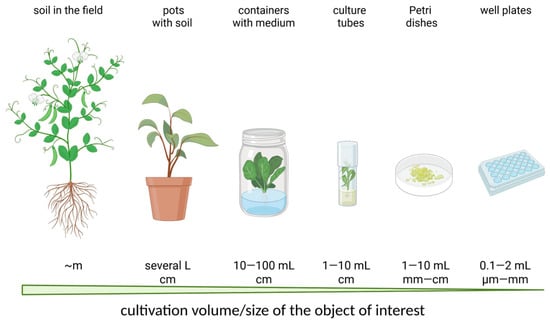
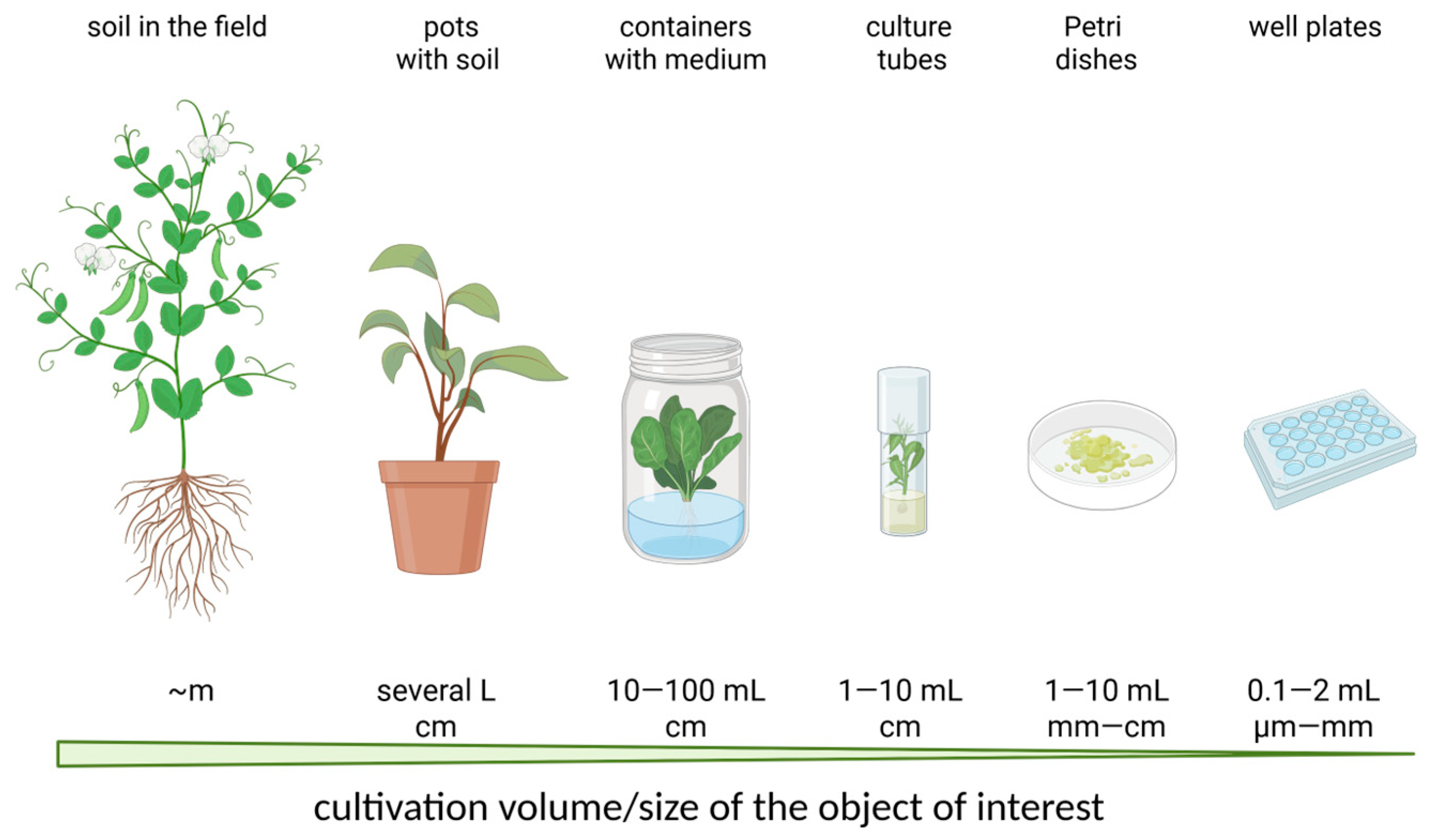
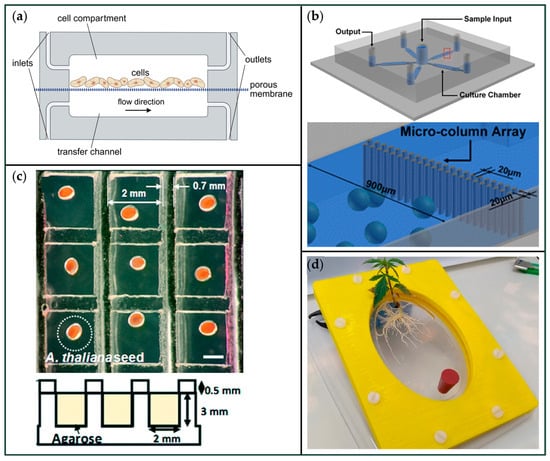
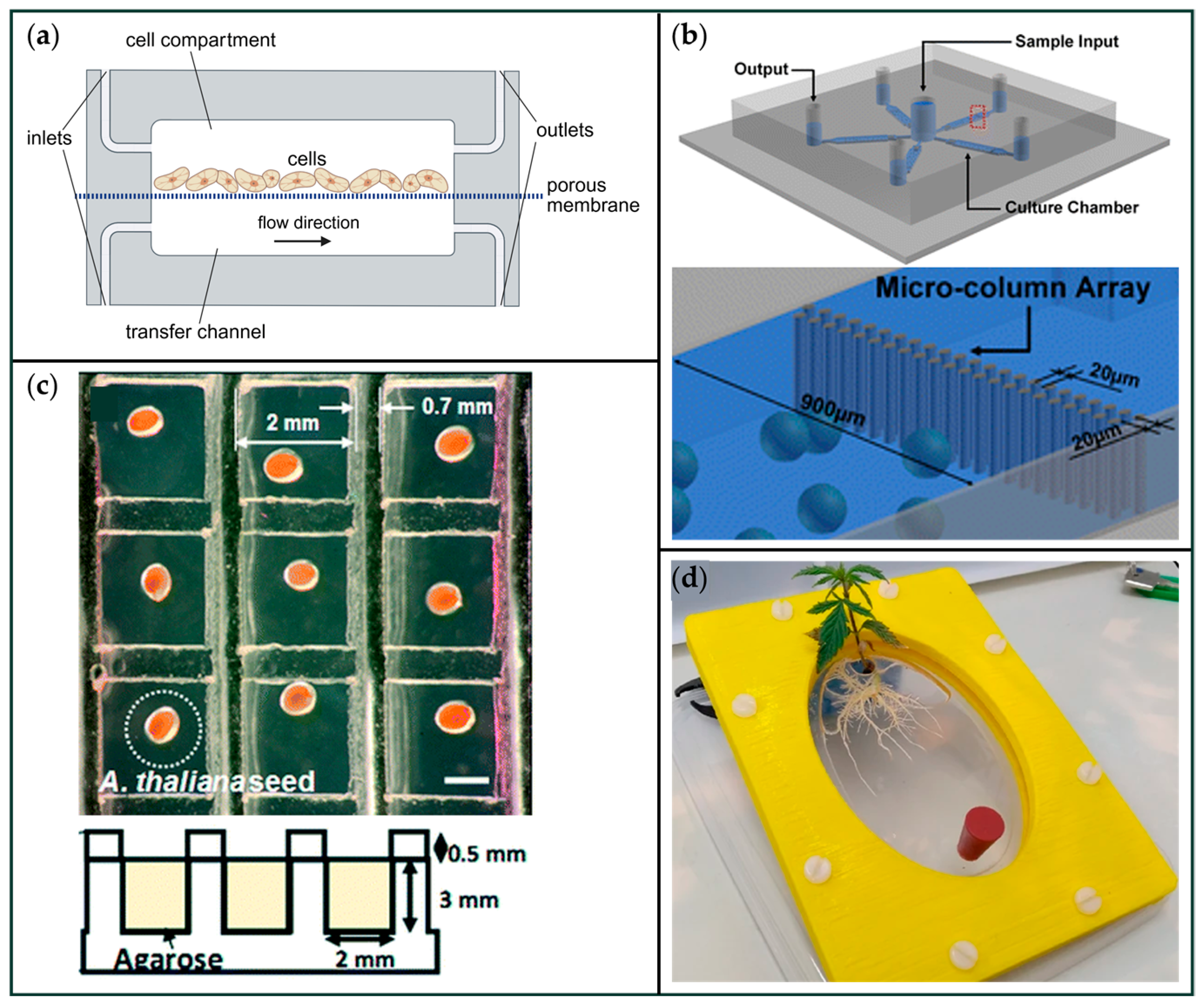
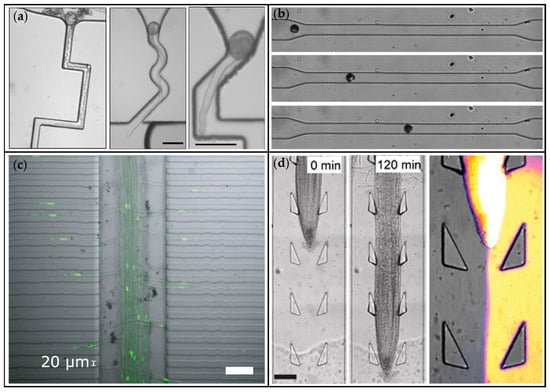
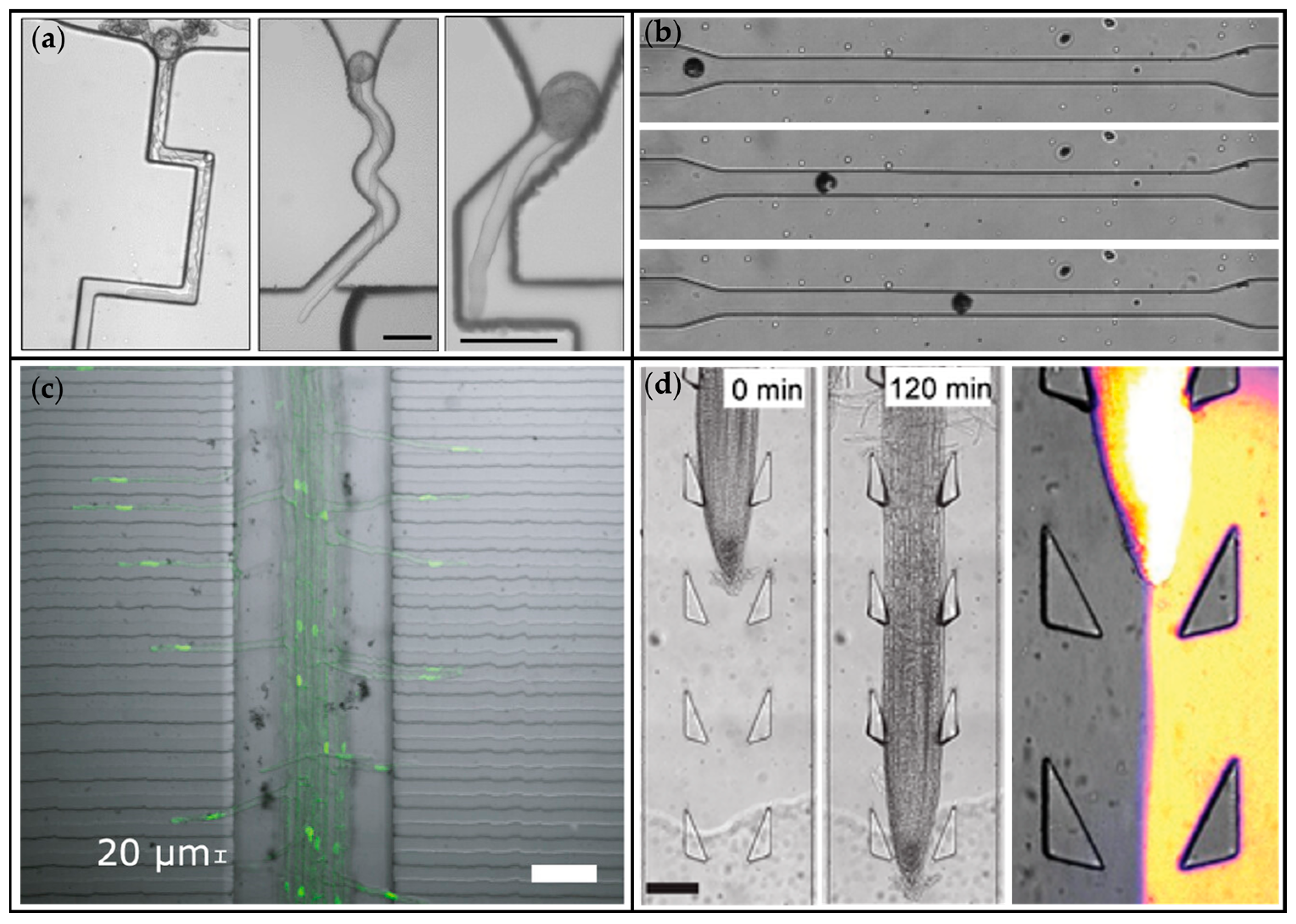
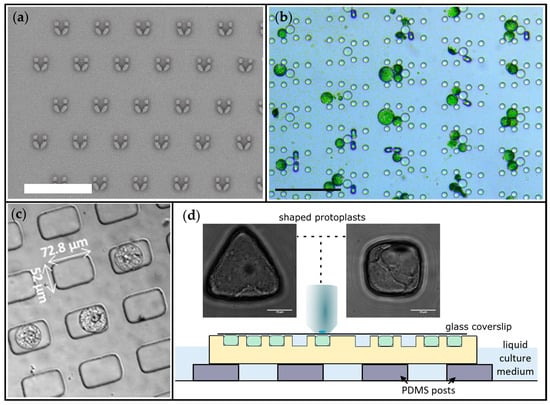
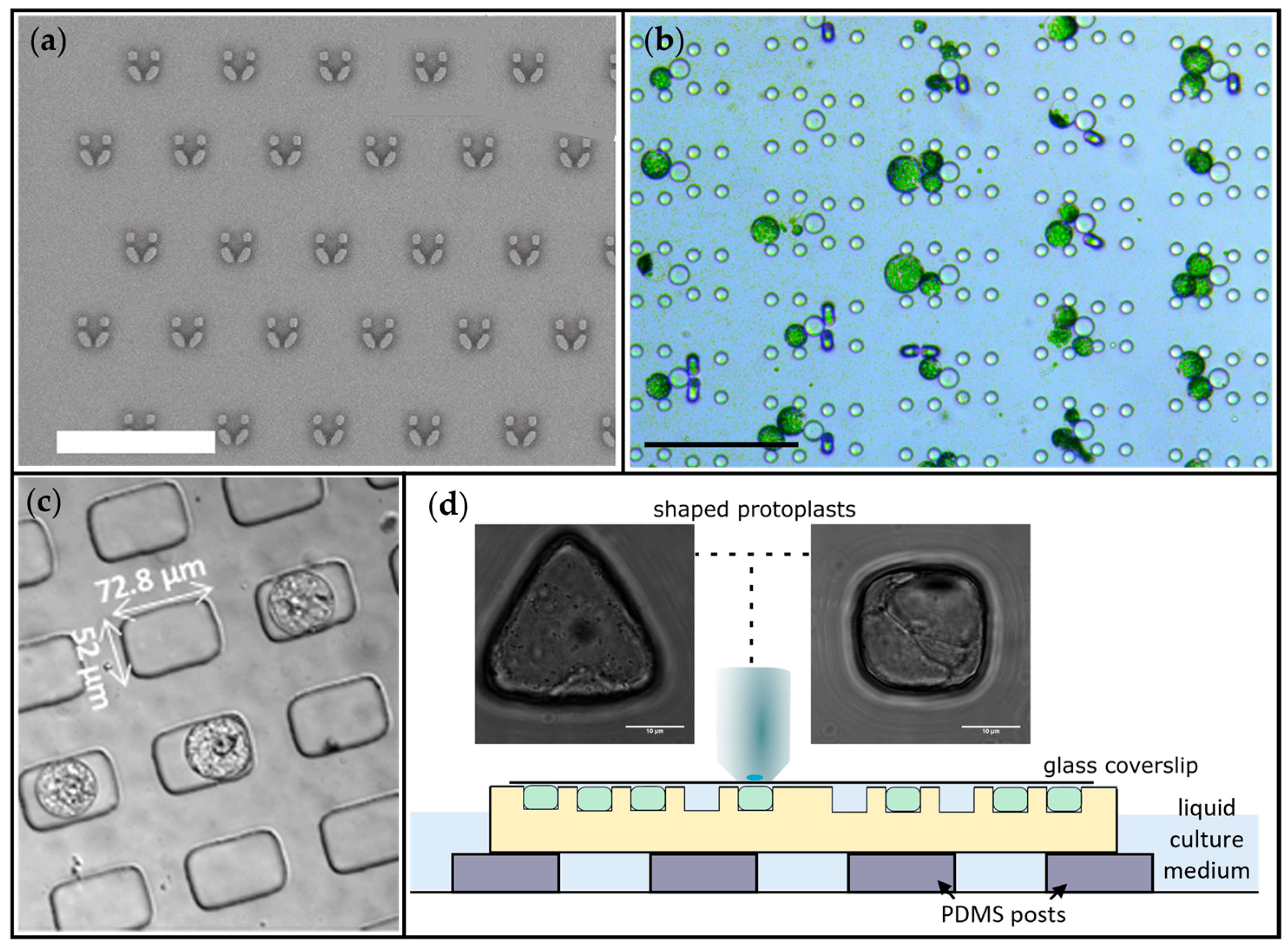
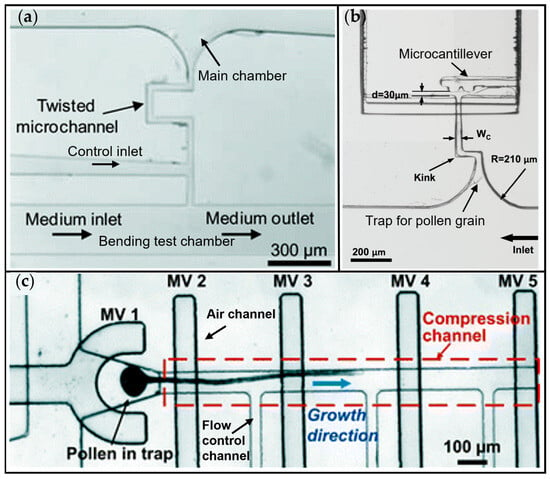
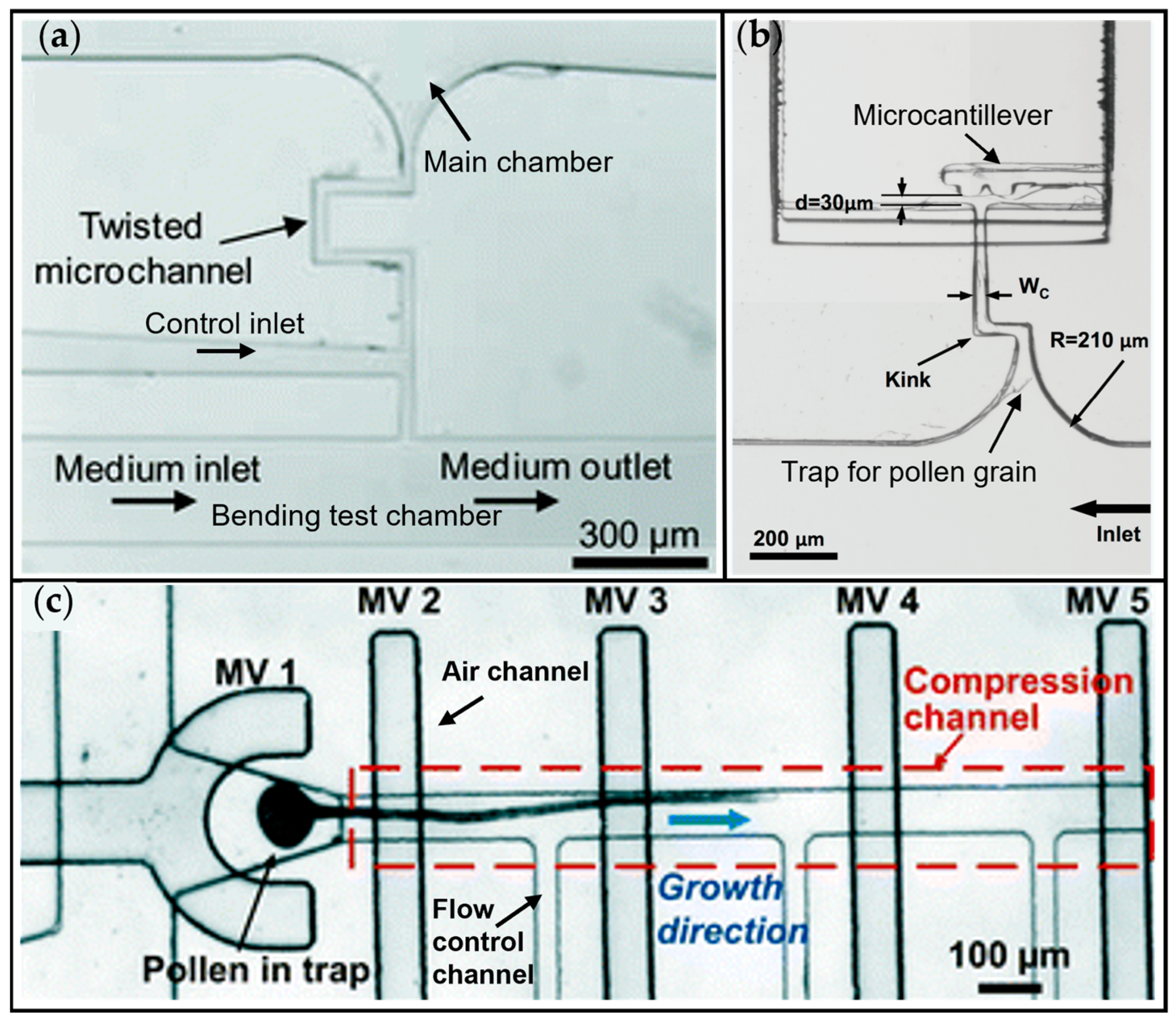

Disclaimer/Publisher’s Note: The statements, opinions and data contained in all publications are solely those of the individual author(s) and contributor(s) and not of MDPI and/or the editor(s). MDPI and/or the editor(s) disclaim responsibility for any injury to people or property resulting from any ideas, methods, instructions or products referred to in the content. |
© 2026 by the authors. Licensee MDPI, Basel, Switzerland. This article is an open access article distributed under the terms and conditions of the Creative Commons Attribution (CC BY) license.