Article

Damping Performance of Manganese Alloyed Austempered Ductile Iron

1
Department of Mechanical and Industrial Engineering, Manipal Institute of Technology, Manipal Academy of Higher Education, Manipal 576104, Karnataka, India
2
Department of Aeronautical & Automobile Engineering, Manipal Institute of Technology, Manipal Academy of Higher Education, Manipal 576104, Karnataka, India
*
Author to whom correspondence should be addressed.
Appl. Sci. 2026, 16(1), 420; https://doi.org/10.3390/app16010420 (registering DOI)
Submission received: 11 November 2025 / Revised: 10 December 2025 / Accepted: 12 December 2025 / Published: 30 December 2025

Abstract

Austempered ductile iron has gained increased interest as an ideal choice of material for mechanical components exposed to dynamic loading. Apart from strength and ductility, material damping is also one of the important demands imposed on the machine components exposed to noise and vibrations. In the present study, the damping characteristics of austempered ductile iron with varying levels of Mn variations are investigated. Samples were produced with three levels of Mn variations: 0.31 wt%, 0.60 wt%, and 0.92 wt%, and they were subjected to austenitization and austempering heat treatment. Variation in the damping characteristics of austempered ductile iron were studied before and after the heat treatment by performing the impact hammer test. The microstructure and the hardness variations of the samples were studied to interpret the mechanisms associated with variation in the damping characteristics. The studies revealed that Mn addition and heat treatment contribute to the variation in the microstructure and the mechanical properties. These properties have a contribution to the variation in the damping characteristics of ADI. Additionally, the study also revealed the existence of an optimum level of Mn that could yield better damping characteristics.

1. Introduction

Advancement in technology demands mechanical systems with greater performance. It is common that such systems are exposed to dynamic load of varying levels of magnitude and frequencies. Prolonged exposure to these conditions may deteriorate performance and eventually lead to fatigue failure. The ability of a system to function effectively without failure remains a major challenge for design engineers. To improve the performance of the system, it is very crucial that the problems associated with noise and vibrations be minimized. These aspects can be addressed at the system level or at the component level. At the system level, an isolator or absorber can be implemented to minimize the effects of vibration [1,2,3,4,5]. However, for the component level, implementing these techniques would not be technically feasible. The solution domain shifts on addressing material selection. A high-damping material would be an elegant way to mitigate the structure-borne vibrations in a dynamic system. Increased damping acts as a barrier that eventually diminishes the vibrations in the system. This feature allows the component to attenuate the noise and vibration, which could otherwise lead to the failure of the component. Literature reported that high-damping metals like cast iron are extensively used for mitigating structure-born vibrations in machinery [3,6]. However, for machine components, its usage is limited due to poor ductility, where fatigue failure is quite common. For a machine element exposed to dynamic loading, high strength, high damping, and ductility are very important attributes. This implies a paradigm shift in the selection of a suitable material that could minimize the adverse effects of vibration.
Recently there has been an increased interest in Austempered Ductile Iron (ADI). ADI belongs to the family of cast steel, and it has superior properties in terms of its counterpart produced from casting. The ductile iron has a unique microstructures, which enhance its yield strength, ductility, wear resistance, and toughness. Because of these unique attributes, ADI is typically found in applications like in turbine casing, automobile components, and earth moving machines [7,8,9,10]. The mechanical properties of ADI mainly depend on heat treatment parameters and the presence of different alloying elements in it. Each alloy is affected in its own way, and it is essential to determine the optimum level of the particular alloying element in order to have a balanced set of properties [11,12,13,14]. Alloying elements play a crucial role in the properties of ADI by influencing the microstructure. Various reports are available regarding the effect of the addition of different alloying elements on the properties of ADI. A research study found that an increase in Ni wt% improves the tensile strength and elongation % of ADI as well as increasing the volume fraction of the carbon-rich austenite phase [15]. The addition of niobium as an alloying element was found effective in refining the graphite nodules. It helped in homogenizing the size and distribution of graphite nodules [7]. Copper is commonly added as an alloy to cast iron as it is an austenite stabilizer, which can hinder the start of the transformation to pearlite [16]. There are few reports that provide the effect of manganese on the machinability of ADI. The addition of manganese greatly helps in improving the hardenability of the ADI [17]. However, damping properties of the Mn alloyed ADI are largely unexplored [18].
Estimation of damping is very critical to assess the ability of material to dissipate vibration. There are different approaches to characterizing the damping properties of materials. A piezoelectric oscillator measures the damping by exposing the material to a longitudinal wave [1]. The ratio of loss modulus and storage modulus from the DMTA is used to measure the damping properties [3]. Damping can be estimated from flexural internal frictional measurement 18] or from the inverted torsional pendulum method [19]. Little literature has reported the measurement of damping from the decay in oscillation using free vibration [4,5]. Additionally, impulse or frequency response function measurement from the experimental modal analysis can be used to measure the damping ratio of the material [3]. This method is more versatile, and it measures the vibration amplitude and natural frequency along with the damping. The impulse can be given from the shaker or impact hammer. The response can be measured from any motion measurement sensor. These approaches are effective in terms of the ease of measurement and economical point of view. The response from these tests will be assessed in terms of the receptance or accelerance plots, which subsequently depends on the sensors employed to measure the response [20].
It is crucial to evaluate the vibration attenuation characteristics of ADI prior to its implementation in real-world applications. Assessing the impact of these parameters on damping characteristics and optimizing processing conditions are critical for improving damping performance. The present study investigates the influence of an alloying element, specifically manganese, and heat treatment on the damping characteristics of ADI. The ductile iron was cast with varying amounts of manganese, and these samples were subjected to austempering treatment to obtain the manganese alloyed austempered ductile iron. Damping properties of this manganese alloyed ADI are estimated from the experimental modal analysis using the impact hammer. The microstructure is analyzed using SEM. Carbon-rich austenite is determined using XRD, which is used to correlate the damping variation and to interpret the mechanisms responsible for the variation in the damping characteristics of ADI.

2. Materials and Method

2.1. Material Preparation

The ductile iron test specimens were cast as per the ASTM standard A897/A897M [21]. The process involves melting the raw materials in the medium frequency induction furnace, and the required alloying elements were added to the melt followed by nodulization and inoculation. The melt was poured into the standard 1-inch Y block mold, and the pouring temperature was in the range of 1490–1520 °C. The samples were prepared in 3 different compositions, distinguished with respect to the variation in the manganese content and by keeping the other elements at a constant level. The content of manganese is varied at three levels: 0.3 wt%, 0.6 wt%, and 0.9 wt%, which will be referred to as Alloy 1, Alloy 2, and Alloy 3, respectively, throughout. The detailed chemical composition of the as-cast ductile iron samples is listed in Table 1, and these values are further confirmed form the spectroscopy analysis.

2.2. Microstructure Observation

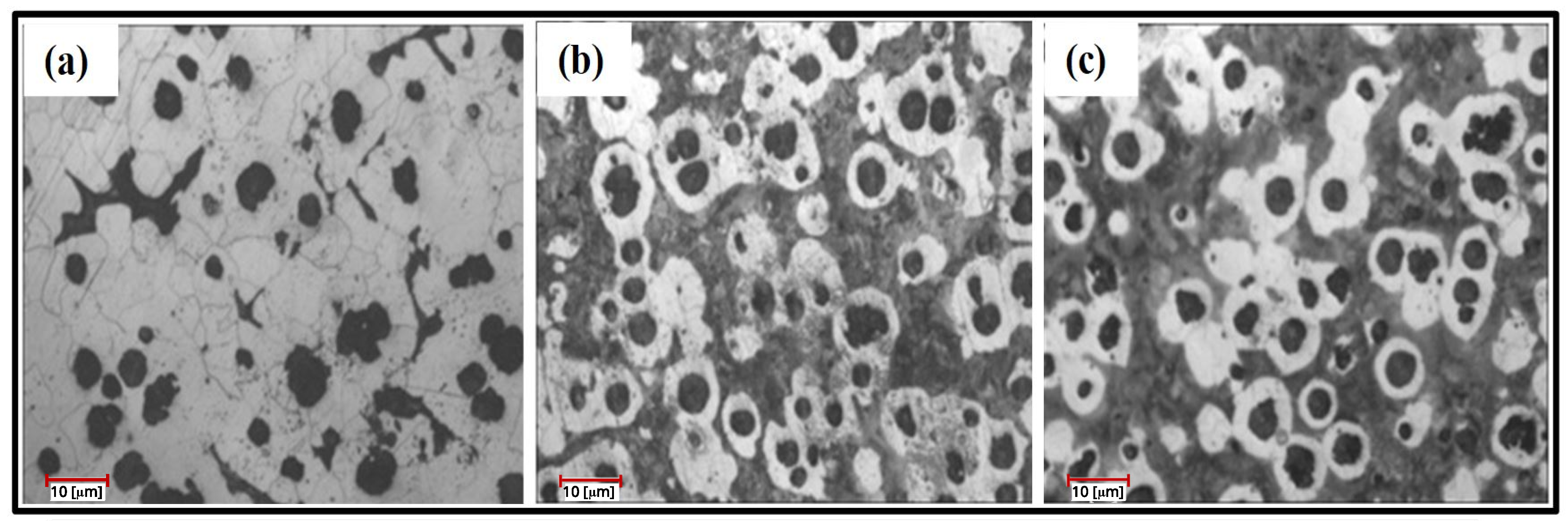
Optical microscopy was used to study the microstructure of as-cast ductile iron. Microstructure images of as-cast specimens with different manganese content are presented in Figure 1. The specimens were ground using SiC papers up to 2000 grit, followed by polishing with 1 µm diamond suspension. A 2% nital etchant was used for 3–5 s to reveal graphite and matrix phases. Optical micrographs were captured using an Olympus BX53M (Olympus Scientific, Japan, Tokyo) microscope at magnifications of 100–500×. SEM imaging was conducted using a JEOL JSM-IT500 (JEOL, Japan, Tokyo) operating at 15 kV with secondary electron detector. At least ten fields per sample were analyzed to ensure statistical reliability. These images show the typical bull’s eye structure of ductile iron containing graphite in nodule shapes. The ferrite is distinguished by the white region around the nodules. As evident from the microstructure, there exists a variation in the nodule count among the as-cast ductile iron samples. The variation in the nodule count with the increase in manganese content is listed in Table 2.

2.3. Heat Treatment and Mechanical Characterization

To study the effect of heat treatment on the damping characteristics of ADI, the ductile iron samples are subjected to austempering treatment using a muffle furnace and a salt bath furnace (Hamco manufacturer, Gokhiware, India). Initially, the samples were heated in the muffle furnace to the predetermined austenitization temperature of 900 °C with a holding time of 2 h. These samples were quickly transferred to another salt bath furnace that was maintained at 320 °C. The austempering temperature is selected based on the previous studies with the expectation of moderate hardness for the ADI samples [22,23]. The salt bath consisted of a sodium nitrite and sodium nitrate mixture. Samples were held in the salt bath furnace at the constant temperature of 320 °C for 2 h before taking them out and cooling them in the air. The austenitization temperature and austempering temperatures were selected based on the literature review with the aim to study the effect of varying manganese content on the damping properties with the constant heat treatment parameters [17]. To corelate the property variations of ADI with respect to the Mn addition and the heat treatment, the microstructures of all the heat-treated samples were observed using SEM. Additionally, X-ray diffraction was used to determine the amount of carbon-rich austenite in the austempered samples. The samples were prepared by polishing to ensure smooth surface, and they were then subjected to XRD analysis using chromium Kα radiation. Scanning was done in the 2θ range of 35–50° to get the austenite and ferrite peaks. The data of the angle of reflection and the corresponding intensity of the X-ray were obtained from the XRD experiment. This data was used to determine the integrated intensity of the peaks. The austenite (111) and ferrite (110) peaks obtained within this range were used to calculate the amount of retained austenite in the structure. This calculation was carried out as per the procedure specified in ASTM E975. To assess the variation hardness, hardness values of the heat-treated samples were measured as per the ASTM E10 [23] using the Brinell hardness testing machine.

3. Damping Property Characterization

3.1. Material Damping Behavior

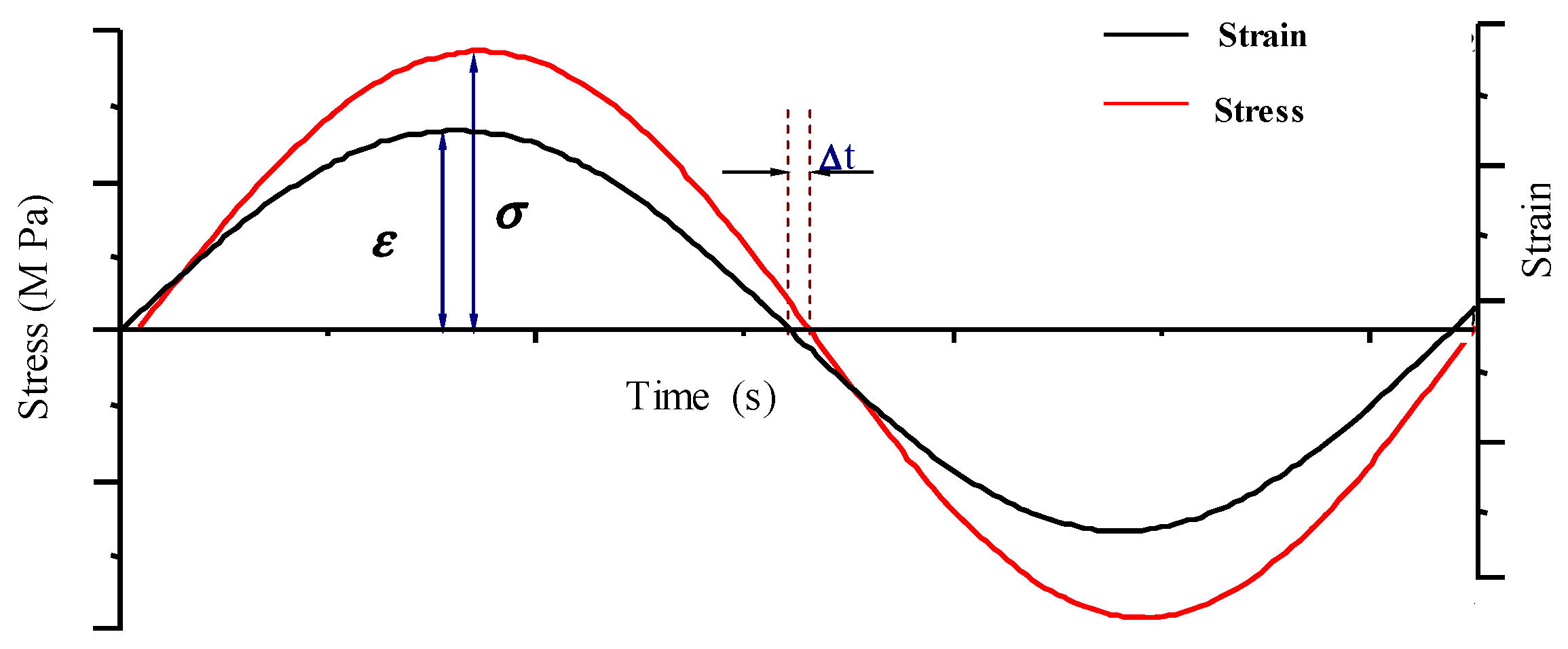
An ideal elastic material follows Hooke’s law, where the stress is directly proportional to the strain. It must satisfy that the stress and strain are always spontaneous, which implies that stress and strain are always in phase. However, for actual materials, there exists a phase difference between stress and strain. This attribute is associated with the ability of the material to dissipate the energy [24]. Often, this property is described as the damping or the loss factor. Under dynamic loading, by virtue of its damping, the material behavior deviates from the ideal solid. Graphically, it can be expressed as the response under oscillating harmonic function of time used (Figure 2). Assuming that material response is linear, the strain is harmonic, as in Equation (2), and the stress is also harmonic with an angular velocity of ω. The phase difference exists between the given phase difference (δ = ωΔt) with respect to the strain [24].
ε ( t ) = ε 0 e j ω t
σ ( t ) = σ 0 e j ( ω t + δ )
where ε0 is the amplitude of the shear strain, and σ0 is the amplitude of the shear stress.
The complex modulus (E*) is often used to represent the ability of the material to dissipate the vibration. It represents the resistance offered in response to the applied strain, and it is expressed mathematically as [25]
E * = σ ( t ) ε ( t ) = σ 0 e j ( ω t + δ ) ε 0 e j ω t = σ 0 ε 0 cos δ + i sin δ
The complex modulus consists of two terms. The first term represents the instantaneous response of the continuous medium, and the second term signifies the delayed response involving the loading history at the preceding instant [25].
E = σ 0 ε 0 cos δ   and   E " = σ 0 ε 0 sin δ
E’ is the storage modulus, and E" is the loss modulus. Storage modulus represents the ability of the material to store the energy during deformation, which could be recovered later. The ability of a material to dissipate the energy is expressed in terms of loss modulus [24].
The loss factor η relates between the storage, and the loss modulus is given by,
η = tan δ = E E
In terms of loss factor, the complex modulus is expressed as
E * = E + i E = E ( 1 + i η )

3.2. Methodology

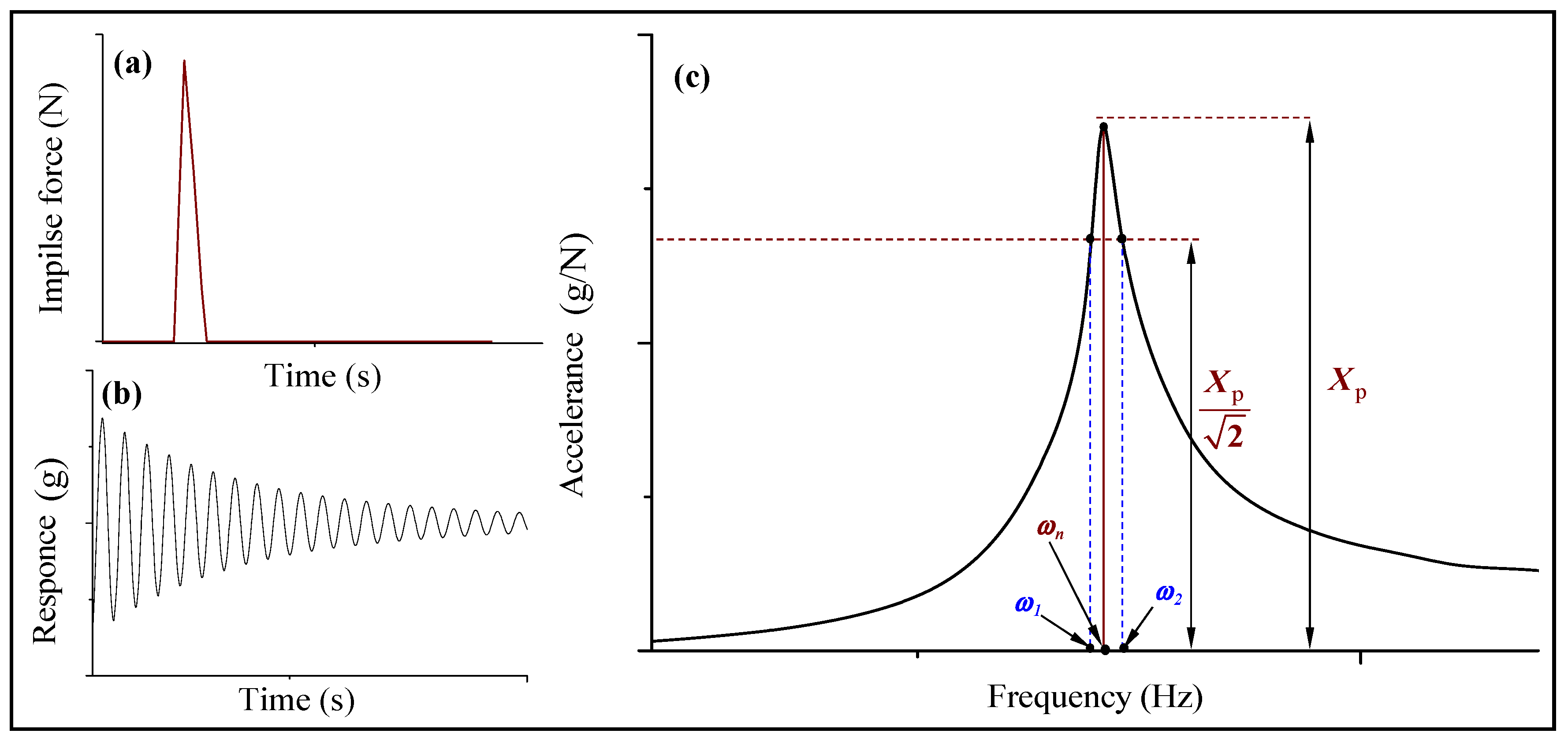
In the proposed work, the impulse hammer test method is adopted to estimate the damping characteristics of the material. The material is excited by an impulse force (Figure 3a) from an impact hammer. The response is measured from an accelerometer (Figure 3b). From the excitation and the response, the impulse response function is estimated. The corresponding sample plot is shown in Figure 3c. The frequency corresponds to the peak amplitude and represents the natural frequency and the damping ratio estimated as the loss factor, which is extracted according to the half-power bandwidth method. The expression for calculating the loss factor from the half-power bandwidth method is given by [26,27,28]
η = ω 2 ω 1 ω n
where ω2 and ω1 are the frequencies corresponding to the half-power points.

3.3. Experimental Setup

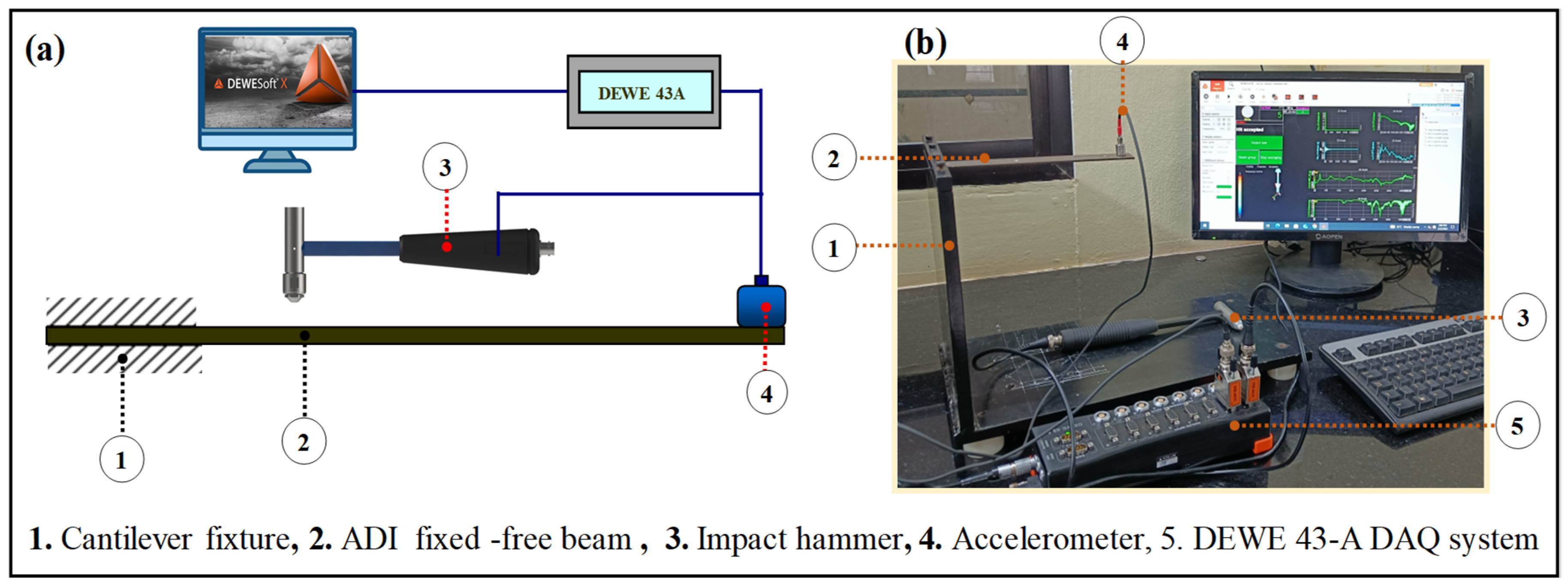
The damping characteristics of ADI are evaluated from impact hammer-based experimental modal analysis [29,30]. These measurements are in compliance with the standard ASTM E756–05. The test specimens of dimensions 250 mm × 25 mm × 2 mm are prepared. According to the standard, tests are conducted on the fixed free beam configuration. The schematic of the experimental setup is illustrated in Figure 4a, and the actual image is presented in Figure 4b. An impact hammer (PCB Piezotronics, type-086C40, PCB Piezoelectronics, New York, NY, USA) of sensitivity 2.25 mV/N is employed to give the input excitation near the fixed end of the beam. The response signals are measured from an accelerometer (MMF Germany, type-145A100, Metra Mess, Radebeul, Germany) attached at the free end of the beam. The impulse force and the acceleration signals were acquired from DEWE-43A-USB data acquisition system (DAQ, Dewesoft, Trbovlje, Slovenia). The impulse response function was analyzed through DewesoftX—Professional software interface.
From the impulse and response signals, the impulse response function in the form of accelerance was measured [20]. For the measurement of the damping, the first two natural frequencies of the structure are considered. These measurements were repeated for all the samples listed in Table 1. To maintain consistency in the test results, the clamping torque was carefully monitored. The experiments were conducted on three identical beam samples. A total of 15 averages were considered to ensure consistency in measurement. To verify the consistency of the response, experiments were repeated five times under the same working conditions, and the average response was considered for analysis.

4. XRD Analysis

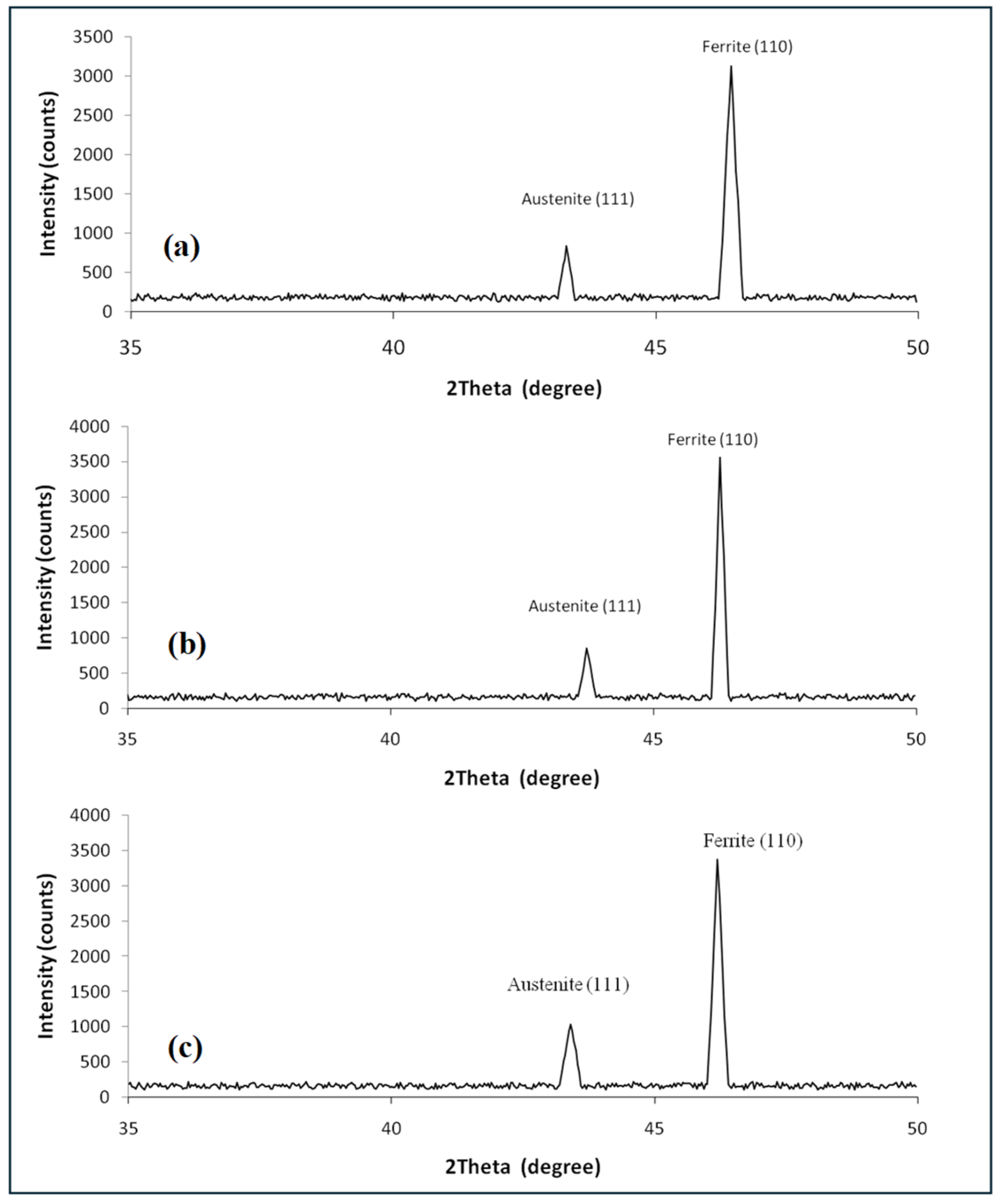
To determine the amount of carbon-rich austenite in the ADI samples, X-ray diffraction was carried out. The samples were prepared by polishing to ensure smooth surface, and they were then subjected to XRD analysis using chromium Kα radiation. Scanning was done in the 2θ range of 35–50° to get the austenite and ferrite peaks [31]. The data of the angle of reflection and the corresponding intensity of the X-ray were obtained from the XRD experiment. As shown in the Figure 5, the austenite (111) and ferrite (110) peaks obtained within this range were used to calculate the amount of retained austenite in the structure as per the procedure of ASTM E975 standard. The nodule count of the as-cast samples were determined using a metallurgical image analyzer.

5. Results

The present study focuses on assessing the damping characteristics of ADI samples with varying weight percentages of Mn. Damping properties were assessed through Impact hammer test method. In addition, hardness and microstructure were investigated to corelate the impact of microstructure changes on the damping characteristics of ADI. An analysis of the results is presented in the following section.

5.1. Material Property Characterization

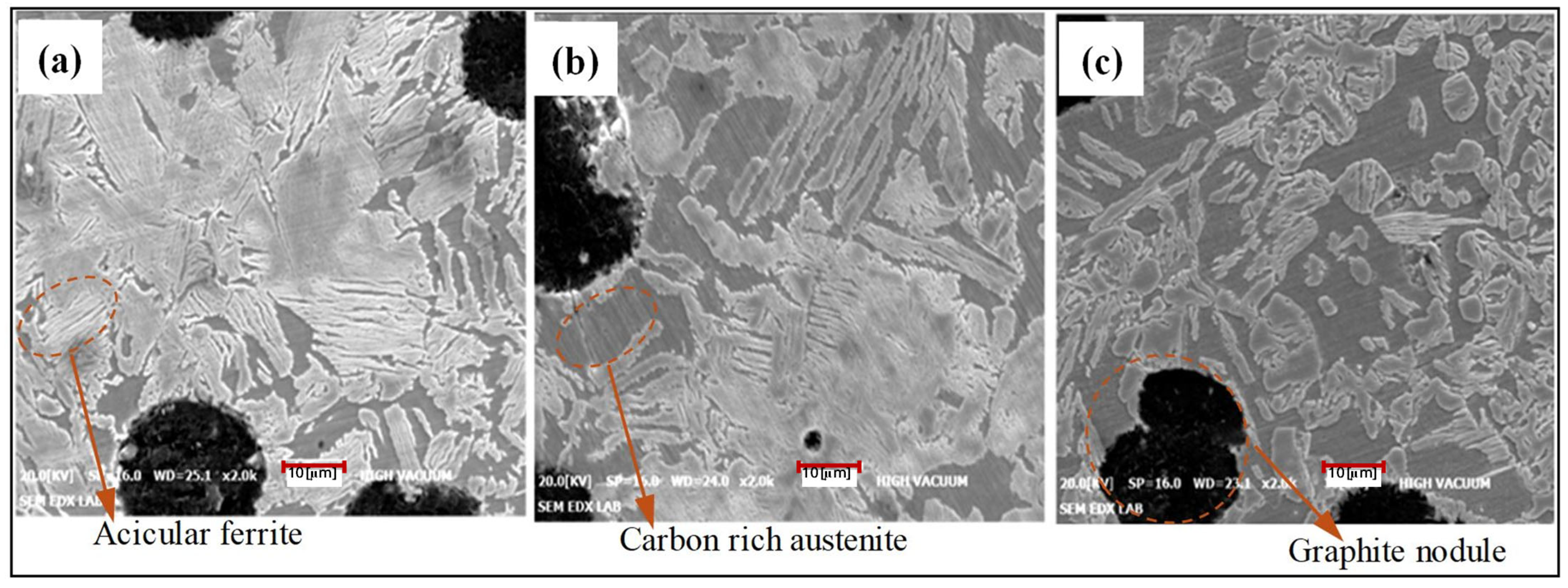
Figure 6 shows the SEM images of ADI samples with different manganese content. A typical ausferrite structure consisting of acicular ferrite and carbon-rich austenite was observed. Also, there was not much change in the nodule’s presence. Since the austempering temperature was not changed, the ferrite size was observed to be similar with respect to the various manganese content. It may be observed that the variation in manganese content resulted in the different amount of carbon-rich austenite in the three alloys. The XRD results confirmed the same with quantification. Generally, lower austempering temperature yields high rate of nucleation with the formation of finer grains, which results in very high hardness with slightly lower toughness of the material [32,33]. However, if the austempering temperature is too high, the nucleation rate will be less a with higher rate of carbon diffusion. This results in the low hardness and high toughness combination. In this case, the austempering temperature is chosen in such a way that the grains are neither too fine nor too coarse, which results in the balanced combination of hardness and toughness.
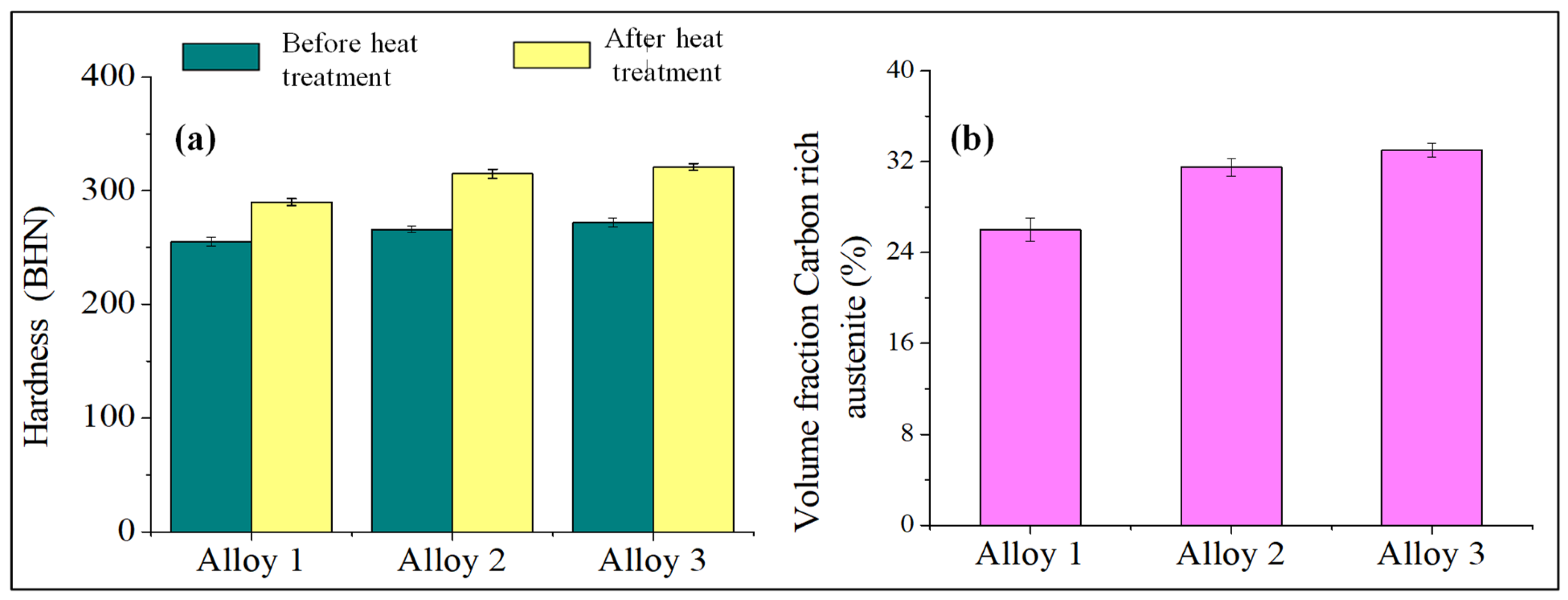
Figure 6 shows the SEM images of ADI samples with different manganese content. A typical ausferrite structure with graphite nodules is observed. The variation in manganese has slightly affected the amount of carbon-rich austenite, which is also evident from the XRD results. It may be noted that manganese being the austenite stabilizer might have resulted in the higher amount of carbon-rich austenite with the higher manganese content. Mn acts as a strong austenite stabilizer by lowering the free energy of the γ-phase and slowing the transformation kinetics during cooling. This promotes carbon enrichment in austenite during austempering, thereby increasing the retained austenite fraction. This has resulted in the slight increase in the hardness value of the alloy with increase in manganese from 0.3 wt% to 0.6 wt%. However, once it reached the optimum value for the carbon-rich austenite, there was not much increase in hardness observed with further increase in manganese content. The details of the variation of hardness and retained austenite for all three alloys are shown in Figure 7.

5.2. Damping Characteristics of ADI

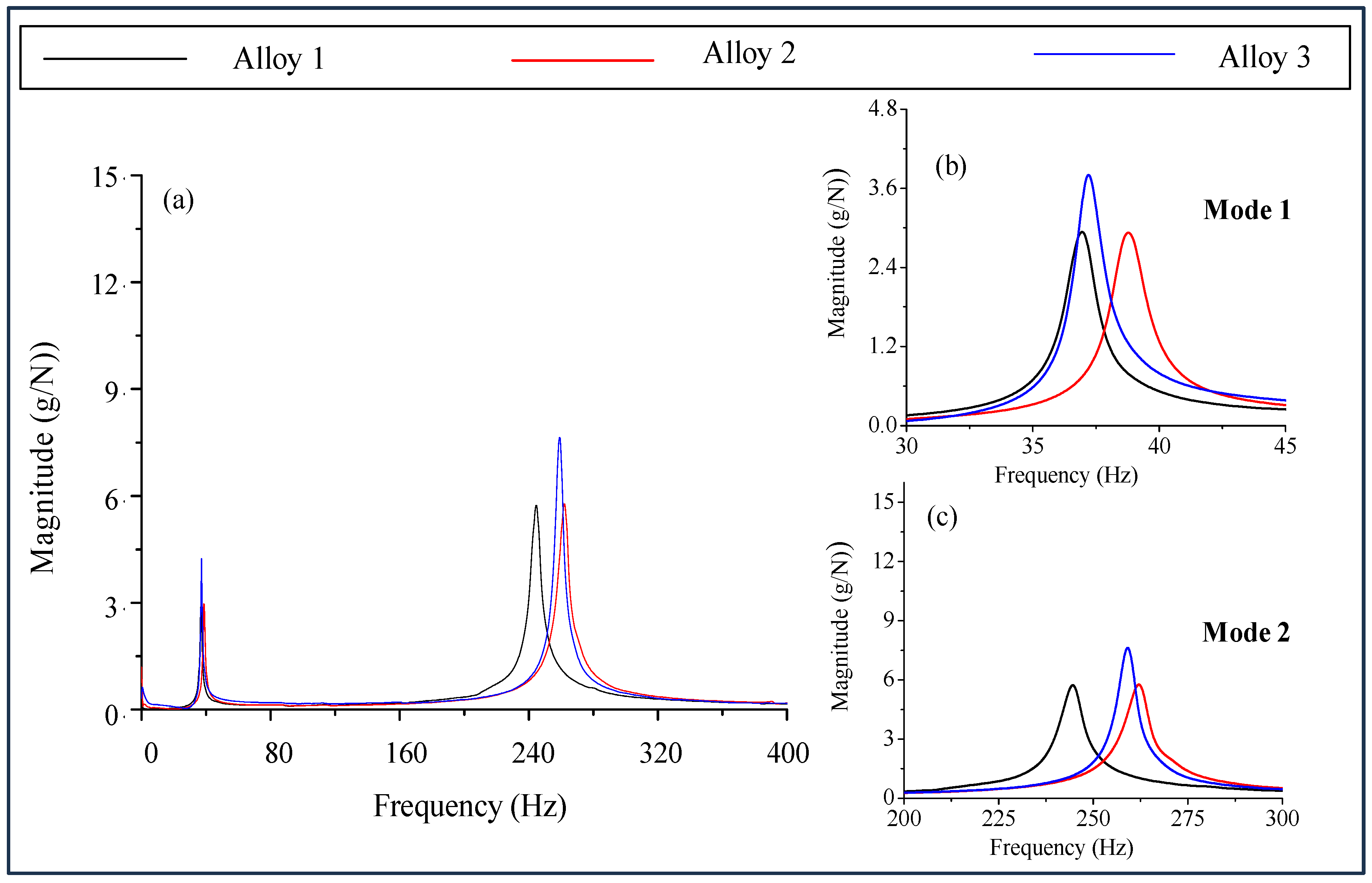
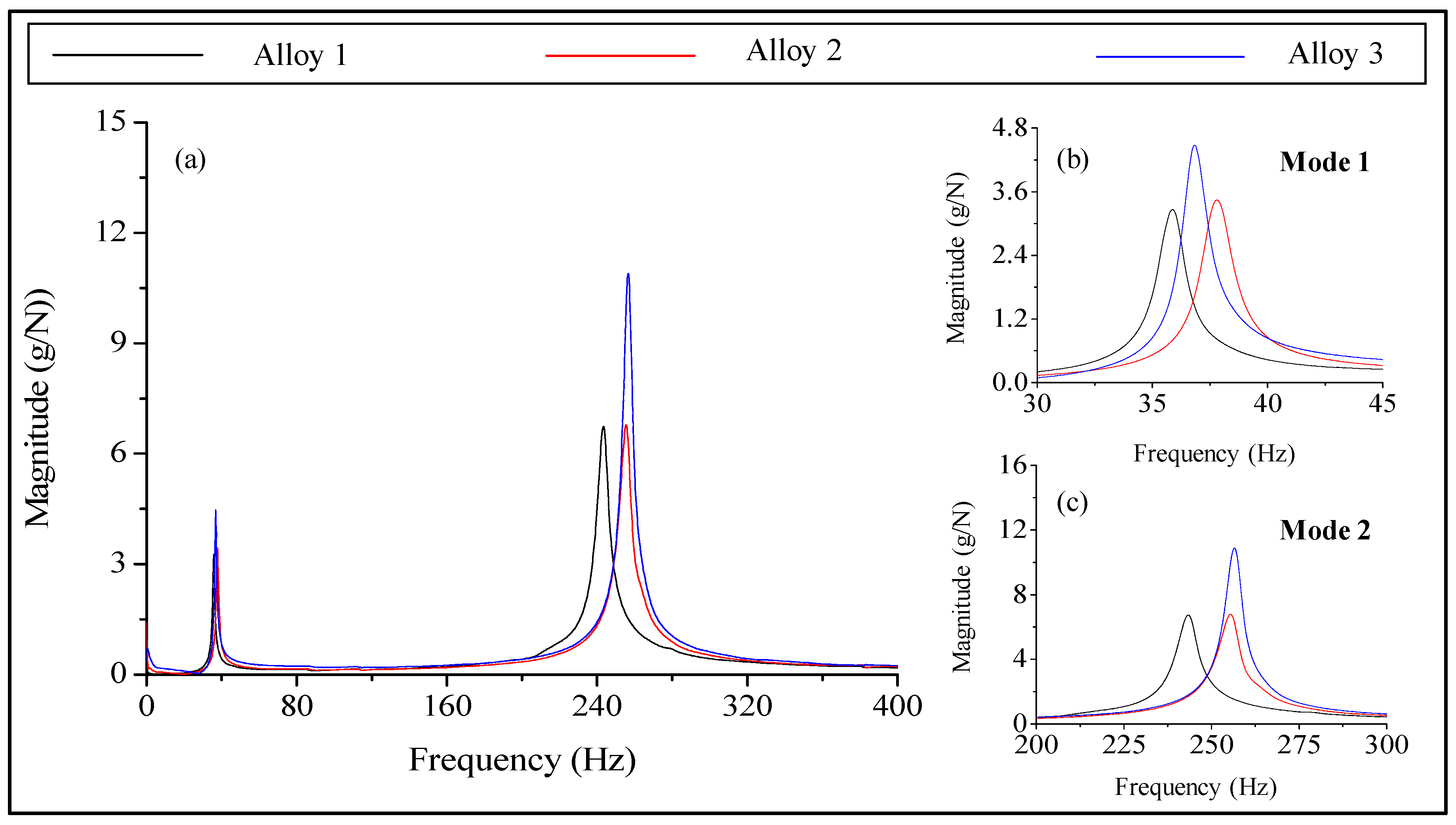
The frequency response plots (accelerance vs. frequency) obtained from the impact hammer test are presented in Figure 8 and Figure 9. The variation in damping is assessed for the first two natural frequencies of the fixed free beam. As evident from the plots, the resonance frequencies (for both mode 1 and mode 2) of the ADI differs with the alloy composition. For Alloy 1, the natural frequency corresponding to mode 1 was observed at 35.8 Hz. The corresponding values for Alloy 2 and Alloy 3 are 37.7 Hz and 36.9 Hz, respectively. The natural frequencies corresponding to mode 2 of alloy 1, alloy 2, and alloy 3 are 243 Hz, 255 Hz, and 257 Hz, respectively. Natural frequency is also a measure of the complex Young’s modulus of a material. The frequency response plots confirm that the complex Young’s modulus values do not vary significantly with the addition of Mn, indicating a mild dependency on the variation in the stiffness. Variation in the natural frequency of the tested samples under the heat-treated state is presented in Figure 8. For mode 1, the natural frequency variations are consistent (with respect to before the heat-treated state) for the tested samples, with alloy 2 registered with a higher natural frequency of 38.7 Hz and alloy 1 having the lowest natural frequency of 37 Hz. For mode 2, there is a slight variation in the peak values. However, these variations are not significant, indicating that heat treatment could not induce a pronounced change in the Young’s modulus of the ADI.
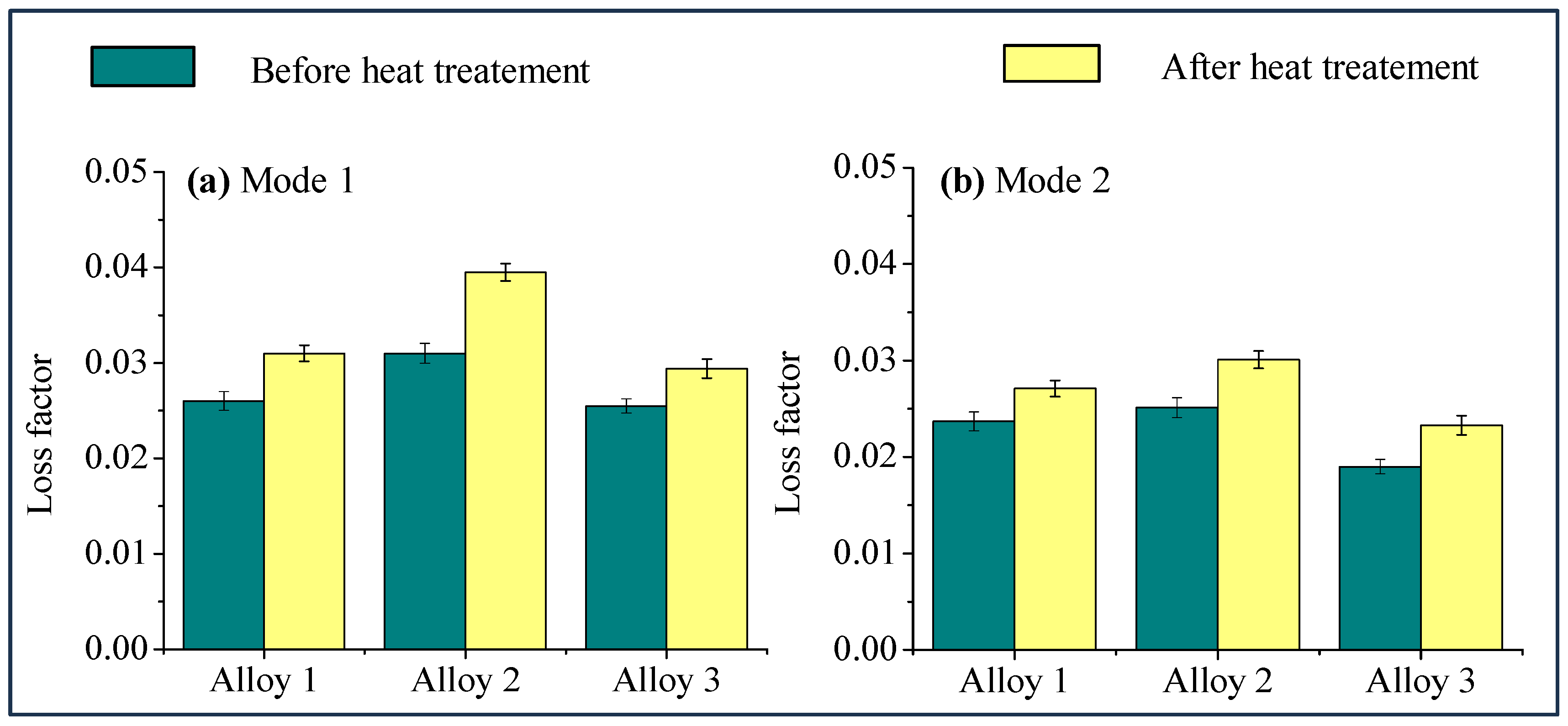
The loss factor computed from the frequency response plot is used as a measure of the damping characteristics of ADI. Variation in the damping characteristics as a function of alloy composition and heat treatment is presented in Figure 10. The graphs show that the loss factor for alloy 1 is 0.027, while alloy 2 has a value of 0.030. This signifies that addition of Mn has a significant contribution on the enhancement in the damping characteristics. Alloy 3 has a loss factor of 0.025. This confirms the fact that the addition of Mn increases the loss factor. However, further increase in Mn is not beneficial as it reduces the damping. This indicates the existence of an optimum alloy composition that yields a better damping characteristic. The varying trend is consistent even at mode 2. However, the damping values recorded for mode 2 are less compared the values corresponding to mode 1.
As apparent from Figure 10, the heat treatment process contributes to the variation in the damping characteristics of ADI. Corresponding to mode 1, after heat treatment, the loss factor for alloy 1 is increased from 0.0277 to 0.0313. After heat treatment, among the tested samples, the largest value of loss factor is registered for Alloy 2 and the least is recorded for Alloy 3. This confirms that heat treatment improves the damping properties of ADI, however the rate of increase depends on the base value prior to the heat treatment process. From Figure 10b, it appears that the heat treatment process has an influence on the loss factor of mode 2. However, these enhancements are not as pronounced as in mode 1. The above results confirm that the damping characteristics of ADI are a function of the alloy composition and the heat treatment process. Additionally, the damping values are larger for the fundamental mode of vibration. At the higher modes it will be reduced, indicating the dependency of frequency on the damping characteristics of ADI.

6. Discussion

Material damping is one of the important demands imposed by industry for mechanical systems exposed to dynamic loading. Improved damping could result in a better performance of the system under vibration loading. The present study focused on assessing the variations in the damping of ADI with inclusion of the Mn alloying element before and after heat treatment process. The damping characteristics of ADI originating from the internal structure are often referred to as the in structural damping [6]. This includes the complex physical effects that convert the kinetic and strain energy of the micro-continuum matter into heat. It mainly depends on the interaction at the structural level. Generally, structural damping includes the contribution from the dislocation moment, plastic flow, and internal friction due to deformation and microstructural defects [1,2,3,4]. For ADI, apart from these factors, damping is also contributed by the graphite count, graphite surface area, and contact interaction between ferrite and graphite phases and the carbon-rich austenite after the heat treatment process [2,3,4]. For ADI, the mechanism of damping differs as the contribution of the above stated factors may vary.
In the as-cast state, alloy 1, which is characterized by the lower percentage of Mn, has a lower value of damping. The damping of Alloy 2 is improved with the inclusion of a larger weight fraction of Mn. This substantiates the fact that Mn addition could contribute to the damping, which is attributed to the variation in the microstructure of the tested ductile iron samples. As illustrated in Figure 2, there is a marginal increase in the graphite nodule count in ductile iron samples of alloy 2 compared to that of alloy 1. Generally, the damping variation in the as-cast ductile iron is attributed to the graphite nodules and the ferritic matrix surrounding the graphite. The damping capacity will be more if the alloy has a larger number of graphite nodules and these nodules are surrounded by ferrite. Graphite nodules form as a discontinuity for the plastic flow in the region occupied by the soft ferrite phase [3]. Thus, it contributes to the increase in energy dissipation. Furthermore, an increase in graphite count forms more graphite sites in the microstructure, which enhances the dissipation at the contact surface due to friction at the interface [2,3]. This phenomenon can be attributed to the higher loss factor registered for alloy 2. However, for alloy 3, the damping capacity is reduced. This phenomenon can be attributed to the variation in the hardness of the as-cast ductile iron sample presented in Figure 6a. The hardness of alloy 3 is higher compared to alloy 2. These variations can be associated with the formation of pearlite structure in ductile iron with the addition of Mn [34]. The higher the content of Mn in the alloy, the more the area fraction of the pearlite. The perlite structure is relatively harder than the ferritic microstructure, which subsequently increased the hardness of alloy 3 when compared to alloy 1. The presence of a larger fraction of the hard phase may inhibit the plastic flow, which eventually decreases the interface interaction and reduces the energy dissipation.
After heat treatment, the loss factor is increased for alloy 1, alloy 2, and alloy 3. This effect can be attributed to the formation of the carbon-rich austenite, which alters the plastic flow of the materials [2,3,35]. The carbon-rich austenite is the untransformed austenite or the stable austenite present at room temperature. This is mainly because of the lower austempering temperature or addition of some austenite-stabilizing alloying elements like nickel and manganese [15]. The percentage of carbon-rich austenite is more for alloy 3 and the least for alloy 1. Presence of the soft phase in the carbon-rich austenite improves the energy dissipation. Additionally, the interface friction is increased. However, a larger amount of carbon-rich austenite has a negative effect on the damping as it contributes to the enhancement in the hardness. The overall contribution of these effects can be evident from the larger loss factor for alloy 2 and the lower one for alloy 1. However, for alloy 3, the hardness enhancement is dominated by the damping; thus, it shows a decreasing trend. The loss factor of ADI for mode 2 is lower compared to the first mode. This trend is consistent with all the tested samples. The loss factor is a function of the storage and the loss modulus. With the increase in frequency, the energy dissipation by the materials is reduced as the time required to assist the plastic flow and the time to dissipate the strain into heat is reduced. This effect subsequently leads to a lower value of damping in ADI at the higher frequency. As evident from the results, the addition of Mn and the heat treatment process alters the microstructure. This variation results in the energy dissipation characteristics of ADI. The loss factor is the maximum for alloy 2 and the minimum for alloy 1. However, alloy 3, characterized by the higher weight fraction of Mn, has a loss factor lower than alloy 2. This indicates that the addition of a larger volume fraction of ADI is not beneficial as also it confirms the optimum level of Mn that could yield better damping characteristics.

7. Conclusions

The current study is focused on evaluating the damping characteristics of ADI with different weight percentages of Mn. Damping characteristics are expressed in terms of the loss factor, which is evaluated from the frequency response plots obtained from the impact hammer test. The research demonstrated the correlation between the damping properties and the Mn content in the ADI. From this investigation, the following conclusions can be drawn.
ADI is a special class of cast iron with a distinct microstructure consisting of graphite in the form of nodules. The addition of Mn promotes formation of more nodules, but the size of the graphite nodule is unaffected. The increased number graphite nodules contributes to the enhancement in the hardness. By increasing the weight percentage of Mn from 0.31 to 0.92, the hardness is increased by 6.7%. After the heat treatment process, the formation of residual austenite improved hardness even further.
The heat treatment process and the content of Mn do not have significant contributions modifying the stiffness of the ADI. However, these parameters influence the variation of damping characteristics of ADI. The loss factor is increased by 11% as the Mn content varies from 0.31 wt% to 0.6 wt%. The existence of an optimum weight % of Mn leads to a reduction loss factor when the content of Mn in ADI is increased. The damping characteristics of ADI are enhanced with the austempered heat treatment process carried out at a temperature of 320 °C for duration 2 h. These enhancements depend on microstructure changes induced by the addition of Mn, which vary the hardness and modify the mechanism of energy dissipation at the structural level. The austempered heat treatment carried out at a temperature of 360 °C improved the loss factor by 29% for ADI with 0.6 wt% Mn, and for 0.92 wt% Mn, the loss factor increased by 14.9%. The enhancement in the loss factor depends on the base value under the heat-untreated state. For achieving better damping in ADI, Mn addition can be beneficial, but at a larger weight fraction, the damping mechanism could be altered. These mechanisms have a negative effect on energy dissipation, which would eventually reduce the damping rather enhance it. The study confirms the existence of an optimum weight percentage of Mn, which can yield better damping to achieve an optimum performance of machine components that are exposed to dynamic loads of varying frequencies.

Author Contributions

Conceptualization, U.R.P. and A.H.; Methodology, U.R.P. and S.H.; formal analysis, U.R.P. and A.H.; resources. U.R.P. and A.H., writing original draft preparation, U.R.P. and A.H., writing-review and editing, S.H. All authors have read and agreed to the published version of the manuscript.

Funding

This research received no external funding.

Data Availability Statement

Corresponding author agrees to provide the data on reasonable request.

Conflicts of Interest

The authors declare no conflict of interest.

References

  1. Carpenter, S.H.; Stuch, T.E.; Salzbrenner, R. An investigation of the mechanical damping of ductile iron. Metall. Mater. Trans. A 1995, 26, 2785–2790. [Google Scholar] [CrossRef]
  2. Damir, A.N.; Elkhatib, A.; Nassef, G. Prediction of fatigue life using modal analysis for grey and ductile cast iron. Int. J. Fatigue 2007, 29, 499–507. [Google Scholar] [CrossRef]
  3. Omole, S.O.; Alaneme, K.K.; Oyetunji, A. mechanical damping characteristics of ductile and grey irons micro-alloyed with combinations of Mo, Ni, Cu and Cr. Acta Metall. Slovaca 2021, 27, 87–93. [Google Scholar] [CrossRef]
  4. Zhang, Y.; Guo, E.; Wang, L.; Feng, Y.; Zhao, S.; Song, M. Research and analysis of the effect of heat treatment on damping properties of ductile iron. Open Phys. 2019, 17, 566–574. [Google Scholar] [CrossRef]
  5. Jayamathy, M.; Vasanth, R. Noise reduction in two wheeler gears using Austempered ductile iron. SAE Trans. 2003, 112, 2066–2070. [Google Scholar]
  6. Schaller, R. 8.7 High Damping Materials. In Materials Science Forum; Trans Tech Publications Ltd.: Baech, Switzerland, 2001; Volume 366, pp. 621–634. [Google Scholar]
  7. Sckudlarek, W.; Krmasha, M.N.; Al-Rubaie, K.S.; Preti, O.; Milan, J.C.; da Costa, C.E. Effect of austempering temperature on microstructure and mechanical properties of ductile cast iron modified by niobium. J. Mater. Res. Technol. 2021, 12, 2414–2425. [Google Scholar] [CrossRef]
  8. Ahmed, M.; Soliman, M.; Youssef, M.; Bähr, R.; Nofal, A. Effect of Niobium on the Microstructure and Mechanical Properties of Alloyed Ductile Irons and Austempered Ductile Irons. Metals 2021, 11, 703. [Google Scholar] [CrossRef]
  9. Stepanova, N.V.; Mikhalev, R.I.; Tarasova, T.D.; Volkov, S.S. Effect of Aluminum, Copper and Manganese on the Structure and Properties of Cast Irons. Met. Sci. Heat Treat. 2024, 65, 651–656. [Google Scholar] [CrossRef]
  10. Uyar, A.; Sahin, O.; Akar, N.; Kilicli, V. Effect of austempering temperatures on mechanical properties of dual matrix structure austempered ductile iron. Mater. Test. 2024, 66, 1999–2010. [Google Scholar] [CrossRef]
  11. Wang, X.; Du, Y.; Wang, Z.; Li, H.; Zheng, Y.; Li, P.; Mi, T.; Jiang, B. Influence of Ni addition on strain-induced martensite in austempered ductile iron. Mater. Sci. Eng. A 2025, 943, 148786. [Google Scholar] [CrossRef]
  12. Montes González, F.; Magaña Hernández, A.; Miranda Pérez, A.; Almanza Casas, E.; Luna Alvarez, S.; García Vazquez, F. Effect of austenitization time on corrosion and wear resistance in austempered ductile Iron. Int. J. Met. 2024, 19, 1974–1986. [Google Scholar] [CrossRef]
  13. Wang, X.; Du, Y.; Zhang, R.; Liu, C.; Mei, X.; Yang, X.; Jiang, B. Effects of nickel contents on phase constituent and mechanical properties of ductile iron. Int. J. Met. 2024, 18, 2721–2731. [Google Scholar] [CrossRef]
  14. Gundlsssach, R.B.; Tartaglia, J.M. Achieving higher strength and ductility in heavy-section ductile iron castings. Int. J. Met. 2024, 18, 1883–1908. [Google Scholar] [CrossRef]
  15. Ma, J.; Zhang, W.; Li, G.; Qu, Y.; Zhou, Z.; Zhang, Y.; Sun, W. Microstructure and low-temperature impact behavior of ADI containing ni. Int. J. Met. 2024, 19, 917–928. [Google Scholar] [CrossRef]
  16. Hsu, C.-H.; Lin, C.-Y.; You, W.-S. Microstructure and dry/wet tribological behaviors of 1% cu-alloyed austempered ductile iron. Materials 2023, 16, 2284. [Google Scholar] [CrossRef] [PubMed]
  17. Hegde, A.; Sharma, S. Machinability study of manganese alloyed austempered ductile iron. J. Braz. Soc. Mech. Sci. Eng. 2018, 40, 338. [Google Scholar] [CrossRef]
  18. Kang, C.Y.; Sung, J.H.; Kim, G.H.; Kim, B.S.; Kim, I.S. Effect of heat treatment on the damping capacity of austempered ductile cast iron. Mater. Trans. 2009, 50, 1390. [Google Scholar] [CrossRef]
  19. Masumoto, H.; Sawaya, S.; Hinai, M. On the Damping Capacity of Fe–Cr Alloys. Trans. Jpn. Inst. Met. 1979, 20, 409413. [Google Scholar] [CrossRef]
  20. Ewins, D.J. Modal Testing: Theory, Practice and Application; John Wiley & Sons: Hoboken, NJ, USA, 2009. [Google Scholar]
  21. ASTM A897/A897M; Standard Specification for Austempered Ductile Iron Castings. ASTM International: Conshohocken, PA, USA, 2006.
  22. Hegde, A.; Sharma, S. Comparison of machinability of manganese alloyed austempered ductile iron produced using conventional and two step austempering processes. Mater. Res. Express 2018, 5, 056519. [Google Scholar] [CrossRef]
  23. ASTM E10; Standard Test Method for Brinell Hardness of Metallic Materials. ASTM International: West Conshohocken, PA, USA, 2015.
  24. Roylance, D. Engineering Viscoelasticity; Department of Materials Science and Engineering, Massachusetts Institute of Technology: Cambridge, UK, 2001; Volume 2139, pp. 1–37. [Google Scholar]
  25. Lakes, R. Viscoelastic Materials; Cambridge University Press: Cambridge, UK, 2009. [Google Scholar]
  26. Brennan, M.J.; Tang, B. Virtual Experiments in Mechanical Vibrations; John Wiley and Sons Ltd.: Hoboken, NJ, USA, 2023. [Google Scholar]
  27. Thomson, W.T.; Dahleh, M.D.; Padmanabhan, C. Theory of Vibrations with Applications; Pearson: London, UK, 2011; p. 26. [Google Scholar]
  28. Rao, S.S. Mechanical Vibrations; Pearson: London, UK, 2018; p. 19. [Google Scholar]
  29. Lin, T.R.; Farag, N.H.; Pan, J. Evaluation of frequency dependent rubber mount stiffness and damping by impact test. Appl. Acoust. 2006, 66, 829–844. [Google Scholar] [CrossRef]
  30. Ooi, L.E.; Ripin, Z.M. Dynamic stiffness and loss factor measurement of engine rubber mount by impact test. Mater. Des. 2011, 32, 1880–1887. [Google Scholar] [CrossRef]
  31. Sharma, S.; Hegde, A. An Analysis of the Amount of Retained Austenite in Manganese Alloyed Austempered Ductile Iron. Mater. Res. 2021, 24, e20210301. [Google Scholar] [CrossRef]
  32. Abdellah, M.Y.; Alharthi, H.; Alfattani, R.; Suker, D.K.; Abu El-Ainin, H.M.; Mohamed, A.F.; Backar, A.H. Mechanical properties and fracture toughness prediction of ductile cast iron under thermomechanical treatment. Metals 2024, 14, 352. [Google Scholar] [CrossRef]
  33. Wieczorek, A.N. Ni-Cu Alloyed Austempered Ductile Iron Resistance to Multifactorial Wear. Lubricants 2024, 12, 131. [Google Scholar] [CrossRef]
  34. Nobuki, T.; Aoki, T.; Hatate, M. Effects of Manganese and Heat Treatment on Mechanical Properties in Spheroidal Graphite Cast Iron. Int. J. Met. 2024, 19, 1243–1251. [Google Scholar] [CrossRef]
  35. Zhang, Y.; Cuo, E.; Wang, L.; Feng, Y.; Zhao, S.; Liu, X.; Yi, P. Effect of second-step austempering temperature on mechanical damping of austempered ductile iron. J. Phys. Conf. Ser. 2023, 2639, 012025. [Google Scholar] [CrossRef]
Figure 1. Microstructure of as-cast ductile iron with (a) 0.3 wt% Mn, (b) 0.6 wt% Mn, (c) 0.9 wt% Mn.
Applsci 16 00420 g001
Figure 2. Stress–strain response of actual materials under response under oscillating harmonic motion.
Applsci 16 00420 g002
Figure 3. Methodology to estimate the damping from impact hammer-based test (a) Impulse excitation, (b) Resposen signals, (c) Frequency response plot.
Applsci 16 00420 g003
Figure 4. Impact hammer excitation based experimental modal analysis test set up (a) Schematic arrangement (b) Actual image of the experimental setup.
Applsci 16 00420 g004
Figure 5. XRD data obtained for ADI samples for (a) Alloy 1 (b) Alloy 2 (c) Alloy 3.
Applsci 16 00420 g005
Figure 6. SEM images of ADI samples austenitized at 900 °C and austempered at 320 °C for 2 h with Mn content of (a) 0.3 wt% (b) 0.6 wt% (c) 0.9 wt%.
Applsci 16 00420 g006
Figure 7. (a) Hardness variations of before and after heat treatment (b) Percentage of carbon-rich austenite in ADI after the heat treatment process.
Applsci 16 00420 g007
Figure 8. (a) Frequency response curves of tested samples before the heat treatment process. (b) Resonance region corresponding to the first mode (c) Resonance region corresponding to the second mode.
Applsci 16 00420 g008
Figure 9. (a) Frequency response curves of tested samples after the heat treatment process. (b) Resonance region corresponding to the first mode (c) Resonance region corresponding to the second mode.
Applsci 16 00420 g009
Figure 10. Variations in loss factor of ADI before and after heat treatment process (a) First mode of vibration. (b) Second mode of vibration.
Applsci 16 00420 g010
Table 1. Chemical composition of ductile iron casting.
Type of Casting\Element in wt%CSiMnPSCrMgFe
Alloy 13.7002.6000.3100.0150.0130.0170.036093.350
Alloy 23.7102.6000.6000.0150.0130.0170.038092.960
Alloy 33.7102.5900.9200.0150.0130.0160.037092.600
Table 2. Nodule count of as-cast ductile iron samples.
ParameterAlloy 1 Alloy 2 Alloy 3
Nodule Count (no/mm2)340 ± 3360 ± 2368 ± 2
Average Nodule Diameter (µm)18.4 ± 1.219.1 ± 1.019.3 ± 1.1
Roundness Factor0.86 ± 0.030.88 ± 0.020.87 ± 0.02
Nodule Area Fraction (%)8.2 ± 0.49.4 ± 0.59.1 ± 0.4
Disclaimer/Publisher’s Note: The statements, opinions and data contained in all publications are solely those of the individual author(s) and contributor(s) and not of MDPI and/or the editor(s). MDPI and/or the editor(s) disclaim responsibility for any injury to people or property resulting from any ideas, methods, instructions or products referred to in the content.