

The Impact of Data Analytics Based on Internet of Things, Edge Computing, and Artificial Intelligence on Energy Efficiency in Smart Environment

 ,
,  , , , and
Abstract
1. Introduction
2. Materials and Methods
2.1. Dataset
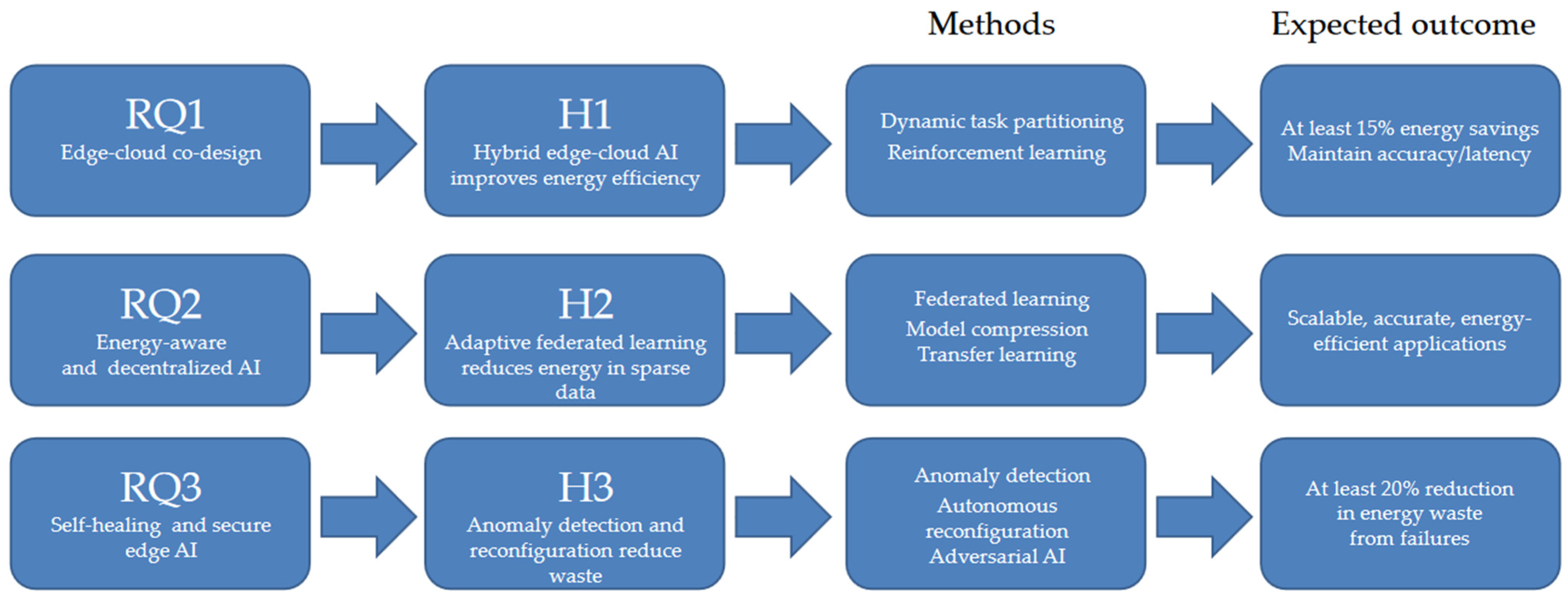
- RQ 1: How can AI-based data analytics and edge computing be combined to balance computational accuracy, latency, and energy consumption in heterogeneous smart environments?
- RQ 2: What new AI frameworks and algorithms can effectively integrate energy awareness, data distribution, and decentralized decision-making to improve application scalability in smart environments?
- RQ 3: How can self-healing, fault-tolerant, and secure edge AI systems be developed to maintain energy efficiency while mitigating failures, anomalies, and cyber threats in smart environments?
- Hypothesis 1 (H1): A hybrid edge–cloud AI architecture that dynamically partitions computations based on context-sensitive energy constraints will achieve higher overall energy efficiency (≥15% improvement) without significantly reducing accuracy or increasing latency;
- H2: Energy-aware AI models using adaptive learning (e.g., federated learning with model compression and data transfer) can maintain scalability and accuracy in distributed and heterogeneous data environments while reducing energy consumption compared to centralized approaches;
- H3: Embedding anomaly detection and autonomous reconfiguration mechanisms into edge AI systems will increase fault tolerance and cybersecurity, thereby reducing energy losses due to failures or attacks by at least 20% compared to conventional edge deployments.
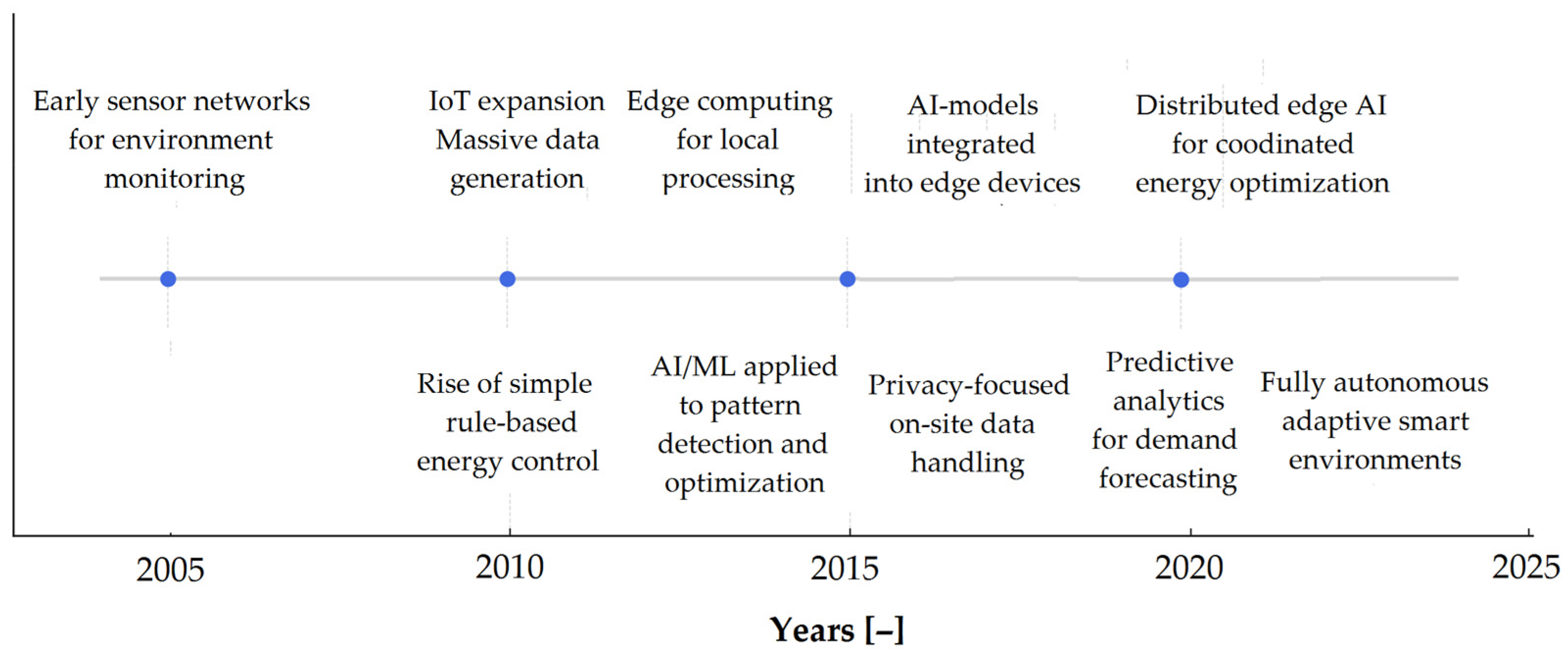
- Evolution of research topics/issues over time;
- Geographical distribution of research locations/publications, authors, their affiliations/research institutions, and publications with the greatest impact;
- Topics that may shape future research programmes, worthy of wider interest from researchers and investment in grants.
2.2. Methods
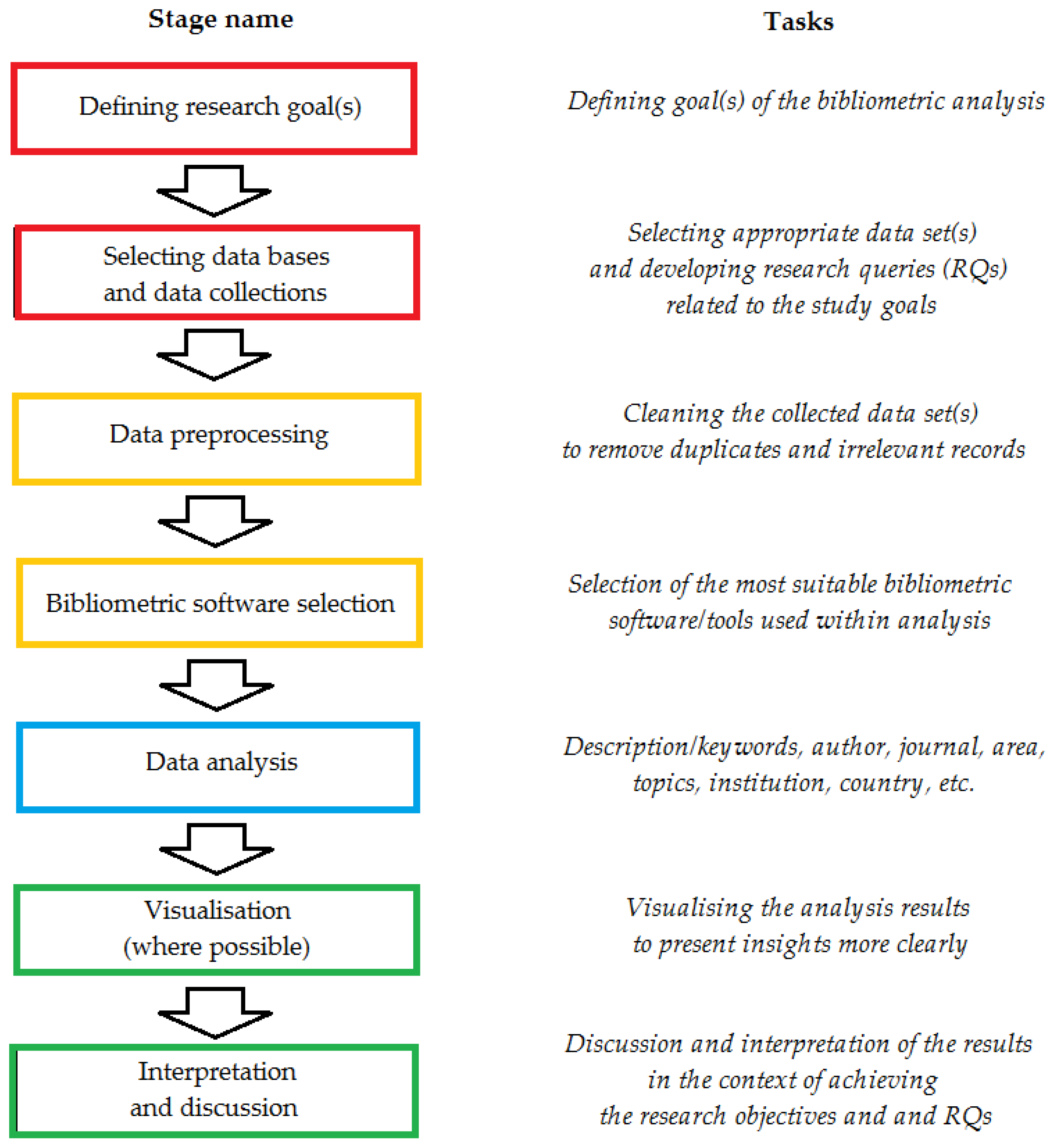
- To enhance the reproducibility and comparability of this review, ten selected components of the PRISMA 2020 guidelines for systematic reviews [36] were adopted. Their application supported a clearer and more transparent organization of the research procedure. The analysis concentrated on the following PRISMA 2020 elements, which are detailed in the Supplementary Materials:
- Item 3: justification;
- Item 4: objective(s);
- Item 5: eligibility criteria;
- Item 6: sources of information;
- Item 7: search strategy;
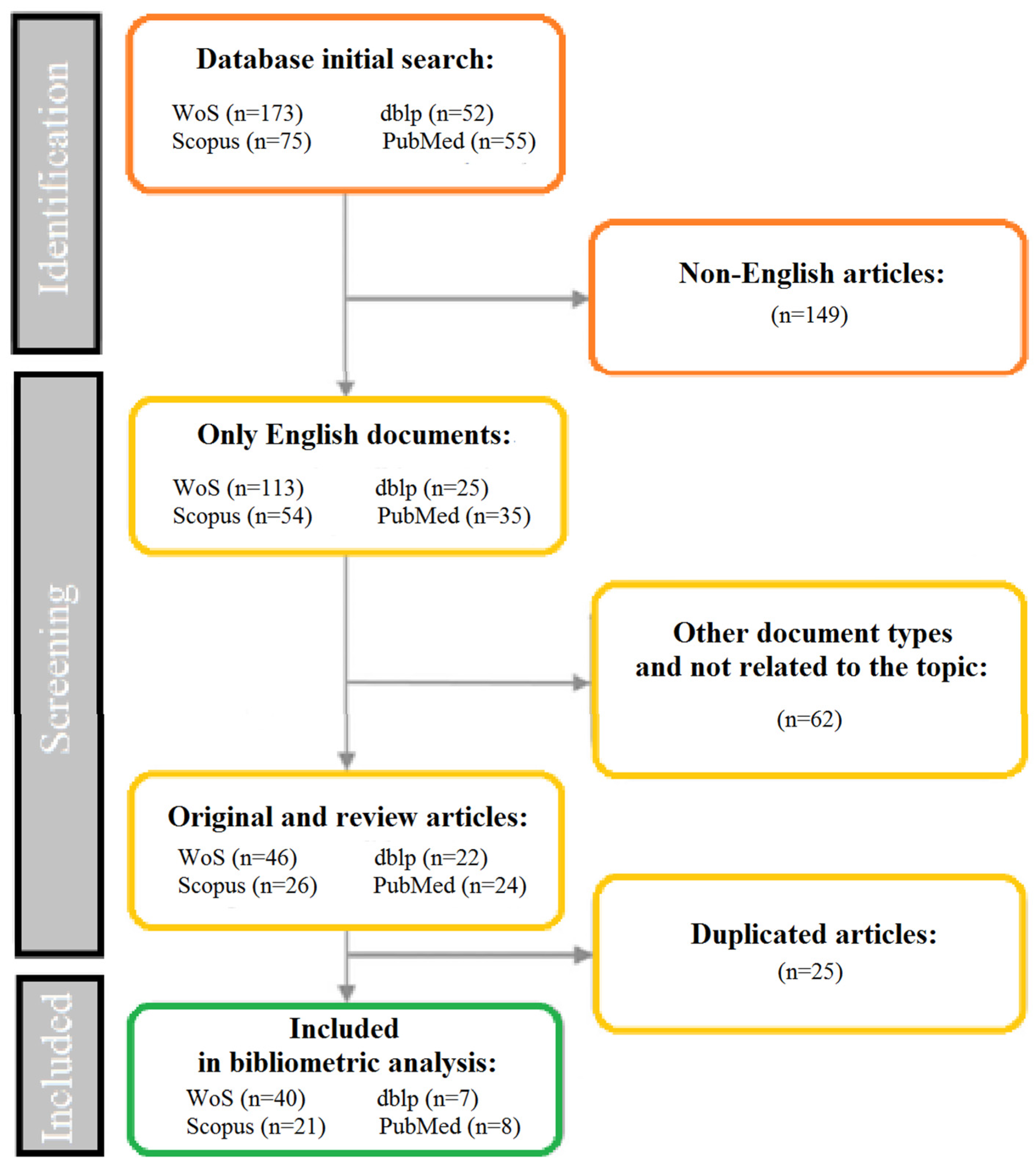
- Item 8: selection process;
- Item 9: data collection process;
- Item 13a: synthesis methods;
- Item 20b: synthesis results;
- Item 23a: discussion.
3. Results
3.1. Data Sources
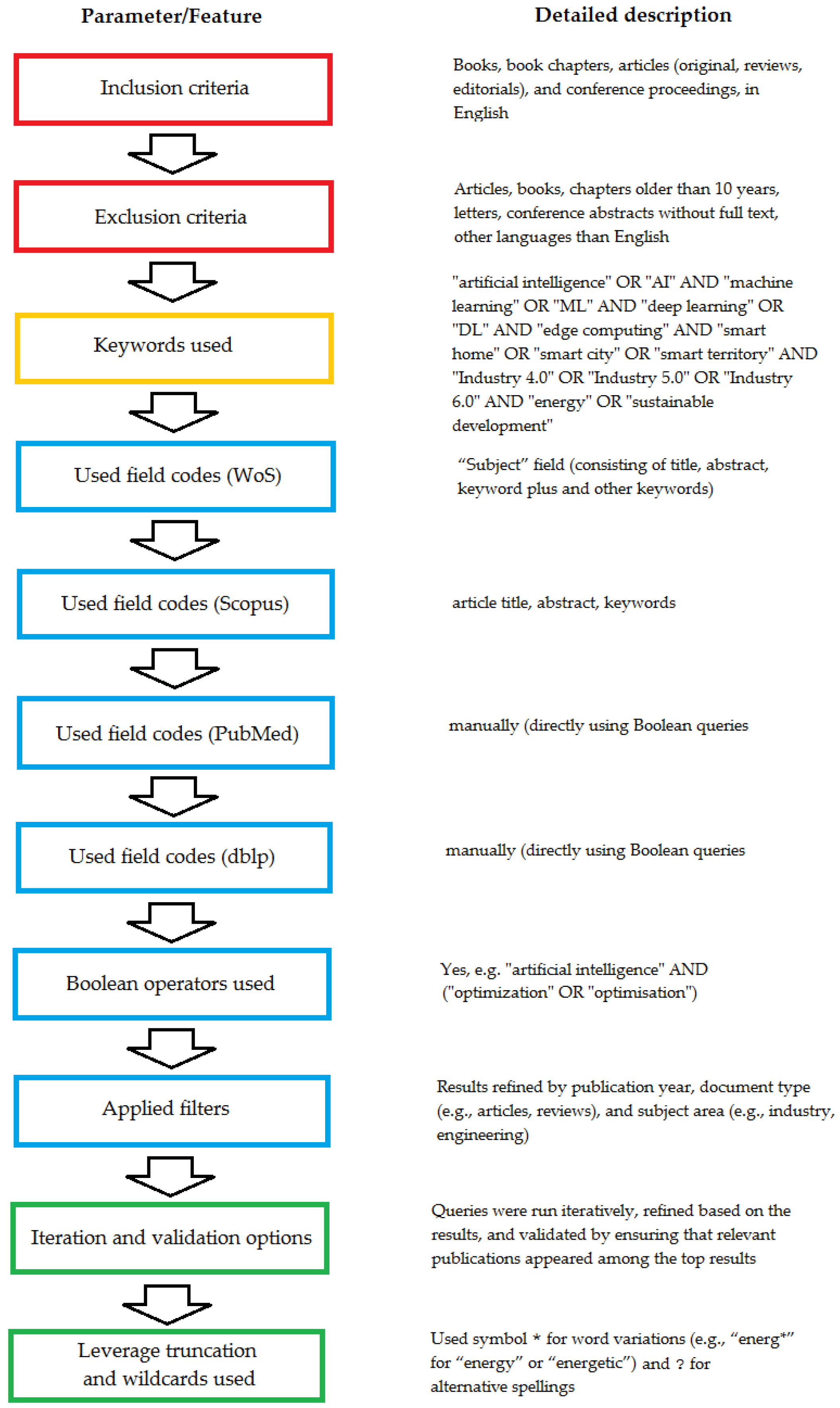
- In the WoS database, the “Subject” field—encompassing the title, abstract, keywords, and additional keyword fields—was utilized;
- In the Scopus database, searches were performed using the article title, abstract, and keywords;
- In the PubMed and DBLP databases, manually defined keyword sets were employed.
3.2. Key Useful Methods and Technologies
3.3. Case Studies
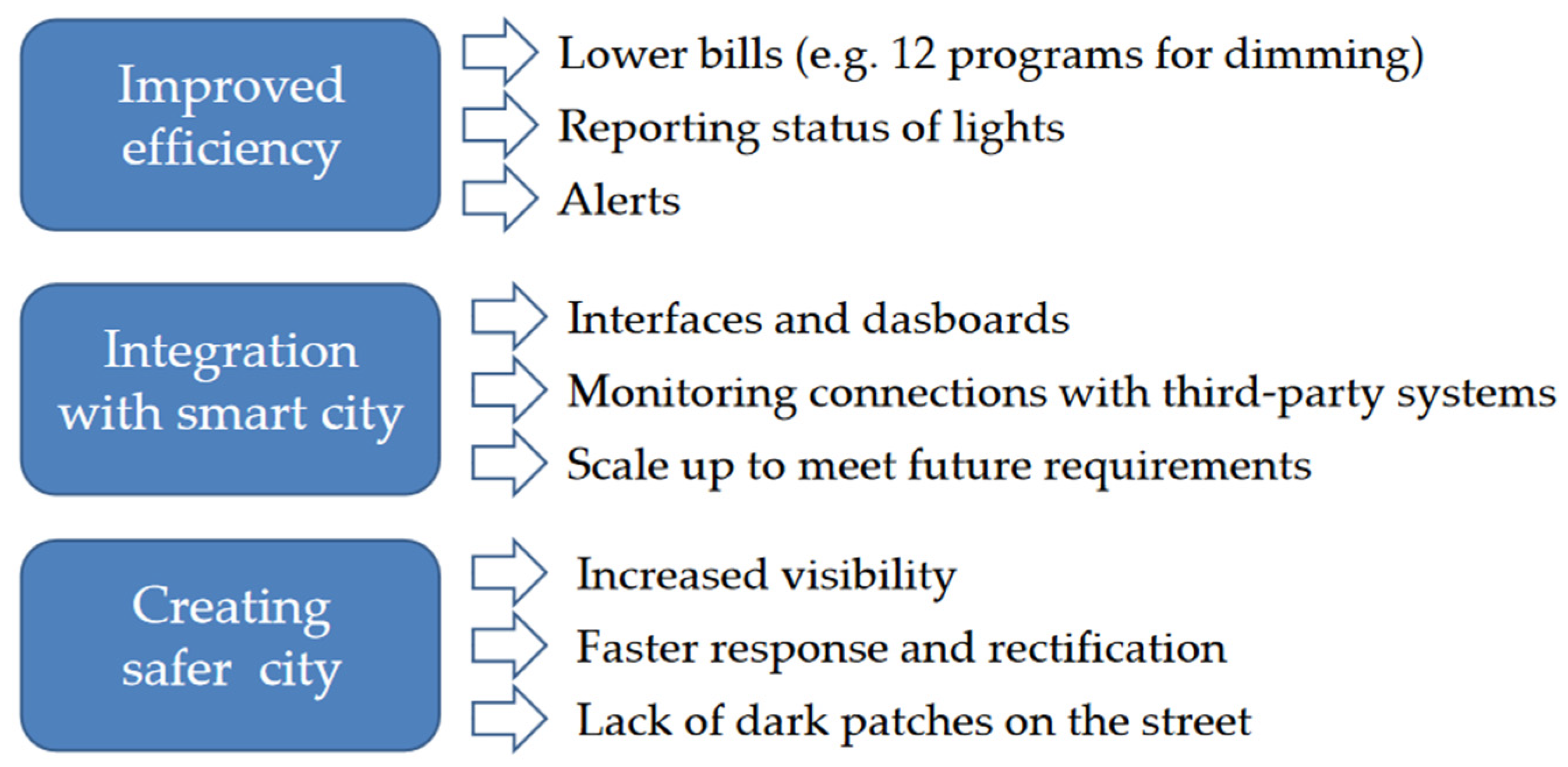
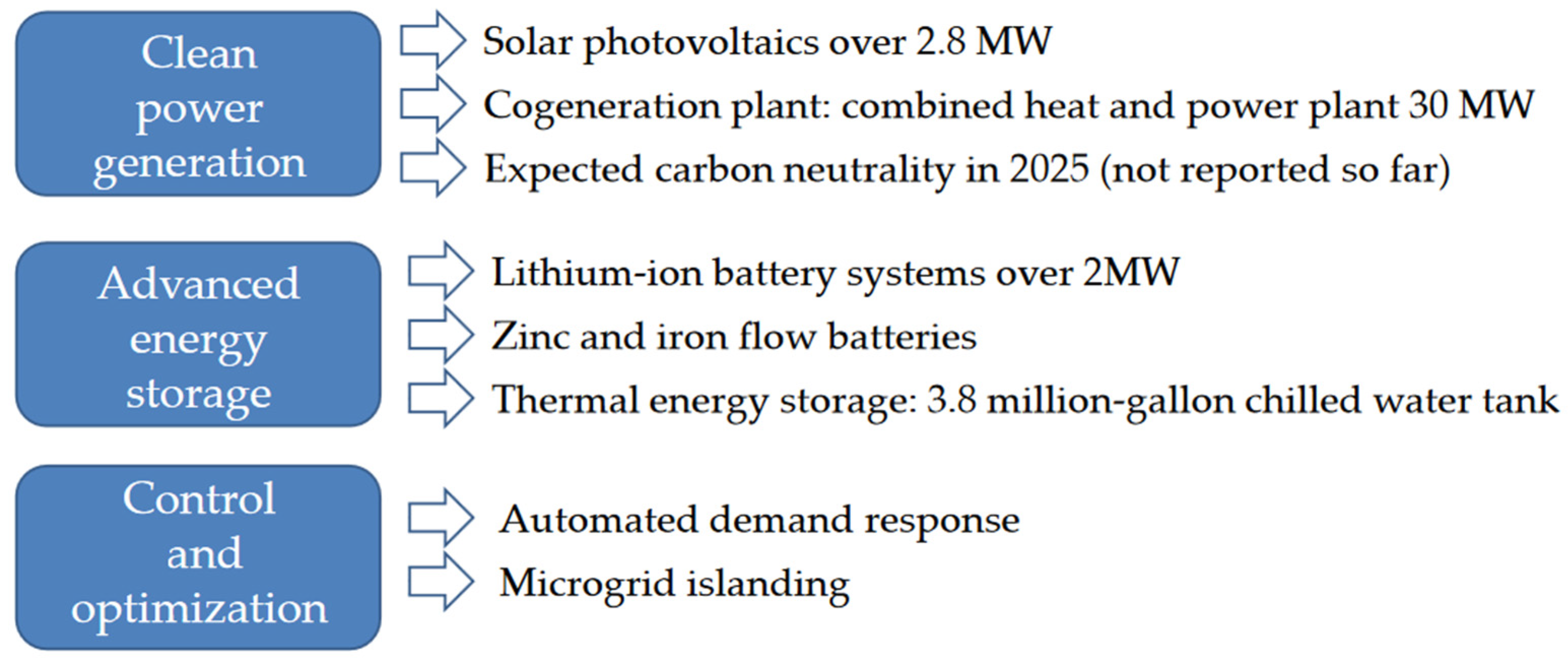
- Combining measures such as hardware upgrades (LEDs, efficient chillers) with IoT telemetry and analytics yields the greatest benefits;
- A hybrid approach, combining edge and cloud, provides latency-sensitive inference and filtering at the edge, mitigated by advanced analytics and portfolio-level optimization in the cloud;
- Telemetry quality is important, as data from higher-frequency and higher-accuracy sensors directly improves model performance and control security;
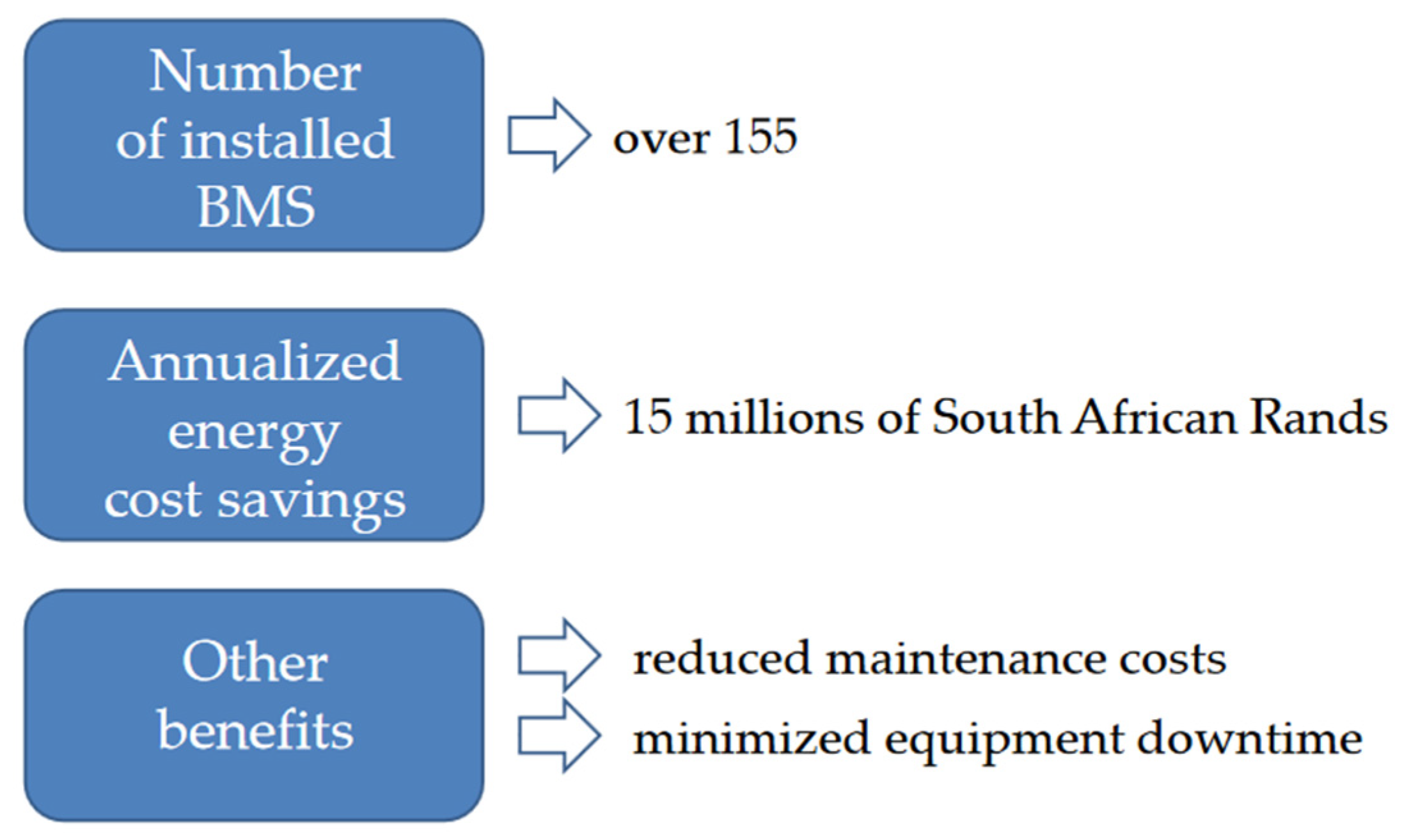
- The most frequently measured and compared metrics are energy consumption, peak energy demand, and costs with before-and-after benchmarking;
- The most frequently cited non-energy benefits that can be important for ROI: predictive maintenance, fewer service calls, emission reduction, and improved user comfort.
- Data quality and integration, as legacy hardware and inconsistent protocols make integration costly;
- Security and control management, as automated control must incorporate fail-safes and human intervention in the process for edge cases;
- Measured versus modeled savings, as many vendors claim modeled savings, not measured savings, and these must always be verified through measured results over a reasonable timeframe.
3.4. Improvement Roadmap
- Edge–Cloud Collaborative Reinforcement Learning can dynamically shift computation between the edge and cloud to balance latency, energy cost, and model accuracy;
- Energy-Aware Federated Learning with adaptive model compression can reduce communication overhead while maintaining predictive performance in distributed smart environments;
- Hybrid Physics-Informed Neural Networks can integrate domain knowledge with AI models to improve renewable energy forecasting accuracy while reducing training complexity;
- Multi-Agent Energy Negotiation Systems using game-theoretic AI can coordinate smart devices, buildings, and vehicles to optimize collective energy consumption;
- Self-Healing Edge AI Frameworks with anomaly detection can autonomously identify and reconfigure faulty nodes, reducing energy loss from inefficiencies and failures (Table 3).
3.5. Gaps Observed in Regulations, Research and Publications
4. Discussion
4.1. Key Economic Implications
4.2. Key Societal Implications
4.3. Key Ethical and Legal Implications
4.4. Limitations
4.5. Directions for Further Research
5. Conclusions
Supplementary Materials
Author Contributions
Funding
Data Availability Statement
Conflicts of Interest
Abbreviations
| AI | Artificial intelligence |
| DL | Deep learning |
| GenAI | Generative AI |
| HVAC | Heating, ventilation, air conditioning |
| IIoT | Industrial Internet of Things |
| IoT | Internet of Things |
| IoV | Internet of Vehicles |
| MINLP | Integer nonlinear programming |
| ML | Machine learning |
| RoI | Return on investment |
| RQ | Research question |
| SDN | Software-defined networking |
| SGD | Sustainable development goal |
| XAI | eXplainable AI |
References
- Kang, M.; Park, M. Power Estimation and Energy Efficiency of AI Accelerators on Embedded Systems. Energies 2025, 18, 3840. [Google Scholar] [CrossRef]
- Wu, H.; Judd, P.; Zhang, X.; Isaev, M.; Micikevicius, P. Integer quantization for deep learning inference: Principles and empirical evaluation. arXiv 2020, arXiv:2004.09602. [Google Scholar] [CrossRef]
- Hosseininoorbin, S.; Layeghy, S.; Kusy, B.; Jurdak, R.; Portmann, M. Exploring Edge TPU for Deep Feed-Forward Neural Networks. Internet Things 2023, 22, 100749. [Google Scholar] [CrossRef]
- Tu, X.; Mallik, A.; Chen, D.; Han, K.; Altintas, O.; Wang, H.; Xie, J. Unveiling Energy Efficiency in Deep Learning: Measurement, Prediction, and Scoring across Edge Devices. In Proceedings of the 8th ACM/IEEE Symposium on Edge Computing, Wilmington, DE, USA, 6–9 December 2023. [Google Scholar]
- Rojek, I.; Macko, M.; Mikołajewski, D.; Saga, M.; Burczynski, T. Modern methods in the field of machine modeling and simulation as a research and practical issue related to Industry 4.0. Bull. Pol. Acad. Sci. Technol. Sci. 2021, 69, e136719. [Google Scholar]
- Nabavinejad, S.M.; Salami, B. On the Impact of Device-Level Techniques on Energy-Efficiency of Neural Network Accelerators. arXiv 2021, arXiv:2106.14079. [Google Scholar]
- Rojek, I.; Mroziński, A.; Kotlarz, P.; Macko, M.; Mikołajewski, D. AI-Based Computational Model in Sustainable Transformation of Energy Markets. Energies 2023, 16, 8059. [Google Scholar] [CrossRef]
- Rojek, I.; Mikołajewski, D.; Mroziński, A.; Macko, M. Machine Learning- and Artificial Intelligence-Derived Prediction for Home Smart Energy Systems with PV Installation and Battery Energy Storage. Energies 2023, 16, 6613. [Google Scholar] [CrossRef]
- Mittal, S. A Survey of Techniques for Improving Energy Efficiency in Embedded Computing Systems. Int. J. Comput. Aided Eng. Technol. 2014, 6, 440–459. [Google Scholar] [CrossRef]
- Hong, I.; Kirovski, D.; Qu, G.; Potkonjak, M.; Srivastava, M. Power optimization of variable voltage core-based systems. IEEE Trans. Comput.-Aided Des. Integr. Circuits Syst. 1999, 18, 1702–1714. [Google Scholar] [CrossRef]
- Rojek, I. HybridNeuralNetworksasPredictionModels. In Artificial Intelligence and Soft Computing; Lecture Notes in Artificial Intelligence; Rutkowski, L., Scherer, R., Tadeusiewicz, R., Zadeh, L.A., Zurada, J.M., Eds.; Springer: Berlin/Heidelberg, Germany, 2010; pp. 88–95. [Google Scholar]
- Wang, Y.; Feng, Y.; Xi, C.; Wang, B.; Tang, B.; Geng, Y. Development of an Intelligent Coal Production and Operation Platform Based on a Real-Time Data Warehouse and AI Model. Energies 2024, 17, 5205. [Google Scholar] [CrossRef]
- Wang, Y.; Liu, W.; Zhou, J.; Liang, Y. Discussion on industrial internet platform construction based on power internet of things. J. Phys. Conf. Ser. 2021, 1939, 012077. [Google Scholar] [CrossRef]
- Li, J.; Qiu, J.J.; Zhou, Y.; Wen, S.; Dou, K.Q.; Li, Q. Study on the reference architecture and assessment framework of industrial internet platform. IEEE Access 2020, 8, 164950–164971. [Google Scholar] [CrossRef]
- Li, Z.; Chen, J.; Li, Z.; Zhang, Y. Strengthen or weaken? How industrial internet platform affects the core competitiveness of manufacturing companies. Oper. Manag. Res. 2024, 17, 220–232. [Google Scholar] [CrossRef]
- Liu, R.; Xie, X. Improve the industrial digital transformation through Industrial Internet platforms. Front. Eng. Manag. 2024, 11, 167–174. [Google Scholar] [CrossRef]
- Arshi, O.; Rai, A.; Gupta, G.; Pandey, J.K.; Mondal, S. IoT in energy: A comprehensive review of technologies, applications, and future directions. Peer-to-Peer Netw. Appl. 2024, 17, 2830–2869. [Google Scholar] [CrossRef]
- Drissi Elbouzidi, A.; Ait El Cadi, A.; Pellerin, R.; Lamouri, S.; Tobon Valencia, E.; Bélanger, M.J. The role of AI in warehouse digital twins: Literature review. Appl. Sci. 2023, 13, 6746. [Google Scholar] [CrossRef]
- Rojek, I.; Kotlarz, P.; Dorożyński, J.; Mikołajewski, D. Sixth-Generation (6G) Networks for Improved Machine-to-Machine (M2M) Communication in Industry 4.0. Electronics 2024, 13, 1832. [Google Scholar] [CrossRef]
- Xue, Y.; Ding, P.; Shen, Y.; Duan, H.; Zhang, X.; Song, Y. Flexible Intelligent Manufacturing Technology Solution Based on 5G Edge-Cloud Collaboration. Mob. Commun. 2021, 45, 18–23. [Google Scholar]
- Rojek, I. Models for Better Environmental Intelligent Management within Water Supply Systems. Water Resour. Manag. 2014, 28, 3875–3890. [Google Scholar] [CrossRef]
- Rojek, I.; Studziński, J. Comparison of different types of neuronal nets for failures location within water-supply networks. Maint. Reliab. 2014, 16, 42–47. [Google Scholar]
- Zhang, L.; Fu, S.; Yu, S. Research on Knowledge Graph System for Maintenance of Coal Mine Mechanical and Electrical Equipment. Equip. Manag. Maint. 2023, 18, 47–48. [Google Scholar]
- Edge, D.; Trinh, H.; Cheng, N.; Bradley, J.; Chao, A.; Mody, A.; Truitt, S.; Larson, J. From local to global: A graph rag approach to query-focused summarization. arXiv 2024, arXiv:2404.16130. [Google Scholar] [CrossRef]
- Liu, S.; Wen, T.; Pattamatta, A.S.L.; Srolovitz, D.J. A Prompt-Engineered Large Language Model, Deep Learning Workflow for Materials Classification. arXiv 2024, arXiv:2401.17788. [Google Scholar] [CrossRef]
- Zakharov, D.; Magaril, E.; Rada, E.C. Sustainability of the Urban Transport System under Changes in Weather and Road Conditions Affecting Vehicle Operation. Sustainability 2018, 10, 2052. [Google Scholar] [CrossRef]
- Cho, W.; Lee, H.; Gu, J.-h. Optimization Techniques and Evaluation for Building an Integrated Lightweight Platform for AI and Data Collection Systems on Low-Power Edge Devices. Energies 2024, 17, 1757. [Google Scholar] [CrossRef]
- Firoozi, A.A.; Hejazi, F.; Firoozi, A.A. Advancing Wind Energy Efficiency: A Systematic Review of Aerodynamic Optimization in Wind Turbine Blade Design. Energies 2024, 17, 2919. [Google Scholar] [CrossRef]
- Chul, H.C. Energy sharing transaction network establishment of industrial complex and integrated design method. J. Energy Eng. 2023, 32, 11–22. [Google Scholar] [CrossRef]
- Merenda, M.; Porcaro, C.; Iero, D. Edge machine learning for AI-enabled IoT devices: A review. Sensors 2020, 20, 2533. [Google Scholar] [CrossRef]
- Alajlan, N.N.; Ibrahim, D.M. TinyML: Enabling of inference deep learning models on ultra-low-power IoT edge devices for AI applications. Micromachines 2022, 13, 851. [Google Scholar] [CrossRef]
- Liu, R.; Xie, M.; Liu, A.; Song, H. Joint optimization risk factor and energy consumption in IoT networks with Tinyml-enabled internet of UAVs. IEEE Internet Things J. 2024, 11, 20983–20994. [Google Scholar] [CrossRef]
- Hu, J.-L.; Li, Y.; Chew, J.-C. Industry 5.0 and Human-Centered Energy System: A Comprehensive Review with Socio-Economic Viewpoints. Energies 2025, 18, 2345. [Google Scholar] [CrossRef]
- Rojek, I.; Mikołajewski, D.; Kopowski, J.; Bednarek, T.; Tyburek, K. Energy Efficiency and Sustainability of Additive Manufacturing as a Mass-Personalized Production Mode in Industry 5.0/6.0. Energies 2025, 18, 3413. [Google Scholar] [CrossRef]
- Lapegna, M.; Balzano, W.; Meyer, N.; Romano, D. Clustering algorithms on low-power and high-performance devices for edge computing environments. Sensors 2021, 21, 5395. [Google Scholar] [CrossRef] [PubMed]
- Page, M.J.; McKenzie, J.E.; Bossuyt, P.M.; Boutron, I.; Hoffmann, T.C.; Mulrow, C.D.; Shamseer, L.; Tetzlaff, J.M.; Akl, E.A.; Brennan, S.E.; et al. The PRISMA 2020 statement: An updated guideline for reporting systematic reviews. BMJ 2021, 372, n71. [Google Scholar] [CrossRef]
- Walia, G.K.; Kumar, M.; Gill, S.S. AI-Empowered Fog/Edge Resource Management for IoT Applications: A Comprehensive Review, Research Challenges, and Future Perspectives. IEEE Commun. Surv. Tutor. 2024, 26, 619–669. [Google Scholar] [CrossRef]
- Ning, Z.L.; Zhang, K.Y.; Kwok, R.Y.K. Intelligent Edge Computing in Internet of Vehicles: A Joint Computation Offloading and Caching Solution. IEEE Trans. Intell. Transp. Syst. 2021, 22, 2212–2225. [Google Scholar] [CrossRef]
- Yang, H.L.; Alphones, A.; Wu, K.S. Artificial-Intelligence-Enabled Intelligent 6G Networks. IEEE Netw. 2020, 34, 272–280. [Google Scholar] [CrossRef]
- Firouzi, F.; Farahani, B.; Marinsek, A. The convergence and interplay of edge, fog, and cloud in the AI-driven Internet of Things (IoT). Inf. Syst. 2022, 107, 101840. [Google Scholar] [CrossRef]
- Mollah, M.B.; Zhao, J.; Koh, L.H. Blockchain for the Internet of Vehicles Towards Intelligent Transportation Systems: A Survey. IEEE Internet Things J. 2021, 8, 4157–4185. [Google Scholar] [CrossRef]
- Chaouch, M.; Al-Hamed, O.M. Scalable Nonparametric Supervised Learning for Streaming and Massive Data: Applications in Healthcare Monitoring and Credit Risk. IEEE Access 2025, 13, 131716–131732. [Google Scholar] [CrossRef]
- Toor, A.A.; Usman, M.; Younas, F.; Fong, A.C.M.; Khan, S.A.; Fong, S. Mining Massive E-Health Data Streams for IoMT Enabled Healthcare Systems. Sensors 2020, 20, 2131. [Google Scholar] [CrossRef]
- Lee, H.H.S. Toward Disaggregated and Heterogenous AI Systems. IEEE Micro 2025, 45, 4–5. [Google Scholar] [CrossRef]
- Chakaravarthy, R.V.; Jiang, H.; Chakravarthy, R.; Das, S. Auto-tuning of AI/ML Graphs for Optimal Performance in a Heterogenous Processor System. In Proceedings of the 2022 IEEE 40th International Conference on Computer Design (ICCD), Lake Tahoe, CA, USA, 23–26 October 2022; pp. 215–222. [Google Scholar]
- Rahimi, I.; Patel, I. AI-Based Demand Forecasting and Load Balancing for Optimising Energy use in Healthcare Systems: A real case study. arXiv 2025, arXiv:2507.06077. [Google Scholar] [CrossRef]
- Fraga-Lamas, P.; Lopes, S.I.; Fernández-Caramés, T.M. Green IoT and Edge AI as Key Technological Enablers for a Sustainable Digital Transition towards a Smart Circular Economy: An Industry 5.0 Use Case. Sensors 2021, 21, 5745. [Google Scholar] [CrossRef]
- Kshetri, N. Can Blockchain Strengthen the Internet of Things? IT Prof. 2017, 19, 68–72. [Google Scholar] [CrossRef]
- Suárez-Albela, M.; Fernández-Caramés, T.M.; Fraga-Lamas, P.; Castedo, L. A Practical Evaluation of a High-Security Energy-Efficient Gateway for IoT Fog Computing Applications. Sensors 2017, 17, 1978. [Google Scholar] [CrossRef] [PubMed]
- Fraga-Lamas, P.; Fernández-Caramés, T.M.; Blanco-Novoa, Ó.; Vilar-Montesinos, M. A Review on Industrial Augmented Reality Systems for the Industry 4.0 Shipyard. IEEE Access 2018, 6, 13358–13375. [Google Scholar] [CrossRef]
- Preden, J.S.; Tammemäe, K.; Jantsch, A.; Leier, M.; Riid, A.; Calis, E. The Benefits of Self-Awareness and Attention in Fog and Mist Computing. Computer 2015, 48, 37–45. [Google Scholar] [CrossRef]
- Fernández-Caramés, T.M.; Fraga-Lamas, P.; Suárez-Albela, M.; Vilar-Montesinos, M. A Fog Computing and Cloudlet Based Augmented Reality System for the Industry 4.0 Shipyard. Sensors 2018, 18, 1798. [Google Scholar] [CrossRef]
- Yeow, K.; Gani, A.; Ahmad, R.W.; Rodrigues, J.J.P.C.; Ko, K. Decentralized Consensus for Edge-Centric Internet of Things: A Review, Taxonomy, and Research Issues. IEEE Access 2018, 6, 1513–1524. [Google Scholar] [CrossRef]
- Fang, X.; Wang, J.; Song, G.; Han, Y.; Zhao, Q.; Cao, Z. Multi-Agent Reinforcement Learning Approach for Residential Microgrid Energy Scheduling. Energies 2020, 13, 123. [Google Scholar] [CrossRef]
- Ning, Z.; Xie, L. A survey on multi-agent reinforcement learning and its application. J. Autom. Intell. 2024, 3, 73–91. [Google Scholar] [CrossRef]
- Canese, L.; Cardarilli, G.C.; Di Nunzio, L.; Fazzolari, R.; Giardino, D.; Re, M.; Spanò, S. Multi-agent reinforcement learning: A review of challenges and applications. Appl. Sci. 2021, 11, 4948. [Google Scholar] [CrossRef]
- Li, Y.; He, S.; Li, Y.; Shi, Y.; Zeng, Z. Federated multiagent deep reinforcement learning approach via physics-informed reward for multimicrogrid energy management. IEEE Trans. Neural Netw. Learn. Syst. 2023, 35, 5902–5914. [Google Scholar] [CrossRef] [PubMed]
- Wang, Y.; Qiu, D.; Strbac, G. Multi-agent deep reinforcement learning for resilience-driven routing and scheduling of mobile energy storage systems. Appl. Energy 2022, 310, 118575. [Google Scholar] [CrossRef]
- Jia, D.; Yang, X.; Sheng, W.; Liu, K.; Jin, T.; Li, X.; Dong, W. Hybrid Drive Simulation Architecture for Power Distribution Based on the Federated Evolutionary Monte Carlo Algorithm. Energies 2025, 18, 5595. [Google Scholar] [CrossRef]
- Alaraj, M.; Radi, M.; Alsisi, E.; Majdalawieh, M.; Darwish, M. Machine Learning-Based Electric Vehicle Charging Demand Forecasting: A Systematized Literature Review. Energies 2025, 18, 4779. [Google Scholar] [CrossRef]
- Wang, Y.; Huo, C.; Xu, F.; Zheng, L.; Hao, L. Ultra-Short-Term Distributed Photovoltaic Power Probabilistic Forecasting Method Based on Federated Learning and Joint Probability Distribution Modeling. Energies 2025, 18, 197. [Google Scholar] [CrossRef]
- Ji, P.; Tao, L.; Xue, Y.; Feng, L. Diffusion Neural Learning for Market Power Risk Assessment in the Electricity Spot Market. Energies 2025, 18, 6542. [Google Scholar] [CrossRef]
- Shi, X.; Guo, C. Novel Real-Time Power System Scheduling Based on Behavioral Cloning of a Grid Expert Strategy with Integrated Graph Neural Networks. Energies 2025, 18, 1934. [Google Scholar] [CrossRef]
- Gade, S. Graph neural network–based ai for solar farm and grid interaction modeling. Int. J. Appl. Math. 2025, 38, 242–264. [Google Scholar]
- Rodriguez-Casavilca, H.M.; Mauricio, D.; Villanueva, J.M.M. Evolution of Artificial Intelligence-Based OT Cybersecurity Models in Energy Infrastructures: Services, Technical Means, Facilities and Algorithms. Energies 2025, 18, 5163. [Google Scholar] [CrossRef]
- Poursaeed, A.H.; Namdari, F. Explainable AI-Driven Quantum Deep Neural Network for Fault Location in DC Microgrids. Energies 2025, 18, 908. [Google Scholar] [CrossRef]
- Matsushima, F.; Aoki, M.; Nakamura, Y.; Verma, S.C.; Ueda, K.; Imanishi, Y. Multi-Timescale Voltage Control Method Using Limited Measurable Information with Explainable Deep Reinforcement Learning. Energies 2025, 18, 653. [Google Scholar] [CrossRef]
- Yousef, L.A.; Yousef, H.; Rocha-Meneses, L. Artificial Intelligence for Management of Variable Renewable Energy Systems: A Review of Current Status and Future Directions. Energies 2023, 16, 8057. [Google Scholar] [CrossRef]
- Schuetz, S.; Venkatesh, V. The Rise of Human Machines: How Cognitive Computing Systems Challenge Assumptions of User-System Interaction. J. Assoc. Inf. Syst. 2020, 21, 460–482. [Google Scholar] [CrossRef]
- Rojek, I.; Jagodziński, M. Hybrid Artificial Intelligence System in Constraint Based Scheduling of Integrated Manufacturing ERP Systems. In Hybrid Artificial Intelligent Systems; Lecture Notes in Computer Science; Corchado, E., Snášel, V., Abraham, A., Woźniak, M., Graña, M., Cho, S.B., Eds.; Springer: Berlin/Heidelberg, Germany, 2012; Volume 7209, pp. 229–240. [Google Scholar]
- Evans, R.; Gao, J. DeepMind AI Reduces Google Data Centre Cooling Bill by 40%. Available online: https://deepmind.google/blog/deepmind-ai-reduces-google-data-centre-cooling-bill-by-40 (accessed on 14 December 2025).
- Interact City. Available online: https://www.assets.signify.com/is/content/PhilipsLighting/Assets/interact/global/20190904-led-road-lighting-and-group-monitoring-for-pune.pdf (accessed on 14 December 2025).
- Unifying Sustainability Across a Retail Giant’s Diverse Network of Stores. Available online: https://www.se.com/ww/en/work/campaign/life-is-on/case-study/massmart/ (accessed on 14 December 2025).
- Microgrid. Available online: https://www.energystorage.ucsd.edu/microgrid (accessed on 14 December 2025).
- Pathways to Purposeful Transformation Through Shared Value and Innovation. Available online: https://www.sbs.ox.ac.uk/sites/default/files/2021-05/enel-case-study.pdf (accessed on 14 December 2025).
- AutoEdge.ai. Available online: https://autoedge.ai/resources/blog/hvac-case-study/ (accessed on 14 December 2025).
- Čulić Gambiroža, J.; Mastelić, T.; Kovačević, T.; Čagalj, M. Predicting Low-Cost Gas Sensor Readings From Transients Using Long Short-Term Memory Neural Networks. IEEE Internet ThingsJ 2020, 7, 8451–8461. [Google Scholar] [CrossRef]
- Čulić Gambiroža, J.; Mastelić, T.; Nižetić Kosović, I.; Čagalj, M. Dynamic monitoring frequency for energy-efficient data collection in Internet of Things. J. Comput. Sci. 2022, 64, 101842. [Google Scholar] [CrossRef]
- Li, X.; Wang, Q.; Zeng, M.; Liu, Y.; Dang, S.; Tsiftsis, T.A.; Dobre, O.A. Physical-Layer Authentication for Ambient Backscatter Aided NOMA Symbiotic Systems. IEEE Trans. Commun. 2023, 71, 2288–2303. [Google Scholar] [CrossRef]
- Liu, X.; Wu, J.; Zhao, C.; Liu, Z. Integrated Sensing and Communications for UAV Assisted Internet of Things Based on Deep Reinforcement Learning. IEEE Trans. Veh. Technol. 2025, 74, 9604–9616. [Google Scholar] [CrossRef]
- Zhou, Q.; Zhao, J.; Cai, K.; Zhu, Y. RIS-Assisted Beamfocusing in Near-Field IoT Communication Systems: A Transformer-Based Approach. IEEE Internet Things J. 2025, 12, 30564–30575. [Google Scholar] [CrossRef]
- Zhou, Q.; Zhao, J.; Cai, K.; Zhu, Y. Covert Communication of STAR-RIS Aided NOMA Networks. IEEE Trans. Veh. Technol. 2024, 73, 9055–9060. [Google Scholar] [CrossRef]
- Reddi, V.J.; Plancher, B.; Kennedy, S.; Moroney, L.; Warden, P.; Agarwal, A.; Banbury, C.; Banzi, M.; Bennett, M.; Brown, B.; et al. Widening Access to Applied Machine Learning with TinyML. arXiv 2021, arXiv:2106.04008. [Google Scholar]
- Schwartz, R.; Dodge, J.; Smith, N.A.; Etzioni, O. Green AI. arXiv 2019, arXiv:1907.10597. [Google Scholar] [CrossRef]
- Ejaz, W.; Naeem, M.; Shahid, A.; Anpalagan, A.; Jo, M. Efficient Energy Management for the Internet of Things in Smart Cities. IEEE Commun. Mag. 2017, 55, 84–91. [Google Scholar] [CrossRef]
- Ercan, A.Ö.; Sunay, M.O.; Akyildiz, I.F. RF Energy Harvesting and Transfer for Spectrum Sharing Cellular IoT Communications in 5G Systems. IEEE Commun. Mag. 2018, 17, 1680–1694. [Google Scholar] [CrossRef]
- Murofushi, R.H.; Tavares, J.J.P.Z.S. Towards fourth industrial revolution impact: Smart product based on RFID technology. IEEE Instrum. Meas. Mag. 2017, 20, 51–56. [Google Scholar] [CrossRef]
- Fernández-Caramés, T.M. An Intelligent Power Outlet System for the Smart Home of the Internet-of-Things. Int. J. Distrib. Sens. Netw. 2015, 11, 214805. [Google Scholar] [CrossRef]
- Khutsoane, O.; Isong, B.; Abu-Mahfouz, A.M. IoT devices and applications based on LoRa/LoRaWAN. In Proceedings of the Annual Conference of the IEEE Industrial Electronics Society, Beijing, China, 29 October–1 November 2017. [Google Scholar]
- Xie, J.; Zhang, B.; Zhang, C. A Novel Relay Node Placement and Energy Efficient Routing Method for Heterogeneous Wireless Sensor Networks. IEEE Access 2020, 8, 202439–202444. [Google Scholar] [CrossRef]
- Bagula, A.; Abidoye, A.P.; Zodi, G.-A.L. Service-Aware Clustering: An Energy-Efficient Model for the Internet-of-Things. Sensors 2016, 16, 9. [Google Scholar] [CrossRef]
- Kaur, N.; Sood, S.K. An Energy-Efficient Architecture for the Internet of Things (IoT). IEEE Syst. J. 2017, 11, 796–805. [Google Scholar] [CrossRef]
- Xia, S.; Yao, Z.; Li, Y.; Mao, S. Online Distributed Offloading and Computing Resource Management with Energy Harvesting for Heterogeneous MEC-enabled IoT. IEEE Trans. Wirel. Commun. 2021, 20, 6743–6757. [Google Scholar] [CrossRef]
- Xiao, L.; Wan, X.; Lu, X.; Zhang, Y.; Wu, D. IoT Security Techniques Based on Machine Learning: How Do IoT Devices Use AI to Enhance Security? IEEE Signal Process. Mag. 2018, 35, 41–49. [Google Scholar] [CrossRef]
- Burg, A.; Chattopadhyay, A.; Lam, K. Wireless Communication and Security Issues for Cyber-Physical Systems and the Internet-of-Things. Proc. IEEE 2018, 106, 38–60. [Google Scholar] [CrossRef]
- Liu, Z.; Großschädl, J.; Hu, Z.; Järvinen, K.; Wang, H.; Verbauwhede, I. Elliptic Curve Cryptography with Efficiently Computable Endomorphisms and Its Hardware Implementations for the Internet of Things. IEEE Trans. Comput. 2017, 66, 773–785. [Google Scholar] [CrossRef]
- Salameh, H.B.; Irshaid, M.B.; Ajlouni, A.A.; Aloqaily, M. Energy-Efficient Cross-layer Spectrum Sharing in CR Green IoT Networks. IEEE Trans. Green Commun. Netw. 2021, 5, 1091–1100. [Google Scholar] [CrossRef]
- Sharma, P.K.; Kumar, N.; Park, J.H. Blockchain Technology Toward Green IoT: Opportunities and Challenges. IEEE Netw. 2020, 34, 4. [Google Scholar] [CrossRef]
- Fernández-Caramés, T.M.; Fraga-Lamas, P.; Suárez-Albela, M.; Díaz-Bouza, M.A. A Fog Computing Based Cyber-Physical System for the Automation of Pipe-Related Tasks in the Industry 4.0 Shipyard. Sensors 2018, 18, 1961. [Google Scholar] [CrossRef]
- Yan, M.; Chen, B.; Feng, G.; Qin, S. Federated Cooperation and Augmentation for Power Allocation in Decentralized Wireless Networks. IEEE Access 2020, 8, 48088–48100. [Google Scholar] [CrossRef]
- Rausch, T.; Dustdar, S. Edge Intelligence: The Convergence of Humans, Things, and AI. In Proceedings of the 2019 IEEE International Conference on Cloud Engineering (IC2E), Prague, Czech Republic, 24–27 June 2019; pp. 86–96. [Google Scholar]
- Martins, P.; Lopes, S.I.; Rosado da Cruz, A.M.; Curado, A. Towards a Smart & Sustainable Campus: An Application-Oriented Architecture to Streamline Digitization and Strengthen Sustainability in Academia. Sustainability 2021, 13, 3189. [Google Scholar] [CrossRef]
- Bhardwaj, K.; Suda, N.; Marculescu, R. EdgeAI: A Vision for Deep Learning in IoT Era. IEEE Des. Test 2021, 38, 37–43. [Google Scholar] [CrossRef]
- Mauro, A.D.; Conti, F.; Schiavone, P.D.; Rossi, D.; Benini, L. Always-On 674μW@4GOP/s Error Resilient Binary Neural Networks with Aggressive SRAM Voltage Scaling on a 22-nm IoT End-Node. IEEE Trans. Circuits Syst. I Regul. Pap. 2020, 67, 3905–3918. [Google Scholar] [CrossRef]
- Satyanarayanan, M. How we created edge computing. Nat. Electron. 2019, 2, 42. [Google Scholar] [CrossRef]
- Rajapakse, V.; Karunanayake, I.; Ahmed, N. Intelligence at the Extreme Edge: A Survey on Reformable TinyML. ACM Comput. Surv. 2023, 55, 282. [Google Scholar] [CrossRef]
- Shi, Y.; Yang, K.; Jiang, T.; Zhang, J.; Letaief, K.B. Communication-Efficient Edge AI: Algorithms and Systems. IEEE Commun. Surv. Tutor 2020, 22, 2167–2191. [Google Scholar] [CrossRef]
- Pyun, K.R.; Kwon, K.; Yoo, M.J.; Kim, K.K.; Gong, D.; Yeo, W.H.; Han, S.; Ko, S.H. Machine-learned wearable sensors for real-time hand-motion recognition: Toward practical applications. Natl Sci Rev. 2023, 11, nwad298. [Google Scholar] [CrossRef]
- Papapostolou, A.; Mexis, F.D.K.; Karakosta, C.; Psarras, J.E. A Multicriteria Tool to Support Decision-Making in the Early Stages of Energy Efficiency Investments. In Proceedings of theInternational Conference on Decision Support System Technology (ICDSST), Thessaloniki, Greece, 23–25 May 2022; pp. 190–202. [Google Scholar]
- Zhou, Z.; Chen, X.; Li, E.; Zeng, L.; Luo, K.; Zhang, J. Edge Intelligence: Paving the Last Mile of Artificial Intelligence With Edge Computing. Proc. IEEE 2019, 107, 1738–1762. [Google Scholar] [CrossRef]
- Karras, K.; Pallis, E.; Mastorakis, G.; Nikoloudakis, Y.; Batalla, J.M.; Mavromoustakis, C.X.; Markakis, E. A Hardware Acceleration Platform for AI-Based Inference at the Edge. Circuits Syst Signal Process. 2020, 39, 1059–1070. [Google Scholar] [CrossRef]
- Kim, Y.; Kong, J.; Munir, A. CPU-Accelerator Co-Scheduling for CNN Acceleration at the Edge. IEEE Access 2020, 8, 211422–211433. [Google Scholar] [CrossRef]
- Kim, B.; Lee, S.; Trivedi, A.R.; Song, W.J. Energy-Efficient Acceleration of Deep Neural Networks on Realtime-Constrained Embedded Edge Devices. IEEE Access 2020, 8, 216259–216270. [Google Scholar] [CrossRef]
- Pinto, G.; Castor, F. Energy efficiency: A new concern for application software developers. Commun. ACM 2017, 60, 68–75. [Google Scholar] [CrossRef]
- Strubell, E.; Ganesh, A.; McCallum, A. Energy and Policy Considerations for Deep Learning in NLP. arXiv 2019, arXiv:1906.02243. [Google Scholar] [CrossRef]
- Rojek, I.; Mikołajewski, D.; Prokopowicz, P. The Impact of Novel Artificial Intelligence Methods on Energy Productivity, Industrial Transformation and Digitalization Within the Framework of Energy Economics, Efficiency and Sustainability. Energies 2025, 18, 5138. [Google Scholar] [CrossRef]
- Deng, A.; Li, X.; Feng, F.; Guan, L. Beacon Signal based Energy-saving Mechanism for 6G Networks. In Proceedings of the 2024 IEEE 24th International Conference on Communication Technology (ICCT), Chengdu, China, 18–20 October 2024; pp. 885–890. [Google Scholar]
- Zhang, Z.; Zeng, Y.; Liu, H.; Zhao, C.; Wang, F.; Chen, Y. Smart DC: An AI and Digital Twin-based Energy-Saving Solution for Data Centers. In Proceedings of the NOMS 2022–2022 IEEE/IFIP Network Operations and Management SymposiumNOMS, Budapest, Hungary, 25–29 April 2022; pp. 1–6. [Google Scholar]
- Manavalan, M. Intersection of Artificial Intelligence, Machine Learning, and Internet of Things—An Economic Overview. Glob. Discl. Econ. Bus. 2020, 9, 119–128. [Google Scholar] [CrossRef]
- Siakas, D.; Lampropoulos, G.; Siakas, K. Autonomous Cyber-Physical Systems Enabling Smart Positive Energy Districts. Appl. Sci. 2025, 15, 7502. [Google Scholar] [CrossRef]
- Shi, Z.; Dong, J.; Gan, Y. Democratizing Digital Transformation: A Multisector Study of Low-Code Adoption Patterns, Limitations, and Emerging Paradigms. Appl. Sci. 2025, 15, 6481. [Google Scholar] [CrossRef]
- Nafi, A.; Brans, J. Prediction of Water Utility Performance: The Case of the Water Efficiency Rate. Water 2018, 1443. [Google Scholar] [CrossRef]
- Qin, H.; Gong, R.; Liu, X.; Bai, X.; Song, J.; Sebe, N. Binary neural networks: A survey, Pattern Recognition. Pattern Recognit. 2020, 105, 107281. [Google Scholar] [CrossRef]
- Li, T.; Luo, J.; Liang, K.; Yi, C.; Ma, L. Synergy of Patent and Open-Source-Driven Sustainable Climate Governance under Green AI: A Case Study of TinyML. Sustainability 2023, 15, 13779. [Google Scholar] [CrossRef]
- Vaiyapuri, T.; Aldosari, H. SUQ-3: A Three Stage Coarse-to-Fine Compression Framework for Sustainable Edge AI in Smart Farming. Sustainability 2025, 17, 5230. [Google Scholar] [CrossRef]
- Rojek, I.; Mikołajewski, D.; Kotlarz, P.; Tyburek, K.; Kopowski, J.; Dostatni, E. Traditional Artificial Neural Networks Versus Deep Learning in Optimization of Material Aspects of 3D Printing. Materials 2021, 14, 7625. [Google Scholar] [CrossRef]
- Chong, C.T.; Fan, Y.V.; Lee, C.T.; Klemeš, J.J. Post COVID-19 ENERGY sustainability and carbon emissions neutrality. Energy 2022, 241, 122801. [Google Scholar] [CrossRef]
- Jin, L.; Duan, K.; Tang, X. What Is The Relationship between Technological Innovation and Energy Consumption? Empirical Analysis Based on Provincial Panel Data From China. Sustainability 2018, 10, 145. [Google Scholar] [CrossRef]
- Dhar, P. The carbon impact of artificial intelligence. Nat. Mach. Intell. 2020, 2, 423–425. [Google Scholar] [CrossRef]
- Song, M.; Cao, S.; Wang, S. The impact of knowledge trade on sustainable development and environment-biased technical progress. Technol. Forecast. Soc. 2019, 144, 512–523. [Google Scholar] [CrossRef]
- Arowolo, M.O.; Ogundokun, R.O.; Misra, S.; Agboola, B.D.; Gupta, B. Machine learning-based IoT system for COVID-19 epidemics. Computing 2023, 105, 831–847. [Google Scholar] [CrossRef]
- Ren, S.; Hao, Y.; Wu, H. Digitalization and environment governance: Does internet development reduce environmental pollution? J. Environ. Plan. Man. 2023, 66, 1533–1562. [Google Scholar] [CrossRef]
- Yigitcanlar, T.; Foth, M.; Kamruzzaman, M. Towards Post-Anthropocentric Cities: Reconceptualizing Smart Cities to Evade Urban Ecocide. J. Urban. Technol. 2019, 26, 147–152. [Google Scholar] [CrossRef]
- Yigitcanlar, T.; Cugurullo, F. The Sustainability of Artificial Intelligence: An Urbanistic Viewpoint from the Lens of Smart and Sustainable Cities. Sustainability 2020, 12, 8548. [Google Scholar] [CrossRef]
- Ronoh, E.K.; Mirau, S.; Dida, M.A. Human-Wildlife Conflict Early Warning System Using the Internet of Things and Short Message Service. Eng. Technol. Appl. Sci. Res. 2022, 12, 8273–8277. [Google Scholar] [CrossRef]
- Stoll, C.; Klaaßen, L.; Gallersdörfer, U. The Carbon Footprint of Bitcoin. Joule 2019, 3, 1647–1661. [Google Scholar] [CrossRef]
- Dong, Y.; Cheng, J.; Hossain, M.; Leung, V.C.M. Secure distributed on-device learning networks with byzantine adversaries. IEEE Netw. 2019, 33, 180–187. [Google Scholar] [CrossRef]
- Runge, J.; Zmeureanu, R. Forecasting energy use in buildings using artificial neural networks: A review. Energies 2019, 12, 3254. [Google Scholar] [CrossRef]
- Lee, H.; Kim, D.; Gu, J.-H. Prediction of factory energy consumption using MLP and SVR algorithms. Energies 2023, 16, 1550. [Google Scholar] [CrossRef]
- Cho, W.; Lim, C.-Y.; Gu, J.-H. Comparison and evaluation of data collection system database for edge-based lightweight platform. J. Platf. Technol. 2023, 11, 49–58. [Google Scholar]
- Adeyeye, K.; Ijumba, N.; Colton, J. Exploring the environmental and economic impacts of wind energy: A cost-benefit perspective. Int. J. Sustain. Dev. World Ecol. 2020, 27, 718–731. [Google Scholar] [CrossRef]
- Benedek, J.; Sebestyén, T.T.; Bartók, B. Evaluation of renewable energy sources in peripheral areas and renewable energy-based rural development. Renew. Sustain. Energy Rev. 2018, 90, 516–535. [Google Scholar] [CrossRef]
- Mishnaevsky, L., Jr.; Thomsen, K. Costs of repair of wind turbine blades: Influence of technology aspects. Wind Energy 2020, 23, 2247–2255. [Google Scholar] [CrossRef]
- Muneeb, M.; Ko, K.-M.; Park, Y.-H. A Fog Computing Architecture with Multi-Layer for Computing-Intensive IoT Applications. Appl. Sci. 2021, 11, 11585. [Google Scholar] [CrossRef]
- Abdalzaher, M.S.; Elsayed, H.A.; Fouda, M.M.; Salim, M.M. Employing Machine Learning and IoT for Earthquake Early Warning System in Smart Cities. Energies 2023, 16, 495. [Google Scholar] [CrossRef]
- Costa, D.G.; Peixoto, J.P.J.; Jesus, T.C.; Portugal, P.; Vasques, F.; Rangel, E.; Peixoto, M. A Survey of Emergencies Management Systems in Smart Cities. IEEE Access 2022, 10, 61843–61872. [Google Scholar] [CrossRef]
- Blind, K.; Schubert, T. Estimating the GDP effect of Open Source Software and its complementarities with R&D and patents: Evidence and policy implications. J. Technol. Transf. 2023, 49, 466–491. [Google Scholar] [CrossRef]
- Dutta, D.L.; Bharali, S. TinyML Meets IoT: A Comprehensive Survey. Internet Things 2021, 16, 100461. [Google Scholar] [CrossRef]
- Dehghani, M.; Mashatan, A.; Kennedy, R.W. Innovation within networks—Patent strategies for blockchain technology. J. Bus. Ind. Mark. 2021, 36, 2113–2125. [Google Scholar] [CrossRef]
- Liu, X.; Dong, X.; Jia, N.; Zhao, W. Federated Learning-Oriented Edge Computing Framework for the IIoT. Sensors 2024, 24, 4182. [Google Scholar] [CrossRef]
- Alotaibi, B. A Survey on Industrial Internet of Things Security: Requirements, Attacks, AI-Based Solutions, and Edge Computing Opportunities. Sensors 2023, 23, 7470. [Google Scholar] [CrossRef] [PubMed]
- Choudhury, A.; Sarma, K.K.; Misra, D.D.; Guha, K.; Iannacci, J. Edge Computing for Smart-City Human Habitat: A Pandemic-Resilient, AI-Powered Framework. J. Sens. Actuator Netw. 2024, 13, 76. [Google Scholar] [CrossRef]
- Prangon, N.F.; Wu, J. AI and Computing Horizons: Cloud and Edge in the Modern Era. J. Sens. Actuator Netw. 2024, 13, 44. [Google Scholar] [CrossRef]
- Bourechak, A.; Zedadra, O.; Kouahla, M.N.; Guerrieri, A.; Seridi, H.; Fortino, G. At the Confluence of Artificial Intelligence and Edge Computing in IoT-Based Applications: A Review and New Perspectives. Sensors 2023, 23, 1639. [Google Scholar] [CrossRef] [PubMed]







| Field | Observed Scientific Problem(s) | AI Methods Used | Advantages | Disadvantages |
|---|---|---|---|---|
| Smart Grids | Real-time load forecasting; demand- response optimization | Deep learning, Reinforcement learning | Improves prediction accuracy; supports dynamic pricing | High computational cost; limited interpretability |
| Smart Buildings | Adaptive HVAC and lighting control; anomaly detection | Reinforcement learning, Anomaly detection (ML) | Reduces energy waste; maintains comfort | Data scarcity in specific contexts; slow convergence |
| Smart Transportation | Traffic flow optimization; EV routing | Graph Neural Networks, Federated Learning | Efficient routing; privacy- preserving | Requires large-scale data; edge heterogeneity challenges |
| Renewable Energy Integration | Forecasting solar/wind variability | Hybrid AI models (LSTM and physics-informed networks) | Better uncertainty handling; higher reliability | Complex model design; high training cost |
| Industrial IoT | Predictive maintenance; scheduling for energy savings | Predictive analytics, Reinforcement learning | Reduces downtime; energy-efficient scheduling | Data imbalance; high edge deployment cost |
| Data Centers | Cooling optimization; workload balancing | RL, Unsupervised clustering | Improves PUE; scalable | Risk of unstable policies; needs continuous retraining |
| Healthcare Smart Environments | Continuous patient monitoring; low-power edge analytics | Federated learning, Edge AI models | Reduces transmission costs; preserves privacy | Limited edge device capacity; model aggregation issues |
| Smart Agriculture | Precision irrigation; greenhouse energy control | Decision trees, RL, Sensor fusion | Low-cost models; adaptive decision-making | Limited generalization; sensitive to noisy data |
| Urban Energy Management | Multi-source optimization (grid, solar, EVs) | Multi-agent RL, Distributed edge analytics | Handles complex interactions; scalable | Coordination overhead; risk of non-convergence |
| Cyber- Physical Security | Energy-draining cyberattacks; anomaly detection | Adversarial AI, Blockchain-integrated edge intelligence | Enhances resilience; secure decentralized control | High computational overhead; limited real-world testing |
| Features | Description |
|---|---|
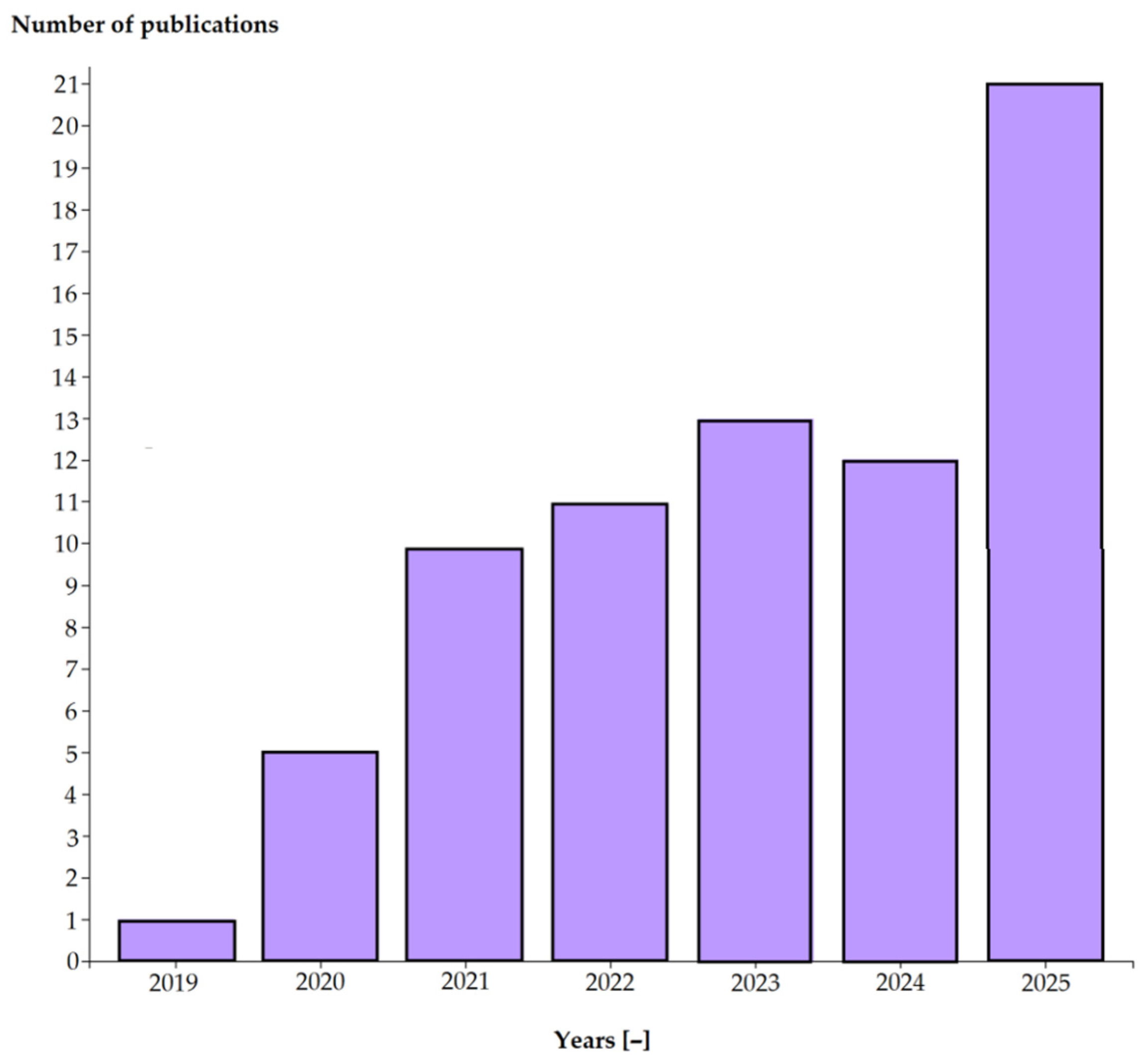
| Years of publication | Only publications 2019–2025, lack of publications before 2019, |
| Leading type(s) of publication | Article (54.55%), Proceeding paper (21.82%), Review article (21.82%) |
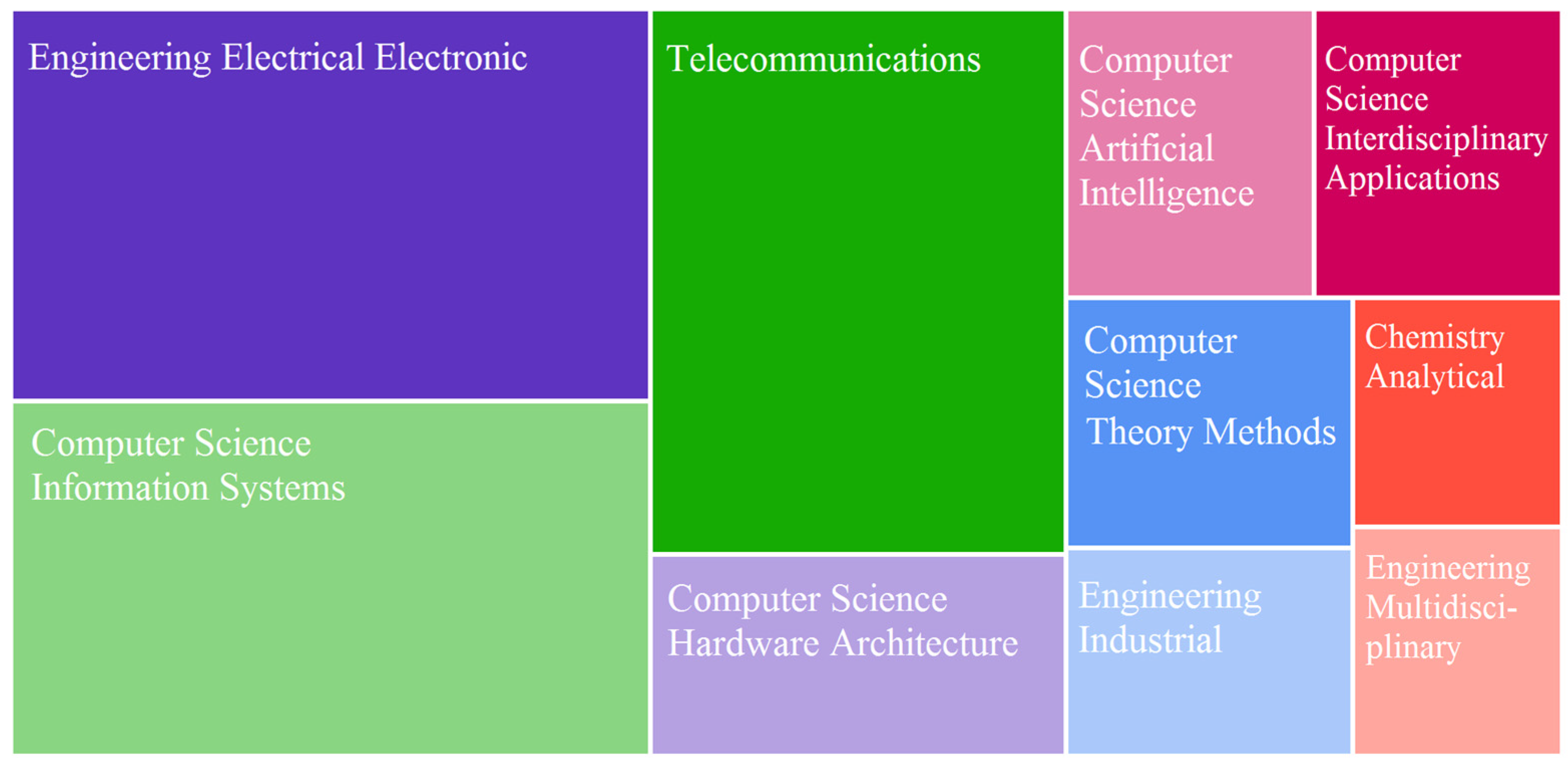
| Leading areas of science (more than one possible for each publication) | Engineering Electrical Electronic (38.18%), Computer Science Information Systems (34.55%), Telecommunications (34.55%) |
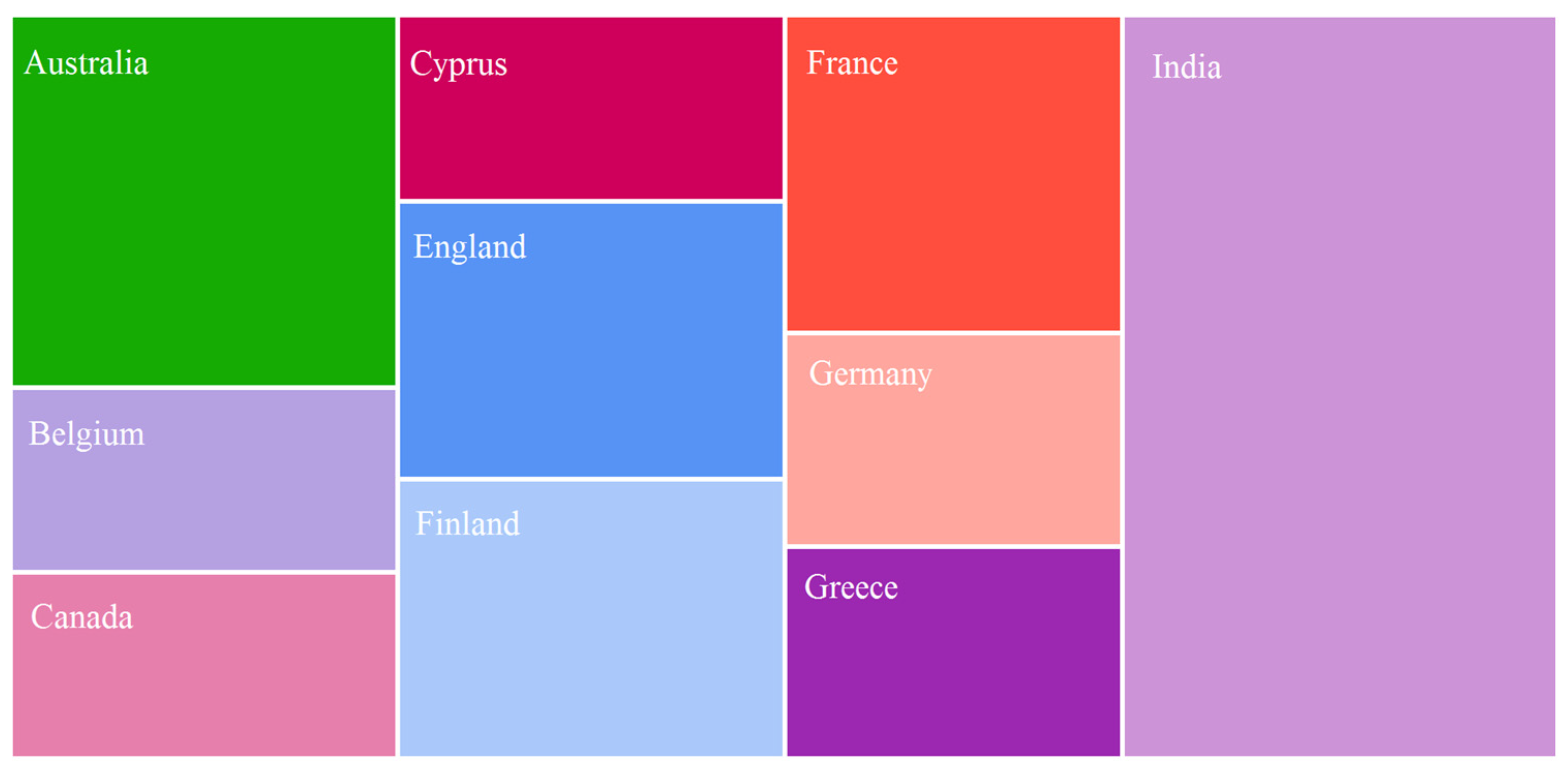
| Leading country/countries | India (16.36%) |
| Leading author(s) | None observed |
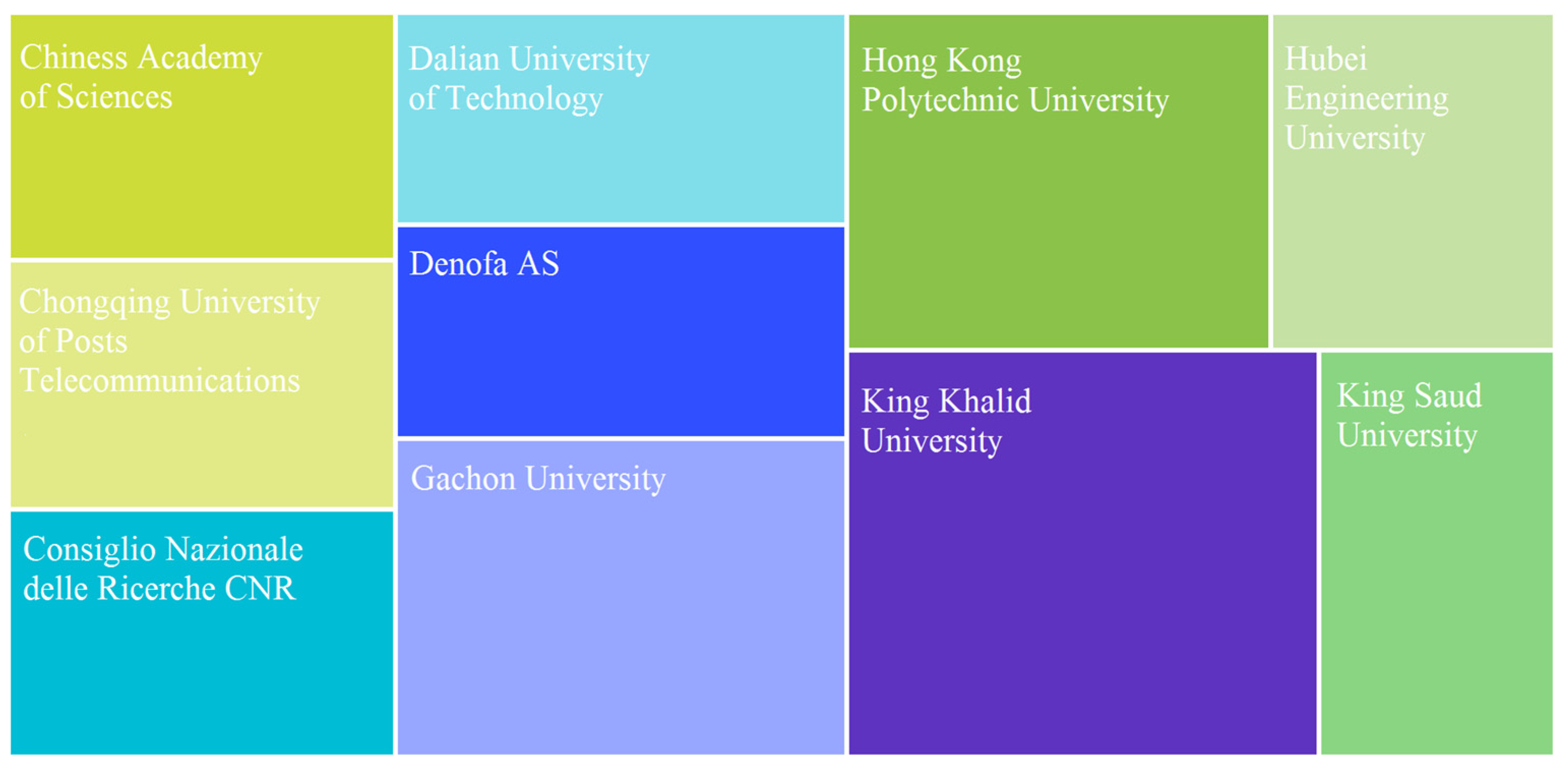
| Leading organization(s) | None observed |
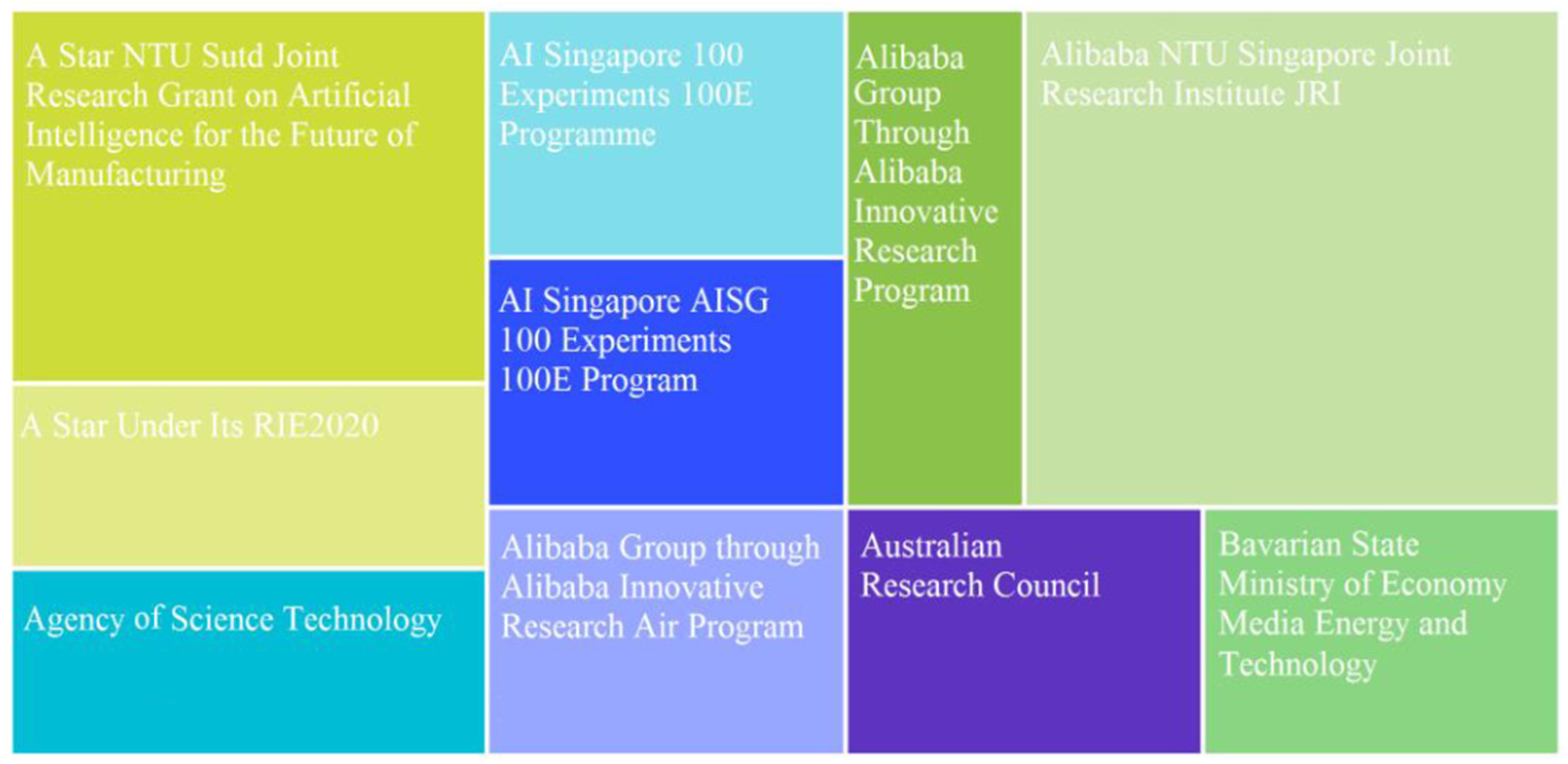
| Leading founder(s) (if such information were available) | None observed |
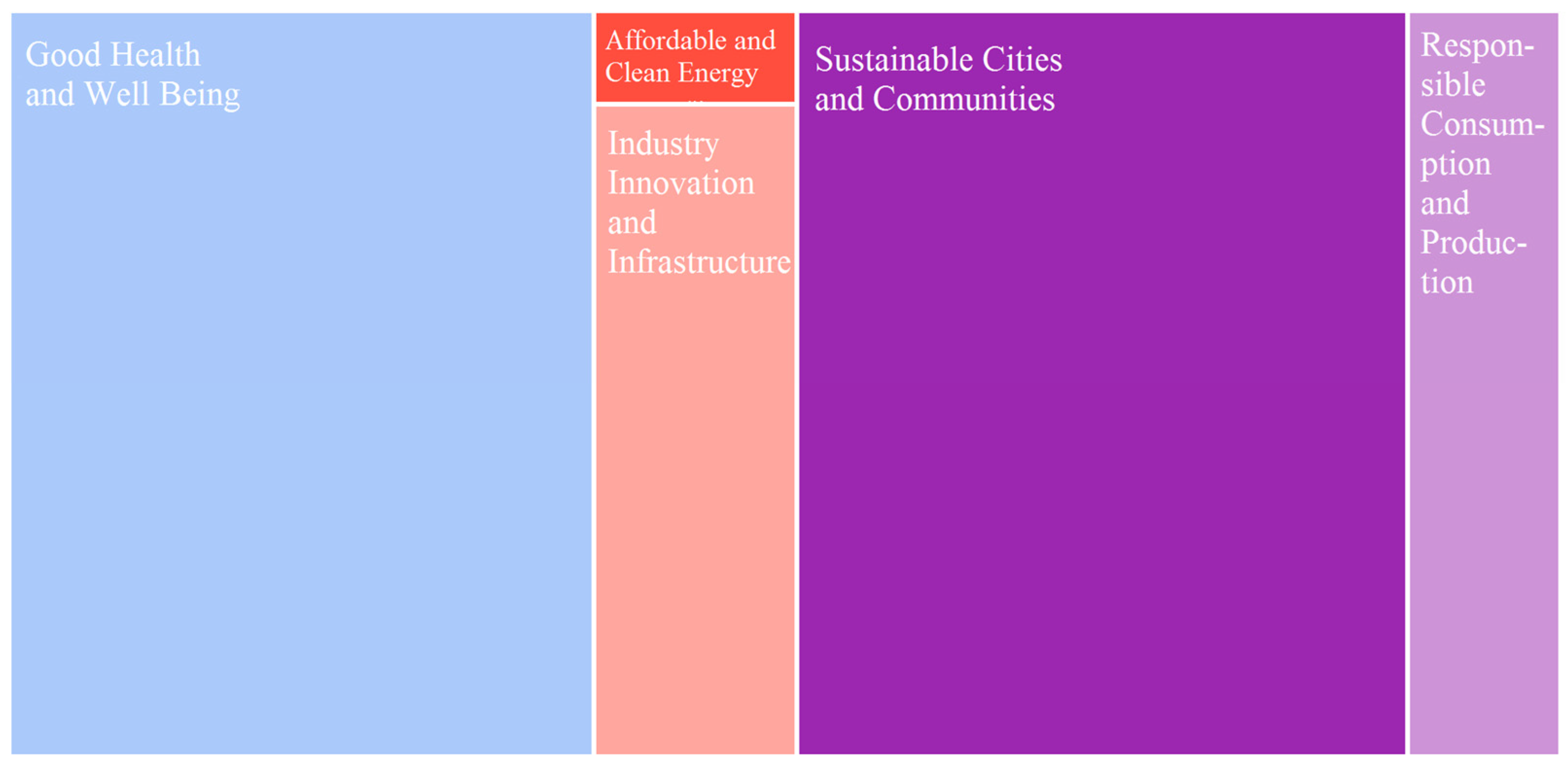
| Leading SDGs (possible more than one for each publication) | Sustainable Cities and Communities (43.64%), Good Health and Well Being (41.82%) |
| Problem | Proposed Method | Expected Impact | Effectiveness and Validation |
|---|---|---|---|
| Reinforcement learning models for smart environments either run centrally (high communication cost) or locally (limited by device constraints) | Edge–Cloud Collaborative Reinforcement Learning: dynamically partition computation between edge and cloud using context-aware policies | Reduced communication energy use, improved real-time decision-making, and scalable deployment across heterogeneous devices | Effectiveness validated via simulation on smart grid benchmarks and prototype edge–cloud deployments; energy savings expected at 10–20% compared to centralized RL |
| Federated learning in smart environments suffers from high communication overhead, draining device and network energy | Energy-Aware Federated Learning with Adaptive Model Compression: integrate quantization, pruning, and knowledge distillation with adaptive compression based on device energy levels | Lower communication cost, enhanced energy efficiency, and extended device lifetime with minimal accuracy loss. | Effectiveness validated via IoT testbeds measuring reduced transmission energy; expected savings of up to 30% in communication energy while keeping accuracy drop <2% |
| Data-driven AI models for renewable forecasting are computationally expensive and unreliable under extreme/unseen conditions | Hybrid Physics-Informed Neural Networks: combine PINNs with deep learning, embedding physical constraints into model training | Higher forecasting accuracy, robustness under variability, reduced training data requirements, and lower model energy costs | Effectiveness validated through historical weather–generation datasets and live pilot deployments; expected to improve forecasting accuracy by 15% while cutting training energy by 25% |
| Energy optimization across homes, EVs, and microgrids faces conflicting objectives and inefficient centralized coordination. | Multi-Agent Energy Negotiation Systems with Game-Theoretic AI: autonomous agents use reinforcement learning and negotiation protocols to dynamically trade resources | Fair resource allocation, improved distributed decision-making, and collective energy efficiency in smart urban and industrial ecosystems | Effectiveness validated through urban-scale energy simulations and smart microgrid pilots; expected to achieve 10–15% collective energy reduction across distributed entities |
| Edge devices often face failures, inefficiencies, or cyberattacks that degrade energy efficiency | Self-Healing Edge AI Frameworks with Anomaly Detection: continuous monitoring of device performance and autonomous reconfiguration upon detecting faults | Increased resilience, reduced downtime, and minimized energy losses from malfunctioning or compromised devices | Effectiveness validated by fault-injection experiments and real-world IoT testbeds; expected to reduce downtime energy waste by 20–25% |
Disclaimer/Publisher’s Note: The statements, opinions and data contained in all publications are solely those of the individual author(s) and contributor(s) and not of MDPI and/or the editor(s). MDPI and/or the editor(s) disclaim responsibility for any injury to people or property resulting from any ideas, methods, instructions or products referred to in the content. |
© 2025 by the authors. Licensee MDPI, Basel, Switzerland. This article is an open access article distributed under the terms and conditions of the Creative Commons Attribution (CC BY) license.
Share and Cite
Rojek, I.; Prokopowicz, P.; Piechowiak, M.; Kotlarz, P.; Náprstková, N.; Mikołajewski, D. The Impact of Data Analytics Based on Internet of Things, Edge Computing, and Artificial Intelligence on Energy Efficiency in Smart Environment. Appl. Sci. 2026, 16, 225. https://doi.org/10.3390/app16010225
Rojek I, Prokopowicz P, Piechowiak M, Kotlarz P, Náprstková N, Mikołajewski D. The Impact of Data Analytics Based on Internet of Things, Edge Computing, and Artificial Intelligence on Energy Efficiency in Smart Environment. Applied Sciences. 2026; 16(1):225. https://doi.org/10.3390/app16010225
Chicago/Turabian StyleRojek, Izabela, Piotr Prokopowicz, Maciej Piechowiak, Piotr Kotlarz, Nataša Náprstková, and Dariusz Mikołajewski. 2026. "The Impact of Data Analytics Based on Internet of Things, Edge Computing, and Artificial Intelligence on Energy Efficiency in Smart Environment" Applied Sciences 16, no. 1: 225. https://doi.org/10.3390/app16010225
APA StyleRojek, I., Prokopowicz, P., Piechowiak, M., Kotlarz, P., Náprstková, N., & Mikołajewski, D. (2026). The Impact of Data Analytics Based on Internet of Things, Edge Computing, and Artificial Intelligence on Energy Efficiency in Smart Environment. Applied Sciences, 16(1), 225. https://doi.org/10.3390/app16010225