1. Introduction
With the rapid development of China’s high-speed railways, especially in the context of improving quality and efficiency as well as proactive operations, ballastless track has been widely applied to long-distance high-speed rail lines due to its high stability, low maintenance cost, and excellent overall stiffness [
1,
2,
3]. Ballastless track slabs, as the core bearing components of the ballastless track system, have their temperature field distribution directly impacting the applicability and stability of the structure. The track slab is continuously exposed to complex meteorological conditions, with its temperature distribution influenced by external physical boundary conditions such as temperature, solar radiation, wind speed, and humidity. It is also closely related to geometric and structural boundary conditions, including track alignment and substructure type. The coupling of these multiple boundary conditions leads to significant inhomogeneity and time-varying characteristics in the internal temperature field [
4]. Particularly under the context of global warming, the increase in extreme heat events intensifies the thermal load on the track slabs, further leading to structural issues such as cracks, uplift, and arching gaps, which severely threaten the safe operation of high-speed railways [
5,
6,
7]. Therefore, precise temperature field analysis is crucial to the long-term stability and safety of the track.
Existing research on constructing numerical models for the ballastless track temperature field still faces limitations regarding geometric fidelity and the accuracy of physical processes. Most models rely on idealized geometric assumptions, failing to accurately reflect the actual spatial configuration of in-service tracks [
8]. At the physical process level, the boundary conditions employed are often based on idealized meteorological assumptions, failing to reflect the dynamic processes of multiple meteorological factors evolving in synergy in real-world environments. For example, Li et al. [
9] analyzed the temperature field of the CRTS II track based on random aggregate simulation, but their study sacrificed geometric fidelity due to the two-dimensional framework and failed to fully consider the dynamically changing meteorological boundary conditions. Similarly, You [
10] focused on the static characteristics of the temperature field and failed to achieve high-precision dynamic simulation of physical processes. Furthermore, although point cloud technology shows potential in geometric measurement, its integration into temperature field modeling remains insufficient. Existing studies [
11,
12] mainly focus on geometric measurement and registration algorithms, failing to effectively couple high-precision geometric models with thermo-mechanical physical fields. These limitations prevent models from accurately simulating the dynamic response of the temperature field in complex real-world environments.
In the analysis of boundary conditions, most existing studies focus on the independent impact analysis of a single or a few boundary conditions. For example, Li et al. [
13] conducted an in-depth study on the temperature distribution and structural damage in bridge-tunnel transition zones, but lacked a systematic comparison of different substructures, such as bridges and subgrades, within the same analytical framework. Although Chen et al. [
14] analyzed the temperature field based on a thermo-fluid–structure coupling model, they did not systematically consider the track alignment, a key geometric boundary condition. While Zhao et al. [
15] investigated temperature distributions using scaled models and extreme high-temperature tests, a notable limitation is their failure to incorporate coupled multi-boundary conditions. Consequently, the practical relevance of their results to full-scale field applications remains uncertain. Furthermore, Zhao et al. [
16] proposed an intelligent monitoring method for data collection, but their system lacks adequate analysis of the adaptability of temperature field changes under multi-boundary condition coupling. The fragmented nature of this research makes it difficult to clearly identify the dominant role and sensitivity of various boundary conditions under interference-free conditions. Moreover, Huang and Li’s [
17] review points out that existing operational research is largely focused on macro operational and maintenance decisions, with limited exploration of the physical field of track structures and the coupling mechanisms of multiple boundary conditions.
To address the aforementioned limitations, this study aims to develop a temperature field analysis method that integrates high-precision geometry and physical processes, enabling the systematic resolution of multi-boundary condition effects. Based on three-dimensional transient heat conduction theory, a numerical model of the temperature field is constructed using a solid track structure as the prototype. By introducing 3D laser scanning point clouds to establish the as-built geometric configuration, the model effectively overcomes the distortions caused by traditional idealized geometric assumptions. In the simulation of physical processes, measured meteorological data are used as inputs, and an astronomical model is employed to accurately calculate the solar position to simulate shading effects on the track surface, significantly enhancing the accuracy of dynamic thermal process simulation. To further clarify the influence mechanisms of multiple boundary conditions, key boundary variables such as track alignment and substructure type are introduced into the numerical model. Through controlled variables and comparative analysis, quantitative identification of the effects of different boundary variables is achieved.
Based on the aforementioned methodology, the innovative contributions of this study are summarized in the following three aspects:
A high-fidelity modeling framework that integrates geometric and physical-process authenticity has been established. Unlike previous studies that relied on simplified geometry and idealized environmental functions, this framework acquires the as-built geometry of the in-service structure via 3D laser scanning and couples it with field-measured meteorological data and an astronomical model for dynamic solar radiation calculation. This systematically constructs a complete workflow from real-world geometry and authentic meteorological input to dynamic physical simulation, thereby ensuring the accuracy of thermal boundary conditions at their source.
The mechanistic separation and quantification of the impacts of substructure and track alignment are achieved for the first time. This advancement signifies that, utilizing the above high-fidelity framework, this study has obtained the capability to explicitly quantify the independent contributions of the “box girder air cavity heat accumulation effect” and the “track-sun geometric modulation effect.” Thereby, it fills the current gap of having only qualitative understanding but lacking quantitative basis for such critical boundary conditions.
Mechanism-explicit quantitative basis for differentiated design is provided. The conclusions derived in this study originate from physical simulation rather than empirical fitting. Consequently, they can provide direct and reliable theoretical and data support for revising current temperature load standards, and for promoting the transition of track design from “generalized” empirical practice to “differentiated” precise prediction based on specific boundary conditions.
2. Materials and Methods
To achieve the aforementioned objective of developing an analysis method integrating high-precision geometry and physical processes, this chapter presents the corresponding research methodology. The framework comprises the following key components in sequence: field monitoring and data acquisition, theoretical modeling incorporating key physical processes, as-built geometric reconstruction based on laser scanning point clouds, and the final establishment of a fluid-solid-thermal coupled finite element model. Mesh sensitivity analysis was conducted to ensure the reliability of the computational results.
2.1. Field Monitoring System Deployment and Data Acquisition
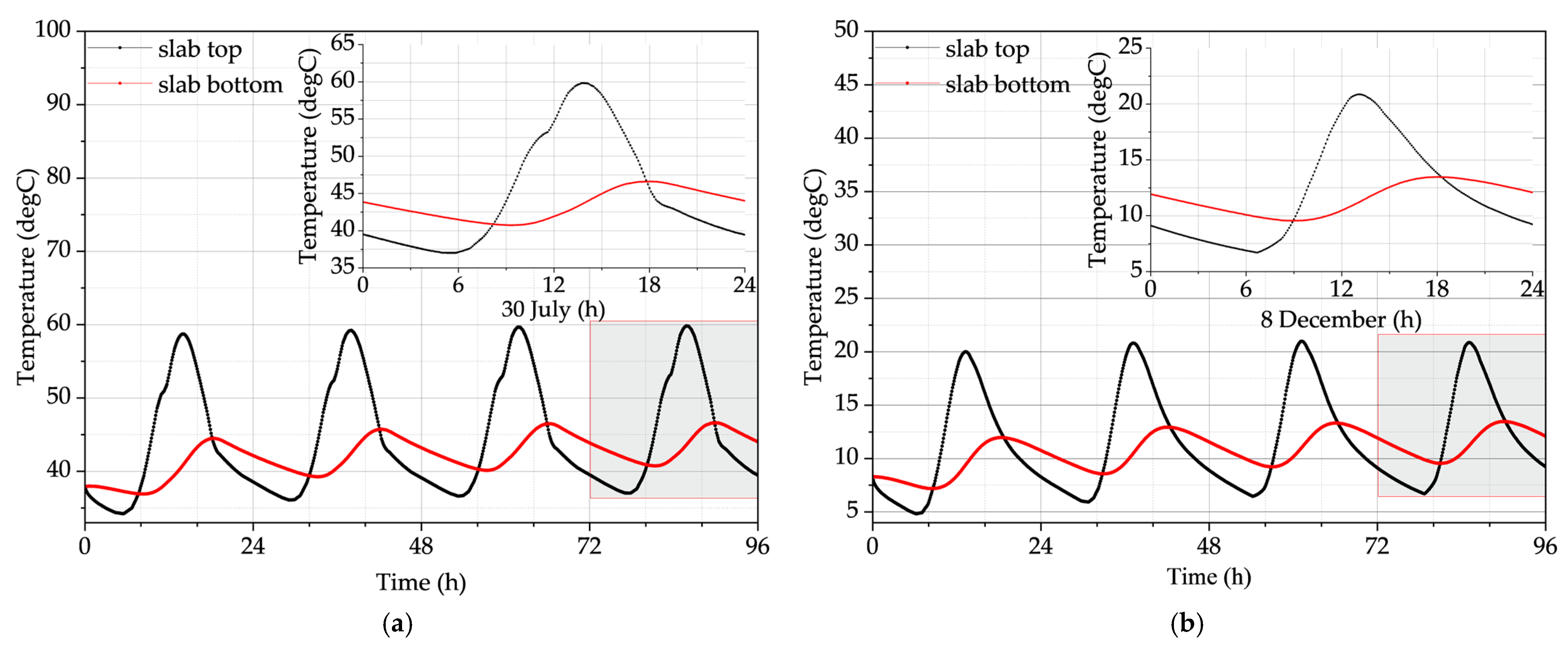
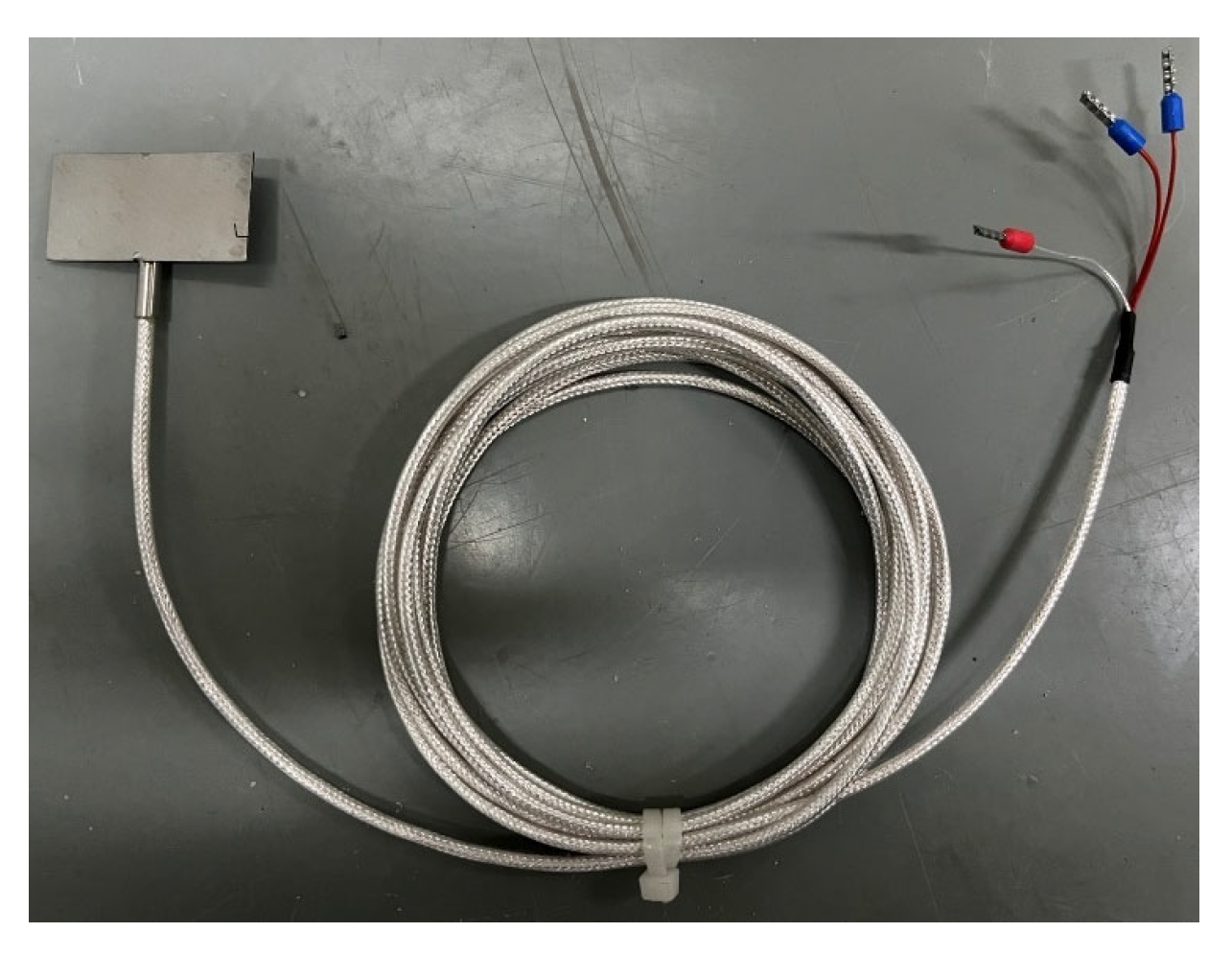
To obtain the temperature variation characteristics of the track slab under actual working conditions, multiple high-precision temperature sensors were arranged on top and bottom surfaces of the track slab to capture long-term temperature data from July to December [
18]. The sensors have a high accuracy (with a measurement error within ±0.1 °C) and long-term stability, which can capture diurnal temperature variations in the track slab, including daily extreme temperature trends. PT100 flat-panel sensors (as shown in
Figure 1) were selected to maximize the contact area and ensure measurement accuracy, enabling the system to achieve a temperature resolution of 0.01 °C.
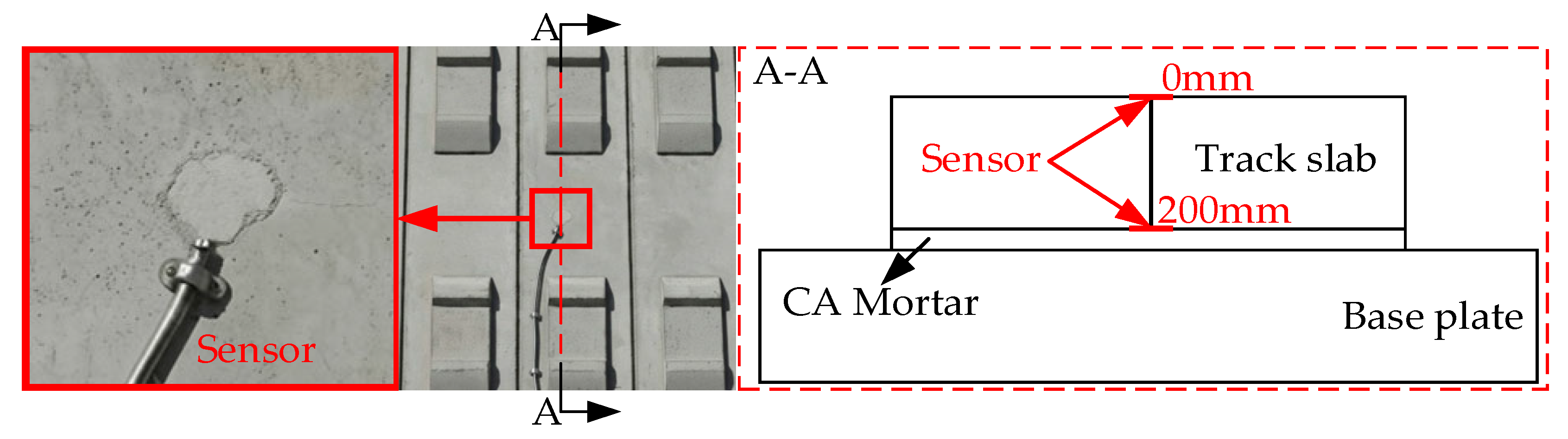
The temperature gradient within the track slab is a key factor inducing warping deformation and related structural defects. As depicted in
Figure 2, sensors are mounted at designated positions on the top and bottom surfaces of the slab. These measurement points, which were determined during the prefabrication stage, were installed via on-site drilling and sealed with cement mortar to ensure proper sensor deployment at depths of 0 mm and 200 mm [
19].
All sensors underwent standardized calibration prior to their installation. During the installation process, complete contact with the slab was ensured to prevent measurement errors resulting from poor contact [
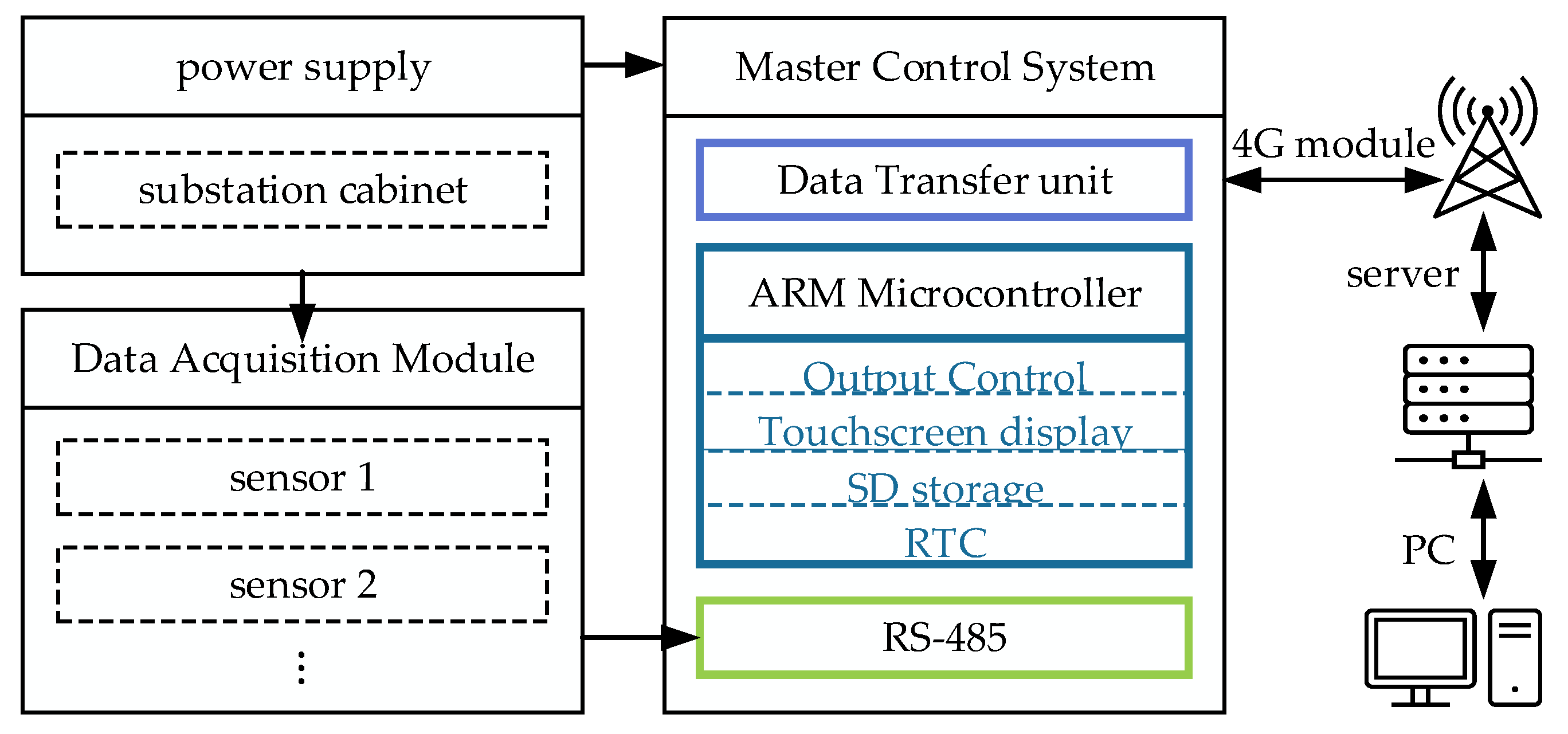
20]. The data acquisition system was configured for automatic timed recording, collecting data at 10 min intervals, and transmitting the data to the main control system. The main control system utilizes an ARM microcontroller for data processing and management, and transmits the temperature data to the remote server. The server side implements real-time monitoring, anomaly alerts, and data backup, thereby ensuring data integrity and reliability. The overall architecture of the online detection system is shown in
Figure 3.
To obtain the environmental boundary conditions required in simulating the temperature field of the track slab, a small automatic weather station was installed on the testing site to measure meteorological parameters in real-time [
21]. The stations employ highly integrated and fast-response automatic observation equipment installed near the test track section to ensure data representativeness and applicability. The principal parameters under monitoring are air temperature, relative humidity, solar radiation, and wind speed. The meteorological observations are collected every 10 min and automatically wirelessly sent to the server side for real-time archiving and backup.
Table 1 presents the models and corresponding parameters of various sensors used for meteorological detection.
Meteorological data are sampled synchronously with temperature sensor readings, thus inducing temporal correlation between the boundary conditions and temperature responses. This provides accurate and real-time dynamic inputs for subsequent simulation and modeling [
22,
23].
2.2. Temperature Field Calculation Theory
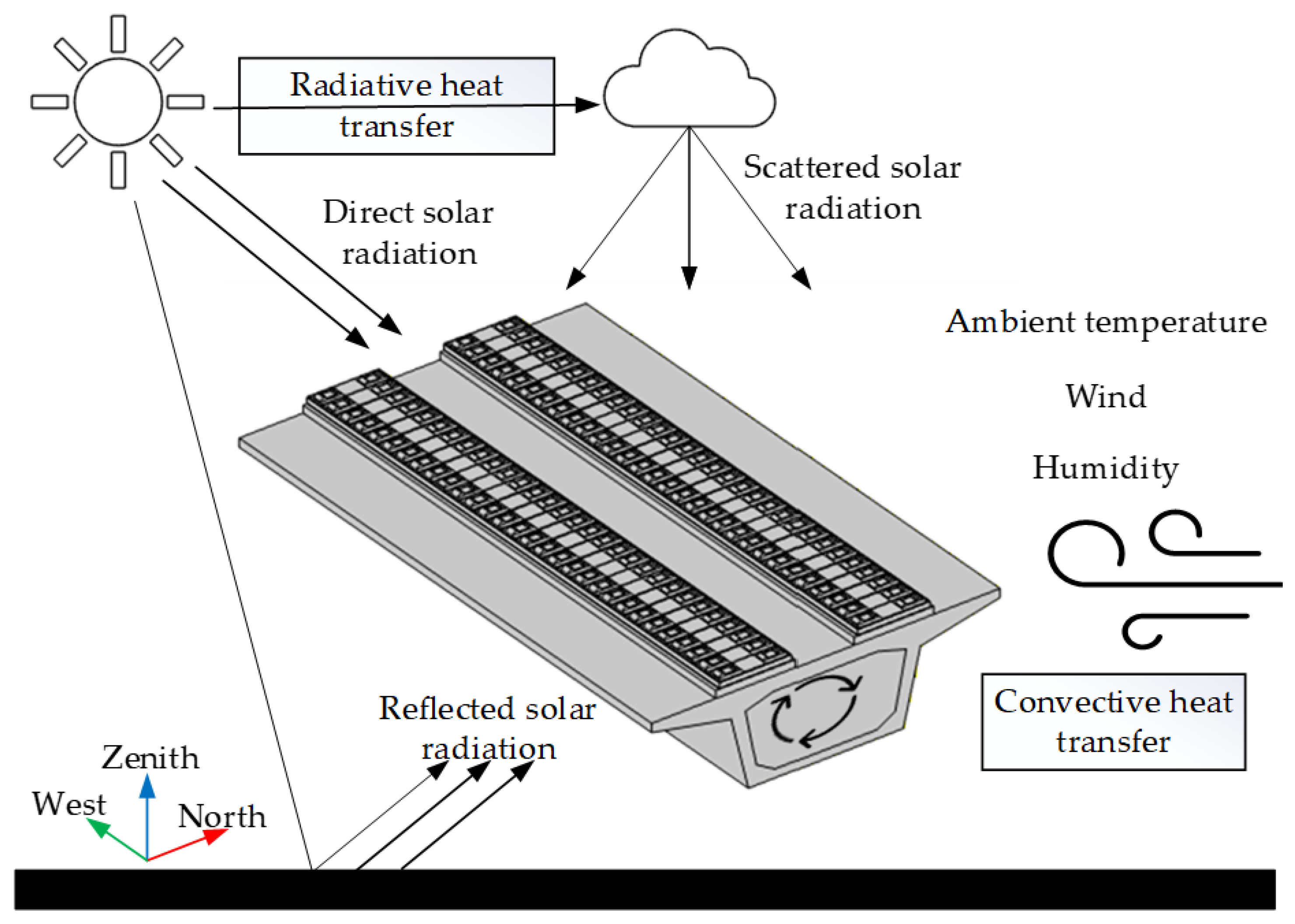
To investigate the evolution of the track slab temperature field under real-world environmental conditions, a finite element model based on three-dimensional transient heat conduction theory was developed. The model adheres to the basic assumptions of material mechanics, where the materials of all components are continuous, homogeneous, and isotropic. The model comprehensively considers various typical heat exchange mechanisms, such as solar radiation, air convection, and ground thermal conduction, to achieve a refined simulation of the temperature field response [
24]. A schematic diagram of heat exchange in ballastless track foundations for box girders is presented in
Figure 4.
2.2.1. Fundamentals of Heat Transfer Theory
The evolution of the temperature field is governed by the heat conduction equation.
For the track slab, it is considered a three-dimensional transient heat conduction problem where temperature varies with time [
25]. The fundamental form of the heat conduction equation, based on the law of energy conservation [
26], is:
where
is the material density (kg/m
3), is the specific heat capacity (J/(kg⋅°C)),
is the temperature (°C),
denotes the variation in temperature with time,
is the heat conduction term, and
is the heat source term (W/m
3).
Within solids, thermal energy is transferred by conduction. According to Fourier’s law, heat flux
(W/m
3) is proportional to the temperature gradient [
27], and is expressed as:
where
is the thermal conductivity (W/(m⋅°C)) and
is the temperature gradient (°C/m). This term describes the conduction process within solids and is represented by
in the governing equation, determining the direction and intensity of heat flow within the solid.
The heat conduction equation provides the fundamental law governing the temporal and spatial evolution of the temperature distribution. However, an infinite number of solutions can satisfy this equation. To obtain a unique and physically meaningful solution for the temperature field, initial and boundary conditions must be introduced. These conditions impose necessary constraints on the solution, ensuring that the temperature field evolves according to real physical processes within a specific time and spatial domain.
2.2.2. Initial Conditions
For three-dimensional transient heat conduction, the initial conditions are given by:
where
represents the temperature at each point at the initial time.
Since the ballastless track structure is directly exposed to the external environment, its internal temperature changes depend on variations in external meteorological conditions. As a result, the temperature field distribution is non-uniform at any given time. Thus, measured data from four consecutive days were selected for computation to eliminate the influence of initial conditions, with data from the fourth day used for formal analysis. The average measured temperature at the initial time on the first day was selected as the initial condition for the COMSOL Multiphysics 6.2 numerical simulation [
28].
2.2.3. Boundary Conditions
Boundary conditions are essential for describing the heat exchange between a system and its environment. When modeling the temperature field of a track slab, the outer surface of the track structure, exposed to the external environment, is influenced by temperature differences, solar radiation, and wind speed. The boundary conditions primarily consist of a mixed boundary condition that combines convective heat transfer and thermal radiation [
29].
Convective heat exchange occurs between a solid surface and a fluid (e.g., air or water). According to Newton’s cooling law, thermal convection is described by the following equation:
where
is the convective heat transfer coefficient (W/(m
2⋅°C)),
is the solid surface temperature, and
is the fluid temperature. The convective heat flux
is incorporated into the governing equations through boundary conditions, affecting heat transfer at the solid surface [
30].
- 2.
Radiative Boundary Conditions
Under natural daylight conditions, significant daily temperature variations make radiative heat exchange a key mechanism [
31]. Radiative heat transfer per unit area between surfaces is calculated using Stefan-Boltzmann’s law:
where
is the Stefan-Boltzmann constant (W/(m
2⋅K
4)),
is the surface emissivity, and
and
are the surface and ambient temperatures, respectively. Radiative heat flux
also serves as a boundary condition in the governing equations, influencing heat exchange at the solid surface.
Considering the practical application of track slabs, this study assumes that there are no internal volumetric heat sources within the track slab. Thus, the heat source term in the governing equations primarily arises from radiative and convective heat fluxes:
2.2.4. Coupling of Laminar Flow and Heat Transfer
In box girder structural models, heated air within the cavity undergoes natural convection, which significantly influences internal heat conduction pathways. Since pressure variations and flow velocities associated with natural convection within the cavity are relatively small, the air in the cavity can be treated as an incompressible ideal gas. To simplify calculations, the Boussinesq approximation is adopted for air density, which assumes that the density is constant in all equations except for the buoyancy term [
32].
The continuity equation, which ensures mass conservation during fluid flow, is given by:
The velocity field of the fluid is governed by the Navier–Stokes equations, given by:
where
is the air velocity (m/s),
is the air density (kg/m
3),
is the pressure (Pa),
is the dynamic viscosity of air (Pa⋅s),
is the gravitational term (N),
is the gravitational acceleration (m/s
2),
is the thermal expansion coefficient of air (1/K),
is the air temperature, and
is the reference temperature of air.
The temperature field of the fluid is described by the energy equation:
where
is the specific heat capacity of the fluid, and
is the thermal conductivity. This equation describes the temporal evolution of the fluid temperature, accounting for both thermal conduction and convection during flow. This set of governing equations for incompressible flow is standard and can be found in classic texts [
33].
2.2.5. Shading Effect Calculation
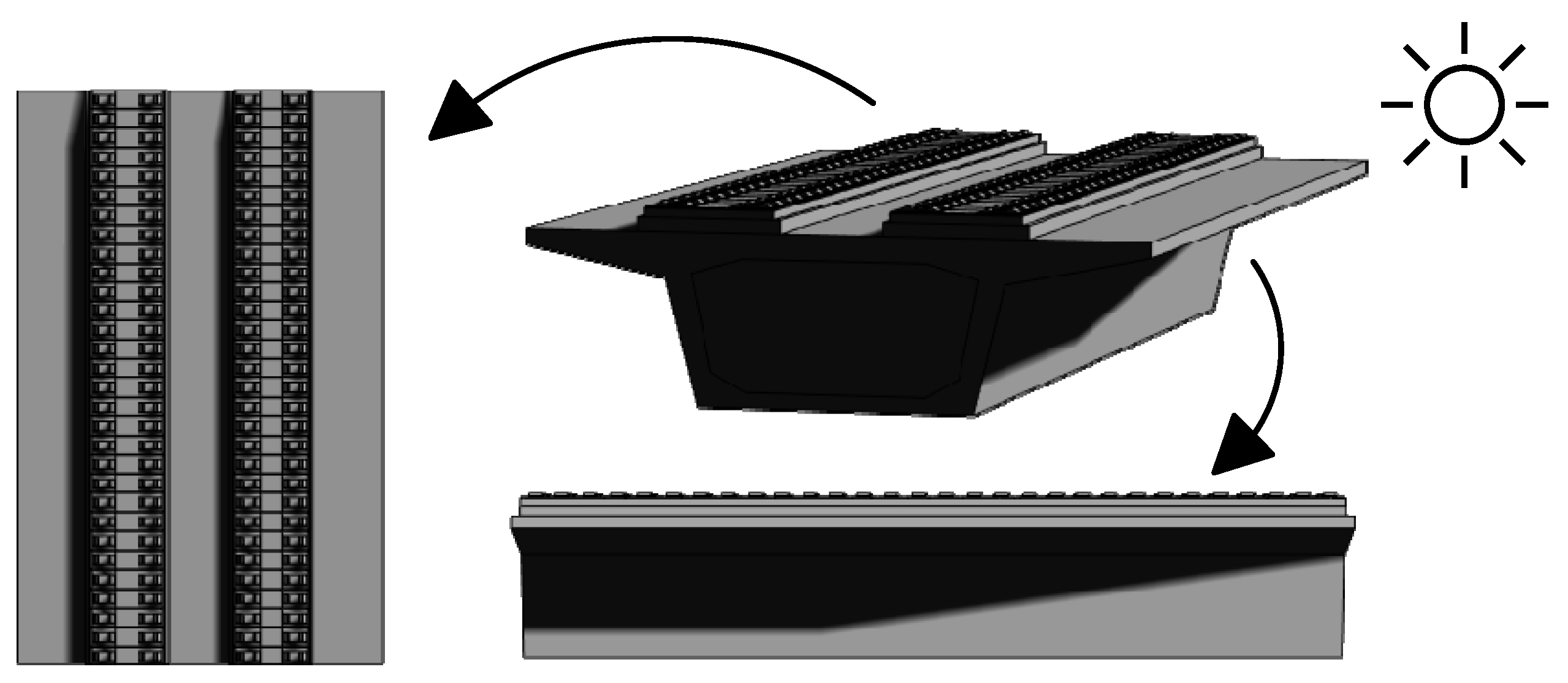
The shading effect of the flanges of the box girder on the concrete web and of the track slabs on the top of the box girder significantly influences the overall temperature distribution under solar radiation. Shaded regions exclude direct solar radiation. The location of the irradiated zones is determined by calculating the shadow length, which varies with the relative positions of the sun and the structure, making surface radiation a spatiotemporal function [
34].
This study uses the external radiation source module in COMSOL to dynamically calculate the solar altitude and azimuth angles by defining geographic location (latitude and longitude) and time parameters (year, month, day, hour) based on the built-in astronomical model, thereby automatically calculating the radiation intensity for each region [
35,
36].
Based on the dynamic calculation method described above, the conceived shadow distribution on the box girder is illustrated in
Figure 5, which visually demonstrates the shading effects of the flanges and track slabs.
2.3. Point Cloud Modeling and Geometric Reconstruction
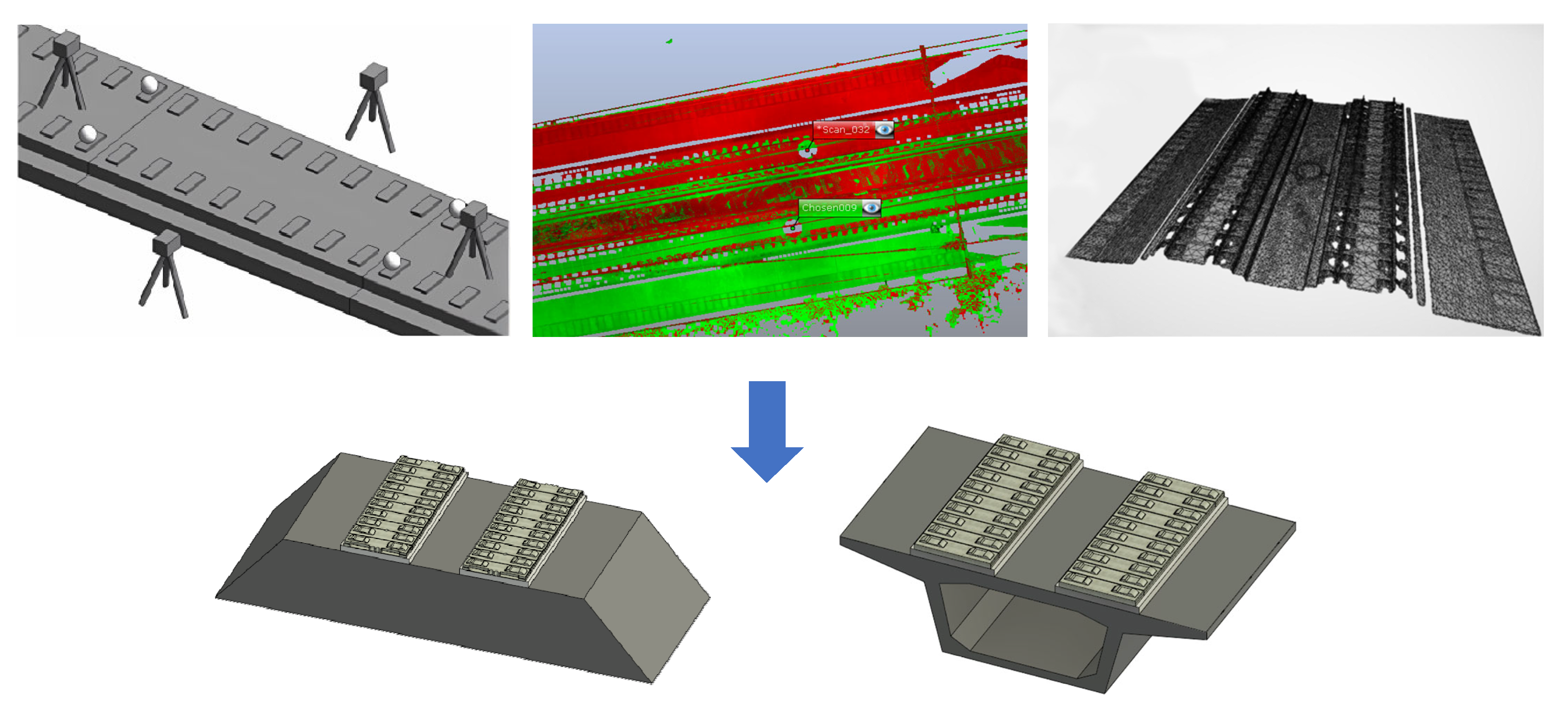
In response to the precision requirements in the field of railway engineering, point cloud data collection was carried out using the FARO Focus Premium laser scanner from FARO Technologies, Inc. (Lake Mary, FL, USA). This tripod-mounted instrument has a range of 350 m and an accuracy of ±1 mm. The obtained high-density point cloud data underwent post-processing operations such as denoising, stitching, registration, and simplification [
11,
12]. The data were then imported into the Autodesk Revit 2024 BIM platform. As the point cloud for the lower structural sections was not captured during the on-site scan due to accessibility constraints, the complete solid model was reconstructed in Revit by integrating the captured point cloud data with the original design drawings to supplement the missing geometry. This geometric correction process included structural detail completion, simplification of redundant surfaces, and repair of geometric closure. The completed solid model was finally imported into finite element analysis software as the basis for finite element geometry modeling. This process (as shown in
Figure 6) ensures a high-fidelity representation of the model shape and consistency with the engineering structure, providing a reliable foundation for subsequent thermal boundary configuration and mesh generation [
11,
12].
2.4. Finite Element Model and Mesh Generation
This study requires numerical analysis of temperature field models for track slabs with different foundation structures, involving multiphysics phenomena such as thermal, solid, fluid, and fluid-solid coupled heat transfer. Given COMSOL’s exceptional multiphysics coupling capabilities, COMSOL finite element software was selected for the simulation analysis.
This study utilizes three physical fields: “Laminar Flow,” “Solid-Fluid Heat Transfer,” and “Surface-to-Surface Radiation.” The first two are coupled to form the “Non-Isothermal Flow” multiphysics field, while the latter are coupled to form the “Surface-to-Surface Radiation” multiphysics field. Subsequently, precise initial and boundary conditions were set for each physical field. Time-varying functions, fitted to measured meteorological data, serve as inputs.
The specific thermal parameters of the ballastless track slab components used in this study are provided in
Table 2 [
37,
38].
Based on Kirchhoff’s law, the surface emissivity of various materials is presented in
Table 3.
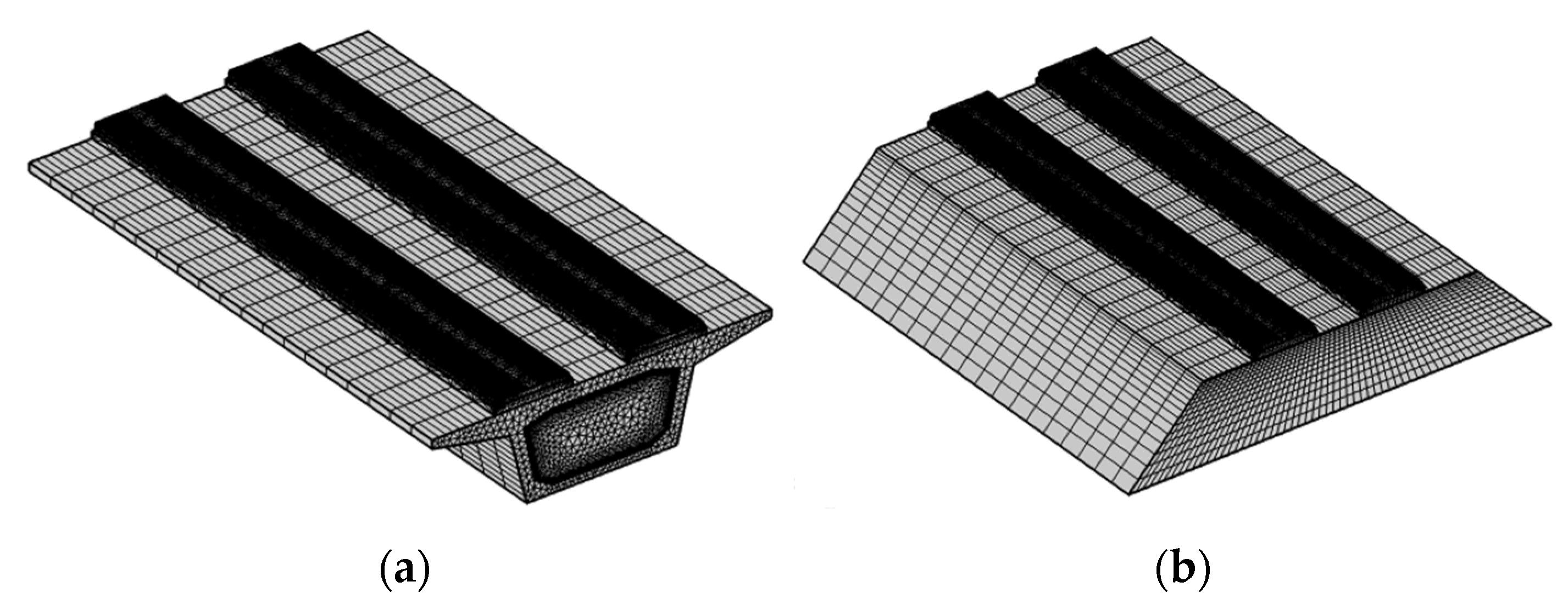
The model was discretized into finite elements, with local mesh refinement applied to regions exhibiting significant geometric gradients or at material interfaces to enhance computational accuracy, as illustrated in
Figure 7.
2.5. Mesh Sensitivity Analysis
To verify the mesh independence of the numerical solution, a sensitivity analysis was performed. While keeping all physical settings, boundary conditions, and the local refinement strategy of the model unchanged, a refined verification mesh was generated by uniformly reducing the global base element size in all physical domains by 30% (scale factor of 0.7). This verification mesh strictly maintained the identical geometric topology of locally refined regions as the baseline mesh, ensuring a fair comparison.
Taking the typical working condition of July 30th as an example, the results from the verification mesh were compared with those from the baseline mesh used for all primary analyses in this study.
Table 4 lists the computational results for two of the most representative physical quantities under both mesh configurations. The data show that despite significant global refinement, the relative changes in both the peak temperature at the top surface of the track slab and the maximum positive temperature gradient across the section were less than 0.5%.
The results indicate that the key physical quantities are highly insensitive to further mesh refinement (relative changes < 0.5%). This proves that the numerical solution from the baseline mesh has converged under the current zoned refinement strategy. Therefore, all primary conclusions presented in this paper can be considered independent of the mesh discretization.
3. Simulation Results and Analysis
Based on the aforementioned model, this chapter presents and analyzes the influence of key boundary conditions. The contents include: the formulation of boundary condition functions from field measurements and model validation, a comparative analysis of the thermal response under different substructures (subgrade and box girder), and an analysis of the modulating effect of track alignment on solar radiation reception and surface temperature distribution. The results provide a quantitative basis for the differentiated design of track structures.
3.1. Formulation of the Boundary Condition Function
To develop the time-varying boundary condition function for finite element simulations, curve fitting was performed in MATLAB R2023a based on meteorological data collected in Shanghai on 30 July 2024 and 8 December 2024. The recorded wind speed data, which are typically discrete and low in magnitude, were parameterized to avoid biases from strong modeling assumptions. This approach involved replacing the daily observations with their arithmetic mean. This procedure yielded representative wind speeds of 0.30 m/s for 30 July and 0.20 m/s for 8 December.
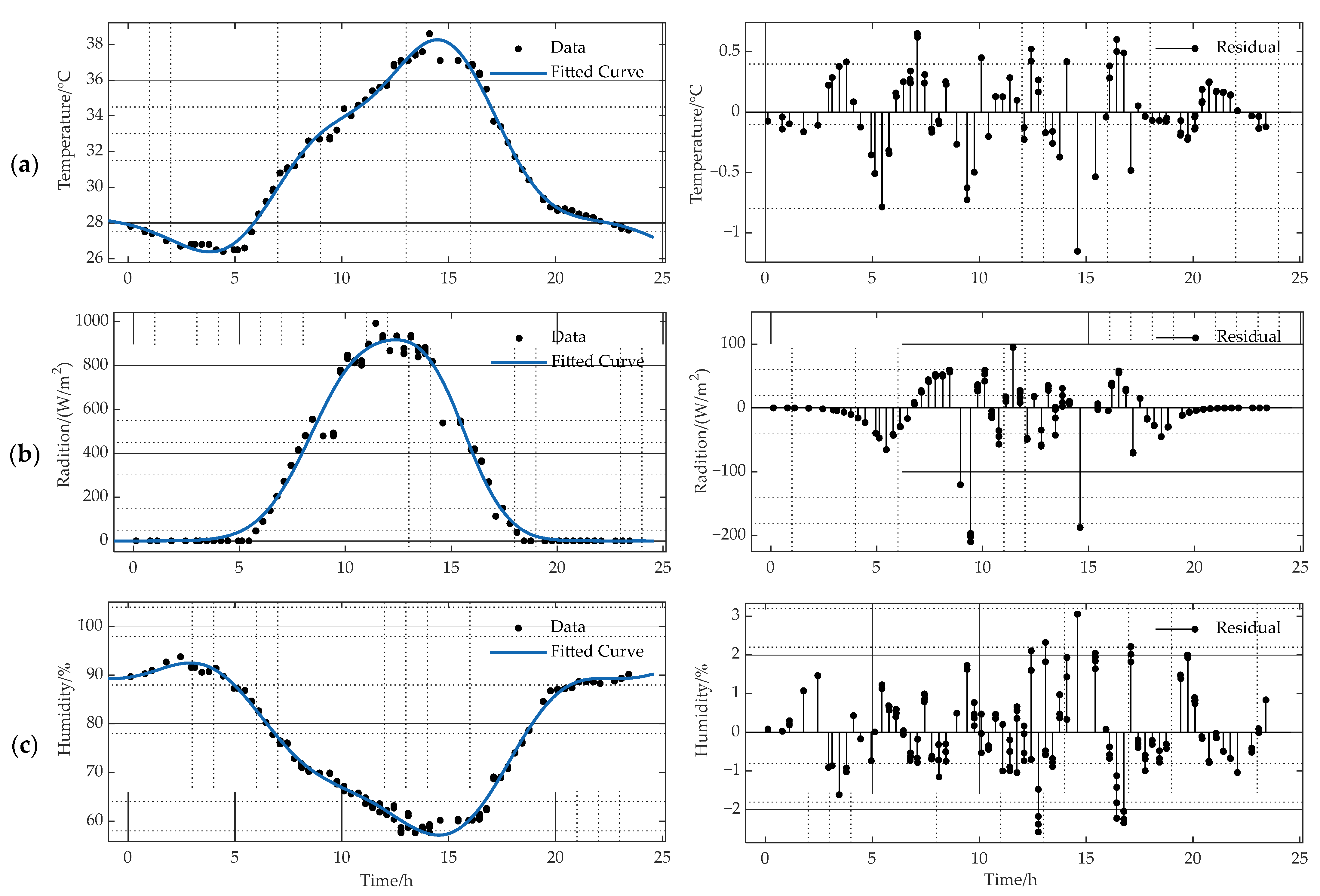
The fitted curve and residual plot for 30 July are presented in
Figure 8, with the fitting model and R
2 listed in
Table 5.
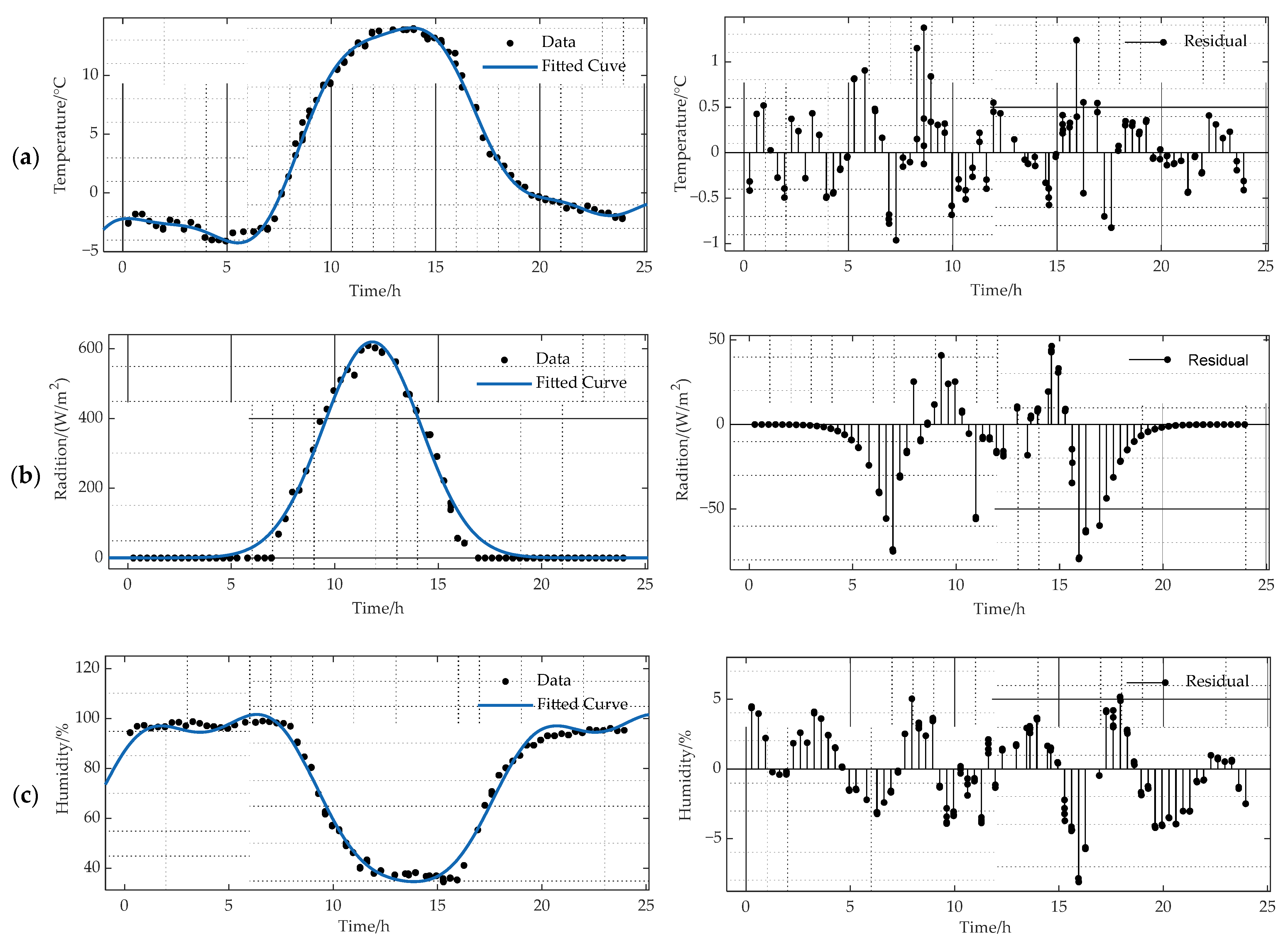
The fitted curve and residual plot for 8 December are presented in
Figure 9, with the fitting model and R
2 listed in
Table 6.
The fitting results confirm the presence of a dynamically coupled interaction among the variables. Specifically, solar radiation serves as the principal driver for temperature fluctuations, and an inverse relationship is observed between temperature and humidity. The formulated function, owing to its representative nature, is readily applicable as a direct input for time-varying boundary conditions in finite element simulations, demonstrating significant practical utility.
3.2. Model Validation and Performance Evaluation
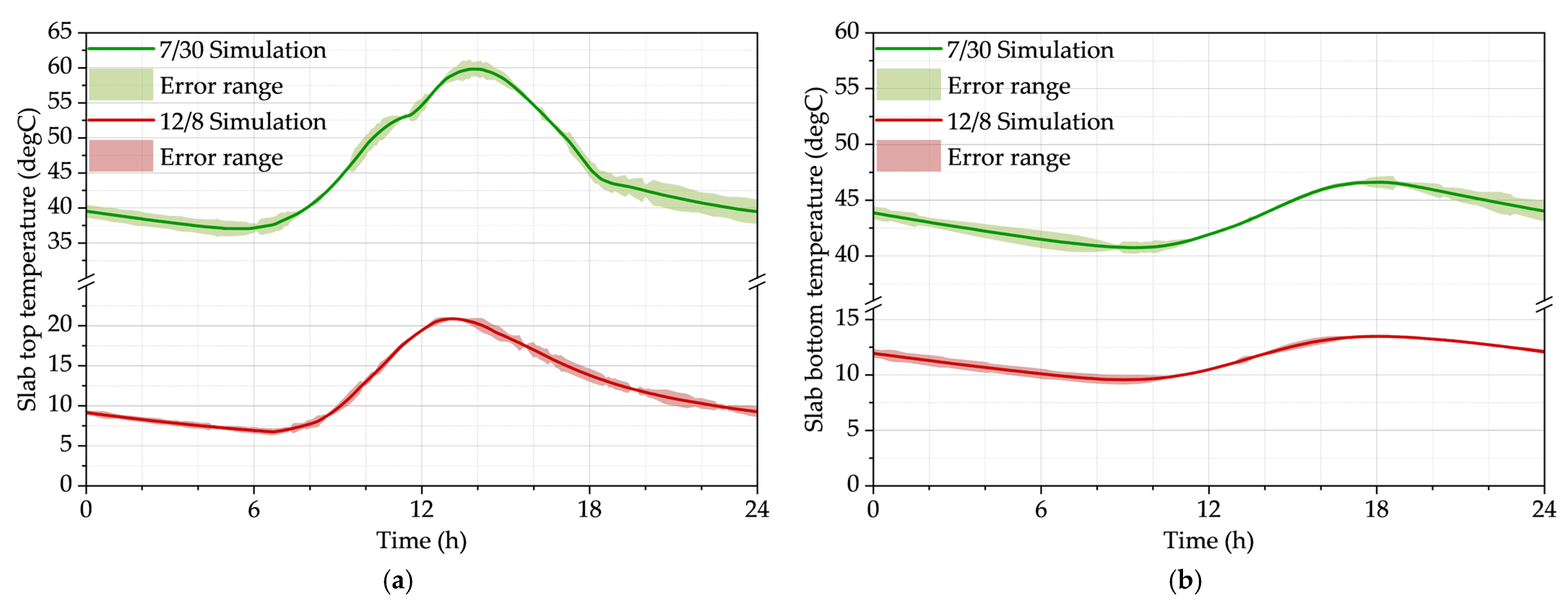
To validate the feasibility and accuracy of the developed ballastless track temperature field model, this study compared the numerical simulation results with field measurements. To minimize the impact of initial conditions, meteorological data from four consecutive summer days and four consecutive winter days in Shanghai were selected as input, with the results shown in
Figure 10. The obtained temperature simulation results were compared with the corresponding monitored track slab temperatures during the same time periods to validate the model. The simulation results exhibited a high degree of consistency with the measured data in both trend and magnitude, as shown in
Figure 11.
To quantitatively assess the model performance, we used three statistical indicators: Mean Absolute Percentage Error (MAPE), Relative Root Mean Square Error (RRMSE), and the correlation coefficient (R
2). As shown in
Table 7, the MAPE and RRMSE values for all conditions are below 5%, and the correlation coefficients are all close to 1.
These quantitative results fully confirm the accuracy and reliability of the model in capturing the thermal-physical behavior of the track slab. The extremely low error metrics indicate that the model can accurately replicate real-world engineering conditions, providing a solid foundation for its application in subsequent analyses.
3.3. Analysis of Substructure Effects on the Temperature Field
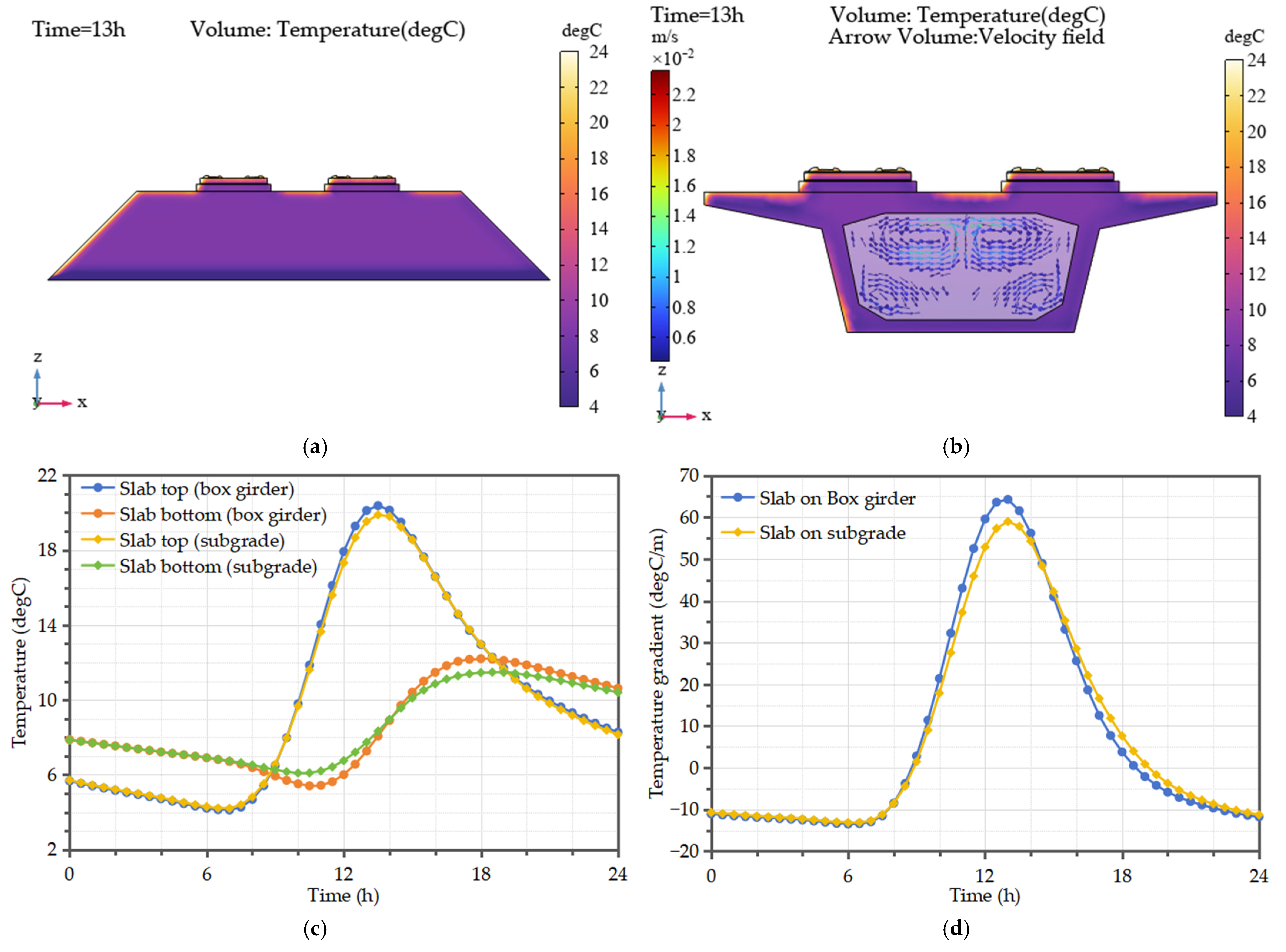
This study conducted a comparative analysis of the temperature field characteristics of ballastless track on two types of substructure: subgrade and box girder, through finite element simulations. The simulations used a boundary condition fitting function constructed based on field data from 8 December 2024 in Shanghai as input, with the track alignment fixed at 0° to ensure that the substructure was the only variable. The temperature field distribution and key parameter comparisons for both structures are shown in
Figure 12 and
Table 8.
Quantitative analysis shows that the influence of the substructure on the bottom temperature of the track slab is significantly greater than on the top. As shown in
Table 8, the maximum temperature at the bottom of the track slab with a box girder substructure is 1.41 °C higher than that of the subgrade substructure, while the temperature difference at the top is only 0.49 °C. This difference results in the maximum positive temperature gradient for the box girder substructure being 5.29 °C/m (approximately 9%) higher than that of the subgrade. Temperature contour maps and time-series curves further reveal that the box girder cavity, due to its low air heat capacity, creates a “cavity heat storage” effect, causing significant temperature fluctuations at the bottom of the slab. In contrast, the subgrade structure achieves stable heat diffusion through its higher thermal conductivity. Nighttime observations show that the temperature fields for both structures converge, confirming that environmental conditions dominate during this period.
The study confirms that the temperature gradient of the ballastless track slab is directly related to the characteristics of the underlying substructure. Based on the tendency of box girder substructures to cause higher temperature gradients, it is recommended that the thermodynamic requirements of different substructures be differentiated in ballastless track design standards. Specifically, for box girder structures, targeted measures should be implemented, such as optimizing the cavity structure and selecting materials with low thermal sensitivity, to effectively control thermal stress and ensure the long-term stability of the track structure.
3.4. Analysis of Track Alignment Effects on the Temperature Field
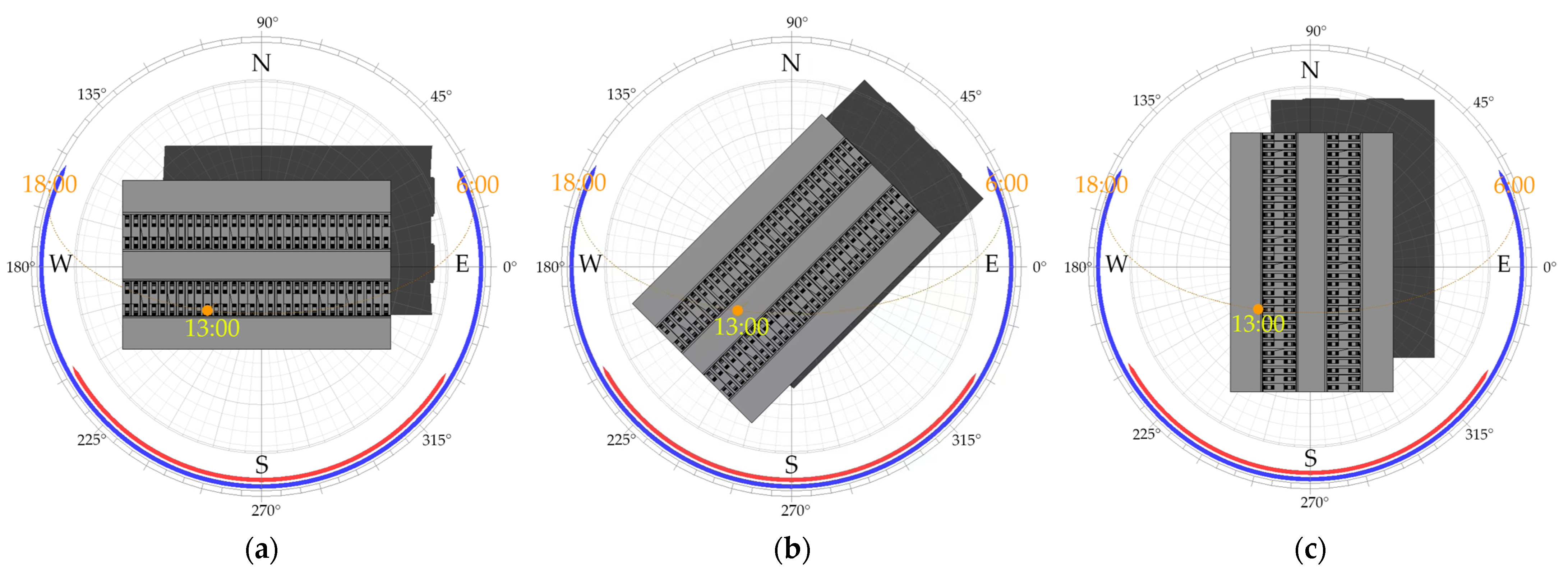
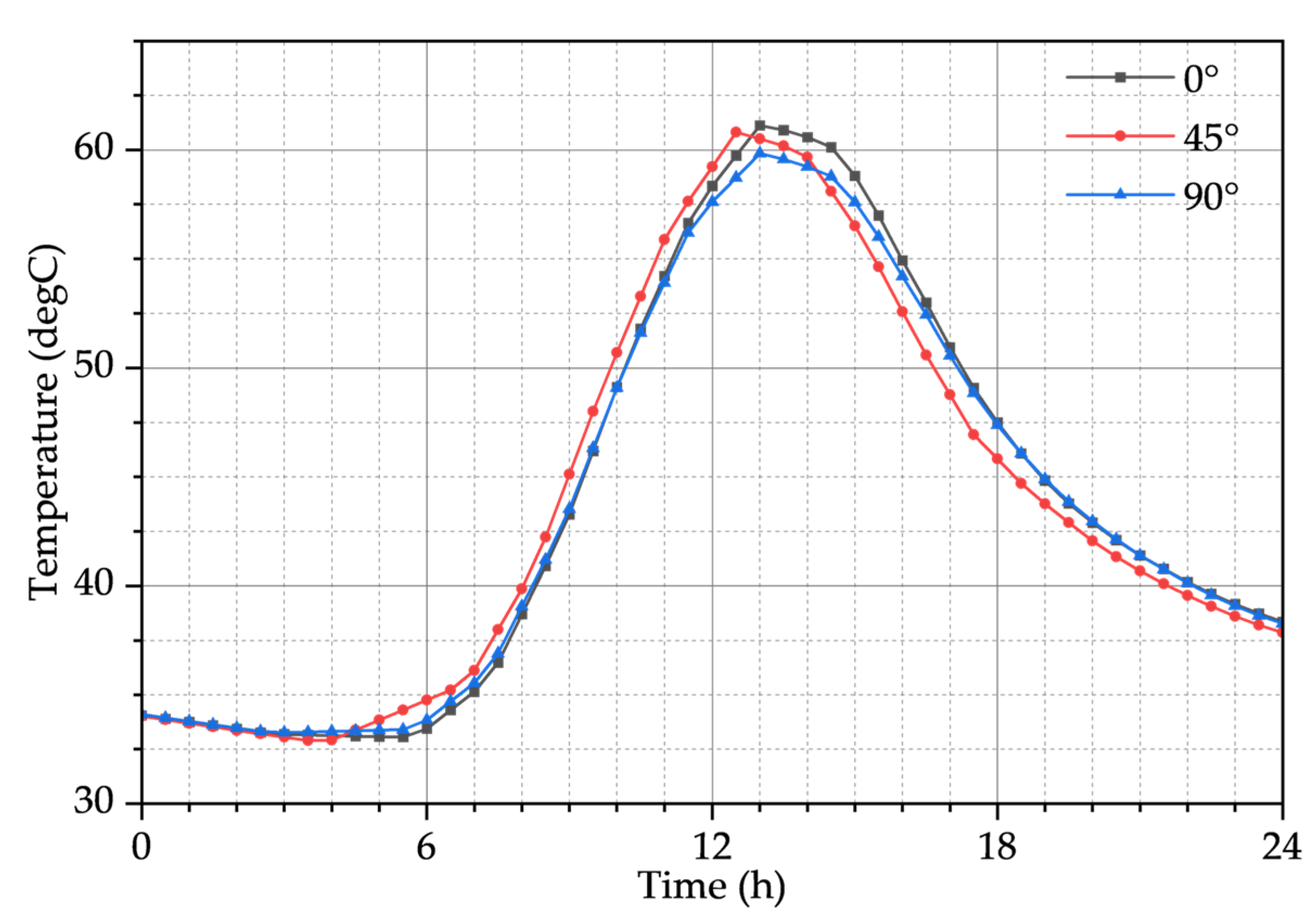
To investigate the impact of track alignment on the temperature field of ballastless track, this study compared the thermal responses of three typical alignments: 0° (east–west), 45° (northeast-southwest), and 90° (north–south). The finite element analysis used a boundary condition function constructed based on field data from Shanghai on 30 July 2024, as input to ensure that track alignment was the only variable.
Figure 13 and
Figure 14, and
Table 9 show the solar radiation paths and temperature response characteristics for different alignments.
Quantitative data show that the peak temperature at the top surface of the track slab with a 0° alignment reaches 61.13 °C, which is 1.30 °C higher than that of the 90° alignment. The maximum instantaneous temperature difference exhibits distinct spatial and temporal variation: the temperature difference between the 0° and 45° alignments reaches 2.39 °C at 16:30, while the difference between the 45° and 90° alignments is 2.09 °C at 12:30. Thermal conduction mechanism analysis reveals that different alignments regulate the distribution of effective radiation flux by altering the geometric relationship between the track slab surface and the solar incident direction: the east–west alignment, with a smaller solar incidence angle, absorbs more radiation energy, while the north–south alignment experiences lower temperature rise due to the reduced equivalent radiation reception area.
The research results indicate that track alignment has a significant regulatory effect on the temperature distribution of the track slab. Given that the maximum instantaneous temperature difference of up to 2.4 °C could lead to the long-term accumulation of uneven thermal strain, it is recommended to implement enhanced thermal stability designs in long, straight sections along the east–west alignment. These designs should include optimizing expansion devices, improving fastener system performance, and selecting materials with low thermal sensitivity, to enhance the long-term service performance of the track structure.
4. Conclusions
This study established simulation models for the track structure under various conditions, and through quantitative analysis, compared the temperature field distribution under different substructures and track alignments. The main conclusions are as follows:
- 1.
Through high-precision fitting of environmental parameters (R2 > 0.98), the diurnal variation pattern was revealed. The results show that temperature, humidity, and solar radiation intensity are dynamically coupled: solar radiation dominates temperature variation, exhibiting a significant positive correlation, while temperature and humidity demonstrate a typical negative correlation. The differences in the specific fitting models reflect the characteristic modulation of the local microenvironment.
- 2.
A numerical model focused on the refined analysis of the ballastless track temperature field has been successfully developed. By inputting external environmental parameters, astronomical location parameters, thermal parameters of the ballastless track, and material surface reflectivity, the model can perform full-period, full-section temperature field simulations, accurately capturing internal temperature gradients and transient thermal effects.
- 3.
By comparing the temperature fields of ballastless tracks on subgrades and bridges, it was found that the thermal conditions within the box girder are more complex than those on the subgrade. During the day, under the influence of solar radiation, the track slab’s underside temperature on the box girder foundation fluctuates more dramatically than on the subgrade foundation due to natural thermal convection in the cavity, resulting in a larger positive vertical temperature gradient. At night, the temperature variations in both are similar, with a greater influence from the external environment.
- 4.
Under different track alignments, the temperature of the track slab exhibits a typical diurnal variation, with the peak occurring between 12:30 and 13:00. The geometric relationship between the track alignment and the solar azimuth determines the received solar radiation flux. Consequently, the east–west alignment (0°) absorbs significantly more radiant energy than the north–south alignment (90°), resulting in a peak surface temperature that is 1.30 °C higher and a maximum instantaneous temperature difference of up to 2.4 °C. This quantifies the inherent thermal divergence determined by the alignment—a factor that is rarely sufficiently considered in current design practice.
This study innovatively quantifies the impact of multiple boundary conditions on the temperature field of ballastless track. The developed refined temperature field model enables precise simulation and comprehensive evaluation of ballastless track structures under different foundation types and track alignments. The findings provide a critical theoretical foundation for revising temperature load specifications and transitioning ballastless track design from static empirical approaches to dynamic response control. Furthermore, they offer technical support for ensuring the operational performance of high-speed railways under complex climatic conditions. Moreover, the use of 3D laser scanning to acquire as-built geometry establishes a documentation-independent data source, enhancing the robustness and transferability of the methodology for analyzing in-service infrastructure. Based on the results, future track design should fully consider the influence of various climatic conditions, foundation types, and track alignments on the temperature field. Particularly under extreme temperature conditions, materials and structural configurations should be selected based on temperature field analysis to enhance the thermal stability of the track. It is recommended to integrate a dynamic temperature monitoring system, which would enable real-time temperature predictions and adjustments to temperature control strategies, thereby improving the long-term stability of the track. For bridge areas, optimizing the thermal management system, incorporating thermal isolation materials, or improving ventilation design can effectively reduce the impact of thermal gradients on the track structure. Future research could further explore the coupling mechanisms between the time-varying properties of materials and dynamic train loads.