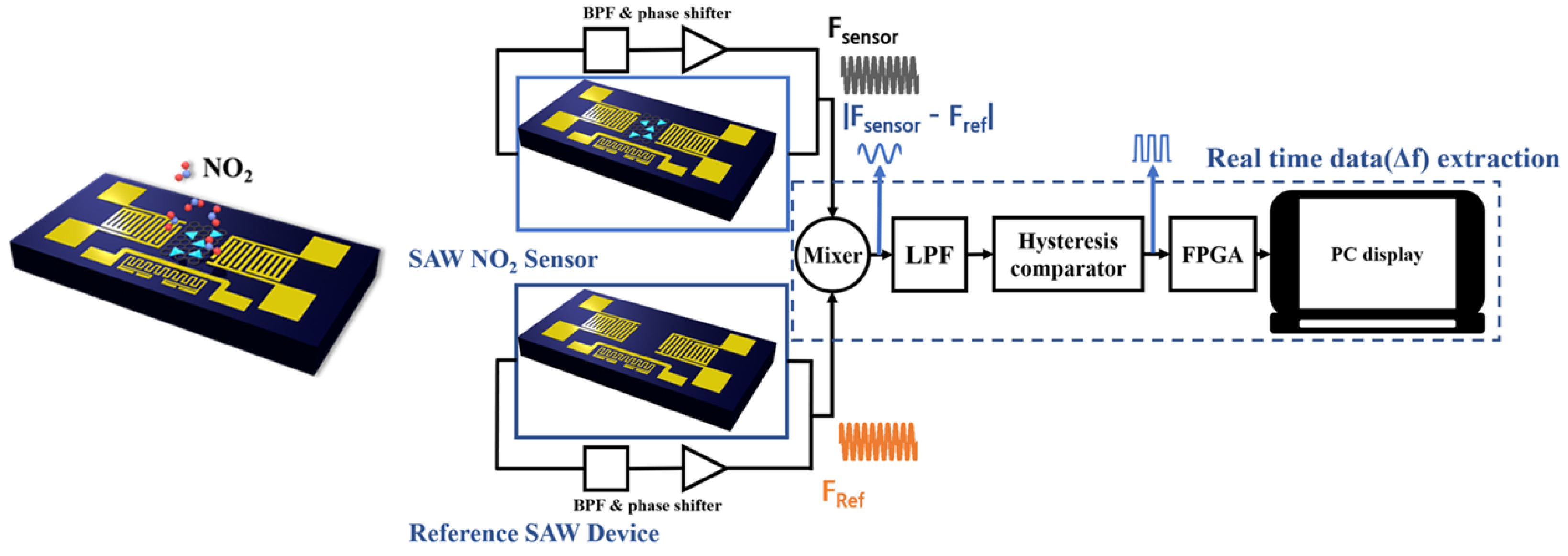
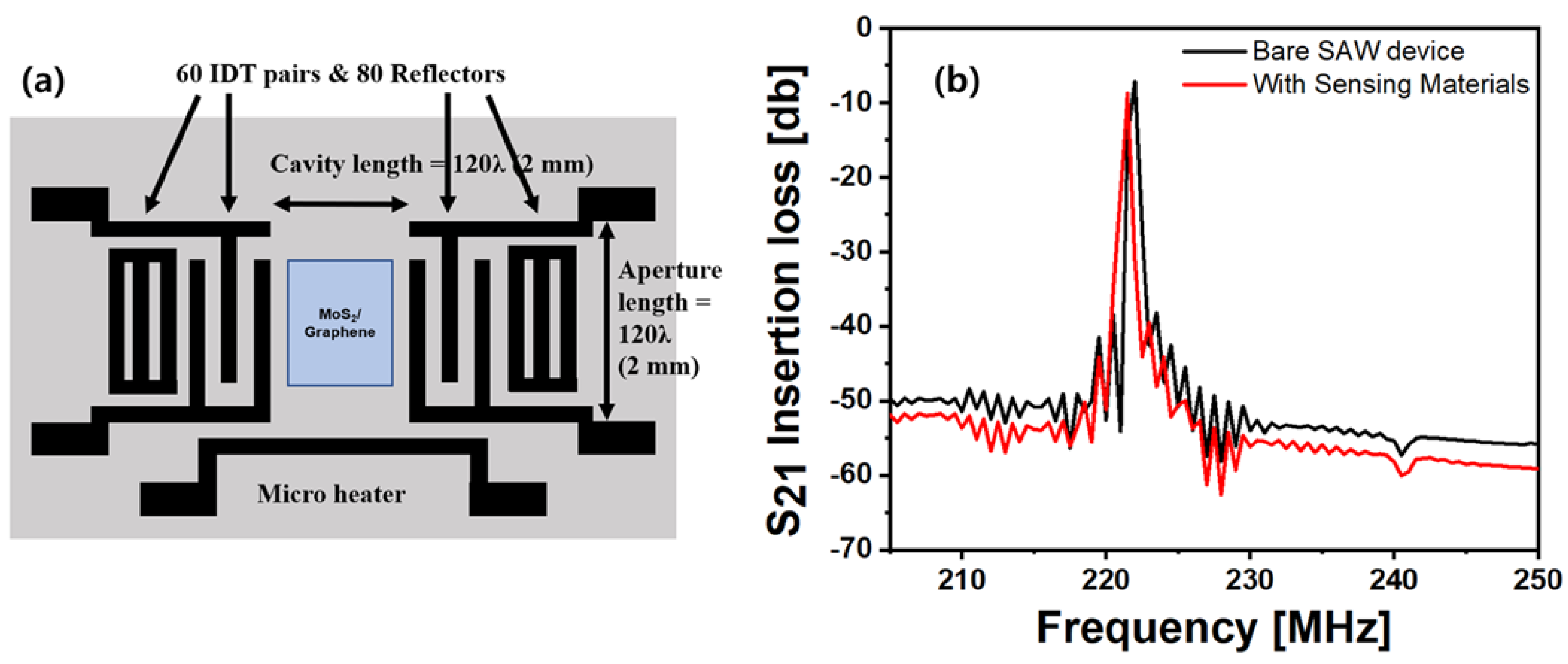
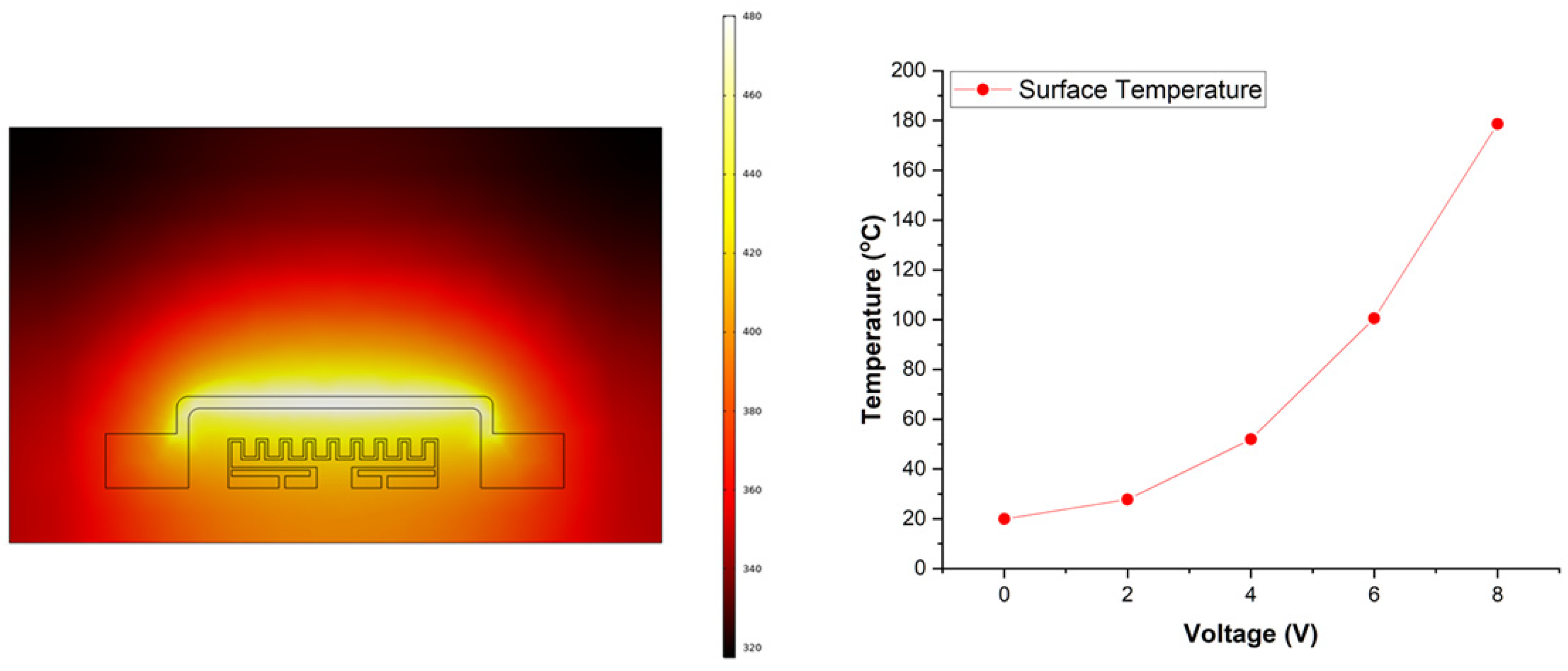
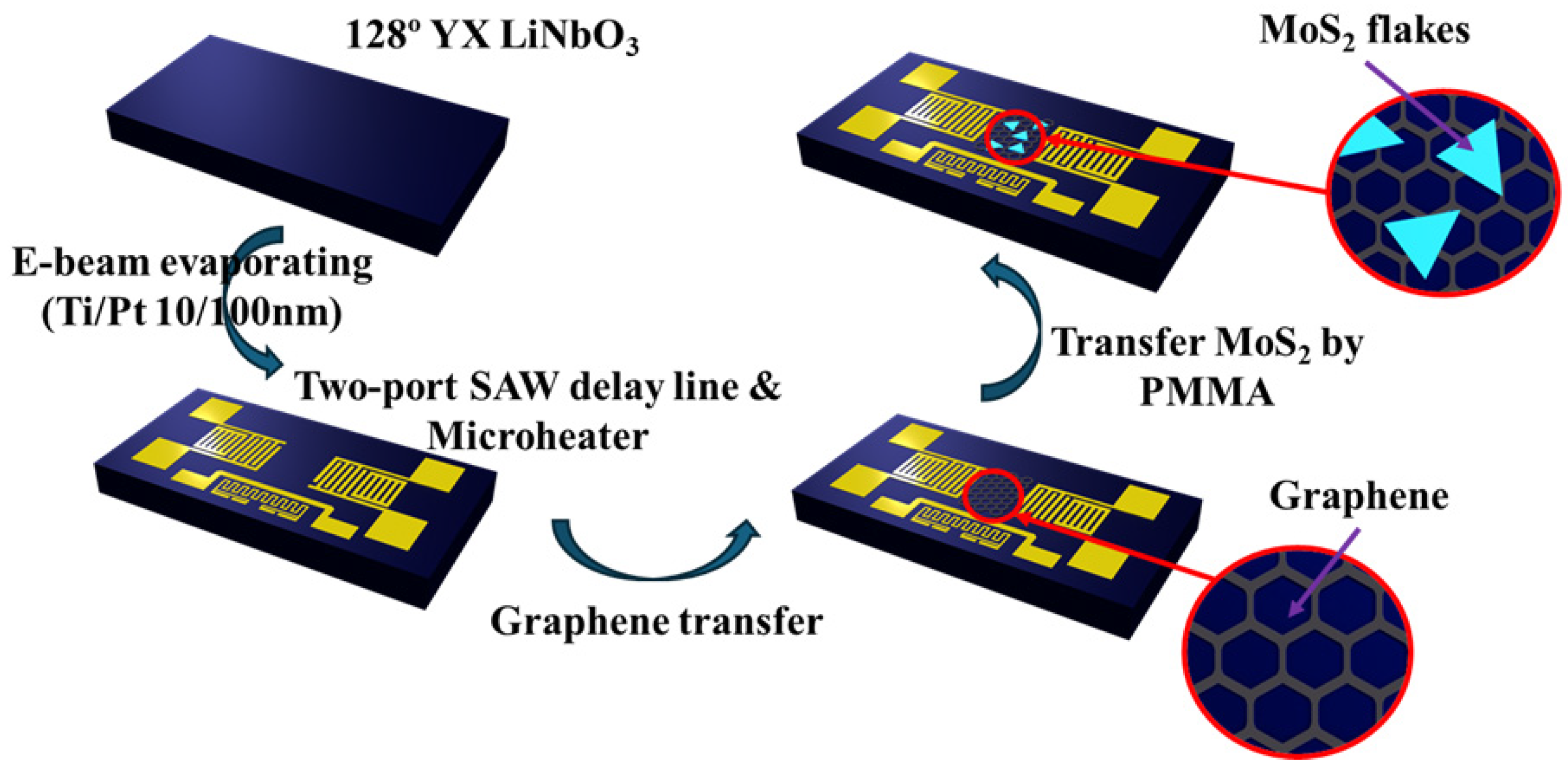
Development of Ultra-Fast Surface Acoustic Wave-Based NO2 Sensor Incorporating a Monolayered Graphene: MoS2 Sensing Material and a Microheater for Spacecraft Applications



Abstract
Share and Cite
Nawaz, F.; Lee, H.; Wang, W.; Lee, K. Development of Ultra-Fast Surface Acoustic Wave-Based NO2 Sensor Incorporating a Monolayered Graphene: MoS2 Sensing Material and a Microheater for Spacecraft Applications. Appl. Sci. 2025, 15, 4050. https://doi.org/10.3390/app15074050
Nawaz F, Lee H, Wang W, Lee K. Development of Ultra-Fast Surface Acoustic Wave-Based NO2 Sensor Incorporating a Monolayered Graphene: MoS2 Sensing Material and a Microheater for Spacecraft Applications. Applied Sciences. 2025; 15(7):4050. https://doi.org/10.3390/app15074050
Chicago/Turabian StyleNawaz, Faisal, Hyunho Lee, Wen Wang, and Keekeun Lee. 2025. "Development of Ultra-Fast Surface Acoustic Wave-Based NO2 Sensor Incorporating a Monolayered Graphene: MoS2 Sensing Material and a Microheater for Spacecraft Applications" Applied Sciences 15, no. 7: 4050. https://doi.org/10.3390/app15074050
APA StyleNawaz, F., Lee, H., Wang, W., & Lee, K. (2025). Development of Ultra-Fast Surface Acoustic Wave-Based NO2 Sensor Incorporating a Monolayered Graphene: MoS2 Sensing Material and a Microheater for Spacecraft Applications. Applied Sciences, 15(7), 4050. https://doi.org/10.3390/app15074050